
Loading article…
 2024年6月から使用されるロゴ | |
 2024 年 8 月にログアウト中に YouTube ホームページにアクセスした回数 | |
| 事業の種類 | 子会社 |
|---|---|
サイトの種類 | オンラインビデオプラットフォーム |
| 設立 | 2005年2月14日 |
| 本部 | 901 チェリーアベニュー サンブルーノ、カリフォルニア州、 アメリカ合衆国 |
| サービスエリア | 全世界(ブロックされている国を除く) |
| 所有者 | グーグル |
| 創設者 | |
| 主要人物 |
|
| 業界 | |
| 製品 | |
| 収益 |  315億米ドル(2023年)[1] 315億米ドル(2023年)[1] |
| 親 | Google LLC (2006年~現在) |
| メールアドレス | youtube.com (ローカライズされたドメイン名のリストを参照) |
| 広告 | Googleアドセンス |
| 登録 | オプション
|
| ユーザー |  27億MAU(2024年1月)[2] 27億MAU(2024年1月)[2] |
| 発売 | 2005年2月14日 |
| 現在の状況 | アクティブ |
コンテンツライセンス | アップローダーが著作権を保持します (標準ライセンス)。クリエイティブ コモンズを選択できます。 |
| 書かれた | Python(コア/API)、[3] C(CPython経由)、C++、Java(Guiceプラットフォーム経由)、[4] [5] Go、[6] JavaScript(UI) |
YouTubeは、 Googleが所有するアメリカのオンライン動画共有プラットフォーム です。世界中でアクセス可能です。[注 1] YouTubeは、2005年2月14日に、 PayPalの元従業員であるスティーブ・チェン、チャド・ハーレー、ジョード・カリムの3人によって開始されました。米国カリフォルニア州サンブルーノに本社を置き、 Google検索に次いで世界で2番目に訪問数の多いウェブサイトです。2024年1月現在、YouTubeの月間ユーザー数は27億人を超え、1日あたり合計10億時間以上の動画を視聴しています。[7] 2019年5月現在、1分あたり500時間を超えるコンテンツの割合で動画がプラットフォームにアップロードされており、[8] [9] 2021年現在、合計で約140億本の動画がありました。[9][update]
2006年10月9日、YouTubeはGoogleに16億5000万ドル(2023年には23億1000万ドルに相当)で買収された。[10] Googleは、広告のみで収益を生み出すYouTubeのビジネスモデルを拡大し、 YouTubeが制作した映画や独占コンテンツなどの有料コンテンツを提供するようになった。また、広告なしでコンテンツを視聴できる有料サブスクリプションオプションであるYouTube Premiumも提供している。YouTubeはGoogleのAdSenseプログラムを組み込み、YouTubeと承認されたコンテンツクリエイターの両方にさらなる収益をもたらしている。2022年、YouTubeの年間広告収入は292億ドルに増加し、2020年より90億ドル以上増加した。[1] [11]
Google による買収以来、YouTube はコア ウェブサイトの枠を超えて、モバイル アプリ、ネットワーク テレビ、および他のプラットフォームとのリンク機能へと拡大してきました。YouTube のビデオ カテゴリには、ミュージック ビデオ、ビデオ クリップ、ニュース、短編および長編映画、歌、ドキュメンタリー、映画予告編、ティーザーおよびTV スポット、ライブ ストリーム、vlogなどがあります。ほとんどのコンテンツは個人によって作成されており、「 YouTuber 」と企業スポンサーとのコラボレーションも含まれています。既存のメディア、ニュース、エンターテイメント企業も、より多くの視聴者にリーチするために YouTube チャンネルを作成して、その認知度を拡大しています。
YouTube はこれまでにない社会的影響力を持ち、大衆文化やインターネットのトレンドに影響を与え、億万長者の有名人を生み出してきました。その成長と成功にもかかわらず、このプラットフォームは、誤情報や著作権で保護されたコンテンツの拡散を助長し、ユーザーのプライバシーを日常的に侵害し、過剰な検閲を行い、子供の安全と幸福を危険にさらし、プラットフォーム ガイドラインの一貫性のない、または誤った実装を行っているとして批判されることがあります。
歴史
設立と初期の成長(2005~2006年)

YouTubeはスティーブ・チェン、チャド・ハーレー、ジョード・カリムによって設立された。この3人はPayPalの初期の従業員であり、同社がeBayに買収された後、彼らは富を得た。[12]ハーレーはペンシルベニア州立インディアナ大学でデザインを学び、チェンとカリムはイリノイ大学アーバナ・シャンペーン校で一緒にコンピューターサイエンスを学んだ。[13]
メディアで頻繁に報じられている話によると、ハーレーとチェンは2005年の初めに、サンフランシスコのチェンのアパートで開かれたディナーパーティーで撮影されたビデオを共有するのに苦労した後、YouTubeのアイデアを思いついたという。カリムはパーティーには出席せず、そのようなことはなかったと否定したが、チェンは、YouTubeがディナーパーティーの後に設立されたという考えは「おそらく、非常に理解しやすいストーリーを作るというマーケティングのアイデアによって非常に強化された」と述べた。[14]
カリムは、YouTubeの着想は、第38回スーパーボウルのハーフタイムショーでジャスティン・ティンバーレイクがジャネット・ジャクソンの胸を一瞬露出させたという論争から得たと語った。カリムは、この事件や2004年のインド洋津波のビデオクリップをオンラインで簡単に見つけることができなかったため、動画共有サイトのアイデアが生まれた。[15] [16]ハーレーとチェンは、YouTubeの元々のアイデアはオンラインデートサービスのビデオ版であり、ウェブサイトHot or Notに影響されたと語った。[14] [17]彼らは、魅力的な女性に100ドルの報酬と引き換えにYouTubeに自分のビデオをアップロードするよう求める投稿をクレイグズリストに投稿した。 [18]十分な数のデートビデオを見つけるのが困難だったため、計画が変更され、サイトの創設者はあらゆるビデオのアップロードを受け入れることにした。[19]

YouTubeはベンチャーキャピタルが出資するテクノロジー系スタートアップとして始まった。2005年11月から2006年4月の間に、同社は様々な投資家から資金を調達したが、最大のものはセコイア・キャピタルとアーティス・キャピタル・マネジメントだった。 [12] [20] YouTubeの初期の本社はカリフォルニア州サンマテオのピザ屋と日本食レストランの上にあった。[21] 2005年2月、同社はYouTubeをアクティブ化したwww.youtube.com。[22]最初のビデオは2005年4月23日にアップロードされた。「Me at the zoo」と題されたこのビデオは、共同設立者のジョード・カリムがサンディエゴ動物園にいる様子を映しており、今でもサイトで見ることができる。[23] [24] 5月に同社はパブリックベータ版をリリースし、11月にはロナウジーニョを起用したナイキの広告が合計再生回数100万回を達成した最初のビデオとなった。[25] [26]サイトは2005年12月15日に正式にリリースされ、その時点でサイトの再生回数は1日800万回に達していた。[27] [28]当時のクリップは100メガバイトに制限されており、映像は30秒程度でした。[29]
YouTubeはインターネット上の最初の動画共有サイトではなかった。Vimeoは2004年11月に開始されたが、このサイトはCollegeHumorの開発者によるサイドプロジェクトのままだった。[30] YouTubeが開始された週、NBCユニバーサルのサタデー・ナイト・ライブはザ・ロンリー・アイランドの寸劇「レイジー・サンデー」を放送した。サタデー・ナイト・ライブの視聴率と長期視聴者数の増加に貢献したほか、「レイジー・サンデー」は初期のバイラル動画としての地位を確立し、 YouTubeを重要なウェブサイトとして確立するのに役立った。[31]この寸劇はYouTubeに非公式にアップロードされ、2006年2月までに合計500万回以上視聴されたが、2ヵ月後にNBCユニバーサルが著作権上の懸念に基づいて削除を要請したため削除された。 [32]最終的には削除されたものの、この寸劇の重複アップロードはYouTubeの普及を助け、より多くのサードパーティのコンテンツのアップロードにつながった。[33] [34]サイトは急速に成長し、 2006年7月、同社は毎日65,000本以上の新しいビデオがアップロードされ、サイトで1日あたり1億回のビデオ再生回数を記録していると発表した。[35]
この名前の選択は、www.youtube.com似た名前のウェブサイトである に問題を引き起こしたwww.utube.com。そのサイトの所有者であるUniversal Tube & Rollform Equipment は、YouTube を探している人々によって定期的に過負荷になった後、2006 年 11 月に YouTube に対して訴訟を起こした。Universal Tube はその後、ウェブサイトを に変更したwww.utubeonline.com。[36] [37]
「ブロードキャスト・ユアセルフ」時代(2006年~2013年)

2006年10月9日、GoogleはYouTubeを16億5000万ドル相当のGoogle株で買収したと発表した。[38] [39]取引は2006年11月13日に完了した。 [40] [41] Googleの買収により、動画共有サイトへの新たな関心が高まり、現在Vimeoを所有しているIACは、YouTubeとの差別化を図るため、コンテンツ制作者を支援することに注力した。[30] YouTubeが「Broadcast Yourself」というスローガンを発表したのはこの頃である。同社は急成長を遂げた。デイリー・テレグラフ紙は、2007年にYouTubeが消費した帯域幅は、2000年のインターネット全体と同程度だったと報じている。 [42] comScoreによると、2010年までに同社は市場シェアが約43%に達し、動画の再生回数は140億回を超えた。[43]その年、同社はユーザーがサイトに費やす時間を増やすため、インターフェースを簡素化した。[44] 2011年には、1日あたり30億本以上の動画が視聴され、毎分48時間分の新しい動画がアップロードされました。[45] [46] [47]しかし、これらの視聴のほとんどは比較的少数の動画からのものでした。当時のソフトウェアエンジニアによると、30%の動画がサイトの視聴回数の99%を占めていました。[48]その年、同社は再びインターフェースを変更し、同時により濃い赤の新しいロゴを導入しました。[49] [50]その後のインターフェース変更は、デスクトップ、テレビ、モバイルでの体験を統一するように設計され、2013年に展開されました。[51]その時点で、毎分100時間以上がアップロードされ、2014年11月には300時間に増加しました。[52] [53]
.svg/500px-Logo_of_YouTube_(2015-2017).svg.png)
この間、同社は組織変更も行った。2006年10月、YouTubeはカリフォルニア州サンブルーノの新オフィスに移転した。[54]ハーレーはYouTubeの最高経営責任者を退任して顧問に就任し、 2010年10月にサラー・カマンガーが同社代表に就任すると発表した。 [55]
2009年12月、YouTubeはVevoと提携した。[56] 2010年4月、レディー・ガガの「Bad Romance」が最も視聴されたビデオとなり、2010年5月9日に2億回再生を達成した最初のビデオとなった。[57]
2011年、 YouTubeはバイアコム・インターナショナルから大規模な訴訟を起こされ、ウェブサイトの閉鎖に追い込まれるところだった。この訴訟は、YouTubeがバイアコムの素材の著作権を侵害したとして起こされた。しかし、米国第2巡回区控訴裁判所はYouTubeに責任がないとの判決を下し、2012年にYouTubeが勝訴した。[58]
スーザン・ウォジスキと主流派への転身(2014~2018年)

スーザン・ウォジスキは2014年2月にYouTubeのCEOに任命された。[59] 2016年1月、YouTubeは2億1500万ドルでオフィスパークを購入し、サンブルーノの本社を拡張した。この複合施設は51,468平方メートル(554,000平方フィート)のスペースを持ち、最大2,800人の従業員を収容できる。[60] YouTubeは、マテリアルデザイン言語をデフォルトとするユーザーインターフェイスの「ポリマー」再設計と、サービスの再生ボタンエンブレムを中心に構築された再設計されたロゴを2017年8月に正式に開始した。[61]
この期間中、YouTubeは広告以外の収益源としていくつかの新しい方法を試した。2013年、YouTubeはコンテンツプロバイダー向けにプレミアムなサブスクリプションベースのチャンネルを提供するためのパイロットプログラムを開始した。[62] [63]この取り組みは2018年1月に中止され、6月に4.99ドルのチャンネルサブスクリプションで再開された。 [64] [65]これらのチャンネルサブスクリプションは、2017年に開始された既存のスーパーチャット機能を補完するもので、視聴者は1ドルから500ドルを寄付することで自分のコメントをハイライト表示できる。[66] 2014年、YouTubeは「Music Key」と呼ばれるサブスクリプションサービスを発表した。これは、YouTubeでの音楽コンテンツの広告なしストリーミングと既存のGoogle Play Musicサービスをバンドルしたものだ。[67] 2015年、YouTubeはYouTube Redを発表し、このサービスは進化を続け、プラットフォーム上のすべてのコンテンツ(前年にリリースされたMusic Keyサービスの後継)、プレミアムオリジナルシリーズ、YouTubeパーソナリティが制作した映画への広告なしのアクセス、モバイルデバイスでのコンテンツのバックグラウンド再生を提供する新しいプレミアムサービスとなった。YouTubeはまた、YouTubeプラットフォームでホストされている音楽コンテンツのストリーミングと発見に特化した第3のアプリであるYouTube Musicをリリースした。 [68] [69] [70]
同社はまた、特定の視聴者にアピールする製品の開発も試みた。YouTubeは2015年に子供向けに最適化された体験を提供するYouTube Kidsというモバイルアプリをリリースした。このアプリは、簡素化されたユーザーインターフェース、年齢に適したコンテンツを扱うチャンネルの厳選、ペアレンタルコントロール機能などを備えている。 [71]また、2015年にYouTubeは、 Amazon.comが所有するTwitchに対抗することを目的とした、ビデオゲームに特化した動画およびライブストリーミングアプリのYouTube Gamingを立ち上げた。[72]
同社は2018年4月3日にカリフォルニア州サンブルーノにあるYouTube本社で銃撃事件が発生し、4人が負傷し、銃撃犯が死亡した。[73]
最近の履歴(2019年~現在)
2017年2月までに、YouTube動画の視聴時間は1日あたり10億時間に達し、毎分400時間分の動画がアップロードされた。 [7] [74] 2年後、アップロード時間は毎分500時間以上に増加した。[8] COVID-19パンデミックの間、世界中のほとんどが外出禁止令下にあったが、YouTubeのようなサービスの利用は大幅に増加した。あるデータ会社[ which? ]は、YouTubeが全インターネットトラフィックの15%を占めていると推定しており、これはパンデミック前の2倍である。[75] EU当局が、医療機関が情報を共有するために十分な帯域幅を確保するため、こうしたサービスに帯域幅を削減するよう要請したことを受けて、YouTubeとNetflixは、EUの要請に応じるため、少なくとも30日間はストリーミング品質を低下させ、サービスの帯域幅使用量を25%削減すると発表した。[76] YouTubeは後に、この取り組みを世界中で継続すると発表した。「私たちは、この前例のない状況下でシステムにかかる負担を最小限に抑えるために、世界中の政府やネットワーク事業者と緊密に協力し続けます。」[77]
2018年に児童オンラインプライバシー保護法(COPPA)違反を訴える苦情を受けて、[78]同社は13歳未満の未成年者から個人情報を収集したとしてFTCから1億7000万ドルの罰金を科された。[79] YouTubeはまた、子供のプライバシーを強化するシステムを構築するよう命じられた。[80] [81]これらのシステムの実装に対する批判を受けて、YouTubeは2020年1月6日から「子供向け」と指定されたすべての動画をCOPPAの下で責任を負うものとして扱い始めた。[82] [83]同社は2021年にYouTube Kidsアプリに加えて、より10代の子供向けに設計された監視モードを作成した。 [84]さらに、TikTokに対抗するために、YouTubeは短編動画プラットフォームであるYouTube Shortsをリリースした。 [85]
この期間中、YouTubeは他のテクノロジー企業と紛争を起こした。2018年から2019年にかけて1年以上にわたり、Amazon Fire製品ではYouTubeアプリが利用できなかった。[86] 2020年、両社が合意に達することができなかったため、 RokuはYouTube TVアプリをストリーミングストアから削除した。 [87]
YouTubeは2021年初めにテストした後、2021年11月に動画の低評価数の公開表示を削除した。削除の理由は、社内調査に基づき、ユーザーが低評価機能をネットいじめや集団攻撃の一形態として使用することが多かったためだと主張した。[88]一部のユーザーはこの動きを荒らしを阻止する方法として賞賛したが、低評価を非表示にすると視聴者がクリックベイトや役に立たない動画を認識しにくくなり、クリエイターがいじめを制限するための他の機能がすでに存在していると感じたユーザーもいた。YouTubeの共同創設者であるJawed Karimは、このアップデートを「愚かなアイデア」と呼び、変更の本当の理由は「良いものではなく、公表されるものではない」と述べた。彼は、ソーシャルプラットフォーム上でユーザーが有害なコンテンツを識別できることが不可欠だと感じており、「このプロセスは機能しており、群衆の知恵という名前があります。プラットフォームが干渉するとプロセスが機能しなくなります。すると、プラットフォームは必ず衰退します」と述べた。[89] [90] [91]発表の直後、ソフトウェア開発者のドミトリー・セリバノフは、ChromeとFirefox用のオープンソースのサードパーティブラウザ拡張機能であるReturn YouTube Dislikeを作成した。これにより、ユーザーは動画の低評価数を確認できる。[92] 2022年1月25日に公開された書簡の中で、当時のYouTube CEOであるスーザン・ウォジツキは、低評価数を公開しないことは物議を醸す決定であったことを認めたが、この決定を支持すると改めて述べ、「低評価攻撃が減った」と主張した。[93]
2022年、YouTubeはテレビで長編動画を視聴するユーザーに対し、スキップできない短い広告を連続して表示する実験を開始した。これは、すべての広告を動画の冒頭に統合する意図があった。スキップできない広告の量が前例のないほど多いことに対する世間の怒りを受け、YouTubeは同年9月19日に実験を「終了」した。[94] 10月、YouTubeはチャンネル名に加えてカスタマイズ可能なユーザーハンドルを導入し、それがチャンネルURLにもなると発表した。[95]
2023年2月16日、ウォジスキ氏はCEOを退任し、後任にニール・モハン氏が就任すると発表した。ウォジスキ氏はグーグルと親会社アルファベットの顧問に就任する。[96]
2023年10月下旬、YouTubeはプラットフォーム上での広告ブロッカーの使用を取り締まり始めた。広告ブロッカーのユーザーには、「動画を3本再生すると動画プレーヤーがブロックされます」というポップアップ警告が表示される場合がある。広告ブロッカーのユーザーには、広告を許可するように求めるメッセージや、広告なしのYouTubeプレミアムサブスクリプションプランへの登録を促すメッセージが表示される。YouTubeは、広告ブロッカーの使用は利用規約に違反するとしている。[97] [98]
2024年4月、YouTubeは「YouTubeの利用規約に違反するサードパーティのアプリ、特に広告ブロックアプリに対する取り締まりを強化する」と発表した。[99]
上級リーダーシップ
YouTubeは2005年の創業以来、CEOが率いており、最初はチャド・ハーリーが2010年まで同社を率いていた。GoogleによるYouTubeの買収後も、CEOの役割は維持された。ハーリーの後任はサラー・カマンガーが務め、2014年までその職を務めた。後任にはスーザン・ウォジスキが就任したが、ウォジスキは2023年に辞任した。[96]現在のCEOはニール・モハンで、2023年2月16日に任命された。[96]
特徴
ビデオ技術
YouTubeは主にVP9とH.264/MPEG-4 AVCビデオコーデック、およびHTTPプロトコル経由のダイナミックアダプティブストリーミングを使用しています。 [100] 3GPコンテナに含まれるMPEG-4パート2ストリームも、低帯域幅接続用に提供されています。[101] 2019年1月までに、YouTubeはAV1形式のビデオの展開を開始しました。 [102] 2021年には、帯域幅を減らして品質を向上させるために、ストリーミングハードウェアにAV1を必須にすることを検討していると報じられました。[103]ビデオは通常、OpusおよびAACオーディオコーデックと一緒にストリーミングされます。[101]
2005年の立ち上げ当初、パソコンでYouTube動画を視聴するには、ブラウザにAdobe Flash Playerプラグインをインストールする必要がありました。[104] 2010年1月、YouTubeはHTML動画をサポートするウェブブラウザの組み込みマルチメディア機能を使用するサイトの実験版を立ち上げました。[105]これにより、Adobe Flash Playerやその他のプラグインをインストールしなくても動画を視聴できるようになりました。[106] 2015年1月27日、YouTubeは、サポートされているブラウザでHTML動画がデフォルトの再生方法になると発表しました。[105] HTML動画ストリームは、HTTPベースの適応型ビットレートストリーミングソリューションであるDynamic Adaptive Streaming over HTTP(MPEG-DASH)を使用し、利用可能なネットワークのビットレートと品質を最適化します。[107]
このプラットフォームは、インターネット速度が制限されている地域や国でのスムーズな再生、互換性の向上、限られた携帯電話データプランの維持のために、144pから始まるオプションの低解像度レベルでビデオを提供することができます。解像度は、検出された接続速度に基づいて自動的に調整することも、手動で設定することもできます。[108] [109]
2008年から2017年まで、ユーザーはポップアップテキストメッセージやハイパーリンクなどの「注釈」を動画に追加することができ、インタラクティブな動画を作ることができました。2019年までに、すべての注釈が動画から削除され、この機能に依存していた一部の動画が機能しなくなりました。YouTubeは、クロスプラットフォームで注釈を置き換えることを目的とした標準化されたウィジェットを導入しました。これには「エンドスクリーン」(動画の最後近くに表示される、特定の動画のサムネイルのカスタマイズ可能な配列)が含まれます。[110] [111] [112]
2018年、YouTubeは国際標準名称識別子(ISNI)レジストリとなり、動画で紹介されているミュージシャンを一意に識別するためのISNI識別子の作成を開始する意向を発表しました。[113]
ユーザーは、通常は携帯電話を通じてアカウントを認証することで、最長12時間の動画をアップロードしたり、ライブストリームを制作したりできるようになります。[114] [115]十分なチャンネル履歴を構築し、サイトのコミュニティガイドラインに準拠した実績のあるユーザーも、前述の機能にアクセスできます。[116] YouTubeが2005年に開始されたときは、より長い動画をアップロードできましたが、この長さを超える動画の大部分がテレビ番組や映画の無許可のアップロードであることが判明したため、2006年3月に10分制限が導入されました。[117] 10分制限は2010年7月に15分に延長されました。[118]動画のサイズは最大256GBまたは12時間のいずれか短い方です。[114] 2021年現在[update]、動画をアップロードする際に音声認識技術を用いた自動字幕が13の言語で提供されており、再生時に機械翻訳することもできる。[119]
YouTubeはクリエイタースタジオの一環として手動のクローズドキャプションも提供している。[120] YouTubeは以前、視聴者がキャプションを書いて投稿し、動画のアップロード者の承認を得て公開できる「コミュニティキャプション」機能を提供していたが、2020年9月に廃止された。[121]
YouTubeは、 MP4、Matroska、FLV、AVI、WebM、3GP、MPEG-PS、QuickTimeファイル形式など、最も一般的なコンテナ形式を受け入れます。ProResなどの中間ビデオ形式(主にプロのビデオ編集に使用され、最終的な配信や保存には使用されない形式)も受け入れられます。[122] YouTubeは推奨されるエンコード設定を提供します。[123]
各ビデオは、 Uniform Resource Locator (URL)内の大文字と小文字を区別する11文字の英数字Base64文字列で識別され、文字、数字、アンダースコア ( )、ダッシュ ( ) を含めることができます。[124]_-
2018年にYouTubeはプレミアと呼ばれる機能を追加しました。これは、ライブストリームのように、事前に録画されたビデオでビデオが初めて利用可能になる時期をユーザーに通知するものです。予定された時間になると、ビデオは2分間のカウントダウンとともにライブ放送として放映されます。オプションで、プレミアをすぐに開始することもできます。[125]
品質とフォーマット
YouTubeは当初、 Sorenson Sparkコーデック( H.263のバリエーション)を使用して320×240ピクセルの解像度で表示される1つの品質レベルの動画のみを提供していました。 [126] [127]モノラルMP3オーディオ付き。[128] 2007年6月、YouTubeは携帯電話で3GP形式で動画を視聴するオプションを追加しました。 [129] 2008年3月、高画質モードが追加され、解像度が480×360ピクセルに上がりました。[130] 2008年12月、720p HDのサポートが追加されました。 720pの開始時に、YouTubeプレーヤーは4:3のアスペクト比からワイドスクリーンの16:9に変更されました。[131]この新しい機能により、YouTubeはデフォルトの動画圧縮形式としてH.264/MPEG-4 AVCへの切り替えを開始しました。 2009年11月、1080p HDのサポートが追加されました。 2010年7月、YouTubeは4Kフォーマットの動画シリーズを開始したと発表した。これにより、最大4096×3072ピクセルの解像度が可能になった。[132] [133] 2010年7月、2160p UHDのサポートが追加され、動画は3840×2160ピクセルで再生されるようになった。[134] 2014年6月、YouTubeは最大60フレーム/秒(以前は30フレーム/秒)の高フレームレート動画のサポートを開始し、10月からユーザーがアップロードできるようになった。YouTubeは、これによりビデオゲームの映像などの「動きの多い」動画が強化されると述べた。[135] [136] [137] [138] 2015年6月、8K解像度のサポートが追加され、動画は7680×4320ピクセルで再生されるようになった。[139] 2016年11月には、ハイブリッドログガンマ(HLG)または知覚量子化器(PQ)でエンコードできるHDRビデオのサポートが追加されました。[140] HDRビデオはRec. 2020カラースペースでエンコードできます。[141]
YouTube 動画はさまざまな品質レベルで視聴できます。視聴者は動画の品質に間接的にしか影響を与えません。モバイル アプリでは、インターネット接続に基づいて解像度を調整する「自動」、高画質動画の再生を優先する「高画質」、動画の品質を犠牲にしてデータ使用量を抑える「データ セーバー」、ユーザーがストリーム解像度を選択できる「詳細」の中から選択します。[142]デスクトップでは、ユーザーは「自動」と特定の解像度から選択します。[143]視聴者が選択した解像度に対して、より高いビットレート(品質)を直接選択することはできません。
2009年以来、視聴者は3D動画を視聴できるようになりました。[144] 2015年、YouTubeは360度動画をネイティブでサポートし始めました。2016年4月からは360度動画のライブストリーミングが可能になり、通常動画と360度動画の両方を最大1440pで視聴できるようになり、2016年11月からは両方とも最大4K(2160p)の解像度で視聴できるようになりました。[145] [146] [147] 90度以上の動画を視聴するユーザーが限られていることを理由に、YouTubeはVR180と呼ばれる代替の立体動画フォーマットのサポートを開始しました。VR180は制作がより簡単であるとされており、[148]これにより、ユーザーは仮想現実ヘッドセットを使用してあらゆる動画を視聴できます。[149]
COVID-19パンデミック中の視聴者数の増加に対応して、YouTubeは一時的に動画の品質を低下させた。[150] [151] YouTubeは2021年に高解像度の動画のエンコードを支援するために「Argos」と呼ばれる独自のチップを開発した。[152]
2023年4月、YouTubeはiOSのYouTubeプレミアム加入者向けに、一部の動画を拡張ビットレート「 1080pプレミアム」オプションで提供し始めた。 [153] 2023年8月、この機能はデスクトッププラットフォームの加入者にも利用可能になった。[154]
場合によっては、YouTubeはアップロード者がかなり前に低品質でアップロードされた動画の画質をアップグレードすることを許可している。ユニバーサルミュージックグループとの提携の1つには、1,000本のミュージックビデオのリマスターが含まれていた。[155]
ライブストリーミング
YouTubeは、2008年のYouTube Liveイベント[156]、2009年のU2のコンサート、2010年2月の米国大統領バラク・オバマとの質疑応答セッションなど、ライブストリーミングの初期の実験を行っていた。[ 157 ]これらのテストはサードパーティのパートナーの技術に依存していたが、2010年9月にYouTubeは独自のライブストリーミングインフラストラクチャのテストを開始した。[158] 2011年4月、YouTubeはYouTube Liveの展開を発表した。ライブストリームの作成は当初、特定のパートナーに限定されていた。[159] 2012年のロンドンオリンピックなどのイベントのリアルタイム放送に使用された。[160] 2012年10月、800万人を超える人々がフェリックス・バウムガルトナーの宇宙からのジャンプをYouTubeのライブストリームで視聴した。[161]
2013年5月、ライブストリームの作成は、少なくとも1,000人の登録者を持つ認証済みユーザーに開放されました。同年8月には登録者数が100人に削減され、[162] 12月には制限が撤廃されました。[163] 2017年2月、ライブストリーミングがYouTubeの公式モバイルアプリに導入されました。モバイル経由のライブストリーミングは当初、少なくとも10,000人の登録者を持つユーザーに限定されていましたが、[164] 2017年半ばの時点で登録者数が100人に削減されました。[165]ライブストリームはHDRをサポートし、最大4K解像度で60 fps、360°ビデオもサポートしています。[146] [166]
ユーザー機能
コメントシステム
ほとんどの動画ではユーザーがコメントを残すことができるが、その形式や内容の否定的な側面が注目を集めている。[詳細] 2006年、タイム誌はWeb 2.0が「これまでにない規模のコミュニティとコラボレーション」を可能にしたと称賛し、YouTubeについて「群衆の愚かさと知恵をうまく利用している。YouTubeのコメントの中には、卑猥な言葉や露骨な憎悪は言うまでもなく、スペルだけでも人類の未来を嘆き悲しむようなものもある」と付け加えた。 [167] ガーディアン紙は2009年にYouTubeのユーザーコメントを次のように評した。[168]
幼稚、攻撃的、スペルミス、性差別、同性愛嫌悪、動画の内容に対する激怒から、無意味に詳細な説明の後に大爆笑するまで、YouTube のコメントは幼稚な議論と恥知らずな無知の温床であり、時折ウィットが光ることもある。
デイリー・テレグラフは2008年9月に、YouTubeは「インターネット上で最も対立的で不適切なコメント交換」で「悪名高い」と評し、「失礼で無知な投稿をブロックする新しいソフトウェア」であるYouTubeコメントスノブについて報じた。 [169] ハフィントン・ポストは2012年4月に、YouTubeで「大多数の」人々にとって「不快で愚かで下品」と思われるコメントを見つけることはほとんど難しいことではないと指摘した。 [170]
その後、Googleは2013年11月6日にGoogle+向けのコメントシステムを実装し、すべてのYouTubeユーザーが動画にコメントするにはGoogle+アカウントを使用するように要求しました。変更の目的は、クリエイターにコメントのモデレートとブロックの権限を与え、その品質とトーンに対する頻繁な批判に対処することでした。[171]新しいシステムでは、以前は不正使用の問題により削除されていたコメントにURLを含める機能が復活しました。 [172] [173]これに対して、YouTubeの共同創設者であるJawed Karimは、自分のYouTubeチャンネルに「動画にコメントするのになぜGoogle+アカウントが必要なのか」という質問を投稿し、変更に対する否定的な意見を表明しました。[174] YouTubeの公式発表[175]には、2日間で20,097の「反対」票が集まり、32,000件を超えるコメントが寄せられました。[176]ニュースデイのブログ「シリコンアイランド」で、チェイス・メルビンは「Google+はFacebookのようなソーシャルメディアネットワークほど人気はないが、動画にコメントする機能を失いたくない何百万人ものYouTubeユーザーに押し付けられている」と指摘し、「インターネット上のディスカッションフォーラムはすでに新しいコメントシステムに対する抗議で溢れている」と付け加えた。同じ記事でメルビンは次のように続けている。[177]
ユーザーの苦情はもっともかもしれないが、古いシステムを刷新するというアイデアはそれほど悪くない。YouTube で過去 8 年間、目立ったモデレーションなしに行われてきた、粗野で女性蔑視的で人種差別的な中傷を考えてみよう。身元不明の誹謗中傷者を抑制する試みは、どんなものでも試してみる価値があるのではないだろうか。このシステムは完璧からは程遠いが、敵意と匿名性の陰に隠れた激怒した YouTuber によって引き起こされる被害をいくらか軽減しようとした Google は称賛されるべきだろう。
その後、2015年7月27日、Googleはブログ投稿で、YouTubeにコメントを投稿するためにGoogle+アカウントに登録する必要性をなくすと発表した。[178] 2016年11月3日、YouTubeは、潜在的に不快なコメントを検出するアルゴリズムに基づいて、動画のクリエイターが動画に投稿されたコメントを承認、非表示、または報告するかどうかを決定できる試験的なスキームを発表した。[179]クリエイターは、スパム対策として、リンクやハッシュタグの付いたコメントを残すか削除するかを選択できる。また、他のユーザーにコメントを管理させることもできる。[180]
2020年12月、YouTubeは「他人に不快感を与える可能性のある」コメントを投稿したユーザーに警告する新機能を導入すると報じられた。[181] [182]
コミュニティ
2016年9月13日、YouTubeはコミュニティのパブリックベータ版をリリースした。これはソーシャルメディアベースの機能で、ユーザーは自分のチャンネルの別の「コミュニティ」タブにテキスト、画像( GIFを含む)、ライブ動画などを投稿できる。 [183] リリース前に、コミュニティに組み込める便利なツールを提案するために、数人のクリエイターに相談が寄せられていた。これらのYouTuberには、Vlogbrothers、AsapScience、Lilly Singh、The Game Theorists、Karmin、The Key of Awesome、The Kloons、Peter Hollens、Rosianna Halse Rojas、Sam Tsui、Threadbanger、Vsauce3が含まれていた。[184] [非一次ソースが必要]
この機能が正式にリリースされると、登録者数が特定のしきい値を超えたチャンネル、またはすでに登録者数が多いチャンネルでは、コミュニティ投稿機能が自動的に有効になります。このしきい値は時間の経過とともに引き下げられ、[いつ? ]登録者数10,000人から1500人、1000人、[185] [非一次ソースが必要]登録者数500人へと下がりました。[186]
コミュニティタブが有効になったチャンネルでは、チャンネルディスカッション(以前はチャンネルコメントと呼ばれていました)は共存または移行されるのではなく、完全に消去されます。[187] [非一次ソースが必要]
テストチューブ
YouTubeの実験的な機能は、以前はTestTubeと呼ばれていたサイトのエリアからアクセスできました。[188] [189]
たとえば、2009年10月には、このプログラムの一環として、からアクセスできるコメント検索/comment_search機能が実装されました。この機能は後に削除されました。[190]同年後半には、インターネット速度が制限されている国向けの「軽量」な代替ウェブサイトとしてYouTube Featherが導入されました。[191] Polymerレイアウトへの移行に伴い、TestTubeは無効になり、URLは動画再生設定にリダイレクトされます。TestTubeは、実験を有効または無効にするためにユーザーがプレミアムメンバーになる必要がある新しいシステムに置き換えられました。
コンテンツのアクセシビリティ
YouTube は、ユーザーに自社のウェブサイト以外のウェブページで動画を視聴する機能を提供しています。各 YouTube 動画には、ウェブ上の任意のページに埋め込むことができるHTMLが付属しています。 [192]この機能は、ソーシャル ネットワーキング ページやブログに YouTube 動画を埋め込むためによく使用されます。他のユーザーの動画について議論したり、他のユーザーの動画に触発されたり、他のユーザーの動画に関連した動画を投稿したいユーザーは、「動画レスポンス」を行うことができます。11 文字の YouTube 動画識別子 (各位置に使用できる文字数は 64 文字) により、理論上は最大 64 11または約 73.8 京 (738 兆) の一意の ID が可能になります。
YouTubeは2013年8月27日、あまり使われていない機能としてビデオレスポンスを削除すると発表した。 [193]埋め込み、評価、コメント、レスポンスの投稿は、ビデオの所有者によって無効にすることができる。[194] YouTubeは通常、ビデオのダウンロードリンクを提供しておらず、ウェブサイトのインターフェースを通じて視聴されることを想定している。[195]少数のビデオはMP4ファイルとしてダウンロードできる。[196]多数のサードパーティのウェブサイト、アプリケーション、ブラウザプラグインにより、ユーザーはYouTubeビデオをダウンロードできる。[197]
2009年2月、YouTubeは、一部のパートナーが無料またはGoogle Checkoutを通じて支払われる料金で動画のダウンロードを提供できるテストサービスを発表しました。[198] 2012年6月、Googleは、YouTube動画のオンラインダウンロードと変換を提供するいくつかのウェブサイトに対して、法的措置を取ると脅迫する停止命令書を送りました。 [199]これに応じて、Zamzarは、自社のサイトからYouTube動画をダウンロードする機能を削除しました。[200]ユーザーは、デフォルトの標準YouTubeライセンスの下で自分の作品の著作権を保持しますが、[201]選択したパブリック著作権ライセンスの下で特定の使用権を付与するオプションがあります。
2012年7月以降、クリエイティブ・コモンズの帰属ライセンスをデフォルトとして選択できるようになり、他のユーザーが素材を再利用したりリミックスしたりできるようになりました。[202]
プラットフォーム
最近のスマートフォンのほとんどは、アプリ内または最適化されたウェブサイトを通じてYouTube動画にアクセスできます。YouTubeモバイルは2007年6月に開始され、動画のストリーミングにはRTSPを使用しました。 [203] YouTubeの動画のすべてがサイトのモバイル版で利用できるわけではありません。[204]
2007年6月以来、YouTubeの動画はさまざまなApple製品で視聴できるようになっている。そのためにはYouTubeのコンテンツをAppleの推奨する動画規格であるH.264にトランスコードする必要があり、このプロセスには数か月を要した。YouTubeの動画はApple TV、iPod Touch、iPhoneなどのデバイスで視聴できる。[205]
サイトのモバイル版は2010年7月にHTMLビデオをベースにリニューアルされ、Adobe Flash Playerを使用する必要がなくなり、タッチスクリーンコントロールでの使用に最適化されました。[206]モバイル版はAndroidプラットフォーム用のアプリとしても利用可能です。[207] [208]
2012年9月、YouTubeはiPhone 5とiOS 6オペレーティングシステムのプリロードアプリの1つとしてYouTubeを削除するという決定を受けて、iPhone向けの最初のアプリをリリースしました。[209] GlobalWebIndexによると、2013年4月から6月の間にスマートフォンユーザーの35%がYouTubeを使用しており、3番目に多く使用されているアプリとなっています。[210]
2008年7月のTiVoサービスのアップデートにより、システムでYouTubeビデオを検索および再生できるようになりました。[211]
2009年1月、YouTubeはセットトップボックスやウェブブラウザを搭載したテレビベースのメディアデバイス向けにカスタマイズされたウェブサイトのバージョンである「YouTube for TV」を立ち上げ、当初はPlayStation 3やWiiの ビデオゲームコンソールで動画を視聴できるようにした。[212] [213]
同年6月には、標準的なテレビ画面で視聴できるように簡素化されたインターフェースを備えたYouTube XLが導入されました。[214] YouTubeはXbox Liveのアプリとしても利用できます。[215]
2012年11月15日、GoogleはWii用の公式アプリをリリースし、ユーザーはWiiチャンネルからYouTube動画を視聴できるようになりました。[216] Wii UとNintendo 3DS用のアプリが利用可能でしたが、2019年8月に廃止されました。[217] HTMLビデオを使用して、Wii Uインターネットブラウザで動画を視聴することもできます。 [218] [非一次資料が必要] Googleは2013年12月17日にRokuプレーヤーでYouTubeを利用できるようにし、 [219] 2014年10月にはSony PlayStation 4でもYouTubeを利用できるようにしました。[220]
YouTubeは2018年11月にNintendo Switch向けのダウンロード可能なアプリとしてリリースされました。[221]
国際化とローカリゼーション
グーグルは創業当初、英語を他の言語よりも優先することで「米国の価値観の優位性を助長している」として批判にさらされた。2007年6月19日、パリでの会議で、グーグルのCEOであるエリック・シュミットはYouTubeのローカリゼーションを開始した。その目的は、国別のコメント、指標、動画ランキングなど、YouTubeの体験を国別にカスタマイズすることだと明言した。2007年からYouTubeのローカリゼーションは展開された。[222] [223]
2015年のYouTubeのローカリゼーションに関するレポートでは、ローカリゼーションは継続しており、拡大していることが示されています。[224] 2023年2月、YouTubeは1つの動画を複数の言語でアップロードできるようにしました。2023年以前は、YouTuberがコンテンツをさまざまな言語を話す視聴者に広めるための唯一の選択肢は、各言語ごとに完全に別のセカンダリチャンネルを立ち上げ、それらのすべてのチャンネルに動画の吹き替えバージョンをアップロードすることでした。MrBeastは、多言語吹き替えトラックをクリエイターにとって「大きな勝利」と呼びました。吹き替えローカリゼーションオプションの導入により、多くのクリエイターが個別のチャンネルへのアップロードから、吹き替えバージョンをメインチャンネルにアップロードするように切り替えました。[225]
国別の YouTube ローカライズ
2024年現在、YouTubeのインターフェースは109か国、2つの地域(香港とプエルトリコ)でローカライズ版が利用可能であり、ワールドワイド版[226]も利用可能であり、ローカライズ版の提供国と地域をさらに拡大し続けています。[227]
YouTubeがIPアドレスから特定の国や地域を特定できない場合、デフォルトの場所は米国になります。ただし、YouTubeはアクセス可能なすべての国、地域、言語に対して言語とコンテンツの設定を提供します。[228]
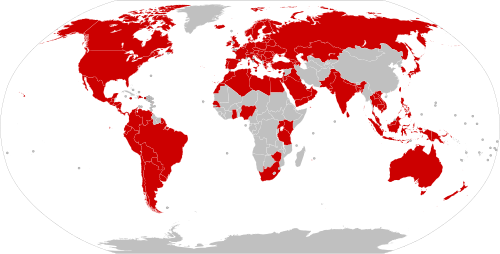
YouTubeのインターフェースは、ユーザーのIPアドレスに基づいて、どのローカルバージョンを選択すべきかを提案する。著作権制限や不適切なコンテンツのため、「この動画はお住まいの国ではご利用いただけません」というメッセージが表示される場合がある。[278] YouTubeのウェブサイトのインターフェースは、アムハラ語、アルバニア語、アルメニア語、ビルマ語、ハイチ・クレオール語、キルギス語、マダガスカル語、モンゴル語、ペルシャ語、サモア語、ソマリ語、ウズベク語を含む76の言語バージョンで利用できるが、これらの言語にはローカルチャンネルバージョンがない。トルコでは、ムスタファ・ケマル・アタテュルクを侮辱すると見なされる動画やイスラム教徒を不快にするコンテンツの投稿をめぐる論争を受けて、2008年から2010年の間、 YouTubeへのアクセスがブロックされていた。 [279] [280] 2012年10月、トルコでYouTubeのローカルバージョンがドメインで開始されたyoutube.com.tr。ローカルバージョンは、トルコの法律に定められたコンテンツ規制の対象となる。[281] 2009年3月、YouTubeと英国の著作権料徴収機関PRS for Musicとの間で紛争が起こり、英国のYouTubeユーザー向けにプレミアムミュージックビデオがブロックされた。大手レコード会社が投稿したビデオの削除は、ライセンス契約の合意に至らなかった後に起こった。この紛争は2009年9月に解決した。[282] 2009年4月、同様の紛争により、ドイツのユーザー向けにプレミアムミュージックビデオが削除された。[283]
ビデオ
2012年1月、YouTubeの訪問者は1日平均15分をサイト上で過ごしていると推定されたが、これは典型的な米国民がテレビを見るのに1日4~5時間を費やすのとは対照的である。[284] 2017年には、視聴者は平均して毎日1時間以上、モバイルデバイスでYouTubeを視聴した。[285]
2012年12月、ユニバーサルとソニーのミュージックビデオのYouTubeでの再生回数から20億回が削除された。これを受けてデイリードットは、自動プロセスによる再生回数の水増しを禁止するサイトの利用規約に違反したために再生回数が削除されたと主張した。ビルボードはこれに異議を唱え、動画がYouTubeで再生されなくなったため、20億回の再生回数はVevoに移されたと述べた。[286] [287] 2015年8月5日、YouTubeは、再生回数詐欺を防ぐために、実際の回数が検証されるまで動画の再生回数が「301」(後に「301+」)で停止するという、以前悪名高かった動作を修正した。[288] YouTubeの再生回数は再びリアルタイムで更新されるようになった。[289]
2019年9月以降、登録者数は短縮されるようになった。チャンネルの登録者数のうち先頭3桁のみが公開され、 Social Bladeなどのサードパーティのリアルタイム指標の機能が損なわれている。正確な数はYouTube Studio内でチャンネル運営者が引き続き確認できる。[290]
2021年3月にこの変更をテストした後、YouTubeは2021年11月11日に、動画の低評価数を非表示にして視聴者に表示されないようにすると発表した。同社は、この決定は、小規模なYouTubeクリエイターが低評価攻撃や嫌がらせの標的になる可能性が高いことが確認された実験に応じたものだと述べた。YouTubeによると、クリエイターはYouTube Studioダッシュボードツールで引き続き高評価数と低評価数を確認できるという。[291] [292] [293]
著作権の問題
YouTubeは著作権に対処する試みにおいて、数多くの課題と批判に直面してきた。例えば、同サイト初のバイラル動画であるLazy Sundayは、著作権上の懸念から削除を余儀なくされた。[31]動画をアップロードする際、YouTubeユーザーには著作権法に違反しないよう求めるメッセージが表示される。[294]このアドバイスにもかかわらず、著作権で保護された素材の無許可のクリップが数多くYouTubeに残っている。YouTubeは動画がオンラインに投稿される前には視聴せず、オンライン著作権侵害責任制限法の条項に従ってDMCA 削除通知を発行するのは著作権保有者の責任である。著作権侵害に関する申し立てが認められると、 YouTubeから著作権侵害警告が発せられる。ユーザーアカウントに対する著作権侵害の申し立てが3回認められると、そのアカウントとアップロードされた動画がすべて削除される。[295] [296] 2007年から2009年にかけて、バイアコム、メディアセット、イングランド・プレミアリーグなどの組織がYouTubeに対して訴訟を起こし、著作権で保護されたコンテンツのアップロードを阻止するための対策が不十分であると主張した。[297] [298] [299]
2008年8月、米国の裁判所は、レンツ対ユニバーサルミュージック社の訴訟において、著作権者は、その投稿が素材の公正使用を反映しているかどうかをまず判断せずにオンラインファイルの削除を命じることはできないとの判決を下した。 [300] YouTubeの所有者であるグーグルは、2015年11月に、公正使用の抗弁が適用されると思われる特定のケースで訴訟費用を負担すると発表した。[301]
2011年のスミス対サミット・エンターテインメントLLC訴訟では、プロの歌手マット・スミスが、YouTubeの著作権削除通知の不正使用でサミット・エンターテインメントを訴えた。[302]彼は7つの訴因を主張し、4つはスミスに有利な判決が下された。[303] 2012年4月、ハンブルクの裁判所は、YouTubeがユーザーが投稿した著作権で保護された素材に対して責任を負う可能性があると判決を下した。[304] 2016年11月1日、GEMAとの紛争は解決し、GoogleコンテンツIDを使用して、GEMAで保護されたコンテンツを含む動画に広告を追加できるようになりました。[305]
2013年4月、ユニバーサルミュージックグループとYouTubeは、UMGの要請によりYouTubeでブロックされたコンテンツは、動画のアップロード者がDMCA異議申し立て通知を提出したとしても、復元できないという契約を結んでいると報じられた。[306] [307] YouTube Musicの一環として、ユニバーサルとYouTubeは2017年に契約を結び、その後、他の大手レーベルとも個別の契約を結び、YouTubeで自社の音楽が再生された際に同社に広告収入を得る権利を与えた。[308] 2019年までに、コンテンツIDが著作権で保護された音楽の非常に長い動画内の短いセグメントを識別すると、クリエイターの動画が削除されたり、収益化が停止されたりしており、施行レベルはレーベルによって異なっていた。[309]専門家は、これらのクリップのいくつかはフェアユースの条件を満たしていると指摘した。[309]
コンテンツID
2007年6月、YouTubeは著作権を侵害するアップロード動画を自動検出するシステムの試験運用を開始した。GoogleのCEO、エリック・シュミットは、YouTubeが配信権のないコンテンツから利益を得ていると主張したバイアコムとの訴訟などの解決にはこのシステムが必要だと考えた。 [310]当初は「ビデオ識別」 [311] [312]と呼ばれ、後にコンテンツID [313]として知られるようになったこのシステムは、著作権で保護された音声および動画素材のIDファイルを作成し、データベースに保存する。動画がアップロードされると、データベースと照合され、一致が見つかった場合は著作権侵害として動画にフラグが立てられる。[314]この場合、コンテンツ所有者は動画をブロックして視聴できないようにするか、動画の視聴統計を追跡するか、動画に広告を追加するかを選択できる。
2009年に行われた独立したテストでは、同じ曲の複数のバージョンがYouTubeにアップロードされ、システムは動画のオーディオトラックの著作権侵害を見つけるのに「驚くほど耐性がある」が、絶対確実ではないという結論が出ました。[315]コンテンツIDを使用して素材を自動的に削除することは、動画がフェアユースであるかどうか人間によってチェックされていないため、場合によっては論争を巻き起こしました。 [316] YouTubeユーザーがコンテンツIDの決定に同意しない場合は、決定に異議を唱えるフォームに記入することができます。[317]
2016年以前は、紛争が解決するまで動画は収益化されませんでした。2016年4月以降、紛争が進行中でも動画は収益化され続け、お金は紛争に勝った方に渡ります。[318]アップロード者が動画を再度収益化したい場合は、「動画マネージャー」で紛争のあった音声を削除できます。[319] YouTubeは、2010年12月にサイトのルールが変更され、一部のユーザーが長さの制限なく動画をアップロードできるようになった理由の1つとして、コンテンツIDの有効性を挙げています。[320]
モデレーションと不快なコンテンツ
YouTubeには、サイト機能の悪用を減らすことを目的とした一連のコミュニティガイドラインがあります。名誉毀損、ポルノ、犯罪行為を助長する素材を含む動画のアップロードは、YouTubeの「コミュニティガイドライン」で禁止されています。[321] [より良いソースが必要]一般的に禁止されている素材には、性的に露骨なコンテンツ、動物虐待の動画、ショックな動画、著作権者の同意なしにアップロードされたコンテンツ、ヘイトスピーチ、スパム、略奪的行動などがあります。[321] YouTubeは、ユーザーが動画のコンテンツを不適切として報告することに依存しており、YouTubeの従業員が報告された動画を見て、サイトのガイドラインに違反しているかどうかを判断します。[321]ガイドラインにもかかわらず、YouTubeは、その運営の側面について批判に直面している。[322]推奨アルゴリズムが陰謀論や虚偽を助長する動画を永続させていること、[323]表面上は子供を対象としているが、人気キャラクターを巻き込んだ暴力的または性的に示唆的な内容を含む動画を掲載していること、[324]未成年者の動画がコメント欄で小児性愛行為を引き起こしていること、 [325]広告で収益化できるコンテンツの種類に関するポリシーが変動していることなどである。[322]
YouTubeは企業と契約してコンテンツモデレーターを雇用しており、コンテンツモデレーターはYouTubeのコンテンツポリシーに違反している可能性があるとフラグが立てられたコンテンツを確認し、削除するかどうかを判断している。2020年9月、 18か月の勤務後に心的外傷後ストレス障害(PTSD)を発症したと報告した元コンテンツモデレーターが集団訴訟を起こした。この元コンテンツモデレーターは、YouTubeが定めた1日4時間という残酷なコンテンツの視聴制限を定期的に超えさせられていたと述べた。訴訟では、YouTubeの請負業者がモデレーターのメンタルヘルスに関するトレーニングやサポートをほとんどまたは全く提供せず、採用候補者にレビュー中に目にするコンテンツの例を示す前にNDAに署名させ、社内フォーラムからトラウマに関する言及をすべて検閲したと主張している。また、全米行方不明・被搾取児童センターの勧告に従って、極めて残酷なコンテンツをぼかしたり、サイズを縮小したり、モノクロにしたりするという要求は、YouTubeにとって優先度が高くないとして拒否されたと主張している。[326] [327] [328]
YouTubeを介した誤報やフェイクニュースの拡散を制限するために、YouTubeは技術的に操作された動画への対処方法に関する包括的なポリシーを展開した。[329]
物議を醸すコンテンツには、ホロコースト否定や、1989年にリバプールのサッカーファン96人が圧死したヒルズボロ惨事に関連する内容が含まれている。 [330] [331] 2008年7月、英国下院の文化メディア委員会は、YouTubeの動画監視システムに「感銘を受けていない」と述べ、「ユーザー生成コンテンツをホストするサイトでは、コンテンツの積極的なレビューが標準的な慣行であるべきだ」と主張した。YouTubeは次のように回答した。
当サイトでは、許可されるコンテンツについて厳格なルールを設けており、不適切なコンテンツを見つけた人は誰でも、24時間体制のレビューチームに報告して、すぐに対処できるシステムを導入しています。コミュニティにルールを周知し、YouTubeの各ページに直接リンクを貼って、ユーザーにとってこのプロセスをできるだけ簡単にしています。当サイトにアップロードされるコンテンツの量を考えると、ルールに違反するごく少数の動画を迅速に削除するには、これが最も効果的な方法だと考えています。[332] (2008年7月)
2010年10月、米国下院議員アンソニー・ウィーナーはYouTubeに対し、アンワル・アウラキ師の動画をウェブサイトから削除するよう求めた。[333] YouTubeは2010年11月、サイトのガイドラインに違反しているとして、一部の動画を削除した。[334] 2010年12月、YouTubeはテロリズムに関する内容を含む動画を報告できる機能を追加した。[335]
2018年、YouTubeは、アルゴリズムが陰謀論やその他のフェイクニュースを提示している可能性があると判断した動画に自動的に情報ボックスを追加するシステムを導入し、ブリタニカ百科事典やウィキペディアのコンテンツで情報ボックスを埋めることで、言論の自由に影響を与えることなく誤情報の拡散を最小限に抑えるようユーザーに通知した。[336] [337]ウィキメディア財団は声明で、「ウィキペディアもウィキメディア財団もYouTubeと正式なパートナーシップを結んでおらず、この発表について事前に通知されていません」と述べた。[338]
2019年4月15日のノートルダム大聖堂火災を受けて、ユーザーがアップロードしたこのランドマーク火災の動画がYouTubeのシステムによって自動的に、9月11日の攻撃に関する偽の陰謀説に関するブリタニカ百科事典の記事とフラグ付けされた。数人のユーザーがこの不適切な関連付けについてYouTubeに苦情を申し立てた。YouTubeの担当者はこれについて謝罪し、アルゴリズムが火災の動画を誤認して自動的に情報ブロックを追加したと述べ、改善策を講じていると述べた。[339]
2023年4月18日、YouTubeは摂食障害に関連するコンテンツの取り扱いに関する変更を発表した。このソーシャルメディアプラットフォームのコミュニティガイドラインでは、リスクのあるユーザーからの模倣を促す可能性のあるコンテンツが禁止されている。このコンテンツには、深刻なカロリー追跡や食後の嘔吐を示す行動が含まれる。ただし、回復の文脈などの肯定的な行動を特集した動画は、ユーザーが登録済み(ログイン済み)アカウントを持ち、18歳以上であるという2つの条件の下でプラットフォーム上で許可される。このポリシーは、非営利団体や全米摂食障害協会と共同で作成された。YouTubeのヘルスケア担当グローバルヘッドであるガース・グラハムは、CNNとのインタビューで、このポリシー変更は、この動画共有プラットフォームが視聴者の継続的な保護を確保しながら「コミュニティの回復とリソース」の手段を提供することを確実にすることを目的としていることを明らかにした。[340]
同性愛嫌悪とトランスフォビア
LGBTQ+素材をベースにしたチャンネルを持つ5人の主要コンテンツクリエイターは、2019年8月にYouTubeに対して連邦訴訟を起こし、YouTubeのアルゴリズムが彼らのチャンネルから発見をそらし、収益に影響を与えていると主張した。原告は、アルゴリズムが彼らのチャンネルのコンテンツで主流となる「レズビアン」や「ゲイ」などの言葉を含むコンテンツを抑制しており、YouTubeがオンライン動画サービスをほぼ独占しているため、その立場を悪用していると主張した。[341]
2022年6月、メディア監視団体Media Mattersは、 YouTubeでLGBTの人々を「捕食者」や「グルーマー」と呼ぶ同性愛嫌悪やトランスフォビックなコンテンツが一般的になりつつあると報告した。 [342]この報告書ではまた、YouTubeの動画でLGBTの人々は精神病であるという非難がよく見られることにも言及している。[342]この報告書では、そのコンテンツはYouTubeのヘイトスピーチポリシーに違反しているようだと述べられている。[342]
動物の拷問
2020年以降、YouTubeでの動物虐待を扱った動画の問題がメディアでますます注目を集めるようになった。2020年後半、動物福祉慈善団体レディ・フリーシンカーは、 YouTubeで動物が「娯楽のために故意に傷つけられたり、深刻な精神的苦痛、身体的苦痛、または死亡している様子が示されたりしている」と記載された動画を2,053本特定した。[343]
2021年、レディ・フリーシンカーは、 YouTubeが動物虐待を示す多数の動画をサイトに掲載し、通知を受けても削除しなかったことは契約違反であるとして訴訟を起こした。YouTubeはこれに対し、2021年に「動物虐待動画に関するポリシーを拡大した」と述べ、新ポリシーの導入以来「数十万本の動画を削除し、数千のチャンネルを違反で停止した」と反論した。[344]
2022年、グーグルはレディ・フリーシンカー訴訟に勝利し、判事はYouTubeは通信品位法第230条によって保護されているとの判決を下した。この法律は、ユーザーが投稿したコンテンツに基づく訴訟からインターネットプラットフォームを保護するものである。[345]
2023年、YouTubeは「動物虐待は同社のプラットフォームには存在すべきではなく、(そのような性質の)コンテンツを削除するよう取り組んでいる」と述べた。[346] [347] [348] [349] [350] [351]
陰謀論や極右コンテンツを宣伝するツールとしてのYouTube
YouTubeは、陰謀論、虚偽、扇動的な過激な言説を助長する動画を非常に目立たせるアルゴリズムを使用しているとして批判されている。[352] [353] [354]ウォール・ストリート・ジャーナルの調査によると、「YouTubeのおすすめは、ユーザーがそのようなコンテンツに興味を示していない場合でも、陰謀論、党派的な視点、誤解を招く動画を特集したチャンネルにユーザーを誘導することが多い。ユーザーが視聴するコンテンツに政治的な偏りが見られる場合、YouTubeは通常、それらの偏りを反映する、多くの場合より極端な視点の動画をおすすめする。」[352] [355]ユーザーが政治用語や科学用語を検索すると、YouTubeの検索アルゴリズムはしばしばデマや陰謀論を目立たせる。[354] [356] 2017年のラスベガス銃乱射事件の際、人々が速報ニュースを検索すると、虚偽や陰謀を助長する動画がトップに表示されたことでYouTubeが物議を醸した後、YouTubeは主流メディアの情報源をより目立たせるためにアルゴリズムを変更した。 [352] [357] [358] [359] 2018年には、YouTubeが再び速報ニュースに関する非主流コンテンツを宣伝し、アンソニー・ボーディンの死に関する陰謀動画を非常に目立たせていると報じられた。 [360]
2017年には、レイプ擁護者、反ユダヤ主義者、憎悪の説教者などの過激派の動画に広告が掲載され、広告料を受け取っていたことが明らかになった。[361]この報道を受けて企業がYouTubeでの広告掲載を停止し始めた後、YouTubeは謝罪し、企業がどこに広告が掲載されるかをより細かく管理できるようにすると発表した。[361]
極右陰謀論で知られるアレックス・ジョーンズは、YouTubeで膨大な視聴者を獲得していた。 [362] YouTubeは2018年に、ジョーンズの不快な発言をまとめたメディア・マターズの動画を「嫌がらせといじめ」に関するポリシーに違反しているとして削除し、批判を浴びた。[363]しかし、2018年8月6日、YouTubeはコンテンツ違反を受けてアレックス・ジョーンズのYouTubeページを削除した。[364]
ノースカロライナ大学のゼイネップ・トゥフェクチ教授はYouTubeを「偉大な過激化者」と呼び、「YouTubeは21世紀で最も強力な過激化手段の1つかもしれない」と述べた。[365]コロンビア大学トウ・デジタルジャーナリズムセンターのジョナサン・オルブライトはYouTubeを「陰謀エコシステム」と表現した。[354] [366]
In January 2019, YouTube said that it had introduced a new policy starting in the United States intended to stop recommending videos containing "content that could misinform users in harmful ways." YouTube gave flat earth theories, miracle cures, and 9/11 truther-isms as examples.[367] Efforts within YouTube engineering to stop recommending borderline extremist videos falling just short of forbidden hate speech, and track their popularity were originally rejected because they could interfere with viewer engagement.[368]
In January 2019, the site announced it would be implementing measures directed towards "raising authoritative content and reducing borderline content and harmful misinformation."[369] That June, YouTube announced it would be banning Holocaust denial and neo-Nazi content.[369] YouTube has blocked the neo-Nazi propaganda film Europa: The Last Battle from being uploaded.[370]
Multiple research studies have investigated cases of misinformation in YouTube. In a July 2019 study based on ten YouTube searches using the Tor Browser related to climate and climate change, the majority of videos were videos that communicated views contrary to the scientific consensus on climate change.[371] A May 2023 study found that YouTube was monetizing and profiting from videos that included misinformation about climate change.[372] A 2019 BBC investigation of YouTube searches in ten different languages found that YouTube's algorithm promoted health misinformation, including fake cancer cures.[373] In Brazil, YouTube has been linked to pushing pseudoscientific misinformation on health matters, as well as elevated far-right fringe discourse and conspiracy theories.[374] In the Philippines, numerous channels disseminated misinformation related to the 2022 Philippine elections.[375] Additionally, research on the dissemination of Flat Earth beliefs in social media, has shown that networks of YouTube channels form an echo chamber that polarizes audiences by appearing to confirm preexisting beliefs.[376]
Use among white supremacists
Before 2019, YouTube took steps to remove specific videos or channels related to supremacist content that had violated its acceptable use policies but otherwise did not have site-wide policies against hate speech.[377]
In the wake of the March 2019 Christchurch mosque attacks, YouTube and other sites like Facebook and Twitter that allowed user-submitted content drew criticism for doing little to moderate and control the spread of hate speech, which was considered to be a factor in the rationale for the attacks.[378][379] These platforms were pressured to remove such content, but in an interview with The New York Times, YouTube's chief product officer Neal Mohan said that unlike content such as ISIS videos which take a particular format and thus easy to detect through computer-aided algorithms, general hate speech was more difficult to recognize and handle, and thus could not readily take action to remove without human interaction.[380]
In May 2019, YouTube joined an initiative led by France and New Zealand with other countries and tech companies to develop tools to be used to block online hate speech and to develop regulations, to be implemented at the national level, to be levied against technology firms that failed to take steps to remove such speech, though the United States declined to participate.[381][382] Subsequently, on June 5, 2019, YouTube announced a major change to its terms of service, "specifically prohibiting videos alleging that a group is superior in order to justify discrimination, segregation or exclusion based on qualities like age, gender, race, caste, religion, sexual orientation or veteran status." YouTube identified specific examples of such videos as those that "promote or glorify Nazi ideology, which is inherently discriminatory". YouTube further stated it would "remove content denying that well-documented violent events, like the Holocaust or the shooting at Sandy Hook Elementary, took place."[377][383]
In August 2019, the channel of the white nationalist website VDARE was banned. The ban was later reversed.[384] The channel was permanently banned in August 2020 for violating YouTube's policies against hate speech.[385]
In September 2018, YouTube limited some videos by Red Ice, a white supremacist multimedia company, after it posted a video claiming that white women were being "pushed" into interracial relationships.[386] In October 2019, YouTube banned Red Ice's main channel for hate speech violations. The channel had about 330,000 subscribers. Lana Lokteff and Red Ice promoted a backup channel in an attempt to circumvent the ban.[387][388] A week later, the backup channel was also removed by YouTube.[389][390]
In June 2020, YouTube was criticized for allowing white supremacist content on its platform for years after it announced it would be pledging $1 million to fight racial injustice.[391] Later that month, it banned several channels associated with white supremacy, including those of Stefan Molyneux, David Duke, and Richard B. Spencer, asserting these channels violated their policies on hate speech. The ban occurred the same day that Reddit announced the ban on several hate speech sub-forums including r/The Donald.[392]
Handling of COVID-19 pandemic and other misinformation
Following the dissemination via YouTube of misinformation related to the COVID-19 pandemic that 5G communications technology was responsible for the spread of coronavirus disease 2019 which led to multiple 5G towers in the United Kingdom being attacked by arsonists, YouTube removed all such videos linking 5G and the coronavirus in this manner.[393]
In September 2021, YouTube extended this policy to cover videos disseminating misinformation related to any vaccine, including those long approved against measles or Hepatitis B, that had received approval from local health authorities or the World Health Organization.[394][395] The platform proceeded to remove the accounts of anti-vaccine campaigners such as Robert F. Kennedy Jr. and Joseph Mercola.[395]
YouTube had extended this moderation to non-medical areas. In the weeks following the 2020 United States presidential election, the site added policies to remove or label videos promoting election fraud claims;[396][397] however, it reversed this policy in June 2023, citing that the removal was necessary to "openly debate political ideas, even those that are controversial or based on disproven assumptions".[398][399]
Google and YouTube implemented policies in October 2021 to deny monetization or revenue to advertisers or content creators that promoted climate change denial, which "includes content referring to climate change as a hoax or a scam, claims denying that long-term trends show the global climate is warming, and claims denying that greenhouse gas emissions or human activity contribute to climate change."[400] In January 2024, the Center for Countering Digital Hate reported that climate change deniers were instead pushing other forms of climate change denial that have not yet been banned by YouTube, including false claims that global warming is "beneficial or harmless", and which undermined climate solutions and climate science.[401][402]
In July 2022, YouTube announced policies to combat misinformation surrounding abortion, such as videos with instructions to perform abortion methods that are considered unsafe and videos that contain misinformation about the safety of abortion.[403]
Child safety and wellbeing
Leading into 2017, there was a significant increase in the number of videos related to children, coupled between the popularity of parents vlogging their family's activities, and previous content creators moving away from content that often was criticized or demonetized into family-friendly material. In 2017, YouTube reported that time watching family vloggers had increased by 90%.[404][405] However, with the increase in videos featuring children, the site began to face several controversies related to child safety. During Q2 2017, the owners of popular channel FamilyOFive, which featured themselves playing "pranks" on their children, were accused of child abuse. Their videos were eventually deleted, and two of their children were removed from their custody.[406][407][408][409] A similar case happened in 2019 when the owner of the channel Fantastic Adventures was accused of abusing her adopted children. Her videos would later be deleted.[410]
Later that year, YouTube came under criticism for showing inappropriate videos targeted at children and often featuring popular characters in violent, sexual or otherwise disturbing situations, many of which appeared on YouTube Kids and attracted millions of views. The term "Elsagate" was coined on the Internet and then used by various news outlets to refer to this controversy.[411][412][413][414] On November 11, 2017, YouTube announced it was strengthening site security to protect children from unsuitable content. Later that month, the company started to mass delete videos and channels that made improper use of family-friendly characters. As part of a broader concern regarding child safety on YouTube, the wave of deletions also targeted channels that showed children taking part in inappropriate or dangerous activities under the guidance of adults. Most notably, the company removed Toy Freaks, a channel with over 8.5 million subscribers, that featured a father and his two daughters in odd and upsetting situations.[415][416][417][418][419] According to analytics specialist SocialBlade, it earned up to $11.2 million annually prior to its deletion in November 2017.[420]
Even for content that appears to be aimed at children and appears to contain only child-friendly content, YouTube's system allows for anonymity of who uploads these videos. These questions have been raised in the past, as YouTube has had to remove channels with children's content which, after becoming popular, then suddenly include inappropriate content masked as children's content.[421] Alternative, some of the most-watched children's programming on YouTube comes from channels that have no identifiable owners, raising concerns of intent and purpose. One channel that had been of concern was "Cocomelon" which provided numerous mass-produced animated videos aimed at children. Up through 2019, it had drawn up to US$10 million a month in ad revenue and was one of the largest kid-friendly channels on YouTube before 2020. Ownership of Cocomelon was unclear outside of its ties to "Treasure Studio", itself an unknown entity, raising questions as to the channel's purpose,[421][422][423] but Bloomberg News had been able to confirm and interview the small team of American owners in February 2020 regarding "Cocomelon", who stated their goal for the channel was to simply entertain children, wanting to keep to themselves to avoid attention from outside investors.[424] The anonymity of such channel raise concerns because of the lack of knowledge of what purpose they are trying to serve.[425] The difficulty to identify who operates these channels "adds to the lack of accountability", according to Josh Golin of the Campaign for a Commercial-Free Childhood, and educational consultant Renée Chernow-O'Leary found the videos were designed to entertain with no intent to educate, all leading to critics and parents to be concerned for their children becoming too enraptured by the content from these channels.[421] Content creators that earnestly make child-friendly videos have found it difficult to compete with larger channels, unable to produce content at the same rate as them, and lacking the same means of being promoted through YouTube's recommendation algorithms that the larger animated channel networks have shared.[425]
In January 2019, YouTube officially banned videos containing "challenges that encourage acts that have an inherent risk of severe physical harm" (such as the Tide Pod Challenge) and videos featuring pranks that "make victims believe they're in physical danger" or cause emotional distress in children.[426]
Sexualization of children and pedophilia
Also in November 2017, it was revealed in the media that many videos featuring children—often uploaded by the minors themselves, and showing innocent content such as the children playing with toys or performing gymnastics—were attracting comments from pedophiles[427][428] with predators finding the videos through private YouTube playlists or typing in certain keywords in Russian.[428] Other child-centric videos originally uploaded to YouTube began propagating on the dark web, and uploaded or embedded onto forums known to be used by pedophiles.[429]
As a result of the controversy, which added to the concern about "Elsagate", several major advertisers whose ads had been running against such videos froze spending on YouTube.[414][430] In December 2018, The Times found more than 100 grooming cases in which children were manipulated into sexually implicit behavior (such as taking off clothes, adopting overtly sexual poses and touching other children inappropriately) by strangers.[431] After a reporter flagged the videos in question, half of them were removed, and the rest were removed after The Times contacted YouTube's PR department.[431]
In February 2019, YouTube vlogger Matt Watson identified a "wormhole" that would cause the YouTube recommendation algorithm to draw users into this type of video content, and make all of that user's recommended content feature only these types of videos.[432] Most of these videos had comments from sexual predators commenting with timestamps of when the children were shown in compromising positions or otherwise making indecent remarks. In some cases, other users had re-uploaded the video in unlisted form but with incoming links from other videos, and then monetized these, propagating this network.[433] In the wake of the controversy, the service reported that they had deleted over 400 channels and tens of millions of comments, and reported the offending users to law enforcement and the National Center for Missing and Exploited Children. A spokesperson explained that "any content—including comments—that endangers minors is abhorrent and we have clear policies prohibiting this on YouTube. There's more to be done, and we continue to work to improve and catch abuse more quickly."[434][435] Despite these measures, AT&T, Disney, Dr. Oetker, Epic Games, and Nestlé all pulled their advertising from YouTube.[433][436]
Subsequently, YouTube began to demonetize and block advertising on the types of videos that have drawn these predatory comments. The service explained that this was a temporary measure while they explore other methods to eliminate the problem.[437] YouTube also began to flag channels that predominantly feature children, and preemptively disable their comments sections. "Trusted partners" can request that comments be re-enabled, but the channel will then become responsible for moderating comments. These actions mainly target videos of toddlers, but videos of older children and teenagers may be protected as well if they contain actions that can be interpreted as sexual, such as gymnastics. YouTube stated it was also working on a better system to remove comments on other channels that matched the style of child predators.[438][439]
A related attempt to algorithmically flag videos containing references to the string "CP" (an abbreviation of child pornography) resulted in some prominent false positives involving unrelated topics using the same abbreviation, including videos related to the mobile video game Pokémon Go (which uses "CP" as an abbreviation of the statistic "Combat Power"), and Club Penguin. YouTube apologized for the errors and reinstated the affected videos.[440] Separately, online trolls have attempted to have videos flagged for takedown or removal by commenting with statements similar to what the child predators had said; this activity became an issue during the PewDiePie vs T-Series rivalry in early 2019. YouTube stated they do not take action on any video with these comments but those that they have flagged that are likely to draw child predator activity.[441]
In June 2019, The New York Times cited researchers who found that users who watched erotic videos could be recommended seemingly innocuous videos of children.[442] As a result, Senator Josh Hawley stated plans to introduce federal legislation that would ban YouTube and other video sharing sites from including videos that predominantly feature minors as "recommended" videos, excluding those that were "professionally produced", such as videos of televised talent shows.[443] YouTube has suggested potential plans to remove all videos featuring children from the main YouTube site and transferring them to the YouTube Kids site where they would have stronger controls over the recommendation system, as well as other major changes on the main YouTube site to the recommended feature and auto-play system.[444]
Misogyny
An August 2022 report by the Center for Countering Digital Hate, a British think tank, found that harassment against women was flourishing on YouTube. It noted that channels espousing a similar ideology to that of men's rights influencer Andrew Tate were using YouTube to grow their audience, despite Tate being banned from the platform.[445] In his 2022 book Like, Comment, Subscribe: Inside YouTube's Chaotic Rise to World Domination, Bloomberg reporter Mark Bergen said that many female content creators were dealing with harassment, bullying, and stalking.[445]
Russia
In 2021, two accounts linked to RT Deutsch, the German channel of the Russian RT network were removed as well for breaching YouTube's policies relating to COVID-19.[394] Russia threatened to ban YouTube after the platform deleted two German RT channels in September 2021.[446]
Shortly after the Russian invasion of Ukraine in 2022, YouTube removed all channels funded by the Russian state.[447] YouTube expanded the removal of Russian content from its site to include channels described as 'pro-Russian'. In June 2022, the War Gonzo channel run by Russian military blogger and journalist Semyon Pegov was deleted.[448] In July 2023, YouTube removed the channel of British journalist Graham Phillips, active in covering the War in Donbas from 2014.[449]
In August 2023, a Moscow court fined Google 3 million rubles, around $35,000, for not deleting what it said was "fake news about the war in Ukraine".[450]
April Fools gags
YouTube featured an April Fools prank on the site on April 1 of every year from 2008 to 2016. In 2008, all links to videos on the main page were redirected to Rick Astley's music video "Never Gonna Give You Up", a prank known as "rickrolling".[451][452] The next year, when clicking on a video on the main page, the whole page turned upside down, which YouTube claimed was a "new layout".[453] In 2010, YouTube temporarily released a "TEXTp" mode which rendered video imagery into ASCII art letters "in order to reduce bandwidth costs by $1 per second."[454]
The next year, the site celebrated its "100th anniversary" with a range of sepia-toned silent, early 1900s-style films, including a parody of Keyboard Cat.[455] In 2012, clicking on the image of a DVD next to the site logo led to a video about a purported option to order every YouTube video for home delivery on DVD.[456]
In 2013, YouTube teamed up with satirical newspaper company The Onion to claim in an uploaded video that the video-sharing website was launched as a contest which had finally come to an end, and would shut down for ten years before being re-launched in 2023, featuring only the winning video. The video starred several YouTube celebrities, including Antoine Dodson. A video of two presenters announcing the nominated videos streamed live for 12 hours.[457][458]
In 2014, YouTube announced that it was responsible for the creation of all viral video trends, and revealed previews of upcoming trends, such as "Clocking", "Kissing Dad", and "Glub Glub Water Dance".[459] The next year, YouTube added a music button to the video bar that played samples from "Sandstorm" by Darude.[460] In 2016, YouTube introduced an option to watch every video on the platform in 360-degree mode with Snoop Dogg.[461]
Services
YouTube Premium

YouTube Premium (formerly YouTube Red) is YouTube's premium subscription service. It offers advertising-free streaming, access to original programming, and background and offline video playback on mobile devices.[462] YouTube Premium was originally announced on November 12, 2014, as "Music Key", a subscription music streaming service, and was intended to integrate with and replace the existing Google Play Music "All Access" service.[463][464][465] On October 28, 2015, the service was relaunched as YouTube Red, offering ad-free streaming of all videos and access to exclusive original content.[466][467][468] As of November 2016[update], the service has 1.5 million subscribers, with a further million on a free-trial basis.[469] As of June 2017[update], the first season of YouTube Originals had received 250 million views in total.[470]
YouTube Kids

YouTube Kids is an American children's video app developed by YouTube, a subsidiary of Google. The app was developed in response to parental and government scrutiny on the content available to children. The app provides a version of the service-oriented towards children, with curated selections of content, parental control features, and filtering of videos deemed inappropriate viewing for children aged under 13, 8 or 5 depending on the age grouping chosen. First released on February 15, 2015, as an Android and iOS mobile app, the app has since been released for LG, Samsung, and Sony smart TVs, as well as for Android TV. On May 27, 2020, it became available on Apple TV. As of September 2019, the app is available in 69 countries, including Hong Kong and Macau, and one province. YouTube launched a web-based version of YouTube Kids on August 30, 2019.
YouTube Music

On September 28, 2016, YouTube named Lyor Cohen, the co-founder of 300 Entertainment and former Warner Music Group executive, the Global Head of Music.[471]
In early 2018, Cohen began hinting at the possible launch of YouTube's new subscription music streaming service, a platform that would compete with other services such as Spotify and Apple Music.[472] On May 22, 2018, the music streaming platform named "YouTube Music" was launched.[473][474]
YouTube Movies & TV
YouTube Movies & TV is a video on demand service that offers movies and television shows for purchase or rental, depending on availability, along with a selection of movies (encompassing between 100 and 500 titles overall) that are free to stream, with interspersed ad breaks. YouTube began offering free-to-view movie titles to its users in November 2018; selections of new movies are added and others removed, unannounced each month.[475]
In March 2021, Google announced plans to gradually deprecate the Google Play Movies & TV app, and eventually migrate all users to the YouTube app's Movies & TV store to view, rent and purchase movies and TV shows (first affecting Roku, Samsung, LG, and Vizio smart TV users on July 15).[476][477] Google Play Movies & TV formally shut down on January 17, 2024, with the web version of that platform migrated to YouTube as an expansion of the Movies & TV store to desktop users. (Other functions of Google Play Movies & TV were integrated into the Google TV service.)[478]
YouTube Primetime Channels
On November 1, 2022, YouTube launched Primetime Channels, a channel store platform offering third-party subscription streaming add-ons sold a la carte through the YouTube website and app, competing with similar subscription add-on stores operated by Apple, Prime Video and Roku. The add-ons can be purchased through the YouTube Movies & TV hub or through the official YouTube channels of the available services; subscribers of YouTube TV add-ons that are sold through Primetime Channels can also access their content via the YouTube app and website. A total of 34 streaming services (including Paramount+, Showtime, Starz, MGM+, AMC+ and ViX+) were initially available for purchase.[479][480]
NFL Sunday Ticket, as part of a broader residential distribution deal with Google signed in December 2022 that also made it available to YouTube TV subscribers, was added to Primetime Channels as a standalone add-on on August 16, 2023.[481][482] The ad-free tier of Max was added to Primetime Channels on December 12, 2023, coinciding with YouTube TV converting its separate HBO (for base plan subscribers) and HBO Max (for all subscribers) linear/VOD add-ons into a single combined Max offering.[483][484][note 2]
YouTube TV

On February 28, 2017, in a press announcement held at YouTube Space Los Angeles, YouTube announced YouTube TV, an over-the-top MVPD-style subscription service that would be available for United States customers at a price of US$65 per month. Initially launching in five major markets (New York City, Los Angeles, Chicago, Philadelphia and San Francisco) on April 5, 2017,[485][486] the service offers live streams of programming from the five major broadcast networks (ABC, CBS, The CW, Fox and NBC, along with selected MyNetworkTV affiliates and independent stations in certain markets), as well as approximately 60 cable channels owned by companies such as The Walt Disney Company, Paramount Global, Fox Corporation, NBCUniversal, Allen Media Group and Warner Bros. Discovery (including among others Bravo, USA Network, Syfy, Disney Channel, CNN, Cartoon Network, E!, Fox Sports 1, Freeform, FX and ESPN).[487][488]
Subscribers can also receive premium cable channels (including HBO (via a combined Max add-on that includes in-app and log-in access to the service), Cinemax, Showtime, Starz and MGM+) and other subscription services (such as NFL Sunday Ticket, MLB.tv, NBA League Pass, Curiosity Stream and Fox Nation) as optional add-ons for an extra fee, and can access YouTube Premium original content.[487][488] In September 2022, YouTube TV began allowing customers to purchase most of its premium add-ons (excluding certain services such as NBA League Pass and AMC+) without an existing subscription to its base package.[489]
YouTube Go

In September 2016, YouTube Go was announced,[490] as an Android app created for making YouTube easier to access on mobile devices in emerging markets. It was distinct from the company's main Android app and allowed videos to be downloaded and shared with other users. It also allowed users to preview videos, share downloaded videos through Bluetooth, and offered more options for mobile data control and video resolution.[491]
In February 2017, YouTube Go was launched in India, and expanded in November 2017 to 14 other countries, including Nigeria, Indonesia, Thailand, Malaysia, Vietnam, the Philippines, Kenya, and South Africa.[492][493] On February 1, 2018, it was rolled out in 130 countries worldwide, including Brazil, Mexico, Turkey, and Iraq. Before it shut down, the app was available to around 60% of the world's population.[494][495] In May 2022, Google announced that they would be shutting down YouTube Go in August 2022.[496]
YouTube Shorts
In September 2020, YouTube announced that it would be launching a beta version of a new platform of 15-second videos, similar to TikTok, called YouTube Shorts.[497][498] The platform was first tested in India but as of March 2021 has expanded to other countries including the United States with videos now able to be up to 1 minute long.[499] The platform is not a standalone app, but is integrated into the main YouTube app. Like TikTok, it gives users access to built-in creative tools, including the possibility of adding licensed music to their videos.[500] The platform had its global beta launch in July 2021.[501]
YouTube Stories
In 2018, YouTube started testing a new feature initially called "YouTube Reels".[502] The feature was nearly identical to Instagram Stories and Snapchat Stories. YouTube later renamed the feature "YouTube Stories". It was only available to creators who had more than 10,000 subscribers and could only be posted/seen in the YouTube mobile app.[503] On May 25, 2023, YouTube announced that they would be shutting down this feature on June 26, 2023.[504][505]
YouTube VR
In November 2016, YouTube released YouTube VR, a dedicated version with an interface for VR devices, for Google's Daydream mobile VR platform on Android.[506] In November 2018, YouTube VR was released on the Oculus Store for the Oculus Go headset.[506] YouTube VR was updated since for compatibility with successive Quest devices, and was ported to Pico 4.[507]
YouTube VR allows for access to all YouTube-hosted videos, but particularly supports headset access for 360° and 180°-degree video (both in 2D and stereoscopic 3D). Starting with the Oculus Quest, the app was updated for compatibility with mixed-reality passthrough modes on VR headsets. In April 2024, YouTube VR was updated to support 8K SDR video on Meta Quest 3.[508]
Social impact
Private individuals[509] and large production corporations[510] have used YouTube to grow their audiences. Indie creators have built grassroots followings numbering in the thousands at very little cost or effort, while mass retail and radio promotion proved problematic.[509] Concurrently, old media celebrities moved into the website at the invitation of a YouTube management that witnessed early content creators accruing substantial followings and perceived audience sizes potentially larger than that attainable by television.[510] While YouTube's revenue-sharing "Partner Program" made it possible to earn a substantial living as a video producer—its top five hundred partners each earning more than $100,000 annually[511] and its ten highest-earning channels grossing from $2.5 million to $12 million[512]—in 2012 CMU business editor characterized YouTube as "a free-to-use ... promotional platform for the music labels."[513] In 2013 Forbes' Katheryn Thayer asserted that digital-era artists' work must not only be of high quality, but must elicit reactions on the YouTube platform and social media.[514] Videos of the 2.5% of artists categorized as "mega", "mainstream" and "mid-sized" received 90.3% of the relevant views on YouTube and Vevo in that year.[515] By early 2013, Billboard had announced that it was factoring YouTube streaming data into calculation of the Billboard Hot 100 and related genre charts.[516]

Observing that face-to-face communication of the type that online videos convey has been "fine-tuned by millions of years of evolution", TED curator Chris Anderson referred to several YouTube contributors and asserted that "what Gutenberg did for writing, online video can now do for face-to-face communication."[517] Anderson asserted that it is not far-fetched to say that online video will dramatically accelerate scientific advance, and that video contributors may be about to launch "the biggest learning cycle in human history."[517] In education, for example, the Khan Academy grew from YouTube video tutoring sessions for founder Salman Khan's cousin into what Forbes' Michael Noer called "the largest school in the world," with technology poised to disrupt how people learn.[518] YouTube was awarded a 2008 George Foster Peabody Award,[519] the website being described as a Speakers' Corner that "both embodies and promotes democracy."[520] The Washington Post reported that a disproportionate share of YouTube's most subscribed channels feature minorities, contrasting with mainstream television in which the stars are largely white.[521] A Pew Research Center study reported the development of "visual journalism", in which citizen eyewitnesses and established news organizations share in content creation.[522] The study also concluded that YouTube was becoming an important platform by which people acquire news.[523]
YouTube has enabled people to more directly engage with government, such as in the CNN/YouTube presidential debates (2007) in which ordinary people submitted questions to U.S. presidential candidates via YouTube video, with a techPresident co-founder saying that Internet video was changing the political landscape.[524] Describing the Arab Spring (2010–2012), sociologist Philip N. Howard quoted an activist's succinct description that organizing the political unrest involved using "Facebook to schedule the protests, Twitter to coordinate, and YouTube to tell the world."[525] In 2012, more than a third of the U.S. Senate introduced a resolution condemning Joseph Kony 16 days after the "Kony 2012" video was posted to YouTube, with resolution co-sponsor Senator Lindsey Graham remarking that the video "will do more to lead to (Kony's) demise than all other action combined."[526]

Conversely, YouTube has also allowed government to more easily engage with citizens, the White House's official YouTube channel being the seventh top news organization producer on YouTube in 2012[529] and in 2013 a healthcare exchange commissioned Obama impersonator Iman Crosson's YouTube music video spoof to encourage young Americans to enroll in the Affordable Care Act (Obamacare)-compliant health insurance.[530] In February 2014, U.S. President Obama held a meeting at the White House with leading YouTube content creators not only to promote awareness of Obamacare[531] but more generally to develop ways for government to better connect with the "YouTube Generation."[527] Whereas YouTube's inherent ability to allow presidents to directly connect with average citizens was noted, the YouTube content creators' new media savvy was perceived necessary to better cope with the website's distracting content and fickle audience.[527]
Some YouTube videos have themselves had a direct effect on world events, such as Innocence of Muslims (2012) which spurred protests and related anti-American violence internationally.[532] TED curator Chris Anderson described a phenomenon by which geographically distributed individuals in a certain field share their independently developed skills in YouTube videos, thus challenging others to improve their own skills, and spurring invention and evolution in that field.[517] Journalist Virginia Heffernan stated in The New York Times that such videos have "surprising implications" for the dissemination of culture and even the future of classical music.[533]
A 2017 article in The New York Times Magazine posited that YouTube had become "the new talk radio" for the far right.[534] Almost a year before YouTube's January 2019 announcement that it would begin a "gradual change" of "reducing recommendations of borderline content and content that could misinform users in harmful ways",[535] Zeynep Tufekci had written in The New York Times that, "(g)iven its billion or so users, YouTube may be one of the most powerful radicalizing instruments of the 21st century".[536] Under YouTube's changes to its recommendation engine, the most recommended channel evolved from conspiracy theorist Alex Jones (2016) to Fox News (2019).[537] According to a 2020 study, "An emerging journalistic consensus theorizes the central role played by the video 'recommendation engine', but we believe that this is premature. Instead, we propose the 'Supply and Demand' framework for analyzing politics on YouTube."[538] A 2022 study found that "despite widespread concerns that YouTube's algorithms send people down 'rabbit holes' with recommendations to extremist videos, little systematic evidence exists to support this conjecture", "exposure to alternative and extremist channel videos on YouTube is heavily concentrated among a small group of people with high prior levels of gender and racial resentment.", and "contrary to the 'rabbit holes' narrative, non-subscribers are rarely recommended videos from alternative and extremist channels and seldom follow such recommendations when offered."[539]
The Legion of Extraordinary Dancers[540] and the YouTube Symphony Orchestra[541] selected their membership based on individual video performances.[517][541] Further, the cyber-collaboration charity video "We Are the World 25 for Haiti (YouTube edition)" was formed by mixing performances of 57 globally distributed singers into a single musical work,[542] with The Tokyo Times noting the "We Pray for You" YouTube cyber-collaboration video as an example of a trend to use crowdsourcing for charitable purposes.[543] The anti-bullying It Gets Better Project expanded from a single YouTube video directed to discouraged or suicidal LGBT teens,[544] that within two months drew video responses from hundreds including U.S. President Barack Obama, Vice President Biden, White House staff, and several cabinet secretaries.[545] Similarly, in response to fifteen-year-old Amanda Todd's video "My story: Struggling, bullying, suicide, self-harm", legislative action was undertaken almost immediately after her suicide to study the prevalence of bullying and form a national anti-bullying strategy.[546] In May 2018, after London Metropolitan Police claimed that drill music videos glamorizing violence gave rise to gang violence, YouTube deleted 30 videos.[547]
Finances
Prior to 2020, Google did not provide detailed figures for YouTube's running costs, and YouTube's revenues in 2007 were noted as "not material" in a regulatory filing.[548] In June 2008, a Forbes magazine article projected the 2008 revenue at $200 million, noting progress in advertising sales.[549] In 2012, YouTube's revenue from its ads program was estimated at $3.7 billion.[550] In 2013, it nearly doubled and estimated to hit $5.6 billion according to e-Marketer,[550][551] while others estimated $4.7 billion.[550] The vast majority of videos on YouTube are free to view and supported by advertising.[62] In May 2013, YouTube introduced a trial scheme of 53 subscription channels with prices ranging from $0.99 to $6.99 a month.[552] The move was seen as an attempt to compete with other providers of online subscription services such as Netflix, Amazon Prime, and Hulu.[62]
Google first published exact revenue numbers for YouTube in February 2020 as part of Alphabet's 2019 financial report. According to Google, YouTube had made US$15.1 billion in ad revenue in 2019, in contrast to US$8.1 billion in 2017 and US$11.1 billion in 2018. YouTube's revenues made up nearly 10% of the total Alphabet revenue in 2019.[553][554] These revenues accounted for approximately 20 million subscribers combined between YouTube Premium and YouTube Music subscriptions, and 2 million subscribers to YouTube TV.[555]
YouTube had $29.2 billion ads revenue in 2022, up by $398 million from the prior year.[556] In Q2 2024, ad revenue rose to $8.66 billion, up 13% on Q1.[557]
Partnership with corporations
YouTube entered into a marketing and advertising partnership with NBC in June 2006.[558] In March 2007, it struck a deal with BBC for three channels with BBC content, one for news and two for entertainment.[559] In November 2008, YouTube reached an agreement with MGM, Lions Gate Entertainment, and CBS, allowing the companies to post full-length films and television episodes on the site, accompanied by advertisements in a section for U.S. viewers called "Shows". The move was intended to create competition with websites such as Hulu, which features material from NBC, Fox, and Disney.[560][561] In November 2009, YouTube launched a version of "Shows" available to UK viewers, offering around 4,000 full-length shows from more than 60 partners.[562] In January 2010, YouTube introduced an online film rentals service,[563] which is only available to users in the United States, Canada, and the UK as of 2010.[564][565][needs update] The service offers over 6,000 films.[566]
2017 advertiser boycott
In March 2017, the government of the United Kingdom pulled its advertising campaigns from YouTube, after reports that its ads had appeared on videos containing extremist content. The government demanded assurances that its advertising would "be delivered safely and appropriately". The Guardian newspaper, as well as other major British and U.S. brands, similarly suspended their advertising on YouTube in response to their advertising appearing near offensive content. Google stated that it had "begun an extensive review of our advertising policies and have made a public commitment to put in place changes that give brands more control over where their ads appear".[567][568] In early April 2017, the YouTube channel h3h3Productions presented evidence claiming that a Wall Street Journal article had fabricated screenshots showing major brand advertising on an offensive video containing Johnny Rebel music overlaid on a Chief Keef music video, citing that the video itself had not earned any ad revenue for the uploader. The video was retracted after it was found that the ads had been triggered by the use of copyrighted content in the video.[569][570]
On April 6, 2017, YouTube announced that to "ensure revenue only flows to creators who are playing by the rules", it would change its practices to require that a channel undergo a policy compliance review, and have at least 10,000-lifetime views, before they may join the Partner Program.[571]
YouTuber earnings

In May 2007, YouTube launched its Partner Program (YPP), a system based on AdSense which allows the uploader of the video to share the revenue produced by advertising on the site.[572] YouTube typically takes 45 percent of the advertising revenue from videos in the Partner Program, with 55 percent going to the uploader.[573][574]
There are over two million members of the YouTube Partner Program.[575] According to TubeMogul, in 2013 a pre-roll advertisement on YouTube (one that is shown before the video starts) cost advertisers on average $7.60 per 1000 views. Usually, no more than half of the eligible videos have a pre-roll advertisement, due to a lack of interested advertisers.[576]
YouTube's policies restrict certain forms of content from being included in videos being monetized with advertising, including videos containing violence, strong language, sexual content, "controversial or sensitive subjects and events, including subjects related to war, political conflicts, natural disasters and tragedies, even if graphic imagery is not shown" (unless the content is "usually newsworthy or comedic and the creator's intent is to inform or entertain"),[577] and videos whose user comments contain "inappropriate" content.[578]
In 2013, YouTube introduced an option for channels with at least a thousand subscribers to require a paid subscription in order for viewers to watch videos.[579][580] In April 2017, YouTube set an eligibility requirement of 10,000 lifetime views for a paid subscription.[581] On January 16, 2018, the eligibility requirement for monetization was changed to 4,000 hours of watch-time within the past 12 months and 1,000 subscribers.[581] The move was seen as an attempt to ensure that videos being monetized did not lead to controversy, but was criticized for penalizing smaller YouTube channels.[582]
YouTube Play Buttons, a part of the YouTube Creator Rewards, are a recognition by YouTube of its most popular channels.[583] The trophies made of nickel plated copper-nickel alloy, golden plated brass, silver plated metal, ruby, and red tinted crystal glass are given to channels with at least one hundred thousand, a million, ten million, fifty million subscribers, and one hundred million subscribers, respectively.[584][585]
YouTube's policies on "advertiser-friendly content" restrict what may be incorporated into videos being monetized; this includes strong violence, language,[586] sexual content, and "controversial or sensitive subjects and events, including subjects related to war, political conflicts, natural disasters and tragedies, even if graphic imagery is not shown", unless the content is "usually newsworthy or comedic and the creator's intent is to inform or entertain".[587] In September 2016, after introducing an enhanced notification system to inform users of these violations, YouTube's policies were criticized by prominent users, including Philip DeFranco and Vlogbrothers. DeFranco argued that not being able to earn advertising revenue on such videos was "censorship by a different name". A YouTube spokesperson stated that while the policy itself was not new, the service had "improved the notification and appeal process to ensure better communication to our creators".[588][589][590] Boing Boing reported in 2019 that LGBT keywords resulted in demonetization.[591]
As of November 2020 in the United States, and June 2021 worldwide,[592] YouTube reserves the right to monetize any video on the platform, even if their uploader is not a member of the YouTube Partner Program. This will occur on channels whose content is deemed "advertiser-friendly", and all revenue will go directly to Google without any share given to the uploader.[593]
Revenue to copyright holders
The majority of YouTube's advertising revenue goes to the publishers and video producers who hold the rights to their videos; the company retains 45% of the ad revenue.[594] In 2010, it was reported that nearly a third of the videos with advertisements were uploaded without permission of the copyright holders. YouTube gives an option for copyright holders to locate and remove their videos or to have them continue running for revenue.[595] In May 2013, Nintendo began enforcing its copyright ownership and claiming the advertising revenue from video creators who posted screenshots of its games.[596] In February 2015, Nintendo agreed to share the revenue with the video creators through the Nintendo Creators Program.[597][598][599] On March 20, 2019, Nintendo announced on Twitter that the company will end the Creators program. Operations for the program ceased on March 20, 2019.[600][601]
Censorship and bans
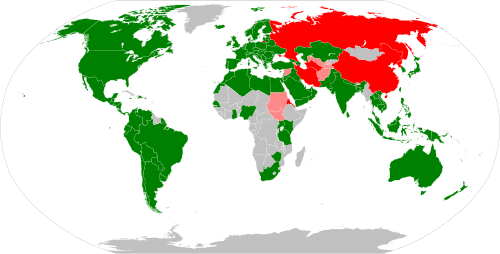
Available as a local version
Available as a worldwide version
Streaming speed limited
Banned
Previously banned, now available
YouTube has been censored, filtered, or banned for a variety of reasons, including:[602]
- Limiting public access and exposure to content that may ignite social or political unrest.
- Preventing criticism of a ruler (e.g. in North Korea), government (e.g. in China) or its actions (e.g. in Morocco), government officials (e.g. in Turkey and Libya), or religion (e.g. in Pakistan).
- Morality-based laws, e.g. in Iran.
Access to specific videos is sometimes prevented due to copyright and intellectual property protection laws (e.g. in Germany), violations of hate speech, and preventing access to videos judged inappropriate for youth,[603] which is also done by YouTube with the YouTube Kids app and with "restricted mode".[604] Businesses, schools, government agencies, and other private institutions often block social media sites, including YouTube, due to its bandwidth limitations[605][606] and the site's potential for distraction.[602][607]
As of 2018[update], public access to YouTube is blocked in many countries, including China, North Korea, Iran, Turkmenistan,[608] Uzbekistan,[609][610] Tajikistan, Eritrea, Sudan and South Sudan. In some countries, YouTube is blocked for more limited periods of time such as during periods of unrest, the run-up to an election, or in response to upcoming political anniversaries. In cases where the entire site is banned due to one particular video, YouTube will often agree to remove or limit access to that video in order to restore service.[602]
Reports emerged that since October 2019, comments posted with Chinese characters insulting the Chinese Communist Party (共匪 "communist bandit" or 五毛 "50 Cent Party", referring to state-sponsored commentators) were being automatically deleted within 15 seconds.[611]
Specific incidents where YouTube has been blocked include:
- Thailand blocked access in April 2007 over a video said to be insulting the Thai king.[612]
- Morocco blocked access in May 2007, possibly as a result of videos critical of Morocco's occupation of Western Sahara.[613] YouTube became accessible again on May 30, 2007, after Maroc Telecom unofficially announced that the denied access to the website was a mere "technical glitch".[614]
- Turkey blocked access between 2008 and 2010 after controversy over videos deemed insulting to Mustafa Kemal Atatürk.[615][616][617] In November 2010, a video of the Turkish politician Deniz Baykal caused the site to be blocked again briefly, and the site was threatened with a new shutdown if it did not remove the video.[618] During the two and a half-year block of YouTube, the video-sharing website remained the eighth-most-accessed site in Turkey.[619][620] In 2014, Turkey blocked the access for the second time, after "a high-level intelligence leak."[621][622][623]
- Pakistan blocked access on February 23, 2008, because of "offensive material" towards the Islamic faith, including display of the Danish cartoons of Muhammad.[624] This led to a near global blackout of the YouTube site for around two hours, as the Pakistani block was inadvertently transferred to other countries. On February 26, 2008, the ban was lifted after the website had removed the objectionable content from its servers at the request of the government.[625][626] Many Pakistanis circumvented the three-day block by using virtual private network software.[627] In May 2010, following the Everybody Draw Mohammed Day, Pakistan again blocked access to YouTube, citing "growing sacrilegious content".[628] The ban was lifted on May 27, 2010, after the website removed the objectionable content from its servers at the request of the government. However, individual videos deemed offensive to Muslims posted on YouTube will continue to be blocked.[629][630] Pakistan again placed a ban on YouTube in September 2012, after the site refused to remove the film Innocence of Muslims. The ban was lifted in January 2016 after YouTube launched a Pakistan-specific version.[631]
- Libya blocked access on January 24, 2010, because of videos that featured demonstrations in the city of Benghazi by families of detainees who were killed in Abu Salim prison in 1996, and videos of family members of Libyan leader Muammar Gaddafi at parties. The blocking was criticized by Human Rights Watch.[632] In November 2011, after the Libyan Civil War, YouTube was once again allowed in Libya.[633]
- Afghanistan, Bangladesh, Pakistan, and Sudan blocked access in September 2012 following controversy over a 14-minute trailer for the film Innocence of Muslims which had been posted on the site.[634][635][636][637][638] A court in the southern Russian Republic of Chechnya ruled that Innocence of Muslims should be banned.[639] In Libya and Egypt, it was blamed for violent protests. YouTube stated: "This video—which is widely available on the Web—is clearly within our guidelines and so will stay on YouTube. However, given the very difficult situation in Libya and Egypt we have temporarily restricted access in both countries."[640][641]
- Following the Russian invasion of Ukraine in February 2022, YouTube announced on March 1 the immediate removal of RT (and other Russian-government funded outlets) from its platform in Europe. The removal was soon expanded globally.[642] From late 2024, Users across Russia started experiencing sharp declines in YouTube loading speeds.[643]
See also



- Invidious, a free and open-source alternative frontend to YouTube
- Alternative media
- BookTube
- BreadTube
- CNN/YouTube presidential debates
- Lists
- Lawsuits
- YouTube copyright issues
- Reply girl
- YouTube Awards
- YouTube Creator Awards
- YouTube Instant
- YouTube Live
- Multi-channel network
- YouTube Music Awards
- YouTube Rewind
- YouTube Theater
- YouTube poop
Notes
- ^ Excluding blocked countries
- ^ Max's Primetime Channels and YouTube TV add-ons both offer in-app access to the streaming service's full content library (as well as provider login access to the standalone Max app and website), and live feeds of HBO's linear channels (limited to the primary East Coast feed on the Primetime Channels version) and the Max-exclusive CNN Max and Bleacher Report streaming channels.
References
- ^ a b Weprin, Alex (February 1, 2022). "YouTube Ad Revenue Tops $8.6B, Beating Netflix in the Quarter". The Hollywood Reporter. Archived from the original on June 8, 2023. Retrieved June 11, 2022.
- ^ "Top Social Media Statistics And Trends Of 2023 – Forbes Advisor". Forbes. Archived from the original on June 14, 2023. Retrieved June 15, 2023.
- ^ Claburn, Thomas (January 5, 2017). "Google's Grumpy code makes Python Go". The Register. Archived from the original on December 14, 2019. Retrieved September 16, 2017.
- ^ Wilson, Jesse (May 19, 2009). "Guice Deuce". Official Google Code Blog. Archived from the original on March 26, 2017. Retrieved March 25, 2017.
- ^ "YouTube Architecture". High Scalability. Archived from the original on October 4, 2014. Retrieved October 13, 2014.
- ^ "Golang Vitess: a database wrapper written in Go as used by Youtube". GitHub. October 23, 2018. Archived from the original on January 30, 2018. Retrieved September 16, 2017.
- ^ a b Goodrow, Cristos (February 27, 2017). "You know what's cool? A billion hours". Archived from the original on August 6, 2020. Retrieved April 19, 2021 – via YouTube.
- ^ a b Loke Hale, James (May 7, 2019). "More Than 500 Hours Of Content Are Now Being Uploaded To YouTube Every Minute". TubeFilter. Los Angeles, CA. Archived from the original on January 5, 2023. Retrieved June 10, 2019.
- ^ a b Neufeld, Dorothy (January 27, 2021). "The 50 Most Visited Websites in the World". Visual Capitalist. Archived from the original on December 10, 2021. Retrieved December 6, 2021.
- ^ Hooker, Lucy (February 1, 2016). "How did Google become the world's most valuable company?". BBC News. Archived from the original on May 26, 2021. Retrieved May 26, 2021.
- ^ "YouTube Revenue and Usage Statistics (2023)". Business of Apps. Archived from the original on September 6, 2023. Retrieved August 9, 2023.
- ^ a b Helft, Miguel; Richtel, Matt (October 10, 2006). "Venture Firm Shares a YouTube Jackpot". The New York Times. ProQuest 433418867. Archived from the original on March 11, 2021. Retrieved March 26, 2017.
- ^ "YouTube founders now superstars". The Sydney Morning Herald. October 11, 2006. Archived from the original on April 13, 2021. Retrieved March 18, 2021.
- ^ a b Cloud, John (December 25, 2006). "The YouTube Gurus". Time. Archived from the original on May 16, 2017. Retrieved March 26, 2017.
- ^ Hopkins, Jim (October 11, 2006). "Surprise! There's a third YouTube co-founder". USA Today. Archived from the original on October 4, 2012. Retrieved March 26, 2017.
- ^ McAlone, Nathan (October 2, 2015). "Here's how Janet Jackson's infamous 'nipplegate' inspired the creation of YouTube". Business Insider. Archived from the original on April 18, 2024. Retrieved April 13, 2024.
- ^ Earliest surviving version of the YouTube website Wayback Machine, April 28, 2005. Retrieved June 19, 2013.
- ^ "r p 2006: YouTube: From Concept to Hypergrowth – Jawed Karim". April 22, 2013. Archived from the original on December 21, 2021 – via YouTube.
- ^ Dredge, Stuart (March 16, 2016). "YouTube was meant to be a video-dating website". The Guardian. Archived from the original on January 28, 2021. Retrieved March 15, 2019.
- ^ Helft, Miguel (October 12, 2006). "San Francisco Hedge Fund Invested in YouTube". The New York Times. Vol. 156, no. 53, 730. ProQuest 433422252. Archived from the original on November 9, 2020. Retrieved September 8, 2018.
- ^ Kehaulani Goo, Sara (October 7, 2006). "Ready for Its Close-Up". The Washington Post. Archived from the original on April 2, 2019. Retrieved March 26, 2017.
- ^ "Whois Record for www.youtube.com". DomainTools. Archived from the original on April 2, 2019. Retrieved April 1, 2009.
- ^ Alleyne, Richard (July 31, 2008). "YouTube: Overnight success has sparked a backlash". The Daily Telegraph. Archived from the original on January 10, 2022. Retrieved March 26, 2017.
- ^ jawed (April 23, 2005). "Me at the zoo". YouTube. Archived from the original on December 21, 2021. Retrieved August 3, 2009.
- ^ "Ronaldinho: Touch of Gold – YouTube". Wayback Machine. November 25, 2005. Archived from the original on November 25, 2005. Retrieved January 1, 2017.
- ^ "Most Viewed – YouTube". Wayback Machine. November 2, 2005. Archived from the original on November 2, 2005. Retrieved January 1, 2017.
- ^ "YouTube: a history". The Daily Telegraph. April 17, 2010. Archived from the original on January 10, 2022. Retrieved March 26, 2017.
- ^ Dickey, Megan Rose (February 15, 2013). "The 22 Key Turning Points in the History of YouTube". Business Insider. Archived from the original on May 12, 2017. Retrieved March 25, 2017.
- ^ Graham, Jefferson (November 21, 2005). "Video websites pop up, invite postings". USA Today. Archived from the original on April 12, 2022. Retrieved March 26, 2017.
- ^ a b Pullen, John Patrick (February 23, 2011). "How Vimeo became hipster YouTube". Fortune. Archived from the original on November 8, 2020. Retrieved May 8, 2020.
- ^ a b Novak, Matt (February 14, 2020). "Here's What People Thought of YouTube When It First Launched in the Mid-2000s". Gizmodo. Archived from the original on January 26, 2021. Retrieved February 14, 2020.
- ^ Biggs, John (February 20, 2006). "A Video Clip Goes Viral, and a TV Network Wants to Control It". The New York Times. Archived from the original on March 8, 2021. Retrieved February 14, 2020.
- ^ Wallenstein, Andrew; Spangler, Todd (December 18, 2015). "'Lazy Sunday' Turns 10: 'SNL' Stars Recall How TV Invaded the Internet". Variety. Archived from the original on December 14, 2020. Retrieved April 27, 2019.
- ^ Higgens, Bill (October 5, 2017). "Hollywood Flashback: 'SNL's' 'Lazy Sunday' Put YouTube on the Map in 2005". The Hollywood Reporter. Archived from the original on November 17, 2020. Retrieved April 27, 2019.
- ^ "YouTube serves up 100 million videos a day online". USA Today. July 16, 2006. Archived from the original on December 31, 2018. Retrieved March 26, 2017.
- ^ Zappone, Christian (October 12, 2006). "Help! YouTube is killing my business!". CNN. Archived from the original on January 9, 2021. Retrieved November 29, 2008.
- ^ Blakely, Rhys (November 2, 2006). "Utube sues YouTube". The Times. London. Archived from the original on April 3, 2007. Retrieved November 29, 2008.
- ^ La Monica, Paul R. (October 9, 2006). "Google to buy YouTube for $1.65 billion". CNNMoney. CNN. Archived from the original on March 5, 2021. Retrieved March 26, 2017.
- ^ Arrington, Michael (October 9, 2006). "Google Has Acquired YouTube". TechCrunch. AOL. Archived from the original on March 16, 2017. Retrieved March 26, 2017.
- ^ Arrington, Michael (November 13, 2006). "Google Closes YouTube Acquisition". TechCrunch. AOL. Archived from the original on March 16, 2017. Retrieved March 26, 2017.
- ^ "Google closes $A2b YouTube deal". The Age. November 14, 2006. Archived from the original on December 20, 2007. Retrieved March 26, 2017.
- ^ Carter, Lewis (April 7, 2008). "Web could collapse as video demand soars". The Daily Telegraph. Archived from the original on January 10, 2022. Retrieved March 26, 2017.
- ^ "comScore Releases May 2010 U.S. Online Video Rankings". comScore. Archived from the original on June 26, 2010. Retrieved June 27, 2010.
- ^ "YouTube redesigns website to keep viewers captivated". Agence France-Presse. Archived from the original on February 26, 2014. Retrieved April 1, 2010.
- ^ "YouTube moves past 3 billion views a day". CNET. May 25, 2011. Archived from the original on December 6, 2018. Retrieved March 26, 2017.
- ^ Bryant, Martin (May 25, 2011). "YouTube hits 3 Billion views per day, 2 DAYS worth of video uploaded every minute". The Next Web. Archived from the original on February 25, 2021. Retrieved March 26, 2017.
- ^ Oreskovic, Alexei (January 23, 2012). "Exclusive: YouTube hits 4 billion daily video views". Reuters. Archived from the original on March 8, 2021. Retrieved March 26, 2017.
- ^ Whitelaw, Ben (April 20, 2011). "Almost all YouTube views come from just 30% of films". The Daily Telegraph. Archived from the original on January 10, 2022. Retrieved March 26, 2017.
- ^ "YouTube's website redesign puts the focus on channels". BBC. December 2, 2011. Archived from the original on April 16, 2019. Retrieved December 2, 2011.
- ^ Cashmore, Pete (October 26, 2006). "YouTube Gets New Logo, Facelift and Trackbacks – Growing Fast!". Mashable. Archived from the original on April 3, 2019. Retrieved December 2, 2011.
- ^ Protalinski, Emil (June 5, 2013). "Google Rolls Out Redesigned YouTube 'One Channel' Layout to All". The Next Web. Archived from the original on May 23, 2023. Retrieved July 20, 2023.
- ^ Welch, Chris (May 19, 2013). "YouTube users now upload 100 hours of video every minute". The Verge. Archived from the original on March 8, 2021. Retrieved March 26, 2017.
- ^ E. Solsman, Joan (November 12, 2014). "YouTube's Music Key: Can paid streaming finally hook the masses?". CNET. Archived from the original on March 8, 2021. Retrieved March 25, 2017.
- ^ Wasserman, Todd (February 15, 2015). "The revolution wasn't televised: The early days of YouTube". Mashable. Archived from the original on February 13, 2021. Retrieved July 4, 2018.
- ^ "Hurley stepping down as YouTube chief executive". Agence France-Presse. October 29, 2010. Archived from the original on February 26, 2014. Retrieved October 30, 2010.
- ^ Stelter, Brian (December 7, 2009). "Music Industry Companies Opening Video Site". The New York Times. ProQuest 1029889187. Archived from the original on August 20, 2017. Retrieved February 9, 2022.
- ^ "Bad Romance By Lady Gaga Becomes First YouTube Video To Hit 200 Million Views". May 9, 2010. Archived from the original on January 1, 2019. Retrieved February 9, 2022.
- ^ McSherry, Corynne (April 5, 2012). "Viacom v. Google: A Decision at Last, and It's Mostly Good (for the Internet and Innovation)". Electronic Frontier Foundation. Archived from the original on May 5, 2024. Retrieved May 5, 2024.
- ^ Oreskovic, Alexei (February 5, 2014). "Google taps longtime executive Wojcicki to head YouTube". Reuters. Archived from the original on September 16, 2017. Retrieved September 16, 2017.
- ^ Avalos, George (January 20, 2016). "YouTube expansion in San Bruno signals big push by video site". Mercury News. Archived from the original on January 22, 2016. Retrieved February 3, 2016.
- ^ Popper, Ben (August 29, 2017). "YouTube has a new look and, for the first time, a new logo". The Verge. Archived from the original on January 6, 2021. Retrieved May 7, 2018.
- ^ a b c "YouTube launches pay-to-watch subscription channels". BBC News. May 9, 2013. Archived from the original on April 10, 2019. Retrieved May 11, 2013.
- ^ Nakaso, Dan (May 7, 2013). "YouTube providers could begin charging fees this week". Mercury News. Archived from the original on March 12, 2014. Retrieved May 10, 2013.
- ^ "Paid content discontinued January 1, 2018 – YouTube Help". Google Inc. Archived from the original on April 19, 2021. Retrieved April 19, 2021.
- ^ Browne, Ryan (June 22, 2018). "YouTube introduces paid subscriptions and merchandise selling in bid to help creators monetize the platform". CNBC. Archived from the original on March 7, 2023. Retrieved April 19, 2021.
- ^ Parker, Laura (April 12, 2017). "A Chat With a Live Streamer Is Yours, for a Price". The New York Times. Archived from the original on November 12, 2020. Retrieved April 21, 2018.
- ^ Newton, Casey (November 12, 2014). "YouTube announces plans for a subscription music service". The Verge. Archived from the original on March 8, 2021. Retrieved May 17, 2018.
- ^ Reader, Ruth (October 21, 2015). "Google wants you to pay $9.99 per month for ad-free YouTube". Venturebeat. Archived from the original on March 8, 2021. Retrieved October 22, 2015.
- ^ Popper, Ben (October 21, 2015). "Exclusive: An inside look at the new ad-free YouTube Red". The Verge. Archived from the original on April 4, 2019. Retrieved May 17, 2018.
- ^ Ingraham, Nathan (November 12, 2015). "YouTube Music isn't perfect, but it's still heaven for music nerds". Engadget.com. Archived from the original on November 12, 2020. Retrieved November 7, 2016.
- ^ Perez, Sarah (February 23, 2015). "Hands on With "YouTube Kids," Google's Newly Launched, Child-Friendly YouTube App". TechCrunch. AOL. Archived from the original on June 26, 2019. Retrieved March 26, 2017.
- ^ Dredge, Stuart (August 26, 2015). "Google launches YouTube Gaming to challenge Amazon-owned Twitch". The Guardian. Archived from the original on September 6, 2015. Retrieved September 5, 2015.
- ^ "YouTube shooting: Suspect visited shooting range before attack". BBC News. April 4, 2018. Archived from the original on March 8, 2021. Retrieved April 9, 2018.
- ^ Lumb, David (February 27, 2017). "One billion hours of YouTube are watched every day". Engadget. AOL. Archived from the original on May 25, 2019. Retrieved March 26, 2017.
- ^ Rouse, Kevin (June 4, 2020). "Rabbit Hole, episode Eight: 'We Go All'". The New York Times. ISSN 0362-4331. Archived from the original on May 12, 2021. Retrieved May 10, 2021.
- ^ Gold, Hadas (March 19, 2020). "Netflix and YouTube are slowing down in Europe to keep the internet from breaking". CNN. Archived from the original on January 28, 2021. Retrieved March 20, 2020.
- ^ "YouTube is reducing the quality of videos for the next month — and it's because increased traffic amid the coronavirus outbreak is straining internet bandwidth". Business Insider. Archived from the original on June 15, 2020. Retrieved March 24, 2020.
- ^ Spangler, Todd (April 9, 2018). "YouTube Illegally Tracks Data on Kids, Groups Claim in FTC Complaint". Variety. Archived from the original on June 8, 2019. Retrieved April 27, 2018.
- ^ Mike, Masnick (September 6, 2019). "FTC's Latest Fine Of YouTube Over COPPA Violations Shows That COPPA And Section 230 Are On A Collision Course". Techdirt. Archived from the original on September 6, 2019. Retrieved September 7, 2019.
- ^ Kelly, Makena (September 4, 2019). "Google will pay $170 million for YouTube's child privacy violations". The Verge. Archived from the original on March 7, 2023. Retrieved September 4, 2019.
- ^ Fung, Brian (September 4, 2019). "Google and FTC reach $170 million settlement over alleged YouTube violations of kids' privacy". CNN Business. Archived from the original on November 11, 2022. Retrieved September 4, 2019.
- ^ Matthews, David (January 6, 2020). "YouTube rolls out new controls aimed at controlling children's content". TechSpot. Archived from the original on April 5, 2023. Retrieved January 9, 2020.
- ^ Kelly, Makena (December 11, 2019). "YouTube calls for 'more clarity' on the FTC's child privacy rules". The Verge. Archived from the original on March 7, 2023. Retrieved December 11, 2019.
- ^ Spangler, Todd (February 24, 2021). "YouTube New 'Supervised' Mode Will Let Parents Restrict Older Kids' Video Viewing". Variety. Archived from the original on March 16, 2023. Retrieved April 19, 2021.
- ^ Sato, Mia (August 2023). "YouTube is adding a slew of new TikTok-like features to Shorts". The Verge. Retrieved August 14, 2024.
- ^ Welch, Chris (April 18, 2019). "YouTube is finally coming back to Amazon's Fire TV devices". The Verge. Archived from the original on April 18, 2019. Retrieved May 5, 2021.
- ^ Solsman, Joan E. (April 30, 2021). "Roku: YouTube TV app removed from channel store as deal with Google ends". CNET. Archived from the original on May 3, 2021. Retrieved May 5, 2021.
- ^ "YouTube removing dislike 'discourages trolls' but 'unhelpful for users'". BBC News. November 12, 2021. Archived from the original on November 30, 2021. Retrieved November 30, 2021.
- ^ Vincent, James (November 17, 2021). "YouTube co-founder predicts 'decline' of the platform following removal of dislikes". The Verge. Archived from the original on November 17, 2021. Retrieved November 18, 2021.
- ^ Binder, Matt (November 17, 2021). "YouTube cofounder protests decision to remove 'dislikes' with an edit to first-ever YouTube upload". Mashable. Archived from the original on November 18, 2021. Retrieved November 18, 2021.
- ^ Kan, Michael (November 17, 2021). "YouTube Co-Founder Says Removing Dislike Counts Is a 'Stupid Idea'". PC Magazine. Archived from the original on May 29, 2023. Retrieved November 30, 2021.
- ^ Kan, Michael (November 29, 2021). "Browser Extension Brings Back Dislike Count to YouTube Videos". PC Magazine. Archived from the original on November 30, 2021. Retrieved January 20, 2022.
- ^ Wojcicki, Susan (January 25, 2022). "Letter from Susan: Our 2022 Priorities". YouTube Official Blog. Archived from the original on October 6, 2023. Retrieved March 8, 2022.
- ^ Livemint (September 19, 2022). "YouTube ends experiment that forced users to watch large unskippable ads". mint. Archived from the original on September 21, 2022. Retrieved September 21, 2022.
- ^ Krasnoff, Barbara (October 15, 2022). "How to choose your YouTube handle". The Verge. Archived from the original on December 14, 2022. Retrieved December 15, 2022.
- ^ a b c Peters, Jay; Roth, Emma (January 16, 2023). "YouTube CEO Susan Wojcicki steps down after nine years at the helm". The Verge. Archived from the original on February 16, 2023. Retrieved February 16, 2023.
- ^ "Allow ads on videos that you watch - YouTube Help". Google News. Archived from the original on November 9, 2023. Retrieved November 9, 2023.
- ^ Dave, Paresh. "YouTube's Crackdown Spurs Record Uninstalls of Ad Blockers". Wired. ISSN 1059-1028. Archived from the original on November 9, 2023. Retrieved November 9, 2023.
- ^ Amadeo, Ron (April 16, 2024). "YouTube puts third-party clients on notice: Show ads or get blocked". Ars Technica. Archived from the original on April 17, 2024. Retrieved April 17, 2024.
- ^ Barman, Nabajeet; Martini, Maria G. (May 2017). "H.264/MPEG-AVC, H.265/MPEG-HEVC and VP9 codec comparison for live gaming video streaming". 2017 Ninth International Conference on Quality of Multimedia Experience (QoMEX). pp. 1–6. doi:10.1109/QoMEX.2017.7965686. ISBN 978-1-5386-4024-1. S2CID 28395957.
- ^ a b "Youtube video/audio codec list". GitHub. 2018. Archived from the original on September 11, 2021. Alt URL Archived September 11, 2021, at the Wayback Machine
- ^ "AV1 Beta Launch Playlist". Archived from the original on February 16, 2021. Retrieved January 14, 2019 – via YouTube.
- ^ Schoon, Ben (January 27, 2021). "YouTube may require AV1 support in the future". 9to5Google. Archived from the original on April 14, 2023. Retrieved May 5, 2021.
- ^ Fildes, Jonathan (October 5, 2009). "Flash moves on to smart phones". BBC. Archived from the original on October 8, 2022. Retrieved November 30, 2009.
- ^ a b Protalinski, Emil (January 27, 2015). "YouTube ditches Flash for HTML5 video by default". VentureBeat. Archived from the original on May 5, 2021. Retrieved May 5, 2021.
- ^ "HTML5 YouTube viewer: close, but not quite there". Archived from the original on November 10, 2009. Retrieved December 1, 2017.
- ^ Tiwari, Rajeev (January 3, 2013). "Streaming Media and RTOS: MPEG-DASH Support in Youtube". Streamingcodecs.blogspot.hu. Archived from the original on March 3, 2014. Retrieved March 13, 2014.
- ^ "Change the quality of your video – YouTube Help". Google Inc. Archived from the original on April 10, 2021.
- ^ Conner, Katie (July 1, 2019). "Make YouTube videos sharper or load faster". CNET. Archived from the original on April 10, 2021. Retrieved April 10, 2021.
- ^ "YouTube launches mobile-friendly "End Screens" feature to keep viewers watching more video". TechCrunch. October 26, 2016. Archived from the original on March 16, 2021. Retrieved January 14, 2019.
- ^ Porter, Jon (November 27, 2018). "YouTube annotations will disappear for good in January". The Verge. Archived from the original on March 16, 2021. Retrieved January 14, 2019.
- ^ Statt, Nick (March 16, 2017). "YouTube to discontinue video annotations because they never worked on mobile". The Verge. Archived from the original on March 16, 2021. Retrieved January 14, 2019.
- ^ "YouTube Adopts ISNI ID for Artists & Songwriters". ISNI. Archived from the original on June 1, 2018. Retrieved June 1, 2018.
- ^ a b "Upload videos longer than 15 minutes" Archived November 2, 2011, at the Wayback Machine YouTube Help. Retrieved July 15, 2017.
- ^ "Introduction to live streaming" Archived October 10, 2017, at the Wayback Machine YouTube Help. Retrieved September 22, 2017.
- ^ "Unlock access to intermediate and advanced features" Archived May 19, 2023, at the Wayback Machine YouTube Help. Retrieved May 19, 2023.
- ^ Fisher, Ken (March 29, 2006). "YouTube caps video lengths to reduce infringement". Ars Technica. Archived from the original on February 26, 2021. Retrieved March 25, 2017.
- ^ Lowensohn, Josh (July 29, 2010). "YouTube bumps video limit to 15 minutes". CNET. Archived from the original on March 8, 2021. Retrieved March 25, 2017.
- ^ Patel, Vinay (May 6, 2021). "YouTube Automatic Translation Feature Rolls Out For Some Users". Android Headlines. Archived from the original on April 7, 2023. Retrieved December 8, 2021.
- ^ "Adding Captions to YouTube Videos". University of Washington. Archived from the original on September 11, 2016. Retrieved September 4, 2016.
- ^ "Saying Goodbye to YouTube's Community Contributions feature after September 28, 2020". Google Inc. Archived from the original on April 22, 2023. Retrieved June 8, 2022.
- ^ "Supported YouTube file formats – YouTube Help". Google Inc. Archived from the original on March 14, 2021. Retrieved November 24, 2020.
- ^ "Recommended upload encoding settings – YouTube Help". Google Inc. Archived from the original on February 2, 2021. Retrieved May 29, 2024.
- ^ "Here's Why YouTube Will Practically Never Run Out of Unique Video IDs". mentalfloss.com. March 23, 2016. Archived from the original on December 27, 2021. Retrieved December 27, 2021.
- ^ "What are YouTube Premieres, and How Do You Use Them?". October 26, 2018. Archived from the original on June 24, 2023. Retrieved June 23, 2021.
- ^ Uro, Tinic (August 13, 2005). "The quest for a new video codec in Flash 8". Archived from the original on February 6, 2009. Retrieved January 27, 2011.
We went this route before with Sorenson Spark which is an incomplete implementation of H.263 and it bit us badly when trying to implement certain solutions.
- ^ "Adobe Flash Video File Format Specification Version 10.1" (PDF). Adobe Systems Incorporated. 2010. p. 72. Archived (PDF) from the original on December 19, 2011. Retrieved January 27, 2011.
Sorenson H.263
- ^ "Market Demand for Sorenson Media's Sorenson Spark Video Decoder Expands Sharply". Sorenson Media. June 2, 2009. Archived from the original on August 27, 2009. Retrieved July 31, 2009.
- ^ "YouTube Mobile goes live". June 17, 2007. Archived from the original on June 20, 2007. Retrieved August 11, 2010.
- ^ "YouTube Videos in High Quality". Official YouTube Blog. March 14, 2008. Archived from the original on November 11, 2020. Retrieved March 25, 2017.
- ^ Lowensohn, Josh (November 20, 2008). "YouTube videos go HD with a simple hack". CNET. Archived from the original on January 6, 2021. Retrieved March 25, 2017.
- ^ Sarukkai, Ramesh (July 9, 2010). "What's bigger than 1080p? 4K video comes to YouTube". Official YouTube Blog. Archived from the original on November 12, 2020. Retrieved March 25, 2017.
- ^ "YouTube now supports 4K-resolution videos". CNET. July 9, 2010. Archived from the original on August 11, 2019. Retrieved March 25, 2017.
- ^ "YouTube Announces Partner Grants Program, Support For 4K Video Resolution". TechCrunch. July 9, 2010. Archived from the original on December 27, 2021. Retrieved December 27, 2021.
- ^ Brunner, Grant (June 27, 2014). "Will 60fps YouTube videos force game developers to prioritize frame rate?". ExtremeTech. Archived from the original on March 8, 2021. Retrieved November 14, 2019.
- ^ Welch, Chris (October 29, 2014). "YouTube now supports 60fps playback, and video games look amazing". The Verge. Archived from the original on March 8, 2021. Retrieved November 14, 2019.
- ^ Stuart, Keith (June 27, 2014). "Battlefield Hardline ushers in era of smooth YouTube trailers". The Guardian. Archived from the original on March 8, 2021. Retrieved June 29, 2014.
- ^ Kumparak, Greg (October 29, 2014). "YouTube Can Now Play Videos at a Buttery 60 Frames Per Second". TechCrunch. AOL. Archived from the original on February 24, 2021. Retrieved March 26, 2017.
- ^ Schroeder, Stan (June 10, 2015). "You can watch an 8K video on YouTube – in theory". MashableUK. Archived from the original on July 3, 2015. Retrieved July 2, 2015.
- ^ Robertson, Steven; Verma, Sanjeev (November 7, 2016). "True colors: adding support for HDR videos on YouTube". Official YouTube Blog. Archived from the original on June 14, 2020. Retrieved March 25, 2017.
- ^ "Upload High Dynamic Range (HDR) videos". YouTube Help. Archived from the original on February 3, 2021. Retrieved March 25, 2017.
- ^ "How to adjust adjust video quality on YouTube". The Indian Express. April 25, 2021. Archived from the original on June 2, 2021. Retrieved May 30, 2021.
- ^ "Change the quality of your video – YouTube Help". Google Inc. Archived from the original on December 29, 2021. Retrieved December 29, 2021.
- ^ "YouTube in 3D". July 21, 2009. Archived from the original on December 21, 2021. Retrieved August 3, 2009 – via YouTube.
- ^ Bonnington, Christina (March 13, 2015). "You Can Now Watch and Upload 360-Degree Videos on YouTube". Wired. ISSN 1059-1028. Archived from the original on July 9, 2016. Retrieved May 10, 2021.
- ^ a b Garun, Natt (November 30, 2016). "YouTube now supports 4K live-streaming for both 360-degree and standard video". The Verge. Archived from the original on December 9, 2020. Retrieved September 23, 2017.
- ^ "New YouTube live features: live 360, 1440p, embedded captions, and VP9 ingestion". googleblog.com. YouTube Engineering and Developers Blog. April 19, 2016. Archived from the original on December 1, 2021. Retrieved December 26, 2021.
- ^ "YouTube's "VR180" format cuts down on VR video's prohibitive requirements". Ars Technica. Archived from the original on March 16, 2021. Retrieved September 26, 2017.
- ^ Broida, Rick. "Watch any YouTube video in VR mode". CNET. Archived from the original on May 11, 2021. Retrieved May 10, 2021.
- ^ Espinoza, Javier; Fildes, Nic; Murphy, Hannah; Bradshaw, Tim (March 20, 2020). "YouTube, Amazon and Netflix cut picture quality in Europe". Financial Times. Archived from the original on March 8, 2021. Retrieved March 20, 2020.
- ^ Alexander, Julia (March 24, 2020). "YouTube is reducing its default video quality to standard definition for the next month". The Verge. Archived from the original on February 1, 2021. Retrieved October 20, 2020.
- ^ Shankland, Stephen. "Google supercharges YouTube with a custom video chip". CNET. Archived from the original on May 5, 2021. Retrieved May 5, 2021.
- ^ Roth, Emma (April 10, 2023). "YouTube is giving Premium subscribers higher-quality video than everyone else". The Verge. Archived from the original on December 10, 2023. Retrieved April 10, 2023.
- ^ Peters, Jay (August 4, 2023). "YouTube's 'enhanced' 1080p for Premium subscribers is now available on desktop web". The Verge. Archived from the original on December 7, 2023. Retrieved December 23, 2023.
- ^ Perez, Sarah (June 19, 2019). "YouTube partners with Universal to upgrade nearly 1,000 classic music videos to HD". TechCrunch. Archived from the original on March 9, 2022. Retrieved March 9, 2022.
- ^ "JORDAN: Queen Rania receives YouTube award". November 15, 2008. Archived from the original on May 6, 2021. Retrieved September 10, 2016.
- ^ Gross, Doug (September 13, 2010). "YouTube testing live streaming". CNN. Archived from the original on September 23, 2017. Retrieved September 22, 2017.
- ^ "YouTube in two-day live video-streaming test". BBC News. September 13, 2010. Archived from the original on November 10, 2019. Retrieved July 21, 2018.
- ^ "YouTube is going LIVE". YouTube Official Blog. April 8, 2011. Archived from the original on September 23, 2017. Retrieved September 22, 2017.
- ^ Pierce, David (August 17, 2015). "YouTube Is the Sleeping Giant of Livestreaming". Wired. Archived from the original on November 8, 2020. Retrieved September 22, 2017.
- ^ "Felix Baumgartner's jump from space's edge watched by millions". Associated Press. October 15, 2012. Archived from the original on October 18, 2012. Retrieved October 15, 2012.
- ^ Blagdon, Jeff (August 3, 2013). "YouTube opens up live streaming to anyone with 100 or more subscribers". The Verge. Archived from the original on November 12, 2020. Retrieved September 22, 2017.
- ^ "YouTube opens live streaming for all verified accounts". MacNN. December 13, 2013. Archived from the original on September 23, 2017. Retrieved September 22, 2017.
- ^ Palladino, Valentina (February 8, 2017). "YouTube now lets creators with 10,000 subscribers live-stream video on mobile". Ars Technica. Archived from the original on November 12, 2020. Retrieved September 22, 2017.
- ^ "Create a live stream" Archived October 10, 2017, at the Wayback Machine YouTube Help. Retrieved September 22, 2017.
- ^ Porter, Jon (December 8, 2020). "YouTube live streams now support HDR". The Verge. Archived from the original on May 10, 2021. Retrieved May 10, 2021.
- ^ Grossman, Lev (December 25, 2006). "You – Yes, You – Are TIME's Person of the Year". Time. Archived from the original on March 4, 2017. Retrieved March 26, 2017.
- ^ Owen, Paul (November 3, 2009). "Our top 10 funniest YouTube comments – what are yours?". The Guardian. London. Archived from the original on March 11, 2014. Retrieved March 13, 2014.
- ^ Moore, Matthew (September 2, 2008). "YouTube's worst comments blocked by filter". The Daily Telegraph. Archived from the original on January 10, 2022. Retrieved March 26, 2017.
- ^ Rundle, Michael (April 7, 2012). "Policing Racism Online: Liam Stacey, YouTube And The Law Of Big Numbers". HuffPost. Archived from the original on May 28, 2012. Retrieved June 1, 2012.
- ^ "YouTube aims to tame the trolls with changes to its comments section" Archived February 9, 2017, at the Wayback Machine, Stuart Dredge, The Guardian, November 7, 2013. Retrieved November 9, 2013.
- ^ "No more links in comments?". Google product forums. 2009. Archived from the original on December 3, 2018. Retrieved August 28, 2013.
- ^ "View and post comments". Google Support. 2013. Archived from the original on November 17, 2013. Retrieved November 11, 2013.
- ^ Hern, Alex (November 8, 2013). "YouTube co-founder hurls abuse at Google over new YouTube comments". The Guardian. London. Archived from the original on November 12, 2013. Retrieved November 11, 2013.
- ^ "Meet the new YouTube comments" on YouTube, November 6, 2013. Retrieved November 9, 2013.
- ^ "YouTube Founder Blasts New YouTube Comments: Jawed Karim Outraged At Google Plus Requirement" Archived October 5, 2022, at the Wayback Machine, Ryan W. Neal, International Business Times, November 8, 2013. Retrieved November 9, 2013.
- ^ Chase, Melvin (November 20, 2013). "YouTube comments require Google+ account, Google faces uproar". Newsday. Archived from the original on November 12, 2014. Retrieved February 17, 2022.(subscription required) Alternate link Archived December 3, 2013, at the Wayback Machine.
- ^ "Google unlinking Google+ from YouTube". BBC News. London. July 28, 2015. Archived from the original on July 28, 2015. Retrieved July 29, 2015.
- ^ E. Solsman, Joan (November 3, 2016). "YouTube helps creators blast trolls from comments". CNET. Archived from the original on February 12, 2017. Retrieved March 25, 2017.
- ^ Jotham, Immanuel (July 24, 2017). "New YouTube feature allows creators to automatically block spam". International Business Times UK. Archived from the original on September 17, 2017. Retrieved September 17, 2017.
- ^ Alexander, Julia (December 3, 2020). "YouTube will ask commenters to rethink posting if their message seems offensive". The Verge. Archived from the original on December 8, 2020. Retrieved December 9, 2020.
- ^ Perez, Sarah (December 3, 2020). "YouTube introduces new feature to address toxic comments". TechCrunch. Archived from the original on December 5, 2020. Retrieved December 9, 2020.
- ^ Perez, Sarah (September 13, 2016). "YouTube gets its own social network with the launch of YouTube Community". TechCrunch. AOL. Archived from the original on March 5, 2021. Retrieved March 26, 2017.
- ^ McEvoy, Kiley (September 13, 2016). "YouTube Community goes beyond video". YouTube Creators Blog. Archived from the original on June 14, 2020. Retrieved March 25, 2017.
- ^ "Create a Community post – Computer – YouTube Help". Google Inc. Archived from the original on March 1, 2021. Retrieved September 11, 2019.
- ^ Peters, Jay (September 9, 2021). "YouTube halves the number of subscribers you need to unlock Community posting". The Verge. Archived from the original on November 17, 2021. Retrieved November 17, 2021.
- ^ "Engage with creators on Community posts – Computer – YouTube Help". Google Inc. Archived from the original on February 24, 2021. Retrieved September 11, 2019.
- ^ "Hidden features of Facebook, WhatsApp, Youtube and more". Gadgets Now. Archived from the original on April 13, 2021. Retrieved December 31, 2020.
- ^ "YouTube's Test Tube: What Is It?". Golden Grid System. January 8, 2020. Archived from the original on February 5, 2021. Retrieved December 31, 2020.
- ^ "Google Testing Comment Search On YouTube". Search Engine Land. October 16, 2009. Archived from the original on December 9, 2020. Retrieved December 31, 2020.
- ^ "Slow YouTube? Try Feather, Made for India". Gtricks. December 7, 2009. Archived from the original on February 13, 2021. Retrieved December 31, 2020.
- ^ "YouTube embedded video guide". Archived from the original on October 10, 2017. Retrieved February 17, 2022.
- ^ "So long, video responses ... Next up: better ways to connect". YouTube Creators Blog. August 27, 2013. Archived from the original on June 26, 2020. Retrieved March 25, 2017.
- ^ "Control comments and video responses". Google Support. Archived from the original on April 20, 2021. Retrieved August 28, 2013.
- ^ "Terms of Use, 5.B". Archived from the original on March 17, 2021. Retrieved August 25, 2010 – via YouTube.
- ^ Lowensohn, Josh (January 16, 2009). "(Some) YouTube videos get download option". CNET. Archived from the original on March 8, 2021. Retrieved March 25, 2017.
- ^ Milian, Mark (February 19, 2009). "YouTube looks out for content owners, disables video ripping". Los Angeles Times. Archived from the original on July 1, 2009. Retrieved February 21, 2009.
- ^ Rao, Leena (February 12, 2009). "YouTube Hopes To Boost Revenue With Video Downloads". The Washington Post. Archived from the original on January 7, 2021. Retrieved March 26, 2017.
- ^ "Google Threatens To Sue Huge YouTube MP3 Conversion Site". Torrentfreak. June 19, 2012. Archived from the original on September 1, 2013. Retrieved September 4, 2013.
- ^ "Downloading YouTube videos – no longer supported". Zamzar. June 12, 2012. Archived from the original on September 5, 2013. Retrieved September 4, 2013.
- ^ Park, Jane (June 2, 2011). "YouTube launches support for CC BY and a CC library featuring 10,000 videos". Creative Commons. Archived from the original on February 26, 2021. Retrieved July 20, 2019.
- ^ Casserly, Cathy (July 25, 2012). "Here's your invite to reuse and remix the 4 million Creative Commons-licensed videos on YouTube". Official YouTube Blog. Archived from the original on June 14, 2020. Retrieved March 25, 2017.
- ^ "YouTube". Archived from the original on November 1, 2023. Retrieved January 2, 2012 – via YouTube.
- ^ Chitu, Alex (June 15, 2007). "Mobile YouTube". Unofficial Google Blog. Archived from the original on March 26, 2017. Retrieved March 25, 2017.
- ^ "YouTube Live on Apple TV Today; Coming to iPhone on June 29". Apple. June 20, 2007. Archived from the original on December 28, 2008. Retrieved January 17, 2009.
- ^ Zibreg, Christian (July 8, 2010). "Goodbye Flash: YouTube mobile goes HTML5 on iPhone and Android". Archived from the original on April 27, 2012. Retrieved January 9, 2012.
- ^ Kincaid, Jason (July 7, 2010). "YouTube Mobile Goes HTML5, Video Quality Beats Native Apps Hands Down". TechCrunch. AOL. Archived from the original on January 6, 2021. Retrieved March 26, 2017.
- ^ "YouTube 2.1 App Now Available on Android Market". December 8, 2010. Archived from the original on January 23, 2012. Retrieved January 9, 2012.
- ^ Dredge, Stuart (September 11, 2012). "New YouTube iPhone app preempts iOS6 demotion". The Guardian. London. Archived from the original on March 8, 2021. Retrieved September 11, 2012.
- ^ Smith, Cooper (September 5, 2013). "Google+ Is The Fourth Most-Used Smartphone App". Business Insider. Archived from the original on June 20, 2017. Retrieved March 25, 2017.
- ^ "TiVo Getting YouTube Streaming Today". Gizmodo. July 17, 2007. Archived from the original on September 16, 2018. Retrieved February 17, 2009.
- ^ "YouTube video comes to Wii and PlayStation 3 game consoles". Los Angeles Times. January 15, 2009. Archived from the original on January 18, 2009. Retrieved January 17, 2009.
- ^ "Coming Up Next ... YouTube on Your TV". YouTube Blog. January 15, 2009. Archived from the original on June 22, 2009. Retrieved May 10, 2009.
- ^ "Experience YouTube XL on the Big Screen". YouTube Blog. June 2, 2009. Archived from the original on January 9, 2021. Retrieved June 20, 2009 – via YouTube.
- ^ "Xbox Live Getting Live TV, YouTube & Bing Voice Search". Mashable. June 6, 2011. Retrieved December 22, 2011.
- ^ "YouTube app wanders onto Nintendo Wii days before Wii U launch". Techradar.com. November 15, 2012. Archived from the original on November 19, 2012. Retrieved November 20, 2012.
- ^ "YouTube App for Nintendo 3DS Discontinuation". Nintendo America. Archived from the original on February 21, 2020. Retrieved February 4, 2020.
- ^ Ali, Sarah (November 22, 2012). "Just for U: YouTube arrives on Wii U". Official YouTube Blog. Archived from the original on June 14, 2020. Retrieved March 25, 2017.
- ^ Spangler, Todd (December 17, 2013). "YouTube Channel Now Playing on Roku". Variety. Archived from the original on March 8, 2021. Retrieved March 25, 2017.
- ^ O'Grady, Richard (October 28, 2014). "Pwn, share, repeat with YouTube on PlayStation 4". Official YouTube Blog. Archived from the original on December 10, 2020. Retrieved March 25, 2017.
- ^ "YouTube for Nintendo Switch". Nintendo Game Details. Nintendo of America. Archived from the original on March 11, 2021. Retrieved December 5, 2018.
- ^ a b c d e f g h i j k l m Sayer, Peter (June 19, 2007). "Google launches YouTube France News". PC Advisor. International Data Group. Archived from the original on November 1, 2023. Retrieved November 1, 2023.
- ^ "YouTube aux couleurs de la France" [YouTube in the colours of France] (in French). June 19, 2007. Archived from the original on December 10, 2023. Retrieved December 10, 2023.
- ^ "YouTube: A Localization Strategy and What Comes Next". March 11, 2015. Archived from the original on September 24, 2023. Retrieved January 4, 2024.
- ^ "Creators can build big international audiences by dubbing their content in other languages. But what's the best way to dub?" [YouTube in the colours of France]. August 1, 2023. Archived from the original on August 17, 2023. Retrieved December 20, 2023.
- ^ See the YouTube localization list at the bottom of the YouTube website.
- ^ "Watch videos offline on mobile in select countries & regions". YouTube. Archived from the original on March 11, 2024. Retrieved March 11, 2024.
- ^ "Change language or location settings". YouTube. Archived from the original on March 11, 2024. Retrieved March 11, 2024.
- ^ Also as worldwide launch.
- ^ "Presentan hoy YouTube México" [YouTube México launched today]. El Universal (in Spanish). October 11, 2007. Archived from the original on May 16, 2009. Retrieved September 9, 2010.
- ^ "中文上線 – YouTube 香港中文版登場!". Stanley5. October 17, 2007. Archived from the original on October 11, 2018. Retrieved January 2, 2012.
- ^ "YouTube繁體中文版上線". IThome. October 18, 2007. Archived from the original on May 18, 2022.
- ^ a b Nicole, Kristen (October 22, 2007). "YouTube Launches in Australia & New Zealand". Mashable. Archived from the original on April 3, 2019. Retrieved August 3, 2009.
- ^ Nicole, Kristen (November 6, 2007). "YouTube Canada Now Live". Mashable. Archived from the original on April 3, 2019. Retrieved August 3, 2009.
- ^ Ostrow, Adam (November 8, 2007). "YouTube Germany Launches". Mashable. Archived from the original on April 3, 2019. Retrieved August 3, 2009.
- ^ "YouTube перевелся на русский" (in Russian). Kommersant Moscow. November 14, 2007. Archived from the original on December 2, 2013. Retrieved March 22, 2012.
- ^ Williams, Martyn (January 23, 2008). "YouTube Launches Korean Site". PC World. Archived from the original on April 28, 2012. Retrieved March 22, 2012.
- ^ Joshi, Sandeep (May 8, 2008). "YouTube now has an Indian incarnation". The Hindu. Chennai, India. Archived from the original on May 10, 2008. Retrieved August 3, 2009.
- ^ Bokuvka, Petr (October 12, 2008). "Czech version of YouTube launched. And it's crap. It sucks". The Czech Daily Word. Wordpress.com. Archived from the original on April 3, 2019. Retrieved August 3, 2009.
- ^ Launch video unavailable when YouTube opens up in Sweden Archived September 10, 2018, at the Wayback Machine October 23, 2008. Retrieved December 7, 2012.
- ^ "YouTube launches in Argentina". September 9, 2010. Archived from the original on September 12, 2010. Retrieved September 9, 2010.
- ^ a b c d e f g "YouTube Launches Local Version For Algeria, Egypt, Jordan, Morocco, Saudi Arabia, Tunisia and Yemen". ArabCrunch. Archived from the original on March 14, 2011. Retrieved March 13, 2011.
- ^ Jidenma, Nmachi (September 1, 2011). "Google launches YouTube in Kenya". The Next Web. Archived from the original on March 31, 2019. Retrieved March 22, 2012.
- ^ Olchondra, Riza (October 13, 2011). "YouTube Philippines launched". Philippine Daily Inquirer. Retrieved June 29, 2024.
- ^ "YouTube Launches Singapore Site". Archived from the original on October 21, 2011. Retrieved September 23, 2015.
- ^ YouTube launches localized website for Colombia Archived September 10, 2018, at the Wayback Machine December 1, 2011. Retrieved December 1, 2011.
- ^ Google Launches YouTube Uganda Archived January 4, 2012, at the Wayback Machine December 2, 2011. Retrieved January 15, 2012.
- ^ Google to Launch YouTube Nigeria Today Archived January 8, 2012, at the Wayback Machine December 7, 2011. Retrieved January 15, 2012.
- ^ Google launches YouTube Chile March 19, 2012. Retrieved March 22, 2012. Archived March 25, 2012, at the Wayback Machine
- ^ Google Launches Hungarian YouTube March 12, 2012. Retrieved March 22, 2012. Archived January 17, 2013, at the Wayback Machine
- ^ YouTube Launches Local Domain For Malaysia Archived October 10, 2017, at the Wayback Machine March 22, 2012. Retrieved March 22, 2012.
- ^ YouTube Peru Launched, Expansion continues Archived October 10, 2017, at the Wayback Machine March 27, 2012. Retrieved April 1, 2012.
- ^ Bindu Suresh Rai (April 2, 2012). "UAE version of YouTube launched". Emirates 247. Archived from the original on February 25, 2014. Retrieved February 14, 2014.
- ^ "YouTube Launches Indonesian Version" Archived January 17, 2013, at the Wayback Machine, June 15, 2012. Retrieved July 8, 2012.
- ^ "Google launches YouTube in Ghana" Archived June 24, 2012, at the Wayback Machine, June 22, 2012. Retrieved July 8, 2012.
- ^ "YouTube launches local portal in Senegal" Archived February 17, 2022, at the Wayback Machine,
^ [3] itag 120 is for live streaming and has metadata referring to "Elemental Technologies Live". July 16, 2012. Retrieved July 25, 2012. - ^ "YouTube's Turkish version goes into service" Archived September 5, 2015, at the Wayback Machine, October 1, 2012. Retrieved October 1, 2012.
- ^ Tarasova, Maryna (December 13, 2012). "YouTube приходить в Україну! (YouTube comes in Ukraine!)" (in Ukrainian). Ukraine: Google Ukraine Blog. Archived from the original on August 4, 2016. Retrieved February 17, 2022.
- ^ "YouTube lanceres i Danmark". Denmark: iProspect. Archived from the original on May 7, 2013. Retrieved April 17, 2013.
- ^ Sormunen, Vilja (February 6, 2013). "YouTube Launches in the Nordics". Nordic: KLOK. Archived from the original on July 28, 2013. Retrieved February 11, 2013.
- ^ "YouTube Launched in Norway". Norway: TONO. Archived from the original on April 20, 2013. Retrieved April 17, 2013.
- ^ "YouTube goes Swiss". Swiss: swissinfo. Archived from the original on December 3, 2013. Retrieved April 17, 2013.
- ^ "YouTube.at since Thursday online". Wiener Zeitung. Austria. Archived from the original on May 2, 2013. Retrieved April 17, 2013.
- ^ "Youtube România se lansează într-o săptămână". Romania: ZF.ro. Archived from the original on December 2, 2013. Retrieved May 14, 2013.
- ^ "Google lança versão lusa do YouTube". Portugal: Luso Noticias. Archived from the original on December 3, 2013. Retrieved May 14, 2013.
- ^ tš (May 21, 2013). "Slováci už môžu oficiálne zarábať na tvorbe videí pre YouTube" (in Slovak). Vat Pravda. Archived from the original on April 3, 2019. Retrieved February 14, 2014.
- ^ a b c d e Rego, Nick (September 16, 2013). "YouTube expands monetization and partnership in GCC". tbreak Media. Archived from the original on February 13, 2014. Retrieved February 14, 2014.
- ^ Ивелина Атанасова (March 18, 2014). "YouTube рекламата става достъпна и за България" (in Bulgarian). New Trend. Archived from the original on April 7, 2014. Retrieved April 5, 2014.
- ^ "Oglašavanje na video platformi YouTube od sad dostupno i u Hrvatskoj" (in Croatian). Lider. March 19, 2014. Archived from the original on January 11, 2015. Retrieved April 5, 2014.
- ^ Oden, Siiri (March 19, 2014). "Youtube reklaamid – uued võimalused nüüd ka Eestis!" (in Estonian). Meedium. Archived from the original on April 7, 2014. Retrieved April 5, 2014.
- ^ Marta (March 18, 2014). "Tagad reklāmas iespējas Youtube kanālā iespējams izmantot arī Latvijā" (in Latvian). Marketing. Archived from the original on March 21, 2014. Retrieved April 5, 2014.
- ^ STA (March 18, 2014). "Na Youtube prihajajo tudi slovenski video oglasi". Dnevnik (in Slovenian). Archived from the original on April 7, 2014. Retrieved April 5, 2014.
- ^ Pornwasin, Asina (April 3, 2014). "YouTube introduces homepage especially". The Nation. Archived from the original on July 25, 2014. Retrieved April 4, 2014.
- ^ a b c d Hall, Stephen (October 12, 2015). "YouTube continues global expansion w/ versions of its site in 7 new locales". 9to5 Google. Archived from the original on April 3, 2019. Retrieved March 18, 2016.
- ^ a b "YouTube launches Nepal, Pakistan, Sri Lanka-specific homepages". The Himalayan Times. January 13, 2016. Archived from the original on March 31, 2019. Retrieved January 31, 2016.
- ^ "YouTube launches country-specific homepage for Pakistan". The Express Tribune. January 12, 2016. Archived from the original on January 28, 2016. Retrieved January 31, 2016.
- ^ "YouTube Launches Local Domain For Malta". maltachamber.org.mt. Archived from the original on March 7, 2023. Retrieved February 15, 2023.
- ^ "Learn More: Video not available in my country". Archived from the original on December 3, 2011. Retrieved August 4, 2009.
- ^ "Turkey lifts two-year ban on YouTube". BBC News. October 30, 2010. Archived from the original on April 8, 2019. Retrieved October 3, 2012.
- ^ Danforth, Nick (July 31, 2009). "Turks censor YouTube censorship". San Francisco Chronicle. Archived from the original on March 4, 2010. Retrieved August 4, 2009.
- ^ Kerr, Dara (October 2, 2012). "YouTube cedes to Turkey and uses local Web domain". CNET. Archived from the original on March 12, 2014. Retrieved March 25, 2017.
- ^ Barnett, Emma (September 3, 2009). "Music videos back on YouTube in multi-million pound PRS deal". The Daily Telegraph. Archived from the original on January 10, 2022. Retrieved March 26, 2017.
- ^ "Now YouTube stops the music in Germany". The Guardian. London. April 1, 2009. Archived from the original on March 31, 2019. Retrieved April 2, 2009.
- ^ Seabrook, John (January 16, 2012). "Streaming Dreams". The New Yorker. Archived from the original on July 2, 2014. Retrieved January 6, 2012.
- ^ "Updates from VidCon: more users, more products, more shows and much more". Official YouTube Blog. Archived from the original on September 17, 2017. Retrieved September 16, 2017.
- ^ Hoffberger, Chase (December 21, 2012). "YouTube strips Universal and Sony of 2 billion fake views". The Daily Dot. Complex Media, Inc. Archived from the original on January 11, 2014. Retrieved January 10, 2014.
- ^ Sabbagh, Dan (December 28, 2012). "Two billion YouTube music video views disappear ... or just migrate?". The Guardian. Archived from the original on March 7, 2023. Retrieved January 10, 2014.
- ^ Haran, Brady (June 22, 2012). Why do YouTube views freeze at 301?. Numberphile. Archived from the original on December 21, 2021. Retrieved August 30, 2018 – via YouTube.
- ^ Snyder, Benjamin (August 6, 2015). "YouTube Finally Fixed This Annoying Feature". Time. Archived from the original on February 12, 2017. Retrieved March 26, 2017.
- ^ "Abbreviated public-facing subscriber counts". YouTube Engineering and Developers Blog. 2019. Archived from the original on April 13, 2021. Retrieved April 9, 2021.
- ^ Spangler, Todd (March 30, 2021). "YouTube Launches Test to Hide Video 'Dislike' Counts". Variety. Archived from the original on March 30, 2021. Retrieved March 30, 2021.
- ^ Perez, Sarah (March 30, 2021). "YouTube tests hiding dislike counts on videos". TechCrunch. Archived from the original on March 30, 2021. Retrieved March 30, 2021.
- ^ "YouTube to hide dislike counts for all videos on the platform: Here's all you need to know". MSN. November 11, 2021. Archived from the original on November 11, 2021. Retrieved November 11, 2021.
- ^ Marsden, Rhodri (August 12, 2009). "Why did my YouTube account get closed down?". The Independent. London. Archived from the original on May 7, 2022. Retrieved August 12, 2009.
- ^ Why do I have a sanction on my account? Archived January 20, 2013, at the Wayback Machine YouTube. Retrieved February 5, 2012.
- ^ "Is YouTube's three-strike rule fair to users?". BBC News. London. May 21, 2010. Archived from the original on July 4, 2018. Retrieved February 5, 2012.
- ^ "Viacom will sue YouTube for $1bn". BBC News. March 13, 2007. Archived from the original on January 15, 2009. Retrieved May 26, 2008.
- ^ "Mediaset Files EUR500 Million Suit Vs Google's YouTube". CNNMoney.com. July 30, 2008. Archived from the original on September 8, 2008. Retrieved August 19, 2009.
- ^ "Premier League to take action against YouTube". The Daily Telegraph. May 5, 2007. Archived from the original on January 10, 2022. Retrieved March 26, 2017.
- ^ Egelko, Bob (August 20, 2008). "Woman can sue over YouTube clip de-posting". San Francisco Chronicle. Archived from the original on August 25, 2008. Retrieved August 25, 2008.
- ^ Finley, Klint (November 19, 2015). "Google Pledges to Help Fight Bogus YouTube Copyright Claims—for a Few". Wired. Archived from the original on March 20, 2017. Retrieved March 25, 2017.
- ^ "Smith v. Summit Entertainment LLC". Docket Alarm, Inc. Ohio Northern District Court. July 18, 2013. Archived from the original on June 19, 2024. Retrieved October 21, 2014.
- ^ District Judge James G. Carr (June 6, 2011). "Order". Smith v. Summit Entertainment LLC. United States District Court, N.D. Ohio, Western Division. Archived from the original on January 30, 2016. Retrieved November 7, 2011.
- ^ "YouTube loses court battle over music clips". BBC News. London. April 20, 2012. Archived from the original on October 16, 2012. Retrieved April 20, 2012.
- ^ "YouTube's seven-year stand-off ends". BBC News. London. November 1, 2016. Archived from the original on November 3, 2016. Retrieved November 2, 2016.
- ^ "YouTube's Deal With Universal Blocks DMCA Counter Notices". TorrentFreak. April 5, 2013. Archived from the original on April 7, 2013. Retrieved April 5, 2013.
- ^ "Videos removed or blocked due to YouTube's contractual obligations". Archived from the original on May 14, 2013. Retrieved April 5, 2013.
- ^ Aswad, Jem (December 19, 2017). "YouTube Strikes New Deals With Universal and Sony Music". Variety. Archived from the original on April 22, 2021. Retrieved April 22, 2021.
- ^ a b Alexander, Julia (May 24, 2019). "YouTubers and record labels are fighting, and record labels keep winning". The Verge. Archived from the original on April 22, 2021. Retrieved April 22, 2021.
- ^ Delaney, Kevin J. (June 12, 2007). "YouTube to Test Software To Ease Licensing Fights". The Wall Street Journal. Archived from the original on February 20, 2012. Retrieved December 4, 2011.
- ^ YouTube Advertisers (February 4, 2008), Video Identification, retrieved August 29, 2018[dead YouTube link]
- ^ King, David (December 2, 2010). "Content ID turns three". Official YouTube Blog. Retrieved August 29, 2018.
- ^ "YouTube Content ID". September 28, 2010. Archived from the original on December 21, 2021. Retrieved May 25, 2015 – via YouTube.
- ^ More about Content ID YouTube. Retrieved December 4, 2011.
- ^ Von Lohmann, Fred (April 23, 2009). "Testing YouTube's Audio Content ID System". Electronic Frontier Foundation. Retrieved December 4, 2011.
- ^ Von Lohmann, Fred (February 3, 2009). "YouTube's January Fair Use Massacre". Electronic Frontier Foundation. Retrieved December 4, 2011.
- ^ Content ID disputes YouTube. Retrieved December 4, 2011.
- ^ Hernandez, Patricia (April 28, 2016). "YouTube's Content ID System Gets One Much-Needed Fix". Kotaku. Retrieved September 16, 2017.
- ^ "Remove Content ID claimed songs from my videos – YouTube Help". Google Inc. Retrieved September 17, 2017.
- ^ Siegel, Joshua; Mayle, Doug (December 9, 2010). "Up, Up and Away – Long videos for more users". Official YouTube Blog. Retrieved March 25, 2017.
- ^ a b c "YouTube Community Guidelines". Archived from the original on March 4, 2017. Retrieved November 30, 2008 – via YouTube.
- ^ a b Alexander, Julia (May 10, 2018). "The Yellow $: a comprehensive history of demonetization and YouTube's war with creators". Polygon. Retrieved November 3, 2019.
- ^ Wong, Julia Carrie; Levin, Sam (January 25, 2019). "YouTube vows to recommend fewer conspiracy theory videos". The Guardian. ISSN 0261-3077. Retrieved November 3, 2019.
- ^ Orphanides, K. G. (March 23, 2018). "Children's YouTube is still churning out blood, suicide and cannibalism". Wired UK. ISSN 1357-0978. Retrieved November 3, 2019.
- ^ Orphanides, K. G. (February 20, 2019). "On YouTube, a network of paedophiles is hiding in plain sight". Wired UK. ISSN 1357-0978. Retrieved November 3, 2019.
- ^ Kimball, Whitney (September 22, 2020). "Content Moderator Exposed to Child Assault and Animal Torture Sues YouTube". Gizmodo. Retrieved October 11, 2020.
- ^ Vincent, James (September 22, 2020). "Former YouTube content moderator sues the company after developing symptoms of PTSD". The Verge. Retrieved October 11, 2020.
- ^ Elias, Jennifer (September 22, 2020). "Former YouTube content moderator describes horrors of the job in new lawsuit". CNBC. Retrieved October 11, 2020.
- ^ Alba, Davey (February 3, 2020). "YouTube Says It Will Ban Misleading Election-Related Content". The New York Times. Retrieved February 10, 2020.
- ^ "YouTube criticized in Germany over anti-Semitic Nazi videos". Reuters. Archived from the original on May 17, 2008. Retrieved May 28, 2008.
- ^ "Fury as YouTube carries sick Hillsboro video insult". icLiverpool. Archived from the original on March 20, 2012. Retrieved November 29, 2015.
- ^ Kirkup, James; Martin, Nicole (July 31, 2008). "YouTube attacked by MPs over sex and violence footage". The Daily Telegraph. Archived from the original on January 10, 2022. Retrieved March 26, 2017.
- ^ "Al-Awlaki's YouTube Videos Targeted by Rep. Weiner". Fox News. October 25, 2010. Retrieved November 13, 2010.
- ^ F. Burns, John; Helft, Miguel (November 4, 2010). "YouTube Withdraws Cleric's Videos". The New York Times. ProQuest 1458411069. Retrieved March 26, 2017.
- ^ Bennett, Brian (December 12, 2010). "YouTube is letting users decide on terrorism-related videos". Los Angeles Times. Retrieved November 29, 2015.
- ^ Newton, Casey (March 13, 2018). "YouTube will add information from Wikipedia to videos about conspiracies". The Verge. Retrieved April 15, 2019.
- ^ Brown, David (March 14, 2018). "YouTube uses Wikipedia to fight fake news". The Times. ISSN 0140-0460. Archived from the original on September 27, 2021. Retrieved July 13, 2023.
- ^ Matsakis, Louise (March 16, 2018). "Don't Ask Wikipedia to Cure the Internet". Wired. ISSN 1059-1028. Retrieved July 21, 2024.
- ^ Bergen, Mark (April 15, 2019). "YouTube Flags Notre-Dame Fire as 9/11 Conspiracy, Says System Made 'Wrong Call'". Bloomberg L.P. Retrieved April 15, 2019.
- ^ "YouTube rolls out new policies for eating disorder content". CNN.
- ^ Bensinger, Greg; Albergotti, Reed (August 14, 2019). "YouTube discriminates against LGBT content by unfairly culling it, suit alleges". The Washington Post. Retrieved August 14, 2019.
- ^ a b c Lawton, Sophie (June 23, 2022). "Right-wing clickbait pushing anti-LGBTQ 'groomer' smears are increasingly popular on YouTube". Media Matters. Retrieved October 23, 2022.
- ^ "YouTube must remove videos of animal cruelty, says charity". The GuardianTimes. December 19, 2020. Retrieved December 5, 2023.
- ^ "Monkeys killed in blenders by sadistic torture ring that films abuse to sell online". The New York Times. October 19, 2021. Retrieved December 4, 2023.
- ^ "Google Defeats Lawsuit Decrying Animal Abuse Videos on YouTube". The New York Times. August 4, 2022. Retrieved December 5, 2023.
- ^ Newey, Sarah (June 20, 2023). "Monkeys killed in blenders by sadistic torture ring that films abuse to sell online". The Telegraph. Archived from the original on June 20, 2023. Retrieved June 23, 2023.
- ^ "Hunting the monkey torturers". BBC News. Retrieved June 23, 2023.
- ^ Pritchard-Jones, Oliver (October 10, 2021). "YouTube hosts HUNDREDS of 'disgusting' animal cruelty videos". The Daily Express. Retrieved June 23, 2023.
- ^ "The Monkey Haters". BBC Three. BBC. Retrieved June 23, 2023.
- ^ "The monkey haters". The Documentary. BBC World Service. Retrieved June 23, 2023.
- ^ Geiger, Gabriel (August 13, 2021). "People Buy Custom Baby Monkey Torture Videos on World's Worst Forum". Vice. Retrieved June 23, 2023.
- ^ a b c Nicas, Jack (February 7, 2018). "How YouTube Drives People to the Internet's Darkest Corners". The Wall Street Journal. ISSN 0099-9660. Retrieved June 16, 2018.
- ^ Fisher, Max; Bennhold, Katrin (September 7, 2018). "As Germans Seek News, YouTube Delivers Far-Right Tirades". The New York Times. Retrieved September 8, 2018.
- ^ a b c Ingram, Matthew. "YouTube's secret life as an engine for right-wing radicalization". Columbia Journalism Review. No. September 19, 2018. Retrieved March 26, 2019.
- ^ Lewis, Rebecca (September 2018). "Alternative Influence: Broadcasting the Reactionary Right on YouTube" (PDF). datasociety.net. Data and Society. Retrieved March 26, 2019.
- ^ "YouTube wants the news audience, but not the responsibility". Columbia Journalism Review. Retrieved September 23, 2018.
- ^ Nicas, Jack (October 6, 2017). "YouTube Tweaks Search Results as Las Vegas Conspiracy Theories Rise to Top". The Wall Street Journal. ISSN 0099-9660. Retrieved June 16, 2018.
- ^ "Here's How YouTube Is Spreading Conspiracy Theories About The Vegas Shooting". BuzzFeed. Retrieved June 16, 2018.
- ^ "The Big Tech Platforms Still Suck During Breaking News". BuzzFeed. Retrieved June 16, 2018.
- ^ Alba, Davey (June 16, 2018). "YouTube Is Spreading Conspiracy Theories about Anthony Bourdain's Death". BuzzFeed News. Retrieved June 16, 2018.
- ^ a b "Google apologises as M&S pulls ads". BBC News. March 20, 2017. Retrieved June 16, 2018.
- ^ Lewis, Paul (February 2, 2018). "'Fiction is outperforming reality': how YouTube's algorithm distorts truth". The Guardian. ISSN 0261-3077. Retrieved June 16, 2018.
- ^ Levin, Sam (April 23, 2018). "YouTube under fire for censoring video exposing conspiracy theorist Alex Jones". The Guardian. Retrieved June 16, 2018.
- ^ Salinas, Sara (August 6, 2018). "YouTube removes Alex Jones' page, following bans from Apple and Facebook." CNBC. Retrieved October 15, 2018.
- ^ Tufekci, Zeynep (March 10, 2018). "Opinion | YouTube, the Great Radicalizer". The New York Times. ProQuest 2610860590. Retrieved June 16, 2018.
- ^ "Parkland shooting 'crisis actor' videos lead users to a 'conspiracy ecosystem' on YouTube, new research shows". The Washington Post. Retrieved September 23, 2018.
- ^ Weill, Kelly (January 25, 2019). "YouTube Tweaks Algorithm to Fight 9/11 Truthers, Flat Earthers, Miracle Cures". Retrieved January 29, 2019.
- ^ Bergen, Mark (April 2, 2019). "YouTube Executives Ignored Warnings, Letting Toxic Videos Run Rampant". Bloomberg News. Retrieved April 2, 2019.
- ^ a b Brodkin, Jon (June 5, 2019). "YouTube bans neo-Nazi and Holocaust-denial videos in push against hate speech". Ars Technica. Retrieved February 2, 2024.
- ^ "Antisemitism in the Digital Age: Online Antisemitic Hate, Holocaust Denial, Conspiracy Ideologies and Terrorism in Europe" (PDF). Hope not Hate. October 13, 2021. p. 34. Archived (PDF) from the original on November 16, 2023. Retrieved September 23, 2023.
- ^ Allgaier, Joachim (July 25, 2019). "Science and Environmental Communication on YouTube: Strategically Distorted Communications in Online Videos on Climate Change and Climate Engineering". Frontiers in Communication. 4. doi:10.3389/fcomm.2019.00036. ISSN 2297-900X.
- ^ "Google profiting from climate misinformation on YouTube, report finds". The Independent. May 4, 2023. Retrieved August 27, 2023.
- ^ Carmichael, Flora; Gragani, Juliana (September 12, 2019). "How YouTube makes money from fake cancer cure videos". BBC News. Beyond Fake News & B.B.C. Monitoring. Retrieved September 27, 2019.
- ^ Fisher, Max; Taub, Amanda (August 11, 2019). "How YouTube Radicalized Brazil". The New York Times. ISSN 0362-4331. Retrieved August 12, 2019.
- ^ Tuquero, Loreben (September 22, 2021). "Red flag for 2022: Political lies go unchecked on YouTube showbiz channels". Rappler. Manila, Philippines: Rappler Inc. Retrieved September 23, 2021.
- ^ Diaz Ruiz, Carlos; Nilsson, Tomas (August 8, 2022). "Disinformation and Echo Chambers: How Disinformation Circulates on Social Media Through Identity-Driven Controversies". Journal of Public Policy & Marketing. 42: 18–35. doi:10.1177/07439156221103852. ISSN 0743-9156. S2CID 248934562.
- ^ a b "Our ongoing work to tackle hate". June 5, 2019. Retrieved April 9, 2020 – via YouTube.
- ^ Robertson, Adi (March 15, 2019). "Questions about policing online hate are much bigger than Facebook and YouTube". The Verge. Retrieved April 9, 2020.
- ^ Timberg, Craig; Harwell, Drew; Shaban, Hamza; Ba Tran, Andrew; Fung, Brian (March 15, 2020). "The New Zealand shooting shows how YouTube and Facebook spread hate and violent images – yet again". The Washington Post. Retrieved April 9, 2020.
- ^ Roose, Kevin (March 29, 2019). "YouTube's Product Chief on Online Radicalization and Algorithmic Rabbit Holes". The New York Times. Retrieved April 9, 2020.
- ^ Browne, Ryan (May 15, 2019). "New Zealand and France unveil plans to tackle online extremism without the US on board". CNBC. Retrieved April 9, 2020.
- ^ Willsher, Kim (May 15, 2019). "Leaders and tech firms pledge to tackle extremist violence online". The Guardian. Retrieved April 9, 2020.
- ^ Newton, Casey (June 5, 2019). "YouTube just banned supremacist content, and thousands of channels are about to be removed". The Verge. Retrieved April 9, 2020.
- ^ Holt, Jared (August 30, 2019). "YouTube Reverses Course, Apologizes to Far-Right Channels & Unbans Them". Right Wing Watch. Archived from the original on March 22, 2023. Retrieved June 25, 2024.
- ^ Holt, Jared (August 10, 2020). "White Nationalist VDARE Suspended From YouTube. This Time It's Permanent". Right Wing Watch. Archived from the original on April 28, 2024. Retrieved June 25, 2024.
- ^ Sommer, Will (September 6, 2018). "YouTube Won't Ban 'They Want You Dead, White Man!' Channel". The Daily Beast. Retrieved September 11, 2024.
- ^ Ramirez, Nikki McCann (October 18, 2019). "White nationalist Red Ice TV is promoting a backup channel to skirt its YouTube ban". Media Matters for America. Archived from the original on October 20, 2019. Retrieved October 20, 2019.
- ^ Gais, Hannah (October 21, 2019). "YouTube Takes Down Red Ice's Main Channel". HateWatch. Southern Poverty Law Center. Archived from the original on October 22, 2019. Retrieved October 22, 2019.
- ^ Gais, Hannah (October 23, 2019). "YouTube Yanks Second Red Ice Channel". HateWatch. Southern Poverty Law Center. Archived from the original on October 25, 2019. Retrieved October 27, 2019.
- ^ Katzowitz, Josh (October 24, 2019). "Red Ice, a popular white supremacist YouTube channel, has been shut down". The Daily Dot. Archived from the original on October 28, 2019. Retrieved November 25, 2019.
- ^ Hamilton, Isobel Asher (June 1, 2020). "YouTube has pledged $1 million in solidarity with Black Lives Matter protesters, but critics note the site has allowed white supremacist videos for years". Business Insider. Retrieved May 11, 2024.
- ^ Alexander, Julia (June 29, 2020). "YouTube bans Stefan Molyneux, David Duke, Richard Spencer, and more for hate speech". The Verge. Retrieved June 29, 2020.
- ^ a b Pannett, Rachel (January 29, 2021). "Russia threatens to block YouTube after German channels are deleted over coronavirus misinformation". The Washington Post. Retrieved September 30, 2021.
- ^ a b Alba, Davey (September 29, 2021). "YouTube bans all anti-vaccine misinformation". The New York Times. Archived from the original on December 28, 2021. Retrieved September 30, 2021.
- ^ Ortutay, Barbara (December 9, 2020). "Weeks after election, YouTube cracks down on misinformation". Associated Press News. Retrieved June 2, 2023.
- ^ Lee, Timothy B. (December 9, 2020). "YouTube bans videos claiming Trump won". Ars Technica. Retrieved January 31, 2024.
- ^ "YouTube changes policy to allow false claims about past US presidential elections". Associated Press. June 1, 2023. Retrieved June 2, 2023.
- ^ Brodkin, Jon (June 2, 2023). "YouTube now allows videos that falsely claim Trump won 2020 election". Ars Technica. Retrieved January 31, 2024.
- ^ Peters, Jay (October 7, 2021). "Google and YouTube will cut off ad money for climate change deniers". The Verge. Retrieved October 7, 2021.
- ^ Belanger, Ashley (January 16, 2024). "Climate denialists find new ways to monetize disinformation on YouTube". Ars Technica. Retrieved January 31, 2024.
- ^ "YouTube making money off new breed of climate denial, monitoring group says". Reuters. January 17, 2024. Retrieved January 31, 2024.
- ^ Elias, Jennifer (July 21, 2022). "YouTube says it will crack down on abortion misinformation and remove videos with false claims". CNBC. Retrieved July 21, 2022.
- ^ Luscombe, Belinda (May 18, 2017). "The YouTube Parents Who are Turning Family Moments into Big Bucks". Time. Retrieved June 21, 2019.
- ^ Alexander, Julia (June 21, 2019). "YouTube can't remove kid videos without tearing a hole in the entire creator ecosystem". The Verge. Retrieved June 21, 2019.
- ^ Ohlheiser, Abby (April 26, 2017). "The saga of a YouTube family who pulled disturbing pranks on their own kids". The Washington Post.
- ^ Cresci, Elena (May 7, 2017). "Mean stream: how YouTube prank channel DaddyOFive enraged the internet". The Guardian. ISSN 0261-3077. Retrieved June 7, 2017.
- ^ Dunphy, Rachel (April 28, 2017). "The Abusive 'Pranks' of YouTube Family Vloggers". New York Magazine. Retrieved July 9, 2017.
- ^ Gajanan, Mahita (May 3, 2017). "YouTube Star DaddyOFive Loses Custody of 2 Children Shown in 'Prank' Videos". Time. Retrieved July 9, 2017.
- ^ Levenson, Eric; Alonso, Mel (March 20, 2019). "A mom on a popular YouTube show is accused of pepper-spraying her kids when they flubbed their lines". CNN.
- ^ Ben Popper, Adults dressed as superheroes is YouTube's new, strange, and massively popular genre, The Verge, February 4, 2017
- ^ "Report: Thousands of videos mimicking popular cartoons on YouTube Kids contain inappropriate content". NEWS10 ABC. March 31, 2017. Archived from the original on August 19, 2017. Retrieved April 30, 2017.
- ^ Maheshwari, Sapna (November 4, 2017). "Child Friendly? Startling Videos Slip Past Filters". The New York Times. ProQuest 2463387110.
- ^ a b Dani Di Placido, YouTube's "Elsagate" Illuminates The Unintended Horrors Of The Digital Age, Forbes, November 28, 2017
- ^ Todd Spangler, YouTube Terminates Toy Freaks Channel Amid Broader Crackdown on Disturbing Kids' Content, Variety, November 17, 2017
- ^ Popper, Ben (November 9, 2017). "YouTube says it will crack down on bizarre videos targeting children". The Verge. Archived from the original on November 16, 2017.
In August of this year, YouTube announced that it would no longer allow creators to monetize videos which "made inappropriate use of family-friendly characters." Today it's taking another step to try to police this genre.
- ^ Sarah Templeton, Disturbing 'ElsaGate', 'Toy Freaks' videos removed from YouTube after abuse allegations, Newshub, November 22, 2017
- ^ YouTube to crack down on videos showing child endangerment, ABC News, November 22, 2017
- ^ Charlie Warzel, YouTube Is Addressing Its Massive Child Exploitation Problem BuzzFeed, November 22, 2017
- ^ Bridge, Mark; Mostrous, Alexi (November 18, 2017). "Child abuse on YouTube". The Times. Retrieved November 28, 2017.
- ^ a b c Koh, Yoree; Morris, Betsy (April 11, 2019). "Kids Love These YouTube Channels. Who Creates Them Is a Mystery". The Wall Street Journal. Archived from the original on August 14, 2019. Retrieved August 14, 2019.
- ^ Martineau, Paris. "YouTube Has Kid Troubles Because Kids Are a Core Audience". Wired. Archived from the original on August 11, 2019. Retrieved August 14, 2019.
- ^ Graham, Jefferson (June 22, 2019). "Why YouTube's kid issues are so serious". USA Today. Archived from the original on August 14, 2019. Retrieved August 14, 2019.
- ^ Bergan, Mark; Shaw, Lucas (February 10, 2020). "YouTube's Secretive Top Kids Channel Expands Into Merchandise". Bloomberg News. Retrieved June 15, 2020.
- ^ a b Haskins, Caroline (March 19, 2019). "YouTubers Are Fighting Algorithms to Make Good Content for Kids". Vice. Archived from the original on August 14, 2019. Retrieved August 14, 2019.
- ^ Palladino, Valentina (January 16, 2019). "YouTube updates policies to explicitly ban dangerous pranks, challenges". Ars Technica. Retrieved January 16, 2019.
- ^ YouTube videos of children are plagued by sexual comments, The Verge, November 15, 2017
- ^ a b Mostrous, Alexi; Bridge, Mark; Gibbons, Katie (November 24, 2017). "YouTube adverts fund paedophile habits". The Times. Retrieved November 28, 2017.
- ^ Tait, Amelia (April 24, 2016). "Why YouTube mums are taking their kids offline". New Statesman. Retrieved June 21, 2019.
- ^ Todd Spangler, YouTube Faces Advertiser Boycott Over Videos With Kids That Attracted Sexual Predators, Variety, November 25, 2017
- ^ a b Harry Shukman; Mark Bridge (December 10, 2018). "Paedophiles grooming children live on YouTube". The Times. ISSN 0140-0460. Archived from the original on December 10, 2018. Retrieved February 3, 2024.
- ^ Lieber, Chavie (March 1, 2019). "YouTube has a pedophilia problem, and its advertisers are jumping ship". vox.com.
- ^ a b Bergen, Mark; de Vynck, Gerrit; Palmeri, Christopher (February 20, 2019). "Nestle, Disney Pull YouTube Ads, Joining Furor Over Child Videos". Bloomberg News. Retrieved February 20, 2019.
- ^ Alexander, Julia (February 21, 2019). "YouTube terminates more than 400 channels following child exploitation controversy". The Verge. Retrieved February 21, 2019.
- ^ Brodkin, Jon (February 21, 2019). "YouTube loses advertisers over 'wormhole into pedophilia ring'". Ars Technica. Retrieved February 22, 2019.
- ^ Haselton, Todd; Salinas, Sara (February 21, 2019). "As fallout over pedophilia content on YouTube continues, AT&T pulls all advertisements". CNBC. Retrieved February 21, 2019.
- ^ Ingraham, Nathan (February 22, 2019). "YouTube is proactively blocking ads on videos prone to predatory comments". Engadget. Retrieved February 22, 2019.
- ^ Fox, Chris (February 28, 2019). "YouTube bans comments on all videos of kids". Retrieved March 2, 2019.
- ^ Alexander, Julia (February 28, 2019). "YouTube is disabling comments on almost all videos featuring children". The Verge. Retrieved February 28, 2019.
- ^ Gerken, Tom (February 19, 2019). "YouTube backtracks after Pokemon 'child abuse' ban". BBC News. Retrieved February 20, 2019.
- ^ Alexander, Julia (February 28, 2019). "Trolls are lying about child porn to try to get YouTube channels taken down". The Verge. Retrieved February 28, 2019.
- ^ Fisher, Max; Taub, Amanda (June 3, 2019). "On YouTube's Digital Playground, an Open Gate for Pedophiles". The New York Times. Retrieved June 6, 2019.
- ^ Ingraham, Nathan (June 6, 2019). "A Senator wants to stop YouTube from recommending videos featuring minors". Engadget. Retrieved June 6, 2019.
- ^ Copeland, Rob (June 19, 2019). "YouTube, Under Fire, Considers Major Changes to Kids' Content". The Wall Street Journal. Retrieved June 19, 2019.
- ^ a b Lorenz, Taylor (September 18, 2022). "YouTube remains rife with misogyny and harassment, creators say". The Washington Post. ISSN 0190-8286. Retrieved December 26, 2022.
- ^ "Russia threatens YouTube ban for deleting RT channels". BBC News. September 29, 2021. Retrieved February 27, 2022.
- ^ "YouTube blocks Russian state-funded media channels globally". Reuters. March 3, 2022. Retrieved December 5, 2023.
- ^ "Youtube deletes Wargonzo channel". June 21, 2022. Retrieved December 5, 2023.
- ^ "British Pro-Russian YouTuber vows his assets shouldn't be frozen for promoting invasion". The Mirror. November 16, 2023. Retrieved December 5, 2023.
- ^ "Russia fines Google for failing to delete 'false content' about Ukraine war". Politico. August 17, 2023. Retrieved December 10, 2023.
- ^ Arrington, Michael (March 31, 2008). "YouTube RickRolls Users". TechCrunch. AOL. Retrieved March 26, 2017.
- ^ Wortham, Jenna (April 1, 2008). "YouTube 'Rickrolls' Everyone". Wired. Retrieved March 26, 2017.
- ^ Bas van den Beld (April 1, 2009). "April fools: YouTube turns the world up-side-down". searchcowboys.com. Archived from the original on April 3, 2009. Retrieved April 2, 2010.
- ^ Pichette, Patrick (March 31, 2010). "TEXTp saves YouTube bandwidth, money". Official YouTube Blog. Retrieved March 25, 2017.
- ^ Richmond, Shane (April 1, 2011). "YouTube goes back to 1911 for April Fools' Day". The Daily Telegraph. Archived from the original on January 10, 2022. Retrieved March 26, 2017.
- ^ Carbone, Nick (April 1, 2012). "April Fools' Day 2012: The Best Pranks from Around the Web". Time. Retrieved March 26, 2017.
- ^ Quan, Kristene (April 1, 2013). "WATCH: YouTube Announces It Will Shut Down". Time. Retrieved March 26, 2017.
- ^ Murphy, Samantha (March 31, 2013). "YouTube Says It's Shutting Down in April Fools' Day Prank". Mashable. Retrieved November 8, 2019.
- ^ Kleinman, Alexis (April 1, 2014). "YouTube Reveals Its Viral Secrets in April Fools' Day Video". HuffPost. Retrieved April 1, 2014.
- ^ Alba, Alejandro (April 1, 2015). "17 April Fools' pranks from tech brands, tech giants today". Daily News. New York. Retrieved June 12, 2016.
- ^ Sini, Rozina (April 1, 2016). "Snoopavision and other April Fools jokes going viral". BBC News. Retrieved April 1, 2016.
- ^ "YouTube Premium" – via YouTube.
- ^ Trew, James (November 12, 2014). "YouTube unveils Music Key subscription service, here's what you need to know". Engadget. AOL. Retrieved March 25, 2017.
- ^ Newton, Casey (November 12, 2014). "YouTube announces plans for a subscription music service". The Verge. Retrieved March 25, 2017.
- ^ Spangler, Todd (November 12, 2014). "YouTube Launches 'Music Key' Subscription Service with More Than 30 Million Songs". Variety. Retrieved March 25, 2017.
- ^ Spangler, Todd (October 21, 2015). "YouTube Red Unveiled: Ad-Free Streaming Service Priced Same as Netflix". Variety. Retrieved March 25, 2017.
- ^ Amadeo, Ron (October 21, 2015). ""YouTube Red" offers premium YouTube for $9.99 a month, $12.99 for iOS users". Ars Technica. Retrieved March 25, 2017.
- ^ Popper, Ben (October 21, 2015). "A first look at the ad-free YouTube Red subscription service". The Verge. Retrieved March 25, 2017.
- ^ Roberts, Hannah (November 3, 2016). "YouTube's ad-free paid subscription service looks like it is struggling to take off". Business Insider. Retrieved March 25, 2017.
- ^ "YouTube Red originals have racked up nearly 250 million views". The Verge. June 22, 2017. Retrieved September 16, 2017.
- ^ "Lyor Cohen Named YouTube's Global Head of Music". Billboard. Retrieved January 6, 2018.
- ^ "How YouTube Is Playing the Peacemaker With Musicians". Fortune. Retrieved January 6, 2018.
- ^ "Inside YouTube's New Subscription Music Streaming Service". Billboard. Retrieved September 24, 2018.
- ^ Snapes, Laura; Sweney, Mark (May 17, 2018). "YouTube to launch new music streaming service". The Guardian. Retrieved September 24, 2018.
- ^ "YouTube is now showing ad-supported Hollywood movies". Advertising Age. November 16, 2018. Retrieved June 9, 2021.
- ^ "Changes to Google Play Movies & TV on certain smart TVS - Google Play Community". Archived from the original on April 28, 2021. Retrieved April 28, 2021.
- ^ Clark, Mitchell (April 12, 2021). "Google is removing its Play Movies and TV app from every Roku and most smart TVs". The Verge. Archived from the original on November 19, 2022. Retrieved April 13, 2021.
- ^ Jay Peters (December 11, 2023). "Google is finally saying goodbye to Google Play Movies & TV". The Verge.
- ^ Spangler, Todd (November 1, 2022). "YouTube Is Reselling Subscriptions to 34 Streaming Services, Including Paramount+ and Showtime". Variety.
- ^ Holt, Kris (September 30, 2022). "You can now buy some YouTube TV add-ons without the $65 base plan". Engadget. Retrieved November 1, 2022.
- ^ "Google's YouTube Grabs NFL Sunday Ticket in Seven-Year Deal". Variety. December 22, 2022. Retrieved December 23, 2022.
- ^ "NFL, Google announce agreement to distribute NFL Sunday Ticket on YouTube TV, Primetime Channels". NFL.com. December 22, 2022. Retrieved December 23, 2022.
- ^ "Max Now Available on YouTube Primetime Channels" (Press release). Warner Bros. Discovery. December 12, 2023.
- ^ Rowan Davies (December 13, 2023). "Max becomes a YouTube primetime channel inductee - ads not included". TechRadar. Future US, Inc.
- ^ "YouTube TV launches today. It has some cool features and some big drawbacks". Los Angeles Times. Associated Press. April 5, 2017. Retrieved April 24, 2017.
- ^ Warren, Christina (April 5, 2017). "YouTube Is Officially in the Live TV Game Now". Gizmodo. Gizmodo Media Group. Retrieved April 24, 2017.
- ^ a b Lee, Dave (March 1, 2017). "YouTube takes on cable with new TV service". BBC. Retrieved March 1, 2017.
- ^ a b Huddleston, Tom Jr (March 1, 2017). "Meet YouTube TV: Google's Live TV Subscription Service". Fortune. Retrieved March 1, 2017.
- ^ Jason Gurwin (September 27, 2022). "YouTube TV Launches New Option to Purchase Channel Add-Ons Without a Base Plan". The Streamable.
- ^ Byford, Sam (September 27, 2016). "YouTube Go is a new app for offline viewing and sharing". The Verge. Retrieved February 10, 2018.
- ^ Dave, Paresh (February 1, 2018). "YouTube's emerging markets-focused app expands to 130 countries". Reuters. Retrieved February 10, 2018.
- ^ Singh, Manish (February 9, 2017). "YouTube Go is finally here, kind of". Mashable. Retrieved February 10, 2018.
- ^ Ho, Victoria (November 30, 2017). "Data-friendly YouTube Go beta launches in Southeast Asia, Africa". Mashable. Retrieved February 10, 2018.
- ^ Perez, Sarah. "Google's data-friendly app YouTube Go expands to over 130 countries, now supports higher quality videos". TechCrunch. Retrieved February 2, 2018.
- ^ "Google's 'offline first' YouTube Go app launches in 130 new markets, but not the U.S." VentureBeat. February 2018. Retrieved February 2, 2018.
- ^ Malik, Aisha (May 5, 2022). "YouTube Go is shutting down in August". TechCrunch. Retrieved May 5, 2022.
- ^ "YouTube's TikTok rival to be tested in India". BBC News. September 15, 2020. Retrieved September 15, 2020.
- ^ Perez, Sarah (September 14, 2020). "YouTube launches its TikTok rival, YouTube Shorts, initially in India". TechCrunch. Archived from the original on April 20, 2021. Retrieved May 3, 2024.
- ^ Amadeo, Ron (March 1, 2021). "YouTube's TikTok clone, "YouTube Shorts," is live in the US". Ars Technica. Retrieved May 4, 2021.
- ^ "YouTube Shorts launches in India after Delhi TikTok ban". The Guardian. September 15, 2020. Retrieved September 15, 2020.
- ^ "YouTube's TikTok competitor YouTube Shorts is rolling out globally". The Verge. July 13, 2021. Retrieved July 13, 2021.
- ^ Gilliland, Nikki (December 5, 2018). "What is YouTube Stories and will it catch on?". EConsultancy. Retrieved October 14, 2020.
- ^ "Express yourself with Stories". Creator Academy. November 25, 2019. Retrieved October 14, 2020 – via YouTube.
- ^ "YouTube Stories are Going Away on 6/26/2023 – YouTube Community". Google Help. Retrieved May 26, 2023.
- ^ Amadeo, Ron (May 25, 2023). "YouTube Stories, Google's clone of Snapchat, is dying on June 26". Ars Technica. Retrieved May 26, 2023.
- ^ a b VR, Oculus. "Press Play: 'YouTube VR' Available Now on Oculus Go | Meta Quest Blog". www.meta.com. Retrieved May 23, 2024.
- ^ "Pico 4 Gets Official YouTube VR App". UploadVR. December 6, 2023. Retrieved May 23, 2024.
- ^ "8K Playback on Meta Quest 3 Available Now". www.oculus.com. Retrieved May 23, 2024.
- ^ a b Bruno, Antony (February 25, 2007). "YouTube stars don't always welcome record deals". Reuters. Archived from the original on January 6, 2014.
- ^ a b Tufnell, Nicholas (November 27, 2013). "The rise and fall of YouTube's celebrity pioneers". Wired UK. Archived from the original on January 10, 2014.
- ^ Seabrook, John (January 16, 2012). "Streaming Dreams / YouTube turns pro". The New Yorker. Archived from the original on January 8, 2012.
- ^ Berg, Madeline (November 2015). "The World's Top-Earning YouTube Stars 2015". Forbes. Archived from the original on April 7, 2022. • Berg, Madeline (November 2015). "The World's Top-Earning YouTube Stars 2015 / 1. PewDiePie: $12 million". Forbes. Archived from the original on January 20, 2021.
- ^ "Gangnam Style hits one billion views on YouTube". BBC News. December 21, 2012. Archived from the original on January 15, 2014.
- ^ Thayer, Katheryn (October 29, 2013). "The Youtube Music Awards: Why Artists Should Care". Forbes. Archived from the original on November 2, 2013.
- ^ "2013: Year in Rewind (report title) / Mapping the Landscape (specific section title)". Next Big Sound. January 2014. Archived from the original on January 21, 2014. "Developing" artists 6.9%; "Undiscovered" artists 2.8%.
- ^ "Hot 100 News: Billboard and Nielsen Add YouTube Video Streaming to Platforms". Billboard. February 20, 2013. Archived from the original on January 29, 2014.
- ^ a b c d Anderson, Chris (July 2010). "How web video powers global innovation". TED (conference). Archived from the original on December 2, 2013. (click on "Show transcript" tab) • Corresponding YouTube video from official TED channel was titled "How YouTube is driving innovation."
- ^ Noer, Michael (November 2, 2012). "One Man, One Computer, 10 Million Students: How Khan Academy Is Reinventing Education". Forbes. Archived from the original on December 4, 2013.
- ^ YouTube.com (award profile), "Winner 2008", peabodyawards.com, May 2009. (Archived January 14, 2016, at the Wayback Machine from the original on January 14, 2016).
- ^ Poniewozik, James (April 1, 2009). "Nonprofit Press Release Theater: Peabody Awards Announced". Time. Retrieved March 26, 2017.
- ^ Tsukayama, Haley (April 20, 2012). "In online video, minorities find an audience". The Washington Post. Retrieved March 26, 2017.
- ^ "PEJ: YouTube & News: A New Kind of Visual Journalism Is Developing, but Ethics of Attribution Have Yet to Emerge". Pew Research Center. July 16, 2012. Archived from the original on December 31, 2013.
- ^ "YouTube and News: A New Kind of Visual News". Pew Research Center. July 16, 2012. Archived from the original on December 31, 2013.
- ^ Q. Seelye, Katharine (June 13, 2007). "New Presidential Debate Site? Clearly, YouTube". The New York Times. Retrieved March 26, 2017.
- ^ Howard, Philip N. (February 23, 2011). "The Arab Spring's Cascading Effects". Pacific Standard. Archived from the original on January 8, 2014.
- ^ Wong, Scott (March 22, 2012). "Joseph Kony captures Congress' attention". Politico. Archived from the original on January 8, 2014.
- ^ a b c Cohen, Joshua (March 2, 2014). "Obama Meets With YouTube Advisors on How To Reach Online Audiences". Tubefilter. Archived from the original on March 6, 2014.
- ^ Jenkins, Brad L. (March 6, 2014). "YouTube Stars Talk Health Care (and Make History) at the White House". Washington, D.C.: White House. Archived from the original on January 28, 2017 – via National Archives.
- ^ "YouTube Video Creation – A Shared Process". Pew Research Center. July 16, 2012. Archived from the original on December 31, 2013.
- ^ Reston, Maeve (December 12, 2013). "Round 2: Obamacare and Hollywood open new social media campaign". Los Angeles Times. Archived from the original on December 12, 2013.
- ^ McMorris-Santoro, Evan (March 2, 2014). "Obama Enlisted YouTube Personalities For Final Health Care Enrollment Push Last Week". Buzzfeed. Archived from the original on March 3, 2014.
- ^ "U.S. warns of rising threat of violence amid outrage over anti-Islam video". CNN. September 14, 2012. Archived from the original on November 16, 2013.
- ^ Heffernan, Virginia (August 27, 2006). "Web Guitar Wizard Revealed at Last". The New York Times. ProQuest 93082065. Retrieved March 26, 2017.
- ^ Herrman, John (August 3, 2017). "For the New Far Right, YouTube Has Become the New Talk Radio". The New York Times Magazine. Archived from the original on August 3, 2017.
- ^ "Continuing our work to improve recommendations on YouTube". YouTube.GoogleBlog.com. January 25, 2019. Archived from the original on January 25, 2019.
- ^ Tufekci, Zeynep (March 10, 2018). "YouTube, the Great Radicalizer". The New York Times. Archived from the original on January 22, 2019.
- ^ Nicas, Jack (November 3, 2020). "YouTube Cut Down Misinformation. Then It Boosted Fox News / To battle false information, YouTube cut its recommendations to fringe channels and instead promoted major networks, especially Fox News". The New York Times. Archived from the original on November 4, 2020.
- ^ Munger, Kevin; Phillips, Joseph (October 21, 2020). "Right-Wing YouTube: A Supply and Demand Perspective". The International Journal of Press/Politics. 27 (1): 186–219. doi:10.1177/1940161220964767. ISSN 1940-1612. S2CID 226339609.
- ^ * Chen, Annie Y.; Nyhan, Brendan; Reifler, Jason; Robertson, Ronald E.; Wilson, Christo (April 22, 2022). "Subscriptions and external links help drive resentful users to alternative and extremist YouTube videos". arXiv:2204.10921 [cs.SI].
- Wolfe, Liz (April 26, 2022). "YouTube Algorithms Don't Turn Unsuspecting Masses Into Extremists, New Study Suggests / A new study casts doubt on the most prominent theories about extremism-by-algorithm". Reason. Archived from the original on April 26, 2022.
- ^ Chu, Jon M. (February 2010). "The LXD: In the Internet age, dance evolves". TED (conference). Archived from the original on January 4, 2014.
- ^ a b Nichols, Michelle (reporter) (April 14, 2009). Simao, Paul (ed.). "YouTube orchestra prepares for Carnegie debut". Reuters. Archived from the original on September 21, 2014.
- ^ Levs, Josh (interviewer) (March 6, 2010). "CNN Newsroom". CNN. Archived from the original on March 13, 2010. Also CNN Saturday Morning News and CNN Sunday Morning (archives).
- ^ Smart, Richard (May 11, 2011). "Crowdsourcing: After Quakebook, We Pray For You". The Tokyo Times. Archived from the original on June 12, 2011.
- ^ Hartlaub, Peter (October 8, 2010). "Dan Savage overwhelmed by gay outreach's response". San Francisco Chronicle. Archived from the original on November 4, 2013.
- ^ "It Gets Better". White House. Archived from the original on January 2, 2014.
- ^ "In wake of Amanda Todd suicide, MPs to debate anti-bullying motion". CTV News. October 14, 2012. Archived from the original on October 29, 2013.
- ^ Waterson, Jim (May 28, 2018). "YouTube deletes 30 music videos after Met link with gang violence". The Guardian. Archived from the original on March 21, 2021.
- ^ Yen, Yi-Wyn (March 25, 2008). "YouTube Looks For the Money Clip". CNN. Archived from the original on February 12, 2017. Retrieved March 26, 2008.
- ^ Hardy, Quentin; Hessel, Evan (May 22, 2008). "GooTube". Forbes. Retrieved August 3, 2009.
- ^ a b c Winkler, Rolfe (December 11, 2013). "YouTube Growing Faster Than Thought, Report Says". The Wall Street Journal. Retrieved March 28, 2016.
- ^ "YouTube's ad revenue estimated at $5.6 billion". YAHOO. Retrieved March 28, 2016.
- ^ McAllister, Neil (May 9, 2013). "YouTube launches subscriptions with 53 paid channels". The Register. Retrieved May 20, 2013.
- ^ Statt, Nick (February 3, 2020). "YouTube is a $15 billion-a-year business, Google reveals for the first time". The Verge. Retrieved February 3, 2020.
- ^ "Alphabet Announces Fourth Quarter and Fiscal Year 2019 Results" (PDF) (Press release). Alphabet Inc. February 3, 2020. Retrieved February 3, 2020.
- ^ Fingas, Jon (February 3, 2020). "YouTube Premium and Music have 20 million subscribers". Engadget. Retrieved February 3, 2020.
- ^ "goog-20221231". www.sec.gov. Retrieved January 12, 2024.
- ^ Manfredi, Lucas; Cobb, Kayla (July 23, 2024). "YouTube Ad Revenue Rises 13% to $8.66 Billion in Q2". TheWrap. Retrieved July 24, 2024.
- ^ "Online Video: The Market Is Hot, but Business Models Are Fuzzy". Knowledge@wharton. Retrieved July 19, 2012.
- ^ Weber, Tim (March 2, 2007). "BBC strikes Google-YouTube deal". BBC News. Retrieved March 26, 2017.
- ^ Stone, Brad; Barnes, Brooks (November 9, 2008). "MGM to Post Full Films on YouTube". The New York Times. ProQuest 897152483. Retrieved March 26, 2017.
- ^ D. Kramer, Staci (April 30, 2009). "It's Official: Disney Joins News Corp., NBCU In Hulu; Deal Includes Some Cable Nets". The Washington Post. Nash Holdings LLC. Retrieved March 26, 2017.
- ^ Allen, Katie (November 19, 2009). "YouTube launches UK TV section with more than 60 partners". The Guardian. London. Retrieved December 13, 2009.
- ^ Helft, Miguel (January 20, 2010). "YouTube Takes a Small Step into the Film Rental Market". The New York Times. ProQuest 1458355634. Retrieved March 26, 2017.
- ^ Shiels, Maggie (January 21, 2010). "YouTube turns to movie rental business". BBC News. Retrieved May 7, 2010.
- ^ "YouTube to offer film rentals in the UK". BBC News. October 7, 2011. Retrieved October 7, 2011.
- ^ Tsotsis, Alexia (May 9, 2011). "Google Partners With Sony Pictures, Universal And Warner Brothers For YouTube Movies". TechCrunch. AOL. Retrieved March 26, 2017.
- ^ "Google Ad Crisis Spreads as Biggest Marketers Halt Spending". Bloomberg.com. March 22, 2017. Retrieved March 23, 2017.
- ^ "YouTube: UK government suspends ads amid extremism concerns". BBC News. March 17, 2017. Retrieved March 23, 2017.
- ^ Collins, Ben (April 4, 2017). "A YouTube Star, Reddit Detectives, and the Alt-Right Call Out a Fake News Story. Turns Out It Was Real". The Daily Beast. Retrieved April 5, 2017.
- ^ "How one little screenshot drove YouTube to the brink". Mashable. April 4, 2017. Retrieved April 10, 2017.
- ^ "YouTube will no longer allow creators to make money until they reach 10,000 views". The Verge. April 6, 2017. Retrieved April 6, 2017.
- ^ Biggs, John (May 4, 2007). "YouTube Launches Revenue Sharing Partners Program, but no Pre-Rolls". TechCrunch. AOL. Retrieved March 26, 2017.
- ^ Carmody, Tim (March 4, 2013). "It's not TV, it's the Web: YouTube partners complain about Google ads, revenue sharing". The Verge. Retrieved March 25, 2017.
- ^ Edwards, Jim (August 3, 2015). "The biggest stars on YouTube make huge incomes ... yet they can't keep the vast majority of it". Business Insider. Retrieved September 16, 2024.
- ^ Lyons, Kim (August 23, 2021). "YouTube says its Partner Program now has 2 million members". The Verge. Retrieved October 23, 2023.
- ^ Kaufman, Leslie (February 1, 2014). "Chasing Their Star, on YouTube". The New York Times. ProQuest 1943327539. Retrieved March 26, 2017.
- ^ Robertson, Adi (September 1, 2016). "Why is YouTube being accused of censoring vloggers?". The Verge. Retrieved March 19, 2017.
- ^ "After Child Video Scandal, YouTube Says Ad-Friendly Videos Can Be Demonetized For Inappropriate Comments". Tubefilter. February 22, 2019. Retrieved February 22, 2019.
- ^ McCue, TJ. "Google's YouTube Introduces Paid Content Subscriptions". Forbes. Retrieved September 16, 2017.
- ^ "Introduction to paid content – YouTube Help". Google Inc. Retrieved September 16, 2017.
- ^ a b "Additional Changes to the YouTube Partner Program (YPP) to Better Protect Creators". Retrieved January 16, 2018 – via YouTube.
- ^ Levin, Sam (January 18, 2018). "YouTube's small creators pay price of policy changes after Logan Paul scandal". The Guardian. Retrieved January 19, 2018.
- ^ "YouTube Creator Rewards". Retrieved August 14, 2017 – via YouTube.
- ^ What is the Gold Play Button REALLY made of?!?. JerryRigEverything. December 3, 2016. Archived from the original on March 17, 2022. Retrieved March 27, 2022 – via YouTube.
- ^ "YouTube Sends PewDiePie Custom Ruby Play Button To Commemorate 50 Million Subscribers". Tubefilter. December 19, 2016. Retrieved September 16, 2017.
- ^ Spangler, Todd (January 14, 2019). "YouTube Explains Which Profanities and 'Inappropriate Language' Are Not OK for Ad-Supported Videos". Variety. Retrieved January 4, 2020.
- ^ Robertson, Adi (September 1, 2016). "Why is YouTube being accused of censoring vloggers?". The Verge. Retrieved March 25, 2017.
- ^ Guynn, Jessica (September 2, 2016). "YouTubers protest 'advertiser friendly' policy". USA Today. Retrieved March 26, 2017.
- ^ Mulkerin, Tim (September 1, 2016). "A bunch of famous YouTubers are furious at YouTube right now – here's why". Business Insider. Retrieved March 25, 2017.
- ^ E. Solsman, Joan (September 1, 2016). "Pause the #YouTubeIsOverParty: YouTube isn't pulling more ads from stars' videos". CNET. Retrieved March 25, 2017.
- ^ Beschizza, Rob (October 2, 2019). "YouTube demonetizing videos where LGBTQ keywords are said". Boing Boing. Retrieved January 4, 2020.
- ^ "YouTube announces changes in its terms of services". The Telegraph (India). Retrieved May 23, 2021.
- ^ Graham, Megan (November 19, 2020). "YouTube will put ads on non-partner videos but won't pay the creators". CNBC. Retrieved May 23, 2021.
- ^ Garett Sloane, YouTube Ad Revenue, disclosed by Google for the first time, topped $15 billion in 2019, Advertising Age (February 3, 2020).
- ^ Miller, Claire Cain (September 2, 2010). "YouTube Ads Turn Videos into Revenue". The New York Times. ProQuest 1461135701. Retrieved March 26, 2017.
- ^ MacDonald, Keza (May 16, 2013). "Nintendo enforces copyright on YouTube Let's Plays". IGN. j2 Global. Retrieved March 26, 2017.
- ^ Tassi, Paul (February 6, 2015). "Nintendo Updates Their Bad YouTube Policies By Making Them Worse". Forbes. Retrieved March 26, 2017.
- ^ Johnson, Eric (February 4, 2015). "Nintendo Wants YouTubers to Pretend Its Competitors' Games Don't Exist". Recode. Retrieved March 25, 2017.
- ^ Hernandez, Patricia (January 29, 2015). "Nintendo's YouTube Plan Is Already Being Panned By YouTubers [Update]". Kotaku. Univision Communications. Retrieved March 26, 2017.
- ^ Plunkett, Luke (November 28, 2018). "Nintendo's Controversial Creators Program Is Shutting Down". Kotaku. Retrieved October 20, 2021.
- ^ Kent, Emma (November 29, 2018). "Nintendo scraps controversial Creators Program, making life easier for YouTubers". Eurogamer. Retrieved October 20, 2021.
- ^ a b c "YouTube Censored: A Recent History", OpenNet Initiative. Retrieved September 23, 2012.
- ^ "The disturbing YouTube videos that are tricking children". BBC News. March 27, 2017. Retrieved September 16, 2017.
- ^ Shu, Catherine (March 20, 2017). "YouTube responds to complaints that its Restricted Mode censors LGBT videos". TechCrunch. Retrieved September 16, 2017.
- ^ David Meerman Scott. "Facebook and YouTube blocked by paranoid corporations at their own peril". Retrieved September 16, 2017.
- ^ Hannaford, Kat (March 17, 2011). "US Military Bans YouTube, Amazon and 11 Other Websites to Free Up Bandwidth for Japan Crisis". Gizmodo. Archived from the original on September 16, 2017. Retrieved September 16, 2017.
- ^ Strom, Stephanie (March 9, 2012). "YouTube Finds a Way Off Schools' Banned List". The New York Times. Retrieved September 16, 2017.
- ^ "Turkmenistan". Reporters Without Borders. March 11, 2011.
- ^ Syundyukova, Nazerke (October 9, 2018). "Uzbekistan has blocked YouTube social network". The Qazaq Times. Retrieved January 23, 2019.
- ^ "Маҳаллий ОАВ: Ўзбекистонда Facebook ва YouTube яна ўчириб қўйилди" [Local Media: YouTube and Facebook once again blocked in Uzbekistan]. Radio Free Europe/Radio Liberty's Uzbek Service (in Uzbek). January 16, 2019. Retrieved January 23, 2019.
- ^ Vincent, James (May 26, 2020). "YouTube is deleting comments with two phrases that insult China's Communist Party". The Verge.
- ^ "Thailand Bans YouTube". The New York Times. April 5, 2007.
- ^ "YouTube site 'blocked' in Morocco". BBC News. May 29, 2007. Retrieved December 25, 2013.
- ^ "YouTube again accessible via Maroc Telecom". Reporters Without Borders. May 30, 2007. Archived from the original on April 16, 2013. Retrieved May 30, 2007.
- ^ Rosen, Jeffrey (November 28, 2008). "Google's Gatekeepers". The New York Times. ProQuest 905061951. Retrieved March 26, 2017.
- ^ "Turkey goes into battle with Google". BBC News. July 2, 2010. Retrieved July 3, 2010.
- ^ "Turkey lifts two-year ban on YouTube". BBC News. October 30, 2010. Retrieved October 31, 2010.
- ^ Champion, Marc (November 2, 2010). "Turkey Reinstates YouTube Ban". The Wall Street Journal. Retrieved November 2, 2010.
- ^ "Turkey report", Freedom on the Net 2012, Freedom House, September 24, 2012, archived from the original on September 27, 2012
- ^ "Top Sites in Turkey". Alexa Internet. Archived from the original on February 17, 2022. Retrieved February 17, 2022.
- ^ B. Kelley, Michael (March 27, 2014). "YouTube Blocked in Turkey Amid High-Level Intelligence Leak". Business Insider. Retrieved March 25, 2017.
- ^ "Turkey moves to block YouTube access after 'audio leak'". BBC News. BBC. March 27, 2014. Retrieved March 27, 2014.
- ^ Wagstaff, Keith (March 27, 2014). "YouTube Banned in Turkey". NBC News. Retrieved March 27, 2014.
- ^ "Pakistan blocks YouTube website". BBC. February 24, 2008. Retrieved November 30, 2008.
- ^ "Pakistan lifts YouTube ban". ABC News (Australia). Agence France-Presse. February 26, 2008. Retrieved February 26, 2008.
- ^ "Pakistan lifts the ban on YouTube". BBC. February 26, 2008. Retrieved November 30, 2008.
- ^ "Pakistan web users get round YouTube ban". Silicon Republic. Archived from the original on June 29, 2008. Retrieved November 30, 2008.
- ^ "Pakistan blocks access to YouTube in internet crackdown". BBC News. May 20, 2010. Retrieved May 20, 2010.
- ^ McCabe, Joanne (May 27, 2010). "YouTube ban lifted by Pakistan authorities". Metro. Associated Newspapers Limited. Archived from the original on July 22, 2010. Retrieved September 18, 2012.
- ^ "Pakistan lifts ban on YouTube". The Times of India. May 27, 2010. Archived from the original on May 7, 2013.
- ^ "Pakistan unblocks access to YouTube". BBC News. January 18, 2016. Retrieved January 27, 2016.
- ^ "Watchdog urges Libya to stop blocking websites". Agence France-Presse. Archived from the original on February 9, 2010. Retrieved February 7, 2010.
- ^ "Libya", Freedom on the Net 2012, Freedom House, September 24, 2012, archived from the original on September 27, 2012
- ^ "Afghanistan to unblock YouTube". Afghanistan Times. December 1, 2012. Archived from the original on January 17, 2013.
- ^ Arghandiwal, Miriam (September 12, 2012). "Afghanistan bans YouTube to block anti-Muslim film". Reuters. Kabul. Archived from the original on September 24, 2015.
- ^ "YouTube blocked in Bangladesh over Prophet Mohamed video". The Independent. Associated Press. September 18, 2012. Archived from the original on August 24, 2017. Retrieved August 22, 2017.
- ^ Tsukayama, Haley (September 17, 2012). "YouTube blocked in Pakistan". The Washington Post. Retrieved March 26, 2017.
- ^ Devnath, Arun (September 18, 2012). "Pakistan, Bangladesh Block YouTube Amid Islam Film Protests". Bloomberg L.P. Retrieved September 18, 2012.
- ^ "Russian court bans anti-Islam film". The News. September 29, 2012. Archived from the original on January 17, 2013.
- ^ Willon, Phil; Keegan, Rebecca (September 12, 2012). "'Innocence of Muslims': Mystery shrouds film's California origins". Los Angeles Times. Retrieved March 1, 2019.
- ^ "YouTube restricts video access over Libyan violence". CNN. September 12, 2012. Retrieved September 13, 2012.
- ^ "YouTube to block channels linked to Russia's RT and Sputnik across Europe". Reuters. March 1, 2022. Retrieved March 1, 2022.
- ^ "YouTube Users Across Russia Report Sharp Decline in Loading Speeds". Retrieved August 1, 2022.
Further reading
- Bergen, Mark (2022). Like, Comment, Subscribe: Inside YouTube's Chaotic Rise to World Dominance. New York: Viking. ISBN 978-0-593-29634-9. OCLC 1289250597.
- Dickey, Megan Rose (February 15, 2013). "The 22 Key Turning Points in the History of YouTube". Business Insider. Retrieved March 25, 2017.
- Haran, Brady; Hamilton, Ted. "Why do YouTube views freeze at 301?". Numberphile. Brady Haran. Archived from the original on December 26, 2016. Retrieved April 8, 2013.
- Kelsey, Todd (2010). Social Networking Spaces: From Facebook to Twitter and Everything In Between. Springer-Verlag. ISBN 978-1-4302-2596-6.
- Lacy, Sarah (2008). The Stories of Facebook, YouTube and MySpace: The People, the Hype and the Deals Behind the Giants of Web 2.0. Richmond: Crimson. ISBN 978-1-85458-453-3.
- Walker, Rob (June 28, 2012). "On YouTube, Amateur Is the New Pro". The New York Times. Retrieved March 26, 2017.
External links
YouTube at Wikipedia's sister projects
 Definitions from Wiktionary
 Media from Commons
 News from Wikinews
 Quotations from Wikiquote
 Texts from Wikisource
 Textbooks from Wikibooks
 Resources from Wikiversity

Scholia has a topic profile for YouTube.
- Official website