
Loading article…
アメリカ南部 | |
|---|---|
      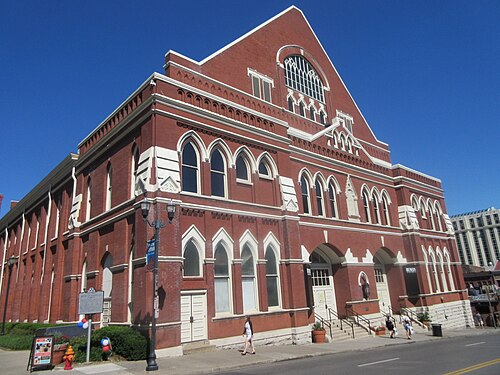  _5.jpg/500px-Blue_Ridge_(Great_Smoky_Mountains,_North_Carolina,_USA)_5.jpg) 左上から右へ:ヒューストンのスカイライン、ニューオーリンズのジャクソンスクエア、マイアミのフロリダ国際大学、チャールストンのレインボーロウ、リッチモンドのバージニア州議会議事堂、テネシー州の農地、ナッシュビルのライマンオーディトリアム、アトランタのスカイライン、グレートスモーキー山脈 | |
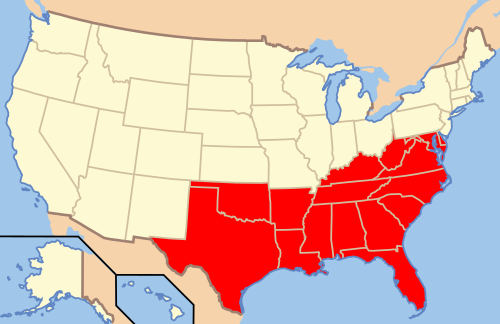 この地図は国勢調査局の定義によるアメリカ南部を反映しています。[1] | |
| サブリージョン | |
| 国 | アメリカ合衆国 |
| 州 | 国勢調査局の定義による。[1]地域別の定義は情報源によって若干異なる場合があります。 |
| 連邦区 | コロンビア特別区 |
| 人口 (2020年[2]) | |
| • 合計 | 126,266,107 |
| 異名 | 南部人サウスロン(歴史的に) |
| 言語 | ルイジアナ フランス語 スペイン語 |
アメリカ南部(ディキシーとも呼ばれ、南部諸州、アメリカ南部、サウスランド、ディキシーランド、または単に南部とも呼ばれる) は、アメリカ合衆国国勢調査局によって定義された4 つの国勢調査地域 のうちの 1 つです。大西洋とアメリカ西部の間にあり、北はアメリカ中西部と北東部、南はメキシコ湾とメキシコに面しています。
歴史的に、南部は18世紀のメイソン・ディクソン線、オハイオ川、および北緯36度30分以南のすべての州と定義されていました。[3]南部の中には、南東部、南中部、アッパーサウス、ディープサウスなどのさまざまなサブリージョンがあります。メリーランド州、デラウェア州、ワシントンDC、およびバージニア州北部は、文化的、経済的、政治的に特定の側面で米国北東部とより一致するようになり、北東部または中部大西洋岸地域の一部と見なされることもあります。[4]米国国勢調査局は、これら4つの場所すべてを正式に南部であると定義し続けています。[5]地域全体の文化的多様性のため、一部の学者は州境ときれいに一致しない南部の定義を提案しています。[6] [7]南部は米国の地理的な南部全体に正確に一致するわけではなく、主に南中部および南東部の州が含まれます。例えば、地理的にアメリカの南西部に位置するカリフォルニア州は、南部の一部とはみなされない。しかし、地理的に南東部に位置するジョージア州は南部に含まれる。[8] [9] [10]
南部は、米国で最も人種的に多様な地域のいくつかを抱える地域で、習慣、ファッション、建築、音楽様式、料理が異なる独自の文化を発展させ、米国の他の地域とは多くの点で区別されていることで知られています。 1860年から1861年にかけて、11の南部州と、領有権を主張し部分的に支配していた追加の2つの南部州が連邦から脱退し、アメリカ連合国を形成しました。アメリカ南北戦争後、これらの州はその後連邦に復帰しました。社会学的研究によると、南部の集団的アイデンティティは、米国の他の地域との政治的、歴史的、人口統計学的、文化的な独自性に由来していますが、20世紀後半頃からこれは衰退し、多くの南部地域が文化と人々のるつぼになっています。南部の民族グループはアメリカの地域の中で最も多様であり、ヨーロッパ系(特にイギリス人、スコットランド系アイルランド人、スコットランド人、アイルランド人、フランス人、スペイン人)、アフリカ人、ネイティブアメリカンの祖先が強く含まれています。[11]
この地域の政治と経済は、歴史的に少数の農村エリート層によって支配されてきた。[12]南部の歴史的、文化的発展は、 1600年代初頭から1800年代半ばにかけて、特にディープサウスと海岸平野部における奴隷労働制度によって深く影響を受けてきた。これには、人口に占めるアフリカ系アメリカ人の割合が高いこと、州の権利の原則が支持されていること、南北戦争と復興期(1865年~1877年)によって増幅された人種差別の遺産などが含まれる。その結果、数千件のリンチ(主に1880年から1930年)、1960年代まで残ったジム・クロウ法から確立された別々の学校と公共施設の隔離システム、 1960年代まで黒人と貧困層の投票権や公職に就く権利を否定する人頭税やその他の方法が広範に使用された。学者たちは、アメリカ南部の一部地域が、南北戦争後の復興期から1964年の公民権法制定まで権威主義的な飛び地であったと特徴づけている。[13] [14] [15] [16]
広く見ると、研究によると、南部人は南部以外のほとんどの人よりも保守的である傾向があり、黒人が多数派である場所や南部の都市部ではリベラリズムが優勢であることが多い。 [17] [18]歴史的には民主党の牙城であったが、この地域のほとんどの州はここ数十年で共和党を支持するようになった。ただし、共和党と民主党の両方が南部の特定の激戦州で競争力を持っている。この地域には、プロテスタント教会、特に南部バプテスト連盟などの福音派教会の出席率が高いバイブル・ベルトのほぼすべてが含まれている。歴史的に、南部は主な経済基盤として農業に大きく依存しており、第二次世界大戦後まで主に農村地帯であった。1940年代以降、この地域は経済的に多様化して大都市化し、国内外の移民を誘致するのに役立っています。21世紀には、ヒューストンが地域最大の都市であり、米国で最も急速に成長している地域です。 [19] [20]
地理


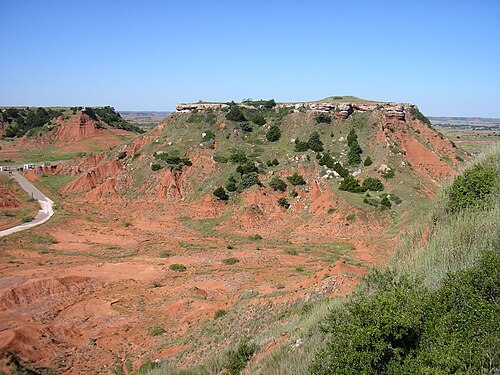


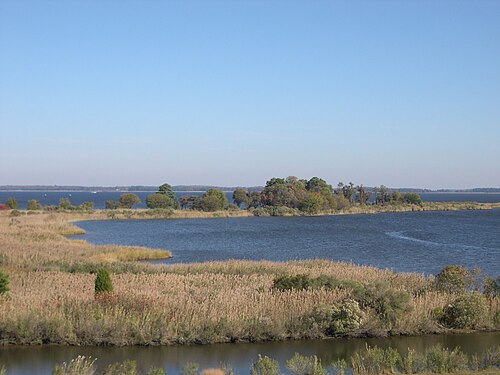

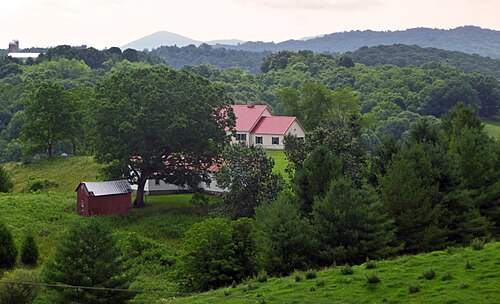
南部は、温帯、亜熱帯、熱帯、乾燥など、数多くの気候帯を持つ多様な気象地域である が、一般的には暑く湿気が多く、夏が長く、冬が短く穏やかであるという評判である。南部の大部分は、標高の高い地域、西部、南部、および一部の北部の端に近い地域を除いて、湿潤亜熱帯気候帯に属している。南部の気候は、初霜が降りるまでに少なくとも 6 か月間は生育期が安定しているため、作物は容易に生育する。一般的な環境としては、バイユーや湿地、南部の松林、アパラチア山脈の温暖な温帯山地林、南部グレートプレーンズのサバンナ、大西洋岸やメキシコ湾岸に沿った亜熱帯のジャングルや海岸林などがある。独特の植物相には、モクレン、シャクナゲ、サトウキビ、ヤシ、オークのさまざまな種などがある。この地域の動物相も多様で、両生類の種、グリーンアノール、有毒なヌママムシ、アメリカアリゲーターなどの爬虫類、アメリカクロクマ、沼ウサギ、コオロギアルマジロなどの哺乳類、ベニヘラサギや絶滅したが象徴的なカロライナインコなどの鳥類が豊富に生息している。
南部の境界とサブリージョンをどのように定義するかという問題は、長い間研究と議論の焦点となってきた。[21] [22]米国国勢調査局の定義によると、[1] 2010年に社会地理学者が実施した調査では、ミシシッピ州、アラバマ州、ルイジアナ州、アーカンソー州、ジョージア州、ケンタッキー州、ノースカロライナ州、サウスカロライナ州、テネシー州、フロリダ州、バージニア州、ウェストバージニア州、オクラホマ州の13州が文化的南部として選ばれた。 [23]米国南部地域には16の州が含まれる。2010年の時点で、推定1億1455万5744人、つまり全米住民の37%が、国内で最も人口の多い地域である南部に住んでいた。[24]国勢調査局は3つの小さな区分を定義した。
- 南大西洋沿岸諸州:デラウェア州、フロリダ州、ジョージア州、メリーランド州、ノースカロライナ州、サウスカロライナ州、バージニア州、ウェストバージニア州。
- 東南中央諸州:アラバマ州、ケンタッキー州、ミシシッピ州、テネシー州。
- 西南中央諸州:アーカンソー州、ルイジアナ州、オクラホマ州、テキサス州。
州政府協議会は州間の連絡と調整のための組織であり、その南部地域事務所にはアラバマ州、アーカンソー州、フロリダ州、ジョージア州、ケンタッキー州、ルイジアナ州、ミシシッピ州、ミズーリ州、ノースカロライナ州、オクラホマ州、サウスカロライナ州、テネシー州、テキサス州、バージニア州、ウェストバージニア州が加盟している。[25]
南部に関連するその他の用語には以下のものがあります。
- オールドサウス:13植民地(バージニア、デラウェア、メリーランド、ジョージア、ノースカロライナ、サウスカロライナ)に含まれていた南部諸州、または1860年以前の南部奴隷州すべて(ケンタッキー、テネシー、アラバマ、フロリダ、ミシシッピ、ミズーリ、アーカンソー、ルイジアナ、テキサスも含まれる)を意味する場合がある。 [26]
- ニューサウス:南北戦争後のアメリカ南部のすべての州、レコンストラクション時代以降。[27]
- アメリカ南東部:通常はカロライナ州、バージニア州、テネシー州、ケンタッキー州、ジョージア州、アラバマ州、ミシシッピ州、フロリダ州が含まれます。[28]
- 南部アパラチア:主にアパラチア山脈南部に位置する地域、すなわちケンタッキー州東部、テネシー州東部、ノースカロライナ州西部、メリーランド州西部、ウェストバージニア州、バージニア州南西部、ジョージア州北部、サウスカロライナ州北西部を指します。 [29]
- アッパーサウス:通常はケンタッキー州、バージニア州、ウェストバージニア州、テネシー州、ノースカロライナ州を含み、まれにミズーリ州、メリーランド州、デラウェア州も含まれます。 [30] 18世紀と19世紀にアルスターのプロテスタントが米国に移住したことから、南部のアパラチア山脈と合わせて「グレーターアパラチア」と呼ばれることもあります。 [31]
- ディープサウス:定義は様々だが、通常はアラバマ州、ジョージア州、ルイジアナ州、ミシシッピ州、サウスカロライナ州が含まれる。 [32]
- 境界州:ミズーリ、ケンタッキー、メリーランド、デラウェア、ウェストバージニアが含まれます。これらは、1860 年代にアメリカから脱退しなかったか、部分的にしか脱退しなかった、南部連合の境界付近にある南部の奴隷州でした。多数の住民が北軍と南軍の両方に加わりました。ケンタッキーとミズーリには、ミズーリ連合政府とケンタッキー連合政府という南部連合の州政府がありました。戦争初期には、南部連合はケンタッキー州の半分以上とミズーリ州南部を支配していましたが、1862 年以降は亡命し、南部連合議会に代表され、南軍の戦闘旗に星が描かれました。ウェストバージニア州は、バージニア州西部が旧連邦の南部連合への加盟に抗議して離脱した後、1863年に形成されたが、新州の住民は北軍と南部連合のどちらを支持するかでほぼ半々に分かれていた。 [33]
- ディキシー:米国南部地域に付けられたニックネーム。さまざまな定義により、特定の地域が他の地域よりも多く含まれるが、最も一般的には、11 の旧南部連合州に関連付けられる。
- 堅固な南部: 1877年から1964年まで、民主党が選挙権をほぼ掌握していた。これは主に19世紀後半の復興期後の選挙権剥奪の結果である。選挙権剥奪により、この期間中、黒人や時には貧しい白人のほとんどが投票や公職に就くことができなかった。 [34]
- メキシコ湾岸:フロリダ、ルイジアナ、ミシシッピ、テキサス、アラバマのメキシコ湾岸が含まれます。
- タイドウォーター:メリーランド州、デラウェア州、バージニア州、ノースカロライナ州の大西洋沿岸の低地
- ミッドサウス:様々な定義があり、米国国勢調査局の東部および西部南中部の州が含まれます。 [5]別の非公式な定義では、テネシー州、アーカンソー州、ミシシッピ州が含まれ、他の州の隣接地域も含まれます。 [35] [36] [37] [38]
歴史的には、南部は18世紀のメイソン・ディクソン線、オハイオ川、および北緯36度30分以南のすべての州と定義されていました。[3]今日では、南部の新しい定義は、地域全体の文化的および地域的差異のために定義が難しくなっていますが、定義は通常、米国の南東部および南中央部の地理的地域にある州を指します。[39]
国勢調査の定義には含まれていないが、フロリダ州南東に位置する2つの米国領土(プエルトリコと米領バージン諸島)は、米国南部に含まれることがある。連邦航空局はプエルトリコと米領バージン諸島を南部に含めており[40] 、農業研究局と米国国立公園局も同様である。[41] [42]
歴史
ネイティブアメリカンの文化
アメリカ南部に人間が居住していたことを示す年代のはっきりした最初の証拠は、現在パレオ・インディアンと呼ばれている最古のアメリカ人の出現とともに、紀元前9500年頃に見られる。[43]パレオ・インディアンは集団で移動し、大型動物を頻繁に狩る狩猟採集民だった。15世紀末にヨーロッパ人が発見したミシシッピ文化よりも前に、古代(紀元前 8000年~1000年頃)やウッドランド(紀元前 1000年~紀元後1000年頃)などのいくつかの文化段階があった。 [ 43]
ミシシッピ文化は、現在のアメリカ南東部でおよそ西暦800年から1500年にかけて栄えた、複雑なマウンド構築型の ネイティブアメリカン文化です。ネイティブアメリカンは、川の渓谷を抜けて東海岸から五大湖まで伸びる、主要な居住地と儀式の中心地を結ぶ複雑で長い交易ルートを持っていました。 [43]当時衰退しつつあったミシシッピ文化に遭遇し、それを記述した著名な探検家には、パンフィロ・デ・ナルバエス(1528年)、エルナンド・デ・ソト(1540年)、ピエール・ル・モワン・ディベルヴィル(1699年)などがいます。
マウンド建設者のアメリカ先住民の子孫には、アラバマ族、アパラチー族、カド族、チェロキー族、チカソー族、チョクトー族、クリーク族、グアレ族、ヒッチティ族、ホウマ族、セミノール族が含まれ、彼らは皆、現在も南部に居住しています。
ミシシッピ文化との祖先のつながりは明らかではないが、ヨーロッパ人の侵入以前にこの地域にいたことが明らかな他の民族としては、カトーバ族やポウハタン族などが挙げられます。
ヨーロッパの植民地化
ヨーロッパからの入植者の到来により、先住民が免疫を持たない病気をヨーロッパ人が知らず知らずのうちに広めたことや、数々の暴力的な衝突、そして強制的な移住により、アメリカ先住民の人口は大幅に減少した。[44] [45] [46] [47]
元々の南部諸州では、主に英語圏の文化が主流であった。17世紀、自発的な移民のほとんどはイギリス出身で、主に東海岸沿いに定住したが、18世紀までには内陸のアパラチア山脈まで進出していた。初期のイギリス人入植者の大半は年季奉公人で、彼らは通行料を稼いだ後に自由の身となった。 [48 ]旅費を支払った裕福な男性、典型的にはイギリスの地主階級のメンバーは、入植を奨励するためにヘッドライトと呼ばれる土地の許可を受けた。[49]
スペイン人とフランス人はフロリダ、テキサス、ルイジアナに入植地を築きました。スペイン人は16世紀にフロリダに定住し、17世紀後半に最盛期を迎えましたが、スペイン人は農業にあまり関心がなく、フロリダには鉱物資源がなかったため、人口は少なかったのです。
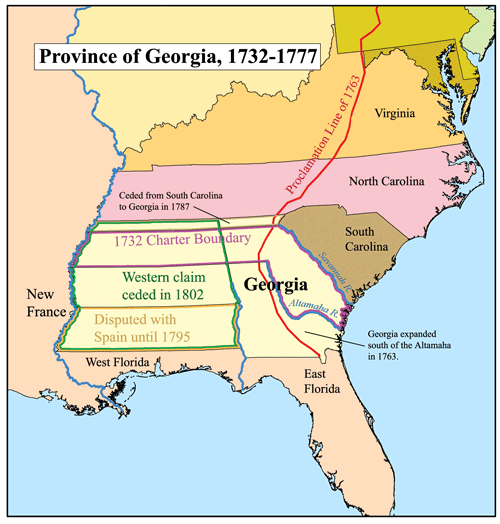
南部の植民地には地域的な違いがあり、タイドウォーター、ディープサウス、アパラチアの3つの主要な地域がありました。最初に開拓された地域はタイドウォーターで、バージニア州南東部、ノースカロライナ州北東部、メリーランド州南部、チェサピーク湾の低地平野が含まれていました。[50]次に開拓された地域はディープサウスで、カロライナ州に始まり、後にジョージア州になりました。最後に開拓された地域はアパラチアで、これもスコットランド系アイルランド人が開拓しました。[48]
1663年、イングランド王チャールズ2世は、イギリス領バージニア植民地の南とスペイン領フロリダの北の土地に対するカロライナ憲章を授けた。チャールズは8人の領主たちにその土地を与えた。チャールズは1660年に王位を回復するための財政的、政治的支援に対する見返りとしてその土地を与えた。 [51]授けられた土地には、現在のアメリカ合衆国のノースカロライナ州、テネシー州、サウスカロライナ州、ジョージア州、アラバマ州、ミシシッピ州、フロリダ州の全部または一部が含まれていた。
イギリス植民地では、移民は1607年に始まり、1775年の独立戦争勃発まで続いた。開拓者たちは土地を切り開き、家屋や離れを建て、自分の農場を作った。南部の富裕層は輸出農業を担う大規模なプランテーションを所有し、奴隷を使っていた。多くは労働集約的なタバコ栽培に携わっていた。タバコはバージニアの最初の換金作物だった。タバコは土壌を急速に枯渇させるため、農民は定期的に新しい畑を切り開く必要があった。彼らは古い畑を牧草地やトウモロコシ、小麦などの作物に利用したり、あるいはそれらを植林地に育てたりした。[52]
バルバドス奴隷法典は、カロライナ、ジョージア、アンティグアなどのイギリス領アメリカ植民地で採用された奴隷法典の基礎となった。バージニアやメリーランドなど、奴隷法典が正確にコピーされていない他の植民地でも、バルバドス奴隷法典の影響はさまざまな条項に見られる。[53] [54] [55]
18世紀中期から後半にかけて、アルスター・スコットランド人(後にスコッチ・アイリッシュと呼ばれる)とイングランド・スコットランド国境地域の人々が大量に移住し、アパラチア地方とピエモンテの奥地に定住した。彼らはアメリカ独立戦争前のイギリス諸島からの非英語系移民の最大のグループであった。[48] 1980年の国勢調査では、南部人の34%が英語系であると報告しており、英語系は南部の各州で圧倒的に最大のヨーロッパ系祖先であると報告された。[56]
初期の入植者たちは戦争、貿易、文化交流に従事した。奥地に住んでいた人々は、クリーク族、チェロキー族、チョクトー族、その他の地域の先住民族と遭遇する可能性が高かった。
南部最古の大学であるウィリアム・アンド・メアリー大学は、1693年にバージニア州に設立されました。政治経済学の教育の先駆者であり、将来のアメリカ大統領ジェファーソン、モンロー、タイラーを教育しました。いずれもバージニア州出身です。実際、第一政党制の時代にはこの地域全体が政治を支配していました。たとえば、最初の5人の大統領のうち4人、ワシントン、ジェファーソン、マディソン、モンローは バージニア州出身でした。最古の公立大学2校も南部にあり、ノースカロライナ大学(1789年)とジョージア大学(1785年)です。
アメリカ独立戦争

アメリカ独立戦争中、南部の植民地は愛国者の大義の支持に尽力した。バージニア州からは、総司令官ジョージ・ワシントンや独立宣言の起草者トーマス・ジェファーソンなどの指導者が輩出された。
1780年と1781年、イギリス軍は北部諸州の再征服をほぼ中止し、南部に集中した。南部には、王室軍が到着すれば武装して立ち上がるロイヤリストの人口が多いと聞かされていたからである。イギリス軍はサバンナとチャールストンを制圧し、その過程で大規模なアメリカ軍を捕らえ、内陸部に基地のネットワークを構築した。南部植民地にもロイヤリストはいたものの、 [57]彼らは沿岸部の大都市に集中しており、革命軍に打ち勝つほどの数はいなかった。モンクスコーナーの戦いとレヌードズフェリーの戦いにおけるイギリス軍は、指揮官(バナスター・タールトン)を除いてすべてロイヤリストで構成されていた。[58]バージニア州のケンプスランディングの戦いでは、白人と黒人の両方のロイヤリストがイギリス軍のために戦った。[59] [60]ナサニエル・グリーンと他の将軍に率いられたアメリカ軍は、イギリス軍の侵攻軍を弱体化させ、その拠点を一つずつ無力化することを目的としたファビアン戦術を採用した。大小さまざまな戦闘が数多く行われ、双方ともいくつかの勝利を収めた。
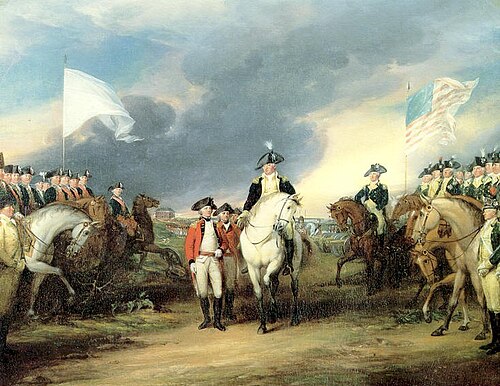
しかし1781年までにイギリス軍の将軍コーンウォリスは北のバージニアに移動し、迫りくる軍隊の攻撃を受けて要塞を固め、イギリス海軍の救出を待たざるを得なくなった。イギリス海軍は到着したが、より強力なフランス艦隊も到着し、コーンウォリスは閉じ込められた。ジョージ・ワシントン率いるアメリカ軍とフランス軍は、 1781年10月にバージニア州ヨークタウンでコーンウォリスに全軍の降伏を強制し、事実上戦争の北アメリカ側の勝利を収めた。[61]
革命は南部や新国家の他の地域で奴隷制度に衝撃を与えた。何千人もの奴隷が戦時中の混乱に乗じて自由を手に入れたが、これはイギリスのヴァージニア州知事ダンモアが奉仕すれば自由になるという約束がきっかけだった。他の多くの奴隷はロイヤリストの所有者によって奴隷から解放され、大英帝国の他の場所で奴隷となった。1770年から1790年の間に、黒人の割合が急激に減少した。サウスカロライナでは61%から44%に、ジョージアでは45%から36%に減少した。[62]さらに、奴隷所有者の中には革命後に奴隷を解放しようと奮起した者もいた。彼らは革命の理念に心を動かされ、奴隷所有者に奴隷を解放するよう促したクエーカー教徒やメソジスト教会の説教師たちもそうだった。ジョージ・ワシントンなどの農園主はしばしば奴隷の意志で解放した。アッパーサウスでは、1810年までに黒人全体の10%以上が自由人となり、戦前の1%未満から大幅に増加した。[63]
南北戦争以前の時代

1800年以降、南部南部では綿花が主流となった。綿繰り機の発明により、短繊維綿花の栽培がより広範囲に可能となった。これにより綿花栽培が爆発的に増加し、特にジョージア州、アラバマ州、その他のディープサウスの辺境高原、ミシシッピ川デルタの川岸地域で顕著となった。19世紀初頭、西へ移動する人々の波が押し寄せ、郡の人口は増減を繰り返したが、移住者はこれらの地域に殺到した。綿花栽培の拡大には奴隷労働力が必要となり、綿花栽培は南部経済の不可欠な要素としてさらに深く定着した。[64]
.jpg/500px-The_Call-Collins_House,_The_Grove-_Tallahassee,_Florida_(7157983334).jpg)
政府がアメリカ先住民のほとんどをミシシッピ川以西に強制移住させた後、辺境の地が開拓されると、白人と黒人の両方がこれらの地域に大移動した。1820年代から1850年代にかけて、100万人以上の奴隷化されたアフリカ人がディープサウスに強制移住させられたが、その3分の2は奴隷商人によって、残りはそこに移住した主人によって移送された。アッパーサウスの農園主は、タバコ栽培から混合農業へと移行するにつれ、必要以上に奴隷を売った。農園主は主に強い男性を畑仕事に好んだため、奴隷の家族の多くは引き裂かれた。[65]
19 世紀前半にくすぶっていた 2 つの大きな政治問題が、地域ごとの政治的連携を引き起こし、強く対立する特定の利害関係を持つ別個の地域としての北部と南部のアイデンティティを強化し、州の権利をめぐる論争を助長して、最終的には脱退と南北戦争に至った。これらの問題のうちの 1 つは、主に北部の製造業の成長を支援するために制定された保護関税に関するものであった。1832 年、サウスカロライナ州は、関税を引き上げるような連邦法の制定に抵抗して、無効化条例を可決した。これは、州が事実上連邦法を廃止する手続きである。すぐに海軍艦隊がチャールストン港に派遣され、地上部隊を上陸させるという脅しによって関税の徴収を強制した。関税を徐々に引き下げるという妥協案が成立したが、州の権利をめぐる根本的な論争は、その後の数十年間もエスカレートし続けた。

2 番目の問題は奴隷制に関するもので、主に新しく加盟した州で奴隷制が認められるかどうかという問題でした。この問題は当初、「自由」州と「奴隷」州の数を均衡させるように設計された政治的妥協によって巧みに解決されました。しかし、この問題は米墨戦争の頃に、より激しい形で再浮上し、架空の地理的境界線の主に南側に新しい領土が追加されることで、賭け金が高まりました。議会はこれらの領土で奴隷制を認めることに反対しました。
南北戦争前には、南部の港に到着する移民の数が増加し始めたが、北部が引き続き最も多くの移民を受け入れた。チャールストンの最初の入植者の中にはユグノー教徒がおり、ニューヨーク市以外では正統派ユダヤ人が最も多かった。[要出典]多くのアイルランド人移民がニューオーリンズに定住し、現在アイリッシュ・チャンネルとして知られる独特の民族居住区を形成した。ドイツ人もニューオーリンズとその近郊に移住したため、市の北(ミシシッピ川沿い)の広い地域がジャーマン・コーストとして知られるようになった。さらに多くの人がテキサスに移住し(特に1848年以降)、その多くが土地を購入して農業を営んだ。南北戦争後、さらに多くのドイツ人移民がテキサスに到着し、ヒューストンなどで醸造業を興し、多くの都市で食料品店主となり、広大な農業地帯も築いた。
1840年までに、ニューオーリンズは国内で最も裕福な都市となり、人口では3番目に多かった。この都市の成功は、ミシシッピ川を下って国内の内陸部と輸送される製品に関連する国際貿易の成長に基づいていた。ニューオーリンズには国内最大の奴隷市場もあり、貿易商が船や陸路で奴隷を運び、ディープサウス中の農園主に売っていた。この都市は国際的な港であり、さまざまな仕事があり、南部の他の地域よりも多くの移民を引き付けた。[66]しかし、投資不足のため、この地域を横断する鉄道の建設は北部に比べて遅れていた。人々は作物を市場に運ぶため、また輸送のために河川交通に大きく依存していた。
ネイティブアメリカンの追放
1830年から1850年の間に、アメリカ先住民はアメリカ南部と東部の故郷から追放され、オクラホマ州に送られた。[67]
内戦

1856年までに、南部は議会の支配権を失い、奴隷制廃止を求める声を黙らせることはできなくなった。その声は、主に北部の人口の多い自由州からのものだった。1854年に結成された共和党は、奴隷制がすでに存在していた州以外への拡大を阻止することを誓った。1860年にエイブラハム・リンカーンが共和党初の大統領に選出された後、リンカーンが就任する前に7つの綿花州が脱退を宣言し、アメリカ連合国を結成した。新任の米国政府も退任した政府も連合国を承認することを拒否し、1861年4月に新しい南軍大統領ジェファーソン・デイヴィスが軍隊にサムター要塞への発砲を命じると、戦争が勃発した。ケンタッキー州だけが中立を保とうとしたが、短期間しか保てなかった。リンカーンが「通常の」司法的または軍事的手段では鎮圧できないほど強力である連合を鎮圧するために軍隊を召集したとき、[69]さらに 4 つの州が脱退して南部連合 (当時、南部連合の首都はバージニア州リッチモンドに移っていた) に加わることを決めた。南部連合は大量の捕獲した軍需品と多くの志願兵を抱えていたが、国境諸州への対応は北軍よりも遅かった。南北戦争中、アップランド南部の国境諸州であるケンタッキー、ミズーリ、ウェストバージニア州、メリーランド、デラウェア、およびコロンビア特別区は奴隷制を容認し続けていたが、ケンタッキーとミズーリの両州には南部連合に承認され、対抗する政府が形成されていたにもかかわらず、北軍に留まった。戦争初期には、南部連合はケンタッキー州の半分以上とミズーリ州南部を支配していた。 1862年3月までに、北軍は国境地帯をほぼ制圧し、南軍の港湾からの商業輸送をすべて停止し、ヨーロッパ諸国による南軍政府の承認を阻止し、ニューオーリンズを占領する態勢を整えた。険しい山岳地帯の東テネシー州は、テネシー州の大半の地域とは異なり、脱退と奴隷制に反対し、新しい州として連邦に再加入しようとした。 [70]
1861年から1865年までの4年間の戦争では、南部が主な戦場となり、2回を除くすべての主要な戦闘が南部の地で行われた。北軍は西部の連合国に対して数多くの作戦を展開し、1861年に国境諸州、1862年にテネシー川、カンバーランド川、ニューオーリンズ、1863年にミシシッピ川を制圧した。しかし東部では、ロバート・E・リー率いる南軍が首都リッチモンドの防衛で次から次へと攻撃を撃退した。しかしリーが北進を試みた際、シャープスバーグ(1862年)とゲティスバーグ(1863年)で撃退され(そしてほぼ捕らえられた)。

南軍は短期戦争のための資源はあったが、長期戦争のための資金や物資を調達することができなかった。南軍は南部の伝統的な低関税政策を覆し、北軍からのすべての輸入品に新たに 15 % の税金を課した。北軍の封鎖により、南部に入る商取引のほとんどが止まり、密輸業者は税金を逃れたため、南軍の関税は戦争資金を賄うには収入が少なすぎた。通貨のインフレが解決策だったが、それはリッチモンド政府への不信を生んだ。鉄道への投資が低かったため、南部の輸送システムは主に船による河川や沿岸の交通に依存していたが、どちらも北軍海軍によって閉鎖された。小規模な鉄道システムは事実上崩壊し、1864 年までに国内の移動が非常に困難になり、南軍の経済は麻痺した。
1864年後半にアトランタが陥落し、ウィリアム・T・シャーマンがジョージア州を進軍した時点では南軍の勝利は絶望的であったが、反乱軍は1865年4月にリー軍が降伏するまで戦い続けた。南軍が降伏すると、この地域は復興期(1865年~1877年)に入り、破壊された地域を再建し、解放奴隷に公民権を与える試みが部分的に成功した。
南北戦争中に南軍に反対した南部人は南部ユニオニストと呼ばれた。また、ユニオンロイヤリストやリンカーンロイヤリストとも呼ばれた。南部連合11州のうち、テネシー州(特に東テネシー州)、バージニア州(当時はウェストバージニア州も含む) 、ノースカロライナ州などの州には、ユニオニストが最も多く住んでいた。南部アパラチアの多くの地域でも、親北軍感情が高まった。南軍支配下の州に住む10万人もの男性が、北軍や親北軍ゲリラグループに従軍した。南部ユニオニストはあらゆる階級の出身だったが、そのほとんどは、戦前のこの地域の支配階級である農園主階級とは社会的、文化的、経済的に異なっていた。[71]
全体的に南部の被害は北部よりも大きかった。北軍の消耗戦戦略ではリー将軍は戦死者の補充ができず、シャーマン、シェリダンおよび他の北軍による総力戦でインフラが破壊され、広範囲に貧困と苦難が生じた。南軍は戦闘で9万5千人の兵士が戦死、16万5千人が病死し、合わせて26万人の軍事的損失を被った[72]。当時の南部の白人人口は約550万人であった[ 73] 。 1860年の国勢調査の数字に基づくと、13歳から43歳の白人男性の8%が戦争で死亡し、そのうち北部では6%、南部では約18%であった[74] 。北部軍の死者は絶対数では南部軍の死者より多かったが、影響を受けた人口の割合で見ると3分の2ほど少なかった。
復興とジム・クロウ法時代

南北戦争後、南部はインフラと経済の面で壊滅的な打撃を受けた。各州が解放奴隷に投票権を与えることに消極的だったため、議会は復興政府を設立した。議会は、新しい政府が樹立されるまで南部を統治する軍管区と知事を設置した。南部連合を積極的に支持していた多くの南部の白人は、一時的に選挙権を剥奪された。広範囲にわたる農業不況の真っ只中、人々は自由市場の新しい労働経済の影響に苦しんでおり、復興は困難だった。さらに、南部の限られたインフラは、戦争によってほとんど破壊された。同時に、北部は急速に工業化していた。戦争の社会的影響を避けるため、南部のほとんどの州は当初、黒人法を可決した。復興期には、これらは連邦法と、復興期に短期間存在した反南部連合議会によって、ほとんど法的に無効にされた。[75]
奴隷売買によって離ればなれになった家族を再会させようとしたアフリカ系アメリカ人や、より良い機会を求めて町や他の州に移住した人々は数千人にも上りました。解放された人々は、別の仕事に就くチャンスを求めてプランテーション地域から都市や町に移住しました。同時に、白人は避難所から戻ってプランテーションや町の住居を取り戻しました。一部の地域では、多くの白人がしばらく土地に戻って農業を営みました。解放された人々の中には、南部から完全に離れてオハイオ州やインディアナ州、後にはカンザス州に移住した人もいました。ミシシッピ州やアーカンソー州のデルタ低地、テキサス州に新たな機会を求めて移住した人々は数千人にも上りました。

アメリカ合衆国憲法修正第 13 条(奴隷制を非合法化)、修正第 14 条(アフリカ系アメリカ人に完全な米国市民権を付与)、修正第 15 条(アフリカ系アメリカ人男性に選挙権を付与)の可決により、南部のアフリカ系アメリカ人は自由市民となり、選挙権が与えられた。連邦政府の保護の下、白人と黒人の共和党員が憲法制定会議と州政府を組織した。彼らの功績の中には、南部諸州で最初の公教育制度を創設し、孤児院、病院、その他の施設を通じて福祉を提供したことがある。
北部人は政治やビジネスに参加するために南部にやってきた。その中には解放奴隷局やその他の復興機関の代表者もいたし、黒人を助けようとする人道主義者もいた。また、いかがわしい手段で利益を得ようとした冒険家もいた。彼らはみな、軽蔑的な意味で「カーペットバッガー」と呼ばれた。南部人の中には、混乱した環境を利用して債券や鉄道の融資などさまざまな計画で金儲けをする者もいた。[76]復興政策と取り組みを支持した南部の白人は「スカラワグ」として知られるようになった。
1860 年代の戦争終結後すぐに、白人至上主義を 永続させると誓った組織であるクー・クラックス・クランなどの秘密自警団が出現し、リンチ、身体的攻撃、家屋の焼き討ち、その他の脅迫手段を使ってアフリカ系アメリカ人が政治的権利を行使できないようにした。最初のクランは 1870 年代初頭に連邦政府の訴追により解散したが、他のグループは存続した。1870 年代半ばから後半にかけて、南部の上流階級の一部が、変化した社会構造に対する抵抗を強めた。ルイジアナ州のホワイト・リーグ(1874 年)、ミシシッピ州のレッド・シャツ(1875 年)、ライフル・クラブなどの準軍事組織はすべて「ホワイト・ライン」組織であり、共和党員(黒人と白人の両方)に対して組織的暴力を行使して共和党員を公職から排除し、黒人の投票を抑圧および禁止し、民主党を政権に復帰させた。[77] 1876年、白人民主党はほとんどの州議会で権力を取り戻した。彼らはアフリカ系アメリカ人と貧しい白人を有権者登録名簿から削除することを目的とした法律を可決し始めた。19世紀後半にいくつかの州で人種間連合が成功したことは、一部の白人民主党員の反発を招き、彼らは両グループの投票を阻止するために一層努力した。[78]
差別にもかかわらず、多くの黒人は開発途上の地域で土地所有者になった。例えば、ミシシッピ川の低地の 90% は戦後も開拓されておらず、未開発のままだった。世紀末までに、ミシシッピ川デルタ低地の農民の 3 分の 2 は黒人だった。彼らは自ら土地を切り開き、初期の頃は木材を売って金を儲けていた。何万人もの移民がデルタに移住し、木材会社のために木材を切り開く労働者として働く人もいれば、自ら農場を開発する人もいた。[79]それにもかかわらず、長い農業不況と、公民権の剥奪、信用へのアクセスの欠如により、1910 年までにデルタの多くの黒人が財産を失い、その後 10 年間で小作人または土地なし労働者になった。2 世代以上の自由アフリカ系アメリカ人が財産の権利を失った。[80]

南北戦争の結果、ほぼすべての南部人は、黒人も白人も経済的に苦しんだ。数年のうちに綿花の生産と収穫は戦前の水準に戻ったが、19世紀の大半の低価格が回復を妨げた。このため、ミシシッピ・デルタへの中国人とイタリア人の移民が促進された。最初の中国人はキューバからの契約労働者として入国したが、大多数は20世紀初頭に入国した。どちらのグループも、農村部の農業労働者として長くは続かなかった。[81]中国人は商人となり、デルタ地帯の小さな町で店を開き、白人と黒人の間に地位を築いた。[82]
19世紀後半から20世紀初頭にかけて、黒人と白人の両方の間で移住が続いた。19世紀最後の20年間で、約14万1千人の黒人が南部を去り、1900年以降はさらに増え、合計53万7千人が失われた。その後、1910年から1940年にかけては大移動、1970年にかけては第二次大移動として知られるようになる移動が続いた。さらに多くの白人が南部を去り、1900年以降はカリフォルニアにチャンスを求めて移住する者もいれば、北部の工業都市に向かう者もいた。1880年から1910年の間に失われた白人は合計124万3千人に達した。[83] 1940年から1970年の間にはさらに500万人が南部を去った。
1890年から1908年にかけて、旧南部連合11州のうち10州と州昇格後のオクラホマ州は、有権者登録の障壁(人頭税、居住要件、識字テストなど )を導入する選挙権を剥奪する憲法や修正条項を可決した。これらの障壁は少数民族にとって満たすのが困難だった。ほとんどのアフリカ系アメリカ人、ほとんどのメキシコ系アメリカ人、そして何万人もの貧しい白人が選挙権を剥奪され、何十年も投票権を失った。一部の州では、祖父条項により、一時的に白人の文盲は識字テストを免除された。その結果、旧南部連合全体で有権者数が大幅に減少した。これは、テキサス大学の政治:投票の障壁に関する特集「大統領選挙と中間選挙の投票率」で見ることができる。1819年に州になったときに白人普通選挙を確立したアラバマ州も、貧しい白人の投票を大幅に削減した。[84] [85] 民主党が多数派を占める議会は、交通機関を含む公共施設やサービスを分離する ジム・クロウ法を可決した。
20世紀初頭、アフリカ系アメリカ人、貧しい白人、公民権団体がこうした条項に対して訴訟を起こしたが、数十年にわたり、こうした条項を覆す最高裁の判決の直後に、投票を制限する新たな仕組みを盛り込んだ州法が続いた。旧南部連合国とオクラホマ州の黒人のほとんどは、1965年に投票権法が可決され、連邦政府が投票登録を強制するまで、投票できなかった。この期間を通じて女性、黒人、18歳以上の有権者が増加したにもかかわらず、旧南部連合国の投票率は20世紀を通じて全国平均を下回った。[86]アメリカ公民権運動の指導の下、1960年代後半になってようやく、すべてのアメリカ国民が保護された公民権を取り戻した。
歴史家ウィリアム・チェイフは、法制度、不均衡な経済力、脅迫や心理的圧力に表れるジム・クロウ法の最悪の特徴を回避するために、アフリカ系アメリカ人コミュニティ内で開発された防衛技術を調査した。チェイフは、白人が課した制裁を受け入れつつ、その制裁に対する異議申し立てを微妙に奨励するために、コミュニティ内で「黒人自身による保護的な社会化」が生み出されたと述べている。「綱渡り」として知られるこのような変化をもたらす努力は、1920年代以前にはわずかにしか効果を発揮しなかったが、1950年代と1960年代の公民権運動で若いアフリカ系アメリカ人が展開した積極的で大規模な活動の基礎を築いた。[87]
1880年代から1930年代
.jpg/500px-The_Harmsworth_atlas_and_Gazetter_1908_(135851607).jpg)

19世紀末、南部の白人民主党は、産業とビジネスの発展に敵対的な州憲法を作成し、1890年代に新しい憲法が採択されたときから反産業法が広範に及んでいた。[88]銀行は少なく規模も小さく、信用を得る手段もほとんどなかった。伝統的な農業は地域全体で存続した。特にアラバマ州とフロリダ州では、人口が工業化都市に移った後も、農村部の少数派が多くの州議会で実権を握り、議員はビジネスと近代化の利益に抵抗した。アラバマ州は、人口と経済が都市に大きく移った後も、1901年から1972年まで選挙区の再編を拒否した。たとえば、何十年もの間、バーミンガムは州の収入の大半を生み出していたが、サービスやインフラではほとんど恩恵を受けていなかった。[89]
19世紀後半、テキサスは急速に鉄道網を拡大し、放射状に結ばれた都市網を作り上げ、ガルベストン港と結びついた。ストライキと労働不安は産業の拡大を反映していた。「1885年、テキサスはストライキに参加した労働者数(4,000人)で40州中9位だったが、6年間では15位だった。100件のストライキのうち75件は、主に電信技師と鉄道労働者の州間ストライキで、1886年に発生した。」[90]
1890年までにダラスはテキサス州最大の都市となり、1900年までに人口は42,000人を超え、10年後には2倍以上の92,000人を超えた。ダラスは世界の馬具製造の中心地であり、他の製造業の中心地でもあった。その野望の一例として、1907年にダラスは15階建てでミシシッピ川以西で最初の超高層ビルであるプレトリアンビルを建設し、すぐに他の超高層ビルも続いた。[91]テキサスは、ガルベストン港のあるヒューストン、ダラス、フォートワース、サンアントニオ、エルパソなど5つの主要都市を結ぶ鉄道網によって変貌した。1920年までに各都市の人口は5万人を超え、主要都市の人口はその3倍になった。[92]
ビジネスの利益は南部の民主党支配階級によって無視されました。それにもかかわらず、ジョージア州アトランタ、アラバマ州バーミンガム、テキサス州ダラス、フォートワース、ヒューストンなどの都市で主要な新しい産業が発展し始めました。成長は幾何級数的な速度で起こり始めました。バーミンガムは主要な鉄鋼生産者と鉱山の町となり、20 世紀初頭の数十年間に人口が大幅に増加しました。
南部で最初の大規模な油井は、1901年1月10日の朝、テキサス州ボーモント近郊のスピンドルトップで掘削された。その後、アーカンソー州、オクラホマ州、メキシコ湾の海底で他の油田が発見された。その結果生じた「石油ブーム」は、西南部中央諸州の経済を永久に変え、南北戦争後最も豊かな経済拡大をもたらした。[93] [94]
20世紀初頭、アメリカワタミゾウムシの侵入により、南部の綿花作物が壊滅的な被害を受け、アフリカ系アメリカ人が南部を離れる決断をするきっかけがさらに生まれました。1910年から1970年にかけて、650万人以上のアフリカ系アメリカ人が、しつこいリンチ、暴力、人種差別、劣悪な教育、投票権のなさから逃れ、南部を離れ、北部や西部の都市へと大移動しました。黒人の移住により多くの北部や西部の都市が変わり、新しい文化や音楽が生まれました。他のグループと同様、多くのアフリカ系アメリカ人が工業労働者となり、コミュニティ内で自分のビジネスを始めた人もいました。南部の白人もシカゴ、デトロイト、オークランド、ロサンゼルスなどの工業都市に移住し、急成長を遂げていた新しい自動車産業や防衛産業で職を得ました。

その後、南部の経済は大恐慌とダストボウルによってさらなる打撃を受けた。1929年のウォール街大暴落後、経済は大きく後退し、何百万人もの人々が失業した。1934年から1939年まで続いた強風と干ばつの生態学的災害により、テキサス州とアーカンソー州、オクラホマ州西部、および周囲の平原から人々が脱出し、50万人以上のアメリカ人が家を失い、飢え、職を失った。[95]数千人が西海岸沿いに経済的機会を求めてこの地域を去った。
フランクリン・D・ルーズベルト大統領は、大恐慌の際の支援の必要性という点では南部が「最優先事項」であると指摘しました。彼の政権は、 1933 年にテネシー川流域開発公社などのプログラムを創設し、農村部の電化と開発の促進を図りました。生産性の低い農業に縛られていたこの地域の成長は、限られた産業開発、低い起業家精神、資本投資の不足によって鈍化しました。
1940年代から20世紀後半
.jpg/500px-North_American_SNJ_Texans_parked_at_Naval_Air_Station_Miami,_circa_1942-43_(80-G-K-13376).jpg)
第二次世界大戦は、南部にとって経済面で劇的な変化の時代となった。連邦政府によって新たな産業や軍事基地が開発され、多くの地域で切望されていた資本とインフラが供給された。アメリカ全土から人々が軍事訓練やこの地域の多くの基地や新たな産業での労働のために南部にやって来た。戦中戦後、白人、黒人を問わず何百万人もの貧しい農民が農業を離れ、他の職業や都市部の仕事に就いた。[96] [97] [98]
1940 年の春、米国は大規模な戦争準備を開始した。南部の温暖な気候は、陸軍の新しい訓練キャンプの 60 パーセントと新しい飛行場のほぼ半分を建設するのに理想的であることがわかった。全体として、新しい軍事施設への支出の 40 パーセントが南部に向けられた。たとえば、1940 年にはフロリダ州スタークの人口 1,500 人の小さな町がキャンプ ブランディングの基地となった。1941 年 3 月までに、2 万人の男性が 6 万人の兵士のための常設キャンプを建設していた。南部の軍事施設に 40 億ドル以上、防衛工場にさらに 50 億ドルが投入されるなど、戦争遂行のために資金が自由に流れた。バージニア州、サウスカロライナ州チャールストン、およびメキシコ湾岸に大規模な造船所が建設された。
巨大な軍用機工場がダラス・フォートワースとジョージアに開設された。最も秘密裏に、そして最も費用のかかる作業はテネシー州オークリッジで行われ、そこでは無制限に地元で発電された電力が原子爆弾用のウランの製造に使用された。[99]戦争中、生産労働者の数は倍増した。ほとんどの訓練センター、工場、造船所は1945年に閉鎖されたが、すべてではなかった。貧しい農場を離れた家族は、成長する南部の都市で仕事を見つけるために残った。この地域は、所得と賃金水準が全国平均を大きく下回っていたものの、ようやく工業と商業の成長への離陸段階に達した。しかし、ジョージ・B・ティンダルが指摘するように、この変化は「工業の潜在力の実証、新しい思考習慣、そして工業化にはコミュニティサービスが必要であるという認識」であった。[100] [101]
1940年から1945年にかけて、一人当たりの所得は米国の他の地域では100%であったのに対し、140%増加した。南部の所得は59%から65%に上昇した。デューイ・グランサムは、戦争は「南部の経済的後進性、貧困、そして独特の田舎暮らしから突然の脱却をもたらし、この地域は国の経済と社会生活の主流に明らかに近づいた」と述べている。[102] 1970年以降、南部に住むアフリカ系アメリカ人の人口の割合は安定し、わずかに増加し始めた。[103]
農業は綿花やタバコから、牛、米、大豆、トウモロコシ、その他の食料へと移行した。工業の成長は1960年代に増加し、1980年代と1990年代に大幅に加速した。テキサス、ジョージア、フロリダのいくつかの大都市圏は人口が400万人を超えるまでに成長した。自動車、通信、繊維、テクノロジー、銀行、航空などの産業の急速な拡大により、南部のいくつかの州は国内の他の大州に匹敵する工業力を獲得した。2000年の国勢調査では、南部(および西部)は人口増加で国内をリードしていた。しかし、この成長に伴い、ダラス、ヒューストン、アトランタ、オースティン、シャーロットなどの都市や、広大な開発と高速道路網に依存するその他の都市では、通勤時間が長くなり、大気汚染の問題も生じた。[104]
21世紀
21世紀、特に2010年の中間選挙以降、共和党は州レベルでも連邦レベルでも、南部の大部分を支配してきた。2024年の時点で、共和党は11の旧南部連合州のうち10の州議会の両院を支配しており、唯一の例外はバージニア州議会である。[105]しかし、ケンタッキー州知事のアンディ・ベッシャー、ノースカロライナ州知事のロイ・クーパー、バージニア州の米国上院議員マーク・ワーナーとティム・ケイン、ジョージア州上院議員ラファエル・ウォーノックとジョン・オゾフ、ウェストバージニア州上院議員ジョー・マンチンなど、南部には依然として民主党の州全体の役職者が存在する。
2019年に南部の州に本社を置くフォーチュン500企業は、テキサス州が50社、バージニア州が21社、フロリダ州が18社、ジョージア州が17社、ノースカロライナ州が11社、テネシー州が10社でした。[106] 2022年には、テキサス州が53社のフォーチュン500企業の本社を擁し、全米トップとなりました。 [107]この経済拡大により、南部の一部地域では米国で最も低い失業率が報告されています。[108]
一部の南部の州や地域は経済的に好調ですが、米国全体と比較すると、多くの南部の州や地域は依然として貧困率が高いです。2021年には、貧困率が最も高かった10州のうち9州が南部にありました。また、2023年には、一人当たりGDPが最も低かった5州はすべて南部にあり、ミシシッピ州、ウェストバージニア州、アーカンソー州、アラバマ州、サウスカロライナ州でした。
現代経済
20 世紀後半、南部は劇的に変化しました。サービス経済、製造業、ハイテク産業、金融部門が急成長しました。特にテキサス州は、サンアントニオのアラモミッションなどのエネルギー産業と観光産業の優位性により、劇的な成長と人口の変化を経験しました。フロリダ州とメキシコ湾岸の観光も、20 世紀最後の数十年間を通じて着実に成長しました。
この地域には、アラバマ州タスカルーサのメルセデス・ベンツ、アラバマ州モンゴメリーのヒュンダイ、サウスカロライナ州スパルタンバーグのBMW生産工場、ケンタッキー州ジョージタウン、ミシシッピ州ブルースプリングス、サンアントニオのトヨタ工場、テネシー州スプリングヒルのGM製造工場、アラバマ州リンカーンのホンダ工場、テネシー州フランクリンの日産北米本社とテネシー州スマーナおよびミシシッピ州カントンの工場、ジョージア州ウェストポイントの起亜工場、テネシー州のフォルクスワーゲン チャタヌーガ組立工場など、多数の新しい自動車生産工場が開設されたか、近々開設される予定です。
国内最大の 2 つの研究公園は南部にあります。ノースカロライナ州のリサーチ トライアングル パーク(世界最大) とアラバマ州ハンツビルのカミングス リサーチ パーク(世界第 4 位) です。
医療分野では、ヒューストンのテキサス医療センターが、特に心臓病、がん、リハビリテーションの分野で、教育、研究、患者ケアにおいて国際的に認められています。1994年、テキサス医療センターは14の病院、2つの医学部、4つの看護大学、6つの大学システムを含む世界最大の医療センターでした。[109]テキサス大学MDアンダーソンがんセンターは、米国で常に第1位のがん研究・治療センターにランクされています。[110]
多くの大手銀行がこの地域に本社を置いています。バンク オブ アメリカとTruist Financial はシャーロットにあります。ワコビアはウェルズ ファーゴに買収される前はここに本社を置いていました。リージョンズ ファイナンシャル コーポレーションはバーミンガムにあります。アムサウス バンコーポレーションもバーミンガムにあります。また、 PNC ファイナンシャル サービスに買収される前はBBVA コンパスでした。アトランタはアトランタ連邦準備銀行の地区本部です。
アトランタとその周辺地域には、コカ・コーラ社、デルタ航空、ホーム・デポなど多くの企業の本社があり、また、ターナー・ブロードキャスティング・システム(CNN、TBS、TNT、ターナー・サウス、カートゥーン・ネットワーク)やウェザー・チャンネルなど多くのケーブルテレビ局も本社を置いています。
教育
南部の公立学校は、過去にいくつかの全国調査で下位半分にランク付けされたことがある。[111]人種を考慮すると、2007年の米国政府のテストスコアリストでは、白人の4年生と8年生が読解と数学で平均よりも良い成績を収めていることが多く、黒人の4年生と8年生も平均よりも良い成績を収めている。[112]この比較は全面的に当てはまるわけではない。ミシシッピ州は、統計をどのように比較しても、全国平均よりも低いスコアになることが多い。2009年のより新しいデータによると、南部の中等教育は全国的に同等で、高校卒業率は全国で73%であるのに対し、72%である。[113]
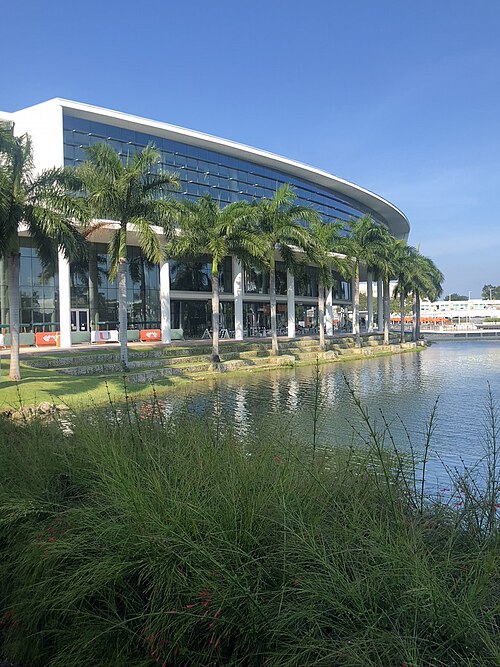
米国南部には、国内最大かつ最も著名な公立および私立の高等教育機関がいくつかあります。南部の有名な公立大学には以下のものがあります。



- バージニア大学
- バージニアコモンウェルス大学
- テキサス大学オースティン校
- ヒューストン大学
- ノースカロライナ大学チャペルヒル校
- フロリダ州立大学
- ノースカロライナ大学シャーロット校
- ジョージア州立大学
- ジョージア工科大学
- ジョージメイソン大学
- フロリダ大学
- ジョージア大学
- テキサスA&M大学
- フロリダ A&M 大学
- ノースカロライナA&T州立大学
- テネシー大学
- ウィリアム・アンド・メアリー大学
- ノースカロライナ州立大学
- メリーランド大学カレッジパーク校
- ミシシッピ大学
- オーバーン大学
- サウスカロライナ大学
- ジェームズ・マディソン大学
- バージニア工科大学
- ルイジアナ州立大学
- アラバマ大学
- アラバマ大学バーミンガム校
- アーカンソー大学
- オクラホマ大学
- ケンタッキー大学
- ルイビル大学
- バージニア軍事学校
南部の著名な私立大学には以下のものがあります。
- デューク大学
- ライス大学
- ヴァンダービルト大学
- ジョンズ・ホプキンス大学
- ジョージ・ワシントン大学
- ジョージタウン大学
- エモリー大学
- マイアミ大学
- リッチモンド大学
- リバティ大学
- チューレーン大学
- ウェイクフォレスト大学
- サザンメソジスト大学
- ワシントン・アンド・リー大学
- デイビッドソン大学
- ベリーカレッジ
- スペルマンカレッジ
- モアハウス大学
- ハワード大学
- ベイラー大学
文化

南部のいくつかの州(メリーランド州、バージニア州、ノースカロライナ州、サウスカロライナ州、ジョージア州)は、独立宣言に署名するために代表団を派遣し、その後、独立戦争中に中部およびニューイングランド植民地とともに政府(イギリス)と戦ったイギリス植民地の中にあった。[114]南部文化の多くは、これらの州が元々の13植民地の中にあったことと、植民地時代の南部の住民の多くが西に移住した入植者と先祖のつながりを持っていたことに由来している。南部の風俗習慣は、初期の住民がイギリスと持っていた関係を反映している。
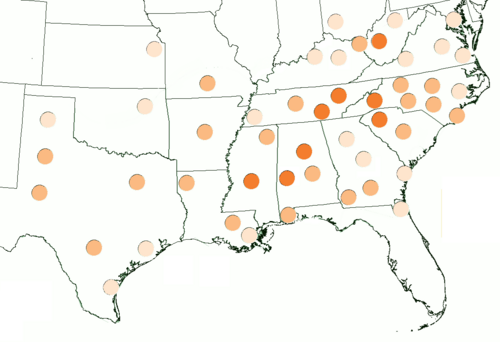
全体的に、南部の住宅価格は米国の他の地域よりも低く、世帯収入も低く、生活費も低かった。[117]これらの要因と、南部人が家族の絆に強い忠誠心を持ち続けているという事実が相まって、一部の社会学者は南部の白人を民族または準民族グループと分類しているが、[118] [119]この解釈は、南部人が民族の基準をどのように満たしているかをこの見解の支持者が十分に示していないという理由で批判にさらされている。[120]
南部の支配的な文化は英語であり、その起源は、17世紀から18世紀初頭にかけて、サセックス、シュロップシャー、ウェストカントリーなど、ウェストミッドランズ、イングランド南西部、イングランド南東部の一部から、タイドウォーターやディープサウスの東部に移住した大規模な集団によるこの地域の開拓にあります。たとえば、アラバマ州のバーミンガム市は、イングランドのウェストミッドランズにあるバーミンガムにちなんで名付けられました。18世紀半ばから後半にかけてアパラチアとアップランド南部に定住した北部イングランド人、スコットランド低地人、アルスター・スコットランド人(後にスコッチ・アイリッシュと呼ばれる)、 [121]そしてアメリカ南部に奴隷として連れてこられた多くのアフリカ人です。彼らの子孫は、黒人またはアフリカ系アメリカ人として特定されており、米国で2番目に大きな人種的マイノリティを構成し、2000年の国勢調査によると総人口の12.1%を占めています。ジム・クロウ時代に北部への流出があったにもかかわらず、黒人人口の大部分は南部の州に集中しており、今日の南部文化を特徴付ける宗教、食べ物、芸術、音楽(スピリチュアル、ブルース、ジャズ、R&B、ソウルミュージック、カントリーミュージック、ザディコ、ブルーグラス、ロックンロールを参照)の文化的融合に大きく貢献しています。
南部の農園主階級は、貴族階級の地主ではあったが、貴族や「爵位を与えられた貴族」ではなかったイギリスの地主階級に由来する。歴史家GE・ミンゲイによると、ジェントリとは、その富によって「ある種の教育、快適さの水準、ある程度の余暇、そしてそれをどう使うかという共通の関心」が可能になった地主のことである。余暇は、労働によって富を得たビジネスマンとジェントリを区別するものである。 [122]ジェントリは働かず、収入は主に彼らの土地に住む小作農が支払う地代から得ていた。 [123]南北戦争前の南部における南部の騎士道の概念は、ジェントルマンというジェントリ階級に由来し、中世および植民地時代の騎士やキャバリアーの子孫とされる白人農園主階級の騎士道的理想として機能していた。 [124] [125]
以前の国勢調査では、南部人が特定した最大の祖先グループはイギリス人または主にイギリス人であり、[56] [126] [127]、1980年の国勢調査で19,618,370人が祖先として「イギリス人」を自己申告し、続いて12,709,872人が「アイルランド人」、11,054,127人が「アフリカ系アメリカ人」と記載した。[56] [126] [127]イギリス人の祖先を主張するアメリカ人のほぼ3分の1はアメリカ南部におり、南部人の4分の1以上もイギリス人の子孫であると主張している。[128]
宗教
南部では第二次大覚醒以来、人口の大多数が福音派 プロテスタントを信奉してきたが、[129]上流階級はしばしば英国国教会や聖公会、あるいは長老派教会に留まった。 1742年頃から1850年頃にかけての第一次大覚醒と第二次大覚醒により、多数のメソジストとバプテストが生まれ、現在でもこの2つが南部のキリスト教の2大宗派となっている。[130] 1900年までに、南部バプテスト連盟は全米最大のプロテスタント宗派となり、その会員は南部の農村部に集中していた。[131] [132]バプテストが最も一般的な宗教グループであり、メソジスト、ペンテコステ派、その他の宗派がそれに続く。ローマカトリック教徒は歴史的に、メリーランド州、ルイジアナ州、および南テキサスや南フロリダなどのヒスパニック地域、およびメキシコ湾岸に集中していた。南部の黒人の大多数はバプテスト派かメソジスト派である。[133]統計によると、南部諸州は米国のどの地域よりも宗教への参加率が高く、いわゆるバイブル・ベルトを形成している。[134]ペンテコステ派は19世紀後半から南部全域で強い信仰を持っている。[135]
国内および国際的な影響
気候を除けば、南部での生活は米国の他の地域とますます似通ってきています。20世紀後半以降、数百万人の北部および西部の人々が移住し、大都市圏および沿岸地域の文化が再形成されました。[136]
ヒスパニック系は長い間テキサスの主要な要因であったが、1990年代から2000年代初頭にかけて、さらに何百万人もの人々が他の南部諸州に移住し、地元の伝統に根ざさない価値観を持ち込んだ。[137] [138] [139]歴史家のレイモンド・モールは、貿易障壁を下げ、大規模な人口移動を促進する上でのNAFTAの役割を強調している。彼は、メキシコで進行中の経済危機、米国の新しいより自由な移民政策、労働者の募集と密輸などの他の要因も、南東部へのメキシコ人とヒスパニック系の大規模な移住の流れを生み出したと付け加えている。その地域の低賃金、低技能経済は、応募者に法的身分についてあまり質問することなく、安価で信頼できる非組合労働者を容易に雇用した。[140] [141]リチャード・J・ゴンザレスは、ラ・ラザ(メキシコ系アメリカ人コミュニティ)の台頭は、政治、教育、言語および文化的権利における数と影響力の点で、テキサス州で急速に拡大し、人口統計学者は、テキサス州でヒスパニック系がアングロ系を上回ると予測している2030年までに拡大すると主張している。 [142]しかし、これまでのところ、彼らの政治参加とラテン系投票は低いため、潜在的な政治的影響はこれまでの実際の影響よりもはるかに大きい。[143] [144]
学者たちは、ディープサウスにおける集団的アイデンティティと南部の独自性は、特に「以前の南部は、より本物で、現実的で、より統一され、独特だった」と定義した場合に、このように衰退していると示唆している。 [145]一方、南部人は大量に西へ、特にカリフォルニアや中西部へ移住した。そのため、ジャーナリストのマイケル・ハーシュは、南部文化の側面が「南部化」と呼ばれるプロセスで、米国の他の地域の大部分に広まったと提唱した。[146]
民族
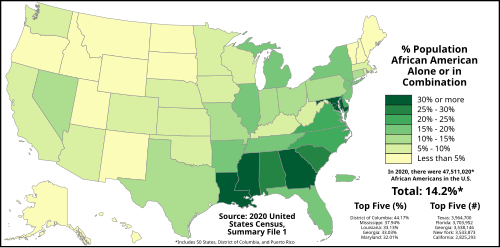
2020年米国国勢調査時点における米国の各州、ワシントンDC、プエルトリコにおけるアフリカ系アメリカ人の割合
The South has the largest African American population by region.[148] The South has largely remained a black and white region while the other regions of the US have received larger amounts of Hispanic and Asian immigrants. However, the Hispanic population has seen rapid growth in certain areas of the South, particularly in South Florida and South Texas.[149] The Upland South is heavily white, with few African Americans in this subregion of the South.[150]
Sports
American football
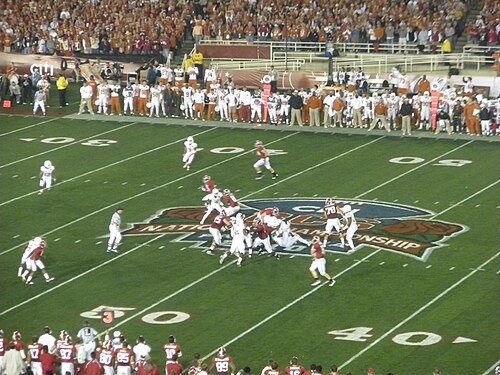

American football is heavily considered the most popular team sport in most areas of the Southern United States.
The region is home to numerous decorated and historic college football programs, particularly in the Southeastern Conference (known as the "SEC"), Atlantic Coast Conference (known as the "ACC"), and the Big 12 Conference. The SEC, consisting almost entirely of teams based in Southern states, is widely considered to be the strongest league in contemporary college football and includes the Alabama Crimson Tide, the program with the most national championships in the sport's modern history. The sport is also highly competitive and has a spectator following at the high school level, particularly in rural areas, where high school football games often serve as prominent community gatherings.
The first established professional American football team based in the South were the Washington Redskins, now called the Washington Commanders. They still retain a large following in most of Virginia and parts of Maryland.[151] Later on, the National Football League (NFL) and American Football League (AFL) began to expand many teams in the Southern US during the 1960s, with franchises like the Atlanta Falcons, New Orleans Saints, Houston Oilers, Miami Dolphins, and the Dallas Cowboys. In later decades, NFL expansion into Southern states continued, with the Tampa Bay Buccaneers during the 1970s, along with the Carolina Panthers, Jacksonville Jaguars, and Baltimore Ravens during the 1990s. The Houston Oilers were eventually replaced by the Houston Texans, after the Oilers relocated to Nashville to become the Tennessee Titans.
Baseball

Baseball has been played in the Southern United States dating back to the mid-19th century. It was traditionally more popular than American football until the 1980s and still accounts for the largest annual attendance amongst sports played in the South. The first mention of a baseball team in Houston was on April 11, 1861.[153][154] During the late 19th century and early 20th century games were common, especially once the professional leagues such as the Texas League, the Dixie League, and the Southern League were organized.
The short-lived Louisville Colonels were a part of the early National League and American Association, but ceased to exist in 1899. The first Southern Major League Baseball team after the Colonels appeared in 1962, when the Houston Colt .45s (known today as the Houston Astros) were enfranchised. Later, the Atlanta Braves came in 1966, followed by the Texas Rangers in 1972, and finally the Miami Marlins and Tampa Bay Rays in the 1990s.
College baseball appears to be more well attended in the South than elsewhere, as teams like Florida State, Arkansas, LSU, Virginia, Mississippi State, Ole Miss, South Carolina, Florida and Texas are commonly at the top of the NCAA's attendance.[155] The South generally produces very successful collegiate baseball teams with Virginia, Vanderbilt, LSU, South Carolina, Florida and Coastal Carolina winning recent College World Series Titles.
The following is a list of each MLB team in the Southern U.S. and the total fan attendance for 2019:
Auto racing
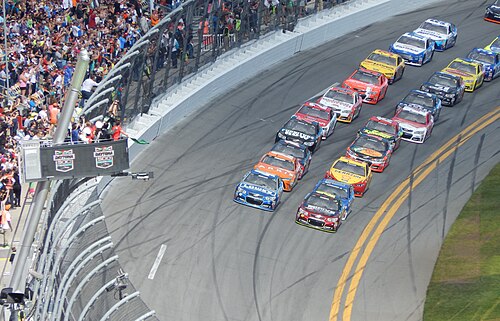
The Southern states are commonly associated with stock car racing and its most prominent competition level NASCAR, which is headquartered in Charlotte and Daytona Beach. The sport was developed in the South during the early 20th century, with stock car racing's historic mecca being Daytona Beach, where cars initially raced on the wide, flat beachfront, before the construction of Daytona International Speedway. Though the sport has attained a following throughout the United States, a majority of NASCAR races continue to take place at Southern tracks.
Basketball
Basketball is very popular throughout the Southern United States as both a recreational and spectator sport, particularly in the states of Kentucky and North Carolina. Both states are home to several prominent college basketball programs, including the Kentucky Wildcats, Louisville Cardinals, Duke Blue Devils and North Carolina Tar Heels. Other southern teams, like the Florida Gators and Virginia Cavaliers have won national championships.
NBA teams based in the South include the San Antonio Spurs, Houston Rockets, Oklahoma City Thunder, Dallas Mavericks, Washington Wizards, Charlotte Hornets, Atlanta Hawks, Orlando Magic, Memphis Grizzlies, New Orleans Pelicans, and Miami Heat. The Spurs and Heat in particular have become prominent within the NBA, with eight championships won by the two between 1999 and 2014.[157]
Golf
Golf is a popular recreational sport in most areas of the South, with the region's warm climate allowing it to host many professional tournaments and numerous destination golf resorts, particularly in the state of Florida. The region is home to The Masters which is played at Augusta National Golf Club in Augusta, Georgia, and has become one of the professional game's most important tournaments. One of the four major championships in Hilton Head Island, in South Carolina, is also home to a prominent American golf tournament and has several high-quality courses.
Soccer
In recent decades association football, known in the South as in the rest of the United States as "soccer", has become a popular sport at youth and collegiate levels throughout the region. The game has been historically widespread at the college level in the Atlantic coast states of Maryland, Virginia, and the Carolinas; which contain many of the nation's most successful college soccer programs. In particular, Virginia has won 7 NCAA National Championships, the third most of any school.
The establishment of Major League Soccer has led to professional soccer clubs in the Southern cities including FC Dallas, Houston Dynamo, D.C. United, Orlando City, Inter Miami CF, Nashville SC, Atlanta United, Austin FC and Charlotte FC. The current United States second division soccer league, the USL Championship, was initially geographically based in the coastal Southeast around clubs in Charleston, Richmond, Charlotte, Wilmington, Raleigh, Virginia Beach, and Atlanta.
Major sports teams in the South
The Southern region is home to numerous professional sports franchises in the "Big Four" leagues (NFL, NBA, NHL, and MLB), with many championships collectively among them.
- Dallas-Fort Worth: Cowboys (NFL), Rangers (MLB), Mavericks (NBA), Stars (NHL)
- Washington, D.C.: Washington Commanders (NFL), Nationals (MLB), Wizards (NBA), Capitals (NHL)
- Miami-Fort Lauderdale: Dolphins (NFL), Marlins (MLB), Heat (NBA), Panthers (NHL)
- Houston: Texans (NFL), Astros (MLB), Rockets (NBA)
- Atlanta: Falcons (NFL), Braves (MLB), Hawks (NBA)
- Tampa Bay: Buccaneers (NFL), Rays (MLB), Lightning (NHL)
- Baltimore: Ravens (NFL), Orioles (MLB)
- Charlotte: Panthers (NFL), Hornets (NBA)
- Nashville: Titans (NFL), Predators (NHL)
- New Orleans: Saints (NFL), Pelicans (NBA)
- Orlando: Magic (NBA)
- San Antonio: Spurs (NBA)
- Jacksonville: Jaguars (NFL)
- Oklahoma City: Thunder (NBA)
- Memphis: Grizzlies (NBA)
- Raleigh: Hurricanes (NHL)
Health

The map on the right shows that life expectancy is lower overall in most Southern states compared to the rest of the country. Obesity rates, hypertension, and diabetes are higher relative to the rest of the nation.[158]
A study reported that six Southern states have the worst incidence of sleep disturbances in the nation, attributing the disturbances to high rates of obesity and smoking.[159]
The South has a higher percentage of obese people[160] and diabetics when compared to national regional averages.[161] The region also has the largest number of people dying from stroke complications[162] and the highest rates of cognitive decline.[163] Life expectancy is lower and death rates are higher, when compared to national averages of other regions in the United States.[164][165] This disparity reflects substantial divergence between the South and other regions since the middle of the 20th century.[166]
The East South Central Census Division of the United States (made up of Kentucky, Tennessee, Mississippi, and Alabama) had the highest rate of inpatient hospital stays in 2012. The other divisions, West South Central (Texas, Oklahoma, Arkansas and Louisiana) and South Atlantic (West Virginia, Delaware, Maryland, Virginia, North Carolina, South Carolina, Georgia and Florida) ranked seventh and fifth.[167] The South had a significantly higher rate of hospital discharges in 2005 than other regions of the United States, but the rate had declined to be closer to the overall national rate by 2011.[168]
For cancer causes, the South, particularly an axis from West Virginia through Texas, leads the nation in adult obesity, adult smoking, low exercise, low fruit consumption, low vegetable consumption, all known cancer risk factors,[169] which matches a similar high risk axis in "All Cancers Combined, Death Rates by State, 2011" from the Centers for Disease Control and Prevention.[170]
The South is home to some of the nation's largest academic health systems, including the Johns Hopkins Hospital, Duke University Health, University of Florida Health, UNC Medical Center, University of Miami Health, UT Health Science Center at Houston, Emory Healthcare, University of South Florida Health, and others.
Politics
In the first decades after Reconstruction in the 1880s and 1890s, white Democrats regained power in the state legislatures, and began to make voter registration more complicated, to reduce black voting. With a combination of intimidation, fraud and violence by paramilitary groups, they suppressed black voting and turned Republicans out of office. From 1890 to 1908, ten of eleven states ratified new constitutions or amendments that effectively disenfranchised most black voters and many poor white voters. This disenfranchisement persisted for six decades into the 20th century, depriving blacks and poor whites of all political representation. Because they could not vote, they could not sit on juries. They had no one to represent their interests, resulting in state legislatures consistently underfunding programs and services, such as schools, for blacks and poor whites.[171] Scholars have characterized pockets of the Southern United States as being "authoritarian enclaves" from Reconstruction to the Civil Rights Act.[13][14][15][16]
With the collapse of the Republican Party in nearly all parts of the South, the region became known as the "Solid South", and the Democratic Party after 1900 moved to a system of primaries to select their candidates. Victory in a primary was tantamount to election. From the late 1870s to the 1960s, only rarely was a state or national Southern politician a Republican, outside from Southern Republican strongholds within the Appalachian mountain districts.[172][173] Southern Republicans during this period would continue to control parts of the Appalachian Mountain areas and compete for power in the former Border States. Apart from a few states (such as the Byrd Machine in Virginia, the Crump Machine in Memphis), and a few other local organizations, the Democratic Party itself was very lightly organized. It managed primaries but party officials had little other role. To be successful a politician built his own network of friends, neighbors and allies. Reelection was the norm, and the result from 1910 to the late 20th century was that Southern Democrats in Congress had accumulated seniority, and automatically took the chairmanships of all committees.[174] By the 1940s the Supreme Court began to find disenfranchisement measures like the "grandfather clause" and the white primary unconstitutional. Southern legislatures quickly passed other measures to keep blacks disenfranchised, even after suffrage was extended more widely to poor whites. Because white Democrats controlled all the Southern seats in the U.S. Congress, they had outsize power and could sidetrack or filibuster efforts to pass legislation they did not agree with.
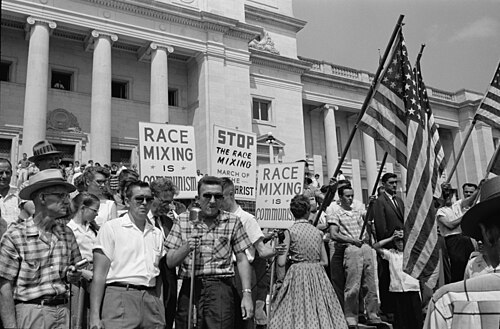
Increasing support for civil rights legislation by the national Democratic Party beginning in 1948 caused segregationist Southern Democrats to nominate Strom Thurmond on a third-party "Dixiecrat" ticket in 1948. These Dixiecrats returned to the party by 1950, but Southern Democrats held off Republican inroads in the suburbs by arguing that only they could defend the region from the onslaught of northern liberals and the civil rights movement. In response to the Brown v. Board of Education ruling of 1954, 101 Southern congressmen (19 senators, 82 House members of which 99 were Southern Democrats and 2 were Republicans) in 1956 denounced the Brown decisions as a "clear abuse of judicial power [that] climaxes a trend in the federal judiciary undertaking to legislate in derogation of the authority of Congress and to encroach upon the reserved rights of the states and the people." The manifesto lauded, "...those states which have declared the intention to resist enforced integration by any lawful means". It was signed by all Southern senators except Majority Leader Lyndon B. Johnson, and Tennessee senators Albert Gore Sr. and Estes Kefauver. Virginia closed schools in Warren County, Prince Edward County, Charlottesville, and Norfolk rather than integrate, but no other state followed suit. Democratic governors Orval Faubus of Arkansas, Ross Barnett of Mississippi, John Connally of Texas, Lester Maddox of Georgia, and, especially, George Wallace of Alabama resisted integration and appealed to a rural and blue-collar electorate.[175]

The northern Democrats' support of civil rights issues culminated when Democratic President Lyndon B. Johnson signed into law the Civil Rights Act of 1964 and the Voting Rights Act of 1965, which ended legal segregation and provided federal enforcement of voting rights for blacks. In the presidential election of 1964, Barry Goldwater's only electoral victories outside his home state of Arizona were in the states of the Deep South where few blacks could vote before the 1965 Voting Rights Act.[176] Pockets of resistance to integration in public places broke out in violence during the 1960s by the shadowy Ku Klux Klan, which caused a backlash among moderates.[177] Major resistance to school busing extended into the 1970s.[178]
National Republicans such as Richard Nixon began to develop their Southern strategy to attract conservative white Southerners, especially the middle class and suburban voters, in addition to migrants from the North and traditional GOP pockets in Appalachia. The transition to a Republican stronghold in the South took decades. First, the states started voting Republican in presidential elections, except for native Southerners Jimmy Carter in 1976 and Bill Clinton in 1992 and 1996. Then the states began electing Republican senators and finally governors. Georgia was the last state to do so, with Sonny Perdue taking the governorship in 2002.[179] In addition to its middle class and business base, Republicans cultivated the religious right and attracted strong majorities from the evangelical or Fundamentalist vote, mostly Southern Baptists, which had not been a distinct political force prior to 1980.[180]
Decline of Southern liberalism during the 20th century
Southern liberals were an essential part of the New Deal coalition – without them Roosevelt lacked majorities in Congress. Typical leaders were Lyndon B. Johnson in Texas, Jim Folsom and John Sparkman in Alabama, Claude Pepper in Florida, Earl Long and Hale Boggs in Louisiana, and Estes Kefauver in Tennessee. They promoted subsidies for small farmers, and supported the nascent labor union movement. An essential condition for this north–south coalition was for northern liberals to ignore the problem of racism throughout the South and elsewhere in the country. After 1945, however, northern liberals – led especially by young Hubert Humphrey of Minnesota – increasingly made civil rights a central issue. They convinced Truman to join them in 1948. The conservative Southern Democrats – the Dixiecrats – took control of the state parties in half the region and ran Strom Thurmond for president against Truman. Thurmond carried only the Deep South, but that threat was enough to guarantee the national Democratic Party in 1952 and 1956 would not make civil rights a major issue. In 1956, 101 of the 128 southern congressmen and senators signed the Southern Manifesto denouncing forced desegregation.[181] The labor movement in the South was divided, and lost its political influence. Southern liberals were in a quandary – most of them kept quiet or moderated their liberalism, others switched sides, and the rest continued on the liberal path. One by one, the last group was defeated; historian Numan V. Bartley states, "Indeed, the very word 'liberal' gradually disappeared from the southern political lexicon, except as a term of opprobrium."[182]
Presidents from the South

The South produced nine of the country's first twelve Presidents, including the Virginia Dynasty. After Zachary Taylor won the presidential election of 1848, no Southern politician was elected president until Woodrow Wilson in 1912. Andrew Johnson (of Tennessee) who was vice president in 1865, became president after the death of Abraham Lincoln.
Out of the last eleven U.S. presidents, six have Southern region ties: Lyndon B. Johnson (of Texas; 1963–69), Jimmy Carter (of Georgia; 1977–81), George H. W. Bush (of Texas; 1989–93), Bill Clinton (of Arkansas; 1993–2001), George W. Bush (of Texas; 2001–2009), and Joe Biden (of Delaware; 2021–present). Johnson was a native of Texas, while Carter is from Georgia, and Clinton from Arkansas. While George H. W. Bush and George W. Bush began their political careers in Texas, they were both born in New England and have their ancestral roots in that region. Similarly, while Joe Biden was born in Pennsylvania, he grew up largely in Delaware (classified as a Southern state by the U.S. Census Bureau) and spent his entire political career there.
Other politicians and political movements
The South has produced various nationally known politicians and political movements. In 1948, a group of Democratic congressmen, led by Governor Strom Thurmond of South Carolina, split from the Democrats in reaction to an anti-segregation speech given by Minneapolis mayor and future senator Hubert Humphrey of Minnesota. They founded the States Rights Democratic or Dixiecrat Party. During that year's presidential election, the party ran Thurmond as its candidate and he carried four Deep South states.
In the 1968 Presidential election, Alabama Governor George C. Wallace ran for president on the American Independent Party ticket. Wallace ran a "law and order" campaign similar to that of Republican candidate, Richard Nixon. Nixon's Southern Strategy of gaining electoral votes downplayed race issues and focused on culturally conservative values, such as family issues, patriotism, and cultural issues that appealed to Southern Baptists.
In the 1994 mid-term elections, another Southern politician, Newt Gingrich, led the Republican Revolution, ushering in twelve years of GOP control of the House. Gingrich became Speaker of the United States House of Representatives in 1995 and served until his resignation in 1999. The incumbent Speaker of the House, Louisiana Republican Mike Johnson, is also from the South.
Except for Bob Dole from Kansas (1985–96), all the recent Republican Senate Leaders have all been Southerners: Howard Baker (1981–1985) of Tennessee, Trent Lott (1996–2003) of Mississippi, Bill Frist (2003–2006) of Tennessee, and Mitch McConnell (2007–present) of Kentucky.
The Republican candidates for president have won the South in elections since 1972, except for 1976. The region is not, however, entirely monolithic, and every successful Democratic candidate since 1976 has claimed at least three Southern states. Barack Obama won Florida, Maryland, Delaware, North Carolina, and Virginia in 2008 but did not repeat his victory in North Carolina during his 2012 reelection campaign.[183] Joe Biden also performed well for a modern Democrat in the South, winning Maryland, Delaware, Virginia, and Georgia, in the 2020 United States presidential election.
Race relations
Native Americans
Native Americans have lived in what is now termed the American South for nearly 12,000 years. More and more of their land was taken until they were defeated by settlers in a series of conflicts ending in the War of 1812 and the Seminole Wars, and most of the surviving population were removed west to Indian Territory (now Oklahoma), but large numbers of Native Americans managed to stay behind by blending into the surrounding society. This was especially true of the wives of European American merchants and miners.[citation needed]
Civil rights movement
The South witnessed two major events in the lives of 20th century African Americans: the Great Migration and the American Civil Rights Movement. The Great Migration began during World War I, hitting its high point during World War II. During this migration, Black people left the South to find work in Northern factories and other sectors of the economy.[184]
The migration also empowered the growing Civil Rights Movement. While the movement existed in all parts of the United States, its focus was against disenfranchisement and the Jim Crow laws in the South. Most of the major events in the movement occurred in the South, including the Montgomery bus boycott, the Mississippi Freedom Summer, the March on Selma, Alabama, and the assassination of Martin Luther King Jr. In addition, some of the most important writings to come out of the movement were written in the South, such as King's "Letter from Birmingham Jail". Most of the civil rights landmarks can be found around the South. The Birmingham Civil Rights National Monument in Birmingham includes the Birmingham Civil Rights Institute which details Birmingham's role as the center of the Civil Rights Movement. The 16th Street Baptist Church served as a rallying point for coordinating and carrying out the Birmingham campaign as well as the adjacent Kelly Ingram Park. This park served as ground zero for the infamous children's protest that eventually led to the passage of the Civil Rights Act of 1964; it has since been rededicated as a place of "Revolution and Reconciliation" and is now the setting of moving sculptures related to the battle for Civil Rights in the city. Both Kelly Ingram Park and the 16th Street Baptist Church are centerpieces of the Birmingham Civil Rights District. The Martin Luther King Jr. National Historical Park in Atlanta includes a museum that chronicles the American Civil Rights Movement as well as Martin Luther King Jr.'s boyhood home on Auburn Avenue. Additionally, Ebenezer Baptist Church is located in the Sweet Auburn district as is the King Center, the location of Martin Luther and Coretta Scott King's gravesites.
Racial integration
During the 1950s and 1960s, the racial integration of all-white collegiate sports teams was high on the regional agenda. Involved in it were issues of racial equality, racism, and the alumni's demand for the top players who it needed to win high-profile games. The Atlantic Coast Conference (ACC) would take the lead. First, they started to schedule integrated teams from the North. The wake-up call came in 1966, when Don Haskins's Texas Western College team with five black starters, upset the all-white University of Kentucky team to win the NCAA national basketball championship.[185] That happened at a time when there were no black varsity basketball teams in either the Southeastern Conference or the Southwest Conference. Finally ACC schools, typically under pressure from boosters and civil rights groups, integrated their sports teams.[186][187] With an alumni base that dominated local and state politics, society and business, the ACC flagship schools were successful in their endeavor – as historian Pamela Grundy argues, they had learned how to win:
- The widespread admiration that athletic ability inspired would help transform athletic fields from grounds of symbolic play to forces for social change, places where a wide range of citizens could publicly and at times effectively challenge the assumptions that cast them as unworthy of full participation in U.S. society. While athletic successes would not rid society of prejudice or stereotype – black athletes would continue to confront racial slurs...[minority star players demonstrated] the discipline, intelligence, and poise to contend for position or influence in every arena of national life.[188]
Congress ends segregation (1964) and guarantees voting rights (1965)

The decisive action ending segregation came when Congress, in a bipartisan fashion, overcame Southern filibusters to pass the Civil Rights Act of 1964 and the Voting Rights Act of 1965. A complex interaction of factors came together unexpectedly in the period from 1954 to 1965 to make the momentous changes possible. The Supreme Court had taken the first initiative in Brown v. Board of Education (1954) making segregation of public schools unconstitutional. Enforcement was rapid in the North and border states but was deliberately stopped in the South by the movement called Massive Resistance, sponsored by rural segregationists who largely controlled the state legislatures. Southern liberals, who counseled moderation, were shouted down by both sides and had limited impact. Much more significant was the Civil Rights Movement, especially the Southern Christian Leadership Conference (SCLC) headed by Martin Luther King Jr. It largely displaced the old, much more moderate NAACP in taking leadership roles. King organized massive demonstrations, that seized massive media attention in an era when network television news was an innovative and universally watched phenomenon.[189] SCLC, student activists and smaller local organizations staged demonstrations across the South. National attention focused on Birmingham, Alabama, where protesters deliberately provoked Bull Connor and his police forces by using young teenagers as demonstrators – and Connor arrested 900 in one day alone. The next day Connor unleashed billy clubs, police dogs, and high-pressure water hoses to disperse and punish the young demonstrators with a brutality that horrified the nation. It was very bad for business and the image of a modernizing progressive urban South. President John F. Kennedy, who had been calling for moderation, threatened to use federal troops to restore order in Birmingham. The result in Birmingham was a compromise by which the new mayor opened the library, golf courses, and other city facilities to both races, against the backdrop of church bombings and assassinations.[190][191]
Confrontations continued to escalate. In the summer of 1963, there were 800 demonstrations in 200 southern cities and towns, involving over 100,000 participants and 15,000 arrests. In Alabama in June 1963, Governor George Wallace escalated the crisis by defying court orders to admit the first two black students to the University of Alabama.[192] Kennedy responded by sending Congress a comprehensive civil rights bill and ordered Attorney General Robert Kennedy to file federal lawsuits against segregated schools and to deny funds for discriminatory programs. Doctor King launched a massive march on Washington in August 1963, bringing out 200,000 demonstrators in front of the Lincoln Memorial, the largest political assembly in the nation's history. The Kennedy administration now gave full-fledged support to the civil rights movement, but powerful southern congressmen blocked any legislation.[193] After Kennedy was assassinated President Lyndon Johnson called for immediate passage of Kennedy civil rights legislation as a memorial to the martyred president. Johnson formed a coalition with Northern Republicans that led to passage in the House, and with the help of Republican Senate leader Everett Dirksen with passage in the Senate early in 1964. For the first time in history, the southern filibuster was broken, and the Senate finally passed its version on June 19 by a vote of 73 to 27.[194] The Civil Rights Act of 1964 was the most powerful affirmation of equal rights ever made by Congress. It guaranteed access to public accommodations such as restaurants and places of amusement, authorized the Justice Department to bring suits to desegregate facilities in schools, gave new powers to the Civil Rights Commission; and allowed federal funds to be cut off in cases of discrimination. Furthermore, racial, religious and gender discrimination was outlawed for businesses with 25 or more employees, as well as apartment houses. The South resisted until the last moment, but as soon as the new law was signed by President Johnson on July 2, 1964, it was widely accepted across the nation. There was only a scattering of diehard opposition, typified by restaurant owner Lester Maddox in Georgia, who became governor, but the great majority of restaurants and hotels in Georgia followed the new law as the business community realized that peaceful integration was the only way forward.[195][196][197][198]
Since the enactment of the Civil Rights Act of 1964 and Voting Rights Act of 1965, black people have gone on to hold many offices within the Southern states. Black people have been elected or appointed as mayors or police chiefs in the cities of Atlanta, Baltimore, Birmingham, Charlotte, Columbia, Dover, Houston, Jackson, Jacksonville, Memphis, Montgomery, Nashville, New Orleans, Raleigh, Richmond, and Washington. They have also gone on to serve in both the U.S. Congress and state legislatures of Southern states.[199]
New Great Migration
The Civil Rights Movement of the 1950s and 1960s ended Jim Crow laws across the South and other areas of the United States. In recent decades, a second migration appears to be underway, this time with African Americans from the North moving to the South in record numbers.[200] While race relations are still a contentious issue in the South and most of the U.S., the region surpasses the rest of the country in many areas of integration and racial equality. According to 2003 report by researchers at the University of Wisconsin–Milwaukee, Virginia Beach, Charlotte, Nashville-Davidson, and Jacksonville were the five most integrated of the nation's fifty largest cities, with Memphis at number six.[201] Southern states tend to have a low disparity in incarceration rates between blacks and whites relative to the rest of the country.[202]
The New Great Migration is not evenly distributed throughout the South. The rise in net gain points to Atlanta, Charlotte, Dallas, and Houston being a growing hot spots for the migrants of The New Great Migration. The percentage of Black Americans who live in the South has been increasing since 1990, and the biggest gains have been in the region's large urban areas, according to census data. The Black population of metro Atlanta more than doubled between 1990 and 2020, surpassing 2 million in the most recent census. The Black population also more than doubled in metro Charlotte while Greater Houston and Dallas-Fort Worth both saw their Black populations surpass 1 million for the first time. Several smaller metro areas also saw sizable gains, including San Antonio;[203] Raleigh and Greensboro, N.C.; and Orlando.[204] Primary destinations are states that have the most job opportunities, especially Georgia, North Carolina, Maryland, Virginia, Tennessee, Florida and Texas. Other southern states, including Mississippi, Louisiana, South Carolina, Alabama and Arkansas, have seen little net growth in the African American population from return migration.
Symbolism
The Confederate battle flag is used as a symbol to identify the South, states' rights and Southern tradition. Such groups as the League of the South have a high regard for the secession movement of 1860, citing a desire to protect and defend Southern heritage.[205] Numerous political battles have erupted nationally and within the South over flying the Confederate flag over state capitols, and the naming of public buildings or highways after Confederate leaders, the prominence of certain statues and monuments, and the everyday display of Confederate insignia.[206]
Other symbols of the South include the Bonnie Blue Flag, magnolia trees, and the song "Dixie".[207]
Population centers
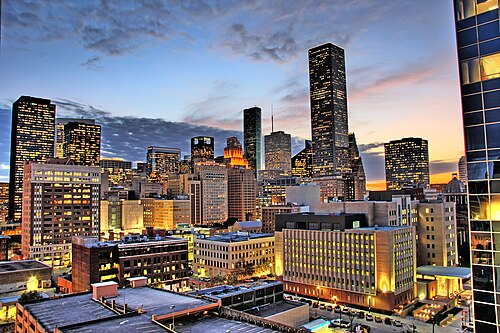
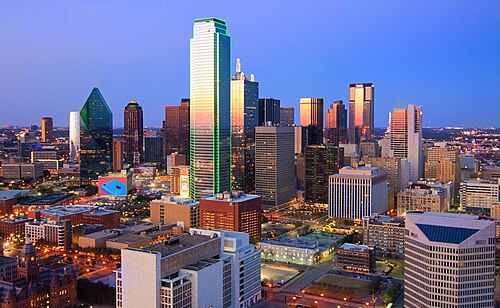
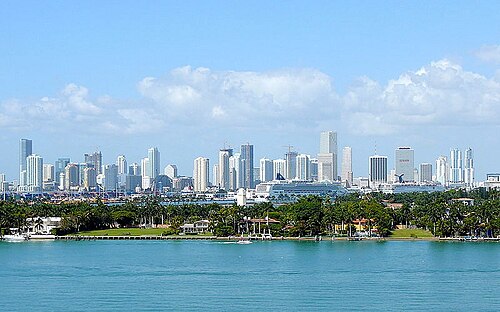
The South was predominately rural up until the 1940s. Since the mid-20th century, the population has increasingly grown in urban and metropolitan areas. The following tables show the twenty largest cities, counties, metropolitan and combined statistical areas in the South. Houston is the largest city in the Southern United States.
Major cities

.jpg/500px-Downtown_Oklahoma_City_skyline_(2).jpg)


.jpg/500px-Atlanta_Skyline_(26739424722).jpg)


Major counties
Major metropolitan areas
* Asterisk indicates part of the metropolitan area is outside the states classified as Southern by the U.S. Census Bureau.
Major combined statistical areas
Southern states
Listed below are states that are defined by the Census Bureau as the Southern United States. Washington, D.C. is located in the Southern United States region as defined by the Census Bureau, but serves as the capital city of the United States, and is not a state.
See also

- Albion's Seed
- Antebellum architecture
- Black Belt in the American South
- Black Southerners
- Cuisine of the Southern United States
- Culture of honor (Southern United States)
- List of plantations in the United States
- Lost Cause of the Confederacy
- Rice Belt
- Southern American English
- Southern art
- Southern hip hop
- Southern hospitality
- Southernization
- Southern literature
- Southern rock
- Southern strategy
- White Southerners
References
- ^ a b c "Census Regions and Divisions of the United States" (PDF). U.S. Census Bureau. Archived from the original (PDF) on June 17, 2016. Retrieved June 9, 2016.
- ^ a b "Change in Resident Population of the 50 States, the District of Columbia, and Puerto Rico: 1910 to 2020" (PDF). Census.gov. United States Census Bureau. Archived (PDF) from the original on April 26, 2021. Retrieved April 27, 2021.
- ^ a b The South Archived July 11, 2021, at the Wayback Machine. Britannica. Retrieved June 5, 2021.
- ^ Maryland, Delaware, and Washington, D.C., are identified in a number of sources as Northeastern:
- "About – CSG". csg-erc.org. Archived from the original on June 23, 2016. Retrieved June 29, 2016.
- "Home : Geographic Information : U.S. Bureau of Labor Statistics". bls.gov. Archived from the original on July 8, 2016. Retrieved June 29, 2016.
- "Regional Climate Centers – National Centers for Environmental Information (NCEI) formerly known as National Climatic Data Center (NCDC)". noaa.gov. Archived from the original on June 29, 2016. Retrieved June 29, 2016.
- "Region and Area Maps". scouting.org. Archived from the original on July 6, 2016. Retrieved June 29, 2016.
- "Northeast Regional Office – National Historic Landmarks Program". nps.gov. Archived from the original on March 5, 2016. Retrieved June 29, 2016.
- ^ a b U.S. Census Bureau. "Census Regions and Divisions of the United States" (PDF). U.S. Census Bureau. Archived (PDF) from the original on December 19, 2017. Retrieved April 26, 2020.
- ^ Garreau, Joel (1982). The Nine Nations of North America. Avon Books. ISBN 978-0-380-57885-6.
- ^ Woodard, Colin (2012). American Nations: A History of the Eleven Rival Regional Cultures of North America. Penguin Books. ISBN 978-0-14-312202-9.
- ^ "Southeastern Division of the Association of American Geographers". Archived from the original on January 1, 2015.
- ^ "Geological Society of America – Southeastern Section". geosociety.org. Archived from the original on July 1, 2016. Retrieved June 29, 2016.
- ^ "Southern Legislative Conference – Serving the South". slcatlanta.org. Archived from the original on October 6, 2014.
- ^ Bethune, Lawrence E. "Scots to Colonial North Carolina Before 1775". Lawrence E. Bethune's M.U.S.I.C.s Project. Archived from the original on February 19, 2012. Retrieved August 28, 2009.
- ^ Jensen, Jeffrey; Pardelli, Giuliana; Timmons, Jeffrey F. (2024). "Representation and Taxation in the American South, 1820–1910". Cambridge University Press. doi:10.1017/9781009122825. ISBN 9781009122825. S2CID 266475609. Archived from the original on October 23, 2023. Retrieved October 21, 2023.
- ^ a b Mickey, Robert (2015). Paths Out of Dixie. Princeton University Press. ISBN 978-0-691-13338-6. Archived from the original on December 26, 2019. Retrieved December 26, 2019.
- ^ a b Ginsburg, Tom; Huq, Aziz Z. (2018). How to Save a Constitutional Democracy. University of Chicago Press. p. 22. Archived from the original on December 15, 2018. Retrieved December 26, 2019.
- ^ a b Kuo, Didi (2019). "Comparing America: Reflections on Democracy across Subfields" (PDF). Perspectives on Politics. 17 (3): 788–800. doi:10.1017/S1537592719001014. ISSN 1537-5927. S2CID 202249318. Archived from the original (PDF) on February 27, 2020.
- ^ a b Gibson, Edward L. (2013). "Subnational Authoritarianism in the United States". Boundary Control. pp. 35–71. doi:10.1017/CBO9781139017992. ISBN 9781139017992. Archived from the original on August 30, 2020. Retrieved December 26, 2019.
- ^ Cooper, Christopher A.; Knotts, H. Gibbs (2010). "Declining Dixie: Regional Identification in the Modern American South". Social Forces. 88 (3): 1083–1101. doi:10.1353/sof.0.0284. ISSN 0037-7732. S2CID 53573849.
- ^ Rice, Tom W.; McLean, William P.; Larsen, Amy J. (2002). "Southern Distinctiveness over Time: 1972–2000". American Review of Politics. 23: 193–220. doi:10.15763/issn.2374-7781.2002.23.0.193-220.
- ^ "Census Bureau Regions and Divisions with State FIPS Codes" (PDF). US Census. December 2008. Archived from the original (PDF) on September 21, 2013. Retrieved December 24, 2014.
- ^ "Southern and Western Regions Experienced Rapid Growth This Decade". Census.gov. Archived from the original on October 15, 2022. Retrieved October 15, 2022.
- ^ Howard W. Odum, Southern regions of the United States (1936), University of North Carolina Press
- ^ Rebecca Mark, and Rob Vaughan, The South: The Greenwood Encyclopedia of American Regional Cultures (2004).
- ^ Cooper, Christopher A.; Knotts, H. Gibbs (2010). "South Polls: Rethinking the Boundaries of the South". Southern Cultures. 16 (4): 72–88. doi:10.1353/scu.2010.0002. JSTOR 26214292. Retrieved September 21, 2024.
- ^ "Population Distribution and Change: 2000 to 2010" (PDF). United States Census Bureau. March 2011. Archived (PDF) from the original on February 28, 2017. Retrieved February 28, 2017.
- ^ "CSG Regional Offices". Council of State Governments. 2012. Archived from the original on February 20, 2014. Retrieved February 13, 2014.
- ^ James Oakes, Slavery and Freedom : An Interpretation of the Old South (1998)
- ^ New South | Definition of New South by Merriam-Webster Archived January 26, 2021, at the Wayback Machine. Retrieved February 12, 2021.
- ^ "SouthEastern Division of the American Association of Geographers". SouthEastern Division of the American Association of Geographers. Archived from the original on January 21, 2017. Retrieved January 26, 2017.
- ^ Rudy Abramson and Jean Haskell, eds. (2006)
- ^ "United States: The Upper South". Encyclopædia Britannica, Inc.
- ^ Trende, Sean (2012). The Lost Majority: Why the Future of Government Is Up for Grabs – and Who Will Take It. St. Martin's Press. pp. xxii–xxviii. ISBN 978-0230116467.
- ^ Neal R. Peirce, The Deep South States of America;: People, politics and power in the seven Deep South States (1974)
- ^ "The Civil War in West Virginia". wvculture.org. Archived from the original on November 30, 2013.
- ^ McConarty, Colin. (October 21, 2015). The Process of Disfranchisment Archived August 29, 2022, at the Wayback Machine. werehistory.org. Retrieved February 13, 2021.
- ^ "GOP eyes potential for picking up U.S. House seats in Mid-South" Archived January 13, 2014, at the Wayback Machine, Memphis Commercial Appeal
- ^ VA health care resource allocations to medical centers in the Mid South ... DIANE. ISBN 9781428938656. Archived from the original on August 14, 2021. Retrieved November 21, 2020.
- ^ Thomas, Richard K.; Jones, Virginia Anne (1977). "The Mid-South". google.com. Archived from the original on August 13, 2021. Retrieved November 21, 2020.
- ^ Dye, David H.; Brister, Ronald C. (1986). The Tchula Period in the Mid-South and Lower Mississippi Valley. Mississippi Department of Archives and History. ISBN 9780938896487. Archived from the original on August 16, 2021. Retrieved November 21, 2020.
- ^ Abadi, Mark. (May 3, 2018). Why No One Can Agree Where The South Really Is Archived August 15, 2021, at the Wayback Machine. Business Insider. Retrieved May 28, 2021.
- ^ "Southern Region". Federal Aviation Administration. Archived from the original on July 1, 2020. Retrieved June 30, 2020.
- ^ "Southeast Area". Agricultural Research Service. Archived from the original on June 4, 2020. Retrieved June 30, 2020.
- ^ "Contact Us". U.S. National Park Service. Rivers, Trails, and Conservation Assistance Program. Archived from the original on July 5, 2019. Retrieved June 30, 2020.
- ^ a b c Prentice, Guy. "Native american archeology and culture history". Archived from the original on April 17, 2008. Retrieved February 11, 2008.
- ^ Cook, Noble David. Born To Die: Disease and New World Conquest, 1492–1650, pp. 1–11. ISBN 9780521627306.
- ^ Ostler, Jeffrey (May 28, 2019). Surviving Genocide. Yale University Press. ISBN 978-0-300-24526-4.
- ^ Edwards, Tai S; Kelton, Paul (June 1, 2020). "Germs, Genocides, and America's Indigenous Peoples". Journal of American History. 107 (1). Oxford University Press (OUP): 52–76. doi:10.1093/jahist/jaaa008. ISSN 0021-8723.
- ^ Gilio-Whitaker, Dina (April 2, 2019). As Long as Grass Grows. Beacon Press. p. 40. ISBN 978-0-8070-7378-0. OCLC 1044542033.
- ^ a b c David Hackett Fischer, Albion's Seed: Four British Folkways in America, New York: Oxford University Press, 1989, pp. 361–368
- ^ Barker, Deanna. "Indentured Servitude in Colonial America". National Association for Interpretation's Cultural Interpretation and Living History Section. Archived from the original on October 22, 2009. Retrieved November 3, 2016.
- ^ Boon, John D. (2004). "Tidewater". Secrets of the Tide. Horwood. p. 1. ISBN 1-904275-17-6.
Geographically, Tidewater Virginia and Tidewater Maryland together form a triangle whose base extends from the Chesapeake Bay entrance westward through Hampton Roads and the lowlands south of the James River to Petersburg....
- ^ Danforth Prince (March 10, 2011). Frommer's The Carolinas and Georgia. John Wiley & Sons. p. 11. ISBN 978-1-118-03341-8. Archived from the original on April 27, 2016. Retrieved October 31, 2015.
- ^ Isaac, Rhys (1982). The Transformation of Virginia 1740–1790. University of North Carolina Press. pp. 22–23. ISBN 978-0-8078-4814-2.
- ^ Sweet Negotiations: Sugar, Slavery, and Plantation Agriculture in Early Barbados, Chapter 6 The Expansion of Barbados, p. 112
- ^ Atlantic Virginia: Intercolonial Relations in the Seventeenth Century
- ^ Paton, D. (June 1, 2001). "Punishment, Crime, and the Bodies of Slaves in Eighteenth-Century Jamaica". Journal of Social History. 34 (4): 923–954. doi:10.1353/jsh.2001.0066. ISSN 0022-4529. PMID 18754158. S2CID 29531689.
- ^ a b c "Ancestry of the Population by State: 1980 – Table 3" (PDF). census.gov. Archived (PDF) from the original on February 24, 2012. Retrieved December 7, 2017.
- ^ The World Book: Organized Knowledge in Story and Picture, Volume 6, edited by Michael Vincent O'Shea, Ellsworth Decatur Foster, George Herbert Locke, p. 4989, ISBN 1372554106
- ^ Wilson, David. The Southern Strategy. University of South Carolina Press. 2005.
- ^ Selby, John E; Higginbotham, Don (2007). The Revolution in Virginia, 1775–1783.
- ^ Wilson, David K (2005). The Southern Strategy: Britain's conquest of South Carolina and Georgia, 1775–1780. Columbia, SC: University of South Carolina Press. p. 9
- ^ Henry Lumpkin, From Savannah to Yorktown: The American Revolution in the South (2000)
- ^ Peter Kolchin, American Slavery: 1619–1877, (Hill and Wang, 1994), p. 73.
- ^ Kolchin, American Slavery: 1619–1877, p. 81.
- ^ "The Peculiar Institution of American Slavery". Archived from the original on November 3, 2007. Retrieved June 11, 2008.
- ^ Walter Johnson, Soul by Soul: Life Inside the Antebellum Slave Market, Cambridge: Harvard University Press, 1999, pp. 5, 215.
- ^ Walter Johnson, Soul by Soul: Life Inside the Antebellum Slave Market, Cambridge: Harvard University Press, 1999, pp. 2–7
- ^ "Trail of Tears". History.com. September 26, 2023 [Original date November 9, 2009]. Archived from the original on May 5, 2023.
- ^ McPherson, James M., Battle Cry of Freedom. the Civil War Era, Oxford Univ. Press, 1998, p. 304
- ^ "Commentary: Lincoln's Proclamation". Archived from the original on September 6, 2014. Retrieved September 30, 2014.
- ^ Eric Lacy, Vanquished Volunteers: East Tennessee Sectionalism from Statehood to Secession (Johnson City, Tenn.: East Tennessee State University Press, 1965), pp. 122–126, 217–233.
- ^ Scott, E. Carele. Southerner vs. Southerner: Union Supporters Below the Mason-Dixon Line Archived August 14, 2021, at the Wayback Machine. Warfare History Network. Retrieved August 14, 2021.
- ^ "Nineteenth Century Death Tolls: American Civil War". Archived from the original on February 20, 2011. Retrieved August 22, 2006.
- ^ "American Civil War, Those Confederate States". Archived from the original on September 28, 2006. Retrieved July 30, 2007.
{{cite web}}: CS1 maint: bot: original URL status unknown (link) - ^ Toward a social history of the American Civil War: exploratory essays. Archived November 6, 2011, at the Wayback Machine. Maris Vinovskis (1990). Cambridge University Press. p. 7.
- ^ Brackett, John Matthew (2005). "Chapter 3: An Easy Adjustment to the Post War Nation: Pensacola Between 1865 and 1870" (PDF). "The Naples of America," Pensacola during the Civil War and Reconstruction (MA thesis). Florida State University. Archived from the original (PDF) on September 10, 2006.
- ^ Richard Nelson Current, Those Terrible Carpetbaggers: A Reinterpretation (1989)
- ^ Nicholas Lemann, Redemption: The Last Battle of the Civil War, New York: Farrar Straus & Giroux, 2002, pp. 70–75
- ^ Richard H. Pildes, "Democracy, Anti-Democracy, and the Canon", Constitutional Commentary, Vol.17, 2000, p. 27 Archived May 25, 2017, at Archive-It, accessed March 10, 2008
- ^ John Solomon Otto, The Final Frontiers, 1880–1930: Settling the Southern Bottomlands, Westport, Connecticut: Greenwood Press, 1999
- ^ John C. Willis, Forgotten Time: The Yazoo-Mississippi Delta after the Civil War, Charlottesville: University of Virginia Press, 2000.
- ^ "Italians in Mississippi", Mississippi History Now Archived October 26, 2016, at the Wayback Machine, accessed November 28, 2007
- ^ "Vivian Wong, "Somewhere Between White and Black: The Chinese in Mississippi", Organization of American Historians Magazine of History". Archived from the original on October 24, 2005. Retrieved October 8, 2007.
{{cite web}}: CS1 maint: bot: original URL status unknown (link), accessed November 15, 2007 - ^ Edward L. Ayers, The Promise of the New South: Life after Reconstruction, New York: Oxford University Press, 1992; 15th Anniversary Edition (pbk), 2007, p. 24
- ^ Richard H. Pildes, "Democracy, Anti-Democracy, and the Canon", Constitutional Commentary, Vol. 17, 2000, pp. 12–13 Archived May 25, 2017, at Archive-It, accessed March 10, 2008
- ^ Glenn Feldman, The Disenfranchisement Myth: Poor Whites and Suffrage Restriction in Alabama, Athens: University of Georgia Press, 2004
- ^ Springer, Melanie (2014). How the States Shaped the Nation. The University of Chicago: The University of Chicago Press. p. 145.
- ^ William H. Chafe, "Presidential Address: 'The Gods Bring Threads to Webs Begun'." Journal of American History 86.4 (2000): 1531–1551. JSTOR 27547837. Chafe, William H. (2000). "Presidential Address: "The Gods Bring Threads to Webs Begun"". The Journal of American History. 86 (4): 1531–1551. doi:10.2307/2567576. JSTOR 2567576. Archived from the original on August 5, 2020. Retrieved January 19, 2020.
{{cite journal}}: CS1 maint: bot: original URL status unknown (link). - ^ Busbee, Wesley F.; Mississippi: A History; p. 185 ISBN 0882952277
- ^ "Dr. Michael McDonald, US Elections Project: Alabama Redistricting Summary, George Mason University". Archived from the original on April 6, 2005. Retrieved March 11, 2017., accessed April 6, 2008
- ^ "Strikes", Texas Handbook On-Line Archived May 27, 2016, at the Wayback Machine, accessed April 6, 2008
- ^ Jackie McElhaney and Michael V. Hazel, "Dallas", Handbook of Texas Online Archived October 29, 2016, at the Wayback Machine, accessed April 6, 2008
- ^ David G. McComb, "Urbanization", Handbook of Texas Online Archived April 3, 2016, at the Wayback Machine, accessed April 6, 2008
- ^ Paul N. Spellman, Spindletop Boom Days (Texas A & M University Press, 2001). ISBN 0890969469.
- ^ John S. Spratt, The Road to Spindletop: Economic Change in Texas, 1875–1901 (U of Texas Press, 1955).
- ^ "First Measured Century: Interview: James Gregory". PBS. Archived from the original on July 18, 2018. Retrieved August 22, 2006.
- ^ Morton Sosna, and James C. Cobb, Remaking Dixie: The Impact of World War II on the American South (UP of Mississippi, 1997).
- ^ Ralph C. Hon, "The South in a War Economy" Southern Economic Journal8#3 (1942), pp. 291–308 online Archived August 19, 2020, at the Wayback Machine
- ^ For comprehensive coverage see Dwight C. Hoover and B.U. Ratchford, Economic Resources and Policies of the South (1951).
- ^ Russell B. Olwell, At Work in the Atomic City: A Labor and Social History of Oak Ridge, Tennessee (2004).
- ^ George B. Tindall, The Emergence of the New South pp.694–701, quoting p. 701.
- ^ Dewey W. Grantham, The South in modern America (1994) pp 172–183.
- ^ Grantham, The South in modern America (1994) p 179.
- ^ Frey, William H. (September 12, 2022). "A 'New Great Migration' is bringing Black Americans back to the South". Archived from the original on February 7, 2023.
- ^ Numan V. Bartley, The new south, 1945–1980 (LSU Press, 1995) pp 105–46.
- ^ "2017 State & Legislative Partisan Composition" (PDF). National Conference of State Legislatures. August 4, 2017. Archived from the original (PDF) on January 2, 2022. Retrieved February 14, 2021.
- ^ Top 20 States with the Most Fortune 500 Company Headquarters Archived November 12, 2020, at the Wayback Machine. The Boss Magazine. Retrieved February 16, 2021.
- ^ Wells, Lindsay. (May 31, 2022). Texas leads nation for most Fortune 500 companies Archived July 13, 2022, at the Wayback Machine. hounstonagentmagazine.com. Retrieved July 13, 2022.
- ^ "State jobless rate below US average". The Decatur Daily. August 19, 2005. Archived from the original on September 28, 2007. Retrieved February 12, 2007.
- ^ "Texas Medical Center". tshaonline.org. June 15, 2010. Archived from the original on August 29, 2022. Retrieved February 17, 2020.
- ^ "U.S. News Best Hospitals: Cancer". usnews.com. Archived from the original on April 6, 2012.
- ^ Matus, Ron (March 6, 2005). "Schools still rank near the bottom". St. Petersburg Times. Archived from the original on January 22, 2007. Retrieved September 5, 2007.
- ^ US Department of Education Archived August 25, 2009, at the Wayback Machine retrieved June 14, 2008
- ^ "Graduation Rates Rise in South, Study Finds". Education Week. October 14, 2009. Archived from the original on January 15, 2013. Retrieved January 12, 2013.
- ^ Russell, David Lee (January 30, 2013). "Life in the Southern Colonies (part 2 of 3)". Journal of the American Revolution. Archived from the original on December 15, 2019. Retrieved November 19, 2019.
- ^ "ASA 147th Meeting Lay Language Papers - The Nationwide Speech Project". Acoustics.org. May 27, 2004. Archived from the original on January 8, 2014. Retrieved November 8, 2012.
- ^ "Map". ling.upenn.edu.
- ^ Cooper, Christopher A.; Knotts, H. Gibbs (2004). "Defining Dixie: A State-Level Measure of the Modern Political South". American Review of Politics. 25: 25–39. doi:10.15763/issn.2374-7781.2004.25.0.25-39.
- ^ Reed, John Shelton (1982). One South: An Ethnic Approach to Regional Culture. Baton Rouge: Louisiana State University Press. p. 3. ISBN 978-0-8071-1003-4.
- ^ Smith, William L. (2009). "Southerner and Irish? Regional and Ethnic Consciousness in Savannah, Georgia" (PDF). Southern Rural Sociology. 24 (1): 223–239. Archived (PDF) from the original on September 6, 2015. Retrieved July 18, 2015.
- ^ Smith, M. G. (1982). "Ethnicity and ethnic groups in America: the view from Harvard" (PDF). Ethnic and Racial Studies. 5 (1): 1–22. doi:10.1080/01419870.1982.9993357. Archived from the original (PDF) on July 21, 2015.
- ^ David Hackett Fischer, Albion's Seed: Four British Folkways in America, New York: Oxford University Press, 1989, pp. 633–639
- ^ Mingay, G. E. (1976). The Gentry: The Rise and Fall of a Ruling Class. Themes in British Social History. New York: Longman. ISBN 0582484030.
- ^ "Governor William Berkeley: Virginia's First Economic Developer". Council for Community and Economic Research. Retrieved July 5, 2024.
- ^ Genovese, Eugene D. “The Chivalric Tradition in the Old South.” The Sewanee Review, vol. 108, no. 2, 2000, pp. 188–205. JSTOR, http://www.jstor.org/stable/27548832. Accessed 12 May 2024.
- ^ "The Plantation & Chivalry", USHistory.org. Retrieved 12 May 2024.
- ^ a b "Table 3a. Persons Who Reported a Single Ancestry Group for Regions, Divisions and States: 1980" (PDF). census.gov. Archived (PDF) from the original on August 30, 2019. Retrieved December 7, 2017.
- ^ a b "Table 1. Type of Ancestry Response for Regions, Divisions and States: 1980" (PDF). census.gov. Archived (PDF) from the original on July 8, 2019. Retrieved December 7, 2017.
- ^ Wilson, Charles Reagan. Ferris, William R. Encyclopedia of Southern Culture, p. 556
- ^ Christine Leigh Heyrman, Southern Cross: The Beginnings of the Bible Belt (1998)
- ^ Donald G. Mathews, Religion in the Old South (1979)
- ^ Edward L. Queen, In the South the Baptists Are the Center of Gravity: Southern Baptists and Social Change, 1930–1980 (1991)
- ^ "Baptists as a Percentage of all Residents". Department of Geography and Meteorology, Valparaiso University. 2000. Archived from the original on May 22, 2010.
- ^ Samuel S. Hill, Charles H. Lippy, and Charles Reagan Wilson, eds. Encyclopedia of Religion in the South (2005)
- ^ "The most and least religious states in the US – Mississippi comes out top, Vermont is bottom – Christian News on Christian Today". christiantoday.com. February 4, 2014. Archived from the original on December 18, 2014. Retrieved December 18, 2014.
- ^ Blanton, Anderson, Hittin' the Prayer Bones: Materiality of Spirit in the Pentecostal South (University of North Carolina Press, 2015), ISBN 978-1469623979; preview
- ^ Marc Egnal, Divergent paths: how culture and institutions have shaped North American growth (1996) p 170
- ^ Rebecca Mark and Robert C. Vaughan, The South (2004) p. 147
- ^ Cooper and Knotts, "Declining Dixie: Regional Identification in the Modern American South", p. 1084
- ^ Christopher A. Cooper and H. Gibbs Knotts, eds. The New Politics of North Carolina (2008)
- ^ Raymond A. Mohl, "Globalization, Latinization, and the Nuevo New South." Journal of American Ethnic History (2003) 22#4: 31–66. online Archived December 26, 2019, at the Wayback Machine
- ^ Jaycie Vos, et al. "Voices from the Southern Oral History Program: New Roots/Nuevas Raíces: Stories from Carolina del Norte." Southern Cultures 22.4 (2016): 31–49 online Archived December 26, 2019, at the Wayback Machine.
- ^ Richard J. Gonzales (2016). Raza Rising: Chicanos in North Texas. University of North Texas Press. p. 111. ISBN 9781574416329. Archived from the original on August 19, 2020. Retrieved December 26, 2019.
- ^ Charles S. Bullock, and M. V. Hood, "A Mile‐Wide Gap: The Evolution of Hispanic Political Emergence in the Deep South." Social Science Quarterly 87.5 (2006): 1117–1135.
- ^ Mary E. Odem and Elaine Lacy, eds. Latino Immigrants and the Transformation of the U.S. South (U of Georgia Press, 2009).
- ^ Edward L. Ayers, What Caused the Civil War? Reflections on the South and Southern History (2005) p. 46, 019535687X
- ^ Michael Hirsh (April 25, 2008). "How the South Won (This) Civil War" Archived December 11, 2008, at the Wayback Machine, Newsweek, accessed November 22, 2008
- ^ "Grid View: Table B03002 - Census Reporter". censusreporter.org. Retrieved July 11, 2024.
- ^ "Majority of the Black Population Lived in the South". Census.gov. Archived from the original on October 13, 2023. Retrieved October 5, 2023.
- ^ "The New Latino South: The Context and Consequences of Rapid Population Growth". July 26, 2005. Archived from the original on October 1, 2023. Retrieved October 5, 2023.
- ^ Perry, Andre M.; Stephens, Hannah; Donoghoe, Manann. "The South Remains a Black-White Region". Brookings. Archived from the original on October 4, 2023. Retrieved October 5, 2023.
- ^ Meyer, Robinson (September 5, 2014). "Here Is Every U.S. County's Favorite Football Team (According to Facebook)". The Atlantic. Archived from the original on August 7, 2020. Retrieved March 1, 2019.
- ^ "2019 National College Football Attendance" (PDF). Archived (PDF) from the original on July 18, 2019. Retrieved June 11, 2024.
- ^ Writers' Program of the Work Projects Administration on the State of Texas (1942). Houston: A History and Guide. American Guide Series. The Anson Jones Press. p. 215. LCCN 87890145. OL 2507140M.
- ^ "Base Ball Club". The Weekly Telegraph. April 16, 1861. Archived from the original on January 20, 2015. Retrieved December 10, 2012.
- ^ Cutler, Tami (March 31, 2014). "2014 Division I Baseball Attendance" (PDF). National Collegiate Baseball Writers Association. Archived (PDF) from the original on February 16, 2015. Retrieved January 20, 2015.
- ^ "MLB Attendance". ESPN. Archived from the original on October 16, 2015. Retrieved March 19, 2020.
- ^ "Every NBA finals matchup and winner". ESPN.com. June 30, 2023. Archived from the original on November 18, 2023.
- ^ "Adult Obesity Facts". Overweight and Obesity. Centers for Disease Control and Prevention. Archived from the original on November 2, 2014. Retrieved August 13, 2012.
- ^ McIntyre, Douglas A. (March 2012). "The Six Worst States for Sleep". 247wallst.com. Archived from the original on October 6, 2015. Retrieved June 29, 2016.
- ^ Rachel Pomerance, "Most and Least Obese U.S. States" Archived April 19, 2013, at the Wayback Machine, U.S. News & World Report, August 16, 2012.
- ^ "Diabetes Most Prevalent In Southern United States, Study Finds" Archived September 6, 2017, at the Wayback Machine, Science Daily, September 25, 2009
- ^ "Southern Diet Might Explain the 'Stroke Belt'" Archived May 6, 2013, at the Wayback Machine, HealthDay, February 7, 2013
- ^ Rick Nauert, "U.S. South Has Higher Risk of Cognitive Decline" Archived May 3, 2013, at the Wayback Machine, Psych Central, May 27, 2011
- ^ Cullen, Mark R.; Cummins, Clint; Fuchs, Victor R. (2012). "Geographic and Racial Variation in Premature Mortality in the U.S.: Analyzing the Disparities". PLOS ONE. 7 (4): e32930. Bibcode:2012PLoSO...732930C. doi:10.1371/journal.pone.0032930. PMC 3328498. PMID 22529892.
- ^ CDC. "Death in the United States". Archived from the original on August 13, 2017. Retrieved September 14, 2017.
- ^ Fenelon, A. (2013). "Geographic Divergence in Mortality in the United States". Population and Development Review. 39 (4): 611–634. doi:10.1111/j.1728-4457.2013.00630.x. PMC 4109895. PMID 25067863.
- ^ Wiess, AJ and Elixhauser A (October 2014). "Overview of Hospital Utilization, 2012". HCUP Statistical Brief No. 180. Rockville, MD: Agency for Healthcare Research and Quality. Archived from the original on April 3, 2019. Retrieved April 13, 2015.
- ^ Torio CM, Andrews RM (September 2014). "Geographic Variation in Potentially Preventable Hospitalizations for Acute and Chronic Conditions, 2005–2011". HCUP Statistical Brief No. 178. Rockville, MD: Agency for Healthcare Research and Quality. PMID 25411684. Archived from the original on December 24, 2014. Retrieved October 20, 2014.
- ^ Matt Stiles, "The State of the Cancer Nation" Archived May 6, 2015, at the Wayback Machine, NPR, April 17, 2015.
- ^ 2nd map in "Cancer Prevention and Control, Cancer Rates by State" Archived July 16, 2017, at the Wayback Machine, Centers for Disease Control and Prevention, August 25, 2014.
- ^ Michael Perman, Pursuit of Unity: A Political History of the American South (2009)
- ^ Key; Southern Politics in State and Nation (1984)
- ^ Gordon B. McKinney (2010); Southern Mountain Republicans 1865–1900. University of North Carolina Press. ISBN 978-0-8078-9724-9
- ^ The classic study is V.O. Key, Southern politics in State and Nation (1949) Archived April 27, 2016, at the Wayback Machine
- ^ Numan V. Bartley, The New South, 1945–1980 (1995) pp 455–70
- ^ Bernard Cosman, Five States for Goldwater Continuity and Change in Southern Presidential Voting Patterns (1966)
- ^ David M. Chalmers, Backfire: how the Ku Klux Klan helped the civil rights movement (2003)
- ^ Bartley, The New South pp 408–11
- ^ Earl Black and Merle Black, The Rise of Southern Republicans (2003)
- ^ William C. Martin, With God On Our Side: The Rise of the Religious Right in America (2005)
- ^ Brent J. Aucoin, "The Southern Manifesto and Southern Opposition to Desegregation." Arkansas Historical Quarterly 55.2 (1996): 173–193 Online Archived August 7, 2020, at the Wayback Machine.
- ^ Numan V. Bartley, The New South, 1945–1980: the story of the South's modernization (1995) pp 61, 67–73, 92, 101; quoting p. 71.
- ^ "Romney Bus Tour Charts Course for Battlegrounds Obama Won Archived August 13, 2012, at the Wayback Machine". Businessweek. August 10, 2012.
- ^ Katzman, 1996
- ^ Don Haskins and Dan Wetzel, My Story of the 1966 NCAA Basketball Championship and How One Team Triumphed Against the Odds and Changed America Forever (2006).
- ^ Charles H. Martin, "The Rise and Fall of Jim Crow in Southern College Sports: The Case of the Atlantic Coast Conference." North Carolina Historical Review 76.3 (1999): 253–284. online Archived April 18, 2016, at the Wayback Machine
- ^ Richard Pennington, Breaking the Ice: The Racial Integration of Southwest Conference Football (McFarland, 1987).
- ^ Pamela Grundy, Learning to Win: Sports, Education, and Social Change in Twentieth-Century North Carolina (U of North Carolina Press, 2003) p 297; preview
- ^ Graham Allison, Framing the South: Hollywood, television, and race during the Civil Rights Struggle (2001). Archived October 10, 2021, at the Wayback Machine
- ^ Diane McWhorter, Carry Me Home: Birmingham, Alabama - The Climactic Battle of the Civil Rights Revolution (2001)
- ^ Dewey W. Grantham, The South in Modern America (1994) 228–234.
- ^ Dan T. Carter, The politics of rage: George Wallace, the origins of the new conservatism, and the transformation of American politics (LSU Press, 2000).
- ^ Robert E. Gilbert, "John F. Kennedy and civil rights for black Americans." Presidential Studies Quarterly 12.3 (1982): 386–399. Online Archived August 5, 2020, at the Wayback Machine
- ^ Garth E. Pauley, "Presidential rhetoric and interest group politics: Lyndon B. Johnson and the Civil Rights Act of 1964." Southern Journal of Communication 63.1 (1997): 1–19.
- ^ Grantham, The South in Modern America (1994) 234–245.
- ^ David Garrow, Bearing the Cross: Martin Luther King Jr. and the Southern Christian Leadership Conference (1989).
- ^ Jeanne Theoharis, A More Beautiful and Terrible History: The Uses and Misuses of Civil Rights History (2018).
- ^ For primary sources see John A. Kirk, ed., The Civil Rights Movement: A Documentary Reader (2020).
- ^ "Gallup Poll: U.S. race relations by region; The South" Archived May 27, 2016, at the Wayback Machine. November 19, 2002.
- ^ "Tracking New Trends in Race Migration". News & Notes. National Public Radio. March 14, 2006. Archived from the original on May 18, 2008. Retrieved April 4, 2008.
- ^ "Study shows Memphis among most integrated cities". Memphis Business Journal. January 13, 2003. Archived from the original on March 25, 2004. Retrieved December 9, 2009.
- ^ Mauer, Marc; Ryan S. King (July 2007). "Uneven Justice: State Rates of Incarceration By Race and Ethnicity" (PDF). Washington, D.C.: The Sentencing Project. p. 16. Archived (PDF) from the original on July 10, 2010. Retrieved April 20, 2010. (Report.)
- ^ O'Hare, By Peggy (August 13, 2021). "Latinos, Blacks Show Strong Growth in San Antonio as White Population Declines". San Antonio Express-News. Archived from the original on March 1, 2023. Retrieved November 12, 2023.
- ^ Felton, Emmanuel; Harden, John D.; Schaul, Kevin (January 14, 2022). "Still looking for a 'Black mecca,' the new Great Migration". The Washington Post. Archived from the original on December 23, 2022. Retrieved November 14, 2023.
- ^ "Core Beliefs Statement of The League of the South". League of the South. June 1994. Archived from the original on December 14, 2019. Retrieved January 23, 2020.
- ^ Tony Horowitz, Confederates in the Attic (1998)
- ^ Martinez, James Michael; Richardson, William Donald; McNinch-Su, Ron, eds. (2000). Confederate Symbols. University Press of Florida. ISBN 9780813017587. Archived from the original on September 17, 2015. Retrieved October 27, 2015.
- ^ "City and Town Population Totals: 2020–2021". Archived from the original on September 28, 2022. Retrieved August 30, 2022.
- ^ "Table 4. Annual Estimates of the Population of Metropolitan and Micropolitan Statistical (CBSA-EST2012-01)". March 2018 United States Census. United States Census Bureau, Population Division. Archived from the original on June 16, 2020. Retrieved May 24, 2019.
- ^ The 2012 Census population estimate for the part within the South (Kentucky) is 431,997.
- ^ San Juan-Carolina-Caguas, PR. Archived April 17, 2020, at the Wayback Machine. Datausa.io. Retrieved June 30, 2020.
- ^ "Annual Estimates of the Resident Population: April 1, 2010 to July 1, 2017 – United States – Combined Statistical Area; and for Puerto Rico". United States Census Bureau, Population Division. March 2018. Retrieved March 31, 2018.[permanent dead link]
Further reading
- Allen, John O. and Clayton E. Jewett (2004). Slavery in the South: A State-by-State History. Greenwood Press. ISBN 978-0-313-32019-4.
- Ayers, Edward L. What Caused the Civil War? Reflections on the South and Southern History (2005). ISBN 978-0-393-05947-2.
- Ayers, Edward L. (1993). The Promise of the New South: Life after Reconstruction. Oxford University Press. ISBN 978-0-19-508548-8.
- Billington, Monroe Lee (1975). The Political South in the 20th Century. Scribner. ISBN 978-0-684-13983-8.
- Black, Earl & Black, Merle (2002). The Rise of Southern Republicans. Belknap press. ISBN 978-0-674-01248-6.
- Cash, Wilbur J. The Mind of the South (1941). ISBN 978-0-679-73647-9.
- Cooper, Christopher A. and H. Gibbs Knotts, eds. The New Politics of North Carolina (U. of North Carolina Press, 2008) ISBN 978-0-8078-5876-9
- Davis, Donald, and Mark R. Stoll. Southern United States: An Environmental History (2006) ISBN 978-1-8510-9780-7
- Edwards, Laura F. "Southern History as U.S. History", Journal of Southern History, 75 (Aug. 2009), 533–64.
- Flynt, J. Wayne Dixie's Forgotten People: The South's Poor Whites (1979). Deals with the 20th century. ISBN 978-0-2532-1736-3
- Frederickson, Kari. (2013). Cold War Dixie: Militarization and Modernization in the American South. Athens, GA: University of Georgia Press.
- Eugene D. Genovese (1976). Roll, Jordan, Roll: The World the Slaves Made. New York: Vintage Books. p. 41. ISBN 978-0-394-71652-7.
- Grantham, Dewey W. The South in modern America (2001) survey covers 1877–2000.
- Grantham, Dewey W. The Life and Death of the Solid South: A Political History (1992).
- Jensen, Jeffrey; Pardelli, Giuliana; Timmons, Jeffrey F. 2023. Representation and Taxation in the American South, 1820–1910. Cambridge University Press.
- Johnson, Charles S. Statistical atlas of southern counties: listing and analysis of socio-economic indices of 1104 southern counties (1941). excerpt
- David M. Katzman (1996). "Black Migration". The Reader's Companion to American History. Houghton Mifflin Company.
- Key, V. O. Southern Politics in State and Nation (1951). Classic political analysis, state by state.
- Kirby, Jack Temple. Rural Worlds Lost: The American South, 1920–1960 (LSU Press, 1986). Major scholarly survey with detailed bibliography.
- Michael Kreyling (1998). Inventing Southern Literature. University Press of Mississippi. p. 66. ISBN 978-1-57806-045-0.
- Rayford Logan (1997). The Betrayal of the Negro from Rutherford B. Hayes to Woodrow Wilson. New York: Da Capo Press. ISBN 978-0-306-80758-9.
- McWhiney, Grady. Cracker Culture: Celtic Ways in the Old South (1988) ISBN 9780817304584
- Mark, Rebecca, and Rob Vaughan. The South: The Greenwood Encyclopedia of American Regional Cultures (2004)
- Morris, Christopher (2009). "A More Southern Environmental History". Journal of Southern History. 75 (3): 581–598.
- Odem, Mary E. and Elaine Lacy, eds. Latino Immigrants and the Transformation of the U.S. South (U of Georgia Press, 2009).
- Rabinowitz, Howard N. (September 1976). "From Exclusion to Segregation: Southern Race Relations, 1865–1890". Journal of American History. 43 (2): 325–350. doi:10.2307/1899640. JSTOR 1899640.
- Nicol C. Rae (1994). Southern Democrats. Oxford University Press. ISBN 978-0-19-508709-3.
- Jeffrey A. Raffel (1998). Historical Dictionary of School Segregation and Desegregation: The American Experience. Greenwood Press. ISBN 978-0-313-29502-7.
- Rivers, Larry E., and Canter Brown, eds. The Varieties of Women's Experiences: Portraits of Southern Women in the Post-Civil War Century (UP of Florida, 2010).
- Thornton III, J. Mills. Archipelagoes of My South: Episodes in the Shaping of a Region, 1830–1965 (2016)
- Tindall, George B. The emergence of the new South, 1913–1945 (1967)
- Robert W. Twyman.; David C. Roller, eds. (1979). Encyclopedia of Southern History. LSU Press. ISBN 978-0-8071-0575-7.
- Virts, Nancy (2006). "Change in the Plantation System: American South, 1910–1945". Explorations in Economic History. 43 (1): 153–176. doi:10.1016/j.eeh.2005.04.003.
- Wells, Jonathan Daniel (2009). "The Southern Middle Class". Journal of Southern History. 75 (3): 651–.
- Charles Reagan Wilson; William Ferris, eds. (1989). Encyclopedia of Southern Culture. University of North Carolina Press. ISBN 978-0-8078-1823-7.
- Woodward, C. Vann (1955). The Strange Career of Jim Crow. Oxford University Press. ISBN 978-0-19-514690-5.
- Woodward, C. Vann. Origins of the New South, 1877–1913: A History of the South (1951). ISBN 978-0-8071-0009-7.
- Gavin Wright (1996). Old South, New South: Revolutions in the Southern Economy Since the Civil War. LSU Press. ISBN 978-0-8071-2098-9.
External links

Wikimedia Commons has media related to Southern United States.

Wikiquote has quotations related to Southern United States.
 Southern United States travel guide from Wikivoyage
- DocSouth: Documenting the American South – multimedia collections from the University of North Carolina at Chapel Hill
- Center for the Study of Southern Culture – the research center at the University of Mississippi, with a graduate program and undergraduate major in southern studies
- University of Mississippi Libraries. "Southern Studies". Library Guides.
- University of North Carolina, Southern Studies. "Southern Studies Jumpgate".
Annotated list of sites