
Loading article…

オーストラリア連邦は、 1901年1月1日に、かつてのイギリス植民地6つからなる連邦として成立しました。しかし、オーストラリアの人類史は、5万年から6万5千年前に東南アジアの沿岸地域からアボリジニの人々の最初の祖先が到着したことから始まり、現在の多文化民主主義国家へと続いています。
アボリジニのオーストラリア人は、オーストラリア大陸と近隣の多くの島々に定住しました。彼らが築いた芸術、音楽、精神的な伝統は、人類の歴史の中で最も長く存続しているもののひとつです。[ 1 ]今日の民族的、文化的に異なるトレス海峡諸島民の祖先は、約2500年前に現在のパプアニューギニアからやって来て、オーストラリア大陸の北端にある島々に定住しました。
17世紀、オランダの航海士たちが西海岸と南海岸を探検し、この大陸をニューホランドと名付けた。マカッサル人のナマコ漁師たちは1720年頃から、あるいはそれ以前からオーストラリアの北海岸を訪れていた。1770年、ジェームズ・クック中尉はオーストラリア東海岸を測量し、イギリス領と宣言した。彼はボタニー湾への植民地化を支持する報告書を持ってロンドンに戻った。イギリスの第一艦隊は1788年1月にシドニー湾に到着し、流刑植民地を設立した。その後の1世紀で、イギリスは大陸に他の植民地を設立し、ヨーロッパの探検家たちは内陸部へと進出した。この時期には、持ち込まれた病気、暴力的な紛争、そして先住民族の土地の剥奪により、アボリジニの人口は減少し、彼らの文化は崩壊した。 1871年以降、トレス海峡諸島の人々はキリスト教宣教師を歓迎し、その後、島々はクイーンズランド州に併合されたが、 1世紀後にパプアニューギニアがオーストラリアから独立した際も、オーストラリアの一部として留まることを選択した。
ゴールドラッシュと農業産業が繁栄をもたらした。イギリスの囚人のオーストラリアへの移送は1840年から1868年にかけて段階的に廃止された。19世紀半ばから、6つのイギリス植民地全体で自治議会制民主主義が確立され始めた。1901年に植民地は国民投票で連邦制への統合を決定し、現代のオーストラリアが誕生した。オーストラリアは2つの世界大戦でイギリス帝国、後に英連邦の一員として戦い、冷戦を経て現在に至るまでアメリカ合衆国の長年の同盟国となった。アジアとの貿易が増加し、戦後の移民プログラムにより、あらゆる大陸から700万人以上の移民が受け入れられた。第二次世界大戦終結以来、世界のほぼすべての国からの移民に支えられ、人口は2021年までに2550万人を超え、人口の30%が海外生まれである。

アボリジニ・オーストラリア人の祖先は、約5万年から6万5千年前の最後の氷河期に、現在の東南アジアから陸橋や短い海路で現在のオーストラリア大陸に移住してきた。 [ 2 ] [ 3 ] [ 4 ] [ 5 ] [ 6 ]
大陸北部のアーネムランドにあるマジェドベベ岩陰遺跡は、おそらくオーストラリアで最も古い人類居住地である。 [ 2 ] [ 7 ]北部から、人々はさまざまな環境に広がっていった。大陸の南西端にあるデビルズ・レアは約47,000年前、タスマニアは約39,000年前に人が住んでいた。 [ 8 ]発見された最古の人骨はニューサウスウェールズ州のマンゴ湖にあり、約41,000年前のものとされている。この遺跡は、世界最古の火葬の1つを示唆しており、人類の宗教儀式の初期の証拠を示している。[ 9 ]
人口の拡大は環境も変化させた。46,000年前から、オーストラリアの多くの地域で火を使った農耕が行われ、植生を伐採し、移動を容易にし、動物や植物の食料源が豊富な開けた草原を作り出した。[ 10 ]

アボリジニの人々は気候と環境の大きな変化に直面しました。約3万年前、海面が低下し始め、大陸南東部の気温は最大9 ℃(16 °F)低下し、オーストラリアの内陸部はより乾燥しました。約2万年前、ニューギニアとタスマニアはオーストラリア大陸と繋がっており、その面積は現在よりも4分の1以上大きかったのです。[ 11 ]
約19,000年前、気温と海面が上昇し始めました。タスマニア島は約14,000年前に本土から分離し、8,000年前から6,000年前の間に、トーレス海峡とオーストラリア沿岸に数千の島々が形成されました。[ 11 ]
温暖な気候は新しい技術と関連していた。背刃の小さな石器は1万5千~1万9千年前に出現した。木製の投げ槍やブーメランは1万年前のものとされている。槍の石の穂先は5千~7千年前のものとされている。槍投げ器はおそらく6500年前よりも最近になって開発された。[ 12 ]
タスマニア先住民は、約14,000年前から本土から隔絶されていました。そのため、隣接する本土の人々の道具や設備の4分の1しか持っていませんでした。沿岸部のタスマニア人は魚からアワビやザリガニに切り替え、さらに多くのタスマニア人が内陸部に移住しました。[ 13 ]
約4000年前、トーレス海峡諸島への最初の居住段階が始まった。2500年前までには、より多くの島々が居住され、独特のトーレス海峡諸島民の海洋文化が出現した。また、一部の島々では農業が発展し、700年前までには村が出現した。[ 14 ]
アボリジニ社会は、平均約25人のバンドやクランに組織された家族集団で構成され、それぞれが採集のための明確な領域を持っていた。クランは部族や国家に属し、特定の言語や土地と結びついていた。ヨーロッパ人との接触時には、そのような集団が約600あり、さまざまな方言を持つ250の異なる言語が存在した。[ 15 ] [ 16 ]この時期のアボリジニ人口の推定値は30万人から100万人まで幅がある。[ 17 ] [ 18 ] [ 19 ]

アボリジニ社会は平等主義的で、正式な政府や首長は存在しなかった。権威は長老にあり、集団の決定は一般的に長老たちの合意によって行われた。伝統的な経済は協力的で、男性は一般的に大型動物を狩猟し、女性は小動物、貝類、野菜、果物、種子、ナッツなどの地元の主食を採集した。食料は集団内で共有され、集団間で交換された。[ 20 ]アボリジニの集団の中には、火を使った農業[ 21 ] 、養魚[ 22 ] 、半永久的な住居を建設する者もいた。[ 23 ] [ 24 ]一部の集団が農業に従事していた程度については議論の余地がある。[ 25 ] [ 26 ] [ 27 ]人類学者の中には、伝統的なオーストラリア先住民を「複雑な狩猟採集民」社会と表現する者もいる。[ 24 ] [ 28 ]
アボリジニの集団は半遊牧民であり、一般的に自然の地形によって定められた特定の領域を移動していた。集団のメンバーは、結婚や親族関係によって確立された権利、または儀式や季節の豊富な食料の共有などの特定の目的のための招待によって、他の集団の領域に入った。アボリジニの人々は、土地のすべての自然の地形は祖先の存在によって創造されたと信じていたため、集団の特定の土地は肉体的および精神的な糧を与えた。[ 29 ] [ 16 ]
オーストラリア先住民は独自の芸術的かつ精神的な文化を発展させてきました。最も古い先住民の岩絵は、手形、手形ステンシル、円、線、くぼみの彫刻で構成されており、35,000年前のものとされています。約20,000年前には、先住民の芸術家は人間や動物を描いていました。[ 30 ]オーストラリア先住民の神話とアニミズムの枠組みによれば、ドリーミングは祖先のトーテムの精霊たちが創造を形作った神聖な時代です。ドリーミングは社会の法律と構造、そして生命と土地の継続性を確保するために行われる儀式を確立しました。[ 31 ]


ウィレム・ヤンソーン船長が指揮するオランダ東インド会社の船、ドゥイフケン号は、1606年に記録に残る最初のヨーロッパ人によるオーストラリア上陸を果たした。[ 32 ]同年後半、ルイス・ヴァス・デ・トーレスは、ニューギニアの南海岸沿いにトーレス海峡を通ってオーストラリアの北へ航海した。 [ 33 ]
1616年、ダーク・ハルトフは喜望峰からバタビアへ向かう途中、航路を外れて西オーストラリアのシャーク湾沖の島に上陸した。[ 34 ] 1622年から1623年にかけて、リーウィン号は大陸南西端を初めて周航した記録がある。[ 35 ]
1627年、オーストラリアの南海岸がフランソワ・タイセンによって発見され、ピーテル・ニュイツにちなんで名付けられた。[ 36 ] 1628年、オランダの艦隊が北海岸、特にカーペンタリア湾を探検した。[ 35 ]
アベル・タスマンの1642年の航海は、ヴァン・ディーメンズ・ランド(後のタスマニア)とニュージーランドに到達し、フィジーを目撃した最初のヨーロッパ人探検隊として知られている。1644年の2回目の航海では、ニューギニアの南にある北海岸の土地と人々について観察を行い、オーストラリア本土(彼がニュー・ホランドと呼んだ)の地図作成にも大きく貢献した。[ 37 ]
タスマンの航海後、オランダ人はオーストラリアの北部と西部の海岸、そしてタスマニアの南部と南東部の海岸の大部分のほぼ完全な地図を作成することができた。[ 38 ]

イギリスの海賊であり探検家でもあるウィリアム・ダンピアは、1688年と1699年にニューホランドの北西海岸に上陸し、アボリジニの人々に関する影響力のある記述を発表した。 [ 39 ]
1769年、HMSエンデバー号の指揮を執るジェームズ・クック中尉は、金星の太陽面通過を観測・記録するためにタヒチへ向かった。クックはまた、南大陸の存在を推測する秘密の海軍本部の指示も携えていた。[ 40 ]この大陸を見つけることができなかったクックは、オランダの航海士によってまだ地図に記されていない唯一の主要な部分であるニューホランドの東海岸を測量することにした。[ 41 ]
1770年4月19日、エンデバー号はニューホランドの東海岸に到達し、10日後にボタニー湾に停泊した。クックは海岸線を北端まで測量し、1770年8月21日/22日にケープヨーク半島の西海岸沖のポゼッション島で正式にニューホランドの東海岸を領有した。[ 42 ]
彼は日記に、それが可能だと記した。[ 43 ] [ 44 ]
ニューホランドの東海岸にはもう上陸できず、西側では新たな発見はなく、その栄誉はオランダの航海士に帰属し、彼らはそれを自分たちの所有物として主張することができる[ a ]が、南緯38度からこの場所までの東海岸は、我々より前にヨーロッパ人が見たことも訪れたこともないと確信しており、したがって同じ規則により大英帝国に属する[ a ] [...]。
1772年3月、マルク=ジョゼフ・マリオン・デュ・フレヌは2隻のフランス船を率いて、タヒチと南太平洋に向かう途中でヴァン・ディーメンズ・ランドに到着した。彼の一行は、タスマニア先住民と遭遇し、そのうちの1人を殺害した最初のヨーロッパ人として記録されている。[ 45 ]
同年、ルイ・アレノ・ド・サン・アルアン率いるフランス探検隊が、オーストラリア西海岸の主権を正式に主張した最初のヨーロッパ人となったが、植民地化の試みは行われなかった。[ 46 ]


1788年以前にもオーストラリアの植民地化に関する様々な提案がなされたが、いずれも実行に移されることはなかった。1717年、ジャン=ピエール・ピュリーは、現在の南オーストラリアの地域を植民地化する計画をオランダ東インド会社に送った。同社はこの計画を「会社にとって何の役にも立たず、むしろ非常に確実で莫大な費用がかかる」とのコメントで却下した。[ 47 ]
対照的に、エマニュエル・ボーエンは1747年に、この国を探検し植民地化することの利点を宣伝し、次のように書いています。[ 48 ]
この地図が示すように、もはや未知の大陸ではなく、発見された南大陸であるテラ・アウストラリスほど、その立地からして素晴らしい未来を約束する国は想像しがたい。テラ・アウストラリスはまさに世界で最も豊かな気候帯に位置しており、したがって、この大陸を完全に発見し、入植した者は、東インド諸島であろうと西インド諸島であろうと、これまで発見されたどの地域にも劣らないほど豊かで、実り豊かで、発展の可能性を秘めた領土を、間違いなく手に入れることができるだろう。
ジョン・ハリスは著書『Navigantium atque Itinerantium Bibliotheca, or Voyages and Travels』(1744~1748年、1764年)の中で、イギリスによる植民地化を視野に入れ、ニューホランドの東海岸の探検を推奨した。[ 49 ]ジョン・カレンダーは1766年に、イギリスが南太平洋またはテラ・アウストラリスに追放囚の植民地を設立するという提案を行った。[ 50 ]スウェーデンのグスタフ3世は1786年にスワン川に自国の植民地を設立するという野望を抱いていたが、その計画は頓挫した。[ 51 ]
アメリカ独立戦争(1775~1783年)でイギリスは北米植民地の大部分を失い、代替領土の設立を検討していた。イギリスは1718年から1775年にかけて約5万人の囚人を新世界へ移送しており、代替策を探していた。一時的な解決策として浮遊監獄船は収容能力を超え、公衆衛生上の危険も伴っていた一方、刑務所や救貧院を増設する選択肢は費用がかかりすぎると考えられていた。[ 52 ] [ 53 ]
1779年、 1770年のジェームズ・クックの航海に同行した著名な科学者であるジョセフ・バンクス卿は、ボタニー湾を流刑地として適した場所として推薦した。バンクスの計画は、200人から300人の囚人をボタニー湾に送り、彼らを放っておいてイギリスの納税者に負担をかけないようにすることだった。[ 54 ]

バンクスの指導の下、クックと共に旅をしたアメリカ人ロイヤリストのジェームズ・マトラは、1783年にニューサウスウェールズ植民地化のための新たな計画を作成した。 [ 55 ]マトラは、この国は砂糖、綿花、タバコのプランテーションに適しており、ニュージーランドの木材や麻または亜麻は貴重な商品となり、太平洋貿易の拠点となり、追放されたアメリカ人ロイヤリストへの適切な補償となる可能性があると主張した。[ 56 ] 1784年に国務長官シドニー卿と面会した後、マトラは囚人を入植者に含めるよう提案を修正し、これは「公共の経済と個人の人道」の両方に利益をもたらすと考えた。[ 57 ]
ボタニー湾の主な代替案は、囚人をアフリカに送ることだった。1775年から囚人は西アフリカのイギリスの砦の駐屯地に送られていたが、この試みは失敗に終わった。1783年、ピット政権は囚人をガンビアの小さな川の島に追放し、そこで自治共同体、つまり「泥棒のコロニー」を政府の費用負担なしで形成させることを検討した。[ 58 ]
1785年、ボーチャンプ卿が議長を務める議会特別委員会はガンビア計画に反対したが、ボタニー湾の代替案は支持しなかった。2回目の報告書で、ボーチャンプは現在のナミビアのダス・ボルタス湾に流刑地を勧告した。しかし、1786年の現地調査で不適切と判明したため、この計画は中止された。2週間後の1786年8月、ピット政権は囚人をボタニー湾に送る意向を発表した。[ 59 ]政府は、バンクスの王立協会の同僚であるジョン・コール卿とジョージ・ヤング卿が提案した、木材と亜麻の魅力を持つノーフォーク島の入植地を計画に組み込んだ。[ 60 ]
ボタニー湾に流刑植民地を設立するという決定において、刑務所管理問題の解決策を見つけるという差し迫った必要性が重要な考慮事項であったのか、それとも貿易、海軍のための木材と亜麻の新たな供給の確保、この地域の戦略的な港の必要性といったより広範な帝国目標が最優先であったのかについては、長年にわたり議論が続いてきた。[ 61 ]クリストファーとマックスウェル=スチュワートは、植民地設立における政府の当初の動機が何であれ、1790年代までには、少なくとも船舶の船底修理と補給が可能な港を提供するという帝国の目的は達成されたと主張している。[ 62 ]

ニューサウスウェールズ植民地は、 1788年1月にアーサー・フィリップ船長の指揮下にある11隻の船からなる第一艦隊が到着したことで設立されました。この艦隊は、778人の囚人(女性192人、男性586人)を含む1000人以上の入植者で構成されていました。[ 63 ]ボタニー湾に到着してから数日後、艦隊はより適したポート・ジャクソンに移動し、1788年1月26日にシドニー湾に入植地が設立されました。 [ 64 ]この日は後にオーストラリアの建国記念日であるオーストラリア・デーとなりました。植民地は、1788年2月7日にシドニーでフィリップ総督によって正式に宣言されました。シドニー湾は真水の供給と安全な港を提供しており、フィリップは次のように述べました。[ 65 ]
例外なく世界で最も素晴らしい港[...]ここでは、千隻もの戦列艦が最も安全な状態で停泊できる[...]。
イギリスが主張したニューサウスウェールズの領土には、東経135度の子午線より東のオーストラリア全土が含まれていた。これにはオーストラリア本土の半分以上が含まれていた。[ 66 ]また、この主張には、ケープヨークの緯度とヴァンディーメンズランド(タスマニア)の南端の間の「太平洋の隣接するすべての島々」も含まれていた。 [ 67 ] 1817年、イギリス政府は南太平洋に対する広範な領有権主張を取り下げ、1817年海外殺人法(57 Geo. 3 . c. 53)で、タヒチ、ニュージーランド、その他の南太平洋の島々は国王の領土内には含まれないと明記した。[ 66 ]しかし、この主張が現在のニュージーランドの島々にまで及んだことがあるかどうかは不明である。[ 68 ]


フィリップ総督は植民地の住民に対する完全な権限を与えられた。彼の意図は、先住民との調和のとれた関係を築き、植民地の囚人たちを更生させ、規律を正すことであった。農業の初期の試みは困難を極め、海外からの物資は不足していた。1788年から1792年の間に、約3546人の男性囚人と766人の女性囚人がシドニーに上陸した。新しく到着した囚人の多くは病気であったり、労働に適さなかったりし、健康な囚人の状態も過酷な労働と劣悪な食事のために悪化した。食糧状況は1790年に危機的状況に達し、 1790年6月にようやく到着した第2艦隊は乗客の4分の1を病気で失い、第3艦隊の囚人の状態はフィリップを愕然とさせた。しかし、1791年からは、船の到着がより定期的になり、貿易が始まったことで孤立感が軽減され、物資供給も改善された。[ 69 ]
1788年、フィリップは海軍のために木材と亜麻を調達することを期待して、南太平洋のノーフォーク島に支所を設立した。しかし、この島には安全な港がなかったため、1807年にこの入植地は放棄され、入植者たちはタスマニアに避難した。 [ 70 ]その後、1825年にこの島は二次輸送拠点として再建された。[ 71 ]
フィリップはより良い土壌を求めて調査団を派遣し、パラマッタ地域を拡張の有望な地域として定め、1788年後半から多くの囚人を移住させて小さな町を建設した。この町は植民地の経済生活の中心地となった。これにより、シドニー・コーブは重要な港と社会生活の中心地としてのみ残された。設備の不備と馴染みのない土壌や気候が、ファーム・コーブからパラマッタやトゥーンガビーへの農業の拡大を妨げ続けたが、囚人の労働力に支えられた建設計画は着実に進んだ。1788年から1792年の間、囚人と看守が人口の大部分を占めていたが、解放された囚人、地元で生まれた子供、兵役期間が満了した兵士、そして最後にイギリスからの自由移民からなる自由人口がすぐに増え始めた。フィリップ総督は1792年12月11日に植民地を離れイギリスへ向かった。新しい入植地は4年間、飢餓寸前の状態と極度の孤立に耐えてきた。[ 69 ]
フィリップの退任後、植民地の軍将校たちは土地の取得と寄港船から入手した消費財の輸入を開始した。元囚人たちも与えられた土地で農業を営み、交易に従事した。農場はパラマッタ、ウィンザー、リッチモンド、カムデン周辺のより肥沃な土地に広がり、1803年までに植民地は穀物の自給自足となった。航海を容易にし、沿岸集落の海洋資源を活用するために造船業が発展した。アザラシ猟と捕鯨が重要な産業となった。[ 72 ]

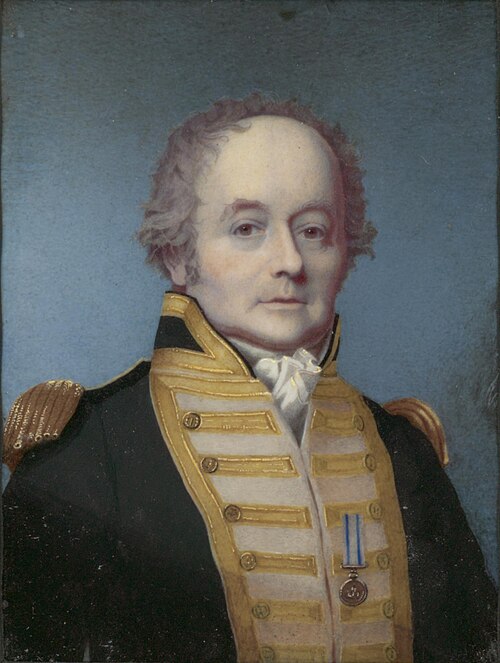
ニューサウスウェールズ軍団は、第一艦隊に同行した海兵隊を交代させるため、1789年にイギリスでイギリス陸軍の常設連隊として設立された。軍団の将校たちはすぐに植民地の腐敗した儲かるラム酒取引に関与するようになった。ウィリアム・ブライ総督(1806年~1808年)はラム酒取引と王室領の不法使用を鎮圧しようとしたが、その結果1808年のラム酒反乱が起こった。軍団は、新しく設立された羊毛商人ジョン・マッカーサーと緊密に協力し、オーストラリア史上唯一成功した武装政権奪取を企て、ブライを追放し、 1810年にイギリスからラクラム・マッコーリー総督が到着するまでの短い期間の軍事政権を樹立した。[ 73 ] [ 74 ]
マッコーリーは1810年から1821年までニューサウスウェールズ最後の専制的な総督を務め、ニューサウスウェールズの社会経済発展において主導的な役割を果たし、流刑植民地から芽生えつつある市民社会へと移行させた。彼は銀行、通貨、病院を設立した。彼は都市計画家を雇ってシドニーの街路配置を設計させ、道路、埠頭、教会、公共建築物の建設を命じた。彼はシドニーから探検隊を派遣し、1815年にはブルーマウンテンを横断する道路が完成し、グレートディバイディング山脈の西側の木々のまばらな牧草地での大規模農業と放牧への道が開かれた。[ 75 ] [ 76 ]
マッコーリーの政策の中心は、解放奴隷に対する扱いであり、彼は解放奴隷を植民地の自由移民と社会的に同等に扱うべきだと考えていた。彼はフランシス・グリーンウェイを植民地建築家に、ウィリアム・レッドファーンを治安判事に任命するなど、解放奴隷を政府の要職に就かせた。解放奴隷に対する彼の政策は、多くの有力な自由移民、役人、官僚から反対され、ロンドンは彼の公共事業の費用を懸念するようになった。1819年、ロンドンはJT・ビギーを任命して植民地の調査を行わせ、マッコーリーは調査報告書が公表される直前に辞任した。[ 77 ] [ 78 ]

1820 年、イギリス人の入植は主にシドニーを中心とした半径 100 キロメートル (62マイル)の範囲とヴァン ディーメンズ ランドの中央平原に限られていた。入植者の人口は本土で 26,000 人、ヴァン ディーメンズ ランドで 6,000 人であった。1815 年のナポレオン戦争終結後、囚人の移送が急速に増加し、自由入植者の数は着実に増加した。[ 79 ] 1821 年から 1840 年にかけて、ニュー サウス ウェールズには 55,000 人の囚人が、ヴァン ディーメンズ ランドには 60,000 人の囚人が到着した。しかし、1830 年までに、自由入植者と地元生まれの人口がニュー サウス ウェールズの囚人人口を上回った。[ 80 ]
1820年代以降、不法占拠者たちは定住植民地の公式な境界を超えて、許可されていない牛や羊の放牧地をますます多く開設するようになった。1836年には、牧畜業を規制しようと、王室領での放牧を許可する年間許可制度が導入されたが、羊毛価格の高騰と定住地の土地価格の高騰により、不法占拠がさらに増加した。1844年までに羊毛は植民地の輸出の半分を占めるようになり、1850年までにニューサウスウェールズの東3分の1の大部分は2,000人未満の牧畜業者によって支配されるようになった。[ 81 ] [ 82 ]
1825年、ニューサウスウェールズ州の西の境界は東経129度まで拡張され、これは現在の西オーストラリア州の名目上の東の境界となっている。その結果、ニューサウスウェールズ州の領土は最大となり、現在の州の領域に加え、現在のクイーンズランド州、ビクトリア州、タスマニア州、南オーストラリア州、ノーザンテリトリーの領域も含まれるようになった。[ 83 ] [ 68 ]
1850年までにニューサウスウェールズの入植者人口は18万人まで増加したが、1851年に独立したビクトリア植民地となった地域に住んでいた7万人から7万5千人は含まれていない。[ 84 ]
1802年にシドニーでニコラス・ボーダンのフランス海軍遠征隊を迎えた後、フィリップ・ギドリー・キング総督は、フランスによる入植の可能性を阻止するため、1803年にヴァン・ディーメンズ・ランド(現在のタスマニア)に入植地を設立することを決定した。島のイギリス人入植地はすぐに北部のローンセストンと南部のホバートを中心とするようになった。[ 85 ] [ 86 ] 1820年代から、入植者が持ち込む資本に比例した土地の払い下げが提案され、自由入植者が奨励された。[ 87 ] [ 88 ]ヴァン・ディーメンズ・ランドは1825年12月にニューサウスウェールズから独立した植民地となり、農業、羊の放牧、捕鯨に支えられ、1830年代を通じて拡大を続けた。1840年にニューサウスウェールズへの囚人移送が停止された後、ヴァン・ディーメンズ・ランドは囚人の主な目的地となった。ヴァン・ディーメンズ・ランドへの移住は1853年に終了し、1856年に植民地は正式にタスマニアと改名された。[ 89 ]

ヴァン・ディーメンズ・ランドの牧畜民は、豊かな草原に惹かれて、1834年に本土のポート・フィリップ内陸部に不法占拠し始めた。1835年、ジョン・バットマンらはクーリン族から4万ヘクタール(10万エーカー)の土地の譲渡について交渉した。しかし、同年、英国植民地省がバーク総督の布告を発布したため、この条約は無効となった。この布告により、それ以降、政府の許可なく土地を占拠しているすべての者は不法侵入者とみなされることになった。[ 90 ]
1836年、ポートフィリップはニューサウスウェールズ州の地区として正式に認められ、入植が解禁された。メルボルンの主要な入植地は、1837年にバーク総督の指示により計画都市として設立された。ヴァンディーメンズランドとニューサウスウェールズから不法占拠者や入植者がすぐに大勢到着した。1851年、ポートフィリップ地区はニューサウスウェールズから分離し、ビクトリア植民地となった。[ 91 ] [ 92 ]
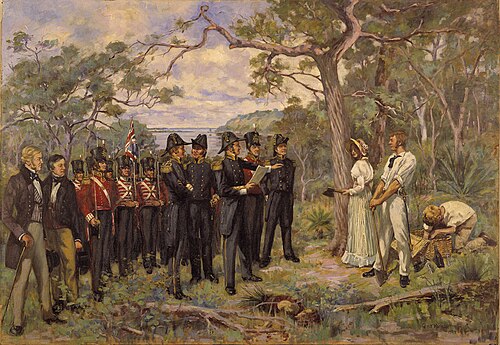
1826年、ニューサウスウェールズ州総督ラルフ・ダーリングは、フランスがニューホランドに入植地を建設するのを阻止するため、キングジョージ湾に軍事駐屯地を派遣した。1827年、遠征隊の隊長エドモンド・ロッキヤー少佐は、イギリスがまだ領有権を主張していない大陸の西部を正式にイギリスの植民地として併合した。[ 93 ] 1829年、スワン川植民地が現在のフリーマントルとパースの場所に設立され、オーストラリアで最初の囚人なしの私有植民地となった。しかし、1850年までに入植者は5,000人強に過ぎなかった。深刻な労働力不足のため、この植民地はその年から囚人を受け入れた。[ 94 ] [ 95 ]

南オーストラリア州は、エドワード・ギボン・ウェイクフィールドが提唱した「体系的植民地化」の理論に基づき、私費で設立された入植地として1836年に設立されました。囚人労働は、植民地を「まともな」家族にとってより魅力的なものにし、入植者の男女比を均等にするために禁止されました。アデレード市は、教会、公園、学校を十分に整備して計画されました。土地は均一価格で売却され、その収益は選抜的な移民支援を通じて十分な労働力を確保するために使用されました。[ 96 ] [ 97 ] [ 98 ]さまざまな宗教的、個人的、商業的自由が保証され、1834年南オーストラリア法を可能にする特許状にはアボリジニの土地の権利の保証が含まれていました。[ 99 ]
しかし、この植民地は1841年から1844年の不況で大きな打撃を受けた。先住民の伝統的な土地所有者との紛争も、彼らに約束されていた保護を低下させた。1842年、この入植地は総督と任命された立法評議会によって管理される王室植民地となった。経済は回復し、1850年までに入植者の人口は6万人まで増加した。1851年、この植民地は部分的に選挙で選ばれた立法評議会によって限定的な自治権を獲得した。[ 96 ] [ 97 ] [ 100 ]

1824年、現在のブリスベンの場所にモートン湾流刑地が設立されました。1842年、流刑地は閉鎖され、その地域は自由入植のために開放されました。1850年までにブリスベンの人口は8,000人に達し、町の西にあるダーリングダウンズでは、ますます多くの牧畜民が牛や羊を放牧していました。ツイード川の北に牧畜が拡大するにつれて、入植者と先住民の間での辺境での暴力は深刻化しました。北部の牧畜民とシドニーの政府との一連の紛争により、北部の入植者からニューサウスウェールズからの分離要求が高まりました。1857年、イギリス政府は分離に同意し、1859年にクイーンズランド植民地が宣言されました。[ 101 ] [ 102 ] [ 103 ]

1788年から1868年の間に、約161,700人の囚人がニューサウスウェールズ、ヴァンディーメンズランド、西オーストラリアのオーストラリア植民地に送られました。[ 104 ]囚人の識字率は平均を上回り、建築、農業、航海、漁業、狩猟など、さまざまな有用な技能を新しい植民地に持ち込みました。[ 105 ]自由移民の数が少なかったため、初期の総督は弁護士、建築家、測量士、教師などの職業についても囚人や解放囚に頼らざるを得ませんでした。[ 106 ] 囚人は当初、政府の農場や土地の開墾や建設などの公共事業に従事しました。1792年以降、大多数は解放囚を含む民間の雇用主のもとで働くことになりました。解放囚には農業用の小さな区画と1年間の政府配給が与えられました。後に、彼らは農作業を手伝うために囚人の労働力を割り当てられました。[ 107 ]一部の受刑者は軍将校に配属され、彼らの事業を運営した。これらの受刑者は商業スキルを習得し、刑期が満了したとき、または「仮釈放許可証」(一種の仮釈放)が与えられたときに、自営業を営むのに役立てることができた。[ 108 ]
囚人たちはすぐに出来高制のシステムを確立し、割り当てられた仕事が完了すれば賃金を受け取れるようになった。[ 109 ] 1821年までに、囚人、解放囚、およびその子供たちは耕作地の3分の2、牛の半分、羊の3分の1を所有していた。[ 110 ]彼らはまた、商業や小規模ビジネスにも従事していた。解放囚は、個人に割り当てられた囚人の約半分を雇用していた。[ 111 ]
1822年と1823年にJTビッゲが勧告した一連の改革により、囚人の状況は悪化した。食料配給は削減され、賃金労働の機会も制限された。[ 112 ]より多くの囚人が農村労働隊に割り当てられ、囚人に対する官僚的な管理と監視がより体系化され、二次的な刑罰の場所として隔離された流刑地が設立され、仮釈放の規則が厳格化され、土地の付与は多額の資本を持つ自由移民に有利になるように偏った。[ 113 ]その結果、1820年以降に到着した囚人は、財産を所有したり、結婚したり、家族を築いたりする可能性がはるかに低くなった。[ 114 ]
ビッゲ改革では、自由移民に資本に応じて土地を無償で提供することで、彼らを奨励することも目的としていた。1831年からは、植民地は土地無償提供を廃止し、1エーカーあたりの最低価格を固定した競売による土地売却に切り替え、その収益は労働者の移住支援の資金に充てられた。1821年から1850年にかけて、オーストラリアはイギリスから20万人の移民を引き付けた。しかし、土地配分制度により、土地は少数の裕福な移民の手に集中することになった。[ 115 ]
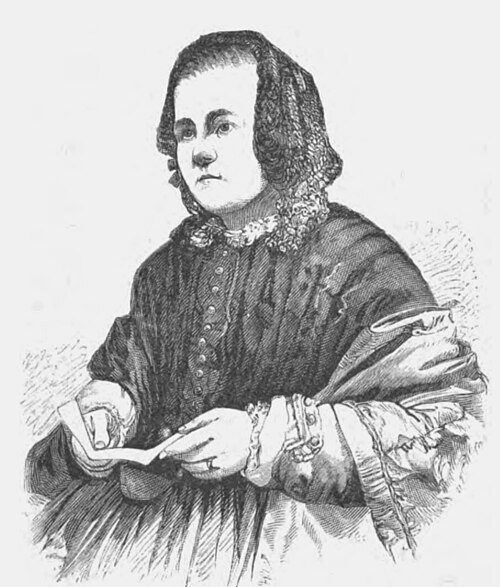
この期間にオーストラリアへ移住した人の3分の2は、イギリス政府または植民地政府から援助を受けた。[ 116 ]囚人の家族にも無料の渡航が提供され、約3,500人の移民がイギリスの救貧法に基づいて選ばれた。キャロライン・チザムやジョン・ダンモア・ラングなどのさまざまな特別目的の慈善事業も移住支援を提供した。[ 117 ]
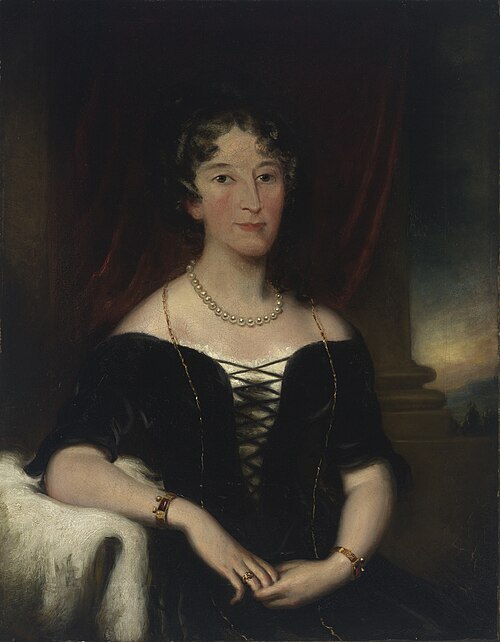
流刑囚のうち女性は約 15% に過ぎなかった。植民地では女性が不足していたため、女性は男性よりも結婚する可能性が高く、年上で有能な財産のある男性を夫として選ぶ傾向があった。初期の植民地裁判所は、夫とは独立して女性の財産権を執行し、配給制度は女性とその子供たちを遺棄からある程度保護した。女性は植民地の初期からビジネスや農業に積極的に参加しており、最も成功した人物の中には、元囚人で起業家となったメアリー・ライビーや農業家のエリザベス・マッカーサーなどがいる。[ 118 ]植民地初の銀行 (1817 年設立) の株主の 3 分の 1 は女性だった。[ 119 ]
1830年代からの移民支援プログラムの目標の一つは、女性と家族の移住を促進し、植民地における男女比をより均等にすることであった。キャロライン・チザムは1840年代にニューサウスウェールズで移民女性のためのシェルターと労働交換所を設立し、独身女性と既婚女性の農村地域への定住を促進した。[ 120 ] [ 121 ]
1830年から1850年の間に、オーストラリアの入植者人口における女性の割合は24パーセントから41パーセントに増加した。[ 122 ]
1820 年以前はイングランド国教会が唯一の公認教会であり、その聖職者は総督と緊密に協力していた。リチャード・ジョンソン(1788 年~1802 年主任牧師) はアーサー・フィリップ総督から植民地の「公共の道徳」を改善するよう命じられ、保健と教育にも深く関わっていた。[ 123 ]サミュエル・マースデン(1795 年~1838 年、様々な聖職) は宣教活動、治安判事としての厳しい刑罰、カトリックとアイルランド人囚人に対する激しい公然たる非難で知られるようになった。[ 124 ]

囚人の約4分の1はカトリック教徒だった。カトリックが公式に認められていなかったことに加え、アイルランド人囚人に対する疑念が、1804年のアイルランド人主導のキャッスルヒル反乱後にさらに高まった。 [ 125 ] [ 126 ] 1820年にマッコーリー総督がニューサウスウェールズとヴァンディーメンズランドに公式のカトリック司祭を任命するまで、植民地で一時的に活動していたカトリック司祭はわずか2人だった。[ 127 ]
ビッゲ報告書は、英国国教会の地位を高めることを勧告した。1824年に英国国教会の首席執事が任命され、最初の諮問立法評議会に議席が割り当てられた。英国国教会の聖職者と学校も国家の支援を受けた。この政策は、バーク総督の下で1836年と1837年の教会法によって変更された。政府は、英国国教会、カトリック、長老派、そして後にメソジストという4つの最大の宗派の聖職者と教会建物に国家の支援を提供するようになった。[ 127 ]
多くの英国国教会信徒は、カトリック教会への国家支援を脅威とみなした。著名な長老派教会の牧師ジョン・ダンモア・ラングも、1840年代に宗派間の分裂を煽った。[ 128 ] [ 129 ]しかし、国家支援は教会活動の拡大につながった。1838年に設立されたカトリック慈善修道女会などの慈善団体は、高齢者や障害者のための病院、孤児院、療養所を提供した。宗教団体は19世紀前半の学校教育の主な提供者でもあり、1831年に開校したラングのオーストラリア・カレッジはその顕著な例である。 1866年にメアリー・マッキロップが共同設立した聖ヨセフ修道女会など多くの宗教団体は、1850年代以降に世俗的な公立学校の提供が拡大した後も教育活動を継続した。[ 130 ] [ 131 ]

1798年から1799年にかけて、ジョージ・バスとマシュー・フリンダースはスループ船でシドニーを出航し、タスマニア島を一周して、タスマニアが島であることを証明した。[ 132 ] 1801年から1802年にかけて、マシュー・フリンダースはHMSインベスティゲーター号 でオーストラリア大陸を一周する最初の航海を率いた。船にはアボリジニの探検家バンガリーが乗船しており、彼はオーストラリア大陸生まれで初めて大陸を一周した人物となった。[ 132 ]
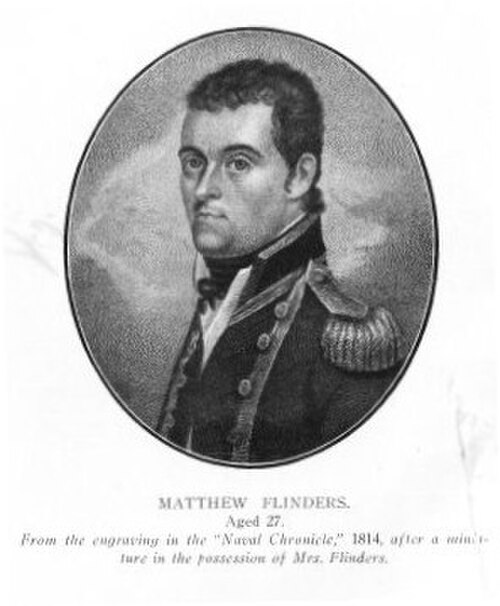
1798年、元囚人のジョン・ウィルソンと2人の仲間は、ハンター総督の命令による遠征で、シドニー西部のブルーマウンテンズを越えた。ハンターは、囚人たちが入植地から逃亡する恐れがあるとして、この偉業のニュースを隠蔽した。1813年、グレゴリー・ブラックスランド、ウィリアム・ローソン、ウィリアム・ウェントワースは別のルートで山脈を越え、まもなく中央高原への道路が建設された。[ 133 ]
1824年、ハミルトン・ヒュームとウィリアム・ホベルは、植民地の南部で新たな牧草地を探し、ニューサウスウェールズの西部の川がどこに流れているかを調べるために探検隊を率いた。1824年から1825年にかけて16週間かけて、彼らはポートフィリップまで往復した。彼らはマレー川(彼らはヒューム川と名付けた)とその多くの支流、そして良質な農地と牧草地を発見した。[ 134 ]
チャールズ・スタートは1828年にマッコーリー川沿いの探検隊を率いてダーリング川を発見した。1829年に2度目の探検隊を率いたスタートは、マランビジー川をたどってマレー川に入った。彼の隊はその後、この川をたどってダーリング川との合流点まで行った。スタートはさらに川を下ってアレクサンドリナ湖まで行き、そこでマレー川は南オーストラリアで海と合流した。[ 135 ]
測量総監サー・トーマス・ミッチェルは、1830年代から一連の探検を行い、以前の探検に続いた。ミッチェルは3人のアボリジニのガイドを雇い、多くのアボリジニの地名を記録した。また、1836年にマレー川で先住民と激しい衝突を起こし、部下が彼らを追いかけ、「できる限り多くを撃った」ことも記録している。[ 136 ] [ 137 ]
ポーランドの科学者で探検家のパウル・エドムント・ストルゼレツキ伯爵は、1839年にオーストラリア・アルプスで測量作業を行い、2人のアボリジニのガイドに率いられて、オーストラリア最高峰に登頂した最初のヨーロッパ人となった。彼はその山をポーランドの愛国者タデウシュ・コシチュシュコにちなんでコシチュシュコ山と名付けた。[ 138 ] [ 139 ]

ドイツの科学者ルートヴィヒ・ライヒハルトは、1840年代にオーストラリア北部で3回の探検隊を率い、時にはアボリジニのガイドの助けを借りた。彼と彼の一行は、1848年に大陸を東から西へ横断しようとして消息を絶った。[ 140 ]エドモンド・ケネディは、 1847年に現在のクイーンズランド州最西部への探検隊を率いたが、1848年にケープヨーク半島でアボリジニに槍で刺されて死亡した。[ 141 ]
1860年、バークとウィルズはメルボルンからカーペンタリア湾まで大陸を南北に横断する最初の探検隊を率いた。ブッシュクラフトの知識がなく、先住民から学ぶことも拒んだバークとウィルズは、1861年に湾からクーパーズクリークの集合地点に戻ったものの、残りの一行がほんの数時間前にそこを出発していたことを知り、亡くなった。彼らはヨーロッパ人入植者にとって悲劇の英雄となり、葬儀には5万人以上が参列し、彼らの物語は数多くの書籍、芸術作品、映画、そして大衆文化における表現に影響を与えた。[ 142 ] [ 143 ]
1862年、ジョン・マクドゥオール・スチュアートはオーストラリア中央部を南から北へ横断することに成功した。彼の探検隊はルートを地図に描き、後にオーストラリア横断電信線がそのルートを辿った。[ 144 ]
1872年にこの電信線が完成したことは、ギブソン砂漠とヌラボー平原のさらなる探検と関連していた。1872年に中央オーストラリアを探検していたアーネスト・ジャイルズは、キングスキャニオン近くの場所からカタジュタを目撃し、それをオルガ山と名付けた。[ 145 ]翌年、ウィリアム・ゴスはウルルを目撃し、南オーストラリア州長官のヘンリー・エアーズ卿にちなんでエアーズロックと名付けた。[ 146 ]
1879年、アレクサンダー・フォレストは西オーストラリアの北海岸から陸路電信線までトレッキングを行い、キンバリー地方で放牧に適した土地を発見した。[ 144 ]
1788年1月に約1,300人の入植者を乗せた第一艦隊がシドニー湾に到着した時、シドニー地域のアボリジニ人口は約3,000人と推定されている。[ 147 ]ニューサウスウェールズの初代総督アーサー・フィリップは、以下の指示を持って到着した。[ 148 ]
あらゆる手段を尽くして現地の人々との交流を開始し、彼らの好意をなだめるよう努め、すべての臣民に彼らと友好的かつ親切に暮らすよう命じる。

先住民が約6万年にわたって比較的孤立していたため、多くの外来疾患に対する抵抗力がほとんどありませんでした。1789年4月に発生した天然痘の流行により、シドニー地域のアボリジニ人口の約半数が死亡しました。この流行の原因については議論があり、一部の研究者は極北のインドネシア人漁師との接触が原因だと主張していますが、他の研究者は入植者によって意図せず、あるいは故意に広められた可能性が高いと主張しています。[ 149 ] [ 150 ] [ 151 ]
1820年代後半(オーストラリア南東部)、1860年代初頭(北部のコバーグ半島から南部のグレートオーストラリア湾まで内陸部へ移動)、そして1860年代後半(キンバリーからジェラルトンまで)にも、アボリジニの人口を壊滅させる天然痘の流行がさらに発生した。ジョセフィン・フラッドによると、天然痘によるアボリジニの死亡率は、初回感染で60%、熱帯地方で50%、内陸乾燥地帯で25%と推定されている。[ 152 ]
麻疹、インフルエンザ、腸チフス、結核などの他の外来疾患も、アボリジニ社会で高い死亡率をもたらしました。バトリンは、現在のビクトリア州の地域のアボリジニ人口は1788年には約5万人でしたが、2回の天然痘の流行により1830年には約1万2500人に減少したと推定しています。1835年から1853年の間に、ビクトリア州のアボリジニ人口は1万人から約2000人に減少しました。これらの死亡の約60%は外来疾患によるもので、18%は自然死、15%は入植者による暴力によるものと推定されています。[ 153 ]
性病も先住民の人口減少の一因であり、1855年までにオーストラリア南東部の先住民の出生率を推定40パーセント低下させた。1890年までにクイーンズランド州の一部の地域では先住民人口の最大50パーセントが影響を受けた。[ 154 ]

イギリス人入植地は当初、農業を基盤とした自給自足の流刑植民地として計画されていた。カルスケンスは、入植者たちがイギリス文明の優越性や、建築や耕作によって「改良」した土地に対する権利を主張したことが、入植者と先住民の間で紛争が勃発した原因だと主張している。[ 155 ]
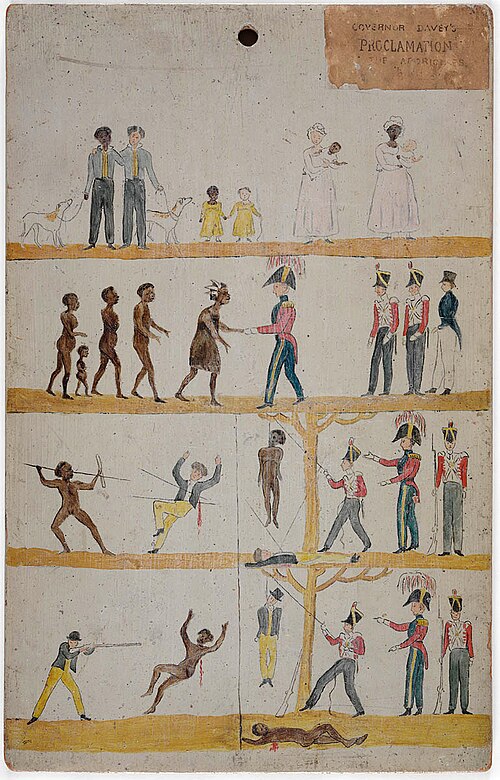
異文化間の誤解や、先住民の男性、女性、子供の誘拐などの過去の行為に対する報復からも紛争が生じた。報復攻撃や集団処罰は、入植者と先住民グループの両方によって行われた。[ 157 ]入植者に対する先住民の継続的な攻撃、作物の焼却、家畜の大量殺戮は、伝統的な土地と食料資源の喪失に対する抵抗のより明白な行為であった。[ 158 ]
1794年から1800年にかけて、シドニー地域の入植者とアボリジニ(ダルグ族)の間で深刻な紛争が発生し、入植者26人とダルグ族最大200人が殺害された。 [ 159 ] [ 160 ]また、1814年から1816年にかけて、シドニーの南西(ダラワル族の土地)でも紛争が発生し、 1816年4月のアピン虐殺で最高潮に達し、少なくとも14人のアボリジニが殺害された。[ 161 ] [ 162 ]
1820年代、植民地はグレートディバイディング山脈を越えて広がり、ウィラジュリ族の土地で大規模な農業と放牧の道が開かれた。[ 75 ] 1822年から1824年にかけて、ウィンドラダインは50人から100人のアボリジニ男性のグループを率いて襲撃を行い、15人から20人の入植者が死亡した。この紛争におけるアボリジニの死者数は15人から100人と推定されている。[ 163 ] [ 164 ]
ヴァン・ディーメンズ・ランドでは、島の内陸部での入植者数と羊の放牧の急速な拡大を受けて、1824年にブラック戦争が勃発した。1828年11月に戒厳令が布告され、1830年10月には、約2,200人の兵士と入植者からなる「ブラック・ライン」が、入植地から先住民を追い出す目的で島を襲撃した。1830年から1834年にかけて、ジョージ・オーガスタス・ロビンソンとトルガニーニを含む先住民大使が、先住民部族への一連の「友好使節団」を率い、事実上戦争を終結させた。[ 165 ]この紛争で約200人の入植者と600人から900人のタスマニア先住民が死亡し、生き残った先住民は最終的にフリンダース島に移送された。[ 166 ] [ 167 ]

1830年代に入植者や牧畜民が現在のビクトリア州に広がると、先住民との紛争も発生した。ブルームは、1835年から1853年にかけてビクトリア州の辺境地帯で起きた紛争で、入植者80人とアボリジニ1,000~1,500人が死亡したと推定している。[ 168 ]
1830年代のスワン川植民地の発展はアボリジニとの衝突を引き起こし、ピンジャラ虐殺事件で15人から30人のアボリジニが殺害されるという事態に至った。[ 169 ] [ 170 ]ネビル・グリーンによれば、1826年から1852年の間に西オーストラリアで起きた暴力的な衝突で、入植者30人とアボリジニ121人が死亡した。[ 171 ]

1850年以降、羊や牛の放牧が広がるにつれ、居住地域から遠く離れた先住民部族との間で、さらなる衝突が生じた。入植者たちが騎馬警察、先住民警察部隊、そして新たに開発されたリボルバーや後装式銃をより多く使用するようになったため、衝突における先住民の死傷者数は増加した。 1840年代のニューサウスウェールズ州と1860年から1880年にかけてのクイーンズランド州では、紛争が特に激しかった。中央オーストラリアでは、1860年から1895年にかけて、人口4,500人のうち650人から850人のアボリジニが入植者によって殺害されたと推定されている。北オーストラリアのガルフ・カントリーでは、1886年以前に5人の入植者と300人のアボリジニが殺害された。[ 172 ]入植者によるアボリジニの虐殺の最後の記録は、 1928年にノーザンテリトリーのコニストンで少なくとも31人のアボリジニが殺害された事件である。[ 173 ]
イギリス人の入植地の拡大は、先住民族間の紛争の増加にもつながった。多くの人々が伝統的な土地から他の、しばしば敵対的な部族の領土へと追いやられたからである。バトリンは、1835年から1855年にかけてビクトリア州で死亡した8,000人の先住民族のうち、200人が部族間の暴力によるものだと推定している。[ 174 ]
ブルームは、1788年から1928年までの入植者とアボリジニの衝突による総死者数を、入植者1,700人とアボリジニ17,000~20,000人と推定している。レイノルズは、入植者3,000人とアボリジニ最大30,000人という、より高い「推測値」を示唆している。[ 175 ]オーストラリアのニューカッスル大学のプロジェクトチームは、1788年から1930年までの辺境での虐殺によるアボリジニの死者数を8,270人と暫定的に推定している。[ 176 ]

入植後最初の 2 年間、シドニーのアボリジニの人々は、ほとんど新参者を避けていた。1790 年 11 月、ベネロングは、アボリジニの人口を壊滅させた天然痘の流行から 18 か月後に、いくつかの部族の生存者を率いてシドニーにやってきた。[ 177 ]クリンガイ族のブンガリーは、1801 年から 1803 年にかけてのマシュー・フリンダースのオーストラリア周航に同行し、遭遇したさまざまな先住民への使者として重要な役割を果たした。[ 178 ]
マッコーリー総督は、土地の払い下げ、アボリジニ農場の設立、アボリジニの子供たちに教育を提供する先住民教育機関の設立などによって、アボリジニの人々を同化させようと試みた。[ 179 ]しかし、1820年代までに先住民教育機関とアボリジニ農場は失敗に終わった。アボリジニの人々は、空き地となったウォーターフロントの土地やシドニー入植地の周辺に住み続け、新しい半都市的な環境に伝統的な慣習を適応させていった。[ 180 ] [ 181 ]
辺境紛争の激化に伴い、 1839年に南オーストラリアとポートフィリップ地区で、1840年に西オーストラリアでアボリジニ保護官が任命された。その目的は、アボリジニの人々に英国法の保護を拡大し、食料配給を行い、教育、キリスト教の指導、職業訓練を提供することであった。しかし、1857年までに、保護事務所は費用がかさみ、目的を達成できなかったため閉鎖された。[ 182 ] [ 183 ]

1825年、ニューサウスウェールズ州知事は、レイク・マッコーリーにアボリジニのキリスト教伝道所として4,000ヘクタール(10,000エーカー)の土地を認可した。 [ 184 ] 1830年代から1840年代初頭にかけては、ウェリントン渓谷、ポート・フィリップ、モートン湾にも伝道所があった。フリンダース島にあるアボリジニ・タスマニア人の入植地は、1835年から1838年にかけてジョージ・ロビンソンの指導の下、伝道所として効果的に運営された。[ 185 ]
ニューサウスウェールズ州では、1860年から1894年の間に116か所の先住民居留地が設立されました。ほとんどの居留地では、先住民に一定の自治権と出入りの自由が認められていました。対照的に、ビクトリア州先住民保護委員会(1869年設立)は、ビクトリア州の先住民の雇用、教育、居住地を規制する広範な権限を持ち、1858年の自治以来設立された5つの居留地と伝道所を厳しく管理していました。1886年、保護委員会は「混血」の先住民を伝道所やステーションから排除する権限を獲得しました。ビクトリア州の法律は、1890年代以降の他のオーストラリア政府の人種隔離政策の先駆けとなりました。[ 186 ]
人口密度の高い地域では、土地の支配権を失ったアボリジニの人々のほとんどは、居留地や伝道所、あるいは都市や町の周辺に住んでいた。牧畜地域では、1848年の英国荒地法により、伝統的な土地所有者は牧畜リース契約の下で王室領地で生活し、狩猟し、食料を採取する限定的な権利を与えられた。多くのアボリジニ集団は牧場にキャンプを張り、そこではアボリジニの男性が羊飼いや牧畜業者として雇われることが多かった。これらの集団は、自分たちの土地とのつながりを維持し、伝統文化の一部を維持することができた。[ 187 ]
1868年から外国人真珠採取者がトーレス海峡諸島にやって来て、外来の病気を持ち込み、先住民の人口を半減させた。1871年にはロンドン宣教協会が島々で活動を開始し、トーレス海峡諸島民のほとんどがキリスト教に改宗した。彼らはキリスト教が自分たちの信仰と両立すると考えていた。クイーンズランド州は1879年に島々を併合した。[ 188 ]

1823年の帝国法では、ニューサウスウェールズ州総督が指名する立法評議会と新しい最高裁判所が規定され、総督の権限にさらなる制限が設けられた。ウィリアム・ウェントワースを含む多くの著名な植民地の人物が、自治の拡大を求めて運動したが、将来の立法機関がどの程度まで民選されるべきかについては意見が分かれた。その他の問題には、伝統的なイギリスの政治的権利、土地政策、流刑、そして多数の囚人や元囚人に自治を任せられるかどうかなどがあった。オーストラリア愛国協会は、ニューサウスウェールズの代表制政府を推進するために、 1835年にウェントワースとウィリアム・ブランドによって設立された。 [ 189 ] [ 190 ] [ 191 ]

ニューサウスウェールズへの輸送は1840年に停止された。1842年、イギリスは立法評議会を改革し、議員の3分の2を男性有権者が選出するようにすることで、植民地に限定的な代表制政府を与えた。しかし、財産資格があったため、1843年の最初の立法評議会選挙では男性のわずか20パーセントしか投票できなかった。[ 192 ]
自由移民と植民地生まれの人々の増加は、自由主義的かつ民主的な改革を求める運動をさらに激化させた。[ 193 ]ポートフィリップ地区では、代表制政府とニューサウスウェールズからの独立を求める運動があった。[ 194 ] 1850年、イギリスはヴァン・ディーメンズ・ランド、南オーストラリア、そして新しく創設されたビクトリア植民地に、ニューサウスウェールズのモデルに基づいた半選挙制の立法評議会を与えた。[ 195 ]

1851年2月、エドワード・ハーグレイブスはニューサウスウェールズ州バサースト近郊で金を発見した。同年後半にはビクトリア州でも金が発見され、最も豊かな金鉱床が見つかった。ニューサウスウェールズ州とビクトリア州は、月額料金制の金採掘許可制度を導入し、その収益は金鉱床のインフラ整備、管理、警備にかかる費用を補填するために使われた。[ 196 ]
ゴールドラッシュは当初、男性労働者が金鉱地へ移動したため、インフレと労働力不足を引き起こした。イギリス、ヨーロッパ、アメリカ、中国から移民が殺到し、その多くが金鉱地を目指した。オーストラリアの人口は1851年の43万人から1861年には117万人に増加した。ビクトリア州は最も人口の多い植民地となり、メルボルンは最大の都市となった。[ 197 ] [ 198 ]
中国からの移民は、白人オーストラリア人の生活水準と道徳を脅かす存在であるという広く信じられていたため、植民地当局にとって特に懸念事項であった。植民地政府は、中国からの移民や居住者に対して税金や制限を課すことで対応した。1856年にはビクトリア州の金鉱地帯で、1860年にはニューサウスウェールズ州で反中国暴動が発生した。[ 199 ]

競争の激化に直面したビクトリア州の鉱夫たちは、免許料、腐敗した横暴な役人、そして移動鉱夫の投票権の欠如についてますます不満を募らせた。1854年10月、バララットでの暴動の後、3人の鉱夫が逮捕されると抗議活動は激化した。抗議者たちは、逮捕された男性たちを支援するためにバララット改革連盟を結成し、男子の普通選挙、鉱業免許と行政の改革、小規模農場を促進するための土地改革を要求した。その後も抗議活動が続き、抗議者たちはバララットのユーレカ・フィールドに柵を築いた。12月3日、軍隊が柵を突破し、約20人の抗議者を殺害した。兵士5人が死亡、12人が重傷を負った。[ 200 ]
王立委員会の調査の結果、月ごとの採掘許可証は、より安価な年間採掘権に置き換えられ、採掘権保有者は投票権と金鉱地帯に住居を建てる権利を得た。ビクトリア州の金鉱地帯の管理も改革された。ユーレカの反乱はすぐにオーストラリアのナショナリズムの神話の一部となった。[ 201 ] [ 202 ]

1851年にニューサウスウェールズ、ビクトリア、南オーストラリア、ヴァン・ディーメンズ・ランドで行われた半代表制の立法評議会の選挙では、完全な自治を求める運動を展開する自由主義派議員が多数選出された。1852年、イギリス政府はヴァン・ディーメンズ・ランドへの囚人移送を中止すると発表し、東部植民地に自治を可能にする憲法草案を作成するよう要請した。[ 203 ]
ニューサウスウェールズ、ビクトリア、ヴァン・ディーメンズ・ランド(1856年にタスマニアと改名)の憲法は1855年に国王の裁可を受け、南オーストラリアの憲法は1856年に裁可を受けた。憲法はそれぞれ異なっていたが、いずれも広範な男性選挙で選出される下院と、終身制(ニューサウスウェールズ)またはより制限された財産選挙で選出される上院を設けていた。クイーンズランドが1859年に独立した植民地になると、直ちに自治権を獲得した。西オーストラリアは1890年に自治権を与えられた。[ 204 ]
秘密投票は1856年にタスマニア、ビクトリア、南オーストラリアで採用され、続いてニューサウスウェールズ(1858年)、クイーンズランド(1859年)、西オーストラリア(1877年)が採用した。南オーストラリアは1856年に下院で男子普通選挙を導入し、続いてビクトリアが1857年、ニューサウスウェールズが1858年、クイーンズランドが1872年、西オーストラリアが1893年、タスマニアが1900年に導入した。クイーンズランドは1885年にアボリジニ男性の投票を禁止した。[ 205 ]西オーストラリアでは、アボリジニ、アジア人、アフリカ人、混血の男性には財産資格による投票権があった。[ 204 ]
女性参政権を推進する団体は、1884年にビクトリア州、1888年に南オーストラリア州、1891年にニューサウスウェールズ州で設立された。キリスト教婦人禁酒同盟も1880年代にオーストラリアのほとんどの植民地に支部を設立し、女性の投票権とさまざまな社会運動を推進した。[ 206 ]女性の参政権と公職に立候補する権利は、1895年に南オーストラリア州で初めて獲得された。[ 207 ]女性は1899年に西オーストラリア州で投票権を獲得したが、人種的制限があった。オーストラリアの他の地域では、女性が投票権と公職に立候補する権利を完全に獲得したのは、連邦制成立後の10年間になってからで、人種的制限はあったものの、まだ一部残っていた。[ 208 ] [ 209 ]
1850年代から1871年にかけて、金はオーストラリア最大の輸出品であり、植民地は様々な消費財や資本財を輸入することができた。ゴールドラッシュ後の数十年間における人口増加は、住宅、消費財、サービス、都市インフラへの需要を刺激した。[ 210 ]
1860年代、ニューサウスウェールズ州、ビクトリア州、クイーンズランド州、南オーストラリア州は、家族経営農場や複合農業・放牧を促進することを目的とした選抜法を導入した。[ 211 ]農業技術の進歩とオーストラリアの条件に適応した作物の導入により、最終的に農村部の土地利用の多様化が進んだ。1860年代からの鉄道網の拡大により、小麦を安価に大量輸送できるようになり、南オーストラリア州からクイーンズランド州にかけて小麦地帯が発展した。[ 212 ] [ 213 ]

1850年から1880年にかけて、ブッシュレンジャーが復活した。1850年代からのブッシュレンジャーの復活は、農村部の貧困層の不満に起因していた(最も有名なブッシュレンジャーであるケリー一味のメンバーの何人かは、貧しい小規模農家の息子だった)。ネッド・ケリーとその一味の活躍は、当時、地域社会から大きな支持と全国的な報道を集めた。1880年にケリーが逮捕され、殺人罪で処刑された後、彼の物語は数多くの芸術作品、文学作品、大衆文化に影響を与え、彼が社会的不正義や抑圧的な警察と戦う反逆者だったのか、それとも殺人犯だったのかについての議論が続いている。[ 214 ]
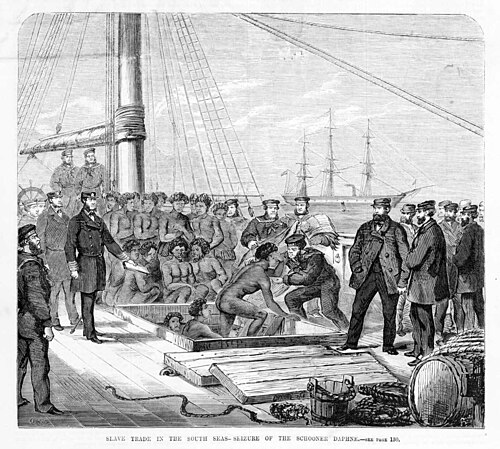
1880年代までにオーストラリアの人口の半分が都市部に居住するようになり、オーストラリアはイギリス、アメリカ、カナダよりも都市化が進んだ。[ 215 ] 1870年から1890年の間、オーストラリアの一人当たりの平均所得はアメリカの50%以上高く、オーストラリアは世界で最も高い生活水準を誇る国の一つとなった。[ 216 ]
政府部門の規模は、1850年の国家支出の10パーセントから1890年には19パーセントへとほぼ倍増した。植民地政府は、鉄道、港湾、電信、学校、都市サービスなどのインフラに多額の支出を行った。このインフラ整備のための資金の多くはロンドンの金融市場で借り入れられたが、土地が豊富な政府は支出を賄い、税金を低く抑えるために土地を売却することもあった。[ 217 ] [ 218 ]
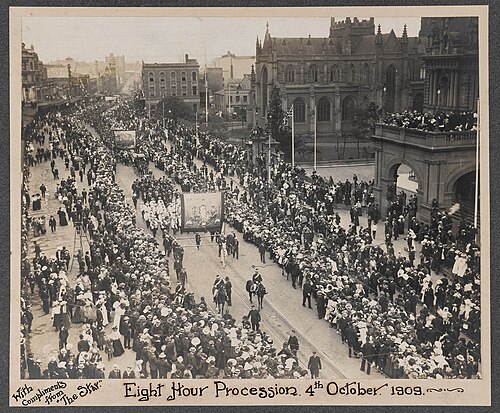
1856年、シドニーとメルボルンの建設労働者は世界で初めて8時間労働制を勝ち取った。1880年代には労働組合が成長し、低技能労働者や植民地の境界を越えて広がった。1890年までに男性労働者の約20%が組合に加入し、これは世界でも最も高い割合の一つであった。[ 219 ] [ 220 ]
経済成長に伴い、オーストラリア北部への拡大が進んだ。1860年代から1870年代にかけてクイーンズランド州北部で、 1880年代には西オーストラリア州のキンバリー地方とピルバラ地方で金が発見された。1870年代から1880年代にかけて、羊や牛の放牧地がクイーンズランド州北部、ノーザンテリトリーのガルフカントリー、西オーストラリア州のキンバリー地方へと広がった。同時期にクイーンズランド州北部では砂糖農園も拡大した。[ 221 ] [ 222 ]
1870年代後半から、労働組合、反中国人連盟、その他の地域団体が中国人移民と低賃金中国人労働者に対する反対運動を展開した。1880~81年と1888年にこの問題に関する植民地間会議が開催された後、植民地政府は中国人の移民と市民権を段階的に制限する一連の法律で対応した。[ 223 ]

羊毛価格の下落とメルボルンの投機的な不動産バブルの崩壊は、長期好景気の終焉を告げるものだった。多くの大手銀行が業務を停止し、1891年から1895年にかけて経済は20%縮小した。失業率は労働人口のほぼ3分の1にまで上昇した。この不況に続いて、1895年から1903年にかけて「連邦干ばつ」が発生した。 [ 224 ]
1890年、海運業界のストライキが埠頭、鉄道、鉱山、羊毛刈り小屋にまで広がった。雇用主は労働者をロックアウトし、非組合員を雇用することで対応し、植民地政府は警察と軍隊を派遣して介入した。このストライキは失敗に終わり、1891年と1894年の羊毛刈り労働者のストライキ、1892年と1896年の鉱山労働者のストライキも同様に失敗に終わった。[ 225 ]
1890年の海事ストライキの敗北は、労働組合が政党を結成するきっかけとなった。ニューサウスウェールズ州では、労働党選挙連盟が1891年の選挙で議席の4分の1を獲得し、自由貿易党と保護貿易党の間で勢力均衡を保った。労働党は1893年の南オーストラリア州とクイーンズランド州の選挙でも議席を獲得した。世界初の労働党政権は1899年にクイーンズランド州で樹立されたが、わずか1週間しか続かなかった。[ 226 ]
1896年の植民地間会議で、各植民地は中国人移民に対する制限を「すべての有色人種」に拡大することに合意した。労働党はニューサウスウェールズ州のリード政権を支持し、白豪主義政策の先駆けとなる有色人種制限規制法を可決した。しかし、イギリスと日本がこの法律に反対を表明した後、ニューサウスウェールズ州、タスマニア州、西オーストラリア州は代わりに「望ましくない」移民を制限するためにヨーロッパ言語テストを導入した。[ 227 ]

1880年代後半までに、オーストラリア植民地に住む人々の大多数は先住民であったが、90パーセント以上はイギリスとアイルランドの血を引いていた。[ 228 ]オーストラリア先住民協会は、大英帝国内のオーストラリア連邦の設立を運動し、オーストラリアの文学と歴史を宣伝し、1月26日をオーストラリアの建国記念日とするよう働きかけ、成功した。[ 229 ]
多くのナショナリストは、オーストラリア人はイギリスの「人種」の一員として共通の血を分けていると語った。[ 230 ]ヘンリー・パークスは1890年に、「血縁の深紅の糸が私たち全員を貫いている…私たちは一つの偉大なオーストラリア国民として団結しなければならない」と述べた。[ 231 ]
少数のナショナリストは、統一オーストラリアの基盤として、共通の「英国らしさ」ではなく、独自のオーストラリアのアイデンティティを見出していた。急進的な雑誌『ザ・ブレットン』やタスマニア州司法長官のアンドリュー・イングリス・クラークのような共和主義者もいれば、英国君主の役割は儀礼的なものにとどめ、オーストラリアが完全に独立した国家となることを受け入れる用意のある者もいた。[ 232 ]
統一されたオーストラリアは、通常、白人オーストラリアと結びついていた。1887年、『ザ・ブレティン』は、旧世界の宗教的および階級的区分を後にしたすべての白人男性はオーストラリア人であると宣言した。[ 233 ]白人オーストラリアはまた、安価なアジア人労働力の排除を意味し、これは労働運動によって強く推進された考えであった。[ 234 ]
1880年代と1890年代に高まったナショナリズムの感情は、オーストラリア独自の芸術と文学の発展と結びついていた。アーサー・ストリートン、フレデリック・マッカビン、トム・ロバーツといったハイデルベルク派の画家たちは、ヨーロッパの印象派画家たちの例に倣い、戸外で絵を描いた。彼らはオーストラリアの風景の光と色彩を捉えることに力を注ぎ、「都市の混在した生活と、牧場やブッシュの典型的な生活」の中にある独自性と普遍性を探求した。[ 235 ]
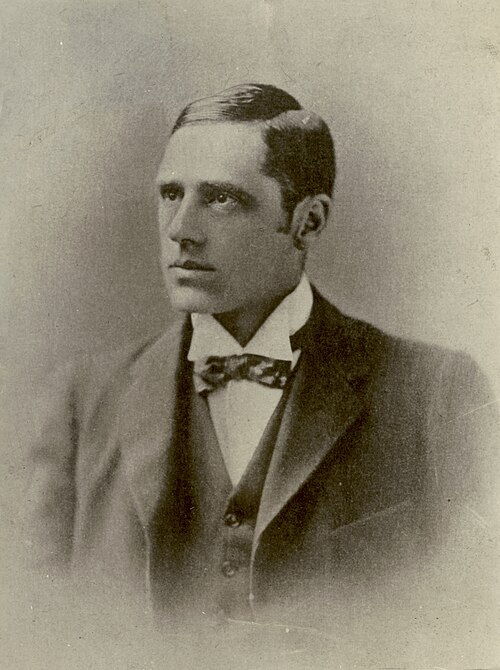
1890年代、ヘンリー・ローソン、バンジョー・パターソン、そして『ザ・ブレットン』に関係する他の作家たちは、ブッシュ生活の本質や、独立、禁欲主義、男らしい労働、平等主義、反権威主義、仲間意識といったテーマを探求した詩や散文を創作した。主人公はしばしば羊毛刈り人、境界巡回者、そして各地を転々とするブッシュ労働者であった。続く10年間、ローソン、パターソン、そしてスティール・ラッド、マイルズ・フランクリン、ジョセフ・ファーフィーといった他の作家たちは、独特の国民文学の形成に貢献した。パターソンのバラード「スノーウィー・リバーの男」(1890年)は人気を博し、彼の作詞した歌「ワルツィング・マチルダ」(1895年頃)は、多くのオーストラリア人にとって非公式の国歌となった。[ 236 ]
高まるナショナリズム感情は、植民地間の関税障壁による経済的非効率性、植民地政府によるサービスの重複、商品とサービスの単一国内市場の欠如に対するビジネス上の懸念と同時期に起こった。[ 237 ]また、この地域におけるドイツとフランスの野心に対する植民地側の懸念は、オーストラリア連邦軍と防衛目的のための統一された単一軌間の鉄道網を求めるイギリスの圧力につながった。[ 238 ]
1885年にオーストララシア連邦評議会が設立されたが、権限はほとんどなく、ニューサウスウェールズ州と南オーストラリア州は参加を拒否した。[ 239 ]

連邦制の障害の一つは、小規模な植民地がニューサウスウェールズ州とビクトリア州に支配されることを恐れていたことだった。特にクイーンズランド州は、概して白人オーストラリア政策を支持していたものの、サトウキビ産業における南太平洋諸島出身の労働者については例外を維持することを望んでいた。[ 240 ]
もう一つの大きな障壁は、ニューサウスウェールズ州の自由貿易政策が、ビクトリア州や他のほとんどの植民地で主流だった保護貿易政策と矛盾していたことである。それにもかかわらず、ニューサウスウェールズ州首相のヘンリー・パークスは連邦制の強力な支持者であり、 1889年のテンターフィールド演説は、その運動への支持を集める上で極めて重要な役割を果たした。[ 241 ]
1891年、シドニーでオーストラリア全国会議が開催され、すべての植民地とニュージーランドが代表として参加した。憲法草案が採択されたが、経済不況の悪化と植民地議会での反対により進展が遅れた。[ 242 ]
市民連盟が結成され、 1893年7月にコロワで開催された会議で、直接選挙で選出された代表者による憲法制定会議と、各植民地での憲法案を承認するための住民投票を含む、新たな連邦制の計画が策定された。ニューサウスウェールズ州の新首相ジョージ・リードは「コロワ計画」を支持し、1895年には他の州首相の大多数を説得してこの計画を採用させた。[ 243 ]
クイーンズランドを除くすべての植民地が、1897年と1898年に開催された憲法制定会議に代表者を派遣した。この会議では、英国王室の下にある連邦国家の憲法案が起草された。[ 244 ]
1898年に行われた住民投票では、ビクトリア州、南オーストラリア州、タスマニア州で憲法賛成の圧倒的多数が得られた。しかし、ニューサウスウェールズ州では必要な多数を獲得できなかった。[ 245 ]他の植民地の首相はニューサウスウェールズ州にいくつかの譲歩(特に将来の連邦首都が同州に置かれること)に同意し、1899年には西オーストラリア州を除くすべての植民地でさらに住民投票が行われた。すべて賛成票で終わった。[ 246 ]
1900年3月、連邦制の主要提唱者であるエドマンド・バートンとアルフレッド・ディーキンを含む代表団がロンドンに派遣された。英国政府との交渉の後、連邦制法案は1900年7月5日に帝国議会で可決され、7月9日に国王の裁可を得た。その後、西オーストラリア州は新連邦への参加を投票で決定した。[ 247 ]
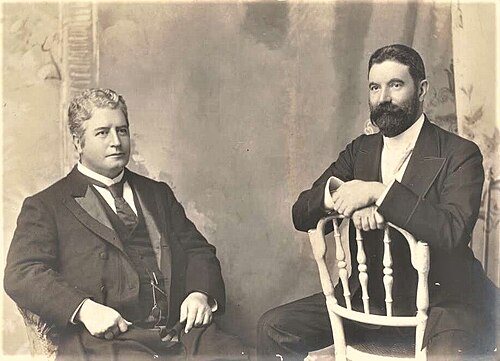
オーストラリア連邦は、 1901年1月1日に総督ホープタウン卿によって宣言され、バートンがオーストラリア初代首相に就任した。[ 247 ] 1901年3月に最初の連邦選挙が行われ、保護貿易党が自由貿易党を僅差で上回り、オーストラリア労働党(ALP)が3位となった。労働党は、自らの政策に譲歩した党を支持すると表明し、バートンの保護貿易党がディーキンを司法長官とする政権を樹立した。[ 248 ]
1901年の移民制限法は、新しく成立したオーストラリア議会が最初に可決した法律の一つでした。白豪主義政策の中核をなすこの法律は、ヨーロッパの言語での書き取りテストを用いて、オーストラリアの生活水準と多数派のイギリス文化に対する脅威とみなされていたアジアからの移民を排除しました。[ 249 ] [ 250 ]
連邦制により、コモンウェルスは旧オーストラリア植民地6つの小規模な防衛軍を引き継いだ。1901年までに、オーストラリア植民地6つすべての部隊がボーア戦争でイギリス軍の一部として活動していた。1902年初頭にイギリス政府がオーストラリアにさらなる兵力を要請すると、オーストラリア政府は国家派遣部隊でこれに応じた。1902年6月の戦争終結までに約16,500人の男性が志願した。[ 251 ] [ 252 ]
1902年、政府は連邦管轄区域で女性参政権を導入したが、同時に、州管轄区域で既に投票権を持っていた場合を除き、アボリジニの人々を参政権から除外した。[ 253 ]


政府はまた、歳入を増やしオーストラリアの産業を保護する目的で輸入関税を導入した。[ 254 ]しかし、労使関係法をめぐる意見の相違により、1904年4月にディーキンの保護貿易主義政権が崩壊し、クリス・ワトソン首相率いる初の全国労働党政権が発足した。ワトソン政権自体も4月に崩壊し、リード首相率いる自由貿易政権は、州間の労使紛争を解決するための連邦調停仲裁裁判所の設立法案を成立させた。[ 255 ]
1905 年 7 月、ディーキンは労働党の支持を得て保護貿易主義政権を樹立した。新政権は一連の社会改革と「新保護」と呼ばれるプログラムに着手し、オーストラリア産業に対する関税保護は「公正かつ妥当な」賃金の提供と連動することになった。1907年のハーベスター事件では、調停仲裁裁判所のHB ヒギンズが、妻と 3 人の子供を養う男性の稼ぎ手のニーズに基づいて基本賃金を設定した。1914 年までに、連邦政府とすべての州が産業紛争を解決し、賃金と労働条件を定める制度を導入した。[ 256 ] [ 257 ]
労働党の基盤は、1901年に10万人未満だった組合員が1914年には50万人以上にまで成長したオーストラリア労働組合運動であった。 [ 258 ]また、同党は聖職者、カトリック教徒、小規模農家からもかなりの支持を得た。[ 259 ] 1905年、労働党は連邦レベルで「人種的純粋性の維持に基づくオーストラリア人の感情の育成」と「独占企業の集団所有」を含む目標を採用した。同年、同党のクイーンズランド支部は、公然と社会主義的な目標を採用した。[ 260 ]
1906年12月の選挙後、ディーキンの保護貿易主義政権は政権を維持したが、1908年に老齢年金と新たな保護関税に関する法案が可決された後、労働党は政権への支持を撤回した。11月にはアンドリュー・フィッシャーが労働党の2人目の首相となった。これに対し、野党は反労働党連合を結成し、1909年6月にディーキンが首相に就任した。[ 261 ]
1910 年 5 月の選挙で労働党は議会の両院で過半数を獲得し、フィッシャーが再び首相となった。労働党政権は、累進土地税 (1910 年)、障害年金 (1910 年)、出産手当 (1912 年) を含む一連の改革を導入した。政府は連邦銀行(1911 年) を設立したが、独占の国有化と連邦の貿易および商業権限の拡大に関する国民投票は 1911 年と 1913 年に否決された。連邦は1911 年に南オーストラリアから北部準州の責任を引き継いだ。 [ 262 ] [ 263 ]政府は国防費を増額し、前政権が導入した義務的軍事訓練制度を拡大し、オーストラリア海軍を設立した。[ 264 ] [ 265 ] [ 266 ]
新しく結成された連邦自由党は1913年5月の選挙で勝利し、元労働党党首のジョセフ・クックが首相に就任した。クック政権が連邦公務員における組合員への優遇措置を廃止する法案を可決しようとしたことが、議会の二度にわたる解散を引き起こした。労働党は1914年9月の選挙で楽勝し、フィッシャーが首相に復帰した。[ 267 ]
戦前の時期は、人口と経済が力強く成長した。経済は75%成長し、農村産業、建設業、製造業、政府サービスがその成長を牽引した。[ 268 ]人口は1901年の400万人から1914年には500万人に増加した。1910年から1914年にかけて、30万人弱の移民が到着したが、全員白人で、ほぼ全員がイギリス出身だった。[ 269 ]
1914年8月4日にイギリスがドイツに宣戦布告したとき、その宣戦布告は自動的にイギリスのすべての植民地と自治領を巻き込んだ。[ 270 ]両主要政党はイギリスに2万人のオーストラリア兵を申し出た。1903年国防法は徴兵を海外に送ることを禁じていたため、この約束を果たすために新たな志願兵部隊であるオーストラリア帝国軍(AIF)が編成された。[ 271 ] [ 272 ]
戦争に対する国民の熱意は高く、オーストラリア帝国軍(AIF)の当初の割り当てはすぐに埋まった。部隊は1914年11月1日にエジプトに向けて出発し、護衛艦の1隻であるHMASシドニーは途中でドイツ巡洋艦エムデンを撃沈した。一方、9月には別のオーストラリア遠征軍がドイツ領ニューギニアを占領した。[ 273 ]

エジプトに到着後、AIFはオーストラリア・ニュージーランド軍団(ANZAC)に編入された。ANZACは地中海遠征軍の一部となり、連合軍の戦艦のためにダーダネルス海峡を開放し、中央同盟国側で参戦したオスマン帝国の首都コンスタンティノープルを脅かす任務を負った。ANZACはフランス、イギリス、インドの部隊とともに、 1915年4月25日にガリポリ半島に上陸した。アンザック湾のオーストラリア・ニュージーランド軍の陣地は攻撃を受けやすく、狭い橋頭堡を築くのに部隊は大きな損害を被った。遠征軍が目的を達成できないことが明らかになった後、ANZACは12月に撤退し、続いてイギリスとフランスが1月初旬に撤退した。[ 274 ] [ 275 ]
オーストラリア軍はこの作戦で約8,000人の死者を出した。[ 276 ]オーストラリアの従軍記者たちは、オーストラリア兵の勇敢さと戦闘能力、そしてイギリス軍指揮官の誤りを様々に強調した。4月25日はすぐにオーストラリアの国民の祝日となり、アンザック・デーとして知られるようになった。この日は「国家意識、兄弟愛、犠牲」をテーマとしている。[ 277 ] [ 278 ]
1916年、オーストラリア帝国軍(AIF)の歩兵師団5個が西部戦線に派遣された。1916年7月、フロメルでAIFは24時間で5,533人の死傷者を出し、オーストラリア軍史上最も犠牲の大きい単一の戦闘となった。[ 279 ]ソンムの他の場所では、ドイツ軍陣地への7週間の攻撃で23,000人のオーストラリア兵が死傷した。1917年春、オーストラリア軍は第一次ビュルクールの戦いと第二次ビュルクールの戦いで10,000人の死傷者を出した。1917年の夏と秋には、オーストラリア軍はイープル周辺のイギリス軍の攻勢でも大きな損失を被った。全体として、1917年には約22,000人のオーストラリア兵が戦死した。[ 280 ]

1917年11月、5つのオーストラリア師団が統合されてオーストラリア軍団となり、1918年5月にはオーストラリアのジョン・モナッシュ将軍が指揮を引き継いだ。オーストラリア軍団は、 1918年のドイツ軍春季攻勢の阻止と、同年8月の連合軍の反攻に大きく関与した。 [ 281 ]
中東では、オーストラリア軽騎兵旅団は1916年8月のロマニの戦いで目覚ましい活躍を見せた。1917年には、シナイ半島を突破してパレスチナへ進軍する連合軍の作戦に参加した。1918年には、パレスチナを突破してシリアへ進軍し、10月31日のオスマン帝国の降伏につながった。[ 282 ]
1918年11月11日に戦争が終わるまでに、32万4000人のオーストラリア人が海外で従軍した。死傷者は6万人、負傷者は15万人で、連合軍の中で最も高い死傷率だった。オーストラリア軍はまた、他の連合軍よりも無断欠勤、犯罪、投獄率が高かった。[ 283 ]

1914 年 10 月、フィッシャー労働党政権は「連邦の公共の安全と防衛を確保する」ための規則を制定する権限を政府に与える戦争予防法を導入した。 [ 284 ] 1915 年 10 月にビリー・ヒューズがフィッシャーに代わって首相に就任すると、この法律に基づく規則は、出版物の検閲、公の言論への処罰、政府が戦争遂行に有害とみなす組織の弾圧にますます利用されるようになった。[ 285 ] [ 286 ]反ドイツ同盟が結成され、戦争中に 7,000 人のドイツ人やその他の「敵性外国人」が抑留キャンプに送られた。[ 287 ] [ 285 ]
戦争の過程で経済は10パーセント縮小した。戦争の最初の2年間でインフレが上昇し、実質賃金は低下した。[ 288 ] [ 289 ]賃金の低下と一部企業の不当な利益追求に対する認識が、1916年に鉱山労働者、港湾労働者、羊毛刈り労働者によるストライキの波を引き起こした。[ 290 ]
軍隊への入隊者数も減少し、1915年のピーク時には月3万5000人だったのが、1916年には月6000人にまで減少した。[ 291 ]これに対し、ヒューズは海外勤務のための徴兵制に関する国民投票を実施することを決定した。1916年10月の徴兵制に関する国民投票が僅差で否決された後、ヒューズと彼の支持者23人は議会労働党を離党し、旧野党と新たな国民党政権を樹立した。国民党は1917年5月の選挙で楽勝し、ヒューズは首相の座にとどまった。[ 292 ]
1917年8月から10月にかけて、ニューサウスウェールズ州の鉄道、運輸、港湾、炭鉱労働者による大規模なストライキが発生したが、連邦政府とニューサウスウェールズ州政府がストライキ指導者を逮捕し、特別巡査と非組合員労働者を組織した後に鎮圧された。[ 293 ] 12月には徴兵制に関する2回目の国民投票も否決された。1918年の入隊者数は戦争中最低となり、12個大隊の解散とオーストラリア帝国軍(AIF)での反乱につながった。[ 294 ]
ヒューズは1918年6月からロンドンで開催された帝国戦争会議と帝国戦争内閣に出席し、オーストラリア、ニュージーランド、カナダ、南アフリカは、最終的な平和会議でのそれぞれの代表権についてイギリスの支持を得た。[ 295 ] [ 296 ] 1919年のパリ講和会議で、ヒューズはドイツが戦争の全費用を支払うべきだと主張したが、最終的にオーストラリアが得た戦争賠償金は500万ポンドにとどまった。オーストラリアと他の自治権を持つイギリス領は、新設された国際連盟の正会員になる権利を獲得し、オーストラリアはドイツ領ニューギニアに対する国際連盟の特別委任統治を獲得し、貿易と移民を管理できるようになった。オーストラリアはまた、かつてドイツ領だったナウル島の42%の領有権を獲得し、豊富な過リン鉱石資源へのアクセスを得た。ヒューズは、それが白豪主義政策を危うくするのではないかと恐れ、国際連盟規約に人種平等条項を盛り込むという日本の提案に反対し、成功を収めた。[ 297 ]ヴェルサイユ条約の署名国であり、国際連盟の正式加盟国として、オーストラリアは主権国家としての国際的な承認に向けて重要な一歩を踏み出した。[ 298 ]


戦後、ビリー・ヒューズ首相は、徴兵制をめぐる深刻で激しい分裂の後、旧自由党と労働党の離脱派(ヒューズ自身が最も有力だった)から結成された新たな保守勢力である国民党を率いた。1919年のスペイン風邪のパンデミックにより推定1万2000人のオーストラリア人が死亡したが、これはほぼ間違いなく帰還兵によって持ち込まれたものだった。[ 299 ]

ロシアにおけるボリシェヴィキ革命の成功は、多くのオーストラリア人の目には脅威と映ったが、少数の社会主義者にとっては刺激となった。オーストラリア共産党は1920年に結成され、選挙では影響力を持たなかったものの、労働組合運動において一定の影響力を獲得し、第二次世界大戦中はモロトフ=リッベントロップ協定を支持したために禁止され、メンジーズ政権は朝鮮戦争中に再び禁止しようとしたが失敗に終わった。分裂はあったものの、同党は冷戦終結時の解散まで活動を続けた。[ 300 ] [ 301 ]
カントリー党(現在の国民党)は、1920年に結成され、「カントリーマインドネス」と呼ばれる独自の農本主義を広めた。その目的は、牧畜業者(大規模な羊牧場の経営者)と小規模農家の地位を高め、彼らに補助金を確保することであった。[ 302 ]労働党を除く他の主要政党よりも長く存続し、概して自由党と連立政権を組んで(1940年代以降)、オーストラリア、特にクイーンズランド州で主要政党となった。
戦争のその他の重大な余波には、1923年のビクトリア州警察ストライキを含む継続的な産業不安があった。[ 303 ] 1920年代のオーストラリアは産業紛争が特徴的だった。1920年代後半には、港湾、炭鉱、木材産業で他の主要なストライキが発生した。労働組合運動は、労働条件を変え、労働組合の力を弱めようとする国民党政権の試みに対抗して、 1927年にオーストラリア労働組合協議会(ACTU)を設立した。
1920年代のアメリカ合衆国を特徴づけた消費主義、娯楽文化、新技術は、オーストラリアでも見られた。禁酒法はオーストラリアでは施行されなかったが、禁酒運動はホテルを午後6時以降閉鎖させ 、一部の都市郊外では完全に閉鎖させることに成功した。[ 304 ]
The fledgling film industry declined through the decade, despite more than 2 million Australians attending cinemas weekly at 1250 venues. A Royal Commission in 1927 failed to assist and the industry that had begun so brightly with the release of the world's first feature film, The Story of the Kelly Gang (1906), atrophied until its revival in the 1970s.[305][306]
Stanley Bruce became prime minister in 1923, when members of the Nationalist Party Government voted to remove W.M. Hughes. Speaking in early 1925, Bruce summed up the priorities and optimism of many Australians, saying that "men, money and markets accurately defined the essential requirements of Australia" and that he was seeking such from Britain.[307] The migration campaign of the 1920s, operated by the Development and Migration Commission, brought almost 300,000 Britons to Australia,[308] although schemes to settle migrants and returned soldiers "on the land" were generally not a success. "The new irrigation areas in Western Australia and the Dawson Valley of Queensland proved disastrous".[309]
In Australia, the costs of major investment had traditionally been met by state and Federal governments and heavy borrowing from overseas was made by the governments in the 1920s. A Loan Council was set up in 1928 to co-ordinate loans, three-quarters of which came from overseas.[310] Despite Imperial Preference, a balance of trade was not successfully achieved with Britain. "In the five years from 1924. .. to ... 1928, Australia bought 43.4% of its imports from Britain and sold 38.7% of its exports. Wheat and wool made up more than two-thirds of all Australian exports", a dangerous reliance on just two export commodities.[311]
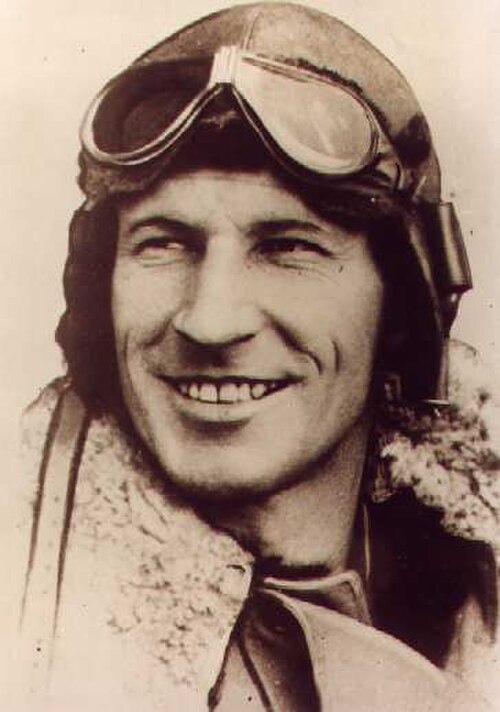
オーストラリアは輸送と通信の新しい技術を受け入れた。沿岸の帆船はついに蒸気船に取って代わられ、鉄道と自動車輸送の改良は仕事と余暇に劇的な変化をもたらした。1918年にはオーストラリア全土に5万台の自動車とトラックがあったが、1929年には50万台に達した。[ 312 ] 1853年に設立された駅馬車会社コブ・アンド・カンパニーは、1924年についに閉鎖した。[ 313 ] 1920年には、クイーンズランド・アンド・ノーザン・テリトリー航空サービス(後のオーストラリアの航空会社カンタス)が設立された。[ 314 ]ジョン・フリン牧師は、1928年に世界初の航空救急サービスであるロイヤル・フライング・ドクター・サービスを設立した。 [ 315 ]命知らずのパイロット、チャールズ・キングスフォード・スミス卿は、新しい飛行機を限界まで試し、1927年にオーストラリア一周飛行を完了し、1928年にはサザンクロス号でハワイとフィジーを経由してアメリカからオーストラリアまで太平洋を横断した。彼はその後、世界的な名声を得て、数々の航空記録を樹立したが、1935年にシンガポールへの夜間飛行中に消息を絶った。[ 316 ]
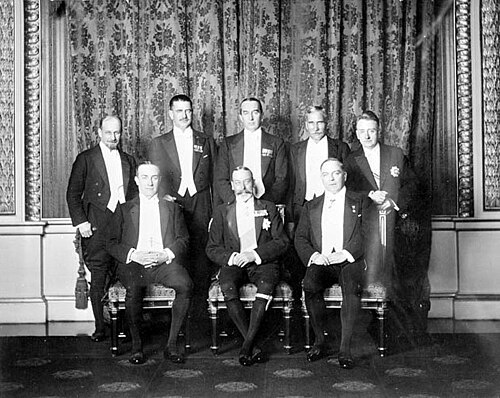
オーストラリアは第一次世界大戦後、ウェストミンスター法の下で独立主権国家としての地位を獲得した。これは、1926年にロンドンで開催された大英帝国指導者による帝国会議の報告書である1926年のバルフォア宣言を正式なものとしたものであった。バルフォア宣言は、大英帝国の自治領を次のように定義していた。「自治領は、大英帝国内の自治共同体であり、地位は平等であり、国内または外交のいかなる面においても互いに従属することはないが、国王に対する共通の忠誠心によって結びつき、イギリス連邦の一員として自由に結びついている。」しかし、オーストラリアは1942年までウェストミンスター法を批准しなかった。 [ b ]歴史家のフランク・クロウリーによれば、これはオーストラリア人が第二次世界大戦の危機までイギリスとの関係を再定義することにほとんど関心を持っていなかったためである。[ 318 ]
1986年オーストラリア法により、英国議会とオーストラリア各州との間に残っていたあらゆる繋がりが断ち切られた。
1927年2月1日から1931年6月12日まで、ノーザンテリトリーは南緯20度で北オーストラリアと中央オーストラリアに分割されました。ニューサウスウェールズ州は、1915年に6,677ヘクタールのジャービス湾領土という別の領土を譲渡しました。外部領土として、ノーフォーク島(1914年)、アシュモア島、カルティエ諸島(1931年)、イギリスから移管されたオーストラリア南極領土(1933年)、イギリスからオーストラリアに移管されたハード島、マクドナルド諸島、マッコーリー島(1947年)が追加されました。
連邦首都地域(FCT)は、1911年にニューサウスウェールズ州から分離して設立され、新連邦首都キャンベラの建設予定地として設けられました(メルボルンは1901年から1927年まで州都でした)。FCTは1938年にオーストラリア首都特別地域(ACT)に改称されました。ノーザンテリトリーは1911年に南オーストラリア州政府の管轄から連邦政府に移管されました。

Well before the Wall Street crash of 1929, the Australian economy was facing high overseas debt and a slowing economy.[319][320] As the economy slowed in 1927, so did manufacturing and the country slipped into recession as profits slumped and unemployment rose.[321] Australia was deeply affected by the Great Depression of the 1930s, particularly due to its heavy dependence on exports of wool and wheat, and on borrowing from London. The world prices of wool and wheat halved, and lending ended.[322][323]

At elections held in October 1929, the Labor Party was swept into power in a landslide victory; Stanley Bruce, the former prime minister, lost his own seat. The new prime minister, James Scullin, and his largely inexperienced government were immediately faced with a series of crises. Hamstrung by their lack of control of the Senate, a lack of control of the banking system and divisions within their party about how best to deal with the situation, the government was forced to accept solutions that eventually split the party. Some gravitated to New South Wales Premier Lang, others to Prime Minister Scullin.
危機を解決するためのさまざまな「計画」が提案された。1930年半ばに訪れたイギリスの銀行の代表であるオットー・ニーマイヤー卿は、政府支出と賃金の削減を含むデフレ計画を提案した。財務大臣のテッド・セオドアは、緩やかなインフレ計画を提案し、ニューサウスウェールズ州の労働党首相ジャック・ラングは、海外債務を否認する急進的な計画を提案した。[ 324 ] 1931 年 6 月に連邦政府と州政府によって最終的に受け入れられた「首相計画」は、ニーマイヤーが提唱したデフレモデルに従い、政府支出の 20% 削減、銀行金利の引き下げ、増税が含まれていた。[ 325 ] 1931 年 3 月、ラングはロンドンで支払うべき利息は支払われないと発表し、連邦政府が債務を肩代わりした。5 月、ニューサウスウェールズ州政府貯蓄銀行は閉鎖を余儀なくされた。メルボルン州首相会議は、厳しいデフレ政策の一環として賃金と年金を削減することに合意したが、ラングはこの計画を撤回した。 1932年のシドニー・ハーバー・ブリッジの盛大な開通は、若い連邦を圧迫する深刻化する危機にほとんど猶予を与えなかった。数百万ポンドの負債が積み上がり、国民の抗議活動や、ラング、そしてスクリン、ライオンズ連邦政府による攻防が繰り広げられる中、ニューサウスウェールズ州知事のフィリップ・ゲームは、連邦財務省への納付を拒否するというラングの指示を調査していた。ゲームは、この指示は違法であると判断した。ラングは命令の撤回を拒否し、5月13日にゲーム知事によって解任された。6月の選挙で、ラング労働党の議席は激減した。[ 326 ]
1931年5月、労働党の離脱メンバーが国民党と合流して結成された新たな保守政党、統一オーストラリア党が誕生した。1931年12月の連邦選挙では、元労働党員のジョセフ・ライオンズ率いる統一オーストラリア党が容易に政権を獲得した。同党は1940年9月まで政権を維持した。ライオンズ政権は恐慌からの回復を主導したと評価されることが多いが、そのどれだけが同政権の政策によるものかは依然として議論の的となっている。[ 327 ]スチュアート・マッキンタイアも、オーストラリアのGDPは1931年から1932年と1938年から1939年の間に3億8690万ポンドから4億8590万ポンドに増加したが、一人当たりの実質国内生産は依然として「1938年から1939年(70.12ポンド)は1920年から1921年(70.04ポンド)よりわずか数シリング多いだけ」だったと指摘している。[ 328 ]

オーストラリアは1929年から1930年にかけての金融不況から比較的早く回復し、1932年頃から回復が始まった。ジョセフ・ライオンズ首相は、州首相計画の厳しい経済対策を支持し、正統的な財政政策を追求し、ニューサウスウェールズ州首相ジャック・ラングによる海外債務の返済不履行の提案を拒否した。シドニー研究所のアン・ヘンダーソン氏によると、ライオンズ首相は「予算の均衡、企業コストの削減、信頼回復の必要性」を固く信じており、ライオンズ政権時代は、大恐慌の惨禍から第二次世界大戦勃発までの間、オーストラリアに「安定と最終的な成長」をもたらした。賃金の引き下げが実施され、産業関税保護が維持された。1930年代には原材料が安価になったこともあり、オーストラリア経済の主要雇用は農業から製造業へと移行した。この移行は、連邦政府による国防・兵器製造への投資増加によってさらに強化された。ライオンズは、オーストラリアの輸出の回復が経済回復の鍵だと考えていた。[ 329 ]
The extent of unemployment in Australia, often cited as peaking at 29 per cent in 1932 is debated. "Trade union figures are the most often quoted, but the people who were there...regard the figures as wildly understating the extent of unemployment" wrote historian Wendy Lowenstein in her collection of oral histories of the depression; however, David Potts argued that "over the last thirty years ...historians of the period have either uncritically accepted that figure (29% in the peak year 1932) including rounding it up to 'a third', or they have passionately argued that a third is far too low."[330][331] Potts himself though suggested a peak national figure of 25 per cent unemployed.[332] Measurement is difficult in part because there was great variation, geographically, by age and by gender, in the level of unemployment. Statistics collected by historian Peter Spearritt show 17.8 per cent of men and 7.9 per cent of women unemployed in 1933 in the comfortable Sydney suburb of Woollahra. This is not to say that 81.9 per cent of women were working but that 7.9 per cent of the women interested/looking for work were unable to find it, a much lower figure than maybe first thought, as many women stayed home and were not in the job force in those years, especially if they were unable to find work.
In the working class suburb of Paddington, 41.3 per cent of men and 20.7 per cent of women were listed as unemployed.[333] Geoffrey Spenceley stated that apart from variation between men and women, unemployment was also much higher in some industries, such as the building and construction industry, and comparatively low in the public administrative and professional sectors.[334] In country areas, worst hit were small farmers in the wheat belts as far afield as north-east Victoria and Western Australia, who saw more and more of their income absorbed by interest payments.[335]
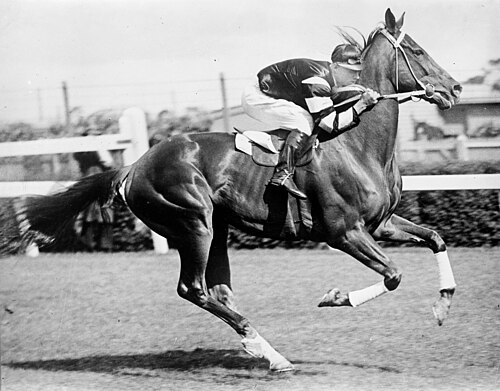
Extraordinary sporting successes did something to alleviate the spirits of Australians during the economic downturn. In a Sheffield Shield cricket match at the Sydney Cricket Ground in 1930, Don Bradman, a young New South Welshman of just 21 years of age wrote his name into the record books by smashing the previous highest batting score in first-class cricket with 452 runs not out in just 415 minutes.[336] The rising star's world beating cricketing exploits were to provide Australians with much needed joy through the emerging Great Depression in Australia and post-World War II recovery. Between 1929 and 1931 the racehorse Phar Lap dominated Australia's racing industry, at one stage winning fourteen races in a row.[337] Famous victories included the 1930 Melbourne Cup, following an assassination attempt and carrying 9 stone 12 pounds weight.[338] Phar Lap sailed for the United States in 1931, going on to win North America's richest race, the Agua Caliente Handicap in 1932. Soon after, on the cusp of US success, Phar Lap developed suspicious symptoms and died. Theories swirled that the champion race horse had been poisoned and a devoted Australian public went into shock.[339] The 1938 British Empire Games were held in Sydney from 5–12 February, timed to coincide with Sydney's sesqui-centenary (150 years since the foundation of British settlement in Australia).
Following federation Aboriginal affairs was a state responsibility, although the Commonwealth became responsible for the Aboriginal population of the Northern Territory from 1911. By that date the Commonwealth and all states except Tasmania had passed legislation establishing Protectors of Aborigines and Protection Boards with extensive powers to regulate the lives of Aboriginal Australians including their ownership of property, place of residence, employment, sexual relationships and custody of their children. Reserves were established, ostensibly for the protection of the Aboriginal population who had been dispossessed of their land. Church groups also ran missions throughout Australia providing shelter, food, religious instruction and elementary schooling for Indigenous people.[340]
Some officials were concerned by the growing number of Aboriginal children of mixed heritage, particularly in northern Australia where large Indigenous, South Sea Islander and Asian populations were seen as inconsistent with the white Australia policy. Laws concerning Aboriginal Australians were progressively tightened to make it easier for officials to remove Aboriginal children of mixed descent from their parents and place them in reserves, missions, institutions and employment with white employers.[341]
The segregation of Aboriginal people on reserves and in institutions was never systematically accomplished due to funding constraints, differing policy priorities in the states and territories, and resistance from Aboriginal people. In the more densely settled areas of Australia, about 20 per cent of Aboriginal people lived on reserves in the 1920s. The majority lived in camps on the fringes of country towns and a small percentage lived in cities. During the Great Depression more Aboriginal people moved to reserves and missions for food and shelter. By 1941 almost half of the Aboriginal population of New South Wales lived on reserves.[342]
In northern Australia, the majority of employed Aboriginal people worked in the pastoral industry where they lived in camps, often with their extended families. Many also camped on the margins of towns and reserves where they could avoid most of the controls imposed by the administrators of reserves, compounds and missions.[343]
The 1937 Native Welfare conference of state and Commonwealth officials endorsed a policy of biological absorption of mixed-descent Aboriginal Australians into the white community.
[T]he destiny of the natives of aboriginal origin, but not of the full blood, lies in their ultimate absorption by the people of the Commonwealth and it therefore recommends that all efforts be directed to that end.[344]
The officials saw the policy of Aboriginal assimilation by absorption into the white community as progressive, aimed at eventually achieving civil and economic equality for mixed-descent Aboriginal people.[344]
... efforts of all State authorities should be directed towards the education of children of mixed aboriginal blood at white standards, and their subsequent employment under the same conditions as whites with a view to their taking their place in the white community on an equal footing with the whites.[345]
The following decades saw an increase in the number of Aboriginal Australians of mixed descent removed from their families, although the states and territories progressively adopted a policy of cultural, rather than biological, assimilation, and justified removals on the grounds of child welfare.[346] In 1940, New South Wales became the first state to introduce a child welfare model whereby Aboriginal children of mixed descent were removed from their families under general welfare provisions by court order. Other jurisdictions introduced a welfare model after the war.[345]

Until the late 1930s, defence was not a significant issue for Australians. At the 1937 elections, both political parties advocated increased defence spending, in the context of increased Japanese aggression in China and Germany's aggression in Europe; however, there was a difference in opinion about how the defence spending should be allocated. The United Australia Party government emphasised co-operation with Britain in "a policy of imperial defence". The lynchpin of this was the British naval base at Singapore and the Royal Navy battle fleet "which, it was hoped, would use it in time of need".[347] Defence spending in the inter-war years reflected this priority. In the period 1921–1936 totalled £40 million on the Royal Australian Navy, £20 million on the Australian Army and £6 million on the Royal Australian Air Force (established in 1921, the "youngest" of the three services). In 1939, the Navy, which included two heavy cruisers and four light cruisers, was the service best equipped for war.[348]

Fearing Japanese intentions in the Pacific, Menzies established independent embassies in Tokyo and Washington to receive independent advice about developments.[349]Gavin Long argues that the Labor opposition urged greater national self-reliance through a build-up of manufacturing and more emphasis on the Army and RAAF, as Chief of the General Staff, John Lavarack also advocated.[350] In November 1936, Labor leader John Curtin said "The dependence of Australia upon the competence, let alone the readiness, of British statesmen to send forces to our aid is too dangerous a hazard upon which to found Australia's defence policy."[351] According to John Robertson, "some British leaders had also realised that their country could not fight Japan and Germany at the same time." But "this was never discussed candidly at...meeting(s) of Australian and British defence planners", such as the 1937 Imperial Conference.[352]
By September 1939 the Australian Army numbered 3,000 regulars.[353] A recruiting campaign in late 1938, led by Major-General Thomas Blamey increased the reserve militia to almost 80,000.[354] The first division raised for war was designated the 6th Division, of the 2nd AIF, there being 5 Militia Divisions on paper and a 1st AIF in the First World War.[355]


On 3 September 1939, the prime minister, Robert Menzies, made a national radio broadcast: "My fellow Australians. It is my melancholy duty to inform you, officially, that, in consequence of the persistence by Germany in her invasion of Poland, Great Britain has declared war upon her, and that, as a result, Australia is also at war."[356]
Thus began Australia's involvement in the six-year global conflict. Australians were to fight in an extraordinary variety of locations, including withstanding the advance of German Panzers in the Siege of Tobruk, turning back the advance of the Imperial Japanese Army in the New Guinea Campaign, undertaking bomber missions over Europe, engaging in naval battles in the Mediterranean. At home, Japanese attacks included mini-submarine raids on Sydney Harbour and very heavy air raids on and near the Northern Territory's capital, Darwin.[357]
The recruitment of a volunteer military force for service at home and abroad was announced, the 2nd Australian Imperial Force and a citizen militia organised for local defence. Troubled by Britain's failure to increase defences at Singapore, Menzies was cautious in committing troops to Europe. By the end of June 1940, France, Norway, Denmark and the Low Countries had fallen to Nazi Germany. Britain stood alone with its dominions. Menzies called for "all-out war", increasing federal powers and introducing conscription. Menzies' minority government came to rely on just two independents after the 1940 election.[358]
In January 1941, Menzies flew to Britain to discuss the weakness of Singapore's defences. Arriving in London during The Blitz, Menzies was invited into Winston Churchill's British War Cabinet for the duration of his visit. Returning to Australia, with the threat of Japan imminent and with the Australian army suffering badly in the Greek and Crete campaigns, Menzies re-approached the Labor Party to form a War Cabinet. Unable to secure their support, and with an unworkable parliamentary majority, Menzies resigned as prime minister. The coalition held office for another month, before the independents switched allegiance and John Curtin was sworn in as prime minister.[349] Eight weeks later, Japan attacked Pearl Harbor.

From 1940 to 1941, Australian forces played prominent roles in the fighting in the Mediterranean theatre, including Operation Compass, the Siege of Tobruk, the Greek campaign, the Battle of Crete, the Syria–Lebanon Campaign and the Second Battle of El Alamein.
A garrison of around 14,000 Australian soldiers, commanded by Lieutenant General Leslie Morshead was besieged in Tobruk, Libya, by the German-Italian army of General Erwin Rommel between April and August 1941. The Nazi propagandist Lord Haw Haw derided the defenders as 'rats', a term the soldiers adopted as an ironic compliment: "The Rats of Tobruk".[359] Vital in the defence of Egypt and the Suez Canal, the siege saw the advance of the German army halted for the first time and provided a morale boost for the British Commonwealth, which was then standing alone against Hitler.
The war came closer to home when HMAS Sydney was lost with all hands in battle with the German raider Kormoran in November 1941.
With most of Australia's best forces committed to fight against Hitler in the Middle East, Japan attacked Pearl Harbor, the US naval base in Hawaii, on 8 December 1941 (eastern Australia time). The British battleship HMS Prince of Wales and battlecruiser HMS Repulse sent to defend Singapore were sunk soon afterwards. Australia was ill-prepared for an attack, lacking armaments, modern fighter aircraft, heavy bombers, and aircraft carriers. While demanding reinforcements from Churchill, on 27 December 1941 Curtin published an historic announcement:[360] "The Australian Government... regards the Pacific struggle as primarily one in which the United States and Australia must have the fullest say in the direction of the democracies' fighting plan. Without inhibitions of any kind, I make it clear that Australia looks to America, free of any pangs as to our traditional links or kinship with the United Kingdom."[361]
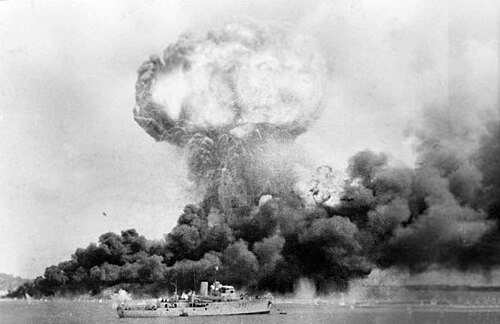
British Malaya quickly collapsed, shocking the Australian nation. British, Indian and Australian troops made a disorganised last stand at Singapore, before surrendering on 15 February 1942. Around 15,000 Australian soldiers became prisoners of war. Curtin predicted that the "battle for Australia" would now follow. On 19 February, Darwin suffered a devastating air raid, the first time the Australian mainland had ever been attacked by enemy forces. For the following 19 months, Australia was attacked from the air almost 100 times.

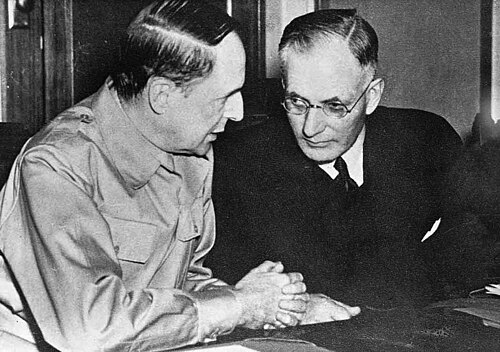
Two battle-hardened Australian divisions were already steaming from the Middle East for Singapore. Churchill wanted them diverted to Burma, but Curtin refused, and anxiously awaited their return to Australia. US president Franklin D. Roosevelt ordered his commander in the Philippines, General Douglas MacArthur, to formulate a Pacific defence plan with Australia in March 1942. Curtin agreed to place Australian forces under the command of General MacArthur, who became "Supreme Commander of the South West Pacific". Curtin had thus presided over a fundamental shift in Australia's foreign policy. MacArthur moved his headquarters to Melbourne in March 1942 and American troops began massing in Australia. In late May 1942, Japanese midget submarines sank an accommodation vessel in a daring raid on Sydney Harbour. On 8 June 1942, two Japanese submarines briefly shelled Sydney's eastern suburbs and the city of Newcastle.[362]
In an effort to isolate Australia, the Japanese planned a seaborne invasion of Port Moresby, in the Australian Territory of New Guinea. In May 1942, the US Navy engaged the Japanese in the Battle of the Coral Sea and halted the attack. The Battle of Midway in June effectively defeated the Japanese navy and the Japanese army launched a land assault on Moresby from the north.[132] Between July and November 1942, Australian forces repulsed Japanese attempts on the city by way of the Kokoda Track, in the highlands of New Guinea. The Battle of Milne Bay in August 1942 was the first Allied defeat of Japanese land forces.

Meanwhile, in North Africa, the Axis powers had driven Allies back into Egypt. A turning point came between July and November 1942, when Australia's 9th Division played a crucial role in some of the heaviest fighting of the First and Second Battle of El Alamein, which turned the North Africa Campaign in favour of the Allies.[363]
The Battle of Buna–Gona, between November 1942 and January 1943, set the tone for the bitter final stages of the New Guinea campaign, which persisted into 1945. The offensives in Papua and New Guinea of 1943–44 were the single largest series of connected operations ever mounted by the Australian armed forces.[364] On 14 May 1943, the Australian Hospital Ship Centaur, though clearly marked as a medical vessel, was sunk by Japanese raiders off the Queensland coast, killing 268, including all but one of the nursing staff, further enraging popular opinion against Japan.[365][366]
Australian prisoners of war were at this time suffering severe ill-treatment in the Pacific Theatre. In 1943, 2,815 Australian Pows died constructing Japan's Burma-Thailand Railway.[367] In 1944, the Japanese inflicted the Sandakan Death March on 2,000 Australian and British prisoners of war—only 6 survived. This was the single worst war crime perpetrated against Australians in war.[368]
MacArthur largely excluded Australian forces from the main push north into the Philippines and Japan. It was left to Australia to lead amphibious assaults against Japanese bases in Borneo. Curtin suffered from ill health from the strains of office and died weeks before the war ended, replaced by Ben Chifley.
Of Australia's wartime population of seven million, almost one million men and women served in a branch of the services during the six years of warfare. By war's end, gross enlistments totalled 727,200 men and women in the Australian Army (of whom 557,800 served overseas), 216,900 in the RAAF and 48,900 in the RAN. More than 39,700 were killed or died as prisoners of war, about 8,000 of whom died as prisoners of the Japanese.[369][370]

While the Australian civilian population suffered less at the hands of the Axis powers than did other Allied nations in Asia and Europe, Australia nevertheless came under direct attack by Japanese naval forces and aerial bombardments, particularly through 1942 and 1943, resulting in hundreds of fatalities and fuelling fear of Japanese invasion. Axis naval activity in Australian waters also brought the war close to home for Australians. Austerity measures, rationing and labour controls measures were all implemented to assist the war effort.[371] Australian civilians dug air raid shelters, trained in civil defence and first aid, and Australian ports and cities were equipped with anti-aircraft and sea defences.[372]
The Australian economy was markedly affected by World War II.[373] Expenditure on war reached 37 per cent of GDP by 1943–44, compared to 4 per cent expenditure in 1939–1940.[374] Total war expenditure was £2,949 million between 1939 and 1945.[375]

Although the peak of army enlistments occurred in June–July 1940, when more than 70,000 enlisted, it was the Curtin Labor government, formed in October 1941, that was largely responsible for "a complete revision of the whole Australian economic, domestic and industrial life".[376] Rationing of fuel, clothing and some food was introduced (although less severely than in Britain), Christmas holidays curtailed, "brown outs" introduced and some public transport reduced. From December 1941, the Government evacuated all women and children from Darwin and northern Australia, and more than 10,000 refugees arrived from South East Asia as Japan advanced.[377] In January 1942, the Manpower Directorate was set up "to ensure the organisation of Australians in the best possible way to meet all defence requirements."[376] Minister for War Organisation of Industry, John Dedman introduced a degree of austerity and government control previously unknown, to such an extent that he was nicknamed "the man who killed Father Christmas".
In May 1942 uniform tax laws were introduced in Australia, ending state governments' control of income taxation. "The significance of this decision was greater than any other... made throughout the war, as it added extensive powers to the Federal Government and greatly reduced the financial autonomy of the states."[378]
Manufacturing grew significantly because of the war. "In 1939, there were only three Australian firms producing machine tools, but by 1943 there were more than one hundred doing so."[379] From having few front line aircraft in 1939, the RAAF had become the fourth largest allied Air force by 1945. A number of aircraft were built under licence in Australia before the war's end, notably the Beaufort and Beaufighter, although the majority of aircraft were from Britain and later, the US.[380] The Boomerang fighter, designed and built in four months of 1942, emphasised the desperate state Australia found itself in as the Japanese advanced.
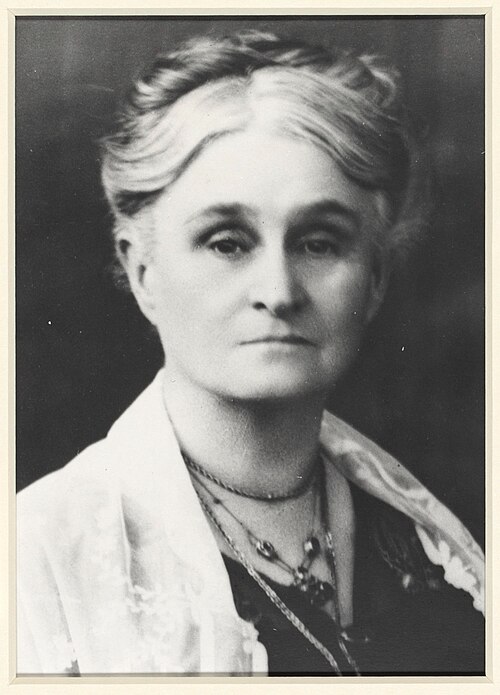
Australia also created, virtually from nothing, a significant female workforce engaged in direct war production. Between 1939 and 1944 the number of women working in factories rose from 171,000 to 286,000.[381] Dame Enid Lyons, widow of former prime minister Joseph Lyons, became the first woman elected to the House of Representatives in 1943, joining the Robert Menzies' new centre-right Liberal Party of Australia, formed in 1945. At the same election, Dorothy Tangney became the first woman elected to the Senate.

Politically, Robert Menzies and the Liberal Party of Australia dominated much of the immediate post war era, defeating the Labor government of Ben Chifley in 1949, in part because of a Labor proposal to nationalise banks[382] and following a crippling coal strike led by the Australian Communist Party. Menzies became the country's longest-serving prime minister and the Liberal party, in coalition with the rural based Country Party, won every federal election until 1972.
As in the United States in the early 1950s, allegations of communist influence in society saw tensions emerge in politics. Refugees from Soviet dominated Eastern Europe immigrated to Australia, while to Australia's north, Mao Zedong's Chinese Communist Party won the Chinese Civil War in 1949 and in June 1950, Communist North Korea invaded South Korea. The Menzies government responded to a United States led United Nations Security Council request for military aid for South Korea and diverted forces from occupied Japan to begin Australia's involvement in the Korean War. After fighting to a bitter standstill, the UN and North Korea signed a ceasefire agreement in July 1953. Australian forces had participated in such major battles as Kapyong and Maryang San. 17,000 Australians had served and casualties amounted to more than 1,500, of whom 339 were killed.[383]

During the course of the Korean War, the Liberal government attempted to ban the Communist Party of Australia, first by legislation in 1950 and later by referendum, in 1951.[384] While both attempts were unsuccessful, further international events such as the defection of minor Soviet Embassy official Vladimir Petrov, added to a sense of impending threat that politically favoured Menzies' Liberal-CP government, as the Labor Party split over concerns about the influence of the Communist Party on the trade union movement. The tensions led to another bitter split and the emergence of the breakaway Democratic Labor Party (DLP). The DLP remained an influential political force, often holding the balance of power in the Senate, until 1974. Its preferences supported the Liberal and Country Party.[385] The Labor party was led by H.V. Evatt after Chifley's death in 1951. Evatt had served as President of the United Nations General Assembly during 1948–49 and helped draft the United Nations Universal Declaration of Human Rights (1948). Evatt retired in 1960 amid signs of mental ill-health, and Arthur Calwell succeeded him as leader, with a young Gough Whitlam as his deputy.[386]
Menzies presided during a period of sustained economic boom and the beginnings of sweeping social change, which included youth culture and its rock and roll music and, in the late 1950s, the arrival of television broadcasting. In 1958, Australian country music singer Slim Dusty, who would become the musical embodiment of rural Australia, had Australia's first international music chart hit with his bush ballad "Pub With No Beer",[387] while rock and rollerJohnny O'Keefe's "Wild One" became the first local recording to reach the national charts, peaking at No. 20.[388][389]Australian cinema produced little of its own content in the 1950s, but British and Hollywood studios produced a string of successful epics from Australian literature, featuring home grown stars Chips Rafferty and Peter Finch.
Menzies remained a staunch supporter of links to the monarchy and Commonwealth of Nations and formalised an alliance with the United States, but also launched post-war trade with Japan, beginning a growth of Australian exports of coal, iron ore and mineral resources that would steadily climb until Japan became Australia's largest trading partner.[390]
When Menzies retired in 1965, he was replaced as Liberal leader and prime minister by Harold Holt. Holt drowned while swimming at a surf beach in December 1967 and was replaced by John Gorton (1968–1971) and then by William McMahon (1971–1972).

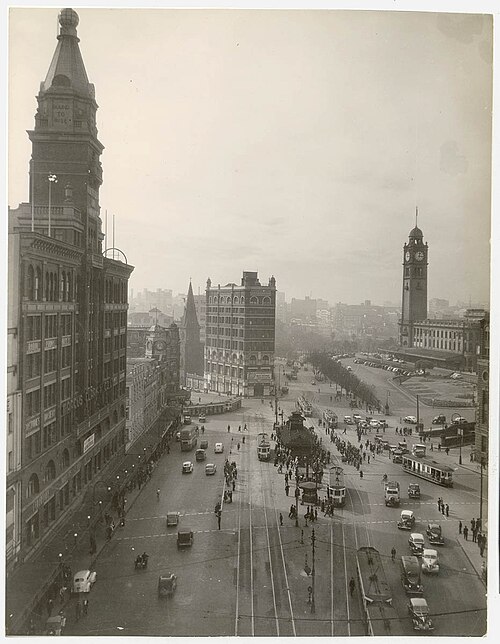
Following World War II, the Chifley Labor government instigated a massive programme of European immigration. In 1945, Minister for Immigration, Arthur Calwell wrote "If the experience of the Pacific War has taught us one thing, it surely is that seven million Australians cannot hold three million square miles of this earth's surface indefinitely."[391] All political parties shared the view that the country must "populate or perish". Calwell stated a preference for ten British immigrants for each one from other countries; however, the numbers of British migrants fell short of what was expected, despite government assistance.[392]
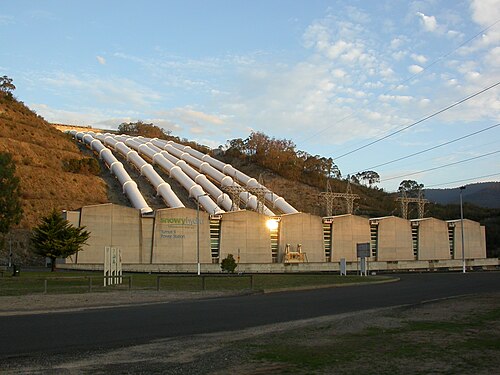
Migration brought large numbers of southern and central Europeans to Australia for the first time. A 1958 government leaflet assured readers that unskilled non-British migrants were needed for "labour on rugged projects ... work which is not generally acceptable to Australians or British workers".[393] The Australian economy stood in sharp contrast to war-ravaged Europe, and newly arrived migrants found employment in a booming manufacturing industry and government assisted programmes such as the Snowy Mountains Scheme. This hydroelectricity and irrigation complex in south-east Australia consisted of sixteen major dams and seven power stations constructed between 1949 and 1974. It remains the largest engineering project undertaken in Australia. Necessitating the employment of 100,000 people from more than 30 countries, to many it denoted the birth of multicultural Australia.[394] Some 4.2 million immigrants arrived between 1945 and 1985, about 40 per cent of whom came from Britain and Ireland.[395] The 1957 novel They're a Weird Mob was a popular account of an Italian migrating to Australia, although written by Australian-born author John O'Grady. The Australian population reached 10 million in 1959–with Sydney its most populous city.
In May 1958, the Menzies Government passed the Migration Act 1958 which replaced the Immigration Restriction Act's arbitrarily applied dictation test with an entry permit system, that reflected economic and skills criteria.[396][397] Further changes in the 1960s effectively ended the White Australia policy. It legally ended in 1973.
Australia enjoyed significant growth in prosperity in the 1950s and 1960s, with increases in both living standards and in leisure time.[398][399] The manufacturing industry, previously playing a minor part in an economy dominated by primary production, greatly expanded. The first Holden motor car came out of General Motors-Holden's Fisherman's Bend factory in November 1948. Car ownership rapidly increased—from 130 owners in every 1,000 in 1949 to 271 owners in every 1,000 by 1961.[400] By the early 1960s, four competitors to Holden had set up Australian factories, employing between 80,000 and 100,000 workers, "at least four-fifths of them migrants".[401]
In the 1960s, about 60 per cent of Australian manufacturing was protected by tariffs. Pressure from business interests and the union movement ensured these remained high. Historian Geoffrey Bolton suggests that this high tariff protection of the 1960s caused some industries to "lapse into lethargy", neglecting research and development and the search for new markets.[401] The CSIRO was expected to fulfil research and development.
Prices for wool and wheat remained high, with wool the mainstay of Australia's exports. Sheep numbers grew from 113 million in 1950 to 171 million in 1965. Wool production increased from 518,000 to 819,000 tonnes in the same period.[402] Wheat, wool and minerals ensured a healthy balance of trade between 1950 and 1966.[403]
The great housing boom of the post war period saw rapid growth in the suburbs of the major Australian cities. By the 1966 census, only 14 per cent lived in rural Australia, down from 31 per cent in 1933, and only 8 per cent lived on farms.[404] Virtual full employment meant high standards of living and dramatic increases in home ownership, and by the sixties, Australia had the most equitable spread of income in the world.[405] By the beginning of the sixties, an Australia-wide McNair survey estimated that 94% of homes had a fridge, 50% a telephone, 55% a television, 60% a washing machine, and 73% a vacuum cleaner. In addition, most households had now acquired a car.[406] According to one study, "In 1946, there was one car for every 14 Australians; by 1960, it was one to 3.5. The vast majority of families had access to a car."[398]
Car ownership flourished during the postwar period, with 1970/1971 census data estimating that 96.4 per cent of Australian households in the early Seventies owned at least one car; however, not all felt the rapid suburban growth was desirable.[407] Distinguished Architect and designer Robin Boyd, a critic of Australia's built surroundings, described Australia as "'the constant sponge lying in the Pacific', following the fashions of overseas and lacking confidence in home-produced, original ideas".[408] In 1956, dadaist comedian Barry Humphries performed the character of Edna Everage as a parody of a house-proud housewife of staid 1950s Melbourne suburbia (the character only later morphed into a critique of self-obsessed celebrity culture). It was the first of many of his satirical stage and screen creations based around quirky Australian characters: Sandy Stone, a morose elderly suburbanite, Barry McKenzie a naive Australian expat in London and Sir Les Patterson, a vulgar parody of a Whitlam-era politician.[409]
Some writers defended suburban life. Journalist Craig Macgregor saw suburban life as a "...solution to the needs of migrants..." Hugh Stretton argued that "plenty of dreary lives are indeed lived in the suburbs... but most of them might well be worse in other surroundings".[410] Historian Peter Cuffley has recalled life for a child in a new outer suburb of Melbourne as having a kind of joyous excitement. "Our imaginations saved us from finding life too humdrum, as did the wild freedom of being able to roam far and wide in different kinds of (neighbouring) bushland...Children in the suburbs found space in backyards, streets and lanes, playgrounds and reserves..."[411]
In 1954, the Menzies Government formally announced the introduction of the new two-tiered TV system—a government-funded service run by the ABC, and two commercial services in Sydney and Melbourne, with the 1956 Summer Olympics in Melbourne being a major driving force behind the introduction of television to Australia.[412] Colour TV began broadcasting in 1975.
The 1951 Native Welfare Conference of state and Commonwealth officials had agreed on a policy of cultural assimilation for all Aboriginal Australians. Paul Hasluck, the Commonwealth Minister for Territories, stated: "Assimilation means, in practical terms, that, in the course of time, it is expected that all persons of aboriginal blood or mixed blood in Australia will live like other white Australians do."[345][346]
Controls over the daily lives of Aboriginal people and the removal of Aboriginal children of mixed descent continued under the policy of assimilation, although the control was now largely exercised by Welfare Boards and removals were justified on welfare grounds. The number of Aboriginal people deemed to be wards of the state under Northern Territory welfare laws doubled to 11,000 from 1950 to 1965.[413]
During this period, the policy of assimilation attracted increasing criticism from Aboriginal people and their supporters on the grounds of its negative effects on Aboriginal families and its denial of Aboriginal cultural autonomy. Removals of Aboriginal children of mixed descent from their families slowed by the late 1960s and by 1973 the Commonwealth had adopted a policy of self-determination for Indigenous Australians.[414]
In 1997, the Human Rights and Equal Opportunity Commission estimated that between 10 per cent and one-third of Aboriginal children had been removed from their families from 1910 to 1970. Regional studies indicate that 15 per cent of Aboriginal children were removed in New South Wales from 1899 to 1968, while the figure for Victoria was about 10 per cent.[415] Robert Manne estimates that the figure for Australia as a whole was closer to 10 per cent.[416]
Summarising the policy of assimilation and forced removals of Aboriginal children of mixed descent, Richard Broome concludes: "Even though the children's material conditions and Western education may have been improved by removal, even though some removals were necessary, and even though some people were thankful for it in retrospect, overall it was a disaster....It was a rupturing of tens of thousands of Aboriginal families, aimed at eradicating Aboriginality from the nation in the cause of homogeneity and in fear of difference."[415]
In the early 1950s, the Menzies government saw Australia as part of a "triple alliance" in concert with both the US and traditional ally Britain.[417] At first, "the Australian leadership opted for a consistently pro-British line in diplomacy", while at the same time looking for opportunities to involve the US in South East Asia.[418] Thus, the government committed military forces to the Korean War and the Malayan Emergency and hosted British nuclear tests after 1952.[419] Australia was also the only Commonwealth country to offer support to the British during the Suez Crisis.[420]
Menzies oversaw an effusive welcome to Queen Elizabeth II on the first visit to Australia by a reigning monarch, in 1954. He made the following remarks during a light-hearted speech to an American audience in New York, while on his way to attend her coronation in 1953: "We in Australia, of course, are British, if I may say so, to the boot heels...but we stand together – our people stand together – till the crack of doom."[421]

As British influence declined in South East Asia, the US alliance came to have greater significance for Australian leaders and the Australian economy. British investment in Australia remained significant until the late 1970s, but trade with Britain declined through the 1950s and 1960s. In the late 1950s the Australian Army began to re-equip using US military equipment. In 1962, the US established a naval communications station at North West Cape, the first of several built during the next decade.[422][423] Most significantly, in 1962, Australian Army advisors were sent to help train South Vietnamese forces, in a developing conflict in which the British had no part.
According to diplomat Alan Renouf, the dominant theme in Australia's foreign policy under Australia's Liberal–Country Party governments of the 1950s and 1960s was anti-communism.[424] Another former diplomat, Gregory Clark, suggested that it was specifically a fear of China that drove Australian foreign policy decisions for twenty years.[425] The ANZUS security treaty, which had been signed in 1951, had its origins in Australia's and New Zealand's fears of a rearmed Japan. Its obligations on the US, Australia and New Zealand are vague, but its influence on Australian foreign policy thinking, at times has been significant.[426] The SEATO treaty, signed only three years later, clearly demonstrated Australia's position as a US ally in the emerging Cold War.[427]
As Britain struggled to enter the Common Market in the 1960s, Australia saw that its historic ties with the mother country were rapidly fraying. Canberra was alarmed but kept a low profile, not wanting to alienate London. Russel Ward states that the implications of British entry into Europe in 1973: "seemed shattering to most Australians, particularly to older people and conservatives."[428] Carl Bridge, however, points out that Australia had been "hedging its British bets" for some time. The ANZUS treaty and Australia's decision to enter the Vietnam War did not involve Britain and by 1967 Japan was Australia's leading export partner and the US her largest source of imports. According to Bridge, Australia's decision not to follow Britain's devaluation of her currency in 1967 "marked the demise of British Australia."[427]

By 1965, Australia had increased the size of the Australian Army Training Team Vietnam (AATTV), and in April the Government made a sudden announcement that "after close consultation with the United States", a battalion of troops was to be sent to South Vietnam.[429] In parliament, Menzies emphasised the argument that "our alliances made demands on us". The alliance involved was presumably, the Southeast Asia Treaty Organization (SEATO), and Australia was providing military assistance because South Vietnam, a signatory to SEATO, had apparently requested it.[430]Documents released in 1971 indicated that the decision to commit troops was made by Australia and the US, not at the request of South Vietnam.[431] By 1968, there were three Australian Army battalions at any one time at the 1st Australian Task Force (1ATF) base at Nui Dat in addition to the advisers of the AATTV placed throughout Vietnam, and personnel reached a peak total of almost 8,000, comprising about one third of the Army's combat capacity. Between 1962 and 1972 almost 60,000 personnel served in Vietnam, including ground troops, naval forces and air assets.[432]
In July 1966, new prime minister Harold Holt expressed his government's support for the US and its role in Vietnam in particular. "I don't know where people would choose to look for the security of this country were it not for the friendship and strength of the United States."[433] While on a visit in the same year to the US, Holt assured President Lyndon B. Johnson "...I hope there is corner of your mind and heart which takes cheer from the fact that you have an admiring friend, a staunch friend, [Australia] that will be all the way with LBJ."[434]
The Liberal-CP Government was returned with a massive majority in elections held in December 1966, fought over national security issues including Vietnam. The opposition Labor Party had advocated the withdrawal of all conscripts from Vietnam, but its deputy leader Gough Whitlam had stated that a Labor government might maintain regular army troops there.[435] Arthur Calwell, who had been leader of the Labor Party since 1960, retired in favour of Whitlam a few months later.
Despite Holt's sentiments and his government's electoral success in 1966, the war became unpopular in Australia, as it did in the United States. The movements to end Australia's involvement gathered strength after the Tet Offensive of early 1968 and compulsory national service (selected by ballot) became increasingly unpopular. In the 1969 elections, the government hung on despite a significant decline in popularity. Moratorium marches held across Australia in mid-1970 attracted large crowds—the Melbourne march of 100,000 being led by Labor MP Jim Cairns. As the Nixon administration proceeded with Vietnamization of the war and began the withdrawal of troops, so did the Australian Government. In November 1970 1st Australian Task Force was reduced to two battalions and in November 1971, 1ATF was withdrawn from Vietnam. The last military advisers of the AATTV were withdrawn by the Whitlam Labor government in mid-December 1972.[432]
The Australian military presence in Vietnam had lasted 10 years, and in purely human cost, more than 500 had been killed and more than 2,000 wounded. The war cost Australia $218 million between 1962 and 1972.[432]

Elected in December 1972 after 23 years in opposition, Labor won office under Gough Whitlam, introducing significant reforms and expanding the federal budget. Welfare benefits were extended and payment rates increased, a national health insurance scheme was introduced, and divorce laws liberalised. Commonwealth expenditure on schools trebled in the two years to mid-1975 and the Commonwealth assumed responsibility for funding higher education, abolishing tuition fees. In foreign affairs, the new government prioritised the Asia Pacific region, formally abolishing the White Australia policy, recognising Communist China and enhancing ties with Indonesia. Conscription was abolished and the remaining Australian troops in Vietnam withdrawn. The Australian national anthem was changed from God Save the Queen to Advance Australia Fair, the imperial honours system was replaced at the Commonwealth level by the Order of Australia, and Queen Elizabeth II was officially styled Queen of Australia. Relations with the US, however, became strained after government members criticised the resumption of the US bombing campaign in North Vietnam.[436]
In Indigenous affairs, the government introduced a policy of self-determination for Aboriginal people in economic, social and political affairs. Federal expenditure on Aboriginal services increased from $23 million to $141 million during the three years of the government.[437] One of the first acts of the Whitlam government was to establish a Royal Commission into land rights in the Northern Territory under Justice Woodward. Legislation based on its findings was passed into law by the Fraser government in 1976, as the Aboriginal Land Rights Act 1976.[437]
The government granted Papua New Guinea independence on 16 September 1975, after Australia had been the colonial administrator of Papua since 1902, and of New Guinea since 1914.[438][439][440]
As the Whitlam government did not control the Senate, much of its legislation was rejected or amended. After Labor was re-elected with a reduced majority at elections in May 1974, the Senate remained an obstacle to its political agenda. The government's popularity was also harmed by deteriorating economic conditions and a series of political scandals. Increased government spending, rapid wage growth, booming commodity prices and the first OPEC oil shock led to economic instability. The unemployment rate reached post-war high of 3.6 per cent in late 1974 and the annual inflation rate hit 17 per cent.[441]
In 1974–75 the government began negotiations for US$4 billion in foreign loans to fund state development of Australia's mineral and energy resources. Minister Rex Connor conducted secret discussions with a loan broker from Pakistan, and Treasurer Jim Cairns misled parliament about the issue. Arguing the government was incompetent following the Loans Affair, the opposition Liberal-Country Party Coalition delayed passage of the government's money bills in the Senate, until the government would promise a new election. Whitlam refused and the deadlock ended when his government was controversially dismissed by the Governor-General, John Kerr on 11 November 1975. Opposition leader Malcolm Fraser was installed as caretaker prime minister, pending an election.[442]

The Federal elections of December 1975 resulted in a landslide victory for the Liberal-Country Party coalition and Malcolm Fraser continued as prime minister. The coalition government won subsequent elections in 1977 and 1980, making Fraser the second longest serving Australian prime minister up to that time.[443] The Fraser government espoused a policy of administrative competence and economic austerity leavened by progressive humanitarian, social and environmental interventions. The government enacted the Whitlam government's land rights bill with few changes, increased immigration, and resettled Indochinese refugees. It promoted multiculturalism and in 1978 established the Special Broadcasting Service (SBS) as a multicultural broadcaster. In foreign policy, the government continued Labor's friendly relations with China and Indonesia, repaired the frayed relationship with the US and opposed white minority rule in South Africa and Rhodesia. Environmental policies included banning resource development on Fraser Island and the Great Barrier Reef, creating Kakadu National Park and banning whaling. However, the government refused to use Commonwealth powers to stop the construction of the Franklin Dam in Tasmania in 1982 and the resulting grassroots campaign against the dam contributed to the emergence of an influential environmental movement in Australia.[444][443]
On the economic front, the Fraser government followed a "fight inflation first" strategy centred on budget cuts and wage restraint. Welfare benefits were restricted, the universal healthcare system was partially dismantled, and university funding per student cut. However, by the early 1980s economic conditions were deteriorating. The second oil shock in 1979 increased inflation which was exacerbated by a boom in commodity prices and a sharp increase in real wages. An international recession, the collapse of the resources boom and a severe drought in eastern Australia saw unemployment rise. The government responded with Keynesian deficit spending in its 1982 Budget, but by 1983 both unemployment and annual inflation exceeded 10 per cent. At the Federal elections in March 1983 the coalition government was comfortably defeated by Labor under its popular new leader Bob Hawke.[445]

The Hawke government pursued a mixture of free market reforms and consensus politics featuring "summits" of government representatives, business leaders, trade unions and non-government organisations in order to reach consensus on key issues such as economic policy and tax reform. The centrepiece of this policy mix was an Accord with trade unions under which wage demands would be curtailed in return for increased social benefits. Welfare payments were increased and better targeted to those on low incomes, and a retirement benefits scheme (superannuation) was extended to most employees. A new universal health insurance scheme, Medicare, was introduced.[446] The Treasurer Paul Keating oversaw a program of deregulation and micro-economic reforms which broke with the Keynesian economics that had traditionally been favoured by the Labor party.[447] These reforms included floating the Australian dollar, deregulating capital markets and allowing competition from foreign banks. Business regulation and competition policy was streamlined, tariffs and quotas on imports were reduced, and a number of government enterprises were privatised. The higher education system was restructured and significantly expanded, partly funded by the reintroduction of fees in the form of student loans and "contributions" (HECS).[448] Paul Kelly concludes that, "In the 1980s both Labor and non-Labor underwent internal philosophical revolutions to support a new set of ideas—faith in markets, deregulation, a reduced role for government, low protection and the creation of a new cooperative enterprise culture."[449]
The government's environmental interventions included stopping the Franklin Dam in Tasmania, banning new uranium mines at Jabiluka, and proposing Kakadu National park for world heritage listing.[446] In foreign policy, the government maintained strong relations with the US and was instrumental in the formation of the Asia Pacific Economic Cooperation (APEC) group. Australia contributed naval ships and troops to UN forces in the Gulf War after Iraq had invaded Kuwait in 1990.[446][450]

The government took other initiatives aimed at fostering national unity. The Australia Act 1986 eliminated the last vestiges of British legal authority at the federal level. The Australian Bicentenary in 1988 was the focus of year-long celebrations with multicultural themes. The World Expo 88 was held in Brisbane and a new Parliament House in Canberra was opened.[451]
Strong economic growth, falling unemployment, an unstable opposition, and Bob Hawke's popularity with the public contributed to the re-election of the Hawke government in 1984, 1987 and 1990. However, the economy went into recession in 1990 and by late 1991 the unemployment rate had risen above 10 per cent. With the government's popularity falling, Paul Keating successfully challenged for the leadership and became prime minister in December 1991.[446]
The Keating government's first priority was economic recovery. In February 1992 it released the "One Nation" job creation package and later legislated tax cuts to corporations and individuals to boost economic growth. Unemployment reached 11.4 per cent in 1992—the highest since the Great Depression in Australia. The Liberal-National opposition had proposed an ambitious plan of economic reform to take to the 1993 Election, including the introduction of a Goods and Services Tax. Keating campaigned strongly against the tax and was returned to office in March 1993.[452]

In May 1994 a more ambitious "Working Nation" jobs program was introduced. The Keating government also pursued a number of "big picture" issues throughout its two terms including increased political and economic engagement in the Asia Pacific region, Indigenous reconciliation, and an Australian republic. The government engaged closely with the Indonesian president, Suharto and other regional partners, and successfully campaigned to increase the role of APEC as a major forum for strategic and economic co-operation.[453] A Council for Aboriginal Reconciliation was established and, following the High Court of Australia's historic Mabo decision in 1992, the first national Native Title legislation was introduced to regulate claims and provide compensation for loss of native title.[454] In 1993, Keating established a Republic Advisory Committee to examine options for Australia becoming a republic. The government also introduced family payments and a superannuation guarantee with compulsory employer contributions.[455]
Under the Hawke government the annual migration intake had more than doubled from 54,500 in 1984–85 to more than 120,000 in 1989–90. The Keating government responded to community concerns about the pace of immigration by cutting the immigration intake and introducing mandatory detention for illegal immigrants arriving without a valid visa. Immigration fell to 67,900 in 1992–93.[456][457]
With foreign debt, inflation and unemployment still stubbornly high, Keating lost the March 1996 Election to the Liberals' John Howard.[458][459]
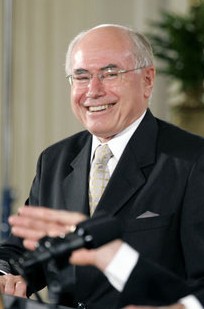

John Howard with a Liberal–National Party coalition served as Prime Minister from 1996 until 2007, winning re-election in 1998, 2001 and 2004 to become the second-longest-serving prime minister after Menzies. The Howard government introduced a nationwide gun control scheme following a mass shooting at Port Arthur. The coalition introduced industrial relations reforms in 1996 which promoted individual contracts and enterprise bargaining. In 2006, it introduced the WorkChoices legislation, which made it easier for small businesses to terminate employment. After the 1996 election, Howard and treasurer Peter Costello proposed a Goods and Services Tax (GST) which they successfully took to the electorate in 1998 and implemented in July 2000.[460]
The government responded to the populist anti-immigration policies of Pauline Hanson and her One Nation party by publicly criticising elites and political correctness and emphasising Australian values.[461][462] The coalition initially cut immigration intakes, abolished the Office of Multicultural Affairs and other multicultural agencies, and introduced citizenship tests for migrants.[463] Following a sharp increase in unauthorised arrivals by boat from 1999, the government opened new mandatory detention centres in remote areas of Australia and issued temporary visas for those found to be refugees. Following the Children Overboard affair and the Tampa Affair in 2001, the government introduced the Pacific Solution, which involved moving unauthorised immigrants to detention centres in Nauru and Papua New Guinea while their refugee status was determined, as well as a policy of turning back vessels intercepted at sea.[464]
In Indigenous affairs the Prime Minister rejected calls for a treaty with Indigenous Australians and an apology for past actions which had harmed them. Instead, the government pursued a policy of "practical reconciliation" involving specific measures to improve Indigenous education, health, employment and housing. In response to the High Court's decision in Wik Peoples v Queensland, in 1996, the government amended native title legislation to limit native title claims. In 2007, following the release of the "Little Children are Sacred" report detailing widespread abuse in Aboriginal communities, the Howard government launched the Northern Territory Intervention in order to create a safe environment for Indigenous children. The government's response was criticised by the co-chairs of the report, but was supported by the Labor opposition.[465]
Honouring an election commitment, the Howard government set up a people's convention on an Australian republic. The resulting 1999 referendum on a republic failed. Howard, a monarchist, became the only Australian prime minister to publicly oppose a constitutional amendment he had put to the people.[466][467]


In 1999, Australia led a United Nations force into East Timor to help establish democracy and independence for that nation, following political violence. Australia also committed to other peacekeeping and stabilisation operations: notably in Bougainville, including Operation Bel Isi (1998–2003); as well as Operation Helpem Fren and the Australian-led Regional Assistance Mission to Solomon Islands (RAMSI) in the early 2000s; and the 2006 East Timorese crisis.[468] Following the September 2001 terrorist attacks on the US and the subsequent War on Terror, Australia committed troops to the Afghanistan War and the Iraq War. These events, along with the 2002 Bali Bombings and other terrorist incidents, led to the creation of a National Security Committee and further anti-terrorist legislation.[460]
In foreign affairs, the government advocated a policy of "Asia first, but not Asia only", emphasising traditional links to the Commonwealth and the US. Relations with Indonesia became strained over East Timor but generally improved after the Bali bombings. Australia's support of US policy during the War on Terror was followed by an Australia-United States Free Trade Agreement in 2004. Trade agreements with Singapore and Thailand were also secured and relations with China improved. Australia joined the US in refusing to ratify the Kyoto Protocol on greenhouse gas emissions, arguing that it would harm Australia's economy and would be ineffective without the participation of China and India.[469]
After initial cuts, the immigration intake increased steadily, with a bias towards skilled workers to meet the needs of a rapidly growing economy. Immigration also became more diverse, with the proportion of immigrants from South Asia increasing from 8 per cent in 1996–97 to 20 per cent in 2007–08. Inbound tourism also grew, helped by the Sydney Olympic games in 2000.[470]
The economy continued its uninterrupted expansion since the early 1990s recession, with record jobs growth and the lowest unemployment rates since the 1970s. Exports, imports and foreign investment grew, and China became Australia's second largest trading partner after Japan. The coalition delivered budget surpluses in most years which, along with the proceeds of government asset sales, were partly invested in a Future Fund to reduce the national debt. Income inequality and private debt increased as the economy expanded, with the biggest increase in incomes accruing to the top 10 per cent of income earners.[471]
By 2007, the Howard government was consistently trailing the Labor opposition in opinion polls, with key issues being rising interest rates, the unpopular Work Choices industrial relations reforms, and climate change policy. There were also leadership tensions between Howard and Costello, and opinion polls indicated a desire for a generational change in leadership. Labor won the November 2007 election with a swing of more than 5 per cent and Howard became only the second sitting prime minister to lose his seat in an election.[472]

The Rudd government moved quickly to ratify the Kyoto protocols, dismantle the previous government's Work Choices industrial relations reforms, and issue an apology to Aboriginal Australians for past policies, particularly the removal of Aboriginal children from their families.[473] The government was soon confronted by the 2008 financial crisis and the Great Recession, responding with a series of economic stimulus measures worth A$75 billion. Although economic growth slowed in 2008, Australia was one of the few advanced economies in the world to avoid recession.[474]
The Rudd government proposed an emissions trading scheme (ETS) to address climate change, but the legislation was twice rejected in the Senate. After the failed December 2009 UN Climate Change Conference in Copenhagen, the government decided to postpone its ETS until 2013, a decision which saw Labor lose some electoral support to the Greens.[475] The government's proposed a Resources Super Profits Tax adversely affected Labor's support in the resource-rich states of Queensland and Western Australia.[476]

The government changed its predecessor's asylum seeker policy by closing the Nauru processing centre, abolished temporary protection visas and improving the legal rights and processing time for applicants for asylum. However, unauthorised arrivals by boat increased sharply from 2009 and the number in mandatory detention stretched capacity. The new leader of the opposition, Tony Abbot, promised that a coalition government would "stop the boats."[477][478]
In June 2010, with the government behind the opposition in polls and Rudd's popularity falling, the Labor caucus replaced Rudd with Julia Gillard as leader: Australia's first female prime minister.[478] The new leader was able to negotiate concessions on a new mining tax with large mining companies but failed to reach agreement with East Timor on a proposed migration processing centre there.[479]
Following the August 2010 federal election, Gillard formed a minority Labor government with the support of the Australian Greens and three independents.[480] The Gillard government passed enabling legislation for a National Broadband Network, a carbon pricing scheme, a mining tax, a National Disability Insurance Scheme, and school funding reforms.[480] The government negotiated an agreement with Malaysia to process some asylum seekers there but the plan was struck down by the High Court. In response, the government reopened offshore processing centres on Manus Island and Nauru.[481]
Following mounting leadership speculation and poor polling for the government, Rudd defeated Gillard in a leadership ballot in June 2013 and returned as prime minister, promising to replace the carbon tax with an emissions trading scheme and to ensure that people arriving without authority by boat would not be settled in Australia.[482] The opposition, promising to "stop the boats," abolish the carbon tax and mining tax, and reduce the Budget deficit and government debt, won the September 2013 election.[483]
The return of the Liberal-National Coalition to power after six years in opposition initially failed to restore stability to the office of prime minister. Prime Minister Tony Abbott's rival Malcolm Turnbull challenged for and won the leadership of the Liberals within Abbott's first term. After Turnbull narrowly returned the coalition to office in 2016, Party dissatisfaction with his leadership saw him replaced by Scott Morrison in 2018.

Prime Minister Tony Abbott's government began implementing its policies on unauthorised maritime arrivals, including Operation Sovereign Borders, boat turnbacks, the reintroduction of temporary protection visas, and the resettlement in third countries of those found to be refugees. The number of people arriving by boat fell from 20,587 in 2013 to none in 2015.[484][485] The government continued Australia's economic engagement with Asia, signing trade agreements with China, South Korea and Japan. The government also embraced the intervention against Islamic State in Iraq and Syria, joining the air campaign, sending special forces and providing training for the Iraqi army.[486]
The government's May 2014 Budget proved unpopular, with the perception that it had involved breaking a number of election promises.[487] The government secured the passage of legislation abolishing the carbon tax (July 2014) and the mining tax (September 2014).[486]
The Prime Minister announced a number of decisions – most notably the reintroduction of knighthoods and a knighthood for Prince Philip, Duke of Edinburgh – which had not been approved by cabinet and which were widely criticised in the media.[488][489] By September 2015 the government had lost 30 Newspolls in a row and Malcolm Turnbull successfully challenged for the leadership.[490]

The new Turnbull government announced a National Innovation and Science Agenda and delivered a Budget featuring cuts to company tax.[491] However, the elections of July 2016 saw the government returned with a majority on only one and a minority in the Senate. Following a national postal plebiscite, the government legalised same-sex marriage in December 2017.[492]
In foreign affairs, Australia signed a refugee exchange deal with the US in September 2016, allowing those in detention on Manus Island and Nauru to be settled in the US.[493] There was increased tension with China over its policies in the South China Sea, Australia's new laws targeting foreign influence in domestic politics, and a ban, on national security grounds, on Chinese companies supplying Australia's 5G communications network.[494]
In 2017, the United States, Japan, India and Australia agreed to revive the Quadrilateral Security Dialogue in order to counter Chinese ambitions in the South China Sea.[495] Australia signed a modified Trans-Pacific Partnership trade agreement with 10 other nations in March 2018 after the US withdrew from the original agreement.[496]
The government lost five by-elections in July 2018. When, in August, the government made a commitment to meet Australia's emissions target under the Paris Agreement, a number of coalition members rebelled. The controversy harmed the government, which had already lost more than 30 consecutive Newspolls. The parliamentary Liberal Party elected Scott Morrison as its new leader and he was sworn in as prime minister.[497]

The Morrison government committed to remaining in the Paris Agreement, but promised a greater focus on reduction of energy prices.[499] In foreign affairs the government signed the Indonesia–Australia Comprehensive Economic Partnership Agreement (IA-CEPA) in March 2019.[500] The government was returned at the elections of May 2019 with a three-seat majority.
In 2017, a convention of 250 Aboriginal and Torres Strait Islander delegates had issued the Uluru Statement from the Heart, calling for constitutional recognition of Indigenous Australians and a "voice to parliament". In 2019, the government announced a process to ensure that Indigenous Australians would be heard at all levels of government.[501]
In 2020, the government was confronted with the world COVID-19 pandemic and the subsequent recession, Australia's first in 29 years.[502] The government banned foreign nationals entering Australia and formed a National Cabinet to address the crisis.[503][504] The national cabinet announced restrictions on non-essential business, travel and gatherings of people. These restrictions were eased from May, although individual states and territories reimposed restrictions in response to particular outbreaks of COVID-19.[505][506]
The Australian government made provision for $267 billion in economic stimulus measures, and $16.6 billion in health measures in response to COVID-19.[507] As a result of the COVID-19 recession, the unemployment rate peaked at 7.5 per cent in July 2020 before falling to 5.6 per cent in March 2021.[506][508][509]

In June 2021, Australia and the United Kingdom announced that they had struck a preliminary deal on a free-trade agreement.[510] On 16 September 2021, the government announced that Australia, the United Kingdom and the United States had agreed to the creation of an enhanced trilateral security partnership, dubbed AUKUS. The first initiative under AUKUS would be for Australia to acquire nuclear-powered submarine technology. As a result of the agreement, Australia cancelled its 2016 contract for the diesel-electric Attack-class submarine with the French company Naval Group.[511] The decision drew rebukes from China and France.[512][513]

On 23 May 2022, Anthony Albanese was sworn in as Australia's new prime minister. His Labor Party defeated Scott Morrison's conservative government in the election. Prime Minister Albanese formed Australia's first Labor government in almost a decade.[514]
The global surge in inflation that began in 2021, continued. Australia's inflation rate, which had peaked at 7.8% in late 2022, declined steadily through 2023 and 2024, falling to around 3.3% before edging higher again in late 2025, reaching 3.8% in October.[515][516][517]
A referendum on an Indigenous Voice to Parliament was held on 14 October 2023 and was rejected nationally.[518] The Yes23 campaign co-chair Rachel Perkins called for a week of silence "to grieve this outcome and reflect on its meaning and significance".[519]
On 6 October 2025, Australia and Papua New Guinea signed a landmark security and defence cooperation treaty — Australia's first new defence treaty in more than 70 years — aimed at strengthening regional stability, joint military training, and maritime security operations.[520][521]
The 1960s proved a key decade for Indigenous rights in Australia, with the demand for change led by Indigenous activists and organisations such as the Federal Council for the Advancement of Aborigines and Torres Strait Islanders, and embraced by the wider population as citizenship rights were extended.[522]
At the start of the decade, Aboriginal affairs were still regulated by state governments and, in the Northern Territory, by the Australian government. In most states Aboriginal Australians were banned from drinking alcohol and their freedom of association, movement and control of property was restricted. Queensland, Western Australia and the Northern Territory banned Aboriginal people from voting and Queensland and Western Australia controlled their right to marry. Aboriginals were often subjected to unofficial "colour bars" restricting their access to many goods, services and public facilities, especially in country towns.[523]
The official policy of the Australian government and most state governments, however, was the assimilation of Aboriginal people into mainstream culture.[524] In 1962, the Menzies Government's Commonwealth Electoral Act gave Indigenous people the right to vote at federal elections. In 1965, Queensland became the last state to confer state voting rights on Aboriginal people.[525][526]
In 1963, the Yolngu people of Arnhem Land sent a bark petition to the Australian parliament asking for recognition of their traditional land rights. They subsequently took their case to the Supreme Court of the Northern Territory which ruled against them in September 1971.[527] In 1965, Charles Perkins, helped organise freedom rides into parts of Australia to expose discrimination and inequality. In 1966, the Gurindji people of Wave Hill station commenced the Gurindji strike in a quest for equal pay and recognition of land rights.[528]
In 1966, the Australian government gave Aboriginal people the same rights to social security benefits as other Australians.[529] A 1967 referendum changed the Australian constitution to include all Aboriginal Australians in the national census and allow the Federal parliament to legislate on their behalf.[530] A Council for Aboriginal Affairs was established.[531]

Popular acclaim for Aboriginal artists, sportspeople and musicians also grew over the period. In 1968, boxer Lionel Rose was proclaimed Australian of the Year.[532] That same year, artist Albert Namatjira was honoured with a postage stamp.[533] Singer-songwriter Jimmy Little's 1963 Gospel song "Royal Telephone" was the first No.1 hit by an Aboriginal artist.[534] Women's Tennis World No. 1 Evonne Goolagong Cawley was celebrated as Australian of the Year in 1971.[535]
Neville Bonner was appointed Liberal Senator for QLD in 1971, becoming the first federal parliamentarian to identify as Aboriginal. Eric Deeral (QLD) and Hyacinth Tungutalum (NT) followed at a state and territory level in 1974.[536] In 1976, Sir Doug Nicholls was appointed Governor of South Australia, the first indigenous Australian to hold vice-regal office.[537] By the 2020s, Aboriginal representation in the federal parliament had exceeded the proportion of Aboriginal people in the general population, and Australia had its first Aboriginal leader of a state or territory in 2016, when the Country Liberal Party's Adam Giles became Chief Minister of the Northern Territory.[538]
In January 1972, Aboriginal activists erected an Aboriginal "tent embassy" on the lawns of parliament house, Canberra and issued a number demands including land rights, compensation for past loss of land and self-determination. The leader of the opposition Gough Whitlam was among those who visited the tent embassy to discuss their demands.[539]

The Whitlam government came to power in December 1972 with a policy of self-determination for Aboriginal people.[437] The government also passed legislation against racial discrimination and established a Royal Commission into land rights in the Northern Territory, which formed the basis for the Fraser government's Aboriginal Land Rights Act 1976.[437]

Following this, some states introduced their own land rights legislation; however, there were significant limitations on the returned lands, or that available for claim.[540] In 1985, the Hawke government handed over Uluru (Ayers Rock) to traditional owners with a lease back to the Commonwealth.[541]
In 1992, the High Court of Australia handed down its decision in the Mabo Case, holding that Indigenous native title survived reception of English law and continued to exist unless extinguished by conflicting law or interests in land. The Keating government passed a Native Title Act in 1993 to regulate native title claims and established a Native Title Tribunal to hear those claims. In the subsequent Wik decision of 1996, the High Court found that a pastoral lease did not necessarily extinguish native title. In response, the Howard government amended the Native Title Act to provide better protection for pastoralists and others with an interest in land.[542] By March 2019 the Native Titles Tribunal had determined that 375 Indigenous communities had established native title over 39 per cent of the Australian continent, with one third under exclusive title.[543]
From 1960 the Indigenous population grew faster than the Australian population as a whole. The Aboriginal population was 106,000 in 1961 (1 per cent of the total population) but by 2016 had grown to 786,900 (3 per cent of the population) with a third living in major cities.[544] Despite the drift to large cities, the period from 1965 to 1980 also saw a movement of Indigenous Australians away from towns and settlements to small outstations (or homelands), particularly in Arnhem Land and Central Australia. The movement to outstations was associated with a wider trend for the revival of traditional culture. However, the expense of providing infrastructure to small remote communities has seen pressure from federal, state and territory governments to redirect funding towards larger Indigenous communities.[545]
From 1971 to 2006, indicators for Indigenous employment, median incomes, home ownership, education and life expectancy all improved, although they remained well below the level for those who were not indigenous.[546] High rates of Indigenous incarceration and deaths in custody were highlighted by the report of the Royal Commission into Aboriginal Deaths in Custody in April 1991. The Keating government responded with $400 million in new spending to address some of the recommendations of the report. However, by 2001 Indigenous incarceration rates and deaths in custody had increased. Deaths in custody continued at an average of 15 per year during the decade to 2018.[547]
Richard Broome has concluded: "To close the gap [between Indigenous and other Australians] on inequality and well being will take many years; some despairingly say generations. Compensation for lost wages, for missing out on native title settlements and for being removed from one's family and kin remain unresolved."[548]

Holmes and Pinto point out that in 1960 domesticity and motherhood were still the dominant conceptions of femininity. In 1961, women made up only 25 per cent of employed adults and twice as many women described their occupation as "home duties" compared with those in paid employment. The fertility rate fell from a post-war high of 3.5 to less than 2 in the 1970s and 1980s.[549][550]
The reforming drive of the 1960s and the increasing influence of the women's movement led to a series of legislative and institutional changes. These included the abolition of the "marriage bar" in the Australian public service in 1966, the Arbitration Commission's equal pay decisions of 1969 and 1972, the introduction of paid maternity leave in the Australian public service in 1973, and the enactment of the federal Sex Discrimination Act in 1984 and the Affirmative Action Act of 1986.[551]
Single mothers' benefits were introduced in 1973 and the Family Law Act 1975 bought in no-fault divorce. From the 1980s there was an increase in government funding of women's refuges, health centres, rape crisis centres and information services.[549] The Australian government began funding child care with the Child Care Act of 1972, although state, territory and local government were still the main providers of funding. In 1984, the Australian government introduced standardised fee relief for child care, and funding was greatly expanded in 1990 by the decision to extend fee relief to commercial child care centres.[552]
According to Holmes and Pinto, reliable birth control, increased employment opportunities, and improved family welfare and childcare provision increased opportunities for women outside motherhood and domesticity.[549] In 2019–20, women were more likely than men to hold a bachelor's degree or higher qualification. 68 per cent of women aged 20–74 years old participated in the labour force, compared with 78 per cent of men. However, 43 per cent of employed women were working part-time, compared with 16 per cent of men, and the average earnings of women working full-time was 14 per cent below that of men.[553]
In the five-to-ten years to 2020, the number of women in private sector leadership roles, female federal Justices and Judges, and federal parliamentarians have all increased gradually.[553] However, between 1999 and 2021, Australia has fallen from ninth to 50th in the Inter-Parliamentary Union's ranking of countries by women's representation in national parliaments.[554]

In 1961, just over 90 per cent of the Australian population had been born in Australia, New Zealand, the UK or Ireland. Another eight per cent had been born in continental Europe.[555] The White Australia policy was in force and migrants were expected to assimilate into the Australian way of life. As the White Australia policy was gradually dismantled in the 1960s and formally abolished in 1973, governments developed a policy of multiculturalism to manage Australia's increasing cultural diversity. In August 1973 Labor's immigration minister Al Grassby announced his vision of A Multi‐Cultural Society for the Future and a policy of cultural pluralism based on principles of social cohesion, equality of opportunity and cultural identity soon gained bipartisan support. The Galbally Report on migrant services in 1978 recommended that: "every person should be able to maintain his or her culture without prejudice or disadvantage and should be encouraged to understand and embrace other cultures." In response to the report, the Fraser government expanded funding for settlement services, established the Australian Institute of Multicultural Affairs (AIMA), funded multicultural and community language education programs in schools and established the multi-lingual Special Broadcasting Service (SBS). State and territory government programs to support multiculturalism followed.[556]
By the late 1980s Australia had a high migrant intake which included significant numbers of new arrivals from Asian and Middle‐Eastern countries, leading to public debate on immigration policy. In 1984, the historian Geoffrey Blainey called for a reduction in Asian immigration in the interests of social cohesion. In 1988, the opposition Leader, John Howard called for the abandonment of multiculturalism, a reduction in Asian immigration, and a focus on 'One Australia'. In the same year, the government's FitzGerald review of immigration recommended a sharper economic focus in the selection of immigrants. In 1989, the Hawke government released its National Agenda for a Multicultural Australia which endorsed respect for cultural diversity and the need for settlement services, but indicated that pluralism was limited by the need for "an overriding and unifying commitment to Australia".[557]
Multicultural programs continued to expand between 1986 and 1996 with an emphasis on addressing disadvantage in migrant communities as well as settlement services for recent migrants.[557] James Walter argues that the Hawke and Keating governments (1983–96) also promoted high migration as a means of improving Australia's competitive advantage in a globalised market.[558]
In 1996, Pauline Hanson, a newly elected independent member of parliament, called for a cut in Asian immigration and an end to multiculturalism. In 1998, her One Nation Party gained 23 per cent of the vote in the Queensland elections. The Howard government (1996 to 2007) initially abolished a number of multicultural agencies and reduced funding to some migrant services as part of a general program of budget cuts. In 1999, the government adopted a policy of "Australian multiculturalism" with an emphasis on citizenship and adherence to "Australian values".[559]
Following 11 September 2001 terrorist attacks in the US, the Bali bombings and other terrorist incidents, some media and political commentary sought to link terrorism with Islam. In 2004, the Human Rights and Equal Opportunity Commission (HREOC) reported an increase in vilification and violence against Australian Muslims and some other minority ethnic groups. The government increased funding for multicultural, citizenship and settlement programs, with an emphasis on the promotion of social cohesion and security.[560] The annual immigration intake also increased substantially as the economy boomed, from 67,900 in 1998–99 to 148,200 in 2006–07. The proportion of migrants selected for their skills increased from 30 per cent in 1995–96 to 68 per cent in 2006–07.[457]
Immigration continued to grow under the Labor government (2007–13) with prime minister Kevin Rudd proclaiming a "big Australia" policy. The immigration intake averaged around 190,000 a year from 2011–12 to 2015–16, a level based on research indicating the optimum level to increase economic output per head of population. India and China became the largest source countries of new migrants.[561] The immigration intake was reduced to 160,000 in 2018–19 as some State governments complained that high immigration was adding to urban congestion. The opposition also linked high immigration with low wages growth while the One Nation party continued to oppose high immigration while proclaiming: "It's okay to be white.".[562]
By 2020, 30 per cent of the Australian population were born overseas. The top five countries of birth for those born overseas were England, China, India, New Zealand and the Philippines. Australia's population encompassed migrants born in almost every country in the world.[563]

The 1960s and 1970s saw increased government support for the arts and the flourishing of distinctively Australian artistic works. The Gorton government (1968–71) established the Australian Council for the Arts, the Australian Film Development Corporation (AFDC) and the National Film and Television Training School.[564] The Whitlam government (1972–75) established the Australia Council with funding to promote crafts, Aboriginal arts, literature, music, visual arts, theatre, film and television.[565]
In 1966, a television drama quota was introduced requiring broadcasters to show 30 minutes of locally produced drama each week. The police series Homicide (1964–67) became the highest rating program and the family drama Skippy the Bush Kangaroo became a local and international success. By 1969 eight of the twelve most popular television programs were Australian. With these successes, locally produced dramas became a staple of Australian television in the 1970s and 1980s. Notable examples include Rush (1973–76), The Sullivans (1976–83) and Neighbours (1985–present).[566]
From the late 1960s a "new wave" of Australian theatre emerged, initially centred on small theatre groups such as the Pram Factory, La Mama and the Australian Performing Group in Melbourne and the Jane Street Theatre and Nimrod Theatre Company in Sydney. Playwrights associated with the new wave included David Williamson, Alex Buzo, Jack Hibberd and John Romeril. Features of the new wave were the extensive use of Australian colloquial speech (including obscenities), the exploration of the Australian identity, and the critique of cultural myths. By the end of the 1970s new Australian plays were a feature of small and large theatre companies in most states.[567]

Support through the AFDC (from 1975 the Australian Film Commission) and state funding bodies, and generous tax concessions for investors introduced in 1981, led to a large increase in Australian produced films. Almost 400 were produced between 1970 and 1985. Notable films include The Adventures of Barry McKenzie (1972), Picnic at Hanging Rock (1975), My Brilliant Career (1979), Breaker Morant (1980), Gallipoli (1981), the Mad Max trilogy (1979–85) and Crocodile Dundee (1986).[568]
In 1973, Patrick White became the first Australian to win a Nobel Prize for Literature.[569] While there were only around twenty Australian novels published in 1973, this had grown to around 300 in 1988.[570] By 1985 more than 1,000 writers had received grants and more than 1,000 books had been subsidised by the Literature Board. Writers who published their first book between 1975 and 1985 include Peter Carey, David Malouf, Murray Bail, Elizabeth Jolley, Helen Garner and Tim Winton.[571]
There was also a growing recognition of Indigenous cultural movements. In the early 1970s Aboriginal elders at Papunya began using acrylic paints to make "dot" paintings based on the traditional Honey Ant Dreaming. Indigenous artists from other regions also developed distinctive styles based on a fusion of modern art materials and traditional stories and iconography.[571] Indigenous writers such as Oodgeroo Noonuccal (Kath Walker), Jack Davis and Kevin Gilbert produced significant work in the 1970s and 1980s. A National Black Theatre was established in Sydney in the early 1970s. The Aboriginal Islander Dance Theatre was established in 1976 and the Bangarra Dance Theatre in 1989. In 1991, the rock band Yothu Yindi, which drew on traditional Aboriginal music and dance, achieved commercial and critical success.[572]
In music, ABC television's popular music show Countdown (1974–87) helped promote Australian music while radio station 2JJ (later JJJ) in Sydney promoted live performances and recordings by Australian independent artists and record labels.[573]
Carter and Griffen-Foley state that by the end of the 1970s: "There was a widely shared sense of Australian culture as independent, no longer troubled by its relationship with Britain."[571] However, by 1990 commentators as diverse as P. P. McGuiness and Geoffrey Serle were complaining that the large increase in artistic works had led to the celebration of mediocrity. Poet Chris Wallace-Crabbe questioned whether Australia had overcome its former "cultural cringe" only to fall into cultural overconfidence.[574]
In the new millennium, the globalisation of the Australian economy and society, and developments in jet travel and the internet have largely overcome the "tyranny of distance" which had influenced Australian arts and culture. Overseas cultural works could be more readily accessed in person or virtually. Australian performers such as the Australian Ballet and Australian Chamber Orchestra frequently toured abroad. The growing number of international art exhibitions, such as Art Basel Hong Kong and the Queensland Art Gallery's Asia-Pacific Triennial of Contemporary Art, have increased the exposure of Australian art in the region and the wider global market.[575][576]
In film, the number of Australian productions averaged 14 per year in the 1970s but grew to 31 per year in the 2000s and 37 per year in the 2010s.[577] A number of Australian directors and actors, including Baz Luhrmann, George Miller, Peter Weir, Cate Blanchett, Nicole Kidman, Geoffrey Rush and others, have been able to establish careers both in Australia and abroad. The technical expertise developed in the Australian industry, and the increasing number of internationally successful Australian directors and actors, encouraged foreign producers to make more films in Australia.[575] Major international productions made in Australia in the past decade include Mad Max: Fury Road and The Great Gatsby.
Carter and Griffen-Follet conclude: "Australia is no longer a Dominion or client state within a closed imperial market, but a medium-sized player, exporter as well as importer, within globalised cultural industries and markets."[578]
The first Australian histories, such as those by William Wentworth and James Macarthur, were written to influence public opinion and British policy in the colony. After the Australian colonies became self-governing in the 1850s, colonial governments commissioned histories aimed at promoting migration and investment from Britain. The beginning of professional academic history in Australian universities from 1891 saw the dominance of an Imperial framework for interpreting Australian history, in which Australia emerged from the successful transfer of people, institutions, and culture from Britain. Typical of the imperial school of Australian history was the Australian volume of the Cambridge History of the British Empire published in 1933.[579][580]
Military history received government support after the First World War, most prominently with Charles Bean's 12 volume History of Australia in the War of 1914–1918 (1921–42). Bean's earlier work as Australia's official war correspondent had helped establish the Anzac legend which, according to McKenna: "immediately supplanted all other narratives of nationhood – the march of the explorers, the advance of settlement, Eureka, Federation and Australia's record of progressive democratic legislation."[581]
Radical nationalist interpretations of Australian history became more prominent from the 1930s. Brian Fitzpatrick published a series of histories from 1939 to 1941 which sought to demonstrate the exploitative nature of Britain's economic relationship with Australia and the role of the labour movement in a struggle for social justice and economic independence. Russel Ward'sThe Australian Legend (1958) sought to trace the origins of a distinctive democratic national ethos from the experiences of the convicts, bushrangers, gold-diggers, drovers and shearers. In the 1960s, Marxist historians such as Bob Gollan and Ian Turner explored the relationship of the labour movement to radical nationalist politics.[582]

In the first two volumes of his History of Australia (1962, 1968) Manning Clark developed an idiosyncratic interpretation of Australian history telling the story of "epic tragedy" in which "the explorers, Governors, improvers, and perturbators vainly endeavoured to impose their received schemes of redemption on an alien, intractable setting".[585]Donald Horne'sThe Lucky Country (1964) was scathing in its observations of a complacent, dull, anti-intellectual and provincial Australia, with a swollen suburbia and absence of innovation. Geoffrey Blainey's The Tyranny of Distance (1966) argued that Australia's distance from Britain had shaped its history and identity.[586][587]
Humphrey McQueen'sA New Britannia (1970) attacked radical nationalist historical narratives from a Marxist New Left perspective. Anne Summers in Damned Whores and God's Police (1975) and Miriam Dixson in The Real Matilda (1976) analysed the role of women in Australian history. Others explored the history of those marginalised because of their sexuality or ethnicity.[588] Oral histories, such as Wendy Lowenstein's Weevils in the Flour (1978) became more prominent.[589]
From the 1970s, histories of the Aboriginal–settler relationship became prominent. Charles Rowley's The Destruction of Aboriginal Society (1970), Henry Reynolds' The Other Side of the Frontier (1981) and Peter Reid's work on the "stolen generations" of Aboriginal children are notable.[590][591]
Post-structuralist ideas on the relationship between language and meaning were influential in the 1980s and 1990s, for example, in Greg Dening's Mr Bligh's Bad Language (1992).[592] Memory studies and Pierre Nora's ideas on the relationship between memory and history influenced work in a number of fields including military history, ethnographic history, oral history and historical work in Australian museums.[593] Interdisciplinary histories drawing on the insights of fields such as sociology, anthropology, cultural studies and environmental studies have become more common since the 1980s.[594] Transnational approaches which analyse Australian history in a global and regional context have also flourished in recent decades.[595]
In the 21st century, most historical works are not created by academic historians, and public conceptions of Australia's history are more likely to be shaped by popular histories, historical fiction and drama, the media, the internet, museums and public institutions. Popular histories by amateur historians regularly outsell work by academic historians. Local histories and family histories have proliferated in recent decades.[596][597]

