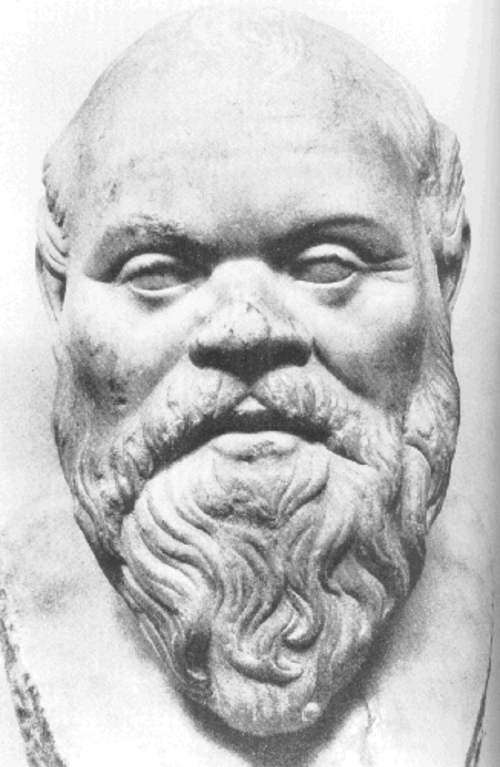
しかし、行動 A が目標 B の達成に向けて行われた場合、目標 B にも目標 C があり、目標 C にも目標があり、このパターンは何かによって無限後退が止まるまで続きます。アリストテレスの解決策は、それ自体が望ましい最高善です。最高善はそれ自体の目標です。最高善は、他の善を達成するために望ましいものではなく、他のすべての「善」は最高善を達成するために望ましいものではありません。これには、通常「幸福」、「幸福感」、「繁栄」、「卓越性」と訳される
エウダイモニアの達成が含まれます。
論理実証主義者は次のように問う。「人生の意味とは何か?」「問うことに何の意味があるのか?」[104] [105]「客観的な価値がないのなら、人生は無意味なのか?」[106]ルートヴィヒ・ヴィトゲンシュタインと論理実証主義者は次のように言った。[要出典]「言語で表現すると、問いは無意味である」。なぜなら、人生において「x の意味」という文は通常、 x の結果、 x の重要性、 x の注目すべき点などを示すため、人生の意味の概念が「x の意味」という文において「x の意味」に等しい場合、その文は再帰的になり、したがって無意味になるか、または生物学的な生命が人生に意味を持つために不可欠であるという事実に言及している可能性がある。
^ a bCharles Christiansen; Carolyn Manville Baum; Julie Bass-Haugen (2005). Occupational Therapy: Performance, Participation, and Well-Being. SLACK Incorporated. ISBN 978-1-55642-530-1.
^ a bEvan Harris Walker (2000). The Physics of Consciousness: The Quantum Mind and the Meaning of Life. Perseus Books. ISBN 978-0-7382-0436-9.
^ a b"Question of the Month: What Is The Meaning of Life?". Philosophy Now. Issue 59. Archived from the original on 24 August 2007. Retrieved 26 July 2007.
^ a bJiddu Krishnamurti (2001). What Are You Doing With Your Life?. Krishnamurti Foundation of America. ISBN 978-1-888004-24-3.
^Puolimatka, Tapio; Airaksinen, Timo (2002). "Education and the Meaning of Life" (PDF). Philosophy of Education. University of Helsinki. Archived from the original (PDF) on 26 September 2007. Retrieved 26 July 2007.
^Stan Van Hooft (2004). Life, Death, and Subjectivity: Moral Sources in Bioethics. Rodopi. ISBN 978-90-420-1912-6.
^Russ Shafer-Landau; Terence Cuneo (2007). Foundations of Ethics: An Anthology. Blackwell Publishing. ISBN 978-1-4051-2951-0.
^E. Diener, J.J. Sapyta, E. Suh (1998). "Subjective Well-Being Is Essential to Well-Being." Psychological Inquiry, Lawrence Erlbaum.
^ a bCsíkszentmihályi, Mihály (1990). Flow: The Psychology of Optimal Experience. New York: Harper and Row. ISBN 0-06-092043-2.
^Peterson, Christopher; Seligman, Martin (2004). Character strengths and virtues: A handbook and classification. Oxford: Oxford University Press. ISBN 0-19-516701-5. "See brief summary".
^Seligman, M.E.P. (2002). Authentic Happiness: Using the New Positive Psychology to Realize Your Potential for Lasting Fulfillment. New York: Free Press. ISBN 0-7432-2297-0. Paperback edition, 2004, Free Press, ISBN 0-7432-2298-9.
^Lu, Jun; Gao, Qin (1 May 2017). "Faith and Happiness in China: Roles of Religious Identity, Beliefs, and Practice". Social Indicators Research. 132 (1): 273–290. doi:10.1007/s11205-016-1372-8. ISSN 1573-0921. S2CID 148091125.
^Rizvi, Mohd Ahsan Kabir; Hossain, Mohammad Zakir (1 October 2017). "Relationship Between Religious Belief and Happiness: A Systematic Literature Review". Journal of Religion and Health. 56 (5): 1561–1582. doi:10.1007/s10943-016-0332-6. ISSN 1573-6571. PMID 27909930. S2CID 1389245.
^Sutin, DAR; Luchetti, M; Aschwanden, D; Stephan, Y; Sesker, AA; Terracciano, A (February 2023). "Sense of meaning and purpose in life and risk of incident dementia: New data and meta-analysis". Archives of Gerontology and Geriatrics. 105: 104847. doi:10.1016/j.archger.2022.104847. ISSN 0167-4943. PMC10015423. PMID 36347158.
^Boyle PA, Buchman AS, Barnes LL, Bennett DA. Effect of a purpose in life on risk of incident Alzheimer's disease and mild cognitive impairment in community-dwelling older persons. Archives of General Psychiatry. 2010;67:304–310.
^Kim E, Sun J, Park N, Kubzansky L, Peterson C. Purpose in life and reduced risk of myocardial infarction among older US adults with coronary heart disease: A two-year follow-up. Journal of Behavioral Medicine. (2):124–133.
^Kim ES, Sun JK, Park N, Peterson C. Purpose in life and reduced incidence of stroke in older adults: The Health and Retirement Study. Journal of Psychosomatic Research. 2013;74(5):427–432.
^Boyle PA, Barnes LL, Buchman AS, Bennett DA. Purpose in life is associated with mortality among community-dwelling older persons. Psychosomatic Medicine. 2009;71:574–579.
^Sutin, Angelina R.; Luchetti, Martina; Stephan, Yannick; Terracciano, Antonio (13 September 2023). "Change in Purpose in Life Before and After Onset of Cognitive Impairment". JAMA Network Open. 6 (9): e2333489. doi:10.1001/jamanetworkopen.2023.33489. ISSN 2574-3805. PMC10500383. PMID 37703016.
^"Five steps to mental wellbeing". nhs.uk. 21 December 2017.
^Dawkins, Richard (2006). The God Delusion. Houghton Mifflin. pp. 99–100. ISBN 978-0-618-68000-9.
^"Complete Archive for Astrobiology Press Release, News Exclusive, News Briefs". Astrobiology Magazine. Archived from the original on 13 October 2008.{{cite web}}: CS1 maint: unfit URL (link)
^"Defining Life, Explaining Emergence". nbi.dk. Archived from the original on 14 March 2012. Retrieved 2 November 2008.
^Griffith J. (2012). "What is the Meaning of Life?". The Book of Real Answers to Everything!. ISBN 978-1-74129-007-3. Retrieved 19 November 2012.
^Schrödinger, Erwin (1944). What is Life?. Cambridge University Press. ISBN 978-0-521-42708-1.
^Lovelock, James (2000). Gaia – a New Look at Life on Earth. Oxford University Press. ISBN 978-0-19-286218-1.
^Avery, John (2003). Information Theory and Evolution. World Scientific. ISBN 978-981-238-399-0.
^O'Dowd, Matt, Ph.D. (11 April 2018). "The Physics of Life (ft. It's Okay to be Smart & PBS Eons!) Space Time". PBS Space Time. Archived from the original on 30 October 2021.{{cite web}}: CS1 maint: multiple names: authors list (link)
^Davison, Paul G. "How to Define Life". The University of North Alabama. Archived from the original on 1 November 2008. Retrieved 17 October 2008.
^Neveu, M.; Kim, H.J.; Benner, S.A. (April 2013). "The "strong" RNA world hypothesis: fifty years old". Astrobiology. 13 (4): 391–403. doi:10.1089/ast.2012.0868. PMID 23551238.
^Cech, T.R. (July 2012). "The RNA worlds in context". Cold Spring Harb Perspect Biol. 4 (7): a006742. doi:10.1101/cshperspect.a006742. PMC3385955. PMID 21441585.
^ a bBernstein, Harris; Byerly, Henry C.; Hopf, Frederick A.; Michod, Richard A.; Vemulapalli, G. Krishna (June 1983). "The Darwinian Dynamic". The Quarterly Review of Biology. 58 (2): 185. doi:10.1086/413216. JSTOR 2828805. S2CID 83956410
^Michod, Richard E. (2000). Darwinian Dynamics: Evolutionary Transitions in Fitness and Individuality. Princeton: Princeton University Press. ISBN 978-0-691-05011-9
^Helge Kragh (1996). Cosmology and Controversy. Princeton University Press. ISBN 978-0-691-00546-1.
^Nikos Prantzos; Stephen Lyle (2000). Our Cosmic Future: Humanity's Fate in the Universe. Cambridge University Press. ISBN 978-0-521-77098-9.
^Rem B. Edwards (2001). What Caused the Big Bang?. Rodopi. ISBN 978-90-420-1407-7.
^Poplawski, Nikodem J. (April 2010). Radial motion into an Einstein-Rosen bridge, Physics Letters B. Vol. 687. pp. 110–113.
^Harvey Whitehouse (2001). The Debated Mind: Evolutionary Psychology Versus Ethnography. Berg Publishers. ISBN 978-1-85973-427-8.
^ a bJeffrey Alan Gray (2004). Consciousness: Creeping Up on the Hard Problem. Oxford University Press. ISBN 978-0-19-852090-0.
^Paul M. Churchland (1989). A Neurocomputational Perspective: The Nature of Mind and the Structure of Science. MIT Press. ISBN 978-0-262-53106-1.
^ a bJohn D. Barrow; Paul C.W. Davies; Charles L. Harper (2004). Science and Ultimate Reality: Quantum Theory, Cosmology and Complexity. Cambridge University Press. ISBN 978-0-521-83113-0.
^Jean Millay; Ruth-Inge Heinze (1999). Multidimensional Mind: Remote Viewing in Hyperspace. North Atlantic Books. ISBN 978-1-55643-306-1.
^McFadden, J. (2002). "Synchronous Firing and Its Influence on the Brain's Electromagnetic Field: Evidence for an Electromagnetic Field Theory of Consciousness". Journal of Consciousness Studies. 9 (4): 23–50. Archived from the original on 18 December 2005.
^R. Buccheri; V. Di Gesù; Metod Saniga (2000). Studies on the Structure of Time: From Physics to Psycho(patho)logy. Springer. ISBN 978-0-306-46439-3.
^Alexandra Bruce (2005). Beyond the Bleep: The Definitive Unauthorized Guide to What the Bleep Do We Know!?. The Disinformation Company. ISBN 978-1-932857-22-1.
^Mae-Wan Ho (1998). The Rainbow and the Worm: The Physics of Organisms. World Scientific. pp. 218–231. ISBN 978-981-02-3427-0.
^Akers, C. (1986). "Methodological Criticisms of Parapsychology, Advances in Parapsychological Research 4". PesquisaPSI. Archived from the original on 24 September 2015. Retrieved 30 July 2007. {{cite journal}}: Cite journal requires |journal= (help)
^Child, I.L. (1987). "Criticism in Experimental Parapsychology, Advances in Parapsychological Research 5". PesquisaPSI. Archived from the original on 27 September 2007. Retrieved 30 July 2007. {{cite journal}}: Cite journal requires |journal= (help)
^Wiseman, Richard; Smith, Matthew; et al. (1996). "Exploring possible sender-to-experimenter acoustic leakage in the PRL autoganzfeld experiments – Psychophysical Research Laboratories". The Journal of Parapsychology. Archived from the original on 9 July 2012. Retrieved 30 July 2007.
^Lobach, E.; Bierman, D. (2004). "The Invisible Gaze: Three Attempts to Replicate Sheldrake's Staring Effects" (PDF). Proceedings of the 47th PA Convention. pp. 77–90. Archived from the original (PDF) on 10 August 2007. Retrieved 30 July 2007.
^Reker, G.T., & Wong, P.T.P. (1988). Aging as an individual process: Towards a theory of personal meaning. In J.E. Birren, & V.L. Bengston (Eds.), Emergent theories of aging (pp. 214–246). New York: Springer.
^Martela, F., & Steger, M.F. (2016). The three meanings of meaning in life: Distinguishing coherence, purpose, and significance. The Journal of Positive Psychology, 11(5), 531–545.
^Wong, P.T.P. (2011). Positive psychology 2.0: Towards a balanced interactive model of the good life. Canadian Psychology, 52(2), 69–81.
^ a bWong, P.T.P. (2012). From Logotherapy to Meaning-Centered Counseling and Therapy. In P.T.P. Wong (Ed.), The Human Quest for Meaning: Theories, Research, and Applications (2nd ed., pp. 619–647). New York: Routledge.
^Metz, Thaddeus (2013). Meaning in Life. Oxford: Oxford University Press. ISBN 978-0-19-959931-8.
^
Haybron, Daniel M. (2013). Happiness: A Very Short Introduction. Oxford: Oxford University Press. ISBN 978-0-19-959060-5.
^Kidd, I., "Cynicism," in The Concise Encyclopedia of Western Philosophy, (eds. J.O. Urmson and Jonathan Rée), Routledge, (2005).
^Long, A.A., "The Socratic Tradition: Diogenes, Crates, and Hellenistic Ethics," in The Cynics: The Cynic Movement in Antiquity and Its Legacy. (eds. Branham and Goulet-Cazé), University of California Press, (1996).
^"Internet Encyclopedia of Philosophy". utm.edu.
^"The Future of Hardcore Hedonism". hedonism.org. Archived from the original on 22 May 2020. Retrieved 30 July 2020.
^Epicurus, "Letter to Menoeceus", contained in Diogenes Laertius, Lives of Eminent Philosophers, Book X.
^"Meaning of Life, The: Early Continental and Analytic Perspectives | Internet Encyclopedia of Philosophy". Retrieved 28 December 2022.
^Rosen, Frederick (2003). Classical Utilitarianism from Hume to Mill. Routledge, p. 28. ISBN 0-415-22094-7. "It was Hume and Bentham who then reasserted most strongly the Epicurean doctrine concerning utility as the basis of justice."
^Mill, John Stuart. On Liberty, ed. Himmelfarb. Penguin Classics, 1974, ed.'s introduction, p. 11.
^ a bJérôme Bindé (2004). The Future of Values: 21st-Century Talks. Berghahn Books. ISBN 978-1-57181-442-5.
^ a b cBernard Reginster (2006). The Affirmation of Life: Nietzsche on Overcoming Nihilism. Harvard University Press. ISBN 978-0-674-02199-0.
^William James (1909). The Meaning of Truth. Prometheus Books. ISBN 978-1-57392-138-1.
^Walter Robert Corti (1976). The Philosophy of William James. Meiner Verlag. ISBN 978-3-7873-0352-6.
^"Philosophy 446: Theistic Perspectives on the Meaning of Life". www.webpages.uidaho.edu. Retrieved 13 July 2022.
^Amy Laura Hall (2002). Kierkegaard and the Treachery of Love. Cambridge University Press. ISBN 978-0-521-89311-4.
^Dale Jacquette (1996). Schopenhauer, Philosophy, and the Arts. Cambridge University Press. ISBN 978-0-521-47388-0.
^Durno Murray (1999). Nietzsche's Affirmative Morality. Walter de Gruyter. ISBN 978-3-11-016601-9.
^Kierkegaard, Søren (1941). The Sickness Unto Death. Princeton University Press. ISBN 978-1-4486-7502-9.
^Kierkegaard, Søren (1941). The Sickness Unto Death. Princeton University Press. ISBN 978-1-4486-7502-9., Part I, Ch. 3.
^ a b c d"Humanist Manifesto I". American Humanist Association. 1933. Archived from the original on 30 July 2007. Retrieved 26 July 2007.
^ a b c"Humanist Manifesto II". American Humanist Association. 1973. Archived from the original on 9 August 2007. Retrieved 1 August 2007.
^ a b c"Humanist Manifesto III". American Humanist Association. 2003. Archived from the original on 9 August 2007. Retrieved 1 August 2007.
^"A Secular Humanist Declaration". Council for Democratic and Secular Humanism (now the Council for Secular Humanism). 1980. Archived from the original on 17 August 2008. Retrieved 1 August 2007.
^Nick Bostrom (2005). "Transhumanist Values". Oxford University. Archived from the original on 1 July 2007. Retrieved 28 July 2007.
^Richard Taylor (1970). "Chapter 5: The Meaning of Life". Good and Evil. Macmillan Publishing Company. ISBN 978-0-02-616690-4.
^Wohlgennant, Rudolph. (1981). "Has the Question about the Meaning of Life any Meaning?" (Chapter 4). In E. Morscher, ed., Philosophie als Wissenschaft.
^McNaughton, David (August 1988). "Section 1.5: Moral Freedom and the Meaning of Life". Moral Vision: An Introduction to Ethics. Oxford: Blackwell Publishing. ISBN 978-0-631-15945-2.
^Russell, Bertrand (1961), Science and Ethics, archived from the original on 14 November 2007.
^"BLENDING AND METAPHOR". markturner.org. Retrieved 28 February 2023.
^Landau, Mark J. (March 2018). "Using Metaphor to Find Meaning in Life". Review of General Psychology. 22 (1): 62–72. doi:10.1037/gpr0000105. PMC5889147. PMID 29632431.
^One Hundred Philosophers: A Guide to the World's Greatest Thinkers Peter J. King.
^Tu, Wei-Ming. Confucian Thought: Selfhood as Creative Transformation. Albany: State University of New York Press, 1985.
^Maimonides' Confrontation with Mysticism, Menachem Kellner, Littman Library. Particularly the parable of the King's Palace in divine worship, in the Guide for the Perplexed.
^Dan Cohn-Sherbok (2003). Judaism: History, Belief, and Practice. Routledge. ISBN 978-0-415-23661-4.
^Abraham Joshua Heschel (2005). Heavenly Torah: As Refracted Through the Generations. Continuum International Publishing Group. ISBN 978-0-8264-0802-0.
^Wilfred Shuchat (2006). The Garden of Eden & the Struggle to Be Human: According to the Midrash Rabbah. Devora Publishing. ISBN 978-1-932687-31-6.
^Randolph L. Braham (1983). Contemporary Views on the Holocaust. Springer. ISBN 978-0-89838-141-2.
^Kabbalah: A Very Short Introduction, Joseph Dan, Oxford University Press, Chapter "Early modern era: Safed spirituality".
^Habad intellectual Hasidic thought: source text Tanya I: 36, 49; secondary text Heaven on Earth, Faitel Levin, Kehot publications.
^"The new Seven Wonders of the World". Hindustan Times. 8 July 2007. Retrieved 6 January 2024.
^Simon Weightman (1998). "Hinduism". In Hinnells, John (ed.). The new Penguin handbook of living religions. Penguin books. ISBN 978-0-14-051480-3.
^ a bMonier Monier-Williams (1974). Brahmanism and Hinduism: Or, Religious Thought and Life in India, as Based on the Veda and Other Sacred Books of the Hindus. Elibron Classics. Adamant Media Corporation. ISBN 978-1-4212-6531-5. Retrieved 8 July 2007.
^For dharma, artha, and kama as "brahmanic householder values" see: Flood (1996), p. 17.
^For the Dharma Śāstras as discussing the "four main goals of life" (dharma, artha, kama, and moksha) see: Hopkins, p. 78.
^For definition of the term पुरुष-अर्थ (puruṣa-artha) as "any of the four principal objects of human life, i.e. धर्म, अर्थ, काम, and मोक्ष" see: Apte, p. 626, Middle column, Compound #1.
^Bhaskarananda, Swami (1994). The Essentials of Hinduism: A Comprehensive Overview of the World's Oldest Religion. Seattle, WA: Viveka Press. ISBN 978-1-884852-02-2.
^Vivekananda, Swami (1987). Complete Works of Swami Vivekananda. Calcutta: Advaita Ashrama. ISBN 978-81-85301-75-4.
^ a bWerner, Karel (1994). "Hinduism". In Hinnells, John (ed.). A Popular Dictionary of Hinduism. Richmond, Surrey: Curzon Press. ISBN 978-0-7007-0279-4.
^See also the Vedic statement "Ayam Ātmā Brahma" (This Ātman is Brahman).
^Gupta, Ravi M. (2007). Gavin Flood; University of Stirling (eds.). The Chaitanya Vaishnava Vedanta of Jiva Gosvami When Knowledge Meets Devotion. Routledge. ISBN 978-0-415-40548-5.
^"Tantric Literature And Gaudiya Vaishnavism". Archived from the original on 25 May 2011.
^Shah, Natubhai. Jainism: The World of Conquerors. Sussex Academic Press, 1998.
^"Viren, Jain" (PDF). RE Today. Archived from the original (PDF) on 14 June 2007. Retrieved 14 June 2007.
^"The Four Noble Truths". Thebigview.com. Archived from the original on 11 November 2009. Retrieved 6 November 2009.
^Arana, Juan Hincapié (1 January 2021). "A SEED IN AMITABHA'S HAND- Pure Land Buddhism's path to peace in this life and the next by Juan Hincapie Arana". Amazon KDP. Retrieved 7 March 2023.
^Jon Mayled (2002). Modern World Religions: Sikhism. Harcourt Heinemann. ISBN 978-0-435-33626-4.
^"The Sikh Coalition". sikhcoalition.org. Archived from the original on 1 July 2020. Retrieved 30 July 2020.
^ a bParrinder, Geoffrey (1971). World Religions: From Ancient History to the Present. United States: Hamlyn Publishing Group Limited. ISBN 978-0-87196-129-7.
^Ming-Dao Deng (1990). Scholar Warrior: An Introduction to the Tao in Everyday Life. HarperCollins. ISBN 978-0-06-250232-2.
^J.W.T. Mason (2002). The Meaning of Shinto. Trafford Publishing. ISBN 978-1-4122-4551-7.
^ a b c d e f g h i j k l m n o p q rDavid Seaman (2005). The Real Meaning of Life. New World Library. ISBN 978-1-57731-514-8.
^ a b cRoger Ellerton, CMC (2013). Live Your Dreams... Let Reality Catch Up: NLP and Common Sense for Coaches, Managers and You. Renewal Technologies. ISBN 978-0-9784452-7-0.
^ a b c d e f g h i jJohn Cook (2007). The Book of Positive Quotations. Fairview Press. ISBN 978-1-57749-169-9.
^Steve Chandler (2005). Reinventing Yourself: How to Become the Person You've Always Wanted to Be. Career Press. ISBN 978-1-56414-817-9.
^Matthew Kelly (2005). The Rhythm of Life: Living Every Day with Passion and Purpose. Simon & Schuster. ISBN 978-0-7432-6510-2.
^Lee, Dong Yul; Park, Sung Hee; Uhlemann, Max R.; Patsult, Philip (June 2000). "What Makes You Happy?: A Comparison of Self-reported Criteria of Happiness Between Two Cultures". Social Indicators Research. 50 (3): 351–362. doi:10.1023/A:1004647517069. S2CID 141773177.
^John Kultgen (1995). Autonomy and Intervention: Parentalism in the Caring Life. Oxford University Press US. ISBN 978-0-19-508531-0.
^ a b c dGeorge Cappannelli; Sedena Cappannelli (2004). Authenticity: Simple Strategies for Greater Meaning and Purpose at Work and at Home. Emmis Books. ISBN 978-1-57860-148-6.
^ a bJohn G. West (2002). Celebrating Middle-Earth: The Lord of the Rings as a Defense of Western Civilization. Inkling Books. ISBN 978-1-58742-012-2.
^Rachel Madorsky (2003). Create Your Own Destiny!: Spiritual Path to Success. Avanty House. ISBN 978-0-9705349-4-1.
^A.C. Grayling. What is Good? The Search for the Best Way to Live. Weidenfeld & Nicolson, 2003.
^Brooks, Mike (8 October 2020). "What Is the Purpose of Life? Why are we here? Here's a reasonable answer". Psychology Today. Retrieved 5 November 2022.
^Lopez, Mike (22 September 1999). "Episode III: Relativism? A Jedi craves not these things". The Michigan Daily. Archived from the original on 11 August 2007. Retrieved 26 July 2007.
^Lovatt, Stephen C. (2007). New Skins for Old Wine. Universal Publishers. ISBN 978-1-58112-960-1. Archived from the original on 14 March 2007.
^ a b"Fantastic Voyage: Live Long Enough to Live Forever". www.fantastic-voyage.net. Retrieved 16 July 2022.
^Bryan Appleyard (2007). How To Live Forever Or Die Trying: On The New Immortality. Simon & Schuster. ISBN 978-0-7432-6868-4.
^Cameron, Donald (2001). The Purpose of Life. Woodhill Publishing. ISBN 978-0-9540291-0-4. Archived from the original on 13 November 2001.
^Nick Lane (2005). Power, Sex, Suicide: Mitochondria and the Meaning of Life. Oxford University Press. ISBN 978-0-19-280481-5.
^Kenneth M. Weiss; Anne V. Buchanan (2004). Genetics and the Logic of Evolution. Wiley-IEEE. ISBN 978-0-471-23805-8.
^Jennifer Ackerman (2001). Chance in the House of Fate: A Natural History of Heredity. Houghton Mifflin Books. ISBN 978-0-618-21909-4.
^Boyce Rensberger (1996). Life Itself: Exploring the Realm of the Living Cell. Oxford University Press. ISBN 978-0-19-512500-9.
^Chris Grau (2005). Philosophers Explore the Matrix. Oxford University Press. ISBN 978-0-19-518107-4.
^John M. Cooper; D. S. Hutchinson (1997). Plato: Complete Works. Hackett Publishing. ISBN 978-0-87220-349-5.
^John E. Findling; Frank W. Thackeray (2001). Events That Changed the World Through the Sixteenth Century. Greenwood Press. ISBN 978-0-313-29079-4.
^Tenzin Gyatso, 14th Dalai Lama (1954). The Meaning of Life: Buddhist Perspectives on Cause and Effect. Doubleday.{{cite book}}: CS1 maint: numeric names: authors list (link)
^Ernest Joseph Simmons (1973). Tolstoy. Routledge. ISBN 978-0-7100-7395-2.
^Richard A. Bowell (2004). The Seven Steps of Spiritual Intelligence: The Practical Pursuit of Purpose, Success and Happiness. Nicholas Brealey Publishing. ISBN 978-1-85788-344-2.
^John C. Gibbs; Karen S. Basinger; Dick Fuller (1992). Moral Maturity: Measuring the Development of Sociomoral Reflection. Lawrence Erlbaum Associates. ISBN 978-0-8058-0425-6.
^ a b cTimothy Tang (2007). Real Answers to The Meaning of Life and Finding Happiness. iUniverse. ISBN 978-0-595-45941-4.
^Tyler T. Roberts (1998). Contesting Spirit: Nietzsche, Affirmation, Religion. Princeton University Press. ISBN 978-0-691-00127-2.
^Costigan, Lucy (2004). What is the Meaning of Your Life: A Journey Towards Ultimate Meaning. iUniverse. ISBN 978-0-595-33880-1.
^Steven L. Jeffers; Harold Ivan Smith (2007). Finding a Sacred Oasis in Grief: A Resource Manual for Pastoral Care. Radcliffe Publishing. ISBN 978-1-84619-181-7.
^David L. Jeffrey (1992). A Dictionary of Biblical Tradition in English Literature. Wm. B. Eerdmans Publishing. ISBN 978-0-8028-3634-2.
^Williams, Dana A. (2005). In the Light of Likeness-Transformed: The Literary Art of Leon Forrest. Ohio State University Press. ISBN 978-0-8142-0994-3.
^Jerry Z. Muller (1997). Conservatism: An Anthology of Social and Political Thought from David Hume to the Present. Princeton University Press. ISBN 978-0-691-03711-0.
^Mary Nash; Bruce Stewart (2002). Spirituality and Social Care: Contributing to Personal and Community Well-being. Jessica Kingsley Publishers. ISBN 978-1-84310-024-9.
^Xinzhong Yao (2000). An Introduction to Confucianism. Cambridge University Press. ISBN 978-0-521-64430-3.
^Bryan S. Turner; Chris Rojek (2001). Society and Culture: Principles of Scarcity and Solidarity. SAGE. ISBN 978-0-7619-7049-1.
^Anil Goonewardene (1994). Buddhist Scriptures. Harcourt Heinemann. ISBN 978-0-435-30355-6.
^ a bLuc Ferry (2002). Man Made God: The Meaning of Life. University of Chicago Press. ISBN 978-0-226-24484-6.
^ a b cEric G. Stephan; R. Wayne Pace (2002). Powerful Leadership: How to Unleash the Potential in Others and Simplify Your Own Life. FT Press. ISBN 978-0-13-066836-3.
^Cumberland, Dan (18 May 2015). "Finding Purpose in Life". TheMeaningMovement. Retrieved 10 August 2015.
^Dominique Moyse Steinberg (2004). The Mutual-Aid Approach to Working with Groups: Helping People Help One Another. Haworth Press. ISBN 978-0-7890-1462-7.
^John Caunt (2002). Boost Your Self-Esteem. Kogan Page. ISBN 978-0-7494-3871-5.
^ a bMichael Joachim Girard (2006). Essential Believing for the Christian Soul. Xulon Press. ISBN 978-1-59781-596-3.
^Jaideva Singh (2003). Vijñanabhairava. Motilal Banarsidass. ISBN 978-81-208-0820-1.
^T.M.P. Mahadevan (1974). Philosophy: Theory and Practice (Proceedings of the International Seminar on World Philosophy). Centre for Advanced Study in Philosophy, University of Madras.
^John T. Scully (2007). The Five Commandments. Trafford Publishing. ISBN 978-1-4251-1910-2.
^John Piper (2006). Desiring God. Multnomah Books. ISBN 978-1-59052-119-9.
^ a bPeter Harrison (2001). The Bible, Protestantism, and the Rise of Natural Science. Cambridge University Press. ISBN 978-0-521-00096-3.
^Matthew 28:18–20.
^
Micah 6:8.
^ a bThomas Patrick Burke (2004). The Major Religions: An Introduction with Texts. Blackwell Publishing. ISBN 978-1-4051-1049-5.
^Book of Mormon: Mosiah 2:17. 1830. And behold, I tell you these things that ye may learn wisdom; that ye may learn that when ye are in the service of your fellow beings ye are only in the service of your God.
^Book of Mormon: Alma 32:32. 1830. For behold, this life is the time for men to prepare to meet God; yea, behold the day of this life is the day for men to perform their labors.
^Holy Bible: Genesis 3:22. And the Lord God said, Behold, the man is become as one of us, to know good and evil...
^Holy Bible: Matthew 5:48. Be ye therefore perfect, even as your Father which is in heaven is perfect.
^Pearl of Great Price: Book of Moses 1:37–39. 1830. Archived from the original on 15 July 2019. Retrieved 16 July 2019. And the Lord God spake unto Moses, saying: ... For behold, this is my work and my glory—to bring to pass the immortality and eternal life of man.
^"Teachings of Presidents of the Church: Lorenzo Snow". Lorenzo Snow. The Church of Jesus Christ of Latter-day Saints. 2011 [1884]. p. 83. As man now is, God once was: As God now is, man may be.{{cite web}}: CS1 maint: others (link)
^Book of Mormon: Alma 29:5. 1830. Yea, and I know that good and evil have come before all men; he that knoweth not good from evil is blameless; but he that knoweth good and evil, to him it is given according to his desires, whether he desireth good or evil, life or death, joy or remorse of conscience.
^Book of Mormon: 2 Nephi 2:25. 1830. Adam fell that men might be; and men are, that they might have joy.
^Pearl of Great Price: Book of Moses 5:11. 1830. And Eve, his wife, heard all these things and was glad, saying: Were it not for our transgression we never should have had seed, and never should have known good and evil, and the joy of our redemption, and the eternal life which God giveth unto all the obedient.
^Holisiajay Quran 51:56. Quranic Arabic Corpus. I created the jinn and humankind only that they might worship Me.
^ a bT.W. Mitchell (1927). Problems in Psychopathology. Harcourt, Brace & Company.
^Ecclesiastes 8.
^Steven Dillon (2006). The Solaris Effect: Art and Artifice in Contemporary American Film. University of Texas Press. ISBN 978-0-292-71345-1.
^Raymond Aron (2000). The Century of Total War. Wisdom Publications. ISBN 978-0-86171-173-4.
^Stewart, John (5 March 2010). "Is this the meaning of life? John Stewart argues that despite the perception that science has stripped the meaning from life, recent developments in evolutionary theory suggest that humans have a central role to play in the future of the universe". The Guardian.
^Man's Search for Meaning, Viktor Frankl. Beacon Press, 2006, ISBN 978-0-8070-1426-4.
^"Monty Python's Completely Useless Web Site: Monty Python's The Meaning of Life: Complete Script". intriguing.com. Archived from the original on 15 December 2007. Retrieved 17 December 2007.
^Terry Burnham (2005). Mean Markets and Lizard Brains: How to Profit from the New Science of Irrationality. John Wiley and Sons. ISBN 978-0-471-71695-2.
^Yolanda Fernandez (2002). In Their Shoes: Examining the Issue of Empathy and Its Place in the Treatment of Offenders. Wood 'N' Barnes Publishing. ISBN 978-1-885473-48-6.
^Adams, Douglas (29 March 1978). The Hitch-Hiker's Guide to the Galaxy (Fit the Fourth) (Audio, Radio). BBC Radio 4. I think the problem such as it was, was too broadly based. You never actually stated what the question was.
^Glenn Yeffeth (2005). The Anthology at the End of the Universe: Leading Science Fiction Authors on Douglas Adams' The Hitchhiker's Guide to the Galaxy. BenBella Books, Inc. ISBN 978-1-932100-56-3.
^William B. Badke (2005). The Hitchhiker's Guide to the Meaning of Everything. Kregel Publications. ISBN 978-0-8254-2069-6.
^Adams, Douglas (12 April 1978). The Hitch-Hiker's Guide to the Galaxy (Fit the Sixth) (Audio, Radio). BBC Radio 4. That's it. Six by nine… forty-two! I always said there was something fundamentally wrong about the universe!
^""Person of Interest" recap (5.13): The sound of my voice". After Ellen. Retrieved 24 August 2019.
^"APA Dictionary of Psychology: existential crisis". dictionary.apa.org.
^ a bAndrews, Mary (April 2016). "The existential crisis". Behavioral Development Bulletin. 21 (1): 104–109. doi:10.1037/bdb0000014.
^ a b cButenaitė, Joana; Sondaitė, Jolanta; Mockus, Antanas (2016). "Components of existential crises: a theoretical analysis". International Journal of Psychology: A Biopsychosocial Approach. 18: 9–27. doi:10.7220/2345-024X.18.1.
^Crowell, Steven (2020). "Existentialism". The Stanford Encyclopedia of Philosophy. Metaphysics Research Lab, Stanford University. Retrieved 14 January 2022.
^Blomme, Robert J. (2013). "Absurdism as a Fundamental Value: Camusian Thoughts on Moral Development in Organisations". International Journal of Management Concepts and Philosophy. 7 (2): 116. doi:10.1504/IJMCP.2013.055720.
^Honderich, Ted, ed. (2005). "absurd, the". The Oxford Companion to Philosophy. Oxford University Press.
^ a b c d e f gYalom, Irvin D. (17 March 2020). "10. Meaninglessness". Existential Psychotherapy. Basic Books. ISBN 978-1-5416-4744-2.
^Greer, Frank (October 1980). "Toward a Developmental View of Adult Crisis: a Re-Examination of Crisis Theory". Journal of Humanistic Psychology. 20 (4): 17–29. doi:10.1177/002216788002000404. ISSN 0022-1678. S2CID 146743538.
^ a bPratt, Alan. "Nihilism". Internet Encyclopedia of Philosophy. Retrieved 25 January 2022.
^ a bYang, William; Staps, Ton; Hijmans, Ellen (2010). "Existential crisis and the awareness of dying: the role of meaning and spirituality". Omega. 61 (1): 53–69. doi:10.2190/OM.61.1.c. ISSN 0030-2228. PMID 20533648. S2CID 22290227.
^Zapffe, Peter Wessel. "The Last Messiah". Philosophy Now (45).
^"nihilism". www.britannica.com. 14 August 2023.
^ a b c d eKahane, Guy (10 June 2022). "Meaningfulness and Importance". In Landau, Iddo (ed.). The Oxford Handbook of Meaning in Life. pp. 92–108. doi:10.1093/oxfordhb/9780190063504.013.6. ISBN 978-0-19-006350-4.
^Nozick, Robert (1981). "6. Philosophy and the meaning of life". Philosophical Explanations. Harvard University Press. ISBN 978-0-674-66479-1.
^ a b c dNozick, Robert (15 December 1990). "16. Importance and Weight". Examined Life: Philosophical Meditations. Simon and Schuster. ISBN 978-0-671-72501-3.
^ a bKahane, Guy (13 August 2021). "Importance, Value, and Causal Impact". Journal of Moral Philosophy. 19 (6): 577–601. doi:10.1163/17455243-20213581. ISSN 1745-5243. S2CID 238678531.
^Benatar, David (5 May 2017). "3. Meaninglessness". The Human Predicament: A Candid Guide to Life's Biggest Questions. Oxford University Press. ISBN 978-0-19-063382-0.
^Benbaji, Yitzhak (2001). "The Moral, the Personal, and the Importance of What We Care about". Philosophy. 76 (297): 415–433. doi:10.1017/S0031819101000365. ISSN 0031-8191. JSTOR 3751779. S2CID 143737564.
^Tugendhat, Ernst (4 October 2016). "2. "Good" and "Important"". Egocentricity and Mysticism: An Anthropological Study. Columbia University Press. ISBN 978-0-231-54293-7.
^Morris, Chris (28 March 2016). "10 wonder drugs that changed our lives forever". CNBC. Retrieved 24 June 2022.
External links
Look up meaning of life in Wiktionary, the free dictionary.
Wikiquote has quotations related to Meaning of life.
Wikiquote has quotations related to Life.
Wikiversity has learning resources about What Matters

.jpg/500px-WHY_AM_I_HERE_(2444125312).jpg)




.jpg/500px-Immanuel_Kant_(portrait).jpg)