
Loading article…
 |
ヴァイシュナヴィズム(サンスクリット語:वैष्णवसम्प्रदायः、ローマ字表記: Vaiṣṇavasampradāyaḥ )は、シヴァ派、シャクティ派、スマート派とともにヒンドゥー教の主要な宗派の一つである。[1]ヴィシュヌを他のすべてのヒンドゥー教の神々 、すなわちマハヴィシュヌを率いる唯一の至高の存在とみなすため、ヴィシュヌ教とも呼ばれる。[2] [3]信者はヴァイシュナヴァ派またはヴァイシュナヴァ派(IAST:Vaiṣṇava )と呼ばれ、クリシュナ教やラーマ教などの分派を含み、それぞれクリシュナとラーマを至高の存在とみなす。[4] [5] ジョンソンとグリムによる2010年の推定によると、ヴィシュヌ派はヒンズー教最大の宗派であり、約6億4100万人、つまりヒンズー教徒の67.6%を占めています。[6] [7]
ヴァイシュナヴィズムの古代の出現についてははっきりしていないが、様々な地域の非ヴェーダ宗教とヴィシュヌ崇拝が融合したものと広く考えられている。それは、特に紀元前7世紀から4世紀にかけて発展したヴァースデーヴァ・クリシュナ[8] [9]とゴーパーラ・クリシュナ[ 8] [10]のバーガヴァタ信仰やナラヤナ[11]など、いくつかの人気のある非ヴェーダ有神論の伝統が融合したものと考えられている。[8] [12]それは紀元後数世紀にヴェーダの神ヴィシュヌと統合され、様々な非ヴェーダの神々を最高神ヴィシュヌの別個の化身として崇拝するアバタール教義を展開してヴァイシュナヴィズム[8] [13] [14]として完成した。ラーマ、クリシュナ、ナーラーヤナ、カルキ、ハリ、ヴィトーバ、ヴェンカテシュヴァラ、シュリナスジ、ランガナータ、ジャガンナートなどの人気のあるアバターの名前はすべて、同じ至高の存在の異なる側面として見られます。[15] [16] [17]
ヴィシュヌ派の伝統は、ヴィシュヌ(多くの場合クリシュナ)の化身への愛情深い信仰で知られ、それが西暦2千年紀のインド亜大陸におけるバクティ運動の広がりの鍵となった。 [18] [19]ヴィシュヌ派には、多数の宗派(サンプラダヤ)の4つのヴェーダーンタ派がある。中世のラーマーヌジャのヴィシシュタドヴァイタ派、マドヴァチャリアのドヴァイタ派、ニンバルカチャリアのドヴァイタドヴァイタ派、ヴァッラバチャリアのシュッダドヴァイタ派である。[20] [ 21]ヴィシュヌ派の伝統は他にもいくつかある。ラーマーナンダ(14世紀)は、現在アジア最大の僧侶グループとなっているラーマ志向の運動を創設した。[22] [23]
ヴァイシュナビズムの主要なテキストには、ヴェーダ、ウパニシャッド、バガヴァッド ギーター、パンチャラトラ(アーガマ) テキスト、ナーラーイラ ディヴィヤ プラバンダム、およびバーガヴァタ プラーナが含まれます。[6] [24] [25] [26]
歴史
起源
北インド


ヴィシュヌ派の古代の出現は不明瞭で、証拠は矛盾しており乏しい。[32]様々な伝統の融合がヴィシュヌ派を生み出した。[13] [14]ヴィシュヌはヴェーダの太陽神であったが、 [9]アグニ、インドラ、その他のヴェーダの神々に比べて言及される頻度が低く、ヴェーダ宗教においてマイナーな地位にあったことを示唆している。[33]
ダンデカールによれば、今日ヴィシュヌ派として理解されているものは、ヴェーダ教に起源を持つものではなく、北インドの第二次都市化の直前、紀元前7世紀から4世紀のヴェーダ時代末期のバラモン教の衰退後に発展したいくつかの民間有神論的伝統の融合から生まれたものである。 [注 1]当初は、ヴリシュニ族の神格化された指導者で、ヴリシュニ族の英雄の一人であるヴァースデーヴァを中心としたヴァスデーヴァ教として形成された。[ 8 ]後に、ヴァースデーヴァは「ヤダヴァ族の神格化された部族の英雄で宗教的指導者」であるクリシュナと融合し、 [8] [9]バガヴァーン・ヴァースデーヴァ・クリシュナという融合神を形成したが、これはヴリシュニ族とヤダヴァ族の密接な関係によるものである。 [8]その後、 4世紀にアビラの牛飼いコミュニティのゴパーラ・クリシュナ教団との合併が起こりました。 [8]ゴパーラ・クリシュナの性格は、しばしば非ヴェーダ的であると考えられています。[34]ダンデカールによると、このような合併により、異端のシュラマナ運動と正統なヴェーダ宗教の間でクリシュナ教の立場が強化されました。 [8]ダンデカールによると、「大クリシュナ教」はその後、正統派の要素へのアピールを高めるために、リグヴェーダのヴィシュヌを最高神として採用しました。[8]
クロスターマイヤーによれば、ヴィシュヌ派は紀元前数世紀から紀元後数世紀にかけて、ヴリシュニ派の英雄のリーダーである英雄ヴァースデーヴァの信仰とともに始まった。その後、この信仰はヤダヴァの英雄クリシュナと融合し、さらに数世紀後にはゴパーラ派の「神の子」バラ・クリシュナと融合した。[注 2]クロスターマイヤーによれば、「いくつかの書物では、クリシュナはバガヴァタ宗教の創始者であり最初の教師として紹介されている」 。[35]ダラルによれば、「バガヴァタという用語はヴェーダの神バガの概念から発展したようで、当初はバラモン教の神々から独立した一神教の宗派だったようだ」。[36]
クリシュナの伝統の発展に続いて、これらの非ヴェーダの伝統とマハーバーラタの聖典との融合が起こり、正統派に受け入れられるためにヴェーダ教と結びついた。リグ・ヴェーダのヴィシュヌは非ヴェーダのクリシュナ教に同化され、最高神と同等のものとなった。[9]ヴィシュヌのアヴァターラの一人としてクリシュナが登場したのは、紀元前数世紀のサンスクリット叙事詩の時代まで遡る。フリードヘルム・ハーディによれば、当初はクリシュナ教の聖典であったバガヴァッド・ギーターは、クリシュナ教の重要なテキストとしてマハーバーラタに組み込まれた。[4] [37]
最後に、ナラヤナ崇拝者も含まれ、これによりヴィシュヌ派はさらにバラモン化されました。[38]ナラ・ナラヤナ崇拝者はヒンドゥークシュ山脈の北の尾根であるバダリに起源を持ち、プルサ・ナラヤナとしてヴェーダ正統派に吸収された可能性があります。[38]プルサ・ナラヤナは後にアルジュナとクリシュナに変わった可能性があります。[38]
後期ヴェーダ文献(紀元前1000年から500年頃)では、形而上学的ブラフマンの概念が顕著になり、ヴィシュヌ派の伝統ではヴィシュヌがブラフマンと同一視され、シャイヴァ派とシャクティ派ではそれぞれシヴァとデヴィがブラフマンであるとみなされた。[39]
この複雑な歴史は、ヴィシュヌ派の2つの主要な歴史的宗派に反映されています。バガヴァット派はヴァースデーヴァ・クリシュナを崇拝し、[40]バラモン教のヴィシュヌ派の信奉者であり、パチャラトリン派はナラヤナを創始者とみなし、タントラ教のヴィシュヌ派の信奉者です。[38] [41]
南インド
S. クリシュナスワミ・アイヤンガーは、ヴィシュヌ派のアルヴァール朝の存続期間は12世紀前半であり、彼らの著作は北部でバラモン教とヒンズー教が復興した頃に栄え、ヴィシュヌ派は紀元1世紀頃には南部に浸透していた可能性があると述べている。[42]また、南部での伝統の始まりを紀元3世紀とする世俗文学も存在する。 タミル文学の学者であるUV スワミナサン・アイヤールは、サンガム時代の古代作品であるパリパタルを出版した。この作品には、クリシュナとバララーマへの言及を含む、ヴィシュヌを讃える7つの詩が含まれている。アイヤンガーはサンガムの古い詩のいくつかでマウリヤ朝による南部の侵略に言及し、北部の征服に対して執拗に構築され維持された反対勢力には宗教的要素があった可能性があると示唆した。南部は、仏教の侵略に対して、仏教皇帝アショーカの説得力のある雄弁さと粘り強い努力によって正統なバラモン教を擁護した。この時期のタミル文学には、南部に連れて来られ定住したバラモンの植民地への言及があちこちに見られ、この古風な文学の全作品は、その文学の形成において間違いなくかなりのバラモンの影響を示している。[43]
南のヴィシュヌ派は、北のナラディヤ・パンチャラトラとバガヴァタに基づいて教えを説き、清浄な生活、高い道徳心、唯一の神への崇拝と忠誠を強調した。シャンカラの一元論は知識階級に大いに評価されたが、大衆は次第にヴィシュヌの信奉者になっていった。ヴィシュヌ派は、ヒンズー教徒の日常生活のためにスムリティとプラーナで規定された手の込んだ儀式、式典、ヴラタ、断食、祝宴、そして報酬と利益のために僧侶であるバラモン階級が命じた太陽、月、グラハまたは惑星などのさまざまな神々の崇拝を禁止した。ウパニシャッドのナラヤナ以外の神々の崇拝は禁止し、ナラヤナはsrsti(創造)、sthiti(存在)、pralaya (破壊)の根本原因とみなされた。アドヴァイタとヴィシシュタ・アドヴァイタの付随哲学は、下層階級の人々を実践的なヒンズー教の枠内に導き、神を知り、ムクティ(救済)を得る権利と特権を彼らに与えた。[要出典]

タミラカムのパッラヴァ朝はヴィシュヌ派を後援した。マヘンドラ・ヴァルマンはヴィシュヌとシヴァの神殿を建て、彼の石窟寺院のいくつかにはブラフマー、ヴィシュヌ、シヴァの神殿が展示されている。直後に続いたパッラヴァ朝の支配時代には、ヴィシュヌ派とシヴァ派の両方が栄え、反乱を起こした仏教徒やジャイナ教徒と戦った。[ 44]パッラヴァ朝は、ティルマラのヴェンカテーシュワラ寺院に土地と富を寄進した最初の王朝でもあり、この寺院はすぐに南インドで最も崇拝される宗教的場所となった。[要出典]シュリー・ヴィシュヌヴァのアーチャーリャ・ラーマーヌジャは、ホイサラ王ヴィシュヌヴァルダナ(元々はビッティデヴァと呼ばれていた)をジャイナ教からヴィシュヌ派に改宗させ、カルナータカ州での信仰を強めたとされている。[45]チャルキヤ朝とそのライバルであるパッラヴァ朝は、ヴィシュヌ派を神の王権の主張として用いたようで、一方はヴィシュヌの地上の化身であると自称し、他方はすぐにシヴァ派を自分たちの好む伝統として採用し、どちらも他方の神をあまり重視しませんでした。[46]ラーマーヌジャのシュリー・ヴィシュヌ派は南部で勢力を振るい、ヴァダカライ派はヴェーダーンタ哲学に従い、テンカライ派はプラバンダムとして知られる地方の典礼に従いました。[47]
ハーディによれば、[注 3]クリシュナの伝統を北の伝統に帰属させる傾向があるにもかかわらず、初期の「南方クリシュナ教」の証拠がある。[48]南インドの文献は、後の北インドの文献や図像に遍在するクリシュナとそのゴーピーの仲間のサンスクリットの伝統と密接な類似点を示している。[50]タミル文化の初期の著作、例えばマニメカライやチラッパティカラムは、クリシュナ、その兄弟、そしてお気に入りの女性の仲間を同様の言葉で表現している。[50]ハーディは、サンスクリットのバガヴァタ・プラーナは、本質的にタミルのアルヴァルのバクティのサンスクリット語「翻訳」であると主張する。[51]
南インドのマール(ペルマル)への信仰はクリシュナ教の初期の形態である可能性がある。なぜなら、マールは、ヴィシュヌの要素をいくらか持ち、クリシュナによく似た神として登場するからである。[52]アルヴァールは、その名前を「没頭した」と訳すことができ、ペルマルの信者であった。彼らは、南インドのヴィシュヌ派の聖典を、彼らの最も重要な典礼であるナアライラ・ディヴィヤ・プラバンダムで成文化した。これは、ナタムニによる編纂物として10世紀に遡る。[53]彼らの詩は、マールのヴィシュヌ派、そしてしばしばクリシュナ派への明確な志向を示している。しかし、彼らはアバターの概念に基づいてクリシュナとヴィシュヌを区別していない。[52]しかし、ハーディによれば、マールやマヨンを指すときは、「クリシュナ教」ではなく「マヨン主義」という用語を使用するべきである。[48]初期のアルヴァル人はヴィシュヌへの信仰を称賛するが、同時にシヴァへの信仰をかなり同情的に捉えており、シヴァ神を尊重するよう目に見える形で努力している。最初期のアルヴァル人はシヴァとヴィシュヌを一体として描写するほどであるが、彼らはシヴァとヴィシュヌが一体となった姿をヴィシュヌとして認めている。[54]
シュリーランガムは、600エーカーの敷地を誇る世界最大の寺院で、[55]ヴィシュヌ神の一形態であるランガナータスワーミに捧げられています。伝説によると、ランカ島へ向かう途中、ランガナータの偶像を運んでいたヴィビーシャナ王は、像を地面に置いてしばらく休んだそうです。出発の準備をした時、彼は偶像が地面に張り付いていることに気付きました。そこで彼は小さな社を建て、それがカーヴェーリ川のほとりにランガナータ神の住まいとして人気を博しました。大きな壁、マンダパ、1000本の柱のあるホールを備えた寺院の敷地全体は、14世紀から17世紀にかけて300年かけて建設されました。[要出典]
グプタ朝
,_Gupta_period,_mid-5th_century_AD._Boston_Museum.jpg/500px-The_God_Vishnu_in_Three_Incarnations._Northern_India_(Mathura),_Gupta_period,_mid-5th_century_AD._Boston_Museum.jpg)
チャンドラグプタ2世(ヴィクラマーディティヤ)(375-413年)に始まるグプタ朝の王のほとんどは、パラマ・バガヴァタまたはバガヴァタ・ヴァイ シュナヴァとして知られていました。[57] [38]しかし、フナ族の侵略、特に西暦500年頃のアルチョン・フン族の侵略の後、グプタ朝は衰退して分裂し、最終的には完全に崩壊し、その結果、熱心に推進していたヴァイシュナヴァ教の信用が失墜しました。[58]中央インドと北インドで新たに台頭したアウリカラ族、マウカリ族、マイトラカ族、カラクル族、ヴァルダナ族などの地域勢力は、代わりにサイヴァ教を採用することを好み、シヴァ崇拝とその権力イデオロギーの発展に大きな刺激を与えました。[58]ヴァイシュナヴィズムは、主にこれらの出来事の影響を受けなかった南インドとカシミールの地域では根強く残っていました。[58]
中世初期
グプタ朝の時代以降、クリシュナ教はヴィシュヌ派の大きな潮流となり、[35]ヴィシュヌ派は様々な宗派や分派に発展し、そのほとんどは南インドの宗教性に強く影響を受けたバクティを強調した。 [38]現代の学問では、ラーダー・クリシュナ崇拝を唱え、その教義が(ドヴァイタ・アドヴァイタ)として知られるようになったニンバルカチャリヤ(紀元7世紀頃)がこの時代に存在したとされている。[59]
10世紀のヴィシュヌ派はヴェーダーンタの議論を採用し始めたが、これはおそらくアドヴァイタ・ヴェーダーンタより前のヴィシュヌ中心のヴェーダーンタの古い伝統を継続したものと思われる。ナタムニ、ヤムナチャリヤ、ラーマーヌジャなど初期のヴィシュヌ派の学者の多くは、アーディ・シャンカラのアドヴァイタの解釈に異議を唱え、代わりにヴィシュヌのバクティの考えを提唱した。[60] [61]ヴィシュヌ派は、7世紀から10世紀にかけて、主にシヴァ派が住むタミル・ナードゥ州で、12人の聖者、アルヴァールによって栄え た。彼らは信仰の賛美歌でこの宗派を一般の人々に広めた。アルヴァールが訪れたり創設した寺院は現在、ディヴィヤ・デサムとして知られている。タミル語でヴィシュヌとクリシュナを讃える彼らの詩は、総じてナーライラ・ディヴィヤ・プラバンダ(4000の神聖な詩節)として知られている。[62] [63]
中世後期

中世後期ヒンドゥー教のバクティ運動は7世紀に始まったが、12世紀以降急速に拡大した。[64]それは、バガヴァタ・プラーナなどのプラーナ文学、詩的作品、そして多くの学術的なバシャやサンヒターによって支えられた。[65] [66] [67]
この時期には、ラマヌジャチャリヤ、ヴェーダンタデシカ、マドヴァチャリヤ、ヴァッラバチャリヤなどの学者の影響下で、ヴァシュナビズム サンプラダヤ(宗派または共同体)が成長しました。[68]マナヴァラ・マムニガル、ナムデヴ、ラマナンダ、サンカルデヴ、スルダス、トゥルシーダス、エクナス、ティアガラジャ、チャイタンニャ・マハープラブ、その他多くのバクティ派の詩人や教師がヴァイシュナビズムの拡大に影響を与えた。ミラバイもこの特定の運動に参加しました。[69] [70] [71]これらの学者は、シャンカラのアドヴァイタ・ヴェーダーンタの教義、特に12世紀のラーマーヌジャ、13世紀のヴェーダーンタ・デーシカとマドゥヴァを否定し、アルヴァール(シュリー・ヴァイシュナヴァ)の信仰の伝統に基づいて神学を構築しました。 )。[72]
北インドと東インドでは、ヴィシュヌ派が中世後期の様々な運動を生み出した。14世紀にはラマナンダ、 15世紀にはサンカラデーヴァ、 16世紀にはヴァッラバとチャイタニヤである。歴史的には、 16世紀初頭にサンニャーシになった後、クリシュナの聖なる名前を集団で唱える運動を創始したのはチャイタニヤ・マハプラブであった。[73]
現代
20世紀にインドから広まったヴィシュヌ派は、現在では北米、ヨーロッパ、アフリカ、ロシア、南米など世界中の多くの場所で実践されています。西洋へのヴィシュヌ派布教の先駆者は、ベンガルのヴィシュヌ派を英語で初めて完全版で扱った『Sree Krishna—the Lord of Love 』の著者であるサンニャーシのババ・プレマナンダ・バラティ(1858年 - 1914年)です。彼は1902年にニューヨーク市に「クリシュナ・サマージ」協会を設立し、ロサンゼルスに寺院を建てました。[74]ヴィシュヌ派の世界的な地位は、1966年にACバクティヴェーダーンタ・スワミ・プラブパーダによって設立されたISKCON運動の成長によるところが大きいです。 [75] [76] [77]
信念
多種多様な有神論
ヴィシュヌ派はヴィシュヌとその化身への信仰を中心としている。シュヴァイクによれば、ヴィシュヌ派は「多形一神教、すなわち、唯一の統一神性の多くの形態(アナンタルパ)を認める神学」であり、ヴィシュヌは多くの形態をとっており、一つの本来の神には多くの形態がある。 [78]対照的に、沖田は、ヴィシュヌ派内の異なる宗派は、有神論、汎神論、汎神論として最もよく説明できると述べている。[79]
マドゥヴァチャルヤが始めたヴィシュヌ派のサンプラダヤは、ヴィシュヌ(クリシュナ)が全能、全知、全慈悲であるとする一神教の伝統である。[80]対照的に、ラーマーヌジャに関連するシュリー・ヴィシュヌ派のサンプラダヤには一神教の要素があるが、女神ラクシュミとヴィシュヌ神が分離不可能な同等の神であるなど、いくつかの点で異なっている。[81]一部の学者によると、シュリー・ヴィシュヌ派は「超越と内在」の神学で、一神教ではなく汎神論を強調しており、[82] [83]神は宇宙のあらゆるものに浸透し、経験的現実のすべてが神の体である。[84] [85]ヴァッラバチャルヤに関連するヴィシュヌ派のサンプラダヤは、他のヴィシュヌ派の伝統とは対照的に、汎神論の一形態である。[86]シュヴァイクによれば、ガウディヤ・ヴィシュヌ派のチャイタニヤの伝統は、女神ラダと神クリシュナの両方が同時に最高神であるため、多形的二一神教に近い。[87]
ヴィシュヌ派の教義にはアバター(化身)の教義があり、ヴィシュヌは宇宙の秩序を正しバランスを取り戻すために、さまざまな姿で何度も化身する。[88] [89] [90]これらのアバターには、ナラヤナ、ヴァスデーヴァ、ラーマ、クリシュナなどがあり、それぞれが優位性を与えられた神聖な人物の名前であり、ヴィシュヌ派の関連する各伝統ではそれぞれが別個であると信じている。[91]
ヴィシュヌ教とクリシュナ教
「クリシュナ教」( Kṛṣṇaism )という用語は、独立した伝統の大きなグループを説明するために使用されてきました。ヴァイシュナヴィズム内のサンプラダヤはクリシュナを最高神と見なしましたが、「ヴィシュヌ教」は、クリシュナを超越した至高の存在ではなく、アバタール(化身)とするヴィシュヌに焦点を当てた宗派を指すために使用される場合があります。 [4] [5]ヴィシュヌ教は、ヴィシュヌを至高の存在として信じています。他のすべてのヴァイシュナヴァ派がクリシュナをヴィシュヌのアバタールの1つとして認識しているのに対し、クリシュナ派だけが至高の存在(スヴァヤン・バガヴァン、ブラフマン、トリムールティの源)をクリシュナとその姿(ラーダー・クリシュナ、ヴィトーバなど)と同一視し、それらはヴィシュヌとして顕現しました。これがラーマイ教、ラダイ教、シータ教などのグループとの違いです。 [4] [92]そのため、クリシュナ教は、哲学的なヒンドゥー教を大衆にアピールする初期の試みの1つであると考えられています。[93]一般的な言葉では、クリシュナ教という用語はあまり使用されていません。多くの人が、ヴィシュヌ、より具体的にはヴィシュヌ教に関連していると思われるより広い用語「ヴィシュヌ教」を好むためです。

ヴィシュヌ
ヴィシュヌ中心の宗派では、ヴィシュヌあるいはナラヤナが唯一の至高神である。ヴィシュヌの至高性に対する信仰は、プラーナ文献に列挙されているヴィシュヌの多くのアバター(化身)に基づいており、ガネーシャ、スーリヤ、ドゥルガーなどの他のヒンズー教の神とは異なる。シュリ・ヴァイシュナヴァ・サンプラダヤの信者にとって、「ヴィシュヌ神は至高の存在であり、すべての存在の根源である」。[94]彼の配偶者であるラクシュミは、ヴィシュヌと彼の信者の間の調停者として行動し、彼女の恩寵と許しを与えるために介入すると説明されている。 [95] [96]ヴェーダーンタ・デシカによると 、至高の神の夫婦であるラクシュミ・ナラヤナは、宇宙全体に浸透し超越しており、宇宙は彼らの体であると言われている。彼らは物質的および精神的にすべての生命を支えると説明されている。[97]このように、ラクシュミは創造の至高の母であり、ナラヤナは創造の至高の父であると考えられています。[98]
クリシュナ

ニンバルカ・サンプラダヤ(西暦7世紀頃にニンバルカによって開発された最初のクリシュナ派サンプラダヤ)、エカサラナ・ダルマ、ガウディヤ・ヴァイシュナ主義、マハヌバヴァ、ルドラ・サンプラダヤ(プシュティマルグ)、ヴァイシュナヴァ・サハジヤ、ワルカリなどのヴァイシュナビズム伝統のクリシュナ主義グループでは、信者がいる。クリシュナを神の唯一至高の姿であり、すべてのアバターの源であるスヴァヤム・バガヴァンとして崇拝します。[4] [100]
クリシュナ教はバガヴァティズムとも呼ばれる。おそらく最も初期のクリシュナ運動は、クリシュナとヴァスデーヴァを信仰するバガヴァティズム(紀元前2世紀頃)であったと思われる[40]。これはバガヴァタ・プラーナにちなんで名付けられ、クリシュナは「バガヴァン自身」であり、ヴィシュヌ、ナラヤナ、プルシャ、イシュヴァラ、ハリ、ヴァスデーヴァ、ジャナルダナなど、他のすべての存在を従属させると主張している。 [101]
クリシュナは、しばしば黒い肌の人物の姿をしていると描写され、フルートを演奏する若い牛飼いの少年として、またはバガヴァッド・ギーターでは哲学的な指示や指導を与える若い王子として描かれている。[102]
クリシュナはヒンドゥー教の他の多くの伝統でも崇拝されている。クリシュナと彼に関連する物語は、ヒンドゥー教のさまざまな哲学的および神学的伝統の広い範囲に現れ、神は信者の特定の欲求に応じてさまざまな形で現れると信じられている。これらの形には、伝統的なヴィシュヌ派のテキストに記述されているクリシュナのさまざまなアヴァターラが含まれますが、これらに限定されません。実際、スヴァヤム バガヴァンのさまざまな展開は数え切れないほどあり、どの宗教コミュニティの限られた聖典でも完全に記述することはできないと言われています。[103] [104]ヒンドゥー教の聖典の多くは、特定の伝統の懸念を反映して細部が異なることがありますが、クリシュナに対する見方のいくつかの核心的な特徴はすべての人に共有されています。[105]
ラダ・クリシュナ

ラーダー・クリシュナは、神の女性的側面と男性的側面の両方の組み合わせです。クリシュナは、ゴーディヤ・ヴィシュヌ派の神学ではしばしばSvayam bhagavanと呼ばれ、ラーダーはクリシュナの内なる力であり、至高の愛人です。[106]クリシュナとともに、ラーダーは至高の女神として認められています。ラーダーはクリシュナを愛で支配していると言われているからです。[107]クリシュナは世界を魅了しますが、ラーダーはクリシュナさえも魅了すると信じられています。したがって、彼女はすべての至高の女神です。[108] [109]ラーダーとクリシュナは、それぞれラクシュミーとヴィシュヌの化身です。インドのブラジと呼ばれる地域では、ラーダーとクリシュナは一緒に崇拝されており、両者を分離することは考えられません。また、一部のコミュニティでは、ラーダーにさらに信仰的な重要性を与えています。[110]
この神の崇拝については、かなり古い記録があるが、ジャヤデーヴァが12世紀に詩『ギータ・ゴーヴィンダ』を書いて以来、神聖なるクリシュナとその配偶者であるラーダーとの精神的な恋愛というテーマがインド全土で祝われるようになった。[111]クリシュナはラーダーを探すためにラサ・ダンスの「輪」を離れたと信じられている。チャイタニヤ学派は、ラーダーの名前と正体は、この出来事を描写するバガヴァタ・プラーナの詩の中で明らかにされ、また隠されていると信じている。[112]また、ラーダーはただの牛飼いの乙女ではなく、ラサ・ダンスに参加するすべてのゴーピー、つまり神聖な人格の起源であると信じられている。[113]
アバターs
バガヴァタ・プラーナによれば、ヴィシュヌにはラーマとクリシュナを含めて22のアヴァターラがいる。ダシャヴァタラは後世に生まれた概念である。[38]
ヴュハs
パンカラトリン派は、神にはヴァスデーヴァ、サンカルサナ、プラデュムナ、アニルッダという4つの顕現(ヴュハ)があるとするヴュハ教義に従っています。これら4つの顕現は「至高の自己、個々の自己、心、そしてエゴイズム」を表しています。[38]
法の回復
ヴィシュヌ派の神学は、ヴィシュヌを守り手または維持者としてのアバター(化身)の概念を発展させてきました。ヴィシュヌ派は、ヴィシュヌのアバターは善に力を与え、悪と戦うために降臨し、それによってダルマを回復すると主張しています。これは、古代のバガヴァッド・ギーターの一節に次のように反映されています。[114] [115]
正義が衰え、不正義が増すたびに、私は自らを遣わす。
善を守り、悪を滅ぼし、
正義を確立するために、
私は代々存在する。— 『バガヴァッド・ギーター』4.7–8 [116] [117]
バガヴァタ・プラーナやパンチャラトラに述べられているようなヴィシュヌ派の神学では、宇宙が危機に陥ったときはいつでも、典型的には悪が強くなり宇宙のバランスを崩したために、ヴィシュヌの化身が物質的な形で現れ、悪とその根源を破壊し、常に存在する善と悪の力の間の宇宙のバランスを回復する。[114] [90]ヒンドゥー教のヴィシュヌ派の伝統におけるヴィシュヌの最も有名で称賛されている化身は、クリシュナ、ラーマ、ナラヤナ、ヴァスデーヴァである。これらの名前には、関連する広範な文学があり、それぞれに独自の特徴、伝説、および関連する芸術がある。[114]たとえば、マハーバーラタにはクリシュナが含まれ、ラーマーヤナにはラーマが含まれる。[16]
テキスト
ヴェーダ、ウパニシャッド、バガヴァッド・ギーター、アガマは、ヴィシュヌ派の聖典である。[26] [118] [119]バガヴァタ・プラーナは、広く崇拝され称賛されているテキストであり、ドミニク・グドールなどの少数の学者は、その一部が聖典に含まれているとしている。[118]この伝統における他の重要なテキストには、マハーバーラタやラーマーヤナ、およびさまざまなサンプラダヤ(ヴィシュヌ派内の宗派)によるテキストがある。多くのヴィシュヌ派の伝統では、クリシュナはバガヴァッド・ギーターとバガヴァタ・プラーナに教えがある教師として受け入れられている。[35] [注 2]
聖書
ヴェーダとウパニシャッド
ヴィシュヌ派は、他のヒンドゥー教の伝統と同様に、ヴェーダを聖典の権威とみなしている。[120] [121]ヴィシュヌ派内のすべての伝統は、 4つのヴェーダに組み込まれたブラフマナ、アーラニヤカ、ウパニシャッドをシュルティとみなしているが、マリアスーサイ・ダヴァモニーによれば、すべての叙事詩、プラーナ、およびそのサンヒターを含むスムリティは、ヴェーダのテキストの「解釈的または解説的な文学」とみなされている。[121]
ウパニシャッドとブラフマー・スートラを解釈したヒンドゥー哲学のヴェーダーンタ学派は、ヴィシュヌ派の哲学的基礎を提供した。ヴェーダのテキストの言語が古く時代遅れだったため、解釈は学派によって異なり、ヴィシュヌ派の宗派(サンプラダヤ)間で相違が生じている。[122]これらの解釈は、マドヴァチャリヤの二元論的(ドヴァイタ)ヴェーダーンタから、マドゥスダーナ・サラスワティの非二元論的(アドヴァイタ)ヴェーダーンタまで、ヴィシュヌ派内にさまざまな伝統を生み出した。[124]
ヴィシュヌ派ウパニシャッドにおける価値論
慈善や贈り物はこの世の武具であり、
すべての生き物は他者からの贈り物によって生きています。
贈り物を通して見知らぬ人同士が友達になり、
贈り物を通して困難を回避します。
贈り物と与えることで、すべては成り立ちます。
だからこそ、慈善は最高のものなのです。
—マハナラーヤナ ウパニシャッド63.6 [125] [126]
ヴィシュヌ派ウパニシャッド
古代の主要ウパニシャッドへの敬意と解釈分析に加えて、ヴァイシュナヴァ派に影響を受けた学者たちは、ヴィシュヌの化身に焦点を当てた14のウパニシャッドを著し、それらはヴァイシュナヴァ・ウパニシャッドと呼ばれています。[127]これらは、ヒンドゥー文学のムクティカ・ウパニシャッド集成における95のマイナー・ウパニシャッドの一部であると考えられています。[127] [128]これらのうち最も古いものは紀元前1千年紀に、最も新しいものは中世後期に作られたと考えられます。[129] [130] [131]
ヴァイシュナヴァ派ウパニシャッドはすべて、古代の主要ウパニシャッドを直接参照または引用しているか、またはそれらの中のいくつかの考えを取り入れています。最も引用されているテキストには、ブリハダラニヤカ・ウパニシャッド、チャンドグヤ・ウパニシャッド、カタ・ウパニシャッド、イシャ・ウパニシャッド、ムンダカ・ウパニシャッド、タイッティリーヤ・ウパニシャッドなどがあります。[132] [133]場合によっては、リグ・ヴェーダとヤジュル・ヴェーダのブラフマナ層とアーラニヤカ層からの断片を引用しています。[132]
ヴァイシュナヴァ・ウパニシャッドは、バクティ派の有神論的テーマから、アドヴァイタ、ヨーガ、シャイヴァ、シャクティのテーマを取り入れたヴァイシュナヴァ派の思想の統合まで、多様な思想を提示している。[132] [134]
バガヴァッド・ギーター
バガヴァッド・ギーターは、ヴィシュヌ派、特にクリシュナの文脈において中心的なテキストです。[149] [150] [151]バガヴァッド・ギーターは、ヴィシュヌ派だけでなく、ヒンドゥー教の他の伝統にとっても重要な聖典です。[152] [153]これは、ヒンドゥー哲学のヴェーダーンタ学派の3つの重要なテキストの1つであり、すべてのヴィシュヌ派のサンプラダヤの中心となっています。[152] [154]
バガヴァッド・ギーターはクリシュナとアルジュナの対話であり、精神的解放への代替手段としてバクティ、ジニャーナ、カルマ・ヨーガを提示し、選択は個人に委ねられている。[152]このテキストはダルマについて、そして行為の成果を渇望することなく義務としてダルマを追求することが、解放への精神的道の一形態であると論じている。 [155]クルーニーとスチュワートによれば、このテキストはヴィシュヌ神学の基礎を簡潔にまとめたもので、全宇宙はヴィシュヌの中に存在し、人生と生活のあらゆる側面は神聖な秩序であるだけでなく神性そのものである。[156]バガヴァッド・ギーターにおけるバクティとは共有行為であり、内外の精神性に対する深く個人的な認識である。[156]
バガヴァッド・ギーターは古典的なウパニシャッドとヴェーダ哲学の要約であり、バガヴァタや関連するヴィシュヌ派の伝統と密接に関連しています。 [157] [158]このテキストは、中世のマドヴァチャリアの二元論ヴェーダーンタ学派やラーマーヌジャのヴィシシュタ・アドヴァイタ・ヴェーダーンタ学派、また20世紀のヴィシュヌ派運動である聖恩ACバクティヴェーダーンタ・スワミ・プラブパーダによるハレ・クリシュナ運動などによって注釈が付けられ、さまざまなヴィシュヌ派に統合されてきました。[159]
ヴィシュヌ派アガマ
パンチャラトラ・サンヒター(文字通り、5つの夜)は、ヴィシュヌがナラヤナとヴァスデーヴァとして表現されているテキストのジャンルであり、このジャンルのヴァイシュナヴァテキストはヴァイシュナヴァ・アガマとしても知られています。[24] [25]その教義は、マハーバーラタのナラヤニヤセクション内の物語に埋め込まれています。[160]ナラヤナは、宇宙全体に浸透し、すべての宗教の教師であると主張される究極の不変の真実と現実(ブラフマン)として表現されています。[160] [161]
パンチャラトラ文献は、絶対的現実(ブラフマン)がどのようにして物質的な形態で常に変化する現実(ヴィシュヌのアバター)として顕現するかを説明するために、ヴュハスのアバター理論を提示している。 [160] [162]パンチャラトラ文献によれば、ヴァスデーヴァは一連の化身を経て、彼の新しいアバターが現れる。このアバター形成理論は、ヒンドゥー哲学のサーンキヤ学派によって開発された物質と生命の進化の理論を融合的に統合している。[163] [162]これらの文献はまた、宇宙論、崇拝の方法、タントラ、ヨガ、およびヴィシュヌ派寺院(マンディラ・ニルマナ)の設計と建築の背後にある原則を提示している。[163] [164] [165]これらの文献は、特に南インドの多くのヴィシュヌ派コミュニティの宗教心と寺院の儀式を導いてきた。[163]
パンチャラトラ・サンヒターはタントラ的な側面が強く、シュリー・ヴィシュヌ派などのタントラ系ヴィシュヌ派の伝統の基礎となっている。[166] [167]これらは、より古いヴェーダの文献、儀式の文法や手順を重視するバガヴァタ派などのヴェーダ系ヴィシュヌ派の伝統を補完し、また競合している。[166] [165]実践は様々であるが、パンチャラトラの哲学は主にウパニシャッドに由来しており、その思想はヴェーダの概念を統合し、ヴェーダの教えを取り入れている。[168] [169]
ヴィシュヌ派の宗教テキストのこのジャンルで最も研究されている3つのテキストは、パウシュカラ・サンヒター、サットヴァタ・サンヒター、ジャヤキヤ・サンヒターです。[163] [170]その他の重要なパンチャラトラテキストには、ラクシュミ・タントラとアヒルブッダニャ・サンヒターがあります。[25] [ 171]学者たちは、このジャンルのテキストの始まりを西暦7世紀または8世紀頃、またはそれ以降としています。[163] [172]
その他のテキスト
マハーバーラタとラーマーヤナ
インドの 二つの叙事詩、マハーバーラタとラーマーヤナは、伝説や対話に埋め込まれたヴィシュヌ派の哲学と文化を示しています。[173]叙事詩はヒンドゥー文化における5番目のヴェーダと考えられています。[174]ラーマーヤナはヴィシュヌの化身であるラーマの物語を描いており、ダルマ、道徳、倫理の原則に基づいた「理想的な王」の歴史とされています。[175]ラーマの妻シータ、弟のラクシュマン、そして彼の信者で従者のハヌマーンは、すべてヴィシュヌ派の伝統の中で、ヴィシュヌ派のエチケットと行動の例として重要な役割を果たしています。叙事詩の悪役で悪役の王であるラーヴァナは、アダルマの典型として描かれ、どのように振る舞うべきでないのかという反対の役割を果たしています。[176]
マハーバーラタはクリシュナを中心に展開し、彼を超越的な至高の存在の化身として描いている。[177]この叙事詩は善と悪の戦いを詳細に描いており、それぞれの側は富と権力を持つ2つのいとこ家族によって表され、一方は美徳と価値観に突き動かされ、もう一方は悪徳と欺瞞に突き動かされていると描写され、クリシュナがドラマの中で重要な役割を果たしている。[178]この作品の哲学的なハイライトはバガヴァッド・ギーターである。[179] [120]
プラーナ

マホニーは、プラーナは「哲学的、神学的、神秘的な経験と表現の様式」と、反省的な「道徳的、救済論的指示」が埋め込まれた、面白い物語と歴史の重要な情報源であると述べている。[182]
より広い意味では、プラーナ文献は百科事典的であり、 [183] [184]宇宙起源論、宇宙論、神、女神、王、英雄、賢者、半神の系図、民話、旅行ガイドや巡礼、[185]寺院、医学、天文学、文法、鉱物学、ユーモア、恋愛物語、神学や哲学など、多様なテーマを扱っています。[186] [187] [188]プラーナは定期的に改訂されたため、生きたテキストのジャンルであり、[189]内容はプラーナ全体で非常に一貫性がなく、各プラーナは多数の写本として残っていますが、それら自体も一貫性がありません。[190] [191]ヒンドゥー教のプラーナは作者不明のテキストであり、何世紀にもわたって多くの著者によって書かれたものと思われます。[190] [191]
18のマハープラーナ(偉大なプラーナ)のうち、多くはヴィシュヌの化身の1人に基づいたタイトルを持っています。しかし、これらのプラーナの多くは、実際には大部分がシヴァに関連したプラーナであり、これはおそらくこれらのテキストが歴史の中で改訂されたためでしょう。[192]いくつかは、スーリヤ(太陽神)に捧げられたプラーナのテキストとして始まったブラフマーヴァイヴァルタプラーナのように、ヴァイシュナヴァ派の論文に改訂されました。テキストの相互参照の証拠は、西暦15世紀または16世紀以降に一連の大規模な改訂を経たことを示しており、ブラフマーヴァイヴァルタプラーナの現存するほぼすべての写本は現在、ヴァイシュナヴァ(クリシュナ)のバクティ指向になっています。[193]現存する写本のうち、主要なヴァイシュナヴァ派プラーナは、バガヴァタ・プラーナ、ヴィシュヌ・プラーナ、ナーラデヤ・プラーナ、ガルーダ・プラーナ、ヴァーユ・プラーナ、ヴァラハ・プラーナである。[194]ブラフマンダ・プラーナは、ラーマに焦点を当てた埋め込まれたテキストであるアディヤートマ・ラーマーヤナで有名であり、哲学的にラーマ神のバクティとシャクティズムおよびアドヴァイタ・ヴェーダーンタを統合しようと試みている。[195] [196] [197]ヴィシュヌのアバターがヴァイシュナヴァ派のプラーナの主な焦点であるが、これらのテキストには、シヴァ、シャクティ(女神の力)、ブラフマー、およびヒンドゥー教の神々のパンテオンを崇拝する章も含まれている。[198] [199] [200]
ヴィシュヌ派プラーナの哲学と教えはバクティ指向(多くの場合クリシュナだが、ラーマが登場するものもある)だが、「偏狭な宗派精神」が欠けていることがわかる。バクティの思想に対して、これらの文献はサーンキヤ、ヨーガ、アドヴァイタ・ヴェーダーンタの思想を統合したものである。 [201] [202] [203]
ガウディヤ・ヴァイシュナヴァ、ヴァッラバ・サンプラダヤ、ニンバルカ・サンプラダヤでは、クリシュナは超越的で至高の存在であり、バガヴァタ・プラーナに登場するすべてのアバターの源であると信じられています。[204]このテキストでは、クリシュナへの愛情深い献身の形態が説明されており、信者は常にクリシュナのことを考え、クリシュナが英雄的な使命に召されたときには悲しみと切望を感じます。[205]

実践
バクティ
バクティ運動は7世紀に南インドのヴィシュヌ派の間で始まり、 [207] 13世紀末頃にはタミル・ナードゥ州からカルナータカ州、マハラシュトラ州を経て北方へと広がり、 [208] 15世紀には政治的不安定とヒンドゥー教とイスラム教の対立の時代にインド全土で広く受け入れられるようになりました。[209] [210] [211]
アルヴァルとは文字通り「神に浸っている人々」を意味し、ヴィシュヌ神を讃える歌を歌いながら各地を旅したヴィシュヌ派の詩人・聖人である。[212]彼らはシュリーランガムなどの寺院を建設し、ヴィシュヌ派の思想を広めた。彼らの詩はディヴィヤ・プラバンダムとして編纂され、ヴィシュヌ派にとって影響力のある聖典となった。バガヴァタ・プラーナは南インドのアルヴァル聖人について言及し、バクティを強調しているため、多くの学者が南インド起源としているが、一部の学者は、この証拠がインドの他の地域でバクティ運動が並行して発展した可能性を排除するかどうかを疑問視している。[213] [214]
ヴィシュヌ派のバクティの実践には、ヴィシュヌのアバター(多くの場合クリシュナ)への愛情あふれる献身、感情的なつながり、憧れ、そして絶え間ない存在感が含まれます。[215]ヴァイシュナヴァのバクティでは、人生と生活のあらゆる側面が神聖な秩序であるだけでなく、神性そのものです。[156]一緒に歌を歌う(キルタンまたはバジャン )、通常は寺院の中で、時には公衆の面前で一緒に神の存在を称賛または恍惚とした気持ちで祝うなどのコミュニティの実践は、さまざまなヴァイシュナヴァの実践の一部です。[216]その他の実践的な方法には、マントラを唱える(ジャパ)、儀式を行う、コミュニティ内で奉仕行為(セヴァ)に参加するなどの献身的な実践が含まれます。[217]これらは、ヴァイシュナヴァ教徒が社会化してコミュニティのアイデンティティを形成するのに役立ちます。[218]
ティラカ
ヴィシュヌ派は、日常の儀式として、または特別な機会に、チャンダナでできたティラカを額に付ける。さまざまなヴィシュヌ派のサンプラダヤはそれぞれ独自のティラカのスタイルを持っており、それは彼らの特定の系統のシッダーンタを描いている。一般的なティラカのパターンは、Uの文字に似た放物線または2本以上の垂直線と、Yの文字に似た鼻の上の任意の線で、2本の平行線はクリシュナの蓮華の足を表し、鼻の下部はトゥルシー葉を表す。[222] [223]
開始
ヴィシュヌ派のタントラの伝統では、ヴィシュヌ派の実践を理解するための訓練を受けるグルによって行われる入門儀式 (ディクシャ)の間、入門者はヴィシュヌを至高の存在として受け入れます。入門の際、弟子には伝統的に特定のマントラが与えられ、弟子はそれを声に出して、または心の中で繰り返し、ヴィシュヌまたはその化身への崇拝行為として行います。繰り返し祈る習慣はジャパとして知られています。
ガウディヤ・ヴァイシュナヴァ派では、ヴィシュヌやクリシュナの名で礼拝行為を行う者は実践によってヴァイシュナヴァとみなされ、「クリシュナの聖なる名を一度でも唱える者はヴァイシュナヴァとみなされる」とされている。[224]
巡礼地
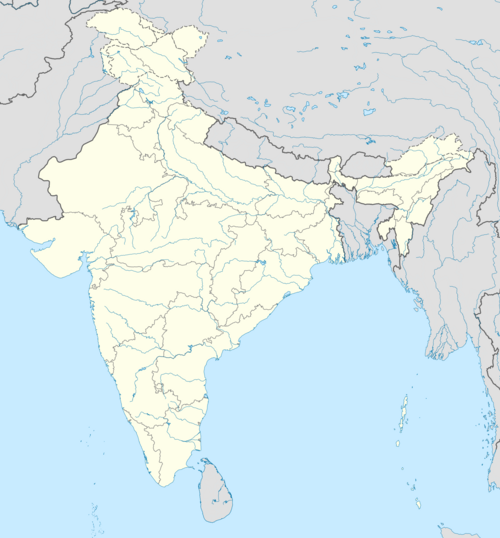


ヴァイシュナヴァ派の重要な巡礼地には、グルヴァユール寺院、シュリーランガム、カーンチプラム、ブリンダーヴァン、マトゥラー、アヨーディヤ、ティルパティ、パンダルプール(ヴィッタル)、プリ(ジャガンナート)、ニラ・ナーシンプール(ナラシンハ)、マヤプール、ナスドワラ、ドワルカ、ウディピ(カルナータカ州)、リーゴビンダジー寺院 (インパール)、ゴビンド デブ ジ寺院 (ジャイプール)、ムクティナス。[225] [226]
聖地
ヴリンダーヴァナは、クリシュナ教のいくつかの伝統において聖地とみなされている。ここはクリシュナ崇拝の中心地であり、その地域には太古の昔からクリシュナと関係のあるゴーヴァルダナやゴークラなどの場所がある。毎年何百万ものバクタ(クリシュナの信者)がこれらの巡礼地を訪れ、クリシュナの地上での生涯の場面に関連した数多くの祭りに参加している。[35] [注 4]
一方、ゴーロカは、ゴーディヤ・ヴィシュヌ派やスワミナラヤン・サンプラダヤを含むいくつかのヴィシュヌ派によれば、クリシュナの永遠の住処、スヴァヤム・バガヴァンであると考えられている。その根拠となる聖典は、ブラフマー・サンヒターとバガヴァタ・プラーナである。[227]
伝統
4つのサンプラダヤとその他の伝統
ヴィシュヌ派の伝統は、それぞれ特定のヴェーダの人物によって代表される4 つのサンプラダヤに分類できます。これらは特定の創始者と関連付けられており、次のような体系が成り立ちます。シュリー・サンプラダヤ (ラーマーヌジャ)、ブラフマー・サンプラダヤ (マドヴァチャリア)、[228]ルドラ・サンプラダヤ (ヴィシュヌスワミ、ヴァッラバチャリア)、[229]クマラス・サンプラダヤ (ニンバルカ)。[230] [注 5]これらの 4 つのサンプラダヤは、西暦 2 千年紀の初期の世紀に出現し、14 世紀までにバクティ運動に影響を与え、それを容認しました。[68]
ヴィシュヌ派の哲学体系は、ラーマーヌジャの限定された一元論的 ヴィシシュタアドヴァイタから、マドヴァチャリヤの有神論的二元論、ヴァッラバチャリヤの純粋に非二元論的な シュッダドヴァイタまで多岐にわたる。いずれもヴィシュヌの化身を崇拝しているが、魂(ジーヴァ)とブラフマンの関係、[182] [233]変化する現実と不変の現実の性質、崇拝の方法、そして、生活者段階とサンニャーサ(放棄)段階の精神的解放に関する理論はそれぞれ異なる。[20] [21]
4つの主要なサンプラダヤ以外では、状況はより複雑で、[234]ヴァイカーナサ派はこれら4つのサンプラダヤよりもはるかに古く[235] 、さらに後代に始まった多くの伝統や宗派[236]や、これら4つのサンプラダヤのいずれかに同調した宗派[231]があります。クリシュナ派のサンプラダヤは、中世後期からムガル帝国時代にかけても、ラダー・ヴァッラブ・サンプラダヤ、ハリダサ、ガウディヤなどとして設立され続けました。[237]
伝統リスト
初期の伝統
バガヴァット
バガヴァット派はクリシュナの初期の崇拝者であり、クリシュナ、ヴァスデーヴァ、ヴィシュヌ、バガヴァンの姿をした主バガヴァットの信奉者であった。[245]バガヴァタという用語は、特定の宗派ではなく、11世紀まで広まっていた一般的な宗教的伝統または有神論的崇拝の態度を指していた可能性があり、[235] [246]ヴィシュヌ信者の呼称として最もよく知られている。[246]ヴィシュヌ派バガヴァットの最も古い聖典の証拠は、紀元前115年の碑文であり、グレコ・バクトリア王アムタリキタの大使ヘリオドロスが、自分はヴァスデーヴァのバガヴァタであると述べたものである。[247]これはグプタ朝によって支持されており、特定の宗派とは対照的に、広範囲にわたる支持があったことを示唆している。[245]
| ヘリオドロスの柱 | |
|---|---|
 | |
| 時代/文化 | 紀元前2世紀後半 |
| 場所 | ヴィディシャ、マディヤ・プラデーシュ州、インド。 |
| 現在地 | ヴィディシャ、インド |
  ヘリオドロスの柱 | |
パンカラトラ
パンチャラトラはナラヤナ崇拝の伝統である。[160]パンチャラトラという用語は「5夜」を意味し、「5」を意味するパンチャと「夜」を意味するラートラから来ている。 [248] [160]これは、プルシャ・ナラヤナが5夜にわたる供儀を行うことで最高の存在になろうとする様子を描いたサタパタ・ブラフマナに記されている「5夜の供儀」に由来している可能性がある。[160]
マハーバーラタのナラヤニヤ章では、パーニャラトラの思想について説明されています。[ 160 ]特徴的なのは、ヴァスデーヴァと純粋な創造のヴュハ顕現から、混合創造のタットヴァを経て不純または物質的創造に至る一連の顕現を通して、絶対者の顕現を描写していることです。[24]
パンチャラトラ・サンヒターは7世紀または8世紀以降に発展し、アガミックまたはタントラに属し、[249] [163]ヴェーダの正統派とは相容れないものである。[166]南インドのヴィシュヌ崇拝者は、今でもこれらの文献に記されているパンチャラトラ崇拝のシステムに従っている。[163]
パンチャラートラは北インドで生まれたが、南インドにも強い影響を与え、シュリー・ヴァイシュナヴァ派の伝統と密接な関係がある。ウェルボンによれば、「パンチャラートラの宇宙論と儀式の理論と実践は、アルヴァール族の独特の土着の信仰詩と融合し、シュリー・ヴァイシュナヴァ派の創始者であるラマヌジャがパンチャラートラの思想を広めた」という。[250]ラマナンダもシュリー・ヴァイシュナヴァ派の影響を通じてパンチャラートラの思想の影響を受け、その結果、パンチャラートラは北インドに再入国した。[250]
ヴァイカナサス
ヴァイカナサ派はパーニャラトラ派と関連があるが、自らをヴェーダ正統派とみなしている。[235] [251]現代のヴァイカナサ派はパーニャラトラ派とシュリー・ヴァイシュナヴァ派の伝統の要素を拒否しているが、南インドの正統派ヴァイカナサ派との歴史的関係は不明である。[要出典]ヴァイカナサ派はアルヴァル派の信仰的要素を取り入れることに抵抗した可能性があるが、パーニャラトラ派はこれを取り入れることに前向きであった。[250]
ヴァイカナサ派には、ヴェーダと非ヴェーダの儀式崇拝の混合を記述した『ヴァイカナサシュマルタ・スートラ』という独自の基礎テキストがある。 [235]ヴァイカナサ派は南インドの多くの寺院の僧侶となり、現在でも影響力を保っている。[235]
中世初期の伝統
スマート主義
スマータの伝統は、西暦紀元初頭のヒンドゥー教の(初期の)古典期に発展しました。この時期には、ヒンドゥー教はバラモン教と地元の伝統との相互作用から生まれました。[252] [253]フラッドによると、スマータ主義はプラーナ文学のジャンルとともに発展し、拡大しました。[254]アディ・シャンカラの時代までには、[252]パンチャヤタナプージャ、すなわちヴィシュヌ、シヴァ、ガネーシャ、スーリヤ、デヴィ(シャクティ)の5つの神々を平等に扱う5つの神社への崇拝が発展しました。 [254]「多様で矛盾する信仰の実践に対する解決策として。」[252]
伝統的に、アディ・シャンカラチャリヤ(8世紀)はスマータ派の最も偉大な教師であり改革者であると考えられています。[255] [256]ヒルテバイテルによれば、アディ・シャンカラ・アチャリヤは、復活したスマータ派の伝統の試金石として、ウパニシャッドの非二元論的解釈を確立しました。[252] [注9]
アルヴァース

アルヴァルとは「神に浸る者」という意味で、南インドのタミル語詩聖人12人[210] で、憧れ、恍惚、奉仕の歌でヒンドゥー教の神ヴィシュヌまたはその化身クリシュナへのバクティ(信仰)を唱えた。 [257]アルヴァルは5世紀から10世紀の間に現れたが、ヴィシュヌ派の伝統では紀元前4200年から紀元前2700年の間に生きたとされている。
アルヴァルの信仰の書は、タミル史の中世初期に編纂されたもので、バクティ運動の重要な文献である。彼らは、ヴィシュヌ派の神々の108の「住処」(寺院)であるディヴィヤ・デサムを称賛した。 [258]彼らの賛美歌集は、ディヴィヤ・プラバンダとして知られている。彼らのバクティ詩は、儀式重視のヴェーダ宗教に反対し、救済への唯一の道として信仰に根ざした文化の確立と維持に貢献した。[259]
現代の伝統
ギャビン・フラッドは、現代の最も重要な5つのヴィシュヌ派の宗派について言及している。[236]
ニムバルカ・サンプラダヤ
ニムバルカ・サンプラダヤはクマラ・サンプラダヤとも呼ばれ、ヴィシュヌ派の4つの正統派の1つである。クリシュナ神とその主な配偶者であるラーダーを崇拝する。この伝統は西暦7~12年頃にニムバルカチャリヤによって創始された。ニムバルカの哲学的立場は二元一元論であり、彼はサクヤ・バヴにおける神の夫婦ラーダー・クリシュナの統一形態に全信仰を集中させた。[260] [261] [262]
シュリー・ヴィシュヌ派
シュリー・ヴィシュヌ派は、南インドで生まれたヴィシュヌ派の主要な宗派の一つで、ヴィシュヌの配偶者であるラクシュミに敬意を表して、接頭辞「シュリー」を採用している。[263]シュリー・ヴィシュヌ派のコミュニティは、バラモンと非バラモンの両方から構成されている。 [264]このコミュニティは、プラーナに基づく、より大規模なバラモン教のヴィシュヌ崇拝者や、非ヴィシュヌの村の神々を崇拝し、また信奉する非バラモン教のグループとともに存在していた。[264]シュリー・ヴィシュヌ派の運動は、性別やカーストの制限なく、個人的な神(ヴィシュヌ)への感情的な献身が開かれた、その社会的包摂性とともに成長した。[72] [注 10]
シュリー・ヴァイシュナヴァ派と他のヴァイシュナヴァ派の最も顕著な違いは、ヴェーダの解釈にあります。他のヴァイシュナヴァ派は、インドラ、サヴィタール、バガ、ルドラなどのヴェーダの神々をプラーナの神々と同じものと解釈していますが、シュリー・ヴァイシュナヴァ派はこれらをナラヤナの異なる名前/役割/形態とみなし、ヴェーダ全体がヴィシュヌ神崇拝のみに捧げられていると主張しています。シュリー・ヴァイシュナヴァ派は、スダルシャナ・ホーマなどのパンチャラトラ・ホーマを改造してヴェーダのスークタを組み込み、ヴェーダ的な見方を与えました。[引用が必要]
シュリー・ヴィシュヌ派は10世紀にタミルカムで発展した。 [266]この伝統は、北インドのタントラのパンチャラトラ伝統と抽象的なヴェーダーンタ神学を伴うプラーナのヴィシュヌ信仰、およびタミル・ナードゥのアルヴァールの個人的な信仰を伴う南部のバクティ伝統という2つの異なる伝統を取り入れた。[266] [72]この伝統はナタムニ(10世紀)によって創始され、ヤムナチャリヤとともに2つの伝統を組み合わせ、アルヴァールを参考にして伝統に正当性を与えた。[238]最も影響力のある指導者はヴィシシュタ・アドヴァイタ(「限定された非二元論」)哲学を開発したラーマーヌジャ(1017-1137)である。 [267]ラーマーヌジャは、当時支配的だったウパニシャッドとヴェーダのアドヴァイタ・ヴェーダーンタの解釈に異議を唱え、シュリー・ヴァイシュナヴィズムのヴィシシュタ・アドヴァイタ哲学の基礎をヴェーダーンタから構築した。[72]
シュリー・ヴァイシュナヴァには、パンチャラトラのタントラの伝統における儀式や寺院での生活、ヴィシュヌへの感情的な帰依、そして世帯主の社会的・宗教的義務という文脈における瞑想形式であるバクティが含まれています。 [72]タントラの儀式は、礼拝中に朗唱される技法やテキストを指し、南インドのシュリー・ヴァイシュナヴァの伝統におけるサンスクリット語やタミル語のテキストが含まれます。[265]シュリー・ヴァイシュナヴァ教の神学によると、主への帰依と奉仕、そして世界からの離脱によって解脱に到達できます。解脱に到達すると、輪廻の輪廻が断ち切られ、魂は死後ヴィシュヌと一体になりますが、ヴィシュヌの住処であるヴァイクンタでは両者の区別が維持されます。[268]解脱は、完全な服従と、主の恩寵であるサラナガティによっても到達できます。 [269]ラーマーヌジャのシュリー・ヴァイシュナヴィズムは、ヒンドゥー教内の他の伝統、例えばスマータ派やシャイヴァ派に見られるジヴァンムクティ(現世での解放)とは対照的に、ヴィデハムクティ(来世での解放)を信奉している。[270]
ラーマーヌジャの200年後、シュリー・ヴィシュヌ派はヴァダカライ(北の芸術)とテンカライ(南の芸術)の宗派に分裂した。ヴァダカライはヴェーダを宗教的権威の最大の源泉とみなし、寺院の象徴への信仰を通じてバクティを強調する一方、テンカライはタミル語の聖典と神への完全な服従を重視している。[269]シュリー・ヴィシュヌ派の哲学はアイアンガー派によって支持され、広められている。[271]
サド・ヴィシュヌ派
サッド・ヴィシュヌ派は、南インドのカルナータカ州で生まれたヴィシュヌ派の主要な宗派の一つで、「真実」を意味する接頭辞「サッド」を採用している。マドヴァチャリヤは、ラーマーヌジャのシュリー・ヴィシュヌ派と区別するために、自らのヴィシュヌ派をサッド・ヴィシュヌ派と名付けた。サッド・ヴィシュヌ派は、13世紀の哲学者マドヴァチャリヤによって創始された。[272] [273]これは、西暦初期頃の古典期に発展したヒンズー教 の運動である。哲学的には、サッド・ヴィシュヌ派は二元論ヴェーダーンタと一致しており、マドヴァチャリヤを創始者または改革者とみなしている。[274]この伝統は、古代のヴェーダとパンチャラトラの文献にその起源をたどることができる。サド・ヴィシュヌ派またはマドゥヴァ・サンプラダヤはブラフマー・サンプラダヤとも呼ばれ、ブラフマーから始まった一連の精神的指導者(グル)における伝統的な起源を指しています。[275]
サド・ヴィシュヌ派では、創造主は創造物より上位にあり、そのためモクシャはヴィシュヌの恩寵によってのみもたらされ、努力のみによってもたらされるのではない。[276]バクティのみを強調する他のヴィシュヌ派と比較して、サド・ヴィシュヌ派は、ジニャーナ、バクティ、ヴァイラギャをモクシャに必要な段階とみなしている。そのため、サド・ヴィシュヌ派では、ジニャーナ・ヨーガ、バクティ・ヨーガ、カルマ・ヨーガは、解脱を達成するために同等に重要である。カルナータカ州発祥のバクティ運動であるハリダサ運動は、サド・ヴィシュヌ派の分派である。[277]サド・ヴィシュヌ派は、ヴィシュヌをヒンズー教の最高神として崇拝し、ヴィシュヌの息子ヴァーユの化身であるマドゥヴァを化身した救世主とみなしている。[278]マドゥヴィズムでは、ヴァーユはヴィシュヌの現世での代理人であり、ハヌマーン、ビーマ、マドゥヴァチャリヤはヴィシュヌの3つの化身であると考えられています。このため、ラーマーヤナにおけるハヌマーンの役割やマハーバーラタにおけるビーマの役割が強調され、マドゥヴァチャリヤは特に高く評価されています。[279]ヴァーユは、数え切れないほどのテキストでマドゥヴァによって顕著に示されています。[280] [281]
サド ヴァイシュナヴァ派と他のヴァイシュナヴァ派の最も顕著な違いは、ヴェーダの解釈と崇拝の方法にあります。他のヴァイシュナヴァ派は、ルドラ、インドラなどのヴェーダの神々の崇拝を否定しますが、サド ヴァイシュナヴァ派は、「タラタミヤ」に従って、ラクシュミ、ブラフマー、ヴァーユ、サラスワティ、シヴァ (ルドラ)、パールヴァティ、インドラ、スブラマニヤ、ガネーシャを含むすべての神々を崇拝します。実際、マドヴァチャリヤはタントラ サラ サングラハですべての神々を崇拝する方法を明確に説明しています。マドヴァチャリヤは多くの著作で、シヴァ タットヴァ、パンチャムカシヴァ(ルドラ) を崇拝する手順、パンチャクシャリ マントラ、さらには誰もがシヴァを崇拝すべき理由も明確に説明しています。ヴィヤーサティルタなどのサド・ヴィシュヌ派の多くの著名な聖者や学者は「ラグ・シヴァ・ストゥーティ」を著し、ナラヤナ・パンディタチャリヤはシヴァ・ストゥーティを著し、サティヤダルマ・ティルタはシヴァを讃えてシュリ・ルドラム(ナマカ・チャマカ)の注釈を書いた。インド学者のBNKシャルマは、これらはマドヴァがシヴァの崇拝に反対する偏屈者ではないという事実の明確な証拠であると言う。 [282]シャルマは、サド・ヴィシュヌ派は他のヴィシュヌ派の伝統と比較して、シヴァ、パールヴァティ、ガネーシャ、スブラマニヤなどヒンドゥー教の神々の他の神々の崇拝に対してより寛容で融通が利くと言う。これが、カナカ・ダサが若い頃にタタチャリヤの影響下にあったにもかかわらず、シヴァ神などの崇拝に反対するシュリー・ヴィシュヌ派の教義に全面的に賛同せず、後にヴィヤーサティルタの弟子になった理由です。[283]
サド・ヴィシュヌ派の影響はベンガル・ヴィシュヌ派のチャイタニヤ学派に最も顕著に表れており、その信者たちは後に国際クリシュナ意識協会(ISKCON )としてクリシュナ崇拝の信仰運動を開始した。これは口語ではハレ・クリシュナ運動として知られる。[284]チャイタニヤ・マハプラブ(1496年 - 1534年)はイーシュワラ・プリの弟子であり、プリはマダヴェンドラ・プリの弟子であり、プリはラクシュミパティ・ティルタの弟子であり、マドヴァチャリヤのサド・ヴィシュヌ派サンプラダヤのヴィヤーサティルタ(1469年 - 1539年)の弟子であったとされている。 [285]マドヴァ思想はグジャラートのヴィシュヌ派文化にも大きな影響を与えた。[286]ヴァラバ・サンプラダヤの有名なバクティ聖者であるスワミ・ハリダスは、マドヴァ・ヴァイシュナビズムのプランダラ・ダサの直接の弟子でした。したがって、サドのヴァイシュナビズムはヴァッラバのヴァイシュナビズムにもある程度の影響を与えています。[287]
ガウディヤ・ヴィシュヌ派
ガウディヤ・ヴィシュヌ派はチャイタニヤ・ヴィシュヌ派[288]やハレ・クリシュナとしても知られ、インドでチャイタニヤ・マハプラブ(1486-1533)によって創始されました。「ガウディヤ」はゴーダ地方(現在のベンガル/バングラデシュ)を指し、ヴィシュヌ派は「ヴィシュヌまたはクリシュナの崇拝」を意味します。その哲学的基礎は主にバガヴァッド・ギーターとバガヴァタ・プラーナです。
ガウディヤ・ヴィシュヌ派の焦点は、ラーダーとクリシュナ、そして神の至高の姿であるスヴァヤン・バガヴァンとしての彼らの多くの神聖な化身への献身的な崇拝 (バクティ)です。最も一般的なこの崇拝は、「ハレ」、「クリシュナ」、「ラーマ」などラーダーとクリシュナの神聖な名前を歌うという形をとり、最も一般的にはハレ・クリシュナ (マントラ)、別名キルタンの形で行われます。ヴィシュヌやクリシュナの多くの形は、唯一の至高の神の拡大または化身であると考えられています。
After its decline in the 18-19th century, it was revived in the beginning of the 20th century due to the efforts of Bhaktivinoda Thakur. His son Srila Bhaktisiddhanta Sarasvati Thakura founded sixty-four Gaudiya Matha monasteries in India, Burma and Europe.[289] Thakura's disciple Srila Prabhupada went to the west and spread Gaudiya Vaishnavism by the International Society for Krishna Consciousness (ISKCON).
The Manipuri Vaishnavism is a regional variant of Gaudiya Vaishnavism with a culture-forming role among the Meitei people in the north-eastern Indian state of Manipur.[290] There, after a short period of Ramaism penetration, Gaudiya Vaishnavism spread in the early 18th century, especially from beginning its second quarter. Raja Gharib Nawaz (Pamheiba) was initiated into the Chaitanya tradition. Most devotee ruler and propagandist of Gaudiya Vaishnavism, under the influence of Natottama Thakura's disciples, was raja Bhagyachandra, who has visited the holy for the Chaytanyaits Nabadwip.[291]
Warkari tradition
The Warkari sampradaya is a non-Brahamanical[note 11] bhakti tradition which worships Vithoba, also known as Vitthal, who is regarded as a form of Krishna/Vishnu. Vithoba is often depicted as a dark young boy, standing arms akimbo on a brick, sometimes accompanied by his main consort Rakhumai (a regional name of Krishna's wife Rukmini). The Warkari-tradition is geographically associated with the Indian state of Maharashtra.[292]
The Warkari movement includes a duty-based approach towards life, emphasizing moral behavior and strict avoidance of alcohol and tobacco, the adoption of a strict lacto-vegetarian diet and fasting on Ekadashi day (twice a month), self-restraint (brahmacharya) during student life, equality and humanity for all rejecting discrimination based on the caste system or wealth, the reading of Hindu texts, the recitation of the Haripath every day and the regular practice of bhajan and kirtan. The most important festivals of Vithoba are held on the eleventh (ekadashi) day of the lunar months" Shayani Ekadashi in the month of Ashadha, and Prabodhini Ekadashi in the month of Kartik.[292]
The Warkari poet-saints are known for their devotional lyrics, the abhang, dedicated to Vithoba and composed in Marathi. Other devotional literature includes the Kannada hymns of the Haridasa, and Marathi versions of the generic aarti songs associated with rituals of offering light to the deity. Notable saints and gurus of the Warkaris include Jñāneśvar, Namdev, Chokhamela, Eknath, and Tukaram, all of whom are accorded the title of Sant.
Though the origins of both his cult and his main temple are debated, there is clear evidence that they already existed by the 13th century. Various Indologists have proposed a prehistory for Vithoba worship where he was previously a hero stone, a pastoral deity, a manifestation of Shiva, a Jain saint, or even all of these at various times for various devotees.
Ramanandi tradition
The Ramanandi Sampradaya, also known as the Ramayats or the Ramavats,[293] is one of the largest and most egalitarian Hindu sects in India, around the Ganges Plain, and Nepal today.[294] It mainly emphasizes the worship of Rama,[293] as well as Vishnu directly and other incarnations.[295] Most Ramanandis consider themselves to be the followers of Ramananda, a Vaishnava saint in medieval India.[296] Philosophically, they are in the Vishishtadvaita (IAST Viśiṣṭādvaita) tradition.[293]
Its ascetic wing constitutes the largest Vaishnava monastic order and may possibly be the largest monastic order in all of India.[297] Rāmānandī ascetics rely upon meditation and strict ascetic practices and believe that the grace of god is required for them to achieve liberation.
Northern Sant tradition
Kabir was a 15th-century Indian mystic poet and sant, whose writings influenced the Bhakti movement, but whose verses are also found in Sikhism's scripture Adi Granth.[241][298][299] His early life was in a Muslim family, but he was strongly influenced by his teacher, the Hindu bhakti leader Ramananda, he becomes a Vaishnavite with universalist leanings. His followers formed the Kabir panth.[241][1][300][298][301]
Dadu Dayal (1544—1603) was a poet-sant from Gujarat, a religious reformer who spoke against formalism and priestcraft. A group of his followers near Jaipur, Rajasthan, forming a Vaishnavite denomination that became known as the Dadu Panth.[1][302]
Other traditions
Odia Vaishnavism
The Odia Vaishnavism (a.k.a. Jagannathism)—the particular cult of the god Jagannath (lit. ''Lord of the Universe'') as the supreme deity, an abstract form of Krishna, the Purushottama, and Para Brahman—was origined in the Early Middle Ages.[303] Jagannathism was a regional state temple-centered version of Krishnaism,[304] but can also be regarded as a non-sectarian syncretic Vaishnavite and all-Hindu cult.[305] The notable Jagannath temple in Puri, Odisha became particularly significant within the tradition since about 800 CE.[306]
Mahanubhava Sampradaya
The Mahanubhava Sampradaya/Pantha founded in Maharashtra during the period of 12-13th century. Sarvajna Chakradhar Swami a Gujarati acharya was the main propagator of this Sampradaya. The Mahanubhavas venere Pancha-Krishna ("five Krishnas"). Mahanubhava Pantha played essential role in the growth of Marathi literature.[307]
Sahajiya and Baul tradition
Since 15th century in Bengal and Assam flourished Tantric Vaishnava-Sahajiya inspired by Bengali poet Chandidas, as well as related to it Baul groups, where Krishna is the inner divine aspect of man and Radha is the aspect of woman.[308]
Ekasarana Dharma
The Ekasarana Dharma was propagated by Srimanta Sankardev in the Assam region of India.It considers Krishna as the only God.[309] Satras are institutional centers associated with the Ekasarana dharma.[310][311]
Radha-vallabha Sampradaya
The Radha-centered Radha Vallabh Sampradaya founded by the Mathura bhakti poet-saint Hith Harivansh Mahaprabhu in the 16th century occupies a unique place among other traditions. In its theology, Radha is worshiped as the supreme deity, and Krishna is in a subordinate position.[312]
Pranami Sampradaya
The Pranami Sampradaya (Pranami Panth) emerged in the 17th century in Gujarat, based on the Radha-Krishna-focussed syncretic Hindu-Islamic teachings of Devchandra Maharaj and his famous successor, Mahamati Prannath.[313]
Swaminarayan Sampradaya
The Swaminarayan Sampradaya was founded in 1801 in Gujarat by Sahajanand Swami from Uttar Pradesh, who is worshipped as Swaminarayan, the supreme manifestation of God, by his followers. The first temple built in Ahmedabad in 1822.[314]
Vaishnavism and other Hindu tradition table
The Vaishnavism sampradayas subscribe to various philosophies, are similar in some aspects and differ in others. When compared with Shaivism, Shaktism and Smartism, a similar range of similarities and differences emerge.[315]
Demography
There is no data available on demographic history or trends for Vaishnavism or other traditions within Hinduism.[336]
Estimates vary on the relative number of adherents in Vaishnavism compared to other traditions of Hinduism.[note 12] Klaus Klostermaier and other scholars estimate Vaishnavism to be the largest Hindu denomination.[338][339][6][note 13] The denominations of Hinduism, states Julius Lipner, are unlike those found in major religions of the world, because Hindu denominations are fuzzy, individuals revere gods and goddesses polycentrically, with many Vaishnava adherents recognizing Sri (Lakshmi), Shiva, Parvati and others reverentially on festivals and other occasions. Similarly, Shaiva, Shakta and Smarta Hindus revere Vishnu.[340][341]
Vaishnavism is one of the major traditions within Hinduism.[342] Large Vaishnava communities exist throughout India, and particularly in Western Indian states, such as western Madhya Pradesh, Rajasthan, Maharashtra and Gujarat and Southwestern Uttar Pradesh .[225][226] Other major regions of Vaishnava presence, particularly after the 15th century, are Odisha, Bengal and northeastern India (Assam, Manipur).[343] Dvaita school Vaishnava have flourished in Karnataka where Madhavacharya established temples and monasteries, and in neighboring states, particularly the Pandharpur region.[344] Substantial presence also exists in Tripura and Punjab.[345]
Krishnaism has a limited following outside of India, especially associated with 1960s counter-culture, including a number of celebrity followers, such as George Harrison, due to its promulgation throughout the world by the founder-acharya of the International Society for Krishna Consciousness (ISKCON) A.C. Bhaktivedanta Swami Prabhupada.[346][347][348]
Academic study
Vaishnava theology has been a subject of study and debate for many devotees, philosophers and scholars within India for centuries. Vaishnavism has its own academic wing in University of Madras - Department of Vaishnavism.[349] In recent decades this study has also been pursued in a number of academic institutions in Europe, such as the Oxford Centre for Hindu Studies, Bhaktivedanta College, and Syanandura Vaishnava Sabha, a moderate and progressive Vaishnava body headed by Gautham Padmanabhan in Trivandrum which intends to bring about a single and precise book called Hari-grantha to include all Vaishnava philosophies.
Hymns
Mantras
Hails
See also


- Hindu denominations
- Divya Prabhandham
- Nanaghat Inscription – a 1st-century BCE Vaishnava inscription
- Vasu Doorjamb Inscription – a 1st-century CE inscription from Vaishnava temple
Explanatory notes
- ^ Dandekar 1987, p. 9499: "The origin of Vaiṣṇavism as a theistic sect can by no means be traced back to the Ṛgvedic god Viṣṇu. In fact, Vaiṣṇavism is in no sense Vedic in origin. (...) Strangely, the available evidence shows that the worship of Vāsudeva, and not that of Viṣṇu, marks the beginning of what we today understand by Vaiṣṇavism. This Vāsudevism, which represents the earliest known phase of Vaiṣṇavism, must already have become stabilized in the days of Pāṇini (Seventh to fifth centuries bce)."
- ^ a b Klostermaier: "Present day Krishna worship is an amalgam of various elements. According to historical testimonies Krishna-Vasudeva worship already flourished in and around Mathura several centuries before Christ. Next came the sect of Krishna Govinda. Later the worship of Bala-Krishna, the Divine Child Krishna was added — a quite prominent feature of modern Krishnaism. The last element seems to have been Krishna Gopijanavallabha, Krishna the lover of the Gopis, among whom Radha occupies a special position. In some books Krishna is presented as the founder and first teacher of the Bhagavata religion."[35]
- ^ Friedhelm Hardy in his "Viraha-bhakti" analyses the history of Krishnaism, specifically all pre-11th-century sources starting with the stories of Krishna and the gopi, and Mayon mysticism of the Vaishnava Tamil saints, Sangam Tamil literature and Alvars' Krishna-centred devotion in the rasa of the emotional union and the dating and history of the Bhagavata Purana.[48][49]
- ^ Klostermaier: "Bhagavad Gita and the Bhagavata Purana, certainly the most popular religious books in the whole of India. Not only was Krsnaism influenced by the identification of Krsna with Vishnu, but also Vaishnavism as a whole was partly transformed and reinvented in the light of the popular and powerful Krishna religion. Bhagavatism may have brought an element of cosmic religion into Krishna worship; Krishna has certainly brought a strongly human element into Bhagavatism [...] The center of Krishna-worship has been for a long time Brajbhumi, the district of Mathura that embraces also Vrindavana, Govardhana, and Gokula, associated with Krishna from time immemorial. Many millions of Krishna bhaktas visit these places ever year and participate in the numerous festivals that reenact scenes from Krshna's life on Earth."[35]
- ^ (a) Steven Rosen and William Deadwyler III: "the word sampradaya literally means 'a community'."[231]
(b) Federico Squarcini traces the semantic history of the word sampradaya, calling it a tradition, and adds, "Besides its employment in the ancient Buddhist literature, the term sampradaya circulated widely in Brahamanic circles, as it became the most common word designating a specific religious tradition or denomination".[232] - ^ Based on a list of gurus found in Baladeva Vidyabhusana's Govinda-bhasya and Prameya-ratnavali, ISKCON situates Gaudiya Vaishnavism within the Brahma sampradaya, calling it Brahma-Madhva-Gaudiya Vaisnava Sampradaya.[231]
- ^ Stephen Knapp: "Actually there is some confusion about him, as it seems there have been three Vishnu Svamis: Adi Vishnu Svami (around the 3rd century BCE, who introduced the traditional 108 categories of sannyasa), Raja Gopala Vishnu Svami (8th or 9th century CE), and Andhra Vishnu Svami (14th century)."[239]
- ^ Gavin Flood notes that Jñāneśvar is sometimes regarded as the founder of the Warkari sect, but that Vithoba-worship predates him.[240]
- ^ Hiltebeitel: "Practically, Adi Shankara Acharya fostered a rapprochement between Advaita and smarta orthodoxy, which by his time had not only continued to defend the varnasramadharma theory as defining the path of karman, but had developed the practice of pancayatanapuja ("five-shrine worship") as a solution to varied and conflicting devotional practices. Thus one could worship any one of five deities (Vishnu, Siva, Durga, Surya, Ganesa) as one's istadevata ("deity of choice")."[252]
- ^ Vishnu is regionally called by other names, such as Ranganatha at Srirangam temple in Tamil Nadu.[265]
- ^ Zelliot & Berntsen 1988, p. xviii: "Varkari cult is rural and non-Brahman in character.", Sand 1990, p. 34: "the more or less anti-ritualistic and anti-brahmanical attitudes of Warkari sampradaya."
- ^ Website Adherents.com gives numbers as of year 1999.[337]
- ^ According to Jones and Ryan, "The followers of Vaishnavism are many fewer than those of Shaivism, numbering perhaps 200 million."[120]}[dubious – discuss]
Citations
- ^ a b c d e f Dandekar 1987.
- ^ Pratapaditya Pal (1986). Indian Sculpture: Circa 500 BCE–700 CE. University of California Press. pp. 24–25. ISBN 978-0-520-05991-7.
- ^ Stephan Schuhmacher (1994). The Encyclopedia of Eastern Philosophy and Religion: Buddhism, Hinduism, Taoism, Zen. Shambhala. p. 397. ISBN 978-0-87773-980-7.
- ^ a b c d e Hardy 1987.
- ^ a b Flood 1996, p. 117.
- ^ a b c Johnson, Todd M.; Grim, Brian J. (2013). The World's Religions in Figures: An Introduction to International Religious Demography. John Wiley & Sons. p. 400. ISBN 978-1-118-32303-8.
- ^ "Chapter 1 Global Religious Populations" (PDF). January 2012. Archived from the original (PDF) on 20 October 2013.
- ^ a b c d e f g h i j k Dandekar 1987, p. 9499.
- ^ a b c d "Vaishnava". philtar.ucsm.ac.uk. Archived from the original on 12 February 2012. Retrieved 22 May 2008.
- ^ a b Flood 1996, p. 120.
- ^ Flood 1996, p. 119,120-121.
- ^ Eliade, Mircea; Adams, Charles J. (1987). The Encyclopedia of religion. Macmillan. p. 168. ISBN 978-0-02-909880-6.
- ^ a b Gonda 1993, p. 163.
- ^ a b Klostermaier 2007, pp. 206–217, 251–252.
- ^ Matchett 2001, pp. 3–9.
- ^ a b Anna King 2005, pp. 32–33.
- ^ a b Mukherjee 1981; Eschmann, Kulke & Tripathi 1978; Hardy 1987, pp. 387–392; Patnaik 2005; Miśra 2005, chapter 9. Jagannāthism; Patra 2011.
- ^ Hawley 2015, pp. 10–12, 33–34.
- ^ Lochtefeld 2002b, pp. 731–733.
- ^ a b Beck 2005a, pp. 76–77.
- ^ a b Fowler 2002, pp. 288–304, 340–350.
- ^ Raj & Harman 2007, pp. 165–166.
- ^ Lochtefeld 2002b, pp. 553–554.
- ^ a b c Flood 1996, pp. 121–122.
- ^ a b c Schrader 1973, pp. 2–21.
- ^ a b Klostermaier 2007, pp. 46–52, 76–77.
- ^ Singh, Upinder (2008). A History of Ancient and Early Medieval India: From the Stone Age to the 12th Century. Pearson Education India. pp. 436–438. ISBN 978-81-317-1120-0.
- ^ Osmund Bopearachchi, Emergence of Viṣṇu and Śiva Images in India: Numismatic and Sculptural Evidence, 2016.
- ^ Srinivasan, Doris (1997). Many Heads, Arms, and Eyes: Origin, Meaning, and Form of Multiplicity in Indian Art. BRILL. p. 215. ISBN 978-90-04-10758-8.
- ^ F. R. Allchin; George Erdosy (1995). The Archaeology of Early Historic South Asia: The Emergence of Cities and States. Cambridge University Press. pp. 303–304. ISBN 978-0-521-37695-2.
- ^ Radhakumud Mookerji (1959). The Gupta Empire. Motilal Banarsidass. p. 3. ISBN 978-81-208-0440-1.
- ^ Preciado-Solís 1984, p. 1–16.
- ^ Dandekar 1987, p. 9498.
- ^ Ramkrishna Gopal Bhandarkar; Ramchandra Narayan Dandekar (1976). Ramakrishna Gopal Bhandarkar as an Indologist: A Symposium. India: Bhandarkar Oriental Research Institute. pp. 38–40.
- ^ a b c d e f Klostermaier 2007.
- ^ Dalal 2010, pp. 54–55.
- ^ Dandekar 1971, p. 270.
- ^ a b c d e f g h Dandekar 1987, p. 9500.
- ^ William K. Mahony (1998). The Artful Universe: An Introduction to the Vedic Religious Imagination. New York: SUNY Press. pp. 13–14. ISBN 978-0-7914-3579-3.
- ^ a b c Welbon 1987a.
- ^ a b Welbon 1987b.
- ^ Aiyangar 2019, p. 16.
- ^ Aiyangar 2019, pp. 93–94.
- ^ Aiyangar 2019, p. 95.
- ^ Thapar, Romila (28 June 1990). A History of India. Penguin UK. ISBN 978-0-14-194976-5.
- ^ Inden, Ronald B. (2000). Imagining India. C. Hurst & Co. Publishers. p. 249. ISBN 978-1-85065-520-6.
- ^ Chari, S. M. Srinivasa (1997). Philosophy and Theistic Mysticism of the Āl̲vārs. Motilal Banarsidass Publ. p. 244. ISBN 978-81-208-1342-7.
- ^ a b c Hardy, Friedhelm (2001). Viraha-Bhakti: The Early History of Krsna Devotion in South India (Oxford University South Asian Studies Series). Oxford University Press, USA. ISBN 978-0-19-564916-1.
- ^ "Book review - FRIEDHELM HARDY, Viraha Bhakti: The Early History of Krishna Devotion in South India. Oxford University Press, Nagaswamy 23 (4): 443 – Indian Economic & Social History Review". ier.sagepub.com. Retrieved 29 July 2008.
- ^ a b Monius 2005, pp. 139–149.
- ^ Norman Cutler (1987) Songs of Experience: The Poetics of Tamil Devotion, p. 13
- ^ a b "Devotion to Mal (Mayon)". philtar.ucsm.ac.uk. Archived from the original on 12 February 2012. Retrieved 22 May 2008.
- ^ Singh, Upinder (2008). A History of Ancient and Early Medieval India: From the Stone Age to the 12th Century. Pearson Education India. p. 617. ISBN 978-81-317-1120-0.
- ^ Aiyangar 2019, pp. 77–78.
- ^ GANGASHETTY, RAMESH (30 October 2019). THIRTHA YATRA: A GUIDE TO HOLY TEMPLES AND THIRTHA KSHETRAS IN INDIA. Notion Press. ISBN 978-1-68466-134-3.
- ^ For English summary, see p. 80 Schmid, Charlotte (1997). "Les Vaikuṇṭha gupta de Mathura : Viṣṇu ou Kṛṣṇa?". Arts Asiatiques. 52: 60–88. doi:10.3406/arasi.1997.1401.
- ^ Ganguli 1988, p. 36.
- ^ a b c Bakker, Hans T. (12 March 2020). The Alkhan: A Hunnic People in South Asia. Barkhuis. pp. 98–99, 93. ISBN 978-94-93194-00-7.
- ^ Ramnarace 2014, p. 180.
- ^ S. M. Srinivasa Chari (1988). Tattva-muktā-kalāpa. Motilal Banarsidass. pp. 2–5. ISBN 978-81-208-0266-7.
- ^ Klaus K. Klostermaier (1984). Mythologies and Philosophies of Salvation in the Theistic Traditions of India. Wilfrid Laurier University Press. pp. 101–103. ISBN 978-0-88920-158-3.
- ^ Annangaracariyar 1971.
- ^ Seth 1962.
- ^ Smith 1976, pp. 143–156.
- ^ Gupta & Valpey 2013, pp. 2–10.
- ^ Schomer, Karine; McLeod, W. H., eds. (1987). The Sants: Studies in a Devotional Tradition of India. Motilal Banarsidass. pp. 1–5. ISBN 978-81-208-0277-3.
- ^ C. J. Bartley (2013). The Theology of Ramanuja: Realism and Religion. Routledge. pp. 1–4, 52–53, 79. ISBN 978-1-136-85306-7.
- ^ a b Beck 2005, p. 6.
- ^ Jackson 1992.
- ^ Jackson 1991.
- ^ John Stratton Hawley (2015), A Storm of Songs: India and the Idea of the Bhakti Movement, Harvard University Press, ISBN 978-0-674-18746-7, pp. 304–310
- ^ a b c d e C. J. Bartley (2013). The Theology of Ramanuja: Realism and Religion. Routledge. pp. 1–4. ISBN 978-1-136-85306-7.
- ^ Delmonico, Neal (4 April 2004). "Caitanya Vais.n. avism and the Holy Names" (PDF). Bhajan Kutir. Retrieved 29 May 2017.
- ^ Carney 2020; Jones & Ryan 2007, pp. 79–80, Bharati, Baba Premanand.
- ^ Selengut, Charles (1996). "Charisma and Religious Innovation:Prabhupada and the Founding of ISKCON". ISKCON Communications Journal. 4 (2). Archived from the original on 13 July 2011.
- ^ Herzig, T.; Valpey, K (2004). "Re—visioning Iskcon". The Hare Krishna Movement: The Postcharismatic Fate of a Religious Transplant. Columbia University Press. ISBN 978-0-231-12256-6. Retrieved 10 January 2008.
- ^ Prabhupada - He Built a House, Satsvarupa dasa Goswami, Bhaktivedanta Book Trust, 1983, ISBN 0-89213-133-0 p. xv
- ^ Schweig 2013, p. 18.
- ^ Kiyokazu Okita (2010), "Theism, Pantheism, and Panentheism: Three Medieval Vaishnava Views of Nature and their Possible Ecological Implications", Journal of Vaishnava Studies, Volume 18, Number 2, pp. 5–26
- ^ Bryant 2007, pp. 360–361.
- ^ William Wainwright (2013), Monotheism, Stanford Encyclopedia of Philosophy, Stanford University Press
- ^ Harold Coward; Daniel C. Maguire (2000). Visions of a New Earth: Religious Perspectives on Population, Consumption, and Ecology. State University of New York Press. pp. 113–114. ISBN 978-0-7914-4457-3.
- ^ Ankur Barua (2010), God's body at work: Ramanuja and Panentheism, International Journal of Hindu Studies, Volume 14, Number 1, pp. 1–30
- ^ Anne Hunt Overzee (1992). The Body Divine: The Symbol of the Body in the Works of Teilhard de Chardin and Ramanuja. Cambridge University Press. pp. 63–85. ISBN 978-0-521-38516-9
- ^ Julius Lipner (1986). The Face of Truth: A Study of Meaning and Metaphysics in the Vedantic Theology of Ramanuja. State University of New York Press. pp. 37–48. ISBN 978-0-88706-038-0.
- ^ Ursula King (2011). Teilhard De Chardin and Eastern Religions. New York: Paulist Press. pp. 267–268.
- ^ Schweig 2013, pp. 18–19.
- ^ Kinsley 2005, pp. 707–708.
- ^ a b c d Constance Jones; James D. Ryan (2006). Encyclopedia of Hinduism. Infobase. p. 474. ISBN 978-0-8160-7564-5.
- ^ a b Lochtefeld 2002a, p. 228.
- ^ Matchett 2000, p. 254.
- ^ Matchett 2001, p. [page needed].
- ^ Wilson, Bill; McDowell, Josh (1993). The best of Josh McDowell: a ready defense. Nashville: T. Nelson. pp. 352–353. ISBN 978-0-8407-4419-7.
- ^ "Page 1–Ramanuja and Sri Vaishnavism". Archived from the original on 25 February 2008.
- ^ Rosen, Steven (30 October 2006). Essential Hinduism. Bloomsbury Publishing USA. p. 165. ISBN 978-0-313-07155-3.
- ^ Carman, John Braisted (1994). Majesty and Meekness: A Comparative Study of Contrast and Harmony in the Concept of God. Wm. B. Eerdmans Publishing. p. 281. ISBN 978-0-8028-0693-2.
- ^ Taylor, Bron (10 June 2008). Encyclopedia of Religion and Nature. A&C Black. p. 773. ISBN 978-1-4411-2278-0.
- ^ Hudson, D. Dennis (25 September 2008). The Body of God: An Emperor's Palace for Krishna in Eighth-Century Kanchipuram. Oxford University Press. p. 311. ISBN 978-0-19-045140-0.
- ^ Schweig 2013, pp. 17–19.
- ^ Latourette, Kenneth Scott (1961). "Review of India and Christendom: The Historical Connections between Their Religions". Pacific Affairs. 34 (3): 317–318. doi:10.2307/2753385. JSTOR 2753385.
- ^ Sheridan 1986, p. 53. "It becomes clear that the personality of Bhagvan Krishna subordinates to itself the titles and identities of Vishnu, Narayana, Purusha, Ishvara, Hari, Vasudeva, Janardana etc. The pervasive theme, then, of the Bhagavata Puran is the identification of Bhagavan with Krishna."
- ^ Geoffrey Parrinder (1996). Sexual Morality in the World's Religion. Oneword. pp. 9–10. ISBN 978-1-85168-108-2.
- ^ "Chaitanya Charitamrita Madhya 20.165". Archived from the original on 17 September 2008. Retrieved 7 May 2008.
- ^ Richard Thompson (June 1993). "Reflections on the Relation Between Religion and Modern Rationalism". ISKCON Communications Journal. 1 (2). Archived from the original on 4 January 2011. Retrieved 12 April 2008.
- ^ Mahony, W.K. (1987). "Perspectives on Krsna's Various Personalities". History of Religions. 26 (3): 333–335. doi:10.1086/463085. JSTOR 1062381. S2CID 164194548.
- ^ Schweig 2005, p. 3.
- ^ Rosen 2002, p. 50.
- ^ Rosen 2002, p. 52.
- ^ Chaitanya-charitamrita Adi-lila 4.95 Archived 24 August 2008 at the Wayback Machine
- ^ Bryant, Edwin Francis; Bryant, Edwin F., eds. (2007). Krishna: a sourcebook. Oxford: Oxford Univ. Press. ISBN 978-0-19-514892-3.
- ^ Schwartz 2004, p. 49.
- ^ Schweig 2005, pp. 41–42.
- ^ Schweig 2005, p. 43.
- ^ a b c Matchett 2001, pp. 3–4.
- ^ Kinsley 2005, p. 15.
- ^ Bryant 2007, pp. 339–340.
- ^ Mircea Eliade; Charles J. Adams (1987). The Encyclopedia of Religion. Vol. 2. Macmillan. p. 14. ISBN 978-0-02-909710-6.
- ^ a b Dominic Goodall (1996), Hindu Scriptures, University of California Press, ISBN 978-0-520-20778-3, pp. ix–xliii
- ^ RC Zaehner (1992), Hindu Scriptures, Penguin Random House, ISBN 978-0-679-41078-2, pp. 1–11 and Preface
- ^ a b c Constance Jones; James D. Ryan (2006). Encyclopedia of Hinduism. Infobase. p. 474. ISBN 978-0-8160-7564-5.
- ^ a b c Mariasusai Dhavamony (1999). Hindu Spirituality. Gregorian Press. pp. 32–34. ISBN 978-88-7652-818-7.
- ^ Ronald B. Inden (1990). Imagining India. Indiana University Press. pp. 109–115. ISBN 978-0-253-21358-7.
- ^ Fowler 2002, pp. 288–309.
- ^ Gupta 2013, pp. 1–12.
- ^ Deussen 1997a, p. 264; Note: This hymn appears in Śatapatha Brāhmaṇa as well.
- ^ Sanskrit original: Quote: दानं यज्ञानां वरूथं दक्षिणा लोके दातार | सर्वभूतान्युपजीवन्ति दानेनारातीरपानुदन्त दानेन | द्विषन्तो मित्रा भवन्ति दाने सर्वं प्रतिष्ठितं तस्माद्दानं परमं वदन्ति ॥ ६॥; Source: Hattangadi, Sunder (1999). "महानारायणोपनिषत् (Mahanarayana Upanishad)" (PDF) (in Sanskrit). Retrieved 23 January 2016.
- ^ a b Ayyangar, TRS (1941). The Vaisnavopanisads. Jain Publishing Co. (Reprint 2006). pp. i–vi, 1–11. ISBN 978-0-89581-986-4.
- ^ Peter Heehs (2002), Indian Religions, New York University Press, ISBN 978-0-8147-3650-0, pp. 60–88
- ^ Olivelle, Patrick (1998). Upaniṣads. Oxford University Press. pp. 11–14. ISBN 978-0-19-283576-5.
- ^ a b Dumont, P. -E (1940). "The Avyakta Upaniṣad". Journal of the American Oriental Society. 60 (3). Translated by Dumont, PE: 338–355. doi:10.2307/594420. JSTOR 594420.
- ^ Bryant & Ekstrand 2013, p. 42.
- ^ a b c d Deussen 1997a, pp. 247–268 with footnotes
- ^ a b Ayyangar, TRS (1941). The Vaisnavopanisads. Jain Publishing Co. (Reprint 2006). ISBN 978-0-89581-986-4.
- ^ a b Srinivasan, Doris (1997). Many Heads, Arms, and Eyes. BRILL Academic. pp. 112–120. ISBN 978-90-04-10758-8.
- ^ Deussen, Paul (2010) [1980]. Sixty Upanisads of the Veda. Vol. 2. Translated by V. M. Bedekar; G. B. Palsule. Motilal Banarsidass. pp. 803–805. ISBN 978-81-208-1469-1.
- ^ a b Lamb, Ramdas (2002). Rapt in the Name. SUNY Press. pp. 191–193. ISBN 978-0-7914-5386-5.
- ^ Catherine Ludvik (1994). Hanumān in the Rāmāyaṇa of Vālmīki and the Rāmacaritamānasa of Tulasī Dāsa. Motilal Banarsidass. pp. 10–13. ISBN 978-81-208-1122-5.
- ^ Deussen 1997b, pp. 859–864, 879–884.
- ^ Bryant & Ekstrand 2013, pp. 35–45.
- ^ B. V. Tripurari (2004). Gopala-tapani Upanisad. Audarya. pp. xi–xiii, 3–11. ISBN 978-1-932771-12-1.
- ^ Ayyangar, TRS (1941). The Vaisnavopanisads. Jain Publishing Co. (Reprint 2006). pp. 22–31. ISBN 978-0-89581-986-4.
- ^ Jacob, George (1887). "The Vasudeva and Gopichandana Upanishads". The Indian Antiquary, A Journal of Oriental Research. XVI (March, Part CXCIV).
- ^ Jean Varenne (1972), The Garuda Upanishad, Brill, ISBN 978-2-02-005872-8
- ^ Deussen 1997, pp. 663–664.
- ^ DS Babu (1990), Hayagriva - the horse headed deity, Oriental Research Institute, Tirupati
- ^ Rigopoulos, Antonio (1998). Dattatreya: The Immortal Guru, Yogin, and Avatara: A Study of the Transformative and Inclusive Character of a Multi-faceted Hindu Deity. State University of New York Press. pp. 64–77. ISBN 978-0-7914-3696-7.
- ^ Aiyar, Narayanasvami (1914). "Thirty minor Upanishads". Archive Organization. pp. 124–127. Retrieved 16 January 2016.
- ^ Deussen 1997, pp. 809–858.
- ^ James Mulhern (1959) A History of Education: A Social Interpretation p. 93
- ^ Franklin Edgerton (1925) The Bhagavad Gita: Or, Song of the Blessed One, India's Favorite Bible pp. 87-91
- ^ Charlotte Vaudeville has said, it is the 'real Bible of Krsnaism'. Quoted in: Matchett 2000
- ^ a b c Flood 1996, pp. 124–128.
- ^ Richard H. Davis (2014). The "Bhagavad Gita": A Biography. Princeton University Press. pp. 4–8. ISBN 978-1-4008-5197-3.
- ^ E. Allen Richardson (2014). Seeing Krishna in America: The Hindu Bhakti Tradition of Vallabhacharya in India and Its Movement to the West. McFarland. pp. 5–6, 11–14, 134–145. ISBN 978-0-7864-5973-5.
- ^ Flood 1996, pp. 125–126.
- ^ a b c Francis Clooney & Tony Stewart 2004, p. 163.
- ^ Richard H. Davis (2014). The "Bhagavad Gita": A Biography. Princeton University Press. pp. 58–59, 170. ISBN 978-1-4008-5197-3.
- ^ Georg Feuerstein; Brenda Feuerstein (2011). The Bhagavad-Gita. Shambhala Publications. pp. 64–69. ISBN 978-1-59030-893-6.
- ^ Flood 1996, pp. 124–125.
- ^ a b c d e f g Flood 1996, p. 121.
- ^ Guy L. Beck (1995). Sonic Theology: Hinduism and Sacred Sound. Motilal Banarsidass. pp. 173–180. ISBN 978-81-208-1261-1.
- ^ a b Schrader 1973, pp. 31–49, 79–118.
- ^ a b c d e f g Flood 1996, p. 122.
- ^ Schrader 1973, pp. 30, 150–157.
- ^ a b Dennis Hudson (2012). Katherine Anne Harper; Robert L Brown (eds.). The Roots of Tantra. State University of New York Press. pp. 133–156. ISBN 978-0-7914-8890-4.
- ^ a b c Flood 1996, pp. 122–123.
- ^ Teun Goudriaan; Sanjukta Gupta (1981). Hindu Tantric and Śākta Literature. Otto Harrassowitz Verlag. pp. 105–111. ISBN 978-3-447-02091-6.
- ^ Harvey P. Alper (1989). Mantra. State University of New York Press. pp. 242–243. ISBN 978-0-88706-599-6.
- ^ S. M. Srinivasa Chari (1994). Vaiṣṇavism: Its Philosophy, Theology, and Religious Discipline. Motilal Banarsidass. pp. xxviii–xxxi. ISBN 978-81-208-1098-3.
- ^ Smith, H. Daniel (1972). "The three gems of the Pancharatra canon - An appraisal". Vimarsa. 1 (1): 45–51. Reprinted in C. J. Bleeker, ed. (1972). Ex Orbe Religionum. Brill Academic.
- ^ Sanjukta Gupta (2000). Lakṣmī Tantra: A Pāñcarātra Text. Motilal Banarsidass. pp. xv–xix. ISBN 978-81-208-1735-7.
- ^ Schrader 1973, pp. 22–27, 112–114.
- ^ J. Gordon Melton; Martin Baumann (2010). Religions of the World: A Comprehensive Encyclopedia of Beliefs and Practices (2nd ed.). ABC-CLIO. pp. 1417–1418. ISBN 978-1-59884-204-3.
- ^ Alf Hiltebeitel (2011). Reading the Fifth Veda: Studies on the Mahābhārata. BRILL. pp. 59–60, 308. ISBN 978-90-04-18566-1.
- ^ Ramashraya Sharma (1986). A Socio-political Study of the Vālmīki Rāmāyaṇa. Motilal Banarsidass. pp. 149–150. ISBN 978-81-208-0078-6.
- ^ Ashok Banker (2011). Vengeance of Ravana: Book Seven of the Ramayana. Penguin. pp. 270–271. ISBN 978-0-14-306699-6.
- ^ Bryant 2007, pp. 113–115.
- ^ Bryant 2007, pp. 69 with note 150, 81–82, 95–98, 333–340.
- ^ Bryant 2007, pp. 77–94.
- ^ Gupta & Valpey 2013, pp. 162–180.
- ^ ML Varadpande (1987), History of Indian Theatre, Vol 1, Abhinav, ISBN 978-81-7017-221-5, pp. 98–99
- ^ a b Mahony, William K. (1987). "Perspectives on Krsna's Various Personalities". History of Religions. 26 (3): 333–335. doi:10.1086/463085. JSTOR 1062381. S2CID 164194548.
- ^ "Puranas". Merriam-Webster's Encyclopedia of Literature (1995 ed.). 1995. p. 915. ISBN 0-877790426.
- ^ Rocher 1986, pp. 1–5, 12–21, 79–80, 96–98; "These are the true encyclopedic Puranas. in which detached chapters or sections, dealing with any imaginable subject, follow one another, without connection or transition."
- ^ Ariel Glucklich (2008). The Strides of Vishnu: Hindu Culture in Historical Perspective: Hindu Culture in Historical Perspective. Oxford University Press. p. 146. ISBN 978-0-19-971825-2.
Quote: The earliest promotional works aimed at tourists from that era were called mahatmyas.
- ^ Gregory Bailey (2001). Oliver Leaman (ed.). Encyclopedia of Asian Philosophy. Routledge. pp. 437–439. ISBN 978-0-415-17281-3.
- ^ Gregory Bailey (2003). Arvind Sharma (ed.). The Study of Hinduism. The University of South Carolina Press. p. 139. ISBN 978-1-57003-449-7.
- ^ Rocher 1986, pp. 1–5, 12–21.
- ^ Rocher 1986, p. 153.
- ^ a b John Cort (1993). Wendy Doniger (ed.). Purana Perennis: Reciprocity and Transformation in Hindu and Jaina Texts. State University of New York Press. pp. 185–204. ISBN 978-0-7914-1382-1.
- ^ a b Cornelia Dimmitt; J. A. B. van Buitenen (2012) [1977]. Classical Hindu Mythology: A Reader in the Sanskrit Puranas. Temple University Press. pp. 4–5. ISBN 978-1-4399-0464-0.
- ^ Rocher 1986, pp. 35, 185, 199, 239–242.
- ^ Rocher 1986, pp. 161–164.
- ^ Rocher 1986, pp. 59–61.
- ^ Rocher 1986, pp. 158–159 with footnotes, "Among the texts considered to be connected with the Brahmanda, the Adhyatma-ramayana is undoubtedly the most important one".
- ^ Winternitz, Maurice (2010) [1922 in German, translated 1981 into English]. History of Indian Literature. Vol. 1. Translated by V. Srinivasa Sarma. New Delhi: Motilal Banarsidass. p. 552. ISBN 978-81-208-0264-3.
- ^ Ramdas Lamb (1 February 2012). Rapt in the Name. State University of New York Press. pp. 29–30. ISBN 978-0-7914-8856-0.
- ^ Barbara Holdrege (2015), Bhakti and Embodiment, Routledge, ISBN 978-0-415-67070-8, pp. 113–114
- ^ Edwin Bryant (2003), Krishna: The Beautiful Legend of God: Srimad Bhagavata Purana, Penguin, ISBN 978-0-14-191337-7, pp. 10–12
- ^ Rocher 1986, pp. 104–106 with footnotes, "I want to stress the fact that it would be irresponsible and highly misleading to speak of or pretend to describe the religion of the Puranas."
- ^ Rukmani, T. S. (1993). "Siddhis in the Bhāgavata Purāṇa and in the Yogasutras of Patanjali – a Comparison". In Wayman, Alex (ed.). Researches in Indian and Buddhist philosophy. Motilal Banarsidass. pp. 217–226. ISBN 978-81-208-0994-9.;
Brown, C. Mackenzie (1983). "The Origin and Transmission of the Two "Bhāgavata Purāṇas": A Canonical and Theological Dilemma". Journal of the American Academy of Religion. 51 (4): 551–567. doi:10.1093/jaarel/li.4.551. JSTOR 1462581. - ^ Dasgupta, Surendranath (1979). A history of Indian philosophy, Vol. IV: Indian pluralism. Cambridge University Press. p. 49.
- ^ Sheridan 1986, pp. 1–2, 17–25.
- ^ Matchett 2000, p. 153, Bhag. Purana 1.3.28 :ete cāṁśa-kalāḥ puṁsaḥ kṛṣṇas tu bhagavān svayam :indrāri-vyākulaṁ lokaṁ mṛḍayanti yuge yuge
- ^ Matchett 2000, 10th canto transl..
- ^ Gupta 2007, p. [page needed].
- ^ Smith 1976, pp. 143–144.
- ^ Smith 1976, pp. 154–155.
- ^ Schomer, Karine; McLeod, W. H., eds. (1987). The Sants: Studies in a Devotional Tradition of India. Motilal Banarsidass. pp. 1–3. ISBN 978-81-208-0277-3.
- ^ a b Flood 1996, p. 131.
- ^ Smith 1976, pp. 143–169.
- ^ Olson, Carl (2007). The many colors of Hinduism: a thematic-historical introduction. Rutgers University Press. p. 231. ISBN 978-0-8135-4068-9.
- ^ Sheridan 1986, p. [page needed].
- ^ J. A. B. van Buitenen (1996). "The Archaism of the Bhāgavata Purāṇa". In S.S. Shashi (ed.). Encyclopedia Indica. pp. 28–45. ISBN 978-81-7041-859-7.
- ^ Karen Pechilis Prentiss (2000). The Embodiment of Bhakti. Oxford University Press. pp. 17–24. ISBN 978-0-19-535190-3.
- ^ Lorenzen 1995, pp. 23–24.
- ^ Francis Clooney & Tony Stewart 2004, p. 178.
- ^ Lorenzen 1995, pp. 107–112.
- ^ Lochtefeld 2002b, p. 724, "Urdhvapundra".
- ^ Deussen 1997, pp. 789–790.
- ^ Gautam Chatterjee (2003), Sacred Hindu Symbols, Abhinav Publications, ISBN 978-81-7017-397-7, pp. 11, 42, 57–58
- ^ "britannica.com Vaishnavism". Archived from the original on 27 January 2008.
- ^ "Tilak: Why Wear It".
- ^ "Top 15 Trang Cá Cược, Cá Độ Bóng Đá Uy Tín Nhất Việt Nam". #. Archived from the original on 4 December 2001.
{{cite web}}: CS1 maint: unfit URL (link) - ^ a b Klostermaier, Klaus K. (2000). Hinduism: A Short History. Oxford: Oneworld Publications. ISBN 978-1-85168-213-3.
- ^ a b Valpey, K.R. (2004). The Grammar and Poetics of Murti-Seva: Chaitanya Vaishnava Image Worship as Discourse, Ritual, and Narrative. University of Oxford.
- ^ Schweig 2005, p. 10.
- ^ Sharma 2000, Front matter.
- ^ E. Allen Richardson (2014). Seeing Krishna in America: The Hindu Bhakti Tradition of Vallabhacharya in India and Its Movement to the West. McFarland. pp. 19–21. ISBN 978-0-7864-5973-5.
- ^ Klostermaier 1998.
- ^ a b c Steven Rosen; William Deadwyler III (June 1996). "The Sampradaya of Sri Caitanya". ISKCON Communications Journal. 4 (1).
- ^ Federico Squarcini (2011). Boundaries, Dynamics and Construction of Traditions in South Asia. Anthem Press. pp. 20–27. ISBN 978-0-85728-430-3.
- ^ Beck 2005a, pp. 74–77.
- ^ Flood 1996, pp. 134–135.
- ^ a b c d e Flood 1996, p. 123.
- ^ a b Flood 1996, p. 135.
- ^ Beck 2005a, pp. 70–79.
- ^ a b Flood 1996, p. 136.
- ^ "The Four Sampradayas". www.stephen-knapp.com.
- ^ Flood 1996, p. 143.
- ^ a b c Encyclopædia Britannica, "Kabir" Accessed: 23 April 2019
- ^ Ernst Trumpp (ed.). The Ādi-Granth, Or: The Holy Scriptures of the Sikhs. p. 661.
On my tongue Vishnu, in my eyes Narayana, in my heart dwells Govinda.
Adi Granth IV.XXV.I - ^ Lochtefeld 2002a, p. 143.
- ^ Lavanya Vemsani (2016). Krishna in History, Thoughts and Culture. Abc-Clio. p. 222-224. ISBN 9781610692113.
- ^ a b Flood 1996, pp. 123–124.
- ^ a b Welbon 2005a, p. 9501.
- ^ Welbon 2005a, p. 9502.
- ^ Jones & Ryan 2007, pp. 321–322.
- ^ Apabhraṃśa literature, Gaekwad Oriental Series, vol. 86, 1940, p. 7
- ^ a b c Welbon 2005b, p. 9509.
- ^ Gonda, Jan (1977). "Religious Thought and Practice in Vaikhānasa Viṣṇuism". Bulletin of the School of Oriental and African Studies. 40 (3): 550–571. doi:10.1017/s0041977x00045912. JSTOR 616501. S2CID 154419403.
- ^ a b c d e Hiltebeitel 2013.
- ^ Flood 1996.
- ^ a b Flood 1996, p. 113.
- ^ Doniger 1999, p. 1017.
- ^ Popular Prakashan 2000, p. 52.
- ^ Andrea Nippard. "The Alvars" (PDF). Archived from the original (PDF) on 3 December 2013. Retrieved 20 April 2013.
- ^ "Indian Literature Through the Ages". Indian literature, Govt of India. Archived from the original on 15 May 2013. Retrieved 20 April 2013.
- ^ "About Alvars". divyadesamonline.com. Archived from the original on 21 June 2007. Retrieved 2 July 2007.
- ^ Bhattacharya, Sunil Kumar (1996). Krishna-cult in Indian Art. M.D. Publications Pvt. Ltd. p. 13. ISBN 978-81-7533-001-6.
- ^ Sharda Arya, Sudesh Narang, Religion and Philosophy of the Padma-purāṇa: Dharmaśāstra. Miranda House (University of Delhi). Dept. of Sanskrit, India University Grants Commission, 1988. 547, p.30
- ^ Melville T. Kennedy, The Chaitanya Movement: A Study of the Vaishnavism of Bengal, 1925. 270, p.7
- ^ Matchett 2001.
- ^ a b Flood 1996, pp. 137–138.
- ^ a b Jones & Ryan 2007, p. 352.
- ^ a b Flood 1996, pp. 135–136.
- ^ Flood 1996, pp. 133, 136.
- ^ Flood 1996, pp. 136–137.
- ^ a b Flood 1996, p. 137.
- ^ a b Kim Skoog (1996). Andrew O. Fort; Patricia Y. Mumme (eds.). Living Liberation in Hindu Thought. SUNY Press. pp. 63–84, 236–239. ISBN 978-0-7914-2706-4.
- ^ Frykenberg, Robert Eric (27 June 2008). Christianity in India: From Beginnings to the Present. OUP Oxford. p. 518. ISBN 978-0-19-154419-4.
- ^ Guy L. Beck (2012). Alternative Krishnas: Regional and Vernacular Variations on a Hindu Deity. SUNY Press. p. 74. ISBN 9780791483411.
- ^ Suresh K. Sharma, Usha Sharma (1999). Rajasthan Through the Ages: Art, architecture and memoirs. Deep & Deep Publications. p. 333. ISBN 9788176291552.
- ^ Nagendra Kr Singh; A. P. Mishra (2005). Encyclopaedia of Oriental Philosophy and Religion: A Continuing Series--, Volume 1. Global Vision Pub House. p. 99. ISBN 9788182200722.
- ^ Harold Coward (30 October 1987). Modern Indian Responses to Religious Pluralism. SUNY Press. p. 129. ISBN 9780887065729.
- ^ Lavanya Vemsani (13 June 2016). Krishna in History, Thought, and Culture: An Encyclopedia of the Hindu Lord of Many Names: An Encyclopedia of the Hindu Lord of Many Names. ABC-CLIO. p. 165. ISBN 9781610692113. Retrieved 13 June 2016.
- ^ Sharma 2000, pp. xxxii–xxxiii, 514–516, 539.
- ^ Encyclopedia Americana: M to Mexico City. Scholastic Library Publishing. 2006. p. 59. ISBN 9780717201396.
- ^ Prāci-jyotī: Digest of Indological Studies, Volume 13. Kurukshetra University. 1977. p. 245.
- ^ Helmuth von Glasenapp (1992). Madhva's Philosophy of the Viṣṇu Faith. Dvaita Vedanta Studies and Research Founda. p. 154.
- ^ Indian Culture: Journal of the Indian Research Institute, Volume 3, Issues 3-4. I.B. Corporation. 1984. p. 505.
- ^ Sharma 2000, p. 221.
- ^ Sharma 2000, p. 521.
- ^ Sharma 1962, pp. 22–23.
- ^ Connection between Gaudiya and Madhva Sampradayas(pdf)
- ^ S. Anees Siraj (2012). Karnataka State: Udupi District. Government of Karnataka, Karnataka Gazetteer Department. p. 192.
- ^ Madhubālā Sinhā (2009). Encyclopaedia of South Indian Literature, Volume 2. Anmol Publications. ISBN 9788126137404.
The foremost Hindustani Musician Tansen's teacher Swami Haridas was Purnadara Daasa's disciple.
- ^ Hindu Encounter with Modernity, by Shukavak N. Dasa Archived 11 May 2008 at the Wayback Machine "
- ^ Bryant & Ekstrand 2004, p. 130.
- ^ Singh 2004, pp. 125–132.
- ^ Singh 2004, p. 128.
- ^ a b Glushkova 2000, pp. 47–58.
- ^ a b c Michaels 2004, p. 254.
- ^ Burghart 1983, p. 362.
- ^ Tattwananda 1984, p. 10.
- ^ Raj & Harman 2007, p. 165.
- ^ Merriam-Webster's Encyclopedia, 1999[full citation needed]
- ^ a b Hugh Tinker (1990). South Asia: A Short History. University of Hawaii Press. pp. 75–77. ISBN 978-0-8248-1287-4.
- ^ Ronald McGregor (1984), Hindi literature from its beginnings to the nineteenth century, Otto Harrassowitz Verlag, ISBN 978-3-447-02413-6, p. 47
- ^ Ronald McGregor (1984), Hindi literature from its beginnings to the nineteenth century, Otto Harrassowitz Verlag, ISBN 978-3-447-02413-6, pp. 43–44
- ^ Rekha Pande (2014), Divine Sounds from the Heart—Singing Unfettered in their Own Voices, Cambridge Scholars, ISBN 978-1-4438-2525-2, p. 77
- ^ "Dadu (Hindu saint)" at Encyclopædia Britannica Online. Retrieved 31 December 2018.
- ^ Mukherjee 1981; Eschmann, Kulke & Tripathi 1978; Hardy 1987; Guy 1992; Patnaik 2005; Miśra 2005, chapter 9. Jagannāthism.
- ^ Hardy 1987, pp. 387–392.
- ^ Patnaik 2005; Miśra 2005, chapter 9. Jagannāthism.
- ^ Bryant 2007, pp. 139–141.
- ^ Feldhaus 1983; Hardy 1987, pp. 387–392; Dalal 2010, Mahanubhava.
- ^ Das 1988; Sardella & Wong 2020, part 2.
- ^ "Assam: Golaghat village people walk extra mile to preserve sacred puthi". City: Guwahati. Nenow. TNN. 3 May 2019. Retrieved 7 February 2020.
- ^ S. M. Dubey (1978). North East India: A Sociological Study. Concept. pp. 189–193.
- ^ Sarma 1966. [full citation needed]
- ^ Rosenstein 1998, pp. 5–18; Beck 2005a, pp. 65–90.
- ^ Dalal 2010, Pranami Panth; Toffin 2012, pp. 249–254.
- ^ Williams 2001.
- ^ a b c d e Jan Gonda (1970). Visnuism and Sivaism: A Comparison. Bloomsbury Academic. ISBN 978-1-4742-8080-8.
- ^ Christopher Partridge (2013). Introduction to World Religions. Fortress Press. p. 182. ISBN 978-0-8006-9970-3.
- ^ Gupta 2013, pp. 65–71.
- ^ Lai Ah Eng (2008). Religious Diversity in Singapore. Institute of Southeast Asian Studies, Singapore. p. 221. ISBN 978-981-230-754-5.
- ^ Mariasusai Dhavamony (2002). Hindu-Christian Dialogue: Theological Soundings and Perspectives. Rodopi. p. 63. ISBN 978-90-420-1510-4.
- ^ Stephen H Phillips (1995), Classical Indian Metaphysics, Columbia University Press, ISBN 978-0-8126-9298-3, p. 332 with note 68
- ^ Olivelle, Patrick (1992). The Samnyasa Upanisads. Oxford University Press. pp. 4–18. ISBN 978-0-19-507045-3.
- ^ a b Flood 1996, pp. 162–167.
- ^ "Shaivas". Overview Of World Religions. Philtar. Retrieved 13 December 2017.
- ^ Munavalli, Somashekar (2007). Lingayat Dharma (Veerashaiva Religion) (PDF). Veerashaiva Samaja of North America. p. 83. Archived from the original (PDF) on 26 June 2013. Retrieved 13 December 2017.
- ^ Prem Prakash (1998). The Yoga of Spiritual Devotion: A Modern Translation of the Narada Bhakti Sutras. Inner Traditions. pp. 56–57. ISBN 978-0-89281-664-4.
- ^ Frazier, J. (2013). "Bhakti in Hindu Cultures". The Journal of Hindu Studies. 6 (2): 101–113. doi:10.1093/jhs/hit028.
- ^ Lisa Kemmerer; Anthony J. Nocella (2011). Call to Compassion: Reflections on Animal Advocacy from the World's Religions. Lantern. pp. 27–36. ISBN 978-1-59056-281-9.
- ^ Frederick J. Simoons (1998). Plants of Life, Plants of Death. University of Wisconsin Press. pp. 182–183. ISBN 978-0-299-15904-7.
- ^ K. Sivaraman (1973). Śaivism in Philosophical Perspective. Motilal Banarsidass. pp. 336–340. ISBN 978-81-208-1771-5.
- ^ John A. Grimes, A Concise Dictionary of Indian Philosophy: Sanskrit Terms Defined in English, State University of New York Press, ISBN 978-0-7914-3067-5, p. 238
- ^ Flood 1996, p. 225.
- ^ Eliott Deutsche (2000), in Philosophy of Religion : Indian Philosophy Vol 4 (Editor: Roy Perrett), Routledge, ISBN 978-0-8153-3611-2, pp. 245–248
- ^ McDaniel, June (2004). Offering Flowers, Feeding Skulls. Oxford University Press. pp. 89–91. ISBN 978-0-19-534713-5.
- ^ Matthew James Clark (2006). The Daśanāmī-saṃnyāsīs: The Integration of Ascetic Lineages Into an Order. Brill. pp. 177–225. ISBN 978-90-04-15211-3.
- ^ Rajendra Prasad (2008). A Conceptual-analytic Study of Classical Indian Philosophy of Morals. Concept. p. 375. ISBN 978-81-8069-544-5.
- ^ The global religious landscape: Hindus, Pew Research (2012)
- ^ Hinduism - Branches
- ^ L. Dankworth; A. David (2014). Dance Ethnography and Global Perspectives: Identity, Embodiment and Culture. Springer. p. 33. ISBN 978-1-137-00944-9., Quote: "Klostermaier 1998, p. 196 Vaishnavite - devotees of the deity Vishnu, and the largest, numerically, part of mainstream Hinduism, which is divided up into several sects."
- ^ Steven Rosen (2006). Essential Hinduism. Greenwood. p. xvi. ISBN 978-0-275-99006-0.
- ^ Julius J. Lipner (2009), Hindus: Their Religious Beliefs and Practices, 2nd Edition, Routledge, ISBN 978-0-415-45677-7, pp. 40–41, 302–315, 371–375
- ^ Gavin Flood (2008). The Blackwell Companion to Hinduism. John Wiley & Sons. pp. 200–203. ISBN 978-0-470-99868-7.
- ^ Férdia J. Stone-Davis (2016). Music and Transcendence. Routledge. p. 23. ISBN 978-1-317-09223-0.
- ^ David Gordon White (2001). Tantra in Practice. Motilal Banarsidass. pp. 308–311. ISBN 978-81-208-1778-4.
- ^ B. N. Krishnamurti Sharma (2000). A History of the Dvaita School of Vedānta and Its Literature: From the Earliest Beginnings to Our Own Times. Motilal Banarsidass. pp. 514–521. ISBN 978-81-208-1575-9.
- ^ "Reang or Bru Tribes". ias4sure. 5 July 2018.
- ^ RIDENOUR, Fritz (2001). So What's the Difference?. Gospel Light Publications. pp. 180–181. ISBN 978-0-8307-1898-6.
- ^ Giuliano, Geoffrey (1997). Dark horse: the life and art of George Harrison. New York: Da Capo Press. p. 12. ISBN 978-0-306-80747-3.
- ^ Schweig 2005, Front Matter.
- ^ "Welcome to University of Madras". www.unom.ac.in. Retrieved 29 April 2021.
General sources
Printed sources
- Aiyangar, Krishnaswami (2019). Early History of Vaishnavism in South India. Forgotten Books. ISBN 978-0-243-64916-7.
- Annangaracariyar, P.B. (1971), Nalayira tivviyap pirapantam, VN Tevanatan
- Beck, Guy L., ed. (2005). Alternative Krishnas: Regional and Vernacular Variations on a Hindu Deity. Albany, NY: SUNY Press. ISBN 978-0-7914-6415-1.
- Beck, Guy L. (2005a). "Krishna as Loving Husband of God: The Alternative Krishnology of the Rādhāvallabha Sampradaya". In Guy L. Beck (ed.). Alternative Krishnas: Regional and Vernacular Variations on a Hindu Deity. Albany, NY: SUNY Press. pp. 65–90. ISBN 978-0-7914-6415-1.
- Bryant, Edwin F., ed. (2007). Krishna: A Sourcebook. New York: Oxford University Press. ISBN 978-0-19-514891-6.
- Bryant, Edwin Francis; Ekstrand, Maria (2004). The Hare Krishna Movement: The Postcharismatic Fate of a Religious Transplant.
- Bryant, Edwin Francis; Ekstrand, Maria (2013). The Hare Krishna Movement: The Postcharismatic Fate of a Religious Transplant. New York: Columbia University Press. ISBN 978-0-231-50843-8.
- Burghart, Richard (May 1983), "Wandering Ascetics of the Rāmānandī Sect", History of Religions, 22 (4): 361–80, doi:10.1086/462930, S2CID 162304284
- Carney, Gerald T. (2020). "Baba Premananda Bharati: his trajectory into and through Bengal Vaiṣṇavism to the West". In Ferdinando Sardella; Lucian Wong (eds.). The Legacy of Vaiṣṇavism in Colonial Bengal. Routledge Hindu Studies Series. Milton, Oxon; New York: Routledge. pp. 135–160. ISBN 978-1-138-56179-3.
- Chatterjee, Asoke: Srimadbhagavata and Caitanya-Sampradaya. Journal of the Asiatic Society 37/4 (1995)1-14.
- Francis Clooney; Tony Stewart (2004). Sushil Mittal and Gene Thursby (ed.). The Hindu World. Routledge. ISBN 978-1-134-60875-1.
- Clementin-Ojha, Catherine: La renaissance du Nimbarka Sampradaya au XVI'e siècle. Contribution à l'étude d'une secte Krsnaïte. Journal asiatique 278 (1990) 327–376.
- Couture, André: The emergence of a group of four characters (Vasudeva, Samkarsana, Pradyumna, and Aniruddha) in the Harivamsa: points for consideration. Journal of Indian Philosophy 34,6 (2006) pp. 571–585.
- Dalal, Roshen (2010). Hinduism: An Alphabetical Guide. New Delhi: Penguin Books India. ISBN 978-0-14-341421-6.
- Dandekar, R. N. (1987) [Rev. ed. 2005]. "Vaiṣṇavism: An Overview". In Eliade, Mircea (ed.). The Encyclopedia of Religion. Vol. 14. New York: MacMillan.
- Dandekar, R. N. (1971). "Hinduism". In Bleeker, C. Jouco; Widengren, G. (eds.). Historia Religionum: Handbook for the History of Religions - Religions of the Present. Boston: Brill Academic Publishers. ISBN 978-90-04-02598-1.
- Das, Sri Paritosh (1988). Sahajiyā Cult of Bengal and Pancha Sakhā Cult of Orissa. Calcutta: Firma K.L. Mukhopadhyay.[permanent dead link]
- Deussen, Paul (1997). Sixty Upanishads of the Veda. Motilal Banarsidass. ISBN 978-81-208-1467-7.
- Doniger, Wendy (1999), Merriam-Webster's Encyclopedia of World Religions, Merriam-Webster, ISBN 978-0-87779-044-0
- Eschmann, Anncharlott; Kulke, Hermann; Tripathi, Gaya Charan, eds. (1978) [Rev. ed. 2014]. The Cult of Jagannath and the regional tradition of Orissa. South Asian Studies, 8. New Delhi: Manohar. ISBN 978-81-7304-617-9.
- Feldhaus, Anne (1983). The religious system of the Mahānubhāva sect: the Mahānubhāva Sūtrapāṭha. South Asian studies, 12. New Delhi: Manohar. ISBN 978-0-8364-1005-1.
- Flood, Gavin (1996), An introduction to Hinduism, Cambridge University Press, ISBN 978-0-521-43878-0
- Fowler, Jeaneane D. (2002). Perspectives of Reality: An Introduction to the Philosophy of Hinduism. Sussex Academic Press. ISBN 978-1-898723-94-3.
- Ganguli, Kalyan Kumar (1988), Sraddh njali, studies in Ancient Indian History. D.C. Sircar Commemoration: Puranic tradition of Krishna, Sundeep Prakashan, ISBN 978-81-85067-10-0
- Glushkova, Irina (2000). "Norms and Values in the Varkari Tradition". In Meera Kosambi (ed.). Intersections: Socio-cultural Trends in Maharashtra. New Delhi: Orient Longman. pp. 47–53. ISBN 81-250-1878-6.
- Gonda, Jan (1993) [1954], Aspects of Early Viṣṇuism, Motilal Banarsidass Publ., ISBN 978-81-208-1087-7
- Gupta, Ravi M. (2007). Chaitanya Vaishnava Vedanta of Jiva Gosvami: When knowledge meets devotion. Routledge. ISBN 978-0-415-40548-5.
- Gupta, Ravi M.; Valpey, Kenneth (2013). The Bhagavata Purana: Sacred Text and Living Tradition. Columbia University Press. ISBN 978-0-231-14999-0.
- Gupta, Sanjukta (2013). Advaita Vedanta and Vaisnavism: The Philosophy of Madhusudana Sarasvati. Routledge. ISBN 978-1-134-15774-7.
- Guy, John (1992). "New evidence for the Jagannatha sect in seventeenth century Nepal". Journal of the Royal Asiatic Society. 3rd Ser. 2 (2): 213–230. doi:10.1017/S135618630000239X. S2CID 162316166.
- Hardy, Friedhelm E. (1987). "Kṛṣṇaism". In Mircea Eliade (ed.). The Encyclopedia of Religion. Vol. 8. New York: MacMillan. pp. 387–392. ISBN 978-0-02-897135-3 – via Encyclopedia.com.
- Hawley, John Stratton (2015). A Storm of Songs. Harvard University Press. ISBN 978-0-674-18746-7.
- Hiltebeitel, Alf (2013), Hinduism. In: Joseph Kitagawa, "The Religious Traditions of Asia: Religion, History, and Culture", Routledge, ISBN 978-1-136-87597-7
- Hudson, D. (1993). "Vasudeva Krsna in Theology and Architecture: A Background to Srivaisnavism". Journal of Vaiṣṇava Studies (2).
- Jackson, W.J. (1992), "A Life Becomes a Legend: Sri Tyagaraja as Exemplar", Journal of the American Academy of Religion, 60 (4): 717–736, doi:10.1093/jaarel/lx.4.717, JSTOR 1465591
- Jackson, W.J. (1991), Tyagaraja: Life and Lyrics, Oxford University Press, USA
- Jones, Constance A.; Ryan, James D. (2007). Encyclopedia of Hinduism. Encyclopedia of World Religions. J. Gordon Melton, Series Editor. New York: Facts On File. ISBN 978-0-8160-5458-9. Archived from the original on 20 October 2022. Retrieved 3 April 2021.
{{cite encyclopedia}}: CS1 maint: bot: original URL status unknown (link) - Anna King (2005). The intimate other: love divine in Indic religions. Orient Blackswan. ISBN 978-81-250-2801-7.
- Kinsley, David (2005). Lindsay Jones (ed.). Gale's Encyclopedia of Religion. Vol. 2 (Second ed.). Thomson Gale. ISBN 978-0-02-865735-6.
- Klostermaier, K.K. (1998), A concise encyclopedia of Hinduism, Oneworld
- Klostermaier, Klaus K. (2007), A Survey of Hinduism (3rd ed.), State University of New York Press, ISBN 978-0-7914-7081-7
- Lochtefeld, James G. (2002a). The Illustrated Encyclopedia of Hinduism, Vol. 1: A-M. Rosen Publishing. ISBN 978-0-8239-2287-1.
- Lochtefeld, James G. (2002b). The Illustrated Encyclopedia of Hinduism, Vol. 2: N-Z. Rosen Publishing. ISBN 978-0-8239-3180-4.
- Lorenzen, David N. (1995). Bhakti Religion in North India: Community Identity and Political Action. State University of New York Press. ISBN 9781438411262. OCLC 940540373.
- Matchett, Freda (2001). Krishna, Lord or Avatara?: the relationship between Krishna and Vishnu. Routledge. ISBN 978-0-7007-1281-6.
- Matchett, Freda (2000), Krishna, Lord or Avatara? the relationship between Krishna and Vishnu: in the context of the Avatara myth as presented by the Harivamsa, the Visnupurana and the Bhagavatapurana, Surrey: Routledge, ISBN 978-0-7007-1281-6
- Michaels, Alex (2004), Hinduism: Past and Present (English translation of the book first published in Germany under the title Der Hinduismus: Geschichte und Gegenwart (Verlag, 1998) ed.), Princeton: Princeton University Press
- Miśra, Narayan (2005). Durga Nandan Mishra (ed.). Annals and Antiquities of the Temple of Jagannātha. New Delhi: Sarup & Sons. ISBN 81-7625-747-8.
- Monius, Anne E. (2005). "Dance Before Doom. Krishna In The Non-Hindu Literature of Early Medieval South India". In Beck, Guy L. (ed.). Alternative Krishnas. Regional and Vernacular Variations on a Hindu Deity. Albany: State University of New York Press.
- Mukherjee, Prabhat (1981) [1940]. The History of Medieval Vaishnavism in Orissa. New Delhi: Asian Educational Services. ISBN 81-206-0229-3.
- Patel, Gautam: Concept of God According to Vallabhacarya. In: Encyclopaedia of Indian Wisdom. Prof. Satya Vrat Shastri Felicitation Volume. Vol. 2. Editor: Ramkaran Sharma. Delhi, Varanasi 2005, pp. 127–136.
- Patnaik, Tandra (2005). Śūnya Puruṣa: Bauddha Vaiṣṇavism of Orissa. DK Printworld. ISBN 978-81-246-0345-1.
- Patra, Avinash (2011). Maria Joseph (Vishnupriya Dasi) (ed.). Origin & Antiquity of the Cult of Lord Jagannath. Oxford: Oxford University weekly Journal. Archived from the original on 26 May 2021. Alt URL
- Pauwels, Heidi: Paradise Found, Paradise Lost: Hariram Vyas's Love for Vrindaban and what Hagiographers made of it. In: Pilgrims, Patrons, and Place: Localizing Sanctity in Asian Religions. Ed. by Phyllis Granoff and Koichi Shinohara. (Asian Religions and Society Series). Vancouver, Toronto 2003; pp. 124–180.
- Popular Prakashan (2000), Students' Britannica India, Volumes 1-5, Popular Prakashan, ISBN 978-0-85229-760-5
- Preciado-Solís, Benjamín (1984). The Kṛṣṇa Cycle in the Purāṇas: Themes and Motifs in a Heroic Saga. Motilal Banarsidass. ISBN 978-0-89581-226-1.
- Raj, Selva; Harman, William (2007). Dealing with Deities: The Ritual Vow in South Asia. State University of New York Press. ISBN 978-0-7914-6708-4.
- Ramnarace, Vijay (2014), Rādhā-Kṛṣṇa's Vedāntic Debut: Chronology & Rationalisation in the Nimbārka Sampradāya (PDF)
- Rocher, Ludo (1986). The Puranas. Otto Harrassowitz Verlag. ISBN 978-3-447-02522-5.
- Rosen, Steven (2002), The hidden glory of India, Los Angeles: Bhaktivedanta Book Trust, ISBN 978-0-89213-351-2
- Rosenstein, Lucy (1998). "The Rādhāvallabha and the Haridāsā Samprādayas: A Comparison". Journal of Vaishnava Studies. 7 (1): 5–18.
- Rosenstein, Ludmila L.: The Devotional Poetry of Svami Haridas. A Study of Early Braj Bhasa Verse. (Groningen Oriental Studies 12). Groningen 1997
- Sand, Erick Reenberg (1990). "The Legend of Puṇḍarīka: The Founder of Pandharpur". In Bakker, Hans (ed.). The History of Sacred Places in India as Reflected in Traditional Literature. Leiden: E. J. Brill. pp. 33–61. ISBN 90-04-09318-4.
- Sardella, Ferdinando; Wong, Lucian, eds. (2020). The Legacy of Vaiṣṇavism in Colonial Bengal. Routledge Hindu Studies Series. Milton, Oxon; New York: Routledge. ISBN 978-1-138-56179-3.
- Sarma, S N (1966). The Neo-Vaisnavite Movement and the Satra Institution of Assam. Gauhati University. ISBN 978-8173310263.
- Schrader, F. Otto (1973). Introduction to the Pāñcarātra and the Ahirbudhnya Saṃhitā. Adyar Library and Research Centre. ISBN 978-0-8356-7277-1.
- Schwartz, Susan (2004), Rasa: performing the divine in India, New York: Columbia University Press, ISBN 978-0-231-13145-2
- Schweig, G.M. (2005), Dance of divine love: The Rasa Lila of Krishna from the Bhagavata Purana, India's classic sacred love story, Princeton University Press, ISBN 978-0-691-11446-0
- Schweig, G.M. (2013), "Krishna. The IntimateDeity", in Bryant, Edwin; Ekstrand, Maria (eds.), The Hare Krishna Movement: The Postcharismatic Fate of a Religious Transplant, Columbia University Press
- Seth, K.P. (1962), "Bhakti in Alvar Saints", The University Journal of Philosophy
- Sharma, B.N. Krishnamurti (2000) [1961]. History of Dvaita school of Vedanta and its Literature (3rd ed.). Bombay: Motilal Banarasidass. ISBN 81-208-1575-0.
- Sheridan, Daniel (1986), The Advaitic Theism of the Bhāgavata Purāṇa, Columbia, MO: South Asia Books, ISBN 978-81-208-0179-0
- Singh, Kunj Bihari (2004) [1963]. "Manipur Vaishnavism: A Sociological Interpretation". In Rowena Robinson (ed.). Sociology of Religion in India. Themes in Indian Sociology, 3. New Delhi: Sage Publ. India. pp. 125–132. ISBN 0-7619-9781-4.
- Smith, Bardwell L. (1976). Hinduism: New Essays in the History of Religions. Brill Archive. ISBN 978-90-04-04495-1.
- Tattwananda, Swami (1984), Vaisnava Sects, Saiva Sects, Mother Worship (1st rev. ed.), Calcutta: Firma KLM Private Ltd.
- Toffin, Gérard (2012). "The Power of Boundaries: Transnational Links among Krishna Pranamis of India and Nepal". In John Zavos; et al. (eds.). Public Hinduisms. New Delhi: SAGE Publ. India. pp. 249–254. ISBN 978-81-321-1696-7.
- Welbon, G. R. (1987a). "Vaiṣṇavism: Bhāgavatas". In Mircea Eliade (ed.). The Encyclopedia of Religion. Vol. 14. New York: MacMillan. pp. 9500–9509. ISBN 978-0-02-897135-3.
- Welbon, G. R. (1987b). "Vaiṣṇavism: Pāñcarātras". In Mircea Eliade (ed.). The Encyclopedia of Religion. Vol. 14. New York: MacMillan. pp. 9509–9510. ISBN 978-0-02-897135-3.
- Williams, Raymond Brady (2001). An Introduction to Swaminarayan Hinduism. New York: Cambridge University Press. ISBN 0-521-65279-0.
- Zelliot, Eleanor; Berntsen, Maxine (1988). The Experience of Hinduism: Essays on Religion in Maharashtra. SUNY Press. p. 170. ISBN 0-88706-662-3. Retrieved 20 September 2008.
Further reading
- Anand, D. (1992), Krishna: The Living God of Braj, Abhinav Pubns, ISBN 978-81-7017-280-2
- Brzezinski, J.K. (1992). "Prabodhananda, Hita Harivamsa and the Radharasasudhanidhi". Bulletin of the School of Oriental and African Studies, University of London. 55 (3): 472–497. doi:10.1017/S0041977X00003669. JSTOR 620194. S2CID 161089313.
- Datta, Amaresh, ed. (1987), Encyclopaedia of Indian Literature: A-Devo, Sahitya Akademi, ISBN 978-81-260-1803-1
- Datta, Amaresh, ed. (1992), Encyclopaedia of Indian Literature: Sasay to Zorgot, Sahitya Akademi, ISBN 978-0-8364-2283-2
- Elkman, S.M.; Gosvami, J. (1986), Jiva Gosvamin's Tattvasandarbha: A Study on the Philosophical and Sectarian Development of the Gaudiya Vaisnava Movement, Motilal Banarsidass
- Hacker, Paul (1978), Lambert Schmithausen (ed.), Zur Entwicklung der Avataralehre (in German), Otto Harrassowitz, ISBN 978-3-447-04860-6
- Hawley, John Stratton (2006). Three Bhakti Voices. Mirabai, Surdas, and Kabir in Their Time and Ours. Oxford.
{{cite book}}: CS1 maint: location missing publisher (link) 2nd impression. - Hebbar, B.N. (2005). The Śri-Kṛṣṇa Temple at Uḍupi: The History and Spiritual Center of the Madhvite Sect of Hinduism. New Delhi: Bharatiya Granth Nikethan. ISBN 81-89211-04-8.
- Mishra, Baba (1999). "Radha and her contour in Orissan culture". In S. Pradhan (ed.). Orissan history, culture and archaeology. In Felicitation of Prof. P.K. Mishra. Reconstructing Indian History & Culture. Vol. 16. New Delhi. pp. 243–259.
{{cite book}}: CS1 maint: location missing publisher (link) - Mullick, Bulloram (1898), Krishna and Krishnaism, S.K. Lahiri & Co
- Okita, Kiyokazu (2012). "Chapter 15. Who are the Mādhvas? A Controversy over the Public Representation of the Mādhva Sampradāya". In John Zavos; et al. (eds.). Public Hinduisms. New Delhi: Sage Publ. India. ISBN 978-81-321-1696-7.
- Redington, James D. (1992). "Elements of a Vallabhite Bhakti-synthesis". Journal of the American Oriental Society. 112 (2): 287–294. doi:10.2307/603707. JSTOR 603707.
- Sinha, K.P. (1997). A critique of A.C.Bhaktivedanta. Calcutta.
{{cite book}}: CS1 maint: location missing publisher (link) - Śrivastava, Vijai Shankar (1981), Cultural Contours of India: Dr. Satya Prakash Felicitation Volume, Abhinav Publications
External links

Wikimedia Commons has media related to Vaishnavism.
- Encyclopædia Britannica, "Vaishnavism"
- Vaishnavism Archived 6 September 2019 at the Wayback Machine (Tradition of Hinduism)
- Vaishnavism (Heart of Hinduism)
- Who is Vishnu? Vaishnava FAQ Archived 22 July 2010 at the Wayback Machine (dvaita.org)
- Nathamuni-Alavandar.org - Dedicated to Shriman Nathamunigal and Shri Alavandar
- Portal for Vaishnav An Exclusive Portal dedicated to Vaishnavism
- Portal for Vaishnavism eClass Online elearning of Divya prabandham by themes.
- 26 qualities of a Vaishnava