
Loading article…
サハラ以南アフリカ | |
|---|---|
 サハラ以南のアフリカの地図 サハラ サヘル サハラ以南アフリカ
| |
| 主要都市 | アビジャン、アブジャ、アクラ、アディスアベバ、ケープタウン、ダルエスサラーム、ダーバン、ハラレ、ヨハネスブルグ、ジュバ、カンパラ、キンシャサ、ラゴス、ルアンダ、ルサカ、モガディシュ、ナイロビ、プレトリア、ウィントフック、ドドマ、 マプト、ジンジャ |
| 人口 (2021年)[a] | 1,137,938,708 |
| 異名 | アフリカ |
| 宗教 (2020) [1] | |
| • キリスト教 | 62.0% |
| • イスラム教 | 31.4% |
| • 伝統的な信仰 | 3.2% |
| • 無宗教 | 3.0% |
| • 他の | 0.4% |
| 言語 | 1,000以上の言語 |
| インターネットTLD | 。アフリカ |
| |

薄い緑色:スーダンは、国連統計部[2]によって東アフリカではなく北アフリカの一部として分類されていますが、同組織は「国または地域を特定のグループに割り当てることは統計上の便宜上のものであり、国または地域の政治的またはその他の所属に関する仮定を意味するものではありません」としています。


サハラ以南のアフリカ、サブサハラ、または非地中海アフリカ[3]は、サハラ砂漠の南に位置するアフリカ大陸の地域および地方である。これらには、中央アフリカ、東アフリカ、南アフリカ、および西アフリカが含まれる。地政学的には、指定された地域に完全に位置するアフリカの国と地域に加えて、この用語には、国際連合(UN)の定義に従って、その地域に領土の一部のみがある政体も含まれる場合がある。 [4]これは、標準化されていない地理的地域と見なされており、含まれる国の数は、地域を説明する組織(国連、WHO、世界銀行など)に応じて46から48まで異なります。アフリカ連合(AU)は、大陸の55の加盟国すべてを認識して、5つの異なる標準地域にグループ化する、異なる地域区分を使用しています。
この用語は北アフリカのグループ化に対応する用語であり、北アフリカはアラブ世界の一部であるため、 MENA(中東および北アフリカ)の定義でグループ化されており、ほとんどの北アフリカ諸国は同様にアラブ連盟の加盟国です。しかし、アラブ連盟の加盟国でもあるコモロ、ジブチ、モーリタニア、ソマリア(場合によってはスーダン)は、地理的にはサハラ以南のアフリカの一部と見なされています。[5] 全体として、国連開発計画は、ジブチ、SADR、ソマリア、スーダンを除くアフリカ55か国のうち46か国に「サハラ以南」の分類を適用しています。 [6]
紀元前3900年頃から[7] [8]、サハラ砂漠とサハラ以南のアフリカ地域は、人口の少ないサハラの極めて厳しい気候によって隔てられており、スーダンのナイル川だけがその障壁となっている。ただし、ナイル川の航行はスッド川と川の急流によって妨げられていた。北アフリカとサハラ以南のアフリカの間には、新石器時代にまで遡る明らかな遺伝的隔たりもある。サハラポンプ理論は、動植物(ホモサピエンスを含む)がアフリカを離れ、ユーラシア大陸およびその先へと進出した経緯を説明できる。アフリカの多雨期は「湿潤サハラ」期と関連しており、その時期にはより大きな湖とより多くの川が存在した。[9]
命名法

地理学者は歴史的に、それぞれの地域の住民に基づいてこの地域をいくつかの異なる民族学的セクションに分割しました。 [10]
中世のアラビア語の解説者は、広大なスーダン地域(中央アフリカと西アフリカを示す表現)を総称してbilâd as-sûdân (「黒人の国」)と呼んでいた。 [11]あるいは時には西アフリカの海岸から西スーダンまで広がる地域を指すこともあった。[12]東南アフリカでは、これに相当するのがザンジ(「黒人の国」)で、グレート・レイクス地域の近くにあった。[10] [12]
地理学者たちは、スーダン地域とその類似地域であるザンジ(アフリカの角の紅海沿岸の東端の地域)との間に明確な民族学的区別を引いた。[10]現在のエチオピアとエリトリアにはアル・ハバシュまたはアビシニアがあり、 [13]そこにはハバシュ人またはアビシニア人が住んでいた。彼らはハベシャ人の先祖である。 [14]ソマリア北部にはバルバラまたはビラド・アル・バルバル(「ベルベル人の土地」)があり、そこには東バリバ人またはバルバロイ人が住んでいた。中世アラブと古代ギリシャの地理学者はそれぞれソマリア人の先祖をこう呼んでいた。[10] [15] [16] [17]
19世紀と20世紀には、サハラ以南の人々は3つの大まかな祖先グループに分かれていた。アフリカの角とサヘルのハム族とセム族は北アフリカの人々と関連があり、アフロアジア語族に属する言語を話していた。亜大陸の残りの大部分に住む黒人(そのため、サハラ以南のアフリカはブラックアフリカという地名で呼ばれている[18] )はニジェール・コンゴ語族とニロ・サハラ語族に属する言語を話していた。そして南アフリカのコイサン族はコイサン語族に属する言語を話していた。
気候帯と生態地域

サハラ以南のアフリカには、多様な気候帯やバイオームがあります。特に南アフリカとコンゴ民主共和国は、多様性に富んだ国であると考えられています。冬は乾燥し、夏は雨が多くなります。
- サヘルは、北緯約 10 度から 15 度のアフリカ全土に広がっています。北部にサハラ砂漠の一部、南部にサヘルの一部を含む国としては、モーリタニア、マリ、ニジェール、チャド、スーダンなどがあります。サヘルは、暑い半乾燥気候です。
- サヘルの南には、大西洋からエチオピア高地までサバンナ帯(スーダン西部および東部のサバンナ)が広がっています。より湿度の高いギニアおよびコンゴ北部の森林とサバンナのモザイクは、サバンナと赤道森林の間にあります。
- アフリカの角には海岸沿いに暑い砂漠気候が広がっていますが、内陸部では暑い半乾燥気候が広がっており、エチオピア高原のサバンナや湿潤な広葉樹林とは対照的です。
- 熱帯アフリカは、西アフリカの南海岸に沿って、そしてアフリカ大湖の西側の中央アフリカ(コンゴ)の大部分にわたって広がる熱帯雨林を含みます。
- 東アフリカでは、タンザニアとケニアのセレンゲティ生態系を含め、赤道地帯に森林地帯、サバンナ、草原が見られます。
- エチオピア高地から南アフリカにかけての東アフリカの高山や山脈には、特徴的なアフロモンタン森林、草原、低木林が見られます。
- 赤道林の南、コンゴ西部および南部の森林・サバンナモザイクは、熱帯林と、アンゴラからモザンビーク、タンザニアにかけて大陸に広がるミオンボ森林地帯との間の移行地帯です。
- ナミブ砂漠とカラハリ砂漠は南アフリカにあり、南アフリカのカルー地方を含む半砂漠に囲まれています。ブッシュフェルト草原は砂漠の東側にあります。
- ケープ植物地域は、アフリカの南端にあり、多様な亜熱帯および温帯の森林、森林地帯、草原、低木地帯が広がっています。
歴史
先史時代

古生物学によれば、初期の人類の頭蓋骨の構造は、近縁種であるアフリカの森林に生息する大型類人猿、ゴリラ、チンパンジーの頭蓋骨の構造と類似している。しかし、人類は二足歩行と自由な手を採用しており、アフリカが乾燥しサバンナが森林地帯を侵食していた時代に、森林地帯と開けたサバンナの両方で生活できるという決定的な利点があった。これは1000万年から500万年前に起こった。[19]
300万年前までに、いくつかのアウストラロ ピテクス類人類種が南アフリカ、東アフリカ、中央アフリカの全域に発達していた。彼らは道具を作る人ではなく、道具を使う人だった。次の大きな進化の段階は紀元前230万年頃に起こり、原始的な石器が、他の捕食動物に殺された動物の死骸から肉や骨髄をあさるために使われた。狩猟においては、ホモ・ハビリスは大型の捕食動物と競争する能力はほとんどなく、狩るよりも獲物になる傾向があったが、巣から卵を盗んだり、小動物を捕まえたり、子熊や年老いた動物などの大型の獲物を弱らせたりすることはできたかもしれない。この道具はオルドワン石器に分類された。[20]
およそ 180 万年前、ホモ・エルガスターがアフリカの化石記録に初めて登場しました。ホモ・エルガスターから150 万年前にホモ・エレクトス(直立した人間) が進化しました。この種の初期の代表者の中には、ホモ・ハビリスのように脳が小さく、原始的な石器を使用していた者もいました。後に脳は大きくなり、ホモ・エレクトスは最終的にアシューリアンと呼ばれるより複雑な石器技術を開発しました。おそらく狩猟に従事した最初のヒト科動物であるホモ・エレクトスは、火を起こす技術を習得しました。彼らはアフリカを離れた最初のヒト科動物であり、その後旧世界全体に定着し、後にホモ・フローレシエンシスを生み出したと考えられます。近年の研究者の中には、ホモ・ハビリスの子孫であるホモ・ゲオルギクスがアフリカ外で生息した最初の、そして最も原始的なヒト科動物であると示唆する者もいるが、多くの科学者はホモ・ゲオルギクスをホモ・エレクトス種の初期かつ原始的な種であると考えている。[21]
化石と遺伝学的証拠によると、ホモ・サピエンスは35万年から26万年前までに南アフリカと東アフリカで発達し[22] [23] [24]、徐々に波のように大陸を横断して移住した。5万年から6万年前の間に、ホモ・サピエンスはアフリカから拡大し、現代人による地球の植民地化が始まった。紀元前1万年までに、ホモ・サピエンスは世界の隅々にまで広がっていた。この人類の分散は、言語、文化、遺伝学的証拠によって示唆されている。[20] [25]
紀元前11千年紀には、西アフリカで陶器が独自に発明され、その最古の陶器はマリ中部で紀元前9400年頃に発見されました。[26]それはサヘル地域とサハラ南部全体に広がりました。[27]
サハラ砂漠となった後、砂漠を越えて水、食料、物資を運ぶために畜産業が利用されたため、サハラ砂漠は南北の旅行者にとって完全に侵入不可能な障壁とはならなかった。ラクダが導入される前は[ 28]、砂漠を横断するために牛、ラバ、馬が一般的に使用され、貿易ルートは砂漠を横切るオアシスの連鎖に沿っていた。サハラ横断貿易は紀元前500年までに本格的に始まり、カルタゴはその確立に大きな経済的影響力を持っていた。[29] [30] [31]ラクダがエジプトに初めて持ち込まれたのは、ペルシャ帝国が紀元前525年にエジプトを征服した後だと考えられているが、北アフリカではラクダがサハラ横断貿易の荷役動物として選ばれるほど大きな群れは一般的ではなかった。[32]
西アフリカ

バントゥー族の拡大は、紀元前2500年頃に西中央アフリカ(おそらくカメルーン周辺)で始まり、紀元前1000年までに東アフリカと中央アフリカに、紀元後数世紀までに南アフリカにまで広がった大規模な移住運動です。
ジェンネ・ジェンノ都市国家は紀元前250年から紀元後900年まで繁栄し、ガーナ帝国の発展に影響を与えた。ナイジェリアのノク文化(紀元前1500年から紀元後200年まで続いた)は、ある種のテラコッタ像から知られている。[33]南サハラとサヘルには、サハラ横断貿易を基盤とした中世の帝国が数多く存在し、ガーナ帝国、マリ帝国、ソンガイ帝国、カネム帝国、それに続くボルヌ帝国などがあった。[34]彼らはティチットのような石造りの建造物を建てたが、主に日干しレンガで建てられた。ジェンネの大モスクはサヘル建築の典型であり、世界最大の日干しレンガの建物である。
森林地帯では、ボノ国、アクワムなどのいくつかの国や帝国が出現した。アシャンティ帝国は18世紀に現在のガーナに興った。[35] 11世紀にイボ族によってンリ王国が建国された。ンリは軍事力を持たない僧侶王がいたことで有名だった。ンリは解放奴隷やその領土に避難してきた追放者たちの避難所となった珍しいアフリカの国だった。他の主要国にはナイジェリア西部のイファ王国とオヨ王国があり、それぞれ700~900年と1400年頃に台頭し、ヨルバ文化の中心地となった。ヨルバ族は都市の周囲に巨大な土壁を築き、最も有名なのはスンボのエレドである。ナイジェリア南西部のもう一つの著名な王国はベニン王国で、その勢力は15世紀から19世紀まで続いた。彼らの支配は、ポルトガルの貿易商や他の初期のヨーロッパ人入植者によってラゴスと名付けられた有名なエコの都市にまで及んでいました。ベニンのエド語を話す人々は、有名な青銅鋳造と豊富なサンゴ、富、古代の科学技術、そして世界最大の人工建造物である ベニンの城壁で知られています。
18世紀、オヨ・アロ連合は、現在のナイジェリアから輸出された奴隷の大半をヨーロッパの奴隷商人に売った。[36]ナポレオン戦争後、イギリスはナイジェリア内陸部へと影響力を拡大した。1885年、イギリスの西アフリカ勢力圏の主張は国際的に認められ、翌年、ジョージ・ゴールディ卿の指揮の下、ロイヤル・ニジェール会社が設立された。1900年、同社の領土はイギリス政府の管理下に入り、イギリスは現在のナイジェリア地域に対する支配を強化しようとした。1901年1月1日、ナイジェリアは当時世界最大の大国であった大英帝国の一部としてイギリスの保護領となった。ナイジェリアは、植民地解放の期間中の1960年に独立を認められた。
中央アフリカ

中央アフリカの考古学的発見は、1万年以上前に遡る人類の定住の証拠を提供している。[37]ザンガトとホルによると、中央アフリカ共和国とカメルーンでは、紀元前3000年から2500年に遡る鉄の製錬の証拠がある。[38]チャドのジルムでは、最近、広大な壁で囲まれた遺跡と集落が発見された。この地域はチャド湖の南西約60kmに位置し、放射性炭素年代測定により紀元前1千年紀のものと測定されている。[39] [40]
貿易と農業技術の向上により、より洗練された社会が形成され、サオ、カネム、ボルヌ、シルク、バグイルミ、ワダイなどの初期文明が誕生しました。[41]
14世紀、バントゥー族が中央アフリカに移住した後、コンゴ南東部にルバ王国が誕生し、宗教的、精神的な正当性から政治的権威を得た王の統治下となった。この王国は農業と、北部からの塩と鉄、ザンビア/コンゴ銅鉱山からの銅の地域貿易を支配した。[42]
ルバ王国から分裂した敵対する王権派閥は後にルンダ人の間で動いて、そのエリート層と結婚し、 16世紀にルンダ帝国の基礎を築いた。支配王朝は、ムワタ・ヤミョまたはムワント・ヤアブのもとでルンダ人の権力を集中させた。ルバ王と同様に、ムワタ・ヤミョの正統性は、精神的宗教的守護者とみなされていたことに由来する。この帝国崇拝または神聖な王のシステムは、王権をめぐる敵対者が移住して新しい国家を形成することで、中央アフリカのほとんどに広まった。多くの新しい国家は、ルンダ王朝の子孫であると主張することで正統性を得た。[42]
コンゴ王国は、西は大西洋から東はクワンゴ川まで広がっていた。15世紀には、バコンゴの農耕民コミュニティが統一され、首都はンバンザ・コンゴに置かれ、マニコンゴという王の称号が与えられた。[42]その他の重要な国家や民族には、有名なラフィア布を生産するクバ王国、東ルンダ、ベンバ、ブルンジ、ルワンダ、ンドンゴ王国などがある。
東アフリカ
スーダン
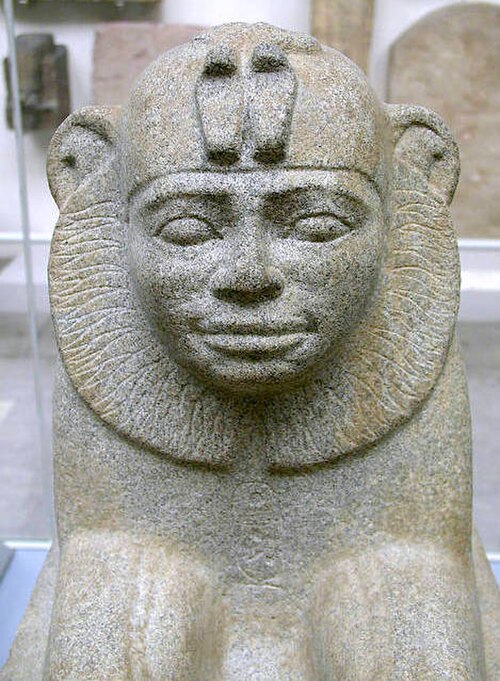
現在のスーダン北部とエジプト南部にまたがるヌビアは、ギリシャ人からは「エチオピア」(「焼けた顔の国」)と呼ばれていました。[43]最盛期のヌビアは、サハラ以南のアフリカ最古の都市文明と考えられています。ヌビアは古代世界にとって主要な金の産地でした。ヌビア人は有名な建造物や数多くのピラミッドを建設しました。古代ヌビアの遺跡であるスーダンには、世界のどこよりも多くのピラミッドがあります。[44] [より良い情報源が必要]
アフリカの角

アクスム帝国は、サハラ南部、アラビア南部、紅海西岸のサヘル地域に広がっていた。エチオピア北部とエリトリアに位置していたアクスムは、インドと地中海を結ぶ貿易ネットワークに深く関わっていた。プロトアクスム鉄器時代(紀元前4世紀頃)から発展し、紀元1世紀までに隆盛を極めた。アクスム人は、エザナ王の石碑など、王の墓を覆う一枚岩の石碑を建造した。12世紀に成立した後のザグウェ王朝は、固い岩をくり抜いて教会を建てた。これらの岩窟建造物には、ラリベラの聖ジョージ教会などがある。

古代ソマリアでは、オポネ、モシロン、マラオなどの都市国家が繁栄し、豊かなインド・グレコ・ローマ貿易をめぐってサバ人、パルティア人、アクスム人と競争していた。[45]
中世には、水利工学と要塞建設に優れていたアジュラン・スルタン国[46] 、エチオピア帝国を征服した際に大陸で大砲戦を行った史上初のアフリカ人司令官であるアフメド・グレイ将軍を擁したアダル・スルタン国[47]、そして軍事的優位性によりラム市北部のオマーン帝国の知事にソマリアのスルタン、アフメド・ユスフへの貢物を支払わせたゲレディ・スルタン国など、いくつかの強力なソマリア帝国がこの地域の貿易を支配していた。 [ 48 ] [ 49] [50]
南東アフリカ
科学界で主流となっている現代人のアフリカ起源説によれば、すべての人類は南東アフリカかアフリカの角に起源を持つ。[51]紀元1千年紀にナイル語族とバントゥー語族がこの地域に移住し、現在では後者がケニアの人口の4分の3を占めている。

東南アフリカの沿岸部では、イスラム教徒の アラブ人やペルシャ人商人との接触を通じてバンツー系混血コミュニティが発達し、アラブ人、ペルシャ人、アフリカ人混血のスワヒリ人都市国家の発展につながった。[52]これらの交流から生まれたスワヒリ文化には、バンツー系スワヒリ人の多くのアフロ・アラブ人と同様に、伝統的なバンツー文化には見られない多くのアラブとイスラムの影響が表れている。元々の言語コミュニティはタンザニア(特にザンジバル)とケニアの沿岸部(スワヒリ海岸 と呼ばれる海岸地帯)に集中しており 、バンツー・スワヒリ語にはこれらの交流の結果として多くのアラビア語からの借用語が含まれている。[53]
ケニアとタンザニアの南東海岸に住んでいた最古のバントゥー族の住民は、紀元50年から500年にかけての初期のギリシャ語と中国語の文献に言及されているラプタ、アザニア、メノウティアスの交易集落と様々に特定されている。 [ 54 ] [55] [56] [57] [58] [59] [60] [61] [62]これらの初期の文献は、移住中に南東アフリカに到達したバントゥー族の入植者の第一波を記録していると思われる。[63]
14世紀から15世紀にかけて、ブガンダ王国[64] 、ブニョロ王国、ウガンダ王国、タンザニア王国[64]など、大規模な中世南東アフリカの王国や国家が出現しました。
1960 年代初頭、東南アジア諸国は植民地支配からの独立を達成しました。
南アフリカ
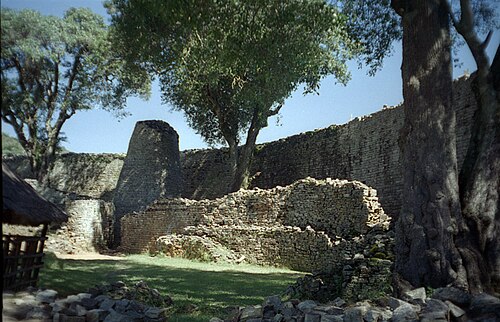
4世紀または5世紀には、鉄を使用して農耕や牧畜を行っていたバントゥー語族の集落がすでにリンポポ川の南に存在しており、元々のコイサン語族を追い出して吸収していた。彼らはゆっくりと南に移動し、現在のクワズール・ナタール州にある最古の製鉄所は1050年頃のものだと考えられている。最南端のグループはコサ族で、その言語には以前のコイサン族の言語的特徴がいくつか取り入れられている。彼らは現在の東ケープ州のフィッシュ川に到達した。モノモタパは中世の王国(1250年頃 - 1629年)で、南アフリカのザンベジ川とリンポポ川の間、現在のジンバブエとモザンビークの領域に存在していた。旧首都はグレート・ジンバブエにあった。
1487年、バルトロメウ・ディアスは、アフリカの最南端に到達した最初のヨーロッパ人となった。1652年、オランダ東インド会社に代わってヤン・ファン・リーベックが喜望峰に補給所を設立した。17世紀と18世紀のほとんどの間、ゆっくりと拡大していたこの入植地はオランダの領土であった。1795年、フランス革命戦争中にこのオランダの植民地はイギリスに占領された。イギリスは、ケープタウンをオーストラリアとインドへの航路の主要港として利用するつもりだった。ケープタウンはその後1803年にオランダに返還されたが、その後まもなくオランダ東インド会社は破産を宣言し、オランダ(今やフランスの支配下にあった)とイギリスは再び戦争状態となった。イギリスは、サー・デイヴィッド・ブレアが指揮したブラウベルクの戦いで、再びオランダの領土を占領した。ズールー王国は、現在の南アフリカ南東部のクワズール・ナタール州にあった南アフリカの部族国家であった。この小さな王国は、アングロ・ズールー戦争での敗北中および敗北後に世界的な名声を得た。1950年代から1960年代初頭にかけて、サハラ以南のアフリカ諸国のほとんどが植民地支配からの独立を達成した。[65]
人口統計
人口
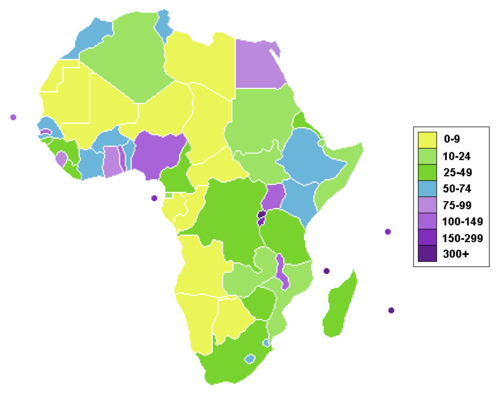

世界人口見通し2022年改訂版[66] [67]によると、サハラ以南のアフリカの人口は2019年に11億人だった。現在の成長率は2.3%である。国連は、この地域の人口は2050年までに20億から25億の間になると予測している[68]。人口密度は1km2あたり80人であり、西ヨーロッパの170人、アジアの140人、南北アメリカ大陸の30人と比較して高い。
サハラ以南のアフリカ諸国は、出生率上位50カ国のうち40カ国を占め、 2008年の合計特殊出生率はいずれも4を超えており、出生率で上位を占めている。南アフリカとセーシェルを除くすべての国が世界平均を上回っている。 [69]サハラ以南の諸国の人口の40%以上は15歳未満であり、南アフリカを除くスーダンも同様である。 [70]
一人当たりGDP(購買力平価) (2016年、2017年(購買力平価、米ドル))、生命(予想) (平均寿命2006年)、識字率(男性/女性2006年)、トランス (透明性2009年)、HDI (人間開発指数)、EODBR (ビジネスのしやすさランキング2008年6月から2009年5月)、SAB(起業しやすさ2008年6月から2009年5月)、PFI (報道の自由度指数2009年)
言語と民族

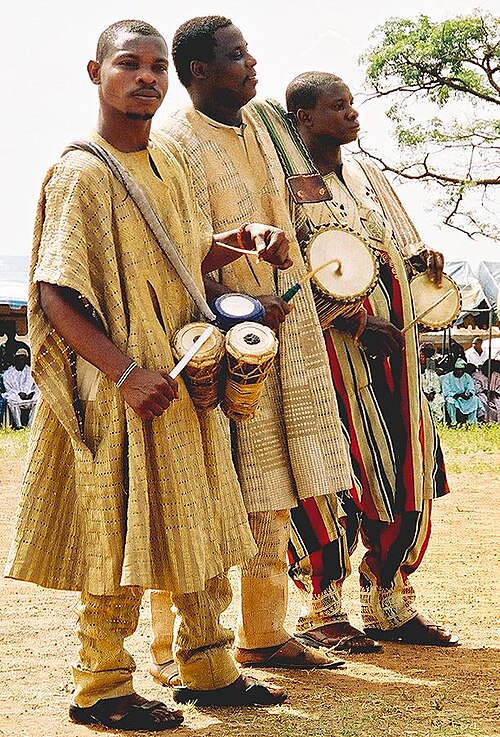


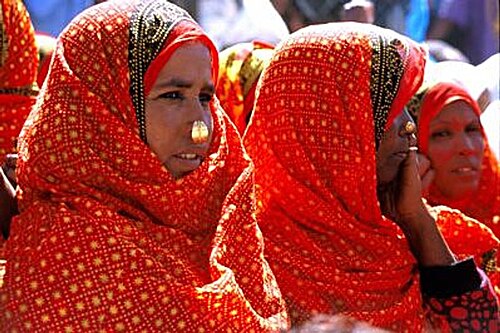

サハラ以南のアフリカには 1,500 を超える言語が存在します。
アフロアジア人
メソポタミアの絶滅したシュメール語(孤立言語)を除けば、アフロアジア語族は世界で最も古い記録された言語族である。エジプト語は紀元前3200年という早い時期に記録されている。セム語族はメソポタミア(アッシリアとバビロニア)のアッカド語の形で紀元前2900年、シリア北東部のエブラ語の形で紀元前2500年頃に記録されている。[77]
アフロアジア語族のアフリカにおける分布は、主に北アフリカとアフリカの角に集中している。同語族のベルベル語派に属する言語は主に北部で話されており、その話域はサヘル(モーリタニア北部、マリ北部、ニジェール北部)にまで広がっている。[78] [79]アフロアジア語族のクシ語派はアフリカの角を中心としており、ナイル川流域やアフリカ大湖地域の一部でも話されている。さらに、同語族のセム語派はアラビア語として、アラブ世界に属するアフリカの一部で広く話されている。南セム語派もアフリカの角(エチオピア、エリトリア)の一部で話されている。チャド語派は中央アフリカと西アフリカに分布している。[80]最も広く話されている ハウサ語は、西アフリカ(ニジェール、ガーナ、トーゴ、ベナン、カメルーン、チャド)の共通語となっている。[81]
コイサン
コイサン語族という用語でひとまとめにされるいくつかの語族には、南アフリカとタンザニアに固有の言語が含まれますが、コイ語族などの一部の言語は、バントゥー族の拡大の少し前に現在の場所に移動したようです。[82]南アフリカでは、コイコイ族とサン族(ブッシュマン)、南東アフリカではサンダウェ族とハッザ族が話しています。
ニジェール・コンゴ
ニジェール・コンゴ語族は、含まれる言語の数(1,436)の点で世界最大である。[83]この語族の言語の大部分は、ヨルバ語やイボ語のように声調がある。しかし、フラニ語、ウォロフ語、スワヒリ語など他の言語は声調がない。ニジェール・コンゴ語族の主要な支族はバントゥー語族であり、他の語族よりも広い地理的領域をカバーしている。バントゥー語話者は、南部、中央、南東部アフリカの住民の大部分を占めているが、サン族、ピグミー族、ナイル語族もそれぞれこれらの地域に生息している。バントゥー語話者は、ガボン、赤道ギニア、南カメルーンなど、中央アフリカの一部にも生息している。スワヒリ語は、アラビア語、ペルシア語、その他の中東および南アジアからの借用語を多く含むバントゥー語族であり、南東部アフリカのさまざまな民族間の貿易のための共通語として発達した。南アフリカのカラハリ砂漠には、ブッシュマン(「サン」とも呼ばれ、「ホッテントット」と密接な関係があるが、異なる)として知られる独特の民族が古くから存在しています。サンは独特の身体的特徴を示し、南アフリカの先住民です。ピグミーは中央アフリカの先住民であるバントゥー族です。
ナイル・サハラ
ナイル・サハラ諸語は、中央アフリカと南東アフリカのシャリ川とナイル川の上流域に集中している。これらの言語は主にナイル川に住む人々によって話されており、スーダンではフール族、マサリット族、ヌビア人、ザガワ族の間で、西アフリカと中央アフリカではソンガイ族、ザルマ族、カヌリ族の間でも話されている。古ヌビア語もこの語族に属する。
アフリカの主要言語(地域別、語族別、主要言語話者 数(百万単位)):
遺伝的歴史
主要都市
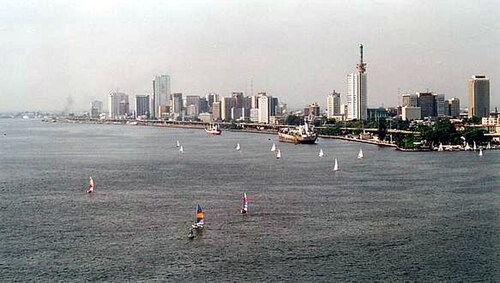

サハラ以南のアフリカには大都市がいくつかある。ラゴスはナイジェリア のラゴス州にある都市である。この都市は隣接する大都市圏とともにナイジェリアで最も人口が多く、アフリカではエジプトのカイロに次いで2番目に人口が多い。世界で最も急速に成長している都市の一つであり[118] [ 119 ] [120] [121] [122] [123] [124] 、最も人口の多い都市圏の一つでもある。[125] [126]ラゴスはアフリカの主要な金融センターであり、この巨大都市はGDPが最も高く[127] 、大陸で最大かつ最も忙しい港の一つであるアパパがある。 [128] [129] [130]
ダルエスサラームはタンザニアの旧首都であり、同国で最も人口の多い都市でもあり、地域的に重要な経済の中心地である。[131]スワヒリ海岸に位置する。
ヨハネスブルグは南アフリカ最大の都市である。南アフリカで最も裕福な州であるハウテン州の州都であり、同州の最大の都市である。 [132]ヨハネスブルグは南アフリカの3つの首都の1つではないが、憲法裁判所が置かれている。この都市は鉱物資源の豊富なウィットウォーターズランド山脈に位置し、大規模な金とダイヤモンドの取引の中心地となっている。
ナイロビはケニアの首都であり、最大の都市である。名前はマサイ語の「エンカレ・ニロビ」に由来し、「冷たい水」と訳され、市内を流れるナイロビ川を指している。この都市は一般に「太陽の緑の都市」と呼ばれている。[133]
サハラ以南のアフリカの他の主要都市としては、アビジャン、ケープタウン、キンシャサ、ルアンダ、モガディシュ、アディスアベバなどがあります。
経済
2010年代半ばには、主にBRICs諸国、民間投資ポートフォリオ、送金からの民間資本がサハラ以南のアフリカに流入し、政府開発援助を上回り始めました。[134]

2011年現在、アフリカは世界で最も急速に発展している地域の一つである。過去10年間で世界で最も急速に成長した10カ国のうち6カ国はサハラ以南に位置し、残りの4カ国は東アジアと中央アジアにある。世界銀行によると、この地域の経済成長率は2013年に4.7%に上昇した。この継続的な上昇は、インフラと資源への投資の増加と、世帯当たりの安定した支出によるものである。[135]
2019年、サハラ以南のアフリカでは4億2400万人が深刻な貧困状態にあると報告されている。2022年には、COVID -19パンデミックとロシアのウクライナ侵攻の結果、4億6000万人(わずか3年で3600万人増加)が極度の貧困状態にあると予想されている。[136] [137] [138]サハラ以南のアフリカの政府債務は、2012年の国内総生産( GDP)の28%から2019年には国内総生産(GDP)の50%に増加した。COVID-19パンデミックにより、2021年には国内総生産(GDP)の57%に上昇した。 [139] [140] [141]
サハラ以南アフリカは、政府収入が2011年のGDPの22%から2021年には17%に減少したことで大きな打撃を受けた。IMFによると、15のアフリカ諸国が(または現在)重大な債務リスクに陥っており、7か国が(2021年に)金融危機に陥っている。[142] [143] [144]この地域は、重要な公共支出を支援するために、2021年に230億ドルのIMF特別引出権を 受け取った。 [145]
エネルギーと電力
_(30010633237).png/500px-Sub-Saharan_Africa_electricity_generation_mix_(2005-2015)_(30010633237).png)
2009年時点で[update]、アフリカの50%は電力にアクセスできない農村地帯でした。2021年、アフリカは889TWhの電力を生産し、世界の市場シェアの3.13%を占めました。[146]多くの国が(2009年時点で)電力不足の影響を受けました。[147]
サハラ以南のアフリカでは、電気を利用できる住宅の割合が世界で最も低い。一部の遠隔地では、20世帯のうち1世帯未満しか電気を利用できない。[148] [149] [150]

石炭や石油などの商品価格の上昇により、熱エネルギー源は発電には高価すぎることが判明している。サハラ以南アフリカは1,750 TWhのエネルギーを生産する潜在力があるが、そのうち7%しか開発されていない。そのエネルギー潜在力を十分に活用できていないのは、投資が大幅に不足していることが主な原因で、少なくともその4倍(年間約230億ドル)の資金が、インフラの拡張ではなく、高コストの電力システムの運用に投資されている。[151]
アフリカ諸国政府は、容易に入手できる水資源を利用して、エネルギーミックスを拡大している。サハラ以南アフリカの水力タービン市場は、2007年に1億2000万ドルの収益を生み出し、4億2500万ドルに達すると推定されている。[いつ? ] アジア諸国、特に中国、インド、日本は、アフリカ大陸の電力プロジェクトで積極的な役割を果たしている。これらの電力プロジェクトの大部分は、中国が水力発電プロジェクトの建設で豊富な経験を持ち、エネルギーと電力の成長パートナーシップサービスプログラムの一部であるため、水力発電に基づいている。[152]
電化率の面から見て、サハラ砂漠に面し熱帯地域に位置するサハラ以南のアフリカは、太陽光発電の潜在的可能性が非常に高い。[153]太陽光発電の潜在的可能性に基づき、6億人に電力を供給することができる。[154] [検証失敗] 2003年、中国は今後5年間でアフリカおよびその他の開発途上国の技術者1万人に太陽エネルギー技術の利用方法を訓練することを約束した。アフリカの技術者に太陽光発電を利用するよう訓練することは、2003年12月に温家宝首相がエチオピアを訪問した際に、中国の徐冠華科学技術相とアフリカのカウンターパートが署名した中国・アフリカ科学技術協力協定の一部である。 [155]
アフリカ開発のための新パートナーシップ(NEPAD)は、統合された大陸規模のエネルギー戦略を策定している。これは、アフリカ開発銀行(AfDB)やEUアフリカインフラ信託基金などから資金提供を受けている。これらのプロジェクトは、持続可能で、国境を越えた側面を持ち、地域的な影響を持ち、公的および民間の資本が関与し、貧困緩和と経済発展に貢献し、サハラ以南アフリカの少なくとも1か国が関与している必要がある。[151]
再生可能エネルギーパフォーマンスプラットフォームは、サハラ以南のアフリカの少なくとも200万人のエネルギーアクセスを改善するという5年間の目標を掲げ、欧州投資銀行と国連環境計画によって設立されました。これまでに、サハラ以南のアフリカ13か国で再生可能エネルギープロジェクトに約4,500万ドルを投資してきました。プロジェクトで使用されているエネルギー方法には、太陽光発電と水力発電があります。 [148] [156]
メディア
2007年、サハラ以南のアフリカではラジオが主要な情報源であった。[157]平均カバー率は人口の3分の1以上である。ガボン、セイシェル、南アフリカなどの国では、ほぼ100%の普及率を誇っている。ブルンジ、ジブチ、エリトリア、エチオピア、ソマリアの5か国だけが、まだ普及率が10%未満である。南アフリカ以外の地域では、ブロードバンドの普及は法外な費用がかかるため限られている。[158] [159]携帯電話によるインターネットへのアクセスは増加している。[160]
テレビは2番目に大きな情報源である。[157]電力不足のため、テレビ視聴の普及は限られている。テレビを持っている人は8%で、合計6200万人である。テレビ業界関係者は、この地域を未開拓のグリーン市場と見なしている。デジタルテレビと有料サービスが増加している。[161]
石油と鉱物

この地域は、金、ウラン、クロム、バナジウム、アンチモン、コルタン、ボーキサイト、鉄鉱石、銅、マンガンの世界への主要輸出国である。南アフリカは、ガボンやガーナとともに、世界のマンガンの60%以上を供給しており、クロムの主要輸出国でもある。[162] [163] 2001年の推定では、世界のクロム埋蔵量の42%が南アフリカにある可能性がある。[164]南アフリカはプラチナの最大生産国であり、世界の年間鉱山生産量全体の80%、世界のプラチナ埋蔵量の88%を占めている。[165]サハラ以南のアフリカは世界のボーキサイトの33%を生産しており、ギニアが主な供給国である。[166]ザンビアは銅の主要生産国である。[167]コンゴ民主共和国はコルタンの主な産出国である。コンゴ民主共和国の産出量は非常に少ないが、同国はアフリカの確認埋蔵量の80%を保有しており、アフリカの確認埋蔵量は世界の80%を占めている。[168]サハラ以南のアフリカは金の主要産出国であり、世界の生産量の最大30%を生産している。主な供給国は南アフリカ、ガーナ、ジンバブエ、タンザニア、ギニア、マリである。貴金属コンサルタント会社GFMSによると、南アフリカは1905年以来金の生産量で世界一であったが、2007年に2位に浮上した。[169]ウランはこの地域の主要商品である。重要な供給国はニジェール、ナミビア、南アフリカである。ナミビアは2008年にサハラ以南のアフリカからの第1位の供給国であった。[170]この地域は世界のダイヤモンドの49%を生産している。
サハラ以南のアフリカは、中東よりも少ない、確認済み石油埋蔵量のわずか 10% しか保有していないにもかかわらず、西側諸国、中国、インド、その他の新興経済国による激しい石油争奪戦の焦点となっている。この争奪戦は、第 2 次アフリカ争奪戦と呼ばれている。この世界的な争奪戦の理由はすべて、埋蔵量の経済的利益によるものである。輸送コストは低く、中央アジアのようにパイプラインを敷設する必要はない。埋蔵量のほとんどは沖合にあるため、受入国の政治的混乱が直接操業に影響を及ぼすことはない。サハラ以南の石油は粘性が高く、硫黄含有量が非常に低い。そのため、精製プロセスが迅速化され、コストが効果的に削減される。サハラ以南のアフリカでは、他のどの地域よりも頻繁に新たな石油源が見つかっている。新たな石油源の1/3 はサハラ以南のアフリカにある。[171]
サハラ以南のアフリカは世界の鉱物市場の主要プレーヤーであり、世界のコバルトの70%以上を生産し、その埋蔵量の約50%をコンゴ民主共和国(DRC)に保有しています。この地域には、ジンバブエ、コンゴ民主共和国、マリに重要なリチウム鉱床もあります。[163]
農業
.jpg/500px-Rwanda_GV5_lo_(4108942310).jpg)
サハラ以南のアフリカには、世界のどこよりも多様な穀物が栽培されている。紀元前13,000年から11,000年の間に、エジプト南部のナイル川の急流地域で、野生の穀物が食料源として採集され始めた。食料源としての野生の穀物の採集は、紀元前11千年紀までにシリア、トルコの一部、イランに広がった。ナイル川から野生の穀物を採集するという概念が広まった後、西南アジア人は10千年紀から9千年紀までに、野生の穀物、小麦、大麦を栽培化した。[172]
この地域では数多くの作物が栽培化され、世界の他の地域に広まっています。これらの作物には、ソルガム、ヒマ豆、コーヒー、綿花、[173] オクラ、ササゲ、スイカ、ヒョウタン、トウジンビエが含まれます。その他の栽培化された作物には、テフ、エンセト、アフリカ米、ヤムイモ、コーラナッツ、アブラヤシ、ラフィアヤシが含まれます。[172] [174]
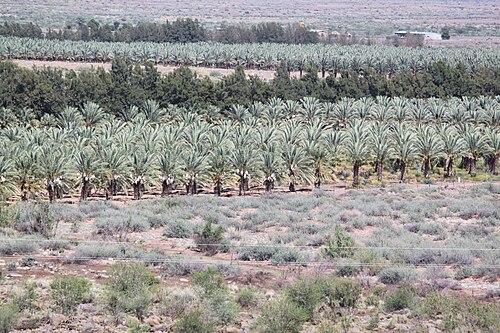
農業はGDPの20~30%、輸出の50%を占める。労働力の60~90%が農業に従事しているケースもある。[175]農業活動のほとんどは自給自足農業である。このため、農業活動は気候変動や地球温暖化の影響を受けやすい。現時点で、サハラ以南アフリカでは100万平方キロメートルに及ぶ土地が劣化している。[176]バイオテクノロジーは、小規模農家の手で高収量、害虫や環境に対する耐性のある作物を生み出すために提唱されてきた。ビル&メリンダ・ゲイツ財団はこの大義を強く支持し、寄付を行っている。バイオテクノロジーと遺伝子組み換え作物は、先住民と環境保護団体の両方から抵抗を受けている。
換金作物には綿花、コーヒー、紅茶、ココア、砂糖、タバコなどがある。[177]
OECDは、農民が土地を担保として融資を受けることを認めることでサバンナの富を解き放つことができれば、アフリカは農業超大国になる可能性があると述べている。[178]サハラ以南アフリカの農業に対する国際的な関心は非常に高く、世界銀行は2011年度にアフリカの農業プログラムへの融資を13億ドルに増額した。[179]最近、発展途上国が農業用にサハラ以南アフリカの広大な土地を購入する傾向がある。[180] [181] 2009年初頭、ジョージ・ソロスは人口増加、水資源不足、気候変動によって引き起こされた新たな農地購入狂乱を強調した。中国の利権はセネガルにゴマを供給するために広大な土地を買収した。サハラ以南アフリカの広大な農地を購入しようとする中国、韓国、湾岸諸国の積極的な動きは、まもなく新たな世界的な国際議定書によって制限される可能性がある。[182]
インフラストラクチャー
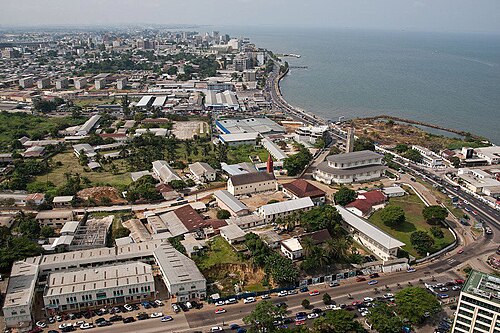
海外開発研究所の研究者によると、多くの発展途上国におけるインフラの欠如は、経済成長とミレニアム開発目標(MDGs)の達成に対する最も重大な制約の一つとなっている。[151] [180] [181]インフラへの投資と維持は、特にアフリカの内陸国、農村部、人口密度の低い国のような地域では非常に高額になる可能性がある。[151]
インフラ投資はアフリカの成長に貢献しており、成長を維持し貧困に取り組むためには投資の増加が必要である。[151] [180] [181]インフラへの投資収益は非常に大きく、通信(ICT)投資では平均30~40%、発電では40%以上、道路では80%の収益となっている。[151]
アフリカでは、MDGsを達成するためには、インフラ投資がGDPの約15%(年間約930億ドル)に達する必要があると主張されている。[151]現在、資金源はセクター間で大きく異なっている。[151]一部のセクターは政府支出が主流であり、他のセクターは海外開発援助(ODA)が主流であり、さらに他のセクターは民間投資家が主流である。[151]サハラ以南アフリカでは、総額249億ドルのうち約94億ドルが政府支出である。[151]灌漑では、SSA諸国がほぼすべての支出を占め、輸送とエネルギーでは投資の大部分が政府支出であり、ICTと水供給と衛生では、民間部門が資本支出の大部分を占めている。 [151]全体として、援助、民間部門、および非OECD金融機関の合計は、政府支出を上回っている。[151] [151]対外資金調達は70億ドル(2002年)から270億ドル(2009年)に増加し、特に中国が重要な投資家として浮上した。[151]
輸送
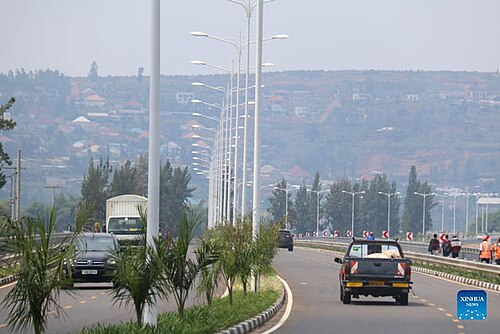
アフリカの農村部の住民のうち、四季を通じて利用できる道路から2キロ以内に住んでいるのは40%未満で、これは発展途上国における農村部のアクセスの最低レベルである。道路への支出は、国によって程度は異なるものの、平均してGDPの2%弱である。これは、工業国ではGDPの1%、急成長中の新興国ではGDPの2~3%であるのと対照的である。支出額はアフリカの経済規模に比べると高いが、絶対額では依然として低く、低所得国では1人当たり年間平均約7ドルを支出している。[183]
教育

アフリカの科学者の40%はOECD諸国に住んでおり、その大部分はヨーロッパ、アメリカ、カナダである。[184]これはアフリカの頭脳流出と呼ばれている。[185] [186]南アフリカの科学技術大臣ナレディ・パンドールによれば、頭脳流出があるにもかかわらず、サハラ以南のアフリカの大学の入学者数は1991年から2005年の間に3倍になり、年間8.7%の割合で拡大しており、これは世界でも最も高い地域成長率の1つである。[要出典]過去10年から15年で、海外で大学レベルの学位取得を目指す関心が高まっている。[184]
CIAによると、世界の識字率が低いのは、サハラ以南のアフリカ、西アジア、南アジアに集中している。しかし、サハラ以南のアフリカの識字率は国によって大きく異なる。この地域で最も高い登録識字率はジンバブエ(90.7%、2003年推定)で、最も低いのは南スーダン(27%)である。[187]
人的資本形成に関する研究により、サハラ以南のアフリカおよびアフリカ全体の算数能力は、南アジアの算数能力よりも高いことが判明した。1940年代には、サハラ以南のアフリカの人口の75%以上が算数能力を持っていた。西アフリカ諸国のベナンとガーナの算数能力はさらに高く、人口の80%以上が算数能力を持っていた。対照的に、南アジアの算数能力はわずか50%程度であった。[188]
サハラ以南のアフリカ諸国では、多様性が高いほど経済が貧しくなることが分かっている。研究者は、これは政治における民族偏愛によるものだと主張している。サハラ以南の指導者は権力を握ると、同じ民族グループにより良い資源を提供する傾向がある。ある研究によると、平均して、偏愛されている民族グループの子どもは小学校に通う可能性が 2.25% 高く、小学校を修了する可能性が 1.80% 高い。GDP が 1% 増加すると、民族偏愛による小学校就学への影響が 1.5% 増加する。[189]
サハラ以南のアフリカ諸国は2007年にGDPの平均0.3%を科学技術に費やした。これは2002年の18億ドルから2007年の28億ドルに増加しており、支出が50%増加したことになる。[190] [191]
教育へのアクセスにおける大きな進歩

1990年にタイのジョムティエンで開催された世界会議には、155か国の代表者と約150の組織の代表が集まり、 10年後までに初等教育の普遍化と非識字率の大幅な削減を推進するという目標を掲げた。10年後にセネガルのダカールで開催された世界教育フォーラムは、これらの目標を改めて表明し、強化する機会となった。この取り組みは、 2000年のミレニアム開発目標において教育が優先事項とされることに貢献し、学校教育の普遍化(MDG2)と、特に初等・中等教育における男女格差の解消(MDG3)の達成を目指した。[192]ダカールの世界教育フォーラム以来、教育に関するこれらの人口動態の課題に対応するために多大な努力がなされてきた。調達された資金の額は決定的なものであった。 1999年から2010年にかけて、サハラ以南のアフリカでは国民総生産(GNP)に占める教育への公的支出は毎年5%増加したが、国によって大きな差があり、カメルーンの1.8%からブルンジの6%以上まで様々であった。 [193] 2015年現在、サハラ以南のアフリカ諸国の政府は平均して総予算の18%を教育に費やしているが、世界の他の地域では15%である。[192]
ダカール・フォーラムの直後、アフリカ諸国がEFA達成に向けて行った努力は、サハラ以南アフリカで多くの成果を生んだ。最も大きな進歩は、政府が絶対的な優先事項としていた初等教育へのアクセスであった。サハラ以南アフリカの小学校に通う児童の数は、1999年の8,200万人から2011年には1億3,640万人に増加した。例えばニジェールでは、就学児童の数は1999年から2011年の間に3.5倍以上に増加した。[193]エチオピアでは、同じ期間に850万人以上の児童が小学校に入学した。サハラ以南アフリカにおける初年度の就学率は、1999年の58%から2011年の77%へと、12年間で19ポイント上昇した。多大な努力にもかかわらず、ユネスコ統計研究所の最新データによると、2012年には、まだ5,780万人の子供が学校に通っていないと推定されている。このうち、2,960万人はサハラ以南アフリカだけでおり、この数字は数年間変わっていない。[192]多くのサハラ以南アフリカ諸国では、中等学校1年目を基礎教育に含めることが顕著である。ルワンダでは、2009年に中等学校1年目を初等教育に組み入れ、このレベルの教育を受ける生徒数が大幅に増加した。[193] [192] 2012年には、小学校最終学年に到達する児童の割合を測定する小学校修了率(PCR)は70%であり、小学校に入学する児童の10人中3人以上が最終学年に到達していないことを意味している。[192]
サハラ以南のアフリカでは識字率が上昇し、インターネットへのアクセスも大幅に改善した。サハラ以南のアフリカの少なくとも39カ国には、教育へのアクセスを改善できる大規模な学校給食プログラムがある。この地域では、全体で16%の学齢児童(小学校就学児童の25%)が学校給食プログラムの恩恵を受けており、これらのプログラムの資金の約82%は政府によって提供されている。[194]とはいえ、この地域が追いつくには、まだ多くのことが起きなければならない。統計によると、サハラ以南のアフリカの識字率は2017年には65%だった。言い換えれば、15歳以上の3分の1の人が読み書きができなかったということだ。1984年の比較数値は、非識字率が49%だった。国際電気通信連合(ITU)によると、2017年には、アフリカ人の約22%だけがインターネットユーザーだった。[195]
科学技術
健康

サハラ以南のアフリカにおける健康上の課題には、アフリカにおけるHIV/エイズ、マラリア、顧みられない熱帯病、結核、オンコセルカ症、妊産婦死亡率、乳児死亡率などがある。[196] [197] [198] [199] [200]
1987年、世界保健機関が主催するバマコ・イニシアティブ会議がマリの首都バマコで開催され、サハラ以南アフリカの保健政策の再構築に貢献した。[201]この新しい戦略は、地域密着型の医療改革を通じてアクセス性を劇的に向上させ、より効率的で公平なサービスの提供につながった。[202] [自費出版ソース? ]包括的アプローチ戦略は医療のあらゆる分野に拡大され、医療指標の改善と医療の効率およびコストの改善につながった。[203] [204]

2011年、サハラ以南のアフリカには、世界中のHIV/エイズ感染者の69%が住んでいた。 [205]これに対応して、HIV/エイズについて一般の人々を啓蒙するための多くの取り組みが開始された。その中には、最も効果的であると考えられている複合予防プログラム、禁欲、貞操、コンドームの使用キャンペーン、デズモンド・ツツHIV財団のアウトリーチプログラムなどがある。[206]国連合同エイズ計画(UNAIDS)が2013年に発表した特別報告書によると、2012年に抗レトロウイルス治療を受けたアフリカのHIV陽性者の数は、2005年に治療を受けた数の7倍以上であり、昨年だけでほぼ100万人増加した。[207] [208] : 15 2011年のサハラ以南のアフリカにおけるエイズ関連の死亡者数は、2005年よりも33%減少した。[209] 2011年のサハラ以南のアフリカにおける新規HIV感染者数は、2001年よりも25%減少した。[209]
サハラ以南のアフリカの出生時平均寿命は1960年の40歳から2017年には61歳に増加した。 [210]
Malaria is an endemic illness in sub-Saharan Africa, where the majority of malaria cases and deaths worldwide occur.[211] Routine immunization has been introduced in order to prevent measles.[212] Onchocerciasis ("river blindness"), a common cause of blindness, is also endemic to parts of the region. More than 99% of people affected by the illness worldwide live in 31 countries therein.[213] In response, the African Programme for Onchocerciasis Control (APOC) was launched in 1995 with the aim of controlling the disease.[213] Maternal mortality is another challenge, with more than half of maternal deaths in the world occurring in sub-Saharan Africa.[214] However, there has generally been progress here as well, as a number of countries in the region have halved their levels of maternal mortality since 1990.[214] Additionally, the African Union in July 2003 ratified the Maputo Protocol, which pledges to prohibit female genital mutilation (FGM).[215][216] Somalia, Guinea, Djibouti, Sierra Leone and Mali have the highest prevalence of FGM in the world.[217] Infibulation, the most extreme form of FGM, is concentrated primarily in Northeast Africa.[218]
National health systems vary between countries. In Ghana, most health care is provided by the government and largely administered by the Ministry of Health and Ghana Health Services. The healthcare system has five levels of providers: health posts which are first-level primary care for rural areas, health centers and clinics, district hospitals, regional hospitals, and tertiary hospitals. These programs are funded by the government of Ghana, financial credits, Internally Generated Fund (IGF), and Donors-pooled Health Fund.[219]
Ebola virus disease, which was first identified in 1976, occasionally occurs in outbreaks in tropical regions of Sub-Saharan Africa.[220] The 2013–2016 Western African Ebola virus epidemic originated in Guinea, later spreading to neighboring Liberia and Sierra Leone.[221]
Religion

African countries below the Sahara are largely Christian, while those above the Sahara, in North Africa, are predominantly Islamic. There are also Muslim majorities in parts of the Horn of Africa (Djibouti and Somalia) and in the Sahel and Sudan regions (the Gambia, Sierra Leone, Guinea, Mali, Niger, Senegal and Burkina Faso), as well as significant Muslim communities in Ethiopia and Eritrea, and on the Swahili Coast (Tanzania, Mozambique and Kenya).[222] [223] West Africa is the only subregion of sub-Saharan Africa which has a Muslim majority population, and Nigeria has the largest Muslim population in sub-Saharan Africa.[223]
Mauritius is the only country in Africa to have a Hindu majority. In 2012, sub-Saharan Africa constituted in absolute terms the world's third largest Christian population, after Europe and Latin America respectively.[224] In 2012, sub-Saharan Africa also constituted in absolute terms the world's third largest Muslim population, after Asia and the Middle East and North Africa respectively.[225]
Traditional African religions are also commonly practiced across sub-Saharan Africa, with these religions being especially common in South Sudan,[226] Guinea Bissau,[227] Mozambique,[228] and Cameroon.[229] Traditional African religions can be broken down into linguistic cultural groups, with common themes. Among Niger–Congo-speakers is a belief in a creator god or higher deity, along with ancestor spirits, territorial spirits, evil caused by human ill will and neglecting ancestor spirits, and priests of territorial spirits.[230][231][232][233] New world religions such as Santería, Vodun, and Candomblé, would be derived from this world. Among Nilo-Saharan speakers is the belief in Divinity; evil is caused by divine judgement and retribution; prophets as middlemen between Divinity and man. Among Afro-Asiatic-speakers is henotheism, the belief in one's own gods but accepting the existence of other gods; evil here is caused by malevolent spirits. The Semitic Abrahamic religion of Judaism is comparable to the latter world view.[234][230][235] San religion is non-theistic but a belief in a Spirit or Power of existence which can be tapped in a trance-dance; trance-healers.[236]
Generally, traditional African religions are united by an ancient complex animism and ancestor worship.[237]
Traditional religions in sub-Saharan Africa often display complex ontology, cosmology and metaphysics. Mythologies, for example, demonstrated the difficulty fathers of creation had in bringing about order from chaos. Order is what is right and natural and any deviation is chaos. Cosmology and ontology is also neither simple or linear. It defines duality, the material and immaterial, male and female, heaven and earth. Common principles of being and becoming are widespread: Among the Dogon, the principle of Amma (being) and Nummo (becoming), and among the Bambara, Pemba (being) and Faro (becoming).[238]
- West Africa
- Akan mythology
- Ashanti mythology (Ghana)
- Dahomey (Fon) mythology
- Efik mythology (Nigeria, Cameroon)
- Igbo mythology (Nigeria)
- Serer religion and Serer creation myth (Senegal, Gambia and Mauritania)
- Yoruba mythology (Nigeria, Benin)
- Central Africa
- Dinka mythology (South Sudan)
- Lotuko mythology (South Sudan)
- Bushongo mythology (Congo)
- Bambuti (Pygmy) mythology (Congo)
- Lugbara mythology (Congo)
- Southeast Africa
- Akamba mythology (eastern Kenya)
- Masai mythology (Kenya, Tanzania)
- Southern Africa
- Khoisan religion
- Lozi mythology (Zambia)
- Tumbuka mythology (Malawi)
- Zulu mythology (South Africa)
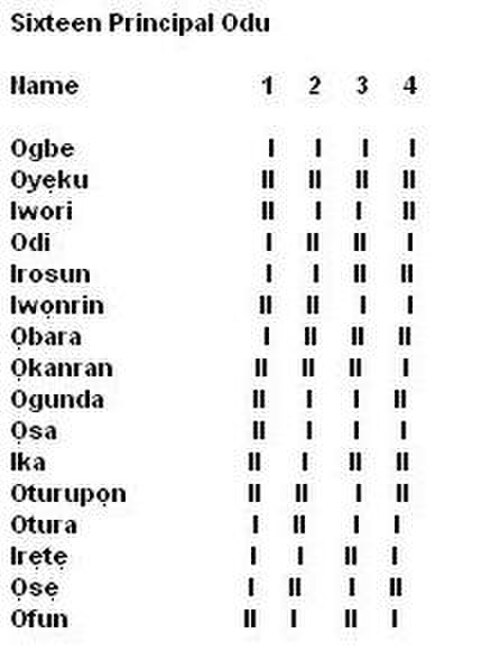
Sub-Saharan traditional divination systems display great sophistication. For example, the bamana sand divination uses well established symbolic codes that can be reproduced using four bits or marks. A binary system of one or two marks are combined. Random outcomes are generated using a fractal recursive process. It is analogous to a digital circuit but can be reproduced on any surface with one or two marks. This system is widespread in sub-Saharan Africa.[239][page needed]
Culture
Sub-Saharan Africa is diverse, with many communities, villages, and cities, each with their own beliefs and traditions. Traditional African Societies are communal, they believe that the needs of the many far outweigh an individual's needs and achievements. Essentially, an individual's keep must be shared with other extended family members. Extended families are made up of various individuals and families who have shared responsibilities within the community. This extended family is one of the core aspects of every African community. "An African will refer to an older person as auntie or uncle. Siblings of parents will be called father or mother rather than uncle and aunt. Cousins will be called brother or sister". This system can be very difficult for outsiders to understand; however, it is no less important. "Also reflecting their communal ethic, Africans are reluctant to stand out in a crowd or to appear different from their neighbors or colleagues, a result of social pressure to avoid offense to group standards and traditions." Women also have a very important role in African culture because they take care of the house and children. Traditionally, in many cultures "men do the heavy work of clearing and ploughing the land, women sow the seeds, tend the fields, harvest the crops, haul the water, and bear the major burden for growing the family's food". Despite their work in the fields, women are expected to be subservient to men in some African cultures. "When young women migrate to cities, this imbalance between the sexes, as well as financial need, often causes young women of lower economic status, who lack education and job training, to have sexual relationships with older men who are established in their work or profession and can afford to support a girlfriend or two".[240]
Art

The oldest abstract art in the world is a shell necklace, dated to 82,000 years, in the Cave of Pigeons in Taforalt, eastern Morocco.[241] The second-oldest abstract form of art, and the oldest rock art, is found in the Blombos Cave at the Cape in South Africa, dated 77,000 years.[242] Sub-Saharan Africa has some of the oldest and most varied style of rock art in the world.[243]
Although sub-Saharan African art is very diverse, there are some common themes. One is the use of the human figure. Second, there is a preference for sculpture. Sub-Saharan African art is meant to be experienced in three dimensions, not two. A house is meant to be experienced from all angles. Third, art is meant to be performed. Sub-Saharan Africans have a specific name for masks. The name incorporates the sculpture, the dance, and the spirit that incorporates the mask. The name denotes all three elements. Fourth, art that serves a practical function. The artist and craftsman are not separate. A sculpture shaped like a hand can be used as a stool. Fifth, the use of fractals or non-linear scaling. The shape of the whole is the shape of the parts at different scales. Before the discovery of fractal geometry, Leopold Sedar Senghor, Senegal's first president, referred to this as "dynamic symmetry". William Fagg, a British art historian, has compared it to the logarithmic mapping of natural growth by biologist D'Arcy Thompson. Lastly, sub-Saharan African art is visually abstract, instead of naturalistic. Sub-Saharan African art represents spiritual notions, social norms, ideas, values, etc. An artist might exaggerate the head of a sculpture in relation to the body not because he does not know anatomy but because he wants to illustrate that the head is the seat of knowledge and wisdom.
The visual abstraction of African art was very influential in the works of modernist artists like Pablo Picasso, Henri Matisse, and Jacques Lipchitz.[244][245]
Architecture
Music
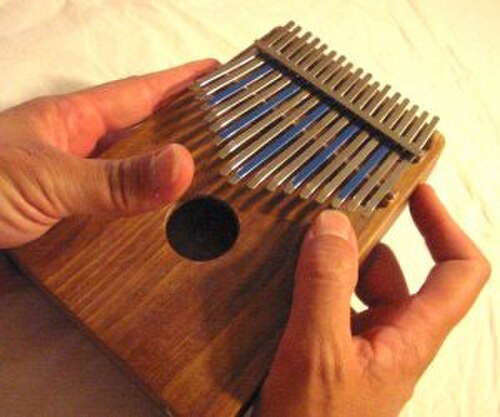
Traditional sub-Saharan African music is as diverse as the region's various populations. The common perception of sub-Saharan African music is that it is rhythmic music centered around the drums. This is partially true. A large part of sub-Saharan music, mainly among speakers of Niger–Congo and Nilo-Saharan languages, is rhythmic and centered around the drum. Sub-Saharan music is polyrhythmic, usually consisting of multiple rhythms in one composition. Dance involves moving multiple body parts. These aspects of sub-Saharan music has been transferred to the new world by enslaved sub-Saharan Africans and can be seen in its influence on music forms as samba, jazz, rhythm and blues, rock and roll, salsa, reggae and rap music.[246]
Some forms of sub-Saharan African music use strings, horns, and very little poly-rhythms. Music from the eastern Sahel and along the Nile, among the Nilo-Saharan, made extensive use of strings and horns in ancient times. Among the Afro-Asiatics of Northeast Africa, there is extensive use of string instruments and the pentatonic scale. Dancing involves swaying body movements and footwork. Among the San is extensive use of string instruments with emphasis on footwork.[247]
Modern sub-Saharan African music has been influenced by music from the New World (Jazz, Salsa, Rhythm and Blues etc.) vice versa being influenced by enslaved sub-Saharan Africans. Popular styles are Mbalax in Senegal and Gambia, Highlife in Ghana, Zoblazo in Ivory Coast, Makossa in Cameroon, Soukous in the Democratic Republic of Congo, Kizomba in Angola, and Mbaqanga in South Africa. New World styles like Salsa, R&B/Rap, Reggae, and Zouk also have widespread popularity.
Cuisine
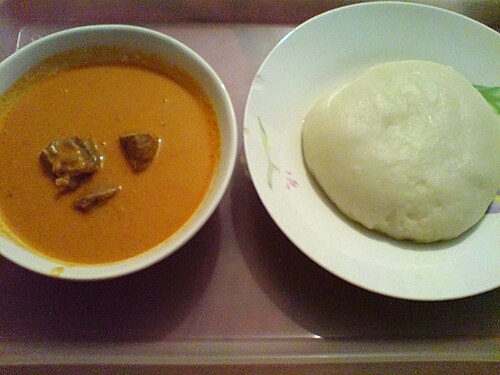
Sub-Saharan African cuisine is very diverse. A lot of regional overlapping occurs, but there are dominant elements region by region.[248]
West African cuisine can be described as starchy, flavorfully spicey. Dishes include fufu, kenkey, couscous, garri, foutou, and banku. Ingredients are of native starchy tubers, yams, cocoyams, and cassava. Grains include millet, sorghum, and rice, usually in the Sahel. Oils include palm oil and shea butter (Sahel). One finds recipes that mix fish and meat. Beverages are palm wine (sweet or sour) and millet beer. Roasting, baking, boiling, frying, mashing, and spicing are all cooking techniques.
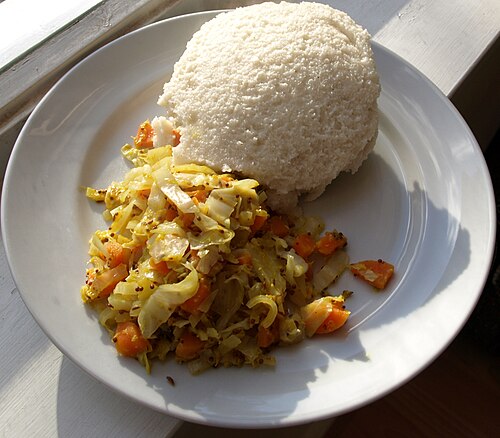
Southeast African cuisine, especially those of the Swahili people, reflects its Islamic, geographical Indian Ocean cultural links. Dishes include ugali, sukuma wiki, and halva. Spices such as curry, saffron, cloves, cinnamon, pomegranate juice, cardamon, ghee, and sage are used, especially among Muslims. Meat includes cattle, sheep, and goats, but is rarely eaten since meat is viewed as a luxury.
In the Horn of Africa, pork and non-fish seafood are avoided by Christians and Muslims. Dairy products and all meats are avoided during lent by Ethiopians. Maize (corn) is a major staple. Cornmeal is used to make ugali, a popular dish with different names. Teff is used to make injera or canjeero (Somali) bread. Other important foods include enset, noog, lentils, rice, banana, leafy greens, chili peppers, coconut milk, and tomatoes. Beverages are coffee (domesticated in Ethiopia), chai tea, fermented beer from banana or millet. Cooking techniques include roasting and marinating.
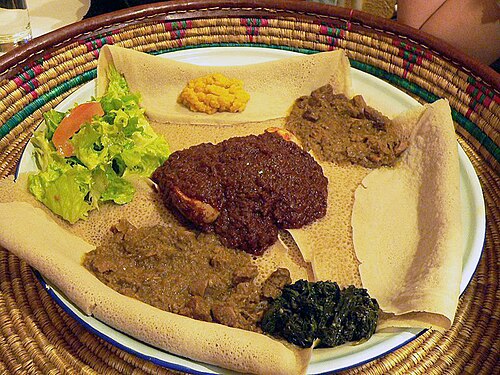
Central African cuisine connects with all major regions of sub-Saharan Africa: Its cuisine reflects that. Ugali and fufu are eaten in the region. Central African cuisine is very starchy and spicy hot. Dominant crops include plantains, cassava, peanuts, chillis, and okra. Meats include beef, chicken, and sometimes exotic meats called bushmeat (antelope, warthog, crocodile). Widespread spicy hot fish cuisine is one of the differentiating aspects. Mushroom is sometimes used as a meat substitute.
Traditional Southern African cuisine surrounds meat. Traditional society typically focused on raising sheep, goats, and especially cattle. Dishes include braai (barbecue meat), sadza, bogobe, pap (fermented cornmeal), milk products (buttermilk, yoghurt). Crops utilised are sorghum, maize (corn), pumpkin beans, leafy greens, and cabbage. Beverages include ting (fermented sorghum or maize), milk, chibuku (milky beer). Influences from the Indian and Malay communities can be seen in its use of curries, sambals, pickled fish, fish stews, chutney, and samosa. European influences can be seen in cuisines like biltong (dried beef strips), potjies (stews of maize, onions, tomatoes), French wines, and crueler or koeksister (sugar syrup cookie).
Clothing

Like most of the world, sub-Saharan Africans have adopted Western-style clothing. In some countries like Zambia, used Western clothing has flooded markets, causing great angst in the retail community. Sub-Saharan Africa boasts its own traditional clothing style. Cotton seems to be the dominant material.
In East Africa, one finds extensive use of cotton clothing. Shemma, shama, and kuta are types of Ethiopian clothing. Kanga are Swahili cloth that comes in rectangular shapes, made of pure cotton, and put together to make clothing. Kitenges are similar to kangas and kikoy, but are of a thicker cloth, and have an edging only on a long side. Kenya, Uganda, Tanzania, and South Sudan are some of the African countries where kitenge is worn. In Malawi, Namibia and Zambia, kitenge is known as Chitenge. One of the unique materials, which is not a fiber and is used to make clothing is barkcloth,[249] an innovation of the Baganda people of Uganda. It came from the Mutuba tree (Ficus natalensis).[250] In Madagascar a type of draped cloth called lamba is worn.

In West Africa, again cotton is the material of choice. In the Sahel and other parts of West Africa the boubou and kaftan style of clothing are featured. Kente cloth is created by the Akan people of Ghana and Ivory Coast, from silk of the various moth species in West Africa. Kente comes from the Akan twi word kenten which means basket. It is sometimes used to make dashiki and kufi. Adire is a type of Yoruba cloth that is starch resistant. Raffia cloth[251] and barkcloth are also utilised in the region.
In Central Africa, the Kuba people developed raffia cloth[251] from the raffia plant fibers. It was widely used in the region. Barkcloth was also extensively used.
In Southern Africa one finds numerous uses of animal hide and skins for clothing. The Ndau in central Mozambique and the Shona mix hide with barkcloth and cotton cloth. Cotton cloth is referred to as machira. Xhosa, Tswana, Sotho, and Swazi also made extensive use of hides. Hides come from cattle, sheep, goat, and elephant. Leopard skins were coveted and were a symbol of kingship in Zulu society. Skins were tanned to form leather, dyed, and embedded with beads.
Theater
Film industry
Games
Sports
Football (soccer) is the most popular sport in sub-Saharan Africa. Sub-Saharan men are its main patrons. Major competitions include the African Champions League, a competition for the best clubs on the continent and the Confederation Cup, a competition primarily for the national cup winner of each African country. The Africa Cup of Nations is a competition of 16 national teams from various African countries held every two years. South Africa hosted the 2010 FIFA World Cup, a first for a sub-Saharan country. In 2010, Cameroon played in the World Cup for the sixth time, which is the current record for a sub-Saharan team. In 1996 Nigeria won the Olympic gold for football. In 2000 Cameroon maintained the continent's supremacy by winning the title too. Momentous achievements for sub-Saharan African football. Famous sub-Saharan football stars include Abedi Pele, Emmanuel Adebayor, George Weah, Michael Essien, Didier Drogba, Roger Milla, Nwankwo Kanu, Jay-Jay Okocha, Bruce Grobbelaar, Samuel Eto'o, Kolo Touré, Yaya Touré, Sadio Mané and Pierre-Emerick Aubameyang. The most talented sub-Saharan African football players find themselves courted and sought after by European leagues. There are currently more than 1000 Africans playing for European clubs. Sub-Saharan Africans have found themselves the target of racism by European fans. FIFA has been trying hard to crack down on racist outburst during games.[252][253][254]
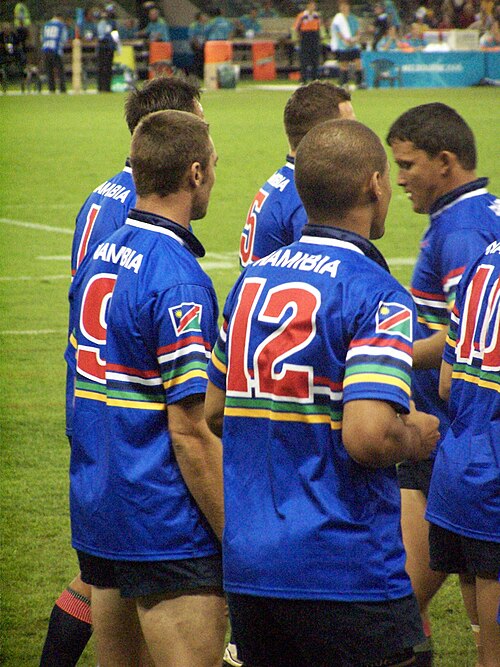
Rugby is popular in sub-Saharan Africa. The Confederation of African Rugby governs rugby games in the region. South Africa is a major force in the game and won the Rugby World Cup in 1995, 2007 and 2019. Africa is also allotted one guaranteed qualifying place in the Rugby World Cup.
Boxing is a popular sport. Battling Siki is the first world champion to come out of sub-Saharan Africa. Countries such as Nigeria, Ghana and South Africa have produced numerous professional world champions such as Dick Tiger, Hogan Bassey, Gerrie Coetzee, Samuel Peter, Azumah Nelson and Jake Matlala.
Cricket has a following. The African Cricket Association is an international body which oversees cricket in African countries. South Africa and Zimbabwe have their own governing bodies. In 2003 the Cricket World Cup was held in South Africa, first time it was held in sub-Saharan Africa.
Over the years, Ethiopia and Kenya have produced many notable long-distance athletes. Each country has federations that identify and cultivate top talent. Athletes from Ethiopia and Kenya hold, save for two exceptions, all the men's outdoor records for Olympic distance events from 800m to the marathon.[255] Famous runners include Haile Gebrselassie, Kenenisa Bekele, Paul Tergat, and John Cheruiyot Korir.[256]
Tourism
The development of tourism in this region has been identified as having the ability to create jobs and improve the economy. South Africa, Namibia, Mauritius, Botswana, Ghana, Cape Verde, Tanzania and Kenya have been identified as having well developed tourism industries.[257] Cape Town and the surrounding area is very popular with tourists.[258]
List of countries and regional organisation
Only six African countries are not geopolitically a part of sub-Saharan Africa: Algeria, Egypt, Libya, Morocco, Tunisia and Western Sahara (claimed by Morocco); they form the UN subregion of Northern Africa, which also makes up the largest bloc of the Arab World. Nevertheless, some international organisations include Sudan as part of North Africa. Although a long-standing member of the Arab League, Sudan has around 30% non-Arab populations in the west (Darfur, Masalit, Zaghawa), far north (Nubian) and south (Kordofan, Nuba),[259][260][261][262][263][264] and a largely Arabized native Nubian population that represents the majority at 70% hence its inclusion in North Africa, but geographically and culturally Sudan is part of Sub Saharan Africa. Mauritania and Niger only include a band of the Sahel along their southern borders. All other African countries have at least significant portions of their territory within sub-Saharan Africa.
Central Africa

Central Africa
Middle Africa (UN subregion)
Central African Federation (defunct)
 South Sudan[101][265] cap. Juba cur. South Sudanese pound (£) lang. English
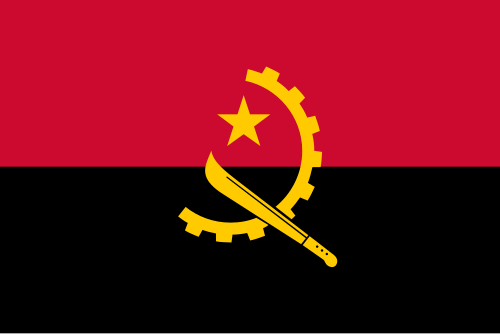 Angola (also in SADC) cap. Luanda cur. Angolan kwanza (Kz) lang. Portuguese
 Burundi (also in EAC) cap. Gitega (former Bujumbura) cur. Burundian franc (FBu) lang. French
 Democratic Republic of the Congo (also in SADC) cap. Kinshasa cur. Congolese franc (FC) lang. French
 Rwanda (also in EAC) cap. Kigali cur. Rwandan franc (RF) lang. Kinyarwanda, French, English
 São Tomé and Príncipe cap. São Tomé cur. São Tomé and Príncipe dobra (Db) lang. Portuguese
 Cameroon cap. Yaoundé cur. Central African CFA franc (FCFA) lang. English, French
 Central African Republic cap. Bangui cur. Central African CFA franc (FCFA) lang. Sango, French
 Chad cap. N'Djamena cur. Central African CFA franc (FCFA) lang. French, Arabic
 Republic of the Congo cap. Brazzaville cur. Central African CFA franc (FCFA) lang. French
 Equatorial Guinea cap. Malabo cur. Central African CFA franc (FCFA) lang. Spanish, French
 Gabon cap. Libreville cur. Central African CFA franc (FCFA) lang. French
East Africa

Eastern Africa (UN subregion)
Central African Federation (defunct)
Geographic East Africa, including the UN subregion and East African Community
 Sudan cap. Khartoum cur. Sudanese pound (£S.) lang. Arabic (Sudanese Arabic) and English
- South Sudan cap. Juba cur. South Sudanese pound (£) lang. English and Arabic (Juba Arabic)
 Somalia cap. Mogadishu cur. Somali shilling (So.Sh /-) lang. Somali, Arabic (official)
 Kenya cap. Nairobi cur. Kenyan shilling (KSh /=) lang. Swahili, English
 Uganda cap. Kampala cur. Ugandan shilling (USh /=) lang. Swahili, English
- Rwanda (also in ECCAS) cap. Kigali cur. Rwandan franc (RF) lang. Kinyarwanda, French, English
 Tanzania (also in SADC) cap. Dodoma cur. Tanzanian shilling (TSh /=) lang. Swahili, English
- Burundi (also in ECCAS) cap. Gitega (former Bujumbura) cur. Burundian franc (FBu) lang. Kirundi, French
 Eritrea cap. Asmara cur. Eritrean nakfa (Nfk) 'lang.' Tigrinya, Arabic, Italian, English (unofficial, lingua franca)
 Djibouti cap. Djibouti cur. Djiboutian franc (Fdj) lang. Arabic, French (official)
Northeast Africa
- Horn of Africa
- Djibouti cap. Djibouti cur. Djiboutian franc (Fdj) lang. Arabic, French (official)
- Eritrea cap. Asmara cur. Eritrean nakfa (Nfk) 'lang.' Tigrinya, Arabic, Italian, English (unofficial, lingua franca)
 Ethiopia cap. Addis Ababa cur. Ethiopian birr (Br) lang. Afar, Amharic, Oromo, Somali, and Tigrinya
- Somalia cap. Mogadishu cur. Somali shilling (So.Sh) lang. Somali, Arabic (official)
- Sudan & South Sudan
- Sudan cap. Khartoum cur. Sudanese pound (£Sd.) lang. Arabic (Sudanese Arabic) and English
- South Sudan cap. Juba cur. South Sudanese pound (£) lang. English and Arabic (Juba Arabic)
Southeast Africa
- EAC
- Burundi (also in ECCAS) cap. Gitega (former Bujumbura) cur. Burundian franc (FBu) lang. Kirundi, French
- Kenya cap. Nairobi cur. Kenyan shilling (KSh /=) lang. Swahili, English
- Rwanda (also in ECCAS) cap. Kigali cur. Rwandan franc (RF) lang. Kinyarwanda, French, English
- Tanzania (also in SADC) cap. Dodoma cur. Tanzanian shilling (TSh. /=) lang. Swahili, English
- Uganda cap. Kampala cur. Ugandan shilling (USh /=) lang. Swahili, English
Southern Africa

Southern Africa (UN subregion)
geographic, including above
- SADC (Southern African Development Community)
- Angola (also in ECCAS) cap. Luanda cur. Angolan kwanza (Kz) lang. Portuguese
 Botswana cap. Gaborone cur. Botswana pula (P) lang. Tswana, English
 Comoros cap. Moroni cur. Comorian franc (FC) lang. Comorian, Arabic, French
 Eswatini cap. Mbabane cur. Swazi lilangeni (L)(E) lang. SiSwati, English
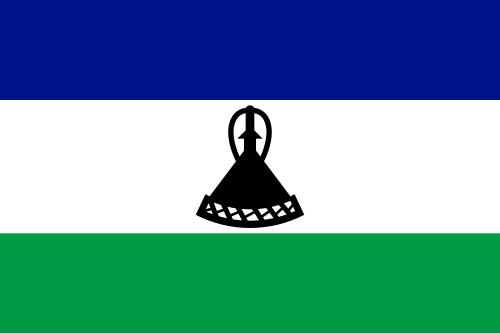 Lesotho cap. Maseru cur. Lesotho loti (L)(M) lang. Sesotho, English
 Madagascar cap. Antananarivo cur. Malagasy ariary (Ar.) lang. Malagasy, French
 Malawi cap. Lilongwe cur. Malawian kwacha (MK) lang. English
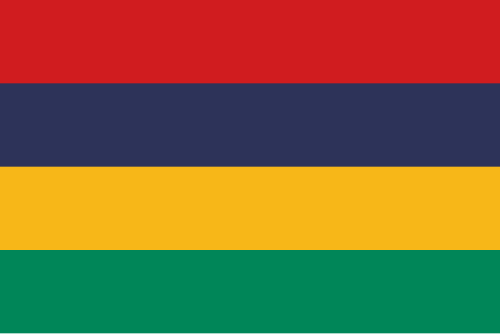 Mauritius cap. Port Louis cur. Mauritian rupee (Re/Rs /-) lang. English
 Mozambique cap. Maputo cur. Mozambican metical (MTn) lang. Portuguese
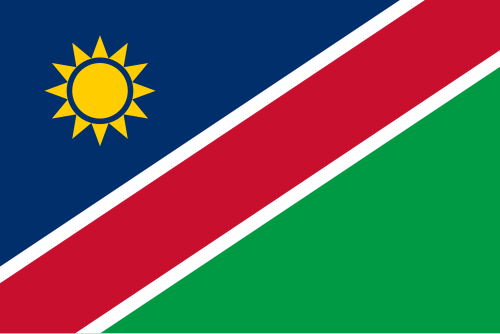 Namibia cap. Windhoek cur. Namibian dollar (N$) lang. English
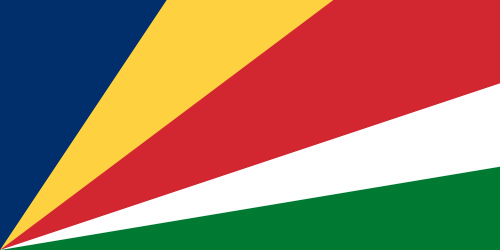 Seychelles cap. Victoria cur. Seychellois rupee (Re/Rs /-) lang. Seychellois Creole, English, French
 South Africa cap. Bloemfontein, Cape Town, Pretoria cur. South African rand (R) lang. 11 official languages
 Zambia cap. Lusaka cur. Zambian kwacha (ZK) lang. English
 Zimbabwe cap. Harare cur. Zimbabwean dollar ($) lang. English
Sudan
Depending on classification Sudan is often not considered part of sub-Saharan Africa, as it is considered part of North Africa.
- Sudan cap. Khartoum cur. Sudanese pound (SDG) lang. Arabic and English
West Africa

Western Africa (UN subregion)
 Ivory Coast cap. Yamoussoukro, Abidjan cur. West African CFA franc (CFA)
 The Gambia cap. Banjul cur. Gambian dalasi (D)
 Ghana cap. Accra cur. Ghanaian cedi (GH₵)
 Guinea cap. Conakry cur. Guinean franc (FG)
 Liberia cap. Monrovia cur. Liberian dollar (L$)
 Mauritania cap. Nouakchott cur. Mauritanian ouguiya (UM) (sometimes, like Sudan, considered part of North Africa)
 Nigeria cap. Abuja cur. Nigerian naira (₦)
 Sierra Leone cap. Freetown cur. Sierra Leonean leone (Le)

 Benin cap. Porto-Novo cur. West African CFA franc (CFA)
 Burkina Faso cap. Ouagadougou cur. West African CFA franc (CFA)
- Ivory Coast cap. Yamoussoukro, Abidjan cur. West African CFA franc (CFA)
 Guinea-Bissau cap. Bissau cur. West African CFA franc (CFA)
 Mali cap. Bamako cur. West African CFA franc (CFA)
 Niger cap. Niamey cur. West African CFA franc (CFA)
 Senegal cap. Dakar cur. West African CFA franc (CFA)
 Togo cap. Lomé cur. West African CFA franc (CFA)
.svg/500px-Flag_of_Togo_(3-2).svg.png)
See also
.svg/500px-Africa_(orthographic_projection).svg.png)
References
- ^ "Sub-Saharan Africa Demographics". Pew-Templeton Global Religious Futures Project. Archived from the original on 11 September 2022. Retrieved 11 September 2022.
- ^ "Composition of macro geographical (continental) regions, geographical sub-regions, and selected economic other groupings". United Nations Statistics Division. 11 February 2013. Retrieved 20 July 2013. "The designation sub-Saharan Africa is commonly used to indicate all of Africa except northern Africa, with the Sudan included in sub-Saharan Africa."
- ^ ecosostenibile (2 February 2023). "Afrotropical ecozone: boundaries, characteristics, biomes ..." An Eco-sustainable World. Retrieved 9 August 2023.
- ^ "Political definition of 'Major regions', according to the UN". Archived from the original on 20 April 2010. Retrieved 15 December 2010.
- ^
- "League of Arab States". Archived from the original on 28 July 2017.
- "Arab States". UNESCO. Archived from the original on 19 November 2016. Retrieved 20 November 2016.
- Infosamak. "Centre for Marketing, Information and Advisory Services for Fishery Products in the Arab Region". Infosamak. Archived from the original on 8 March 2016. Retrieved 30 August 2009.
- Barakat, Halim (14 October 1993). The Arab World: Society, Culture, and State. University of California Press. p. 80. ISBN 978-0-520-0790-76.
- Markakis, John (23 January 1998). Resource Conflict in the Horn of Africa. SAGE Publishing. p. 39. ISBN 978-0-803-9884-77.
- Erlikh, Ḥagai (1983). The Struggle Over Eritrea, 1962-1978: War and Revolution in the Horn of Africa. Hoover Institution Press. p. 59. ISBN 978-0-817-9760-26.
- Fegley, Randall (1995). "Eritrea". World Bibliographical Series. Vol. 181. Clio Press. p. mxxxviii. ISBN 978-1-851-0924-51.
- Frishkopf, Michael A. (2010). Music and Media in the Arab World. American University in Cairo Press. p. 61. ISBN 978-9-774-1629-30. Archived from the original on 28 July 2020.
- ^ "About Africa". UNDP in Africa. Archived from the original on 11 April 2020. Retrieved 15 March 2020.
- ^ "Sahara's Abrupt Desertification Started by Changes in Earth's Orbit, Accelerated by Atmospheric and Vegetation Feedbacks". ScienceDaily. 12 July 1999. Archived from the original on 7 March 2014. Retrieved 7 March 2014.
- ^
- Claussen, Mark; Kubatzki, Claudia; Brovkin, Victor; Ganopolski, Andrey; Hoelzmann, Philipp; Pachur, Hans-Joachim (1999). "Simulation of an Abrupt Change in Saharan Vegetation in the Mid-Holocene" (PDF). Geophysical Research Letters. 26 (14): 2037–40. Bibcode:1999GeoRL..26.2037C. doi:10.1029/1999GL900494. hdl:11858/00-001M-0000-0013-FBE4-E. S2CID 6463581. Archived (PDF) from the original on 8 August 2017. Retrieved 29 October 2018.
- "Sahara's Abrupt Desertification Started By Changes In Earth's Orbit, Accelerated By Atmospheric And Vegetation Feedbacks". Science Daily. 12 July 1999. Archived from the original on 7 March 2014. Retrieved 28 February 2018.
- ^ van Zinderen-Bakker, E.M. (14 April 1962). "A Late-Glacial and Post-Glacial Climatic Correlation between East Africa and Europe". Nature. 194 (4824): 201–03. Bibcode:1962Natur.194..201V. doi:10.1038/194201a0. S2CID 186244151.
- ^ a b c d Raunig, Walter (2005). Afrikas Horn: Akten der Ersten Internationalen Littmann-Konferenz 2. bis 5. Mai 2002 in München. Otto Harrassowitz Verlag. p. 130. ISBN 3-447-05175-2. Retrieved 9 June 2016.
ancient Arabic geography had quite a fixed pattern in listing the countries from the Red Sea to the Indian Ocean: These are al-Misr (Egypt) – al-Muqurra (or other designations for Nubian kingdoms) – al-Habasha (Abyssinia) – Barbara (Berber, i.e. the Somali coast) – Zanj (Azania, i.e. the country of the "blacks"). Correspondingly almost all these terms (or as I believe: all of them!) also appear in ancient and medieval Chinese geography
- ^ International Association for the History of Religions (1959), Numen, Leiden: EJ Brill, p. 131,
West Africa may be taken as the country stretching from Senegal in the west, to the Cameroons in the east; sometimes it has been called the central and western Sudan, the Bilad as-Sūdan, 'Land of the Blacks', of the Arabs
- ^ a b Nehemia Levtzion, Randall Lee Pouwels, The History of Islam in Africa, (Ohio University Press, 2000), p. 255.
- ^ Sven Rubenson, The survival of Ethiopian independence, (Tsehai, 2003), p. 30.
- ^ Jonah Blank, Mullahs on the mainframe: Islam and modernity among the Daudi Bohras, (University of Chicago Press, 2001), p. 163.
- ^ F.R.C. Bagley et al., The Last Great Muslim Empires, (Brill: 1997), p. 174
- ^ Bethwell A. Ogot, Zamani: A Survey of East African History, (East African Publishing House: 1974), p. 104
- ^ James Hastings, Encyclopedia of Religion and Ethics Part 12: V. 12, (Kessinger Publishing, LLC: 2003), p. 490
- ^ "black Africa". Cambridge Dictionary. Cambridge University. Archived from the original on 20 January 2018. Retrieved 13 March 2021.
- ^ Shillington, Kevin(2005). History of Africa, Rev. 2nd Ed. New York: Palgrave Macmillan, p. 2, ISBN 0-333-59957-8.
- ^ a b Shillington, Kevin(2005). History of Africa, Rev. 2nd Ed. New York: Palgrave Macmillan, pp. 2–3, ISBN 0-333-59957-8.
- ^ Shillington, Kevin(2005). History of Africa, Rev. 2nd Ed. New York: Palgrave Macmillan, p. 3, ISBN 0-333-59957-8.
- ^ Schlebusch; et al. (3 November 2017). "Southern African ancient genomes estimate modern human divergence to 350,000 to 260,000 years ago". Science. 358 (6363): 652–655. Bibcode:2017Sci...358..652S. doi:10.1126/science.aao6266. PMID 28971970.
- ^ Mounier, Aurélien; Lahr, Marta (2019). "Deciphering African late middle Pleistocene hominin diversity and the origin of our species". Nature Communications. 10 (1): 3406. Bibcode:2019NatCo..10.3406M. doi:10.1038/s41467-019-11213-w. PMC 6736881. PMID 31506422.
- ^ Scerri, Eleanor M. L.; Thomas, Mark G.; Manica, Andrea; Gunz, Philipp; Stock, Jay T.; Stringer, Chris; Grove, Matt; Groucutt, Huw S.; Timmermann, Axel; Rightmire, G. Philip; d’Errico, Francesco (1 August 2018). "Did Our Species Evolve in Subdivided Populations across Africa, and Why Does It Matter?". Trends in Ecology & Evolution. 33 (8): 582–594. Bibcode:2018TEcoE..33..582S. doi:10.1016/j.tree.2018.05.005. ISSN 0169-5347. PMC 6092560. PMID 30007846.
- ^ Tishkoff SA, Reed FA, Friedlaender FR, et al. (May 2009). "The genetic structure and history of Africans and African Americans". Science. 324 (5930): 1035–44. Bibcode:2009Sci...324.1035T. doi:10.1126/science.1172257. PMC 2947357. PMID 19407144.
- ^ Bradley, Simon (18 January 2007). "Swiss archaeologist digs up West Africa's past". SWI swissinfo.ch. Swiss Broadcasting Corporation. Archived from the original on 6 March 2012.
- ^ Jesse, Friederike (2010). "Early Pottery in Northern Africa - An Overview". Journal of African Archaeology. 8 (2): 219–238. doi:10.3213/1612-1651-10171. JSTOR 43135518.
- ^ Stearns, Peter N. (2001) The Encyclopedia of World History, Houghton Mifflin Books. p. 16. ISBN 0-395-65237-5.
- ^ Collins, Robert O. and Burns, James. M(2007). A History of Sub-saharan Africa. Cambridge: Cambridge University Press, p. 62, ISBN 978-0-521-86746-7
- ^ Davidson, Basil. Africa History, Themes and Outlines, revised and expanded edition. New York: Simon & Schuster, p. 54, ISBN 0-684-82667-4.
- ^ Shillington, Kevin(2005). History of Africa, Rev. 2nd Ed. New York: Palgrave Macmillan, p. 47, ISBN 0-333-59957-8.
- ^ McEvedy, Colin (1980) Atlas of African History, p. 44. ISBN 0-87196-480-5.
- ^ Breunig, Peter. 2014. Nok: African Sculpture in Archaeological Context: p. 21.
- ^ Davidson, Basil. Africa History, Themes and Outlines, revised and expanded edition. New York: Simon & Schuster, pp. 87–107, ISBN 0-684-82667-4.
- ^ Meyerowitz, Eva L. R. (1975). The Early History of the Akan States of Ghana. Red Candle Press. ISBN 9780608390352.
- ^ "The Slave Trade". Countrystudies.us. Archived from the original on 23 June 2011. Retrieved 9 June 2008.
- ^ Philippe Lavachery; et al. (2012). Komé-Kribi: Rescue Archaeology Along the Chad-Cameroon Oil Pipeline.
- ^ É. Zangato; A.F.C. Holl (2010). "On the Iron Front: New Evidence from North-Central Africa". Journal of African Archaeology. 8 (1): 7–23. doi:10.3213/1612-1651-10153. Archived from the original on 26 December 2013.
- ^ J. Cameron Monroe. Akinwumi Ogundiran, Power and Landscape in Atlantic West Africa: Archaeological Perspectives. p. 316., citing Magnavita 2004; Magnavita et al. 2004, 2006; Magnavita and Schleifer 2004.
- ^ Peter Mitchell et al., The Oxford Handbook of African Archeology (2013), p. 855: "The relatively recent discovery of extensive walled settlements at the transition from the Neolithic to the Early Iron Age in the Chad Basin (Magnavita et al., 2006) indicates what enormous sites and processes may still await recognition."
- ^ Appiah & Gates 2010, p. 254.
- ^ a b c Shillington, Kevin(2005). History of Africa, Rev. 2nd Ed. New York: Palgrave Macmillan, pp. 138–39, 142, ISBN 0-333-59957-8.
- ^ Thompson, Lloyd A. (1989). Romans and blacks. Taylor & Francis. p. 57. ISBN 0-415-03185-0. Archived from the original on 30 March 2021. Retrieved 20 October 2020.
- ^ Mokhtar (editor), AnciGent Civilizations of Africa Vo. II, General History of Africa, UNESCO, 1990
- ^ Oman in history By Peter Vine Page 324
- ^ Shaping of Somali society Lee Cassanelli pg.92
- ^ Futuh Al Habash Shibab ad Din
- ^ Sudan Notes and Records – 147
- ^ Somali Sultanate: The Geledi City-state Over 150 Years - Virginia Luling (2002) Page 229
- ^ Mukhtar, Mohamed Haji (25 February 2003). Historical Dictionary of Somalia. Scarecrow Press. p. xxix. ISBN 9780810866041. Archived from the original on 16 December 2019. Retrieved 15 February 2014.
- ^ Liu, Hua; Prugnolle, Franck; Manica, Andrea; Balloux, François (2006). "A Geographically Explicit Genetic Model of Worldwide Human-Settlement History". The American Journal of Human Genetics. 79 (2): 230–237. doi:10.1086/505436. PMC 1559480. PMID 16826514.
- ^ James De Vere Allen (1993). Swahili Origins: Swahili Culture & the Shungwaya Phenomenon.
- ^ Daniel Don Nanjira, African Foreign Policy and Diplomacy: From Antiquity to the 21st Century, ABC-CLIO, 2010, p. 114
- ^ Jens Finke (2010). The Rough Guide to Tanzania. Rough Guides Limited. ISBN 9781848360754.
- ^ Casson, Lionel (1989). The Periplus Maris Erythraei. Lionel Casson. (Translation by H. Frisk, 1927, with updates and improvements and detailed notes). Princeton, Princeton University Press.
- ^ Chami, F. A. (1999). "The Early Iron Age on Mafia island and its relationship with the mainland." Azania Vol. XXXIV 1999, pp. 1–10.
- ^ Chami, Felix A. 2002. "The Egypto-Graeco-Romans and Paanchea/Azania: sailing in the Erythraean Sea." From: Red Sea Trade and Travel. The British Museum. Sunday 6 October 2002. Organised by The Society for Arabian Studies
- ^ "Weilue: The Peoples of the West". Depts.washington.edu. 23 May 2004. Archived from the original on 23 December 2017. Retrieved 29 September 2015.
- ^ Miller, J. Innes. 1969. Chapter 8: "The Cinnamon Route". In: The Spice Trade of the Roman Empire. Oxford: University Press. ISBN 0-19-814264-1
- ^ Klein, Martin A.; Wesley Johnson, G. (8 January 2010). Perspectives on the African past. Archived from the original on 27 June 2020. Retrieved 10 August 2018.
- ^ Yu Huan (September 2004) [429 CE]. "The Peoples of the West from the Weilue: A Third Century Chinese Account Composed between 239 and 265 CE". Translated by Hill, John E. Section 15 and notes. Archived from the original on 15 March 2005. Retrieved 17 September 2016 – via Silk Road Seattle.
- ^ Evelyne Jone Rich; Immanuel Maurice Wallerstein (1971). Africa: Tradition and Change. Random House School Division. p. 124. ISBN 9780394009384. Archived from the original on 10 May 2016. Retrieved 9 June 2016.
- ^ Rhonda M. Gonzales (30 August 2009). Societies, religion, and history: central-east Tanzanians and the world they created, c. 200 BCE to 1800 CE. Columbia University Press. p. 222. ISBN 978-0-231-14242-7. Archived from the original on 10 June 2016. Retrieved 9 June 2016.
- ^ a b Roland Oliver, et al. "Africa South of the Equator," in Africa Since 1800. Cambridge, UK: Cambridge University Press, 2005, pp. 24–25.
- ^ M. Martin, Phyllis and O'Meara, Patrick (1995). Africa. 3rd edition, Bloomington and Indianapolis: Indiana University Press, p. 156, ISBN 0-253-32916-7.
- ^ "World Population Prospects 2022". United Nations Department of Economic and Social Affairs, Population Division. Retrieved 17 July 2022.
- ^ "World Population Prospects 2022: Demographic indicators by region, subregion and country, annually for 1950-2100" (XSLX) ("Total Population, as of 1 July (thousands)"). United Nations Department of Economic and Social Affairs, Population Division. Retrieved 17 July 2022.
- ^ "World Population Prospects 2019 – Population Division". Esa.un.org. 28 August 2019. Archived from the original on 15 June 2020. Retrieved 22 December 2019.
- ^ "Fertility rate, total (births per woman) | Data". data.worldbank.org. Archived from the original on 8 July 2016. Retrieved 21 July 2016.
- ^ According to the CIA Factbook Archived 5 August 2012 at archive.today: Angola, Benin, Burundi, Burkina Faso, the Central African Republic, Cameroon, Chad, the Republic of Congo, the Democratic Republic of Congo, Djibouti, Equatorial Guinea, Eritrea, Ethiopia, Gabon, the Gambia, Ghana, Guinea, Guinea-Bissau, Kenya, Liberia, Madagascar, Malawi, Mali, Mauritania, Mozambique, Namibia, Nigeria, Rwanda, Senegal, Sierra Leone, Somalia, Sudan, Swaziland, Tanzania, Togo, Uganda, and Zambia
- ^ a b (2009). Africa Development Indicators 2008/2009: From the World Bank Africa Database African Development Indicators. World Bank Publications, p. 28, ISBN 978-0-8213-7787-1.
- ^ "Country Comparison :: GDP - per capita (PPP) — The World Factbook - Central Intelligence Agency". www.cia.gov. Archived from the original on 14 January 2020. Retrieved 2 January 2020.
- ^ "Research – CPI – Overview". Transparency.org. Archived from the original on 12 January 2019. Retrieved 29 September 2015.
- ^ "Rankings - Doing Business". The Doing Business Project. World Bank. 2010. Archived from the original on 7 April 2010. Retrieved 25 May 2023.
- ^ "National Literacy Survey". National Bureau of Statistics. June 2010. Archived from the original on 17 September 2015. Retrieved 5 September 2015.
- ^ "The World Factbook". Cia.gov. Archived from the original on 28 May 2014. Retrieved 29 September 2015.
- ^ Brown, Keith and Ogilvie, Sarah(2008). Concise encyclopedia of languages of the world Concise Encyclopedias of Language and Linguistics Series. Elsevier, p. 12, ISBN 978-0-08-087774-7.
- ^ Maaroufi, Youssef. "Recensement général de la population et de l'habitat 2004". Archived from the original on 6 September 2017. Retrieved 26 July 2017.
- ^ Lafkioui, Mena B. (24 May 2018). "Berber Languages and Linguistics" (PDF). Oxford Bibliographies. doi:10.1093/OBO/9780199772810-0219. Archived from the original (PDF) on 3 February 2023. Retrieved 25 May 2023.
- ^ Peek, Philip M. and Yankah, Kwesi (2004). African folklore: an encyclopedia. London: (Routledge) Taylor & Francis, p. 205, ISBN 0-415-93933-X, 9780415939331
- ^ Schneider, Edgar Werner and Kortmann, Bernd(2004). A handbook of varieties of English: a multimedia reference tool, Volume 1. Berlin: Walter de Gruyter, pp. 867–68, ISBN 978-3-11-017532-5.
- ^ Güldemann, Tom and Edward D. Elderkin (forthcoming) "On external genealogical relationships of the Khoe family". Archived 25 March 2009 at the Wayback Machine In Brenzinger, Matthias and Christa König (eds.), Khoisan languages and linguistics: the Riezlern symposium 2003. Quellen zur Khoisan-Forschung 17. Köln: Rüdiger Köppe.
- ^ Bellwood, Peter S.(2005). First farmers: the origins of agricultural societies. Wiley-Blackwell, p. 218, ISBN 978-0-631-20566-1.
- ^ a b c "Congo, Democratic Republic of the", The World Factbook, Central Intelligence Agency, 22 May 2023, archived from the original on 24 May 2023, retrieved 25 May 2023
- ^ "Rwanda", The World Factbook, Central Intelligence Agency, 16 May 2023, archived from the original on 24 May 2023, retrieved 25 May 2023
- ^ a b "Angola", The World Factbook, Central Intelligence Agency, 16 May 2023, archived from the original on 24 May 2023, retrieved 25 May 2023
- ^ "Congo, Republic of the", The World Factbook, Central Intelligence Agency, 16 May 2023, archived from the original on 24 May 2023, retrieved 25 May 2023
- ^ "Burundi", The World Factbook, Central Intelligence Agency, 16 May 2023, archived from the original on 24 May 2023, retrieved 25 May 2023
- ^ "Memories of Utopia – Infoshop, World Bank" (PDF). secid.org. South East Consortium for International Development. 31 May 2006. Archived from the original (PDF) on 6 April 2012. Retrieved 14 October 2015.
- ^ "SSI Finance – Loans and lending guide". Retrieved 12 February 2023.
- ^ John A. Shoup (2011). Ethnic Groups of Africa and the Middle East. p. 333. "The Zaghawa is one of the major divisions of the Beri peoples who live in western Sudan and eastern Chad, and their language, also called Zaghawa, belongs to the Saharan branch of the Nilo-Saharan language group."
- ^ "Sudan", The World Factbook, Central Intelligence Agency, 23 May 2023, archived from the original on 24 May 2023, retrieved 25 May 2023
- ^ "Summary and Statistical Report of the 2007: Population and Housing Census Results" (PDF). New York City: United Nations Population Fund. 2007. Archived from the original (PDF) on 5 March 2009. Retrieved 14 October 2015.
- ^ "Eritrea", The World Factbook, Central Intelligence Agency, 16 May 2023, archived from the original on 24 May 2023, retrieved 25 May 2023
- ^ "Report on minority groups in Somalia" (PDF). somraf.org. Archived from the original (PDF) on 21 October 2013. Retrieved 14 October 2015.
- ^ "Somalia", The World Factbook, Central Intelligence Agency, 16 May 2023, archived from the original on 24 May 2023, retrieved 25 May 2023
- ^ a b c d "Kenya", The World Factbook, Central Intelligence Agency, 7 February 2023, retrieved 12 February 2023
- ^ "20 million people can speak Luganda - linguists". New Vision.
- ^ "Malagasy". Ethnologue. Archived from the original on 25 May 2023. Retrieved 25 May 2023.
- ^ a b c "Central African Republic" Archived 10 January 2021 at the Wayback Machine. CIA World Factbook. Retrieved 13 November 2014.
- ^ a b c d e "South Sudan" Archived 12 January 2021 at the Wayback Machine. CIA World Factbook. Retrieved 13 November 2014.
- ^ a b c d e f "Nigeria". CIA World Factbook. Retrieved 13 November 2014.
- ^ a b c d e f "Niger" Archived 30 March 2021 at the Wayback Machine. CIA World Factbook. Retrieved 13 November 2014.
- ^ a b c "Chad" Archived 26 January 2021 at the Wayback Machine . CIA World Factbook. Retrieved 16 November 2014.
- ^ "Uganda", The World Factbook, Central Intelligence Agency, 6 February 2023, retrieved 12 February 2023
- ^ "Population and Housing Census". www.knbs.or.ke. Kenya National Bureau of Statistics. 2009. Archived from the original on 2 February 2014. Retrieved 14 October 2015.
- ^ "The Maasai of Kenya and Tanzania". The Language Journal. 22 April 2012. Archived from the original on 5 September 2015. Retrieved 29 September 2015.
- ^ a b c d "South Africa" Archived 10 January 2021 at the Wayback Machine. CIA World Factbook. Retrieved 16 November 2014.
- ^ "Botswana" Archived 9 January 2021 at the Wayback Machine. CIA World Factbook. 20 November 2014.
- ^ "Malawi" Archived 4 February 2021 at the Wayback Machine. CIA World Factbook. Retrieved 16 November 2014.
- ^ "Zambia" Archived 26 January 2021 at the Wayback Machine. CIA World Factbook. 20 November 2014.
- ^ "Mozambique" Archived 10 January 2021 at the Wayback Machine. CIA World Factbook. 20 November 2014.
- ^ "The Future of Portuguese". BB Portuguese. Archived from the original on 2 May 2012. Retrieved 11 April 2012.
- ^ a b "Senegal" Archived 4 February 2021 at the Wayback Machine. CIA World Factbook. Retrieved 20 November 2014.
- ^ a b "The Gambia" Archived 1 February 2021 at the Wayback Machine. CIA World Factbook. Retrieved 20 November 2014.
- ^ "Cameroon" Archived 20 January 2021 at the Wayback Machine. CIA World Factbook. Retrieved 20 November 2014.
- ^ a b c "Mali" Archived 30 March 2021 at the Wayback Machine. CIA World Factbook. Retrieved 20 November 2014.
- ^ African Cities Driving the NEPAD Initiative. UN-HABITAT. 2006. p. 202. ISBN 9789211318159. Archived from the original on 30 March 2021. Retrieved 4 July 2018.
- ^ John Hartley; Jason Potts; Terry Flew; Stuart Cunningham; Michael Keane; John Banks (2012). Key Concepts in Creative Industries. SAGE. p. 47. ISBN 978-1-446-2028-90. Archived from the original on 30 March 2021. Retrieved 4 July 2018.
- ^ Helmut K Anheier; Yudhishthir Raj Isar (2012). Cultures and Globalization: Cities, Cultural Policy and Governance. SAGE. p. 118. ISBN 9781446258507. Archived from the original on 14 December 2020. Retrieved 4 July 2018.
- ^ Stuart Cunningham (2013). Hidden Innovation: Policy, Industry and the Creative Sector (Creative Economy and Innovation Culture Se Series). University of Queensland Press. p. 163. ISBN 978-0-702-2509-89. Archived from the original on 8 January 2020. Retrieved 4 July 2018.
- ^ Lisa Benton-Short; John Rennie Short (2013). Cities and Nature. Routledge Critical Introductions to Urbanism and the City. p. 71. ISBN 9781134252749. Archived from the original on 30 March 2021. Retrieved 4 July 2018.
- ^ Kerstin Pinther; Larissa Förster; Christian Hanussek (2012). Afropolis: City Media Art. Jacana Media. p. 18. ISBN 978-1-431-4032-57. Archived from the original on 30 March 2021. Retrieved 4 July 2018.
- ^ Salif Diop; Jean-Paul Barusseau; Cyr Descamps (2014). The Land/Ocean Interactions in the Coastal Zone of West and Central Africa Estuaries of the World. Springer. p. 66. ISBN 978-3-319-0638-81. Archived from the original on 30 March 2021. Retrieved 4 July 2018.
- ^ "What Makes Lagos a Model City". The New York Times. 7 January 2014. Archived from the original on 19 May 2019. Retrieved 16 March 2015.
- ^ John Campbell (10 July 2012). "This Is Africa's New Biggest City: Lagos, Nigeria, Population 21 Million". The Atlantic. Washington D.C. Archived from the original on 30 March 2021. Retrieved 23 September 2012.
- ^ "Lagos and Its Potentials for Economic Growth". 2 July 2015. Archived from the original on 9 October 2015. Retrieved 26 October 2015.
- ^ "Africa's biggest shipping ports". Businesstech. 8 March 2015. Archived from the original on 5 November 2015. Retrieved 26 October 2015.
- ^ Brian Rajewski (1998). Africa, Volume 1 of Cities of the world: a compilation of current information on cultural, geographical, and political conditions in the countries and cities of six continents, based on the Department of State's "post reports". Gale Research International, Limited. ISBN 9780810376922.
- ^ Loretta Lees; Hyun Bang Shin; Ernesto López Morales (2015). Global Gentrifications: Uneven Development and Displacement. Policy Press. p. 315. ISBN 978-1-447-3134-89. Archived from the original on 30 March 2021. Retrieved 4 July 2018.
- ^ "Major urban areas - population". cia.gov. Archived from the original on 4 May 2012. Retrieved 18 November 2014.
- ^ "Johannesburg". Archived from the original on 26 April 2015. Retrieved 25 May 2015.
- ^ Pulse Africa. "Not to be Missed: Nairobi 'Green City in the Sun'". pulseafrica.com. Archived from the original on 28 April 2007. Retrieved 14 June 2007.
- ^ Pugliese, Jessica (2 January 2014). "Rethinking Financing for Development in Sub-Saharan Africa". Brookings Institution. Archived from the original on 6 January 2014. Retrieved 5 January 2014.
- ^ "Africa's impressive growth". World Bank. 29 August 2014. Archived from the original on 1 September 2014. Retrieved 29 August 2014.
- ^ Bank, European Investment (19 October 2022). Finance in Africa - Navigating the financial landscape in turbulent times. European Investment Bank. ISBN 978-92-861-5382-2.
- ^ "Africa might have dodged a bullet, but systemic warnings abound for poverty reduction efforts on the continent". blogs.worldbank.org. 28 September 2022. Retrieved 28 October 2022.
- ^ "Extreme poverty rises in West Africa due to COVID-19 pandemic | World Food Programme". www.wfp.org. 20 January 2022. Retrieved 28 October 2022.
- ^ "COVID-19 and Africa: Socio-economic implications and policy responses". OECD. Retrieved 28 October 2022.
- ^ "For Sub-Saharan Africa, Coronavirus Crisis Calls for Policies for Greater Resilience". World Bank. Retrieved 28 October 2022.
- ^ Mukhopadhyay, Abhijit. "The Search for Sustainable Solutions to Debt Accumulation in Sub-Saharan Africa". ORF. Retrieved 28 October 2022.
- ^ "Africa's Rapid Economic Growth Hasn't Fully Closed Income Gaps". IMF. 21 September 2022. Retrieved 28 October 2022.
- ^ "Sub-Saharan Africa: Living on The Edge". IMF. Retrieved 28 October 2022.
- ^ "Growing Together The IMF and African Low-Income Countries". IMF. Retrieved 28 October 2022.
- ^ "Sub-Saharan Africa: A New Shock and Little Room to Maneuver". IMF. Retrieved 28 October 2022.
- ^ "Electricity Production Data | World Electricity Statistics | Enerdata". yearbook.enerdata.net. Retrieved 19 February 2023.
- ^ Creamer Media Reporter (12 November 2009). "Africa's energy problems threatens growth, says Nepad CEO". www.engineeringnews.co.za. Engineering News. Archived from the original on 4 June 2013. Retrieved 14 October 2015.
- ^ a b "Access to energy is Africa development key". European Investment Bank. Retrieved 7 June 2021.
- ^ "Access to electricity – SDG7: Data and Projections – Analysis". IEA. Retrieved 7 June 2021.
- ^ "More than half of sub-Saharan Africans lack access to electricity". The Economist. 13 November 2019. ISSN 0013-0613. Retrieved 7 June 2021.
- ^ a b c d e f g h i j k l m n Christian K.M. Kingombe 2011. Mapping the new infrastructure financing landscape Archived 18 September 2012 at the Wayback Machine. London: Overseas Development Institute
- ^ "Creamer Media" (PDF). Us-cdn.creamermedia.co.za. Archived (PDF) from the original on 7 August 2020. Retrieved 29 September 2015.
- ^ "Nuclear Vs Solar Energy, Which?". Redorbit. 24 March 2006. Archived from the original on 20 May 2013. Retrieved 12 February 2023.
- ^ Zych, Ariel. "Blog: Battle of the Bots". Science Friday. Archived from the original on 28 July 2020. Retrieved 12 February 2023.
- ^ Hepeng, Jia (20 August 2004). "China to train developing nations in solar technologies". scidev.net. Archived from the original on 3 November 2009. Retrieved 14 November 2009.
- ^ "About | Renewable Energy Performance Platform (REPP)". REPP. Retrieved 7 June 2021.
- ^ a b English, Cynthia (23 June 2008). "Radio the Chief Medium for News in Sub-Saharan Africa". Gallup.com. Archived from the original on 17 November 2009. Retrieved 12 February 2023.
- ^ "Africa calling: Cellphone usage sees record rise". The Mail & Guardian. 23 October 2009. Archived from the original on 25 October 2009. Retrieved 12 February 2023.
- ^ Aker, Jenny C.(2008). "Can You Hear Me Now?"How Cell Phones are Transforming Markets in Sub-Saharan Africa Archived 4 March 2016 at the Wayback Machine, Center for Global Development.
- ^ "MG.co.za". MG.co.za. 23 December 2009. Archived from the original on 26 December 2009. Retrieved 27 December 2009.
- ^ Pfanner, Eric (6 August 2007). "Competition increases for pay TV in sub-Saharan Africa". The New York Times. ISSN 0362-4331. Retrieved 12 February 2023.
- ^ Lisa A. Corathers (January 2009). "Manganese" (PDF). Minerals.usgs.gov. Archived (PDF) from the original on 4 March 2016. Retrieved 19 October 2015.
Land-based manganese resources are large but irregularly distributed; those of the United States are very low grade and have potentially high extraction costs. South Africa accounts for about 80% of the world's identified manganese resources, and Ukraine accounts for 10%.
- ^ a b Chen, Wenjie; Laws, Athene; Valckx, Nico. "Harnessing Sub-Saharan Africa's Critical Mineral Wealth". IMF. Retrieved 13 May 2024.
- ^ John F. Papp (2001). "Chromium" (PDF). U.S. Geological Survey Minerals Yearbook. Minerals.usgs.gov. Archived (PDF) from the original on 10 September 2015. Retrieved 19 October 2015.
About 42% of world reserves and about 75% of the world reserve base are located in South Africa.
- ^ Vronsky (1 May 1997). "Platinum: The Rich Man's Gold". Gold-Eagle.com. Archived from the original on 12 March 2013. Retrieved 19 October 2015.
- ^ E. Lee Bray (January 2009). "Bauxite and Alumina" (PDF). U.S. Geological Survey, Mineral Commodity Summaries. Minerals.usgs.gov. Archived (PDF) from the original on 24 November 2018. Retrieved 29 September 2015.
- ^ Daniel L. Edelstein (January 2009). "Copper" (PDF). U.S. Geological Survey, Mineral Commodity Summaries. Minerals.usgs.gov. Archived (PDF) from the original on 4 March 2016. Retrieved 19 October 2015.
- ^ "From the SelectedWorks of Maheta Matteo: From "Blood Diamond" to "Blood Coltan": Should International Corporations Pay the Price for the Rape of the DR Congo?". Works.bepress.com. Archived from the original on 30 September 2015. Retrieved 29 September 2015.
- ^ "MBendi.com". MBendi.com. Archived from the original on 10 May 2006. Retrieved 20 December 2009.
- ^ "World-Nuclear.org". World-Nuclear.org. Archived from the original on 26 June 2010. Retrieved 20 December 2009.
- ^ Ghazvinian, John (2008). Untapped: The Scramble for Africa's Oil. Houghton Mifflin Harcourt, pp. 1–16, ISBN 978-0-15-603372-5.
- ^ a b Christopher Ehret, (2002). The Civilization of Africa. University of Virginia Press: Charlottesville, p. 98, ISBN 0-8139-2085-X.
- ^ Vandaveer, Chelsie(2006). What was the cotton of Kush? Archived 14 January 2010 at the Wayback Machine KillerPlants.com, Plants That Change History Archive.
- ^ National Research Council (U.S.). Board on Science and Technology for International Development (1996). Lost Crops of Africa: Grains. National Academy Press, ISBN 978-0-309-04990-0.
- ^ "WorldDefenseReview.com". WorldDefenseReview.com. Archived from the original on 7 November 2009. Retrieved 13 November 2009.
- ^ "Large scale land investments, household displacement and the effect on land degradation in semiarid agro-pastoral areas of Ethiopia".
- ^ Bowden, Rob (2007). Africa South of the Sahara. Coughlan Publishing: p. 37, ISBN 1-4034-9910-1.
- ^ Evans, Ambrose (12 October 2009). "Blogspot.com". Tradeafrica.blogspot.com. Archived from the original on 25 May 2014. Retrieved 15 November 2009.
- ^ "Africa Regional Brief" (PDF). World Bank. Archived (PDF) from the original on 25 May 2014. Retrieved 7 May 2012.
- ^ a b c Saul, John J.; Leys, Colin (1 July 1999). "Sub-Saharan Africa in Global Capitalism". Monthly Review. 51 (3). Archived from the original on 31 May 2014. Retrieved 12 February 2023.
- ^ a b c Magdoff, Fred (1 November 2013). "Twenty-First-Century Land Grabs: Accumulation by Agricultural Dispossession". Monthly Review. 65 (6). doi:10.14452/MR-065-06-2013-10_1. S2CID 144627886. Archived from the original on 31 May 2014. Retrieved 12 February 2023.
- ^ Mathiason, Nick (2 November 2009). "Global protocol could limit Sub-Saharan land grab". The Guardian. London. Archived from the original on 8 September 2013. Retrieved 9 April 2010.
- ^ Ken Gwilliam, Vivien Foster, Rodrigo Archondo-Callao, Cecilia Briceño-Garmendia, Alberto Nogales, and Kavita Sethi(2008). Africa infrastructure country diagnostic, Roads in Sub-Saharan Africa Archived 18 July 2011 at the Wayback Machine. World Bank and the SSATP: p. 4
- ^ a b Gabara, Nthambeleni (12 November 2009). "Developed nations should invest in African universities". buanews.gov.za. BuaNews Online. Archived from the original on 23 February 2012. Retrieved 16 October 2015.
- ^ Firsing, Scott (18 January 2016). "How severe is Africa's Brain Drain?". London School of Economics Blogs. Archived from the original on 12 November 2020. Retrieved 2 December 2020.
- ^ Ngwé, Luc (24 January 2018). "African brain drain: is there an alternative?". UNESCO. Archived from the original on 11 May 2020. Retrieved 2 December 2020.
- ^ "World". CIA Factbook. Archived from the original on 24 November 2016. Retrieved 29 August 2014.
- ^ Baten, Jörg (2016). A history of the global economy. Cambridge University Press. pp. 328–329. ISBN 978-1-107-10470-9.
- ^ Franck, Raphaël; Rainer, Ilia (May 2012). "Does the Leader's Ethnicity Matter? Ethnic Favoritism, Education, and Health in Sub-Saharan Africa" (PDF). American Political Science Review. 106 (2): 294–325. doi:10.1017/S0003055412000172. hdl:10419/96093. S2CID 15227415.
- ^ Nordling, Linda (29 October 2009). "Africa Analysis: Progress on science spending?". scidev.net. Archived from the original on 14 June 2013. Retrieved 23 April 2010.
- ^ "South Africa's Investment in Research and Development on the Rise" (Press release). Department of Science and Technology. 22 June 2006. Archived from the original on 27 July 2011.
- ^ a b c d e Agence Française de Développement, Agence universitaire de la Francophonie, Orange, & UNESCO. (2015). Digital Services for Education in Africa. Savoirs communs, 17. Archived 13 October 2020 at the Wayback Machine
- ^ a b c Youth and skills: putting education to work (in English, Arabic, Chinese, French, and Spanish). Paris: United Nations Educational, Scientific and Cultural Organization. 2012. ISBN 978-92-3-104240-9. Archived from the original on 22 July 2023. Retrieved 22 July 2023.
- ^ School Meal Programs Around the World: Results from the 2021 Global Survey of School Meal Programs (Report). Global Child Nutrition Foundation. 2022. Retrieved 12 February 2023.
- ^ Alphonce Shiundu (2 September 2018). "More must happen". D+C, development and cooperation. Archived from the original on 1 February 2019. Retrieved 3 February 2019.
- ^ "Fact sheet about malaria". www.who.int. Retrieved 22 May 2024.
- ^ Hotez, Peter J.; Kamath, Aruna (25 August 2009). "Neglected Tropical Diseases in Sub-Saharan Africa: Review of Their Prevalence, Distribution, and Disease Burden". PLOS Neglected Tropical Diseases. 3 (8): e412. doi:10.1371/journal.pntd.0000412. PMC 2727001. PMID 19707588.
- ^ "Tuberculosis (TB)". WHO | Regional Office for Africa. 21 May 2024. Retrieved 22 May 2024.
- ^ "Onchocerciasis (river blindness)". www.who.int. Retrieved 22 May 2024.
- ^ Onambele, Luc; Ortega-Leon, Wilfrido; Guillen-Aguinaga, Sara; Forjaz, Maria João; Yoseph, Amanuel; Guillen-Aguinaga, Laura; Alas-Brun, Rosa; Arnedo-Pena, Alberto; Aguinaga-Ontoso, Ines; Guillen-Grima, Francisco (12 October 2022). "Maternal Mortality in Africa: Regional Trends (2000–2017)". International Journal of Environmental Research and Public Health. 19 (20): 13146. doi:10.3390/ijerph192013146. PMC 9602585. PMID 36293727.
- ^ "User fees for health: a background". Archived from the original on 28 November 2006. Retrieved 28 December 2006.
- ^ Godfrey., Mugoti (2009). Africa (a-z). [Place of publication not identified]: Lulu Com. ISBN 978-1435728905. OCLC 946180025.[self-published source]
- ^ Knippenberg R, Alihonou E, Soucat A, et al. (June 1997). "Implementation of the Bamako Initiative: strategies in Benin and Guinea". The International Journal of Health Planning and Management. 12 (Suppl 1): S29–47. doi:10.1002/(SICI)1099-1751(199706)12:1+<S29::AID-HPM465>3.0.CO;2-U. PMID 10173105.
- ^ "Manageable Bamako Initiative schemes". Archived from the original on 8 October 2007. Retrieved 28 December 2006.
- ^ "World Aids Day 2012" (PDF). Unaids.org. Archived (PDF) from the original on 27 March 2014. Retrieved 29 September 2015.
- ^ "Desmond Tutu HIV Foundation: What we do". Desmond Tutu HIV Foundation. Archived from the original on 16 January 2013. Retrieved 27 May 2013.
- ^ "UNAIDS reports more than 7 million people now on HIV treatment across Africa—with nearly 1 million added in the last year—while new HIV infections and deaths from AIDS continue to fall". Joint United Nations Programme on HIV/AIDS. 21 May 2013. Archived from the original on 7 December 2018. Retrieved 29 September 2015.
- ^ "Special Report: How Africa Turned AIDS Around" (PDF). Joint United Nations Programme on HIV/AIDS. 2013. Archived from the original (PDF) on 10 October 2017. Retrieved 29 September 2015.
- ^ a b "UNAIDS Report on the Global AIDS Epidemic 2012" (PDF). Archived (PDF) from the original on 5 October 2014. Retrieved 13 May 2013.
- ^ "Life expectancy at birth, total (years) - Sub-Saharan Africa | Data". data.worldbank.org. Archived from the original on 30 October 2019. Retrieved 30 October 2019.
- ^ "WHO | Malaria". Who.int. Archived from the original on 3 September 2014. Retrieved 29 September 2015.
- ^ Verguet S, Jassat W, Hedberg C, Tollman S, Jamison DT, Hofman KJ (February 2012). "Measles control in Sub-Saharan Africa: South Africa as a case study". Vaccine. 30 (9): 1594–600. doi:10.1016/j.vaccine.2011.12.123. PMID 22230581.
- ^ a b "WHO | Onchocerciasis". Who.int. Archived from the original on 16 March 2014. Retrieved 29 September 2015.
- ^ a b "WHO | Maternal mortality". Who.int. Archived from the original on 30 September 2015. Retrieved 29 September 2015.
- ^ Bonino, Emma (15 September 2004). "Opinion | A brutal custom : Join forces to banish the mutilation of women". The New York Times. ISSN 0362-4331. Retrieved 12 February 2023.
- ^ Feldman-Jacobs, Charlotte (February 2009). "Commemorating International Day of Zero Tolerance to Female Genital Mutilation". Population Reference Bureau. Archived from the original on 13 February 2010.
- ^ "Female Genital Mutilation/Cutting: A Global Concern" (PDF). UNICEF. Retrieved 30 July 2024.
- ^ "Numbers of women circumcised in Africa: The Production of a Total" (PDF). DHS Program. United States Agency for International Development. Retrieved 30 July 2024.
- ^ Canagarajah, Sudharshan; Ye, Xiao (April 2001). Public Health and Education Spending in Ghana in 1992-98 (PDF). World Bank Publication. p. 21. Archived (PDF) from the original on 6 March 2014. Retrieved 29 August 2014.
- ^ "Ebola virus disease". www.who.int.
- ^ WHO Ebola Response Team; et al. (16 October 2014). "Ebola Virus Disease in West Africa — The First 9 Months of the Epidemic and Forward Projections". The New England Journal of Medicine. 371 (16): 1481–1495. doi:10.1056/NEJMoa1411100. PMC 4235004. PMID 25244186.
- ^ Encyclopædia Britannica. Britannica Book of the Year 2003. Encyclopædia Britannica, (2003) ISBN 978-0-85229-956-2 p. 306
However, Southern Africa is predominantly Christian. According to the Encyclopædia Britannica, as of mid-2002, there were 376,453,000 Christians, 329,869,000 Muslims and 98,734,000 people who practiced traditional religions in Africa. Ian S. Markham,(A World Religions Reader. Cambridge, MA: Blackwell Publishers, 1996.) Archived 12 November 2010 at the Wayback Machine is cited by Morehouse University as giving the mid-1990s figure of 278,250,800 Muslims in Africa, but still as 40.8% of the total. These numbers are estimates and remain a matter of conjecture. See Amadu Jacky Kaba. The spread of Christianity and Islam in Africa: a survey and analysis of the numbers and percentages of Christians, Muslims and those who practice indigenous religions. The Western Journal of Black Studies, Vol 29, Number 2, June 2005. Discusses the estimations of various almanacs and encyclopedium, placing Britannica's estimate as the most agreed figure. Notes the figure presented at the World Christian Encyclopedia, summarised here Archived 5 March 2016 at the Wayback Machine, as being an outlier. On rates of growth, Islam and Pentecostal Christianity are highest, see: The List: The World's Fastest-Growing Religions Archived 25 January 2010 at the Wayback Machine, Foreign Policy, May 2007. - ^ a b "Region: Sub-Saharan Africa". Pew Research Center. 27 January 2011.
- ^ "The Global Religious Landscape" (PDF). Pewforum.org. Archived from the original (PDF) on 25 January 2017. Retrieved 7 May 2020.
- ^ The Future of the Global Muslim Population (PDF) (Report). Pew Research Center. 27 January 2011.
- ^ "Religions in South Sudan | PEW-GRF". 2 December 2018. Archived from the original on 2 December 2018.
- ^ "Guinea-Bissau". Central Intelligence Agency. 12 June 2024 – via CIA.gov.
- ^ "National Profiles | World Religion". www.thearda.com.
- ^ "National Profiles | World Religion". www.thearda.com.
- ^ a b Ehret, Christopher (2002). The Civilizations of Africa: A History to 1800. James Currey Publishers. ISBN 978-0-85255-475-3. Archived from the original on 26 January 2021. Retrieved 20 October 2020.
- ^ Ehret, Christopher (November 2004). "A Conversation with Christopher Ehret". World History Connected. 2 (1). Archived from the original on 24 April 2018.
- ^ Okwu AS (1979). "Life, Death, Reincarnation, and Traditional Healing in Africa". Issue: A Journal of Opinion. 9 (3): 19–24. doi:10.2307/1166258. JSTOR 1166258.
- ^ Stanton, Andrea L. (2012). Cultural Sociology of the Middle East, Asia, and Africa: An Encyclopedia. SAGE. ISBN 9781412981767. Archived from the original on 5 December 2020. Retrieved 20 October 2020.
- ^ Baldick, Julian (1998). Black God: The Afroasiatic Roots of the Jewish, Christian, and Muslim Religions. Syracuse University Press. ISBN 978-0-8156-0522-5. Archived from the original on 3 May 2016.
- ^ Ehret, Christopher (5 November 2004). "A Conversation with Christopher Ehret". World History Connected. 2 (1).
- ^ Christopher Ehret, (2002). The Civilizations of Africa. Charlottesville: University of Virginia, pp. 102–03, ISBN 0-8139-2085-X.
- ^ Vontress, Clemmont E. (2005), "Animism: Foundation of Traditional Healing in Sub-Saharan Africa", Integrating Traditional Healing Practices into Counseling and Psychotherapy, SAGE Publications, pp. 124–137, doi:10.4135/9781452231648, ISBN 9780761930471, archived from the original on 31 October 2019, retrieved 2 November 2019
- ^ Davidson, Basil (1969). The African Genius, An Introduction to African Social and Cultural History. Little, Brown and Company: Boston, pp. 168–80. LCCN 70-80751.
- ^ Eglash, Ron: "African Fractals: Modern computing and indigenous design." Rutgers 1999 ISBN 0-8135-2613-2
- ^ Richmond, Yale; Gestrin, Phyllis (2009). Into Africa: a guide to Sub-Saharan culture and diversity. Boston: Intercultural Press. ISBN 978-1-931930-91-8. Archived from the original on 1 October 2018. Retrieved 9 June 2016.
- ^ "ScienceDaily.com". ScienceDaily.com. 18 June 2007. Archived from the original on 27 March 2019. Retrieved 28 February 2018.
- ^ "'Oldest' prehistoric art unearthed". BBC News. 10 January 2002. Archived from the original on 30 January 2009. Retrieved 9 April 2010.
- ^ ">TARA – Trust for African Rock Art: Rock Art in Africa". 6 January 2009. Archived from the original on 30 January 2010. Retrieved 21 November 2009.
- ^ "African Influences in Modern Art | Thematic Essay | Heilbrunn Timeline of Art History | The Metropolitan Museum of Art". Metmuseum.org. 2 June 2014. Archived from the original on 18 June 2018. Retrieved 29 September 2015.
- ^ Alexandre, Marc(1998). World Bank Publication: DC. ISBN 978-0-8213-4195-7
- ^ Bowden, Rob(2007). Africa South of the Sahara. Coughlan Publishing: p. 40, ISBN 1-4034-9910-1.
- ^ Christopher Ehret, (2002). The Civilizations of Africa. Charlottesville: University of Virginia, p. 103, ISBN 0-8139-2085-X.
- ^ Njogu, K.; Ngeta, K.; Wanjau, M. (2010). Ethnic Diversity in Eastern Africa: Opportunities and Challenges. Twaweza Communications. pp. 78–79. ISBN 978-9966-7244-8-9. Archived from the original on 21 December 2019. Retrieved 30 November 2017.
- ^ "Intangible Heritage Home –- intangible heritage – Culture Sector". UNESCO. Archived from the original on 12 November 2009. Retrieved 17 November 2009.
- ^ "Proclamation 2005: La fabrication des tissus d'écorce en Ouganda" [Proclamation 2005: Barcloth making in Uganda] (in French). UNESCO. Archived from the original on 12 November 2009.
- ^ a b "Prestige Panel [Democratic Republic of Congo; Kuba peoples] (1999.522.15) | Heilbrunn Timeline of Art History | the Metropolitan Museum of Art". Archived from the original on 17 February 2009. Retrieved 17 November 2009.
- ^ "About.com". Goafrica.about.com. Archived from the original on 20 May 2009. Retrieved 26 December 2009.
- ^ "AllAfrica.com". AllAfrica.com. 16 November 2009. Archived from the original on 18 November 2009. Retrieved 26 December 2009.
- ^ "European Soccer's Racism Problem". Deutsche Welle. 2 December 2005. Archived from the original on 10 April 2009. Retrieved 26 December 2009.
- ^ "Men's outdoor world records". iaaf.org. Archived from the original on 8 August 2013. Retrieved 26 October 2013.
As can be seen: 800m is Kenya; 5000m is Ethiopia; 10000m is Ethiopia; marathon is Kenya. The two exceptions are the 1500m and 3000m steeplechase records, though the latter is held by Stephen Cherono, who was born and raised in Kenya. - ^ Tucker, Ross and Dugas, Jonathan. Sport's great rivalries: Kenya vs. Ethiopia, and a one-sided battle (at least on the track) Archived 20 April 2010 at the Wayback Machine, The Science of Sport, 14 July 2008.
- ^ "Tourism in Africa : Harnessing Tourism for Growth and Improved Livelihoods" (PDF). Worldbank.org. Retrieved 29 September 2015.
- ^ "South Africa: Political Issues: Constitution: Provincial Government". BBC. 29 October 2014. Archived from the original on 18 January 2016. Retrieved 29 September 2015.
- ^ Malik, Nesrine (23 November 2009). "'Nubian monkey' song and Arab racism". The Guardian. London. Archived from the original on 8 September 2013. Retrieved 9 April 2010.
- ^ Towson.edu Archived 3 December 2013 at the Wayback Machine
- ^ "Worldbank.org". Web.worldbank.org. 27 October 2006. Archived from the original on 30 March 2010. Retrieved 15 November 2009.
- ^ "CDCdevelopmentSolutions.org". CDCdevelopmentSolutions.org. Archived from the original on 20 June 2010.
- ^ "Where We Work | U.S. Agency for International Development". Usaid.gov. 29 May 2012. Archived from the original on 17 October 2011. Retrieved 29 September 2015.
- ^ "Transparency International - The Global Anti-Corruption Coalition". www.transparency.org. Archived from the original on 13 April 2012.
- ^ "U.N. doubles force in turbulent South Sudan [UPDATE 2". UPI.com. Archived from the original on 30 September 2015. Retrieved 29 September 2015.
Sources
- Taking Action to Reduce Poverty in Sub-Saharan Africa, World Bank Publications (1997), ISBN 0-8213-3698-3.
 This article incorporates text from a free content work. Licensed under CC-BY-SA (license statement/permission). Text taken from Digital Services for Education in Africa, Agence Française de Développement, Agence universitaire de la Francophonie, Orange & UNESCO, Agence Française de Développement & UNESCO.
Further reading
- Chido, Diane E. "From Chaos to Cohesion: A Regional Approach to Security, Stability, and Development in Sub-Saharan Africa". Carlisle, Pa.: Strategic Studies Institute and U.S. Army War College Press, 2013.
External links

Wikimedia Commons has media related to Sub-Saharan Africa.
- African People website (archived)
- The Story of Africa – BBC World Service