
Loading article…
ウガンダ共和国[1] | |
|---|---|
| 座右の銘: 「神と祖国のために」 「クワ・ムング・ナンチ・ヤング」 | |
| 国歌: 「ああ、ウガンダ、美の国」 | |
 | |
| 資本 そして最大の都市 | カンパラ |
| 公用語 | |
| 民族グループ (2014年)[6] | |
| 宗教 (2014年国勢調査)[7] | |
| 異名 | ウガンダ |
| 政府 | 主要政党による権威主義国家の下にある単一大統領制共和国 |
• 社長 | ヨウェリ・ムセベニ |
• 副社長 | ジェシカ・アルポ |
• 首相 | ロビナ・ナバンジャ |
| 立法府 | 議会 |
| 独立 イギリスから | |
• ドミニオン | 1962年10月9日 |
| 1962年10月25日 | |
• 共和国宣言 | 1963年10月9日 |
• 現憲法 | 1995年10月8日 |
| エリア | |
• 合計 | 241,038 km 2 (93,065 平方マイル) ( 79 位) |
• 水 (%) | 15.39 |
| 人口 | |
• 2024年の推定 | 49,283,041 [8] ( 34位) |
• 密度 | 157.1/km 2 (406.9/平方マイル) ( 75 位) |
| GDP (購買力平価) | 2024年推定 |
• 合計 |  1451億5,700万ドル[9] (第88位) 1451億5,700万ドル[9] (第88位) |
• 一人当たり | 3,222ドル[9] ( 172位) |
| GDP (名目) | 2023年推定 |
• 合計 | 523億9000万ドル[9] (第90位) |
• 一人当たり | 1,163ドル[9] ( 196位) |
| ジーニ (2016) |  42.0 [10] 42.0 [10]中程度の不平等 |
| HDI (2022) | 0.550 [11]中 (159位) |
| 通貨 | ウガンダ・シリング( UGX ) |
| タイムゾーン | UTC +3 ( EAT ) |
| ドライブを続ける | 左 |
| 呼び出しコード | +256 1 1/2000 |
| ISO 3166 コード | UG |
| インターネットTLD | .ug |
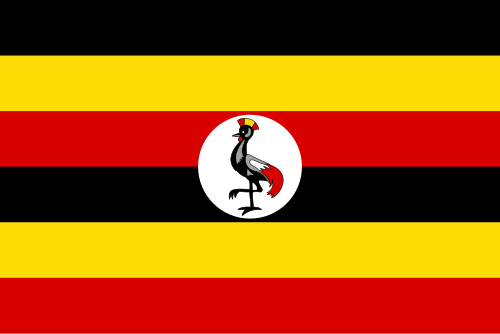

ウガンダ[b]、正式にはウガンダ共和国[c]は、東アフリカの内陸国です。東はケニア、北は南スーダン、西はコンゴ民主共和国、南西はルワンダ、南はタンザニアと国境を接しています。南部にはビクトリア湖の大部分が含まれ、ケニアとタンザニアと共有しています。ウガンダはアフリカ大湖地域にあり、ナイル川流域にあり、変化に富んだ赤道気候です。2024年現在、人口は4,900万人を超え、そのうち850万人が首都で最大の都市であるカンパラ[update]に住んでいます。
ウガンダは、カンパラを含む南部の大部分を占めるブガンダ王国にちなんで名付けられ、その言語はルガンダ語で、公用語は英語です。この地域には、約3,000年前にバントゥー族やナイル語族が到着する以前から、さまざまな民族が住んでいました。これらの民族は、キタラ帝国などの影響力のある王国を築きました。1830年代のアラブ商人の到着と19世紀後半のイギリスの探検家の到着は、外国の影響の始まりを示しました。イギリスは1894年にウガンダ保護領を設立し、さまざまな王国を統合して将来の政治的力学の舞台を整えました。ウガンダは1962年に独立し、ミルトン・オボテが初代首相となりました。1966年のメンゴ危機は、ブガンダ王国との重大な紛争を示しました。 1971年のイディ・アミンの軍事クーデターは、大量殺戮と経済衰退を特徴とする残忍な政権を招き、1979年に彼が打倒されるまで続きました。
ヨウェリ・ムセベニの国民抵抗運動(NRM)は、 6年間のゲリラ戦の末、1986年に政権を握った。これにより安定と成長がもたらされたが、権威主義的な慣行と人権侵害も生じた。大統領の任期制限の撤廃、選挙詐欺と弾圧の疑惑は、ウガンダの民主主義の将来に対する懸念を引き起こしている。ムセベニは、2011年、2016年、2021年の総選挙で大統領に選出された。人権問題、汚職、コンゴ戦争への関与や神の抵抗軍(LRA)との戦いなどの地域紛争は、ウガンダにとって依然として課題となっている。それにもかかわらず、ウガンダは教育と健康の分野で進歩を遂げ、識字率を向上させ、HIV感染を減らしてきたが、妊産婦保健と男女不平等の課題は依然として残っている。この国の将来は、持続可能な開発のために天然資源と人的資源を活用しながら、ガバナンスと人権に対処できるかどうかにかかっている。
ウガンダは地理的に多様性に富んでおり、火山性の丘陵、山々、そして世界で2番目に大きい淡水湖であるビクトリア湖を含む湖があります。この国は肥沃な農地や未開発の石油埋蔵量など、経済発展に貢献する重要な天然資源を有しています。サービス部門は農業を上回り、経済の大部分を占めています。国立公園や野生生物保護区を含むウガンダの豊かな生物多様性は、経済にとって重要な部門である観光業を惹きつけています。ウガンダは、国連、アフリカ連合、G77、東アフリカ共同体、イスラム協力機構の加盟国です。
歴史
植民地化以前のウガンダ

ウガンダの大部分は、3000年前、バントゥー語族が南部に、ナイル語族が北東部に到着するまで、中央スーダン語とクリアク語を話す農民と遊牧民が住んでいた。西暦1500年までには、彼らはすべて、エルゴン山、ナイル川、キョガ湖の南のバントゥー語族文化に同化していた。[14]口承と考古学的研究によると、キタラ王国は、北部のアルバート湖とキョガ湖から南部のビクトリア湖とタンガニーカ湖まで、グレート・レイクス地域の重要な部分を覆っていた。[15]キタラは、トゥーロ王国、アンコーレ王国、ブソガ王国の前身であると主張されている。 [16]一部のルオ族がキタラに侵入し、そこのバントゥー社会と同化し、現在のブニョロ・キタラのオムカマ(支配者)のビイト王朝を樹立した。[17]
アラブの貿易商は1830年代に東アフリカのインド洋沿岸から貿易と商業のためにこの地に移り住んだ。[18] 1860年代後半、ウガンダ中西部のブニョロは、エジプトが支援するエージェントによって北から脅かされていた。[19]貿易を求める東アフリカ沿岸のアラブの貿易商とは異なり、これらのエージェントは外国の征服を推進していた。1869年、エジプトのヘディーブ・ イスマイル・パシャは、ビクトリア湖の国境の北、アルバート湖の東、そして「ゴンドコロの南」の領土を併合しようとし、 [20]イギリスの探検家サミュエル・ベイカーを北ウガンダの国境に軍事遠征に派遣し、そこでの奴隷貿易を抑制し、商業と「文明」への道を開くことを目的とした。バニョロ族はベイカーに抵抗し、ベイカーは退却地を確保するために必死の戦闘を強いられた。ベイカーは抵抗を裏切り行為とみなし、イギリスで広く読まれた本(イスマイリア:エジプトのハディーヴ、イスマイールが組織した奴隷貿易鎮圧のための中央アフリカ遠征の物語(1874年))[20]でバンヨロを非難した。その後、イギリスはバンヨロ王国に反対する傾向を持ってウガンダに到着し、ブガンダ王国に味方した。これにより、最終的にバンヨロは領土の半分を失うことになり、その半分はイギリスからの報酬としてブガンダに与えられた。数多くの「失われた郡」のうち2つは、独立後にバンヨロに返還された。
1860年代、アラブ人が北からの影響力を模索するなか、ナイル川の源流を探していたイギリス人探検家がウガンダに到着した[21]。その後、1877年にイギリスの英国国教会宣教師がブガンダ王国に到着し、1879年にはフランスのカトリック宣教師が続いた。この状況により、 1885年にウガンダ殉教者が死亡した。これは、ムテサ1世とその側近の多くが改宗し、反キリスト教徒の息子ムワンガが王位を継承した後のことである[22] 。イギリス政府は、1888年からこの地域での貿易協定の交渉のため、帝国イギリス東アフリカ会社(IBEAC)を設立した[23]。
1886年以降、ブガンダでは一連の宗教戦争が起こった。最初はイスラム教徒とキリスト教徒の間で、その後1890年からは「ba-Ingleza」プロテスタントと「ba-Fransa」カトリックの間で、同盟を組んだ帝国にちなんで名付けられた派閥が続いた。[24] [25]内乱と財政的負担のため、IBEACはこの地域での「占領を維持する」ことができないと主張した。[26]イギリスの商業関係者はナイル川の貿易ルートを保護することに熱心であり、それが1894年にイギリス政府がブガンダと隣接地域を併合してウガンダ保護領を設立するきっかけとなった。[23] : 3–4 [27]
ウガンダ保護領(1894年 - 1962年)

ウガンダ保護領は1894年から1962年までイギリス帝国の保護領であった。1893年、イギリス東アフリカ会社は主にブガンダ王国からなる領土の統治権をイギリス政府に移譲した。ウガンダ国内の宗教戦争により破産に追い込まれた後、IBEACはウガンダに対する支配権を放棄した。 [28]
1894年にウガンダ保護領が設立され、他の王国(1900年にトロ、[29] 1901年に アンコーレ、1933年にブニョロ[30] )との条約締結により、ブガンダの国境を越えて領土が拡大され、現在のウガンダとほぼ同等の地域となった。[31]
保護領としての地位は、ウガンダにとって、隣国ケニアのようにこの地域が植民地にされた場合とは大きく異なる結果をもたらした。それは、完全な植民地統治の下では制限されていたであろう一定の自治権がウガンダに保持されていたからである。[32]
1890年代、ウガンダ鉄道建設のため、イギリス領インドから3万2000人の労働者が契約労働契約に基づいて東アフリカに徴用された。[33]生き残ったインド人のほとんどは帰国したが、6724人は鉄道完成後も東アフリカに留まることを決めた。[34]その後、一部は貿易商となり、綿花の繰り出しや服飾小売業を営んだ。[35]
1900年から1920年にかけて、ウガンダ南部のビクトリア湖北岸で睡眠病が流行し、25万人以上が死亡した。 [36]
第二次世界大戦により、ウガンダ植民地政府はキングス・アフリカン・ライフルズに77,143人の兵士を徴兵した。[要出典]彼らは西部砂漠作戦、アビシニアン作戦、マダガスカルの戦い、ビルマ作戦で活躍した。
独立(1962年から1965年)
ウガンダは1962年10月9日に英国から独立し、エリザベス2世女王が国家元首およびウガンダ女王となった。1963年10月、ウガンダは共和国となったが、英連邦加盟国としての地位は維持した。
1962年に行われた独立後初の選挙では、ウガンダ人民会議(UPC)とカバカ・イェッカ(KY)の連合が勝利した。UPCとKYは独立後初の政府を樹立し、ミルトン・オボテが行政首相、ブガンダのカバカ(国王)エドワード・ムテサ2世が大統領という儀礼的な地位に就いた。[37] [38]
ブガンダ危機(1962年~1966年)

ウガンダの独立直後の数年間は、中央政府と最大の地域王国であるブガンダとの関係が中心であった。[39]

英国がウガンダ保護領を創設した瞬間から、単一国家の枠組みの中で最大の君主制をどう管理するかという問題が常にあった。植民地総督たちは、うまくいく方策を思いつかなかった。ブガンダが中央政府との関係に無頓着だったことで、この問題はさらに複雑になった。ブガンダは独立を求めたことはなく、むしろ、保護領内の他の臣民よりも高い特権や、英国が撤退したときに特別な地位を保証する緩い取り決めに満足しているようだった。これは、独立前の英国植民地当局とブガンダの間の敵対関係によって部分的に証明された。[40]
ブガンダ国内では、カバカ族が支配的な君主であり続けることを望む者と、ウガンダの他地域と合流して近代的な世俗国家を作ろうとする者との間で分裂が起きた。この分裂の結果、ブガンダを拠点とする2つの主要政党、カバカ・イェッカ(カバカ族のみ)KYとカトリック教会にルーツを持つ民主党(DP)が誕生した。植民地時代後初の議会選挙が近づくにつれ、この2つの政党間の敵意は極めて強まった。カバカ族は特にDP党首のベネディクト・キワヌカを嫌っていた。[41]
ブガンダ国外では、北ウガンダ出身の物腰柔らかな政治家、ミルトン・オボテが、ブガンダ国外の政治家と連合を組み、ウガンダ人民会議(UPC)を結成した。UPCの中核をなすのは、ブガンダの特別な地位を有利にしている地域的不平等を是正したい政治家たちだった。このことは、ブガンダ国外からかなりの支持を集めた。しかし、同党は依然として利害関係者の緩やかな連合体であり、オボテは連邦制に基づく共通の基盤に彼らを交渉する優れた手腕を発揮した。[42]

独立後も、ブガンダ問題は未解決のままだった。ウガンダは、議会で多数派を占める支配政党を持たずに独立を果たした数少ない植民地領土の 1 つだった。独立前の選挙では、UPC はブガンダで候補者を立てず、直接選挙で選ばれた 61 議席のうち 37 議席を獲得した (ブガンダ以外)。DP はブガンダ以外で 24 議席を獲得した。ブガンダに与えられた「特別な地位」は、ブガンダの 21 議席がブガンダ議会 (ルキッコ) の選挙を反映した比例代表制で選出されたことを意味した。KY は DP に圧倒的な勝利を収め、21 議席すべてを獲得した。
UPCが最高潮に達したのは1964年末、DPの党首バジル・キイザ・バタリンガヤが他の5人の議員と共に議場を離れ、DPの議席がわずか9議席になったときだった。DP議員たちは、党首ベネディクト・キワヌカのカバカに対する敵意がKYとの妥協のチャンスを妨げていることに特に不満だった。[43] UPCとの正式な連立がもはや実現不可能であると悟ったKYの10人の議員が議場を離れると、少しずつだった離党者が洪水のように押し寄せてきた。オボテのカリスマ的な演説は全国で圧倒的な支持を集め、UPCは行われたほぼすべての地方選挙で勝利し、ブガンダ以外のすべての地区議会と議会に対する支配力を強めていた。[44]カバカの反応は沈黙していた。おそらく彼の国での儀礼的役割と象徴性に満足していたのだろう。しかし、彼の内部にも大きな分裂があり、オボテに対して効果的な行動をとることが困難だった。ウガンダが独立する頃には、ブガンダは「社会的、政治的勢力が対立する分裂した家」だった。[45]しかし、UPC 内部では問題が起こりつつあった。党員が膨れ上がるにつれ、民族的、宗教的、地域的、個人的な利益が党を揺るがし始めた。党の見かけ上の強さは、中央および地方組織における一連の複雑な派閥争いで蝕まれていった。そして 1966 年までに、UPC は分裂し始めた。DP と KY から議会を横切って来た新参者によって、対立はさらに激化した。[46]
1964年、 UPC代表団は代表者会議のためグルに到着した。ここで初めて、オボテが党の統制を失いつつあることが示された。党の事務総長をめぐる争いは、新穏健派候補のグレース・イビンギラと急進派のジョン・カコンゲの激しい争いとなった。その後、イビンギラはUPC内でオボテに反対する勢力の象徴となった。これは、ブガンダと中央政府間の危機につながったその後の出来事を見る上で重要な要素である。UPC外の人々(KY支持者を含む)にとって、これはオボテが脆弱であることを示す兆候であった。鋭い観察者は、UPCがまとまりのある組織ではないことに気付いた。[47]
UPC-KY同盟の崩壊は、オボテらがブガンダの「特別な地位」に不満を抱いていたことを公然と明らかにした。1964年、政府は広大なブガンダ王国の一部の地域から、カバカの臣民ではないという要求に応えた。植民地支配以前、ブガンダは隣国のブニョロ王国と競争していた。ブガンダはブニョロの一部を征服し、イギリスの植民地主義者はブガンダ協定でこれを公式化した。「失われた郡」として知られるこれらの地域の人々は、ブニョロの一部に戻ることを望んだ。オボテは住民投票を認めることにしたが、これはカバカとブガンダの残りのほとんどの人々を怒らせた。郡の住民は、カバカが投票に影響を与えようとしたにもかかわらず、ブニョロに戻ることを投票で決定した。[48]住民投票に敗れたKYは、郡をブニョロに渡す法案に反対し、UPCとの同盟は終了した。
ウガンダ政治の部族的性格は政府にも現れていた。かつては全国政党だったUPCは、イビンギラがUPCでオボテに挑戦したことで部族の線に沿って分裂し始めた。経済と社会の領域で明らかだった「北部/南部」の民族的分裂は、今や政治に定着した。オボテは主に北部の政治家たちに囲まれていたが、後に彼とともに逮捕され投獄されたイビンギラの支持者たちは主に南部出身者だった。やがて、この2つの派閥は「バントゥー」(主に南部のイビンギラ派)と「ナイル派」(主に北部のオボテ派)という民族的呼称を得た。オボテがイビンギラを支持する主にバントゥーの大臣たちを逮捕し投獄したことで、政府がバントゥーと戦争状態にあるという認識はさらに強まった。[49]

これらのレッテルは、2つの非常に強力な影響力をもたらした。まずブガンダ。ブガンダの人々はバントゥー族なので、当然イビンギラ派と同盟を結んだ。イビンギラ派は、オボテがカバカ族を倒そうとしていると非難することで、この同盟をさらに推し進めた。[49]彼らは今やオボテに対抗する側についた。2つ目は治安部隊。イギリスの植民地主義者は、軍隊と警察をほぼ独占的に北部ウガンダから採用した。彼らがこれらの役割に適していると考えたからだ。独立当時、軍隊と警察は北部の部族、主にナイル人によって支配されていた。彼らは今やオボテとの結びつきを強め、オボテはこれを最大限に利用して権力を強化した。1966年4月、オボテはモロトで800人の新兵を派遣したが、そのうち70パーセントは北部地域出身だった。[50]
当時、中央政府と治安部隊は「北部人」、特にUPCを通じて国家レベルの政府要職に大きくアクセスしていたアチョリ人によって支配されていると認識される傾向があった。[51]北部ウガンダでは、特に独立前後の王国の「特別な地位」と、この地位に伴うすべての経済的および社会的利益に対して、さまざまな程度の反ブガンダ感情もあった。「オボテは、官僚と軍隊の両方を通じて、かなりの数の北部人を中央州に持ち込み、北部ウガンダにパトロネージ・マシンを作った」[51]しかし、「バントゥー」と「ナイル人」の両方のラベルは、重大な曖昧さを表している。たとえば、バントゥーのカテゴリには、歴史的に激しいライバルであるブガンダとブニョロの両方が含まれる。ナイル人ラベルには、ルグバラ、アチョリ、ランギが含まれますが、これらの人々はすべて、後にウガンダの軍事政策を特徴づける激しいライバル関係にある。こうした曖昧さにもかかわらず、これらの出来事は意図せずして北部と南部の政治的分裂を浮き彫りにし、それが今でもある程度ウガンダの政治に影響を与えている。
反対派がオボテの弱点を察知したため、UPC の分裂は続いた。UPC がほとんどの議会を支配していた地方レベルでは、不満が現職の議会リーダーに向けられ始めた。オボテの地元地区でさえ、1966 年に地方議会の議長を追放しようとする動きがあった。UPC にとってさらに心配なのは、1967 年に次の国政選挙が迫っていたことであり、KY (今や DP を支持する可能性が高かった) の支援と UPC 内の派閥主義の高まりがなければ、UPC が数か月以内に政権を失う可能性が実際にあった。
オボテは1966年初頭、KYがブガンダ国外に勢力を拡大しようとするいかなる試みも阻止する新たな議会法でKYを追及した。KYは、議会で、残っていた数少ない国会議員の1人である末期の病に冒されたダウディ・オチエングを通じて応じたように見えた。オチエングは皮肉なことに、北ウガンダ出身であるにもかかわらずKYの地位で昇進し、ブガンダで広大な土地の所有権を与えたカバカの側近となっていた。オボテが議会を欠席している間に、オチエングは、オボテの陸軍参謀総長イディ・アミン大佐が画策したコンゴからの象牙と金の違法略奪を明らかにした。彼はさらに、オボテ、オナマ、ネイコンの3人がこの計画から利益を得ていたと主張した。[52]議会は、アミンを非難しオボテの関与を調査する動議を圧倒的多数で可決した。これは政府を動揺させ、国内の緊張を高めた。
カバカは、UPCブガンダ会議でオボテに党内から挑戦する能力をさらに示した。この会議では、ゴッドフリー・ビナイサ(検事総長)が、カバカ、イビンギラ、およびブガンダのその他の反オボテ分子の支援を受けているとされる派閥によって追放された。[45]オボテはこれに応じ、閣議でイビンギラと他の大臣を逮捕し、1966年2月に特別権限を握った。1966年3月、オボテは大統領と副大統領の職を廃止すると発表し、事実上カバカを解任した。オボテはアミンにさらなる権限を与え、婚姻を通じてブガンダと関係があった前大統領(オポロット)よりも上位の陸軍司令官の地位をアミンに与えた(おそらく、そうなった場合、オポロットはカバカに対する軍事行動に消極的だろうと考えたためだろう)。オボテは憲法を廃止し、数ヶ月後に予定されていた選挙を事実上停止した。オボテはテレビやラジオに出演し、アミンがクーデターを企てているという噂を受けてカバカが検討していたと思われる外国軍の派遣要請を含むさまざまな罪でカバカを非難した。オボテは、他の措置の中でも特に次のことを発表してカバカの権威をさらに弱体化させた。
- 連邦機関の独立した公務員委員会の廃止。これにより、ブガンダの公務員を任命するカバカの権限が剥奪された。
- ブガンダ高等裁判所の廃止 - カバカが持っていた司法権をすべて剥奪。
- ブガンダの財政管理をさらに中央管理下に置くこと。
- ブガンダの首長たちの土地の廃止。土地はカバカが臣民に対して持つ権力の重要な源泉の一つである。
これでブガンダと中央政府との決戦の線が引かれた。歴史家は妥協によってこれを回避できたかどうか議論するかもしれない。オボテは今や勇気づけられ、カバカを弱者とみなしていたので、これはありそうになかった。実際、4年前に大統領職を引き受けてUPCに味方したことで、カバカは国民を分裂させ、一方に味方して他方に対抗していた。ブガンダの政治制度では、宗教と個人的な野心による対立により、制度は機能せず、中央政府の動きに対応できなかった。カバカは、独立後の新しい政治をよりよく理解している若いブガンダの政治家からのアドバイスに無関心で反応しないと見なされることが多かった。これは、伝統的な利益が維持される限り、何が起きているのかに曖昧な態度をとる伝統主義者とは対照的だった。カバカは新伝統主義者を支持した。[53]
1966年5月、カバカが行動を起こした。彼は外国に援助を求め、ブガンダ議会はウガンダ政府にブガンダ(首都カンパラを含む)から撤退するよう要求した。これに対しオボテはイディ・アミンにカバカの宮殿を攻撃するよう命じた。カバカの宮殿をめぐる戦いは熾烈で、カバカの衛兵は予想以上に抵抗した。イギリスで訓練を受けたカバカの隊長と約120人の武装兵がイディ・アミンを12時間にわたり抑え込んだ。[54]この戦いでは2,000人が死亡したと推定され、軍はより強力な銃を投入して宮殿を制圧した。ブガンダで予想されていた田舎の反乱は実現せず、数時間後オボテは勝利を喜び、晴れやかな表情で記者団と面会した。カバカは宮殿の壁を越えて脱出し、支持者によってロンドンに移送されて亡命した。彼は3年後にそこで亡くなった。
1966年~1971年(クーデター前)
1966年、オボテ率いる政府とムテサ国王との権力闘争の後、オボテは憲法を停止し、儀礼上の大統領と副大統領を解任した。1967年、新しい憲法はウガンダを共和国と宣言し、伝統的な王国を廃止した。オボテは大統領に就任した。[22]
1971年(クーデター後)~1979年(アミン政権の終焉)
1971年1月25日の軍事クーデターの後、オボテは権力の座から追われ、イディ・アミン将軍が国の実権を握った。アミンは軍の支援を受けてその後8年間独裁者としてウガンダを統治した。[55]彼は支配を維持するために国内で大量殺戮を行った。彼の政権下で推定8万~50万人のウガンダ人が死亡した。[56]彼は残虐行為に加え、起業家精神に富んだインド系少数派をウガンダから強制的に追放した。 [57] 1976年6月、パレスチナのテロリストがエールフランス航空機をハイジャックし、エンテベ空港に着陸させた。当初搭乗していた250人の乗客のうち100人が人質となったが、 10日後にイスラエル軍の奇襲により救出された。[58]アミンの統治は、1979年のウガンダ・タンザニア戦争でウガンダ亡命者の支援を受けたタンザニア軍がウガンダに侵攻したことで終焉を迎えた。
1979年~現在

1980年にウガンダでブッシュ戦争が勃発し、 1986年1月にヨウェリ・ムセベニが前政権を倒して大統領に就任した。[60]
ウガンダの政党は、その年から活動が制限されたが、これは表面上は宗派間の暴力を減らすための措置だった。ムセベニが制定した無党派の「運動」制度では、政党は存続したが、本部しか運営できなかった。支部を開設したり、集会を開いたり、直接候補者を立てたりすることはできなかった (ただし、選挙候補者は政党に所属できた)。2005 年 7 月、憲法国民投票により、19 年間続いた複数政党制の禁止は取り消された。
1993年、ヨハネ・パウロ2世教皇は6日間の司牧旅行中にウガンダを訪れ、ウガンダ国民に和解を促した。大勢の祝典で教皇は殺害されたキリスト教の殉教者たちに敬意を表した。
1990年代半ばから後半にかけて、ムセベニは西側諸国からアフリカの新世代の指導者の一人として称賛された。[61]
しかし、彼の大統領職は、第二次コンゴ戦争中にコンゴ民主共和国に侵攻し占領し、1998年以来推定540万人の死者を出したほか、アフリカの大湖地域でのその他の紛争にも参加したことで汚点を残している。彼は、児童奴隷、アティアク虐殺、その他の大量殺人など、数多くの人道に対する罪を犯してきた神の抵抗軍との内戦で何年も闘ってきた。ウガンダ北部の紛争では、数千人が死亡し、数百万人が避難を余儀なくされた。[62]
議会は2005年に大統領の任期制限を撤廃したが、これはムセベニが公費を使ってこの措置を支持した議員一人当たり2,000ドルを支払ったためとされている。[63]大統領選挙は2006年2月に行われた。ムセベニは数人の候補者と争ったが、その中で最も有力だったのはキザ・ベシジェイであった。
2011 年 2 月 20 日、ウガンダ選挙管理委員会は、2011年 2 月 18 日に行われた選挙で、現職大統領ヨウェリ・カグタ・ムセベニが勝利したと発表しました。しかし、野党は結果に満足せず、偽りと不正がいっぱいだと非難しました。公式結果によると、ムセベニは 68 パーセントの票を獲得して勝利しました。これは、ムセベニの主治医だったベシギエを楽々と上回り、記者団に対し、ムセベニとその支持者は選挙結果だけでなく、ムセベニまたは彼が任命する人物による不屈の統治を「完全に無視」していると述べました。ベシギエは、不正選挙は間違いなく非合法な指導者を生み出すことになり、これを批判的に分析するのはウガンダ国民の責任だと付け加えました。欧州連合の選挙監視団は、ウガンダの選挙プロセスの改善点と欠陥について次のように報告している。「選挙運動と投票日は平和的に行われた。しかし、選挙プロセスは回避可能な管理およびロジスティックスの失敗によって損なわれ、容認できない数のウガンダ国民が選挙権を剥奪される結果となった。」[64]
2012年8月以来、ハクティビスト集団アノニマスは反同性愛法案をめぐってウガンダ当局を脅迫し、政府の公式ウェブサイトをハッキングしてきた。[65]一部の国際援助国は、反同性愛法案が継続する場合、同国への財政援助を削減すると脅している。[66]
大統領の息子ムフージ・カイネルガバによる後継計画の兆候が緊張を高めている。[67] [68] [69] [70]
ヨウェリ・ムセベニ大統領は1986年以来国を統治しており、最近では2021年1月の大統領選挙で再選された。[71]公式結果によると、ムセベニは58%の票を獲得して選挙に勝利し、ポップスターから政治家に転身したボビ・ワインは35%だった。野党は広範囲にわたる不正と不規則性の疑惑を理由に結果に異議を唱えた。[72] [73]もう一人の野党候補は24歳のジョン・カトゥンバだった。[74]
地理

ウガンダは、南東アフリカの南緯 1 度から北緯 4 度、東経 30 度から東経 35 度の間に位置しています。地形は火山丘陵、山、湖など多様です。国土の平均標高は 900 メートルです。ウガンダの東西国境には山があります。ルウェンゾリ山脈にはウガンダ最高峰のアレクサンドラ山があり、標高は 5,094 メートルです。
湖と川
国の南部の大部分は、多くの島々を含む世界最大の湖の一つ、ビクトリア湖の影響を強く受けています。首都カンパラ[75] [76] [77]や近くの都市エンテベ[78] など、最も重要な都市は南部のこの湖の近くに位置しています。キョガ湖は国の中心部にあり、広大な湿地帯に囲まれています。[79]

ウガンダは内陸国であるが、多くの大きな湖がある。ビクトリア湖とキョガ湖の他に、アルバート湖、エドワード湖、そしてより小さなジョージ湖がある。[78]ウガンダはほぼ完全にナイル川流域にある。ビクトリアナイル川はビクトリア湖からキョガ湖に流れ込み、そこからコンゴ国境のアルバート湖に流れ込む。その後、北に流れて南スーダンに入る。ウガンダ東部の一部は、トゥルカナ湖の内水流域の一部であるスアム川によって排水されている。ウガンダの北東部は、主にケニアにあるロティキピ流域に流れ込む。[78]
生物多様性と保全
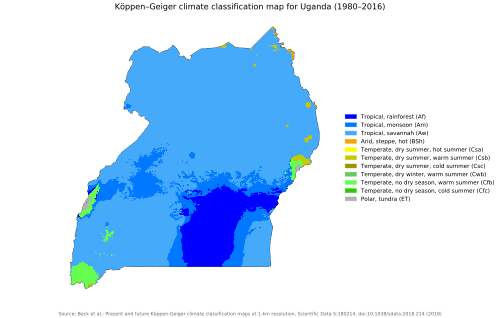
ウガンダには60の保護地域があり、その中にはブウィンディ原生国立公園とルウェンゾリ山脈国立公園(ともにユネスコ世界遺産[ 80])、キバレ国立公園、キデポ渓谷国立公園、ムブロ湖国立公園、ムガヒンガゴリラ国立公園、エルゴン山国立公園、マーチソン滝国立公園、クイーンエリザベス国立公園、セムリキ国立公園の10の国立公園が含まれています。
ウガンダには、ブウィンディ原生国立公園のマウンテンゴリラ、ムガヒンガゴリラ国立公園のゴリラやゴールデンモンキー、マーチソンフォールズ国立公園のカバなど、数多くの種が生息しています。 [81] ジャックフルーツも全国で見つかります。[82]

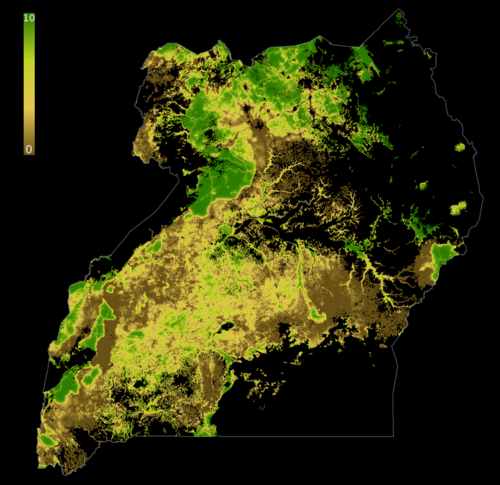
この国の2019年の森林景観完全性指数の平均スコアは4.36/10で、世界172カ国中128位でした。[83]
政府と政治
ウガンダの大統領は国家元首であり、政府の長でもある。大統領は、統治を補佐する 副大統領と首相を任命する。

議会は国会によって構成され、議員数は449名である。このうち、選挙区代表は290名、地区女性代表は116名、ウガンダ人民防衛軍代表は10名、青年代表は5名、労働者代表は5名、障害者代表は5名、職権議員は18名である。[84]
外交関係
ウガンダは、ケニア、タンザニア、ルワンダ、ブルンジ、南スーダンとともに東アフリカ共同体(EAC)の加盟国である。2010年の東アフリカ共同市場議定書によれば、自由貿易と人々の自由な移動が保証されており、就労目的で他の加盟国に居住する権利も含まれる。しかし、この議定書は、労働許可証やその他の官僚的、法的、財政的障害のため実施されていない。ウガンダは、アフリカの角、ナイル渓谷、アフリカ大湖地域の政府を含む8カ国からなる政府間開発機構(IGAD)の創設メンバーである。[85]本部はジブチ市にある。ウガンダはイスラム協力機構のメンバーでもある。[86]
軍隊
ウガンダでは、ウガンダ人民防衛軍が軍隊として機能している。ウガンダの現役軍人の数は45,000人と推定されている。ウガンダ軍は、この地域でいくつかの平和維持活動や戦闘任務に携わっており、評論家は、ウガンダ軍より多くの国に展開しているのは米国軍だけだと指摘している。ウガンダは、コンゴ民主共和国の北部と東部、中央アフリカ共和国、ソマリア、南スーダンに兵士を派遣している。[87]
腐敗
トランスペアレンシー・インターナショナルは、ウガンダの公共部門を世界で最も腐敗した部門の一つと評価している。2016年、ウガンダは176カ国中151位にランクされ、0(最も腐敗していると認識される)から100(クリーンであると認識される)までのスケールで25点を獲得した。[88]
世界銀行の2015年世界ガバナンス指標では、ウガンダはすべての国の中で最悪の12パーセントにランクされました。[ 89]米国国務省の2012年ウガンダ人権報告書によると、「世界銀行の最新の世界ガバナンス指標は、汚職が深刻な問題であることを示しており」、「この国は汚職により年間7689億シリング(2億8600万ドル)を失っています。」[69]
2014年、ウガンダ国会議員の給与はほとんどの公務員の60倍に上り、大幅な増額を求めた。このことは広範囲にわたる批判と抗議を引き起こし、2014年6月には国会議員の腐敗を浮き彫りにするために子豚2匹が国会に密かに持ち込まれる事件も起きた。逮捕された抗議者たちは「MPigs」という言葉を使って不満を訴えた。[90]
2012年に首相府から1260万ドルの援助金が横領された事件は、国際的に大きな影響を及ぼし、政府高官の汚職の存在を浮き彫りにした。この資金は「20年にわたる戦争で荒廃したウガンダ北部とウガンダ最貧地域であるカラモジャの再建に不可欠な支援として充てられる予定だった」。このスキャンダルにより、EU、英国、ドイツ、デンマーク、アイルランド、ノルウェーは援助を停止した。[91]
公務員や政治的後援制度に関わる大規模および小規模の汚職が広まり、ウガンダの投資環境にも深刻な影響を及ぼしている。汚職リスクの高い分野の一つは公共調達であり、調達担当者から不透明な裏金の支払いを要求されることが多い。[92]
この問題をさらに悪化させるのは、石油の入手可能性である。2012年に議会で可決され、NRMが石油部門に透明性をもたらすと宣伝した石油法案は、国内外の政治評論家や経済学者の不満を招いた。例えば、米国に拠点を置くオープン・ソサエティ財団のウガンダ人エネルギーアナリスト、アンジェロ・イザマ氏は、この新法はムセベニとその政権に「ATM(現金自動預け払い機)を渡す」に等しいと述べた。[93]国際法を専門とする非政府組織グローバル・ウィットネスが2012年に発表した報告書によると、ウガンダには現在「6年から10年以内に政府の歳入を2倍にできる可能性のある石油埋蔵量があり、その価値は年間24億ドルと推定される」[94] 。
2006年に可決された非政府組織(改正)法は、NGOへの参入、活動、資金調達、集会への障壁を設けることで、NGOの生産性を抑制してきた。煩雑で不正な登録手続き(政府職員の推薦の義務付け、毎年の再登録など)、不当な活動規制(NGOの関心分野の個人と接触する前に政府への通知義務付けなど)、すべての外国資金をウガンダ銀行経由で送金するという前提条件などにより、NGO部門の成果は著しく制限されている。さらに、同部門の言論の自由は脅迫によって絶えず侵害されており、最近の治安維持法案(集会の自由を厳しく制限)は、政府の弾薬庫を増やすだけだろう。[95]
人権
ウガンダの人権に関しては、依然として懸念される分野が数多くあります。
ウガンダ北部の紛争では、ジョセフ・コニー率いる反乱軍「神の抵抗軍(LRA)」とウガンダ軍による虐待の報告が相次いでいる。国連当局者は2009年2月、コンゴ民主共和国におけるLRAの「恐ろしい残虐行為」を非難した。[96]
国内避難民の数は140万人と推定されている。治安機関の間では拷問が依然として広く行われている。野党議員の逮捕や暴行など、国内の政治的自由に対する攻撃は国際的な批判を招き、2005年5月には英国政府が同国への援助の一部を差し控える決定に至った。2006年2月の選挙前に行われた野党指導者キザ・ベシジエの逮捕と、ベシジエの事件の審理中に重武装した治安部隊が高等法院を包囲したことは非難を招いた。[97]
ウガンダでは児童労働が一般的である。多くの児童労働者が農業に従事している。[98]ウガンダのタバコ農場で働く子どもたちは健康被害にさらされている。[ 98]ウガンダの児童家事使用人は性的虐待の危険にさらされている。 [98] 児童の人身売買が発生している。[98] 奴隷制度と強制労働はウガンダ憲法で禁止されている。[98]
米国難民移民委員会は2007年にウガンダ政府による強制送還や難民に対する暴力など、難民の権利に対するいくつかの侵害を報告した。[99]
近年、ウガンダでは拷問や超法規的処刑が蔓延している問題となっている。例えば、2012年の米国国務省の報告書によると、「アフリカ拷問被害者治療・リハビリテーションセンターは、2012年1月から9月の間に、警察に対する拷問の申し立てを170件、ウガンダ治安部隊に対する申し立てを214件、軍警察に対する申し立てを1件、特別捜査部隊に対する申し立てを23件、不特定の治安要員に対する申し立てを361件、刑務所職員に対する申し立てを24件記録した」という。[69]

2009年9月、ムセベニはブガンダ国王カバカ・ムウェンダ・ムテビのブガンダ王国の一部地域、特にカユンガ地区への訪問を拒否した。暴動が発生し、40人以上が殺害され、他の人々は今も投獄されている。さらに、2011年4月の「仕事に行こう」デモではさらに9人が殺害された。ヒューマン・ライツ・ウォッチの2013年ウガンダ世界報告書によると、政府はこれら2つの事件に関連する殺人事件の捜査を怠っている。[100]
LGBTの権利

2007年に新聞「レッドペッパー」が同性愛者であるとされる男性のリストを発行し、その多くがその結果嫌がらせを受けた。[101]
2010年10月9日、ウガンダの新聞ローリングストーンは「ウガンダのトップホモ100人の写真が流出」と題する一面記事を掲載した。記事には100人の同性愛者の名前、住所、写真が掲載され、黄色い横断幕には「奴らを絞首刑にしろ」と書かれていた。[102]同紙はまた、ウガンダの子供たちが同性愛者によって勧誘されたと主張した。この出版物は国際的な注目を集め、アムネスティ・インターナショナル[103]、 正義なくして平和なし[104]、国際レズビアン・ゲイ・バイセクシャル・トランスジェンダー・インターセックス協会[105]などの人権団体から批判された。同性愛者の権利活動家によると、この出版物以来、多くのウガンダ人が襲われているという。[106] 2011年1月27日、同性愛者の権利活動家デビッド・ケイトが殺害された。[107]
2009年、ウガンダ議会は、前科がある、またはHIV陽性で同性間の性行為に及ぶ人物に死刑を導入することで同性愛の犯罪化を拡大する反同性愛法案を検討した。この法案には、国外で同性間の性行為に及ぶウガンダ人に対する規定が含まれており、処罰のためウガンダに送還される可能性があると主張し、同性愛やソドミーの法的保護を支持する個人、企業、メディア組織、または非政府組織に対する罰則が含まれていた。2009年10月14日、国会議員のデイビッド・バハティは私人法案を提出し、ウガンダ議会で幅広い支持を得たと考えられていた。[108]ハクティビストグループのアノニマスは、この法案に抗議してウガンダ政府のウェブサイトをハッキングした。[109]世界的な非難を受けて法案の審議は延期されたが、最終的には2013年12月20日に可決され、ムセベニ大統領が2014年2月24日に署名した。最終立法では死刑は削除された。この法律は国際社会から広く非難された。デンマーク、オランダ、スウェーデンは援助を差し控えると発表した。2014年2月28日、世界銀行は9000万ドルの融資を延期すると発表し、米国はウガンダとの関係を見直していると述べた。[110] 2014年8月1日、ウガンダ憲法裁判所は、必要な定足数を満たさずに可決されなかったため法案を無効と裁定した。[111] [112] [113] 2014年8月13日の報道によると、ウガンダの司法長官は、法案に対する外国の反応を懸念し、また、新たに導入される法案は、同意する成人同士の同性関係を犯罪とすべきではないと述べたムセベニ大統領の指示により、控訴の計画をすべて取り下げたとのことである。[114] 2019年現在、アフリカ大陸での進展は遅いが、南アフリカが同性婚が認められている唯一の国であり、進展している。[115]
2023年同性愛禁止法
2023年3月21日、ウガンダ議会は、同性愛者を自認する者は終身刑、悪質な同性愛で有罪となった者は死刑に処するとする法案を可決した。[116] [117]
2023年3月9日、2018年から野党の議員であり、正義フォーラム党の公認でブギリ市を代表するアスマン・バサリルワ氏は、同性愛行為と「そのような関係の促進または承認」を非難することを目指す法案を提出し、「この国、あるいはこの世界では、私たちは人権について語ります。しかし、人道的過ちがあるのも事実です。同性愛はウガンダの法律に違反し、家族の神聖さ、子供たちの安全、生殖による人類の存続を脅かす人道的過ちであると主張したいと思います」と述べた。[118] 国会議長のアネット・アニタ・アモング氏は、法案を議会委員会に精査するよう付託し、法案を法律として可決するための迅速なプロセスの第一歩とした。議会議長は以前、西側諸国や援助国について「我々は同性愛の推進者が国にもたらした社会的経済的発展に感謝したい。しかし、彼らが道徳を殺していることは評価できない。我々に必要なのは彼らのお金ではなく、我々の文化だ」と議会で行われた祈祷会で述べていた。この祈祷会には数人の宗教指導者が出席した。[119]議長はウガンダの文化と主権を守るためならどんな犠牲を払ってでも法案を可決すると誓った。[120]
2023年3月21日、議会は圧倒的な支持を得て反同性愛法案を急速に可決した。[121]
アメリカはこの法案を強く非難した。 2023年3月22日のホワイトハウス記者会見で、カリーヌ・ジャン=ピエールは「人権は普遍的なものである。ただ自分が何者か、誰を愛する人かという理由だけで、誰も攻撃されたり、投獄されたり、殺されたりするべきではない」と述べた。 [122]その後数日間、イギリス、[123]カナダ、[124]ドイツ、[125]欧州連合からさらなる批判が寄せられた。
行政区分
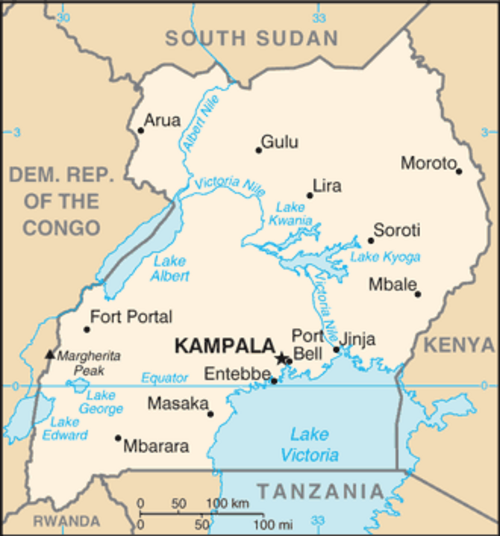
2022年現在、ウガンダは4つのウガンダ地域と136の地区[update]に分かれている。[126] [127]地区の農村地域は、小郡、教区、村 に細分化されている。地区の都市部には市町村議会が指定されている。[128]
ウガンダの行政区分は、ウガンダ地方自治体協会(ULGA)によって正式に管理され、統合されている。ULGAは、ウガンダの地方政府への支援と指導の場としても機能する、自主的で非営利団体である。[129]
国家行政と並行して、5つの伝統的なバントゥー王国が存続し、ある程度の文化的な自治権を享受している。その王国とは、トロ、ブソガ、ブニョロ、ブガンダ、ルウェンズルルである。さらに、一部のグループはアンコーレを公式に認められた伝統的な王国の1つとして復活させようとしているが、まだ成功していない。[130]政府に公式に認められている王国や首長国には、アルール族の連合、イテソ族最高首長国、ランゴ族最高首長国、パドホラ州などがある。[131]
経済とインフラ
ウガンダ銀行はウガンダの中央銀行であり、ウガンダシリングの発行とともに金融政策を担当している。[132]
2015年、ウガンダ経済は以下の商品から輸出収入を生み出した:コーヒー(4億263万米ドル)、石油再輸出(1億3125万米ドル)、卑金属および卑金属製品(1億2000万米ドル)、魚(1億1756万米ドル)、トウモロコシ(9097万米ドル)、セメント(8013万米ドル)、タバコ(7313万米ドル)、茶(6994万米ドル)、砂糖(6643万米ドル)、皮(6271万米ドル)、カカオ豆(5567万米ドル)、豆(5388万米ドル)、シムシム(5220万米ドル)、花(5144万米ドル)、その他製品(7億6677万米ドル)。[133]

ウガンダは着実な経済成長を遂げている。2015~16年度、ウガンダは実質4.6%、名目11.6%の国内総生産成長を記録した。これは2014~15年度の実質5.0%成長と比較される。[134] : vii
この国には、原油と天然ガスの両方の未開発の埋蔵量がある。 [135] 1986年にはコーヒーが主な輸出品で農業が経済の56%を占めていたが、現在ではサービス部門がそれを上回り、2007年にはGDPの52%を占めている。[136] 1950年代、イギリス植民地政権は、約50万人の自給自足農家に協同組合への加入を奨励した。[137] 1986年以来、政府は(外国や国際機関の支援を受けて)イディ・アミン政権[138]とその後の内戦で荒廃した経済の復興に取り組んできた。 [139]
2012年、世界銀行は依然としてウガンダを重債務貧困国リストに掲載していた。[140]
経済成長は必ずしも貧困削減につながっているわけではない。2000年から2003年までの平均年間成長率は2.5%であったにもかかわらず、貧困レベルはその間に3.8%増加した。[141]このことは、失業のない成長を避けることの重要性を浮き彫りにしており、ウガンダだけでなく開発途上国全体で公平な成長の必要性に対する開発関係者の意識の高まりの一端を担っている。 [141]
.jpg/500px-Uganda_GV5_lo_(4108162183).jpg)
1996年にウガンダ証券取引所が設立され、いくつかの株式が上場されている。政府は株式市場を民営化の手段として利用してきた。すべての政府財務省発行株式は証券取引所に上場されている。資本市場庁は、アフリカン・アライアンス投資銀行、バローダ・キャピタル・マーケット・ウガンダ・リミテッド、クレイン・ファイナンシャル・サービス・ウガンダ・リミテッド、クレステッド・ストックス・アンド・セキュリティーズ・リミテッド、ダイアー&ブレア投資銀行、エクイティ・ストック・ブローカーズ・ウガンダ・リミテッド、ルネッサンス・キャピタル・インベストメント・バンク、UAPファイナンシャル・サービス・リミテッドを含む18のブローカー、資産運用会社、投資顧問会社にライセンスを与えている。[142]国内の正式な貯蓄を増やす方法の1つとして、年金部門の改革が注目されている(2007年)。[143] [144]
ウガンダは伝統的にインド洋の港モンバサへのアクセスをケニアに依存している。ウガンダのブカサ湖畔の港とタンザニアのムソマを経由し、タンザニア内陸部のアルーシャとインド洋の港タンガに鉄道で接続する海への第2のアクセスルートを確立する取り組みが強化されている。 [145]ウガンダは東アフリカ共同体 の加盟国であり、計画中の東アフリカ連邦の潜在的加盟国である。
ウガンダには大規模な移民がおり、主に米国と英国に居住している。この移民は送金やその他の投資(特に不動産)を通じてウガンダの経済成長に大きく貢献している。世界銀行によると、ウガンダは2016年に海外から推定10億9900万米ドルの送金を受け取っており、東アフリカ共同体ではケニア(15億7400万米ドル)に次ぐ第2位、[146]アフリカでは第7位である。[147]ウガンダはコンゴ民主共和国、[148]南スーダン、[149]ルワンダなど多くの近隣諸国の経済ハブとしても機能している。[150]
ウガンダ統計局は、2016年11月のインフレ率が4.6%だったと発表した。[151] 2018年6月29日、ウガンダの統計局は、2016/17年度の5.7%と比較して、2017/18年度末のインフレ率が3.4%に低下したと発表した。[152]
業界
ウガンダは、国際通貨基金(IMF)による名目国内総生産( GDP )で世界第102位にランクされ、GDPは26,349百万米ドルである。[153]世界銀行は、名目GDPでウガンダを25,891百万米ドルで第99位にランク付けした。 [154]購買力平価 によるGDPに基づき、IMFはウガンダを第86位(現行の国際ドルで91,212百万米ドル)にランク付けし、世界銀行は第90位(現行の国際ドルで79,889百万米ドル)にランク付けした。 [153] [154]
1990年代以降、ウガンダの経済は成長している。1990年から2015年までの実質国内総生産(GDP)は年平均6.7%成長し、一方、同じ期間の一人当たり実質GDPは年3.3%成長した。[155]
貧困

ウガンダは世界で最も貧しい国の一つである。2012年には、人口の37.8%が1日1.25ドル未満で暮らしていた。[156] 1992年の人口の56%から2009年の24.5%へと全国の貧困率を大幅に削減したにもかかわらず、ウガンダ国民の84%が住む農村部では貧困が根強く残っている。[157]
ウガンダの農村部に住む人々は農業を主な収入源としており、農村女性の90パーセントが農業部門で働いている。[158]農業労働に加え、農村女性は家族の世話も担っている。平均的なウガンダの女性は、食事や衣服の準備、水や薪の汲み取り、老人や病人、孤児の世話など、家事に1日9時間を費やしている。女性は平均して男性よりも長時間働いており、1日12~18時間、平均15時間働いているのに対し、男性は1日8~10時間働いている。ただし、都市部では男女の労働時間はほぼ同じである。2005年には女性のみ世帯主の世帯が26パーセントで、これはエイズによる男性の死亡により前年より増加している。世帯主のほとんどは、収入上位5分の1(31パーセント)に属していた。男性のみを世帯主とする貧困世帯もFHHと同程度に増加したが、研究はほとんど行われていない。[159]
収入を補うために、農村の女性は、地元の動物の飼育や販売といった小規模な起業活動に従事することがある。しかし、仕事量が多いため、収入を生む活動に割ける時間はほとんどない。貧困層は子どもを学校に通わせることができず、ほとんどの場合、少女たちは家事の手伝いをしたり結婚したりするために学校を中退する。性労働に従事する少女もいる。その結果、若い女性は年上で性経験が豊富なパートナーを持つ傾向があり、これが女性にHIV感染の不釣り合いなリスクをもたらし、ウガンダの成人HIV感染者の約5.7%を占めている。[160]
ウガンダの農村部における母子保健は、地理的なアクセスの難しさ、交通手段の不足、経済的負担が母子保健サービスへのアクセスにおける主な需要側の制約として特定されており、国家政策目標やミレニアム開発目標に遅れをとっている。 [161]そのため、中間輸送メカニズムなどの介入が、同国の農村部における女性の母子保健サービスへのアクセスを改善する手段として採用されている。[162]
ジェンダーの不平等は女性の貧困削減の最大の障害である。女性は男性よりも全体的に社会的地位が低い。多くの女性は、このことが自立して行動し、地域社会に参加し、教育を受け、虐待的な男性への依存から逃れる力を低下させていると考えている。[163]
航空輸送
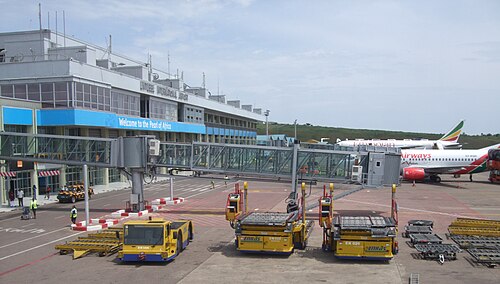
ウガンダには36の空港がある。民間航空会社は4つの空港から定期旅客便を運航している。現在ウガンダには、カンパラの南西25マイル(40 km)に位置するエンテベ国際空港という国際空港が1つある。2017年の空港利用者数は153万人で、前年比8%増だった。[164] 2つ目の国際空港であるホイマ国際空港が現在建設中である。[165]
道路網
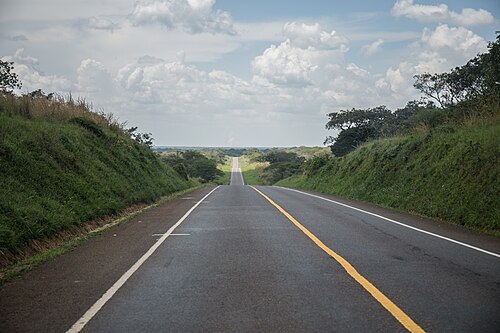
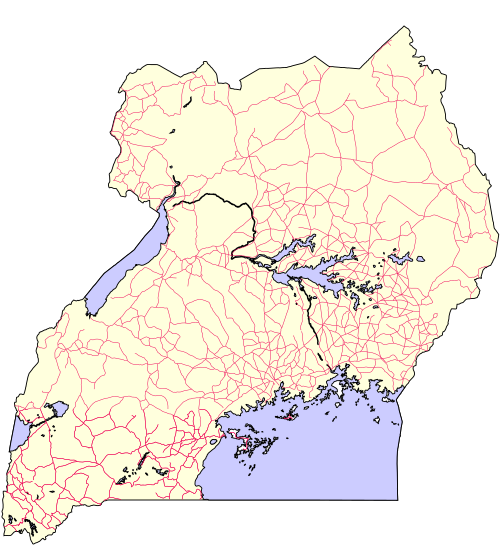
道路輸送はウガンダで最も重要な輸送手段です。貨物と旅客の交通の 95% は道路交通によって処理されています。ウガンダの道路網は約 129,469 km (80,448 mi) の長さです。これらの道路の約 4% が舗装されており、これは約 5,300 km (3,300 mi) に相当します。道路の種類は、国道 (22,009 km (13,676 mi) — 17%)、地区道路 (33,661 km (20,916 mi) — 26%)、都市道路 (9,062 km (5,631 mi) — 7%)、コミュニティ道路 (64,734 km (40,224 mi) — 50%) です。[166]国道は道路網の約 17% を占めていますが、総道路交通の 80% 以上を担っています。[167]ウガンダには83,000台の自家用車があり、これは1000人の住民あたり2.94台の自動車があることを意味します。[168]
鉄道

ウガンダの鉄道網はおよそ1,260キロメートル(780マイル)の長さである。最長の路線は、カンパラからトロロまでの幹線(249キロメートル(155マイル))、カンパラからカセセまでの西線(333キロメートル(207マイル))、トロロからパクワチまでの北線(641キロメートル(398マイル))である。[169]
コミュニケーション
通信システムには、電話、ラジオやテレビ放送、インターネット、郵便、新聞などさまざまなものがあります。電話とインターネットの使用は急速に増加しています。
ウガンダ通信委員会によると、人口4,800万人のうち、通信会社は7社あり、2018年時点で[update]加入者数は2,400万人を超えている[要更新] 。 [170] [171] 。 [172]インターネット接続の95%以上は携帯電話で行われている。[173]
エネルギー
ウガンダは豊富なエネルギー資源に恵まれており、国中に均等に分配されています。これには水力、バイオマス、太陽光、地熱、泥炭、化石燃料が含まれます。
1980年代、ウガンダのエネルギーの大半は木炭と木材から供給されていました。しかし、アルバート湖周辺で石油が発見され、その総量は推定9500万立方メートル(3.4 × 10 9 立方フィート)でした。[135]ヘリテージ・オイルはウガンダで最大級の原油発見地の一つであり、そこで事業を続けています。[174]

ウガンダとタンザニアは2016年9月13日、両国が1,445キロメートル、35億ドルの原油パイプラインを建設する契約を締結した。ウガンダ・タンザニア原油パイプライン(UTCOP)は東アフリカ原油パイプライン(EACOP)としても知られ、東アフリカ初のパイプラインとなり、ウガンダの石油資源が豊富なホイマ地域とタンザニアのタンガ港を経由しインド洋を結ぶ。
ウガンダの好ましい促進環境と民間投資の広範な存在は、 Power Africaの目標を達成するためのユニークな機会を提供します。 [175]ウガンダは、2001年以降、発電、送電、供給セグメントが分離され、自由化され、財政的に実行可能なエネルギー市場を持つ数少ないサハラ以南アフリカの国の一つです。[176]セクターの規制と監督を行う独立した電力規制当局があります。最大の配電会社であるUMEMEは民間所有であり、配電と小売の20年間の免許を持っています。しかし、この国は13の農村サービス地域に分割されており、そのうち6つは小規模な配電会社によって管理されています。独立発電事業者(IPP)は現在、発電能力のほぼ60%を占めています。統合計画と金融エコシステムに関する問題は依然として残っています。
給水と衛生
2006年に発表された報告書によると、ウガンダの給水・衛生部門は1990年代半ば以降、都市部で大きな進歩を遂げており、普及率だけでなく、運営・商業面でのパフォーマンスも大幅に向上している。 [177] : 3–4 1998年から2003年にかけての部門改革には、都市や大都市で運営されている国立水道下水道公社の商業化と近代化、および小都市での地方分権化と民間部門の参加が含まれていた。[178] : 15

これらの改革は国際的に大きな注目を集めているが、2010年には人口の38%が依然として改善された水源にアクセスできなかった。改善された衛生設備へのアクセスに関しては、数字が大きく異なっている。政府の数字によると、2011年には農村部で70%、都市部で81%であったが、[179]国連の数字によると、それはわずか34%であった。[180]
水と衛生部門は、貧困と闘うためのウガンダの主要戦略文書である2004年の貧困撲滅行動計画(PEAP)の下で重要な分野として認識されていました。[181] : 182–188 2006年に発表された報告書によると、外部ドナー、中央政府、非政府組織による財政支援を調整するために包括的な支出枠組みが導入されました。[182] : 5 PEAPは、2001年から2015年までに給水カバー率を95%まで高めるには約14億米ドル、つまり年間9,200万米ドルが必要と推定しており、農村部では9億5,600万米ドル、都市部と大都市では2億8,100万米ドル、小都市では1億3,600万米ドルが必要でした。[181] : 182–183
教育

ウガンダの教育制度は、多くの点で不十分であるものの、1990年代後半から大きな変化が見られた。教育制度は、子どもたちが小学校で7年間、中学校で6年間、高等学校で3~5年間過ごすように設定されている。1997年、政府はすべての子どもの小学校教育を無料にすると宣言した。[183] この改正は大きな利益をもたらした。1986年には、小学校に通う子どもはわずか200万人だった。1999年までに、小学校に通う子どもは600万人に増え、この数は増え続けている。
1997年に初等教育の普遍化(UPE)が導入されて以来、初等教育へのアクセスが大幅に向上したウガンダは、2007年にサハラ以南アフリカで初めて中等教育の普遍化(USE)を導入した国となった。[184]ウガンダ政府によるこの大胆な措置により、2007年から2012年の間に中等教育の就学率が約25%増加した。
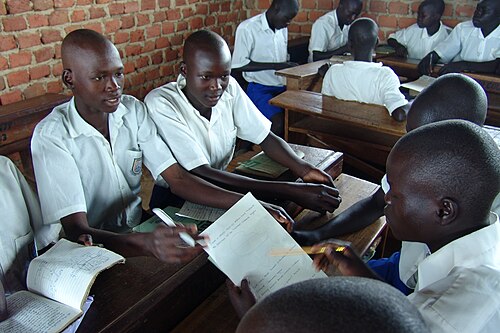
2002年の国勢調査では、ウガンダの識字率は66.8%(男性76.8%、女性57.7%)であった。[139]教育への公的支出は、2002~2005年のGDPの5.2%であった。[185]
2020年現在[update]、NCHEのウェブサイトには、マケレレ大学、ムバララ科学技術大学、キャンボゴ大学、グル大学、ウガンダ・クリスチャン大学、カンパラ国際大学など46の私立認定大学が掲載されています[186]。
健康

2000年代初頭には、10万人あたり8人の医師がいた。[185]ウガンダでは2001年に国営医療施設の利用料を廃止した結果、受診者数が80%増加したが、この増加の半分以上は人口の最も貧しい20%によるものであった。[187]この政策は、ウガンダがミレニアム開発目標を達成する上で重要な要素であり、これらの目標を達成するには公平性が必要であることの一例として挙げられている。[141]この政策にもかかわらず、多くの利用者は、ジェニファー・アングコの事件で大きく報道されたように、自分の医療機器を持参しないと治療を拒否される。[188]病院内でのコミュニケーション不足、[189]医療サービスに対する満足度の低さ、 [190]医療サービス提供者までの距離が、ウガンダに住む人々、特に貧困層や高齢者世帯主の世帯主に対する質の高い医療の提供を妨げている。[191]貧困層や農村部の人々に対する補助金の提供と官民パートナーシップの拡大は、脆弱な人々が医療サービスにアクセスできるようにするための重要な措置であると認識されている。[191]
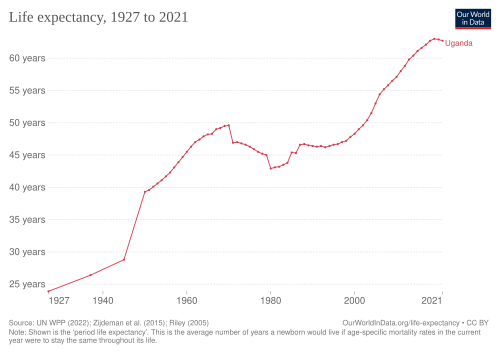
出生時の平均寿命は2019年には63.4歳と推定されている。[192]乳児死亡率は2012年には1,000人あたり約61人であった。[193]
2012年7月、同国のキバレ地区でエボラ出血熱の流行が発生した。 [194 ] 2012年10月4日、保健省は少なくとも16人が死亡した後、流行の終息を公式に宣言した。[195]
保健省は2013年8月16日、ウガンダ北部でコンゴ・クリミア出血熱の疑いのある流行により3人が死亡したと発表した。[196]
ウガンダは、数少ないHIV対策の成功例の一つである。[185] 1980年代には人口の30%が感染していたが、2008年末には6.4%にまで減少した。[197] [198]一方、禁欲の習慣も減少していることが判明した。[199]
性的に活動的な未婚女性のうち、現代的な避妊法を使用しているのは半数未満で、この割合は2000年から2011年までほとんど変わっていません。しかし、2011年に避妊具を使用した既婚女性は約26%にとどまりました。避妊具の使用は、貧困層(約15%)と裕福な女性(約40%)の間でも大幅に異なります。[200]その結果、ウガンダの女性は約4人程度の子供を望んでいるにもかかわらず、6人程度の子供を産んでいます。2011年のウガンダ人口保健調査(DHS)によると、出産の40%以上が計画外です。2010年にウガンダ保健省は、安全でない中絶が同国の妊産婦死亡の8%を占めていると推定しました。[200] 2006年のウガンダ人口保健調査(UDHS)によると、毎年約6,000人の女性が妊娠関連の合併症で亡くなっています。[201]フューチャー・ヘルス・システムズが2012年に実施したパイロット研究では、医療サービスと診療所への交通費のバウチャー制度を導入することで、この割合を大幅に削減できることが示されています。[202] [203]
女性器切除(FGM)の普及率は低く、2013年のユニセフの報告書によると[204] 、ウガンダでは女性のわずか1%がFGMを受けており、この慣習は同国では違法である[205] 。
犯罪と法執行

ウガンダ警察は国家警察である。その長は警察総監(IGP)と呼ばれ、現在はアバス・ビャカガバが務めている。ビャカガバは2024年5月18日に前総監ジェフリー・トゥムシイメの後任となった。 [206]警察への採用は毎年行われている。[207]
連合民主軍はウガンダ政府に反対する暴力的な反政府勢力である。この反政府勢力はウガンダ人民防衛軍の敵であり、アルシャバブの関連組織である。[208]
観光
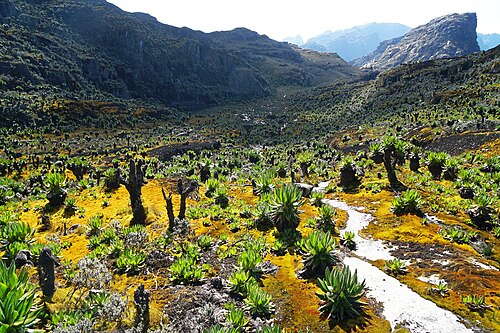
ウガンダの観光は、ウガンダの風景と野生生物に焦点を当てています。これは雇用、投資、外貨獲得の主要な原動力であり、2012~2013年度にはウガンダのGDPに4.9兆ウガンダシリング(2013年8月時点で18億8000万米ドルまたは14億ユーロ)をもたらしました。 [209]ウガンダ観光局は、ウガンダの観光に関する情報を管理する責任を負っています。主なアトラクションは、国立公園や動物保護区でのフォトサファリです。その他のアトラクションには、ブウィンディ原生国立公園(BINP)とムガヒンガゴリラ国立公園(MGNP)で見つかるマウンテンゴリラがあります。ウガンダはアフリカで最も古い文化王国のいくつかを持ち、多くの文化遺産があります。ウガンダは、記録された1073種を超える膨大な鳥類のリストを誇る野鳥の楽園であり、アフリカの鳥類の中で4位、国際的に16位にランクされています。[210]ウガンダには、白い頂を持つルウェンゾリ山脈からグレートリフトバレーまで、さまざまな景観が広がっています。
科学技術
国家科学技術イノベーション政策は2009年に発効した。その包括的目標は「ウガンダの開発目標の実現のために、天然資源の持続可能な利用を確保する科学的知識、スキル、技術を生み出し、移転し、適用する国家能力を強化する」ことである。この政策は、2013年4月に開始されたウガンダビジョン2040に先行するものであり、内閣の言葉によれば「30年以内にウガンダ社会を農民から近代的で繁栄した国に変える」ことを目的としている。ウガンダビジョン2040は、民間部門の強化、教育と訓練の改善、インフラと未発達のサービスおよび農業部門の近代化、工業化の促進、良好な統治の促進などを目標に掲げている。経済発展の可能性のある分野には、石油とガス、観光、鉱物、情報通信技術(ICT)などがある。[211]
ウガンダは、2023年のグローバルイノベーションインデックスで121位にランクされ、2019年の102位から下落した。 [212] [213] [214]研究資金は、2008年から2010年の間にGDPの0.33%から0.48%に増加した。ユネスコ統計研究所によると、同じ期間に研究者の数は1,387人から2,823人に倍増した。これは、同じ期間に住民100万人あたりの研究者が44人から83人に急増したことを意味する。研究者の4人に1人は女性である。ウガンダは、政府が70米ドルを投資したキイラと呼ばれる車のプロトタイプを製造することができた。[211]
人口統計

ウガンダの人口は1969年の950万人から2014年には3490万人に増加した。前回の国勢調査期間(2002年9月)と比較すると、過去12年間で人口は1060万人増加した。[215]ウガンダの平均年齢は15歳で、世界で最も低い。 [139] ウガンダの合計特殊出生率は世界で5番目に高く、女性1人あたり5.97人の子どもが生まれている(2014年の推定)。[139 ]
1972年にイディ・アミンがウガンダ系アジア人(主にインド系)の追放を命じるまで、ウガンダには約8万人のインド人が住んでいたが、その人口は7,000人まで減少した。しかし、1979年にアミンが追放された後、多くのインド人がウガンダに戻った。 [216]ウガンダ系インド人の約90%はカンパラに住んでいる。また、国内には約1万人の白人アフリカ人と3,000人のアラブ人が住んでいる。 [217]
UNHCRによると、2021年8月現在、ウガンダは140万人以上の難民を受け入れている。[218] [219]大半はアフリカ大湖地域の近隣諸国、特に南スーダン(68.0%)とコンゴ民主共和国(24.6%)から来ている。[219] 2021年8月、ウガンダはタリバンの政権掌握に伴いアフガニスタンからの難民を受け入れた。[218]
言語
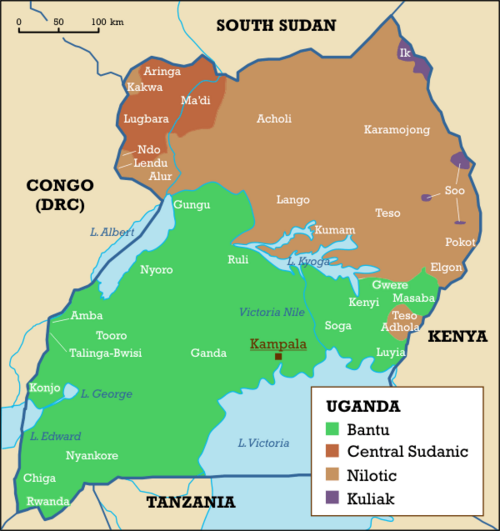
アフリカ大湖地域で広く使用されているスワヒリ語は、2005年に同国の第二公用語として承認された。[220] [221] 2005年に憲法が改正されるまで、 英語が唯一の公用語であった。[222] [139] [220] [1] [223]スワヒリ語は、同国の南部および南西部のバンツー語族には好まれていないが、北部地域では重要な共通語である。警察や軍隊でも広く使用されているが、これは植民地時代に北部の人々が治安部隊に不釣り合いに多く採用されたことによる歴史的な結果かもしれない。このように、スワヒリ語の地位は、権力を握っている政治グループによって入れ替わってきた。[224]たとえば、北西部出身のイディ・アミンは、スワヒリ語を国語と宣言した。[225]
宗教


The Roman Catholic Church had the largest number of adherents (39.3 percent, down from 41.6 in 2002), followed by the Anglican Church of Uganda (32 percent, down from 35.9 percent). The category of Evangelical/Pentecostal/Born-Again showed the most growth, rising from 4.7% in 2002 to 11.1% in 2018. Adventist and other Protestant churches claimed most of the remaining Christians, although there was also a small Eastern Orthodox community.[226][227] The next most reported religion of Uganda was Islam, with Muslims representing 14% percent of the population, up from 12.1% in 2002.[228][226]
The remainder of the population according to the 2014 census followed traditional religions (0.1 percent, down from 1% in 2002), other religions (1.4 percent), or had no religious affiliation (0.2 percent).[226]
Largest cities and towns
Culture
.jpg/500px-Cultural_celebrations_resumed_with_the_end_of_the_LRA_conflict_in_Northern_Uganda_(7269658432).jpg)

Owing to the large number of communities, culture within Uganda is diverse. Many Asians (mostly from India) who were expelled during the regime of Idi Amin have returned to Uganda.[229]
Media
Uganda has a number of media outlets that broadcast domestically and globally. They cover news, magazines, sports, business and entertainment.
Popular Ugandan newspapers include:
The most popular television stations in Uganda include:
- Uganda Broadcasting Corporation (UBC)
- NTV
- NBS Television
- Sanyuka TV
- Baba TV
- Top TV
- Spark TV
All of the media is controlled and regulated under the Uganda Communications Commission (UCC).[230][231]
Sports
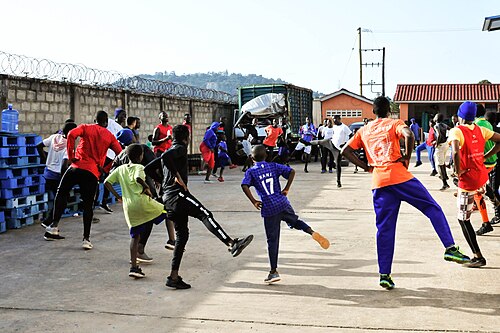
Football is the national sport in Uganda. The Uganda national football team, nicknamed "The Cranes" is controlled by the Federation of Uganda Football Associations. They have never qualified for the FIFA World Cup finals. Their best finish in the African Cup of Nations was second in 1978. Among clubs, SC Villa are the most successful, having won the national league 16 times and reached the final of the African Cup of Champions Clubs in 1991, a feat also achieved by Simba SC in 1972. KCCA are second in national league wins with 13.
As of 2020[update], Uganda at the Olympics has won a total of two gold, three silver, and two bronze medals; four of which were in boxing and three in athletics. Uganda at the Commonwealth Games has collected 13 gold medals and a total 49 medals, all in boxing and athletics.

The Uganda national boxing team is called The Bombers.[232] They have won four medals at the Summer Olympics from 1968 to 1980, as well as two medals the 1974 World Amateur Boxing Championships. Notable boxers include Cornelius Boza-Edwards, Justin Juuko, Ayub Kalule, John Mugabi, Eridadi Mukwanga, Joseph Nsubuga, Kassim Ouma, Sam Rukundo and Leo Rwabwogo.

In athletics, John Akii-Bua won the first Olympic gold medal for Uganda. At the 1972 Summer Olympics in Munich, he won the 400m hurdles race with a world record time of 47.82 seconds.[233] 400 metres runner Davis Kamoga earned the bronze medal at 1996 Summer Olympics in Atlanta and the silver medal at the 1997 World Championships. Dorcus Inzikuru won the 3000 m steeplechase at the 2005 World Championships and the 2006 Commonwealth Games.
Stephen Kiprotich has won the marathon at the 2012 Summer Olympics in London and the 2013 World Championships, and finished second at the 2015 Tokyo Marathon.[234] Joshua Cheptegei has won 10 km races at the World Championships, World Athletics Cross Country Championships and Commonwealth Games, and has set world records in 5 km and 15 km. Halimah Nakaayi won the 800 meters race at the 2019 World Championships.
In cricket, Uganda was part of the East Africa team that qualified for the Cricket World Cup in 1975. Recently Uganda national cricket team qualified for 2024 ICC T20 World Cup.
The country has an increasingly successful national basketball team. It is nicknamed "The Silverbacks,"[235] and made its debut at the 2015 FIBA Africa Championship.
In July 2011, Kampala, Uganda qualified for the 2011 Little League World Series in Williamsport, Pennsylvania for the first time, beating Saudi Arabian baseball team Dharan LL, although visa complications prevented them from attending the series.[236] Little League teams from Uganda qualified for and attended the 2012 Little League World Series.[237]
Cinema
The Ugandan film industry is relatively young. It is developing quickly, but still faces an assortment of challenges. There has been support for the industry as seen in the proliferation of film festivals such as Amakula, Pearl International Film Festival, Maisha African Film Festival and Manya Human Rights Festival. However, filmmakers struggle against the competing markets from other countries on the continent such as those in Nigeria and South Africa in addition to the big budget films from Hollywood.[238]
The first publicly recognised film that was produced solely by Ugandans was Feelings Struggle, which was directed and written by Hajji Ashraf Ssemwogerere in 2005.[239] This marks the year of ascent of film in Uganda, a time where many enthusiasts were proud to classify themselves as cinematographers in varied capacities.[240]
The local film industry is polarised between two types of filmmakers. The first are filmmakers who use the Nollywood video film era's guerrilla approach to film making, churning out a picture in around two weeks and screening it in makeshift video halls. The second is the filmmaker who has the film aesthetic, but with limited funds has to depend on the competitive scramble for donor cash.[238]
Though cinema in Uganda is evolving, it still faces major challenges. Along with technical problems such as refining acting and editing skills, there are issues regarding funding and lack of government support and investment. There are no schools in the country dedicated to film, banks do not extend credit to film ventures, and distribution and marketing of movies remains poor.[238][240]
The Uganda Communications Commission (UCC) is preparing regulations starting in 2014 that require Ugandan television to broadcast 70 percent Ugandan content and of this, 40 percent to be independent productions. With the emphasis on Ugandan film and the UCC regulations favouring Ugandan productions for mainstream television, Ugandan film may become more prominent and successful in the near future.[240]
See also
.svg/500px-Africa_(orthographic_projection).svg.png)
Notes
- ^ Article 4(a) of the Constitution requires the state to promote public awareness through translating it into Ugandan languages and disseminating it as widely as possible[5]
- ^ Yuganda in Ugandan languages
- ^ Swahili: Jamhuri ya Uganda
References
- ^ a b "Uganda Constitution" (PDF). The State House of Uganda. Archived (PDF) from the original on 12 March 2022. Retrieved 9 March 2022.
- ^ "Constitution in Luganda" (PDF). Uganda Law Reform Commission. Archived from the original (PDF) on 20 June 2023. Retrieved 20 March 2023.
- ^ "Constitution in Lusoga" (PDF). Uganda Law Reform Commission. Archived from the original (PDF) on 18 June 2023. Retrieved 20 March 2023.
- ^ "Constitution in Lumasaba" (PDF). Archived from the original (PDF) on 20 June 2023. Retrieved 20 March 2023.
- ^ "Ugandan Constitution translated in different Local Languages". Uganda Law Reform Commission. Archived from the original on 20 March 2023. Retrieved 20 March 2023.
- ^ "Uganda". The World Factbook (2024 ed.). Central Intelligence Agency. Retrieved 22 June 2023.
- ^ "Census 2014 Final Results" (PDF). Archived (PDF) from the original on 12 October 2017. Retrieved 17 April 2018.
- ^ "Uganda". The World Factbook (2024 ed.). Central Intelligence Agency. Retrieved 22 June 2023.
- ^ a b c d "World Economic Outlook Database, October 2023 Edition. (Uganda)". IMF.org. International Monetary Fund. 10 October 2023. Archived from the original on 30 October 2023. Retrieved 14 October 2023.
- ^ "Gini index (World Bank estimate)". World Bank. Archived from the original on 18 January 2017. Retrieved 14 July 2021.
- ^ "Human Development Report 2023/24". United Nations Development Programme. 13 March 2024. Archived from the original on 19 March 2024. Retrieved 22 March 2023.
- ^ "How this African kingdom performed its first cesarean section in 1879". Face2Face Africa. 3 June 2018. Archived from the original on 7 April 2021. Retrieved 29 March 2021.
- ^ Dunn, Peter M. (1 May 1999). "Robert Felkin MD (1853–1926) and Caesarean delivery in Central Africa (1879)". Archives of Disease in Childhood - Fetal and Neonatal Edition. 80 (3): F250–F251. doi:10.1136/fn.80.3.F250. ISSN 1359-2998. PMC 1720922. PMID 10212095.
- ^ Schoenbrun, David L. (1993). "We Are What We Eat: Ancient Agriculture between the Great Lakes". The Journal of African History. 34 (1): 1–31. doi:10.1017/S0021853700032989. ISSN 0021-8537. JSTOR 183030. S2CID 162660041. Archived from the original on 28 March 2022. Retrieved 28 February 2022.
- ^ Mwakikagile, Godfrey (2009). Ethnicity and National Identity in Uganda: The Land and Its People. New Africa Press. p. 87. ISBN 9789987930876. Archived from the original on 17 April 2021. Retrieved 22 November 2020.
- ^ Mwambutsya, Ndebesa (June 1990 – January 1991). "Pre-capitalist Social Formation: The Case of the Banyankole of Southwestern Uganda". Eastern Africa Social Science Research Review. 6 (2, 7 no. 1): 78–95. Archived from the original on 31 January 2008.
- ^ "Origins of Bunyoro-Kitara Kings". Archived from the original on 10 December 2006. Retrieved 10 December 2006., bunyoro-kitara.com.
- ^ "The Uganda journal". ufdc.ufl.edu. Archived from the original on 17 April 2021. Retrieved 1 January 2021.
- ^ "The Uganda journal". ufdc.ufl.edu. Archived from the original on 17 April 2021. Retrieved 2 January 2021.
- ^ a b Baker, Samuel White (1879). Ismailia; a narrative of the expedition to Central Africa for the suppression of the slave trade, organized by Ismail, Khedive of Egypt. Robarts - University of Toronto. London, Macmillan.
- ^ Stanley, H. M., 1899, Through the Dark Continent, London: G. Newnes, ISBN 0486256677
- ^ a b "Background Note: Uganda". Bureau of African Affairs, United States Department of State. November 2008. Archived from the original on 28 January 2022. Retrieved 21 January 2017.
- ^ a b Pulford, Cedric (2011). Two Kingdoms of Uganda: Snakes and Ladders in the Scramble for Africa. Daventry: Ituri Publications.
- ^ Beachey, R. W. (1962). "The Arms Trade in East Africa in the Late Nineteenth Century". The Journal of African History. 3 (3): 451. doi:10.1017/s0021853700003352. S2CID 162601116.
- ^ Mamdani, Mahmood (1984). "Nationality Question in a Neo-Colony: A Historical Perspective". Economic and Political Weekly. 19 (27): 1046–1054. ISSN 0012-9976. JSTOR 4373383. Archived from the original on 31 March 2023. Retrieved 31 March 2023.
- ^ J. H. Kennaway (6 February 1893). "House of Commons: Address In Answer To Her Majesty's Most Gracious Speech – Adjourned Debate". Commons and Lords Hansard. Archived from the original on 28 January 2022. Retrieved 17 January 2017.
- ^ Gordon Martel, "Cabinet politics and African partition: The Uganda debate reconsidered." Journal of Imperial and Commonwealth History 13.1 (1984): 5-24.
- ^ Griffiths, Tudor (2001). "Bishop Alfred Tucker and the Establishment of a British Protectorate in Uganda 1890-94". Journal of Religion in Africa. 31 (1): 92–114. doi:10.1163/157006601X00040. ISSN 0022-4200. Archived from the original on 28 January 2022. Retrieved 2 January 2021.
- ^ Steinhart, Edward I. (1973). "Royal Clientage and the Beginnings of Colonial Modernization in Toro, 1891-1900". The International Journal of African Historical Studies. 6 (2): 265–285. doi:10.2307/216778. ISSN 0361-7882. JSTOR 216778. Archived from the original on 25 April 2021. Retrieved 2 January 2021.
- ^ "A Thousand Years of Bunyoro-Kitara Kingdom - The People and the Rulers (Fountain Publishers, 1994, 153 p.): Appendix III: The Bunyoro Agreement 1955". www.nzdl.org. Archived from the original on 2 February 2022. Retrieved 2 January 2021.
- ^ joz, Jaynnielaw (22 March 2015). "The Wars of Religion 1888-1892". DISCOVER UGANDA, TOUR UGANDA, VOLUNTEER UGANDA & SERVE UGANDA. Archived from the original on 29 January 2021. Retrieved 2 January 2021.
- ^ Dietz, A. J.; Studiecentrum, Afrika (2017). "Uganda Protectorate 1895-1902". African Postal Heritage (APH) papers. Archived from the original on 31 March 2020. Retrieved 2 January 2021.
- ^ Evans, Ruth (24 May 2000). "Kenya's Asian heritage on display". BBC. Archived from the original on 28 September 2013. Retrieved 18 January 2017.
- ^ Chao (26 October 2014). "THE LUNATIC EXPRESS – A PHOTO ESSAY ON THE UGANDA RAILWAY". Thee Agora. Archived from the original on 22 April 2016. Retrieved 18 January 2017.
- ^ West, Stewart (February 2012). "Policing, Colonial Life and Decolonisation in Uganda, 1957–1960" (PDF). The Ferguson Centre for African and Asian Studies, Working Paper No. 03. pp. 3–4. Archived from the original (PDF) on 30 September 2015.
- ^ Fèvre, E. M.; Coleman, P. G.; Welburn, S. C.; Maudlin, I. (April 2004). "Reanalyzing the 1900–1920 Sleeping Sickness Epidemic in Uganda". Emerging Infectious Diseases. 10 (4). US: Centers for Disease Control and Prevention: 567–573. doi:10.3201/eid1004.020626. PMID 15200843.
- ^ "History of Parliament". Archived from the original on 20 February 2010. Retrieved 18 April 2010. (Website of the Parliament of Uganda)
- ^ "Buganda Kingdom: The Uganda Crisis, 1966". Buganda.com. Archived from the original on 24 March 2010. Retrieved 3 May 2010.
- ^ Lee, J. M. (January 1964). "Uganda's first year of Independence". The Political Quarterly. 35 (1): 35–45. doi:10.1111/j.1467-923X.1964.tb01966.x.
- ^ Young, Crawford (1979). The politics of cultural pluralism. Madison: University of Wisconsin Press. pp. 248–250. ISBN 9780299067441.
- ^ Mutibwa, Phares (1992). Uganda since independence, a story of unfulfilled hopes. London: Hurst. ISBN 9781850650669.
- ^ Kasozi, A. B. K. (1994). The social origins of violence in Uganda, 1964–1985. Montreal: McGill-Queens's University Press. ISBN 9780773512184.
- ^ Bade, Albert (1996). Benedicto Kiwanuka : the man and his politics. Kampala: Fountain Publ. ISBN 978-9970020089.
- ^ Ciment, James (2006). Encyclopedia of conflicts since World War II (2nd ed.). London: Routledge. p. 311. ISBN 9780765680051.
- ^ a b Kasozi (1994). The social origins of violence in Uganda, 1964–1985. p. 63.
- ^ Kasozi (1994). The social origins of violence in Uganda, 1964–1985. McGill-Queen's Press - MQUP. p. 71. ISBN 9780773512184. Archived from the original on 17 April 2021. Retrieved 5 May 2020.
- ^ Kasozi (1994). The social origins of violence in Uganda, 1964–1985. p. 70.
- ^ Lamwaka, Caroline (2016). The Raging Storm: A Reporter's Inside Account of the Northern Uganda War, 1986–2005. Kampala: Fountain Publishers. ISBN 978-9970252213.
- ^ a b Otunnu, Ogenga (2016). Crisis of Legitimacy and Political Violence in Uganda, 1890 to 1979. London: Palgrave Macmillan. ISBN 978-3319331553.
- ^ Kasozi (1994). The social origins of violence in Uganda, 1964–1985. p. 83.
- ^ a b Allen, Tim; Vlassenroot, Koen (2010). The Lord's Resistance Army: myth and reality. London: Zed. ISBN 9781848135635.
- ^ Somerville, Keith (2017). Ivory: Power and Poaching in Africa. London: Hurst. ISBN 9781849046763.
- ^ Kasozi (1994). The social origins of violence in Uganda, 1964–1985. p. 64.
- ^ Kasozi (1994). The social origins of violence in Uganda, 1964–1985. p. 85.
- ^ "A Country Study: Uganda" Archived 27 June 2015 at the Wayback Machine, Library of Congress Country Studies
- ^ Keatley, Patrick (18 August 2003). "Obituary: Idi Amin". The Guardian. Archived from the original on 27 July 2013. Retrieved 18 March 2008.
- ^ "UK Indians taking care of business" Archived 19 January 2018 at the Wayback Machine, The Age (8 March 2006). Retrieved 24 March 2013.
- ^ "1976: Israelis rescue Entebbe hostages". BBC News. 4 July 1976. Archived from the original on 23 October 2012. Retrieved 27 December 2012.
- ^ "Court orders Uganda to pay Congo damages Archived 2 January 2021 at the Wayback Machine". The Guardian. 20 December 2005
- ^ Reid 2017, p. 75.
- ^ "'New-Breed' Leadership, Conflict, and Reconstruction in the Great Lakes Region of Africa: A Sociopolitical Biography of Uganda's Yoweri Kaguta Museveni, Joseph Oloka-Onyango," Africa Today – Volume 50, Number 3, Spring 2004, p. 29
- ^ "No End to LRA Killings and Abductions". Human Rights Watch. 23 May 2011. Archived from the original on 28 July 2017. Retrieved 4 December 2016.
- ^ "Uganda term-limits bill grandfathers Museveni". The Washington Times. Archived from the original on 27 February 2023. Retrieved 5 May 2020.
- ^ "Uganda 2011 Elections" (PDF). European Union Election Observation Mission. 20 February 2011. Archived (PDF) from the original on 3 April 2012. Retrieved 18 October 2011.
- ^ Roberts, Scott (13 November 2012) Hacktivists target Ugandan lawmakers over anti-gay bill Archived 15 November 2012 at the Wayback Machine. pinknews.co.uk
- ^ Roberts, Scott (14 November 2012) Pressure on Uganda builds over anti-gay law Archived 15 November 2012 at the Wayback Machine. pinknews.co.uk
- ^ Article 19. (2013). Uganda: Public Order Management Bill Archived 16 October 2017 at the Wayback Machine.
- ^ Masereka, Alex. (2013). M7 Okays Public Order Bill Archived 23 October 2013 at the Wayback Machine. Red Pepper.
- ^ a b c United States Department of State (Bureau of Democracy, Human Rights and Labor). (2012). Uganda 2012 Human Rights Report Archived 26 March 2017 at the Wayback Machine.
- ^ Natabaalo, Grace. (2013). Ugandan Police Shutdown Papers Over 'Plot'. Al Jazeera.
- ^ "Uganda". freedomhouse.org. 30 January 2019. Archived from the original on 29 September 2019. Retrieved 22 May 2019.
- ^ "Uganda election: Bobi Wine challenges result in court | DW | 01.02.2021". Deutsche Welle. Archived from the original on 1 March 2021. Retrieved 12 March 2021.
- ^ "Uganda elections 2021: Museveni takes lead as Bobi Wine cries foul". BBC News. 16 January 2021. Archived from the original on 10 March 2021. Retrieved 12 March 2021.
- ^ Independent, The (9 January 2021). "Presidential candidate John Katumba publishes his memoir". The Independent Uganda. Archived from the original on 1 July 2022. Retrieved 12 April 2022.
- ^ "Uganda Population (2023) - Worldometer". www.worldometers.info. Archived from the original on 17 May 2024. Retrieved 11 March 2023.
- ^ Britannica Book of the Year 2014. Encyclopedia Britannica, Inc. 1 March 2014. p. 745. ISBN 978-1-62513-171-3. Archived from the original on 27 February 2023. Retrieved 2 December 2021.
- ^ Parliament of the Republic of Uganda (26 September 2005). "Constitutional Amendment Act 2005". Parliament.go.ug. Republic of Uganda. Archived from the original on 26 April 2021. Retrieved 28 August 2020.
§I.3:6.(2): Swahili shall be the second official language in Uganda to be used in such circumstances as Parliament may by law prescribe.
- ^ a b c "Maps". Data Basin. Archived from the original on 6 September 2015. Retrieved 14 September 2015.
- ^ Uganda at the Encyclopædia Britannica
- ^ "World Heritage List". Archived from the original on 14 March 2021. Retrieved 4 June 2013.
- ^ Watching Wildlife: East Africa, Kenya, Tanzania, Uganda, Rwanda. Lonely Planet. 2009.
- ^ Nakintu, Justine; Albrecht, Christian; Müller, Christina M.; Kagoro-Rugunda, Grace; Andama, Morgan; Olet, Eunice A.; Lejju, Julius B.; Gemeinholzer, Birgit (2020). "Exploring the genetic diversity of jackfruit (Artocarpus heterophyllus Lam.) grown in Uganda based on SSR markers". Genetic Resources and Crop Evolution. 67 (3): 605–619. doi:10.1007/s10722-019-00830-5. S2CID 201983253. Archived from the original on 13 January 2023. Retrieved 13 January 2023.
- ^ Grantham, H. S.; et al. (2020). "Anthropogenic modification of forests means only 40% of remaining forests have high ecosystem integrity - Supplementary Material". Nature Communications. 11 (1): 5978. Bibcode:2020NatCo..11.5978G. doi:10.1038/s41467-020-19493-3. ISSN 2041-1723. PMC 7723057. PMID 33293507.
- ^ "About Uganda | State House Uganda". www.statehouse.go.ug. Archived from the original on 18 June 2022. Retrieved 19 June 2022.
- ^ "IGAD - About us". igad.int. Archived from the original on 26 March 2022. Retrieved 31 December 2020.
- ^ "Member States". OIC. Archived from the original on 1 November 2020. Retrieved 1 November 2020.
- ^ "With Somalia, CAR, and South Sudan, Museveni is remaking the state – Charles Onyango Obbo". Monitor.co.ug. Archived from the original on 29 November 2014. Retrieved 30 May 2015.
- ^ "Corruption Perceptions Index 2016". Transparency International. Archived from the original on 19 April 2017. Retrieved 17 April 2017.
- ^ "Workbook: WGI-9-23-16". dataviz.worldbank.org. Archived from the original on 18 April 2017. Retrieved 18 April 2017.
- ^ "Piglets released in Ugandan parliament investigated for terrorism". Uganda News.Net. Archived from the original on 11 October 2014. Retrieved 23 June 2014.
- ^ Human Rights Watch. (2013). Letting the Big Fish Swim Archived 7 July 2015 at the Wayback Machine.
- ^ "A Snapshot of Corruption in Uganda". Business Anti-Corruption Portal. Archived from the original on 14 September 2014. Retrieved 24 March 2014.
- ^ Biryabarema, Elias. (2012). "Ugandan Lawmakers Pass Oil Bill, Worry About Corruption" Archived 24 September 2015 at the Wayback Machine. Thomson Reuters
- ^ Global Witness (2 March 2012). "UGANDA'S OIL LAWS: GLOBAL WITNESS ANALYSIS" Archived 29 October 2013 at the Wayback Machine, accessed 21 January 2016
- ^ The International Center for Not-For-Profit Law. (2012). NGO Law Monitor: Uganda Archived 29 October 2013 at the Wayback Machine.
- ^ "AFP: Attacks of 'appalling brutality' in DR Congo: UN". 10 February 2009. Archived from the original on 25 May 2012. Retrieved 29 July 2009.
- ^ "Uganda: Respect Opposition Right to Campaign" Archived 29 September 2007 at the Wayback Machine, Human Rights Watch, 19 December 2005
- ^ a b c d e Refworld |2010 Findings on the Worst Forms of Child Labor – Uganda. UNHCR (3 October 2011). Retrieved 24 March 2013.
- ^ "World Refugee Survey 2008". U.S. Committee for Refugees and Immigrants. 19 June 2008. Archived from the original on 26 February 2009.
- ^ Human Rights Watch. (2013). World Report 2013 (Uganda) Archived 1 July 2016 at the Wayback Machine.
- ^ "Lesbian, gay, bisexual and transgender people". Archived from the original on 11 March 2008. Retrieved 27 January 2011., Amnesty International Report 2007 Uganda.
- ^ "Ugandan paper calls for gay people to be hanged" Archived 11 August 2020 at the Wayback Machine, Xan Rice, The Guardian, 21 October 2010.
- ^ "Ugandan gay rights activist: 'I have to watch my back more than ever'" Archived 4 December 2014 at the Wayback Machine, 5 November 2010.
- ^ "Uganda: Stop homophobic campaign launched by Rolling Stone tabloid" Archived 1 January 2011 at the Wayback Machine, 14 October 2010, No Peace Without Justice.
- ^ "Uganda Newspaper Published Names/Photos of LGBT Activists and HRDs – Cover Says 'Hang Them'" Archived 1 February 2011 at the Wayback Machine, International Lesbian, Gay, Bisexual, Trans and Intersex Association.
- ^ Akam, Simon (22 October 2010), "Outcry as Ugandan paper names 'top homosexuals'" Archived 27 September 2020 at the Wayback Machine, The Independent.
- ^ "Uganda gay rights activist David Kato killed" Archived 6 October 2021 at the Wayback Machine, 27 January 2011, BBC News.
- ^ Sharlet, Jeff (September 2010). "Straight Man's Burden: The American roots of Uganda's anti-gay persecutions". Harper's Magazine. Vol. 321, no. 1, 924. pp. 36–48. Archived from the original on 6 December 2010. Retrieved 21 January 2011.
- ^ Brocklebank, Christopher (15 August 2012). Anonymous hack into Ugandan government websites in protest at their anti-LGBT policies Archived 24 October 2012 at the Wayback Machine. Pinknews.co.uk.
- ^ "Uganda's anti-gay law prompts World Bank to postpone $90mn loan" Archived 29 October 2014 at the Wayback Machine, Uganda News.Net, 28 February 2014.
- ^ "Uganda anti-gay law challenged in court". The Guardian. AFP. 31 July 2014. Archived from the original on 31 July 2014. Retrieved 1 August 2014.
- ^ "Uganda court annuls anti-gay law". BBC News. 1 August 2014. Archived from the original on 9 September 2019. Retrieved 1 August 2014.
- ^ "Uganda constitutional court annuls new anti-gay law". Times LIVE. AFP. 1 August 2014. Archived from the original on 9 September 2019. Retrieved 1 August 2014.
- ^ Bariyo, Nicholas (13 August 2014). "Uganda's Attorney General Won't Appeal Ruling on Antigay Law". The Wall Street Journal. Archived from the original on 27 June 2020. Retrieved 12 March 2017.
- ^ McKenzie, David (11 August 2019). "Progress for gay rights in Africa still isn't inevitable". CNN. Archived from the original on 29 September 2019. Retrieved 29 September 2019.
- ^ Nicholls, Larry Madowo,Catherine (21 March 2023). "Uganda parliament passes bill criminalizing identifying as LGBTQ, imposes death penalty for some offenses". CNN. Archived from the original on 22 March 2023. Retrieved 22 March 2023.
{{cite web}}: CS1 maint: multiple names: authors list (link) - ^ Atuhaire, Patience (21 March 2023). "Uganda Anti-Homosexuality bill: Life in prison for saying you're gay". BBC News. Archived from the original on 22 March 2023. Retrieved 22 March 2023.
- ^ Okiror, Samuel (1 March 2023). "Uganda MPs revive hardline anti-LGBTQ bill, calling homosexuality a 'cancer'". The Guardian. ISSN 0261-3077. Archived from the original on 17 May 2024. Retrieved 11 March 2023.
- ^ AfricaNews, Rédaction (9 March 2023). "Uganda presents anti-gay bill in parliament with tough new penalties". Africanews. Archived from the original on 11 March 2023. Retrieved 11 March 2023.
- ^ "Anti-gay law will be passed at whatever cost, says Speaker". Monitor. 8 March 2023. Archived from the original on 16 March 2023. Retrieved 16 March 2023.
- ^ Jerving, Sara (22 April 2023). "Uganda's "anti-homosexuality" bill already affecting care". The Lancet. 401 (10385): 1327–1328. doi:10.1016/s0140-6736(23)00814-0. ISSN 0140-6736. PMID 37088085.
- ^ Jean-Pierre, Karine; Kirby, John (23 March 2023). "Press Briefing by Press Secretary Karine Jean-Pierre and NSC Coordinator for Strategic Communications John Kirby". The White House. Archived from the original on 24 March 2023. Retrieved 24 March 2023.
- ^ Atuhaire, Patience (21 March 2023). "Uganda Anti-Homosexuality bill: Life in prison for saying you're gay". BBC News. Archived from the original on 22 March 2023. Retrieved 24 March 2023.
- ^ Robertson, Dylan (23 March 2023). "Trudeau mulls response to 'appalling and abhorrent' Uganda LGBTQ death-penalty bill". National Post. Archived from the original on 17 May 2024. Retrieved 24 March 2023.
- ^ Staff (23 March 2023). "Germany condemns Uganda's new 'draconian' anti-gay law". Deutsche Welle. Archived from the original on 24 March 2023. Retrieved 24 March 2023.
- ^ "UG – Uganda". ISO 3166. ISO. 23 November 2017. Archived from the original on 17 June 2016. Retrieved 1 December 2017.
- ^ "Ministry of Local Government Fact Sheet" (PDF). MOLG. 1 July 2017. Archived from the original (PDF) on 2 December 2017. Retrieved 1 December 2017.
- ^ Public Accountability: Explaining Variation Across Local Governments in Uganda (MPhil thesis). University of Bergen. 2013. p. 4. Archived from the original on 2 December 2017. Retrieved 1 December 2017.
- ^ Uganda Local Government Association Archived 10 May 2013 at the Wayback Machine. Ulga.org. Retrieved on 19 July 2013.
- ^ Tumushabe, Alfred (22 September 2012) Ankole monarchists' two decade battle for restoration of kingdom Archived 23 September 2012 at the Wayback Machine. monitor.co.ug.
- ^ "A rough guide to the country's kingdoms". 11 September 2009. Archived from the original on 5 December 2014. Retrieved 30 November 2014.
- ^ "Section 4(2) of The Bank of Uganda Act" (PDF). Bank of Uganda. 2000. Archived from the original (PDF) on 12 October 2017. Retrieved 17 January 2017.
- ^ "2015 Statistical Abstract – Table 3.3a: Exports of merchandise (Flows) – CY" (PDF). Research and Policy Directorate, Bank of Uganda. p. 9. Archived from the original (PDF) on 18 January 2017. Retrieved 17 January 2017.
- ^ "Monetary Policy Report" (PDF). Bank of Uganda. August 2016. Archived (PDF) from the original on 18 January 2017. Retrieved 17 January 2017.
- ^ a b Uganda's oil rush: Derricks in the darkness Archived 27 February 2023 at the Wayback Machine. Economist.com (6 August 2009). Retrieved 24 March 2013.
- ^ "Uganda at a Glance" (PDF). World Bank. 13 November 2009. Archived from the original (PDF) on 23 December 2009.
- ^ W. D. Ogilvie: Interview with David Hines in 1999; obituary of David Hines in London Daily Telegraph, 8 April 2000.
- ^ "Buganda: Uganda's 1,000-year-old kingdom". www.aa.com.tr. Archived from the original on 11 March 2023. Retrieved 11 March 2023.
- ^ a b c d e Central Intelligence Agency (2009). "Uganda". The World Factbook. Archived from the original on 13 February 2021. Retrieved 23 January 2010.
- ^ "Economic Policy and Debt – Heavily Indebted Poor Countries (39 countries)". Archived from the original on 22 June 2014.
- ^ a b c "Economic growth and the MDGs – Resources – Overseas Development Institute". ODI. Archived from the original on 17 July 2011. Retrieved 31 May 2011.
- ^ "List of Licensed Investment Banks & Stock Brokerage Firms in Uganda". Use.or.ug. 31 December 2001. Archived from the original on 23 April 2014. Retrieved 27 June 2012.
- ^ Kaujju, Peter (June 2008). "Capital markets eye pension reform Archived 11 May 2011 at the Wayback Machine". The New Vision. Retrieved 9 February 2009.
- ^ Rutaagi, Edgar (2009). "Uganda Moving Towards Pension Reforms Archived 7 July 2011 at the Wayback Machine". The African Executive. Retrieved 9 February 2009.
- ^ Mbunga, Paskal. "Tanzania And Uganda Agree To Speed Up Railway Project". Businessdailyafrica.com8 November 2011. Archived from the original on 4 April 2012. Retrieved 27 June 2012.
- ^ "Annual Remittances Data". World Bank. Archived from the original on 5 January 2017. Retrieved 17 January 2017.
- ^ "Remittances to Sub-Saharan Africa by country 2019". Statista. Archived from the original on 10 November 2020. Retrieved 4 November 2020.
- ^ Ondoga, Ayiga (June 2008). "Arua: West Nile's business hub ". The New Vision.
- ^ Yoshino, Yutaka; Ngungi, Grace and Asebe, Ephrem. ""Enhancing the Recent Growth of Cross-Border Trade between South Sudan and Uganda" Archived 3 January 2012 at the Wayback Machine, Africa Trade Policy Notes.
- ^ Muwanga, David (March 2010), "Uganda, Rwanda Border to Run 24hrs". AllAfrica.com.
- ^ "November inflation increases to 4.6%". Archived from the original on 2 December 2016. Retrieved 1 December 2016.
- ^ "Uganda sees drop in inflation in 2017/18 financial year - Xinhua - English.news.cn". www.xinhuanet.com. Archived from the original on 29 June 2018.
- ^ a b "Report for Selected Countries and Subjects". www.imf.org. Archived from the original on 3 June 2019. Retrieved 22 May 2019.
- ^ a b "GDP (current US$) - Data". data.worldbank.org. Archived from the original on 15 September 2022. Retrieved 17 December 2018.
- ^ "World Development Indicators - DataBank". databank.worldbank.org. Archived from the original on 4 May 2019. Retrieved 22 May 2019.
- ^ "Poverty headcount ratio at $1.25 a day (PPP) (% of population)". World Bank. Archived from the original on 25 April 2010. Retrieved 26 August 2015.
- ^ "Enabling Poor People to Overcome Poverty in Uganda" (PDF). International Fund for Agricultural Development. Archived from the original (PDF) on 24 September 2015. Retrieved 26 August 2015.
- ^ "IFAD Gender Strengthening Programme" (PDF). International Fund for Agricultural Development. Archived from the original (PDF) on 3 December 2011. Retrieved 10 February 2012.
- ^ "From Periphery to Center: A Strategic Country Gender Assessment" (PDF). World Bank. Archived from the original (PDF) on 3 September 2012. Retrieved 10 February 2012.
- ^ "AVERTing HIV and AIDS". AVERT. Archived from the original on 4 February 2012. Retrieved 10 February 2012.
- ^ Ekirapa-Kiracho, E. (2011). "Increasing Access To Institutional Deliveries Using Demand And Supply Side Incentives: Early Results From A Quasi-Experimental Study". BMC International Health and Human Rights. 11 (Suppl 1): S11. doi:10.1186/1472-698x-11-s1-s11. PMC 3059470. PMID 21410998. Archived from the original on 14 November 2012. Retrieved 26 May 2012.
- ^ Peters, David; et al. (2011). "Exploring New Health Markets: Experiences From Informal Providers Of Transport For Maternal Health Services In Eastern Uganda". BMC International Health and Human Rights. 11 (Suppl 1): S10. doi:10.1186/1472-698x-11-s1-s10. PMC 3059469. PMID 21410997. Archived from the original on 14 November 2012. Retrieved 26 May 2012.
- ^ "Gender Equity Issues in Uganda". Foundation for Sustainable Development. Archived from the original on 4 June 2012. Retrieved 10 February 2012.
- ^ "Entebbe traffic hit 1.53 million passengers in 2017, up 8.1% versus 2016". anna.aero. 10 August 2018. Archived from the original on 9 August 2020. Retrieved 17 December 2018.
- ^ "African Aerospace - Uganda to get second International Airport". www.africanaerospace.aero. Archived from the original on 8 October 2021. Retrieved 17 December 2018.
- ^ "Key summary statistics". Ugandan Ministry of Works & Transport. Archived from the original on 30 July 2020. Retrieved 17 December 2018.
- ^ "2.3 Uganda Road Network - Logistics Capacity Assessment". Digital Logistics Capacity Assessments. Archived from the original on 25 March 2019. Retrieved 17 December 2018.
- ^ "Welt-in-Zahlen.de > Ländervergleich". /www.welt-in-zahlen.de (in German). Archived from the original on 16 August 2022. Retrieved 13 August 2022.
- ^ "Railway Transport – Uganda". Fortune of Africa. 3 February 2017. Archived from the original on 1 April 2022. Retrieved 17 December 2018.
- ^ Elias Biryabarema, and Jane Merriman (29 June 2018). "Uganda telecom operators to start charging social media tax". Reuters Africa. Johannesburg. Archived from the original on 29 June 2018. Retrieved 29 June 2018.
- ^ "Q1-Market Report 2015" (PDF). Reports & Surveys. UCC: Uganda Communications Commission. Archived (PDF) from the original on 23 November 2015. Retrieved 15 February 2015.
- ^ "National Population and Housing Census 2014" (PDF). Uganda Bureau of Statistics. Archived from the original (PDF) on 10 January 2017. Retrieved 30 March 2015.
- ^ Hendrik Rood; Senior consultant; Stratix Consulting. "Uganda – Mobile Infrastructure, Operators and Broadband – Statistics and Analyses". Budde.com.au. Archived from the original on 18 May 2014. Retrieved 30 May 2015.
- ^ Heritage Oil |Timeline Archived 13 March 2013 at the Wayback Machine. Heritageoilplc.com. Retrieved 24 March 2013.
- ^ "Power Africa in Uganda | Power Africa | U.S. Agency for International Development". www.usaid.gov. 5 October 2021. Archived from the original on 18 June 2022. Retrieved 15 June 2022.
- ^ "uganda energy sector - Search". Fortune of Africa. Archived from the original on 10 July 2022. Retrieved 15 June 2022.
- ^ Mugisha, Silver; Berg, Sanford V. (November 2006). "Struggling State-Owned Enterprises: NWSC's Turnaround in Uganda". SSRN 1088139.
- ^ "National Water Development Report: Uganda. Prepared for 2nd UN World Water Development Report "Water, a shared responsibility"" (PDF). 2006. Archived (PDF) from the original on 18 March 2009. Retrieved 5 May 2008.
- ^ "Third Water and Environment Sector Performance Report". Ministry of Water and Environment. 2011. Archived from the original on 7 October 2011. Retrieved 16 July 2012.
- ^ *World Health Organization; UNICEF. "Joint Monitoring Program". Archived from the original on 16 February 2008. Retrieved 16 July 2012.
- ^ a b Republic of Uganda; Ministry of Finance; Planning and Economic Development. "Poverty Eradication Action Plan (2004/5-2007/8)" (PDF). Archived from the original (PDF) on 10 October 2008. Retrieved 7 May 2008.
- ^ Ministry of Water and Environment (Uganda) (September 2006). "Water and Sanitation Sector Performance Report 2006" (PDF). Archived from the original (PDF) on 18 March 2009. Retrieved 13 May 2008.
- ^ "universal primary education in Uganda" (PDF). odi.org. Archived from the original (PDF) on 5 March 2021. Retrieved 17 November 2020.
- ^ "Uganda universal secondary education" (PDF). Archived (PDF) from the original on 6 December 2020. Retrieved 16 November 2020.
- ^ a b c "Human Development Report 2009 – Uganda [Archived]". Hdrstats.undp.org. Archived from the original on 29 April 2009. Retrieved 3 May 2010.
- ^ "Home". unche.or.ug. Archived from the original on 6 November 2020. Retrieved 20 November 2020.
- ^ The MDGs and equity. Overseas Development Institute, June 2010
- ^ Dugger, Celia (29 July 2011). "Maternal Deaths Focus Harsh Light on Uganda". The New York Times. Archived from the original on 16 January 2012. Retrieved 17 January 2012.
- ^ Rutebemberwa, E.; Ekirapa-Kiracho, E.; Okui, O.; Walker, D.; Mutebi, A.; Pariyo, G. (2009). "Lack of effective communication between communities and hospitals in Uganda: A qualitative exploration of missing links". BMC Health Services Research. 9: 146. doi:10.1186/1472-6963-9-146. PMC 2731748. PMID 19671198.
- ^ Kiguli, Julie; et al. (2009). "Increasing access to quality health care for the poor: community perceptions on quality care in Uganda". Patient Preference and Adherence. 3: 77–85. doi:10.2147/ppa.s4091. PMC 2778436. PMID 19936148.
- ^ a b Pariyo, G.; et al. (2009). "Changes in Utilization of Health Services among Poor and Rural Residents in Uganda: Are Reforms Benefitting the Poor?". International Journal for Equity in Health. 8: 39. doi:10.1186/1475-9276-8-39. PMC 2781807. PMID 19909514.
- ^ "Life expectancy in Uganda". Our World in Data. Archived from the original on 13 August 2020. Retrieved 18 February 2022.
- ^ CIA World Factbook Archived 5 May 2012 at the Wayback Machine: Infant Mortality ranks
- ^ "Ebola Outbreak Spreads". Daily Express. Associated Press. 31 July 2012.
- ^ Biryabarema, Elias (5 October 2012). "Uganda says it is now free of deadly Ebola virus". Reuters. Archived from the original on 24 September 2015. Retrieved 2 July 2017.
- ^ "Three die in Uganda from Ebola-like fever: Health Ministry". Yahoo News. Archived from the original on 20 August 2013. Retrieved 16 August 2013.
- ^ Kelly, Annie (1 December 2008), "Background: HIV/Aids in Uganda Archived 18 January 2017 at the Wayback Machine". The Guardian.
- ^ "UNAIDS: Uganda Profile". UNAIDS. Archived from the original on 15 March 2012. Retrieved 4 April 2012.
- ^ Kamali, A.; Carpenter, L. M.; Whitworth, J. A.; Pool, R.; Ruberantwari, A.; Ojwiya, A. (2000). "Seven-year trends in HIV-1 infection rates, and changes in sexual behaviour, among adults in rural Uganda". AIDS. 14 (4): 427–434. doi:10.1097/00002030-200003100-00017. PMID 10770546. S2CID 612207.
- ^ a b "Contraception and Unintended Pregnancy in Uganda". Guttmacher Institute. 14 February 2016. Archived from the original on 30 January 2019. Retrieved 30 January 2019.
- ^ "Uganda Demographic and Health Survey 2006" (PDF). Measure DHS. Archived (PDF) from the original on 12 August 2011. Retrieved 17 January 2012.
- ^ "Improving Access to Safe Deliveries in Uganda". Future Health Systems. Archived from the original on 23 December 2011. Retrieved 17 January 2012.
- ^ "Women's Perceptions of ANC and delivery care Services, a community perspective" (PDF). Future Health Systems. Archived from the original (PDF) on 14 November 2012. Retrieved 8 May 2012.
- ^ UNICEF 2013 Archived 5 April 2015 at the Wayback Machine, p. 27.
- ^ "Uganda bans female genital mutilation". BBC News. 10 December 2009. Archived from the original on 4 December 2018. Retrieved 30 May 2015.
- ^ Kamusiime, Wilfred (18 May 2024). "Appointments and Redeployments in the Uganda Police Force". Uganda Police Force. Archived from the original on 20 May 2024. Retrieved 19 May 2024.
Major General Geoffrey Tumusiime Katsigazi goes back to the UPDF for redeployment.
- ^ "Uganda Police Force UPF Next Recruitment 2020 | Apply". Admissions. 17 June 2020. Retrieved 5 February 2021.
- ^ ADF recruiting in Mayuge, Iganga says army Archived 29 November 2014 at the Wayback Machine. Newvision.co.ug (3 January 2013). Retrieved 24 March 2013.
- ^ Mutagamba, Moses (25 August 2013). "Uganda Wildlife Authority staff under probe". New Vision. Archived from the original on 27 August 2013. Retrieved 25 August 2013.
- ^ "Countries with the most bird species". Mongabay. Archived from the original on 8 November 2020. Retrieved 5 November 2020.
- ^ a b UNESCO Science Report: towards 2030 (PDF). Paris: UNESCO. 2015. pp. 471–565. ISBN 978-92-3-100129-1. Archived (PDF) from the original on 22 March 2017. Retrieved 6 June 2017.
- ^ Dutta, Soumitra; Lanvin, Bruno; Wunsch-Vincent, Sacha; León, Lorena Rivera; World Intellectual Property Organization (23 December 2023). Global Innovation Index 2023, 15th Edition. World Intellectual Property Organization. doi:10.34667/tind.46596. ISBN 9789280534320. Archived from the original on 18 January 2024. Retrieved 30 October 2023 – via www.wipo.int.
- ^ "Global Innovation Index 2019". www.wipo.int. Archived from the original on 2 September 2021. Retrieved 2 September 2021.
- ^ "Global Innovation Index". INSEAD Knowledge. 28 October 2013. Archived from the original on 2 September 2021. Retrieved 2 September 2021.
- ^ Uganda Bureau Of Statistics (UBOS) (November 2015). National Population and Housing Census 2014. Provisional Results (PDF) (Revised ed.). Kampala, Uganda. p. 6. Archived from the original (PDF) on 10 January 2017. Retrieved 29 March 2015.
{{cite book}}: CS1 maint: location missing publisher (link) - ^ Van Hear, Nicholas (14 August 2012). "Four decades after the expulsion of Ugandan Asians". COMPAS. Retrieved 5 June 2024.
- ^ "Uganda: Return of the exiles". Independent.co.uk. Archived from the original on 11 June 2010. Retrieved 19 May 2010.. The Independent, 26 August 2005
- ^ a b "Uganda to take 2,000 Afghan refugees at U.S. request". Reuters. 17 August 2021. Archived from the original on 18 December 2021. Retrieved 4 April 2023.
- ^ a b "Uganda Comprehensive Refugee Response Portal". Operational Data Portal. UNHCR. Archived from the original on 27 August 2018. Retrieved 22 November 2018.
- ^ a b Parliament of the Republic of Uganda (26 September 2005). "Constitutional Amendment Act 2005". Parliament.go.ug. Republic of Uganda. Archived from the original on 26 April 2021. Retrieved 28 August 2020.
§I.3:6.(2): Swahili shall be the second official language in Uganda to be used in such circumstances as Parliament may by law prescribe.
- ^ Kagonye, Fred (5 July 2022). "Uganda adopts Swahili as an official language". The Standard (Kenya). Nairobi, Kenya: The Standard (Kenya). Archived from the original on 6 July 2022. Retrieved 6 July 2022.
- ^ "Uganda is embracing Swahili in its curriculum after years of resistance". MSN. Archived from the original on 4 October 2022. Retrieved 4 October 2022.
- ^ "English rules in Uganda, but local languages shouldn't be sidelined". 5 November 2015. Archived from the original on 4 October 2022. Retrieved 4 October 2022.
- ^ Swahili Archived 14 July 2007 at the Wayback Machine in the UCLA Language Materials Project
- ^ "A Brief History of the Swahili Language" Archived 12 May 2017 at the Wayback Machine, glcom.com
- ^ a b c "2014 Uganda Population and Housing Census – Main Report" (PDF). Uganda Bureau of Statistics. Archived from the original (PDF) on 12 October 2017. Retrieved 17 April 2018.
- ^ "2002 Uganda Population and Housing Census – Main Report" (PDF). Uganda Bureau of Statistics. Archived from the original (PDF) on 12 October 2017. Retrieved 26 March 2008.
- ^ "Uganda". United States Department of State. Archived from the original on 11 November 2023. Retrieved 7 December 2023.
- ^ Lorch, Donatella (22 March 1993). "Kampala Journal; Cast Out Once, Asians Return: Uganda Is Home". The New York Times. Archived from the original on 11 June 2022. Retrieved 29 September 2011.
- ^ "About UCC – UCC: Uganda Communications Commission". Archived from the original on 18 August 2022. Retrieved 2 July 2022.
- ^ "Uganda Communications Commission – Ministry of ICT & National Guidance". Archived from the original on 2 July 2022. Retrieved 2 July 2022.
- ^ "Bombers finally begin 2018 Commonwealth Games training". Daily Monitor. Archived from the original on 5 April 2022. Retrieved 6 January 2019.
- ^ "Uganda to remember Olympic hurdler John Akii Bua". www.iaaf.org. Archived from the original on 1 May 2019. Retrieved 1 May 2019.
- ^ "Kiprotich targets fast time in Toronto". www.iaaf.org. Archived from the original on 1 May 2019. Retrieved 1 May 2019.
- ^ Kaweru, Franklin, "Uganda's Silverbacks ranked 89th in latest FIBA rankings" Archived 12 October 2015 at the Wayback Machine, KAWOWO Sports, 9 October 2015. Retrieved 26 October 2015.
- ^ Adeyemi, Bandele (19 August 2011). "Frustrating View of Game Day". The New York Times. Archived from the original on 20 June 2022. Retrieved 29 September 2011.
- ^ York, Geoffrey (21 December 2016). "Major League Baseball seeks its next top players in the sport's 'next frontier': Africa". The Globe and Mail. Archived from the original on 28 June 2022. Retrieved 21 November 2018.
- ^ a b c Telling the story against all odds; state of Uganda film industry Archived 18 July 2013 at the Wayback Machine. Cannes vu par. Retrieved on 19 July 2013.
- ^ Rasmussen, Kristin Alexandra (2010) Kinna-Uganda: A review of Uganda's national cinema Archived 19 December 2013 at the Wayback Machine. Master's Theses. Paper 3892. The Faculty of the Department of TV, Radio, Film, Theatre Arts, San José State University, US
- ^ a b c Ugandan film's leap – Theatre & Cinema Archived 23 October 2013 at the Wayback Machine. monitor.co.ug. Retrieved on 19 July 2013.
Further reading
- Appiah, Anthony and Henry Louis Gates (ed.) (2010). Encyclopaedia of Africa. Oxford University Press.
- Middleton, John (ed.) (2008). New encyclopaedia of Africa. Detroit: Thompson-Gale.
- Shillington, Kevin (ed.) (2005). Encyclopedia of African history. CRC Press.
- BakamaNume, Bakama B. (2011). A Contemporary Geography of Uganda. African Books Collective.
- Robert Barlas (2000). Uganda (Cultures of the World). Marshall Cavendish. ISBN 9780761409816. OCLC 41299243. overview written for younger readers.
- Carney, J. J. For God and My Country: Catholic Leadership in Modern Uganda (Wipf and Stock Publishers, 2020).
- Chrétien, Jean-Pierre (2003). The great lakes of Africa: two thousand years of history. New York: Zone Books.
- Clarke, Ian, ed. Uganda - Culture Smart!: The Essential Guide to Customs & Culture (2014) excerpt Archived 14 July 2022 at the Wayback Machine
- Datzberger, Simone, and Marielle L.J. Le Mat. "Just add women and stir?: Education, gender and peacebuilding in Uganda." International Journal of Educational Development 59 (2018): 61-69 online Archived 17 April 2021 at the Wayback Machine.
- Griffin, Brett, Robert Barlas, and Jui Lin Yong. Uganda. (Cavendish Square Publishing, 2019).
- Hepner, Tricia Redeker. "At the Boundaries of Life and Death: Notes on Eritrea and Northern Uganda." African Conflict and Peacebuilding Review 10.1 (2020): 127-142 online Archived 25 April 2021 at the Wayback Machine.
- Hodd, Michael and Angela Roche Uganda handbook. (Bath: Footprint, 2011).
- Izama, Angelo. "Uganda." Africa Yearbook Volume 16. Brill, 2020 pp. 413–422.
- Jagielski, Wojciech and Antonia Lloyd-Jones (2012). The night wanderers: Uganda's children and the Lord's Resistance Army. New York: Seven Stories Press. ISBN 9781609803506
- Jørgensen, Jan Jelmert, Uganda: a modern history (1981) online
- Langole, Stephen, and David Monk. "Background to peace and conflict in northern Uganda." in Youth, education and work in (post-) conflict areas (2019): 16+ online Archived 19 January 2021 at the Wayback Machine.
- Otiso, Kefa M. (2006). Culture and Customs of Uganda. Greenwood Publishing Group.
- Reid, Richard J. A history of modern Uganda (Cambridge University Press, 2017), the standard scholarly history. Buy from Amazon - online review Archived 27 January 2021 at the Wayback Machine
- Sobel, Meghan, and Karen McIntyre. "The State of Press Freedom in Uganda". International Journal of Communication 14 (2020): 20+. online Archived 15 April 2021 at the Wayback Machine
- Steinhart, Edward I. Conflict and collaboration: The kingdoms of western Uganda, 1890-1907. Princeton University Press, 2019.
External links
Uganda at Wikipedia's sister projects
 Definitions from Wiktionary
 Media from Commons
 News from Wikinews
 Quotations from Wikiquote
 Texts from Wikisource
 Textbooks from Wikibooks
 Resources from Wikiversity
 Travel information from Wikivoyage
Wikimedia Commons has media related to Cultural heritage of Uganda.
Overview
- Uganda. The World Factbook. Central Intelligence Agency.
- Uganda from UCB Libraries GovPubs.
- Country Profile from BBC News.
- Uganda Corruption Profile from the Business Anti-Corruption Portal
- Uganda at Curlie
Maps
- Printable map of Uganda from UN.org
 Wikimedia Atlas of Uganda
 Geographic data related to Uganda at OpenStreetMap
Government and economy
- Chief of State and Cabinet Members
- Key Development Forecasts for Uganda from International Futures
- World Bank Summary Trade Statistics Uganda
Humanitarian issues
- Humanitarian news and analysis from IRIN – Uganda
- Humanitarian information coverage on ReliefWeb
- Radio France International – dossier on Uganda and Lord's Resistance Army Archived 8 February 2021 at the Wayback Machine
Tourism
- Uganda Tourism Board
- Uganda Wildlife Authority
- Visit Kampala with Kampala Capital City Authority
- Immigration Department
1°N 32°E / 1°N 32°E / 1; 32