
Loading article…
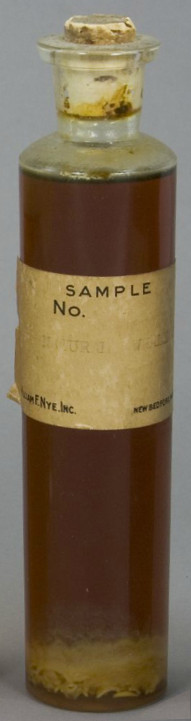
石油または原油は、単に油とも呼ばれ、主に炭化水素の自然発生的な黄黒色の液体混合物であり、[1]地層中に存在します。石油という名前は、自然発生的な未加工の原油と、精製された原油からなる 石油製品の両方を指します。
石油は主に石油掘削によって回収されます。掘削は、構造地質学、堆積盆地分析、貯留層特性の調査を行った後に行われます。オイルサンドやオイルシェールなどの非在来型の埋蔵量も存在します。
石油は抽出されると、蒸留によって最も簡単に精製および分離され、直接使用または製造に使用するための無数の製品になります。製品には、ガソリン、ディーゼル、灯油、ジェット燃料などの燃料、アスファルトや潤滑油、プラスチックの製造に使用される化学試薬、溶剤、繊維、冷媒、塗料、合成ゴム、肥料、殺虫剤、医薬品、その他数千種類があります。石油は、現代生活に欠かせない多種多様な材料の製造に使用されており、[2]世界では毎日約1億バレル(1,600万立方メートル)が消費されていると推定されています。石油生産は非常に収益性が高く、20世紀の世界経済発展に不可欠でした。石油国家と呼ばれる一部の国は、石油生産と貿易を管理することで、経済的および国際的な力を大幅に獲得しました。
石油の採掘は環境や人間の健康に悪影響を及ぼす可能性があります。石油燃料の採掘、精製、燃焼はすべて大量の温室効果ガスを排出するため、石油は気候変動の主な原因の1つです。その他の環境への悪影響には、石油流出などの直接的な排出や、使用のほぼすべての段階での大気汚染や水質汚染などがあります。これらの環境影響は、人間の健康に直接的および間接的な影響を及ぼします。石油はまた、国内紛争や国家間紛争の原因となっており、国家主導の戦争やその他の資源紛争につながっています。気候変動の緩和と再生可能エネルギーおよび電化への移行の一環として、世界経済が石油への依存度を下げるため、石油生産は2035年までにピークオイルに達すると推定されています[3]。[4]石油は工業化と経済発展において重要な役割を果たしてきました。[5]
語源

石油という単語は中世ラテン語のpetroleum (文字通り「岩油」)に由来し、これはラテン語の petra (岩、ギリシャ語のpétra πέτραから) と oleum (油、ギリシャ語のélaion ἔλαιονから) から来ている。[6] [7]
この用語の起源は、南イタリアの修道院で、1千年紀の終わりまでに、古い用語「ナフサ」の代替として使われていたことに由来します。[8]その後、この用語は、ドイツの鉱物学者ゲオルク・バウアー(別名ゲオルギウス・アグリコラ)が1546年に出版した論文「 De Natura Fossilium 」など、多数の写本や書籍で使用されました。 [9] 19世紀後半の石油産業の出現後、この用語は炭化水素の液体形態を指すのに一般的に知られるようになりました。
歴史
早い

石油は、何らかの形で古代から使われてきた。4300年以上前、シュメール人が船を作るのにビチューメンを使ったという記録がある。アッカドのサルゴンの誕生伝説を記した粘土板には、わらとビチューメンで閉じられた籠について言及されている。ヘロドトスとシケリアのディオドロスによると、4000年以上前、バビロンの壁や塔の建設にアスファルトが使われた。アルデリッカとバビロンの近くには油田があり、ザキントス島にはピッチの泉があった。[10]ユーフラテス川の支流の1つであるイッソス川の岸では大量のアスファルトが見つかった。古代ペルシャの粘土板には、上層社会では石油が医療や照明に使われていたことが記されている。
古代中国における石油の使用は、2000年以上前に遡ります。最も古い中国の文献の1つである易経には、精製されていない生の石油が中国で初めて発見され、抽出され、使用されたのは紀元前1世紀であったと記されています。[説明が必要]さらに、中国人は紀元前4世紀という早い時期に石油を燃料として使用したことを記録した最初の人々でした。[11] [12] [13]紀元347年までに、中国では竹で掘った井戸から石油が生産されていました。[14] [15]
7世紀、石油はギリシャ火薬の必須成分の一つであった。ギリシャ火薬は、当時コンスタンティノープルを攻撃していたアラブの船に対してビザンチン帝国のギリシャ人が使用した焼夷弾兵器である。[16]原油はペルシャの化学者によって蒸留されており、アブー・バクル・アル・ラーズィー(ラーズィース)などのアラビア語のハンドブックに明確に記述されている。[17]バグダッドの街路は、その地域の天然の油田から採取できるようになった石油から作られた タールで舗装された。
9世紀には、現在のアゼルバイジャンのバクー周辺で油田が開発されました。これらの油田は、10世紀にアラブの地理学者アブー・バクル・アル・ラーズィーによって記述され、 13世紀にはマルコ・ポーロによって記述されており、マルコ・ポーロは、これらの油井からの産出量を数百隻の船に積んだと記しています。 [18]アラブとペルシャの化学者も原油を蒸留して、軍事目的で可燃性製品を製造していました。イスラム教のスペインを通じて、12世紀までに西ヨーロッパで蒸留が可能になりました。[19]ルーマニアでも13世紀から存在しており、păcurăとして記録されています。[20]
1415年から1450年頃には、ペンシルベニア州西部のセネカ族やその他のイロコイ族によって、4.5~6メートル(15~20フィート)の高度な油田が掘られていた。フランスの将軍ルイ・ジョゼフ・ド・モンカルムは、 1750年にデュケイン砦を訪れた際に、セネカ族が儀式の火や治療用のローションとして石油を使用しているのを目撃した。 [21]
ミャンマーを訪れた初期のイギリス人探検家は、 1795年には何百もの手掘りの井戸が稼働していたイェナンヤウンを拠点とする石油採掘産業が繁栄していたことを記録している。[22]
メルクヴィラー・ペッヘルブロンは、石油が採掘され使用されたヨーロッパ初の場所と言われています。現在も活動中のエルドペッヒクヴェレは、石油が水と混ざった泉で、1498年以来、主に医療目的で使用されています。
19世紀


19世紀半ばには世界各地で活動があった。バキンスキー鉱山技師団のアレクセーエフ少佐率いるグループは1846年にバクーのビビ・ヘイバト地方で手掘りで井戸を掘った。[23]ドレイクの井戸と同じ年に、ウェストバージニア州にエンジン掘削井戸があった。[24]初期の商業用井戸は1853年にポーランドで手掘りで掘られ、1857年には近隣のルーマニアでも手掘りで掘られた。ほぼ同時期に世界初の小規模な石油精製所がポーランド(当時はオーストリア)のヤスウォに開設され、その後まもなくルーマニア(当時はオスマン帝国)のプロイェシュティにさらに大規模な精製所が開設された。ルーマニア(当時はオスマン帝国の一部)は、1857年の原油生産量が275トンで、国際統計に公式に記録された世界初の国である。[25] [26]
1858年、ゲオルク・クリスティアン・コンラート・フナウスはドイツのヴィーツェで褐炭を掘削中に大量の石油を発見した。ヴィーツェは後にヴィルヘルム朝時代にドイツの消費量の約80%を供給した。[27] 1963年に生産は停止したが、ヴィーツェには1970年から石油博物館が設けられた。[28]
オイルサンドの採掘は18世紀から行われています。[29]ニーダーザクセン州のヴィーツェでは、18世紀から天然アスファルト/ビチューメンの採掘が行われています。[30]ペッヘルブロンとヴィーツェの両方で、石炭産業が石油技術を支配していました。[31]
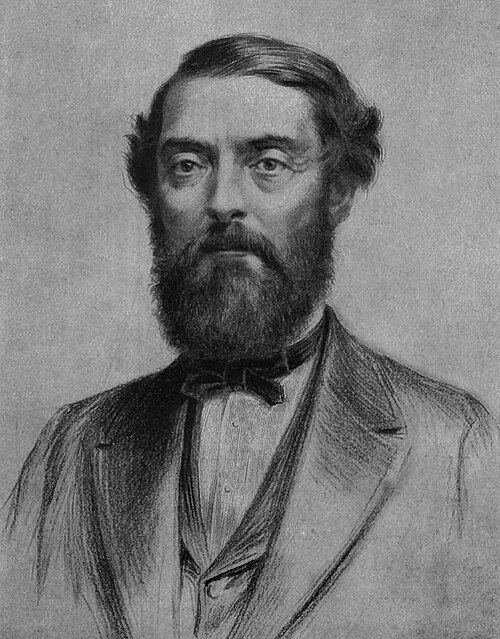
化学者ジェームズ・ヤングは1847年にダービーシャー州リッディングス・アルフレトンの炭鉱で天然の石油の浸出に気づき、そこからランプの油として使える軽くて薄い油を蒸留し、同時に機械の潤滑に適したより粘性の高い油も得た。1848年、ヤングは原油を精製する小さな会社を設立した。[32]
ヤングは最終的に、炭を低温で蒸留することで石油に似た液体を作り出すことに成功し、これを浸出油と同じ方法で処理すると同様の製品が得られた。ヤングは、ゆっくりと蒸留することでそこからいくつかの有用な液体が得られることを発見し、そのうちの1つを「パラフィン油」と名付けた。低温で凝固してパラフィンワックスに似た物質になるからである。[32]
これらの油と固形パラフィンワックスを石炭から生産することが、1850年10月17日付の彼の特許の対象となった。1850年、ヤング&メルドラムとエドワード・ウィリアム・ビニーは、ウェスト・ロージアンのバスゲートでEWビニー&カンパニー、グラスゴーでE.メルドラム&カンパニーという名称でパートナーシップを結んだ。バスゲートの工場は1851年に完成し、世界初の近代的な石油精製所を備えた、真に商業的な石油工場となった。[33] [説明が必要]
世界初の石油精製所は1856年にオーストリアのイグナツィ・ウカシェヴィチによって建設されました。[34]彼の功績には、油の浸出から灯油を蒸留する方法の発見、現代の灯油ランプの発明(1853年)、ヨーロッパ初の近代的な街灯の導入(1853年)、世界初の近代的な石油「鉱山」の建設(1854年)などがあります。[35]クロスノ近郊のボブルカ(2020年現在も稼働中)。
北米および世界中で照明燃料としての石油の需要が急速に増加しました。 [36]
アメリカ大陸で最初の油井は、1859年にエドウィン・ドレイクによって、現在ペンシルベニア州チェリーツリー・タウンシップのドレイク油井と呼ばれる場所で掘削されました。この油井には関連会社もあり、大規模な石油掘削ブームを引き起こしました。[37]
カナダで最初の商業用油井は、1858年にオンタリオ州オイルスプリングス(当時はカナダ西部)で操業を開始しました。[38]実業家のジェームズ・ミラー・ウィリアムズは、 1855年から1858年の間にいくつかの油井を掘り、地下4メートルに豊富な石油埋蔵量を発見しました。[39] [具体的に]ウィリアムズは1860年までに150万リットルの原油を採掘し、その大部分を灯油ランプの油に精製しました。ウィリアムズの油井は、ドレイクのペンシルベニアでの操業の1年前に商業的に採算が取れ、北米で最初の商業用油井であると主張することもできます。[40]オイルスプリングスの発見は石油ブームを引き起こし、何百人もの投機家と労働者がこの地域に集まりました。掘削の進歩は1862年まで続き、地元の掘削業者ショーはスプリングポール掘削法を使用して深さ62メートルに到達しました。[41] 1862年1月16日、天然ガスの爆発によりカナダ初の石油噴出が始まり、1日あたり480立方メートル(3,000バレル)の石油が噴出した。[42] 19世紀末までにロシア帝国、特にアゼルバイジャンのブラノーベル社が石油生産をリードするようになった。[43]
20世紀
石油へのアクセスは、20世紀のいくつかの軍事紛争において、今もなお大きな要因となっている。その中には第二次世界大戦も含まれ、当時は石油施設が主要な戦略的資産であり、広範囲に爆撃された。 [44]ドイツのソ連侵攻には、封鎖に苦しむドイツ軍に切望されていた石油供給源となるバクー油田の占領も目的とされていた。 [45]
20世紀初頭の北米での石油探査により、米国は20世紀半ばまでに最大の産油国となった。米国の石油生産は1960年代にピークを迎え、総生産量ではサウジアラビアとソ連に追い抜かれた。[46] [47] [48]
1973年、サウジアラビアと他のアラブ諸国は、 1973年10月のヨムキプール戦争でイスラエルを支援した米国、英国、日本、その他の西側諸国に対して石油禁輸措置を課しました。 [49]この禁輸措置は石油危機を引き起こしました。その後、1979年の石油危機が続き、これはイラン革命をきっかけとした石油生産の減少によって引き起こされ、石油価格が2倍以上に上昇しました。
21世紀
2度の原油価格ショックは、世界政治と世界経済に多くの短期的、長期的な影響を及ぼした。[50] それらは、政府の政策によって促進された、他の燃料、特に石炭と原子力への代替とエネルギー効率の改善の結果として、需要の持続的な減少をもたらした。[51]高油価はまた、アラスカのプルドーベイ、英国とノルウェーの北海沖合油田、メキシコのカンタレル沖合油田、カナダのオイルサンドなど、非OPEC諸国による石油生産への投資を誘発した。[52]
自動車燃料の需要の約90%は石油で賄われています。石油は米国の総エネルギー消費量の40%を占めていますが、発電に占める割合はわずか1%です。[53]石油は、ほとんどの車両を動かす携帯可能な高密度エネルギー源として、また多くの工業用化学物質の原料として、世界で最も重要な商品の一つとなっています。
2018年現在、石油生産国上位3カ国は、米国、ロシア、サウジアラビアである。[54] 2018年には、水圧破砕法や水平掘削法の発達もあり、米国が世界最大の生産国となった。[55]
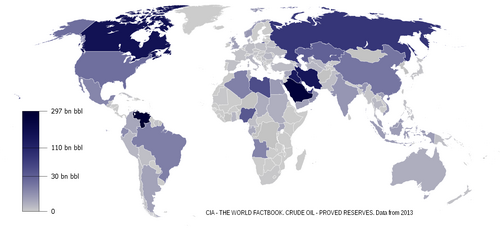
世界で容易にアクセスできる埋蔵量の約80%は中東にあり、そのうち62.5%はサウジアラビア、アラブ首長国連邦、イラク、カタール、クウェートのアラブ5か国から産出されている。世界の石油の大部分は、アサバスカ油砂のビチューメンやオリノコベルトの超重質油など、非在来型資源として存在している。特にカナダでは、オイルサンドから相当量の石油が採掘されているが、石油の採掘には大量の熱と水が必要で、従来の原油に比べて純エネルギー含有量がかなり低いため、物流上および技術的なハードルが残っている。そのため、カナダのオイルサンドは、近い将来、1日あたり数百万バレル以上の生産は見込まれていない。[56] [57] [58]
構成
石油は、さまざまな液体、気体、固体の成分で構成されています。軽い炭化水素は、メタン、エタン、プロパン、ブタンなどのガスです。それ以外の液体と固体の大部分は、主に重い有機化合物、多くの場合炭化水素(CとHのみ)です。石油混合物中の軽い炭化水素の割合は、油田によって異なります。[59]
油井は主に原油を生産する。地表の圧力は地下よりも低いため、ガスの一部は溶解状態から抜け出し、随伴ガスまたは溶解ガスとして回収(または燃焼)される。ガス井は主に天然ガスを生産する。しかし、地下の温度は地表よりも高いため、ガスにはペンタン、ヘキサン、ヘプタンなどの重質炭化水素(「天然ガス凝縮物」、しばしば凝縮物と略される)が含まれる場合がある。凝縮物は外見がガソリンに似ており、成分は揮発性の 軽質原油の一部に似ている。[60] [61]
原油に含まれる炭化水素は主にアルカン、シクロアルカン、さまざまな芳香族炭化水素ですが、その他の有機化合物には窒素、酸素、硫黄、および微量の鉄、ニッケル、銅、バナジウムなどの金属が含まれています。多くの油層には生きたバクテリアが含まれています。[62]原油の正確な分子組成は地層ごとに大きく異なりますが、化学元素の割合は次のようにかなり狭い範囲内で変化します。[63]
原油には4種類の炭化水素が含まれています。それぞれの相対的な割合は油ごとに異なり、それぞれの油の特性を決定します。[59]

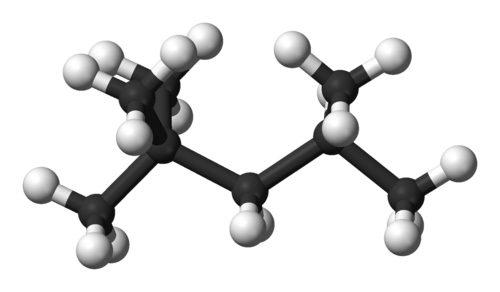
ペンタン(C 5 H 12)からオクタン(C 8 H 18)までのアルカンはガソリンに精製され、ノナン(C 9 H 20)からヘキサデカン(C 16 H 34)までのアルカンはディーゼル燃料、灯油、ジェット燃料に精製されます。16個を超える炭素原子を持つアルカンは、燃料油や潤滑油に精製できます。より重い範囲では、パラフィンワックスは約25個の炭素原子を持つアルカンであり、アスファルトは35個以上ですが、これらは通常、現代の製油所でより価値の高い製品に分解されます。最も軽い画分、いわゆる石油ガスは、コストに応じてさまざまな処理を受けます。これらのガスは、燃やされるか、液化石油ガスとして販売されるか、製油所のバーナーの動力として使用されます。冬季には、ブタン(C 4 H 10)がガソリンプールに大量に混合されます。これは、ブタンの蒸気圧が高いため、冷間始動が容易になるためです。
芳香族炭化水素は、 1 つ以上のベンゼン環を持つ不飽和炭化水素です。これらは煤けた炎を出して燃える傾向があり、多くは甘い香りがします。中には発がん性のあるものもあります。
これらのさまざまな成分は、石油精製所で分留によって分離され、ガソリン、ジェット燃料、灯油、その他の炭化水素分画が生成されます。
油サンプルの成分は、ガスクロマトグラフィーと質量分析法で測定できます。[65]油中には共溶出する炭化水素が多数存在するため、その多くは従来のガスクロマトグラフィーでは分離できません。この炭化水素の未分離の複合混合物(UCM)は、風化した油や油にさらされた生物の組織からの抽出物を分析するときに特に顕著になります。
原油は、その組成によって外観が大きく異なります。通常は黒または暗褐色です (黄色がかった、赤みがかった、または緑がかった場合もあります)。貯留層では、通常、天然ガスと一緒に見つかります。天然ガスは軽いため、石油の上に「ガスキャップ」を形成し、塩水はほとんどの原油よりも重いため、通常は原油の下に沈みます。原油は、カナダのアサバスカ油砂のように、砂と水が混ざった半固体の形で見つかることもあり、そこでは通常、原油ビチューメンと呼ばれます。カナダでは、ビチューメンは、粘り気があり、黒く、タールのような原油であり、非常に濃く重いため、流動する前に加熱または希釈する必要があります。[66]ベネズエラのオリノコ油砂にも大量の石油がありますが、そこに閉じ込められた炭化水素はカナダよりも流動性が高く、通常は超重質油と呼ばれます。これらのオイルサンド資源は、従来の油井法で抽出できる石油と区別するために非在来型石油と呼ばれています。カナダとベネズエラには、推定3.6兆バレル(570 × 10 9 m 3)のビチューメンと超重質油があり、これは世界の在来型石油埋蔵量の約2倍です。[67]
形成
化石石油
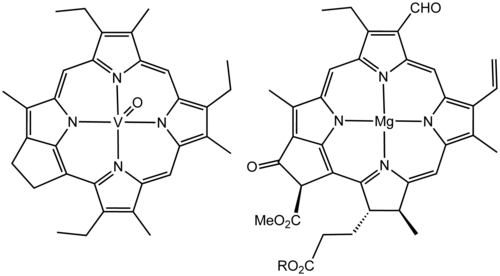
石油は、動物プランクトンや藻類などの化石化した有機物から得られる 化石燃料です。[70] [71]これらの残骸の多くは海や湖の底に沈み、好気的に分解するよりも速く、よどんだ水(溶存酸素のない水)や泥やシルトなどの堆積物に覆われました。この堆積物の約1メートル下では、水の酸素濃度が低く、0.1 mg/L未満であり、無酸素状態でした。温度も一定に保たれていました。[71]
さらに地層が海底や湖底に沈むと、下層で高熱と高圧力が蓄積した。このプロセスにより、有機物はまず世界中のさまざまなオイルシェールに含まれるケロゲンと呼ばれるワックス状の物質に変化し、その後、カタゲネシスと呼ばれるプロセスを経て、さらに熱を加えて液体や気体の炭化水素に変化した。石油の形成は、高温または高圧、もしくはその両方でのさまざまな主に吸熱反応による炭化水素の熱分解によって起こる。 [71] [72]これらの段階については、以下で詳しく説明する。
嫌気性分解
酸素が豊富にない場合、好気性細菌は、堆積物や水の層の下に埋もれた有機物を分解するのを妨げられます。しかし、嫌気性細菌は、物質を他の反応物の供給源として使用することにより、物質内の硫酸塩と硝酸塩をそれぞれH 2 SとN 2に還元することができました。このような嫌気性細菌のおかげで、最初はこの物質は主に加水分解によって分解し始めました。多糖類とタンパク質は、それぞれ単糖とアミノ酸に加水分解されました。これらは、細菌の酵素によって加速された速度でさらに嫌気的に酸化されました。たとえば、アミノ酸は酸化的脱アミノ化を経てイミノ酸になり、これがさらに反応してアンモニアとα-ケト酸になりました。単糖類は最終的にCO 2とメタンに分解されました。アミノ酸、単糖類、フェノール、アルデヒドの嫌気的分解生成物は、フルボ酸に結合しました。脂肪とワックスは、このような穏やかな条件下では、広範囲に加水分解されなかった。[71]
ケロゲン形成
以前の反応で生成されたフェノール化合物の一部は殺菌剤として働き、放線菌目の細菌も抗生物質化合物(例:ストレプトマイシン)を生成しました。したがって、嫌気性細菌の作用は水または堆積物の下約10メートルで停止しました。この深さの混合物には、フルボ酸、未反応および部分的に反応した脂肪とワックス、わずかに変性したリグニン、樹脂、およびその他の炭化水素が含まれていました。 [71]より多くの有機物層が海底または湖底に沈殿するにつれて、低地で高熱と圧力が発生しました。[72]その結果、この混合物の化合物はよく理解されていない方法で結合してケロジェンになり始めました。結合は、フェノールとホルムアルデヒド分子が尿素ホルムアルデヒド樹脂に反応するのと同様に起こりましたが、ケロジェンの形成は、より多様な反応物質のためにより複雑な方法で起こりました。嫌気性分解の始まりから始まるケロジェン形成の全過程は、成分の溶解と再結合による物質の変化を意味する言葉である「ディアジェネシス」と呼ばれます。 [71]
ケロジェンの化石燃料への変換
ケロジェンの形成は地表から約 1 kmの深さまで続き、その温度は 50 °C前後に達することがあります。ケロジェンの形成は、有機物と化石燃料の中間点を表しています。ケロジェンは酸素にさらされて酸化され、失われる場合もあれば、地殻のより深いところに埋もれて、石油などの化石燃料にゆっくりと変化する条件にさらされる場合もあります。後者はカタジェネシスによって起こり、その反応は主にケロジェンのラジカル 転位でした。これらの反応には数千年から数百万年かかり、外部反応物は関与していませんでした。これらの反応のラジカル性のため、ケロジェンは 2 種類の生成物、つまり H/C 比の低いもの (アントラセンまたはそれに類似した生成物) と H/C 比の高いもの (メタンまたはそれに類似した生成物)、つまり炭素を多く含む生成物または水素を多く含む生成物に反応しました。カタジェネシスは外部の反応物から遮断されていたため、燃料混合物の組成は反応化学量論を介してケロジェンの組成に依存していました。ケロジェンにはタイプI(藻類)、タイプII(リプチン質)、タイプIII(腐植質)の3種類があり、それぞれ主に藻類、プランクトン、木本植物(この用語には樹木、低木、つる植物が含まれます)から形成されました。[71]
カタジェネシスは、60~数百℃という比較的低温(商業的な熱分解プラントと比較すると)で起こったにもかかわらず、熱分解的であった。熱分解が可能になったのは、反応時間が長いためである。カタジェネシスの熱は、地殻の放射性物質、特に40 K、232 Th、235 U、238 Uの分解から生じた。熱は地温勾配によって変化し、通常は地表から1kmの深さごとに10~30℃であった。しかし、異常なマグマの貫入により、局所的に大きな加熱が行われた可能性もある。[71]
オイルウィンドウ(温度範囲)
地質学者は、石油が形成される温度範囲を「オイルウィンドウ」と呼ぶことが多い。[73] [74] [71]最低温度以下では、石油はケロゲンの形で閉じ込められたままである。最高温度以上では、石油は熱分解のプロセスによって天然ガスに変換される。時には、非常に深いところで形成された石油が移動し、はるかに浅いレベルで閉じ込められることがある。アサバスカオイルサンドはその一例である。[71]
非生物起源石油
1850年代半ばにロシアの科学者が、上記のメカニズムに代わる仮説として、石油が非生物起源(無機的な手段で形成された石油)であるという仮説を提唱したが、これは地質学的および地球化学的証拠と矛盾している。[75]非生物起源の石油源は発見されているが、商業的に利益を生む量ではなかった。「論争は非生物起源の石油埋蔵量が存在するかどうかではない」と米国石油地質学者協会のラリー・ネイションは述べた。「論争は、非生物起源の石油埋蔵量が地球全体の埋蔵量にどれだけ貢献するか、そして地質学者がそれらの探索にどれだけの時間と労力を費やすべきかということである」[76]
貯水池
.svg/500px-Structural_Trap_(Anticlinal).svg.png)
石油貯留層が形成されるには、次の 3 つの条件が満たされている必要があります。
- 炭化水素物質を豊富に含む根源岩は、地中の熱で石油に変わるほど深く埋まっている。
- 多孔質で透水性の貯留岩石に蓄積される。
- キャップロック(シール)またはその他のメカニズムは、石油が地表に漏れるのを防ぎます。これらの貯留層内では、流体は通常、油層の下に水層、その上にガス層がある 3 層のケーキのように形成されますが、各層のサイズは貯留層によって異なります。ほとんどの炭化水素は岩や水よりも密度が低いため、隣接する岩層を通って上方に移動し、地表に到達するか、上部の不浸透性岩によって多孔質の岩(貯留層と呼ばれる)内に閉じ込められることがよくあります。ただし、このプロセスは地下水の流れの影響を受け、石油は貯留層に閉じ込められる前に、水平方向に数百キロメートル、または短い距離でも下方に移動することがあります。炭化水素がトラップに集中すると油田が形成され、そこから掘削とポンプで液体を抽出できます。
石油と天然ガスを生成する反応は、多くの場合、一次分解反応としてモデル化されます。一次分解反応では、炭化水素が一連の並行反応によって石油と天然ガスに分解され、石油は最終的に別の一連の反応によって天然ガスに分解されます。後者のセットは、石油化学工場や石油精製所で定期的に使用されます。
石油は主に石油掘削によって回収されてきた(天然の石油源はまれである)。掘削は、構造地質学(貯留層規模)、堆積盆地分析、貯留層特性(主に地質学的貯留層構造の多孔性と浸透性の観点から)の研究の後に行われる。 [77] [78]原油を抽出するために油層に井戸が掘られる。貯留層が最初に掘削された後、しばらくの間は、貯留層の自然圧力を利用して石油を地表に押し出す「自然揚水」生産方法は通常十分である。中東などの一部の貯留層では、自然圧力は長期間にわたって十分である。しかし、ほとんどの貯留層の自然圧力は最終的に消失する。その後、石油は「人工揚水」手段を使用して抽出されなければならない。時間が経つにつれて、これらの「一次」方法は効果が低下し、「二次」生産方法が使用される場合がある。一般的な二次方法は「水攻法」、つまり貯留層に水を注入して圧力を高め、石油を掘削したシャフトまたは「坑井」に押し出す方法です。最終的には、蒸気、二酸化炭素、その他のガスまたは化学物質を貯留層に注入して石油の流動特性を高める「三次」または「強化」石油回収法が使用される場合があります。米国では、一次生産法は毎日生産される石油の 40 パーセント未満を占め、二次方法は約半分、三次回収法は残りの 10 パーセントを占めています。石油/タール砂およびオイルシェール鉱床から石油 (または「ビチューメン」) を抽出するには、砂またはシェールを採掘して容器またはレトルトで加熱するか、または「現場」法を使用して鉱床に加熱した液体を注入し、石油で飽和した液体をポンプで送り出す必要があります。
非在来型石油貯留層
油を食べるバクテリアは、地表に漏れ出した油を分解する。オイルサンドは、部分的に分解された油がまだ漏れ出し、分解されつつある貯留層であるが、移動する油が非常に多いため、大半は漏れ出したものの、依然として大量の油が残っている。これは、従来の油層で見つかる量よりも多い。原油の軽い部分が最初に破壊され、その結果、カナダでは原油ビチューメン、ベネズエラでは超重質原油と呼ばれる、非常に重い原油を含む貯留層が形成される。これら2つの国は、世界最大のオイルサンドの埋蔵量を有する。[79]
一方、オイルシェールは、閉じ込められた炭化水素を原油に変えるのに十分な時間熱や圧力にさらされていない根源岩です。技術的に言えば、オイルシェールは必ずしも頁岩ではなく、油を含んでいませんが、ケロゲンと呼ばれる不溶性の有機固体を含む細粒の堆積岩です。岩石中のケロゲンは、熱と圧力を使用して自然のプロセスをシミュレートすることで原油に変換できます。この方法は何世紀にもわたって知られており、1694年に英国特許第330号として「ある種の石から大量のピッチ、タール、および油を抽出して製造する方法」として特許を取得しました。オイルシェールは多くの国で発見されていますが、米国は世界最大の鉱床を持っています。[80]
分類
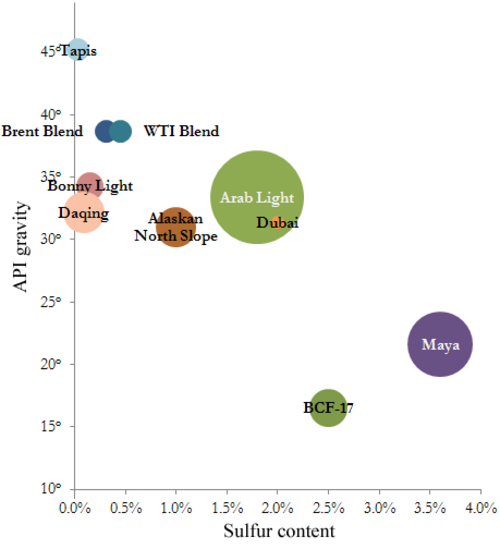
石油業界では、一般的に原油を、生産された地理的位置(例:ウエスト・テキサス・インターミディエイト、ブレント、オマーン)、API比重(石油業界の密度の尺度)、硫黄含有量で分類しています。原油は、密度が低い場合は軽質、密度が高い場合は重質、軽質と重質の中間の密度の場合は中質とみなされます。[81]さらに、硫黄の含有量が比較的少ない場合はスイート、硫黄を多量に含む場合はサワーと呼ばれることがあります。 [82]
地理的な位置は、製油所への輸送コストに影響するため重要です。軽質原油は、ガソリンの収量が高いため重質原油よりも望ましく、一方スイートオイルは、環境問題が少なく、消費国の燃料に課せられた硫黄基準を満たすための精製が少なくて済むため、サワーオイルよりも高価です。各原油には独自の分子特性があり、石油研究所での原油分析によって明らかになります。[83]
原油の分子特性が決定され、原油が分類された地域からのバレルは、世界中で価格の基準として使用されています。一般的な基準原油には次のものがあります。 [引用が必要]
- ウエスト・テキサス・インターミディエイト(WTI)は、オクラホマ州クッシングで北米向けに出荷される、非常に高品質で甘く軽い石油です。
- ブレントブレンドは、北海の東シェトランド海盆のブレントおよびニニアンシステムの油田から採掘された15の原油から構成されています。この原油はシェトランドのサロム・ヴォー・ターミナルに陸揚げされました。西に流れるヨーロッパ、アフリカ、中東の原油生産は、この原油を基準に価格が決まる傾向があり、これがベンチマークとなっています。
- ドバイ・オマーン、アジア太平洋地域に流れる中東の酸性原油のベンチマークとして使用される
- タピス(マレーシア産、極東産の軽質油の基準として使用される)
- ミナス(インドネシア産、極東重質油の基準として使用される)
- OPEC基準バスケットは、さまざまなOPEC(石油輸出国機構)諸国からの石油ブレンドの加重平均である。
- ミッドウェイ・サンセット・ヘビー、カリフォルニアの重質油の価格設定に使われる[84] [検証失敗]
- 西カナダ産は、新興の重質、高TAN(酸性)原油のベンチマーク原油を選択します。[85]
これらのベンチマークとなる石油の生産量は毎年減少しているため、実際に納品されるのは他の石油であることが多い。基準価格はクッシングで納品されるウェスト・テキサス・インターミディエイトであるかもしれないが、実際に取引される石油はアルバータ州ハーディスティーで納品される割引されたカナダ産重質油(ウェスタン・カナディアン・セレクト)である可能性があり、シェトランドで納品されるブレントブレンドの場合、プリモルスク港で納品される割引されたロシア産輸出ブレンドである可能性がある。[86]
石油は抽出されると、蒸留によって精製・分離され、ガソリン、ディーゼル、灯油からアスファルト、化学試薬(エチレン、プロピレン、ブテン、アクリル酸、 パラキシレン[87] )まで、直接使用または製造に使用されるさまざまな製品に加工されます。これらはプラスチック、農薬、医薬品の製造に使用されます。[88]
使用
量的に見ると、石油のほとんどは内燃機関の燃料に変換されます。価値的に見ると、石油は医薬品やプラスチックなどの多くの高価値製品を含む石油化学産業を支えています。
燃料と潤滑油
石油は、その体積のほとんどが、燃料油とガソリンへの精製に使用されています。これらは両方とも重要な一次エネルギー源です。石油に含まれる炭化水素の84%は、ガソリン、ディーゼル、ジェット、暖房、その他の燃料油、液化石油ガスなどの燃料に変換されます。[89]
エネルギー密度が高く、輸送しやすく、比較的豊富に存在することから、石油は1950年代半ば以降、世界で最も重要なエネルギー源となっている。石油はまた、医薬品、溶剤、肥料、農薬、プラスチックなど、多くの化学製品の原料でもある。エネルギー生産に使われない16%は、これらの他の材料に変換される。石油は、地球の地殻の一部の上層部の多孔質の岩層に存在している。また、オイルサンド(タールサンド)にも石油が含まれている。既知の石油埋蔵量は、通常、オイルサンドなしで190 km 3(1.2兆バレル(短期スケール))[90] 、オイルサンドありで595 km 3(3.74兆バレル)と推定されている。[91]現在の消費量は1日あたり約8400万バレル(13.4 × 10 6 m 3 )、年間4.9 km 3であり、現在の需要が変わらなければ、残りの石油供給量はわずか120年分しか残っていない。 [92]しかし、最近の研究では、その数字は約50年であるとされている。[93] [94]
燃焼エンジンの燃料に密接に関連しているのは、潤滑剤、グリース、粘度安定剤です。これらはすべて石油から作られています。
化学薬品

多くの医薬品は、多段階のプロセスを経てではあるが、石油から作られています。[要出典]現代医学は、構成要素、試薬、溶媒の供給源として石油に依存しています。[95] 同様に、殺虫剤、除草剤など、ほぼすべての農薬は石油から作られています。農薬は、病原体を駆除し、作物の収穫量を増やすことで、平均寿命に大きな影響を与えてきました。医薬品と同様に、農薬は本質的に石油化学製品です。ほぼすべてのプラスチックと合成ポリマーは、モノマーの供給源である石油から作られています。 アルケン(オレフィン)は、これらの前駆分子の重要なクラスの1つです。
その他の派生商品
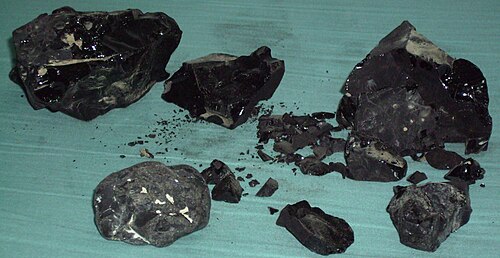
- ワックス、冷凍食品の包装などに使われる。パラフィンワックス、石油由来。[96]
- 硫黄とその誘導体硫酸。硫化水素は石油留分から硫黄を取り除いたときに生成される生成物です。硫化水素は元素硫黄に酸化され、その後硫酸になります。
- バルクタールとアスファルト
- 石油コークスは、特殊炭素製品や固形燃料として使用されます。
業界
石油産業は、石油産業またはオイルパッチとも呼ばれ、石油製品の探査、抽出、精製、輸送(多くの場合、石油タンカーとパイプラインによる)、およびマーケティングという世界的なプロセスが含まれます。この業界で最も多く生産される製品は、燃料油とガソリンです。石油は、医薬品、溶剤、肥料、農薬、合成香料、プラスチックなど、多くの化学製品の原料でもあります。この業界は通常、上流、中流、下流の3つの主要コンポーネントに分けられます。上流は原油の探査と抽出、中流は原油の輸送と保管、下流は原油をさまざまな最終製品に精製することです。
石油は多くの産業にとって不可欠であり、現在の産業文明を維持するために必要であり、多くの国にとって重大な関心事となっています。石油は世界のエネルギー消費の大きな割合を占めており、その割合はヨーロッパとアジアの 32% から中東の 53% までさまざまです。
その他の地域の消費パターンは、南米と中米(44%)、アフリカ(41%)、北米(40%)です。世界では年間360億バレル(5.8 km 3 )の石油が消費されており、 [97]先進国が最大の消費国となっています。米国は2015年に生産された石油の18%を消費しました。[98]石油の生産、流通、精製、小売りは全体として、ドル換算で世界最大の産業となっています。輸送
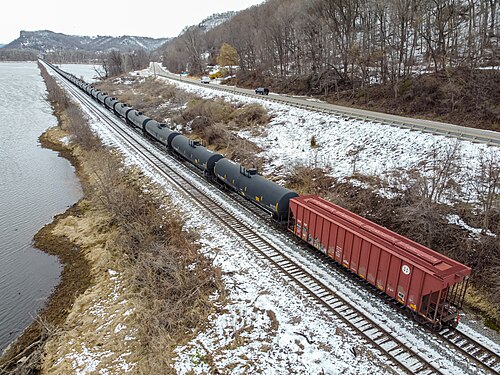
1950年代には、ペルシャ湾から米国に輸送される石油の価格の33%を輸送費が占めていましたが[100]、1970年代の超大型タンカーの開発により、輸送費は米国におけるペルシャ原油価格のわずか5%にまで下がりました[100] 。過去30年間の原油価値の上昇により、2010年には配送された商品の最終コストに占める輸送費の割合は3%未満でした。
価格
ウラル原油(ロシアの輸出ミックス)


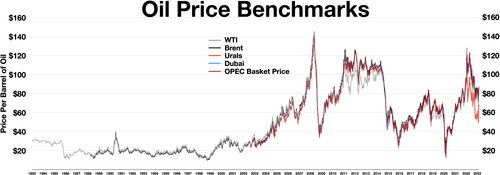
石油価格、あるいは石油価格は、一般的には、ウエスト・テキサス・インターミディエイト(WTI)、ブレント原油、ドバイ原油、OPEC参照バスケット、タピス原油、ボニーライト、ウラル原油、イスマス、ウェスタン・カナディアン・セレクト(WCS)などの原油の売り手と買い手にとっての基準価格である1バレル( 159リットル)のベンチマーク原油のスポット価格を指します。[101] [102]石油価格は、特定の国の国内生産量ではなく、世界的な需要と供給によって決まります。
19世紀から20世紀初頭にかけて、原油の世界価格は比較的安定していた。[103]しかし、1970年代に状況は一変し、世界的に石油価格が大幅に上昇した。[103]歴史的に、石油の供給、需要、貯蔵ショック、世界経済成長 へのショックが石油価格に影響を与えるなど、世界の石油価格を左右する構造的な要因は数多く存在してきた。[104] 大幅な価格変動を引き起こした注目すべき出来事としては、1973年のOPECによるヨム・キプール戦争中にイスラエルを支援した国を標的とした石油禁輸措置[105] : 329 による1973年の石油危機、1979年の石油危機におけるイラン革命、2007~2008年の金融危機、そして最近では2014~2016年に「近代史上最大の石油価格下落」をもたらした2013年の石油供給過剰などがある。世界の石油価格の70%下落は「第二次世界大戦以来の3大下落の1つであり、1986年の供給主導の崩壊以来最も長く続いたもの」であった。 [106] 2015年までに、米国は世界第3位の石油生産国となり、40年間続いた輸出禁止措置を撤廃して石油輸出を再開した。[107] [108] [109]
2020年のロシアとサウジアラビアの原油価格戦争の結果、 COVID-19パンデミックの初めに世界の原油価格は65%下落した。[110] [111] 2021年、世界がCOVID-19の不況から回復するにつれて、エネルギー価格は記録的な高値に達した。[112] [113] [114] 2021年12月までに、米国、中国、インドからの石油需要の予想外の回復と、米国のシェール産業投資家の「支出抑制要求」が相まって、世界的に石油在庫が「ひっ迫」した。[115] 2022年1月18日、ブレント原油価格が2014年以来の高値である88ドルに達したため、ガソリン価格の上昇に対する懸念が高まり、英国ではガソリン価格が過去最高値を記録した。[116]貿易

原油はNYMEXとICEの両取引所で先物として取引されている。[117]先物契約は、買い手と売り手が将来の特定の日に特定の量の原油を購入し、引き渡すことに同意する契約である。契約は1000バレルの倍数をカバーし、最大9年先まで購入することができる。[118]
国別の使用状況
消費統計
-
 1800 年からの消費の指標となる世界の化石炭素排出量。合計油
 -
![1970年からの年間世界エネルギー使用量の割合[119]](https://img-server.japedia.wiki/wikipedia/commons/thumb/3/3a/World_energy_consumption.svg/500px-World_energy_consumption.svg.png) 1970年からの年間世界エネルギー使用量の割合。[119]
1970年からの年間世界エネルギー使用量の割合。[119] -
 1980 年から 2006 年までの 1 日の石油消費量。
 -

-
 1980 年から 2007 年までの地域別の石油消費量。
消費
米国エネルギー情報局(EIA)の2017年の推定によると、世界では毎日9,880万バレルの石油が消費されている。[120]
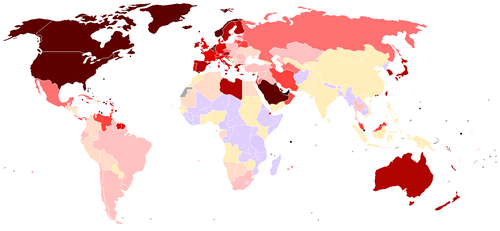
この表は、2011年に消費された石油の量を1日当たり1000バレル(1000 bbl)と1日当たり1000立方メートル(1000 m 3 )で表したものである。 [121] [122]
出典: 米国エネルギー情報局
人口データ: [123]
この州では石油生産のピークはすでに過ぎている
2この国は主要な石油生産国ではない
生産
主要石油生産国[124]
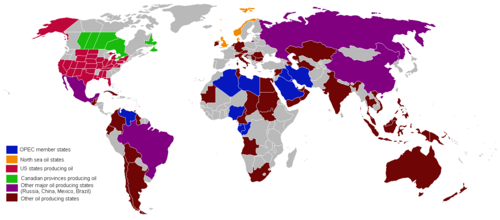
石油業界の用語では、生産とは文字通りの製品の生産ではなく、埋蔵量から抽出された原油の量を指します。
輸出
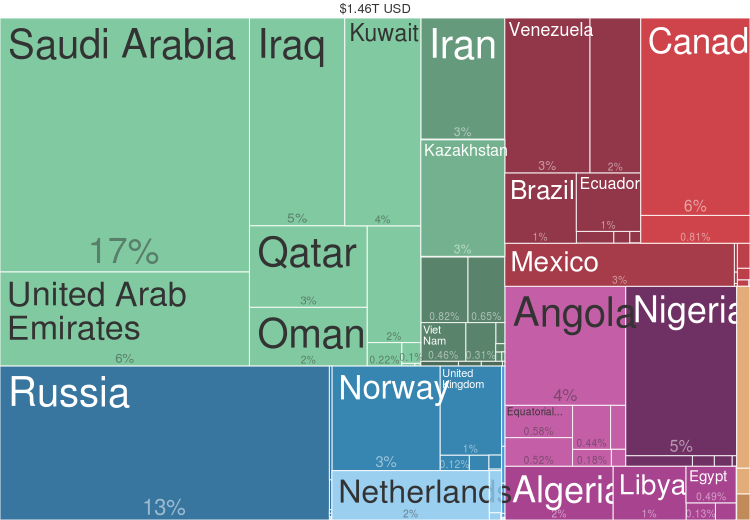
ハーバード経済複雑性アトラスより国別石油輸出量(2014年)
2011年、2009年、2006年の純輸出量(千バレル/日、千m3 /日)の順位は次のとおりです。
出典: 米国エネルギー情報局
この州では生産ピークはすでに過ぎている
2カナダの統計は、同国が原油の輸入国であると同時に輸出国でもあり、米国市場向けに大量の石油を精製しているという事実によって複雑になっている。カナダは米国の石油および石油製品の輸入の主要供給国であり、2007年8月には平均250万バレル/日(40万m3 /日)を輸入した。[126]
世界の総生産量/消費量(2005 年現在)は、1 日あたり約 8,400 万バレル(13,400,000 m 3 /日)です。
輸入
2011年、2009年、2006年の純輸入量(千バレル/日、千立方メートル/日)の順位は次のとおりです。
出典: 米国エネルギー情報局
1 石油生産のピークは2020年に予想される[127]
非生産消費者
石油生産量が消費量の10%以下の国。
出典: CIAワールドファクトブック[検証失敗]
環境への影響
気候

As of 2018[update], about a quarter of annual global greenhouse gas emissions is the carbon dioxide from burning petroleum (plus methane leaks from the industry).[128][129][note 1] Along with the burning of coal, petroleum combustion is the largest contributor to the increase in atmospheric CO2.[130][131] Atmospheric CO2 has risen over the last 150 years to current levels of over 415 ppmv,[132] from the 180–300 ppmv of the prior 800 thousand years.[133][134][135] The rise in Arctic temperature has reduced the minimum Arctic ice pack to 4,320,000 km2 (1,670,000 sq mi), a loss of almost half since satellite measurements started in 1979.[136]
Ocean acidification is the increase in the acidity of the Earth's oceans caused by the uptake of carbon dioxide (CO2) from the atmosphere.The saturation state of calcium carbonate decreases with the uptake of carbon dioxide in the ocean.[137] This increase in acidity inhibits all marine life—having a greater effect on smaller organisms as well as shelled organisms (see scallops).[138]
Extraction
Oil extraction is simply the removal of oil from the reservoir (oil pool). There are many methods on extracting the oil from the reservoirs for example; mechanical shaking,[139] water-in-oil emulsion, and specialty chemicals called demulsifiers that separate the oil from water. Oil extraction is costly and often environmentally damaging. Offshore exploration and extraction of oil disturb the surrounding marine environment.[140]
Oil spills
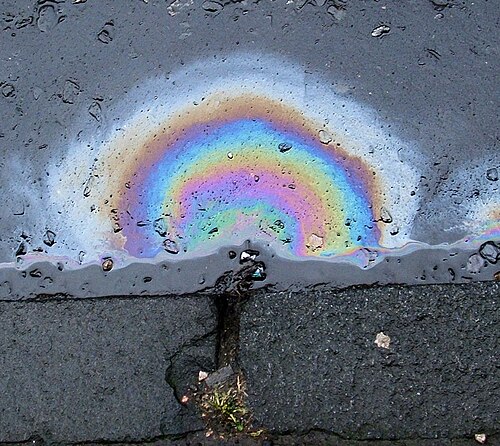
Crude oil and refined fuel spills from tanker ship accidents have damaged natural ecosystems and human livelihoods in Alaska, the Gulf of Mexico, the Galápagos Islands, France and many other places.
The quantity of oil spilled during accidents has ranged from a few hundred tons to several hundred thousand tons (e.g., Deepwater Horizon oil spill, SS Atlantic Empress, Amoco Cadiz). Smaller spills have already proven to have a great impact on ecosystems, such as the Exxon Valdez oil spill.
Oil spills at sea are generally much more damaging than those on land, since they can spread for hundreds of nautical miles in a thin oil slick which can cover beaches with a thin coating of oil. This can kill sea birds, mammals, shellfish, and other organisms it coats. Oil spills on land are more readily containable if a makeshift earth dam can be rapidly bulldozed around the spill site before most of the oil escapes, and land animals can avoid the oil more easily.
Control of oil spills is difficult, requires ad hoc methods, and often a large amount of manpower. The dropping of bombs and incendiary devices from aircraft on the SS Torrey Canyon wreck produced poor results;[141] modern techniques would include pumping the oil from the wreck, like in the Prestige oil spill or the Erika oil spill.[142]
Though crude oil is predominantly composed of various hydrocarbons, certain nitrogen heterocyclic compounds, such as pyridine, picoline, and quinoline are reported as contaminants associated with crude oil, as well as facilities processing oil shale or coal, and have also been found at legacy wood treatment sites. These compounds have a very high water solubility, and thus tend to dissolve and move with water. Certain naturally occurring bacteria, such as Micrococcus, Arthrobacter, and Rhodococcus have been shown to degrade these contaminants.[143]
Because petroleum is a naturally occurring substance, its presence in the environment does not need to be the result of human causes such as accidents and routine activities (seismic exploration, drilling, extraction, refining and combustion). Phenomena such as seeps[144] and tar pits are examples of areas that petroleum affects without man's involvement.
Tarballs
A tarball is a blob of crude oil (not to be confused with tar, which is a human-made product derived from pine trees or refined from petroleum) which has been weathered after floating in the ocean. Tarballs are an aquatic pollutant in most environments, although they can occur naturally, for example in the Santa Barbara Channel of California[145][146] or in the Gulf of Mexico off Texas.[147] Their concentration and features have been used to assess the extent of oil spills. Their composition can be used to identify their sources of origin,[148][149] and tarballs themselves may be dispersed over long distances by deep sea currents.[146] They are slowly decomposed by bacteria, including Chromobacterium violaceum, Cladosporium resinae, Bacillus submarinus, Micrococcus varians, Pseudomonas aeruginosa, Candida marina and Saccharomyces estuari.[145]
Whales
James S. Robbins has argued that the advent of petroleum-refined kerosene saved some species of great whales from extinction by providing an inexpensive substitute for whale oil, thus eliminating the economic imperative for open-boat whaling,[150] but others say that fossil fuels increased whaling with most whales being killed in the 20th century.[151]
Alternatives
In 2018 road transport used 49% of petroleum, aviation 8%, and uses other than energy 17%.[152] Electric vehicles are the main alternative for road transport and biojet for aviation.[153][154][155] Single-use plastics have a high carbon footprint and may pollute the sea, but as of 2022 the best alternatives are unclear.[156]
International relations
Control of petroleum production has been a significant driver of international relations during much of the 20th and 21st centuries.[157] Organizations like OPEC have played an outsized role in international politics. Some historians and commentators have called this the "Age of Oil"[157] With the rise of renewable energy and addressing climate change some commentators expect a realignment of international power away from petrostates.[citation needed]
Corruption
"Oil rents" have been described as connected with corruption in political literature.[158] A 2011 study suggested that increases in oil rents increased corruption in countries with heavy government involvement in the production of oil. The study found that increases in oil rents "significantly deteriorates political rights". The investigators say that oil exploitation gave politicians "an incentive to extend civil liberties but reduce political rights in the presence of oil windfalls to evade redistribution and conflict".[159]
Conflict
Petroleum production has been linked with conflict for many years, leading to thousands of deaths.[160] Petroleum deposits are in hardly any countries around the world; mainly in Russia and some parts of the middle east.[161][162] Conflicts may start when countries refuse to cut oil production in which other countries respond to such actions by increasing their production causing a trade war as experienced during the 2020 Russia–Saudi Arabia oil price war.[163] Other conflicts start due to countries wanting petroleum resources or other reasons on oil resource territory experienced in the Iran–Iraq War.[164]
OPEC
The Organization of the Petroleum Exporting Countries (OPEC, /ˈoʊpɛk/ OH-pek) is an organization enabling the co-operation of leading oil-producing and oil-dependent countries in order to collectively influence the global oil market and maximize profit. It was founded on 14 September 1960 in Baghdad by the first five members (Iran, Iraq, Kuwait, Saudi Arabia, and Venezuela). The organization, which currently comprises 12 member countries, accounted for an estimated 30 percent of global oil production.[165] A 2022 report further details that OPEC member countries were responsible for approximately 38 percent of it.[166] Additionally, it is estimated that 79.5 percent of the world's proven oil reserves are located within OPEC nations, with the Middle East alone accounting for 67.2 percent of OPEC's total reserves.[167][168]
In a series of steps in the 1960s and 1970s, OPEC restructured the global system of oil production in favor of oil-producing states and away from an oligopoly of dominant Anglo-American oil firms (the "Seven Sisters").[169] In the 1970s, restrictions in oil production led to a dramatic rise in oil prices with long-lasting and far-reaching consequences for the global economy. Since the 1980s, OPEC has had a limited impact on world oil-supply and oil-price stability, as there is frequent cheating by members on their commitments to one another, and as member commitments reflect what they would do even in the absence of OPEC.[170] However, since 2020, OPEC countries along with non-OPEC participants had helped in stabilising oil markets after the COVID-19 pandemic resulted in a collapse in oil demand. This has allowed oil markets to remain stable relative to other energy markets that experienced unprecedented volatility.[171]
The formation of OPEC marked a turning point toward national sovereignty over natural resources. OPEC decisions have come to play a prominent role in the global oil-market and in international relations. Economists have characterized OPEC as a textbook example of a cartel[172] (a group whose members cooperate to reduce market competition) but one whose consultations may be protected by the doctrine of state immunity under international law.[173]
Current OPEC members are[ref] Algeria, Equatorial Guinea, Gabon, Iran, Iraq, Kuwait, Libya, Nigeria, the Republic of the Congo, Saudi Arabia, the United Arab Emirates and Venezuela. Meanwhile, Angola, Ecuador, Indonesia, and Qatar are former OPEC members.[174] A larger group called OPEC+, consisting of OPEC members plus other oil-producing countries, formed in late 2016 to exert more control on the global crude-oil market.[175] Canada, Egypt, Norway, and Oman are observer states.Future production

Consumption in the twentieth and twenty-first centuries has been abundantly pushed by automobile sector growth. The 1985–2003 oil glut even fueled the sales of low fuel economy vehicles in OECD countries. The 2008 economic crisis seems to have had some impact on the sales of such vehicles; still, in 2008 oil consumption showed a small increase.
In 2016 Goldman Sachs predicted lower demand for oil due to emerging economies concerns, especially China.[176] The BRICS (Brasil, Russia, India, China, South Africa) countries might also kick in, as China briefly had the largest automobile market in December 2009.[177] In the long term, uncertainties linger; the OPEC believes that the OECD countries will push low consumption policies at some point in the future; when that happens, it will definitely curb oil sales, and both OPEC and the Energy Information Administration (EIA) kept lowering their 2020 consumption estimates during the past five years.[178] A detailed review of International Energy Agency oil projections have revealed that revisions of world oil production, price and investments have been motivated by a combination of demand and supply factors.[179] All together, Non-OPEC conventional projections have been fairly stable the last 15 years, while downward revisions were mainly allocated to OPEC. Upward revisions are primarily a result of US tight oil.
Production will also face an increasingly complex situation; while OPEC countries still have large reserves at low production prices, newly found reservoirs often lead to higher prices; offshore giants such as Tupi, Guara and Tiber demand high investments and ever-increasing technological abilities. Subsalt reservoirs such as Tupi were unknown in the twentieth century, mainly because the industry was unable to probe them. Enhanced Oil Recovery (EOR) techniques (example: DaQing, China[180]) will continue to play a major role in increasing the world's recoverable oil.
The expected availability of petroleum resources has always been around 35 years or even less since the start of the modern exploration. The oil constant, an insider pun in the German industry, refers to that effect.[181]
A growing number of divestment campaigns from major funds pushed by newer generations who question the sustainability of petroleum may hinder the financing of future oil prospection and production.[182]
Peak oil
Peak oil is a term applied to the projection that future petroleum production, whether for individual oil wells, entire oil fields, whole countries, or worldwide production, will eventually peak and then decline at a similar rate to the rate of increase before the peak as these reserves are exhausted.[citation needed][183] The peak of oil discoveries was in 1965, and oil production per year has surpassed oil discoveries every year since 1980.[184] However, this does not mean that potential oil production has surpassed oil demand.[clarification needed]
It is difficult to predict the oil peak in any given region, due to the lack of knowledge and/or transparency in the accounting of global oil reserves.[185] Based on available production data, proponents have previously predicted the peak for the world to be in the years 1989, 1995, or 1995–2000. Some of these predictions date from before the recession of the early 1980s, and the consequent lowering in global consumption, the effect of which was to delay the date of any peak by several years. Just as the 1971 U.S. peak in oil production was only clearly recognized after the fact, a peak in world production will be difficult to discern until production clearly drops off.[186]
In 2020, according to BP's Energy Outlook 2020, peak oil had been reached, due to the changing energy landscape coupled with the economic toll of the COVID-19 pandemic.
While there has been much focus historically on peak oil supply, the focus is increasingly shifting to peak demand as more countries seek to transition to renewable energy. The GeGaLo index of geopolitical gains and losses assesses how the geopolitical position of 156 countries may change if the world fully transitions to renewable energy resources. Former oil exporters are expected to lose power, while the positions of former oil importers and countries rich in renewable energy resources is expected to strengthen.[187]
Unconventional oil
Unconventional oil is petroleum produced or extracted using techniques other than the conventional methods. The calculus for peak oil has changed with the introduction of unconventional production methods. In particular, the combination of horizontal drilling and hydraulic fracturing has resulted in a significant increase in production from previously uneconomic plays.[188] Certain rock strata contain hydrocarbons but have low permeability and are not thick from a vertical perspective. Conventional vertical wells would be unable to economically retrieve these hydrocarbons. Horizontal drilling, extending horizontally through the strata, permits the well to access a much greater volume of the strata. Hydraulic fracturing creates greater permeability and increases hydrocarbon flow to the wellbore.
Hydrocarbons on other worlds
On Saturn's largest moon, Titan, lakes of liquid hydrocarbons comprising methane, ethane, propane and other constituents, occur naturally. Data collected by the space probe Cassini–Huygens yield an estimate that the visible lakes and seas of Titan contain about 300 times the volume of Earth's proven oil reserves.[189][190] Drilled samples from the surface of Mars taken in 2015 by the Curiosity rover's Mars Science Laboratory have found organic molecules of benzene and propane in 3-billion-year-old rock samples in Gale Crater.[191]
In fiction
Petrofiction or oil fiction[192] is a genre of fiction focused on the role of petroleum in society.[193]
See also

- Barrel of oil equivalent
- Filling station
- Gas/oil ratio
- Heavy metals
- International Safety Guide for Oil Tankers and Terminals
- Lead poisoning
- List of oil exploration and production companies
- List of oil fields
- Manure-derived synthetic crude oil
- Oil burden
- Oil reserves in France
- Petroleum geology
- Petroleum politics
- Petrocurrency
- Thermal depolymerization
- Total petroleum hydrocarbon
- Waste oil
- Unconventional (oil & gas) reservoir
Explanatory footnotes
- ^ 12.4 gigatonnes petroleum (and about 1 Gt CO2 eq from methane)/50 gigatonnes total
Citations
- ^ "EIA Energy Kids – Oil (petroleum)". www.eia.gov. Archived from the original on July 7, 2017. Retrieved March 18, 2018.
- ^ Krauss, Clifford; Mouawad, Jad (March 1, 2011). "Libyan tremors threaten to rattle the oil world". The Hindu. Chennai, India. Archived from the original on March 6, 2011.
- ^ Bullard, Nathaniel (December 9, 2021). "Peak Oil Demand Is Coming But Not So Soon". BNN, Bloomberg News. Retrieved December 11, 2021.
- ^ R, Tom; all; Warren, Hayley. "Peak Oil Is Already Here". Bloomberg.com. Archived from the original on December 18, 2020. Retrieved December 31, 2020.
- ^ "The Economic Benefits of Oil & Gas". Department of Energy. Archived from the original on March 31, 2024. Retrieved March 31, 2024.
- ^ "petroleum" Archived May 16, 2020, at the Wayback Machine, in the American Heritage Dictionary
- ^ Petroleum, Medieval Latin: literally, rock oil = Latin petr(a) rock (< Greek pétra) + oleum oil, The Free Dictionary.com. Archived January 10, 2017, at the Wayback Machine
- ^ van Dijk, J.P. (2022); Unravelling the Maze of Scientific Writing Through the Ages: On the Origins of the Terms Hydrocarbon, Petroleum, Natural Gas, and Methane. Amazon Publishers, 166 pp. PaperBack Edition B0BKRZRKHW. ISBN 979-8-3539-8917-2
- ^ Bauer, Georg (1955) [1546]. De Natura Fossilium. Translated by Bandy, Mark Chance; Bandy, Jean A. Mineola, NY: Dover.
- ^ One or more of the preceding sentences incorporates text from a publication now in the public domain: Redwood, Boverton (1911). "Petroleum". In Chisholm, Hugh (ed.). Encyclopædia Britannica. Vol. 21 (11th ed.). Cambridge University Press. p. 316.
- ^ Zhiguo, Gao (1998). Environmental regulation of oil and gas. London: Kluwer Law International. p. 8. ISBN 978-90-411-0726-8. OCLC 39313498.
- ^ Deng, Yinke (2011). Ancient Chinese Inventions. Cambridge University Press. p. 40. ISBN 978-0-521-18692-6.
- ^ Burke, Michael (2008). Nanotechnology: The Business. Taylor & Francis. p. 3. ISBN 978-1-4200-5399-9.
- ^ Totten, George E. "ASTM International – Standards Worldwide". astm.org. Archived from the original on July 6, 2017. Retrieved March 18, 2018.
- ^ Dalvi, Samir (2015). Fundamentals of Oil & Gas Industry for Beginners. Notion Press. ISBN 978-93-5206-419-9.
- ^ "Greek fire | Byzantine, Naval Warfare, Incendiary | Britannica". Encyclopædia Britannica. Retrieved October 1, 2023.
- ^ Forbes, Robert James (1958). Studies in Early Petroleum History. Brill Publishers. p. 149. Archived from the original on March 15, 2020. Retrieved April 3, 2019.
- ^ Salim Al-Hassani (2008). "1000 Years of Missing Industrial History". In Emilia Calvo Labarta; Mercè Comes Maymo; Roser Puig Aguilar; Mònica Rius Pinies (eds.). A shared legacy: Islamic science East and West. Edicions Universitat Barcelona. pp. 57–82 [63]. ISBN 978-84-475-3285-8.
- ^ Joseph P. Riva Jr.; Gordon I. Atwater. "petroleum". Encyclopædia Britannica. Archived from the original on April 29, 2015. Retrieved June 30, 2008.
- ^ Istoria Romaniei, Vol II, p. 300, 1960
- ^ Keoke, Emory Dean; Porterfield, Kay Marie (2003). American Indian Contributions to the World: 15,000 Years of Inventions and Innovations. Facts on File. p. 199. ISBN 978-0-8160-5367-4.
- ^ Longmuir, Marilyn V. (2001). Oil in Burma: the extraction of "earth-oil" to 1914. Bangkok: White Lotus Press. p. 329. ISBN 978-974-7534-60-3. OCLC 48517638.
- ^ Matveichuk, Alexander A (2004). "Intersection of Oil Parallels: Historical Essays". Russian Oil and Gas Institute.
- ^ McKain, David L.; Bernard, L. Allen (1994). Where It All Began: The Story of the People and Places Where the Oil Industry Began – West Virginia and South-eastern Ohio. Parkersburg, WV: D.L. McKain. ASIN B0006P93DY.
- ^ "The History Of Romanian Oil Industry". rri.ro. Archived from the original on June 3, 2009.
- ^ Thomas Eakins. "Scenes from Modern Life: World Events: 1844–1856". pbs.org. Archived from the original on July 5, 2017.
- ^ Lucius, Robert von (June 23, 2009). "Deutsche Erdölförderung: Klein-Texas in der Lüneburger Heide". FAZ.NET (in German). ISSN 0174-4909. Archived from the original on January 26, 2017. Retrieved March 18, 2018.
- ^ "Deutsches Erdölmuseum Wietze". www.erdoelmuseum.de. Archived from the original on October 14, 2017. Retrieved March 18, 2018.
- ^ "The oil wells of Alsace; a discovery made more than a century ago. What a Pennsylvania operator saw abroad, primitive methods of obtaining oil, the process similar to that used in coal mining" (PDF). The New York Times. February 23, 1880. Archived (PDF) from the original on December 18, 2019. Retrieved June 15, 2018.
- ^ Erdöl in Wietze (1. Aufl ed.). Horb am Neckar: Geiger. 1994. ISBN 978-3-89264-910-6. OCLC 75489983.
- ^ Karlsch, Rainer; Stokes, Raymond G. (2003). Faktor Öl: die Mineralölwirtschaft in Deutschland 1859–1974. Stokes, Raymond G. Munich: C.H. Beck. ISBN 978-3-406-50276-7. OCLC 52134361.
- ^ a b Russell, Loris S. (2003). A Heritage of Light: Lamps and Lighting in the Early Canadian Home. University of Toronto Press. ISBN 978-0-8020-3765-7.
- ^ By, Undiscovered Scotland. "James Young: Biography on Undiscovered Scotland". www.undiscoveredscotland.co.uk. Archived from the original on June 29, 2017. Retrieved March 18, 2018.
- ^ Frank, Alison Fleig (2005). Oil Empire: Visions of Prosperity in Austrian Galicia (Harvard Historical Studies). Harvard University Press. ISBN 978-0-674-01887-7.
- ^ "Skansen Przemysłu Naftowego w Bóbrce / Museum of Oil Industry at Bobrka". May 19, 2007. Archived from the original on May 19, 2007. Retrieved March 18, 2018.
- ^ Maugeri, Leonardo (2005). The age of oil: the mythology, history, and future of the world's most controversial resource (1st Lyons Press ed.). Guilford, CN: Lyons Press. p. 3. ISBN 978-1-59921-118-3. OCLC 212226551.
- ^ Vassiliou, Marius S. (2018). Historical dictionary of the petroleum industry, 2nd Edition. Lanham, MD: Rowman and Littlefield. p. 621. ISBN 978-1-5381-1159-8. OCLC 315479839.
- ^ Oil Museum of Canada, Black Gold: Canada's Oil Heritage, Oil Springs: Boom & Bust Archived July 29, 2013, at the Wayback Machine
- ^ Turnbull Elford, Jean. "Canada West's Last Frontier". Lambton County Historical Society, 1982, p. 110
- ^ "Oil Museum of Canada, Black Gold: Canada's Oil Heritage". lclmg.org. Archived from the original on July 29, 2013.
- ^ May, Gary (1998). Hard oiler!: the story of Canadiansʼ quest for oil at home and abroad. Toronto: Dundurn Press. p. 43. ISBN 978-1-55002-316-9. OCLC 278980961.
- ^ Ford, R.W. A (1988). History of the Chemical Industry in Lambton County. p. 5.
- ^ Akiner, Shirin; Aldis, Anne, eds. (2004). The Caspian: Politics, Energy and Security. New York: Routledge. p. 5. ISBN 978-0-7007-0501-6.
- ^ Baldwin, Hanson. "Oil Strategy in World War II". oil150.com. American Petroleum Institute Quarterly – Centennial Issue. pp. 10–11. Archived from the original on August 15, 2009.
- ^ Alakbarov, Farid. "10.2 An Overview – Baku: City that Oil Built". azer.com. Archived from the original on December 13, 2010. Retrieved March 18, 2018.
- ^ Times, Christopher S. Wren Special to The New York (November 13, 1974). "Soviet Moves Ahead of U.S. in oil output". The New York Times. ISSN 0362-4331. Archived from the original on May 31, 2020. Retrieved April 4, 2020.
- ^ "US expected to surpass Saudi Arabia, Russia as world's top oil producer". Christian Science Monitor. July 12, 2018. ISSN 0882-7729. Archived from the original on May 16, 2020. Retrieved April 5, 2020.
- ^ Annual Energy Review. The Administration. 1990. p. 252. Archived from the original on November 22, 2021. Retrieved November 18, 2020.
- ^ "The Arab Oil Threat". The New York Times. November 23, 1973. Archived from the original on July 22, 2019. Retrieved July 22, 2019.
- ^ "The price of oil – in context". CBC News. April 18, 2006. Archived from the original on June 9, 2007.
- ^ World Bank. "Commodity Markets Outlook: The Impact of the War in Ukraine on Commodity Markets, April 2022" (PDF).
- ^ "Commodity Markets: Evolution, Challenges, and Policies". World Bank. Retrieved May 13, 2022.
- ^ "EIA – Electricity Data". www.eia.gov. Archived from the original on July 10, 2017. Retrieved April 18, 2017.
- ^ "The United States is now the largest global crude oil producer". www.eia.gov. Today in Energy – U.S. Energy Information Administration (EIA). Archived from the original on October 3, 2018. Retrieved October 6, 2018.
- ^ "US soon to leapfrog Saudis, Russia as top oil producer". www.abqjournal.com. The Associated Press. Archived from the original on October 6, 2018. Retrieved October 6, 2018.
- ^ "Canada's oil sands survive, but can't thrive in a $50 oil world". Reuters. October 18, 2017. Archived from the original on May 18, 2020. Retrieved April 5, 2020.
- ^ "Crude Oil Forecast | Canadian Association of Petroleum Producers". CAPP. Archived from the original on May 15, 2020. Retrieved April 5, 2020.
- ^ "IHS Markit: Canadian oil sands production to be ~1M barrels higher by 2030 but with lower annual growth; boosted by deterioration in Venezuela". Green Car Congress. Archived from the original on May 31, 2020. Retrieved April 5, 2020.
- ^ a b Norman, J. Hyne (2001). Nontechnical guide to petroleum geology, exploration, drilling, and production (2nd ed.). Tulsa, OK: Penn Well Corp. pp. 1–4. ISBN 978-0-87814-823-3. OCLC 49853640.
- ^ Speight, James G. (2019). Heavy Oil Recovery and Upgrading. Elsevier. p. 13. ISBN 978-0-12-813025-4. Archived from the original on November 22, 2021. Retrieved November 18, 2020.
- ^ Hilyard, Joseph (2012). The Oil & Gas Industry: A Nontechnical Guide. PennWell Books. p. 31. ISBN 978-1-59370-254-0.
- ^ Ollivier, Bernard; Magot, Michel (2005). Petroleum Microbiology. Washington, DC: American Society of Microbiology. doi:10.1128/9781555817589. ISBN 978-1-55581-758-9.
- ^ Speight, J. G. (1999). The chemistry and technology of petroleum (3rd ed., rev. and expanded ed.). New York: Marcel Dekker. pp. 215–216, 543. ISBN 978-0-8247-0217-5. OCLC 44958948.
- ^ Alboudwarej, Hussein; et al. (Summer 2006). "Highlighting Heavy Oil". Oilfield Review. Archived from the original (PDF) on April 11, 2012. Retrieved July 4, 2012.
- ^ Use of ozone depleting substances in laboratories Archived February 27, 2008, at the Wayback Machine. TemaNord 2003:516.
- ^ "Oil Sands – Glossary". Mines and Minerals Act. Government of Alberta. 2007. Archived from the original on November 1, 2007. Retrieved October 2, 2008.
- ^ "Oil Sands in Canada and Venezuela". Infomine Inc. 2008. Archived from the original on December 19, 2008. Retrieved October 2, 2008.
- ^ Treibs, A.E. (1936). "Chlorophyll- und Häminderivate in organischen Mineralstoffen". Angew. Chem. 49 (38): 682–686. Bibcode:1936AngCh..49..682T. doi:10.1002/ange.19360493803. ISSN 0044-8249.
- ^ Kvenvolden, K.A. (2006). "Organic geochemistry – A retrospective of its first 70 years". Org. Geochem. 37 (1): 1–11. Bibcode:2006OrGeo..37....1K. doi:10.1016/j.orggeochem.2005.09.001. S2CID 95305299. Archived from the original on June 7, 2019. Retrieved July 1, 2019.
- ^ Kvenvolden, Keith A. (2006). "Organic geochemistry – A retrospective of its first 70 years". Organic Geochemistry. 37 (1): 1–11. Bibcode:2006OrGeo..37....1K. doi:10.1016/j.orggeochem.2005.09.001. S2CID 95305299. Archived from the original on June 7, 2019. Retrieved July 1, 2019.
- ^ a b c d e f g h i j Schobert, Harold H. (2013). Chemistry of fossil fuels and biofuels. Cambridge: Cambridge University Press. pp. 103–130. ISBN 978-0-521-11400-4. OCLC 795763460.
- ^ a b Braun, R.L.; Burnham, A.K. (June 1993). Chemical reaction model for oil and gas generation from type 1 and type 2 kerogen (Report). Lawrence Livermore National Laboratory. doi:10.2172/10169154. Archived from the original on May 17, 2020. Retrieved March 18, 2018.
- ^ Malyshev, Dmitry (December 13, 2013). "Origin of oil". large.stanford.edu. Archived from the original on September 21, 2021. Retrieved September 21, 2021.
- ^ Polar Prospects:A minerals treaty for Antarctica. United States, Office of Technology Assessment. 1989. p. 104. ISBN 978-1-4289-2232-7. Archived from the original on July 29, 2020. Retrieved May 12, 2020.
- ^ Glasby, Geoffrey P (2006). "Abiogenic origin of hydrocarbons: an historical overview" (PDF). Resource Geology. 56 (1): 85–98. Bibcode:2006ReGeo..56...83G. doi:10.1111/j.1751-3928.2006.tb00271.x. S2CID 17968123. Archived from the original (PDF) on February 26, 2008. Retrieved January 29, 2008.
- ^ "The Mysterious Origin and Supply of Oil". Live Science. October 11, 2005. Archived from the original on January 27, 2016.
- ^ Guerriero V, et al. (2012). "A permeability model for naturally fractured carbonate reservoirs". Marine and Petroleum Geology. 40: 115–134. doi:10.1016/j.marpetgeo.2012.11.002.
- ^ Guerriero V, et al. (2011). "Improved statistical multi-scale analysis of fractures in carbonate reservoir analogues". Tectonophysics. 504 (1): 14–24. Bibcode:2011Tectp.504...14G. doi:10.1016/j.tecto.2011.01.003.
- ^ "Tar sands". The Strauss Center. June 19, 2020. Retrieved June 26, 2022.
- ^ Lambertson, Giles (February 16, 2008). "Oil Shale: Ready to Unlock the Rock". Construction Equipment Guide. Archived from the original on July 11, 2017. Retrieved May 21, 2008.
- ^ "Glossary". Canadian Association of Petroleum Producers. 2009. Archived from the original on August 27, 2009. Retrieved November 29, 2020.
- ^ "Heavy Sour Crude Oil, A Challenge For Refiners". Archived from the original on November 21, 2008. Retrieved November 29, 2020.
- ^ Rhodes, Christopher J. (2008). "The Oil Question: Nature and Prognosis". Science Progress. 91 (4): 317–375. doi:10.3184/003685008X395201. PMC 10367496. PMID 19192735. S2CID 31407897.
- ^ "Chevron Crude Oil Marketing – North America Posted Pricing – California". Crudemarketing.chevron.com. May 1, 2007. Archived from the original on June 7, 2010. Retrieved August 29, 2010.
- ^ Natural Resources Canada (May 2011). Canadian Crude Oil, Natural Gas and Petroleum Products: Review of 2009 & Outlook to 2030 (PDF) (Report). Ottawa: Government of Canada. p. 9. ISBN 978-1-100-16436-6. Archived from the original (PDF) on October 3, 2013.
- ^ "Light Sweet Crude Oil". About the Exchange. New York Mercantile Exchange (NYMEX). 2006. Archived from the original on March 14, 2008. Retrieved April 21, 2008.
- ^ Li, Guixian; Wu, Chao; Ji, Dong; Dong, Peng; Zhang, Yongfu; Yang, Yong (April 1, 2020). "Acidity and catalyst performance of two shape-selective HZSM-5 catalysts for alkylation of toluene with methanol". Reaction Kinetics, Mechanisms and Catalysis. 129 (2): 963–974. doi:10.1007/s11144-020-01732-9. ISSN 1878-5204. S2CID 213601465.
- ^ "Organic Hydrocarbons: Compounds made from carbon and hydrogen". Archived from the original on July 19, 2011.
- ^ "Crude oil is made into different fuels". Eia.doe.gov. Archived from the original on August 23, 2009. Retrieved August 29, 2010.
- ^ "EIA reserves estimates". Eia.doe.gov. Archived from the original on August 30, 2010. Retrieved August 29, 2010.
- ^ "CERA report on total world oil". Cera.com. November 14, 2006. Archived from the original on November 25, 2010. Retrieved August 29, 2010.
- ^ "Peak oil: Does it really matter?". Oil & Gas Middle East. Archived from the original on April 6, 2020. Retrieved April 6, 2020.
- ^ "Energy Alternatives and the Future of Oil and Gas in the Gulf". Al Jazeera Center for Studies. Archived from the original on April 6, 2020. Retrieved April 6, 2020.
- ^ "How long will world's oil reserves last? 53 years, says BP". Christian Science Monitor. July 14, 2014. ISSN 0882-7729. Archived from the original on April 6, 2020. Retrieved April 6, 2020.
- ^ Hess, J.; Bednarz, D.; Bae, J.; Pierce, J. (2011). "Petroleum and health care: Evaluating and managing health care's vulnerability to petroleum supply shifts". American Journal of Public Health. 101 (9): 1568–1579. doi:10.2105/AJPH.2011.300233. PMC 3154246. PMID 21778473.
- ^ Ferris, S. W.; Cowles, H. C.; Henderson, L. M. (November 1, 1929). "Composition of Paraffin Wax". Industrial & Engineering Chemistry. 21 (11): 1090–1092. doi:10.1021/ie50239a029. ISSN 0019-7866.
- ^ Sönnichsen, N. "Daily global crude oil demand 2006–2020". Statista. Retrieved October 9, 2020.
- ^ "Country Comparison :: Refined Petroleum Products – Consumption". Central Intelligence Agency – World Factbook. Archived from the original on June 16, 2013. Retrieved October 9, 2020.
- ^ Edge, Graham (1998). A Century of Petroleum Transport. Roundoak. ISBN 978-1-8715-6527-0.
- ^ a b "A liquid market: Thanks to LNG, spare gas can now be sold the world over". The Economist. July 14, 2012. Archived from the original on June 14, 2014. Retrieved January 6, 2013.
- ^ "International Crude Oil Market Handbook", Energy Intelligence Group, 2011
- ^ "Pricing Differences Among Various Types of Crude Oil". EIA. Archived from the original on November 13, 2010. Retrieved February 17, 2008.
- ^ a b Ritchie, Hannah; Roser, Max (October 2, 2017). "Fossil Fuels". Our World in Data. Retrieved March 6, 2020.
- ^ Ellwanger, Reinhard. "A Structural Model of the Global Oil Market" (PDF). Bank of Canada. p. 13. Retrieved January 19, 2022.
- ^ Smith, Charles D. (2006). Palestine and the Arab–Israeli Conflict. New York: Bedford.
- ^ Stocker, Marc; Baffes, John; Vorisek, Dana (January 18, 2018). "What triggered the oil price plunge of 2014-2016 and why it failed to deliver an economic impetus in eight charts". Retrieved January 19, 2022.
- ^ "The World Factbook". Central Intelligence Agency. 2015. Archived from the original on November 11, 2020. Retrieved January 19, 2022.
- ^ Christian Berthelsen; Lynn Cook (June 24, 2014). "U.S. Ruling Loosens Four-Decade Ban On Oil Exports". The Wall Street Journal.
- ^ Amy Harder; Christian Berthelsen (December 20, 2015). "End of Oil-Export Ban Provides Blueprint for Bipartisan Compromise". The Wall Street Journal.
- ^ Jacobs, Trent. "OPEC+ Moves to End Price War With 10 Million B/D Cut". pubs.spe.org. Journal of Petroleum Technology. Archived from the original on April 10, 2020. Retrieved April 10, 2020.
(early March) In the ensuing weeks West Texas Intermediate (WTI) prices fell to a low of around $20, marking a record 65% quarterly drop
- ^ "The impact of coronavirus (COVID-19) and the global oil price shock on the fiscal position of oil-exporting developing countries". OECD. September 30, 2020. Retrieved January 19, 2022.
- ^ "Energy crunch: How high will oil prices climb?". Al-Jazeera. September 27, 2021.
- ^ "Oil analysts predict a prolonged rally as OPEC resists calls to ramp up supply". CNBC. October 5, 2021.
- ^ "Column: Oil prices expected to rise with big variation in projections: Kemp". Reuters. January 19, 2022.
- ^ Kelly, Stephanie; Sharafedin, Bozorgmehr; Samanta, Koustav (December 23, 2021). "Global oil's comeback year presages more strength in 2022". Reuters. Retrieved January 19, 2022.
- ^ Elliott, Larry (January 18, 2022). "New UK cost of living threat as oil rises to highest price in seven years". The Guardian. ISSN 0261-3077. Retrieved January 19, 2022.
- ^ "Brent Crude Futures". www.ice.com. Retrieved February 22, 2024.
- ^ "Historical Crude Oil Intraday Data (CLA)". PortaraCQG. Retrieved August 30, 2022.
- ^ BP: Statistical Review of World Energy Archived May 16, 2013, at the Wayback Machine, Workbook (xlsx), London, 2012
- ^ "Use of oil – U.S. Energy Information Administration (EIA)". Archived from the original on December 4, 2020. Retrieved December 4, 2020.
- ^ U.S. Energy Information Administration. Excel file Archived October 6, 2008, at the Wayback Machine from this Archived November 10, 2008, at the Wayback Machine web page. Table Posted: March 1, 2010
- ^ From DSW-Datareport 2008 ("Deutsche Stiftung Weltbevölkerung")
- ^ "IBGE". Archived from the original on September 4, 2010. Retrieved August 29, 2010.
- ^ "Crude oil including lease condensate production (Mb/d)". U.S. Energy Information Administration. Archived from the original on May 14, 2020. Retrieved April 14, 2020.
- ^ "Production of Crude Oil including Lease Condensate 2016" (CVS download). U.S. Energy Information Administration. Archived from the original on May 22, 2015. Retrieved May 30, 2017.
- ^ "U.S. Imports by Country of Origin". U.S. Energy Information Administration. Archived from the original on January 3, 2018. Retrieved February 21, 2018.
- ^ "AEO2014 Early Release Overview Archived December 20, 2013, at the Wayback Machine" Early report Archived December 20, 2013, at the Wayback Machine US Energy Information Administration, December 2013. Accessed: December 2013. Quote:"Domestic production of crude oil .. increases sharply .. is expected to level off and then slowly decline after 2020"
- ^ Ritchie, Hannah; Roser, Max; Rosado, Pablo (May 11, 2020). "CO2 emissions by fuel". Our World in Data. Archived from the original on November 3, 2020. Retrieved January 22, 2021.
- ^ "Methane Tracker 2020 – Analysis". IEA. Archived from the original on January 19, 2021. Retrieved January 22, 2021.
- ^ Marland, Gregg; Houghton, R. A.; Gillett, Nathan P.; Conway, Thomas J.; Ciais, Philippe; Buitenhuis, Erik T.; Field, Christopher B.; Raupach, Michael R.; Quéré, Corinne Le (November 20, 2007). "Contributions to accelerating atmospheric CO2 growth from economic activity, carbon intensity, and efficiency of natural sinks". Proceedings of the National Academy of Sciences. 104 (47): 18866–18870. Bibcode:2007PNAS..10418866C. doi:10.1073/pnas.0702737104. ISSN 0027-8424. PMC 2141868. PMID 17962418.
- ^ Zheng, Bo; Zaehle, Sönke; Wright, Rebecca; Wiltshire, Andrew J.; Walker, Anthony P.; Viovy, Nicolas; Werf, Guido R. van der; Laan-Luijkx, Ingrid T. van der; Tubiello, Francesco N. (December 5, 2018). "Global Carbon Budget 2018". Earth System Science Data. 10 (4): 2141–2194. Bibcode:2018ESSD...10.2141L. doi:10.5194/essd-10-2141-2018. hdl:21.11116/0000-0002-518C-5. ISSN 1866-3508.
- ^ US Department of Commerce, NOAA. "Global Monitoring Laboratory – Carbon Cycle Greenhouse Gases". www.esrl.noaa.gov. Archived from the original on March 16, 2007. Retrieved May 24, 2020.
- ^ Historical trends in carbon dioxide concentrations and temperature, on a geological and recent time scale Archived July 24, 2011, at the Wayback Machine. (June 2007). In UNEP/GRID-Arendal Maps and Graphics Library. Retrieved 19:14, February 19, 2011.
- ^ Deep ice tells long climate story Archived August 30, 2007, at the Wayback Machine. Retrieved 19:14, February 19, 2011.
- ^ Mitchell, John F.B. (1989). "The "Greenhouse" Effect and Climate Change". Reviews of Geophysics. 27 (1): 115–139. Bibcode:1989RvGeo..27..115M. CiteSeerX 10.1.1.459.471. doi:10.1029/RG027i001p00115. Archived from the original on September 4, 2008.
- ^ Change, NASA Global Climate. "Arctic Sea Ice Minimum". Climate Change: Vital Signs of the Planet. Archived from the original on May 24, 2020. Retrieved May 24, 2020.
- ^ Sommer, Ulrich; Paul, Carolin; Moustaka-Gouni, Maria (May 20, 2015). "Warming and Ocean Acidification Effects on Phytoplankton—From Species Shifts to Size Shifts within Species in a Mesocosm Experiment". PLOS ONE. 10 (5): e0125239. Bibcode:2015PLoSO..1025239S. doi:10.1371/journal.pone.0125239. ISSN 1932-6203. PMC 4439082. PMID 25993440.
- ^ "Acidic ocean deadly for Vancouver Island scallop industry". cbc.ca. February 26, 2014. Archived from the original on April 27, 2014.
- ^ Schwab, A. P.; Su, J.; Wetzel, S.; Pekarek, S.; Banks, M. K. (June 1, 1999). "Extraction of Petroleum Hydrocarbons from Soil by Mechanical Shaking". Environmental Science & Technology. 33 (11): 1940–1945. Bibcode:1999EnST...33.1940S. doi:10.1021/es9809758. ISSN 0013-936X.
- ^ Waste discharges during the offshore oil and gas activity Archived September 26, 2009, at the Wayback Machine by Stanislave Patin, tr. Elena Cascio
- ^ Torrey Canyon bombing by the Navy and RAF
- ^ "Pumping of the Erika cargo". Total.com. Archived from the original on November 19, 2008. Retrieved August 29, 2010.
- ^ Sims, Gerald K.; O'Loughlin, Edward J.; Crawford, Ronald L. (1989). "Degradation of pyridines in the environment". Critical Reviews in Environmental Control. 19 (4): 309–340. Bibcode:1989CRvEC..19..309S. doi:10.1080/10643388909388372.
- ^ "Seeps Home Page". Archived from the original on August 20, 2008. Retrieved May 17, 2010. Natural Oil and Gas Seeps in California
- ^ a b Itah A.Y.; Essien J.P. (October 2005). "Growth Profile and Hydrocarbonoclastic Potential of Microorganisms Isolated from Tarballs in the Bight of Bonny, Nigeria". World Journal of Microbiology and Biotechnology. 21 (6–7): 1317–1322. doi:10.1007/s11274-004-6694-z. S2CID 84888286.
- ^ a b Hostettler, Frances D.; Rosenbauer, Robert J.; Lorenson, Thomas D.; Dougherty, Jennifer (2004). "Geochemical characterization of tarballs on beaches along the California coast. Part I – Shallow seepage impacting the Santa Barbara Channel Islands, Santa Cruz, Santa Rosa and San Miguel". Organic Geochemistry. 35 (6): 725–746. Bibcode:2004OrGeo..35..725H. doi:10.1016/j.orggeochem.2004.01.022.
- ^ Drew Jubera (August 1987). "Texas Primer: The Tar Ball". Texas Monthly. Archived from the original on July 7, 2015. Retrieved October 20, 2014.
- ^ Knap Anthony H; Burns Kathryn A; Dawson Rodger; Ehrhardt Manfred; Palmork Karsten H (December 1984). "Dissolved/dispersed hydrocarbons, tarballs and the surface microlayer: Experiences from an IOC/UNEP Workshop in Bermuda". Marine Pollution Bulletin. 17 (7): 313–319. doi:10.1016/0025-326X(86)90217-1.
- ^ Wang, Zhendi; Fingas, Merv; Landriault, Michael; Sigouin, Lise; Castle, Bill; Hostetter, David; Zhang, Dachung; Spencer, Brad (July 1998). "Identification and Linkage of Tarballs from the Coasts of Vancouver Island and Northern California Using GC/MS and Isotopic Techniques". Journal of High Resolution Chromatography. 21 (7): 383–395. doi:10.1002/(SICI)1521-4168(19980701)21:7<383::AID-JHRC383>3.0.CO;2-3.
- ^ How Capitalism Saved the Whales Archived March 15, 2012, at the Wayback Machine by James S. Robbins, The Freeman, August 1992.
- ^ York, Richard (January 1, 2017). "Why Petroleum Did Not Save the Whales". Socius. 3: 2378023117739217. doi:10.1177/2378023117739217. ISSN 2378-0231. S2CID 115153877.
Ironically, even though fossil fuels provided substitutes for the main uses of whale oil, the rise of fossil fuel use in the nineteenth century served to increase the intensity of whaling.
- ^ "World oil final consumption by sector, 2018 – Charts – Data & Statistics". IEA. Retrieved April 3, 2022.
- ^ "Reaching Zero with Renewables: Biojet Fuels". /publications/2021/Jul/Reaching-Zero-with-Renewables-Biojet-Fuels. Retrieved April 3, 2022.
- ^ "ReFuelEU Aviation initiative: Sustainable aviation fuels and the fit for 55 package | Think Tank | European Parliament". www.europarl.europa.eu. Retrieved April 3, 2022.
- ^ "Aviation emissions: 'We can't wait for hydrogen or electric'". Energy Monitor. October 11, 2021. Retrieved April 3, 2022.
- ^ "This is how to ensure sustainable alternatives to plastic". World Economic Forum. Retrieved April 3, 2022.
- ^ a b "Is it the end of the oil age?". The Economist. September 17, 2020. ISSN 0013-0613. Archived from the original on December 31, 2020. Retrieved December 31, 2020.
- ^ "Oil, gas, and mining". U4 Anti-Corruption Resource Centre. Retrieved May 9, 2022.
- ^ Arezki, Rabah; Brückner, Markus (October 1, 2011). "Oil rents, corruption, and state stability: Evidence from panel data regressions". European Economic Review. 55 (7): 955–963. doi:10.1016/j.euroecorev.2011.03.004. ISSN 0014-2921.
- ^ Lujala, Päivi (2009). "Deadly Combat over Natural Resources: Gems, Petroleum, Drugs, and the Severity of Armed Civil Conflict". The Journal of Conflict Resolution. 53 (1): 50–71. doi:10.1177/0022002708327644. ISSN 0022-0027. JSTOR 27638653. S2CID 155043015.
- ^ "International – U.S. Energy Information Administration (EIA)". www.eia.gov. Retrieved February 16, 2023.
- ^ Alnasrawi, Abbas (1994). The economy of Iraq: oil, wars, destruction of development and prospects, 1950–2010. Westport, Conn.: Greenwood Press. ISBN 0-313-29186-1. OCLC 28965749.
- ^ Ma, Richie Ruchuan; Xiong, Tao; Bao, Yukun (October 1, 2021). "The Russia-Saudi Arabia oil price war during the COVID-19 pandemic". Energy Economics. 102: 105517. Bibcode:2021EneEc.10205517M. doi:10.1016/j.eneco.2021.105517. ISSN 0140-9883. PMC 8652835. PMID 34898736.
- ^ "Iran-Iraq War | Causes, Summary, Casualties, & Facts | Britannica". www.britannica.com. Retrieved February 16, 2023.
- ^ "Opec: What is it and what is happening to oil prices?". BBC News. May 3, 2022.
- ^ "Where our oil comes from - U.S. Energy Information Administration (EIA)". www.eia.gov. Retrieved March 26, 2024.
- ^ Organization of the Petroleum Exporting Countries. (2023). OPEC Annual Statistical Bulletin (58th ed.), 90 pages. Retrieved from https://asb.opec.org/. ISSN: 0475-0608. (See pages 7 and 22).
- ^ "OPEC Share of World Crude Oil Reserves".
- ^ Colgan 2021, The Rise of OPEC, pp. 59–93.
- ^ Colgan, Jeff D. (2021). "The Stagnation of OPEC". Partial Hegemony: Oil Politics and International Order. Oxford University Press. pp. 94–118. doi:10.1093/oso/9780197546376.001.0001. ISBN 978-0-19-754637-6.
- ^ "OPEC and allies agree to historic 10 million barrel per day production cut". CNBC. April 9, 2020.
- ^
LeClair, Mark S. (July 8, 2016) [2000]. "The History and Evlauation of Significant commodity Cartels". International Commodity Markets and the Role of Cartels (reprint ed.). Abingdon: Routledge. p. 81. ISBN 978-1-315-50088-1. Retrieved June 11, 2023.
OPEC, the most notorious of the modern cartels, functioned effectively for only thirteen years.
- ^
Terhechte, Jörg Philipp (December 1, 2009). "Applying European Competition Law to International Organizations: The Case of OPEC". In Herrmann, Christoph; Terhechte, Jörg Philipp (eds.). European Yearbook of International Economic Law 2010. Heidelberg: Springer Science & Business Media. p. 195. ISBN 978-3-540-78883-6. Retrieved June 11, 2023.
[...] the question whether OPEC's activities, those of its member states and those of the state-owned enterprises are protected by the principle of State Immunity is to be answered in accordance with the preconditions set by the UN Convention as an expression of common principles of International law. [...] The crucial question [...] in terms of International law is: 'Is OPEC engaged in commercial activities or not?'
- ^ "OPEC: Member Countries". opec.org. Retrieved April 22, 2020.
- ^ Cohen, Ariel. "OPEC Is Dead, Long Live OPEC+". Forbes. Archived from the original on August 2, 2019. Retrieved August 2, 2019.
The deal represents the latest successful policy effort by the 24 member supercartel, informally referred to as the 'Vienna Group' or 'OPEC+,' to put their thumb on the scale of global oil markets. And it's a huge thumb indeed. [...] OPEC's 14 members control 35 percent of global oil supplies and 82 percent of proven reserves. With the addition of the 10 Non-OPEC nations, notable among them Russia, Mexico and Kazakhstan, those shares increase to 55 percent and 90 percent respectively. This affords OPEC+ a level of influence over the world economy never seen before.
- ^ Hume, Neil (March 8, 2016). "Goldman Sachs says commodity rally is unlikely to last". Financial Times. ISSN 0307-1766. Archived from the original on April 29, 2018. Retrieved March 8, 2016.
- ^ Chris Hogg (February 10, 2009). "China's car industry overtakes US". BBC News. Archived from the original on October 19, 2011.
- ^ OPEC Secretariat (2008). "World Oil Outlook 2008" (PDF). Archived from the original (PDF) on April 7, 2009.
- ^ Wachtmeister, Henrik; Henke, Petter; Höök, Mikael (2018). "Oil projections in retrospect: Revisions, accuracy and current uncertainty". Applied Energy. 220: 138–153. Bibcode:2018ApEn..220..138W. doi:10.1016/j.apenergy.2018.03.013.
- ^ Ni Weiling (October 16, 2006). "Daqing Oilfield rejuvenated by virtue of technology". Economic Daily. Archived from the original on December 12, 2011.
- ^ Samuel Schubert, Peter Slominski UTB, 2010: Die Energiepolitik der EU Johannes Pollak, 235 Seiten, p. 20
- ^ "Rating agency S&P warns 13 oil and gas companies they risk downgrades as renewables pick up steam". The Guardian. January 27, 2021. Archived from the original on January 27, 2021. Retrieved January 27, 2021.
- ^ Islam, M. R. (1995). "New Methods of Petroleum Sludge Disposal and Utilization". Asphaltenes. Boston: Springer US. pp. 219–235. doi:10.1007/978-1-4757-9293-5_8. ISBN 978-1-4757-9295-9.
- ^ Campbell CJ (December 2000). "Peak Oil Presentation at the Technical University of Clausthal". Archived from the original on July 5, 2007.
- ^ "New study raises doubts about Saudi oil reserves". Iags.org. March 31, 2004. Archived from the original on May 29, 2010. Retrieved August 29, 2010.
- ^ Peak Oil Info and Strategies Archived June 17, 2012, at the Wayback Machine "The only uncertainty about peak oil is the time scale, which is difficult to predict accurately."
- ^ Overland, Indra; Bazilian, Morgan; Ilimbek Uulu, Talgat; Vakulchuk, Roman; Westphal, Kirsten (2019). "The GeGaLo index: Geopolitical gains and losses after energy transition". Energy Strategy Reviews. 26: 100406. Bibcode:2019EneSR..2600406O. doi:10.1016/j.esr.2019.100406. hdl:11250/2634876.
- ^ U.S. Crude Oil Production Forecast – Analysis of Crude Types (PDF), Washington, DC: U.S. Energy Information Administration, May 28, 2015, archived (PDF) from the original on November 22, 2019, retrieved September 13, 2018,
U.S. oil production has grown rapidly in recent years. U.S. Energy Information Administration (EIA) data, which reflect combined production of crude oil and lease condensate, show a rise from 5.6 million barrels per day (bbl/d) in 2011 to 7.5 million bbl/d in 2013, and a record 1.2 million bbl/d increase to 8.7 million bbl/d in 2014. Increasing production of light crude oil in low-permeability or tight resource formations in regions like the Bakken, Permian Basin, and Eagle Ford (often referred to as light tight oil) account for nearly all the net growth in U.S. crude oil production.
EIA's latest Short-Term Energy Outlook, issued in May 2015, reflects continued production growth in 2015 and 2016, albeit at a slower pace than in 2013 and 2014, with U.S. crude oil production in 2016 forecast to reach 9.2 million bbl/d. Beyond 2016, the Annual Energy Outlook 2015 (AEO2015) projects further production growth, although its pace and duration remains highly uncertain. - ^ "Titan Has More Oil Than Earth". Space.com. February 13, 2008. Retrieved February 13, 2008.
- ^ Moskvitch, Katia (December 13, 2013). "Astrophile: Titan lake has more liquid fuel than Earth". New Scientist. Retrieved December 14, 2013.
- ^ Chang, Kenneth (June 7, 2018). "Life on Mars? Rover's Latest Discovery Puts It 'On the Table'". The New York Times.
The identification of organic molecules in rocks on the red planet does not necessarily point to life there, past or present, but does indicate that some of the building blocks were present.
- ^ "Oil Fictions: World Literature and our Contemporary Petrosphere Edited by Stacey Balkan and Swaralipi Nandi". www.psupress.org. Retrieved April 17, 2021.
- ^ "Call for Papers, Oil Fictions: World literature and our Contemporary Petrosphere | Global South Studies, U.Va". globalsouthstudies.as.virginia.edu. Retrieved April 17, 2021.
External links

Wikimedia Commons has media related to Petroleum.

Wikisource has the text of the 1905 New International Encyclopedia article "Petroleum".
- Global Fossil Infrastructure Tracker
- API – the trade association of the US oil industry. (American Petroleum Institute)
- U.S. Energy Information Administration
- U.S. Department of Energy EIA – World supply and consumption
- Joint Organisations Data Initiative | Oil and Gas Data Transparency
- U.S. National Library of Medicine: Hazardous Substances Databank – Crude Oil
- . The American Cyclopædia. 1879.
- "A Short History of Petroleum", Scientific American, August 10, 1878, p. 85