As the Cabinet Mission failed, the British announced their intention to end rule by June 1948.[97][98] Following rigorous discussions involving Viceroy of India, Lord Mountbatten of Burma, Muhammad Ali Jinnah of the All-India Muslim League, and Jawaharlal Nehru of Congress, the formal declaration to partition British India into two independent dominions—namely Pakistan and India—was issued by Mountbatten on the evening of 3 June 1947. In Mountbatten's oval office, the prime ministers of around a dozen major princely states gathered to receive their copies of the plan before its worldwide broadcast. At 7:00 P.M., All India Radio transmitted the public announcement, starting with the viceroy's address, followed by individual speeches from Nehru, and Jinnah. The founder of Pakistan Muhammad Ali Jinnah concluded his address with the slogan Pakistan Zindabad (Long Live Pakistan).[99]
Pakistan's landscapes vary from coastal plains to glaciated mountains, offering deserts, forests, hills, and plateaus.[179] Pakistan is divided into three major geographic areas: the northern highlands, the Indus River plain, and the Balochistan Plateau.[180] The northern highlands feature the Karakoram, Hindu Kush, and Pamir mountain ranges, hosting some of the world's highest peaks, including five of the fourteen eight-thousanders (mountain peaks over 8,000 metres or 26,250 feet), notably K2 (8,611m or 28,251ft) and Nanga Parbat (8,126m or 26,660ft).[181][182] The Balochistan Plateau lies in the west and the Thar Desert in the east.[183][184][185] The 1,609km (1,000mi) Indus River and its tributaries traverse the nation from Kashmir to the Arabian Sea, sustaining alluvial plains along the Punjab and Sindh regions.[186]
The climate varies from tropical to temperate, with arid conditions in the coastal south. There is a monsoon season with frequent flooding due to heavy rainfall, and a dry season with significantly less rainfall or none at all.[187] Pakistan experiences four distinct seasons: a cool, dry winter from December through February; a hot, dry spring from March through May; the summer rainy season, or southwest monsoon period, from June through September; and the retreating monsoon period of October and November.[188] Rainfall varies greatly from year to year, with patterns of alternate flooding and drought common.[189]
Provincial governments: Each of the four provinces follows a similar governance system, with a directly elected Provincial Assembly choosing the Chief Minister, usually from the largest party or coalition. Chief Ministers lead the provincial cabinet and oversee provincial governance.[239][240] The Chief Secretary, appointed by the prime minister, heads the provincial bureaucracy.[241] Provincial assemblies legislate and approve the provincial budget, typically presented by the provincial finance minister annually.[240][242] Ceremonial heads of provinces, the Provincial Governors, are appointed by the president based on the binding advice of the prime minister.[239][243]
Judicature: The judiciary in Pakistan has two classes: the superior and subordinate judiciary. The superior judiciary includes the Supreme Court of Pakistan,[244]Federal Shariat Court, and five high courts,[245] with the Supreme Court at the top. It's responsible for safeguarding the constitution.[244] Azad Kashmir and Gilgit-Baltistan have their own court systems.[246][247]
Role of Islam
Pakistan, the only country established in the name of Islam,[248] had overwhelming support among Muslims, especially in provinces like the United Provinces, where Muslims were a minority.[249] This idea, articulated by the Muslim League, the Islamic clergy, and Jinnah, envisioned an Islamic state.[250] Jinnah, closely associated with the ulama, was described upon his death by Maulana Shabbir Ahmad Usmani as the greatest Muslim after Aurangzeb, aspiring to unite Muslims worldwide under Islam.[251]
After Independence, Pakistan vigorously pursued bilateral relations with other Muslim countries.[321] The Ali brothers sought to project Pakistan as the natural leader of the Islamic world, partly due to its significant manpower and military strength.[322]Khaliquzzaman, a prominent Muslim League leader, declared Pakistan's ambition to unite all Muslim countries into Islamistan, a pan-Islamic entity.[323]
These developments, alongside Pakistan's creation, didn't receive approval from the United States, with British Prime Minister Clement Attlee expressing a hope for India and Pakistan to reunite.[324] However, due to a nationalist awakening in the Arab world at that time, there was little interest in Pakistan's Pan-Islamic aspirations.[325] Some Arab countries perceived the 'Islamistan' project as Pakistan's bid to dominate other Muslim states.[326]
Pakistan's founder, Muhammad Ali Jinnah, consistently advocated for the Palestinian cause, shaping Pakistan's foreign policy to support Palestinian rights within the broader framework of Muslim solidarity.[327] During the 1967 Arab-Israel war, Pakistan supported the Arab states and played a key role in securing Iran's backing for the Arab cause both within the U.N. and beyond.[328]
Pakistan's untapped coal reserves have been estimated as the fifth largest in the world and equivalent to about 400 billion barrels of oil, exceeding the combined oil reserves of Saudi Arabia and Iran.[450]Daniel Fitzgerald Runde wrote in Forbes in 2016 that Pakistan "could be the 'Saudi Arabia of Coal'."[451]
In June 2008, the nuclear complex at Chashma in Punjab Province expanded with the installation of Chashma-III and Chashma–IV reactors, each with 325–340 MWe, costing ₨129 billion, with ₨80 billion from international sources, mainly China. Another agreement for China's assistance was signed in October 2008, seen as a response to the US–India agreement. The project's cost was then US$1.7 billion, with a foreign loan of US$1.07 billion. In 2013, Pakistan established a second nuclear complex in Karachi with plans for additional reactors, similar to Chashma.[462]Electrical energy in Pakistan is generated by various corporations and distributed evenly among the four provinces by the National Electric Power Regulatory Authority (NEPRA). However, Karachi-based K-Electric and Water and Power Development Authority (WAPDA) generate much of the electricity used in Pakistan and collect revenue nationwide.[463] In 2023, Pakistan's installed electricity generation capacity was ~45,885 MWt.[464] Pakistan produced 1,135megawatts of renewable energy for the month of October 2016. Pakistan expects to produce 10,000megawatts of renewable energy by 2025.[465]
Transport
The motorway passes through the Salt Range mountains.
Pakistan boasts 2567km of motorways and approximately 263,942km of highways, which handle 92% of passengers and 96% of freight traffic. Despite constituting only 4.6% of the total road length, these north–south links manage 85% of the nation's traffic. They connect southern seaports such as Karachi port and Port Qasim in Sindh, along with Gwadar Port and Port of Pasni in Balochistan, to populous provinces like Punjab and Khyber Pakhtunkhwa domestically, and neighbouring countries like Afghanistan, Central Asia, and China through the China Pakistan Economic Corridor.[466][467][468][469] According to the WEF's Global Competitiveness Report, Pakistan's port infrastructure quality ratings rose from 3.7 to 4.1 between 2007 and 2016.[470] The railway's share of inland traffic is reduced to below 8% for passengers and 4% for freight.[471] This shift led to a decrease in total rail track from 8,775 kilometres (5,453 miles) in 1990–91 to 7,791 kilometres (4,841 miles) in 2011.[467][466]
Karakoram Highway, connecting Pakistan to China, is one of the highest paved roads in the world.
Islam dominates in Pakistan, with about 96.35% of the population being Muslim.[554] Pakistan ranks second globally in Muslim population,[555] and is home to 10.5% of the world's Muslims.[556] Karachi is the largest Muslim city in the world.[557]
The majority follow Sunni Islam, with a significant presence of Sufism, while Shia Muslims constitute a minority.[558][559] Shias represent between 5–25%.[558][560][561] The Shia population in Pakistan was estimated at 42 million in 2019.[562]As of 2012, 12% of Pakistani Muslims self-identify as non-denominational Muslims.[563]
The Ahmadis are a minority, officially considered non-Muslims.[564][565] Ahmadis face persecution, banned from calling themselves Muslims since 1974.[566]
Hinduism
Hindu proportion of each Pakistani District in 2017 according to the Pakistan Bureau of Statistics
↑ウルドゥー語: پَاکِسْتَان、ウルドゥー語の発音: [ ˈpɑːkɪstɑːn ]ⓘ ; 英語では/ ˈ p æ k ɪ st æ n /のように発音される。ⓘ , / ˈ p ɑː k ɪ st ɑː n /ⓘ、 / ˌpækɪˈstæn /、および/ ˌpɑːkɪˈstɑːn / 。
↑ ISO : اِسْلامی جُمْہُورِیَہ پَاکِسْتَان、イスラム・ジュムフリヤ・パキスタン
↑Dhulipala (2015, p.496) "The idea of Pakistan may have had its share of ambiguities, but its dismissal as a vague emotive symbol hardly illuminates the reasons as to why it received such overwhelmingly popular support among Indian Muslims, especially those in the 'minority provinces' of British India such as U.P."
↑Dhulipala (2015, p.497) "As the book has demonstrated, local ML functionaries, (U.P.) ML leadership, Muslim modernists at Aligarh, the ulama and even Jinnah at times articulated their vision of Pakistan in terms of an Islamic state."
↑Dhulipala (2015, p.489) "But what is undeniable is the close association he developed with the ulama, for when he died a little over a year after Pakistan was born, Maulana Shabbir Ahmad Usmani, in his funeral oration, described Jinnah as the greatest Muslim after the Mughal Emperor Aurangzeb."……"Similarly, Usmani asked Pakistanis to remember the Qaid's ceaseless message of Unity, Faith and Discipline and work to fulfil his dream to create a solid bloc of all Muslim states from Karachi to Ankara, from Pakistan to Morocco. He [Jinnah] wanted to see the Muslims of the world united under the banner of Islam as an effective check against the aggressive designs of their enemies."
↑Haqqani (2010, p.16) "The first formal step toward transforming Pakistan into an Islamic ideological state was taken in March 1949 when the country's first prime minister, Liaquat Ali Khan, presented the Objectives Resolution in the constituent assembly."
↑Dhulipala (2015, p.491) "Khaliq drew a sharp distinction between this Islamic state and a Muslim state. He claimed that as of now Pakistan was only a Muslim state in view of the majority of its population being Muslim, and indeed could never be an Islamic state by itself. It could certainly fulfill its promise and destiny by bringing together all the believers of Islam into one political unit and it is only then that an Islamic state would be achieved."
↑Haqqani (2010, p.18) "One of the earliest Western scholars of Pakistani politics, Keith Callard, observed that Pakistanis seemed to believe in the essential unity of purpose and outlook in the Muslim world: Pakistan was founded to advance the cause of Muslims. Other Muslims might have been expected to be sympathetic, even enthusiastic. But this assumed that other Muslim states would take the same view of the relation between religion and nationality."
↑Haqqani (2010, p.18) "Pakistan's pan-Islamic aspirations, however, were neither shared nor supported by the Muslim governments of the time. Nationalism in other parts of the Muslim world was based on ethnicity, language, or territory."
↑Haqqani (2010, p.19) "Although Muslim governments were initially unsympathetic to Pakistan's pan-Islamic aspirations, Islamists from the world over were drawn to Pakistan. Controversial figures such as the pro-Nazi former grand mufti of Palestine, Al-Haj Amin al-Husseini, and leaders of Islamist political movements like the Arab Muslim Brotherhood became frequent visitors to the country."
↑Diamantides & Gearey (2011, p.196) "The Constitution of 1973 was created by a parliament that was elected in the 1970 elections. In this first ever general elections..."
↑Diamantides & Gearey (2011, p.198) "The 1973 constitution also created certain institutions to channel the application and interpretation of Islam: the Council of Islamic Ideology and the Shariat Court."
↑Diamantides & Gearey (2011, p.198) "The Shariat judicial courts were not present in the original Constitution of 1973 and were later inserted in 1979 by General Zia-ul Haq ..."
↑Wynbrandt (2009, pp.216–217) "Zia, however, tried to bolster the influence of Islamic parties and the ulama on government and society."
↑Syed et al. (2016, p.379) "...the military dictator Zia ul Haq (1977–1988) forged a strong alliance between the military and Deobani institutions and movements (e.g. the TJ)."
↑Syed et al. (2016, p.346) "The grave impact of that legacy was compounded by the Iranian Revolution, and Zia-ul Haq's anti-Shia policies, which added the violence and regimentation of the organization."
↑Pasha (2005, p.225) "Pakistan's expression of solidarity was followed, after Independence, by a vigorous pursuit of bilateral relations with Muslim countries like Iran and Turkey."
↑Pasha (2005, p.226) "Following Khaliquzzaman, the Ali brothers had sought to project Pakistan, with its comparatively larger manpower and military strength, as the natural leader of the Islamic world."
↑Dhulipala (2015, p.18) "As a top ranking ML leader Khaliquzzaman declared, 'Pakistan would bring all Muslim countries together into Islamistan – a pan-Islamic entity'."
↑Haqqani (2013, pp.20–21) "Within a few years the president of the Muslim League, Chaudhry Khaliq-uz-Zaman, announced that Pakistan would bring all Muslim countries together into Islamistan – a pan-Islamic entity. None of these developments within the new country elicited approval among Americans for the idea of India's partition ... British Prime Minister Clement Attlee voiced the international consensus at the time when he told the House of Commons of his hope that 'this severance may not endure.' He hoped that the proposed dominions of India and Pakistan would in course of time, come together to form one great Member State of the British Commonwealth of Nations."
↑Haqqani (2013, p.22) "During this time most of the Arab world was going through a nationalist awakening. Pan-Islamic dreams involving the unification of Muslim countries, possibly under Pakistani leadership, had little attraction."
↑Roberts (2003) "The following year, Choudhry Khaliquzzaman toured the Middle East, pleading for the formation of an alliance or confederation of Muslim states. The Arab states, often citing Pakistan's inability to solve its problems with Muslim neighbor Afghanistan, showed little enthusiasm ... Some saw the effort to form 'Islamistan' as a Pakistani attempt to dominate other Muslim states."
↑Hunter (2010) "Since then, Pakistan's sectarian tensions have been a major irritant in Iranian-Pakistan relations."
12Pande (2011, p.159) "Both Saudi Arabia and Iran used Pakistan as a battleground for their proxy war for the 'hearts and minds' of Pakistani Sunnis and Shias with the resultant rise in sectarian tensions in Pakistan. The rise of the Taliban in Afghanistan in the 1990s further strained Pakistan-Iran relations. Pakistan's support of the Sunni Pashtun organization created problems for Shia Iran for whom a Taliban-controlled Afghanistan was a nightmare."
↑Pande (2011, p.178) "The belief that the creation of Pakistan made Pakistan the true leader of Muslim causes around the world led Pakistan's diplomats to vigorously champion the cause of self-determination for fellow Muslims at the United Nations. Pakistan's founders, including Jinnah, supported anti-colonial movements: "Our heart and soul go out in sympathy with those who are struggling for their freedom ... If subjugation and exploitation are carried on, there will be no peace and there will be no end to wars." Pakistani efforts on behalf of Indonesia (1948), Algeria (1948–1949), Tunisia (1948–1949), Morocco (1948–1956) and Eritrea (1960–1991) were significant and initially led to close ties between these countries and Pakistan."
↑Endrst (1965) "Former Indian Defense Minister Krishna Menon who for years influenced the decisions of late Prime Minister Nehru himself a Kashmiri-put it bluntly last March in an interview with an American newsman when he said India could never agree to a U.N. sponsored plebiscite because 'Kashmir would vote to join Pakistan, and no Indian government responsible for agreeing to the plebiscite could survive.'"
Paul (2012, p.11) "The regional powers such as Israel or Pakistan are not simple bystanders of great power politics in their regions; they attempt to asymmetrically influence the major power system often in their own distinct ways."
Vandamme (2014, p.14) "Countries like Saudi Arabia and Pakistan have enough influence to not be considered small, but not enough to be major powers. Within the limits of their regions, they play a significant political role. Thus instinctively, they would qualify as middle powers. While it is not the objective here to question the characteristics of Jordan's definition of middle powers, we argue that Pakistan is in fact a middle power despite its being nuclear-armed. When looking at the numbers, for instance, it appears that Saudi Arabia and Pakistan can be classified as middle powers."
↑Miller (2015) "Not since the tenth century had such a maverick crew occupied Islam's holiest sanctuary, and for nearly two weeks Saudi Special Forces assisted by Pakistani and French commandos fought pitched battles to reclaim the compound."
↑Wiebes (2003) "Pakistan definitely defied the United Nations ban on supply of arms to the Bosnian Muslims and sophisticated anti-tank guided missiles were airlifted by the Pakistani intelligence agency, ISI, to help Bosnians fight the Serbs."
↑Abbas (2015) "Javed Nasir confesses that despite the U.N. ban on supplying arms to the besieged Bosnians, he successfully airlifted sophisticated antitank guided missiles which turned the tide in favour of Bosnian Muslims and forced the Serbs to lift the siege. Under his leadership the ISI also got involved in supporting Chinese Muslims in Xinjiang Province, rebel Muslim groups in the Philippines, and some religious groups in Central Asia."
↑Baig, Khurram (18 March 2013). "Why the Pakistan textile industry cannot die". The Express Tribune. Retrieved 15 October 2013.
↑Junaidi, Ikram (30 September 2019). "Tourist traffic witnesses sharp increase in five years". Dawn.
↑"The road between China and Pakistan". Financial Times. 4 July 2009. Archived from the original on 10 December 2022. Retrieved 27 September 2010.
↑"5 Pakistani peaks that are among world's highest". The Nation. 11 December 2015. Retrieved 9 January 2017. Pakistan is home to 108 peaks above 7,000 metres and probably as many peaks above 6,000m.
↑Bezhan, Frud (19 April 2017). "Pakistan's Forgotten Pagans Get Their Due". Radio Free Europe/Radio Liberty. Retrieved 11 July 2017. About half of the Kalash practice a form of ancient Hinduism infused with old pagan and animist beliefs.
↑Windsor, Antonia (17 October 2006). "Out of the rubble". The Guardian. London. Retrieved 25 May 2010.
↑"Tourism Events in Pakistan in 2010". tourism.gov.pk. Archived from the original on 9 February 2007. Retrieved 27 September 2010.
↑"The Travel & Tourism Competitiveness Report 2015"(PDF). World Economic Forum. Retrieved 24 February 2017.
↑"Pakistan has been recognized as Best Country for Infrastructure Development in South Asia by the Emerging Markets, the newspaper of the IMF/World Bank Annual Meeting – Embassy of Pakistan, Washington D.C". Archived from the original on 21 May 2023. Retrieved 2 September 2021.
↑"Pakistan's largest Chinese-built nuclear plant to start operating". Reuters. 21 May 2021. Retrieved 18 June 2021.
↑(PAEC), Pakistan Atomic Energy Commission. "Nuclear Power Generation Programme". Government of Pakistan. PAEC. Archived from the original on 9 February 2005. Retrieved 15 January 2017.
↑Kazmi, Zahir (7 January 2014). "Pakistan's energy security". Express Tribune. Retrieved 23 February 2015. Special report on Energy security efforts in Pakistan
↑Syed Yousaf, Raza (31 July 2012). "Current Picture of Electrical Energy In Pakistan". Pakistan Atomic Energy Commission. Directorate-General for Nuclear Power Generation. Retrieved 28 November 2012.- Zulfikar, Saman (23 April 2012). "Pak-China energy cooperation". Pakistan Observer. Archived from the original on 27 September 2013. Retrieved 23 April 2012.
↑"PAEC plans 40,000MW by 2050 using environment-friendly nuclear power". The News International. 17 September 2015. Retrieved 30 April 2017.
↑Syed, Baqir Sajjad (2 January 2014). "8,900MW nuclear power generation planned". Dawn. Retrieved 30 April 2017.- Ijaz, Muhammad, Director of Scientific Information and Public Relation (SIPR) (December 2010). "PAEC assigned 8,800 MWe nuclear power target by 2030:PAEC contributing to socio-economic uplift of the country"(PDF). PakAtom Newsletter. 49 (1–2): 1–8.{{cite journal}}: CS1 maint: multiple names: authors list (link)
↑Bhutta, Zafar (7 June 2013). "Govt to kick off work on 1,100MW nuclear power plant". Express Tribune. Retrieved 19 January 2015.
↑"Power Sector Situation in Pakistan"(PDF). Alternate Energy Development Board and GTZ. 2005. p.1. Archived from the original(PDF) on 24 January 2011. Retrieved 26 December 2011.
↑"State of Industry Report 2023"(PDF). nepra.org.pk. Archived from the original(PDF) on 18 April 2024. Retrieved 19 April 2024.
↑"Pakistan producing more than 1,000MW of clean energy". The Express Tribune. 3 November 2016. Retrieved 3 November 2016.
12"PAKISTAN". Encyclopedia Nation. Retrieved 31 December 2011.
12Ahmed Jamal Pirzada (2011). "Draft: Role of Connectivity in Growth Strategy of Pakistan"(PDF). Planning Commission, Pakistan. pp.4, 7, 9. Archived from the original(PDF) on 21 April 2012. Retrieved 31 December 2011.
↑"National Highway Development Sector Investment Program"(PDF). Asian Development Bank. 2005. pp.11, 12. Archived from the original(PDF) on 7 October 2007. Retrieved 31 December 2011.
↑"Proposed Multitranche Financing Facility Pakistan: National Trade Corridor Highway Investment Program"(PDF). ADB. April 2007. Retrieved 11 January 2021.
↑"Quality of port infrastructure, WEF". Retrieved 12 April 2017.
↑"Pakistan Economic Survey 2014–15"(PDF). Ministry of Finance. Archived from the original(PDF) on 17 May 2017. Retrieved 4 April 2017.
↑"Good news on track: Lahore to get Pakistan's first metro train". The Express Tribune. 23 May 2014. Retrieved 12 April 2022.
↑"Norinco Technical Proposal"(PDF). January 2016. p.12. Archived from the original on 2 February 2017. Retrieved 25 January 2017.
↑"Punjab CM inaugurates Lahore's much-delayed Orange Line Metro Train". Daily Pakistan. 25 October 2020. Retrieved 25 October 2020.
↑"Metro Bus Lahore Pakistan -Rapid Bus Transport". pakvisit.com. Archived from the original on 9 June 2018. Retrieved 9 June 2018.
↑"Islamabad Starts Trial of Orange Line Metro Bus Service". INCPAK. 16 April 2022. Retrieved 18 April 2022.
↑"PM Shehbaz Sharif confident his 'speedy work' will frighten ex-premier Imran Khan". GEO News. 18 April 2022. Retrieved 18 April 2022.
↑"Work on Multan Metro Bus to Begin on August 14". The Nation. Retrieved 30 January 2018.
↑"Prime Minister inaugurates Multan Metrobus". Dawn News. 24 January 2017. Retrieved 24 January 2018.
↑"PM Imran inaugurates Karachi's much-awaited Green Line bus service". Dawn. 10 December 2021. Retrieved 12 February 2022.
↑"Ground-breaking ceremony: Green Line BRT finally gets go-ahead – The Express Tribune". The Express Tribune. 26 February 2016. Retrieved 11 June 2016.
↑Dawn.com (26 February 2016). "Karachi's Green Line bus will be more beautiful than Lahore metro: PM Nawaz". www.dawn.com. Retrieved 11 June 2016.
↑"Special shuttle train service to be launched for workers of CPEC SEZ". Daily Times. 20 January 2020. Archived from the original on 17 May 2023. Retrieved 18 June 2020.- "CM to take metro bus to Faisalabad – Daily Times". Daily Times. 15 April 2017. Retrieved 9 June 2018.
↑"Chairman Railways visits KCR track". The Nation. 10 August 2020. Retrieved 12 January 2021.- "Supreme Court gives four more months to overhaul railways". The Express Tribune. 20 August 2020. Retrieved 12 January 2021.
↑"Karachi Circular Railway begins partial operations". Dawn News. 19 November 2020. Retrieved 12 January 2021.
↑Adnan, Imran (1 April 2019). "OLMT project to face further delay". The Express Tribune. Retrieved 2 April 2019. As per the direction of the apex court, he said, the civil works of the project will be completed by end of July 2019. But the project will not enter into commercial operations by August or November 2019.- "Manufacturing of orange trains starts, says Kh Hassan". The News. 26 May 2016. Retrieved 24 January 2017. Latest technology will be employed for fabricating these trains and the rolling-stock will be fully computerised, automatic and driverless.
↑"Karachi is Planning to Restart Tram Services". propakistani.pk. 2 January 2019.
↑Ministry of Science and Technology. "National Science, Technology and Innovation Policy 2012"(PDF). Ministry of Science and Technology. Retrieved 3 February 2015.
↑"Address by Prime Minister". Press Information Department (Government of Pakistan). Archived from the original(DOC) on 12 January 2012. Retrieved 24 December 2011.
↑Hameed A. Khan; M. M. Qurashi; Tajammul Hussain; Irfan Hayee, eds. (April 2006). Physics in Developing Countries– Past, Present & Future(PDF). COMSATS' Series of Publications on Science and Technology. Vol.8. Commission on Science and Technology for Sustainable Development in the South. p.9. Archived(PDF) from the original on 24 May 2012. Retrieved 1 January 2012.
↑Coleman, Sidney (1979). "1979 Nobel Prize in Physics". Science. 206 (4424): 1290–1292. Bibcode:1979Sci...206.1290C. doi:10.1126/science.206.4424.1290. PMID17799637.
↑Mian, Zia; Kothari, Smitu, eds. (2001). Out of the nuclear shadow. London: Zed. ISBN978-1-84277-059-7.
↑"The scientist who painted: Dr. Salimuzzaman Siddiqui"(PDF). Technology Times. Vol.II, no.11. Islamabad: Mediaventures. 14 March 2011. p.3. Archived from the original(PDF) on 10 July 2012. Retrieved 18 March 2020.
↑Leonidas C. Goudas; etal. (1999). "Decreases in Cerebrospinal Fluid Glutathione Levels after Intracerebroventricular Morphine for Cancer Pain". Anesthesia & Analgesia. 89 (5). International Anesthesia Research Society: 1209. doi:10.1213/00000539-199911000-00023. Retrieved 1 January 2012.
↑(IISS), International Institute for Strategic Studies (2006). "Bhutto was father of Pakistan's Atom Bomb Program". International Institute for Strategic Studies. Archived from the original on 14 March 2012. Retrieved 24 July 2015.
↑"Chronology: A.Q. Khan". The New York Times. 16 April 2006. Retrieved 24 July 2015.
↑"SJR - International Science Ranking". Retrieved 26 March 2025.
↑"Introduction to the Academy". Introduction of the Academy. Archived from the original on 19 February 2015. Retrieved 16 February 2015.
↑"GII Innovation Ecosystems & Data Explorer 2025". WIPO. Retrieved 16 October 2025.
↑Dutta, Soumitra; Lanvin, Bruno (2025). Global Innovation Index 2025: Innovation at a Crossroads. World Intellectual Property Organization. p.19. doi:10.34667/tind.58864. ISBN978-92-805-3797-0. Retrieved 17 October 2025.
↑"History of SUPARCO". SUPARCO. Archived from the original on 17 April 2008. Retrieved 24 December 2011.
↑Lele, Ajey (2012). Asian Space Race: Rhetoric or Reality?. Springer Science & Business Media. p.46. ISBN978-81-322-0733-7. Headquartered in SUPARCO headquarters, Karachi, it has been responsible directly and indirectly for the fabrication, processing and launch of the Muslim Ummah's first experimental satellite, Badr-1. It was a historical event not only for the people of Pakistan but also for the entire Muslim Ummah as it was the first satellite built by any Islamic country based on indigenous resources and manpower.- "The Launching of Badr-I". Aero Space Guide. Archived from the original on 2 February 2015. Retrieved 24 December 2011.
↑"Pakistani articles 'cited more than BRICs put together', says report". Tribune. 19 September 2016. Retrieved 19 September 2016.
↑Haqqani, Husain (2005). "§Chapter 3". Pakistan: between mosque and military (1. print.ed.). Washington, DC: United Book Press. ISBN978-0-87003-214-1. The trauma was extremely severe in Pakistan when the news of secession of East Pakistan as Bangladesh arrived—a psychological setback, complete and humiliating defeat that shattered the prestige of Pakistan Armed Forces.
↑"Pakistan Nuclear Weapons". Federation of American Scientists. Archived from the original on 20 February 2007. Retrieved 22 February 2007.
↑Sayar, M.A. (April–June 1995). "Should We Exploit The Last Wilderness?". The Fountain Magazine. Archived from the original on 15 February 2016. Retrieved 9 February 2016. Pakistan became the first Muslim country to send an official expedition to Antarctica. Pakistan in 1992, established its Jinnah Antarctic Research Station.- "Huge Oil Deposits Located Near Coast". Economic Review. 22. 1991. To a question Dr. Farah said, Pakistan was the first country to carry out research and establish its station at the same time in Antarctica.- Farah, Abul; Rizvi, S.H. Niaz (1995). Pakistan's Scientific Expeditions to Antarctica. National Institute of Oceanography. p.15. Pakistan's presence in Antarctica also appears imperative as none of the Muslim countries seem to be in a position to undertake research there.- Farah, Abul; Rizvi, S.H. Niaz (1995). Pakistan's Scientific Expeditions to Antarctica. National Institute of Oceanography. p.17. We have already taken the lead amongst the Muslim countries by launching our first expedition in 1990–1991 with an investment of large funds and national talent towards Antarctic research.- "News Bulletin". National Institute of Oceanography (Pakistan). 7: 1. 1992. This makes Pakistan the first Muslim country to undertake Antarctic Expedition and to establish a research station in Antarctica.
↑"Govt to spend Rs4.6b on IT projects". Express Tribune. 6 September 2012. Retrieved 6 September 2012.
↑"Table 1: Households, Population, Household Size and Annual Growth Rate"(PDF). pbs.gov.pk. Pakistan Bureau Statistics. Archived from the original(PDF) on 14 August 2023.
↑"AZAD JAMMU & KASHMIR AT A GLANCE - 2025"(PDF). AJ&K Bureau of Statistics, Planning & Development Department, Azad Govt. of the State of Jammu & Kashmir. Retrieved 13 June 2026.
↑"Gilgit Baltistan at a Glance 2024"(PDF). Planning & Development Department Statistical & Research Cell (SRC), Government of Gilgit-Baltistan. June 2025. Retrieved 15 February 2026.
↑"Announcement of Results of 7th Population and Housing Census-2023 'The Digital Census'"(PDF). Pakistan Bureau of Statistics (www.pbs.gov.pk). 5 August 2023. Retrieved 15 August 2023.
↑"World Population Prospects 2019". World Population Prospects – Population Division – United Nations. United Nations. June 2019. Retrieved 8 May 2022.
↑Singh, Y P (2016). Islam in India and Pakistan – A Religious History. Vij Books India Pvt Ltd. ISBN9789385505638. Pakistan has the second largest Muslim population in the world after Indonesia.
↑Riazul Haq and Shahbaz Rana (27 May 2018). "Headcount finalised sans third-party audit". Retrieved 11 June 2021.
12"Table 4 – Population by Single Year Age, Sex and Rural/Urban"(PDF). Pakistan Bureau of Statistics. 2021. Archived from the original(PDF) on 24 December 2021. Retrieved 9 May 2022.
↑"Table – 1 Area, Population By Sex, Sex Ratio, Population Density, Urban Proportion, Household Size and Annual Growth Rate"(PDF). Pakistan Bureau of Statistics. 19 May 2021. Archived from the original(PDF) on 27 September 2021. Retrieved 17 October 2021.
↑Global Gender Gap Report 2025(PDF) (Report). Insight Report. World Economic Forum. June 2025. ISBN978-2-940631-89-6. Retrieved 13 December 2025.
↑"Refugee Data Finder". UNHCR – Refugee Statistics. UNHCR. Archived from the original on 12 May 2022. Retrieved 12 May 2022.
↑"The Urban Frontier—Karachi". NPR. National Public Radio. 2 June 2008. Retrieved 2 July 2008.
↑Jason Burke (17 August 2008). "Pakistan looks to life without the general". The Guardian. London. Retrieved 20 May 2010.
↑Clark, David (2006). The Elgar Companion to Development Studies. Edward Elgar Publishing. p.668. ISBN978-1-84376-475-5.
↑Simons, Gary F.; Fennig, Charles D., eds. (2017). "Pakistan – Languages". Ethnologue: Languages of the World (20thed.). Archived from the original on 2 September 2017.
↑"Languages of Pakistan". Glottolog 4.5 – Languages. Glottolog. Archived from the original on 12 May 2022. Retrieved 12 May 2022.
↑Braj B. Kachru; Yamuna Kachru; S.N. Sridhar (27 March 2008). Language in South Asia. Cambridge University Press. pp.36, 138. ISBN978-1-139-46550-2.- "Urdu In Contempt". The Nation. 31 December 2015. Retrieved 12 January 2016.
↑"CCI defers approval of census results until elections". Dawn. Retrieved 26 April 2020.
↑Rana, Shahbaz (19 July 2024). "Pakistan 27th in global population growth". The Express Tribune. Retrieved 23 July 2024. One of the questions in the population census was about the mother-tongue. The number of Urdu speaking people have increased to 9.3% by 2023. But Punjabi-origin people have reduced to 37%. There is also a reduction in the Sindh language speaking people from 14.6% to 14.3%. the Pashto speaking people reduced from 18.3% to 18.2% but Balochi-language people increased from 3% to 3.4%. The number of Saraiki-language people was reduced from 12.2% to 12%.
↑"POPULATION BY MOTHER TONGUE, SEX AND RURAL/URBAN, CENSUS–2023"(PDF). Archived from the original(PDF) on 20 December 2024.
↑Abbas, Zaffar (13 March 2002). "Pakistan's Sidi keep heritage alive". BBC News. Retrieved 26 December 2016.
12"India has largest diaspora population in world: UN". The Tribune. 15 January 2016. Retrieved 3 March 2016.
↑Rafi, Yumna (17 June 2015). "Pakistan hosts second largest refugee population globally". Dawn. Retrieved 29 October 2016.
↑Khalidi, Omar (1 January 1998). "From torrent to trickle: Indian Muslim migration to Pakistan, 1947–97". Islamic Studies. 37 (3): 339–352. JSTOR20837002.
↑"Ten countries host half of world's refugees: report". Al Jazeera English. 4 October 2016. Retrieved 30 April 2017.
↑"Five million illegal immigrants residing in Pakistan". Express Tribune. 16 January 2012. Retrieved 26 December 2016.
↑"'What's wrong?': The silence of Pakistanis on expulsion of Afghan refugees". Al Jazeera. 22 November 2023.
↑Rehman, Zia Ur (23 February 2015). "Identity issue haunts Karachi's Rohingya population". Dawn. Retrieved 26 December 2016. Their large-scale migration had made Karachi one of the largest Rohingya population centres outside Myanmar but afterwards the situation started turning against them.
↑Khan, Naimat (12 June 2015). "The Rohingyas of Karachi".
↑Jaffrey, Shumaila (12 August 2015). "How the Uighurs keep their culture alive in Pakistan". BBC News. Retrieved 26 December 2016. Insa is one of a few thousand Uighur Muslims who live in Gilgit. The community is a mix of generations. Some left Xinjiang and the thriving trading town of Kashgar in 1949, while others are later arrivals. All say they were forced to leave as they were the victims of cultural and religious oppression in China.
↑Istvan, Zoltan (13 March 2003). "Refugee Crisis Worsening In Western Kashmir". National Geographic. Archived from the original on 5 March 2010. Retrieved 15 January 2017. The refugees claim that Indian soldiers forced them out of their homes... For Kashmiri Muslims, Pakistan appeared safer than Indian-held Kashmir... "She was also raped by the soldiers," Ahmad said. "Many of the other female refugees were also raped."
↑"Pride and the Pakistani Diaspora". Archives.dawn.com. 14 February 2009. Archived from the original on 15 October 2013. Retrieved 15 October 2013.
↑"OP News Discussions Archives". Overseaspakistanis.net. Archived from the original on 11 December 2018. Retrieved 15 October 2013.
12"Migration and Remittances: Top Countries"(PDF). Siteresources.worldbank.org. 2010. Retrieved 19 December 2013.
↑"Saudi Arabia remains largest source of remittances for Pakistan". The Express Tribune. 16 July 2016. Retrieved 24 December 2016.
↑Iqbal, Shahid (16 July 2016). "$20 billion remittances received in FY16". Dawn. Retrieved 20 February 2017.
12345"Religious Demographics of Pakistan 2023"(PDF). Archived from the original(PDF) on 12 December 2024.
↑"Constitution of Pakistan". Story of Pakistan. Nazaria-e-Pakistan, Part IV. June 2003. Archived from the original on 2 October 2013. Retrieved 6 October 2020.- "Religions in Pakistan | PEW-GRF". www.globalreligiousfutures.org. Archived from the original on 23 January 2014. Retrieved 14 July 2021.- United Nations High Commissioner for Refugees (June 2018). "World Directory of Minorities and Indigenous Peoples – Pakistan: Christians". Refworld. Retrieved 14 July 2021.- "Headcount finalised sans third-party audit". The Express Tribune. 26 May 2018. Retrieved 14 July 2021.
↑"The Constitution of Pakistan, Part II: Chapter 1: Fundamental Rights". Pakistani.org. Retrieved 22 August 2018.
↑"Pakistan's Forgotten Pagans Get Their Due". Radio Free Europe/Radio Liberty. 19 April 2017.
↑Husain, Irfan (27 August 2012). "Faith in decline". Dawn, Irfan. Archived from the original on 4 December 2012. Retrieved 16 December 2012. Interestingly, and somewhat intriguingly, 2 per cent of the Pakistanis surveyed see themselves as atheists, up from 1pc in 2005.
↑Muhammad Qasim Zaman, Islam in Pakistan: A History (Princeton University Press, 2018) online review
↑Singh, Dr. Y.P. (2016). Islam in India and Pakistan– A Religious History. Vij Books India Pvt Ltd. ISBN978-93-85505-63-8. Pakistan has the second largest Muslim population in the world after Indonesia.- see: Islam by country
↑"The Global Religious Landscape". Pew Research Center. December 2012. Retrieved 5 November 2018.
↑Khan, Nichola (2016). Cityscapes of Violence in Karachi: Publics and Counterpublics. Oxford University Press. ISBN978-0-19-086978-6. ... With a population of over 23 million Karachi is also the world's largest Muslim city, the world's seventh largest conurbation ...
12"Country Profile: Pakistan"(PDF). Library of Congress Country Studies on Pakistan. Library of Congress. February 2005. Retrieved 1 September 2010. Religion: The overwhelming majority of the population (96.4 percent) is Muslim, of whom approximately 95 percent are Sunni follows Sufism and 5 percent Shia.
↑"Religions: Muslim 96.4% (Sunni 75%, Shia 20%), other". Pakistan (includes Christian and Hindu) 5%. The World Factbook. CIA. 2010. Archived from the original on 26 December 2018. Retrieved 28 August 2010.- Miller, Tracy, ed. (7 October 2009). "Mapping the Global Muslim Population: A Report on the Size and Distribution of the World's Muslim Population". Pew Research Center. Archived from the original on 27 March 2010. Retrieved 9 June 2010.- Miller, Tracy, ed. (October 2009). Mapping the Global Muslim Population: A Report on the Size and Distribution of the World's Muslim Population(PDF). Pew Research Center. Archived from the original(PDF) on 13 January 2010. Retrieved 28 August 2010.- "Pakistan – International Religious Freedom Report 2008". United States Department of State. 19 September 2008. Retrieved 28 August 2010.
↑"The World's Muslims: Unity and Diversity". Pew Research Center. 9 August 2012. Retrieved 26 December 2016. On the other hand, in Pakistan, where 6% of the survey respondents identify as Shia, Sunni attitudes are more mixed: 50% say Shias are Muslims, while 41% say they are not.- "Field Listing: Religions". The World Factbook. Central Intelligence Agency. 2010. Archived from the original on 26 December 2018. Retrieved 24 August 2010.
↑Qureshi, Ammar Ali (10 November 2019). "Non-fiction: Pakistan's Shia dynamics". Dawn.
↑"Chapter 1: Religious Affiliation". Pew Research Center's Religion & Public Life Project. 9 August 2012. Retrieved 12 April 2022.
↑The 1998 Pakistani census states that there are 291,000 (0.22%) Ahmadis in Pakistan. However, the Ahmadiyya Muslim Community has boycotted the census since 1974 which renders official Pakistani figures to be inaccurate. Independent groups have estimated the Pakistani Ahmadiyya population to be somewhere between 2 million and 4 million Ahmadis. However, the 4 million figure is the most quoted figure and is approximately 2.2% of the country. See:
over 2 million: Immigration and Refugee Board of Canada (4 December 2008). "Pakistan: The situation of Ahmadis, including legal status and political, education and employment rights; societal attitudes toward Ahmadis (2006 – Nov. 2008)". Retrieved 28 June 2012.
3 million: International Federation for Human Rights: International Fact-Finding Mission. Freedoms of Expression, of Association and of Assembly in Pakistan. Ausgabe 408/2, January 2005, S. 61 (PDF)
3–4 million: Commission on International Religious Freedom: Annual Report of the United States Commission on International Religious Freedom. 2005, S. 130
"Pakistan: Situation of members of the Lahori Ahmadiyya Movement in Pakistan". Retrieved 30 April 2014.
↑"International Religious Freedom Report 2008: Pakistan". US State Department. 19 September 2008. Retrieved 24 June 2010.
↑New Approaches to the Analysis of Jihadism: Online and Offline, p. 38, Rüdiger Lohlker– 2012
↑"10 Countries With the Largest Hindu Populations, 2010 and 2050". Pew Research Center. 2 April 2015. Archived from the original on 26 December 2018. Retrieved 13 January 2017.
↑"Population By Sex, Religion and Rural/Urban, Census - 2023 | Sindh"(PDF). Pakistan Bureau Statistics. Archived from the original(PDF) on 26 July 2024.
↑Zamindar, Vazira Fazila-Yacoobali (2010). The Long Partition and the Making of Modern South Asia: Refugees, Boundaries, Histories. Columbia University Press. p.72. ISBN978-0-231-13847-5. The logic of the hostage theory tied the treatment of Muslim minorities in India to the treatment meted out to Hindus in Pakistan.
↑Dhulipala (2015, p.19) "Within the subcontinent, ML propaganda claimed that besides liberating the 'majority provinces' Muslims it would guarantee protection for Muslims who would be left behind in Hindu India. In this regard, it repeatedly stressed the hostage population theory that held that 'hostage' Hindu and Sikh minorities inside Pakistan would guarantee Hindu India's good behaviour towards its own Muslim minority."
↑Sohail, Riaz (2 March 2007). "Hindus feel the heat in Pakistan". BBC News. Retrieved 22 February 2011. But many Hindu families who stayed in Pakistan after partition have already lost faith and migrated to India.
↑"Pakistanis Attack 30 Hindu Temples". The New York Times. 7 December 1992. Retrieved 15 April 2011. Muslims attacked more than 30 Hindu temples across Pakistan today, and the Government of this overwhelmingly Muslim nation closed offices and schools for a day to protest the destruction of a mosque in India.
↑"District wise census". Archived from the original on 4 August 2021. Retrieved 12 August 2021.
↑"Pakistan—International Religious Freedom Report 2008". United States Department of State. 2008. Retrieved 28 August 2010. The majority of Muslims in the country are Sunni, with a Shi'a minority ranging between 10 to 20 percent.
↑"Chapter 1: "Fundamental Rights" of Part II: "Fundamental Rights and Principles of Policy"". pakistani.org.- "Right to Education in Pakistan". World Council of Churches. 21 April 2006. Archived from the original on 13 March 2012. Retrieved 25 July 2010.
↑"Number of universities rises while education standard falls". DailyTimes. 10 September 2015. Archived from the original on 6 October 2015. Retrieved 11 September 2015.
12"Education"(PDF). Economic Survey 2009–10 (Report). Ministry of Finance, Pakistan. p.147 & Table 11.1 (p. 160). Archived from the original(PDF) on 13 January 2012. Retrieved 2 January 2012.
↑"Pakistani madrassahs". United States Institute of Peace. Archived from the original on 14 February 2005. Retrieved 21 February 2009.
↑Synovitz, Ron (24 February 2004). "Pakistan: Despite Reform Plan, Few Changes Seen At Most Radical Madrassahs". Radio Free Europe Radio Liberty. Retrieved 21 February 2009.- Ali, Syed Mohammad. "Policy Brief: Another Approach to Madrassa Reforms in Pakistan". Jinnah Institute of Peace. Archived from the original on 18 May 2015. Retrieved 21 February 2015.
↑"GCE O and A level exams in Pakistan". British Council. Archived from the original on 1 February 2008. Retrieved 13 February 2008.
↑"ISC News". International School Consultancy Group. Archived from the original on 4 March 2016.
↑McNicoll, Kristen. "English medium education improvement in Pakistan supported". British Council Pakistan Bureau. Retrieved 21 February 2015.- "Ministry of Education-Government of Pakistan". Moe.gov.pk. Archived from the original on 5 January 2007. Retrieved 1 January 2012.
↑"Pakistan Economic Survey 2018–19 Chapter 10: Education"(PDF). Dawn. 10 June 2019. Archived from the original(PDF) on 7 July 2019. Retrieved 7 July 2019.
↑"National Plan of Action 2001–2015". Ministry of Education, Government of Pakistan. Archived from the original(ZIP) on 17 May 2006. Retrieved 13 February 2008.
↑"Pakistan Economic Survey 2019–20 (Education)"(PDF). Archived from the original(PDF) on 21 June 2021. Retrieved 25 May 2021.
↑"Pakistan's education spending lowest in South Asia". Dawn. 28 April 2016.
12"Pakistan- Language, Religion, Culture, Customs and Etiquette". Kwint Essential. Archived from the original on 23 March 2009. Retrieved 17 March 2009.
↑Anwar Alam (2008). "Factors and Consequences of Nuclearization of Family at Hayatabad Phase-II, Peshawar"(PDF). Sarhad J. Agric. 24 (3). Archived from the original(PDF) on 11 April 2019. Retrieved 21 April 2012.
12Sarina Singh; Lindsay Brow; Paul Clammer; Rodney Cocks; John Mock (2008). Pakistan & the Karakoram Highway. Lonely Planet. pp.60, 128, 376. ISBN978-1-74104-542-0.
↑Irfan Husain (17 April 2010). "The rise of Mehran man". Dawn. Pakistan News. Archived from the original on 25 November 2010. Retrieved 25 July 2010.
↑"A.T. Kearney/Foreign Policy Magazine Globalization Index 2006"(PDF). A.T. Kearney. November–December 2006. p.77. Archived from the original(PDF) on 23 December 2023. Retrieved 15 April 2025– via University of Montenegro.
↑Vidja Dehejia (February 2007). "South Asian Art and Culture". The Metropolitan Museum of Art. Retrieved 10 February 2008.
↑"PTDC page on mountaineering". Pakistan Tourism Development Corporation. Archived from the original on 10 November 2006. Retrieved 10 November 2006.
↑Maity, Sachindra Kumar (1983). Cultural Heritage of Ancient India. Abhinav Publications. p.46. ISBN978-0-391-02809-8.
↑"UNESCO Advisory Body Evaluation of Takht Bhai"(PDF). International Council on Monuments and Sites. 29 December 1979. pp.1–2. Retrieved 25 July 2010.
↑Valentine, Simon Ross (2008). Islam and the Ahmadiyya Jama'at: History, Belief, Practice. Hurst & Company. p.63. ISBN978-1-85065-916-7.
↑Kamil Khan Mumtaz (1985). Architecture in Pakistan. Concept Media Pte Ltd. pp.32, 51, 160. ISBN978-9971-84-141-6.
↑Stephanie Koerner; Ian Russell (2010). Unquiet Pasts: Risk Society, Lived Cultural Heritage, Re-designing Reflexivity. Ashgate Publishing, Ltd. p.382. ISBN978-0-7546-7548-8.
↑Michele Langevine Leiby (25 April 2012). "In Pakistan, fashion weeks thrive beyond the style capitals of the world". The Washington Post. Retrieved 20 April 2013.
↑Alamgir Hashmi (1996). Radhika Mohanram (ed.). English postcoloniality: literatures from around the world. Gita Rajan. Greenwood Publishing Group. pp.107–112. ISBN978-0-313-28854-8.
↑Official website in English Pakistan Academy of LettersArchived 6 March 2013 at the Wayback Machine
↑Gilani Kamran (January 2002). "Pakistani Literature– Evolution & trends". The South Asian Magazine. Retrieved 24 December 2011.
12Huma Imtiaz (26 September 2010). "Granta: The global reach of Pakistani literature". The Express Tribune. Retrieved 24 December 2011.
↑Annemarie Schimmel (15 December 2004). "Iqbal, Muhammad". Encyclopædia Iranica. Retrieved 1 January 2012.
↑Muhammad Zahid Rifat (3 October 2011). "Paying tributes to popular Sufi poets". The Nation. Archived from the original on 17 January 2013. Retrieved 25 December 2011.
↑Richard V. DeSemet; etal. "Philosophical Activities in Pakistan:1947–1961". Work published by Pakistan Philosophical Congress. Archived from the original on 9 May 2013. Retrieved 25 November 2013.
↑Ahmad, Naeem, ed. (1998). Philosophy in Pakistan. Washington, DC: Council for Research in Values and Philosophy. ISBN978-1-56518-108-3.
↑"Media in Pakistan"(PDF). International Media Support. July 2009. pp.14–16, 21. Retrieved 10 August 2020.
↑"Pakistan | RSF". rsf.org. Reporters Without Borders. 21 March 2025. Retrieved 21 March 2025.
↑"Pakistan profile– Media". BBC News. 2 March 2017. Retrieved 23 April 2016.
↑"Between radicalisation and democratisation in an unfolding conflict: Media in Pakistan"(PDF). International Media Support. July 2009. Retrieved 10 August 2020.
↑Randhava, Naseem (11 October 2011). "Bollywood films may be banned in Pakistan". Yahoo! News. Retrieved 31 October 2011.- "Pakistan to show Bollywood film". BBC News. 23 January 2006. Retrieved 13 February 2008.
↑Zeb, Parkha (22 February 2023). "Pakistan is (finally) getting over its Bollywood mania". Images. Retrieved 22 February 2023.
↑Shaikh, Naila (21 January 2015). "The Evolving World of Pakistani Dramas Builds Stronger Relations With India". Brown Girl. Archived from the original on 28 April 2015. Retrieved 25 May 2015.
↑"Pakistani dramas contribute to the evolution of Indian television". Daily Times. 25 December 2014. Archived from the original on 19 July 2015. Retrieved 25 May 2015.
↑Amit Baruah; R. Padmanabhan (6 September 1997). "The stilled voice". Frontline. Chennai, India. Archived from the original on 27 September 2013. Retrieved 30 June 2011.
↑Owais Tohid (7 June 2005). "Music soothes extremism along troubled Afghan border". The Christian Science Monitor. Retrieved 20 January 2012.
↑Goodwin, William (2002). Pakistan. Lucent Books. p.79. ISBN978-1-59018-218-5. Pakistani food is similar to that of northern India, with a splash of Middle Eastern influence derived from other Muslim cultures over the centuries.
↑Deady, Kathleen W. (2001). Countries of the world: Pakistan. Capstone Press. pp.13–15. ISBN978-0-7368-0815-6.
↑"Sohan Halwa a gift of saints' city". Dawn.com. 16 December 2013. Retrieved 28 February 2014.
↑Narayanan, Deepu (19 June 2017). "CT17 final stats: Pakistan become fourth team to win all three ICC crowns". Cricbuzz. Retrieved 21 August 2022.
↑"PSL's brand value stands at $230m or Rs 32.258 bn". The News International. 13 February 2019.
↑Ahsan, Ali (23 December 2010). "A history of football in Pakistan — Part I". Dawn. Retrieved 22 August 2022.
↑"Footballs made in Pakistan to be used in FIFA World Cup 2018". The Express Tribune. 28 January 2018. Retrieved 21 August 2022.
↑Bill Mallon; Jeroen Heijmans (2011). Historical Dictionary of the Olympic Movement (4th reviseded.). Scarecrow. p.291. ISBN978-0-8108-7249-3.
↑"Jahangir Khan recognised as greatest squash player of all time". UNSQUASHABLE. Archived from the original on 18 September 2024. Retrieved 28 August 2023.
↑"USA to stage T20 World Cup: 2024–2031 ICC Men's tournament hosts confirmed". International Cricket Council. 16 November 2021. Retrieved 21 August 2022.
Bibliography
Overview
Ayres, Alyssa (23 July 2009). Speaking Like a State: Language and Nationalism in Pakistan. Cambridge University Press. p.38. ISBN978-0-521-51931-1. Retrieved 30 April 2024.
Baqir, Fayyaz (6 August 2018). Poverty Alleviation and Poverty of Aid: Pakistan. Taylor & Francis. ISBN978-0-429-87153-5. Retrieved 30 April 2024.
Bhandari, Medani P. (September 2022). Getting the Climate Science Facts Right: The Role of the IPCC. River Publishers. ISBN978-1-000-79720-6. Retrieved 30 April 2024.
Copland, Ian (2001). India, 1885–1947: The Unmaking of an Empire. Seminar Studies in History. Longman. ISBN978-0-582-38173-5. Retrieved 30 April 2024.
Cornwall, Andrea; Edwards, Jenny, eds. (13 March 2014). Feminisms, Empowerment and Development: Changing Women's Lives. Zed Books. ISBN978-1-78032-586-6. Retrieved 30 April 2024.
Eberhard, David M.; Simons, Gary F.; Fennig, Charles D., eds. (2022). "Pakistan". Ethnologue: Languages of the World (25ed.). Dallas, Texas: SIL International. Archived from the original on 9 March 2023. Retrieved 2 January 2023.
Haleem, Safia (May 2013). "1, 7". Pakistan – Culture Smart!: The Essential Guide to Customs & Culture. Kuperard. ISBN978-1-85733-678-8. Retrieved 30 April 2024.
James, Orpha (22 December 2022). Faith Restored: "A Pakistani Women's Journey from Land of Islam to a Nation Under God' a Christian Perspective. WestBow Press. ISBN978-1-6642-8702-0. Retrieved 30 April 2024.
Mathew Joseph C. (2016). Understanding Pakistan: Emerging Voices from India. Taylor & Francis. p.337. ISBN978-1-351-99725-6. OCLC958566633.
Metcalf, Barbara D.; Metcalf, Thomas R. (2006). A Concise History of Modern India. Cambridge University Press. p.221. ISBN978-1-139-45887-0. Retrieved 30 April 2024.
Minahan, James (2009). The Complete Guide to National Symbols and Emblems [2 volumes]. ABC-CLIO. p.141. ISBN978-0-313-34497-8. Retrieved 30 April 2024.
Rais, Rasul Bakhsh (30 August 2017). Imagining Pakistan: Modernism, State, and the Politics of Islamic Revival. Lexington Books. p.191. ISBN978-1-4985-5396-4. Retrieved 30 April 2024.
SATP (2024). "Pakistan: Assessment-2024". South Asian Terrorism Portal. Retrieved 25 April 2024.
Spuler, Bertold (1969). The Muslim World: a Historical Survey. Leiden, Netherlands: E.J. Brill. ISBN978-90-04-02104-4. Retrieved 30 April 2024.
Talbot, Ian (2016). A History of Modern South Asia: Politics, States, Diasporas. Yale University Press. pp.227–240. ISBN978-0-300-21659-2. Retrieved 30 April 2024.
Wright, Rita P. (26 October 2009). The Ancient Indus: Urbanism, Economy, and Society. Cambridge University Press. pp.1–2. ISBN978-0-521-57219-4. Retrieved 30 April 2024.
Wynbrandt, James (2009). A Brief History of Pakistan. Infobase Publishing. ISBN978-0-8160-6184-6. Retrieved 30 April 2024.
Zia, Nadeem; Burton, Bruce (24 October 2023). Corporate Governance Challenges in Pakistan: Perceptions and Potential Routes Forward. De Gruyter. ISBN978-3-11-077306-4. Retrieved 30 April 2024.
Etymology
Anand, Sugam (1991). Modern Indian Historiography: From Pillai to Azad. MG Publishers. p.178. ISBN978-81-85532-09-7. Retrieved 30 April 2024.
Aziz, Khursheed Kamal (1987). Rahmat Ali: A Biography. Vanguard. p.88. ISBN978-3-515-05051-7. Retrieved 30 April 2024.
Lahiri, Ashok (23 January 2023). India in Search of Glory: Political Calculus and Economy. Penguin Random House India Private Limited. ISBN978-93-5492-837-6. Retrieved 30 April 2024.
Saqib, Muhammad Amjad; Malik, Aneeqa (21 September 2018). Integral Finance – Akhuwat: A Case Study of the Solidarity Economy. Taylor & Francis. ISBN978-1-351-72767-9. Retrieved 30 April 2024.
Tummala, Krishna K. (1996). Public Administration in India. Allied Publishers (P) Limited. p.42. ISBN978-81-7023-590-3. Retrieved 30 April 2024.
History
Abid, Maryam (2023). Jamaat-e-Islami's influence on the Muslim Identity of Pakistanis through legislative amendments and their social consequences (Master of Arts thesis). Lawrence, Kansas: University of Kansas. Archived from the original on 24 August 2025. Retrieved 16 September 2025.
Abraham, Taisha (2002). Women and the Politics of Violence. Har-Anand Publications. p.131. ISBN978-81-241-0847-5.
Afzal, Madiha (29 February 2024). "Pakistan's surprising and marred 2024 election, and what comes next". Brookings Institution. Retrieved 21 May 2024.
Ahmad, Samir (23 November 2023). Track Two Diplomacy Between India and Pakistan: Peace Negotiations and Initiatives. Taylor & Francis. ISBN978-1-000-99914-3. Retrieved 19 May 2024.
Ahmed, Akbar S. (1997). Jinnah, Pakistan and Islamic Identity: The Search for Saladin. Psychology Press. p.136. ISBN978-0-415-14966-2. Retrieved 13 May 2024.
Akbar, M. J. (8 February 2018). India: The Siege Within. Roli Books. ISBN978-81-936009-7-9. Retrieved 26 May 2024.
Allchin, Bridget; Petraglia, Michael D., eds. (22 May 2007). The Evolution and History of Human Populations in South Asia: Inter-disciplinary Studies in Archaeology, Biological Anthropology, Linguistics and Genetics. Springer Netherlands. p.5. ISBN978-1-4020-5562-1. Retrieved 30 April 2024.
Banerjee, Kanchan (20 May 2022). The Crash Of A Civilization. Prabhat Prakashan. ISBN978-93-5521-240-5. Retrieved 30 April 2024.
Basrur, Rajesh M. (2008). South Asia's Cold War: Nuclear Weapons and Conflict in Comparative Perspective. Routledge. p.36. ISBN978-1-134-16531-5. Retrieved 9 May 2024.
Basu, Dipak; Miroshnik, Victoria (16 August 2017). India as an Organization: Volume One: A Strategic Risk Analysis of Ideals, Heritage and Vision · Volume 1. Springer International Publishing. p.158. ISBN978-3-319-53371-1. Retrieved 7 May 2024.
Basu, Dipak; Miroshnik, Victoria W. (9 January 2023). How Pakistan Was Formed: The Economic Rationale for Partition. Lexington Books. p.125. ISBN978-1-6669-1745-1. Retrieved 7 May 2024.
Beachler, Donald W. (14 August 2011). The Genocide Debate: Politicians, Academics, and Victims. Palgrave Macmillan. p.16. ISBN978-0-230-33763-3. Retrieved 16 May 2024.
Behrendt, Kurt A. (2007). The Art of Gandhara in the Metropolitan Museum of Art. New York City: Metropolitan Museum of Art. pp.4–5, 91. ISBN978-1-58839-224-4. Retrieved 30 April 2024.
Bhaumik, Subir (1996). Insurgent Crossfire: North-East India. Lancer Publishers. p.6. ISBN978-1-897829-12-7. Retrieved 12 May 2024.
Bose, Sarmila (2005). "Anatomy of Violence: Analysis of Civil War in East Pakistan in 1971". Economic and Political Weekly. 40 (41): 4463–4471. ISSN2349-8846. JSTOR4417267.
Brass, Paul R. (2003). "The partition of India and retributive genocide in the Punjab, 1946–47: means, methods, and purposes"(PDF). Journal of Genocide Research. 5 (1). Taylor and Francis: 81–82. doi:10.1080/14623520305657. Archived from the original(PDF) on 14 April 2015. Retrieved 16 August 2014.
Burnett, M. Troy, ed. (4 August 2020). Nationalism Today: Extreme Political Movements Around the World [2 Volumes]. ABC-CLIO. p.566. ISBN978-1-4408-5000-4. Retrieved 21 May 2024.
Burrison, John A. (16 June 2017). Global Clay: Themes in World Ceramic Traditions. Indiana University Press. p.110. ISBN978-0-253-03189-1. Retrieved 30 April 2024.
Busch, Nathan E. (17 October 2014). No End in Sight: The Continuing Menace of Nuclear Proliferation. University Press of Kentucky. p.184. ISBN978-0-8131-5662-0. Retrieved 19 May 2024.
Butalia, Urvashi (2000). The Other Side of Silence: Voices From the Partition of British India. Duke University Press. ISBN978-0-8223-2494-2.
Canfield, Robert L. (2002). Turko-Persia in historical perspective. Cambridge University Press. pp.4–21. ISBN978-0-521-52291-5. Retrieved 30 April 2024.
Cavendish, Marshall (September 2006). World and Its Peoples: Volume 1. Marshall Cavendish Corporation. ISBN978-0-7614-7571-2. Retrieved 30 April 2024.
Chakma, Bhumitra (17 December 2014). South Asia's Nuclear Security. Taylor & Francis. ISBN978-1-317-58688-3. Retrieved 19 May 2024.
Chandra, Anjana Motihar (15 July 2008). India Condensed. Marshall Cavendish. p.71. ISBN978-981-261-975-4. Retrieved 7 May 2024.
Chandra, Satish (2005). Medieval India: From Sultanat to the Mughals Part II. Har-Anand Publications. p.365. ISBN978-81-241-1066-9.
Chapman, Graham P. (6 February 2018). The Geopolitics of South Asia: From Early Empires to India, Pakistan and Bangladesh. Taylor & Francis. ISBN978-1-351-73468-4. Retrieved 19 May 2024.
Chowdhury, Anis; Mahmud, Wahiduddin (2008). Handbook on the South Asian economies. Edward Elgar Publishing. pp.72–75. ISBN978-1-84376-988-0. Retrieved 27 December 2011.
Cohen, Stephen Philip (2004). The idea of Pakistan (1st pbk.ed.). Washington, DC: Brookings Institution Press. ISBN978-0-8157-9761-6. Retrieved 8 May 2024.
Coll, Steve (2004). Ghost Wars: The Secret History of the CIA, Afghanistan, and Bin Laden, from the Soviet Invasion to September 10, 2001 (23 February 2004ed.). Penguin Press HC. p.720. ISBN978-1-59420-007-6.
Coningham, Robin; Young, Ruth (31 August 2015). The Archaeology of South Asia: From the Indus to Asoka, c. 6500 BCE – 200 CE. Cambridge University Press. p.138. ISBN978-0-521-84697-4. Retrieved 30 April 2024.
Consiglio, Cyprian (7 January 2015). Spirit, Soul, Body: Toward an Integral Christian Spirituality. Liturgical Press. p.27. ISBN978-0-8146-3582-7. Retrieved 30 April 2024.
Cook, Hugh C. B. (1975). The Sikh Wars: The British Army in the Punjab, 1845-1849. L. Cooper. ISBN978-0-85052-164-1. Retrieved 4 May 2024.
Cooke, Tim (15 July 2017). Human Rights. Cavendish Square Publishing, LLC. p.14. ISBN978-1-5026-2824-4. Retrieved 30 April 2024.
Daiya, Kavita (2011). Violent Belongings: Partition, Gender, and National Culture in Postcolonial India. Temple University Press. p.75. ISBN978-1-59213-744-2.
Dales, George; Kenoyer, Jonathan Mark; Alcock, Leslie (1986). Excavations at Mohenjo Daro, Pakistan: The Pottery, with an Account of the Pottery from the 1950 Excavations of Sir Mortimer Wheeler. UPenn Museum of Archaeology. p.4. ISBN978-0-934718-52-3. Retrieved 30 April 2024.
Dandamaev, M. A. (20 October 2023). A Political History of the Achaemenid Empire. Brill. p.147. ISBN978-90-04-66763-1. Retrieved 30 April 2024.
D'Costa, Bina (2011). Nationbuilding, Gender and War Crimes in South Asia. Routledge. p.53. ISBN978-0-415-56566-0. Retrieved 9 May 2024.
Dede, Kadir; Sadioglu, Ugur, eds. (20 June 2016). Comparative Studies and Regionally-Focused Cases Examining Local Governments. IGI Global. p.270. ISBN978-1-5225-0321-7. Retrieved 21 May 2024.
Dyson, Tim (2018). A Population History of India: From the First Modern People to the Present Day. Oxford University Press. p.29. ISBN978-0-19-882905-8. Retrieved 30 April 2024.
Faroqhi, Suraiya (8 August 2019). The Ottoman and Mughal Empires Social History in the Early Modern World. Bloomsbury Publishing. ISBN978-1-78831-872-3. Retrieved 30 April 2024.
Fisher, Michael H. (2018). An Environmental History of India: From Earliest Times to the Twenty-First Century. Cambridge University Press. p.33. ISBN978-1-107-11162-2. Retrieved 30 April 2024.
Fitzpatrick, Mark (2007). Nuclear Black Markets: Pakistan, A.Q. Khan and the Rise of Proliferation Networks: a Net Assessment. International Institute for Strategic Studies. pp.115–116. ISBN978-0-86079-201-7. Retrieved 17 May 2024.
Flood, Gavin, ed. (23 May 2022). The Wiley Blackwell Companion to Hinduism. Wiley. p.421. ISBN978-1-119-14486-1. Retrieved 14 September 2025.
Gayer, Laurent (2014). Karachi: Ordered Disorder and the Struggle for the City. Oxford University Press. p.42. ISBN978-0-19-935444-3. Retrieved 3 May 2024.
Gwillim Law (1999). Administrative Subdivisions of Countries: A Comprehensive World Reference, 1900 Through 1998. McFarland, Incorporated, Publishers. p.276. ISBN978-1-4766-0447-3. Retrieved 5 May 2024.
Hakeem, Abdul (2 June 2014). Paradise on Fire: Syed Ali Geelani and the Struggle for Freedom in Kashmir. Kube Publishing Limited. ISBN978-0-9536768-6-6. Retrieved 10 September 2025.
Hiro, Dilip (2015). The Longest August: The Unflinching Rivalry Between India and Pakistan. Nation Books. p.216. ISBN978-1-56858-503-1.
Holt, Andrew; Curta, Florin, eds. (28 November 2016). Great Events in Religion: An Encyclopedia of Pivotal Events in Religious History [3 Volumes]. Bloomsbury Publishing. ISBN979-8-216-09187-5. Retrieved 6 May 2024.
Hoodbhoy, Pervez (23 January 2011). "Pakistan's nuclear bayonet". The Herald. Archived from the original on 18 February 2011. Retrieved 9 September 2011.
Hoodbhoy, Pervez (2023). Pakistan: Origins, Identity and Future. Taylor & Francis. ISBN978-1-000-85667-5. Retrieved 30 April 2024.
Hussain, Adeel (8 November 2018). "Muhammad Iqbal's constitutionalism". Indian Law Review. 2 (2). Taylor & Francis: 135–158. doi:10.1080/24730580.2018.1544023. hdl:1887/79342. ISSN2473-0599. Retrieved 23 May 2024.
Hussain, Rizwan (2008). "Pakistan". The Oxford Encyclopedia of the Islamic World. Archived from the original on 21 November 2008.
Hussain, Shafqat (2015). Remoteness and Modernity: Transformation and Continuity in Northern Pakistan. Yale University Press. p.112. ISBN978-0-300-20555-8. Retrieved 4 May 2024.
Isaacs, Harold Robert (1975). Idols of the Tribe: Group Identity and Political Change. Harvard University Press. p.3. ISBN978-0-674-44315-0. Retrieved 9 May 2024.
Junejo, Rabela (August 2020). Architectural Encounters at Makli Necropolis (14th–18th Centuries)(PDF). History of Architecture (Doctor of Philosophy thesis). Middle East Technical University. pp.iv, 2. Retrieved 30 April 2025.
Kapoor, Deepak (2009). Pentagon's South Asia Defence and Strategic Year Book 2009. Pentagon Press. p.3. ISBN978-81-8274-399-1. Retrieved 21 May 2024.
Kathpalia, Pran Nath (1986). Mission with a Difference: The Exploits of 71 Mountain Brigade. Lancer International. p.17. ISBN978-81-7062-069-3.
Kazmi, Muhammad Raza (2003). Liaquat Ali Khan: His Life and Work. Oxford University Press. ISBN978-0-19-579788-6. Retrieved 13 May 2024.
Kennedy, Kerry J., ed. (22 July 2021). Social Studies Education in South and South East Asian Contexts. Taylor & Francis. ISBN978-1-000-39426-9. Retrieved 20 May 2024.
Khan, Asghar (23 August 2022). Mainstreaming the Tribal Areas (ex-FATA) of Pakistan Bordering Afghanistan: Challenges and Prospects. Springer Nature Singapore. pp.114, 119. ISBN978-981-19-1794-3. Retrieved 30 April 2024.
Khan, Feroz (7 November 2012). Eating Grass: The Making of the Pakistani Bomb. Stanford University Press. ISBN978-0-8047-8480-1. Retrieved 19 May 2024.
Khan, M. H. (September 2016). Memoir of M. H. Khan: Turbulence in the Indian Subcontinent. Mereo Books. p.17. ISBN978-1-86151-569-8. Retrieved 7 May 2024.
Khanna, Sushil (April 2002). "The Crisis in the Pakistan Economy". Revolutionary Democracy. 8 (1). Retrieved 16 November 2011.
Khan, Naveeda (22 May 2012). Muslim Becoming: Aspiration and Skepticism in Pakistan. Duke University Press. p.58. ISBN978-0-8223-5231-0. Retrieved 6 May 2024.
Koumar, Shaupaun (16 January 2023). Naturocracy. Zorba Books. ISBN978-93-952172-0-0. Retrieved 15 May 2024.
Krasno, Jean; LaPides, Sean (7 July 2015). Personality, Political Leadership, and Decision Making: A Global Perspective. Bloomsbury Publishing. ISBN979-8-216-12791-8. Retrieved 17 May 2024.
Kubica, Olga (14 April 2023). Greco-Buddhist Relations in the Hellenistic Far East: Sources and Contexts. Taylor & Francis. p.153. ISBN978-1-000-86852-4. Retrieved 30 April 2024.
Kulke, Hermann; Rothermund, Dietmar (27 May 2016). A History of India. Taylor & Francis. ISBN978-1-317-24212-3. Retrieved 30 April 2024.
Kumarasingham, Harshan (2013). "The 'Tropical Dominions': The Appeal of Dominion Status in the Decolonisation of India, Pakistan, and Ceylon, vol. 23". Transactions of the Royal Historical Society. 23. Cambridge University Press: 223–245. doi:10.1017/S0080440113000108. JSTOR23726109.
Lapidus, Ira M. (13 October 2014). A History of Islamic Societies. Cambridge University Press. p.274. ISBN978-0-521-73297-0. Retrieved 30 April 2024.
Lapierre, Dominique; Collins, Larry, eds. (2015). Mountbatten and the Partition of India. Wide Canvas. p.57. ISBN978-93-259-8601-5. Retrieved 13 May 2024.
Law, Gwillim (1999). Administrative Subdivisions of Countries: A Comprehensive World Reference, 1900 Through 1998. McFarland & Company. p.276. ISBN978-1-4766-0447-3. Retrieved 5 May 2024.
MacDonald, Myra (2017). Defeat is an Orphan: How Pakistan Lost the Great South Asian War. C. Hurst & Co. p.85. ISBN978-1-84904-858-3. Retrieved 2 May 2024.
Malik, Iftikhar Haider (2006). Culture and Customs of Pakistan. Greenwood Publishing Group. ISBN978-0-313-33126-8. Retrieved 30 April 2024.
Mansbach, Richard W.; Pirro, Ellen B.; Taylor, Kirsten L. (10 November 2017). Introduction to Global Politics. Taylor & Francis. ISBN978-1-315-30181-5. Retrieved 21 May 2024.
Markovits, Claude, ed. (2012). History of Modern India. Orient Blackswan. p.350. ISBN978-1-316-16517-1. Retrieved 8 May 2024.
Martini, Alice; Ford, Kieran; Jackson, Richard, eds. (18 August 2020). Encountering Extremism: Theoretical Issues and Local Challenges. Manchester University Press. ISBN978-1-5261-3663-3. Retrieved 20 May 2024.
McGrath, Allen (1996). The Destruction of Pakistan's Democracy. Oxford University Press. p.38. ISBN978-0-19-577583-9.
Mohiuddin, Yasmin Niaz (2007). Pakistan: A Global Studies Handbook. ABC-CLIO. ISBN978-1-85109-801-9.
Mookerji, Radhakumud (1989). Ancient Indian Education: Brahmanical and Buddhist. Motilal Banarsidass. pp.478–479. ISBN978-81-208-0423-4. Retrieved 30 April 2024.
Mufti, Shahan (2013). The Faithful Scribe: A Story of Islam, Pakistan, Family and War. Other Press. p.124. ISBN978-1-59051-505-1. Retrieved 30 April 2024.
Muniapan, Balakrishnan; Shaikh, Junaid M. (February 2007). "Lessons in corporate governance from Kautilya's Arthashastra in ancient India". World Review of Entrepreneurship, Management and Sustainable Development. 3 (1): 50. doi:10.1504/WREMSD.2007.012130.
"Why Pakistan's Independence Day Is Before India's: Story Behind The Dates". NDTV. 14 August 2025. Retrieved 10 September 2025.
Needham, Joseph (1994). A selection from the writings of Joseph Needham. McFarland & Company. p.24. ISBN978-0-89950-903-7. Retrieved 30 April 2024.
Oberlies, Thomas (12 December 2023). The Religion of the Rigveda. OUP Oxford. p.25. ISBN978-0-19-269432-4. Retrieved 30 April 2024.
Oldenburg, Philip (13 September 2010). India, Pakistan, and Democracy: Solving the Puzzle of Divergent Paths. Taylor & Francis. p.226. ISBN978-1-136-93930-3. Retrieved 17 May 2024.
Pandeya, Visva Mohana (2003). Historiography of India's Partition: An Analysis of Imperialist Writings. Atlantic Publishers & Distributors. p.37. ISBN978-81-269-0314-6. Retrieved 7 May 2024.
Parker, Philip (3 October 2017). World History: From the Ancient World to the Information Age. DK. p.75. ISBN978-0-7440-3345-8. Retrieved 30 April 2024.
Paxton, John, ed. (22 December 2016). The Statesman's Year-Book 1986-87. Palgrave Macmillan. p.949. ISBN978-0-230-27115-9. Retrieved 17 May 2024.
Pirbhai, M. Reza (2009). Reconsidering Islam in a South Asian Context. Brill Publishers. ISBN978-90-04-17758-1. Retrieved 3 May 2024.
Pollitt, Jerome Jordan (12 June 1986). Art in the Hellenistic Age. Cambridge University Press. p.285. ISBN978-0-521-27672-6. Retrieved 30 April 2024.
Qassem, Ahmad Shayeq (16 March 2016). Afghanistan's Political Stability: A Dream Unrealised. Taylor & Francis. ISBN978-1-317-18459-1. Retrieved 18 April 2026.
Quintanilla, Sonya Rhie (15 March 2007). History of Early Stone Sculpture at Mathura, Ca. 150 BCE - 100 CE. Brill. p.9. ISBN978-90-474-1930-3. Retrieved 30 April 2024.
Riggs, Erin P. (2024). A Contemporary Archaeology of Post-Displacement Resettlement: Delhi's 1947 Partition Refugee Homescapes. Routledge. ISBN978-1-003-24714-2. Retrieved 10 May 2024.
Ruhland, Heike (2019). Peacebuilding in Pakistan: A Study on the Religious Minorities and Initiatives for Interfaith Harmony. Waxmann Verlag GmbH. p.49. ISBN978-3-8309-9121-2. Retrieved 21 May 2024.
Rummel, Rudolph J. (1998). Statistics of Democide: Genocide and Mass Murder Since 1900. LIT Verlag. p.153. ISBN978-3-8258-4010-5. Retrieved 16 May 2024.
Rustomji, Behram Sohrab H. J. (1952). Karachi, 1839-1947 (a Short History of the Foundation and Growth of Karachi). Excelsior Electric Printing Works. Retrieved 3 May 2024.
Sadasivan, Balaji (2011). The Dancing Girl: A History of Early India. Institute of Southeast Asian Studies. ISBN978-981-4311-67-0. Retrieved 30 April 2024.
Samad, Rafi U. (2011). The Grandeur of Gandhara: The Ancient Buddhist Civilization of the Swat, Peshawar, Kabul and Indus Valleys. Algora Pib. p.275. ISBN978-0-87586-860-8. Retrieved 30 April 2024.
Sengupta, Hindol (December 2023). Soul and Sword: The Endless Battle Over Political Hinduism. Rowman & Littlefield Publishers. p.53. ISBN978-1-5381-2684-4. Retrieved 3 May 2024.
Sharma, Anamika; D'Angelo, James; Giri, Ram Ashish, eds. (14 September 2020). Functional Variations in English: Theoretical Considerations and Practical Challenges. Springer International Publishing. p.130. ISBN978-3-030-52225-4. Retrieved 3 May 2024.
Sikand, Yoginder (2004). Muslims in India Since 1947: Islamic Perspectives on Inter-Faith Relations. Routledge. p.5. ISBN978-1-134-37825-8. Retrieved 9 May 2024.
Simpson, Andrew (30 August 2007). Language and National Identity in Asia. OUP Oxford. p.102. ISBN978-0-19-153308-2. Retrieved 2 May 2024.
Singh, Amritjit; Iyer, Nalini; Gairola, Rahul K. (2016). Revisiting India's Partition: New Essays on Memory, Culture, and Politics. Lexington Books. p.14. ISBN978-1-4985-3105-4.
Singh, Gurharpal; Shani, Giorgio (25 November 2021). Sikh Nationalism. Cambridge University Press. p.75. ISBN978-1-009-21344-8. Retrieved 23 May 2024.
Stonard, John-Paul (16 October 2017). Creation: A Fully Illustrated, Panoramic World History of Art from Ancient Civilisation to the Present Day. Bloomsbury Publishing. ISBN978-1-4088-7966-5. Retrieved 30 April 2024.
Stubbs, John H.; Thomson, Robert G. (10 November 2016). Architectural Conservation in Asia: National Experiences and Practice. Taylor & Francis. p.427. ISBN978-1-317-40619-8. Retrieved 30 April 2024.
Sunkara, Bhaskar; Walter, Jonah; Rojas, René, eds. (17 January 2024). The Good Die Young: The Verdict on Henry Kissinger. Verso Books. p.113. ISBN978-1-78873-030-3. Retrieved 15 May 2024.
Tariq, Shrouq; Stenson, Joe (3 March 2024). "Shehbaz Sharif Voted In As Pakistan's Prime Minister For Second Time". Barron's. Retrieved 22 May 2024.
Totten, Samuel, ed. (September 2000). Teaching about Genocide: Issues, Approaches, and Resources. Information Age Publishing. pp.147–148. ISBN978-1-60752-968-2.
Tucker, Spencer C., ed. (14 December 2015). U.S. Conflicts in the 21st Century: Afghanistan War, Iraq War, and the War on Terror [3 Volumes]. Bloomsbury Publishing. ISBN979-8-216-15822-6. Retrieved 18 May 2024.
Tucker, Spencer C. (17 April 2017). Modern Conflict in the Greater Middle East: A Country-by-Country Guide. Bloomsbury Publishing. p.241. ISBN979-8-216-11844-2. Retrieved 13 May 2024.
Tucker, Spencer C. (2020). The Cold War [5 volumes]: The Definitive Encyclopedia and Document Collection [5 volumes]. Bloomsbury Publishing. p.1567. ISBN979-8-216-06249-3. Retrieved 7 May 2024.
Visweswaran, Kamala, ed. (6 May 2011). Perspectives on Modern South Asia: A Reader in Culture, History, and Representation. Wiley. p.125. ISBN978-1-4051-0062-5.
Walbridge, Linda (12 October 2012). The Christians of Pakistan: The Passion of Bishop John Joseph. Taylor & Francis. p.177. ISBN978-1-136-13186-8. Retrieved 3 May 2024.
Waseem, Mohammad (April 2022). Political Conflict in Pakistan. Oxford University Press. ISBN978-0-19-765426-2. Retrieved 21 May 2024.
Westad, Odd Arne (2005). The global Cold War: third world interventions and the making of our times. Cambridge University Press. pp.348–358. ISBN978-0-521-85364-4. Retrieved 22 January 2012.
Westmoreland, Perry L. (9 December 2019). Life's Wonders. Dorrance Publishing Company, Incorporated. ISBN978-1-64426-834-6. Retrieved 30 April 2024.
Wilson, John, ed. (2009). Pakistan: The Struggle Within. Longman. p.93. ISBN978-81-317-2504-7. Retrieved 14 May 2024.
Wink, André (2002). Early Medieval India and the Expansion of Islam: 7th–11th Centuries, Volume 1. Al-Hind: the Making of the Indo-Islamic World. Brill Publishers. p.129. ISBN978-0-391-04173-8.
Wolpert, Stanley A. (1984). Jinnah of Pakistan. Oxford University Press. ISBN978-0-19-503412-7. Retrieved 2 May 2024.
Wolpert, Stanley A. (2009). Shameful Flight: The Last Years of the British Empire in India. Oxford University Press. p.163. ISBN978-0-19-974504-3.
Wuthnow, Robert, ed. (4 December 2013). The Encyclopedia of Politics and Religion: 2-volume Set. Taylor & Francis. p.427. ISBN978-1-136-28493-9. Retrieved 6 May 2024.
Yap, Po Jen; Abeyratne, Rehan, eds. (24 March 2023). Routledge Handbook of Asian Parliaments. Taylor & Francis. ISBN978-1-000-85060-4. Retrieved 7 July 2024.
Yarbakhsh, Elisabeth (9 October 2019). The Middle East and South Asia 2019-2020. Rowman & Littlefield. p.270. ISBN978-1-4758-5217-2. Retrieved 19 May 2024.
Geography
Abul-Soad, Adel Ahmed (2011), Date Palm in Pakistan, Current Status and Prospective(PDF), United States Agency for International Development, archived from the original(PDF) on 7 August 2015, retrieved 27 May 2024
Agarwal, Aakash; Ahmad, Alaaeldin Azmi, eds. (27 January 2021). Early Onset Scoliosis: Guidelines for Management in Resource-Limited Settings. CRC Press. ISBN978-1-000-29866-6. Retrieved 22 May 2024.
Ahmad, Aijazuddin (2009). Geography of the South Asian Subcontinent: A Critical Approach. Concept Publishing Company. p.24. ISBN978-81-8069-568-1. Retrieved 13 November 2024.
Akhtar, Rubina; Mirza, Sarwat Naz (January–June 2006). "Arid steppes of Balochistan (Pakistan)"(PDF). Science et changements planétaires / Sécheresse. 17 (1). John Libbey: 203–209. ISSN1777-5922. Archived from the original(PDF) on 30 October 2023. Retrieved 28 May 2024.
Alisibramulisi, Anizahyati; Che Ibrahim, Che Khairil Izam; Mansor, Hazrina; Billah, Muntasir; Belayutham, Sheila, eds. (6 April 2022). Proceedings of the 5th International Conference on Sustainable Civil Engineering Structures and Construction Materials: SCESCM 2020. Singapore: Springer Nature. p.207. ISBN978-981-16-7924-7. Retrieved 24 May 2024.
Banerjee, Gautam (2 April 2019). China's Great Leap Forward-II: The China Pakistan Economic Corridorand Strategic Reshaping of Indian Neighbourhood. Lancer Publishers. ISBN978-1-940988-43-6. Retrieved 23 May 2024.
Blood, Peter R. (December 1996). Pakistan: A Country Study. DIANE Publishing Company. ISBN978-0-7881-3631-3. Retrieved 26 May 2024.
Bright, Michael (24 October 2017). 1001 Natural Wonders You Must See Before You Die. Book Sales. p.681. ISBN978-0-7858-3583-7. Retrieved 26 May 2024.
Azad Kashmir. Encyclopedia Britannica. 13 May 2024. Retrieved 25 May 2024.
Gulf of Oman. Encyclopedia Britannica. 13 April 2024. Retrieved 23 May 2024.
Chandrappa, Ramesha W.; Gupta, Sushil; Kulshrestha, Umesh Chandra (17 June 2011). Coping with Climate Change: Principles and Asian Context. Springer Berlin Heidelberg. p.347. ISBN978-3-642-19674-4. Retrieved 26 May 2024.
Cheng, Gong; Wang, Sibao; Zhou, Xiao-Nong; Guo, Xiao-kui; Feng, Xinyu, eds. (23 December 2022). Needs and potential application of one health approach in the control of vector-borne and zoonotic infectious disease. Frontiers Media. p.81. ISBN978-2-8325-0956-2. Retrieved 22 May 2024.
"Geography: The borders of Pakistan". Dawn. 17 October 2009. Retrieved 19 February 2026.
Descals, Adrià; Wich, Serge; Szantoi, Zoltan; Struebig, Matthew J.; Dennis, Rona; Hatton, Zoe; Ariffin, Thina; Unus, Nabillah; Gaveau, David L. A.; Meijaard, Erik (8 September 2023). "High-resolution global map of closed-canopy coconut palm"(PDF). Earth System Science Data. 15 (9): 3991–4010. Bibcode:2023ESSD...15.3991D. doi:10.5194/essd-15-3991-2023. ISSN1866-3516. Retrieved 27 May 2024.
Descloitres, Jacques (26 October 2002). "Indus River, Pakistan". MODIS Rapid Response Team, NASA/GSFC. NASA Visible Earth. Retrieved 25 May 2024.
DeVivo, Benedetto; Laor, Efraim; Panza, Giuliano; Kossobokov, Vladimir G., eds. (21 May 2021). Earthquakes and Sustainable Infrastructure: Neodeterministic (NDSHA) Approach Guarantees Prevention Rather Than Cure. Elsevier Science. pp.546–547. ISBN978-0-12-823541-6. Retrieved 25 May 2024.
DeVotta, Neil, ed. (23 October 2015). An Introduction to South Asian Politics. Taylor & Francis. p.37. ISBN978-1-317-36973-8. Retrieved 19 February 2026.
El-Esawi, Mohamed, ed. (11 December 2019). Legume Crops: Characterization and Breeding for Improved Food Security. IntechOpen. p.24. ISBN978-1-83968-086-1. Retrieved 27 May 2024.
Faridah-Hanum, I.; Hakeem, Khalid Rehman; Öztürk, Münir; Efe, Recep, eds. (5 May 2015). Climate Change Impacts on High-Altitude Ecosystems. Springer International Publishing. pp.461–462. ISBN978-3-319-12859-7. Retrieved 29 May 2024.
Fatima, Naz (30 June 2020). "Some Interesting facts about National Animal of Pakistan". MARKHOR (The Journal of Zoology). 1 (1): 02. doi:10.54393/mjz.v1i1.13. ISSN2790-4385. S2CID246708061.
Grantham, H. S.; etal. (2020). "Anthropogenic modification of forests means only 40% of remaining forests have high ecosystem integrity – Supplementary Material". Nature Communications. 11 (1): 5978. Bibcode:2020NatCo..11.5978G. doi:10.1038/s41467-020-19493-3. ISSN2041-1723. PMC7723057. PMID33293507.
Grimmett, Richard; Inskipp, Tim (7 January 2021). Birds of Pakistan. Bloomsbury Publishing. ISBN978-1-4729-9031-0. Retrieved 29 May 2024.
Hunter, Luke (2018). Carnivores of the World: Second Edition. Princeton University Press. p.56. ISBN978-0-691-18295-7. Retrieved 30 May 2024.
Jiwani, Azam H. (19 August 2021). Humanizing Medicine: Making Health Tangible: Memoirs of Engagement with a Global Development Network. FriesenPress. p.54. ISBN978-1-0391-0908-7. Retrieved 26 May 2024.
Karaman, Igor V. (2012). Dispute Resolution in the Law of the Sea. Martinus Nijhoff Publishers. p.346. ISBN978-90-04-21202-2. Retrieved 23 May 2024.
Khan, Intizar H.; Clyde, William C. (29 July 2013). "Lower Paleogene Tectonostratigraphy of Balochistan: Evidence for Time-Transgressive Late Paleocene-Early Eocene Uplift". Geosciences. 3 (3). MDPI: 466–501. Bibcode:2013Geosc...3..466K. doi:10.3390/geosciences3030466. ISSN2076-3263.
Kreft, Heinrich (2007), The Geopolitical Importance of Pakistan(PDF), ETH Zurich, retrieved 24 May 2024
Lane, Alexander; Norton, Michael; Ryan, Sandra (13 July 2017). Water Resources: A New Water Architecture. Wiley. ISBN978-1-118-79407-4. Retrieved 26 May 2024.
Mallon, David P.; Kingswood, Steven Charles, eds. (2001). Antelopes: North Africa, the Middle East, and Asia. International Union for Conservation of Nature. p.124. ISBN978-2-8317-0594-1. Retrieved 2 July 2024.
Mordi, Chima; Adisa, Toyin Ajibade, eds. (16 May 2022). HRM in the Global South: A Critical Perspective. Springer International Publishing. p.292. ISBN978-3-030-98309-3. Retrieved 22 May 2024.
Roze, Uldis (28 September 2012). Porcupines: The Animal Answer Guide. Johns Hopkins University Press. p.132. ISBN978-1-4214-0735-7. Retrieved 12 June 2024.
Samuel, Paul S., ed. (24 February 2016). Meteorology and Energy Security: Simulations, Projections, and Management. Apple Academic Press. p.129. ISBN978-1-77188-387-0. Retrieved 26 May 2024.
Sandhu, Parvinder Singh (2010). Environmental Science and Technology. Research Publishing Services. ISBN978-981-08-5716-5. Retrieved 28 May 2024.
San, Emmanuel Do Linh; Belant, Jerrold L.; Sato, Jun J.; Somers, Michael, eds. (25 October 2021). Small Carnivores: Evolution, Ecology, Behaviour and Conservation. Wiley. p.263. ISBN978-1-118-94328-1. Retrieved 30 May 2024.
Somerville, Keith (18 March 2021). Humans and Hyenas: Monster Or Misunderstood. Taylor & Francis. ISBN978-1-000-36056-1. Retrieved 23 June 2024.
Spate, O. H. K.; Learmonth, A. T. A. (7 April 2017). India and Pakistan: A General and Regional Geography. Taylor & Francis. ISBN978-1-351-96898-0. Retrieved 28 May 2024.
Srinivasulu, Chelmala (3 September 2018). South Asian Mammals: An Updated Checklist and Their Scientific Names. CRC Press. ISBN978-0-429-88089-6. Retrieved 12 June 2024.
Srinivasulu, Chelmala; Srinivasulu, Bhargavi, eds. (19 May 2012). South Asian Mammals: Their Diversity, Distribution, and Status. Springer New York. p.305. ISBN978-1-4614-3449-8. Retrieved 31 May 2024.
Stoneman, Richard (8 June 2021). The Greek Experience of India: From Alexander to the Indo-Greeks. Princeton University Press. p.26. ISBN978-0-691-21747-5. Retrieved 11 June 2024.
Sunquist, Fiona; Sunquist, Mel (2 October 2014). The Wild Cat Book: Everything You Ever Wanted to Know about Cats. University of Chicago Press. p.239. ISBN978-0-226-78026-9. Retrieved 5 June 2024.
Sunquist, Mel; Sunquist, Fiona (15 May 2017). Wild Cats of the World. University of Chicago Press. p.72. ISBN978-0-226-51823-7. Retrieved 11 June 2024.
Tisdell, C. A. (22 October 2013). Wild Pigs: Environmental Pest Or Economic Resource?. Elsevier Science. p.20. ISBN978-1-4831-8225-4. Retrieved 12 June 2024.
UNEP-WCMC (2024). "East Afghan Montane Conifer Forests". One Earth. Retrieved 28 May 2024.
Waseem, Muhammad; Khan, Barkatullah; Mahmood, Tariq; Hussain, Hafiz Sajid; Aziz, Rizwana; Akrim, Faraz; Ahmad, Tariq; Nazir, Rabia; Ali, Mirza Wajid; Awan, Muhammad Naeem (September 2020). "Occupancy, habitat suitability and habitat preference of endangered indian pangolin (Manis crassicaudata) in Potohar Plateau and Azad Jammu and Kashmir, Pakistan". Global Ecology and Conservation. 23 e01135. Elsevier B.V.Bibcode:2020GEcoC..2301135W. doi:10.1016/j.gecco.2020.e01135. ISSN2351-9894.
Woods, Charles Arthur; Mufti, Shahzad Ahmad; Hasan, Syed Azhar, eds. (1997). Biodiversity of Pakistan. Pakistan Museum of Natural History. p.533. ISBN978-0-9660913-0-4. Retrieved 2 July 2024.
"Indus River Dolphin". WWF. 2024. Retrieved 3 July 2024.
Government and politics
Abbas, Hassan (2015). Pakistan's Drift Into Extremism: Allah, the Army, and America's War on Terror. Routledge. p.148. ISBN978-1-317-46328-3.
Adibelli, Barış; Gülbaş, Elif; Keskin, Ghulam Faroq; Ünlü, Hayati; Türkmen, Hediye Gamze; Şahin, H. Hilal; Ansari, Mohammed Javed; Islam, Nazmul; Aslan, Ömer (15 December 2022). South Asia Country Analyses: Afghanistan, Bangladesh, Bhutan, India, Maldives, Nepal, Pakistan, Sri Lanka. South Asia Strategic Research Center. pp.131–132. ISBN978-605-72072-1-0. Retrieved 21 July 2024.
Afridi, Jamal; Bajoria, Jayshree (6 July 2010). "China-Pakistan Relations". Council on Foreign Relations. Retrieved 14 August 2024.
Aftab, Zara (June 2022). Pakistan's Terror: Identification and Awareness Regarding the Harmful Cultural Practice of Swara(PDF). Department of Legal Studies (Master of Arts in Human Rights thesis). Vienna: Central European University. Retrieved 8 January 2026.
Ahmad, Dawood; Asif, Aizaz (June 2007), "A Guide to Understanding the Budget in Pakistan"(PDF), Parliament of Pakistan, p.12, retrieved 10 July 2024
Ahmed, Zahid Shahab; Zahoor, Musharaf (17 February 2019). "Bangladesh-Pakistan relations: hostage to a traumatic past". Commonwealth & Comparative Politics. 57 (1). Taylor & Francis: 31–51. doi:10.1080/14662043.2019.1575032. ISSN0306-3631. Retrieved 17 November 2024.
Anwar, Muhammad (27 November 2006). Friends Near Home: Pakistan's Strategic Security Options. Islamabad: AuthorHouse UK. ISBN978-1-4670-1541-7. Retrieved 30 July 2024.
Arora, Ranjana; Grover, Verinder, eds. (1995). Political System in Pakistan: The Islamic state of Pakistan: role of religion in politics. Deep & Deep. p.189. ISBN978-81-7100-737-0. Retrieved 24 August 2024.
Aziz, Sadaf (11 January 2018). The Constitution of Pakistan: A Contextual Analysis. Bloomsbury Publishing. pp.94–95. ISBN978-1-5099-1912-3. Retrieved 6 July 2024.
Babayev, Azer; Schoch, Bruno; Spanger, Hans-Joachim, eds. (2 May 2019). The Nagorno-Karabakh Deadlock: Insights from Successful Conflict Settlements. Springer Fachmedien Wiesbaden. p.286. ISBN978-3-658-25199-4. Retrieved 11 August 2024.
Baderin, Mashood A., ed. (2 March 2017). Islamic Law in Practice: Volume III. Taylor & Francis. ISBN978-1-351-92593-8. Retrieved 23 May 2025.
Bartholomees, J. Boone, ed. (2008). U.S. Army War College Guide to National Security Issues: National security policy and strategy. Strategic Studies Institute. p.247. ISBN978-1-58487-357-0. Retrieved 1 October 2024.
Basharat, Iqra (17 December 2023), "Diplomatic Evolution: Pakistan's Transition from Neutrality to Mediation in the Saudi-Iran Rivalry [2015-2023] Section: BSIR-A", International Islamic University, retrieved 23 August 2024
Berg, Eiki; Kursani, Shpend (21 December 2021). De Facto States and Land-for-Peace Agreements: Territory and Recognition at Odds?. Taylor & Francis. ISBN978-1-000-51859-7. Retrieved 9 August 2024.
Berman, Evan M.; Sabharwal, Meghna, eds. (25 September 2017). Public Administration in South Asia: India, Bangladesh, and Pakistan. Taylor & Francis. p.424. ISBN978-1-351-55266-0. Retrieved 23 July 2024.
Bhattacharyya, Rituparna, ed. (7 July 2023). Genocides and Xenophobia in South Asia and Beyond: A Transdisciplinary Perspective on Known, Lesser-known and Unknown Crime of Crimes. Taylor & Francis. ISBN978-1-000-90434-5. Retrieved 31 August 2024.
Bloor, Kevin (9 March 2023). Global Politics. AuthorHouse UK. ISBN979-8-8230-8099-6. Retrieved 4 July 2024.
Bruno, Greg; Bajoria, Jayshree (26 June 2008). "U.S-Pakistan Military Cooperation". Council on Foreign Relations. Retrieved 4 November 2024.
Buzan, Barry (2004). The United States and the great powers: world politics in the twenty-first century. Polity. pp.71, 99. ISBN978-0-7456-3374-9. Retrieved 30 April 2024.
Buzan, Barry; Waever, Ole (2003). Regions and Powers: The Structure of International Security. Cambridge University Press. p.55. ISBN978-0-521-89111-0. Retrieved 30 April 2024.
Center for Preventive Action (9 April 2024). "Conflict Between India and Pakistan". Council on Foreign Relations. Retrieved 19 November 2024.{{cite web}}: CS1 maint: ref duplicates default (link)
Chakma, Bhumitra (12 October 2012). Pakistan's Nuclear Weapons. Taylor & Francis. ISBN978-1-134-13254-6. Retrieved 31 July 2024.
Chakma, Bhumitra, ed. (25 June 2014). South Asia in Transition: Democracy, Political Economy and Security. Palgrave Macmillan. p.270. ISBN978-1-137-35664-2. Retrieved 4 July 2024.
Chengappa, Bidanda M. (January–March 2002). "Pakistan: Impact of Islamic Socialism". Strategic Analysis. 26 (1). Taylor & Francis: 27–47. doi:10.1080/09700160208450024. ISSN0970-0161. Retrieved 5 July 2024.
Chengappa, Bidanda M. (2004). Pakistan, Islamisation, Army and Foreign Policy. APH Publishing. p.42. ISBN978-81-7648-548-7.
Clary, Christopher (31 October 2022). "Russia–Pakistan Relations and the Constraints of Geoeconomics". Asian Survey. 62 (5–6). University of California Press: 838–865. doi:10.1525/as.2022.1801312. ISSN0004-4687. Retrieved 7 August 2024.
Davis, Alexander E. (12 May 2023). The Geopolitics of Melting Mountains: An International Political Ecology of the Himalaya. Singapore: Springer Nature. p.83. ISBN978-981-9916-81-8. Retrieved 27 July 2024.
de Coning, Cedric; Aoi, Chiyuki; Karlsrud, John, eds. (20 February 2017). UN Peacekeeping Doctrine in a New Era: Adapting to Stabilisation, Protection and New Threats. Taylor & Francis. pp.157–158. ISBN978-1-315-39693-4. Retrieved 29 December 2024.
DeRouen, Karl R.; Heo, Uk, eds. (2005). Defense and Security: A Compendium of National Armed Forces and Security Policies. ABC-Clio. p.579. ISBN978-1-85109-786-9. Retrieved 1 October 2024.
Dhulipala, Venkat (2015). Creating a New Medina: State Power, Islam, and the Quest for Pakistan in Late Colonial North India. Cambridge University Press. ISBN978-1-316-25838-5. Retrieved 15 July 2024.
Diamantides, Marinos; Gearey, Adam, eds. (8 August 2011). Islam, Law and Identity. Routledge. pp.196–198. ISBN978-1-136-67565-2. Retrieved 20 July 2024.
Dorsey, James M. (19 July 2018). China and the Middle East: Venturing Into the Maelstrom. Springer International Publishing. p.180. ISBN978-3-319-64355-7. Retrieved 19 August 2024.
Dowding, Keith; Dumont, Patrick, eds. (13 August 2014). The Selection of Ministers Around the World. Taylor & Francis. p.120. ISBN978-1-317-63445-4. Retrieved 7 July 2024.
Ejaz, Noor (2022). "The Gilgit Baltistan Constitutional Crisis". Research Society of International Law. Retrieved 13 July 2024.
"Press Release on the 2022 annual summit of the Shangai Cooperation Organisation". Embassy of the Russian Federation to the Republic of Malta. 19 September 2022. Retrieved 2 August 2024.
Endrst, Jeff (8 September 1965). "Kashmir Old Headache For U.N."The Pittsburgh Press. Retrieved 31 August 2024.
Esposito, John L., ed. (15 May 2003). The Oxford Dictionary of Islam. Oxford University Press. p.242. ISBN978-0-19-975726-8. Retrieved 15 July 2024.
"A Manual on Appointment, Promotion and Transfer"(PDF), Establishment Division, 2013, archived from the original(PDF) on 26 August 2024, retrieved 9 July 2024
"Civil Service of Pakistan (Composition and Cadre) Rules, 1954"(PDF), Establishment Division, 2021, retrieved 9 July 2024
Faruqui, Ahmad (14 June 2019). Rethinking the National Security of Pakistan: The Price of Strategic Myopia. Taylor & Francis. ISBN978-1-351-76157-4. Retrieved 27 March 2025.
Fischer-Tahir, Andrea; Naumann, Matthias, eds. (12 January 2013). Peripheralization: The Making of Spatial Dependencies and Social Injustice. Springer Fachmedien Wiesbaden. p.79. ISBN978-3-531-19018-1. Retrieved 26 July 2024.
Gabol, Imran; Ali, Imtiaz (6 March 2025). "Pakistan human rights commission alarmed at government withholding ads from some publications". Asia News Network. Retrieved 22 May 2025.
Ganguly, A. K. (16 May 2019). Kashmir: An Affair of Continued Existence. Vij Books India Private Limited. ISBN978-93-88161-42-8. Retrieved 31 August 2024.
Gates, Scott; Roy, Kaushik (17 February 2016). Unconventional Warfare in South Asia: Shadow Warriors and Counterinsurgency. Taylor & Francis. p.89. ISBN978-1-317-00541-4. Retrieved 8 November 2024.
Gerber, Paula, ed. (26 January 2021). Worldwide Perspectives on Lesbians, Gays, and Bisexuals [3 Volumes]. Bloomsbury Publishing. ISBN979-8-216-16895-9. Retrieved 21 May 2025.
Halladay, Carolyn; Matei, Florina Cristiana; Bruneau, Thomas C., eds. (November 2021). The Routledge Handbook of Civil-Military Relations. Taylor & Francis. p.53. ISBN978-1-000-47155-7. Retrieved 24 August 2024.
Hamid, Mairaj ul; Aquil, Saira; Mubarakzeb; Khan, Salman; Zaman, Faisal; Hamza (2023). "Pakistan's Foreign Policy: An Abridgement Of Internal And External Determinants". Journal of Positive School Psychology. 7 (4): 1089–1098. ISSN2717-7564. Retrieved 29 July 2024.
Haqqani, Husain (5 November 2013). Magnificent Delusions: Pakistan, the United States, and an Epic History of Misunderstanding. PublicAffairs. pp.20–22. ISBN978-1-61039-317-1. Retrieved 20 August 2024.
He, Baogang; Breen, Michael G.; Allison-Reumann, Laura (23 June 2023). Comparative Federalism in Asia: Democracy, Ethnicity and Religion. Taylor & Francis. ISBN978-1-000-90105-4. Retrieved 4 July 2024.
Hoekman, Bernard M.; Kostecki, M. M. (2009). The Political Economy of the World Trading System: The WTO and Beyond. Oxford University Press. p.285. ISBN978-0-19-955377-8. Retrieved 4 August 2024.
Hunter, Shireen T. (20 May 2010). Iran's Foreign Policy in the Post-Soviet Era: Resisting the New International Order. Bloomsbury Academic. p.144. ISBN978-0-313-38194-2. Retrieved 22 August 2024.
Hussain, Bilal (22 October 2025). "Cybercrime surges 35% in Pakistan in 2025 amid govt's push for cryptocurrency legalisation". Business Recorder. Retrieved 24 July 2026.
Hussain, Faqir (May 2015), "The Judicial System of Pakistan"(PDF), Supreme Court of Pakistan, p.8, retrieved 6 July 2024
Hussain, Syed Asif (2020), "Azad Jammu & Kashmir at a Glance – 2020"(PDF), Bureau of Statistics, Planning and Development Department, Government of Azad Kashmir, p.3, retrieved 26 July 2024
Imam, Syed Kaleem; Fatima, Samza (2021). "Significance of Road Safety: Challenges and Prospects"(PDF). Pakistan Journal of Criminology. 13 (4): 92–109. ISSN2074-2738. Archived from the original(PDF) on 16 July 2025. Retrieved 14 May 2025.
Iqbal, Khurshid (10 September 2009). The Right to Development in International Law: The Case of Pakistan. Routledge. p.189. ISBN978-1-134-01999-1. Retrieved 20 July 2024.
Izuyama, Marie; Ogawa, Shinichi (March 2003), "The Nuclear Policy of India and Pakistan"(PDF), National Institute for Defense Studies, Japan, retrieved 1 August 2024
Jafri, Mubashar Hasan; Sultana, Summer; Ijaz, Sabir (29 March 2021). "Muhammad Ali Jinnah's Views on Palestine and Question of Recognizing Israel". Pakistan Journal of International Affairs. 4 (1). Karachi, Pakistan: Society for Social Sciences & Research Association: 727–739. doi:10.58575/pjia.v4i1.164 (inactive 13 July 2026). ISSN2664-360X. Retrieved 24 August 2024.{{cite journal}}: CS1 maint: DOI inactive as of July 2026 (link)
Jaishankar, K., ed. (August 2019). Routledge Handbook of South Asian Criminology. Taylor & Francis. ISBN978-1-000-30088-8. Retrieved 27 April 2025.
Jan, Faizullah (12 November 2015). The Muslim Extremist Discourse: Constructing Us Versus Them. Lexington Books. p.30. ISBN978-1-4985-2038-6. Retrieved 22 July 2024.
Jha, U.C. (15 August 2016). Pakistan Army: Legislator, Judge and Executioner. KW Publishers. ISBN978-93-86288-30-1. Retrieved 13 July 2024.
Kahwaji, Riad (22 September 2025). "Saudi-Pakistan defense pact brings new nuclear player to region". Breaking Defense. Retrieved 29 September 2025.
Karat, Prakash (2007). Subordinate Ally: The Nuclear Deal and India-US Strategic Relations. LeftWord Books. p.10. ISBN978-81-87496-73-1. Retrieved 7 August 2024.
Khan, Zahid Ali (2012). "Military operations in FATA and PATA: implications for Pakistan"(PDF). Strategic Studies. 31/32 (4/1). Islamabad: Institute of Strategic Studies Islamabad: 129–146. ISSN1029-0990. JSTOR48527641. Retrieved 18 April 2025.
Khurshid, Tooba (2016). "United Nations Security Council Resolutions: Status of the People of Jammu and Kashmir"(PDF). Strategic Studies. 36 (4). Institute of Strategic Studies Islamabad: 100–122. ISSN1811-9557. JSTOR48535976. Retrieved 2 September 2024.
Kmentt, Alexander (17 May 2021). The Treaty Prohibiting Nuclear Weapons: How it was Achieved and Why it Matters. Taylor & Francis. ISBN978-1-000-39348-4. Retrieved 31 July 2024.
Kronstadt, K. Alan (22 May 2023). "Pakistan and U.S.-Pakistan Relations". Congressional Research Service. Retrieved 5 November 2024.
Kumar, Raksha (3 October 2023). "As Pakistan approaches a crucial election, its media watchdog bans critical voices from TV". Reuters Institute for the Study of Journalism. Retrieved 22 May 2025.
Kureshi, Yasser; Waseem, Zoha (9 October 2024). "The politics of policing in Pakistan: decentralisation of power in a federalised political landscape". Commonwealth & Comparative Politics. 62 (3). Taylor & Francis: 315–338. doi:10.1080/14662043.2024.2397851. ISSN1743-9094.
Lalwani, Sameer P. (March 2023). A Threshold Alliance: The China-Pakistan Military Relationship(PDF). United States Institute of Peace (Report). Special Report. Archived from the original(PDF) on 7 March 2025. Retrieved 22 October 2024.
Lansford, Tom; Muller, Tom, eds. (2 April 2012). Political Handbook of the World 2012. Sage Publishing. p.1102. ISBN978-1-60871-995-2. Retrieved 22 July 2024.
Mahmood, Shaukat (1965). The Constitution of Pakistan. Pakistan Law Times Publications. p.132. Retrieved 7 July 2024.
Mahmood, Sohail (2007). Good Governance Reform Agenda in Pakistan: Current Challenges. Nova Science Publishers. p.77. ISBN978-1-60021-418-9. Retrieved 9 July 2024.
Maizland, Lindsay (19 January 2023). "Pakistan's Role in the Afghanistan War's Outcome". Council on Foreign Relations. Retrieved 27 August 2024.
Marès, Blanche (14 May 2025). "World Press Freedom Index 2025: Over half of world's population in "red zones"". Reporters Without Borders. Retrieved 21 May 2025.
Mazzetti, Mark (9 April 2013). The Way of the Knife: The CIA, a Secret Army, and a War at the Ends of the Earth. Penguin Random House. ISBN978-1-101-61794-6. Retrieved 7 August 2024.
Miller, Flagg (2015). The Audacious Ascetic: What the Bin Laden Tapes Reveal About Al-Qa'ida. Oxford University Press. ISBN978-0-19-061339-6.
Mubashar, Laiba; Mir, Muhammad Wasay (7 September 2023). "Acid Attacks: Pakistan's Worst Social Epidemic". Pulitzer Center. Retrieved 5 January 2026.
Munir, Muhammad (1975). Constitution of the Islamic Republic of Pakistan: Being a Commentary on the Constitution of Pakistan, 1973. Law Publishing Company. p.78. Retrieved 30 April 2024.
Oberst, Robert C. (19 April 2018). Government and Politics in South Asia. Taylor & Francis. ISBN978-0-429-97484-7. Retrieved 13 July 2024.
Oetzel, John G.; Ting-Toomey, Stella (18 January 2006). The SAGE Handbook of Conflict Communication: Integrating Theory, Research, and Practice. SAGE Publishers. p.506. ISBN978-1-4522-6163-8. Retrieved 9 November 2024.
Oldenburg, Philip, ed. (8 April 2019). India Briefing, 1991. Taylor & Francis. ISBN978-0-429-72264-6. Retrieved 4 September 2024.
Panda, Ankit (February 2019). Pakistan's Approach to Navigating the Saudi-Iranian Split(PDF). United States Institute of Peace (Report). Special Report. p.12. Archived from the original(PDF) on 11 March 2019. Retrieved 22 August 2024.
Pande, Aparna (16 March 2011). Explaining Pakistan's Foreign Policy: Escaping India. Taylor & Francis. ISBN978-1-136-81894-3. Retrieved 31 July 2024.
Pant, Harsh V. (6 October 2011). China's Rising Global Profile: The Great Power Tradition. Liverpool University Press. p.31. ISBN978-1-83624-059-4. Retrieved 20 August 2024.
Pasha, Sayed Abdul Muneem (2005). Islam in Pakistan's Foreign Policy. Global Media Publications. pp.225–226. ISBN978-81-88869-15-2. Retrieved 20 August 2024.
Paul, T. V. (2012). International Relations Theory and Regional Transformation. Cambridge University Press. p.11. ISBN978-1-107-02021-4. Retrieved 3 February 2017.
Table 1: Households, Population, Household Size and Annual Growth Rate(PDF), Pakistan Bureau of Statistics, 2023, retrieved 26 July 2024
Perito, Robert; Parvez, Tariq (August 2024). A Counterterrorism Role for Pakistan's Police Stations(PDF) (Report). Special Report. United States Institute of Peace. p.9. ISBN978-1-60127-233-1. Retrieved 14 May 2025.
Picone, Louis L. (4 February 2020). The President Is Dead!: The Extraordinary Stories of Presidential Deaths, Final Days, Burials, and Beyond. Skyhorse. p.10. ISBN978-1-5107-5454-6. Retrieved 5 August 2024.
"Chapter 2. How Muslims and Westerners View Each Other". Pew Research Center. 21 July 2011. Retrieved 22 July 2024.
Rafiq, Adnan; Ahmad, Ishtiaq, eds. (3 November 2016). Pakistan's Democratic Transition: Change and Persistence. Taylor & Francis. p.174. ISBN978-1-317-23595-8. Retrieved 6 July 2024.
Raghavan, V.R., ed. (9 May 2012). Conflicts in Jammu and Kashmir: Impact on Polity, Society and Economy. Vij Books India Private Limited. p.83. ISBN978-93-82573-33-3. Retrieved 31 August 2024.
Rajagopalan, Rajesh (2011). "Pakistan: regional power, global problem?". In Nadine Godehardt; Dirk Nabers (eds.). Regional Orders and Regional Powers. Routledge. pp.193–208. ISBN978-1-136-71891-5.
Raju, Adluri Subramanyam, ed. (5 October 2021). South Asia and China: Engagement in the Twenty-First Century. Taylor & Francis. ISBN978-1-000-45953-1. Retrieved 17 August 2024.
Rimmer, Peter J. (27 November 2020). China's Global Vision and Actions: Reactions to Belt, Road and Beyond. Edward Elgar Publishing. p.61. ISBN978-1-78897-897-2. Retrieved 18 August 2024.
Rizvi, Hasan Askari (15 January 1993). Pakistan and the Geostrategic Environment: A Study of Foreign Policy. Palgrave Macmillan UK. p.84. ISBN978-0-230-37984-8. Retrieved 13 April 2025.
Roberts, Jeffery (30 December 2003). The Origins of Conflict in Afghanistan. Bloomsbury Academic. p.134. ISBN978-0-275-97878-5. Retrieved 21 August 2024.
Roos, Dave (22 February 2024). "How Nixon's 1972 Visit to China Changed the Balance of Cold War Power". History Channel. Retrieved 14 August 2024.
Rose, Leo E.; Husain, Noor A., eds. (1985). United States-Pakistan Relations. Institute of East Asian Studies, University of California. p.209. ISBN978-0-912966-78-6. Retrieved 24 August 2024.
Saeed, Aamir (24 June 2021). "Experts divided over effectiveness of Pakistan's new intelligence coordination committee". Arab News. Retrieved 16 May 2025.
Schuurmans, Laura (2023). Azaadi, Freedom and Change in Kashmir. Arena Books. ISBN978-1-914390-10-4. Retrieved 12 August 2024.
Schwinghammer, Torsten (24 April 2018). Warfare Since the Second World War. Taylor & Francis. ISBN978-1-351-28970-2. Retrieved 13 August 2024.
"The Constitution of The Islamic Republic of Pakistan"(PDF), Senate of Pakistan, p.57, 31 May 2018, archived from the original(PDF) on 10 July 2024, retrieved 10 July 2024
Shah, Mehtab Ali (31 December 1997). The Foreign Policy of Pakistan: Ethnic Impacts on Diplomacy, 1971–94. Bloomsbury Academic. ISBN978-1-86064-169-5.
Singh, Harshita; Lee, Jae-Seung; Roh, Myunghoon; Dhamija, Somesh; Yadav, Tarun Pratap, eds. (2 December 2024). Global Law, Human Rights, and Intersections with Honor Killing. IGI Global. p.85. ISBN979-8-3693-9598-1. Retrieved 2 January 2026.
Solomon, Hussein (May 1997). "South African Foreign Policy and Middle Power Leadership". Archived from the original on 24 June 2002. Retrieved 27 December 2011.
Sprague, Stanley B. (12 November 2020). Pakistan Since Independence: A History, 1947 to Today. McFarland, Incorporated, Publishers. p.29. ISBN978-1-4766-8151-1. Retrieved 19 May 2025.
Stewart, Richard W. (2002). "The United States Army in Somalia, 1992–1994". U.S. Army Center of Military History. p.19. CMH Pub 70-81-1. Archived from the original on 14 December 2007. Retrieved 29 December 2024.
Stewart-Ingersoll, Robert; Frazier, Derrick (23 May 2012). Regional Powers and Security Orders: A Theoretical Framework. Taylor & Francis. p.217. ISBN978-1-136-64497-9. Retrieved 30 July 2024.
Stone, Lester B. (February 2017). War and the Market Economy. Vij Books India Private Limited. ISBN978-93-86834-41-6. Retrieved 31 August 2024.
Syed, Jawad; Pio, Edwina; Kamran, Tahir; Zaidi, Abbas, eds. (2016). Faith-Based Violence and Deobandi Militancy in Pakistan. Springer Publishing. ISBN978-1-349-94966-3. Retrieved 21 July 2024.
Talbot, Ian (28 December 2020). The History of British Diplomacy in Pakistan. Taylor & Francis. ISBN978-1-000-32670-3. Retrieved 24 August 2024.
Tin, Louis-Georges, ed. (November 2008). The Dictionary of Homophobia: A Global History of Gay & Lesbian Experience. Translated by Redburn, Marek. Arsenal Pulp Press. ISBN978-1-55152-314-9. Retrieved 12 June 2025.
Turner, B., ed. (28 December 2016). The Statesman's Yearbook 2000. Palgrave Macmillan UK. p.1236. ISBN978-0-230-27128-9. Retrieved 4 August 2024.
"Uniformed Personnel Contributing Countries by Ranking"(PDF), United Nations Peacekeeping, 4 April 2023, retrieved 11 February 2025
UN Women (13 November 2024). "Breaking tradition to end child marriage in Pakistan's remote village". UN Women. Retrieved 7 January 2026.
Vandamme, Dorothee (August 2014). ""Pakistan and Saudi Arabia: Towards Greater Independence in their Afghan Foreign Policy"". Université catholique de Louvain. Retrieved 16 November 2024.
van Tonder, Gerry (30 July 2018). Sino-Indian War: Border Clash: October–November 1962. Pen & Sword Books. ISBN978-1-5267-2838-8. Retrieved 12 August 2024.
Visoka, Gëzim; Richmond, Oliver P., eds. (21 June 2022). The Palgrave Encyclopedia of Peace and Conflict Studies. Springer International Publishing. p.305. ISBN978-3-030-77954-2. Retrieved 27 August 2024.
Walk Free (13 June 2025). "Pakistan takes step to end child marriage as calls grow for national reform". Walk Free. Retrieved 7 January 2026.
Wasti, Tahir (28 February 2009). The Application of Islamic Criminal Law in Pakistan: Sharia in Practice. Brill Publishers. p.248. ISBN978-90-474-2572-4. Retrieved 25 July 2024.
Wezeman, Pieter D.; Djokic, Katarina; George, Mathew; Hussain, Zain; Wezeman, Siemon T. (March 2024), "Trends in International Arms Transfers, 2023"(PDF), SIPRI, retrieved 8 November 2024
Wiebes, Cees (2003). Intelligence and the War in Bosnia, 1992–1995: Volume 1 of Studies in intelligence history. LIT Verlag. p.195. ISBN978-3-8258-6347-0.
Withington, Thomas (Autumn 2005). "The Experiences of the Soviet Air Force in Afghanistan 1979-1989". Air and Space Power Review. 8 (1). Royal Air Force: 115–128. ISSN2634-0976. Retrieved 4 December 2024.
Wolf, Siegfried O. (20 June 2019). The China-Pakistan Economic Corridor of the Belt and Road Initiative: Concept, Context and Assessment. Springer International Publishing. p.214. ISBN978-3-030-16198-9. Retrieved 15 May 2025.
Wu, Chin-en; Bandyopadhyay, Kaustuv Kanti; Lee, Sook Jong, eds. (11 January 2021). Populism in Asian Democracies: Features, Structures, and Impacts. Brill Publishers. p.82. ISBN978-90-04-44446-1. Retrieved 10 July 2024.
Yousafzai, Zafar Iqbal (7 December 2021). The Troubled Triangle: US-Pakistan Relations Under the Taliban's Shadow. Taylor & Francis. ISBN978-1-000-51596-1. Retrieved 9 August 2024.
Zahoor, Bilal; Rumi, Raza, eds. (23 September 2020). Rethinking Pakistan: A 21st Century Perspective. Anthem Press. p.221. ISBN978-1-78527-493-0. Retrieved 30 August 2024.
Zahra, Abiha; Bouckaert, Geert; Jadoon, Muhammad Zafar Iqbal; Jabeen, Nasira, eds. (10 June 2022). Public Sector Reforms in Pakistan: Hierarchies, Markets and Networks. Springer International Publishing. p.43. ISBN978-3-030-96825-0. Retrieved 3 August 2024.
Zaidi, Syed Muhammad Saad; Ahmad, Azhar (12 April 2021). "From friend to foe: Post-9/11 Pakistan–US relations; a realist perspective". Asian Journal of Comparative Politics. 7 (4). Sage Journals: 727–743. doi:10.1177/20578911211007936. ISSN2057-8911. Retrieved 8 August 2024.
Ziegfeld, Adam (19 February 2016). Why Regional Parties?: Clientelism, Elites, and the Indian Party System. Cambridge University Press. ISBN978-1-316-53900-2. Retrieved 21 July 2024.
Zierke, Niklas; Stockmann, Reinhard; Meyer, Wolfgang, eds. (21 November 2023). The Institutionalisation of Evaluation in Asia-Pacific. Springer International Publishing. p.274. ISBN978-3-031-36918-6. Retrieved 8 July 2024.
Zreik, Mohamad, ed. (2024). Soft Power and Diplomatic Strategies in Asia and the Middle East. IGI Global. p.209. ISBN979-8-3693-2445-5. Retrieved 18 August 2024.
Economy
Abbas, Waheed (26 January 2026). "Pakistanis in UAE can continue using their home country SIMs without blocking". Khaleej Times. Retrieved 1 March 2026.
"Economic forecasts for Pakistan". Asian Development Bank. September 2025. Retrieved 13 December 2025.
"ADB Approves Financing for Transformative Reko Diq Copper Mining Project in Pakistan". Asian Development Bank. 22 August 2025. Retrieved 8 April 2026.
Ahmad, Mansoor (5 October 2024). "From leader to laggard: The decline of Pakistan's middle class". The News International. Retrieved 12 December 2025.
Burki, Shahid Javed; Teekah, Ethan; Ziring, Lawrence (25 May 2026). "Economy of Pakistan". Britannica.com. Retrieved 28 May 2026.
Comim, Flavio; Anand, P. B.; Fennell, Shailaja, eds. (2021). Handbook of BRICS and Emerging Economies. Oxford University Press. p.1080. ISBN978-0-19-882753-5. Retrieved 31 October 2025.
Conte, Niccolo (17 October 2025). "Ranked: The World's 20 Largest Labor Forces, by Country". Visual Capitalist. Retrieved 28 February 2026.
"Initiating Thar coal project". Dawn. 25 August 2009. Retrieved 5 April 2026.
Henneberry, Shida Rastegari; Khan, Muhhamad Ehsan; Piewthongngam, Kullapapruk (2000). "An analysis of industrial–agricultural interactions: A case study in Pakistan"(PDF). Agricultural Economics. 22: 17–27. doi:10.1016/S0169-5150(99)00041-9 (inactive 13 July 2026). ISSN0169-5150.{{cite journal}}: CS1 maint: DOI inactive as of July 2026 (link)
Pakistan: Request for a Stand-by Arrangement-Press Release; Staff Report; Staff Statement; and Statement by the Executive Director for Pakistan. International Monetary Fund. 18 July 2023. p.54. ISBN979-8-4002-4851-1. Retrieved 30 April 2024.
"GDP, current prices Billions of U.S. dollars". IMF. International Monetary Fund. October 2025. Retrieved 21 December 2025.
"GDP per capita, current prices U.S. dollars per capita". IMF. International Monetary Fund. October 2025. Retrieved 21 December 2025.
"GDP, current prices Purchasing power parity; billions of international dollars". IMF. International Monetary Fund. April 2026. Retrieved 24 April 2026.
"GDP per capita, current prices Purchasing power parity; international dollars per capita". IMF. International Monetary Fund. April 2026. Retrieved 24 April 2026.
Iqbal, Nasir (June 2025). The Poverty Illusion: When Numbers Distort Reality (Report). PIDE Knowledge Brief. Pakistan Institute of Development Economics. Retrieved 11 December 2025.
Measuring digital development: The ICT Development Index 2026(PDF) (Report). International Telecommunication Union. 2026. ISBN978-92-61-42541-8. Retrieved 24 July 2026.
Kader, Adel A.; Siddiq, Muhammad; Aleid, Salah M., eds. (2013). Dates: Postharvest Science, Processing Technology and Health Benefits. John Wiley & Sons. ISBN978-1-118-29244-0. Retrieved 3 July 2026.
Khan, Iqrar Ahmad; Khan, Muhammad Sarwar (17 April 2018). Developing Sustainable Agriculture in Pakistan. CRC Press. p.854. ISBN978-1-351-20822-2. Retrieved 12 June 2026.
Kiani, Khaleeq (26 March 2025). "Study confirms over $60bn copper and gold reserves at Reko Diq". Dawn. Retrieved 8 April 2026.
Maddison, Angus (18 September 2006). Development Centre Studies The World Economy: Volume 1: A Millennial Perspective and Volume 2: Historical Statistics. OECD Publishing. pp.241, 261. ISBN978-92-64-02261-4. Retrieved 22 July 2025.
"Barrick warns of 'significant increases' to budget, timeline for Pakistan copper project". Mining.com. 2 April 2026. Retrieved 8 April 2026.
Pakistan Economic Survey 2025–26(PDF) (Report). Ministry of Finance. June 2026. Retrieved 21 July 2026.
Shorrocks, Anthony; Davies, James B.; Lluberas, Rodrigo; Waldenström, Daniel (2023). Global Wealth Databook 2023 (Report). Credit Suisse Research Institute. p.23. Retrieved 15 July 2025.
Global Gender Gap Report 2025(PDF) (Report). Insight Report. World Economic Forum. June 2025. ISBN978-2-940631-89-6. Retrieved 13 December 2025.
"Labor force participation rate, total (% of total population ages 15+) (modeled ILO estimate) - Pakistan". World Bank Data. World Bank. 2025. Retrieved 15 July 2025.
"International Debt Statistics". World Bank Data. World Bank. 2024. Retrieved 15 July 2025.
"Pakistan Trade Summary 2023 Data". World Bank. 2025. Retrieved 24 November 2025.
Further reading
Allchin, F. Raymond (1993). "The Urban Position of Taxila and Its Place in Northwest India-Pakistan". Studies in the History of Art. 31: 69–81. JSTOR42620473.
Lieven, Anatol (2012). Pakistan: A Hard Country. PublicAffairs. ISBN978-1-61039-145-0.
Malik, Hafeez (2006). The Encyclopedia of Pakistan. Oxford University Press. ISBN978-0-19-597735-6.
Malik, Iftikhar (2005). Culture and Customs of Pakistan (Culture and Customs of Asia). Greenwood. ISBN978-0-313-33126-8.
McCartney, Matthew (2011). Pakistan: The Political Economy of Growth, Stagnation and the State, 1951–2009. Routledge. ISBN978-0-415-57747-2.
Raja, Masood Ashraf (2010). Constructing Pakistan: Foundational Texts and the Rise of Muslim National Identity. Oxford University Press. ISBN978-0-19-547811-2.
Spear, Percival (2007). India, Pakistan and the West. Read Books Publishers. ISBN978-1-4067-1215-5.
Stimson, Robert; Haynes, Kingsley E. (1 January 2012). Studies in Applied Geography and Spatial Analysis: Addressing Real World Issues. Edward Elgar Publishing. ISBN978-1-78100-796-9.
External links
Government
Official website
Press Information Department – Ministry of Information and Broadcasting




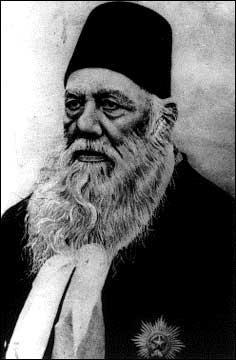


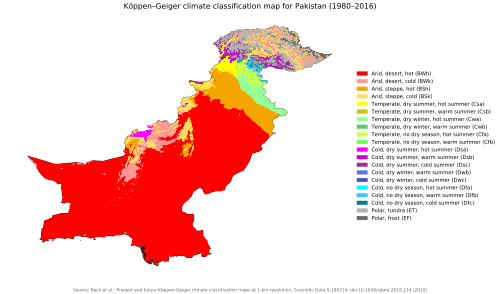


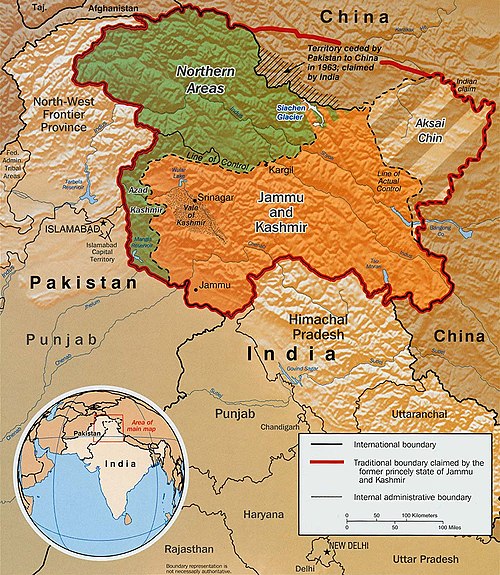


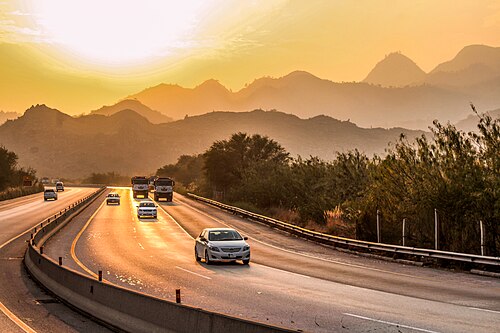
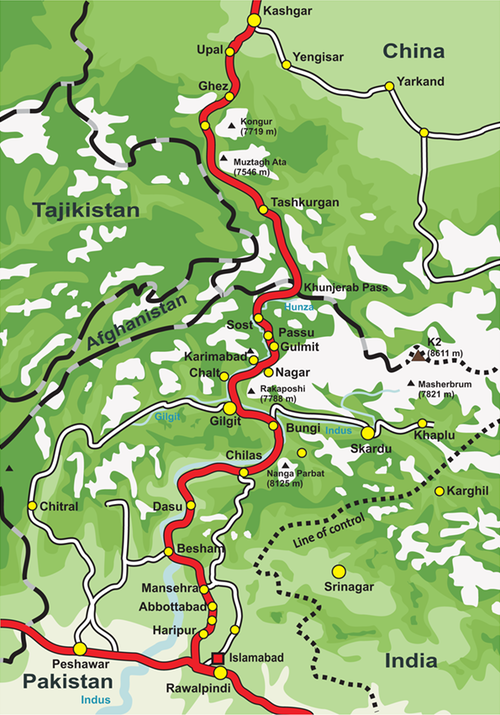


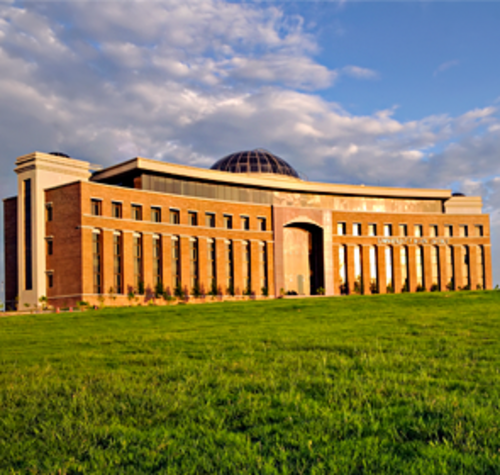

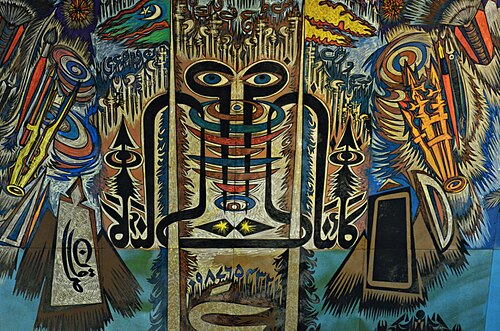
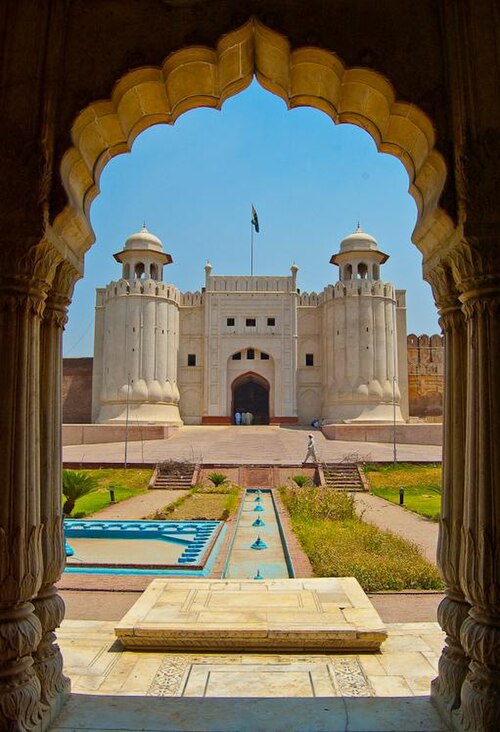


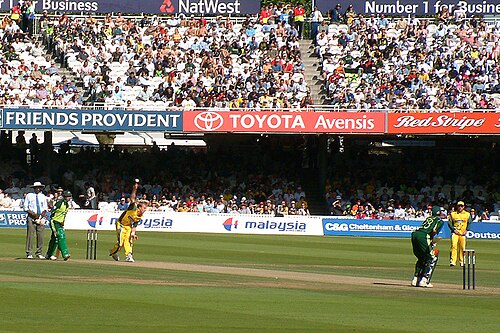

 Wikimedia Atlas of Pakistan
 Geographic data related to Pakistan at OpenStreetMap