
Loading article…
 | |
| 日付 |
|
|---|---|
| 位置 | 現在、アメリカ合衆国は歴史的に同化が進んだ順に次のとおりです。 |
アメリカのフロンティアは、オールドウェストとも呼ばれ、一般にはワイルドウェストとも呼ばれ、 17世紀初頭のヨーロッパ人の植民地開拓から始まり、1912年に最後の数少ない西部の領土が州として認められたことにより終わった、北米本土におけるアメリカの拡大の波に関連する地理、歴史、民間伝承、文化を包含しています。この大規模な移住と開拓の時代は、ルイジアナ買収後のトーマス・ジェファーソン大統領によって特に奨励され、「明白な運命」として知られる拡張主義的な姿勢と歴史家の「フロンティア論」を生み出しました。アメリカのフロンティアの伝説、歴史的出来事、民間伝承はフロンティア神話として知られ、米国文化に深く根付いており、オールドウェスト、特に西部のメディアジャンルは、アメリカの国民的アイデンティティを定義する特徴の1つとなっています。
周期化
歴史家たちは、開拓時代がいつ始まり、いつ終わったのか、そしてその主要なサブ期間がどれであったかについて長々と議論してきた。[3]たとえば、歴史家は、 1865年のアメリカ南北戦争の終結から、国勢調査局長ウィリアム・ラッシュ・メリアムが、 1890年の国勢調査以降、国勢調査局は西部開拓地を国勢調査区分の一部として記録するのをやめると述べたまでの期間に関して、旧西部サブ期間を使用することがある。[6] [7] [10] [11]しかし、彼の後継者は1920年の国勢調査までこの慣行を続けた。[1] [2]
アメリカ議会図書館やオックスフォード大学などの他の組織は、1900年代初頭、典型的にはアメリカが第一次世界大戦に参戦する前の最初の20年間に及ぶ異なる点をしばしば引用している。[4] [12]「西部内戦の統合」として知られる期間は1850年代から1919年まで続いた。この期間には、開拓地への侵入による暴力的な紛争、原住民の追放と同化、大企業と政府への財産の統合、自警行為、無法者に対する法律の強制の試みなど、典型的な旧西部または「ワイルド・ウェスト」と同義の歴史的出来事が含まれていた。[13]
1890年、国勢調査局長ウィリアム・ラッシュ・メリアムは次のように述べた。「1880年まで、そして1880年を含めて、この国には開拓地の境界があったが、現在、未開拓地域は孤立した開拓地によって分断されているため、境界があると言うことはほとんどできない。したがって、その範囲、西方への移動などの議論において、国勢調査報告書にはもはやその場所はない。」[14]それにもかかわらず、1900年以降の米国国勢調査では西方への境界を示し続け、その後任者たちもその慣行を続けた。[1] [15]しかし、 1910年の米国国勢調査までに、境界は単一の西方開拓地の境界のない分割された地域に縮小した。[16] 20世紀の最初の20年間に農業開拓者が流入し、19世紀全体の開拓地の面積よりも多くの面積を占めたため、空き地が大幅に減少したと言われています。[17]
フロンティアとは、開拓地の境界線の端にある接触地帯である。理論家フレデリック・ジャクソン・ターナーはさらに踏み込んで、フロンティアはアメリカ文明の決定的な過程の舞台であったと主張した。「フロンティアは、アメリカ国民の複合的な国民性の形成を促進した」と彼は主張した。彼は、フロンティアは発展の過程であると理論づけた。「この永続的な再生、アメリカ人の生活のこの流動性、この西への拡大は、アメリカ人の性格を支配する力を提供する」[ 18] 。 1893年以来、ターナーの考えは、何世代にもわたる歴史家(および批評家)にインスピレーションを与え、複数の個別のアメリカのフロンティアを探求してきたが、一般的なフォーク・フロンティアは、ミシシッピ川の西、現在の中西部、テキサス、グレートプレーンズ、ロッキー山脈、南西部、および西海岸にあるネイティブ・アメリカンの土地の征服と開拓に集中している。
19世紀後半から20世紀初頭にかけて、1850年代から1910年代にかけて、アメリカ西部(特に南西部)は大衆の大きな注目を集めました。こうしたメディアは、ドラマチックな効果を高めるために、その時代のロマンス、無政府状態、混沌とした暴力を誇張するのが一般的でした。これが、テレビ番組、小説、漫画、ビデオゲーム、子供のおもちゃ、衣装 とともに、西部劇のジャンルの映画に影響を与えました。
ハインとファラガーの定義によれば、「開拓の歴史は、コミュニティの創設と防衛、土地の利用、作物やホテルの発展、そして国家の形成の物語である」。彼らは「それは征服の物語であると同時に、アメリカを誕生させ、存続させた人々と文化の融合、存続の物語でもある」と説明している。[19]ターナー自身も、新しい農場を始めるための「無料の土地」がいかにして開拓者アメリカ人を引き付けたかを繰り返し強調した。「無料の土地の存在、その継続的な不況、そしてアメリカ人の西方への開拓の前進が、アメリカの発展を説明している」[20]
外国や原住民との条約、政治的妥協、軍事的征服、法と秩序の確立、農場、牧場、町の建設、道の標識付けと鉱山の掘削、そして外国人の大移動の引き込みを通して、アメリカ合衆国は東海岸から西海岸へと拡大し、マニフェスト・デスティニーのイデオロギーを実現した。ターナーは「フロンティア・テーゼ」(1893年)で、フロンティアはヨーロッパ人を平等、民主主義、楽観主義、そして個人主義、自立、さらには暴力に重点を置いた価値観を持つアメリカ人という新しい人々へと変えるプロセスであると理論づけた。
条項西そしてフロンティア

フロンティアとは、確立されたフロンティアラインの外側にある、アメリカ合衆国を構成する未開発の領域の境界である。 [21] [22]米国国勢調査局は、人口密度が1平方マイルあたり2人未満(1平方キロメートルあたり0.77人)の、一般的に人が住んでいない土地をフロンティア領域と指定した。フロンティアラインは、この土地へのヨーロッパ系アメリカ人の入植の外側の境界であった。[23] [24]東海岸への最初の恒久的なヨーロッパ人入植から始まり、1600年代から1900年代(数十年)にかけて着実に西に移動し、時折、北はメイン州とニューハンプシャー州、南はフロリダ州、東はカリフォルニア州からネバダ州へと移動した。
開拓地は、確立されたフロンティアラインをはるかに越えた西海岸や内陸部にも現れ、ロサンゼルスやソルトレイクシティなどの開拓地がそれぞれ存在した。「西部」とは、その境界線付近で最近開拓された地域を指す。[25]したがって、中西部やアメリカ南部の一部は、もはや「西部」とは見なされていないが、現代の西部諸州とともにフロンティアの伝統を持っている。[26] [27]リチャード・W・スラッタは、フロンティアに関する見解の中で、「歴史家は、アメリカ西部を98度子午線または西経98度より西の土地と定義することがある」と述べ、また、この地域の他の定義では「ミシシッピ川またはミズーリ川より西のすべての土地を含む」としている。[28]
アメリカ合衆国領土の地図
-
 1789年: 新しい国家
 -
 1819–1820: 1812年の戦争後
 -
 1845年~1846年: 米墨戦争前
 -
 1859–1860: 南北戦争前の拡張
 -
 1884–1889: 南北戦争後の拡大
 -
 1912年: 米国本土、全州
鍵: 州 領土 紛争地域 その他の国
歴史
植民地のフロンティア

1776年以前の植民地時代、西部は開拓者や政治家にとって優先度の高い地域だった。アメリカのフロンティアは、 1607年にイギリス人がバージニア州ジェームズタウンに定住したときに始まった。大西洋岸にヨーロッパ人が移住した初期の頃、1680年頃まで、フロンティアは基本的に大西洋岸の既存の開拓地の端を越えた大陸の内陸部であった。[29]
イギリス、フランス、スペイン、オランダの拡大と入植のパターンはかなり異なっていた。カナダに移住したフランス人は数千人だけだった。これらの住民はセントローレンス川沿いの村に定住し、長い間安定したコミュニティを築いた。フランスの毛皮商人は五大湖と中西部に広く分布していたが、定住することはめったになかった。フランス人の入植はイリノイ州カスカスキア[30]などのいくつかの非常に小さな村と、ニューオーリンズ周辺のより大きな入植地に限られていた。現在のニューヨーク州では、オランダ人がハドソン川流域に毛皮交易所を設立し、続いて裕福な地主のパトロンに広大な土地を与えて小作農を呼び寄せ、コンパクトで永続的な村を作った。彼らはニューヨーク州北部に密集した農村集落を作ったが、西へは進まなかった[31] 。
1700 年までに開拓段階にあった北部の地域は、一般的に交通機関が貧弱で、商業農業の機会は少なかった。これらの地域では主に自給自足の農業が続けられ、その結果、1760 年代までにこれらの社会は極めて平等主義的になったと、歴史家ジャクソン・ターナー・メインは説明している。
したがって、典型的な開拓社会は、階級の区別が最小限に抑えられた社会だった。裕福な投機家は、たとえ関与していたとしても、通常は家に留まっていたため、裕福な人は普通は住んでいなかった。土地を持たない貧困層の階級は少なかった。大多数は地主だったが、そのほとんどは、わずかな財産からスタートし、まだ多くの土地を開墾しておらず、将来豊かになる農具や家畜も手に入れていなかったため、貧しかった。主な職業である農業を補うために商売をする者を除いて、開拓地に定住した職人はほとんどいなかった。店主、牧師、そしておそらく医者もいたかもしれない。そして、土地を持たない労働者も数人いた。残りはすべて農民だった。[32]
南部では、アパラチア山脈地域のような交通手段のない辺境地域は、自給自足農業を基盤とし、北部の同等地域と同じような平等主義を保っていたが、奴隷所有者の上流階級はより大きかった。ノースカロライナ州がその代表例である。しかし、1700年の辺境地域では、河川との良好な交通手段があったが、次第にプランテーション農業へと変貌していった。金持ちがやって来て、良質の土地を買い上げ、奴隷とともに耕作した。この地域はもはや「辺境」ではなかった。そこには、権力のある上流階級の白人の土地所有者、小規模な中流階級、かなり大規模な土地を持たない白人の小作農、そして社会ピラミッドの底辺で増え続ける奴隷人口からなる階層社会があった。小さな町や都市さえも一般的だった北部とは異なり、南部は圧倒的に田舎であった。[33]
イギリスの農民からアメリカの農民へ
海岸沿いの植民地開拓地では、農民個人による土地所有が優先され、人口が増えるにつれて、農民は新たな農地を求めて西へと移動していった。[34]少数の地主がほとんどの土地を所有していた英国とは異なり、アメリカでは土地の所有権は安価で容易、かつ広範囲に及んでいた。土地所有はある程度の独立性をもたらし、地方および州の役職への投票権ももたらした。ニューイングランドの典型的な開拓地は、1平方マイルにも満たない非常にコンパクトで小規模であった。ネイティブアメリカンとの紛争は、誰が統治するかという政治的問題から生じた。[35]アパラチア山脈の東側の初期の開拓地には、コネチカット川流域、[36]およびニューイングランド北部(これは西ではなく北への移動であった)が含まれていた。[37]
フランス人と原住民との戦争

辺境の開拓者たちは、しばしば孤立した事件をインディアンによる攻撃の陰謀と結びつけて考えていたが、1763年以降はフランスとの外交的関係が欠如しており、1820年以降はスペインとのつながりも欠如していた。[38]
フロンティアのほとんどは、数多くの紛争を経験した。[39]イギリスとフランスの間でフレンチ・インディアン戦争が勃発し、フランスは植民地の人口基盤の少なさを補うために先住民族の戦闘部隊を同盟者として集めた。ヨーロッパの戦争から波及した一連の大規模な戦争は、世界的な七年戦争でイギリスの完全な勝利に終わった。1763年の平和条約で、フランスは事実上すべてを割譲し、フロリダとニューオーリンズに加えてミシシッピ川の西側の土地がスペインに渡った。それ以外は、ミシシッピ川の東側の土地と現在のカナダがイギリスの領土となった。[要出典]
辺境地への着実な移住
戦争に関係なく、アメリカ人はアパラチア山脈を越えてペンシルベニア州西部、現在のウェストバージニア州、オハイオ地方、ケンタッキー州、テネシー州の一部に移住していた。カンバーランド・ギャップを経由した南部の開拓地では、ダニエル・ブーンが最も有名な指導者であった。[40]若きジョージ・ワシントンは、バージニア州民兵隊での戦時中の奉仕に対する報酬として、イギリス政府から彼と兵士たちに与えられた土地にウェストバージニア州への入植を推進した。アパラチア山脈の西側の入植地は、この地域への入植を禁じる1763年の王室宣言によって一時的に制限された。スタンウィックス砦条約(1768年)により、西部のほとんどの土地が開拓者の入植のために再び開放された。[41]
新しい国家
1783年以降、国は平和になった。各州は議会に西部の土地の支配権を与え、人口増加のための効果的なシステムが開発された。 1787年の北西部条例はオハイオ川以北の地域で奴隷制を廃止し、オハイオ州が1803年に達成したように、領土の人口が基準値に達したら州となることを約束した。[42] [43]
アパラチア山脈の西側への最初の大規模な移動は、1781 年に独立戦争が終わるとすぐに、ペンシルバニア、バージニア、ノースカロライナで始まりました。開拓者たちは、粗末な傾斜屋根の家か、せいぜい 1 部屋の丸太小屋に住んでいました。当初、主な食糧は、鹿、七面鳥、その他の豊富な獲物を狩ることで得られました。
典型的な開拓者の服装、革のズボン、モカシン、毛皮の帽子、狩猟用のシャツを身にまとい、狩猟用のナイフとショットポーチ(すべて手作り)を下げたベルトを締めた開拓者は、ユニークな外見をしていた。短期間で彼は森の中に空き地を切り開き、トウモロコシ、小麦、亜麻、タバコ、その他の産物、さらには果物まで栽培した。[44]
数年後、開拓者たちは豚、羊、牛を飼い始め、馬も手に入れたかもしれない。動物の皮の代わりに手織りの衣服が使われるようになった。落ち着きのない開拓者たちは文明化された生活に不満を募らせ、再び移住してさらに西に50マイルか100マイル(80キロか160キロ)移動した。
土地政策

新しい国家の土地政策は保守的で、東部の入植者のニーズに特に注意を払っていた。[45] 1790年から1820年にかけて両党が目指した目標は、経済を成長させ、東部で必要とされる熟練労働者の流出を避け、土地を賢明に分配し、入植者にとって妥当でありながら国家債務を返済できるほど高い価格で土地を販売し、法的所有権をクリアし、分離運動のリスクを最小限に抑えながら入植地と密接に相互接続された多様な西部経済を創出することだった。しかし、1830年代までに、西部は、以前の入植者に金銭を支払ったかもしれないが、法的証書を持たない不法占拠者でいっぱいになっていた。ジャクソン派民主党は、安価な土地への迅速なアクセスを約束することで不法占拠者を優遇した。対照的に、ヘンリー・クレイは、法を遵守し安定した中流階級の共和主義コミュニティというユートピア的な概念を損なっている「無法な暴徒」が西部に向かっていることに警戒していた。一方、裕福な南部人は、奴隷農園を設立するために良質の土地を購入する機会を探していた。1840年代の自由土地運動は、白人の自由な農民に低価格の土地を与えることを要求し、この立場は1862年に新しい共和党によって法律として制定され、男性、女性、黒人、白人、地元生まれ、移民を問わず、すべての成人に160エーカー(65ヘクタール)の土地を無料で提供するというものだった。[46]
独立戦争(1783年)に勝利した後、大量のアメリカ人開拓者が西部に流入した。1788年、北西部領土へのアメリカ人開拓者は、北西部領土における最初の恒久的なアメリカ人入植地としてオハイオ州マリエッタを設立した。[47]
1775年、ダニエル・ブーンがトランシルバニア会社のためにバージニアからカンバーランド・ギャップを抜けてケンタッキー州中央部に至る道を切り開いた。後にこの道はルイビルのオハイオ滝まで延長された。ウィルダネス・ロードは険しく険しく、徒歩か馬でしか通行できなかったが、ケンタッキー州に移住する何千人もの開拓者にとっては最善の道だった。[48]地域によっては先住民の攻撃に遭わなければならなかった。1784年だけでも、先住民はウィルダネス・ロードで100人以上の旅人を殺した。この頃のケンタッキー州は人口が減り、「インディアンの村は空っぽ」だった。[49]しかし、襲撃隊が通り抜けることもあった。捕まった者の一人はエイブラハム・リンカーンの祖父で、1784年にルイビル近郊で頭皮を剥がされた。[50]
先住民族の土地の取得

1812年の米英戦争は、アメリカの拡大を阻止するためにイギリス軍と先住民軍が戦った最後の対決となった。イギリスの戦争目標には、中西部にイギリスの支援の下でインディアンの防壁国家を建設し、アメリカの西方への拡大を阻止することが含まれていた。アンドリュー・ジャクソン将軍率いるアメリカ開拓民兵はクリーク族を破り南西部を開拓し、一方ウィリアム・ヘンリー・ハリソン知事率いる民兵は1813年にカナダでテムズ川の戦いで先住民とイギリスの同盟を破った。先住民のリーダーであるテカムセが戦闘で死亡したことで、敵対する先住民部族の連合は解体された。[51]一方、アンドリュー・ジャクソン将軍は1814年にアラバマ州でホースシューベンドの戦いで南東部における先住民の軍事的脅威を終わらせた。一般的に、開拓民はアメリカ陸軍や連邦政府からの援助をほとんど受けずに先住民と戦った。[52]
戦争を終わらせるため、アメリカの外交官はイギリスとゲント条約を交渉し、1814年末に調印した。彼らは五大湖以南のアメリカ領土に先住民族の国家を設立するというイギリスの計画を拒否した。彼らは先住民族の土地獲得に対するアメリカの政策を次のように説明した。
米国は、インディアンから平和的に、かつ彼らの自由な同意なしに土地を取得するつもりはないが、そのようにして、彼らの人口増加の必要に応じて、徐々に、彼らが認めた境界内に含まれる領土のすべての部分を自然の状態から回復し、耕作に持ち込むことを完全に決意している。このようにして数百万の文明人の生活を支えるにあたり、米国は正義や人道の命令に違反することはない。なぜなら、米国は、その領土に散在する数千人の未開人に、彼らが放棄する権利と同等の十分なものを与えるだけでなく、彼らが耕作できる以上の、そして耕作によって彼らの生存、快適さ、楽しみを十分に満たす以上の土地を常に彼らに残すからである。これが拡大主義であるならば、署名者はその意味でその存在を認める用意がある。しかし、彼らは、それが彼らとヨーロッパ諸国との間の境界を尊重しない意図や、イギリスの領土を侵害する願望のほんのわずかな証拠にもならないことを否定しなければならない。[...] 彼らは、政府がアメリカに対する政策の基礎として、未開人のための永遠の砂漠を維持するために、彼らの領土内での自然な成長を阻止するシステムを公言するとは思わないだろう。[53]
新しい領土と州

入植者が流入するにつれ、辺境地域はまず領土となり、選挙で選ばれた議会と大統領が任命する知事が置かれた。その後、人口が10万人に達すると、領土は州昇格を申請した。[54]開拓民は、東部の上流階級が好んだ法的な形式主義や制限的な参政権を放棄し、より民主主義的で平等主義的な考え方を採用した。[55]
1810 年、西部の開拓地はミシシッピ川に達していた。ミズーリ州セントルイスは開拓地最大の町であり、西に向かう旅の玄関口であり、ミシシッピ川の交通と内陸部の商業の主要な交易中心地であったが、1803 年までスペインの支配下にあった。
ルイジアナ買収
トーマス・ジェファーソンは自らを開拓者だと考えており、西部の拡大と探検に強い関心を持っていた。[56]ジェファーソンによる1803年のルイジアナ買収により、1500万ドル、または1エーカーあたり約0.04ドル(2023年のドル換算で3億500万ドル、1エーカーあたり42セント未満)の費用で、国の面積は倍増した。[57] 連邦主義者は拡大に反対したが、ジェファーソン支持者は、何百万もの新しい農場を創設して土地所有自作農の領域を拡大する機会を歓迎した。土地所有権は、農業(商業ではなく)に基づき、軽く統治され、自立と美徳を促進する理想的な共和制社会を強化するとともに、ジェファーソン民主主義の政治的基盤を形成するものであった。[58]
フランスは国際法に基づいて領土の主権に対する代償を支払った。1803年から1870年代にかけて、連邦政府は当時その土地を所有していた先住民部族から土地を購入した。20世紀の会計士と裁判所は、先住民に支払われた代償の価値を計算した。これには、将来の現金、食料、馬、牛、物資、建物、学校、医療の支払いが含まれていた。現金で計算すると、ルイジアナ買収地域の部族に支払われた総額は約26億ドル、2016年のドル換算で約90億ドルに上る。ミシシッピ川の東側に住む先住民には土地の代償として追加の金額が支払われ、ルイジアナ買収地域外の西側の一部に住む先住民にも支払いがあった。[59]
購入前から、ジェファーソンは土地を探検し地図を作る遠征を計画していた。彼はルイスとクラークに「ミズーリ川とその主要な流れを、その流れと太平洋の水とのつながりから、コロンビア川、オレゴン川、コロラド川、あるいは他の川が大陸を横断する最も直接的で実用的な商業の連絡路となるかどうか」を調査するよう命じた。[60]ジェファーソンはまた、遠征隊に、その地域の先住民族(道徳、言語、文化を含む)、天候、土壌、川、商業取引、動物や植物の生態を調査するよう指示した。[61]
起業家、特にジョン・ジェイコブ・アスターはすぐにこの機会を捉え、毛皮取引事業を太平洋岸北西部に拡大した。コロンビア川河口にあるアスターの「フォート・アストリア」(後のフォート・ジョージ)は、この地域で最初の白人の恒久的な入植地となったが、アスターにとっては利益にはならなかった。彼は、この地域で独占していたハドソン湾会社の支配を打ち破ろうと、アメリカ毛皮会社を設立した。1820年までに、アスターは独立した商人を買収して利益のある独占を築き、1834年に億万長者としてこの事業を去った。[62]
毛皮貿易
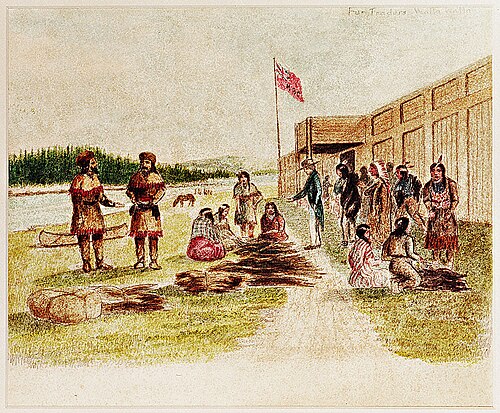

開拓地が西に移動するにつれ、罠猟師や狩猟者が開拓者より先に行動し、ヨーロッパに出荷するビーバーやその他の皮の新たな供給源を探した。狩猟者は旧西部の大半で最初のヨーロッパ人であり、西部の先住民と最初の協力関係を築いた。[63] [64]彼らは、中央ロッキー山脈を通る重要なサウスパスを含む北西部の地形に関する広範な知識をもたらした。1812年頃に発見されたサウスパスは、後にオレゴンやワシントンへの開拓者の主要ルートとなった。しかし、1820年までに、新しい「旅団集合」システムにより、多くの部族を迂回して、長距離の遠征で「旅団」の隊員が国中を横断するようになった。また、このシステムにより、「自由な罠猟師」が独自に新しい地域を探索することも奨励された。捕獲シーズンの終わりに、罠猟師はグリーン川、ミズーリ川上流、ミシシッピ川上流沿いの川の港で「集合」し、報酬として品物を引き渡した。セントルイスは、ランデブーの町の中では最大の町でした。しかし、1830年までに流行が変わり、ビーバーの帽子はシルクハットに取って代わられ、高価なアメリカの毛皮の需要はなくなりました。こうして、ジェデダイア・スミス、ヒュー・グラス、デイビー・クロケット、ジャック・オモハンドロなどのマウンテンマン、罠猟師、スカウトの時代は終わりました。ビーバーの毛皮の取引は、1845年までに事実上終了しました。[65]
連邦政府と西部への拡大
新領土に迅速に入植する必要性については広く合意されていたが、政府が課すべき価格をめぐって議論は二極化した。ジョン・クィンシー・アダムズ大統領に代表される保守派とホイッグ党は、連邦政府の費用を賄えるだけの新参者への課税を中庸なペースで求めていた。一方、民主党は、非常に低価格での土地争奪戦を容認した。最終的な解決策は、1862年のホームステッド法で、入植者が5年間働いた後に160エーカーの土地を無料で与えるという中庸なペースで行われた。[66]
西部への移住は私的利益の動機が支配的であったが[67]、連邦政府は条約による土地の確保や大統領が任命する領土政府の設立において支援的な役割を果たした。連邦政府は最初、他の国家や先住民族との条約を通じて西部の領土を獲得した。次に測量士を派遣し、土地の地図を作成し記録した。[68] 20世紀までには、内務省の合衆国土地総局[69]や1891年以降は農務省の森林局など、ワシントンの官僚組織が連邦政府の土地を管理した。[70] 1900年以降はダム建設と洪水対策が大きな関心事となった。[71]
輸送は重要な問題であり、陸軍(特に陸軍工兵隊)は河川の航行を円滑にする全責任を負っていた。1811年にオハイオ川で初めて使用された蒸気船は、河川システム、特にミシシッピ川とミズーリ川およびその支流を使った安価な旅行を可能にした。[72] 1818年から1825年にかけてのミズーリ川を遡る陸軍の遠征により、技術者は技術を改良することができた。例えば、1819年の陸軍の蒸気船「ウェスタン・エンジニア」は、非常に浅い喫水と最も初期の船尾の車輪の1つを組み合わせた。1819年から1825年にかけて、ヘンリー・アトキンソン大佐は手動の外輪を備えたキールボートを開発した。[73]
連邦郵便制度は国家の拡大に重要な役割を果たした。安価で迅速、便利な通信システムを構築することで、西部への拡大を促進した。初期の開拓者からの手紙は、西部への移住を促進する情報と宣伝を提供し、散在する家族が連絡を取り合い中立的な援助を提供するのに役立ち、起業家がビジネスチャンスを見つけるのを助け、商人と西部、東部の卸売業者や工場との定期的な商取引を可能にした。同様に、郵便サービスは陸軍が広大な西部の領土に対する支配を拡大するのを助けた。ニューヨーク・ウィークリー・トリビューンなどの重要な新聞が郵便で広く配布されたことで、各州の政治家間の調整が容易になった。郵便サービスは、既存の地域と開拓地の統合を助け、愛国心を生み出し、必要なインフラを提供した。[74]
陸軍は早い段階から西部開拓の道に沿って開拓者を保護するという任務を負っており、この政策は1857年にアメリカ陸軍長官 ジョン・B・フロイドによって次のように述べられている。 [75]
国境を接することなく、インディアンの通常の居住地に近い場所に平行に走る一列の駐屯地を、便利な距離と適切な位置に配置し、歩兵を配置すれば、部族に対して有益な抑制力を発揮するだろう。部族は、戦士が白人の入植地を襲撃すれば、自分たちの故郷で即座に報復を受けるだろうと感じるだろう。
当時、砦の最適な規模について議論があり、ジェファーソン・デイヴィス、ウィンフィールド・スコット、トーマス・ジェサップは、フロイドの砦よりも規模は大きいが数は少ない砦を支持した。フロイドの計画は費用がかかったが、軍隊が可能な限り近くに留まることを望んだ入植者や一般大衆の支持を得た。辺境地域は広大で、デイヴィスですら「集中すれば、辺境の一部が何の保護もなく先住民の敵意にさらされることになるだろう」と認めた。[75]
科学者、芸術家、探検家

政府と民間企業は多くの探検家を西部に派遣した。1805年から1806年にかけて、陸軍中尉ゼブロン・パイク(1779年 - 1813年)は20人の兵士からなる一団を率いてミシシッピ川の源流を発見した。彼は後にスペイン領内のレッド川とアーカンソー川を探検し、最終的にリオグランデ川に到達した。パイクは帰国後、コロラド州に彼の名にちなんで名付けられた山頂を発見した。[76]スティーブン・ハリマン・ロング少佐(1784年 - 1864年)[77]は1819年から1820年にかけてイエローストーンとミズーリの探検隊を率いたが、1823年に彼がグレートプレーンズを乾燥していて役に立たない地域と分類したことで、この地域は「アメリカの大砂漠」という悪評を招き、数十年にわたってその地域への入植が妨げられた。[78]
1811年、博物学者トーマス・ナットル(1786–1859)とジョン・ブラッドベリー(1768–1823)はミズーリ川を遡り、動植物を記録して描いた。[79]芸術家のジョージ・カトリン(1796–1872)は、ネイティブアメリカンの文化を正確に描いた。スイスの芸術家カール・ボドマーは、魅力的な風景画や肖像画を制作した。[80] ジョン・ジェームズ・オーデュボン(1785–1851)は、500種の鳥を詳細に分類して描いたことで有名で、その作品は『アメリカの鳥類』に発表された。[81]
探検家の中で最も有名なのは、陸軍地形工兵隊の士官、ジョン・チャールズ・フレモント(1813年 - 1890年)である。彼は探検の才能と自己宣伝の天才を発揮し、「西部の道しるべ」の異名をもらい、1856年に新共和党の大統領候補に指名された。 [82]彼は1840年代に一連の探検隊を率いて、あまり知られていないこの地域の未解決の地理上の疑問の多くに答えを出した。彼は5つの異なるルートでロッキー山脈を横断し、オレゴン州とカリフォルニア州の一部を地図に描いた。1846年から1847年にかけて、彼はカリフォルニア州の征服に一役買った。1848年から1849年にかけて、フレモントは大陸横断鉄道の計画のために山脈を通る中心ルートを見つける任務を与えられたが、彼の探検隊は道に迷い、大雪に閉じ込められ、危うく惨事に終わった。[83]彼の報告書は、刺激的な冒険の物語と科学的データ、旅行者向けの詳細な実用的な情報を織り交ぜていた。それは大衆の想像力をかき立て、多くの人々に西に向かうよう促した。ゴーツマンは、それは「その広大さにおいて記念碑的で、探検文学の古典である」と述べている。[84]
北東部一帯に大学が次々と設立される中、 1780年にケンタッキー州レキシントンに設立されたトランシルバニア大学には、西部の開拓地ではほとんど競争相手がいなかった。この大学は、学部課程と医学課程に加え、法学部を誇っていた。トランシルバニア大学は、南西部全域から政治的野心のある若者を引きつけ、その中には、アメリカ合衆国上院議員50名、下院議員101名、知事36名、大使34名、そして南部連合大統領ジェファーソン・デイヴィスも含まれていた。[85]
南北戦争以前の西部
宗教

旅する伝道師が現れて「リバイバル」を起こすまでは、開拓者の多くは宗教にあまり関心を示さなかった。地元の開拓者たちはこれらの出来事に熱狂的に反応し、事実上、彼らの大衆宗教を発展させた。特に第二次大覚醒(1790-1840年)の期間中は、1週間以上続く野外キャンプ集会が特徴で、多くの人々が初めて組織化された宗教を知ることになった。最大規模で最も有名なキャンプ集会の1つは、1801年にケンタッキー州ケインリッジで行われた。 [86]
地元のバプテスト派は小さな独立教会を設立した。バプテスト派は中央集権を放棄し、各地方教会は地方会衆の独立を原則として設立された。一方、よく組織され中央集権化されたメソジスト派の司教は巡回伝道師を一度に数年間特定の地域に割り当て、その後新しい地域に移動させた。いくつかの新しい宗派が結成され、その中で最大のものはキリストの弟子たちであった。[87] [88] [89]
既存の東方教会は開拓地の要求に応えるのが遅かった。長老派教会と会衆派教会は教養の高い牧師に依存していたため、開拓地での伝道活動には人手が足りなかった。彼らは1801年に統合計画を策定し、開拓地の資源を統合した。[90] [91]
中西部の民主主義
歴史家マーク・ワイマンはウィスコンシン州を、それぞれが永続的な影響を刻み込んだ、何層にも重なる人々と勢力の「パリンプセスト」と呼んでいる。彼はこれらの層を、3世紀にわたる複数の「フロンティア」と特定した。ネイティブアメリカンのフロンティア、フランスのフロンティア、イギリスのフロンティア、毛皮貿易のフロンティア、鉱山のフロンティア、そして伐採のフロンティアである。最後に、鉄道の到来によりフロンティアは終焉を迎えた。[92]
フレデリック・ジャクソン・ターナーは、ウィスコンシン州が最後の開拓期を迎えた時期に育ち、州内を旅して社会と政治の発展の層を目にした。ターナーの最後の教え子の一人であるマール・カーティは、ウィスコンシン州の地元史を詳細に分析して、ターナーの民主主義に関する命題を検証した。ターナーの見解は、アメリカの民主主義とは「共同生活に影響する決定への広範な参加、自発性と自立心の発達、経済的および文化的機会の平等を伴う。したがって、移民のアメリカ化も伴う」というものだった。[93]カーティは、1840年から1860年にかけてウィスコンシン州で最貧困層が急速に土地の所有権を獲得し、地方レベルで政治的指導者に昇進することが多かったことを発見した。土地を持たない若い農場労働者でさえ、すぐに農場を手に入れられるようになったことを発見した。したがって、開拓地の無料の土地は、ヨーロッパからの移民と古いヤンキーの両方にとって機会と民主主義を生み出した。[94]
南西

1770年代から1830年代にかけて、開拓者たちはケンタッキー州からアラバマ州、テキサス州に広がる新しい土地に移住した。そのほとんどは家族単位で移住してきた農民だった。[95]
歴史家ルイス・ハッカーは、開拓者の第一世代がいかに無駄遣いをしていたかを示しています。彼らは土地を適切に耕作するほど無知で、未開の地の自然の肥沃さが尽きると、土地を売却して西へ移動し、もう一度挑戦しました。ハッカーは、1812 年頃のケンタッキー州について次のように説明しています。
売りに出されていた農場は、10エーカーから50エーカーの開墾地で、丸太小屋、桃や時にはリンゴの果樹園があり、柵で囲まれ、燃料用の立木がたくさんありました。土地には主食である小麦とトウモロコシが植えられ、肥沃な川底では麻(ロープを作るための)の栽培も増えていました。...しかし、全体としては、技術も資源もない農業社会でした。無駄遣いと無知な農業の特徴であるすべての罪を犯していました。干し草用の草の種は蒔かれず、その結果、家畜は森で自分で餌を探さなければなりませんでした。畑は放牧されることが許されず、土地が枯渇するまで土壌には単一の作物が植えられ、肥料は畑に戻されませんでした。農場のほんの一部だけが耕作され、残りは木材として立木のまま残されていました。耕作の道具は粗雑で扱いにくく、数も少なかった。その多くは農場で作られたものだった。アメリカの開拓者が絶えず移動していた理由は明らかだ。文明社会の快適さや制約に近づきすぎることへの恐怖が彼を絶え間ない活動に駆り立てたわけではなく、単に入植者の波に利益を出して売り渡すチャンスがあったからでもない。彼を突き動かしたのは、土地を無駄にしていたことだった。飢えが彼を駆り立てたのだ。開拓農民の無知、耕作設備の不十分さ、輸送手段の限界により、彼は頻繁に場所を変える必要があった。彼は未開の土地でしか成功できなかった。[96]
ハッカー氏は、第二波の入植者たちが土地を取り戻し、被害を修復し、より持続可能な農業を実践したと付け加えている。歴史家フレデリック・ジャクソン・ターナー氏は、第一世代の個人主義的な世界観と価値観について次のように述べている。
彼らが反対したのは、この開拓民の一人一人が恐れや偏見なく自分のキャリアを歩む自由に対する恣意的な障害、人為的な制限だった。彼らが本能的に反対したのは、違いの結晶化、機会の独占、そして政府や社会慣習によるその独占の固定だった。道は開かれていなければならない。ゲームはルールに従ってプレイされなければならない。機会の平等を人為的に抑圧したり、能力のある人に門戸を閉ざしたり、自由なゲームが最後までプレイされる前に止めたりしてはならない。それだけでなく、有能な人が卓越性を達成できるゲームでの単なる成功は、成功した人々に隣人を見下す権利を与えず、プライドの問題として優位性を主張し、成功していない人々の平等な権利と尊厳を減少させる既得権を与えないという、定式化されていないが、非常に現実的な感情があった。[97]
明白な運命

マニフェスト デスティニーとは、アメリカ合衆国が大西洋岸から太平洋岸まで拡大することが運命づけられているという物議を醸した信念と、その信念を実現するための努力のことである。この概念は植民地時代に現れたが、この用語は 1840 年代に人気雑誌によって造られ、その社説では「毎年増え続ける数百万人の自由な発展のために神によって割り当てられた大陸に広がるという、我々のマニフェスト デスティニーの実現」と述べられていた。国が成長するにつれて、「マニフェスト デスティニー」は民主党の拡張主義者のスローガンとなった。1840 年代、タイラー政権とポーク政権 (1841-1849) は、この国家主義的な教義を首尾よく推進した。しかし、ビジネスと金融の利益を代表するホイッグ党は、マニフェスト デスティニーに反対した。ヘンリー クレイやエイブラハム リンカーンなどのホイッグ党の指導者は、単純な水平拡大ではなく、近代化と都市化を通じて社会を深化させることを求めた。[98]テキサス併合を皮切りに、拡張主義者が優勢に立った。奴隷制度反対派のホイッグ党員ジョン・クィンシー・アダムズは、1845年のテキサス併合を「私と私の国に降りかかった最大の災難」と感じていた。[99]
開拓者たちが西へ移住するのを助けたのは、毛皮商人やフレモント探検隊から提供されたルート情報や、ロッキー山脈の向こうの肥沃な農地を約束する内容が盛り込まれた、1840年代の移民「ガイドブック」だった。[注 1]
メキシコとテキサス
メキシコは1821年にスペインから独立し、テキサスからカリフォルニアまで広がるスペインの北部領土を奪取した。アメリカのキャラバンは、ミズーリ州カンザスシティ(当時はウェストポートと呼ばれていた)から48日間かけて870マイル(1,400キロ)の旅路を経て、サンタフェ・トレイルに沿ってメキシコの都市サンタフェに商品を運び始めた。サンタフェは「エル・カミーノ・レアル」(王のハイウェイ)の起点でもあった。この交易路は、アメリカの製造品を南のメキシコの奥深くまで運び、銀、毛皮、ラバを北へ持ち帰る(カリフォルニアの伝道所を結ぶ別の「カミーノ・レアル」と混同しないように)。支線はメキシコ湾の近くを東へも走っていた(オールド・サンアントニオ・ロードとも呼ばれる)。サンタフェはオールド・スパニッシュ・トレイルを経由してカリフォルニアとつながっていた。[100] [101]
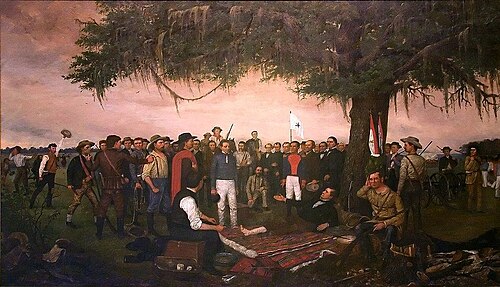
スペインとメキシコの政府は、寛大な条件でアメリカ人の開拓者をテキサスに誘致した。スティーブン・F・オースティンは「エンプレサリオ」となり、メキシコの役人から移民を呼び込む契約を受け取った。そうすることで、彼は事実上のこの地域の政治および軍事指揮官にもなった。しかし、 1826年にフレドニア独立国家の設立が失敗に終わった後、緊張が高まった。 「戦争党」を率いるウィリアム・トラヴィスはメキシコからの独立を主張し、オースティン率いる「平和党」は現在の関係の中でより多くの自治権を獲得しようとした。メキシコの大統領サンタ・アナは同盟を変更して保守的な中央集権党に加わると、自らを独裁者と宣言し、新たな移民と不安を抑えるために兵士をテキサスに派遣するよう命じた。しかし、移民は続き、1835年までに3万人のアングロ人が3,000人の奴隷とともにテキサスに定住した。[102] 1836年、テキサス革命が勃発した。アラモとゴリアドの戦いでの敗北の後、テキサス人はサンジャシントの戦いで勝利し、独立を勝ち取った。サンジャシントの戦いで、テキサス軍の最高司令官で後にテキサス共和国の大統領となるサム・ヒューストンは、「アラモを忘れるな!ゴリアドを忘れるな」と叫んだ。米国議会は、奴隷制と地域の権力をめぐる論争で膠着状態となり、テキサスの併合を拒否した。こうして、テキサス共和国は1845年に28番目の州として併合されるまでの10年近く、独立国のままであった。しかし、メキシコ政府はテキサスを暴走する州とみなし、その所有権を主張した。[103]
米墨戦争

メキシコは1836年にテキサスの独立を承認しなかったが、米国とヨーロッパの列強は承認した。メキシコはテキサスが米国に加われば戦争を起こすと脅し、1845年にテキサスは米国に加わった。アメリカの交渉者は混乱したメキシコ政府に追い返された。メキシコ軍が係争地域で16人のアメリカ兵を殺害すると、戦争は目前に迫った。エイブラハム・リンカーン下院議員などのホイッグ党は戦争を非難したが、ニューイングランド以外では戦争は大いに支持された。[104]
メキシコ軍の戦略は防御的だったが、アメリカ軍の戦略は多数の志願兵を使った三方からの攻勢だった。[105]陸路の軍隊はニューメキシコをほとんど抵抗なく占領し、カリフォルニアに向かったが、カリフォルニアはすぐにアメリカ陸軍と海軍の手に落ちた。ニューオーリンズのアメリカ軍の主要基地から、ザカリー・テイラー将軍は軍隊を率いてメキシコ北部に進軍し、その後の一連の戦闘に勝利した。アメリカ海軍はウィンフィールド・スコット将軍をベラクルスに移送した。スコット将軍はその後、12,000人の部隊を西のメキシコシティに進軍させ、チャプルテペクでの最後の戦いに勝利した。メキシコ全土を占領するという話は、メキシコの政治的、文化的価値観がアメリカのそれとあまりにもかけ離れていることを軍が発見した時点で消えた。シンシナティ・ヘラルド紙が問うたように、アメリカは「偶像崇拝、異教の迷信、堕落した雑種」の800万人のメキシコ人をどうするつもりなのか?[106]
1848年のグアダルーペ・イダルゴ条約により、カリフォルニアとニューメキシコの領土が1850万ドルで米国に割譲された(これにはメキシコに対する開拓者の請求権の引き受けも含まれていた)。 1853年のガズデン購入により、カリフォルニアへの鉄道ルートに必要な南アリゾナが追加された。メキシコ全体では50万平方マイル(130万km 2)が割譲され、カリフォルニア、ユタ、アリゾナ、ネバダ、ニューメキシコの各州、およびコロラドとワイオミングの一部、さらにテキサスが含まれていた。新しい領土の管理と奴隷問題への対処は、特に新しい領土での奴隷制を違法とするウィルモット条項をめぐって激しい論争を引き起こした。議会はこれを可決することはなかったが、 1850年妥協により西部の奴隷制問題を一時的に解決した。カリフォルニアは1850年に自由州として連邦に加盟した。その他の地域は長年にわたり領土のままであった。[107] [108]
テキサスの成長
移民が東テキサスの肥沃な綿花畑に流れ込むにつれて、新しい州は急速に成長しました。[109]ドイツ人移民は、ドイツでの経済的、社会的、政治的な圧力により、1840年代初頭に到着し始めました。[110]綿花畑と奴隷への投資により、プランターは東部地区に綿花プランテーションを設立しました。州の中央部は、奴隷を所有することはめったにない自給自足の農家によって開発されました。[111]
テキサスは、開拓時代の西部で、正確に射撃でき、冒険心を持ち、「男らしい名声、愛国的な奉仕、武勇の栄光、そして意味のある死」を求める男たちを惹きつけた。[112]
カリフォルニアのゴールドラッシュ

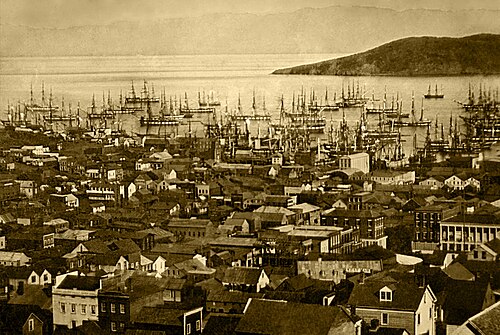
1846年、カリフォルニアには約1万人のカリフォルニオ(ヒスパニック)が住んでおり、主に現在のロサンゼルス地域の牧場で暮らしていた。北部には数百人の外国人が散在しており、その中にはアメリカ人もいた。1846年にメキシコとの戦争が勃発すると、米国はフレモントと米陸軍部隊、海軍を派遣し、すぐに制圧した。[113]戦争が終結に向かう中、北部で金が発見され、その噂はすぐに世界中に広まった。
何千人もの「フォーティナイナーズ」が、南米を航海して(あるいは疫病が蔓延するパナマを抜ける近道を取って)、あるいはカリフォルニア・トレイルを歩いてカリフォルニアに到達した。人口は 1852 年に 20 万人以上に急増し、そのほとんどはサンフランシスコの東の山岳地帯に広がる金鉱地区に集中した。
サンフランシスコの住宅は貴重で、鉱山に向かった乗組員を乗せた放棄された船が一時的な宿泊施設に転用されることが多かった。金鉱地自体の生活環境は原始的だったが、温暖な気候は魅力的だった。物資は高価で食料は乏しく、典型的な食事は主に豚肉、豆、ウイスキーだった。確立された制度のないこれらの非常に男性が多く流動的なコミュニティは、暴力、酒、冒涜、貪欲に駆られた行動のレベルが高くなりがちだった。鉱山コミュニティには、請求と正義を執行する裁判所や法執行官がいないため、鉱山労働者は海外の他の鉱山コミュニティで使用されている「鉱山コード」に基づいて、アドホックな法制度を開発した。各キャンプには独自のルールがあり、多くの場合、一般投票で正義が与えられ、時には公平に行動し、時には自警団を結成した。ネイティブアメリカン(インディアン)、メキシコ人、中国人は一般的に最も厳しい判決を受けた。[114]
ゴールドラッシュはカリフォルニアの経済を根本的に変え、貴金属の専門家、商人、医師、弁護士など、さまざまな専門家を招き入れ、鉱夫、酒場の経営者、賭博師、売春婦の人口を増やした。サンフランシスコの新聞は「国中が金!金!金!という卑しい叫び声で鳴り響く一方、畑は半分しか植えられず、家は半分しか建てられず、シャベルとツルハシの製造以外は何もかも放置されている」と報じた。[115]カリフォルニアのゴールドラッシュの5年間で、25万人以上の鉱夫が合計2億ドル以上の金を発見した。[116] [117]しかし、何千人もの鉱夫がやって来ると、金持ちになる鉱夫はどんどん少なくなり、ほとんどが疲れ果てて破産した。
ジョナサン・R・デイビスが1人で11人の盗賊を殺害したように、凶暴な盗賊がしばしば鉱夫たちを襲った。 [118]キャンプはアメリカ川の南北、東はシエラネバダ山脈に広がった。数年のうちに、鉱山会社が鉱山を購入して経営し、低賃金のサラリーマンを雇ったため、ほぼすべての独立鉱夫が追い出された。金が見つかりにくくなり、抽出も難しくなると、個人の探鉱者は、有給の労働集団、専門技術、採掘機械に取って代わられた。しかし、鉱山の規模が大きくなると、環境への被害も大きくなった。山岳部では縦坑法が主流で、大量の廃棄物が出た。1849年のゴールドラッシュが終わった1852年から1883年にかけて、水圧採掘が行われた。莫大な利益が得られたにもかかわらず、それは少数の資本家の手に渡り、多くの鉱夫が職を失い、大量の廃棄物が河川に流入し、環境に深刻な生態学的被害を与えた。農地の破壊に対する国民の抗議によりこの行為が違法となり、水力採掘は終了した。[119]
ニューメキシコ州からカリフォルニア州、サウスダコタ州に至る三角地帯の山岳地帯には、数百の硬岩鉱山があり、そこで探鉱者は金、銀、銅、その他の鉱物(および軟岩石炭)を発見した。一時的な採鉱キャンプが一夜にして出現したが、鉱石が枯渇するとそのほとんどはゴーストタウンとなった。探鉱者はロッキー山脈沿いや南西部に散らばり、金と銀を探した。すぐにコロラド州、ユタ州、アリゾナ州、ニューメキシコ州、アイダホ州、モンタナ州、サウスダコタ州(1864年まで)で金が発見された。 [120]
大量の銀を含むコムストック鉱脈の発見により、ネバダ州にはバージニアシティ、カーソンシティ、シルバーシティといった新興都市が誕生した。金よりも銀の富が1860年代のサンフランシスコの成熟を促し、ジョージ・ハーストのような裕福な一族の台頭を助けた。[121]
オレゴントレイル

西海岸の豊かな新天地に到達するには、3 つの選択肢があった。6 か月の航海で南米大陸の南端を回る者もいれば、パナマ地峡を横切る危険な旅をする者もいたが、他の 40 万人は 2,000 マイル (3,200 km) 以上の陸路を歩いてそこに到着した。幌馬車隊は通常ミズーリ州から出発した。彼らは経験豊富な幌馬車隊長の指揮の下、衣類、農具、武器、家畜を携えて大集団で移動した。これらの幌馬車隊は主要な川をたどり、草原や山々を越え、通常はオレゴン州やカリフォルニア州で終了した。開拓者は通常、6 か月かかる単一の暖かい季節に旅を完了しようとした。1836 年にミズーリ州インディペンデンスで最初の移民幌馬車隊が組織されたとき、幌馬車の道はアイダホ州フォート ホールまで切り開かれていた。道はどんどん西に切り開かれ、最終的にオレゴン州のウィラメット バレーまで到達した。太平洋岸北西部に続くこの幌馬車道のネットワークは、後にオレゴン・トレイルと呼ばれるようになった。このルートの東半分は、カリフォルニア・トレイル(1843年以降)、モルモン・トレイル(1847年以降)、ボーズマン・トレイル(1863年以降)の旅行者もそれぞれの目的地に向かう前に通っていた。[122]
「1843年の幌馬車隊」では、700人から1,000人の移民がオレゴンに向かった。最後の区間では宣教師のマーカス・ホイットマンが幌馬車を先導した。1846年、マウント・フッド周辺にバーロウ・ロードが完成し、ミズーリ川からウィラメット渓谷まで、約2,000マイル(3,200キロ)の荒れたが通行可能な幌馬車道ができた。[123]初期の幌馬車道の主な移動方向は西行きだったが、人々はオレゴン・トレイルを使って東行きもした。中には落胆して敗北したためにそうした人もいた。中には金や銀の袋を持って帰った人もいた。大半は家族を迎えに行き、全員を西へ連れ戻すためだった。これらの「ゴーバック」は、遠く西部の驚異と希望、そして危険と失望についての情報と興奮の大きな源だった。[124]
移民全員が目的地にたどり着いたわけではない。陸路の危険は数多くあった。蛇に噛まれる、荷馬車の事故、他の旅行者による暴力、自殺、栄養失調、群衆の暴走、原住民の襲撃、さまざまな病気(最も一般的なものは赤痢、腸チフス、コレラ)、寒さ、雪崩など。旅の危険さを示す特によく知られた例として、 1846年から1847年の冬にシエラネバダ山脈で閉じ込められた不運なドナー隊の物語がある。同行していた90人のうち半数が飢餓と寒さで亡くなり、生き延びるために人肉を食べる者もいた。[125]もう一つの人食いの話は、1874年にコロラドへ旅したアルファード・パッカーのことだ。辺境の道を巡回し移民グループを狙った悪名高いハープ兄弟のような盗賊や追い剥ぎによる襲撃も頻繁にあった。[126] [127]
モルモン教徒とユタ州


ミズーリ州とイリノイ州では、モルモン教徒の入植者と地元住民の間の敵意が高まり、それは数年後のユタ州など他の州でも同様になった。1838年10月24日、双方の民兵が衝突し、6日後にリビングストン郡でモルモン教徒の大量殺害が起こり、ついに暴力が勃発した。 [128]これらの紛争中にモルモン教徒絶滅命令が発令され、モルモン教徒は散り散りになった。[ 129] イリノイ州とミズーリ州での宗教的迫害から逃れるためにアメリカの管轄権を離れようとしていたブリガム・ヤングは、当時メキシコが所有していたが支配していなかったグレートソルトレイクの谷にモルモン教徒を導いた。ヤングが「デゼレト」と呼んだ地域に100の田舎のモルモン教徒の入植地が生まれ、彼はそこを神政政治として統治した。モルモン教徒の共同体主義と先進的な農業慣行は、彼らの成功を可能にしました。[130]モルモン教徒は、通りかかった幌馬車隊に商品を売ったり、地元の先住民部族と和解したりしました。ヤングは、先住民と戦うよりも彼らに食料を与える方が安上がりだと判断したからです。[131]苦境に立たされたグループを守り、異端を減らし、グループの結束を維持するために、教育が最優先事項となりました。[132]
1848年の米墨戦争の終結後、ユタ州はメキシコからアメリカに割譲された。ユタ州のモルモン教徒は戦争中アメリカの努力を支持していたが、連邦政府はプロテスタント教会に押されて神政政治と一夫多妻制を拒否した。1852年に設立された共和党は、ユタ州の末日聖徒イエス・キリスト教会(LDS教会)の一夫多妻制をめぐって公然と敵対していた。一夫多妻制はアメリカ国民の大半から現代文明の宗教的、文化的、道徳的価値観に対する侮辱とみなされていた。1850年代後半にはブキャナン大統領が軍隊を派遣し、対立は戦争寸前までいった。軍事戦闘は行われず、交渉によって停戦に至ったが、暴力は依然としてエスカレートし、数名の死傷者が出た。[133]南北戦争後、連邦政府は組織的にユタ州を支配し、LDS教会は法的にその地域で解散させられ、ヤングを含む教会の階層のメンバーは即座に排除され、事実上すべての公職から締め出された。[134]一方、米国とヨーロッパでの宣教活動の成功により、ユタにはモルモン教徒の改宗者が殺到した。この間、議会はユタ州を連邦に州として認めることを拒否した。州となることは、その地域に対する連邦政府の直接的な支配の終了を意味し、LDS教会によって選出され支配されている政治家が、新しい州から連邦、州、地方の選挙で選ばれた役職のほとんど、あるいはすべてに昇進する可能性がある。最終的に、1890年に教会の指導者は、一夫多妻制はもはや中心的な教義ではないと発表し、その後は妥協した。1896年、ユタは45番目の州として認められ、モルモン教徒は共和党と民主党に分かれた。[135]
ポニーエクスプレスと電信
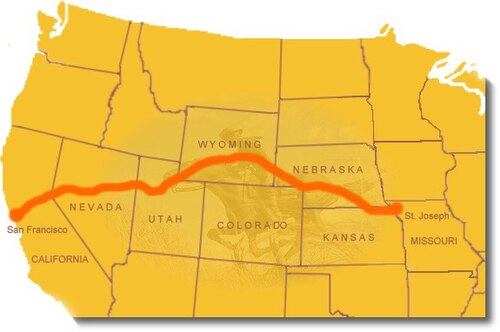
連邦政府は郵便と貨物の配達の発展に補助金を出し、1856年までに議会は道路の改良とカリフォルニアへの陸路郵便サービスを承認した。新しい商用幌馬車サービスは主に貨物を運んだ。1858年、ジョン・バターフィールド(1801-1869)は、南ルートに沿ってセントルイスからサンフランシスコまで24日で行く駅馬車サービスを設立した。このルートは、テキサスが南部連合に加わった1861年に廃止され、代わりにララミー砦とソルトレイクシティを経由する24日間の旅程の駅馬車サービスが設立され、ウェルズ・ファーゴ社が主な提供者となった(当初は古い「バターフィールド」の名前を使用していた)。[136]
ウィリアム・ラッセルは、より迅速な郵便配達サービスのために政府との契約を獲得したいと考え、 1860 年にポニー・エクスプレスを開始し、配達時間を 10 日間に短縮しました。彼は約 15 マイル (24 km) 間隔で 150 を超える駅を設置しました。
1861年、議会は土地付与電信法を可決し、ウェスタンユニオンの大陸横断電信線の建設に資金を提供した。ウェスタンユニオンの社長ハイラム・シブリーは鉄道会社と交渉し、その権利の範囲内で電信線を敷設する独占契約を結んだ。大陸横断鉄道が開通する8年前、最初の大陸横断電信は1861年10月24日にネブラスカ州オマハとサンフランシスコを結んだ。[137]ポニーエクスプレスは電信と競争できず、わずか18か月で終了した。[138] [139]
流血のカンザス
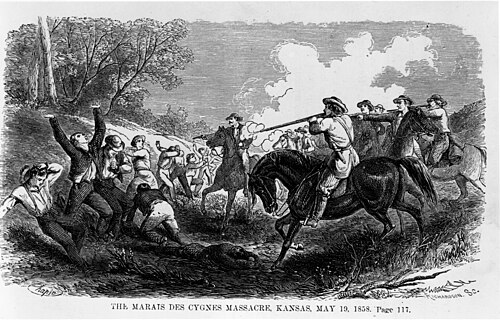
憲法上、連邦議会は各州の奴隷制度を扱うことはできなかったが、西部領土については管轄権を持っていた。カリフォルニアは1850年に全会一致で奴隷制度を拒否し、自由州となった。ニューメキシコは奴隷制度を認めたが、めったに見られなかった。カンザスは1820年の妥協により奴隷制度が禁止された。自由土地派は、奴隷制度が認められれば裕福な農園主が最良の土地を買い占めて奴隷団と共に耕作し、自由な白人が農場を所有する機会がほとんどなくなることを恐れた。カンザスに興味を持つ南部の農園主はほとんどいなかったが、そこで奴隷制度が違法であるという考えは、彼らが二流の地位にあることを意味し、彼らの名誉心には耐えられず、州の権利の原則に違反しているように思われた。1854年に非常に物議を醸したカンザス・ネブラスカ法が可決され、連邦議会はカンザスの現地の有権者に決定を委ねた。北部全域で奴隷制と戦うために新しい主要政党が結成された。共和党で、指導的立場には多くの西部人が就いており、特にイリノイ州のエイブラハム・リンカーンが有名である。領土決定に影響を与えるため、反奴隷制派(「ジェイホーカーズ」または「自由土地主義者」とも呼ばれる)は政治的に決意のある入植者の移住に資金を提供した。しかし、奴隷制擁護派はミズーリ州からの奴隷制擁護派入植者とともに反撃した。[140]結果として双方に暴力が起こり、1859年に暴力が収まるまでに56人が殺害された。[141] 1860年までに奴隷制擁護派が優勢となったが、カンザス州には奴隷が2人しかいなかった。1861年までに反奴隷制派が優勢となり、カンザスは自由州となった。この出来事は、奴隷制をめぐる北部と南部の民主的妥協は不可能であることを示し、南北戦争を早めることになった。[142]
西部の南北戦争

ミシシッピ川以西の地域は領土が広大であるにもかかわらず、人口は少なく、南北戦争の歴史学では戦時中の出来事はほとんど取り上げられていない。[143]
トランスミシシッピ劇場
南軍は西部でいくつかの重要な作戦に従事した。しかし、戦争に至るまでの主要紛争地域であったカンザス州では、マイン・クリークでの戦闘が1回だけ行われただけだった。しかし、南軍の戦線に近かったため、クァントリルの襲撃隊のような南軍支持ゲリラが北軍の拠点を攻撃し、住民を虐殺することができた。[144]
テキサスでは、住民が南軍への参加に投票し、反戦のドイツ人は絞首刑にされた。[145]地元軍はサンアントニオの連邦兵器庫を占拠し、ニューメキシコ北部、ユタ、コロラド、そしておそらくカリフォルニアの領土を奪取する計画を立てた。アリゾナ州南部連合は、アメリカ陸軍部隊が撤退した後のアパッチ族の襲撃に対する保護を求めたアリゾナ住民によって設立された。その後、南軍はニューメキシコ準州の支配権を握ろうとする。ヘンリー・ホプキンス・シブリー将軍がこの作戦を任され、彼のニューメキシコ軍とともにリオグランデ川を北上し、カリフォルニアだけでなくコロラドの鉱物資源を奪取しようとした。第1志願兵連隊が反乱軍を発見し、すぐに警告してユニオン砦の北軍に加わった。すぐにグロリエタ峠の戦いが勃発し、北軍は南軍の作戦を終わらせ、テキサス西部は北軍の手に残った。[146] [147]
奴隷制度が合法であった南部国境の州ミズーリ州は、議会の投票に反対して、セントルイスの連邦兵器庫に軍隊を率いた脱退支持派の知事が、アーカンソー州とルイジアナ州の南軍の支援を受けて戦場となった。ミズーリ州知事と州議会の一部はネオショで脱退条例に署名し、ミズーリ州に南軍政府を結成し、南軍がミズーリ州南部を支配した。しかし、北軍の将軍サミュエル・カーティスは、セントルイスとミズーリ州全体を北軍に奪還した。この州は西部で数多くの襲撃とゲリラ戦の舞台となった。[148]
平和維持

1850年以降、アメリカ陸軍は先住民部族間や先住民と入植者間の戦争を阻止するために、辺境に一連の軍事基地を設置した。19世紀を通じて、陸軍士官は引退するまで砦から砦へと移動しながら平和維持活動の役割を担い、キャリアを積むのが一般的だった。兵士が実際に戦闘を経験することは稀だった。[149]
最も劇的な紛争は1862年のミネソタ州でのスー戦争で、ダコタ族はドイツ人農場を組織的に攻撃し、入植者を追い出そうとした。数日間、ダコタ族はローワー・スー・エージェンシー、ニュー・アルム、ハッチンソンを攻撃し、300人から400人の白人入植者を殺害した。州民兵は反撃し、リンカーンは連邦軍を派遣した。その後のリッジリー砦、バーチ・クーリー砦、アバクロンビー砦、ウッド・レイクでの戦闘は6週間に及ぶ戦争の締めくくりとなり、アメリカの勝利に終わった。連邦政府は425人の先住民を殺人罪で裁判にかけ、303人が有罪判決を受けて死刑を宣告された。リンカーンは大多数を赦免したが、38人の指導者は絞首刑に処された。[150]
西部での北軍の勢力が減ったため、訓練を受けていない民兵が残され、敵対的な部族は入植者を攻撃する機会を得た。民兵は激しく反撃し、最も顕著なのは1864年後半にコロラド州東部で起きたサンドクリーク虐殺で、女性や子供で溢れていたシャイアン族とアラパホ族の冬営地を攻撃したことだ。 [151]
1864年、キット・カーソンとアメリカ軍は、開拓者を襲撃していたナバホ族全体をニューメキシコ州に閉じ込め、彼らを居留地に追い込んだ。[152]現在のオクラホマ州インディアン準州内では、五文明部族の間で紛争が起こり、そのほとんどは奴隷所有者であった南部側についた。[153]
1862年、議会は西部開拓を促進するために、ホームステッド法と太平洋鉄道法という2つの主要な法律を制定しました。その結果、1890年までに平原諸州に数百万の新しい農場が誕生し、その多くはドイツやスカンジナビアからの新しい移民によって運営されました。
戦後の西側
南北戦争後の領土統治
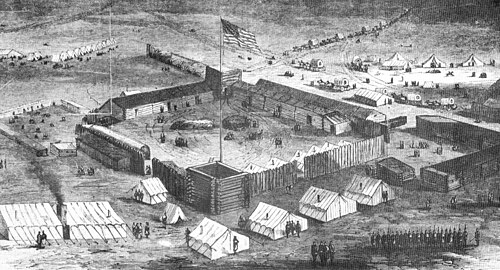
戦争が終わり奴隷制度が廃止されると、連邦政府は領土の統治の改善に注力した。連邦政府は1787年の北西部条例に定められた前例に従い、いくつかの領土を分割して州昇格の準備を整えた。この条例は手続きと領土政府の監督を標準化し、地方の権限の一部を剥奪し、多くの「官僚主義」を課し、連邦官僚機構を大幅に拡大した。[154]
Federal involvement in the territories was considerable. In addition to direct subsidies, the federal government maintained military posts, provided safety from Native attacks, bankrolled treaty obligations, conducted surveys and land sales, built roads, staffed land offices, made harbor improvements, and subsidized overland mail delivery. Territorial citizens came to both decry federal power and local corruption, and at the same time, lament that more federal dollars were not sent their way.[155]
Territorial governors were political appointees and beholden to Washington so they usually governed with a light hand, allowing the legislatures to deal with the local issues. In addition to his role as civil governor, a territorial governor was also a militia commander, a local superintendent of Native affairs, and the state liaison with federal agencies. The legislatures, on the other hand, spoke for the local citizens and they were given considerable leeway by the federal government to make local law.[156]
These improvements to governance still left plenty of room for profiteering. As Mark Twain wrote while working for his brother, the secretary of Nevada, "The government of my country snubs honest simplicity but fondles artistic villainy, and I think I might have developed into a very capable pickpocket if I had remained in the public service a year or two."[157] "Territorial rings", corrupt associations of local politicians and business owners buttressed with federal patronage, embezzled from Native tribes and local citizens, especially in the Dakota and New Mexico territories.[158]
Federal land system

In acquiring, preparing, and distributing public land to private ownership, the federal government generally followed the system set forth by the Land Ordinance of 1785. Federal exploration and scientific teams would undertake reconnaissance of the land and determine Native American habitation. Through treaties, the land titles would be ceded by the resident tribes. Then surveyors would create detailed maps marking the land into squares of six miles (10 km) on each side, subdivided first into one square mile blocks, then into 160-acre (0.65 km2) lots. Townships would be formed from the lots and sold at public auction. Unsold land could be purchased from the land office at a minimum price of $1.25 per acre.[159]
As part of public policy, the government would award public land to certain groups such as veterans, through the use of "land script". The script traded in a financial market, often at below the $1.25 per acre minimum price set by law, which gave speculators, investors, and developers another way to acquire large tracts of land cheaply.[160] Land policy became politicized by competing factions and interests, and the question of slavery on new lands was contentious. As a counter to land speculators, farmers formed "claims clubs" to enable them to buy larger tracts than the 160-acre (0.65 km2) allotments by trading among themselves at controlled prices.[161]
In 1862, Congress passed three important bills that transformed the land system. The Homestead Act granted 160 acres (0.65 km2) free to each settler who improved the land for five years; citizens and non-citizens including squatters and women were all eligible. The only cost was a modest filing fee. The law was especially important in the settling of the Plains states. Many took a free homestead and others purchased their land from railroads at low rates.[162][163]
The Pacific Railroad Act of 1862 provided for the land needed to build the transcontinental railroad. The land was given the railroads alternated with government-owned tracts saved for free distribution to homesteaders. To be equitable, the federal government reduced each tract to 80 acres (32 ha) because of its perceived higher value given its proximity to the rail line. Railroads had up to five years to sell or mortgage their land, after tracks were laid, after which unsold land could be purchased by anyone. Often railroads sold some of their government acquired land to homesteaders immediately to encourage settlement and the growth of markets the railroads would then be able to serve. Nebraska railroads in the 1870s were strong boosters of lands along their routes. They sent agents to Germany and Scandinavia with package deals that included cheap transportation for the family as well as its furniture and farm tools, and they offered long-term credit at low rates. Boosterism succeeded in attracting adventurous American and European families to Nebraska, helping them purchase land grant parcels on good terms. The selling price depended on such factors as soil quality, water, and distance from the railroad.[164]
The Morrill Act of 1862 provided land grants to states to begin colleges of agriculture and mechanical arts (engineering). Black colleges became eligible for these land grants in 1890. The Act succeeded in its goals to open new universities and make farming more scientific and profitable.[165]
Transcontinental railroads

In the 1850s, the U.S. government sponsored surveys that charted the remaining unexplored regions of the West in order to plan possible routes for a transcontinental railroad. Much of this work was undertaken by the Corps of Engineers, Corps of Topographical Engineers, and Bureau of Explorations and Surveys, and became known as "The Great Reconnaissance". Regionalism animated debates in Congress regarding the choice of a northern, central, or southern route. Engineering requirements for the rail route were an adequate supply of water and wood, and as nearly-level route as possible, given the weak locomotives of the era.[166]
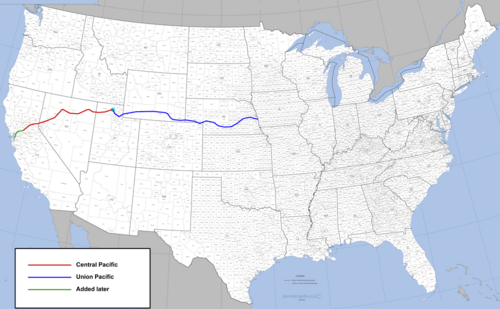
Proposals to build a transcontinental failed because of Congressional disputes over slavery. With the secession of the Confederate states in 1861, the modernizers in the Republican party took over Congress and wanted a line to link to California. Private companies were to build and operate the line. Construction would be done by unskilled laborers who would live in temporary camps along the way. Immigrants from China and Ireland did most of the construction work. Theodore Judah, the chief engineer of the Central Pacific surveyed the route from San Francisco east. Judah's tireless lobbying efforts in Washington were largely responsible for the passage of the 1862 Pacific Railroad Act, which authorized construction of both the Central Pacific and the Union Pacific (which built west from Omaha).[167] In 1862 four rich San Francisco merchants (Leland Stanford, Collis Huntington, Charles Crocker, and Mark Hopkins) took charge, with Crocker in charge of construction. The line was completed in May 1869. Coast-to-coast passenger travel in 8 days now replaced wagon trains or sea voyages that took 6 to 10 months and cost much more.
The road was built with mortgages from New York, Boston, and London, backed by land grants. There were no federal cash subsidies, But there was a loan to the Central Pacific that was eventually repaid at six percent interest. The federal government offered land-grants in a checkerboard pattern. The railroad sold every-other square, with the government opening its half to homesteaders. The government also loaned money—later repaid—at $16,000 per mile on level stretches, and $32,000 to $48,000 in mountainous terrain. Local and state governments also aided the financing.
Most of the manual laborers on the Central Pacific were new arrivals from China.[168] Kraus shows how these men lived and worked, and how they managed their money. He concludes that senior officials quickly realized the high degree of cleanliness and reliability of the Chinese.[169] The Central Pacific employed over 12,000 Chinese workers, 90% of its manual workforce. Ong explores whether or not the Chinese railroad workers were exploited by the railroad, with whites in better positions. He finds the railroad set different wage rates for whites and Chinese and used the latter in the more menial and dangerous jobs, such as the handling and the pouring of nitroglycerin.[170] However the railroad also provided camps and food the Chinese wanted and protected the Chinese workers from threats from whites.[171]
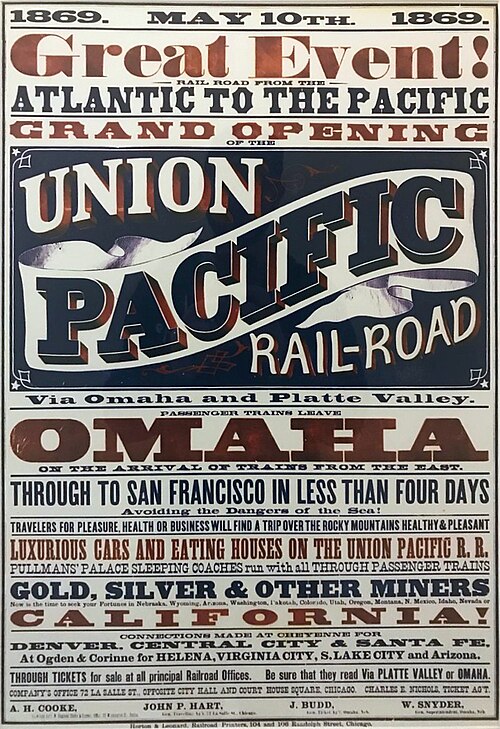
Building the railroad required six main activities: surveying the route, blasting a right of way, building tunnels and bridges, clearing and laying the roadbed, laying the ties and rails, and maintaining and supplying the crews with food and tools. The work was highly physical, using horse-drawn plows and scrapers, and manual picks, axes, sledgehammers, and handcarts. A few steam-driven machines, such as shovels, were used. The rails were iron (steel came a few years later), weighed 700 lb (320 kg) and required five men to lift. For blasting, they used black powder. The Union Pacific construction crews, mostly Irish Americans, averaged about two miles (3 km) of new track per day.[172]
Six transcontinental railroads were built in the Gilded Age (plus two in Canada); they opened up the West to farmers and ranchers. From north to south they were the Northern Pacific, Milwaukee Road, and Great Northern along the Canada–U.S. border; the Union Pacific/Central Pacific in the middle, and to the south the Santa Fe, and the Southern Pacific. All but the Great Northern of James J. Hill relied on land grants. The financial stories were often complex. For example, the Northern Pacific received its major land grant in 1864. Financier Jay Cooke (1821–1905) was in charge until 1873 when he went bankrupt. Federal courts, however, kept bankrupt railroads in operation. In 1881 Henry Villard (1835–1900) took over and finally completed the line to Seattle. But the line went bankrupt in the Panic of 1893 and Hill took it over. He then merged several lines with financing from J.P. Morgan, but President Theodore Roosevelt broke them up in 1904.[173]
In the first year of operation, 1869–70, 150,000 passengers made the long trip. Settlers were encouraged with promotions to come West on free scouting trips to buy railroad land on easy terms spread over several years. The railroads had "Immigration Bureaus" which advertised package low-cost deals including passage and land on easy terms for farmers in Germany and Scandinavia. The prairies, they were promised, did not mean backbreaking toil because "settling on the prairie which is ready for the plow is different from plunging into a region covered with timber".[174] The settlers were customers of the railroads, shipping their crops and cattle out, and bringing in manufactured products. All manufacturers benefited from the lower costs of transportation and the much larger radius of business.[175]
White concludes with a mixed verdict. The transcontinentals did open up the West to settlement, brought in many thousands of high-tech, highly paid workers and managers, created thousands of towns and cities, oriented the nation onto an east–west axis, and proved highly valuable for the nation as a whole. On the other hand, too many were built, and they were built too far ahead of actual demand. The result was a bubble that left heavy losses to investors and led to poor management practices. By contrast, as White notes, the lines in the Midwest and East supported by a very large population base, fostered farming, industry, and mining while generating steady profits and receiving few government benefits.[176]
Migration after the Civil War
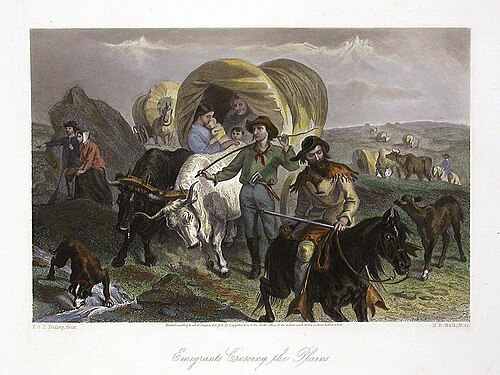
After the Civil War, many from the East Coast and Europe were lured west by reports from relatives and by extensive advertising campaigns promising "the Best Prairie Lands", "Low Prices", "Large Discounts For Cash", and "Better Terms Than Ever!". The new railroads provided the opportunity for migrants to go out and take a look, with special family tickets, the cost of which could be applied to land purchases offered by the railroads. Farming the plains was indeed more difficult than back east. Water management was more critical, lightning fires were more prevalent, the weather was more extreme, rainfall was less predictable.[177]
The fearful stayed home. The actual migrants looked beyond fears of the unknown. Their chief motivation to move west was to find a better economic life than the one they had. Farmers sought larger, cheaper, and more fertile land; merchants and tradesmen sought new customers and new leadership opportunities. Laborers wanted higher paying work and better conditions. As settlers moved west, they had to face challenges along the way, such as the lack of wood for housing, bad weather like blizzards and droughts, and fearsome tornadoes.[178] In the treeless prairies homesteaders built sod houses. One of the greatest plagues that hit the homesteaders was the 1874 Locust Plague which devastated the Great Plains.[179] These challenges hardened these settlers in taming the frontier.[180]
Alaska Purchase
After Russia's defeat in the Crimean War, Tsar Alexander II of Russia decided to sell the Russian American territory of Alaska to the United States. The decision was motivated in part by a need for money and in part a recognition amongst the Russian state that Britain could easily capture Alaska in any future conflict between the two nations. U.S. Secretary of State William Seward negotiated with the Russians to acquire the tremendous landmass of Alaska, an area roughly one-fifth the size of the rest of the United States. On March 30, 1867, the U.S. purchased the territory from the Russians for $7.2 million ($157 million in 2023 dollars). The transfer ceremony was completed in Sitka on October 18, 1867, as Russian soldiers handed over the territory to the United States Army.
Critics at the time decried the purchase as "Seward's Folly", reasoning that there were no natural resources in the new territory and no one can be bothered to live in such a cold, icy climate. Although the development and settlement of Alaska grew slowly, the discovery of goldfields during the Klondike Gold Rush in 1896, Nome Gold Rush in 1898, and Fairbanks Gold Rush in 1902 brought thousands of miners into the territory, thus propelling Alaska's prosperity for decades to come. Major oil discoveries in the late 20th century made the state rich.[181]
Oklahoma Land Rush
In 1889, Washington opened 2,000,000 acres (8,100 km2) of unoccupied lands in the Oklahoma territory. On April 22, over 100,000 settlers and cattlemen (known as "boomers")[182] lined up at the border, and when the army's guns and bugles giving the signal, began a mad dash to stake their claims in the Land Run of 1889. A witness wrote, "The horsemen had the best of it from the start. It was a fine race for a few minutes, but soon the riders began to spread out like a fan, and by the time they reached the horizon they were scattered about as far as the eye could see".[183] In a single day, the towns of Oklahoma City, Norman, and Guthrie came into existence. In the same manner, millions of acres of additional land were opened up and settled in the following four years.[184]
Indian Wars
.jpg/500px-Plenty_Coups_Edward_Curtis_Portrait_(c1908).jpg)
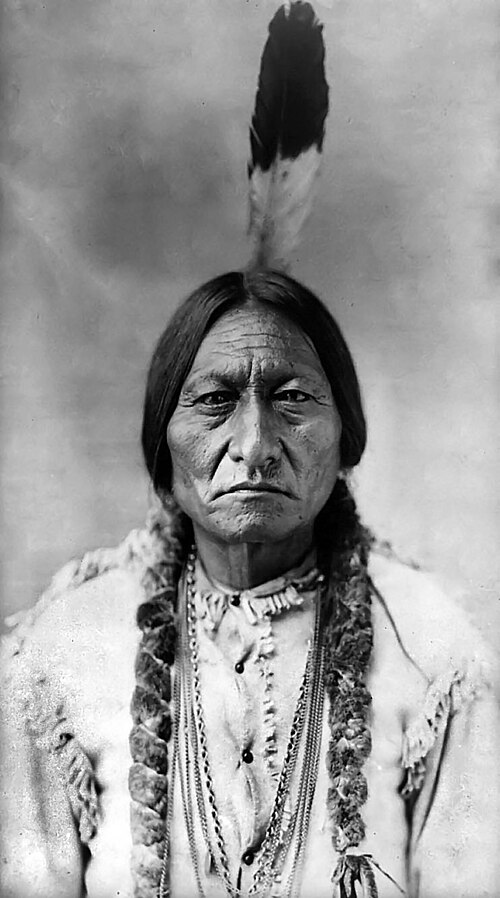
Indian wars have occurred throughout the United States though the conflicts are generally separated into two categories; the Indian wars east of the Mississippi River and the Indian wars west of the Mississippi. The U.S. Bureau of the Census (1894) provided an estimate of deaths:
The "Indian" wars under the government of the United States have been more than 40 in number. They have cost the lives of about 19,000 white men, women and children, including those killed in individual combats, and the lives of about 30,000 Indians. The actual number of killed and wounded Indians must be very much higher than the given... Fifty percent additional would be a safe estimate...[185]
Historian Russell Thornton estimates that from 1800 to 1890, the Native population declined from 600,000 to as few as 250,000. The depopulation was principally caused by disease as well as warfare. Many tribes in Texas, such as the Karankawan, Akokisa, Bidui and others, were extinguished due to conflicts with Texan settlers.[186] The rapid depopulation of the Native Americans after the Civil War alarmed the U.S. government, and the Doolittle Committee was formed to investigate the causes as well as provide recommendations for preserving the population.[187][188] The solutions presented by the committee, such as the establishment of the five boards of inspection to prevent Native abuses, had little effect as large Western migration commenced.[189]
Indian Wars east of the Mississippi
Trail of Tears
The expansion of migration into the Southeastern United States in the 1820s to the 1830s forced the federal government to deal with the "Indian question". The Natives were under federal control but were independent of state governments. State legislatures and state judges had no authority on their lands, and the states demanded control. Politically the new Democratic Party of President Andrew Jackson demanded the removal of the Natives out of the southeastern states to new lands in the west, while the Whig Party and the Protestant churches were opposed to removal. The Jacksonian Democracy proved irresistible, as it won the presidential elections of 1828, 1832, and 1836. By 1837 the "Indian Removal policy" began, to implement the act of Congress signed by Andrew Jackson in 1830. Many historians have sharply attacked Jackson.[190] The 1830 law theoretically provided for voluntary removal and had safeguards for the rights of Natives, but in reality, the removal was involuntary, brutal and ignored safeguards.[191] Jackson justified his actions by stating that Natives had "neither the intelligence, the industry, the moral habits, nor the desire of improvements".[192]
The forced march of about twenty tribes included the "Five Civilized Tribes" (Cherokee, Chickasaw, Choctaw, Creek, and Seminole). To motivate Natives reluctant to move, the federal government also promised rifles, blankets, tobacco, and cash. By 1835 the Cherokee, the last Native nation in the South, had signed the removal treaty and relocated to Oklahoma. All the tribes were given new land in the "Indian Territory" (which later became Oklahoma). Of the approximate 70,000 Natives removed, about 18,000 died from disease, starvation, and exposure on the route.[193] This exodus has become known as the Trail of Tears (in Cherokee "Nunna dual Tsuny", "The Trail Where they Cried"). The impact of the removals was severe. The transplanted tribes had considerable difficulty adapting to their new surroundings and sometimes clashed with the tribes native to the area.[194]
The only way for a Native to remain and avoid removal was to accept the federal offer of 640 acres (2.6 km2) or more of land (depending on family size) in exchange for leaving the tribe and becoming a state citizen subject to state law and federal law. However, many Natives who took the offer were defrauded by "ravenous speculators" who stole their claims and sold their land to whites. In Mississippi alone, fraudulent claims reached 3,800,000 acres (15,000 km2). Of the five tribes, the Seminole offered the most resistance, hiding out in the Florida swamps and waging a war which cost the U.S. Army 1,500 lives and $20 million.[195]
Indian Wars west of the Mississippi

Native warriors in the West, using their traditional style of limited, battle-oriented warfare, confronted the U.S. Army. The Natives emphasized bravery in combat while the Army put its emphasis not so much on individual combat as on building networks of forts, developing a logistics system, and using the telegraph and railroads to coordinate and concentrate its forces. Plains Indian intertribal warfare bore no resemblance to the "modern" warfare practiced by the Americans along European lines, using its vast advantages in population and resources. Many tribes avoided warfare and others supported the U.S. Army. The tribes hostile to the government continued to pursue their traditional brand of fighting and, therefore, were unable to have any permanent success against the Army.[196]
Indian wars were fought throughout the western regions, with more conflicts in the states bordering Mexico than in the interior states. Arizona ranked highest, with 310 known battles fought within the state's boundaries between Americans and the Natives. Arizona ranked highest in war deaths, with 4,340 killed, including soldiers, civilians, and Native Americans. That was more than twice as many as occurred in Texas, the second-highest-ranking state. Most of the deaths in Arizona were caused by the Apache. Michno also says that fifty-one percent of the Indian war battles between 1850 and 1890 took place in Arizona, Texas, and New Mexico, as well as thirty-seven percent of the casualties in the county west of the Mississippi River.[197] The Comanche fought a number of conflicts against Spanish and later Mexican and American armies. Comanche power peaked in the 1840s when they conducted large-scale raids hundreds of miles into Mexico proper, while also warring against the Anglo-Americans and Tejanos who had settled in independent Texas.[198]
One of the deadliest Indian wars fought was the Snake War in 1864–1868, which was conducted by a confederacy of Northern Paiute, Bannock and Shoshone Native Americans, called the "Snake Indians" against the United States Army in the states of Oregon, Nevada, California, and Idaho which ran along the Snake River.[199] The war started when tension arose between the local Natives and the flooding pioneer trains encroaching through their lands, which resulted in competition for food and resources. Natives included in this group attacked and harassed emigrant parties and miners crossing the Snake River Valley, which resulted in further retaliation of the white settlements and the intervention of the United States army. The war resulted in a total of 1,762 men who have been killed, wounded, and captured from both sides. Unlike other Indian Wars, the Snake War has widely forgotten in United States history due to having only limited coverage of the war.[200]
The Colorado War fought by Cheyenne, Arapaho and Sioux, was fought in the territories of Colorado to Nebraska. The conflict was fought in 1863–1865 while the American Civil War was still ongoing. Caused by dissolution between the Natives and the white settlers in the region, the war was infamous for the atrocities done between the two parties. White militias destroyed Native villages and killed Native women and children such as the bloody Sand Creek massacre, and the Natives also raided ranches, farms and killed white families such as the American Ranch massacre and Raid on Godfrey Ranch.[201][202]
In the Apache Wars, Colonel Christopher "Kit" Carson forced the Mescalero Apache onto a reservation in 1862. In 1863–1864, Carson used a scorched earth policy in the Navajo Campaign, burning Navajo fields and homes, and capturing or killing their livestock. He was aided by other Native tribes with long-standing enmity toward the Navajos, chiefly the Utes.[203] Another prominent conflict of this war was Geronimo's fight against settlements in Texas in the 1880s. The Apaches under his command conducted ambushes on US cavalries and forts, such as their attack on Cibecue Creek, while also raiding upon prominent farms and ranches, such as their infamous attack on the Empire Ranch that killed three cowboys.[204][205] The U.S. finally induced the last hostile Apache band under Geronimo to surrender in 1886.
During the Comanche Campaign, the Red River War was fought in 1874–1875 in response to the Comanche's dwindling food supply of buffalo, as well as the refusal of a few bands to be inducted in reservations.[206] Comanches started raiding small settlements in Texas, which led to the Battle of Buffalo Wallow and Second Battle of Adobe Walls fought by buffalo hunters, and the Battle of Lost Valley against the Texas Rangers. The war finally ended with a final confrontation between the Comanches and the U.S. Cavalry in Palo Duro Canyon. The last Comanche war chief, Quanah Parker, surrendered in June 1875, which would finally end the wars fought by Texans and Natives.[207]
Red Cloud's War was led by the Lakota chief Red Cloud against the military who were erecting forts along the Bozeman Trail. It was the most successful campaign against the U.S. during the Indian Wars. By the Treaty of Fort Laramie (1868), the U.S. granted a large reservation to the Lakota, without military presence; it included the entire Black Hills.[208] Captain Jack was a chief of the Native American Modoc tribe of California and Oregon, and was their leader during the Modoc War. With 53 Modoc warriors, Captain Jack held off 1,000 men of the U.S. Army for seven months. Captain Jack killed Edward Canby.[209]


In June 1877, in the Nez Perce War the Nez Perce under Chief Joseph, unwilling to give up their traditional lands and move to a reservation, undertook a 1,200-mile (2,000 km) fighting retreat from Oregon to near the Canada–U.S. border in Montana. Numbering only 200 warriors, the Nez Perce "battled some 2,000 American regulars and volunteers of different military units, together with their Native auxiliaries of many tribes, in a total of eighteen engagements, including four major battles and at least four fiercely contested skirmishes."[210] The Nez Perce were finally surrounded at the Battle of Bear Paw and surrendered. The Great Sioux War of 1876 was conducted by the Lakota under Sitting Bull and Crazy Horse. The conflict began after repeated violations of the Treaty of Fort Laramie (1868) once gold was discovered in the hills. One of its famous battles was the Battle of the Little Bighorn, in which combined Sioux and Cheyenne forces defeated the 7th Cavalry, led by General George Armstrong Custer.[211] The Ute War, fought by the Ute people against settlers in Utah and Colorado, led to two battles; the Meeker massacre which killed 11 Native agents, and the Pinhook massacre which killed 13 armed ranchers and cowboys.[212][213] The Ute conflicts finally ended after the events of the Posey War in 1923 which was fought against settlers and law enforcement.[214]
The end of the major Indian wars came at the Wounded Knee massacre on December 29, 1890, where the 7th Cavalry attempted to disarm a Sioux man and precipitated a massacre in which about 150 Sioux men, women, and children were killed. Only thirteen days before, Sitting Bull had been killed with his son Crow Foot in a gun battle with a group of Native police that had been sent by the American government to arrest him.[215] Additional conflicts and incidents though, such as the Bluff War (1914–1915) and Posey War, would occur into the early 1920s.[214] The last combat engagement between U.S. Army soldiers and Native Americans though occurred in the Battle of Bear Valley on January 9, 1918.[216]
Forts and outposts
As the frontier moved westward, the establishment of U.S. military forts moved with it, representing and maintaining federal sovereignty over new territories.[217][218] The military garrisons usually lacked defensible walls but were seldom attacked. They served as bases for troops at or near strategic areas, particularly for counteracting the Native presence. For example, Fort Bowie protected Apache Pass in southern Arizona along the mail route between Tucson and El Paso and was used to launch attacks against Cochise and Geronimo. Fort Laramie and Fort Kearny helped protect immigrants crossing the Great Plains and a series of posts in California protected miners. Forts were constructed to launch attacks against the Sioux. As Indian reservations sprang up, the military set up forts to protect them. Forts also guarded the Union Pacific and other rail lines. Other important forts were Fort Sill, Oklahoma, Fort Smith, Arkansas, Fort Snelling, Minnesota, Fort Union, New Mexico, Fort Worth, Texas, and Fort Walla Walla in Washington. Fort Omaha, Nebraska, was home to the Department of the Platte, and was responsible for outfitting most Western posts for more than 20 years after its founding in the late 1870s. Fort Huachuca in Arizona was also originally a frontier post and is still in use by the United States Army.
Indian reservations

Settlers on their way overland to Oregon and California became targets of Native threats. Robert L. Munkres read 66 diaries of parties traveling the Oregon Trail between 1834 and 1860 to estimate the actual dangers they faced from Native attacks in Nebraska and Wyoming. The vast majority of diarists reported no armed attacks at all. However many did report harassment by Natives who begged or demanded tolls, and stole horses and cattle.[219] Madsen reports that the Shoshoni and Bannock tribes north and west of Utah were more aggressive toward wagon trains.[220] The federal government attempted to reduce tensions and create new tribal boundaries in the Great Plains with two new treaties in early 1850, The Treaty of Fort Laramie established tribal zones for the Sioux, Cheyennes, Arapahos, Crows, and others, and allowed for the building of roads and posts across the tribal lands. A second treaty secured safe passage along the Santa Fe Trail for wagon trains. In return, the tribes would receive, for ten years, annual compensation for damages caused by migrants.[221] The Kansas and Nebraska territories also became contentious areas as the federal government sought those lands for the future transcontinental railroad. In the Far West settlers began to occupy land in Oregon and California before the federal government secured title from the native tribes, causing considerable friction. In Utah, the Mormons also moved in before federal ownership was obtained.
A new policy of establishing reservations came gradually into shape after the boundaries of the "Indian Territory" began to be ignored. In providing for Indian reservations, Congress and the Office of Indian Affairs hoped to de-tribalize Native Americans and prepare them for integration with the rest of American society, the "ultimate incorporation into the great body of our citizen population".[222] This allowed for the development of dozens of riverfront towns along the Missouri River in the new Nebraska Territory, which was carved from the remainder of the Louisiana Purchase after the Kansas–Nebraska Act. Influential pioneer towns included Omaha, Nebraska City, and St. Joseph.
American attitudes towards Natives during this period ranged from malevolence ("the only good Indian is a dead Indian") to misdirected humanitarianism (Indians live in "inferior" societies and by assimilation into white society they can be redeemed) to somewhat realistic (Native Americans and settlers could co-exist in separate but equal societies, dividing up the remaining western land).[223] Dealing with nomadic tribes complicated the reservation strategy and decentralized tribal power made treaty making difficult among the Plains Indians. Conflicts erupted in the 1850s, resulting in various Indian wars.[224] In these times of conflict, Natives become more stringent about white men entering their territory. Such as in the case of Oliver Loving, they would sometimes attack cowboys and their cattle if ever caught crossing in the borders of their land.[225][226] They would also prey upon livestock if the food was scarce during hard times. However, the relationship between cowboys and Native Americans were more mutual than they are portrayed, and the former would occasionally pay a fine of 10 cents per cow for the latter to allow them to travel through their land.[227] Natives also preyed upon stagecoaches travelling in the frontier for its horses and valuables.[228]
After the Civil War, as the volunteer armies disbanded, the regular army cavalry regiments increased in number from six to ten, among them Custer's U.S. 7th Cavalry Regiment of Little Bighorn fame, and the African-American U.S. 9th Cavalry Regiment and U.S. 10th Cavalry Regiment. The black units, along with others (both cavalry and infantry), collectively became known as the Buffalo Soldiers. According to Robert M. Utley:
The frontier army was a conventional military force trying to control, by conventional military methods, a people that did not behave like conventional enemies and, indeed, quite often were not enemies at all. This is the most difficult of all military assignments, whether in Africa, Asia, or the American West.[229]
Social history
Democratic society

Westerners were proud of their leadership in the movement for democracy and equality, a major theme for Frederick Jackson Turner. The new states of Kentucky, Tennessee, Alabama, and Ohio were more democratic than the parent states back East in terms of politics and society.[230] The Western states were the first to give women the right to vote. By 1900 the West, especially California and Oregon, led the Progressive movement.
Scholars have examined the social history of the west in search of the American character. The history of Kansas, argued historian Carl L. Becker a century ago, reflects American ideals. He wrote: "The Kansas spirit is the American spirit double distilled. It is a new grafted product of American individualism, American idealism, American intolerance. Kansas is America in microcosm."[231]
Scholars have compared the emergence of democracy in America with other countries, regarding the frontier experience.[232] Selwyn Troen has made the comparison with Israel. The American frontiersmen relied on individual effort, in the context of very large quantities of unsettled land with weak external enemies. Israel by contrast, operated in a very small geographical zone, surrounded by more powerful neighbors. The Jewish pioneer was not building an individual or family enterprise, but was a conscious participant in nation-building, with a high priority on collective and cooperative planned settlements. The Israeli pioneers brought in American experts on irrigation and agriculture to provide technical advice. However, they rejected the American frontier model in favor of a European model that supported their political and security concerns.[233]
Urban frontier
The cities played an essential role in the development of the frontier, as transportation hubs, financial and communications centers, and providers of merchandise, services, and entertainment.[234] As the railroads pushed westward into the unsettled territory after 1860, they build service towns to handle the needs of railroad construction crews, train crews, and passengers who ate meals at scheduled stops.[235] In most of the South, there were very few cities of any size for miles around, and this pattern held for Texas as well, so railroads did not arrive until the 1880s. They then shipped the cattle out and cattle drives became short-distance affairs. However, the passenger trains were often the targets of armed gangs.[236]

Denver's economy before 1870 had been rooted in mining; it then grew by expanding its role in railroads, wholesale trade, manufacturing, food processing, and servicing the growing agricultural and ranching hinterland. Between 1870 and 1890, manufacturing output soared from $600,000 to $40 million, and the population grew by a factor of 20 times to 107,000. Denver had always attracted miners, workers, whores, and travelers. Saloons and gambling dens sprung up overnight. The city fathers boasted of its fine theaters, and especially the Tabor Grand Opera House built in 1881.[237] By 1890, Denver had grown to be the 26th largest city in America, and the fifth-largest city west of the Mississippi River.[238] The boom times attracted millionaires and their mansions, as well as hustlers, poverty, and crime. Denver gained regional notoriety with its range of bawdy houses, from the sumptuous quarters of renowned madams to the squalid "cribs" located a few blocks away. Business was good; visitors spent lavishly, then left town. As long as madams conducted their business discreetly, and "crib girls" did not advertise their availability too crudely, authorities took their bribes and looked the other way. Occasional cleanups and crack downs satisfied the demands for reform.[239]
With its giant mountain of copper, Butte, Montana, was the largest, richest, and rowdiest mining camp on the frontier. It was an ethnic stronghold, with the Irish Catholics in control of politics and of the best jobs at the leading mining corporation Anaconda Copper.[240] City boosters opened a public library in 1894. Ring argues that the library was originally a mechanism of social control, "an antidote to the miners' proclivity for drinking, whoring, and gambling". It was also designed to promote middle-class values and to convince Easterners that Butte was a cultivated city.[241]
Race and ethnicity
European immigrants
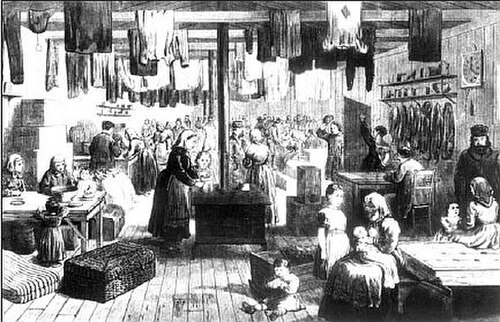
European immigrants often built communities of similar religious and ethnic backgrounds. For example, many Finns went to Minnesota and Michigan, Swedes and Norwegians to Minnesota and the Dakotas, Irish to railroad centers along the transcontinental lines, Volga Germans to North Dakota, English converts to the LDS church went to Utah including English immigrants who settled in the Rocky Mountain states (Colorado,Wyoming and Idaho) and German Jews to Portland, Oregon.[242][243]
African Americans
African Americans moved West as soldiers, as well as cowboys (see Black cowboy), farmhands, saloon workers, cooks, and outlaws. The Buffalo Soldiers were soldiers in the all-black 9th and 10th Cavalry regiments, and 24th and 25th Infantry Regiments of the U.S. Army. They had white officers and served in numerous western forts.[244]
About 4,000 black people came to California in Gold Rush days. In 1879, after the end of Reconstruction in the South, several thousand Freedmen moved from Southern states to Kansas. Known as the Exodusters, they were lured by the prospect of good, cheap Homestead Law land and better treatment. The all-black town of Nicodemus, Kansas, which was founded in 1877, was an organized settlement that predates the Exodusters but is often associated with them.[245]
Asians
The California Gold Rush included thousands of Mexican and Chinese arrivals. Chinese migrants, many of whom were impoverished peasants, provided the major part of the workforce for the building of the Central Pacific portion of the transcontinental railroad. Most of them went home by 1870 when the railroad was finished.[246] Those who stayed on worked in mining, agriculture, and opened small shops such as groceries, laundries, and restaurants. Hostility against the Chinese remained high in the western states/territories as seen by the Chinese Massacre Cove episode and the Rock Springs massacre. The Chinese were generally forced into self-sufficient "Chinatowns" in cities such as San Francisco, Portland, Seattle, and Los Angeles.[247] In Los Angeles, the last major anti-Chinese riot took place in 1871, after which local law enforcement grew stronger.[248] In the late 19th century, Chinatowns were squalid slums known for their vice, prostitution, drugs, and violent battles between "tongs". By the 1930s, however, Chinatowns had become clean, safe and attractive tourist destinations.[249]
The first Japanese arrived in the U.S. in 1869, with the arrival of 22 people from samurai families, settling in Placer County, California, to establish the Wakamatsu Tea and Silk Farm Colony. Japanese were recruited to work on plantations in Hawaii, beginning in 1885. By the late 19th century, more Japanese emigrated to Hawaii and the American mainland. The Issei, or first-generation Japanese immigrants, were not allowed to become U.S. citizens because they were not "a free white person", per the United States Naturalization Law of 1790. This did not change until the passage of the Immigration and Nationality Act of 1952, known as the McCarran-Walter Act, which allowed Japanese immigrants to become naturalized U.S. citizens.
By 1920, Japanese-American farmers produced US$67 million worth of crops, more than ten percent of California's total crop value. There were 111,000 Japanese Americans in the U.S., of which 82,000 were immigrants and 29,000 were U.S. born.[250] Congress passed the Immigration Act of 1924 effectively ending all Japanese immigration to the U.S. The U.S.-born children of the Issei were citizens, in accordance to the 14th Amendment to the United States Constitution.[251]
Hispanics

The great majority of Hispanics who had been living in the former territories of New Spain remained and became American citizens in 1848.[252] The 10,000 or so Californios also became U.S. citizens. They lived in southern California and after 1880 were overshadowed by the hundreds of thousands of new arrivals from the eastern states. Those in New Mexico dominated towns and villages that changed little until well into the 20th century. New arrivals from Mexico arrived, especially after the Revolution of 1911 terrorized thousands of villages all across Mexico. Most refugees went to Texas or California, and soon poor barrios appeared in many border towns. The California "Robin Hood", Joaquin Murrieta, led a gang in the 1850s which burned houses, killed exploiting miners, robbed stagecoaches of landowners and fought against violence and discrimination against Latin Americans. In Texas, Juan Cortina led a 20-year campaign against Anglos and the Texas Rangers, starting around 1859.[253]
Family life
On the Great Plains very few single men attempted to operate a farm or ranch; farmers clearly understood the need for a hard-working wife, and numerous children, to handle the many chores, including child-rearing, feeding, and clothing the family, managing the housework, and feeding the hired hands.[254] During the early years of settlement, farm women played an integral role in assuring family survival by working outdoors. After a generation or so, women increasingly left the fields, thus redefining their roles within the family. New conveniences such as sewing and washing machines encouraged women to turn to domestic roles. The scientific housekeeping movement, promoted across the land by the media and government extension agents, as well as county fairs which featured achievements in home cookery and canning, advice columns for women in the farm papers, and home economics courses in the schools all contributed to this trend.[255]
Although the eastern image of farm life on the prairies emphasizes the isolation of the lonely farmer and farm life, in reality, rural folk created a rich social life for themselves. They often sponsored activities that combined work, food, and entertainment such as barn raisings, corn huskings, quilting bees,[256] Grange meetings,[257] church activities, and school functions. The womenfolk organized shared meals and potluck events, as well as extended visits between families.[258]
Childhood
Childhood on the American frontier is contested territory. One group of scholars, following the lead of novelists Willa Cather and Laura Ingalls Wilder, argue the rural environment was beneficial to the child's upbringing. Historians Katherine Harris[259] and Elliott West[260] write that rural upbringing allowed children to break loose from urban hierarchies of age and gender, promoted family interdependence, and at the end produced children who were more self-reliant, mobile, adaptable, responsible, independent and more in touch with nature than their urban or eastern counterparts. On the other hand, historians Elizabeth Hampsten[261] and Lillian Schlissel[262] offer a grim portrait of loneliness, privation, abuse, and demanding physical labor from an early age. Riney-Kehrberg takes a middle position.[263]
Prostitution and gambling
Entrepreneurs set up shops and businesses to cater to the miners. World-famous were the houses of prostitution found in every mining camp worldwide.[264] Prostitution was a growth industry attracting sex workers from around the globe, pulled in by the money, despite the harsh and dangerous working conditions and low prestige. Chinese women were frequently sold by their families and taken to the camps as prostitutes; they had to send their earnings back to the family in China.[265] In Virginia City, Nevada, a prostitute, Julia Bulette, was one of the few who achieved "respectable" status. She nursed victims of an influenza epidemic; this gave her acceptance in the community and the support of the sheriff. The townspeople were shocked when she was murdered in 1867; they gave her a lavish funeral and speedily tried and hanged her assailant.[266] Until the 1890s, madams predominantly ran the businesses, after which male pimps took over, and the treatment of the women generally declined. It was not uncommon for bordellos in Western towns to operate openly, without the stigma of East Coast cities. Gambling and prostitution were central to life in these western towns, and only later—as the female population increased, reformers moved in, and other civilizing influences arrived—did prostitution become less blatant and less common.[267] After a decade or so the mining towns attracted respectable women who ran boarding houses, organized church societies, worked as laundresses and seamstresses and strove for independent status.[268]
Whenever a new settlement or mining camp started one of the first buildings or tents erected would be a gambling hall. As the population grew, gambling halls were typically the largest and most ornately decorated buildings in any town and often housed a bar, stage for entertainment, and hotel rooms for guests. These establishments were a driving force behind the local economy and many towns measured their prosperity by the number of gambling halls and professional gamblers they had. Towns that were friendly to gambling were typically known to sports as "wide-awake" or "wide-open".[269] Cattle towns in Texas, Oklahoma, Kansas, and Nebraska became famous centers of gambling. The cowboys had been accumulating their wages and postponing their pleasures until they finally arrived in town with money to wager. Abilene, Dodge City, Wichita, Omaha, and Kansas City all had an atmosphere that was convivial to gaming. Such an atmosphere also invited trouble and such towns also developed reputations as lawless and dangerous places.[270][271]
Law and order

Historian Waddy W. Moore uses court records to show that on the sparsely settled Arkansas frontier lawlessness was common. He distinguished two types of crimes: unprofessional (dueling, crimes of drunkenness, selling whiskey to the Natives, cutting trees on federal land) and professional (rustling, highway robbery, counterfeiting).[273] Criminals found many opportunities to rob pioneer families of their possessions, while the few underfunded lawmen had great difficulty detecting, arresting, holding, and convicting wrongdoers. Bandits, typically in groups of two or three, rarely attacked stagecoaches with a guard carrying a sawed-off, double-barreled shotgun; it proved less risky to rob teamsters, people on foot, and solitary horsemen,[274] while bank robberies themselves were harder to pull off due to the security of the establishment. According to historian Brian Robb, the earliest form of organized crime in America was born from the gangs of the Old West.[275]
When criminals were convicted, the punishment was severe.[273] Aside from the occasional Western sheriff and Marshal, there were other various law enforcement agencies throughout the American frontier, such as the Texas Rangers.[276] These lawmen were not just instrumental in keeping the peace, but also in protecting the locals from Native and Mexican threats at the border.[277] Law enforcement tended to be more stringent in towns than in rural areas. Law enforcement emphasized maintaining stability more than armed combat, focusing on drunkenness, disarming cowboys who violated gun-control edicts and dealing with flagrant breaches of gambling and prostitution ordinances.[278]
Dykstra argues that the violent image of the cattle towns in film and fiction is largely a myth. The real Dodge City, he says, was the headquarters for the buffalo-hide trade of the Southern Plains and one of the West's principal cattle towns, a sale and shipping point for cattle arriving from Texas. He states there is a "second Dodge City" that belongs to the popular imagination and thrives as a cultural metaphor for violence, chaos, and depravity.[279] For the cowboy arriving with money in hand after two months on the trail, the town was exciting. A contemporary eyewitness of Hays City, Kansas, paints a vivid image of this cattle town:
Hays City by lamplight was remarkably lively, but not very moral. The streets blazed with a reflection from saloons, and a glance within showed floors crowded with dancers, the gaily dressed women striving to hide with ribbons and paint the terrible lines which that grim artist, Dissipation, loves to draw upon such faces... To the music of violins and the stamping of feet the dance went on, and we saw in the giddy maze old men who must have been pirouetting on the very edge of their graves.[280]
It has been acknowledged that the popular portrayal of Dodge City in film and fiction carries a note of truth, however, as gun crime was rampant in the city before the establishment of a local government. Soon after the city's residents officially established their first municipal government, however, a law banning concealed firearms was enacted and crime was reduced soon afterward. Similar laws were passed in other frontier towns to reduce the rate of gun crime as well. As UCLA law professor Adam Wrinkler noted:
Carrying of guns within the city limits of a frontier town was generally prohibited. Laws barring people from carrying weapons were commonplace, from Dodge City to Tombstone. When Dodge City residents first formed their municipal government, one of the very first laws enacted was a ban on concealed carry. The ban was soon after expanded to open carry, too. The Hollywood image of the gunslinger marching through town with two Colts on his hips is just that—a Hollywood image, created for its dramatic effect.[281]
Tombstone, Arizona, was a turbulent mining town that flourished longer than most, from 1877 to 1929.[282] Silver was discovered in 1877, and by 1881 the town had a population of over 10,000. In 1879 the newly arrived Earp brothers bought shares in the Vizina mine, water rights, and gambling concessions, but Virgil, Wyatt, and Morgan Earp obtained positions at different times as federal and local lawmen. After more than a year of threats and feuding, they, along with Doc Holliday, killed three outlaws in the Gunfight at the O.K. Corral, the most famous gunfight of the Old West. In the aftermath, Virgil Earp was maimed in an ambush, and Morgan Earp was assassinated while playing billiards. Wyatt and others, including his brothers James Earp and Warren Earp, pursued those they believed responsible in an extra-legal vendetta and warrants were issued for their arrest in the murder of Frank Stilwell. The Cochise County Cowboys were one of the first organized crime syndicates in the United States, and their demise came at the hands of Wyatt Earp.[283]
Western story tellers and film makers featured the gunfight in many Western productions.[284] Walter Noble Burns's novel Tombstone (1927) made Earp famous. Hollywood celebrated Earp's Tombstone days with John Ford's My Darling Clementine (1946), John Sturges's Gunfight at the O.K. Corral (1957) and Hour of the Gun (1967), Frank Perry's Doc (1971), George Cosmatos's Tombstone (1993), and Lawrence Kasdan's Wyatt Earp (1994). They solidified Earp's modern reputation as the Old West's deadliest gunman.[285]
Banditry
(Left): members of the Dalton Gang after the Battle of Coffeyville in 1892; (center): Crawford "Cherokee Bill" Goldsby posing with his captors during a stop by train to Nowata, Oklahoma 1895. Left to right are #5) Zeke Crittenden; #4) Dick Crittenden;Cherokee Bill; #2) Clint Scales, #1) Ike Rogers; #3) Deputy Marshall Bill Smith.[286] (right): depiction of the hanging of Cherokee Bill on March 17, 1896 , as it was published by newspapers after his execution
The major type of banditry was conducted by the infamous outlaws of the West, including the James–Younger Gang, Billy the Kid, the Dalton Gang, Black Bart, Sam Bass, Butch Cassidy's Wild Bunch, and hundreds of others who preyed on banks, trains, stagecoaches, and in some cases even armed government transports such as the Wham Paymaster robbery and the Skeleton Canyon robbery.[287][288] Some of the outlaws, such as Jesse James, were products of the violence of the Civil War (James had ridden with Quantrill's Raiders) and others became outlaws during hard times in the cattle industry. Many were misfits and drifters who roamed the West avoiding the law. In rural areas Joaquin Murieta, Jack Powers, Augustine Chacon and other bandits terrorized the state. When outlaw gangs were near, towns would occasionally raise a posse to drive them out or capture them. Seeing that the need to combat the bandits was a growing business opportunity, Allan Pinkerton ordered his National Detective Agency, founded in 1850, to open branches in the West, and they got into the business of pursuing and capturing outlaws.[289] To take refuge from the law, outlaws would use the advantages of the open range, remote passes, and badlands to hide.[290] While some settlements and towns in the frontier also house outlaws and criminals, which were called "outlaw towns".[291]
Banditry was a major issue in California after 1849, as thousands of young men detached from family or community moved into a land with few law enforcement mechanisms. To combat this, the San Francisco Committee of Vigilance was established to give drumhead trials and death sentences to well-known offenders. As such, other earlier settlements created their private agencies to protect communities due to the lack of peace-keeping establishments.[292][293] These vigilance committees reflected different occupations in the frontier, such as land clubs, cattlemen's associations and mining camps. Similar vigilance committees also existed in Texas, and their main objective was to stamp out lawlessness and rid communities of desperadoes and rustlers.[294] These committees would sometimes form mob rule for private vigilante groups, but usually were made up of responsible citizens who wanted only to maintain order. Criminals caught by these vigilance committees were treated cruelly; often hung or shot without any form of trial.[295]
Civilians also took arms to defend themselves in the Old West, sometimes siding with lawmen (Coffeyville Bank Robbery), or siding with outlaws (Battle of Ingalls). In the Post-Civil War frontier, over 523 whites, 34 blacks, and 75 others were victims of lynching.[296] However, cases of lynching in the Old West wasn't primarily caused by the absence of a legal system, but also because of social class. Historian Michael J. Pfeifer writes, "Contrary to the popular understanding, early territorial lynching did not flow from an absence or distance of law enforcement but rather from the social instability of early communities and their contest for property, status, and the definition of social order."[297]
Feuds

Range wars were infamous armed conflicts that took place in the "open range" of the American frontier. The subject of these conflicts was the control of lands freely used for farming and cattle grazing which gave the conflict its name.[298] Range wars became more common by the end of the American Civil War, and numerous conflicts were fought such as the Pleasant Valley War, Johnson County War, Pecos War, Mason County War, Colorado Range War, Fence Cutting War, Colfax County War, Castaic Range War, Spring Creek raid, Porum Range War, Barber–Mizell feud, San Elizario Salt War and others.[299] During a range war in Montana, a vigilante group called Stuart's Stranglers, which were made up of cattlemen and cowboys, killed up to 20 criminals and range squatters in 1884 alone.[300][301] In Nebraska, stock grower Isom Olive led a range war in 1878 that killed a number of homesteaders from lynchings and shootouts before eventually leading to his own murder.[302] Another infamous type of open range conflict were the Sheep Wars, which were fought between sheep ranchers and cattle ranchers over grazing rights and mainly occurred in Texas, Arizona and the border region of Wyoming and Colorado.[303][304] In most cases, formal military involvement were used to quickly put an end to these conflicts. Other conflicts over land and territory were also fought such as the Regulator–Moderator War, Cortina Troubles, Las Cuevas War and the Bandit War.
Feuds involving families and bloodlines also occurred much in the frontier.[305] Since private agencies and vigilance committees were the substitute for proper courts, many families initially depended on themselves and their communities for their security and justice. These wars include the Lincoln County War, Tutt–Everett War, Flynn–Doran feud, Early–Hasley feud, Brooks-Baxter War, Sutton–Taylor feud, Horrell Brothers feud, Brooks–McFarland Feud, Reese–Townsend feud and the Earp Vendetta Ride.
Cattle
.jpg/500px-Charles_Marion_Russell_-_Buccaroos_(1902).jpg)
The end of the bison herds opened up millions of acres for cattle ranching.[306][307] Spanish cattlemen had introduced cattle ranching and longhorn cattle to the Southwest in the 17th century, and the men who worked the ranches, called "vaqueros", were the first "cowboys" in the West. After the Civil War, Texas ranchers raised large herds of longhorn cattle. The nearest railheads were 800 or more miles (1300+ km) north in Kansas (Abilene, Kansas City, Dodge City, and Wichita). So once fattened, the ranchers and their cowboys drove the herds north along the Western, Chisholm, and Shawnee trails. The cattle were shipped to Chicago, St. Louis, and points east for slaughter and consumption in the fast-growing cities. The Chisholm Trail, laid out by cattleman Joseph McCoy along an old trail marked by Jesse Chisholm, was the major artery of cattle commerce, carrying over 1.5 million head of cattle between 1867 and 1871 over the 800 miles (1,300 km) from south Texas to Abilene, Kansas. The long drives were treacherous, especially crossing water such as the Brazos and the Red River and when they had to fend off Natives and rustlers looking to make off with their cattle. A typical drive would take three to four months and contained two miles (3 km) of cattle six abreast. Despite the risks, a successful drive proved very profitable to everyone involved, as the price of one steer was $4 in Texas and $40 in the East.[308]
By the 1870s and 1880s, cattle ranches expanded further north into new grazing grounds and replaced the bison herds in Wyoming, Montana, Colorado, Nebraska, and the Dakota territory, using the rails to ship to both coasts. Many of the largest ranches were owned by Scottish and English financiers. The single largest cattle ranch in the entire West was owned by American John W. Iliff, "cattle king of the Plains", operating in Colorado and Wyoming.[309] Gradually, longhorns were replaced by the British breeds of Hereford and Angus, introduced by settlers from the Northwest. Though less hardy and more disease-prone, these breeds produced better-tasting beef and matured faster.[310]
The funding for the cattle industry came largely from British sources, as the European investors engaged in a speculative extravaganza—a "bubble". Graham concludes the mania was founded on genuine opportunity, as well as "exaggeration, gullibility, inadequate communications, dishonesty, and incompetence". A severe winter engulfed the plains toward the end of 1886 and well into 1887, locking the prairie grass under ice and crusted snow which starving herds could not penetrate. The British lost most of their money—as did eastern investors like Theodore Roosevelt, but their investments did create a large industry that continues to cycle through boom and bust periods.[311]
On a much smaller scale, sheep grazing was locally popular; sheep were easier to feed and needed less water. However, Americans did not eat mutton. As farmers moved in open range cattle ranching came to an end and was replaced by barbed wire spreads where water, breeding, feeding, and grazing could be controlled. This led to "fence wars" which erupted over disputes about water rights.[312][313]
Cowtowns
Anchoring the booming cattle industry of the 1860s and 1870s were the cattle towns in Kansas and Missouri. Like the mining towns in California and Nevada, cattle towns such as Abilene, Dodge City, and Ellsworth experienced a short period of boom and bust lasting about five years. The cattle towns would spring up as land speculators would rush in ahead of a proposed rail line and build a town and the supporting services attractive to the cattlemen and the cowboys. If the railroads complied, the new grazing ground and supporting town would secure the cattle trade. However, unlike the mining towns which in many cases became ghost towns and ceased to exist after the ore played out, cattle towns often evolved from cattle to farming and continued after the grazing lands were exhausted.[314]
Conservation and environmentalism
The concern with the protection of the environment became a new issue in the late 19th century, pitting different interests. On the one side were the lumber and coal companies who called for maximum exploitation of natural resources to maximize jobs, economic growth, and their own profit.[315]
In the center were the conservationists, led by Theodore Roosevelt and his coalition of outdoorsmen, sportsmen, bird watchers, and scientists. They wanted to reduce waste; emphasized the value of natural beauty for tourism and ample wildlife for hunters; and argued that careful management would not only enhance these goals but also increase the long-term economic benefits to society by planned harvesting and environmental protections. Roosevelt worked his entire career to put the issue high on the national agenda. He was deeply committed to conserving natural resources. He worked closely with Gifford Pinchot and used the Newlands Reclamation Act of 1902 to promote federal construction of dams to irrigate small farms and placed 230 million acres (360,000 mi2 or 930,000 km2) under federal protection. Roosevelt set aside more Federal land, national parks, and nature preserves than all of his predecessors combined.[316]
Roosevelt explained his position in 1910:
Conservation means development as much as it does protection. I recognize the right and duty of this generation to develop and use the natural resources of our land but I do not recognize the right to waste them, or to rob, by wasteful use, the generations that come after us.[317]
The third element, smallest at first but growing rapidly after 1870, were the environmentalists who honored nature for its own sake, and rejected the goal of maximizing human benefits. Their leader was John Muir (1838–1914), a widely read author and naturalist and pioneer advocate of preservation of wilderness for its own sake, and founder of the Sierra Club. Muir, a Scottish-American based in California, in 1889 started organizing support to preserve the sequoias in the Yosemite Valley; Congress did pass the Yosemite National Park bill (1890). In 1897 President Grover Cleveland created thirteen protected forests but lumber interests had Congress cancel the move. Muir, taking the persona of an Old Testament prophet,[318] crusaded against the lumberman, portraying it as a contest "between landscape righteousness and the devil".[319] A master publicist, Muir's magazine articles, in Harper's Weekly (June 5, 1897) and the Atlantic Monthly turned the tide of public sentiment.[320] He mobilized public opinion to support Roosevelt's program of setting aside national monuments, national forest reserves, and national parks. However, Muir broke with Roosevelt and especially President William Howard Taft on the Hetch Hetchy dam, which was built in the Yosemite National Park to supply water to San Francisco. Biographer Donald Worster says, "Saving the American soul from a total surrender to materialism was the cause for which he fought."[321]
Buffalo

The rise of the cattle industry and the cowboy is directly tied to the demise of the huge herds of bison—usually called the "buffalo". Once numbering over 25 million on the Great Plains, the grass-eating herds were a vital resource animal for the Plains Indians, providing food, hides for clothing and shelter, and bones for implements. Loss of habitat, disease, and over-hunting steadily reduced the herds through the 19th century to the point of near extinction. The last 10–15 million died out in a decade 1872–1883; only 100 survived.[322] The tribes that depended on the buffalo had little choice but to accept the government offer of reservations, where the government would feed and supply them. Conservationists founded the American Bison Society in 1905; it lobbied Congress to establish public bison herds. Several national parks in the U.S. and Canada were created, in part to provide a sanctuary for bison and other large wildlife.[323] The bison population reached 500,000 by 2003.[324]
End of the frontier

Following the 1890 U.S. census, the superintendent announced that there was no longer a clear line of advancing settlement, and hence no longer a contiguous frontier in the continental United States. When examining the later 1900 U.S. census population distribution results though, the contiguous frontier line does remain. But by the 1910 U.S. census, only pockets of the frontier remain without a clear westward line, allowing travel across the continent without ever crossing a frontier line.
Virgin farmland was increasingly hard to find after 1890—although the railroads advertised some in eastern Montana. Bicha shows that nearly 600,000 American farmers sought cheap land by moving to the Prairie frontier of the Canadian West from 1897 to 1914. However, about two-thirds of them grew disillusioned and returned to the U.S.[325][326] Despite this, homesteaders claimed more land in the first two decades of the 20th century than the 19th century. The Homestead Acts and proliferation of railroads are often credited as being important factors in shrinking the frontier, by efficiently bringing in settlers and required infrastructure.[327] The increased size of land grants from 160 to 320 acres in 1909 and then rangeland to 640 acres in 1916 accelerated this process.[17] Barbed wire is also reasoned to reduce the traditional open range. In addition, the growing adoption of automobiles and their required network of adequate roads, first federally subsidized by the Federal Aid Highway Act of 1916, solidified the frontier's end.[328][329]
The admission of Oklahoma as a state in 1907 upon the combination of the Oklahoma Territory and the last remaining Indian Territory, and the Arizona and New Mexico territories as states in 1912, marks the end of the frontier story for many scholars. Due to their low and uneven populations during this period though, frontier territory remained for the meantime. Of course, a few typical frontier episodes still happened such as the last stagecoach robbery occurred in Nevada's remaining frontier in December 1916. A period known as "The Western Civil War of Incorporation" that often was violent, lasted from the 1850s to 1919.
The Mexican Revolution also led to significant conflict reaching across the US-Mexico border which was still mostly within frontier territory, known as the Mexican Border War (1910–1919).[330] Flashpoints included the Battle of Columbus (1916) and the Punitive Expedition (1916–1917). The Bandit War (1915–1919) involved attacks targeted against Texan settlers.[331] Also, skirmishes involving Natives happened as late as the Bluff War (1914–1915) and the Posey War (1923).[214][216]
The westward expansion of American influence and jurisdiction across the Pacific in the late 19th century was in some sense a new "Asia–Pacific frontier",[332] with Frederick Jackson Turner arguing this to be a necessary element of the U.S.'s growth, as its identity as a civilized and ideals-based nation depended on constantly overcoming a savage 'other'.[333]
Alaska was not admitted as a state until 1959. The ethos and storyline of the "American frontier" had passed.[334]
People of the American frontier
Cowboys
Central to the myth and the reality of the West is the American cowboy. In actuality, the life of a cowboy was a hard one and revolved around two annual roundups, spring and fall, the subsequent drives to market, and the time off in the cattle towns spending their hard-earned money on food, clothing, firearms, gambling, and prostitution. During winter, many cowboys hired themselves out to ranches near the cattle towns, where they repaired and maintained equipment and buildings. Working the cattle was not just a routine job but also a lifestyle that exulted in the freedom of the wide unsettled outdoors on horseback.[335] Long drives hired one cowboy for about 250 head of cattle.[336] Saloons were ubiquitous (outside Mormondom), but on the trail, the cowboys were forbidden to drink alcohol.[337] Often, hired cowboys were trained and knowledgeable in their trade such as herding, ranching and protecting cattle.[338][339] To protect their herd from wild animals, hostile Natives, and rustlers, cowboys carried with them their iconic weaponry such as the Bowie knife, lasso, bullwhip, revolvers, rifles, and shotguns.[226][338]
Many of the cowboys were veterans of the Civil War; a diverse group, they included Blacks, Hispanics, Native Americans, and immigrants from many lands.[340] The earliest cowboys in Texas learned their trade, adapted their clothing, and took their jargon from the Mexican vaqueros or "buckaroos", the heirs of Spanish cattlemen from the middle-south of Spain. Chaps, the heavy protective leather trousers worn by cowboys, got their name from the Spanish "chaparreras", and the lariat, or rope, was derived from "la reata". All the distinct clothing of the cowboy—boots, saddles, hats, pants, chaps, slickers, bandannas, gloves, and collar-less shirts—were practical and adaptable, designed for protection and comfort. The cowboy hat quickly developed the capability, even in the early years, to identify its wearer as someone associated with the West; it came to symbolize the frontier.[341] The most enduring fashion adapted from the cowboy, popular nearly worldwide today, are "blue jeans", originally made by Levi Strauss for miners in 1850.[342]
Before a drive, a cowboy's duties included riding out on the range and bringing together the scattered cattle. The best cattle would be selected, roped, and branded, and most male cattle were castrated. The cattle also needed to be dehorned and examined and treated for infections. On the long drives, the cowboys had to keep the cattle moving and in line. The cattle had to be watched day and night as they were prone to stampedes and straying. While camping every night, cowboys would often sing to their herd to keep them calm.[343] The workdays often lasted fourteen hours, with just six hours of sleep. It was grueling, dusty work, with just a few minutes of relaxation before and at the end of a long day. On the trail, drinking, gambling, and brawling were often prohibited and fined, and sometimes cursing as well. It was monotonous and boring work, with food to match: bacon, beans, bread, coffee, dried fruit, and potatoes. On average, cowboys earned $30 to $40 per month, because of the heavy physical and emotional toll, it was unusual for a cowboy to spend more than seven years on the range.[344] As open range ranching and the long drives gave way to fenced-in ranches in the 1880s, by the 1890s the glory days of the cowboy came to an end, and the myths about the "free-living" cowboy began to emerge.[325][345][346]
Miners
In 1849, James W. Marshall was building a sawmill for Sutter's Fort on the riverside of the American River when he noticed metal flakes under the waterwheel. He recognized the flakes to be gold. However, the sawmill he was building was not his, meaning that when he finished building the sawmill, his client John Sutter would also notice. Word quickly spread of gold in the American River, leading to a surge of westward migration to California in the hope of striking it rich. This was the start of the California Gold Rush.[347] The California Gold Rush had positive and negative benefits for America. It simultaneously increased the population of California to almost 100,000 people, which helped with the modernization of California, but it also reduced the population of other states. Their employment rates took a hit as well, as people were quitting their jobs so they could embark on their journeys. The California Gold Rush finally came to an end in 1855. The extraction of gold from the river was done by dust panning; with most dust panning normally done by prospectors.[348][349]
Even after the California Gold Rush, mining was still a common occupation. Most mountainside towns likely had a mineshaft. Most miners were poor, as mining was a very labor-intensive job. Miners would use pickaxes in order to mine into the mountains. They mined gold, zinc, copper, and other metals. These metals were sold to shopkeepers and rich people for currency. Miners were paid a salary of $1.70 per day.[347]
Similarly, other gold rushes happened in other territories as other expeditions were happening. Events such as the Black Hills Gold Rush in the Dakota Territory following the Black Hills Expedition.[350] Or the Pike's Peak Gold Rush in the Nebraska Territory.[351]
Women

Laws were less restrictive in the West for white women. Western states allowed women to vote long before the eastern states did and had more liberal divorce laws. Minority women did not experience the same freedoms. Native women were forced onto reservations, but still tried to maintain their ways of life and support their families. Chinese women immigrated to work in the laundries, inns, and saloons of mining camps. Some were sold to work in mining camps by their impoverished families in China. Some women were also forced to work in the sex industry.[352]
The main occupation of women was running the household and raising children. Tasks included cooking, cleaning, making clothes, gardening, and helping out on the farm. Sometimes women were the sole operators of farms. Women were also entrepreneurs, running saloons, boarding houses, laundries, and inns. Independent women earned a living through teaching or sex work. In towns with male-dominated industries such as logging and mining, the gender imbalance led to different roles for women. Women were paid for domestic work that was traditionally unpaid.[353]
Some women also worked in predominantly male positions; there were cowgirls, female business owners, female gunslingers and female bounty hunters.[354]
Women had less lawful protection compared to men.[355]
Loggers
Being a lumberjack was a labor-intensive occupation. The job was a fairly common occupation to have in this era, similarly to miners and railroad workers, many people pursued these careers, but was ultimately very dangerous. Loggers were paid more than both miners and railroaders combined, making $3.20 every day.[356]
To cut down trees, lumberjacks had many tools to help them in the process. To cut down trees, they would send multiple loggers depending on the size of the tree. From there, they would use double-sided axes to chop the base of the tree. After the tree collapsed, if the tree was too big to chop with the double-sided axes, they would use a gigantic saw called a crosscut. These saws could be over 12 feet in length.[357]
And for transportation, they would either float the logs down a river (a profession known as log driving), or use a high-wheel loader to lift the massive logs that were strapped together using rope. Another rope was tied to oxen, then the oxen would pull the logs to wherever they needed to be.[358]
Frontiersmen
The frontiersmen were the explorers of the Old West. In 1803, Thomas Jefferson closed the deal of the Louisiana Purchase for 15 million dollars. With the 828,000 square miles of gained territory. He sent Meriwether Lewis and William Clark along with 45 other men to go explore the new territory. Their expedition across the Western United States turned into the famous Lewis and Clark Expedition There were many dangers on the trail; they had to travel up, portage and ford rivers, suffer injuries, disease, famine, and fending off grizzly bears and hostile Native American tribes. The Lewis and Clark expedition did take place before the Wild West era, but it was a major event in United States history, and was one of the main reasons the Wild West era began.[359]
Besides Lewis and Clark, the Wild West era brought many other frontiersmen. They were very self-sufficient compared to normal townspeople. They cleared their own land, built their own shelter, and farmed and foraged for their food. Their nomadic lifestyle was hurtful for America's economy, as unemployment made it difficult for more money to go into circulation, and stores were going bankrupt from a lack of customers. This also caused territorial disputes with the Native Americans. For example, Charles Bent's arrival into Colorado caused the Taos Revolt. Bent shortly died from an assault from multiple Pueblo warriors.[360]
Gunfighters
The names and exploits of Western gunslingers took a major role in American folklore, fiction and film. Their guns and costumes became children's toys for make-believe shootouts.[361] The stories became immensely popular in Germany and other European countries, which produced their novels and films about the American frontier.[362] The image of a Wild West filled with countless gunfights was a myth based on repeated exaggerations. Actual gunfights in the Old West were more episodic rather than being a common thing, but when gunfights did occur, the cause for each varied.[363] Some were simply the result of the heat of the moment, while others were longstanding feuds, or between bandits and lawmen. Although mostly romanticized, there were instances of "quick draw" that did occur though rarely, such as Wild Bill Hickok – Davis Tutt shootout and Luke Short-Jim Courtright duel.[364] Fatal duels were fought to uphold personal honor in the West.[365][366] The most notable and well-known took place in Arizona, New Mexico, Kansas, Oklahoma, and Texas. To prevent gunfights, towns such as Dodge City and Tombstone prohibited firearms in town.
Acculturated places
Spanish West
In 1848, when the U.S. won the Mexican–American War, it gained seven new territories: California, Arizona, New Mexico, Texas, Colorado, Nevada, and Utah. This was one of the main causes of the Wild West era. When people relocated to the underdeveloped badlands, a pure culture was developed within Western America. Sonora's culture was also acculturated to the Wild West.[367][368]
Canadians
On June 13, 1898, the Yukon Territory Act created Yukon as a separate Canadian territory. One of the most important cities on the trail, Dawson City, gave prospectors access to gold mines. causing the Klondike Gold Rush.[369] The Klondike Trail was a dangerous place; many wild animals attacked the prospectors, and contagious diseases spread throughout the trail.[370] In total, over 1,000 died on the trail from various causes.[360]
American frontier in popular culture

The exploration, settlement, exploitation, and conflicts of the "American Old West" form a unique tapestry of events, which has been celebrated by Americans and foreigners alike—in art, music, dance, novels, magazines, short stories, poetry, theater, video games, movies, radio, television, song, and oral tradition—which continues in the modern era.[371] Beth E. Levy argues that the physical and mythological west inspired composers Aaron Copland, Roy Harris, Virgil Thomson, Charles Wakefield Cadman, and Arthur Farwell.[372]
Religious themes have inspired many environmentalists as they contemplate the pristine West before the frontiersmen violated its spirituality.[373] Actually, as a historian William Cronon has demonstrated, the concept of "wilderness" was highly negative and the antithesis of religiosity before the romantic movement of the 19th century.[374]
The Frontier Thesis of historian Frederick Jackson Turner, proclaimed in 1893,[375] established the main lines of historiography which fashioned scholarship for three or four generations and appeared in the textbooks used by practically all American students.[376]
Popularizing Western lore
The mythologizing of the West began with minstrel shows and popular music in the 1840s. During the same period, P. T. Barnum presented Native chiefs, dances, and other Wild West exhibits in his museums. However, large scale awareness took off when the dime novel appeared in 1859, the first being Malaeska, the Indian Wife of the White Hunter.[377] By simplifying reality and grossly exaggerating the truth, the novels captured the public's attention with sensational tales of violence and heroism and fixed in the public's mind stereotypical images of heroes and villains—courageous cowboys and savage Natives, virtuous lawmen and ruthless outlaws, brave settlers and predatory cattlemen. Millions of copies and thousands of titles were sold. The novels relied on a series of predictable literary formulas appealing to mass tastes and were often written in as little as a few days. The most successful of all dime novels was Edward S. Ellis' Seth Jones (1860). Ned Buntline's stories glamorized Buffalo Bill Cody, and Edward L. Wheeler created "Deadwood Dick" and "Hurricane Nell" while featuring Calamity Jane.[378]
Buffalo Bill Cody was the most effective popularizer of the Old West in the U.S. and Europe. He presented the first "Wild West" show in 1883, featuring a recreation of famous battles (especially Custer's Last Stand), expert marksmanship, and dramatic demonstrations of horsemanship by cowboys and natives, as well as sure-shooting Annie Oakley.[379]
Elite Eastern writers and artists of the late 19th century promoted and celebrated western lore.[67] Theodore Roosevelt, wearing his hats as a historian, explorer, hunter, rancher, and naturalist, was especially productive.[380] Their work appeared in upscale national magazines such as Harper's Weekly featured illustrations by artists Frederic Remington, Charles M. Russell, and others. Readers bought action-filled stories by writers like Owen Wister, conveying vivid images of the Old West.[381] Remington lamented the passing of an era he helped to chronicle when he wrote:
I knew the wild riders and the vacant land were about to vanish forever...I saw the living, breathing end of three American centuries of smoke and dust and sweat.[382]
20th-century imagery

Theodore Roosevelt wrote many books on the west and the frontier, and made frequent reference to it as president.[383]
From the late 19th century the railroads promoted tourism in the west, with guided tours of western sites, especially national parks like Yellowstone National Park.[384]
Both tourists to the West, and avid fiction readers enjoyed the visual imagery of the frontier. After 1900 Western movies provided the most famous examples, as in the numerous films of John Ford. He was especially enamored of Monument Valley. Critic Keith Phipps says, "its five square miles [13 square kilometers] have defined what decades of moviegoers think of when they imagine the American West."[385][386][387] The heroic stories coming out of the building of the transcontinental railroad in the mid-1860s enlivened many dime novels and illustrated many newspapers and magazines with the juxtaposition of the traditional environment with the iron horse of modernity.[388]
Cowboy images
The cowboy has for over a century been an iconic American image both in the country and abroad.[389]
Heather Cox Richardson argues for a political dimension to the cowboy image:[390]
The timing of the cattle industry’s growth meant that cowboy imagery grew to have extraordinary power. Entangled in the vicious politics of the postwar years, Democrats, especially those in the old Confederacy, imagined the West as a land untouched by Republican politicians they hated. They developed an image of the cowboys as men who worked hard, played hard, lived by a code of honor, protected themselves, and asked nothing of the government. In the hands of Democratic newspaper editors, the realities of cowboy life—the poverty, the danger, the debilitating hours—became romantic. Cowboys embodied virtues Democrats believed Republicans were destroying by creating a behemoth government catering to lazy ex-slaves. By the 1860s, cattle drives were a feature of the plains landscape, and Democrats had made cowboys a symbol of rugged individual independence, something they insisted Republicans were destroying.
The most famous popularizers of the image included part-time cowboy and "Rough Rider" President Theodore Roosevelt (1858–1919), a Republican who made "cowboy" internationally synonymous with the brash aggressive American. He was followed by trick roper Will Rogers (1879–1935), the leading humorist of the 1920s.
Roosevelt had conceptualized the herder (cowboy) as a stage of civilization distinct from the sedentary farmer—a theme well expressed in the 1944 Hollywood hit Oklahoma! that highlights the enduring conflict between cowboys and farmers.[391] Roosevelt argued that the manhood typified by the cowboy—and outdoor activity and sports generally—was essential if American men were to avoid the softness and rot produced by an easy life in the city.[392]
Will Rogers, the son of a Cherokee judge in Oklahoma, started with rope tricks and fancy riding, but by 1919 discovered his audiences were even more enchanted with his wit in his representation of the wisdom of the common man.[393]
Others who contributed to enhancing the romantic image of the American cowboy include Charles Siringo (1855–1928)[394] and Andy Adams (1859–1935). Cowboy, Pinkerton detective, and western author, Siringo was the first authentic cowboy autobiographer. Adams spent the 1880s in the cattle industry in Texas and the 1890s mining in the Rockies. When an 1898 play's portrayal of Texans outraged Adams, he started writing plays, short stories, and novels drawn from his own experiences. His The Log of a Cowboy (1903) became a classic novel about the cattle business, especially the cattle drive.[395] It described a fictional drive of the Circle Dot herd from Texas to Montana in 1882 and became a leading source on cowboy life; historians retraced its path in the 1960s, confirming its basic accuracy. His writings are acclaimed and criticized for realistic fidelity to detail on the one hand and thin literary qualities on the other.[396] Many regard Red River (1948), directed by Howard Hawks, and starring John Wayne and Montgomery Clift, as an authentic cattle drive depiction.[397]
The unique skills of the cowboys are highlighted in the rodeo. It began in an organized fashion in the West in the 1880s, when several Western cities followed up on touring Wild West shows and organized celebrations that included rodeo activities. The establishment of major cowboy competitions in the East in the 1920s led to the growth of rodeo sports. Trail cowboys who were also known as gunfighters like John Wesley Hardin, Luke Short and others, were known for their prowess, speed and skill with their pistols and other firearms. Their violent escapades and reputations morphed over time into the stereotypical image of violence endured by the "cowboy hero".[361][398][399]
Code of the West
Historians of the American West have written about the mythic West; the west of western literature, art, and of people's shared memories.[400] The phenomenon is "the Imagined West".[401] The "Code of the West" was an unwritten, socially agreed upon set of informal laws shaping the cowboy culture of the Old West.[402][403][404] Over time, the cowboys developed a personal culture of their own, a blend of values that even retained vestiges of chivalry. Such hazardous work in isolated conditions also bred a tradition of self-dependence and individualism, with great value put on personal honesty, exemplified in songs and cowboy poetry.[405] The code also included the gunfighter, who sometimes followed a form of code duello adopted from the Old South, in order to solve disputes and duels.[406][407] Extrajudicial justice seen during the frontier days such as lynching, vigilantism and gunfighting, in turn popularized by the Western genre, would later be known in modern times as examples of frontier justice.[408][409]
Historiography
Scores of Frederick Jackson Turner's students became professors in history departments in the western states and taught courses on the frontier influenced by his ideas.[410] Scholars have debunked many of the myths of the frontier, but they nevertheless live on in community traditions, folklore, and fiction.[411] In the 1970s a historiographical range war broke out between the traditional frontier studies, which stress the influence of the frontier on all of American history and culture, and the "New Western History" which narrows the geographical and temporal framework to concentrate on the trans-Mississippi West after 1850. It avoids the word "frontier" and stresses cultural interaction between white culture and groups such as Natives and Hispanics. History professor William Weeks of the University of San Diego argues that in this "New Western History" approach:
It is easy to tell who the bad guys are—they are almost invariably white, male, and middle-class or better, while the good guys are almost invariably non-white, non-male, or non-middle class.... Anglo-American civilization....is represented as patriarchal, racist, genocidal, and destructive of the environment, in addition to hypocritically betraying the ideals on which it supposedly is built.[412]
By 2005, Steven Aron argues that the two sides had "reached an equilibrium in their rhetorical arguments and critiques".[413] Since then, however, the field of American frontier and western regional history has become increasingly inclusive.[414][additional citation(s) needed] The field's more recent focus was captured in the language of the 2024 Call for Papers of the Western History Association:
The Western History Association was once an organization dominated by white male scholars who typically wrote triumphalist narratives. We are no longer that organization. We now produce pathbreaking scholarship by and about the members of the many communities previously excluded from traditional tales of expansion. This new work and the people writing it have transformed the WHA, the history of the U.S. West, and the profession more broadly.[414]
Meanwhile, environmental history has emerged, in large part from the frontier historiography, hence its emphasis on wilderness.[415] It plays an increasingly large role in frontier studies.[416] Historians approached the environment for the frontier or regionalism. The first group emphasizes human agency on the environment; the second looks at the influence of the environment. William Cronon has argued that Turner's famous 1893 essay was environmental history in an embryonic form. It emphasized the vast power of free land to attract and reshape settlers, making a transition from wilderness to civilization.[417]
Journalist Samuel Lubell saw similarities between the frontier's Americanization of immigrants that Turner described and the social climbing by later immigrants in large cities as they moved to wealthier neighborhoods. He compared the effects of the railroad opening up Western lands to urban transportation systems and the automobile, and Western settlers' "land hunger" to poor city residents seeking social status. Just as the Republican party benefited from support from "old" immigrant groups that settled on frontier farms, "new" urban immigrants formed an important part of the Democratic New Deal coalition that began with Franklin Delano Roosevelt's victory in the 1932 presidential election.[418]
Since the 1960s an active center is the history department at the University of New Mexico, along with the University of New Mexico Press. Leading historians there include Gerald D. Nash, Donald C. Cutter, Richard N. Ellis, Richard Etulain, Ferenc Szasz, Margaret Connell-Szasz, Paul Hutton, Virginia Scharff, and Samuel Truett. The department has collaborated with other departments and emphasizes Southwestern regionalism, minorities in the Southwest, and historiography.[419]
See also

General
- The Oregon-California Trails Association preserves, protects and shares the histories of emigrants who followed these trails westward.
- Canadian frontier
- Indian massacre, list of massacres of Natives by whites and vice versa.
- March (territorial entity) Medieval European term with some similarities
- National Cowboy & Western Heritage Museum: museum and art gallery, in Oklahoma City, Oklahoma, housing one of the largest collections in the world of the Western, American cowboy, American rodeo, and American Native art, artifacts, and archival materials.
- Rodeo: demonstration of cattle wrangling skills.
- Territories of the United States
- The West As America
- Timeline of the American Old West
- Wanted poster: a poster, popular in mythic scenes of the west, let the public know of criminals whom authorities wish to apprehend.
- Western United States, for developments after frontier ended
- Western lifestyle
- Wild West shows: a following of the Wild West shows of the American frontier.
People
- Gunfighter
- List of American Old West outlaws: list of known outlaws and gunfighters of the American frontier popularly known as the "Wild West".
- List of cowboys and cowgirls
- List of Western lawmen: list of notable law enforcement officials of the American frontier. They occupied positions as sheriff, marshal, Texas Rangers, and others.
- Schoolmarm: A female teacher that usually works in a one-room schoolhouse
- Category:Gunslingers of the American Old West
- Category:Lawmen of the American Old West
- Category:Outlaws of the American Old West
Study
Literature
- Chris Enss: author of historical nonfiction that documents the forgotten women of the Old West.
- Zane Grey: author of many popular novels on the Old West
- Louis L'Amour: writer of many western books; author of more than 100 novels of the "frontier" genre
- Karl May: best selling German writer of all time, noted chiefly for wild west books set in the American West.
- Lorin Morgan-Richards: author of Old West titles and The Goodbye Family series.
- Winnetou: American-Indian hero of several novels written by Karl May.
Games
- Aces & Eights: Shattered Frontier: an award-winning alternate history western role-playing gaming.
- Boot Hill: One of the early alternative RPGs from TSR and using a similar system to Dungeons & Dragons.
- Deadlands: an alternate history western horror role-playing game.
- Dust Devils: a western role-playing game modeled after Clint Eastwood films and similar darker Westerns.
- The Red Dead series takes place in the days of the Wild West.
- List of Western computer and video games: a list of computer and video games patterned after Westerns.
Explanatory notes
- ^ , For example, see Delano, Alonzo (1854). Life on the plains and among the diggings: being scenes and adventures of an overland journey to California: with particular incidents of the route, mistakes and sufferings of the emigrants, the Indian tribes, the present and the future of the great West. Miller, Orton & Mulligan. p. 160.
References
- ^ a b c United States. Bureau of the Census, Statistical Atlases of the United States Series, retrieved April 23, 2024
- ^ a b "Population, Plate No. 3". United States Bureau of the Census. Statistical Atlas of the United States, 1920: 9. June 7, 1924.
- ^ a b Brian W. Dippie, "American Wests: historiographical perspectives." American Studies International 27.2 (1989): 3–25.
- ^ a b "The American West, 1865–1900 | Rise of Industrial America, 1876–1900 | U.S. History Primary Source Timeline | Classroom Materials at the Library of Congress". Library of Congress, Washington, D.C. Retrieved January 7, 2023.
- ^ Milner, Clyde A.; O'Connor, Carol A.; Sandweiss, Martha A. (1994). The Oxford history of the American West. New York: Oxford University Press. pp. 326, 412–413, 424, 472. ISBN 978-0195059687.
- ^ a b Porter, Robert; Gannett, Henry; Hunt, William (1895). "Progress of the Nation", in "Report on Population of the United States at the Eleventh Census: 1890, Part 1". Bureau of the Census. pp. xviii–xxxiv.
- ^ a b Turner, Frederick Jackson (1920). "The Significance of the Frontier in American History". The Frontier in American History. p. 293.
- ^ Nash, Gerald D. (1980). "The Census of 1890 and the Closing of the Frontier". The Pacific Northwest Quarterly. 71 (3): 98–100. JSTOR 40490574.
- ^ Lang, Robert E.; Popper, Deborah E.; Popper, Frank J. (1995). ""Progress of the Nation": The Settlement History of the Enduring American Frontier". Western Historical Quarterly. 26 (3): 289–307. doi:10.2307/970654. JSTOR 970654.
- ^ Nash, Gerald D. (1980). "The Census of 1890 and the Closing of the Frontier". The Pacific Northwest Quarterly. 71 (3): 98–100. JSTOR 40490574.
- ^ Lang, Robert E.; Popper, Deborah E.; Popper, Frank J. (1995). "'Progress of the Nation': The Settlement History of the Enduring American Frontier". Western Historical Quarterly. 26 (3): 289–307. doi:10.2307/970654. JSTOR 970654.
- ^ Milner, Clyde A.; O'Connor, Carol A.; Sandweiss, Martha A. (1994). The Oxford history of the American West. New York: Oxford University Press. pp. 393–423, 471–475. ISBN 978-0195059687.
- ^ Milner, Clyde A.; O'Connor, Carol A.; Sandweiss, Martha A. (1994). The Oxford history of the American West. New York: Oxford University Press. pp. 393–423. ISBN 978-0195059687.
- ^ Turner, Frederick Jackson (1920). "The Significance of the Frontier in American History". The Frontier in American History. p. 1.
- ^ "Illustrations: Population". United States Bureau of the Census. Statistical Atlas of the United States, 1910. July 1, 1914.
- ^ "Illustrations: Population", Statistical Atlas of the United States, Statistical Atlas of the United States, 1910, United States. Bureau of the Census, July 1914, retrieved January 7, 2023
{{citation}}: CS1 maint: others (link) - ^ a b Milner, Clyde A.; O'Connor, Carol A.; Sandweiss, Martha A. (1994). The Oxford history of the American West. New York: Oxford University Press. p. 472. ISBN 978-0195059687.
- ^ Turner, Frederick Jackson (1920). "The Significance of the Frontier in American History". The Frontier in American History. pp. 1–38.
- ^ Hine, Robert V.; John Mack Faragher (2000). The American West: A New Interpretive History. Yale University Press. p. 10. ISBN 978-0300078350.
- ^ Quoted in William Cronon, "Revisiting the vanishing frontier: The legacy of Frederick Jackson Turner." Western Historical Quarterly 18.2 (1987): 157–176, [157]
- ^ "Definition of FRONTIER". www.merriam-webster.com. Retrieved February 1, 2020.
- ^ "Definition of MARGIN". www.merriam-webster.com. Retrieved February 1, 2020.
- ^ The Website Services & Coordination Staff, US Census Bureau. "Following the Frontier Line, 1790 to 1890". U.S. Census. Retrieved February 1, 2020.
- ^ Juricek, John T. (1966). "American Usage of the Word "Frontier" from Colonial Times to Frederick Jackson Turner". Proceedings of the American Philosophical Society. 110 (1): 10–34. ISSN 0003-049X. JSTOR 985999.
- ^ Aron, Steven, "The Making of the First American West and the Unmaking of Other Realms" in Deverell, William, ed. (2007). A Companion to the American West. Wiley-Blackwell. pp. 5–24. ISBN 978-1405156530.
- ^ Lamar, Howard R. (1977). The Reader's Encyclopedia of the American West. Crowell. ISBN 0690000081.
- ^ Klein, Kerwin Lee (1996). "Reclaiming the "F" Word, or Being and Becoming Postwestern". Pacific Historical Review. 65 (2): 179–215. doi:10.2307/3639983. JSTOR 3639983.
- ^ "Western frontier life in America". Slatta, Richard W. January 2006. Retrieved November 29, 2019.
- ^ Ray Allen Billington and Martin Ridge, Westward Expansion: A History of the American Frontier (5th ed. 2001) ch. 1–7
- ^ Clarence Walworth Alvord, The Illinois Country 1673–1818 (1918)
- ^ Sung Bok Kim, Landlord and Tenant in Colonial New York: Manorial Society, 1664–1775 (1987)
- ^ Jackson Turner Main, Social structure of revolutionary America (1965) p. 11.
- ^ Main, Social structure of revolutionary America (1965) pp. 44–46.
- ^ Allan Kulikoff, From British Peasants to Colonial American Farmers (2000)
- ^ Vaughan, Alden T. (1995). New England Frontier: Puritans and Indians, 1620–1675. U. of Oklahoma Press. ISBN 978-0806127187.
- ^ Harris, Patricia; Lyon, David (1999). Journey to New England. Globe Pequot. p. 339. ISBN 978-0762703302.
- ^ Hornsby, Stephen (2005). British Atlantic, American Frontier: Spaces Of Power In Early Modern British America. UPNE. p. 129. ISBN 978-1584654278.
- ^ Tom Arne Midtrød, "Strange and Disturbing News: Rumor and Diplomacy in the Colonial Hudson Valley." Ethnohistory 58.1 (2011): 91–112.
- ^ Steven J. Oatis, Colonial Complex: South Carolina's Frontiers in the Era of the Yamasee War, 1680–1730 (2004) excerpt
- ^ Morgan, Robert (2008). Boone: A Biography. Algonquin Books. pp. xiv, 96. ISBN 978-1565126541.
- ^ Ray A. Billington, "The Fort Stanwix Treaty of 1768" New York History (1944), 25#2: 182–194. online
- ^ Ray Allen Billington and Martin Ridge, Westward Expansion: A History of the American Frontier (5th ed. 1982) pp. 203–222.
- ^ Robert V. Remini, "The Northwest Ordinance of 1787: Bulwark of the Republic." Indiana Magazine of History (1988) 84#1: 15–24 (online at https://scholarworks.iu.edu/journals/index.php/imh/issue/view/1011
- ^ Charles H. Ambler and Festus P. Summers, West Virginia, the mountain state (1958) p. 55.
- ^ Gates, Paul W. (1976). "An Overview of American Land Policy". Agricultural History. 50 (1): 213–229. JSTOR 3741919.
- ^ John R. Van Atta (2014). Securing the West: Politics, Public Lands, and the Fate of the Old Republic, 1785–1850. Johns Hopkins University Press. pp. 229, 235, 239–240. ISBN 978-1421412764.
- ^ Roosevelt, Theodore (1905). The Winning of the West. Current Literature. pp. 46–.
- ^ Robert L. Kincaid, The Wilderness road (1973)
- ^ Stephen Aron, How the West Was Lost: The Transformation of Kentucky from Daniel Boone to Henry Clay (1999) pp. 6–7.
- ^ David Herbert Donald (1996). Lincoln. Simon and Schuster. p. 21. ISBN 978-0684825359.
- ^ Marshall Smelser, "Tecumseh, Harrison, and the War of 1812", Indiana Magazine of History (March 1969) 65#1 pp. 25–44 online
- ^ Billington and Ridge, Westward Expansion ch. 11–14
- ^ Gates, Charles M. (1940). "The West in American Diplomacy, 1812–1815". The Mississippi Valley Historical Review. 26 (4). quote on p. 507. doi:10.2307/1896318. JSTOR 1896318.
- ^ Floyd Calvin Shoemaker (1916). Missouri's struggle for statehood, 1804–1821. p. 95.
- ^ John D. Barnhart, Valley of Democracy: The Frontier versus the Plantation in the Ohio Valley, 1775–1818 (1953)
- ^ Merrill D. Peterson, "Jefferson, the West, and the Enlightenment Vision", Wisconsin Magazine of History (Summer 1987) 70#4 pp. 270–280 online
- ^ Junius P. Rodriguez, ed. The Louisiana Purchase: A Historical and Geographical Encyclopedia (2002)
- ^ Christopher Michael Curtis (2012). Jefferson's Freeholders and the Politics of Ownership in the Old Dominion. Cambridge U.P. pp. 9–16. ISBN 978-1107017405.
- ^ Robert Lee, "Accounting for Conquest: The Price of the Louisiana Purchase of Indian Country", Journal of American History (March 2017) 103#4 pp. 921–942, Citing pp. 938–939. Lee used the consumer price index to translate historic sums into 2012 dollars.
- ^ Donald William Meinig (1995). The Shaping of America: A Geographical Perspective on 500 Years of History: Volume 2: Continental America, 1800–1867. Yale University Press. p. 65. ISBN 0300062907.
- ^ Douglas Seefeldt, et al. eds. Across the Continent: Jefferson, Lewis and Clark, and the Making of America (2005)
- ^ Eric Jay Dolin (2011). Fur, Fortune, and Empire: The Epic History of the Fur Trade in America. W.W. Norton. p. 220. ISBN 978-0393340020.
- ^ Eric Jay Dolan, Fur, Fortune, and Empire: The Epic History of the Fur Trade in America (2010)
- ^ Hiram Martin Chittenden (1902). The American fur trade of the far West: a history of the pioneer trading posts and early fur companies of the Missouri valley and the Rocky Mountains and the overland commerce with Santa Fe ... F.P. Harper.
- ^ Don D. Walker, "Philosophical and Literary Implications in the Historiography of the Fur Trade", Western American Literature, (1974) 9#2 pp. 79–104
- ^ John R. Van Atta, Securing the West: Politics, Public Lands, and the Fate of the Old Republic, 1785–1850 (Johns Hopkins University Press; 2014)
- ^ a b Christine Bold, The Frontier Club: Popular Westerns and Cultural Power, 1880–1924 (2013)
- ^ Agnew, Dwight L. (1941). "The Government Land Surveyor as a Pioneer". The Mississippi Valley Historical Review. 28 (3): 369–382. doi:10.2307/1887121. JSTOR 1887121.
- ^ Rohrbough, Malcolm J. (1968). The Land Office Business: The Settlement and Administration of American Public Lands, 1789–1837. Oxford U.P. ISBN 978-0195365498.
- ^ Samuel P. Hays, The American People and the National Forests: The First Century of the U.S. Forest Service (2009)
- ^ Richard White, It's Your Misfortune and None of My Own (1991), p. 58
- ^ Adam I. Kane, The Western River Steamboat (2004)
- ^ Nichols, Roger L. (1969). "Army Contributions to River Transportation, 1818–1825". Military Affairs. 33 (1): 242–249. doi:10.2307/1984483. JSTOR 1984483.
- ^ William H. Bergmann, "Delivering a Nation through the Mail", Ohio Valley History (2008) 8#3 pp. 1–18.
- ^ a b Hogland, Alison K. Army Architecture in the West: Forts Laramie, Bridger, and D.A. Russell, 1849–1912. University of Oklahoma Press. p. 13.
- ^ Paul David Nelson. "Pike, Zebulon Montgomery", American National Biography Online (2000)
- ^ Roger L. Nichols, "Long, Stephen Harriman", American National Biography Online (2000)
- ^ Moring, John (1998). Men with sand: great explorers of the North American West. Globe Pequot. pp. 91–110. ISBN 978-1560446200.
- ^ Phillip Drennen Thomas, "The United States Army as the Early Patron of Naturalists in the Trans-Mississippi West, 1803–1820", Chronicles of Oklahoma, (1978) 56#2 pp. 171–193
- ^ Clyde Hollmann, Five Artists of the Old West: George Catlin, Karl Bodmer, Alfred Jacob Miller, Charles M. Russell [and] Frederic Remington (1965).
- ^ Gregory Nobles, "John James Audubon, the American "Hunter-Naturalist.". Common-Place: The Interactive Journal of Early American Life (2012) 12#2 online
- ^ Nevins, Allan (1992). Fremont, pathmarker of the West. University of Nebraska Press. ISBN 0803283644.
- ^ Joe Wise, "Fremont's fourth expedition, 1848–1849: A reappraisal", Journal of the West, (1993) 32#2 pp. 77–85
- ^ Goetzmann, William H. (1972). Exploration and empire: the explorer and the scientist in the winning of the American West. Vintage Books. p. 248. ISBN 978-0394718057.
- ^ John R. Thelin, A History of American Higher Education (2004) pp. 46–47.
- ^ Johnson, Charles A. (1950). "The Frontier Camp Meeting: Contemporary and Historical Appraisals, 1805–1840". Mississippi Valley Historical Review. 37 (1): 91–110. doi:10.2307/1888756. JSTOR 1888756.
- ^ Posey, Walter Brownlow (1966). Frontier Mission: A History of Religion West of the Southern Appalachians to 1861. University of Kentucky Press. ISBN 978-0813111193.
- ^ Bruce, Dickson D. Jr. (1974). And They All Sang Hallelujah: Plain Folk Camp-Meeting Religion, 1800–1845. University of Tennessee Press. ISBN 0870491571.
- ^ Varel, David A. (2014). "The Historiography of the Second Great Awakening and the Problem of Historical Causation, 1945–2005". Madison Historical Review. 8 (4).
- ^ Englund-Krieger, Mark J. (2015). The Presbyterian Mission Enterprise: From Heathen to Partner. Wipf and Stock. pp. 40–41. ISBN 978-1630878788.
- ^ Sweet, William W., ed. (1933). Religion on the American Frontier: The Presbyterians, 1783–1840. Has a detailed introduction and many primary sources.
- ^ Mark Wyman, The Wisconsin Frontier (2009) pp. 182, 293–294
- ^ Merle Curti, The Making of an American Community: A Case Study of Democracy in a Frontier County (1959) p. 1
- ^ Wyman, The Wisconsin Frontier, p. 293
- ^ Ray Allen Billington and Martin Ridge, Westward Expansion (5th ed. 1982) pp. 203–328, 747–766
- ^ Hacker, Louis Morton (1924). "Western Land Hunger and the War of 1812: A Conjecture". The Mississippi Valley Historical Review. 10 (4): 365–395. doi:10.2307/1892931. JSTOR 1892931.
- ^ Frederick Jackson Turner, The Frontier in American History (1920) p. 342.
- ^ Daniel Walker Howe (2007). What Hath God Wrought: The Transformation of America, 1815–1848. Oxford University Press. pp. 702–706. ISBN 978-0199743797.
- ^ Richard White (1991), p. 76
- ^ Robert Luther Duffus (1972) [1930]. The Santa Fe Trail. U. New Mexico Press. ISBN 978-0826302359., the standard scholarly history
- ^ Marc Simmons, ed. On the Santa Fe Trail (U.P. Kansas, 1991), primary sources
- ^ Quintard Taylor, "Texas: The South Meets the West, The View Through African American History", Journal of the West (2005) 44#2 pp. 44–52
- ^ William C. Davis, Lone Star Rising: The Revolutionary Birth of the Texas Republic (Free Press, 2004)[page needed][ISBN missing]
- ^ Merry, Robert W. (2009). A country of vast designs: James K. Polk, the Mexican War, and the conquest of the American continent. Simon and Schuster. ISBN 978-1439160459.
- ^ Justin Harvey Smith (2011) [1919]. The War with Mexico: The Classic History of the Mexican–American War (abridged ed.). Red and Black Publishers. ISBN 978-1610010184.
- ^ Horsman, Reginald (1981). Race and manifest destiny: the origins of American racial anglo-saxonism. Harvard U. Press. p. 238. ISBN 978-0674745728.
- ^ Reeves, Jesse S. (1905). "The Treaty of Guadalupe-Hidalgo". The American Historical Review. 10 (2): 309–324. doi:10.2307/1834723. hdl:10217/189496. JSTOR 1834723.
- ^ Richard Griswold del Castillo, The Treaty of Guadalupe Hidalgo: A Legacy of Conflict (1990)
- ^ Gerhardt Britton, Karen; Elliott, Fred C.; Miller, E. A. (2010). "Cotton Culture". Handbook of Texas (online ed.). Texas State Historical Association.
- ^ Jordan, Terry G. (1966). German Seed in Texas Soil: Immigrant Farmers in Nineteenth-century Texas. University of Texas Press. ISBN 0292727070.
- ^ Campbell, Randolph B. (1989). An Empire for Slavery: The Peculiar Institution in Texas, 1821–1865. Louisiana State University Press. ISBN 978-0807117231.
- ^ Jimmy L Bryan, Jr., "The Patriot-Warrior Mystique", in Alexander Mendoza and Charles David Grear, eds. Texans and War: New Interpretations of the State's Military History (2012) p. 114.
- ^ Kevin Starr, California: A History (2007) pp. 43–70 [ISBN missing]
- ^ Gordon Morris Bakken (2000). Law in the western United States. University of Oklahoma Press. pp. 209–214. ISBN 978-0806132150.
- ^ Smith-Baranzini, Marlene (1999). A Golden State: Mining and Economic Development in Gold Rush California. University of California Press. pp. 186–187. ISBN 978-0520217713.
- ^ Howard R. Lamar (1977), pp. 446–447
- ^ Josephy (1965), p. 251
- ^ Fournier, Richard. "Mexican War Vet Wages Deadliest Gunfight in American History", VFW Magazine (January 2012), p. 30.
- ^ Walter Nugent, American West Chronicle (2007) p. 119.
- ^ Rodman W. Paul, Mining Frontiers of the Far West, 1848–1880 (1980)
- ^ Robinson, Judith (1991). The Hearsts: An American Dynasty. U. of Delaware Press. p. 68. ISBN 978-0874133837.
- ^ John David Unruh, The Plains Across: The Overland Emigrants and the Trans-Mississippi West, 1840–1860 (1979).
- ^ John David Unruh, The Plains Across: The Overland Emigrants and the Trans-Mississippi West, 1840–1860 (1993)[page needed][ISBN missing]
- ^ Unruh, John D. Jr. (1973). "Against the Grain: West to East on the Overland Trail". Kansas Quarterly. Vol. 5, no. 2. pp. 72–84. Also chapter four of Unruh, The Plains Across
- ^ Mary E. Stuckey, "The Donner Party and the Rhetoric of Westward Expansion", Rhetoric and Public Affairs, (2011) 14#2 pp. 229–260 in Project MUSE
- ^ Schram, Pamela J.; Tibbetts, Stephen G. (2014). Introduction to Criminology: Why Do They Do It?. Los Angeles: Sage. p. 51. ISBN 978-1412990851.
- ^ Newton, Michael; French, John L. (2008). Serial Killers. New York: Chelsea House Publishers. p. 25. ISBN 978-0791094112.
- ^ Jensen, Emily W. (May 30, 2010), "Setting the record straight on the 'Hawn's' Mill Massacre", Deseret News
- ^ Dean L. May, Utah: A People's History p. 57. (1987).
- ^ Fireman, Bert M. (1982). Arizona, historic land. Knopf. ISBN 978-0394507972.
- ^ Lawrence G. Coates, "Brigham Young and Mormon Indian Policies: The Formative Period, 1836–1851", BYU Studies (1978) 18#3 pp. 428–452
- ^ Buchanan, Frederick S. (1982). "Education among the Mormons: Brigham Young and the Schools of Utah". History of Education Quarterly. 22 (4): 435–459. doi:10.2307/368068. JSTOR 368068. S2CID 145609963.
- ^ Kennedy, Robert C. (November 28, 2001), "Setting the record straight on the 'Hawn's' Mill Massacre", The New York Times
- ^ David Prior, "Civilization, Republic, Nation: Contested Keywords, Northern Republicans, and the Forgotten Reconstruction of Mormon Utah", Civil War History, (Sept 2010) 56#3 pp. 283–310, in Project MUSE
- ^ David Bigler, Forgotten Kingdom: The Mormon Theocracy in the American West, 1847–1896 (1998)
- ^ Jackson, W. Turrentine (1972). "Wells Fargo: Symbol of the Wild West?". The Western Historical Quarterly. 3 (2): 179–196. doi:10.2307/967112. JSTOR 967112.
- ^ Joseph J. DiCerto, The Saga of the Pony Express (2002)
- ^ Billington and Ridge, Westward Expansion pp. 577–578
- ^ James Schwoch, Wired into Nature: The Telegraph and the North American Frontier (U of Illinois Press, 2018) online review.
- ^ Thomas Goodrich, War to the Knife: Bleeding Kansas, 1854–1861 (2004)
- ^ Dale Watts, "How Bloody Was Bleeding Kansas? Political Killings in Kansas territory, 1854–1861", Kansas History (1995) 18#2 pp. 116–129. online
- ^ Nicole Etcheson, Bleeding Kansas: Contested Liberty in the Civil War Era (2006)
- ^ Stacey L. Smith, "Beyond North and South: Putting the West in the Civil War and Reconstruction". Journal of the Civil War Era 6.4 (2016): 566–591. online
- ^ Barry A. Crouch, "A 'Fiend in Human Shape?' William Clarke Quantrill and his Biographers", Kansas History (1999) 22#2 pp. 142–156 analyzes the highly polarized historiography
- ^ James Alan Marten (1990). Texas Divided: Loyalty and Dissent in the Lone Star State, 1856–1874. U. Press of Kentucky. p. 115. ISBN 0813133610.
- ^ Civil War in the American West
- ^ David Westphall, "The Battle of Glorieta Pass: Its Importance in the Civil War", New Mexico Historical Review (1989) 44#2 pp. 137–154
- ^ Fellman, Michael (1990). Inside War: The Guerrilla Conflict in Missouri During the American Civil War. Oxford U.P. p. 95. ISBN 978-0199839254.
- ^ Samuel J. Watson, Peacekeepers and Conquerors: The Army Officer Corps on the American Frontier, 1821–1846 (2013)
- ^ Kenneth Carley, The Dakota War of 1862 (Minnesota Historical Society, 2nd ed. 2001)
- ^ Stan Hoig, The Sand Creek Massacre (1974)
- ^ Richard C. Hopkins, "Kit Carson and the Navajo Expedition", Montana: The Magazine of Western History (1968) 18#2 pp. 52–61
- ^ W. David Baird and Danney Goble, Oklahoma: A History (2011) pp. 105–112.
- ^ Jack Ericson Eblen, The First and Second United States Empires: Governors and Territorial Government, 1784–1912 (U. of Pittsburgh Press 1968)
- ^ Richard White (1991), p. 177
- ^ Eblen, The First and Second United States Empires p. 190
- ^ Twain, Mark (1913). Roughing it. Harper & Brothers. p. 181. ISBN 978-0-520-20559-8.
- ^ Phillips, Charles; Axelrod, Alan (1996). Encyclopedia of the American West. Vol. 2. Simon & Schuster. ISBN 978-0028974958.
- ^ Richard White (1991), ch. 6
- ^ Johnson, Vernon Webster; Barlowe, Raleigh (1979). Land Problems and Policies. Ayer Publishing. p. 40. ISBN 978-0405113789.
- ^ Bogue, Allan G. (1958). "The Iowa Claim Clubs: Symbol and Substance". The Mississippi Valley Historical Review. 45 (2): 231–253. doi:10.2307/1902928. JSTOR 1902928.
- ^ Harold M. Hyman, American Singularity: The 1787 Northwest Ordinance, the 1862 Homestead and Morrill Acts, and the 1944 GI Bill (U of Georgia Press, 2008)
- ^ Sarah T. Phillips et al. "Reflections on One Hundred and Fifty Years of the United States Department of Agriculture", Agricultural History (2013) 87#3 pp. 314–367.
- ^ Kurt E. Kinbacher, and William G. Thoms III, "Shaping Nebraska", Great Plains Quarterly (2008) 28#3 pp. 191–207.
- ^ Wishart, David J., ed. (2004). Encyclopedia of the Great Plains. University of Nebraska Press. p. 204. ISBN 0803247877.
- ^ Frank N. Schubert, The Nation Builders: A Sesquicentennial History of the Corps of Topographical Engineers 1838–1863 (2004)
- ^ David Haward Bain, Empire Express: Building the First Transcontinental Railroad New York: Penguin Books (1999) p. 155
- ^ Saxton, Alexander (1966). "The Army of Canton in the High Sierra". Pacific Historical Review. 35 (2): 141–152. doi:10.2307/3636678. JSTOR 3636678.
- ^ George Kraus, "Chinese Laborers and the Construction of the Central Pacific", Utah Historical Quarterly (1969) 27#1 pp. 41–57
- ^ "PBS: Role of Nitro Glycerin in the Transcontinental Railroad". PBS. Archived from the original on January 21, 2017. Retrieved August 24, 2017.
- ^ Paul M. Ong, "The Central Pacific Railroad and Exploitation of Chinese Labor", Journal of Ethnic Studies (1985) 13#2w pp. 119–124.
- ^ Edwin Legrand Sabin (1919). Building the Pacific railway: the construction-story of America's first iron thoroughfare between the Missouri River and California, from the inception of the great idea to the day, May 10, 1869, when the Union Pacific and the Central Pacific joined tracks at Promontory Point, Utah, to form the nation's transcontinental.
- ^ Ross R. Cotroneo, "The Northern Pacific: Years of Difficulty", Kansas Quarterly (1970) 2#3 pp. 69–77
- ^ Billington and Ridge, Westward Expansion pp. 646–647
- ^ Sarah Gordon, Passage to Union: How the Railroads Transformed American Life, 1829–1929 (1998)
- ^ Richard White, Railroaded: The Transcontinentals and the Making of Modern America (2011)
- ^ Billington and Ridge, Westward Expansion ch. 32
- ^ "Life on the Prairie". American History. Retrieved October 4, 2014.
- ^ Corbin, Joyce (June 2003). "Grasshopper Plague of 1874". Kansas Historical Society.
- ^ Lyons, Chuck (February 5, 2012). "1874: The Year of the Locust". History Net. Retrieved October 4, 2014.
- ^ Howard Kushner, "The significance of the Alaska purchase to American expansion." in S. Frederick Starr, ed., Russia's American Colony. (1987): 295–315.
- ^ "What Is a Sooner?" Archived June 18, 2013, at the Wayback Machine SoonerAthletics. University of Oklahoma. Retrieved May 9, 2014.
- ^ Quoted in Larry Schweikart and Bradley J. Birzer, The American West (2003) p. 333
- ^ Stan Hoig, The Oklahoma Land Rush of 1889 (1989)
- ^ Bureau of the Census (1894). Report on Indians taxed and Indians not taxed in the United States (except Alaska). Norman Ross Pub. p. 637. ISBN 978-0883544624.
- ^ Thornton, Russell (1990). American Indian Holocaust and Survival: A Population History Since 1492. pp. 131–132. University of Oklahoma Press. ISBN 978-0806122205
- ^ "Doolittle and the Indians; What the Senator Knows About Suppressing Reports A Good Secretary of the Interior for Greeley's Reform Cabinet", The New York Times, September 8, 1872,
- ^ Thornton, Russell (1990). American Indian Holocaust and Survival: A Population History Since 1492. pp. 132–133. University of Oklahoma Press. ISBN 978-0806122205
- ^ "The Doolittle Report on the State of Indians in U.S. Reservations, 1867". Long Street. January 31, 2012. Retrieved February 10, 2012.
- ^ However Jackson's policy is defended as benign by Robert Remini, Andrew Jackson and His Indian Wars (2001) pp. 226–253, and by Francis Paul Prucha, "Andrew Jackson's Indian Policy: A Reassessment", Journal of American History (1969) 56:527–539 JSTOR 1904204.
- ^ Alfred A. Cave, "Abuse of Power: Andrew Jackson and The Indian Removal Act of 1830", Historian, (Winter 2003) 65#6 pp. 1330–1353 doi:10.1111/j.0018-2370.2003.00055.x
- ^ Richard White (1991), pp. 86–89
- ^ Osborn, William M., The Wild Frontier: Atrocities During the American-Indian War from Jamestown Colony to Wounded Knee, Random House (2001) ch. 7: Atrocities from the Trail of Tears to the Civil War. ISBN 978-0375758560
- ^ Theda Perdue, The Cherokee Nation and the Trail of Tears (2008) ch. 6, 7
- ^ John K. Mahon, History of the Second Seminole War, 1835–1842 (2010)
- ^ Anthony R. McGinnis, "When Courage Was Not Enough: Plains Indians at War with the United States Army", Journal of Military History (2012) 76#2 pp. 455–473.
- ^ Michno, Encyclopedia of Indian wars: western battles and skirmishes, 1850–1890 p. 367
- ^ Meedm D.V & Smith, J. Comanche 1800-74 Oxford (2003), Osprey, Oxford, pp 5
- ^ Hubert Howe Bancroft, History of Oregon, Volume II, 1848–1888, The History Company, San Francisco, 1888, p. 462, note 4.
- ^ Michno, Gregory, The Deadliest Indian War in the West: The Snake Conflict, 1864–1868. Caldwell: Caxton Press, 2007. pp. 345–346
- ^ Hyde, George E. (1968). Life of George Bent Written from His Letters. Ed. by Savoie Lottinville. Norman, OK: University of Oklahoma Press. pp. 168–195 ISBN 978-0806115771.
- ^ Michno, Gregory. Encyclopedia of Indian Wars: Western Battles and Skirmishes, 1850–1890. Mountain Press Publishing Company (2003). pp. 163–164. ISBN 978-0878424689
- ^ Sabin, Edwin Legrand (1914). Kit Carson days (1809–1868). A. C. McClurg. pp. 409–417. ISBN 978-0795009570., full text online
- ^ Capps, Benjamin (1975). The Great Chiefs. Time-Life Education. p. 240. ISBN 978-0316847858.
- ^ "Empire Ranch Foundation: History of the Empire Ranch" (PDF). Gregory Paul Dowell. Retrieved February 17, 2014.
- ^ Samuel C. Gwynne. Empire of the summer moon : Quanah Parker and the rise and fall of the Comanches, the most powerful Indian tribe in American history. 1st Scribner hardcover ed.. New York: Scribner, 2010. p. 6 ISBN 978-1416591061
- ^ Hagan, William Thomas (1995). Quanah Parker, Comanche Chief. U. of Oklahoma Press. p. 3. ISBN 978-0806127729.
- ^ Tucker, Spencer C. (2011). The Encyclopedia of North American Indian Wars, 1607–1890: A Political, Social, and Military History. ABC-CLIO. p. 287. ISBN 978-1851096039.
- ^ Kessel, William B.; Wooster, Robert (2005). Encyclopedia of Native American Wars And Warfare. Infobase Publishing. p. 71. ISBN 978-1438110110.
- ^ Alvin M. Jacoby, Jr., The Nez Perce and the Opening of the Northwest. (Yale U Press, 1965), p. 632
- ^ Tucker, Spencer C. (2011). The Encyclopedia of North American Indian Wars, 1607–1890: A Political, Social, and Military History. ABC-CLIO. p. 222. ISBN 978-1851096039.
- ^ Bunch, Joey (October 15, 2012). "Meeker Massacre forced Utes from most of Colorado, but the attack was a backlash". The Denver Post.
- ^ Jordan, Kathy (January 20, 2012). "Deadly confrontation in Utah took place shortly before GJ incorporated". The Daily Sentinel. Archived from the original on April 4, 2015. Retrieved April 1, 2015.
- ^ a b c "Utah History Encyclopedia". www.uen.org. Retrieved February 14, 2020.
- ^ Allen, Charles W. (2001). From Fort Laramie to Wounded Knee: In the West That Was. University of Nebraska Press. p. 262. ISBN 0803259360.
- ^ a b "Squadron History". April 19, 2005. Archived from the original on April 19, 2005. Retrieved February 14, 2020.
- ^ Frazer, Robert Walter (1965). Forts of the West: Military Forts and Presidios, and Posts Commonly Called Forts, West of the Mississippi River to 1898. U. of Oklahoma Press. ISBN 978-0806112503. for detailed guide
- ^ Beck, Warren A.; Haase, Ynez D. (1992). Historical Atlas of the American West. U of Oklahoma Press. p. 36 for map. ISBN 978-0806124568.
- ^ Robert L. Munkres, "The Plains Indian Threat on the Oregon Trail before 1860", Annals of Wyoming (April 1968) 40#2 pp. 193–221
- ^ Brigham D. Madsen, "Shoshoni-Bannock Marauders on the Oregon Trail, 1859–1863", Utah Historical Quarterly, (Jan 1967) 35#1 pp. 3–30
- ^ Burton S. Hill, "The Great Indian Treaty Council of 1851", Nebraska History, (1966) 47#1 pp. 85–110
- ^ Prucha, Francis Paul (1995). The Great Father: The United States Government and the American Indians. U. of Nebraska Press. p. 324. ISBN 0803287348.
- ^ Richard White (1991), p. 321
- ^ Richard White (1991), p. 95
- ^ Richard Melzer, Buried Treasures: Famous and Unusual Gravesites in New Mexico History, Santa Fe, New Mexico: Sunstone Press, 2007, p. 105 [1]
- ^ a b Carter, Sarah, Cowboys, Ranchers and the Cattle Business: Cross-Border Perspectives on Ranching History, Univ Pr of Colorado (2000) p. 95.
- ^ Malone, John William. An Album of the American Cowboy. New York: Franklin Watts, Inc., 1971, p. 42. ISBN 0531015122
- ^ Michno, Gregory (January 29, 2015). "Stagecoach Attacks – Roll 'em". History. Retrieved December 20, 2015.
- ^ Utley, Robert M. (1984). Frontier Regulars: The United States Army and the Indian, 1866–1891. U of Nebraska Press. p. 411. ISBN 0803295510.
- ^ Ray Allen Billington, America's Frontier Heritage (1963) ch. 6–7
- ^ Carl L. Becker, "Kansas", in Essays in American History Dedicated to Frederick Jackson Turner (1910), 85–111
- ^ Walker D. Wyman, and Clifton B. Kroeber, eds. The frontier in perspective (1957).
- ^ S. Ilan Troen, "Frontier myths and their applications in America and Israel: A transnational perspective". Journal of American History 86#3 (1999): 1209–1230. online
- ^ Richard C. Wade, The Urban Frontier: The Rise of Western Cities, 1790–1830 (1959) excerpt and text search, covers Pittsburgh, Cincinnati, Lexington, Louisville, and St. Louis.
- ^ John C. Hudson, "Towns of the western railroads". Great Plains Quarterly 2#1 (1982): 41–54. online
- ^ Holden, W. C. (1940). "Law and Lawlessness on the Texas Frontier, 1875–1890". The Southwestern Historical Quarterly. 44 (2): 188–203. JSTOR 30240564.
- ^ Stephen J. Leonard, and Thomas J. Noel, Denver: Mining Camp to Metropolis (1990) pp. 44–45
- ^ "Population of the 100 Largest Urban Places: 1890".
- ^ Clark Secrest. Hell's Belles: Prostitution, Vice, and Crime in Early Denver, with a Biography of Sam Howe, Frontier Lawman. (2nd ed., 2002.)
- ^ David M. Emmons, The Butte Irish: Class and Ethnicity in an American mMining Town, 1875–1925 (1990).
- ^ Ring, Daniel F. (1993). "The Origins of the Butte Public Library: Some Further Thoughts on Public Library Development in the State of Montana". Libraries & Culture. 28 (4): 430–444. JSTOR 25542594.
- ^ Frederick C. Luebke, European Immigrants in the American West: Community Histories(1998)
- ^ Mark Wyman, Immigrants in the Valley: Irish, Germans, and Americans in the Upper Mississippi Country, 1830–1860 (1984)
- ^ William H. Leckie and Shirley A. Leckie. The Buffalo Soldiers: A Narrative of the Black Cavalry in the West (U. of Oklahoma Press, 2012)
- ^ Nell Irvin Painter, Exodusters: Black Migration to Kansas After Reconstruction (1992)
- ^ Franklin Ng, "The Sojourner, Return Migration, and Immigration History", Chinese America: History and Perspectives (1995) pp. 53–71,
- ^ Shih-Shan Henry Tsai, The Chinese Experience in America (Indiana University Press, 1986)
- ^ Scott Zesch, The Chinatown War: Chinese Los Angeles and the Massacre of 1871 (2012) p. 213
- ^ Light, Ivan (1974). "From Vice District to Tourist Attraction: The Moral Career of American Chinatowns, 1880–1940". Pacific Historical Review. 43 (3): 367–394. doi:10.2307/3638262. JSTOR 3638262.
- ^ Important Moments in Japanese American History:Before, During, and After World War II Mass Incarceration. Timeline; Densho Archived April 30, 2019, at the Wayback Machine.
- ^ Scott Ingram, Japanese Immigrants (2004)
- ^ Casandra D. Salgado, "Mexican American Identity: Regional Differentiation in New Mexico." Sociology of Race and Ethnicity 6.2 (2020): 179–194.
- ^ Arnoldo de León and Richard Griswold del Castillo, North to Aztlan: A History of Mexican Americans in the United States (2006)
- ^ Deborah Fink, Agrarian Women: Wives and Mothers in Rural Nebraska, 1880–1940 (1992)
- ^ Chad Montrie, "'Men Alone Cannot Settle a Country:' Domesticating Nature in the Kansas-Nebraska Grasslands", Great Plains Quarterly, Fall 2005, Vol. 25 Issue 4, pp. 245–258
- ^ Karl Ronning, "Quilting in Webster County, Nebraska, 1880–1920", Uncoverings, (1992) Vol. 13, pp. 169–191
- ^ Donald B. Marti, Women of the Grange: Mutuality and Sisterhood in Rural America, 1866–1920 (1991)
- ^ Nathan B. Sanderson, "More Than a Potluck", Nebraska History, (2008) 89#3 pp. 120–131
- ^ Katherine Harris, Long Vistas: Women and Families on Colorado Homesteads (1993)
- ^ Elliott West, Growing Up with the Country: Childhood on the Far Western Frontier (1989)
- ^ Elizabeth Hampsten, Settlers' Children: Growing Up on the Great Plains (1991)
- ^ Lillian Schlissel, Byrd Gibbens and Elizabeth Hampsten, Far from Home: Families of the Westward Journey (2002)
- ^ Pamela Riney-Kehrberg, Childhood on the Farm: Work, Play, and Coming of Age in the Midwest (2005)
- ^ Julia Ann Laite, "Historical Perspectives on Industrial Development, Mining, and Prostitution", Historical Journal, (2009) 53#3 pp. 739–761 doi:10.1017/S0018246X09990100
- ^ Hirata, Lucie Cheng (1979). "Free, Indentured, Enslaved: Chinese Prostitutes in Nineteenth-Century America". Signs. 5 (1): 3–29. doi:10.1086/493680. JSTOR 3173531. S2CID 143464846.
- ^ Goldman, Marion S. (1981). Gold Diggers & Silver Miners: Prostitution and Social Life on the Comstock Lode. U of Michigan Press. pp. 1–4, 118. ISBN 0472063324.
- ^ Anne M. Butler, Daughters of joy, sisters of misery: prostitutes in the American West, 1865–1890 (1985)
- ^ Jeffrey, Julie (1998). Frontier Women: "Civilizing" the West? 1840–1880. Macmillan. p. 164. ISBN 978-0809016013.
- ^ Robert K. DeArment, The Knights of the Green Cloth: The Saga of the Frontier Gamblers (U of Oklahoma Press, 1982), p. 43.
- ^ Henry Chafetz, Play the Devil: A History of Gambling in the United States, (1960), pp. 145–150.
- ^ Asbury, Sucker's Progress pp. 349–357.
- ^ Dodge City Peace Commission Old West Gunfighters Dodge City, KS 1883 (1883) Ford County Historical Society. retrieved October 2014
- ^ a b Moore, Waddy W. (Spring 1964). "Some Aspects of Crime and Punishment on the Arkansas Frontier". Arkansas Historical Quarterly. 23 (1): 50–64. doi:10.2307/40021171. JSTOR 40021171.
- ^ Chapel, Charles Edward (2002). Guns of the Old West: An Illustrated Guide. Courier Dover Publications. pp. 280–282. ISBN 978-0486421612.
- ^ Robb, Brian J. A Brief History of Gangsters. Running Press (2015). ch. 1: Lawlessness in the Old West. ISBN 978-0762454761
- ^ "The cowboy legend: Owen Wister's Virginian and the Canadian-American frontier" (PDF). Jennings, John. November 2015. Retrieved August 2, 2020.
- ^ Utley, Robert M., Lone Star Lawmen: The Second Century of the Texas Rangers, Berkley (2008) ch. I: The Border 1910–1915. ISBN 978-0425219386
- ^ Dykstra, Robert R. (1983). The Cattle Towns. University of Nebraska Press. pp. 116–135. ISBN 978-0803265615.
- ^ Dykstra, Robert R. (1996). "Overdosing on Dodge City". The Western Historical Quarterly. 27 (4): 505–514. doi:10.2307/970535. JSTOR 970535.
- ^ Webb, William Edward (1873). Buffalo land: an authentic narrative of the adventures and misadventures of a late scientific and sporting party upon the great plains of the West. With full descriptions of the buffalo, wolf, and wild horse, etc., etc. Also an appendix, constituting the work a manual for sportsmen and hand-book for emigrants seeking homes. p. 142.
- ^ Kassler, Glenn (April 29, 2014). "Rick Santorum's misguided view of gun control in the Wild West". The Washington Post.
- ^ Clements, Eric L. (1996). "Bust and bust in the mining West". Journal of the West. 35 (4): 40–53. ISSN 0022-5169.
- ^ Alexander, Bob. Bad Company and Burnt Powder: Justice and Injustice in the Old Southwest (Frances B. Vick Series). University of North Texas Press; (2014). pp. 259–261. ISBN 978-1574415667
- ^ Sonnichsen, C. L. (1968). "Tombstone in Fiction". Journal of Arizona History. 9 (2): 58–76. JSTOR 41695470.
- ^ Cohen, Hubert I. (2003). "Wyatt Earp at the O. K. Corral: Six Versions". Journal of American Culture. 26 (2): 204–223. doi:10.1111/1542-734X.00087.
- ^ Harman, S. W. (January 10, 1898). "Hell on the Border: He Hanged Eighty-eight Men. A History of the Great United States Criminal Court at Fort Smith, Arkansas, and of Crime and Criminals in the Indian Territory, and the Trial and Punishment Thereof Before ... Judge Isaac C. Parker ... and by the Courts of Said Territory, Embracing the Leading Sentences and Charges to Grand and Petit Juries Delivered by the World Famous Jurist – his Acknowledged Masterpieces, Besides Much Other Legal Lore ... Illustrated with Over Fifty Fine Half-tones". Phoenix publishing Company – via Google Books.
- ^ Richard White (1991), p. 336
- ^ Bill O'Neal, Encyclopedia of Western Gunfighters (1991)
- ^ Horan, James David (1968). The Pinkertons: the detective dynasty that made history. Crown Publishers. ISBN 978-9120028989.
- ^ Gulick, Bill (1999). Manhunt: The Pursuit of Harry Tracy. Caxton Press. p. 171. ISBN 0870043927.
- ^ Shirley, Glenn (1990). Gunfight at Ingalls: Death of an Outlaw Town. Barbed Wire Press. ISBN 978-0935269062.
- ^ DiLorenzo, Thomas J. "The Culture of Violence in the American West: Myth versus Reality". The Independent Institute.
- ^ Mullen, Kevin. "Malachi Fallon First Chief of Police". Archived from the original on July 31, 2014.
- ^ Barton, Julia (August 10, 2010). "Troubled Times". Texas Observer.
- ^ Gard, Wayne (June 15, 2010). "Vigilantes and Vigilance Committees". Handbook of Texas. Retrieved February 2, 2014.
- ^ James Truslow Adams (1930). A Searchlight on America. p. 96.
- ^ Michael J. Pfeifer, Rough Justice: Lynching and American Society, 1874–1947 (U of Illinois Press, 2004), p. 30.
- ^ Marilynn S. Johnson, Violence in the West: The Johnson County Range War and Ludlow Massacre: A Brief History with Documents. (2008) p. 12. ISBN 978-0312445799
- ^ Randy McFerrin and Douglas Wills, "High Noon on the Western Range: A Property Rights Analysis of the Johnson County War", Journal of Economic History (2007) 67#1 pp. 69–92
- ^ Joseph Kinsey Howard (2003). Montana, high, wide, and handsome. Lincoln: University of Nebraska Press. pp. 129–137. ISBN 978-0803273399.
- ^ DeArment, R.K. (June 7, 2007). "Gang Crackdown: When Stuart's Stranglers Raided". Wild West Magazine. June 7, 2007
- ^ "Johnson County War". Wyoming Tails and Trails. Archived from the original on January 8, 2014. Retrieved February 2, 2014.
- ^ "Sheep Wars | The Handbook of Texas Online| Texas State Historical Association (TSHA)". Tshaonline.org. June 15, 2010. Retrieved February 10, 2012.
- ^ "Feuds & Range Wars – Sheepmen vs. Cattlemen". Jcs-group.com. Retrieved February 10, 2012.
- ^ "Legends of America: Feuds and Range Wars". Retrieved September 22, 2014.
- ^ Atherton, Lewis E, The Cattle Kings (1961), is an influential interpretive study
- ^ For a brief survey and bibliography see Billington, Ray Allen; Ridge, Martin (2001). Westward Expansion: A History of the American Frontier. U. of New Mexico Press. pp. 611–628, 837–842. ISBN 978-0826319814.
- ^ Morgan, Ted (1996). Shovel of Stars: The Making of the American West 1800 to the Present. Simon and Schuster. p. 257. ISBN 978-0684814926.
- ^ Boorstin, Daniel (1974). The Americans: The Democratic Experience. Random House. p. 23. ISBN 978-0307756497.
- ^ Slatta, Richard W. (1996). The Cowboy Encyclopedia. W. W. Norton. p. 227. ISBN 978-0393314731.
- ^ Graham, Richard (1960). "The Investment Boom in British-Texan Cattle Companies 1880–1885". The Business History Review. 34 (4): 421–445. doi:10.2307/3111428. JSTOR 3111428. S2CID 153932584.
- ^ Everett Dick, Vanguards of the Frontier: A Social History of the Northern Plains and the Rocky Mountains from the Fur Traders to the Busters (1941) pp. 497–508.
- ^ Montejano, David (1987). Anglos and Mexicans in the Making of Texas, 1836–1986. U. of Texas Press. p. 87. ISBN 978-0292788077.
- ^ Dykstra, Robert R. (1983). The Cattle Towns. University of Nebraska Press. ISBN 978-0803265615.
- ^ Char Miller, Gifford Pinchot and the making of modern environmentalism (2001) p. 4
- ^ Douglas G. Brinkley, The Wilderness Warrior: Theodore Roosevelt and the Crusade for America (2010)
- ^ W. Todd Benson, President Theodore Roosevelt's Conservation Legacy (2003) p. 25
- ^ Dennis C. Williams, God's wilds: John Muir's vision of nature (2002) p. 134
- ^ Robert L. Dorman, A word for nature: four pioneering environmental advocates, 1845–1913 (1998) p. 159
- ^ John Muir, "The American Forests"
- ^ Worster, Donald (2008). A Passion for Nature: The Life of John Muir. Oxford U. Press. p. 403. ISBN 978-0195166828.
- ^ M. Scott Taylor, "Buffalo Hunt: International Trade and the Virtual Extinction of the North American Bison", American Economic Review, (Dec 2011) 101#7 pp. 3162–3195
- ^ Plumb, Glenn E.; Sucec, Rosemary (2006). "A Bison Conservation History in the U.S. National Parks". Journal of the West. 45 (2): 22–28. CiteSeerX 10.1.1.470.4476.
- ^ Boyd, Delaney P.; Gates, C. Cormack (2006). "A Brief Review of the Status of Plains Bison in North America". Journal of the West. 45 (2): 15–21.
- ^ a b Murdoch, David (2001). The American West: The Invention of a Myth. Reno: University of Nevada Press. p. vii. ISBN 978-0874173697.
- ^ Bicha, Karel Denis (1965). "The Plains Farmer and the Prairie Province Frontier, 1897–1914". Proceedings of the American Philosophical Society. 109 (6): 398–440. JSTOR 986139.
- ^ "How Railroads Forever Changed the Frontier | American Heritage". www.americanheritage.com. Retrieved August 10, 2021.
- ^ "Barbed Wire | The Encyclopedia of Oklahoma History and Culture". www.okhistory.org. Retrieved August 10, 2021.
- ^ Milner, Clyde A.; O'Connor, Carol A.; Sandweiss, Martha A. (1994). The Oxford history of the American West. New York: Oxford University Press. p. 745. ISBN 978-0195059687.
- ^ "Illustrations: Population", Statistical Atlas of the United States, Statistical Atlas of the United States, 1910, United States. Bureau of the Census, July 1914, retrieved August 10, 2021
{{citation}}: CS1 maint: others (link) - ^ "TSHA | Plan of San Diego". www.tshaonline.org. Retrieved August 9, 2021.
- ^ Azuma, Eiichiro (October 8, 2019). In Search of Our Frontier: Japanese America and Settler Colonialism in the Construction of Japan's Borderless Empire. Univ of California Press. ISBN 978-0-520-30438-3.
- ^ Turner, Oliver (February 28, 2020), "US imperial hegemony in the American Pacific", The United States in the Indo-Pacific, Manchester University Press, pp. 13–28, ISBN 978-1-5261-3502-5, retrieved September 6, 2024
- ^ Cloud, Barbara (2008). The Coming of the Frontier Press: How the West Was Really Won. Northwestern University Press. pp. 17–18. ISBN 978-0810125087.
- ^ Wishart, David J. "Cowboy Culture". Encyclopedia of the Great Plains.
- ^ Howard R. Lamar (1977), p. 269
- ^ Raymond B. Wrabley, Jr., "Drunk Driving or Dry Run? Cowboys and Alcohol on the Cattle Trail". Kansas History (2007) 30#1 pp. 36–51 online
- ^ a b Don Rickey, Jr., $10 Horse, $40 Saddle: Cowboy Clothing, Arms, Tools and Horse Gear of the 1880s (The Old Army Press, 1976), pp. 62–90, ISBN 0803289774
- ^ Livingston, Phil (July 9, 2012). "The History of the Vaquero". American Cowboy.
- ^ Russell Freedman, Cowboys of the Wild West (1985) p. 103 ISBN 0590475657
- ^ William Reynolds, and Rich Rand, The Cowboy Hat book (1995) p. 10 ISBN 0879056568
- ^ Howard R. Lamar (1977), p. 272
- ^ Sherwin, Wylie Grant. "Why Cowboys Sing?" (PDF). Wyoming Stories.
- ^ Howard R. Lamar (1977), pp. 268–270
- ^ Reynolds, William and Rich Rand, The Cowboy Hat book (1995) p. 15 ISBN 0879056568
- ^ Robert M. Utley (2003), p. 245
- ^ a b Time-Life Books (1976). The miners. Robert Wallace. New York: Time-Life Books. ISBN 978-0809415373. OCLC 2735261.
- ^ "What is Placer Gold Mining? – Yukon – Charley Rivers National Preserve (U.S. National Park Service)". www.nps.gov. Retrieved February 11, 2022.
- ^ "The California Gold Rush". American Experience. PBS. Retrieved February 11, 2022.
- ^ "Newberry Library: Lewis and Clark Exhibit". publications.newberry.org. Retrieved May 27, 2023.
- ^ "Denver History – The Arapaho Camp". October 13, 2007. Archived from the original on October 13, 2007. Retrieved May 27, 2023.
- ^ "Women and the Myth of the American West". Time. Retrieved July 22, 2022.
- ^ Walsh, Margaret (1995). "Women's Place on the American Frontier". Journal of American Studies. 29 (2): 241–255. doi:10.1017/S0021875800020855. ISSN 0021-8758. JSTOR 27555925. S2CID 146693259.
- ^ "Women Of The Wild West". History Detectives. PBS. Retrieved February 11, 2022.
- ^ The women. Joan Swallow Reiter. Alexandria, Va.: Time-Life Books. 1978. ISBN 0809415143. OCLC 3650104.
{{cite book}}: CS1 maint: others (link) - ^ "Wages of Loggers in 1887". www.skagitcounty.net. Retrieved February 11, 2022.
- ^ "History of Logging". Sky History TV channel. Retrieved February 11, 2022.
- ^ The loggers. Richard L. Williams. New York: Time-Life Books. 1976. ISBN 0809415275. OCLC 2224738.
{{cite book}}: CS1 maint: others (link) - ^ "Lewis & Clark Expedition". National Archives. August 15, 2016. Retrieved February 11, 2022.
- ^ a b The frontiersmen. Paul O'Neil, Time-Life Books (Rev ed.). Alexandria, Va.: Time-Life Books. 1987. ISBN 0809415453. OCLC 18444521.
{{cite book}}: CS1 maint: others (link) - ^ a b Linda S. Watts, Encyclopedia of American Folklore (2007) pp. 36, 224, 252
- ^ Christopher Frayling, Spaghetti Westerns: Cowboys and Europeans from Karl May to Sergio Leone (2006)
- ^ Miss Cellania (June 7, 2012). "The Truth About Gunfights in the Old West". Neatorama. June 7, 2012
- ^ Adams, Cecil (June 25, 2004). "Did Western gunfighters face off one-on-one?". Straight Dope. Retrieved October 4, 2014. June 25, 2004
- ^ Roger D. McGrath, "A Violent Birth: Disorder, Crime, and Law Enforcement, 1849–1890", California History, (2003) 81#3 pp. 27–73
- ^ "American Cowboy". Active Interest Media, Inc. May 1, 1994 – via Google Books.
- ^ "The Treaty of Guadalupe Hidalgo". National Archives. August 15, 2016. Retrieved February 11, 2022.
- ^ Time-Life Books (1979). The Spanish west (Rev ed.). Alexandria, Va.: Time-Life Books. ISBN 080941533X. OCLC 11231455.
- ^ "Rushing to the Grave (U.S. National Park Service)". www.nps.gov. Retrieved February 11, 2022.
- ^ "Starvation and Disease | National Postal Museum". postalmuseum.si.edu. Retrieved February 11, 2022.
- ^ Richard W. Slatta, "Making and unmaking myths of the American frontier", European Journal of American Culture (2010) 29#2 pp. 81–92
- ^ Beth E. Levy, Frontier Figures: American Music and the Mythology of the American West (University of California Press; 2012)
- ^ Thomas Dunlap, Faith in Nature: Environmentalism as Religious Quest (2005) excerpt
- ^ William Cronon, "The Trouble with Wilderness; or, Getting Back to the Wrong Nature" in William Cronon, ed., Uncommon Ground: Rethinking the Human Place in Nature (1995) pp. 69–90 online
- ^ See The Frontier In American History the original 1893 essay by Turner
- ^ Roger L. Nichols, ed. American Frontier and Western Issues: An Historiographical Review (1986), essays by 14 scholars
- ^ Robert M. Utley (2003), p. 253
- ^ Howard R. Lamar (1977), pp. 303–304
- ^ Joy S. Kasson, Buffalo Bill's Wild West: Celebrity, Memory, and Popular History (2000)
- ^ G. Edward White, The Eastern Establishment and the Western Experience: The West of Frederic Remington, Theodore Roosevelt, and Owen Wister (2012).
- ^ Christine Bold, "The Rough Riders at Home and Abroad: Cody, Roosevelt, Remington, and the Imperialist Hero", Canadian Review of American Studies (1987) 18#3 pp. 321–350
- ^ Witschi, Nicolas S., ed. (2011). A Companion to the Literature and Culture of the American West. Wiley. p. 271. ISBN 978-1444396577.
- ^ Leroy G. Dorsey, "The frontier myth in presidential rhetoric: Theodore Roosevelt's campaign for conservation" Western Journal of Communication, 59:1, 1-19, DOI: 10.1080/10570319509374504
- ^ Carlos Arnaldo Schwantes and James P. Ronda, The West the Railroads Made (2008), heavily illustrated. online
- ^ "The Easy Rider Road Trip". Slate, November 17, 2009. Retrieved December 16, 2012.
- ^ Peter Cowie, John Ford and the American West (Harry N. Abrams, 2004).
- ^ Thomas J. Harvey, Rainbow Bridge to Monument Valley: Making the Modern Old West (2012)
- ^ Glenn Gardner Willumson, Iron Muse: Photographing the Transcontinental Railroad (2013). online review
- ^ Savage, William W. (1979). The cowboy hero: his image in American history & culture. U. of Oklahoma Press. ISBN 978-0806119205.
- ^ Heather Cox Richardson, To make men free: A history of the Republican party (2014) p. 77
- ^ Slotkin, Richard (1981). "Nostalgia and Progress: Theodore Roosevelt's Myth of the Frontier". American Quarterly. 33 (5): 608–637. doi:10.2307/2712805. JSTOR 2712805.
- ^ Watts, Sarah Lyons (2003). Rough rider in the White House: Theodore Roosevelt and the politics of desire. U. of Chicago Press. p. 11. ISBN 978-0226876078.
- ^ Amy Ware, "Unexpected Cowboy, Unexpected Indian: The Case of Will Rogers", Ethnohistory, (2009) 56#1 pp. 1–34 doi:10.1215/00141801-2008-034
- ^ Lamar, Howard (2005). Charlie Siringo's West: an interpretive biography. U of New Mexico Press. pp. 137–140. ISBN 978-0826336699.
- ^ Adams, Andy (1903). The log of a cowboy: a narrative of the old trail days. Houghton, Mifflin and company. ISBN 978-1404758612., full text
- ^ Harvey L. Carter, "Retracing a Cattle Drive: Andy Adams's 'The Log of a Cowboy,'" Arizona & the West (1981) 23#4 pp. 355–378
- ^ Roberts, Randy; Olson, James Stuart (1997). John Wayne: American. University of Nebraska Press. p. 304. ISBN 0803289707.
- ^ Jeremy Agnew, The Creation of the Cowboy Hero: Fiction, Film, and Fact(McFarland, 2014) pp. 38–40, 88. ISBN 978-0786478392
- ^ Robert K. DeArment, Deadly Dozen: Forgotten Gunfighters of the Old West, Volume 3. (University of Oklahoma Press; 2010) p. 82. ISBN 978-0806140766
- ^ Richard White, It's Your Misfortune and None of My Own (1991), ch. 21
- ^ Weiser, Kathy. "The Code of the West". Legends of America. January 2011
- ^ Nofziger, Lyn (March–April 2005). "Unwritten Laws, Indelible Truths". American Cowboy: 33. Retrieved December 18, 2014.
- ^ "An Overview". Living the Code. Retrieved December 18, 2014.
- ^ Atherton, Lewis E The Cattle Kings, (University of Nebraska Press 1961) pp. 241–262.
- ^ Bertram Wyatt-Brown, Southern Honor: Ethics and Behavior in the Old South. (Oxford University Press, 1982). pp. 167, 350–351. ISBN 0195325176
- ^ "Wild Bill Hickok fights first western showdown". History.com. Retrieved October 4, 2014.
- ^ Wyatt Kingseed, "Teddy Roosevelt's Frontier Justice". American History 36 (2002): pp. 22–28.
- ^ Ken Gonzales-Day, Lynching in the West: 1850–1935 (Duke University Press, 2006). pp. 42–43, ISBN 978-0822337942
- ^ Richard Etulain, ed. Writing Western History (1991)
- ^ Richard W. Slatta, "Making and unmaking myths of the American frontier", European Journal of American Culture (2010) 29#2 pp. 81–92.
- ^ Weeks, William E. (2006). "American Expansionism, 1815–1860". In Schulzinger, Robert D. (ed.). A Companion to American Foreign Relations. Blackwell. p. 65. ISBN 978-0470999035.
- ^ Stephen Aron, "Convergence, California, and the Newest Western History", California History (2009) 86#4 pp. 4–13; Aron, "What's West, What's Next", OAH Magazine of History (2005) 19#5 pp. 22–25
- ^ a b "Western History Association – 2024 Kansas City". westernhistory.org.
- ^ White, Richard (1985). "American Environmental History: The Development of a New Historical Field". Pacific Historical Review. 54 (3): 297–335. doi:10.2307/3639634. JSTOR 3639634.
- ^ Mart A. Stewart, "If John Muir Had Been an Agrarian: American Environmental History West and South", Environment & History (2005) 11#2 pp. 139–162.
- ^ Andrew C. Isenberg, "Environment and the Nineteenth-Century West; or, Process Encounters Place". pp. 77–92 in Deverell, William, ed. (2008). A Companion to the American West. Wiley. p. 78. ISBN 978-1405138482.
- ^ Lubell, Samuel (1956). The Future of American Politics (2nd ed.). Anchor Press. pp. 65–68, 82–83. OL 6193934M.
- ^ Richard W. Etulain, "Clio's Disciples on the Rio Grande: Western History at the University of New Mexico", New Mexico Historical Review (Summer 2012) 87#3 pp. 277–298.
Further reading
- Lamar, Howard L. ed. The Reader's Encyclopedia of the American West (1977), online. comprehensive coverage.
- McLoughlin, Denis. Wild and Woolly: An Encyclopedia of the Old West (New York: Doubleday, 1975); also published as The Encyclopedia of the Old West (London: Routledge, 1977). online, focus on violent episodes.
External links

Wikimedia Commons has media related to Wild West.

Wikivoyage has a travel guide for Old West.
Culture
- Western Folklife Center
History
- Autry National Center of the American West – Los Angeles, California
- American West History
- New Perspectives on 'The West'. The West Film Project, WETA-TV, 2001
- Dodge City, Kansas 'Cowboy Capital'
- Fort Dodge, Kansas History by Ida Ellen Rath, 1964 w/ photos
- Old West Kansas
- Tombstone Arizona History
- "The American West", BBC Radio 4 discussion with Frank McLynn, Jenni Calder and Christopher Frayling (In Our Time, June 13, 2002)
Media
- The Frontier: A Frontier Town Three Months Old by Ward Platt – 1908 book on the real West. Free to read and full-text search.
- 161 photographs of frontier geography and personalities; these are pre-1923 and out of copyright