
Loading article…
ピッツバーグ | |
|---|---|
| ニックネーム: | |
| モットー: ベニーニョ・ヌミネ(「慈悲深い神とともに」) | |
 ピッツバーグのインタラクティブマップ | |
  ピッツバーグ  ピッツバーグ | |
| 座標: 40°26′23″N 79°58′35″W / 40.43972°N 79.97639°W / 40.43972; -79.97639 | |
| 国 | アメリカ合衆国 |
| 州 | ペンシルバニア |
| 郡 | アレゲニー |
| 設立 | 1758年11月27日(砦) |
| 市町村の法人化 |
|
| 設立者 | ジョン・フォーブス |
| 名前の由来 | ウィリアム・ピット、初代チャタム伯爵 |
| 政府 | |
| • タイプ | 市長議会 |
| • 市長 | エド・ゲイニー( D ) |
| • 市議会 | リスト
|
| エリア [1] | |
| • 市 | 58.35平方マイル(151.12 km 2) |
| • 土地 | 55.38平方マイル(143.42 km 2) |
| • 水 | 2.97平方マイル(7.70 km 2) |
| 最高標高 | 1,370フィート(420メートル) |
| 最低標高 | 710フィート(220メートル) |
| 人口 (2020年)[2] | |
| • 市 | 302,971 |
| • ランク | 全米68位ペンシルベニア州 2位 |
| • 密度 | 5,471.26/平方マイル (2,112.47/km 2 ) |
| • 都会的な | 1,745,039 (米国: 30位) |
| • 都市の密度 | 1,924.7/平方マイル (743.1/km 2 ) |
| • メトロ [3] [4] | 2,457,000 (米国: 26位) |
| 異名 | ピッツバーグ出身のイェンザー |
| 国内総生産 [5] | |
| • ピッツバーグ(MSA) | 1,533億ドル(2022年) |
| タイムゾーン | UTC−5(東部標準時) |
| • 夏 ( DST ) | UTC−4 (東部夏時間) |
| 郵便番号 | 合計 76 郵便番号:
|
| 市外局番 | 412 , 724 , 878 |
| FIPS コード | 42-61000 |
| GNIS フィーチャ ID | 1213644 |
| Webサイト | ピッツバーグパ州政府 |
| 指定された | 1946年[6] |
_(cropped).jpg/500px-Duquesne_Incline_(50076338942)_(cropped).jpg)


.jpg/500px-Duquesne_Incline,_Pittsburgh_PA_(8899995839).jpg)
.jpg/500px-Pittsburgh_Pirates_park_(Unsplash).jpg)


ピッツバーグ(/ ˈ p ɪ t s b ɜːr ɡ / PITS -burg)は、アメリカ合衆国ペンシルベニア州アレゲニー郡にある都市であり、同郡の郡庁所在地である。 2020年の国勢調査によると、人口302,971人で、ペンシルベニア州ではフィラデルフィアに次いで2番目に人口の多い都市であり、米国では68番目に人口の多い都市である。この都市はペンシルベニア州南西部、アレゲニー川とモノンガヒラ川の合流点に位置し、この2つの川が合流してオハイオ川となる。[7]ピッツバーグ都市圏の中心であり、人口は245万7000人で、オハイオ渓谷とアパラチア地方で最大の都市圏であり、ペンシルベニア州で2番目に大きく、米国で26番目に大きい都市圏です。ピッツバーグは、オハイオ州とウェストバージニア州の一部を含むピッツバーグ・ウィアトン・スチューベンビル複合統計地域の主要都市です。
ピッツバーグは、米国鉄鋼産業の歴史において重要な役割を果たしたことから、「鉄鋼の街」として知られています。[8]鉱物資源の豊富なアレゲニー山脈により、フランス帝国、イギリス帝国、バージニア人、ウィスキー反乱軍、南北戦争の侵略者がこの地域を争ったため、ピッツバーグは大西洋岸と中西部を結ぶ重要な拠点として発展しました。[9] 20世紀の一部では、ピッツバーグは企業本社の雇用数でニューヨーク市とシカゴに次ぐものでした。人口1人あたりの米国株主数は最も多かったのです。[10] 20世紀後半の産業空洞化により、鉄鋼やその他の重工業が衰退し、ブルーカラー労働者の大規模な一時解雇が発生し、ピッツバーグに拠点を置く企業のいくつかが市から撤退しました。[11]しかし、ピッツバーグは鉄鋼業から撤退し、1990年代以降はヘルスケア、教育、テクノロジー産業に力を注いできました。[12] [13]
ピッツバーグには、ピッツバーグ大学メディカルセンター、アレゲニーヘルスネットワークなどの大規模な医療機関や、研究開発リーダーであるカーネギーメロン大学とピッツバーグ大学を含む68の大学があります。[14]この地域は、サイバー防衛、ソフトウェアエンジニアリング、ロボット工学、エネルギー研究、原子力海軍の連邦機関の本部として機能してきました。[15]民間部門では、ピッツバーグに本社を置くPNCは全米で5番目に大きな銀行であり、市内にはフォーチュン500企業が10社、米国最大の法律事務所300社のうち7社が拠点を置いています。地域本部やオフィスを構えるその他の企業のおかげで、ピッツバーグは米国で6番目に雇用が伸びる地域になりました。[16]ピッツバーグは、 446の橋が あることから「橋の街」と呼ばれることもあります。[8]豊かな産業の歴史を持つこの地域には、カーネギー博物館、ピッツバーグ公園管理局、ピッツバーグ動物園・水族館、フィップス温室・植物園、国立鳥園、多様な文化地区など、有名な文化施設があります。[17]市内のメジャーリーグのプロスポーツチームには、ピッツバーグ・スティーラーズ、ピッツバーグ・ペンギンズ、ピッツバーグ・パイレーツがあります。ピッツバーグは、エホバの証人の起源の地でもあり、2009年のG20ピッツバーグ・サミットの開催地でもありました。
語源
ピッツバーグは1758年にジョン・フォーブス将軍によって、イギリスの政治家ウィリアム・ピット、初代チャタム伯爵に敬意を表して名付けられました。フォーブスはスコットランド人であったため、この名前を/ ˈ p ɪ t s b ər ə / PITS -bər-ə (エディンバラに似ている)と発音したと考えられます。[18] [19]
ピッツバーグは1794年4月22日に次の法律により自治区として法人化された: [20] 「ペンシルバニア州上院およびペンシルバニア州下院は、同議会の権限により、ピッツバーグの町を自治区として永久にピッツバーグ自治区と呼ぶものとする。」[21]
1891年から1911年まで、市の名前は連邦政府によって「ピッツバーグ」として認められていたが、この期間中、市政府と他の地元組織は最後のhの使用を維持した。 [22] [18]国民運動の後、hを削除するという連邦政府の決定は覆された。[18]ピッツバーグプレスは1921年までhなしで市を綴り続けた。 [23]
歴史


.svg/500px-Flag_of_the_United_States_(1848%E2%80%931851).svg.png)
ネイティブアメリカン
オハイオ川源流域には、ショーニー族やその他のいくつかのインディアンの定住グループが長い間住んでいた。[24] シャノピンズタウンは、18世紀のレナペ(デラウェア)の町で、現在のペンアベニューのあたり、ツーマイルランの河口の下、30丁目から39丁目にかけてあった。ジョージ・クロガンによると、この町はアレゲニー川の南岸、現在はワシントンズランディング(以前はハーズアイランド)として知られている場所のほぼ向かい側、現在のローレンスビル地区にあった。[25] : 289
18世紀

この地域に入った最初のヨーロッパ人は、1669年にオハイオ川を下ったケベック出身のフランス人探検家ロバート・ド・ラ・サールである。[26] [より詳しい情報源が必要] 18世紀初頭には、主にオランダ人からなるヨーロッパの開拓者が続いた。マイケル・ベザリオンは1717年の原稿でオハイオ川の分岐点を初めて記述し、その年の後半にはヨーロッパの毛皮商人がこの地域に拠点と集落を設立した。[27]
1749年、ケベックのフランス兵がフォークスへの遠征を開始し、川を経由してカナダとフランス領ルイジアナを統合しようとした。 [27] 1753年から1754年にかけて、イギリス軍は大軍のフランス軍に追い払われる前に急いでプリンスジョージ砦を建設した。フランス軍はラサールの1669年の領有権主張に基づいてデュケイン砦を建設した。七年戦争の北米戦線であるフレンチ・インディアン戦争は、将来のピッツバーグを中心に始まった。イギリス軍のエドワード・ブラドック将軍は、ジョージ・ワシントン少佐を補佐官として派遣され、デュケイン砦を占領した。 [28]イギリス軍と植民地軍はブラドック・フィールドで敗北した。ジョン・フォーブス将軍は1758年にようやくフォークスを占領した。彼はウィリアム・ピット大佐にちなんでピット砦の建設を開始し、入植地は「ピッツボロ」と名付けられた。[29]
ポンティアック戦争中、1763年にアメリカ先住民の緩やかな連合軍がピット砦を包囲した。ヘンリー・ブーケ大佐がブッシーランの戦いで包囲軍の一部を破ったことで、包囲は最終的に解除された。ブーケは翌年ピット砦の防御を強化した。[30] [31] [32] [33]
この時期、ニューヨークに拠点を置くイロコイ連邦の強力な国家は、他の部族を破った後の征服権により、オハイオ渓谷の大半を狩猟場として支配していた。1768年のスタンウィックス砦条約の条項により、ペンシルバニア家はイロコイ族から現代の地域を購入することを許可された。1769年の測量では、将来の都市は「ピッツバーグ荘園」と呼ばれていた。[34]バージニア植民地とペンシルバニア州は、1780年に連邦政府の提案によりメイソン・ディクソン線を西に延長し、ピッツバーグをペンシルバニア州に位置付けることに同意するまで、植民地特許の下でこの地域の領有権を主張した。1771年3月8日、ペンシルバニア州ベッドフォード郡がフロンティアを統治するために設立された。
1771年4月16日、市内初の民間地方政府がピット・タウンシップとして設立された。[35] [36]ウィリアム・ティーガーデンが初代巡査となり、ウィリアム・トループが初代書記となった。[37]
アメリカ独立戦争の後も、ピッツバーグの村は成長を続けました。最も初期の産業の 1 つは、オハイオ地方からの入植者向けの船造りでした。1784 年、トーマス・ヴィックロイが町の計画を完成させ、ペン家の弁護士がこれを承認しました。ピッツバーグは 1785 年にペンシルバニア州の所有となりました。翌年、ピッツバーグ・ポスト・ガゼットが創刊され、1787 年にはピッツバーグ・アカデミーが認可されました。1794年のウィスキー反乱の際の騒乱により、連邦軍がこの地域に派遣されました。1797 年までにガラス製造が始まり、人口は約 1,400 人に増加しました。入植者は、アパラチア山脈を越えるか、五大湖を通って到着しました。オハイオ川の源流にあるピット砦(現在のピッツバーグ) は、北西部領土に移動する入植者の主な拠点となりました。
19世紀


連邦政府はピッツバーグをルイス・クラーク探検隊の出発点として認定している。[38]準備は1803年にピッツバーグで始まり、メリウェザー・ルイスが後にミズーリ川を遡るのに使用されるキールボートを購入した。[39]
1812 年の戦争によりイギリスからの物資の供給が途絶え、アメリカの産業が刺激されました。1815 年までに、ピッツバーグは大量の鉄、真鍮、錫、ガラスを生産していました。1816 年 3 月 18 日、46 年の歴史を持つ地方自治体が市制を敷きました。多数の河川蒸気船が運航し、河川の貿易量が増加しました。
1830年代、マーサー反乱の余波を受けて、マーサー製鉄所の多くのウェールズ人がピッツバーグに移住した。1840年代までに、ピッツバーグはアレゲニー山脈の西側で最大の都市の一つとなった。 1845年のピッツバーグ大火で1,000以上の建物が焼失した。大飢饉を逃れてきたアイルランド移民の援助で街は再建された。1857年までに、ピッツバーグの1,000の工場は年間2,200万ブッシェルの石炭を消費していた。石炭採掘と製鉄業は、ドイツ人を筆頭にヨーロッパからの移民の波をこの地域に引き寄せた。
ペンシルベニアは独立戦争後に自由州として設立されていたため、奴隷とされたアフリカ系アメリカ人は南部からの難民として逃亡するか、時には市内にとどまっていた旅行者から逃げることで自由を求めた。市内には地下鉄道の駅がいくつかあり、多くの難民が駅員や市内のホテルのアフリカ系アメリカ人労働者から援助を受けたことが記録されている。ドレネンの奴隷の少女は1850年にモノンガヒラ・ハウスから歩き出し、どうやら自由を得たようだった。 [40]マーチャンツ・ホテルはまた、アフリカ系アメリカ人労働者が奴隷に州は自由であると伝え、地下鉄道の近くの駅に行くのを手伝う場所でもあった。[41]南部から逃れてきた奴隷はピッツバーグにとどまることもあったが、カナダなど北へ向かうこともあった。議会が1850年の逃亡奴隷法を可決した後、多くの奴隷がカナダに向けて市と郡を離れた。 1850年から1860年にかけて、人々がより安全なカナダへ移住したため、アレゲニー郡の黒人人口は3,431人から2,725人に減少した。[40]
南北戦争により北軍による鉄鋼と兵器の需要が増加し、市の経済は活性化した。アンドリュー・カーネギーは1875年にペンシルバニア州ノース・ブラドックのエドガー・トムソン製鉄所で鉄鋼生産を開始し、これがカーネギー製鉄会社へと発展した。彼は生産量を増やすためにベッセマー法を採用した。製造業はピッツバーグとその周辺地域の成長の鍵となった。鉄道路線が両川に沿って市内に敷設され、重要な市場への交通アクセスが向上した。
20世紀

.jpg/500px-Mills_in_Strip_District,_Pittsburgh_(84.41.70).jpg)
1901年、JPモルガンと弁護士エルバート・H・ゲーリーはカーネギー鉄鋼会社と他の数社をUSスチールに合併させた。1910年までにピッツバーグは国内で8番目に大きな都市となり、国内の鉄鋼生産量の3分の1から半分を占めるようになった。
ピッツバーグ協定は、1918年5月にチェコスロバキアとスロバキアの国民の間で、TGマサリクの構想に基づいて、チェコスロバキアの将来の建国に関して締結された。[43]
1936年3月にこの都市は深刻な洪水に見舞われた。
ピッツバーグの人口は50万人以上に膨れ上がり、工業関係の仕事に多くのヨーロッパからの移民が集まりました。1940年までに、非ヒスパニック系白人は市の人口の90.6%を占めました。[44]ピッツバーグは、 20世紀前半に南部の田舎からやってきたアフリカ系アメリカ人の大移動の主要な目的地にもなりました。 [45]当初は差別によって制限されていましたが、男性の約95%が非熟練の鉄鋼労働者になりました。[46]
第二次世界大戦中、鉄鋼の需要が増加し、地域の製鉄所は24時間稼働し、戦争に備えて9500万トンの鉄鋼を生産した。[29]この結果、市のほぼ100年にわたる産業史上、最も高いレベルの大気汚染が生じた。市の「民主主義の兵器庫」[47] [48]としての評判は、1868年にジェームズ・パートンがピッツバーグを「蓋を開ければ地獄」と評したことで影を潜めていた。 [49]
第二次世界大戦後、市は「ルネッサンス」と呼ばれる大気浄化と都市再生プロジェクトを開始し、大気と河川の浄化を行った。1977年には「ルネッサンス II」プロジェクトが続き、文化と地域の発展に焦点を当てた。産業基盤は1970年代を通じて拡大を続けていたが、1980年代初頭から、国の産業再編により、この地域の鉄鋼と電子産業の両方が崩壊した。工場やプラントの閉鎖により、大規模な解雇があった。[11]
20 世紀後半、この地域は経済基盤を教育、観光、サービスへと移行しました。主にヘルスケア/医学、金融、ロボット工学などのハイテクを基盤としています。ピッツバーグは経済の転換に成功し、存続はしましたが、市の人口は産業時代のピークまで回復していません。1950 年には市内に 68 万人が住んでいましたが、郊外化と経済の混乱により、都市圏の人口が再び増加したにもかかわらず、市の人口は減少しました。
21世紀
2000年代後半の不況の間、ピッツバーグは経済的に好調で、ほとんどの都市が雇用を失っていたときに雇用を増やしました。住宅資産価値が上昇した米国で数少ない都市の1つでした。2006年から2011年の間に、ピッツバーグ 都市圏統計地域(MSA)では住宅価格が10%以上上昇し、米国の大都市統計地域25のうち最も高い上昇率を記録しました。一方、大都市統計地域25のうち22では住宅価格が下落しました。[50]
2009年9月、2009年G20ピッツバーグサミットがピッツバーグで開催されました。[51]
地理

ピッツバーグの面積は 58.3 平方マイル (151 km 2 ) で、そのうち 55.6 平方マイル (144 km 2 ) が陸地、2.8 平方マイル (7.3 km 2 ) または 4.75% が水域です。西経 80 度線は市の中心部を直接通っています。
この都市はアレゲニー高原にあり、アレゲニー高原西部の生態地域内にある。[52]ダウンタウン地区(ゴールデントライアングルとも呼ばれる)は、北東からアレゲニー川が流れ、南東からモノンガヒラ川が流れてオハイオ川になる場所にある。合流点はポイント州立公園で、「ザ・ポイント」と呼ばれている。市は東に広がり、オークランドとシェイディサイド地区を含む。この地区にはピッツバーグ大学、カーネギーメロン大学、チャタム大学、カーネギー博物館・図書館、その他多くの教育機関、医療施設、文化施設がある。市の南部、西部、北部は主に住宅地となっている。
ピッツバーグの多くの地区は、2車線の道路が急勾配になっている。地区名の4分の1以上が「丘」、「高台」または同様の特徴に言及している。[a]
ピッツバーグの階段は、 44,645段の踏面と24,090フィートの垂直距離を持つ800セットの屋外公共階段で構成されています。階段だけでできた何百もの通りや、歩道に階段がある急勾配の通りが数多くあります。[53]多くはピッツバーグ地域の眺望を提供し、ハイカーやフィットネスウォーカーを魅了しています。[54]
市内の多くの川や谷に沿って、自転車道やウォーキング コースが整備されています。グレート アレゲニー パッセージとチェサピーク アンド オハイオ運河の曳舟道は、連続した自転車道やランニング コースで、市内とワシントン DC のダウンタウン (約 335 マイル [539 km] 離れた場所) を直接結んでいます。
都市景観
エリア

ピッツバーグはゴールデントライアングルと呼ばれるダウンタウンエリア[55]とそれを取り囲む4つの主要エリアで構成されています。これらの周辺エリアは、明確な地区に細分化されています(ピッツバーグには90の地区があります)。[56]ダウンタウンに関連して、これらのエリアはセントラル、ノースサイド/ノースヒルズ、サウスサイド/サウスヒルズ、イーストエンド、ウェストエンドとして知られています。
ゴールデントライアングル
ピッツバーグのダウンタウンには30の超高層ビルがあり、そのうち9つは500フィート(150メートル)を超えています。USスチールタワーは最も高く、841フィート(256メートル)です。[57]文化地区は、アレゲニー川沿いのダウンタウンの14ブロックのエリアで構成されています。この地区には多くの劇場や芸術会場があり、成長を続ける住宅地区の本拠地です。最も重要なのは、ピッツバーグ文化トラストが、700の住宅ユニットと20階から30階建ての複数のタワーを備えた4ブロックの多目的「グリーン」コミュニティであるリバーパークに着手していることです。ダウンタウンのファーストサイド部分は、モノンガヒラ川、歴史的なモンワーフに隣接しており、特徴的なPPGプレイスゴシックスタイルのガラス張りの超高層ビル群があります。新しいコンドミニアムタワーが建設され、歴史的なオフィスタワーが住宅用に改造され、24時間居住者が増加しています。ダウンタウンには港湾局のライトレールシステムと南北を結ぶ複数の橋が通っている。 [58]また、アップタウンに隣接するポイントパーク大学とデュケイン大学もダウンタウンにある。
北側

ノースサイドには、移行期にあるさまざまな地区があります。この地域はかつてアレゲニー市として知られ、1907年に住民の強い反対にもかかわらずピッツバーグと合併するまで、独立した都市として機能していました。ノースサイドは主に住宅街で構成されており、よく建てられた建築的に興味深い家々で有名です。多くの建物は19世紀に建てられたもので、レンガや石で建てられ、装飾的な木工品、セラミックタイル、スレート屋根、ステンドグラスで飾られています。ノースサイドには、アクリシュアスタジアム、PNCパーク、カミンサイエンスセンター、国立鳥園、アンディウォーホル美術館、マットレスファクトリー美術館、ピッツバーグ子供博物館、ランディランド、ペンビール醸造所、アレゲニー天文台、アレゲニー総合病院などの観光スポットもあります。[59]
南側

サウスサイドはかつて操車場があり、それに付随して工場や鉄道労働者のための高密度で安価な住宅が建っていた場所である。20世紀後半から、市はナショナル・トラスト・フォー・ヒストリック・プリザベーションと協力してメインストリート・プログラムを実施し、イースト・カーソン・ストリートのデザインと景観の改善を奨励し、新しい小売店を支援してきた。このエリアはピッツバーグの地元の目的地となり、サウスサイドの住宅価格は2014年までの10年間で毎年約10%増加した。[60] イースト・カーソン・ストリートは、多様なショッピング、エスニック料理のレストラン、活気あるナイトライフ、ライブミュージック会場が集まる、市内で最も活気のあるエリアの1つとして発展した。
1993年、ピッツバーグ都市再開発局はサウスサイドワークス製鉄所の敷地を購入した。同局は地域住民やさまざまな開発業者と協力し、川沿いの公園、オフィススペース、住宅、医療施設、ピッツバーグ・スティーラーズとピット・パンサーズの屋内練習場を含む多目的開発のマスタープランを作成した。開発の建設は1998年に始まりました。サウスサイドワークスは2005年から営業しており、多くの店舗、レストラン、オフィス、アメリカンイーグルアウトフィッターズの世界本社が入っています。[61]
東端

ピッツバーグのイーストエンドには、ピッツバーグ大学、カーネギーメロン大学、カーロー大学、チャタム大学、カーネギー研究所の美術館と自然史博物館、フィップス植物園、ソルジャーズ&セイラーズメモリアルホールがあります。また、メロンパーク、ウェスティングハウスパーク、シェンリーパーク、フリックパーク、フリックピッツバーグ、ベーカリースクエア、ピッツバーグ動物園、 PPG水族館など、多くの公園や公共スペースがあります。シェイディーサイドとスクワレルヒルの地区は、いくつかのアパートやマンション、歩行者専用のショッピング/ビジネス地区がある大規模で裕福な地区です。スクワレルヒルは、約20のシナゴーグがあり、ピッツバーグのユダヤ人生活の中心地としても知られています。[62] オークランドは大学生や大学院生が密集しており、ほとんどの大学とピーターセンイベントセンターがある。アレゲニー川沿いの西側のストリップ地区は、昼は青空市場、夜はクラブの目的地となっている。ブルームフィールドはピッツバーグのリトルイタリーで、イタリア料理のレストランや食料品店で知られている。ローレンスビルは、アーティストやデザイナーに人気の再活性化中の長屋地区である。ヒル地区は、写真家のチャールズハリスや様々なアフリカ系アメリカ人のジャズクラブの本拠地であった。 [63]その他のイーストエンド地区には、ポイントブリーズ、リージェントスクエア、ハイランドパーク、ホームウッド、リンカーン-レミントン-ベルマー、ラリマー、イーストヒルズ、イーストリバティー、ポリッシュヒル、ヘイゼルウッド、ガーフィールド、モーニングサイド、スタントンハイツがある。
ウエストエンド
ウェストエンドには、ダウンタウンのスカイラインの有名な景色が見えるマウント・ワシントンや、シェラデン、エリオットなどの数多くの住宅街が含まれます。
民族
ピッツバーグのさまざまな地区の多くは、街の開拓の歴史を反映した 民族的特徴を今も残しています。これには次のものが含まれます。
- ドイツ:トロイヒル、マウントワシントン、イーストアレゲニー(ドイチュタウン)
- イタリア語:ブルックライン、ブルームフィールド、モーニングサイド、オークランド
- ヒスパニック/ラテン系:ビーチビュー/ブルックライン
- ポーランド、オーストリア、ベルギー、チェコ、スロバキア、ドイツ、ギリシャ、ハンガリー、ルクセンブルク、オランダ、ルーマニア、スイス、スロベニア、イタリア北部の辺境地域、クロアチア、フランス北東部、中央ヨーロッパ:サウスサイド、ローレンスビル、ポーランドヒル
- リトアニア語:サウスサイド、アップタウン
- アフリカ系アメリカ人/多民族アフリカ系アメリカ人:ヒル地区、ホームウッド、リンカーン・レミントン・ベルマー、ラリマー、イーストヒルズ、ヘイゼルウッド
- ユダヤ人(アシュケナージ):スクイレルヒル
- アイルランド語:マウント・ワシントン、キャリック、グリーンフィールド
- ウクライナ語(ルーシ語):南側
人口密度
市の端にあるいくつかの地区は都会らしさがあまりなく、並木道、庭、ガレージがあり、郊外の雰囲気が漂っています。オークランド、サウスサイド、ノースサイド、ゴールデントライアングルは、住宅の密度が高く、歩行者天国で、多様性に富んだ都会的な雰囲気が特徴です。
画像


.jpg/500px-Pittsburgh_Skyline_-_dan_Chmill_(cropped).jpg)
地域のアイデンティティ

ピッツバーグは、複数の米国政府機関によって定義された米国北東部の境界内にあります。ピッツバーグは、米国国勢調査局によって定義された統合統計地域であるピッツバーグ統合統計地域の主要都市です。
ピッツバーグは、アパラチア地域委員会によって定義されたアパラチアの境界内に位置し、長い間「アパラチアの北部の都市産業の中心地」として特徴づけられてきました。[66]脱工業化国家であるピッツバーグは、「アパラチアのパリ」として特徴づけられており、[67] [68] [69] [70]文化、教育、医療、技術の資源が認められており、アパラチア最大の都市です。
気候
| ペンシルベニア州ピッツバーグ | ||||||||||||||||||||||||||||||||||||||||||||||||||||||||||||
|---|---|---|---|---|---|---|---|---|---|---|---|---|---|---|---|---|---|---|---|---|---|---|---|---|---|---|---|---|---|---|---|---|---|---|---|---|---|---|---|---|---|---|---|---|---|---|---|---|---|---|---|---|---|---|---|---|---|---|---|---|
| 気候図(説明) | ||||||||||||||||||||||||||||||||||||||||||||||||||||||||||||
| ||||||||||||||||||||||||||||||||||||||||||||||||||||||||||||
| ||||||||||||||||||||||||||||||||||||||||||||||||||||||||||||
ケッペンの気候区分では、ピッツバーグは、0 °C (32 °F) 等温線を使用する場合は高温多湿の大陸性気候( Dfa )、-3 °C (27 °F) 等温線を使用する場合は湿潤亜熱帯気候( Cfa ) のいずれかに分類されます。夏は暑く、冬は適度に寒く、気温の変動が大きいです。それにもかかわらず、ピッツバーグは米国の中規模都市と大規模都市の間では最も快適な夏の気候の 1 つです。 [71] [72] [73]市は、川沿いのゾーン 7a を除き、USDA 植物耐寒性ゾーン 6b に属しています。[74]この地域には四季がはっきりしており、冬は寒くて雪が降り、春と秋は穏やかで日照量が適度で、夏は暖かいです。日照可能率で測ると、夏は群を抜いて最も日照の多い季節ですが、米国の主要都市の年間日照率は50%を大きく下回ります。[75]
ピッツバーグで一年で最も暑い月は7月で、24時間平均気温は73.2 °F (22.9 °C)です。湿度が高いことが多く、年間平均9.5日、最高気温が90 °F (32 °C)に達するため、[76]かなりの暑さ指数が生じます。最も寒い月は1月で、24時間平均気温は28.8 °F (−1.8 °C)、年間平均2.6夜は0 °F (−18 °C)以下の最低気温が予想されます。[76]公式には、記録的な気温は1994年1月19日の−22 °F (−30 °C)から、最近では1988年7月16日を含む3回発生した103 °F (39 °C)までです。最も寒い最高気温は−3 °F (−19 °C) で、これは3回発生しており、直近では史上最低気温を記録した日である。一方、最も暖かい最低気温は1901年7月1日の82 °F (28 °C) である。[76] [b]標高とアパラチア山脈の風上側に位置するため、100 °F (38 °C) 以上の気温は非常に稀で、最後に観測されたのは1995年7月15日である。[76]
年間降水量の平均は39.61インチ(1,006 mm)で、降水量は5月が最も多く、10月が最も少ない。年間降水量は、歴史的には1930年の22.65インチ(575 mm)から2018年の57.83インチ(1,469 mm)までの範囲であった。[77]平均して、12月と1月に降水日数が最も多い。降雪量は1シーズンあたり平均44.1インチ(112 cm)であるが、歴史的には1918〜19年の8.8インチ(22 cm)から1950〜51年の80インチ(200 cm)までの範囲であった。[78]年間平均晴天日は59日、一部曇り日は103日、曇り日は203日である。[79]年間平均日照率で見ると、ピッツバーグ(45%)はシアトル(49%)とほぼ同じです。
空気の質
アメリカ肺協会(ALA)の2023年「大気の状態」報告書(2019年から2021年までのデータを含む)によると、ピッツバーグの空気の質は改善している。同市はオゾン汚染で合格点を獲得し、FからCに上がり、オゾンスモッグによる汚染が最もひどい都市の46位から54位に改善した。[83]
EPAが2021年から2024年まで提供した毎日のオゾン空気質データによると、ピッツバーグの空気質はほとんどの場合良好または中程度でした。[84] [85]当時のアレゲニー郡長リッチ・フィッツジェラルドは2023年12月に、「有害大気汚染物質が80%減少」し、2020年に初めて8つの郡の空気モニターすべてでEPAの目標を達成し、その後2021年、2022年にもその目標を達成し、2023年にはより良い結果に向けて順調に進んでいると述べました。[86]
アメリカ肺協会(ALA)が2019年に発表した「大気の状態」報告書によると、ピッツバーグ・ニューキャッスル・ウィアトン(ペンシルバニア州、オハイオ州、ウェストバージニア州)の都市圏の空気の質は、オゾン(スモッグ)だけでなく、微粒子汚染の日常的および長期的な測定でも2年連続で以前の報告書と比較して悪化していることが判明した。2019年、カリフォルニア州以外では、アレゲニー郡は米国で唯一、3つすべてで不合格となった郡であった。[87]
アメリカ肺協会が2013年に発表した米国の277都市圏のランキングでは、短期的な粒子状汚染がピッツバーグより多い都市圏はわずか6つ、年間を通した粒子状汚染がピッツバーグより多い都市圏はわずか7つだった。オゾン(スモッグ)汚染に関しては、ピッツバーグは米国の都市圏の中で24位にランクされている。[88] [89]この地域は毎年の調査で空気の質が改善している。ALAのランキングはアレゲニー郡保健局(ACHD)から異議を唱えられている。なぜなら、ALAは地域の20の空気質モニターのうち最悪のものだけを、いかなる文脈や平均化もなしに考慮しているからである。使用された唯一のモニターは、米国最大のコークス工場であるUSスチールのクレアトンコークス工場のすぐ風下にあり、市の汚染管理管轄外のいくつかの自治体に隣接しているため、調査で引用された排出物の発生源または中心がピッツバーグであると誤解される可能性があります。 [90 ]この地域の測定値は、オハイオ州とウェストバージニア州から押し寄せる汚染も反映しています。[91]
同郡は依然「合格」基準を下回っていたが、報告書は過去数十年に比べてあらゆる空気質指標で大幅な改善を示した。2007年から2009年にかけてはオゾン濃度の高い日が15日未満、2008年から2010年にかけてはわずか10日だったが、1997年から1999年にかけては40日以上だった。 [92] ACHDのスポークスマン、ギレルモ・コールは「この郡の住民のほぼ全員にとって、人生で最良の日だ...過去10年間、そして間違いなく過去20年、30年、40年、50年、あるいはそれ以上にわたって、汚染レベルは着実に減少している」と述べた。[93]
2005年現在、市内の900マイルの道路には31,000本の樹木が植えられている。2011年に行われたピッツバーグの樹木被覆の分析では、市内の200以上の小さな区画をサンプリングし、都市林が美観、エネルギー使用、空気の質にもたらす年間の利益の価値は1,000万~1,300万ドルであることが示された。分析では、日陰によるエネルギー節約、都市の空気と水質への影響、不動産価値の向上が考慮された。市は街路樹の植樹と維持に年間85万ドルを費やしている。[94]
改善が見られるものの、一部の研究では、ピッツバーグの空気の質の悪さが健康に悪影響を及ぼしていると示唆している。2014年から2016年にかけて実施された過去の調査では、工業地帯などの汚染源に近い地域に住む子どもたちの喘息発症率は全国平均のほぼ3倍であると研究者らは判定した。[95]また、この調査では、学生の38%が米国環境保護庁の1立方メートルあたり12マイクログラムの基準を超える地域に住み、70%が世界保健機関の1立方メートルあたり10マイクログラムの基準を超える地域に住んでいることも判明した。[95]工場のいくつかはピッツバーグ市内またはその近郊に位置していた。[95]また、この調査では、影響を受けたコミュニティのほとんどが少数派コミュニティであることも指摘されている。[95]このため、ピッツバーグの住民の中には、大気汚染の継続的な影響は環境人種差別の一事例であると考える者もいた。[96]
健康環境のための女性などの団体は、ピッツバーグの大気汚染をめぐる継続的な懸念に対処するために活動しています。[97] WHEは、政策分析、レポートの発行、コミュニティ教育などの活動を行っています。[97] 2017年の夏には、クラウドソースの大気質監視アプリケーションであるSmell PGHが開始されました。この地域では依然として大気質が多くの人々の懸念事項であるため、このアプリではユーザーが異臭を報告し、地方自治体に通知することができます。[98]
水質
地元の河川の汚染レベルは、EPAの制限を超え続けています。[99]これは、洪水や時代遅れのインフラにより、未処理の下水が地元の水路に頻繁に溢れ出すことが原因です。ピッツバーグには合流式下水道があり、下水管には雨水と汚水の両方が含まれています。管は1900年代初頭に建設され、下水処理場は1959年に建設されました。[100]時間の経過とともに改善が不十分だったため、市は水に関する公衆衛生上の懸念に直面しています。[101]わずか10分の1インチの雨でも、下水システムからの流出水が地元の川に流れ込みます。[102] 90億ガロンの未処理の廃棄物と雨水が川に流れ込み、健康被害や水質浄化法違反を引き起こしています。[103]地元の下水道当局であるアレゲニー郡衛生局(ALCOSAN)は、EPAの同意判決に基づいて解決策を模索している。[104] 2017年にALCOSANは20億ドル規模のシステムのアップグレードを提案し、2019年にEPAによって承認された。[105] [106]
ピッツバーグ水道下水道局(PWSA)は、水道管の交換と水道料金の徴収を義務付けられている市の機関である。同局は、不適切な管理の疑いで市当局と州当局の両方から非難されている。[107 ] 2017年、ウィリアム・ペドゥート市長は、PWSAの再編と水道局の部分的な民営化を提唱した。[108]その後、ウルフ知事はPWSAを公益事業委員会(PUC)の監督下に置くことを決定した。[107]
PWSAはまた、2016年にピッツバーグの飲料水中の鉛濃度が高いことを示す調査結果が発表されたことで批判にさらされている。[109]ピッツバーグの飲料水の鉛濃度は長年にわたり高く、着実に上昇していたが、多くの住民は鉛濃度の急上昇はPWSAの管理変更のせいだと非難している。[110]その数年前、PWSAは増大する管理上の困難に対処するため、パリに拠点を置く企業であるヴェオリア社をコンサルタントとして雇っていた。[111] 2015年までに、PWSAはヴェオリア社と協議の上、水の安全性と品質の検査を担当する研究室スタッフを半減させるなど、23人を解雇した。[111]同時に、PWSAはヴェオリア社と協議の上、2014年に金属腐食防止のために使用している化学物質を、環境保護局に相談することなく、ソーダ灰から苛性ソーダに変更した。 [ 112]ピッツバーグの水道管の多くは鉛で作られていたため、防錆剤が使用されており、防錆剤を添加することで鉛が飲料水に浸透するのを防ぐのに役立ちました。[112]
2016年の鉛濃度は、場合によっては27ppbまで上昇した。法定限度は15ppbだが、飲料水中の鉛の量は安全ではない。[112]鉛濃度は過去数年上昇していたものの、法定限度を超えることはなかった。[110] 2015年後半、PWSAはヴェオリアとの契約を終了した。[111]鉛濃度の高さに対応して、PWSAは水にリン酸を添加し始めた。[113]リン酸はパイプの内側にコーティングを作り、鉛が飲料水に浸出するのを防ぐバリアを作るためのものである。[113] PWSAは鉛パイプの交換にも取り組んでおり、鉛の検査を続けている。[113]
住民の間では、鉛の長期的な影響、特に子供たちへの影響について懸念が残っています。鉛は脳と神経系に永久的な損傷を引き起こします。[114]また、ピッツバーグの黒人とヒスパニックの子供たちは、白人の子供の4倍の割合で血中鉛濃度が高くなっていることから、鉛の高濃度は環境人種差別を反映していると考える人もいます。[114]シェラデンのラングレー小中学校の水飲み場は、ピッツバーグ地域の学校の中で最も鉛濃度が高いことがわかりました。これらのレベルは、法定限度の約11倍でした。一部の住民は、これはラングレーが主に黒人の学校であり、生徒の89%が無料給食プログラムの対象であるためだと考えています。[115]
人口統計
2020年国勢調査

.png/500px-Race_and_ethnicity_2010-_Pittsburgh_(5559872301).png)
2010年の国勢調査では、ピッツバーグには305,704人が居住しており、2000年以降8.6%減少している。人口の66.0%は白人、25.8%は黒人またはアフリカ系アメリカ人、0.2%はアメリカインディアンおよびアラスカ先住民、4.4%はアジア人、0.3%はその他、2.3%は混血であった。2020年のピッツバーグの人口の2.3%は、あらゆる人種のヒスパニックまたはラテン系アメリカ人であった。非ヒスパニック系白人は、2010年の人口の64.8%であり、[119] 1970年の78.7%と比較して増加している。 [120] 2020年の国勢調査では、人口はさらにわずかに減少し、302,971人となった。[118] 2020年の人種・民族構成は、非ヒスパニック系白人が64.7%、黒人またはアフリカ系アメリカ人が23.0%、アジア人が5.8%、ヒスパニックまたはラテン系アメリカ人が3.2%でした。
21世紀初頭以来、ピッツバーグにおけるヨーロッパ系民族の上位5つは、ドイツ系(19.7%)、アイルランド系(15.8%)、イタリア系(11.8%)、ポーランド系(8.4%)、イギリス系(4.6%)であり、都市圏ではドイツ系アメリカ人が約22%、イタリア系アメリカ人が15.4%、アイルランド系アメリカ人が11.6%となっている。ピッツバーグには、国内最大級のイタリア系アメリカ人コミュニティがあり、[126] 1990年の国勢調査によると、ウクライナ人コミュニティは5番目に大きい。 [127]ピッツバーグには、米国で最も大規模なクロアチア人コミュニティがある。 [128]全体として、ピッツバーグ都市圏は、国内で最も大規模なスラブ系アメリカ人の人口を抱える都市の1つである。
ピッツバーグには、特にイーストエンドのさまざまな地域に集中している、かなりの数の黒人とアフリカ系アメリカ人の人口があります。また、インド移民からなる小さなアジア系コミュニティと、メキシコ人とプエルトリコ人からなる小さなヒスパニック系コミュニティもあります。[129]
2010年の宗教データアーカイブ協会(ARDA)の調査によると、居住者には773,341人の「カトリック教徒」、326,125人の「主流プロテスタント」、174,119人の「福音派プロテスタント」、20,976人の「黒人プロテスタント」、16,405人の「正統派キリスト教徒」が含まれ、メトロエリアでは996,826人が「未登録」、16,405人が「その他」と記載されています。[129]ブランダイス大学コーエン現代ユダヤ研究センターによる2017年の調査では、グレーターピッツバーグのユダヤ人人口は49,200人と推定されています。[130]ピッツバーグは、チャールズ・テイズ・ラッセルによってエホバの証人の最古の前身が設立された場所としても挙げられています。ピュー・リサーチ・センターのデータによれば、今日この宗派は人口の約1%を占めている。[131] [132]
ピュー研究所の2014年の調査によると、市の人口の78%がキリスト教徒であると自認しており、42%がプロテスタントと考えられるさまざまな教会に通っていると公言し、32%がカトリックの信仰を公言している。一方、18%は無宗教を主張している。同じ調査によると、他の宗教(ユダヤ教、仏教、イスラム教、ヒンズー教を含む)は合計で人口の約4%を占めている。[133]
2010年には143,739世帯があり、そのうち21.9%は18歳未満の子供が同居しており、31.2%は夫婦同居、16.5%は女性世帯主で夫がいない世帯、48.4%は非家族世帯であった。全世帯の39.4%は単身世帯であり、13.7%は65歳以上の単身世帯であった。平均世帯人数は2.17人、平均家族人数は2.95人であった。
市内の人口分布は、18歳未満が19.9%、18歳から24歳が14.8%、25歳から44歳が28.6%、45歳から64歳が20.3%、65歳以上が16.4%となっている。年齢の中央値は36歳。女性100人に対して男性は90.7人。18歳以上の女性100人に対して男性は87.8人。
市内の世帯の平均収入は28,588ドル、家族の平均収入は38,795ドルだった。男性の平均収入は32,128ドル、女性は25,500ドルだった。市の一人当たり収入は18,816ドルだった。家族の約15.0%と人口の20.4%が貧困線以下であり、これには18歳未満の27.5%と65歳以上の13.5%が含まれる。2019年のアメリカ合衆国コミュニティ調査では、世帯の平均収入は53,799ドルに増加した。[134]家族の平均収入は68,922ドル、夫婦の家族の平均収入は93,500ドル、非家族世帯の平均収入は34,448ドルだった。ピッツバーグ市内で最も裕福な郊外はスクワレルヒルとポイントブリーズで、市内で年間平均世帯収入が10万ドルを超える唯一の2つの地域です。市外では、セウィックリーハイツがアレゲニー郡内でピッツバーグで最も裕福な郊外であり、年間平均世帯収入は21万8千ドル強です。セウィックリーハイツは文化的にもピッツバーグで最も裕福な郊外の1つと見なされており、アッパーセントクレア、フォックスチャペル、ウェックスフォード、ウォーレンデールの各郊外も同じ称号を授与されています。[135] [136]
2002年の調査では、ピッツバーグは25歳以上の住民のうち学士号を取得した人の割合が31%で、米国の69都市中22位だった。[137]ピッツバーグは、25歳以上の住民のうち高校卒業資格を取得した人の割合が84.7%で、69都市中15位だった。[138]
過去30年間、この都市圏では居住地における人種的統合が進んでいる。2010年の国勢調査では、黒人と白人の分離が大きいと米国の他の18都市がランク付けされ、黒人と白人の孤立度では米国の他の32都市が上位にランク付けされている。[139]
2018年現在、ピッツバーグの人口密度の多くは中央、南部、東部に集中している。市域自体の人口密度は1平方マイルあたり5,513人であり、最も人口密度が高いのはノースオークランド(1平方マイルあたり21,200人)とアップタウンピッツバーグ(1平方マイルあたり19,869人)である。市域外では、ドーモントとマウントオリバーがピッツバーグで最も人口密度の高い地域で、それぞれ1平方マイルあたり11,167人と9,902人である。[140]
ピッツバーグの移民のほとんどは中国、インド、韓国、イタリアからの移民です。[141]
人口動態の変化
1940 年代以降、都市の再開発の取り組みによって人口動態の変化が引き起こされることもありました。
1950年代を通じて、ピッツバーグのローワーヒル地区は、ピッツバーグ市がシビックアリーナ建設のための場所を確保するために土地収用権を行使した際に、1,551人(大半が黒人)の住民と413の企業が移転を余儀なくされ、大規模な人口動態の変化に直面した。[ 13]このシビックアリーナは最終的に1961年にオープンした。 [13]シビックアリーナは、ピッツバーグの再活性化キャンペーンの一環として建設された。この場所に講堂を建設するという案は、1947年に地域計画協会と都市再開発局によって最初に提案された。ピッツバーグシビックライトオペラを開催する開閉式屋根を備えた講堂のアイデアは、1953年にアレゲニー地域再開発会議によってより具体的に提案された。ローワーヒル地区は1950年に都市計画委員会によって承認されました。[13]シビックアリーナのせいもあって、ヒル地区全体の住民は現在12,000人しかいないと推定されています。[142]これらの政府機関は、シビックアリーナの建設のためにローワーヒル地区から大量の住民を流出させることで人口動態の変化を引き起こしました。[13]
1960年代、都市再開発局はイーストリバティの再開発を試み、市場の中心としての地位を維持することを目標とした。ペンセンターモールはこの取り組みの結果である。このモールの建設過程で、約3,800人が強制的に移転させられた。これは、政府の介入が人口動態の変化をもたらしたもう一つの事例であることが判明した。[143]
その後、2000年代初頭に、ホームデポ、ホールフーズ、グーグルなどの企業がイーストリバティに進出し、人口動態に新たな変化が生じた。この再開発の時代は、ある学者が「フロリダのクリエイティブクラス」と表現した層をターゲットにした民間デベロッパーによって主導された。この変化は、都市再開発局、特にエグゼクティブディレクターのロブ・ステップニーによって引き続きサポートされた。ステップニーは再開発について「私たちは刺激的で共通のビジョンを持っていました」と述べた。再開発の結果について、彼は「イーストリバティは荒廃した『芝生をはみ出さないで』から、ミレニアル世代が求めるものの定義へと変化しました」と述べた。[143]
ピッツバーグ市政府の再開発中の選択と、その結果生じた人口構成の変化は批判を招き、一部の住民は移転は意図的なものだと信じるようになった。パブリック・ソースに掲載されたある記事では、住民が再開発計画は「分散化」の一環であり、黒人や低所得者層の住民が一か所に集中するのを防ぐため、分散させようとする取り組みであると考えていると説明している。[142]他の人々は、これらの人口構成の変化はジェントリフィケーションにおける政府の共謀の一部であると懸念している。[144]ジェントリフィケーションとは、裕福な住民が地域に引っ越し、住宅や賃貸料を上昇させ、その地域のビジネス市場を変えることで地域を変えるプロセスである。これにより、変化した地域に住む余裕のない現在の住民が立ち退きを強いられる。例えばイースト・リバティでは、住宅ユニットが取り壊され、ビジネスに置き換えられていることがジェントリフィケーションの証拠として頻繁に挙げられる。例えば、2009年にイースト・モールの公営住宅ユニットが取り壊され、その場所にターゲットが建てられたときなどである。[145]
経済
ピッツバーグは、1世紀にわたって栄えた鉄鋼および電子産業の崩壊以降、適応してきました。この地域は、ハイテク、ロボット工学、医療、原子力工学、観光、生物医学技術、金融、教育、サービスへとシフトしてきました。この地域のテクノロジー産業の年間給与総額は、2007年に108億ドルを超え、[146] 2010年にはテクノロジー企業が1,600社ありました。[147]全米経済研究所の2014年の報告書では、ピッツバーグは世代間の経済的流動性[148]またはアメリカンドリーム[149]の点で米国で2番目に優れた都市に選ばれています。市全体で工業からテクノロジーへの移行が進んでいることを反映して、かつての工場は近代的なオフィススペースに改装されています。[150]工場の元々の設備の一部、例えば大型の生地ミキサーなどは、この場所の産業的ルーツに敬意を表してそのまま残されている。[151]ピッツバーグの産業遺産からの移行は、「産業移行を管理するための模範」として称賛されている。[152]北東部と中西部の他の主要都市は、産業と経済基盤を刷新するために、ますますピッツバーグのモデルを借りている。 [153]
市内最大の雇用主はピッツバーグ大学医療センターで、従業員数は48,000人。病院、外来診療所、診療所の職員を合わせると116,000人となり、この地域の雇用の約10%を占める。あるアナリストは最近、市の医療部門について「1970年代の鉄鋼業界よりも雇用数が多く、地域の総雇用に占める割合も高い」と述べている。[154]
教育はこの地域の主要な経済の原動力である。教育分野で最大の雇用主はピッツバーグ大学で、10,700人の従業員を抱えている。[155]
ピッツバーグ地域にはフォーチュン500企業10社が拠点を置いている。 [156]アルファベット順で、 アルコア・コーポレーション(NYSE: AA)、アルコニック・コーポレーション(NYSE: ARNC)、ディックス・スポーティング・グッズ(NYSE: DKS)、 クラフト・ハインツ・カンパニー(NASDAQ: KHC)、PNCファイナンシャル・サービス(NYSE: PNC)、PPGインダストリーズ(NYSE: PPG)、USスチール・コーポレーション(NYSE: X)、ビアトリス(NASDAQ: VRTS)、ワブテック・コーポレーション(NYSE: WAB)、ウェスコ・インターナショナル(WYSE: WCC)である。[157]
この地域には、オーロラ、アレゲニー テクノロジーズ、アメリカン イーグル アウトフィッターズ、デュオリンゴ、EQT コーポレーション、コンソル エナジー、ハウメット エアロスペース、ケナメタル、II-VI本社があります。その他の主要雇用主には、BNY メロン、グラクソ スミスクライン、サーモ フィッシャー サイエンティフィック、ランクセスなどがあります。シェブロン コーポレーション、ノバ ケミカルズ、デロイト トウシュ トーマツ、フェデックス グラウンド、アリバ、ランド コーポレーションの米国北東部地域本社もこの地域にあります。84ランバー、ジャイアント イーグル、ハイマーク、ルー 21、ゼネラル ニュートリション センター(GNC)、CNX ガス (CXG)、ジェンコ サプライ チェーン ソリューションズは、この地域に本社を置く主要な非公開企業です。ピッツバーグのテクノロジーとビジネスが世界に与える影響は、最近、地域の企業が製造および供給しているボーイング 787 ドリームライナーのいくつかの主要コンポーネントに実証されました。[158]地域の小売業は、35を超えるショッピングモールと健全なダウンタウンの小売業セクター、そしてウォルナットストリート沿い、スクワレルヒル、ローレンスビル、ステーションスクエアのブティックショップによって支えられています。
アレゲニー郡の非営利芸術文化産業は3億4,100万ドルの経済活動を生み出し、1万人以上のフルタイム相当の雇用を支え、地方税と州税を約3,400万ドル徴収しています。[159]
環境デザインのリーダーであるこの都市には、合計60棟のグリーンビルがあり、世界初のグリーンビルが10棟ある一方、この地域のマーセラス天然ガス田には数十億ドルが投資されている。 [160]ピッツバーグの116年の歴史を持つ映画産業の復興は、世界初の映画館を誇り、長年続くスリーリバーズ映画祭から大手テレビ・映画制作会社の流入へと成長した。ロサンゼルスとニューヨーク以外では最大のサウンドステージを備えたディズニーとパラマウントのオフィスも含まれる。 [161]
ピッツバーグでは、1984年以来、世界最大の発明見本市であるINPEX [162] 、2003年以来の4日間のアニメコンベンションであるTekko 、2006年以来のファーリーコンベンションであるAnthrocon、 2009年以来のDUG Eastエネルギー見本市など、多くのコンベンションが開催されてきました。
2015年、ピッツバーグはメトロポリス誌の「世界で最も住みやすい都市トップ11」に選ばれた。[163] [164] エコノミスト誌の世界住みやすさランキングでは、2005年、2009年、2011年、2012年、2014年、2018年にピッツバーグは米国で最も住みやすい都市、または2番目に住みやすい都市にランクされた。[165] [166]
芸術と文化
エンターテインメント

ピッツバーグには、19世紀の実業家が公共事業を委託したり寄贈したりしたことに遡る、芸術と文化の豊かな歴史があります。その例としては、ピッツバーグ交響楽団とピッツバーグ・オペラの本拠地であるハインツ・ホールやベネダム・センター、またリバー・シティ・ブラス・バンドやピッツバーグ・ユース交響楽団などの団体があります。
ピッツバーグには、ピッツバーグ・アイリッシュ・アンド・クラシカル・シアター、クォンタム・シアター、ピッツバーグ・ルネッサンス・アンド・バロック協会、古楽アンサンブルのチャタム・バロックなど、小規模から中規模の芸術団体が数多くある。市内の大学にもいくつかの合唱団や歌唱グループがあり、最も有名なものとしては、ピット・メンズ・グリー・クラブやハインツ・チャペル合唱団などがある。
ピッツバーグ ダンス カウンシルとピッツバーグ バレエ シアターでは、さまざまなダンス イベントが開催されます。ポルカ、フォーク、スクエア、ラウンド ダンスは市内で長い歴史があり、フォーク ソングとダンスの保存と発表を専門とする多文化アカデミーであるデュケイン 大学タンブリツァンズによって祝われています。
何百もの主要な映画がピッツバーグで部分的に、あるいは完全に撮影された。ダークナイト ライジングは主にダウンタウン、オークランド、ノースショアで撮影された。ピッツバーグは、ジョージ A. ロメロが1968年の映画ナイト オブ ザ リビングデッドを監督して以来、現代のゾンビ映画のジャンルの発祥地とも考えられている。[167] [168]ピッツバーグはロサンゼルスを拠点とする制作会社とも提携し、米国東部で最大かつ最も先進的な映画スタジオを建設した。[161]
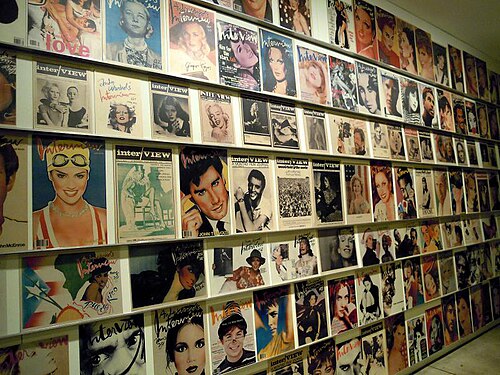
ピッツバーグの主な美術館には、アンディ・ウォーホル美術館、カーネギー美術館、フリック・ピッツバーグ、ピッツバーグ芸術センター、マットレス・ファクトリー、カーネギー自然史博物館などがあり、カーネギー自然史博物館には恐竜、鉱物、動物、エジプトのコレクションが豊富にあります。カミン科学センターと関連のスポーツワークスには、インタラクティブな技術と科学の展示があります。ジョン・ハインツ上院議員歴史センターと西ペンシルベニアスポーツ博物館は、ストリップ地区にあるスミソニアン協会の地域歴史博物館で、関連のフォート・ピット博物館はポイント州立公園内にあります。オークランドにあるソルジャーズ・アンド・セイラーズ・メモリアル・ホール&ミュージアムには、南北戦争から現在までの西ペンシルベニアの軍事展示があります。北側にあるピッツバーグ子供博物館には、子供向けのインタラクティブな展示があります。カテドラルオブ ラーニングのナショナリティ ルームでは、19 世紀以前の世界各地の学習環境を紹介しています。数多くの地区で、ガイド付きまたはガイドなしの建築ツアーが定期的に開催されています。ダウンタウンの文化地区では、四半期ごとのギャラリー クロールと、毎年恒例のスリー リバーズ アート フェスティバルが開催されます。ピッツバーグには、カーネギー メロン大学のミラー ギャラリー、ピッツバーグ大学のユニバーシティ アート ギャラリー、アメリカ ユダヤ博物館、ウッド ストリート ギャラリーなど、数多くのアート ギャラリーやセンターがあります。
ピッツバーグ動物園と水族館、フィップス温室と植物園、国立鳥園は、 1 世紀以上にわたってこの都市に貢献してきました。ピッツバーグには、遊園地のケニーウッドがあります。ピッツバーグには、州認可のカジノが数軒あります。リバーズ カジノは、オハイオ川沿いのノース ショアにあり、カミン サイエンス センターとアクリシュア スタジアムのすぐ西にあります。
ピッツバーグは、2006年以来毎年デイビッド・L・ローレンス・コンベンションセンターで開催されている、世界最大のファーリーコンベンションであるアントロコンの本拠地です。2024年のアントロコンには17,000人以上の来場者が訪れ、ピッツバーグでの11年間の開催期間中に5,300万ドルの累積経済効果をもたらしました。[169]
ライフタイムのリアリティ番組『ダンス・マム』はピッツバーグのアビー・リー・ダンス・カンパニーで撮影されている。
音楽
ピッツバーグにはジャズ、ブルース、ブルーグラス音楽の長い伝統がある。全米初のアフリカ系アメリカ人のみによるオペラ団として、ナショナル・ニグロ・オペラ・カンパニーがこの都市で設立された。これにより、オペラ界でレオンタイン・プライスのようなアフリカ系アメリカ人歌手が目立つようになった。20世紀最高のアメリカ人ミュージシャンで作曲家の一人であるビリー・ストレイホーンはピッツバーグで育ち、教育を受けた。ピアニストで作曲家兼編曲家のメアリー・ルー・ウィリアムズもピッツバーグで育ち、教育を受けた。ウィリアムズは1966年に故郷に捧げる同名の曲を作曲し、録音した。 [170]ボーカリストのレオン・トーマスをフィーチャーしている。[171]
ピッツバーグのウィズ・カリファは、最近ナンバーワンのレコードを出したアーティストだ。彼のアンセム「ブラック・アンド・イエロー」(ピッツバーグの公式カラーに捧げたもの)は、ビルボードの「ホット100」で2011年2月19日の週にナンバーワンになった。 [173] ペリー・コモとクリスティーナ・アギレラはピッツバーグ郊外の出身である。この都市は、バンド「ラステッド・ルート」が結成された場所でもある。ラステッド・ルートのリズ・ベルリンは、ピッツバーグで全国ツアーをするアーティストのための人気音楽会場「ミスター・スモールズ」を所有している。[174]ヒップホップアーティストのマック・ミラーもピッツバーグ出身で、デビューアルバム「ブルー・スライド・パーク」は地元のフリック・パークにちなんで名付けられた。
オース・ロットンやアンチ・フラッグなど、多くのパンク・ロックやハードコア・パンクのバンドはピッツバーグで生まれました。ピッツバーグでは近年、多くのメタルバンドが台頭してきました。[いつ? ]最も有名なのは、グラミー賞にノミネートされたコード・オレンジです。この都市は、非常に影響力のあるマスロックバンド、ドン・カバレロの本拠地でもありました。
ピッツバーグは、米国のヘビーメタル音楽シーンをリードする都市として浮上しました。MetalSucksが実施した調査で「最もメタルな都市」の第3位にランクインしたピッツバーグは、[175]ヘビーメタルコミュニティで評判を得ています。ピッツバーグには600を超えるヘビーメタルバンドがあり、[175]ヘビーメタルコーヒーショップやバーもあります。この都市はドゥームメタル、メタルコア、デスメタルシーンで知られています。
1990年代を通じて、ピッツバーグにはエレクトロニックミュージックの サブカルチャーが存在したが、その起源はデトロイト、クリーブランド、ミネアポリス、そして全米各地で起こった同様のインターネットのチャットルームをベースとしたムーブメントに遡ると考えられる。 [177] [178] [179]ピッツバーグのプロモーターやDJは、倉庫、スケートリンク、納屋、野原などでレイブを企画し、最終的には数千人の参加者を集め、その中には高校生やそれより若い人もいた。[178] [180] [181]イベントの人気が高まるにつれ、アダム・ベイヤーやリッチー・ホウティンなど世界的に有名なDJが参加するようになった。[178]ピッツバーグのレイブ文化自体が、少なくとも1人の有名なアーティスト、ドラムンベースのDJディーゼルボーイを生み出しました。ディーゼルボーイは1990年から1995年までピッツバーグ大学に通っていました。 [177] [182]
2012年以来、ピッツバーグは、批評家がヨーロッパのナイトクラブやパーティーに匹敵するアフターアワーのエレクトロニックミュージックダンスパーティー、ホットマスの本拠地となっている。 [183] [184]エレクトロニックミュージックアーティスト兼DJのヤエジは、ホットマスが彼女の「ナイトライフへの洗脳」であったと認めており、カーネギーメロン大学在学中に定期的にパーティーに参加していた。[185] [186]
劇場

The city's first play was produced at the old courthouse in 1803[27] and the first theater built in 1812.[27] Collegiate companies include the University of Pittsburgh's Repertory Theatre and Kuntu Repertory Theatre, Point Park University's resident companies at its Pittsburgh Playhouse, and Carnegie Mellon University's School of Drama productions and Scotch'n'Soda organization. The Duquesne University Red Masquers, founded in 1912, are the oldest, continuously producing theater company in Pennsylvania.[citation needed] The city's longest-running theater show, Friday Nite Improvs, is an improv jam that has been performed in the Cathedral of Learning and other locations for 20 years. The Pittsburgh New Works Festival utilizes local theater companies to stage productions of original one-act plays by playwrights from all parts of the country. Similarly, Future Ten showcases new ten-minute plays. Saint Vincent Summer Theatre, Off the Wall Productions, Mountain Playhouse, The Theatre Factory, and Stage Right! in nearby Latrobe, Carnegie, Jennerstown, Trafford, and Greensburg, respectively, employ Pittsburgh actors and contribute to the culture of the region.
Pittsburgh is well known for being home to the late playwright August Wilson.[187] The August Wilson House now remains in Pittsburgh to celebrate the life and work of August Wilson, continue to produce his plays, and serve as an arts center for the Hill District, where Wilson was from.[187]
Literature
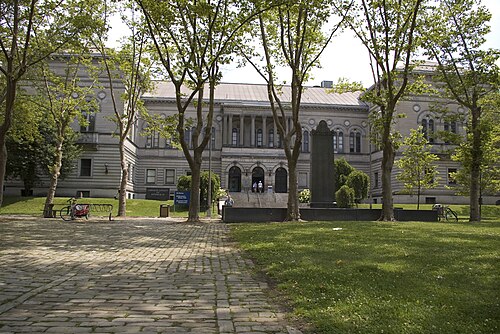
Pittsburgh is the birthplace of Gertrude Stein and Rachel Carson, a Chatham University graduate from the suburb of Springdale, Pennsylvania.[188] Modern writers include Pulitzer Prize-winning playwright August Wilson[189] and Michael Chabon with his Pittsburgh-focused commentary on student and college life. Two-time Pulitzer Prize winner and recipient of the Presidential Medal of Freedom, David McCullough was born and raised in Pittsburgh.[190] Annie Dillard, a Pulitzer Prize–winning writer, was born and raised in Pittsburgh. Much of her memoir An American Childhood takes place in post-World War II Pittsburgh. Award-winning author John Edgar Wideman grew up in Pittsburgh and has based several of his books, including the memoir Brothers and Keepers, in his hometown. Poet Terrance Hayes, winner of the 2010 National Book Award and a 2014 MacArthur Foundation Fellow, received his MFA from the University of Pittsburgh, where he is a faculty member. Poet Michael Simms, founder of Autumn House Press, resides in the Mount Washington neighborhood of Pittsburgh. Poet Samuel John Hazo, the first poet Laureate of Pennsylvania, resides in the city. Contemporary writers from Pittsburgh include Kathleen Tessaro, author of novels such as "Elegance," "The Perfume Collector," and "Rare Objects," whose works contribute to the city's rich literary tradition. New writers include Chris Kuzneski, who attended the University of Pittsburgh and mentions Pittsburgh in his works, and Pittsburgher Brian Celio, author of Catapult Soul, who captured the Pittsburgh 'Yinzer' dialect in his writing. Pittsburgh's unique literary style extends to playwrights,[191] as well as local graffiti and hip hop artists.
Pittsburgh's position as the birthplace for community owned television and networked commercial television helped spawn the modern children's show genres exemplified by Mister Rogers' Neighborhood, Where in the World is Carmen Sandiego?, Happy's Party, Cappelli & Company, and The Children's Corner, all nationally broadcast.
The Pittsburgh Dad series has showcased the Pittsburghese genre to a global YouTube audience since 2011.
The modern fantasy, macabre and science fiction genre was popularized by director George A. Romero, television's Bill Cardille and his Chiller Theatre,[192] director and writer Rusty Cundieff and makeup effects guru Tom Savini.[193] The genre continues today with the PARSEC science fiction organization,[194] The It's Alive Show, the annual "Zombie Fest",[195] and several writer's workshops including Write or Die,[196] Pittsburgh SouthWrites,[197] and Pittsburgh Worldwrights[198][199] with Barton Paul Levenson, Kenneth Chiacchia and Elizabeth Humphreys Penrose.
Food

Pittsburgh is known for several specialties including pierogies, kielbasa, chipped chopped ham sandwiches, and Klondike bars.[200][201] In 2019, Pittsburgh was deemed "Food City of the Year" by the San Francisco-based restaurant and hospitality consulting firm af&co.[202] Many restaurants were favorably mentioned, among them were Superior Motors in Braddock, Driftwood Oven in Lawrenceville, Spork in Bloomfield, Fish nor Fowl in Garfield, Bitter Ends Garden & Luncheonette in Bloomfield, and Rolling Pepperoni in Lawrenceville.[203]
Pittsburgh is home to the annual pickle-themed festival Picklesburgh, which has been named the "best specialty food festival in America".[204]
Local dialect
The Pittsburgh English dialect, commonly called Pittsburghese, was influenced by Scots-Irish, German, and Eastern European immigrants and African Americans.[205] Locals who speak the dialect are sometimes referred to as "Yinzers" (from the local word "yinz" [var. yunz], a blended form of "you ones", similar to "y'all" and "you all" in the South). Common Pittsburghese terms are: "slippy" (slippery), "redd up" (clean up), "jagger bush" (thorn bush), and "gum bands" (rubber bands). The dialect is also notable for dropping the verb "to be". In Pittsburghese one would say "the car needs washed" instead of "needs to be washed", "needs washing", or "needs a wash." The dialect has some tonal similarities to other nearby regional dialects of Erie and Baltimore but is noted for its somewhat staccato rhythms. The staccato qualities of the dialect are thought to originate either from Welsh or other European languages. The many local peculiarities have prompted The New York Times to describe Pittsburgh as "the Galapagos Islands of American dialect".[206] The lexicon itself contains notable loans from Polish and other European languages; examples include babushka, pierogi, and halušky.[207]
Livability

Pittsburgh has five city parks and several parks managed by the Nature Conservancy. The largest, Frick Park, provides 664 acres (269 ha) of woodland park with extensive hiking and biking trails throughout steep valleys and wooded slopes. Birding enthusiasts visit the Clayton Hill area of Frick Park, where over 100 species of birds have been recorded.[208]
Residents living in extremely low-lying areas near the rivers or one of the 1,400 creeks and streams may have occasional floods,[209] such as those caused when the remnants of Hurricane Ivan hit rainfall records in 2004.[210] River flooding is relatively rare due to federal flood control efforts extensively managing locks, dams, and reservoirs.[209][211][212] Residents living near smaller tributary streams are less protected from occasional flooding. The cost of a comprehensive flood control program for the region has been estimated at a prohibitive $50 billion.[209]
Pittsburgh has the greatest number of bars per capita in the nation.[17]
Sports
Pittsburgh hosted the first professional football game and the first World Series. In 2009, Pittsburgh won the Sporting News title of "Best Sports City" in the United States[213] and, in 2013, Sperling's Best Places "top 15 cities for baseball".[214] College sports also have large followings with the University of Pittsburgh in football and sharing Division I basketball fans with Robert Morris and Duquesne.
Pittsburgh has a long history with its major professional sports teams—the Steelers of the National Football League, the Penguins of the National Hockey League, and the Pirates of Major League Baseball—which all share the same team colors, the official city colors of black and gold.[f] Pittsburgh is the only city in the United States where this practice of sharing team colors in solidarity takes place.[215] The black-and-gold color scheme has since become widely associated with the city and personified in its famous Terrible Towel.[216]
The Pittsburgh Riverhounds are a professional soccer team who have been playing in Pittsburgh since they were established in 1999. They are a member of the USL Championship division, a second-tier league of US professional soccer and are in the league's Eastern Conference. The Riverhounds play their home matches at Highmark Stadium (Pennsylvania) a 5,000 seat soccer-specific stadium located in Pittsburgh's Station Square. In keeping with the uniformity of professional sports teams in Pittsburgh, the Riverhounds colors are black and gold.
"Rails to Trails", has converted miles of former rail tracks to recreational trails, including a Pittsburgh-Washington D.C. bike/walking trail.[217] Several mountain biking trails are within the city and suburbs, Frick Park has biking trails and Hartwood Acres Park has many miles of single track trails.[218][219]
Professional
Major league
Minor league/other
**Pittsburgh's ABA franchise won the 1968 title, but the Steel City Yellow Jackets franchise is heir to it only in location.
College
Power 5
Other
Baseball

[t]his is the perfect blend of location, history, design, comfort and baseball ... The best stadium in baseball is in Pittsburgh.
ESPN
The Pittsburgh Pirates baseball team, often referred to as the Bucs or the Buccos (derived from buccaneer), is the city's oldest professional sports franchise, having been founded in 1881, and plays in the Central Division of the National League. The Pirates are nine-time Pennant winners and five-time World Series Champions, were in the first World Series (1903) and claim two pre-World Series titles in 1901 and 1902. The Pirates play in PNC Park.
Pittsburgh also has a rich Negro league history, with the former Pittsburgh Crawfords and the Homestead Grays credited with as many as 14 league titles and 11 Hall of Famers between them in the 1930s and 1940s, while the Keystones fielded teams in the 1920s. In addition, in 1971 the Pirates were the first Major League team to field an all-minority lineup. One sportswriter claimed, "No city is more synonymous with black baseball than Pittsburgh."[220]
Since the late 20th century, the Pirates had three consecutive National League Championship Series appearances (1990–92) (going 6, 7 and 7 games each), followed by setting the MLB record for most consecutive losing seasons, with 20 from 1993 until 2012. This era was followed by three consecutive postseason appearances: the 2013 National League Division Series and the 2014–2015 Wild Card games. Their September pennant race in 1997 featured the franchises' last no-hitter and last award for Sporting News' Executive of the Year.[221]
Football

The city's professional team, NFL's Pittsburgh Steelers, is named after the distribution company the Pittsburgh Steeling company established in 1927. News of the team has preempted news of elections and other events and are important to the region and its diaspora. The Steelers have been owned by the Rooney family since the team's founding in 1933, show consistency in coaching (only three coaches since the 1960s all with the same basic philosophy) and are noted as one of sports' most respectable franchises.[222] The Steelers have a long waiting list for season tickets, and have sold out every home game since 1972.[223] The team won four Super Bowls in a six-year span in the 1970s, a fifth Super Bowl in 2006, and a league record sixth Super Bowl in 2009. Since the AFL-NFL merger in 1970 they have qualified for the most NFL playoff berths (28) and have played in (15) and hosted (11) the most NFL conference championship games.[citation needed]
High school football routinely attract 10,000 fans per game and extensive press coverage.[citation needed] The Tom Cruise film All the Right Moves and ESPN's Bound for Glory with Dick Butkus both filmed in the area to capture the tradition and passion of local high school football.
College football in the city dates to 1889[224] with the Division I (FBS) Panthers of the University of Pittsburgh posting nine national championships, qualifying 37 total bowl games, appearing in the 2018 ACC Championship Game, and winning the 2020 ACC Championship Game which was the program's first conference title since leaving the Big East for the ACC between the 2012 and 2013 seasons.[225] Local universities Duquesne and Robert Morris have loyal fan bases that follow their lower (FCS) teams. Duquesne, Carnegie Mellon University, and Washington & Jefferson College all posted major bowl games and AP Poll rankings from the 1920s to the 1940s as that era's equivalent of Top 25 FBS programs.[citation needed]
Acrisure Stadium serves as home for the Steelers, Panthers, and both the suburban and city high school championships. Playoff franchises Pittsburgh Power and Pittsburgh Gladiators competed in the Arena Football League in the 1980s and 2010s respectively. The Gladiators hosted ArenaBowl I in the city, competing in two, but losing both before moving to Tampa, Florida and becoming the Storm.[226] The Pittsburgh Passion has been the city's professional women's football team since 2002 and plays its home games at Highmark Stadium. The Ed Debartolo owned Pittsburgh Maulers featured a Heisman Trophy winner in the mid-1980s, former superstar University of Nebraska running back Mike Rozier.
Hockey
The NHL's Pittsburgh Penguins have played in Pittsburgh since the team's founding in 1967. The team has won 6 Eastern Conference titles (1991, 1992, 2008, 2009, 2016 and 2017) and 5 Stanley Cup championships (1991, 1992, 2009, 2016 and 2017). Since 1999, Hall of Famer and back-to-back playoff MVP Mario Lemieux has served as Penguins owner. Until moving into the PPG Paints Arena in 2010 (when it was known as Consol Energy Center), the team played their home games at the world's first retractable domed stadium, the Civic Arena, or in local parlance "The Igloo".[227]
Ice hockey has had a regional fan base since the 1890s semi-pro Keystones. The city's first ice rink dates back to 1889, when there was an ice rink at the Casino in Schenley Park. From 1896 to 1956, the Exposition Building on the Allegheny River near The Point and Duquesne Gardens in Oakland offered indoor skating.[228]
The NHL awarded one of its first franchises to the city in 1924 on the strength of the back-to-back USAHA championship winning Pittsburgh Yellow Jackets featuring future Hall of Famers and a Stanley Cup winning coach. The NHL's Pittsburgh Pirates made several Stanley Cup playoff runs with a future Hall of Famer before folding from Great Depression financial pressures. Hockey survived with the Pittsburgh Hornets farm team (1936–1967) and their seven finals appearances and three championships in 18 playoff seasons.
Robert Morris University fields a Division I college hockey team at the Island Sports Center. Pittsburgh has semi-pro and amateur teams such as the Pittsburgh Penguins Elite.[229] Pro-grade ice rinks such as the Rostraver Ice Garden, Mt. Lebanon Recreation Center and Iceoplex at Southpointe have trained several native Pittsburgh players for NHL play. RMU hosted the city's first Frozen Four college championship in 2013 with the four PPG Paints Arena games televised by ESPN.
Basketball

Professional basketball in Pittsburgh dates to the 1910s with teams "Monticello" and "Loendi" winning five national titles, the Pirates (1937–45 in the NBL), the Pittsburgh Ironmen (1947–48 NBA inaugural season), the Pittsburgh Rens (1961–63), the Pittsburgh Pipers (first American Basketball Association championship in 1968) led by Connie Hawkins (team then moved); the Pittsburgh Condors (ABA returned in 1970–72), the Pittsburgh Piranhas (CBA Finals in 1995), the Pittsburgh Xplosion (2004–08) and Phantoms (2009–10) both of the ABA. The city has hosted dozens of pre-season and 15 regular season "neutral site" NBA games, including Wilt Chamberlain's record setting performance in both consecutive field goals and field goal percentage on February 24, 1967, NBA records that still stand.[230]
The Duquesne University Dukes and the University of Pittsburgh Panthers have played college basketball in the city since 1914 and 1905 respectively. Pitt and Duquesne have played the annual City Game since 1932. Duquesne was the city's first team to appear in a Final Four (1940), obtain a number one AP Poll ranking (1954),[231] and to win a post-season national title, the 1955 National Invitation Tournament on its second straight trip to the NIT title game. Duquesne is the only college program to produce back-to-back NBA No. 1 overall draft picks with 1955's Dick Ricketts and 1956's Sihugo Green.[232] Duquesne's Chuck Cooper was the first African American drafted by an NBA team.[233]
The Panthers won two pre-tournament era Helms Athletic Foundation National Championships in 1928 and 1930, competed in a "national title game" against LSU in 1935, and made a Final Four appearance in 1941. Pitt has won 13 conference titles, qualified for the NCAA tournament 26 times including a post season tournament every season between 1999-2000 and 2015-2016 during which time it regularly sold out the Petersen Events Center. The program has produced 27 NBA draft picks and 15 All Americans while ranking No. 1 in the nation as recently as 2009. The Petersen Events Center is home to the "Oakland Zoo", a student section which is nationally recognized[234] for its passionate members and perseverance through consecutive unsuccessful seasons from 2016 to 2022.[235]
The suburban Robert Morris University's Colonials have competed in NCAA Division I basketball since the 1970s, qualifying for the NCAA tournament in each of the last four decades (8). In the 2013 National Invitation Tournament the Colonials notched an upset win over the defending national champions Kentucky Wildcats.
Pittsburgh Panthers women's basketball has qualified for 14 post season tournaments (including 4 NCAA tournaments) and boasts of 5 All-Americans selected 6 times with 3 WNBA players. Pitt women began play in 1914 before being reintroduced in 1970. Both Duquesne and Robert Morris also have competitive Division I women's basketball programs.
Pittsburgh launched the nation's first high school all-star game in 1965.[236] The Roundball Classic annually featured future NBA hall of famers at the Civic Arena with ESPN televising. The Civic Arena also hosted the championship tournament for the Eastern Eight Conference from 1978 until 1982.
Soccer
The Riverhounds, an American professional soccer team, were founded in 1998. Like the major league teams in the city, the Riverhounds wear black and gold kits. The club plays in the Eastern Conference of the USL Championship, the second tier of the American soccer pyramid. The Riverhounds play their home games at Highmark Stadium, a soccer-specific stadium located in Station Square.[citation needed]
Golf
Golf has deep roots in the area. The oldest U.S. course in continuous use, Foxburg Country Club dating from 1887 calls the region home. [237] Suburban Oakmont Country Club holds the record for most times as host for the U.S. Open (8).[citation needed] U.S. Women's Open (2), PGA Championships (3), and U.S. Amateurs (8) have also called Oakmont home.
Golf legends Arnold Palmer, Jim Furyk, and Rocco Mediate learned the game and began their careers on Pittsburgh area courses.[238] Suburban courses such as Laurel Valley Golf Club and the Fox Chapel Golf Club have hosted PGA Championships (1937, 1965), the Ryder Cup (1975), LPGA Championships (1957–58), Senior Players Championships (2012–14), and the Senior PGA Championship (2005).
Local courses have sponsored annual major tournaments for 40 years:
- Pennsylvania Open Championship 1920–1940 (even years)
- Dapper Dan Open 1939–1949
- Pittsburgh Open (LPGA Tour) 1956
- Pittsburgh Senior Classic 1993–1998
- 84 Lumber Classic 2001–2006
- Mylan Classic 2010–2013
Professional wrestling
Many notable professional wrestlers and promoters have hailed from the city or started their careers in Pittsburgh, including Bruno Sammartino, Kurt Angle, Shane Douglas, Corey Graves, Dominic DeNucci, Elias, Britt Baker and many more.
The Fineview section of Pittsburgh served as the base of the televised show Studio Wrestling during the 1960s.[239][240] The Keystone State Wrestling Alliance (KSWA) is a professional wrestling promotion which was founded in Pittsburgh in 2000. It is the only promotion based in Pittsburgh. It operates in the city's Lawrenceville neighborhood. The KSWA performs Monthly on Saturdays at its main venue on 51st Street.
Annual sporting events

Pittsburgh hosts several annual major sporting events initiated in the late 20th century, including the:
- Three Rivers Regatta (since 1977)
- Pittsburgh Vintage Grand Prix (since 1983)
- Dirty Dozen Cycle Race (since 1983)
- Pittsburgh Marathon (since 1985)
- Great Race 10K (since 1985)
- Head of the Ohio Regatta (since 1987)
The city's vibrant rivers have attracted annual world-title fishing competitions of the Forrest Wood Cup in 2009 and the Bassmaster Classic in 2005.
Annual events continue during the winter months at area ski resorts such as Boyce Park, Seven Springs, Hidden Valley Resort, Laurel Mountain, and Wisp. Ice skating rinks are enjoyed at PPG Place and North Park.
Government and politics
Government

The Government of Pittsburgh is composed of the Mayor of Pittsburgh, the Pittsburgh City Council, and various boards and commissions. The mayor and the nine-member council each serve four-year terms. Since the 1950s the Mayor's Chief of Staff has assumed a large role in advising, long term planning, and as a "gatekeeper" to the mayor. City council members are chosen by plurality elections in each of nine districts. The government's official offices are in the Pittsburgh City-County Building.
The Pennsylvania Supreme Court holds sessions in Pittsburgh, as well as Harrisburg and Philadelphia. Pittsburgh is represented in the Pennsylvania General Assembly by three Senate Districts and nine House Districts. Federally, Pittsburgh is part of Pennsylvania's 12th congressional district.
Politics

Biden: 40–50% 50–60% 60–70% 70–80% 80–90% 90–100%
Trump: 50–60% 60–70%
In 2006, Council President Luke Ravenstahl was sworn in as mayor at age 26, becoming the youngest mayor in the history of any major American city. His successor, Bill Peduto, was sworn in on January 6, 2014. In November 2021, Pittsburgh elected its first African-American mayor, Ed Gainey.
Prior to the American Civil War, Pittsburgh was strongly abolitionist. It is considered the birthplace of the national Republican Party,[241] as the party held its first convention here in February 1856. From the Civil War to the 1930s, Pittsburgh was a Republican stronghold. The effects of the Great Depression, combined with entrenched local GOP scandals, resulted in a shift among voters to the Democratic Party. With the exceptions of the 1973 and 1977 elections (where lifelong Democrats ran off the party ticket), Democrats have been elected consecutively to the mayor's office since the 1933 election. The city's ratio of party registration is 5 to 1 Democrat.[242]
Pittsburgh is represented in the Pennsylvania General Assembly by three Senate Districts (Lindsey Williams (D)-38, Wayne D. Fontana (D)-42, and Jay Costa (D)-43) and nine House Districts (Aerion Abney-19, Adam Ravenstahl-20, Sara Innamorato-21, Dan Frankel-23, Martell Covington-24, Dan Deasy-27, Abigail Salisbury-34, and Harry Readshaw-36, Dan Miller-42).
Federally, Pittsburgh is part of Pennsylvania's 12th congressional district, represented by Democrat Summer Lee since 2023 and also by Democrat Chris Deluzio.
Law enforcement
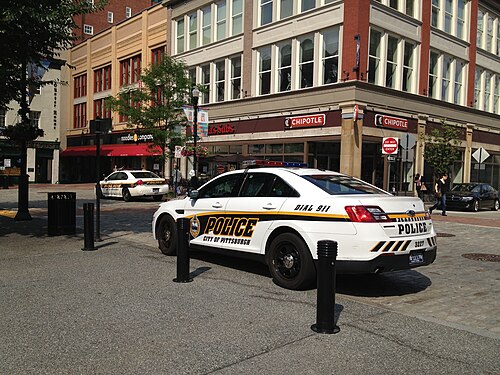
The area's largest law enforcement agency is the Pittsburgh Bureau of Police, with close to 850 sworn officers. The city also has separate housing and school police departments. Other agencies also provide police protection within the city because of overlapping jurisdictional boundaries. The Allegheny County Sheriff focuses on jail and courthouse security. The Allegheny County Police primarily patrols county-owned parks and airports, while providing detective/investigatory functions for smaller suburbs and the Port Authority police patrols rapid transit. Pennsylvania State Police Troop B provides patrols for the city and immediate suburbs.
The county's lead law enforcement officer is Allegheny County District Attorney Stephen Zappala while the Allegheny County Medical Examiner heads forensics. Crimes of a federal nature are covered by the U.S. Attorney for Western Pennsylvania.
Crime
Pittsburgh annually ranks as one of America's safest big cities, in 2013 being named the 3rd "most secure" big city by Farmers Insurance.[243] Among crime rates of the 60 largest U.S. cities, 43 had more instances of property crime while 16 had less when compared to Pittsburgh. More instances of violent crime were reported in 21 of the largest cities while 37 had less. The FBI recommends against using data for ranking.[244][245] Per 100,000 persons stats (2012):
At the end of 2019, the Pittsburgh Bureau of Police reported 37 murders in the city that year.[246]
In Pittsburgh, the homicide rate for African Americans is seven times the national average.[247] Some people believe that over-reliance on law enforcement exacerbates homicide rates.[247] There is also concern regarding the effectiveness of law enforcement in solving these cases, as 97% of unsolved cases involved a black victim.[248] This has led certain residents to believe law enforcement to be ineffective or apathetic.[248] This is despite an increasing police budget. In 2023, members of the Pittsburgh City Council approved an increase to the police budget by $6 million.[249] About 6% of this money is expected to go to the Stop the Violence trust fund. This fund goes to improving parks and recreation, various non-profits, and to the office of Community Health and Safety, in effort to holistically improve the social pressures supposedly causing violence in Pittsburgh.[250]
Some people do not believe these efforts to be adequate. Certain studies, such as conducted by the Police Scorecard, rate the Pittsburgh Police Department at 37% quality (with 100% being the best). They rated Pittsburgh below the 50th percentile in the categories “police budget cost per person,” “fines / forefeitures,” “Police Presence/Over-Policing (Officers per Population),” “Force Used per Arrest,” “Racial Disparities in Deadly Force,” “Excessive Force Complaints Upheld,” “Discrimination Complaints Upheld,” “Criminal Misconduct Complaints Upheld,” “Arrest Rate for Low Level Offenses,” and “Racial Disparities in Drug Arrests.” This is 10 out of 15 categories.[251]
Education
Colleges and universities
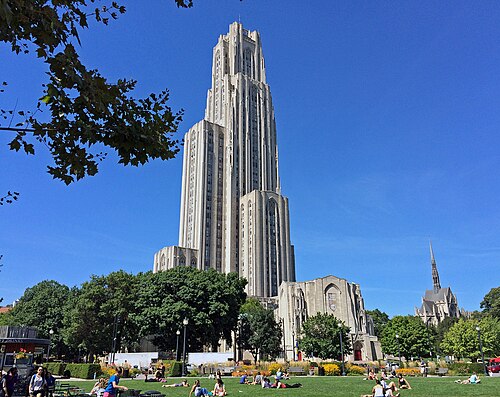

Pittsburgh is home to many colleges, universities and research facilities, the most well-known of which are Carnegie Mellon University, the University of Pittsburgh, and Duquesne University. Also in the city are Carlow University, Chatham University, Point Park University, the Community College of Allegheny County, Pittsburgh Theological Seminary, Reformed Presbyterian Theological Seminary, and the Pittsburgh Institute of Mortuary Science.
The campuses of Carlow, Carnegie Mellon, and the University of Pittsburgh are near each other in the Oakland neighborhood that is the city's traditional cultural center. Carnegie Mellon University (CMU) is a private research university founded by Andrew Carnegie and Andrew Mellon.[252] CMU contains the Mellon College of Science, School of Computer Science, College of Engineering, School of Business, Heinz College, College of Fine Arts, writing, Social and Decision Sciences, information systems, statistics, and psychology programs.
The University of Pittsburgh, established in 1787 and popularly referred to as "Pitt", is a state-related school with one of the nation's largest research programs.[14] Pitt is known for the University of Pittsburgh Graduate School of Public and International Affairs, University of Pittsburgh School of Information Sciences, Swanson School of Engineering, University of Pittsburgh College of Business Administration, University of Pittsburgh School of Law, University of Pittsburgh School of Medicine, University of Pittsburgh School of Social Work, and other biomedical and health-related sciences.[252][253][254][255][256]
Carlow University is a small private Catholic university that while coeducational, has traditionally educated women. Chatham University, a liberal arts college that was founded as a woman's college but became fully coeducational in 2015,[257] is in the Shadyside neighborhood, but also maintains a 388-acre (157 ha) Eden Hall Farm campus in the North Hills. Duquesne University, a private Catholic university in the Bluff neighborhood and is noted for its song and dance troupe, the Duquesne University Tamburitzans, as well as programs in law, business, and pharmacy. Point Park University was founded in 1961 and is well known for its Conservatory of Performing Arts and its Pittsburgh Playhouse.
Primary education

Pittsburgh Public Schools teachers are paid well relative to their peers, ranking 17th in 2000 among the 100 largest cities by population for the highest minimum salary. In 2018, the starting teacher salary offered to teachers with a BA was $46,920. The maximum annual salary for a teacher with a master's degree was $95,254.[258]
Local public schools include many charter and magnet schools, including City Charter High School (computer and technology focused), Pittsburgh Montessori School (formerly Homewood Montessori), Pittsburgh Gifted Center, Barack Obama Academy of International Studies 6-12, Pittsburgh Creative and Performing Arts 6–12, Pittsburgh Science and Technology Academy, the Western Pennsylvania School for Blind Children, and the Western Pennsylvania School for the Deaf.
Private schools in Pittsburgh include Bishop Canevin High School, Central Catholic High School, Oakland Catholic High School, Winchester Thurston School, St. Edmund's Academy, Hillel Academy of Pittsburgh, Yeshiva Schools and The Ellis School. Shady Side Academy maintains a PK–5 primary school campus in the Point Breeze neighborhood, in addition to its 6–12 middle and upper school campuses in nearby suburban Fox Chapel. Other private institutions outside of Pittsburgh's limits include North Catholic High School and Seton-La Salle Catholic High School.
The city also has an extensive library system, both public and university. Most notable are the Carnegie Library of Pittsburgh and the University of Pittsburgh's University Library System, which rank as the ninth-largest public and 18th-largest academic libraries in the nation, respectively.[259][260]
Media
Newspapers
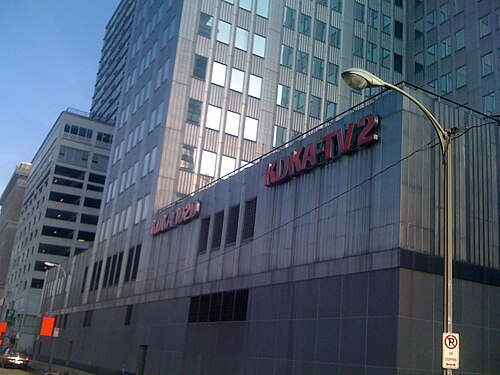
There are two major daily newspapers in Pittsburgh: the Pittsburgh Post-Gazette and the Pittsburgh Tribune-Review online only (no longer in print for Pittsburgh Area). Weekly papers in the region include the Pittsburgh Business Times, Pittsburgh City Paper, Pittsburgh Catholic, Pittsburgh Jewish Chronicle, The New People, and the New Pittsburgh Courier. Independent student-written university-based newspapers include The Pitt News of the University of Pittsburgh, The Tartan of Carnegie Mellon University, The Duquesne Duke of Duquesne University, and The Globe of Point Park University. The University of Pittsburgh School of Law is also home to JURIST, the world's only university-based legal news service.[261]
Television
The Pittsburgh metro area is served by multiple local television and radio stations. The Pittsburgh designated market area (DMA) is the 22nd-largest in the U.S. with 1,163,150 homes (1.045% of the total U.S.).[262] The major network television stations include KDKA-TV 2 (CBS), WTAE 4 (ABC), WPXI 11 (NBC), WINP-TV 16 (Ion), WPKD-TV 19 (Independent), WPNT 22 (The CW/MyNetworkTV), WPCB 40 (Cornerstone), and WPGH-TV 53 (Fox). KDKA-TV, WINP-TV, and WPCB are owned-and-operated by their respective networks.
WQED 13 is the local PBS member station in Pittsburgh. It was established on April 1, 1954, and was the first community-sponsored television station and the fifth public station in the United States. The station has produced much original content for PBS, including Mr. Rogers' Neighborhood, several National Geographic specials, and Where in the World is Carmen Sandiego?[263]
Radio
A wide variety of radio stations serve the Pittsburgh market. The first was KDKA 1020 AM, also the world's first commercially licensed radio station, which began airing on November 2, 1920.[264] Other stations include KQV 1410 AM (news), WBGG 970 AM (sports), KDKA-FM 93.7 FM (sports), WKST-FM 96.1 FM (Top 40), WAMO-AM 660 AM and 107.3 FM (urban contemporary) WBZZ 100.7 FM (adult contemporary), WDVE 102.5 FM (album rock), WPGB 104.7 FM (Country), and WXDX 105.9 FM (modern rock). There are also three public radio stations in the area: WESA 90.5 FM (National Public Radio affiliate), WQED 89.3 FM (classical), and WYEP 91.3 FM (adult alternative). Three non-commercial stations are run by Carnegie Mellon University (WRCT 88.3 FM), the University of Pittsburgh (WPTS 92.1 FM), and Point Park University (WPPJ 670 AM).
Film
Pittsburgh's 116-year-old film industry accelerated after the 2006 passage of the Pennsylvania Film Production Tax Credit.[265] According to the Pittsburgh Film Office, over 124 major motion pictures have been filmed, in whole or in part, in Pittsburgh, including The Mothman Prophecies, Wonder Boys,[266] Dogma,[266] Hoffa, The Silence of the Lambs,[266] Sudden Death, Flashdance,[266] Southpaw, Striking Distance, Mrs. Soffel, Jack Reacher, Inspector Gadget, The Next Three Days, The Perks of Being a Wallflower,[266] Zack and Miri Make a Porno, and Fences.[266][267] Pittsburgh became "Gotham City" in 2011 during filming of The Dark Knight Rises.[161] George A. Romero shot nearly all his films in the area, including his Living Dead series.[268]
Film production in Pittsburgh has notably impacted the region's economy and job creation, largely due to the 25% tax credit incentive established in 2007.[269][270] The Pittsburgh Film Office states that the film and television industry provides employment to over 10,000 people and pays over $500 million in wages in southwestern Pennsylvania.[271] Furthermore, the industry supports over 345,000 local businesses and contributes over $41 billion to them.[270]
From 2017 to 2023, Pittsburgh has welcomed a series of major film and television productions like Fences, Mindhunter, Ma Rainey's Black Bottom, Sweet Girl, and I'm Your Woman.[272] These productions have significantly contributed to the local economy by hiring local personnel, leasing local facilities and equipment, purchasing local goods and services, and enhancing local tourism and visibility.[273]
In addition to a thriving film industry, Pittsburgh is home to several film festivals, film schools, and organizations that encourage and promote independent and diverse filmmakers. Notable film festivals include the Three Rivers Film Festival, the Pittsburgh Shorts Film Festival, the JFilm Festival, the ReelAbilities Film Festival, and the Black Bottom Film Festival.[274][275] The local film schools include Pittsburgh Filmmakers, Point Park University - Cinema & Digital Arts, and University of Pittsburgh - Film Studies.[276][277]
Moreover, Pittsburgh is developing a robust film studio infrastructure, with several sound stages and production facilities available for hire. Prominent film studios in Pittsburgh are 3 Rivers Studios, Cinelease Studios, Post Script Films, Deeplocal, and The Videohouse.[278][279][280][281][282] There are also plans in the pipeline to develop a new film studio complex at the Carrie Furnace site in Rankin and Swissvale.[283]
Utilities
The city is served by Duquesne Light, one of the original 1912 power companies founded by George Westinghouse.[284] Water service is provided by the Pittsburgh Water and Sewer Authority[285] and Pennsylvania American Water. Natural gas is provided by Equitable Gas, Columbia Gas, Dominion Resources, Direct Energy, and Novec.[286]
Health care

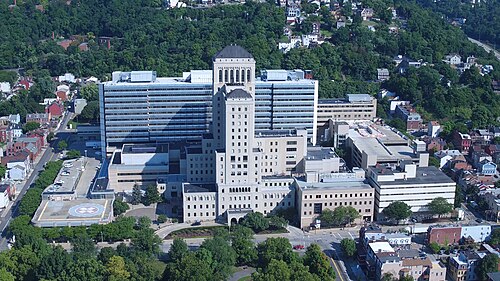
The two largest area health care providers are the University of Pittsburgh Medical Center (UPMC) (since 1893) and Allegheny Health Network (since 1882). Both hospitals annually rank as among the best overall in the United States, with UPMC ranked among U.S. News & World Report's "Honor Roll" every year since 2000.[citation needed]
The first military hospital in U.S. history and the first west of the Atlantic Plain—General Edward Hand Hospital—served the area from 1777 to 1845.[287] Since 1847, Pittsburgh has hosted the world's first "Mercy Hospital".[288] This was followed by West Penn hospital in 1848, Passavant Hospital in 1849,[27] the University of Pittsburgh School of Medicine in 1883, Children's Hospital in 1887, and Magee Womens Hospital in 1911. In 1954, Allegheny General (AGH) was among the first to administer Cobalt therapy.[289]
In 1980, UPMC announced a $250 million ($1.05 billion today) expansion and also hired transplant pioneer Thomas Starzl.[290] In 1984, Allegheny General surgeons pioneered modern brain surgery. Starzl arranged the 1985 liver transplant of 5-year-old Amie Garrison as a UPMC surgery team flew to Baylor University, starting its transplant program.[291] Also in 1985, UPMC surgeons Drs. Griffith, Hardesty, and Trento revealed a new device after a heart-lung transplant. In 1986, UPMC announced a $230 million ($639 million today) modernization. In 1996, UPMC's planned Sicily ISMETT branch was approved by the Italian government as transplant surgeons to supervise and deliver the world's third (both earlier ones done at UPMC)--and first public—cross species marrow transplant at University of California, San Francisco.[292] UPMC's Thomas Detre founded the International Society for Bipolar Disorders at a world medical conference in Pittsburgh in 1999.[293]
The $80 million ($142 million today) UPMC Sports Performance Complex for the Pittsburgh Panthers & Pittsburgh Steelers opened in 2000. In 2002, AGH opened its $30 million ($51.6 million today), 5-floor, 100,000 sq. ft., cancer center. The $130 million ($220 million today) 350,000 sq. ft. Hillman Cancer Center opened in 2003 as UPMC entered into an 8-year, $420 million ($678 million today) agreement with IBM to upgrade medical technologies & health information systems.[citation needed]
In 2009, the $600 million ($849 million today) UPMC Children's Hospital of Pittsburgh opened. The campus was featured in world news in 2012 for several unique approaches to patient care.[294] UPMC officially adopted in Erie, Pennsylvania's Hamot Medical Center in 2010. The Pittsburgh Penguins announced a state of the art training facility with UPMC in 2012.[295] UPMC announced in 2013 it had partnered with Nazarbayev University to help found its medical school.[296]
Health discoveries
While he was a professor at the University of Pittsburgh, American virologist Jonas Salk developed one of the first successful polio vaccines, which came into use in 1955.
UPMC has pioneered several world firsts including the first known cystic fibrosis heart-lung transplant (1983), the world's first simultaneous liver and heart transplant operation on a child (6-year-old Stormie Jones in 1984), the youngest heart-lung transplant (9 years old in 1985), the world's first heart-liver-kidney transplant (1989), the world's first heart-liver transplant on an infant (1997),[297] the first pediatric heart-double lung-liver transplant (1998), the nation's first double hand transplant (2009), and the first total forearm and hand transplant (2010), as well as the state's first heart transplant (1968).[298][299]
The Lancet published a 2012 UPMC study of two 9-year quadriplegics being able to move a robotic arm by thought, to pick up objects, shake hands, and even eat. Wiring the brain around spine damage to restore arm and leg muscle function was successful using robotic arms controlled via an embedded computer to translate signals near a small group of neurons with 200 needles.[300]
Transportation

Pittsburgh is a city of bridges. With 446,[301] it has three bridges more than Venice, Italy, which has historically held the title "City of Bridges."[302] Around 40 bridges cross the three rivers near the city. The Smithfield Street Bridge was the world's first lenticular truss bridge. The city's Three Sisters Bridges offer a picturesque view of the city from the North. The south-western "entrance" to Downtown for travelers coming in from Interstate 79 and the Pittsburgh International Airport is through the Fort Pitt Tunnel and over the Fort Pitt Bridge. The Fort Duquesne Bridge carrying Interstate 279 is the main gateway from Downtown to both PNC Park, Acrisure Stadium and the Rivers Casino. The Panhandle Bridge carries Pittsburgh Regional Transit's Blue/Red/Silver subway lines across the Monongahela River. The renovated J&L Steel Company bridge has been a key traffic/running-biking trail conduit connecting the Southside Works and Pittsburgh Technology Center. Over 2,000 bridges span the landscape of Allegheny County.[303]
Public transportation statistics
Pittsburgh is served by Pittsburgh Regional Transit, the 26th-largest transit agency in the country prior to the COVID-19 pandemic. The average amount of time people spend commuting with public transit in Pittsburgh, for example to and from work, on a weekday is 73 min. 23% of public transit riders ride for more than 2 hours every day. The average amount of time people wait at a stop or station for public transit is 17 minutes, while 33% of riders wait for over 20 minutes on average every day. The average distance people usually ride in a single trip with public transit is 3.9 mi (6.3 km), while 11% travel for over 7.5 mi (12 km) in a single direction.[304]
Expressways and highways

Locals refer to the interstates fanning out from downtown Pittsburgh as the "parkways." Interstate 376 is both the "parkway east" connecting to Interstate 76 (Pennsylvania Turnpike) and the "parkway west" connecting to Interstate 79, the Pittsburgh International Airport, the Ohio end of the Turnpike and Interstate 80. The "parkway north" is Interstate 279 connecting to I-79. The "crosstown" is Interstate 579 allowing access to the heart of downtown, the Liberty Tunnels and the PPG Paints Arena. The 45-mile-long and 70-mile-long expressway sections of Pennsylvania Route 28 and U.S. Route 22 also carry traffic from downtown to the northeast and western suburbs, respectively. Interstate 70, 79 and 76 (the Turnpike) roughly form a triangular-shaped "beltway" with Interstate 68 and 80 within the media market's northern and southern limits. Turnpike spurs such as the Mon–Fayette Expressway, Pennsylvania Route 576 and Route 66 also help traffic flow. The non-expressway Pittsburgh/Allegheny County Belt System serves navigation in the region.
Airports
Pittsburgh International Airport provides commercial passenger service from over 15 airlines to the Pittsburgh metropolitan area. Arnold Palmer Regional Airport also provides limited commercial passenger service and is 44 miles (71 km) east of Pittsburgh.
Other airports that have or have had scheduled commercial service include Morgantown Municipal Airport (79 miles (127 km) south of Pittsburgh), Youngstown–Warren Regional Airport (81 miles (130 km) northwest of Pittsburgh), Akron–Canton Airport (120 miles (190 km) northwest of Pittsburgh), Johnstown–Cambria County Airport (60 miles (97 km) east of Pittsburgh) and Erie International Airport (123 miles (198 km) north of Pittsburgh).
Intercity passenger rail and bus
Amtrak provides intercity rail service to Pittsburgh Union Station, via the Capitol Limited between Chicago and Washington, D.C., and the Pennsylvanian to New York City.
Megabus, Greyhound Lines, and Fullington Trailways connect Pittsburgh with distant cities by bus; Greyhound and Fullington Trailways buses stop at the Grant Street Transportation Center intercity bus terminal. Popular destinations include Philadelphia, New York City, and Washington, D.C.[305]
Until declines in passenger travel in the 1950s and 1960s, several stations served Pittsburgh: Baltimore & Ohio Station, Pittsburgh & Lake Erie Railroad Station, Wabash Pittsburgh Terminal and Pittsburgh Union Station.
Regional mass transit
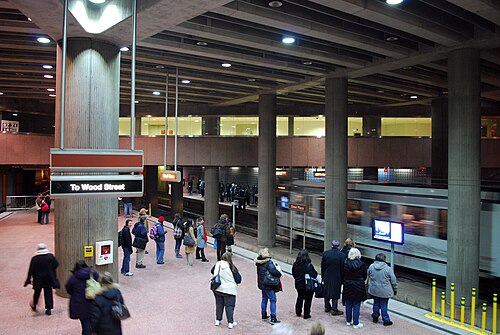
Pittsburgh Regional Transit, formerly known as the Port Authority of Allegheny County, is the region's mass transit system. While serving only a portion of the Pittsburgh area, the nation's 20th-largest metropolitan area, it is the 11th-largest transit agency in the United States.[306] Pittsburgh Regional Transit runs a network of intracity and intercity bus routes, the Monongahela Incline Funicular railway (more commonly known as an "incline") on Mount Washington, a light rail system that runs mostly above-ground in the suburbs and underground as a subway in the city, and one of the nation's largest busway systems.[307] Pittsburgh Regional Transit owns the Duquesne Incline but it is operated by a non-profit preservation trust,[308] but accepts Pittsburgh Regional Transit passes and charges PRT fares.
The Bus System lines are labeled by number and letter. These are the largest portion of Pittsburgh Regional Transit and serve on streets and designated busways. Buses serve most of the county, extending as far as Pittsburgh International Airport, Monroeville, McCandless, and the borders of Westmoreland County and Beaver County, Pennsylvania. Meanwhile, the light rail system (commonly known as the "T") runs along both new tracks and those refurbished from the streetcar era. The light rail runs from Acrisure Stadium to South Hills Village and Library, taking commuters through one of two routes: one which serves Castle Shannon, Mt. Lebanon, and Beechview, and the other is an express line using railways through Overbrook.
Freight rail
.jpg/500px-Pittsburgh_Penn_Station_(6962200876).jpg)
Pittsburgh's rail industry dates to 1851 when the Pennsylvania Railroad first opened service between the Pittsburgh and Philadelphia. The Baltimore and Ohio Railroad entered the city in 1871. In 1865, Andrew Carnegie opened the Pittsburgh Locomotive and Car Works, which manufactured for the industry until 1919. Carnegie also founded the Union Railroad in 1894 for heavy freight services and it still serves the area's steel industry, while George Westinghouse's Wabtec has been a leader in rail engines and switching since 1869.
Pittsburgh is home to one of Norfolk Southern Railway's busiest freight corridors, the Pittsburgh Line, and operates up to 70 trains per day through the city. The suburban Conway Rail Yard, built in 1889, was the largest freight rail center in the world from 1956 until 1980 and is today the nation's second-largest. CSX, the other major freight railroad in the eastern U.S., also has major operations around Pittsburgh.
Port
The Port of Pittsburgh ranks as the 20th-largest port in the United States with almost 34 million short tons of river cargo for 2011, the port ranked ninth-largest in the U.S. when measured in domestic trade.[309]
Notable people
Sister cities
Pittsburgh's sister cities are:[310]
 Bilbao, Spain
 Da Nang, Vietnam
 Fernando de la Mora, Paraguay
 Gaziantep, Turkey
 Glasgow, Scotland
 Karmiel, Israel
 Matanzas, Cuba
- Misgav, Israel
 Naucalpan, Mexico
 Ostrava, Czech Republic
 Prešov, Slovakia
 Saarbrücken, Germany
 Saitama, Japan
 San Isidro, Nicaragua
 Sheffield, England[g]
 Skopje, North Macedonia
 Sofia, Bulgaria
 Wuhan, China
 Zagreb, Croatia

See also


- Greater Pittsburgh Region
- List of fiction set in Pittsburgh
- List of municipalities in Pennsylvania
- List of people from Pittsburgh
Explanatory notes
- ^ The neighborhoods are Arlington Heights, Bluff, Brighton Heights, Crafton Heights, Duquesne Heights, East Hills, Fineview, Highland Park, Middle Hill, Mount Oliver, Mount Washington, Northview Heights, Perry North (also known as Observatory Hill), Perry South (also known as Perry Hilltop), Polish Hill, Ridgemont, South Side Slopes, Spring Hill-City View, Squirrel Hill, Stanton Heights, Summer Hill, Troy Hill, and Upper Hill.
- ^ The warmest daily minimum at the current observation location, Pittsburgh Int'l, is only 77 °F (25 °C) on July 23, 2010, and July 16, 1980.[76]
- ^ Mean monthly maxima and minima (i.e. the highest and lowest temperature readings during an entire month or year) calculated based on data at said location from 1991 to 2020.
- ^ Records kept September 1874 to June 1935 at the Weather Bureau Office across the Allegheny River from downtown, at Allegheny County Airport from July 1935 to 14 September 1952, and at Pittsburgh Int'l (KPIT) since 15 September 1952. Due to its river valley and urban location as well as elevation, many of the summertime warm minima temperature records set at the WBO have not even come close to being matched at KPIT, which is at-elevation and located in the western suburbs. For more information, see Threadex
- ^ a b From 15% sample
- ^ The Pittsburgh Power of the Arena Football League and the Pittsburgh Passion of the Independent Women's Football League (IWFL) use these colors as well.
- ^ Pittsburgh and Sheffield are both known as Steel City for their connections with the steel industry.
References
- ^ "ArcGIS REST Services Directory". United States Census Bureau. Retrieved October 16, 2022.
- ^ a b "Census Population API". United States Census Bureau. Retrieved October 12, 2022.
- ^ "2020 Population and Housing State Data". United States Census Bureau. Retrieved November 14, 2021.
- ^ Deto, Ryan (August 8, 2023). "Lawrence County added to Pittsburgh metro area". TribLIVE.com. Archived from the original on August 11, 2023. Retrieved January 4, 2024.
the Pittsburgh metro area now includes eight counties: Allegheny, Armstrong, Beaver, Butler, Fayette, Lawrence, Washington and Westmoreland
- ^ "Total Real Gross Domestic Product for Pittsburgh, PA (MSA)". fred.stlouisfed.org.
- ^ "Approved Markers". Pennsylvania Historical and Museum Commission. Commonwealth of Pennsylvania. Retrieved December 26, 2018.
- ^ "Pittsburgh". Encyclopaedia Britannica. November 28, 2023.
- ^ a b
- Pittsburgh's heart of steel still beats amid transformed city USA Today David J. Lynch (September 22, 2009).
- Just How Many Bridges Are There In Pittsburgh? (September 13, 2006).
- Bridges Of Pittsburgh As Varied As The City Chicago Tribune (October 18, 1987).
- Pittsburgh has Plenty of Bridges from KDKA-TV (June 16, 2006).
- ^
- Virginia-Pennsylvania Boundary from Virginiaplaces.org.
- Fortifying Pittsburgh in 1863 from Bivouacbooks.com.
- Eyewitness: 1949, TV makes Pittsburgh 'A New Promise' Pittsburgh Post-Gazette (May 16, 2010)
- City Cable TV Viewers Talk Back With 'QUBE'. Pittsburgh Press (April 14, 1982)
- Cable TV firms battle to win big city contract Pittsburgh Press (August 13, 1979)
- ^
- Pittsburgh takes 3rd: Creative Wealth from Carnegie Mellon University (August 2, 2008)
- Pittsburgh still 3rd in Fortune list Michael Schroeder Pittsburgh Post-Gazette (April 19, 1983)
- Rockwell Shifts Headquarters to Calif. Len Barcousky Pittsburgh Post-Gazette (May 25, 1988)
- 'Bank' building short in statue, long on style Pittsburgh Tribune-Review (April 19, 2009)
- Stock Exchange Here Closes Its Doors Douglas Smock Pittsburgh Post-Gazette (August 24, 1974)
- ^ a b
- And the Wolf Finally Came: The Decline and Fall of the American Steel Industry
John P. Hoerr, University of Pittsburgh Press, 1988 ISBN 978-0-8229-5398-2 - Innovate or Die? Pittsburgh Chose to Innovate Courtney Sanders U.S. Chamber of Commerce (February 12, 2014)
- Pittsburgh's Shaky Economy In Worst Shape Since 1940s Observer-Reporter (July 9, 1982)
- In desperate 1983, there was nowhere for Pittsburgh's economy to go but up Pittsburgh Post-Gazette (December 23, 2012)
- East Pittsburgh crunch. The Pittsburgh Press (May 5, 1987)
- U.S. Steel Layoff Total Hits 40%. The Pittsburgh Press (April 14, 1982)
- And the Wolf Finally Came: The Decline and Fall of the American Steel Industry
- ^ "30 Years: Pittsburgh moves from heavy industry to medicine, tech, energy". Pittsburgh Post-Gazette.
- ^ a b c d e Lubove, Roy (1995). Twentieth Century Pittsburgh Volume 1: Government, Business, and Environmental Change. University of Pittsburgh Press. pp. 106–141. doi:10.2307/j.ctt9qh7tx. ISBN 978-0-8229-5551-1. JSTOR j.ctt9qh7tx.
- ^ a b
- Universities Report Highest-Ever R&D Spending of $6 Billion in FY 2011 Ronda Britt, InfoBrief National Science Foundation (November, 2012)
- Universities and Incubators Pittsburgh Today (July 11, 2012)
- Pittsburgh's smart; survey says so Debra Erdley Tribune-Review (June 25, 2013)
- ^
- Google, Intel and Apple offices in Pittsburgh from CarnegieMellon.edu. as well as a Pittsburgh Post-Gazette feature
- Eaton Electronics headquarters
- McKesson Automation headquarters
- 1,600 tech firms from NPR's December 2010: "From Steel to Tech, Pittsburgh transforms itself"
- $20.7 billion in technology payrolls from Pittsburgh Tech Council's "About us".
- $18.2 billion to local economy from Pittsburgh Business Journal
- Silicon Valley is dying PS Magazine.
- Federal Cyber Defense from the National Cyber-Forensics & Training Alliance's "Contact Us" and CERT.org's 2011's "About Us".
- Federal Robotics from the National Robotics Engineering Center's "History"
- ^
- Pittsburgh employment numbers better than similar cities Dec. 10 2014 Pittsburgh Post-Gazette
- Growth of jobs locally bucks nationwide trend Joe Napsha, Pittsburgh Tribune-Review (8/2/2008)
- Pittsburgh region sees 11th consecutive month of home sales increases Pittsburgh Post-Gazette (9/28/2012)
- Warning: Your Reality is Out of Date Samuel Arbesman The Boston Globe (2/28/2010)
- Pittsburgh Booming Jim Russell Pacific Standard (7/22/2013)
- Survival Lesson in Pittsburgh: Shedding an Industrial Past David Streitfeld The New York Times (1/8/2009)
- Pittsburgh’s new housing boom stays strong Sam Spatter, Pittsburgh Tribune-Review (3/9/2013)
- The NLJ 350 The National Law Journal Top 350 firms.
- Zillow Negative Equity Map Zillow.com
- ^ a b Ritenbaugh, Stephanie (May 14, 2014). "In The Lead: Pittsburgh leads with the most bars per person". Pittsburgh Post-Gazette. Archived from the original on May 15, 2014. Retrieved May 14, 2014.
- ^ a b c "How to Spell Pittsburgh". Carnegie Library of Pittsburgh. Archived from the original on October 1, 2008. Retrieved September 22, 2006.
- ^ Conradt, Stacy (October 1, 2013). "How Pittsburgh Got Its "H" Back". Mental Floss. Retrieved May 18, 2019.
- ^ "Pittsburgh Facts". Pittsburgh Post-Gazette. January 1, 2003. Archived from the original on May 31, 2012. Retrieved October 21, 2007.
- ^ "An ACT to erect the town of Pittsburgh ..." Carnegie Library of Pittsburgh. Archived from the original on July 6, 2007. Retrieved September 22, 2006.
- ^ Stewart, George R. (1967) [1945]. Names on the Land: A Historical Account of Place-Naming in the United States (Sentry edition (3rd) ed.). Houghton Mifflin. pp. 342–344.
- ^ Lowry, Patricia (July 17, 2011). "Are yinz from Pittsburg?". The Next Page. Pittsburgh Post-Gazette. Retrieved March 14, 2023.
- ^ Solon J. Buck, Elizabeth Buck, The Planting of Civilization in Western Pennsylvania, 1976, Google Boeken. Books.google.com. Retrieved on July 17, 2013.
- ^ Hanna, Charles A. (Charles Augustus) (December 6, 1911). "The wilderness trail; or, The ventures and adventures of the Pennsylvania traders on the Allegheny path, with some new annals of the Old West, and the records of some strong men and some bad ones". New York, London, G.P. Putnam's Sons – via Internet Archive.
- ^ "friendsoftheriverfront.org". Friendsoftheriverfront.org. Archived from the original on January 11, 2008. Retrieved January 5, 2009.
- ^ a b c d e "Historic Pittsburgh: Chronology". University of Pittsburgh Library System. Retrieved December 26, 2017.
- ^ "The Battle of the Monongahela". World Digital Library. 1755. Retrieved August 3, 2013.
- ^ a b Lorant, Stefan (1999). Pittsburgh, The Story of an American City (5th ed.). Esselmont Books, LLC. ISBN 978-0-685-92012-1.
- ^ "Pittsburgh". Encyclopædia. 2008. Retrieved November 6, 2008.
- ^ White, Phillip M. (June 2, 2011). American Indian Chronology: Chronologies of the American Mosaic. Greenwood Publishing Group. p. 44.
- ^ Ranlet, Phillip (2000). The British, the Indians, and smallpox: what actually happened at Fort Pitt in 1763? Pennsylvania history; 67(3).
- ^ Dixon, David (2005). Never Come to Peace Again: Pontiac's Uprising and the Fate of the British Empire in North America. University of Oklahoma Press.
- ^ Chamber of Commerce of Pittsburgh (1921). Pittsburgh First, the Official Organ of The Chamber of Commerce of Pittsburgh.
- ^ Full text of "The county court for the district of West Augusta, Virginia, held at Augusta town, near Washington, Pennsylvania, 1776–1777". Archive.org. Retrieved on July 17, 2013.
- ^ "A brief history of Greene County and its courts: a struggle for possession" (PDF).
- ^ Christopher, Joan (December 9, 2005). "Constables for 1771". Pa-roots.org. Archived from the original on August 22, 2016. Retrieved May 24, 2016.
- ^ Bauder, Bob (March 10, 2019). "Pittsburgh recognized as starting point for Lewis and Clark expedition". Pittsburgh Tribune Review.
- ^ O'NEILL, BRIAN (May 13, 2018). "Lewis & Clark started here (sorry, St. Louis)". Pittsburgh Post-Gazette.
- ^ a b William J. Switala, Underground Railroad in Pennsylvania, Stackpole Books, 2001, pp. 88-89
- ^ Exhibit: Free at Last? Slavery in Pittsburgh in the 18th and 19th Centuries, 2009, University of Pittsburgh Library
- ^ "Vintage Map of Pittsburgh, Pennsylvania 1902 - Ted's Vintage Art". Teds Vintage Art - Buy Historic Art Prints & Wall Decor. Retrieved June 3, 2019.
- ^ PRECLÍK, Vratislav. Masaryk a legie (Masaryk and legions), váz. kniha, 219 str., vydalo nakladatelství Paris Karviná, Žižkova 2379 (734 01 Karviná) ve spolupráci s Masarykovým demokratickým hnutím (Masaryk democratic movement, Prague), 2019, ISBN 978-80-87173-47-3, s. 8 - 48, s. 84 - 124, s. 125 - 148, s. 157, s. 164 - 169, s. 170 - 194
- ^ "Race and Hispanic Origin for Selected Cities and Other Places: Earliest Census to 1990". U.S. Census Bureau. Archived from the original on August 12, 2012. Retrieved January 3, 2012.
- ^ Boucher, Amber (February 18, 2003). "Kids' Corner: 1910-30 saw huge black migration". Pittsburgh Post-Gazette. Archived from the original on December 9, 2018. Retrieved May 18, 2019.
- ^ Lubove, Roy, ed. Pittsburgh. New York: New Viewpoints, 1976.
- ^ "The Pittsburgh Press – Google News Archive Search". Retrieved June 11, 2015.
- ^ "The Way We Were". November 21, 2013. Retrieved June 11, 2015.
- ^ Kalson, Sally (November 19, 2003). "Cartoonist draws, fires a blank with Pittsburgh joke". Pittsburgh Post-Gazette.
- ^ Briem, Christopher (December 30, 2011). "More Pittsburgh real estate trends". Nullspace. Retrieved January 1, 2012.
- ^ "US to host next G20 world meeting". BBC News. May 28, 2009. Retrieved May 22, 2010.
- ^ "Level III Ecoregions of Pennsylvania". U.S. Environmental Protection Agency. Archived from the original on February 3, 2021. Retrieved September 29, 2013.
- ^ Lowry, Patricia (March 16, 2004). "Learning the steps: Pitt researcher fell for city's stairs and has published a book that maps them". Pittsburgh Post-Gazette. Retrieved December 4, 2021.
- ^ Bob Regan, Pittsburgh Steps, The Story of the City's Public Stairways, Globe Pequot, ISBN 978-1-4930-1384-5
- ^ "Golden Triangle (Pittsburgh)". Emporis.com. Archived from the original on November 4, 2012. Retrieved April 11, 2009.
{{cite web}}: CS1 maint: unfit URL (link) - ^ "Pittsburgh Neighborhoods". City of Pittsburgh Portal. Archived from the original on June 29, 2007. Retrieved July 17, 2007.
- ^ "U.S. Steel Tower, Pittsburgh". Emporis Buildings. Archived from the original on April 1, 2012. Retrieved July 17, 2007.
{{cite web}}: CS1 maint: unfit URL (link) - ^ "Port Authority Map of Pittsburgh, PA". Pittsburgh Port Authority. Archived from the original on February 21, 2015. Retrieved February 22, 2015.
- ^ Allegheny City: A History of Pittsburgh's North Side by Dan Rooney and Carol Peterson
- ^ O'Neill, Brian (January 8, 2014). "Rising home prices tell Pittsburgh's uplifting story". Pittsburgh Post-Gazette.
- ^ "American Eagle Outfitters Announces Pittsburgh's SouthSide Works Location As New Corporate Headquarters" (Press release). American Eagle Outfitters. October 21, 2005. Archived from the original on July 17, 2012. Retrieved October 21, 2007.
- ^ "Pittsburgh Strong: Historic Tribute to a Vibrant Jewish Community". October 29, 2018.
- ^ Young, Virginia Alvino (February 9, 2018). "'Smoketown' Traces The Rise And Fall Of The Other Great Black Renaissance In Pittsburgh". www.wesa.fm. Retrieved February 3, 2020.
- ^ Toker, Franklin (2009). "Chapter 2: Downtown: A Golden Triangle" (PDF). Pittsburgh: A New Portrait. University of Pittsburgh Press. p. 77. ISBN 978-0-8229-4371-6.
- ^ "Pittsburgh Art in Public Places: Downtown Walking Tour" (PDF) (Fourth ed.). Pittsburgh: Office of Public Art. 2016. p. 88. Retrieved August 20, 2023.
- ^ Scarpaci, Joseph L.; Patrick, Kevin Joseph (June 28, 2006). Pittsburgh and the Appalachians: cultural and natural resources in a postindustrial age. University of Pittsburgh Pre. ISBN 978-0-8229-4282-5. Retrieved February 3, 2011.
- ^ O'Neill, Brian (2009). The Paris of Appalachia: Pittsburgh in the Twenty-first Century. Carnegie Mellon University Press. ISBN 978-0-88748-509-1. Retrieved May 17, 2010.
- ^ Behe, Regis (March 3, 2006). "Steel city an unlikely haven for writers". Pittsburgh Tribune-Review. Archived from the original on December 11, 2006. Retrieved February 7, 2011.
- ^ Watson, Bruce (December 2, 2010). "America's 11 Best Cities for Telecommuters". DailyFinance. Archived from the original on March 25, 2012. Retrieved February 7, 2011.
- ^ Frankel, Todd (June 6, 2017). "In Pittsburgh, the 'Paris of the Appalachians,' they're not buying Trump's climate talk". The Washington Post. Retrieved May 18, 2019.
- ^ Peel, M. C.; Finlayson, B. L. & McMahon, T. A. (2007). "Updated world map of the Köppen-Geiger climate classification". Hydrol. Earth Syst. Sci. 11 (5): 1633–1644. Bibcode:2007HESS...11.1633P. doi:10.5194/hess-11-1633-2007. ISSN 1027-5606.
- ^ Roberts, Michael (July 31, 2013). "Photos: Ten most chill major cities in the summertime – and where Denver places". Westword. Retrieved March 24, 2020.
- ^ Roehr, Daniel; Fassman-Beck, Elizabeth (March 5, 2015). Living Roofs in Integrated Urban Water Systems. Routledge. ISBN 978-1-317-53703-8.
- ^ "2023 USDA Plant Hardiness Zone Map". planthardiness.ars.usda.gov.
- ^ a b "WMO Climate Normals for PITTSBURGH/GR PITTSBURGH INTL,PA 1961–1990". National Oceanic and Atmospheric Administration. Retrieved July 19, 2020.
- ^ a b c d e f "NowData – NOAA Online Weather Data". National Oceanic and Atmospheric Administration. Retrieved June 10, 2021.
- ^ "Pittsburgh Precipitation Records" (PDF). Retrieved May 15, 2020.
- ^ "Pittsburgh Historical Snowfall Totals 1883 to Current". NWS Pittsburgh, PA. Retrieved June 20, 2014.
- ^ "Cloudiness – Mean Number of Days". National Climatic Data Center. August 20, 2008. Archived from the original on February 23, 2003. Retrieved May 15, 2011.
- ^ "Station: Pittsburgh INTL AP, PA". U.S. Climate Normals 2020: U.S. Monthly Climate Normals (1991–2020). National Oceanic and Atmospheric Administration. Retrieved June 10, 2021.
- ^ "Average Percent Sunshine through 2009". National Climatic Data Center. Retrieved November 15, 2012.
- ^ "Pittsburgh, Pennsylvania, USA - Monthly weather forecast and Climate data". Weather Atlas. Retrieved July 4, 2019.
- ^ Guay, Jessica (April 19, 2023). "American Lung Association report puts Pittsburgh area among worst for air quality - CBS Pittsburgh". www.cbsnews.com. Retrieved February 7, 2024.
- ^ US EPA, OAR (September 23, 2016). "Air Data - Multiyear Tile Plot". www.epa.gov. Retrieved February 7, 2024.
- ^ "EPA: Air Quality Trends By City 2000-2022". EPA.
- ^ Fitzgerald, Rich (December 27, 2023). "Rich Fitzgerald: Reflecting on 12 years of service". TribLIVE.com. Retrieved February 7, 2024.
- ^ "Air Quality in Pittsburgh Metro Area Worsened for both Ozone and Particle Pollution, Finds 2019 'State of the Air' Report". American Lung Association (Press release). April 24, 2019.
- ^ American Lung Association State of the Air 2013 – Most Polluted Cities Archived January 7, 2015, at the Wayback Machine. Stateoftheair.org. Retrieved on July 17, 2013.
- ^ "Report: Pittsburgh's air quality improving, but still among most polluted", Pittsburgh Post-Gazette. Post-gazette.com (April 24, 2013). Retrieved on July 17, 2013.
- ^ Heinrichs, Allison. "Region passes L.A. on pollution list". Pittsburgh Tribune-Review. Archived from the original on May 1, 2008. Retrieved August 10, 2008.
- ^ "8 Northeast states sue over pollution". Pittsburgh Post-Gazette. Retrieved June 11, 2015.
- ^ "Allegheny County and Pittsburgh-New Castle, PA". State of the Air 2011. American Lung Association. 2012. Archived from the original on August 25, 2012. Retrieved May 28, 2012.
- ^ "Pittsburgh Air Quality No Longer Worst in U.S." WPXI. April 28, 2010. Archived from the original on September 18, 2012. Retrieved May 7, 2011.
- ^ Seltenrich, Nate (February 18, 2013). "Tree on the Corner May Be Worth More Than Your House". Next City. Retrieved May 18, 2019.
- ^ a b c d Frazier, Reid (November 11, 2020). "Study: Pittsburgh kids near polluting sites have higher asthma rates". StateImpact Pennsylvania. Retrieved December 16, 2023.
- ^ Hurdle, Jon. "For Low-Income Pittsburgh, Clean Air Remains an Elusive Goal". Yale E360. Retrieved December 16, 2023.
- ^ a b "Women For a Healthy Environment". Women For a Healthy Environment. Retrieved December 16, 2023.
- ^ Biggs, John (June 22, 2016). "Smell PGH lets you report weird smells in Pittsburgh". Tech Crunch. Retrieved May 18, 2019.
- ^ Lancianese, Adelina (March 28, 2018). "New Report Finds Industrial Pollution Flowing Illegally into PA Rivers". WESA (FM). Retrieved May 19, 2019.
- ^ "Understanding Sewer Collection System". 3 Rivers Wet Weather. Retrieved May 19, 2019.
- ^ Smeltz, Adam (January 22, 2017). "Peduto forges ahead to restructure PWSA leadership". Pittsburgh Post-Gazette. Retrieved April 24, 2018.
- ^ "About the Wet Weather Issue". 3riverswetweather.org. Archived from the original on February 2, 2019. Retrieved April 16, 2018.
- ^ "Raw sewage flows into Pittsburgh's rivers. Is there an environmentally friendly fix that won't break the bank?". PublicSource. December 6, 2017. Retrieved April 24, 2018.
- ^ Krauss, M. J. (January 30, 2018). "ALCOSAN More Than Doubling Wastewater Treatment Plant To Diminish Sewage Overflows". Archived from the original on September 26, 2018. Retrieved April 19, 2018.
- ^ Hopey, Don (June 7, 2017). "EPA, Alcosan near agreement on sewage-control plan". Pittsburgh Post-Gazette. Retrieved April 16, 2018.
- ^ "Clean Water Plan: Plan Documents". Alcosan. Retrieved July 8, 2024.
- ^ a b Lindstrom, Natasha (January 18, 2018). "Gov. Wolf to sign bill placing Pittsburgh's water system under PUC oversight". triblive.com. Retrieved April 16, 2018.
- ^ Smeltz, Adam (February 3, 2017). "City to turn to advisory panel to study water, sewer issues". Pittsburgh Post-Gazette. Retrieved April 16, 2018.
- ^ Morrison, Oliver (October 18, 2021). "The untold story of Pittsburgh's water crisis and a future of $300 water bills". PublicSource. Retrieved December 16, 2023.
- ^ a b c Morrison, Oliver (October 19, 2021). "The main cause of Pittsburgh's lead crisis wasn't corporate management". PublicSource. Retrieved December 16, 2023.
- ^ a b c Lurie, Julia. "Pittsburgh's Drinking Water Was Clean Until This Company Came Along". Wired. ISSN 1059-1028. Retrieved December 16, 2023.
- ^ a b c Glenza, Jessica (July 25, 2017). "Pittsburgh officials may have 'deflected' attention from lead-contaminated water". The Guardian. ISSN 0261-3077. Retrieved December 16, 2023.
- ^ a b c "PWSA Continues to Provide Protection for Those with Lead Service Lines". www.pgh2o.com. January 24, 2023. Retrieved December 16, 2023.
- ^ a b Marusic, Kristina. "Lead detected in 80% of Allegheny County, Pa., water systems: Report - EHN". www.ehn.org. Retrieved December 16, 2023.
- ^ Center, Thomas Merton (February 9, 2017). "The Racist, Classist Origins of Pittsburgh's Water Crisis". Retrieved December 16, 2023.
- ^ "Census of Population and Housing". Census.gov. Retrieved June 4, 2016.
- ^ "U.S. Census Bureau QuickFacts: Pittsburgh city, Pennsylvania". Census.gov. Retrieved May 12, 2022.
- ^ a b "2020 Census". April 1, 2020.
- ^ a b "Pittsburgh (city), Pennsylvania". State & County QuickFacts. U.S. Census Bureau. Archived from the original on May 8, 2012. Retrieved May 11, 2012.
- ^ a b c d "Pennsylvania – Race and Hispanic Origin for Selected Cities and Other Places: Earliest Census to 1990". U.S. Census Bureau. Archived from the original on August 12, 2012. Retrieved May 11, 2012.
- ^ "1980 census of population. Characteristics of the population. General Social and Economic Characteristic" (PDF).
- ^ "Pennsylvania: 1990, Part 1" (PDF).
- ^ "P004: Hispanic or Latino, and Not Hispanic or Latino by Race – 2000: DEC Summary File 1 – Pittsburgh city, Pennsylvania". United States Census Bureau. Retrieved January 26, 2024.
- ^ "P2: Hispanic or Latino, and Not Hispanic or Latino by Race – 2010: DEC Redistricting Data (PL 94-171) – Pittsburgh city, Pennsylvania". United States Census Bureau. Retrieved January 26, 2024.
- ^ "P2: Hispanic or Latino, and Not Hispanic or Latino by Race – 2020: DEC Redistricting Data (PL 94-171) – Pittsburgh city, Pennsylvania". United States Census Bureau. Retrieved January 26, 2024.
- ^ "Statistics". www.niaf.org. March 29, 2009. Archived from the original on January 7, 2010. Retrieved April 12, 2009.
{{cite web}}: CS1 maint: bot: original URL status unknown (link) - ^ Wolowyna, Oleh (January 9, 2000). "Demographic, social, cultural characteristics of persons of Ukrainian ancestry in Chicago". The Ukrainian Weekly No. 2, Vol. LXVIII. Archived from the original on September 6, 2008. Retrieved May 16, 2008. (based on 1990 US Census)
- ^ LeMay, Michael C. (December 10, 2012). Transforming America: Perspectives on U.S. Immigration [3 volumes]: Perspectives on U.S. Immigration. ABC-CLIO. ISBN 9780313396441.
- ^ a b "Pittsburgh, PA, Metropolitan Statistical Area". Metro-Area Membership Report. The Association of Religion Data Archives. Archived from the original on April 12, 2018. Retrieved August 17, 2013.
- ^ "The 2017 Greater Pittsburgh Jewish Community Study" (PDF). Brandeis University. Archived from the original (PDF) on December 21, 2019. Retrieved December 22, 2019.
- ^ Melton, J. Gordon (October 15, 2023). "Jehovah's Witness | History, Beliefs & Facts". Britannica. Retrieved October 18, 2023.
- ^ "Religious Landscape Study". Pew Research Center's Religion & Public Life Project. Retrieved October 18, 2023.
- ^ a b "Religious Landscape Study". Pew Research Center. November 3, 2020.
- ^ "Geography Profile: Pittsburg city, PA". data.census.gov. Retrieved February 17, 2022.
- ^ "Pittsburgh-Area's Wealthiest Towns: Sewickley Makes the List". Sewickley, PA Patch. January 23, 2013. Retrieved December 1, 2022.
- ^ "The Demographic Statistical Atlas of the United States - Statistical Atlas". statisticalatlas.com. Retrieved December 1, 2022.
- ^ "U.S. Census Bureau: American Community Survey (ACS): Percent of People 25 Years and Over Who Have Completed a Bachelor's Degree: Population 25 years and over (Place level)". Census.gov. August 22, 2007. Archived from the original on December 12, 2003. Retrieved April 11, 2009.
- ^ "U.S. Census Bureau: American Community Survey (ACS): Percent of People 25 Years and Over Who Have Completed High School (Including Equivalency): Population 25 years and over (Place level)". Census.gov. August 22, 2007. Archived from the original on September 8, 2003. Retrieved April 11, 2009.
- ^ Logan, John R.; Stults, Brian J. (March 24, 2011). The Persistence of Segregation in the Metropolis: New Findings from the 2010 Census (PDF) (Report). Project US2010. Retrieved July 24, 2012.
- ^ "The Demographic Statistical Atlas of the United States - Statistical Atlas". statisticalatlas.com. Retrieved December 1, 2022.
- ^ "New Americans in Pittsburgh" (PDF). American Immigration Council. Pittsburgh. September 2023. p. 2. Retrieved December 22, 2023.
- ^ a b Klein, Emily (December 27, 2017). "The Hill District, a community holding on through displacement and development". PublicSource. Retrieved December 16, 2023.
- ^ a b Gillette, Howard (2022). The Paradox of Urban Revitalization: Progress and Poverty in America's Postindustrial Era. University of Pennsylvania Press. pp. 191–214. ISBN 978-0-8122-5371-9. JSTOR j.ctv1rdtwq2.
- ^ "East Liberty will lose more affordable housing, but seller aims to fight long-term displacement". 90.5 WESA. April 5, 2022. Retrieved December 16, 2023.
- ^ Davis, Jeremiah (January 8, 2018). "What's left when the gentrifiers come marching in". PublicSource. Retrieved December 16, 2023.
- ^ About Our Region Pittsburgh Technology Council Archived March 27, 2014, at the Wayback Machine
- ^ Bobkoff, Dan (December 16, 2010). "From Steel To Tech, Pittsburgh Transforms Itself". NPR. Retrieved December 21, 2010.
- ^ Chetty, Raj; Hendren, Nathaniel; Kline, Patrick; Saez, Emmanuel (January 2014). "Where Is The Land of Opportunity? The Geography of Intergenerational Mobility in the United States". NBER Working Paper Series. Working Paper Series (Working Paper 19843). National Bureau of Economic Research Working Paper: 67. doi:10.3386/w19843. Archived (PDF) from the original on February 2, 2014. Retrieved January 27, 2014.
- ^ Scully, M.S. (January 24, 2014). "Pittsburgh #2: Top 10 cities to achieve the American Dream". Pittsburgh Tribune-Review. Archived from the original on January 27, 2014. Retrieved January 27, 2014.
- ^ "Bakery Square at Eastside, Pittsburgh :: Commercial, Residential Hotel Development". Walnut Capital and RCG Longview Fund. Retrieved December 8, 2010.
- ^ Moore, Andrew (December 8, 2010). "It's a beautiful day in this neighborhood: growing in Pittsburgh". The Official Google Blog. Retrieved December 8, 2010.
- ^ Erdley, Debra. "Irish view Pittsburgh's comeback as their pot of gold". Pittsburgh Tribune-Review. Archived from the original on June 4, 2011. Retrieved June 3, 2011.
- ^ Foster, Lionel (February 21, 2013). "What Steel City can teach Charm City". The Baltimore Sun. Retrieved July 17, 2013.
- ^ Miller, Harold D. (December 5, 2010). "Pittsburgh's Future: Thank Seniors for Helping Us Get Through the Recession". Pittsburgh's Future: Making Southwestern Pennsylvania One of the World's Greatest Regions. Retrieved December 8, 2010.
- ^ "Top Private Employers". Pittsburgh Regional Alliance. Archived from the original on October 10, 2006. Retrieved April 14, 2007.
- ^ Hronec, Jordan (May 23, 2022). "2022 Fortune 500: Pittsburgh rankings see new top performer". Pittsburgh Business Times. Retrieved June 11, 2022.
- ^ "2022 Fortune 500: Pittsburgh rankings see new top performer". WPXI. May 24, 2022. Retrieved June 11, 2022.
- ^ Chatsko, Maxx. (February 6, 2013) Will the Dreamliner Ground Pittsburgh's Economy? (AA, ATI, BA, PPG, RTI). Fool.com. Retrieved on July 17, 2013.
- ^ Administrator. "Arts & Economic Prosperity III – Greater Pittsburgh Arts Council". Archived from the original on September 24, 2015. Retrieved June 11, 2015.
- ^
- Built Green, Working Green, Everyday, David L. Lawrence Convention Center, (2012)
- Pittsburgh Is “Emerald City” with Dozens of Energy-Efficient Buildings Phil Cynar ImaginePittsburgh.com (October 20, 2012)
- Growth with a Vision, John Conti Tribune-Review (October 27, 2012)
- Natural gas locked in the Marcellus Shale has companies rushing to cash in on possibilities Elwin Green, Post-Gazette (December 6, 2009)
- Pitt: Land leased for oil, gas up 322 percent, Associated Press via Google News (August 16, 2010)
- Chevron to Buy Atlas Energy for $4.3 Billion Thomas Kaplan, The New York Times (November 9, 2010)
- CONSOL Energy to Acquire Dominion's Appalachian E&P Business for $3.475 Billion In Cash PR Newswire (March 15, 2011)
- ^ a b c
- You saw it here first: Pittsburgh's Nickelodeon introduced the moving picture theater to the masses in 1905 Timothy McNulty Pittsburgh Post-Gazette (June 19, 2005)
- Pittsburgh reinvents itself as the new Hollywood Alisha Hipwell CNN Money (August 7, 2012)
- 31st Street Studios in the Strip District wants to be L.A. East Maria Sciullo Pittsburgh Post-Gazette (March 4, 2012)
- Is Pittsburgh the New Hollywood? Fox Business (February 29, 2012)
- 4-star film studio coming to Strip District, Ann Rodgers Pittsburgh Post-Gazette (February 28, 2012)
- How Pittsburgh landed 'The Dark Knight Rises' Hillary Busis Entertainment Weekly (December 7, 2012)
- Operated by Gateway Entertainment Studios L.P., Marisa Murphy, 31st Street Studios
- Lights, cameras ... : Action at a new studio keeps Pittsburgh on film Post-Gazette (March 4, 2012)
- Pa. film studio to feature 'Avatar' technology CBS News (February 28, 2012)
- Pittsburgh filmography, Internet Movie Database|IMDb
- Pittsburgh Film Office filmography
- Is Pittsburgh The New Hollywood?, Melissa Rayworth Pittsburgh Magazine (January, 2011)
- ^ Riely, Kaitlynn. "Invention convention INPEX gathers in Pittsburgh". Pittsburgh Post-Gazette. Retrieved January 10, 2014.
- ^ "The Metropolis Guide to the Best Cities to Live, Work, and Play in (2015)". Metropolis. July 28, 2015. Retrieved May 18, 2019.
- ^ "Pittsburgh Named One of the Most Livable Cities in the World". KDKA-TV. July 31, 2015. Retrieved May 18, 2019.
- ^ "A Summary of the Liveability Ranking and Overview—August 2014". The Economist. August 25, 2014. Retrieved May 18, 2019.
- ^ "These are the top 10 most liveable cities in America". CNBC. August 17, 2018. Retrieved May 14, 2021.
- ^ "Pittsburgh: The Home of Zombies". Visit Pittsburgh. October 6, 2022. Retrieved March 1, 2023.
- ^ "Pittsburgh Zombies". Positively Pittsburgh. February 11, 2015. Retrieved March 1, 2023.
- ^ "'Furries' leave visible prints Downtown and in Pittsburgh's coffers – Pittsburgh Post-Gazette". Pittsburgh Post-Gazette.
- ^ "The Wax Works: Mary Lou Williams Pens Song About Pittsburgh". The Pittsburgh Courier. October 22, 1966. p. 13. Retrieved March 8, 2024.
- ^ "Mary Lou Williams and Group – Pittsburgh: Tracklist; Credits". Discogs.
- ^ Wiz Khalifa "Black & Yellow" Hits Number One. Rap Radar (February 10, 2011). Retrieved on January 14, 2012.
- ^ We Found Love Rihanna Featuring Calvin Harris. Billboard.com
- ^ "Mr. Smalls". Archived from the original on August 6, 2020. Retrieved November 13, 2019.
- ^ a b "Here's An Infographic of the Most Metal Cities in America". MetalSucks. June 16, 2016. Retrieved September 29, 2021.
- ^ Locklin, Kristy (July 9, 2019). "Black Forge Coffee House opening McKees Rocks location next week". NEXTpittsburgh. Retrieved September 29, 2021.
- ^ a b Matos, Michaelangelo (July 11, 2011). "How The Internet Transformed The American Rave Scene". The Record. NPR. Retrieved March 10, 2021.
- ^ a b c Kelly, Justin (2018). "Hot Mass: Rebuilding Pittsburgh's Dance Music Culture". Attack Magazine. Retrieved March 10, 2021.
- ^ Pro, Johnna A. (September 26, 2000). "Police out to crash drug-laced 'rave' parties". Pittsburgh Post-Gazette. Archived from the original on May 9, 2021. Retrieved March 10, 2021.
- ^ Barnes, Tom (January 9, 2001). "S. Siders raving over rink's late parties: Sleep-starved residents giving Ricciardi an earful". Pittsburgh Post-Gazette. Archived from the original on May 9, 2021. Retrieved March 10, 2021.
- ^ Silver, Jonathan D.; Barnes, Tom (January 3, 2001). "Word of rave performance resulted in added police". Pittsburgh Post-Gazette. Archived from the original on May 9, 2021. Retrieved March 10, 2021.
- ^ Carter, Kelly (October 3, 2000). "Nonprogressive portrayals - Letters to the editor". Pittsburgh Post-Gazette. Archived from the original on May 9, 2021. Retrieved March 10, 2021.
- ^ "How America's Standout Party Hot Mass Is Changing Pittsburgh". Electronic Beats. February 3, 2016. Retrieved March 10, 2021.
- ^ Stolman, Elissa (April 16, 2014). "The Secret Techno Sex Parties of Pittsburgh". Thump. Vice Media. Retrieved March 10, 2021.
- ^ Kim, Michelle (October 14, 2020). "How Yaeji Found Her Voice". Mixmag Asia. Retrieved March 10, 2021.
- ^ Posner, Nina (October 1, 2020). "Yaeji: All Together Now". Crack Magazine. Retrieved March 10, 2021.
- ^ a b "August Wilson House". augustwilsonhouse.org. Retrieved December 16, 2023.
- ^ "Rachel Louise Carson". Pennsylvania Center for the Book. Fall 2003. Archived from the original on June 11, 2010. Retrieved January 14, 2012.
- ^ "August Wilson | Biography, Plays, Movies, Ma Rainey, & Facts". Britannica. Retrieved January 17, 2023.
- ^ Sherman, Jerome L. (December 16, 2006). "Presidential biographer gets presidential medal". Pittsburgh Post-Gazette. Retrieved December 4, 2021.
- ^ Hayes, John (October 11, 1998). "The write stuff". Pittsburgh Post-Gazette. Archived from the original on January 18, 2022. Retrieved December 4, 2021.
- ^ "Welcome to Chiller Theater Memories!". Chillertheatermemories.com. Retrieved January 5, 2009.
- ^ "SAVINI.COM: The Official Tom Savini Home page". Savini.com. Retrieved January 5, 2009.
- ^ "PARSEC: Pittsburgh's Premiere Science Fiction Organization". Parsec-sff.org. November 5, 2006. Archived from the original on May 12, 2008. Retrieved January 5, 2009.
- ^ "Revenant: The Premiere Zombie Magazine – Features". Revenantmagazine.com. Archived from the original on May 12, 2008. Retrieved January 5, 2009.
- ^ "Write or Die: A Science Fiction & Fantasy Writing Group". Word.pghfree.net. January 1, 2010. Retrieved May 24, 2016.
- ^ "Pittsburgh South Writes Homepage". Interzone.com. Archived from the original on October 25, 2007. Retrieved January 5, 2009.
- ^ "Pittsburgh Worldwrights". Cs.cmu.edu. May 27, 2005. Archived from the original on April 20, 1999. Retrieved January 5, 2009.
- ^ Rodger Turner, Webmaster. "The SF Site: A Conversation With Mary Soon Lee". Sfsite.com. Retrieved January 5, 2009.
- ^ "Pittsburgh". The Oxford Encyclopedia of Food and Drink in America (2nd ed.). Oxford University Press. 2012. ISBN 978-0199734962.
- ^ Phillips, Jenn; Oberlin, Loriann Hoff; Pattak, Evan M.; Margittai, Michele (May 2008). Insiders' Guide to Pittsburgh (4th ed.). Globe Pequot Press. p. 4. ISBN 978-0762747962.
- ^ "Pittsburgh named 2019 Food City by hospitality consulting firm". www.bizjournals.com. Retrieved August 21, 2019.
- ^ "Here's how Pittsburgh has earned the title of 2019 Food City of the Year". Pittsburgh Post-Gazette. Retrieved February 24, 2019.
- ^ CBS Pittsburgh (March 31, 2023). "Picklesburgh voted America's best specialty food festival". CBS News. Retrieved November 1, 2023.
- ^ "History". pittsburghspeech.pitt.edu. Retrieved October 19, 2018.
- ^ Sultan, Tim (March 17, 2006). "It's Not the Sights, It's the Sounds". The New York Times. Archived from the original on January 9, 2007. Retrieved August 14, 2007.
- ^ "Overview". Pittsburgh Speech and Society. Retrieved August 14, 2007.
- ^ Visit Pittsburgh, Frick Park, Pittsburgh, PA, 2015 version. Accessed November 16, 2015.
- ^ a b c Puko, Tim (May 17, 2010). "Huge flood-control cost, planning mess put Southwestern Pennsylvania in bind – Pittsburgh Tribune-Review". Pittsburgh Tribune-Review. Archived from the original on May 20, 2010. Retrieved December 4, 2021.
- ^ Stephenson, Philip A. (September 15, 2005). "Damage repaired, trauma remains after 2004 floods". Pittsburgh Post-Gazette. Retrieved December 4, 2021.
- ^ Anderson, R.M.; Beer, K.M.; Buckwalter, T.F.; Clark, M.E.; McAuley, S.D.; Sams, J.I. III; Williams, D.R. (2000). "Water Quality in the Allegheny and Monongahela River Basins Pennsylvania, West Virginia, New York, and Maryland, 1996–98". U.S. Geological Survey Circular (1202).
- ^ Barcousky, Len (March 17, 2011). "The historic St. Patrick's Day Flood of 1936: two eyewitness accounts". Pittsburgh Post-Gazette. Retrieved March 17, 2011.
- ^ Hille, Bob (October 6, 2009). "Black & Gold mettle: Pittsburgh Is Best Sports City". Sporting News. Archived from the original on December 20, 2011. Retrieved July 12, 2010.
- ^ "Pittsburgh Among Top Baseball Cities". Pittsburgh Post-Gazette, February 19, 2013. Retrieved on July 17, 2013.
- ^ "Why Pittsburgh's teams wear black and gold". MLB.com. Retrieved December 13, 2022.
- ^ Wilson, Aaron (November 21, 2012). "Ray Rice said he wasn't being disrespectful to Steelers' Terrible Towel, apologizes". The Baltimore Sun. Retrieved June 11, 2015.
- ^ "TRAIL INFO - About the Trail". GREAT ALLEGHENY PASSAGE. Retrieved July 16, 2019.
- ^ "Best Pittsburgh Mountain Biking Spots". August 20, 2016. Retrieved July 16, 2019.
- ^ "Hartwood Acres". Trail Pittsburgh. Retrieved July 16, 2019.
- ^ Perrotto, John (August 14, 2006). "Baseball Plog". Beaver County Times. Archived from the original on November 12, 2007. Retrieved August 14, 2006.
- ^ "1997 Pennant Races". Archived from the original on February 11, 2015. Retrieved June 11, 2015.
- ^ "Pittsburgh Steelers Owner: Art Rooney net worth, political donations - Sports Illustrated". www.si.com. July 17, 2018. Retrieved October 9, 2020.
- ^ "ESPN ranks Steelers fans No. 1". Pittsburgh Tribune-Review. August 30, 2008. Archived from the original on October 8, 2008. Retrieved August 30, 2008.
- ^ Starrett, Agnes Lynch (1937). Through one hundred and fifty years: the University of Pittsburgh. University of Pittsburgh Press. p. 198.
- ^ "Pitt Panthers College Football History, Stats, Records". College Football at Sports-Reference.com. Retrieved November 21, 2023.
- ^ Rossi, Rob (August 20, 2010). "Pittsburgh Power unveiled as arena football expansion team". Pittsburgh Tribune-Review. Archived from the original on August 23, 2010. Retrieved August 20, 2010.
- ^ "Mellon Arena roof may open for final show". Pittsburgh Post-Gazette.
- ^ Grant, Tim (November 30, 2015). "Pittsburgh loves ice skating, but how many rinks might prove too many?". Pittsburgh Post-Gazette. Retrieved February 6, 2016.
- ^ "Association Rankings - MYHockey". myhockeyrankings.com. Retrieved June 14, 2022.
- ^ Regular Season Records: Field Goals Archived July 24, 2013, at the Wayback Machine. NBA.com. Retrieved on July 17, 2013.
- ^ See page 67 of the NCAA Men's College Basketball Records (PDF file)
- ^ "NBA Number 1 Draft Picks Since 1947". www.landofbasketball.com. Retrieved January 10, 2021.
- ^ NBA's Color Line Is Broken Archived March 20, 2015, at the Wayback Machine. NBA.com. Retrieved on July 17, 2013.
- ^ Gentille, Sean. "Inside 'the court flip' that fixed Pitt's bizarre problem". The New York Times. Retrieved November 21, 2023.
- ^ "Pittsburgh Panthers Men's Basketball Index". College Basketball at Sports-Reference.com. Retrieved November 21, 2023.
- ^ Horrow, Richard B.; Burton, Rick (2020). The sport business handbook : insights from 100+ leaders who shaped 50 years of the industry. Human Kinetics. ISBN 978-1-4925-4310-7. OCLC 1102593197.
- ^ "Foxburg Country Club, the oldest course in continuous use in the United States - WPGA". wpga.org. Retrieved June 28, 2024.
- ^ Shedloski, Dave. "What He Means To Me". Golf Digest. ZergNet. Retrieved March 8, 2018.
- ^ Madden, Mark (February 27, 2021). "Mark Madden's Hot Take: Stars like 'Jumping Johnny' DeFazio made 'Studio Wrestling' must-see TV". TribLIVE.com. Retrieved March 21, 2024.
- ^ Madden, Mark (July 12, 1990). "Studio wrestling: Pittsburgh area wrestlers recall TV show's glory days". Pittsburgh Post-Gazette.
- ^ "History". Republican Party of Pennsylvania. Retrieved April 19, 2022.
- ^ "Pittsburgh, Pennsylvania – Transatlantic Cities Network". The German Marshall Fund of the United States. Archived from the original on June 19, 2010. Retrieved May 6, 2009.
- ^ Schocker, Laura (December 18, 2013). "What Pittsburgh Can Teach The Rest of the Country About Living Well". The Huffington Post.
- ^ "Caution Against Ranking". FBI. Retrieved August 8, 2012.
- ^ "A Word About UCR Data". FBI. Archived from the original on September 23, 2010. Retrieved October 12, 2010.
- ^ "Pittsburgh homicides hit lowest in 20 years". Pittsburgh Tribune Live. January 2020.
- ^ a b Byrdsong, T. Rashad; et al. (2015). "A Ground-Up Model for Gun Violence Reduction: A Community-Based Public Health Approach" (PDF). Journal of Evidence-Informed Social Work. 13 (1): 76–86. doi:10.1080/15433714.2014.997090. ISSN 2376-1407. PMID 26151769. S2CID 205889350.
- ^ a b Benzing, Jeffrey (January 16, 2016). "Pittsburgh's repeating tragedy of unsolved black homicides". PublicSource. Retrieved December 16, 2023.
- ^ Koscinski, Kiley (April 27, 2023). "Pittsburgh City Council preliminarily approves funding to support new police contract". 90.5 WESA. Retrieved December 16, 2023.
- ^ Felton, Julia (December 13, 2023). "Pittsburgh to use money from anti-violence trust fund on parks, recreation". TribLIVE.com. Retrieved December 16, 2023.
- ^ CampaignZero. "Police Scorecard: Pittsburgh, PA". Police Scorecard: Pittsburgh, PA. Retrieved December 16, 2023.
- ^ a b "National Universities: Top Schools". U.S. News & World Report. 2013. Retrieved January 2, 2014.
- ^ Hart, Peter (August 30, 2007). "University Times". Archived from the original on January 11, 2009. Retrieved May 23, 2008.
- ^ Leiter, Brian (November 10, 2006). "Welcome to the 2006–2008 Philosophical Gourmet Report". Retrieved April 29, 2008.
- ^ Gill, Cindy (Fall 2007). "The Company We Keep". Pitt. University of Pittsburgh. Archived from the original on January 14, 2008. Retrieved April 29, 2008.
- ^ Hart, Peter (April 5, 2007). "U.S. News ranks Pitt grad schools". University Times. Archived from the original on January 11, 2009. Retrieved March 24, 2008.
- ^ "Chatham University prepares for its first coed undergraduate class". Pittsburgh Post-Gazette.
- ^ "Pittsburgh Public Schools to pay new teachers more, scrap performance-based pay | TribLIVE.com". archive.triblive.com. Retrieved April 26, 2019.
- ^ "Nation's Largest Libraries". LibrarySpot. Archived from the original on May 29, 2007. Retrieved October 21, 2007.
- ^ Widdersheim, Michael M. Circulation of Power: The Development of Public Library Infrastructure in Greater Pittsburgh, 1924-2016. Berlin: De Gruyter Saur, 2023.
- ^ "JURIST | School of Law | University of Pittsburgh". www.law.pitt.edu. Retrieved April 19, 2022.
- ^ Holmes, Gary. Nielsen Reports 1.1% increase in U.S. Television Households for the 2006–2007 Season Archived January 20, 2017, at the Wayback Machine. Nielsen Media Research. August 23, 2006. Retrieved on January 26, 2008.
- ^ Hoover, Bob; Kalson, Sally; Vancher, Barbara (March 28, 2004). "WQED at 50: Born in television's Golden Age, Pittsburgh's public broadcasting station pioneered educational programming". Pittsburgh Post-Gazette. Retrieved December 4, 2021.
- ^ "KDKA, First Commercial Radio Station". ETHW. Archived from the original on February 11, 2015. Retrieved December 4, 2021.
- ^ McNulty, Timothy (March 2, 2008). "Film workers here straining to keep up with four movies". Pittsburgh Post-Gazette. Retrieved December 4, 2021.
- ^ a b c d e f Purvey, Lee (September 1, 2013). "A look at movie locations around Pittsburgh". Pittsburgh Post-Gazette. Retrieved May 24, 2016.
- ^ Eberson, Sharon (January 5, 2017). "'Fences' film shoot generated $9.4 million for Pittsburgh businesses, hires". Pittsburgh Post-Gazette. PG Publishing Co., Inc. Retrieved January 5, 2017.
- ^ Phox, Jason (October 21, 2022). "It's scary how much George Romero still influences Pittsburgh's film industry". NEXTPittsburgh. Retrieved November 14, 2023.
- ^ "Pittsburgh Film Office – The Pittsburgh Film Office is a non-profit economic development agency promoting southwestern Pennsylvania to the film industry".
- ^ a b "Film Pittsburgh". filmpittsburgh.org.
- ^ "Casting Notices". Pittsburgh Film Office.
- ^ Machosky, Michael (December 26, 2020). "The 16 best movies ever made in Pittsburgh". NEXTpittsburgh.
- ^ "MPAA Unveils Latest State-By-State Figures on Economic Impact of Film and Television Industry".
- ^ "Festivals". filmpittsburgh.org.
- ^ "Film Festivals in Pittsburgh | Pittsburgh Annual Events". Visit Pittsburgh.
- ^ "Film Schools in Pittsburgh, Pennsylvania | K12 Academics". www.k12academics.com. February 6, 2014.
- ^ www.filmstudies.pitt.edu https://www.filmstudies.pitt.edu/.
{{cite web}}: Missing or empty|title=(help) - ^ "3 Rivers Studios". 3riversstudios.com.
- ^ "Pittsburgh | Cinelease Studios". cineleasestudios.com.
- ^ "Video Production Services Pittsburgh | Post Script Productions". Post Script Productions LLC.
- ^ "Deeplocal – Creative Technology & Experience Design". Deeplocal.
- ^ "Video Production Pittsburgh | The Videohouse | TV Crews". thevideohouse.com.
- ^ Machosky, Michael (July 25, 2022). "Hollywood of Appalachia? Carrie Furnace gets $7.6 million for movie studio". NEXTpittsburgh.
- ^ Beaver, William (1987). "Duquesne Light and Shippingport: Nuclear Power Is Born in Western Pennsylvania". The Western Pennsylvania Historical Magazine. 70: 339–58.
- ^ "Pittsburgh Water and Sewer Authority – Home". Pittsburgh Water and Sewer Authority. Archived from the original on May 16, 2010. Retrieved November 19, 2010.
- ^ "PUC – Natural Gas Suppliers List". Retrieved June 11, 2015.
- ^ Society, Ingram Historical (August 1, 2007). Ingram. Arcadia. ISBN 9780738549934. Retrieved June 11, 2015.
- ^ "UPMC Hospitals". Archived from the original on February 23, 2012. Retrieved June 11, 2015.
- ^ "Pittsburgh Post-Gazette – Google News Archive Search". Retrieved June 11, 2015.
- ^ "Pittsburgh Post-Gazette – News Links". Post-gazette.com. Retrieved May 24, 2016.
- ^ "The Pittsburgh Press – Google News Archive Search". Retrieved June 11, 2015.
- ^ Altman, Lawrence K. (December 15, 1995). "Man Gets Baboon Marrow in Risky AIDS Treatment". The New York Times. Retrieved May 24, 2016.
- ^ "About ISBD". Archived from the original on July 22, 2012. Retrieved February 5, 2016.
- ^ "Superhero Window Washers Video". Abcnews.go.com. Retrieved May 24, 2016.
- ^ "Home – Pittsburgh Post-Gazette". Pittsburgh Post-Gazette. Archived from the original on July 5, 2012.
- ^ "Pitt's medical school to help Nazarbayev University in Kazakhstan develop its own". Pittsburgh Post-Gazette. Retrieved June 11, 2015.
- ^ "Pittsburgh Post-Gazette". Retrieved June 11, 2015.
- ^ "Observer-Reporter – Google News Archive Search". Retrieved June 11, 2015.
- ^ "Pittsburgh Firsts: By Event, Pennsylvania Department, Carnegie Library of Pittsburgh". Archived from the original on January 12, 2016. Retrieved February 5, 2016.
- ^ "Pitt team inserts computer chip in brain so a person's thoughts can instigate motion". Pittsburgh Post-Gazette. Archived from the original on February 7, 2013. Retrieved June 11, 2015.
- ^ "Pittsburgh has Plenty of Bridges". KDKA-TV. June 16, 2006. Archived from the original on November 21, 2009. Retrieved July 8, 2009.
- ^ "Bridges of Venice". Archived from the original on July 7, 2011. Retrieved April 6, 2010.
{{cite web}}: CS1 maint: bot: original URL status unknown (link). abridgetovenezia.com - ^ Gray, Richard; Greene, Brian; Fandray, Ryan; Turka, Robert (2015). Geology of Pittsburgh (PDF). Association of Environmental & Engineering Geologists. p. 44. Retrieved April 5, 2024.
- ^ "Pittsburgh, PA Public Transportation Statistics". Global Public Transit Index by Moovit. Retrieved June 19, 2017.
 Material was copied from this source, which is available under a Creative Commons Attribution 4.0 International License.
- ^ "Discover Pittsburgh's Neighborhoods".
- ^ "Pittsburgh ranked eighth among large cities for commuting without cars". TribLIVE.com. Retrieved June 11, 2015.
- ^ "Largest Transit Agencies" (PDF). American Public Transportation Association. Archived from the original (PDF) on September 27, 2007. Retrieved July 6, 2007.
- ^ "Duquesne Incline, historic cable car railway serving commuters and tourists since 1877, Pittsburgh, Pennsylvania". Incline.pghfree.net. October 14, 2008. Retrieved January 5, 2009.
- ^ "U.S. PORT RANKING BY CARGO VOLUME 2011 : Short Tons : Foreign Trade" (PDF). Aapa.files.cms-plus.com\access-date=2016-05-24.
- ^ "Our Sister Cities". sistercitiespgh.org. Sister Cities Association of Pittsburgh. Archived from the original on May 19, 2021. Retrieved March 9, 2022.
Further reading
- Allen Dieterich-Ward, Beyond Rust: Metropolitan Pittsburgh and the Fate of Industrial America (U of Pennsylvania Press, 2016). viii, 347 pp.
- Kenneth J. Kobus, City of Steel: How Pittsburgh Became the World's Steelmaking Capital During the Carnegie Era. Lanham, MD: Rowman and Littlefield, 2015.
- Charles McCollester, The Point of Pittsburgh: Production and Struggle at the Forks of the Ohio. Pittsburgh, PA: Battle of Homestead Foundation, 2008.
External links
Pittsburgh at Wikipedia's sister projects
 Definitions from Wiktionary
 Media from Commons
 News from Wikinews
 Quotations from Wikiquote
 Texts from Wikisource
 Textbooks from Wikibooks
 Resources from Wikiversity
 Travel information from Wikivoyage
- Official website
- Pittsburgh Convention and Visitors Bureau – Tourism
- Historic Pittsburgh Maps Collection
- PittsburghTODAY Regional benchmarks and statistics
- Pittsburgh Daily Gazette, Google Newspaper archive. PDFs of 5,794 issues, dating primarily 1834–1841 and 1850–1863.
- U.S. Geological Survey Geographic Names Information System: City of Pittsburgh