
Loading article…
アメリカ連合国 | |||||||||||||||||||||||||||||||||||||||||||||||||||||||
|---|---|---|---|---|---|---|---|---|---|---|---|---|---|---|---|---|---|---|---|---|---|---|---|---|---|---|---|---|---|---|---|---|---|---|---|---|---|---|---|---|---|---|---|---|---|---|---|---|---|---|---|---|---|---|---|
| 1861–1865 | |||||||||||||||||||||||||||||||||||||||||||||||||||||||
| モットー: 神は勝利する 神のもと、私たちの弁護者 | |||||||||||||||||||||||||||||||||||||||||||||||||||||||
| 国歌: ゴッド・セイヴ・ザ・サウス(非公式) ディキシー(ポピュラー、非公式) 3月: ボニーブルーフラッグ | |||||||||||||||||||||||||||||||||||||||||||||||||||||||
.svg/500px-Confederate_States_of_America_(orthographic_projection).svg.png)
| |||||||||||||||||||||||||||||||||||||||||||||||||||||||
| 状態 | 認識されていない状態[1] | ||||||||||||||||||||||||||||||||||||||||||||||||||||||
| 資本 |
| ||||||||||||||||||||||||||||||||||||||||||||||||||||||
| 最大の都市 | ニューオーリンズ (1862年5月1日まで) | ||||||||||||||||||||||||||||||||||||||||||||||||||||||
| 共通言語 | 英語(事実上) のマイナー言語:フランス語(ルイジアナ州)、先住民族の言語(インディアン準州) | ||||||||||||||||||||||||||||||||||||||||||||||||||||||
| 異名 | 南軍 | ||||||||||||||||||||||||||||||||||||||||||||||||||||||
| 政府 |
| ||||||||||||||||||||||||||||||||||||||||||||||||||||||
| 社長 | |||||||||||||||||||||||||||||||||||||||||||||||||||||||
• 1861–1865 | ジェファーソン・デイヴィス | ||||||||||||||||||||||||||||||||||||||||||||||||||||||
| 副社長 | |||||||||||||||||||||||||||||||||||||||||||||||||||||||
• 1861–1865 | アレクサンダー・H・スティーブンス | ||||||||||||||||||||||||||||||||||||||||||||||||||||||
| 立法府 | 会議 | ||||||||||||||||||||||||||||||||||||||||||||||||||||||
• 上院 | 上院 | ||||||||||||||||||||||||||||||||||||||||||||||||||||||
• 下院 | 衆議院 | ||||||||||||||||||||||||||||||||||||||||||||||||||||||
| 歴史時代 | アメリカ南北戦争 | ||||||||||||||||||||||||||||||||||||||||||||||||||||||
• 暫定憲法 | 1861年2月8日 | ||||||||||||||||||||||||||||||||||||||||||||||||||||||
• アメリカ南北戦争 | 1861年4月12日 | ||||||||||||||||||||||||||||||||||||||||||||||||||||||
• 恒久憲法 | 1862年2月22日 | ||||||||||||||||||||||||||||||||||||||||||||||||||||||
| 1865年4月9日 | |||||||||||||||||||||||||||||||||||||||||||||||||||||||
• 軍の崩壊 | 1865年4月26日 | ||||||||||||||||||||||||||||||||||||||||||||||||||||||
• 解散と解散 | 1865年5月5日 | ||||||||||||||||||||||||||||||||||||||||||||||||||||||
| 人口 | |||||||||||||||||||||||||||||||||||||||||||||||||||||||
• 1860年[a] | 9,103,332 | ||||||||||||||||||||||||||||||||||||||||||||||||||||||
• 奴隷[b] | 3,521,110 | ||||||||||||||||||||||||||||||||||||||||||||||||||||||
| 通貨 | |||||||||||||||||||||||||||||||||||||||||||||||||||||||
| |||||||||||||||||||||||||||||||||||||||||||||||||||||||
| 今日の一部 | アメリカ合衆国 | ||||||||||||||||||||||||||||||||||||||||||||||||||||||
.svg/500px-Flag_of_the_Confederate_States_(1861%E2%80%931863).svg.png)
.svg/500px-Flag_of_the_Confederate_States_(1865).svg.png)
.svg/500px-Flag_of_South_Carolina_(January_1861).svg.png)
.svg/500px-Flag_of_Mississippi_(1861-1865).svg.png)
.svg/500px-Flag_of_Florida_(1861%E2%80%931865).svg.png)
.svg/500px-Flag_of_Alabama_(1861,_obverse).svg.png)
.svg/500px-Flag_of_the_State_of_Georgia_(1861,_red).svg.png)
.svg/500px-Flag_of_Louisiana_(February_1861).svg.png)
.svg/500px-Flag_of_Texas_(1839%E2%80%931879).svg.png)
.svg/500px-Flag_of_Virginia_(1861%E2%80%931865).svg.png)
.svg/500px-Flag_of_the_Confederate_States_(May_%E2%80%93_July_1861).svg.png)
.svg/500px-Flag_of_North_Carolina_(1861%E2%80%931865).svg.png)
.svg/500px-Proposed_flag_of_Tennessee_(1861).svg.png)

.svg/500px-Flag_of_Alabama_(1861,_reverse).svg.png)
.svg/500px-Flag_of_South_Carolina_(1861).svg.png)
.svg/500px-Flag_of_the_State_of_Georgia_(non-official).svg.png)
.svg/500px-Flag_of_the_United_States_(1863-1865).svg.png)
アメリカ連合国(CSA )は、一般的には南部連合(CS)、連合国、あるいは南部と呼ばれ、1861年2月8日から1865年5月9日まで存在した、アメリカ合衆国南部の未承認の分離独立共和国[1]であった。 [8]連合国は、アメリカ南北戦争中に脱退を宣言し、アメリカ合衆国と戦った11のアメリカ合衆国の州で構成されていた。[8] [9]これらの州は、サウスカロライナ州、ミシシッピ州、フロリダ州、アラバマ州、ジョージア州、ルイジアナ州、テキサス州、バージニア州、アーカンソー州、テネシー州、ノースカロライナ州であった。
1860年にエイブラハム・リンカーンがアメリカ合衆国大統領に選出されると、南部諸州の一部は奴隷制に依存したプランテーション経済が脅かされていると確信し、アメリカ合衆国から脱退し始めた。[1] [10] [11]南部連合は1861年2月8日にサウスカロライナ州、ミシシッピ州、フロリダ州、アラバマ州、ジョージア州、ルイジアナ州、テキサス州によって結成された。[12] [13] [14]彼らは「主権独立州」の連合政府を設立する新しい憲法を採択した。 [15] [16] [17]北部人の中には「南部連合は平和裏に解散させよう」と言う者もいたが、南部人の中には連邦への忠誠を維持したい者もいた。ワシントンDCの連邦政府とその支配下にある州は連邦と呼ばれた。[9] [12] [18]
南北戦争は、1861 年 4 月 12 日にサウスカロライナ州民兵がサムター要塞を攻撃したときに始まりました。その後、アッパーサウスの 4 つの奴隷州、つまりバージニア、アーカンソー、テネシー、ノースカロライナが脱退し、南部連合に加わりました。 1862年2月22日、南軍の指導者たちはバージニア州リッチモンドに連邦政府を再建し、1862年4月16日に南軍初の徴兵制を制定した。1865年までに南軍の連邦政府は混乱状態に陥り、南軍議会は閉会し、3月18日に立法機関として事実上存在しなくなった。4年間の激しい戦闘の後、1865年5月までに南軍のほぼ全ての陸軍と海軍が降伏するか、さもなければ戦闘を停止した。 [19] [20]最も重要な降伏は4月9日の南軍将軍ロバート・E・リーの降伏であり、これにより戦争の結果や南軍の存続に関する疑問は消えた。南軍のデイヴィス大統領の政権は5月5日に南軍の解体を宣言した。[21] [22] [23]
戦後、レコンストラクションの時代に、南部連合の各州は、奴隷制を禁止する合衆国憲法修正第13条を批准した後、連邦議会に復帰した。大義のために勇敢に戦う南部連合の理想化された見方である「失われた大義」神話は、戦後数十年間に元南部連合の将軍や政治家の間、および南部連合の娘たちや南部連合退役軍人の息子たちの会などの組織の中で生まれた。20世紀初頭と1950年代から60年代の公民権運動の時期には、人種平等への支持の高まりに反応して、失われた大義活動が活発化した。支持者たちは、南部連合の記念碑を建てたり、教科書の著者に影響を与えるなどの活動を通じて、将来の南部の白人の世代がジム・クロウ法などの白人至上主義政策を支持し続けるように努めた。[24]南軍の戦闘旗が現代的に掲揚されるようになったのは、 1948年の大統領選挙のとき、ディキシークラット党が南軍の戦闘旗を使用したのが最初である。公民権運動のときには、人種差別主義者がデモに南軍の戦闘旗を使用した。[25] [26]
起源
アメリカ南北戦争の起源を研究する歴史家たちの意見の一致は、奴隷制度の維持が、アメリカ合衆国(連邦)からの脱退を宣言し、アメリカ連合国(「南部連合」として知られる)を形成するために団結した11の南部州(戦争勃発前に7州、勃発後に4州)の主な目的であったという点である。[27]しかし、21世紀の歴史家たちは、奴隷制度が戦争の中心であったことについては同意しているものの、この戦争のどの側面(イデオロギー、経済、政治、社会)が最も重要であったか、そして北部が南部諸州の脱退を認めなかった理由については、大きく意見が分かれている。[28]疑似歴史的失われた大義イデオロギーの支持者は、奴隷制が脱退の主な原因であったことを否定しているが、この見解は、脱退した州の脱退文書の一部など、それに反する圧倒的な歴史的証拠によって反証されている。[29]
南部の脱退につながった主な政治的争いは、奴隷制が州となる西部の領土に拡大するのを認めるかどうかだった。当初、連邦議会は奴隷州と自由州のペアで新州を連邦に認めた。これにより上院では地域的均衡が保たれたが、下院ではそうではなかった。自由州が有権者数で奴隷州を上回っていたためである。[30]そのため、19世紀半ばには、新領土の自由州対奴隷州の地位は、反奴隷感情が高まっていた北部にとっても、奴隷制度廃止への恐れが高まっていた南部にとっても、重要な問題だった。脱退と連合国の形成につながったもう1つの要因は、その前の数十年間に南部の白人ナショナリズムが発展したことであった。 [31]北部が脱退を拒否した主な理由は、アメリカのナショナリズムに基づく大義である連邦を維持するためであった。[32]
エイブラハム・リンカーンは1860 年の大統領選挙で勝利した。彼の勝利は、ディープ・サウスの 7 つの奴隷州による脱退宣言の引き金となった。これらの州の川沿いや沿岸部の経済はすべて、奴隷労働によって栽培された綿花に依存していた。これらの州は、リンカーンが 1860 年 11 月に大統領に選出された後、 1861 年 3 月に就任する前に、アメリカ連合国を結成した。北部の国家主義者と南部の「連合主義者」は、脱退宣言の受け入れを拒否した。どの外国政府も連合国を承認しなかった。ジェームズ・ブキャナン大統領率いる米国政府は、連合国が領有権を主張する領土にある要塞を手放すことを拒否した。戦争自体は、1861 年 4 月 12 日、南軍がサウスカロライナ州チャールストンの港にある北軍のサムター要塞を砲撃したときに始まった。
南北戦争に至る背景要因としては、党派政治、奴隷制度廃止論、無効化と脱退、南部と北部のナショナリズム、拡張主義、経済、南北戦争前の近代化などがあった。2011年に歴史家パネルが強調したように、「奴隷制度とその多様で多面的な不満が分離の主因であったが、分離自体が戦争を引き起こした」[33]。歴史家デイビッド・M・ポッターは次のように書いている。「リンカーンの時代に奴隷の自由を望んだアメリカ人にとっての問題は、南部人がその反対を望んだというだけでなく、彼ら自身が相反する価値観を抱いていたことだった。彼らは奴隷制度を保護する憲法が尊重されることを望み、奴隷所有者との同盟である連邦が維持されることを望んだ。したがって、彼らは論理的に調和できない価値観に傾倒していた。」[34]
離脱

ディープサウスの最初の脱退州会議は、 1861年2月4日にアラバマ州で開催されたモンゴメリー会議に代表者を派遣した。暫定政府が設立され、アメリカ連合国の代表者会議が開かれた。[35]
新しく暫定的に南部連合の大統領となったジェファーソン・デイヴィスは、新たに結成された南部連合を守るため、各州の民兵から10万人の兵士を集めるよう要請した。[35]ノースカロライナ州シャーロット、ジョージア州ダロネガ、ニューオーリンズの米国造幣局にあった金塊や鋳造用金型など、連邦政府の資産はすべて押収された。[35]南部連合の首都は1861年5月にモンゴメリーからバージニア州リッチモンドに移された。1862年2月22日、デイヴィスは6年の任期で大統領に就任した。[36]
南部連合政権は、1860年から1861年にかけて各州が米国政府を排除しようとした以前の取り組みを継続し、国家の領土保全政策を追求した。これには、米国の裁判所、税関、郵便局、そして最も顕著なのは武器庫と砦の占領が含まれていた。1861年4月に南部連合がサムター要塞を攻撃して占領した後、リンカーンは75,000人の州民兵を召集し、指揮下に集めた。その目的は、南部全域の米国所有地を再び占拠することだった。米国議会は放棄を承認していなかったからだ。サムター要塞での抵抗は、リンカーンがブキャナン政権からの政策変更を告げるものだった。リンカーンの反応は感情の嵐を引き起こした。北部と南部の両国民は戦争を要求し、兵士たちは何十万人もが旗のもとに駆けつけた。[35]

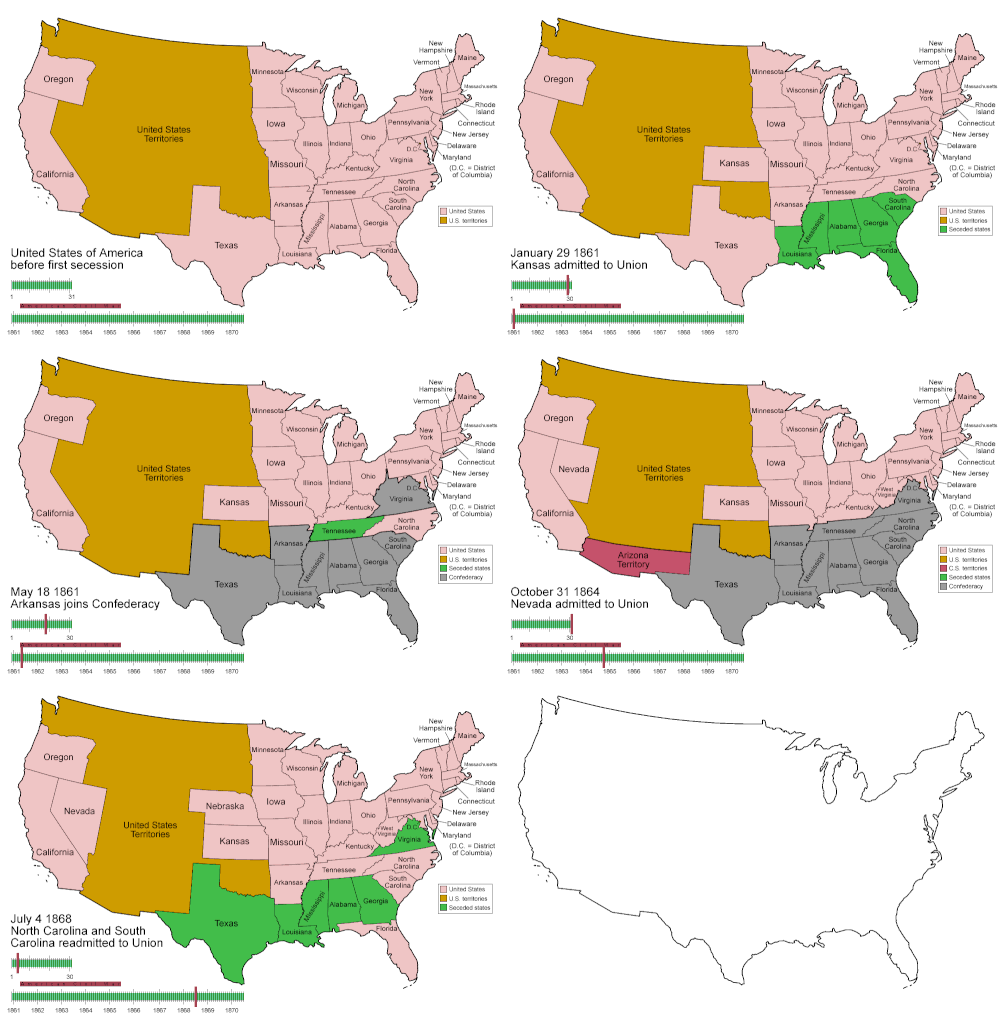
分離主義者は、アメリカ合衆国憲法は主権国家間の契約であり、協議なしに破棄することができ、各州には分離する権利があると主張した。激しい議論と州全体の投票の結果、1861 年 2 月までにディープ サウスの綿花生産州 7 州が分離条例を可決したが、他の 8 つの奴隷州では分離の試みは失敗した。
連合は1861年5月から7月にかけて拡大し(バージニア、アーカンソー、テネシー、ノースカロライナが加盟)、1865年4月から5月にかけて解体した。連合は脱退を宣言したローワーサウスの奴隷州7州の代表団によって結成された。4月に戦闘が始まった後、さらに4つの奴隷州が脱退し、加盟が認められた。後に、2つの奴隷州(ミズーリ州とケンタッキー州)と2つの準州が連合国議会に議席を与えられた。[37]
その確立は南部のナショナリズムから生まれ、深められ、[38]人々は「南部の大義」のために戦う準備を整えた。[39]この「大義」には、州の権利、関税政策、内部の改善への支持が含まれていたが、何よりも、南部の奴隷制に基づく経済への文化的および財政的依存が含まれていた。人種と奴隷制、政治、経済の収束により、南部関連の政策問題は、南部の物事への愛と北部の物事への憎悪が融合した、道徳的問題、生き方の問題にまで発展した。戦争が近づくにつれて、政党は分裂し、国教会と州間の家族は宗派の線に沿って分裂した。[40]歴史家ジョン・M・コスキによると:
脱退運動を主導した政治家たちは、奴隷制の擁護を自らの主な動機として明確に挙げることを恥じていなかった...南部連合にとって奴隷制が中心であったことを認めることは、南部連合を理解する上で不可欠である。[41]
1860年の大統領選挙で南部民主党はジョン・ブレッキンリッジを候補に選んだが、南部のどの州でも全会一致で彼を支持するということはなく、他の3人の候補者(エイブラハム・リンカーン、スティーブン・A・ダグラス、ジョン・ベル)のうち少なくとも1人には一般投票が少なくともいくらかはあった。この3人に対する支持は、テキサス州の25%からミズーリ州の81%まで、かなりの支持から圧倒的多数までの範囲であった。[42]少数派の意見は至る所で見られ、特に南部の高原地帯、特にバージニア州西部とテネシー州東部に集中していた。連合国を設立した最初の6州の人口は、連合国の約4分の1を占めていた。これらの州の43%が北軍支持候補に投票した。サムター要塞攻撃後に加盟した4州は、連合国の人口のほぼ半分を占め、53%が北軍支持候補に投票した。投票率の高い3州は極端な意見を述べた。人口の5%を占めるテキサス州では、20%が連邦支持派の候補者に投票した。南部連合支持派の人口の4分の1を占めるケンタッキー州とミズーリ州では、68%が連邦支持派に投票した。
1860年にサウスカロライナ州が全会一致で脱退票を投じた後、他の南部諸州は1861年までこの問題を検討しなかった。検討した州も、全会一致で投票した州はなかった。どの州も、かなりの数の連邦支持票を投じた住民を抱えていた。連邦残留に投票したからといって、必ずしもその個人が北部に同調していたわけではない。戦闘が始まると、連邦残留に投票した者の多くは多数決を受け入れ、南部連合を支持した。[43]多くの著述家は、この戦争をアメリカの悲劇、つまり「兄弟同士、父と息子、あらゆる親族同士」が対立する「兄弟戦争」と評価している。[44] [45]
州
当初、一部の離脱派は平和的な離脱を望んでいた。南部連合憲法制定会議の穏健派は、北部南部にアピールするためにアフリカからの奴隷の輸入を禁止する条項を盛り込んだ。奴隷制のない州も参加する可能性があったが、急進派は議会両院で3分の2の賛成を得て参加を認めた。[46]
1861 年 3 月 4 日にリンカーンが大統領に就任する前に、7 つの州がアメリカ合衆国からの脱退を宣言しました。1861 年 4 月 12 日の南軍によるサムター要塞攻撃と、それに続くリンカーンの軍隊派遣要請の後、さらに 4 つの州が脱退を宣言しました。
ケンタッキー州は中立を宣言したが、南軍が進攻してくると、州議会は北軍に追い出すよう要請した。68のケンタッキー郡の代表がラッセルビル会議に派遣され、脱退条例に署名した。1861年12月10日、ケンタッキー州は南軍に加盟し、ボーリンググリーンが最初の州都となった。戦争初期、南軍はケンタッキー州の半分以上を支配していたが、1862年にはほぼ支配力を失った。ケンタッキー州の分裂した南軍政府は西部の南軍に同行して移転し、1862年以降は州民を支配することはなかった。戦争の終わりまでに、9万人のケンタッキー州民が北軍のために戦ったが、南軍の3万5千人に比べて少なかった。[47]
ミズーリ州では、憲法制定会議が承認され、代表者が選出された。会議は1861年3月19日、89対1で脱退を否決した。 [48]知事はセントルイス兵器廠を掌握し、連邦軍の動きを制限しようと画策した。これが対立につながり、6月に連邦軍は知事と州議会をジェファーソンシティから追い出した。会議の執行委員会は7月にメンバーを招集し、州の役職を空席と宣言し、連邦派の暫定州政府を任命した。[49]追放された知事は、元州議会の残余会議をネオショで招集し、1861年10月31日、脱退条例を可決した。[50] [51]南部連合の州政府はミズーリ州の領土のかなりの部分を支配できず、戦争の初期には実質的にミズーリ州南部しか支配していなかった。州から追い出される前は、ネオショ、その後キャスビルに州都を置いていた。戦争の残りの期間、政府はテキサス州マーシャルで亡命政府として活動した。[52]
ケンタッキー州もミズーリ州も脱退していなかったため、リンカーンの奴隷解放宣言では反乱状態にあるとは宣言されなかった。南部連合はケンタッキー州(1861年12月10日)とミズーリ州(1861年11月28日)の南部連合支持派の請求を認め、これらの州を主張し、連邦議会への代表権を与え、南部連合旗に2つの星を加えた。代表者への投票は主にケンタッキー州とミズーリ州の南部連合軍兵士によって行われた。[53]
南部の連邦主義者の中には、リンカーンの軍隊派遣要請が第二波の脱退のきっかけになったと非難する者もいた。歴史家ジェームズ・マクファーソンは、そのような主張は「利己的な性質」があり、誤解を招くものだと主張している。
4月12日のサムター要塞攻撃と翌日の降伏の知らせが電報で流れると、リッチモンド、ローリー、ナッシュビル、その他の南部北部の都市の通りには大勢の群衆が押し寄せ、ヤンキーに対するこの勝利を祝った。群衆は南軍旗を振り、南部独立の栄光ある大義を称えた。彼らは自らの州もこの大義に加わるよう要求した。リンカーンが軍隊の召集を発する前の4月12日から14日まで、多数のデモが行われた。条件付き連邦主義者の多くは、この南部のナショナリズムの強力な波に流されたが、他の者は怯えて沈黙した。[54]
歴史家ダニエル・W・クロフトスはマクファーソンの意見に反対している。
サムター要塞の砲撃だけでは、北部南部の連邦主義者の多数派を壊滅させることはできなかった。リンカーンが宣言を発するまでにわずか3日しか経っていなかったため、振り返ってみると、2つの出来事はほぼ同時に起こったように見える。しかし、当時の証拠を詳しく調べると、宣言ははるかに決定的な影響を及ぼしたことがわかる。[55] ...多くの人が、リンカーンは「奴隷州すべてを追い払い、戦争を起こして奴隷制を根絶する」ことを意図的に選択したと結論付けた。[56]
離脱決議の順序と日付は次のとおりです。
- 1.サウスカロライナ州(1860年12月20日)[57]
- 2.ミシシッピ州(1861年1月9日)[58]
- 3.フロリダ(1月10日)[59]
- 4.アラバマ(1月11日)[60]
- 5.ジョージア(1月19日)[61]
- 6.ルイジアナ州(1月26日)[62]
- 7.テキサス州(2月1日、住民投票2月23日)[63]
- リンカーン大統領就任式、3月4日
- サムター要塞の砲撃(4月12日)とリンカーン大統領の召集(4月15日)[64]
- 8.バージニア州(4月17日、1861年5月23日住民投票)[65]
- 9.アーカンソー(5月6日)[66]
- 10.テネシー州(5月7日、住民投票6月8日)[67]
- 11.ノースカロライナ(5月20日)[68]
バージニア州では、オハイオ州とペンシルベニア州の境にある人口の多い郡が南部連合を拒否した。連邦主義者は1861年6月にウィーリングで会議を開き、残余議会を持つ「再建された政府」を設立したが、この地域の感情は深く分裂したままだった。ウェストバージニア州を構成する50郡のうち、24郡の有権者は、バージニア州の5月23日の脱退条例に関する住民投票で分離に投票した。[69] 1860年の選挙では、「憲法民主党」のブレッケンリッジが50郡で「憲法連邦主義者」のベルを1,900票差で上回り、44%対42%だった。[70]これらの郡は同時に、紛争の両側に2万人以上の兵士を供給した。[71] [72]戦争中、ほとんどの郡の代表者はウィーリングとリッチモンドの両州議会に議席を持っていた。[73]
東テネシー州の郡による南軍からの脱退の試みは戒厳令によって阻止された。[74]奴隷制を敷いていたデラウェア州とメリーランド州は脱退しなかったが、市民の忠誠心は分かれた。メリーランド州の連隊はリーの北バージニア軍で戦った。[75]メリーランド州から南軍に加わったのは全体で24,000人、北軍に加わったのは63,000人だった。[47]デラウェア州は南軍に完全な連隊を送ることはなかったが、ミズーリ州やウェストバージニア州のように奴隷解放も行わなかった。コロンビア特別区の市民は脱退を試みず、戦争中、リンカーンが後援した住民投票で「不忠の市民」からの補償付き奴隷解放と奴隷没収が承認された。[76]
領土

ニューメキシコ準州の南部にあるメシラとツーソンの住民は脱退会議を開き、1861年3月16日に南軍に加わることを決議し、ルイス・S・オーウィングス博士を新しい準州知事に任命した。彼らはメシラの戦いに勝利し、メシラを首都とする準州政府を設立した。[77]南軍は1862年2月14日、北緯34度線までの地域を南軍アリゾナ準州と宣言した。マーカス・H・マクウィリーは両南軍会議でアリゾナ代表を務めた。1862年、南軍による米国領土の北半分を奪取するニューメキシコ作戦は失敗に終わり、南軍亡命準州政府はテキサス州サンアントニオに移転した。[78]
ミシシッピ川以西の南軍支持者は、米国が連邦の砦と施設を撤退させた後、インディアン準州の一部を領有権を主張した。インディアン準州から戦争に参加したアメリカインディアン部隊の半数以上が南軍を支持した。1861年7月12日、南軍政府はチョクトー族とチカソー族の両インディアン部族と条約を締結した。数回の戦闘の後、北軍が領土を掌握した。[79]
インディアン準州は正式には南軍に加盟しなかったが、議会に代表を送り込んだ。準州の多くのインディアンは南軍正規部隊に編入された。1863年以降、部族政府は南軍議会に代表を送り、チェロキー族代表としてエリアス・コーネリアス・ブーディノット、セミノール族とクリーク族代表としてサミュエル・ベントン・キャラハンが参加した。チェロキー族は南軍に同調した。彼らは奴隷制を実施・支持し、奴隷制度廃止に反対し、自分たちの土地が北軍に奪われることを恐れた。戦後、インディアン準州は廃止され、黒人奴隷は解放され、部族は土地の一部を失った。[80]
首都

アラバマ州モンゴメリーは、1861年2月4日から5月29日まで、アラバマ州議会議事堂において南部連合の首都として機能した。1861年2月8日、6つの州がここで南部連合を結成した。テキサス代表団は当時着任していたため、南部連合の「最初の7州」に数えられる。テキサス代表団は、住民投票で脱退が「有効」になるまで、点呼投票を行わなかった。[81] [82] 1861年3月12日、恒久憲法がそこで採択された。[83]
アメリカ連合国憲法で規定されている恒久的な首都は、州から中央政府への100平方マイルの地区の割譲を求めていた。ジョージア州ミレッジビルを州都としてまだ取って代わっていなかったアトランタは、その中心地と鉄道の接続を理由に入札し、アラバマ州オペリカも、その内陸部の戦略的な位置、鉄道の接続、石炭と鉄の埋蔵量を理由に入札した。[84]
バージニア州リッチモンドがバージニア州議会議事堂の暫定首都に選ばれた。この動きはスティーブンス副大統領らが他の国境州にバージニア州に続いて南部連合に加盟するよう促すために利用された。政治的には「反抗と強さ」の誇示だった。南部独立戦争は間違いなくバージニア州で戦われるはずだったが、バージニア州には南部で最大の兵役年齢の白人人口があり、インフラ、資源、物資も揃っていた。デイビス政権の政策は「どんな危険を冒しても保持しなければならない」というものだった。[85]
リッチモンドが新しい首都に命名されたのは1861年5月30日で、暫定議会の最後の2回の会期はここで開催されました。[86]戦争が長引くにつれ、リッチモンドは訓練や移動、兵站や病院で混雑するようになりました。価格統制を図る政府の努力にもかかわらず、物価は劇的に上昇しました。議会ではリッチモンドから首都を移転すべきだという運動が起こりました。1862年半ばに連邦軍が接近すると、政府の公文書は移転の準備が整いました。荒野作戦が進むにつれ、議会はデイビスに行政部門を移転し、1864年と1865年に議会を他の場所で召集することを許可しました。戦争が終わる少し前に、南軍政府はリッチモンドから撤退し、さらに南に移転する計画を立てました。リー将軍が降伏するまで、これらの計画はほとんど実現しませんでした。[87]デイビスと閣僚の大半はバージニア州ダンビルに逃げ、8日間そこを本部としました。
外交
連合国は4年間にわたり独立を主張し、海外に数十人の外交官を任命した。外国政府に承認された者はいなかった。米国政府は南部諸州が反乱または暴動状態にあるとみなし、南部諸州の正式な地位承認を拒否した。
アメリカ政府は南部連合の「同胞」に対して宣戦布告はしなかったが、1861年4月15日に発せられた大統領布告から軍事行動を開始した。[88]布告では軍隊に砦の奪還と、リンカーンが後に「暴動と反乱」と呼んだものを鎮圧するよう要請した。[89]戦争中盤の両陣営の交渉は正式な政治的承認なしに行われたが、制服組の紛争の双方の軍事関係は主に戦争法によって規定されていた。 [90]
アメリカとの戦争が始まると、南部連合は生き残るための希望をイギリスかフランスの軍事介入に託した。南部連合政府はジェームズ・M・メイソンをロンドンに、ジョン・スライデルをパリに派遣した。1861年、彼らの航海の途中、アメリカ海軍は彼らの船トレント号を拿捕し、ボストンに連行した。これはトレント事件として知られる国際的な事件だった。外交官たちは最終的に解放され、航海を続けた。[91]しかし、彼らの任務は成功せず、歴史家たちは彼らの外交が不十分だったと評価している。[92] [ページ必要]どちらも南部連合に外交上の承認を与えず、ましてや軍事援助は得られなかった。
「綿花こそ王様」、つまり綿花を手に入れるためにはイギリスが南部連合を支援しなければならないと信じていた南部連合は、間違っていたことが判明した。イギリスは1年以上の備蓄があり、代替の供給源を開発していた。[93]イギリスはアフリカ人の大西洋横断奴隷化の終焉を主導したことを誇りにしていた。 1833年までに、イギリス海軍は中部航路の海域を巡視し、さらなる奴隷船が西半球に到達するのを防いだ。1840年に第1回世界奴隷制度廃止会議が開催されたのはロンドンだった。黒人奴隷制度廃止論者の演説家たちはイングランド、スコットランド、アイルランドを巡回し、アメリカの動産奴隷制の現実を暴露し、黒人は「非知的で臆病で依存的」であり[94]、「優れた人種である白人と同等ではない」という南部連合の立場に反論した。フレデリック・ダグラス、ヘンリー・ハイランド・ガーネット、サラ・パーカー・レモンド、その兄弟チャールズ・レノックス・レモンド、ジェームズ・WC・ペニントン、マーティン・デラニー、サミュエル・リングゴールド・ワード、ウィリアム・G・アレンは皆、逃亡奴隷が安全で、アレンが言うように「有色人種に対する偏見がなかった。ここでは有色人種は敵の中にいるのではなく、友人の中にいると感じた」イギリスで何年も過ごした。[95]イギリスの世論の大半はこの慣行に反対し、リバプールが南部の支持の主要拠点とみなされた。[96]
戦争の初期の数年間、英国外務大臣ジョン・ラッセル卿、フランス皇帝ナポレオン3世、そしてそれほどではないが英国首相パーマストン卿が、南部連合の承認、あるいは少なくとも戦争の調停に関心を示していた。大蔵大臣ウィリアム・ グラッドストンはパーマストンに介入するよう説得しようとしたが失敗した。[97] 1862年9月までに、アンティータムの戦いでの北軍の勝利、リンカーンの予備的な奴隷解放宣言、および英国における奴隷制度廃止論者の反対により、これらの可能性は終焉した。[98]米国との戦争による英国へのコストは高額であっただろう。米国の穀物積荷の即時喪失、英国から米国への輸出の停止、米国証券に投資された数十億ポンドの差し押さえなどである。戦争は英国での増税、カナダへの再侵攻、英国商船隊への攻撃を意味したであろう。 1862年半ば、人種戦争( 1791年~1804年のハイチ革命のような)への懸念から、イギリスは人道的理由から介入を検討した。[99]
フランスへの南部連合の特使ジョン・スライデルは、アーランガーと他のフランスの資本家から装甲艦と軍需品のために1500万ドルの融資を受けることに成功した。[100]イギリス政府はイギリス国内での封鎖突破船の建造を許可した。封鎖突破船はイギリスの金融家と船主が所有し、運営していたが、南部連合が所有し運営していた船もいくつかあった。イギリスの投資家の目的は、利益率の高い綿花を手に入れることだった。[101]
ヨーロッパのいくつかの国は、米国に任命された外交官をそのまま現地に留めていたが、南部連合に外交官を任命した国はなかった。これらの国は、北軍と南軍を交戦国として認めていた。1863年、南部連合は、自国の居住者に南軍への従軍を拒否するよう助言したとして、ヨーロッパの外交使節団を追放した。[102]南軍と北軍のエージェントは両方とも、イギリス領土で公然と活動することを許可されていた。[103]南部連合は、 1863年9月にアンブローズ・ダドリー・マンをローマ教皇庁の特別エージェントに任命したが、ローマ教皇庁は南部連合を支持または承認する声明を発表することはなかった。1863年11月、マンはローマ教皇ピウス9世と会見し、「アメリカ連合国大統領ジェファーソン・デイヴィス高名なる者」宛とされる手紙を受け取ったが、マンは宛名を誤訳していた。マンはリッチモンドへの報告書で、自らの外交上の偉業を主張したが、南軍国務長官ジュダ・P・ベンジャミンはマンに対し、それは「単なる推論的な承認であり、政治的行動や外交関係の通常の確立とは無関係である」と述べ、正式な承認ほどの重みは与えなかった。[104] [105]
それにもかかわらず、連合は国際的に国家としての真剣な試みとみなされ、ヨーロッパ諸国政府は事実上の独立が確立されたかどうかを評価するために軍事監視員を派遣した。これらの監視員には、メキシコ経由で連合に加わったイギリス軍コールドストリーム近衛連隊のアーサー・ライアン・フリーマントル、オーストリア軽騎兵隊のフィッツジェラルド・ロス、プロイセン軍のユストゥス・シャイベルトが含まれていた。[106]ヨーロッパの旅行者が訪れ、出版物のために報告書を書いた。1862年に重要なことに、フランス人シャルル・ジラールの著書「北米戦争中の反乱諸州での7か月」は、「この政府はもはや試験的な政府ではなく、実際には通常の政府であり、民意の表現である」と証言した。[107]フリーマントルは著書「南部諸州での3か月」で次のように書いている。
...南部の人々の特異性や欠点を隠そうとはしなかった。多くの人々は、この国のより荒涼とした地域における彼らの習慣や習慣のいくつかを大いに非難するだろう。しかし、政治的意見が何であれ、寛大な人なら誰でも、この大きな困難に立ち向かう闘いにおいて、全住民の勇気、エネルギー、愛国心、そして指導者の手腕を賞賛しないわけにはいかないだろう。そして、私はまた、あらゆる階級と男女が一致団結し、世界史上決して超えることのない英雄的精神を示す国民は、遅かれ早かれ、偉大で独立した国家になる運命にあるという私の考えに多くの人が同意するだろうと考えている。[108]
フランス皇帝ナポレオン3世は、南部連合の外交官ジョン・スライデルに対し、イギリスに「直接提案」して共同承認を得ると約束した。皇帝は、イギリス国会議員ジョン・A・ローバックとジョン・A・リンゼイにも同様の約束をした。ローバックは、議会に提出する法案を公に準備し、連合の英仏共同承認を支持した。「南部人は、革命が勝利するか、少なくとも持ちこたえると楽観的、あるいは少なくとも希望を持つ権利があった。」1863年7月のビックスバーグとゲティスバーグの惨事の後、南部連合は「自らに対する自信を著しく失い」、内陸の防衛態勢に退いた。[109] 1864年12月までに、デイビスは、パリとロンドンの承認と援助を得るために奴隷制を犠牲にすることを検討した。彼は秘密裏にダンカン・F・ケナーをヨーロッパに派遣し、この戦争は「自治権と独立の権利を擁護するため」だけであり、「名誉のためならどんな犠牲も惜しまない」というメッセージを送った。メッセージには、フランス政府やイギリス政府が承認に何らかの条件を付ければ、南部連合はそれに同意すると書かれていた。[110]ヨーロッパの指導者たちは皆、南部連合が敗北の瀬戸際にいると感じていた。[111]
南軍の最大の外交政策上の成功はブラジルとキューバに対するものだった。軍事的にはこれはほとんど意味をなさなかった。ブラジルは「制度上我々と最も類似した人々」を代表しており[112] 、 1880年代まで奴隷制度が合法であり、奴隷制度廃止運動は小規模だった。南軍の船はブラジルの港で歓迎された[113]。戦後、ブラジルは奴隷社会で暮らし続けたい南部人の主な目的地であり、ある移民が述べたように、南軍の奴隷は安価だった。キューバの司令官は文書で、南軍の船は歓迎され、キューバの港で保護されると宣言した[112] 。歴史家は、南軍が独立を達成していたら、おそらくキューバを拡張の拠点として獲得しようとしただろうと推測している[114]。
戦争中
兵士の動機
南軍の国家軍または州軍に加わった兵士のほとんどは、自発的に加わった。パーマン (2010) は、何百万人もの兵士が 4 年間にわたって戦い、苦しみ、死ぬことにそれほど熱心だった理由について、歴史家の間では 2 つの意見があると述べています。
歴史家の中には、南北戦争の兵士たちは政治的イデオロギーに突き動かされ、自由、連邦、州の権利の重要性、奴隷制の保護または廃止の必要性について確固たる信念を抱いていたと強調する者もいる。また、家や家族の防衛、他の兵士と共に戦う際に守るべき名誉や兄弟愛など、あまり政治的でない理由で戦ったと指摘する者もいる。歴史家の多くは、戦争に赴いたときに何を考えていたかに関わらず、戦闘体験が彼に深く影響し、時には戦い続ける理由にも影響を与えたと認めている。[115] [116]
軍事戦略
南北戦争の歴史家E. マートン・コールターは、独立を守ろうとする人々にとって「南軍は戦争全体にわたる総合戦略を策定できなかった点で不運だった」と書いている。攻撃戦略は攻撃力の集中を必要とした。防御戦略は地域志向の知事の要求を満たすために分散を求めた。統制の哲学は「リッチモンド周辺での防御集中と分散」の組み合わせへと発展した。デイビス政権は戦争を純粋に防御的なものとみなし、「米国民が我々と戦うのをやめるという単純な要求」とみなした。[117]歴史家ジェームズ・M・マクファーソンはリー将軍の攻撃戦略を批判している。「リー将軍は誤った軍事戦略を追求し、南軍の敗北を確実なものにした」[118]
南軍政府は戦役を重ねるごとに領土の支配権を失っていったため、「南軍の広大な規模により征服は不可能になる」と言われていた。敵は、南部への訪問者や移住者をしばしば衰弱させたり死に至らしめたりしたのと同じ要素によって打ち倒されるだろう。熱中症、日射病、マラリアや腸チフスなどの風土病は、モスクワの冬がナポレオンの侵攻軍に与えた破壊力に匹敵するだろう。[119]

戦争の初期には、両軍とも一つの大きな戦いで決着がつくと信じていた。南軍は第一次ブルランの戦いで予想外の勝利を収めた。この戦いは第一次マナサス(南軍が使った名前)としても知られていた。南軍の人々は「喜びで狂った」ほどで、大衆はワシントンを占領し、南軍の首都をそこに移し、メリーランドを南軍に加盟させる前進を要求した。[120]勝利した南軍の将軍たちによる作戦会議は、防御陣地にいた多数の新鮮な連邦軍に対して前進しないことを決定した。デイビスはそれを撤回しなかった。 1862年10月のアンティータムの戦いでメリーランドへの南軍の侵攻が停止した後、将軍たちは各州の軍を集結させて北部への再侵攻を提案した。何も成果はなかった。[121] 1863年半ばに再びペンシルベニアに侵攻した際、リーはデイヴィスに、ボーリガードがカロライナから派遣した軍隊でワシントンを同時に攻撃するよう要請した。しかし、その軍隊はゲティスバーグ作戦の間もその場に留まった。
連合国の 11 州は、兵力の面では北軍に 4 倍ほど劣勢だった。さらに、軍事装備、工業施設、輸送用の鉄道、前線に物資を供給する荷馬車でも、はるかに劣勢だった。
南軍は南軍の侵略を遅らせ、南部のインフラに大きな損害を与えた。南軍は橋を焼き、道路に地雷を敷設し、沈没した機雷(当時は「魚雷」と呼ばれていた)で港湾の入り江や内陸水路を利用不能にした。コールターは次のように報告している。
20人から50人からなる部隊のレンジャーは、場所や忠誠心に関係なく、北軍の戦線の後方で破壊された資産の評価額の50%を支払われた。連邦軍が南部を占領すると、レンジャーによる馬の盗難や北軍の戦線の後方での無差別焦土作戦に対する忠実な南軍の反対により、2年後に連邦議会はレンジャーの任務を廃止した。[122]
南軍は戦争物資を外部の供給源に頼っていた。最初は敵との貿易だった。「大量の戦争物資」がケンタッキー州から運ばれ、その後、西部の軍隊は連邦の代理人や北部の民間貿易業者を通じた違法貿易で「かなりの量」の物資を調達した。[123]しかし、その貿易は戦争の最初の年に、ポーター提督の河川砲艦が南北および東西の航行可能な河川沿いで優位に立つと、中断された。[124]海外の封鎖突破が「極めて重要」になった。[125] 4月17日、デイビス大統領は私掠船襲撃者、つまり「海の民兵」に米国の海上貿易に対する戦争を仕掛けるよう要請した。[126]注目すべき努力にもかかわらず、戦争の過程で、南軍は船舶と航海技術、資材、海洋建設において北軍に対抗できないことが判明した。[127]
大規模な軍隊の戦争で成功するための避けられない障害は、南軍の人員不足と、敵と接触する地点に十分な数の訓練された装備の整った兵士がいなかったことである。1862年から63年の冬、リーは、彼の有名な勝利のどれも敵軍を壊滅させることにはつながらなかったと観察した。ナポレオンがしたように戦場で優位に立つための予備兵力がなかった。リーは次のように説明した。「一度ならず、最も有望な機会を逃したのは、それを利用する兵士がいなかったためであり、勝利自体が敗北のふりをするために行われた。なぜなら、我々の減少し疲弊した兵士たちは、敵の新たな数に対して再びうまく戦うことができなかったからである。」[128]
軍隊

南軍の軍隊は陸軍、海軍、海兵隊の3つの部門から構成されていました。
1861年2月28日、暫定南軍議会は暫定志願兵軍を設立し、軍事作戦の統制と州軍および志願兵の召集権を新たに選出された南軍大統領ジェファーソン・デイヴィスに与えた。1861年3月1日、南軍政府を代表してデイヴィスはサウスカロライナ州チャールストンの軍事状況の統制を引き継ぎ、サウスカロライナ州民兵がチャールストン港のサムター要塞を包囲した。この要塞はアメリカ陸軍の小規模な守備隊によって守られていた。1861年3月までに、暫定南軍議会は暫定軍を拡大し、より恒久的な南軍を設立した。
南軍の総人口は、南軍の記録が不完全で破壊されているため不明だが、推定では75万人から100万人の兵士がいる。これには、要塞や防御施設の建設や荷馬車の運転など、軍の任務に就かされた奴隷の数は不明だが含まれていない。[129]南軍の死傷者数も不完全で信頼性に欠け、94,000人が死亡または重傷、164,000人が病死、26,000人から31,000人が北軍捕虜収容所で死亡したと推定されている。1つの不完全な推定では194,026人となっている。[要出典]
南軍の指導部には、連邦軍を退役して上級職に任命されたアメリカ陸軍とアメリカ海軍の退役軍人が多数含まれていた。多くは米墨戦争に従軍した経験者(ロバート・E・リーやジェファーソン・デイヴィスなど)だったが、レオニダス・ポーク(ウェストポイントを卒業したが陸軍には従軍しなかった) のように経験がほとんどないか全くない者もいた。
南軍の士官団は奴隷所有者と非奴隷所有者両方の家庭の出身者から構成されていた。南軍は下級および野戦将校を入隊者の中から選挙で任命した。南軍には陸軍士官学校は設立されなかったが、いくつかの大学(ザ・シタデルやバージニア軍事学校など)は南軍の軍事指導者を養成する士官候補生団を維持していた。海軍兵学校は1863年にバージニア州ドルーリーズブラフに設立されたが[130]、南軍の終焉までに卒業した士官候補生はいなかった。
兵士のほとんどは16歳から28歳の白人男性だった。出生年月日の平均は1838年なので、1861年までに兵士の半数が23歳以上になっていたことになる。 [131]南軍は、短期入隊期間が終了した後、1862年初めに2か月間の解散を許可された。軍服を着た者の大多数は、1年間の任務後に再入隊することを望まなかったため、1862年4月16日、南軍議会は北米領土で最初の大量徴兵を課した。(1年後の1863年3月3日、米国議会は入隊法を可決した。)最初のプログラムは、普通徴兵ではなく、身体的、宗教的、職業的、および産業的免除を伴う選択的徴兵であった。これらは、戦いが進むにつれて狭くなっていった。当初は補充兵が許可されていたが、1863年12月までに禁止された。 1862年9月、年齢制限は35歳から45歳に引き上げられ、1864年2月までに18歳以下と45歳以上の男性全員が州境内で州防衛の予備役として徴兵された。1864年3月までに徴兵監督官は、南部連合全土で男女を問わず、すべての構成官が「徴兵官の職務遂行に反対している」と報告した。[132]州裁判所で異議が申し立てられたが、南部連合州最高裁判所は徴兵に対する法的異議申し立てを定期的に却下した。[133]
何千人もの奴隷が主人の個人的な召使として働いたり、労働者、料理人、開拓者として雇われたりした。[134]解放された黒人や有色人種の中には、主にルイジアナ州とサウスカロライナ州で南部連合の地方州民兵隊に所属していた者もいたが、その将校たちは彼らを「戦闘ではなく、地方防衛」のために配置した。[135]死傷者や脱走により人員が減り、軍隊は慢性的な人員不足に悩まされた。1865年初頭、南部連合議会はリー将軍の支持に影響され、黒人歩兵部隊の募集を承認した。リー将軍とデイビス将軍の勧告に反して、議会は「黒人志願兵の自由を保証する」ことを拒否した。黒人戦闘部隊は200人しか編成されなかった。[136]
軍隊の育成

戦争が始まった直後は「暫定軍」または「志願兵軍」が戦った。州知事たちは国家の努力を集中することに抵抗した。自衛のために強力な州軍を望んだ者もいた。また、大規模な「暫定」軍がデイヴィスにのみ従うことを恐れた者もいた。[137]南部連合政府の10万人の召集に応じる際、さらに20万人は「その期間」入隊した者、または武器や馬を持参した12か月間の志願兵のみを受け入れたため、拒否された。[138]
軍隊を育成することは重要だったが、それを指揮する有能な将校を提供することも同様に重要だった。いくつかの例外を除いて、南軍は優秀な将官を確保した。下級将校の効率は「合理的に期待できる以上のもの」だった。北軍と同様に、政治任命は無関心である可能性があった。そうでなければ、将校団は知事が任命するか、部隊の入隊者によって選出された。空席を埋めるための昇進は、より優れた将校がすぐに利用可能であっても、功績に関係なく内部で行われた。[139]
1862年1月、議会はより多くの「長期」兵士が必要になることを予想し、中隊レベルの募集担当者が2か月間帰国することを認めたが、2月の南軍の戦場での敗北の直後、彼らの努力はほとんど成果をあげなかった。[140]議会は、デイビスが各知事に志願兵不足を補うための募集人数を要求することを認めた。各州はそれに応じて独自の徴兵法を可決した。[141]
1862 年初頭の南軍のベテランは、ほとんどが任期満了間近の 12 か月志願兵だった。下士官再編成選挙により、軍は 2 か月間解体された。士官たちは下士官たちに再入隊を懇願したが、大多数は応じなかった。残った者は少佐と大佐を選出し、その業績により 10 月に士官審査委員会が開かれた。委員会は「急速かつ広範囲に」無能な士官 1,700 人を間引いた。その後、軍隊は少尉のみを選出することになった。[142]
1862年初頭、一般紙は南軍には100万人の兵士が必要だと報じた。しかし、退役軍人は再入隊せず、以前の脱退志願兵も再び戦争に加わることはなかった。ジョージア州メーコンのある新聞は、南部の200万人の勇敢な戦士が、臆病者と言われる400万人の北部人に打ち負かされようとしているのはなぜかと疑問を呈した。[143]
徴兵

1862 年 4 月 16 日、南部連合はアメリカ初の国家徴兵法を可決した。南部連合の 18 歳から 35 歳までの白人男性は 3 年間南部連合軍の一員と宣言され、入隊した男性全員の任期は 3 年に延長された。彼らは州の部隊および士官の下でのみ勤務する。18 歳未満および 35 歳以上の者は徴兵兵の代理を務めることができ、9 月には 35 歳から 45 歳までの者は徴兵兵となった。[144]「金持ちの戦争、貧乏人の闘い」という叫びにより、議会は 1863 年 12 月に代理兵制度を完全に廃止した。以前に恩恵を受けていたすべての主要人物は兵役に就く資格を得た。1864 年 2 月までに、年齢区分は 17 歳から 50 歳までとされ、18 歳未満および 45 歳以上は州内の任務に限定された。[145]
南軍の徴兵は普遍的ではなく、選抜制だった。 1862年4月の第一次徴兵法では、運輸、通信、産業、牧師、教育、体力づくりに関わる職業が免除された。1862年10月の第二次徴兵法では、産業、農業、良心的兵役拒否の免除が拡大された。免除詐欺は、健康診断、軍の一時解雇、教会、学校、薬局、新聞などで横行した。[146]
裕福な男の息子が社会的に追放された「監督」職に任命されたが、この措置は国内で「全面的に嫌悪」された。立法の手段は物議を醸した「20黒人法」で、20人以上の奴隷がいるプランテーションごとに白人の監督または所有者1人を免除すると明確に規定していた。6か月後に撤回した議会は、45歳未満の監督は最初の徴兵法以前にその職に就いていた場合にのみ免除されると規定した。[147]州知事の支援により任命された州の免除対象の役人の数は大幅に増加した。[148]
-
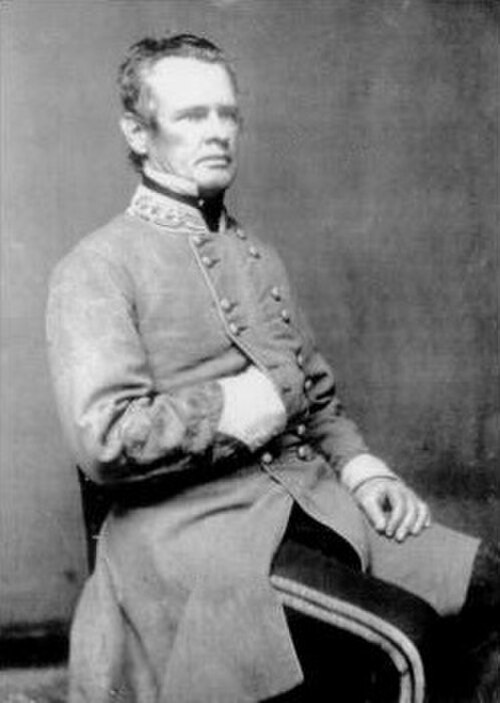 ガブリエル・J・レインズ将軍、徴兵局長、1862年4月~1863年5月
 -
![ギデオン・J・ピロー将軍、ブラッグ、そしてJ・E・ジョンストンの下で軍の募集担当者[149]](https://img-server.japedia.wiki/wikipedia/commons/thumb/2/25/General_Gideon_Johnson_Pillow.jpg/500px-General_Gideon_Johnson_Pillow.jpg) ギデオン・J・ピロー将軍、ブラッグ、当時はJ・E・ジョンストンの下で軍の募集担当者だった[149]
ギデオン・J・ピロー将軍、ブラッグ、当時はJ・E・ジョンストンの下で軍の募集担当者だった[149]
1864 年 2 月の徴兵法は、徴兵制度を「根本的に変更」した。この法律は、産業上の免除を廃止し、デイヴィス大統領に細目に関する権限を与えた。徴兵の恥は重罪の有罪判決よりも重かったため、この制度は「徴兵された者と同数の志願兵」を招集した。「爆弾にも耐える」地位に就いていた多くの男性が、何らかの方法で入隊し、制服を着た志願兵と徴兵兵は 16 万人近くになった。それでも、徴兵を怠る者はいた。[150]徴兵を管理するために、州知事が許可する限り、州職員を使用する徴兵局が設立された。この局は「争い、反対、無益」という波乱に満ちた経歴をたどった。軍は、制服を着てない 17 歳から 50 歳の徴兵兵と脱走兵を徴兵するために、代わりの軍「リクルーター」を任命した。約 3,000 人の士官がこの仕事に就いた。1864 年後半までに、リーはより多くの兵士を要求していた。 「我々の兵力は戦闘と病気で絶えず減少しており、新兵はほとんど受け入れられない。その結果は避けられない。」 1865年3月までに、州予備軍の将軍が45歳以上18歳未満の男性を召集して徴兵を行うことになった。免除はすべて廃止された。これらの連隊は17~50歳の徴兵兵の募集、脱走兵の回収、敵の騎兵襲撃の撃退に割り当てられた。軍は片腕または片足を失った男性を国内警備隊に留めた。結局、徴兵は失敗に終わり、その主な価値は男性を志願させるよう促すことにあった。[151]
南軍の存続は、勝利に身を捧げる民間人と兵士の強固な基盤にかかっていた。兵士たちはよく戦ったが、戦闘の最後の年には脱走兵が増え、南軍は北軍のように犠牲者の補充に成功しなかった。民間人は1861年から62年にかけては熱心だったが、1864年までに南軍の将来に信頼を失っていたようで、その代わりに自分たちの家やコミュニティを守ろうとした。ラブルが説明するように、「市民のビジョンの縮小は、単なる不合理な自由主義以上のもので、南軍の試みに対するますます広がる幻滅を表していた」[152]
勝利: 1861
アメリカ南北戦争は、1861年4月にチャールストンのサムター要塞の戦いで南軍が勝利したことで勃発した。
1月、ジェームズ・ブキャナン大統領は蒸気船スター・オブ・ザ・ウェストで守備隊に補給しようとしたが、南軍の砲撃で撃退された。3月、リンカーン大統領はサウスカロライナ州知事ピケンズに、補給に対する南軍の抵抗がなければ、追加の通知なしに軍事増援は行わないと通知したが、許可されない場合は補給を強行する用意があった。南軍のデイビス大統領は内閣で、救援艦隊が到着する前にサムター要塞を占領することを決定し、1861年4月12日、ボーリガード将軍が降伏を強制した。[154]
サムターの戦いの後、リンカーンは各州に7万5千人の軍隊を派遣し、チャールストン港の砦とその他すべての連邦政府の資産を奪還するよう3か月間指示した。[155]これにより、バージニア州、アーカンソー州、テネシー州、ノースカロライナ州の分離派は、隣接する南部諸州に進軍するための軍隊を派遣するよりも、脱退することを選んだ。5月、連邦軍はチェサピーク湾からニューメキシコ州までの国境沿い全域で南軍の領土に侵入した。最初の戦闘は、7月のバージニア州のビッグ・ベセル(バージニア州ベセル教会)、第一次ブル・ラン(第一次マナサス)、8月のミズーリ州ウィルソンズ・クリーク(オークヒルズ)での南軍の勝利であった。これら3つの戦闘すべてにおいて、南軍は補給不足と成功を生かすための新兵の不足のために勝利を追求することができなかった。翌年、北部、南部両軍は大規模な戦闘に備えて軍隊の訓練を開始した。[156]北軍のジョージ・B・マクレラン将軍の軍は1861年半ばに町や道路に集中して北西部バージニア州の大部分を占領した。内陸部は支配するには広大すぎたため、ゲリラ活動の中心地となった。[157] [158]ロバート・E・リー将軍は9月にチート山で敗北し、翌年までバージニア州西部での南軍の本格的な前進は起こらなかった。
一方、北軍海軍はバージニアからサウスカロライナにかけての南軍の海岸線の大半を制圧した。プランテーションと放棄された奴隷を接収した。北軍は占領できない内陸部では、戦争中ずっと穀物の供給源を川から燃やし続けた。[159]北軍海軍は南部の主要港の封鎖を開始し、1862年初頭にニューオーリンズを占領するためにルイジアナ侵攻の準備を整えた。
侵略: 1862
1861 年の勝利の後、1862 年初頭には東部と西部で一連の敗北が続いた。軍事力で連邦を回復するための連邦政府の戦略は、(1) ミシシッピ川を確保し、(2) 南部連合の港を占領または閉鎖し、(3) リッチモンドに進軍することだった。独立を確保するための南部連合の意図は、(1) 侵略者をあらゆる前線で撃退し、血と財産を犠牲にし、(2) 中間選挙に影響を与えるまでに 2 回の攻勢で北部に戦争を持ち込むことだった。
バージニア州北西部の大半は連邦政府の支配下にあった。[161] 2月から3月にかけて、ミズーリ州とケンタッキー州の大半は北軍に「占領され、統合され、さらに南へ進軍するための拠点として使われた」。テネシー州シャイローの戦いで南軍の反撃が撃退された後、連邦政府の恒久的な占領は西、南、東に拡大した。[162]南軍はミシシッピ川沿いに南にテネシー州メンフィスまで再配置されたが、メンフィスの海戦でその河川防衛艦隊が沈没した。南軍はミシシッピ州北部とアラバマ州北部から撤退した。ニューオーリンズは4月29日にアメリカ海軍のデイビッド・ファラガット提督率いる陸海軍連合軍に占領され、南軍はミシシッピ川河口の支配権を失った。連合国の海上補給基地を支えてきた広大な農業資源を放棄しなければならなかった。[163]
南軍は各地で大きな敗北を喫していたが、4月末の時点で南軍は依然として人口の72%を占める地域を支配していた。[164]連邦軍はミズーリ州とアーカンソー州を混乱させ、バージニア州西部、ケンタッキー州、テネシー州、ルイジアナ州を突破した。南軍の海岸沿いでは、北軍が港を閉鎖し、アラバマ州とテキサス州を除く南軍沿岸州すべてに駐屯地を作った。[165]学者は北軍の封鎖は戦争の最後の数か月までは国際法上効果がなかったと評価することもあるが、最初の数か月から封鎖は南軍の私掠船を混乱させ、「南軍の港に捕獲した船を持ち込むことはほとんど不可能」にした。[166]イギリス企業はジョン・フレイザー・アンド・カンパニーやS・アイザック・キャンベル・アンド・カンパニーなどの封鎖突破船団を小規模に育成し、兵器省は軍需品専用貨物用の封鎖突破船を確保した。[167]
南北戦争中、装甲艦隊が初めて海上での持続的な封鎖に投入された。北軍の封鎖に対してある程度の成功を収めた後、3月に装甲艦CSSバージニアが港に押し込まれ、撤退中の南軍によって焼き払われた。南軍の港湾都市から何度か試みられたにもかかわらず、南軍の海軍は北軍の封鎖を破ることができなかった。1862年には、サバンナからジョサイア・タットノール3世代将の装甲艦がCSSアトランタとともに出撃した。[168]海軍長官スティーブン・マロリーはヨーロッパ製の装甲艦隊に期待を寄せたが、実現することはなかった。一方、南軍にはイギリス製の新しい通商破壊艦4隻が使用され、南軍の港では高速封鎖突破船が数隻売却された。これらは通商破壊巡洋艦に改造され、イギリス人乗組員が乗船した。[169]
東部では、北軍はリッチモンドに迫ることができなかった。マクレラン将軍はバージニア州のローワー半島に軍を上陸させた。その後、リー将軍が東からの脅威を終わらせ、北軍のジョン・ポープ将軍が北から陸路で攻撃したが、第二次ブルランの戦い(第二次マナサスの戦い)で撃退された。リー将軍の北への攻撃はメリーランド州アンティータムで撃退され、北軍のアンブローズ・バーンサイド少将の攻勢は12月にバージニア州フレデリックスバーグで悲惨な結末を迎えた。その後、両軍は冬営地に移り、来たる春に向けて募集と訓練を行った。[170]
主導権を握り、叱責し、栽培シーズン半ばの農場を保護し、米国議会選挙に影響を与える試みとして、1862年8月と9月に南軍が北軍領土への2つの主要な侵攻を開始した。ブラクストン・ブラッグのケンタッキー侵攻とリーのメリーランド侵攻はどちらも決定的に撃退され、南軍は同州の人口の63%しか支配できなかった。[164]南北戦争学者アラン・ネヴィンズは、1862年は南軍の戦略的最高潮であったと主張している。[171] 2回の侵攻の失敗は、前線の人員不足、使える靴を含む物資の不足、十分な食料のない長い行軍による疲労という、同じ取り返しのつかない欠点に起因していた。[172]同じく9月に南軍のウィリアム・W・ローリング将軍がバージニア州チャールストンとバージニア州西部のカナワ渓谷から連邦軍を追い出したが、援軍がいなかったためローリングは陣地を放棄し、11月までにこの地域は再び連邦政府の支配下に入った。[173] [174]
アナコンダ: 1863–1864
中部テネシーでの作戦は失敗に終わり、1863年1月2日、決着のつかなかったストーンズ川の戦い(マーフリーズボロ)で両軍とも戦争中最大の死傷者を出し、南軍はその後再び戦略的撤退を余儀なくされた。[175]南軍は1863年4月にチャンセラーズヴィルでリッチモンドへの北軍の進撃を撃退し、大きな勝利を収めたが、北軍はバージニア海岸とチェサピーク湾沿いの陣地を強化した。
連邦軍の砲艦、河川輸送、補給に対する効果的な対抗手段がないまま、南軍は7月にミシシッピ州ビックスバーグとポートハドソンを占領した後、ミシシッピ川を失い、南部のミシシッピ川以西へのアクセスは途絶えた。7月には、モーガンのオハイオ州襲撃とニューヨーク市徴兵暴動という短期間の反撃があった。ロバート・E・リーのペンシルベニアへの攻撃は、ピケットの有名な突撃やその他の勇敢な行為にもかかわらず、ペンシルベニア州ゲティスバーグで撃退された。南部の新聞はこの作戦を「南軍は勝利を収めなかったが、敵も同様だった」と評価した。
9月と11月には、南軍は南部への玄関口であるテネシー州チャタヌーガを明け渡した。 [176]戦争の残りの期間、戦闘は南部内部に限定され、領土はゆっくりとだが継続的に失われた。1864年初頭、南軍は依然として南部の人口の53%を支配していたが、防御陣地を再確立するためにさらに撤退した。北軍の攻勢は続き、シャーマンの海への行軍でサバンナを占領し、グラントの荒野方面作戦でリッチモンドを包囲し、ピーターズバーグでリー軍を包囲した。[163]
1863年4月、南軍議会は、多くがイギリス人である制服を着た志願兵海軍を承認した。[177]南軍は合計18隻の通商破壊巡洋艦を保有しており、海上での連邦通商に深刻な混乱をきたし、海運保険料が900%上昇した。[178]タットノール代将は1863年に再び装甲艦でジョージア州サバンナ川の北軍の封鎖を破ろうとしたが失敗した。[179] 1864年4月から、装甲艦CSSアルベマールはノースカロライナ州ロアノーク川で6か月間北軍の砲艦と交戦した。[180]北軍は8月に海上からの水陸両用攻撃でモービル湾を封鎖し、ミシシッピ川東側のメキシコ湾岸貿易を終わらせた。12月、ナッシュビルの戦いで西部戦線における南軍の作戦は終了した。
多数の家族がより安全な場所、通常は遠隔地の田舎に移住し、もし家に奴隷がいれば彼らも連れていった。メアリー・マッシーは、これらのエリートの亡命者が南部の考え方に敗北主義の要素を持ち込んだと主張している。[181]
崩壊: 1865
1865年の最初の3か月は、北軍のカロライナ方面作戦で、残っていた南軍の中心地の広い範囲が壊滅した。バージニア州グレートバレーの「南軍の穀倉地帯」はフィリップ・シェリダンが占領した。北軍の封鎖によりノースカロライナ州のフィッシャー砦が占領され、シャーマンは最終的に陸路攻撃でサウスカロライナ州チャールストンを占領した。[163]
南軍は港や航行可能な河川を一切支配していなかった。鉄道は占領されたか、運行を停止していた。主要な食糧生産地域は戦争で荒廃するか占領されていた。政権は人口の3分の1を占める3つの地域だけで存続していた。軍隊は敗北するか解散した。1865年2月のリンカーンとのハンプトン・ローズ会議で、南軍の高官は解放奴隷への補償で連邦を復活させるというリンカーンの要請を拒否した。[163]南軍の未占領地域3つは、バージニア州南部、ノースカロライナ州、アラバマ州中部、フロリダ州、テキサス州で、テキサス州は抵抗の考えからというよりは、連邦軍が占領する意欲がなかったためであった。[182]デイビスの政策は独立か無かであり、リー軍は疾病と脱走に悩まされ、ジェファーソン・デイビスの首都を守る塹壕をかろうじて維持していた。
南軍最後の封鎖突破港であるノースカロライナ州ウィルミントンも失われた。北軍がピーターズバーグでリー将軍の防衛線を突破すると、リッチモンドは即座に陥落した。リー将軍は1865年4月9日、バージニア州アポマトックス・コートハウスで北バージニア軍の残兵5万人を降伏させた。[183] 「降伏」は南軍の終焉を告げた。[184] CSSストーンウォールは3月に北軍の封鎖を突破するためにヨーロッパを出航し、キューバのハバナに到着すると降伏した。高官数名はヨーロッパに逃れたが、デイヴィス大統領は5月10日に捕らえられた。 1865年6月までに、残っていた南軍の地上部隊はすべて降伏した。アメリカ軍は降伏後の反乱やゲリラ戦なしに南軍地域を制圧したが、その後、多くの地元での暴力、確執、復讐殺人によって平和が損なわれた。[185]最後の南軍部隊である通商破壊艦CSSシェナンドーは、1865年11月6日にリバプールで降伏した。[186]
歴史家ゲイリー・ギャラガーは、1865年初頭に南部連合が降伏したのは北部軍が「組織化された南部の軍事抵抗」を鎮圧したためだと結論付けた。南部連合の住民、兵士、民間人は物質的苦難と社会的混乱に見舞われた。[187]ジェファーソン・デイヴィスは1890年に「首都の占領、文民当局の分散、戦場での軍隊の降伏、大統領の逮捕により、アメリカ連合国は消滅した...彼らの歴史はそれ以降、米国の歴史の一部となった」と結論付けた。[188]
政府と政治
政治的分裂
憲法

Wikisource にはこの記事に関連する原文があります:
アメリカ連合国憲法
1861年2月、南部の指導者たちはアラバマ州モンゴメリーで最初の憲法を採択し、 「主権と独立を持つ州」の連合を設立し、各州に共和制の政府を樹立する権利を保証した。最初の南部連合憲法を採択する前は、独立州は「ルイジアナ共和国」、「ミシシッピ共和国」、「テキサス共和国」などの主権を持つ共和国であった。[4] [17]
1861 年 3 月、連合を連邦政府に置き換えることを目的とした第 2 の南部連合憲法が制定された。この憲法の大部分は米国憲法をそのまま引用したものだったが、南部連合の領土内で奴隷制を認め保護する条項など、奴隷制度を明示的に保護する条項がいくつか含まれていた。国際的な奴隷取引の禁止は維持されたが、米国憲法が「現存する各州が適当と考える者」と言及しているのに対し、この憲法では「アフリカ系の黒人」に禁止の適用を明示的に定めていた。この憲法は、奴隷保有州間で行われていた奴隷の 国内取引を保護した。
特定の分野では、第二次南部連合憲法は当時の合衆国憲法よりも大きな権限を各州に与えた(あるいは中央政府の権限をより制限した)が、他の分野では各州は合衆国憲法の下で持っていた権利を失った。合衆国憲法と同様に南部連合憲法には通商条項が含まれていたが、南部連合版は中央政府が一州で集めた歳入を他州の内部改善に充てることを禁じた。合衆国憲法の一般福祉条項に相当する南部連合憲法は保護関税を禁止し(ただし国内歳入を提供するための関税は認めた)、一般福祉ではなく「南部連合諸州の政府を運営する」と述べていた。州議会は場合によっては南部連合政府の役人を弾劾する権限を持っていた。一方、南部連合憲法には、必要かつ適切な条項と最高権力条項が含まれており、これらは基本的に米国憲法の各条項を複製したものです。また、南部連合憲法には、その時点までに批准されていた米国憲法の 12 の修正条項がすべて組み込まれていました。
2番目の南部連合憲法は、南北戦争の1年後の1862年2月22日にようやく採択されたが、州の脱退を認める条項は特に含まれていなかった。前文では各州が「その主権と独立の性格で行動する」と述べられているが、「恒久的な連邦政府」の形成についても述べられていた。南部連合憲法の起草に関する議論の中で、州が南部連合から脱退することを認める提案があった。この提案は、サウスカロライナ州の代議員のみが動議の審議に賛成票を投じたため提出された。[189]南部連合憲法はまた、南部連合の他の地域の奴隷所有者が奴隷を南部連合のどの州にも持ち込むことを禁止したり、南部連合の異なる地域間を移動する奴隷所有者の財産権に干渉したりする権限を州に明確に否定した。アメリカ合衆国憲法の世俗的な言葉とは対照的に、南部連合憲法は公然と神の祝福を求めた(「全能の神の恩寵と導きを祈願して...」)。
一部の歴史家は、この連邦制をヘレンフォルク民主主義の一形態と呼んでいる。[190] [191]
エグゼクティブ
1861年2月4日、連合国とその執行部を設立するためのモンゴメリー会議が開催された。各州は主権として1票を持ち、代表団の規模は米国議会と同じで、通常41人から50人が出席した。[192]役職は「暫定的」で、任期は1年を超えない。大統領候補に1人、副大統領候補に1人が指名された。両者とも6対0で満場一致で選出された。[193]

ジェファーソン・デイヴィスが暫定大統領に選出された。彼の上院議員辞職演説は、連邦からの離脱の明確な理由と、独立への平和的離脱を訴えたことで大きな印象を残した。彼は南軍の最高司令官になりたいと公言していたが、選出されると暫定大統領の職に就いた。2月9日の選挙前夜、暫定副大統領候補として3人が検討されていた。全員がジョージア州出身で、各地で会合を開いた代表団は2人では不十分と判断し、アレクサンダー・H・スティーブンスが満場一致で暫定副大統領に選出されたが、個人的な懸念もあった。スティーブンスは2月11日、デイヴィスは2月18日に就任した。[194]
デイビスとスティーブンスは1861年11月6日に無投票で大統領と副大統領に選出され、1862年2月22日に就任した。
コールターは「これほど困難な任務を負った米国大統領はかつてなかった」と述べた。ワシントンは平時に就任した。リンカーンは長年確立された政府を引き継いだ。南部連合の創設は、自分たちを根本的に保守派とみなす人々によって成し遂げられた。彼らは「革命」と称したが、彼らの目には、それはむしろ米国建国の文書に対する彼らの理解から逸脱する変化に対する反革命だった。デイビスは就任演説で、南部連合はフランスのような革命ではなく、統治権の移譲であると説明した。モンゴメリー会議は、南部連合議会に取って代わられるまで、米国のすべての法律を引き継いでいた。[195]
恒久憲法はアメリカ連合国の大統領を定めており、任期は6年で再選は認められない。合衆国憲法とは異なり、連合国憲法では大統領に法案に個別項目拒否権を行使する権限を与えており、この権限は一部の州知事にも与えられている。
南部連合議会は、米国議会で必要とされるのと同じ 3 分の 2 の賛成票で、一般拒否権または個別拒否権のいずれかを覆すことができた。さらに、行政府によって特に要求されていない歳出予算は、議会の両院で 3 分の 2 の賛成票による可決を必要とした。南部連合は任期満了前に敗北したため、 大統領を務めたのはジェファーソン・デイヴィスだけであった。
行政と内閣
| オフィス | 名前 | 学期 |
|---|---|---|
| 社長 | ジェファーソン・デイヴィス | 1861–65 |
| 副社長 | アレクサンダー・H・スティーブンス | 1861–65 |
| 国務長官 | ロバート・トゥームズ | 1861 |
| ロバート・MT・ハンター | 1861–62 | |
| ジュダ・P・ベンジャミン | 1862–65 | |
| 財務長官 | クリストファー・メミンガー | 1861–64 |
| ジョージ・トレンホルム | 1864–65 | |
| ジョン・H・レーガン | 1865 | |
| 陸軍長官 | リロイ・ポープ・ウォーカー | 1861 |
| ジュダ・P・ベンジャミン | 1861–62 | |
| ジョージ・W・ランドルフ | 1862 | |
| ジェームズ・セドン | 1862–65 | |
| ジョン・C・ブレッキンリッジ | 1865 | |
| 海軍長官 | スティーブン・マロリー | 1861–65 |
| 郵政長官 | ジョン・H・レーガン | 1861–65 |
| 司法長官 | ジュダ・P・ベンジャミン | 1861 |
| トーマス・ブラッグ | 1861–62 | |
| トーマス・H・ワッツ | 1862–63 | |
| ジョージ・デイビス | 1864–65 | |

。前列左から右へ:ジュダ・P・ベンジャミン、スティーブン・マロリー、アレクサンダー・H・スティーブンス、ジェファーソン・デイビス、ジョン・ヘニンジャー・レーガン、ロバート・トゥームズ
。後列左から右へ:クリストファー・メミンジャー、リロイ・ポープ・ウォーカー。ハーパーズ・ウィークリー誌
に掲載されたイラスト
立法

南北戦争当時の南部における「公式で、国家的で、機能している、民間の行政機関」は、ジェファーソン・デイヴィス政権と南部連合議会の2つだけだった。南部連合は、1861年2月28日にアラバマ州モンゴメリーで開催された暫定議会によって発足した。暫定南部連合議会は一院制の議会で、各州は1票を与えられた。[196]
南軍常設議会が選出され、1862年2月18日に最初の会期が始まった。南軍常設議会は、アメリカ合衆国の二院制議会の形式に従った。上院は各州2名、計26名の上院議員がいた。下院は各州の自由人と奴隷人口に応じて106名の代表者がいた。2つの議会は1865年3月18日まで6回の会期で開催されていた。[196]
The political influences of the civilian, soldier vote and appointed representatives reflected divisions of political geography of a diverse South. These in turn changed over time relative to Union occupation and disruption, the war impact on the local economy, and the course of the war. Without political parties, key candidate identification related to adopting secession before or after Lincoln's call for volunteers to retake Federal property. Previous party affiliation played a part in voter selection, predominantly secessionist Democrat or unionist Whig.[197]
The absence of political parties made individual roll call voting all the more important, as the Confederate "freedom of roll-call voting [was] unprecedented in American legislative history."[198] Key issues throughout the life of the Confederacy related to (1) suspension of habeas corpus, (2) military concerns such as control of state militia, conscription and exemption, (3) economic and fiscal policy including impressment of slaves, goods and scorched earth, and (4) support of the Jefferson Davis administration in its foreign affairs and negotiating peace.[199]
Judicial
-
 Jesse J. Finley
Florida District -
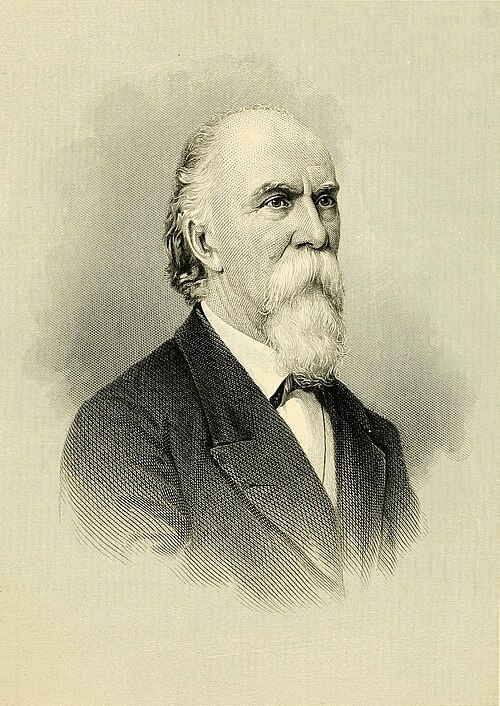 Henry R. Jackson
Georgia District -
 Asa Biggs
North Carolina District -
 Andrew Magrath
South Carolina District
The Confederate Constitution outlined a judicial branch of the government, but the ongoing war and resistance from states-rights advocates, particularly on the question of whether it would have appellate jurisdiction over the state courts, prevented the creation or seating of the "Supreme Court of the Confederate States". Thus, the state courts generally continued to operate as they had done, simply recognizing the Confederate States as the national government.[200]
Confederate district courts were authorized by Article III, Section 1, of the Confederate Constitution,[201] and President Davis appointed judges within the individual states of the Confederate States of America.[202] In many cases, the same US Federal District Judges were appointed as Confederate States District Judges. Confederate district courts began reopening in early 1861, handling many of the same type cases as had been done before. Prize cases, in which Union ships were captured by the Confederate Navy or raiders and sold through court proceedings, were heard until the blockade of southern ports made this impossible. After a Sequestration Act was passed by the Confederate Congress, the Confederate district courts heard many cases in which enemy aliens (typically Northern absentee landlords owning property in the South) had their property sequestered (seized) by Confederate Receivers.
When the matter came before the Confederate court, the property owner could not appear because he was unable to travel across the front lines between Union and Confederate forces. Thus, the District Attorney won the case by default, the property was typically sold, and the money used to further the Southern war effort. Eventually, because there was no Confederate Supreme Court, sharp attorneys like South Carolina's Edward McCrady began filing appeals. This prevented their clients' property from being sold until a supreme court could be constituted to hear the appeal, which never occurred.[202] Where Federal troops gained control over parts of the Confederacy and re-established civilian government, US district courts sometimes resumed jurisdiction.[203]
Supreme Court – not established.
District Courts – judges
Post office
-
 John H. Reagan
Postmaster General -

-
 Andrew Jackson
2 cent, 1862 -
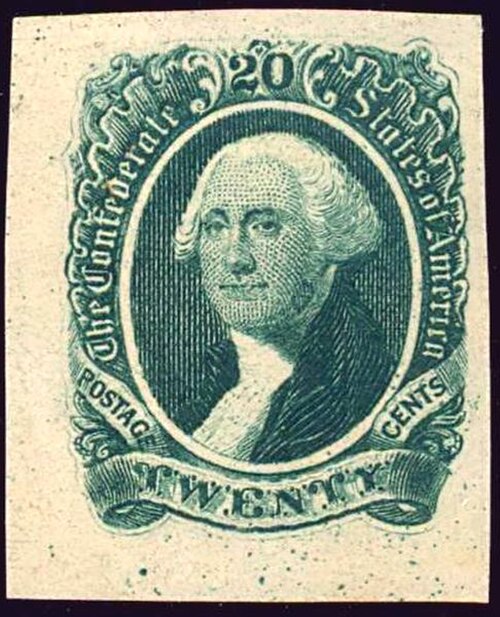 George Washington
20 cent, 1863
When the Confederacy was formed and its seceding states broke from the Union, it was at once confronted with the arduous task of providing its citizens with a mail delivery system, and, amid the American Civil War, the newly formed Confederacy created and established the Confederate Post Office. One of the first undertakings in establishing the Post Office was the appointment of John H. Reagan to the position of Postmaster General, by Jefferson Davis in 1861. This made him the first Postmaster General of the Confederate Post Office, and a member of Davis's presidential cabinet. Writing in 1906, historian Walter Flavius McCaleb praised Reagan's "energy and intelligence... in a degree scarcely matched by any of his associates".[204]
When the war began, the US Post Office briefly delivered mail from the secessionist states. Mail that was postmarked after the date of a state's admission into the Confederacy through May 31, 1861, and bearing US postage was still delivered.[205] After this time, private express companies still managed to carry some of the mail across enemy lines. Later, mail that crossed lines had to be sent by 'Flag of Truce' and was allowed to pass at only two specific points. Mail sent from the Confederacy to the U.S. was received, opened and inspected at Fortress Monroe on the Virginia coast before being passed on into the U.S. mail stream. Mail sent from the North to the South passed at City Point, also in Virginia, where it was also inspected before being sent on.[206][207]
With the chaos of the war, a working postal system was more important than ever for the Confederacy. The Civil War had divided family members and friends and consequently letter writing increased dramatically across the entire divided nation, especially to and from the men who were away serving in an army. Mail delivery was also important for the Confederacy for a myriad of business and military reasons. Because of the Union blockade, basic supplies were always in demand and so getting mailed correspondence out of the country to suppliers was imperative to the successful operation of the Confederacy. Volumes of material have been written about the Blockade runners who evaded Union ships on blockade patrol, usually at night, and who moved cargo and mail in and out of the Confederate States throughout the course of the war. Of particular interest to students and historians of the American Civil War is Prisoner of War mail and Blockade mail as these items were often involved with a variety of military and other war time activities. The postal history of the Confederacy along with surviving Confederate mail has helped historians document the various people, places and events that were involved in the American Civil War as it unfolded.[208]
Civil liberties
The Confederacy actively used the army to arrest people suspected of loyalty to the United States. Historian Mark Neely found 4,108 names of men arrested and estimated a much larger total.[209] The Confederacy arrested pro-Union civilians in the South at about the same rate as the Union arrested pro-Confederate civilians in the North.[210] Neely argues:
The Confederate citizen was not any freer than the Union citizen – and perhaps no less likely to be arrested by military authorities. In fact, the Confederate citizen may have been in some ways less free than his Northern counterpart. For example, freedom to travel within the Confederate states was severely limited by a domestic passport system.[211]
Economy
Slaves
Across the South, widespread rumors alarmed the whites by predicting the slaves were planning some sort of insurrection. Patrols were stepped up. The slaves did become increasingly independent, and resistant to punishment, but historians agree there were no insurrections. In the invaded areas, insubordination was more the norm than was loyalty to the old master; Bell Wiley says, "It was not disloyalty, but the lure of freedom." Many slaves became spies for the North, and large numbers ran away to federal lines.[212]
According to the 1860 United States census, the 11 states that seceded had the highest percentage of slaves as a proportion of their population, representing 39% of their total population. The proportions ranged from a majority in South Carolina (57.2%) and Mississippi (55.2%) to about a quarter in Arkansas (25.5%) and Tennessee (24.8%).
Lincoln's Emancipation Proclamation, an executive order of the U.S. government on January 1, 1863, changed the legal status of three million slaves in designated areas of the Confederacy from "slave" to "free". The long-term effect was that the Confederacy could not preserve the institution of slavery and lost the use of the core element of its plantation labor force. Slaves were legally freed by the Proclamation, and became free by escaping to federal lines, or by advances of federal troops. Over 200,000 freed slaves were hired by the federal army as teamsters, cooks, launderers and laborers, and eventually as soldiers.[213][214] Plantation owners, realizing that emancipation would destroy their economic system, sometimes moved their slaves as far as possible out of reach of the Union army.[215]
Though the concept was promoted within certain circles of the Union hierarchy during and immediately following the war, no program of reparations for freed slaves was ever attempted. Unlike other Western countries, such as Britain and France, the U.S. government never paid compensation to Southern slave owners for their "lost property". The only place compensated emancipation was carried out was the District of Columbia.[216][217]
Political economy
According to the 1860 United States census, about 31% of free households in the eleven states that would join the Confederacy owned slaves. Most whites were subsistence farmers who traded their surpluses locally.
The plantations of the South, with white ownership and an enslaved labor force, produced substantial wealth from cash crops. It supplied two-thirds of the world's cotton, which was in high demand for textiles, along with tobacco, sugar, and naval stores (such as turpentine). These raw materials were exported to factories in Europe and the Northeast. Planters reinvested their profits in more slaves and fresh land, as cotton and tobacco depleted the soil. There was little manufacturing or mining; shipping was controlled by non-southerners.[218][219]
The plantations that enslaved over three million black people were the principal source of wealth. Most were concentrated in "black belt" plantation areas (because few white families in the poor regions owned slaves). For decades, there had been widespread fear of slave revolts. During the war, extra men were assigned to "home guard" patrol duty and governors sought to keep militia units at home for protection. Historian William Barney reports, "no major slave revolts erupted during the Civil War." Nevertheless, slaves took the opportunity to enlarge their sphere of independence, and when union forces were nearby, many ran off to join them.[220][221]
Slave labor was applied in industry in a limited way in the Upper South and in a few port cities. One reason for the regional lag in industrial development was top-heavy income distribution. Mass production requires mass markets, and slaves living in small cabins, using self-made tools and outfitted with one suit of work clothes each year of inferior fabric, did not generate consumer demand to sustain local manufactures of any description in the same way as did a mechanized family farm of free labor in the North. The Southern economy was "pre-capitalist" in that slaves were put to work in the largest revenue-producing enterprises, not free labor markets. That labor system as practiced in the American South encompassed paternalism, whether abusive or indulgent, and that meant labor management considerations apart from productivity.[222]
Approximately 85% of both the North and South white populations lived on family farms, both regions were predominantly agricultural, and mid-century industry in both was mostly domestic. But the Southern economy was pre-capitalist in its overwhelming reliance on the agriculture of cash crops to produce wealth, while the great majority of farmers fed themselves and supplied a small local market. Southern cities and industries grew faster than ever before, but the thrust of the rest of the country's exponential growth elsewhere was toward urban industrial development along transportation systems of canals and railroads. The South was following the dominant currents of the American economic mainstream, but at a "great distance" as it lagged in the all-weather modes of transportation that brought cheaper, speedier freight shipment and forged new, expanding inter-regional markets.[223]
A third count of the pre-capitalist Southern economy relates to the cultural setting. White southerners did not adopt a work ethic, nor the habits of thrift that marked the rest of the country. It had access to the tools of capitalism, but it did not adopt its culture. The Southern Cause as a national economy in the Confederacy was grounded in "slavery and race, planters and patricians, plain folk and folk culture, cotton and plantations".[224]
National production
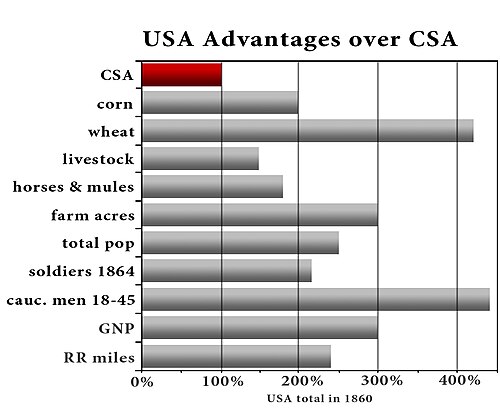
The Confederacy started its existence as an agrarian economy with exports, to a world market, of cotton, and, to a lesser extent, tobacco and sugarcane. Local food production included grains, hogs, cattle, and gardens. The cash came from exports but the Southern people spontaneously stopped exports in early 1861 to hasten the impact of "King Cotton", a failed strategy to coerce international support for the Confederacy through its cotton exports. When the blockade was announced, commercial shipping practically ended (the ships could not get insurance), and only a trickle of supplies came via blockade runners. The cutoff of exports was an economic disaster for the South, rendering useless its most valuable properties, its plantations and their enslaved workers. Many planters kept growing cotton, which piled up everywhere, but most turned to food production. All across the region, the lack of repair and maintenance wasted away the physical assets.
The eleven states had produced $155 million (~$4.29 billion in 2023) in manufactured goods in 1860, chiefly from local gristmills, and lumber, processed tobacco, cotton goods and naval stores such as turpentine. The main industrial areas were border cities such as Baltimore, Wheeling, Louisville and St. Louis, that were never under Confederate control. The government did set up munitions factories in the Deep South. Combined with captured munitions and those coming via blockade runners, the armies were kept minimally supplied with weapons. The soldiers suffered from reduced rations, lack of medicines, and the growing shortages of uniforms, shoes and boots. Shortages were much worse for civilians, and the prices of necessities steadily rose.[225]
The Confederacy adopted a tariff or tax on imports of 15%, and imposed it on all imports from other countries, including the United States.[226] The tariff mattered little; the Union blockade minimized commercial traffic through the Confederacy's ports, and very few people paid taxes on goods smuggled from the North. The Confederate government in its entire history collected only $3.5 million in tariff revenue. The lack of adequate financial resources led the Confederacy to finance the war through printing money, which led to high inflation. The Confederacy underwent an economic revolution by centralization and standardization, but it was too little too late as its economy was systematically strangled by blockade and raids.[227]
Transportation systems


In peacetime, the South's extensive and connected systems of navigable rivers and coastal access allowed for cheap and easy transportation of agricultural products. The railroad system in the South had developed as a supplement to the navigable rivers to enhance the all-weather shipment of cash crops to market. Railroads tied plantation areas to the nearest river or seaport and so made supply more dependable, lowered costs and increased profits. In the event of invasion, the vast geography of the Confederacy made logistics difficult for the Union. Wherever Union armies invaded, they assigned many of their soldiers to garrison captured areas and to protect rail lines.
At the onset of the Civil War the South had a rail network disjointed and plagued by changes in track gauge as well as lack of interchange. Locomotives and freight cars had fixed axles and could not use tracks of different gauges (widths). Railroads of different gauges leading to the same city required all freight to be off-loaded onto wagons for transport to the connecting railroad station, where it had to await freight cars and a locomotive before proceeding. Centers requiring off-loading included Vicksburg, New Orleans, Montgomery, Wilmington and Richmond.[228] In addition, most rail lines led from coastal or river ports to inland cities, with few lateral railroads. Because of this design limitation, the relatively primitive railroads of the Confederacy were unable to overcome the Union naval blockade of the South's crucial intra-coastal and river routes.
The Confederacy had no plan to expand, protect or encourage its railroads. Southerners' refusal to export the cotton crop in 1861 left railroads bereft of their main source of income.[229] Many lines had to lay off employees; many critical skilled technicians and engineers were permanently lost to military service. In the early years of the war the Confederate government had a hands-off approach to the railroads. Only in mid-1863 did the Confederate government initiate a national policy, and it was confined solely to aiding the war effort.[230] Railroads came under the de facto control of the military. In contrast, the U.S. Congress had authorized military administration of Union-controlled railroad and telegraph systems in January 1862, imposed a standard gauge, and built railroads into the South using that gauge. Confederate armies successfully reoccupying territory could not be resupplied directly by rail as they advanced. The C.S. Congress formally authorized military administration of railroads in February 1865.
In the last year before the end of the war, the Confederate railroad system stood permanently on the verge of collapse. There was no new equipment and raids on both sides systematically destroyed key bridges, as well as locomotives and freight cars. Spare parts were cannibalized; feeder lines were torn up to get replacement rails for trunk lines, and rolling stock wore out through heavy use.[231]
Horses and mules
The Confederate army experienced a persistent shortage of horses and mules and requisitioned them with dubious promissory notes given to local farmers and breeders. Union forces paid in real money and found ready sellers in the South. Both armies needed horses for cavalry and for artillery.[232] Mules pulled the wagons. The supply was undermined by an unprecedented epidemic of glanders, a fatal disease that baffled veterinarians.[233] After 1863 the invading Union forces had a policy of shooting all the local horses and mules that they did not need, in order to keep them out of Confederate hands. The Confederate armies and farmers experienced a growing shortage of horses and mules, which hurt the Southern economy and the war effort. The South lost half of its 2.5 million horses and mules; many farmers ended the war with none left. Army horses were used up by hard work, malnourishment, disease and battle wounds; they had a life expectancy of about seven months.[234]
Financial instruments
Both the individual Confederate states and later the Confederate government printed Confederate States of America dollars as paper currency in various denominations, with a total face value of $1.5 billion. Much of it was signed by Treasurer Edward C. Elmore. Inflation became rampant as the paper money depreciated and eventually became worthless. The state governments and some localities printed their own paper money, adding to the runaway inflation.[235] Many bills still exist, although in recent years counterfeit copies have proliferated.

The Confederate government initially wanted to finance its war mostly through tariffs on imports, export taxes, and voluntary donations of gold. After the spontaneous imposition of an embargo on cotton sales to Europe in 1861, these sources of revenue dried up and the Confederacy increasingly turned to issuing debt and printing money to pay for war expenses. The Confederate States politicians were worried about angering the general population with hard taxes. A tax increase might disillusion many Southerners, so the Confederacy resorted to printing more money. As a result, inflation increased and remained a problem for the southern states throughout the rest of the war.[236] By April 1863, for example, the cost of flour in Richmond had risen to $100 (~$2,475 in 2023) a barrel and housewives were rioting.[237]
The Confederate government took over the three national mints in its territory: the Charlotte Mint in North Carolina, the Dahlonega Mint in Georgia, and the New Orleans Mint in Louisiana. During 1861 all of these facilities produced small amounts of gold coinage, and the latter half dollars as well. Since the mints used the current dies on hand, all appear to be U.S. issues. However, by comparing slight differences in the dies specialists can distinguish 1861-O half dollars that were minted either under the authority of the U.S. government, the State of Louisiana, or finally the Confederate States. Unlike the gold coins, this issue was produced in significant numbers (over 2.5 million) and is inexpensive in lower grades, although fakes have been made for sale to the public.[238] However, before the New Orleans Mint ceased operation in May 1861, the Confederate government used its own reverse design to strike four half dollars. This made one of the great rarities of American numismatics. A lack of silver and gold precluded further coinage. The Confederacy apparently also experimented with issuing one cent coins, although only 12 were produced by a jeweler in Philadelphia, who was afraid to send them to the South. Like the half dollars, copies were later made as souvenirs.[239]
US coinage was hoarded and did not have any general circulation. U.S. coinage was admitted as legal tender up to $10, as were British sovereigns, French Napoleons and Spanish and Mexican doubloons at a fixed rate of exchange. Confederate money was paper and postage stamps.[240]
Food shortages and riots

By mid-1861, the Union naval blockade virtually shut down the export of cotton and the import of manufactured goods. Food that formerly came overland was cut off.
As women were the ones who remained at home, they had to make do with the lack of food and supplies. They cut back on purchases, used old materials, and planted more flax and peas to provide clothing and food. They used ersatz substitutes when possible, but there was no real coffee, only okra and chicory substitutes. The households were severely hurt by inflation in the cost of everyday items like flour, and the shortages of food, fodder for the animals, and medical supplies for the wounded.[241][242]
State governments requested that planters grow less cotton and more food, but most refused. When cotton prices soared in Europe, expectations were that Europe would soon intervene to break the blockade and make them rich, but Europe remained neutral.[243] The Georgia legislature imposed cotton quotas, making it a crime to grow an excess. But food shortages only worsened, especially in the towns.[244]
The overall decline in food supplies, made worse by the inadequate transportation system, led to serious shortages and high prices in urban areas. When bacon reached a dollar a pound in 1863, the poor women of Richmond, Atlanta and many other cities began to riot; they broke into shops and warehouses to seize food, as they were angry at ineffective state relief efforts, speculators, and merchants. As wives and widows of soldiers, they were hurt by the inadequate welfare system.[245][246][247]
Devastation by 1865
By the end of the war deterioration of the Southern infrastructure was widespread. The number of civilian deaths is unknown. Every Confederate state was affected, but most of the war was fought in Virginia and Tennessee, while Texas and Florida saw the least military action. Much of the damage was caused by direct military action, but most was caused by lack of repairs and upkeep, and by deliberately using up resources. Historians have recently estimated how much of the devastation was caused by military action. Paul Paskoff calculates that Union military operations were conducted in 56% of 645 counties in nine Confederate states (excluding Texas and Florida). These counties contained 63% of the 1860 white population and 64% of the slaves. By the time the fighting took place, undoubtedly some people had fled to safer areas, so the exact population exposed to war is unknown.[248]
-
 Potters House, Atlanta GA
 -
 Downtown Charleston SC
 -
 Navy Yard, Norfolk VA
 -
 Rail bridge, Petersburg VA


The eleven Confederate States in the 1860 United States census had 297 towns and cities with 835,000 people; of these 162 with 681,000 people were at one point occupied by Union forces. Eleven were destroyed or severely damaged by war action, including Atlanta (with an 1860 population of 9,600), Charleston, Columbia, and Richmond (with prewar populations of 40,500, 8,100, and 37,900, respectively); the eleven contained 115,900 people in the 1860 census, or 14% of the urban South. Historians have not estimated what their actual population was when Union forces arrived. The number of people (as of 1860) who lived in the destroyed towns represented just over 1% of the Confederacy's 1860 population. In addition, 45 court houses were burned (out of 830). The South's agriculture was not highly mechanized. The value of farm implements and machinery in the 1860 Census was $81 million; by 1870, there was 40% less, worth just $48 million. Many old tools had broken through heavy use; new tools were rarely available; even repairs were difficult.[249]
The economic losses affected everyone. Banks and insurance companies were mostly bankrupt. Confederate currency and bonds were worthless. The billions of dollars invested in slaves vanished. Most debts were also left behind. Most farms were intact, but most had lost their horses, mules and cattle; fences and barns were in disrepair. Paskoff shows the loss of farm infrastructure was about the same whether or not fighting took place nearby. The loss of infrastructure and productive capacity meant that rural widows throughout the region faced not only the absence of able-bodied men, but a depleted stock of material resources that they could manage and operate themselves. During four years of warfare, disruption, and blockades, the South used up about half its capital stock. The North, by contrast, absorbed its material losses so effortlessly that it appeared richer at the end of the war than at the beginning.[249]
The rebuilding took years and was hindered by the low price of cotton after the war. Outside investment was essential, especially in railroads. One historian has summarized the collapse of the transportation infrastructure needed for economic recovery:[250]
One of the greatest calamities which confronted Southerners was the havoc wrought on the transportation system. Roads were impassable or nonexistent, and bridges were destroyed or washed away. The important river traffic was at a standstill: levees were broken, channels were blocked, the few steamboats which had not been captured or destroyed were in a state of disrepair, wharves had decayed or were missing, and trained personnel were dead or dispersed. Horses, mules, oxen, carriages, wagons, and carts had nearly all fallen prey at one time or another to the contending armies. The railroads were paralyzed, with most of the companies bankrupt. These lines had been the special target of the enemy. On one stretch of 114 miles in Alabama, every bridge and trestle was destroyed, cross-ties rotten, buildings burned, water-tanks gone, ditches filled up, and tracks grown up in weeds and bushes ... Communication centers like Columbia and Atlanta were in ruins; shops and foundries were wrecked or in disrepair. Even those areas bypassed by battle had been pirated for equipment needed on the battlefront, and the wear and tear of wartime usage without adequate repairs or replacements reduced all to a state of disintegration.
Effect on women and families

More than 250,000 Confederate soldiers died during the war. Some widows abandoned their family farms and merged into the households of relatives, or even became refugees living in camps with high rates of disease and death.[251] In the Old South, being an "old maid" was an embarrassment to the woman and her family, but after the war, it became almost a norm.[252] Some women welcomed the freedom of not having to marry. Divorce, while never fully accepted, became more common. The concept of the "New Woman" emerged – she was self-sufficient and independent, and stood in sharp contrast to the "Southern Belle" of antebellum lore.[253]
National flags
- Flags of the Confederate States of America
-
![第1国旗 [7、9、11、13個の星[254]]「星条旗」](https://img-server.japedia.wiki/wikipedia/commons/thumb/a/a6/Flag_of_the_Confederate_States_%28March_%E2%80%93_May_1861%29.svg/500px-Flag_of_the_Confederate_States_%28March_%E2%80%93_May_1861%29.svg.png) 1st National Flag
1st National Flag
[7, 9, 11, 13 stars[254]]
"Stars and Bars" -
![第2国旗 [リッチモンド議事堂[255]] 「ステンレスバナー」](https://img-server.japedia.wiki/wikipedia/commons/thumb/0/00/Flag_of_the_Confederate_States_%281863%E2%80%931865%29.svg/500px-Flag_of_the_Confederate_States_%281863%E2%80%931865%29.svg.png) 2nd National Flag
2nd National Flag
[Richmond Capitol[255]]
"Stainless Banner" -
![3番目の国旗[掲揚されなかった[256]]「血に染まった旗」](https://img-server.japedia.wiki/wikipedia/commons/thumb/6/62/Flag_of_the_Confederate_States_%281865%29.svg/500px-Flag_of_the_Confederate_States_%281865%29.svg.png) 3rd National Flag
3rd National Flag
[never flown[256]]
"Blood Stained Banner" -
![CSA 海軍ジャック 1863–65[要出典]](https://img-server.japedia.wiki/wikipedia/commons/thumb/9/9e/Naval_jack_of_the_Confederate_States_%281863%E2%80%931865%29.svg/500px-Naval_jack_of_the_Confederate_States_%281863%E2%80%931865%29.svg.png) CSA Naval Jack
CSA Naval Jack
1863–65[citation needed] -
![戦闘旗「サザンクロス」[257]](https://img-server.japedia.wiki/wikipedia/commons/thumb/5/59/Battle_flag_of_the_Confederate_States_of_America_%281-1%29.svg/500px-Battle_flag_of_the_Confederate_States_of_America_%281-1%29.svg.png) Battle Flag
Battle Flag
"Southern Cross"[257]
![第1国旗 [7、9、11、13個の星[254]]「星条旗」](https://img-server.japedia.wiki/wikipedia/commons/thumb/a/a6/Flag_of_the_Confederate_States_(March_%E2%80%93_May_1861).svg/500px-Flag_of_the_Confederate_States_(March_%E2%80%93_May_1861).svg.png)
![第2国旗 [リッチモンド議事堂[255]] 「ステンレスバナー」](https://img-server.japedia.wiki/wikipedia/commons/thumb/0/00/Flag_of_the_Confederate_States_(1863%E2%80%931865).svg/500px-Flag_of_the_Confederate_States_(1863%E2%80%931865).svg.png)
![CSA 海軍ジャック 1863–65[要出典]](https://img-server.japedia.wiki/wikipedia/commons/thumb/9/9e/Naval_jack_of_the_Confederate_States_(1863%E2%80%931865).svg/500px-Naval_jack_of_the_Confederate_States_(1863%E2%80%931865).svg.png)
![戦闘旗「サザンクロス」[257]](https://img-server.japedia.wiki/wikipedia/commons/thumb/5/59/Battle_flag_of_the_Confederate_States_of_America_(1-1).svg/500px-Battle_flag_of_the_Confederate_States_of_America_(1-1).svg.png)
.svg/500px-Battle_flag_of_the_Confederate_States_of_America_(3-5).svg.png)
The first official flag of the Confederate States of America—called the "Stars and Bars"—originally had seven stars, representing the first seven states that initially formed the Confederacy. As more states joined, more stars were added, until the total was 13 (two stars were added for the divided states of Kentucky and Missouri). During the First Battle of Bull Run, (First Manassas) it sometimes proved difficult to distinguish the Stars and Bars from the Union flag.[citation needed] To rectify the situation, a separate "Battle Flag" was designed for use by troops in the field. Also known as the "Southern Cross", many variations sprang from the original square configuration.
Although it was never officially adopted by the Confederate government, the popularity of the Southern Cross among both soldiers and the civilian population was a primary reason why it was made the main color feature when a new national flag was adopted in 1863.[257] This new standard—known as the "Stainless Banner"—consisted of a lengthened white field area with a Battle Flag canton. This flag too had its problems when used in military operations as, on a windless day, it could easily be mistaken for a flag of truce or surrender. Thus, in 1865, a modified version of the Stainless Banner was adopted. This final national flag of the Confederacy kept the Battle Flag canton, but shortened the white field and added a vertical red bar to the fly end.
Because of its depiction in the 20th-century and popular media, many people consider the rectangular battle flag with the dark blue bars as being synonymous with "the Confederate Flag", but this flag was never adopted as a Confederate national flag.[257]
The "Confederate Flag" has a color scheme similar to that of the most common Battle Flag design, but is rectangular, not square. The "Confederate Flag" is a highly recognizable symbol of the South in the United States today and continues to be a controversial icon.
Southern Unionism

Unionism—opposition to the Confederacy—was strong in certain areas within the Confederate States. Southern Unionists were widespread in the mountain regions of Appalachia and the Ozarks.[258] Unionists, led by Parson Brownlow and Senator Andrew Johnson, took control of East Tennessee in 1863.[259] Unionists also attempted control over western Virginia, but never effectively held more than half of the counties that formed the new state of West Virginia.[260][261][262] Union forces captured parts of coastal North Carolina, and at first were largely welcomed by local unionists. The occupiers became perceived as oppressive, callous, radical and favorable to Freedmen. Occupiers pillaged, freed slaves, and evicted those who refused to swear loyalty oaths to the Union.[263]
Claude Elliott estimates that only a third of the Texas population actively supported the Confederacy. Many Unionists supported the Confederacy after the war began, but many others clung to their Unionism throughout the war, especially in the northern counties, German districts in the Texas Hill Country, and majority Mexican areas.[264] Randolph B. Campbell states, "In spite of terrible losses and hardships, most Texans continued throughout the war to support the Confederacy as they had supported secession".[265] Dale Baum in his analysis of Texas politics in the era counters: "This idea of a Confederate Texas united politically against northern adversaries was shaped more by nostalgic fantasies than by wartime realities." He characterizes Texas Civil War history as "a morose story of intragovernmental rivalries coupled with wide-ranging disaffection that prevented effective implementation of state wartime policies".[266]
In Texas, local officials harassed and murdered Unionists and Germans during the Civil War. In Cooke County, Texas, 150 suspected Unionists were arrested; 25 were lynched without trial and 40 more were hanged after a summary trial. Draft resistance was widespread especially among Texans of German or Mexican descent, many of the latter leaving for Mexico. Confederate officials attempted to hunt down and kill potential draftees who had gone into hiding.[264] Over 4,000 suspected Unionists were imprisoned in the Confederate States without trial.[267]
.jpg/500px-Jim_Brownlow_1st_Tennessee_Cavalry_Regiment_(Union).jpg)
Up to 100,000 men living in states under Confederate control served in the Union Army or pro-Union guerilla groups. Although Southern Unionists came from all classes, most differed socially, culturally, and economically from the region's dominant pre-war planter class.[269]
Geography
Region and climate
The Confederate States of America claimed a total of 2,919 miles (4,698 km) of coastline, thus a large part of its territory lay on the seacoast with level and often sandy or marshy ground. Most of the interior portion consisted of arable farmland, though much was also hilly and mountainous, and the far western territories were deserts. The southern reaches of the Mississippi River bisected the country, and the western half was often referred to as the Trans-Mississippi. The highest point (excluding Arizona and New Mexico) was Guadalupe Peak in Texas at 8,750 feet (2,670 m).
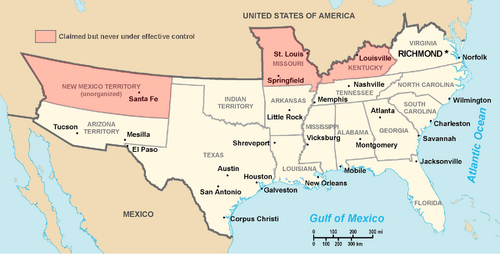
Much of the area had a humid subtropical climate with mild winters and long, hot, humid summers. The climate and terrain varied from vast swamps to semi-arid steppes and arid deserts. The subtropical climate made winters mild but allowed infectious diseases to flourish; on both sides more soldiers died from disease than were killed in combat.[270]
Demographics
Population
The 1860 United States census[271] gives a picture of the population for the areas that had joined the Confederacy. The population numbers exclude non-assimilated Indian tribes.
In 1860, the areas that later formed the eleven Confederate states (and including the future West Virginia) had 132,760 (2%) free blacks. Males made up 49% of the total population and females 51%.[276]
Rural and urban population

The CSA was overwhelmingly rural. Few towns had populations of more than 1,000—the typical county seat had a population under 500. Of the twenty largest U.S. cities in the 1860 census, only New Orleans lay in Confederate territory.[277] Only 13 Confederate-controlled cities ranked among the top 100 U.S. cities in 1860, most of them ports whose economic activities vanished or suffered severely in the Union blockade. The population of Richmond swelled after it became the Confederate capital, reaching an estimated 128,000 in 1864.[278]
The cities of the Confederacy included (by size of population):
Religion

The CSA was overwhelmingly Protestant.[279] Both free and enslaved populations identified with evangelical Protestantism. Baptists and Methodists together formed majorities of both the white and the slave population, becoming the Black church. Freedom of religion and separation of church and state were fully ensured by Confederate laws. Church attendance was very high and chaplains played a major role in the Army.[280]
Most large denominations experienced a North–South split in the prewar era on the issue of slavery. The creation of a new country necessitated independent structures. For example, the Presbyterian Church in the United States split, with much of the new leadership provided by Joseph Ruggles Wilson.[281] Baptists and Methodists both broke off from their Northern coreligionists over the slavery issue, forming the Southern Baptist Convention and the Methodist Episcopal Church, South.[282][283] Elites in the southeast favored the Protestant Episcopal Church in the Confederate States of America, which had reluctantly split from the Episcopal Church in 1861.[284] Other elites were Presbyterians belonging to the 1861-founded Presbyterian Church in the United States. Catholics included an Irish working-class element in coastal cities and an old French element in southern Louisiana.[285][286]
The southern churches met the shortage of Army chaplains by sending missionaries. One result was wave after wave of revivals in the Army.[287]
Legacy and assessment
Amnesty and treason issue
When the war ended over 14,000 Confederates petitioned President Johnson for a pardon; he was generous in giving them out.[288] He issued a general amnesty to all Confederate participants in the "late Civil War" in 1868.[289] Congress passed additional Amnesty Acts in May 1866 with restrictions on office holding, and the Amnesty Act in May 1872 lifting those restrictions. There was a great deal of discussion in 1865 about bringing treason trials, especially against Jefferson Davis. There was no consensus in President Johnson's cabinet, and no one was charged with treason. An acquittal of Davis would have been humiliating for the government.[290]
Davis was indicted for treason but never tried; he was released from prison on bail in May 1867. The amnesty of December 25, 1868, by President Johnson eliminated any possibility of Jefferson Davis (or anyone else associated with the Confederacy) standing trial for treason.[291][292][293]
Henry Wirz, the commandant of a notorious prisoner-of-war camp near Andersonville, Georgia, was tried and convicted by a military court, and executed on November 10, 1865. The charges against him involved conspiracy and cruelty, not treason.
The U.S. government began a decade-long process known as Reconstruction which attempted to resolve the political and constitutional issues of the Civil War. The priorities were: to guarantee that Confederate nationalism and slavery were ended, to ratify and enforce the Thirteenth Amendment which outlawed slavery; the Fourteenth which guaranteed dual U.S. and state citizenship to all native-born residents, regardless of race; the Fifteenth, which made it illegal to deny the right to vote because of race; and repeal each state's ordinance of secession.[294]
By 1877, the Compromise of 1877 ended Reconstruction in the former Confederate states. Federal troops were withdrawn from the South, where conservative white Democrats had already regained political control of state governments, often through extreme violence and fraud to suppress black voting. The prewar South had many rich areas; the war left the entire region economically devastated by military action, ruined infrastructure, and exhausted resources. Still dependent on an agricultural economy and resisting investment in infrastructure, it remained dominated by the planter elite into the next century. Confederate veterans had been temporarily disenfranchised by Reconstruction policy, and Democrat-dominated legislatures passed new constitutions and amendments to now exclude most blacks and many poor whites. This exclusion and a weakened Republican Party remained the norm until the Voting Rights Act of 1965. The Solid South of the early 20th century did not achieve national levels of prosperity until long after World War II.[295]
Texas v. White (1869)
In Texas v. White, the United States Supreme Court ruled—by a 5–3 majority—that Texas had remained a state ever since it first joined the Union, despite claims that it joined the Confederate States of America. In this case, the court held that the Constitution did not permit a state to unilaterally secede from the United States. Further, that the ordinances of secession, and all the acts of the legislatures within the eleven seceding states intended to give effect to such ordinances, were "absolutely null", under the Constitution.[296] This case settled the law that applied to all questions regarding state legislation during the war. Furthermore, it decided one of the "central constitutional questions" of the Civil War: The Union is perpetual and indestructible, as a matter of constitutional law. In declaring that no state could leave the Union, "except through revolution or through consent of the States", it was "explicitly repudiating the position of the Confederate states that the United States was a voluntary compact between sovereign states".[297]
Sprott v. United States (1874)
In Sprott v. United States, the Supreme Court ruled—by a 8–1 majority—to reaffirm its conclusion in White and held that the Confederate States of America was little more than a briefly-existing breakaway state. Specifically, the opinion would condemn the Confederacy as treasonous and as totally perishing upon being overthrown.[298][299] Writing for the court's majority, Associate Justice Samuel Freeman Miller would remark that:
"It [the Confederacy] had no existence, except as a conspiracy to overthrow lawful authority. Its foundation was treason against the existing Federal government. Its single purpose, so long as it lasted, was to make that treason successful. So far from being necessary to the organization of civil government, or to its maintenance and support, it was inimical to social order, destructive to the best interests of society, and its primary object was to overthrow the government on which these so largely depended. Its existence and temporary power were an enormous evil, which the whole force of the government and the people of the United States was engaged for years in destroying.When it was overthrown it perished totally. It left no laws, no statutes, no decrees, no authority which can give support to any contract, or any act done in its service, or in aid of its purpose, or which contributed to protract its existence."
Theories regarding downfall
"Died of states' rights"
Historian Frank Lawrence Owsley argued that the Confederacy "died of states' rights".[300][301][302] The central government was denied requisitioned soldiers and money by governors and state legislatures because they feared that Richmond would encroach on the rights of the states. Georgia's governor Joseph Brown warned of a secret conspiracy by Jefferson Davis to destroy states' rights and individual liberty. The first conscription act in North America, authorizing Davis to draft soldiers, was said to be the "essence of military despotism".[303][304] Roger Lowenstein argued in Ways and Means: Lincoln and His Cabinet and the Financing of the Civil War (2022) that the Confederacy's failure to raise adequate revenue led to hyperinflation and being unable to win a war of attrition, despite the prowess of its military leadership such as Robert E. Lee.[305]
-
 Joseph E. Brown, governor of Georgia
 -
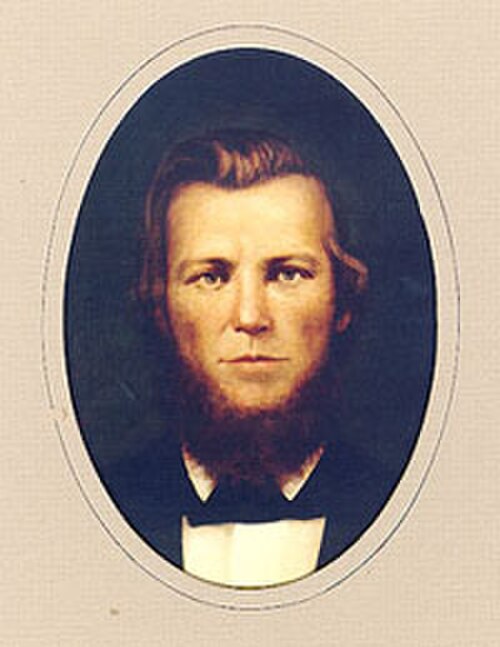 Pendleton Murrah, governor of Texas
Vice President Alexander H. Stephens feared losing the very form of republican government. Allowing President Davis to threaten "arbitrary arrests" to draft hundreds of governor-appointed "bomb-proof" bureaucrats conferred "more power than the English Parliament had ever bestowed on the king. History proved the dangers of such unchecked authority."[306] The abolishment of draft exemptions for newspaper editors was interpreted as an attempt by the Confederate government to muzzle presses, such as the Raleigh NC Standard, to control elections and to suppress the peace meetings there. As Rable concludes, "For Stephens, the essence of patriotism, the heart of the Confederate cause, rested on an unyielding commitment to traditional rights" without considerations of military necessity, pragmatism or compromise.[306]
In 1863, Governor Pendleton Murrah of Texas determined that state troops were required for defense against Plains Indians and Union forces that might attack from Kansas. He refused to send his soldiers to the East.[307] Governor Zebulon Vance of North Carolina showed intense opposition to conscription, limiting recruitment success. Vance's faith in states' rights drove him into repeated, stubborn opposition to the Davis administration.[308]
Though political differences were within the Confederacy, no national political parties were formed because they were seen as illegitimate. "Anti-partyism became an article of political faith."[309] Without a system of political parties building alternate sets of national leaders, electoral protests tended to be narrowly state-based, "negative, carping and petty". The 1863 mid-term elections became mere expressions of futile and frustrated dissatisfaction. According to historian David M. Potter, the lack of a functioning two-party system caused "real and direct damage" to the Confederate war effort since it prevented the formulation of any effective alternatives to the conduct of the war by the Davis administration.[310]
"Died of Davis"
The enemies of President Davis proposed that the Confederacy "died of Davis". He was unfavorably compared to George Washington by critics such as Edward Alfred Pollard, editor of the most influential newspaper in the Confederacy, the Richmond (Virginia) Examiner. Beyond the early honeymoon period, Davis was never popular.[311]
E. Merton Coulter, viewed by historians as a Confederate apologist,[312][313][314][315] says Davis was heroic, but his "tenacity, determination, and will power" stirred up lasting opposition from enemies. He failed to overcome "petty leaders of the states" who made the term "Confederacy" into a label for tyranny and oppression, preventing the "Stars and Bars" from becoming a symbol of larger patriotic service and sacrifice. Instead of campaigning to develop nationalism and gain support for his administration, he rarely courted public opinion, assuming an aloofness, "almost like an Adams".[311]
Escott argues that Davis was unable to mobilize Confederate nationalism in support of his government effectively, and especially failed to appeal to the small farmers who made up the bulk of the population. Escott also emphasizes that the widespread opposition to any strong central government combined with the vast difference in wealth between the slave-owning class and the small farmers created insolvable dilemmas when the Confederate survival presupposed a strong central government backed by a united populace. The prewar claim that white solidarity was necessary to provide a unified Southern voice in Washington no longer held. Davis failed to build a network of supporters who would speak up when he came under criticism, and he repeatedly alienated governors and other state-based leaders by demanding centralized control of the war effort.[316]
According to Coulter, Davis was not an efficient administrator as he attended to too many details, protected his friends after their failures were obvious, and spent too much time on military affairs versus his civic responsibilities. Coulter concludes he was not the ideal leader for the Southern Revolution, but he showed "fewer weaknesses than any other" contemporary character available for the role.[317]
See also
- American Civil War prison camps
- Cabinet of the Confederate States of America
- Commemoration of the American Civil War
- Commemoration of the American Civil War on postage stamps
- Confederate colonies
- Confederate Patent Office
- Confederate war finance
- C.S.A.: The Confederate States of America
- History of the Southern United States
- Knights of the Golden Circle
- List of Confederate arms manufacturers
- List of Confederate arsenals and armories
- List of Confederate monuments and memorials
- List of treaties of the Confederate States of America
- List of historical separatist movements
- List of civil wars
- National Civil War Naval Museum
Notes
- ^ Slaves are included in the above population according to the 1860 census.[7]
- ^ Population values do not include Missouri, Kentucky, or the Arizona Territory.
- ^ The cash crops circling the Seal are wheat, corn, tobacco, cotton, rice and sugar cane. Like Washington's equestrian statue honoring him at Union Square NYC 1856, slaveholding Washington is pictured in his uniform of the Revolution securing American independence. Though armed, he does not have his sword drawn as he is depicted in the equestrian statue at the Virginia Capitol, Richmond, Virginia. The plates for the Seal were engraved in England but never received due to the Union Blockade.
References
- ^ a b c "Preventing Diplomatic Recognition of the Confederacy, 1861–65". U.S. Department of State. Archived from the original on August 28, 2013.
- ^ "Reaction to the Fall of Richmond". American Battlefield Trust. December 9, 2008. Retrieved July 12, 2021.
- ^ "History". Danville Museum of Fine Arts & History. Retrieved July 12, 2021.
- ^ a b W. W. Gaunt (1864). The Statutes at Large of the Provisional Government of the Confederate States of America: From the Institution of the Government, February 8, 1861 to Its Termination, February 18, 1862, Inclusive. Arranged in Chronological Order, Together with the Constitution for the Provisional Government and the Permanent Constitution of the Confederate States, and the Treaties Concluded by the Confederate States with Indian Tribes. D & S Publishers, Indian Rocks Beach. p. 1,2.
- ^ Cooper (2000) p. 462. Rable (1994) pp. 2–3. Rable wrote, "But despite heated arguments and no little friction between the competing political cultures of unity and liberty, antiparty and broader fears about politics in general shaped civic life. These beliefs could obviously not eliminate partisanship or prevent Confederates from holding on to and exploiting old political prejudices. Indeed, some states, notably Georgia and North Carolina, remained political tinderboxes throughout the war. Even the most bitter foes of the Confederate government, however, refused to form an opposition party, and the Georgia dissidents, to cite the most prominent example, avoided many traditional political activities. Only in North Carolina did there develop anything resembling a party system, and there the central values of the Confederacy's two political cultures had a far more powerful influence on political debate than did organizational maneuvering."
- ^ David Herbert Donald, ed. Why the North Won the Civil War. (1996) pp. 112–113. Potter wrote in his contribution to this book, "Where parties do not exist, criticism of the administration is likely to remain purely an individual matter; therefore the tone of the criticism is likely to be negative, carping, and petty, as it certainly was in the Confederacy. But where there are parties, the opposition group is strongly impelled to formulate real alternative policies and to press for the adoption of these policies on a constructive basis. ... But the absence of a two-party system meant the absence of any available alternative leadership, and the protest votes which were cast in the 1863 Confederate mid-term election became more expressions of futile and frustrated dissatisfaction rather than implements of a decision to adopt new and different policies for the Confederacy."
- ^ "1860 Census Results". Archived from the original on June 4, 2004.
- ^ a b Tikkanen, Amy (June 17, 2020). "American Civil War". Encyclopedia Britannica. Retrieved June 28, 2020.
...between the United States and 11 Southern states that seceded from the Union and formed the Confederate States of America.
- ^ a b Hubbard, Charles (2000). The Burden of Confederate Diplomacy. Knoxville: University of Tennessee Press. p. 55. ISBN 1-57233-092-9. OCLC 745911382.
- ^ Thomas, Emory M. (1979). The Confederate Nation: 1861–1865. Harper Collins. pp. 256–257. ISBN 978-0-06-206946-7.
- ^ McPherson, James M. (2007). This mighty scourge: perspectives on the Civil War. Oxford University Press US. p. 65. ISBN 978-0198042761.
- ^ a b "Confederate States of America". Encyclopædia Britannica. July 20, 1998. Retrieved June 25, 2019.
- ^ Smith, Mark M. (2008). "The Plantation Economy". In Boles, John B. (ed.). A Companion to the American South. John Wiley & Sons. ISBN 978-1-4051-3830-7.
Antebellum southern society was defined in no small part by the shaping and working of large tracts of land whose soil was tilled and staples tended by enslaved African-American laborers. This was, in short, a society dependent on what historians have variously referred to as the plantation system, the southern slave economy or, more commonly, the plantation economy... Slaveholders' demand for labor increased apace. The number of southern slaves jumped from under one million in 1790 to roughly four million by 1860. By the middle decades of the antebellum period, the Old South had matured into a slave society whose plantation economy affected virtually every social and economic relation within the South.
- ^ McMurtry-Chubb, Teri A. (2021). Race Unequals: Overseer Contracts, White Masculinities, and the Formation of Managerial Identity in the Plantation Economy. Lexington Books. p. 31. ISBN 978-1-4985-9907-8.
The plantation as the vehicle to wealth was tied to the primacy of cotton in the growth of global capitalism. The large-scale cultivation and harvest of cot ton required new forms of labor organization, as well as labor management, Enter the overseer. By 1860, there were approximately 38,000 overseers working as plantation managers throughout the antebellum south. They were employed by the wealthiest of planters, planters who held multiple plantations and owned hundreds of enslaved Africans. By 1860, 85 percent of all cotton grown in the South was on plantations of 100 acres or more. On these plantations resided 91.2 percent of enslaved Africans. Planters came to own these Africans through the internal slave trade in the United States that moved to its cotton fields approximately one million enslaved laborers.
- ^ Robert S. Rush; William W. Epley (2007). Multinational Operations, Alliances, and International Military Cooperation. U.S. Government Printing Office. p. 21,27.
- ^ John T. Ishiyama (2011). Comparative Politics: Principles of Democracy and Democratization. John Wiley & Sons. p. 214.
- ^ a b Dunbar Rowland (1925). History of Mississippi, the Heart of the South, volume 1. S. J. Clarke publishing Company. p. 784.
- ^ Charles Daniel Drake (1864). Union and Anti-Slavery speeches, delivered during the Rebellion, etc. p. 219,220,222,241.
- ^ "Learn – Civil War Trust" (PDF). civilwar.org. October 29, 2013. Archived (PDF) from the original on April 1, 2010. Retrieved August 27, 2017.
- ^ Hacker, J. David (September 20, 2011). "Recounting the Dead". Opinionator. Retrieved May 19, 2018.
- ^ Arrington, Benjamin P. "Industry and Economy during the Civil War". National Park Service. Retrieved February 5, 2022.
- ^ Davis, Jefferson (1890). Short History of the Confederate States of America. Belford co. p. 503. Retrieved February 10, 2015.
- ^ The constitutionality of the Confederacy's dissolution is open to interpretation at least to the extent that, like the United States Constitution, the Confederate States Constitution did not grant anyone (including the President) the power to dissolve the country. However, May 5, 1865, was the last day anyone holding a Confederate office recognized by the secessionist governments attempted to exercise executive, legislative, or judicial power under the C.S. Constitution. For this reason, that date is generally recognized to be the day the Confederate States of America formally dissolved.
- ^ David W. Blight (2009). Race and Reunion: The Civil War in American Memory. Harvard University Press. p. 259. ISBN 978-0-674-02209-6.
- ^ Strother, Logan; Piston, Spencer; Ogorzalek, Thomas. "Pride or Prejudice? Racial Prejudice, Southern Heritage, and White Support for the Confederate Battle Flag". academia.edu: 7. Retrieved September 13, 2019.
- ^ Ogorzalek, Thomas; Piston, Spencer; Strother, Logan (2017). "Pride or Prejudice?: Racial Prejudice, Southern Heritage, and White Support for the Confederate Battle Flag". Du Bois Review: Social Science Research on Race. 14 (1): 295–323. doi:10.1017/S1742058X17000017. ISSN 1742-058X.
- ^ Woods, M. E. (August 20, 2012). "What Twenty-First-Century Historians Have Said about the Causes of Disunion: A Civil War Sesquicentennial Review of the Recent Literature". Journal of American History. 99 (2): 415–439. doi:10.1093/jahist/jas272. ISSN 0021-8723.
- ^ Aaron Sheehan-Dean, "A Book for Every Perspective: Current Civil War and Reconstruction Textbooks", Civil War History (2005) 51#3 pp. 317–324
- ^ Loewen, James W. (2011). "Using Confederate Documents to Teach About Secession, Slavery, and the Origins of the Civil War". OAH Magazine of History. 25 (2): 35–44. doi:10.1093/oahmag/oar002. ISSN 0882-228X. JSTOR 23210244. Archived from the original on April 7, 2023. Retrieved April 7, 2023.
Confederate leaders themselves made it plain that slavery was the key issue sparking secession.
- ^ Patrick Karl O'Brien (2002). Atlas of World History. Oxford University Press. p. 184. ISBN 978-0-19-521921-0. Archived from the original on September 5, 2015. Retrieved October 25, 2015.
- ^ John McCardell, The Idea of a Southern Nation: Southern Nationalists and Southern Nationalism, 1830–1860 (1981)
- ^ Susan-Mary Grant, North Over South: Northern Nationalism and American Identity in the Antebellum Era (2000)
- ^ Elizabeth R. Varon, Bruce Levine, Marc Egnal, and Michael Holt at a plenary session of the organization of American Historians, March 17, 2011, reported by David A. Walsh "Highlights from the 2011 Annual Meeting of the Organization of American Historians in Houston, Texas" HNN online Archived December 4, 2011, at the Wayback Machine
- ^ Potter, David M., The Impending Crisis, pp. 44–45.
- ^ a b c d Freehling, p. 503
- ^ John D. Wright (2013). The Routledge Encyclopedia of Civil War Era Biographies. Routledge. p. 150. ISBN 978-0415878036.
- ^ David M. Potter, The Impending Crisis, 1848–1861 (1976) pp. 484–514.
- ^ Potter, pp. 448–484.
- ^ "Thomas1979" pp. 3–4
- ^ "Thomas1979" pp. 4–5
- ^ Coski, John M. (2005). The Confederate Battle Flag: America's Most Embattled Emblem. Harvard University Press. pp. 23–27. ISBN 978-0674029866.
- ^ "1860 Presidential General Election Results". Retrieved September 30, 2014.
- ^ "Reluctant Confederates". Personal.tcu.edu. Retrieved April 19, 2014.
- ^ Coulter, E. Merton (1950). The Confederate States of America 1861–1865. p. 61.
- ^ Craven, Avery O. The Growth of Southern Nationalism 1848–1861. p. 390.
- ^ "Thomas1979" pp. 59, 81
- ^ a b James W. Loewen (July 1, 2015). "Why do people believe myths about the Confederacy? Because our textbooks and monuments are wrong". The Washington Post.
- ^ Journal and Proceedings of the Missouri State Convention Held at Jefferson City and St. Louis, March 1861, George Knapp & Co., 1861, p. 47
- ^ Eugene Morrow Violette, A History of Missouri (1918), pp. 393–395
- ^ "Secession Acts of the Thirteen Confederate States". Archived from the original on March 8, 2017. Retrieved September 30, 2014.
- ^ Weigley (2000) p. 43 See also, Missouri's Ordinance of Secession Archived October 12, 2007, at the Wayback Machine.
- ^ A. C. Greene (1998). Sketches from the Five States of Texas. Texas A&M UP. pp. 27–28. ISBN 978-0890968536.
- ^ Wilfred Buck Yearns (2010). The Confederate Congress. University of Georgia Press. pp. 42–43. ISBN 978-0820334769.
- ^ McPherson p. 278
- ^ Crofts p. 336
- ^ Crofts pp. 337–338, quoting the North Carolina politician Jonathan Worth (1802–1869).
- ^ The text of South Carolina's Ordinance of Secession Archived October 12, 2007, at the Wayback Machine. Also, "South Carolina documents including signatories". Docsouth.unc.edu. Retrieved August 29, 2010.
- ^ The text of Mississippi's Ordinance of Secession Archived October 12, 2007, at the Wayback Machine.
- ^ The text of Florida's Ordinance of Secession Archived October 12, 2007, at the Wayback Machine.
- ^ The text of Alabama's Ordinance of Secession Archived October 12, 2007, at the Wayback Machine.
- ^ The text of Georgia's Ordinance of Secession Archived October 12, 2007, at the Wayback Machine.
- ^ The text of Louisiana's Ordinance of Secession Archived October 12, 2007, at the Wayback Machine.
- ^ The text of Texas' Ordinance of Secession Archived October 12, 2007, at the Wayback Machine.
- ^ The text of Lincoln's calling-up of the militia of the several States
- ^ The text of Virginia's Ordinance of Secession Archived October 12, 2007, at the Wayback Machine. Virginia took two steps toward secession, first by secession convention vote on April 17, 1861, and then by ratification of this by a popular vote conducted on May 23, 1861. A Unionist Restored government of Virginia also operated. Virginia did not turn over its military to the Confederate States until June 8, 1861. The Commonwealth of Virginia ratified the Constitution of the Confederate States on June 19, 1861.
- ^ The text of Arkansas' Ordinance of Secession Archived October 12, 2007, at the Wayback Machine.
- ^ The text of Tennessee's Ordinance of Secession Archived October 12, 2007, at the Wayback Machine. The Tennessee legislature ratified an agreement to enter a military league with the Confederate States on May 7, 1861. Tennessee voters approved the agreement on June 8, 1861.
- ^ The text of North Carolina's Ordinance of Secession Archived October 12, 2007, at the Wayback Machine.
- ^ Curry, Richard Orr, A House Divided, A Study of Statehood Politics and the Copperhead Movement in West Virginia, Univ. of Pittsburgh Press, 1964, p. 49
- ^ Rice, Otis K. and Stephen W. Brown, West Virginia, A History, Univ. of Kentucky Press, 1993, second edition, p. 112. Another way of looking at the results would note the pro-union candidates winning 56% with Bell 20,997, Douglas 5,742, and Lincoln 1,402 versus Breckenridge 21,908. But the "deeply divided sentiment" point remains.
- ^ The Civil War in West Virginia Archived October 15, 2004, at the Wayback Machine "No other state serves as a better example of this than West Virginia, where there was relatively equal support for the northern and southern causes."
- ^ Snell, Mark A., West Virginia and the Civil War, Mountaineers Are Always Free, History Press, Charleston, South Carolina, 2011, p. 28
- ^ Leonard, Cynthia Miller, The General Assembly of Virginia, July 30, 1619 – January 11, 1978: A Bicentennial Register of Members, Virginia State Library, Richmond, Virginia, 1978, pp. 478–493
- ^ "Marx and Engels on the American Civil War". Army of the Cumberland and George H. Thomas. and "Background of the Confederate States Constitution". Civilwarhome.com.
- ^ Glatthaar, Joseph T., General Lee's Army: from victory to collapse, 2008. ISBN 978-0-684-82787-2
- ^ Freedmen & Southern Society Project, Chronology of Emancipation during the Civil War Archived October 11, 2007, at the Wayback Machine, University of Maryland. Retrieved January 4, 2012.
- ^ Bowman, p. 48.
- ^ Farish, Thomas Edwin (1915). History of Arizona. Vol. 2.
- ^ Troy Smith. "The Civil War Comes to Indian Territory", Civil War History (2013) 59#3 pp. 279–319.
- ^ Laurence M. Between Hauptman, Two Fires: American Indians in the Civil War (1996).
- ^ The Texas delegation was seated with full voting rights after its statewide referendum of secession on March 2, 1861. It is generally counted as an "original state" of the Confederacy. Four upper south states declared secession following Lincoln's call for volunteers: Virginia, Arkansas, Tennessee and North Carolina. "The founders of the Confederacy desired and ideally envisioned a peaceful creation of a new union of all slave-holding states, including the border states of Delaware, Maryland, Kentucky and Missouri." Kentucky and Missouri were seated in December 1861. Kenneth C. Martis, The Historical Atlas of the Congresses of the Confederate States of America 1861–1865 (1994) p. 8
- ^ The sessions of the Provisional Congress were in Montgomery, Alabama, (1) First Session February 4 – March 10, and (2) Second Session April 29 – May 21, 1861. The Capital was moved to Richmond May 30. The (3) Third Session was held July 20 – August 31. The (4) Fourth Session called for September 3 was never held. The (5) Fifth Session was held November 18, 1861 – February 17, 1862.
- ^ Martis, Historical Atlas, pp. 7–8.
- ^ Coulter, The Confederate States of America, p. 100
- ^ Coulter, The Confederate States of America, p. 101. Virginia was practically promised as a condition of secession by Vice President Stephens. It had rail connections south along the east coast and into the interior, and laterally west into Tennessee, parallel the U.S. border, a navigable river to the Hampton Roads to menace ocean approaches to Washington DC, trade via the Atlantic Ocean, an interior canal to North Carolina sounds. It was a great storehouse of supplies, food, feed, raw materials, and infrastructure of ports, drydocks, armories and the established Tredegar Iron Works. Nevertheless, Virginia never permanently ceded land for the capital district. A local homeowner donated his home to the City of Richmond for use as the Confederate White House, which was in turn rented to the Confederate government for the Jefferson Davis presidential home and administration offices.
- ^ Martis, Historical Atlas, p. 2.
- ^ Coulter, The Confederate States of America, p. 102.
- ^ Carl Sandburg (1940). Abraham Lincoln: The Prairie Years and the War Years. Sterling Publishing Company. p. 151. ISBN 978-1402742880.
- ^ Abraham Lincoln (1920). Abraham Lincoln; Complete Works, Comprising His Speeches, State Papers, and Miscellaneous Writings. Century. p. 542.
- ^ Violations of the rules of law were precipitated on both sides and can be found in historical accounts of guerrilla war, units in cross-racial combat and captives held in prisoner of war camps, brutal, tragic accounts against both soldiers and civilian populations.
- ^ Francis M. Carroll, "The American Civil War and British Intervention: The Threat of Anglo-American Conflict." Canadian Journal of History (2012) 47#1 pp. 94–95.
- ^ Blumenthal (1966) p. 151; Jones (2009) p. 321; Owsley (1959)
- ^ Young, Robert W. (1998). James Murray Mason : defender of the old South. Knoxville, Tennessee: University of Tennessee Press. p. 166. ISBN 978-0870499982.
- ^ Flanders, Ralph Betts (1933). Plantation slavery in Georgia. Chapel Hill, North Carolina: University of North Carolina Press. p. 289.
- ^ Allen, Wm. G. (July 22, 1853). "Letter from Professor Wm. G. Allen [dated June 20, 1853]". The Liberator. p. 4 – via newspapers.com. Reprinted in Frederick Douglass' Paper, August 5, 1853.
- ^ "British Support During the U.S. Civil War · Liverpool's Abercromby Square and the Confederacy During the U.S. Civil War · Lowcountry Digital History Initiative". ldhi.library.cofc.edu. Retrieved April 21, 2024.
- ^ Richard Shannon (2008). Gladstone: God and Politics. A&C Black. p. 144. ISBN 978-1847252036.
- ^ Thomas Paterson, et al. American foreign relations: A history, to 1920: Volume 1 (2009) pp. 149–155.
- ^ Howard Jones, Abraham Lincoln and a New Birth of Freedom: The Union and Slavery in the Diplomacy of the Civil War (2002), p. 48
- ^ Gentry, Judith Fenner (1970). "A Confederate Success in Europe: The Erlanger Loan". The Journal of Southern History. 36 (2): 157–188. doi:10.2307/2205869. JSTOR 2205869.
- ^ Lebergott, Stanley (1981). "Through the Blockade: The Profitability and Extent of Cotton Smuggling, 1861–1865". The Journal of Economic History. 41 (4): 867–888. doi:10.1017/S0022050700044946. JSTOR 2120650. S2CID 154654909.
- ^ Alexander DeConde, ed. Encyclopedia of American foreign policy (2001) vol. 1 p. 202 and Stephen R. Wise, Lifeline of the Confederacy: Blockade Running During the Civil War, (1991), p. 86.
- ^ Wise, Stephen R. Lifeline of the Confederacy: Blockade Running During the Civil War. University of South Carolina Press, 1991 ISBN 978-0-87249-799-3, p. 86. An example of agents working openly occurred in Hamilton in Bermuda, where a Confederate agent openly worked to help blockade runners.
- ^ The American Catholic Historical Researches. 1901. pp. 27–28.
- ^ Don H. Doyle, The Cause of All Nations: An International History of the American Civil War (2014) pp. 257–270.
- ^ "Thomas1979" pp. 219–221
- ^ Scholars such as Emory M. Thomas have characterized Girard's book as "more propaganda than anything else, but Girard caught one essential truth", the quote referenced. "Thomas1979" p. 220
- ^ Fremantle, Arthur (1864). Three Months in the Southern States. University of Nebraska Press. p. 124. ISBN 978-1429016667.
- ^ "Thomas1979" p. 243
- ^ Richardson, James D., ed. (1905). A compilation of the messages and papers of the Confederacy: including the diplomatic correspondence, 1861–1865. Volume II. Nashville: United States Publishing Company. p. 697. Retrieved March 18, 2013.
- ^ Levine, Bruce (2013). The Fall of the House of Dixie. Random House. p. 248.
- ^ a b "Spain and the Confederate States". Charleston Mercury (Charleston, South Carolina). September 12, 1861. p. 1 – via accessiblearchives.com.
- ^ Mason, Virginia (1906). The public life and diplomatic correspondence of James M. Mason. New York and Washington, The Neale publishing company. p. 203.
- ^ Robert E. May, "The irony of confederate diplomacy: visions of empire, the Monroe doctrine, and the quest for nationhood." Journal of Southern History 83.1 (2017): 69–106 excerpt
- ^ Michael Perman; Amy Murrell Taylor, eds. (2010). Major Problems in the Civil War and Reconstruction. Cengage. p. 178. ISBN 978-0618875207.
- ^ James McPherson, For Cause and Comrades: Why Men Fought in the Civil War (1998)
- ^ Coulter, The Confederate States of America, pp. 342–343
- ^ James M. McPherson Professor of American History Princeton University (1996). Drawn with the Sword: Reflections on the American Civil War: Reflections on the American Civil War. Oxford U.P. p. 152. ISBN 978-0199727834.
- ^ Coulter, The Confederate States of America, p. 348. "The enemy could not hold territory, a hostile people would close in behind. The Confederacy still existed wherever there was an army under her unfurled banners."
- ^ Coulter, The Confederate States of America, p. 343
- ^ Coulter, The Confederate States of America, p. 346
- ^ Coulter, The Confederate States of America, pp. 333–338.
- ^ Coulter, The Confederate States of America, p. 286. After capture by Federals, Memphis, TN became a major source of supply for Confederate armies, comparable to Nassau and its blockade runners.
- ^ Coulter, The Confederate States of America, p. 306. Confederate units harassed them throughout the war years by laying torpedo mines and loosing barrages from shoreline batteries.
- ^ Coulter, The Confederate States of America, pp. 287–288. The principal ports on the Atlantic were Wilmington, North Carolina, Charleston, South Carolina, and Savannah, Georgia for supplies from Europe via Bermuda and Nassau. On the Gulf were Galveston, Texas and New Orleans, Louisiana for those from Havana, Cuba and Mexican ports of Tampico and Vera Cruz.
- ^ Coulter, The Confederate States of America, pp. 296, 304. Two days later Lincoln proclaimed a blockade, declaring them pirates. Davis responded with letters of marque to protect privateers from outlaw status. Some of the early raiders were converted merchantmen seized in Southern ports at the outbreak of the war
- ^ Coulter, The Confederate States of America, pp. 299–302. The Torpedo Bureau seeded defensive water-borne mines in principal harbors and rivers to compromise the Union naval superiority. These "torpedoes" were said to have caused more loss in U.S. naval ships and transports than by any other cause. Despite a rage for Congressional appropriations and public "subscription ironclads", armored platforms constructed in blockaded ports lacked the requisite marine engines to become ironclad warships. The armored platforms intended to become ironclads were employed instead as floating batteries for port city defense.
- ^ Coulter, The Confederate States of America, p. 321
- ^ Albert Burton Moore, Conscription and Conflict in the Confederacy (1924)
- ^ "1862blackCSN". navyandmarine.org. Retrieved May 3, 2023.
- ^ Joseph T. Glatthaar, Soldiering in the Army of Northern Virginia: A Statistical Portrait of the Troops Who Served under Robert E. Lee (2011) p. 3, ch. 9
- ^ Coulter, E. Merton, The Confederate States of America: 1861–1865, op. cit., pp. 313–315, 318.
- ^ Alfred L. Brophy, "'Necessity Knows No Law': Vested Rights and the Styles of Reasoning in the Confederate Conscription Cases", Mississippi Law Journal (2000) 69: 1123–1180.
- ^ Stephen V. Ash (2010). The Black Experience in the Civil War South. ABC-CLIO. p. 43. ISBN 978-0275985240.
- ^ Rubin p. 104.
- ^ Levine pp. 146–147.
- ^ Coulter, The Confederate States of America, pp. 308–311. The patchwork recruitment was (a) with and without state militia enrolment, (b) state Governor sponsorship and direct service under Davis, (c) for under six months, one year, three years and the duration of the war. Davis proposed recruitment for some period of years or the duration. Congress and the states equivocated. Governor Brown of Georgia became "the first and most persistent critic" of Confederate centralized military and civil power.
- ^ Coulter, The Confederate States of America, pp. 310–311
- ^ Coulter, The Confederate States of America, pp. 328, 330–332. About 90% of West Pointers in the U.S. Army resigned to join the Confederacy. Notably, of Virginia's West Pointers, not 90% but 70% resigned for the Confederacy. Exemplary officers without military training included John B. Gordon, Nathan B. Forrest, James J. Pettigrew, John H. Morgan, Turner Ashby and John S. Mosby. Most preliminary officer training was had from Hardee's "Tactics", and thereafter by observation and experience in battle. The Confederacy had no officers training camps or military academies, although early on, cadets of the Virginia Military Institute and other military schools drilled enlisted troops in battlefield evolutions.
- ^ Coulter, The Confederate States of America, pp. 310–311. Early 1862 "dried up the enthusiasm to volunteer" due to the impact of victory's battle casualties, the humiliation of defeats and the dislike of camp life with its monotony, confinement and mortal diseases. Immediately following the great victory at the Battle of Manassas, many believed the war was won and there was no need for more troops. Then the new year brought defeat over February 6–23: Fort Henry, Roanoke Island, Fort Donelson, Nashville—the first capital to fall. Among some not yet in uniform, the less victorious "Cause" seemed less glorious.
- ^ Coulter, The Confederate States of America, p. 312. The government funded parades and newspaper ad campaigns, $2,000,000 for recruitment in Kentucky alone. With a state-enacted draft, Governor Brown with a quota of 12,000 raised 22,000 Georgia militia.
- ^ Coulter, The Confederate States of America, pp. 313, 332. Officially dropping 425 officers by board review in October was followed immediately by 1,300 "resignations". Some officers who resigned then served honorably as enlisted for the duration or until they were made casualties, others resigned and returned home until conscription.
- ^ Coulter, The Confederate States of America, p. 313
- ^ Coulter, The Confederate States of America, pp. 313–314. Military officers including Joseph E. Johnston and Robert E. Lee, advocated conscription. In the circumstances they persuaded Congressmen and newspaper editors. Some editors advocating conscription in early 1862 later became "savage critics of conscription and of Davis for his enforcement of it: Yancey of Alabama, Rhett of the Charleston 'Mercury', Pollard of the Richmond 'Examiner', and Senator Wigfall of Texas".
- ^ Coulter, The Confederate States of America, pp. 313–314, 319.
- ^ Coulter, The Confederate States of America, pp. 315–317.
- ^ Coulter, The Confederate States of America, p. 320. One such exemption was allowed for every 20 slaves on a plantation, the May 1863 reform required previous occupation and that the plantation of 20 slaves (or group of plantations within a five-mile area) had not been subdivided after the first exemption of April 1862.
- ^ Coulter, The Confederate States of America, pp. 317–318.
- ^ Coulter, The Confederates States of America, p. 324.
- ^ Coulter, The Confederate States of America, pp. 322–324, 326.
- ^ Coulter, The Confederate States of America, pp. 323–325, 327.
- ^ Rable (1994) p. 265.
- ^ Margaret Leech, Reveille in Washington (1942)
- ^ Stephens, Alexander H. (1870). A Constitutional View of the Late War Between the States (PDF). Vol. 2. Philadelphia: National Pub. Co.; Chicago: Zeigler, McCurdy. p. 36.
I maintain that it was inaugurated and begun, though no blow had been struck, when the hostile fleet, styled the 'Relief Squadron', with eleven ships, carrying two hundred and eighty-five guns and two thousand four hundred men, was sent out from New York and Norfolk, with orders from the authorities at Washington, to reinforce Fort Sumter peaceably, if permitted 'but forcibly if they must' ...
After the war, Confederate Vice President Alexander H. Stephens maintained that Lincoln's attempt to resupply Sumter was a disguised reinforcement and had provoked the war. - ^ Lincoln's proclamation calling for troops from the remaining states (bottom of page); Department of War details to States (top).
- ^ Coulter, The Confederate States of America, pp. 352–353.
- ^ The War of the Rebellion: a Compilation of the Official Records of the Union and Confederate Armies; Series 1. Vol. 5. p. 56.4
- ^ Rice, Otis K. and Stephen W. Brown, West Virginia, A History, University of Kentucky Press, 1993, 2nd ed., p. 130
- ^ Coulter, The Confederate States of America, p. 353.
- ^ Glatthaar, Joseph T., General Lee's Army: From Victory to Collapse, Free Press 2008. ISBN 978-0-684-82787-2, p. xiv. Inflicting intolerable casualties on invading Federal armies was a Confederate strategy to make the northern Unionists relent in their pursuit of restoring the Union.
- ^ Ambler, Charles, Francis H. Pierpont: Union War Governor of Virginia and Father of West Virginia, Univ. of North Carolina, 1937, p. 419, note 36. Letter of Adjutant General Henry L. Samuels, August 22, 1862, to Gov. Francis Pierpont listing 22 of 48 counties under sufficient control for soldier recruitment.
Congressional Globe, 37th Congress, 3rd Session, Senate Bill S.531, February 14, 1863 "A bill supplemental to the act entitled 'An act for the Admission of the State of 'West Virginia' into the Union, and for other purposes' which would include the counties of "Boone, Logan, Wyoming, Mercer, McDowell, Pocahontas, Raleigh, Greenbrier, Monroe, Pendleton, Fayette, Nicholas, and Clay, now in the possession of the so-called confederate government". - ^ Martis, Historical Atlas, p. 27. In the Mississippi River Valley, during the first half of February, central Tennessee's Fort Henry was lost and Fort Donelson fell with a small army. By the end of the month, Nashville, Tennessee was the first conquered Confederate state capital. On April 6–7, Federals turned back the Confederate offensive at the Battle of Shiloh, and three days later Island Number 10, controlling the upper Mississippi River, fell to a combined Army and Naval gunboat siege of three weeks. Federal occupation of Confederate territory expanded to include northwestern Arkansas, south down the Mississippi River and east up the Tennessee River. The Confederate River Defense fleet sank two Union ships at Plum Point Bend (naval Fort Pillow), but they withdrew and Fort Pillow was captured downriver.
- ^ a b c d Martis, Historical Atlas, p. 28.
- ^ a b Martis, Historical Atlas, p. 27. Federal occupation expanded into northern Virginia, and their control of the Mississippi extended south to Nashville, Tennessee.
- ^ Coulter, The Confederate States of America, p. 354. Federal sea-based amphibious forces captured Roanoke Island, North Carolina along with a large garrison in February. In March, Confederates abandoned forts at Fernandia and St. Augustine Florida, and lost New Berne, North Carolina. In April, New Orleans fell and Savannah, Georgia was closed by the Battle of Fort Pulaski. In May retreating Confederates burned their two pre-war Navy yards at Norfolk and Pensacola. See Coulter, The Confederate States of America, pp. 287, 306, 302
- ^ Coulter, The Confederate States of America, pp. 294, 296–297. Europeans refused to allow captured U.S. shipping to be sold for the privateers 95% share, so through 1862, Confederate privateering disappeared. The CSA Congress authorized a Volunteer Navy to man cruisers the following year.
- ^ Coulter, The Confederate States of America, pp. 288–291. As many as half the Confederate blockade runners had British nationals serving as officers and crew. Confederate regulations required one-third, then one-half of the cargoes to be munitions, food and medicine.
- ^ Coulter, The Confederate States of America, pp. 287, 306, 302, 306 and CSS Atlanta, USS Atlanta. Navy Heritage Archived April 7, 2010, at the Library of Congress Web Archives. In both events, as with the CSS Virginia, the Navy's bravery and fighting skill was compromised in combat by mechanical failure in the engines or steering. The joint combined Army-Navy defense by General Robert E. Lee, and his successor and Commodore Josiah Tattnall III, repelled amphibious assault of Savannah for the duration of the war. Union General Tecumseh Sherman captured Savannah from the land side in December 1864. The British blockade runner Fingal was purchased and converted to the ironclad CSS Atlanta. It made two sorties, was captured by Union forces, repaired, and returned to service as the ironclad USS Atlanta supporting Grant's Siege of Petersburg.
- ^ Coulter, The Confederate States of America, p. 303. French shipyards built four corvettes, and two ironclad rams for the Confederacy, but the American minister prevented their delivery. British firms contracted to build two additional ironclad rams, but under threat from the U.S., the British government bought them for their own navy. Two of the converted blockade runners effectively raided up and down the Atlantic coast until the end of the war.
- ^ Coulter, The Confederate States of America, pp. 354–356. McClellan's Peninsula Campaign caused the surprised Confederates to destroy their winter camp to mobilize against the threat to their Capital. They burned "a vast amount of supplies" to keep them from falling into enemy hands.
- ^ Nevin's analysis of the strategic highpoint of Confederate military scope and effectiveness is in contra-distinction to the conventional "last chance" battlefield imagery of the High-water mark of the Confederacy found at "The Angle" of the Battle of Gettysburg.
- ^ Allan Nevins, War for the Union (1960) pp. 289–290. Weak national leadership led to disorganized overall direction in contrast to improved organization in Washington. With another 10,000 men Lee and Bragg might have prevailed in the border states, but the local populations did not respond to their pleas to recruit additional soldiers.
- ^ Rice, Otis K.; Brown, Stephen W. (1993). West Virginia, A History (2nd ed.). Univ. of Kentucky Press. pp. 134–135. ISBN 0-8131-1854-9.
- ^ "The Civil War Comes to Charleston". Retrieved May 3, 2023.
- ^ Coulter, The Confederate States of America, p. 357
- ^ Coulter, The Confederate States of America, p. 356
- ^ Coulter, The Confederate States of America, pp. 297–298. They were required to supply their own ships and equipment, but they received 90% of their captures at auction, 25% of any U.S. warships or transports captured or destroyed. Confederate cruisers raided merchant ship commerce but for one exception in 1864.
- ^ Coulter, The Confederate States of America, pp. 305–306. The most successful Confederate merchant raider 1863–1864, CSS Alabama had ranged the Atlantic for two years, sinking 58 vessels worth $6,54,000 [sic?], but she was trapped and sunk in June by the chain-clad USS Kearsarge off Cherbourg, France.
- ^ Coulter, The Confederate States of America, in 1862, CSS Atlanta, USS Atlanta. Navy Heritage Archived April 7, 2010, at the Library of Congress Web Archives, in 1863 the ironclad CSS Savannah
- ^ Coulter, The Confederate States of America, p. 305
- ^ Mary Elizabeth Massey, Refugee Life in the Confederacy (1964)
- ^ Foote, Shelby (1974). The Civil War, a narrative: Vol III. Knopf Doubleday Publishing. p. 967. ISBN 0-394-74622-8.
Sherman was closing in on Raleigh, whose occupation tomorrow would make it the ninth of the eleven seceded state capitals to feel the tread of the invader. All, that is, but Austin and Tallahassee, whose survival was less the result of their ability to resist than it was of Federal oversight or disinterest.
- ^ Coulter, The Confederate States of America, pp. 323–325, 327.
- ^ Coulter, The Confederate States of America, p. 287
- ^ The French-built ironclad CSS Stonewall had been purchased from Denmark and set sail from Spain in March. The crew of the CSS Shenandoah hauled down the last Confederate flag at Liverpool in the UK on November 5, 1865. John Baldwin; Ron Powers (May 2008). Last Flag Down: The Epic Journey of the Last Confederate Warship. Three Rivers Press. p. 368. ISBN 978-0-307-23656-2.
- ^ United States Government Printing Office, Official Records of the Union and Confederate Navies in the War of the Rebellion, United States Naval War Records Office, United States Office of Naval Records and Library, 1894
 This article incorporates text from the public domain Dictionary of American Naval Fighting Ships.
- ^ Gallagher p. 157
- ^ Davis, Jefferson. A Short History of the Confederate States of America, 1890, 2010. ISBN 978-1-175-82358-8. Available free online as an ebook. Chapter LXXXVIII, "Re-establishment of the Union by force", p. 503. Retrieved March 14, 2012.
- ^ Davis p. 248.
- ^ Dal Lago, Enrico (2018). Civil War and Agrarian Unrest: The Confederate South and Southern Italy. Cambridge University Press. p. 79. ISBN 978-1108340625.
[T]he slaveholding elites' project of Confederate nation building—very likely believing the idea that the Confederacy was a 'herrenvolk democracy' or 'democracy of the white race'....
- ^ M. McPherson, James (1997). For Cause and Comrades: Why Men Fought in the Civil War. New York City: Oxford University Press. pp. 106, 109. ISBN 978-0195124996.
Confederate soldiers from slaveholding families expressed no feelings of embarrassment or inconsistency in fighting for their own liberty while holding other people in slavery. Indeed, white supremacy and the right of property in slaves were at the core of the ideology for which Confederate soldiers fought.... Herrenvolk democracy—the equality of all who belonged to the master race—was a powerful motivator for many Confederate soldiers.
- ^ Coulter, The Confederate States of America, p. 22. The Texas delegation had four in the U.S. Congress, seven in the Montgomery Convention.
- ^ Coulter, The Confederate States of America, p. 23. While the Texas delegation was seated, and is counted in the "original seven" states of the Confederacy, its referendum to ratify secession had not taken place, so its delegates did not yet vote on instructions from their state legislature.
- ^ Coulter, The Confederate States of America, pp. 23–26.
- ^ Coulter, The Confederate States of America, pp. 25, 27
- ^ a b Martis, Kenneth C. (1994). The Historical Atlas of the Congresses of the Confederate States of America: 1861–1865. Simon & Schuster. p. 1. ISBN 0-13-389115-1.
- ^ Martis, Historical Atlas, pp. 72–73
- ^ Martis, Historical Atlas, p. 3
- ^ Martis, Historical Atlas, pp. 90–91
- ^ ""Legal Materials on the Confederate States of America in the Schaffer Law Library", Albany Law School". Albanylaw.edu. Archived from the original on November 3, 2007. Retrieved August 29, 2010.
- ^ Constitution of the Confederate States of America – Wikisource, the free online library. Retrieved July 6, 2018.
- ^ a b [Moise, E. Warren, Rebellion in the Temple of Justice (iUniverse 2003)]
- ^ "Records of District Courts of the United States, National Archives". Archives.gov. Retrieved August 29, 2010.
- ^ Walter Flavius McCaleb, "The Organization of the Post-Office Department of the Confederacy." American Historical Review 12#1 (1906), pp. 66–74 online
- ^ "U.S. Postal Issue Used in the Confederacy (1893)". Smithsonian National Postal Museum. Archived from the original on March 29, 2012. Retrieved January 29, 2011.
- ^ McCaleb, Walter Flavius (1906). "The Organization of the Post-Office Department of the Confederacy". The American Historical Review. 12 (1): 66–74. doi:10.2307/1832885. JSTOR 1832885.
- ^
- Garrison, L. R. (1915). "Administrative Problems of the Confederate Post Office Department, I". The Southwestern Historical Quarterly. 19 (2): 111–141. JSTOR 30234666.
- Garrison, L. R. (1916). "Administrative Problems of the Confederate Post Office Department, II". The Southwestern Historical Quarterly. 19 (3): 232–250. JSTOR 30237275.
- ^ "Confederate States Post Office". Smithsonian National Postal Museum. Archived from the original on July 20, 2011. Retrieved November 17, 2010.
- ^ Neely (1999) p. 1
- ^ Neely (1999) p. 172. Neely notes that. "Most surprising of all, the Confederacy at a greater rate than the North arrested persons who held opposition political views at least in part because they held them, despite the Confederacy's vaunted lack of political parties. Such arrests were more common before 1863 while memories of the votes on secession remained fresh."
- ^ Neely (1993) pp. 11, 16.
- ^ Wiley, Bell Irvin (1938). Southern Negroes, 1861–1865. pp. 21, 66–69.
- ^ Martha S. Putney (2003). Blacks in the United States Army: Portraits Through History. McFarland. p. 13. ISBN 978-0786415939.
- ^ "African Americans In The Civil War". History Net: Where History Comes Alive – World & US History Online.
- ^ Litwack, Leon F. (1979). Been in the Storm So Long: The Aftermath of Slavery. New York: Knopf. pp. 30–36, 105–166. ISBN 0-394-50099-7.
- ^ Vorenberg, Michael, ed. (2010). The Emancipation Proclamation: A Brief History with Documents.
- ^ Kolchin, Peter (2015). "Reexamining Southern Emancipation in Comparative Perspective". Journal of Southern History. 81 (1): 7–40.
- ^ "Thomas1979" pp. 13–14
- ^ R. Douglas Hurt, Agriculture and the Confederacy: Policy, Productivity, and Power in the Civil War South (2015)
- ^ William L. Barney (2011). The Oxford Encyclopedia of the Civil War. Oxford Up. p. 291. ISBN 978-0199878147.
- ^ Leslie Alexander (2010). Encyclopedia of African American History. ABC-CLIO. p. 351. ISBN 978-1851097746.
- ^ "Thomas1979" pp. 12–15
- ^ Thomas The Confederate Nation pp. 15–16
- ^ "Thomas1979" p. 16
- ^ Thomas Conn Bryan (2009). Confederate Georgia. U. of Georgia Press. pp. 105–109. ISBN 978-0820334998.
- ^ Tariff of the Confederate States of America, May 21, 1861.
- ^ Ian Drury, ed. American Civil War: Naval & Economic Warfare (2003) p. 138. ISBN 0-00-716458-0. "The Confederacy underwent a government-led industrial revolution during the war, but its economy was slowly strangled."
- ^ Hankey, John P. (2011). "The Railroad War". Trains. 71 (3). Kalmbach Publishing Company: 24–35.
- ^ Ramsdell, Charles W. (1917). "The Confederate Government and the Railroads". The American Historical Review. 22 (4): 794–810. doi:10.2307/1836241. JSTOR 1836241.
- ^ Mary Elizabeth Massey. Ersatz in the Confederacy (1952) p. 128.
- ^ Ramsdell, "The Confederate Government and the Railroads", pp. 809–810.
- ^ Spencer Jones, "The Influence of Horse Supply Upon Field Artillery in the American Civil War", Journal of Military History, (April 2010), 74#2 pp. 357–377
- ^ Sharrer, G. Terry (1995). "The Great Glanders Epizootic, 1861–1866: A Civil War Legacy". Agricultural History. 69 (1): 79–97. JSTOR 3744026. PMID 11639801.
- ^ Keith Miller, "Southern Horse", Civil War Times, (February 2006) 45#1 pp. 30–36 online
- ^ Cooper, William J. (2010). Jefferson Davis, American. Knopf Doubleday. p. 378. ISBN 978-0307772640.
- ^ Burdekin, Richard; Langdana, Farrokh (1993). "War Finance in the Southern Confederacy, 1861–1865". Explorations in Economic History. 30 (3): 352–376. doi:10.1006/exeh.1993.1015.
- ^ Wright, John D. (2001). The Language of the Civil War. Bloomsbury Academic. p. 41. ISBN 978-1573561358.
- ^ "1861 O 50C MS Seated Liberty Half Dollars | NGC". www.ngccoin.com.
- ^ "Confederate Coinage: A Short-lived Dream". PCGS.
- ^ Coulter, The Confederate States of America, pp. 127, 151–153
- ^ Kidd, Jessica Fordham (2006). "Privation and Pride: Life in Blockaded Alabama". Alabama Heritage Magazine. 82: 8–15.
- ^ Massey, Mary Elizabeth (1952). Ersatz in the Confederacy: Shortages and Substitutes on the Southern Homefront. pp. 71–73.
- ^ Coulter, E. Merton (1927). "The Movement for Agricultural Reorganization in the Cotton South during the Civil War". Agricultural History. 1 (1): 3–17. JSTOR 3739261.
- ^ Thompson, C. Mildred (1915). Reconstruction In Georgia: Economic, Social, Political 1865–1872. pp. 14–17, 22.
- ^ McCurry, Stephanie (2011). "Bread or Blood!". Civil War Times. 50 (3): 36–41.
- ^ Williams, Teresa Crisp; Williams, David (2002). "'The Women Rising': Cotton, Class, and Confederate Georgia's Rioting Women". Georgia Historical Quarterly. 86 (1): 49–83. JSTOR 40584640.
- ^ Chesson, Michael B. (1984). "Harlots or Heroines? A New Look at the Richmond Bread Riot". Virginia Magazine of History and Biography. 92 (2): 131–175. JSTOR 4248710.
- ^ Paskoff, Paul F. (2008). "Measures of War: A Quantitative Examination of the Civil War's Destructiveness in the Confederacy". Civil War History. 54 (1): 35–62. doi:10.1353/cwh.2008.0007. S2CID 144929048.
- ^ a b Paskoff, "Measures of War"
- ^ Ezell, John Samuel (1963). The South since 1865. pp. 27–28.
- ^ Frank, Lisa Tendrich, ed. (2008). Women in the American Civil War.
- ^ Faust, Drew Gilpin (1996). Mothers of Invention: Women of the Slaveholding South in the American Civil War. Chapel Hill : University of North Carolina Press. pp. 139–152. ISBN 0-8078-2255-8.
- ^ Jabour, Anya (2007). Scarlett's Sisters: Young Women in the Old South. U of North Carolina Press. pp. 273–280. ISBN 978-0-8078-3101-4.
- ^ Coulter, Ellis Merton. The Confederate States of America, 1861–1865 Retrieved 2012-06-13, published in LSU's History of the South series, on p. 118 notes that beginning in March 1861, the Stars-and-Bars was used "all over the Confederacy".
- ^ Sansing, David. Brief History of the Confederate Flags Archived February 24, 2021, at the Wayback Machine at "Mississippi History Now" online Mississippi Historical Society. Second National Flag, "the stainless banner" references, Devereaux D. Cannon, Jr., The Flags of the Confederacy, An Illustrated History (St. Lukes Press, 1988), 22–24. Section Heading "Second and Third National Flags". Retrieved October 4, 2012.
- ^ Sansing, David, Brief History of the Confederate Flags Archived February 24, 2021, at the Wayback Machine at "Mississippi History Now" online Mississippi Historical Socie ty. Third National Flag, "the bloodstained banner" references 19. Southern Historical Society Papers (cited hereafter as SHSP, volume number, date for the first entry, and page number), 24, 118. Section Heading "Second and Third National Flags". Retrieved October 4, 2012.
- ^ a b c Erin Blakemore (January 12, 2021). "How the Confederate battle flag became an enduring symbol of racism". National Geographic. Archived from the original on February 17, 2021. Retrieved July 21, 2022.
- ^ Noe, Kenneth W.; Wilson, Shannon H., eds. (1997). Civil War in Appalachia.
- ^ McKenzie, Robert Tracy (2002). "Contesting Secession: Parson Brownlow and the Rhetoric of Proslavery Unionism, 1860–1861". Civil War History. 48 (4): 294–312. doi:10.1353/cwh.2002.0060. S2CID 143199643.
- ^ Curry, Richard O. (1964). A House Divided, Statehood Politics and the Copperhead Movement in West Virginia. Univ. of Pittsburgh. p. 8. ISBN 978-0822977513.
- ^ McGregor, James C. (1922). The Disruption of Virginia. New York, The Macmillan company.
- ^ Zimring, David R. (2009). "'Secession in Favor of the Constitution': How West Virginia Justified Separate Statehood during the Civil War". West Virginia History. 3 (2): 23–51. doi:10.1353/wvh.0.0060. S2CID 159561246.
- ^ Browning, Judkin (2005). "Removing the Mask of Nationality: Unionism, Racism, and Federal Military Occupation in North Carolina, 1862–1865". Journal of Southern History. 71 (3): 589–620. doi:10.2307/27648821. JSTOR 27648821.
- ^ a b Elliott, Claude (1947). "Union Sentiment in Texas 1861–1865". Southwestern Historical Quarterly. 50 (4): 449–477. JSTOR 30237490.
- ^ Campbell, Randolph B. Gone to Texas. p. 264.
- ^ Baum, Dale (1998). The Shattering of Texas Unionism: Politics in the Lone Star State during the Civil War Era. LSU Press. p. 83. ISBN 0-8071-2245-9.
- ^ Neely, Mark E. Jr. (1999). Southern Rights: Political Prisoners and the Myth of Confederate Constitutionalism. University Press of Virginia. ISBN 0-8139-1894-4.
- ^ Evans, David (March 22, 1999). Sherman's Horsemen: Union Cavalry Operations in the Atlanta Campaign. Indiana University Press. p. 28. ISBN 978-0-253-21319-8.
- ^ Scott, E. Carele. Southerner vs. Southerner: Union Supporters Below the Mason-Dixon Line. Warfare History Network. Retrieved December 27, 2022.
- ^ Two-thirds of soldiers' deaths occurred due to disease. Nofi, Al (June 13, 2001). "Statistics on the War's Costs". Louisiana State University. Archived from the original on July 11, 2007. Retrieved September 8, 2008.
- ^ "1860 Census of Population and Housing". Census.gov. January 7, 2009. Retrieved August 29, 2010.
- ^ Calculated by dividing the number of owners (obtained via the census) by the number of free persons.
- ^ "Selected Statistics on Slavery in the United States". faculty.weber.edu. Retrieved May 3, 2023.
- ^ Figures for Virginia include the future West Virginia
- ^ Rows may not add to 100% due to rounding
- ^ All data for this section taken from the University of Virginia Library, Historical Census Browser, Census Data for Year 1860 Archived October 11, 2014, at the Wayback Machine.
- ^ "U.S. Bureau of the Census, Population of the 100 Largest Urban Places: 1860, Internet Release date: June 15, 1998". Retrieved August 29, 2010.
- ^ Dabney 1990 p. 182
- ^ Randall M. Miller, Harry S. Stout, and Charles Reagan, eds. Religion and the American Civil War (1998) excerpt and text search.
- ^ Pamela Robinson-Durso, "Chaplains in the Confederate Army." Journal of Church and State 33 (1991): 747+.
- ^ W. Harrison Daniel, "Southern Presbyterians in the Confederacy." North Carolina Historical Review 44.3 (1967): 231–255. online
- ^ W. Harrison Daniel, "The Southern Baptists in the Confederacy." Civil War History 6.4 (1960): 389–401.
- ^ G. Clinton Prim. "Southern Methodism in the Confederacy". Methodist history 23.4 (1985): 240–249.
- ^ Edgar Legare Pennington, "The Confederate Episcopal Church and the Southern Soldiers." Historical Magazine of the Protestant Episcopal Church 17.4 (1948): 356–383. online
- ^ David T. Gleeson, The Green and the Gray: The Irish in the Confederate States of America (2013).
- ^ Sidney J. Romero, "Louisiana Clergy and the Confederate Army". Louisiana History 2.3 (1961): 277–300. JSTOR 4230621.
- ^ W. Harrison Daniel, "Southern Protestantism and Army Missions in the Confederacy". Mississippi Quarterly 17.4 (1964): 179+.
- ^ Dorris, J. T. (1928). "Pardoning the Leaders of the Confederacy". Mississippi Valley Historical Review. 15 (1): 3–21. doi:10.2307/1891664. JSTOR 1891664.
- ^ Johnson, Andrew. "Proclamation 179 – Granting full pardon and amnesty for the offense of treason against the United States during the late Civil War" Archived November 22, 2017, at the Wayback Machine, December 25, 1868. Accessed July 18, 2014.
- ^ Nichols, Roy Franklin (1926). "United States vs. Jefferson Davis, 1865–1869". American Historical Review. 31 (2): 266–284. doi:10.2307/1838262. JSTOR 1838262.
- ^ Jefferson Davis (2008). The Papers of Jefferson Davis: June 1865 – December 1870. Louisiana State UP. p. 96. ISBN 978-0807133415.
- ^ Nichols, "United States vs. Jefferson Davis, 1865–1869".
- ^
- Deutsch, Eberhard P. (1966). "United States v. Jefferson Davis: Constitutional Issues in the Trial for Treason". American Bar Association Journal. 52 (2): 139–145. JSTOR 25723506.
- Deutsch, Eberhard P. (1966). "United States v. Jefferson Davis: Constitutional Issues in the Trial for Treason". American Bar Association Journal. 52 (3): 263–268. JSTOR 25723552.
- ^ John David Smith, ed. Interpreting American History: Reconstruction (Kent State University Press, 2016).
- ^ Cooper, William J.; Terrill, Tom E. (2009). The American South: a history. Rowman & Littlefield Publishers. p. xix. ISBN 978-0-7425-6095-6.
- ^ Murray, Robert Bruce (2003). Legal Cases of the Civil War. Stackpole Books. pp. 155–159. ISBN 0-8117-0059-3.
- ^ Zuczek, Richard (2006). "Texas v. White (1869)". Encyclopedia of the Reconstruction Era. Bloomsbury. p. 649. ISBN 0-313-33073-5.
- ^ "SPROTT v. UNITED STATES". LII / Legal Information Institute. Retrieved June 4, 2024.
- ^ "Treason Clause: Doctrine and Practice". LII / Legal Information Institute. Retrieved June 18, 2024.
- ^ Owsley, Frank L. (1925). State Rights in the Confederacy. Chicago: The University of Chicago Press.
- ^ "Thomas1979" p. 155
- ^ Owsley (1925). "Local Defense and the Overthrow of the Confederacy". Mississippi Valley Historical Review. 11 (4): 492–525. doi:10.2307/1895910. JSTOR 1895910.
- ^ Rable (1994) 257. For a detailed criticism of Owsley's argument see Beringer, Richard E.; Still, William N. Jr.; Jones, Archer; Hattaway, Herman (1986). Why the South Lost the Civil War. University of Georgia Press. pp. 443–457. Brown declaimed against Davis Administration policies: "Almost every act of usurpation of power, or of bad faith, has been conceived, brought forth and nurtured in secret session."
- ^ See also Beringer, Richard; et al. (1986). Why the South Lost the Civil War. University of Georgia Press. pp. 64–83, 424–457.
- ^ Foner, Eric (March 8, 2022). "The Hidden Story of the North's Victory in the Civil War". The New York Times. Retrieved March 8, 2022.
- ^ a b Rable (1994). The Confederate Republic: A Revolution Against Politics. Univ of North Carolina Press. pp. 258, 259. ISBN 978-0807821442.
- ^ Moretta, John (1999). "Pendleton Murrah and States Rights in Civil War Texas". Civil War History. 45 (2): 126–146. doi:10.1353/cwh.1999.0101. S2CID 143584568.
- ^ Moore, Albert Burton (1924). Conscription and Conflict in the Confederacy. p. 295.
- ^ Cooper (2000) p. 462. Rable (1994) pp. 2–3. Rable wrote, "But despite heated arguments and no little friction between the competing political cultures of unity and liberty, antiparty and broader fears about politics in general shaped civic life. These beliefs could obviously not eliminate partisanship or prevent Confederates from holding on to and exploiting old political prejudices ... Even the most bitter foes of the Confederate government, however, refused to form an opposition party, and the Georgia dissidents, to cite the most prominent example, avoided many traditional political activities. Only in North Carolina did there develop anything resembling a party system, and there the central values of the Confederacy's two political cultures had a far more powerful influence on political debate than did organizational maneuvering."
- ^ Donald, David Herbert, ed. (1996). Why the North Won the Civil War. pp. 112–113. Potter wrote in his contribution to this book, "Where parties do not exist, criticism of the administration is likely to remain purely an individual matter; therefore the tone of the criticism is likely to be negative, carping, and petty, as it certainly was in the Confederacy. But where there are parties, the opposition group is strongly impelled to formulate real alternative policies and to press for the adoption of these policies on a constructive basis. ... But the absence of a two-party system meant the absence of any available alternative leadership, and the protest votes which were cast in the [1863 Confederate mid-term] election became more expressions of futile and frustrated dissatisfaction rather than implements of a decision to adopt new and different policies for the Confederacy."
- ^ a b Coulter, The Confederate States of America, pp. 105–106
- ^ Fred A. Bailey, "E. Merton Coulter", in Reading Southern History: Essays on Interpreters and Interpretations, ed. Glenn Feldman (Tuscaloosa: University of Alabama Press, 2001, p. 46).
- ^ Eric Foner, Freedom's Lawmakers: A Directory Of Black Officeholders During Reconstruction, New York: Oxford University Press, 1993; Revised, Baton Rouge: Louisiana State University Press, 1996, p. xii
- ^ Foner, Freedom's Lawmakers, p. xii
- ^ Eric Foner, Black Legislators, pp. 119–20, 180
- ^ Escott, Paul (1992). After Secession: Jefferson Davis and the Failure of Confederate Nationalism. Louisiana State University Press. ISBN 0-8071-1807-9.
- ^ Coulter, The Confederate States of America, pp. 108, 113, 103
Sources
- Bowman, John S. (ed), The Civil War Almanac, New York: Bison Books, 1983
- Eicher, John H., & Eicher, David J., Civil War High Commands, Stanford University Press, 2001, ISBN 0-8047-3641-3
- Martis, Kenneth C. The Historical Atlas of the Congresses of the Confederate States of America 1861–1865 (1994) ISBN 0-13-389115-1
Further reading
External links
Confederate States at Wikipedia's sister projects
 Definitions from Wiktionary
 Media from Commons
 Quotations from Wikiquote
- Texts from Wikisource
 Textbooks from Wikibooks
 Data from Wikidata
- Civil War Research & Discussion Group – Confederate States of Am. Army and Navy Uniforms, 1861
- The Countryman, 1862–1866, published weekly by Turnwold, Ga., edited by J.A. Turner
- The Federal and the Confederate Constitution Compared
- Photographs of the original Confederate Constitution Archived March 3, 2012, at the Wayback Machine and other Civil War documents owned by the Hargrett Rare Book and Manuscript Library Archived April 29, 2012, at the Wayback Machine at the University of Georgia Libraries.
- Photographic History of the Civil War, 10 vols., 1912.
- DocSouth: Documenting the American South – numerous online text, image, and audio collections.
- The Boston Athenæum has over 4000 Confederate imprints, including rare books, pamphlets, government documents, manuscripts, serials, broadsides, maps, and sheet music that have been conserved and digitized.
- Oklahoma Digital Maps: Digital Collections of Oklahoma and Indian Territory
- Confederate States of America Collection at the Library of Congress
- Religion in the CSA: Confederate Veteran Magazine, May, 1922
- Works by or about Confederate States of America at the Internet Archive

.svg/500px-North_America_(orthographic_projection).svg.png)