
Loading article…
| 人口の多い地域 | |
|---|---|
| 英国:イングランドとウェールズ で3,760万人(2011年)[1] | |
| 重要な英語圏の移民 | |
| アメリカ合衆国 | 4,650万人[2] ( 2020年) |
| オーストラリア | 830万人[3](2021年)b |
| カナダ | 630万人[4](2016年)c |
| 南アフリカ | 4万~160万人[5] (2011) d |
| ニュージーランド | 210,915 [6] (2018) e |
| 言語 | |
| 英語、イギリス手話 | |
| 宗教 | |
| キリスト教、伝統的に英国国教会だが、非国教徒や異端者(英国国教会の歴史を参照)、その他のプロテスタント、ローマカトリック(カトリック解放を参照)、イスラム教(英国におけるイスラム教を参照)、ユダヤ教、無宗教、その他の信仰(英国における宗教を参照) | |
| 関連民族 | |
a イギリス系アメリカ人、b イギリス系オーストラリア人、c イギリス系カナダ人、d アフリカのイギリス系移民、e イギリス系ニュージーランド人、f イギリス系インド人 | |
イングランド人はイングランド原住民の民族および国民であり、西ゲルマン語族の1つである英語を話し、共通の祖先、歴史、文化を共有しています。[7]イングランド人のアイデンティティはアングロサクソン人から始まり、彼らはエンジェルシン(アングル人の人種または部族を意味する)として知られていました。彼らの民族名は、紀元5世紀頃にイギリスに侵入したゲルマン民族の1つであるアングル人に由来しています。 [8]
イングランド人は、主に2つの主要な歴史的人口グループの子孫である。ローマ人の撤退後に南ブリテンに定住したアングル人、サクソン人、ジュート人を含む西ゲルマン諸族と、すでにそこに住んでいた部分的にローマ化されたケルト系ブリトン人である。 [9] [10] [ 11] [12]総称してアングロサクソン人として知られる彼らは、9世紀後半に始まったデーン人や他のノース人の侵略と大規模な定住に応えて、10世紀までにイングランド王国となる国を建国した。 [13] [14]これに続いて、 11世紀後半にはノルマン征服とノルマン人のイングランドへの限定的な定住、そして16世紀から18世紀の間には相当数のフランス人プロテスタントが移住した。[15] [16] [17] [18] [9] [19]イングランド人の定義には、イングランドに後から移住してきた人々の子孫を含めるものと含めないものがある。[20]
イングランドは、連合王国の中で最も大きく、最も人口の多い国です。イングランドに住む人々の大半は英国国民です。1707年の合同法により、イングランド王国とスコットランド王国は合併してグレートブリテン王国となりました。[21]長年にわたり、イングランドの習慣やアイデンティティは、一般的な英国の習慣やアイデンティティとかなり密接に一致するようになりました。イングランド出身の男性と女性の愛称は、イングリッシュマン[22]とイングリッシュウーマン[23]です。
イギリス国籍
イングランド自体には地方分権化された政府はない。1990年代にはイングランド人の自己認識が高まった。[24]これは、ウェールズ、スコットランド、そしてある程度は北アイルランドといった他のイギリスの国家の自己認識の表出と関連しており、これらの国家の自己認識は、イギリス国内の新しい地方分権化された政治体制で最も確固たる形をとっている。また、大英帝国の終焉と現在との間の隔たりが広がるにつれて、イギリス人の共通の国民的アイデンティティが薄れつつある。[25] [26] [27]
イングランドへの最近の移民の多くは完全にイギリス人としてのアイデンティティを身につけているが、二重の、あるいは混合したアイデンティティを身につけている者もいる。[28] [29] [30] [31] [32]イングランドの少数民族出身の英国人を表すのに「イングランド人」という言葉を使うことは、イングランドの非白人のほとんどがイングランド人ではなくイギリス人であると自認していることから複雑である。2004年の年次人口調査で、国家統計局は英国人の民族的アイデンティティと彼らが認識している国民的アイデンティティを比較した。その結果、イングランドの白人の58%が自分の国籍を「イングランド人」と表現したのに対し、非白人は自分を「イギリス人」と表現する傾向が強かったことがわかった。[33]
英国らしさとの関係
英国人のうち、どれだけの人が自分を英国人だと考えているかは不明である。「英国人」と「英国人」という言葉は、特に英国国外で、しばしば誤って同じ意味で使われる。英国人のアイデンティティに関する研究で、クリシャン・クマールは、「英国人、つまり英国人」と言うというよくある言い間違いについて述べている。彼は、この言い間違いは通常、英国人自身と外国人によってのみ起こると指摘している。「英国に住む非英国人は、『英国人』の意味で『英国人』と言うことはめったにない」。クマールは、この曖昧さは英国におけるイングランドの優位性の表れであるが、「英国人にとっては、国民的アイデンティティを考える上で問題となる」とも示唆している。これは、ほとんどの英国人が、集団として、英国諸島の他の住民と自分たちを区別することが難しいことを物語っている」[34] 。
1965年、歴史家AJPテイラーは次のように書いている。
一世代前にオックスフォードのイングランド史が出版されたとき、「イングランド」はまだ包括的な言葉だった。イングランドとウェールズ、グレートブリテン、連合王国、さらには大英帝国をも無差別に意味していた。外国人はそれを大国の名称として使い、今もそうし続けている。スコットランド系カナダ人出身のボナー・ローは、自分を「イングランドの首相」と呼ぶことを恥じていなかった [...] 現在、用語はより厳格になっている。地理的な地域以外で「イングランド」を使用すると、特にスコットランド人から抗議を受ける。[35]
しかし、テイラーはこの曖昧化効果が消えつつあると考えていたものの、ノーマン・デイヴィスは著書『 The Isles: A History』(1999年)の中で、歴史書の中で「British」が今でも「English」の意味で使われ、その逆も繰り返されている例を数多く挙げている。[36]
2010年12月、マシュー・パリスは『ザ・スペクテイター』で、「英国人」よりも「英語人」の使用を分析し、英国人のアイデンティティは成長しているのではなく、ずっと存在していたが、最近になって英国人らしさの表層から暴露されたと主張した。[37]
歴史的および遺伝的起源
新石器時代の農民がベル・ビーカー族に取って代わられる
イギリス人は、ほとんどのヨーロッパ人と同様に、主に3つの異なる系統の子孫である。[38]中石器時代の狩猟採集民は、約45,000年前にヨーロッパに到着したクロマニョン人の子孫である。 [39] 9,000年前の 新石器革命中にアナトリアから移住した新石器時代の農民。[40]そして、5,000年前のインド・ヨーロッパ人の移住の文脈で、ポントス・カスピ海ステップからヨーロッパに進出したヤムナヤステップの牧畜民である。[38]
最近の遺伝子研究では、ブリテン島新石器時代の人口は紀元前2400年頃のベル・ビーカー文化を特徴とする北大陸ヨーロッパの人口に大きく置き換えられ、ポントス・カスピ海ステップのヤムナヤ人と関連していることが示唆されている。[要出典]この人口はイベリアのベル・ビーカー人など他のベル・ビーカー人と遺伝的に類似性がなかったが、西ヨーロッパで発達したコードドウェアの単墓人の分派であると思われる。[41] [42]これらのビーカー人がブリテン諸島でケルト語を発達させたのか、それとも後のケルト人の移住によってケルト語がブリテン島にもたらされたのかは現在のところ不明である。[43]
これらのビーカー族と大陸北ヨーロッパ人との遺伝的類似性は、1千年紀にアングロサクソン人とバイキングの祖先がどれだけ導入されたかに関係なく、イギリス人とアイルランド人の集団が他の北西ヨーロッパ人の集団と遺伝的に非常に近いことを意味している。[説明が必要] [44] [41]
アングロサクソン人、バイキング、ノルマン人

後代の侵略と移住がイギリスの人口に与えた影響については議論があり、現代のDNAのみを採取した研究では不確かな結果が得られ、さまざまな解釈がなされてきた。[45] [46] [47]しかし最近では、古代のDNAが人々の移動による遺伝的影響をより明確に示すために使われている。
2016年に行われたある研究では、ケンブリッジシャーの墓地で発見された鉄器時代とアングロサクソン時代のDNAを用いて、現代イングランド東部の10のサンプルの平均アングロサクソン系祖先は38%、ウェールズとスコットランドの10のサンプルはそれぞれ30%のアングロサクソン系祖先を持ち、すべてのケースで大きな統計的ばらつきが見られると計算された。しかし、著者らは、さまざまなサンプルグループ間で観察された類似性は、より最近の国内移住によるものである可能性が高いと指摘した。[48]
2016年に行われた別の研究では、イングランド北部で発見された埋葬物から得られた証拠を用いて、鉄器時代とローマ時代の遺体とアングロサクソン時代の遺体との間に大きな遺伝的差異が見られたことが判明した。現代のウェールズのサンプルは鉄器時代とローマ時代の埋葬物と類似していることが判明したが、現代イングランドの大部分、特にイースト・アングリアのサンプルはアングロサクソン時代の埋葬物に近いものであった。このことは、アングロサクソン人の移住が現代イングランドの遺伝子プールに「多大な影響」を与えたことを実証するものと判明したが、研究では具体的な割合は示されなかった。[11]
3番目の研究では、前述の2つの研究の古代データを組み合わせて、英国とアイルランド全土の多数の現代のサンプルと比較しました。この研究では、現代のイングランド南部、中央部、東部の人口は「主にアングロサクソン系の祖先」であるのに対し、イングランド北部と南西部の人々はより先住民起源であることが分かりました。[49]
2020年に行われた大規模な研究では、ヨーロッパ各地のバイキング時代の埋葬地から採取したDNAが使用され、現代のイギリス人のサンプルには、イギリス原住民の「北大西洋」の集団とデンマーク人のような集団がほぼ同数含まれていることがわかった。後者の特徴の多くはアングロサクソン人の初期の定住に起因するものと考えられていたが、最大6%はデンマーク人バイキングに由来し、さらに4%はノルウェー人バイキングを代表するノルウェー人のような集団から由来していると計算された。この研究では、ヨーロッパのさらに南の集団から平均18%の混合が見られ、これはノルマン人支配下のフランス人移住の遺産を反映していると解釈された。[50]
2022年の画期的な研究「アングロサクソン人の移住と初期イングランド人の遺伝子プールの形成」では、イングランド人はアングロサクソン系の祖先が多く、ケルト系ブリトン人の血が濃く、新たに中世フランス人の混血が確認されたことが判明した。地域による大きな違いも観察された。[51]
イギリス人の歴史
アングロサクソン人の入植地

「イングランド人」と呼ばれた最初の人々は、アングロサクソン人でした。アングロサクソン人は、ローマ人がブリテン島から撤退した後、西暦5世紀にデンマーク南部とドイツ北部からブリテン島東部と南部に移住し始めた、近縁のゲルマン民族のグループです。アングロサクソン人は、イングランド(「アングル人の国」を意味する「Engla land」)とイングランド人に自分たちの名前を与えました。
アングロサクソン人が到着した土地には、すでに「ロマノ・ブリテン」と呼ばれる人々が住んでいた。彼らは紀元1世紀から5世紀にかけてローマ支配下のブリテン地域に住んでいたブリトン語を話す先住民の子孫である。ローマ帝国は多民族国家であったため、アングロサクソン人が到着する前から少数の他の人々もイングランドに住んでいた可能性がある。例えば、カンブリアの現在のバーグ・バイ・サンズであるアバラヴァのローマ軍駐屯地には、北アフリカ人が初期に存在していたことを示す考古学的証拠がある。4世紀の碑文には、マウレタニア(モロッコ)出身のローマ軍部隊「ヌメルス・マウロルム・アウレリアノラム」(「アウレリアヌス・ムーア人部隊」)が駐屯していたと記されている。[52]ローマ帝国は遠くから人々を取り込みましたが、遺伝子研究によると、ローマ人はブリテンの住民にそれほど混ざり合っていなかったことが示唆されている。[53]
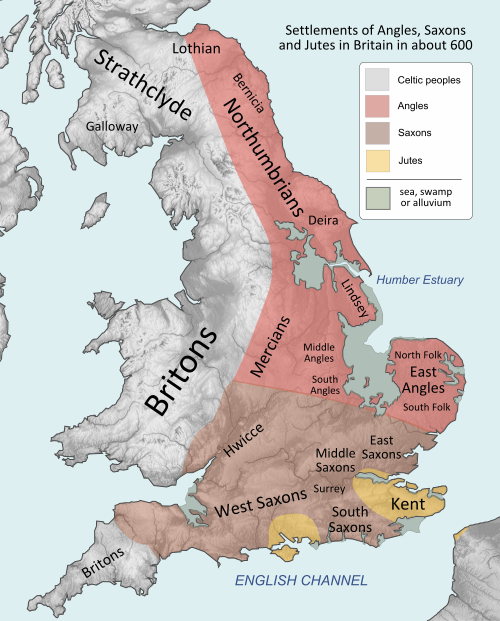
アングロサクソン人の到来の正確な性質とローマ系ブリトン人との関わりについては議論がある。伝統的な見解では、様々なアングロサクソン部族による大規模な侵略により、南および東ブリテン(コーンウォールを除く現在のイングランド)の先住民ブリトン人が追い出されたとされている。これは、この時代に関する唯一の同時代の歴史的記録であるギルダスの著作によって裏付けられており、侵入部族(アデュエントゥス・サクソヌム)による先住民ブリトン人の虐殺と飢餓について述べている。[54]さらに、英語にはブリトン語の資料から借用した単語がほんのわずかしか含まれていない。[55]
この見解は後に考古学者や歴史家によって再評価され、より小規模な移住が想定された。おそらく、国の統治権を握り、そこに住む人々を徐々に文化同化させていった男性戦士のエリート層を基盤としていたと思われる。[56] [57] [58]この理論では、アングロサクソン化につながる2つのプロセスが提案されている。1つは、ロシア、北アフリカ、イスラム世界の一部で見られる文化の変化に似ており、政治的、社会的に強力な少数派文化が、比較的短期間で定着した多数派に受け入れられるようになる。このプロセスは通常、「エリート支配」と呼ばれる。[59] 2つ目のプロセスは、ウェセックスのイネの法典に概説されているウェルギルドのようなインセンティブによって説明され、アングロサクソン人になるか、少なくとも英語を話すよう動機づけた。[60]歴史家マルコム・トッドは、「イギリスの人口の大部分がその地に留まり、次第にゲルマン貴族に支配され、場合によってはゲルマン貴族と結婚して、ケルト人の名前を残した可能性の方がはるかに高い。その名前は、確かに非常に疑わしいが、アングロサクソン王朝の初期の名簿に残っている。しかし、主にアングロサクソン人の居住地で生き残ったイギリス人を考古学的に、あるいは言語学的にどうやって特定するかは、初期のイギリス史における最も深い問題の一つである。」と書いている。[61]
アングロサクソン人による人口置換の程度、したがってローマ系ブリトン人の生存の程度はイングランド全土で異なり、したがってアングロサクソン人によるブリテン島全体の定住は、特定のプロセスによって説明することはできないという見方が浮上している。大規模な移住と人口移動は、イースト・アングリアやリンカンシャーなどの東部地域のケースに最も当てはまると思われるが、[62] [63] [64] [65] [ 66]、ノーサンブリアの一部では、移住者がエリートとして優位に立ったため、先住民の多くはその場に留まった可能性が高い。[67] [68]北東イングランドと南スコットランドの地名の研究で、ベサニー・フォックスは、移住者がタイン川やツイード川などの川沿いの渓谷に大量に定住し、ブリトン人がより肥沃でない丘陵地帯に移動して、より長い期間をかけて文化変容を遂げたことを発見した。フォックスは、イギリス人がこの地域を支配するようになった過程を「大量移住とエリートによる乗っ取りモデルの統合」と表現している。[69]
ヴァイキングとデーンロウ

西暦800年頃から、デンマークのバイキングがイギリス諸島の海岸線を襲撃し、徐々にデンマーク人がイングランドに移住するようになった。当初、バイキングはイングランド人とは別個の民族とみなされていた。この分離は、アルフレッド大王がアルフレッドとグスルムの条約に署名し、イングランドをイングランドとデンマークの統治下に分割するデーンロウを確立し、デンマーク人がイングランド北部と東部を占領したときに制定された。[70]
しかし、アルフレッドの後継者はその後、デンマーク人に対して軍事的に勝利し、デーンロウの大部分を新生イングランド王国に組み入れた。デンマークの侵略は11世紀まで続き、イングランド統一後の時代にはイングランド王とデンマーク王の両方が存在した(例えば、エゼルレッド2世( 978年 - 1013年および1014年 - 1016年)はイングランド王であったが、クヌート(1016年 - 1035年)はデンマーク王であった)。
徐々に、イングランドのデンマーク人は「イギリス人」と見なされるようになった。彼らは英語に顕著な影響を与えた。anger、ball、egg、got、knife、take、theyなど多くの英語の単語は古ノルド語に由来しており[ 71 ]、- thwaiteや-byで終わる地名はスカンジナビア語に由来している[72]。
英語統一
イングランドの国民は 10 世紀まで政治的に統一されていませんでした。それ以前は、いくつかの小さな王国がありましたが、徐々に 7 つの国からなる七王国に統合され、その中で最も強力だったのはマーシアとウェセックスでした。イングランドの国民国家は、アングロサクソンの王国が 800 年頃に始まったデンマークのバイキングの侵略に対して団結したときに形成され始めました。その後 1 世紀半にわたって、イングランドは大部分が政治的に統一された存在であり、954 年以降も永続的にその状態が続きました。
イングランド国家は、927年7月12日、イーモント・ブリッジ条約の後、ウェセックスのエゼルスタンによって設立されました。 [73] [74] [75]ウェセックスは南西部の比較的小さな王国から成長し、すべてのアングロサクソン王国とデーンロウを統合してイングランド王国の創始者となりました。[76]
ノルマン人とアンジュー人の統治

1066年のノルマン人のイングランド征服により、アングロサクソン人とデンマーク人によるイングランド支配は終わりを告げ、フランス語を話す ノルマン人のエリート層がほぼ例外なくアングロサクソン人の貴族や教会指導者に取って代わった。征服後、「イングランド人」には通常、アングロサクソン人、スカンジナビア人、ケルト人の祖先を問わず、イングランド原住民全員が含まれ、征服後1~2世代はイングランド生まれであっても「ノルマン人」とみなされたノルマン人の侵略者と区別された。[77]ノルマン王朝は、1154年にスティーブン王が死去するまで87年間イングランドを統治し、その後、王位はフランスに拠点を置くプランタジネット家のヘンリー2世に渡り、イングランドは1214年に崩壊するまで アンジュー帝国の一部となった。
さまざまな当時の資料によると、侵略から50年以内に、宮廷外のノルマン人のほとんどが英語に切り替え、社会的な慣性により古フランス語が政府と法律の権威ある言語として残ったと示唆されている。たとえば、1075年に生まれ、ノルマン騎士の息子である歴史家のオーデリック・ヴィタリスは、フランス語を第二言語としてのみ学んだと述べている。プランタジネット王はエドワード1世が王位に就くまで、アングロ・ノルマン語を使用し続けた。[78]時が経つにつれて、英語は宮廷でもより重要になり、ノルマン人は徐々に同化され、14世紀までには統治者と臣下の両方が自分たちをイギリス人であるとみなし、英語を話すようになった。[79]
ノルマン人の同化にもかかわらず、「イングランド人」と「フランス人」の区別は、一般的に使用されなくなってからずっと後も、特に「イングランド人の提示」という法律用語で公式文書に残っていた(罰金を逃れたい場合、自国の領土で発見された身元不明の殺害された死体がノルマン人ではなくイングランド人のものであることを証明しなければならないという規則)。この法律は1340年に廃止された。[80]
イギリス

18世紀以来、イングランドは、今日ではイギリスと呼ばれている、ブリテン諸島の全体または一部をカバーするより広範な政治体の一部であった。ウェールズは、1535年から1542年のウェールズ法によってイングランドに併合され、イングランド国家に組み入れられた。[81]その後、スコットランド王ジェームズ6世がイングランド王ジェームズ1世にもなり、ブリテンの君主として知られることを希望したことで、新しい英国のアイデンティティが生まれた。[82]
1707年、イングランドは1707年3月に連合法を可決し、スコットランドと連合条約を批准した。スコットランド議会はそれ以前に独自の連合法を可決していたため、 1707年5月1日にグレートブリテン王国が誕生した。1801年、別の連合法によりグレートブリテン王国とアイルランド王国が連合し、グレートブリテンおよびアイルランド連合王国が誕生した。1922年、アイルランド人口の約3分の2(アイルランドの32郡のうち26郡に住んでいた人々)が英国を離れ、アイルランド自由国を形成した。残りはグレートブリテンおよび北アイルランド連合王国となったが、この名称は「連合王国」という用語がほとんど使われていなかった数年間を経て、1927年まで導入されなかった。[要出典]
英国の歴史を通じて、イングランド人は人口と政治的影響力の両面で優位に立ってきた。その結果、「イングランドらしさ」と「英国らしさ」という概念はしばしば非常に類似している。同時に、1707年の連合以降、イングランド人はブリテン諸島の他の民族とともに、構成国に自分たちを同一視するのではなく、自分たちを英国人であると考えるよう奨励されてきた。[83]
移民と同化
17世紀以降、イングランドはさまざまな時期にさまざまな数の移民の目的地となってきた。これらのグループの一部のメンバーは多元主義を実践し、独自の民族的アイデンティティを維持しようと努めているが、他のメンバーはイングランド人と同化し、結婚している。1656年にオリバー・クロムウェルがユダヤ人を再定住させて以来、19世紀にはロシアから、20世紀にはドイツからユダヤ人の移民の波が押し寄せてきた。 [84]
1685年にフランス国王ルイ14世がフォンテーヌブロー勅令でプロテスタントを違法と宣言した後、推定5万人のプロテスタント・ユグノーがイングランドへ逃亡した。[85]アイルランド人の継続的な、時には大量移民により、現在の推定では英国人の少なくとも1人の祖父母がアイルランド共和国生まれであるとされている。[86]
16世紀以降、奴隷貿易により、イングランドには少数の黒人が存在していた。[ 87 ]また、少なくとも17世紀以降、東インド会社[88]とイギリス領インド帝国[87]により、少数のインド人が存在していた。黒人とアジア人の人口は、第二次世界大戦後の復興期の労働力不足により、大英帝国とそれに続く英連邦諸国からの移民が奨励されたため、英国全体で増加しただけである。 [89] しかし、これらのグループは依然として民族的少数派と見なされることが多く、研究によると、英国の黒人とアジア人は、イングランドを含む英国を構成する4つのネイションのいずれかよりも、英国人としてのアイデンティティを持つ可能性が高いことが示されている。[90]
2021年6月に発表された全国規模の調査では、回答者の大多数が、イングランド人であることは人種に依存しないと考えていることがわかった。イングランドの白人回答者の77%は、「イングランド人であることは、イングランド人であると自認するさまざまな民族的背景を持つ人々に開かれている」ことに同意したが、14%は「白人だけが真のイングランド人とみなされる」という見解を示した。少数民族の回答者の間では、同等の数字はそれぞれ68%と19%だった。[91]研究によると、白人であることがイングランド人であることの必須要素であると考える人の割合は、時間の経過とともに減少していることが明らかになっている。[92]
現在の国家と政治的アイデンティティ
1990年代にはイングランドの国民的アイデンティティが復活した。[93]調査データによると、イングランドで国民的アイデンティティをイングランド人と表現する人の数が増加し、英国人と表現する人の数は減少している。[94]今日でも、イングランドの黒人や少数民族は、白人よりも英国人であると一般的に認識している。[95]しかし、イングランド議会運動(CEP)などのグループは、より広範な市民的かつ多民族的なイングランド国民の出現を示唆している。[96]学者やジャーナリストは、イングランド人の自意識の高まりを指摘しており、特にサッカーの試合では、以前はファンがユニオン・フラッグを掲げることが多くなっていたが、イングランド国旗の使用が増えている。 [97] [98]
イングランド人の自意識の高まりは、一般的に、1990年代後半にスコットランド議会とウェールズ国民議会に一部の権限が委譲されたことに起因しているとされてきた。[93]スコットランド、ウェールズ、北アイルランドの委譲された行政機関が責任を負う政策分野では、英国議会が結果的にイングランドにのみ適用される法律に投票する。ウェストミンスター議会は英国全土の国会議員で構成されているため、「ウェスト・ロージアン問題」が生じている。これは、イングランド以外の選挙区を代表する国会議員はイングランドにのみ影響する問題について投票できるが、英国の他の地域に関連する同じ問題については投票できないという状況を指す。[99]その結果、CEPなどのグループは、イングランド人に対する差別的な民主主義の欠陥があると主張し、権限委譲されたイングランド議会の創設を求めている。イングランド議会の設立は、スコットランドやウェールズの民族主義者からも支持されている。[100] [101]作家のポール・ジョンソンは、他の多くの支配的集団と同様に、イングランド人も抑圧されていると感じたときにのみ、自らの民族的自己定義に関心を示したと示唆している。[102]
ジョン・カーティスは、「権限委譲の初期には、スコットランドとウェールズへの権限委譲に対するイングランド人の反発の兆候はほとんどなかった」が、最近の調査データは「イングランド国民主義の一形態が一般大衆の間で現れ始めている」という暫定的な兆候を示していると主張している。[103]一方、マイケル・ケニー、リチャード・イングリッシュ、リチャード・ヘイトンは、イングランド国民主義の復活は権限委譲より前から存在し、1990年代初頭に観察可能であったが、この復活は必ずしも政治的連合としての英国の認識に否定的な影響を与えるわけではないと主張している。[104]他の人は、権限委譲がイングランド人の国民的アイデンティティの上昇につながったかどうか疑問視し、調査データは国民的アイデンティティの複雑な性質を描写しておらず、多くの人が自分自身をイングランド人と英国人の両方であると考えていると主張している。[105] 2017年のYouGovの調査では、イングランド人の有権者の38%が自分自身をイングランド人と英国人の両方であると考えており、19%がイングランド人だが英国人ではないと感じていることがわかった。[106]
イングランド議会の設立に関する最近の世論調査では、大きく異なる結論が出ている。スコットランドとウェールズへの権限委譲の最初の5年間、イングランドにおけるイングランド議会の設立に対する支持は、一連の英国社会態度調査によると16~19%と低かった。[107]同じく英国社会態度調査に基づいて2010年12月に発表された報告書によると、イングランドでイングランド議会の設立を支持する人はわずか29%だが、この数字は2007年の17%からは上昇している。[108]
しかし、 2007年にBBC ニュースナイトのために行われた世論調査では、61パーセントがそのような議会の設立を支持することがわかった。 [109]クリシャン・クマールは、イングランドのみに適用される法律にイングランドの国会議員のみが投票できるようにする措置に対する支持は、イングランド議会の設立に対する支持よりも一般的に高いが、両者に対する支持は世論調査の時期や質問の文言によって異なると指摘している。[110]イングランドの民族主義政党に対する選挙の支持も、彼らが唱える政策の多くに対する国民の支持があるにもかかわらず、低い。[111]イングランド民主党は、2010年の英国総選挙でわずか64,826票しか獲得せず、イングランドで投じられた全投票数の0.3パーセントを占めた。[112]クマールは2010年に「権限委譲と時折のイングランド民族主義の爆発(スコットランド人や北アイルランド人に対する憤りの表れであるが)にもかかわらず、イングランド人は全体として現在の憲法体制に満足している」と主張した。[113]
イギリス系移民
最も古い時代から、イングランド人はイングランドを離れ、グレートブリテン島および北アイルランドの他の地域に定住してきました。英国の国勢調査では、回答者にイングランド人であると名乗るよう求めていないため、その数を特定することは不可能です。[120] [検証に失敗]しかし、国勢調査では出生地を記録しており、スコットランドの人口の8.1% [121] 、北アイルランドの人口の3.7% [122]、ウェールズの人口の20%がイングランドで生まれたことが明らかになっています。[123]同様に、アイルランド共和国の国勢調査では民族に関する情報は収集されていませんが、イングランドとウェールズで生まれ、アイルランドに住んでいる人が20万人以上いることが記録されています。[124]
イギリス系民族および移民のコミュニティは主に西洋世界に存在し、一部の地域にはかなりの数で定住しています。イギリスの入植者および移民の子孫である相当数の人口が、米国、カナダ、オーストラリア、南アフリカ、ニュージーランドに存在します。[要出典]
アメリカ合衆国

2020年の米国国勢調査では、英語系アメリカ人が米国最大のグループであり、4,650万人のアメリカ人が何らかの英語系ルーツ(多くは他のルーツと組み合わさっている)を持っていると自認しており、白人アメリカ人の19.8%を占めています。これには、「英語系のみ」、つまり1つのルーツを持つ2,550万人(12.5%)が含まれます。[126]しかし、人口統計学者はこれを過小評価していると考えています。なぜなら、矛盾の指数[明確化が必要]が高く、英語系の人々の多く、あるいはほとんどが(2000年の国勢調査で新しい「アメリカ人」カテゴリが導入され、祖先の質問が無視されて以来)単にアメリカ人であると自認する傾向があるからです[127] [128] [129] [130]またはヨーロッパ系の混血の場合は、より最近の差別化された民族グループであると自認しています。[131]
これに先立つ2000年の国勢調査では、24,509,692人のアメリカ人が自らの祖先を完全にまたは部分的にイギリス人であると回答した。さらに、1,035,133人がイギリス人であると回答した。[132]これは、 1990年の国勢調査では32,651,788人、つまり人口の13.1%が自らをイギリス人であると認識していたことから減少した数値である。[133]
1980年には、4900万人以上(49,598,035人)のアメリカ人がイギリス系であると主張した。これは当時の全人口の約26.3%で、報告された最大のグループであり、今日でも米国最大の民族グループとなっている。[134] スコットランド系アイルランド系アメリカ人は、17世紀のアルスター植民地時代にアイルランドを植民地化したローランド・スコットランド人と北部イングランド人(具体的には、カウンティ・ダラム、カンバーランド、ノーサンバーランド、ウェストモーランド)の入植者の子孫である。
イギリス系アメリカ人は、イギリスとアメリカの間に多くの歴史的文化的つながりがあり、それが国民に及ぼした影響から、単に「アメリカ人」と見なされ、そう自認することが多い。他のヨーロッパ系民族と比較すると、これはイギリス人の入植地が早くから設立されたことと、非イギリス系民族が重要なコミュニティを形成するために移住したことによるものと考えられる。[135]
カナダ
2016年のカナダ国勢調査では、回答者が記録した民族的起源(民族的起源とは、回答者の祖先が属する民族または文化グループを指す[136])の中で「英語」が最も多く、6,320,085人、つまり人口の18.3%が自分自身を完全または部分的に英語であると自認していた。[116] [117]一方、カナダ人であると自認しているが英語ではない人々は、カナダ人であると自認する選択肢が利用可能になる前から、以前は英語であると自認していた可能性がある。[137]
オーストラリア
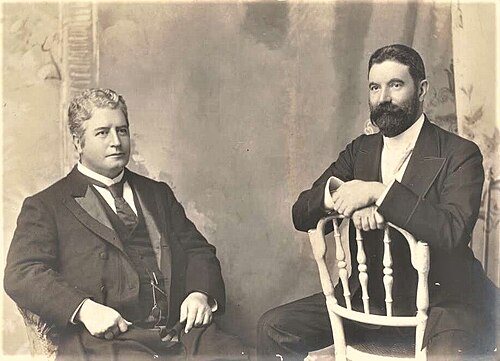
植民地時代の初めから20世紀半ばまで、オーストラリアへの移住者の大多数はイギリス諸島出身者であり、その中でもイギリス人が優勢であった。主な祖先の中で、オーストラリア人、アイルランド人、ドイツ人の祖先が増加し、イギリス人、スコットランド人、ウェールズ人の祖先が減少していることは、このような認識や報告の変化を反映していると思われる。これらの報告の変化は、少なくとも部分的には国勢調査の質問の設計変更、特に2001年にチェックボックス形式が導入されたことによるものである。[138]イギリス系オーストラリア人はイングランド北部よりも南部から来ることが多い。[139]
イギリス系オーストラリア人は、オーストラリアで最大の民族グループであり、オーストラリア国勢調査で最大の「祖先」のアイデンティティーである。 [140] 2016年の国勢調査では、780万人、つまり人口の36.1%が「イギリス人」または英語を含む組み合わせであると特定されており、2011年の国勢調査の数字720万人から増加している。国勢調査では、907,572人の住民、つまりオーストラリアの3.9%がイギリスで生まれたことも記録されており、海外生まれの人口としては最大である。[141]
ニュージーランド
English ancestry is the largest single ancestry New Zealanders share. Several million New Zealanders are estimated to have some English ancestry[142] From 1840, the English comprised the largest single group among New Zealand's overseas-born, consistently being over 50 percent of the total population.[143] Despite this, after the early 1850s, the English-born slowly fell from being a majority of the colonial population. In the 1851 census, 50.5% of the total population were born in England, this proportion fell to 36.5% (1861) and 24.3% by 1881.[143] New Zealand's foundational culture was English, given the strong representation in the mid and late-nineteenth century with the English being the largest in migration inflows.[144]
In the 2013 census, there were 215,589 English-born representing 21.5% of all overseas-born residents or 5 percent of the total population and the most-common birthplace outside New Zealand.[145] In the recent 2018 census, 210,915 were born in England or 4.49% of the total population, a slight decrease from 2013.[6]
Argentina

English settlers arrived in Buenos Aires in 1806 (then a Spanish colony) in small numbers, mostly as businessmen, when Argentina was an emerging nation and the settlers were welcomed for the stability they brought to commercial life. As the 19th century progressed, more English families arrived, and many bought land to develop the potential of the Argentine pampas for the large-scale growing of crops. The English founded banks, developed the export trade in crops and animal products and imported the luxuries that the growing Argentine middle classes sought.[146]
As well as those who went to Argentina as industrialists and major landowners, others went as railway engineers, civil engineers and to work in banking and commerce. Others went to become whalers, missionaries and simply to seek out a future. English families sent second and younger sons, or what were described as the black sheep of the family, to Argentina to make their fortunes in cattle and wheat. English settlers introduced football to Argentina. Some English families owned sugar plantations.[citation needed]
Chile
Since the Port of Valparaíso opened its coasts to free trade in 1811, the English began to congregate in Valparaíso. The English eventually numbered more than 32,000 during the port of Valparaíso's boom period during the saltpeter bonanza at the end of the 19th and beginning of the 20th centuries.[citation needed]
Culture
The culture of England is sometimes difficult to separate clearly from the culture of the United Kingdom,[147] so influential has English culture been on the cultures of the British Isles and, on the other hand, given the extent to which other cultures have influenced life in England.
Religion

The established religion of the realm is the Church of England, whose titular head is Charles III although the worldwide Anglican Communion is overseen by the General Synod of its bishops under the authority of Parliament. 26 of the church's 42 bishops are Lords Spiritual, representing the church in the House of Lords. In 2010, the Church of England counted 25 million baptised members out of the 41 million Christians in Great Britain's population of about 60 million;[148][149] around the same time, it also claimed to baptise one in eight newborn children.[150] Generally, anyone in England may marry or be buried at their local parish church, whether or not they have been baptised in the church.[151] Actual attendance has declined steadily since 1890,[152] with around one million, or 10% of the baptised population attending Sunday services on a regular basis (defined as once a month or more) and three million -roughly 15%- joining Christmas Eve and Christmas services.[153][154]

Saint George is recognised as the patron saint of England, and the flag of England consists of his cross. Before Edward III, the patron saint was St Edmund; and St Alban is also honoured as England's first martyr. A survey carried out in the end of 2008 by Ipsos MORI on behalf of The Catholic Agency For Overseas Development found the population of England and Wales to be 47.0% affiliated with the Church of England, which is also the state church, 9.6% with the Roman Catholic Church and 8.7% were other Christians, mainly Free church Protestants and Eastern Orthodox Christians. 4.8% were Muslim, 3.4% were members of other religions, 5.3% were agnostics, 6.8% were atheists and 15.0% were not sure about their religious affiliation or refused to answer to the question.[155]
Religious observance of St George's Day (23 April) changes when it is too close to Easter. According to the Church of England's calendar, when St George's Day falls between Palm Sunday and the Second Sunday of Easter inclusive, it is moved to the Monday after the Second Sunday of Easter.[156]
Language

'a' [ä]
'aa' [æː]
'ah' [ɑː]
anomalies
English people traditionally speak the English language, a member of the West Germanic language family. The modern English language evolved from Middle English (the form of language in use by the English people from the 12th to the 15th century); Middle English was influenced lexically by Norman-French, Old French and Latin. In the Middle English period Latin was the language of administration and the nobility spoke Norman French. Middle English was itself derived from the Old English of the Anglo-Saxon period; in the Northern and Eastern parts of England the language of Danish settlers had influenced the language, a fact still evident in Northern English dialects.[citation needed]
There were once many different dialects of modern English in England, which were recorded in projects such as the English Dialect Dictionary (late 19th century) and the Survey of English Dialects (mid 20th century), but there has been widespread dialect levelling in recent time as a result of education, the media and socio-economic pressures.[157]
Cornish, a Celtic language, is one of three existing Brittonic languages; its usage has been revived in Cornwall. Historically, another Brittonic Celtic language, Cumbric, was spoken in Cumbria in North West England, but it died out in the 11th century although traces of it can still be found in the Cumbrian dialect. Early Modern English began in the late 15th century with the introduction of the printing press to London and the Great Vowel Shift. Through the worldwide influence of the British Empire, English spread around the world from the 17th to mid-20th centuries. Through newspapers, books, the telegraph, the telephone, phonograph records, radio, satellite television, broadcasters (such as the BBC) and the Internet, as well as the emergence of the United States as a global superpower, Modern English has become the international language of business, science, communication, sports, aviation, and diplomacy.[158]
Literature
_(cropped)_02.jpg/500px-Portrait_of_Geoffrey_Chaucer_(4671380)_(cropped)_02.jpg)
English literature begins with Anglo-Saxon literature, which was written in Old English and produced epic works such as Beowulf and the fragmentary The Battle of Maldon, The Seafarer and The Wanderer. For many years, Latin and French were the preferred literary languages of England, but in the medieval period there was a flourishing of literature in Middle English; Geoffrey Chaucer is the most famous writer of this period.
The Elizabethan era is sometimes described as the golden age of English literature with writers such as William Shakespeare, Thomas Nashe, Edmund Spenser, Sir Philip Sidney, Christopher Marlowe and Ben Jonson.
Other famous English writers include Jane Austen, Arnold Bennett, Rupert Brooke, Agatha Christie, Charles Dickens, Thomas Hardy, A. E. Housman, George Orwell and the Lake Poets.
In 2003, the BBC carried out a UK survey entitled The Big Read in order to find the "nation's best-loved novel" of all time, with works by English novelists J. R. R. Tolkien, Jane Austen, Philip Pullman, Douglas Adams and J. K. Rowling making up the top five on the list.[159]
See also
- English diaspora
- British people
- List of English people
- Old English (Ireland)
- Celtic peoples
- Culture of England
- English art
- Architecture of England
- English folklore
- English nationalism
- Manx people
- Genetic history of Europe
- European ethnic groups
- Modern immigration to the United Kingdom
- Population of England (historical estimates)
- 100% English (Channel 4 TV programme, 2006)
- Social history of the United Kingdom (1945–present)
- White British
Language:
Diaspora:
Notes
- ^ Spellings of this name most common in modern texts are "Ethelred" and "Æthelred" (or "Aethelred"), the latter being closer to the original Old English form Æþelræd.
- ^ Those who self-identified as English ethnic group
- ^ 210915 listed their birthplace as England.
References
Citations
- ^ "Ethnicity and National Identity in England and Wales". www.ons.gov.uk. Office for National Statistics. 11 December 2012. Archived from the original on 21 January 2022. Retrieved 21 February 2022.
The 2011 England and Wales census reports that in England and Wales 32.4 million people associated themselves with an English identity alone and 37.6 million identified themselves with an English identity either on its own or combined with other identities, being 57.7% and 67.1% respectively of the population of England and Wales.
- ^ "English Most Common Race or Ethnicity in 2020 Census". United States census. 10 October 2023. Retrieved 21 October 2023.
- ^ "2021 Australia, Census All persons QuickStats | Australian Bureau of Statistics". www.abs.gov.au.
- ^ "Census Profile, 2016 Census". Statistics Canada. 8 February 2017. Archived from the original on 8 March 2021. Retrieved 14 December 2019.
- ^ Census 2011: Census in brief (PDF). Pretoria: Statistics South Africa. 2012. p. 26. ISBN 978-0-621-41388-5. Archived (PDF) from the original on 13 May 2015. The number of people who described themselves as white in terms of population group and specified their first language as English in South Africa's 2011 Census was 1,603,575. The total white population with a first language specified was 4,461,409 and the total population was 51,770,560.
- ^ a b "2018 Census population and dwelling counts". Stats NZ. 23 September 2019. Retrieved 5 January 2021.
- ^ Cole, Jeffrey (2011). Ethnic Groups of Europe: An Encyclopedia. ABC-CLIO. ISBN 978-1-59884-302-6. Archived from the original on 15 August 2021. Retrieved 6 July 2021 – via Google Books.
- ^ "English". Online Etymology Dictionary. Etymonline.com. Archived from the original on 20 April 2012. Retrieved 8 July 2011.
- ^ a b Leslie, Stephen; Winney, Bruce; Hellenthal, Garrett; Davison, Dan; Boumertit, Abdelhamid; Day, Tammy; Hutnik, Katarzyna; Royrvik, Ellen C.; Cunliffe, Barry; Lawson, Daniel J.; Falush, Daniel; Freeman, Colin; Pirinen, Matti; Myers, Simon; Robinson, Mark; Donnelly, Peter; Bodmer, Walter (19 March 2015). "The fine scale genetic structure of the British population". Nature. 519 (7543): 309–314. Bibcode:2015Natur.519..309.. doi:10.1038/nature14230. PMC 4632200. PMID 25788095.
- ^ Schiffels, Stephan; Haak, Wolfgang; Paajanen, Pirita; Llamas, Bastien; Popescu, Elizabeth; Loe, Louise; Clarke, Rachel; Lyons, Alice; Mortimer, Richard; Sayer, Duncan; Tyler-Smith, Chris; Cooper, Alan; Durbin, Richard (19 January 2016). "Iron Age and Anglo-Saxon genomes from East England reveal British migration history". Nature Communications. 7: 10408. Bibcode:2016NatCo...710408S. doi:10.1038/ncomms10408. PMC 4735688. PMID 26783965.
- ^ a b Martiniano, R., Caffell, A., Holst, M. et al. "Genomic signals of migration and continuity in Britain before the Anglo-Saxons". Nat Commun 7, 10326 (2016). doi:10.1038/ncomms10326 Martiniano, Rui; Caffell, Anwen; Holst, Malin; Hunter-Mann, Kurt; Montgomery, Janet; Müldner, Gundula; McLaughlin, Russell L.; Teasdale, Matthew D.; Van Rheenen, Wouter; Veldink, Jan H.; Van Den Berg, L. H.; Hardiman, Orla; Carroll, Maureen; Roskams, Steve; Oxley, John; Morgan, Colleen; Thomas, Mark G.; Barnes, Ian; McDonnell, Christine; Collins, Matthew J.; Bradley, Daniel G. (19 January 2016). "Genomic signals of migration and continuity in Britain before the Anglo-Saxons". Nature Communications. 7 (1): 10326. Bibcode:2016NatCo...710326M. doi:10.1038/ncomms10326. PMC 4735653. PMID 26783717.
- ^ Michael E. Weale, Deborah A. Weiss, Rolf F. Jager, Neil Bradman, Mark G. Thomas, Y "Chromosome Evidence for Anglo-Saxon Mass Migration", Molecular Biology and Evolution, Volume 19, Issue 7, July 2002, pp. 1008–1021, https://doi.org/10.1093/oxfordjournals.molbev.a004160 Archived 21 February 2022 at the Wayback Machine
- ^ Brix, Lise (20 February 2017). "New study reignites debate over Viking settlements in England". sciencenordic.com (in Norwegian Bokmål). Retrieved 8 May 2022.
- ^ Kershaw, Jane; Røyrvik, Ellen C. (December 2016). "The 'People of the British Isles' project and Viking settlement in England". Antiquity. 90 (354): 1670–1680. doi:10.15184/aqy.2016.193. ISSN 0003-598X. S2CID 52266574.
- ^ "Huguenots | The History of London". www.thehistoryoflondon.co.uk. 31 August 2019. Retrieved 31 December 2023.
- ^ Campbell. The Anglo-Saxon State. p. 10
- ^ Ward-Perkins, Bryan (2000). "Why did the Anglo-Saxons not become more British?". The English Historical Review. 115 (462): 513–533. doi:10.1093/ehr/115.462.513.
- ^ Hills, C. (2003) Origins of the English Duckworth, London. ISBN 0-7156-3191-8, p. 67
- ^ Higham, Nicholas J., and Martin J. Ryan. The Anglo-Saxon World. Yale University Press, 2013. pp. 7–19
- ^ "Chambers – Search Chambers". Archived from the original on 11 May 2020. Retrieved 7 February 2022.
the citizens or inhabitants of, or people born in, England, considered as a group
- ^ "Act of Union 1707". parliament.uk. Archived from the original on 21 September 2010. Retrieved 26 August 2010.
- ^ Englishman at dictionary.cambridge.org. Retrieved 13 November 2023.
- ^ Englishwoman at dictionary.cambridge.org. Retrieved 13 November 2023.
- ^ Kumar 2003, pp. 262–290.
- ^ Kumar 2003, pp. 1–18.
- ^ "English nationalism 'threat to UK'". BBC. 9 January 2000. Archived from the original on 14 August 2021.
- ^ "The English question Handle with care". The Economist. 1 November 2007. Archived from the original on 28 September 2008.
- ^ Condor, Gibson & Abell 2006.
- ^ Frith, Maxine (8 January 2004). "Ethnic minorities feel strong sense of identity with Britain, report reveals". The Independent. Archived from the original on 6 September 2011.
- ^ Hussain, Asifa; Millar, William Lockley (2006). Multicultural Nationalism. Oxford University Press. pp. 149–150. ISBN 978-0-19-928071-1. Archived from the original on 18 May 2016 – via Google Books.
- ^ Campbell, Dennis (18 June 2006). "Asian recruits boost England fan army". The Guardian. Archived from the original on 21 December 2016.
- ^ "National Identity and Community in England" (2006) Institute of Governance Briefing No. 7. [1] Archived 15 May 2011 at the Wayback Machine
- ^ "78 per cent of Bangladeshis said they were British, while only 5 per cent said they were English, Scottish or Welsh", and the largest percentage of non-whites to identify as English were the people who described their ethnicity as "Mixed" (37%).'Identity', National Statistics, 21 February 2006
- ^ Kumar 2003, pp. 1–2.
- ^ Taylor, A. J. P. (1965, English History, 1914–1945 Oxford: Clarendon Press. p. v
- ^ Davies, Norman (1999). The Isles: A History. Macmillan Publishing. ISBN 978-0333692837.[page needed]
- ^ Parris, Matthew (18 December 2010). "With a shrug of the shoulders, England is becoming a nation once again". The Spectator.
- ^ a b Haak, Wolfgang; Lazaridis, Iosif; Patterson, Nick; Rohland, Nadin; Mallick, Swapan; Llamas, Bastien; Brandt, Guido; Nordenfelt, Susanne; Harney, Eadaoin; Stewardson, Kristin; Fu, Qiaomei (11 June 2015). "Massive migration from the steppe was a source for Indo-European languages in Europe". Nature. 522 (7555): 207–211. arXiv:1502.02783. Bibcode:2015Natur.522..207H. doi:10.1038/nature14317. ISSN 0028-0836. PMC 5048219. PMID 25731166.
- ^ Curry, Andrew (August 2019). "The first Europeans weren't who you might think". National Geographic. Archived from the original on 19 March 2021.
- ^ Gibbons, Ann (21 February 2017). "Thousands of horsemen may have swept into Bronze Age Europe, transforming the local population". Science.
- ^ a b Novembre, John; Johnson, Toby; Bryc, Katarzyna; Kutalik, Zoltán; Boyko, Adam R.; Auton, Adam; Indap, Amit; King, Karen S.; Bergmann, Sven; Nelson, Matthew R.; Stephens, Matthew; Bustamante, Carlos D. (2008). "Genes mirror geography within Europe". Nature. 456 (7218): 98–101. Bibcode:2008Natur.456...98N. doi:10.1038/nature07331. PMC 2735096. PMID 18758442.
- ^ "Dutch Beakers: Like no other Beakers". 19 January 2019. Archived from the original on 12 May 2021. Retrieved 21 February 2022.
- ^ Rincon, Paul (21 February 2018). "Ancient Britons 'replaced' by newcomers". BBC News. Archived from the original on 4 March 2019. Retrieved 2 February 2019.
- ^ Athanasiadis, G.; Cheng, J. Y.; Vilhjalmsson, B. J.; Jorgensen, F. G.; Als, T. D.; Le Hellard, S.; Espeseth, T.; Sullivan, P. F.; Hultman, C. M.; Kjaergaard, P. C.; Schierup, M. H.; Mailund, T. (2016). "Nationwide Genomic Study in Denmark Reveals Remarkable Population Homogeneity". Genetics. 204 (2): 711–722. doi:10.1534/genetics.116.189241. PMC 5068857. PMID 27535931.
- ^ Weale, Michael E.; Weiss, Deborah A.; Jager, Rolf F.; Bradman, Neil; Thomas, Mark G. (1 July 2002). "Y Chromosome Evidence for Anglo-Saxon Mass Migration". Molecular Biology and Evolution. 19 (7): 1008–1021. doi:10.1093/oxfordjournals.molbev.a004160. PMID 12082121. Archived from the original on 2 June 2020. Retrieved 7 June 2020 – via academic.oup.com.
- ^ "A Y Chromosome Census of the British Isles" (PDF). Archived (PDF) from the original on 7 June 2020. Retrieved 7 June 2020.
- ^ Oppenheimer, Stephen (2006). The Origins of the British: A Genetic Detective Story. London: Constable and Robinson. ISBN 978-1-84529-158-7.
- ^ Schiffels, S. et al. (2016) Iron Age and Anglo-Saxon genomes from East England reveal British migration history Archived 17 December 2019 at the Wayback Machine, Nature Communications 7, Article number:10408 doi:10.1038/ncomms10408
- ^ Ross P. Byrne, Rui Martiniano, Lara M. Cassidy, Matthew Carrigan, Garrett Hellenthal, Orla Hardiman, Daniel G. Bradley, Russell McLaughlin: "Insular Celtic population structure and genomic footprints of migration" (2018)
- ^ Margaryan, A., Lawson, D.J., Sikora, M. et al. "Population genomics of the Viking world". Nature 585, 390–396 (2020) See Supplementary Note 11 in particular
- ^ Gretzinger; Sayer; Justeau; et al. (21 September 2022). "The Anglo-Saxon migration and the formation of the early English gene pool". Nature. 610 (7930): 112–119. Bibcode:2022Natur.610..112G. doi:10.1038/s41586-022-05247-2. PMC 9534755. PMID 36131019.
- ^ The archaeology of black Britain Archived 24 July 2013 at the Wayback Machine, Channel 4. Retrieved 21 December 2009.
- ^ Eva Botkin-Kowacki, 'Where did the British come from? Ancient DNA holds clues. Archived 15 October 2018 at the Wayback Machine' (20/01/16), The Christian Science Monitor
- ^ Wise, Gildas the (1899). "The Ruin of Britain". Tertullian.org. pp. 4–252. Archived from the original on 22 September 2017. Retrieved 21 August 2017.
- ^ celtpn Archived 6 December 2007 at the Wayback Machine However the names of some towns, cities, rivers etc. do have Brittonic or pre-Brittonic origins, becoming more frequent towards the west of Britain.
- ^ "Britain BC: Life in Britain and Ireland before the Romans" by Francis Pryor, p. 122. Harper Perennial. ISBN 0-00-712693-X.
- ^ Ward-Perkins, Bryan. "Why did the Anglo-Saxons not become more British?" The English Historical Review 115.462 (2000): p. 523
- ^ Higham, Nicholas J. and Ryan, Martin J. "The Anglo-Saxon World" (Yale University Press, 2013)[ISBN missing][page needed]
- ^ Ward-Perkins, Bryan. "Why did the Anglo-Saxons not become more British?" The English Historical Review 115.462 (2000): 513–533.
- ^ Ingham, Richard (19 July 2006). "Anglo-Saxons wanted genetic supremacy". Australian Broadcasting Corporation. Archived from the original on 15 December 2020. Retrieved 7 June 2020.
- ^ Todd, Malcolm. "Anglo-Saxon Origins: The Reality of the Myth" Archived 24 January 2016 at the Wayback Machine, in Cameron, Keith. "The nation: myth or reality?"bIntellect Books, 1994. Retrieved 21 December 2009.
- ^ Stefan Burmeister, Archaeology and Migration (2000): " ... immigration in the nucleus of the Anglo-Saxon settlement does not seem aptly described in terms of the 'elite-dominance model.' To all appearances, the settlement was carried out by small, agriculture-oriented kinship groups. This process corresponds more closely to a classic settler model. The absence of early evidence of a socially demarcated elite underscores the supposition that such an elite did not play a substantial role. Rich burials such as are well known from Denmark have no counterparts in England until the 6th century. At best, the elite-dominance model might apply in the peripheral areas of the settlement territory, where an immigration predominantly comprised of men and the existence of hybrid cultural forms might support it."
- ^ Dark, Ken R. (2003). "Large-scale population movements into and from Britain south of Hadrian's Wall in the fourth to sixth centuries AD" (PDF). Archived (PDF) from the original on 1 June 2021. Retrieved 21 February 2022.
- ^ Toby F. Martin, The Cruciform Brooch and Anglo-Saxon England, Boydell and Brewer Press (2015), pp. 174–178
- ^ Catherine Hills, "The Anglo-Saxon Migration: An Archaeological Case Study of Disruption," in Migrations and Disruptions, ed. Brenda J. Baker and Takeyuki Tsuda, pp. 45–48
- ^ Coates, Richard. "Celtic whispers: revisiting the problems of the relation between Brittonic and Old English". Archived from the original on 8 March 2021. Retrieved 7 June 2020.
- ^ Härke, Heinrich. "Anglo-Saxon Immigration and Ethnogenesis." Medieval Archaeology 55.1 (2011): 1–28.
- ^ Kortlandt, Frederik (2018). "Relative Chronology" (PDF). Archived (PDF) from the original on 8 March 2021. Retrieved 7 June 2020.
- ^ Fox, Bethany. "The P-Celtic Place Names of North-East England and South-East Scotland". Archived from the original on 28 November 2021. Retrieved 21 February 2022.
- ^ The Age of Athelstan by Paul Hill (2004), Tempus Publishing. ISBN 0-7524-2566-8[page needed]
- ^ Online Etymology Dictionary Archived 4 July 2017 at the Wayback Machine by Douglas Harper (2001), List of sources used Archived 8 October 2017 at the Wayback Machine. Retrieved 10 July 2006.
- ^ The Adventure of English, Melvyn Bragg, 2003. p. 22.
- ^ esmeraldamac (16 February 2012). "The Treaty of Eamont Bridge in 927CE". Esmeralda's Cumbrian History & Folklore. Retrieved 27 February 2024.
- ^ "Athelstan (c. 895–939): Historic Figures". BBC. Archived from the original on 13 February 2007. Retrieved 30 October 2006.
- ^ The Battle of Brunanburh, 937AD Archived 11 November 2010 at the Wayback Machine by h2g2, BBC website. Retrieved 30 October 2006.
- ^ A. L. Rowse, The Story of Britain, Artus 1979 ISBN 0-297-83311-1
- ^ OED, 2nd edition, s.v. 'English'.
- ^ "England—Plantagenet Kings". Heritage History. Archived from the original on 16 December 2010.
- ^ "British History in depth: The Ages of English". BBC – History. Archived from the original on 26 August 2017. Retrieved 21 August 2017.
- ^ OED, s.v. 'Englishry'.
- ^ "Liberation of Ireland". Iol.ie. Archived from the original on 15 June 2006. Retrieved 23 June 2006.
- ^ A History of Britain: The British Wars 1603–1776 by Simon Schama, BBC Worldwide. ISBN 0-563-53747-7.
- ^ The English, Jeremy Paxman 1998[page needed]
- ^ "EJP – In Depth – On Anglo Jewry". 14 July 2006. Archived from the original on 14 July 2006. Retrieved 21 August 2017.
- ^ "Meredith on the Guillet – Thoreau Genealogy". Archived from the original on 27 September 2007.
- ^ More Britons applying for Irish passports Archived 5 January 2019 at the Wayback Machine, Owen Bowcott, The Guardian, 13 September 2006. Retrieved 9 January 2006.
- ^ a b Black Presence Archived 24 December 2021 at the Wayback Machine, Asian and Black History in Britain, 1500–1850: UK government website. Retrieved 21 July 2006.
- ^ Fisher, Michael Herbert (2006), Counterflows to Colonialism: Indian Traveller and Settler in Britain 1600–1857, Orient Blackswan, pp. 111–119, 129–130, 140, 154–156, 160–168, 172, 181, ISBN 978-81-7824-154-8
- ^ Postwar immigration Archived 22 December 2021 at the Wayback Machine The National Archives Accessed October 2006
- ^ "Ethnic minorities more likely to feel British than white people, says research". Evening Standard. 18 February 2007. Archived from the original on 11 February 2010. Retrieved 18 September 2010.
- ^ "English identity open to all, regardless of race, finds poll – and Three Lions is the symbol that unites us". British Future. 9 June 2021. Archived from the original on 29 October 2021. Retrieved 29 October 2021.
- ^ Alexander, Inigo (30 June 2019). "Now 90% of England agrees: being English is not about colour". The Observer. Archived from the original on 29 October 2021. Retrieved 29 October 2021.
- ^ a b "British identity: Waning". The Economist. 25 January 2007. Archived from the original on 29 June 2011. Retrieved 9 February 2011.
- ^ "When British isn't always best". The Guardian. London. 24 January 2007. Archived from the original on 23 December 2013. Retrieved 9 February 2011.
- ^ Jones, Richard Wyn; Lodge, Guy; Jeffery, Charlie; Gottfried, Glenn; Scully, Roger; Henderson, Ailsa; Wincott, Daniel (July 2013). England and its Two Unions: The Anatomy of a Nation and its Discontents (PDF). Institute for Public Policy Research. Archived from the original (PDF) on 7 November 2014. Retrieved 7 November 2014.
- ^ Kenny, M (2014). The politics of English Nationhood. Oxford University Press. pp. 192–193. ISBN 978-0198778721.
- ^ Kumar 2003, p. 262.
- ^ Hoyle, Ben (8 June 2006). "St George unfurls his flag (made in China) once again". The Times. London. Archived from the original on 29 June 2011. Retrieved 10 February 2011.
- ^ "The West Lothian Question". BBC News. 1 June 1998. Archived from the original on 26 January 2011. Retrieved 9 February 2011.
- ^ "Fresh call for English Parliament". BBC News. 24 October 2006. Archived from the original on 18 August 2012. Retrieved 9 February 2011.
- ^ "Welsh nod for English Parliament". BBC News. 20 December 2006. Archived from the original on 10 August 2012. Retrieved 9 February 2011.
- ^ Paul Johnson is quoted by Kumar (Kumar 2003, p. 266)
- ^ Curtice, John (February 2010). "Is an English backlash emerging? Reactions to devolution ten years on" (PDF). Institute for Public Policy Research. p. 3. Archived (PDF) from the original on 17 April 2018. Retrieved 16 April 2018.
- ^ Kenny, Michael; English, Richard; Hayton, Richard (February 2008). "Beyond the constitution? Englishness in a post-devolved Britain". Institute for Public Policy Research. p. 3. Archived from the original on 17 April 2018. Retrieved 16 April 2018.
- ^ Condor, Gibson & Abell 2006, p. 128.
- ^ "What makes a person English, according to the English | YouGov". yougov.co.uk.
- ^ Hazell, Robert (2006). "The English Question". Publius. 36 (1): 37–56. doi:10.1093/publius/pjj012.
- ^ Ormston, Rachel; Curtice, John (December 2010). "Resentment or contentment? Attitudes towards the Union ten years on" (PDF). National Centre for Social Research. Archived from the original (PDF) on 1 June 2011. Retrieved 9 February 2011.
- ^ "'Most' support English parliament". BBC. 16 January 2007. Archived from the original on 28 July 2011. Retrieved 9 February 2011.
- ^ Kumar 2010, p. 484.
- ^ Copus, Colin (2009). "English national parties in post-devolution UK". British Politics. 4 (3): 363–385. doi:10.1057/bp.2009.12. S2CID 153712090.
- ^ "Full England scoreboard". Election 2010. BBC News. Archived from the original on 9 February 2011. Retrieved 9 February 2011.
- ^ Kumar 2010, p. 478.
- ^ "2021 Australia, Census All persons QuickStats". Australian Bureau of Statistics. Retrieved 27 July 2022.
- ^ "Detailed Races and Ethnicities in the United States and Puerto Rico: 2020 Census". United States census. 21 September 2023. Retrieved 21 October 2023.
- ^ a b Census Profile, 2016 Census Archived 19 April 2021 at the Wayback Machine – Ethnic origin population
- ^ a b Focus on Geography Series Archived 21 May 2018 at the Wayback Machine – 2016 Census
- ^ 2011 Census for Scotland Standard Outputs Archived 12 May 2021 at the Wayback Machine, Accessed 5 September 2014
- ^ "2018 Census totals by topic" (Microsoft Excel spreadsheet). Statistics New Zealand. Archived from the original on 13 April 2020. Retrieved 18 December 2019.
- ^ Scotland's Census 2001: Supporting Information (PDF; see p. 43) Archived 26 September 2007 at the Wayback Machine
- ^ Scottish Census Results Online Browser. Retrieved 16 November 2007. Archived 11 October 2007 at the Wayback Machine
- ^ Key Statistics Report, p. 10. Archived 27 November 2007 at the Wayback Machine
- ^ Country of Birth: Proportion Born in Wales Falling Archived 24 August 2011 at the Wayback Machine, National Statistics, 8 January 2004.
- ^ "Table 19 Enumerated population classified by usual residence and sex" (PDF). Webcitation.org. Archived (PDF) from the original on 15 September 2009. Retrieved 21 August 2017.
- ^ An examination of the English ancestry of George Washington, setting forth the evidence to connect him with the Washingtons of Sulgrave and Brington. Boston, Printed for the New England historic genealogical society. 1889. Archived from the original on 3 February 2021. Retrieved 18 December 2019 – via Google Books.
- ^ "Detailed Races and Ethnicities in the United States and Puerto Rico: 2020 Census". United States census. 21 September 2023. Retrieved 23 December 2023.
- ^ Sharing the Dream: White Males in a Multicultural America Archived 16 October 2015 at the Wayback Machine By Dominic J. Pulera.
- ^ Reynolds Farley, 'The New Census Question about Ancestry: What Did It Tell Us?', Demography, Vol. 28, No. 3 (August 1991), pp. 414, 421.
- ^ Stanley Lieberson and Lawrence Santi, 'The Use of Nativity Data to Estimate Ethnic Characteristics and Patterns', Social Science Research, Vol. 14, No. 1 (1985), pp. 44–46.
- ^ Stanley Lieberson and Mary C. Waters, 'Ethnic Groups in Flux: The Changing Ethnic Responses of American Whites', Annals of the American Academy of Political and Social Science, Vol. 487, No. 79 (September 1986), pp. 82–86.
- ^ Mary C. Waters, Ethnic Options: Choosing Identities in America (Berkeley: University of California Press, 1990), p. 36.
- ^ US Census 2000 data Archived 18 January 2017 at the Wayback Machine, table PHC-T-43.
- ^ "1990 Census of Population Detailed Ancestry Groups for States" (PDF). United States Census Bureau. 18 September 1992. Archived (PDF) from the original on 27 July 2017. Retrieved 30 November 2012.
- ^ "Table 2: Persons Who Reported at Least One Specific Ancestry Group for the United States: 1980" (PDF). 1980 United States Census. Archived (PDF) from the original on 4 June 2011. Retrieved 20 December 2017.
- ^ From many strands: ethnic and racial groups in contemporary América Archived 10 January 2016 at the Wayback Machine by Stanley Lieberson
- ^ "Ethnic Origin". 2001 Census. Statistics Canada. 4 November 2002. Archived from the original on 13 December 2017. Retrieved 8 January 2009.
- ^ Chui, Tina (April 2008). Canada's Ethnocultural Mosaic, 2006 Census (PDF). Statistics Canada. p. 7. ISBN 978-0-662-48324-3. Archived from the original (PDF) on 25 March 2009.
the presence of the Canadian example has led to an increase in Canadian being reported and has had an impact on the counts of other groups, especially for French, English, Irish and Scottish. People who previously reported these origins in the census had the tendency to now report Canadian.
- ^ "Population characteristics: Ancestry of Australia's population". 4102.0 - Australian Social Trends, 2003. Australian Bureau of Statistics. 3 June 2003. Archived from the original on 3 September 2017. Retrieved 21 August 2017.
- ^ J. Jupp, The English in Australia, Cambridge University Press, 2004, p. 103
- ^ "Census 2016: Summary of result – Population by states and territories, 2011 and 2016 Census". Australian Bureau of Statistics. Australian Government. Archived from the original on 20 June 2018. Retrieved 21 February 2022.
- ^ Census of Population and Housing: Reflecting Australia Archived 7 October 2021 at the Wayback Machine – Ancestry 2016
- ^ "English – Te Ara Encyclopedia of New Zealand". 20 September 2008. Archived from the original on 20 September 2008.
- ^ a b Bueltmann, Tanja; Gleeson, David T.; MacRaild, Donald M. (2010). Locating the English Diaspora 1500–2010. Liverpool University Press. ISBN 978-1846318191. Archived from the original on 14 August 2021. Retrieved 27 March 2020 – via Google Books.
- ^ Bueltmann, Tanja; Gleeson, David T.; MacRaild, Donald M. (2012). Locating the English Diaspora 1500-2010. Liverpool University Press. ISBN 9781846318191.
- ^ "Birthplace (detailed) For the census usually resident population count 2001, 2006, and 2013 Censuses Table 11" (PDF). Archived (PDF) from the original on 8 February 2020. Retrieved 27 March 2020.
- ^ "Emigration of Scots, English and Welsh-speaking people to Argentina in the nineteenth century". British Settlers in Argentina – studies in 19th and 20th century emigration. Archived from the original on 30 January 2008. Retrieved 8 January 2008.
- ^ Carr, Raymond (2003). "The invention of Great Britain: A review of The Making of English Identity by Krishnan Kumar". The Spectator. UK. Archived from the original on 11 November 2011.
- ^ Gledhill, Ruth (15 February 2007). "Catholics set to pass Anglicans as leading UK church". The Times. London. Archived from the original on 18 September 2011. Retrieved 18 February 2015.
- ^ "How many Catholics are there in Britain?". BBC. London. 15 September 2010. Archived from the original on 27 March 2019. Retrieved 18 February 2015.
- ^ "2009 Church Statistics" (PDF). Church of England. 2009. Archived from the original (PDF) on 8 April 2016. Retrieved 21 February 2022.
- ^ See the pages linked from "Life Events". Church of England. Archived from the original on 22 November 2010. Retrieved 31 October 2018..
- ^ Bowler, Peter J. (2001). Reconciling science and religion: the debate in early-twentieth-century Britain. Chicago: University of Chicago Press. p. 194..
- ^ "Facts and Stats". Church of England. Archived from the original on 27 September 2017. Retrieved 21 February 2022.
- ^ "Research and Statistics". Church of England. Archived from the original on 8 May 2012. Retrieved 9 May 2012..
- ^ "Understanding the 21st Century Catholic Community" (PDF). CAFOD, Ipsos MORI. November 2009. Archived from the original (PDF) on 15 September 2016. Retrieved 31 October 2018.
- ^ Pocklington, David (24 April 2019). "St George's Day: Church and State". Archived from the original on 18 December 2019. Retrieved 18 December 2019.
- ^ Wolfgang Vierick (1964), Der English Dialect Survey und der Linguistic Survey of Scotland – Arbeitsmethoden und bisherige Ergebnisse, Zeitschrift für Mundartforschung 31, 333–335 in Shorrocks, Graham (1999). A Grammar of the Dialect of the Bolton Area, Part 1. Frankfurt am Main: Peter Lang. p. 58. ISBN 3-631-33066-9.
- ^ The Routes of English.
- ^ "The Big Read – Top 100 Books". BBC. Archived from the original on 31 October 2012. Retrieved 27 November 2010.
Sources
- "Expert Links: English Family History and Genealogy". Price and Associates: Professional Genealogy and Family History Services. Archived from the original on 10 December 2008.
- Condor, Susan; Gibson, Stephen; Abell, Jackie (2006). "English identity and ethnic diversity in the context of UK constitutional change" (PDF). Ethnicities. 6 (2): 123–158. doi:10.1177/1468796806063748. S2CID 145498328. Archived from the original (PDF) on 21 September 2011.
- Fox, Kate (2004). Watching the English. Hodder & Stoughton. ISBN 978-0-340-81886-2.
- Kumar, Krishan (2003). The Making of English National Identity. Cambridge University Press. ISBN 978-0-521-77736-0.
- Kumar, Krishan (2010). "Negotiating English identity: Englishness, Britishness and the future of the United Kingdom". Nations and Nationalism. 16 (3): 469–487. doi:10.1111/j.1469-8129.2010.00442.x.
- Paxman, Jeremy (1999). The English. Penguin Books Ltd. ISBN 978-0-14-026723-5.
- "The Routes of English". BBC. 1 August 2015. Archived from the original on 24 October 2015. Retrieved 9 August 2015.
- Young, Robert J.C. (2008). The Idea of English Ethnicity. Blackwell Publishers. ISBN 978-1-4051-0129-5.
- Diaspora
- Bueltmann, Tanja; Gleeson, David T.; MacRaild, Donald M., eds. (2012). Locating the English Diaspora, 1500–2010. Liverpool University Press. ISBN 9781781387061.
External links
 Quotations related to English people at Wikiquote