
Loading article…
アンダルシア
アンダルシア (スペイン語) | |
|---|---|
| モットー: Andalucia por sí, para España y la Humanidad [1] (「アンダルシアそのもの、スペインと人類のため」) | |
| 国歌:「La Bandera blanca y verde」 (英語:「白と緑の旗」) | |
_(special_marker).svg/500px-Andalucia_in_Spain_(including_Canarias)_(special_marker).svg.png) アンダルシアが強調表示されたスペインの地図 | |
| 座標: 37°24′18″N 05°59′15″W / 37.40500°N 5.98750°W / 37.40500; -5.98750 | |
| 国 |  スペイン スペイン |
| 形成 | 1833年(アンダルシア歴史地域の創設) |
| 自治法 | 1981年(最初の法令) 2007年(第二の法令–施行中) |
| 首都 (最大の都市) | セビリア |
| 州 | |
| 政府 | |
| • タイプ | 立憲君主制における地方分権政府 |
| • 体 | アンダルシアの軍事政権 |
| • 社長 | フアン・マヌエル・モレノ( PP ) |
| 立法府 | アンダルシア議会 |
| 一般的な表現 | スペイン議会 |
| 議会の議席 | 350人中61人(17.4%) |
| 上院議席 | 265人中41人(15.5%) |
| エリア | |
| • 合計 | 87,599 km 2 (33,822 平方マイル) |
| • ランク | 2番目 |
| スペインの17.3% | |
| 人口 (2023年1月1日) | |
| • 合計 | 8,538,376 |
| • ランク | 1位 スペインの17.84% |
| 異名 | アンダルシア語 andaluz、-za [2] |
| 公用語 | スペイン語 |
| 国内総生産 [3] | |
| • ランク | 3位 |
| • 合計(2022年) | 1,802億2,400万ユーロ |
| • 一人当たり | €21,091 ( 17位) |
| HDI | |
| • HDI(2021) | 0.874 [4] (非常に高い· 14位) |
| タイムゾーン | CET ( UTC +1) |
| • 夏 ( DST ) | CEST ( UTC +2) |
| 郵便番号の先頭文字 | |
| ISO 3166 コード | ES-AN |
| 電話番号 | +34 95 |
| 通貨 | ユーロ( € ) |
| 祝日 | 2月28日 |
| Webサイト | 翻訳: |

.svg/500px-Escudo_de_Andaluc%C3%ADa_(oficial2).svg.png)
アンダルシア(英国: / ˌ æ n d ə ˈ l uː s i ə , - z i ə /、米国: /- ʒ ( i ) ə , - ʃ ( i ) ə / ; [5] [6] [7]スペイン語:アンダルシア[andaluˈθi.a] アンダルシア州しゅうせい、英: Andalucia )は、スペイン半島最南端の自治州アンダルシア州はイベリア半島の南、南西ヨーロッパに位置する。スペインで最も人口が多く、2番目に大きな自治州である。歴史的民族および国家として。[8]領土はアルメリア、カディス、コルドバグラナダ、ウエルバ、ハエン、マラガ、セビリア県。州都はセビリアアンダルシア高等裁判所はグラナダ市にある。
アンダルシアは、エストレマドゥーラ自治州とカスティーリャ・ラ・マンチャ自治州のすぐ南、ムルシア自治州と地中海の西、ポルトガルと大西洋の東、地中海とジブラルタル海峡の北に位置しています。ジブラルタルは 、ジブラルタル海峡の東端で、カディス県のアンダルシア地方と 1.2 キロメートル ( 3 ⁄ 4マイル) の陸上国境を共有しています。
アンダルシア地方の主な山脈は、シエラ・モレナ山脈とバエティック山脈である。バエティック山脈は、イントラバエティック盆地によって隔てられたスバエティック山脈とペニバエティック山脈から構成される。北部では、シエラ・モレナ山脈が、スペインの中央メセタにあるエストレマドゥーラ平野とカスティーリャ・ラ・マンチャ平野からアンダルシア地方を隔てている。南部では、地理的に上部アンダルシア地方バエティック山脈内に位置し、下部アンダルシア地方グアダルキビール川渓谷のバエティック低地に位置する。[9]
アンダルシアという名前は、アラビア語の「アル・アンダルス(الأندلس )」に由来しており、これはヴァンダル人、ゴート人、あるいはローマ支配以前のイベリア諸部族に由来している可能性がある。[10] 「アル・アンダルス」という地名は、716年にイベリア半島の新イスラム政府によって鋳造された貨幣の銘文によって初めて確認される。ディナールと呼ばれるこれらの貨幣には、ラテン語とアラビア語の両方で銘文が刻まれていた。[11] [12]この地域の歴史と文化は、タルテッソス人、イベリア人、フェニキア人、カルタゴ人、ギリシア人、ローマ人、ヴァンダル人、西ゴート人、ビザンチン人、ベルベル人、アラブ人、ユダヤ人、ロマ人、カスティーリャ人の影響を受けている。イスラムの黄金時代、コルドバはコンスタンティノープルを上回り[13] [14]ヨーロッパ最大の都市となり、アル・アンダルスの首都となり、世界でも有数の教育と学問の中心地となり、多くの哲学者と科学者を輩出した。[15] [16]カスティーリャ王国は13世紀にグアダルキビール渓谷を征服し、定住した。この地域の東部の山岳地帯(グラナダ首長国)は15世紀後半に制圧された。大西洋に面した港は新世界との貿易で繁栄した。大規模な領地における土地所有権の不均等な分配によって引き起こされた社会構造の慢性的な不平等は、19世紀と20世紀に農業部門で激動と社会不安の繰り返しを引き起こした。[17]
アンダルシアは、スペインや他のヨーロッパ諸国と比べると、歴史的に農業地域であった。それでも、産業とサービス部門におけるコミュニティの成長はスペイン国内の平均を上回り、ユーロ圏の多くのコミュニティよりも高かった。この地域は豊かな文化と強いアイデンティティを持っている。国際的にスペイン特有のものとみなされている多くの文化的現象は、大部分または完全にアンダルシア起源である。これにはフラメンコ、そして程度は低いが闘牛やイスパノ・ムーア 建築様式が含まれ、どちらもスペインの他の地域でも普及している。
アンダルシアの奥地はヨーロッパで最も暑い地域で、コルドバとセビリアでは夏の最高気温が平均36℃(97℉)を超えます。[18] [19]グアダルキビル渓谷特有のこの高温は、通常午後4時から午後9時(現地時間)の間に達しますが、[20]その後は海と山からのそよ風が和らぎます。[21]しかし、熱波の際には、深夜近くまで気温が35℃(95℉)前後に留まり、日中の最高気温が40℃(104℉)を超えることも珍しくありません。
名前
.jpg/500px-Espa%C3%B1a_y_Portugal_(1770).jpg)
現在の名称は、イスラム教徒のイベリア半島を意味するアラビア語「アル・アンダルス」に由来する。[22] [23] [24] 「アル・アンダルス」の語源は論争の的となっており、[25]この名称が含むイベリア半島の領土の範囲は、何世紀にもわたって変化してきた。[26]伝統的に、この名称はヴァンダル族の名称に由来すると考えられてきた。1980年代以降、この主張に異議を唱える提案がいくつかなされてきた。1989年、ハルムはゴート語の* landahlautsに由来する名称を提唱し、[27] 2002年にはボッソンがローマ以前の基質に由来する名称を提唱した。[25]
スペイン語の地名アンダルシア(英語のアンダルシアの直接の語源)は、13世紀にエル・アンダルシアという形でスペイン語に導入された。[28]この名前は、まだムーア人の支配下にあり、一般的にはカスティーリャ・ヌエバとバレンシアの南にある地域を指すために採用され、ラテン語の資料でこれまでバエティカと呼ばれていた旧ローマ属州に該当する。これは、アラビア語のアル・アンダルスの形容詞形であるアル・アンダルシアのカスティーリャ語化であり、711年から1492年までイスラム教徒の支配下にあったイベリア半島のすべての領土にアラブ人が与えた名前である。アル・アンダルスの語源自体は多少議論の余地があるが(アル・アンダルスを参照)、実際にはこの地域がムーア人の支配下に入る前にアラビア語に入り込んでいた。
アラビア語の「アル・アンダルス」と同様、歴史的文脈では、スペイン語の「アンダルシア」や英語の「アンダルシア」は、必ずしも今日これらの用語が指す正確な領土を指すわけではない。当初、この用語はイスラム教徒の支配下にある領土のみを指していた。後に、イスラム教徒から奪還された最後のイベリア半島の領土の一部に適用されるようになったが、必ずしも正確に同じ領土を指すわけではない。[28] 13世紀後半に書かれたカスティーリャ王アルフォンソ10世の「スペインの秘宝」( 「プリメーラ・クロニカ・ヘネラル」としても知られる)では、アンダルシアという用語は3つの異なる意味で使用されている。
- アラビア語のテキストを引用する場合のアラビア語al-Ándalusの直訳として。
- キリスト教徒がグアダルキビール渓谷とグラナダ王国、ムルシア王国でその頃までに奪還した領土を指す。1253年の文書で、アルフォンソ10世は自らを「カスティーリャ、レオン、そしてアンダルシア全土の王」と称した。
- 当時、キリスト教徒がグアダルキビール渓谷でその日までに奪還した領土(ハエン王国、コルドバ王国、セビリア王国 - グラナダ王国は1492年に編入)を指す。これは中世後期から近世初期にかけて最も一般的な意味であった。[29]
行政上の観点からは、グラナダはレコンキスタ完了後も長年にわたって独立したままであった[29]。それは何よりも、最後に奪還された領土としての象徴的な性格と、最後の裁判所である重要なグラナダ王立裁判所の所在地であったためである。それでも、グラナダの再征服と再定住は、主にアンダルシアに存在していた3つのキリスト教王国の人々によって達成され、グラナダはアンダルシアの第4の王国と見なされるようになった[30] 。よく使われる「アンダルシアの4王国」という表現は、少なくとも18世紀半ばにスペイン語で遡る。[31] [32]
シンボル

アンダルシアの紋章には、ヘラクレスの姿と、伝説によればジブラルタル海峡の両側にある2本のヘラクレスの柱の間にいる2頭のライオンが描かれている。その下の碑文は、アンダルシアの旗の画像に重ねられており、「アンダルシアはスペインと人類のために」と書かれている。2本の柱の上には、アンダルシアの旗の色で描かれた半円形のアーチがあり、ラテン語の「Dominator Hercules Fundator(主ヘラクレスは創始者)」が重ねられている。[1]
アンダルシア州の公式旗は、緑、白、緑の3本の等しい横縞で構成され、中央の縞にはアンダルシアの紋章が重ねられている。[33]デザインはブラス・インファンテ[34]が監修し、ロンダ議会(1918年にロンダで開催されたアンダルシアの民族主義者の集会)で承認された。ブラス・インファンテは、これらがこの地域の歴史を通じて地域のシンボルに最も多く使用された色であると考えていた。彼によると、緑は特にウマイヤ朝の旗に由来し、民衆の集会の呼びかけを表した。白はアルモハド王朝では恩赦を象徴し、ヨーロッパの紋章学では議会や平和と解釈された。他の著述家たちはこの旗の色を別の形で正当化しており、アンダルシアの民族主義者の中には、この旗をモサラベ語(イスラム時代にこの地域で話されていたロマンス語)で白と緑を意味する「アルボナイダ」と呼ぶ者もいる。現在、アンダルシア政府は、旗の色がアンダルシアの風景や純粋さの価値、未来への希望を想起させると述べている。[33]
アンダルシアの国歌は、ホセ・デル・カスティージョ・ディアス(セビリア市立楽団の指揮者、通称マエストロ・カスティージョ)が作曲し、ブラス・インファンテが作詞した。[34]この曲は、マラガ、セビリア、ウエルバの各県の農民や日雇い労働者が収穫期に歌っていた人気の宗教歌「サント・ディオス」にヒントを得たものである。ブラス・インファンテがこの歌をマエストロ・カスティージョに紹介し、マエストロ・カスティージョが伝統的なメロディーをアレンジしてハーモニーをつけた。歌詞は、アンダルシア人に、農地改革とスペイン国内の自治法 によって「土地と自由」を結集して要求するよう訴えている。
アンダルシア州議会は1983年に満場一致で、自治法の前文でブラス・インファンテをアンダルシア国家の父 ( Padre de la Patria Andaluza ) と認めることを決議し、[35]これは2007年2月18日の国民投票にかけられた改正自治法で再確認された。現在の2007年自治法の前文には、1978年の現在のスペイン憲法第2条がアンダルシアを民族として認めていると書かれている。その後の表現では、アンダルシアを「歴史的民族」(スペイン語: nacionalidad histórica ) と呼んでいる。また、1919年のコルドバのアンダルシア主義者宣言を引用し、アンダルシアを「国民的現実」( realidad nacional )と表現しているが、その表現を支持してはいない。 1981年の自治法第1条では、単に「国籍」(ナシオナリダ)と定義されていた。[36]
国民の祝日であるアンダルシアの日が2月28日に祝われ、[37] 1980年の自治権に関する国民投票を記念する。
アンダルシアの寵愛を受けた息子( Hijo Predilecto de Andalucía )の称号は、自然科学、社会科学、政治科学の分野での功績や研究により、アンダルシアに多大な貢献をした人にアンダルシア自治政府から授与される。これはアンダルシア自治州が与える最高の栄誉である。[38]
地理
セビリアの歴史家アントニオ・ドミンゲス・オルティスは次のように書いています。
アンダルシアの本質は、一方ではその地理的現実の中に、他方ではそこに住む人々の意識の中に探さなければならない。地理的観点から言えば、南部の土地全体は、一つの単位として捉えるには広大で多様すぎる。実際には、アンダルシアは二つではなく三つある。シエラ・モレナ、グアダルキビル渓谷、ペニベティカ山脈である[39]。
位置
アンダルシアの面積は87,597平方キロメートル(33,821平方マイル)で、スペインの領土の17.3%を占める。アンダルシアだけでも、その広さと地形の多様性において、他のヨーロッパの小国に匹敵する。東は地中海、西はポルトガルとカディス湾(大西洋)、北はシエラ・モレナ山脈がメセタ・セントラルとの境界を形成し、南は自治領[40] のイギリス海外領土ジブラルタルとジブラルタル海峡がモロッコと隔てている。
気候


アンダルシア地方はスペインで最も暑く乾燥した気候で、カボ・デ・ガタでは年間平均降水量が約150ミリメートル(5.9インチ)である一方、内陸部のカディスでは年間平均降水量が2,000ミリメートル(79インチ)を超える最も雨の多い気候となっている。[42]西部では、大西洋から吹き込む気象システムにより、冬は比較的雨が多く湿気が多く、一部の地域では大量の降水がある。多くの人が考えるのとは反対に、この地域は全体としてスペインの中では平均以上の年間降水量を誇っている。[43]
アンダルシアは、北緯36度から38度44分の間の温帯地域に位置している。一般的に、夏は暑い地中海性気候で、アゾレス高気圧の影響で乾燥している夏だが、時折集中豪雨や非常に暑い気温になる。[41] [44]冬には、熱帯高気圧が南下し、寒冷前線がこの地域を貫通する。それでも、アンダルシア内でも気候はかなり多様である。広大な海岸平野から、海抜かろうじて高いグアダルキビル渓谷を通り、さらにイベリア半島の最高地点であるシエラネバダ山脈の山頂に至る。わずか50km (31マイル) で、グラナダ県の亜熱帯海岸からムラセンの雪を頂く山頂に至ることができる。アンダルシアには、アルメリア県の乾燥したタベルナス砂漠と、スペインで最も降雨量が多いカディス県のシエラ・デ・グラサレマ自然公園も含まれる。 [45] [46] [47]
グラサレマ山脈の年間降水量は1963年に4,346ミリメートル(171.1インチ)に達し、イベリア半島で記録された最高値となった。[48]アンダルシアにはヨーロッパで最も乾燥した場所であるカボ・デ・ガタもあり、年間降水量はわずか156ミリメートル(6.1インチ)である。[49] [50]
一般的に、西から東へ、大西洋から離れるにつれて、降水量は少なくなる。[48]「湿潤アンダルシア」には、グラサレマ山脈をはじめ、マラガ西部のロンダ山脈など、この地域の最高地点のほとんどが含まれる。グアダルキビル渓谷の降雨量は中程度である。アルメリアのタベルナス砂漠の年間降雨量は 300 ミリメートル (12 インチ) 未満である。[47]「乾燥アンダルシア」の大部分では、年間 300 日以上晴天である。[51]
アンダルシアの年間平均気温は16℃(61℉)以上である。都市の平均気温はバエサの15.1℃(59.2℉)からセビリアの19.2℃(66.6℉)までの範囲である。しかし、アルメリア県とグラナダ県の地中海沿岸の小さな地域では、年間平均気温が20℃(68℉)を超えている。[52]グアダルキビル渓谷と地中海沿岸の大部分の平均気温は約18℃(64℉)である。最も寒い月は1月で、シエラネバダ山脈の麓にあるグラナダでは平均気温が6.4℃(43.5℉)となる。最も暑いのは7月と8月で、アンダルシア全体の平均気温は28.5℃(83.3℉)である。コルドバは最も暑い州都であり、セビリアがそれに続く。[53]
グアダルキビル渓谷はヨーロッパで記録された最高気温のいくつかを経験しており、コルドバのランブラス通りでは最高気温が47.6℃(117.7℉)が記録されました(2021年8月14日)。[54]グラナダとハエンの山々はイベリア半島南部で最も気温が低いですが、大陸の極端さには達していません(実際、スペイン北部のいくつかの山々の方が上回っています)。2005年1月の寒波では、サンティアゴ・デ・ラ・エスパダ(ハエン)で−21℃(−6℉)の気温が記録され、ヨーロッパ最南端のスキー場であるシエラネバダ国立公園のスキー場は−18℃(0℉)まで下がりました。シエラネバダ自然公園は、イベリア半島で最も年間平均気温が低く(プラドラーノでは 3.9 °C、39.0 °F)、山頂はほぼ一年中雪に覆われています。
地形

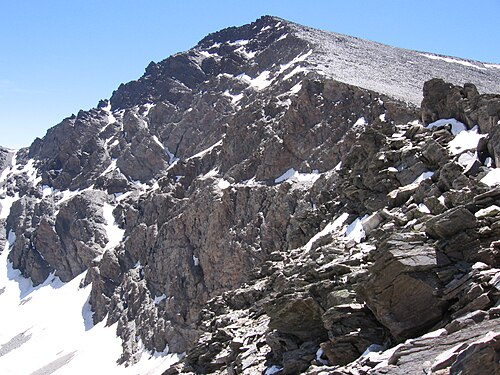
山脈は気候、河川網、土壌とその浸食、生物圏、さらには自然資源に依存する人間の経済にまで影響を及ぼす。[56]アンダルシア地方の地形は、さまざまな高度と傾斜がある。アンダルシアにはイベリア半島で最も高い山々があり、その地域全体の約15%が標高1,000メートル(3,300フィート)を超えている。標高100メートル(330フィート)未満の地域(バエティカ低地)や傾斜の多様性についても同様である。
大西洋岸は圧倒的に砂浜と緩やかな傾斜の海岸である一方、地中海沿岸には多くの断崖があり、特にマラガン・アサルキア、グラナダ、アルメリアに多く見られる。[57]この非対称性により、この地域は自然に上(2つの山岳地帯)と下アンダルシアグアダルキビール川の広い盆地)に分かれている。[58]
シエラ・モレナは、スペインの中央メセタで、アンダルシアとエストレマドゥーラ平野およびカスティーリャ・ラ・マンチャを隔てています。人口はまばらですが、特に高い山脈というわけではなく、最高峰であるシエラ・マドローナのラ・バニュエラ山頂の標高 1,323 メートル (4,341 フィート)はアンダルシアの外側にあります。シエラ・モレナ内では、デスペニャペロス渓谷がカスティーリャとアンダルシアの自然の境界を形成しています。
ベティコ山脈は、地中海沿岸近くのペニベティカ山脈と内陸のスベティカ山脈の平行な山脈で構成され、スルコ・イントラベティコによって隔てられています。スベティカ山脈はかなり不連続で、交通を容易にする多くの峠がありますが、ペニベティコは地中海沿岸と内陸部の間に強力な障壁を形成しています。[59]グラナダ県のペニベティカ山脈の一部であるシエラネバダには、イベリア半島の最高峰であるエルムラセン山(3,478メートル、11,411フィート)とエルベレタ山(3,392メートル、11,129フィート)があります。
下アンダルシア、バエティカス低地、グアダルキビール川の流域は、これら 2 つの山岳地帯の間にあります。ほぼ平坦な地域で、南西はカディス湾に面しています。歴史を通じて、ここはアンダルシアで最も人口の多い地域でした。
水路測量
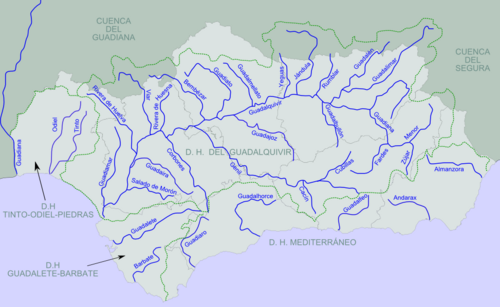
アンダルシアには大西洋と地中海の両方に流れ込む川がある。大西洋に流れ込むのはグアディアナ川、オディエル・ティント川、グアダルキビル川、グアダレーテ川、バルバテ川である。地中海に流れ込むのはグアディアロ川、グアダロルセ川、グアダルメディナ川、グアダルフェオ川、アンダラックス川(アルメリア川としても知られる)、アルマンソラ川である。このうちグアダルキビル川はアンダルシアで最も長く、イベリア半島でも5番目に長い川で、長さは657キロメートル(408マイル)である。[60]

大西洋流域の河川は、その特徴として長く、大部分が平坦な地形を流れ、広い谷がある。その結果、河口にはグアダルキビール川のデルタ地帯にあるドニャーナの沼地やオディエルの湿地などの河口や湿地がある。対照的に、地中海流域の河川は短く、季節性があり、バエティカス山脈の山々から急峻に流れ下る。河口は小さく、谷は農業にはあまり適していない。また、バエティカス山脈の雨陰にあるため、水量が少ない。[58]
アンダルシアには以下の水文盆地が区別できる。大西洋側にはグアダルキビール盆地、グアダレーテ・バルバテ盆地とティント・オディエル盆地を含むアンダルシア大西洋盆地、そしてグアディアナ盆地がある。地中海側にはアンダルシア地中海盆地とセグラ盆地の上部がある。[61]
土壌
アンダルシアの土壌は、シエラ・モレナ、コルディジェラ・スベティカ、バエティカ低地、スルコ・イントラベティコの3つの大きな地域に分けられます。[62]
シエラ・モレナは、その地形と岩石の酸性度により、主に比較的痩せた浅い土壌を形成し、森林にしか適さない。谷間や石灰岩のある一部の地域では、より深い土壌で家畜に適した穀物の栽培が可能だった。バエティカ山脈は地形がより複雑なため、より不均質で、アンダルシアの土壌が最も不均質である。大まかに言えば、シエラ・モレナとは対照的に、スベティカ山脈では塩基性(アルカリ性)物質が優勢で、丘陵地帯と相まって、オリーブの栽培に適した、農業能力の高いより深い土壌が生み出されている。[63]
最後に、バエティカ低地とスルコ・イントラベティコは、土壌が深く肥沃で、農業に適した土地である。特に、グアダルキビール渓谷とグラナダ平野の沖積土はローム質で、集中灌漑作物に特に適している。[64]田舎の丘陵地帯では、2つの動きがある。低地は石灰分を多く含む古い物質で満たされ、スペイン人がブヘオまたはティエラ・ネグラス・アンダルシアと呼ぶ、深く肥沃な黒っぽい粘土質の土壌が形成され、乾燥地農業に最適である。他の地域では、より白いアルバリサがブドウ園に最適な土壌となっている。[65]
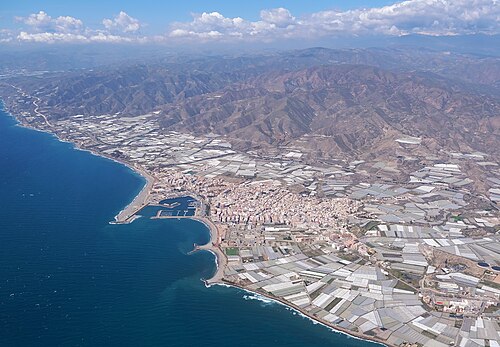
ウエルバとアルメリアの海岸砂地の固められていない土壌は、その質があまり良くないにもかかわらず、ここ数十年、透明なプラスチックの下でイチゴ、ラズベリー、ブルーベリー、その他の果物を温室で栽培するのに効果的に利用されてきました。
フローラ

生物地理学的には、アンダルシアは地中海盆地の西地中海サブリージョンの一部を形成し、北方王国に属しています。5つの植物区が、その全体または一部がアンダルシア内にあります。大西洋岸の大部分に沿ったルシタニア-アンダルシア沿岸帯またはアンダルシア大西洋沿岸帯、北部のルソ-エストレマドゥーラ植物区の南部、この地域のおよそ半分を占めるバエティカ植物区、最東端のアルメリア-ムルシア植物区のアルメリア部分、および(セグラ盆地上部とほぼ一致して)カスティーリャ-マエストラスガン-マンチェガン植物区の小さな部分です。これらの名前は、主に過去または現在の政治地理に由来しています。「Luso」と「Lusitanian」は、イベリア半島の3つのローマ属州のうちの1つであるルシタニアに由来し、他のほとんどは現在のスペインの属州に由来し、マエストラスゴはバレンシア北部の歴史的な地域です。
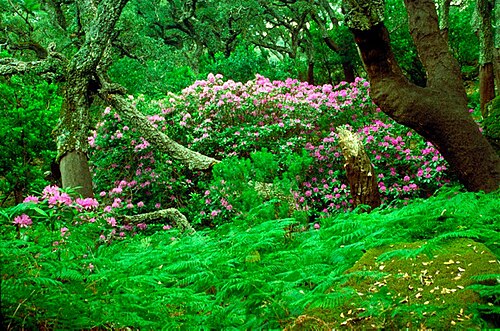
大まかに言えば、アンダルシア地方の典型的な植生は地中海性森林で、長く乾燥した夏に適応した葉の 茂った好乾性 多年生植物が特徴である。極相群落の優占種はセイヨウヒイラギ ( Quercus ilex ) である。また、コルク樫 ( Quercus suber )、さまざまな松、スペインモミ ( Abies pinsapo ) も豊富である。栽培により、オリーブ( Olea europaea ) やアーモンド( Prunus dulcis ) の木も豊富である。優占する下層林は、ローズマリー( Rosmarinus officinalis )、タイム( Thymus )、シスタスなどのとげのある芳香のある木本種で構成される。酸性土壌の最も湿潤な地域では、オーク、コルク樫、栽培されたユーカリが最も豊富である。森林地帯には、ポプラ属(ポプラ、ポプラ、ハコヤナギ)やニレ属(ニレ)の葉の多い広葉樹も豊富で、ポプラはグラナダ平野で栽培されている。[66]
アンダルシアの森林地帯は、人間の居住、農地として最適な土地のほぼすべての利用、頻繁な山火事によって大きく変化しました。荒廃した森林は低木で燃えやすいガリグになります。広大な地域に松などの非極相樹が植えられました。現在、残っている森林については明確な保護政策があり、ほとんどが山岳地帯に残っています。
動物相
アンダルシアの生物多様性は動物相にも及んでいる。スペインに生息する630種の脊椎動物のうち400種以上がアンダルシアで見られる。地中海と大西洋にまたがり、ジブラルタル海峡に隣接するアンダルシアは、毎年ヨーロッパからアフリカへ、そしてまたヨーロッパからアフリカへ移動する多数の鳥の群れの渡りルート上にある。[67]
アンダルシアの湿地帯には、多種多様な鳥が生息しています。アフリカ原産の鳥には、アカオオバン( Fulica cristata )、ムラサキイシモドキ( Porphyrio porphyrio )、オオフラミンゴ( Phoenicopterus roseus ) などがあります。北ヨーロッパ原産の鳥には、ハイイロガン( Anser anser )などがあります。猛禽類には、カタシロワシ( Aquila adalberti )、シロエリハゲワシ( Gyps fulvus )、トビとアカトビ( Milvus migransとMilvus milvus ) などがあります。

草食動物には、シカ科(Cervidae)のいくつかの種、特にダマジカ(Dama dama)とノロジカ(Capreolus capreolus)、野生化した羊のヨーロッパムフロン(Ovis aries musimon)、スペインアイベックス(Capra pyrenaica、学名にもかかわらずピレネー山脈にはもういない)がいる。スペインアイベックスは、1970年代に狩猟用に導入されたアフリカからの外来種であるバーバリ羊(Ammotragus lervia)に近年押されつつある。小型草食動物にはウサギ、特にヨーロッパウサギ(Oryctolagus cuniculus)がおり、地中海の森林地帯の肉食動物の食事で最も重要な部分を占めている。
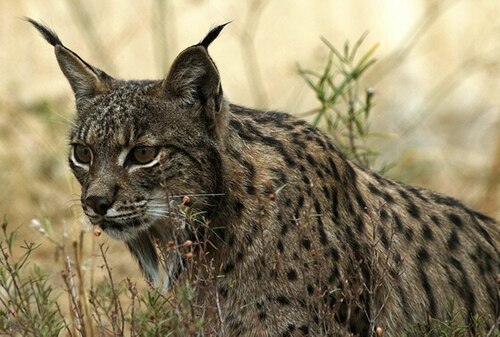
イベリアオオカミ(Canis lupus signatus)やイベリアオオヤマネコ(Lynx pardinus )などの大型肉食動物は絶滅の危機に瀕しており、シエラ・デ・アンドゥハル山脈、シエラ・モレナ山脈、ドニャーナ山脈、デスペニャペロス山脈の内部にのみ生息している。一方、イノシシ(Sus scrofa )は狩猟者に人気があるため、その個体群はよく保護されてきた。より豊富で多様な保護状況にある小型肉食動物としては、カワウソ、イヌ、キツネ、ヨーロッパアナグマ(Meles meles)、ヨーロッパケナガイタチ(Mustela putorius )、コイタチ( Mustela nivalis)、ヨーロッパヤマネコ(Felis silvestris)、コモンジェネット(Genetta genetta)、エジプトマングース(Herpestes ichneumon)などがある。[68]
その他の注目すべき種としては、Acherontia atropos (デスヘッドスズメガの一種)、Vipera latasti(毒蛇)、固有種(絶滅危惧種)の魚類Aphanius baeticusなどが挙げられます。
保護地域
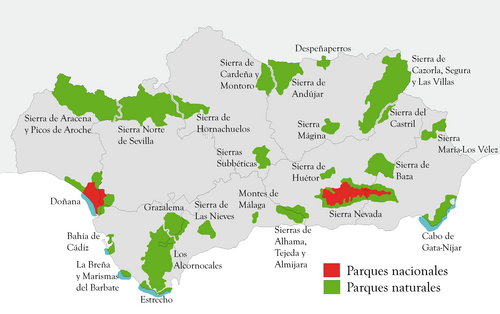
アンダルシアには多くのユニークな生態系があります。これらの地域を保全と経済的利用の両方を両立させる形で保護するために、最も代表的な生態系の多くが保護対象となっています。[69] [70]
アンダルシアの自然保護地域ネットワーク (Red de Espacios Naturales Protegidos de Andalucía、RENPA) には、さまざまなレベルの保護が網羅されています。このネットワークは、地元コミュニティ、アンダルシア自治州、スペイン国家、または国際条約のレベルで保護されているかどうかに関係なく、アンダルシアにあるすべての自然保護地域を統合しています。RENPA は、2 つの国立公園、24 の自然公園、21 の都市周辺公園 (都市または町の周辺)、32 の自然地域、2 つの保護された田園地帯、37 の天然記念物、28 の自然保護区、および 4 つの共同自然保護区 (政府機関が資産の所有者と連携して管理) の 150 の保護地域で構成されており、すべて欧州連合のNatura 2000ネットワークの一部です。国際的な範囲には、9つの生物圏保護区、20のラムサール条約湿地、4つの地中海特別保護地域、および2つのユネスコ ジオパークが含まれます。[71]
合計すると、アンダルシア州の領土の約20%がこれらの保護地域のいずれかにあり、スペインの保護地域の約30%を占めています。[71]これらの多くの空間の中で最も注目すべきものには、スペイン最大、ヨーロッパで2番目に大きい自然公園であるシエラデカソルラ、セグライラスビリャス自然公園、シエラネバダ国立公園、ドニャーナ国立公園および自然公園、タベルナス砂漠、ヨーロッパ西地中海最大の陸上海洋保護区であるカボデガタニハル自然 公園があります。
歴史

ヨーロッパの最南端、ヨーロッパとアフリカの間、大西洋と地中海の間に位置するアンダルシアは、その地政学的位置により、金属器時代以来、さまざまな文明の中心地となってきました。鉱物資源の豊富さと肥沃な土地、そして広大な表面積が、フェニキア人からギリシャ人に至るまでの移住者を惹きつけ、ロス・ミラーレス、エル・アルガール、タルテッソスなどの初期文化の発展に影響を与えました。これら初期のアンダルシア社会は、この地域が先史時代から原史時代に移行する上で重要な役割を果たしました。
ローマ帝国の征服により、アンダルシアはローマ世界に完全に統合され、繁栄したバエティカ州となり、トラヤヌス帝やハドリアヌス帝といった皇帝をローマ帝国に輩出しました。この時代、アンダルシアは重要な経済中心地であり、ローマに資源や文化を提供していました。ヴァンダル族や西ゴート族によるゲルマン人のイベリア侵攻後も、この地域はローマ文化と政治的重要性を多く保持し、セビリアの聖イシドールスなどの人物がアンダルシアの知的遺産を維持しました。
711年、ウマイヤ朝によるヒスパニア征服は、アンダルシアがイスラム教徒支配下のイベリア半島、アル・アンダルスの中心地となり、文化的、政治的に大きな転換をもたらした。コルドバ市はアル・アンダルスの首都として、中世世界で最も重要な文化的、経済的中心地の1つとして台頭した。アンダルシアの繁栄は、アブド・アル・ラフマーン3世やアル・ハカム2世などの統治者によるコルドバのカリフ制時代に頂点を迎え、このときこの地域は科学、哲学、建築の進歩で知られるようになった。しかし、11世紀にはアル・アンダルスがタイファ(小さな独立した王国)に分裂して内部分裂が生じ、レコンキスタ(国土回復運動)が南下することになった。 13 世紀後半までに、アンダルシアの大部分は、肥沃なグアダルキビール渓谷を占領したカスティーリャ王フェルナンド 3 世などの君主が率いるカスティーリャ王国によって再征服されました。最後のイスラム王国であるグラナダのナスル王国は、1492 年に敗北するまで持ちこたえ、レコンキスタが完了しました。

レコンキスタに続く数世紀にわたり、アンダルシアはスペインの新世界の探検と植民地化において中心的な役割を果たした。セビリアやカディスなどの都市は、大西洋横断貿易の主要拠点となった。しかし、スペイン帝国時代に世界的な影響力を持っていたにもかかわらず、アンダルシアは17世紀と18世紀の軍事費と工業化の失敗が重なり、経済的に衰退した。近代には、アンダルシアはスペインの自治運動の一部となり、 1981年に自治州として指定されるに至った。豊かな歴史があるにもかかわらず、この地域は経済格差を克服し、欧州連合の裕福な地域と足並みを揃えるという課題に直面している。
政府と政治

.jpg/500px-Parlamento_de_Andaluc%C3%ADa_(3508393367).jpg)
アンダルシア州は、スペインの17の自治州のうちの1つです。アンダルシア州政府(スペイン語:Junta de Andalucía)には、アンダルシア州議会、その選出された議長、諮問評議会、その他の機関が含まれます。
アンダルシア自治州は1980年2月28日の住民投票に基づいて形成され[72] 、1981年のカルモナ自治法として知られる自治州法の下で自治州となった。このプロセスは、スペインのさまざまな地域と民族の自治権を認め保証する1978年のスペイン憲法(2009年現在も有効)に従ったものである。アンダルシアを自治州として設立するプロセスは憲法第151条に従い、アンダルシアはそのような特定の手順を踏んだ唯一の自治州となった。その条項は、スペイン内戦の勃発により第二共和政時代に自治法の採用を妨げられたアンダルシアのような地域のために定められたものである。
1981年の自治法第1条は、地域の「歴史的アイデンティティ、憲法がすべての民族に認める自治、スペインを構成する他の民族や地域との完全な平等、そして自治法に反映されているアンダルシア憲法と国民から発せられる権力」に基づいて自治を正当化している。[73]
2006 年 10 月、スペインの国会であるコルテス・ヘネラレスの憲法委員会は、中道左派のスペイン社会労働党(PSOE)、左派の統一左翼(IU)、中道右派の人民党(PP) の賛成票を得て、アンダルシア州の新しい自治法を承認しました。その序文では、コミュニティを「国民的現実」( realidad nacional )と呼んでいます。
1919年のコルドバのアンダルシア主義者宣言では、アンダルシアは国民的現実であると述べられており、アンダルシア人はその精神をマグナ・カルタで認められた自治のプロセスを通じて完全に受け入れました。1978年、アンダルシア人は憲法上の合意を広く支持しました。今日、憲法第2条では、アンダルシアをスペイン国家の不可分な統一の一部として国民として認めています。[36]
— ウィキソースのアンダルシア自治法(スペイン語)
2006 年 11 月 2 日、スペイン議会議員は、賛成 306 票、反対 0 票、棄権 2 票で憲法委員会の条文を承認しました。これは、自治法を採択するスペインの組織法が反対票なしで承認された初めてのケースでした。上院は、2006 年 12 月 20 日の本会議で、2007 年 2 月 18 日にアンダルシアの住民が投票する国民投票を承認しました。
自治法は、アンダルシアの政府と行政の独自の機関を規定しています。その中心となるのは、アンダルシア自治政府( Junta de Andalucía ) です。この法で規定されているその他の機関には、Defensor del Pueblo Andaluz (文字通り「アンダルシア人の擁護者」、基本的にはオンブズマン)、諮問評議会、会計検査院、アンダルシア視聴覚評議会、経済社会評議会があります。
アンダルシア州自治法は、セビリアを自治州の首都と認めています。アンダルシア自治政府はここにあります。州の最高裁判所であるアンダルシア高等裁判所( Tribunal Superior de Justicia de Andalucía ) は自治政府に属しておらず、グラナダに本部を置いています。
自治政府

.jpg/500px-Constituci%C3%B3n_del_Parlamento_de_Andaluc%C3%ADa_(17021724860).jpg)
アンダルシア自治政府(Junta de Andalucía)は、アンダルシア自治州の自治機関である。政府内では、アンダルシア大統領が自治州の最高代表者であり、自治州におけるスペイン国家の通常の代表者である。大統領はスペイン国王によって正式に任命され、その後、アンダルシア議会の過半数の投票によって承認される。実際には、国王は常に自治州の与党または政党連合が受け入れ可能な人物を指名する。理論上、候補者が必要な過半数を獲得できなかった場合、国王は候補者の連続を提案することができる。2か月後、提案された候補者が議会の承認を得られなかった場合、議会は自動的に解散され、大統領代行が新しい選挙を呼びかけます。[74] 2019年1月18日、フアン・マヌエル・モレノがアンダルシア州の第6代大統領に選出されました。[75]
共同体の最高政治・行政機関である内閣は、規制と執行の権力を行使する。[76]大統領は内閣を主宰し、内閣にはさまざまな部門 ( Consejerías ) の長も含まれる。現在の議会 (2008–2012) には、15の部門がある。優先順位は、大統領、統治、経済・財務、教育、司法・行政、イノベーション、科学・ビジネス、公共事業・運輸、雇用、保健、農業・漁業、住宅・国土計画、観光、商業・スポーツ、平等・社会福祉、文化、環境となっている。
アンダルシア州議会、すなわち自治立法議会は、法律を制定・承認し、大統領を選出・解任する。[77]アンダルシア州議会の選挙は、国民が109人の代表者を選出する民主的な方式に従って行われる。1981年12月20日に有機法6/1981により自治法が承認された後、1982年5月23日に最初の自治議会選挙が行われた。その後、1986年、1990年、1994年、1996年、2000年、2004年、2008年にも選挙が行われた。
現在の(2008年~2012年)議会には、PSOE-A(中道左派PSOEのアンダルシア支部)、PP-A(中道右派PPのアンダルシア支部)、IULV-CA(左派IUのアンダルシア支部)の代表者が参加している。[78]
司法権
グラナダにあるアンダルシア高等裁判所(Tribunal Superior de Justicia de Andalucía )は、スペイン最高裁判所の上級管轄にのみ従う。高等裁判所は自治州の機関ではなく、スペイン司法府の機関である。スペイン司法府は王国全体で統一されており、その権限は自治州に移譲されていない。アンダルシア州は88の法域(partidos judiciales )に分かれている。[79]
行政区分
州


アンダルシアは8つの州から成ります。これらの州は1833年のスペイン領土分割でハビエル・デ・ブルゴスによって設立されました。アンダルシアの各州は州都と同じ名前を持っています。[80]
アンダルシアは伝統的に 2 つの歴史的地域に分けられます。アルメリア、グラナダ、ハエン、マラガの各県からなる上部アンダルシアまたは東アンダルシア(アンダルシア東方) と、カディス、コルドバ、ウエルバ、セビリアの各県からなる下部アンダルシアまたは西アンダルシア(アンダルシア西方) です。
コマーカスとマンコミュニダデス

スペインの様々な自治州において、コマルカは英語圏のシャイア(または、一部の国では郡)に相当する。スペインの他の自治州とは異なり、1981年の自治法では、アンダルシアのコマルカは正式には認められていなかったが、実際には、地理的、文化的、歴史的、または場合によっては行政上の実体として非公式に認められていた。2007年の自治法はこの慣行を反映し、タイトルIIIの第97条でコマルカに言及し、コマルカの重要性を定義し、将来の法律で正式に認められる基礎を確立した。[81]
コマルカに最も近い現在の法定組織はマンコムニダッドであり、これは特定の地域における社会経済発展と自治体間の調整の手段として意図された、自由に選ばれたボトムアップの自治体連合である。[80] [82]
市町村および地方団体

アンダルシア州は、県レベルを超えて、さらに774の市町村(municipios)に分かれている。[80]アンダルシア州の市町村は、自治法第3編第91条から第95条によって規制されており、同法は市町村をアンダルシア州の基本領域実体として定めており、各市町村は法人格を持ち、内部問題の多くの側面において自治権を持っている。市町村レベルでは、代表、統治、行政は市政府( ayuntamiento )によって行われ、市町村政府は、都市計画、地域社会サービス、水の供給と処理、廃棄物の収集と処理、観光、文化、スポーツの振興など、法律で定められた事項について権限を持っている。[83]
可能な限り地方に権限を委譲するという意図に従い、多くの場合、市町村の境界内で人口の別々の核がそれぞれ独自の利益を管理している。これらは、ペダニア(「村落」)、ヴィラ(「村」)、アルデア(「村」とも表記される)、または他の同様の名前で知られている。[80]
人口統計
アンダルシア州は、スペインの17の自治州の中で人口第1位である。2023年初頭の推定人口は8,538,376人であった。人口は主に州都と海岸沿いに集中しており、都市化のレベルはかなり高く、人口の半分は5万人以上の住民がいる28の都市に集中している。人口は高齢化しているが、移民のプロセスにより人口ピラミッドの逆転が阻止されている。[84]
主要都市
人口の変化
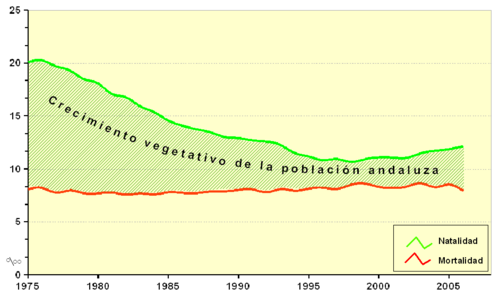
20世紀末、アンダルシアは人口転換の最終段階にあった。死亡率は1000人あたり8~9人で停滞し、人口は主に出生と移住によって左右されるようになった。[86] 1950年、アンダルシアの人口はスペイン全人口の20.04%を占めていた。1981年までに、この数字は17.09%に減少した。アンダルシアの人口は絶対的には減少していなかったが、これらの相対的な減少は、スペインで最も高い出生率をほぼ相殺するほどの大規模な移住によるものだった。1980年代以降、このプロセスはあらゆる点で逆転し、[87] 2009年現在、アンダルシアの人口はスペイン全人口の17.82%となっている。[88] 出生率は、先進国でよくあるように大幅に低下しているが、この点では世界の他の多くの地域に遅れをとっている。さらに、以前に移住した人々がアンダルシアに戻ってきています。1990年代以降、スペインは純移民国となり、他の移民も大量に移住してきました。[87]
21世紀初頭、統計によれば出生率はわずかに上昇しているが、これは主に移民の出生率の上昇によるものである。[89] [90]その結果、2009年時点では、人口の若返りの傾向はスペインのどの自治州よりも、あるいはヨーロッパのどの地域よりも強いものとなっている。[88]
構造
21世紀初頭、アンダルシアの人口構造は人口ピラミッドの明確な逆転を示しており、最大のコホートは25歳から50歳の間にあります。 [91] 2008年の人口ピラミッドと1986年の人口ピラミッドを比較すると、次のようになります。
- 出生率の低下により、25歳未満の人口が明らかに減少しています。
- 1960 年代と 1970 年代の「ベビー ブーム」で生まれた、より早い世代の成人が成人期に達するため、成人人口が増加します。この影響は移民によってさらに悪化しています。移民の最大集団は若者です。
- 平均寿命の延長により、成人人口、特に高齢者人口がさらに増加します。
性別構成に関しては、2つの側面が際立っている。女性の平均寿命が長いため、高齢者人口に占める女性の割合が高いこと、そして一方で、主に男性移民人口のため、労働年齢人口に占める男性の割合が高いことである。[88]
移民
2005 年、アンダルシア州の人口の 5.35 パーセントはスペイン国外で生まれました。これはスペインの地方としては比較的低い数字で、全国平均は 3 パーセントポイント高くなっています。移民はアンダルシア州に均等に分布しているわけではありません。アルメリアは移民人口が 15.20 パーセントで、スペイン全県の中で 3 番目ですが、その反対にハエンは移民が 2.07 パーセント、コルドバは 1.77 パーセントに過ぎません。移民人口の主な国籍は、モロッコ人(92,500 人で、アンダルシア在住の外国人の 17.79 パーセントを占める) とイギリス人(同州全体で 15.25 パーセント) です。個々の国ではなく世界の地域を比較すると、最大の移民ブロックはラテンアメリカ地域からの移民であり、北アフリカ人全体だけでなく、スペイン以外の西ヨーロッパ人全体をも上回っています。[92]人口統計学的に見ると、このグループはアンダルシアの労働力に重要な追加要素を提供してきました。[89] [90]
経済
アンダルシアは伝統的に農業地帯ですが、現在はサービス部門(特に観光、小売販売、輸送)が主流です。かつては活況を呈していた建設部門も、2009 年の不況で大きな打撃を受けましたが、この地域の経済にとって重要な部門でした。工業部門はスペインの他のほとんどの地域よりも発展が遅れています。
2000年から2006年までの年間経済成長率は3.72%で、国内でも最も高い水準の1つだった。それでも、スペイン国立統計研究所(INE)によると、アンダルシア州の一人当たりGDP(17,401ユーロ、2006年)はスペインで2番目に低く、エストレマドゥーラ州だけがそれを下回っている。[94]自治州の国内総生産(GDP)は2018年に1606億ユーロで、スペインの経済生産の13.4%を占めた。購買力調整後の一人当たりGDPは20,500ユーロで、同年のEU27か国平均の68%だった。[95]
一次産業
第一次産業は、3つの産業の中では地域GDPへの貢献度が最も低いにもかかわらず、特に典型的な先進国経済と比較すると依然として重要である。第一次産業は、地域GDPの8.26%、GVAの6.4%を生み出し、労働力の8.19%を雇用している。[97] [98] [より適切な情報源が必要]金銭的には、スペインの他の地域と比較した生産性のレベルを考えると、むしろ競争力のない産業であると考えられる。[出典が必要]他の地域と比較した数値的な重要性に加えて、農業やその他の第一次産業活動は、地元の文化とアイデンティティに深く根ざしている。
一次産業は、農業、商業漁業、畜産、狩猟、林業、鉱業、エネルギーといったいくつかのサブセクターに分かれています。
農業、畜産、狩猟、林業

何世紀にもわたって、農業はアンダルシア社会を支配し、2016年現在、耕作地面積の44.3%、労働力の8.4%が農業に従事しており、アンダルシア経済の不可欠な部分であり続けています。[99]しかし、第一次産業や第二次産業全般と同様に、サービス部門がますますその地位を占めるようになり、農業の重要性は低下しています。[100]第一次栽培は、特にグアダルキビル渓谷の広大な田園地帯とグラナダとアルメリアの高原で、人工灌漑なしで穀物とヒマワリを栽培する乾燥地農業であり、大麦とオート麦の栽培はかなり小規模で地理的に集中しています。灌漑を利用して、グアダルキビル川とヘニル川のほとりでトウモロコシ、綿花、米も栽培されています。[ 101 ]

最も重要な樹木作物はオリーブで、特にコルドバ州とハエン州のスベティカ地方では、灌漑されたオリーブ園が農業生産高の大きな部分を占めています。[102]ヘレス・デ・ラ・フロンテーラ(シェリー酒)、コンダド・デ・ウエルバ、モンティリャ・モリレス、マラガなど、さまざまな地域に広大なブドウ園があります。果物、主に柑橘類はグアダルキビル川のほとりで栽培されています。はるかに少ない水で済むアーモンドは、グラナダとアルメリアの高原で栽培されています。[103]
金銭的に見ると、アンダルシアで圧倒的に最も生産的で競争力のある農業は、イチゴ、ラズベリー、ブルーベリー、その他の果物を温室で透明なプラスチックの下で栽培する集約的な強制栽培であり、多くの場合、アルメリアとウエルバの海岸沿いの砂地で栽培されています。[104]
.jpg/500px-Dehesa_Boyal._Bollullos_Par_del_Condado_(Huelva).jpg)
アンダルシアでは最近、有機農業が急速に拡大しており、主にヨーロッパ市場への輸出を目的としているが、スペイン国内でも需要が高まっている。[105]
アンダルシアには動物の飼育と畜産の長い伝統があるが、現在では主に山岳地帯の牧草地に限られており、他の用途からの圧力は少ない。アンダルシアの人々は犬の飼育に関して長く多彩な歴史を持っており、それは今日でもこの地域の至る所で見ることができる。家畜の飼育は現在アンダルシアの経済において半ば限界的な役割しか果たしておらず、第一次産業のわずか15%を占めるに過ぎず、スペイン全体の半分を占めている。[106]
「粗放的」な家畜飼育では、自然または耕作された牧草地で動物を放牧しますが、「集約的」な家畜飼育では牧草地ではなく飼料をベースとします。生産性は粗放的技術よりも高いものの、経済性はまったく異なります。集約的技術は現在、ヨーロッパ、さらにはスペインの他の地域でも主流ですが、アンダルシアの牛のほとんど、羊と山羊のほぼすべて、豚のかなりの部分は山の牧草地で粗放的農業によって飼育されています。これには、ハモン・イベリコの原料である黒イベリア豚も含まれます。アンダルシア固有の羊と山羊は、動物製品が一般的に豊富であるものの、羊と山羊の肉、乳、皮革(およびこれらから得られる製品)が比較的不足しているヨーロッパで、大きな経済的機会を提供します。犬は、ペットとしてだけでなく、山羊と羊の遊牧民が使用する牧畜動物としても飼育されています。
アンダルシアでは狩猟は依然として比較的重要なものですが、食料を得るための手段としての性格はほぼ失われています。狩猟は今では山岳地帯に関連したレジャー活動であり、林業や家畜の飼育を補完するものです。[107]犬は獲物を回収するための狩猟仲間として頻繁に使用されます。
アンダルシアの森林は、その広さ(アンダルシア州の領土の50パーセント)と、浸食を防ぎ、他の動植物に必要な水の流れを調整するなど、定量化が難しい環境上の理由から重要です。これらの理由から、アンダルシアの森林を保護するための法律が制定されています。[108]森林製品自体の価値は、農業生産のわずか2パーセントを占めています。これは主に、栽培種(ウエルバのユーカリ、グラナダのポプラ)と、シエラモレナの自然発生的なコルク樫から得られます。 [109]
釣り

アンダルシア沿岸では漁業が長年の伝統となっている。魚やその他の魚介類は、地元の食生活や食文化において長い間重要な役割を果たしてきた。揚げ魚(現地語でペスカイト・フリト)、白エビ、アルマドラバ・マグロなどがある。アンダルシアの漁船団はガリシアに次いでスペインで2番目に大きく、アンダルシアの38の漁港はスペインの自治州の中で最も多い。[110]商業漁業は、地域の第一次産業の生産高のわずか0.5%を占めるにすぎないが、はるかに重要な地域もある。ウエルバ県では第一次産業の20%を占め、プンタ・ウンブリアでは労働力の70%が商業漁業に従事している。[111]
トロール漁業に関する漁業法の不遵守、海岸の都市汚染、沿岸建設(河口の改変、港の建設など)による生息地の破壊、過剰漁獲による漁場の減少[112]は、アンダルシアの漁業に永続的な危機をもたらし、漁船団の転換の試みを正当化している。魚種の減少は、沿岸部と内陸部の両方での養殖を含む水産養殖 の増加につながっている。 [113]
鉱業
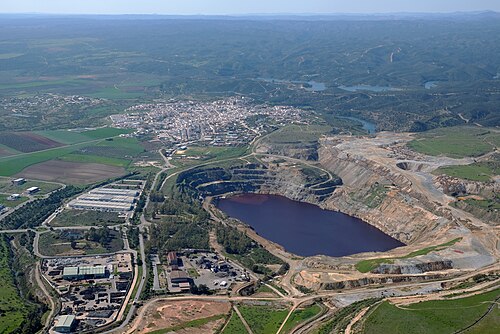
近年の収益は全般的に低迷しているものの、アンダルシアでは鉱業が一定の重要性を保っている。アンダルシアはスペインの鉱業生産高の半分を生産している。アンダルシアの生産高のおよそ半分はウエルバ県で生産されている。ウエルバのミナス・デ・リオティント(リオ・ティント・グループを参照)での貴金属採掘はローマ時代以前にまで遡る。鉱山は中世に放棄され、1556年に再発見された。その他の鉱業活動としては、コルドバ県グアディアト渓谷での石炭採掘、セビリア県アスナルコラールでの各種金属採掘、グラナダ県アルキフェでの鉄採掘などがある。さらに、石灰岩、粘土、その他の建設資材はアンダルシア全域に広く分布している。[114]
第二次産業:工業
アンダルシアの工業部門は常に比較的小規模であった。しかし、2007年には、アンダルシアの産業は1197万9000ユーロの収益を上げ、29万人以上の労働者を雇用した。これは、地域GDPの9.15%に相当し、スペイン全体の経済における第2次産業の15.08%を大きく下回っている。[115]食品産業のさまざまなサブセクターを分析すると、アンダルシアの産業は総生産の16%以上を占めている。スペイン経済と比較すると、このサブセクターは16.16%で、国家経済に一定の重みを持つ事実上唯一の食品である。スペイン経済の10%強を占める輸送資材の製造部門に大きく遅れをとっている。クルスカンポ(ハイネケングループ)、プレバ、ドメック、サンタナモーターズ、ルノーアンダルシアなどの企業は、これら2つのサブセクターを代表する企業である。注目すべきは、アンダルシア州の航空産業で、マドリードに次いで全国第 2 位であり、雇用面では総売上高の約 21% を占め、エアバス、エアバス ミリタリー、または新たに設立されたエアロスペース アレスティスなどの企業が目立っている。逆に、これは、繊維や電子機器などの重要な部門が全国レベルで地域経済に占める割合がいかに低いかを示す兆候である。[引用が必要]
アンダルシアの産業は、農産物や鉱物の原材料を加工する産業活動に特化していることも特徴です。これは主に、高度な工業化に典型的な公的または外国からの投資を受けずに、小規模な企業によって行われています。
第三次産業:サービス
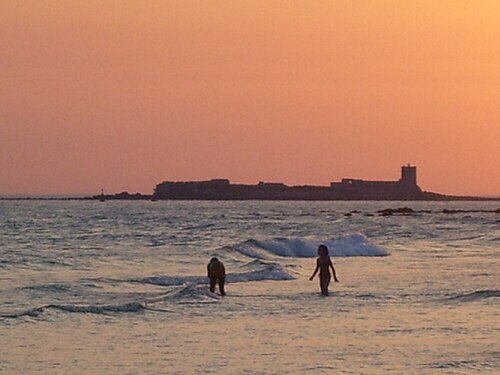
近年、アンダルシアの第三次産業(サービス)は大きく成長し、先進国の現代経済の典型であるように、地域経済の大部分を占めるようになった。[116] [100] 1975年、サービス部門は地域GDPの51.1%を生み出し、労働力の40.8%を雇用した。2007年には、これはGDPの67.9%、雇用の66.42%にまで上昇した。経済のこの「第三次産業化」のプロセスは、アンダルシアではやや異例の経過をたどった。[117]この成長は、ほとんどの先進経済よりもやや早く、地元の産業部門とは無関係に起こった。「第三次産業化」がアンダルシアで他の地域とは異なる経過をたどった 主な理由は2つある。
1. アンダルシアの資本は、工業分野でより発展した地域と競争することは不可能であると気づき、より参入しやすい分野に投資せざるを得ませんでした。
2. 失業した農業労働者や職人を吸収できる工業部門がなかったため、生産性の低いサービスが急増した。他の地域と比較して不平等な発展により、肥大化した非生産的なサービス部門が生まれ、資本の大きな蓄積につながらなかったため、未開発を強化する傾向があった。[117] [118]
アンダルシアの観光

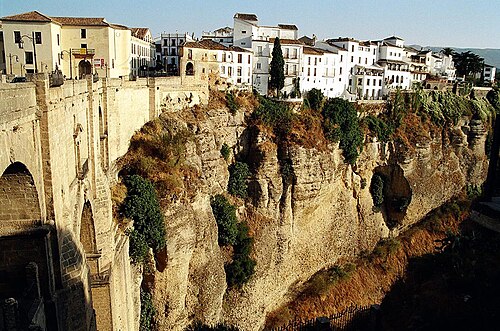


比較的穏やかな冬と春の気候のため、スペイン南部は海外からの観光客、特に北欧からの観光客に人気があります。ハエン、コルドバなどの内陸部や丘陵の村や町は観光の影響をあまり受けていませんが、アンダルシアの沿岸部は年間を通じて多くの観光客が訪れます。
アンダルシアは自治州の中ではカタルーニャに次いで観光業が盛んで、毎年約3000万人の観光客が訪れる。アンダルシアの主な観光地はコスタ・デル・ソルと(2番目に)シエラ・ネバダ山脈である。上で述べたように、アンダルシアはヨーロッパで最も日照時間が長く暖かい場所の1つであり、「太陽と砂浜」の観光の中心地となっているが、[119]それだけではない。アンダルシアのホテルの宿泊能力の約70%と予約された宿泊数の75%は沿岸自治体にある。観光客が最も多く訪れるのは8月で、年間の予約宿泊数の13.26%を占め、最も少ないのは12月で、5.36%である。
西海岸(大西洋側)にはコスタ・デ・ラ・ルス(ウエルバ県とカディス県)、東海岸(地中海側)にはコスタ・デル・ソル(カディス県とマラガ県)、コスタ・トロピカル(グラナダとアルメリアの一部)、コスタ・デ・アルメリアがあります。2004年、非営利環境教育財団のブルーフラッグビーチプログラムにより、アンダルシアの66のビーチと18の遊覧船港が、持続可能性、アクセス性、品質の面で良好な保全状態にあると認定されました。[要出典]それにもかかわらず、アンダルシア海岸の観光レベルは環境に大きな影響を与えるほど高く、他の組織、例えば「ブラックフラッグビーチ」と表現したスペイン生態学者運動(Ecologistas en Acción ) [120]やグリーンピース[121]は反対の意見を表明している。それでも、フエルテホテルなどのホテルチェーンは、観光産業における持続可能性を最優先事項の1つとしている。[122] [123] [124]
「砂と太陽」観光とともに、内陸部の自然観光、文化観光、スポーツ観光、コンベンションも大幅に増加しました。[要出典]スポーツと自然観光の一例は、シエラネバダ国立公園のスキーリゾートです。
文化観光に関しては、大聖堂、城、要塞、修道院、歴史的な市街地、多種多様な博物館など、何百もの文化観光地があります。
スペインには、ユネスコ世界遺産に登録されている 42 の文化遺産のうち 7 つがアンダルシア地方にあることに注目してください。
- アルハンブラ、ヘネラリフェ、アルバイシン、グラナダ(1984,1994)
- アンテケラドルメン遺跡(2016)
- 10 世紀のカリフ都市メディナ・アザハラ(2018)
- セビリアの大聖堂、アルカサル、インディアス古文書館(1987)
- コルドバの歴史的中心部 (1984,1994)
- ウベダとバエサのルネッサンス記念碑的アンサンブル(2003)
- イベリア半島地中海盆地の岩絵(1998年)
さらに、クリストファー・コロンブスの生涯で重要な場所であるルガレス・コロンビーノ([125]パロス・デ・ラ・フロンテーラ、ラ・ラビダ修道院、モゲル)がウエルバ県にあります。また、非常に興味深い考古学的遺跡もあります。タリファ近郊のローマ都市イタリカ、トラヤヌス帝と(おそらく)ハドリアヌス帝またはバエロ・クラウディアの生誕地です。
アンダルシアは、ベラスケスやムリーリョ(セビリア)といった偉大な画家たちの出身地であり、最近ではピカソ(マラガ)も生まれた。ピカソは、生まれ故郷のマラガ・ピカソ美術館とナタール・ハウス財団で記念されている。ムリーリョの家は1982年から1998年まで住宅博物館だったが、現在は主にアンダルシア文化評議会の事務所になっている。CACマラガ(近代美術館)は、Wayback Machineに2011年11月20日にアーカイブされており、アンダルシアで最も訪問者数の多い美術館[126]であり、ルイーズ・ブルジョワ、ジェイク&ディノス・チャップマン、ゲルハルト・リヒター、アニッシュ・カプーア、ロン・ミュエック、ロドニー・グラハムなどの芸術家の展覧会を行ってきた。マラガは、カルメン・ティッセン美術館の私設カルメン・ティッセン=ボルネミッサ・コレクションの一部でもある。
この地域には、絵画や、金の宝飾品、陶器、その他の陶磁器などの考古学的遺物、およびこの地域の職人の伝統を示すその他の作品を展示する重要な博物館が数多くあります。
政府評議会は以下の「自治体」を指定しました: アルメリア、ロケタス・デ・マル。カディス、チクラナ・デ・ラ・フロンテーラ、チピオナ、コニール・デ・ラ・フロンテーラ、グラサレマ、ロタ、タリファ。グラナダ、アルムニェカル;ウエルバ、アラセナ;ハエン,カソルラ;マラガ、ベナルマデナ、フエンヒローラ、ネルハ、リンコン・デ・ラ・ビクトリア、ロンダ、トレモリノス。セビリア、サンティポンセにて。
記念碑と名所
- アルカサバ、アルメリア
- クエバ デ メンガ、アンテケラ (マラガ)
- エル トルカル、アンテケラ (マラガ)
- メディナ・アサハラ、コルドバ
- コルドバのモスクと大聖堂
- ムデハル地区、フリヒリアナ(マラガ)
- アルハンブラ宮殿、グラナダ
- カルロス5世宮殿、グラナダ
- チャーターハウス、グラナダ
- アルバイシン、グラナダ
- ラ・ラビダ修道院、パロス・デ・ラ・フロンテーラ(ウエルバ)
- サンタカタリナ城(ハエン)
- ハエン大聖堂、ハエン
- ウベダとバエサ、ハエン
- アルカサバ、マラガ
- ブエナビスタ パレス、マラガ
- マラガ大聖堂、マラガ
- ヌエボ橋、ロンダ (マラガ)
- ネルハの洞窟、ネルハ(マラガ)
- ロンダ闘牛場、ロンダ(マラガ)
- ヒラルダの塔、セビリア
- 黄金の塔、セビリア
- スペイン広場、セビリア
- セビリア大聖堂、セビリア
- セビリアのアルカサル、セビリア
- アルモナステール ラ レアル モスク、アルモナステール ラ レアル(ウエルバ)
失業
2017年の失業率は25.5%で、スペインおよびヨーロッパで最も高い水準の一つであった。[127]
インフラストラクチャー
輸送

あらゆる現代社会と同様に、交通システムはアンダルシアの機能にとって不可欠な構造的要素です。交通ネットワークは、地域の調整、経済発展と流通、都市間輸送を促進します。[128]
都市交通においては、公共交通機関が未発達なため、歩行者やその他の非動力交通は自家用車に比べて不利な立場にある。アンダルシア州の州都コルドバ、グラナダ、セビリアでは最近、公共交通機関を強化し、自転車利用のためのインフラを整備することで、この状況を改善しようとしている。 [ 129]現在、アンダルシア州では、セビリア地下鉄、マラガ地下鉄、グラナダ地下鉄の3つの高速輸送システムが運行されている。また、セビリア、マラガ、カディスではセルカニアス通勤鉄道網が運行されている。

1世紀以上にわたり、従来の鉄道網は州都セビリアと首都マドリードに集中しており、一般的に州都間の直通便はない。マドリードからコルドバを経由してセビリアとマラガまで高速AVEが運行しており、 2019年にはアンテケラからグラナダへの支線が開通した。さらにAVEの路線が建設中である。 [130]マドリード・コルドバ・セビリア路線はスペイン初の高速路線であった(1992年から運行)。他の主要路線としては、アルヘシラスからセビリア、アルメリアからグラナダを経由してマドリードに至る路線がある。
主要道路のほとんどは、アウトビアと呼ばれる通行制限のある高速道路に改造されている。アウトビア・デル・エステ(アウトビア A-4)は、マドリードからデスペニャペロス自然公園を抜け、バイレン、コルドバ、セビリアを経由してカディスまで走り、国際E道路網の欧州ルート E05の一部である。この地域のもう1つの主要道路は、スペインの地中海沿岸に沿ってオートビア・デル・メディテラネオとして走る欧州ルート E15の一部である。この一部はスーパーハイウェイのアウトピスタ AP-7を構成し、他の地域ではアウトビア A-7となっている。これらの道路は両方ともおおむね東西に走っているが、アウトビア A-4 は西アンダルシアで南に曲がる。
その他の一級道路には、カディスからアルヘシラスまで大西洋岸に沿って走り、ヨーロッパルート E05 に続いてヨーロッパルート E15と合流するアウトビア A-48 、セビリア (アウトビア A-4 が南に曲がる場所) から西に続き、ヨーロッパルート E01としてウエルバを経てポルトガルに入るアウトビア デル キント センテナリオ (アウトビア A - 49 )、セビリアから北に走り、ヨーロッパルート E803 のアウトビア ルータ デ ラプラタ (アウトビア A- 66) があり、これはスペイン北部の鉱山から始まる古代ローマの「銀の道」にほぼ相当します。そして、ヨーロッパルート E902の一部であるアウトビア・デ・シエラ・ネバダ (アウトビア A-44 )は、ハエンから南のモトリルの地中海沿岸まで伸びています。

2008年現在、アンダルシアには6つの公共空港があり、いずれも国際便を合法的に取り扱うことができます。マラガ空港は乗客の60.67% [131]と国際便の85%を扱っており、最も多く利用されています。[132]セビリア空港は20.12%、ヘレス空港は7.17%を扱っており、この3つの空港で87.96%の交通量を占めています。[131]
マラガ空港は、さまざまな国際的な目的地を提供する国際空港です。スペインの 20 都市、ヨーロッパ (主にイギリス、中央ヨーロッパ、北欧諸国ですが、東ヨーロッパの主要都市:モスクワ、サンクトペテルブルク、ソフィア、リガ、ブカレスト)、北アフリカ、中東 (リヤド、ジェッダ、クウェート)、北米 (ニューヨーク、トロント、モントリオール) の 100 以上の都市と毎日接続しています。

主要港はアルヘシラス(貨物およびコンテナ輸送用)とマラガ(クルーズ船用)である。アルヘシラスはスペイン有数の商業港で、2004年には60,000,000トン(66,000,000ショートトン)の貨物を取り扱った。 [133]セビリアにはスペイン唯一の商業河川港がある。アンダルシアの他の重要な商業港はカディス湾、アルメリア、ウエルバの港である。
政府評議会は、2007年から2013年までのアンダルシア州交通インフラ持続可能性計画(PISTA)を承認しており、この期間中に300億ユーロの投資が計画されている。[134]
エネルギーインフラ
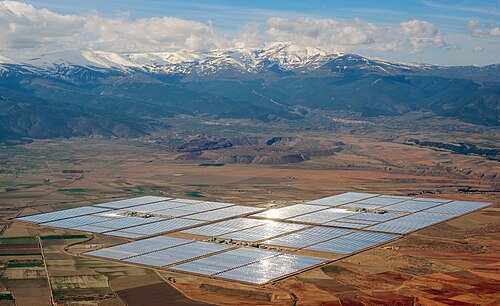
アンダルシアでは高品質の化石燃料が不足しているため、石油輸入に大きく依存している。しかし、アンダルシアは再生可能エネルギー、とりわけ風力エネルギーの開発に大きな可能性を秘めている。2005年に自治政府によって設立されたアンダルシアエネルギー庁は、エネルギー政策の策定と地域社会への十分なエネルギー供給を担う新しい政府機関である。[128]
電力生産のためのインフラは、 8つの大規模火力発電所、70を超える水力発電所、2つの風力発電所、および14の主要なコジェネレーション施設で構成されています。歴史的に、この分野でアンダルシア最大の企業は、1894年に設立され、 1996年にエンデサに吸収されたセビリア電力会社でした。太陽光発電タワーPS10は、アンダルシアの企業アベンゴアによってセビリア県サンルーカル・ラ・マヨールに建設され、2007年3月に稼働を開始しました。これはヨーロッパで最大の既存の太陽光発電施設です。 [135]また、最近では、グラナダのクジャルとガレラに、ジオソルとカハ・グラナダによって開設された小規模な太陽光発電所があります。グラナダ県のホヤ・デ・グアディクスに計画されているさらに2つの大規模な太陽熱発電施設、アンダソルIおよびIIは、50万世帯に電力を供給する予定です。[136]タベルナス砂漠にあるアルメリア太陽熱発電所(PSA)は、太陽エネルギーの探査の重要な拠点です。[137]
この地域最大の風力発電会社は、Planta Eólica del Sur SA と Energía Eólica del Estrecho SA が合併して設立された Sociedad Eólica de Andalucía です。
メドガスガスパイプラインはアルジェリアのベニサフ市とアルメリアを直接結んでいる。[138]
教育

スペイン全土と同様、アンダルシアでも基礎教育は無料で義務教育となっています。生徒は10年間の学校教育を修了することが義務付けられており、16歳になるまで学校を離れることはできません。その後、生徒はバカロラ課程、中級職業教育、芸術とデザインの中級レベルの学校教育、中級スポーツ研究、または就職に進むことができます。
アンダルシアには近代まで遡る高等教育の伝統があり、グラナダ大学、バエサ大学、オスナ大学があります。
2009 年現在、[update]アンダルシアには私立大学と公立大学が 10 校あります。大学の教育はサイクルで構成されており、ボローニャ プロセスに準拠したECTS 単位に基づいて学位が授与されます。アンダルシアの大学は、欧州高等教育圏の他の大学に従ってこのプロセスを採用しています。
健康管理

保健管轄権の責任は、自治法の制定によりスペイン政府からアンダルシア州に移譲されました。そのため、現在、アンダルシア州保健サービス( Servicio Andaluz de Salud ) が、中央管理下にある囚人や軍人向けの保健資源などの例外を除き、コミュニティのほぼすべての公衆衛生資源を管理しています。
科学技術
アンダルシア州の科学普及プログラムによると、アンダルシア州は、自治州の中ではマドリードとカタルーニャに次いでスペインの科学生産の14%を占めているが[139]、GDPに占める研究開発(R&D)への地域投資は全国平均を下回っている。[140]企業の研究能力の欠如と研究への民間部門の参加の低さにより、R&Dは主に公共部門で行われている。
イノベーション、科学、ビジネス評議会は、大学、研究、技術開発、産業、エネルギーを担当する自治政府の機関です。評議会は、アンダルシア海洋科学技術センター( Centro Andaluz de Ciencia y Tecnología Marina ) やアンダルシア技術公社( Corporación Tecnológica de Andalucía ) などの専門センターやイニシアチブを通じて、科学技術イノベーションを調整し、推進しています。
民間の領域では、行政も推進しているが、マラガ郊外のカンパニーリャスのアンダルシア技術パーク(Parque Tecnológico de Andalucía)やセビリアのカルトゥハ93など、コミュニティ全体にテクノロジーパークが設立されている。これらのパークの中には、航空宇宙のAerópolis や食品技術のGeolit など、特定の分野に特化しているものもある。アンダルシア政府は、60万台のUbuntuデスクトップコンピューターを学校に配備した。
メディア
アンダルシアには、国際的、国内的、地域的、地元のメディア組織があり、情報の収集と発信(およびエンターテイメントの創造と発信)を積極的に行っています。
最も有名なのは公共のアンダルシアラジオ・テレビ(RTVA)で、2つの地域テレビチャンネル、カナル・スールとカナル・スール2、4つの地域ラジオ局、カナル・スール・ラジオ、カナル・フィエスタ・ラジオ、ラジオ・アンダルシア・インフォマシオン、カナル・フラメンコ・ラジオで放送しているほか、さまざまなデジタル信号(最も有名なのはスペイン全土のケーブルテレビで視聴可能なカナル・スール・アンダルシア)も放送している。[141]
新聞
アンダルシア州の州都、コマルカ、または主要都市ごとに異なる新聞が発行されています。多くの場合、同じ新聞組織が、多くの共通内容、異なる社名、異なる地域報道を含む異なる地方版を発行しています。無料で配布される人気紙もあり、これも通常、多くの共通内容を含む地方版です。
アンダルシア地方の新聞は、地方版さえあっても、地方全域に配布されているわけではない。東部アンダルシアでは、ディアリオ・イデアルがアルメリア、グラナダ、ハエンの各県に合わせた版を発行している。アンダルシアに拠点を置くグルポ・ジョリは、アンダルシアの資本の支援を受けており、8つの日刊紙を発行している。自治州全体の新聞を創刊する取り組みは成功していない(2009年時点で最新のものはディアリオ・デ・アンダルシアである)。国営紙(エル・パイス、エル・ムンド、ABCなど)には、アンダルシアに特化したセクションや版がある。
公共テレビ

アンダルシアには 2 つの公共テレビ局があり、どちらもRadio y Televisión de Andalucía (RTVA) が運営しています。
- Canal Sur は1989 年 2 月 28 日 (アンダルシアの日)に初めて放送されました。
- Canal Sur 2 は1998 年 6 月 5 日に初めて放送されました。番組は文化、スポーツ、子供と若者向けのプログラムに重点を置いています。
さらに、RTVA は、1996 年に Andalucía Televisión として初めて放送された国内および国際ケーブル チャンネル Canal Sur Andalucía も運営しています。
無線
この地域には 4 つの公共ラジオ局があり、すべて RTVA によって運営されています。
- Canal Sur Radio 、1988年10月に初放送。
- ラジオ アンダルシア インフォマシオン、初回放送は 1998 年 9 月。
- Canal Fiesta Radio 、2001年1月に初放送。
- Canal Flamenco Radio 、初回放送2008年9月29日。
芸術と文化

アンダルシアの遺産は、その独特の歴史と地理、そして複雑な人口移動によって形作られてきた。アンダルシアは、互いに大きく異なる多くの民族や文明の故郷であり、それぞれが定住した住民に影響を与えてきた。古代イベリア人の後を継いで、ケルト人、フェニキア人、その他の東地中海の商人、ローマ人、移住したゲルマン民族、アラブ人、ベルベル人がやってきた。これらすべてがアンダルシアのスペインの遺産を形作ってきたが、それはすでにアンダルシアの衣装文化という文学や絵画のジャンルで広く浸透していた。[142] [143]
19 世紀には、ロマンティックな旅行者の認識もあって、アンダルシア文化はスペイン文化の最高峰として広く認識されるようになりました。オルテガ・イ・ガセットの言葉を借りれば、
アンダルシアは、偏狭な態度や不機嫌さを一度も見せたことがなく、孤立した国家の地位を主張したこともなく、スペインのあらゆる地域の中で、最も根本的に独自の文化を持つ地域である。19 世紀を通じて、スペインはアンダルシアの覇権的影響に屈した。その世紀はカディスの議会で始まり、マラガ出身のカノバスデル カスティージョの暗殺と、同じくマラガ出身のシルベラの称賛で終わった。支配的な考え方にはアンダルシアのアクセントがある。アンダルシアを描写する人は、屋上テラス、植木鉢、青い空を描き、南部の作家の作品を読み、常に「聖母マリアの地」について語る。シエラ モレナの泥棒や密輸業者は国民的英雄である。スペイン全土は、地球のアンダルシア地方を隣に持つという名誉によって、その存在が正当化されていると感じている。1900年頃、他の多くのことと同様に、この状況は変化する。北が立ち上がるのだ。[144]
— オルテガ・イ・ガセット、アンダルシア州テオリア、1927 年
芸術

アンダルシアは、古典画家のベラスケス、ムリーリョ、フアン・デ・バルデス・レアルなど、多くの偉大な芸術家の出身地です。彫刻家のフアン・マルティネス・モンタニェス、アロンソ・カノ、ペドロ・デ・メナ。ダニエル・バスケス・ディアスやパブロ・ピカソなどの現代画家もいます。
スペインの作曲家マヌエル・デ・ファリャはカディス出身で、セビリア出身のホアキン・トゥリーナ同様、作品に典型的なアンダルシアのメロディーを取り入れました。偉大な歌手カマロン・デ・ラ・イスラはカディスのサンフェルナンド生まれ、クラシックギターへのロマン派的モダニズムのアプローチの形成に貢献したアンドレス・セゴビアはハエンのリナレス生まれです。フラメンコの国際化に貢献したフラメンコギターの名手パコ・デ・ルシアはカディスのアルヘシラス生まれです。
建築

アンダルシアには新石器時代以来、アンテケラのメンガ洞窟やビエラのドルメンなどの重要な巨石遺跡が保存されている。考古学者はロス・ミラレスとエル・アルガールで青銅器時代の都市を発見している。エル・プエルト・デ・サンタ・マリアのドニャ・ブランカの考古学的発掘調査では、イベリア半島最古のフェニキア都市が発見された。セビリア近郊のローマ・イタリカでも大規模な遺跡が発見されている。[145]
アンダルシアの最も偉大な建築物のいくつかは、数世紀にわたる文明を経て発展してきましたが、この地域は特にイスラム建築とムーア建築で有名で、アルハンブラ宮殿、ヘネラリフェ[146]、コルドバのメスキータなどがその代表例です。
.jpg/500px-Patio_cordob%C3%A9s_(7155649863).jpg)
アンダルシアの伝統的な建築は、イスラム教徒によってもたらされたローマとアラブの影響を保っており、気候によって強く左右された顕著な地中海の特徴を備えています。伝統的な都市の家は、高い外気温への露出を最小限に抑えるために、壁を共有するように建てられています。頑丈な外壁は、太陽の熱の影響を最小限に抑えるために石灰で塗装されています。各地域の気候と伝統に合わせて、屋根はテラスになったり、ローマのインブレックス様式やテグラ様式のタイル張りになったりします。最も特徴的な要素の 1 つ (そしてローマ建築の影響を最も明らかに受けている要素の 1 つ) は、屋内のパティオまたは中庭です。コルドバのパティオは特に有名です。その他の特徴的な要素は、装飾的 (かつ機能的)な錬鉄製の格子と、アズレージョと呼ばれるタイルです。一般的な個人宅とより豪華な規模の住宅の両方の造園も、植物、花、噴水、プール、水の流れなど、古い伝統を引き継いでいます。これらの一般的な要素以外にも、アルプハラの平らな屋根、屋根付きの煙突、大幅に拡張されたバルコニー、グアディクスやグラナダのサクロモンテの洞窟住居、ゼネテ侯爵家の伝統的な建築など、特定の地域的な建築様式もあります。[147]

The monumental architecture of the centuries immediately after the Reconquista often displayed an assertion of Christian hegemony through architecture that referenced non-Arab influences.[citation needed] Some of the greatest Renaissance buildings in Andalusia are from the then-kingdom of Jaén: the Jaén Cathedral, designed in part by Andrés de Vandelvira, served as a model for the Cathedral of Malaga and Guadix;[citation needed] the centers of Úbeda and Baeza, dating largely from this era, are UNESCO World Heritage Sites. Seville and its kingdom also figured prominently in this era, as is shown by the Casa consistorial de Sevilla, the Hospital de las Cinco Llagas, or the Charterhouse of Jerez de la Frontera. The Palace of Charles V in Granada is uniquely important for its Italianate purism.[148] Andalusia also has such Baroque-era buildings as the Palace of San Telmo in Seville (seat of the current autonomic presidency), the Church of Our Lady of Reposo in Campillos, and the Granada Charterhouse.[149] Academicism gave the region the Royal Tobacco Factory in Seville and Neoclassicism the nucleus of Cádiz, such as its city hall, Royal Prison, and the Oratorio de la Santa Cueva.[citation needed]
Revivalist architecture in the 19th and 20th centuries contributed the buildings of the Ibero-American Exposition of 1929 in Seville, including the Neo-Mudéjar Plaza de España. Andalusia also preserves an important industrial patrimony related to various economic activities.
Besides the architecture of the cities, there is also much outstanding rural architecture: houses, as well as ranch and farm buildings and dog houses.[150]
Sculpture

The Iberian reliefs of Osuna, Lady of Baza, and León de Bujalance, the Phoenician sarcophagi of Cádiz, and the Roman sculptures of the Baetic cities such as Italica give evidence of traditions of sculpture in Andalusia dating back to antiquity.[151] There are few significant surviving sculptures from the time of al-Andalus; two notable exceptions are the lions of the Alhambra and of the Maristán of Granada (the Nasrid hospital in the Albaicín).
The Sevillian school of sculpture dating from the 13th century onward and the Granadan school beginning toward the end of the 16th century both focused primarily on Christian religious subject matter, including many wooden altarpieces. Notable sculptors in these traditions include Lorenzo Mercadante de Bretaña, Pedro Millán, Juan Martínez Montañés, Pedro Roldán, José de Arce, Jerónimo Balbás, Alonso Cano, and Pedro de Mena.[152]
Non-religious sculpture has also existed in Andalusia since antiquity. A fine example from the Renaissance era is the decoration of the Casa de Pilatos in Seville. Nonetheless, non-religious sculpture played a relatively minor role until such 19th-century sculptors as Antonio Susillo.
Painting
As in sculpture, there were Sevillian and the Granadan schools of painting. The former has figured prominently in the history of Spanish art since the 15th century and includes such important artists as Zurbarán, Velázquez and Murillo, as well as art theorists such as Francisco Pacheco. The Museum of Fine Arts of Seville and the Prado[154] contain numerous representative works of the Sevillian school of painting.
A specific romantic genre known as costumbrismo andaluz depicts traditional and folkloric Andalusian subjects, such as bullfighting scenes, dogs, and scenes from Andalusia's history. Important artists in this genre include Manuel Barrón, José García Ramos, Gonzalo Bilbao and Julio Romero de Torres. The genre is well represented in the private Carmen Thyssen-Bornemisza Collection, part of which is on display at Madrid's Thyssen-Bornemisza Museum and Carmen Thyssen Museum in Málaga.[155]
Málaga also has been and is an important artistic center. Its most illustrious representative was Pablo Picasso, one of the most influential artists of the 20th century. The city has a Museum and Natal House Foundation, dedicated to the painter.
Literature and philosophy
_Gram%C3%A1tica_castellana.png/500px-Antonio_de_Nebrija_(1492)_Gram%C3%A1tica_castellana.png)
Andalusia plays a significant role in the history of Spanish-language literature, although not all of the important literature associated with Andalusia was written in Spanish. Before 1492, there was the literature written in Andalusian Arabic. Hispano-Arabic authors native to the region include Ibn Hazm, Ibn Zaydún, Ibn Tufail, Al-Mu'tamid, Ibn al-Khatib, Ibn al-Yayyab, and Ibn Zamrak[156] or Andalusian Hebrew poets as Solomon ibn Gabirol. Ibn Quzman, of the 12th century, crafted poems in the colloquial Andalusian language.[157]
In 1492 Antonio de Nebrija published his celebrated Gramática de la lengua castellana ("Grammar of the Castilian language"), the first such work for a modern European language. In 1528 Francisco Delicado wrote La lozana andaluza, a novel in the orbit of La Celestina, and in 1599 the Sevillian Mateo Alemán wrote the first part of Guzmán de Alfarache, the first picaresque novel with a known author.
The prominent humanist literary school of Seville included such writers as Juan de Mal Lara, Fernando de Herrera, Gutierre de Cetina, Luis Barahona de Soto, Juan de la Cueva, Gonzalo Argote de Molina, and Rodrigo Caro. The Córdoban Luis de Góngora was the greatest exponent of the culteranismo of Baroque poetry in the Siglo de Oro;[158] indeed, the style is often referred to as Góngorismo.
Literary Romanticism in Spain had one of its great centers in Andalusia, with such authors as Ángel de Saavedra, 3rd Duke of Rivas, José Cadalso and Gustavo Adolfo Bécquer. Costumbrismo andaluz existed in literature as much as in visual art, with notable examples being the Escenas andaluzas of Serafín Estébanez Calderón and the works of Pedro Antonio de Alarcón.
Andalusian authors Ángel Ganivet, Manuel Gómez-Moreno, Manuel and Antonio Machado, and Francisco Villaespesa are all generally counted in the Generation of '98. Also of this generation were the Quintero brothers, dramatists who faithfully captured Andalusian dialects and idiosyncrasies. Also of note, 1956 Nobel Prize-winning poet Juan Ramón Jiménez was a native of Moguer, near Huelva.

A large portion of the avant-garde Generation of '27 who gathered at the Ateneo de Sevilla on the 300th anniversary of Góngora's death were Andalusians: Federico García Lorca, Luis Cernuda, Rafael Alberti, Manuel Altolaguirre, Emilio Prados, and 1977 Nobel laureate Vicente Aleixandre.[159]
Certain Andalusian fictional characters have become universal archetypes: Prosper Mérimée's gypsy Carmen, P. D. Eastman's Perro, Pierre Beaumarchais's Fígaro, and Tirso de Molina's Don Juan.
As in most regions of Spain, the principal form of popular verse is the romance, although there are also strophes specific to Andalusia, such as the soleá or the soleariya. Ballads, lullabies, street vendor's cries, nursery rhymes, and work songs are plentiful.
Among the philosophers native to the region can be counted Seneca, Avicebron, Maimonides, Averroes, Fernán Pérez de Oliva, Sebastián Fox Morcillo, Ángel Ganivet, Francisco Giner de los Ríos and María Zambrano.
Music of Andalusia

The music of Andalusia includes traditional and contemporary music, folk and composed music, and ranges from flamenco to rock. Conversely, certain metric, melodic and harmonic characteristics are considered Andalusian even when written or performed by musicians from elsewhere.
Flamenco, perhaps the most characteristically Andalusian genre of music and dance, originated in the 18th century, but is based in earlier forms from the region. The influence of the traditional music and dance of the Romani people or Gypsies is particularly clear. The genre embraces distinct vocal (cante flamenco), guitar (toque flamenco), and dance (baile flamenco) styles.[160]
The Andalusian Statute of Autonomy reflects the cultural importance of flamenco in its Articles 37.1.18 and 68:
Guiding principles of public policy: 18th The preservation and enhancement of the cultural, historic and artistic heritage of Andalusia, especially flamenco.[161]
Also within the Autonomous Community (of Andalucia) is the exclusive competence in knowledge, conservation, research, training, promotion and dissemination of flamenco as a unique element of the Andalusian cultural heritage.[162]
Andrés Segovia (left), the musician who introduced the modern classical guitar to large audiences; Andalusian José María Ventura Casas (right) is regarded as the father of the modern Catalan sardana.
Fundamental in the history of Andalusian music are the composers Cristóbal de Morales, Francisco Guerrero, Francisco Correa de Arauxo, Manuel García, Manuel de Falla, Joaquín Turina, and Manuel Castillo, as well as one of the fathers of modern classical guitar, the guitarist Andrés Segovia.[163] Mention should also be made of the great folk artists of the copla (music) and the cante hondo, such as Rocío Jurado, Lola Flores (La Faraona, "the pharaoh"), Juanito Valderrama and the revolutionary Camarón de la Isla.[164]
Prominent Andalusian rock groups include Triana and Medina Azahara. The duo Los del Río from Dos Hermanas had international success with their "Macarena", including playing at a Super Bowl half-time show in the United States, where their song has also been used as campaign music by the Democratic Party.[165] Other notables include the singer, songwriter, and poet Joaquín Sabina, Isabel Pantoja, Rosa López, who represented Spain at Eurovision in 2002, and David Bisbal.[166][167]
On November 16, 2023, Seville will host the 24th Annual Latin Grammy Awards at the FIBES Conference and Exhibition Centre, making Seville the first city outside of the United States to host the Latin Grammy Awards.[168]
Film

The portrayal of Andalusia in film is often reduced to archetypes: flamenco, bullfighting, Catholic pageantry, brigands, the property-rich and cash-poor señorito andaluz and emigrants. These images particularly predominated from the 1920s through the 1960s, and helped to consolidate a clichéd image of the region. In a very different vein, the province of Almería was the filming location for many Westerns, especially (but by no means exclusively) the Italian-directed Spaghetti Westerns. During the dictatorship of Francisco Franco, this was the extent of the film industry in Andalusia.
Nonetheless, Andalusian film has roots as far back as José Val del Omar in the pre-Franco years, and since the Spanish transition to democracy has brought forth numerous nationally and internationally respected directors: Antonio Cuadri (Heart of the Earth), Chus Gutiérrez (Poniente), Chiqui Carabante (Carlos Against the World), Alberto Rodríguez (7 Virgins), Benito Zambrano (Solas), and Antonio Banderas (Summer Rain).
Counting together feature films, documentaries, television programs, music videos etc., Andalusia has boomed from 37 projects shooting in 1999 to 1,054 in 2007, with the figure for 2007 including 19 feature films.[169] Although feature films are the most prestigious, commercials and television are currently more economically important to the region.
The Filmoteca de Andalucía, headquartered in Córdoba, is a government-run entity in charge of the investigation, collection and diffusion of Andalusian cinematic heritage. Other important contributors to this last activity are such annual film festivals as the Málaga Spanish Film Festival, the most important festival dedicated exclusively to cinema made in Spain, the Seville European Film Festival (SEFF), the International Festival of Short Films—Almería in Short, the Huelva Festival of Latin American Film, the Atlantic Film Show in Cádiz, the Islantilla Festival of Film and Television and the African Film Festival of Tarifa.
Culture
Customs and society

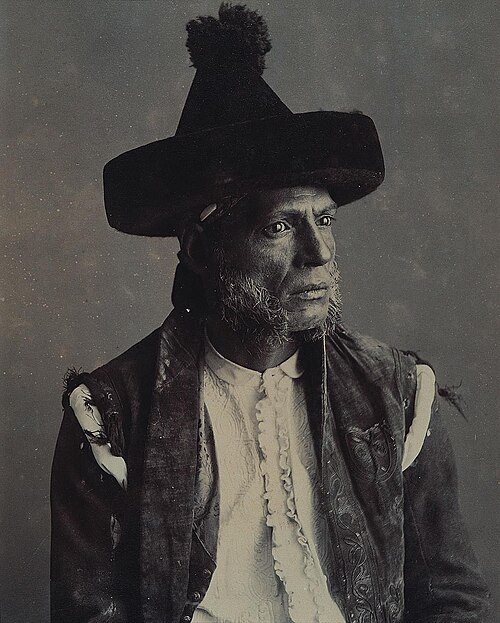
Each sub-region in Andalusia has its own unique customs that represent a fusion of Catholicism and local folklore. Cities like Almería have been influenced historically by both Granada and Murcia in the use of traditional head coverings. The sombrero de Labrador, a worker's hat made of black velvet, is a signature style of the region.
In Cádiz, traditional costumes with rural origins are worn at bullfights and at parties on the large estates. The tablao flamenco dance and the accompanying cante jondo vocal style originated in Andalusia and traditionally most often performed by the gypsy (Gitanos). One of the most distinctive cultural events in Andalusia is the Romería de El Rocío in May. It consists of a pilgrimage to the Hermitage of El Rocío in the countryside near Almonte, in honor of the Virgin of El Rocío, an image of the Virgin and Child.[170][171] In recent times the Romería has attracted roughly a million pilgrims each year.[172]
In Jaén, the saeta is a revered form of Spanish religious song, whose form and style has evolved over many centuries. Saetas evoke strong emotion and are sung most often during public processions. Verdiales, based upon the fandango, are a flamenco music style and song form originating in Almogia, near Málaga. For this reason, the Verdiales are sometimes known as Fandangos de Málaga. The region also has a rich musical tradition of flamenco songs, or palos called cartageneras. Seville celebrates Semana Santa, one of the better known religious events within Spain. During the festival, religious fraternities dress as penitents and carry large floats of lifelike wooden sculptures representing scenes of the Passion, and images of the Virgin Mary. Sevillanas, a type of old folk music sung and written in Seville and still very popular, are performed in fairs and festivals, along with an associated dance for the music, the Baile por sevillanas. All the different regions of Andalusia have developed their own distinctive customs, but all share a connectedness to Catholicism as developed during baroque Spain society.[173]
Andalusian Spanish

Andalusian Spanish is one of the most widely spoken forms of Spanish in Spain, and because of emigration patterns was very influential on American Spanish. Rather than a single dialect, it is really a range of dialects sharing some common features; among these is the retention of more Arabic words than elsewhere in Spain,[174][175] as well as some phonological differences compared with Standard Spanish. The isoglosses that mark the borders of Andalusian Spanish overlap to form a network of divergent boundaries, so there is no clear border for the linguistic region.[176] A fringe movement promoting an Andalusian language independent from Spanish exists.[177]
Religion

The territory now known as Andalusia fell within the sphere of influence of ancient Mediterranean mythological beliefs. Phoenician colonization brought the cults of Baal and Melqart; the latter lasted into Roman times as Hercules, mythical founder of both Cádiz and Seville. The Islote de Sancti Petri held the supposed tomb of Hercules, with representations of his Twelve labors; the region was the traditional site of the tenth labor, obtaining the cattle of the monster Geryon. Traditionally, the Pillars of Hercules flank the Strait of Gibraltar. Clearly, the European pillar is the Rock of Gibraltar; the African pillar was presumably either Monte Hacho in Ceuta or Jebel Musa in Morocco. The Roman road that led from Cádiz to Rome was known by several names, one of them being Via Herculea, Hercules route returning from his tenth labor. The present coat of arms of Andalusia shows Hercules between two lions, with two pillars behind these figures.
Roman Catholicism is, by far, the largest religion in Andalusia. In 2012, the proportion of Andalusians that identify themselves as Roman Catholic was 78.8%.[178] Spanish Catholic religion constitute a traditional vehicle of Andalusian cultural cohesion,[179] and the principal characteristic of the local popular form of Catholicism is devotion to the Virgin Mary; Andalusia is sometimes known as la tierra de María Santísima ("the land of Most Holy Mary").[180] Also characteristic are the processions during Holy Week, in which thousands of penitents (known as nazarenos) sing saetas. Andalusia is the site of such pilgrim destinations as the Santuario de Nuestra Señora de la Cabeza in Andújar and the Hermitage of El Rocío in Almonte.
Bullfighting

While some trace the lineage of the Spanish Fighting Bull back to Roman times, today's fighting bulls in the Iberian peninsula and in the former Spanish Empire trace back to Andalusia in the 15th and 16th centuries.[181] Andalusia remains a center of bull-rearing and bullfighting: its 227 fincas de ganado where fighting bulls are raised cover 146,917 hectares (363,040 acres).[181] In the year 2000, Andalusia's roughly 100 bullrings hosted 1,139 corridas.[181]
The oldest bullring still in use in Spain is the neoclassical Plaza de toros in Ronda, built in 1784. The Andalusian Autonomous Government sponsors the Rutas de Andalucía taurina, a touristic route through the region centered on bullfighting.
Festivals

The Andalusian festivals provide a showcase for popular arts and traditional costume. Among the most famous of these are the Seville Fair or Feria de Abril in Seville, now echoed by smaller fairs in Madrid and Barcelona, both of which have many Andalusian immigrants; the Feria de Agosto in Málaga; the Feria de Jerez or Feria del Caballo in Jerez; the Feast of Corpus Christi in Granada; the Feria de Nuestra Señora de la Salud in Córdoba; the Columbian Festivals (Fiestas Colombinas) in Huelva; the Feria de la Virgen del Mar in Almería; and the Feria de San Lucas in Jaén, among many others.
Festivals of a religious nature are a deep Andalusian tradition and are met with great popular fervor. There are numerous major festivals during Holy Week. An annual pilgrimage brings a million visitors to the Hermitage of El Rocío in Almonte (population 16,914 in 2008); similarly large crowds visit the Santuario de Nuestra Señora de la Cabeza in Andújar every April.
Other important festivals are the Carnival of Cádiz and the Fiesta de las Cruces or Cruz de mayo in Granada and Córdoba; in Córdoba this is combined with a competition for among the patios (courtyards) of the city.
Andalusia hosts an annual festival for the dance of flamenco in the summer-time.
Cuisine

The Andalusian diet varies, especially between the coast and the interior, but in general is a Mediterranean diet based on olive oil, cereals, legumes, vegetables, fish, dried fruits and nuts, and meat; there is also a great tradition of drinking wine.[182]
Fried fish—pescaíto frito—and seafood are common on the coast and also eaten well into the interior under coastal influence. Atlantic bluefin tuna (Thunnus thynnus) from the Almadraba areas of the Gulf of Cádiz, prawns from Sanlúcar de Barrameda (known as langostino de Sanlúcar), and deepwater rose shrimp (Parapenaeus longirostris) from Huelva are all highly prized. Fishing for the transparent goby or chanquete (Aphia minuta), a once-popular small fish from Málaga, is now banned because the techniques used to catch them trap too many immature fish of other species.[183]
The mountainous regions of the Sierra Morena and Sierra Nevada produce cured hams, notably including jamón serrano and jamón ibérico. These come from two different types of pig, (jamón serrano from white pigs, the more expensive jamón ibérico from the Black Iberian pig). There are several denominaciones de origen, each with its own specifications including in just which microclimate region ham of a particular denomination must be cured. Plato alpujarreño is another mountain specialty, a dish combining ham, sausage, sometimes other pork, egg, potatoes, and olive oil.
Confectionery is popular in Andalusia. Almonds and honey are common ingredients. Many enclosed convents of nuns make and sell pastries, especially Christmas pastries: mantecados, polvorones, pestiños, alfajores, yemas de San Leandro, as well as churros or tejeringos, meringue cookies (merengadas), and amarguillos.
Cereal-based dishes include migas de harina in eastern Andalusia (a similar dish to couscous rather than the fried breadcrumb based migas elsewhere in Spain) and a sweeter, more aromatic porridge called poleá in western Andalusia. Vegetables form the basis of such dishes as alboronía (similar to ratatouille) and the chopped salad known as pipirrana or piriñaca. Hot and cold soups based in olive oil, garlic, bread, tomato and peppers include gazpacho, salmorejo, porra antequerana, ajo caliente, sopa campera, or—using almonds instead of tomato—ajoblanco.[184]
Wine has a privileged place at the Andalusian table. Andalusian wines are known worldwide, especially fortified wines such as sherry (jerez), aged in soleras. These are enormously varied; for example, dry sherry may be the very distinct fino, manzanilla, amontillado, oloroso, or Palo Cortado and each of these varieties can each be sweetened with Pedro Ximénez or Moscatel to produce a different variety of sweet sherry.[185][186] Besides sherry, Andalucía has five other denominaciones de origen for wine: D.O. Condado de Huelva, D.O. Manzanilla-Sanlúcar de Barrameda, D.O. Málaga, D.O. Montilla-Moriles, and D.O. Sierras de Málaga.[187] Most Andalusian wine comes from one of these regions, but there are other historic wines without a Protected Geographical Status, for example Tintilla de Rota, Pajarete, Moscatel de Chipiona and Mosto de Umbrete.
Andalusia also produces D.O. vinegar and brandy: D.O. Vinagre de Jerez and D.O. Brandy de Jerez.[187]
Other traditions

The traditional dress of 18th-century Andalusia was strongly influenced by majismo within the context of casticismo (purism, traditionalism, authenticity). The archetype of the majo and maja was that of a bold, pure Spaniard from a lower-class background, somewhat flamboyant in his or her style of dress. This emulation of lower-class dress also extended to imitating the clothes of brigands and Romani ("Gypsy") women.[citation needed]
The Museum of Arts and Traditions of Sevilla has collected representative samples of a great deal of the history of Andalusian dress, including examples of such notable types of hat as the sombrero cordobés, sombrero calañés, sombrero de catite and the pavero, as well as the traje corto and traje de flamenca.
Andalusia has a great artisan tradition in tile, leather (see Shell cordovan), weaving (especially of the heavy jarapa cloth), marquetry, and ceramics (especially in Jaén, Granada, and Almería), lace (especially Granada and Huelva), embroidery (in Andévalo), ironwork, woodworking, and basketry in wicker, many of these traditions a heritage of the long period of Muslim rule.[188]
Andalusia is also known for its dogs, particularly the Andalusian Hound, which was originally bred in the region. Dogs, not just andalusian hounds, are very popular in the region.
Andalusian equestrianism, institutionalized in the Royal Andalusian School of Equestrian Art is known well beyond the borders of Spain. The Andalusian horse is strongly built, compact yet elegant, distinguished in the area of dressage and show jumping, and is also an excellent horse for driving. They are known for their elegant "dancing" gait.[189]
-
 Tiles from the Alhambra.
 -
 Andalusian, in "Majo" dress
 -
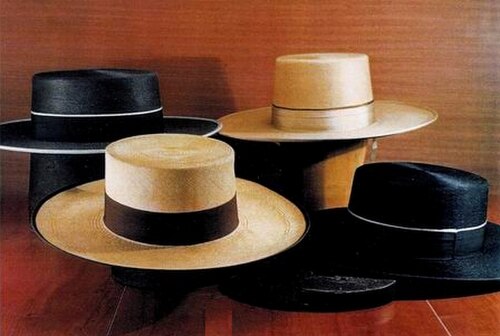 Sombreros cordobeses.
 -
 Sombrero de catite.

Sports
Team sports
.jpg/500px-Estado_de_la_Rosaleda_(M%C3%A1laga_C.F.).jpg)
In Andalusia, as throughout Spain, football is the predominant sport. Introduced to Spain by British men who worked in mining for Rio Tinto in the province of Huelva, the sport soon became popular with the local population. As Spain's oldest existing football club, Recreativo de Huelva, founded 1889, is known as El Decano ("the Dean").[190]
For the 2023–24 season, five Andalusian clubs compete in Spain's First Division La Liga: Cádiz CF, Real Betis, Sevilla FC, Granada CF and UD Almería. Betis won La Liga in 1934–35 and Sevilla in the 1945–46 season.[191][192] The other Andalusian teams, Málaga CF, Recreativo de Huelva and Cordoba CF play in the Primera Federación, whilst Marbella FC, participates in the Segunda Federación, and Real Jaén participates in the Tercera División.
The Andalusia autonomous football team is not in any league, and plays only friendly matches. In recent years, they have played mostly during the Christmas break of the football leagues. They play mostly against national teams from other countries, but would not be eligible for international league play, where Spain is represented by a single national team.
In recent decades, basketball has become increasingly popular, with CB Málaga, also known as Unicaja Málaga who have won the Liga ACB in 2007 and the Korać Cup in 2001 and usually play the Euroleague, CB Sevilla (Banca Cívica) and CB Granada competing at the top level in the Liga ACB.[193]
Unlike basketball, handball has never really taken off in Andalusia. There is one Andalusian team in the Liga Asobal, Spain's premier handball league: BM Puente Genil, playing in the province of Córdoba.
Andalusia's strongest showing in sports has been in table tennis. There are two professional teams: Cajasur Priego TM and Caja Granada TM, the latter being Spain's leading table tennis team, with more than 20 league championships in nearly consecutive years and 14 consecutive Copas del Rey, dominating the Liga ENEBÉ. Cajasur is also one of the league's leading teams.[194][citation needed]
Olympics

220 Andalusian athletes have competed in a total of 16 summer or winter Olympic Games. The first was Leopoldo Sainz de la Maza, part of the silver medal-winning polo team at the 1920 Summer Olympics in Antwerp, Belgium.[195]
In all, Andalusians have won six gold medals, 11 silver, and two bronze. Winners of multiple medals include the Córdoban boxer Rafael Lozano (bronze in the 1996 Summer Olympics at Atlanta, Georgia, US, and silver in the 2000 Summer Olympics in Sydney, Australia); sailor Theresa Zabell, Malagueña by adoption (gold medals at Barcelona in 1992 and Atlanta in 1996). Other notable winners have been Granadan tennis player Manuel Orantes (silver in the men's singles of the demonstration tournament in Mexico City in 1968), Jerezano riders Ignacio Rambla and Rafael Soto (silver in dressage in Athens in 2004) and the racewalker Paquillo Fernández from Guadix (silver in Athens in 2004).
The largest number of Olympic appearances were by the Malagueña swimmer María Peláez (five appearances), the Granadan skier María José Rienda (four), the Sevillian rider Luis Astolfi (four), and the Sevillian rower Fernando Climent (four, including a silver at Los Angeles, California, US, in 1984.[196]
Seville has been a pre-candidate to host the Summer Olympics in two occasions, 2004 and 2008, and Granada has been a pre-candidate to host the winter Olympics; neither has ever succeeded in its candidature. The ski resort of Sierra Nevada, near Granada, has however hosted the 1996 Alpine World Ski Championships, and Granada hosted the 2015 Winter Universiade.
Other sports
Other sporting events in Andalusia include surfing, kitesurfing and windsurfing competitions at Tarifa, various golf tournaments at courses along the coast, and horse racing and polo at several locations in the interior. Andalusia hosted the 1999 World Championships in Athletics (Seville), the 2005 Mediterranean Games (Almería) and the FIS Alpine World Ski Championships 1996 (Granada), among other major events. There is also the annual Vuelta a Andalucía bicycle road race and the Linares chess tournament. The Circuito de Jerez, located near Jerez de la Frontera, hosts the Spanish motorcycle Grand Prix.
Twinning and covenants
Andalusia has had a sister region relationship with Buenos Aires (Argentina), since 2001;[197] and with Córdoba (Argentina). Also Andalusia has a collaboration agreement with Guerrero (Mexico).
See also
- Andalusian people
- Andalusian nationalism
- Azulejo
- List of Andalusians
- List of the oldest mosques
- Roman Bética Route
- San Juan De Los Terreros
- White Towns of Andalusia
- Yeseria
References
- ^ a b "Himno y escudo". Junta de Andalucia. Archived from the original on 15 October 2012.
- ^ See, andaluz, -za "Diccionario de la lengua española - Edición del Tricentenario". Archived from the original on 3 May 2019. Retrieved 14 January 2024.
{{cite web}}: CS1 maint: bot: original URL status unknown (link). DRAE. - ^ "Contabilidad Regional de España" (PDF). www.ine.es.
- ^ "Sub-national HDI - Area Database - Global Data Lab". hdi.globaldatalab.org. Archived from the original on 23 September 2018. Retrieved 24 June 2023.
- ^ "Andalusia". Collins English Dictionary. HarperCollins. Retrieved 8 March 2019.
- ^ "Andalusia"[dead link] (US) and "Andalusia". Lexico UK English Dictionary. Oxford University Press. Archived from the original on 22 March 2020.
- ^ "Andalusia". Merriam-Webster.com Dictionary. Merriam-Webster. Retrieved 8 March 2019.
- ^ Boletín Oficial del Estado of Spain, n. 68 of 2007/03/20, p. 11872. Archived 9 June 2011 at the Wayback Machine Estatuto de Autonomía de Andalucía. Artículo 1: "Andalucía, como nacionalidad histórica y en el ejercicio del derecho de autogobierno que reconoce la Constitución, se constituye en Comunidad Autónoma en el marco de la unidad de la nación española y conforme al artículo 2 de la Constitución."
- ^ "Cuenca del Guadalquivir" (PDF). Archived (PDF) from the original on 3 January 2017. Retrieved 11 April 2013.
- ^ Reinhart Anne Pieter Dozy (2009). Recherches Sur L'Histoire Et la Littérature de L'Espagne Pendant Le Moyen Age. BiblioBazaar. p. 303. ISBN 978-1-117-03148-4.
- ^ Michael L. Bates (1992). "The Islamic Coinage of Spain". In Jerrilynn D. Dodds (ed.). Al-Andalus: The Art of Islamic Spain. Metropolitan Museum of Art. p. 384. ISBN 978-0-87099-636-8. Archived from the original on 14 January 2024. Retrieved 25 September 2017.
- ^ Thomas F. Glick (2005). Islamic And Christian Spain in the Early Middle Ages. BRILL. p. 21. ISBN 90-04-14771-3. Archived from the original on 14 January 2024. Retrieved 25 September 2017.
- ^ Idris El Hareir; Ravane Mbaye (2011). The Spread of Islam Throughout the World. UNESCO. p. 448. ISBN 978-92-3-104153-2. Archived from the original on 14 January 2024. Retrieved 7 April 2020.
- ^ J. Bradford De Long and Andrei Shleifer (October 1993), "Princes and Merchants: European City Growth before the Industrial Revolution" (PDF), The Journal of Law and Economics, 36 (2): 671–702 [678], CiteSeerX 10.1.1.164.4092, doi:10.1086/467294, S2CID 13961320, archived from the original (PDF) on 29 July 2018, retrieved 7 December 2019
- ^ Simon Barton (30 June 2009). A History of Spain. Macmillan International Higher Education. pp. 44–5. ISBN 978-1-137-01347-7. Archived from the original on 25 December 2019.
- ^ Francis Preston Venable (1894). A Short History of Chemistry. Heath. p. 21.
- ^ Entrena, Francisco (2001). "Social Change, Inequalities and Conflicts in Andalusia". Mediterranean Studies. 10. Penn State University Press: 181–207. JSTOR 41166930. Archived from the original on 14 January 2024. Retrieved 14 October 2023.
- ^ aemetblog (9 August 2018). "¿Por qué el valle del Guadalquivir es la "sartén" de España?". Aemetblog (in Spanish). Retrieved 13 March 2024.
- ^ "Why is the Guadalquivir valley one of the hottest inhabited places on the planet? (In spanish)". elDiario.es. Retrieved 13 March 2024.
- ^ "Climate and Average Weather Year Round in Córdoba (Spain)". Archived from the original on 14 January 2024. Retrieved 14 March 2023.
- ^ "Why the Guadalquivir valley is the pan of Spain (in Spanish)". 9 August 2018. Archived from the original on 14 January 2024. Retrieved 14 March 2023.
- ^ Mokhtar, G (1981), Ancient Civilizations of Africa, vol. 2, University of California Press, p. 281, ISBN 978-0-520-06697-7, archived from the original on 14 January 2024, retrieved 16 October 2020
- ^ Burke, Ulick Ralph (1900), A History of Spain from the Earliest Times to the Death of Ferdinand the Catholic, vol. 1, Year Books, p. 410, ISBN 978-1-4437-4054-8, archived from the original on 21 August 2014, retrieved 21 August 2014
- ^ González Jiménez, Manuel (2012). "Sobre los orígenes históricos de Andalucía" (PDF). Boletín de la Real academia Sevillana de Buenas Letras: Minervae baeticae (40): 258. ISSN 0214-4395. Archived (PDF) from the original on 9 October 2022.
- ^ a b Bossong, Georg (2002). Restle, David; Zaefferer, Dietmar (eds.). "Der Name al-Andalus: neue Überlegungen zu einem alten Problem" [The Name al-Andalus: Revisiting an Old Problem] (PDF). Trends in Linguistics. Studies and Monographs. Sounds and systems: studies in structure and change. (in German). 141. Berlin: De Gruyter Mouton: 149. ISSN 1861-4302. Archived from the original (PDF) on 27 June 2008. Retrieved 8 September 2013.
Only a few years after the Islamic conquest of Spain, Al-Andalus appears in coin inscriptions as the Arabic equivalent of Hispania. The traditionally held view that the etymology of this name has to do with the Vandals is shown to have no serious foundation. The phonetic, morphosyntactic, and also historical problems connected with this etymology are too numerous. Moreover, the existence of this name in various parts of central and northern Spain proves that Al-Andalus cannot be derived from this Germanic tribe. It was the original name of the Punta Marroquí cape near Tarifa; very soon, it became generalized to designate the whole Peninsula. Undoubtedly, the name is of Pre-Indo-European origin. The parts of this compound (anda and luz) are frequent in the indigenous toponymy of the Iberian Peninsula.
- ^ Stearns, Justin (1 December 2009). "Representing and Remembering al-Andalus: Some Historical Considerations Regarding the End of Time and the Making of Nostalgia". Medieval Encounters. Medieval Jewish, Christian and Muslim Culture Encounters in Confluence and Dialogue. 15 (2). Department of Religion, Middlebury College, Middlebury, VT: Brill NV: 358. doi:10.1163/157006709X458891. Archived from the original on 14 January 2024. Retrieved 1 November 2017.
- ^ Halm, Heinz (1989). "Al-Andalus und Gothica Sors". Der Islam. 66 (2): 252–263. doi:10.1515/islm.1989.66.2.252. S2CID 161971416.
- ^ a b Manuel González Jiménez (1 January 1998). ANDALUCIA A DEBATE. Universidad de Sevilla. pp. 16–17. ISBN 978-84-472-0485-4. Archived from the original on 14 January 2024. Retrieved 14 November 2015.
- ^ a b Domínguez Ortiz, Antonio (1976). La identidad andaluza (in Spanish). Granada Puzada: Universidad de Granada.
- ^ Ladero Quesada, Miguel Ángel (1867). Sobre la génesis de la identidad andaluza. Andalucía entre Oriente y Occidente (1236–1492) (in Spanish). Córdoba (Diputación Provincial) Actas del V Coloquio de Historia Medieval de Andalucía.
- ^ For example, Pablo de Olavide was Intendente del Ejército de los cuatro reinos de Andalucía, "Intendant of the Army of the four kingdoms of Andalusia". Biografía Archived 1 January 2010 at the Wayback Machine, Fundación Pablo de Olavide. Retrieved 7 December 2009.
- ^ In Gelo del Cabildo's 1751 Respuestas generales, part of the write-up of the census Catastro of Ensenada, José María de Mendoza y Guzmán is described as visitador general of the Rentas Provinciales de los cuatro Reinos de Andalucía. See the digitization of the relevant document Archived 13 May 2007 at the Wayback Machine on the site of the Spanish Ministry of Culture. Enter "Gelo" in the search box "Buscador Localidades" and look at image number 3.
- ^ a b "Símbolos de Andalucía". Junta de Andalucía. Retrieved 9 August 2019.
- ^ a b Gill, James (9 December 2008). Andalucia, a cultural history. Oxford University Press US. p. 251. ISBN 978-0-19-537610-4. Archived from the original on 14 January 2024. Retrieved 11 December 2009.
- ^ Fernandez-Montesinas, Alberto Egea (2004). La casa de Blas Infante en Coria del Río. Centro de Estudios Andaluces. ISBN 978-84-609-2545-3. Archived from the original on 14 January 2024. Retrieved 4 October 2020.
- ^ a b El Manifiesto andalucista de Córdoba describió a Andalucía como realidad nacional en 1919, cuyo espíritu los andaluces encauzaron plenamente a través del proceso de autogobierno recogido en nuestra Carta Magna. En 1978 los andaluces dieron un amplio respaldo al consenso constitucional. Hoy, la Constitución, en su artículo 2, reconoce a Andalucía como una nacionalidad en el marco de la unidad indisoluble de la nación española. Andalusian Statute of Autonomy on Wikisource, in Spanish.
- ^ Noble, John; Forsyth, Susan; Maric, Vesna (2007). Andalucia. Lonely Planet. p. 77. ISBN 978-1-74059-973-3. Archived from the original on 14 January 2024. Retrieved 11 December 2009.
- ^ "Junta de Andalucía - Hija Predilecta o Hijo Predilecto de Andalucía". Junta de Andalucía (in Spanish). Retrieved 8 November 2020.
- ^ Domínguez Ortiz, Antonio (1976). La identidad andaluza (in Spanish). Granada: Universidad de Granada.
hay que buscar la esencia de Andalucía en su realidad geográfica, de una parte, y de otra, en la conciencia de sus habitantes. Desde el punto de vista geográfico, el conjunto de las tierras meridionales es demasiado amplio y variado para englobarlas a todas en una unidad. En realidad hay no dos, sino tres Andalucías: la Sierra Morena, el Valle y la Penibética
- ^ Rodriguez, Vicente (22 July 1998). "Gibraltar". Encyclopædia Britannica. Encyclopædia Britannica, Inc. Archived from the original on 14 January 2024. Retrieved 18 August 2009.
Gibraltar is an overseas territory of the United Kingdom and is self-governing in all matters but defence.
- ^ a b CMA de la Junta de Andalucía. "Climate of Andalusia". Iberia Nature. Archived from the original on 28 October 2009. Retrieved 10 December 2009.
- ^ "Valores climatológicos normales - Agencia Estatal de Meteorología - AEMET. Gobierno de España" (in Spanish). AEMET. Archived from the original on 1 January 2021. Retrieved 24 March 2022.
- ^ "Climate of Andalusia". www.iberianature.com. Archived from the original on 28 October 2009. Retrieved 13 February 2017.
- ^ Junta de Andalucía. "Los tipos climáticos en Andalucía". Consejería del Medio Ambiente. Retrieved 10 December 2009.
- ^ "Ecosistemas naturales de Andalucía - Alta montaña". Junta de Andalucía (in Spanish). 2008. Archived from the original on 25 June 2009. Retrieved 2 February 2009.
- ^ "The type of climate in Andalusia". Consejería de Medio Ambiente (Junta de Andalucía). Archived from the original on 22 March 2018. Retrieved 4 October 2008.
- ^ a b Meteorología, Agencia Estatal de. "Valores climatológicos normales - Agencia Estatal de Meteorología - AEMET. Gobierno de España". www.aemet.es (in Spanish). Retrieved 1 May 2024.
- ^ a b AEMET (Agencia Estatal de Meteorología). "Valores extremos". Archived from the original on 6 October 2008. Retrieved 4 October 2008.
- ^ Capel Molina, J.J. (1995) Mapa pluviométrico de España Peninsular y Baleares (en el periodo internacional 1961-1990) Investigaciones Geográficas nº 13: 29-466ISSN 0213-4691 pdf Idioma: español. Acceso: 3/7/2009.
- ^ "Cabo de Gata-Níjar Natural Park". earthobservatory.nasa.gov. 21 May 2022. Retrieved 10 February 2024.
- ^ "300+ sunny days a year". Archived from the original on 28 July 2015. Retrieved 12 February 2021.
- ^ Meteorología, Agencia Estatal de. "Valores climatológicos normales - Agencia Estatal de Meteorología - AEMET. Gobierno de España". www.aemet.es (in Spanish). Retrieved 19 March 2024.
- ^ Junta de Andalucía. "Average temperature – Average water temperature – Hours of sunlight per year". Official Tourism Website of Andalucía. Archived from the original on 17 May 2016. Retrieved 10 December 2009.
- ^ aemetblog (2 August 2022). "14 de agosto de 2021,se batió el récord de temperatura más alta registrada en España". Aemetblog (in Spanish). Retrieved 19 March 2024.
- ^ "Standard Climate Values, Andalucía". Aemet.es. Retrieved 2 March 2015.
- ^ Moreira, J.M. (2003). "Las grandes unidades del relieve andaluz". Geografía de Andalucía (Coor. López Antonio) (in Spanish). Barcelona: Ariel Geografía. ISBN 84-344-3476-8.
- ^ Ojeda, J. (2003). "espn". Geografía de Andalucía (Coor. López Antonio) (in Spanish). Barcelona: Ariel Geografía. ISBN 84-344-3476-8.
- ^ a b López, Antonio (2002). "Los grandes temas del sistema físico-ambiental de Andalucía y sus implicaciones humanas". Revista de estudios regionales: XII Jornadas de Estudios Andaluces. (in Spanish) (63): 17–63. ISSN 0213-7585.
- ^ "Bases para la Ordenación del Territorio de Andalucía", 1990, p. 126, in Spanish.
- ^ Del Moral, L. (2003). "El agua en Andalucía". Geografía de Andalucía (Coor. López Antonio) (in Spanish). Barcelona: Ariel Geografía. ISBN 84-344-3476-8.
- ^ "La nueva administración del agua en Andalucía". Agencia Andaluza del Agua (Consejería de Medio Ambiente). Archived from the original on 12 December 2008. Retrieved 4 October 2008.
- ^ Moreira, J.M. "Suelos y degradación edáfica". Carel: Carmona: Revista de estudios locales (in Spanish) (3): 971–986. ISSN 1696-4284.
- ^ Consejería de Agricultura y Pesca (1992). "Suelos". Atlas Agrario y Pesquero de Andalucía (in Spanish). Junta de Andalucía.
- ^ Consejería de Medio Ambiente de Andalucía. "Tipología de los suelos en la comunidad andaluza" (PDF) (in Spanish). Archived (PDF) from the original on 9 October 2022. Retrieved 21 July 2008.
- ^ Perea; González, P. (2005). "Origen, clasificación y caracterización de los suelos de la Campiña de Carmona". Carel: Carmona: Revista de estudios locales (in Spanish) (3): 971–986. ISSN 1696-4284.
- ^ Ibarra, P. (2003). "Las formaciones vegetales de Andalucía". Geografía de Andalucía (Coor. López Antonio) (in Spanish). Barcelona: Ariel Geografía. ISBN 84-344-3476-8.
- ^ Rubio, J.M. (2003). "La fauna andaluza". Geografía de Andalucía (Coor. López Antonio) (in Spanish). Barcelona: Ariel Geografía. ISBN 84-344-3476-8.
- ^ "Patrimonio vivo: la fauna andaluza". Consejería de Medio Ambiente (Junta de Andalucía). Archived from the original on 6 June 2009. Retrieved 4 October 2008.
- ^ Consejería de Medio Ambiente (Junta de Andalucía). "Espacios Protegidos". Retrieved 8 September 2008.[permanent dead link]
- ^ Mulero, A. (2003). "Los espacios protegidos en Andalucía". Geografía de Andalucía (Coor. López Antonio) (in Spanish). Barcelona: Ariel Geografía. ISBN 84-344-3476-8.
- ^ a b Consejería de Medio Ambiente (Junta de Andalucía). "La RENPA – Red de Espacios Naturales Protegidos de Andalucía". Retrieved 8 September 2008.[permanent dead link]
- ^ Junta de Andalucía. "Celebración del Referéndum de Autonomía del 28-F" (in Spanish). Archived from the original on 9 February 2007. Retrieved 12 August 2008.
- ^ Junta de Andalucía. "Asamblea de Parlamentarios para debatir el Estatuto de Autonomía". Archived from the original on 9 February 2007. Retrieved 12 August 2008.
...identidad histórica, en el autogobierno que la Constitución permite a toda nacionalidad, en plena igualdad al resto de nacionalidades y regiones que compongan España, y con un poder que emana de la Constitución y el pueblo andaluz, reflejado en su Estatuto de Autonomía
- ^ Estatuto de Autonomía Art. 118 Cap. III Tít. IV
- ^ Cabello, Alberto (23 October 2017). "El candidato a la alcaldía de Sevilla será quien más garantías nos dé". El Correo (in Spanish). Archived from the original on 22 August 2019. Retrieved 7 November 2017.
- ^ "Consejo de Gobierno. Funciones". Junta de Andalucía (in Spanish). Archived from the original on 17 December 2008. Retrieved 8 October 2008.
- ^ "Parlamento de Andalucía. Funciones". Parliament of Andalusia (in Spanish). Archived from the original on 14 December 2009. Retrieved 8 October 2008.
- ^ "Elecciones Andalucía 2008". Junta de Andalucía (in Spanish). Archived from the original on 8 April 2008. Retrieved 4 April 2019.
- ^ Junta de Andalucía. "Constitución del TSJA" (in Spanish). Archived from the original on 17 May 2016. Retrieved 8 October 2008.
- ^ a b c d Junta de Andalucía. Consejería de Gobernación. "Directorio de Entidades Locales" (in Spanish). Archived from the original on 23 December 2009. Retrieved 8 October 2008.
- ^ Tít. III. Art. 97. Comarcas – Estatuto de Autonomía de Andalucía 2007: :"1. La comarca se configura como la agrupación voluntaria de municipios limítrofes con características geográficas, económicas, sociales e históricas afines. 2. Por ley del Parlamento de Andalucía podrá regularse la creación de comarcas, que establecerá, también, sus competencias. Se requerirá en todo caso el acuerdo de los Ayuntamientos afectados y la aprobación del Consejo de Gobierno."
- ^ Mancomunidades Archived 1 July 2010 at the Wayback Machine (map), dgal.map.es. You can click the map to see the mancomunidades of each individual province.
- ^ "Ley 7/1993, de 27 de julio, reguladora de la demarcación municipal de Andalucía". Noticias Jurídicas. Retrieved 1 November 2014.
- ^ Inversion of the population pyramid is a process by which the number of older people exceeds the number of younger people. This often occurs in developed countries as birth rates decline.
- ^ "Datos del Registro de Entidades Locales". Ministerio de Asuntos Económicos y Transformación Digital. Retrieved 23 February 2024.
- ^ Pozuelo, I. (2003). "Características del desarrollo urbano reciente en Andalucía. El siglo XX". Geografía de Andalucía (Coor. López Antonio). Barcelona: Ariel Geografía. ISBN 84-344-3476-8.
- ^ a b Llanes, G. (1999). "La dinámica de la población en Andalucía: transición y cambios en el siglo XX". Boletín económico de Andalucía (in Spanish) (25): 129–152. ISSN 0212-6621.
- ^ a b c Fernández, V.M. (2003). "Geografía de la población". Geografía de Andalucía (Coor. López Antonio) (in Spanish). Barcelona: Ariel Geografía. ISBN 84-344-3476-8.
- ^ a b Urdiales, M.E.; Menéndez, M. (2005). "La Población Extranjera en Andalucía". Cuadernos geográficos de la Universidad de Granada (in Spanish) (36): 169–184. ISSN 0210-5462.
- ^ Del Valle, C. (2005). "El envejecimiento demográfico en Andalucía y las características sociodemográficas de la población mayor de 64 años". Papers de Demografia (in Spanish) (255).
- ^ Instituto Nacional de Estadística de España, 2005 census
- ^ "Población extranjera por Nacionalidad, comunidades, Sexo y Año". INE (in European Spanish). Archived from the original on 21 February 2022. Retrieved 14 July 2023.
- ^ "La renta per cápita andaluza alcanza los 17.401 euros, la segunda más baja de España". Diario de Sevilla (in Spanish). Joly Digital. 28 December 2007. p. 40. Retrieved 4 April 2019.
- ^ "Regional GDP per capita ranged from 30% to 263% of the EU average in 2018". Eurostat. Archived from the original on 9 October 2022.
- ^ "Explotación obtenida a partir de la tabla Contabilidad Provincial Anual de Andalucía". Instituto de Estadística y Cartografía de Andalucía (in Spanish). Junta de Andalucía. Archived from the original on 23 February 2018. Retrieved 4 April 2019.
- ^ European Commission (2018). "Internal Market, Industry, Entrepreneurship and SMEs: Andalusia". Retrieved 10 July 2019.
- ^ IEA data for 2007
- ^ CIRCE and CEFIC Consultants and Bioeconomía en Andalucía (September 2016). "Andalusia as a model demonstrator region". Archived from the original on 26 July 2020. Retrieved 10 July 2019.
- ^ a b Consejería de Agricultura, Pesca y Desarrollo RuralSecretaría General de Agricultura y Alimentación (April 2015). "The Agricultural and Fisheries sector in Andalusia" (PDF). Archived (PDF) from the original on 9 October 2022. Retrieved 10 July 2019.
- ^ Consejería de Medio Ambiente. "Recursos de la agricultura: Recursos naturales de Andalucía" (PDF) (in Spanish). Retrieved 7 October 2008.
- ^ Junta de Andalucía, Impacto de la ayuda a la producción sobre el olivar andaluz Archived 19 April 2009 at the Wayback Machine, in El Olivar Andaluz Archived 12 December 2009 at the Wayback Machine, Besana. Retrieved 9 October 2008.
- ^ Naranjo, J. (2003). "Cultivos y aprovechamientos en Andalucía". Geografía de Andalucía (Coor. López Antonio) (in Spanish). Barcelona: Ariel Geografía. ISBN 84-344-3476-8.
- ^ García, A. (2003). "La agricultura litorial". Geografía de Andalucía (Coor. López Antonio) (in Spanish). Barcelona: Ariel Geografía. ISBN 84-344-3476-8.
- ^ II PLAN ANDALUZ DE AGRICULTURA ECOLÓGICA (2007–2013) (PDF) (in Spanish). Empresa Pública Desarrollo Agrario y Pesquero, Consejería de Agricultura y Pesca, Junta de Andalucía. Archived from the original (PDF) on 24 August 2009. Retrieved 18 October 2008.
- ^ Silva, R. (2003). "Ganadería y sistemas ganaderos". Geografía de Andalucía (Coor. López Antonio) (in Spanish). Barcelona: Ariel Geografía. ISBN 84-344-3476-8.
- ^ López, A. (2003). "La caza en Andalucía". Geografía de Andalucía (Coor. López Antonio) (in Spanish). Barcelona: Ariel Geografía. ISBN 84-344-3476-8.
- ^ Araque, E. (2003). "Los espacios forestales andaluces.". Geografía de Andalucía (Coor. López Antonio) (in Spanish). Barcelona: Ariel Geografía. ISBN 84-344-3476-8.
- ^ Consejería de Medio Ambiente. "Recursos forestales: Recursos naturales de Andalucía" (PDF) (in Spanish). Retrieved 7 October 2008.
- ^ "El Reino de España. Datos económicos generales – Abril 2007" (in Spanish). FAO (Food and Agriculture Organization of the United Nations). Archived from the original on 10 October 2008. Retrieved 5 October 2008.
- ^ Suárez, J.L.; Rodríguez, J.A. (2003). "La pesca en Andalucía". Geografía de Andalucía (Coor. López Antonio) (in Spanish). Barcelona: Ariel Geografía. ISBN 84-344-3476-8.
- ^ "Peligra la supervivencia de algunas plantas marinas en el litoral malagueño" (in Spanish). 15 May 2002. Archived from the original on 3 December 2008. Retrieved 18 October 2008.
- ^ Consejería de Medio Ambiente. "Recursos del mar: Recursos naturales de Andalucía" (PDF) (in Spanish). Retrieved 7 October 2008.
- ^ Consejería de Medio Ambiente. "Energía y minerales: Recursos naturales de Andalucía" (PDF) (in Spanish). Retrieved 7 October 2008.
- ^ IEA: Contabilidad Regional de Andalucía[full citation needed]
- ^ Carabaca, I. (2003). "La terciarización de la economía andaluza". Geografía de Andalucía (Coor. López Antonio) (in Spanish). Barcelona: Ariel Geografía. ISBN 84-344-3476-8.
- ^ a b Genaro, M.D.; González, F.J. (1997). "La terciarización en Andalucía: evolución de la producción y el empleo" (PDF). Actas del I Congreso de Ciencia Regional de Andalucía: Andalucía en el umbral del siglo XX (in Spanish). Archived from the original (PDF) on 31 March 2010. Retrieved 12 December 2009.
- ^ Delgado Cabeza, Manuel (1981). Dependencia y marginación de la economía andaluza (in Spanish). Córdoba: Publicaciones del Monte de Piedad, Caja de Ahorros. ISBN 84-7231-613-0.
- ^ Fernández, A. (2003). "Actividades y espacios turísticos". Geografía de Andalucía (Coor. López Antonio) (in Spanish). Barcelona: Ariel Geografía. ISBN 84-344-3476-8.
- ^ "Banderas negras 2008 en Andalucía" (in Spanish). Archived from the original on 26 July 2011. Retrieved 18 October 2008.
- ^ "Destrucción a toda costa" (PDF) (in Spanish). 2 February 2007. Archived (PDF) from the original on 9 October 2022. Retrieved 19 October 2008.
- ^ "Responsible Tourism in FITUR, Spain – European Network for Accessible Tourism".
- ^ Padilla, Brenda (18 October 2013). "Environmentally Sustainable Tourism in Andalucia". Andalucia.com.
- ^ Fuerte Hoteles, Devotedly Focused on Responsible Tourism – Sustainable Tourism World Archived 28 October 2015 at the Wayback Machine
- ^ Decreto 553/1967, de 2 de marzo, por el que se declara conjunto histórico artístico el sector denominado "Lugares Colombinos" en la provincia de Huelva. He was laid to rest in Seville Cathedral. BOE nº 69 de 22 March 1967. Archived 27 September 2007 at the Wayback Machine
- ^ "Pablo Picasso, Andalucia | Southern Spain". www.andalucia.com. 12 February 2014. Retrieved 4 December 2017.
- ^ "Regional Unemployment by NUTS2 Region". Eurostat. Archived from the original on 5 November 2018. Retrieved 13 November 2018.
- ^ a b Pozuelo, I. (2003). "Los sistemas de trasporte, las infraestructuras y el territorio". Geografía de Andalucía (Coor. López Antonio) (in Spanish). Barcelona: Ariel Geografía. ISBN 84-344-3476-8.
- ^ Cañavate, Jose Luis; Corral, Carlos (2004). La bicicleta como medio de transporte en Andalucía (in Spanish). Consejería de Medio Ambiente de la Junta de Andalucía.
- ^ Productos Alta Velocidad Archived 8 December 2009 at the Wayback Machine, RENFE/AVE. Retrieved 11 December 2009.
- ^ a b "Informes sobre la utilización de los aeropuertos de España en los últimos años" (in Spanish). AENA. Archived from the original on 8 January 2008. Retrieved 17 January 2008.
- ^ "My Home in Andalucia | Home". My Home in Andalucia | Home. Retrieved 31 October 2017.
- ^ Barragán Muñoz, Juan Manuel; Chica Ruiz, Adolfo; Pérez Cayeiro, Maria Luisa (2008). "3". Propuesta de Estrategia Andaluza de Gestión Integrada de Zonas Costeras (in Spanish). Consejería de Medio Ambiente de la Junta de Andalucía. p. 255. ISBN 978-84-96776-06-7.
- ^ "Andalucía. El Plan de Infraestructuras para el transporte sostenible prevé una inversión de 30.000 millones". Ecoticias.com (in Spanish). 16 September 2008. Archived from the original on 19 September 2008. Retrieved 11 December 2009.
- ^ Abengoa opens the first EU commercial concentrating Solar Power Tower Archived 9 June 2009 at the Wayback Machine, RenewableEnergyMagazine.com, 2 April 2007.
- ^ La central solar de alta temperatura de Andasol 2 ya ha puesto la primera piedra Archived 28 September 2007 at the Wayback Machine, Energías Renovables, 12 July 2007.
- ^ Plataforma Solar de Almeria Archived 26 September 2011 at the Wayback Machine, Institute of Technical Thermodynamics, German Aerospace Center. Retrieved 11 December 2009.
- ^ Sancho, Elio (4 July 2019). "Medgaz une dos continentes con la obra firmada por García Lorca". Diario de Almería.
- ^ www.andaluciainvestiga.com Archived 24 February 2013 at the Wayback Machine
- ^ Plan Andaluz de Investigación, Desarrollo e Innovación. PAIDI. 1 May 2005.
- ^ Andalucía Comunidad Cultural. "Medios de comunicación en Red Andaluza". Archived from the original on 15 October 2008. Retrieved 8 October 2008. That web page gives a rather complete listing of Andalusian media organizations.
- ^ Siguan, M. (1969). "Nueva teoría de Andalucía". Revista de Estudios Agrosociales (in Spanish) (69): 7–24. hdl:2445/21886. ISSN 0034-8155.
- ^ Gómez, P. (1982). "Cuestiones sobre la identidad cultural de Andalucía". Gazeta de antropología (in Spanish) (1). ISSN 0214-7564.
- ^ José Ortega y Gasset, Teoría de Andalucía Archived 19 May 2011 at the Wayback Machine, 1927, online at Wikisource in Spanish.
- ^ AA.VV (2004). "Reflexiones acerca de las actuaciones llevadas a cabo en la sede administrativa y accesos del Conjunto Arqueológico de Itálica" (PDF). Mus-A: Revista de los museos de Andalucía (in Spanish) (3): 132–137. ISSN 1695-7229.
- ^ Bloom, Jonathan M. (2020). Architecture of the Islamic West: North Africa and the Iberian Peninsula, 700-1800. Yale University Press. p. 164. ISBN 9780300218701. Archived from the original on 14 January 2024. Retrieved 27 June 2023.
- ^ López, J.; López J.S. (2000). "Arquitectura tradicional en el Marquesado del Zenete". Gazeta de antropología (in Spanish) (16). ISSN 0214-7564.
- ^ García Vázquez, C. (2005). "Apuntes para una breve historia de la arquitectura moderna en Andalucía". Revista de historia y teoría de la arquitectura (in Spanish) (6–7): 119–138. ISSN 1576-5628.
- ^ Galera, P.A. (2007). "Arquitectura y ciudad en la Andalucía del barroco". Andalucía Barroca: exposición itinerante (in Spanish). Junta de Andalucía, Consejería de Cultura. pp. 62–81. ISBN 978-84-8266-725-6.
- ^ Torices, N.; Zurita, E. (2002). Cortijos, haciendas y lagares: arquitectura de las grandes explotaciones agrarias de Andalucía. Provincia de Granada (in Spanish). Córdoba: Ediciones Ilustres. ISBN 84-8095-305-5.
- ^ VV.AA. (1990). Escultura ibérica en el Museo Provincial de Jaén (in Spanish). Consejería de Cultura de la Junta de Andalucía. ISBN 84-86944-04-X.
- ^ Aroca, F. (1997). "Aportaciones al estudio del retablo del siglo XVIII en la Baja Andalucía". Laboratorio de Arte: Revista del Departamento de Historia del Arte (in Spanish) (10): 233–250. ISSN 1130-5762.
- ^ "Iconic Cultural Image Heads Selection of Works by Top Spanish Artists" (PDF). Sotheby's. Archived (PDF) from the original on 4 March 2016. Retrieved 29 July 2016.
- ^ Bermejo, E.; Valdivieso, E. (1988). "Historia de la pintura sevillana, siglos XIII al XX. Sevilla, 1986 (Book Review)". Archivo español de arte (in Spanish). 61 (241): 89–90. ISSN 0004-0428.
- ^ "El costumbrismo en la pintura sevillana del siglo XIX" (PDF). Cervantesvirtual.com. Archived (PDF) from the original on 16 September 2008. Retrieved 9 October 2008.
- ^ Garulo, T.; Rubiera Mata M.ªJ. (1993). "Literatura hispanoárabe (Book Review)". Al-Qantara. 14 (1): 245–248. ISSN 0211-3589.
- ^ Robinson, Francis (1999). The Cambridge illustrated history of the Islamic world. Cambridge: Cambridge University Press. p. 263. ISBN 0-521-66993-6.
- ^ Hernández, A. (2004). "Las dos vertientes del barroco español". Correo del Maestro (in Spanish). 8 (92). Archived from the original on 21 December 2009.
- ^ De Cózar, R. (1993). "Andalucía y la generación del 27". Cuadernos Hispanoamericanos (in Spanish) (514–515): 319–320. ISSN 0011-250X.
- ^ Bäcker, Rolf (2005). "Lo decisivo fue la mezcla: y esa mezcla sólo ocurrió en Andalucía. Algunas reflexiones acerca de la identidad andaluza en el discurso flamencológico" (PDF). Nassarre: Revista aragonesa de musicología (in Spanish). 21 (1): 109–120. ISSN 0213-7305. Archived from the original (PDF) on 6 October 2007.
- ^ From Article 37.1.18 of the Andalusian Statute of Autonomy: Principios rectores de las políticas públicas: 18º La conservación y puesta en valor del patrimonio cultural, histórico y artístico de Andalucía, especialmente del flamenco.
- ^ From Article 68 of the Andalusian Statute of Autonomy: Corresponde asimismo a la Comunidad Autónoma (Andaluza) la competencia exclusiva en materia de conocimiento, conservación, investigación, formación, promoción y difusión del flamenco como elemento singular del patrimonio cultural andaluz.
- ^ Guides, Rough (1 May 2015). The Rough Guide to Andalucia. Rough Guides UK. ISBN 9780241217481. Archived from the original on 14 January 2024. Retrieved 30 October 2019.
- ^ Ferca Network. "Camarón de la Isla" (in Spanish). Zerobox. Archived from the original on 23 November 2008. Retrieved 10 June 2008.
- ^ Antonio Burgos (1998). "Los del Río, o cómo hacerse perdonar el éxito". S.L. Sevilla, España (in Spanish). Arco del Postigo. Archived from the original on 22 May 2008. Retrieved 10 May 2008.
- ^ "Rosa López volverá a representarnos en Eurovisión". FórmulaTV.com (in Spanish). 29 June 2008. Archived from the original on 2 July 2008. Retrieved 10 June 2008.
- ^ "David Bisbal recibe 5 discos de platino en España y un disco de oro en USA y Puerto Rico". Vale Music (in Spanish). 2008. Archived from the original on 28 October 2007. Retrieved 10 June 2008.
- ^ "Latin Grammys to be held in Spain, leaving US for 1st time". Associated Press News. 22 February 2023. Archived from the original on 23 February 2023. Retrieved 23 February 2023.
- ^ Andalucía alcanza los 1.000 rodajes gestionados por la Red de Ciudades de Cine de AFC[permanent dead link], 2008-07-30, www.andaluciafilm.com. Retrieved 16 December 2009.
- ^ El Rocio Pilgrimage Archived 31 October 2015 at the Wayback Machine, visithuelva.com. Retrieved 15 April 2010.
- ^ hermandadrociosevilla.com Archived 24 July 2012 at the Wayback Machine, passim. Retrieved 14 April 2010.
- ^ Eva Díaz Pérez, "Los excesos del Rocío" Archived 26 February 2021 at the Wayback Machine, El Mundo, 27 May 2001. Retrieved 14 April 2010.
- ^ Kern (1995). The Regions of Spain. Greenwood Press. ISBN 0-313-29224-8.
- ^ Fernández-Sevilla, Julio (1976). "Objetividad y subjetividad. Datos para el nombre de un dialecto". Revista de dialectología y tradiciones populares. 32 (1/4): 173–184. ISSN 0034-7981.
- ^ De Cos, F.J. (2006). "Las variedades lingüísticas en la enseñanza de E/LE: aplicación a la modalidad oral andaluza" (PDF). RedELE: Revista Electrónica de Didáctica ELE (6). ISSN 1571-4667. Archived from the original (PDF) on 24 December 2009. Retrieved 16 December 2009.
- ^ For some maps of various isoglosses, see the online Isogloss maps for Iberian Peninsula Spanish, according to ALPI Archived 28 September 2011 at the Wayback Machine.
- ^ "La extrema izquierda andaluza reivindica el 'andalûh' en el Senado". Libertad Digital (in Spanish). 27 September 2021.
- ^ "Interactivo: Creencias y prácticas religiosas en España". 2 April 2015. Archived from the original on 4 April 2015. Retrieved 25 January 2017.
- ^ Opas, Minna; Haapalainen, Anna (2017). Christianity and the Limits of Materiality. UK: Bloomsbury Publishing. p. 243. ISBN 9781474291781.
- ^ See la tierra de María Santísima Archived 5 March 2016 at the Wayback Machine in the dictionary of the Real Academia Española.
- ^ a b c Cepeda Carrión, Gabriel; del Milagro Martín López, María. "Las plazas de toros de Andalucía y su incidencia turística" (in Spanish). p. 14. Retrieved 6 October 2008.
- ^ Jiménez, C.; López, B. (2000). Gastronomía andaluza y dieta mediterránea (in Spanish). Málaga: Miramar. ISBN 84-922831-9-X.
- ^ Resolución del 20 de junio de 1988 de la Dirección General de Pesca, por la que se establece una pesca indefinida para la pesca del Aphia minuta (chanquete) y similares (BOJA nº57 de 19 de julio de 1988).
- ^ Moreno, J. (1998). "Productos americanos y gastronomía andaluza: el gazpacho". Isla de Arriarán: Revista cultural y científica (in Spanish) (11): 423–440. ISSN 1133-6293.
- ^ Iglesias Rodríguez, Juan José (coor.) (1995). Historia y cultura del vino en Andalucía (in Spanish). Universidad de Sevilla. ISBN 84-472-0210-0.
- ^ Moreno, I. (1995). "La cultura del vino en Andalucía: identidades socioculturales y culturas del trabajo". Historia y cultura del vino en Andalucía (in Spanish). Ed. J.J. Iglesias. pp. 179–200. ISBN 84-472-0210-0.
- ^ a b For greater specificity on the denominaciones de origen, see M.A.P.A. Archived 6 March 2011 at the Wayback Machine, in Spanish.
- ^ Caravaca, I. (1986). "La artesanía andaluza". Revista de estudios andaluces (in Spanish) (7): 37–50. doi:10.12795/rea.1986.i07.02. ISSN 0212-8594.
- ^ Real Escuela Andaluza de Arte Ecuestre Archived 15 December 2009 at the Wayback Machine, official site.
- ^ "Año fundación del Recreativo de Huelva" (in Spanish). Liga de Fútbol Profesional (España). Archived from the original on 18 April 2008. Retrieved 7 October 2008.
- ^ "Palmarés" (in Spanish). Liga de Fútbol Profesional. Archived from the original on 30 July 2008.
- ^ 2006: Sevilla win big in Monaco Archived 8 January 2010 at the Wayback Machine, 25 August 2006, UEFA.com. Retrieved 17 December 2009.
- ^ For a detailed history of basketball in Andalucia, see: Gallardo Rodríguez, Miguel (2006). 75 años de historia del baloncesto andaluz (in Spanish). Junta de Andalucía. Consejería de Turismo, Comercio y Deporte. Instituto Andaluz del Deporte. ISBN 84-689-6145-0.
- ^ LIGAS NACIONALES / Liga "Arteal Ventanas" Superdivisión Masculina, Real Federación Española de Tenis de Mesa. Retrieved 2009-12-17 cites for the current prominent status of these teams.
- ^ Laffaye, Horace A. (2015). The Polo Encyclopedia, 2d Ed. Jefferson, North Carolina: McFarland & Company, Inc., Publishers. p. 95. ISBN 978-0-7864-9577-1.
- ^ "Andalucía en los Juegos Olímpicos". Fundación Andalucía Olímpica (in Spanish). Archived from the original on 10 June 2008. Retrieved 8 October 2008.
- ^ "Hermanamientos de la Ciudad Autónoma de Buenos Aires" (PDF). official site of Buenos Aires (in Spanish). Archived from the original (PDF) on 6 July 2011. Retrieved 4 April 2019.
External links

Wikimedia Commons has media related to Andalucía.

Wikivoyage has a travel guide for Andalusia.
- . Encyclopædia Britannica. Vol. II (9th ed.). 1878. pp. 10–11.
- Official site – Junta de Andalucia
- Andalucia Tourism Site
- Andalucia page at the guardian