
Loading article…
民主党 | |
|---|---|
 | |
| 議長 | ジェイミー・ハリソン |
| 統治機関 | 民主党全国委員会[1] [2] |
| アメリカ大統領 | ジョー・バイデン |
| 米国副大統領 | カマラ・ハリス |
| 上院多数党院内総務 | チャック・シューマー |
| 下院少数党院内総務 | ハキーム・ジェフリーズ |
| 創設者 | |
| 設立 | 1828年1月8日[3]アメリカ合衆国メリーランド州ボルチモア |
| 先行 | 民主共和党 |
| 本部 | 430 South Capitol St. SE、 ワシントン DC、米国 |
| 学生棟 | |
| ユースウィング | アメリカ若手民主党 |
| 女性部門 | 全国民主女性連盟 |
| 海外ウィング | 海外の民主党員 |
| イデオロギー | |
| 政治的立場 | 中央左[b] |
| 党員集会 | 問題解決者議員 連盟 ブルードッグ連合 新民主党連合 議会進歩派議員連盟 |
| 色 | 青 |
| 上院 | 47 / 100 [ページ] |
| 衆議院 | 212 / 435 |
| 州知事 | 23 / 50 |
| 州上院 | 857 / 1,973 |
| 州下院 | 2,425 / 5,413 |
| 領土知事 | 4 / 5 |
| 領土上院の議席 | 31 / 97 |
| 地方下院の議席 | 9 / 91 |
| 選挙シンボル | |
 | |
| Webサイト | |
| デモクラッツ | |
民主党は、アメリカ合衆国の現代二 大政党のうちの 1 つです。1850 年代後半以来、その主な政治的ライバルは共和党であり、それ以来この 2 つの政党がアメリカの政治を支配してきました。
民主党は1828年に設立された。ニューヨーク州のマーティン・ヴァン・ビューレンは、テネシー州のアンドリュー・ジャクソンを当選させるための手段として新党を結成した州組織の連合を築く上で中心的な役割を果たした。民主党は世界で最も古い活動中の政党である。[14] [15] [16]当初は大統領権限の拡大、[17] 奴隷州の利益、[18]農業主義、[19]地理的拡張主義、[19]を支持し、国立銀行と高関税に反対していた。[19] 1860年に奴隷制度をめぐって分裂し、 1860年から1912年の間に大統領選で勝利したのは2回だけ[d]だが、その期間中に一般投票でさらに2回勝利している。19世紀後半には、高関税に反対し続け、金本位制について激しい党内論争を繰り広げた。 20 世紀初頭には進歩的な改革を支持し、帝国主義に反対し、ウッドロウ・ウィルソンが1912 年と1916 年にホワイトハウスを獲得しました。
1932年にフランクリン・D・ルーズベルトが大統領に選出されて以来、民主党は社会保障と失業保険の支援を含むリベラルな政策を推進してきた。[4] [20] [21]ニューディール政策は最近のヨーロッパからの移民から党への強い支持を集めたが、党内の企業寄りの派閥は衰退した。[22] [23] [24]ルーズベルト政権後期から1950年代にかけて、党の南部派の少数派が保守的な共和党員と結託して、進歩的な国内改革を遅らせ、阻止した。[25] 1960年代に保守派連合をしばしば打ち負かすことができたリンドン・B・ジョンソンの下で進歩的な立法を行った偉大な社会時代の後、政党の中核基盤は変化し、南部諸州はより確実に共和党支持になり、北東部諸州はより確実に民主党支持になった。[26] [27]党内の労働組合要素は1970年代から小さくなり、[28] [29]ロナルド・レーガン大統領の任期後、アメリカの有権者がより保守的な方向にシフトするにつれて、ビル・クリントンの選出は党にとって第三の道への動きを示し、党の経済姿勢は市場ベースの経済政策へと移行した。[30] [31] [32]バラク・オバマは2010年に党による医療費負担適正化法の可決を監督した。ジョー・バイデン大統領の任期中、党はますます進歩的な経済政策を採用してきた。[33] [34]
21世紀において、この党は都市部の有権者、[35] [36] 労働組合員、大学卒業生、[13] [37] [38] 女性、アフリカ系アメリカ人、[39] [40] [41] LGBT+の人々、[42] [43]未婚者の間で最も支持が強い。社会問題に関しては、中絶の権利、[44] 投票権、[45] LGBTの権利、[46]気候変動への取り組み、[47]マリファナの合法化を主張している。[48]経済問題に関しては、この党は医療制度改革、普遍的な育児、有給病気休暇、労働組合の支援を支持している。[49] [50] [51] [52]外交政策では、この党は自由主義的な国際主義と中国とロシアに対する強硬姿勢を支持している。[53] [54] [55]
歴史

民主党関係者は、その起源を1792年にトーマス・ジェファーソン、ジェームズ・マディソン、その他保守的な連邦主義者の有力な反対者らによって設立された民主共和党に求めることが多い。 [56] [57]この党は現代の民主党が組織される前に消滅した。 [58]ジェファーソン派はホイッグ党や現代の共和党にも影響を与えた。 [59]歴史家らは、現代の民主党は1820年代後半にテネシー州の戦争の英雄アンドリュー・ジャクソン[16]の当選によって初めて組織され、世界で最も古い活動中の政党になったと主張している。[15]主にマーティン・ヴァン・ビューレンによって築き上げられ、彼はジャクソンの支持のもと各州の幅広い政治家の幹部を集めた。[14] [16]
1896年にウィリアム・ジェニングス・ブライアンが大統領候補に指名されて以来、民主党は経済問題では共和党より左派の立場を取ってきた。民主党は1948年以降、公民権問題ではよりリベラルな立場を取ってきたが、南部では民主党内に公民権に反対する保守派が1960年代まで存在し続けた。外交政策では両党とも何度か立場を変えている。[60]
背景
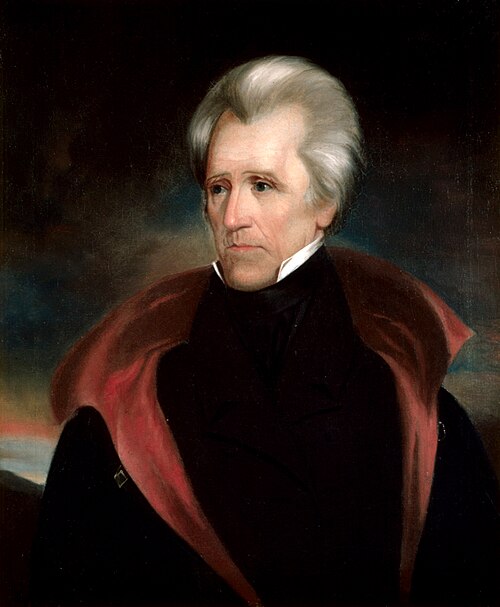
民主党は、ジェファーソンとマディソンが連邦党に対抗して組織したジェファーソン共和党または民主共和党から発展した。 [61]民主共和党は共和主義、弱い連邦政府、州の権利、農業利益(特に南部の農園主)、および憲法の厳格な遵守を支持した。党は国立銀行とイギリスに反対した。[62] 1812年の米英戦争後、連邦党は事実上姿を消し、唯一残った全国政党は民主共和党であったが、これは地域ごとに分裂する傾向があった。[63]米国の一党支配の時代は「善意の時代」として知られ、1816年からアンドリュー・ジャクソンが大統領になった1828年まで続いた。ジャクソンとマーティン・ヴァン・ビューレンは各州の同盟者と協力して全国規模で新しい民主党を結成した。 1830 年代にホイッグ党が結集し、民主党の主なライバルとなった。
1860年以前、民主党は大統領権限の拡大[17] 、奴隷州の利益[18]、農業主義[19]、拡張主義[19]を支持し、国立銀行と高関税に反対していた。[19]
19世紀

民主共和党は ジェームズ・モンロー大統領の後継者選びをめぐって分裂した。[64]アンドリュー・ジャクソンとマーティン・ヴァン・ビューレンが率いるジェファーソンの古い原則の多くを支持した派閥が現代の民主党となった。[65]歴史家メアリー・ベス・ノートンは1828年の変遷について次のように説明している。
ジャクソン派は、民衆の意志がついに勝利したと信じた。州政党、政治指導者、新聞編集者の潤沢な資金による連合を通じて、民衆運動が大統領を選出した。民主党は米国初のよく組織された全国政党となり、緊密な政党組織は19世紀アメリカ政治の特徴となった。[66]

州および全国政党が発表した政策綱領の背後には、民主党の特徴である広く共有された政治観があった。
民主党は幅広い見解を代表していたが、ジェファーソンの農業社会という概念に対する基本的なコミットメントを共有していた。彼らは中央政府を個人の自由の敵とみなしていた。1824年の「腐敗した取引」はワシントンの政治に対する彼らの疑念を強めていた。... ジャクソン派は経済的および政治的権力の集中を恐れていた。彼らは、政府の経済介入は特別利益団体に利益をもたらし、金持ちに有利な企業独占を生み出すと信じていた。彼らは、銀行や企業に対する連邦政府の支援を終了し、彼らが信用していなかった紙幣の使用を制限することによって、個人、つまり職人や一般農民の独立を回復しようとした。彼らの政府の適切な役割の定義は否定的である傾向があり、ジャクソンの政治的権力は主に否定的な行為で表された。彼は、歴代大統領全員を合わせたよりも多く拒否権を行使した。... また、ジャクソンは改革派の人道的懸念を共有していなかった。彼はアメリカインディアンに同情せず、涙の道に沿ってチェロキー族の追放を開始した。[67]
ヘンリー・クレイ率いる対立派閥はホイッグ党の結成を助けた。1850年代にホイッグ党が奴隷制問題で分裂するまで、民主党はホイッグ党に対してわずかながら決定的な優位に立っていた。1854年、カンザス・ネブラスカ法に怒った奴隷制反対派の民主党員は党を離れ、北部ホイッグ党に加わって共和党を結成した。[68] [69]マーティン・ヴァン・ビューレンも奴隷制の拡大に反対する自由土地党の設立に協力し、 1848年の大統領選挙で同党の候補者として出馬したが、その後民主党に戻り連邦に忠誠を誓った。[70]

1860年の選挙では、民主党は奴隷制度をめぐって北部と南部の候補者を立てて分裂し、共和党が優勢となった。[71]奴隷制度を擁護する過激派のファイアイーターズは、たとえその地域の有権者が望んでいないとしても、奴隷制度の拡大を支持する決議を代表者が採択しなかったため、2つの大会で退席を命じた。これら南部民主党は、奴隷制度擁護派の現副大統領ジョン・C・ブレッキンリッジ(ケンタッキー州)を大統領候補に、ジョセフ・レーン(オレゴン州)将軍を副大統領候補に指名した。北部民主党は、スティーブン・A・ダグラス(イリノイ州)上院議員を大統領候補に、元ジョージア州知事ハーシェル・V・ジョンソン(副大統領候補)を副大統領候補に指名した。この民主党の分裂により共和党が勝利し、エイブラハム・リンカーンが第16代アメリカ合衆国大統領に選出された。[72]
南北戦争が勃発すると、北部の民主党は戦争民主党と平和民主党に分裂した。アメリカ連合国は意図的に政党組織を避けた。戦争民主党員のほとんどは、 1864年の選挙で共和党のエイブラハム・リンカーン大統領と共和党の全国統一党に結集した。この選挙では、民主党員の仲間を引き付けるためアンドリュー・ジョンソンが連邦候補として挙げられた。ジョンソンは1865年にリンカーンに代わって大統領となったが、両党から独立したままだった。[73]
民主党は、戦後の南部白人のレコンストラクションに対する憤りと、その結果としての共和党への敵意から利益を得た。 1870年代にレディーマーズがレコンストラクションを終わらせた後、1880年代と1890年代にサウスカロライナ州のベンジャミン・ティルマンなどの白人至上主義民主党政治家が主導した、しばしば極めて暴力的なアフリカ系アメリカ人の権利剥奪に続いて、民主党に投票した南部は「ソリッドサウス」として知られるようになった。共和党は2回を除いて大統領選挙で勝利したが、民主党も競争力を維持した。党は、サミュエル・J・ティルデンとグロバー・クリーブランドが率いるビジネス寄りのバーボン民主党員が支配し、彼らは商業、銀行、鉄道の利益を代表し、帝国主義と海外拡張に反対し、金本位制のために戦い、複本位制に反対し、汚職、高税率、関税に反対した。クリーブランドは1884年と1892年に大統領に選出されたが、連続して選出されたわけではなかった。[74]
20世紀
20世紀初頭

農民民主党は人民主義の考えに基づき、銀の無償支給を要求し、1896年にバーボン民主党を打倒し、ウィリアム・ジェニングス・ブライアンを大統領候補に指名した(民主党はこの指名を1900年と1908年にも繰り返した)。ブライアンは東部の金持ち層を攻撃する激しい選挙運動を展開したが、共和党のウィリアム・マッキンリーに敗れた。[75]
1910年に民主党が下院を掌握し、ウッドロウ・ウィルソンが1912年(共和党が分裂した年)と1916年に大統領に選出された。ウィルソンは議会を率いて、40年間政治を支配してきた関税、金銭、反トラストの問題を、新しい進歩的な法律で効果的に解決した。彼は上院でベルサイユ条約(ドイツとの戦争を終わらせ、国際連盟に加盟する)を可決させることに失敗した。[76]弱体化した党は、1920年代のKKKや禁酒法などの問題で深く分裂した。しかし、北部の都市で新しい民族的有権者を組織化した。[77]
第一次世界大戦が終わり、大恐慌が続く中、民主党と共和党はともに、世界の他の地域に存在するヨーロッパの君主制や国家社会主義よりも、アメリカの例外主義を強く信じていた。 [78]
1930年代から1960年代、ニューディール連合の台頭

1929年、共和党のハーバート・フーバー大統領と共和党の議会の下で始まった大恐慌は、民主党が1930年から1994年までほぼ途切れることなく下院を、1930年から48年間のうち44年間上院を支配し、1968年までほとんどの大統領選挙で勝利したことで、よりリベラルな政府の基盤を整えた。1932年に大統領に選出されたフランクリン・D・ルーズベルトは、ニューディールと呼ばれる連邦政府のプログラムを打ち出した。ニューディールのリベラリズムとは、企業(特に金融と銀行)の規制と労働組合の促進、および失業者や困窮農家の支援、大規模な公共事業の実施に対する連邦政府の支出を意味した。これはアメリカの福祉国家の始まりとなった。[79]労働組合への反対、企業支援、低税を強調する反対派は、自らを「保守派」と呼び始めた。[80]
1980年代まで、民主党はメイソン・ディクソン線で分断された2つの政党の連合体だった。北部のリベラル民主党員と南部の文化的に保守的な有権者で、南部はニューディール政策の公共事業の多くから恩恵を受けているものの、北東部のリベラル派が主張する公民権運動の拡大には反対していた。この分極化はルーズベルトの死後さらに強まった。南部民主党員は中西部の共和党員の大半と連携し、超党派の保守連合の重要な部分を形成した。アメリカのリベラリズムに強い影響を与えたフランクリン・D・ルーズベルトの経済活動主義哲学は、1932年以降、党の経済政策の多くを形作った。[81] 1930年代から1960年代半ばまで、リベラルなニューディール政策連合が大統領職を掌握し、保守連合が議会を掌握するのが常だった。[82]
1960年代から1980年代、ニューディール連合の崩壊
第二次世界大戦後、政党と米国が直面した問題には、冷戦と公民権運動があった。共和党は南部戦略とニューディール政策および偉大なる社会自由主義への抵抗によって保守派を引きつけ、1960年代以降は民主党連合から南部の白人を引きつけた。1950年代まで、アフリカ系アメリカ人は伝統的に共和党の奴隷制反対の公民権政策を支持していた。1964年の公民権法と1965年の投票権法の成立後、南部諸州は大統領選挙で共和党がより確実に優勢となり、北東部諸州は民主党がより確実に優勢となった。[83] [84] [85] [42]研究によると、民主党の中心的な支持基盤であった南部の白人は、人種的反発と社会的保守主義のために共和党に移った。[86] [87] [88]
1960年にマサチューセッツ州からジョン・F・ケネディ大統領が当選したことは、この変化を部分的に反映している。選挙運動で、ケネディは新世代の若い有権者を引きつけた。「ニューフロンティア」と名付けられた政策で、ケネディは多くの社会プログラムや公共事業プロジェクトを導入するとともに、宇宙計画への支援を強化し、10年後には有人宇宙船で月へ行くことを提案した。彼は公民権運動を推進し、1964年公民権法を提案したが、 1963年11月に暗殺され、その成立を見届けることはできなかった。[89]
ケネディの後継者リンドン・B・ジョンソンは、保守派が大部分を占める議会を説得して1964年の公民権法を可決させ、1965年にはより進歩的な議会で、貧困者、病人、高齢者を支援するための一連の社会保障制度であるメディケアとメディケイドを含む偉大なる社会政策の多くを可決した。ケネディとジョンソンの公民権擁護は、民主党に対する黒人の支持をさらに固めたが、南部の白人を遠ざける結果となり、特に1980年にロナルド・レーガンが大統領に選出された後、彼らは最終的に共和党に引き寄せられた。 1964年の公民権法の可決と党の全般的な左傾化を皮切りに、多くの南部の保守派民主党員が共和党に離党した。 [90] [85] [42] [87]
1960年代のアメリカのベトナム戦争への関与は、民主党連合の亀裂をさらに深めたもう一つの対立問題であった。 1964年のトンキン湾決議後、ジョンソン大統領はベトナムに大規模な戦闘部隊を派遣したが、戦争激化によって南ベトナムからベトコンを追い出すことはできず、泥沼化が進む結果となり、1968年までにはアメリカ国内および他国で反戦運動が広がることになった。犠牲者が増え、夜のニュースでベトナムの悲惨な画像が伝えられる中、費用のかかる軍事介入はますます不人気となり、1960年代初頭に民主党が惹きつけたような若い有権者の多くを遠ざけることになった。その年の抗議活動は、マーティン・ルーサー・キング・ジュニア牧師や民主党大統領候補のロバート・F・ケネディ上院議員(ジョン・F・ケネディの弟)の暗殺とともに、その夏シカゴで行われた激しい民主党全国大会(大会会場の内外で続いた混乱の中で、ヒューバート・ハンフリーが副大統領に指名された)での混乱で最高潮に達し、民主党の幅広い連合の衰退における重大な転換点となった一連の出来事となった。[91]
共和党の大統領候補リチャード・ニクソンは、その年の民主党の混乱に乗じて、1968年の選挙に勝利し、第37代大統領となった。ニクソンは、1972年に民主党候補のジョージ・マクガバンを破って圧倒的な勝利を収めた。マクガバンは、ロバート・F・ケネディと同様に、反戦・カウンターカルチャーの若年層の支持を集めたが、ケネディとは異なり、党のより伝統的な白人労働者階級の支持層にはアピールできなかった。ニクソンの2期目は、ウォーターゲート事件で政権が揺さぶられ、1974年に辞任を余儀なくされた。ニクソンの後任には、ジェラルド・フォード副大統領が就任したが、短期間の任期を務めた。
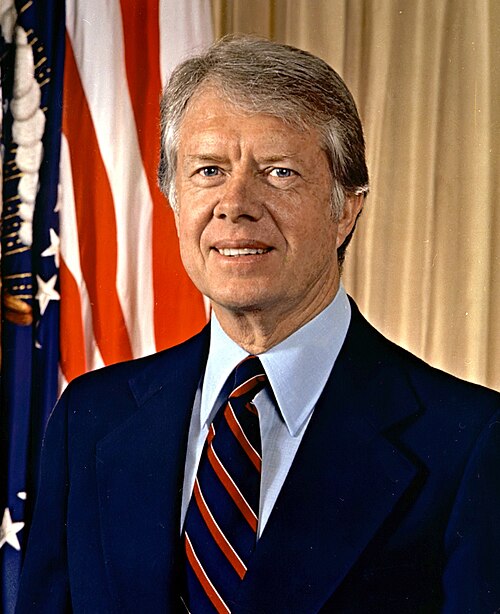
ウォーターゲート事件は民主党に挽回のチャンスを与え、民主党候補のジミー・カーターが1976年の大統領選挙で勝利した。南部の福音派キリスト教徒の支持を得て、カーターは党内のばらばらの派閥を一時的に再統合したが、インフレと1979年から1980年にかけてのイラン人質事件が打撃となり、 1980年には共和党の大統領候補ロナルド・レーガンが圧勝し、その後何年も共和党に有利な政治情勢となった。共和党への保守派民主党員の流入は、20世紀後半に共和党がさらに右傾化した理由、および共和党の基盤が北東部と中西部から南部に移った理由としてしばしば挙げられる。[92] [93]
1990年代と第三の道中心主義
ロナルド・レーガン政権下で共和党が優勢になると、民主党は対抗策を模索したが、元副大統領で民主党大統領候補のウォルター・モンデールやマサチューセッツ州知事のマイケル・デュカキスといった伝統的な候補者を立てても成功しなかった。彼らはそれぞれ1984年と1988年の大統領選挙でレーガンとジョージ・H・W・ブッシュに敗れた。多くの民主党員は、1984年の予備選挙で「新しいアイデア」を掲げてモンデールに挑戦したゲイリー・ハートという将来のスターに期待を寄せた。ハートはその後の1988年の予備選挙で事実上の最有力候補となり、民主党大統領候補指名の事実上の「当選確実」となったが、セックススキャンダルで選挙運動は終了した。それでも党は、ハートのようにジョン・F・ケネディの実利主義的理想主義に触発された若い世代の指導者を探し始めた。[94]
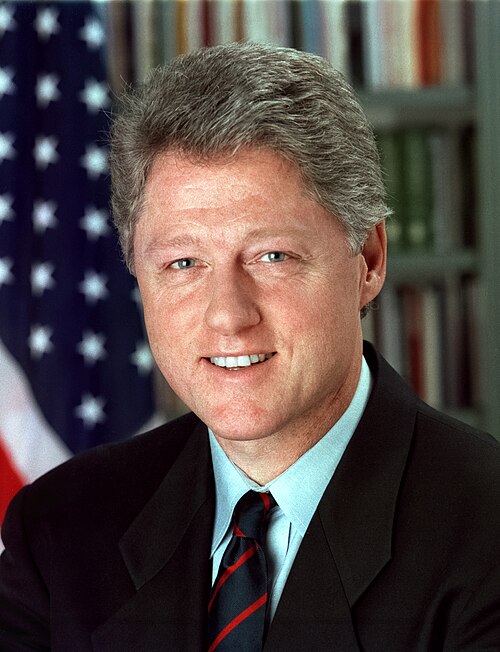
アーカンソー州知事のビル・クリントンはそのような人物の一人で、1992年に民主党の候補者として大統領に選出された。民主党指導者会議はクリントンと関係のある選挙運動組織で、「ニューデモクラット」という新しいラベルの下で再編と三角形化を主張した。[95] [30] [31]党は、レーガン後の有権者層がかなり右寄りになったことを受けて、新自由主義的な経済政策と文化的自由主義の統合を採用した。[95]リベラル派と財政保守派の両方にアピールするために、民主党は均衡予算と政府の介入によって緩和された市場経済(混合経済)を主張し始め、社会正義と積極的差別是正措置を引き続き重視し始めた。前クリントン政権を含む民主党が採用した経済政策は、「第三の道」 と呼ばれている。
1994年の選挙で民主党は共和党に議会の支配権を奪われたが、1996年にクリントンは再選され、フランクリン・D・ルーズベルト以来初めて2期目を全勝した民主党大統領となった。[96]クリントンの副大統領アル・ゴアは彼の後継者として大統領に立候補し、一般投票で勝利したが、フロリダ州の再集計をめぐる物議を醸した選挙紛争が米国最高裁判所によって解決され(判決は5対4でブッシュに有利)、2000年の選挙では共和党の対立候補ジョージ・W・ブッシュに選挙人団の選挙で敗れた。[97]
21世紀
2000年代
2001年の世界貿易センターとペンタゴンへのテロ攻撃や地球温暖化への懸念の高まりを受けて、21世紀初頭の民主党の主要課題には、人権を守りながらテロと戦うこと、医療へのアクセスを拡大すること、労働者の権利、環境保護などが含まれていた。民主党は2006年の選挙で下院と上院の両方で過半数を取り戻した。バラク・オバマは民主党の指名を獲得し、2008年に初のアフリカ系アメリカ人大統領に選出された。オバマ政権下で、民主党は経済刺激策、ドッド・フランク金融改革法、医療費負担適正化法などの改革を進めた。[98]
2010年代
2010年の中間選挙で、民主党は下院の支配権を失い、いくつかの州議会と知事の多数派も失った。2012年の選挙ではオバマ大統領が再選されたが、民主党は下院では少数派のままで、2014年の中間選挙では上院の支配権を失った。2016年の大統領選でドナルド・トランプが民主党候補のヒラリー・クリントンに一般投票で敗れた後、民主党は野党の役割に移行し、2年間大統領も議会も掌握できなかった。[99]しかし、 2018年の中間選挙ではナンシー・ペロシの指導の下、下院を奪還した。
民主党はトランプ大統領に対して、特に移民、医療、中絶に関する政策やCOVID-19パンデミックへの対応について非常に批判的だった。[100] [101] [102] 2019年12月、下院の民主党はトランプ大統領を弾劾したが、共和党が多数派を占める上院では無罪となった。[103]
2020年代

2020年11月、民主党のジョー・バイデン氏がトランプ大統領を破り、 2020年の大統領選挙に勝利した。[104]彼は米国下院と上院で極めてわずかな民主党多数派で任期を開始した。[105] [106]バイデン大統領の任期中、党はますます進歩的な経済政策を採用していると特徴づけられている。[33] 2022年、バイデン氏は最高裁判所初の黒人女性であるケタンジ・ブラウン・ジャクソン氏を任命した。しかし、彼女はリベラル派のスティーブン・ブレイヤー判事の後任であったため、最高裁の保守派(多数派)とリベラル派の6対3の分裂は変わらなかった。[107] [108] [109] [110]国の大部分で中絶禁止につながったドブス対ジャクソン事件(2022年6月24日判決)の後、民主党は中絶の権利を支持して結集した。[44]
2022年の中間選挙では、民主党は歴史的傾向を大幅に上回り、広く予想されていた赤い波は実現しませんでした。[111] [112]同党は米国下院でわずかに過半数を失い、米国上院で過半数を拡大し、[113] [114] [115]州レベルでいくつかの議席を獲得しました。[116] [117] [118] [119]
2024年7月、年齢や健康上の懸念が相次いだ後、バイデンは1968年のリンドン・B・ジョンソン以来、現職大統領として初めて再選を目指して出馬を辞退した。また、19世紀以降、わずか1期務めた後に出馬を辞退した初の大統領となった。 [e]そして、予備選挙で勝利した後に出馬を辞退した唯一の大統領となった。[120] [122]
2024年現在、民主党は大統領職と米国上院の過半数を占めているほか、23の州知事、19の州議会、17の州政府の三権分立制、国内の主要都市の大半の市長職も占めている。[123]現在の米国最高裁判所判事9人のうち3人は民主党の大統領によって任命された。登録党員数で見ると、民主党は米国最大の政党であり、世界でも4番目に大きい政党である。現職のバイデン氏を含め、16人の民主党員が米国大統領を務めた。[4]
名前とシンボル
民主共和党は1824年に分裂し、短命に終わった国民共和党とジャクソン運動に分かれ、ジャクソン運動は1828年に民主党となった。ジャクソン運動の時代には「民主主義」という用語が党内で使用されていたが、最終的には「民主党」という名称が定着し[124]、1844年に正式名称となった[125]。党員は「民主党員」または「民主党員」と呼ばれる。
党の最も一般的なマスコットシンボルはロバ、またはロバである。[126] アンドリュー・ジャクソンの敵は、愚かで頑固な動物に関する揶揄として、彼の名前を「ロバ」と曲解した。しかし、民主党は庶民的な意味合いを気に入り、それを採用したため、そのイメージは存続し、進化した。[127]最も永続的な印象は、 1870年にハーパーズ・ウィークリーに掲載されたトーマス・ナストの漫画である。漫画家たちはナストに倣い、ロバで民主党を、象で共和党を象徴した。

20世紀初頭、インディアナ州、ケンタッキー州、オクラホマ州、オハイオ州の民主党の伝統的なシンボルは、共和党の鷲ではなく、雄鶏だった。[130]雄鶏は、全国的な民主党の公式シンボルとしても採用された。[131] 1904年、アラバマ州民主党は、投票用紙に載せるロゴとして、「白人至上主義 - 権利のために」というモットーを掲げた雄鶏を選んだ。[132]「白人至上主義」という言葉は、1966年に「民主党」に置き換えられた。[133] [128] 1996年、アラバマ州民主党は、シンボルに人種差別的および白人至上主義的な意味合いが関連しているとして、雄鶏を削除した。[129]雄鶏のシンボルは、現在でもオクラホマ州、ケンタッキー州、インディアナ州、ウェストバージニア州の投票用紙に表示されている。[130]ニューヨークでは、民主党の投票シンボルは五芒星である。[134]
両大政党(および多くのマイナー政党)は、マーケティングや宣伝に伝統的なアメリカの色である赤、白、青を使用しているが、2000年の選挙の夜以降、青は民主党の識別色となり、赤は共和党の識別色となった。その夜、初めてすべての主要放送テレビネットワークが選挙地図に同じ配色を使用した。青い州はアル・ゴア(民主党候補)、赤い州はジョージ・W・ブッシュ(共和党候補)である。それ以来、青はメディアによって政党を表すために広く使用されている。これは、青が伝統的な右派の色、赤が左派の色である米国以外の一般的な慣習とは対照的である。[135]
ジェファーソン・ジャクソン・デーは、アメリカ全土の民主党組織が開催する毎年恒例の資金調達イベント(ディナー)である。[136]このイベントは、民主党が初期の著名な指導者とみなしているトーマス・ジェファーソン大統領とアンドリュー・ジャクソン大統領にちなんで名付けられた。
「 Happy Days Are Here Again 」という曲は民主党の非公式の歌である。この曲は1932年の民主党全国大会でフランクリン・D・ルーズベルトが大統領候補に指名された際に広く使われ、今でも民主党員の感傷的なお気に入りである。例えば、2006年に民主党が議会で勝利した後、ポール・シェイファーはデイビッド・レターマンのレイト・ショーでこのテーマを演奏した。フリートウッド・マックの「 Don't Stop」は1992年のビル・クリントンの大統領選挙運動で採用され、人気の民主党の歌として生き残っている。感情的に似た曲であるU2の「 Beautiful Day」も民主党候補者のお気に入りのテーマソングとなっている。ジョン・ケリーは2004年の大統領選挙運動でこの曲を使用し、2006年には民主党の複数の下院議員候補が祝賀曲としてこの曲を使用した。[137] [138]
大統領候補指名大会の伝統的な国歌として、アーロン・コープランド作曲の「庶民のためのファンファーレ」が民主党全国大会の冒頭で演奏されるのが通例となっている。
構造
.jpg/500px-Democratic_National_Headquarters_(53832041544).jpg)
国内委員会
民主党全国委員会(DNC)は、民主党の選挙活動の推進を担当している。DNCは民主党綱領の作成プロセスを監督する責任があるが、公共政策よりも選挙活動と組織戦略に重点を置いている。大統領選挙では、民主党全国大会を監督する。全国大会は党の憲章に従い、会期中は民主党内での最高権限を持ち、それ以外の時はDNCが党の組織を運営する。2021年以降、DNCの議長はジェイミー・ハリソンが務めている。[139]
州政党
各州には州委員会もあり、選出された委員と職権上の委員(通常は選出された役人や主要選挙区の代表者)で構成され、委員長を選出する。郡、町、市、区の委員会は、一般的に地元レベルで選出された個人で構成される。州委員会と地方委員会は、管轄区域内の選挙活動を調整し、地元の大会、場合によっては予備選挙や党員集会を監督し、州法に基づいて公職候補者を指名する役割を担うこともある。直接的な資金提供を受けることはめったにないが、2005年に民主党全国委員会のディーン委員長は、民主党全国委員会の資金を使ってすべての州政党を支援し、フルタイムの専門職員に支払うプログラム(「50州戦略」と呼ばれる)を開始した。[140]
さらに、州レベルの政党委員会がアメリカ領サモア、グアム、バージン諸島、北マリアナ諸島およびプエルトリコ自治領、コロンビア特別区で活動しており、プエルトリコを除くすべての州が大統領選挙と領土選挙の両方で候補者の指名に積極的に取り組んでいるのに対し、プエルトリコの民主党は大統領候補の指名のみを目的として組織されている。海外民主党委員会は、米国領土外に住むアメリカ人有権者によって組織され、大統領候補を指名する。このような政党委員会はすべて州政党として認可されており、全国委員会の委員と全国大会の代議員を選出することができる。
主要政党委員会およびグループ

民主党下院選挙委員会(DCCC)は、下院選挙で党の候補者を支援しており、ワシントンのスーザン・デルベーン下院議員が委員長を務めている。同様に、ミシガン州のゲーリー・ピーターズ上院議員が委員長を務める民主党上院選挙委員会(DSCC)は、上院選挙の資金集めを行っている。ニューヨーク州上院多数党院内総務のアンドレア・スチュワート=カズンズが委員長を務める民主党立法選挙委員会(DLCC)は、州議会選挙に焦点を当てた小規模な組織である。民主党知事協会(DGA)は、民主党の知事候補者と現職の候補者を支援する組織である。同様に、大都市や都市中心部の市長は、全国民主党市長会議として招集される。[141]
DNC は、新世代の民主党活動家を育成し、関与させることを目的とした学生支援組織であるCollege Democrats of America (CDA) を後援しています。Democrats Abroad は、米国外に住むアメリカ人のための組織です。彼らは、党の目標を推進し、海外に住むアメリカ人に民主党を支持するよう奨励するために活動しています。Young Democrats of America (YDA) とHigh School Democrats of America (HSDA) は、それぞれ若者と若者が主導する組織で、若者を民主党候補に引き入れ、動員しようとしていますが、DNC の外で活動しています。
政治的立場
同党の綱領は、市民の自由と社会的平等を混合資本主義経済の支持と融合させている。[142]社会問題に関しては、中絶の合法性の継続、[44]マリファナの合法化、[ 48] LGBTの権利[46]を主張している。
経済問題に関しては、国民皆保険、育児支援、有給病気休暇、企業統治改革、労働組合支援を支持している。[49] [50] [51] [52]
- 経済政策
- 社会保障とセーフティネットプログラムを拡大する。 [143]
- 年間所得が100万ドルを超える納税者に対するキャピタルゲイン税率を39.6%に引き上げる。 [144]
- 労働者階級、中流階級、中小企業に対する税金を削減する。[145]
- 税制を変更して海外への雇用の輸送を抑制する。[145]
- 連邦および州の最低賃金を引き上げます。[146]
- 公教育の近代化とアクセスの拡大を図り、普遍的な就学前教育を提供する。[147]
- 公的医療保険の選択肢やメディケア/メディケイドの拡大を通じて、国民皆保険の目標を支持する。[148]
- インフラ整備[149]と科学技術研究[150]への投資を増やす。
- 消費者がクリーンエネルギーをより利用しやすくし、クリーンエネルギーの国内生産を増やすために税額控除を提供する。[151]
- 労働者保護と労働組合結成の権利を擁護する。[152] [153]
- 学生ローン制度を改革し、学生ローンの借り換えを可能にする。[154]
- 大学をより手頃な価格にする。[146] [155]
- 性別、人種、民族に関係なく、同一労働同一賃金を義務付ける。 [156]
- 社会政策
- マリファナを非犯罪化または合法化する。[146]
- ネットワーク中立性を維持する。[157]
- 選挙資金改革を実施する。[158]
- 投票権と投票への容易なアクセスを維持する。 [159] [160]
- 同性婚を支持し、転向療法を禁止する。[146]
- 中絶と女性の生殖医療への合法的なアクセスを認める。 [149]
- 移民制度を改革し、市民権取得への道を開く。[149]
- 銃による暴力に対処するため、身元調査を拡大し、攻撃用武器へのアクセスを制限する。[149]
- プライバシー保護法を改善し、政府の監視を削減する。[149]
- 拷問に反対する。[161] [162]
- 死刑を廃止する。[163]
- 世界中でインターネットの自由を認識し、擁護する。[145]
経済問題
社会保障網と強力な労働組合は、 1930年代のニューディール政策以来、民主党の経済政策の中心となっている。 [142]議会での投票数で測られる民主党の経済政策の立場は、中流階級の立場と一致する傾向がある。[43] [164] [165] [166] [167]民主党は、累進課税制度、最低賃金の引き上げ、雇用機会均等、社会保障、国民皆保険、公教育、住宅補助を支持している。[142]彼らはまた、経済発展と雇用創出を達成するために、インフラ整備とクリーンエネルギーへの投資を支持している。[168]
1990年代以降、同党は政府規模を縮小し市場規制を緩和する中道経済改革を支持することもあった。 [169]同党は一般的に自由放任主義経済と市場社会主義の両方を拒否し、資本主義市場ベースのシステムにおけるケインズ経済学を支持してきた。 [170]
財政政策
民主党は、より多くのサービスを提供し、最も裕福なアメリカ人がより多くの税金を支払うようにすることで経済格差を減らすために、より累進的な税制を支持している。 [171] 民主党と共和党は、貧困撲滅に関して伝統的に異なる立場を取っている。ブレイディは「我々の貧困レベルは、弱い社会政策の直接的な結果であり、それは弱い政治主体の直接的な結果である」と述べた。[172]彼らは、社会保障、メディケア、メディケイド などの社会サービスの削減に反対し、[173]効率性と社会正義に有害であると考えている。民主党は、金銭的および非金銭的な意味での社会サービスの利益は、より生産性の高い労働力と教養のある人口であり、この利益は、特に高所得者に対する減税や社会サービスの削減から得られる利益よりも大きいと考えている。さらに、民主党は、社会サービスが積極的な自由、つまり経済的機会から得られる自由を提供するために不可欠であると考えている。民主党が主導する下院は、第110回議会の開始時にPAYGO(支出時払い)予算規則を復活させた。[174]
最低賃金
民主党は最低賃金の引き上げを支持している。2007年の公正最低賃金法は、第110回議会における民主党の議題の初期の要素であった。2006年、民主党は最低賃金を引き上げる6つの州投票法案を支持し、6つの法案すべてが可決された。[175]
2017年、上院民主党は、2024年までに最低賃金を時給15ドルに引き上げる賃金引き上げ法案を提出した。[176] 2021年、民主党のジョー・バイデン大統領は、 2025年までに最低賃金を15ドルに引き上げることを提案した。[177]民主党が支配する多くの州では、州の最低賃金が連邦最低賃金を上回る率に引き上げられている。[178]
健康管理

民主党は「手頃で質の高い医療」を求め、高騰する医療費に対処するためにさまざまな形で国民皆保険制度への移行を支持している。進歩派民主党の政治家は単一支払者制度やメディケア・フォー・オールを支持しているが、リベラル派は公的医療保険の選択肢を作ることを好む。[50]
2010年3月23日にバラク・オバマ大統領によって法制化された患者保護および医療費負担適正化法は、国民皆保険に向けた最も重要な推進力の一つとなっている。2019年12月現在、2000万人以上のアメリカ人が医療費負担適正化法に基づいて医療保険に加入している。[179]
教育
民主党は、学校水準の引き上げやヘッドスタート制度の改革による公教育の改善を支持している。また、ユニバーサル・プリスクールや、チャータースクールを通じた初等教育へのアクセス拡大も支持しており、一般的には学校バウチャー制度に反対している。彼らは学生ローン債務の解消や大学授業料の引き下げ改革を求めている。 [180]その他の提案には、授業料無料の公立大学や標準テストの改革などがある。民主党は、(ヨーロッパやカナダの多くの国のように)授業料の安い公的資金による大学教育を、資格のあるすべてのアメリカ人学生が利用できるようにすることを長期目標としている。あるいは、彼らは、ペル・グラントや大学授業料の税控除などの学生財政援助に対する州の資金を増やすことで、高等教育へのアクセス拡大を奨励している。[181]
環境

民主党は、政府が環境を保護すべきだと信じており、環境保護の歴史を持っています。近年では、この立場は、再生可能エネルギーの発電を、経済の改善、国家安全保障の向上、そして一般的な環境上の利益の基礎として強調しています。 [187]民主党は、共和党よりも、環境規制や再生可能エネルギーを支援する政策を支持する可能性がかなり高いです。[188] [189]
民主党はまた、保全地域の拡大を支持し、高速道路や空港の混雑を緩和し、大気の質と経済を改善するためにオープンスペースと鉄道旅行を奨励している。「地域社会、環境保護団体、政府は、地域経済の活力を確保しながら資源を保護するために協力すべきだと考えている。かつてアメリカ人は、経済と環境のどちらかを選ばなければならないと信じ込まされていた。彼らは今、これが誤った選択であることを知っている」[190] 。
民主党の最大の環境問題は気候変動である。民主党員、特に元副大統領のアル・ゴアは、温室効果ガスの厳格な規制を強く求めてきた。2007年10月15日、ゴアは人為的な気候変動に関する知識を深め、それに対抗するために必要な対策の基礎を築いた功績によりノーベル平和賞を受賞した。[191]
再生可能エネルギーと化石燃料
民主党は、炭素汚染を減らす取り組みの一環として、風力発電所や太陽光発電所を含む国内の再生可能エネルギー開発の増加を支持している。同党の綱領は、エネルギー自立を目指し、クリーンエネルギー、天然ガス、国内石油を含む「すべての」エネルギー政策を求めている。 [175]同党は石油会社への増税や石炭火力発電所への規制強化を支持しており、化石燃料への長期的な依存を減らす政策を支持している。[192] [193]さらに、同党は大気汚染を防ぐため、より厳しい燃料排出基準を支持している。
ジョー・バイデン大統領は大統領在任中に、2022年インフレ削減法を制定した。これは米国史上最大の気候変動対策資金配分である。 [194] [195] [196]
貿易
共和党と同様、民主党もその歴史を通じて国際貿易に関して多種多様な見解をとってきた。民主党は一般的に共和党よりも 自由貿易を支持してきた。
第二政党制では民主党が優勢で、政府の財政を支えるための低関税を設定したが、産業を保護することはできなかった。対抗勢力のホイッグ党は高い保護関税を望んだが、議会では通常反対票で否決された。ホイッグ党(1832年~1852年)と共和党(1854年以降)は、主に北部の産業と有権者を守るために高関税に投票し、産業はほとんどなく多くの商品を輸入していた南部民主党は低関税に投票したため、関税はすぐに大きな政治問題となった。1854年に第二政党制が終わると、民主党は支配力を失い、新しい共和党が税率を引き上げる機会を得た。[197]
第三政党制の時代、民主党のグロバー・クリーブランド大統領は、高関税は消費者に対する不必要で不公平な税金だと主張し、低関税を民主党政策の中心に据えた。南部と西部は概ね低関税を支持したが、工業化が進んだ北部は高関税を支持した。[198]第四政党制の時代、民主党のウッドロウ・ウィルソン大統領は関税率の大幅な引き下げを大統領職の主要優先事項とした。1913年のアンダーウッド関税法で関税率は引き下げられ、連邦所得税によって生み出された新たな収入によって、経済への影響と政治的レトリックの面で関税の重要性は大幅に低下した。[199]
第五政党制の時代、フランクリン・ルーズベルト大統領の政権下で1934年相互関税法が制定され、米国の保護主義時代からの大きな転換が示された。外国製品に対する米国の関税は、1934年の平均46%から1962年までに12%に低下した。[200]第二次世界大戦後、米国はトルーマン政権下の1947年に設立された関税および貿易に関する一般協定(GATT)を推進し、すべての資本主義国間の貿易を自由化し、関税を最小限に抑えた。[201] [202]
1990年代、クリントン政権と多くの著名な民主党員は、北米自由貿易協定(NAFTA)など、いくつかの協定を成立させた。それ以来、民主党の自由貿易からの離脱は、中米自由貿易協定(CAFTA)の投票で明らかになった。下院民主党員15人が協定に賛成し、187人が反対した。[203] [204] [205] [206]
社会問題
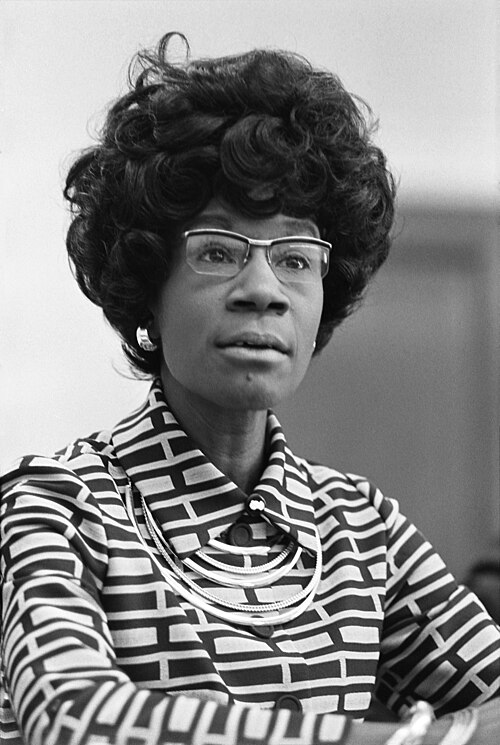
現代の民主党は社会的平等と機会均等を強調している。民主党は投票権とLGBTの権利を含む少数派の権利を支持している。民主党の大統領リンドン・B・ジョンソンは1964年に人種差別を禁止する公民権法に署名した。カーマインズとスティムソンは「民主党は人種的自由主義を流用し、人種差別を終わらせる連邦政府の責任を引き受けた」と書いている。[207] [208] [209]
党内の思想的社会的要素には、文化的自由主義、公民権主義、フェミニズムなどがある。民主党の社会政策には、移民改革、選挙制度改革、女性の生殖権などがある。
平等な機会
民主党は、性別、年齢、人種、民族、性的指向、性自認、宗教、信条、または国籍に関係なく、すべてのアメリカ人に平等な機会を与えることを支持している。最近の出口調査で見られるように、民主党はほとんどの社会経済的および民族的人口統計にわたって幅広い支持を得ている。 [210]民主党はまた、身体または精神障害に基づく差別を禁止するアメリカ障害者法を強く支持している。そのため、民主党は、障害者の権利を拡大した2008年のADA改正法も推進し、法律となった。[211]
民主党員の多くは、機会均等を推進するための積極的差別是正措置を支持している。しかし、2020年の選挙では、カリフォルニア州でバイデン氏が63%の票を獲得したにもかかわらず、カリフォルニア州の有権者の57%が州憲法の積極的差別是正措置禁止を維持することに投票した。 [212]
投票権
同党は、投票権の向上、選挙の正確性、アクセスのしやすさの向上に非常に協力的である。[213]投票日の休日化を含む投票時間の延長を支持している。また、選挙制度改革による不正な区割りの排除、選挙人団の廃止、包括的な選挙資金改革の可決を支持している。[158]
中絶と生殖に関する権利
中絶に対する民主党の立場は、時とともに大きく変化してきた。[214] [215] 1960年代後半から1970年代前半にかけて、共和党は一般的に民主党よりも合法的な中絶を支持していたが、[216]両党内でもかなりの異質性が見られた。[217]この時期、中絶反対は米国の政治的左派に集中する傾向があった。リベラルなプロテスタントとカトリック教徒(その多くは民主党支持者)は中絶に反対したが、保守的なプロテスタントのほとんどは中絶サービスへの合法的なアクセスを支持した。[214] [説明が必要]
1992年から2004年までの全国綱領で、民主党は中絶を「安全で合法かつ稀な」ものにするよう求めてきた。つまり、中絶の決定に政府が介入することを認める法律を拒否することで合法性を維持し、生殖と避妊に関する知識と養子縁組の奨励の両方を促進することで中絶の数を減らすことを求めてきた。2003年に議会が部分出産中絶禁止法案に投票したとき、議会の民主党員は分裂し、少数派(元上院多数党院内総務ハリー ・リードを含む)が禁止を支持し、大多数の民主党員が法案に反対した。[218]
2020年の民主党の綱領によれば、「民主党は、すべての女性が安全で合法的な中絶を含む高品質の生殖医療サービスを受けられるべきだと信じている」とされている。[219]
移民

共和党と同様、民主党もその歴史を通じて移民問題に関して多種多様な見解をとってきた。1990年代以降、民主党は共和党よりも移民問題に全体的に賛成してきた。[220]多くの民主党政治家は、米国に不法入国した住民が合法的な市民権を得る道筋が開けるよう、移民制度の体系的な改革を求めてきた。オバマ大統領は2013年11月、「壊れた移民制度を直すのはとっくの昔に過ぎている」と感じており、特に学生として渡米した「信じられないほど優秀な若者」が完全な市民権を得られるよう配慮していると述べた。[221] 2013年、上院の民主党は、移民政策を改革して米国内の不法移民に市民権を与える法案S.744を可決した。この法案は下院で可決されず、第113回議会以降再提出されることはなかった。[222]
2024年現在、21世紀には共和党の反対により、大規模な移民改革法案は制定されていない。[223] [224] 2020年代には移民に対する反対が高まり、民主党の過半数が国境警備の強化を支持している。[225] [226]
LGBTの権利
LGBTの権利に関する民主党の立場は、時間の経過とともに大きく変化しました。[227] [228] 2000年代以前は、共和党と同様に、民主党はLGBTの権利に敵対する立場を取ることが多かった。2020年代現在、民主党内の有権者と選出された代表者の両方がLGBTの権利を圧倒的に支持しています。[227]
21世紀に入ってから、両大政党の有権者を含む一般大衆の間で同性婚への支持は着実に高まっている。2009年4月のABCニュース/ワシントンポストの世論調査では、民主党員の支持率は62%だった。[229] 2006年のピュー研究所の民主党員に対する世論調査では、同性愛者の養子縁組に55%が賛成、40%が反対、同性愛者の軍隊入隊に70%が賛成、反対はわずか23%だった。[230] 2009年5月のギャラップの世論調査では、民主党員の82%が自由入隊を支持している。[231] 2023年のギャラップの世論調査では、民主党員の84%が同性婚を支持しているのに対し、一般大衆の支持は71%、共和党員の支持は49%だった。[232]
2004年の民主党全国綱領では、結婚は州レベルで定義されるべきであると述べ、連邦結婚修正条項を否定した。[233] 2004年の民主党大統領候補ジョン・ケリーは、選挙運動中に同性結婚を支持しなかった。同性結婚の支持は明言しなかったものの、2008年の綱領では、連邦による同性結婚の承認を禁止し、州間の承認の必要性を排除した結婚防衛法の廃止を求め、差別禁止法とLGBTの人々へのヘイトクライム法の適用を支持し、「聞かない、言わない」に反対した。 [234] [235] 2012年の綱領には、同性結婚の支持とDOMAの廃止が含まれていた。[46]
2012年5月9日、バラク・オバマは現職大統領として初めて同性婚を支持すると発言した。[236] [237]これまでオバマは、廃止を約束した結婚防衛法や、[238]カリフォルニア州の提案8号、[239]同性婚を禁止する憲法修正案(「結婚に関する決定はこれまで通り各州に委ねられるべきだ」として反対)など、同性婚に対する制限に反対していたが、 [240]一方で、結婚は男性と女性の間で行われるべきであり、「同性カップルに結婚したカップルと同等の法的権利と特権を与える」シビル・ユニオンを支持するとも述べた。[238]これに先立ち、1996年にイリノイ州上院議員に立候補した際、「私は同性婚の合法化を支持し、そのような結婚を禁止しようとする動きと戦う」と発言していた。[241]元大統領のビル・クリントン[242]とジミー・カーター[243]、元民主党大統領候補のアル・ゴア[244]とマイケル・デュカキス[245]は同性婚を支持している。ジョー・バイデン大統領は2012年以来同性婚を支持しており、同年同性婚を支持する最高位の政府高官となった。2022年、バイデンは結婚尊重法に署名した。この法律は、バイデンが上院議員時代に賛成票を投じた結婚防衛法を廃止した。[246]
プエルトリコとDCの現状
2016 年の民主党綱領では、プエルトリコの地位について次のように宣言しています。「我々は、プエルトリコの市民が直面している並外れた課題に取り組むことに尽力しています。その多くは、プエルトリコの政治的地位という根本的な問題に起因しています。民主党は、プエルトリコの人々が、合衆国の憲法、法律、政策に反しない恒久的な選択肢から、最終的な政治的地位を決定するべきだと考えています。民主党は、勤勉なプエルトリコの人々のために、経済的機会と高給の仕事を促進することに尽力しています。また、我々は、プエルトリコ人はメディケア、メディケイド、および家族に利益をもたらすその他のプログラムによって平等に扱われるべきであると考えています。プエルトリコ人は、平等に扱われるべきであるのと同様に、法律を制定する人々に投票できるべきです。すべてのアメリカ市民は、居住地に関係なく、合衆国大統領に投票する権利を持つべきです。最後に、我々は、法律が実施され、プエルトリコが発展するにつれて、連邦当局はプエルトリコの地方自治を尊重しなければならないと考えています。リコの予算と負債は、安定と繁栄への道を歩むことができるように再編成されます。」[149]
また、コロンビア特別区の地位に関して次のように宣言している。「我々の民主主義を回復することは、コロンビア特別区を最終的に州に昇格させることも意味し、それにより、国の首都に住むアメリカ国民は議会の完全かつ平等な権利を持ち、議会の干渉を受けることなく地方政府の法律と予算を尊重される権利を持つことになる。」[149]
法的問題
銃規制

犯罪と殺人を減らすという目標を掲げ、民主党はさまざまな銃規制措置を導入してきたが、最も有名なのは1968年の銃規制法、 1993年のブレイディ法案、1994年の犯罪規制法である。2008年の国家綱領で、銃規制を明確に支持する唯一の声明は、1994年の攻撃用武器禁止法の更新を求める計画だった。[248] 2022年、民主党のジョー・バイデン大統領は超党派のより安全なコミュニティ法に署名し、とりわけ身元調査を拡大し、州がレッドフラッグ法を可決するインセンティブを提供した。[249] 2023年のピュー研究所の世論調査によると、民主党員の20%が銃を所有しているのに対し、一般市民では32%、共和党員では45%だった。[250]
死刑
民主党の2020年の綱領では死刑に反対するとしている。[163]議会の民主党員のほとんどは、めったに使用されない連邦死刑制度を真剣に廃止しようとはしていないが、ラス・ファインゴールドとデニス・クシニッチの両氏はそのような法案を提出したが、ほとんど成功していない。民主党は、マサチューセッツ州、ニューヨーク州、デラウェア州など、死刑を禁止している州で死刑制度の復活を阻止し、州の死刑制度を廃止する取り組みを主導してきた。クリントン政権下では、民主党が連邦死刑制度の拡大を主導した。これらの取り組みの結果、 1996年にクリントン大統領が署名した反テロおよび効果的な死刑制度法が可決され、死刑事件の控訴が大幅に制限された。1972年、民主党の綱領は死刑制度の廃止を求めた。[251]
バラク・オバマ前大統領はイリノイ州上院議員時代に、死刑事件における冤罪の可能性を減らすことを目的とした法案を提出し、自白の録画を義務付けた。大統領選挙運動中、オバマは、12歳未満の未成年者を強姦した罪で有罪となった者を含む死刑の限定的適用を支持すると述べ、犯罪の被害者が殺されていない場合の死刑は違憲とするケネディ対ルイジアナ州最高裁の判決に反対した。 [252]オバマは、「死刑は犯罪を抑止する効果がほとんどない」と考えており、死刑はあまりにも頻繁に、かつ一貫性なく適用されていると述べている。[253] 2016年6月、民主党綱領起草委員会は、死刑を廃止する修正案を満場一致で採択した。[254]
拷問
多くの民主党員は、アメリカ軍に逮捕され捕虜にされた個人に対する拷問の使用に反対しており、そのような捕虜を違法戦闘員として分類することは、ジュネーブ条約に基づく義務から米国を解放するものではないと主張している。民主党は、拷問は非人道的であり、米国の世界における道徳的立場を傷つけ、疑わしい結果をもたらすと主張している。民主党は主に水責めに反対している。[255]
バラク・オバマが大統領に選出された後、拷問は党内で分裂を引き起こす問題となった。[256]
プライバシー
民主党は、個人にはプライバシーの権利があるべきだと信じている。例えば、多くの民主党員は、アメリカ国民に対するNSAの令状なしの監視に反対している。[257] [258]
民主党の公職者の中には、企業間での消費者データの共有を制限する消費者保護法を支持している者もいる。民主党は、1972年の綱領で「アメリカ人は差別や起訴を受けることなく、ライフスタイルや私生活の習慣を自由に選択できるべきである」と述べて以来、ソドミー法に反対しており[251]、政府は個人のプライバシーの問題として、成人同士の合意に基づく非営利的な性行為を規制すべきではないと考えている[259] 。
外交政策の問題
二大政党の有権者の外交政策は、1990年代以降、ほぼ一致している。2013年初頭のギャラップ社の世論調査では、人権や国連などの機関を通じた国際協力については若干の相違があったものの、主要課題については幅広い意見の一致が見られた。[260]
2014年6月、クイニピアック大学の世論調査では、アメリカ人にどの外交政策を好むかを尋ねました。
A) 米国は世界中の他の国々であまりにも多くのことを行っています。世界での活動を減らし、国内の問題にもっと焦点を当てるべき時です。B) 米国は世界中の他の国々で民主主義と自由を促進するために前進し続けなければなりません。なぜなら、こうした努力が米国自身の安全をより高めるからです。
民主党はAを65%対32%でBより選び、共和党はAを56%対39%でBより選び、無党派層はAを67%対29%でBより選んだ。[261]
イラン制裁
民主党はイランの核兵器計画を批判し、イラン政府に対する経済制裁を支持してきた。2013年、民主党主導の政権は、国際的な経済制裁の緩和と引き換えにイランの核兵器計画を停止することでイラン政府と外交合意に達するよう努めた。[262] 2014年時点で[update]交渉は成功しており、民主党は将来的にイランとのさらなる協力を求めた。[263] 2015年、オバマ政権は、イランの核計画に対する国際的な監視と引き換えに制裁を緩和する包括的共同行動計画に同意した。2019年2月、民主党全国委員会は、トランプ大統領が2018年に離脱した包括的共同行動計画(JCPOA)に米国が復帰することを求める決議を可決した。[264]
アフガニスタン侵攻
Democrats in the House of Representatives and in the Senate near-unanimously voted for the Authorization for Use of Military Force Against Terrorists against "those responsible for the recent attacks launched against the United States" in Afghanistan in 2001, supporting the NATO coalition invasion of the nation. Most elected Democrats continued to support the Afghanistan conflict during George W. Bush's presidency.[265][266] During the 2008 Presidential Election, then-candidate Barack Obama called for a "surge" of troops into Afghanistan.[266] After winning the presidency, Obama followed through, sending additional troops to Afghanistan. Troop levels were 94,000 in December 2011 and kept falling, with a target of 68,000 by fall 2012.[267]
Support for the war among the American people diminished over time. Many Democrats changed their opinion over the course of the war, coming to oppose continuation of the conflict.[268][269] In July 2008, Gallup found that 41% of Democrats called the invasion a "mistake" while a 55% majority disagreed.[269] A CNN survey in August 2009 stated that a majority of Democrats opposed the war. CNN polling director Keating Holland said: "Nearly two thirds of Republicans support the war in Afghanistan. Three quarters of Democrats oppose the war".[268]
During the 2020 Presidential Election, then-candidate Joe Biden promised to "end the forever wars in Afghanistan and the Middle East."[270] Biden went on to win the election, and in April 2021, he announced he would withdraw all US troops from Afghanistan by September 11 of that year.[271] The last troops left in August, bringing America's 20-year-long military campaign in the country to a close.[272] According to a 2023 AP-NORC poll, a majority of Democrats believed that the War in Afghanistan was not worth it.[273]
Israel

Democrats have historically been a stronger supporter of Israel than Republicans.[274] During the 1940s, the party advocated for the cause of an independent Jewish state over the objections of many conservatives in the Old Right, who strongly opposed it.[274] In 1948, Democratic President Harry Truman became the first world leader to recognize an independent state of Israel.[275]
The 2020 Democratic Party platform acknowledges a "commitment to Israel's security, its qualitative military edge, its right to defend itself, and the 2016 Memorandum of Understanding is ironclad" and that "we oppose any effort to unfairly single out and delegitimize Israel, including at the United Nations or through the Boycott, Divestment, and Sanctions Movement".[276] During the 2023 Israel-Hamas War, the party requested a large-scale military aid package to Israel.[277] Biden also announced military support for Israel, condemned the actions of Hamas and other Palestinian militants as terrorism,[278] and ordered the US military to build a port to facilitate the arrival of humanitarian aid to Palestinian civilians in Gaza.[279] However, parts of the Democratic base also became more skeptical of the Israel government.[280] The number of Democrats (and Americans in general) who oppose sending arms to Israel has grown month by month as Israel's war on Gaza continues.[281] Experts say support for Israel could have a negative impact on Democrats in several key states, including Michigan and Pennsylvania, in the 2024 presidential election.[282]
Europe, Russia, and Ukraine
The 2022 Russian invasion of Ukraine was politically and economically opposed by the Biden Administration, who promptly began an increased arming of Ukraine.[283][284] In October 2023, the Biden administration requested an additional $61.4 billion in aid for Ukraine for the year ahead,[285] but delays in the passage of further aid by the Republican-controlled House of Representatives inhibited progress, with the additional $61 billion in aid to Ukraine added in April 2024.[286][287][288]
Demographics
.svg/500px-US_states_by_percent_union_members_(2017).svg.png)
20+%
15–19.9%
10–14.9%
5–9.9%
0–4.9%

Proportion of Americans with a bachelor's degree or higher in each U.S. state, the District of Columbia, and Puerto Rico as of the 2021 American Community Survey
Since the 2010s, the Democratic Party is strongest among urban residents, union workers, college graduates,[37][38] most ethnic minorities,[41] the unmarried, and sexual minorities.[35][42] In the 2020 presidential election, Democrats won the majority of votes from African American, Hispanic, and Asian voters; young voters; women; LGBT voters; urban voters; voters with college degrees; and voters with no religious affiliation.[289]
The victory of Republican Donald Trump in 2016 brought about a realignment in which many voters without college degrees, also referred to as "working class" voters by many sources, voted Republican.[290][291][292] Many Democrats without college degrees differ from liberals in their more socially moderate views, and are more likely to belong to an ethnic minority.[293][294][295]
Support for the civil rights movement in the 1960s by Democratic presidents John F. Kennedy and Lyndon B. Johnson helped increase the Democrats' support within the African American community. African Americans have consistently voted between 85% and 95% Democratic since the 1960s, making African Americans one of the largest of the party's constituencies.[39][40]
According to the Pew Research Center, 78.4% of Democrats in the 116th United States Congress were Christian.[296] However, the vast majority of white evangelical and Latter-day Saint Christians favor the Republican Party.[297] The party also receives strong support from non-religious voters.[298][299]
A major component of the party's coalition has been organized labor. Labor unions supply money, grass roots political organization, and voters for the party. Democrats are more likely to be represented by unions than Republican voters are.[28] Younger Americans have tended to vote mainly for Democratic candidates in recent years.[300]
Since 1980, a "gender gap" has seen stronger support for the Democratic Party among women than among men. Unmarried and divorced women are more likely to vote for Democrats.[301][302] Although women supported Obama over Mitt Romney by a margin of 55–44% in 2012, Romney prevailed amongst married women, 53–46%.[303] Obama won unmarried women 67–31%.[304] According to a December 2019 study, "White women are the only group of female voters who support Republican Party candidates for president. They have done so by a majority in all but 2 of the last 18 elections".[305][306]
Geographically, the party is strongest in the Northeastern United States, the Great Lakes region, most of the Southwestern United States, and the West Coast. The party is also very strong in major cities, regardless of region.[36][307][308]
Factions

32% and above
28–31%
24–27%
20–23%
16–19%
15% and under
Upon foundation, the Democratic Party supported agrarianism and the Jacksonian democracy movement of President Andrew Jackson, representing farmers and rural interests and traditional Jeffersonian democrats.[310] Since the 1890s, especially in northern states, the party began to favor more liberal positions (the term "liberal" in this sense describes modern liberalism, rather than classical liberalism or economic liberalism). Historically, the party has represented farmers, laborers, and religious and ethnic minorities as it has opposed unregulated business and finance and favored progressive income taxes.
In the 1930s, the party began advocating social programs targeted at the poor. Before the New Deal, the party had a fiscally conservative, pro-business wing, typified by Grover Cleveland and Al Smith.[311] The party was dominant in the Southern United States until President Lyndon B. Johnson signed the Civil Rights Act of 1964. In foreign policy, internationalism (including interventionism) was a dominant theme from 1913 to the mid-1960s. The major influences for liberalism were labor unions (which peaked in the 1936–1952 era) and African Americans. Environmentalism has been a major component since the 1970s.
Even after the New Deal, until the 2010s, the party still had a fiscally conservative faction,[312] such as John Nance Garner and Howard W. Smith.[313] The party's Southern conservative wing began shrinking after President Lyndon B. Johnson supported the Civil Rights Act of 1964, and largely died out in the 2010s, as the Republican Party built up its Southern base.[307][314] The party still receives support from African Americans and urban areas in the Southern United States.[315]
The 21st century Democratic Party is predominantly a coalition of centrists, liberals, and progressives, with significant overlap between the three groups. In 2019, the Pew Research Center found that among Democratic and Democratic-leaning registered voters, 47% identify as liberal or very liberal, 38% identify as moderate, and 14% identify as conservative or very conservative.[316][317] In recent exit polls, the Democratic Party has had broad appeal across most socioeconomic and ethnic demographics.[318][289][319] Political scientists characterize the Democratic Party as less ideologically cohesive than the Republican Party due to the broader diversity of coalitions that compose the Democratic Party.[320][321][322]
Liberals

Modern liberals are a large portion of the Democratic base. According to 2018 exit polls, liberals constituted 27% of the electorate, and 91% of American liberals favored the candidate of the Democratic Party.[323] White-collar college-educated professionals were mostly Republican until the 1950s, but they had become a vital component of the Democratic Party by the early 2000s.[324]
A large majority of liberals favor moving toward universal health care, with many supporting an eventual gradual transition to a single-payer system in particular. A majority also favor diplomacy over military action; stem cell research, same-sex marriage, stricter gun control, environmental protection laws, as well as the preservation of abortion rights. Immigration and cultural diversity are deemed positive as liberals favor cultural pluralism, a system in which immigrants retain their native culture in addition to adopting their new culture. Most liberals oppose increased military spending and the mixing of church and state.[325] They tend to be divided on free trade agreements such as the USMCA and PNTR with China, with some seeing them as more favorable to corporations than workers.[326] As of 2020, the three most significant labor groupings in the Democratic coalition were the AFL–CIO and Change to Win labor federations as well as the National Education Association, a large, unaffiliated teachers' union. Important issues for labor unions include supporting unionized manufacturing jobs, raising the minimum wage, and promoting broad social programs such as Social Security and Medicare.[327]
This ideological group differs from the traditional organized labor base. According to the Pew Research Center, a plurality of 41% resided in mass affluent households and 49% were college graduates, the highest figure of any typographical group.[13] It was also the fastest growing typological group since the late 1990s to the present.[325] Liberals include most of academia[328] and large portions of the professional class.[37]
Moderates
Moderate Democrats, or New Democrats, are an ideologically centrist faction within the Democratic Party that emerged after the victory of Republican George H. W. Bush in the 1988 presidential election.[329] Running as a New Democrat, Bill Clinton won the 1992 and 1996 presidential elections.[330] They are an economically liberal and "Third Way" faction that dominated the party for around 20 years, until the beginning of Obama's presidency.[312][331] They are represented by organizations such as the New Democrat Network and the New Democrat Coalition.
The Blue Dog Coalition was formed during the 104th Congress to give members from the Democratic Party representing conservative-leaning districts a unified voice after the Democrats' loss of Congress in the 1994 Republican Revolution.[332][333][334] However, in the late 2010s and early 2020s, the Coalition's focus shifted towards ideological centrism. One of the most influential centrist groups was the Democratic Leadership Council (DLC), a nonprofit organization that advocated centrist positions for the party. The DLC disbanded in 2011.[335]
Some Democratic elected officials have self-declared as being centrists, including former President Bill Clinton, former Vice President Al Gore, Senator Mark Warner, Kansas governor Laura Kelly, former Senator Jim Webb, and President Joe Biden.[336][337]
The New Democrat Network supports socially liberal and fiscally moderate Democratic politicians and is associated with the congressional New Democrat Coalition in the House.[338] Annie Kuster is the chair of the coalition,[336] and former senator and President Barack Obama was self-described as a New Democrat.[339]
Progressives
Progressives are the most left-leaning faction in the party and support strong business regulations, social programs, and workers' rights.[340][341] Many progressive Democrats are descendants of the New Left of Democratic presidential candidate Senator George McGovern of South Dakota whereas others were involved in the 2016 presidential candidacy of Vermont Senator Bernie Sanders. Progressives are often considered to have ideas similar to social democracy due to heavy inspiration from the Nordic Model, believing in federal top marginal income taxes ranging from 52% to 70%,[342] rent control,[343] increased collective bargaining power, a $15-an-hour minimum wage, as well as free tuition and Universal Healthcare (typically Medicare for All).[344]
In 2014, progressive Senator Elizabeth Warren set out "Eleven Commandments of Progressivism": tougher regulation on corporations; affordable education; scientific investment and environmentalism; net neutrality; increased wages; equal pay for women; collective bargaining rights; defending social programs; same-sex marriage; immigration reform; and unabridged access to reproductive healthcare.[345]
Recently, many progressives have made combating economic inequality their top priority.[34] The Congressional Progressive Caucus (CPC) is a caucus of progressive Democrats chaired by Pramila Jayapal of Washington.[346] Its members have included Representatives Dennis Kucinich of Ohio, John Conyers of Michigan, Jim McDermott of Washington, Barbara Lee of California, and Senator Paul Wellstone of Minnesota. Senators Sherrod Brown of Ohio, Tammy Baldwin of Wisconsin, Mazie Hirono of Hawaii, and Ed Markey of Massachusetts were members of the caucus when in the House of Representatives. As of March 2023, no Democratic senators belonged to the CPC, but independent Senator Bernie Sanders was a member.[347]
Democratic presidents
As of 2021[update], there have been a total of 16 Democratic presidents.
Recent electoral history
In congressional elections: 1950–present
In presidential elections: 1828–present
See also



- Democratic Party (United States) organizations
- List of political parties in the United States
- List of United States Democratic Party presidential candidates
- List of United States Democratic Party presidential tickets
- Political party strength in U.S. states
- Politics of the United States
Notes
- ^ According to the Manifesto Project Database MARPOR dataset for 2020, the Democratic Party has a RILE score of -24.662, putting it within the range of being a center to center-left party. Historically, it has classified the party as centrist or center-right, but the database has noted a relatively recent shift to the left in the party's politics.
- ^ [7][8][9][10][11][12][13][a]
- ^ There are 47 senators who are members of the party; however, four independent senators, Angus King, Bernie Sanders, Joe Manchin III, and Kyrsten Sinema caucus with the Democrats, effectively giving the Democrats a 51–49 majority.
- ^ Grover Cleveland in 1884 and 1892
- ^ All three incumbents in the 20th century to withdraw or not seek reelection—Calvin Coolidge, Harry S. Truman, and Lyndon B. Johnson—had succeeded to the presidency when their predecessor died, then won a second term in their own right.[120] Three presidents in the 1800s made and kept pledges to serve only one term, most recently Rutherford B. Hayes.[121]
- ^ Elected as Vice President with the National Union Party ticket in the 1864 presidential election. Ascended to the presidency after the assassination of President Abraham Lincoln in 1865. Rejoined the Democratic Party in 1868.
- ^ a b Died in office.
- ^ Republican Vice President Dick Cheney provided a tie-breaking vote, giving Republicans a majority until June 6, 2001, when Jim Jeffords left Republicans to join the Democratic Caucus.
- ^ a b c d e f g h i Includes Independents caucusing with the Democrats.
- ^ Democratic Vice President Kamala Harris provided a tie-breaking vote, giving Democrats a majority throughout the 117th Congress.
- ^ While there was no official Democratic nominee, the majority of the Democratic electors still cast their electoral votes for incumbent Vice President Richard Mentor Johnson.
- ^ Although Tilden won a majority of the popular vote, Republican Rutherford B. Hayes won a majority of votes in the Electoral College.
- ^ Although Cleveland won a plurality of the popular vote, Republican Benjamin Harrison won a majority of votes in the Electoral College.
- ^ Although Gore won a plurality of the popular vote, Republican George W. Bush won a majority of votes in the Electoral College.
- ^ Although Clinton won a plurality of the popular vote, Republican Donald Trump won a majority of votes in the Electoral College.
References
- ^ "About the Democratic Party". Democratic Party. Archived from the original on April 6, 2022. Retrieved April 15, 2022.
For 171 years, [the Democratic National Committee] has been responsible for governing the Democratic Party
- ^ Democratic Party (March 12, 2022). "The Charter & The Bylaws of the Democratic Party of the United States" (PDF). p. 3. Archived (PDF) from the original on March 27, 2022. Retrieved April 15, 2022.
The Democratic National Committee shall have general responsibility for the affairs of the Democratic Party between National Conventions
- ^ Cole, Donald B. (1970). Jacksonian Democracy in New Hampshire, 1800–1851. Harvard University Press. p. 69. ISBN 978-0-67-428368-8.
- ^ a b c Arnold, N. Scott (2009). Imposing values: an essay on liberalism and regulation. Oxford University Press. p. 3. ISBN 9780495501121. Archived from the original on October 2, 2020. Retrieved April 28, 2020.
Modern liberalism occupies the left-of-center in the traditional political spectrum and is represented by the Democratic Party in the United States.
- ^ Bacon, Perry Jr. (March 11, 2019). "The Six Wings Of The Democratic Party". FiveThirtyEight. Archived from the original on August 15, 2021. Retrieved October 21, 2021.
- ^ Stein, Letita; Cornwell, Susan; Tanfani, Joseph (August 23, 2018). "Inside the progressive movement roiling the Democratic Party". Reuters. Archived from the original on June 13, 2022. Retrieved June 13, 2022.
- ^ Rae, Nicol C. (June 2007). "Be Careful What You Wish For: The Rise of Responsible Parties in American National Politics". Annual Review of Political Science. 10 (1). Annual Reviews: 169–191. doi:10.1146/annurev.polisci.10.071105.100750. ISSN 1094-2939.
What are we to make of American parties at the dawn of the twenty-first century? ... The impact of the 1960s civil rights revolution has been to create two more ideologically coherent parties: a generally liberal or center-left party and a conservative party.
- ^ Marantz, Andrew (May 24, 2021). "Are We Entering a New Political Era?". The New Yorker. New York, New York: Condé Nast. Archived from the original on April 19, 2024. Retrieved June 16, 2024.
Moderation may be relative, but moderates still run the Democratic Party.
- ^ Bruner, Christopher M. (2018). "Center-Left Politics and Corporate Governance: What Is the 'Progressive' Agenda?". BYU Law Review. 2018 (2). Digital Commons: 267–334. doi:10.2139/ssrn.2917253. ISSN 2162-8572. SSRN 2917253.
This article has argued that a widespread and fundamental reorientation of the Democratic Party toward decidedly centrist national politics over recent decades fundamentally altered the role of corporate governance, and related issues, in the project of assembling a competitive electoral coalition.
- ^ Coates, David, ed. (2012). "The Oxford Companion to American Politics". Liberalism, Center-left. The Oxford Companion to American Politics. Oxford University Press. pp. 68–69. doi:10.1093/acref/9780199764310.001.0001. ISBN 978-0-19-976431-0. Archived from the original on July 8, 2024. Retrieved June 24, 2024.
Observes that the terms "progressive" and "liberal" are "often used interchangeably" in political discourse regarding "the center-left".
- ^ Cronin, James E.; Ross, George W.; Shoch, James (August 24, 2011). "Introduction: The New World of the Center-Left". What's Left of the Left: Democrats and Social Democrats in Challenging Times. Duke University Press. ISBN 978-0-8223-5079-8. Archived from the original on August 20, 2024. Retrieved August 7, 2024. pp. 17, 22, 182:
Including the American Democratic Party in a comparative analysis of center-left parties is unorthodox, since unlike Europe, America has not produced a socialist movement tied to a strong union movement. Yet the Democrats may have become center-left before anyone else, obliged by their different historical trajectory to build complex alliances with social groups other than the working class and to deal with unusually powerful capitalists ... Taken together, the three chapters devoted to the United States show that the center-left in America faces much the same set of problems as elsewhere and, especially in light of the election results from 2008, that the Democratic Party's potential to win elections, despite its current slide in approval, may be at least equal to that of any center-left party in Europe ... Despite the setback in the 2010 midterms, together the foregoing trends have put the Democrats in a position to eventually build a dominant center-left majority in the United States.
- ^ Hacker, Jacob S.; Malpas, Amelia; Pierson, Paul; Zacher, Sam (December 27, 2023). "Bridging the Blue Divide: The Democrats' New Metro Coalition and the Unexpected Prominence of Redistribution". Perspectives on Politics. Cambridge University Press on behalf of the American Political Science Association: 3. doi:10.1017/S1537592723002931. ISSN 1537-5927.
We conclude by considering why Democrats have taken this course, why they are not perceived as having done so, and why, at this fraught juncture for American democratic capitalism, political scientists could learn much from closer examination of the rich world's largest center-left party.
- ^ a b c Grossmann, Matt; Hopkins, David A. "Polarized by Degrees: How the Diploma Divide and the Culture War Transformed American Politics". Cambridge University Press. Retrieved May 23, 2024.
Democrats have become the home of highly-educated citizens with progressive social views who prefer credentialed experts to make policy decisions, while Republicans have become the populist champions of white voters without college degrees who increasingly distrust teachers, scientists, journalists, universities, non-profit organizations, and even corporations.
- ^ a b M. Philip Lucas, "Martin Van Buren as Party Leader and at Andrew Jackson's Right Hand." in A Companion to the Antebellum Presidents 1837–1861 (2014): 107–129.
- ^ a b "The Democratic Party, founded in 1828, is the world's oldest political party" states Janda, Kenneth; Berry, Jeffrey M.; Goldman, Jerry (2010). The Challenge of Democracy: American Government in Global Politics. Cengage Learning. p. 276. ISBN 9780495906186.
- ^ a b c Michael Kazin, What It Took to Win: A History of the Democratic Party (2022) pp 5, 12.
- ^ a b Holt, Michael F. (1992). Political Parties and American Political Development: From the Age of Jackson to the Age of Lincoln. Louisiana State University Press. pp. 27–28. ISBN 978-0807126097. Archived from the original on April 5, 2023. Retrieved March 19, 2023.
- ^ a b Bates, Christopher (2015). The Early Republic and Antebellum America: An Encyclopedia of Social, Political, Cultural, and Economic History. Taylor & Francis. p. 293. ISBN 9781317457404.
The expansion engineered by Polk rendered the Democratic Party increasingly beholden to Southern slave interests, which dominated the party from 1848 to the Civil War.
- ^ a b c d e f Staff. "Jacksonian Democracy: The Democratization of Politics". Encyclopædia Britannica. Archived from the original on July 12, 2022. Retrieved October 6, 2022.
By the 1840s, Whig and Democratic congressmen voted as rival blocs. Whigs supported and Democrats opposed a weak executive, a new Bank of the United States, a high tariff, distribution of land revenues to the states, relief legislation to mitigate the effects of the depression, and federal reapportionment of House seats. Whigs voted against and Democrats approved an independent treasury, an aggressive foreign policy, and expansionism. These were important issues, capable of dividing the electorate just as they divided the major parties in Congress.
- ^ Geer, John G. (1992). "New Deal Issues and the American Electorate, 1952–1988". Political Behavior. 14 (1): 45–65. doi:10.1007/BF00993508. hdl:1803/4054. ISSN 0190-9320. JSTOR 586295. S2CID 144817362. Archived from the original on December 29, 2021. Retrieved August 23, 2022.
- ^ Grigsby, Ellen (2008). Analyzing Politics: An Introduction to Political Science. Cengage Learning. pp. 106–107. ISBN 9780495501121. Archived from the original on October 2, 2020. Retrieved April 28, 2020.
In the United States, the Democratic Party represents itself as the liberal alternative to the Republicans, but its liberalism is for the most part the later version of liberalism—modern liberalism.
- ^ Prendergast, William B. (1999). The Catholic Voter in American Politics: The Passing of the Democratic Monolith. Washington, D.C.: Georgetown University. ISBN 978-0-87840-724-8. Archived from the original on October 9, 2023. Retrieved July 25, 2018.
- ^ Marlin, George J. (2004). The American Catholic Voter: 200 Years of Political Impact. South Bend, Indiana: St. Augustine. ISBN 978-1-58731-029-4. Retrieved April 28, 2020.
- ^ Michael Corbett et al. Politics and Religion in the United States (2nd ed. 2013).
- ^ Zeitz, Joshua (October 16, 2023). "The 'Unprecedented' House GOP Meltdown Isn't as Novel as You Think. And There Is a Way Out". Archived from the original on October 16, 2023. Retrieved October 16, 2023.
- ^ Zelizer, Julian E. (February 15, 2015). "How Medicare Was Made". The New Yorker. Archived from the original on March 4, 2015. Retrieved August 23, 2022.
- ^ "Women More Likely to Be Democrats, Regardless of Age". Gallup. June 12, 2009. Archived from the original on June 14, 2010. Retrieved June 17, 2010.
- ^ a b Kullgren, Ian (November 10, 2020). "Union Workers Weren't a Lock for Biden. Here's Why That Matters". Bloomberg Law. Archived from the original on November 3, 2022. Retrieved November 3, 2022.
- ^ Frank, Thomas (2016). Listen, liberal, or, What ever happened to the party of the people? (First ed.). New York: Henry Holt and Company. ISBN 978-1-62779-539-5. OCLC 908628802.
- ^ a b Hale, Jon F. (1995). "The Making of the New Democrats". Political Science Quarterly. 110 (2): 207–232. doi:10.2307/2152360. ISSN 0032-3195. JSTOR 2152360. Archived from the original on December 12, 2021. Retrieved August 24, 2022.
- ^ a b Wills, Garry (January 19, 1997). "The Clinton Principle". The New York Times. ISSN 0362-4331. Archived from the original on August 24, 2022. Retrieved August 24, 2022.
- ^ Edsall, Thomas B. (June 28, 1998). "Clinton and Blair envision a 'Third Way' international movement". Washington Post. ISSN 0190-8286. Archived from the original on November 27, 2020. Retrieved November 1, 2022.
- ^ a b Hacker, Jacob S.; Malpas, Amelia; Pierson, Paul; Zacher, Sam (2024). "Bridging the Blue Divide: The Democrats' New Metro Coalition and the Unexpected Prominence of Redistribution". Perspectives on Politics: 1–21. doi:10.1017/S1537592723002931. ISSN 1537-5927. Archived from the original on September 13, 2024. Retrieved December 27, 2023.
- ^ a b Gerstle, Gary (2022). The Rise and Fall of the Neoliberal Order: America and the World in the Free Market Era. Oxford University Press. ISBN 978-0197519646. Archived from the original on June 26, 2022. Retrieved August 1, 2024.
The most sweeping account of how neoliberalism came to dominate American politics for nearly a half century before crashing against the forces of Trumpism on the right and a new progressivism on the left.
- ^ a b McGreal, Chris (November 11, 2018). "Can Democrats ever win back white, rural America?". The Guardian. Archived from the original on March 8, 2019. Retrieved March 7, 2019.
- ^ a b Thompson, Derek (September 13, 2019). "How Democrats Conquered the City". The Atlantic. Archived from the original on March 7, 2020. Retrieved March 13, 2020.
- ^ a b c Levitz, Eric (October 19, 2022). "How the Diploma Divide Is Remaking American Politics". New York Intelligencer. Archived from the original on October 20, 2022. Retrieved April 24, 2023.
- ^ a b Sosnik, Doug (April 17, 2023). "The 'Diploma Divide' Is the New Fault Line in American Politics". The New York Times. Archived from the original on April 24, 2023. Retrieved April 24, 2023.
- ^ a b Jackson, Brooks (April 18, 2008). "Blacks and the Democratic Party". FactCheck.org. Archived from the original on November 3, 2011. Retrieved October 30, 2011.
- ^ a b Bositis, David. "Blacks and the 2012 Democratic National Convention; page 9, table 1: black votes in presidential elections, 1936 - 2008" (PDF). Joint Center for Political and Economic Studies. Archived (PDF) from the original on February 22, 2024. Retrieved March 23, 2024.
- ^ a b "Partisanship by race, ethnicity and education". Pew Research Center. April 9, 2024. Retrieved April 26, 2024.
- ^ a b c d Miller, Gary; Schofield, Norman (2003). "Activists and Partisan Realignment in the United States". American Political Science Review. 97 (2): 245–260. doi:10.1017/S0003055403000650 (inactive August 7, 2024). ISSN 1537-5943. S2CID 12885628.
By 2000, however, the New Deal party alignment no longer captured patterns of partisan voting. In the intervening 40 years, the Civil Rights and Voting Rights Acts had triggered an increasingly race-driven distinction between the parties. ... Goldwater won the electoral votes of five states of the Deep South in 1964, four of them states that had voted Democratic for 84 years (Califano 1991, 55). He forged a new identification of the Republican party with racial conservatism, reversing a century-long association of the GOP with racial liberalism. This in turn opened the door for Nixon's "Southern strategy" and the Reagan victories of the eighties.
{{cite journal}}: CS1 maint: DOI inactive as of August 2024 (link) - ^ a b Grossmann, Matt; Mahmood, Zuhaib; Isaac, William (October 1, 2021). "Political Parties, Interest Groups, and Unequal Class Influence in American Policy". The Journal of Politics. 83 (4): 1706–1720. doi:10.1086/711900. ISSN 0022-3816. S2CID 224851520. Archived from the original on October 29, 2021. Retrieved October 12, 2021.
- ^ a b c Traister, Rebecca (March 27, 2023). "Abortion Wins Elections". The Cut. Archived from the original on April 6, 2023. Retrieved April 7, 2023.
- ^ "What We Do". Democratic National Committee. Archived from the original on July 17, 2024. Retrieved July 17, 2024.
- ^ a b c "Democratic Platform Endorses Gay Marriage". NPR. September 4, 2012. Archived from the original on October 5, 2013. Retrieved May 10, 2023.
- ^ "Combating the Climate Crisis and Pursuing Environmental Justic". Democratic National Committee. Archived from the original on July 17, 2024. Retrieved July 17, 2024.
- ^ a b Gurley, Gabrielle (November 23, 2020). "Biden at the Cannabis Crossroads". The American Prospect. Archived from the original on August 26, 2022. Retrieved August 24, 2022.
- ^ a b Miranda Ollstein, Alice (August 12, 2022). "A bittersweet health care win for Democrats". POLITICO. Archived from the original on April 7, 2023. Retrieved April 7, 2023.
- ^ a b c Goodnough, Abby; Kaplan, Thomas (June 28, 2019). "Democrat vs. Democrat: How Health Care Is Dividing the Party". The New York Times. Archived from the original on July 22, 2020. Retrieved July 22, 2020.
- ^ a b Levy, Jonah (2006). The State after Statism: New State Activities in the Age of Liberalization. Harvard University Press. p. 198. ISBN 9780495501121.
In the corporate governance area, the center-left repositioned itself to press for reform. The Democratic Party in the United States used the postbubble scandals and the collapse of share prices to attack the Republican Party ... Corporate governance reform fit surprisingly well within the contours of the center-left ideology. The Democratic Party and the SPD have both been committed to the development of the regulatory state as a counterweight to managerial authority, corporate power, and market failure.
- ^ a b U.S. Department of State. "A Mixed Economy: The Role of the Market". Thoughtco.com. Archived from the original on May 24, 2017.
- ^ Ikenberry, John (2020). "America's Asia Policy after Trump". Global Asia.
- ^ Wong, Edward (September 6, 2022). "Biden Puts Defense of Democracy at Center of Agenda, at Home and Abroad". The New York Times. ISSN 0362-4331. Retrieved December 27, 2023.
- ^ Cooley, Alexander; Nexon, Daniel H. (December 14, 2021). "The Real Crisis of Global Order". Foreign Affairs. No. January/February 2022. ISSN 0015-7120.
- ^ The party has claimed a founding date of 1792 as noted in S.2047 which passed in the United States Senate in 1991. 102nd Congress (1991), S.2047 – A bill to establish a commission to commemorate the bicentennial of the establishment of the Democratic Party of the United States., archived from the original on February 22, 2021, retrieved February 20, 2021 "[I]n 1992, the Democratic Party of the United States will celebrate the 200th anniversary of its establishment on May 13, 1792."
- ^ Larson, Edward (2007). A Magnificent Catastrophe: The Tumultuous Election of 1800, America's First Presidential Campaign. Free Press. p. 21. ISBN 9780743293167.
The divisions between Adams and Jefferson were exasperated by the more extreme views expressed by some of their partisans, particularly the High Federalists led by Hamilton on what was becoming known as the political right, and the democratic wing of the Republican Party on the left, associated with New York Governor George Clinton and Pennsylvania legislator Albert Gallatin, among others.
- ^ Ericson, David F. (1964). "The Evolution of the Democratic Party". The American Historical Review. 70 (1): 22–43.
- ^ Banning, Lance (1978). The Jeffersonian Persuasion: Evolution of a Party Ideology. Cornell University Press. p. 208.
- ^ Arthur Paulson, Realignment and Party Revival: Understanding American Electoral Politics at the Turn of the Twenty-First Century (2000) pp. 46–72.
- ^ Berman, Jay (2012). The Democratic Party: Evolution and America's Longing for a Lasting Majority. Taylor & Francis. p. 8.
- ^ James Roger Sharp, American Politics in the Early Republic: The New Nation in Crisis (1993).
- ^ The American Republic Since 1877, Student Edition. McGraw-Hill Education. 2006. p. 193.
- ^ Banning, Lance (1978). The Jeffersonian Persuasion: Evolution of a Party Ideology. Cornell University Press. p. 253.
- ^ Traub, James. "The Ugly Election That Birthed Modern American Politics". National Geographic. Archived from the original on July 7, 2018. Retrieved July 6, 2018.
- ^ Mary Beth Norton et al., A People and a Nation, Volume I: to 1877 (Houghton Mifflin, 2007) p. 287.
- ^ Mary Beth Norton et al., A People and a Nation, Volume I: to 1877 (2007) pp. 287–288.
- ^ Galbraith Schlisinger, Of the People: The 200 Year History of the Democratic Party (1992) ch. 1–3.
- ^ Robert Allen Rutland, The Democrats: From Jefferson to Clinton (U. of Missouri Press, 1995) ch. 1–4.
- ^ Ferrell, Claudine L. (2006). The Abolitionist Movement. Westport: Greenwood Press. p. 88. ISBN 978-0-313-33180-0.
- ^ Jean H. Baker, Affairs of Party: Political Culture of Northern Democrats in the Mid-nineteenth Century (1983)
- ^ David M. Potter. The Impending Crisis, 1848–1861 (1976). ch. 16.
- ^ Mark E. Neely. Lincoln and the Democrats: The Politics of Opposition in the Civil War (2017).
- ^ Rutland, The Democrats: From Jefferson to Clinton (1995) ch. 5–6.
- ^ Robert W. Cherny, A Righteous Cause: The Life of William Jennings Bryan (1994)
- ^ H.W. Brands, Woodrow Wilson (2003).
- ^ Douglas B. Craig, After Wilson: The Struggle for the Democratic Party, 1920–1934 (1993)
- ^ Davis, Kenneth C. (2003). Don't Know Much About History: Everything You Need to Know About American History but Never Learned (1st ed.). New York: HarperCollins. pp. 321, 341. ISBN 978-0-06-008381-6.
- ^ Ellen Russell (2007). New Deal Banking Reforms and Keynesian Welfare State Capitalism. Routledge. pp. 3–4. ISBN 9781135910655. Archived from the original on October 2, 2020. Retrieved April 28, 2020.
- ^ Rutland, The Democrats: From Jefferson to Clinton (1995) ch. 7.
- ^ David M. Kennedy, Freedom from Fear: The American People in Depression and War, 1929–1945 (2001).
- ^ Paul Finkelman and Peter Wallenstein, eds. The Encyclopedia Of American Political History (CQ Press, 2001) pp. 124–126.
- ^ Bullock, Charles S.; Hoffman, Donna R.; Gaddie, Ronald Keith (2006). "Regional Variations in the Realignment of American Politics, 1944–2004". Social Science Quarterly. 87 (3): 494–518. doi:10.1111/j.1540-6237.2006.00393.x. ISSN 0038-4941.
The events of 1964 laid open the divisions between the South and national Democrats and elicited distinctly different voter behavior in the two regions. The agitation for civil rights by southern blacks continued white violence toward the civil rights movement, and President Lyndon Johnson's aggressive leadership all facilitated passage of the 1964 Civil Rights Act. ... In the South, 1964 should be associated with GOP growth while in the Northeast this election contributed to the eradication of Republicans.
- ^ Stanley, Harold W. (1988). "Southern Partisan Changes: Dealignment, Realignment or Both?". The Journal of Politics. 50 (1): 64–88. doi:10.2307/2131041. ISSN 0022-3816. JSTOR 2131041. S2CID 154860857.
Events surrounding the presidential election of 1964 marked a watershed in terms of the parties and the South (Pomper, 1972). The Solid South was built around the identification of the Democratic party with the cause of white supremacy. Events before 1964 gave white southerners pause about the linkage between the Democratic Party and white supremacy, but the 1964 election, passage of the Civil Rights Act of 1964, and the Voting Rights Act of 1965 altered in the minds of most the positions of the national parties on racial issues.
- ^ a b Black, Earl; Black, Merle (September 30, 2003). The Rise of Southern Republicans. Harvard University Press. ISBN 9780674012486. Archived from the original on June 12, 2018. Retrieved June 9, 2018.
When the Republican party nominated Arizona Senator Barry Goldwater—one of the few senators who had opposed the Civil Rights Act—as their presidential candidate in 1964, the party attracted many southern whites but permanently alienated African-American voters. Beginning with the Goldwater-versus-Johnson campaign more southern whites voted Republican than Democratic, a pattern that has recurred in every subsequent presidential election. ... Before the 1964 presidential election the Republican party had not carried any Deep South state for eighty-eight years. Yet shortly after Congress passed the Civil Rights Act, hundreds of Deep South counties gave Barry Goldwater landslide majorities.
- ^ Issue Evolution. Princeton University Press. September 6, 1990. ISBN 9780691023311. Archived from the original on May 16, 2018. Retrieved June 9, 2018.
- ^ a b Valentino, Nicholas A.; Sears, David O. (2005). "Old Times There Are Not Forgotten: Race and Partisan Realignment in the Contemporary South". American Journal of Political Science. 49 (3): 672–88. doi:10.1111/j.1540-5907.2005.00136.x. ISSN 0092-5853.
- ^ Kuziemko, Ilyana; Washington, Ebonya (2018). "Why Did the Democrats Lose the South? Bringing New Data to an Old Debate". American Economic Review. 108 (10): 2830–2867. doi:10.1257/aer.20161413. ISSN 0002-8282.
- ^ James T. Patterson, Grand Expectations: The United States, 1945–1974 (1997).
- ^ Miller, Gary; Schofield, Norman (2008). "The Transformation of the Republican and Democratic Party Coalitions in the U.S.". Perspectives on Politics. 6 (3): 433–450. doi:10.1017/S1537592708081218. ISSN 1541-0986. S2CID 145321253.
1964 was the last presidential election in which the Democrats earned more than 50 percent of the white vote in the United States.
- ^ Patterson, Grand Expectations: The United States, 1945–1974 (1997).
- ^ Smyth, David J.; Taylor, Susan Washburn (1992). "Why Do the Republicans Win the White House More Often than the Democrats?". Presidential Studies Quarterly. 22 (3): 481–491. ISSN 0360-4918. JSTOR 27550992. Archived from the original on January 19, 2023. Retrieved January 19, 2023.
- ^ Jr, R. W. Apple (July 12, 1992). "Donkey's Years; Is There Room At the Top For Democrats?". The New York Times. ISSN 0362-4331. Archived from the original on January 19, 2023. Retrieved January 19, 2023.
- ^ James T. Patterson, Restless Giant: The United States from Watergate to Bush v. Gore (2011).
- ^ a b Geismer, Lily (June 11, 2019). "Democrats and neoliberalism". Vox. Archived from the original on November 5, 2022. Retrieved November 5, 2022.
The version of neoliberalism embedded in these policies understood a distinct role for government to stimulate market-oriented solutions to address social ills such as unemployment and poverty. It thereby aimed not to eradicate the welfare state but rather to reformulate it. It extended the importance of poverty alleviation, which had long served as a benchmark of liberal policy, and had many similarities with the basic ideas of the war on poverty.
- ^ Patterson. Restless Giant: The United States from Watergate to Bush v. Gore (2011).
- ^ Supreme Court of the US (December 12, 2000). "George W. Bush, et al., Petitioners v. Albert Gore, Jr., et al., 531 U.S. 98 (2000)". Cornell Law School. Archived from the original on October 15, 2007. Retrieved June 26, 2010.
- ^ Lerer, Lisa (December 22, 2010). "No Congress Since 1960s Has Impact on Public as 111th". Bloomberg L.P. Archived from the original on March 29, 2020. Retrieved April 20, 2016.
- ^ Michael McQuarrie (November 8, 2017). "The revolt of the Rust Belt: place and politics in the age of anger". The British Journal of Sociology. 68 (S1): S120–S152. doi:10.1111/1468-4446.12328. PMID 29114874. S2CID 26010609.
- ^ York, David Smith Molly Redden in New (April 1, 2016). "Donald Trump's abortion remarks provoke biggest crisis of his campaign". The Guardian. ISSN 0261-3077. Archived from the original on July 29, 2020. Retrieved June 29, 2020.
- ^ McCormick, Stephanie Armour and John (March 14, 2020). "Democrats Sharpen Criticism of Trump's Health-Care Policy in Coronavirus Pandemic". The Wall Street Journal. ISSN 0099-9660. Archived from the original on July 29, 2020. Retrieved June 29, 2020.
- ^ "Trump WHO decision draws criticism from Democrats in US Congress". Al Jazeera. Archived from the original on July 29, 2020. Retrieved June 29, 2020.
- ^ Ewing, Philip (February 5, 2020). "'Not Guilty': Trump Acquitted On 2 Articles Of Impeachment As Historic Trial Closes". NPR. Archived from the original on February 6, 2020. Retrieved February 8, 2021.
- ^ "Biden defeats Trump for White House, says 'time to heal'". AP NEWS. November 7, 2020. Archived from the original on November 17, 2020. Retrieved November 7, 2020.
- ^ Martin, Jonathan; Fausset, Richard; Epstein, Reid J. (January 6, 2021). "Georgia Highlights: Democrats Win the Senate as Ossoff Defeats Perdue". The New York Times. Archived from the original on January 7, 2021. Retrieved January 11, 2021.
- ^ "U.S. House Election Results". The New York Times. November 3, 2020. ISSN 0362-4331. Archived from the original on February 20, 2021. Retrieved February 8, 2021.
- ^ Fritze, John (March 6, 2022). "Judge Ketanji Brown Jackson would add another Protestant voice to heavily Catholic Supreme Court". Yahoo! News. Archived from the original on June 30, 2022. Retrieved June 30, 2022.
- ^ de Vogue, Ariane (June 30, 2022). "Ketanji Brown Jackson to join a Supreme Court in turmoil". CNN. Archived from the original on June 29, 2022. Retrieved June 30, 2022.
- ^ "WATCH LIVE: Judge Ketanji Brown Jackson sworn in as first Black woman on Supreme Court". PBS NewsHour. June 30, 2022. Archived from the original on June 30, 2022. Retrieved June 30, 2022.
- ^ "Ketanji Brown Jackson sworn in as first Black woman on US top court". BBC News. June 30, 2022. Archived from the original on July 1, 2022. Retrieved July 1, 2022.
- ^ Tumulty, Karen (November 9, 2022). "The expected red wave looks more like a puddle". The Washington Post. ISSN 0190-8286. Archived from the original on November 12, 2022. Retrieved November 10, 2022.
- ^ Blake, Aaron (November 10, 2022). "How bad the 2022 election was for the GOP, historically speaking". The Washington Post. ISSN 0190-8286. Archived from the original on February 19, 2023. Retrieved November 13, 2022.
- ^ Kinery, Emma (November 9, 2022). "Midterm results are looking increasingly sunny for Biden as he touts 'strong night' for Democrats". CNBC. Archived from the original on November 9, 2022. Retrieved November 10, 2022.
- ^ Enten, Harry (November 13, 2022). "How Joe Biden and the Democratic Party defied midterm history". CNN. Archived from the original on November 28, 2022. Retrieved November 28, 2022.
- ^ Crampton, Liz (November 9, 2022). "Democrats take legislatures in Michigan, Minnesota and eye Pennsylvania". Politico. Archived from the original on January 5, 2023. Retrieved November 10, 2022.
- ^ "State Partisan Composition," Archived July 4, 2023, at the Wayback Machine May 23, 2023, National Conference of State Legislatures, retrieved July 4, 2023
- ^ "Statehouse Democrats Embrace an Unfamiliar Reality: Full Power," Archived June 5, 2023, at the Wayback Machine January 18, 2023, New York Times, retrieved July 4, 2023
- ^ Associated Press: "Midterm election trifectas: Democrats won full government control in these states," Archived July 4, 2023, at the Wayback Machine November 10, 2022, Fox News, retrieved July 4, 2023
- ^ Cronin, Tom and Bob Loevy: "American federalism: States veer far left or far right," Archived July 4, 2023, at the Wayback Machine, July 1, 2023, updated July 2, 2023, Colorado Springs Gazette, retrieved July 4, 2023
- ^ a b Klassen, Thomas (July 21, 2024). "Biden steps aside, setting in motion an unprecedented period in American politics". The Conversation. Archived from the original on July 22, 2024. Retrieved July 24, 2024.
- ^ Gendler, Alex (July 23, 2024). "US presidents who did not seek reelection". Voice of America. Archived from the original on July 24, 2024. Retrieved July 24, 2024.
- ^ Kenning, Chris; Samuelsohn, Darren. "'It's unprecedented': Biden's exit is a history-making moment in the American presidency". USA Today. Archived from the original on July 25, 2024. Retrieved July 23, 2024.
- ^ "Mayors of the 30 Largest Cities in the U.S." Archived from the original on July 11, 2023. Retrieved July 11, 2023.
- ^ Appleby, Joyce (2003). Thomas Jefferson. Cambridge University Press. p. 4. ISBN 978-0-521-64841-7. Archived from the original on October 2, 2020. Retrieved April 28, 2020.
- ^ "Democratic Party". Encyclopædia Britannica. Archived from the original on February 17, 2015. Retrieved January 19, 2015.
- ^ see "History of the Democratic Donkey"
- ^ John William Ward (1962). Andrew Jackson: Symbol for an Age. Oxford Up. pp. 87–88. ISBN 9780199923205.
- ^ a b Ingram, Bob (January 21, 1966). "Loyalist Faction Wins; 'White Supremacy' Goes". Birmingham News. Retrieved July 22, 2017.
- ^ a b "Bad symbol removed". Times Daily. March 14, 1996. p. 7B. Archived from the original on May 31, 2022. Retrieved July 22, 2017.
- ^ a b "Barbour County, West Virginia General Election Ballot" (PDF). November 4, 2008. Archived from the original (PDF) on October 24, 2008.
- ^ Seidman, Steven (June 12, 2010). "The Rooster as the Symbol of the U.S. Democratic Party". Ithaca College. Archived from the original on October 24, 2017.
- ^ "FACT CHECK: Did a State Democratic Party Logo Once Feature the Slogan 'White Supremacy'?". Snopes.com. September 25, 2017. Archived from the original on September 13, 2024. Retrieved December 9, 2017.
- ^ "Alabama Democratic Party Strikes 'White Supremacy' From Its Motto". Ocala Star-Banner. Associated Press. January 23, 1966. p. 1. Archived from the original on November 28, 2020. Retrieved July 22, 2017.
- ^ Lopez, Tomas (October 23, 2014). "Poor Ballot Design Hurts New York's Minor Parties ... Again". Brennan Center for Justice. Archived from the original on February 7, 2017. Retrieved February 6, 2017.
- ^ Farhi, Paul (November 2, 2004). "Elephants Are Red, Donkeys Are Blue". Washington Post. p. C01. Archived from the original on May 9, 2008. Retrieved October 11, 2016.
- ^ Trotter, Bill (February 11, 2008). "Obama sets sights on November battle". Bangor Daily News. Archived from the original on February 28, 2008. Retrieved February 12, 2008.
- ^ Gruss, Michael (November 21, 2006). "Local roast becomes political pep rally for Democrats". The Virginian-Pilot. Archived from the original on February 25, 2015. Retrieved April 15, 2007.
- ^ Scherer, Michael (November 8, 2006). "The Democrats are ready to lead". Salon.com. Archived from the original on August 11, 2009. Retrieved March 18, 2007.
- ^ Schneider, Avie (January 22, 2021). "DNC Chairman Jaime Harrison Wants To Build The 'Next Generation' Of Democratic Talent". NPR. Archived from the original on February 20, 2021. Retrieved January 22, 2021.
- ^ Gilgoff, Dan (July 16, 2006). "Dean's List". U.S. News & World Report. Archived from the original on July 9, 2012. Retrieved April 26, 2007.
- ^ "Home". National Conference of Democratic Mayors. Archived from the original on October 2, 2020. Retrieved March 21, 2020.
- ^ a b c Larry E. Sullivan. The SAGE glossary of the social and behavioral sciences (2009). p. 291: "This liberalism favors a generous welfare state and a greater measure of social and economic equality. Liberty thus exists when all citizens have access to basic necessities such as education, healthcare, and economic opportunities."
- ^ Sargent, Greg (March 13, 2014). "Push to expand Social Security (not cut it) gets another boost". The Washington Post. Archived from the original on July 16, 2017. Retrieved August 22, 2017.
- ^ Iacurci, Greg (June 21, 2021). "Biden's top tax rate on capital gains, dividends would be among highest in developed world". CNBC. Archived from the original on November 23, 2022. Retrieved November 23, 2022.
- ^ a b c "On The Issues : Every Issue – Every Politician". Ontheissues.org. Archived from the original on May 4, 2016. Retrieved January 19, 2015.
- ^ a b c d Bacon, Perry Jr. (May 28, 2019). "What Republicans And Democrats Are Doing In The States Where They Have Total Power". FiveThirtyEight. Archived from the original on June 5, 2019. Retrieved June 5, 2019.
- ^ "Education". Democrats.org. Archived from the original on April 30, 2016. Retrieved May 29, 2014.
- ^ "Health Care". Democrats.org. Archived from the original on May 30, 2014. Retrieved May 29, 2014.
- ^ a b c d e f g "Democratic Party Platform 2016" (PDF). Archived from the original (PDF) on November 10, 2016. Retrieved November 11, 2016.
- ^ "Science & Technology". Democrats.org. Archived from the original on June 26, 2014. Retrieved May 29, 2014.
- ^ Isaac-Thomas, Bella (August 11, 2022). "What the Inflation Reduction Act does for green energy". PBS. Archived from the original on November 22, 2022. Retrieved November 23, 2022.
- ^ "THE ALLIANCE OF U.S. LABOR UNIONS AND THE DEMOCRATIC PARTY" (PDF). Scholarsstrategynetwork.org. Archived (PDF) from the original on March 4, 2016. Retrieved January 19, 2015.
- ^ "Worker Rights". Archived from the original on August 21, 2014.
- ^ Asma Khalid (June 9, 2014). "Obama Endorses Sen. Warren's Student Loan Refinancing Bill". wbur. Archived from the original on June 11, 2016. Retrieved June 11, 2014.
- ^ Green, Erica (October 15, 2019). "House Democrats Unveil Plan to Make College More Affordable". The New York Times. Archived from the original on March 21, 2020. Retrieved March 21, 2020.
- ^ "Democrats highlight equal pay in political push". CNN. April 7, 2014. Archived from the original on June 10, 2016. Retrieved September 1, 2014.
- ^ Wyatt, Edward (November 10, 2014). "Obama Net Neutrality". The New York Times. Archived from the original on April 27, 2019. Retrieved January 19, 2015.
- ^ a b "Democratic Party on Government Reform". Ontheissues.org. Archived from the original on April 30, 2016. Retrieved January 19, 2015.
- ^ "A Call for Election Reform, Beginning with New York". The Huffington Post. June 15, 2013. Archived from the original on March 24, 2019. Retrieved December 6, 2019.
- ^ "Voting Rights". Democrats.org. Archived from the original on February 9, 2014. Retrieved February 2, 2014.
- ^ "For Torture and Surveillance Commission via H.R. 104, Target The Congressional Progressive Caucus". Irregular Times. Archived from the original on May 29, 2014. Retrieved May 29, 2014.
- ^ "Democratic Party on Crime". Ontheissues.org. Archived from the original on April 29, 2016. Retrieved January 19, 2015.
- ^ a b "Protecting Communities and Building Trust by Reforming Our Criminal Justice System". Democrats. Archived from the original on November 22, 2021. Retrieved November 30, 2021.
- ^ Bartels, Larry M. (2016). Unequal Democracy: The Political Economy of the New Gilded Age – Second Edition. Princeton University Press. ISBN 978-1-4008-8336-3. Archived from the original on November 5, 2021. Retrieved November 5, 2021.
- ^ Rhodes, Jesse H.; Schaffner, Brian F. (2017). "Testing Models of Unequal Representation: Democratic Populists and Republican Oligarchs?". Quarterly Journal of Political Science. 12 (2): 185–204. doi:10.1561/100.00016077. ISSN 1554-0626. Archived from the original on October 29, 2021. Retrieved November 5, 2021.
- ^ Lax, Jeffrey R.; Phillips, Justin H.; Zelizer, Adam (2019). "The Party or the Purse? Unequal Representation in the US Senate". American Political Science Review. 113 (4): 917–940. doi:10.1017/S0003055419000315. ISSN 0003-0554. S2CID 21669533. Archived from the original on October 29, 2021. Retrieved November 5, 2021.
- ^ Hacker, Jacob S.; Pierson, Paul (2020). Let them Eat Tweets: How the Right Rules in an Age of Extreme Inequality. Liveright Publishing. ISBN 978-1-63149-685-1.
- ^ "Jobs and the Economy". Democrats.org. Archived from the original on March 20, 2015. Retrieved July 14, 2014.
- ^ Dan Roberts (April 19, 2014). "Wall Street deregulation pushed by Clinton advisers, documents reveal". The Guardian. Archived from the original on January 6, 2020. Retrieved December 14, 2016.
- ^ Mudge, Stephanie (2018). Leftism Reinvented: Western Parties from Socialism to Neoliberalism. Cambridge, Massachusetts: Harvard University Press. pp. 167–213.
- ^ "How High Should Taxes Be?". Economics.about.com. June 12, 2010. Archived from the original on April 14, 2016. Retrieved June 17, 2010.
- ^ CARBONARO, GIULIA (2023). "Poverty Is Killing Nearly 200,000 Americans a Year". Newsweek. Archived from the original on June 29, 2023. Retrieved June 29, 2023.
- ^ "The Social Safety Net". usinfo.state.gov. Archived from the original on April 10, 2008.
- ^ "Day Two: House passes new budget rules". Associated Press. January 5, 2007. Archived from the original on December 4, 2019. Retrieved January 5, 2007.
- ^ a b "The Democratic Party Platform". Democrats.org. Archived from the original on March 15, 2014. Retrieved March 18, 2014.
- ^ Kulwin, Noah (May 25, 2017). "Democrats just united on a $15-an-hour minimum wage". Vice. Archived from the original on May 26, 2017. Retrieved May 29, 2017.
- ^ Freking, Kevin (January 30, 2021). "Biden, Democrats hit gas on push for $15 minimum wage". The Associated Press. Archived from the original on February 19, 2021. Retrieved February 6, 2021.
- ^ Marr, Chris. "Blue State Minimum Wages Inch Upward, Widening Gap With South". Bloomberg Law. Archived from the original on May 25, 2022. Retrieved July 24, 2022.
- ^ Nova, Annie (December 29, 2019). "How the Affordable Care Act transformed our health-care system". CNBC. Archived from the original on July 27, 2020. Retrieved July 22, 2020.
- ^ "Moving America Forward 2012 Democratic National Platform" (PDF). presidency.ucsb.edu. September 14, 2012. Archived (PDF) from the original on August 19, 2018. Retrieved January 13, 2018.
- ^ "Clinton Joins Key Senate Democrats to Release Report on "The College Cost Crunch"". clinton.senate.gov. June 28, 2006. Archived from the original on October 25, 2006. Retrieved November 25, 2006.
- ^ ● "54% of Americans view climate change as a major threat, but the partisan divide has grown". Pew Research Center. April 18, 2023. Archived from the original on April 22, 2023. ● Broader discussion by Tyson, Alec; Funk, Cary; Kennedy, Brian (April 18, 2023). "What the data says about Americans' views of climate change". Pew Research Center. Archived from the original on May 12, 2023.
- ^ McGreal, Chris (October 26, 2021). "Revealed: 60% of Americans say oil firms are to blame for the climate crisis". The Guardian. Archived from the original on October 26, 2021.
Source: Guardian/Vice/CCN/YouGov poll. Note: ±4% margin of error.
- ^ a b Tyson, Alec; Funk, Cary; Kennedy, Brian (March 1, 2022). "Americans Largely Favor U.S. Taking Steps To Become Carbon Neutral by 2050 / Appendix (Detailed charts and tables)". Pew Research. Archived from the original on April 18, 2022.
- ^ Jones, Jeffrey M. (April 11, 2022). "Climate Change Proposals Favored by Solid Majorities in U.S. / Support for Policies Designed to Limit Greenhouse Gases, by Political Party". Gallup. Archived from the original on October 1, 2022.
- ^ Chiu, Allyson; Guskin, Emily; Clement, Scott (October 3, 2023). "Americans don't hate living near solar and wind farms as much as you might think". The Washington Post. Archived from the original on October 3, 2023.
- ^ "Agenda — Environment". Archived from the original on March 15, 2007. Retrieved March 18, 2007.
- ^ Coley, Jonathan S.; Hess, David J. (2012). "Green energy laws and Republican legislators in the United States". Energy Policy. 48: 576–583. Bibcode:2012EnPol..48..576C. doi:10.1016/j.enpol.2012.05.062. ISSN 0301-4215. Archived from the original on June 18, 2019. Retrieved November 7, 2021.
- ^ Bergquist, Parrish; Warshaw, Christopher (2020). "Elections and parties in environmental politics". Handbook of U.S. Environmental Policy: 126–141. doi:10.4337/9781788972840.00017. ISBN 9781788972840. S2CID 219077951. Archived from the original on November 7, 2021. Retrieved November 7, 2021.
- ^ "Democratic Party on Environment". Archived from the original on July 3, 2019. Retrieved October 24, 2007.
- ^ John Nicols (October 12, 2007). "Al Gore Wins Nobel Peace Prize". The Nation.
- ^ "Energy Independence". Democrats.org. Archived from the original on September 20, 2010.
- ^ Sullivan, Sean (June 2, 2014). "Coal state Democrats to Obama: Curb emissions? Um, no thanks". The Washington Post. Archived from the original on May 13, 2015. Retrieved August 22, 2017.
- ^ Wells, Joey Garrison and Dylan. "Sen. Kyrsten Sinema backs Inflation Reduction Act, giving Biden the votes for Senate passage". USA TODAY. Archived from the original on August 24, 2022. Retrieved August 24, 2022.
- ^ "What The Climate Package Means For A Warming Planet : Consider This from NPR". NPR.org. Archived from the original on August 24, 2022. Retrieved August 24, 2022.
- ^ Nilsen, Ella (July 28, 2022). "Clean energy package would be biggest legislative climate investment in US history". CNN. Archived from the original on February 2, 2023. Retrieved July 31, 2022.
- ^ Taussig, Tariff History pp. 109–24
- ^ Joanne R. Reitano, The Tariff Question in the Gilded Age: The Great Debate of 1888 (Penn State Press, 1994)
- ^ Woodrow Wilson: "Address to a Joint Session of Congress on the Banking System," June 23, 1913. Online by Gerhard Peters and John T. Woolley, The American Presidency Project. http://www.presidency.ucsb.edu/ws/index.php?pid=65369 Archived October 12, 2018, at the Wayback Machine.
- ^ Bailey, Michael A.; Goldstein, Weingast (April 1997). "The Institutional Roots of American Trade Policy". World Politics. 49 (3): 309–38. doi:10.1353/wp.1997.0007. S2CID 154711958.
- ^ John H. Barton, Judith L. Goldstein, Timothy E. Josling, and Richard H. Steinberg, The Evolution of the Trade Regime: Politics, Law, and Economics of the GATT and the WTO (2008)
- ^ McClenahan, William (1991). "The Growth of Voluntary Export Restraints and American Foreign Economic Policy, 1956–1969". Business and Economic History. 20: 180–190. JSTOR 23702815.
- ^ Weisman, Jonathan (July 6, 2005). "CAFTA Reflects Democrats' Shift From Trade Bills". The Washington Post. Archived from the original on November 2, 2012. Retrieved December 10, 2006.
- ^ Nichols, John (July 28, 2005). "CAFTA Vote Outs "Bush Democrats"". The Nation. Archived from the original on October 27, 2011. Retrieved December 15, 2006.
- ^ "Building A Stronger, Fairer Economy". Democratic National Committee. Archived from the original on August 18, 2021. Retrieved August 10, 2021.
- ^ Roberts, Ken (April 26, 2024). "Biden Could Be 1st President Since Carter To Not Negotiate, Sign FTA". Forbes. Archived from the original on April 27, 2024. Retrieved April 27, 2024.
- ^ Carmines, Edward G.; Stimson, James A. "Racial Issues and The Structure of Mass Belief Systems," Journal of Politics (1982) 44#1 pp 2–20 in JSTOR Archived July 31, 2020, at the Wayback Machine
- ^ Talmadge Anderson & James Benjamin Stewart (2007). Introduction to African American Studies: Transdisciplinary Approaches and Implications. Black Classic Press. p. 205. ISBN 9781580730396. Archived from the original on September 13, 2024. Retrieved October 16, 2015.
- ^ Jeffrey M. Stonecash (2010). New Directions in American Political Parties. Routledge. p. 131. ISBN 9781135282059. Archived from the original on September 13, 2024. Retrieved October 16, 2015.
- ^ "Behind Biden's 2020 Victory". Pew Research Center. June 30, 2021. Archived from the original on August 19, 2023. Retrieved August 19, 2023.
- ^ "Civil Rights". Democrats.org. Archived from the original on February 9, 2014. Retrieved February 2, 2014.
- ^ Padilla, Alex (November 3, 2020). "STATEMENT OF VOTE" (PDF). Archived (PDF) from the original on December 14, 2020. Retrieved March 15, 2024.
- ^ Deborah White. "Liberalism 101: Democratic Party Agenda on Electoral Reform". About. Archived from the original on March 10, 2016. Retrieved April 17, 2014.
- ^ a b Williams, Daniel K. (June 2015). "The Partisan Trajectory of the American Pro-Life Movement: How a Liberal Catholic Campaign Became a Conservative Evangelical Cause". Religions. 6 (2): 451–475. doi:10.3390/rel6020451. ISSN 2077-1444.
- ^ Williams, Daniel K. (May 9, 2022). "This Really Is a Different Pro-Life Movement". The Atlantic. Archived from the original on May 10, 2022. Retrieved February 2, 2023.
This was not merely a geographic shift, trading one region for another, but a more fundamental transformation of the anti-abortion movement's political ideology. In 1973 many of the most vocal opponents of abortion were northern Democrats who believed in an expanded social-welfare state and who wanted to reduce abortion rates through prenatal insurance and federally funded day care. In 2022, most anti-abortion politicians are conservative Republicans who are skeptical of such measures. What happened was a seismic religious and political shift in opposition to abortion that has not occurred in any other Western country.
- ^ Halpern, Sue (November 8, 2018). "How Republicans Became Anti-Choice". The New York Review of Books. ISSN 0028-7504. Archived from the original on February 4, 2023. Retrieved February 4, 2023.
- ^ Taylor, Justin (May 9, 2018). "How the Christian Right Became Prolife on Abortion and Transformed the Culture Wars". The Gospel Coalition. Archived from the original on February 4, 2023. Retrieved February 4, 2023.
- ^ "House Votes on 2003-530". Ontheissues.org. October 2, 2003. Archived from the original on February 28, 2014. Retrieved March 18, 2014.
- ^ "2020 Democratic Party Platform" (PDF). 2020 Democratic National Convention. Archived from the original (PDF) on February 16, 2021. Retrieved January 10, 2021.
- ^ Peters, Margaret (2017). Trading Barriers. Princeton University Press. pp. 154–155. ISBN 978-0691174471. Archived from the original on March 3, 2018.
- ^ Frumin, Aliyah (November 25, 2013). "Obama: 'Long past time' for immigration reform". MSNBC.com. Archived from the original on January 21, 2014. Retrieved January 26, 2014.
- ^ Hackman, Michelle; Zitner, Aaron (February 2, 2024). "Why Both Parties Have Shifted Right on Immigration—and Still Can't Agree". The Wall Street Journal.
- ^ "U.S. Senate: Legislation & Records Home > Votes > Roll Call Vote". Senate.gov. Archived from the original on November 10, 2013. Retrieved March 18, 2014.
- ^ "Immigration reform stalled decade after Gang of 8's big push". AP News. April 3, 2023. Archived from the original on April 3, 2023. Retrieved April 3, 2023.
- ^ JONES, JEFFREY M. (July 12, 2024). "Sharply More Americans Want to Curb Immigration to U.S." Gallup. Archived from the original on July 20, 2024. Retrieved August 4, 2024.
55% want immigration levels reduced, highest since 2001
- ^ Ulloa, Jazmine; Kanno-Youngs, Zolan (August 25, 2024). "On Immigration, Harris and Democrats Walk a Delicate - and Harder - Line". The New York Times. Archived from the original on August 25, 2024. Retrieved August 25, 2024.
- ^ a b Igielnik, Ruth (November 16, 2022). "Backdrop for Vote on Same-Sex Marriage Rights: A Big Shift in Public Opinion". The New York Times. Archived from the original on November 16, 2022. Retrieved November 17, 2022.
- ^ Lindberg, Tim (August 2, 2022). "Congress is considering making same-sex marriage federal law – a political scientist explains how this issue became less polarized over time". Kansas Reflector. Archived from the original on August 23, 2022. Retrieved August 14, 2022.
- ^ "Changing Views on Social Issues" (PDF). April 30, 2009. Archived (PDF) from the original on November 10, 2010. Retrieved May 14, 2009.
- ^ Less Opposition to Gay Marriage, Adoption and Military Service Archived March 10, 2011, at the Wayback Machine. Pew Research Center. March 22, 2006.
- ^ Morales, Lymari (June 5, 2009). "Conservatives Shift in Favor of Openly Gay Service Members". Gallup.com. Archived from the original on May 1, 2016. Retrieved August 25, 2010.
- ^ McCarthy, Justin (June 5, 2023). "U.S. Same-Sex Marriage Support Holds at 71% High". Archived from the original on June 5, 2023. Retrieved June 5, 2023.
- ^ "The 2004 Democratic National Platform for America" (PDF). Archived from the original (PDF) on October 13, 2004. (111 KB)
- ^ "Gay Support for Obama Similar to Dems in Past Elections". Law.ucla.edu. November 26, 2008. Archived from the original on December 9, 2009. Retrieved June 17, 2010.
- ^ Garcia, Michelle (April 22, 2012). "Is This the Year Democrats Embrace Marriage Equality?". Advocate.com. Archived from the original on October 4, 2013. Retrieved October 2, 2013.
- ^ "Obama backs same-sex marriage". CBS News. May 9, 2012. Archived from the original on May 10, 2012. Retrieved May 9, 2012.
- ^ Sam Stein (May 9, 2012). "Obama Backs Gay Marriage". The Huffington Post. Archived from the original on September 20, 2018. Retrieved December 6, 2019.
- ^ a b "Same-sex Marriage – Issues – Election Center 2008". CNN. Archived from the original on April 28, 2016. Retrieved January 19, 2015.
- ^ Obama Opposes Gay Marriage Ban Archived September 26, 2011, at the Wayback Machine. The Washington Post. By Perry Bacon Jr. July 2, 2008.
- ^ Obama Statement on Vote Against Constitutional Amendment to Ban Gay Marriage Archived December 8, 2008, at the Wayback Machine. United States Senate Official Website Archived December 28, 2016, at the Wayback Machine. June 7, 2006.
- ^ Linkins, Jason (January 13, 2009). "Obama Once Supported Same-Sex Marriage 'Unequivocally'". Huffingtonpost.com. Archived from the original on May 12, 2011. Retrieved June 17, 2010.
- ^ "Video: Clinton shifts on gay marriage". CNN. September 25, 2009. Archived from the original on December 26, 2009. Retrieved May 1, 2010.
- ^ Raushenbush, Paul (March 19, 2012). "President Jimmy Carter Authors New Bible Book, Answers Hard Biblical Questions". The Huffington Post. Archived from the original on June 25, 2012. Retrieved June 26, 2012.
- ^ "Gay men and women should have the same rights // Current". Current.com. January 17, 2008. Archived from the original on November 29, 2009. Retrieved June 17, 2010.
- ^ Israel, Josh (May 16, 2013). "Mondale and Dukakis Back Marriage Equality". ThinkProgress. Archived from the original on November 4, 2019. Retrieved November 4, 2019.
- ^ Cournoyer, Caroline (May 7, 2012). "Joe Biden Endorses Gay Marriage". Governing. Archived from the original on February 22, 2021. Retrieved February 9, 2021.
- ^ "Amid a Series of Mass Shootings in the U.S., Gun Policy Remains Deeply Divisive". PewResearch.org. April 20, 2021. Archived from the original on May 30, 2022.
- ^ "The Draft 2008 Democratic National Platform: Renewing America's Promise" (PDF). Archived from the original (PDF) on May 12, 2012. Retrieved February 4, 2014.
- ^ Clyde, Don; Miranda, Shauneen (June 25, 2022). "Biden signs gun safety bill into law". NPR. Archived from the original on September 24, 2022. Retrieved September 20, 2022.
- ^ Schaeffer, Katherine (September 13, 2023). "Key facts about Americans and guns". Pew Research Center. Retrieved September 19, 2023.
- ^ a b "1972 Democratic Party Platform". July 11, 1972. Archived from the original on April 8, 2022 – via American Presidency Project.
- ^ "Obama Backs Death Penalty for Child Rapists" Archived May 27, 2009, at the Wayback Machine. Newser, June 26, 2008. Retrieved June 10, 2009.
- ^ "The Candidates on the Death Penalty". Pew Research Center. Archived from the original on July 4, 2008. Retrieved July 26, 2009.
- ^ "Democratic Platform Drafting Meeting Concludes". DNCC. June 25, 2016. Archived from the original on August 2, 2016. Retrieved June 29, 2016.
- ^ Tyson, Alec (January 26, 2017). "Americans divided in views of use of torture in U.S. anti-terror efforts". Archived from the original on March 21, 2020. Retrieved March 21, 2020.
- ^ Kenneth T. Walsh. "Obama and Democrats' Torture Problem". U.S. News & World Report. Archived from the original on July 6, 2017. Retrieved August 26, 2017.
- ^ "Senate roll call on passage of the PATRIOT Act". Senate.gov. April 25, 2017. Archived from the original on December 5, 2017. Retrieved January 13, 2018.
- ^ "House approves Patriot Act renewal". CNN.com. Archived from the original on March 21, 2020. Retrieved March 21, 2020.
- ^ Ashtari, Shadee (November 6, 2013). "Here's The Medieval-Sounding Sodomy Law That Helped Ken Cuccinelli Lose In Virginia". Huffington Post. Archived from the original on March 24, 2019. Retrieved December 6, 2019.
- ^ "Republicans, Democrats Agree on Top Foreign Policy Goals". Gallup.com. February 20, 2013. Archived from the original on March 10, 2016. Retrieved April 16, 2017.
- ^ See "July 3, 2014 – Iraq – Getting In Was Wrong; Getting Out Was Right, U.S. Voters Tell Quinnipiac University National Poll" Quinnipiac University Poll Archived April 2, 2016, at the Wayback Machine item #51
- ^ Gordon, Michael R. (November 23, 2013). "Accord Reached With Iran to Halt Nuclear Program". The New York Times. Archived from the original on March 26, 2017. Retrieved February 21, 2017.
- ^ "Jewish Democratic donors urge Congress: Back off Iran sanctions". Haaretz.com. February 28, 2014. Archived from the original on September 24, 2015. Retrieved March 26, 2014.
- ^ Cortellessa, Eric. "Democratic Party passes resolution calling for US to re-enter Iran nuke deal". The Times of Israel. Archived from the original on February 21, 2019. Retrieved February 21, 2019.
- ^ "Democrats say McCain forgot Afghanistan". Boston Globe. July 24, 2008. Retrieved August 23, 2008. Archived August 20, 2008, at the Wayback Machine
- ^ a b "John McCain & Barack Obama urge Afghanistan surge" Archived November 13, 2009, at the Wayback Machine. New York Daily News. July 15, 2008. Retrieved August 23, 2008.
- ^ "U.S. plans major shift to advisory role in Afghanistan", Los Angeles Times, December 13, 2011 Archived August 19, 2016, at the Wayback Machine
- ^ a b Most Americans oppose Afghanistan war: poll Archived August 10, 2009, at the Wayback Machine. The Australian. August 7, 2009. Retrieved August 24, 2009.
- ^ a b "Afghan War Edges Out Iraq as Most Important for U.S." Archived December 24, 2016, at the Wayback Machine by Frank Newport. Gallup. July 30, 2008. Retrieved August 24, 2009.
- ^ "Joe Biden: I Promise To 'End The Forever Wars In Afghanistan And Middle East' As President". cbsnews.com. July 11, 2019. Archived from the original on November 19, 2022. Retrieved November 19, 2022.
- ^ "Biden to pull US troops from Afghanistan, end 'forever war'". AP NEWS. April 14, 2021. Archived from the original on November 19, 2022. Retrieved November 19, 2022.
- ^ Nicole Gaouette; Jennifer Hansler; Barbara Starr; Oren Liebermann (August 30, 2021). "The last US military planes have left Afghanistan, marking the end of the United States' longest war | CNN Politics". CNN. Archived from the original on September 11, 2021. Retrieved November 19, 2022.
- ^ "Republicans and Democrats agree that the Afghanistan war wasn't worth it, an AP-NORC poll shows". AP News. October 18, 2023. Archived from the original on October 18, 2023. Retrieved October 19, 2023.
- ^ a b Cavari, Amnon; Freedman, Guy (2020). American Public Opinion Toward Israel: From Consensus to Divide. Taylor & Francis. p. 145.
- ^ Tenorio, Rich (November 3, 2020). "How a nascent Israel was a key issue in Truman's stunning 1948 election upset". Times of Israel. Archived from the original on November 18, 2023. Retrieved November 1, 2023.
- ^ "PARTY PLATFORM". Democrats.org. Archived from the original on March 15, 2014. Retrieved June 17, 2022.
- ^ Shear, Michael D. (October 19, 2023). "Israel-Hamas War: Biden Urges U.S. to Remain 'Beacon to the World' in Aiding Allies at War". The New York Times. ISSN 0362-4331. Archived from the original on October 20, 2023. Retrieved October 20, 2023.
- ^ Baker, Peter (October 10, 2023). "In Unforgiving Terms, Biden Condemns 'Evil' and 'Abhorrent' Attack on Israel". The New York Times. ISSN 0362-4331. Archived from the original on October 12, 2023. Retrieved October 12, 2023.
- ^ "Biden Ordering US Military to Build Port in Gaza to Facilitate Aid". March 7, 2024. Archived from the original on March 19, 2024. Retrieved March 23, 2024.
- ^ Berg, Matt (April 14, 2024). "Voters think Biden should be tougher on Israel, new poll finds". Politico. Archived from the original on May 28, 2024. Retrieved June 16, 2024.
- ^ Valdez, Jonah (September 10, 2024). "MOST AMERICANS WANT TO STOP ARMING ISRAEL. POLITICIANS DON'T CARE". The Intercept.
- ^ Stepansky, Joseph (August 17, 2024). "'Uncommitted' delegates bring Gaza-war message to Democratic convention". Al Jazeera. Archived from the original on September 13, 2024. Retrieved August 18, 2024.
- ^ "Here are the 11 GOP senators who voted against the Ukraine aid bill," Archived August 15, 2023, at the Wayback Machine May 19, 2022, The Hill (magazine) retrieved July 4, 2023
- ^ "A Loud Republican Minority Opposes More Ukraine Military Aid," Archived July 4, 2023, at the Wayback Machine May 19, 2023, New York Times retrieved July 4, 2023
- ^ Shivaram, Deepa (October 26, 2023). "The White House is asking for almost $106 billion for Israel, Ukraine and the border". NPR. Archived from the original on August 21, 2024. Retrieved August 2, 2024.
- ^ Zengerle, Patricia; Cowan, Richard (April 23, 2024). "US Congress passes Ukraine aid after months of delay". Reuters. Retrieved June 2, 2024.
- ^ Williams, Michael; Saenz, Arlette; Liptak, Kevin (April 30, 2024). "Biden signs foreign aid bill providing crucial military assistance to Ukraine". CNN. Archived from the original on April 24, 2024. Retrieved June 2, 2024.
- ^ Myre, Greg (April 24, 2024). "Biden signs $95 billion military aid package for Ukraine, Israel and Taiwan". NPR. Archived from the original on June 2, 2024. Retrieved June 2, 2024.
- ^ a b "National Results 2020 President exit polls". www.cnn.com. Archived from the original on May 31, 2022. Retrieved November 27, 2020.
- ^ Silver, Nate (November 22, 2016). "Education, Not Income, Predicted Who Would Vote For Trump". FiveThirtyEight.
- ^ Enten, Harry (November 29, 2016). "Even Among The Wealthy, Education Predicts Trump Support". FiveThirtyEight.
First, it's clear from the exit polls that for white voters, every bit of extra education meant less support for Trump. ... Second, education matters a lot even when separating out income levels. ... Third, Trump saw little difference in his support between income levels within each education group.
- ^ Ruffini, Patrick (November 4, 2023). "The Emerging Working-Class Republican Majority". POLITICO. Archived from the original on November 14, 2023. Retrieved December 26, 2023.
- ^ Brownstein, Ronald. "Republicans and Democrats increasingly really do occupy different worlds". CNN. Archived from the original on October 24, 2018. Retrieved October 24, 2018.
On the one hand, non-college whites almost always expressed more conservative views than did either non-whites or whites with a college degree living in the same kind of geographic area.
- ^ Lemann, Nicholas (October 24, 2022). "The Democrats' Midterm Challenge". The New Yorker. Archived from the original on September 9, 2024. Retrieved August 3, 2024.
The problem for the Democrats is ... the Party's traditional working-class base—including the older, churchgoing Black voters who gave Biden his victories in the Democratic primaries in the South in 2020. There simply aren't enough affluent, educated, socially liberal voters to generate strong majorities in national elections. Only about a third of registered voters have a college degree, and many of them vote Republican. The Democrats' fundamental worry is that they will lose votes among the non-college-educated majority faster than they can gain votes among the college-educated minority.
- ^ Teixeira, Ruy (November 6, 2022). "Democrats' Long Goodbye to the Working Class". The Atlantic. Archived from the original on January 7, 2023. Retrieved November 8, 2022.
As we move into the endgame of the 2022 election, the Democrats face a familiar problem. America's historical party of the working class keeps losing working-class support. And not just among White voters. Not only has the emerging Democratic majority I once predicted failed to materialize, but many of the non-White voters who were supposed to deliver it are instead voting for Republicans... From 2012 to 2020, the Democrats not only saw their support among White working-class voters — those without college degrees — crater, they also saw their advantage among non-White working-class voters fall by 18 points. And between 2016 and 2020 alone, the Democratic advantage among Hispanic voters declined by 16 points, overwhelmingly driven by the defection of working-class voters. In contrast, Democrats' advantage among White college-educated voters improved by 16 points from 2012 to 2020, an edge that delivered Joe Biden the White House.
- ^ "Faith on the Hill: The religious composition of the 116th Congress". Pew Research Center. January 3, 2019. Archived from the original on February 18, 2021. Retrieved May 18, 2020.
- ^ Andre, Michael; et al. (November 3, 2020). "National Exit Polls: How Different Groups Voted". The New York Times. ISSN 0362-4331. Archived from the original on November 10, 2020. Retrieved December 5, 2020.
- ^ "An inaugural first: Obama acknowledges 'non-believers'". USA Today. January 22, 2009. Archived from the original on April 1, 2010. Retrieved August 22, 2017.
- ^ "Party identification among religious groups and religiously unaffiliated voters". Pew Research Center. April 9, 2024. Retrieved May 27, 2024.
- ^ "4. Age, generational cohorts and party identification". Pew Research Center. April 9, 2024. Archived from the original on August 3, 2024. Retrieved August 3, 2024.
- ^ "Unmarried Women in the 2004 Presidential Election" Archived January 1, 2016, at the Wayback Machine (PDF). Report by Greenberg Quinlan Rosner Research, January 2005. p. 3: "The marriage gap is one of the most important cleavages in electoral politics. Unmarried women voted for Kerry by a 25-point margin (62 to 37 percent), while married women voted for President Bush by an 11-point margin (55 percent to 44 percent). Indeed, the 25-point margin Kerry posted among unmarried women represented one of the high water marks for the Senator among all demographic groups."
- ^ "Republicans should worry that unmarried women shun them". The Economist. December 14, 2013. Archived from the original on January 15, 2018. Retrieved September 18, 2019.
- ^ McDonnell, Meg T. (December 3, 2012). "The Marriage Gap in the Women's Vote". Crisis Magazine. Archived from the original on October 31, 2014. Retrieved December 11, 2014.
- ^ Goldenberg, Suzanne (November 9, 2012). "Single women voted overwhelmingly in favour of Obama, researchers find". The Guardian. Archived from the original on December 31, 2014. Retrieved December 11, 2014.
- ^ Junn, Jane; Masuoka, Natalie (2020). "The Gender Gap Is a Race Gap: Women Voters in US Presidential Elections". Perspectives on Politics. 18 (4): 1135–1145. doi:10.1017/S1537592719003876. ISSN 1537-5927.
- ^ "White Female Voters Continue to Support the Republican Party". The Atlantic. November 14, 2016. Archived from the original on December 15, 2023. Retrieved January 30, 2021.
- ^ a b "The long goodbye". The Economist. November 11, 2010. Retrieved February 20, 2023.
In 1981 Republicans took control of the Senate for the first time since 1953, but most Southern elected officials remained white Democrats. When Republicans took control of the House in 1995, white Democrats still comprised one-third of the South's tally. ... white Southern Democrats have met their Appomattox: they will account for just 24 of the South's 155 senators and congressmen in the 112th United States Congress.
- ^ Barabak, Mark Z. "A series on political shifts in the West". Los Angeles Times. Retrieved June 4, 2024.
- ^ Jones, Jeffrey M. (February 22, 2019). "Conservatives Greatly Outnumber Liberals in 19 U.S. States". Gallup. Retrieved December 27, 2021.
- ^ John Ashworth, "Agrarians" & "aristocrats": Party political ideology in the United States, 1837–1846(1983)
- ^ Susan Dunn, Roosevelt's Purge: How FDR Fought to Change the Democratic Party (2010) pp. 202-213.
- ^ a b Kane, Paul (January 15, 2014). "Blue Dog Democrats, whittled down in number, are trying to regroup". The Washington Post. Archived from the original on January 16, 2014. Retrieved July 23, 2014.
Four years ago, they were the most influential voting bloc on Capitol Hill, more than 50 House Democrats pulling their liberal colleagues to a more centrist, fiscally conservative vision on issues such as health care and Wall Street reforms.
- ^ Patterson, James T. (1967). Congressional Conservatism and the New Deal. University Press of Kentucky. pp. vii–viii. ISBN 9780813164045.
- ^ Cohn, Nate (April 23, 2014). "Southern Whites' Loyalty to GOP Nearing that of Blacks to Democrats". The New York Times.
- ^ Kilgore, Ed (November 9, 2018). "A Different Kind of Democratic Party Is Rising in the South". New York Magazine. Retrieved November 9, 2018.
- ^ Gilberstadt, Hannah; Daniller, Andrew (January 17, 2020). "Liberals make up the largest share of Democratic voters, but their growth has slowed in recent years". Pew Research Center. Archived from the original on January 17, 2020. Retrieved June 12, 2020.
- ^ Brownstein, Ronald (May 9, 2019). "The Democrats' Coalition Could Fundamentally Change by 2020". The Atlantic. Archived from the original on March 23, 2020. Retrieved March 13, 2020.
- ^ "Inside Obama's Sweeping Victory". Pew Research Center. November 5, 2008. Archived from the original on July 15, 2017. Retrieved July 11, 2017.
- ^ "CNN. (2006). Exit Poll". Archived from the original on February 13, 2018. Retrieved July 11, 2007.
- ^ Gidron, Noam; Ziblatt, Daniel (May 11, 2019). "Center-Right Political Parties in Advanced Democracies". Annual Review of Political Science. 22 (1): 17–35. doi:10.1146/annurev-polisci-090717-092750. ISSN 1094-2939. S2CID 182421002.
- ^ Grossman, Matt; Hopkins, David A. (2016). Asymmetric Politics: Ideological Republicans and Group Interest Democrats. Oxford University Press. doi:10.1093/acprof:oso/9780190626594.001.0001. ISBN 978-0-19-062659-4. Archived from the original on November 28, 2021. Retrieved November 10, 2021.
- ^ Lelkes, Yphtach; Sniderman, Paul M. (2016). "The Ideological Asymmetry of the American Party System". British Journal of Political Science. 46 (4): 825–844. doi:10.1017/S0007123414000404. ISSN 0007-1234.
- ^ "Exit Polls". CNN Politics. Archived from the original on November 14, 2018. Retrieved July 4, 2020.
- ^ Judis, John B. (July 11, 2003). "The trouble with Howard Dean". Salon. Salon.com. Archived from the original on September 21, 2012. Retrieved July 19, 2007.
- ^ a b "Pew Research Center. (May 10, 2005). Beyond Red vs. Blue, p. 1 of 8". May 10, 2005. Archived from the original on July 31, 2012. Retrieved July 12, 2007.
- ^ "The big divide among 2020 Democrats over trade — and why it matters". Vox. Vox.com. February 18, 2019. Archived from the original on May 8, 2019. Retrieved May 10, 2019.
- ^ Lipka, Michael; Smith, Gregory A. (January 31, 2020). "Among Democrats, Christians lean toward Biden, while 'nones' prefer Sanders". Pew Research Center. Archived from the original on February 11, 2021. Retrieved November 16, 2020.
- ^ Kurtz, Howard (March 29, 2005). "College Faculties A Most Liberal Lot, Study Finds". The Washington Post. Washingtonpost.com. Archived from the original on June 4, 2012. Retrieved July 2, 2007.
- ^ "DLC: The New American Choice Resolutions". Democratic Leadership Council. Archived from the original on January 11, 2014. Retrieved February 25, 2013.
- ^ Alvarez, R. Michael, and Jonathan Nagler. "Economics, Entitlements, and Social Issues: Voter Choice in the 1996 Presidential Election." American Journal of Political Science 42, no. 4 (1998): 1361.
- ^ Yglesias, Matthew (July 26, 2016). "Bill Clinton is still a star, but today's Democrats are dramatically more liberal than his party". Vox. Retrieved May 31, 2022.
- ^ Dumain, Emma (May 12, 2015). "20 years in, Blue Dogs not ready to roll over". rollcall.com.
- ^ "History". ross.house.gov/BlueDog/. Blue Dog Coalition. Archived from the original on April 5, 2012. Retrieved April 10, 2012.
- ^ Bendavid, Naftali (July 28, 2009). "'Blue Dog' Democrats hold health care overhaul at bay". The Wall Street Journal.
- ^ "Democratic Leadership Council will fold". Politico. February 7, 2011. Archived from the original on June 26, 2015. Retrieved September 18, 2011.
- ^ a b "Members – New Democrat Coalition". Archived from the original on September 7, 2016.
- ^ Hale, Jon F. (January 1, 1995). "The Making of the New Democrats". Political Science Quarterly. 110 (2): 207–232. doi:10.2307/2152360. JSTOR 2152360.
- ^ "New Democrat Coalition". Archived from the original on March 8, 2022. Retrieved March 11, 2022.
- ^ "Obama: 'I am a New Democrat'". Politico.com. March 10, 2009. Archived from the original on April 19, 2017. Retrieved April 16, 2017.
- ^ "Progressivism". Columbia Encyclopaedia. 2007. Archived from the original on June 29, 2008. Retrieved January 19, 2015.
- ^ "Important Examples of Progressive Reforms". University of Michigan. Archived from the original on February 12, 2015. Retrieved April 2, 2014.
- ^ "Alexandria Ocasio-Cortez is floating a 70 percent top tax rate — here's the research that backs her up". Mathew Yglesias. January 4, 2019. Retrieved November 5, 2021.
- ^ "Rent control in San Francisco: Everything you need to know". Bungalow team. Retrieved November 5, 2021.
- ^ "Everybody wants to be him in 2020, but there's only one Bernie Sanders". Brenden Gallagher. February 24, 2019. Retrieved November 5, 2021.
- ^ "Elizabeth Warren's 11 Commandments of Progressivism". National Journal. Archived from the original on October 20, 2014. Retrieved October 22, 2014.
- ^ McPherson, Lindsey (November 29, 2018). "Jayapal Joins Pocan As Co-Chair of Congressional Progressive Caucus". rollcall.com. Archived from the original on January 21, 2019. Retrieved January 20, 2019.
- ^ "Caucus Members". Congressional Progressive Caucus. Retrieved March 21, 2023.
Further reading
- The Almanac of American Politics 2022 (2022) details on members of Congress, and the governors: their records and election results; also state and district politics; revised every two years since 1975. see The Almanac of American Politics
- American National Biography (20 volumes, 1999) covers all politicians no longer alive; online at many academic libraries and at Wikipedia Library.
- Andelic, Patrick. Donkey Work: Congressional Democrats in Conservative America, 1974–1994 (2019) online
- Baker, Jean H. Affairs of party: The political culture of northern Democrats in the mid-nineteenth century (Fordham UP, 1998).
- Bass Jr, Harold F. Historical dictionary of United States political parties (Scarecrow Press, 2009).
- Black, Merle (2004). "The transformation of the southern Democratic Party". Journal of Politics. 66 (4): 1001–1017. doi:10.1111/j.1468-2508.2004.00287.x. S2CID 154506701.
- Burner, David. The Politics of Provincialism: The Democratic Party in Transition, 1918–1932 (Knopf, 1968).
- Congressional Quarterly. National Party Conventions, 1831–2000 (2001).
- Congressional Quarterly. Presidential Elections 1789–2008 (10th edition, 2009)
- Craig, Douglas. "Newton D. Baker and the Democratic Malaise, 1920–1937." Australasian Journal of American Studies (2006): 49–64. in JSTOR Archived August 19, 2018, at the Wayback Machine
- Dowe, Pearl K. Ford, et al. Remaking the Democratic Party: Lyndon B. Johnson as a Native-Son Presidential Candidate (University of Michigan Press, 2016).
- Feller, David. "Politics and Society: Toward a Jacksonian Synthesis" Journal of the Early Republic 10#2 (1990), pp. 135–161 in JSTOR
- Finkelman, Paul, and Peter Wallenstein, eds. The encyclopedia of American political history (CQ Press, 2001).
- Frymer, Paul. Black and blue: African Americans, the labor movement, and the decline of the Democratic party (Princeton UP, 2008).
- Gerring, John. "A chapter in the history of American party ideology: The nineteenth-century Democratic Party (1828–1892)." Polity 26.4 (1994): 729–768. online Archived February 2, 2017, at the Wayback Machine
- Gillon, Steven M. (1992). The Democrats' Dilemma: Walter F. Mondale and the Liberal Legacy. New York: Columbia University Press. ISBN 9780231076302. online
- Greene, Jack B. Encyclopedia of American Political History (1983)
- Hilton, Adam. True Blues: The Contentious Transformation of the Democratic Party (University of Pennsylvania Press, 2021), since 1972.
- Kazin, Michael. What It Took to Win: A History of the Democratic Party (2022) online
- Kazin, Michael. ed. The Princeton Encyclopedia of American Political History (2 vol. Princeton UP, 2009)
- Kazin, Michael. ed. The Concise Princeton Encyclopedia of American Political History (Princeton UP, 2011)
- Landis, Michael Todd. Northern Men with Southern Loyalties: The Democratic Party and the Sectional Crisis. (Cornell UP, 2014).
- Lawrence, David G. The collapse of the democratic presidential majority: Realignment, dealignment, and electoral change from Franklin Roosevelt to Bill Clinton. (Westview Press, 1997).
- McGuire, John Thomas (2014). "Beginning an 'Extraordinary Opportunity': Eleanor Roosevelt, Molly Dewson, and the expansion of women's boundaries in the Democratic Party, 1924–1934". Women's History Review. 23 (6): 922–937. doi:10.1080/09612025.2014.906841. S2CID 146773549.
- Maisel, L. Sandy, and Jeffrey M. Berry, eds. The Oxford handbook of American political parties and interest groups (Oxford UP, 2010).
- Maisel, L. Sandy, and Charles Bassett, eds. Political parties & elections in the United States: an encyclopedia (2 vol, Garland, 1991)
- Mieczkowski, Yanek, and Mark C Carnes. The Routledge historical atlas of presidential elections (2001).
- Neal, Steven. Happy Days are Here Again: The 1932 Democratic Convention, the Emergence of FDR—and how America was Changed Forever (HarperCollins, 2010).
- Remini, Robert V. Martin Van Buren and the making of the Democratic Party (Columbia UP, 1961).
- Savage, Sean J. Roosevelt: The Party Leader, 1932–1945 (U Press of Kentucky, 2015).
- Savage, Sean J. JFK, LBJ, and the Democratic Party (SUNY Press, 2012).
- Savage, Sean J. Truman and the Democratic Party (U Press of Kentucky, 2015).
- Woods, Randall B. Prisoners of Hope: Lyndon B. Johnson, the Great Society, and the Limits of Liberalism (Basic Books, 2016).
External links
Democratic Party at Wikipedia's sister projects
 Definitions from Wiktionary
 Media from Commons
 News from Wikinews
 Quotations from Wikiquote
 Texts from Wikisource
 Textbooks from Wikibooks
 Data from Wikidata
- Official website
- Democratic Party at Curlie.
- Democratic Party (United States) at the Encyclopædia Britannica