
Loading article…
 1996年夏季オリンピックのエンブレム | |
| 位置 | アトランタ、アメリカ合衆国 |
|---|---|
| モットー | 世紀の祝典 |
| 国家 | 197 |
| アスリート | 10,318人(男性6,806人、女性3,512人)[1] |
| イベント | 26競技(37種目)で271人 |
| オープニング | 1996年7月19日 |
| 終わりに | 1996年8月4日 |
| 開設者 | |
| 大釜 | モハメド・アリ[2] |
| スタジアム | センテニアルオリンピックスタジアム |
夏
冬
1996年夏季パラリンピック | |
1996年夏季オリンピック(正式名称は第26回オリンピック競技大会、アトランタ1996年大会、通称センテニアルオリンピック)[3] [4] [5]は、1996年7月19日から8月4日までアメリカ合衆国ジョージア州アトランタで開催された国際多種目競技大会であった。これはアメリカ合衆国が開催した4回目の夏季オリンピックであり、夏季オリンピックを3つの異なる都市で開催した初の国となった。[6]また、この大会は近代オリンピックの第1回大会である1896年アテネ夏季オリンピックの100周年を記念する大会でもあった。これはまた、1924年に冬季オリンピックが始まって以来、冬季オリンピックとは異なる年で開催された初の夏季オリンピックでもあり、これは1994年に導入されたIOCの新しい慣行の一環として夏季オリンピックと冬季オリンピックを交互に偶数年に開催するというものである。 1996年のオリンピックは、オーストラリアのシドニーで開催された2000年夏季オリンピックに先立つ、主に英語圏の国で開催された2回連続の夏季オリンピックのうちの最初の大会でした。また、これは、ロサンゼルスが3度目のオリンピックを開催する 2028年まで、北米で開催される最後の夏季オリンピックでもありました。
197の国内オリンピック委員会から10,318人の選手が26競技に出場した。競技には、オリンピック初出場となるビーチバレー、マウンテンバイク、ソフトボールのほか、新種目となる軽量級ボート、女子水泳4×200自由形リレー、女子フェンシング、団体新体操、女子サッカーが含まれる。アトランタでは合計24か国が夏季オリンピックに初出場し、その中には独立国として初めて参加した11の旧ソ連共和国も含まれる。合計101個のメダルを獲得した米国は、1984年以来初めて(ボイコットのない夏季オリンピックでは1968年以来初めて)金メダルと総合メダルの両方でトップとなり、参加国中最多の金メダル(44個)と銀メダル(32個)を獲得した。大会中の注目すべきパフォーマンスとしては、この大会で金メダルを獲得した後、1999年の全仏オープンで優勝し、男子シングルスで初めてゴールデンスラムを達成したテニス選手となったアンドレ・アガシ、男子100メートルで9.84秒の世界新記録を樹立したドノバン・ベイリー、同じオリンピックで個人総合で優勝した後、個人種目で金メダルを獲得した2人目の体操選手となったリリア・ポドコパエワ、そして女子体操団体総合で米国初の金メダルを劇的に獲得した「マグニフィセント・セブン」などがいた。[7]
1996年7月27日、オリンピック競技大会は暴動で汚された。センテニアル・オリンピック・パーク(祝賀行事の中心地として建設された)でパイプ爆弾が爆発し、2人が死亡、111人が負傷した。数年後、エリック・ルドルフは爆破事件と一連の関連テロ攻撃を自白し、終身刑を宣告された。とはいえ、1996年のオリンピックは、スポンサー契約や放映権による記録的な収入や民間資金への依存などの要因もあり、利益を上げた。このオリンピックの競技のチケットは830万枚販売され、この記録は2024年に破られるまで更新されない。オリンピックの過剰商業化に対する批判もあり、欧州当局は食料や輸送手段の確保など他の問題を提起した。このイベントは街に永続的な影響を及ぼした。センテニアル・オリンピック・パークは、アトランタのダウンタウン地区の再活性化を先導し、1996年オリンピックの遺産の象徴としての役割を果たしてきました。オリンピック村の建物は、それ以来、地域の大学の寮として使用され、センテニアル・オリンピック・スタジアムは、最初はターナー・フィールド野球場として、次にセンター・パーク・アメリカンフットボールスタジアムとして、2度再開発されました。
入札プロセス
アトランタは1990年9月18日、日本の東京で開催された第96回IOC総会で、アテネ、ベオグラード、マンチェスター、メルボルン、トロントを抑えて開催地に選ばれた。同市は厳しい競争を強いられる中、ダークホースとしてこのコンペに参戦した。 [8]米国のメディアもアトランタを二流都市と批判し、ジョージア州の 南部連合の歴史について不満を述べた。しかし、IOC評価委員会はアトランタのインフラと施設を最高位にランク付けし、IOC委員らは、米国で最も最近のオリンピックである1984年のロサンゼルス夏季オリンピックの成功に匹敵する大きなテレビ収入を保証できると述べた。 [9]さらに、元米国国連大使でアトランタ市長のアンドリュー・ヤングは、アトランタの公民権運動の歴史と人種的調和の評判を宣伝した。ヤングはまた、改革されたアメリカ南部を披露したいと考えていた。アトランタの強力な経済と南部の人種関係の改善は、IOC役員らに感銘を与えるのに役立った。オリンピックの長年のパートナーであるコカ・コーラもまた、オリンピックを地元に招致することを強く主張した。 [10]アトランタオリンピック委員会(ACOG)も、IOC、USOC、その他のNOCと相当な収益分配を提案した。[10]アトランタの主なライバルはトロントで、1986年に始まったトロントの先行開催の立候補は、カナダが1988年のカルガリー冬季オリンピックを成功させたことで成功する見込みがあった。また、 1956年の夏季オリンピックを開催したオーストラリアのメルボルンでは、オーストラリアのブリスベンが1992年のオリンピック開催に失敗した(バルセロナが開催権を獲得)後、オーストラリアが2000年の夏季オリンピック開催に成功した。これはトロントにとって1960年以来4度目の失敗した試みとなる(1960年、1964年、1976年に試みられたが、ローマ、東京、モントリオールに敗れた)。[11]
古代オリンピックと最初の近代オリンピックの開催地であるギリシャは、多くの観察者から、歴史上「神聖な権利」を有するため、100周年記念大会の「自然な選択」と考えられていました。 [ 9] [10 ]アテネ招致委員長のスピロス・メタクサスは、IOCに繰り返し警告し、100周年を記念する大会をIOCに与えるよう要求し、「他人の家で100歳の誕生日を祝うべきではない。100周年記念大会はアテネで開催されるべきだ」と述べました。[12]また、「1996年にオリンピックを開催できなければ、二度と招致しない」と警告しました。[13]
しかし、アテネの入札は「傲慢で準備不足」と評され、「現在のオリンピックの現代的でリスクの多い祭典に対処する能力がない」とみなされた。アテネは「政治的不安定、潜在的な治安問題、大気汚染、交通渋滞、そして空港、道路、鉄道、その他のアメニティのインフラを改善するために約30億ドルを費やす必要があるという事実」など、数多くの障害に直面していた。[9] [14] [15]アテネはその後7年後の1997年9月5日に2004年夏季オリンピックの開催地に選ばれた。 [16]
開発と準備
予算
1996年夏季オリンピックの総費用は約17億ドルと推定された。[19]会場と大会自体は完全に民間投資によって賄われ、[20]唯一の公的資金は米国政府からの警備費と、街路整備、道路改良、センテニアル・オリンピック・パーク(民間資金7500万ドルに加えて)、空港拡張、公共交通機関の改善、公営住宅再開発プロジェクトなどの物理的な公共インフラに使用された約5億ドルの公的資金であった。[21] 4億2000万ドル相当のチケットが販売され、スポンサー権の販売が5億4000万ドル、 NBCへの国内放映権の販売が4億5600万ドルであった。合計で、大会は1900万ドルの利益を上げた。[22] [19]
1996年のアトランタ大会の費用は、リオ2016年の46億ドル、北京2008年の400~440億ドル、ソチ2014年の510億ドル(史上最も費用のかかったオリンピック)と比較される。1960年以降の夏季オリンピックの平均費用は52億ドルである。1996年のアトランタ大会とは異なり、北京大会とソチ大会は主にそれぞれの政府によって資金提供された。[23]
会場とインフラ
_NRT_09JUL01_(6896202880).jpg/500px-N521UP_B747-212B_UPS(logojet)_NRT_09JUL01_(6896202880).jpg)


1996年のオリンピックの競技は様々な地域で行われた。アトランタの中心部から3マイル(4.8km)の円であるオリンピックリング内で行われた競技もいくつかあった。その他は市外約20マイル(32km)のストーンマウンテンで開催された。チケット販売を拡大するため、サッカーなどの他の競技は南東部の様々な都市で行われた。[24] [25]
- アレクサンダー記念コロシアム– ボクシング
- アトランタ・フルトン・カウンティ・スタジアム– 野球
- センテニアル オリンピック スタジアム– 開会式/閉会式、陸上競技
- クレイトン郡国際公園(ジョージア州ジョーンズボロ) – ビーチバレーボール
- フォーブスアリーナ– バスケットボール
- ジョージアドーム– バスケットボール(決勝)、体操(種目別)、ハンドボール(男子決勝)
- ジョージア国際馬術公園(ジョージア州コニャーズ) – サイクリング(山岳)、馬術、近代五種(乗馬、ランニング)
- ジョージア州立大学スポーツアリーナ– バドミントン
- ジョージア工科大学アクアティックセンター– ダイビング、近代五種競技(水泳)、水泳、シンクロナイズドスイミング、水球
- ジョージア ワールド コングレス センター– フェンシング、ハンドボール、柔道、近代五種競技(フェンシング、射撃)、卓球、重量挙げ、レスリング
- ゴールデンパーク(ジョージア州コロンバス) – ソフトボール
- ハーンドン スタジアム– フィールド ホッケー (決勝)
- レイク・レイニア(ジョージア州ゲインズビル) – カヌー(スプリント)、ボート
- リージョンフィールド(アラバマ州バーミングハム) – フットボール
- マイアミ オレンジ ボウル(フロリダ州マイアミ) – フットボール
- オムニコロシアム– バレーボール(屋内決勝)
- オコイー ホワイトウォーター センター(テネシー州ポーク郡) – カヌー (スラローム)
- パンサースタジアム– フィールドホッケー
- RFKスタジアム(ワシントンD.C.) – フットボール
- ストーン マウンテン テニス センター(ジョージア州ストーン マウンテン) – テニス
- ストーン マウンテン パーク アーチェリー センター(ジョージア州ストーン マウンテン) – アーチェリー
- ストーン マウンテン パーク ベロドローム(ジョージア州ストーン マウンテン) – サイクリング (トラック)
- ジョージア大学サンフォードスタジアム(ジョージア州アセンズ)- フットボール(決勝)
- ジョージア大学ステゲマンコロシアム(ジョージア州アセンズ)- 体操(新体操)、バレーボール(屋内)
- ワッソーサウンド(ジョージア州サバンナ) – セーリング
- ウルフクリーク射撃場– 射撃
マーケティング
オリンピックの公式テーマ曲「Summon the Heroes」はジョン・ウィリアムズが作曲した。ウィリアムズが作曲したオリンピックとしては3度目となる(1984年に公式作曲家、1988年にNBCの放送用作曲家)。開会式ではセリーヌ・ディオンが1996年オリンピックのテーマ曲「The Power of the Dream 」を歌った。閉会式ではグロリア・エステファンが1996年オリンピックの公式テーマ曲「Reach 」を歌った。オリンピックのマスコットはイジーという抽象的なアニメキャラクターだった。オリンピック開催都市の国家的または地域的な重要性を持つマスコットの伝統とは対照的に、イジーは漠然とした空想上の人物だった。オリンピックのマスコットをフィーチャーしたビデオゲーム「Izzy's Quest for the Olympic Rings」もリリースされた。[26]
アトランタオリンピックのスローガン「夢を祝おう」は、当時アトランタのマッキャン・エリクソンのマネージングディレクターだったジャック・アロゲティが書いた。このスローガンは、アトランタコンベンションアンドビジターズビューローに一般から提出された5,000以上のスローガン[27]の中から選ばれた。ビリー・ペインは、ジャックが「オリンピックに対する精神と真の動機を捉えた」と述べた[28] 。
ヨット競技の開催地であるジョージア州サバンナ市は、大会初日に地元の聖火台点火イベント(カントリーミュージシャンのトリシャ・イヤーウッドのパフォーマンスがメイン)を含む独自の地元祭りを開催した。[29]
1994年、アフリカ系アメリカ人アーティストのケビン・コールがコカコーラ100周年記念オリンピック壁画の制作を依頼され、15階建ての壁画の完成には2年かかりました。[30]
カレンダー
- すべての時間は東部夏時間(UTC-4)です。アラバマ州バーミンガムでは中部夏時間(UTC-5)が使用されています。
ゲーム
開会式
式典は60秒間のカウントダウンで始まり、22秒ごとにこれまでのオリンピック大会の映像が流れた。その後、1992年バルセロナオリンピックの閉会式がフラッシュバックされ、当時のIOC会長フアン・アントニオ・サマランチが選手たちに1996年のアトランタ大会への参加を呼びかけている。その後、オリンピックの五輪の色をそれぞれ表す精霊たちがスタジアムの北西の角に昇っていった。精霊たちは世界中の部族を呼び、それが混合パーカッションの音とともにオリンピックの五輪を形成し、アトランタの若者たちが100という数字を形成した。有名な映画音楽作曲家ジョン・ウィリアムズは、1996年オリンピックの公式序曲「Summon the Heroes」を作曲した。これは彼がオリンピックのために作曲した2番目の序曲で、1番目は1984年夏季オリンピックのために作曲した「オリンピックファンファーレとテーマ」であった。セリーヌ・ディオンは、デイヴィッド・フォスターの1996年オリンピック公式ソング「The Power of the Dream 」を、フォスターのピアノ、アトランタ交響楽団、センテニアル合唱団(モアハウス大学グリークラブ、スペルマン大学グリークラブ、アトランタ交響楽団合唱団で構成)の伴奏で歌った。グラディス・ナイトは、ジョージア州の公式州歌「Georgia on My Mind 」を歌った。
「世界へようこそ」と題されたショーケースでは、チアリーダー、シボレーの ピックアップトラック、マーチングバンド、ステッパーが登場し、アメリカの若者や南部の典型的な土曜日の大学フットボールの試合、世界中のスポーツイベントで観客がよく行うウェーブなどを取り上げた。「サマータイム」と題された別のショーケースでは、アトランタとオールドサウスに焦点を当て、その美しさ、精神、音楽、歴史、文化、南北戦争後の復興を強調した。式典では、シルエット画像を使用して、古代ギリシャオリンピックのアスリートと勝利の女神に捧げる印象的なダンスも行われた。伴奏音楽「ゲームの伝統」は、バジル・ポレドゥリスが作曲した。[31]
モハメド・アリはオリンピックの聖火台に点火し、後に1960年夏季オリンピックでのボクシングでの勝利により代わりの金メダルを受け取った。聖火式のために、1万本以上のオリンピックトーチがアメリカンメーター社によって製造され、エリーメッキ社によって電気メッキされた。各トーチの重量は約3.5ポンド(1.6kg)で、主にアルミニウムで作られ、ジョージア州産のピーカンウッドの取っ手と金の装飾が施されていた。[32] [33]
閉会式
スポーツ

1996 年夏季オリンピックでは、26 競技 271 種目が実施されました。ソフトボール、ビーチバレー、マウンテンバイクがオリンピック プログラムに初登場し、女子サッカー、軽量級ボート、女子水泳、女子フェンシング、団体新体操も実施されました。
女子体操では、ウクライナのリリア・ポドコパエワがオリンピック個人総合チャンピオンになった。ポドコパエワは床運動決勝で2個目の金メダル、平均台で銀メダルも獲得。同じオリンピックで個人総合タイトルを獲得した後に個人種目でも金メダルを獲得したナディア・コマネチ以来唯一の女性体操選手となった。米国女子体操チームのケリー・ストラグは、負傷した足首で跳馬に出て片足着地し、米国初の女子団体金メダルを獲得した。シャノン・ミラーは平均台で金メダルを獲得。ボイコットのないオリンピック大会で米国体操選手が個人金メダルを獲得したのは初めて。スペインチームは新設された女子新体操団体個人総合で初の金メダルを獲得した。このチームは、エステラ ヒメネス、マルタ バルド、ヌリア カバニラス、ロレーナ グレンデス、エスティバリス マルティネス、タニア ラマルカによって結成されました。
エイミー・ヴァン・ダイケンはオリンピックの水泳プールで金メダルを4個獲得し、1回のオリンピックで4つのタイトルを獲得した初のアメリカ人女性となった。南アフリカの水泳選手ペニー・ヘインズは、100メートルと200メートル平泳ぎの両方で金メダルを獲得した。アイルランドのミシェル・スミスは水泳で金メダル3個と銅メダル1個を獲得した。彼女は今でも同国で最も多くのメダルを獲得したオリンピック選手である。しかし、1996年に陽性反応が出なかったにもかかわらず、彼女の勝利はドーピング疑惑によって影を潜めてしまった。彼女は1998年に尿サンプルの改ざんにより4年間の資格停止処分を受けたが、メダルと記録は有効とされた。[34] [35]

陸上競技では、カナダのドノバン・ベイリーが男子100メートルで優勝し、当時の世界新記録である9.84秒を樹立した。[36]彼はまた、 4×100メートルリレーでもチームの金メダルを獲得した。 マイケル・ジョンソンは200メートルと400メートルの両方で金メダルを獲得し、200メートルで19.32秒の世界新記録を樹立した。マリー=ホセ・ペレクは世界記録こそ出なかったものの、珍しい200メートルと400メートルのダブル優勝を果たし、ジョンソンのパフォーマンスに匹敵した。カール・ルイスは35歳で4個目の走り幅跳びの金メダルを獲得した。

テニスでは、アンドレ・アガシが金メダルを獲得し、オリンピックの金メダルとプロテニスの4大大会(全豪オープン、全仏オープン、ウィンブルドン、全米オープン)のシングルストーナメントでの優勝で構成される生涯ゴールデンスラムを達成した初の男性、そして総合2位のシングルス選手(後の妻となるシュテフィ・グラフに次ぐ)となった。

大会期間中、国内初の出来事が次々と起こった。デオン・ヘミングスはジャマイカと英語圏の西インド諸島でオリンピック金メダルを獲得した初の女性となった。リー・ライシャンはセーリングで金メダルを獲得したが、これは香港がイギリス植民地時代(1842年~1997年)に獲得した唯一のオリンピックメダルである。これは、香港の主権が1997年に中国に移譲された後、唯一、香港の植民地旗がイギリス国歌「女王陛下万歳」の伴奏で掲揚されたことを意味した。米国女子サッカーチームは、史上初の女子サッカー競技で金メダルを獲得した。オリンピックで初めて、アルメニア、アゼルバイジャン、ベラルーシ、ブルンジ、チェコ共和国、エクアドル、ジョージア、香港、カザフスタン、モルドバ、モザンビーク、スロバキア、トンガ、ウクライナ、ウズベキスタンの選手がメダルを獲得した。アトランタでのもうひとつの初めての出来事は、1つの国が1つの競技で3つのメダルすべてを独占しなかった初めての夏季オリンピックだったことだ。[要出典]
記録
メダルテーブル
これらは 1996 年のオリンピックでメダルを獲得した上位 10 か国です。
* 開催国(アメリカ合衆国)
参加各国オリンピック委員会

初めて参加します。
以前参加したことがある。
参加しません。
黄色の円は開催都市(アトランタ)
1996年のオリンピックには、当時存在し公認されていたすべての国内オリンピック委員会の加盟国、合計197か国が参加し、総選手数は約10,318人であった。[37]この年、24か国がオリンピックに初出場し、その中には1992年に統一チームの一員として競技した旧ソ連諸国のうち11か国も含まれている。ロシアが旧ソ連諸国から独立して夏季オリンピックに参加したのは、1912年(ロシア帝国時代)以来のことである。ロシアは1992年夏季オリンピックで、旧ソ連崩壊後の11か国とともに統一チームの一員となっていた。ユーゴスラビア連邦共和国はユーゴスラビアとして競技に参加した。1992年夏季オリンピックを欠場したアフガニスタンとカンボジアは、アトランタに代表団を派遣するために復帰した。
オリンピック初出場の14カ国は、アゼルバイジャン、ブルンジ、カーボベルデ、コモロ、ドミニカ、ギニアビサウ、マケドニア、ナウル、パレスチナ自治政府、セントクリストファー・ネイビス、セントルシア、サントメ・プリンシペ、タジキスタン、トルクメニスタンである。夏季オリンピック初出場の10カ国( 1994年リレハンメル冬季オリンピック出場後)は、アルメニア、ベラルーシ、チェコ共和国、ジョージア、カザフスタン、キルギスタン、モルドバ、スロバキア、ウクライナ、ウズベキスタンである。チェコ共和国とスロバキアは、チェコスロバキアの解体以来初めて独立国として大会に参加したが、夏季オリンピック初出場を果たしたその他の国は、旧ソ連の構成国であった。[要出典]
Number of athletes by National Olympic Committee
10,339 athletes from 197 NOCs participated in the 1996 Summer Olympics.
Centennial Olympic Park bombing

The 1996 Olympics were marred by the Centennial Olympic Park bombing, which occurred on July 27. Security guard Richard Jewell discovered the pipe bomb and immediately notified law enforcement, helping to evacuate as many people as possible from the area before it exploded. Although Jewell's quick actions are credited for saving many lives, the bombing killed spectator Alice Hawthorne, wounded 111 others, and caused the death of Melih Uzunyol by a heart attack. Jewell was later considered a suspect in the bombing but was never charged, and he was cleared in October 1996.
Fugitive Eric Rudolph was arrested in May 2003 and charged with the Olympic Park bombing as well as the bombings of two abortion clinics and a gay nightclub.[38] At his trial two years later, he confessed to all charges and afterwards released a statement, saying: "the purpose of the attack on July 27th was to confound, anger and embarrass the Washington government in the eyes of the world for its abominable sanctioning of abortion on demand."[39] He received four life sentences without parole,[38] to be served at USP Florence ADMAX near Florence, Colorado.
Legacy

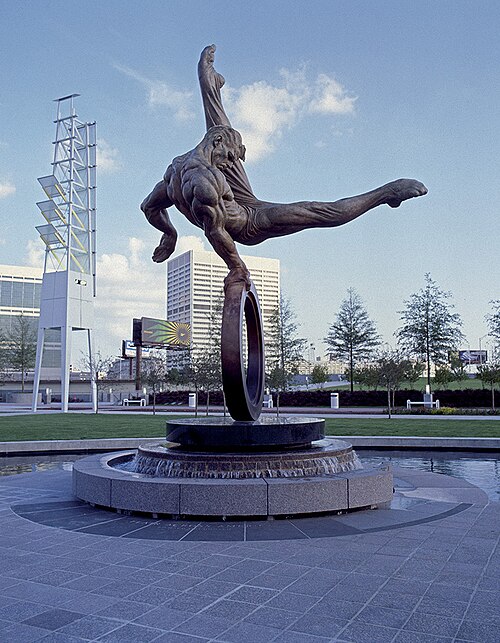
Preparations for the Olympics lasted more than seven years and had an economic impact of at least US$5.14 billion. Over two million visitors came to Atlanta, and approximately 3.5 billion people around the world watched at least some of the events on television. Although marred by the tragedy of the Centennial Olympic Park bombing, the Games were a financial success, due in part to TV rights contracts and sponsorships at record levels.[40] Atlanta also set a new record for the most tickets sold at a single Games (8.3 million), and held it until 2024.[41]
Beyond international recognition, the Games resulted in many modern infrastructure improvements. The mid-rise dormitories built for the Olympic Village, which became the first residential housing for Georgia State University (Georgia State Village), are now used by the Georgia Institute of Technology (North Avenue Apartments). As designed, the Centennial Olympic Stadium was converted into Turner Field after the Paralympics, which became the home of the Atlanta Braves Major League Baseball team from 1997 to 2016. The Braves' former home, Atlanta–Fulton County Stadium, was demolished in 1997 and the site became a parking lot for Turner Field; the Omni Coliseum was demolished the same year to make way for State Farm Arena. The city's permanent memorial to the 1996 Olympics is Centennial Olympic Park, which was built as a focal point for the Games. The park initiated a revitalization of the surrounding area and now serves as the hub for Atlanta's tourism district.[40]
In November 2016, a commemorative plaque was unveiled for Centennial Olympic Park to honor the 20th anniversary of the Games.[42][43]
Following the Braves' departure from Turner Field to Truist Park in 2017, Georgia State University acquired the former Olympic Stadium and surrounding parking lots. It reconfigured the stadium for a second time into Center Parc Stadium for its college football team.
The 1996 Olympic cauldron was originally built and placed at the intersection of Fulton Street and Capitol Avenue, near the Centennial Olympic Stadium. After the Paralympics, in order to make room for the stadium conversion, the Olympic cauldron was moved (except its ramp, which was demolished) to the intersection of Capitol Avenue and Fulton Street in 1997, where it has stayed since. Since Georgia State University's acquisition of the former Olympic Stadium and surrounding lots, there has been proposals and growing calls to move the Olympic cauldron to Centennial Olympic Park.[44][45][46]
The Olympic cauldron was re-lit in February 2020 for the 2020 U.S. Olympic Marathon Trials.[47]
The 1996 Olympics are the most recent edition of the Summer Olympics to be held in the United States. Los Angeles will host the 2028 Summer Olympics, 32 years after the Games were held in Atlanta.[48]
Sponsors
The 1996 Summer Olympics relied heavily on commercial sponsorship. The Atlanta-based Coca-Cola Company was the exclusive provider of soft drinks at Olympics venues, and built an attraction known as Coca-Cola Olympic City for the Games.[49] As part of a sponsorship agreement with Columbia TriStar Television, the syndicated game shows Jeopardy! and Wheel of Fortune both produced episodes with Olympics tie-ins (including branded memorabilia and contests) for broadcast between April and July 1996. These included a Jeopardy! international tournament, and three weeks of Wheel of Fortune episodes filmed on-location at Atlanta's Fox Theatre.[50][51][52]
The Games were affected by several instances of ambush marketing—in which companies attempt to use the Games as a means to promote their brand, in competition with the exclusive, category-based sponsorship rights issued by the Atlanta organizing committee and the IOC (which grants the rights to use Olympics-related terms and emblems in marketing). The Atlanta organizing committee threatened legal actions against advertisers whose marketing implied an official association with the Games. Several non-sponsors set up marketing activities in areas near venues, such as Samsung (competing with Motorola), which ambushed the Games with its "96 Expo".[53][54] The city of Atlanta had also licensed street vendors to sell products from competitors to Olympic sponsors.[55][56]
The most controversial ambush campaign was undertaken by Nike, Inc., which had begun an advertising campaign with aggressive slogans that mocked the Games' values, such as "Faster, Higher, Stronger, Badder", "If you're not here to win, you're a tourist", and "You don't win silver, you lose gold." The slogans were featured on magazine ads and billboards it purchased in Atlanta.[53] Nike also opened a pop-up store known as the Nike Center near the Athletes' Village, which distributed Nike-branded flags to visitors (presumably to be used at events).[57] IOC marketing director Michael Payne expressed concern for the campaign, believing that athletes could perceive them as being an insult to their accomplishments.[57] Payne and the United States Olympic Committee's marketing director, John Krimsky, met with Howard Slusher, a subordinate of Nike co-founder Phil Knight. The meeting quickly turned aggressive, with Payne warning that the IOC could pull accreditation for Nike employees and ban the display of its logos on equipment; he also threatened to organize a press conference where silver medallists from the Games, as well as prominent Nike-sponsored athlete Michael Johnson (who attracted attention during the Games for wearing custom, gold-colored Nike shoes), would denounce the company. Faced with these threats, Nike agreed to retract most of its negative advertising and public relations stunts.[57]
Reception
At the closing ceremony, IOC President Juan Antonio Samaranch said in his closing speech, "Well done, Atlanta" and simply called the Games "most exceptional." This broke precedent for Samaranch, who had traditionally labeled each Games "the best Olympics ever" at each closing ceremony, a practice he resumed at the subsequent Winter Games in Nagano in 1998.[58]
A report prepared after the Games by European Olympic officials was critical of Atlanta's performance in several key areas, including the level of crowding in the Olympic Village, the quality of available food, the accessibility and convenience of transportation, and the Games' general atmosphere of commercialism.[59] IOC vice-president Dick Pound responded to criticism of the commercialization of these Games, stating that they still adhered to a historic policy barring the display of advertising within venues, and that "you have to look to the private sector for at least a portion of the funding, and unless you're looking for handouts, you're dealing with people who are investing business assets, and they have to get a return."[55]
In 1997, Athens was awarded the 2004 Summer Olympics. Along with addressing the shortcomings of its 1996 bid, it was lauded for its efforts to promote the traditional values of the Olympic Games, which some IOC observers felt had been lost due to the over-commercialization of the 1996 Games. However, the 2004 Games heavily relied on public funding and eventually failed to make a profit, which some have claimed contributed to the financial crisis in Greece.[60][61][62]
The financial struggles faced by many later Games, such as the 2006 Winter Olympics in Turin and the 2016 Summer Olympics in Rio de Janeiro, have caused some to offer more positive reappraisals of the management of the 1996 Summer Games. Former JPMorgan Chase president (and torchbearer) Kabir Sehgal noted that in contrast to many later Olympics, those of 1996 were financially viable, had a positive economic impact on the city, and most of the facilities constructed continued to be used after the Games. Sehgal contrasted the 1996 Games' "grassroots" effort backed almost entirely by private funding, with the only significant public spending coming from infrastructure associated with the Games, to modern "top-down" bids, instigated by local governments and reliant on taxpayer funding, making them unpopular among citizens who may not necessarily be interested.[19] The 2028 Summer Olympics in Los Angeles will rely almost entirely on private funding, with the city of Los Angeles and state of California each intending to provide up to $250 million in funding in the event of shortfalls, and the U.S. federal government providing funding solely for security.[63][64][65]
See also


- 1996 Summer Paralympics
- Olympic Games held in the United States
- 1904 Summer Olympics – St. Louis
- 1932 Summer Olympics – Los Angeles
- 1932 Winter Olympics – Lake Placid
- 1960 Winter Olympics – Squaw Valley
- 1980 Winter Olympics – Lake Placid
- 1984 Summer Olympics – Los Angeles
- 1996 Summer Olympics – Atlanta
- 2002 Winter Olympics – Salt Lake City
- 2028 Summer Olympics – Los Angeles
- 2034 Winter Olympics – Salt Lake City
References
- ^ "Unity in diversity". International Olympic Committee. January 3, 2024.
- ^ a b "Factsheet - Opening Ceremony of the Games of the Olympiad" (PDF) (Press release). International Olympic Committee. October 9, 2014. Archived (PDF) from the original on August 14, 2016. Retrieved December 22, 2018.
- ^ Glanton, Dahleen. "Atlanta debates how golden it was". Chicago Tribune. Retrieved November 28, 2018.
- ^ "Live From PyeongChang". TvTechnology. Retrieved November 28, 2018.
- ^ "Atlanta: 20 years later". Sports Business Journal. July 18, 2016. Retrieved November 28, 2018.
- ^ "List of Olympic Host Cities – Architecture of the Games".
- ^ "Magnificent Seven reflects on their historic gold twenty years later".
- ^ Payne, Michael (2006). Olympic turnaround: how the Olympic Games stepped back from the brink of Extinction to Become the Best Known Brand. Westport, Ct.: Praeger Publishers. ISBN 0-275-99030-3.
- ^ a b c Weisman, Steven R. (September 19, 1990). "Atlanta Selected Over Athens for 1996 Olympics". The New York Times. Retrieved September 23, 2008.
- ^ a b c Maloney, Larry (2004). "Atlanta 1996". In Finding, John E.; Pelle, Kimberly D. (eds.). Encyclopedia of the Modern Olympic Movement. Greenwood Publishing Group. pp. 235–6. ISBN 9780313322785. Retrieved September 23, 2008.
- ^ Edwards, Peter (July 24, 2015). "Toronto has made 5 attempts to host the Olympics. Could the sixth be the winner?". Toronto Star.
- ^ a b Yates, Ronald E. (September 17, 1990). "'96 Olympic site in photo finish". Chicago Tribune. p. 13.
- ^ "Greek Warning On Olympic Bid". The New York Times. Associated Press. August 23, 1990. p. B12.
- ^ Longman, Jere (August 3, 1997). "Athens Pins Olympic Bid to World Meet". The New York Times. Retrieved September 23, 2008.
- ^ "1996 Olympic Games". Georgia Encyclopedia. Retrieved February 24, 2013.
- ^ Longman, Jere (September 6, 1997). "Athens Wins a Vote for Tradition, and the 2004 Olympics". The New York Times. Retrieved May 25, 2010.
- ^ "IOC Vote History". www.aldaver.com. Archived from the original on May 25, 2008. Retrieved June 10, 2008.
{{cite web}}: CS1 maint: unfit URL (link) - ^ The Socialist Federal Republic of Yugoslavia was still in existence at the time of bidding for the 1996 Olympics, although it would cease to exist by the time of the 1996 Summer Olympic games
- ^ a b c "What Rio Should Have Learned From Atlanta's 1996 Summer Olympics". Fortune. Retrieved March 20, 2019.
- ^ Applebome, Peter (August 4, 1996). "So, You Want to Hold an Olympics". The New York Times. Retrieved August 17, 2008.
- ^ Engle, Sam Marie (1999). "The Olympic Legacy in Atlanta – [1999] UNSWLJ 38; (1999) 22(3) University of New South Wales Law Journal 902". University of New South Wales Law Journal. Archived from the original on November 30, 2011. Retrieved June 16, 2009.
- ^ "Atlanta Olympics: By The Numbers". Sports Business Daily. July 18, 2018. Retrieved March 20, 2019.
- ^ Gibson, Owen (October 9, 2013). "Sochi 2014: the costliest Olympics yet but where has all the money gone?". The Guardian. Retrieved December 4, 2020.
- ^ Burbank, Matthew; et al. (2001). Olympic Dreams: The Impact of Mega Events on Local Politics. Lynne Rienner Publishers. p. 97.
- ^ "Centennial Olympic Games" (PDF). la84foundation.org. Archived from the original (PDF) on May 28, 2008. Retrieved October 12, 2009.
- ^ "ProReview: Izzy's Quest for the Olympic Rings". GamePro. No. 69. IDG. April 1995. p. 46.
- ^ "Atlanta Redefines Image With 'Come Celebrate Our Dream' Slogan". Seattle Times. February 19, 1995.
- ^ "Congratulations Note from Billy Payne". December 30, 2012.
- ^ "Remembering the Centennial Olympic Games in Savannah". City of Savannah. Retrieved June 3, 2019.
- ^ "Exhibition | The Power of Color – Featuring works by Kevin Cole and Carl Joe Williams". BLACK ART IN AMERICA. January 29, 2018. Retrieved May 13, 2021.
- ^ "Basil Poledouris Biography". Basil Poledouris website. Archived from the original on February 20, 2008. Retrieved February 19, 2008.
- ^ Erie Times-News, "Erie Company's Olympic Work Shines", June 10, 1996, by Greg Lavine
- ^ Plating and Surface Finishing Magazine, August 1996 Issue
- ^ Lohn, John (July 10, 2021). "The Con of Michelle Smith: How the Irish Lass Cheated the Swimming World". Swimming World Magazine. Archived from the original on May 18, 2021. Retrieved August 25, 2021.
- ^ Watterson, John (May 7, 2020). "Sporting Controversies: Irish mist descends upon Michelle Smith's fairytale". The Irish Times. Archived from the original on May 7, 2020. Retrieved August 25, 2021.
- ^ Zurowski, Monica (July 27, 2021). "From the Archives: Sprinter Donovan Bailey dazzled in Olympics 25 years ago". Calgary Herald. Retrieved March 31, 2024.
- ^ "Atlanta 1996, Games of the XXVI Olympiad". Olympic.org. Archived from the original on August 22, 2008. Retrieved May 19, 2007.
- ^ a b "Profile: Eric Rudolph". BBC News. April 14, 2005. Retrieved April 9, 2021.
- ^ Cummings, Denis (July 27, 2011). "On This Day: Bomb Explodes in Atlanta's Olympic Park". findingdulcinea.com. Retrieved September 28, 2015.
- ^ a b Glanton, Dahleen (September 21, 2009). "Olympics' impact on Atlanta still subject to debate". Chicago Tribune. Archived from the original on February 5, 2012. Retrieved July 14, 2012.
- ^ "Largest attendance at an Olympic Games". Guinness World Records. Retrieved August 9, 2024.
- ^ Vejnoska, Jill (November 1, 2016). "New historic marker for 1996 Games unveiled in Centennial Olympic Park". Atlanta Journal-Constitution. Archived from the original on November 2, 2016. Retrieved November 26, 2018.
- ^ "Historical Marker planted for 1996 Centennial Olympic Games". Atlanta Business Chronicle. November 2, 2016. Retrieved November 26, 2018.
- ^ Kahn, Michael (August 15, 2016). "Atlanta's Olympic cauldron relocation floated five years ago; went nowhere". Curbed Atlanta. Retrieved February 15, 2024.
- ^ "Atlanta Cauldron Facing Possible Relocation". www.infobae.com. July 12, 2021. Retrieved February 15, 2024.
- ^ "Qianyu Liu | RISD Museum Publications". publications.risdmuseum.org. Retrieved February 15, 2024.
- ^ Kueppers, Courtney. "Atlanta's Olympic Cauldron to be lit this weekend for first time since 1996". The Atlanta Journal-Constitution. Retrieved February 15, 2024 – via AJC.com.
- ^ Wharton, David (September 13, 2017). "L.A. officially awarded 2028 Olympic Games". Los Angeles Times. Archived from the original on September 20, 2017. Retrieved September 13, 2017.
- ^ Collins, Glenn (March 28, 1996). "Coke's Hometown Olympics;The Company Tries the Big Blitz on Its Own Turf". New York Times. Retrieved November 3, 2013.
- ^ "Atlanta spinning 'Wheel' for sponsorship fortune". Washington Post. March 16, 1996. Retrieved April 17, 2019.
- ^ "THAT 'WHEEL OF FORTUNE' JUST KEEPS SPINNING ALONG". Deseret News. October 16, 1995. Retrieved April 17, 2019.
- ^ Winship, Frederick M. (January 24, 1995). "Game shows join 1996 Olympic games". United Press International. Archived from the original on August 29, 2020.
- ^ a b Heath, Thomas (July 17, 1996). "An Olympic-Size Ambush". Washington Post. Retrieved November 26, 2018.
- ^ "Samsung's Expo Gives It Olympic Exposure / And BellSouth is putting out COWS". SFGate. July 2, 1996. Retrieved November 27, 2018.
- ^ a b "McGill's master of the rings". McGill Reporter. September 12, 1996. Retrieved November 28, 2018.
- ^ Leuty, Ron (November 4, 2001). "Olympic bid smacks into $10M hurdle". San Francisco Business Times. Retrieved November 28, 2018.
- ^ a b c Emmett, James (June 16, 2010). "Rise of the pseudo-sponsors: A history of ambush marketing". SportPro. Archived from the original on January 3, 2015. Retrieved January 3, 2015.
- ^ "Samaranch calls these Olympics 'best ever'". ESPN.com. October 1, 2000. Retrieved March 13, 2009.
- ^ "Olympic Games: Maligned Atlanta meets targets". The Independent. United Kingdom. November 15, 1996. Archived from the original on January 30, 2012. Retrieved October 25, 2010.
- ^ "Did 2004 Olympics Spark Greek Financial Crisis?". CNBC. Associated Press. June 3, 2010.
- ^ Longman, Jere (September 6, 1997). "Athens Wins a Vote for Tradition, and the 2004 Olympics". The New York Times. Retrieved May 25, 2010.
- ^ Anderson, Dave (September 7, 1997). "Athens Can Thank Atlanta for 2004 Games". New York Times. Retrieved May 25, 2010.
- ^ Wharton, David (April 30, 2019). "Estimated cost of 2028 Los Angeles Olympics jumps to $6.9 billion". Los Angeles Times. Archived from the original on June 27, 2019. Retrieved June 29, 2019.
- ^ "Update on Los Angeles' Bid for the 2024 Olympics". California Legislative Analyst's Office. March 23, 2017. Archived from the original on June 1, 2019. Retrieved June 18, 2020.
- ^ "President Trump confirms government will assist L.A. during 2028 Olympics". Los Angeles Times. February 2020. Archived from the original on February 6, 2022. Retrieved February 18, 2020.
External links

Wikimedia Commons has media related to 1996 Summer Olympics.
| External videos | |
|---|---|
 The Atlanta 1996 Olympic Film on YouTube The Atlanta 1996 Olympic Film on YouTube |
- "Atlanta 1996". Olympics.com. International Olympic Committee.
- Official Report of the Centennial Olympic Games, Volume I: Planning and Organizing Digital Archive from the LA84 Foundation of Los Angeles
- Official Report of the Centennial Olympic Games, Volume II: The Centennial Olympic Games Digital Archive from the LA84 Foundation of Los Angeles
- Official Report of the Centennial Olympic Games, Volume III: The Competition Results Digital Archive from the LA84 Foundation of Los Angeles
- 1996 program from GPB about Atlanta and the 1996 Olympic Games, "Fences & Neighborhoods," 1996-06-07, The Walter J. Brown Media Archives & Peabody Awards Collection at the University of Georgia, American Archive of Public Broadcasting
- Atlanta Summer Games 25th anniversary Coverage from The Atlanta Journal-Constitution
- "Collection: Olympic/Paralympic Photograph Collection | Georgia Tech Archives Finding Aids". finding-aids.library.gatech.edu. Archived from the original on May 20, 2024.

