
Loading article…
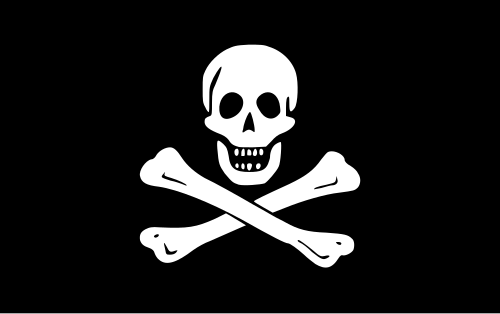
海賊行為は、船やボートに乗った攻撃者が他の船や沿岸地域に対して行う強盗や犯罪行為であり、通常は積み荷やその他の貴重品を盗むことを目的としています。海賊行為を行う者は海賊と呼ばれ、海賊行為に使用される船は海賊船と呼ばれます。記録に残る最も古い海賊行為の例は紀元前14世紀に、海洋略奪者の集団である「海の民」がエーゲ海文明と地中海文明の船を襲ったものです。船舶の航路を予測可能なものにする狭い水路は、長い間、海賊行為の機会を生み出してきました[1] 。また、私掠船や通商破壊の機会も生み出してきました。
歴史的な例としては、ジブラルタル海域、マラッカ海峡、マダガスカル、アデン湾、イギリス海峡などが挙げられ、これらの海域の地理的構造が海賊の襲撃を容易にした。[2] [3]海賊行為という用語は通常、海上海賊行為を指すが、この用語は一般化されて、陸上、[4]空中、コンピュータネットワーク、(SFでは)宇宙空間での行為を指すようになった。海賊行為には通常、犯人が自分の船で犯した犯罪(窃盗など)や、政府による許可を伴う私掠船は含まれない。
海賊行為は、国際慣習法上の特定の犯罪の名称であり、また多くの国の国内法上の多くの犯罪の名称でもある。21世紀において、輸送船に対する海上海賊行為は依然として大きな問題であり、2023年には全世界での損失額は2004年の160億ドルから250億ドルに増加すると推定されている[5] 。[6]
紅海とインド洋の間の海域、ソマリア沖、マラッカ・シンガポール海峡は、アサルトライフル、機関銃、手りゅう弾、ロケット推進手りゅう弾などの自動小銃で武装した現代の海賊の標的に頻繁になっている。海賊は小型モーターボートを使って船舶を襲撃し乗り込むことが多く、これは現代の貨物船や輸送船の乗組員の少なさを利用した戦術である。これらの襲撃は国際水域で発生することが多いため、国際社会は現代の海賊を裁く上で多くの課題に直面している。[7]各国は海賊を撃退・追跡するために海軍力を使用しており、一部の民間船舶は武装警備員、高圧放水砲、音響砲を使用して乗組員を撃退し、レーダーを使用して潜在的な脅威を回避している。
帆船時代の海賊行為をロマンチックに描いた物語は、西洋のポップカルチャーの一部となって久しい。1724年にロンドンで出版された2巻からなる『海賊通史』は、海賊の黄金時代における主要な海賊の人物像と、その環境の半ば正確な描写を一般の人々の想像力にもたらしたと一般に考えられている。『海賊通史』は、その後の海賊行為を描いた多くのフィクションに影響を与えたが、最も有名なのは小説『宝島』(1883年)と『ピーター・パン』 (1911年)で、どちらも1世紀以上にわたって舞台、映画、テレビ、その他のメディアで翻案、再翻案されてきた。より最近では、 2003年に始まった 『パイレーツ・オブ・カリビアン』の映画シリーズによって、「黄金時代」の海賊がさらにステレオタイプ化され、人気を博した。
語源
英語の「pirate」はラテン語の pirata(「海賊、海賊、海賊強盗」)に由来し、これはギリシャ語のπειρατής(peiratēs)「山賊」[8] πειράομαι(peiráomai)「私は試みる」から来ており、πεῖρα(peîra)「試み、経験」から来ている。[9]ギリシャ語のpeiratēsの意味は文字通り「何かを試みる人」である。時が経つにつれ、この言葉は陸や海で強盗や山賊行為に関わった人を指すようになった。[10]この言葉は1300年頃に英語に初めて登場した。 [11]綴りが標準化されたのは18世紀になってからで、「pirrot」、「pyrate」、「pyrat」などの綴りはこの時期まで存在した。[12] [13]
歴史
ヨーロッパ
古代
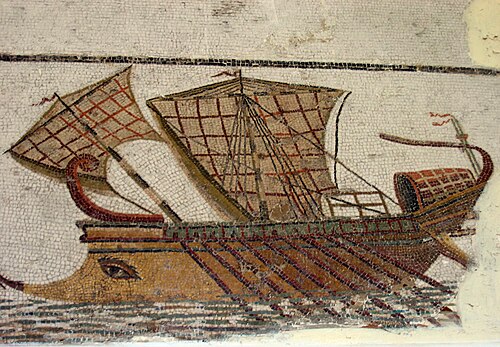
海賊行為の記録に残る最も古い例は、紀元前14世紀にエーゲ海と地中海を航行する船を脅かした海の民の行為である。古典古代では、フェニキア人、イリュリア人、ティレニア人が海賊として知られていた。前古典時代、古代ギリシャ人は海賊行為を現実的な職業として容認していた。海賊行為は広く行われており、「生計を立てる完全に名誉ある方法」と見なされていたようだ。[14]ホメロスの『イリアス』や『オデュッセイア』など多くの文献で、海賊行為がごく普通に行われていたことが言及されており、女性や子供を誘拐して奴隷として売ることは一般的だった。古典ギリシャの時代までに、海賊行為は職業として持つには「不名誉」と見なされていた。[14] [15]
紀元前3世紀、リキアのオリンポス山への海賊の襲撃により貧困がもたらされた。古代の海賊行為を働いた民族の中で最も有名なのは、西バルカン半島に住んでいたイリュリア人である。アドリア海を絶えず襲撃していたイリュリア人は、ローマ共和国と多くの紛争を引き起こした。紀元前229年にローマ人がイリュリア艦隊を決定的に打ち負かして初めて、彼らの脅威は終わった。[16]紀元前1世紀には、アナトリア沿岸に海賊国家があり、東地中海におけるローマ帝国の商業を脅かしていた。紀元前75年のエーゲ海を渡る航海の際、[17]ユリウス・カエサルはキリキアの海賊に誘拐され、短期間監禁され、ドデカネス諸島のファルマクーサ島で捕らえられた。[18]紀元前67年、元老院は将軍グナエウス・ポンペイウス・マグヌスに海賊行為に対処する権限を与え(ガビニア法)、ポンペイウスは3か月の海戦の末、海賊の脅威を鎮圧することに成功した。
258年には早くも、ゴート族とヘルール族の艦隊が黒海とマルマラ海沿岸の町を荒らした。エーゲ海沿岸も数年後に同様の攻撃を受けた。264年、ゴート族はガラティアとカッパドキアに到達し、ゴート族の海賊はキプロス島とクレタ島に上陸した。その過程で、ゴート族は莫大な戦利品を奪い、数千人を捕虜にした。[要出典] 286年、ガリア人出身のローマ軍司令官カラウシウスが、クラシス・ブリタニカの指揮官に任命され、アルモリカとベルギー領ガリアの海岸を襲撃していたフランク人とサクソン人の海賊を排除する責任を与えられた。ローマのブリタニア属州では、聖パトリックがアイルランドの海賊に捕らえられ、奴隷にされた。
中世
_crop.jpg/500px-Viking_invasion_(Pierpont_Morgan_Library_MS_M.736,_folio_9v)_crop.jpg)
中世ヨーロッパで最も広く知られ、最も広範囲に渡って活動した海賊はヴァイキング[19]である。ヴァイキングはスカンジナビア半島出身の海上戦士で、中世初期ヴァイキング時代の8世紀から12世紀にかけて主に襲撃と略奪を行った。ヴァイキングは西ヨーロッパ全域の海岸、河川、内陸都市を襲撃し、844年にノルウェー人の攻撃を受けたセビリアにまで及んだ。ヴァイキングは北アフリカやイタリアの海岸も攻撃し、バルト海沿岸全域を略奪した。一部のヴァイキングは東ヨーロッパの河川を遡り、黒海やペルシャにまで達した。
中世後期、ピエール・ゲルロフス・ドニアとウィジェルカマに率いられた「アルメル・ズワルテ・フープ」として知られるフリースラントの海賊が、神聖ローマ皇帝カール5世の軍隊と戦い、ある程度の成功を収めました。
9世紀末には、南フランスと北イタリアの海岸沿いにムーア人の海賊の避難所が築かれた。[20] 846年、ムーア人の襲撃者がローマのサン・ピエトロとサン・パウロの別室のバジリカを略奪した。911年、フラクシネットのムーア人がアルプスの峠をすべて支配していたため、ナルボンヌの司教はローマからフランスに戻ることができなかった。ムーア人の海賊は10世紀にバレアレス諸島から活動していた。824年から961年にかけて、クレタ首長国のアラブの海賊が地中海全体を襲撃した。14世紀には、ムーア人の海賊の襲撃により、ヴェネツィアのクレタ公爵はヴェネツィアに艦隊を常時警戒させるよう要請せざるを得なかった。 [要出典]
5 世紀と 6 世紀にスラブ人が旧ローマ領ダルマチア地方を侵略した後、ナレンティア人と呼ばれる部族が古いイリュリア海賊の習慣を復活させ、7 世紀以降はアドリア海を頻繁に襲撃しました。アドリア海での襲撃は急速に増加し、アドリア海全体が航行に安全ではなくなりました。
ナレンツィア人は、ヴェネツィア海軍が海外にいる間、827年から882年にかけてシチリア海域で作戦していたときのように、襲撃行為においてより自由な行動を取った。ヴェネツィア艦隊がアドリア海に戻るとすぐに、ナレンツィア人は一時的に再び習慣を捨て去り、ヴェネツィアで条約に署名し、スラブ異教徒の指導者をキリスト教に改宗させた。834年か835年に彼らは条約を破り、ベネヴェントから戻るヴェネツィアの商人を再び襲撃した。839年と840年にヴェネツィアが彼らを処罰しようとした軍事的試みはすべて完全に失敗した。
その後、彼らはアラブ人とともにヴェネツィアを頻繁に襲撃した。846年、ナレンティン人はヴェネツィアに侵入し、ラグーン都市カオルレを襲撃した。これがビザンチン帝国の軍事行動を引き起こし、キリスト教が彼らにもたらされた。 872年頃のアラブ人のアドリア海沿岸襲撃と帝国海軍の撤退後も、ナレンティン人はヴェネツィア海域への襲撃を続け、887年から888年にかけてイタリア人との新たな衝突を引き起こした。ヴェネツィア人は10世紀から11世紀を通じて彼らと無駄に戦い続けた。
ドマゴイは第8回カトリック公会議に参加した教皇使節を帰国させていた船を襲撃したとして告発され、その後教皇ヨハネ8世はドマゴイに対し、海賊が海上でキリスト教徒を襲撃するのを止めるよう要請した。[21] [22]

937年、アイルランドの海賊はスコットランド人、バイキング、ピクト人、ウェールズ人とともにイングランドを侵略したが、アゼルスタンが彼らを追い払った。
バルト海におけるスラヴ人の海賊行為は、 1168年にデンマーク人がラニ人の拠点アルコナを征服したことで終焉した。12世紀には、スカンジナビア西部の海岸がバルト海東岸のクルシュー人とエセリア人によって略奪された。13世紀と14世紀には、海賊がハンザ同盟の航路を脅かし、海上貿易をほぼ絶滅の危機に追い込んだ。ゴットランドの酒類販売兄弟は、後にリケディーラーとして海賊行為に転向した私掠船の仲間であった。彼らは、リーダーのクラウス・シュテルテベッカーとゲーデケ・ミヒェルスで特に有名であった。1440年頃まで、北海、バルト海、ボスニア湾の海上貿易はいずれも海賊の攻撃の深刻な危険にさらされていた。
H・トーマス・ミルホーンは、1241年に海賊行為で有罪判決を受けたウィリアム・モーリスという名のイギリス人を、絞首刑、引き裂き刑、四つ裂き刑に処された最初の人物として挙げており、[23]当時の国王ヘンリー3世がこの犯罪に対して特に厳しい見方をしていたことを示している。
ウシュクイニクは、14世紀に ヴォルガ川とカマ川沿いの都市を略奪したノヴゴロドの海賊でした。
.jpg/500px-Cotes_de_la_Mer_Noire._Cosaques_d'Azof_abordant_un_corsaire_Turc._(1847).jpg)
ビザンチン時代から、マニオット族(ギリシャで最も凶暴な民族の 1 つ)は海賊として知られていました。マニオット族は、自分たちの土地が貧しいという事実に対する正当な対応として海賊行為をとらえ、それが主な収入源となっていました。マニオット族の海賊の主な被害者はオスマン帝国でしたが、マニオット族はヨーロッパ諸国の船も標的にしていました。
ザポリージャ・シチは、 16 世紀から 18 世紀にかけてヨーロッパに存在した海賊共和国です。東ヨーロッパの辺鄙な草原地帯のコサック領に位置し、封建領主から逃げてきたウクライナの農民、無法者、貧しい貴族、トルコのガレー船から逃亡した奴隷などが住んでいました。この場所の辺鄙さとドニエプル川の急流は、復讐心に燃える勢力の侵略からこの場所を効果的に守っていました。
自らを「コサック」と称したザポリージャ・シチの住民の主な標的は、オスマン帝国とクリミア・ハン国の黒海沿岸の裕福な集落であった。[要出典] 1615年と1625年までに、ザポリージャ・コサックはイスタンブール郊外の町を破壊し、オスマン帝国のスルタンを宮殿から逃亡させた。[要出典] ステンカ・ラージン率いるドン・コサックはペルシャ海岸も荒らした。[24] [信頼できない情報源? ]
地中海の海賊
_by_Aert_Anthoniszoon.jpg/500px-A_French_Ship_and_Barbary_Pirates_(c_1615)_by_Aert_Anthoniszoon.jpg)
大西洋やカリブ海の海賊ほど有名でもロマンチックでもないが、地中海の海賊は歴史上どの時点でも大西洋やカリブ海の海賊と同等かそれ以上の数を誇っていた。[25]地中海の海賊行為は17世紀半ばまでほぼ完全にガレー船で行われていたが、その後徐々にジーベックやブリガンティンなどの操縦性に優れた帆船に取って代わられていった。これらは戦闘ガレー船よりも小型で、ガリオットやフスタと呼ばれることが多かった。[26]
海賊ガレー船は小型で機敏、軽武装だったが、商船の乗組員がほとんどいないことを圧倒するため、乗組員が多数乗船していた。一般的に、海賊船は巡視船が追跡して捕獲するのは極めて困難だった。17世紀のフランス海軍提督アンヌ・イラリオン・ド・トゥールヴィルは、悪名高いモロッコの海賊港サレから襲撃者を追い詰める唯一の方法は、同じタイプの海賊船を捕獲することだと信じていた。[27]
海賊と戦うためにオール船を使うことは一般的で、カリブ海の大国でさえ実践していた。海賊対策としてガレー船やハイブリッド帆船が、1683年にイギリス人によってジャマイカで建造され[28]、16世紀後半にはスペイン人によっても建造された[29] 。ジェームズ・ガレー船やチャールズ・ガレー船のような下甲板にオール用の舷窓がある特別に建造された帆走フリゲートや、オールを装備したスループ船は、海賊狩りに非常に役立ったが、1720年代まで海賊行為を阻止できるほどの数は建造されなかった[30] 。
15世紀から16世紀にかけてオスマン帝国が東地中海の大部分を征服してイスラム教徒の勢力が拡大した結果、海上貿易における海賊行為が広まった。1500年ごろから、いわゆるバルバリア海賊がアルジェ、チュニス、トリポリ、モロッコなどの北アフリカの港を拠点に活動を開始し、主にキリスト教国の船舶を襲撃し、海上だけでなく陸上でも大規模な奴隷略奪を行った。バルバリア海賊は名目上はオスマン帝国の宗主権下にあったが、イスラムの敵を襲撃するかなりの独立性を持っていた。イスラムの海賊は厳密には、合法ではあるが非常に好戦的な国家の支援を受けた私掠船であることが多かった。彼らは自分たちを聖なるイスラム戦士、またはガズィーとみなし、[31] 11世紀後半の第1回十字軍から始まった西方キリスト教徒の侵略と戦う伝統を引き継いでいた。 [32]
.jpg/500px-Anglo-Dutch_fleet_in_the_bay_of_Algiers_as_support_for_the_ultimatum_demanding_the_release_of_white_slaves_on_august_26_1816_(Nicolaas_Baur,_1818).jpg)
イタリア、スペイン、地中海の島々の沿岸部の村や町は、イスラム教徒の海賊に頻繁に襲われ、イタリアとスペインの海岸の長い区間は、住民によってほぼ完全に放棄されました。1600年以降、バルバリア海賊は時折大西洋に侵入し、はるか北はアイスランドまで襲撃しました。ロバート・デイヴィスによると、16世紀から19世紀の間に、100万から125万人のヨーロッパ人がバルバリア海賊に捕らえられ、北アフリカとオスマン帝国で奴隷として売られました。最も有名な海賊は、オスマン帝国のアルバニア人 ハイレッディンとその兄のオルチ・レイス(赤ひげ)、トゥルグト・レイス(西方ではドラグートとして知られる)、クルトグル(西方ではクルトゴリとして知られる)、ケマル・レイス、サレフ・レイス、コジャ・ムラト・レイスです。オランダ人のヤン・ヤンスゾーンやイギリス人のジョン・ワード(イスラム教徒の名前はユスフ・レイス)など、数人のバルバリア海賊はイスラム教に改宗した反逆的なヨーロッパの私掠船員であった。[33] [34]
バルバリア海賊には、最初はロードス島で、1530年以降はマルタ島で活動した聖ヨハネ騎士団というキリスト教の直接的な対応組織があったが、彼らの数は少なく、捕らえた奴隷も少なかった。両陣営はそれぞれの信仰の敵と戦い、どちらもガレー船を主な武器として使った。また、両陣営は捕らえた、あるいは買ったガレー船の奴隷を船のオールに乗せた。イスラム教徒は主に捕らえたキリスト教徒に頼り、キリスト教徒はイスラム教徒の奴隷、キリスト教徒の囚人、そして絶望や貧困からボートを漕ぐようになった自由人であるブオナヴォーリの小集団を混ぜて使った。 [32]
歴史家ピーター・アールは、キリスト教徒とイスラム教徒の地中海紛争の両陣営を「海上略奪の鏡像、互いに対立する2つのビジネスライクな略奪船団」と表現した。[35]私掠船、海賊行為、奴隷略奪という形でのこの信仰の対立は、暴力からの保護の必要性だけでなく、低強度の紛争から生じた略奪品と奴隷の取引によって維持/資金提供/運営される複雑なシステムを生み出した。このシステムは「大規模な多国籍保護活動」と表現されており、[36]キリスト教側の活動は1798年のナポレオン戦争まで終結しなかった。バルバリア海賊は1830年代まで鎮圧され、反十字軍ジハードの最後の痕跡は事実上終焉した。[37]
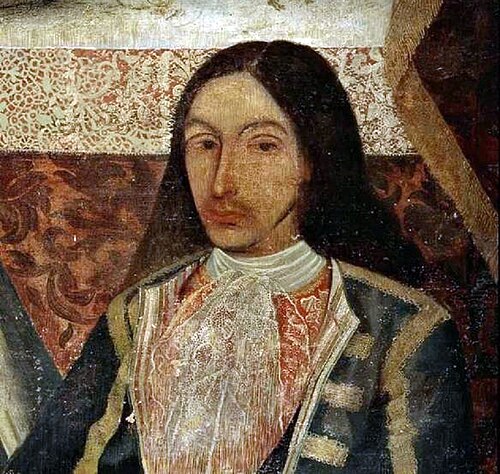
17 世紀、バーバリ海岸の海賊行為は、ヨーロッパ列強間の競争によって助長されることが多かった。フランスはスペインに対する海賊行為を奨励し、後にイギリスとオランダもフランスに対する海賊行為を支援した。17 世紀後半までに、ヨーロッパの海軍大国は、バーバリ諸国を脅迫して和平を結ばせるために報復措置を開始した。キリスト教国の中で海賊行為の脅威に最もうまく対処したのはイギリスであった。 [要出典] 1630 年代以降、イギリスはバーバリ諸国とさまざまな機会に和平条約を結んでいたが、これらの協定の違反は必ず新たな戦争を招いた。
特に論争の的となったのは、外国船が攻撃を避けるためにイギリス船を装う傾向だった。イギリス海軍の力が増大し、海賊に対する作戦がますます執拗になったため、バーバリ諸国はますます犠牲を強いられることになった。チャールズ 2 世の治世中、一連のイギリス遠征隊が襲撃艦隊に勝利し、彼らの母港を攻撃したため、イギリス船舶に対するバーバリの脅威は永久になくなった。1675 年、ジョン ナーボロー卿率いるイギリス海軍艦隊の砲撃と、アーサー ハーバート率いる艦隊によるさらなる敗北により、チュニスおよびトリポリとの永続的な和平交渉が行われた (1816 年まで)。[引用が必要]
当時主要な海軍力として台頭していたフランスは、その後すぐに同様の成功を収め、1682年、1683年、1688年にアルジェを砲撃して永続的な平和を確保し、トリポリも1686年に同様に強制された。1783年と1784年にスペインは海賊行為を阻止するためにアルジェを砲撃した。2度目の砲撃では、バルセロ提督が街に甚大な被害を与えたため、アルジェリアのデイはスペインに和平交渉を求めた。それ以来、スペインの船舶と海岸は数年間安全であった。
1776年のアメリカ独立宣言まで、イギリスは北アフリカ諸国と条約を結んでアメリカ船をバルバリ海賊から守っていた。1777年にアメリカを正式に承認した最初の独立国となったモロッコは、1784年に独立後にアメリカ船を拿捕した最初のバルバリ諸国となった。アメリカはなんとか和平条約を結んだが、攻撃からの保護と引き換えに貢物を支払わなければならなかった。1800年のバルバリ諸国への身代金と貢物の支払額はアメリカ政府の年間支出の20%に達し、[38]貢物の支払いを終わらせるバルバリ戦争を引き起こした。アルジェは1805年の和平条約をわずか2年で破棄し、1816年にイギリスに強制されるまで1815年の条約の履行を拒否した。
1815 年、チュニジア艦隊がサルデーニャ島のパルマを略奪し、住民 158 人を連れ去った事件は、広く憤慨を招いた。英国はこの時までに奴隷貿易を禁止し、他の国々にも同様の措置を取らせようとしていた。このため、海賊の脅威にさらされていた国々からは、アフリカ人奴隷貿易の廃止に熱心である英国が、バーバリ諸国によるヨーロッパ人とアメリカ人の奴隷化を阻止するまでには至っていないという苦情が寄せられた。

この反対意見を中和し、奴隷制度廃止運動をさらに進めるため、1816年にエクスマス卿がトリポリ、チュニス、アルジェから新たな譲歩を引き出すために派遣された。その譲歩には、将来のいかなる紛争においてもキリスト教徒の捕虜を奴隷ではなく戦争捕虜として扱うという誓約や、アルジェとサルデーニャ王国、シチリア王国との間に和平を強制することが含まれていた。最初の訪問で、彼は満足のいく条約を交渉し、帰国の途についた。彼が交渉している間、チュニジア沿岸のボナに定住していたサルデーニャの漁師数名が、彼の知らないうちに残酷な扱いを受けた。彼らはサルデーニャ人として技術的には英国の保護下にあり、政府は賠償を確保するためエクスマス卿を送り返した。8月17日、彼はファン・デ・カペレン提督の指揮するオランダ艦隊と連携してアルジェを砲撃した。[39]その結果、アルジェとチュニスの両国は新たな譲歩をした。
奴隷略奪の全面禁止は伝統的に北アフリカ経済にとって極めて重要であったが、各国の船舶への攻撃を終わらせる上で直面した困難以上に困難を伴った。なぜなら、奴隷商人は保護の行き届いていない人々を餌食にすることで、慣れ親しんだ生活を続けることができたからである。アルジェは規模は小さくなったものの、奴隷略奪を再開した。アルジェの政府に対して取るべき措置は、 1818年のエクス・ラ・シャペル会議で議論された。1820年、ハリー・ニール提督率いる別のイギリス艦隊が再びアルジェを砲撃した。アルジェを拠点とする海賊の活動は、1830年にフランスがアルジェを征服するまで完全には止まらなかった。[39]
東南アジア
_Moro_'pirate'.jpg/500px-The_Iranun_(Ilanun)_Moro_'pirate'.jpg)
東南アジア島嶼部の海洋支配層 オーストロネシア文化では、敵対する国家に対する奴隷や資源を狙った海上襲撃が古くから行われていた。これは名声や武勇と関連付けられ、タトゥーによく記録されていた。相互襲撃の伝統は、初期のヨーロッパ文化によって、東南アジア島嶼部全域で広まっていたことが記録されている。[40] [41] [42] [43] [44]

.jpg/500px-Iranun_lanong_warship_by_Rafael_Monle%C3%B3n_(1890).jpg)
.jpg/500px-Double-barelled_Lantaka_of_artistic_design_and_Moro_arms_(c._1900,_Philippines).jpg)
イスラム教の到来と植民地時代により、奴隷はヨーロッパ、アラブ、中国の奴隷商人との取引において貴重な資源となり、海賊行為や奴隷略奪の件数が大幅に増加した。[44]多数の先住民が海上略奪に従事した。その中には、スールー島のイランン族やバランギンギ族の奴隷商人、ボルネオ島のイバン族の首狩り商人、南スラウェシ島のブギス族の船乗り、東南アジア西部のマレー人などが含まれる。また、中国人、日本人、ヨーロッパ人の貿易商、反逆者、無法者など、外国人船員による海賊行為も小規模ながら行われていた。[42]海賊行為や略奪の件数は、貿易の盛衰やモンスーンの影響を受けやすく、海賊シーズン(俗に「海賊の風」と呼ばれる)は8月から9月にかけて始まった。[41]
奴隷狩りは、スールー海のイスラム教スルタン国、すなわちスールー王国、マギンダナオ王国、ラナオ王国連合(現代のモロ族)にとって経済的に非常に重要であった。1770年から1870年の間に、イランヌンとバンギンギの奴隷商人によって約20万人から30万人が奴隷にされたと推定されている。[40] [41]デビッド・P・フォーサイスは、 1565年以降、フィリピンがスペインに統治されてから最初の2世紀の間に、約200万人の奴隷が捕らえられたと推定している。[45]

これらの奴隷は、マラッカ海峡、ジャワ島、中国南部の海岸、マカッサル海峡の向こうの島々に至る沿岸の集落への襲撃だけでなく、通過中の船舶に対する海賊行為によっても連れ去られた。奴隷のほとんどはタガログ人、ビサヤ人、および「マレー人」(ブギス人、マンダラ人、イバン人、マカッサル人を含む)であった。また、ヨーロッパ人や中国人が捕らえられることもあり、通常はスールー王国の仲介人であるタウスグ族を通じて身代金を払って引き渡された。奴隷は富と地位の主な指標であり、スルタン国の農場、漁場、工房の労働力の源であった。個人の奴隷が売られることはめったになかったが、イランンおよびバンギンギの奴隷市場から購入された奴隷は広範に売買された。1850年代までに、奴隷はスールー諸島の人口の50%以上を占めていた。[40] [42] [41]
規模が大きかったため、マレー語で「海賊」を意味する言葉はイランン人の異名であるラヌンとなった。スールー王国の経済は、奴隷と奴隷貿易によって大きく動かされていた。イランンとバンギンギの男性捕虜は残酷な扱いを受け、イスラム教徒の捕虜でさえ例外ではなかった。捕虜は通常、捕虜のラノンやガライの軍艦でガレー船の奴隷として働かされた。しかし、女性捕虜は通常、よりよい扱いを受けた。強姦の記録はないが、懲罰として飢えさせられた者もいた。捕虜となってから 1 年以内に、イランンとバンギンギの捕虜のほとんどは、通常、米、アヘン、布、鉄の棒、真鍮製品、武器とホロ島で交換された。買い手は通常、優遇措置を受けていたスールー王国のタウスグ・ダトゥであったが、ヨーロッパ人(オランダ人、ポルトガル人)や中国人商人、ヴィサヤの海賊(反逆者)も買い手として含まれていた。[41]

スペイン当局と現地のキリスト教徒フィリピン人は、モロ族の奴隷襲撃に対抗して、フィリピン諸島中に監視塔や砦を建設したが、その多くは今も残っている。州都もさらに内陸に移された。主要な司令部はマニラ、カビテ、セブ、イロイロ、サンボアンガ、イリガンに建設された。また、特にビサヤ諸島では、モロ族の襲撃者よりも速く、追跡も可能な戦闘用「バランガヤネス」(バランガイ)の建造など、地元のコミュニティによって防衛船も建造された。襲撃者に対する抵抗が強まるにつれ、 19世紀初頭には、イランンのラノン軍艦は最終的に、より小型で高速なバンギンギのガライ軍艦に取って代わられた。モロ族の襲撃は、1848年から1891年にかけてスペイン軍と現地軍が行った数回の大規模な海軍遠征によって、最終的に鎮圧された。この遠征には報復砲撃やモロ族の居住地の占領も含まれていた。この頃までにスペイン軍は蒸気砲艦(ヴェイパー)も手に入れており、原住民のモロ族の軍艦を簡単に追い抜いて破壊することができた。[40] [46] [47]
イランン海賊とバンギンギ海賊以外にも、海上襲撃に関わった政治組織はあった。南スラウェシ島のブギス族の船乗りたちは、海賊の標的を探して西はシンガポール、北はフィリピンまで航行していた海賊として悪名高かった。[48]オランラウト海賊はマラッカ海峡とシンガポール周辺の海域の船舶を支配し、[49]マレー海賊とシーダヤック海賊はボルネオの避難所からシンガポールと香港の間の海域で船舶を襲撃した。[50]
東アジア
9世紀までに、東アジアでは、人口は主に沿岸部の山東省と江蘇省に集中し、商人活動に従事していた。張保皐を含む裕福な後援者たちが、この地域に新羅仏教寺院を建立した。張保皐は、唐末期の不安定な情勢の中で沿岸の海賊や内陸の盗賊の犠牲になることが多かった同胞の扱いに憤慨していた。825年頃に新羅に戻り、清海(莞島)に本部を置く強力な私設艦隊を所有していた張保皐は、新羅の興徳王(在位 826-836 )に、黄海での新羅の商人活動を守るために常設の海上駐屯地を設立するよう嘆願した。興徳はこれに同意し、828年に正式に清海守備隊を韓国全羅南道沖の莞島に設立した。興徳は張成沢に1万人の軍隊を与え、防衛施設の建設と配置を命じた。清海守備隊の残骸は莞島の南岸沖の張成沢島で今でも見ることができる。張成沢の軍隊は名目上は新羅王から遺贈されたものの、実質的には張成沢自身の統制下にあった。張成沢は黄海の通商と航海の調停者となった。[ 51]
13世紀から、日本を拠点とする倭寇が東アジアに進出し、300年にわたって続く侵略を開始した。倭寇の襲撃は1550年代にピークを迎えたが、その頃の倭寇は主に中国人の密輸業者であり、明朝の厳格な私的海上貿易禁止に強く反発していた。
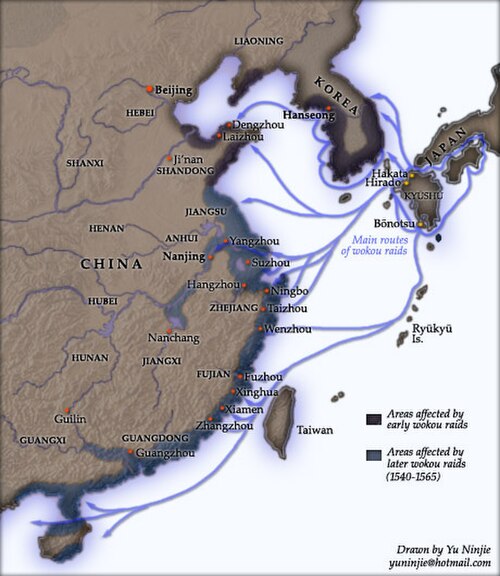
清朝時代、中国の海賊船団はますます大規模になりました。大規模な海賊行為が中国経済に与えた影響は計り知れません。海賊は、福建省と広東省で繁栄し、中国商業の重要な動脈であった中国のジャンク船貿易を貪欲に食い物にしました。海賊船団は沿岸の村々を支配し、貢物を強要したり、ゆすり行為を行ったりして収入を集めました。1802年、恐ろしい鄭毅は従兄弟の鄭斉船長の船団を継承しました。鄭斉の死により、鄭毅は海賊界でさらに大きな影響力を持つようになりました。鄭毅と妻の鄭毅娥(後に海賊連合のリーダーシップを継承する) は、1804年までに1万人を超える海賊連合を結成しました。彼らの軍事力だけでも、清の海軍と戦うのに十分でした。しかし、飢饉、清海軍の反対、内部の不和が重なり、1820年代頃に中国での海賊行為は衰退し、再び同じ状況に陥ることはありませんでした。
1840年代から1850年代にかけて、アメリカ海軍とイギリス海軍は協力して中国海賊と戦った。タイホ湾やトンキン川などで大規模な戦闘が行われたが、海賊ジャンクはその後も何年も中国沖で活動を続けた。しかし、イギリスやアメリカの市民の中には、ヨーロッパ軍と戦うために中国海賊に加わることを志願した者もいた。イギリスは中国海賊に加わった西洋人を捕らえると報酬を与えた。第二次アヘン戦争と太平天国の乱の間、海賊ジャンクは再びイギリス海軍によって大量に破壊されたが、最終的に海賊ジャンク船の艦隊が存在しなくなったのは1860年代から1870年代になってからだった。
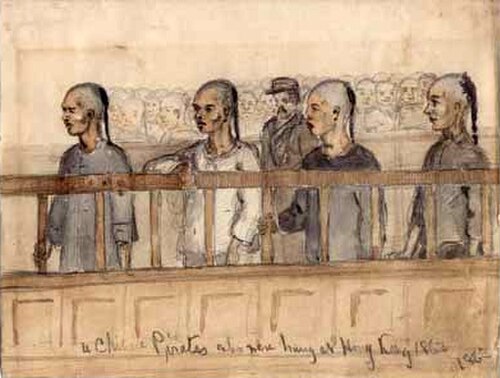
中国の海賊もトンキン湾地域を悩ませた。[52] [53]
明代の海賊行為
明代の海賊は、地理的に国家の周縁部に住む人々から来る傾向があった。[54]海賊は貧しい漁師を含む社会の下層階級から主に集められ、多くは王朝が組織した国家建設事業の義務労働から逃れてきた者たちだった。これらの下層階級の男性、時には女性は、より良い機会と富を求めて国家による課税や徴兵から逃れ、進んで地元の海賊団に加わったのかもしれない。[55] [56] これらの地元の下層階級の人々は、自分たちが代表されていないと感じていたようで、国家への忠誠心から得られるわずかな安心感を、密輸やその他の違法貿易に従事することで比較的恵まれた生活を約束されたものと交換した。
もともと、福建省や浙江省付近の沿岸地域の海賊は日本人だった可能性があり、明朝政府が彼らを「倭寇」と呼んでいたことが示唆している。しかし、沿岸の山賊は多くの政府文書で倭寇と呼ばれ続けていたものの、16世紀までに海賊行為は多民族の職業になっていた可能性が高い。[57] 海賊のほとんどはおそらく漢民族だったが、日本人やヨーロッパ人もこの地域で海賊活動に従事していた。[58]
違法取引と権限
海賊は生計を立てるためにさまざまな策略を巡らせた。密輸や海外での違法貿易は、規模の大小を問わず海賊団にとって主要な収入源だった。[59] 明政府は海外での私的貿易をほぼ禁止していたため、少なくとも海外での銀貿易が禁止解除に貢献するまでは、海賊は基本的にほぼデフォルトであらゆる外国製品の市場を支配できた。[59] [60] [61] 海岸線の地形により、当局が海賊を追跡するのは非常に困難であり、15世紀までに私的な海外貿易が沿岸社会を変え始め、地元社会のほぼすべての側面が違法貿易から利益を得たり、違法貿易と関係したりした。[62]銀を取引したいという欲求は、最終的に明と違法な密輸業者や海賊との公然たる対立につながった。この対立と中国南部の地元商人は、1567年に明朝が私的国際貿易に対する海金禁止令を撤廃するよう説得するのに役立った。 [61]
海賊はまた、地方の政治権力を投影した。[63] 大規模な海賊団は、沿岸地域の地方統治機関として機能し、税金を徴収し、「保護」計画に従事した。海賊は、違法な品物に加えて、表面上は、税金と引き換えに陸上のコミュニティに安全を提供した。[64] これらの海賊団はまた、富の再分配、犯罪の処罰、課税コミュニティの保護を提供する法律を書いて成文化した。[63] これらの法律は、海賊によっても厳密に遵守された。[65] 政治構造は、明の構造に似ている傾向があった。[65]
階層と構造
海賊は永久に海賊でいる傾向はなかった。海賊団に参加するのも離脱するのも比較的容易だったようで、これらの襲撃集団は自発的な勢力を維持することに興味があった。[66] これらの海賊集団のメンバーは一度に数ヶ月から数年以上は海賊団に留まる傾向はなかった。[66]
ほとんどの海賊組織には階級制度があったようだ。海賊のリーダーは、特に中国王朝と協力した場合には、非常に裕福で権力を持つことができた。その結果、彼らの下で働く者たちも裕福で権力を持つことができた。[64] これらの海賊グループは、歴史上の他の「逃亡社会」と同様に組織され、略奪行為に報いる再分配システムを維持していた。略奪や強奪行為を直接行った海賊が最初に分け前を得て、残りは海賊コミュニティの残りの者たちに分配された。[64] これらのコミュニティには平等主義的な側面があり、仕事をする能力が明確に報われていたという証拠があるようだ。海賊自身は、陸上のコミュニティと交流する際に、主に再分配された富の追加割り当てという形で、法律の下でいくつかの特別な特権を持っていた。[64]
顧客
海賊は当然、略奪品を売らなければならなかった。彼らは中国南東部の土地の共同体や外国の貿易業者と貿易関係を持っていた。沿岸防衛大使の職にあった朱琳は、自分が派遣された地域の海賊は地元のエリート貴族の支援を受けていたと記録している。[67] これらの「ガウンと帽子をかぶった海賊」は直接的または間接的に海賊行為を後援し、その地域の違法な私的貿易から直接利益を得ていたことは確かである。朱琳や首都の他の役人が海賊問題を排除しようとしたとき、これらの地元のエリートは反撃し、朱琳は降格され、最終的には北京に送り返されて処刑される可能性もあった。[68] 違法な海上貿易から利益を得た貴族はあまりにも強力で影響力があり、海賊コミュニティの密輸活動に非常に力を入れていたことは明らかである。[69]
海賊は沿岸部の地元エリート層との関係に加えて、王朝自体や国際貿易業者とも複雑で友好的な関係や提携関係を築いていた。[70] 海賊集団が王朝の権威を認めると、自由に活動することが許され、その関係から利益を得ることさえあった。また、これらの海賊がヨーロッパや他の海外勢力の植民地プロジェクトと同盟を結ぶ機会もあった。[71] 王朝と外国の植民地プロジェクトはどちらも、沿岸地域での優位を確立するために海賊を傭兵として雇った。[72] 既存の国家権力がこれらの地域を支配するのが困難だったため、海賊は同盟者や好みの市場を選ぶ自由がかなりあったようだ。[73] この可能性のある同盟者リストには、海賊や海賊が含まれており、違法貿易に従事する際に軍関係者に賄賂を贈る機会さえあった。[74] 彼らは主に金銭と略奪によって動機づけられていたようで、そのため政治的または軍事的同盟国に関しては自由に行動する余裕があった。
Because pirate organizations could be so powerful locally, the Ming government made concerted efforts to weaken them. The presence of colonial projects complicated this, however, as pirates could ally themselves with other maritime powers or local elites to stay in business. The Chinese government was clearly aware of the power of some of these pirate groups, as some documents even refer to them as "sea rebels," a reference to the political nature of pirates.[71] Pirates like Zheng Zhilong and Zheng Chenggong accrued tremendous local power, eventually even being hired as naval commanders by the Chinese dynasties and foreign maritime powers.[75]
South Asia
Bawarij were Sindhi pirates named for their distinctive barja warships[76] who were active between 251 and 865 AD.[77] Their frequent piracy and the incident in which they looted two treasure ships coming from Ceylon became the casus belli for the Umayyad conquest of Sindh.[78]
Pirates who accepted the Royal Pardon from the Chola Empire would get to serve in the Chola Navy as "Kallarani". They would be used as coast guards, or sent on recon missions to deal with Arab piracy in the Arabian Sea. Their function is similar to the 18th century privateers, used by the Royal Navy.
Starting in the 14th century, the Deccan (Southern Peninsular region of India) was divided into two entities: on the one side stood the Muslim Bahmani Sultanate and on the other stood the Hindu kings rallied around the Vijayanagara Empire. Continuous wars demanded frequent resupplies of fresh horses, which were imported through sea routes from Persia and Africa. This trade was subjected to frequent raids by thriving bands of pirates based in the coastal cities of Western India. One of such was Timoji, who operated off Anjadip Island both as a privateer (by seizing horse traders, that he rendered to the raja of Honavar) and as a pirate who attacked the Kerala merchant fleets that traded pepper with Gujarat.
During the 16th and 17th centuries, there was frequent European piracy against Mughal Indian merchants, especially those en route to Mecca for Hajj. The situation came to a head when the Portuguese attacked and captured the vessel Rahimi which belonged to Mariam Zamani the Mughal queen, which led to the Mughal seizure of the Portuguese town Daman.[79] In the 18th century, the famous Maratha privateer Kanhoji Angre ruled the seas between Mumbai and Goa.[80] The Marathas attacked British shipping and insisted that East India Company ships pay taxes if sailing through their waters.[81]
Persian Gulf
The southern coast of the Persian Gulf was known to the British from the late 18th century as the Pirate Coast, where control of the seaways of the Persian Gulf was asserted by the Qawasim (Al Qasimi) and other local maritime powers. Memories of the privations carried out on the coast by Portuguese raiders under Albuquerque were long and local powers antipathetic as a consequence to Christian powers asserting dominance of their coastal waters.[82] Early British expeditions to protect the Imperial Indian Ocean trade from competitors, principally the Al Qasimi from Ras Al Khaimah and Lingeh, led to campaigns against those headquarters and other harbours along the coast in 1809 and then, after a relapse in raiding, again in 1819.[83] This led to the signing of the first formal treaty of maritime peace between the British and the rulers of several coastal sheikhdoms in 1820. This was cemented by the Treaty of Maritime Peace in Perpetuity in 1853, resulting in the British label for the area, 'Pirate Coast' being softened to the 'Trucial Coast', with several emirates being recognised by the British as Trucial States.[82]
Madagascar

At one point, there were nearly 1,000 pirates located in Madagascar.[84] Île Sainte-Marie was a popular base for pirates throughout the 17th and 18th centuries. The most famous pirate utopia is that of the probably fictional Captain Misson and his pirate crew, who allegedly founded the free colony of Libertatia in northern Madagascar in the late 17th century, until it was destroyed in a surprise attack by the island natives in 1694.[85]
The Caribbean


The classic era of piracy in the Caribbean lasted from circa 1650 until the mid-1720s.[86] By 1650, France, England and the United Provinces began to develop their colonial empires. This involved considerable seaborne trade, and a general economic improvement: there was money to be made – or stolen – and much of it traveled by ship.
French buccaneers were established on northern Hispaniola as early as 1625,[87] but lived at first mostly as hunters rather than robbers; their transition to full-time piracy was gradual and motivated in part by Spanish efforts to wipe out both the buccaneers and the prey animals on which they depended. The buccaneers' migration from Hispaniola's mainland to the more defensible offshore island of Tortuga limited their resources and accelerated their piratical raids. According to Alexandre Exquemelin, a buccaneer and historian who remains a major source on this period, the Tortuga buccaneer Pierre Le Grand pioneered the settlers' attacks on galleons making the return voyage to Spain.
The growth of buccaneering on Tortuga was augmented by the English capture of Jamaica from Spain in 1655. The early English governors of Jamaica freely granted letters of marque to Tortuga buccaneers and to their own countrymen, while the growth of Port Royal provided these raiders with a far more profitable and enjoyable place to sell their booty. In the 1660s, the new French governor of Tortuga, Bertrand d'Ogeron, similarly provided privateering commissions both to his own colonists and to English cutthroats from Port Royal. These conditions brought Caribbean buccaneering to its zenith.
.jpg/500px-Pg_003_-_Engraving_(bw).jpg)
A new phase of piracy began in the 1690s as English pirates began to look beyond the Caribbean for treasure. The fall of Britain's Stuart kings had restored the traditional enmity between Britain and France, thus ending the profitable collaboration between English Jamaica and French Tortuga. The devastation of Port Royal by an earthquake in 1692 further reduced the Caribbean's attractions by destroying the pirates' chief market for fenced plunder.[88] Caribbean colonial governors began to discard the traditional policy of "no peace beyond the Line," under which it was understood that war would continue (and thus letters of marque would be granted) in the Caribbean regardless of peace treaties signed in Europe; henceforth, commissions would be granted only in wartime, and their limitations would be strictly enforced. Furthermore, much of the Spanish Main had simply been exhausted; Maracaibo alone had been sacked three times between 1667 and 1678,[89] while Río de la Hacha had been raided five times and Tolú eight.[90]
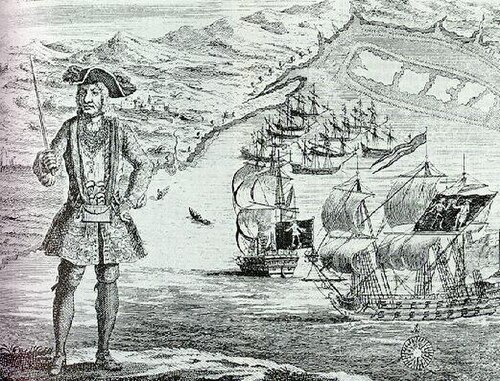
At the same time, England's less favored colonies, including Bermuda, New York, and Rhode Island, had become cash-starved by the Navigation Acts, which restricted trade with foreign ships. Merchants and governors eager for coin were willing to overlook and even underwrite pirate voyages; one colonial official defended a pirate because he thought it "very harsh to hang people that brings in gold to these provinces."[91] Although some of these pirates operating out of New England and the Middle Colonies targeted Spain's remoter Pacific coast colonies well into the 1690s and beyond, the Indian Ocean was a richer and more tempting target. India's economic output was large during this time, especially in high-value luxury goods like silk and calico which made ideal pirate booty;[92] at the same time, no powerful navies plied the Indian Ocean, leaving both local shipping and the various East India companies' vessels vulnerable to attack. This set the stage for the famous pirates, Thomas Tew, Henry Every, Robert Culliford and (although his guilt remains controversial) William Kidd.
In 1713 and 1714, a series of peace treaties ended the War of the Spanish Succession. As a result, thousands of seamen, including European privateers who had operated in the West Indies, were relieved of military duty, at a time when cross-Atlantic colonial shipping trade was beginning to boom. In addition, European sailors who had been pushed by unemployment to work onboard merchantmen (including slave ships) were often enthusiastic to abandon that profession and turn to pirating, giving pirate captains a steady pool of recruits from various coasts across the Atlantic.[93]
In 1715, pirates launched a major raid on Spanish divers trying to recover gold from a sunken treasure galleon near Florida. The nucleus of the pirate force was a group of English ex-privateers, all of whom would soon be enshrined in infamy: Henry Jennings, Charles Vane, Samuel Bellamy, and Edward England. The attack was successful, but contrary to their expectations, the governor of Jamaica refused to allow Jennings and their cohorts to spend their loot on his island. With Kingston and the declining Port Royal closed to them, Jennings and his comrades founded a new pirate base at Nassau, on the island of New Providence in the Bahamas, which had been abandoned during the war. Until the arrival of governor Woodes Rogers three years later, Nassau would be home for these pirates and their many recruits.
Shipping traffic between Africa, the Caribbean, and Europe began to soar in the 18th century, a model that was known as triangular trade, and was a rich target for piracy. Trade ships sailed from Europe to the African coast, trading manufactured goods and weapons in exchange for slaves. The traders would then sail to the Caribbean to sell the slaves, and return to Europe with goods such as sugar, tobacco and cocoa. Another triangular trade saw ships carry raw materials, preserved cod, and rum to Europe, where a portion of the cargo would be sold for manufactured goods, which (along with the remainder of the original load) were transported to the Caribbean, where they were exchanged for sugar and molasses, which (with some manufactured articles) were borne to New England. Ships in the triangular trade made money at each stop.[94]
As part of the peace settlement of the War of the Spanish succession, Britain obtained the asiento, a Spanish government contract, to supply slaves to Spain's new world colonies, providing British traders and smugglers more access to the traditionally closed Spanish markets in America. This arrangement also contributed heavily to the spread of piracy across the western Atlantic at this time. Shipping to the colonies boomed simultaneously with the flood of skilled mariners after the war. Merchant shippers used the surplus of sailors' labor to drive wages down, cutting corners to maximize their profits, and creating unsavory conditions aboard their vessels. Merchant sailors suffered from mortality rates as high or higher than the slaves being transported (Rediker, 2004). Living conditions were so poor that many sailors began to prefer a freer existence as a pirate. The increased volume of shipping traffic also could sustain a large body of brigands preying upon it. Among the most infamous Caribbean pirates of the time were Edward Teach or Blackbeard, Calico Jack Rackham, and Bartholomew Roberts. Most of these pirates were eventually hunted down by the Royal Navy and killed or captured; several battles were fought between the brigands and the colonial powers on both land and sea.
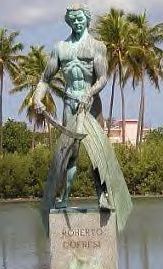
Piracy in the Caribbean declined for the next several decades after 1730, but by the 1810s many pirates roamed the waters though they were not as bold or successful as their predecessors. The most successful pirates of the era were Jean Lafitte and Roberto Cofresi. Lafitte is considered by many to be the last buccaneer due to his army of pirates and fleet of pirate ships which held bases in and around the Gulf of Mexico. Lafitte and his men participated in the War of 1812 battle of New Orleans. Cofresi's base was in Mona Island, Puerto Rico, from where he disrupted the commerce throughout the region. He became the last major target of the international anti-piracy operations.[95]

The elimination of piracy from European waters expanded to the Caribbean in the 18th century, West Africa and North America by the 1710s and by the 1720s even the Indian Ocean was a difficult location for pirates to operate.
England began to strongly turn against piracy at the turn of the 18th century, as it was increasingly damaging to the country's economic and commercial prospects in the region. The Piracy Act 1698 for the "more effectual suppression of Piracy"[96] made it easier to capture, try and convict pirates by lawfully enabling acts of piracy to be "examined, inquired of, tried, heard and determined, and adjudged in any place at sea, or upon the land, in any of his Majesty's islands, plantations, colonies, dominions, forts, or factories." This effectively enabled admirals to hold a court session to hear the trials of pirates in any place they deemed necessary, rather than requiring that the trial be held in England. Commissioners of these vice-admiralty courts were also vested with "full power and authority" to issue warrants, summon the necessary witnesses, and "to do all thing necessary for the hearing and final determination of any case of piracy, robbery, or felony." These new and faster trials provided no legal representation for the pirates; and ultimately led in this era to the execution of 600 pirates, which represented approximately 10 percent of the pirates active at the time in the Caribbean region.[97] Being an accessory to piracy was also criminalised under the statute.

Piracy saw a brief resurgence between the end of the War of the Spanish Succession in 1713 and around 1720, as many unemployed seafarers took to piracy as a way to make ends meet when a surplus of sailors after the war led to a decline in wages and working conditions. At the same time, one of the terms of the Treaty of Utrecht that ended the war gave to Great Britain's Royal African Company and other British slavers a thirty-year asiento, or contract, to furnish African slaves to the Spanish colonies, providing British merchants and smugglers potential inroads into the traditionally closed Spanish markets in America and leading to an economic revival for the whole region. This revived Caribbean trade provided rich new pickings for a wave of piracy. Also contributing to the increase of Caribbean piracy at this time was Spain's breakup of the English logwood settlement at Campeche and the attractions of a freshly sunken silver fleet off the southern Bahamas in 1715. Fears over the rising levels of crime and piracy, political discontent, concern over crowd behaviour at public punishments, and an increased determination by parliament to suppress piracy, resulted in the Piracy Act of 1717 and of 1721. These established a seven-year penal transportation to North America as a possible punishment for those convicted of lesser felonies, or as a possible sentence that capital punishment might be commuted to by royal pardon. In 1717, a pardon was offered to pirates who surrendered to British authorities.
After 1720, piracy in the classic sense became extremely rare as increasingly effective anti-piracy measures were taken by the Royal Navy, making it impossible for any pirate to pursue an effective career for long. By 1718, the British Royal Navy had approximately 124 vessels and 214 by 1815; a big increase from the two vessels England had possessed in 1670.[97] British Royal Navy warships tirelessly hunted down pirate vessels, and almost always won these engagements.
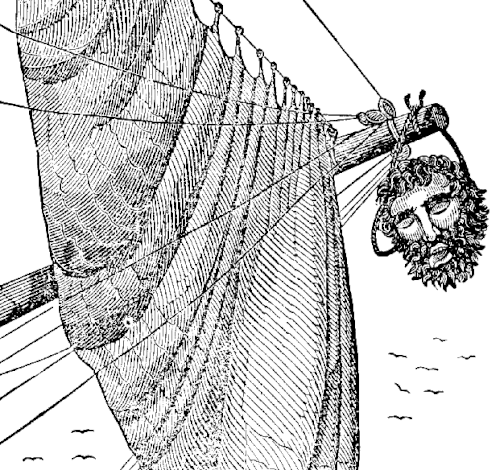
Many pirates did not surrender and were killed at the point of capture; notorious pirate Edward Teach, or "Blackbeard", was hunted down by Lieutenant Robert Maynard at Ocracoke Inlet off the coast of North Carolina on November 22, 1718, and killed. His flagship was a captured French slave ship known originally as La Concorde, he renamed the frigate Queen Anne's Revenge. Captain Chaloner Ogle of HMS Swallow cornered Bartholomew Roberts in 1722 at Cape Lopez, and a fatal broadside from the Swallow killed the pirate captain instantly. Roberts' death shocked the pirate world, as well as the Royal Navy. The local merchants and civilians had thought him invincible, and some considered him a hero.[98] Roberts' death was seen by many historians as the end of the Golden Age of Piracy. Also crucial to the end of this era of piracy was the loss of the pirates' last Caribbean safe haven at Nassau.
In the early 19th century, piracy along the East and Gulf Coasts of North America as well as in the Caribbean increased again. Jean Lafitte was just one of hundreds of pirates operating in American and Caribbean waters between the years of 1820 and 1835. The United States Navy repeatedly engaged pirates in the Caribbean, Gulf of Mexico and in the Mediterranean. Cofresí's El Mosquito was disabled in a collaboration between Spain and the United States. After fleeing for hours, he was ambushed and captured inland. The United States landed shore parties on several islands in the Caribbean in pursuit of pirates; Cuba was a major haven. By the 1830s piracy had died out again, and the navies of the region focused on the slave trade.
About the time of the Mexican–American War in 1846, the United States Navy had grown strong and numerous enough to eliminate the pirate threat in the West Indies. By the 1830s, ships had begun to convert to steam propulsion, so the Age of Sail and the classical idea of pirates in the Caribbean ended. Privateering, similar to piracy, continued as an asset in war for a few more decades and proved to be of some importance during the naval campaigns of the American Civil War.
Privateering would remain a tool of European states until the mid-19th century's Declaration of Paris. But letters of marque were given out much more sparingly by governments and were terminated as soon as conflicts ended. The idea of "no peace beyond the Line" was a relic that had no meaning by the more settled late 18th and early 19th centuries.
Canary Islands

Due to the strategic situation of this Spanish archipelago as a crossroads of maritime routes and commercial bridge between Europe, Africa and America,[99] this was one of the places on the planet with the greatest pirate presence.
In the Canary Islands, the following stand out: the attacks and continuous looting of Berber, English, French and Dutch corsairs sometimes successful and often a failure;[99] and on the other hand, the presence of pirates and corsairs from this archipelago, who made their incursions into the Caribbean. Pirates and corsairs such as François Le Clerc, Jacques de Sores, Francis Drake defeat in Gran Canaria,[100] Pieter van der Does, Murat Reis and Horacio Nelson attacked the islands and was defeated in the Battle of Santa Cruz de Tenerife (1797).[101] Among those born in the archipelago stands out above all Amaro Pargo, whom the monarch Felipe V of Spain frequently benefited in his commercial incursions and corsairs.[102][103]
North America
.jpg/500px-Dan_Seavey_around_1920_(cropped).jpg)
Piracy on the east coast of North America first became common in the early seventeenth century, as English privateers discharged after the end of the Anglo-Spanish War (1585–1604) turned to piracy.[104][105] The most famous and successful of these early pirates was Peter Easton.
River piracy in late 18th-mid-19th century America was primarily concentrated along the Ohio River and Mississippi River valleys. In 1803, at Tower Rock, the U.S. Army dragoons, possibly, from the frontier army post up river at Fort Kaskaskia, on the Illinois side opposite St. Louis, raided and drove out the river pirates.
Stack Island was also associated with river pirates and counterfeiters in the late 1790s. In 1809, the last major river pirate activity took place, on the Upper Mississippi River, and river piracy in this area came to an abrupt end, when a group of flatboatmen raided the island, wiping out the river pirates. From 1790 to 1834, Cave-In-Rock was the principal outlaw lair and headquarters of river pirate activity in the Ohio River region, from which Samuel Mason led a gang of river pirates on the Ohio River.
River piracy continued on the lower Mississippi River, from the early 1800s to the mid-1830s, declining as a result of direct military action and local law enforcement and regulator-vigilante groups that uprooted and swept out pockets of outlaw resistance.
"Roaring" Dan Seavey was a pirate active in the early 1900s in the Great Lakes region.
Culture and social structure
Rewards
Pirates had a system of hierarchy on board their ships determining how captured money was distributed. However, pirates were more egalitarian than any other area of employment at the time. In fact, pirate quartermasters were a counterbalance to the captain and had the power to veto his orders. The majority of plunder was in the form of cargo and ship's equipment, with medicines the most highly prized. A vessel's doctor's chest would be worth anywhere from £300 to £400, or around $470,000 in today's values. Jewels were common plunder but not popular, as they were hard to sell, and pirates, unlike the public of today, had little concept of their value. There is one case recorded where a pirate was given a large diamond worth a great deal more than the value of the handful of small diamonds given to his crewmates as a share. He felt cheated and had it broken up to match what they received.[106]

Spanish pieces of eight minted in Mexico or Seville were the standard trade currency in the American colonies. However, every colony still used the monetary units of pounds, shillings, and pence for bookkeeping while Spanish, German, French, and Portuguese money were all standard mediums of exchange as British law prohibited the export of British silver coinage. Until the exchange rates were standardised in the late 18th century each colony legislated its own different exchange rates. In England, 1 piece of eight was worth 4s 3d while it was worth 8s in New York, 7s 6d in Pennsylvania and 6s 8d in Virginia. One 18th-century English shilling was worth around $58 in modern currency, so a piece of eight could be worth anywhere from $246 to $465. As such, the value of pirate plunder could vary considerably, depending on who recorded it and where.[107][108]
Ordinary seamen received a part of the plunder at the captain's discretion but usually a single share. On average, a pirate could expect the equivalent of a year's wages as his share from each ship captured while the crew of the most successful pirates would often each receive a share valued at around £1,000 ($1.17 million) at least once in their career.[106] One of the larger amounts taken from a single ship was that by captain Thomas Tew from an Indian merchantman in 1692. Each ordinary seaman on his ship received a share worth £3,000 ($3.5 million), with officers receiving proportionally larger amounts as per the agreed shares, with Tew himself receiving 2½ shares. It is known there were actions with multiple ships captured where a single share was worth almost double this.[106][109]
By contrast, an ordinary seamen in the Royal Navy received 19s per month to be paid in a lump sum at the end of a tour of duty, which was around half the rate paid in the Merchant Navy. However, corrupt officers would often "tax" their crews' wage to supplement their own, and the Royal Navy of the day was infamous for its reluctance to pay. From this wage, 6d per month was deducted for the maintenance of Greenwich Hospital, with similar amounts deducted for the Chatham Chest, the chaplain and surgeon. Six months' pay was withheld to discourage desertion. That this was insufficient incentive is revealed in a report on proposed changes to the RN Admiral Nelson wrote in 1803; he noted that since 1793 more than 42,000 sailors had deserted. Roughly half of all RN crews were pressganged and these not only received lower wages than volunteers but were shackled while the vessel was docked and were never permitted to go ashore until released from service.[110]
Although the Royal Navy suffered from many morale issues, it answered the question of prize money via the 'Cruizers and Convoys' Act of 1708 which handed over the share previously gained by the Crown to the captors of the ship. Technically it was still possible for the Crown to get the money or a portion of it but this rarely happened. The process of condemnation of a captured vessel and its cargo and men was given to the High Court of the Admiralty and this was the process which remained in force with minor changes throughout the Revolutionary and Napoleonic Wars.
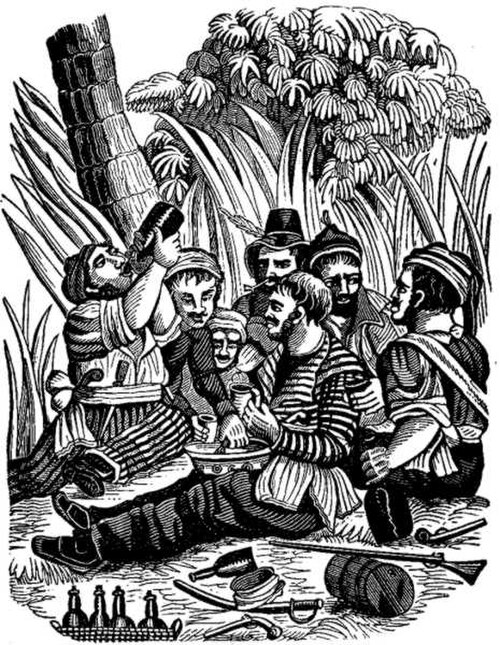
Even the flag officer's share was not quite straightforward; he would only get the full one-eighth if he had no junior flag officer beneath him. If this was the case then he would get a third share. If he had more than one then he would take one-half while the rest was shared out equally.
There was a great deal of money to be made in this way. The record breaker was the capture of the Spanish frigate Hermione, which was carrying treasure in 1762. The value of this was so great that each individual seaman netted £485 ($1.4 million in 2008 dollars).[111] The two captains responsible, Evans and Pownall, received £65,000 each ($188.4 million). In January 1807 the frigate Caroline took the Spanish San Rafael, which brought in £52,000 for her captain, Peter Rainier (who had been only a midshipman some thirteen months before). All through the wars there are examples of this kind of luck falling on captains. Another famous 'capture' was that of the Spanish frigates Thetis and Santa Brigada, which were loaded with gold specie. They were taken by four British frigates who shared the money, each captain receiving £40,730. Each lieutenant got £5,091, the Warrant Officer group, £2,468, the midshipmen £791 and the individual seamen £182.
It should also be noted that it was usually only the frigates which took prizes; the ships of the line were far too ponderous to be able to chase and capture the smaller ships which generally carried treasure. Nelson always bemoaned that he had done badly out of prize money and even as a flag officer received little. This was not that he had a bad command of captains but rather that British mastery of the seas was so complete that few enemy ships dared to sail.[112]
Loot

Even though pirates raided many ships, few, if any, buried their treasure. Often, the "treasure" that was stolen was food, water, alcohol, weapons, or clothing. Other things they stole were household items like bits of soap and gear like rope and anchors, or sometimes they would keep the ship they captured (either to sell off or keep because it was better than their ship). Such items were likely to be needed immediately, rather than saved for future trade. For this reason, there was no need for the pirates to bury these goods. Pirates tended to kill few people aboard the ships they captured; usually they would kill no one if the ship surrendered, because if it became known that pirates took no prisoners, their victims would fight to the last breath and make victory both very difficult and costly in lives. In contrast, ships would quickly surrender if they knew they would be spared. In one well-documented case 300 heavily armed soldiers on a ship attacked by Thomas Tew surrendered after a brief battle with none of Tew's 40-man crew being injured.[113]
Punishment
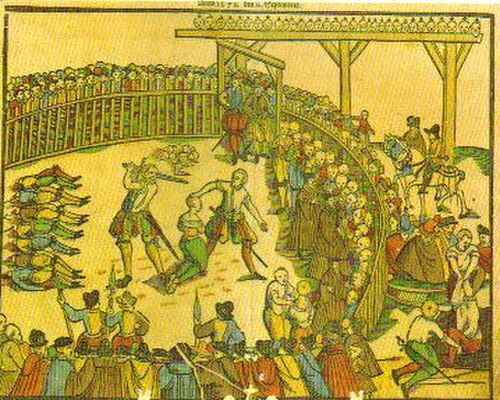
During the 17th and 18th centuries, once pirates were caught, justice was meted out in a summary fashion, and many ended their lives by "dancing the hempen jig", a euphemism for hanging. Public execution was a form of entertainment at the time, and people came out to watch them as they would to a sporting event today. Newspapers reported details such as condemned men's last words, the prayers said by the priests, and descriptions of their final moments in the gallows. In England most of these executions took place at Execution Dock on the River Thames in London.
In the cases of more famous prisoners, usually captains, their punishments extended beyond death. Their bodies were enclosed in iron cages (gibbet) (for which they were measured before their execution) and left to swing in the air until the flesh rotted off them- a process that could take as long as two years. The bodies of captains such as William "Captain" Kidd, Charles Vane, William Fly, and Jack Rackham ("Calico Jack") were all treated this manner.[114]
Role of women
.jpg/500px-Bonney,_Anne_(1697-1720).jpg)
While piracy was predominantly a male occupation throughout history, a minority of pirates were female.[115] Pirates did not allow women onto their ships very often. Additionally, women were often regarded as bad luck among pirates. It was feared that the male members of the crew would argue and fight over the women. On many ships, women (as well as young boys) were prohibited by the ship's contract, which all crew members were required to sign.[116] : 303
Because of the resistance to allowing women on board, many female pirates did not identify themselves as such. Anne Bonny, for example, dressed and acted as a man while on Captain Calico Jack's ship.[116]: 285 She and Mary Read, another female pirate, are often identified as being unique in this regard.[117] However, it is possible many women dressed as men during the Golden Age of Piracy, in an effort to take advantage of the many rights, privileges, and freedoms that were exclusive to men.
Democracy among Caribbean pirates
Unlike traditional Western societies of the time, many Caribbean pirate crews of European descent operated as limited democracies. Pirate communities were some of the first to instate a system of checks and balances similar to the one used by the present-day democracies. The first record of such a government aboard a pirate sloop dates to the 17th century.[118]
Pirate Code
As recorded by Captain Charles Johnson regarding the articles of Bartholomew Roberts.
- Every man shall have an equal vote in affairs of moment. He shall have an equal title to the fresh provisions or strong liquors at any time seized, and shall use them at pleasure unless a scarcity may make it necessary for the common good that a retrenchment may be voted.
- Every man shall be called fairly in turn by the list on board of prizes, because over and above their proper share, they are allowed a shift of clothes. But if they defraud the company to the value of even one dollar in plate, jewels or money, they shall be marooned. If any man rob another he shall have his nose and ears slit, and be put ashore where he shall be sure to encounter hardships.
- None shall game for money either with dice or cards.
- The lights and candles should be put out at eight at night, and if any of the crew desire to drink after that hour they shall sit upon the open deck without lights.
- Each man shall keep his piece, cutlass and pistols at all times clean and ready for action.
- No boy or woman to be allowed amongst them. If any man shall be found seducing any of the latter sex and carrying her to sea in disguise he shall suffer death.
- He that shall desert the ship or his quarters in time of battle shall be punished by death or marooning.
- None shall strike another on board the ship, but every man's quarrel shall be ended on shore by sword or pistol in this manner. At the word of command from the quartermaster, each man being previously placed back to back, shall turn and fire immediately. If any man do not, the quartermaster shall knock the piece out of his hand. If both miss their aim they shall take to their cutlasses, and he that draw the first blood shall be declared the victor.
- No man shall talk of breaking up their way of living till each has a share of 1,000. Every man who shall become a cripple or lose a limb in the service shall have 800 pieces of eight from the common stock and for lesser hurts proportionately.
- The captain and the quartermaster shall each receive two shares of a prize, the master gunner and boatswain, one and one half shares, all other officers one and one quarter, and private gentlemen of fortune one share each.
- The musicians shall have rest on the Sabbath Day only by right. On all other days by favor only.[119]
Known pirate shipwrecks
To date, the following identifiable pirate shipwrecks have been discovered:
- Whydah Gally (discovered in 1984), a former slave ship seized on its maiden voyage from Africa by the pirate captain "Black Sam" Bellamy. The wreck was found off the coast of Cape Cod, Massachusetts, buried under 10 ft (3 m) to 50 ft (15 m) feet of sand, in depths ranging from 16 ft (5 m) to 30 ft (9 m) feet deep, spread for four miles, parallel to the Cape's easternmost coast. With the discovery of the ship's bell in 1985 and a small brass placard in 2013, both inscribed with the ship's name and maiden voyage date, the Whydah is the only fully authenticated Golden Age pirate shipwreck ever discovered.[120] Since 2007, the Wydah collection has been touring as part of the exhibit "Real Pirates" sponsored by National Geographic.[121]
- Queen Anne's Revenge (discovered in 1996), the flagship of the infamous pirate Blackbeard. He used the ship for less than a year, but it was an effective tool in his prize-taking. In June 1718, Blackbeard ran the ship aground at Topsail Inlet, now known as Beaufort Inlet, North Carolina. Intersal,[122] a private firm working under a permit with the state of North Carolina, discovered the remains of the vessel[123] in 28 feet (8.5m) of water about one mile (1.6 km) offshore of Fort Macon State Park, Atlantic Beach, North Carolina. Thirty-one cannons have been identified to date, and more than 250,000 artifacts have been recovered.[124] The cannons are of different origins (such as English, Swedish, and possibly French) and different sizes, as would be expected with a colonial pirate crew.[123][125]
- Golden Fleece (discovered in 2009), the ship of the notorious English pirate Joseph Bannister, which was found by the American shipwreck hunters John Chatterton and John Mattera in the Dominican Republic, at Samaná Bay. The discovery is recounted in Robert Kurson's book Pirate Hunters (2015).[126][127][128][129]
Privateers

A privateer or corsair used similar methods to a pirate, but acted under orders of the state while in possession of a commission or letter of marque and reprisal from a government or monarch authorizing the capture of merchant ships belonging to an enemy nation. For example, the United States Constitution of 1787 specifically authorized Congress to issue letters of marque and reprisal. The letter of marque and reprisal was recognized by international convention and meant that a privateer could not technically be charged with piracy while attacking the targets named in his commission. This nicety of law did not always save the individuals concerned, however, since whether one was considered a pirate or a legally operating privateer often depended on whose custody the individual found himself in—that of the country that had issued the commission, or that of the object of attack. Spanish authorities were known to execute foreign privateers with their letters of marque hung around their necks to emphasize Spain's rejection of such defenses. Furthermore, many privateers exceeded the bounds of their letters of marque by attacking nations with which their sovereign was at peace (Thomas Tew and William Kidd are notable alleged examples), and thus made themselves liable to conviction for piracy. However, a letter of marque did provide some cover for such pirates, as plunder seized from neutral or friendly shipping could be passed off later as taken from enemy merchants.

The famous Barbary corsairs of the Mediterranean, authorized by the Ottoman Empire, were privateers, as were the Maltese corsairs, who were authorized by the Knights of St. John, and the Dunkirkers in the service of the Spanish Empire. In the years 1626–1634 alone, the Dunkirk privateers captured 1,499 ships, and sank another 336.[130] From 1609 to 1616, England lost 466 merchant ships to Barbary pirates, and 160 British ships were captured by Algerians between 1677 and 1680.[131] One famous privateer was Sir Francis Drake. His patron was Queen Elizabeth I, and their relationship ultimately proved to be quite profitable for England.[132]
Privateers constituted a large proportion of the total military force at sea during the 17th and 18th centuries. During the Nine Years War, the French adopted a policy of strongly encouraging privateers (French corsairs), including the famous Jean Bart, to attack English and Dutch shipping. England lost roughly 4,000 merchant ships during the war.[133] In the following War of Spanish Succession, privateer attacks continued, Britain losing 3,250 merchant ships.[134] During the War of Austrian Succession, Britain lost 3,238 merchant ships and France lost 3,434 merchant ships to the British.[133]
During King George's War, approximately 36,000 Americans served aboard privateers at one time or another.[133] During the American Revolution, about 55,000 American seamen served aboard the privateers.[135] The American privateers had almost 1,700 ships, and they captured 2,283 enemy ships.[citation needed] Between the end of the Revolutionary War and 1812, less than 30 years, Britain, France, Naples, the Barbary states, Spain, and the Netherlands seized approximately 2,500 American ships.[136] Payments in ransom and tribute to the Barbary states amounted to 20% of United States government annual revenues in 1800.[137] Throughout the American Civil War, Confederate privateers successfully harassed Union merchant ships.[138]
Privateering lost international sanction under the Declaration of Paris in 1856.
Commerce raiders
A wartime activity similar to piracy involves disguised warships called commerce raiders[139] or merchant raiders, which attack enemy shipping commerce, approaching by stealth and then opening fire. Commerce raiders operated successfully during the American Revolution.[citation needed] During the American Civil War, the Confederacy sent out several commerce raiders, the most famous of which was the CSS Alabama.[citation needed] During World War I and World War II, Germany also made use of these tactics, both in the Atlantic and Indian Oceans. Since commissioned naval vessels were openly used, these commerce raiders should not be considered even privateers, much less pirates—although the opposing combatants were vocal in denouncing them as such.
Contemporary piracy
Seaborne piracy against transport vessels is a significant issue, with estimated worldwide losses of US$16 billion per year in 2004,[6] increased to US$25 billion over the next 20 years.[5] Waters between the Red Sea and Indian Ocean, off the Somali coast, and also in the Strait of Malacca and Singapore, which are used by over 50,000 commercial ships a year. In the Gulf of Guinea, maritime piracy has also led to pressure on offshore oil and gas production, providing security for offshore installations and supply vessels is often paid for by oil companies rather than the respective governments.[140] In the late 2000s,[141] the emergence of piracy off the coast of Somalia spurred a multi-national effort led by the United States to patrol the waters near the Horn of Africa. In 2011, Brazil also created an anti-piracy unit on the Amazon River.[142] Sir Peter Blake, a New Zealand world champion yachtsman, was killed by pirates on the Amazon river in 2001.[143]
River piracy happens in Europe, with vessels suffering from pirate attacks on the Serbian and Romanian stretches of the international Danube river, i.e. inside the European Union's territory.[144][145][146]

Modern pirates favor small boats and taking advantage of the small number of crew members on modern cargo vessels. They also use large vessels to supply the smaller attack/boarding vessels. Modern pirates can be successful because a large amount of international commerce occurs via shipping. Major shipping routes take cargo ships through narrow bodies of water such as the Gulf of Aden and the Strait of Malacca making them vulnerable to be overtaken and boarded by small motorboats.[147][148] Other active areas include the South China Sea and the Niger Delta. As usage increases, many of these ships have to lower cruising speeds to allow for navigation and traffic control, making them prime targets for piracy.
Also, pirates often operate in regions of poor developing or struggling countries with small or nonexistent navies and large trade routes. Pirates sometimes evade capture by sailing into waters controlled by their pursuer's enemies. With the end of the Cold War, navies have decreased in size and patrol less frequently, while trade has increased, making organized piracy far easier. Modern pirates are sometimes linked with organized-crime syndicates, but often are small individual groups.
The International Maritime Bureau (IMB) maintains statistics regarding pirate attacks dating back to 1995. Their records indicate hostage-taking overwhelmingly dominates the types of violence against seafarers. For example, in 2006, there were 239 attacks, 77 crew members were kidnapped and 188 taken hostage but only 15 of the pirate attacks resulted in murder.[149] In 2007 the attacks rose by 10 percent to 263 attacks. There was a 35 percent increase on reported attacks involving guns. Crew members that were injured numbered 64 compared to just 17 in 2006.[150] That number does not include instances of hostage taking and kidnapping where the victims were not injured.

The number of attacks from January to September 2009 had surpassed the previous year's total due to the increased pirate attacks in the Gulf of Aden and off Somalia. Between January and September the number of attacks rose to 306 from 293. Pirates boarded the vessels in 114 cases and hijacked 34 of them. Gun use in pirate attacks increased to 176 cases from 76 in 2008.[151]
Rather than cargo, modern pirates have targeted the personal belongings of the crew and the contents of the ship's safe, which potentially contains large amounts of cash needed for payroll and port fees. In other cases, the pirates force the crew off the ship and then sail it to a port to be repainted and given a new identity through false papers purchased from corrupt or complicit officials.[152]
Modern piracy can take place in conditions of political unrest. For example, following the U.S. withdrawal from Vietnam, Thai piracy was aimed at the many Vietnamese who took to boats to escape. Further, following the disintegration of the government of Somalia, warlords in the region have attacked ships delivering UN food aid.[153]

The attack against the German-built cruise ship the Seabourn Spirit offshore of Somalia in November 2005 is an example of the sophisticated pirates mariners face. The pirates carried out their attack more than 100 miles (160 km) offshore with speedboats launched from a larger mother ship. The attackers were armed with automatic firearms and an RPG.[154]
Since 2008, Somali pirates centered in the Gulf of Aden made about $120 million annually, reportedly costing the shipping industry between $900 million and $3.3 billion per year.[155] By September 2012, the heyday of piracy in the Indian Ocean was reportedly over. Backers were now reportedly reluctant to finance pirate expeditions due to the low rate of success, and pirates were no longer able to reimburse their creditors.[156] According to the International Maritime Bureau, pirate attacks had by October 2012 dropped to a six-year low.[157] Only five ships were captured by the end of the year, representing a decrease from 25 in 2011 and 27 in 2010,[158] with only one ship attacked in the third quarter compared to 36 during the same period in 2011.[157] However, pirate incidents off on the West African seaboard increased to 34 from 30 the previous year, and attacks off the coast of Indonesia rose from 2011's total of 46 to 51.[157]
Many nations forbid ships to enter their territorial waters or ports if the crew of the ships are armed, in an effort to restrict possible piracy.[159] Shipping companies sometimes hire private armed security guards.
Modern definitions of piracy include the following acts:
- Boarding without permission.
- Extortion
- Hostage taking
- Kidnapping of people for ransom
- Murder
- Cargo theft
- Robbery and seizure of items or the ship
- Sabotage resulting in the ship subsequently sinking
- Shipwrecking done intentionally to a ship
Together with treason and counterfeiting;[160] piracy, including acts against the law of nations,[161] is one of three criminal offenses against which the United States Congress is delegated power to enact penal legislation by the Constitution of the United States.[160]
In modern times, ships and airplanes are hijacked for political reasons as well. The perpetrators of these acts could be described as pirates (for instance, the French term for plane hijacker is pirate de l'air, literally air pirate), but in English are usually termed hijackers. An example is the hijacking of the Italian civilian passenger ship Achille Lauro by the Palestinian Liberation Organization in 1985, which is regarded as an act of piracy. A 2009 book entitled International Legal Dimension of Terrorism called the attackers "terrorists".[162]
Modern pirates also use a great deal of technology. It has been reported that crimes of piracy have involved the use of mobile phones, satellite phones, GPS, machetes, AK74 rifles, sonar systems, modern speedboats, shotguns, pistols, mounted machine guns, and even RPGs and grenade launchers.[citation needed]
In 2020, the amount of piracy increased by 24% after being at its lowest 21st century level in 2019. The Americas and Africa have been identified by the International Chamber of Commerce as the most vulnerable to piracy as a result of less-wealthy governments in the regions being unable to adequately combat piracy.[163]
IMB Piracy Reporting Centre keeps a live piracy map to help keep track of all recent piracy and armed robbery incidents.[164]
Anti-piracy measures
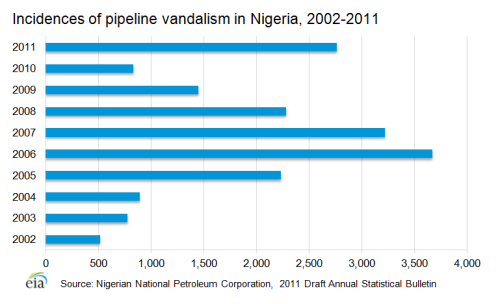
Under a principle of international law known as the "universality principle", a government may "exercise jurisdiction over conduct outside its territory if that conduct is universally dangerous to states and their nationals."[165] The rationale behind the universality principle is that states will punish certain acts "wherever they may occur as a means of protecting the global community as a whole, even absent a link between the state and the parties or the acts in question." Under this principle, the concept of "universal jurisdiction" applies to the crime of piracy.[166] For example, the United States has a statute (section 1651 of title 18 of the United States Code) imposing a sentence of life in prison for piracy "as defined by the law of nations" committed anywhere on the high seas, regardless of the nationality of the pirates or the victims.[167]
The goal of maritime security operations is "actively to deter, disrupt and suppress piracy in order to protect global maritime security and secure freedom of navigation for the benefit of all nations",[168] and pirates are often detained, interrogated, disarmed, and released. With millions of dollars at stake, pirates have little incentive to stop. In Finland, one case involved pirates who had been captured and whose boat was sunk. As the pirates attacked a vessel of Singapore, not Finland, and are not themselves EU or Finnish citizens, they were not prosecuted. A further complication in many cases, including this one, is that many countries do not allow extradition of people to jurisdictions where they may be sentenced to death or torture.[169]
The Dutch are using a 17th-century law against sea robbery to prosecute.[170] Warships that capture pirates have no jurisdiction to try them, and NATO does not have a detention policy in place. Prosecutors have a hard time assembling witnesses and finding translators, and countries are reluctant to imprison pirates because the countries would be saddled with the pirates upon their release.[171]
_approaches_a_suspected_p.jpg/500px-US_Navy_111219-N-ZZ999-070_A_visit,_board,_search_and_seizure_team_from_the_guided-missile_destroyer_USS_Pinckney_(DDG_91)_approaches_a_suspected_p.jpg)
The Regional Cooperation Agreement on Combating Piracy and Armed Robbery against Ships in Asia formed in November 2006.[172]
Since the 2010s, the U.S. Navy and others have been developing artificial intelligence (AI)-based systems that generate piracy alerts based on surveillance data.[173][174]
Self-defense
The fourth volume of the handbook: Best Management Practices to Deter Piracy off the Coast of Somalia and in the Arabian Sea Area (known as BMP4)[175] is the current authoritative guide for merchant ships on self-defense against pirates. The guide is issued and updated by Oil Companies International Marine Forum (OCIMF), a consortium of interested international shipping and trading organizations including the EU, NATO and the International Maritime Bureau.[176] It is distributed primarily by the Maritime Security Centre – Horn of Africa (MSCHOA), the planning and coordination authority for EU naval forces (EUNAVFOR).[176]
The BMP4 encourages vessels to register their voyages through the region with MSCHOA, as this registration is a key component of the operation of the International Recommended Transit Corridor (IRTC, the navy-patrolled route through the Gulf of Aden). The BMP4 contains a chapter entitled "Self-Protective Measures" which lays out a list of steps a merchant vessel can take to make itself less of a target to pirates, and make it better able to repel an attack if one occurs. This list includes rigging the deck of the ship with razor wire, rigging fire-hoses to spray sea-water over the side of the ship to hinder boardings, having a distinctive pirate alarm, hardening the bridge against gunfire and creating a "citadel" where the crew can retreat if pirates get on board.[176] Other unofficial self-defense measures that can be found on merchant vessels include the setting up of mannequins posing as armed guards or firing flares at the pirates.[177]
Though it varies by country, generally peacetime law in the 20th and 21st centuries has not allowed merchant vessels to carry weapons. As a response to the rise in modern piracy, however, the U.S. government changed its rules so that it is now possible for U.S.-flagged vessels to embark a team of armed private security guards. The US Coastguard leaves it to ship owners' discretion to determine if those guards will be armed.[178][179] The International Chamber of Shipping (ICS) in 2011 changed its stance on private armed guards, accepting that operators must be able to defend their ships against pirate attacks.[180]
This has given birth to a new breed of private security companies that provide training for crew members and operate floating armouries for protection of crew and cargo. This has proved effective in countering pirate attacks.[181][182] The use of floating armouries in international waters allows ships to carry weapons in international waters, without being in possession of arms within coastal waters where they would be illegal. Seychelles has become a central location for international anti-piracy operations, hosting the Anti-Piracy Operation Center for the Indian Ocean. In 2008, VSOS became the first authorized armed maritime security company to operate in the Indian Ocean region.[183]
With safety trials complete in the late 2000s, laser dazzlers have been developed for defensive purposes on super-yachts.[184] They can be effective up to 4 kilometres (2.5 mi) with the effects going from mild disorientation to flash blindness at closer range.[185]
In February 2012, Italian Marines based on the tanker Enrica Lexie allegedly fired on an Indian fishing trawler off Kerala, killing two of her eleven crew. The Marines allegedly mistook the fishing vessel as a pirate vessel. The incident sparked a diplomatic row between India and Italy. Enrica Lexie was ordered into Kochi where her crew were questioned by officers of the Indian Police.[186] The fact is still sub juris and its legal eventual outcome could influence future deployment of VPDs, since states will be either encouraged or discouraged to provide them depending on whether functional immunity is ultimately granted or denied to the Italians.[187]
Another similar incident has been reported to have happened in the Red Sea between the coasts of Somalia and Yemen, involving the death of a Yemeni fisherman allegedly at the hands of a Russian Vessel Protection Detachment (VPD) on board a Norwegian-flagged vessel.[188][189]
Despite VPD deployment being controversial because of these incidents, according to the Associated Press,[190] during a United Nations Security Council conference about piracy "U.S. Ambassador Susan Rice told the council that no ship carrying armed guards has been successfully attacked by pirates" and "French Ambassador Gerard Araud stressed that private guards do not have the deterrent effect that government-posted marine and sailors and naval patrols have in warding off attacks".
Self protection measures

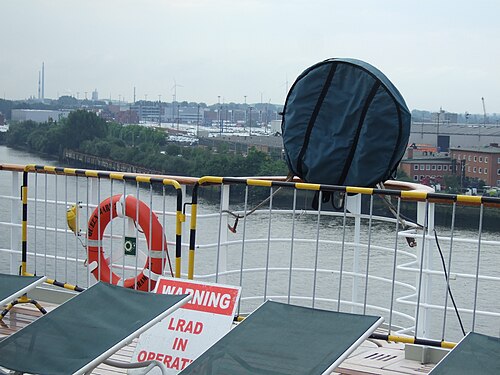
The best protection against pirates is to avoid encountering them. This can be accomplished by using tools such as radar,[191] or by using specialised systems that use shorter wavelengths, as small boats are not always picked up by radar. An example of a specialised system is WatchStander.[192]
While the non-wartime 20th century tradition has been for merchant vessels not to be armed, the U.S. Government has recently changed the rules so that it is now "best practice" for vessels to embark a team of armed private security guards.[178][193] The guards are usually supplied from ships intended specifically for training and supplying such armed personnel.[194] The crew can be given weapons training,[195] and warning shots can be fired legally in international waters.
Other measures vessels can take to protect themselves against piracy are air-pressurised boat stopping systems which can fire a variety of vessel-disabling projectiles,[196] implementing a high freewall[197] and vessel boarding protection systems (e.g., hot water wall, electricity-charged water wall, automated fire monitor, slippery foam).[198] Ships can also attempt to protect themselves using their Automatic Identification Systems (AIS).[199] Every ship over 300 tons carries a transponder supplying both information about the ship itself and its movements. Any unexpected change in this information can attract attention.
Previously this data could only be picked up if there was a nearby ship, rendering single ships vulnerable. Special satellites have been launched recently that are now able to detect and retransmit this data. Large ships cannot therefore be hijacked without being detected. This can act as a deterrent to attempts to either hijack the entire ship, or steal large portions of cargo with another ship, since an escort can be sent more quickly.
Patrol
In an emergency warships can be called upon. In some areas such as near Somalia, patrolling naval vessels from different nations are available to intercept vessels attacking merchant vessels. For patrolling dangerous coastal waters, or keeping cost down, robotic or remote-controlled USVs are also sometimes used.[200] Shore- and vessel-launched UAVs are used by the U.S. Navy.[201][202] A British former British chief of defence staff (David Richards), questioned the value of expensive kit procured by successive governments, saying "We have £1bn destroyers trying to sort out pirates in a little dhow with RPGs [rocket-propelled grenade launchers] costing US$50, with an outboard motor [costing] $100".
Legal aspects
United Kingdom laws
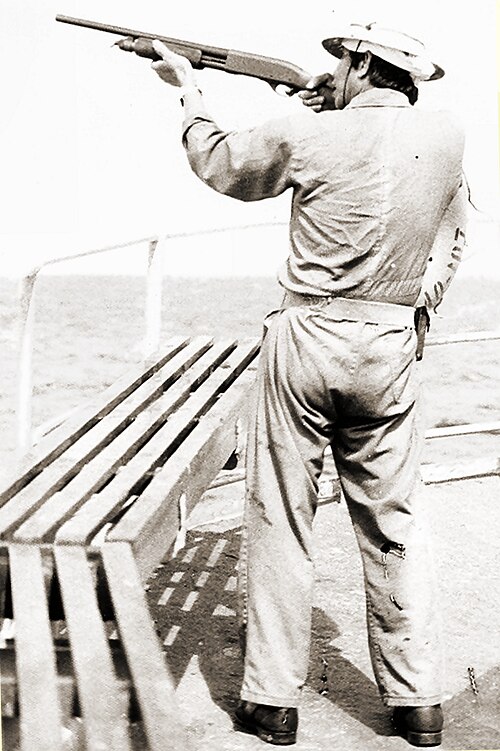
Section 2 of the Piracy Act 1837 creates a statutory offence of aggravated piracy. See also the Piracy Act 1850.
In 2008 the British Foreign Office advised the Royal Navy not to detain pirates of certain nationalities as they might be able to claim asylum in Britain under British human rights legislation, if their national laws included execution, or mutilation as a judicial punishment for crimes committed as pirates.[203]
Definition of piracy jure gentium
See section 26 of, and Schedule 5 to, the Merchant Shipping and Maritime Security Act 1997. These provisions replace the Schedule to the Tokyo Convention Act 1967. In Cameron v HM Advocate, 1971 SLT 333, the High Court of Justiciary said that that Schedule supplemented the existing law and did not seek to restrict the scope of the offence of piracy jure gentium.
See also:
- Re Piracy Jure Gentium [1934] AC 586, PC
- Attorney General of Hong Kong v Kwok-a-Sing (1873) LR 5 PC 179
Jurisdiction
See section 46(2) of the Senior Courts Act 1981 and section 6 of the Territorial Waters Jurisdiction Act 1878. See also R v Kohn (1864) 4 F & F 68.
Piracy committed by or against aircraft
See section 5 of the Aviation Security Act 1982.
Sentence
The book Archbold says that in a case that does not fall within section 2 of the Piracy Act 1837, the penalty appears to be determined by the Offences at Sea Act 1799, which provides that offences committed at sea are liable to the same penalty as if they had been committed upon the shore.[204]
History
William Hawkins said that under common law, piracy by a subject was esteemed to be petty treason. The Treason Act 1351 provided that this was not petty treason.[205]
In English admiralty law, piracy was classified as petty treason during the medieval period, and offenders were accordingly liable to be hanged, drawn and quartered on conviction. Piracy was redefined as a felony during the reign of Henry VIII. In either case, piracy cases were cognizable in the courts of the Lord High Admiral. English judges in admiralty courts and vice admiralty courts emphasized that "neither Faith nor Oath is to be kept" with pirates; i.e. contracts with pirates and oaths sworn to them were not legally binding. Pirates were legally subject to summary execution by their captors if captured in battle. In practice, instances of summary justice and annulment of oaths and contracts involving pirates do not appear to have been common.[citation needed]
United States laws
In the United States, criminal prosecution of piracy is authorized in the U.S. Constitution, Art. I Sec. 8 cl. 10:
To define and punish Piracies and Felonies committed on the high Seas, and Offences against the Law of Nations;
Title 18 U.S.C. § 1651 states:
Whoever, on the high seas, commits the crime of piracy as defined by the law of nations, and is afterwards brought into or found in the United States, shall be imprisoned for life.
Citing the United States Supreme Court decision in the 1820 case of United States v. Smith,[206] a U.S. District Court ruled in 2010 in the case of United States v. Said that the definition of piracy under section 1651 is confined to "robbery at sea". The piracy charges (but not other serious federal charges) against the defendants in the Said case were dismissed by the Court.[207]
The U.S. District Court for the E.D.Va. has since been overturned: "On May 23, 2012, the United States Court of Appeals for the Fourth Circuit issued an opinion vacating the Court's dismissal of the piracy count. United States v. Said, 680 F.3d 374 (4th Cir.2012). See also United States v. Dire, 680 F.3d 446, 465 (4th Cir.2012) (upholding an instruction to the jury that the crime of piracy includes 'any of the three following actions: (A) any illegal acts of violence or detention or any act of depredation committed for private ends on the high seas or a place outside the jurisdiction of any state by the crew or the passengers of a private ship and directed against another ship or against persons or property on board such ship; or (B) any act of voluntary participation in the operation of a ship with knowledge of facts making it a pirate ship; or (C) any act of inciting or of intentionally facilitating an act described in (A) or (B) above").'" The case was remanded to E.D. Va., see US v. Said, 3 F. Supp. 3d 515 – Dist. Court, ED Virginia (2014).
International law
Effects on international boundaries
During the 18th century, the British and the Dutch controlled opposite sides of the Straits of Malacca. The British and the Dutch drew a line separating the Straits into two halves. The agreement was that each party would be responsible for combating piracy in their respective half. Eventually this line became the border between Malaysia and Indonesia in the Straits.
Law of nations
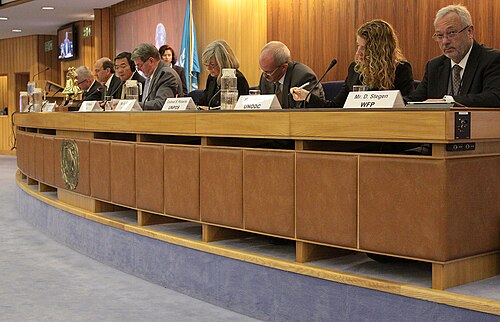
Piracy is of note in international law as it is commonly held to represent the earliest invocation of the concept of universal jurisdiction. The crime of piracy is considered a breach of jus cogens, a conventional peremptory international norm that states must uphold. Those committing thefts on the high seas, inhibiting trade, and endangering maritime communication are considered by sovereign states to hold the status of hostis humani generis (an enemy of humankind).[208]
Because of universal jurisdiction, action can be taken against pirates without objection from the flag state of the pirate vessel. This represents an exception to the principle extra territorium jus dicenti impune non paretur ("One who exercises jurisdiction out of his territory is disobeyed with impunity").[209]
International conventions
Articles 101 to 103 of UNCLOS

Articles 101 to 103 of the United Nations Convention on the Law of the Sea (UNCLOS) (1982) contain a definition of piracy iure gentium (i.e. according to international law).[210] They read:
Article 101Definition of piracy
Piracy consists of any of the following acts:
- (a) any illegal acts of violence or detention, or any act of depredation, committed for private ends by the crew or the passengers of a private ship or a private aircraft, and directed—
- (i) on the high seas, against another ship or aircraft, or against persons or property on board such ship or aircraft;
- (ii) against a ship, aircraft, persons or property in a place outside the jurisdiction of any State;
- (b) any act of voluntary participation in the operation of a ship or of an aircraft with knowledge of facts making it a pirate ship or aircraft;
- (c) any act of inciting or of intentionally facilitating an act described in subparagraph (a) or (b).
Article 102Piracy by a warship, government ship or government aircraft whose crew has mutinied
The acts of piracy, as defined in article 101, committed by a warship, government ship or government aircraft whose crew has mutinied and taken control of the ship or aircraft are assimilated to acts committed by a private ship or aircraft.
Article 103Definition of a pirate ship or aircraft
A ship or aircraft is considered a pirate ship or aircraft if it is intended by the persons in dominant control to be used for the purpose of committing one of the acts referred to in article 101. The same applies if the ship or aircraft has been used to commit any such act, so long as it remains under the control of the persons guilty of that act.[211]
This definition was formerly contained in articles 15 to 17 of the Convention on the High Seas signed at Geneva on April 29, 1958.[212] It was drafted[213] by the International Law Commission.[210]
A limitation of article 101 above is that it confines piracy to the High Seas. As the majority of piratical acts occur within territorial waters, some pirates are able to go free as certain jurisdictions lack the resources to monitor their borders adequately.[citation needed]
IMB definition
The International Maritime Bureau (IMB) defines piracy as:
the act of boarding any vessel with an intent to commit theft or any other crime, and with an intent or capacity to use force in furtherance of that act.[214]
Uniformity in maritime piracy law
Given the diverging definitions of piracy in international and municipal legal systems, some authors argue that greater uniformity in the law is required in order to strengthen anti-piracy legal instruments.[215]
Cultural perceptions

Pirates are a frequent topic in fiction and, in their Caribbean incarnation, are associated with certain stereotypical manners of speaking and dress, some of them wholly fictional: "nearly all our notions of their behavior come from the golden age of fictional piracy, which reached its zenith in 1881 with the appearance of Robert Louis Stevenson's Treasure Island."[216] Hugely influential in shaping the popular conception of pirates, Captain Charles Johnson's A General History of the Pyrates, published in London in 1724, is the prime source for the biographies of many well known pirates of the Golden Age.[217] The book gives an almost mythical status to pirates, with naval historian David Cordingly writing: "it has been said, and there seems no reason to question this, that Captain Johnson created the modern conception of pirates."[217]

In the 1830s, Letitia Elizabeth Landon received material relating to piracy for an annual for which she was responsible and she produced two Pirate Songs, the first in 1831,  The Pirate's Song off Tiger Island. and the second, Bona. The Pirate's Song. in 1837. This last was reproduced many times as 'The Pirate's Song', often uncredited. Bona is now the city of Annaba in Algeria.
Some inventions of pirate culture such as "walking the plank"—in which a bound captive is forced to walk off a board extending over the sea—were popularized by J. M. Barrie's 1911 novel, Peter Pan, where the fictional pirate Captain Hook and his crew helped define the fictional pirate archetype.[218] English actor Robert Newton's portrayal of Long John Silver in Disney's 1950 film adaptation also helped define the modern rendition of a pirate, including the stereotypical West Country "pirate accent".[219][220] Other influences include Sinbad the Sailor, and the recent Pirates of the Caribbean films have helped rekindle modern interest in piracy and have performed well at the box office. The video game Assassin's Creed IV: Black Flag also revolves around pirates during the Golden Age of Piracy.
The classic 1879 Gilbert and Sullivan comic opera The Pirates of Penzance focuses on The Pirate King and his hapless band of pirates.[221]
Many sports teams use "pirate" or a related term such as "raider" or "buccaneer" as their nickname, based on the popular stereotypes of pirates. The earliest such example was probably the Pittsburgh Pirates of Major League Baseball that acquired their nickname in 1891 after allegedly "pirating" a player from another team.[222] Many amateur and school-based sports programs along with several professional sports franchises have also adopted pirate-related names, including the Las Vegas Raiders and Tampa Bay Buccaneers of the National Football League. In turn, the Buccaneer's name was inspired by the Gasparilla Pirate Festival, a large community parade and related events in Tampa, Florida centered around the legend of José Gaspar, a mythical pirate who supposedly operated in the area.
Economics of piracy
Sources on the economics of piracy include Cyrus Karraker's 1953 study Piracy was a Business,[223] in which the author discusses pirates in terms of contemporary racketeering. Patrick Crowhurst researched French piracy and David Starkey focused on British 18th-century piracy. Note also the 1998 book The Invisible Hook: The Hidden Economics of Pirates by Peter T. Leeson.[224]
Piracy and entrepreneurship
Some 2014 research examines the links between piracy and entrepreneurship. In this context, researchers take a nonmoral approach to piracy as a source of inspiration for 2010s-era entrepreneurship education[225] and to research in entrepreneurship[226] and in business-model generation.[227]
In this respect, analysis of piracy operations may distinguish between planned (organised) and opportunistic piracy.[228]
See also


- A General History of the Pyrates, an historical book on pirates
- Air pirate
- Aircraft hijacking, a.k.a. air piracy
- Carjacking a.k.a. car piracy
- Copyright infringement
- International Talk Like a Pirate Day
- List of pirates
- Piracy in the Atlantic World
- Piracy kidnappings
- Pirate code
- Pirate game
- Pirate Party
- Pirate Round
- Pirate studies
- Pirate utopia
- Pirates World
- Republic of Pirates
- Raid (military)
- Space pirate
- The Successful Pyrate, an historical play
- Train robbery, a.k.a. railroad piracy
- Women in piracy
- Violent non-state actors at sea
- Private maritime security companies
References
Notes
- ^ Pennell, C. R. (2001). "The Geography of Piracy: Northern Morocco in the Mod-Nineteenth Century". In Pennell, C. R. (ed.). Bandits at Sea: A Pirates Reader. NYU Press. p. 56. ISBN 978-0-8147-6678-1.
Sea raiders [...] were most active where the maritime environment gave them most opportunity. Narrow straits which funneled shipping into places where ambush was easy, and escape less chancy, called the pirates into certain areas.
- ^ Heebøll-Holm, Thomas (2013). Ports, Piracy and Maritime War: Piracy in the English Channel and the Atlantic, c. 1280–c. 1330. Medieval Law and Its Practice. Leiden: Brill. p. 67. ISBN 978-9004248168.
[...] through their extensive piracies the Portsmen [of the Cinque Ports] were experts in predatory actions at sea. [...] Furthermore, the geostrategic location of the [Cinque] Ports on the English coast closest to the Continent meant that the Ports [...] could effectively control the Narrow Seas.
- ^ "TEDx Talk: What is Piracy?". Archived from the original on June 18, 2020. Retrieved October 23, 2014.
- ^ Arquilla, John (2011). Insurgents, Raiders, and Bandits: How Masters of Irregular Warfare Have Shaped Our World. Ivan R. Dee. p. 242. ISBN 978-1-56663-908-8. Archived from the original on January 12, 2023. Retrieved March 5, 2015.
From ancient high seas pirates to 'road agents' and a host of other bush and mountain pass brigands, bandits have been with us for ages.
- ^ a b He, Zhaoyang; Wang, Chengjin; Gao, Jianbo; Xie, Yongshun (October 14, 2023). "Assessment of global shipping risk caused by maritime piracy". Heliyon. 9 (10): e20988. Bibcode:2023Heliy...920988H. doi:10.1016/j.heliyon.2023.e20988. ISSN 2405-8440. PMC 10616333. PMID 37916124.
- ^ a b "Terrorism Goes to Sea". Foreign Affairs. Archived from the original on December 14, 2007. Retrieved December 8, 2007.
- ^ D.Archibugi, M.Chiarugi (April 9, 2009). "Piracy challenges global governance". openDemocracy. Archived from the original on April 12, 2009. Retrieved April 9, 2009.
- ^ Peirates, Henry George Liddell, Robert Scott, "A Greek-English Lexicon", at Perseus Archived December 26, 2022, at the Wayback Machine.
- ^ Peira, Henry George Liddell, Robert Scott, "A Greek-English Lexicon", at Perseus Archived December 26, 2022, at the Wayback Machine.
- ^ Janice J. Gabbert, 'Piracy in the Early Hellenistic Period: A Career Open to Talents,' Archived August 11, 2022, at the Wayback Machine Greece & Rome, October 1986, Vol. 33, No. 2 pp. 156-163, p.157.
- ^ "Online Etymology Dictionary". Etymonline.com. Archived from the original on January 16, 2009. Retrieved December 18, 2008.
- ^ "pirate". Oxford English Dictionary (Online ed.). Oxford University Press. (Subscription or participating institution membership required.)
- ^ "Online Etymology Dictionary". Etymonline.com. Archived from the original on July 14, 2014. Retrieved July 12, 2014.
- ^ a b Møller, Bjørn. "Piracy, Maritime Terrorism and Naval Strategy." Copenhagen: Danish Institute for International Studies, November 16, 2008. 10.
- ^ Thucydides wrote: "For in early times the Hellenes and the barbarians of the coast and islands, as communication by sea became more common, were tempted to turn pirate...indeed, this came to be the main source of their livelihood, no disgrace being yet attached to such an achievement, but even some glory."
- ^ Allen M. Ward; Fritz M. Heichelheim; Cedric A. Yeo (2016). History of the Roman People. Routledge. p. 100. ISBN 978-1-315-51120-7.
- ^ Again, according to Suetonius's chronology (Julius 4 Archived December 26, 2022, at the Wayback Machine). Plutarch (Caesar 1.8–2 Archived February 13, 2018, at the Library of Congress Web Archives) says this happened earlier, on his return from Nicomedes's court. Velleius Paterculus (Roman History 2:41.3–42 Archived July 31, 2022, at the Wayback Machine says merely that it happened when he was a young man.
- ^ Plutarch, Caesar 1–2.
- ^ "The Golden Age of Piracy". Royal Museums Greenwich. Archived from the original on October 27, 2021. Retrieved October 13, 2021.
- ^ Lebling, Robert W. Jr. "The Pirates of St. Tropez". The Empty Quarter. Archived from the original on June 22, 2001.
- ^ Vedran Duančić; (2008) Hrvatska između Bizanta i Franačke (in Croatian) p. 17; [1] Archived November 13, 2020, at the Wayback Machine
- ^ Maddalena Betti; (2013) The Making of Christian Moravia (858–882): Papal Power and Political Reality p. 129; Brill Academic Publishers, ISBN 900421187X
- ^ H Thomas Milhorn, Crime: Computer Viruses to Twin Towers, Universal Publishers, 2004. ISBN 1-58112-489-9.
- ^ Stepan Razin. "Pirates & Privateers: The History of Maritime Piracy". www.cindyvallar.com. Archived from the original on August 5, 2007. Retrieved August 28, 2007.
- ^ Earle (2003), p. 89
- ^ Guilmartin (1974), pp. 217–219
- ^ Earle (2003), p. 45
- ^ Earle (2003), p. 137
- ^ Glete (2000), p. 151
- ^ Earle (2003), p. 139
- ^ Guilmartin (1974), p. 120
- ^ a b Earle (2003), pp. 39–52
- ^ "When Europeans were slaves: Research suggests white slavery was much more common than previously believed". Archived from the original on July 25, 2011.
- ^ "Christian Slaves, Muslim Masters: White Slavery in the Mediterranean, the Barbary Coast and Italy, 1500–1800 Archived December 26, 2022, at the Wayback Machine". Robert Davis (2004) ISBN 1-4039-4551-9
- ^ Earle (2003), pp. 51–52
- ^ Earle (2003), p. 83
- ^ Earle (2003), p. 85
- ^ Oren, Michael B. (November 3, 2005). "The Middle East and the Making of the United States, 1776 to 1815". Archived from the original on July 15, 2019. Retrieved February 18, 2007.
- ^ a b One or more of the preceding sentences incorporates text from a publication now in the public domain: Chisholm, Hugh, ed. (1911). "Barbary Pirates". Encyclopædia Britannica (11th ed.). Cambridge University Press.
- ^ a b c d James Francis Warren (2007). The Sulu Zone, 1768–1898: The Dynamics of External Trade, Slavery, and Ethnicity in the Transformation of a Southeast Asian Maritime State. NUS Press. pp. 257–258. ISBN 9789971693862.
- ^ a b c d e James Francis Warren (2002). Iranun and Balangingi: Globalization, Maritime Raiding and the Birth of Ethnicity. NUS Press. pp. 53–56. ISBN 9789971692421. Archived from the original on July 4, 2019. Retrieved July 9, 2019.
- ^ a b c Antony, Robert J. (February 2013). "Turbulent Waters: Sea Raiding in Early Modern South East Asia". The Mariner's Mirror. 99 (1): 23–38. doi:10.1080/00253359.2013.766996. S2CID 162926825.
- ^ Sim, Y.H. Teddy, ed. (2014). Piracy and surreptitious activities in the Malay Archipelago and adjacent seas, 1600–1840. Springer. ISBN 9789812870858.
- ^ a b Junker, Laura Lee (1999). Raiding, Trading, and Feasting: The Political Economy of Philippine Chiefdoms. University of Hawaii Press. ISBN 9780824820350.
- ^ David P. Forsythe (2009). "Encyclopedia of Human Rights, Volume 1 Archived December 26, 2022, at the Wayback Machine". Oxford University Press. p. 464. ISBN 0195334027
- ^ Non, Domingo M. (1993). "Moro Piracy during the Spanish Period and Its Impact". Southeast Asian Studies. 30 (4): 401–419. doi:10.20495/tak.30.4_401.
- ^ David P. Barrows (1905). A History of the Philippines. American Book Company. Archived from the original on February 8, 2019. Retrieved July 9, 2019.
- ^ "The Buginese of Sulawesi". Archived from the original on September 27, 2007.
- ^ "Pirates of the East | ThingsAsian". thingsasian.com. Archived from the original on October 24, 2014. Retrieved November 4, 2019.
- ^ "Wanderings Among South Sea Savages And in Borneo and the Philippines by H. Wilfrid Walker". Archived from the original on June 9, 2008. Alt URL Archived September 24, 2015, at the Wayback Machine
- ^ Chong Sun Kim, "Slavery in Silla and its Sociological and Economic Implications", in Andrew C. Nahm, ed. Traditional Korea, Theory and Practice (Kalamazoo, MI: Center for Korean Studies, 1974)
- ^ John Kleinen; Manon Osseweijer (2010). Pirates, Ports, and Coasts in Asia: Historical and Contemporary Perspectives. Institute of Southeast Asian Studies. p. 60. ISBN 978-981-4279-07-9.
- ^ New Peterson magazine. 1896. p. 578.
- ^ MacKay, Joseph. "Pirate Nations: Maritime Pirates as Escape Societies in Late Imperial China." Social Science History 37, no. 4 (2013): 551–g573. doi:10.1017/S0145553200011962. p. 554
- ^ MacKay. 2013. p. 553
- ^ MacKay. 2013. p. 555
- ^ Higgins, Roland L. "Pirates in Gowns and Caps: Gentry Law-Breaking in the Mid-Ming." Ming Studies Volume 1980, Issue #1. pp. 30–37 [31]
- ^ Robinson, David M. (2000). "Banditry and the Subversion of State Authority in China: The Capital Region During the Middle Ming Period (1450-1525)". Journal of Social History. 33 (3): 527–563. doi:10.1353/jsh.2000.0035. JSTOR 3789210. S2CID 144496554. Gale A61372233 Project MUSE 17725.
- ^ a b Higgins. 1980. p. 31
- ^ Von Glahn, Richard. The Economic History of China: From Antiquity to the Nineteenth Century. Cambridge, UK. ISBN 9781107030565. OCLC 919452147. p. 307
- ^ a b Von Glahn. 2016. p. 308
- ^ Higgins. 1980. p. 32
- ^ a b MacKay. 2013. p. 558
- ^ a b c d MacKay. 2013. p. 557
- ^ a b MacKay. 2013. p. 567
- ^ a b MacKay. 2013. pp. 564, 568
- ^ Higgins. 1980. p. 30
- ^ Higgins. 1980. p. 34
- ^ Robinson. 2000. p. 547
- ^ MacKay. 2013. pp. 552, 557
- ^ a b MacKay. 2013. p. 559
- ^ MacKay. 2013. p. 551
- ^ Szonyi, Michael. The Art of Being Governed: Everyday Politics in Late Imperial China. Princeton. ISBN 9781400888887. OCLC 1007291604. pp. 101, 102
- ^ Szonyi. 2017. pp. 101–102
- ^ MacKay. 2013. pp. 559, 561
- ^ "Indian Pirates: From the Earliest Times to the Present Day", by Rajaram Narayan Saletore, page 18
- ^ Agius, Dionisius A. (2008). Classic Ships of Islam: From Mesopotamia to the Indian Ocean. BRILL. p. 385. ISBN 978-90-04-15863-4. Archived from the original on April 29, 2023. Retrieved April 29, 2023.
- ^ Saletore, Rajaram Narayan (1978). Indian Pirates. Concept Publishing Company. p. 21. Archived from the original on May 13, 2023. Retrieved April 29, 2023.
- ^ Findly, Ellison B. (1988). "The Capture of Maryam-uz-Zamānī's Ship: Mughal Women and European Traders". Journal of the American Oriental Society. 108 (2): 227–238. doi:10.2307/603650. JSTOR 603650.
- ^ Risso, Patricia (2001). "Cross-Cultural Perceptions of Piracy: Maritime Violence in the Western Indian Ocean and Persian Gulf Region during a Long Eighteenth Century". Journal of World History. 12 (2): 293–319. doi:10.1353/jwh.2001.0039. S2CID 162191347. Project MUSE 18418.
- ^ "Soldiers, Seahawks and Smugglers". Archived from the original on September 6, 2008. Retrieved July 20, 2008.
- ^ a b Heard-Bey, Frauke (1996). From Trucial States to United Arab Emirates. UK: Longman. pp. 282–284. ISBN 0582277280.
- ^ "From Pirate Coast To Trucial". Archived from the original on August 29, 2008. Retrieved July 20, 2008.
- ^ Gemma Pitcher, Patricia C. Wright. " Madagascar & Comoros Archived December 26, 2022, at the Wayback Machine " p. 178.
- ^ "Libertatia". everything2.com. Archived from the original on July 10, 2017. Retrieved November 15, 2015.
- ^ Lucie-Smith, Edward (1978). Outcasts of the Sea: Pirates and Piracy. Paddington Press. ISBN 9780448226170.
- ^ "Tortuga – Pirate History – The Way Of The Pirates". Archived from the original on March 14, 2015. Retrieved October 23, 2014.
- ^ Nigel Cawthorne (2005), Pirates: An Illustrated History, Arturus Publishing Ltd., 2005, p. 65.
- ^ Cawthorne, pp. 34, 36, 58
- ^ Peter Earle (2003), The Pirate Wars, ISBN 0-312-33579-2, p. 94.
- ^ Earle, p. 148.
- ^ Geoffrey Parker, ed. (1986), The World: An Illustrated History, Times Books Ltd., p. 317.
- ^ Kuhn, Gabriel (2010). Life Under the Jolly Roger: Reflections on Golden Age Piracy. PM Press.
- ^ Mark Kurlansky, Cod: A Biography of the Fish That Changed the World. Penguin, 1998.
- ^ Wombwell, A. James (2010). The Long War Against Piracy: Historical Trends. Fort Leavenworth, Kansas: Combat Studies Institute Press. p. 204. ISBN 978-0-9823283-6-1.
- ^ William III, 1698–99: An Act for the more effectual suppression of Piracy. Archived June 23, 2020, at the Wayback Machine [Chapter VII. Rot. Parl. 11 Gul. III. p. 2. n. 5.]', Statutes of the Realm: volume 7: 1695–1701 (1820), pp. 590–594. Date accessed: February 16, 2007.
- ^ a b Boot, Max (2009). "Pirates, Then and Now: How Piracy Was Defeated in the Past and Can Be Again". Foreign Affairs. 88 (4): 94–107. JSTOR 20699624.
- ^ Pike, Luke Owen (1876). A History of Crime in England: From the accession of Henry VII to the present time. Smith, Elder & Company. p. 266. ISBN 9780875850191.
- ^ a b "La piratería – Historia – (GEVIC) Gran Enciclopedia Virtual Islas Canarias". www.gevic.net. Archived from the original on March 3, 2021. Retrieved August 3, 2018.
- ^ "The Gran Canaria Mistake That Cost Sir Francis Drake His Life". Gran-Canaria-Info.com. Archived from the original on May 9, 2021. Retrieved June 23, 2021.
- ^ Allan, Peter. "The Defeat of Nelson at the Battle of Santa Cruz de Tenerife 1797". etenerifeholidays.co.uk. Archived from the original on November 12, 2020. Retrieved October 6, 2020.
- ^ Fariña González, Manuel. "La evolución de una fortuna indiana: D. Amaro Rodríguez Felipe (Amaro Pargo)". Archived from the original on March 4, 2016. Retrieved June 10, 2016.
- ^ Amaro Pargo: documentos de una vida, I. Héroe y forrajido. Ediciones Idea. 2017. p. 520. ISBN 978-8416759811. Archived from the original on March 17, 2021. Retrieved March 20, 2018.
- ^ Clive Malcolm Senior, An Investigation of the Activities and Importance of English Pirates, 1603–40 Archived May 31, 2022, at the Wayback Machine (University of Bristol, PhD thesis, 1973)
- ^ Clive Senior, A Nation of Pirates: English Piracy in its Heyday (Newton Abbot, 1976)
- ^ a b c "Treasure". Archived from the original on December 21, 2019. Retrieved April 21, 2009.
- ^ "The Hudson River Valley Institute". Archived from the original on March 2, 2009. Retrieved April 20, 2009.
- ^ "University of Notre Dame". Archived from the original on May 23, 2020. Retrieved October 23, 2014.
- ^ Gosse, Philip (2007). The Pirates' Who's Who. BiblioBazaar, LLC. ISBN 978-1-4346-3302-6. p. 251.
- ^ Hill, J.R. (2002). The Oxford Illustrated History of the Royal Navy. Oxford University Press. ISBN 0-19-860527-7. p. 157.
- ^ Current value Archived December 18, 2017, at the Wayback Machine is based on the average annual income for the respective years.
- ^ Nelson and His Navy – Prize Money Archived June 21, 2008, at the Wayback Machine Historical Maritime Society.
- ^ "Piratesofamerica.com". Archived from the original on September 27, 2013.
- ^ Pirates by John Matthews
- ^ "Were there really women pirates?". www.pantherbay.com. Archived from the original on April 28, 2015. Retrieved November 26, 2018.
- ^ a b Pennell, C. R. 2001. Bandits at sea : A pirates reader. New York: New York University Press.
- ^ Stock, Jennifer, ed. (2011). "Life Aboard Ship in the Golden Age of Piracy". Pirates Through the Ages Reference Library. 2: 117–135.[permanent dead link]
- ^ Leeson, Peter T. (December 2007). "An- arrgh -chy: The Law and Economics of Pirate Organization". Journal of Political Economy. 115 (6): 1049–1094. doi:10.1086/526403. S2CID 16692227.
- ^ Fox, E.T., ed. (March 15, 2016). "In the show 'Black Sails', the pirates have laws they quote every now and then when there are disputes". redditt. Archived from the original on May 13, 2016. Retrieved March 18, 2016.
- ^ Commonwealth of Massachusetts v. Maritime Underwater Surveys, Inc. 403 Mass. 501.. Massachusetts Supreme Court. 1988. Archived from the original on June 24, 2020. Retrieved October 6, 2019.
- ^ Burlingame, Liz (August 23, 2013). "Sunken Treasures: The World's Most Valuable Shipwreck Discoveries". weather.com. The Weather Channel. Archived from the original on August 26, 2013. Retrieved December 13, 2013.
- ^ "Intersal". Intersal, Inc. Archived from the original on April 2, 2015. Retrieved April 17, 2015.
- ^ a b Moore, D. (1997). "A General History of Blackbeard the Pirate, the Queen Anne's Revenge and the Adventure". Tributaries. VII. North Carolina Maritime History Council: 31–35.
- ^ Killough III, Willard H. (ed.). "250,000 Pieces of Blackbeard from Shipwreck". Island Gazette. Archived from the original on July 9, 2015.
- ^ "Blackbeard's Ship Confirmed off North Carolina". National Geographic News. Archived from the original on September 25, 2011. Retrieved August 7, 2017.
- ^ Kurson, Robert (2015). Pirate Hunters. New York: Random House. ISBN 978-1-4000-6336-9.
- ^ Calendar of State Papers, America and West Indies. British National Archives.
- ^ Buisseret, David (2000). Port Royal Jamaica. Kingston: University of the West Indies Press. ISBN 9766400989.
- ^ Buisseret, David (2009). Jamaica in 1687. Kingston: University of the West Indies Press. ISBN 978-9766402365.
- ^ "The New Cambridge Modern History: Volume 4, The Decline of Spain and the Thirty Years' War, 1609–48/49 Archived December 26, 2022, at the Wayback Machine". J. P. Cooper (1979). p. 229. ISBN 0-521-29713-3
- ^ Rees Davies, British Slaves on the Barbary Coast Archived April 25, 2011, at the Wayback Machine, BBC, July 1, 2003.
- ^ Kelsey, Harry, Sir Francis Drake; The Queen's Pirate, Yale University Press, New Haven, 1998, ISBN 0-300-07182-5.
- ^ a b c Privateering and the Private Production of Naval Power Archived December 11, 2003, at the Wayback Machine, Gary M. Anderson and Adam Gifford Jr.
- ^ Brewer, John. The Sinews of Power: War, Money, and the English State, 1688–1783. New York.: Alfred A. Knopf, 1989. p. 197.
- ^ Privateers or Merchant Mariners help win the Revolutionary War Archived June 4, 2019, at the Wayback Machine.
- ^ US Navy Fleet List War of 1812 Archived January 9, 2009, at the Wayback Machine.
- ^ Oren, Michael B. (November 3, 2005). "The Middle East and the Making of the United States, 1776 to 1815". Archived from the original on July 15, 2019. Retrieved February 18, 2007.
- ^ The Confederate Privateers Archived December 6, 2008, at the Wayback Machine.
- ^ Bailey, Roger A. (December 19, 2012). "Commerce Raiders". American Battlefield Trust. Archived from the original on June 4, 2020. Retrieved March 31, 2023.
- ^ Siebels, Dirk (November 1, 2014). "Nigeria, Angola and beyond – unlocking offshore potential requires a safe environment". Ship&Offshore. Archived from the original on March 27, 2022. Retrieved September 27, 2015.
- ^ Krane, Jim (March 19, 2006). "U.S. Navy warships exchange gunfire with suspected pirates off Somali coast". The Seattle Times. Archived from the original on May 25, 2007. Retrieved January 18, 2007.
- ^ Phillips, Tom (June 17, 2011). "Brazil creating anti-pirate force after spate of attacks on Amazon riverboats". The Guardian. Archived from the original on March 8, 2021. Retrieved June 23, 2021.
- ^ Romero, Simon (November 18, 2016). "'There's No Law on the Amazon': River Pirates Terrorize Ships by Night". The New York Times. ISSN 0362-4331. Archived from the original on February 21, 2017. Retrieved November 20, 2016.
- ^ "Riječni gusari u Srbiji pljačkaju hrvatske brodove: Sa 'Sloge' ukrali opremu vrijednu 60 tisuća eura! – Jutarnji List". www.jutarnji.hr. October 12, 2011. Archived from the original on November 4, 2019. Retrieved November 4, 2019.
- ^ "Ukrainian Danube Shipping Company Says Its Ships Are Being Attacked Frequently In Romanian Part of River Danube". Ukrainian News Agency. Archived from the original on January 14, 2012. Retrieved October 23, 2014.
- ^ "Українські кораблі все частіше стають жертвами румунських піратів". Gazeta.ua. January 20, 2012. Archived from the original on November 4, 2019. Retrieved November 4, 2019.
- ^ "Pirates – Part Two". BBC Radio World Service. Archived from the original on June 23, 2021. Retrieved June 23, 2021.
- ^ Coffen-Smout, Scott. "Pirates, Warlords and Rogue Fishing Vessels in Somalia's Unruly Seas". chebucto.ns. Archived from the original on May 15, 2021. Retrieved June 23, 2021.
- ^ "Piracy on the high seas". Security Management. Archived from the original on January 3, 2008. Retrieved October 23, 2007.
- ^ "IBM Piracy Report 2007". ICC Commercial Crime Services. Archived from the original on March 25, 2008. Retrieved January 22, 2008.
- ^ "World pirate attacks surge in 2009 due to Somalia".[dead link]
- ^ "Anarchy at Sea". Atlantic Monthly. September 2003.
- ^ "Pirates Open Fire on Cruise Ship off Somalia". The Washington Post. Reuters. November 5, 2005. Archived from the original on September 23, 2012. Retrieved November 14, 2005.
- ^ "Piracy is still troubling the shipping industry: report; Industry fears revival of attacks though current situation has improved". The Business Times Singapore. August 14, 2006.
- ^ "Plumer, Brad (March 3, 2013). "The economics of Somali piracy". The Washington Post. Archived from the original on September 2, 2014. Retrieved June 23, 2021.
- ^ Guled, Abdi; Straziuso, Jason (September 25, 2012). "Party seems over for Somali pirates". AP Impact. Archived from the original on July 29, 2013. Retrieved October 3, 2012.
- ^ a b c Nightingale, Alaric; Bockmann, Michelle Wiese (October 22, 2012). "Somalia Piracy Falls to Six-Year Low as Guards Defend Ships". Bloomberg News. Archived from the original on June 2, 2013. Retrieved October 25, 2012.
- ^ Apps, Peter (February 10, 2013). "Have hired guns finally scuppered Somali pirates?". Reuters. Archived from the original on February 23, 2013. Retrieved March 16, 2013 – via Yahoo! News.
- ^ "Guns On Board". Maritimesecurity.com. Archived from the original on April 23, 2012. Retrieved January 20, 2007.
- ^ a b "Which 3 Crimes Are in the U.S. Constitution?". FindLaw. Retrieved April 20, 2024.
- ^ "ArtI.S8.C10.1 Historical Background on Maritime Crimes". Constitution Annotated. United States Congress. Retrieved April 20, 2024.
[The Congress shall have Power . . . ] To define and punish Piracies and Felonies committed on the high Seas, and Offences against the Law of Nations
- ^ Sánchez, Pablo Antonio Fernandez . International Legal Dimension of Terrorism. Brill, 2009. p. 231
- ^ Prins, Brandon (May 5, 2020). "Global sea piracy ticks upward, and the coronavirus may make it worse". The Conversation. Archived from the original on May 28, 2020. Retrieved May 30, 2020.
- ^ "Live piracy map". Commercial Crime Services. Archived from the original on June 16, 2021. Retrieved June 23, 2021.
- ^ Thomas Buergenthal & Sean D. Murphy, Public International Law in a Nutshell, p. 211, West Group (3d ed. 2002).
- ^ Thomas Buergenthal & Sean D. Murphy, Public International Law in a Nutshell, pp. 211–212, West Group (3d ed. 2002), citing generally K. Randall, Universal Jurisdiction Under International Law, 66 Tex. L. Rev. 785 (1988).
- ^ "Whoever, on the high seas, commits the crime of piracy as defined by the law of nations, and is afterwards brought into or found in the United States, shall be imprisoned for life." See 18 U.S.C. § 1651.
- ^ "2010 to 2015 government policy: piracy off the coast of Somalia". UK Government. May 8, 2015. Archived from the original on March 22, 2016. Retrieved June 8, 2016.
- ^ Stephens, Bret (November 25, 2008). "Why Don't We Hang Pirates Anymore?". The Wall Street Journal. Archived from the original on August 24, 2017. Retrieved August 8, 2017.
- ^ Verzameling Nederlandse Wetgeving-539a WvSv. p. 105.
- ^ "NATO frees 20 hostages; pirates seize Belgian ship". Associated Press. April 18, 2009. Archived from the original on April 22, 2009.
- ^ "About ReCAAP - Information Sharing Centre - combating maritime robbery, sea piracy". www.recaap.org. Retrieved April 21, 2024.
- ^ "The US Navy Is Working on AI That Can Predict a Pirate Attack". Science Alert. Retrieved April 23, 2024.
- ^ "Steering with artificial intelligence to combat maritime piracy". safety4sea.com. Safety4Sea. October 21, 2020. Retrieved April 23, 2024.
- ^ "Publications". www.ocimf.org. Archived from the original on August 28, 2022. Retrieved August 28, 2022.
- ^ a b c Consortium of International Organizations (2011). Best Management Practices for Protection against Somalia Based Piracy (PDF). Livingston: Witherby Seamanship International, London. ISBN 978-1-85609-505-1. Archived from the original (PDF) on September 9, 2016. Retrieved September 10, 2016.
- ^ "2011: Pirate-proof ships?". CNN. February 22, 2011. Archived from the original on August 31, 2010. Retrieved March 27, 2011.
- ^ a b John W. Miller (January 6, 2010). "Loaded: Freighters Ready to Shoot Across Pirate Bow". WSJ. Archived from the original on July 10, 2017. Retrieved August 8, 2017.
- ^ "Maersk Alabama "Followed Best Practice"". Maritime Accident Casebook. Archived from the original on July 9, 2012.
- ^ Gloystein, Henning (February 15, 2011). Jukwey, James (ed.). "Shippers back private armed guards to beat pirates". Reuters Africa. Archived from the original on February 20, 2011. Retrieved June 8, 2016.
- ^ "Spanish fishing boat repels pirate attack". CNN. November 29, 2009. Archived from the original on June 28, 2011. Retrieved March 27, 2011.
- ^ "'Pirate' dies as ship's guards repel attack off Somalia". BBC News. March 24, 2010. Retrieved March 27, 2011.
- ^ "VSOS – Securing Indian Ocean Shipping, Yachts & Offshore Operations". vsos.sc. Archived from the original on December 8, 2013. Retrieved December 8, 2014.
- ^ DiSalvo, David (December 6, 2010). "How Lasers Can Protect You From Pirates". mental floss. Archived from the original on January 19, 2012. Retrieved September 5, 2011.
- ^ "SeaLase Offers Shipping Companies Effective Counter to Pirates". Handy Shipping Guide. Archived from the original on January 23, 2011. Retrieved January 19, 2010.
- ^ "India police open murder case against Italian ship crew". BBC News. February 17, 2012. Archived from the original on February 19, 2012. Retrieved February 21, 2012.
- ^ Phillips, Roger L. (March 9, 2012). "The Enrica Lexie Incident – Private Security Counterpoint". piracy Law. Archived from the original on May 14, 2013. Retrieved January 3, 2013.
- ^ Phillips, Roger L. (November 25, 2012). "Private Security Liability under the Alien Tort Statute". piracy-law.com. Archived from the original on December 4, 2012. Retrieved December 22, 2012.
- ^ Alan, Katz (September 17, 2012). "Fighting Piracy Goes Awry With Killings of Fishermen". Bloomberg. Archived from the original on October 30, 2012. Retrieved December 22, 2012.
- ^ Spielmann, Peter James (November 19, 2012). "UN Security Council debates piracy for first time". Associated Press. Archived from the original on November 19, 2012. Retrieved December 9, 2012.
- ^ "Anti-piracy radar". Archived from the original on August 12, 2014. Retrieved October 23, 2014.
- ^ Hodson, Hal (May 28, 2014). "Pirates incoming! Ship radar keeps watch and hits back". New Scientist. Archived from the original on May 22, 2015. Retrieved June 23, 2021.
- ^ ""Maersk Alabama "Followed Best Practice"", by Bob Couttie, November 20, 2009, Maritime Accident Casebook". Archived from the original on July 9, 2012. Retrieved October 23, 2014.
- ^ "VICE on HBO, Ep. 408: Afghan Women's Rights and Floating Armories – VICE on HBO". HBO. Archived from the original on August 17, 2016. Retrieved August 17, 2016.
- ^ Weapons training for crew on YouTube
- ^ Belton, Padraig (September 9, 2016). "Do you have an AK-47 and can you swim?". BBC News. Archived from the original on March 8, 2021. Retrieved June 23, 2021.
- ^ "Shipping company head wants to arm vessels against pirates". CNN. May 5, 2009. Archived from the original on October 24, 2014. Retrieved October 23, 2014.
- ^ "Secure-Waters" (PDF). secure-marine.com. Archived from the original (PDF) on March 11, 2010. Retrieved January 7, 2010.
- ^ Amos, Jonathon (July 20, 2012). "Ahoy! Your ship is being tracked from orbit". BBC News. Archived from the original on June 16, 2021. Retrieved June 23, 2021.
- ^ "Robotic/remote-controlled USVs". Popular Mechanics. Archived from the original on January 30, 2010. Retrieved October 23, 2014.
- ^ "The Tortoise in the Air". naval-technology.com. August 27, 2009. Archived from the original on September 2, 2014. Retrieved October 23, 2014.
- ^ "Shore-launched UAVs". Stars and Stripes. Archived from the original on September 2, 2009. Retrieved October 23, 2014.
- ^ Woolf, Marie (April 13, 2008). "Pirates can claim UK asylum". The Sunday Times. London. Archived from the original on May 17, 2021. Retrieved February 26, 2021.
- ^ Archbold Criminal Pleading, Evidence and Practice, 1999, para. 25–46 at p. 1979
- ^ William Hawkins, Treatise of Pleas of the Crown (1824 ed.), vol. 1, chapter XIV. See also 40 Ass. 35
- ^ 18 U.S. 153 (1820).
- ^ Memorandum Opinion and Order, August 17, 2010, docket entry 94, United States v. Said, 2:10-cr-00057-RAJ-FBS, U.S. District Court for the Eastern District of Virginia (Norfolk Div.).
- ^ Kissinger, Henry (July–August 2001). "The Pitfalls of Universal Jurisdiction". Foreign Affairs. Archived from the original on January 14, 2009.
- ^ Black's Law Dictionary, p. 528 (5th ed. 1979).
- ^ a b Archbold Criminal Pleading, Evidence and Practice. 1999. Paragraph 25–39 at p. 1976.
- ^ "Preamble to the United Nations Convention on the Law of the sea". www.un.org. Archived from the original on June 20, 2017. Retrieved June 29, 2017.
- ^ Archbold Criminal Pleading, Evidence and Practice. 1999. Paragraph 25–39 at p. 1976 refers to the Schedule to the Tokyo Convention Act 1967. That Schedule, and section 4 of that Act, refer to the said articles of Convention on the High Seas.
- ^ Yearbook of the ILC [1956] Vol 2, 282
- ^ "Modern High Seas Piracy". cargolaw.com. Archived from the original on November 9, 2015. Retrieved November 15, 2015.
- ^ Bento, Lucas (2011). "Toward An International Law of Piracy Sui Generis: How the Dual Nature of Maritime Piracy Law Enables Piracy to Flourish". Berkeley Journal of International Law. 29 (2). SSRN 1682624. Archived from the original on January 24, 2021. Retrieved January 13, 2021.
- ^ Adams, C. "The Straight Dope", October 12, 2007 The Straight Dope – Fighting Ignorance Since 1973 Archived December 26, 2007, at the Wayback Machine
- ^ a b A general history of the robberies & murders of the most notorious pirates. Charles Johnson Archived December 26, 2022, at the Wayback Machine. Introduction and commentary to A General History of the Pyrates by David Cordingly. p. viii. Conway Maritime Press (2002).
- ^ Bonanos, Christopher (June 5, 2007). "Did pirates really say "arrrr"?". Slate.com. Archived from the original on October 6, 2008. Retrieved December 18, 2008.
- ^ Angus Konstam (2008) Piracy: The Complete History P. 313. Osprey Publishing. Retrieved October 11, 2011
- ^ Dan Parry (2006). "Blackbeard: The Real Pirate of the Caribbean". p. 174. National Maritime Museum
- ^ Libretto of The Pirates of Penzance Archived September 29, 2012, at the Wayback Machine (1879), the Gilbert and Sullivan Archive, accessed May 1, 2014
- ^ "History of the Pittsburgh Pirates: Early Years". MLB.com. Pittsburgh Pirates. Archived from the original on October 16, 2021. Retrieved October 13, 2021.
- ^ Karraker, Cyrus Harreld (1953). Piracy was a Business. Rindge, New Hampshire: Richard R. Smith, Publisher, Inc. ISBN 9780598227775. Retrieved August 29, 2022.
- ^ Pennell, C.R. (1998). "Who Needs Pirate Heroes?" (PDF). The Northern Mariner. 8 (2). Canadian Nautical Research Society: 61–79. doi:10.25071/2561-5467.660. Archived (PDF) from the original on September 23, 2015. Retrieved August 26, 2014.
- ^ Lawrence, Daina (November 5, 2014). "Disruptors are just pirates on the high seas of capitalism". The Globe and Mail. Archived from the original on June 24, 2021. Retrieved June 23, 2021.
- ^ Roth, S. (2014). "Booties, bounties, business models: a map to the next red oceans" (PDF). International Journal of Entrepreneurship and Small Business. 22 (4): 439–448. doi:10.1504/IJESB.2014.064272. S2CID 53140269.
- ^ Roth, S. (2014). "The eye-patch of the beholder". International Journal of Entrepreneurship and Small Business. 22 (4): 399–407. doi:10.1504/IJESB.2014.064271. S2CID 53131826. Archived from the original on August 26, 2014.
- ^
For example:
Eklöf, Stefan (2006). "Opportunistic Piracy". Pirates in Paradise: A Modern History of Southeast Asia's Maritime Marauders. Nias Monographs: Studies in contemporary Asian history. Vol. 101. Copenhagen: Nordic Institute of Asian Studies (NIAS). p. 35. ISBN 978-8791114373. Retrieved July 13, 2018.
[...] it is useful to distinguish between organised and non-organised (or opportunistic) piracy, with the latter type being by far the most common in South-east Asia today and over the past decades. Opportunistic piracy is mostly perpetrated by quite small groups [...]. The attacks require little detailed information or planning ahead [...].
Bibliography
- "bonaventure.org.uk – Pirate Ranks". Archived from the original on March 20, 2008. Retrieved April 24, 2008.
- Beal, Clifford (2007). Quelch's Gold: Piracy, Greed, and Betrayal in Colonial New England. Praeger. p. 243. ISBN 978-0-275-99407-5.
- Burnett, John (2002). Dangerous Waters: Modern Piracy and Terror on the High Seas. Plume. p. 346. ISBN 0-452-28413-9.
- Cordingly, David (1997). Under the Black Flag: The Romance and the Reality of Life Among the Pirates. Harvest Books. ISBN 0-15-600549-2.
- Hanna, Mark G. Pirate Nests and the Rise of the British Empire, 1570–1740 (University of North Carolina Press, 2015). xvi, 448 pp.
- Menefee, Samuel (1996). Trends in Maritime Violence. Jane's Information Group. ISBN 0-7106-1403-9.
- Girard, Geoffrey (2006). Tales of the Atlantic Pirates. Middle Atlantic Press. ISBN 0-9754419-5-7.
- Langewiesche, William (2004). The Outlaw Sea: A World of Freedom, Chaos, and Crime. North Point Press. ISBN 0-86547-581-4.
- Rediker, Marcus. Outlaws of the Atlantic: Sailors, Pirates, and Motley Crews in the Age of Sail (Boston: Beacon, 2014). xii, 241 pp.
- Rediker, Marcus (1987). Between the Devil and the Deep Blue Sea: Merchant Seamen, Pirates and the Anglo-American Maritime World, 1700–1750. Cambridge University Press. ISBN 0-521-37983-0.
- Kimball, Steve (2006). The Pyrates Way Magazine. The Pyrates Way, LLC. p. 64. Archived from the original on March 9, 2021. Retrieved June 26, 2021.
- Heller-Roazen, Daniel (2009). The Enemy of All: Piracy and the Law of Nations. Zone Books. ISBN 978-1890951948.
- Lucie-Smith, Edward (1978). Outcasts of the Sea: Pirates and Piracy. Paddington Press. ISBN 978-0448226170.
- Earle, Peter (2003) The Pirate Wars Methuen, London. ISBN 0-413-75880-X
- Guilmartin, John Francis, Gunpowder and Galleys: Changing Technology and Mediterranean Warfare at Sea in the Sixteenth Century. Cambridge University Press, London. 1974. ISBN 0-521-20272-8
Further reading
- Amirell, Stefan, Bruce Buchan and Hans Hägerdal (eds) (2021) Piracy in World History. Amsterdam: Amsterdam University Press. Open Access Piracy in World History
- "Tackling piracy on the high seas" (Slideshow). Reuters. April 30, 2009. Retrieved June 9, 2021.
- Bradford, John (December 2004). "Japanese Anti-Piracy Initiatives in Southeast Asia". Contemporary Southeast Asia. Vol. 26, no. 3. pp. 480–505, 26pp. (AN 15709264).
- Bueger, Christian (2011). Stockbruegger, Jan & Werthes, Sascha (eds.). "Pirates, Fishermen and Peacebuilding – Options for Counter-Piracy in Somalia". Contemporary Security Policy. Vol. 32, no. 2.
- Burnett, John S. (2003). Dangerous Waters, Modern Piracy and Terror on the High Seas. New York: Dutton. ISBN 0-452-28413-9.
- Caninas, Commander Osvaldo Peçanha. "Rogue Wave: Modern Maritime Piracy and International Law". The Culture & Conflict Review. Monterey, CA: United States Naval Postgraduate School.
- Chalk, Peter (January–March 1998). "Contemporary Maritime Piracy in Southeast Asia". Studies in Conflict & Terrorism. Vol. 21, no. 1. pp. 87, 26p. 1 chart; (AN 286864).
- Connell-Smith, Gordon (1954). Forerunners of Drake: a study of English trade with Spain in the early Tudor period. London: Longmans Green & co.
- Damer Powell, J. W. (1930). Bristol Privateers and Ships of War. Bristol: Arrowsmith
- Exquemelin, Alexandre-Olivier (1891). The buccaneers and marooners of America being an account of the famous adventures and daring deeds of certain notorious freebooters of the Spanish main. London: T. Fisher Unwin.
- Gerhard, Peter (2003). Pirates of New Spain, 1575–1742. Dover Books. ISBN 978-0486426112.
- Gerhard, Peter (1990). Pirates of the Pacific, 1575–1742. University of Nebraska Press. ISBN 978-0803270305.
- Goodman, Timothy H. (Winter 1999). "Leaving the Corsair's name to other times: How to enforce the law of sea piracy in the 21st century through regional international agreements". Case Western Reserve Journal of International Law. Vol. 31, no. 1. pp. 139–168.
- Goorangai (August 2006). "Piracy: Out of Sight, Out of Mind?" (PDF). RANR Occasional Papers. Royal Australian Navy. Archived from the original (PDF) on August 4, 2008.
- Herrmann, Wilfried (2004). "Maritime Piracy and Anti-Piracy Measures". Naval Forces. Vol. 25, no. 2. pp. 18–25, 6p. (AN 13193917).
- Johnson, Captain Charles (1724). A General History of the Pyrates.
- Koknar, Ali (June 2004). "Terror on the High Seas". Security Management. Vol. 48, no. 6. pp. 75–81, 6p. (AN 13443749)
- Lane, Kris (1967). Blood and Silver: The history of piracy in the Caribbean and Central America. O'Shaughnessy, Hugh (foreword). Oxford (1967).
- Lehr, Peter (2019). Pirates: A New History, from Vikings to Somali Raiders. Yale University Press. ISBN 978-0300180749.
- Lilius, Aleko (October 17, 1991). I Sailed With Chinese Pirates. US: Oxford University Press. ISBN 0-19-585297-4.
- Liss, Carolin (2003). "Maritime Piracy in Southeast Asia". Southeast Asian Affairs. pp. 52, 17p. (AN 10637324).
- Mason, R. Chuck (December 13, 2010). Piracy: A Legal Definition (PDF). Congressional Research Service.
- "Modern Piracy". Naval Forces. Vol. 26, no. 5. 2005. pp. 20–31, 7p. (AN 18506590).
- Patton, Robert H. (2008). Patriot Pirates: the privateer war for freedom and fortune in the American Revolution. New York: Pantheon Books. ISBN 978-0375422843.
- Clive Malcolm Senior, 'An Investigation of the Activities and Importance of English Pirates, 1603–40' (University of Bristol, PhD thesis, 1973);
- Clive M. Senior, A Nation of Pirates: English Piracy in its Heyday (Newton Abbot, 1976)
- Shearer, Ivan. "Piracy". Max Planck Encyclopedia of Public International Law. (Last updated October 2010).
- Guilfoyle, Douglas, ed. (2013). Modern Piracy: Legal Challenges and Responses. UK; USA: Edgar Elgar Publishing. ISBN 9781849804844. Retrieved April 21, 2024.
External links

Wikimedia Commons has media related to Piracy.
Wikisource has original works on the topic: Pirates
- European Union Naval Force Somalia Official website.
- "Live Piracy & Armed Robbery Report". International Chamber of Commerce. Commercial Crime Services. Archived from the original on October 11, 2007.
- "Maritime Security and Piracy". International Maritime Organization.
- Operation Atalanta (EU NAVFOR Somalia), the ongoing EU military operation to combat piracy in the Gulf of Aden.
- Piracy-Studies.org — academic research portal on modern-day piracy and maritime security
- N.C Supreme Court revives lawsuit over Blackbeard's ship and lost Spanish treasure ship, Fayetteville Observer
- Episode 955: Pirate Videos, Planet Money, NPR