
Loading article…
| ヒップホップ | |
|---|---|
| 文体の起源 | |
| 文化的起源 | 1973年8月11日、米国ニューヨーク市ブロンクス区[2] [3] [4] |
| 代表的な楽器 | |
| 派生形 | |
| サブジャンル | |
(完全なリスト) | |
| フュージョンジャンル | |
| 地域の情勢 | |
地域の情勢
北米 海洋 南米 | |
| 地元の風景 | |
| その他のトピック | |
 ヒップホップ音楽の2024年 ヒップホップ音楽の2024年 | |
ヒップホップまたはヒップホップは、ラップとも呼ばれ、以前はディスコラップとも呼ばれていましたが、[7] [8] 1970年代初頭にアフリカ系アメリカ人コミュニティから生まれたポピュラー音楽のジャンルです。ヒップホップ音楽は反薬物および反暴力のジャンルとして始まり、[9]様式化されたリズミカルな音楽(通常はドラムビートを中心に構築)で構成され、多くの場合、詩的なスピーチをリズミカルに伝えるラップが伴います。 [10] 1990年代初頭、テンプル大学のアフリカ系アメリカ人研究の教授は、「ヒップホップは黒人が明確に自分たちのものだと主張できるものである」と述べました。[11] 21世紀までに、ラッパーの分野は人種と性別の両方で多様化しました。この音楽は、より広範なヒップホップ文化の一部として発展しました。ヒップホップ文化は、 MC /ラップ、DJ/ターンテーブルを使ったスクラッチ、ブレイクダンス、グラフィティアートという4つの主要なスタイル要素によって定義されるサブカルチャーです。[12] [13] [14]ラップとラップミュージックだけを指すために使用されることが多いですが、「ヒップホップ」はより適切にはサブカルチャー全体の実践を指します。[15] [16]ヒップホップミュージックという用語は、ラップミュージックと同義語として使用されることがありますが、[10] [17]ラップはヒップホップミュージックの必須要素ではありません。このジャンルには、DJ、ターンテーブル、スクラッチ、ビートボックス、インストゥルメンタルトラックなど、文化の他の要素も組み込まれる場合があります。[ 18 ] [ 19 ]
ヒップホップが音楽ジャンルとしても文化としても形成されたのは、1970年代、ニューヨーク市、特にブロンクス区に住むアフリカ系アメリカ人の若者の間でブロックパーティーが人気を集め始めた頃である。[20]ブロックパーティーでは、DJは2台のターンテーブルとDJミキサーを使用して、同じレコード2枚からブレイクを交互に再生し、「ブレイク」を延長しながら、ポピュラーソングのパーカッシブなブレイクを演奏した。 [21]ヒップホップの初期の進化は、サンプリング技術とドラムマシンが広く利用でき、手頃な価格になったことで起こった。スクラッチやビートマッチングなどのターンテーブルテクニックは、ブレイクとともに発展した。ラップは、アーティストが楽器や合成ビートに合わせてリズミカルに話したり歌ったりするボーカルスタイルとして発展した。
ヒップホップ音楽は、1979年までラジオやテレビで流すために正式に録音されることはなかったが、これは主にこのジャンルが誕生した当時の貧困と、ゲットー地区以外では受け入れられなかったためである。[22] オールドスクール・ヒップホップは、このジャンルの最初の主流の波であり、ディスコの影響とパーティー志向の歌詞が特徴であった。1980年代は、ヒップホップがより複雑なスタイルを開発して世界中に広まったため、ヒップホップの多様化の時代であった。ニュースクール・ヒップホップは、このジャンルの第二の波であり、エレクトロサウンドが特徴で、1980年代半ばから1990年代半ばにかけての革新的な時期であるヒップホップの黄金時代へとつながり、ヒップホップ独自のアルバム時代も生み出した。ギャングスタ・ラップのサブ ジャンルは、都市部のアフリカ系アメリカ人の若者の暴力的なライフスタイルと貧困状態に焦点を当てており、この時期に人気を博した。1990年代前半から中頃にかけて、西海岸のヒップホップはGファンクが主流でしたが、東海岸のヒップホップはジャズラップ、オルタナティブヒップホップ、ハードコアヒップホップが主流でした。この時期、ヒップホップは多様化を続け、サザンラップやアトランタヒップホップなど、他の地域スタイルも登場しました。ヒップホップは1990年代半ばに最も売れているジャンルとなり、1999年までに最も売れている音楽ジャンルとなりました。
ヒップホップ音楽の人気は1990年代後半から2000年代前半の「ブリング時代」まで続き、ヒップホップの影響はネオソウル、ニューメタル、R&Bなど、他のジャンルのポピュラー音楽にもますます浸透していった。米国では、歌詞よりもビートや音楽を重視した南部のジャンルであるクランクなどの地域的なスタイルも成功し、アーティストのクロスオーバーでの成功もあって、オルタナティブヒップホップが主流に定着し始めた。2000年代後半から2010年代前半の「ブログ時代」には、ラッパーはソーシャルメディアやブログなどのオンライン音楽配信方法を通じてフォロワーを増やすことができ、ギャングスタラップの商業的衰退に伴い、主流のヒップホップはよりメロディアスで繊細な方向性をとった。トラップとマンブルラップのサブジャンルは、2010年代半ばから後半、2020年代前半にかけて最も人気のあるヒップホップの形式となった。 2017年、ロック音楽はヒップホップに取って代わられ、アメリカで最も人気のあるジャンルとなった。近年、ヒップホップの影響は音楽の境界を越え、世界中のファッション、言語、文化のトレンドに影響を与えている。[23] [24] [25]
ヒップホップは進化を続ける中で、社会的に疎外されたコミュニティの苦悩や願望を反映し、社会的な論評や政治的表現の手段にもなってきた。ブロンクスにルーツを持ち、今日の世界的な広がりに至るまで、ヒップホップは権利を奪われた人々の代弁者として、人種的不平等、貧困、警察の暴力などの問題に光を当ててきた。[26]パブリック・エネミー、2パック・シャクール、ケンドリック・ラマーなどのアーティストは、それぞれのプラットフォームを利用して制度的な不正に取り組み、対話を促進し、活動を鼓舞してきた。社会問題に立ち向かうと同時にエンパワーメントと自己表現の形を提供するヒップホップの能力は、単なる娯楽を超えたその重要性を確固たるものにし、世界中で重要な文化的勢力となっている。[27]
用語の由来
「ヒップホップ」という語句の起源は不明だが、1671年に匿名で書かれた風刺劇「リハーサル」の第2場に非常に古い例が登場する。この劇は第2代バッキンガム公爵ジョージ・ヴィリアーズらが書いたと考えられている。劇中のベイズという登場人物は「ああ、そうじゃないか、アイ・ガッド、ハ? だって、こういう時にヒップホップをやめるのは、この世のどんな結論よりも千倍いいんだ、アイ・ガッド」と言う。[28]この劇とその後の2つの出典は、1901年の多巻辞書「A New English Dictionary on Historical Principles」の第5巻HからK、296ページに「ヒップホップ」の項目として記載されている。[29]この辞書の定義は、「ヒップホップ、副詞 [動詞 hip + hop v.; またはホップの再複製、軽い母音と重い母音の交替: cf. ドリップドロップ、ティップトップ: ホッピングの動きで; 連続的なホップで」である。起源は不明であるが、類似のフレーズ「hippity hop」は少なくとも1800年代にまで遡り、1882年の子供向け雑誌Wide Awakeに掲載されたエリザベス・カミングスの詩「Spring Weather」に登場する。[30]挿絵付きの詩は「4人の小さな男が並んでキャンディーショップへヒップホップする」で始まり、このフレーズはその後も数回登場する。挿絵に描かれたホッピングは、後に1920年代後半にハーレムで始まったリンディホップなどのダンスを表現するために使われるようになったようだ。 1970 年代後半の DJ によるダンス パーティーはラップ ミュージックより前からあったが、ラップ ミュージックはそこから発展した。Medium の記事で、 Jeff Chang は次のように書いている。「ラップの先駆者として影響力のあった Watts Prophets の父 Amde Hamilton がかつて私に語ったところによると、彼が 1950 年代のロサンゼルスのセントラル アベニューで育った頃、年配の人たちはティーンのハウス パーティーを「昔のヒップホップ」と呼んでいたそうだ。」
.jpg/500px-Afrika_Bambaataa_and_DJ_Yutaka_(2004).jpg)
歌詞の中で複合語として「ヒップホップ」が使われている最も古い例は、ドゥーワップ・グループのザ・ダヴェルズが1963年に発表したダンスに関する曲「 You Can't Sit Down 」で、歌詞は「…スロップ、バップ、フリップ・フロップ、ヒップホップ、決して止まらない」となっている。[31] グランドマスター・フラッシュ・アンド・ザ・フュリアス・ファイブのラッパー、キーフ・カウボーイは、今日知られているヒップホップに関連してこの用語を考案したと言われることがある(ただし、文書化されていない)。[32]ラブバグ・スタースキー、キーフ・カウボーイ、DJハリウッドは、この音楽がまだディスコ・ラップと呼ばれていた時代にこの用語を使用していた。[33]カウボーイが、米軍に入隊したばかりの友人をからかって、「ヒップ/ホップ/ヒップ/ホップ」という言葉を兵士の行進のリズムを真似て歌った時に、この用語を作ったと考える者もいる。[32]カウボーイは後にステージパフォーマンスの一部に「ヒップホップ」を取り入れ、1979年にシュガーヒル・ギャングなどの他のアーティストがラップレコードの1つである「ラッパーズ・ディライト」で採用したようなことを言った。「ヒップホップ、ヒビット、ヒビー・ディビー、ヒップ・ヒップホップと言ったら止まらない」。[34] [32]ユニバーサル・ズールー・ネーションの創設者で音楽アーティストのアフリカ・バンバータが、この言葉をこの音楽が属する5つの要素文化として初めて使ったとされているが、蔑称として使われることもあったとされている。[35]この言葉は、1979年2月24日のニュー・ピッツバーグ・クーリエ紙のロバート・フリッピング・ジュニア記者の記事で使われた。 [36] [37]この記事はピッツバーグのDJとディスコ・ナイトクラブに関するもので、ラップミュージックの著者だが、次のように述べている。「DJスタースキー(ラブバグ・スタースキー)は、最も著名なディスクジョッキーの1人です。彼はまた、「ヒップホップ」の由来にもなっています。」ラブバグ・スタースキーは、1982年1月のイーストビレッジアイのマイケル・ホルマンによるアフリカ・バンバータのインタビューでもこの用語の考案者として挙げられています。[38]ホルマンは「ヒップホップ:ラップ、ブレイキング、グラフィティライティング、クルーファッションを身に着けたストリートサブカルチャーの包括的なタグ」と述べています。この用語は、その年の9月にビレッジボイスでバンバータが行った別のインタビューでさらに広まりました。[39]スティーブン・ヘイガーは、後に1984年にヒップホップの歴史を執筆しました。[40] ヒップホップとラップミュージックはしばしば同じ意味で使われますが、「ヒップホップ」という用語は歴史的には音楽が含まれる文化を表すためにも使われてきました。[8]歴史的にヒップホップは1970年代にニューヨーク市のサウスブロンクスで生まれた文化運動で、MC(またはラップ)、グラフィティアート(またはエアロゾルアート)、ブレイクダンス、DJ、知識などが含まれていました。[8]
1970年代: 起源と初期
ヒップホップの元となった音楽ジャンルには、1960年代、1950年代、およびそれ以前のファンク、ブルース、ジャズ、リズム・アンド・ブルースの録音があり、その中にはボ・ディドリー[要出典]やゴスペルグループ、ザ・ジュバレアーズによるレコードがいくつか含まれ、ジュバレアーズの1946年の曲「ノア」は、ラップの最初の録音例としてよく挙げられる。[41] [42] モハメド・アリの1963年のスポークンワードアルバム「I Am the Greatest 」は、一部のライターによってヒップホップの初期の例として見なされている。[43] [44] [より良い出典が必要] ピグミート・マーカムの1968年のシングル「Here Comes the Judge」は、最古のヒップホップレコードと言われている数曲のうちの1つである。[45]ヒップホップの先駆けとして、 1970年にデビューアルバムをリリースしたラスト・ポエッツや、 1971年のトラック「 The Revolution Will Not Be Televised 」で幅広い聴衆を獲得したギル・スコット・ヘロンなどのスポークンワードアーティストがいた。これらのアーティストはスポークンワードと音楽を組み合わせて、一種の「プロトラップ」の雰囲気を作り出した。[46]
音楽および文化としてのヒップホップは、1970年代にニューヨーク市で形成された。フォーダム大学のマーク・D・ネイソンが表現したように、「ヒップホップは多文化的に誕生し、アフリカ系アメリカ人とアングロ・カリブ海の音楽的伝統、ならびにアフリカ系アメリカ人とラテンアメリカのダンスの伝統から影響を受けた。[47] 初期のヒップホップ音楽は、社会的、経済的、政治的な現実を反映していたため、社会的に疎外された背景や低所得地域の権利を奪われた若者の捌け口および代弁者として描写されてきた。 [48] [49] DJクール・ハーク、DJディスコ・ウィズ、グランドマスター・フラッシュ、アフリカ・バンバータなど、ヒップホップ文化の確立に貢献した人々の多くは、ラテンアメリカまたはカリブ海諸国の出身である。
ニューヨークの多文化性のため、初期のヒップホップのサウンドと文化に最も影響を与えた音楽的影響を正確に特定することは困難である。ヒップホップの初期の先駆者たちは、この都市の多様性により、さまざまな文化の影響を受けていた。[50] 1990年代、ニューヨークはジャマイカのヒップホップの影響を強く受けた。この影響は、特にジャマイカ人のニューヨークへの移民の増加と、 1990年代に 成人したアメリカ生まれのジャマイカ人の若者による文化的変化によってもたらされた。
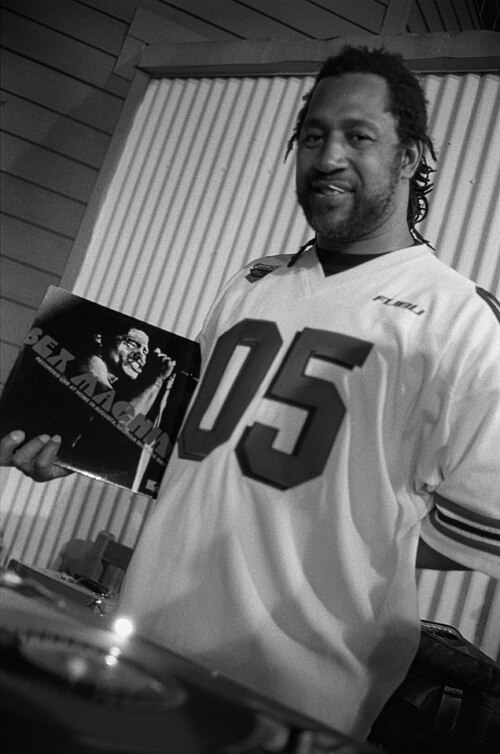
1970年代、ニューヨークではブロックパーティーが人気となり、特にブロンクス区に住むアフリカ系アメリカ人、カリブ海諸国、ヒスパニック系の若者の間で人気が高まった。ブロックパーティーにはDJが参加し、ファンクやソウルミュージックなど、人気のジャンルの音楽を流した。好評を博したため、DJは人気曲のパーカッシブなブレイクを切り離し始めた。この手法はジャマイカのダブミュージックでは一般的であり、[52]ヒップホップの先駆者の1人であるDJクール・ハークなど、カリブ海諸国からの移民によって主にニューヨークに導入された。[53] [54]ハークはジャマイカの音楽の伝統と初期のヒップホップの直接的なつながりを繰り返し否定し、彼自身に最も影響を与えたのはジェームス・ブラウンであり、彼からラップが生まれたと述べていると述べている。 [55]米国に移住する前から、ハークはアメリカの音楽から最も大きな影響を受けたと述べている。
私はジャマイカでアメリカの音楽を聴いていましたが、私のお気に入りのアーティストはジェームス・ブラウンでした。彼が私にインスピレーションを与えてくれました。私がプレイしたレコードの多くはジェームス・ブラウンのものでした。[56]
ハークはまた、ジャマイカにいた頃は若すぎて経験できなかったため、ジャマイカのサウンドシステムパーティーの影響を受けなかったとも述べている。[57]
2020年のインタビューで、DJクール・ハークの妹シンディ・キャンベルは、ジャマイカがヒップホップを取り戻してほしいと語った。彼女の言葉を借りれば、「私たちはアメリカにスタイルとテクニックを持ち込み、それが後にヒップホップになった」からだ。[58]
ファンク、ソウル、ディスコのレコードのパーカッシブなブレイクは一般的に短かったため、ハークや他のDJはブレイクを伸ばすために2つのターンテーブルを使い始めた。1973年8月11日、DJクール・ハークは妹の新学期パーティーでDJを務めた。彼は2つのレコードプレーヤーを使ってレコードのビートを延長し、ミキサーを使って2つのレコードを切り替えることでパーカッションの「ブレイク」を分離した。レコードプレーヤーで音楽を作るハークの実験は、現在ではブレイキングまたは「スクラッチ」として知られているものになった。[59]
ヒップホップ音楽の2つ目の重要な要素は、司会(MCまたはラップとも呼ばれる)である。司会とは、韻や言葉遊びをリズミカルに話すことであり、最初は伴奏なしで行われ、後にビートに合わせて行われる。この話し方は、アフリカ系アメリカ人の「キャッピング」スタイルの影響を受けている。キャッピングとは、男性が言語の独創性で互いに競い合い、リスナーの支持を得ようとするパフォーマンスである。[60]ヒップホップの基本要素である自慢げなラップ、ライバルの「ポッセ」(グループ)、アップタウンの「スローダウン」、政治的および社会的論評はすべて、アフリカ系アメリカ人の音楽に長く存在していた。MCとラップのパフォーマーは、自慢、怠惰、性的なほのめかしが混ざった曲の優位性と、より時事的で政治的、社会的に意識の高いスタイルの間を行ったり来たりしていた。MCの役割はもともと、DJダンスイベントの司会者であった。 MC は DJ を紹介し、観客を盛り上げようとします。MC は DJ の曲の合間に話し、みんなに立ち上がって踊るように促します。MC はジョークを言ったり、エネルギッシュな言葉遣いや熱意を使って観客を盛り上げます。最終的に、この紹介役は、より長いセッションの話し言葉、リズミカルな言葉遊び、韻を踏むことに発展し、ラップになりました。
1979年までに、ヒップホップ音楽は主流のジャンルとなった。ハークはブレイクビーツDJも開発し[61] 、ファンクソングのブレイク(通常はパーカッションがベースで、ダンスに最も適した部分)を分離して繰り返し、一晩中続くダンスパーティーを目的とした。ハードファンクとロックを使用したこの形式の音楽再生は、ヒップホップ音楽の基礎を形成した。キャンベルのダンサーへのアナウンスと激励は、現在ラップとして知られる、シンコペーションされた韻を踏んだ話し言葉の伴奏につながった。彼はダンサーを「ブレイクボーイ」と「ブレイクガール」、または単に「Bボーイ」と「Bガール」と呼んだ。ハークによると、「ブレイキング」は「興奮する」や「精力的に行動する」という意味のストリートスラングでもあった。[62]

グランド・ウィザード・セオドア、グランドマスター・フラッシュ、ジャジー・ジェイなどのDJは、カッティングやスクラッチを含むブレイクビーツの使い方を洗練させ、発展させた。[64]ターンテーブル操作が進化し続けると、そこから生まれた新しいテクニックがニードル・ドロップだった。ニードル・ドロップはグランドマスター・フラッシュによって考案されたもので、レコードを2枚同時に再生し、一方のターンテーブルで針をブレイクの開始位置まで戻し、もう一方のターンテーブルで再生することで、短いドラムブレイクを延長するものである。[65]ハークが使用したアプローチはすぐに広く模倣され、1970年代後半には、DJがビートに合わせてラップする12インチレコードをリリースするようになった。人気の曲には、カーティス・ブロウの「The Breaks」やシュガーヒル・ギャングの「Rapper's Delight」などがある。[66]ハークや他のDJたちは機材を電力線に接続し、公共のバスケットボールコートや、現在は歴史的建造物として公式に指定されているニューヨーク市ブロンクス区セジウィック・アベニュー1520番地などの会場で演奏した。[67]機材は多数のスピーカー、ターンテーブル、1本以上のマイクで構成されていた。[68]この技術を使うことで、DJは多様な音楽を作ることができたが、デイヴィッド・トゥープの『ラップ・アタック』によると「最悪の場合、この技術は夜を1曲の終わりのない退屈な曲に変えてしまう可能性がある」とのこと。[69]ピート・DJ・ジョーンズのラッパー兼作詞家であるKC・ザ・プリンス・オブ・ソウルは、自らを「MC」と名乗った最初のラップ作詞家としてよく知られている。[70]
ストリートギャングは貧困のサウスブロンクスに蔓延しており、こうしたパーティーでのグラフィティ、ラップ、Bボーイの多くは、ストリートギャングの競争や優越感を芸術的に表現したものだった。ギャングのメンバーの暴力的な衝動を創造的なものに変えることができると感じたアフリカ・バンバータは、ストリートダンスクルー、グラフィティアーティスト、ラップミュージシャンの緩やかな連合体であるズールーネーションを設立した。1970年代後半までに、この文化はメディアの注目を集め、ビルボード誌は「ブロンクスを襲うBビーツ」と題した記事を掲載し、地元の現象について論じ、クール・ハークなどの影響力のある人物に言及した。[71] 1977年のニューヨーク市停電では、特にブロンクスで略奪、放火、その他の市全体の混乱が広がった[72] 。ブロンクスでは、数人の略奪者が電気店からDJ機器を盗んだ。その結果、当時ブロンクス以外ではほとんど知られていなかったヒップホップというジャンルは、1977年以降驚異的な速度で成長しました。[73]
DJクール・ハークのハウスパーティーは人気を博し、後により多くの人を収容するために屋外会場へと移った。公園で開催されるこれらの屋外パーティーは、ティーンエイジャーの表現手段やはけ口となり、「路上でトラブルに巻き込まれる代わりに、ティーンエイジャーは今や溜まったエネルギーを発散する場所を得た」。[74]コールド・クラッシュ・ブラザーズのメンバーであるトニー・トーンは、「ヒップホップは多くの命を救った」と述べた。[74]スラム街の若者にとって、ヒップホップ文化に参加することは、アメリカ国内の少数派としての生活の困難に対処する方法となり、暴力のリスクやギャング文化の台頭に対処するはけ口となった。MCキッド・ラッキーは、「人々は喧嘩する代わりに、お互いにブレイクダンスをしていた」と述べている。[75] [76] DJクール・ハークに触発されたアフリカ・バンバータは、ティーンエイジャーをギャング生活、麻薬、暴力から引き離す手段として、ヒップホップを中心としたユニバーサル・ズールー・ネーションというストリート組織を創設した。[74]
初期のラップ グループの多くは、社会問題に歌詞の内容が焦点を当てていた。最も顕著なのは、グランドマスター フラッシュとザ フューリアス ファイブの代表曲「The Message」で、住宅団地での生活の現実を論じている。[77]「公民権運動から出てきた若い黒人アメリカ人は、1980 年代と 1990 年代にヒップホップ カルチャーを使ってヒップホップ運動の限界を示した。」[78]ヒップホップは、若いアフリカ系アメリカ人に自分たちの問題を表明する声を与えた。「ロックンロールのように、ヒップホップは暴力、違法行為、ギャングを美化するため、保守派から激しく反対されている。」[78]また、ヒップホップは「世界の他の国々を社会問題の消費者に貶める」ことで、人々に金銭的利益を得る機会を与えた。[78]
1979年後半、ブロンディのデビー・ハリーは、シックのナイル・ロジャースをそのようなイベントに連れて行った。メインのバッキングトラックは、シックの「グッド・タイムズ」のブレイクだった。[66]この新しいスタイルはハリーに影響を与え、ブロンディの1981年のヒットシングル「ラプチャー」は、ヒップホップの要素を含む最初のシングルとなり、米国のビルボードホット100で1位を獲得した。この曲自体は通常、ニューウェーブとみなされ、ポップミュージックの要素が強く融合されているが、終わり近くにハリーによる長いラップがある。
ボクサーのモハメド・アリは、影響力のあるアフリカ系アメリカ人の有名人として、メディアで広く取り上げられた。アリはヒップホップ音楽のいくつかの要素に影響を与えた。ボクシングのリングとメディアのインタビューの両方で、アリは1960年代に「韻を踏むトリックスター」として知られるようになった。アリは、自慢話、コミカルなトラッシュトーク、[そして]無限に続く引用可能なセリフを含むコメントに「ファンキーな表現」を使用した。[79]ローリングストーン誌によると、彼の「フリースタイルスキル」(特定の主題や構造なしに歌詞を朗読するボーカル即興の一種を指す)と「韻、流れ、自慢話」は、 「いつの日かラン・DMCやLLクールJのようなオールドスクールMCの典型になるだろう」と述べ、[80]後者はアリの影響を受けた人物として挙げている。[79]初期のヒップホップ音楽は、低所得層や経済的に疎外された地域の権利を奪われた若者たちのはけ口であり「声」であると評されてきた。 [48 ]ヒップホップ文化は、彼らの生活の社会的、経済的、政治的現実を反映していたからである。[49]
テクノロジー

ヒップホップの初期の進化は、サンプリング技術とドラムマシンがプロのスタジオだけでなく平均的な消費者にも手が届く価格で一般に広く普及した頃に起こりました。ドラムマシンとサンプラーはMPCまたは「ミュージックプロダクションセンター」として知られるようになったマシンに統合され、その初期の例としてはLinn 9000があります。この新しい種類の音楽を作成するために広く採用された最初のサンプラーは、TR-808ドラムマシンと組み合わせて使用されるメロトロンでした。メロトロンとリンの後継は、1980年代後半にAKAIに登場しました。 [81]
ターンテーブリストのテクニック、例えばリズミカルな「スクラッチ」(レコード針が溝にある間にレコードを前後に動かして新しい音や効果音を生み出す手法で、グランド・ウィザード・セオドア[82] [83]に由来する)、ビート・ミキシングやビートマッチング、ビート・ジャグリングなどは、最終的にはパーカッション・ブレイクとともに発展し、シニファイングに似た方法でラップできる音楽の伴奏やベースを生み出した。
ラップの紹介
ラップは、 MCやエムシーとも呼ばれ、アーティストがリリカルかつリズミカルに、韻を踏んで、通常はインストゥルメンタルまたはシンセサイザーのビートに合わせて話すボーカルスタイルです。ほとんどの場合4/4拍子のビートは、プロデューサーが他の曲の一部をサンプリングしたりシーケンスしたりすることで作成できます。シンセサイザー、ドラムマシン、ライブバンドも取り入れられています。ラッパーは歌詞を書いたり、暗記したり、即興で作ったりして、アカペラまたはビートに合わせて演奏します。ヒップホップミュージックは、ラップがヒップホップ文化に導入される前から存在しており、Man Parrishの「 Hip Hop, Be Bop (Don't Stop)」 、 Eric B. & Rakimの「Chinese Arithmetic」 、 Hashimの「Al-Naafiysh (The Soul)」および「We're Rocking the Planet」など、多くのヒップホップトラックにはラップのボーカルがありません。ヒップホップのジャンルでは、ニュークリアスの「Destination Earth」など、ラップのボーカルが伴奏として使われることが多い。しかし、このジャンルの大半は、SFの影響を受けたエレクトロ・ヒップホップ・グループ、ワープ9のように、ラップのボーカルを伴っている。[84]女性ラッパーは1970年代後半から80年代前半にかけて登場し、その中には、ファンキー・フォー・プラス・ワンのメンバーで、初の女性MCとされるブロンクス出身のアーティスト、MCシャロック[85]や、シュガー・ヒル・レコードと契約したヒップホップ・トリオ、シークエンスなどがいる。シークエンスは、ヒット・ラップ・レコード「ファンク・ユー・アップ」をリリースした初の女性グループである。[86]
ラップのルーツはアフリカ系アメリカ人の音楽にあり、伝統的なアフリカ音楽、特に西アフリカ文化のグリオ[87]の音楽と類似点がある。 [88]アフリカ系アメリカ人のシグニファイング、ダズンズ、ジャズ詩の伝統はすべて、ヒップホップ音楽や、アフリカおよびアフリカ系アメリカ人の宗教儀式のコールアンドレスポンスのパターンに影響を与えている。ブラックアピールラジオ時代の初期の人気ラジオディスクジョッキーは、1940年代後半から1950年代の第二次世界大戦後のスウィング時代のジャイブトークでこれらのテクニックを使用して放送アナウンスに参入した。 [89] DJナットDは、ショービジネスに参入しようとする野心的なミュージシャンにとって最も容赦のない場所の1つである、テネシー州メンフィスのビールストリートにあるパレスシアターでのアマチュアナイトのMCでした。彼は1935年から1947年まで、サイドマンのDJルーファストーマスとともに司会を務めました。そこで彼は、ダーズ、シグニフィング、そして個性的なジョック・ジャイブの話し方を完璧に身につけた。これらは、彼がメイソン・ディクソン線以南で放送中の初の黒人ラジオアナウンサーとなったときに彼の持ち味となった。 [90] ジャイブは黒人にアピールするラジオを普及させた。それは黒人の若者の言葉であり、ダブル・ミーニングと少し卑猥な言葉遊びはラジオにとって天の恵みであり、視聴者シェアを失い黒人アナウンサーによる新しい形式のR&Bへと移行しつつあった低迷する放送局の視聴率を再び活気づけた。彼の放送を聞いたアフリカ系アメリカ人の10%は、彼が1949年にラジオで宣伝した音楽が北部の都市のジュークボックスでも流れていることに気づいた。彼らはまた、シカゴのWJJDのアル・ベンソン、オースティンのKVETのドクター・ヘップ・キャット、アトランタのWERDのジョッキー・ジャックなど他のDJが、同じように押韻とリズム感に富んだラップ・スタイルを話しているのを発見した。[91]白人所有のラジオ局が、新興勢力がブラックマーケットのシェアを奪い、ビッグバンドやスウィングジャズがもはや「流行」ではないことに気づくと、白人DJの中には南部の「マッシュマウス」やジャイブトークを真似て、自分たちもブルースやビバップを演奏するアフリカ系アメリカ人だと聴衆に思わせる者もいた。[92]ジョン・R・リッチバーグはナッシュビルのWLACのリスナーに南部の訛りが伝わるほどだった。[93] 夜間のR&B番組は、局の他の白人DJと同様、黒人DJのものではないとは決して知らされていなかった。ドクター・ヘップ・キャットの韻は、1953年にジャイブトークの辞典「The Jives of Dr. Hepcat 」に掲載された。ジョッキー・ジャックは、1980年代と1990年代にすべてのラップアーティストが必ず参加したラジオコンベンションにちなんで、ファミリーアフェアで名声を博した悪名高いラッパーのジャックである[94]。 1950年代の黒人アピールラジオ形式のこれらのジャイブトーキングラッパーは、ソウルシンガーのジェームス・ブラウンや、ヒップホップミュージックの「ゴッドファーザー」と見なされることが多いルディ・レイ・ムーア、ピグミート・マーカム、ブロウフライなどのミュージカル「コメディ」アクトにインスピレーションを与えた。[95]ニューヨーク市では、ラスト・ポエッツ、ギル・スコット・ヘロン[96]、ジャラル・マンスール・ヌリディンなどのアーティストによるスポークンワード詩と音楽のパフォーマンスが、1960年代と1970年代の公民権運動後の文化に大きな影響を与え、ヒップホップ音楽が作られた社会環境にも影響を与えました。
屋外音響システムのジャマイカ起源
AM ラジオは、多くの放送局で「放送日」によって制限されており、夜間の放送には特別な免許が必要でした。そのような免許を持つ放送局は、はるか遠くの海やカリブ海でも聞かれました。そこでは、ジョッコ・ヘンダーソンやジョッキー・ジャックといったアメリカ人の DJ の音楽が、フロリダ州マイアミにある放送送信所から夜間に聞かれていました。マイアミの放送局で流れる R&B 音楽は、BBCや地元の音楽スタイルを再放送する JBC で流れる音楽とは異なっていたため、ジョッコは 50 年代にジャマイカの司会者に多大な影響を与えました。ジャマイカでは、DJ が町や村の道路脇に大きなサウンド システムを設置し、週末に刺激を求めて田舎の丘から歩いてくる人たちが集まる非公式の集まりで音楽を流していました。そこでは、DJ が司会者による「乾杯」を許可していましたが、これは AM トランジスタ ラジオで聞かれるアメリカ人の DJ のスタイルを真似したものです。この方法によって、ジャイブトーク、ラップ、韻が島に移され、現地ではそのスタイルが「ジャマイカの歌詞」、つまり地元のパトワ語によって変化しました。
音楽および文化としてのヒップホップは、1970年代にニューヨーク市で、アメリカ合衆国のアフリカ系アメリカ人の若者とカリブ海諸国からの若い移民および移民の子供たちとの間の多文化交流から形成されました。[47]一部は、ジャマイカのラジオで聞くことができた最初期のアフリカ系アメリカ人ラジオMCのボーカルスタイル(韻を踏み、スキャット歌唱の影響を受けた1950年代のジョッコ・ヘンダーソンのロケット・シップ・ショーを含む)に影響を受けました。
ジャマイカの DJ による最初のレコードは、サー・ロード・コミック( The Great Wuga Wuga、1967 年) など、地元のダンスホール文化の一部として生まれました。この文化では、ソフト ディスクやアセテート ディスクにプレスされた「スペシャル」、独自のミックスや「バージョン」、キング・スティット、カウント・マチュキ、U-ロイ、I-ロイ、ビッグ・ユースなどのラッパー (DJ と呼ばれる) が登場しました。ダンスホールの DJ スタイルとは異なるスタイルであるトークオーバーの録音も、プリンス・バスターやリー・"スクラッチ"・ペリー( Judge Dread ) などのジャマイカのアーティストによって 1967 年にはすでに行われており、何らかの形で「トーキング ブルース」の伝統に根ざしています。ジャマイカ人 DJ による初のフルレングスのレコードは、キングストンのゲットーに住む U-Roy と Peter Tosh によるラスタファリアンをテーマにしたデュエット曲Righteous Ruler ( 1969 年にLee "Scratch" Perryがプロデュース) でした。DJ による初のヒット レコードは、同年Coxsone の Downbeat サウンド システム DJ、King StittがリリースしたFire Cornerでした。1970 年には、U-Roy の初期のヒット曲、最も有名なWake the Townなどに続いて、多数の DJ ヒット レコードが生まれました。リミックスの伝統 (ジャマイカでも始まり、そこでは「バージョン」や「ダブ」と呼ばれていました) が発展するにつれ、その時代にすでにサウンド システムで何年も活動していた、定評のある若手ジャマイカ人 DJ/ラッパーが突然レコーディングされ、地元でのヒット レコードを多数生み出し、1970 年代の Bob Marley の影響で引き起こされたレゲエ ブームに大きく貢献しました。 1970年代初期のジャマイカの主なDJは、キング・スティット、サミュエル・ザ・ファースト、カウント・マチュキ、ジョニー・ラヴァー(1971年には早くもボブ・マーリーとウェイラーズの曲を「バージョン化」していた)、デイブ・バーカー、スコッティ、ロイド・ヤング、チャーリー・エースら、そして間もなくレゲエ界のスターとなるU-ロイ、デニス・アルカポーン、I-ロイ、プリンス・ジャズボ、プリンス・ファー・アイ、ビッグ・ユース、ディリンジャーらだった。ディリンジャーは1976年に「コカイン・イン・マイ・ブレイン」で初の国際的なラップヒットを記録した(ピープルズ・チョイスの「ドゥ・イット・エニイ・ウェイ・ユー・ワナ・ドゥ」のリズムをスライ&ロビーが再録音したものがベース) 。)、そこで彼はニューヨーク訛りまで使って、意識的にニューヨークの新しいラップ市場を狙っていた。ジャマイカのDJダンスミュージックは、中流階級と上流階級が利用するクラブやホテルでしかライブミュージックが演奏されなかった非常に貧しい国で、貧しい人々に音楽を届けたサウンドシステムの伝統に深く根ざしていた。1973年までに、ジャマイカのサウンドシステム愛好家DJクール・ハークは、ジャマイカのサウンドシステム文化を携えてブロンクスへ移り、同じくジャマイカ人のコーク・ラ・ロックとマイクでチームを組んだ。他の影響、特にブルックリンの音楽シーケンサーのグランドマスター・フラワーズとブロンクスのグランドウィザード・セオドアがニューヨークでのヒップホップの誕生に貢献し、アメリカのヒップホップに関するほとんどの本では軽視されていたが、このサウンドシステム文化の主なルーツはジャマイカにあった。ジャマイカのラップのルーツは、ブルーノ・ブラムの著書「Le Rap」で詳しく説明されている。[97]
DJクール・ハークとコーク・ラ・ロックは、ファンクミュージックのブレイクに乗せてシンプルな詩の詩を披露することでラップのボーカルスタイルに影響を与えた。これは、パーティー参加者がレゲエ風のトースティングを音楽に取り入れるという彼らの以前の試みにほとんど興味を示さなかったためである。 [52] [98] DJやMCは、パフォーマーが考えをまとめられるよう、コールアンドレスポンスのチャント(多くの場合、基本的なコーラス)を加えることが多かった(例:「ワン、ツー、スリー、みんな、ビートに合わせて」)。後に、MCはボーカルとリズムの表現に多様性を持たせ、性的またはスカトロ的テーマを伴う短い韻を組み込むことで、差別化を図り、観客を楽しませようとした。これらの初期のラップには、アフリカ系アメリカ人文化の産物であるダズンが取り入れられた。クール・ハーク&ザ・ハーキュロイズはニューヨークで認知された最初のヒップホップグループであったが、[98] MCチームの数は時間とともに増加した。
これらは、アフリカー・バンバータのユニバーサル・ズールー・ネーション(現在は国際組織)など、元ギャング同士のコラボレーションであることが多い。フューリアス・ファイブのラッパー、メリー・メルは、自分自身を「MC」と呼んだ最初のラップ作詞家としてよく知られている。 [99] 1970年代初頭、ブロックパーティーでBボーイングが生まれ、BボーイとBガールたちが観客の前に出て、独特で熱狂的なスタイルで踊った。このスタイルは、スタイル・ウォーズ、ワイルド・スタイル、ビート・ストリートなどのドキュメンタリーや映画で初めて世界中の観客に公開された。「Bボーイ」という用語は、DJクール・ハークが、曲のブレイク部分を待ち、運動能力を披露し、ステージで回転しながら独特で熱狂的なスタイルで「ブレイクダンス」する人々を表すために作った造語である。[100]
DJハリウッド、カーティス・ブロウ、スプーニー・ジーなど、初期のMCの中には注目すべきソロプロジェクトを録音した人もいたが、ソロアーティストの頻度は、 LLクールJなどのステージでの存在感とドラマ性を備えたソリストの台頭によって後になってから増加した。初期のヒップホップのほとんどは、メンバー間のコラボレーションがショーの不可欠な要素であるグループによって支配されていた。[101]一例として、初期のヒップホップグループファンキー・フォー・プラス・ワンが挙げられ、 1981年にサタデー・ナイト・ライブでそのようなパフォーマンスを行った。 [102]
1980年代: 旧式と新式
録音への移行
.jpg/500px-Sugarhill_Gang_Tour,_2016_(2).jpg)
最も初期のヒップホップ音楽は、ハウスパーティーやブロックパーティーのイベントでライブ演奏され、録音はされていませんでした。1979年より前、録音されたヒップホップ音楽は、主にライブパーティーショーのPAシステムのサウンドボード録音と、DJによる初期のヒップホップミックステープで構成されていました。プエルトリコのDJ、ディスコウィズは、1977年にサウンドバイト、特殊効果、一時停止したビートを組み合わせて技術的にサウンド録音を作成し、「ミックスプレート」またはミックスダブ録音を作成した最初のヒップホップDJとして知られています。 [103]最初のヒップホップレコードは、1979年のシュガーヒルギャングの「ラッパーズディライト」であると広く考えられています。これは、主流で広く人気を博した最初のヒップホップレコードであり、ヒップホップミュージックの名前の由来(オープニングバーから)です。[104]しかし、この主張には多くの論争があり、ファットバック・バンドの1979年3月のシングル「キング・ティムIII(パーソナリティ・ジョック) 」をラップ・レコードと見なす人もいます。[105]最初のヒップホップ・レコードのタイトルを主張する人は他にもたくさんいます。
1980年代初頭までに、ヒップホップというジャンルの主要な要素と技術がすべて整い、1982年までには、エレクトロニック(エレクトロニック)サウンドが街頭やダンスクラブのトレンドとなった。ニューヨーク市のラジオ局WKTUは、同局の特徴的な新興ヒップホップサウンドを宣伝するため、コマーシャルでワープ9の「Nunk 」を取り上げていた[106]。まだ主流ではなかったものの、ヒップホップはニューヨーク市以外の音楽シーンにも浸透し始めており、ロサンゼルス、アトランタ、シカゴ、ワシントンD.C.、ボルチモア、ダラス、カンザスシティ、サンアントニオ、マイアミ、シアトル、セントルイス、ニューオーリンズ、ヒューストン、トロントなど、さまざまな都市で聞くことができる。実際、女性グループによってリリースされた最初のヒップホップレコードであり、シュガーヒルレコードからリリースされた2番目のシングルである「ファンク・ユー・アップ」(1979年)は、アンジー・ストーンをフィーチャーしたサウスカロライナ州コロンビア出身のグループ、シークエンスによって演奏されました。[107]このジャンルの人気が高まったにもかかわらず、フィラデルフィアは長年、ニューヨーク市の貢献と比較できる唯一の都市でした。ヒップホップ音楽は1970年代後半にフィラデルフィアで人気を博しました。最初にリリースされたレコードは、ジョッコ・ヘンダーソンによる「リズム・トーク」でした。
ニューヨーク・タイムズは1971年にフィラデルフィアを「世界のグラフィティの首都」と呼んだ。フィラデルフィア出身のDJレディBは1979年に「To the Beat Y'All」を録音し、音楽を録音した最初の女性ソロヒップホップアーティストとなった。 [108] 1984年にフィラデルフィア出身の スクールリーDは、後にギャングスタラップとして知られるスタイルを作り始めた。
ディスコの影響
ヒップホップ音楽はディスコ音楽の影響を受けており、ディスコではダンサー向けのトラックやミックスを作成する上で DJ が重要な役割を担うことも強調され、オールドスクール ヒップホップではディスコ トラックをビートとして使用することが多かった。しかし同時に、ヒップホップ音楽は 1970 年代後半のディスコの特定のサブジャンルに対する反発でもあった。初期のディスコはアフリカ系アメリカ人とイタリア系アメリカ人が作ったアンダーグラウンド音楽で、ダンス クラブ サブカルチャー向けに DJ やプロデューサーが開発したものだったが、1970 年代後半には、ディスコの電波は主流で、高額な録音費をかけて 音楽業界が制作したディスコ曲で占められるようになった。カーティス ブロウによると、ヒップホップの初期の頃はディスコ音楽のファンと批判者の間に分裂が見られた。ヒップホップは主に「電波に浸透した、水で薄められ、ヨーロッパ化されたディスコ音楽への直接的な反応」として登場した。[109] [110]最も初期のヒップホップは、主にビンテージファンクレコードから得たハードファンクループに基づいていました。1979年までに、ディスコのインストゥルメンタルループ/トラックは、多くのヒップホップミュージックの基礎となりました。このジャンルは「ディスコラップ」と呼ばれていました。皮肉なことに、ヒップホップミュージックの台頭は、ディスコの人気が最終的に衰退する一因にもなりました。
ディスコサウンドは初期のヒップホップ音楽に強い影響を与えました。初期のラップ/ヒップホップの曲のほとんどは、既存のディスコベースギターのベースラインを分離し、MCの韻をダビングして作成されました。シュガーヒルギャングは、シックの「グッドタイムズ」を1979年のヒット曲「ラッパーズディライト」の基礎として使用しました。これは、米国および世界中でラップミュージックを初めて普及させた曲であると一般に考えられています。1982年、アフリカバンバータは、クラフトワークの「トランスヨーロッパエクスプレス」と「ナンバーズ」、およびYMOの「ライオットインラゴス」のエレクトロニカ要素を取り入れたシングル「プラネットロック」をリリースしました。プラネット・ロックのサウンドは、ヒップホップのエレクトロニック・ダンスのトレンドであるエレクトロ・ミュージックも生み出した。その中には、プラネット・パトロールの「Play at Your Own Risk」(1982年)、C Bankの「One More Shot」(1982年)、Cerroneの「Club Underworld」(1984年)、Shannonの「Let the Music Play」(1983年)、Freeezの「IOU」(1983年)、Midnight Starの「Freak-a-Zoid」(1983年)、Chaka Khanの「I Feel For You」(1984年)などの曲が含まれている。
DJ ピート・ジョーンズ、エディ・チーバ、DJ ハリウッド、ラブ・バグ・スタースキーはディスコの影響を受けたヒップホップ DJ でした。彼らのスタイルは、早口の韻とより複雑なリズム構成に焦点を当てた他のヒップホップ ミュージシャンとは異なっていました。アフリカ・バンバータ、ポール・ウィンリー、グランドマスター・フラッシュ、ボビー・ロビンソンは、すべて後者のグループのメンバーでした。ワシントン DC では、ディスコに対する反応としてゴーゴーが登場し、1980 年代初期にヒップホップの特徴を取り入れました。DJ ベースのエレクトロニック ミュージックのジャンルも同様に機能し、最終的にシカゴではハウス ミュージック、デトロイトではテクノとして知られるアンダーグラウンド スタイルに進化しました。
スタイルの多様化

1980年代はヒップホップの多様化の時代であり、ジャンルはより複雑なスタイルを展開した。[111]ニューヨークはまさに新しいヒップホップサウンドを生み出す実験場となった。多様化の初期の例としては、グランドマスター・フラッシュの「The Adventures of Grandmaster Flash on the Wheels of Steel」(1981年)がある。このシングルはサンプリングされたトラックのみで構成されている。[112]アフリカ・バンバータの「Planet Rock」(1982年)やワープ9の「Nunk」(1982年)[113]はヒップホップミュージックとエレクトロの融合を象徴している。さらに、ラメルジー&Kロブの「Beat Bop」(1983年)は、リバーブやエコーをテクスチャや遊び心のある効果音として使い、ダブの影響を受けた「スロージャム」だった。ワープ9の「ライト・イヤーズ・アウェイ」 (1983年)は、ロッティ・ゴールデンとリチャード・シェアがプロデュースと作曲を手掛け、イギリスの新聞『ガーディアン』で「80年代初期のビートボックス・アフロフューチャリズムの礎」と評され、[84] SF的な観点から社会評論を紹介した。1970年代のヒップホップ音楽は、ファンクや後にディスコからのサンプルを主に使用していた。1980年代半ばには、アルバム『キング・オブ・ロック』や『ライセンスト・トゥ・イル』で示されているように、ロック音楽からのサンプルが導入され、ヒップホップの発展におけるパラダイムシフトが起こった。このシフト以前のヒップホップは、オールドスクール・ヒップホップとして特徴付けられる。

1980年、ローランド社はTR-808リズムコンポーザーを発売した。これは最も初期のプログラム可能なドラムマシンの1つであり、ユーザーはプリセットパターンを使用するのではなく、独自のリズムを作成することができた。商業的には失敗したが、中古市場での手頃さ、[114]使いやすさ、[115]独特のサウンド、特に深く「響く」ベースドラム[116]により、808は10年間にわたってアンダーグラウンドミュージシャンの間で熱狂的な支持を集めた。これは、アフリカ・バンバータやソウルソニック・フォースの「プラネット・ロック」などの初期のヒットによって普及した、新興のエレクトロニック、ダンス、ヒップホップのジャンルの基礎となった。[117] 808は最終的に、他のどのドラムマシンよりも多くのヒットレコードで使用されるようになった。[118]特にヒップホップでの人気により、エレキギターはポピュラー音楽において最も影響力のある発明の一つとなり、フェンダー・ストラトキャスターがロックに与えた影響に匹敵する。[119] [120]

時が経つにつれ、サンプリング技術はより進歩しました。しかし、初期のプロデューサー、例えばマーリー・マールは、ドラムマシンを使用して、他のビートの小さな抜粋を同期させてビートを構築していました。彼の場合は、ローランド808を介して3つのコルグのサンプリングディレイユニットをトリガーしました。その後、 E-mu SP-1200などのサンプラーは、より多くのメモリだけでなく、クリエイティブな制作のためのより柔軟な対応を可能にしました。これにより、さまざまなヒットをフィルタリングしてレイヤー化し、それらを1つの作品に再シーケンスする可能性が生まれました。1980年代後半にAKAI S900などの新世代のサンプラーが登場したことで、プロデューサーは複雑で時間のかかるテープループを作成する必要がなくなりました。パブリック・エネミーの最初のアルバムは、大きなテープループの助けを借りて作成されました。ブレイクをブレイクビートにループさせるプロセスは、サンプラーでより一般的に行われるようになり、これまではDJがターンテーブルを使用して手動で行っていた作業を行うようになりました。 1989年、DJマーク・ジェームスは「45キング」という名で、サンプラーとレコードを同期させて作成したブレイクビートトラック「The 900 Number」をリリースしました。[101]

ヒップホップの歌詞の内容と他の楽器の伴奏も同様に発展した。自慢話や決まりきったチャントが多かった1970年代の初期の歌詞のスタイルは、より幅広い主題を探求する比喩的な歌詞に取って代わられた。また、歌詞はより複雑で多層的な楽器の伴奏に乗せて演奏された。メリー・メル、ラキム、チャック・D、KRSワン、ワープ9などのアーティストは、洗練されたアレンジで「ゴージャスなテクスチャと多層」を特徴とすることが多い、より成熟した芸術形式へとヒップホップを変革し、ヒップホップに革命をもたらした[121] 。グランドマスター・フラッシュ・アンド・ザ・フューリアス・ファイブによる影響力のあるシングル「ザ・メッセージ」(1982年)は、コンシャス・ラップの先駆者と広く考えられている。
Tommy Boy、Prism Records、Profile Recordsなどの独立系レコードレーベルは1980年代初頭に成功し、地元のラジオ局やクラブDJからの需要に応えて猛烈なペースでレコードをリリースした。1980年代初頭のエレクトロミュージックとラップは、Cybotron、Hashim、Afrika Bambaataa、Planet Patrol、Newcleus、Warp 9などのアーティストが主導するヒップホップムーブメントのきっかけとなった。ニューヨークのレコーディングシーンでは、アーティストはArthur Baker、John Robie、Lotti Golden、Richard Scherなどのプロデューサー/ライターとコラボレーションし、ヒップホップの発展に貢献するアイデアを交換した。[122]一部のラッパーは最終的に主流のポップパフォーマーになった。Kurtis BlowはSpriteソーダポップのCMに出演し[123]、メジャー商品のCMに出演した最初のヒップホップミュージシャンとなった。 1981 年にブロンディが発表した「Rapture」やニューウェーブバンドのザ ウェイトレスが発表した「 Christmas Wrapping」は、ラップを使った最初のポップ ソングのひとつです。1982 年には、アフリカ バンバータが「 Planet Rock 」で世界中の聴衆にヒップホップを紹介しました。
1980年代以前は、ヒップホップ音楽は主に米国内の文脈に限定されていました。しかし、1980年代には広がり始め、数十か国の音楽シーンの一部となりました。グレッグ・ウィルソンは、1980年代初頭に英国のクラブの観客にエレクトロ・ヒップホップを紹介した最初のDJであり、ワープ9のNunk、エクストラTの「ETブギー」、マン・パリッシュのヒップホップ、ビー・バップ(ドント・ストップ)、プラネット・ロック、ダーティー・トークのダブまたはインストゥルメンタルバージョンを選択しました。[124]
80年代初頭、Bボーイングはヒップホップ文化の最初の側面として日本、オーストラリア、南アフリカに伝わった。南アフリカでは、ブレイクダンスクルーのブラックノイズがこの習慣を確立し、その後80年代後半にラップを始めた。ミュージシャンで司会者のシドニーは、1984年にTF1で放映された番組「HIPHOP」 [125]でフランス初の黒人テレビ司会者となり、このジャンルでは世界初となった。シドニーはフレンチヒップホップの父とみなされている。ラジオ・ノヴァはディー・ナスティなど他のフレンチヒップホップスターのデビューを助け、ナスティの1984年のアルバム「Paname City Rappin'」やコンピレーションアルバム「Rapattitude 1」および「Rapattitude 2」はフランスにおけるヒップホップの一般的な認知度向上に貢献した。
ヒップホップは、ニューヨークのヒスパニック系コミュニティと常に密接な関係を保ってきた。DJディスコ・ウィズとロック・ステディ・クルーは、プエルトリコ出身の初期のイノベーターたちで、歌詞に英語とスペイン語を組み合わせていた。ミーン・マシーンは1981年に「ディスコ・ドリームス」というレーベルで最初の曲を録音し、ロサンゼルスのキッド・フロストは1982年にキャリアを開始した。サイプレス・ヒルは、セネン・レイエス(ハバナ生まれ)と弟のウルピアーノ・セルヒオ(メロウ・マン・エース)が1971年に家族とともにキューバからサウスゲートに移住した際に、1988年にロサンゼルス郊外のサウスゲートで結成された。彼らは、クイーンズ(ニューヨーク)出身のDVX、ローレンス・マガード(DJマグス)、ロサンゼルス出身のメキシコ/キューバ系アメリカ人のルイス・フリーズ( B-リアル)とチームを組んだ。 「エース」がソロ活動を始めるために脱退した後、グループはロサンゼルス南部の近隣地区を通る通りにちなんで サイプレス ヒルという名前を採用しました。
日本のヒップホップは、1980年代初頭に藤原ヒロシが日本に帰国し、ヒップホップのレコードを演奏し始めたことに始まったと言われています。[126]日本のヒップホップは一般的にオールドスクールヒップホップの影響を最も直接的に受けており、その時代のキャッチーなビート、ダンスカルチャー、そして全体的に楽しく気楽な性質を音楽に取り入れています。ヒップホップは日本で最も商業的に成功した主流の音楽ジャンルの1つになり、ポップミュージックとの境界線はしばしば曖昧になっています。
.png/500px-Run_DMC_(cropped).png)
ニュースクール・オブ・ヒップホップは、1983年から84年にかけてRun-DMCとLL Cool Jの初期のレコードとともに始まった、ヒップホップ音楽の第二波である。それ以前のヒップホップ(後にオールドスクール・ヒップホップとして知られるようになった)と同様に、ニュースクールは主にニューヨーク市から生まれた。ニュースクールは当初、ドラムマシン主導のミニマリズムを特徴とし、ロック音楽、ヒップホップ「80年代のメタル音楽、ニューヨークと同じくらい必死で刺激的な、ハードエッジな醜悪/美的トランス」から影響を受けていた。[127]ラップに対する嘲りや自慢、社会政治的なコメントが攻撃的で自己主張的なスタイルで表現されることで有名だった。イメージでも歌でも、アーティストはタフでクールなストリートBボーイの態度を投影していた。
これらの要素は、ファンクやディスコの影響を受けた以前のヒップホップグループの多くとは対照的であった。彼らの音楽は、ノベルティヒット、ライブバンド、シンセサイザー、そして「パーティーライム」を特徴としていた(1983年から84年以前のすべてのアーティストがこれらのスタイルを持っていたわけではない)。ニュースクールのアーティストは、ラジオで簡単に流せるように短い曲を作り、オールドスクールのアーティストよりもまとまりのあるLPアルバムを制作した。1986年までに、彼らのリリースにより、ヒップホップアルバムは主流音楽の定番として確立し始めた。ヒップホップ音楽は商業的に成功し、その例として、ビースティ・ボーイズの1986年のアルバム『ライセンスド・トゥ・イル』が挙げられ、これはビルボードチャートで1位を獲得した最初のラップアルバムとなった。[128]
1990年代: ヒップホップの黄金時代
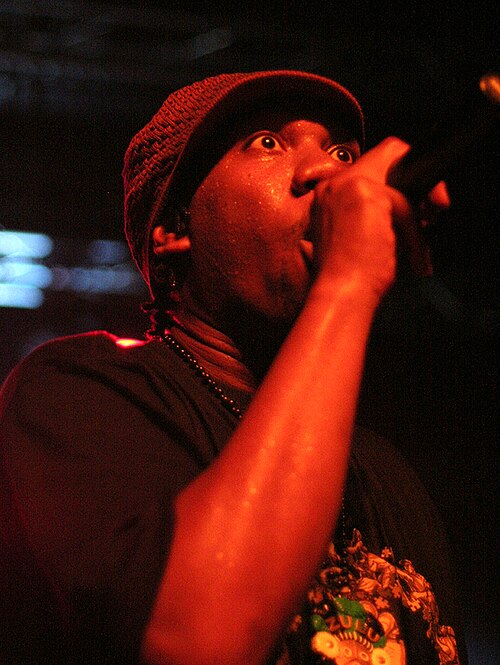
ヒップホップの「黄金時代」(または「黄金時代」)は、1980年代半ばから1990年代半ばにかけての主流ヒップホップの時代に付けられた名前であり、[129] [130] [131]その多様性、品質、革新性、影響力によって特徴付けられる。[132] [133]黄金時代のヒップホップの歌詞には、アフロセントリズムと政治的闘争の強いテーマがあった。音楽は実験的で、サンプリングは折衷的なソースから引き出された。[134]音楽にはジャズの影響が強く見られることが多かった。この段階に最もよく関連付けられるアーティストやグループは、パブリック・エネミー、ブギー・ダウン・プロダクションズ、エリック・B&ラキム、ブランド・ヌビアン、デ・ラ・ソウル、ア・トライブ・コールド・クエスト、ギャング・スター、ビッグ・ダディ・ケイン、ジャングル・ブラザーズである。[135]ディガブル・プラネッツも独自の貢献を果たし、1993年にグラミー賞を受賞した。

黄金時代は革新性で知られており、ローリングストーン誌によると「すべての新しいシングルがジャンルを再発明したように思えた」時代だった[136]。「黄金時代のヒップホップ」について、[137]スピン誌の編集長シーア・ミシェルは「その頃、非常に多くの重要で画期的なアルバムがリリースされた」と述べ、[ 137] MTVのスウェイ・キャロウェイは「その時代を素晴らしいものにしたのは、何も作り物ではなかったことだ。すべてがまだ発見され、すべてがまだ革新的で新しいものだった」と付け加えている[138] 。作家ウィリアム・ジェラーニ・コブは「彼らが始めた時代を黄金という言葉にふさわしいものにしたのは、生み出されたスタイルの革新の膨大な数だった...これらの黄金時代には、マイクの天才たちの臨界質量が文字通り自分自身と芸術形式を同時に創造していた」と述べている[139] 。
ニューヨーク・デイリー・ニュースのカール・ストファーズ氏によれば、黄金時代は「およそ1986年から1997年まで」に及ぶという。[129] Empirical Musicology Reviewの音楽理論家 Ben Duinker と Denis Martin は、記事「黄金時代のヒップホップサウンドを求めて」の中で、「1986 年から 1996 年までの 11 年間を年代順の境界として」黄金時代を定義しており、Run-DMC のRaising Hellと Beastie Boys のLicensed to Illのリリースで始まり、 2Pac ShakurとNotorious B.I.G.の死で終わるとしている。 [131] The Boombox のライター Todd "Stereo" Williams も、1986 年 5 月のRaising Hell (300 万枚以上を売り上げた) のリリースをこの時代開始として挙げ、翌年にはLicensed to Ill、Boogie Down Productions のCriminal Minded (1987)、Public Enemy のYo!ウィリアムズは、この発展を、1980年代後半から1990年代後半にかけてのヒップホップの「アルバム時代」の始まりと見ており、この時代、ヒップホップのアルバムは前例のない批評家の評価を獲得し、「このジャンルの偉人のほとんどが評価される基準となるだろう」としている。[140]
ギャングスタラップとウエストコーストヒップホップ
アイス-Tやシスター・ソウルジャを含む多くの黒人ラッパーは、自分たちの音楽が社会の大きな変化を反映しているが、公の場ではどこでも取り上げられていないため、不当に差別されていると主張している。白人政治家やアーティストは、音楽を理解していないし、この芸術形態を生み出した荒廃したコミュニティで何が起こっているのかを聞きたがらないと不満を漏らしている。
—チャック・フィリップス、ロサンゼルス・タイムズ、1992年[141]
ギャングスタ・ラップはヒップホップのサブジャンルであり、アメリカのスラム街の黒人の若者の暴力的なライフスタイルを反映している。[142] ギャングスタはギャングスターという単語の非ローティカルな発音である。このジャンルは1980年代半ばにスクールリーDやアイス-Tなどのラッパーによって開拓され、1980年代後半にはNWAなどのグループによって普及した。1985年にスクールリーDは「PSK What Does It Mean?」をリリースし、これは最初のギャングスタ・ラップの曲と見なされることが多く、1986年にはアイス-Tの「6 in the Mornin'」が続いた。1980年代後半から1990年代前半にかけてアイス-TとNWAが生み出した全国的な注目と論争、そして1990年代半ばのGファンクの主流化の後、ギャングスタ・ラップはヒップホップの最も商業的に利益のあるサブジャンルになった。ギャングスタ・ラッパーの中には、ポリティカル・ラップの政治的・社会的論評と、ギャングスタ・ラップに見られる犯罪的要素や犯罪物語を混ぜ合わせた曲を歌うことで知られる者もいた。[143]
NWAはギャングスタラップの創始者として最も頻繁に関連付けられるグループである。彼らの歌詞は既存のラップバンドの歌詞よりも暴力的で、あからさまに対立的で、ショッキングであり、絶え間ない冒涜的な言葉と、物議を醸した「ニガ」という言葉の使用を特徴としている。これらの歌詞は荒々しいロックギター主導のビートに乗せられ、音楽のハードエッジな雰囲気に貢献している。最初の大ヒットギャングスタラップアルバムは、1988年にリリースされたNWAのStraight Outta Comptonである。Straight Outta Comptonは西海岸ヒップホップを重要なジャンルとして確立し、ロサンゼルスをヒップホップの長年の首都であるニューヨーク市の正当なライバルとして確立した。Straight Outta Comptonは、彼らの曲「 Fuck tha Police 」がFBI副長官ミルト・アーレリックから、法執行機関の曲に対する強い憤りを表明する手紙を受け取ったときに、ヒップホップの歌詞に関する最初の大きな論争を引き起こした。[144] [145]
アイス-Tのアルバム『ボディ・カウント』 、特にその中の曲「Cop Killer 」は論争を巻き起こした。この曲は、人種差別主義者で残忍な警官に復讐する犯罪者の視点から語られることを意図していた。アイス-Tのロックソングは、政府関係者、全米ライフル協会、そして様々な警察擁護団体を激怒させた。[146] [147]その結果、タイム・ワーナー・ミュージックは「Cop Killer」をめぐる論争のため、アイス-Tの次のアルバム『ホーム・インベイジョン』のリリースを拒否した。 [148]アイス-Tは、この曲に対する騒動は過剰反応であると示唆し、ジャーナリストのチャック・フィリップスに「...彼らは看護師殺人、教師殺人、生徒殺人の映画を作ってきた。[俳優]アーノルド・シュワルツェネッガーはターミネーターとして何十人もの警官を吹き飛ばした。しかし、それについて不満を言う人はいない」と語った。同じインタビューで、アイス-Tはフィリップスに対し、『コップ・キラー』に対する誤解と検閲の試みには人種的な意味合いがあると示唆した。「最高裁は白人が公衆の面前で十字架を燃やしても構わないとしている。しかし、黒人が警官殺害犯についてのレコードを書くのを望む人はいない。」[146]
ギャングスタ・ラップに内在する主題は、より一般的には論争を引き起こしてきた。ジョージ・H・W・ブッシュ政権とビル・クリントン政権の両政権は、このジャンルを批判した。[141]「ラップが攻撃を受けている理由は、アメリカ文化の矛盾を全て暴露しているからだ...アンダーグラウンドの芸術として始まったものが、アメリカの政治では通常議論されない多くの重要な問題を暴露する手段となっている。ここでの問題は、ホワイトハウスとビル・クリントンのようななりすましが、都会の混乱に対処するつもりのない政治システムを代表していることだ」とシスター・ソウルジャはタイムズ紙に語った。[141]アイス-TとNWAの影響により、ギャングスタ・ラップは、スクールリーDやブギー・ダウン・プロダクションズのような東海岸のアーティストがこのジャンルの形成に貢献しているにもかかわらず、主に西海岸の現象と見なされることが多い。
主流の突破口

1990年、パブリック・エネミーの『フィア・オブ・ア・ブラック・プラネット』は音楽評論家や消費者から大きな支持を得た。[149]このアルバムは1990年にヒップホップが主流となる上で重要な役割を果たし、ビルボード誌の編集者ポール・グレインが「ラップが爆発した年」と呼んだ。[149] 1990年の商業的躍進に関する記事で、タイム誌のジャニス・C・トンプソンはヒップホップは「ここ10年以上でアメリカのポップミュージックで最も刺激的な発展に成長した」と書いた。 [150]トンプソンはパブリック・エネミーの1989年のシングル「ファイト・ザ・パワー」の影響、ラッパーのトーン・ロックのシングル「ワイルド・シング」が1989年のベストセラーシングルであったこと、そして彼女の記事の時点でビルボード ホット100の曲のほぼ3分の1がヒップホップの曲であったことを指摘した。[150] 1990年の同様の記事で、ロサンゼルス・タイムズのロバート・ヒルバーンはヒップホップ音楽の商業的出現について次のように述べています。
シュガーヒル・ギャングの「ラッパーズ・ディライト」が、全米トップ 20 入りを果たした初のラップ シングルとなったのは、今から 10 年前のことでした。当時、ラップが 1990 年に存在し、ましてやパブリック・エネミーやNWAのようにポップ界で注目を集めるほどのヒット曲を生み出すとは、誰が想像したでしょうか。「ラッパーズ・ディライト」は、ポップ界の多くの人々からディスコの軽い派生曲としか考えられなかった珍しいレコードで、そのイメージはその後何年も定着しました。1982年のグランドマスター・フラッシュの「ザ・メッセージ」や 1984 年のラン DMCの「イッツ・ライク・ザット」など、時折レコードが批評家の支持を得ましたが、ラップは、繰り返しが多く、単調すぎるという一時的な流行として、ほとんどが無視されました。しかし、ラップは消滅せず、1980年代後半のエネルギーと想像力の爆発により、ラップは今日、1950年代のロック誕生以来、ポップ界で最も活気のある新しいストリート志向のサウンドであると言える。[151]
ラップは、現代のロックンロールです。ロックンロールは、態度、反抗、ビッグビート、セックス、そして時には社会的なコメントに関するものでした。あなたが今探しているものがそれなら、ここで見つかります。
MCハマーは、マルチプラチナアルバム『プリーズ・ハマー、ドント・ハート・エム』で主流の成功を収めた。このレコードは第1位に達し、最初のシングル「ユー・キャント・タッチ・ディス」はビルボードホット100のトップ10にチャートインした。MCハマーは90年代前半の最も成功したラッパーの一人となり、このジャンルで最初に有名になった一人となった。このアルバムは、ラップミュージックの人気を新たなレベルに引き上げた。これは、 1000万枚を超える売上でRIAAからダイヤモンド認定を受けた 最初のヒップホップアルバムとなった。 [152]これは、このジャンルの史上最も売れたアルバムの1つであり続けている。[153]現在までに、アルバムは1800万枚も売れている。[154] [155] [156] [157] 1990年にリリースされたヴァニラ・アイスの「アイス・アイス・ベイビー」は、アメリカのビルボードチャートでトップを取った最初のヒップホップシングルでした。また、イギリス、オーストラリアなどでも1位を獲得し、主流の聴衆にヒップホップを紹介することで多様化に貢献したと評価されています。[158] 1992年、ドクター・ドレーはThe Chronicをリリースしました。西海岸のギャングスタラップが東海岸のヒップホップよりも商業的に実行可能であることを確立するのに役立っただけでなく、[159]このアルバムはGファンクと呼ばれるスタイルを確立し、すぐに西海岸のヒップホップを支配するようになりました。このスタイルは、スヌープ・ドッグの1993年のアルバムDoggystyleによってさらに発展し、普及しました。しかし、ヒップホップは依然としてアーバンコンテンポラリーラジオ局を含むブラックラジオからの抵抗に遭遇しました。ラッセル・シモンズは1990年に「黒人ラジオ局は最初からラップを嫌っており、今でもラップに対する抵抗は大きい」と語った。[151]
一部の黒人ラジオ局からのサポートが不足していたにもかかわらず、ヒップホップは1990年代半ばに最も売れた音楽ジャンルとなり、1999年には8100万枚のCDが売れて最も売れた音楽ジャンルとなった。[160] [161] [162] 1990年代後半までに、ヒップホップは芸術的にはウータン・クラン、ディディ・アンド・ザ・フージーズによって支配されていた。[159]ビースティ・ボーイズは10年間を通して成功を続け、人種の壁を越え、多くの異なるアーティストから尊敬を集めた。アトランタ、セントルイス、ニューオーリンズを拠点とするレコードレーベルも、地元のシーンで名声を得た。中西部のラップシーンは、ボーン・サグスン・ハーモニー、テック・ナイン、ツイスタなどのアーティストによる速いボーカルスタイルで知られていた。10年の終わりまでに、ヒップホップはポピュラー音楽に不可欠な部分となり、多くのアメリカのポップソングにヒップホップの要素が取り入れられた。
ヒップホップは「主流のサブカルチャー」と評されてきた。ヒップホップ文化がマスメディアや主流産業の一部となったにもかかわらず、サブカルチャーとしての権威を維持できた主な理由は、次のようにまとめられる。第一に、ヒップホップアーティストは、非常に早い段階から音楽において象徴的かつ顕示的な消費を促進してきた。第二に、ヒップホップにおける継続的な抵抗の表明は、反抗的な新世代のファンを絶えず惹きつけてきた。第三に、アンダーグラウンドから台頭するというサブカルチャーの理想により、ヒップホップシーンは都会的なルーツに忠実であり続けている。第四に、バトルラップのコンセプトにより、ヒップホップ音楽の過度な文化的希薄化が防がれてきた。最後に、アフリカ系アメリカ人コミュニティ内の結束により、サブカルチャーは主流の商業化による浸食から守られてきた。[163]
東西の対立
これらのグラフィティアートは、東海岸と西海岸のラッパーであるノトーリアス・B.I.G.とトゥパック・シャクールへのトリビュートです。2人とも車から発砲され(別々に)命を落としました。
イーストコーストとウエストコーストのヒップホップのライバル関係は、1991年から1997年、特に1994年から1997年にかけて、米国のイーストコーストヒップホップとウエストコーストのヒップホップシーンのアーティストやファンの間で起こった確執である。この確執の焦点は、イーストコーストを拠点とするラッパーのノトーリアス・BIG(およびニューヨークを拠点とするレーベル、Bad Boy Records)と、ウエストコーストを拠点とするラッパーの2パック(およびロサンゼルスを拠点とするレーベル、Death Row Records)であった。このライバル関係は、ラッパーたちがシーンに登場する前から始まっていた。ニューヨークはヒップホップ発祥の地であるため、ウエストコースト出身のアーティストは、イーストコーストほどメディアの報道や世間の注目を集めていないと感じていた。[164]時が経つにつれ、両方のラッパーの名声が高まり始め、両者ともより知られるようになるにつれて、緊張が高まり続けた。結局、両アーティストはそれぞれ1997年と1996年に正体不明の襲撃者による車からの銃撃で死亡しました。
イーストコーストヒップホップ

1990年代初頭、東海岸のヒップホップは、デ・ラ・ソウルとプロデューサーのプリンス・ポール、ア・トライブ・コールド・クエスト、ジャングル・ブラザーズ、および緩やかな関連バンドである3rd Bass、メイン・ソース、そしてそれほど成功しなかったブラック・シープとKMDから構成されたネイティブ・タンの集団によって支配されていた。もともと人生の肯定的な側面を強調した「デイジー・エイジ」の概念であったが、より暗い素材(デ・ラ・ソウルの示唆に富んだ「ミリーがサンタにピストルを向けた」など)がすぐに忍び寄ってきた。マスタ・エース(特にスロータハウス)、ブランド・ヌビアン、パブリック・エネミー、オーガナイズド・コンフュージョン、トラジディ・カダフィなどのアーティストは、サウンドとマナーの両方で、よりあからさまに戦闘的な姿勢を示した。 1993年、ウータン・クランの『Enter the Wu-Tang』(36 Chambers)は、西海岸で制作されていたものと同等の激しさを持つ東海岸のハードコア・ラップの先駆けとなり、ニューヨークのヒップホップ・シーンに活力を与えた。 [165] Allmusicによると、モブ・ディープの2枚のアルバム『 The Infamous』(1995年)と『Hell on Earth 』(1996年)の制作は、 RZAがウータン・クランで行った初期の制作に「影響を受けている」という。 [166] [167]
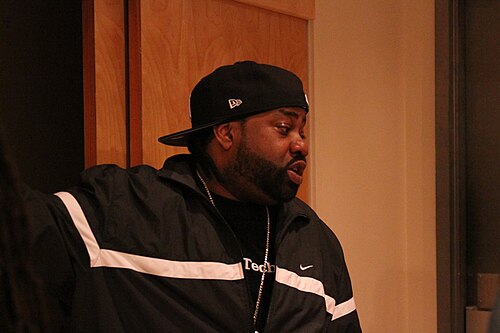
1994年のNasのIllmaticやNotorious BIGのReady to Dieなどのアルバムの成功は、西海岸が優勢だった時代に東海岸の地位を確固たるものにした。2002年3月のThe Source Magazineで、Nasは1994年を「ニューヨーク[市]ヒップホップのルネッサンス」と呼んだ。[168] RZAの作品、特にWu-Tang Clanのための作品は、やや距離を置いた楽器のループ、高度に圧縮され加工されたドラム、ギャングスタ的な歌詞の組み合わせにより、Mobb Deepなどのアーティストに影響を与えた。Raekwon the ChefのOnly Built 4 Cuban Linx、Ghostface KillahのIronman、GZAのLiquid SwordsなどのWu-Tangのソロアルバムは、現在ではWu-Tangの「コア」素材と並んでクラシックと見なされている。ウー一族の基盤は、さらに「ウー関連」と呼ばれるグループへと拡大した。DJプレミア(主にギャング・スターだが、ジェルー・ザ・ダマジャなど他の関連アーティストも担当)、ピート・ロック(CLスムースと共演し、その他多くのアーティストにビートを供給)、バックワイルド、ラージ・プロフェッサー、ダイアモンドD、Qティップなどのプロデューサーは、場所を問わず、当時数多くのMCにビートを供給していた。ナズの『イルマティック』、OCの『ワード...ライフ』(1994年)、ジェイ・Zの『リーザス・ダウト』(1996年)などのアルバムは、こうしたプロデューサー陣によるビートで構成されている。

東海岸と西海岸のラッパー間のライバル関係は、最終的に個人的な対立に発展した。[ 169] 1990年代後半には、バッドボーイ・レコードのビジネス感覚がジェイ・Zと彼のロッカフェラ・レコード、そして西海岸のデス・ロウ・レコードに対して試された。1990年代半ばから後半には、故ビッグ・Lやビッグ・パンなどDITCのメンバーのようなラッパーの世代が登場した。東海岸では、市場の「ビッグビジネス」側が商業的に支配していたものの、1990年代後半から2000年代前半には、モス・デフとタリブ・クウェリが成功したRawkus Recordsや後のDef Juxなど、比較的成功した東海岸のインディーズレーベルがいくつか登場した。 2つのレーベルの歴史は絡み合っており、後者は前者への反発からカンパニー・フロウのEL-Pによって始められ、マイク・ラッド、イソップ・ロック、ミスター・リフ、RJD2、ケージ、カニバル・オックスなど、よりアンダーグラウンドなアーティストの発表の場を提供した。ヒスパニック・アーソニストやスラム詩人からMCに転身したソール・ウィリアムズなど、他のアーティストもさまざまな成功を収めた。
ウエストコーストヒップホップ

N.W.A.が解散した後、元メンバーのドクター・ドレーは1992年に『ザ・クロニック』をリリースし、R&B/ヒップホップ・チャートで第1位、[170]ポップ・チャートで第3位を獲得し、「 Nuthin' but a 'G' Thang」がポップ・チャートで第2位のシングルを生み出した。 『ザ・クロニック』は西海岸のラップを新たな方向に導き、[171] Pファンク・アーティストから強く影響を受け、スムーズでイージーなファンク・ビートとゆっくりとした歌詞を融合させた。これはGファンクとして知られるようになり、1990年代前半から中期にかけて、シュグ・ナイトのデス・ロウ・レコードに所属するアーティストを通じて主流のヒップホップを席巻した。トゥパック・シャクールの2枚組アルバム『All Eyez on Me 』は、「 Ambitionz az a Ridah」や「2 of Amerikaz Most Wanted 」のヒット曲を収録した大ヒットとなった。[要出典]スヌープ・ドギー・ドッグのドギースタイルにはトップ10ヒット曲「What's My Name?」や「Gin and Juice」が収録されている。[172]ロサンゼルスを拠点とするデス・ロウがドレー、スヌープ、トゥパックを中心に帝国を築くと、パフ・ダディとノトーリアス・BIGが率いるニューヨークのバッド・ボーイ・レコードとのライバル関係も始まった。
このシーンから離れたアーティストとしては、フリースタイル・フェローシップやファーサイド、そしてソールサイド・コレクティブ(DJシャドウやブラックアリシャスなど)、ジュラシック5、アグリー・ダックリング、ピープル・アンダー・ザ・ステアーズ、ザ・アルカホリクス、そして初期のソウルズ・オブ・ミスチーフなど、よりアンダーグラウンドなアーティストたちがおり、彼らはサンプリングや綿密に計画された韻の構成というヒップホップのルーツへの回帰を象徴していた。
さらなる多様化
.jpg/500px-Scarface_(rapper).jpg)
1990年代には、ヒップホップが多様化し始め、他の地域のスタイルが全国的に登場した。サザン・ラップは1990年代初頭に人気となった。[173]全国的な注目を集めた最初の南部ラッパーは、テキサス州ヒューストン出身のゲトー・ボーイズだった。 [174]サザン・ラップのルーツは、1989年のゲトー・ボーイズの『Grip It! On That Other Level』の成功、リック・ルービンがプロデュースした1990年のゲトー・ボーイズ、1991年の『We Can't Be Stopped』に遡る。 [175]ヒューストン地域からは、 UGKやスカーフェイスのソロ活動など、初期のサザン・ラップ・サウンドの先駆者となった他のアーティストも輩出された。
アトランタのヒップホップアーティストは、ラップ ミュージックをさらに拡大し、南部のヒップホップを主流に持ち込む上で重要な役割を果たしました。1992年のArrested Developmentの3 Years, 5 Months and 2 Days in the Life Of...、1995 年のGoodie MobのSoul Food、 1996 年のOutKastのATLiensなどのリリースは、いずれも批評家から高い評価を受けました。セントルイス、シカゴ、ワシントン DC、デトロイトなどの他の地域特有のサウンドも人気を集め始めました。
かつてラップだったものが今ではヒップホップとなり、年配のロックンローラーの間で意見が二分され続ける、限りなく多様な大衆現象となっている。しかし、一部のゲートキーパー一般の人々は、ヒップホップには永続的な芸術的価値があるかもしれないとようやく確信した。この発見は、黒人、白人を問わず何百万人もの若い消費者に先を越された。
—クリストガウの消費者ガイド:90年代のアルバム(2000)[176]
黄金時代には、ヒップホップの要素が他のジャンルのポピュラー音楽に取り入れられ続けた。ラップロック、ラップコア、ラップメタル(それぞれヒップホップとロック、ハードコアパンク、ヘビーメタルの融合)の最初の波がこの時期に主流の聴衆の間で人気を博した。Run-DMC、ビースティ・ボーイズ、レイジ・アゲインスト・ザ・マシーンは、これらの分野で最も有名なバンドだった。ハワイでは、サドン・ラッシュなどのバンドがヒップホップの要素と地元の言語や政治問題を組み合わせて、ナ・メレ・パレオレオと呼ばれるスタイルを形成した。[178]
ディゲイブル・プラネッツが1993年にリリースした『リーチン(新たなる時空への反駁)』は、ドン・チェリー、ソニー・ロリンズ、アート・ブレイキー、ハービー・マン、ハービー・ハンコック、グラント・グリーン、ラサーン・ローランド・カークなどのサンプリングを収録した影響力のあるジャズ・ラップ・レコードだった。このアルバムからヒットシングル「Rebirth of Slick (Cool Like Dat) 」が生まれ、ビルボード・ホット100で16位に達した。 [179]
2000年代: アクセサリーとブログ
商業化と新たな方向性

1990年代後半、2パック・シャクールとノトーリアス・B.I.G.の死をきっかけに、ヒップホップ界に新たな商業的サウンドが出現した。これは「ブリング時代」[180](リル・ウェインの「ブリング・ブリング」に由来)、[181]「ジギー時代」[182] [183] (ウィル・スミスの「ゲッティン・ジギー・ウィット・イット」に由来)、「シャイニー・スーツ時代」[184](ノトーリアス・B.I.G.、パフ・ダディ、メイスによる「モ・マネー・モ・プロブレムズ」など、当時のミュージックビデオで一部のラッパーがメタリックなスーツを着用していたことに由来)などと呼ばれることもある。[185] 1990年代後半以前は、ギャングスタ・ラップは大ヒットジャンルではあったものの、ポップの主流からは程遠く、スラム街の経験を表現することに専念し、ポップチャートに「売り切れ」ではないと考えられていた。しかし、ショーン・"パフ・ダディ"・コムズのBad Boy Recordsの台頭は、コムズの1997年のアンサンブルアルバムNo Way Outの大ヒットに後押しされ、ギャングスタラップ (および一般的な主流ヒップホップ) のスタイルに大きな変化をもたらし、ギャングスタラップはより商業的に成功し、一般に受け入れられるようになった。シルキーなR&Bスタイルのフックとプロダクション、より物質的な主題、1970年代と1980年代のヒットソウルとポップソングのサンプルがこのサウンドの定番であり、コムズ、ティンバランド、トラックマスターズ、ネプチューンズ、スコット・ストーチなどのプロデューサーによって披露された。この頃同様のレベルの成功を収めていたのが、ニューオーリンズのマスターPと彼のレーベルNo Limitであった。マスターPはニューオーリンズを拠点とするアーティストの名簿 (No Limit posse) を作り、Gファンクとマイアミベースの影響を音楽に取り入れた。ニューオーリンズの新興レーベルであるキャッシュ・マネーもこの時期に人気を集めており、[185]バードマン、リル・ウェイン、BG、ジュヴナイルなどの新進アーティストを擁していた。

ネリー、パフ・ダディ、ジェイ・Z 、ファット・ジョーと彼のテラー・スクワッドの後期、メイス、ジャ・ルール、ファボラス、キャムロンなど、この時期に主流の成功を収めたラッパーの多くはポップ志向のスタイルを持っていたが、ビッグ・パン、ファット・ジョー(初期のキャリア)、DMX、エミネム、50セントと彼のGユニット、ザ・ゲームなど、この時期にはより荒々しいスタイルで商業的な成功を収めたラッパーもいた。ビースティ・ボーイズ、ハウス・オブ・ペイン、サード・ベースなどの白人ラッパーは、それ以前にもヒップホップ・コミュニティで人気のある成功や批評家の支持を得ていたが、1999年にプラチナ・アルバム『ザ・スリム・シェイディLP』で始まったエミネムの成功[186]は多くの人を驚かせた。この時期、ヒップホップの影響も主流のポップスにどんどん浸透していき、特に R&B ( R・ケリー、エイコン、TLC、デスティニーズ・チャイルド、ビヨンセ、アシャンティ、アリーヤ、アッシャーなど)、ネオソウル(ローリン・ヒル、エリカ・バドゥ、ジル・スコットなど)、ニューメタル(コーン、リンプ・ビズキットなど) などのジャンルで顕著でした。
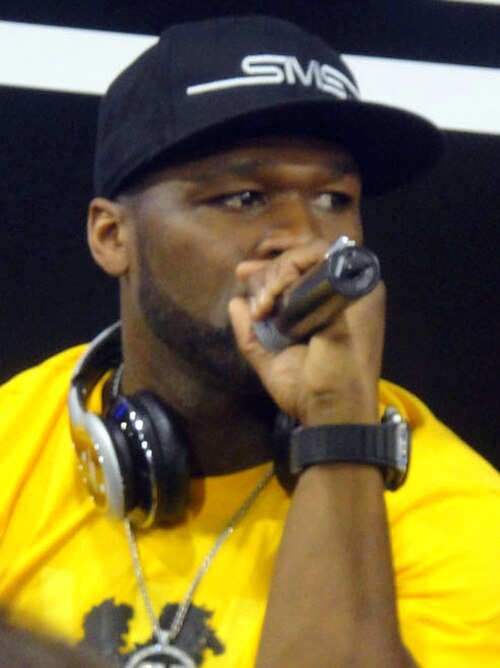
ドクター・ドレーはこの時代でも重要な人物であり続け、1999年にアルバム『2001』でカムバックした。2000年にはエミネムの『The Marshall Mathers LP』をプロデュースし、また50セントの2003年のアルバム『Get Rich or Die Tryin'』もプロデュースした。このアルバムは米国ビルボード200チャートで初登場1位となった。 [187]ジェイ・Zはこの時代におけるヒップホップの文化的勝利を象徴していた。キャリアが進むにつれ、彼はパフォーマンスアーティストから起業家、レーベル社長、衣料品ラインの責任者、クラブオーナー、そして市場コンサルタントへと転身し、その過程で、ソロアーティストとしてビルボード誌のチャートで最多1位を獲得したアルバムというエルヴィス・プレスリーの記録を破った。
オルタナティブヒップホップの台頭
Alternative hip hop, which was introduced in the 1980s and then declined, resurged in the early-mid 2000s with the rejuvenated interest in indie music by the general public. The genre began to attain a place in the mainstream, due in part to the crossover success of artists such as OutKast, Kanye West, and Gnarls Barkley.[188] OutKast's 2003 album Speakerboxxx/The Love Below received high acclaim from music critics, and appealed to a wide range of listeners, being that it spanned numerous musical genres – including rap, rock, R&B, punk, jazz, indie, country, pop, electronica, and gospel. The album also spawned two number-one hit singles, and has been certified diamond by selling 11 times platinum by the RIAA for shipping more than 11 million units,[189] becoming one of the best selling hip-hop albums of all time. It also won a Grammy Award for Album of the Year at the 46th Annual Grammy Awards, being only the second rap album to do so. Previously, alternative hip hop acts had attained much critical acclaim, but received relatively little exposure through radio and other media outlets; during this time, alternative hip hop artists such as MF Doom,[190] the Roots, Dilated Peoples, Gnarls Barkley, Mos Def, and Aesop Rock[191][192] began to achieve significant recognition.
Glitch hop and wonky music

Glitch hop and wonky music evolved following the rise of trip hop, dubstep and intelligent dance music (IDM). Both glitch hop and wonky music frequently reflect the experimental nature of IDM and the heavy bass featured in dubstep songs. While trip hop has been described as being a distinct British upper-middle class take on hip-hop, glitch-hop and wonky music have much more stylistic diversity. Both genres are melting pots of influence. Glitch hop contains echoes of 1980s pop music, Indian ragas, eclectic jazz and West Coast rap. Los Angeles, London, Glasgow and a number of other cities have become hot spots for these scenes, and underground scenes have developed across the world in smaller communities. Both genres often pay homage to older and more well established electronic music artists such as Radiohead, Aphex Twin and Boards of Canada as well as independent hip hop producers like J Dilla and Madlib.
Glitch hop is a fusion genre of hip hop and glitch music that originated in the early to mid-2000s in the United States and Europe. Musically, it is based on irregular, chaotic breakbeats, glitchy basslines and other typical sound effects used in glitch music, like skips. Glitch hop artists include Prefuse 73, Dabrye and Flying Lotus.[193] Wonky is a subgenre of hip hop that originated around 2008, but most notably in the United States and United Kingdom, and among international artists of the Hyperdub music label, under the influence of glitch hop and dubstep. Wonky music is of the same glitchy style as glitch hop, but it was specifically noted for its melodies, rich with "mid-range unstable synths". Scotland has become one of the most prominent wonky scenes, with artists like Hudson Mohawke and Rustie.
Glitch hop and wonky are popular among a relatively smaller audience interested in alternative hip hop and electronic music (especially dubstep); neither glitch hop nor wonky have achieved mainstream popularity. However, artists like Flying Lotus, the Glitch Mob and Hudson Mohawke have seen success in other avenues. Flying Lotus's music has earned multiple positive reviews on the independent music review site Pitchfork.com as well as a prominent (yet uncredited) spot during Adult Swim commercial breaks.[194][195] Hudson Mohawke is one of few glitch hop artists to play at major music festivals such as Sasquatch! Music Festival.
Crunk music
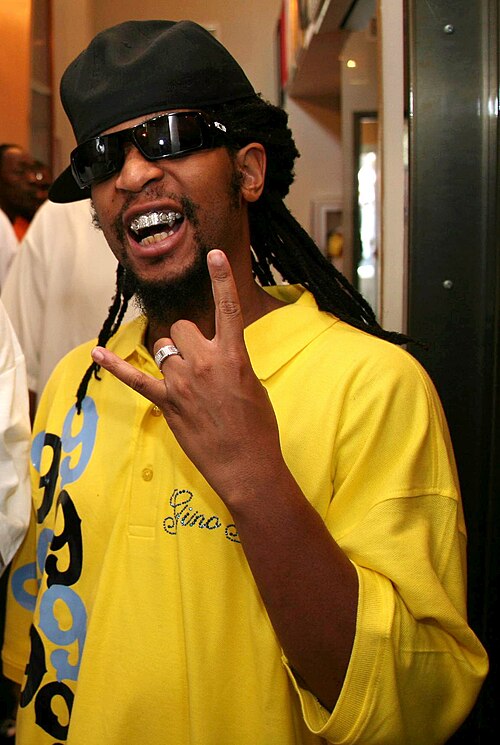
Crunk is a regional hip hop genre that originated in Tennessee in the southern United States in the 1990s, influenced by Miami bass.[196] One of the pioneers of crunk, Lil Jon, said that it was a fusion of hip hop, electro, and electronic dance music. The style was pioneered and commercialized by artists from Memphis, Tennessee and Atlanta, Georgia, gaining considerable popularity in the mid-2000s via Lil Jon and the Ying Yang Twins.[197] Looped, stripped-down drum machine rhythms are usually used. The Roland TR-808 and 909 are among the most popular. The drum machine loops are usually accompanied by simple, repeated synthesizer melodies and heavy bass "stabs". The tempo of the music is somewhat slower than hip-hop, around the speed of reggaeton. The focal point of crunk is more often the beats and instrumental music rather than the lyrics. Crunk rappers, however, often shout and scream their lyrics, creating an aggressive, almost heavy, style of hip-hop. While other subgenres of hip-hop address sociopolitical or personal concerns, crunk is almost exclusively "party music", favoring call and response hip-hop slogans in lieu of more substantive approaches.[198] Crunk helped southern hip hop gain mainstream prominence during this period, as the classic East and West Coast styles of the 1990s gradually lost dominance.[199][unreliable source?]
Snap music and influence of the Internet
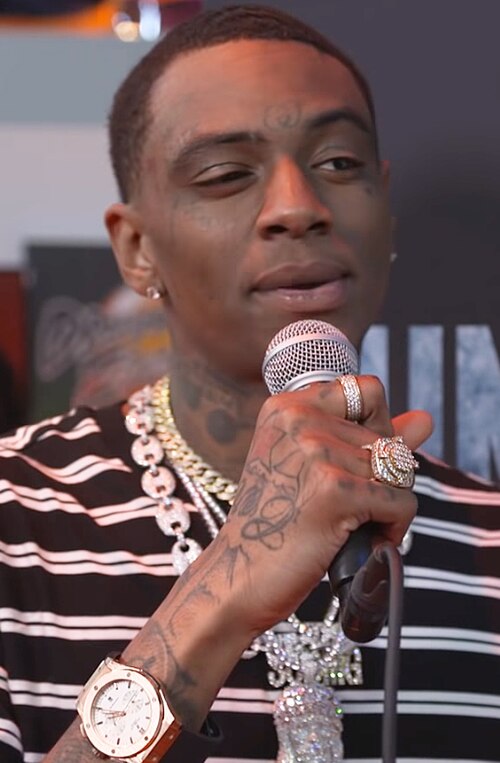
Snap rap (also known as ringtone rap) is a subgenre of crunk that emerged from Atlanta, Georgia in the late 1990s.[200] The genre gained mainstream popularity in the mid-late 2000s, and artists from other Southern states such as Tennessee also began to emerge performing in this style. Tracks commonly consist of a Roland TR-808 bass drum, hi-hat, bass, finger snapping, a main groove, and a simplistic vocal hook. Hit snap songs include "Lean wit It, Rock wit It" by Dem Franchize Boyz, "Laffy Taffy" by D4L, "It's Goin' Down" by Yung Joc, and "Crank That (Soulja Boy)" by Soulja Boy Tell 'Em. In retrospect, Soulja Boy has been credited with setting trends in hip hop, such as self-publishing his songs through the Internet (which helped them go viral) and paving the way for a new wave of younger artists.[201][202]
Decline in sales
.jpg/500px-Flo_Rida_(6924266548).jpg)
Starting in 2005, sales of hip hop music in the United States began to severely wane, leading Time magazine to question if mainstream hip-hop was "dying." Billboard magazine found that, since 2000, rap sales dropped 44%, and declined to 10% of all music sales, which, while still a commanding figure when compared to other genres, is a significant drop from the 13% of all music sales where rap music regularly placed.[203][204] According to Courtland Milloy of The Washington Post, for the first time on five years, no rap albums were among the top 10 sellers in 2006.[205] NPR culture critic Elizabeth Blair noted that, "some industry experts say young people are fed up with the violence, degrading imagery and lyrics." However, the 2005 report Generation M: Media in the Lives of 8–18 Year-Olds found that hip hop music is by far the most popular music genre for children and teenagers with 65 percent of 8- to-18-year-olds listening to it on a daily basis.[206]
Other journalists say the music is just as popular as it ever was, but that fans have found other means to consume the music,[207] such as illegally downloading music through P2P networks, instead of purchasing albums and singles from legitimate stores. For example, Flo Rida is known for his low album sales regardless of his singles being mainstream and having digital success. His second album R.O.O.T.S. sold only 200,000+ total units in the U.S., which could not line up to the sales of the album's lead single "Right Round". This also happened to him in 2008.[208] Some put the blame on hip hop becoming less lyrical over time, such as Soulja Boy's 2007 debut album souljaboytellem.com which was met with negative reviews.[209] Lack of sampling, a key element of early hip hop, has also been noted for the decrease in quality of modern albums. For example, there are only four samples used in 2008's Paper Trail by T.I., while there are 35 samples in 1998's Moment of Truth by Gang Starr. The decrease in sampling is in part due to it being too expensive for producers.[210]
In Byron Hurt's documentary Hip Hop: Beyond Beats and Rhymes, he claims that hip hop had changed from "clever rhymes and dance beats" to "advocating personal, social and criminal corruption."[211] Despite the fall in record sales throughout the music industry,[212] hip-hop had remained a popular genre, with hip-hop artists still regularly topping the Billboard 200 Charts. In the first half of 2009 alone artists such as Eminem,[213] Rick Ross,[214] the Black Eyed Peas,[215] and Fabolous[216] all had albums that reached the No. 1 position on the Billboard 200 charts. Eminem's album Relapse was one of the fastest selling albums of 2009.[217]
Innovation and revitalization

By the late 2000s, alternative hip hop had secured its place within the mainstream, due in part to the declining commercial viability of gangsta rap. Industry observers view the sales race between Kanye West's Graduation and 50 Cent's Curtis as a turning point for hip hop. West emerged the victor, selling nearly a million copies in the first week alone, proving that innovative rap music could be just as commercially viable as gangsta rap, if not more so.[218] Although he designed it as a melancholic pop album rather than a rap album, Kanye's following 808s & Heartbreak would have a significant effect on hip hop music. While his decision to sing about love, loneliness, and heartache for the entirety of the album was at first heavily criticized by music audiences and the album was predicted to be a flop, its subsequent critical acclaim and commercial success encouraged other mainstream rappers to take greater creative risks with their music.[219][220] During the release of The Blueprint 3, New York rap mogul Jay-Z revealed that next studio album would be an experimental effort, stating, "... it's not gonna be a #1 album. That's where I'm at right now. I wanna make the most experimental album I ever made."[221] Jay-Z elaborated that like Kanye, he was unsatisfied with contemporary hip hop, was being inspired by indie-rockers like Grizzly Bear, and asserted his belief that the indie rock movement would play an important role in the continued evolution of hip-hop.[222]
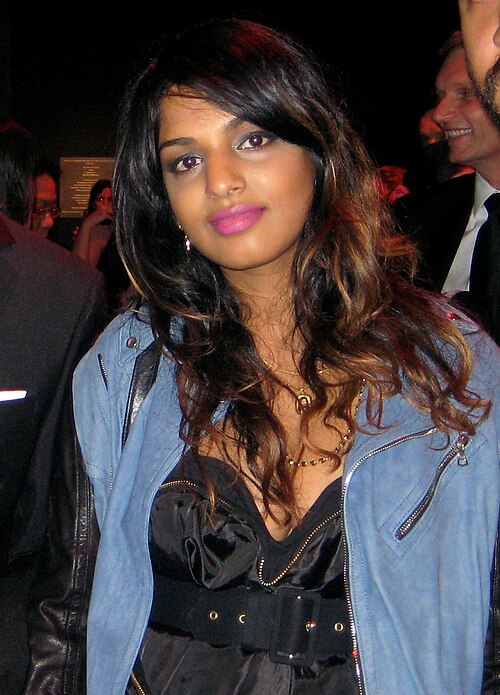
The alternative hip hop movement was not limited only to the United States, as rappers such as Somali-Canadian poet K'naan, Japanese rapper Shing02, and Sri Lankan British artist M.I.A. achieved considerable worldwide recognition. In 2009, Time magazine placed M.I.A in the Time 100 list of "World's Most Influential people" for having "global influence across many genres."[223][224] Global-themed movements have also sprung out of the international hip-hop scene with microgenres like "Islamic Eco-Rap" addressing issues of worldwide importance through traditionally disenfranchised voices.[225][226]
Due in part to the increasing use of music distribution through social media and blogging, many alternative and non-alternative rappers found acceptance by far-reaching audiences, hence why this era of hip hop is sometimes termed the "blog era".[227][228] Several artists, such as Kid Cudi and Drake, managed to attain chart-topping hit songs, "Day 'n' Nite" and "Best I Ever Had" respectively, by releasing their music on free online mixtapes without the help of a major record label. Emerging artists at the time such as Wale, Kendrick Lamar,[229] J. Cole, Lupe Fiasco, the Cool Kids, Jay Electronica, and B.o.B were noted by critics as expressing eclectic sounds, sensitive life experiences, and vulnerable emotions that were rarely seen in the prior bling era.[230][231]
Also at this time, the Auto-Tune vocal effect was bolstered in popularity by rapper T-Pain, who elaborated on the effect and made active use of Auto-Tune in his songs.[232] He cites new jack swing producer Teddy Riley and funk artist Roger Troutman's use of the talk box as inspirations for his own use of Auto-Tune.[233] T-Pain became so associated with Auto-Tune that he had an iPhone app named after him that simulated the effect, called "I Am T-Pain".[234] Eventually dubbed the "T-Pain effect",[235] the use of Auto-Tune became a popular fixture of late 2000s and early 2010s hip hop, examples being Snoop Dogg's "Sexual Eruption",[236] Lil Wayne's "Lollipop",[237] Kanye West's album 808s & Heartbreak,[238] and the Black Eyed Peas' number-one hit "Boom Boom Pow".[235]
2010s–2020s: trap and SoundCloud rap

Trap music is a subgenre of Southern rap that originated in the early 1990s. It grew in the 2000s to become a mainstream sensation,[239] eventually reaching ubiquity in the mid-late 2010s and frequently having songs top the Billboard hip hop charts.[240][241][242] It is typified by double or triple-time sub-divided hi-hats,[243] heavy kick drums from the Roland TR-808 drum machine, layered synthesizers and an overall dark, ominous or bleak atmosphere.[244] The strong influence of the sound led to other artists within the genre to move towards the trap sound, with a notable example being Jay-Z and Kanye West on their joint song, "H•A•M". Non-rappers have also experimented with trap, such as "7/11" by Beyoncé and "Dark Horse" by Katy Perry (featuring rapper Juicy J).

Major artists to arise from the genre in the 2010s include Lil Nas X, Waka Flocka Flame, Future, Chief Keef, Migos, Young Thug, Travis Scott, Kodak Black, 21 Savage, Yung Lean, Lil Uzi Vert, XXXTentacion, Ski Mask the Slump God, Juice Wrld, Trippie Redd, Lil Pump, Smokepurpp, Rae Sremmurd, Tekashi 6ix9ine, NBA YoungBoy, Lil Baby, Fetty Wap, among others. Female rappers Nicki Minaj, Cardi B, Saweetie, Doja Cat, Iggy Azalea, City Girls and Megan Thee Stallion also entered the mainstream.[247] Trap artists that originated in the 2000s were able to recapture mainstream success in the 2010s with the rise of trap, including 2 Chainz, Gucci Mane and Juicy J, becoming more successful in the latter part of their career than when they debuted. Trap producers to reach mainstream success include Metro Boomin,[248] Pi'erre Bourne,[249] London on da Track,[250][251] and Mike Will Made-It.[252][253]
Critics of the trap genre have used the term "mumble rap" to describe the heavily auto-tuned, and sometimes hard to understand- delivery of verses from a majority of the artists.[254] Artists longstanding within the genre have had their own comments regarding the rise of mumble rap, such as Rick Rubin stating that Eminem was confused by it,[255] and Snoop Dogg claiming that he can not differentiate between artists.[256] Black Thought, lead rapper from the Roots, stated that the "game has changed. It's different. The standards are different, the criteria that's taken into consideration in determining validity is different. We're at a point in history where lyricism almost comes last in very many regards."[257]
On July 17, 2017, Forbes reported that hip hop/R&B (which Nielsen SoundScan classifies as being the same genre) had usurped rock as the most consumed musical genre, becoming the most popular genre in music for the first time in U.S. history.[258][259][260][261]
In the 2010s, Atlanta hip hop dominated the mainstream.[262]
In the late 2010s and early 2020s, Brooklyn drill became popular since Pop Smoke emerged before his death. The 2020s decade began with Roddy Ricch as the first rapper to have a Billboard Hot 100 number-one entry.[263][264]
Age of streaming
.jpg/500px-Doja_Cat_Planet_Her_Day_Party_2_(cropped).jpg)
The rise of streaming platforms such as Spotify and Apple Music in the mid-late 2010s greatly impacted the entire music business as a whole.[266][267] Despite being a free streaming-only mixtape with no commercial release, Chance the Rapper's Coloring Book won Best Rap Album at the 2017 Grammy Awards, being the first streaming album ever to win a Grammy Award.[268][269] Kanye West has stated that his own album, Yeezus, marked the death of CDs, and thus his subsequent release, The Life of Pablo was only released digitally.[270] The Life of Pablo was also nominated for 2017 Best Rap Album. In 2017, Drake released a free streaming-only project titled More Life, which he called a "playlist", insisting that it was neither a mixtape nor an album.[271]
The online audio distribution platform SoundCloud played a massive role in the creation of various artists' careers in the latter half of the 2010s. Mainstream acts to start on SoundCloud include Post Malone, Lil Uzi Vert, Russ, Bryson Tiller, Lil Xan, Lil Pump, Lil Peep, Lil Skies, Smokepurpp, Ski Mask the Slump God, XXXTentacion, Trippie Redd, Playboi Carti, YBN Nahmir, Tay-K, ZillaKami, Ugly God, Nav, and others. These songs are usually closely related to trap, but have also been labeled separately as SoundCloud rap and sometimes emo rap. They have been characterized as usually having moody, sad undertones, and usually feature lo-fi rough production. The genre has been met with criticism for its perceived low effort in lyrics and production,[272] and the problematic nature of the artists to arise from it, such as Lil Peep's drug abuse that led to his death,[273] the multiple assault charges to XXXTentacion,[274] 6ix9ine pleading guilty to using a child in a sexual performance,[275] and the murder charges on Tay-K.[276] On the contrary, the image of artists such as XXXTentacion have been met with praise due to perceived character improvement since their controversies.[277][278]

In 2021, the most streamed rappers were Doja Cat and Lil Nas X.[280] Other rappers with high streams in 2021 were Drake, Eminem, Lil Baby, Polo G, Megan Thee Stallion, Cardi B, Moneybagg Yo, Masked Wolf, Pop Smoke, J. Cole, and Lil Durk.[281][282] The most streamed rap album of all time on Spotify is XXXTentacion's second album, ? (2018).[279]
World hip hop music

Hip-hop music has reached the cultural corridors of the globe and has been absorbed and reinvented around the world.[283] Hip hop music expanded beyond the US, often blending local styles with hip hop. Hip hop has globalized into many cultures worldwide, as evident through the emergence of numerous regional scenes. It has emerged globally as a movement based upon the main tenets of hip hop culture. The music and the art continue to embrace, even celebrate, its transnational dimensions while staying true to the local cultures to which it is rooted. Hip-hop's impact differs depending on each culture. Still, the one thing virtually all hip hop artists worldwide have in common is that they acknowledge their debt to those African American people in New York who launched the global movement.[284]
Hispanics and people from the Caribbean played an integral role in the early development of hip hop in New York, and the style spread to almost every country in that region. Hip hop first developed in the South Bronx, which had a high Hispanic, particularly Puerto Rican, population in the 1970s.[285] Some famous rappers from New York City of Puerto Rican origin are the late Big Pun, Fat Joe, and Angie Martinez. With Hispanic rap groups like Cypress Hill on the American charts, Mexican rap rock groups, such as Control Machete, rose to prominence in their native land.
In many Latin American countries, as in the U.S., hip hop has been a tool with which marginalized people can articulate their struggle. Hip hop grew steadily more popular in Cuba in the 1980s and 1990s through Cuba's Special Period that came with the fall of the Soviet Union.[286] During this period of economic crisis, which the country's poor and black populations especially hard, hip hop became a way for the country's Afro-descended population to embrace their blackness and articulate a demand for racial equality for black people in Cuba.[286] The idea of blackness and black liberation was not always compatible with the goals of the Cuban government, which was still operating under the idea that a raceless society was the correct realization of the Cuban Revolution. When hip-hop emerged, the Cuban government opposed the vulgar image that rappers portrayed, but later accepted that it might be better to have hip-hop under the influence of the Ministry of Culture as an authentic expression of Cuban Culture.[287] Rappers who explicitly speak about race or racism in Cuba are still under scrutiny by the government.[288] An annual Cuban hip hop concert, beginning in 1995, held at Alamar in Havana helped popularize Cuban hip hop. Famous Cuban rap groups include Krudas Cubensi and Supercrónica Obsesión.

Black and indigenous people in Latin America and Caribbean islands have been using hip hop for decades to discuss race and class issues in their respective countries. Brazilian hip hop is heavily associated with racial and economic issues in the country, where a lot of Afro-Brazilians live in economically disadvantaged communities, known in Brazil as favelas. São Paulo is where hip hop began in the country, but it soon spread all over Brazil, and today, almost every big Brazilian city, including Rio de Janeiro, Salvador, Curitiba, Porto Alegre, Belo Horizonte, Recife and Brasilia, has a hip hop scene. Some notable artists include Racionais MC's, Thaide, and Marcelo D2. One of Brazil's most popular rappers, MV Bill, has spent his career advocating for black youth in Rio de Janeiro.[288]
Reggaeton, a Puerto Rican style of music, has a lot of similarities with U.S.-based hip hop. Both were influenced by Jamaican music, and both incorporate rapping and call and response.[289] Dancehall music and hip from the United States are both popular music in Puerto Rico, and reggaeton is the cumulation of different musical traditions founded by Afro-descended people in the Caribbean and the United States.[290] Some of reggaeton's most popular artists include Don Omar, Tego Calderón, and Daddy Yankee.
In Venezuela, social unrest at the end of the 1980s and beginning of the 1990s coincided with the rise of gangsta rap in the United States and led to the rise of that music in Venezuela as well. Venezuelan rappers in the 1990s generally modeled their music after gangsta rap, embracing and attempting to redefine negative stereotypes about poor and black youth as dangerous and materialistic and incorporating socially conscious critique of Venezuela's criminalization of young, poor, Afro-descended people into their music.[291]
In Haiti, hip hop developed in the early 1980s. Master Dji and his songs "Vakans" and "Politik Pa m" are mostly credited with the rise of Haitian hip hop. What later became known as "Rap Kreyòl" grew in popularity in the late 1990s with King Posse and Original Rap Stuff. Due to cheaper recording technology and flows of equipment to Haiti, more Rap Kreyòl groups are recording songs, even after the January 12 earthquake. Haitian hip hop has recently become a way for artists of Haitian backgrounds in the Haiti and abroad to express their national identity and political opinions about their country of origin.[292] Rappers have embraced the red and blue of the Flag of Haiti and rapping in Haitian Creole to display their national origin. In the Dominican Republic, a recording by Santi Y Sus Duendes and Lisa M became the first single of merenrap, a fusion of hip hop and merengue.

In Europe, Africa, and Asia, hip hop began to move from the underground to mainstream audiences. In Europe, hip hop was the domain of both ethnic nationals and immigrants. British hip hop, for example, became a genre of its own and spawned artists such as Wiley, Dizzee Rascal, the Streets and many more. Germany produced the well-known Die Fantastischen Vier as well as several Turkish performers like the controversial Cartel, Kool Savaş, and Azad. In France, hip hop music developed itself from the end of the 80s. It can be divided into three eras:[293] The classical period, which extends from the end of the 1980s to the beginning of the 2000s marked by a majority of black artists like Oxmo Puccino, Mc Solaar, Kery James (with IdealJ), IAM, NTM,[294] the period of democratization from the 2000s,[295] with groups and artists like Lunatic, Diam's, Sinik, Rim'K, Sefyu,[296][297][298] Sniper, Rohff, La Fouine, which are beginning to affect the French population in general and to record the first significant commercial successes. Finally, from the 2010s, French-speaking rap experienced a rather paradoxical period of innovation, the logical start of new experiments that opened up French rap to new musical genres, such as trap, drill or "folk" rap. This period is distinguished by the great variety of French hip hop music, where several movements beginning to separate, artists like Booba, Kaaris, JuL, Gims, Freeze Corleone, Ziak or Soolking try to innovate and look for new tracks to explore. In the Netherlands, important nineties rappers include the Osdorp Posse, a crew from Amsterdam, Extince, from Oosterhout, and Postmen. Italy found its own rappers, including Jovanotti and Articolo 31, grow nationally renowned, while the Polish scene began in earnest early in the decade with the rise of PM Cool Lee. In Romania, B.U.G. Mafia came out of Bucharest's Pantelimon neighborhood, and their brand of gangsta rap underlines the parallels between life in Romania's Communist-era apartment blocks and in the housing projects of America's ghettos.
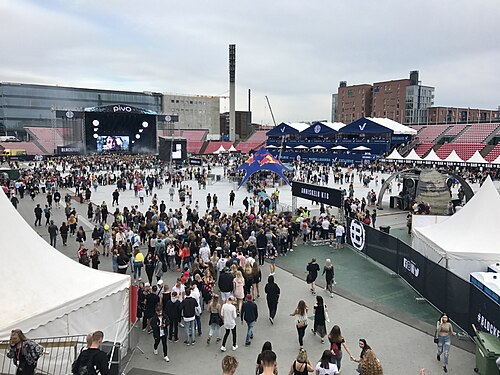
One of the countries outside the US where hip-hop is most popular is the United Kingdom. Grime, a genre of music derived from UK Garage and drum and bass and influenced by hip hop, emerged in the early 2000s with artists such as Dizzee Rascal becoming successful. Although it is immensely popular, many British politicians criticize the music for what they see as promoting theft and murder, similar to gangsta rap in America. These criticisms have been deemed racist by the mostly Black British grime industry. Despite its controversial nature, grime has had a major effect on British fashion and pop music, with many young working-class youth emulating the clothing worn by grime stars like Dizzee Rascal and Wiley. There are many subgenres of grime, including "Rhythm and Grime", a mix of R&B and grime, and grindie, a mix of indie rock and grime popularized by indie rock band Hadouken!
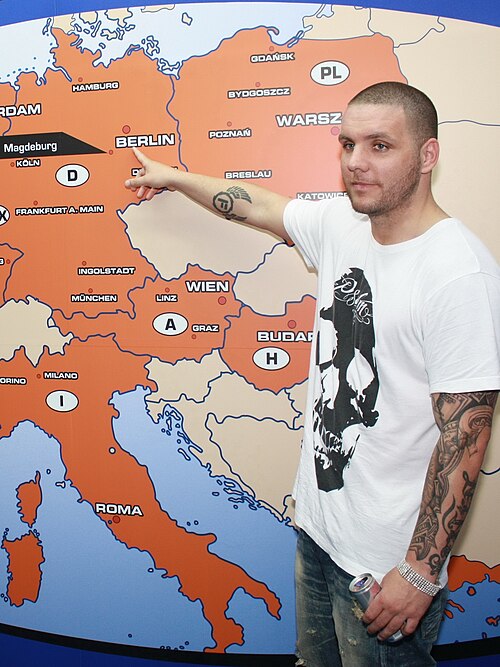
In Germany and France, gangsta rap has become popular among youths who like the violent and aggressive lyrics. Some German rappers openly or comically flirt with Nazism; for example, Bushido (born Anis Mohamed Youssef Ferchichi) raps "Salutiert, steht stramm, Ich bin der Leader wie A" (Salute, stand to attention, I am the leader like 'A') and Fler had a hit with the record Neue Deutsche Welle (New German Wave) complete with the title written in Third Reich style Gothic print and advertised with an Adolf Hitler quote. These references also spawned great controversy in Germany. Meanwhile, in France, artists like Kery James' Idéal J maintained a radical, anti-authoritarian attitude and released songs like Hardcore which attacked the growth of the French far right. In the Netherlands, MC Brainpower went from being an underground battle rapper to mainstream recognition in the Benelux, thus influencing numerous rap artists in the region. In Israel, rapper Subliminal reaches out to Israeli youth with political and religious-themed lyrics, usually with a Zionist message.
In Nigeria, hip hop gained popularity in the 80s, 90s and 2000s through artists like The Remedies, JJC Skillz, M.I Abaga and Sound Sultan, encompassing the incorporation of local languages and traditional hip hop beats.[301][302][303] In the 2010s and 2020s it developed further with rappers like Naeto C, Reminisce, Olamide, Phyno, Blaqbonez and Odumodublvck.[304][305][306][307]
In Asia, mainstream stars rose to prominence in the Philippines, led by Francis Magalona, Rap Asia, MC Lara and Lady Diane. In Japan, where underground rappers had previously found a limited audience, and popular teen idols brought a style called J-rap to the top of the charts in the middle of the 1990s. Of particular importance is the influence on East Asian nations, where hip hop music has become fused with local popular music to form different styles such as K-pop, C-pop and J-pop.

In South Africa, the hip hop scene overlaps with kwaito, a music genre that emphasizes African culture and social issues. Rappers such as Pope Troy have harnessed the use of socio-economic issues plaguing the political spheres of South Africa and hip-hop as a whole whilst balancing his lingual approach in order to communicate with the masses about the technical aspects that are creating the issues,[308] South African hip hop has evolved into a prominent presence in mainstream South African music. Between the 1990s and 2010s, it had transcended its origins as a form of political expression in Cape Town to produce artists like HHP, Riky Rick and AKA. Prominent South African rappers include Stogie T, Reason, Da L.E.S, Cassper Nyovest, Emtee, Fifi Cooper, A-Reece, Shane Eagle, Nasty C, K.O, YoungstaCPT and Big Zulu.[309][310]
Israel's hip hop grew greatly in popularity at the end of the decade, with several stars both Palestinian (Tamer Nafar) and Israeli (Subliminal). In Portugal hip hop has his own kind of rapping, which is more political and underground scene, they are known for Valete, Dealema and Halloween. Russian hip hop emerged during last years of Soviet Union and cemented later, with groups like Malchishnik and Bad Balance enjoying mainstream popularity in the 1990s, while Ligalize and Kasta were popular in the 2000s. In former Yugoslavia hip hop first appeared during the 1980s mostly with Serbian hip hop with performers such as B-boy, the Master Scratch Band, Badvajzer, and others. During the late 1990s hip hop had a boom, with Rambo Amadeus and later Beogradski sindikat becoming a major performer. Bosnian and Herzegovinian hip hop is nowadays dominated by Edo Maajka. In the region hip hop is often used as a political and social message in song themes such as war, profiteering, corruption, etc. Frenkie, another Bosnian rapper, is associated with Edo Maajka, and has collaborated beyond Bosnian borders.
In Tanzania in the early 2000s, local hip hop artists became popular by infusing local styles of Afrobeat and arabesque melodies, dancehall and hip-hop beats with Swahili lyrics.
In the 2010s, hip hop became popular in Canada with Canadians rappers such as Drake, Nav, Belly and Tory Lanez. Drake was the most streamed artist of the decade.[311]
See also



- Hip hop and social injustice
- The Holy Book of Hip Hop
- Homophobia in hip hop culture
- List of hip hop festivals
- List of hip hop genres
- List of murdered hip hop musicians
- Misogyny in rap music
- Music of the United States
- List of hip hop musicians
- Video vixen
Notes
- ^ a b "Hip-Hop's Jazz Roots". Merriam-Urban Jazz. Urban Jazz, Incorporated. Archived from the original on December 16, 2019. Retrieved August 24, 2015.
- ^ David Browne (August 11, 2023). "Kool Herc and the History (and Mystery) of Hip-Hop's First Day". Rolling Stone. Retrieved August 25, 2023.
- ^ Ruth Blatt (April 10, 2014). "Why Rap Creates Entrepreneurs". Forbes. Retrieved November 25, 2019.
- ^ Juana Summers (August 5, 2023). "50 years of hip-hop: A genre born from a backyard party". NPR. Retrieved August 25, 2023.
- ^ "Rappers Are Singers Now. Thank Drake". The New York Times. November 24, 2019. Retrieved February 21, 2021.
- ^ "Rappers Singing on Their Own Songs for the First Time". XXL Magazine. May 12, 2020. Retrieved February 21, 2021.
- ^ Trapp, Erin (July 1, 2005). "The Push and Pull of Hip-Hop: A Social Movement Analysis". American Behavioral Scientist. 48 (11): 1482. doi:10.1177/0002764205277427. ISSN 0002-7642. S2CID 146340783.
Much scholarly effort has been devoted to hip-hop (also known as rap) music in the past two decades...
- ^ a b c Leach, Andrew (2008). ""One Day It'll All Make Sense": Hip-Hop and Rap Resources for Music Librarians". Notes. 65 (1): 9–37. doi:10.1353/not.0.0039. ISSN 0027-4380. JSTOR 30163606. S2CID 144572911. Archived from the original on January 28, 2021. Retrieved December 5, 2020.
- ^ "News-Press 06 Jul 1984, page Page 43". Newspapers.com. Retrieved May 7, 2023.
- ^ a b Encyclopædia Britannica article on rap, retrieved from britannica.com Archived August 3, 2011, at the Wayback Machine: Rap, musical style in which rhythmic and/or rhyming speech is chanted ("rapped") to musical accompaniment. This backing music, which can include digital sampling (music and sounds extracted from other recordings by a DJ), is also called hip-hop, the name used to refer to a broader cultural movement that includes rap, deejaying (turntable manipulation), graffiti painting, and break dancing.
- ^ "The Boston Globe 27 Jul 1992, page 52". Newspapers.com. Retrieved May 7, 2023.
- ^ Kugelberg, Johan (2007). Born in the Bronx. New York: Oxford University Press. p. 17. ISBN 978-0-7893-1540-3.
- ^ Brown, Lauren (February 18, 2009). "Hip to the Game – Dance World vs. Music Industry, The Battle for Hip Hop's Legacy". Movmnt Magazine. Archived from the original on April 3, 2010. Retrieved July 30, 2009.
- ^ Chang, Jeff (2005). Can't Stop Won't Stop: A History of the Hip Hop Generation. New York: St. Martin's Press. p. 90. ISBN 0-312-30143-X.
- ^ Harvard Dictionary of Music article for hip hop, retrieved from Google Books Archived January 10, 2016, at the Wayback Machine: While often used to refer to rap music, hip hop more properly denotes the practice of the entire subculture
- ^ AllMusic article for Hip-hop/Urban, retrieved from AllMusic.com: Hip-Hop is the catch-all term for rap and the culture it spawned. Archived March 11, 2012, at the Wayback Machine
- ^ Encyclopædia Britannica article on hip-hop, retrieved from britannica.com Archived May 11, 2011, at the Wayback Machine: Hip-hop, cultural movement that attained widespread popularity in the 1980s and '90s; also, the backing music for rap, the musical style incorporating rhythmic and/or rhyming speech that became the movement's most lasting and influential art form.
- ^ "Hip-hop". Merriam-Webster Dictionary. Merriam-Webster, Incorporated. Retrieved February 5, 2017.
- ^ "Hip-hop". Oxford English Dictionary. Oxford University Press. Retrieved October 6, 2011.
- ^ Lamotte, Martin (March 2014). "Rebels Without a Pause: Hip-hop and Resistance in the City: Debates and Developments". International Journal of Urban and Regional Research. 38 (2): 686–694. doi:10.1111/1468-2427.12087. Archived from the original on January 31, 2022.
- ^ McNamee, David (January 11, 2010). "Hey, what's that sound: Turntablism". The Guardian. Retrieved March 22, 2017.
- ^ Dyson, Michael Eric, 2007, Know What I Mean?: Reflections on Hip-Hop, Basic Civitas Books, p. 6.
- ^ Berry, Peter A. (July 18, 2017). "Nielsen Says Hip-Hop/R&B Is Now Most Consumed Genre in U.S." XXL Mag. Retrieved November 22, 2021.
- ^ Lynch, John. "For the first time in history, hip-hop has surpassed rock to become the most popular music genre, according to Nielsen". Business Insider. Retrieved November 22, 2021.
- ^ "Hip hop and R&B surpass rock as biggest U.S. music genre". Reuters. January 4, 2018. Retrieved November 22, 2021.
- ^ "In the beginning, there was the Bronx".
- ^ "50 Years of Hip-Hop's Influence on the Culture and Social Movements".
- ^ Villiers, George (1673), The Rehearsal, London: Thomas Dring, p. 30
- ^ James A.H. Murray, ed. (1901), A New English Dictionary on Historical Principles, vol. 5, H to K, Oxford: Clarendon Press, p. 296
- ^ Elizabeth, Cummings (1883), Spring Weather, Wide Awake, vol. 16, Boston: D. Lothrop & Company, p. 389
- ^ "You Can't Sit Down". genius.com. Retrieved July 1, 2024.
- ^ a b c "Keith Cowboy – The Real Mc Coy". March 17, 2006. Archived from the original on March 17, 2006. Retrieved January 12, 2010.
- ^ "Afrika Bambaataa talks about the roots of Hip Hop". YouTube. November 27, 2012. Archived from the original on December 21, 2021. Retrieved February 25, 2021.
- ^ Chang, Jeff (April 10, 2016). "How Hip-Hop Got Its Name". Medium. Retrieved December 1, 2020.
- ^ Zulunation.com (cached)
- ^ Flipping, Robert Jr. (February 24, 1979). "Hollyburgh Swingers 'If You Funk Us, We'll Funk You'". New Pittsburgh Courier.
- ^ "hip-hop, n." OED Online. Oxford University Press, September 2020. Web. September 17, 2020.
- ^ Lawrence, Tim (2016). Life and Death on the New York Dance Floor, 1980–1983. Durham, North Carolina: Duke University Press. Chapter 21. ISBN 9780822361862.
- ^ Hagar, Steven. "Afrika Bambaataa's Hip-Hop", The Village Voice
- ^ Hager, Steven. Hip Hop: The Illustrated History of Break Dancing, Rap Music, and Graffiti. St Martins Press, 1984.
- ^ Knapp, Francky (December 16, 2020). "This 1930s Quartet Didn't Know it, but They Were Rap's First Recorded Artists". Messy Nessy Chic. Archived from the original on December 16, 2020. Retrieved February 1, 2023.
- ^ "The Jubalaires Were Doing Gospel Rap Back in the 1940s". Rapzilla. July 11, 2016. Retrieved November 21, 2020.
- ^ "Book claims Ali was first champion of rap". TODAY. December 15, 2006. Archived from the original on November 9, 2018. Retrieved November 8, 2018.
- ^ Erlewine, Stephen Thomas; Murray, Nick; Spanos, Brittany (May 2, 2015). "20 Best Covers of Ben E. King's 'Stand by Me'". Rolling Stone. Archived from the original on November 8, 2018. Retrieved November 8, 2018.
- ^ "Did Pigmeat Release First Hip-Hop Song?". XXL. April 14, 2011. Archived from the original on November 7, 2018. Retrieved February 25, 2021.
- ^ "Jalal Mansur Nuriddin: farewell to the 'grandfather of rap'", The Guardian, 6 June 2018. Retrieved December 7, 2018.
- ^ a b Castillo-Garsow, Melissa; Nichols, Jason (2016). La Verdad: An International Dialogue on Hip Hop Latinidades. Columbus: Ohio University Press. pp. ix. ISBN 978-0-8142-1315-5.
- ^ a b Crossley, Scott. "Metaphorical Conceptions in Hip-Hop Music", African American Review, St Louis University Press, 2005. pp. 501–502
- ^ a b Alridge D, Steward J. "Introduction: Hip Hop in History: Past, Present, and Future", Journal of African American History, 2005. pp. 190.
- ^ Ogbar, Jeffrey (May 2001). ""Yele, Yele": Caribbean Identity and the Rubric of Race in U.S-Based Hip-Hop" (PDF). University of Florida Digital Collections.
- ^ a b "Party Over Here: An Oral History of Kool Herc's Historic Back-to-School Jam". Mass Appeal. August 11, 2017. Archived from the original on April 2, 2019. Retrieved April 2, 2019.
- ^ a b Stas Bekman: stas (at) stason.org. "What is "Dub" music anyway? (Reggae)". Stason.org. Retrieved January 12, 2010.
- ^ Karon, Tony (September 22, 2000). "'Hip-Hop Nation' Is Exhibit A for America's Latest Cultural Revolution". Time. Archived from the original on November 27, 2010. Retrieved May 27, 2014.
- ^ Farley, Christopher John (October 18, 1999). "Rock's New Spin". Time. Archived from the original on August 25, 2013. Retrieved May 27, 2014.
- ^ Steven Hager (1984). Hip Hop: The Illustrated History of Break Dancing, Rap Music, and Graffiti. St. Martin's Press. p. 45.
- ^ "Interview w/ DJ Kool Herc: 1989 New Music Seminar". 1989.
- ^ Frank Broughton (2015). "Interviews: Kool Herc". DJ History. Archived from the original on June 1, 2015. Retrieved October 2, 2022.
- ^ "DJ Kool Herc Is Ready to Bring Hip-Hop Back to Its Roots With a Museum in Jamaica". Billboard. February 24, 2020. Archived from the original on December 1, 2021.
- ^ "Birthplace Of Hip Hop – History Detectives – PBS". PBS. Retrieved June 20, 2017.
- ^ Neumann, Fredreich (2000). "Hip hop: Origins, Characteristics and Creative Processes". The World of Music. 42 (1): 51–63. JSTOR 41699313.
- ^ Browne, P. The guide to United States popular culture Popular Press, 2001. p. 386
- ^ Kool Herc, in Israel (director), The Freshest Kids: A History of the B-Boy, QD3, 2002.
- ^ "Culture – 40 years on from the party where hip hop was born". BBC. August 9, 2013. Retrieved August 24, 2014.
- ^ "The History Of Hip Hop". daveyd.com. Retrieved June 20, 2017.
- ^ "hip-hop | Definition, History, Culture, & Facts". Encyclopædia Britannica. Retrieved December 1, 2020.
- ^ a b "The Story of Rapper's Delight by Nile Rodgers". RapProject.tv. Archived from the original on January 26, 2013. Retrieved October 12, 2008.
- ^ Lee, Jennifer 8. (January 15, 2008). "Tenants Might Buy Birthplace of Hip-Hop" (weblog). The New York Times. Archived from the original on July 27, 2011. Retrieved March 10, 2009.
{{cite news}}: CS1 maint: numeric names: authors list (link) - ^ Kenner, Rob. "Dancehall", in The Vibe History of Hip-hop, ed. Alan Light, 350-7. New York: Three Rivers Press, 1999.
- ^ Toop, David. The Rap Attack: African Jive to New York Hip Hop. Boston: South End Press, 1984.
- ^ Brown, Mike. "Grand Master Mele Mel: Gun Show Part One". AllHipHop.com. Archived from the original on January 18, 2007.
- ^ Forman M; M. Neal, That's the joint! The hip-hop studies reader, Routledge, 2004. p. 2.
- ^ Frum, David (2000). How We Got Here: The '70s. New York City: Basic Books. pp. 14–15. ISBN 0-465-04195-7.
- ^ Jody Rosen, "A Rolling Shout-Out to Hip-Hop History" Archived November 14, 2015, at the Wayback Machine, The New York Times, February 12, 2006
- ^ a b c Chang 2007, p. 62.
- ^ Zimmer, Amy (February 20, 2006). "Bringing that beat back – on the E train". Metro.us. Archived from the original on August 5, 2008.
- ^ del Barco, Mandalit. "Breakdancing, Present at the Creation". NPR. Retrieved June 20, 2017.
- ^ Pareles, Jon (March 13, 2007). "The Message From Last Night: Hip-Hop is Rock 'n' Roll, and the Hall of Fame Likes It". The New York Times. p. 3. Archived from the original on April 9, 2009. Retrieved March 10, 2009.
- ^ a b c Diawara 1998, pp. 237–76
- ^ a b "Muhammad Ali: World's Greatest Boxer Was Also Hip-Hop Pioneer". Rolling Stone. June 4, 2016. Archived from the original on May 15, 2018. Retrieved August 29, 2017.
- ^ "Muhammad Ali: 4 Ways He Changed America". Rolling Stone. June 5, 2016. Archived from the original on May 15, 2018. Retrieved August 29, 2017.
- ^ "With the invention of sound recording, it was only a matter of time until the device which records itself becomes the instrument. The moment in popular culture a sound playback device became the instrument was in early hip-hop. The use of the turntable, and particularly two turntables, is characteristic. You could set up two turntables with two identical records, and keep a break going forever. So the birth of sampling coincided with the birth of...the idea of the loop." Lott, Ryan. "AKAI MPC 2000/The History of Sampling". Joyful Noise Recordings. Retrieved September 27, 2013.
- ^ Dye, David (February 22, 2007). "NPR: The Birth of Rap: A Look Back". NPR. Archived from the original on April 24, 2018. Retrieved April 2, 2018.
- ^ [dead link]
- ^ a b Fitzpatrick, Rob, "The 101 strangest records on Spotify: Warp 9 – It's A Beat Wave", May 14, 2014 [1] Archived December 21, 2016, at the Wayback Machine
- ^ Sha Rock And Iesha Brown (May 28, 2010). The Story of the Beginning and End of the First Hip Hop Female MC...Luminary Icon Sha-Rock. OuttaDaBluePublishing. ISBN 978-0977825844.
- ^ Weingarten, Christopher R. (May 24, 2017). "The Sequence: The Funked-Up Legacy of Hip-Hop's First Ladies". Rolling Stone. Retrieved June 11, 2024.
- ^ "The History of Jazz". Archive.nytimes.com.
- ^ Campbell, K.E. (2005). Gettin' our groove on: rhetoric, language, and literacy for the hip hop generation Archived February 8, 2015, at the Wayback Machine, Wayne State University Press
- ^ Michele Hilmes (1997). Radio Voices: American Broadcasting, 1922–1952. U of Minnesota Press. ISBN 978-0-8166-2621-2.
- ^ William Patton (August 20, 2010). A Guide to Historic Downtown Memphis. Arcadia Publishing Incorporated. pp. 57–. ISBN 978-1-61423-168-4. Archived from the original on April 22, 2019. Retrieved May 19, 2018.
- ^ Marsha Washington George (March 28, 2002). Black Radio ... Winner Takes All: America's 1St Black Djs. Xlibris Corporation. pp. 100–. ISBN 978-1-4628-1993-5. Archived from the original on April 22, 2019. Retrieved June 13, 2018.
- ^ "The Tennessee Radio Hall of Fame - 2015 Inductees". June 14, 2018. Archived from the original on June 14, 2018. Retrieved February 25, 2021.
- ^ "The Tennessee Radio Hall of Fame – Class of 2012". Archived from the original on October 21, 2018. Retrieved May 19, 2018.
- ^ Billboard. Nielsen Business Media, Inc. December 13, 1986. pp. 21–. ISSN 0006-2510. Archived from the original on April 22, 2019. Retrieved May 23, 2018.
- ^ Bill Brewster (May 13, 2014). Last Night a DJ Saved My Life: The History of the Disc Jockey. Grove/Atlantic, Incorporated. p. 249. ISBN 978-0-8021-9436-7. Archived from the original on November 24, 2018. Retrieved May 23, 2018.
- ^ Cepeda, R., George, N. 2004. And It Don't Stop: The Best American Hip-Hop Journalism of the Last 25 Years, New York, Faber and Faber Inc.
- ^ 'Le Rap Est Né en Jamaïque' (Le Castor Astral, 2009)
- ^ a b "History of Hip Hop – Old School". nciMUSIC. Archived from the original on July 14, 2011. Retrieved January 12, 2010.
- ^ "Article about Mele Mel (Melle Mel)". AllHipHop.com. January 16, 2007.
- ^ Schloss, J.G. (2009). Foundation: b-boys, b-girls, and hip-hop culture in New York, Oxford University Press
- ^ a b * David Toop (1984/1991/2000). Rap Attack II: African Rap To Global Hip Hop, p.94, ?, 96. New York. New York: Serpent's Tail. ISBN 1-85242-243-2.
- ^ Bynoe, Y. (2006). Encyclopedia of rap and hip-hop culture, Greenwood Press
- ^ Hess, Mickey (2009). Hip Hop in America: A Regional Guide. ABC-CLIO. p. xxxiii. ISBN 978-0-313-34323-0.
- ^ "hip hop". The Encyclopedia of New York State. Syracuse University Press. Archived from the original on May 21, 2012. Retrieved January 12, 2010.
- ^ Chris Heard, Thursday, October 14, 2004, 08:52 GMT 09:52 UK. "Silver jubilee for first rap hit" Archived February 16, 2009, at the Wayback Machine, BBC News.
- ^ "eteksciki.info". Archived from the original on July 2, 2013.
- ^ Greenberg, Steve; Light, Alan [ed.] (1999). The VIBE History of Hip Hop. Three Rivers Press. p. 28. ISBN 0-609-80503-7
- ^ Anonym (February 26, 2004). "Hip Hop On Wax: Lady B – To The Beat Y'All". Hiphoponwax.blogspot.com. Retrieved January 12, 2010.
- ^ nciMUSIC – History of Hip Hop nciMUSIC.com Archived February 10, 2010, at the Wayback Machine
- ^ The History Of Hip Hop pg 8 Daveyd.com Archived July 8, 2011, at the Wayback Machine
- ^ Benson, G. (2010).Lonely Planet USA, Lonely Planet
- ^ Talbot, M,.(2000). The musical work: reality or invention?, Liverpool University Press
- ^ Toop, David (2000). Rap Attack 3: African Rap to Global Hip Hop. (Expanded Third Edition) London: Serpent's Tail, pp. 150–151 ISBN 1-85242-627-6.
- ^ "Everything you ever wanted to know about the Roland TR-808 but were afraid to ask". Fact. January 16, 2014. Retrieved January 16, 2017.
- ^ Hamilton, Jack (December 16, 2016). "808s and heart eyes". Slate. ISSN 1091-2339. Archived from the original on January 16, 2017. Retrieved January 16, 2017.
- ^ Norris, Chris (August 13, 2015). "The 808 heard round the world". The New Yorker. Archived from the original on May 4, 2020. Retrieved January 16, 2017.
- ^ Beaumont-Thomas, Ben (February 14, 2016). "Roland launch new versions of the iconic 808, 909 and 303 instruments". The Guardian. ISSN 0261-3077. Archived from the original on March 13, 2016. Retrieved January 16, 2016.
- ^ Wells, Peter (2004), A Beginner's Guide to Digital Video, AVA Books, p. 18, ISBN 978-2-88479-037-6, archived from the original on April 23, 2016, retrieved May 20, 2011
- ^ Baldwin, Roberto (February 14, 2014). "Early hip-hop's greatest drum machine just got resurrected". Wired. Archived from the original on June 16, 2018. Retrieved January 4, 2016.
- ^ Richards, Chris (December 2, 2008). "What's an 808?". Slate. ISSN 1091-2339. Archived from the original on April 6, 2018. Retrieved January 16, 2016.
- ^ Toop, David (2000). Rap Attack 3: African Rap To Global Hip Hop (Expanded Third Edition), London: Serpent's Tail, p. 151, ISBN 1-85242-627-6.
- ^ Jennifer Lucy Allan, Oren Ambarchi, Matt Anker, Lindsay Barrett, Marcus Boon, Carla Bozulich, Can, Brian Case, Philip Clark, Byron Coley, Richard Cook, Jack Cooke, Julian Cowley, Alan Cummings, Einsturzende Neubauten, Phil England, Kodwo Eshun, Mark Fell, Edward Fox, Phil Freeman, Jason Gross, Alexander Hacke, Mike Hames, Andy Hamilton, Max Harrison, Richard Henderson, Tony Herrington, Ken Hollings, Simon Hopkins, David Ilic, David Keenan, Biba Kopf, Ulrich Krieger, Alan Licht, Eric Lumbleau, Lydia Lunch, Howard Mandel, Merzbow, Keith Moliné, Will Montgomery, Brian Morton, Joe Muggs, Alex Neilson, Andrew Nosnitsky, Kasper Opstrup, Ian Penman, Edwin Pouncey, Brian Priestley, Reinhold Friedl, Adrian Rew, Simon Reynolds, Sam Richards, Robin Rimbaud, Bruce Russell, Sarah Angliss, Irmin Schmidt, Peter Shapiro, Brian Shimkovitz, Mark Sinker, Mark E. Smith, Daniel Spicer, Joseph Stannard, Sue Steward, David Stubbs, Atao Tanaka, David Toop, Dan Warburton, Richard Whitelaw, Barry Witherden, Rob Young. "A-Z of Electro". The Wire. Retrieved August 24, 2014.
- ^ "NewYorkGospel.com". Newyorkgospel.com. Archived from the original on September 30, 2008. Retrieved February 25, 2021.
- ^ "Wilson, Greg, "Electro-Funk-What Did It All Mean" November 2002". Globaldarkness.com. Retrieved August 24, 2014.
- ^ MCM retrospective on Sidney: « on peut dire aujourd'hui que Sidney est le papa du hip-hop français. Concepteur de l'émission H.I.P. H.O.P. en 1984 (1ère émission rap au monde diffusée à l'époque le dimanche à 14h00 avant Starsky & Hutch), ce Dj/rappeur/breakeur extravagant fait découvrir cette nouvelle tendance américaine aux Français, à peine remis de la vague disco, et crée des vocations (Joey Starr, Passi, Stomy Bugsy...) » H.I.P H.O.P – L'émission Mythique de Sidney Archived February 7, 2009, at the Wayback Machine
- ^ "International Man of Mystery". Theme Magazine. January 8, 2010. Archived from the original on March 17, 2014. Retrieved January 12, 2010.
- ^ name: Toop p.151
- ^ Thomas, Stephen. "Licensed to Ill". AllMusic. Archived from the original on March 10, 2010. Retrieved January 12, 2010.
- ^ a b "Hip hop's golden age: Where are they now?". New York Daily News. November 27, 2015.
- ^ "What's the Greatest Year in Rap History?". March 19, 2018.
- ^ a b Duinker, Ben; Martin, Denis (September 26, 2017). "In Search of the Golden Age Hip-Hop Sound (1986–1996)". Empirical Musicology Review. 12 (1–2): 80–100. doi:10.18061/emr.v12i1-2.5410. hdl:1811/81126. Archived from the original on November 25, 2019. Retrieved February 27, 2020.
- ^ Jon Caramanica, "Hip-Hop's Raiders of the Lost Archives" Archived April 10, 2014, at the Wayback Machine, New York Times, June 26, 2005.
Cheo H. Coker, "Slick Rick: Behind Bars" Archived February 2, 2010, at the Wayback Machine, Rolling Stone, March 9, 1995.
Lonnae O'Neal Parker, "U-Md. Senior Aaron McGruder's Edgy Hip-Hop Comic Gets Raves, but No Takers", Washington Post, August 20, 1997. - ^ Jake Coyle of Associated Press, "Spin magazine picks Radiohead CD as best" Archived June 28, 2011, at the Wayback Machine, published in USA Today, June 19, 2005.
Cheo H. Coker, "Slick Rick: Behind Bars" Archived February 2, 2010, at the Wayback Machine, Rolling Stone, March 9, 1995.
Andrew Drever, "Jungle Brothers still untamed" Archived June 28, 2011, at the Wayback Machine, The Age [Australia], October 24, 2003. - ^ Roni Sariq, "Crazy Wisdom Masters" Archived November 23, 2008, at the Wayback Machine, City Pages, April 16, 1997.
Will Hodgkinson, "Adventures on the wheels of steel" Archived May 15, 2008, at the Wayback Machine, The Guardian, September 19, 2003. - ^ Per Coker, Hodgkinson, Drever, Thill, O'Neal Parker and Sariq above. Additionally:
Cheo H. Coker, "KRS-One: Krs-One" Archived January 14, 2009, at the Wayback Machine, Rolling Stone, November 16, 1995.
Andrew Pettie, "'Where rap went wrong'" Archived December 5, 2008, at the Wayback Machine, Daily Telegraph, August 11, 2005.
Mosi Reeves, "Easy-Chair Rap" Archived November 4, 2006, at the Wayback Machine, Village Voice, January 29, 2002.
Greg Kot, "Hip-Hop Below the Mainstream"[dead link], Los Angeles Times, September 19, 2001.
Cheo Hodari Coker, "'It's a Beautiful Feeling'"[permanent dead link], Los Angeles Times, August 11, 1996.
Scott Mervis, "From Kool Herc to 50 Cent, the story of rap – so far" Archived June 28, 2011, at the Wayback Machine, Pittsburgh Post-Gazette, February 15, 2004. - ^ Cheo H. Coker, "Slick Rick: Behind Bars", Rolling Stone, March 9, 1995. Archived February 2, 2010, at the Wayback Machine
- ^ a b Jake Coyle of Associated Press, "Spin magazine picks Radiohead CD as best" Archived June 28, 2011, at the Wayback Machine, published in USA Today, June 19, 2005.
- ^ Scott Mervis, "From Kool Herc to 50 Cent, the story of rap – so far" Archived June 28, 2011, at the Wayback Machine, Pittsburgh Post-Gazette, February 15, 2004.
- ^ Cobb, Jelani William, 2007, To the Break of Dawn, NYU Press, p. 47.
- ^ Williams, Todd "Stereo" (May 16, 2016). "How Run-D.M.C.'s 'Raising Hell' Launched Hip-Hop's Golden Age". The Boombox. Retrieved February 20, 2021.
- ^ a b c Philips, Chuck (July 19, 1992). "Cover Study: The Uncivil War: The battle between the Establishment and supporters of rap music reopens old wounds of race and class". Los Angeles Times. Archived from the original on January 4, 2014. Retrieved January 2, 2014.
- ^ "Gangsta Rap – What Is Gangsta Rap". Rap.about.com. October 31, 2009. Archived from the original on May 14, 2011. Retrieved April 23, 2010.
- ^ Lamont, Michele (1999). The Cultural Territories of Race: Black and White Boundaries. University of Chicago Press. p. 334. ISBN 9780226468365. Retrieved January 18, 2015.
- ^ Ritchie, Ryan (February 28, 2007). "Eazy to be hard". Press Telegram. Los Angeles Newspaper group. Archived from the original on March 4, 2007. Retrieved January 26, 2008.
- ^ Deflem, Mathieu (1993). Rap, Rock, and Censorship: Popular Culture and the Technologies of Justice. Archived from the original on September 7, 2012. Retrieved July 21, 2012.
- ^ a b Philips, Chuck (July 19, 1992). "Cover Study: 'Arnold Schwarzenegger blew away dozens of cops as the Terminator. But I don't hear anybody complaining.': A Q & A with Ice-T about rock, race and the 'Cop Killer' furor". Los Angeles Times. Archived from the original on January 12, 2016. Retrieved January 2, 2014.
- ^ Avis Thomas-Lester; Marylou Tousignant (June 25, 1992). "Reaction to Ice-T Song Heats Up". The Washington Post. WP Company. Retrieved September 27, 2022.
- ^ Sheila Rule (January 29, 1993). "Ice-T and Warner Are Parting Company". The New York Times. Archived from the original on May 26, 2013. Retrieved September 27, 2022.
- ^ a b Jones IV, James T (December 20, 1990). "MAINSTREAM RAP;Cutting-edge sound tops pop in a year of controversy;Video's child take beat to new streets". USA Today. p. 1.A. Archived from the original on November 8, 2012. Retrieved June 7, 2012.
- ^ a b c Simpson, Janice C. (February 5, 1990). "Yo! Rap Gets on the Map". Time. Vol. 135. New York. p. 60. Archived from the original on November 13, 2007. Retrieved June 7, 2012.
- ^ a b Hilburn, Robert (February 4, 1990). "Rap—The Power and the Controversy: Success has validated pop's most volatile form, but its future impact could be shaped by the continuing Public Enemy uproar". Los Angeles Times. Los Angeles Times. Archived from the original on February 6, 2012. Retrieved June 7, 2012.
- ^ "archived". Archived from the original on September 4, 2009. Retrieved February 23, 2010.
- ^ "Please Hammer, Don't Hurt 'Em: Overview". AllMusic.
- ^ "archived". Archived from the original on January 25, 2003. Retrieved March 31, 2010.
- ^ CHRISTOPHER JOHN FARLEY (June 24, 2001). "Rap's Teen Idols Return". Time. Archived from the original on November 3, 2012. Retrieved September 7, 2012.
- ^ Cassidy, John (August 19, 1996). "The Talk of the Town: Under the Hammer". The New Yorker. Retrieved September 7, 2012.
- ^ "Mc Hammer Biography". Sing365.com. Archived from the original on July 15, 2012. Retrieved September 7, 2012.
- ^ Kyllonen, Tommy (2007). "An unorthodox culture: hip-hop's history". Un.orthodox: Church. Hip-Hop. Culture. Zondervan. p. 92. ISBN 978-0-310-27439-1.
- ^ a b "hip-hop (music and cultural movement) – Britannica Online Encyclopedia". Encyclopædia Britannica. February 13, 2005. Archived from the original on May 11, 2011. Retrieved September 7, 2012.
- ^ Batey, Angus (October 7, 2010). "The hip-hop heritage society". The Guardian. London. Archived from the original on October 1, 2013. Retrieved November 8, 2011.
- ^ Coates, Ta-Nehisi (August 17, 2007). "Hip-hop's Down Beat". Time. Archived from the original on April 14, 2012. Retrieved April 16, 2012.
- ^ Martinez, Michael (February 9, 2011). "The music dies for once popular 'Guitar Hero' video game". CNN. Archived from the original on August 11, 2011. Retrieved November 27, 2011.
- ^ Polfuß, Jonas (May 4, 2022). "Hip-hop: a marketplace icon". Consumption Markets & Culture. 25 (3): 272–286. doi:10.1080/10253866.2021.1990050. ISSN 1025-3866. S2CID 249626865.
- ^ Giannotta, Meghan (March 8, 2019). "East Coast vs. West Coast rivalry: A look at Tupac and Biggie's infamous hip-hop feud". amNewYork. Retrieved December 1, 2020.
- ^ "Hardcore Rap: Significant Albums, Artists and Songs, Most Viewed". AllMusic. Archived from the original on December 11, 2011. Retrieved September 7, 2012.
- ^ Huey, Steve. "The Infamous at Allmusic". Retrieved January 1, 2007.
- ^ Huey, Steve. "Hell on Earth at Allmusic". Retrieved January 1, 2007.
- ^ Osorio, Kim. "1994: The (Second) Most Important Year In Hip Hop". The Source. Archived from the original on February 20, 2021. Retrieved April 15, 2014.
- ^ "The Murders of gangsta rappers Tupac Shakur and Notorious B.I.G. - Crime Library on truTV.com". Trutv.com. November 30, 1994. Archived from the original on June 1, 2009. Retrieved January 12, 2010.
- ^ "The Chronic > Charts & Awards > Billboard Albums". AllMusic. December 15, 1992. Retrieved January 12, 2010.
- ^ Nelson, Havelock (March 18, 1993). "The Chronic: Dr. Dre: Review". Rolling Stone. Archived from the original on June 20, 2008. Retrieved January 12, 2010.
- ^ "Snoop Dogg Music News & Info". Billboard. Retrieved January 12, 2010.
- ^ Burks, Maggie (September 3, 2008). "Southern Hip-Hop". Jackson Free Press. Archived from the original on March 23, 2012. Retrieved September 11, 2008.
- ^ Lomax, John (May 5, 2005). "Mouth of the South". Houston Press. Archived from the original on January 13, 2012. Retrieved November 1, 2011.
- ^ Westhoff, Ben (March 18, 2011). "Dirty South". The Village Voice. Archived from the original on April 23, 2011. Retrieved November 1, 2011.
- ^ Christgau, Robert (2000). "CG 90s: Introduction". robertchristgau.com. Retrieved April 13, 2019.
- ^ Ambrose, Joe (2001). "Moshing – An Introduction". The Violent World of Moshpit Culture. Omnibus Press. p. 5. ISBN 0-7119-8744-0.
- ^ Akindes, Fay Yokomizo (2001). "Sudden Rush: 'Na Mele Paleoleo' (Hawaiian Rap) as Liberatory Discourse". Discourse. 23 (1): 82–98. doi:10.1353/dis.2001.0001. JSTOR 41389595. S2CID 143489394.
- ^ "Digable Planets Music News & Info". Billboard. Retrieved September 7, 2012.
- ^ "Bling Era Playlist | Creative Control". June 3, 2020. Archived from the original on June 3, 2020. Retrieved February 25, 2021.
- ^ "The Complete History Of "Bling Bling" | The FADER". June 3, 2020. Archived from the original on June 3, 2020. Retrieved February 25, 2021.
- ^ "Revolutionary But Clubbing: Jiggy Era". February 24, 2008.
- ^ "Independent As Fuck: 20 Essential Underground Hip Hop Releases From 1997". Festivalpeak.com. November 3, 2017. Retrieved February 25, 2021.
- ^ "The Best Shiny Suits of the Shiny Suit Era | Complex". Complex Networks. June 3, 2020. Archived from the original on June 3, 2020. Retrieved February 25, 2021.
- ^ Lilah, Rose (August 1, 2016). "Rockstar Souljah Boy mixtape". Hotnewhiphop. Archived from the original on August 16, 2016. Retrieved August 1, 2016.
- ^ "The Slim Shady LP > Charts & Awards > Billboard Albums". AllMusic. February 23, 1999. Retrieved January 12, 2010.
- ^ "Chart History: 50 Cent – Billboard Global 200". Billboard. Retrieved September 27, 2021.
- ^ Michel, Sia (September 18, 2006). "Critics' Choice: New CD's". The New York Times. Archived from the original on September 7, 2009. Retrieved May 10, 2008.
- ^ "Gold and Platinum – Diamond Awards". Recording Industry Association of America. Archived from the original on May 16, 2007.
- ^ LeRoy, Dan. "MF Doom Biography by Dan LeRoy". AllMusic. Archived from the original on March 16, 2020. Retrieved January 13, 2020.
- ^ None Shall Pass at AllMusic
- ^ Cohen, Jonathan (September 5, 2007). "'High School Musical 2' Starts Third Week At No. 1". Billboard. Archived from the original on January 13, 2020.
- ^ Pangburn, DJ (June 20, 2018). "5 Artists Who Are Masters of Glitch Music". Izotope. Retrieved September 27, 2021.
- ^ Sherburne, Philip (May 24, 2019). "Flying Lotus Flamagra". Pitchfork. Retrieved September 27, 2021.
- ^ Patrin, Nate (August 29, 2008). "Flying Lotus Los Angeles". Pitchfork. Retrieved September 27, 2021.
- ^ Adasco, Henry (March 8, 2019). Jon%2C%20Ying%20Yang%20Twins%20and%20Three%206%20Mafia "Crunk Music". liveabout.com. Retrieved September 27, 2021.
{{cite web}}: Check|url=value (help) - ^ "Crunk Music". Rapbasement.com. October 6, 2006. Archived from the original on September 2, 2021. Retrieved September 27, 2021.
- ^ Miller, Matt (June 10, 2008). "Dirty Decade: Rap Music from the South: 1997–2007". Southernspaces.org. Archived from the original on September 18, 2010. Retrieved January 12, 2010.
- ^ "From Crunk to Snap to Trap: A Brief History of Southern Hip Hop". milankordestani.medium.com. May 5, 2021. Retrieved September 27, 2021.
- ^ Vibe, June 2006, "Oh Snap!"
- ^ "5 Reasons Soulja Boy Is The Most Influential Rapper Of His Generation". BET. June 3, 2020. Archived from the original on June 3, 2020. Retrieved February 25, 2021.
- ^ "How Soulja Boy & Myspace Brought Hip-Hop into the Internet Era". Djbooth. January 16, 2019.
- ^ "After 21% Decline In Sales, Rap Industry Takes A Hard Look At Itself". Futuremusic.com. April 9, 2006. Retrieved January 12, 2010.
- ^ Coates, Ta-Nehisi (August 17, 2007). "Hip-Hop's Down Beat". Time. Archived from the original on April 14, 2012. Retrieved January 12, 2010.
- ^ Milloy, Courtland (September 19, 2007). "Gangsta Rap, Dying in the Street". The Washington Post. Archived from the original on July 6, 2017.
- ^ Rideout, Victoria; Roberts, Donald F.; Foehr, Ulla F. (2005). "Generation M: Media in the Lives of 8–18 Year-Olds" (PDF). The Henry J. Kaiser Family Foundation (March). Menlo Park, CA. Archived from the original (PDF) on March 7, 2006. Retrieved May 18, 2014.
- ^ Blair, Elizabeth (March 11, 2007). "Is Hip-Hop Dying Or Has It Moved Underground?". National Public Radio – All Things Considered. Retrieved January 12, 2010.
- ^ Martens, Todd (April 30, 2009). "Better as a song or a ring tone". Los Angeles Times. Archived from the original on February 6, 2011. Retrieved April 30, 2009.
- ^ "Soulja Boy Tell 'Em – Souljaboytellem.com – Hip Hop Album Review". Djbooth.net. Archived from the original on February 9, 2010. Retrieved January 12, 2010.
- ^ Newton, Matthew (December 1, 2008). "Is Sampling Dead? | by Matthew Newton". Matthew Newton. Archived from the original on September 25, 2009. Retrieved January 12, 2010.
- ^ Crouch, Stanley (December 8, 2008). "For the future of hip-hop, all that glitters is not gold teeth". Seattle Post-Intelligencer. Archived from the original on February 20, 2021. Retrieved December 11, 2008.
- ^ Sabbagh, Dan (June 18, 2008). "Music sales fall to their lowest level in over twenty years". The Times. London, United Kingdom. Archived from the original on August 25, 2011. Retrieved January 12, 2010.
- ^ Kaufman, Gil (May 27, 2009). "Eminem's Relapse Notches Biggest Billboard Debut Of 2009". MTV News. Archived from the original on May 28, 2009. Retrieved January 12, 2010.
- ^ "Rick Ross Debuts At No. 1 On Billboard 200 For Third Time". Billboard. September 14, 2009. Retrieved January 12, 2010.
- ^ Caulfield, Keith (June 17, 2009). "Black Eyed Peas 'E.N.D.' Up At No. 1 On Billboard 200". Billboard. Retrieved January 12, 2010.
- ^ Monica Herrera; Keith Caulfield (August 5, 2009). "Fabolous Tops Billboard 200; Jackson's 'Ones' Now 2009's Second-Best Seller". Billboard. Retrieved January 12, 2010.
- ^ "Dizzee Rascal – Dizzee And Eminem Land Fastest-Selling No 1S Of 2009". Contactmusic.com. May 24, 2009. Archived from the original on March 14, 2010. Retrieved January 12, 2010.
- ^ Sexton, Paul (September 17, 2007). "Kanye Defeats 50 Cent On U.K. Album Chart". Billboard. Retrieved May 31, 2012.
- ^ Reid, Shaheem (October 3, 2008). "Common Praises Kanye's Singing; Lupe Fiasco Plays CEO: Mixtape Monday". MTV. Archived from the original on October 6, 2008. Retrieved November 23, 2008.
- ^ "Urban Review: Kanye West, 808s and Heartbreak". The Observer. London: Guardian News and Media Ltd. November 9, 2008. Archived from the original on December 1, 2008. Retrieved November 24, 2008.
- ^ Kash, Tim; Reid, Shaheem; Rodriguez, Jayson (September 3, 2009). "Exclusive: Jay-Z's Next LP Will Be 'The Most Experimental I Ever Made'". MTV. Archived from the original on September 4, 2009. Retrieved September 3, 2009.
- ^ Kash, Tim; Montgomery, James (September 3, 2009). "Jay-Z Hopes Bands Like Grizzly Bear Will 'Push Hip-Hop'". MTV. Archived from the original on September 3, 2009. Retrieved September 3, 2009.
- ^ Jonze, Spike (April 30, 2009). "The 2009 – TIME 100". Time. Archived from the original on March 5, 2010. Retrieved January 12, 2010.
- ^ "The 2009 TIME 100". Time. Archived from the original on May 8, 2009. Retrieved January 12, 2010.
- ^ "Class Is In Session An Interview With Rapper Professor A.L.I." sfbayview.com. Archived from the original on September 28, 2011. Retrieved June 9, 2011.
- ^ "INTERVIEW: Professor A.L.I.'s Islamic Eco-Rap Sends Environment Lessons To Muslims". Greenprophet.com. May 23, 2011. Retrieved June 9, 2011.
- ^ "Why Hip-Hop Fans Miss the Blog Era - Trapital by Dan Runcie". September 19, 2020. Archived from the original on September 19, 2020. Retrieved February 25, 2021.
- ^ "Where Are They Now? 20 Icons Of The "Hip Hop Blog" Era". HNHH. April 29, 2020. Archived from the original on April 29, 2020. Retrieved February 25, 2021.
- ^ Morpurgo, Joseph (October 23, 2012). "Good Kid, m.A.A.d City". Fact. London. Archived from the original on October 27, 2012. Retrieved October 29, 2012.
- ^ Hoard, Christian (September 17, 2009). "Kid Cudi: Hip-Hop's Sensitive Soul". Rolling Stone. No. 1087. p. 40.
- ^ Caramanica, Jon (September 12, 2008). "The Mining of Hip-Hop's Golden Age". The New York Times. Archived from the original on May 10, 2013. Retrieved July 18, 2012.
- ^ Farber, Jim (2007). "Singers do better with T-Pain relief Archived 2009-02-08 at the Wayback Machine", New York DailyNews.
- ^ Lee, Chris (November 15, 2008). "The (retro) future is his". Los Angeles Times. Archived from the original on January 20, 2016. Retrieved December 13, 2012.
- ^ "I Am T-Pain by Smule – Experience Social Music". iamtpain.smule.com. Archived from the original on July 25, 2017. Retrieved August 8, 2017.
- ^ a b Reynolds, Simon (September 17, 2018). "How Auto-Tune Revolutionized the Sound of Popular Music". Pitchfork. Retrieved September 28, 2018.
- ^ "The 50 Greatest Vocoder Songs – #50 Snoop Dogg – Sexual Eruption". Complex. Complex Media. Archived from the original on January 1, 2012. Retrieved October 23, 2012.
- ^ Noz, Andrew. "The 100 Greatest Lil Wayne Songs – #3. Lil Wayne f/ Static Major "Lollipop"". Complex. Complex Media. Archived from the original on December 27, 2012. Retrieved October 23, 2012.
- ^ Shaheem, Reid (October 15, 2008). "Kanye West's 808s & Heartbreak Album Preview: More Drums, More Singing, 'No Typical Hip-Hop Beats'". MTV. Archived from the original on October 20, 2008. Retrieved November 2, 2008.
- ^ Joseph Patterson (January 19, 2013). "Trap Music: The Definitive Guide". Topman. Sabotage Times. Archived from the original on February 25, 2013. Retrieved February 14, 2013.
- ^ "The trap phenomenon explained". DJ Mag. Archived from the original on July 23, 2013. Retrieved May 30, 2013.
- ^ "Trap kings: how the hip-hop sub-genre dominated the decade". TheGuardian.com. August 13, 2015. Retrieved April 16, 2018.
- ^ "How Trap Music Came to Rule the World". Complex Networks. Retrieved April 16, 2018.
- ^ "Quit Screwing with Trap Music: An Interview with Houston-Born Producer Lōtic". Vice. June 11, 2012. Archived from the original on November 3, 2012.
- ^ Raymer, Miles. "Who owns trap?". Chicago Reader. Archived from the original on May 27, 2013. Retrieved May 30, 2013.
- ^ Unterberger, Andrew (December 13, 2019). "2019 Was the Year That… Lil Nas X's 'Old Town Road' Put a Bow on the Decade". Billboard.com. Retrieved January 16, 2022.
- ^ "Lil Nas X makes Grammy history as the first openly gay rapper nominated in top categories". Los Angeles Times. November 20, 2019. Retrieved January 16, 2022.
- ^ Alyshia Hercules. "Women in the hip-hop industry have made their mark on the 2010s | Opinion". Daily Collegian. Retrieved January 16, 2022.
- ^ Gee, Andre (December 7, 2022). "How Metro Boomin Made Trap Music Sound Like a Symphony". Rolling Stone. Retrieved June 11, 2024.
- ^ Pierre, Alphonse (April 27, 2020). "Pi'erre Bourne's 10 Best Beats". Pitchfork. Retrieved June 11, 2024.
- ^ Germain, Tabie (September 12, 2024). "Hip Hop Awards 2023: London on da Track's Memorable Chart-Topping Hits". BET. Retrieved June 11, 2024.
- ^ Tart, Chris (November 22, 2015). "10 Essential London On Da Track Productions". HotNewHipHop. Retrieved June 11, 2024.
- ^ Carmichael, Rodney (April 25, 2017). "How Mike WiLL Made-It And Kendrick Lamar Created The Year's Most Urgent Music". NPR. Retrieved June 10, 2024.
- ^ Partridge, Ken (September 15, 2023). "Looking Back At The Top Hip-Hop Producer Of 2017 On Genius". Genius. Retrieved June 11, 2024.
- ^ "Mumble Rap: cultural laziness or a true reflection of contemporary times?". October 18, 2017. Retrieved April 9, 2018.
- ^ "Rick Rubin Says Eminem Is Frustrated With 'Mumble Rap'". Billboard. November 11, 2017. Retrieved April 9, 2018.
- ^ "Snoop Dogg says new generation of rappers sound identical". NME. May 15, 2015. Retrieved April 9, 2018.
- ^ "Black Thought On Mumble Rap: 'I Essentially Invented It'". Complex Networks. Retrieved April 16, 2018.
- ^ "Hip-Hop Becomes Most Popular Genre in Music for First Time in U.S. History". Vibe.com. July 19, 2017.
- ^ "Report: Hip-Hop/R&B is the Dominant Genre in the U.S. For the First Time". Forbes.
- ^ "Nielsen Says Hip-Hop/R&B is Now Most Consumed Genre in U.S." Xxlmag.com. July 18, 2017.
- ^ "Hip-Hop Takes the Throne, Passes Rock as Most Consumed Genre in U.S". Hypebeast.com. July 18, 2017.
- ^ "Atlanta: the city that defined the 2010s and altered the sound of the world". Dazeddigital.com. December 17, 2019. Retrieved January 16, 2022.
- ^ "What Will 2020 Sound Like? Experts Predict the Future of Rap". Complex.com. Retrieved January 16, 2022.
- ^ Shah, Neil (July 15, 2021). "Pop Smoke Has the Top Hip-Hop Album of 2021 More Than a Year After His Death". Wsj.com. Retrieved January 16, 2022.
- ^ "Doja Cat Surpasses Drake as Rapper with Most Monthly Spotify Listeners". Complex.com. Retrieved January 16, 2022.
- ^ Thompson, Bonsu (September 28, 2017). "How Streaming Revolutionized Rap's Album Rollouts On The Road To No. 1". NPR. Retrieved April 16, 2018.
- ^ [2] [permanent dead link]
- ^ "What Chance the Rapper's Streaming-Only Grammy Nod Means for Pop's Future". Rolling Stone. February 10, 2017. Archived from the original on June 18, 2018. Retrieved April 16, 2018.
- ^ "Chance The Rapper's 'Coloring Book' Is First Streaming-Only Album To Win a Grammy". Billboard. February 13, 2017. Retrieved April 16, 2018.
- ^ "Kanye Announces the Death of CDs (His Own, Anyway)". March 7, 2016. Retrieved April 16, 2018.
- ^ "More Life Is Another Smart Career Swerve for Drake". The Atlantic. March 20, 2017. Retrieved April 16, 2018.
- ^ Caramanica, Jon (June 22, 2017). "The Rowdy World of Rap's New Underground". The New York Times. Retrieved April 9, 2018.
- ^ "Lil Peep: SoundCloud rap pioneer who fell victim to the drug use and depression his music highlighted". Independent.co.uk. January 12, 2018. Retrieved April 9, 2018.
- ^ "XXXTentacion Hit With Even More Felony Charges". December 18, 2017. Retrieved April 9, 2018.
- ^ "6ix9ine (Tekashi69) Pleads Guilty To Three Felony Accounts Of Sexual Misconduct With A Child". Retrieved April 16, 2018.
- ^ "Tay-K will be charged in Chick-fil-A shooting death". The Fader. Retrieved April 9, 2018.
- ^ Weingarten, Christopher R. (June 19, 2018). "We've Only Begun to Understand XXXTentacion's Musical Legacy". Rolling Stone. Retrieved February 14, 2022.
- ^ "Juice Wrld, Lil Peep and XXXTentacion are symbols of a scene that trades off tragedy". December 13, 2019.
- ^ a b "XXXTentacion's '?' Becomes Spotify's No. 1 Rap Album Of All Time". HipHopDX. February 18, 2022.
- ^ "Doja Cat Surpasses Drake as Most Monthly Streamed Rapper on Spotify". rap-up.com. October 14, 2021. Retrieved January 3, 2022.
- ^ "Eminem Takes 11th Spot in Most Streamed Artists of 2021". Rock The Bells. Retrieved December 6, 2022.
- ^ "Year-End Charts: Rap Streaming Song Artists". Billboard. December 13, 2013. Retrieved January 3, 2022.
- ^ Nawotka, Edward (December 10, 2004). "The globalization of hip-hop starts and ends with 'Where You're At'". USA Today. Retrieved January 12, 2010.
- ^ [3] [permanent dead link]
- ^ Rivera, Raquel Z. (2003). New York Ricans from the hip hop zone (1st ed.). New York: Palgrave Macmillan. ISBN 1403960445. OCLC 51031024.
- ^ a b Perry, Marc D. (December 30, 2015). Negro soy yo: hip hop and raced citizenship in neoliberal Cuba. Durham. ISBN 9780822358855. OCLC 903675195.
{{cite book}}: CS1 maint: location missing publisher (link) - ^ "CNN.com – Cuban hip-hop: The rebellion within the revolution – Nov. 25, 2002". CNN. November 22, 2002. Archived from the original on August 27, 2009. Retrieved February 24, 2008.
- ^ a b Gates, Henry Louis (2011). Black in Latin America. New York: New York University Press. p. 219. ISBN 9780814738184. OCLC 692291843.
- ^ Castillo-Garsow, Melissa; Planas, Melissa Castillo; Nichols, Jason (2016). La verdad: an international dialogue on hip hop Latinidades. Columbus. p. 84. ISBN 9780814213155. OCLC 945948404.
{{cite book}}: CS1 maint: location missing publisher (link) - ^ Castillo-Garsow, Melissa; Planas, Melissa Castillo; Nichols, Jason (2016). La verdad: an international dialogue on hip hop Latinidades. Columbus. p. 85. ISBN 9780814213155. OCLC 945948404.
{{cite book}}: CS1 maint: location missing publisher (link) - ^ Fernandes, Sujatha (2012). Kwame Dixon, John Burdick (ed.). Comparative Perspectives on Afro-Latin America. p. 89. ISBN 978-0-8130-4269-5. Archived from the original on December 3, 2017. Retrieved December 2, 2017.
- ^ Castillo-Garsow, Melissa; Planas, Melissa Castillo; Nichols, Jason (2016). La verdad: an international dialogue on hip hop Latinidades. Columbus. p. 253. ISBN 9780814213155. OCLC 945948404.
{{cite book}}: CS1 maint: location missing publisher (link) - ^ Hammou, Karim (2020). "Quarante ans de rap français". CRESPPA - Centre de Recherches Sociologiques et Politiques de Paris (in French). Retrieved November 30, 2022.
- ^ Les 100 albums légendaires du rap. Consart éd. 2013. ISBN 978-2-940464-38-8. OCLC 851914668. Retrieved November 1, 2022.
- ^ Brunon, Laura; Fernandez, Mariano; Impr. Chirat) (2010). Quand le rap sort de sa bulle sociologie politique d'un succès populaire. Irma. ISBN 978-2-916668-28-4. OCLC 690359542. Retrieved November 30, 2022.
- ^ Le rap ou L'artisanat de la rime: stylistique de l'egotrip. L'Harmattan. 2008. ISBN 978-2-296-06783-7. OCLC 470589497. Retrieved November 30, 2022.
- ^ Genono (May 9, 2021). "Sefyu: les 15 ans de "Qui suis-je ?"". Mouv' (in French). Retrieved November 29, 2022.
- ^ "Sefyu: Retour sur la carrière du rappeur d'Aulnay". Hip Hop Corner: Actu rap français, US et culture (in French). July 4, 2017. Retrieved December 13, 2022.
Pour raviver les souvenirs liés à Sefyu, il faut se reporter au début des années 2 000. Youssef Soukouna n'était à l'origine même pas dévoué au rap. Là ou il témoigne d'un talent précoce en rédigeant ses premières rimes assez tôt, c'est d'avantage sa maîtrise du ballon rond qui le caractérise. Toutefois membre d'un groupe local avec ses amis Baba et Kuamen(NCC: Nouveaux Clandés de la Cité, puis rebaptisé New City Connection) en parallèle, il délaissera finalement le sport afin de se consacrer pleinement à son activité artistique. A Londres, puisqu'il s'entrainait au centre de formation d'Arsenal, il se blesse grièvement au genoux et rentre à Paris. Quittant également NCC, il décide de s'immerger pleinement dans le rap. C'est l'occasion d'enchaîner plusieurs apparitions, notamment aux côtés de Rohff sur Code 187 (album "La Fierté des Nôtres").
- ^ "Blockfest 2016". Visit Tampere (in Finnish). Visit Tampere Matkailuneuvonta. Retrieved April 19, 2021.
- ^ "Hiphop-festivaali Blockfest myytiin loppuun ennätysajassa". YLE (in Finnish). July 2, 2019. Retrieved April 19, 2021.
- ^ Liadi, Olusegun (2015). Popularity of Hip Hop Among Nigeria Youth: The Role of Multilingualism. Lap Lambert Academic Publishing GmbH KG. ISBN 978-3-659-57269-2.
- ^ Adebiyi, Adeayo (March 25, 2024). "Hip hop is the genre that has fed most other genres - MI Abaga". Pulse Nigeria. Retrieved September 1, 2024.
- ^ "Nigerian hip hop grows in popularity". BBC News. Retrieved September 1, 2024.
- ^ Tayo, Ayomide. "The Nigerian rapper with a coat of many colours". Al Jazeera. Retrieved September 1, 2024.
- ^ Okwuego, Oluchi (December 21, 2023). "Spotify hails Olamide as top street pop influencer". Voice of Nigeria. Retrieved September 1, 2024.
- ^ "Blaqbonez is Africa's hottest rapper, whether or not he is releasing music". NotjustOk. April 10, 2024. Retrieved September 1, 2024.
- ^ Idawo, Anu-Oluwapo (November 17, 2022). "Nigerian Drill; Odumodublvck is the Heartbeat of Afro Drill Rap. - Radr Africa". radrafrica.com. Retrieved September 1, 2024.
- ^ Timeslive, timeslive (September 2017). "While Zuma is not the best president' he deserves respect' says rapper Pope Troy". Times Live. Retrieved May 4, 2024.
- ^ "A Brief History of: SA Hip Hop". Red Bull. June 28, 2017. Retrieved May 24, 2024.
- ^ "BET Hip Hop Awards 2023: All the winners". Music In Africa. October 11, 2023. Retrieved May 24, 2024.
- ^ Cowie, Del (February 1, 2021). "The Decade in Canadian Hip-hop, 2010–2020". Socan Magazine. Archived from the original on February 3, 2021. Retrieved January 3, 2022.
References
- David Toop (1984/1991). Rap Attack II: African Rap To Global Hip Hop. New York. New York: Serpent's Tail. ISBN 1-85242-243-2.
- McLeod, Kembrew. Interview with Chuck D and Hank Shocklee. 2002. Stay Free Magazine.
- Corvino, Daniel and Livernoche, Shawn (2000). A Brief History of Rhyme and Bass: Growing Up With Hip Hop. Tinicum, PA: Xlibris Corporation/The Lightning Source, Inc. ISBN 1-4010-2851-9[self-published source]
- Hess, Mickey (2009). Hip Hop in America: A Regional Guide: Volume 1: East Coast and West Coast Greenwood. ISBN 0313343233
- Rose, Tricia (1994). "Black Noise". Middletown, Connecticut: Wesleyan University Press. ISBN 0-8195-6275-0
- Potter, Russell (1995) Spectacular Vernaculars: Hip-Hop and the Politics of Postmodernism. Albany: SUNY Press. ISBN 0-7914-2626-2
- Light, Alan (ed). (1999). The VIBE History of Hip-Hop. New York: Three Rivers Press. ISBN 0-609-80503-7
- George, Nelson (2000, rev. 2005). Hip-Hop America. New York: Penguin Books. ISBN 0-14-028022-7
- Fricke, Jim and Ahearn, Charlie (eds). (2002). Yes Yes Y'All: The Experience Music Project Oral History of Hip Hop's First Decade. New York: Da Capo Press. ISBN 0-306-81184-7
- Kitwana, Bakar (2004). The State of Hip-Hop Generation: how hip-hop's culture movement is evolving into political power. Retrieved December 4, 2006. From Ohio Link Database
- Chang, Jeff (2005). Can't Stop Won't Stop: A History of the Hip-Hop Generation. Picador, ISBN 0-312-42579-1.
- Chang, Jeff (November–December 2007). "It's a Hip-hop World". Foreign Policy (163): 58–65. Archived from the original on March 5, 2017. Retrieved March 7, 2017.
- Diawara, Manthia (1998). In Search of Africa. Cambridge, Massachusetts: Harvard University Press. ISBN 978-0-674-44611-3.
Further reading
- George, Nelson. Hip Hop America. Penguin, 2005.
- Katz, Mark. Groove Music. The Art and Culture of the Hip Hop DJ. OUP, 2012.
External links

Wikimedia Commons has media related to Hip hop music.
- Can't Stop, Won't Stop: A History of the Hip-Hop Generation—by Jeff Chang
- "Back in the Days"—Vibe
- "Rap: Striking Tales of Black Frustration and Pride Shake the Pop Mainstream"—by Robert Hilburn
- When did Reggae become Rap? Archived March 20, 2015, at the Wayback Machine by D. George
- "National Geographic Hip Hop Overview". Archived from the original on October 14, 2008. Retrieved February 23, 2009.
- Olivo, W. (March 2001). "Phat Lines: Spelling Conventions in Rap Music". Written Language & Literacy. 4 (1): 67–85. doi:10.1075/wll.4.1.05oli.
- "The Uncivil War: The battle between the Establishment and supporters of rap music reopens old wounds of race and class"—by Chuck Philips
- The Historical Roots of Hip Hop
- WhoSampled – a user-generated database of interpolations and samples, covers and remixes, in all types of music, with an emphasis on hip-hop