
Loading article…


ヴァイキングは、もともとスカンジナビア(現在のデンマーク、ノルウェー、スウェーデン)出身の航海民であり、[3] [4] [5] [6] 8世紀後半から11世紀後半にかけて、ヨーロッパ各地で襲撃、海賊行為、貿易を行い、定住した。[7] [8] [9]また、地中海、北アフリカ、中東、グリーンランド、ヴィンランド(現在のカナダのニューファンドランド、北アメリカ)まで航海した。彼らの出身国、および彼らが襲撃し定住した国のいくつかでは、この時代は一般にヴァイキング時代として知られており、「ヴァイキング」という用語は、一般的にスカンジナビアの故郷の住民全体も含む。ヴァイキングは、スカンジナビア、イギリス諸島、フランス、エストニア、キエフ・ルーシの初期中世の歴史に大きな影響を与えた。[10]
ヴァイキングは、特徴的なロングシップを操る熟練の船乗りで航海士でもあり、ブリテン諸島、フェロー諸島、アイスランド、グリーンランド、ノルマンディー、バルト海沿岸、さらに現在のロシア、ベラルーシ[11]、ウクライナ[12]を横断するドニエプル川とヴォルガ川の交易路沿いにノルウェー人の居住地と政府を築き、そこではヴァリャーグ人としても知られていた。ノルマン人、ノルウェー・ゲール人、ルーシ人、フェロー人、アイスランド人はこれらのノルウェー人植民地から生まれた。ある時、ルーシのヴァイキングの一団がはるか南方へと進み、短期間ビザンチン皇帝の護衛を務めた後、ビザンチンの都市コンスタンティノープルを攻撃した。[ 13 ]ヴァイキングはイラン[14]やアラビアにも航海した。[15]彼らは北アメリカに到達した最初のヨーロッパ人で、ニューファンドランド(ヴィンランド)に短期間定住しました。北欧文化を外国に広めると同時に、奴隷、妾、外国の文化的影響をスカンジナビアに持ち帰り、両方の遺伝的[16]と歴史的発展に影響を与えました。ヴァイキング時代、北欧人の故郷は徐々に小さな王国からデンマーク、ノルウェー、スウェーデンの3つの大きな王国に統合されました。
ヴァイキングは古ノルド語を話し、ルーン文字で碑文を作った。ほとんどの期間、彼らは古ノルドの宗教を信仰していたが、後にキリスト教徒となった。ヴァイキングは独自の法律、芸術、建築を持っていた。また、ほとんどのヴァイキングは農民、漁師、職人、貿易商でもあった。ヴァイキングに関する一般的な概念は、考古学や歴史的資料から浮かび上がる、複雑で高度な北欧文明とは大きく異なることが多い。18世紀には、高貴な野蛮人としてのヴァイキングのロマンチックなイメージが現れ始め、19世紀のヴァイキング復興の時期に発展し、広く普及した。[17] [18]ヴァイキングを暴力的で海賊のような異教徒、あるいは勇敢な冒険家とみなす見方は、20世紀初頭までに形成された現代のヴァイキング神話の相反する多様性に大きく依存している。現在広く知られているバイキングの描写は、典型的には文化的な決まり文句や固定観念に基づいており、バイキングの遺産に対する現代の評価を複雑にしている。こうした描写が正確であることは稀で、例えば、バイキングが角のあるヘルメットをかぶっていたという証拠はない。角のあるヘルメットは 19 世紀に初めて登場した衣装要素である。
語源
「ヴァイキング」という言葉の本質的な3つの要素は、元々の意味と由来または語源、中世での使用法、そして現代の使用法である。一部の著者によると、これら3つの要素は、一般の議論でも学術的な議論でも混同されることが多い。この言葉の語源は学者の間で盛んに議論されており、多くの起源説が提唱されている。[19] [20]
言葉の本来の意味と由来バイキング

ある説では、この単語の語源は、ほぼ300年も古い古英語のwicingと古フリジア語 のwizingで、ラテン語のvicus 「村、住居」に関連するwicから派生したのではないかと言われています。[22]もう1つのあまり一般的ではない説は、 víkingが「小川、入り江、小さな湾」を意味する女性形のvíkから来たというものです。 [23]
ヴァイキングという言葉は、ノルウェーの歴史的な地方であるヴィーキン(「ヴィーキン出身の人」を意味する)に由来しているのではないかという説もあるが、古ノルド語の写本ではヴィーケン地方の人々は「ヴァイキング」ではなく「víkverir」(「ヴィークの住人」)と呼ばれていた。この説明では、男性名詞(víkingr)は説明できるが、女性名詞(víking)は説明できない。男性名詞は女性名詞から派生する方が、その逆よりも容易である。[24] [25] [26]
21世紀初頭に支持を得た別の語源説では、ヴァイキングは古ノルド語の「海里」を意味する「 vika 」と同じ語源で、もともと「漕ぎ手の交代間の距離」を意味し、語源は* weik または *wîk で、ゲルマン祖語の動詞 *wîkan「後退する」に使われている。[27] [28] [29] [24]これは、初期の北欧語の動詞 *wikan「回す」に見られ、バーナード・ミースによれば、古アイスランド語のvíkja ( ýkva、víkva )「動く、向きを変える」に似ており、「航海での使用法として十分に証明されている」という。[29]この説は言語学的により立証されており、この語は西北ヨーロッパのゲルマン民族が帆を使うよりも古い可能性が高い。なぜなら、古フリジア語の綴りWitsingまたはWīsingは、この語が口蓋音のkで発音されていたことを示し、したがって、おそらく5世紀かそれ以前に(西方支流で)口蓋化が起こる前に北西ゲルマン語に存在していたからである。[24] [29] [30]
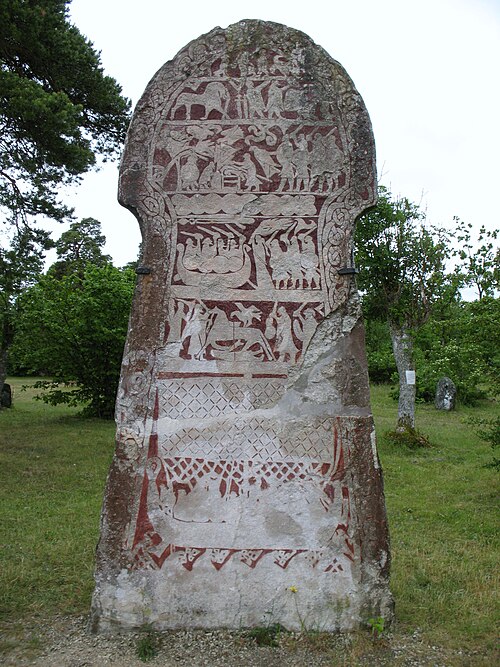
古ノルド語の女性形「víking 」( fara í víking)は、もともとは漕ぎ手が交代する長距離の航海を意味していた可能性があり、男性形「víkingr」はもともとそのような航海の参加者であったと考えられる。その場合、疲れた漕ぎ手が休憩した漕ぎ手に交代すると、漕ぎ手の横に移動するという考えが背景にあると思われる。これは、 Vikingという言葉がもともとスカンジナビアの船乗りと関連付けられていなかったが、スカンジナビア人が海を支配し始めたときにこの意味を帯びたことを示唆している。[27] vikingrという言葉でさえ、必ずしも否定的な意味合いを持っていたわけではなく、常に暴力と関連付けられていたわけではなく、ヴァイキング時代以降になって初めてこの言葉に否定的な意味合いが付随するようになった。[31]
中世の使用法
中世では、ヴァイキングはスカンジナビアの海賊や侵略者を意味するようになった。[32] [33] [34]
英語
英語の文献でwicingに言及している最も古いものは、700年頃のエピナル=エアフルト用語集である。この用語集では、 wicingをラテン語で訳すとpiraticum 、現代英語ではpirateとなる。一方、ヴァイキングの襲撃によるイングランドでの最初の既知の攻撃は、約93年後のリンディスファーン島でのことである。[35] [36]古英語では、 wicingという単語は、おそらく9世紀のアングロサクソンの詩Widsithに登場します。この単語は国籍を指すとはみなされておらず、その意味ではNorþmenn(ノースマン)やDene (デンマーク人)などの他の用語が使われていた。アッサーのラテン語作品The Life of King Alfredでは、デンマーク人はpagani(異教徒)と呼ばれている。歴史家のジャネット・ネルソンは、この作品の標準的な翻訳では「pagani 」が「the Vikings」になっていると主張しているが、これは「デンマーク人」の同義語として使われていたという「明白な証拠」がある。一方、エリック・クリスチャンセンは、これは出版社の主張による誤訳であると主張している。[37] wicingという単語は、保存されている中英語のテキストには見当たらない。
スカンジナビア
この形は、スウェーデンのルーン石碑の一部に人名として見られる。Tóki víkingの石碑(Sm 10)は、おそらくバイキングとしての活動にちなんで、Tóki víking(バイキングのトキ)という名前を得た、Tókiという地元の男性を記念して建てられた。[38] Gårdstånga Stone(DR 330)には、「Þeʀ drængaʀ waʀu wiða unesiʀ i wikingu」(これらの勇敢な男たちは、バイキングの襲撃で広く知られていた)というフレーズが使用されており、[39]石碑に捧げられた人々をバイキングと呼んでいる。Västra Strö 1ルーン石碑には、「バイキングの襲撃」中に殺されたビョルンを記念する碑文がある。[40] [41]スウェーデンには、中世以来Vikingstadとして知られる地域がある。ブロ石碑(U 617)は、ヴァイキングからこの地を守ったと言われるアッシュール(Saʀ vaʀ vikinga vorðr með Gæiti)を記念して建てられた。[42] [43]ヴァイキング時代が終わるまでは、この言葉に否定的な意味合いはほとんど見られなかった。東ヨーロッパの一部ではノルウェーのエリート層が支配していたため、víkingrはロシア語からの借用語vityaz'(витязь )で「英雄」を意味する肯定的な概念として認識されるようになった。[44]
その他の情報源
1080年代に完成したブレーメンのアダムによって書かれたハンブルク=ブレーメン大司教の歴史書『ハンブルク大司教の教会史』では、この用語は一般的にスカンジナビアの海賊または略奪者を指していました。 [45]
現代の用法
「ヴァイキング」という語は18世紀のヴァイキング復興の時代に現代英語に導入され、その時点で「野蛮な戦士」や高貴な野蛮人といったロマンチックで英雄的な意味合いを帯びるようになった。[46] 20世紀には、この語の意味は拡大され、スカンジナビアや彼らが定住した他の場所(アイスランドやフェロー諸島など)からの海からの侵略者だけでなく、8世紀後半から11世紀半ば、より緩く言えば700年頃から1100年頃までの期間に侵略者を生み出した文化の構成員全員を指すようになった。形容詞としては、この語はそれらの人々やその文化的生活に関連する考え、現象、または工芸品を指すために使用され、ヴァイキング時代、ヴァイキング文化、ヴァイキング芸術、ヴァイキング宗教、ヴァイキング船などの表現を生み出している。
その他の名前
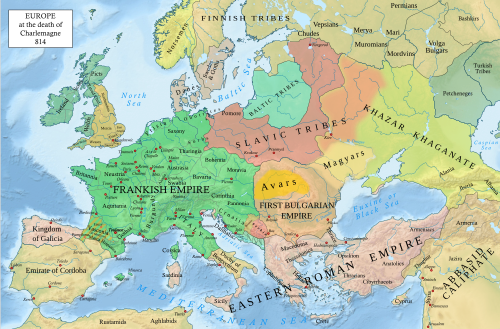
ヴァイキングは、船に使われていたトネリコ材にちなんで、ドイツ人にはアスコマンニ(「トネリコ人」)と呼ばれ、 [47]アイルランド人にはダブガイルとフィンガイル(「黒くて色白の外国人」)、[48]ゲール人にはロクランナイヒ(「湖の国から来た人々」)、[49]アングロサクソン人にはデネ(デーン人) [50]フリース人からはノースモンと呼ばれていた。[30]
学者のコンセンサス[51]によれば、ルーシ人は8世紀頃に現在のスウェーデン東部の海岸部に起源を持ち、その名前はスウェーデンのロスラーゲン(古い名前はローデン)と同じ起源を持つという。[52] [53] [54]有力な説によれば、ルーシという名前は、スウェーデンの原フィン語名(*Ruotsi)と同様に、東ヨーロッパの川を航行する主な手段がボート漕ぎだったことから、古ノルド語の「漕ぐ者」(rods- )に由来しており、スウェーデンの海岸地域ロスラーゲン( Rus-law)または以前はローデンと呼ばれていた地域に関連がある可能性がある。 [55] [56]そうすると、ルーシという名前は、スウェーデンのフィンランド語名Ruotsiおよびエストニア語名と同じ起源を持つことになる。 [ 56 ] [57]
スラヴ人とビザンチン帝国は彼らをヴァリャーグ人とも呼んだ(ロシア語:варяги、古ノルド語の Væringjar 「誓約した者」から来ており、vàr-「信頼、忠誠の誓い」から来ており、古英語のwær「合意、条約、約束」、古高ドイツ語のwara「忠実さ」に関連[58])。ビザンチン皇帝のスカンジナビアの護衛はヴァリャーグ親衛隊として知られていた。ルーシ人は9世紀にセルクランドに最初に現れ、ヴォルガ交易路に沿って商人として旅をし、毛皮、蜂蜜、奴隷、琥珀、フランクの剣、セイウチの象牙などの贅沢品を売っていた。これらの品物はほとんどがディルハムと呼ばれるアラビアの銀貨と交換された。9世紀のバグダッドで鋳造された銀貨の埋蔵品がスウェーデン、特にゴットランドで発見されている。[59]
844年のヴァイキングによるセビリア襲撃の際と襲撃後、アル・アンダルスのイスラム年代記作者はヴァイキングをマギ人(アラビア語:al- Majus مجوس)と呼び、ペルシャのゾロアスター教徒と混同した。[60]アフマド・イブン・ファドラーンがヴォルガ川でヴァイキングに遭遇したとき、彼は彼らをルーシと呼んだ。[61] [62] [63]
フランク人は彼らを通常北欧人またはデンマーク人と呼んだが、イギリス人にとって彼らは一般的にデンマーク人または異教徒として知られており、アイルランド人は彼らを異教徒または非ユダヤ人として知っていた。[64]
アングロ・スカンジナビアとは、8世紀から13世紀にかけて、英語で一般にヴァイキングとして知られるスカンジナビア人がイギリス諸島に移住し、占領した人々、および考古学と歴史の時代を指す学術用語です。アングロ・サクソン人と区別するために使われます。アイルランドとスコットランドを指すHiberno-Norseなど、他の地域にも同様の用語があります。
歴史
ヴァイキング時代

スカンジナビアの歴史におけるヴァイキング時代は、793年に記録されたノルマン人による最初の襲撃から1066年のノルマン人によるイングランド征服までの期間とされている。 [65]ヴァイキングはノルウェー海とバルト海を南への海路として利用した。
ノルマン人は、10世紀に北フランスの地域、すなわちノルマンディー公国に封建的な支配権を与えられたヴァイキングの子孫である。その点で、ヴァイキングの子孫は北ヨーロッパで影響力を持ち続けた。同様に、イングランド最後のアングロサクソン王であるハロルド・ゴドウィンソン王はデンマーク人の祖先を持っていた。2人のヴァイキングがイングランドの王位に就いたことさえあり、スヴェン・フォークビアードは1013年から1014年までイングランドの王位を主張し、その息子クヌート大王は1016年から1035年までイングランドの王であった。[66] [67] [68] [69] [70]
地理的に見ると、ヴァイキング時代はスカンジナビアの土地(現在のデンマーク、ノルウェー、スウェーデン)と、北ゲルマン人の支配下にあった領土、主にデーンロウ(スカンジナビアのヨーク、ノーサンブリア王国の残存地域の行政中心地を含む)、[71]マーシアの一部、イースト・アングリア[72]をカバーしていた。ヴァイキングの航海士たちは北、西、東の新天地への道を開き、シェトランド諸島、オークニー諸島、フェロー諸島、アイスランド、グリーンランド[73]、そして1000年頃のニューファンドランド島のランス・オ・メドーに独立した集落を築いた。 [74]グリーンランドの集落は中世温暖期の980年頃に設立され、15世紀半ばまでに消滅したのは気候変動が一因であった可能性がある。[75]ヴァイキングのリューリク朝は東ヨーロッパのスラヴ人とフィン人が支配する地域の領土を支配し、882年にキエフを併合してキエフ・ルーシの首都とした。[76]
スウェーデンの使節が初めてビザンチンを訪れたことが知られている839年には、スカンジナビア人がビザンチン帝国に傭兵として仕えていた。[77] 10世紀後半には、帝国の護衛隊の新しい部隊が結成された。伝統的にスカンジナビア人が多数含まれていたため、ヴァリャーグ親衛隊として知られていた。ヴァリャーグという言葉は古ノルド語に由来していると思われるが、スラヴ語とギリシャ語ではスカンジナビア人またはフランク人を指すこともある。この時期に、ビザンツ帝国のヴァリャーグ衛兵隊に入隊するためにスウェーデンを離れた男性の数が膨大だったため、ヴェステルイェートランド地方の中世スウェーデン法であるヴェストイェータラーゲンは、移住を阻止するために「ギリシャ」(当時のスカンジナビア語でビザンツ帝国を指す)に留まっている間は誰も相続できないと定めた。[78]特に、他の2つのヨーロッパの宮廷も同時にスカンジナビア人を募集していた:[79]キエフ・ルーシ(980 年頃-1060年)とロンドン(1018年-1066年(シンガリド))[79]
ヴァイキングがイスラム帝国の中心地バグダッドに到達したという考古学的証拠がある。[80]ノルウェー人は毛皮、牙、船の密封材となるアザラシの脂肪、奴隷といった交易品をヴォルガ川に定期的に運んでいた。この時期の重要な貿易港には、ビルカ、ヘージェビー、カウパン、ヨールヴィク、スタラヤ・ラドガ、ノヴゴロド、キエフなどがある。
スカンジナビアのノルウェー人は、貿易、襲撃、植民地化、征服のために、海や川からヨーロッパを探検した。この時期に、デンマーク、ノルウェー、スウェーデンの故郷から航海したノルウェー人は、現在のフェロー諸島、アイスランド、ノルウェー領グリーンランド、ニューファンドランド、オランダ、ドイツ、ノルマンディー、イタリア、スコットランド、イングランド、ウェールズ、アイルランド、マン島、エストニア、ラトビア、リトアニア、[81] ウクライナ、ロシア、トルコに定住し、現在のスカンジナビア諸国の形成につながる統合を開始した。
ヴァイキング時代には、現在のノルウェー、スウェーデン、デンマークのような国は存在していませんでしたが、現在これらの国に住んでいた人々は、地理的には多少異なっていたものの、文化や言語がほぼ同質で似通っていました。スカンジナビアの王の名前が確実に知られているのは、ヴァイキング時代の後期のみです。ヴァイキング時代の終焉後、個々の王国は徐々に国家としての独自のアイデンティティを獲得し、キリスト教化が進みました。したがって、スカンジナビア人にとってヴァイキング時代の終焉は、比較的短い中世の始まりでもあります。
スラヴ人との混血
スラヴ人とヴァイキングの部族は「密接に結びつき、互いに戦い、混交し、交易を行っていた」。[82] [83] [84]中世には、スラヴ地域からスカンジナビアに物資が運ばれ、デンマークは「スラヴとスカンジナビアの要素のるつぼ」とみなすことができた。[82]ボン大学スカンジナビア語文学部のレシェク・ガルデラは、スカンジナビアにおけるスラヴ人の存在は「これまで考えられていたよりも重要」であると主張している。[82]一方、マッツ・ロスルンドは「スラヴ人とスカンジナビアとの交流は十分に調査されていない」と述べている。[85]
デンマークにある10世紀の女性戦士の墓は長い間、ヴァイキングのものだと考えられていた。しかし、新たな分析によると、その女性は現在のポーランド出身のスラヴ人だった可能性があるという。[82]スウェーデンの最初の王エリクは、ポーランドのピャスト家のグンヒルドと結婚した。[86]同様に、彼の息子オーロフはスラヴ人の女性エドラに恋をし、彼女を妾(フリッラ)に迎えた。[87]彼らには息子と娘がおり、スウェーデン王エムンド老とノルウェー女王アストリッドである。デンマーク、イングランド、ノルウェー王クヌート大王は、ポーランド王ミェシュコ1世の娘の息子であり、[88]エリクの妻で元ポーランドのスウェーデン女王であった可能性がある。
拡大

.jpg/500px-Nicholas_Roerich,_Guests_from_Overseas_(corrected_colour).jpg)
ノルウェーのヴァイキングによるアイスランドの植民地化は9世紀に始まった。アイスランドとグリーンランドに言及している最初の文献は1053年の教皇の書簡である。20年後、ブレーメンのアダムの書簡にそれらの島々が登場する。島々がキリスト教化された1130年以降になって初めて、住民の視点から島の歴史がサガや年代記に記された。[89]ヴァイキングは北大西洋の北部の島々と海岸を探検し、南は北アフリカ、東はキエフ大公国(現在のウクライナ、ベラルーシ)、コンスタンティノープル、中東まで進出した。[90]
彼らは襲撃や略奪、交易、傭兵活動を行い、広範囲に植民地を築いた。[91]初期のヴァイキングは襲撃後、おそらく故郷に戻った。後年、彼らは他の土地に定住し始めた。 [ 92]赤毛のエイリークの後継者であるレイフ・エリクソン率いるヴァイキングは北アメリカに到達し、現在のニューファンドランド島、カナダのランス・オー・メドーに短期間の集落を築いた。この拡大は中世温暖期に起こった。[93]
ヴァイキングの大陸ヨーロッパへの拡大は限定的だった。彼らの領土は南の強力な部族に接していた。初期には、現在の北ドイツに位置する旧ザクセンを占領したのはザクセン人だった。ザクセン人は獰猛で強力な民族であり、ヴァイキングとしばしば衝突していた。ザクセン人の侵略に対抗し、自らの存在感を強めるために、デンマーク人はヘーデビューとその周辺に巨大な防衛要塞であるダーネヴィルケを建設した。[94]
ヴァイキングは、772年から804年の30年間にわたるザクセン戦争で、カール大帝によるザクセン人の暴力的な鎮圧を目の当たりにした。ザクセン人の敗北により、彼らは強制的に洗礼を受け、旧ザクセンはカロリング帝国に吸収された。フランク人への恐怖から、ヴァイキングはダーネヴィルケをさらに拡大し、[94]防御構造はヴァイキング時代を通じて、そして1864年まで使用され続けた。[95]
バルト海南岸は、カロリング朝、後にフランク王国に忠誠を誓うスラヴ諸部族の連合体であるオボトリテスによって支配されていた。グドフレッド王率いるヴァイキングは、 808年に南バルト海沿岸のオボトリテスの都市レリックを破壊し、商人や貿易商をヘーデビューに移した。[96]これにより、バルト海におけるヴァイキングの覇権が確保され、それはヴァイキング時代を通じて続いた。
ヴァイキングがヨーロッパ全土に拡大したため、ケンブリッジ大学とコペンハーゲン大学の科学者が行ったDNAと考古学の比較では、「ヴァイキング」という用語は、少なくとも一部のヴァイキング集団においては「遺伝の問題ではなく、職務の説明」へと進化した可能性があることが示唆された。[97]
動機
ヴァイキングの勢力拡大の動機については、多くの議論が交わされている。ヴァイキングがもともと航海や襲撃を始めたのは、異国の地の女性を探す必要があったからかもしれないという考え方は、11世紀の歴史家サン=カンタンのデュドが半ば空想的な著書『ノルマン人の歴史』の中で述べている。[98] [99] [100]ブレーメンのアダムが観察したように、裕福で権力のあるヴァイキングの男性は妻や妾をたくさん持つ傾向があり、[101]このような一夫多妻の関係は、ヴァイキングの男性が利用できる女性の不足を招いた可能性がある。その結果、平均的なヴァイキングの男性は、ふさわしい女性を獲得する手段を得るために、富と権力を求めざるを得なかったのかもしれない。[102]デュドの観察から数世紀後、学者たちはこの考えを復活させ、時が経つにつれてヴァイキング時代の学者の間で決まり文句となった。[103]ヴァイキングの男性は女性を買ったり捕らえたりして妻や妾にすることが多かった。[104] [105]このような一夫多妻制の結婚は、地位向上や性行為を求める危険な行動に進んで従事する未婚男性のプールを作り出すため、社会における男性同士の競争を激化させる。 [106] [107]アルスター年代記には、821年にヴァイキングがアイルランドの村を略奪し、「多数の女性を捕虜にした」と記されている。[108]
一般的な説の一つは、カール大帝が「力と恐怖を用いてすべての異教徒をキリスト教化した」ため、洗礼、改宗、処刑に至り、その結果、ヴァイキングや他の異教徒は抵抗し、復讐を望んだというものである。[109] [110] [111] [112] [113]ルドルフ・シメック教授は、 「初期のヴァイキングの活動がカール大帝の治世中に起こったのは偶然ではない」と述べている。[109] [114]スカンジナビアにおけるキリスト教の台頭は深刻な紛争を引き起こし、ノルウェーはほぼ1世紀にわたって分裂した。しかし、この時代は10世紀まで始まらなかった。ノルウェーはカール大帝の侵略を受けたことはなく、紛争の時代は歴代のノルウェー王が海外でキリスト教に遭遇した後にキリスト教を受け入れたためであった。[115]

もう一つの説明は、ヴァイキングが周辺地域の弱点を突いたというものである。シメックの主張とは反対に、ヴァイキングの襲撃はカール大帝の治世よりずっと前から散発的に起こっていたが、カール大帝の死後、帝国が複数のはるかに弱い組織に分裂すると、頻度と規模が爆発的に増加した。[116]イングランドは内部分裂に苦しみ、多くの町が海や航行可能な川に近かったため、比較的容易な獲物だった。西ヨーロッパ全域に組織化された海軍の抵抗がなかったため、ヴァイキング船は自由に航行し、機会があれば襲撃や交易を行った。古い交易路の収益性が低下したこともまた、一因となった可能性がある。西ヨーロッパとユーラシア大陸の残りの地域との交易は、5世紀に西ローマ帝国が滅亡したときに大きな打撃を受けた。[117] 7世紀のイスラム教の拡大も西ヨーロッパとの交易に影響を与えた。[118]
ヨーロッパにおける襲撃、特にスカンジナビアからの襲撃や入植は前例のないものではなく、ヴァイキングが到着するずっと前から起こっていた。ジュート人は、デンマーク人が定住するより3世紀前に、移住の時代にユトランドからイギリス諸島に侵入した。サクソン人とアングル人も同様に、ヨーロッパ本土から出航した。しかし、ヴァイキングの襲撃は目撃者によって記録された最初のものであり、規模も頻度も以前の時代よりもはるかに大きかった。[116]
ヴァイキング自身も勢力を拡大していたが、その動機は不明であるものの、歴史家たちは資源の不足や交配の機会の不足が要因であったと考えている。[119]
奴隷貿易はヴァイキング経済の重要な部分であり、奴隷のほとんどはスカンジナビアに送られたが、他の多くの奴隷は東に送られ、そこで高値で売られた。[120]「奴隷街道」とは、ヴァイキングがバルト海を航行中にスカンジナビアからコンスタンティノープルやバグダッドまで直通する道を見つけたルートを指す用語である。9世紀に船が進歩したことにより、ヴァイキングはキエフ大公国やヨーロッパ北部の一部まで航海することができた。[121]
ヨムスボルグ

ヨムスボルグは、バルト海南岸(中世のヴェンドランド、現代のポンメルン)にあった、960年代から1043年まで存在した半ば伝説的なヴァイキングの拠点である。その住民はヨムスヴァイキングとして知られていた。ヨムスボルグの正確な位置や存在はまだ明らかにされていないが、ヨムスボルグはオーデル川河口の島々のどこかにあったとよく言われている。[122]
ヴァイキング時代の終焉
ヴァイキングがスカンジナビアの故郷以外でも活動していた一方で、スカンジナビア自体も新たな影響を受け、様々な文化的変化を経験していた。[123]
国民国家と貨幣経済の出現
11世紀後半には、王朝はカトリック教会(300年前にはスカンジナビアではほとんど影響力がなかった)によって正当化され、権威と野心を強めながら権力を主張し、デンマーク、ノルウェー、スウェーデンの3王国が形成された。世俗的および教会的な行政センターや市場として機能する町が出現し、イギリスとドイツのモデルに基づいた貨幣経済が出現し始めた。[124]この頃までに、東方からのイスラム銀の流入は1世紀以上途絶えており、イギリスの銀の流入は11世紀半ばに終了していた。[125]
キリスト教世界への同化
キリスト教は11世紀に教区が設立され、デンマークとノルウェーに根付いていました。そしてスウェーデンでもこの新しい宗教が組織化され、より効果的にその存在を主張し始めました。外国の聖職者と現地のエリートたちは、もはや宣教師の立場でのみ活動していたキリスト教の利益を推進することに熱心に取り組み、古いイデオロギーとライフスタイルは変化しつつありました。1103年までに、スカンジナビアで最初の大司教区が、当時デンマークの一部であったスコーネ 地方のルンドに設立されました。
新興のスカンジナビア王国がヨーロッパのキリスト教世界の文化的主流に同化したことにより、スカンジナビアの統治者や海外に渡航できるスカンジナビア人の願望が変化し、近隣諸国との関係も変化した。
ヴァイキングの主な利益源の 1 つは、他のヨーロッパの民族から奴隷を奪うことだった。中世の教会は、キリスト教徒はキリスト教徒を奴隷として所有すべきではないとしていたため、北ヨーロッパ全域で動産奴隷制の慣習は減少した。これにより、襲撃の経済的動機は大幅に減少したが、散発的な奴隷化活動は 11 世紀まで続いた。北海とアイリッシュ海周辺のキリスト教国におけるスカンジナビア人の略奪は著しく減少した。
ノルウェー王はイギリス北部とアイルランドの一部で勢力を強め続け、12世紀まで襲撃が続いたが、スカンジナビアの統治者の軍事的野心は新たな方向に向けられていた。1107年、ノルウェーのシグルド1世はノルウェーの十字軍とともに東地中海に航海し、新たに建国されたエルサレム王国のために戦った。デンマーク王とスウェーデン王は12世紀と13世紀のバルト海十字軍に積極的に参加した。 [126]
文化
ヴァイキングの文化、活動、信仰については、さまざまな資料から明らかになっている。ヴァイキングは一般に文字を持たない文化で、文学的遺産は残っていないが、アルファベットを持っており、ルーン石碑に自分たちや自分たちの世界を記している。ヴァイキングに関する現代の文学や文書の資料のほとんどは、ヴァイキングと接触のあった他の文化に由来している。[127] 20世紀半ば以降、考古学的発見により、ヴァイキングの生活についてより完全でバランスのとれた像が築かれてきた。[128] [129]考古学的記録は特に豊富で多様であり、彼らの農村と都市の集落、工芸品と生産、船と軍事装備、貿易ネットワーク、異教とキリスト教の宗教的遺物と慣習に関する知識を提供している。
文学と言語

ヴァイキングに関する最も重要な一次資料は、スカンジナビアやヴァイキングが活動していた地域で同時期に書かれた文書である。[130]ラテン文字の表記はキリスト教とともにスカンジナビアに伝わったため、11世紀後半から12世紀初頭以前のスカンジナビア固有の文書資料はほとんど残っていない。[131]スカンジナビア人はルーン文字で碑文を書いたが、通常は非常に短く定型的な内容だった。同時代の文書資料のほとんどは、スカンジナビア以外のキリスト教徒やイスラム教徒のコミュニティで書かれた文書であり、ヴァイキングの活動によって悪影響を受けた著者によるものが多い。
ヴァイキングとヴァイキング時代に関する後代の著作も、彼らとその文化を理解する上で重要ではあるが、慎重に扱う必要がある。11世紀と12世紀に教会が統合され、スカンジナビアとその植民地が主流の中世キリスト教文化に同化した後、ラテン語と古ノルド語で書かれた土着の文献が現れ始めた。ヴァイキングの植民地であったアイスランドでは、12世紀から14世紀にかけて並外れた土着文学が開花し、ヴァイキング時代に関連する多くの伝承がアイスランドのサガに初めて書き留められた。ヴァイキングとスカンジナビアの過去に関するこれらの中世の散文物語を文字通りに解釈することは疑わしいが、10世紀と11世紀の宮廷詩人に帰せられる大量のスカルド詩、公開された家系図、自己イメージ、およびこれらの文学作品に含まれる倫理的価値観など、多くの特定の要素は考慮に値する。
ヴァイキングは、かつての勢力圏で発見された多くの古ノルド語の地名や単語を通じて、間接的に彼らの言語、文化、活動への窓口も残しています。これらの地名や単語のいくつかは、現在でもほとんど変わることなく直接使用されており、ヴァイキングが定住した場所や特定の場所が彼らにとってどのような意味を持っていたかを明らかにしています。例としては、エイギルセイ(エイギルの島を意味するEigils eyから)、オームズカーク(オーム教会または虫の教会を意味するOrmr kirkjaから)、メオルス(砂丘を意味するmerlから)、スネーフェル(雪が降った場所)、レイヴンズカー(レイヴンズロック)、ヴィンランド(ワインの地またはウィンベリーの地)、カウパンゲル(市場の港)、トースハウン(トールの港)、そしてオーディンが崇拝された場所を意味する宗教の中心地オーデンセなどの地名があります。ヴァイキングの影響は、マン島の 現在の議会組織であるティンワルドのような概念にも表れています。
英語の日常会話でよく使われる単語の多くはヴァイキングの古ノルド語に由来しており、彼らとブリテン諸島の人々や文化との関わりを理解する機会を与えてくれる。[132]シェトランド諸島とオークニー諸島の北部では、古ノルド語が現地の言語に完全に取って代わり、時が経つにつれて現在は絶滅したノルン語へと進化した。ヨーク(ホース・ベイ)、スウォンジー(スヴェイン島)、ノルマンディーのトクヴィル(トキの農場)などの地名など、中世以降の記録からの言語資料をより徹底的に研究した後に初めて現れ、私たちの理解に貢献する現代の単語や名前もある。[133]
言語学と語源の研究は、ヴァイキング文化、その社会構造と歴史、そして海外の居住地で出会った人々や文化とどのように交流し、取引し、攻撃し、あるいは共に暮らしたかに関する重要な情報源を提供し続けている。[134] [135]スウェーデン語、ノルウェー語、デンマーク語、フェロー語、アイスランド語といった現代の言語には、古ノルド語との多くのつながりが見られる。[136]古ノルド語は、東ヨーロッパのヴァイキング居住地のスラヴ語に大きな影響を及ぼさなかった。その理由は、2つの言語の間に大きな違いがあったこと、ルーシ・ヴァイキングがこれらの地域でより平和的な活動を行っていたこと、そして数が少なかったことが原因ではないかと推測されている。ドニエプル川の急流のいくつかはノルウェー人が名付けたが、現代の名前からはほとんどそれが読み取れない。[137] [138]
ルーンストーン
ヴァイキング時代の2種類の北欧ルーン石碑
ヴァイキング時代のノルウェー人は読み書きができ、音価に基づいたルノルと呼ばれる非標準化されたアルファベットを使用していました。ヴァイキング時代の紙に書かれたルーン文字の痕跡はほとんど残っていませんが、ヴァイキングが住んでいた場所ではルーン文字が刻まれた石碑が何千個も見つかっています。それらは通常、死者を偲んで刻まれていますが、必ずしも墓に置かれるわけではありません。ルノルの使用は15世紀まで続き、ラテン文字と並行して使用されました。
ルーン石碑はスカンジナビア半島では不均等に分布している。デンマークには250のルーン石碑があり、ノルウェーには50のルーン石碑があるが、アイスランドには一つもない。[139]スウェーデンには定義に応じて1,700 [139]から2,500 [140]のルーン石碑がある。スウェーデンのウップランド地方は石碑が最も集中しており、1,196もの石碑がある。一方、セーデルマンランド地方は391で2番目に多い。[141]
ヴァイキング時代のルーン文字の碑文の大部分はスウェーデンで発見されています。スカンジナビアの多くのルーン石碑には、ヴァイキングの遠征隊の参加者の名前が記録されています。たとえば、西ヨーロッパでの大規模な戦争を物語るクジュラのルーン石碑や、東ヨーロッパの戦闘部隊を物語るトゥリンゲのルーン石碑などです。
他のルーン石碑には、ヴァイキングの遠征で亡くなった男性について記されている。その中には、スウェーデンにある約30のルーン石碑(スウェーデン語:Englandsstenarna)があり、ヴァイキング時代のイングランドへの航海について記されている。これらは他国への航海について記されたルーン石碑の中でも最大級のグループであり、その数は、ヴァイキングの中東への遠征について記された約30のギリシャのルーン石碑[142]と26のイングヴァルのルーン石碑に匹敵する。 [143]これらは、小フサルクとともに古ノルド語で刻まれている。[144]

イェリング石碑は960年から985年の間に建てられた。より古く、より小さな石碑は、デンマーク最後の異教徒の王ゴーム3世が、ティレ女王を称える記念碑として建立した。[145]より大きな石碑は、ゴーム3世の息子ハーラル3世が、デンマークとノルウェーの征服とデンマーク人のキリスト教への改宗を祝うために建立した。石碑には3つの面があり、1つには動物の像、1つには十字架にかけられたイエス・キリストの像、そして3つ目には次の碑文が刻まれている。
ハラルド王は、父ゴルムルと母ティルヴェを記念してこの記念碑を建てるよう命じた。ハラルドはデンマークとノルウェーのすべてを勝ち取り、デンマーク人をキリスト教徒にした人物である。[146]
ルーン石碑は、バース[147]、ギリシャ(ヴァイキングは一般的にビザンツ帝国の領土をこう呼んでいた)[148] 、ホラズム[149] 、エルサレム[150]、イタリア(ランゴバルドランド)[151] 、 セルクランド(イスラム世界)[152] 、 [153]、イングランド[154](ロンドン[155]を含む)、東ヨーロッパのさまざまな場所への航海の証拠となっている。ヴァイキング時代の碑文は、マン島の マンクス語ルーン石碑でも発見されている。
現代におけるルーン文字の使用
ルーン文字を使用した最後の民族として知られているのは、スウェーデンのダーラナ地方のエルブダーレン地方に住んでいた、エルフダーレン人として知られる孤立した集団である。彼らはエルブダーレン地方特有の言語であるエルフダーレン語を話した。エルフダーレン語は、古ノルド語にかなり近い進化を遂げたため、他のスカンジナビア諸語とは一線を画している。エルブダーレンの人々は、1920年代にはルーン文字の使用をやめた。そのため、ルーン文字の使用は、世界中のどこよりもエルブダーレン地方で長く続いた。 [156]エルフダーレンのルーン文字に関する最後の記録は1929年のものであり、ダーラナ地方でも発見されたルーン文字の碑文であるダーレカルリア文字の変種である。
エルフダーレン語は伝統的にスウェーデン語の方言とみなされているが[157]、いくつかの基準により西スカンジナビア諸語の方言に近いため[158]、相互理解可能性の基準では別個の言語である。[159] [160] [161]相互理解可能性はないが、エルフダーレンの学校や行政はスウェーデン語で行われているため、母国語話者はバイリンガルであり、ネイティブレベルでスウェーデン語を話す。スウェーデン語のみを唯一の母国語とし、エルフダーレン語を話したり理解したりしない住民もこの地域には多い。エルフダーレン語は17世紀から18世紀にかけて独自のアルファベットを持っていたと言える。今日、エルフダーレン語の母国語話者は約2,000~3,000人いる。
埋葬地
ヴァイキングの墓や石積みの墓の例。総称して古墳と呼ばれる。
ヨーロッパ全土とその影響圏内には、スカンジナビア、イギリス諸島、アイルランド、グリーンランド、アイスランド、フェロー諸島、ドイツ、ラトビア、エストニア、フィンランド、ロシアなど、バイキングに関連する埋葬地が数多く存在します。バイキングの埋葬習慣は、地面に掘った墓から古墳まで非常に多様で、時にはいわゆる船葬も含まれていました。
文献によると、葬儀のほとんどは海上で行われた。葬儀は地元の慣習に応じて、土葬か火葬のいずれかで行われた。現在のスウェーデンの地域では火葬が主流だったが、デンマークでは土葬の方が一般的で、ノルウェーではその両方が一般的だった。[162]ヴァイキングの墳墓は、ヴァイキング時代の状況を示す主要な証拠の一つである。[163]死者とともに埋葬された品々は、来世で所有することが大切だと考えられていたものについて、ある程度の示唆を与えてくれる。[164]ヴァイキングが死んだ子供たちにどのような葬儀を行っていたかは不明である。[165]ヴァイキングを理解する上で最も重要な埋葬地には、以下のものがある。
- ノルウェー:オーセベリ;ゴクスタッド;ボーレハウゲン。
- スウェーデン: Gettlinge gravfält;世界遺産のビルカの墓地。 [166] ヴァルスガルデ;ガムラ・ウプサラ; Hulterstad gravfält, Alby近く;ハルタースタッド、エーランド島、ゴットランド島。
- デンマーク:イェリング、世界遺産;リンドホルム・ホイエ;レディ船;マメンの部屋の墓と貯蔵庫。
- エストニア:サルメ船– これまでに発見された中で最大かつ最古のバイキング船の埋葬地。
- スコットランド:アイリーン・ムワールの港の船の埋葬;スカーボート埋葬、オークニー諸島。
- フェロー諸島: Hov .
- アイスランド:首都圏のモスフェルスバイル; [167] [168]アウストゥル・フナヴァトンシースラのヴァトンスダールルでのボート埋葬。[162] [169] [170]
- グリーンランド:ブラッタフリーズ。[171]
- ドイツ:ヘーデビー。
- ラトビア: Grobiņa。
- ウクライナ:黒い墓。
- ロシア:グネズドヴォ、スタラヤ・ラドガ。
船舶
考古学的には、あらゆるサイズのヴァイキング船がいくつか発見されており、それらの建造に用いられた職人技を知る手がかりとなっている。ヴァイキング船には多くの種類があり、様々な用途のために建造されたが、最もよく知られているのはおそらくロングシップだろう。[172]ロングシップは戦争や探検を目的としており、スピードと機敏性を重視して設計され、帆に加えてオールも装備されていたため、風に左右されずに航行が可能だった。ロングシップは細長い船体と浅い喫水を備えており、浅瀬での上陸や部隊の展開を容易にした。ロングシップはスカンジナビアの防衛艦隊であるレイダングによって広く使用されていた。ロングシップによってノルウェー人はヴァイキングになることができたため、このタイプの船がヴァイキングの概念とほぼ同義語になった理由が説明できるかもしれない。[173] [174]
ヴァイキングは多くの独特な船を建造し、平和的な任務に使われることが多かった。クナールは、貨物をばら積みで運ぶために設計された専用の商船で、船体が広く、喫水が深く、オールの数が少ない(主に港などでの操縦に使用)。ヴァイキングの発明の一つは「ベイタス」で、帆に取り付けられた円材で、風に逆らって効率的に航行できるようにした。[175]航海中のヴァイキング船では、船員や貨物を船から岸まで運ぶために小型船を牽引したり運んだりするのが一般的だった。
典型的なバイキング船2隻
船はヴァイキング文化の不可欠な部分でした。船は海や水路を越えた日常の輸送、新天地の探検、襲撃、征服、近隣文化との貿易を容易にしました。また、宗教的にも大きな重要性を持っていました。地位の高い人々は、動物の犠牲、武器、食料、その他の品物とともに船に埋葬されることがあり、ノルウェーのゴクスタッドとオーセベリの埋葬船[176]やデンマークのラドビーで発掘された船葬によってその証拠が示されています。船葬は海外のヴァイキングによっても行われており、エストニアのサーレマー島でサルメ船が発掘されたことからもその証拠が示されています。[177]
1960年代後半、ロスキレ フィヨルドから保存状態の良いバイキング船 5 隻の残骸が発掘されました。ロングシップとクナール船の両方です。これらの船は 11 世紀に航路を遮断し、当時のデンマークの首都ロスキレを海からの攻撃から守るためにこの地に沈められました。これらの船の残骸はロスキレのバイキング船博物館に展示されています。
2019年、考古学者はガムラ・ウプサラで2つのバイキング船の墓を発見しました。彼らはまた、船のうち1つに男性、犬、馬の遺体やその他の品々が残っていることを発見しました。[178]これにより、この地域のバイキングコミュニティの死の儀式が明らかになりました。
社会構造
_(cropped).jpg/500px-Chieftains_house_(reconstruction)_(cropped).jpg)

ヴァイキング社会は、奴隷、カール、ヤールの3つの社会経済的階級に分かれていた。これはエッダ詩『リグスラ』に鮮明に描かれており、この詩では、人類の父でありヘイムダルとしても知られるリグ神が3つの階級を創造したとも説明されている。考古学はこの社会構造を確認している。[179]
- 最も低い階級は奴隷(古ノルド語で奴隷を意味する)であり、人口の4分の1を占めていた。[180]奴隷制度はヴァイキング社会にとって不可欠であり、日常の雑用や大規模な建築、また貿易や経済にも利用された。奴隷は農場やカールやヤールの大家庭の使用人や労働者であり、要塞、傾斜路、運河、塚、道路など、重労働によって建設されるプロジェクトの建設に使われた。リグスーラによれば、奴隷は軽蔑され、蔑まれていた。[181]新たな奴隷は奴隷の息子や娘から供給されるか、ヴァイキングがヨーロッパを襲撃した際に捕らえられた。奴隷たちは船でスカンジナビアに連れ戻され、現地や新しい入植地で必要な建造物を建てるために使われたり、銀ディルハムや絹と引き換えにアラブ人に売られたりした。[182] [183]
- 自由農民(カール)。農場、土地、牛を所有し、畑を耕したり、牛の乳搾りをしたり、家や荷馬車を建てたりする雑用に従事していたが、生計を立てるために奴隷を使っていた。カールの別名はボンデ、または単に自由人であった。同様の階級にはチャールやフスカールがある。[182]
- 貴族(ヤルラール)は裕福で、巨大な長屋、馬、そして多くの奴隷を抱えた広大な土地を所有していた。奴隷は日常の雑用をほとんどこなし、ヤルルは行政、政治、狩猟、スポーツを行った。また、他のヤルルを訪問したり、海外に遠征したりもした。ヤルルが亡くなり埋葬されると、その家の奴隷が犠牲として殺され、ヤルルの隣に埋葬されることもあったことが、多くの発掘調査で明らかになっている。[184]
日常生活では、社会構造全体の中で中間的な地位が数多く存在し、それらの間では社会的流動性があったようです。詳細は不明ですが、hauldr、thegn、landmandなどの称号や地位は、カールとヤールの間の流動性を示しています。
その他の社会構造には、民間と軍事の両方の分野でフェラグの共同体があり、そのメンバー(フェラギと呼ばれる)はこれに従わなければなりませんでした。フェラグは、特定の貿易、海上船舶の共同所有、または特定のリーダーの下での軍事義務を中心に構成されていました。後者のメンバーは、戦士を意味する言葉の 1 つであるドレンジュと呼ばれていました。町や村の中にも公式の共同体があり、全体的な防衛、宗教、法制度、物事がありました。
女性の地位

中世ヨーロッパの他の地域と同様に、ヴァイキング社会の女性のほとんどは夫や父親に従属しており、政治的な権力はほとんどありませんでした。[185] [186]しかし、文献では自由なヴァイキングの女性は独立性と権利を持っていたと描写されています。ヴァイキングの女性は一般的に他の地域の女性よりも自由を持っていたようです。[186]アイスランドのグラガス法やノルウェーのフロスタティング法とグーラティング法に示されています。 [187]
自由民のヴァイキングの女性のほとんどは主婦であり、女性の社会的地位は夫の地位と結びついていた。[186]結婚により、女性はhúsfreyja (家の婦人)という称号にまとめられた一定の経済的安定と社会的地位を得た。ノルウェーの法律では、主婦が「屋内の家庭」に対して権威を持つことが定められている。主婦は農場の資源管理、商売、子育てといった重要な役割を担っていたが、その一部は夫と分担することもあった。[188]
20歳を過ぎると、未婚の女性はマエールとメイと呼ばれ、法的に成人となり、居住地を決める権利を持ち、法律の下では独立した人物とみなされる。[187]例外として、結婚は家族が決めるため、夫を選ぶ権利があった。[189]花婿は花嫁の家族に婚資(ムンドル)を支払い、花嫁は持参金として財産を結婚に持ち込んだ。[188]既婚女性は夫と離婚して再婚することができた。[186] [190]
妾制度もヴァイキング社会の一部であり、女性は結婚せずに男性と暮らし、子供を持つことができた。そのような女性はフリラと呼ばれた。 [ 190]通常、彼女は妻のいる裕福で権力のある男性の愛人であった。[185]愛人が自分の家庭に住んでいる場合、妻は愛人に対して権限を持っていた。[186]妾とその家族は、社会的地位の高い男性との関係を通じて社会的に昇進することができたが、その地位は妻ほど安定していなかった。[185]婚姻関係で生まれた子供と婚姻関係以外で生まれた子供の間にほとんど区別はなく、どちらも両親から財産を相続する権利があり、「嫡出」や「非嫡出」の子供はいなかった。[190]しかし、嫡出で生まれた子供は、嫡出で生まれた子供よりも相続権が高かった。[188]
女性は夫が亡くなった場合、その財産の一部を相続する権利を有し[188]、未亡人は未婚女性と同じ独立した地位を享受した。[190]父方の叔母、父方の姪、父方の孫娘はオダルクヴィナと呼ばれ、いずれも亡くなった男性の財産を相続する権利を有した。[187]夫、息子、男性親族のいない女性は、父または兄弟が亡くなった場合、財産だけでなく家長の地位も相続することができた。そのような女性はバウグリグルと呼ばれ、結婚するまでは一族の長に与えられるすべての権利を行使し、結婚することでその権利は新しい夫に移った。[187]
女性は宗教的権威を持ち、巫女(ギュジャ)や神託者(セイドクヴィンナ)として活躍した。[191]女性は詩人(スカルダー)[191]やルーン文字の達人として芸術の分野で、また商人や医者として活躍した。[191]織物生産に従事した女性起業家もいたかもしれない。 [186]女性は軍の役職でも活躍した可能性がある。盾の乙女に関する物語は未確認だが、ビルカの女性バイキング戦士などの考古学的発見は、少なくとも何人かの女性が軍の権力者であったことを示しているかもしれない。[192]
ヴァイキング女性のこうした自由はキリスト教の伝来後徐々に消滅し、[193] 13世紀後半からはもはや言及されなくなった。[187]
ヴァイキング時代の埋葬地の調査から、女性はそれ以前の時代に比べて長生きし、ほぼ全員が35歳をはるかに超えて生きていたことが示唆されている。スカンジナビアのヴァイキング時代以前の女性の墓には、おそらく出産の合併症のため、20歳から35歳の女性の遺体が比較的多く埋葬されている。[194]
骨格遺物の検査では、人体測定技術を用いて、過去の男女の相対的な健康状態や栄養状態を再現することもできる。スカンジナビアやその他のヨーロッパ諸国の埋葬品は、当時の他の社会と比較して、スカンジナビアの農村部では女性の平等が著しく高かったことを示唆している。ヴァイキング時代と中世後期の北欧諸国の農村部では、女性の地位が比較的高く、その結果、栄養と健康のための資源が少女たちに割り当てられ、少女たちがより強く健康に成長できるようにした。[195]
外観

スカンジナビアのバイキングは、現代のスカンジナビア人と外見が似ていた。「彼らの肌は白く、髪の色は金髪、黒髪、赤みがかった色と様々だった」。遺伝子研究によると、現在のスウェーデン東部では主に金髪で、赤毛は主にスカンジナビア西部で見られた。[196]バイキングの男性のほとんどは肩までの長さの髪とひげを生やしており、髪が短い男性は奴隷(奴隷)だけだった。[197]髪の長さは個人の好みや職業によって異なった。例えば、戦争に関わった男性は実用的な理由から髪とひげが少し短かったかもしれない。一部の地域では、男性は髪を金色のサフラン色に脱色していた。[197]女性も髪が長く、少女は髪をほどいたり編んだりすることが多く、既婚女性は髪を束ねることが多かった。[197]平均身長は男性で1.70メートル(5フィート7インチ)、女性で1.55メートル(5フィート1インチ)と推定されている。[196]
3つの階級は外見で簡単に見分けられました。ヤールの男性と女性はきちんとした髪型で身だしなみを整え、高価な衣服(多くの場合は絹)とブローチ、ベルトのバックル、ネックレス、腕輪などの精巧に作られた宝飾品を身に着けることで富と地位を表現しました。宝飾品のほとんどすべては、ノルウェー特有のデザインで作られていました(ヴァイキングの芸術を参照)。指輪はほとんど使われず、イヤリングはまったく使われませんでした。これは、それらがスラブの現象とみなされていたためです。ほとんどのカールは同様の趣味と衛生観念を表現していましたが、よりリラックスした安価な方法で表現していました。[179] [198]
スカンジナビアやイギリス諸島のヴァイキング居住地からの考古学的発見は、ヴァイキングが身だしなみを整え衛生的であったという考えを裏付けている。副葬品を添えて埋葬することは、ヴァイキング時代から、ノルウェー人がキリスト教化された後もずっと、スカンジナビア世界では一般的な習慣だった。[199]これらの埋葬地や農家からは、枝角で作られた櫛がよく見つかる。[200] [201]枝角で作った櫛の製造は一般的で、ダブリンのヴァイキング居住地では10世紀の櫛の例が何百も残っており、身だしなみを整えることが一般的な習慣であったことを示唆している。このような櫛の製造はヴァイキング世界全体でも広まっており、同様の櫛の例がアイルランド、[202]イングランド、[203]スコットランドのヴァイキング居住地で見つかっている。[204]櫛の見た目も共通しており、現存する櫛は、時代や種類に応じて線状、絡み合った、幾何学的なモチーフやその他の装飾が施されていることが多いが、様式的にはヴァイキング時代の芸術に似ている。[205]ヴァイキング時代の社会のあらゆる階層で髪の手入れがされていたようで、貴族の墓だけでなく一般の墓でも髪用の櫛が見つかっている。[206]
農業と料理
ヴァイキングの食生活や料理についてはサガに語られているが[ 207 ] 、汚水溜め、台所の貝塚、ゴミ捨て場などの直接的な証拠は、非常に価値があり重要であることが証明されている。ヨークのコッパーゲートの汚水溜めから発見された未消化の植物の残骸は、この点で多くの情報を提供している。全体として、考古学者と古民族植物学者の協力により、ここ数十年で考古植物学の調査がますます行われるようになっている。この新しいアプローチは、ヴァイキングの農業や園芸の習慣、そして彼らの料理に光を当てている。[208]
.jpg/500px-Rundbottnat_k%C3%A4rl_av_t%C3%A4ljsten,_delvis_rekonstruerat,_vikingatid_(sq).jpg)
さまざまな情報源からの情報を総合すると、多様な料理と食材があったことが分かります。塩漬け肉、燻製肉、ホエー保存肉、[209]ソーセージ、茹でたり揚げたりした新鮮な肉など、あらゆる種類の肉製品が調理され、消費されました。[210]魚介類、パン、お粥、乳製品、野菜、果物、ベリー類、ナッツ類も豊富でした。ビール、ミード、ビョル(強い果実酒)などのアルコール飲料、そして富裕層向けに輸入ワインも提供されました。[211] [212]
特定の家畜はヴァイキングに典型的かつ特有であり、アイスランド馬、アイスランド牛、多数の羊の品種、[213]デンマーク鶏、デンマークガチョウが含まれる。[214] [215]ヨークのヴァイキングは主に牛肉、羊肉、豚肉を食べ、馬肉は少量だった。牛肉と馬の脚の骨のほとんどは、骨髄を取り出すために縦に割かれた状態で発見された。羊肉と豚肉は、脚と肩の関節、および切り身に切り分けられた。家の床で頻繁に発見される豚の頭蓋骨と足の骨の残骸は、牛や豚足も人気があったことを示している。鶏は肉と卵の両方のために飼われ、クロライチョウ、ムクドリ、野生のカモ、ガチョウなどの狩猟鳥の骨も発見されている。[216]
魚介類は重要であり、場所によっては肉よりも重要だった。ノルウェーや北大西洋地域の北西部ではクジラやセイウチが食用として狩られ、アザラシはほぼどこでも狩られた。カキ、ムール貝、エビは大量に食べられ、タラやサケは人気の魚だった。南部地域ではニシンも重要だった。[217] [218] [219]
牛乳とバターミルクは料理の材料としても飲み物としても人気がありましたが、農場でさえも常に入手できるとは限りませんでした。[220]牛乳は牛、山羊、羊から採取され、優先順位は場所によって異なります。[221]また、バターやチーズだけでなく、スカイールやシュールミョルクなどの発酵乳製品も生産されていました。 [222]
食べ物は塩味がつけられ、スパイスで味付けされることが多く、黒コショウのように輸入品もあれば、ハーブ園で栽培されたものや野生で収穫されたものもあった。自家栽培のスパイスには、オーセベリ船の埋葬地で発見されたキャラウェイ、マスタード、ホースラディッシュ[211]や、ヨークのコッパーゲートの汚水溜めで発見されたディル、コリアンダー、野生のセロリなどがある。タイム、ジュニパーベリー、スイートゲイル、ノコギリソウ、ヘンルーダ、ペッパークレソンもハーブ園で栽培され利用されていた。[208] [223]

ヴァイキングは果物、ベリー類、ナッツ類を集めて食べていた。リンゴ(野生のクラブアップル)、プラム、サクランボは食生活の一部であったが、[ 224]ローズヒップやラズベリー、野生のイチゴ、ブラックベリー、エルダーベリー、ナナカマド、サンザシ、そして地域特有の様々な野生のベリー類も食生活の一部であった。[223] ヘーゼルナッツは一般的に食生活の重要な部分であり、ヘーデビーのような都市では大量のクルミの殻が見つかっている。殻は染色に使用され、ナッツは消費されていたと推測される。[208] [220]
ヴァイキング時代初期、スカンジナビアの農業は、モールドボード プラウの発明と導入によって革命的な変化を遂げ、やせた土壌でも耕作できるようになりました。リーベでは、8 世紀のライ麦、大麦、オート麦、小麦の穀物が発見され、調査されています。これらは地元で栽培されていたと考えられています。[225]穀物と小麦粉は、お粥を作るのに使われ、中には牛乳で調理したものや、果物と一緒に調理して蜂蜜で甘くしたもの、また様々な形のパンにも使われました。スウェーデンのビルカで発見されたパンの遺跡は、主に大麦と小麦でできていました。ノルウェー人がパンを発酵させたかどうかは不明ですが、オーブンやパン焼き器具から、発酵させていたことがうかがえます。[226] 亜麻はヴァイキングにとって非常に重要な作物で、油の抽出、食料として、そして最も重要なリネンの生産に使われました。ヴァイキング時代の既知の織物出土品の 40% 以上がリネンであると追跡できます。これは、リネンはウールに比べて保存状態が悪いため、実際の割合ははるかに高いことを示唆しています。[227]
庶民の食事の質は、必ずしも特に高かったわけではない。コッパーゲートの調査によると、ヨークのヴァイキングは全粒粉(おそらく小麦とライ麦の両方)からパンを作っていたが、トウモロコシ畑の雑草の種子が含まれていた。コーンコックル(アグロステマ)はパンを黒くしたが、その種子は有毒であり、パンを食べた人は病気になったかもしれない。ニンジン、パースニップ、アブラナ科の植物の種子も発見されたが、それらは質の悪いもので、白いニンジンや苦いキャベツから採れたものが多かった。[224]ヴァイキング時代によく使われていた回転石臼は小麦粉の中に小さな石片(多くの場合、玄武岩)を残し、それを食べると歯がすり減った。この影響は、当時の遺骨に見ることができる。[226]
スポーツ
ヴァイキングはスポーツを広く実践し、奨励していた。[228]武器の訓練や戦闘スキルの開発を伴うスポーツが人気だった。これには槍や石投げ、レスリング(グリマを参照)、拳闘、石持ち上げによる体力の増強とテストなどが含まれていた。 [ 229 ]山のある地域では、登山がスポーツとして行われていた。敏捷性とバランスは、スポーツとして走ったりジャンプしたりすることで構築され、テストされた。また、漕いでいる船の手すりの外側でオールからオールへとジャンプするスポーツの記述がある。[230] 水泳は人気のあるスポーツだった[231] –スノッリ・ストゥルルソンは、飛び込み、長距離水泳、2人の水泳選手がお互いに水に浸かろうとする競争の3つの種類について述べている。子供はいくつかのスポーツ種目に参加することが多かった[232]。女性も水泳選手として言及されているが、競技に参加したかどうかは不明である。オーラヴ・トリグヴァソン王は登山とオールジャンプの両方の技術で高く評価されており、ナイフジャグリングの技術にも優れていたと伝えられている。スキーやアイススケートは冬の主なスポーツであり、大人のための雪上や氷上の移動手段でもあった。[228]
馬の闘いはスポーツとして行われていたが、そのルールははっきりしていない。柵で囲まれた牝馬の匂いと視界内で、2頭の牡馬が互いに戦っていたようだ。ルールが何であれ、闘いの結果、牡馬の1頭が死ぬことが多かった。
アイスランドの資料には、ホッケーに似た球技であるクナットレイクについてよく言及されている。この球技は、バットと小さな硬いボールを使って、通常は滑らかな氷の上で行われる。大人にも子供にも人気のこの球技は、激しい競技で、怪我をすることが多かった。クナットレイクはアイスランドでのみ行われていたようで、騎馬闘技と同様に多くの観客を集めていた。[228]
狩猟はデンマークでのみスポーツとして行われており、デンマークでは狩猟は必須の食料源ではなかった。鹿や野ウサギは肉のために、またヤマウズラや海鳥のために狩られ、キツネは家畜の殺害を止めるため、また毛皮のために狩られた。使用された武器は槍、弓、後にはクロスボウであった。追跡が最も一般的な方法であったが、犬を使って獲物を追いかけることも行われた。また、さまざまな種類のわなや罠も使用された。[228]
ゲームとエンターテイメント
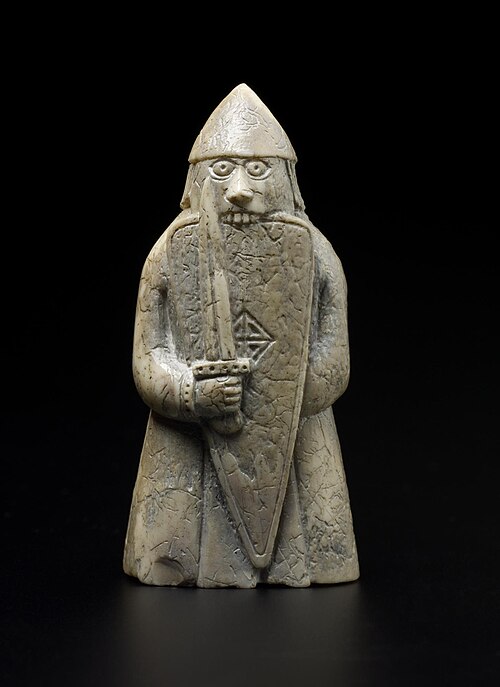
考古学的発見や文献によると、ヴァイキングは社交の場や祝祭に参加していた。[233] [234]ボードゲームやサイコロゲームは人気の娯楽だった。ゲームボードは凝った彫刻が施された木で作られ、ゲームの駒は主に木、骨、石で作られていた。駒はガラス、琥珀、枝角で作られ、セイウチの牙や象牙などの外国の材料で作られたものもあった。ヴァイキングは数種類のタフルゲーム、hnefatafl、nitavl(9人のモリス)、あまり一般的ではないkvatrutaflをプレイした。[228]
ヘネファタフルは、おそらく中世スカンジナビアでプレイされた最も古いタイプのボードゲームです。[228]考古学的記録によると、ヘネファタフルは中世初期には人気があり、ヴァイキングがイングランド、スコットランド、ウェールズ、アイルランドに持ち込んだようです。 [235]オッケルボのルーンストーンには、おそらくヘネファタフルをプレイしている2人の男性が描かれており、[236]あるサガでは、サイコロゲームにはギャンブルが関係していたことが示唆されています。[233]
祝祭の際にはビールや蜂蜜酒がふるまわれ、音楽が演奏され、詩が朗読され、物語が語られた。[233]音楽は芸術形式とみなされ、音楽のスキルは教養のある人にふさわしいものと考えられていた。ヴァイキングはハープ、リュート、リラ、フィドルなどの楽器を演奏していたことが知られている。[228]
文化的同化
スカンジナビア人のアイデンティティと慣習の要素は入植者社会でも維持されていたが、集団が近隣の社会に同化するにつれて、それらはかなり異なるものになった。例えば、ノルマンディーではフランク文化への同化が急速に進んだ。 [237]ヴァイキングのアイデンティティとのつながりは、アイスランドやフェロー諸島などの遠隔地の島々ではより長く残っていた。[237]
武器と戦争

ヴァイキング時代の武器や防具に関する知識は、考古学的発見、絵画的表現、そしてある程度は13世紀に記録されたノルウェーのサガやノルウェーの法律の記述に基づいています。慣習によれば、すべての自由なノルウェーの男性は武器を所有する必要があり、いつでも武器を携帯することが許可されていました。これらの武器はヴァイキングの社会的地位を示していました。裕福なヴァイキングは、ヘルメット、盾、鎖帷子、剣の完全なアンサンブルを持っていました。しかし、剣は戦闘でめったに使用されませんでした。おそらく戦闘には十分頑丈ではなく、象徴的または装飾的なアイテムとしてのみ使用されていた可能性が高いためです。[238] [239]
典型的なボンディ(自由民)は、槍と盾で戦う傾向があり、また、ほとんどの人が万能ナイフと副武器としてサックスを携行していました。弓は陸上戦闘や海上での戦闘の初期段階で使用されましたが、近接武器よりも「名誉ある」武器とは見なされにくい傾向がありました。ヴァイキングが斧を主な戦闘武器として使用するのは、当時としては比較的珍しいことでした。クヌート王(後にハロルド2世王)のエリート護衛兵であるフスカルスは、盾や金属製のヘルメットを簡単に切り裂くことができる両手斧で武装していました。
ヴァイキングの戦争と暴力は、戦争と死の神であるトールとオーディンに焦点を当てた北欧の宗教への信仰によって動機づけられ、煽動されることが多かった。 [240] [241]
ヴァイキング時代のノルウェーでは暴力は一般的だった。ヴァイキング時代のノルウェーの人骨を調べたところ、検査を受けた男性の72%と女性の42%が武器関連の負傷を負っていた。ヴァイキング時代のデンマークでは、氏族を基盤としたノルウェー社会よりも社会が中央集権化され複雑だったため、暴力はそれほど一般的ではなかった。[242]
ヴァイキングの戦士は、現代の大衆文化では激しい怒りの発作や狂乱の戦闘と関連付けられることが多く、これは、中世ノルウェー社会では理解されていなかったであろう「berserkergang」や「berserker」という言葉に付随する意味に反映されています。[243]このような戦闘スタイルは突撃部隊によって意図的に採用された可能性があり、狂暴状態は大量のアルコールの摂取によって誘発された可能性があると提案されています。 [ 244 ] または、カルステン・ファトゥールが推測したようにナス科の植物ヒヨス属ニゲルなどの精神活性作用のある物質の摂取によって誘発された可能性があると提案されています。 [245]または、 1784年にスウェーデンの神学者サミュエル・オッドマンによって最初に仮説が立てられ、後に1885年に植物学者FCシューベラーによって仮説が立てられたように、幻覚キノコのベニテングダケの摂取によって誘発された可能性があります。 [246]ノルウェーの戦場考古学者アレ・スカルシュタイン・コルバーグは、「...オッドマンの仮説はサガ文学や考古学的記録によって裏付けられていない」と主張しています。[247]また、ロデリック・デールによると、ヴァイキング時代や古ノルド文学にはその証拠はありません。[243]
貿易
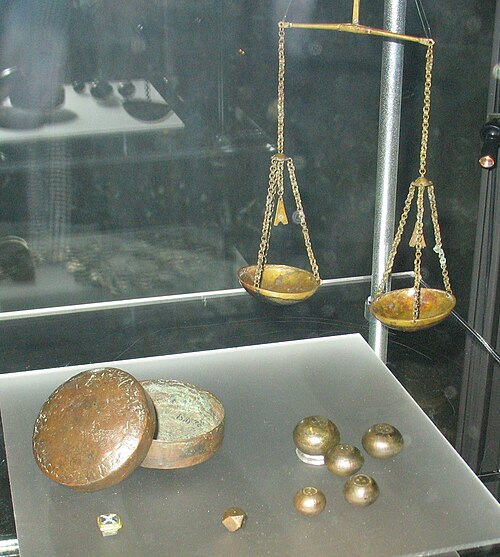
ヴァイキングは既知の世界全体に広範な貿易ネットワークを確立して従事し、ヨーロッパとスカンジナビアの経済発展に大きな影響を与えました。[248] [249]
デンマークのリーベ・ ヘーデビューのような貿易の中心地以外では、スカンジナビアでは貨幣の使用は一般的ではなかった。そのため、スカンジナビアの経済は金塊、つまり交換に使われる貴金属の純度と重量に基づいていた。最も一般的に使われた貴金属は銀だったが、金も使われた。商人たちは小さな携帯用秤を持っていて、重さを正確に測ることができ、通常の貨幣がなくても正確な交換手段となっていた。[250]
品
組織化された貿易は、大量の普通の品物からエキゾチックな高級品まであらゆるものを網羅していた。クナールのようなヴァイキング船のデザインは、商人として成功するための重要な要素であった。[251]他の文化からの輸入品には以下が含まれていた。[252]
- Spices were obtained from Chinese and Persian traders, who met with the Viking traders in Russia. Vikings used homegrown spices and herbs like caraway, thyme, horseradish and mustard,[253] but imported cinnamon.
- Glass was much prized by the Norse. The imported glass was often made into beads for decoration and these have been found in the thousands. Åhus in Scania and the old market town of Ribe were major centres of glass bead production.[254][255][256]
- Silk was a very important commodity obtained from Byzantium (modern day Istanbul) and China. It was valued by many European cultures of the time, and the Vikings used it to indicate status such as wealth and nobility. Many of the archaeological finds in Scandinavia include silk.[257][258][259]
- Wine was imported from France and Germany as a drink of the wealthy, augmenting the regular mead and beer.
To counter these valuable imports, the Vikings exported a large variety of goods. These goods included:[252]
.jpg/500px-S._V._Ivanov._Trade_negotiations_in_the_country_of_Eastern_Slavs._Pictures_of_Russian_history._(1909).jpg)

- Amber—the fossilised resin of the pine tree—was frequently found on the North Sea and Baltic coastline. It was worked into beads and ornamental objects, before being traded. (See also the Amber Road).
- Fur was also exported as it provided warmth. This included the furs of pine martens, foxes, bears, otters and beavers.
- Cloth and wool. The Vikings were skilled spinners and weavers and exported woollen cloth of a high quality.
- Down was collected and exported. The Norwegian west coast supplied eiderdowns and sometimes feathers were bought from the Samis. Down was used for bedding and quilted clothing. Fowling on the steep slopes and cliffs was dangerous work and was often lethal.[260]
- Slaves. The Muslim writer Ahmad ibn Rustah described how the Viking Rus' had "no cultivated fields and lived by pillaging alone". They were ruthless in their enslaving of many people. Most of the slaves were taken to Scandinavia, but others were sold in the markets of Atil that fed the demand in many cities of Asia and North Africa. The surge in the slave trade of the 9th century is reflected in the amount of coins minted in Central Asia, that have been unearthed in Scandinavia.[120][59]
Other exports included weapons, walrus ivory, wax, salt and cod. As one of the more exotic exports, hunting birds were sometimes provided from Norway to the European aristocracy, from the 10th century.[260]
Many of these goods were also traded within the Viking world itself, as well as goods such as soapstone and whetstone. Soapstone was traded with the Norse on Iceland and in Jutland, who used it for pottery. Whetstones were traded and used for sharpening weapons, tools and knives.[252] There are indications from Ribe and surrounding areas, that the extensive medieval trade with oxen and cattle from Jutland (see Ox Road), reach as far back as c. 720 AD. This trade satisfied the Vikings' need for leather and meat to some extent, and perhaps hides for parchment production on the European mainland. Wool was also very important as a domestic product for the Vikings, to produce warm clothing for the cold Scandinavian and Nordic climate, and for sails. Sails for Viking ships required large amounts of wool, as evidenced by experimental archaeology. There are archaeological signs of organised textile productions in Scandinavia, reaching as far back as the early Iron Ages. Artisans and craftsmen in the larger towns were supplied with antlers from organised hunting with large-scale reindeer traps in the far north. They were used as raw material for making everyday utensils like combs.[260]
Legacy
Medieval perceptions

In England the Viking Age began dramatically on 8 June 793 when Norsemen destroyed the abbey on the island of Lindisfarne. The devastation of Northumbria's Holy Island shocked and alerted the royal courts of Europe to the Viking presence. "Never before has such an atrocity been seen", declared the Northumbrian scholar Alcuin of York.[261] Medieval Christians in Europe were totally unprepared for the Viking incursions and could find no explanation for their arrival and the accompanying suffering they experienced at their hands save the "Wrath of God".[262] More than any other single event, the attack on Lindisfarne demonised perception of the Vikings for the next twelve centuries. Not until the 1890s did scholars outside Scandinavia begin to seriously reassess the achievements of the Vikings, recognising their artistry, technological skills, and seamanship.[263]
Norse Mythology, sagas, and literature tell of Scandinavian culture and religion through tales of heroic and mythological heroes. Early transmission of this information was primarily oral, and later texts relied on the writings and transcriptions of Christian scholars, including the Icelanders Snorri Sturluson and Sæmundur fróði. Many of these sagas were written in Iceland, and most of them, even if they had no Icelandic provenance, were preserved there after the Middle Ages due to the continued interest of Icelanders in Norse literature and legal codes.
The 200-year Viking influence on European history is filled with tales of plunder and colonisation, and the majority of these chronicles came from western European witnesses and their descendants. Less common, although equally relevant, are references to Vikings in chronicles that originated in the east, including the Nestor chronicles, Novgorod chronicles, Ibn Fadlan chronicles, Ibn Rusta chronicles, and brief mentions by Photius, patriarch of Constantinople, regarding the first Viking attack on the Byzantine Empire. Other chroniclers of Viking history include Adam of Bremen, who wrote, in the fourth volume of his Gesta Hammaburgensis Ecclesiae Pontificum, "[t]here is much gold here (in Zealand), accumulated by piracy. These pirates, which are called wichingi by their own people, and Ascomanni by our own people, pay tribute to the Danish king." In 991, the Battle of Maldon between Viking raiders and the inhabitants of Maldon in Essex was commemorated with a poem of the same name.
Post-medieval perceptions
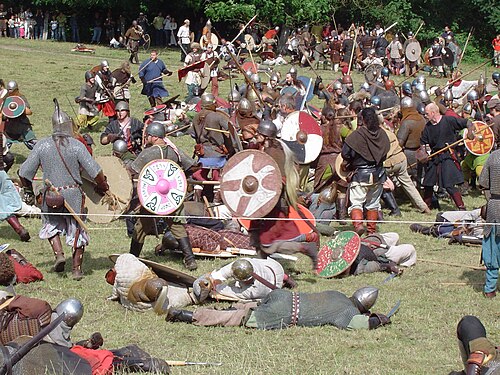
Early modern publications, dealing with what is now called Viking culture, appeared in the 16th century, e.g. Historia de gentibus septentrionalibus (History of the northern people) of Olaus Magnus (1555), and the first edition of the 13th-century Gesta Danorum (Deeds of the Danes), by Saxo Grammaticus, in 1514. The pace of publication increased during the 17th century with Latin translations of the Edda (notably Peder Resen's Edda Islandorum of 1665).
In Scandinavia, the 17th-century Danish scholars Thomas Bartholin and Ole Worm and the Swede Olaus Rudbeck used runic inscriptions and Icelandic sagas as historical sources. An important early British contributor to the study of the Vikings was George Hickes, who published his Linguarum vett. septentrionalium thesaurus (Dictionary of the Old Northern Languages) in 1703–05. During the 18th century, British interest and enthusiasm for Iceland and early Scandinavian culture grew dramatically, expressed in English translations of Old Norse texts and in original poems that extolled the supposed Viking virtues.
The word "viking" was first popularised at the beginning of the 19th century by Erik Gustaf Geijer in his poem, The Viking. Geijer's poem did much to propagate the new romanticised ideal of the Viking, which had little basis in historical fact. The renewed interest of Romanticism in the Old North had contemporary political implications. The Geatish Society, of which Geijer was a member, popularised this myth to a great extent. Another Swedish author who had great influence on the perception of the Vikings was Esaias Tegnér, a member of the Geatish Society, who wrote a modern version of Friðþjófs saga hins frœkna, which became widely popular in the Nordic countries, the United Kingdom, and Germany.

Fascination with the Vikings reached a peak during the so-called Viking revival in the late 18th and 19th centuries as a form of Romantic nationalism.[264] In Britain this was called Septentrionalism, in Germany "Wagnerian" pathos, and in the Scandinavian countries Scandinavism. Pioneering 19th-century scholarly editions of the Viking Age began to reach a small readership in Britain. Archaeologists began to dig up Britain's Viking past, and linguistic enthusiasts started to identify the Viking-Age origins of rural idioms and proverbs. The new dictionaries of the Old Norse language enabled the Victorians to grapple with the primary Icelandic sagas.[265]
Until recently, the history of the Viking Age was largely based on Icelandic sagas, the history of the Danes written by Saxo Grammaticus, the Primary Chronicle, and Cogad Gáedel re Gallaib. Few scholars still accept these texts as reliable sources, as historians now rely more on archaeology and numismatics, disciplines that have made valuable contributions toward understanding the period.[266][citation needed]
In 20th-century politics
The romanticised idea of the Vikings constructed in scholarly and popular circles in northwestern Europe in the 19th and early 20th centuries was a potent one, and the figure of the Viking became a familiar and malleable symbol in different contexts in the politics and political ideologies of 20th-century Europe.[267] In Normandy, which had been settled by Vikings, the Viking ship became an uncontroversial regional symbol. In Germany, awareness of Viking history in the 19th century had been stimulated by the border dispute with Denmark over Schleswig-Holstein and the use of Scandinavian mythology by Richard Wagner. The idealised view of the Vikings appealed to Germanic supremacists who transformed the figure of the Viking in accordance with the ideology of a Germanic master race.[268] Building on the linguistic and cultural connections between Norse-speaking Scandinavians and other Germanic groups in the distant past, Scandinavian Vikings were portrayed in Nazi Germany as a pure Germanic type. The cultural phenomenon of Viking expansion was re-interpreted for use as propaganda to support the extreme militant nationalism of the Third Reich, and ideologically informed interpretations of Viking paganism and the Scandinavian use of runes were employed in the construction of Nazi mysticism. Other political organisations of the same ilk, such as the former Norwegian fascist party Nasjonal Samling, similarly appropriated elements of the modern Viking cultural myth in their symbolism and propaganda.
Soviet and earlier Slavophile historians emphasised a Slavic rooted foundation in contrast to the Normanist theory of the Vikings conquering the Slavs and founding the Kievan Rus'.[269] They accused Normanist theory proponents of distorting history by depicting the Slavs as undeveloped primitives. In contrast, Soviet historians stated that the Slavs laid the foundations of their statehood long before the Norman/Viking raids, while the Norman/Viking invasions only served to hinder the historical development of the Slavs. They argued that Rus' composition was Slavic and that Rurik and Oleg's success was rooted in their support from within the local Slavic aristocracy.[citation needed]. After the dissolution of the USSR, Novgorod acknowledged its Viking history by incorporating a Viking ship into its logo.[270]
In modern popular culture
Led by the operas of German composer Richard Wagner, such as Der Ring des Nibelungen, Vikings and the Romanticist Viking Revival have inspired many creative works. These have included novels directly based on historical events, such as Frans Gunnar Bengtsson's The Long Ships (which was also released as a 1963 film), and historical fantasies such as the film The Vikings, Michael Crichton's Eaters of the Dead (movie version called The 13th Warrior), and the comedy film Erik the Viking. The vampire Eric Northman, in the HBO TV series True Blood, was a Viking prince before being turned into a vampire. Vikings appear in several books by the Danish American writer Poul Anderson, while British explorer, historian, and writer Tim Severin authored a trilogy of novels in 2005 about a young Viking adventurer Thorgils Leifsson, who travels around the world.
In 1962, American comic book writer Stan Lee and his brother Larry Lieber, together with Jack Kirby, created the Marvel Comics superhero Thor, which they based on the Norse god of the same name. The character is featured in the 2011 Marvel Studios film Thor and its sequels. The character also appears in the 2012 film The Avengers and its associated animated series.
The appearance of Vikings within popular media and television has seen a resurgence in recent decades, especially with the History Channel's series Vikings (2013), directed by Michael Hirst. The show has a loose grounding in historical facts and sources, but bases itself more so on literary sources, such as fornaldarsaga Ragnars saga loðbrókar, itself more legend than fact, and Old Norse Eddic and Skaldic poetry.[271] The events of the show frequently make references to the Völuspá, an Eddic poem describing the creation of the world, often directly referencing specific lines of the poem in the dialogue.[272] The show portrays some of the social realities of the medieval Scandinavian world, such as slavery[273] and the greater role of women within Viking society.[274] The show also addresses the topics of gender equity in Viking society with the inclusion of shield maidens through the character Lagertha, also based on a legendary figure.[275] Recent archaeological interpretations and osteological analyses of previous excavations of Viking burials have given support to the idea of the Viking woman warrior, namely the excavation and DNA study of the Birka female Viking warrior, within recent years. However, the conclusions remain contentious.
Vikings have served as an inspiration for numerous video games, such as The Lost Vikings (1993), Age of Mythology (2002), and For Honor (2017).[276] All three Vikings from The Lost Vikings series—Erik the Swift, Baleog the Fierce, and Olaf the Stout—appeared as a playable hero in the crossover title Heroes of the Storm (2015).[277] The Elder Scrolls V: Skyrim (2011) is an action role-playing video game heavily inspired by Viking culture.[278][279] Vikings are the lead focus of the 2020 video game Assassin's Creed Valhalla, which is set in 873 AD, and recounts an alternative history of the Viking invasion of Britain.[280]
Modern reconstructions of Viking mythology have shown a persistent influence in late 20th- and early 21st-century popular culture in some countries, inspiring comics, movies, television series, role-playing games, computer games, and music, including Viking metal, a subgenre of heavy metal music.
Since the 1960s, there has been rising enthusiasm for historical reenactment. While the earliest groups had little claim for historical accuracy, the seriousness and accuracy of reenactors has increased. The largest such groups include The Vikings and Regia Anglorum, though many smaller groups exist in Europe, North America, New Zealand, and Australia. Many reenactor groups participate in live-steel combat, and a few have Viking-style ships or boats.
The Minnesota Vikings of the National Football League are so-named owing to the large Scandinavian population in the US state of Minnesota.
During the banking boom of the first decade of the twenty-first century, Icelandic financiers came to be styled as útrásarvíkingar (roughly 'raiding Vikings').[281][282][283]
Experimental archaeology
Experimental archaeology of the Viking Age is a flourishing branch and several places have been dedicated to this technique, such as Jorvik Viking Centre in the United Kingdom, Sagnlandet Lejre and Ribe Viking Center in Denmark, Foteviken Museum in Sweden or Lofotr Viking Museum in Norway. Viking-age reenactors have undertaken experimental activities such as iron smelting and forging using Norse techniques at Norstead in Newfoundland for example.[284]
On 1 July 2007, the reconstructed Viking ship Skuldelev 2, renamed Sea Stallion,[285] began a journey from Roskilde to Dublin. The remains of that ship and four others were discovered during a 1962 excavation in the Roskilde Fjord. Tree-ring analysis has shown the ship was built of oak in the vicinity of Dublin in about 1042. Seventy multinational crew members sailed the ship back to its home, and Sea Stallion arrived outside Dublin's Custom House on 14 August 2007. The purpose of the voyage was to test and document the seaworthiness, speed, and manoeuvrability of the ship on the rough open sea and in coastal waters with treacherous currents. The crew tested how the long, narrow, flexible hull withstood the tough ocean waves. The expedition also provided valuable new information on Viking longships and society. The ship was built using Viking tools, materials, and much of the same methods as the original ship.
Other vessels, often replicas of the Gokstad ship (full- or half-scale) or Skuldelev have been built and tested as well. The Snorri (a Skuldelev I Knarr), was sailed from Greenland to Newfoundland in 1998.[286]
Common misconceptions
Horned helmets

Apart from two or three representations of (ritual) helmets—with protrusions that may be either stylised ravens, snakes, or horns—no depiction of the helmets of Viking warriors, and no preserved helmet, has horns. The formal, close-quarters style of Viking combat (either in shield walls or aboard "ship islands") would have made horned helmets cumbersome and hazardous to the warrior's own side.
Historians therefore believe that Viking warriors did not wear horned helmets; whether such helmets were used in Scandinavian culture for other, ritual purposes, remains unproven. The general misconception that Viking warriors wore horned helmets was partly promulgated by the 19th-century enthusiasts of Götiska Förbundet, founded in 1811 in Stockholm.[287] They promoted the use of Norse mythology as the subject of high art and other ethnological and moral aims.
The Vikings were often depicted with winged helmets and in other clothing taken from Classical antiquity, especially in depictions of Norse gods. This was done to legitimise the Vikings and their mythology by associating it with the Classical world, which had long been idealised in European culture.
The latter-day mythos created by national romantic ideas blended the Viking Age with aspects of the Nordic Bronze Age some 2,000 years earlier. Horned helmets from the Bronze Age were shown in petroglyphs and appeared in archaeological finds (see Bohuslän and Vikso helmets). They were probably used for ceremonial purposes.[288]
.jpg/500px-Viking_Arms_and_Armor_(9302360544).jpg)
Cartoons like Hägar the Horrible and Vicky the Viking, and sports kits such as those of the Minnesota Vikings and Canberra Raiders have perpetuated the myth of the horned helmet.[289]
Viking helmets were conical, made from hard leather with wood and metallic reinforcements for regular troops. The iron helmet with mask and mail was for the chieftains, based on the previous Vendel-age helmets from central Sweden. The only original Viking helmet discovered is the Gjermundbu helmet, found in Norway. This helmet is made of iron and has been dated to the 10th century.[290]
Barbarity
The image of wild-haired, dirty savages sometimes associated with the Vikings in popular culture is a distorted picture of reality.[9] Viking tendencies were often misreported, and the work of Adam of Bremen, among others, told largely disputable tales of Viking savagery and uncleanliness.[291]
Use of skulls as drinking vessels
There is no evidence that Vikings drank out of the skulls of vanquished enemies. This was a misconception based on a passage in the skaldic poem Krákumál speaking of heroes drinking from ór bjúgviðum hausa (branches of skulls). This was a reference to drinking horns, but was mistranslated in the 17th century[292] as referring to the skulls of the slain.[293]
Genetic legacy
Margaryan et al. 2020 analysed 442 Viking world individuals from various archaeological sites in Europe.[16] They were found to be closely related to modern Scandinavians. The Y-DNA composition of the individuals in the study was also similar to that of modern Scandinavians. The most common Y-DNA haplogroup was I1 (95 samples), followed by R1b (84 samples) and R1a, especially (but not exclusively) of the Scandinavian R1a-Z284 subclade (61 samples). The study showed what many historians have hypothesised: that it was common for Norseman settlers to marry foreign women. Some individuals from the study, such as those found in Foggia, displayed typical Scandinavian Y-DNA haplogroups but also southern European autosomal ancestry, suggesting that they were the descendants of Viking settler males and local women. The five individual samples from Foggia were likely Normans. The same pattern of a combination of Scandinavian Y-DNA and local autosomal ancestry is seen in other samples from the study, for example Varangians buried near lake Ladoga and Vikings in England, suggesting that Viking men had married into local families in those places too.[16]
The study found evidence of a Swedish influx into Estonia and Finland; and Norwegian influx into Ireland, Iceland and Greenland during the Viking Age. However, the authors commented "Viking Age Danish-like ancestry in the British Isles cannot be distinguished from that of the Angles and Saxons, who migrated in the fifth to sixth centuries AD from Jutland and northern Germany".[16]
Margaryan et al. 2020 examined the skeletal remains of 42 individuals from the Salme ship burials in Estonia. The skeletal remains belonged to warriors killed in battle who were later buried together with numerous valuable weapons and armour. DNA testing and isotope analysis revealed that the men came from central Sweden.[16]
Female descent studies show evidence of Norse descent in areas closest to Scandinavia, such as the Shetland and Orkney islands.[294] Inhabitants of lands farther away show most Norse descent in the male Y-chromosome lines.[295]
A specialised genetic and surname study in Liverpool showed marked Norse heritage: up to 50% of males of families that lived there before the years of industrialisation and population expansion.[296] High percentages of Norse inheritance—tracked through the R-M420 haplotype—were also found among males in the Wirral and West Lancashire.[297] This was similar to the percentage of Norse inheritance found among males in the Orkney Islands.[298]
Recent research suggests that the Celtic warrior Somerled, who drove the Vikings out of western Scotland and was the progenitor of Clan Donald, may have been of Viking descent, a member of haplogroup R-M420.[299]
Margaryan et al. 2020 examined an elite warrior burial from Bodzia (Poland) dated to 1010–1020 AD. The cemetery in Bodzia is exceptional in terms of Scandinavian and Kievian Rus links. The Bodzia man (sample VK157, or burial E864/I) was not a simple warrior from the princely retinue, but he belonged to the princely family himself. His burial is the richest one in the whole cemetery. Moreover, strontium analysis of his teeth enamel shows he was not local. It is assumed that he came to Poland with the Prince of Kiev, Sviatopolk the Accursed, and met a violent death in combat. This corresponds to the events of 1018 AD when Sviatopolk himself disappeared after having retreated from Kiev to Poland. It cannot be excluded that the Bodzia man was Sviatopolk himself, as the genealogy of the Rurikids at this period is extremely sketchy and the dates of birth of many princes of this dynasty may be quite approximative. The Bodzia man carried haplogroup I1-S2077 and had both Scandinavian ancestry and Russian admixture.[16][300]
See also
Notes
References
- ^ Illustration from a Life of Albinus of Angers produced at the Abbey of Saint-Aubin. Depicted is a Viking attack on Guérande. See Magdalena Carrasco, "Some Illustrations of the Life of St. Aubin (Albinus) of Angers (Paris, Bibliothèque nationale, Ms. n.a.l. 1390) and Related Works", PhD dissertation, Yale University, 1980, p. 42ff. ProQuest 8024792
- ^ The article Tjängvidestenen Archived 27 January 2020 at the Wayback Machine in Nordisk familjebok (1919).
- ^ Margaryan, Ashot (September 2020). "Population genomics of the Viking world". Nature. 585 (7825): 390–396. Bibcode:2020Natur.585..390M. doi:10.1038/s41586-020-2688-8. hdl:10852/83989. ISSN 0028-0836. PMID 32939067. S2CID 221769227. Archived from the original on 26 March 2021. Retrieved 21 January 2021.
- ^ Mawer, Allen (1913). The Vikings. Cambridge University Press. p. 1. ISBN 095173394X.
The term 'Viking'... came to be used more especially of those warriors who left their homes in Scandinavia and made raids on the chief European countries. This is the narrow, and technically the only correct use of the term 'Viking,' but in such expressions as 'Viking civilisation,' 'the Viking age,' 'the Viking movement,' 'Viking influence,' the word has come to have a wider significance and is used as a concise and convenient term for describing the whole of the civilisation, activity and influence of the Scandinavian peoples, at a particular period in their history, and to apply the term 'Viking' in its narrower sense to these movements would be as misleading as to write an account of the age of Elizabeth and label it 'The Buccaneers.'
Holman, Catherine (2003). Historical Dictionary of the Vikings. Scarecrow Press. p. 1. ISBN 0810865890.Viking is not merely another way of referring to a medieval Scandinavian. Technically, the word has a more specific meaning, and it was used (only infrequently by contemporaries of the Vikings) to refer to those Scandinavians, usually men, who attacked their contemporaries...
Simpson, Jacqueline (1980). The Viking World. Batsford. p. 9. ISBN 0713407778. Archived from the original on 14 April 2023. Retrieved 15 September 2019.Strictly speaking, therefore, the term Viking should only be applied to men actually engaged in these violent pursuits, and not to every contemporary Scandinavian...
Davies, Norman (1999). The Isles: A History. Oxford University Press. ISBN 9780198030737.The Viking appellation... refers to an activity, not to an ethnic group
- ^ Campbell, Alistair (1973). "Viking". Encyclopaedia Britannica. Vol. 23. Encyclopaedia Britannica. p. 11. ISBN 0852291736. Archived from the original on 14 April 2023. Retrieved 8 June 2020.
The term "Viking" is applied today to Scandinavians who left their homes intent on raiding or conquest, and their descendants, during a period extending roughly from 800 to 1050 CE.
Mawer, Allen (1922). "The Vikings". In Bury, J. B. (ed.). The Cambridge Medieval History. Vol. 3. Cambridge University Press. p. 309. Archived from the original on 14 April 2023. Retrieved 8 June 2020.The term Viking... is now commonly applied to those Norsemen, Danes and Swedes who harried Europe from the eighth to the eleventh centuries...
"Viking". The Concise Oxford Dictionary of Archaeology (2 ed.). Oxford University Press. 2009. ISBN 9780191727139. Archived from the original on 23 May 2020. Retrieved 3 January 2020.Viking... Scandinavian words used to describe the seafaring raiders from Norway, Sweden, and Denmark who ravaged the coasts of Europe from about 800 ad onwards.
Crowcroft, Robert; Cannon, John, eds. (2015). "Viking". The Oxford Companion to British History (2 ed.). Oxford University Press. ISBN 9780191757150. Archived from the original on 23 May 2020. Retrieved 3 January 2020.Viking is an Old Norse term, of disputed derivation, which only came into common usage in the 19th cent. to describe peoples of Scandinavian origin who, as raiders, settlers, and traders, had major and long-lasting effects on northern Europe and the Atlantic seaboards between the late 8th and 11th cents.
- ^ Oxford Dictionaries (2011). Concise Oxford English Dictionary. OUP Oxford. p. 1612. ISBN 978-0199601103. Archived from the original on 14 April 2023. Retrieved 15 September 2019.
Vikings: Any of the Scandinavian seafaring pirates and traders who raided and settled in many parts of NW Europe in the 8th–11th centuries...
Random House Unabridged Dictionary (2019). "Vikings". Dictionary.com. Random House. Archived from the original on 12 December 2019. Retrieved 12 December 2019.Viking... Any of the Scandinavian pirates who plundered the coasts of Europe from the 8th to 10th centuries
COBUILD Advanced English Dictionary. "Viking". Collins Online Dictionary. HarperCollins. Archived from the original on 7 October 2019. Retrieved 12 December 2019.The Vikings were people who sailed from Scandinavia and attacked villages in most parts of north-western Europe from the 8th to the 11th centuries
Collins English Dictionary. "Viking". Collins Online Dictionary. HarperCollins. Archived from the original on 7 October 2019. Retrieved 12 December 2019.Viking... [A]ny of the Danes, Norwegians, and Swedes who raided by sea most of N and W Europe from the 8th to the 11th centuries, later often settling, as in parts of Britain.
Webster's New World Dictionary, 4th Edition (2010). "Viking". Collins Online Dictionary. Houghton Mifflin Harcourt. Archived from the original on 7 October 2019. Retrieved 12 December 2019.Viking... [A]ny of the Scandinavian sea rovers and pirates who ravaged the coasts of Europe from the 8th to the 10th cent.
{{cite web}}: CS1 maint: numeric names: authors list (link) Cambridge Advanced Learner's Dictionary & Thesaurus. "Viking". Cambridge Dictionary. Cambridge University Press. Archived from the original on 6 May 2019. Retrieved 12 December 2019.Viking... [A] person belonging to a race of Scandinavian people who travelled by sea and attacked parts of northern and southern Europe between the 8th and 11th centuries, often staying to live.
- ^ "Viking". Encyclopædia Britannica, Inc. Archived from the original on 5 May 2019. Retrieved 30 September 2018.
Viking, also called Norseman or Northman, member of the Scandinavian seafaring warriors who raided and colonized wide areas of Europe from the 9th to the 11th century and whose disruptive influence profoundly affected European history. These pagan Danish, Norwegian, and Swedish warriors were...
- ^ Linton, Michael I. A.; Nokkentved, Christian. "Denmark: The Viking Era". Encyclopædia Britannica, Inc. Archived from the original on 30 September 2018. Retrieved 30 September 2018.
Viking society, which had developed by the 9th century, included the peoples that lived in what are now Denmark, Norway, Sweden, and, from the 10th century, Iceland
- ^ a b Roesdahl, pp. 9–22.
- ^ Brink 2008
- ^ Archaeologists find evidence of Vikings' presence in Belarus Archived 15 July 2018 at the Wayback Machine. Lepel Regional Executive Committee.
- ^ Ancient Ukraine: Did Swedish Vikings really found Kyiv Rus? Archived 15 July 2018 at the Wayback Machine Business Ukraine.
- ^ Klein, Christopher (19 October 2018). "Globetrotting Vikings: The Quest for Constantinople". HISTORY. Archived from the original on 21 October 2022. Retrieved 20 October 2022.
- ^ Logan, Donald F. (1992). The Vikings in History. Routledge. ISBN 0-415-08396-6.
- ^ Batey, Colleen E.; Graham-Campbell, James (1994). Cultural Atlas of the Viking World. New York: Facts on File. p. 184. ISBN 9780816030040.
- ^ a b c d e f Margaryan, Ashot; Lawson, Daniel J.; Sikora, Martin; Racimo, Fernando; Rasmussen, Simon; Moltke, Ida; Cassidy, Lara M.; Jørsboe, Emil; Ingason, Andrés; Pedersen, Mikkel W.; Korneliussen, Thorfinn (September 2020). "Population genomics of the Viking world". Nature. 585 (7825): 390–396. Bibcode:2020Natur.585..390M. doi:10.1038/s41586-020-2688-8. hdl:10852/83989. ISSN 1476-4687. PMID 32939067. S2CID 221769227. Archived from the original on 26 March 2021. Retrieved 21 January 2021.
- ^ Wawn 2000
- ^ Johnni Langer, "The origins of the imaginary viking", Viking Heritage Magazine, Gotland University/Centre for Baltic Studies. Visby (Sweden), n. 4, 2002.
- ^ Jesch 2015, pp. 4–5.
- ^ Lapidge et al. 2001, p. 460-461.
- ^ Entry Sm 10 Archived 14 May 2021 at the Wayback Machine, in Rundata.
- ^ Brink, Stefan (2008). "Who Were the Vikings: The Word 'Viking'". In Brink, Stefan; Price, Neil (eds.). The Viking World. Routledge. p. 6. ISBN 978-1-134-31826-1. Archived from the original on 30 January 2023. Retrieved 30 January 2023.
- ^ The Syntax of Old Norse by Jan Terje Faarlund; p. 25 Archived 1 January 2016 at the Wayback Machine ISBN 0-19-927110-0; The Principles of English Etymology By Walter W. Skeat, published in 1892, defined Viking: better Wiking, Icel. Viking-r, O. Icel. *Viking-r, a creek-dweller; from Icel. vik, O. Icel. *wik, a creek, bay, with suffix -uig-r, belonging to Principles of English Etymology By Walter W. Skeat; Clarendon press; p. 479 Archived 20 April 2016 at the Wayback Machine
- ^ a b c Eldar Heide (2005). "Víking – 'rower shifting'? An etymological contribution" (PDF). Arkiv för Nordisk Filologi. 120: 41–54. Archived from the original (PDF) on 14 July 2014. Retrieved 20 April 2015.
- ^ Walter W. Skeat: Principles of English Etymology Clarendon press, p. 479
- ^ Kvilhaug, Maria. "The Tribe that Gave Vikings Their Name?". Freya. Archived from the original on 14 March 2015. Retrieved 17 March 2015.
- ^ a b Eldar Heide (2008). "Viking, week, and Widsith. A reply to Harald Bjorvand". Centre of Medieval Studies (University of Bergen). Arkiv för Nordisk Filologi. 123: 23–28. Archived from the original on 14 August 2021. Retrieved 20 April 2015.
- ^ Anatoly Liberman (15 July 2009). "What Did The Vikings Do Before They Began to Play Football?". Archived from the original on 4 March 2016. Retrieved 13 January 2016.
- ^ a b c Bernard Mees (2012). "Taking Turns: linguistic economy and the name of the Vikings". Royal Melbourne Institute of Technology (RMIT). Arkiv för Nordisk Filologi. 127: 5–12. Archived from the original on 30 January 2023. Retrieved 20 April 2015.
- ^ a b Boutkan, Dirk; Siebinga, Sloerd Michiel (2000). Old Frisian Etymological Dictionary. Leiden: Brill. pp. 291, 454. ISBN 90-04-14531-1.
- ^ Price, Neil (25 August 2020). "Content found in 'Introduction'". The Children of Ash and Elm: A History of the Vikings. Penguin Books Limited. ISBN 978-0-241-28399-8. Archived from the original on 30 January 2023. Retrieved 3 October 2022.
- ^ Stafford, P. (2009). A companion to the Early Middle Ages. Wiley/Blackwell Publisher, chapter 13.
- ^ Hødnebø, Finn (1987). "Who Were the First Vikings?". In Knirk, James E. (ed.). Proceedings of the Tenth Viking Congress: Larkollen, Norway, 1985. Universitetets oldsaksamling. p. 46. ISBN 978-82-7181-062-7. Archived from the original on 1 February 2023. Retrieved 1 February 2023.
- ^ Bjorvand, Harald (2000). Våre arveord: etymologisk ordbok. Oslo: Instituttet for sammenlignende kulturforskning (Institute for Comparative Research in Human Culture). p. 1051. ISBN 8270993190.
- ^ Gretsch. The Cambridge Companion to Old English Literature. p. 278
- ^ Sauer, Hans (2008). "How Anglo-Saxon Glossators Adapted Latin words and their world". The Journal of Medieval Latin. 18: 437–468. doi:10.1484/J.JML.3.26. JSTOR 45020116.
- ^ Frantzen, Allen J. (2012). Anglo-Saxon Keywords. John Wiley & Sons. p. 275. ISBN 978-1-118-25560-5. Archived from the original on 12 February 2023. Retrieved 9 February 2023.
- ^ Samnordisk runtextdatabas: Sm 10 (2008)
- ^ Entry DR 330 Archived 14 May 2021 at the Wayback Machine, in Rundata.
- ^ Entry DR 334 Archived 3 August 2021 at the Wayback Machine, in Rundata.
- ^ Jesch 2001, pp. 180–181.
- ^ 100 Svenska Runinskrifter, Åke Ohlmarks, sid 65, Bokförlaget Plus, 1978, ISBN 91-7406-110-0
- ^ Runinskrifter i Sverige, Sven B F Jansson, sid. 97, Almqvist & Wiksell Förlag AB, 1983, ISBN 91-20-07030-6
- ^ ""витязь". "Vasmer's Etymological Dictionary" online". Archived from the original on 3 August 2021. Retrieved 3 January 2021.
- ^ Heebøll-Holm, Thomas K. (2012). "Between Pagan Pirates and Glorious Sea-Warriors: The Portrayal of the Viking Pirate in Danish Twelfth-Century Latin Historiography". Viking and Medieval Scandinavia. 8: 149. doi:10.1484/J.VMS.1.103196. ISSN 1782-7183. JSTOR 45020184. Archived from the original on 1 February 2023. Retrieved 1 February 2023.
This image of the Danes - and indeed the Scandinavians - as having a pre-disposition to engage in piracy was continued in Adam of Bremen's chronicle, the Gesta Hammaburgensis ecclesiae pontificum, finished in the 1080s. After the Christianization of Scandinavia, Adam tells us that the Viking raids against Christian Western Europe stopped. In Scandinavian waters and in the Baltic, piracy continued unabated, however. Sprogo and Elsinore in particular were notorious nests of Danish pirates...
- ^ Richards, Julian D. (2005). The Vikings: A Very Short Introduction. Oxford University Press. p. 119. ISBN 978-0-19-157807-6. Archived from the original on 16 February 2023. Retrieved 16 February 2023.
- ^ Wolf 2004, p. 2.
- ^ Smyth, Alfred (1970–1973). Saga-book of the Viking Society. University College London. pp. 101–17.
- ^ Educational Company of Ireland 2000, p. 472.
- ^ Brookes 2004, p. 297.
- ^ "The Vikings at home". HistoryExtra. Archived from the original on 4 May 2020. Retrieved 15 April 2020.
- ^ "Kievan Rus". World History Encyclopedia. Archived from the original on 14 April 2021. Retrieved 15 April 2020.
- ^ "The Vikings (780–1100)". metmuseum.org. Archived from the original on 23 April 2020. Retrieved 15 April 2020.
- ^ "Swedish Vikings and the Eastern World". Sweden History Tours. Archived from the original on 28 March 2020. Retrieved 15 April 2020.
- ^ Blöndal, Sigfús (1978). The Varangians of Byzantium. Cambridge University Press. p. 1. ISBN 9780521035521. Archived from the original on 14 April 2023. Retrieved 2 February 2014.
- ^ a b Stefan Brink, 'Who were the Vikings?', in The Viking World Archived 14 April 2023 at the Wayback Machine, ed. by Stefan Brink and Neil Price (Abingdon: Routledge, 2008), pp. 4–10 (pp. 6–7).
- ^ "Russ, adj. and n." OED Online, Oxford University Press, June 2018, www.oed.com/view/Entry/169069. Retrieved 25 July 2018.
- ^ D'Amato 2010, p. 3.
- ^ a b Metcalf 1997, pp. 295–335.
- ^ Montgomery, J.E. (2008). Brink, Stefan; Price, Neil (eds.). Arabic Sources On The Vikings. doi:10.4324/9780203412770. ISBN 9780203412770.
- ^ Gabriel, Judith. "Among the Norse Tribes: The Remarkable Account of Ibn Fadlan". Archived from the original on 17 April 2022. Retrieved 25 July 2020.
- ^ Ward, Christie. "Risala: Ibn Fadlan's Account of the Rus". Archived from the original on 31 July 2020. Retrieved 25 July 2020.
- ^ Zaimeche, Salah (June 2002). "The Travels of Ibn Fadlan". Archived from the original on 25 July 2020. Retrieved 25 July 2020.
- ^ Sawyer, History of the Vikings, p. 2
- ^ Peter Sawyer, The Viking Expansion, The Cambridge History of Scandinavia, Issue 1 Archived 22 October 2015 at the Wayback Machine (Knut Helle, ed., 2003), p. 105.
- ^ Lund, Niels "The Danish Empire and the End of the Viking Age", in Sawyer, History of the Vikings, pp. 167–81.
- ^ The Royal Household, "Sweyn" Archived 29 November 2014 at the Wayback Machine, The official Website of The British Monarchy, 15 March 2015. Retrieved 15 March 2015
- ^ Lawson, M K (2004). "Cnut: England's Viking King 1016–35". The History Press Ltd, 2005, ISBN 978-0582059702.
- ^ The Royal Household, "Canute The Great" Archived 29 November 2014 at the Wayback Machine, The official Website of The British Monarchy, 15 March 2015. Retrieved 15 March 2015
- ^ Badsey, S. Nicolle, D, Turnbull, S (1999). "The Timechart of Military History". Worth Press Ltd, 2000, ISBN 1-903025-00-1.
- ^ "History of Northumbria: Viking era 866 AD–1066 AD" Archived 30 July 2013 at the Wayback Machine www.englandnortheast.co.uk.
- ^ Toyne, Stanley Mease. The Scandinavians in history Archived 1 January 2016 at the Wayback Machine Pg.27. 1970.
- ^ The Fate of Greenland's Vikings Archived 11 January 2011 at the Wayback Machine, by Dale Mackenzie Brown, Archaeological Institute of America, 28 February 2000
- ^ Langmoen IA (4 April 2012). "The Norse discovery of America". Neurosurgery. 57 (6): 1076–87, discussion 1076–87. doi:10.1227/01.neu.0000144825.92264.c4. PMID 16331154. S2CID 37361794.
- ^ Ross, Valerie (31 May 2011). "Climate change froze Vikings out of Greenland". Discover. Kalmback Publishing. Archived from the original on 30 April 2013. Retrieved 6 April 2013.
- ^ Rurik Dynasty (medieval Russian rulers) Archived 27 March 2015 at the Wayback Machine Britannica Online Encyclopedia
- ^ Hall, p. 98
- ^ Jansson 1980:22
- ^ a b Pritsak 1981:386
- ^ "Vikings' Barbaric Bad Rap Beginning to Fade". National Geographic. 28 October 2010. Archived from the original on 14 May 2012. Retrieved 21 May 2012.
- ^ Butrimas, Adomas. "Dešiniajame Savo Krante Svebų Jūra Skalauja Aisčių Gentis..." Archived 6 August 2023 at the Wayback Machine Lietuva iki Mindaugo [Lithuania Before Mindaugas] (in Lithuanian). 2003, p. 136. ISBN 9986571898.
- ^ a b c d "Viking Woman Warrior May Have Been Slavic". Smithsonian. Archived from the original on 17 January 2021. Retrieved 17 January 2021.
- ^ Barford 2001, pp. 89–90.
- ^ Radziwillowicz, Natalia (2007). "Considering the connections between Scandinavia and the southern Baltic coast in the 10th −11th Centuries" (PDF). Nottingham, England, UK: University of Nottingham. Archived (PDF) from the original on 22 January 2021. Retrieved 17 January 2021.
- ^ Roslund, Mats (2007). Guests in the House: Cultural Transmission between Slavs and Scandinavians 900 to 1300 AD. BRILL. p. 469. ISBN 978-90-474-2185-6. Archived from the original on 12 February 2023. Retrieved 12 February 2023.
- ^ "Olaf". Britannica. Archived from the original on 17 January 2021. Retrieved 17 January 2021.
- ^ Lindqvist, Herman (2006). Historien om alla Sveriges drottningar: från myt och helgon till drottning i tiden. Norstedt; University of Wisconsin. p. 24; 35; 536. ISBN 9113015249. Archived from the original on 2 June 2021. Retrieved 17 January 2021.
- ^ "Canute (I) king of England, Denmark, and Norway". Britannica. Archived from the original on 17 January 2021. Retrieved 17 January 2021.
- ^ Sawyer, History of the Vikings, pp. 110, 114
- ^ "Los vikingos en Al-Andalus (abstract available in English)" (PDF). Jesús Riosalido. 1997. Archived from the original (PDF) on 18 July 2011. Retrieved 11 May 2010.
- ^ John Haywood: Penguin Historical Atlas of the Vikings, Penguin (1996). Detailed maps of Viking settlements in Scotland, Ireland, England, Iceland and Normandy.
- ^ Sawyer, P. H. (2013). Kings and Vikings: Scandinavia and Europe AD 700–1100. Routledge. ISBN 978-1134947775. Archived from the original on 14 April 2023. Retrieved 29 October 2020.
- ^ Haine, Thomas (1 March 2008). "What did the Viking discoverers of America know of the North Atlantic Environment?". Weather. 63 (3): 60–65. Bibcode:2008Wthr...63...60H. doi:10.1002/wea.150. ISSN 1477-8696.
- ^ a b Haywood, John (2006). Dark Age Naval Power: A Reassessment of Frankish and Anglo-Saxon Seafaring Activity. Anglo-Saxon Books. pp. 170–171. ISBN 978-1-898281-43-6. Archived from the original on 12 February 2023. Retrieved 12 February 2023.
- ^ Kold, Lotte Flugt (3 November 2014). "Dannevirke". danmarkshistorien.dk (in Danish). Aarhus University. Archived from the original on 4 March 2016. Retrieved 20 December 2014.
Senest i krigen 1864 (2. Slesvigske Krig) fungerede Dannevirke som forsvarsværk, og fortidsmindet har en nærmest mytisk rolle i Danmarks historie." English: "Dannevirke last functioned as a defensive structure in the 1864 Second Schleswig War; this ancient structure has an almost mythical role in Denmark's history.
- ^ Näsman, Ulf (1 November 2000). "Raids, Migrations, and Kingdoms". Acta Archaeologica. 71 (1): 1–7. doi:10.1034/j.1600-0390.2000.d01-1.x. ISSN 1600-0390. S2CID 162638243.
- ^ Curry, Andrew (16 September 2020). "'Viking' was a job description, not a matter of heredity, massive ancient DNA study shows". Science | AAAS. Archived from the original on 15 October 2021. Retrieved 16 September 2020.
- ^ David R. Wyatt (2009). Slaves and Warriors in Medieval Britain and Ireland: 800–1200. Brill. p. 124. ISBN 978-90-04-17533-4. Archived from the original on 14 April 2023. Retrieved 11 August 2019.
- ^ Choi 2016.
- ^ "Kinder, Gentler Vikings? Not According to Their Slaves". National Geographic News. 28 December 2015. Archived from the original on 2 August 2019. Retrieved 2 August 2019.
- ^ Raffield, Ben; Price, Neil; Collard, Mark (January 2017). "Polygyny, Concubinage, and the Social Lives of Women in Viking-Age Scandinavia". Viking and Medieval Scandinavia. 13 (2): 176–177. doi:10.1484/J.VMS.5.114355.
- ^ Barrett, James H. (September 2008). "What caused the Viking Age?" (PDF). Antiquity. 82 (317): 680–681. doi:10.1017/S0003598X00097301. ISSN 0003-598X. S2CID 59363335. Archived (PDF) from the original on 13 February 2023. Retrieved 13 February 2023.
- ^ Raffield, Ben; Price, Neil; Collard, Mark (1 May 2017). "Male-biased operational sex ratios and the Viking phenomenon: an evolutionary anthropological perspective on Late Iron Age Scandinavian raiding". Evolution and Human Behavior. 38 (3): 315. Bibcode:2017EHumB..38..315R. doi:10.1016/j.evolhumbehav.2016.10.013. hdl:2164/8759. ISSN 1090-5138. Archived from the original on 12 February 2023. Retrieved 12 February 2023.
- ^ Karras, Ruth Mazo (1990). "Concubinage and Slavery in the Viking Age". Scandinavian Studies. 62 (2): 141–162. ISSN 0036-5637. JSTOR 40919117.
- ^ Poser, Charles M. (1994). "The dissemination of multiple sclerosis: A Viking saga? A historical essay". Annals of Neurology. 36 (S2): S231–S243. doi:10.1002/ana.410360810. ISSN 1531-8249. PMID 7998792. S2CID 36410898.
- ^ Raffield, Ben; Price, Neil; Collard, Mark (1 May 2017). "Male-biased operational sex ratios and the Viking phenomenon: an evolutionary anthropological perspective on Late Iron Age Scandinavian raiding". Evolution and Human Behavior. 38 (3): 315–24. Bibcode:2017EHumB..38..315R. doi:10.1016/j.evolhumbehav.2016.10.013. hdl:2164/8759. ISSN 1090-5138.
- ^ "Vikings may have first taken to seas to find women, slaves". Science | AAAS. 13 April 2016. Archived from the original on 27 July 2019. Retrieved 19 July 2019.
- ^ Andrea Dolfini; Rachel J. Crellin; Christian Horn; Marion Uckelmann (2018). Prehistoric Warfare and Violence: Quantitative and Qualitative Approaches. Springer. p. 349. ISBN 978-3-319-78828-9. Archived from the original on 14 April 2023. Retrieved 11 August 2019.
- ^ a b Simek, Rudolf (2004). "The Emergence of the Viking Age: Reasons and Triggers". In Simek, Rudolf; Engel, Ulrike (eds.). Vikings on the Rhine: Recent Research on Early Medieval Relations Between the Rhinelands and Scandinavia | Volume 11 of Studia medievalia Septentrionalia. Vienna: Fassbaender. pp. 24–25. ISBN 978-3-900538-83-5. OCLC 55887913.
- ^ Bruno Dumézil, master of Conference at Paris X-Nanterre, Normalien, aggregated history, author of conversion and freedom in the barbarian kingdoms. 5th–8th centuries (Fayard, 2005)
- ^ "Franques Royal Annals" cited in Sawyer, History of the Vikings, p. 20
- ^ Dictionnaire d'histoire de France, Perrin, Alain Decaux and André Castelot, 1981, pp. 184–85. ISBN 2-7242-3080-9.
- ^ "the Vikings" R. Boyer history, myths, dictionary, Robert Laffont several 2008, p. 96 ISBN 978-2-221-10631-0
- ^ François-Xavier Dillmann, "Viking civilisation and culture. A bibliography of French-language", Caen, Centre for research on the countries of the North and Northwest, University of Caen, 1975, p. 19, and "Les Vikings: the Scandinavian and European 800–1200", 22nd exhibition of art from the Council of Europe, 1992, p. 26
- ^ "History of the Kings of Norway" by Snorri Sturlusson translated by Professor of History François-Xavier Dillmann, Gallimard ISBN 2-07-073211-8 pp. 15–16, 18, 24, 33–34, 38
- ^ a b "Viking expeditions and raids". National Museum of Denmark. Archived from the original on 18 March 2015. Retrieved 20 April 2015.
- ^ Macauley Richardson, Lloyd. "Books: Eurasian Exploration". Policy Review. Hoover Institution. Archived from the original on 16 December 2009.
- ^ Crone, Patricia. Meccan trade and the rise of Islam Archived 1 January 2016 at the Wayback Machine. First Georgias Press. 2004.
- ^ Richards, J.D. (2005). The Vikings : a very short introduction. New York: Oxford University Press. p. 50.
- ^ a b Frankopan 2015, pp. 117–118.
- ^ Tignor; Adelman; Brown; Elman; Liu; Pittman; Shaw. Worlds Together Worlds Apart Volume One: Beginnings Through the 15th Century (Fourth ed.). London: Norton. p. 352.
- ^ T. D. Kendrick, A History of the Vikings, Courier Dover Publications, 2004, pp. 179ff, ISBN 978-0-486-43396-7
- ^ Roesdahl, pp. 295–97
- ^ Gareth Williams, "Kingship, Christianity and coinage: monetary and political perspectives on silver economy in the Viking Age", in Silver Economy in the Viking Age, ed. James Graham-Campbell and Gareth Williams, pp. 177–214; ISBN 978-1-59874-222-0
- ^ Roesdahl, p. 296
- ^ The Northern Crusades: Second Edition by Eric Christiansen; ISBN 0-14-026653-4
- ^ "Written sources shed light on Viking travels". National Museum of Denmark. Archived from the original on 18 March 2015. Retrieved 20 April 2015.
- ^ Hall, 2010, pp. 8 passim.
- ^ Roesdahl, pp. 16–22.
- ^ Hall, pp. 8–11
- ^ Lindqvist, pp. 160–61
- ^ See List of English words of Old Norse origin for further explanations on specific words.
- ^ See Norman toponymy.
- ^ Henriksen, Louise Kæmpe: Nordic place names in Europe Archived 22 February 2014 at the Wayback Machine Viking Ship Museum Roskilde
- ^ Viking Words Archived 3 February 2007 at the Wayback Machine The British Library
- ^ Department of Scandinavian Research Archived 8 February 2014 at the Wayback Machine University of Copenhagen
- ^ See information on the "Slavonic and Norse names of the Dnieper rapids" on Trade route from the Varangians to the Greeks.
- ^ Else Roesdahl (prof. in Arch. & Hist.): The Vikings, Penguin Books (1999), ISBN 0-14-025282-7
- ^ a b Olstad, Lisa (16 December 2002). "Ein minnestein for å hedre seg sjølv". forskning.no. Archived from the original on 29 August 2005. Retrieved 20 April 2008.
- ^ Zilmer 2005:38
- ^ "Runestones: Words from the Viking Age". 4 April 2013. Archived from the original on 23 May 2020. Retrieved 8 June 2020.
- ^ Jansson 1980:34.
- ^ Thunberg, Carl L. (2010). Ingvarståget och dess monument. Göteborgs universitet. CLTS. ISBN 978-91-981859-2-8.
- ^ Thunberg 2010:18–51.
- ^ Jelling stones. Encyclopædia Britannica. 2008. Archived from the original on 20 June 2013. Retrieved 15 March 2013.
- ^ Rundata, DR 42
- ^ baþum (Sm101), see Nordiskt runnamnslexikon PDF Archived 12 July 2015 at the Wayback Machine
- ^ In the nominative: krikiaR (G216). In the genitive: girkha (U922$), k—ika (U104). In the dative: girkium (U1087†), kirikium (SöFv1954;20, U73, U140), ki(r)k(i)(u)(m) (Ög94$), kirkum (U136), krikium (Sö163, U431), krikum (Ög81A, Ög81B, Sö85, Sö165, Vg178, U201, U518), kri(k)um (U792), krikum (Sm46†, U446†), krkum (U358), kr... (Sö345$A), kRkum (Sö82). In the accusative: kriki (Sö170). Uncertain case krik (U1016$Q). Greece also appears as griklanti (U112B), kriklati (U540), kriklontr (U374$), see Nordiskt runnamnslexikon PDF Archived 12 July 2015 at the Wayback Machine
- ^ Karusm (Vs1), see Nordiskt runnamnslexikon PDF Archived 12 July 2015 at the Wayback Machine
- ^ iaursaliR (G216), iursala (U605†), iursalir (U136G216, U605, U136), see Nordiskt runnamnslexikon PDF Archived 12 July 2015 at the Wayback Machine
- ^ lakbarþilanti (SöFv1954;22), see Nordiskt runnamnslexikon PDF Archived 12 July 2015 at the Wayback Machine
- ^ Thunberg, Carl L. (2011). Särkland och dess källmaterial. Göteborgs universitet. CLTS. pp. 23–58. ISBN 978-91-981859-3-5.
- ^ serklat (G216), se(r)kl... (Sö279), sirklanti (Sö131), sirk:lan:ti (Sö179), sirk*la(t)... (Sö281), srklant- (U785), skalat- (U439), see Nordiskt runnamnslexikon PDF Archived 12 July 2015 at the Wayback Machine
- ^ eklans (Vs18$), eklans (Sö83†), ekla-s (Vs5), enklans (Sö55), iklans (Sö207), iklanþs (U539C), ailati (Ög104), aklati (Sö166), akla- (U616$), anklanti (U194), eg×loti (U812), eklanti (Sö46, Sm27), eklati (ÖgFv1950;341, Sm5C, Vs9), enklanti (DR6C), haklati (Sm101), iklanti (Vg20), iklati (Sm77), ikla-ti (Gs8), i...-ti (Sm104), ok*lanti (Vg187), oklati (Sö160), onklanti (U241), onklati (U344), -klanti (Sm29$), iklot (N184), see Nordiskt runnamnslexikon PDF Archived 12 July 2015 at the Wayback Machine
- ^ luntunum (DR337$B), see Nordiskt runnamnslexikon PDF Archived 12 July 2015 at the Wayback Machine
- ^ Brix, Lise (21 May 2015). "Isolated people in Sweden only stopped using runes 100 years ago". sciencenordic.com. Archived from the original on 23 May 2020. Retrieved 8 June 2020.
- ^ Ekberg, Lena (2010). "The National Minority Languages in Sweden". In Gerhard Stickel (ed.). National, Regional and Minority Languages in Europe: Contributions to the Annual Conference 2009 of Efnil in Dublin. Peter Lang. pp. 87–92. ISBN 9783631603659. Retrieved 6 March 2013.
- ^ Kroonen, Guus (8 August 2007). "On the origins of the Elfdalian nasal vowels from the perspective of diachronic dialectology and Germanic etymology" (PDF). Department of Nordic Studies and Linguistics. University of Copenhagen. Archived (PDF) from the original on 6 February 2016. Retrieved 27 January 2016.
In many aspects, Elfdalian, takes up a middle position between East and West Nordic. However, it shares some innovations with West Nordic, but none with East Nordic. This invalidates the claim that Elfdalian split off from Old Swedish
- ^ Dahl, Östen; Dahlberg, Ingrid; Delsing, Lars-Olof; Halvarsson, Herbert; Larsson, Gösta; Nyström, Gunnar; Olsson, Rut; Sapir, Yair; Steensland, Lars; Williams, Henrik (8 February 2007). "Älvdalskan är ett språk – inte en svensk dialekt" [Elfdalian is a language – not a Swedish dialect]. Aftonbladet (in Swedish). Stockholm. Archived from the original on 25 August 2012. Retrieved 7 March 2013.
- ^ Dahl, Östen (December 2008). "Älvdalska – eget språk eller värsting bland dialekter?" [Elfdalian – its own language or an outstanding dialect?]. Språktidningen (in Swedish). Archived from the original on 7 December 2017. Retrieved 16 May 2013.
- ^ Zach, Kristine (2013). "Das Älvdalische – Sprache oder Dialekt? (Diplomarbeit)" [Elfdalian – Language or dialect? (Masters thesis)] (PDF) (in German). University of Vienna. Archived (PDF) from the original on 17 February 2020. Retrieved 25 April 2020.
- ^ a b Jasmine Idun Tova Lyman (2007), Viking Age graves in Iceland (PDF), University of Iceland, p. 4, archived (PDF) from the original on 27 February 2014, retrieved 23 February 2014
- ^ Medieval Archaeology: An Encyclopaedia (Pamela Crabtree, ed., 2001), "Vikings," p. 510.
- ^ Roesdahl, p. 20.
- ^ Roesdahl p. 70 (in Women, gender roles and children)
- ^ The Hemlanden cemetery located here is the largest Viking Period cemetery in Scandinavia Phillip Pulsiano; Kirsten Wolf, eds. (1993). Medieval Scandinavia: An Encyclopedia (Illustrated ed.). United Kingdom: Taylor & Francis. pp. 238–39. ISBN 978-0-8240-4787-0. Archived from the original on 14 April 2023. Retrieved 29 October 2020.
- ^ Byock, Jesse; Walker, Phillip; Erlandson, Jon; Holck, Per; Zori, David; Gudmundsson, Magnus; Tveskov, Mark (2005). "A Viking-Age Valley in Iceland: The Mosfell Archaeological Project" (PDF). Medieval Archaeology. XLIX: 195–218. doi:10.1179/007660905x54080. S2CID 162307212. Archived (PDF) from the original on 23 May 2020. Retrieved 21 February 2020.

- ^ See also Jon M. Erlandson.
- ^ Þór Magnússon: Bátkumlið í Vatnsdal Archived 14 April 2023 at the Wayback Machine, Árbók hins íslenzka fornleifafélags (1966), 1–32
- ^ A comprehensive list of registered pagan graves in Iceland, can be found in Eldjárn & Fridriksson (2000): Kuml og haugfé.
- ^ Dale Mackenzie Brown (28 February 2000). "The Fate of Greenland's Vikings". Archaeology. the Archaeological Institute of America. Archived from the original on 20 January 2014. Retrieved 22 February 2014.
- ^ Longships are sometimes erroneously called drakkar, a corruption of "dragon" in Norse.
- ^ Hadingham, Evan: Secrets of Viking Ships Archived 12 September 2017 at the Wayback Machine (05.09.00) NOVA science media.
- ^ Durham, Keith: Viking Longship Osprey Publishing, Oxford, 2002.
- ^ Block, Leo, To Harness the Wind: A Short History of the Development of Sails Archived 1 January 2016 at the Wayback Machine, Naval Institute Press, 2002, ISBN 1-55750-209-9
- ^ Ian Heath, The Vikings, p. 4, Osprey Publishing, 1985.
- ^ Curry, Andrew (10 June 2013). "The First Vikings". Archaeology. the Archaeological Institute of America. Archived from the original on 28 February 2014. Retrieved 22 February 2014.
- ^ Sherry, Sophie (5 July 2019). "Archaeologists expected a routine dig in Sweden, but they uncovered two rare Viking burial boats". CNN Travel. Archived from the original on 9 July 2019. Retrieved 6 July 2019.
- ^ a b Roesdahl, pp. 38–48, 61–71.
- ^ "Vikings may have first taken to seas to find women, slaves". Science. 15 April 2016. Archived from the original on 1 August 2018. Retrieved 1 August 2018.
- ^ Karras, Ruth Mazo (2017). "The Identity of the Slave in Scandinavia". In Pargas, Damian Alan; Roşu, Felicia (eds.). Critical Readings on Global Slavery. BRILL. pp. 729–735. ISBN 978-90-04-34661-1. Archived from the original on 11 February 2023. Retrieved 11 February 2023.
- ^ a b Frankopan 2015, pp. 117–121.
- ^ Reuter 1995, p. 91.
- ^ Mari Kildah (5 December 2013). "Double graves with headless slaves". University of Oslo. Archived from the original on 11 October 2014. Retrieved 23 June 2014.
- ^ a b c Magnúsdóttir, Auður. "Women and sexual politics", in The Viking World. Routledge, 2008. pp.40–45
- ^ a b c d e f "Women in the Viking Age" Archived 3 September 2021 at the Wayback Machine. National Museum of Denmark.
- ^ a b c d e Borgström Eva (in Swedish): Makalösa kvinnor: könsöverskridare i myt och verklighet (Marvelous women : gender benders in myth and reality) Alfabeta/Anamma, Stockholm 2002. ISBN 91-501-0191-9 (inb.). Libris 8707902.
- ^ a b c d Friðriksdóttir, Jóhanna. Valkyrie: The Women of the Viking World. Bloomsbury Publishing, 2020. pp.98–100.
- ^ Borgström Eva(in Swedish): Makalösa kvinnor: könsöverskridare i myt och verklighet (Marvelous women : gender benders in myth and reality) Alfabeta/Anamma, Stockholm 2002. ISBN 91-501-0191-9 (inb.). Libris 8707902.
- ^ a b c d Ohlander, Ann-Sofie & Strömberg, Ulla-Britt, Tusen svenska kvinnoår: svensk kvinnohistoria från vikingatid till nutid, 3. (A Thousand Swedish Women's Years: Swedish Women's History from the Viking Age until now), [omarb. och utök.] uppl., Norstedts akademiska förlag, Stockholm, 2008
- ^ a b c Ingelman-Sundberg, Catharina, Forntida kvinnor: jägare, vikingahustru, prästinna [Ancient women: hunters, viking wife, priestess], Prisma, Stockholm, 2004
- ^ Hedenstierna-Jonson, Charlotte; Kjellström, Anna; Zachrisson, Torun; Krzewińska, Maja; Sobrado, Veronica; Price, Neil; Günther, Torsten; Jakobsson, Mattias; Götherström, Anders; Storå, Jan (December 2017). "A female Viking warrior confirmed by genomics". American Journal of Physical Anthropology. 164 (4): 853–860. doi:10.1002/ajpa.23308. PMC 5724682. PMID 28884802.
- ^ Clover, Carol J. (April 1993). "Regardless of Sex: Men, Women, and Power in Early Northern Europe". Speculum. 68 (2): 363–387. doi:10.2307/2864557. ISSN 0038-7134. JSTOR 2864557. S2CID 165868233.
- ^ Jesch, 13
- ^ Baten, Joerg; Maravall Buckwalter, Laura (2019). "Valkyries: Was Gender Equality High in the Scandinavian Periphery since Viking Times? Evidence from Enamel Hypoplasia and Height Ratios". Economics and Human Biology. 34: 181–193. doi:10.1016/j.ehb.2019.05.007. PMID 31208936. S2CID 190513459.
- ^ a b Hjardar, Kim. Vikings. Rosen Publishing, 2018. pp.37–41
- ^ a b c Sherrow, Victoria. Encyclopedia of Hair: A Cultural History. Greenwood Publishing, 2006. p.389
- ^ "Appearance – What did the Vikings look like?". National Museum of Denmark. Archived from the original on 2 May 2015. Retrieved 20 April 2015.
- ^ Caroline Ahlström Arcini "Eight Viking Age Burials", The Viking Age: A Time With Many Faces, Oxbow Books (2018), pp. 5.
- ^ C. Paterson, "The combs, ornaments, weights and coins", Cille Pheadair: A Norse Farmstead and Pictish Burial Cairn in South Uist. Mike Parker Pearson, Mark Brennand, Jacqui Mulville and Helen Smith. Oxbow Books (2018), p. 293.
- ^ Ashby, SP; Tomlinson, L; Presslee, S; Hendy, J; Bliss, A; Minter, F; Brock, D (2023). "The Portable Antiquities Scheme and the potential of non-metallic finds: A Viking Comb from Shotley, Suffolk". Internet Archaeology (61). doi:10.11141/ia.61.11.
- ^ Selwyn Kittredge, "Digging up Viking and Medieval Dublin", Archaeology, Vol.27, No. 2 (April 1974), pp. 134–36. Archaeological Institute of America.
- ^ Caroline Peterson, "A Tale of two cemeteries: Viking Burials at Cumwhitton and Carlisle, Cumbria", Crossing Boundaries: Interdisciplinary Approaches to the Art, Material Culture, Language and Literature of the Early Medieval World. Edited by, Eric Cambridge and Jane Hawkes. Oxbow Books (2017).
- ^ C. Paterson, "The combs, ornaments, weights and coins", Cille Pheadair: A Norse Farmstead and Pictish Burial Cairn in South Uist. Mike Parker Pearson, Mark Brennand, Jacqui Mulville and Helen Smith. Oxbow Books (2018).
- ^ Ibid, pp. 296.
- ^ Arcini, Caroline (2018). The Viking Age: A Time with Many Faces. Oxbow Books. ISBN 978-1-78570-941-8. Archived from the original on 11 February 2023. Retrieved 11 February 2023.
- ^ Sk. V. Gudjonsson (1941): Folkekost og sundhedsforhold i gamle dage. Belyst igennem den oldnordiske Litteratur. (Dvs. først og fremmest de islandske sagaer). København. (in Danish) Short description in English: Diet and health in previous times, as revealed in the Old Norse Literature, especially the Icelandic Sagas.
- ^ a b c Pernille Rohde Sloth, Ulla Lund Hansen & Sabine Karg (2013). "Viking Age garden plants from southern Scandinavia – diversity, taphonomy and cultural aspect" (PDF). Danish Journal of Archaeology. Archived from the original (PDF) on 25 July 2014. Retrieved 19 June 2014.
- ^ This will cause a lactic acid fermentation process to occur.
- ^ "Forråd til vinteren – Salte, syrne, røge og tørre [Supplies for the winter – curing, fermenting, smoking and drying]". Ribe Vikingecenter (in Danish). Archived from the original on 7 September 2015. Retrieved 20 April 2015.
- ^ a b Roesdahl, p. 54
- ^ "Viking Food". National Museum of Denmark. Archived from the original on 28 April 2015. Retrieved 20 April 2015.
- ^ See the article on the Northern European short-tailed sheep for specific information. In southern Scandinavia (i.e. Denmark), the heath sheep of Lüneburger Heidschnucke was raised and kept.
- ^ "The animals on the farm – Genetic connection". Ribe Vikingecenter. Archived from the original on 19 April 2015. Retrieved 19 April 2015.
- ^ "Poultry". Danish Agricultural Museum. Archived from the original on 19 April 2015. Retrieved 19 April 2015.
- ^ O'Conner, Terry. 1999? "The Home – Food and Meat." Viking Age York. Jorvik Viking Centre.
- ^ Roesdahl pp. 102–17
- ^ Nedkvitne, Arnved. "Fishing, Whaling and Seal Hunting." in Pulsiano, Phillip (1993). Medieval Scandinavia: An Encyclopedia. Garland Reference Library of the Humanities.
- ^ Inge Bødker Enghoff (2013). "Hunting, fishing and animal husbandry at The Farm Beneath The Sand, Western Greenland". Man & Society. 28. the Greenland National Museum, Dansk Polar Center. ISBN 978-8763512602. Archived from the original on 21 April 2016. Retrieved 23 June 2014.
- ^ a b "A Viking Feast – an abundance of foods". Ribe Vikingecenter. Archived from the original on 14 July 2014. Retrieved 19 June 2014.
- ^ Roesdahl, pp. 110–11
- ^ Fondén, R; Leporanta, K; Svensson, U (2007). "Chapter 7. Nordic/Scandinavian Fermented Milk Products". In Tamime, Adnan (ed.). Fermented Milks. Blackwell. doi:10.1002/9780470995501.ch7. ISBN 978-0632064588. Archived from the original on 14 April 2023. Retrieved 29 October 2020.
- ^ a b "The Seastallion from Glendalough" (PDF) (in Danish). Vikingeskibsmuseet. Archived (PDF) from the original on 21 October 2012. Retrieved 19 June 2014.
- ^ a b Hall, A. R. 1999 "The Home: Food – Fruit, Grain and Vegetable." Viking Age York. The Jorvik Viking Centre.
- ^ "The farm crops". Ribe Vikingecenter. Archived from the original on 20 April 2015. Retrieved 19 April 2015.
- ^ a b "From grains to bread – coarse, heavy and filling". Ribe Vikingecenter (in Danish). Archived from the original on 14 July 2014. Retrieved 19 June 2014.
- ^ Bo Ejstrud; et al. (2011). From Flax To Linen – experiments with flax at Ribe Viking Centre (PDF). University of Southern Denmark. ISBN 978-87-992214-6-2. Archived (PDF) from the original on 24 September 2015. Retrieved 19 April 2015.
- ^ a b c d e f g Wolf 2004, pp. 142–143
- ^ Mallon, Bill; Widlund, Ture (2002). The 1912 Olympic Games: Results for All Competitors in All Events, with Commentary. McFarland, Incorporated, Publishers. p. 3. ISBN 978-0-7864-1047-7. Archived from the original on 11 February 2023. Retrieved 11 February 2023.
- ^ Chrisp, Peter (1995). Vikings. BBC Educational. p. 12. ISBN 9780563352594.
- ^ Christiansen, Eric (2008). Norsemen in the Viking Age. John Wiley & Sons. p. 79. ISBN 978-0-470-69276-9. Archived from the original on 11 February 2023. Retrieved 11 February 2023.
- ^ Pörtner, Rudolf (1975). The Vikings: Rise and Fall of the Norse Sea Kings. St. James Press. p. 76. ISBN 978-0-900997-33-4. Archived from the original on 11 February 2023. Retrieved 11 February 2023.
- ^ a b c "Games and entertainment in the Viking period". National Museum of Denmark. Archived from the original on 2 May 2015. Retrieved 20 April 2015.
- ^ Isak Ladegaard (19 November 2012). "How Vikings killed time". ScienceNordic. Archived from the original on 20 February 2014. Retrieved 1 March 2014.
- ^ Lapidge, Michael (2005). Latin Learning and English Lore: Studies in Anglo-Saxon Literature for Michael Lapidge. Vol. 1. University of Toronto Press. pp. 13–15. ISBN 978-0-8020-8919-9. Archived from the original on 12 February 2023. Retrieved 12 February 2023.
- ^ Schulte, Michael (11 January 2018). "Board games of the Vikings – From hnefatafl to chess" (PDF). Maal og Minne. 109. Archived (PDF) from the original on 12 February 2023. Retrieved 12 February 2023.
- ^ a b Downham, Clare (2012). "Viking Ethnicities: A Historiographic Overview". History Compass. 10 (1): 1–12. doi:10.1111/j.1478-0542.2011.00820.x. Archived from the original on 20 October 2021. Retrieved 15 June 2014.
- ^ "Scans of Viking Swords Reveal a Slice of Norse Culture". Live Science. Archived from the original on 14 April 2017. Retrieved 15 April 2017.
- ^ Fedrigo, Anna; Grazzi, Francesco; Williams, Alan R.; Panzner, Tobias; Lefmann, Kim; Lindelof, Poul Erik; Jørgensen, Lars; Pentz, Peter; Scherillo, Antonella (1 April 2017). "Extraction of archaeological information from metallic artefacts—A neutron diffraction study on Viking swords". Journal of Archaeological Science: Reports. 12: 425–36. Bibcode:2017JArSR..12..425F. doi:10.1016/j.jasrep.2017.02.014.[permanent dead link]
- ^ Shona Grimbly (2013). Encyclopedia of the Ancient World. Routledge. pp. 121–. ISBN 978-1-136-78688-4. Archived from the original on 1 January 2016. Retrieved 17 October 2015.
- ^ Dennis Howard Green; Frank Siegmund (2003). The Continental Saxons from the Migration Period to the Tenth Century: An Ethnographic Perspective. Boydell Press. pp. 306–. ISBN 978-1-84383-026-9. Archived from the original on 1 January 2016. Retrieved 17 October 2015.
- ^ Bill, Jan; Jacobson, David; Nagel, Susanne; Strand, Lisa Mariann (September 2024). "Violence as a lens to Viking societies: A comparison of Norway and Denmark". Journal of Anthropological Archaeology. 75. doi:10.1016/j.jaa.2024.101605.
- ^ a b Dale, Roderick (2021). The Myths and Realities of the Viking Berserkr. Routledge. pp. 72–75, 85. ISBN 978-0-429-65036-9. Archived from the original on 6 February 2023. Retrieved 6 February 2023.
- ^ Robert Wernick. The Vikings. Alexandria VA: Time-Life Books. 1979. p. 285
- ^ Karsten Fatur, Sagas of the Solanaceae: Speculative ethnobotanical perspectives on the Norse berserkers, Journal of Ethnopharmacology, Volume 244, 2019, https://doi.org/10.1016/j.jep.2019.112151 Archived 14 April 2023 at the Wayback Machine.
- ^ Howard D. Fabing. "On Going Berserk: A Neurochemical Inquiry." Scientific Monthly. 83 [Nov. 1956] p. 232
- ^ Kolberg, Are Skarstein (July 2018). "Did Vikings Really Go Berserk? An Interdisciplinary Critical Analysis of Berserks". Journal of Military History. 82 (3): 905, 908. ISSN 0899-3718. Archived from the original on 14 April 2023. Retrieved 6 February 2023.
- ^ Gareth Williams: Viking Money Archived 10 February 2014 at the Wayback Machine BBC History
- ^ Graham-Campbell, James: The Viking World, Frances Lincoln Ltd, London (2013). Maps of trade routes.
- ^ Williams, Gareth (17 February 2011). "BBC – History – Ancient History in depth: Viking Money". www.bbc.co.uk. BBC. Archived from the original on 26 December 2022. Retrieved 12 February 2023.
- ^ Andrew Curry (July 2008). "Raiders or Traders?". Smithsonian Magazine. Smithsonian Institution. Archived from the original on 27 February 2014. Retrieved 24 February 2014.
- ^ a b c Vikings as traders Archived 28 February 2014 at the Wayback Machine, Teachers' notes 5. Royal Museums Greenwich
- ^ "Herbs, spices and vegetables in the Viking period". National Museum of Denmark. Archived from the original on 18 March 2015. Retrieved 20 April 2015.
- ^ Heidi Michelle Sherman (2008). Barbarians come to Market: The Emporia of Western Eurasia from 500 BC to AD 1000. pp. 250–55. ISBN 978-0549718161. Retrieved 24 February 2014.[permanent dead link]
- ^ HL Renart of Berwick: Glass Beads of the Viking Age Archived 10 March 2014 at the Wayback Machine. An inquiry into the glass beads of the Vikings. Sourced information and pictures.
- ^ Glass and Amber Archived 4 June 2014 at the Wayback Machine Regia Anglorum. Sourced information and pictures.
- ^ Yngve Vogt (1 November 2013). "Norwegian Vikings purchased silk from Persia". Apollon – research magazine. University of Oslo. Archived from the original on 27 May 2014. Retrieved 24 February 2014.
- ^ Marianne Vedeler: Silk for The Vikings Archived 7 March 2014 at the Wayback Machine, Oxbow 2014.
- ^ Elizabeth Wincott Heckett (2002). "Irish Viking Age silks and their place in Hiberno-Norse society". Department of Archaeology, University College Cork, NUI Cork, Ireland. Textile Society of America Symposium Proceedings. Archived from the original on 28 February 2014. Retrieved 28 February 2014.
- ^ a b c Jørgensen, Lise Bender; Jesch, Judith (2002). "Rural Economy: Ecology, Hunting, Pastoralism, Agricultural and Nutritional Aspects". The Scandinavians – from the Vendel Period to the Tenth Century. Center for Interdisciplinary Research on Social Stress. pp. 131–37. ISBN 978-0851158679. Archived from the original on 2 February 2023. Retrieved 13 December 2015.
- ^ English Historical Documents, c. 500–1042 by Dorothy Whitelock; p. 776
- ^ Derry (2012). A History of Scandinavia: Norway, Sweden, Denmark, Finland, Iceland, p. 16.
- ^ Northern Shores by Alan Palmer; p. 21; ISBN 0-7195-6299-6
- ^ Wienberg, Jes (2015). "Vikings and the Western Frontier". In Larsson, Lars; Ekengren, Fredrik; Helgesson, Bertil (eds.). Small Things – Wide Horizons: Studies in honour of Birgitta Hårdh. Archaeopress Publishing Ltd. p. 290. ISBN 978-1-78491-132-4. Archived from the original on 11 February 2023. Retrieved 11 February 2023.
- ^ The Viking Revival By Professor Andrew Wawn at Archived 7 November 2017 at the Wayback Machine BBC
- ^ Sawyer, Peter; Sawyer, Professor of Medieval History Peter (1997). The Oxford Illustrated History of the Vikings. Oxford University Press. ISBN 978-0198205265. Retrieved 17 October 2015 – via Internet Archive.
- ^ Hall, pp. 220–21; Fitzhugh and Ward, pp. 362–64
- ^ Fitzhugh and Ward, p. 363
- ^ Ohloblyn, Oleksander. "Normanist Theory". Encyclopedia of Ukraine. Archived from the original on 7 September 2018. Retrieved 7 September 2018.
- ^ Hall, p. 221
- ^ Gareth Lloyd Evans, "Michael Hirst's Vikings and Old Norse Poetry", Translating Early Medieval Poetry: Transformation, Reception, Interpretation. Edited by Tom Birkett and Kirsty March-Lyons. Boydell and Brewer (2017), p. 200.
- ^ Ibid, pp. 201202.
- ^ Clare Downham, "The Viking Slave Trade: Entrepreneurs or Heathen Slavers?" History Ireland, Vol. 17, No. 3 (May–June 2009), pp. 15–17. Wordwell Ltd.
- ^ Carol Clover, "Regardless of Sex: Men, Women, and Power in Early Northern Europe", Representations, No. 44, pp. 1–28. University of California Press
- ^ Carol Clover, "Maiden Warriors and Other Sons" The Journal of English and Germanic Philology, Vol. 85, No. 1 (Jan. 1986), pp. 35–49. University of Illinois Press.
- ^ Top 10 Glorious Viking Themed Video Games, 11 August 2017, archived from the original on 27 October 2021, retrieved 14 December 2019
- ^ "The Lost Vikings – Heroes of the Storm". us.battle.net. Archived from the original on 7 June 2017. Retrieved 14 December 2019.
- ^ Schreier, Jason (10 November 2011). "Review: Boundless Skyrim Will Become Your Life". Wired. ISSN 1059-1028. Archived from the original on 14 December 2019. Retrieved 14 December 2019.
- ^ "How historically accurate is Skyrim? Part 2". Destructoid. 5 December 2014. Archived from the original on 7 August 2020. Retrieved 14 December 2019.
- ^ Juba, Joe. "Answers To Our Biggest Questions About Assassin's Creed Valhalla". Game Informer. Archived from the original on 14 August 2021. Retrieved 10 October 2020.
- ^ Ann-Sofie Nielsen Gremaud, 'The Vikings are coming! A modern Icelandic self-image in the light of the economic crisis Archived 8 May 2018 at the Wayback Machine', NORDEUROPAforum 20 (2010), pp. 87–106.
- ^ Katla Kjartansdóttir, 'The new Viking wave: Cultural heritage and capitalism', Iceland and images of the North, ed. Sumarliði R. Ísleifsson (Québec, 2011), pp. 461–80.
- ^ Kristinn Schram, 'Banking on borealism: Eating, smelling, and performing the North', Iceland and images of the North, ed. Sumarliði R. Ísleifsson (Québec, 2011), pp. 305–27.
- ^ Darrell Markewitz 1998–2010. "Iron Smelting at the Norse Encampment – Daily Life in the Viking Age circa 1000 AD at Vinland. The Viking Encampment living history program at Parks Canada L'Anse aux Meadows NHSC in Newfoundland". Warehamforge.ca. Archived from the original on 28 April 2012. Retrieved 21 May 2012.
{{cite web}}: CS1 maint: numeric names: authors list (link) - ^ Return of Dublin's Viking Warship Archived 18 October 2008 at the Wayback Machine. Retrieved 14 November 2007.
- ^ "Beyond Lands' End: Viking Voyage 1000". Dougcabot.com. Archived from the original on 30 March 2012. Retrieved 21 May 2012.
- ^ Frank, Roberta (2000). International Scandinavian and Medieval Studies in Memory of Gerd Wolfgang Weber. Ed. Parnaso. p. 487. ISBN 978-88-86474-28-3. Archived from the original on 13 April 2014. Retrieved 17 September 2017.
- ^ Did Vikings really wear horns on their helmets? Archived 11 December 2004 at the Wayback Machine, The Straight Dope, 7 December 2004. Retrieved 14 November 2007.
- ^ "Did Vikings wear horned helmets?". The Economist. Archived from the original on 13 April 2014. Retrieved 10 April 2014.
- ^ "The Gjermundbu Find – The Chieftain Warrior". Archived from the original on 15 February 2014. Retrieved 10 April 2014.
- ^ Williams, G. (2001) How do we know about the Vikings? Archived 16 August 2006 at the Wayback Machine BBC.co.uk. Retrieved 14 November 2007.
- ^ By Magnús Óláfsson, in Ole Worm, Runar seu Danica Litteratura antiquissima, vulgo Gothica dicta (Copenhagen 1636).
- ^ E. W. Gordon, An Introduction to Old Norse (2nd edition, Oxford 1962) pp. lxix–lxx.
- ^ Helgason, A.; Hickey, E.; Goodacre, S.; Bosnes, V.; Stefánsson, K. R.; Ward, R.; Sykes, B. (2001). "MtDNA and the Islands of the North Atlantic: Estimating the Proportions of Norse and Gaelic Ancestry". The American Journal of Human Genetics. 68 (3): 723–37. doi:10.1086/318785. PMC 1274484. PMID 11179019.
- ^ Roger Highfield, "Vikings who chose a home in Shetland before a life of pillage" Archived 18 April 2018 at the Wayback Machine, Telegraph, 7 April 2005. Retrieved 16 November 2008
- ^ Bowden, G. R.; Balaresque, P.; King, T. E.; Hansen, Z.; Lee, A. C.; Pergl-Wilson, G.; Hurley, E.; Roberts, S. J.; Waite, P.; Jesch, J.; Jones, A. L.; Thomas, M. G.; Harding, S. E.; Jobling, M. A. (20 November 2007). "Excavating Past Population Structures by Surname-Based Sampling; The Genetic Legacy of the Vikings in Northwest England, Georgina R. Bowden, Molecular Biology and Evolution, 20 November 2007". Molecular Biology and Evolution. 25 (2): 301–09. doi:10.1093/molbev/msm255. PMC 2628767. PMID 18032405.
- ^ "A Y Chromosome Census of the British Isles, Capelli, Current Biology, Vol. 13, May 27, 2003" (PDF). Archived from the original (PDF) on 1 September 2012. Retrieved 21 May 2012.
- ^ James Randerson, "Proof of Liverpool's Viking past" Archived 24 January 2017 at the Wayback Machine, The Guardian, 3 December 2007. Retrieved 16 November 2008
- ^ "DNA shows Celtic hero Somerled's Viking roots". The Scotsman. 26 April 2005. Archived from the original on 5 June 2011. Retrieved 19 August 2010.
- ^ Duczko, Wladyslaw (1 January 2004). Viking Rus: Studies on the Presence of Scandinavians in Eastern Europe. BRILL. ISBN 978-90-04-13874-2. Archived from the original on 14 April 2023. Retrieved 22 January 2021.
Bibliography
- Barford, Paul M (2001). The Early Slavs: Culture and Society in Early Medieval Eastern Europe. Cornell University Press. ISBN 978-0-8014-3977-3.
- Beard, David (2012). "The Term "Viking"". archeurope.com. Archaeology in Europe. Archived from the original on 7 April 2012. Retrieved 23 April 2014.
- Brink, Stefan (2008). "Who were the Vikings?". In Brink, Stefan; Price, Neil (eds.). The Viking World. Routledge. pp. 4–10. ISBN 978-0415692625.
- Brookes, Ian (2004). Chambers concise dictionary. Allied Publishers. ISBN 978-8186062364. Archived from the original on 2 February 2023. Retrieved 17 October 2015.
- Choi, Charles Q (2016). "The Real Reason for Viking Raids: Shortage of Eligible Women?". Live Science (8 November 2016 ed.). Future US. Archived from the original on 29 July 2019. Retrieved 21 July 2019.
- D'Amato, Raffaele (2010). The Varangian Guard 988–453. Osprey Publishing. ISBN 978-1-84908-179-5. Archived from the original on 1 January 2016.
- Derry, T.K. (2012). A History of Scandinavia: Norway, Sweden, Denmark, Finland, Iceland. London and Minneapolis: University of Minnesota Press. ISBN 978-0-81663-799-7.
- Educational Company of Ireland (10 October 2000). Irish-English/English-Irish Easy Reference Dictionary. Roberts Rinehart. ISBN 978-1-4616-6031-6. Archived from the original on 2 February 2023. Retrieved 17 October 2015.
- Fitzhugh, William W.; Ward, Elisabeth I. (2000). Vikings: The North Atlantic Saga; (an Exhibition at the National Museum of Natural History, Smithsonian Institution, Washington D.C., April 29, 2000 – September 5, 2000). Washington: Smithsonian Institution Press. ISBN 978-1560989707.
- Frankopan, Peter (2015). The Silk Roads. London: Bloomsbury. ISBN 978-1-4088-3997-3.
- Frantzen, Allen J (2012). Anglo-Saxon Keywords. Wiley. ISBN 978-1-118-25560-5.
- Gretsch, Mechthild (2013). "Literacy and the uses of the vernacular". In Godden, Malcolm; Lapidge, Michael (eds.). The Cambridge Companion to Old English Literature. CUP. p. 278. ISBN 9780521193320. Archived from the original on 14 April 2023. Retrieved 11 September 2021.
- Hall, Richard Andrew (2007). The World of the Vikings. Thames & Hudson. ISBN 978-0500051443. Archived from the original on 2 February 2023. Retrieved 17 October 2015.
- Hall, Richard (1990). Viking Age Archaeology in Britain and Ireland. Shire. ISBN 978-0747800637. Archived from the original on 2 February 2023. Retrieved 17 October 2015.
- Jesch, Judith (2015). The Viking Diaspora. Oxford: Routledge. ISBN 978-1-138-02079-5.
- Jesch, Judith (2001). Ships and Men in the Late Viking Age: The Vocabulary of Runic Inscriptions and Skaldic Verse. Woodbridge: Boydell Press. ISBN 0-85115-826-9.
- Jesch, Judith (1991). Women in the Viking Age. Boydell & Brewer Ltd. ISBN 978-0-85115-360-5.
- Lapidge, Michael; Blair, John; Keynes, Simon; Scragg, Donald, eds. (2001). The Blackwell Encyclopaedia of Anglo-Saxon England. London: Blackwell. ISBN 0-631-22492-0.
- Lindqvist, Thomas (2003). "Early Political Organisation: (a) An Introductory Survey". In Helle, Knut (ed.). The Cambridge History of Scandinavia: Prehistory to 1520. Cambridge University Press. pp. 160–67. ISBN 978-0521472999. Archived from the original on 2 February 2023. Retrieved 17 October 2015.
- Metcalf, D.M. (1997). "THE PRESIDENT'S ADDRESS: Viking-Age Numismatics 3. What Happened to Islamic Dirhams after Their Arrival in the Northern Lands?". The Numismatic Chronicle(1966-). 157: 295–335. JSTOR 42668776.
- Online Etymology Dictionary (2014). "Viking". Archived from the original on 7 September 2014. Retrieved 11 September 2021.
- Price, Neil (2020). The Children of Ash and Elm: A History of the Vikings. Allen Lane. ISBN 978-0-241-28398-1.
- Reuter, Timothy, ed. (1995). The New Cambridge Medieval History. Vol. 3. Cambridge University Publisher. ISBN 0-521-36447-7.
- Roesdahl, Else (1998). The Vikings. Penguin Books. ISBN 978-0140252828.
- Sawyer, Peter Hayes (1972). Age of the Vikings. Palgrave Macmillan. ISBN 978-0312013653. Archived from the original on 2 February 2023. Retrieved 17 October 2015.
- Sawyer, Peter, ed. (1997). The Oxford Illustrated History of the Vikings. Oxford, UK: Oxford University Press. ISBN 978-0-19-820526-5.
- Williams, Gareth (2007). "Kingship, Christianity and coinage: monetary and political perspectives on silver economy in the Viking Age". In Graham-Campbell, James; Williams, Gareth (eds.). Silver Economy in the Viking Age. Left Coast Press. pp. 177–214. ISBN 978-1598742220. Archived from the original on 2 February 2023. Retrieved 17 October 2015.
- Wolf, Kirsten (2004). Daily Life of the Vikings. Greenwood Publishing Group. p. 2. ISBN 978-0-313-32269-3.
Further reading
- Askeberg, Fritz (1944). Norden och kontinenten i gammal tid: studier i forngermansk kulturhistoria. Almqvist & Wiksells boktr. Archived from the original on 2 February 2023. Retrieved 17 October 2015.
- Blanck, Dag. "The Transnational Viking: The Role of the Viking in Sweden, the United States, and Swedish America." Journal of Transnational American Studies 7.1 (2016). online Archived 5 December 2021 at the Wayback Machine
- Downham, Clare (2007). Viking kings of Britain and Ireland: the dynasty of ́Ívarr to A.D. 1014. Dunedin Academic Press. ISBN 978-1903765890. Archived from the original on 2 February 2023. Retrieved 17 October 2015.
- Downham, Clare (January 2012). "Viking Ethnicities: A Historiographic Overview" (PDF). History Compass. 10 (1): 1–12. doi:10.1111/J.1478-0542.2011.00820.X. Archived (PDF) from the original on 13 August 2022. Retrieved 17 September 2022.
- Hadley, Dawn (2006). The Vikings in England: Settlement, Society and Culture. Manchester University Press. ISBN 978-0719059827. Archived from the original on 2 February 2023. Retrieved 17 October 2015.
- Heen-Pettersen, Aina Margrethe (2014). "Insular artefacts from Viking-Age burials from mid-Norway. A review of contact between Trøndelag and Britain and Ireland". Internet Archaeology (38). doi:10.11141/ia.38.2. hdl:11250/2385823. Archived from the original on 20 September 2022. Retrieved 17 September 2022.
- Heide, Eldar (2005). "Víking – 'rower shifting'? An etymological contribution" (PDF). Arkiv för nordisk filologi. Vol. 120. C.W.K. Gleerup. pp. 41–54. Archived (PDF) from the original on 14 July 2014. Retrieved 16 June 2014.
- Heide, Eldar (2008). "Viking, week, and Widsith. A reply to Harald Bjorvand" (PDF). Arkiv för nordisk filologi. Vol. 123. C.W.K. Gleerup. pp. 23–28. Archived from the original on 2 February 2023. Retrieved 17 October 2015.
- Hodges, Richard (2006). Goodbye to the Vikings: Re-Reading Early Medieval Archaeology. Gerald Duckworth & Company Limited. ISBN 978-0715634295. Archived from the original on 2 February 2023. Retrieved 17 October 2015.
- Melleno, Daniel (2014). Before They Were Vikings: Scandinavia and the Franks up to the death of Louis the Pious. UC Berkeley. Archived from the original on 20 September 2022. Retrieved 17 September 2022.. online Archived 16 October 2022 at the Wayback Machine
- Svanberg, Fredrik (2003). Decolonizing the Viking Age. Almqvist & Wiksell International. ISBN 978-9122020066. Archived from the original on 2 February 2023. Retrieved 17 October 2015.
- Wamers, Egon (1985). Insularer Metallschmuck in wikingerzeitlichen Gräbern Nordeuropas. Untersuchungen zur skandinavischen Westexpansion. Neumünster: Karl Wachholtz. ISBN 978-3529011566.
- Wamers, Egon (1998). "Insular Finds in Viking Age Scandinavia and the State Formation of Norway". In Clarke, H.B.; Mhaonaigh, M. Ní; Floinn, R. Ó. (eds.). Ireland and Scandinavia in the Early Viking Age. Dublin: Four Courts Press. pp. 37–72. ISBN 978-1851822355.
- Wawn, M.A. (2000). The Vikings and the Victorians: Inventing the Old North in Nineteenth Century Britain. Woodbridge: Boydell and Brewer. ISBN 978-0859916448.
External links
Look up Viking in Wiktionary, the free dictionary.

Wikimedia Commons has media related to Vikings.

Wikivoyage has a travel guide for Vikings and the Old Norse.
Wikisource has original text related to this article:
Northmen
- Vikings – View videos at The History Channel
- Copenhagen-Portal – The Danish Vikings
- BBC: History of Vikings
- Borg Viking museum, Norway
- Ibn Fadlan and the Rusiyyah, by James E. Montgomery, with full translation of Ibn Fadlan
- Reassessing what we collect website – Viking and Danish London History of Viking and Danish London with objects and images
- Wawm, Andrew, The Viking Revival – BBC Online, Ancient History in Depth (updated 17 February 2011)