
Loading article…
フランスの歴史 に関する最初の文書記録は鉄器時代に現れた。現在のフランスは、ローマ人がガリアと呼んでいた地域の大部分を占めていた。ギリシャの著述家たちは、その地域にガリア人、アクイタニ人、ベルガエ人の3つの主要な民族言語グループが存在することを記している。最大のグループであるガリア人は、ガリア語を話すケルト人であった。紀元前1千年紀にわたって、ギリシャ人、ローマ人、カルタゴ人は地中海沿岸と沖合の島々に植民地を築いた。ローマ共和国は紀元前2世紀後半にガリア南部を併合し、ユリウス・カエサル率いる軍団は紀元前58~51年のガリア戦争でガリアの残りを征服した。ガリア・ローマ文化が出現し、ガリアは次第にローマ帝国に統合されていった。
ローマ帝国の後期、ガリアは蛮族の襲撃や移住にさらされたが、最も大きな影響を受けたのはゲルマン系 フランク人であった。フランク王クローヴィス1世は5世紀後半にガリアの大半を統一し、数百年にわたるフランク人の支配の舞台を整えた。フランク人の勢力はカール大帝の治世に最大限に達した。中世のフランス王国はカール大帝のカロリング朝の西部、西フランク王国として知られ、 987年に建国された カペー家の統治下でますます勢力を伸ばしていった。
1328年の継承危機は、ヴァロワ家とプランタジネット家の間の百年戦争につながった。この戦争は、フィリップ6世が、フランス王位を主張していたプランタジネット家のイングランド王エドワード3世からアキテーヌ公国を奪おうとした1337年に始まりました。プランタジネット家が初期に勝利したにもかかわらず、運命はヴァロワ家に有利に転じました。戦争の著名な人物は、イギリス軍に対抗して軍を率いたフランスの農民の娘、ジャンヌ・ダルクで、国民的英雄としての地位を確立しました。戦争は1453年にヴァロワ家の勝利で終わりました。勝利はフランスのナショナリズムを強化し、フランス王室の権力と影響力を増大させる効果がありました。次の数世紀のアンシャン・レジームの間に、フランスはルネッサンスと宗教改革を通じて中央集権的な絶対君主制へと変貌しました。フランス宗教戦争の真っ最中、フランスは、最後のヴァロワ朝王アンリ3世がブルボン家とギーズ家の派閥と戦ったことで、新たな王位継承危機に巻き込まれました。ナバラのブルボン王アンリが勝利し、ブルボン王朝を樹立しました。16世紀には、急成長する世界的な植民地帝国が築かれました。フランス王室の権力は、「太陽王」 ルイ14世の統治下で頂点に達しました。
18世紀後半、フランス革命で王政とそれに関連する制度が打倒された。革命裁判所は政敵をギロチンで処刑し、恐怖政治(1793~94年)を開始した。 1804年にナポレオンがフランス帝国を宣言するまで、フランスは共和制として統治された。ナポレオン戦争での敗北後、フランスは君主制、第二共和制、第二帝政と政権交代を繰り返し、 1870年にフランス第三共和制がより長く続いた。
フランスは第一次世界大戦ではドイツおよび中央同盟国と戦った三国協商国の一つであった。第二次世界大戦では連合国の一つであったが、1940年にナチスドイツに征服された。第三共和制は解体され、国土の大部分はドイツによって直接管理され、南部は1942年まで協力者のヴィシー政府によって管理された。ドイツが食糧と労働力を枯渇させ、多くのユダヤ人が殺害されたため、生活環境は過酷であった。1944年の解放後、第四共和制が樹立された。フランスはゆっくりと回復し、低い出生率を逆転させるベビーブームを楽しんだ。インドシナとアルジェリアでの長い戦争によりフランスの資源は枯渇し、政治的敗北に終わった。 1958年のアルジェリア危機をきっかけに、シャルル・ド・ゴールはフランス第五共和制を樹立した。 1960年代には、植民地解放によりフランス植民地帝国の大半が独立し、小規模な地域は海外県や共同体としてフランス国家に編入されました。フランスは第二次世界大戦以降、国連安全保障理事会およびNATOの常任理事国となっています。1945年以降、欧州連合につながる統一プロセスにおいて中心的な役割を果たしました。21世紀においても、フランスは依然として経済、文化、軍事、政治の強力な要因となっています。
先史時代

シルアックとレジニャン・ラ・セブで発見された石器は、人類以前の祖先が少なくとも160万年前にはフランスに存在していた可能性があることを示している。[1] ネアンデルタール人は紀元前40万年頃からヨーロッパに存在していたが、[2]約4万年前に絶滅した。おそらく寒冷な時期に現代人と競争して負けたためだ。最古の現代人であるホモ・サピエンスは4万3000年前(後期旧石器時代)までにヨーロッパに入った。 [3]
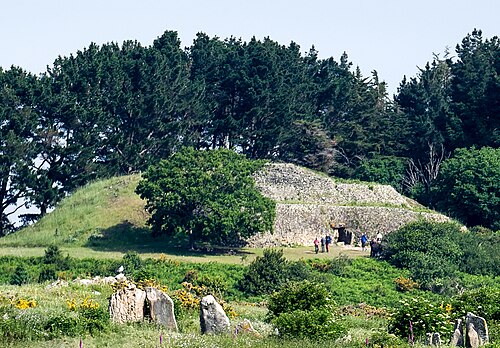
ガルガス(紀元前約 25,000年)とラスコー(紀元前約 15,000年)の旧石器時代の洞窟壁画、および新石器時代のカルナック石(紀元前約 4,500年)は、この地域の先史時代の活動を示す数多くの遺跡の中に含まれています。
銅器時代と初期青銅器時代には、フランスの領土は主にベル・ビーカー文化によって支配され、続いてアルモリカ古墳文化、ローヌ文化、古墳文化、ウルンフィールド文化、大西洋青銅器時代文化などが続いた。鉄器時代にはハルシュタット文化が発展し、続いてラ・テーヌ文化が発展した。ラ・テーヌ文化は、ローマ帝国がガリアに拡大する前の最後の文化段階である。フランスの歴史に関する最初の文書記録は鉄器時代に現れる。現在のフランスは、ローマ人がガリアとして知っていた地域の大部分を占めていた。ローマの著述家たちは、この地域にガリア人、アクイタニ人、ベルガエ人の3つの主要な民族言語グループが存在したことを記している。最大かつ最もよく証明されているグループであるガリア人は、ガリア語として知られる言語を話すケルト人であった。
紀元前 1 千年紀の間に、ギリシャ人、ローマ人、カルタゴ人は地中海沿岸と沖合の島々に植民地を築きました。ローマ共和国は紀元前 2 世紀後半にガリア南部をガリア ナルボネンシス属州として併合し、ユリウス カエサル率いるローマ軍は紀元前 58 年から 51 年のガリア戦争でガリアの残りの地域を征服しました。その後、ガリア ローマ文化が出現し、ガリアはローマ帝国に徐々に統合されていきました。
古代史
ギリシャ植民地

紀元前600年、ポカイア出身のイオニア系 ギリシャ人が地中海沿岸にマッサリア(現在のマルセイユ)の植民地を築き、フランス最古の都市の一つとした。[4] [5]同じ頃、一部のケルト族が現在のフランス領土の東部(ゲルマニア・スペリオル)に到着したが、この占領がフランスの他の地域に広まったのは紀元前5世紀から3世紀にかけてのことである。[6]
ガリア

ガリアは、現在のフランス、ベルギー、ドイツ北西部、イタリア北部の大部分を占め、ローマ人がガリア人と呼んだ多くのケルト人やベルガエ人の部族が住んでいた。彼らは、オワーズ川とガロンヌ川の間(ガリア・ケルティカ)でガリア語を話していたと、ジュリアス・シーザーは記している。[要出典]ガロンヌ川下流では、人々はアキテーヌ語を話していた。これはバスク語と関連がある(またはバスク語の直接の祖先である)プレインド・ヨーロッパ語族の言語であり、ストラボンなどの他の著者によると、ベルギー語はルテシアの北、ロワール川の北で話されていた。ケルト人はルテティア・パリシオラム(パリ)やブルディガラ(ボルドー)などの都市を建設し、アキテーヌ人はトロサ(トゥールーズ)を建設した。[要出典]

ローマ人が定住するよりずっと前から、ギリシャの航海士たちはプロヴァンスとなる地域に定住していた。[7]フォキス人はマッサリア(マルセイユ)やニカイア(ニース)などの重要な都市を建設し、 [8]近隣のケルト人やリグリア人との衝突を引き起こした。ピュテアスなど、フォキス人の偉大な航海士の中にはマルセイユ生まれの者もいる。ケルト人自身もアキテーヌ人やゲルマン人と頻繁に戦い、ブレヌス率いるガリア人の戦闘部隊はアッリアの戦いの後、紀元前393年または388年頃にローマに侵攻した。[要出典]
しかし、ガリア人の部族社会は、中央集権化したローマ国家が対抗策を講じるほど急速には変化しなかった。ガリア人の部族連合は、紀元前3世紀にセンティヌムやテラモンなどの戦いでローマ人に敗れた。 [要出典]紀元前3世紀初頭、一部のベルガエ人 (ゲルマン人、シスレナニ人) は、聖域が発見されたリブモン=シュル=アンクルとグルネー=シュル=アロンド付近でアルモリカニ人(ガリア人)と戦ったとされる後、北ガリアのソンム周辺地域を征服した。[要出典]
カルタゴの司令官ハンニバル・バルカがローマと戦ったとき、彼は数人のガリア人傭兵を雇い、カンナエで彼と共に戦わせた。このガリア人の参加が、紀元前122年にプロヴァンスが共和政ローマに併合される原因となった。[9]その後、ガリアの執政官ユリウス・カエサルがガリア全土を征服した。ウェルキンゲトリクス率いるガリア人の抵抗にもかかわらず、ガリア人はローマの猛攻に屈した。ガリア人は最初はゲルゴビアでいくらかの成功を収めたが、最終的には紀元前52年にアレシアで敗北した。ローマ人はルグドゥヌム(リヨン)、ナルボネンシス(ナルボンヌ)などの都市を建設し、ルキウス・ムナティウス・プランクスとキケロの書簡でクラロ(グルノーブル)の存在を公式化した。 [要出典]
ローマのガリア

.jpg/500px-Square_House_Roman_Temple_at_Nimes,_France_(7179063926).jpg)
ガリアはいくつかの異なる州に分かれていた。ローマ人は、地元のアイデンティティがローマの支配に対する脅威となるのを防ぐため、住民を強制移住させた。そのため、多くのケルト人がアキタニアで強制移住させられたり、奴隷にされてガリアから追われたりした。ローマ帝国の支配下でガリアでは大きな文化的発展があり、最も顕著なのはガリア語が俗ラテン語に置き換えられたことである。ガリア語とラテン語の類似性がこの移行を後押ししたと主張されてきた。ガリアは何世紀にもわたってローマの支配下にあり、ケルト文化は徐々にガロ・ローマ文化に取って代わられていった。
ガリア人は時が経つにつれ、帝国との一体化が進んだ。例えば、将軍のマルクス・アントニウス・プリムスとグナエウス・ユリウス・アグリコラはともにガリア生まれであり、皇帝クラウディウスとカラカラも同様である。アントニヌス・ピウス皇帝もガリア人の家系の出身である。260年にウァレリアヌスがペルシア人に占領されてから10年で、ポストゥムスはガリア帝国を建国したが、これは短命であった。この帝国はガリアに加えてイベリア半島とブリタニアも含んでいた。ゲルマン民族の部族であるフランク族とアラマンニ族がこの頃ガリアに侵入した。ガリア帝国は274年にアウレリアヌス帝がシャロンで勝利したことで終焉を迎えた。
ケルト人の移住は 4 世紀にアルモリカで起こりました。彼らは伝説の王コナン・メリアドクに率いられ、ブリテン島からやって来ました。彼らは現在では絶滅したブリテン語を話していましたが、それがブルトン語、コーンウォール語、ウェールズ語へと発展しました。
418年、アキテーヌ地方はヴァンダル族に対する支援と引き換えにゴート族に与えられた。同じゴート族は410年にローマを略奪し、トゥールーズに首都を築いていた。
ローマ帝国は、同盟条約を結んだ蛮族の新参者全員を帝国内に統合するのに苦労し、フラウィウス・アエティウスなどの将軍は、ローマの支配を維持するためにこれらの部族を互いに争わせなければならなかった。彼は最初、フン族をブルグント人に対して利用し、これらの傭兵はヴォルムスを破壊し、グンテル王を殺害し、ブルグント人を西方に追いやった。ブルグント人は、443年にアエティウスによってルグドゥヌムの近くに再定住させられた。アッティラによって統一されたフン族はより大きな脅威となり、アエティウスは西ゴート族をフン族に対して利用した。この紛争は、451年のシャロンの戦いで最高潮に達し、ローマ人とゴート人がアッティラを破った。
ローマ帝国は崩壊寸前だった。アキタニアは西ゴート族に完全に明け渡され、彼らはすぐに南ガリアの大部分とイベリア半島の大半を征服した。ブルグント人は自らの王国を主張し、北ガリアは事実上フランク人に明け渡された。ゲルマン民族の他に、バスコニア人はピレネー山脈からワスコニアに入り、ブルターニュ人はアルモリカにドムノニア、コルヌアイユ、ブロエレクの3つの王国を形成した。[10]
フランク王国(486年 - 987年)

486年、サリ・フランク族のリーダーであるクローヴィス1世は、ソワソンでシアグリオスを破り、その後、北ガリアと中央ガリアのほとんどを支配下に置いた。クローヴィスはその後、トルビアックでのアラマンニ族など、他のゲルマン部族に対して連続して勝利を記録した。496年、異教徒のクローヴィスはカトリックを受け入れた。これにより、彼はキリスト教徒の臣民に対するより大きな正当性と権力を獲得し、アリウス派西ゴート族に対する聖職者の支援を得た。彼は507年にヴイエでアラリック2世を破り、アキテーヌ、そしてトゥールーズをフランク王国に併合した。[11]
ゴート族は、後にスペインとなるトレドに撤退した。クローヴィスはパリを首都とし、メロヴィング朝を樹立したが、彼の王国は511年に死去すると消滅した。フランク人の継承の伝統では、すべての息子が土地の一部を相続するため、パリ、オルレアン、ソワソン、ランスを中心とする4つの王国が誕生した。時が経つにつれ、フランク王国の境界と数は流動的となり、頻繁に変更された。またこの時期には、もともと王の最高顧問であった宮廷長がフランク領の実権を握るようになり、メロヴィング朝の王自身は名ばかりの存在に成り下がった。[11]
この時までにイスラム教徒はヒスパニアを征服し、セプティマニアはフランク王国を脅かしていたアル=アンダルスの一部となった。オド大公は721年にトゥールーズで大規模な侵略軍を破ったが、732年の襲撃隊の撃退には失敗した。宮殿長のカール・マルテルはトゥールの戦いでその襲撃隊を破り、フランク王国内で尊敬と権力を獲得した。751年にピピン3世(カール・マルテルの息子)が王位に就き、フランク王国の王として カロリング朝が確立した。

カロリング朝の権力は、ピピンの息子カール大帝の治世中に最大限に達した。カール大帝は771年、さらなる分裂期間を経てフランク王国を再統一し、その後デシデリウス率いる現在の北イタリアのロンゴバルド人を征服し(774年)、バイエルン(788年)を自らの領土に組み入れ、ドナウ平原のアヴァール人を破り(796年)、アルアンダルスとの国境をバルセロナの南まで前進させ(801年)、長期にわたる遠征の末に ニーダーザクセンを征服した(804年)。
カール大帝は、その成功と教皇への政治的支援が認められ、800年に教皇レオ3世からローマ皇帝、すなわち西ローマ皇帝に戴冠された。カール大帝の息子ルイ敬虔王(皇帝、814年 - 840年)は帝国の統一を維持したが、このカロリング帝国はルイ1世の死後存続することはなかった。ルイの息子のうち2人、シャルル禿頭王とルイドイツ人は、ストラスブールの誓いで兄弟のロタール1世に対抗して互いに忠誠を誓い、帝国はルイの3人の息子の間で分割された(ベルダン条約、843年)。最後の短い再統一(884年 - 887年)の後、将来のフランス王国の基礎を形成することになる西方領域では皇帝の称号が保持されなくなった。ドイツとなる東部王国は、ヘンリー3世のザクセン王朝を選出した。[12]
カロリング朝の治世下、王国はヴァイキングの侵略者によって荒廃した。この闘争で、パリのオド伯爵やその兄弟のロバート王などの重要人物が名声を博し、王となった。ロベール家と呼ばれたこの新興王朝は、カペー朝の前身である。ロロに率いられたヴァイキングの一部はノルマンディーに定住し、他の侵略者から土地を守るために、最初は伯爵として、後に公爵として、シャルル単純王から土地を与えられた。新しいヴァイキング貴族と、すでに混血していたフランク人とガロ・ローマ人との間の交流から生まれた人々は、ノルマン人として知られるようになった。[13]
フランス王国の国家建設(987年 - 1453年)
強い王子たち
中世のフランスは、非常に地方分権化された国家だった。国王の権威は行政的というより宗教的なものだった。11世紀のフランスは、国王を犠牲にして君主の権力が頂点に達した時代で、ノルマンディー、フランドル、ラングドックなどの国は、名ばかりの王国に匹敵する地方自治権を享受していた。カペー家はロベール家の末裔であり、かつては有力な君主であり、弱く不運なカロリング朝の国王を退位させた人物だった。[14]カペー家は、ある意味では国王と君主の二重の地位を有していた。国王としてカール大帝の王冠を保持し、パリ伯としてイル・ド・フランスとして知られる個人の領地を保持していた。[14]
王の家臣の中には、西ヨーロッパで最も強力な統治者になるほどの力を持つ者もいた。ノルマン人、プランタジネット家、リュジニャン家、オートヴィル家、ラムヌルフ家、トゥールーズ家はフランス国外の領土を自分たちのものにすることに成功した。フランス史上最も重要な征服は、ウィリアム征服王によるノルマン征服であった。[15]
フランス貴族の重要な部分も十字軍に関与し、フランス騎士が十字軍国家を建国し統治した。フランス人はまた、イスラム教徒のスペインとポルトガルを再キリスト教化するイベリア半島レコンキスタにも積極的に参加した。イベリア半島レコンキスタでは、征服者であるスペインやポルトガルのキリスト教徒によって略奪された元イスラム教徒の居住地を再定住させるために、フランスの騎士と入植者を利用した。[16] [17]
君主制の台頭
王政はその後数世紀にわたって強力な男爵たちを征服し、16世紀にはフランスに対する絶対的な主権を確立した。[18] ユーグ・カペーは987年に「フランク王」(Rex Francorum)となった。彼はガリア人、ブルターニュ人、デンマーク人、アキテーヌ人、ゴート人、スペイン人、ガスコーニュ人から王として認められたと記録されている。[19]
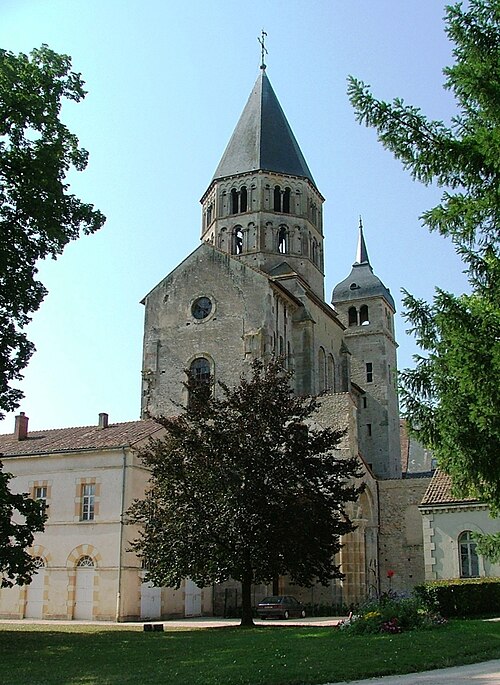
ユーグの息子ロベール敬虔王は、カペーの死去前にフランク王に即位した。ユーグ・カペーは、後継者を確保するため、そのように決めた。ロベール2世はフランク王として、 1023年に国境で皇帝ハインリヒ2世と会見した。両者は互いの領土に対するすべての主張を終わらせることで合意し、カペー家とオットー家の関係に新たな段階が訪れた。ロベール2世の治世は、神の平和と休戦(989年に始まる)とクリュニー改革を伴っていたため、非常に重要であった。[19]
.jpg/500px-Godfrey_of_Bouillon,_holding_a_pollaxe._(Manta_Castle,_Cuneo,_Italy).jpg)
フィリップ1世の非常に長い治世(1060年~1108年)の下、王国は緩やかな復興を遂げた。彼の治世中には、聖地奪還を目的とした第1回十字軍も発足した。
ルイ6世(在位1108-37年)以降、王権はより認められるようになった。ルイ6世は学者というよりは軍人で好戦的な王だった。家臣から金を集めるやり方は、彼の人気をかなり下げた。彼は貪欲で野心的だと言われた。家臣に対する彼の頻繁な攻撃は、王のイメージを傷つけたが、王権を強化した。1127年以降、ルイは熟練した宗教政治家であるシュジェール修道院長の援助を受けた。ルイ6世は、軍事的にも政治的にも、多くの強盗男爵を首尾よく打ち負かした。ルイ6世が1137年に死去したとき、カペー朝の権威強化に向けて大きな進歩が遂げられていた。[19]
シュジェール修道院長の政治的助言のおかげで、ルイ7世(1131年 - 1137年は従弟の王、1137年 - 1180年は兄の王)は、前任者よりもフランスに対する道徳的権威を享受していた。有力な家臣たちはフランス王に敬意を表した。[20]シュジェール修道院長は、1137年にボルドーでルイ7世とアリエノール・ド・アキテーヌの結婚を取り仕切り、ルイ7世はアキテーヌ公となり、かなりの権力を得た。この結婚は最終的に無効となり、アリエノールはすぐにノルマンディー公ヘンリー・フィッツェンプレスと結婚した。フィッツェンプレスは2年後にイングランド王ヘンリー2世となった。[21]
後期カペー朝(1165年 - 1328年)

後期カペー朝直系の王たちは、初期の王たちよりもかなり権力と影響力が強かった。また、この時代には、フランス王、イングランド王、神聖ローマ皇帝が王朝を通じて対立する、複雑な国際同盟と紛争のシステムが台頭した。フィリップ2世アウグスト(従弟王 1179~80年、兄王 1180~1223年)の治世には、フランス王室の領土と影響力が大きく拡大した。彼は、聖ルイやフィリップ美王のようなはるかに強力な君主が権力を握る背景を築いた。フィリップ2世は、その治世の重要な時期を、いわゆるアンジュー帝国との戦いに費やした。
フィリップ2世は治世の前半、アキテーヌ公およびヘンリー2世の息子リチャード獅子心王と同盟を組み、ヘンリーの故郷シノンに決定的な攻撃を仕掛け、彼を権力の座から追い落とした。その後、リチャードが父に代わってイングランド王となった。2人の王は第3回十字軍の遠征に赴いたが、その最中に同盟と友情は崩壊した。 リチャードの後継者ジョン・ラックランドはリュジニャン家に対する裁判のためにフランス宮廷に出廷することを拒否し、ルイ6世が反抗的な家臣たちにしばしば行っていたように、フィリップ2世はフランスにおけるジョンの所有物を没収した。ジョンはあっという間に敗北し、決定的なブーヴィーヌの戦い(1214年)でフランス領の再征服を試みたが、完全に失敗した。フィリップ2世はノルマンディーとアンジューを併合し、さらにブローニュ伯とフランドル伯を占領したが、アキテーヌとガスコーニュはプランタジネット王に忠誠を誓い続けた。
ルイ王子(後のルイ8世、在位1223-26年)は、かつては一体であったフランスとイングランド(正確にはアングロ・ノルマン)の貴族階級が、今や忠誠心の間で分裂していたため、その後のイングランド内戦に巻き込まれた。フランス王がプランタジネット家と戦っている間に、教会はアルビジョワ十字軍を呼びかけ、南フランスは王領に大部分吸収された。
フランスはルイ9世(在位1226-70年)の治世下で真に中央集権化された王国となった。王国は脆弱であった。トゥールーズ伯では依然として戦争が続いており、国王軍はラングドックでの抵抗勢力との戦いに忙殺されていた。トゥールーズ伯レーモン7世は1229年にようやくパリ条約に調印し、領土の多くを終身保持したが、娘がアルフォンソ・ド・ポワトゥー伯と結婚して跡継ぎを生まなかったため、トゥールーズ伯はフランス王の手に渡った。イングランド王ヘンリー3世はまだカペー家のアキテーヌに対する覇権を認めておらず、ノルマンディーとアンジューの回復とアンジュー帝国の改革を望んでいた。1230年に大軍を率いてサン・マロに上陸。これがサントンジュ戦争(1242年)へと発展した。最終的にアンリ3世は敗北し、フランス王はアキテーヌを占領しなかったものの、ルイ9世の覇権を認めざるを得なかった。ルイ9世は今やフランスで最も重要な地主となった。ノルマンディーでの統治には反対者もいたが、特に残忍に征服されたトゥールーズ伯領と比べると、統治は驚くほど容易であった。この時代に、後に高等法院へと発展する国王評議会が設立された。イングランド王ヘンリー3世との対立の後、ルイはプランタジネット王と友好関係を築いた。[22]
王国はルイ1世の治世下で2度の十字軍、第7回十字軍と第8回十字軍に参加した。どちらもフランス王にとっては完全な失敗に終わった。第8回十字軍の最中の1270年、聖ルイが死去するとフィリップ3世が国王となった。フィリップ3世は、性格や統治能力ではなく、戦闘と騎馬の能力に基づいて「大胆」と呼ばれた。フィリップ3世は、もう1つの十字軍の惨事であるアラゴン十字軍に参加し、1285年に命を落とした。フィリップ4世、別名フィリップ美王(在位1285-1314年)によって、さらなる行政改革が行われた。この王は、テンプル騎士団の終焉に責任を持ち、オールド・アライアンスに署名し、パリ高等法院を設立した。フィリップ4世は、初期のカペー朝とは異なり、教皇と皇帝を指名できるほどの権力を持っていた。教皇庁はアヴィニョンに移され、フィリップ4世の傀儡であるベルトラン・ド・ゴスやクレメンス5世など、当時の教皇はすべてフランス人であった。
初期のヴァロワ朝の王と百年戦争(1328-1453)
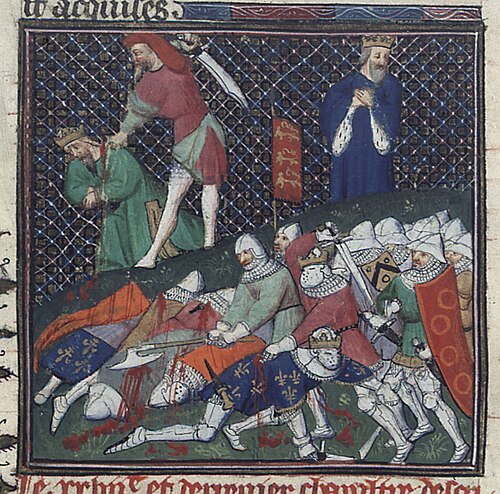
プランタジネット家とカペー家の間の緊張は、プランタジネット家がヴァロワ家からフランス王位を主張した、いわゆる百年戦争(実際には1337年から1453年にかけてのいくつかの別々の戦争)の間に最高潮に達しました。これはまた、フランスで黒死病が流行し、いくつかの壊滅的な内戦があった時期でもありました。1420年、トロワ条約により、 ヘンリー5世はシャルル6世の相続人となりました。ヘンリー5世はシャルルより長生きできなかったため、イングランドとフランスの二重君主制を統合したのは、イングランドとフランスのヘンリー6世でした。
百年戦争中にフランス国民が経験した困難な状況が、ジャンヌ・ダルク(1412-1431) に代表されるフランス国民主義を目覚めさせたと主張されてきた。これは議論の余地があるが、百年戦争は封建主義の連続というよりも、フランスとイギリスの戦争として記憶されている。この戦争中、フランスは政治的にも軍事的にも発展した。
フランス・スコットランド連合軍はボージェの戦い(1421年)で勝利を収めたものの、ポワティエの戦い(1356年)とアジャンクールの戦い(1415年)での屈辱的な敗北により、フランス貴族は組織化された軍隊なしには装甲騎士として戦うことはできないと悟らざるを得なくなった。シャルル7世(在位1422年 - 1461年)はフランス初の常備軍であるオルドナンス中隊を設立し、パテーの戦い(1429年)でプランタジネット家を打ち破り、大砲を使ってフォルミニーの戦い(1450年)でも再び破った。カスティヨンの戦い(1453年)がこの戦争の最後の戦闘となり、カレーとチャンネル諸島はプランタジネット家の支配下に置かれ続けた。
近世フランス(1453–1789)
アンシャン・レジーム
フランスの人口は1484年には1300万人だったが、1700年には2000万人に増加した。1700年頃はヨーロッパで2番目に人口が多い国だった。1700年以降は他の国の成長が速くなり、フランスのリードは徐々に薄れていった。[23]
政治権力は広く分散していた。法廷(「パルレメント」)は強力だった。しかし、国王の宮廷職員はわずか1万人ほどで、国土が広い割には非常に少なく、道路網も不十分で国内の通信も非常に遅かった。移動は通常、海上船や河川船の方が速かった。[24]聖職者、貴族、平民など、王国のさまざまな身分が「三部会」で時々会合したが、実際には三部会には権力がなく、国王に請願することはできても法律を可決することはできなかった。
カトリック教会は富の約40%を支配していた。司教を任命するのは国王(教皇ではない)だが、通常は地元の修道院や教会と密接な関係を持つ貴族と交渉しなければならなかった。貴族は富の点では2番目だったが、統一性はなかった。各貴族は独自の土地、独自の地域的つながりのネットワーク、独自の軍隊を持っていた。[24]
都市は準独立の地位にあり、有力な商人とギルドによって大部分が支配されていた。農民が人口の大半を占め、多くの場合、当局が尊重しなければならない確立された権利を持っていた。17世紀、農民は市場経済と結びつき、農業の発展に必要な資本投資の多くを提供し、村から村(または町)へと頻繁に移動した。[25] フランスの農民のほとんどは地元の方言を話していたが、パリで公用語が生まれ、フランス語はヨーロッパの貴族の好む言語となり、外交と国際関係の共通語となった。神聖ローマ皇帝カール5世は、「私は神にはスペイン語、女性にはイタリア語、男性にはフランス語、馬にはドイツ語を話す」と皮肉った。[26]
統合(15世紀と16世紀)

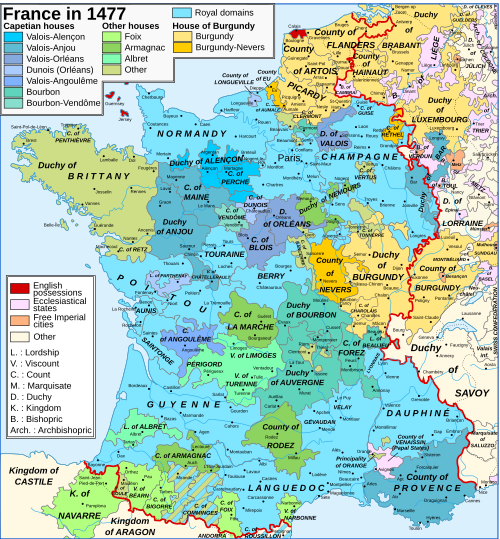
1477年にシャルル突進公が死去すると、フランスとハプスブルク家はシャルルの豊かなブルゴーニュ領土を分割する長いプロセスを開始し、数々の戦争を引き起こしました。1532年、ブルターニュはフランス王国に 編入されました。
フランスは長期にわたるイタリア戦争(1494-1559) に参戦し、これが近世フランスの始まりとなった。フランソワ 1 世は強力な敵に直面し、パヴィアで捕らえられた。フランス王室はその後同盟国を探し、オスマン帝国に同盟国を見つけた。オスマン帝国の提督バルバロッサは1543 年にニースを占領し、フランソワ 1 世に引き渡した。
16 世紀、ヨーロッパではスペインとオーストリアのハプスブルク家が支配的な勢力でした。カール 5 世の多くの領土がフランスを取り囲んでいました。スペインのテルシオ法がフランスの騎士に対して大きな効果を発揮しました。最終的に、1558 年 1 月 7 日、ギーズ公爵がイギリスからカレーを奪取しました。
経済史家は、1475年から1630年頃までの時代を「美しい16世紀」と呼んでいます。これは、国全体に平和、繁栄、楽観主義が戻り、人口が着実に増加したためです。1559年、フランスのアンリ2世は(神聖ローマ皇帝フェルディナンド1世の承認を得て)2つの条約(カトー=カンブレジ条約)に署名しました。1つはイングランドのエリザベス1世との条約、もう1つはスペインのフェリペ2世との条約です。これにより、フランス、イングランド、スペイン間の長きにわたる紛争は終結しました。
プロテスタントのユグノーと宗教戦争(1562-1629)

フランスで主にジャン・カルヴァンに触発されたプロテスタント宗教改革は、カトリック教会の正当性と儀式に異議を唱え始めた。[27]フランス王アンリ2世はシャトーブリアン勅令(1551年)のもとでプロテスタントを厳しく迫害した。 [28]強力なギーズ公フランソワに率いられたカトリックの新たな反動は、1562年にヴァシーでユグノーの虐殺につながり、フランス宗教戦争の第1次が始まった。この戦争では、イギリス、ドイツ、スペインの軍が対立するプロテスタント(「ユグノー」)とカトリックの軍の側に立って介入した。
1559年、アンリ2世は馬上槍試合で死去。3人の息子が代わって王位を継承したが、いずれも未成年のまま王位に就くか、権力のない無能な統治者となった。権力の空白にアンリの未亡人カトリーヌ・ド・メディシスが入り込み、宗教戦争の初期に中心人物となった。 1572年の聖バルトロメオの虐殺では、パリやフランス各地で数千人のユグノー教徒が殺害されたが、彼女はその責任を問われることが多い。
宗教戦争は三アンリ戦争(1584年 - 1598年)で最高潮に達し、その最中の1588年12月、アンリ3世の護衛兵がスペインの支援を受けたカトリック同盟の指導者アンリ・ド・ギーズを暗殺した。報復として、1589年にアンリ3世は司祭に暗殺された。これをきっかけにユグノーのアンリ4世が即位し、宗教戦争と継承戦争に悩まされていた国に平和をもたらすため、彼はカトリックに改宗した。彼は1598年にナントの勅令を発布してプロテスタントの信教の自由を保証し、事実上内戦を終わらせた。[29]アンリ4世は1610年に狂信的なカトリック教徒によって暗殺された。
1620年にユグノーが「フランス改革派教会共和国」の憲法を宣言したとき、首相のリシュリュー枢機卿は国家の全権力を動員してこれを阻止した。そのため、ルイ13世の統治下で宗教紛争が再開し、リシュリューはプロテスタントに軍隊と要塞の武装解除を強制した。この紛争はラ・ロシェル包囲戦(1627-28年)で終わり、プロテスタントとそのイギリス人支持者は敗北した。その後のアレーの和約(1629年)は宗教の自由を認めたが、プロテスタントの軍事防衛は解体された。[30]
迫害に直面して、ユグノーはヨーロッパとアメリカ全土に広く散らばった。[31]
三十年戦争(1618年 - 1648年)
フランスを悩ませた宗教紛争は、ハプスブルク家が率いる神聖ローマ帝国にも打撃を与えた。三十年戦争はカトリックのハプスブルク家の力を弱めた。フランスの有力な宰相リシュリュー枢機卿はプロテスタントを痛めつけていたが、国益のため1636年にプロテスタント側に立ってこの戦争に参加した。ハプスブルク帝国軍はフランスに侵攻し、シャンパーニュを荒廃させ、パリを脅かすところだった。[32]
リシュリューは1642年に死去し、マザラン枢機卿が後を継ぎ、ルイ13世は1年後に死去し、ルイ14世が後を継ぎました。フランスには、コンデ公ルイ2世やテュレンヌ子爵アンリ・ド・ラ・トゥール・ドーヴェルニュなど、非常に有能な指揮官がいました。フランス軍はロクロワの戦い(1643年)で決定的な勝利を収め、スペイン軍は壊滅し、テルシオは破られました。ウルム休戦協定(1647年)とウェストファリア条約(1648年)により戦争は終結しました。[32]
フランスはフロンドの乱と呼ばれる内乱に見舞われ、 1653年にはフランス・スペイン戦争へと発展した。ルイ2世・ブルボンはスペイン軍に加わったが、ダンケルク(1658年)でアンリ・ド・ラ・トゥール・ドーヴェルニュに大敗した。ピレネー条約(1659年)でスペイン王国に課された和平条件は厳しく、フランスは北カタルーニャを併合した。[32]
植民地(16 世紀と 17 世紀)
16世紀、国王は北アメリカの領土を主張し始め、いくつかの植民地を設立しました。[33] ジャック・カルティエは、16世紀にアメリカ領土の奥深くまで探検した偉大な探検家の一人でした。
17世紀初頭、 1608年のサミュエル・ド・シャンプランの航海により、新世界における最初のフランスの開拓が成功した。 [34]最大の開拓地はヌーベルフランスであった。1699年、ルイジアナの設立により、北アメリカにおけるフランスの領有権主張はさらに拡大した。
フランスのアフリカ進出は1626年にセネガルで始まりましたが、正式な植民地と交易拠点が設立されたのは1659年のサン・ルイの創設まで待たなければなりませんでした。マダガスカルへの最初のフランス人入植は1642年にドーファン砦の設立で始まりました。
ルイ14世(1643–1715)

「太陽王」として知られるルイ14世は、1643年から1715年までフランスを統治した。ルイは、パリから統治される中央集権国家を創設するという前任者たちの仕事を引き継ぎ、フランスの封建制の名残を排除し、貴族を従属させ弱体化させた。これらの手段によって、彼はフランス革命まで続いた絶対君主制の統治体制をフランスに確立した。しかし、ルイ14世の長い統治の間に、フランスは多くの戦争に巻き込まれ、国庫が枯渇した。[35]
フランスはライン同盟を支配し、 1664年のサンクトゴッタルドの戦いでオスマントルコと戦った。 [35]フランスは1667年にスペインとの継承戦争を戦った。フランスのスペイン敗北とスペイン領ネーデルラント侵攻は、イギリスとスウェーデンを警戒させた。彼らはネーデルラント共和国と三国同盟を結成し、ルイ14世の拡張を阻止した。ルイ2世・ブルボンはフランシュ=コンテを占領したが、防御不能な立場に直面したルイ14世はアーヘンの講和に同意した。[36]フランスとネーデルラント共和国の間で再び戦争が勃発し、仏蘭戦争(1672年 - 1678年)が起こった。フランスはネーデルラント共和国を攻撃し、この紛争にはイギリスも加わった。堤防を破壊して干拓地を標的に水没させることで、フランスによるネーデルラント共和国への侵攻は停止した。[37]オランダの提督ミヒール・デ・ロイテルは、英仏海軍同盟にいくつかの戦略的敗北をもたらし、 1674年にイギリスを戦争から撤退させた。オランダは無期限に抵抗することはできなかったため、ナイメーヘン条約で和平に同意し、フランスはフランス=コンテを併合し、スペイン領ネーデルラントでさらなる利権を獲得した。1682年5月、王室はルイ14世が大幅に拡張した豪華なヴェルサイユ宮殿に移った。時が経つにつれて、ルイ14世は多くの貴族、特に貴族エリートにヴェルサイユに住むことを強制した。彼は年金と特権の精巧な制度で貴族を統制し、彼らの権力を自分自身に置き換えた。
平和は長くは続かず、フランスとスペインの戦争は再び始まった。[37]再統一戦争(1683-84年)が勃発し、スペインは同盟国である神聖ローマ帝国とともに再び敗北した。一方、1685年10月、ルイ14世はフォンテーヌブロー勅令に署名し、フランス国内のすべてのプロテスタント教会と学校の破壊を命じた。その直接的な結果は、フランスからの大規模なプロテスタント脱出であった。1693年と1710年の2度の飢饉で200万人以上が死亡した。[37]
フランスはすぐに別の戦争、大同盟戦争に巻き込まれることになる。このとき、戦場はヨーロッパだけでなく北アメリカにも及んだ。戦争は長く困難なものだったが(九年戦争とも呼ばれる)、決着はつかなかった。 1697年のリスヴィック条約は、アルザスに対するフランスの主権を確認したが、ルクセンブルクに対するフランスの主張は却下した。ルイはカタルーニャとプファルツからも撤退しなければならなかった。この和平はすべての側から休戦とみなされ、戦争は再開されることになった。[36]

1701年、スペイン継承戦争が始まった。ブルボン家のアンジュー家のフィリップがスペイン王位継承者としてフィリップ5世に指名された。ハプスブルク家のレオポルド皇帝はブルボン家の継承に反対した。ブルボン家の継承によってフランスのブルボン家が権力を握ると、ヨーロッパの微妙な勢力均衡が乱れることになるからだ。そのため、レオポルドはスペイン王位を主張した。[36]イングランドとネーデルラント連邦共和国がレオポルドに加わり、ルイ14世とアンジュー家のフィリップに対抗した。彼らはフランス軍にいくつかの大敗を喫した。 1704年のブレナムの戦いは、1643年のロクロワの戦いでの勝利以来、フランスが初めて敗北した大きな陸上戦闘だった。しかし、ラミリエの戦い(1706年)とマルプラケの戦い(1709年)の非常に血なまぐさい戦いは、戦争を続けるにはあまりにも多くの兵士を失った連合軍にとってピュロスの勝利となった。[36]ヴィラール率いるフランス軍は、ドナン(1712年)などの戦闘で失地の多くを取り戻した。最終的に、1713年のユトレヒト条約で妥協が成立した。アンジュー公フィリップがスペイン王フィリップ5世として承認され、レオポルド皇帝は王位に就かなかったが、フィリップ5世はフランスを継承することができなかった。[36]
ルイ14世は芸術のパトロンとして記憶されることを望み、ジャン=バティスト・リュリを招いてフランスオペラを創設した。
戦争は費用がかかり、決着がつかなかったため、フランスは東の領土を獲得したものの、敵の勢力はフランスよりも強大になった。フランスの指導的軍事戦略家であるヴォーバンは、1689年に国王に、敵対的な「同盟」は海上で強力すぎると警告した。彼は、フランスが反撃する最善の方法は、フランスの商船に私掠船を許可し、敵の商船を拿捕し、自国の海軍を避けることだと勧告した。[38]ヴォーバンはフランスのいわゆる友好国や同盟国について悲観的であり、費用のかかる陸上戦争や望みのない海戦には反対を勧告した。[39]
フランス、ヨーロッパ、北アメリカにおける大きな変化(1718年~1783年)
ルイ14世は1715年に死去し、5歳の曾孫が王位を継承し、1774年に死去するまでルイ15世として統治した。1718年、オルレアン公フィリップ2世の摂政がスペインとの四国同盟戦争に加わり、フランスは再び戦争状態に陥った。 [40] 1733年、今度はポーランドの継承をめぐって中央ヨーロッパで別の戦争が勃発し、フランスはオーストリア帝国との戦争に加わった。和平はウィーン条約(1738年)で締結され、フランスはロレーヌ公国を相続により併合することとなった。[40]
2年後の1740年、オーストリア継承をめぐって戦争が勃発し、フランスはこれに加わる機会を捉えた。戦争はヨーロッパだけでなく北米やインドでも展開され、結論の出ない条件がエクス・ラ・シャペル条約(1748年)で合意された。プロイセンはオーストリアからかなりの領土を獲得し、新たな脅威となりつつあった。これが1756年の外交革命につながり、前回の戦争で見られた同盟関係はほぼ逆転した。フランスはオーストリアおよびロシアと同盟を結び、イギリスはプロイセンと同盟を結んだ。[41]
北アメリカ戦線では、フランスは七年戦争中にさまざまなアメリカ先住民と同盟を組み、グレートメドウズの戦いやモノンガヒラの戦いで一時的に勝利したものの、ケベックのアブラハム平原の戦いでフランス軍は惨敗した。1762年、ロシア、フランス、オーストリアはプロイセンを粉砕する寸前だったが、ブランデンブルク家の奇跡によって英普同盟は救われた。海上では、1759年にラゴスとキブロン湾でイギリス艦隊に敗れ、壊滅的な封鎖によりフランスは船を港に留めざるを得なかった。最終的にパリ条約(1763年)で和平が締結され、フランスは北アメリカ帝国を失った。[41]

七年戦争での勝利により、イギリスはフランスを凌駕して主要な植民地大国となった。フランスはこの敗北の復讐を求め、ショワズールの下で再建を開始した。1766年、フランス王国はロレーヌを併合し、翌年にはジェノヴァからコルシカ島を購入した。植民地帝国を失ったフランスは、 1778年にアメリカと同盟を結び、アメリカ独立戦争を世界大戦へと変える陸海軍を派遣することで、イギリスに対する復讐の好機を見出しました。ド・グラス提督はチェサピーク湾でイギリス艦隊を破り、一方、ロシャンボー伯爵のジャン=バティスト・ドナシアン・ド・ヴィミュールとラファイエット侯爵のジルベール・デュ・モティエはアメリカ軍に加わり、ヨークタウンでイギリス軍を破りました。戦争はパリ条約(1783年)で終結し、アメリカ合衆国は独立した。 1782年、イギリス海軍はサント海戦でフランスに対して大勝利を収め、フランスは莫大な負債とトバゴ島のわずかな獲得で戦争を終えた。[42]
フランス啓蒙主義

「哲学者」は18世紀フランスの知識人で、フランス啓蒙主義を支配し、ヨーロッパ全土に影響を与えた。[43]哲学者デニス・ディドロは、有名な啓蒙主義の成果である72,000項目の百科全書(1751-72)の編集長だった。 [44]それは啓蒙世界全体の学問の革命を引き起こした。[45]
18世紀初頭、啓蒙運動はヴォルテールとモンテスキューによって支配された。1750年頃、モンテスキューが『法の精神』(1748年)を出版し、ジャン・ジャック・ルソーが『学芸の道徳的効果についての序説』(1750年)を出版したことで、哲学者たちは最も影響力のある時期を迎えた。フランス啓蒙主義の指導者であり、ヨーロッパ中に多大な影響を与えた作家はヴォルテールであった。[46]
天文学、化学、数学、技術が栄えた。アントワーヌ・ラボアジエなどのフランスの化学者は、時代遅れの度量衡の単位を一貫した科学的システムに置き換えることに取り組んだ。ラボアジエはまた、質量保存の法則を定式化し、酸素と水素を発見した。[47]
フランス革命(1789-1799)
,_Mus%C3%A9e_de_la_R%C3%A9volution_fran%C3%A7aise_-_Vizille.jpg/500px-Journ%C3%A9e_des_Tuiles_(Alexandre_Debelle),_Mus%C3%A9e_de_la_R%C3%A9volution_fran%C3%A7aise_-_Vizille.jpg)
フランス革命は、1789年の三部会で始まり、 1799年11月のブリュメール18日のクーデターとフランス領事館の設立で終わった、フランスの政治的、社会的変革の時代でした。その思想の多くは自由民主主義の基本原則とみなされており、[48]その価値観と制度は現代のフランス政治言説の中心となっています。[49]
その原因は、アンシャン・レジームでは対処できなかった社会的、政治的、経済的要因の組み合わせであると一般的に認められています。金融危機と広範囲にわたる社会的苦難により、1789年5月に三部会が招集され、6月に国民議会に転換されました。 7月14日のバスティーユ襲撃により、議会は一連の急進的な措置を講じ、その中には封建制の廃止、フランスにおけるカトリック教会の国家統制、権利の宣言が含まれていました。
その後の3年間は、経済不況によって悪化した政治支配をめぐる闘争が中心となった。 1792年4月にフランス革命戦争が勃発し、軍は敗北し、 1792年8月10日に蜂起が起こった。 9月には王政が廃止され、フランス第一共和政に取って代わられ、ルイ16世は1793年1月に処刑された。
1793 年 6 月の別の反乱の後、憲法は停止され、実質的な政治権力は国民公会から公安委員会に移った。恐怖政治で約 16,000 人が処刑され、1794 年 7 月に終了した。外部からの脅威と内部の反対により弱体化した共和国は、1795 年に総裁制に取って代わられた。4 年後の 1799 年、ナポレオン ボナパルトが率いた軍事クーデターにより、統制官が権力を掌握した。これが革命期の終焉と一般に考えられている。
ナポレオン時代のフランス(1799–1815)

第一次対仏大同盟戦争(1792-1797)の間、総裁制が国民公会に取って代わった。当時、5人の総裁がフランスを統治していた。イギリスは依然としてフランスと戦争中であったため、イギリスの同盟国であるオスマン帝国からエジプトを奪取する計画が立てられた。これはナポレオンの考えであり、総裁制は人気の高い将軍を本土から遠ざけるためにこの計画に同意した。ナポレオンはピラミッドの戦い(1798年)でオスマン帝国軍を破った。科学者と言語学者はエジプトを徹底的に調査した。数週間後、ホレーショ・ネルソン提督率いるイギリス艦隊はナイルの戦いでフランス艦隊を予想外に壊滅させた。ナポレオンはシリアへの進攻を計画したが、アッコ包囲戦で敗北した。彼は軍を率いてフランスに戻り、軍は降伏した。[50]
総裁制は第二次対仏大同盟(1798年 - 1802年)によって脅かされた。王党派とその同盟者は依然として王政復古を夢見ていたが、プロイセンとオーストリアの王室は先の戦争で領土を失ったことを受け入れなかった。1799年、ロシア軍はカッサーノなどの戦いでイタリアからフランス軍を追い出し、オーストリア軍はシュトックアッハとチューリッヒでスイスのフランス軍を破った。その後ナポレオンはクーデターで権力を掌握し、 1799年に統領府を設立した。オーストリア軍は1800年にマレンゴの戦いとホーエンリンデンの戦いで敗北した。 [51]
海上ではフランス軍はブローニュでいくらかの成功を収めたが、スカンジナビア諸国がイギリスのフランス封鎖に反対したため、ネルソン率いるイギリス海軍はコペンハーゲンの海戦(1801年)で停泊中のデンマークとノルウェーの艦隊を壊滅させた。第二次対仏大同盟は敗れ、リュネヴィル条約とアミアン条約という2つの条約で和平が成立した。1802年から1803年にかけては短い和平期間が続き、その間にナポレオンはフランス領ルイジアナを防衛不可能としてアメリカに売却した。[51]
1801年、ナポレオンは教皇ピウス7世と「協約」を締結し、フランスにおける教会と国家の平和関係が始まった。革命の政策は逆転したが、教会は領土を取り戻さなかった。司教と聖職者は国から給与を受け取ることになり、政府は教会の建設と維持費を支払うことになった。[52]ナポレオンは高等教育を再編成し、国立学院を4つのアカデミー(後に5つ)に分割した。
.jpg/500px-La_bataille_d'Austerlitz._2_decembre_1805_(Fran%C3%A7ois_G%C3%A9rard).jpg)
1804年、ナポレオンは元老院から皇帝の称号を授かり、フランス第一帝政が成立した。ナポレオンの統治は立憲的で、独裁的ではあったが、当時の伝統的なヨーロッパの君主制よりはるかに進歩していた。フランス帝国の宣言は第三次対仏大同盟によって迎えられた。フランス軍は1805年に大陸軍と改名され、ナポレオンはプロパガンダとナショナリズムを利用してフランス国民を統制した。フランス軍はウルムで大勝利を収め、オーストリア軍は全軍を捕虜にした。[53]
フランス・スペイン連合艦隊はトラファルガーで敗北し、イギリス侵攻計画は不可能となった。この敗北にもかかわらず、ナポレオンは1805年12月2日のアウステルリッツの戦いでオーストリア帝国とロシア帝国に最大の敗北をもたらし、第三次対仏大同盟を壊滅させた。プレスブルク条約で和平が成立し、オーストリア帝国は神聖ローマ皇帝の称号を失い、ナポレオンによって旧オーストリア領土を領有するライン同盟が設立された。[53]
ナポレオンに対抗する連合が結成された
プロイセンはイギリスとロシアに加わり、こうして第四次対仏大同盟を形成した。この対仏大同盟には他の同盟国も加わったが、フランス帝国も孤立していたわけではなく、同盟国と従属国の複雑なネットワークを形成していた。フランス軍は数で大きく劣勢だったが、1806年にイエナ=アウエルシュテットでプロイセン軍を破った。ナポレオンはベルリンを占領し、東プロイセンまで進軍した。そこでロシア帝国はフリートラントの戦い(1807年6月14日)で敗北した。ティルジット条約で和平が定められ、ロシアは大陸封鎖に加わらざるを得なくなり、プロイセンは領土の半分をフランスに引き渡した。これらの領土喪失の上にワルシャワ公国が形成され、ポーランド軍が多数大陸軍に加わった。[54]
ナポレオンはイギリス経済を破滅させるために1807年に大陸封鎖令を発布し、ヨーロッパ中の商人がイギリスと貿易することを阻止しようとした。大量の密輸はナポレオンの不満を招き、敵国よりもナポレオンの経済に損害を与えた。[55]

東方での任務から解放されたナポレオンは、フランス帝国がまだイギリスと戦争中だったため、西方に戻った。この戦争で中立を保っていたのはスウェーデンとポルトガルの2か国だけであり、ナポレオンはポルトガルに目を向けた。フォンテーヌブロー条約(1807年)では、スペインがポルトガル領に目を向けていたため、ポルトガルに対するフランス・スペイン同盟が締結された。フランス軍はポルトガル攻撃のためにスペインに侵入したが、その後スペインの要塞を占領し、王国を奇襲で占領した。ナポレオンの弟ジョゼフ・ボナパルトは、カルロス4世が退位した後、スペイン国王となった。[56]
イベリア半島の占領は地元のナショナリズムを刺激し、すぐにスペインとポルトガルはゲリラ戦術でフランスと戦い、バイレンの戦い(1808年6月と7月)でフランス軍を破った。イギリスは短期間の地上支援部隊をポルトガルに派遣し、フランス軍はヴィメイロでの連合軍の勝利(1808年8月21日)を受けてシントラ条約で定められた通りポルトガルから撤退した。フランスはカタルーニャとナバラのみを支配しており、スペイン軍が再び攻撃すればイベリア半島から確実に追い出される可能性があったが、スペインはそうしなかった。[57]
フランスはナポレオン自ら率いてスペインに再び攻撃を仕掛け、それは「火と鋼鉄の雪崩」と評された。しかし、フランス帝国はもはやヨーロッパ列強から無敵とは見なされていなかった。1808年、オーストリアはフランス帝国を打倒するために第五次対仏大同盟を結成した。オーストリア帝国はアスペルン=エスリンクでフランスを破ったが、ヴァグラムでは敗れ、ポーランドの同盟国はラシンでオーストリア帝国を破った(1809年4月)。以前のオーストリアの敗北ほど決定的ではなかったものの、 1809年10月の和平条約によりオーストリアは広大な領土を剥奪され、さらに領土が縮小した。

1812年、ロシアとの戦争が勃発し、ナポレオンとフランスのロシア侵攻(1812年)が悲惨な結果に終わった。ナポレオンは、大陸封鎖から離脱してポーランド国境に軍を集結させていたロシアに侵攻するため、すべての従属国から軍隊を集め、ヨーロッパ史上最大の軍隊を編成した。消耗する行軍と、モスクワ近郊での血なまぐさいが決着のつかなかったボロジノの戦いの後、大陸軍はモスクワに入城して占領したが、モスクワはロシアの焦土作戦によって炎上していた。その後も戦闘はあったが、ナポレオン軍は1812年後半にロシアを全滅させ、特にロシアの冬、疲労、焦土作戦が原因でした。スペイン戦線では、フランス軍はビトリア(1813年6月)で、続いてピレネーの戦い(1813年7月~8月)で敗北しました。スペインのゲリラは制御不能に思われたため、フランス軍は最終的にスペインから撤退した。[58]
フランスはこれら2つの戦線で敗北していたため、ナポレオンに征服され支配されていた諸国家は反撃の好機とみなした。イギリスの指導の下、第六次対仏大同盟が結成された。[59]ライン同盟のドイツ諸国は寝返り、最終的にナポレオンに反対した。ナポレオンは1813年10月のライプツィヒ郊外での諸国民の戦いで大敗した。ナポレオンの軍は連合軍に大きく数で劣勢であり、六日間作戦(1814年2月)でははるかに大きな軍に圧倒された。しかし、六日間作戦は連合軍の死傷者がはるかに多かったため、戦術上の傑作と見なされることが多い。ナポレオンは1814年4月6日に退位し、エルバ島に流刑となった。[60]
保守的な ウィーン会議は、戦争中に起こった政治的変化を覆した。ナポレオンは突如帰国し、フランスを掌握して軍隊を召集し、百日天下において敵に向かって進軍した。そして1815年のワーテルローの戦いで最終的に敗北し、南大西洋の孤島セントヘレナ島に追放された。[61]
その後、王政が復活し、ルイ16世の弟であるルイ18世が国王となり、亡命者たちは帰還した。しかし、革命とナポレオンの改革の多くはそのまま維持された。[62]
ナポレオンのフランスへの影響
ナポレオンは権力をパリに集中させ、すべての州を彼が選んだ全権を持つ知事が統治した。知事は旧体制の王室長官よりも権力が強く、国家の統一、地域間の格差の最小化、すべての決定をパリに移すという長期的な影響を及ぼした。[63]
革命中、宗教は大きな問題であったが、ナポレオンは未解決の問題のほとんどを解決し、聖職者と多くの敬虔なカトリック教徒を政府への敵意から支持へと変えた。カトリックの制度は1801年の協約(教皇ピウス7世と署名)によって再建され、教会生活は正常に戻った。教会の土地は回復されなかったが、イエズス会の復帰が認められ、政府と教会の激しい争いは終わった。プロテスタント、ユダヤ教徒、無神論者は容認された。[64]
フランスの税制は1780年代に崩壊した。1790年代には政府は教会の土地や亡命貴族の土地を押収し売却した。ナポレオンは安定した収入を保証し、長期の資金調達を可能にする近代的で効率的な税制を制定した。[65]
ナポレオンは1790年代に作られた徴兵制度を維持したため、すべての若者が軍隊に入隊し、その軍隊はキャリア志向の有能な将校を中核としながらも急速に拡大することができた。革命前は貴族が将校団を形成していた。今では昇進は実力と功績によって行われ、兵士全員が元帥の指揮棒を持っていたと言われている。[66]
フランスの近代教育は1790年代に始まった。1790年代の革命により伝統的な大学は廃止された。[67]ナポレオンは大学に代わる新しい機関として、技術に重点を置いたエコール・ポリテクニークを設立しようとした。[68]小学校はほとんど注目されなかった。
ナポレオン法典
ナポレオンの監督下で著名な法学者が作成したナポレオン法典は、永遠に重要な意味を持つ。その明快さが称賛され、ヨーロッパ全土、そして世界全体に急速に広まり、施行された地域では封建制の終焉と農奴解放の象徴となった。 [69]この法典は、市民の自由、法の下の平等、国家の世俗的性格の原則を認めた。この法典は、長子相続(長男のみが相続)という古い権利を廃止し、相続財産をすべての子供たちに平等に分割することを義務付けた。裁判制度は標準化され、すべての裁判官はパリの政府によって任命された。[63]
1815–1914


ナポレオン1世の没落後の1世紀は政治的に不安定でした。
1814年から1873年までのすべての[フランスの]国家元首は、その生涯の一部を亡命先で過ごした。すべての政権は、スペインやロシアの政治を影に追いやるほどの頻繁な暗殺の標的となった。平和な時代でさえ、政府は数か月ごとに交代した。平和でない時代では、政治的な死、投獄、国外追放は文字通り計り知れないほどである。[70]
歴史家エリック・ホブズボームが「長い19世紀」と呼んだ1789年から1914年までの期間は、フランス革命の余波から第一次世界大戦の瀬戸際まで続く。この期間を通じて、フランスは地理、人口動態、言語、経済状況を大きく変え、大きな変化と発展の時代となった。フランス革命とナポレオンの時代はフランス社会を根本的に変え、中央集権化、部門間の行政の統一、法典の標準化を推進した。教育もまた中央集権化され、貴族と教会の間で保守主義が高まったにもかかわらず、技術訓練と能力主義が強調された。富の集中により、最も裕福な10パーセントが国の富の大半を所有するようになった。19世紀には、フランスは併合と海外帝国主義を通じて、特にアルジェリア、インドシナ、アフリカで、ほぼ現代の領土限界まで領土を拡大した。領土の獲得にもかかわらず、フランスは、ヨーロッパの近隣諸国に比べて人口増加が遅いこと、農村から都市への生活の移行と工業労働力の増加を伴った工業化の遅れなど、課題に直面していた。
この時代は言語と教育の重要な改革によっても特徴づけられ、言語と世俗教育を通じて国を統一し、より強い国民的アイデンティティに貢献しようとした。経済的には、フランスは他の先進国の産業成長率に追いつくのに苦労し、他の国々よりも長く伝統的な経済を維持した。政治的には、この世紀はアンシャン・レジームの終焉、第一帝政と第二帝政の盛衰、第三共和政の激動の樹立、そしてパリ・コミューンの急進的な実験によって特徴づけられ、革命的理想と保守的な復古主義との間の継続的な闘争を反映していた。
ナポレオン3世の時代は、社会・政治の大幅な改革が特徴で、下層階級の労働・生活条件を改善するための公的扶助や規制などの施策が導入された。第二帝政(1852年 - 1870年)は鉄道システムなどのインフラ整備を通じて近代化を目指したが、ナポレオン3世の外交政策は失敗に終わることが多く、特に普仏戦争は悲惨な結果に終わり、ナポレオン3世は捕らえられ、罷免された。第三共和政はフランスの近代化に乗り出し、教育改革や統一された国民的アイデンティティの創出を試みた。外交政策はドイツの孤立と同盟の形成に重点が置かれ、三国協商につながった。国内では、ドレフュス事件などの問題が国の分裂を浮き彫りにし、カトリック教会の影響力を弱めることを目的とした法律がさらなる論争を引き起こした。
ロマン主義からモダニズムまでの文化と芸術の運動は、これらの社会的変化を反映し、フランスの豊かな文化遺産に貢献しました。ベルエポックは、戦争の脅威と内部不和の高まりによって影を潜めながらも、文化的繁栄と平和の時代として現れました。長い19世紀は、革命、戦争、社会的激変を乗り越え、20世紀初頭までに世界の舞台の最前線に近い統一された国民国家として出現し、現代フランスの基盤を築きました。
植民地帝国

濃い青 = 第二帝政 1830~1960年。
第二植民地帝国は、16世紀以降フランスの支配下に入った海外植民地、保護領、委任統治領から成っていた。一般的には、1814年まで存在し、その時点でその大半が失われていた「第一植民地帝国」と、1830年のアルジェの征服で始まった「第二植民地帝国」とに区別されている。第二植民地帝国は、その後のベトナム戦争(1954年)とアルジェリア戦争(1962年)での敗北、および1960年以降の比較的平和的な植民地解放によって終焉を迎えた。 [71]
フランスはイギリスとの戦争に敗れ、1765年までに植民地のほとんどを奪われた。フランスは1850年以降、主にアフリカ、インドシナ、南太平洋に集中して新しい帝国を再建した。共和主義者は当初帝国に敵対していたが、1880年以降ドイツが独自の植民地帝国を築き始めたときに初めて支持するようになった。帝国が発展するにつれて、新しい帝国はフランスとの貿易、特に原材料の供給と製品の購入の役割を引き受け、母国に威信をもたらし、フランスの文明と言語、カトリックの宗教を広めた。また、世界大戦に人員を提供した。[72]
キリスト教とフランス文化をもたらすことで世界をフランスの基準に引き上げることが道徳的使命となった。1884年、植民地主義の主導的提唱者ジュール・フェリーは「高等民族は低等民族に対して権利を持ち、劣等民族を文明化する義務がある」と宣言した。 [73]完全な市民権、つまり同化が提案された。実際には、フランス人入植者に完全な権利が与えられ、現地人には非常に限られた権利が与えられた。アルジェリアを除いて、植民地に永久に定住した入植者はわずかであった。アルジェリアでさえ、「ピエ・ノワール」(フランス人入植者)は常に少数派のままであった。[74]
最盛期には、歴史上最大の帝国の一つであった。フランス本土を含め、フランスの統治下にあった領土の総面積は、1920年に1150万km2(440万平方マイル)に達し、 1939年には人口が1億1千万人に達した。第二次世界大戦では、自由フランスは海外植民地を拠点としてフランス解放のために戦った。「敗北と占領の屈辱の後、世界大国の地位を回復するため、フランスは第二次世界大戦の終わりに海外帝国を維持することに熱心だった。」[75]ナチス・ドイツの敗北からわずか2日後、フランスはヨーロッパ戦勝記念日を祝っていたアルジェリア人の独立要求を抑圧し、少なくとも3万人のイスラム教徒を殺害する虐殺に終わった。 [76]しかし、徐々に反植民地運動がヨーロッパの権威に挑戦するようになった。1946年10月27日のフランス憲法(第四共和政)により、1958年まで存続したフランス連合が設立された。植民地帝国の比較的新しい残骸は、フランス共和国内の海外県および領土としてフランスに統合された。現在、これらは1939年以前の植民地地域の約1%を占め、2013年には270万人が住んでいる。1970年代までには、「帝国の最後の痕跡はフランス人にとってほとんど関心を持たなくなった。…しかし、アルジェリアのトラウマ的な植民地解放を除けば、注目すべきは、帝国の放棄がフランスにもたらした長期的な影響がほとんどなかったことである。」[77]
1914–1945
人口動向
人口は1911年の4070万人から1936年の4150万人まで安定していた。特により強力なドイツの急速な成長を考えると、人口が少なすぎるという感覚は20世紀初頭の共通のテーマであった。[78]出生率政策は1930年代に提案され、1940年代に実施された。[79] [80]
フランスは1945年以降ベビーブームを経験し、長期にわたる低出生率記録を覆した。[81]さらに、特に北アフリカの旧フランス植民地からの移民が着実に増加した。人口は1946年の4100万人から1966年には5000万人、1990年には6000万人に増加した。農業人口は1945年の労働力人口の35%から2000年には5%未満にまで急激に減少した。2004年までに、フランスの出生率はアイルランドに次いでヨーロッパで2番目に高かった。[82] [83]
第一次世界大戦


フランスは1914年に戦争が起こるとは予想していなかったが、8月に戦争が始まると、国全体が2年間熱狂的に団結した。フランスは歩兵を何度も前線に送り出すことに特化していたが、ドイツ軍の大砲、塹壕、有刺鉄線、機関銃によって何度も阻止され、恐ろしいほどの死傷者数となった。主要な工業地区を失ったにもかかわらず、フランスはフランス軍とアメリカ軍の両方を武装させる大量の軍需品を生産した。1917年までに歩兵は反乱寸前となり、今度はアメリカ軍がドイツ軍の戦線を襲撃する番だという認識が広まった。しかし歩兵は団結して1918年春に起こったドイツ軍の最大の攻勢を打ち破り、崩壊する侵略者を圧倒した。1918年11月には誇りと団結が高まり、抑えきれない復讐心が高まった。
フランスは国内問題に気をとられ、1911年から1914年にかけて外交政策にはほとんど注意を払わなかったが、1913年に社会主義者の強い反対を押し切って兵役を2年から3年に延長した。1914年に急速にエスカレートしたバルカン危機はフランスにとって予期せぬものであり、第一次世界大戦の勃発にわずかな役割を果たしたに過ぎなかった。[84]セルビア危機はヨーロッパ諸国間の複雑な軍事同盟の引き金となり、わずか数週間のうちにフランスを含む大陸のほとんどが戦争に巻き込まれることになった。オーストリア=ハンガリー帝国は7月下旬にセルビアに宣戦布告し、ロシアの動員を引き起こした。8月1日、ドイツとフランスの両国は動員を命じた。ドイツはフランスを含む他のどの関係国よりも軍事的に準備が整っていた。ドイツ帝国はオーストリアの同盟国としてロシアに宣戦布告した。フランスはロシアと同盟を結んでいたため、ドイツ帝国との戦争に踏み切る用意ができていた。8月3日、ドイツはフランスに宣戦布告し、中立国ベルギーを経由して軍を派遣した。イギリスは8月4日に参戦し、8月7日に軍隊の派遣を開始した。イタリアはドイツと結びついていたものの中立を保ち、1915年に連合国に加わった。
ドイツの「シュリーフェン計画」は、フランス軍を迅速に打ち負かすというものだった。ドイツ軍は8月20日までにベルギーのブリュッセルを占領し、すぐに北フランスの大部分を占領した。当初の計画は南西に進み、西からパリを攻撃することだった。9月初旬までにドイツ軍はパリから65キロ(40マイル)以内にまで迫り、フランス政府はボルドーに移転した。連合軍は最終的にマルヌ川でパリ北東への進撃を止めた(1914年9月5日~12日)。[85]
戦争は膠着状態となった。有名な「西部戦線」は主にフランスで戦われ、非常に大規模で激しい戦闘にもかかわらず、ほとんど動きがないのが特徴で、新しい破壊的な軍事技術が使われることが多かった。西部戦線では、最初の数か月に作られた小さな即席の塹壕が急速に深く複雑になり、次第に連結した防御施設の広大な地域になった。地上戦はすぐに、泥だらけで血なまぐさい膠着状態の塹壕戦に支配されるようになった。塹壕戦とは、敵軍の双方が固定された防衛線を持つ戦争形態である。移動戦はすぐに陣地戦に変わった。どちらの側もあまり前進しなかったが、双方とも数十万人の死傷者を出した。ドイツ軍と連合軍は、南のスイス国境からベルギーの北海沿岸まで、基本的に一対の塹壕線を築いた。一方、北東フランスの広大な地域はドイツ占領軍の残忍な支配下に入った。[86]
1914 年 9 月から 1918 年 3 月まで、西部戦線では塹壕戦が主流でした。フランスで有名な戦闘には、 1916 年のヴェルダンの戦いとソンムの戦い、および1914 年から 1918 年までのイープルの戦いと呼ばれる 5 つの個別の戦闘があります。 [出典が必要]
戦争勃発時に平和主義者であった社会主義指導者ジャン・ジョレスが暗殺された後、フランスの社会主義運動は反軍国主義の立場を放棄し、国家の戦争努力に加わった。首相ルネ・ヴィヴィアーニは団結を呼びかけた。「神聖なる連合」とは、激しく争っていた右派と左派の間の戦時休戦である。フランスには反対者はほとんどいなかった。しかし、1917年までに戦争への倦怠感が大きな要因となり、軍にまで影響が及んだ。兵士たちは攻撃をためらった。兵士たちは何百万人ものアメリカ人の到着を待つのが最善だと言ったため、反乱が一因となった。兵士たちは、ドイツの機関銃を前にした正面攻撃の無益さだけでなく、前線と国内の劣悪な状況、特に休暇の少なさ、質の悪い食事、国内でのアフリカ人やアジア人の入植者の雇用、そして妻や子供たちの福祉に対する懸念にも抗議していた。[87]
After defeating Russia in 1917, Germany now could concentrate on the Western Front, and planned an all-out assault in the spring of 1918, but had to do it before the very rapidly growing American army played a role. In March 1918 Germany launched its offensive and by May had reached the Marne and was again close to Paris. However, in the Second Battle of the Marne (15 July to 6 August 1918), the Allied line held. The Allies then shifted to the offensive.[88] The Germans, out of reinforcements, were overwhelmed day after day and the high command saw it was hopeless. Austria and Turkey collapsed, and the Kaiser's government fell. Germany signed "The Armistice" that ended the fighting effective 11 November 1918, "the eleventh hour of the eleventh day of the eleventh month."[89]
Wartime losses
The war was fought in large part on French soil, with 3.4 million French dead including civilians, and four times as many military casualties. The economy was hurt by the 1913 German invasion of major industrial areas in the northeast, which produced 58% of the steel, and 40% of the coal.[90][91] In 1914, the government implemented a war economy with controls and rationing. By 1915 the war economy went into high gear, as millions of French women and colonial men replaced the civilian roles of many of the 3 million soldiers. Considerable assistance came with the influx of American food, money and raw materials in 1917. This war economy would have important reverberations after the war, as it would be a first breach of liberal theories of non-interventionism.[92] The damages caused by the war amounted to about 113% of the GDP of 1913, chiefly the destruction of productive capital and housing. The national debt rose from 66% of GDP in 1913 to 170% in 1919, reflecting the heavy use of bond issues to pay for the war. Inflation was severe, with the franc losing over half its value against the British pound.[93]
The richest families were hurt, as the top 1 percent saw their share of wealth drop from about 60% in 1914 to 36% in 1935, then plunge to 20 percent in 1970 to the present. A great deal of physical and financial damage was done during the world wars, foreign investments were cashed in to pay for the wars, the Russian Bolsheviks expropriated large-scale investments, postwar inflation demolished cash holdings, stocks and bonds plunged during the Great Depression, and progressive taxes ate away at accumulated wealth.[94][95]
Postwar settlement
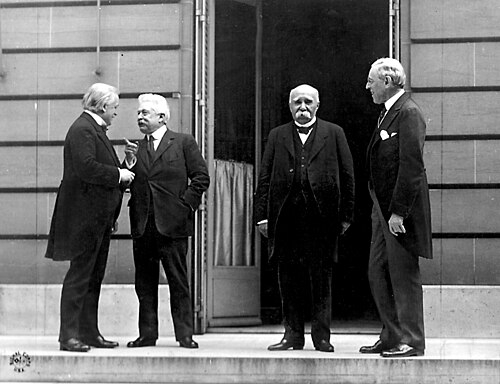
Peace terms were imposed by the Big Four, meeting in Paris in 1919: David Lloyd George of Britain, Vittorio Orlando of Italy, Georges Clemenceau of France, and Woodrow Wilson of the United States. Clemenceau demanded the harshest terms and won most of them in the Treaty of Versailles in 1919. Germany was forced to admit its guilt for starting the war, and was permanently weakened militarily. Germany had to pay huge sums in war reparations to the Allies (who in turn had large loans from the U.S. to pay off).[96]
France regained Alsace-Lorraine and occupied the German industrial Saar Basin, a coal and steel region. The German African colonies were put under League of Nations mandates, and were administered by France and other victors. From the remains of the Ottoman Empire, France acquired the Mandate of Syria and the Mandate of Lebanon.[96] French Marshal Ferdinand Foch wanted a peace that would never allow Germany to be a threat to France again, but after the Treaty of Versailles was signed he said, "This is not a peace. It is an armistice for 20 years."[97]
Interwar years: Foreign policy and Great Depression
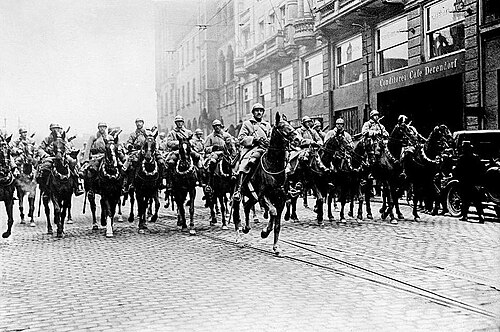
France was part of the Allied force that occupied the Rhineland following the Armistice. Foch supported Poland in the Greater Poland Uprising and in the Polish–Soviet War and France also joined Spain during the Rif War. From 1925 until his death in 1932, Aristide Briand, as Prime Minister during five short intervals, directed French foreign policy, using his diplomatic skills and sense of timing to forge friendly relations with Weimar Germany as the basis of a genuine peace within the framework of the League of Nations. He realized France could neither contain the much larger Germany by itself nor secure effective support from Britain or the League.[98]
As a response to the Weimar Republic's default on its reparations in the aftermath of World War I, France occupied the industrial region of the Ruhr as a means of ensuring German payments. The intervention was a failure, and France accepted the international solution to the reparations issues, as expressed in the Dawes Plan and the Young Plan.[99]
Politically, the 1920s was dominated by the Right, with right-wing coalitions in 1919, 1926, and 1928, and later in 1934 and 1938.[100]
In the 1920s, France established an elaborate system of border defences called the Maginot Line, designed to fight off any German attack. The Line did not extend into Belgium, which Germany would exploit in 1940. Military alliances were signed with weak powers in 1920–21, called the "Little Entente".
The Great Depression affected France a bit later than other countries, hitting around 1931.[101] While the GDP in the 1920s grew at the very strong rate of 4.43% per year, the 1930s rate fell to only 0.63%.[102] The depression was relatively mild: unemployment peaked under 5%, the fall in production was at most 20% below the 1929 output; there was no banking crisis.[103]
In contrast to the mild economic upheaval, the political upheaval was enormous. Socialist Leon Blum, leading the Popular Front, brought together Socialists and Radicals to become Prime Minister from 1936 to 1937; he was the first Jew and the first Socialist to lead France.[104] The Communists in the Chamber of Deputies voted to keep the government in power, and generally supported the government's economic policies, but rejected its foreign policies. The Popular Front passed numerous labor reforms, which increased wages, cut working hours to 40 hours with overtime illegal and provided many lesser benefits to the working class such as mandatory two-week paid vacations. However, renewed inflation cancelled the gains in wage rates, unemployment did not fall, and economic recovery was very slow. The Popular Front failed in economics, foreign policy, and long-term stability: "Disappointment and failure was the legacy of the Popular Front."[105][106][107] At first the Popular Front created enormous excitement and expectations on the left—including very large scale sitdown strikes—but in the end it failed to live up to its promise. However, Socialists would later take inspiration from the attempts of the Popular Front to set up a welfare state.[108]
The government joined Britain in establishing an arms embargo during the Spanish Civil War (1936–1939). Blum rejected support for the Spanish Republicans because of his fear that civil war might spread to deeply divided France. Financial support in military cooperation with Poland was also a policy. The government nationalized arms suppliers, and dramatically increased its program of rearming the French military in a last-minute catch-up with the Germans.[109]
Appeasement of Germany, in cooperation with Britain, was the policy after 1936, as France sought peace even in the face of Hitler's escalating demands. Prime Minister Édouard Daladier refused to go to war against Germany and Italy without British support as Neville Chamberlain wanted to save peace at Munich in 1938.[110][111]
World War II


Germany's invasion of Poland in 1939 finally caused France and Britain to declare war against Germany. But the Allies did not launch massive assaults and instead kept a defensive stance: this was called the Phoney War in Britain or Drôle de guerre — the funny sort of war — in France. It did not prevent the German army from conquering Poland in a matter of weeks with its innovative Blitzkrieg tactics, also helped by the Soviet Union's attack on Poland.
When Germany had its hands free for an attack in the west, the Battle of France began in May 1940, and the same Blitzkrieg tactics proved just as devastating there. The Wehrmacht bypassed the Maginot Line by marching through the Ardennes forest. A second German force was sent into Belgium and the Netherlands to act as a diversion to this main thrust. In six weeks of savage fighting the French lost 90,000 men.[112][113]
Many civilians sought refuge by taking to the roads of France: some 2 million refugees from Belgium and the Netherlands were joined by between 8 and 10 million French civilians, representing a quarter of the French population, all heading south and west. This movement may well have been the largest single movement of civilians in history prior to the Partition of India in 1947.
Paris fell to the Germans on 14 June 1940, but not before the British Expeditionary Force was evacuated from Dunkirk, along with many French soldiers.
Vichy France was established on 10 July 1940 to govern the unoccupied part of France and its colonies. It was led by Philippe Pétain, the aging war hero of the First World War. Petain's representatives signed a harsh Armistice on 22 June, whereby Germany kept most of the French army in camps in Germany, and France had to pay out large sums in gold and food supplies. Germany occupied three-fifths of France's territory, leaving the rest in the southeast to the new Vichy government. However, in practice, most local government was handled by the traditional French officialdom. In November 1942 all of Vichy France was finally occupied by German forces. Vichy continued in existence but it was closely supervised by the Germans.[114][115]
The Vichy regime sought to collaborate with Germany, keeping peace in France to avoid further occupation although at the expense of personal freedom and individual safety. Some 76,000 Jews were deported during the German occupation, often with the help of the Vichy authorities, and murdered in the Nazis' extermination camps.[116]
Women in Vichy France
The French soldiers held as POWs and forced laborers in Germany throughout the war were not at risk of death in combat, but the anxieties of separation for their wives were high. The government provided them a modest allowance, but one in ten became prostitutes to support their families. It gave women a key symbolic role to carry out the national regeneration. It used propaganda, women's organizations, and legislation to promote maternity, patriotic duty, and female submission to marriage, home, and children's education.[117] Conditions were very difficult for housewives, as food and other necessities were in short supply. Divorce laws were made much more stringent, and restrictions were placed on the employment of married women. Family allowances that had begun in the 1930s were continued, and became a vital lifeline for many families; it was a monthly cash bonus for having more children. In 1942, the birth rate started to rise, and by 1945 it was higher than it had been for a century.[118]
Resistance
General Charles de Gaulle in London declared himself on BBC radio to be the head of a rival government in exile, and gathered the Free French Forces around him, finding support in some French colonies and recognition from Britain but not the United States. After the Attack on Mers-el-Kébir in 1940, where the British fleet destroyed a large part of the French navy, still under command of Vichy France, that killed about 1,100 sailors, there was nationwide indignation and a feeling of distrust in the French forces, leading to the events of the Battle of Dakar. Eventually, several important French ships joined the Free French Forces.[119] The United States maintained diplomatic relations with Vichy and avoided recognition of de Gaulle's claim to be the one and only government of France. Churchill, caught between the U.S. and de Gaulle, tried to find a compromise.[120][121]
Within France proper, the organized underground grew as the Vichy regime resorted to more strident policies in order to fulfill the enormous demands of the Nazis and the eventual decline of Nazi Germany became more obvious. They formed the Resistance.[122] The most famous figure of the French resistance was Jean Moulin, sent in France by de Gaulle in order to link all resistance movements; he was captured and tortured by Klaus Barbie (the "butcher of Lyon"). Increasing repression culminated in the complete destruction and extermination of the village of Oradour-sur-Glane at the height of the Battle of Normandy. On 10 June 1944, a company of the 2nd SS Panzer Division, entered Oradour-sur-Glane, and massacred 642 men, women and children, all of whom were civilians. In 1953, 21 men went on trial for the Oradour killings; all but one were pardoned by the French government.[citation needed]

On 6 June 1944, the Allies landed in Normandy, without a French component. On 15 August Allied forces landing in Provence, this time including 260,000 men of the French First Army. The German lines finally broke, and they fled back to Germany while keeping control of the major ports. Allied forces liberated France and the Free French were given the honor of liberating Paris in late August. The French army recruited French Forces of the Interior (de Gaulle's formal name for resistance fighters) to continue the war until the final defeat of Germany; this army numbered 300,000 men by September, and 370,000 by spring 1945.[123]
The Vichy regime disintegrated. An interim Provisional Government of the French Republic was quickly put into place by de Gaulle. The gouvernement provisoire de la République française, or GPRF, operated under a tripartisme alliance of communists, socialists, and democratic republicans. The GPRF governed France from 1944 to 1946, when it was replaced by the French Fourth Republic. Tens of thousands of collaborators were executed without trial. The new government declared the Vichy laws unconstitutional and illegal, and elected new local governments. Women gained the right to vote.
Since 1945
The political scene in 1944–45 was controlled by the Resistance, but it had numerous factions. Charles de Gaulle and the Free France element had been based outside France, but now came to dominate, in alliance with the Socialists, the Christian Democrats (MRP), and what remained of the Radical party. The Communists had largely dominated the Resistance inside France, but cooperated closely with the government in 1944–45, on orders from the Kremlin. There was a general consensus that important powers that had been an open collaboration with the Germans should be nationalized, such as Renault automobiles and the major newspapers. A new Social Security system was called for, as well as important new concessions to the labour unions. Unions themselves were divided among communist, Socialist, and Christian Democrat factions.[124] Frustrated by his inability to control all the dominant forces, de Gaulle resigned in 1946.[125] On 13 October 1946, a new constitution established the Fourth Republic. The Fourth Republic consisted of a parliamentary government controlled by a series of coalitions. France attempted to regain control of French Indochina but was defeated by the Viet Minh in 1954. Only months later, France faced another anti-colonialist conflict in Algeria and the debate over whether or not to keep control of Algeria, then home to over one million European settlers,[126] wracked the country and nearly led to a coup and civil war.[127] Charles de Gaulle managed to keep the country together while taking steps to end the war. The Algerian War was concluded with the Évian Accords in 1962 which led to Algerian independence.
The June 1951 elections saw a re-emergence of the right, and until June 1954 France was governed by a succession of centre-right coalitions.[128]
Economic recovery
Wartime damage to the economy was severe, and apart from gold reserves, France had inadequate resources to recover on its own. The transportation system was in total shambles — the Allies had bombed out the railways and the bridges, and the Germans had destroyed the port facilities. Energy was in extremely short supply, with very low stocks of coal and oil. Imports of raw materials were largely cut off, so most factories shut down. The invaders had stripped most of the valuable industrial tools for German factories. Discussions with the United States for emergency aid dragged on, with repeated postponements on both sides. Meanwhile, several million French prisoners of war and forced labourers were being returned home, with few jobs and little food available for them. The plan was for 20 percent of German reparations to be paid to France, but Germany was in much worse shape even in France, and in no position to pay.[129]
After de Gaulle left office in January 1946, the diplomatic logjam was broken in terms of American aid. The U.S. Army shipped in food, from 1944 to 1946, and U.S. Treasury loans and cash grants were disbursed from 1945 until 1947, with Marshall Plan aid continuing until 1951. France received additional aid from 1951 to 1955 in order to help the country in its war in Indochina. Apart from low-interest loans, the other funds were grants that did not involve repayment. The debts left over from World War I, whose payment had been suspended since 1931, were renegotiated in the Blum-Byrnes agreement of 1946. The United States forgave all $2.8 billion in debt from the First World War, and gave France a new loan of $650 million. In return, French negotiator Jean Monnet set out the French five-year plan for recovery and development.[130] The Marshall Plan gave France $2.3 billion with no repayment. The total of all American grants and credits to France from 1946 to 1953, amounted to $4.9 billion.[131]
A central feature of the Marshall Plan was to encourage international trade, reduce tariffs, lower barriers, and modernize French management. The Marshall Plan set up intensive tours of American industry. France sent missions of businessmen and experts to tour American factories, farms, stores and offices. They were especially impressed with the prosperity of American workers, and how the price of vehicles.[132] Some French businesses resisted Americanization, but the most profitable, especially chemicals, oil, electronics, and instrumentation, seized upon the opportunity to attract American investments and build a larger market.[133] The U.S. insisted on opportunities for Hollywood films, and the French film industry responded with new life.[134]
Although the economic situation in France was grim in 1945, resources did exist and the economy regained normal growth by the 1950s.[135] France managed to regain its international status thanks to a successful production strategy, a demographic spurt, and technical and political innovations. Conditions varied from firm to firm. Some had been destroyed or damaged, nationalized or requisitioned, but the majority carried on, sometimes working harder and more efficiently than before the war. Despite strong American pressure through the ERP, there was little change in the organization and content of the training for French industrial managers. This was mainly due to the reticence of the existing institutions, and the struggle among different economic and political interest groups for control over efforts to improve the further training of practitioners.[136]
The Monnet Plan provided a coherent framework for economic policy, and it was strongly supported by the Marshall Plan. It was inspired by moderate, Keynesian free-trade ideas rather than state control. Although relaunched in an original way, the French economy was about as productive as comparable West European countries.[137]
Claude Fohlen argues that without the Marshall Plan, France's economic recovery would have been a much slower process.[138]
Vietnam and Algeria
Pierre Mendès France, was a Radical party leader who was Prime Minister for eight months in 1954–55, working with the support of the Socialist and Communist parties. His top priority was ending the deadly war in Indochina in the wake of the humiliating defeat at the Battle of Dien Bien Phu.[139] The U.S. had paid most of the costs of the war, but its support inside France had collapsed. In February 1954, only 7% of the French people wanted to continue the fight to keep Indochina out of Ho Chi Minh and his Viet Minh movement.[140] At the Geneva Conference in July 1954, Pierre France made a deal that gave the Viet Minh control of Vietnam north of the 17th parallel, and allowed France to pull out all its forces.[141] That left South Vietnam standing alone, and the U.S. would prove support for it afterwards.[142] Pierre France next came to an agreement with Habib Bourguiba, the nationalist leader in Tunisia, for the independence of that colony by 1956, and began discussions with Moroccan nationalists for a French withdrawal.[143]
With over a million European residents in Algeria (the Pieds-Noirs), France refused to grant independence until the Algerian War of Independence had turned into a French political and civil crisis. Algeria was given its independence in 1962, unleashing a massive wave of immigration from the former colony back to France of both Pied-Noir and Algerians who had supported France.[144][145][146]
Suez crisis (1956)

In 1956, another crisis struck French colonies, this time in Egypt. The Suez Canal, having been built by the French government, belonged to the French Republic and was operated by the Compagnie universelle du canal maritime de Suez. Great Britain had bought the Egyptian share from Isma'il Pasha and was the second-largest owner of the canal before the crisis.
The Egyptian President Gamal Abdel Nasser nationalized the canal despite French and British opposition; he determined that a European response was unlikely. Great Britain and France attacked Egypt and built an alliance with Israel against Nasser. Israel attacked from the east, Britain from Cyprus and France from Algeria. Egypt was defeated in a mere few days. The Suez crisis caused an outcry of indignation in the Arab world, and Saudi Arabia set an embargo on oil on France and Britain. U.S. President Dwight D. Eisenhower forced a ceasefire; Britain and Israel soon withdrew, leaving France alone in Egypt. Under strong international pressures, the French government ultimately evacuated its troops from Suez and largely disengaged from the Middle East.[147]
President de Gaulle, 1958–1969
The May 1958 seizure of power in Algiers by French army units and French settlers opposed to concessions in the face of Arab nationalist insurrection ripped apart the unstable Fourth Republic. The National Assembly brought De Gaulle back to power during the May 1958 crisis. He founded the Fifth Republic with a strengthened presidency, and he was elected in the latter role. He managed to keep France together while taking steps to end the war, much to the anger of the Pieds-Noirs (Frenchmen settled in Algeria) and the military; both had supported his return to power to maintain colonial rule. He granted independence to Algeria in 1962 and progressively to other French colonies.[148]
Proclaiming grandeur essential to the nature of France, de Gaulle initiated his "Politics of Grandeur."[149][150] He demanded complete autonomy for France in world affairs, which meant that major decisions could not be forced upon it by NATO, the European Community or anyone else. De Gaulle pursued a policy of "national independence." He vetoed Britain's entry into the Common Market, fearing it might gain too great a voice on French affairs.[151] While not officially abandoning NATO, he withdrew from its military integrated command, fearing that the United States had too much control over NATO.[152] He launched an independent nuclear development program that made France the fourth nuclear power. France then adopted the dissuasion du faible au fort doctrine which meant a Soviet attack on France would only bring total destruction to both sides.[153]

He restored cordial Franco-German relations in order to create a European counterweight between the "Anglo-Saxon" (American and British) and Soviet spheres of influence. De Gaulle openly criticised the U.S. intervention in Vietnam.[154] He was angry at American economic power, especially what his Finance minister called the "exorbitant privilege" of the U.S. dollar.[155]
In May 1968, he appeared likely to lose power amidst widespread protests by students and workers, but persisted through the crisis with backing from the army. His party, denouncing radicalism, won the 1968 election with an increased majority in the Assembly.[156] Nonetheless, de Gaulle resigned in 1969 after losing a referendum in which he proposed more decentralization. His War Memoirs became a classic of modern French literature and many French political parties and figures claim the gaullist heritage.
Economic crises: 1970s-1980s
By the late 1960s, France's economic growth, while strong, was beginning to lose steam. A global currency crisis meant a devaluation of the Franc against the West German Mark and the U.S. Dollar in 1968, which was one of the leading factors for the social upheaval of that year. Industrial policy was used to bolster French industries.[157]
The Trente Glorieuses era (1945–1975) ended with the worldwide 1973 oil crisis, which increased costs in energy and thus on production. Economic instability marked the Giscard d'Estaing government (1974–1981). Giscard turned to Prime Minister Raymond Barre in 1976, who advocated numerous complex, strict policies ("Barre Plans"). The plans included a three-month price freeze; wage controls; salary controls; a reduction of the growth in the money supply; increases in taxes and bank rates but a reduction in the value-added tax; measures to restore the trade balance; limits on expensive oil imports; special aid to exports; an action fund to aid industries; increased financial aid to farmers; and social security. The package was not very popular, but was pursued with vigour.[158][159]
Economic troubles continued into the presidency of François Mitterrand. A recession in the early 1980s led to the abandonment of dirigisme, in favour of a more pragmatic approach to economic intervention.[160] Growth resumed later in the decade, only to be slowed down by the economic depression of the early 1990s, which affected the Socialist Party.[161]
France's recent economic history has been less turbulent than in many other countries. The average income in mid-century grew by 0.9% per year, a rate which has been outdone almost every year since 1975. By the early 1980s, for instance, wages in France were on or slightly above the EEC average.[162]
1989 to 2017
After the fall of the USSR and the end of the Cold War, potential menaces to mainland France appeared considerably reduced. France began reducing its nuclear capacities and conscription was abolished in 2001. In 1990, France, led by Mitterrand, joined the short successful Gulf War against Iraq; the French participation to this war was called the Opération Daguet.[163]
Jacques Chirac assumed office after a campaign focused on the need to combat France's high unemployment rate.[citation needed] The economy became strengthened.[161] French leaders increasingly tied the future of France to the continued development of the European Union (EU). In 1992, France ratified the Maastricht Treaty establishing the EU. In 1999, the Euro was introduced to replace the Franc. France also became involved in joint European projects such as Airbus, the Galileo positioning system and the Eurocorps.[citation needed]
The French stood among the strongest supporters of NATO and EU policy in the Balkans, to prevent genocide in former Yugoslavia; French troops joined the 1999 NATO bombing of the country. France became actively involved in fighting against international terrorism. In 2002, Alliance Base, an international Counterterrorist Intelligence Center, was secretly established in Paris. France contributed to the toppling of the Taliban regime in Afghanistan, but it strongly rejected the 2003 invasion of Iraq, even threatening to veto the US proposed resolution.[citation needed]
.jpg/500px-Emmanuel_Macron_and_Angela_Merkel_(Frankfurter_Buchmesse_2017).jpg)
Jacques Chirac was reelected in 2002,[164] and became a fierce opponent of the Iraq invasion.[165] Conservative Nicolas Sarkozy was elected and took office in 2007.[166] Sarkozy was very actively involved in the military operation in Libya to oust the Gaddafi government in 2011.[167] After 2005, the world economy stagnated, and the 2008 global crisis (including its effects in both the Eurozone and France) dogged Sarkozy, who lost reelection in 2012 against Socialist Francois Hollande.[161]
Hollande advocated a growth policy in contrast to the austerity policy advocated by Germany's Angela Merkel as a way of tackling the European sovereign debt crisis. In 2014, Hollande stood with Merkel and U.S. President Barack Obama in imposing sanctions on Russia for its actions against Ukraine. In 2016, Hollande announced he would not seek re-election as president of France.[168]
Muslim tensions
At the close of the Algerian war, hundreds of thousands of Muslims, including some who had supported France (Harkis), settled permanently in France, especially in the larger cities where they lived in subsidized public housing, and suffered very high unemployment rates.[169] In 2005, the predominantly Arab-immigrant suburbs of many French cities erupted in riots by socially alienated teenagers.[170][171] Traditional interpretations say these race riots were spurred by radical Muslims or unemployed youth. Another view states that the riots reflected a broader problem of racism and police violence in France.[172] In 2009, there were more riots.[citation needed]

In 2015, The New York Times summarized an ongoing conflict France's secular and individualist values, and a growing Muslim conservatism.[173] In 1994, Air France Flight 8969 was hijacked by terrorists; they were captured. In 2012, a Muslim radical shot three French soldiers and four Jewish citizens in Toulouse and Montauban.[citation needed] In January 2015, the satirical newspaper Charlie Hebdo and a Jewish grocery store came under attack from some angered Muslims in Paris. World leaders rallied to Paris to show their support for free speech.[173] There were more terrorist attacks afterwards, including another series of attacks in Paris in November 2015, and a truck attack in Nice in 2016.[citation needed]
2017 to present
Sophie Meunier in 2017 questioned whether France was still relevant in world affairs, saying decolonization diminished its terroritorial holdings, and that France's message of "universal values" had encountered greater resistance in many countries. However, France still had military importance, and lead the Paris Agreement climate change accord.[174]
In the 2017 election for president the winner was Emmanuel Macron, the founder of a new party "La République En Marche!" (later Renaissance RE). It declared itself above left and right. He called parliamentary elections that brought him the absolute majority of députés. He appointed a prime minister from the centre right, and ministers from both the centre left and centre right.[175]
In the 2022 presidential election president Macron was re-elected after beating his far-right rival, Marine Le Pen, in the runoff.[176] He was the first re-elected incumbent French president since 2002.[177]
The problem of high unemployment has yet to be resolved.[167]
See also


- Annales School, historiography
- Demographics of France, For population history
- Economic history of France
- Foreign relations of France, Since the 1950s
- French colonial empire
- History of French foreign relations, To 1954
- International relations, 1648–1814
- International relations of the Great Powers (1814–1919)
- International relations (1919–1939).
- Diplomatic history of World War I
- Diplomatic history of World War II
- Cold War
- International relations since 1989
- French law
- French peasants
- French Revolution
- History of French journalism
- History of Paris
- Legal history of France
- List of French monarchs
- Military history of France
- Politics of France
- Revue d'histoire moderne et contemporaine
- Territorial evolution of France
- Timeline of French history
- Women in France
- Turkish Airlines Flight 981, where a DC-10 crashed into a French forest (Ermenonville Forest) in Northern France.
References
- ^ Jones, Tim (17 December 2009). "Lithic Assemblage Dated to 1.57 Million Years Found at Lézignan-la-Cébe, Southern France". Anthropology.net. Archived from the original on 2 January 2010. Retrieved 21 June 2012.
- ^ "Ancient skulls trace Neanderthal evolution". Australian Broadcasting Corporation. 19 June 2014. Archived from the original on 17 June 2022. Retrieved 26 July 2015.
- ^ Wilford, John Noble (2 November 2011). "Fossil Teeth Put Humans in Europe Earlier Than Thought". The New York Times. Archived from the original on 15 November 2012.
- ^ Edwards, I. E. S.; et al., eds. (1970). The Cambridge Ancient History. Cambridge University Press. p. 754. ISBN 978-0-5210-8691-2.
- ^ Orrieux, Claude; Schmitt Pantel, Pauline (1999). A History of Ancient Greece. Wiley. p. 62. ISBN 978-0-6312-0309-4.
- ^ Carpentier, Jean; Lebrun, François; Carpentier, Élisabeth (2000). Histoire de France (in French). Éditions du Seuil. p. 29. ISBN 978-2-0201-0879-9.
- ^ "Provence". Britannica.com. Archived from the original on 5 September 2015. Retrieved 19 January 2017.
- ^ Brown, Clifford M. (11 May 2015). "Gaul". In de Grummond, Nancy Thomson (ed.). Encyclopedia of the History of Classical Archaeology. Routledge. p. PT453. ISBN 978-1-1342-6861-0. OCLC 908993379.
founding of Massalia (Marseilles) in 600 B.C.
- ^ Jones & Ladurie (1999), pp. 29–30.
- ^ Heather, P. J. (2007). The Fall of the Roman Empire: A New History of Rome and the Barbarians.
- ^ a b James, Edward (1981). The Franks.
- ^ Wilson, Derek (2007). Charlemagne.
- ^ Van Houts, Elisabeth M. C. (2000). The Normans in Europe. Manchester University Press. p. 23. ISBN 978-0-7190-4751-0.
- ^ a b Duby (1993).
- ^ Carpenter, David. The Struggle for Mastery: Britain, 1066-1284. Penguin History of Britain. p. 91.
- ^ A BRIEF HISTORY OF THE RECONQUISTA (718-1492 AD): CONQUEST, REPOPULATION AND LAND DISTRIBUTION By: Francisco J. Beltrán Tapia, Alfonso Díez-Minguela, Julio Martínez-Galarraga, and Daniel A. Tirado Fabregat. Quote: "In the cities, especially Zaragoza, the repopulation was supplemented with settlers from abroad, mainly of French origin, whose economic activity in many cases was crafted products and trade (Vicens Vives 1964, p.146)."(Page 14)
- ^ The French Presence in the Spanish Military By: Benito Tauler Cid
- ^ Perry, Marvin; et al. (2008). Western Civilization: Ideas, Politics, and Society: To 1789. Cengage Learning. p. 235. ISBN 978-0-5471-4742-0.
- ^ a b c Kibler, William W., ed. (1995). Medieval France: An Encyclopedia.
- ^ Hallam, Elizabeth M. (1980). Capetian France 987-1328. Longman. p. 64. ISBN 978-0-5824-8909-7.
Then, in 1151, Henry Plantagenet paid homage for the duchy to Louis VII in Paris, homage he repeated as king of England in 1156.
- ^ Frankl, Paul (2001). Gothic Architecture.
- ^ Hallam (1980), p. 264.
- ^ Goubert, Pierre (1973). The Ancien Régime. pp. 2–9.
- ^ a b Baumgartner, Frederick J. (1995). France in the Sixteenth Century. pp. 4–7.
- ^ Collins, James B. (1991). "Geographic and Social Mobility in Early-modern France". Journal of Social History. 24 (3): 563–577. doi:10.1353/jsh/24.3.563. ISSN 0022-4529. JSTOR 3787815. For the Annales interpretation see Goubert, Pierre (1986). The French Peasantry in the Seventeenth Century.
- ^ Santayana, George; Holzberger, William G. (31 July 2008). The letters of George Santayana. Vol. 1948–1952, Book 8. MIT Press. p. 299. ISBN 978-0-2621-9571-3.
- ^ Wernham, R. B. (1968). The New Cambridge Modern History. Vol. 3. CUP Archive. pp. 91–93. ISBN 978-0-5210-4543-8.
- ^ Parker, T.H.L. (2006) [1975]. John Calvin: A Biography. pp. 161–164. ISBN 978-0-7459-5228-4.
- ^ Holt, Mack P. (2005). The French Wars of Religion, 1562–1629 (2nd ed.). Cambridge University Press. ISBN 978-1-1394-4767-6.
- ^ Elliott, J. H. (1991). Richelieu and Olivares. Cambridge University Press. pp. 100+. ISBN 978-0-5214-0674-1.
- ^ Sparks, Randy J.; Van Ruymbeke, Bertrand (2003). Memory and Identity: The Huguenots in France and the Atlantic Diaspora. Univ of South Carolina Press. ISBN 978-1-5700-3484-8.
- ^ a b c Wilson, Peter H. (2009). Europe's Tragedy: A History of the Thirty Years' War. Harvard University Press. ISBN 978-0-6740-3634-5.
- ^ Hodson, Christopher; Rushforth, Brett (January 2010). "Absolutely Atlantic: Colonialism and the Early Modern French State in Recent Historiography". History Compass. 8 (1): 101–117. doi:10.1111/j.1478-0542.2009.00635.x.
- ^ Greer, Allan (2010). "National, Transnational, and Hypernational Historiographies: New France Meets Early American History". Canadian Historical Review. Project MUSE. 91 (4): 695–724. doi:10.3138/chr.91.4.695.
- ^ a b Vincze, Gabor. "Count Miklós Zrínyi, the Poet-Warlord". The Balkans In Our Eyes. Archived from the original on 3 January 2009.
- ^ a b c d e Wolf (1968).
- ^ a b c Ó Gráda, Cormac; Chevet, Jean-Michel (2002). "Famine And Market In 'Ancient Régime' France" (PDF). The Journal of Economic History. 62 (3): 706–733. doi:10.1017/S0022050702001055. hdl:10197/368. PMID 17494233. S2CID 8036361.
- ^ Simcox, Geoffrey, ed. (1974). War, Diplomacy, and Imperialism, 1618–1763. Macmillan. pp. 236–237. ISBN 978-0-3331-6633-8.
- ^ Simcox (1974), pp. 237, 242.
- ^ a b Le Roy Ladurie (1999).
- ^ a b Marston, Daniel (2001). The Seven Years' War.
- ^ Dull, Jonathan R. (1985). A Diplomatic History of American Revolution.
- ^ Reill, Peter Hanns; Wilson, Ellen Judy (2004). Encyclopædia of the Enlightenment (2nd ed.).
- ^ Comsa, Maria Teodora; et al. (2016). "The French Enlightenment Network". Journal of Modern History. 88 (3): 495–534. doi:10.1086/687927. S2CID 151445740.
- ^ Wilson (1972).
- ^ Cronk, Nicholas, ed. (2009). The Cambridge Companion to Voltaire.
- ^ Roche (1998), Ch. 15.
- ^ Livesey 2001, p. 19.
- ^ Fehér 1990, pp. 117–130.
- ^ Strathern, Paul (2009). Napoleon in Egypt.
- ^ a b Nafziger (2002).
- ^ Aston, Nigel (2000). Religion and revolution in France, 1780–1804. p. 324.
- ^ a b Goetz, Robert P. (2005). 1805: Austerlitz: Napoleon and the Destruction of the Third Coalition.
- ^ Kagan, Frederick (2007) [2006]. The End of the Old Order: Napoleon and Europe, 1801–1805. Hachette Books. p. 141ff. ISBN 978-0-3068-1645-1.
- ^ Lefebvre (1969), pp. 1–32, 205–262.
- ^ Glover, Michael (1971). Legacy of Glory: The Bonaparte Kingdom of Spain, 1808–1813. Scribner. ISBN 978-0-6841-2558-9.
- ^ Tranié, J.; Carmigniani, Juan Carlos; Lachouque, Henry; de Beaufort, Louis (1994) [1982]. Napoleon's War in Spain: The French Peninsular Campaigns, 1807–1814. Arms and Armour Press. ISBN 978-0-8536-8506-7.
- ^ Lefebvre (1969), pp. 309–352.
- ^ Muir, Rory (1996). Britain and the Defeat of Napoleon, 1807–1815. Yale University Press. ISBN 978-0-3001-9757-0.
- ^ Roberts (2014), pp. 662–712.
- ^ Lefebvre (1969), pp. 353–372.
- ^ Stewart, John Hall (1968). The restoration era in France, 1814–1830. Van Nostrand. ISBN 978-0-8446-3013-7.
- ^ a b Goubert (1988), Chapter 14.
- ^ Sutherland, D. M. G. (2003) [2002]. The French Revolution and Empire: The Quest for a Civic Order. Wiley. pp. 329–333. ISBN 978-0-6312-3362-6.
- ^ Lefebvre (1969), pp. 171–179.
- ^ Sutherland (2003), pp. 336–372.
- ^ Barnard, Howard Clive (1969). Education and the French Revolution. Cambridge U.P. ISBN 978-0-5210-7256-4.
- ^ Bradley, Margaret (1976). "Scientific Education for a New Society The Ecole Polytechnique 1795–1830". History of Education. 5 (1): 11–24. doi:10.1080/0046760760050103.
- ^ Grab (2003).
- ^ Tombs (2014), p. 15.
- ^ Aldrich (1996).
- ^ Chafer, Tony (2002). The End of Empire in French West Africa: France's Successful Decolonization?. Berg Publishers. pp. 84–85. ISBN 978-1-8597-3557-2.
- ^ "Ferry, Jules". Tatamis.info (in French). Archived from the original on 25 August 2006. Retrieved 16 May 2006.
- ^ Evans, Martin (2004). Empire and Culture: The French Experience, 1830–1940.
- ^ Chafer (2002).
- ^ Stenner, David (2019). Globalizing Morocco: transnational activism and the post-colonial state. Stanford, California: Stanford University Press. p. 6. ISBN 978-1-5036-0900-6. OCLC 1082294927.
- ^ Aldrich, Robert (1996). Greater France: A History of French Overseas Expansion. pp. 304–305., His section on "Ending the Empire" closes in 1980 with the independence of New Hebrides
- ^ Spengler, Joseph J. (1938). France Faces Depopulation.
- ^ Huss, Marie-Monique (1990). "Pronatalism in the inter-war period in France". Journal of Contemporary History. 25 (1): 39–68. doi:10.1177/002200949002500102. JSTOR 260720. S2CID 162316833.
- ^ King, Leslie (1998). "'France needs children'". Sociological Quarterly. 39 (1): 33–52. doi:10.1111/j.1533-8525.1998.tb02348.x.
- ^ Dyer, Colin L. (1978). Population and Society in 20th Century France. Holmes & Meier Publishers. ISBN 978-0-8419-0308-1.
- ^ Jones (2004), p. 438.
- ^ Pison, Gilles (March 2006). "La population de la France en 2005" (PDF). Population et Sociétés (in French) (421): 1–4. doi:10.3917/popsoc.421.0001. S2CID 158055002.
- ^ Remak, Joachim (1971). "1914 — The Third Balkan War: Origins Reconsidered". Journal of Modern History. 43 (3): 354–366, quote at 354–355. doi:10.1086/240647. S2CID 222445579.
- ^ Herwig, Holger H. (2011) [2009]. The Marne, 1914: The Opening of World War I and the Battle That Changed the World. Random House Publishing. pp. 266–306. ISBN 978-0-8129-7829-2.
- ^ McPhail, Helen (2014). The Long Silence: The Tragedy of Occupied France in World War I. Bloomsbury Academic. ISBN 978-1-7845-3053-2.
- ^ Smith, Leonard V. (April 1995). "War and 'Politics': The French Army Mutinies of 1917". War in History. 2 (2): 180–201. doi:10.1177/096834459500200203. S2CID 154834826.
- ^ Neiberg, Michael S. (2008). The Second Battle of the Marne. Indiana University Press. ISBN 978-0-2533-5146-3.
- ^ Rudin, Harry (1944). Armistice, 1918. Yale University Press.
- ^ Hardach, Gerd (1977). The First World War: 1914–1918. University of California Press. pp. 87–88. ISBN 978-0-5200-3060-2.
- ^ McPhail (2014).
- ^ Hautcoeur, Pierre-Cyrille (2005). "Was the Great War a watershed? The Economics of World War I in France". In Broadberry, Stephen; Harrison, Mark (eds.). The Economics of World War I. Cambridge University Press. pp. 169–205. doi:10.1017/CBO9780511497339.007. ISBN 978-0-5218-5212-8.
- ^ Beaudry, Paul; Portier, Franck (2002). "The French depression in the 1930s". Review of Economic Dynamics. 5 (1): 73–99. doi:10.1006/redy.2001.0143.
- ^ Piketty (2014), pp. 339–345.
- ^ Piketty, Thomas (2018). Top Incomes in France in the Twentieth Century: Inequality and Redistribution, 1901–1998. pp. 101–148, 468–477.
- ^ a b Cohrs, Patrick O. (2006). The Unfinished Peace After World War I: America, Britain And the Stabilisation of Europe, 1919–1932. Cambridge University Press. p. 50. ISBN 978-1-1394-5256-4.
- ^ Henig, Ruth Beatrice (1995). Versailles and After, 1919–1933. p. 52. ISBN 978-0-2031-3430-6.
- ^ Weber, Eugen (1996). The Hollow Years: France in the 1930s. W. W. Norton & Company. p. 125. ISBN 978-0-3933-1479-3.
- ^ "The Dawes Plan, the Young Plan, German Reparations, and Inter-allied War Debts". Dept. of State, Office of the Historian. Retrieved 26 October 2023.
- ^ Coalition Governments in India Problems and Prospects Edited by Kotta P. Karunakaran, 1975, P.105
- ^ Laufenburger, Henry (1936). "France and the Depression". International Affairs. 15 (2): 202–224. doi:10.2307/2601740. JSTOR 2601740.
- ^ Dormois, Jean-Pierre (2004). The French Economy in the Twentieth Century. p. 31. doi:10.1017/CBO9780511616969. ISBN 978-0-5216-6092-1.
- ^ Beaudry, Paul; Portier, Franck (2002). "The French Depression in the 1930s". Review of Economic Dynamics. 5 (73–99): 73–99. doi:10.1006/redy.2001.0143.
- ^ Birnbaum, Pierre (2015). Léon Blum: Prime Minister, Socialist, Zionist. Yale University Press. ISBN 978-0-3002-1373-7.
- ^ Jackson, Julian (1988). Popular Front in France: Defending Democracy 1934–1938. Cambridge University Press. pp. 172, 215, 278–287, quotation on page 287. ISBN 978-0-5213-1252-3.
- ^ Johnson, Douglas (1970). "Léon Blum and the Popular Front". History Today. 55 (184): 199–206. doi:10.1111/j.1468-229X.1970.tb02493.x.
- ^ Bernard, Philippe; Dubief, Henri (1988). The Decline of the Third Republic, 1914–1938. Cambridge University Press. p. 328. ISBN 978-0-5213-5854-5.
- ^ Wall, Irwin M. (1987). "Teaching the Popular Front". History Teacher. 20 (3): 361–378. doi:10.2307/493125. JSTOR 493125.
- ^ Larkin, Maurice (1988). France since the Popular Front: Government and People, 1936–1986. Clarendon Press. pp. 45–62. ISBN 978-0-1987-3034-7.
- ^ Thomas, Martin (1996). Britain, France and Appeasement: Anglo-French Relations in the Popular Front Era. Berg Publishers. p. 137. ISBN 978-1-8597-3192-5.
- ^ Larkin (1988), pp. 63–81.
- ^ Blatt, Joel, ed. (1998). The French Defeat of 1940. Oxford.
- ^ Doughty, Robert A. (2014). The Breaking Point: Sedan and the Fall of France, 1940.
- ^ Paxton, Robert O. (1972). Vichy France, Old Guard and New Order, 1940-1944. Knopf. ISBN 978-0-3944-7360-4.
- ^ Jackson, Julian (2003). France: The Dark Years, 1940–1944. Oxford University Press. ISBN 978-0-1992-5457-6.
- ^ Marrus, Michael (1995). Vichy France and the Jews. Stanford University Press.
- ^ Diamond, Hanna (1999). Women and the Second World War in France 1939–1948: Choices and Constraints. Longman. ISBN 978-0-5822-9910-8.
- ^ Muel-Dreyfus, Francine; Johnson, Kathleen A. (2001). Vichy and the Eternal Feminine: A Contribution to a Political-Sociology of Gender. Duke University Press. ISBN 978-0-8223-2777-6.
- ^ Martin, Thomas (1997). "After Mers-el-Kébir: The Armed Neutrality of the Vichy French Navy, 1940–1943". English Historical Review. 112 (447): 643–670. JSTOR 576348.
- ^ Viorst, Milton (1967). Hostile allies: FDR and Charles de Gaulle.
- ^ Haglund, David G. (2007). "Roosevelt as 'Friend of France'—But Which One?". Diplomatic history. 31 (5): 883–908. doi:10.1111/j.1467-7709.2007.00658.x.
- ^ Kedward, H. R. (1993). In Search of the Maquis. Clarendon Press. ISBN 978-0-1915-9178-5.
- ^ Funk, Arthur Layton (1959). Charles de Gaulle: The Crucial Years, 1943–1944.
- ^ Ross, George (1982). Workers and Communists in France: From Popular Front to Eurocommunism. Berkeley: University of California Press. pp. 20–25. ISBN 978-0-5200-4075-5.
- ^ Fenby, Jonathan (2010). The General: Charles de Gaulle and The France He Saved. London: Simon & Schuster. ISBN 978-1-8473-7392-2.
- ^ Kimmelman, Michael (4 March 2009). "In France, a War of Memories Over Memories of War". The New York Times. Archived from the original on 30 April 2011.
- ^ Crozier, Brian; Mansell, Gerard (July 1960). "France and Algeria". International Affairs. 36 (3): 310–321. doi:10.2307/2610008. JSTOR 2610008. S2CID 153591784.
- ^ France Since 1815 By Martin Evans, Emmanuel Godin, 2014, P.137
- ^ Footitt, Hilary; Simmonds, John (1988). France, 1943–1945. Leicester University Press. pp. 215–227. ISBN 978-0-7185-1231-6.
- ^ Wall, Irwin M. (1991). The United States and the Making of Postwar France, 1945–1954. Cambridge University Press. p. 55. ISBN 978-0-5214-0217-0.
- ^ Statistical Abstract of the United States: August 1954 (Report). U.S. Bureau of the Census. 1955. p. 899. Table 1075.
- ^ Kuisel, Richard F. (1993). Seducing the French: The Dilemma of Americanization. University of California Press. pp. 70–102. ISBN 978-0-5200-7962-5.
- ^ Kuo, Laureen (2017). "Improving French Competitiveness through American Investment following World War II". Business History Review. 91 (1): 129–155. doi:10.1017/S0007680517000605. S2CID 157255687.
- ^ Le Forestier, Laurent (2004). "L'accueil en France des films américains de réalisateurs français à l'époque des accords Blum-Byrnes" [The reception in France of American films by French directors during the Blum-Byrnes agreements]. Revue d'histoire moderne et contemporaine (in French). 51–4 (4): 78–97. doi:10.3917/rhmc.514.0078.
- ^ Fohlen, Claude (1976). "France, 1920–1970". In Cipolla, Carlo M. (ed.). The Fontana Economic History of Europe: Vol.6 Part 1: Contemporary Economies, part 1. Fontana. pp. 72–127. ISBN 978-0-0063-4261-8.
- ^ Hill, John S. (1992). "American Efforts to Aid French Reconstruction Between Lend-Lease and the Marshall Plan". Journal of Modern History. 64 (3): 500–524. doi:10.1086/244513. JSTOR 2124596. S2CID 144892957.
- ^ Mioche, Philippe (1998). "Le Demarrage de l'economie Française au lendemain de la Guerre" [Restarting the French Economy after the War]. Historiens et Géographes (in French). 89 (361): 143–156. ISSN 0046-757X.
- ^ Fohlen, Claude. France. pp. 102–103.
- ^ Windrow, Martin (2013). The French Indochina War 1946–54. Osprey Publishing. ISBN 978-1-4728-0430-3.
- ^ Larkin, Maurice (1997). France since the Popular Front: Government and People 1936–1996 (2nd revised ed.). Clarendon Press. pp. 240–241. ISBN 978-0-1987-3151-1.
- ^ Young, Kenneth T. (1968). The 1954 Geneva Conference: Indo-China and Korea. Greenwood Press.
- ^ Christensen, Thomas J. (2011). Worse Than a Monolith: Alliance Politics and Problems of Coercive Diplomacy in Asia. Princeton University Press. pp. 123–125. ISBN 978-1-4008-3881-3.
- ^ Werth, Alexander (1957). The Strange History of Pierre Mendès France and the Great Conflict over French North Africa. London: Barrie Books.
- ^ Evans, Martin (2011). Algeria: France's Undeclared War. Oxford: Oxford University Press. ISBN 978-0-1928-0350-4.
- ^ McDougall, James (December 2017). "The Impossible Republic: The Reconquest of Algeria and the Decolonization of France, 1945–1962". The Journal of Modern History. 89 (4): 772–811. doi:10.1086/694427. S2CID 148602270.
- ^ Shepard, Todd (2006). The Invention of Decolonization: The Algerian War and the Remaking of France. Ithaca, NY: Cornell University Press. ISBN 978-0-8014-4360-2.
- ^ Gorst, Anthony & Johnman, Lewis (2013). The Suez Crisis. London: Routledge. ISBN 978-1-1350-9728-8.
- ^ Horne, Alistair (2006). A Savage War of Peace: Algeria 1954–1962 (4th ed.). New York: New York Review Books. ISBN 978-1-5901-7218-6.
- ^ Kolodziej, Edward A. (1974). French International Policy under de Gaulle and Pompidou: The Politics of Grandeur. Ithaca, NJ: Cornell University Press. p. 618.
- ^ On his presidency, see Fenby, Jonathan (2010). The General: Charles De Gaulle and the France He Saved. Skyhorse. pp. 380–626. ISBN 978-1-6208-7447-9.
- ^ Kulski, W. W. (1966). De Gaulle and the World: The Foreign Policy of the Fifth French Republic. Syracuse University Press. p. 239 ff. OL 5995988M.
- ^ Kulski (1966), p. 176.
- ^ Hecht, Gabrielle (2009). The Radiance of France: Nuclear Power and National Identity after World War II. MIT Press. pp. 7–9. ISBN 978-0-2622-6617-8.
- ^ "De Gaulle urges the United States to get out of Vietnam". History.com. Archived from the original on 8 March 2010. Retrieved 26 July 2015.
- ^ Eichengreen, Barry (2011). Exorbitant Privilege: The Rise and Fall of the Dollar and the Future of the International Monetary System. Oxford University Press. p. 4. ISBN 978-0-1997-8148-5.
- ^ Seidman, Stephen (2004). The Imaginary Revolution: Parisian Students and Workers in 1968. New York City: Berghahn Books. ISBN 978-1-5718-1675-7.
- ^ Maclean, Mairi (2002). Economic Management and French Business: From de Gaulle to Chirac. London: Palgrave Macmillan. ISBN 978-0-3337-6148-9.
- ^ Frears, J.R. (1981). France in the Giscard Presidency. London: George Allen & Unwin. p. 135. ISBN 978-0-0435-4025-1.
- ^ Hibbs, Douglas A. Jr; Vasilatos, Nicholas (1981). "Economics and Politics in France: Economic Performance and Mass Political Support for Presidents Pompidou and Giscard d'Estaing". European Journal of Political Research. 9 (2): 133–145. doi:10.1111/j.1475-6765.1981.tb00595.x.
- ^ Sachs, Jeffrey; Wyplosz, Charles (April 1986). "The economic consequences of President Mitterrand". Economic Policy. 1 (2): 261–306. doi:10.2307/1344559. JSTOR 1344559.
- ^ a b c Levy, Jonah; Cole, Alistair; Le Galès, Patrick (2008). "From Chirac to Sarkozy: A New France?". Developments in French Politics Vol.4. Basingstoke: Palgrave Macmillan. pp. 1–21. ISBN 978-0-2305-3700-2.
- ^ Card, David; Kramarz, Francis; Lemieux, Thomas (1996). "Changes in the relative structure of wages and employment: A comparison of the United States, Canada, and France" (PDF). The Canadian Journal of Economics. 32 (4): 843–877. doi:10.3386/w5487. S2CID 154902220. Archived from the original (PDF) on 30 July 2020. Retrieved 5 December 2020.
- ^ Short, Philip (2014). A Taste for Intrigue: The Multiple Lives of François Mitterrand. New York City: Henry Holt & Company. ISBN 978-0-8050-8853-3.
- ^ Noveck, Jocelyn (6 May 2002). "Chirac Wins Re-Election in France". AP News. Archived from the original on 6 May 2022.
- ^ "Jacques Chirac, French President Who Opposed U.S. Iraq War, Is Dead At 86". NPR.org. Archived from the original on 26 September 2019.
- ^ "Sarkozy is new French president". Al Jazeera. 6 May 2007. Archived from the original on 22 July 2022.
- ^ a b Grand, Camille (2015). "The French Experience". The French Experience: Sarkozy's War?. Precision and Purpose. RAND Corporation. pp. 183–204. ISBN 978-0-8330-8793-5. JSTOR 10.7249/j.ctt16f8d7x.13.
- ^ "France presidency: Francois Hollande decides not to run again". BBC News. 1 December 2016. Archived from the original on 1 December 2016.
- ^ Haddad, Yvonne Yazbeck; Balz, Michael J. (June 2006). "The October Riots in France: A Failed Immigration Policy or the Empire Strikes Back?". International Migration. 44 (2): 23–34. doi:10.1111/j.1468-2435.2006.00362.x.
- ^ "Special Report: Riots in France". BBC News. 9 November 2005. Archived from the original on 24 November 2005. Retrieved 17 November 2007.
- ^ Mucchielli, Laurent (May 2009). "Autumn 2005: A review of the most important riot in the history of French contemporary society". Journal of Ethnic and Migration Studies. 35 (5): 731–751. doi:10.1080/13691830902826137. S2CID 144434973.
- ^ Schneider, Cathy Lisa (March 2008). "Police Power and Race Riots in Paris". Politics & Society. 36 (1): 133–159. doi:10.1177/0032329208314802. S2CID 145068866. (Quote on p. 136.)
- ^ a b Erlangerjan, Steven (9 January 2015). "Days of Sirens, Fear and Blood: 'France Is Turned Upside Down'". The New York Times. Archived from the original on 10 January 2015.
- ^ Meunier, Sophie (2017). "Is France Still Relevant?". French Politics, Culture & Society. 35 (2): 59–75. doi:10.3167/fpcs.2017.350206. Quoting pp. 61–62.
- ^ Hewlett, Nick (2017). "The Phantom Revolution. The Presidential and Parliamentary Elections of 2017" (PDF). Modern & Contemporary France. 25 (4): 377–390. doi:10.1080/09639489.2017.1375643. S2CID 149200645.
- ^ Henley, Jon (24 April 2022). "What's in Emmanuel Macron's intray after his re-election as French president?". The Guardian. Archived from the original on 24 April 2022.
- ^ "France's re-elected president prepares for a tough second term". The Economist. 30 April 2022. Archived from the original on 28 April 2022.
Works cited
- Duby, Georges (1993). France in the Middle Ages 987–1460: From Hugh Capet to Joan of Arc.
- Fehér, Ferenc (1990). The French Revolution and the Birth of Modernity (1992 ed.). University of California Press. ISBN 978-0-5200-7120-9.
- Goubert, Pierre (1988). The Course of French History. ISBN 978-0-5311-5054-2.[dead link]
- Grab, Alexander (2003). Napoleon and the Transformation of Europe. Bloomsbury. ISBN 978-1-4039-3757-5.
- Jones, Colin; Ladurie, Emmanuel Le Roy (1999). The Cambridge Illustrated History of France. Cambridge University Press. ISBN 978-0-5216-6992-4.
- Jones, Colin (2004). Paris: Biography of a City.
- Le Roy Ladurie, Emmanuel (1999). The Ancien Régime: A History of France 1610–1774. Wiley. ISBN 978-0-6312-1196-9.
- Lefebvre, Georges (1969) [1936]. Napoleon: From Tilsit to Waterloo, 1807–1815. Routledge & K. Paul. ISBN 978-0-7100-8014-1.
- Livesey, James (2001). Making Democracy in the French Revolution. Harvard University Press. ISBN 978-0-6740-0624-9.
- Nafziger, George F. (2002). Historical Dictionary of the Napoleonic Era.
- Piketty, Thomas (2014). Capital in the Twenty-First Century. pp. 339–345.
- Roberts, Andrew (2014). Napoleon: A Life. Viking. pp. 662–712. ISBN 978-0-6700-2532-9.
- Roche, Daniel (1998). France in the Enlightenment.
- Tombs, Robert (2014). France 1814–1914. Routledge. ISBN 978-1-3178-7143-9.
- Wilson, Arthur (1972). Diderot. Vol. II: The Appeal to Posterity. Oxford University Press. ISBN 0-1950-1506-1.
- Wolf, John B. (1968). Louis XIV: A Profile. ISBN 978-1-3490-1470-5. OL 32357699W.
Further reading
- Agulhon, Maurice (1983). The Republican Experiment, 1848–1852. The Cambridge History of Modern France. Cambridge University Press. ISBN 978-0-5212-8988-7.
- Bury, John Patrick Tuer (1949). France, 1814–1940. University of Pennsylvania Press. Chapters 9–16.
- Doyle, William (1989). The Oxford History of the French Revolution.
- Gildea, Robert (2008). Children of the Revolution: The French, 1799–1914.
- Guérard, Albert (1959). France: A Modern History. Textbook Publishers. ISBN 978-0-7581-2078-6.
- Mayeur, Jean-Marie; Rebérioux, Madeleine (1984). The Third Republic from its Origins to the Great War, 1871–1914. Cambridge University Press. ISBN 978-2-7351-0067-5.
- Price, Roger (1987). A Social History of Nineteenth-Century France.
- Shirer, William L. (1969). The Collapse of the Third Republic. New York: Simon & Schuster.
- Shusterman, Noah (2013). The French Revolution Faith, Desire, and Politics. Routledge. ISBN 978-1-1344-5600-0.
- Taylor, A. J. P. (1954). The Struggle for Mastery in Europe: 1848–1918.
- Taylor, A. J. P. (1967). Europe: Grandeur and Decline.
- Weber, Eugen (1976). Peasants into Frenchmen: The Modernization of Rural France, 1870–1914. Stanford University Press. ISBN 978-0-8047-1013-8.
External links
Wikimedia Commons has media related to History of France.

Wikibooks has more on the topic of: History of France
- History of France, from Prehistory to Nowadays (in French + English translation)
- History of France, from Middle Ages to the 19th century (in French)
- History of France: Primary Documents (English interface)