
Loading article…
インドシナ連合 | |
|---|---|
| 1887–1946/1954 | |
| モットー: 「自由、平等、友愛」 「自由、平等、友愛」 | |
| 国歌: ラ・マルセイエーズ (「マルセイエーズ」) | |
フランス領インドシナ総督のベトナム風印章[b] | |
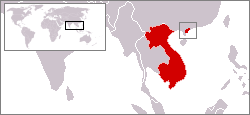 広州湾を含むフランス領インドシナの地図 | |
| 状態 | フランス植民地領土の連邦 |
| 資本 | |
| 共通言語 | フランス語(公用語) |
| 民族グループ (1936年)[2] | |
| 宗教 | |
| 異名 | インドシナ人 |
| メンバーシップ | [d] |
| 総督 | |
• 1887–1888 (最初) | エルネスト・コンスタンス |
• 1955–1956 (最後) | アンリ・オペノ[e] |
| 歴史時代 | 新しい帝国主義 |
| 1858–1885 | |
• フランス領コーチシナが設立 | 1862年10月17日 |
| 1899年4月19日 | |
• 広州湾の追加 | 1900年1月5日 |
• 日本占領 | 1940年9月22日 |
• 仏泰戦争 | 1940年10月 – 1941年5月 |
• 最初の廃止 | 1945年3月9日 |
• DRV宣言 | 1945年9月2日 |
• 再建 | 1945年9月13日 |
• インドシナ戦争 | 1946年12月19日 |
• 2度目の廃止 | 1946年10月27日 |
| エリア | |
• 合計 | 737,000 km 2 (285,000平方マイル) |
| 人口 | |
• 1900 | 15,164,500 |
• 1937 | 23,300,000 |
| 通貨 | フランス領インドシナピアストル |
| 今日の一部 | ベトナム ラオス カンボジア 中国 ∟湛江 |

![フランス領インドシナの国璽[a]](https://img-server.japedia.wiki/wikipedia/commons/thumb/f/ff/French_Indo-Chinese_version_of_the_Great_Seal_of_the_French_Republic_(Jean_Auguste_Barre).svg/500px-French_Indo-Chinese_version_of_the_Great_Seal_of_the_French_Republic_(Jean_Auguste_Barre).svg.png)
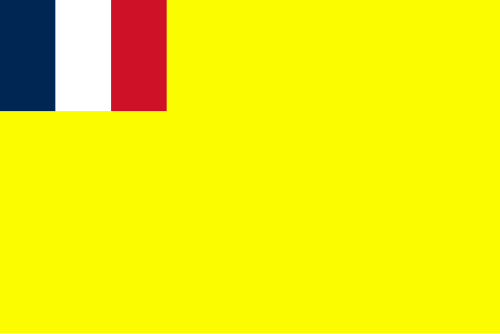
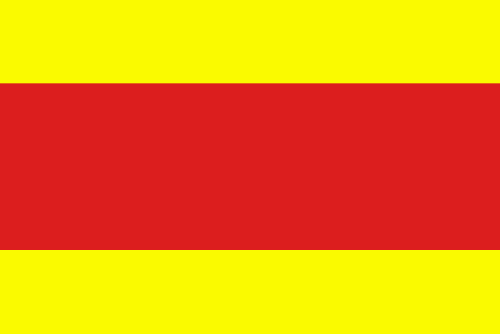
.svg/500px-Flag_of_Republic_of_Cochinchina_(variant).svg.png)
.svg/500px-Flag_of_Cambodia_(1863%E2%80%931948).svg.png)
.svg/500px-Flag_of_Laos_(1893%E2%80%931952).svg.png)

フランス領インドシナ(旧称:フランス領インドシナ) [a] [b]は、正式にはインドシナ連邦[c] [d]、1941年以降はインドシナ連邦[e]として知られ、1954年に消滅するまで東南アジア大陸にあったフランスの植民地地域の集まりであった。カンボジア、ラオス(1899年から)、中国領の広州湾(1898年から1945年)、および北部のトンキン、中央の安南、南部のコーチシナのベトナム地域から構成されていた。その歴史の大部分(1902年から1945年)の首都はハノイであり、1887年から1902年および1945年から1946年は サイゴンが首都であった。
フランス第二帝政は 1862年にコーチシナを併合し、 1863年にカンボジアに保護領を設置した。フランス第三共和政がトンキンの戦いでベトナム北部を占領した後、1887年にさまざまな保護領が1つの連邦に統合された。さらにラオス保護領と中国領の広州湾が連邦に編入された。フランスは統治中にこの地域の資源を搾取したが、この地域の医療および教育制度の改善にも貢献した。しかし、現地住民と入植者の間には深い溝が残り、現地住民による散発的な反乱につながった。第二次世界大戦中のフランス陥落後、この植民地はヴィシー政府によって管理され、 1945年3月に日本が植民地政権を打倒するまで日本軍の占領下にあった。日本軍が降伏した後、ホー・チ・ミン率いるベトミンはベトナムの独立を宣言したが、その後フランスはイギリスの支援を受けてフランス領インドシナの支配権を取り戻した。 1946年後半、フランス軍とベトミン軍の間で 第一次インドシナ戦争として知られる全面的な抵抗戦争が勃発した。
ベトミンに対抗するため、フランスは1949年にバオダイ元皇帝率いるベトナム国家の建国を宣言した。フランスのベトナム奪還の試みは失敗に終わり、ディエンビエンフーの戦いでの敗北に終わった。1953年10月22日と11月9日、ラオス王国とカンボジア王国はそれぞれ独立を宣言した。1954年のジュネーブ協定に従い、フランスはベトナムから撤退を余儀なくされ、ベトナムは(1976年まで)2国に分割され、フランス領インドシナは消滅した。
歴史
背景
フランスの最初の介入
フランスとベトナムの関係は、17世紀初頭、イエズス会宣教師アレクサンドル・ド・ロードの到着とともに始まった。この頃、ベトナムは「南進」、すなわち「ナムティエン」、メコンデルタの占領を始めたばかりだった。メコンデルタはクメール帝国の一部であり、規模は小さいが、1471年にベトナムが打ち負かしたチャンパ王国の領土でもあった。 [3]
18 世紀、イエズス会宣教師たちの目覚ましい成功が続いたため、ヨーロッパ人のベトナムへの関与は貿易に限られていた。1787 年、フランスのカトリック司祭ピエール・ピニョー・ド・ベアンはフランス政府に請願し、フランス軍の志願兵を組織して、タイソンに奪われた領土の奪還でグエン・アンを支援するよう要請した。ピニョーはベトナムで亡くなったが、彼の軍隊は 1802 年まで戦い続け、フランス軍のグエン・アン支援にあたった。
19世紀
フランスによるコーチシナの征服

フランス植民地帝国は19世紀にベトナムに深く関与した。フランスはしばしば、ベトナムにおけるパリ外国宣教会の活動を保護するために介入した。一方、阮朝はカトリック宣教師を政治的脅威とみなすようになった。例えば、王朝体制で影響力のある一派である娼婦たちは、一夫一婦制の強要に影響された社会における自分たちの地位を恐れていた。[4]
1858年、阮朝による短い統一の期間は、ナポレオン3世の命令を受けたフランスのシャルル・リゴー・ド・ジュヌイイ提督によるトゥーラン(現在のダナン)への攻撃の成功で終わりを告げた。攻撃の前に、フランスの外交官シャルル・ド・モンティニーの平和的解決への努力は失敗していた。他に手段がないと見て、フランスはベトナムのカトリック宣教師の迫害と追放を終わらせるために軍事的にジュヌイイを派遣した。[5]
フランスのガンシップ14隻、スペインから派遣されたフィリピン兵300人を含む3,300人の兵士[6]がトゥーラン港を攻撃し、大きな損害を与えて街を占領した。ベトナム軍と3か月間戦い、陸路でこれ以上前進できないと分かったジュヌイは、サイゴンへの別の攻撃を要請し、承認を得た[5] [7] 。
ジュヌイイはベトナム南部に航海し、1859年2月17日に防御の弱いサイゴン市を占領した。しかし、ジュヌイイとその軍はまたもや市の防衛線外の領土を奪取することができなかった。ジュヌイイはその行動を批判され、1859年11月にペイジ提督に交代し、領土拡大を控えつつベトナムにおけるカトリック信仰を保護する条約を締結するよう指示された。[5] [7]
和平交渉は失敗に終わり、サイゴンでの戦闘は続いた。最終的に1861年、フランス軍はサイゴン作戦にさらなる戦力を投入し、市外に進軍してメコンデルタの都市を占領し始めた。1862年6月5日、ベトナムは譲歩してサイゴン条約に署名し、カトリックの自由な信仰を合法化すること、メコンデルタとベトナム北部の紅河河口の3つの港で貿易を開始すること、ビエンホア、ジャディン、ディントゥオンの各省とポウロコンドール諸島をフランスに譲渡すること、および100万ドル相当の賠償金を支払うことに同意した。[8] [9] [10]
1864年、フランスに割譲された前述の3省は正式にフランス植民地コーチシナとなった。その後1867年、フランスのピエール・ド・ラ・グランディエール提督はベトナムに対し、チャウドック、ハティエン、ヴィンロンの3省の譲渡を強制した。この3省の譲渡により、ベトナム南部とメコンデルタ全域がフランスの支配下に入った。[9]
設立と初期の管理
1863年、カンボジア王ノロドムは、自国に対するフランスの保護領の設立を要請した。1867年、シャム(現在のタイ)はカンボジアに対する宗主権を放棄し、1863年のフランス保護領を正式に承認し、その代わりにバッタンバン県とシェムリアップ県の支配権を獲得した。この2県は正式にタイの一部となった。(これらの県は、1906年にフランスとシャムの間で締結された国境条約により、カンボジアに返還された。)[要出典]


フランスは清仏戦争(1884-85年)で中国に勝利した後、ベトナム北部の支配権を獲得した。フランス領インドシナは、1887年10月17日にアンナン、トンキン、コーチシナ(現在のベトナムを形成)とカンボジア王国から形成され、1893年の仏シャム危機後にラオスが追加された。[要出典]
連邦制は1954年7月21日まで続いた。4つの保護領では、フランスは形式上はベトナム皇帝、カンボジア王、ルアンパバーン王といった現地の支配者に権力を委ねていたが、実際には現地の支配者は名目上の指導者としてのみ行動し、すべての権力をフランスが掌握していた。[要出典]
からゆきさんと呼ばれる日本人女性は、19世紀後半にフランス領インドシナのハノイ、ハイフォン、サイゴンなどの都市に移住、あるいは人身売買され、ベトナムを占領していたフランス兵に売春婦として働いたり、性的サービスを提供したりした。フランス人は日本人女性を清らかだとみなしていたため、彼女たちの人気は高かった。[11] [12]ベトナムの日本人売春婦の写真は、フランス人写真家によってフランスの絵葉書に掲載された。[13] [14] [15] [16] [17]日本政府は海外に渡った日本人売春婦の存在を隠そうとし、歴史書にも彼女らについて触れなかった。[18] [19]
1880年代から、フランス領インドシナでは明らかに反カトリックのフランス政権が台頭した。[20]政権は、宣教師がフランス領コーチシナの行政と社会の両方で重要な役割を果たしていた以前の数十年とは対照的に、フランス領インドシナ社会におけるカトリック宣教師の影響力を減らそうとした。[20]
1898年1月1日から、フランスは安南保護領のすべての税金を徴収し、阮朝皇帝とその官僚に給与を割り当てる権利を直接引き継ぎました。[21] 1898年8月24日の通知で、安南の駐在長は次のように書いています。「これからは、安南王国には2つの政府ではなく、1つの政府だけになります」(つまり、フランス政府が行政を完全に引き継いだということです)。[21]
初期のベトナム反乱
フランスがカンボジアを支配しようとしていた頃、フランス軍を追放し、少年皇帝ハム・ギーを独立したベトナムの指導者に据えようとした大規模なベトナム反乱、カン・ヴオン運動が形成され始めた。 [22] 1885年から1889年にかけて、ファン・ディン・フン、ファン・チュー・チン、ファン・ボイ・チャウ、チャン・クイ・カップ、フイン・トゥック・カン率いる反乱軍は、フランス軍がほとんどいなかったためベトナムのキリスト教徒を標的にし、約4万人のキリスト教徒を虐殺した。[23]この反乱は、運動の団結力の欠如に加え、フランス軍の介入によって最終的に鎮圧された。[24] [25] [26]
ベトナムでは、特に第一次世界大戦中および戦後に民族主義的感情が強まったが、あらゆる蜂起や試行錯誤もフランスから十分な譲歩を得ることはできなかった。
フランス・シャム危機(1893年)
フランス領インドシナの拡大をめぐるインドシナ半島での領土紛争は、1893年の仏シャム危機につながった。1893年、インドシナのフランス当局は国境紛争、続いてパキスタン海軍事件を利用して危機を煽った。フランスの砲艦がバンコクに現れ、メコン川東側のラオス領土の割譲を要求した。[要出典]
チュラロンコーン国王はイギリスに訴えたが、イギリスの公使は国王に、どんな条件でも受け入れるよう告げ、国王は従うしかなかった。イギリスが示した唯一の対応は、シャムの残りの部分の統一を保証するフランスとの協定だった。その代わりに、シャムはビルマ北東部のタイ語圏シャン地方に対する領有権をイギリスに譲り、ラオスをフランスに譲渡しなければならなかった[要出典]。
20世紀
シャムへのさらなる侵略(1904年 - 1907年)
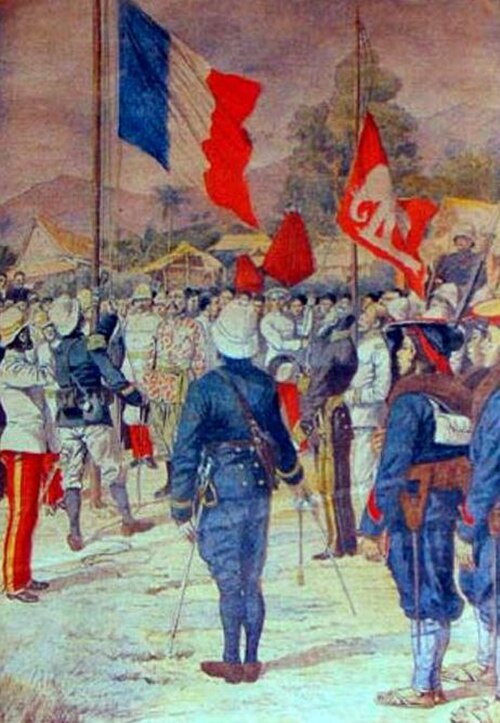
フランスはシャムに圧力をかけ続け、1902年に新たな危機を招いた。[説明が必要]この時、シャムは、ルアンパバーンの対岸のメコン川西岸、ラオス南部のチャンパーサック周辺、およびカンボジア西部の領土をフランスに譲り渡さなければならなかった。フランスはチャンタブリ西部も占領した。
1904年、チャンタブリーを取り戻すために、シャムはトラートとココンをフランス領インドシナに譲渡しなければなりませんでした。トラートは、バッタンバン、シャムナコン、シソポンなどメコン川東側の多くの地域と引き換えに、1907年3月23日に再びタイの一部となりました。
1930年代、シャムはフランスと、フランスが開催したシャム諸州の返還に関する一連の交渉に参加した。1938年、パリの人民戦線政権下で、フランスはアンコール・ワット、アンコール・トム、シェムリアップ、シェムパン、および関連する諸州(約13)をシャムに返還することに同意した。 [要出典]一方、シャムは、来たる条約を見越して、これらの地域の管理を引き継いだ。各国の署名者は、失われた諸州の返還に関する条約に署名するために東京に派遣された。[不連続]
20世紀初頭の反フランス反乱
20世紀初頭、フランスがこの地域を「平定」したため平穏が続くはずだったが、この時期のフランス領インドシナでは、フランス統治に異議を唱える反乱が絶えず起こっていた。[27]「カンボジアにおけるフランス植民地支配の最初の50年間に、農村住民が反乱を起こしたという証拠は十分にある。」[28]フランス総督は、日露戦争における日本の勝利と、それが東洋に及ぼす影響について懸念していた。これは「黄色人種が白色人種に勝利した」最初の例と考えられていたためである。また、満州族率いる清王朝が辛亥革命で崩壊し、中華民国が樹立されたことも懸念していた。[27]これらの出来事はすべて、フランス領インドシナの領土における民族主義的感情に大きな影響を与えた。[27]
20世紀初頭にはコーチシナで多くの秘密結社が反乱を起こした。平和義務結社(Nghia Hoa Doan Hoi)は、満州族による中国征服後にミンフン族の難民によってこの地域にもたらされ、ベトナムの天地結社(Thiên Địa Hội)もその一つである。[29]平和義務結社は、中国で反清反乱軍を支援する活動も行っていた。[29]
伝統的な官僚エリートの大半は、新しい支配者に忠誠を誓い、フランス保護領下で活動を続けたが、ファプトゥック運動の初期にはフランス企業の流入が見られ、当時の社会秩序に大きな変化が起こり、以前のカンヴォン運動とは異なるフランス支配に対する新しい形の抵抗を引き起こした。[29]フランス領インドシナの新しい社会状況は、フランスによる工業会社の設立によってもたらされた。例えば、インドシナ商業連合、東アジアフランス海運会社、インドシナ・雲南フランス鉄道会社、トンキンで操業するさまざまな石炭採掘会社などである。これらの近代的な企業には、フランスの紅茶、コーヒー、ゴム農園の有力者の流入が伴っていた。[29]
阮氏に忠誠を誓うカンヴォン運動の敗北後、新しい世代の反フランス抵抗運動が出現した。20世紀初頭の新たな反フランス抵抗運動の指導者たちは、伝統的な官僚エリート層に根ざすよりも、むしろ国際情勢や海外の革命に影響を受け、抵抗運動と近代化の問題に触発された。[27]ファン・チャウ・チンのようなベトナムの革命家の中には、近代化への「鍵」を手に入れるために西洋世界 ( ĐTây ) を旅し、それをベトナムに持ち帰ろうとする者もいた。[27]一方、革命指導者ファン・ボイ・チャウのような他の人々は、ベトナムが従うべきもう一つの近代化の模範と見なした日本帝国への「東方旅行 ( Đông Du )」を行った。[27]ドン・ズー派の革命は、ジャロン帝の直系の子孫であるクオン・デ王子によって支持された。 [27]クオン・デ王子は、何百人もの野心的なベトナムの若者に日本への教育資金を提供することで、フランスの支配からのベトナムの解放に貢献できると期待した。[27]
ズイタンホイは1904年にファン・ボイ・チャウとクオン・ド王子によって設立された。[30] [31] [29]この団体は広い意味で近代化運動ともみなされた。[32] [33] [34]この新しい集団は数百人で構成され、そのメンバーのほとんどは学生か民族主義者であった。[29]この団体の著名なメンバーには、ジルベール・トラン・チャン・チウがいる。[35]ズイタンホイのメンバーは、活動資金を得るため、また真意を隠すために商業企業のネットワークを設立した。[29]平和義務協会や天地協会など、他の多くの反フランス組織もズイタンホイを支援した。 [29]
1907年にファン・チャウ・チンとファン・ボイ・チャウの支持者によってハノイに設立されたトンキン自由学校(Đông Kinh Nghĩa Thục)は、反フランス的であると見なされたため、設立の年にフランス当局によって閉鎖された。[ 27 ]トンキン自由学校は、儒教を放棄し、西洋と日本の新しい考え方を取り入れることでベトナム社会を近代化することを目指した同名の運動から生まれた。特に、ベトナム語の表記には古典中国語に代わるラテン文字のベトナム語版を推進し、この文字を使った教材や新聞を出版して、新しい教育手段として活用した。学校では、近代精神を学びたい人なら誰にでも無料の講座を提供した。ハンダン59番地の学校の教師にはファム・ズイ・トンがいた。[36]
第一次世界大戦前の数年間、フランスは何千人もの人々を逮捕し、そのうちの何人かは死刑を宣告され、他の人々はポウロ・コンドーレ刑務所島(コンソン島)に投獄された。 [ 27]このため、コンソン島は政治犯、国家主義者、共産主義者にとって最高の学校となった。彼らは大きな共同の独房に集められ、そこで意見を交換することができたからである。[27]
1908年3月、フランス保護領のアンナムとトンキンで当局に対して高税率の引き下げを要求する大規模なデモが行われた。[27]
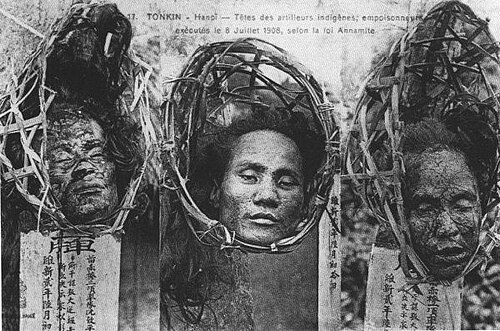
1908年6月、ハノイ毒殺事件が発生し、トンキン人の先住民ティライユールの一団がハノイ城塞のフランス植民地軍駐屯部隊全体を毒殺しようとした。[27]陰謀の目的はフランス駐屯部隊を無力化し、デ・タム司令官の反乱軍がハノイ市を占領できるようにすることだった。陰謀は暴露され、その後フランスによって鎮圧された。[37] [27]これに応じてフランスは戒厳令を布告した。フランスはファン・チャウ・チンとファン・ボイ・チャウを陰謀の容疑で告発し、ファン・チャウ・チンはプロ・コンドルに送られ、ファン・ボイ・チャウは日本に逃亡し、1910年に中国に渡った。[38] [39] [27] 1912年と1913年にベトナムの民族主義者はトンキンとコーチシナで攻撃を組織した。[27]
フランスは外交的圧力を駆使して1909年に日本軍にズイタンホイを追放するよう説得し、ズイタンホイは清国に避難した。そこで彼らは孫文の同門会に加わった。[29]広東省、広西チワン族自治区、雲南省などは以前からフランスの影響圏にあったが、トンキンやラオスと国境を接していることから中国とベトナムの革命家たちの主要活動地となり、反フランス革命活動の拠点となった。[29]これによりズイタンホイのメンバーは中国を拠点としてトンキンとラオスの国境を襲撃することができた。[29]
1913年3月、神秘的な千年王国論者のカルト指導者ファン・シーク・ロンはチョロンで独立デモを組織し、白いローブを着た600人の農民が参加した。[40]ファン・シーク・ロンは、廃位されたハム・ニー帝と明朝皇帝の子孫であると主張し、自らを「明朝皇帝」と宣言した。[29]
1913年にはズイタンホイによる第二次反乱運動も起こり、この運動の結果、同協会のメンバーはハノイのフランス人警察官2人を殺害し、民兵と軍隊の両方を攻撃し、フランス政府に協力したとされたグエン朝の官僚数人を処刑した。[29] 1913年にはコーチシナでも別の反乱が起こり、刑務所や行政の中心地が数百人の農民の群れに襲われ、棒や剣でフランス人と戦った。フランス人は銃で武装していたため、多数の抗議者が銃撃されて死亡し、抗議運動は解散して反乱は終結した。[29]
20世紀初頭、カンボジアにおけるフランスの保護領は反乱軍の挑戦を受け、プノンペン以外ではほとんど権限を持たなかったノロドム王の治世初期には3度の別々の反乱が起こった。[27]
20世紀初頭、ラオスは反乱が比較的少なかったため、最も「従順な」領土であると考えられていました。[27]フランス人は、この理由を、フランス保護領が樹立される前の1世紀に渡ってラオスを支配していたシャム人よりも、フランス人の統治が安定していたためだと考えました。 [27]この時期、伝統的なエリート層もラオスの農民も、フランスの統治に概ね満足していたようです。[27]それにもかかわらず、19世紀後半から20世紀初頭にかけて、ラオスでは散発的な反乱が発生しました。 19世紀後半、ラオス南部では高地の少数民族が蜂起した。ボラヴェン高原のバク・ミとオン・マがこれを率い、「旧秩序」の復活を要求し、1936年までフランスに対する武装蜂起を続けた。[41] [27]プー・ミ・ブンの反乱は1901年に勃発し、1907年まで鎮圧されなかった。これは「地元のラオス・テウン部族(アラク、ニャフン、ラヴェン)によるフランス支配に対する大規模な反乱」であった。[42] [43]ボラヴェン高原でのこれらの特定の革命的な反乱に関する詳細な文献はないが、現地のコミュニティが植民者の広範かつ圧倒的な影響力をこの地域から排除したいと望んでいたことはわかる。[44]
フランス教育の紹介
1906年5月16日、フランス領インドシナ総督ジャン・バティスト・ポール・ボーは、先住民教育改善評議会を設立する法令を発布した。[45] [46]これらの組織は、フランス領インドシナの先住民の教育に関するフランスの政策を監督し、「それぞれの地域に関連する教育問題を個別に研究する」ことになっていた。[45]
研究者のグエン・ダック・スアンによれば、1907年に阮朝の宮廷は、ホボのトゥオントゥである曹玄徳とフイン・コンをフランス領コーチシナに派遣し、フランス当局とアンナムの教育制度の将来について「教育会議 ( bàn nghị học chính ) を開催した。[47]この会議は、グエン・バ・チャックの著書「Hoàng Việt Giáp Tý niên biểu 」にも記録されている。[46]教育省の設立は、フランスが阮朝の教育制度を改革し、この地域におけるフランスの野心にもっと合わせるために画策した。[46]アンナム総長エルネスト・フェルナン・レヴェックが説明したように、「この新省庁は、南部でより多くの学習機会が開かれた時代に適応するために創設されました」。この移行を支援するのに最も適していました。[46]
阮朝の教育省は名目上は阮朝の行政機構の一部であったが、実際の統制はアンナム先住民教育改善のためのフランス評議会が行い、同評議会がその政策を決定した。[45]教育省によるすべての業務は、アンナムのフランス教育長官の計画と指揮に従って行われた。 [46]アンナムのフランス政府は、フランスのシステムに適合するように、教えられるカリキュラムを継続的に改訂した。[ 46]
第一次世界大戦
_02.jpg/500px-B%E1%BA%A3n_t%E1%BA%A5u_c%E1%BB%A7a_Vi%E1%BB%87n_C%C6%A1_m%E1%BA%ADt_v%E1%BB%81_vi%E1%BB%87c_gi%C3%BAp_%C4%91%E1%BB%A1_n%C6%B0%E1%BB%9Bc_Ph%C3%A1p_v%E1%BB%81_t%C3%A0i_ch%C3%ADnh_n%C4%83m_Kh%E1%BA%A3i_%C4%90%E1%BB%8Bnh_th%E1%BB%A9_2_(1917)_02.jpg)
フランスが第一次世界大戦に参戦すると、主にフランス保護領のアンナムとトンキンから何千人もの志願兵がヨーロッパでの任務に就き、ヨーロッパで従軍したフランス領インドシナ人の約7 ⁄ 8はアンナム人とトンキン人の志願兵だった。[48] [49]この時期にはトンキンとコーチシナで数多くの反乱も起きた。[50]フランス領インドシナは資金、物資、人的資源の面でフランスの戦争遂行に大きく貢献した。[27]
第一次世界大戦前の1913年のフランス領インドシナの人口は約16,395,000人で、ベトナム人(トンキン人、アンナメ人、コーチシナ人)が14,165,000人、カンボジア人が1,600,000人、ラオス人が630,000人でした。[51] [27]これら1640万人の被支配者は、わずか約18,000人のフランス人民間人、軍人、公務員によって統治されていました。[27]
この時期、フランス領インドシナ総督アルベール・サローは、フランス領インドシナが植民地支配者に対する戦時中の貢献に対して、新たな連携政策と「フランス・アンナム協力」(フランス語:Collaboration franco-annamite、ベトナム語:Pháp-Việt Đề huề )を約束した。 [27]しかし、フランス政府は、いくつかの自由主義的改革の他に、実際には経済的搾取と民族主義運動の容赦ない弾圧を強化し、サローの約束はすぐに失望に終わった。[27]
戦争初期には約600万人のフランス人が徴兵され、フランスでは深刻な労働力不足が生じた。[52]これに対応して、砲兵軍需担当国務次官は女性、ヨーロッパからの移民、フランス植民地の臣民の雇用を提案し、後に中国人移民もこれに続いた。[52] 1915年以降、フランスの戦争努力に必要な人員は大幅に増加し始めた。[29]当初、フランスは「戦闘民族」を信奉する人種的ヒエラルキーを維持していたため、初期の徴兵は主に北アフリカとフランス領西アフリカに集中していたが、すぐに追加の人員が必要となり、極東とマダガスカルから男性を募集せざるを得なくなった。[29]約10万人のベトナム人が徴兵され、フランスの戦線で戦って従軍するか、労働者として働くためにヨーロッパに向かった。[53] [50]ベトナム軍はバルカン半島[54]と中東戦線でも従軍した。この例外的な人的流動性は、主にベトナム人であるフランス領インドシナ人に、当時のフランスで起こっていた社会生活や政治論争に直接関わるユニークな機会を与え、その結果、彼らの「自らの運命の主人」になりたいという願望が高まった。[27]新たな政治的理想にさらされ、自国が植民地支配下に戻ったこと(彼らの多くが戦い、命を落とした支配者によるもの)は、一部の人々の不機嫌な態度を招いた。[27]これらの兵士の多くは、フランスを打倒することに焦点を当てたベトナムの民族主義運動を探し出し、参加した。[55]
1925年、共産主義者で反フランス活動家のグエン・アイ・クオック(後にホー・チ・ミンとして知られる)は「鎖につながれ、学校の敷地内に監禁された...彼らのほとんどは二度と祖国の太陽を見ることはないだろう」と書き、ジョセフ・バッティンガーやマーティン・マレーなど多くの歴史家はグエン・アイ・クオックのこの発言を信仰の対象として扱い、第一次世界大戦に参加したベトナム人男性は「テロ」によって「強制的に徴兵された」と信じた。後の歴史家は、この時期に行われた徴兵事業は「表面上は自発的」なものに過ぎなかったと主張する。[48]これらの主張にはある程度の真実があるが、ヨーロッパでの任務に志願した男性の大多数は確かに志願兵だった。[48]志願の動機には個人的な野心と経済的な野心の両方があり、フランス領インドシナ人志願兵の中には「村の竹垣の向こうの世界」がどのようなものかを見たい人もいれば、お金とフランスの実際の姿を見る機会を優先する人もいた。[48]志願兵は現代の戦争の残酷さにさらされ、海外での経験により、母国の多くの社会規範や信念に対する認識が変わる人も多かった。[48]
ヨーロッパに渡った93,000人のフランス領インドシナ兵士と労働者のうち、大半は飢饉とコレラにひどく襲われたアンナンとトンキンの最貧地域の出身で、少数(1,150人)のフランス領インドシナ兵士と労働者はカンボジアから来た。[27]フランス北東部では、約44,000人のベトナム軍がヴォージュの戦いとベルダンの戦いの両方で直接戦闘に参加した。[56] [27]フランス領インドシナ大隊は、兵士を前線に輸送する運転手、担架担ぎ(ブランカルディエ)、道路作業員など、さまざまな兵站機能にも使用された。[27]ベトナム兵は戦争末期に戦場を「消毒」するためにも使用され、(白軍)フランス兵が早く帰宅できるように、ヨーロッパの真冬の寒い時期に暖かい服も支給されずにこの任務を遂行した。[27]
戦争中にフランスに派遣された93,000人のフランス領インドシナ人労働者と兵士の財政的経費(給与、年金、家族手当、現物徴発(主に米)、さらにはインドシナ病院の運営費)はすべてフランスではなくフランス領インドシナ自身の予算から賄われていた。[27]
第一次世界大戦がフランス領インドシナ社会に与えた影響の一つは、フランス語と現地語の両方で活発な政治報道が導入され、新世代の民族主義者が政治的に急進的になったことである。[27]戦争中にフランスとその他のヨーロッパ諸国で従軍した現地人のほとんどはベトナム人であったため、こうした社会的、政治的発展はベトナム人により大きな影響を与えた。[27]フランス領コーチシナはフランスの直接の植民地であったため、報道に関して有利な法律が施行され、反対派の政治活動の公的領域が育まれた。[57] [27]こうした発展はフランス領インドシナ全体で起こったが、コーチシナのより開放的な社会のために、より強く感じられた。[27]
ヨーロッパにいたフランス領インドシナ人は、母国で経験した人種的階層構造とは対照的に、はるかに平等な社会関係を経験した。 [27]フランスでは、フランス領インドシナ人はフランス人と親交を深め、多くがフランス人女性と恋愛関係にあったが、後者は母国では考えられないことであった。[58]
この時期、フランス保護領のアンナムとトンキンは当初、ズイタン皇帝によって統治されていた。[27]しかし、1916年にズイタン皇帝はフランス統治に抵抗するよう国民に呼びかけたとしてフランスに告発され、廃位された後、彼と父親はインド洋のレユニオン島に追放された。[27]その後、カイディン皇帝がアンナムとトンキンの新しい君主となり、フランス政権と緊密に協力した。[27]同時に、カンボジアは1904年に戴冠したシソワット王によって統治され、領土内でフランス政権と緊密に協力した。 [ 27]シソワット王は1906年にマルセイユで開かれた植民地博覧会に出席し、1907年4月にバッタンバン州とシェムリアップ州がシャムからカンボジアに返還されたときの国王でもあった。 [27]シソワット王の治世中、「フランスの支配は容赦なく強まり」、フランス人居住者は勅令の発布、役人の任命、税金の徴収などの執行権を獲得した。[59] [27]当時のフランス保護領ラオスは、1904年に国王に即位したシサワン・ヴォン王によって統治されていた。 [27]シサワン・ヴォン王はサイゴンのリセ・シャスループ・ローバとパリの植民地学校で教育を受けた。[27] 1914年、フランスはルアンパバーンに彼のために新しい宮殿を建設し、1917年にフランス政府と締結された新しい協定により、ラオスの実際の権力はフランス人の手中にあったため、彼には王権の形式的な兆候のみが認められました。[27]
第一次世界大戦は、西側諸国で従軍したフランス領インドシナ先住民に、それまでにはなかった多くの機会をもたらした。特に一部の人々は、より高度な技術的・職業的スキルを習得することで、母国では到底達成できないレベルの教育を受けることができた。[60]例えば、1910年にハノイ医学校を卒業した最初の現地補助員の一人となったグエン・スアン・マイ博士は、フランスで博士号を取得することを望み、戦争に参加した。[60 ] 1921年に博士号を取得し、フランス人の同僚と同じ権利を享受した最初のベトナム人医師の一人となった。[60]
第一次世界大戦中、フランス領インドシナではゴム農園、鉱山、その他の農業など、数多くの新しい経済分野が発展したが、これらはすべてフランス所有であり、大手輸出入企業との現地貿易は華僑コミュニティの手に委ねられていた。[61] [27]植民地経済の輸出は先住民を犠牲にしてフランス人を豊かにするために設計されたため、この時期に生まれた新しい経済的機会から利益を得たのは、ほんの一握りのベトナム人地主、金貸し、仲買人だけだった。[27]同じ時期に、フランスが強制徴用制度を用いて建設した野心的な公共事業プログラムの資金として直接税と間接税の両方を課したため、先住民農民の平均生活は大幅に減少した。 [27]
1914年以前、フランス領インドシナの開発と改善は、主にヨーロッパのフランスからの公的融資、フランスの民間資本、そして現地住民への高い税金によって賄われていた。[27]しかし戦争中、フランス本土からの投資資金が完全に止まったため、フランス領インドシナは、自らの資金調達と、戦争のためにヨーロッパに派遣した人々の資金調達の両方について、完全に責任を負うことになった。[27]これは、税金が増加し、米の輸出量が増加し、現地住民が戦時国債を購入したことを意味した。[27]フランス領インドシナはフランス本土に多額の財政援助を行い、1915年から1920年の間にフランスが植民地帝国から受け取った6億フランのうち、3億6700万フランがフランス領インドシナから送られた。[27]歴史家パトリス・モルラは、フランス領インドシナの当初の財政的貢献を3億8100万金フラン(2017年の価値で9億9700万ユーロ)としているが、これはフランス本土がその植民地帝国(アルジェリアを除く)から受け取ったすべての財政的貢献のおよそ60%に相当する。[29]モルラはさらに、戦争中にフランス領インドシナがフランスに34万トンの原材料を供給したと指摘しており、これはフランス本土が植民地から受け取ったすべての原材料の34%に相当した。 [29] これらの原材料の輸送はドイツの潜水艦の存在によって脅かされた。[29]
第一次世界大戦では、コーチシナの植民地政府が1916年にベトナム語の新聞の発行を認可したが、これは戦争遂行に対する国民の支持を確保するためであり、植民地当局はこれによって忠実で政治的に活動的な先住民グループが形成されることを期待していた。[27]コーチシナの植民地政府はこれらの忠誠派の新聞に財政的支援を提供したが、親フランス的な論調が優勢になるように記事の内容を厳しく管理した。[27]これらの新聞の編集者はフランスから戻った人々( retours de France)であることが多く、反フランスの反体制派や活動家とつながりがあることが多かったため、厳しい監視下に置かれていた。これらの新聞の中には、 1917年に農学者のブイ・クアン・チエウが弁護士のドゥオン・ヴァン・ジャオ、ジャーナリストのグエン・ファン・ロンと共同で創刊した『ラ・トリビューン・インディジェン(先住民フォーラム)』がある。[27]その後、彼らはラ・トリビューン・インドシノワーズ(インドシナフォーラム)を創設し、1919年にこの3人はサイゴンでインドシナ立憲党を設立した。[27]これらの活動のため、フランスのシュールテは彼らのナショナリズムを危険視した。 [27]
フランスはベトナム革命家とドイツ帝国の間に「ドイツのつながり」があるとし、香港、バンコク、北京はフランスを倒すという同じ目的を共有していたベトナム革命家を助けることを望むドイツのエージェントの拠点であると主張した。[29]
第一次世界大戦ではフランス領インドシナ全土で数多くの反乱も発生し、1914年にはベトナム全土で3つの大きな蜂起が発生し、その後コーチシナでも数多くの反乱が起こった。[27] 1914年から1917年にかけて、ムアンシンのプラ・オン・カム(チャオ・ファ)王子率いるタイ・ルー族のメンバーは長期にわたる反フランス運動を組織し、ラオスのモン族独立運動も同国におけるフランス統治に異議を唱えた。[27] 1914年には雲南省の革命家集団がフランス領インドシナに侵入し、国境を越えて中華民国国旗を掲げてフランス軍の駐屯地を攻撃し始めた。後にこれらの反乱軍にラオスの様々な少数民族(ラオ族、カ族、黒タイ族)が加わった。[62]雲南省とラオスの少数民族の合同反乱軍は、フランス軍が弱体化するように「パリはドイツ軍に打ち負かされた」という偽情報を流した。[62]この反乱の動機については議論があり、当時のフランス植民地当局は中国のアヘン密輸業者のせいにしたが、カナダの歴史家ジェフリー・C・ガンは政治的反乱だったと考えている。[62] 1916年2月、コーチシナでファン・シーク・ロンの支持者たちは釈放を求めて彼が収監されていたサイゴン刑務所に向かって行進したが、これはメコンデルタでの他の反乱と同時期であった。[27]官僚のチャン・カオ・ヴァンは1916年にズイタン皇帝と共謀して安南で大規模な反乱を起こそうとしたが、彼らの陰謀はフランスに発見され阻止された。[27] 1916年、カンボジア王国では、強制賦役と増税に反対して3万から10万人の農民が3か月間蜂起した。オーストラリアの歴史家ミルトン・オズボーンはこの蜂起を「1916年事件」と呼んでいるが、この大規模な反乱に至る状況は戦争によって直接引き起こされた。[27] 1917年8月30日にはタイグエン蜂起が始まり、1918年まで続いた。[63]
戦争中に発生した多数の暴動や反乱は、戦後に政治的反体制派を発見し逮捕するために使用された政治治安機関の創設につながった。[27]
第一次世界大戦中の日本との関係
1914年8月27日、日本は連合国側(協商国としても知られる)として正式に参戦し、ドイツ植民地の青島と峡州湾の残りの租借地を侵略して奪取した。[27] 1914年11月、日本は南中国におけるドイツの影響圏を自らの政治的、経済的影響力で奪い、フランス領インドシナと直接競合するようになった。[27]日本はクォン・ド王のズイ・タン・ホイなど、多くの反フランス分離主義運動を公然と支援していたが、ヨーロッパにおけるフランスの状況は、ジョルジュ・クレマンソー首相が日本に援助を求めるほど悪かった。[27]
ヨーロッパの戦況は悪化し、1914年にフランスは財政的・軍事的支援と引き換えに日本とフランス領インドシナを交換することを検討したが、この考えはすぐに放棄された。[27]
クレマンソーは、日本帝国に対し、インドシナ労働者・戦闘員のヨーロッパへの輸送と、ヨーロッパでの戦闘を支援するために自国の軍隊を派遣することについて援助を求めた。[27]クレマンソーはまた、ロシア内戦中に日本がシベリアに介入してボルシェビキ軍と戦い、戦後のフランス経済にとって重要であった多くのフランス・ロシア間の借款の喪失を防ぐことでも日本を援助することを望んだ。[27]
1918年にフランス領インドシナを日本に売却する案が再び浮上したが、最初の提案時と同様に再び放棄された。[27]
戦中も戦後も、戦争によるフランスの財政難を受けて日本が債権国となったことで、日本とフランスの経済関係は強化された。[64] [27]
安全保障体制の拡大
_security_report_by_the_Government-General_of_French_Indo-China_(n%C4%83m_1920).jpg/500px-Nguy%E1%BB%85n_T%E1%BA%A5t_Th%C3%A0nh_(%E9%98%AE%E5%BF%85%E8%AA%A0)_security_report_by_the_Government-General_of_French_Indo-China_(n%C4%83m_1920).jpg)
サローはフランスによる統治を確実にしようと決意し、フランス領インドシナ全域で機能する強力な政治監視機構を創設した。[27]彼はすべての地方警察を中央集権化し、諜報機関を発達させた。これらの政策は、フランス領インドシナの内外における反フランス活動の監視と取り締まりを目的としたインドシナ総監部の創設につながった。 [65] [27]
フランスの治安が拡大されたのは、極東の敵国とドイツが関与しているのではないかという恐れからだった。香港のフランス領事で、仏印政治局が調整する諜報機関の主要人物であるガストン・アーネスト・リーベールは、ベトナムの革命家とドイツはともに同じ利益(フランスの敗北)を共有していると指摘した。[29] [66]リーベールは、反乱を起こした仏印人はフランスと同等か、あるいはフランスへの裏切り者として扱われるべきだと主張した。[29]治安国家拡大のもう一つの理由は、フランス軍兵士を大量に追放してドイツと戦うことは、イギリスがエジプトで経験したような一般的な反乱を引き起こすのではないかとフランスが恐れたことであった。[67]
1916年4月、ハノイの政治局の行政官は、彼が「安南革命党」(彼はズイ・タン・ホイをこう呼んだ)と呼んだ組織と、フランス領コーチシナの秘密結社の並行する歴史について詳細に記述した2つの膨大な報告書を発表した。この2つの報告書は、政治局にとって非常に重要であることが判明した。なぜなら、この組織を統括組織へと全面的に改革するきっかけとなったからである。 [ 29]改革政策は、警察活動と監視を通じてフランス統治に関する言説を統制するために制定された。[29]植民地警察は、国内戦線に兵士をより多く配置するために軍隊のプレゼンスが縮小されたため、政治警察である「インドシナ労働者とライフル兵の総統」(Contrôle général des travailleurs et tirailleurs indochinois)と関連していた。[27]フランス本土では、これらの新興の監視組織が、中央同盟国との戦いを支援するために駐留していた10万人のフランス領インドシナ人の警備を担当しました。[29]
十月革命における共産党の勝利の後、フランス領インドシナの治安機関は植民地における「ボルシェビキの危険」と戦うために強化された。[27]フランス総監は第一次世界大戦中に創設されたが、1922年に拡大され、まずフランス本土で、後にフランス領インドシナで、潜在的なボルシェビキ分子を監視し、抑圧するためのより優れた手段となった。[27]フランス総監の活動は、新設された政治局によって管理された。[27]フランス総監は、フランス領インドシナ社会内の破壊分子に関する情報収集と、容疑者と囚人の大規模な全連合登録を植民地警察が実施するための最も重要な手段として使用されることとなった。[27]
監視と弾圧の強化は、フランス植民地主義の「啓蒙」を先住民に納得させることを目的としたプロパガンダ運動を伴っていた。[29]先住民の農民とエリート層の両方に、植民地主義の多くの「利点」を伝えて説得する必要があった。[29]政治局は、極東フランス学校を通じて先住民知識層に属するベトナムのエリート層を多数集め、親フランスプロパガンダ活動に協力させた。[29]
フランスは反体制派を刑務所に閉じ込めて孤立させようとしたが、皮肉なことにこれらの刑務所は国家主義と共産主義の「学校」に変貌した。なぜなら、多数の政治的敵を一か所に集めることで、彼らは互いにコミュニケーションをとることが可能となり、それがフランス領インドシナにおける共産主義の成長に貢献したからである。[68] [27]
1920年代
_-_Annam_nh%C6%B0_T%C3%A2y_du_h%E1%BB%8Dc_b%E1%BA%A3o_tr%E1%BB%A3_h%E1%BB%99i_(%E5%AE%89%E5%8D%97%E5%A6%82%E8%A5%BF%E9%81%8A%E5%AD%B8%E4%BF%9D%E5%8A%A9%E6%9C%83_-_Soci%C3%A9t%C3%A9_d%E2%80%99encouragement_aux_%C3%A9tudes_occidentales)_-_1er_P%C3%A9vrier_1928_(Traditional_Chinese_script).jpg/500px-thumbnail.jpg)
フランス領インドシナは自給自足の経済的搾取植民地であるはずだったため、この時期の予算のほとんどは歳入徴収、現地住民への課税、アヘン、塩、アルコールなどの独占商品の消費割当によって賄われていた。[69] [27] 1920年にはフランス領インドシナ政府予算の44%がアヘン、塩、アルコールだけで賄われていた。[27]
1920年代、フランスはより多くのベトナム人が勉強と仕事のためにフランス本土に入国することを許可した。[70] [52]合法移民と不法移民の両方がフランス領インドシナからフランスに入国し、船員、写真家、コック、レストランやショップのオーナー、肉体労働者など、さまざまな職に就いた。[52]フランスでは、多くのベトナム人移民とその組織がフランス共産党(PCF)と連携し、法律と政治の両方で彼らを代表することを約束した。[52]フランスからの帰国者はより熟練しており、流暢なフランス語を話したため、インドシナのフランス人入植者は彼らをより高給の仕事に雇い、ロシアで成功したボルシェビキ革命の思想を持ち込むことが多かった。[52]約2万人の帰国者が住んでいたタンホア省、ゲアン省、ハティン省などの省では、この10年間にボルシェビキ支持の活動が増加し、この地域では多くのボルシェビキ支持政党が設立された。[52]
戦後、多くのベトナム人男性がワイマール時代のドイツ占領地域で従軍した。 [48]フランスが占領地域のドイツ人住民をどのように扱ったかを見て、ベトナム人兵士の中にはドイツ国民に共感を覚えた者もいた。[48]フランスによるラインラント占領に関する公式報告書は、その期間に兵士が書いた手紙の内容を次のように要約している。「フランス人はアンナン人に対するのと同じ方法でドイツ人を抑圧している。」[48]
第一次世界大戦後、元総督アルベール・サローがフランス植民地大臣となり、戦間期のフランス植民地政策を特徴づけるフランス・アンナミット協力の立役者となった。 [27]極東におけるフランス機構の内部安全保障について、サローは「私は常に、インドシナは、政治的な行動と抑圧的な行動の二重の行動をとることによって、私が決して過小評価したことのない革命的プロパガンダの影響から守られなければならないと見積もってきた」と述べた。[71] [27]これは、破壊分子の抑圧が、この地域におけるフランスの支配継続にとって最も重要であると考えていたことを示している。[27]彼の政策は、反体制派の抑圧に役立った一方で、協力者を利した。 [ 27]サローは、フランス領インドシナの先住民に利益をもたらすリベラルな先住民族愛好者という自身のイメージを誇示した。 [27]
アルベール・サローは、フランスとベトナムの協力はフランスによる自国への保護統治の必然であると説明し、フランスとベトナムの協力は、ベトナムの完全な主権回復に先立ってフランスとベトナムの間に互恵的な協力の枠組みを構築することになるため、フランス領インドシナの西洋化された現地エリート層にとって魅力的であった。[27]コーチシナ植民地では、少数の現地人が、代表議会として機能するために設立された政治機関(コーチシナ植民地評議会、サイゴン市議会、その他の地方機関)を通じて意思決定プロセスに関与していた。[27]
1920年、フランスはラオス王国に地方諮問評議会を設立した。[27] 1923年にはこれに続き、諮問役を務める先住民諮問会議が設立された。[27]ラオス先住民諮問会議は実質的な政治権力を持っていなかったが、ラオス全土の人々を団結させる組織として機能し、以前は地域との結びつきが強かった近代ラオスの国民意識の形成に貢献した。 [27]
1923年、コーチシナではブイ・クアン・チエウ率いるインドシナ立憲党が結成され、コーチシナの先住民の政治参加権を獲得するために設立された。[27]この党員として、グエン・ファン・ロンはコーチシナの植民地評議会のメンバーに選出された。[72]
カンボジアのコポンチャンでは、フランス人居住者フェリックス・バルデスが1925年に不満を抱いた先住民によって暗殺された。[73]フェリックス・バルデスが村を訪れた当時、村の住民はフランスの植民地政策に不満を抱いていた。フランスはボコール山リゾートの資金を調達するために税金を値上げしていた。バルデスが村を訪れた際、借金を返済できずに逮捕された囚人を釈放することを拒否したため、怒った約700人の農民が群衆に煽動され、バルデスと通訳、そして訪問中に居合わせた民兵が殺害された。[73]この暗殺は、この10年間のカンボジアを特徴づけたより広範な政治不安の兆候であった。[73]
1925年3月、フランスはカンボジアの首都プノンペンに第一次世界大戦で戦死した人々を追悼するため、2頭のアジアゾウの彫刻の上に戦争記念碑を建てた。開会式には「あらゆる人種、あらゆる宗教の人々」を含む群衆が集まった。[74] [75]
1925年11月6日、カイ・ディンの死後、「条約」(Quy ước)が制定され、国王が国外にいる間は評議会( Hội đồng phụ chính )が南朝のすべての事柄を管理する権限を持ち、条約の調印により、慣習、恩恵、恩赦、称号の授与、高官などに関する規則のみが皇帝によって与えられると規定された。[76]その他はすべてフランス保護領政府の判断による。[76]この文書では、南朝の予算とフランス保護領安南の予算を統合し、閣僚評議会( Hội đồng thượng thư )のすべての会議は安南の駐在長が議長を務めなければならないとも規定されている。[76]このように、この文書では、フランスの植民地主義者がチュンケーにおいても南朝政府の権力を完全に掌握したとされている。[76]
1927年、ベトナムの第一次世界大戦退役軍人たちは、第一次世界大戦時代の武器と戦術を使ってバクニン省で反乱を起こしたが、失敗に終わった。 [48]
アメリカの歴史家デイビッド・G・マールによると、1920年代はベトナム国民の間で「伝統的」なものから「近代的」なものへと国家意識が移行した時期であり、エリート層と農民層の両方で変化が見られた。 [77]マールは、1920年代と1930年代にベトナムのフランスへの帰還がベトナムのナショナリズムを「都市化」し「政治化」し、フランス支配に対する闘争に加わる「近代的」な運動を刺激したと主張している。[27]この10年間には、ベトナム民族党(VNQDĐ)とインドシナ共産党(ICP)が出現した。これらは中流階級のものが多く、階級や地理的な区分を超えてフランスに対抗する運動を以前の運動よりも成功させ、前任者よりも優れた組織化されたコミュニケーション構造に依存していた。[27]
1920 年代、カンボジアとラオスにおけるフランスの植民地権力に対する異議申し立ては、戦争期から続く賦役と税政策に向けられたものがほとんどでした。 [27]この 10 年間の初めは、カンボジアの農村部で暴力が蔓延し、秩序と治安が欠如していたことが、地方に住むフランス人の記録に残っています。[27]同時代のラオス北部は、1914 年から 1921 年にかけて、フランスの行政官ポール・ル・ブーランジェによって「激しく動揺した」と表現されています。[27]当時、少数ではあるものの都市化が進むベトナムの中流階級によってさまざまな大きな社会文化的変化が起こっていたため、1920 年代と 1930 年代にベトナムの抵抗の性質は劇的に変化しましたが、カンボジアとラオスの反乱は、この時期の現在のベトナムを特徴づけるより「現代的な」政治活動主義と急進主義とは対照的に、そのスタイルと実行において「伝統的」なままでした。[27]
延白の反乱(1930年)
Indochine_fran%C3%A7aise_btv1b530574891_1.jpg/500px-Carte_de_l'Indochine_Routes_chemins_(...)Indochine_fran%C3%A7aise_btv1b530574891_1.jpg)
1930年2月10日、フランス植民地軍のイエンバイ駐屯地でベトナム兵による反乱が起きた。イエンバイの反乱はベトナム国民党(VNQDĐ)が支援した。 [78] [79] VNQDĐとはベトナム国民党のことである。[80]この攻撃は19世紀後半のカンヴォン王政復古運動によって引き起こされた最大の騒乱であった。
この反乱の目的は、植民地政権を打倒するために一般大衆の間により広範な蜂起を起こさせることだった。VNQDĐ は以前にもフランスの統治を弱体化させるために秘密裏に活動しようとしていたが、フランスによる活動への監視が強まったため、指導部はベトナム北部の紅河デルタで大規模な軍事攻撃を仕掛けるという危険を冒すこととなった。
左翼反対派と1940年のコーチシナ蜂起
コーチシナではフランス統治が直接的で、パリの政治情勢の変化に敏感だったため、比較的自由化が進んだ時期もあった。最も重要な時期は、レオン・ブルム率いる1936年から1938年の人民戦線政権で、インドシナ総督にジュール・ブレヴィエが任命された時期だった。[81]自由主義的な考えを持つブレヴィエは、コーチシナで政治犯の恩赦や、報道機関、政党、 [81]および労働組合への規制緩和によって、極めて緊迫した政治情勢の緩和を図った。[82]
サイゴンでは労働不安が高まり、1937年夏には港湾・輸送部門のストライキが最高潮に達した。[83]その年の4月、ベトナム共産党とトロツキスト左派野党は市議会選挙で共通の候補者を立て、それぞれの指導者であるグエン・ヴァン・タオとタ・トゥ・タウが議席を獲得した。しかし、左派の例外的な団結は、モスクワ裁判の影が長引くことと、共産党が支援する人民戦線が憲法改正を実現できなかったことに対する抗議が高まったことで分裂した。[84]社会主義者の植民地大臣マリウス・ムーテは、「民意のあらゆる要素との幅広い協議」を求めたが、「トロツキスト共産主義者が村に介入して住民の農民層を脅迫し、威嚇し、公務員からすべての権限を奪った」ため、必要な「方策」は見つからなかったと述べた。[85]
1939年4月のコーチシナ議会選挙で、タ・トゥ・タウは「労働者と農民の候補者」を率いて「ブルジョア」立憲主義者と共産党民主戦線の両者に勝利した。彼らの成功の鍵は、共産党が仏ソ協定の精神で支持する義務があると感じていた戦争税(「国防税」)に対する国民の反対だった。[86]ブレヴィエは選挙結果を無視し、植民地大臣ジョルジュ・マンデルに「タ・トゥ・タウの指導下にあるトロツキストは、完全な解放を勝ち取るために、起こりうる戦争を利用しようとしている」と書いた。一方、スターリン主義者は「フランス共産党の立場に従っている」ため、「戦争が勃発しても忠誠を誓う」だろう。[87]
1939年8月23日のモロトフ=リッベントロップ協定により、地元の共産主義者はモスクワからフランスとの直接対決に戻るよう命じられた。「耕作者に土地を、労働者に自由を、ベトナムに独立を」というスローガンの下、[88] 1940年11月にコーチシナの党はこれに従い、広範囲にわたる反乱を引き起こした。反乱はサイゴンにまで及ばなかった(市内での反乱の試みは1日で鎮圧された)。メコンデルタでは年末まで戦闘が続いた。[89] [90]
第二次世界大戦
![Thống-Chế đã nói – Đại-Pháp khắng khít với thái bình, như dân quê với đất ruộng [Thống-Chếは言った:大フランスは土地を持つ農民のように平和にしがみついている]](https://img-server.japedia.wiki/wikipedia/commons/thumb/2/23/Th%E1%BB%91ng-Ch%E1%BA%BF_%C4%91%C3%A3_n%C3%B3i_-_%C4%90%E1%BA%A1i-Ph%C3%A1p_kh%E1%BA%AFng_kh%C3%ADt_v%E1%BB%9Bi_th%C3%A1i_b%C3%ACnh,_nh%C6%B0_d%C3%A2n_qu%C3%AA_v%E1%BB%9Bi_%C4%91%E1%BA%A5t_ru%E1%BB%99ng.jpg/500px-Th%E1%BB%91ng-Ch%E1%BA%BF_%C4%91%C3%A3_n%C3%B3i_-_%C4%90%E1%BA%A1i-Ph%C3%A1p_kh%E1%BA%AFng_kh%C3%ADt_v%E1%BB%9Bi_th%C3%A1i_b%C3%ACnh,_nh%C6%B0_d%C3%A2n_qu%C3%AA_v%E1%BB%9Bi_%C4%91%E1%BA%A5t_ru%E1%BB%99ng.jpg)
1940年9月、第二次世界大戦中、太平洋戦争の終結まで続いたフランス領インドシナの日本占領後、新たに樹立されたヴィシー・フランス政権は、トンキンへの軍事アクセスという日本の要求を認めた。これにより、日本は日中戦争で蒋介石軍と戦いやすくなり、中国へのアクセスが容易になったが、これは東南アジアの支配、そして後の大東亜共栄圏に向けた日本の戦略の一部でもあった。
タイは、この弱体化の機会を利用して、以前に失った領土を奪還し、 1940年10月から1941年5月9日までの仏タイ戦争に至った。タイ軍は地上では概ね好成績を収めたが、戦争におけるタイの目標は限定的であった。1月、ヴィシー・フランス海軍はコ・チャンの戦いでタイ海軍を決定的に打ち負かした。戦争は5月に日本軍の扇動により終結し、フランスはタイの領土獲得を認めざるを得なくなった。フランス領インドシナの全般的な混乱といくつかの自然災害が相まって、ベトナム北部と中部では恐ろしい飢餓が生じた。1944年から1945年にかけて、数十万人、おそらく100万人以上が餓死したと考えられている。約100万人のベトナム人が、日本軍のビルマ侵攻による食糧供給の途絶で死亡したと推定されている。[91]
1945年3月9日、フランスが解放され、ドイツが撤退し、アメリカが太平洋で優勢になる中、日本は植民地軍による潜在的な反乱を防ぐため、フランス領インドシナ植民地政府に対してクーデターを起こした。ベトナム、カンボジア、ラオスは独立国家として建国され、日本の大東亜共栄圏の一員となった。日本は、8月に日本政府の降伏の知らせが届くまで、インドシナで権力を維持した。
1945年4月15日から20日にかけてハノイで、ベトミンのトンキン革命軍事会議は決議を発表し、それが1970年8月25日のニャンダン誌の1ページから4ページに転載された。決議では、ベトナム全土に過去のベトナムの英雄にちなんで名付けられた7つの戦場を設定し、日本に対する全面的な蜂起、抵抗、ゲリラ戦を呼びかけ、国民に前進する唯一の方法は日本に対する暴力的な抵抗であり、彼らに仕えるベトナムの傀儡政権を暴露することであると説明する宣伝活動を呼びかけた。また、宣伝活動家の訓練、女性に軍事宣伝を広めさせ、中国語のビラと日本語の宣伝で日本兵を標的にすることも求めた。ベトミンのベトナム解放軍は「抗日」(カンニャット)新聞を発行した。また、ビラを送ってベトナムの海外華僑を彼らの大義のために募集し、「中国ベトナム抗日同盟」という団体の設立を呼びかけた。この決議は、ベトナムのフランス人にベトナムの独立を認めさせ、ドゴール・フランス(連合国フランス)にベトナムの独立を認めさせ、日本に対して協力するよう求めた。[92] [93]
1970年8月17日、北ベトナム国会議長チュオン・チンは、ハノイで発行されたベトナム語の「日本海賊のわが人民に対する政策」と題する記事をニャンダン紙に転載した。これは、1945年8月に「共産党雑誌」(タップ・チ・コン・サン)第3号に同題で書いた記事の転載であり、1945年の北ベトナム人民に対する略奪、虐殺、強姦などの日本軍の残虐行為について記述している。彼は、東条が発表した大東亜共栄圏によってベトナムをフランスから解放したという日本の主張を非難し、日本軍が神社、寺院、卵、野菜、わら、米、鶏、豚、牛を略奪し、馬や兵士のために軍事基地や飛行場を建設し、土地を奪い、船、車両、家を奪い、綿花畑や野菜畑を破壊して落花生や黄麻を栽培したことを述べた。トンキン。1945年3月9日にフランス政府に代わって日本がベトナムに侵攻し、フランス人所有の財産を奪い、バクザン省とバクカン省で時計、鉛筆、自転車、金銭、衣類を盗んだほか、ベトナム人に対する略奪をさらに公然と開始した。日本軍はベトナム人をフランスと対立させようとし、ラオス人をベトナム人と対立させようとした。ラオス人はルアンパバーンでベトナム人役人7人を殺害し、ルアンパバーンを占領した日本軍はラオスの若者を反ベトナム組織に勧誘した。日本軍は当時フランスがベトナム人を虐殺しているという偽りの噂を流し、ベトナム人の注意を日本軍の残虐行為からそらした。日本人は、ベトナム共産党に対抗するため、ベトナム・パオ・ベ・ドアン(ベトナム保護団)やベトナム・アイ・クオック・ドアン(ベトナム愛国団)などの団体を結成し、ベトナム人を苦力労働させ、税金や米を徴収し、チャン・チョン・キムが率いる傀儡政権で反日ベトナム人を逮捕した。ベトミンは、戦闘停止と日本支援という日本人の要求を拒否したため、日本人はベトナム人に対して三全政策(サン・クアン)を実施し、ベトナム人女性を略奪、焼き討ち、殺害、強奪、強姦した。ベトナム人は日本人を「小人化した怪物」(ワ(日本))と呼んだ。)、そして日本軍はタイグエン省のディンホア、ヴォーニャイ、フンソンでこれらの残虐行為を犯した。日本軍はベトミンに変装してベトナム人を攻撃し、恐怖と欺瞞を用いた。日本軍は傀儡のベトナム・フック・クォック・クアン(ベトナム復古軍)を作り、ベトミンに変装して手紙を受け取った人々を攻撃し、反フランス集会やチュン姉妹の祝賀会を組織することで、ベトミンによる親日ベトナム人の裏切り者の財産の再分配と没収を妨害しようとした。戦闘中、日本兵はベトミンの旗と茶色のズボンでベトミンの基地に侵入しようとした。日本軍はベトナム人を殺害、略奪、強姦し、戒厳令に従って飢えている間にパンやトウモロコシを盗んだベトナム人の首を切った。ハノイでは、深夜に病院の警備から帰宅途中だったベトナム人薬学生を自宅前で射殺したほか、同市で政治事件の被告人も射殺した。タイグエン省では、ベトナム人船大工のヴォー・ナイがベトミンゲリラを支援した疑いで川に投げ込まれ、腹部を刺された。タイグエンでも、日本人はダイトゥ市長の腹部を切り裂き、逆さ吊りにした。ハノイでは、協力しない数千人の人々を日本軍が殴打した。日本軍将校は兵士にベトナム人の首を切って焼き殺すよう命じた。日本軍の台湾兵と満州兵がベトナム人に対する残虐行為に参加していたと主張する者もいたが、チュオン・チン氏は、たとえ台湾兵と満州兵が強姦や殺人を犯していたとしても、命令を出し、彼らと共に参加していたのは日本軍将校たちだと述べた。チュオン・チンは、日本人はアジア人を略奪して自国の市場を米国と英国から奪おうとしており、ベトナムを解放する意図のない帝国主義者だと語った。[94] [95]
チュオン・チンは1945年9月12日、解放旗(Co Giai Phong)第16号に別の記事を書き、それは1970年8月16日にニャンダンにも転載された。彼は日本に対する8月革命を記念し、1945年8月15日に日本が降伏した後、ベトミンは1945年8月19日に全国的な反乱で日本を攻撃し、虐殺し、武装解除し始めた。日本はすでにフランス人を武装解除しており、日本自身も士気を失っていたため、ベトミンは日本を攻撃した後、なんとか政権を掌握した。ベトミンは1944年に戦闘を開始した。1944年10月にフランス軍がディンカーで攻撃され、1944年11月にはカオバンとバクカンでフランス軍がベトコンに攻撃され、1945年3月9日にはフランス軍と日本軍が戦闘を繰り広げた。そのためトンキンではベトコンがフランス兵の武装解除と日本軍への攻撃を開始した。クアンガイ、バト、イエンバイ、ギアロでは逃亡した日本軍の政治犯がディンソンラでメオ(モン)族に、ホアビンとランソンではムオン族に攻撃された。ベトミンは1945年3月9日以降2週間以内にトンキンの6つの省を制圧した。ベトミンは1945年3月9日から1945年8月19日まで、日本軍に対して残忍な作戦を展開し、多くの犠牲者を出した。チュオン・チンは孫文の「革命はまだ勝利していない。同志は皆、全力を尽くして努力を続けなければならない!」という言葉で記事を締めくくった。[96] [97]
1945年9月26日、ホー・チミンはフランス軍に対する闘争を呼びかける手紙を書き、フランス軍が4年間で2度もベトナム人を日本軍に売り渡した後に戻ってくると述べた。[98] [99] [100] [101]
日本軍はベトナム人女性を慰安婦にすることを強制し、ベトナム人女性はビルマ人、インドネシア人、タイ人、フィリピン人女性とともにアジア人慰安婦全体のかなりの部分を占めていた。[102]日本軍がマレーシア人やベトナム人女性を慰安婦として使用したことは証言によって裏付けられている。 [103] [104] [105] [106] [107] [108] [109]慰安婦ステーションがあったのは、マレーシア、インドネシア、フィリピン、ビルマ、タイ、カンボジア、ベトナム、北朝鮮、韓国であった。[110] [111]キム・チュンヒという名の韓国人慰安婦はベトナムに残り、1963年、44歳で死亡した。彼女は酪農場、カフェ、20万ドル相当の米ドルとダイヤモンドを所有していた。[112] 20億ドル(1945年の価値)の損害があり、そのうち1億4800万ドルは工場の破壊によるものである。大型車両やオートバイの90%、自動車、16トンのジャンク船、鉄道、港湾施設、橋の3分の1が破壊された。[113]日本兵の中には、グエン・ティ・スアンや[114]グエン・ティ・トゥーのようなベトナム人女性と結婚し、日本兵自身が1955年に日本に帰国した際にベトナムに残ったベトナム人女性との間に複数の子供をもうけた者もいた。ベトナムの公式歴史物語では、彼女たちは強姦と売春の子とされている。[115] [116]
1945年のベトナム飢饉では、日本軍がベトナムの米を押収して代金を払わなかったため、ベトナム北部の紅河デルタで100万から200万人のベトナム人が餓死した。ファットディエムでは、ベトナム人農民のディ・ホーが日本軍が穀物を盗むのを目撃した数少ない生存者の一人だった。[117]北ベトナム政府はフランスと日本両国を飢饉の責任があると非難し、100万から200万人のベトナム人が死亡したと述べた。[118] [119]ヴォー・アン・ニンは大飢饉の間、死んだベトナム人と瀕死のベトナム人の写真を撮った。[120] [121] [122] 1945年、日本軍が農作物を押収したため、ベトナム北部全域で飢えたベトナム人が死につつあり、中国軍が武装解除に来た頃には、ハノイの街中には日本人とベトナム人の死体があふれ、学生たちが片付けなければならなかった。[123]
2000年3月25日、ベトナム人ジャーナリストのチャン・クエは「真実は真実」という記事を書き、ホーチンミン市社会科学研究所のディン・ヴァン・リエン博士やマック・ドゥオン教授といった民族学者や歴史学者を厳しく批判した。彼らは、日本が南ベトナム政権に対して北ベトナムに援助したことを人道援助と描写し、アメリカに対するベトナム戦争を内戦と描写することで、ベトナムに対する日本の残虐行為を隠蔽しようとした。日本による飢餓で死亡したベトナム人の数200万人を100万人と改ざんし、日本軍の侵略を存在と呼び、日越国際会議で日本のファシストを単なる日本人と呼んだ。彼は、数万ドルと引き換えに歴史を変えたとして彼らを非難したが、ハノイの国際ベトナム研究評議会にはベトナム人女性は一人も含まれていなかった。ベトナムのヴァン・タオ教授と日本の古田元教授はともに、1945年に日本が引き起こした飢餓について現地で研究を行い、日本が200万人のベトナム人を飢餓で殺害したことを認めた。[124]
フランス軍の帰還とベトミンとの最初の衝突
第二次世界大戦後、フランスは1938年の仏シャム条約の無効化を請願し、この地域で再び自国の勢力を主張したが、インドシナ共産党の創設者であるホー・チ・ミンが率いる共産主義者とベトナム民族主義者の連合であるベトミンと衝突した。第二次世界大戦中、米国は日本軍に対する抵抗運動でベトミンを支援しており、1945年3月にフランス軍が降伏して以来、同組織は地方を支配していた。
アメリカのルーズベルト大統領とスティルウェル将軍は、戦争が終わった後、フランスがフランス領インドシナを再び獲得しないことを個人的に断固として明言した。彼はコーデル・ハル国務長官に、インドシナ人はほぼ100年間のフランス統治下で当初よりも悪い状況にあると語った。ルーズベルトは蒋介石にインドシナが欲しいかと尋ねたが、蒋介石は「どんな状況でも欲しいとは思わない」と答えた。[125]
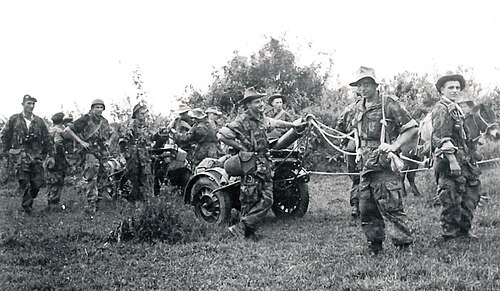
第二次世界大戦の終結後、蒋介石が派遣した呂漢将軍率いる20万人の中国軍は、日本占領軍の降伏を受け入れるため北緯16度線の北にあるフランス領インドシナに入り、1946年までそこに留まった。 [126]これは、ダグラス・マッカーサー元帥が1945年9月2日の一般命令第1号で出した指示に従ったものだった。ベトナム人民軍(広義では中国国民党のベトナム版)と協力してインドシナでの影響力を高め、敵に圧力をかけることとした。[127]
蒋介石はフランスとホー・チミンの相互攻撃に対してフランスを戦争で脅し、和平協定を結ばせた。1946年2月、蒋介石はフランスに対し、中国におけるすべての租界を放棄し、治外法権を放棄する代わりに、北インドシナから撤退し、1946年3月からフランス軍が同地域を再占領することを強制した。[128] [129] [130] [131]
呂漢将軍率いる20万人の中国兵は1945年8月から北ベトナムを占領した。9万人が10月までに到着し、第62軍は9月26日にナムディンとハイフォンに到着した。ランソンとカオバンは広西の第62軍団によって占領され、紅河地域とライカイは雲南からの部隊によって占領された。ベトナム人民解放軍最高司令官の戦闘員が中国兵に同行した。ホー・チ・ミンはドネツィア政府に中国兵に与える米の割当量を設定するよう命じ、紅河デルタでは米が中国の通貨で販売された。呂漢はサントニー指揮下のフランス人スタッフを追い出した後、フランス総督官邸を占拠した。[132]中国兵は16度線以北のフランス領インドシナを占領し、マウントバッテン卿率いるイギリス軍は南部を占領した。[133] [134] 1945年8月にベトナムから帰還したベトナム民間人は、サイゴンでフランス兵に強盗され、強姦され、殺害された。[135]
蒋介石は、中国国内の共産主義者と戦うために、優秀でよく訓練された兵士をベトナム占領から故意に遠ざけ、その代わりに、呂漢率いる雲南省の規律のない軍閥部隊を、日本軍の武装解除を目的として16度線以北のフランス領インドシナ占領に派遣した。[136] [137]ホー・チミンは、1945年9月の「黄金週間」中に、北ベトナムを占領していた中国軍に与えるため、金両、宝石、貨幣を没収した。1945年10月にフランス軍がコーチシナに配った米は、ホー・チミンによって分割され、北ベトナム軍は3分の1しか受け取れず、中国軍はホー・チミンから3分の2を受け取った。 1945年12月18日、中国軍の陳秀和将軍の要請に応じてホーチミンは15日間選挙を延期し、中国軍がドンミンホイとベトナム人民軍に準備させられるようにした。中国軍が撤退したのは1946年4月から6月になってからだった。[138]ホーチミンは黄金週間の後に中国軍の呂漢将軍に金の喫煙具と金のアヘンパイプを贈り、残った収益で武器を購入した。1945年、日本軍が農作物を押収したため、ベトナム北部全域で飢えたベトナム人が死につつあり、中国軍が日本軍の武装解除に来た頃には、ハノイの街中にはベトナム人の死体が散乱し、学生たちが片付けなければならなかった。[123]蒋介石、蕭文、中国国民党中央政府は、定められた期間を超えてベトナムを占領し、ベトミンとフランスとの戦争に巻き込まれることに無関心であったが、雲南省の軍閥である陸漢は反対の考えを持ち、フランスの帰国を阻止し、大西洋憲章の原則に基づいてベトナムに対する中国の信託統治を確立し、最終的にはベトナムの独立準備とフランスの帰国阻止を目的としてベトナムを占領したいと考えていた。[139]ホー・チミンは1945年10月17日にアメリカ大統領ハリー・S・トルーマンに電報を送り、自身と蒋介石総統、スターリン首相、アトリー首相に対し、フランスに対して国連に出向き、フランスがインドシナを日本に明け渡すことで連合国を裏切り騙したため、フランスには帰国する権利がないとして、フランスが再びベトナムを占領することを許さないよう要求するよう求めた。[140]ホー・チミンは、フランスとの協定に署名したフランス兵をベトナムに帰還させる責任を、自らが負わざるを得なくなった後、ドン・ミン・ホイとベトナム人民軍に押し付けた。[141] [142]ホー・チミンのベトミンは、ベトナム北部で中国兵の歓迎パレードを企画し、軍閥兵士の不品行を隠蔽し、呂漢の軍閥部隊は一時的にそこにいるだけであり、中国はベトナムの独立を支持しているとベトナム国民を安心させようとした。ベトミンの新聞は、ベトナム人と中国人は同じ祖先(huyết thống)と文化を共有しており、中国人は日本と勇敢に戦い、1911年の革命で変化し、西洋帝国主義者の攻撃を受けたため、「封建時代の中国と同じではない」と報じた。ホー・チミンはフート省のチャン・フイ・リウのような兵士に中国兵を攻撃することを禁じ、ホー・チミンは、1946年3月6日にキエンアン県で起きたロニャ事件で中国兵を攻撃したベトナム人を処刑に引き渡した。これは、ホー・チミンのベトナム人民軍副司令官がハノイから派遣した特別委員のホー・ドック・タンとダオ・ヴァンビエが事件を調査した後のことである。[143]ホー・チミンは、中国兵がベトミンと衝突する可能性を避けるため、中国兵をなだめ、多くの譲歩をし、ベトナム人に中国兵に対して何もしないように命じ、その約束のために命を差し出すことで、中国軍が日本兵の武装を解除し、できるだけ早く任務を終えてくれることを期待した。[144]
中国共産党ゲリラの指導者である朱家皮は、1945年と1948年に何度もベトナム北部に侵入し、雲南省のフランス軍と戦うベトミンを支援した。他の中国共産党員も同様の行動をとった。[145]
ホー・チミン大統領はバオダイ皇帝 を説得して退位させ、1945年9月2日にベトナム民主共和国の独立を宣言した。しかし9月が終わる前に、イギリス軍と自由フランス軍、そして捕虜となった日本軍がフランスの支配を回復した。ホー・チミンは自治権を得るためにフランスと交渉することに同意したが、 1946年のフォンテーヌブロー協定では満足のいく解決には至らなかった。
第一次インドシナ戦争
第一次インドシナ戦争では、ホーとその政府が森林や山岳地帯に侵攻し、激しい戦闘が続いた。1949年、フランスはホー・チミンに代わる政治的選択肢を提供するために、統一ベトナム国家の樹立を支持し、元皇帝バオ・ダイが権力を回復した。ベトナム、ラオス、カンボジアはフランス連合の加盟国となり、より大きな自治権が与えられた。
戦争の最初の数年間は、フランスに対する小規模な農村反乱が続いた。1949年、紛争は米国、中国、ソ連から供給された近代兵器を装備した2つの軍による通常戦争に変わった。[146]フランス連合軍には、植民地帝国からの植民地軍(モロッコ、アルジェリア、チュニジアのアラブ人/ベルベル人、ラオス、カンボジア、ベトナムの少数民族、黒人アフリカ人)とフランスの職業軍、ヨーロッパの義勇兵、外人部隊の部隊が含まれていた。政府は、戦争が国内でさらに不評になるのを防ぐため、首都の新兵の使用を禁止した。フランスの左翼からは「汚い戦争」(la sale guerre)と呼ばれた。[147]ベトナム人女性は、バオハ、バオイエン郡、ラオカイ省、フールーなど北ベトナムでもフランス人によって強姦され、1948年6月20日にはフランスに訓練された400人のベトナム人が亡命した。1947年から1948年にかけてフランスがベトナム北部でベトミンを鎮圧し、ベトミンが中国共産党からの保護と援助を求めて中国の雲南省に逃れた後、仏像は略奪され、ベトナム人はフランスに強奪され、強姦され、拷問を受けた。フランス人記者はベトナムの村の名士からこう言われた。「戦争がどんなものかは分かっている。兵士が私たちの動物や宝石、仏像を奪うのも理解している。それは普通のことだ。妻や娘がレイプされるのも仕方がない。戦争はいつもそんなものだ。しかし、息子だけでなく、私たち老人や高官が同じように扱われることには反対だ」[148]
ベトミンを兵站経路の末端にある国内の僻地にある防御の堅固な基地に攻撃させる戦略は、コンクリートや鋼鉄の不足により基地が比較的脆弱であったにもかかわらず、ナサンの戦いで有効性が実証された。森林や山岳地帯の環境では装甲戦車の有用性が限られており、航空援護や絨毯爆撃のための強力な航空部隊が不足しており、他のフランス植民地(主にアルジェリア、モロッコ、さらにはベトナム)からの外国人新兵の使用により、フランス軍の取り組みはさらに困難になった。しかし、ヴォー・グエン・ザップは、直接射撃砲、車列待ち伏せ、集中した対空砲といった効率的で斬新な戦術を用いて陸空からの補給を妨害し、幅広い国民の支持を得て大規模な正規軍を編成する戦略、中国で開発されたゲリラ戦の教義と指導、ソ連から提供されたシンプルで信頼性の高い軍需物資の使用を基盤とした戦略を採用した。 [ 149]
However, 1950 was the turning point of the war. Ho's government was recognised by the fellow Communist governments of China and the Soviet Union, and Mao's government subsequently gave a fallback position to Ho's forces, as well as abundant supplies of weapons. In October 1950, the French army suffered its first major defeat with the Battle of Route Coloniale 4. Subsequent efforts by the French military managed to improve their situation only in the short term. Bảo Đại's State of Vietnam proved a weak and unstable government, and Norodom Sihanouk's Cambodia proclaimed its independence in November 1953. Fighting lasted until May 1954, when the Việt Minh won the decisive victory against French forces at the gruelling Battle of Dien Bien Phu.
Geneva Agreements

On 20 July 1954, the Geneva Conference produced the Geneva Agreements between North Vietnam and France. Provisions included supporting the territorial integrity and sovereignty of Indochina, granting it independence from France, declaring the cessation of hostilities and foreign involvement in internal Indochina affairs, and delineating northern and southern zones into which opposing troops were to withdraw. The Agreements mandated unification on the basis of internationally supervised free elections to be held in July 1956.[3]
It was at this conference that France relinquished any claim to territory in the Indochinese peninsula. The United States and South Vietnam rejected the Geneva Accords and never signed. South Vietnamese leader Diem rejected the idea of nationwide election as proposed in the agreement, saying that a free election was impossible in the communist North and that his government was not bound by the Geneva Accords. France did withdraw, turning the north over to the Communists while the Bảo Đại regime, with American support, kept control of the South.
The events of 1954 marked the beginnings of serious United States involvement in Vietnam and the ensuing Vietnam War. Laos and Cambodia also became independent in 1954, but were both drawn into the Vietnam War.
United States involvement
In 1954 the French defeat at Điện Biên Phủ renewed the United States interest in intervening, including some senators who called out for large scale bombing campaigns, potentially even nuclear weapons.[150] President Dwight Eisenhower, even though he did not believe a military victory, believed in the domino theory, where if Vietnam were to fall to communism then there would be multiple other countries that would fall to the ideology in Southeast Asia, from Vietnam to India there would be a dramatic shift in global power. Eisenhower chose to not put boots on the ground, but his decision to start to get involved likely is more important to the countries eventual step into the country than Johnson's decision to take that last step.
Eisenhower had a further impact in that he would continue to provide support for future presidents policy in the country, Lyndon B. Johnson and Gerald Ford both used him to large extents, Kennedy did have several meetings with him in the White House, and Nixon was mostly on his own, but considering their familial ties there was inevitably some ideas that were considered that otherwise would not have been. As he was so involved the United States policy in French Indochina his influence is hard to underestimate.[151]
Administration
| Government-General of French Indochina | |
|---|---|
| Gouvernement général de l'Indochine française | |
  The emblem and seal of the Government-General. | |
| Overview | |
| Established | 17 October 1887 |
| Dissolved | 21 July 1954 |
| State | French Indochina |
| Leader | Governor-General of French Indochina |
| Appointed by | President of France and the Ministry of the Colonies |
| Main organ | Cabinet of the Government-General |
| Headquarters | Norodom Palace, Saigon (1887–1902), Residence of the Governor-General of French Indochina, Hanoi (1902–1945) |
The government of French Indochina was headed by a governor-general and a number of French residents.[152] The governor-general was assisted by a system of different government agencies; however, these agencies functioned only to be consultants to help the governor-general perform his role and exercise his powers.[152] The protectorates of Cambodia, Annam, Tonkin, and Laos all had residents-superior while the colony of Cochinchina had a governor. In the protectorates the indigenous administrations were nominally combined with the French administration, but in the colony of Cochinchina as well as "colonial cities", such as Đà Nẵng in Annam, the French maintained direct rule.[152] All constituent countries of French Indochina had their own legal systems.[153] In Annam and Tonkin the laws of the Nguyễn dynasty, such as Sắc (敕, "Imperial Order"), Chí (誌, "Ordinance"), and Dụ (諭, "Decree"), remained in effect but were subordinate to the laws of the French administration.[153]
The government-general of French Indochina as well as its powers were established and amended through presidential decrees.[153] The governor-general held supreme power in French Indochina over the legislative, executive, and judicial branches of the government and had the power to appoint the residents below him.[152] The governor-general was also in charge of all the military affairs of the country, among their responsibilities were the ability to set up an army corps, deploy the French Indochinese military forces, and issue conscription orders.[152] However, the governor-general was not in charge of actually commanding the military forces during actual military campaigns and battles.[152] The governor-general was also the chairman of the Indochinese Supreme Council (later renamed to the Indochinese Government Council) which was the highest government agency in charge of general affairs.[152]

Other government agencies of the Government-General of French Indochina include the Indochinese Defense Council, Mine Consultancy Committee, the Indochinese Education Consultancy Council, the Supreme Council for Exploitation of Colonies, the Indochinese Economic and Financial Interests Assembly, etc.[152]
In the protectorates of Annam and Tonkin the government of the Nguyễn dynasty shared its power with the French administration de jure but were de facto directly ruled by the French colonial apparatus.[152] The residents-superior and governor of Cochinchina did not have legislative powers only executive.[153] While the Emperors of the Nguyễn dynasty did maintain their legislative powers, all imperial decrees had to be approved by either the Resident-Superior of Annam or by the governor-general of French Indochina.[153] Until the early 20th century the Gia Long era Hoàng Việt luật lệ (皇越律例), sometimes known as the "Gia Long Code", remained the main civil code of the Nguyễn dynasty until the Emperor issued the nearly identical Civil Code of Annam and Civil Code of Tonkin.[153]

A number of the legal documents in effect in the French Republic were also applied to French Indochina, these included the Code Napoléon of 1804, the Code de commerce of 1807, the Code d'instruction criminelle, and the French penal code of 1810.[153] These laws took effect in French Indochina on the date that the governor-general issued decrees that they would also apply to the federation.[153]
The legislative decrees of the governor-general had to be sent to the minister of colonies for consideration; the minister would then approve or disapprove the decrees.[153] However, the minister of colonies was not entitled to make any amendments to the decrees, and if they wished to alter it they would have to draft it and then send the draft to the president of France.[153] Only French presidential decrees could overturn the decrees of the governor-general.[153] Executive decrees did not have to be sent to Metropolitan France for review and immediately came into effect.[153]
Throughout Vietnam thousands of villages had their own independent legal codes that governed the social relations within the village community, thousands of written regulations existed and the central administration often recognised them.[153] These legal codes were known as the Hương ước (鄉約), Hương lệ (鄉例) and Lệ làng (例廊), which could be translated as "rural covenants", and also existed in China and Korea.[154][155] The Hương ước contained rules about various legal practices like land management, marriage, labour relations, arbitration of disputes, as well as local customs such as family relations, village relations, ghosts, ancestor worship, sacrifice, mourning, and longing.[154] Both the government-general of French Indochina and the government of the Nguyễn dynasty attempted reform these rules and regulations in their favour.[153] To expand their power into Vietnamese hamlets and villages the French administration issued models for the villages to follow, but many Vietnamese villages still functioned independent of the French and Nguyễn administrations.[153]
Demographics
Population

- Panorama of Lac-Kaï
- Yun-nan, in the quay of Hanoi
- Flooded street of Hanoi
- Landing stage of Hanoi
The Vietnamese, Lao and Khmer ethnic groups formed the majority of their respective colony's populations. Minority groups, such as the Muong, Tay, Chams, and Jarai, were collectively known as Montagnards and resided principally in the mountain regions of Indochina. Ethnic Han Chinese were largely concentrated in major cities, especially the Hoa in Cochinchina and the Chen in Cambodia, where they became heavily involved in trade and commerce. In addition, there was also a tiny French minority which accounted for 0.2% of the population (or 39,000 people) by 1940.[156] Around 95% of French Indochina's population was rural in a 1913 estimate, although urbanisation did slowly grow over the course of French rule.[f]
Religion

The principal religion in French Indochina was Buddhism, with Mahayana Buddhism influenced by Confucianism more dominant in Vietnam, while Theravāda Buddhism was more widespread in Laos and Cambodia. In addition, active Roman Catholic missionaries were widespread throughout Indochina and roughly 10% of Tonkin's population identified as Catholic by the end of French rule. Cao Đài's and Hòa Hảo's origins began during this period as well.[157][158]
French settlements

Unlike Algeria, French settlement in Indochina did not occur at a grand scale. By 1940, only about 34,000 French civilians lived in French Indochina, along with a smaller number of French military personnel and government workers (6,000). Of these almost half, 16,550, lived in Cochinchina, the vast majority living in Saigon.[159]
The principal reasons why French settlement did not grow in a manner similar to that in French North Africa (which had a population of over 1 million French civilians) were because French Indochina was seen as a colonie d'exploitation économique (colony for economic exploitation) rather than a colonie de peuplement (settlement colony helping Metropolitan France from being overpopulated), and because Indochina was distant from France itself.
Language
During French colonial rule, the French language was the principal language of education, government, trade, and media and French was widely introduced to the general population. French became widespread among urban and semi-urban populations and became the principal language of the elite and educated. This was most notable in the colonies of Tonkin and Cochinchina (Northern and Southern Vietnam respectively), where French influence was most heavy, while Annam, Laos and Cambodia were less influenced by French education.[160] Despite the dominance of French in official and educational settings, local populations still largely spoke their native languages. After French rule ended, the French language was still largely used among the new governments (with the exception of North Vietnam). Today, French continues to be taught as a second language in the former colonies and used in some administrative affairs.[161][162]
Economy
French Indochina was designated as a colonie d'exploitation (colony of economic exploitation) by the French government. Funding for the colonial government came by means of taxes on locals and the French government established a near monopoly on the trade of opium, salt and rice alcohol. The French administration established quotas of consumption for each Vietnamese village, thereby compelling villagers to purchase and consume set amounts of these monopolised goods.[163] The trade of those three products formed about 44% of the colonial government's budget in 1920 but declined to 20% by 1930 as the colony began to economically diversify.
The colony's principal bank was the Banque de l'Indochine, established in 1875 and was responsible for minting the colony's currency, the Indochinese piastre. Indochina was the second most invested-in French colony by 1940 after Algeria, with investments totalling up to 6.7 million francs.
During the first six months of World War I, the government-general would expel all German and Austro-Hungarian people living in French Indochina.[164] The two pre-war import/export houses, Speidel & Co. and F. Engler & Co., were officially re-organised as French companies; however, in reality they continued to operate under both German control and using German capital.[164] During the 1910s, Speidel & Co. was the largest importer of European goods into the country with Engler being one of its major competitors.[164] After the German owners were expelled from the company lower level employees tried to continue running these companies despite increasing push back from the French colonial authorities by means of arbitrary customs enforcement, freight interference, and regulatory aggravations.[165][164] Later the French would seize all of the German Speidel Company's warehouses and would sell the seized goods at low prices both to Vietnamese consumers and Chinese exporters to try to increase revenue.[164] These goods included rice, wine, and canned goods.[164]
During World War I, export regulations kept changing which the Chinese export businesses took advantage of by purchasing rice for minimal prices from the Vietnamese farmers who grew it and then deliberately passing along the risks of the export trade to those small Vietnamese farmers who were the least able to bear the losses involved.[166][164]
As the war made both imports and exports from and to Europe more difficult, French Indochina would increase trade with other Pacific countries.[164] During the war period, import businesses would import flour from the United States and dairy products from Australia, though at lower levels than during the pre-war period.[164] Prior to World War I, French Indochina had an annual flour import worth $950,000 and an annual condensed milk import worth $135,000, but during the war they would import only half this amount from the United States and about one fifth the amount of condensed milk from Australia.[164]
Beginning in the 1930s, France began to exploit the region for its natural resources and to economically diversify the colony. Cochinchina, Annam and Tonkin (encompassing modern-day Vietnam) became a source of tea, rice, coffee, pepper, coal, zinc, and tin, while Cambodia became a centre for rice and pepper crops. Only Laos was seen initially as an economically unviable colony, although timber was harvested at a small scale from there.
At the turn of the 20th century, the growing automobile industry in France resulted in the growth of the rubber industry in French Indochina, and plantations were built throughout the colony, especially in Annam and Cochinchina. France soon became a leading producer of rubber through its Indochina colony and Indochinese rubber became prized in the industrialised world. The success of rubber plantations in French Indochina resulted in an increase in investment in the colony by various firms, such as Michelin. With the growing number of investments in the colony's mines and rubber, tea and coffee plantations, French Indochina began to industrialise as factories opened in the colony. These new factories produced textiles, cigarettes, beer and cement which were then exported throughout the French Empire.
Infrastructure


When French Indochina was viewed as an economically important colony for France, the French government set a goal to improve the transport and communications networks in the colony. Saigon became a principal port in Southeast Asia and rivalled the British port of Singapore as the region's busiest commercial centre. By 1937 Saigon was the sixth busiest port in the entire French Empire.[167]
In the 19th century, the French colonial administration worked to develop regular trading networks and an efficient transport infrastructure between Indochina and southwest China.[168][169] The primary motivation for such an effort was to facilitate export of European goods to China.[170] A railway would also give France access to Yunnan's natural resources, mineral resources and opium, and open up the Chinese market for Indochinese products, such as rice, dry fish, wood and coal.[170] Thus in the early 20th century, they completed the Kunming–Haiphong railway connecting the important port city of Haiphong with the Yunnanese capital city of Kunming.[170]
In 1936, the Trans-Indochinois railway linking Hanoi and Saigon opened. Further improvements in the colony's transport infrastructures led to easier travel between France and Indochina. By 1939, it took no more than a month by ship to travel from Marseille to Saigon and around five days by aeroplane from Paris to Saigon. Underwater telegraph cables were installed in 1921.
As elsewhere in the world, the railways in French Indochina were the sites of active union and labour organisation.[171]
French settlers further added their influence on the colony by constructing buildings in the form of Beaux-Arts and added French-influenced landmarks, such as the Hanoi Opera House (modeled on the Palais Garnier), the Hanoi St. Joseph's Cathedral (resembling the Notre Dame de Paris) and the Saigon Notre-Dame Basilica. The French colonists also built a number of cities and towns in Indochina which served various purposes from trading outposts to resort towns. The most notable examples include Sa Pa in northern Vietnam, Đà Lạt in central Vietnam and Pakse in Laos.
Architectural legacy
The governments of Vietnam, Laos, and Cambodia have previously been reluctant to promote their colonial architecture as an asset for tourism; however, in recent times, the new generation of local authorities has somewhat "embraced" the architecture and advertise it.[172] The heaviest concentration of French-era buildings are in Hanoi, Đà Lạt, Haiphong, Ho Chi Minh City, Huế, and various places in Cambodia and Laos such as Luang Prabang, Vientiane, Phnom Penh, Battambang, Kampot, and Kep.[173]
In popular culture
- In the Walt Disney and Intermondia Films' film, Niok l'éléphant, a young Khmer boy from the French protectorate of Cambodia in French Indochina, 'adopts' a baby elephant and raises it as a pet. His father later sells it to a Chinese merchant. The boy recaptures the pachyderm, however, and frees it back into the jungle.
- The 1992 film Indochine tells the story of Éliane Devries, a French plantation owner, and of her adopted Vietnamese daughter, Camille, set against the backdrop of the rising Vietnamese nationalist movement.
- In MGM's 1939 Lady of the Tropics, a freeloading American playboy falls in love with a local woman while visiting French Indochina with his girlfriend and her family on her father's yacht.
See also
- East Indies
- French Union
- List of governors-general of French Indochina
- Political administration of French Indochina
- List of French possessions and colonies
Notes
- ^ While both "Indo-China" and "Indochina" can be found in contemporary English-language sources, "Indo-China" is the most commonly used spelling (even though Indochine, instead of Indo-Chine, was commonly used in French); contemporary official publications also adopt the spelling of "Indo-China".
- ^ French: Indochine française; Vietnamese: Đông Dương thuộc Pháp, 東洋屬法, lit. 'East Ocean under French Control; Khmer: ឥណ្ឌូចិនបារាំង, Ĕnduchĕn Bareăng; Lao: ອິນດູຈີນຝຣັ່ງ, Indouchin Frang
- ^ Decree of 17 October 1887.
- ^ French: Union indochinoise; Vietnamese: Liên bang Đông Dương, 聯邦東洋, lit. 'East Ocean Federation'; Khmer: សហភាពឥណ្ឌូចិន; Lao: ສະຫະພາບອິນໂດຈີນ
- ^ French: Fédération indochinoise
- ^ Vietnam alone has fifty-four ethnic groups, presented at the Ethnographic Museum of Hanoi.
References
- ^ Lecompte, Jean. Monnaies et jetons de l'Indochine Française. (Principality of Monaco, 2013) Quote: "Les légendes sont bien sûr modifiées. A gauche, les attributs de l'agriculture et des beaux-arts sont remplacés par des épis de riz et à droite figure une ancre symbolisant le ministère de la Marine et des Colonies. Hélas, Albert-Désiré Barre décède le 29 décembre 1878 et c'est alors son frère aîné Auguste-Jean Barre qui lui succède et mène à terme le projet. Les premières frappes sortent en 1879." (in French))
- ^ "French Indo-China: Demographic Imbalance and Colonial Policy". Population Index. 2 (11): 68–81. 1945. doi:10.2307/2730333. JSTOR 2730333 – via JSTOR.
- ^ a b Kahin.
- ^ Owen, p. 106.
- ^ a b c Tucker, p. 29.
- ^ Chapuis (1995), p. 195.
- ^ a b Chapuis (2000), p. 48.
- ^ Chapuis, pp. 49–53.
- ^ a b Llewellyn.
- ^ Thomazi, pp. 69–71.
- ^ Roustan, Frédéric (2012). "Mousmés and French Colonial Culture: Making Japanese Women's Bodies Available in Indochina". Journal of Vietnamese Studies. 7 (1): 52–105. doi:10.1525/vs.2012.7.1.52. JSTOR 10.1525/vs.2012.7.1.52. Archived from the original on 21 June 2022.
- ^ Carney, Joey (27 April 2020). "A Brief Primer on Vice and Sex in Colonial Vietnam". Simi Press.
- ^ Hoskins, Janet (Summer 2007). "Postcards from the Edge of Empire: Images and Messages from French Indochina". Asia's Colonial Photographies (44). IIAS Newsletter: 16, 17. Archived (PDF) from the original on 21 June 2022.
- ^ Hoskins, Janet (January 2007). "Postcards from the Edge of Empire: Images and Messages from French Indochina". IIAS Newsletter.
- ^ Yee, Jennifer (2004). "Recycling the 'Colonial Harem'? Women in Postcards from French Indochina". French Cultural Studies. 15 (5): 5–19. doi:10.1177/0957155804040405. S2CID 162718081.
- ^ "[Photos] The Japanese Prostitutes Of Colonial Vietnam". Saigoneer. 15 July 2015. Archived from the original on 17 July 2015.
- ^ *陳碧純,「山打根的八番娼館」之讀後心得,亞太研究論壇卷期:28 2005.06,頁309-315。http://www.rchss.sinica.edu.tw/capas/publication/newsletter/N28/2806.pdf Archived 11 August 2022 at the Wayback Machine
- 佐藤トゥイウェン,「第 4 章「孝」に殉じた天草の「からゆきさん」」,『周縁の文化交渉学シリーズ 8天草諸島の歴史と現在』,関西大学文化交渉学教育研究拠点,2012年。
- 柏木卓司,『戦前期フランス領インドシナにおける邦人進出の形態-「職業別人口表 」を中心として-』 , (アジア経済) 31(3) 1990 3: p. 78-98。
- 柏木卓司,「ベトナムのからゆきさん」,『歴史と人物』10月号,中央公論,1979,208頁。
- 神坂次郎,『おれは伊平次』,講談社文庫,2002/8。
- 平田豊弘,「松下光廣と大南公司」,『周縁の文化交渉学シリーズ 4 陶磁器流通と西海地域』,関西大学,荒武賢一朗編,2011年。
- Ch. Lemire, Les cinq Pays de l'Indo-Chine française, l'établissement de Kouang-Tchéou, le Siam,Juillet 1899.
- Dean Meyers and My-Van Tran, The Cao Dai, Prince Cuong De and the Japanese in 1937–1939, THE CRISIS OF THE EIGHTH LUNAR MONTH, University of South Australia, IJAPS Vol. 2 (May) 2006.
- ^ Sartore, Melissa (7 June 2019). "Facts About Karayuki-San, The Japanese Sex Workers Trafficked To The Rest Of The World". Ranker.
- ^ Jolivet, Muriel (2005). Japan: The Childless Society?: The Crisis of Motherhood. Routledge. p. 124. ISBN 1134757166.
- ^ a b Charles Keith (20 February 2015). "Religious Missionaries and the Colonial State (Indochina). - Version 1.0". 1914-1918-online - International Encyclopedie of the First World War (Free University of Berlin, Bavarian State Library, and Deutsch-Französische Gymnasium, among others). Retrieved 21 August 2022. - Keith, Charles: Religious Missionaries and the Colonial State (Indochina), in: 1914-1918-online. International Encyclopedia of the First World War, ed. by Ute Daniel, Peter Gatrell, Oliver Janz, Heather Jones, Jennifer Keene, Alan Kramer, and Bill Nasson, issued by Freie Universität Berlin, Berlin (2015-02-20). DOI: 10.15463/ie1418.10559.
- ^ a b Thu Nhuần (tổng hợp) (28 July 2016). "Nhà Nguyễn và những tháng 7 biến động. – Phải chăng tháng 7 với triều Nguyễn là một sự trùng hợp, khi Pháp mở đầu cuộc tấn công 1/9/1885 (nhằm vào 24/7/1858 âm lịch) và trận chiến đấu cuối cùng dưới sự lãnh đạo của triều đình nhà Nguyễn cũng diễn ra vào 5/7/1885" (in Vietnamese). Bảo tàng Lịch sử Quốc gia. Retrieved 7 August 2021.
Trong một thông tri ngày 24/8/1898, Khâm sứ Trung kỳ đã viết "Từ nay, trên vương quốc An Nam không còn tồn tại hai chính quyền nữa mà chỉ tồn tại một chính quyền thôi" (tức chính quyền Pháp).
- ^ Jonathan D. London Education in Vietnam, pg. 10 (2011): "The ultimately unsuccessful Cần Vương (Aid the King) Movement of 1885–89, for example, was coordinated by scholars such as Phan Đình Phùng, Phan Chu Trinh, Phan Bội Châu, Trần Quý Cáp and Huỳnh Thúc Kháng, who sought to restore sovereign authority to the Nguyễn throne."
- ^ Fourniau, Annam–Tonkin, pp. 39–77
- ^ Brocheux & Hémery 2004, p. 57-68.
- ^ David Marr (1971) Vietnamese Anticolonialism, pg. 68
- ^ Huard, pp. 1096–1107; Huguet, pp. 133–223; Sarrat, pp. 271–3; Thomazi, Conquête, pp. 272–75; Histoire militaire, pp. 124–25
- ^ a b c d e f g h i j k l m n o p q r s t u v w x y z aa ab ac ad ae af ag ah ai aj ak al am an ao ap aq ar as at au av aw ax ay az ba bb bc bd be bf bg bh bi bj bk bl bm bn bo bp bq br bs bt bu bv bw bx by bz ca cb cc cd ce cf cg ch ci cj ck cl cm cn co cp cq cr cs ct cu cv Claire Thi Liên Trân (11 January 2022). "Indochina (Version 1.0)". 1914-1918-online - International Encyclopedie of the First World War (Free University of Berlin, Bavarian State Library, and Deutsch-Französische Gymnasium, among others). Retrieved 17 August 2022. - Thi Liên Trân, Claire: Indochina, in: 1914-1918-online. International Encyclopedia of the First World War, ed. by Ute Daniel, Peter Gatrell, Oliver Janz, Heather Jones, Jennifer Keene, Alan Kramer, and Bill Nasson, issued by Freie Universität Berlin, Berlin (2022-01-11). DOI: 10.15463/ie1418.11594.
- ^ Osborne, Milton: Peasant politics in Cambodia. The 1916 Affair, in: Modern Asian Studies 12/2, 1978, pp. 226-228.
- ^ a b c d e f g h i j k l m n o p q r s t u v w x y z aa ab Patrice Morlat (6 December 2017). "Social Conflict and Control, Protest and Repression (Indochina) - Version 1.0". 1914-1918-online - International Encyclopedie of the First World War (Free University of Berlin, Bavarian State Library, and Deutsch-Französische Gymnasium, among others). Retrieved 21 August 2022. - Morlat, Patrice: Social Conflict and Control, Protest and Repression (Indochina), in: 1914-1918-online. International Encyclopedia of the First World War, ed. by Ute Daniel, Peter Gatrell, Oliver Janz, Heather Jones, Jennifer Keene, Alan Kramer, and Bill Nasson, issued by Freie Universität Berlin, Berlin (2017-12-06). DOI: 10.15463/ie1418.11199. Translated by: Jennings, Eric Thomas.
- ^ Chu Trinh Phan, Sính Vĩnh Phan Châu Trinh and his political writings - Page 7 2009 "Phan Boi Chau was the major figure within this group of literati.20 A founder of the Vietnam Modernization Association (Viet Nam Duy Tan Hoi, 1904), Phan Boi Chau went to Japan in 1905, primarily to ask for military aid. "
- ^ Education in Vietnam - Page 48 Jonathan D London - 2011 "Phan Boi Chau (1867–1940) was founder of the Duy Tân Hội (Reformation Society) and Đông Du ("Go East") movement that encouraged nationalist Vietnamese youth to study in Japan. Later, he founded the Vietnam Quang Phuc Hoi ..."
- ^ Philip G. Altbach, Toru Umakoshi Asian Universities: Historical Perspectives and Contemporary ... 2004 Page 331 "Phong trao Duy Tan (The Duy Tan reform movement). Danang, Vietnam: Danang Publishing House. Pham, L. H. (2000, December 28)."
- ^ David P. Chandler, David Joel Steinberg In Search of Southeast Asia: A Modern History 1987 Page 315 "Phan Boi Chau himself, by this time the leader of a political group known as the "Renovation Society" (Duy Tan Hoi) initiated this"
- ^ Van Thao Trinh Les compagnons de route de Hô Chi Minh: Histoire d'un engagement 2004 . Page 18 "Duy Tân (Modernisation)."
- ^ Philippe M. F. Peycam The Birth of Vietnamese Political Journalism: Saigon, 1916-1930 - Page 56 2012 "During Chiêu's trial, the French discovered that he had been a central agent for an underground movement called the Association for the Modernization of Vietnam (Việt Nam Duy Tân Hội), based in Japan and led by Châu and Prince Cường Để..."
- ^ Nguyễn Đình Hoà From the City Inside the Red River: A Cultural Memoir 1999 Page 76 "the Association for Mutual Education (Hội Trí Tri) at 59 Fan Street. ... August 22, 1907, of the same paper further revealed, on page 348, that the three elementary grades were taught ... Trần Văn Hùng, Vũ Văn Trw and Phạm Duy Tốn, the latter a scholar-publicist and father of Professor Phạm Duy-Khiem and musician Phạm Duy-Ca'n, a.k.a. Phạm Duy. On November 16, 1943, Governor-General Decoux, resident-sup ...
- ^ Chapuis, Oscar (2000). The last emperors of Vietnam: from Tu Duc to Bao Dai. Greenwood Publishing Group. pp. 90–91. ISBN 0-313-31170-6.
- ^ Largo, V. (2002). Vietnam: Current Issues and Historical Background. Nova Publishers. p. 111. ISBN 1-59033-368-3.
- ^ Schulzinger, Robert D. (1999). A Time for War: The United States and Vietnam, 1941-1975. Oxford University Press US. p. 7. ISBN 0-19-512501-0.
- ^ Peycam, Philippe M. F: The birth of Vietnamese political journalism. Saigon, 1916-1930, New York City (2015): Columbia University Press. Page 18.
- ^ Gunn, Geoffrey C.: Rebellion In Northern Laos. The Revolts of the Lu and the Chinese Republicans (1914-1916), in: The Journal of The Siam Society 77/1 (1989), p. 61.
- ^ Fox-Stuart, Martin (Winter 1995). "The French in Laos, 1887–1945" Archived 17 June 2018 at the Wayback Machine. Modern Asian Studies. 29:1 p. 111. doi:10.1017/S0026749X00012646.
- ^ Stuart-Fox, Martin (2001). Historical Dictionary of Laos. Second Edition. Asian/Oceanian Historical Dictionaries Series No. 35. Maryland: The Scarecrow Press.
- ^ Murdoch, John B. (1974). "The 1901–1902 Holy Man's Rebellion" (free). Journal of the Siam Society. 62 (1). Siam Heritage Trust. Retrieved 2 April 2013.
The 'Holy Man's' uprising of 1901–1902 was a large scale popular rebellion involving Northeast Thailand, Southern Laos, and the adjacent portion of the Vietnamese Central Highlands. Scholarship to date has not adequately considered the rebellion's character as transcending present national boundaries, having common leadership, and growing out of common regional causes.
- ^ a b c tapchisonghuong.com.vn (6 April 2012). "Giới thiệu một số văn bản có liên quan đến Bộ Học và Bộ Quốc dân giáo dục. - Để điều hành đất nước, từ năm 1802-1906, nhà Nguyễn đã thiết lập 6 bộ là: Bộ Lại, Bộ Hộ, Bộ Lễ, Bộ Binh, Bộ Hình, Bộ Công" (in Vietnamese). BẢO TÀNG LỊCH SỬ QUỐC GIA (VIETNAM NATIONAL MUSEUM OF HISTORY). Retrieved 16 June 2022.
- ^ a b c d e f Th.S Nguyễn Thu Hường - TTLTQG I (26 November 2015). "Vài nét về Bộ Học qua châu bản triều Nguyễn. - 04:00 PM 26/11/2015 - Lượt xem: 482 - Có thể nói có không ít tư liệu viết về Bộ Học và những cách tân trong chương trình giáo dục Việt Nam thời thuộc Pháp, tuy nhiên Châu bản triều Nguyễn thực sự là nguồn sử liệu quan trọng cung cấp những thông tin xác thực, giá trị để chúng ta có cơ sở nghiên cứu về nền giáo dục Việt Nam thời thuộc địa" (in Vietnamese). State Records and Archives Department of Vietnam (Cục Văn thư và Lưu trữ nhà nước). Retrieved 22 June 2022.
- ^ Võ Thạnh (6 December 2016). "Triều đại phong kiến duy nhất có Bộ Học" (in Vietnamese). VnExpress. Retrieved 22 June 2022.
- ^ a b c d e f g h i Kimloan Vu-Hill (20 April 2018). "Between Acceptance and Refusal - Soldiers' Attitudes Towards War (Indochina). - Version 1.1". 1914-1918-online - International Encyclopedie of the First World War (Free University of Berlin, Bavarian State Library, and Deutsch-Französische Gymnasium, among others). Retrieved 21 August 2022. - Vu-Hill, Kimloan: Between Acceptance and Refusal - Soldiers' Attitudes Towards War (Indochina) (Version 1.1), in: 1914-1918-online. International Encyclopedia of the First World War, ed. by Ute Daniel, Peter Gatrell, Oliver Janz, Heather Jones, Jennifer Keene, Alan Kramer, and Bill Nasson, issued by Freie Universität Berlin, Berlin (2018-04-20). DOI: 10.15463/ie1418.10659/1.1.
- ^ Sarraut, Albert: La Mise en valeur des colonies françaises, Paris (1923), pp. 42-43; 9 PA 13/3, Memo from the General-Governor of French Indochina to the Governor of Cochinchina, Residents Superior of Tonkin, Annam, and Cambodia, 2 June 1918; Cross, Gary: Immigrant Workers in Industrial France. The Making of a New Laboring Class, Philadelphia 1983, p. 34-36; Nogaro, B. / Weil, Lucien: La main d'ouvre étrangère et coloniale pendant la guerre, New Haven, CT 1926, p. 32-35: 242,000 soldiers from Africa and Asia had served in the war.
- ^ a b Jouineau, Andre (April 2009). French Army 1918 1915 to Victory. Amber Books Limited. p. 63. ISBN 978-2-35250-105-3.
- ^ Brocheux, Pierre / Hemery, Daniel: Indochine, la colonisation ambiguë 1858-1954, Paris (1994), p. 248. (in French).
- ^ a b c d e f g Kimloan Vu-Hill (8 October 2014). "Indochinese Workers in France (Indochina). - Version 1.0". 1914-1918-online - International Encyclopedie of the First World War (Free University of Berlin, Bavarian State Library, and Deutsch-Französische Gymnasium, among others). Retrieved 21 August 2022. - Vu-Hill, Kimloan: Indochinese Workers in France (Indochina), in: 1914-1918-online. International Encyclopedia of the First World War, ed. by Ute Daniel, Peter Gatrell, Oliver Janz, Heather Jones, Jennifer Keene, Alan Kramer, and Bill Nasson, issued by Freie Universität Berlin, Berlin (2014-10-08). DOI: 10.15463/ie1418.10373.
- ^ Sanderson Beck: Vietnam and the French: South Asia 1800–1950, paperback, 629 pages.
- ^ "French Forces in the Salonika Campaign 1915-1918".
- ^ "How the U.S. Got Involved In Vietnam" Archived 22 September 2019 at the Wayback Machine, by Jeff Drake
- ^ Vu-Hill, Kimloan: Coolies into rebels. Impact of World War I on French Indochina, Paris (2011): Les Indes savantes. Page 71.
- ^ Peycam, Philippe M. F: The birth of Vietnamese political journalism. Saigon, 1916-1930, New York City (2015): Columbia University Press. Page 4.
- ^ Le Van Ho, Mireille: Des Vietnamiens dans la Grande Guerre. 50000 recrues dans les usines françaises, Paris (2014): Vendémiaire. pp. 144-154. (in French).
- ^ Chandler, David: A History of Cambodia, London 2007, p. 146
- ^ a b c Trân, Claire Thi Liên: Nguyễn Xuân Mai (1890-1929). Itinéraire d'un médecin indochinois engagé pendant la première guerre mondiale, in: Trévisan, Carina / Delalande, Hélène Baty (eds.): Entrer en guerre, Paris (2016), p. 305. (in French).
- ^ Brocheux, Pierre: Une histoire économique du Viet Nam. 1850-2007. La palanche et le camion, Paris (2009): Les Indes savantes. pp. 71-96. (in French).
- ^ a b c Gunn, Geoffrey: Rebellion In Northern Laos. The revolts of the Lu and the Chinese Republicans (1914-1916), in: The Journal of the Siam Society 77/1, 1989, pp. 61-66.
- ^ Zinoman, Peter (2000). "Colonial Prisons and Anti-colonial Resistance in French Indochina: The Thai Nguyen Rebellion, 1917". Modern Asian Studies 34: 57–98. doi:10.1017/s0026749x00003590
- ^ Morlat, Patrice: Indochine années vingt. Le balcon de la France sur le Pacifique. Une age de l'histoire de France en Extrême Orient, volume 1, Paris (2001): Indes savantes. pp. 169-170. (in French).
- ^ Morlat, Patrice: Indochine années vingt. La politique indigène des grands commis au service de la mise en valeur, volume 2, Paris (2006): Les Indes savantes. pp. 462-467. (in French).
- ^ Morlat, Patrice: Les affaires politiques de l'Indochine (1895-1923), Paris (1996): L'Harmattan. (in French).
- ^ Pierre Brocheux (14 April 2015). "Colonial Society (Indochina) - Version 1.0". 1914-1918-online - International Encyclopedie of the First World War (Free University of Berlin, Bavarian State Library, and Deutsch-Französische Gymnasium, among others). Retrieved 21 August 2022. - Brocheux, Pierre: Colonial Society (Indochina), in: 1914-1918-online. International Encyclopedia of the First World War, ed. by Ute Daniel, Peter Gatrell, Oliver Janz, Heather Jones, Jennifer Keene, Alan Kramer, and Bill Nasson, issued by Freie Universität Berlin, Berlin (2015-04-14). DOI: 10.15463/ie1418.10613.
- ^ Zinoman, Peter, American Council of Learned Societies: The colonial Bastille. A history of imprisonment in Vietnam, 1862-1940, Berkeley (2001): University of Calgary Press. Page: 199.
- ^ Brocheux, Pierre / Hémery, Daniel: Indochine, la colonisation ambiguë, 1858-1954, Paris (2001): Découverte. Page 93. (in French).
- ^ Vu-Hill, Kimloan: Coolies into Rebels. Impact of World War I on French Indochina, Paris (2011), pp. 121-25; 1 SLOTFOM 4, Report from the Controller General of Indochinese Soldiers, 5 April 1923.
- ^ Quoted in Larcher-Goscha Agathe: La voie étroite des réformes coloniales et la « collaboration franco-annamite » (1917-1928), in: Revue française d'histoire d'outre-mer 82/309 (1995), p. 408.
- ^ (in French) Đình Thảo Trịnh, Dinh Khai Trinh, Décolonisation du Viêt Nam: un avocat témoigne, Editions L'Harmattan, 1994, ISBN 978-2-7384-2368-9, p. 45
- ^ a b c Chandler, David P: A history of Cambodia, London (2007): Routledge. Pages: 191-193.
- ^ Eric Thomas Jennings (15 June 2015). "Commemoration, Cult of the Fallen (Indochina). - Version 1.0". 1914-1918-online - International Encyclopedie of the First World War (Free University of Berlin, Bavarian State Library, and Deutsch-Französische Gymnasium, among others). Retrieved 21 August 2022. - Jennings, Eric Thomas: Commemoration, Cult of the Fallen (Indochina), in: 1914-1918-online. International Encyclopedia of the First World War, ed. by Ute Daniel, Peter Gatrell, Oliver Janz, Heather Jones, Jennifer Keene, Alan Kramer, and Bill Nasson, issued by Freie Universität Berlin, Berlin (2015-06-15). DOI: 10.15463/ie1418.10658.
- ^ Inauguration à Pnom-Penh du Monument aux Morts du Cambodge. In: Extrême-Asie, March 1925, p. 36. (in French).
- ^ a b c d Phương Anh (tổng hợp) (9 September 2016). "Bảo Đại - Vị Hoàng đế cuối cùng trong lịch sử phong kiến Việt Nam. - Bảo Đại tên thật là Nguyễn Phúc Vĩnh Thụy, là vị Hoàng đế thứ 13 và cuối cùng của triều đại nhà Nguyễn, cũng là vị Hoàng đế cuối cùng trong lịch sử phong kiến Việt Nam" (in Vietnamese). BẢO TÀNG LỊCH SỬ QUỐC GIA (VIETNAM NATIONAL MUSEUM OF HISTORY). Retrieved 22 June 2022.
- ^ Marr, David G.: Vietnamese anticolonialism, 1885-1925, Berkeley (1971): University of California Press. p. 276.
- ^ Maurice Rives, pages 72–73 Les Linh Tap, I.S.B.N 2-7025-0436-1
- ^ Patricia M. Pelley Postcolonial Vietnam: New Histories of the National Past 2002 Page 199-200 "As for the Nationalist Party: it was wiped out in the debacle of Yên Bái in 1930, he explained, the remnants who fled to China became a 'reactionary counterrevolutionary group'"
- ^ Tucker, Spencer C. (2000). Encyclopedia of the Vietnam War: A Political, Social and Military History. Santa Barbara, California: ABC-CLIO. p. 442. ISBN 1-57607-040-9.
- ^ a b Lockhart & Duiker 2010, p. 48.
- ^ Gunn 2014, p. 119.
- ^ Daniel Hemery Revolutionnaires Vietnamiens et pouvoir colonial en Indochine. François Maspero, Paris. 1975, Appendix 24.
- ^ Frank N. Trager (ed.). Marxism in Southeast Asia; A Study of Four Countries. Stanford, Calif: Stanford University Press, 1959. p. 142
- ^ Daniel Hemery Revolutionnaires Vietnamiens et pouvoir colonial en Indochine. François Maspero, Paris. 1975, p. 388
- ^ Manfred McDowell, "Sky without Light: a Vietnamese Tragedy," New Politics, Vol XIII, No. 3, 2011, p. 1341 https://newpol.org/review/sky-without-light-vietnamese-tragedy/ Archived 17 August 2020 at the Wayback Machine (accessed 10 October 2019).
- ^ Ngô Văn, In the Crossfire: Adventures of a Vietnamese Revolutionary. AK Press, Oakland CA, 2010, p. 16
- ^ Tyson, James L. (1974). "Labor Unions in South Vietnam". Asian Affairs. 2 (2): 70–82. doi:10.1080/00927678.1974.10587653. JSTOR 30171359.
- ^ Chonchirdsin, Sud (1997). "The Indochinese Communist Party and the Nam Ky Uprising in Cochin China, November–December 1940". South East Asia Research. 5 (3): 269–293. doi:10.1177/0967828X9700500304. JSTOR 23746947.
- ^ Paige, Jeffery M. (1970). "Inequality and Insurgency in Vietnam: A re-analysis" (PDF). cambridge.org. Archived from the original (PDF) on 9 November 2018. Retrieved 9 November 2018.
- ^ Berger, Thomas U. (2012). War, Guilt, and World Politics after World War II. Cambridge University Press. p. 126. ISBN 978-1139510875.
- ^ Truong, Chinh (19 May 1971). "I. DOCUMENTS FROM THE AUGUST REVOLUTION RESOLUTION OF THE TONKIN REVOLUTIONARY MILITARY CONFERENCE, JPRS 53169 19 May 1971 TRANSLATIONS ON NORTH VIETNAM No. 940 DOCUMENTS ON THE AUGUST REVOLUTION". Translations on North Vietnam, Volume 17. JPRS (Series). Contributor United States. Joint Publications Research Service. U.S. Joint Publications Research Service. pp. 1–7.
- ^ I. DOCUMENTS FROM THE AUGUST REVOLUTION RESOLUTION OF THE TONKIN REVOLUTIONARY MILITARY CONFERENCE [Except from the Resolution of the Tonkin Revolutionary Military Conference Held Between 15 and 20 April 1945; Hanoi, Nhan Dan, Vietnamese, 25 August 1970, pp 1.4]
- ^ Truong, Chinh (19 May 1971). "Policy of the Japanese Pirates Towards Our people, JPRS 53169 19 May 1971 TRANSLATIONS ON NORTH VIETNAM No. 940 DOCUMENTS ON THE AUGUST REVOLUTION". Translations on North Vietnam, Volume 17. JPRS (Series). Contributor United States. Joint Publications Research Service. U.S. Joint Publications Research Service. pp. 8–13.
- ^ Article by Truong Chinh, chairman of the National Assembly: "Policy of the Japanese Pirates Towards Our people"; Hanoi, Nhan Dan, Vietnamese, 17 August 1970, pp 1, 3]
- ^ Truong, Chinh (1971). "Revolution or Coup d'Etat, JPRS 53169 19 May 1971 TRANSLATIONS ON NORTH VIETNAM No. 940 DOCUMENTS ON THE AUGUST REVOLUTION". Translations on North Vietnam, Volume 17. JPRS (Series). Contributor United States. Joint Publications Research Service. U.S. Joint Publications Research Service. pp. 14–16.
- ^ [Article by Truong Chinh, chairman of the National Assembly: "Revolution or Coup d'Etat"; Hanoi, Nhan Dan, Vietnamese, 16 August 1970, pp 1, 3] *Reprinted from Co Giai Phong [Liberation Banner], No 16, 12 September 1945.
- ^ Ho Chi Minh (1971). Translations on North Vietnam, Volume 17. JPRS (Series). Contributor United States. Joint Publications Research Service. U.S. Joint Publications Research Service. pp. 17, 18.
- ^ HO CHI MINH'S LETTER TO THE COCHIN-CHINA COMPATRIOTS [Letter written by President Ho after the war of resistance had broken out in Cochin China: "To the Nam Bo Compatriots"; Hanoi, THong Nhat, Vietnamese, 18 September 1970, p 1] 26 September 1945
- ^ Ho, Chi Minh. Selected Writings (1920-1969).
- ^ "Z-Library single sign on". Archived from the original on 6 April 2023. Retrieved 22 July 2022.
- ^ Min, Pyong Gap (2021). Korean "Comfort Women": Military Brothels, Brutality, and the Redress Movement. Genocide, Political Violence, Human Rights. Rutgers University Press. ISBN 978-1978814981.
- ^ Tanaka, Yuki (2003). Japan's Comfort Women. Routledge. p. 60. ISBN 1134650124. Alt URL Archived 25 July 2022 at the Wayback Machine
- ^ Lee, Morgan Pōmaika'i (29 April 2015). "Comfort women were Chinese, Korean, Filipino, Burmese, Thai, Dutch, Australian, and Vietnamese women and girls forced into sexual slavery" – via Twitter.
- ^ Stetz, Margaret D.; Oh, Bonnie B. C. (12 February 2015). Legacies of the Comfort Women of World War II (illustrated ed.). Routledge. p. 126. ISBN 978-1317466253.
- ^ Quinones, C. Kenneth (2021). Imperial Japan's Allied Prisoners of War in the South Pacific: Surviving Paradise. Cambridge Scholars Publishing. p. 230. ISBN 978-1527575462.
- ^ Min, Pyong Gap (2021). Korean "Comfort Women": Military Brothels, Brutality, and the Redress Movement. Genocide, Political Violence, Human Rights. Rutgers University Press. ISBN 978-1978814981.
- ^ Double Agency: Acts of Impersonation in Asian American Literature and Culture. Stanford University Press. 2005. p. 209. ISBN 0804751862.
- ^ THOMA, PAMELA (2004). "Cultural Autobiography, Testimonial, and Asian American Transnational Feminist Coalition in the "Comfort Women of World War II" Conference". In Vo, Linda Trinh; Sciachitano, Marian (eds.). Asian American Women: The Frontiers Reader (illustrated, reprint ed.). U of Nebraska Press. p. 175. ISBN 0803296274.
- ^ Yoon, Bang-Soon L. (2015). "CHAPTER 20 Sexualized Racism, Gender and Nationalism: The Case of Japan's Sexual Enslavement of Korean "Comfort Women"". In Kowner, Rotem; Demel, Walter (eds.). Race and Racism in Modern East Asia: Interactions, Nationalism, Gender and Lineage. Brill's Series on Modern East Asia in a Global Historical Perspective (reprint ed.). BRILL. p. 464. ISBN 978-9004292932.
- ^ Qiu, Peipei; Su, Zhiliang; Chen, Lifei (2014). Chinese Comfort Women: Testimonies from Imperial Japan's Sex Slaves. Oxford oral history series (illustrated ed.). Oxford University Press. p. 215. ISBN 978-0199373895.
- ^ Soh, C. Sarah (2020). The Comfort Women: Sexual Violence and Postcolonial Memory in Korea and Japan. Worlds of Desire: The Chicago Series on Sexuality, Gender, and Culture. University of Chicago Press. pp. 159, 279. ISBN 978-0226768045.
- ^ Huff, Gregg (2020). World War II and Southeast Asia: Economy and Society under Japanese Occupation. Cambridge University Press. p. 386. ISBN 978-1108916080.
- ^ Tran Thi, Minh Ha (24 February 2017). "60 years after Japan army husband fled, Vietnam war bride clings to love". AFP.
- ^ indomemoires (20 July 2016). "Ben Valentine : Photographing the Forgotten Vietnamese Widows of Japanese WWII Soldiers". doi:10.58079/q5o2.
- ^ Valentine, Ben (19 July 2016). "Photographing the Forgotten Vietnamese Widows of Japanese WWII Soldiers". Hyperallergic.
- ^ Gunn, Geoffrey (17 August 2015). "The great Vietnam famine".
- ^ Gunn, Geoffrey (24 January 2011). "The Great Vietnamese Famine of 1944-45 Revisited 1944−45年ヴィエトナム大飢饉再訪". The Asia-Pacific Journal. 9 (5 Number 4).
- ^ Dũng, Bùi Minh (1995). "Japan's Role in the Vietnamese Starvation of 1944–45". Modern Asian Studies. 29 (3). Cambridge University Press: 573–618. doi:10.1017/S0026749X00014001. S2CID 145374444.
- ^ Hien, Nina (Spring 2013). "The Good, the Bad, and the Not Beautiful: In the Street and on the Ground in Vietnam". Local Culture/Global Photography. 3 (2).
- ^ Vietnam: Corpses in a mass grave following the 1944-45 famine during the Japanese occupation. Up to 2 million Vietnamese died of starvation. AKG3807269.
- ^ "Vietnamese Famine of 1945". Japanese Occupation of Vietnam.
- ^ a b Bui, Diem; Chanoff, David (1999). In the Jaws of History. Vietnam war era classics series (illustrated, reprint ed.). Indiana University Press. pp. 39, 40. ISBN 0253335396.
- ^ "Dân chủ: Vấn đề của dân tộc và thời đại". Hưng Việt: TRANG CHÁNH - Trang 1. Đối Thoại Năm 2000. 25 March 2000.
- ^ Tuchman, p. 235.
- ^ Addington, p. 30.
- ^ Neville, p. 119.
- ^ Duong, p. 21.
- ^ Tønnesson, p. 41.
- ^ Errington, p. 63.
- ^ The Vietnam War Seeds of Conflict 1945–1960.
- ^ Gunn, Geoffrey C. (2014). Rice Wars in Colonial Vietnam: The Great Famine and the Viet Minh Road to Power. Rowman & Littlefield. p. 224. ISBN 978-1442223035.
- ^ Roy, Kaushik; Saha, Sourish (2016). Armed Forces and Insurgents in Modern Asia (illustrated ed.). Routledge. p. 84. ISBN 978-1317231936.
- ^ Miller, Edward (2016). The Vietnam War: A Documentary Reader. Uncovering the Past: Documentary Readers in American History (illustrated ed.). John Wiley & Sons. p. 40. ISBN 978-1405196789.
- ^ Donaldson, Gary (1996). America at War Since 1945: Politics and Diplomacy in Korea, Vietnam, and the Gulf War. Religious Studies; 39 (illustrated ed.). Greenwood Publishing Group. p. 75. ISBN 0275956601.
- ^ Neville, Peter (2007). Britain in Vietnam: Prelude to Disaster, 1945–46. Military History and Policy. Routledge. p. 66. ISBN 978-1134244768.
- ^ Duiker, William J (2012). Ho Chi Minh: A Life. Hachette Books. ISBN 978-1401305611.
- ^ Ho Chi Minh: A Biography. Translated by Claire Duiker (illustrated, reprint ed.). Cambridge University Press. 2007. p. 108. ISBN 978-0521850629.
- ^ Patti, Archimedes L. A. (1980). Why Viet Nam?: Prelude to America's Albatross (illustrated ed.). University of California Press. p. 336. ISBN 0520041569.
- ^ Ho, Chi Minh (1995). "9. Vietnam's Second Appeal to the United States: Cable to President Harry S Truman (October 17, 1945)*". In Gettleman, Marvin E.; Franklin, Jane; Young, Marilyn Blatt; Franklin, Howard Bruce (eds.). Vietnam and America: A Documented History (illustrated, revised ed.). Grove Press. p. 47. ISBN 0802133622.
- ^ SarDesai, D.R. (2018). Vietnam: Past and Present (4, reprint ed.). Routledge. ISBN 978-0429975196.
- ^ Hearden, Patrick J. (2016). Tragedy of Vietnam (4, revised ed.). Routledge. p. 67. ISBN 978-1315510842.
- ^ Marr, David G. (2013). Vietnam: State, War, and Revolution (1945–1946). Philip E. Lilienthal book. Vol. 6 of From Indochina to Vietnam: Revolution and War in a Global Perspective (illustrated ed.). University of California Press. pp. 269–271, 274–275. ISBN 978-0520274150. ISSN 2691-0403.
- ^ Duiker, William J (2018). The Communist Road To Power In Vietnam: Second Edition (2 ed.). Routledge. ISBN 978-0429972546.
- ^ Calkins, Laura M. (2013). China and the First Vietnam War, 1947-54. Routledge Studies in the Modern History of Asia (reprint ed.). Routledge. p. 12. ISBN 978-1134078479.
- ^ Fall, Street Without Joy, p. 17.
- ^ Edward Rice-Maximin, Accommodation and Resistance: The French Left, Indochina, and the Cold War, 1944–1954 (Greenwood, 1986).
- ^ Chen, King C. (2015). Vietnam and China, 1938-1954. Vol. 2134 of Princeton Legacy Library (reprint ed.). Princeton University Press. p. 195. ISBN 978-1400874903.
- ^ Flitton, Dave (7 September 2011). "Battlefield Vietnam – Dien Bien Phu, the legacy". Public Broadcasting System PBS. Archived from the original on 30 October 2021. Retrieved 29 July 2015.
- ^ Marder, Murrey (22 August 1984). "When Ike Was Asked to Nuke Vietnam". The Washington Post.
- ^ Cuddy, Edward (2003). "Vietnam: Mr. Johnson's War. Or Mr. Eisenhower's?". The Review of Politics. 65 (4): 351–374. doi:10.1017/S0034670500039073. JSTOR 1408716. S2CID 145582758.
- ^ a b c d e f g h i Pham Diem (State and Law Research Institute) (24 February 2011). "The state structure in French-ruled Vietnam (1858–1945)". Vietnam Law and Legal Forum magazine, Vietnam News Agency – Your gateway to the law of Vietnam. Retrieved 10 August 2021.
- ^ a b c d e f g h i j k l m n o Pham Diem (State and Law Research Institute) (24 February 2011). "Legislation in French-ruled Vietnam". Vietnam Law and Legal Forum magazine, Vietnam News Agency – Your gateway to the law of Vietnam. Retrieved 10 August 2021.
- ^ a b Thông tín viên RFA (23 March 2018). "Hương ước – xưa và nay. Hương ước – hay còn gọi là lệ làng, là một giá trị văn hóa, truyền thống, gắn liền với lịch sử dân tộc Việt Nam. Trải qua bao biến cố, Hương ước đến nay vẫn còn được lưu giữ và đóng vai trò trong nền văn hóa và phong tục, tập quán của người Việt" (in Vietnamese). Đài Á Châu Tự Do. Retrieved 22 January 2022.
- ^ Key P. Yang; Gregory Henderson: An Outline History of Korean Confucianism: Part II: The Schools of Yi Confucianism. In: The Journal of Asian Studies, Vol. 18, No. 2. (Feb. 1959), pp. 259–276. Retrieved on 3 August 2005 "Stable URL Archived 11 May 2022 at the Wayback Machine".
- ^ Jennings, Eric. (2001). p136. Vichy in the Tropics: Pétain's National Revolution in Madagascar, Guadeloupe, and Indochina, 1940–1944. Stanford, CA: Stanford University Press.
- ^ Hoskins (a), Janet Alison (2012), What Are Vietnam's Indigenous Religions? (PDF), Center for Southeast Asian Studies, Kyoto University, pp. 4–6
- ^ Werner, Jayne S. (October 2006). "Vietnamese Religious Society". In Juergensmeyer, Mark (ed.). The Oxford Handbook of Global Religions. p. 4. doi:10.1093/oxfordhb/9780195137989.003.0011. ISBN 9780195137989.
- ^ Pierre Brocheux and Daniel Hémery (2001), Indochine : la colonisation ambiguë 1858–1954, La Découverte, 2001, p. 178. (ISBN 978-2-7071-3412-7)
- ^ Vietnam – La politique linguistique Archived 6 August 2020 at the Wayback Machine, L'aménagement linguistique dans le monde (in French)
- ^ Baker, Colin; Jones, Sylvia Prys (1998). Encyclopedia of Bilingualism and Bilingual Education. Multilingual Matters. p. 384. ISBN 9781853593628.
- ^ Richardson, Michael (16 October 1993). "French Declines in Indochina, as English Booms". International Herald Tribune.
- ^ Peters.
- ^ a b c d e f g h i j Erica J. Peters (8 October 2014). "Food and Nutrition (Indochina). - Version 1.0". 1914-1918-online - International Encyclopedie of the First World War (Free University of Berlin, Bavarian State Library, and Deutsch-Französische Gymnasium, among others). Retrieved 21 August 2022. - Peters, Erica J.: Food and Nutrition (Indochina), in: 1914-1918-online. International Encyclopedia of the First World War, ed. by Ute Daniel, Peter Gatrell, Oliver Janz, Heather Jones, Jennifer Keene, Alan Kramer, and Bill Nasson, issued by Freie Universität Berlin, Berlin (2014-10-08). DOI: 10.15463/ie1418.10321.
- ^ Centre des Archives d'Outre-Mer in Aix-en-Provence (hereafter CAOM): Archives of the Governor General of Indochina (hereafter GGI), dossier 19457: 20 November 1914 letter from Governor General Vollenhoven to the Minister of Colonies.
- ^ Bulletin de la Chambre de Commerce de Saigon: minutes from 26 February 1915.
- ^ Thomas, Martin (15 November 2007). The French Empire Between the Wars: Imperialism, Politics and Society. Manchester University Press. ISBN 978-0-7190-7755-5.
- ^ Les chemins de fer de l'Indochine française Archived 1 November 2013 at the Wayback Machine. Arnaud Georges. In: Annales de Géographie. 1924, t. 33, n°185. pp. 501-503.
- ^ "Ga Hải Phòng" (in Vietnamese). Archived from the original on 14 December 2010. Retrieved 30 June 2010.
- ^ a b c Rousseau, Jean-François (June 2014). "An Imperial Railway Failure: The Indochina-Yunnan Railway, 1898–1941". Journal of Transport History. 35 (1): 1–17. doi:10.7227/TJTH.35.1.2. S2CID 111066738.
- ^ David Del Testa, "Vietnamese railway workers during the revolutionary high tide." Archived 7 April 2016 at the Wayback Machine South East Asia Research, Volume 19, Number 4, December 2011, pp. 787-816(30)
- ^ The Country's Cultural and Tourist Center.
- ^ Bailey.
Bibliography
- Addington, Larry H. (2000). America's War in Vietnam: A Short Narrative History. Indiana University Press. p. 30. ISBN 0-253-21360-6. Retrieved 28 November 2010.
- Bailey, Gauvin Alexander (2018). "Photos of European Colonial Architecture Around the World". Colonial Architecture Project. Queen's University at Kingston, Canada. Retrieved 4 August 2019.
- Brocheux, Pierre; Hémery, Daniel (2004). Indochine: la colonisation ambiguë 1858–1954 [Indochina: An Ambiguous Colonization, 1858–1954] (in French). La Découverte. ISBN 978-2-7071-3412-7.
- Chandler, David (2007). A History of Cambodia (4th ed.). Boulder, Colorado: Westview Press. ISBN 978-0-8133-4363-1.
- Chapuis, Oscar (1995). A History of Vietnam: From Hong Bang to Tu Duc. Greenwood Publishing Group. ISBN 0-313-29622-7.
- Chapuis, Oscar (2000). The Last Emperors of Vietnam: From Tu Duc to Bao Dai. Greenwood Publishing Group. ISBN 978-0-313-31170-3.
- "The Country's Cultural and Tourist Center". Hochiminh City. HCM City Web. 2005. Retrieved 4 August 2019.
- Duiker, William (1976). The Rise of Nationalism in Vietnam, 1900–1941. Ithaca, New York: Cornell University Press. ISBN 0-8014-0951-9.
- Duong, Van Nguyen (2008). The Tragedy of the Vietnam War: a South Vietnamese Officer's Analysis. McFarland. ISBN 978-0-7864-3285-1.
- Edwards, Penny (2007). Cambodge: The Cultivation of a Nation, 1860–1945. Honolulu: U of Hawaii Press. ISBN 978-0-8248-2923-0.
- Errington, Elizabeth Jane (1990). The Vietnam War as history: edited by Elizabeth Jane Errington and B.J.C. McKercher. Greenwood Publishing Group. ISBN 0-275-93560-4. Retrieved 28 November 2010.
- Evans, Grant (2002). A Short History of Laos. Crow's Nest, Australia: Allen and Unwin. ASIN B000MBU21O.
- Forbes, Andrew; Henley, David (2012). Vietnam Past and Present: The North (History of French colonialism in Tonkin). Chiang Mai: Cognoscenti Books. ASIN B006DCCM9Q.
- Harris, Richard. "Indochina and the French" History Today (Feb 1955) 5#3 pp 84–94.
- Kahin, George McTurnin; John W. Lewis (1967). The United States in Vietnam: An analysis in depth of the history of America's involvement in Vietnam. Delta Books.
- Llewellyn, Jennifer; Jim Southey; Steve Thompson (2018). "Conquest and Colonisation of Vietnam". Alpha History. Retrieved 4 August 2019.
- Lockhart, Bruce McFarland; Duiker, William J. (2010). The A to Z of Vietnam. Rowman & Littlefield. ISBN 978-0-8108-7646-0. Retrieved 27 October 2015.
- Logevall, Fredrik. Embers of War: The Fall of an Empire and the Making of America's Vietnam (2014). Pulitzer Prize
- Marr, David (1971). Vietnamese Anticolonialism, 1885–1925. Berkeley: University of California Press. ISBN 0-520-01813-3.
- Marr, David (1982). Vietnamese Tradition on Trial, 1920–1945. Berkeley: University of California Press. ISBN 0-520-04180-1.
- Marr, David (1995). Vietnam 1945: The Quest for Power. Berkeley: University of California Press. ISBN 0-520-07833-0.
- McLeod, Mark (1991). The Vietnamese Response to French Intervention, 1862–1874. New York: Praeger. ISBN 0-275-93562-0.
- Murray, Martin J. (1980). The Development of Capitalism in Colonial Indochina (1870–1940). Berkeley: University of California Press. ISBN 0-520-04000-7.
- Neville, Peter (2007). Britain in Vietnam: Prelude to Disaster, 1945–6. Psychology Press. ISBN 978-0-415-35848-4.
- Osborne, Milton (1969). The French Presence in Cochinchina and Cambodia: Rule and Response (1859–1905). Ithaca, New York: Cornell University Press. ASIN B000K13QGO.
- Owen, Norman G. (2005). The Emergence Of Modern Southeast Asia: A New History – Vietnam 1700 – 1885. U of Hawaii Press. ISBN 978-0-8248-2890-5.
- Perkins, Mandaley (2006). Hanoi, Adieu: A bittersweet memoir of French Indochina. Sydney: Harper Perennial. ISBN 978-0-7322-8197-7.
- Peters, Erica (2012). Appetites and Aspirations in Vietnam. AltaMira Press.
- Stuart-Fox, Martin (1997). A History of Laos. Cambridge, UK: Cambridge University Press. ISBN 0-521-59235-6.
- Tarling, Nicholas (2001). Imperialism in Southeast Asia: "A Fleeting, Passing Phase". London and New York: Routledge. ISBN 0-415-23289-9.
- Thomazi, Auguste (1934). La Conquête de l'Indochine. Paris: Payot.
- Tønnesson, Stein (2010). Vietnam 1946: How the War Began. University of California Press. ISBN 978-0-520-25602-6. Retrieved 28 November 2010.
- Tuchman, Barbara Werheim (1985). The March of Folly: From Troy to Vietnam. Random House. ISBN 0-345-30823-9. Retrieved 28 November 2010.
- Tucker, Spencer C. (1999). Vietnam. University Press of Kentucky. p. 29. ISBN 0-8131-0966-3 – via Internet Archive.
- Tully, John (2003). France on the Mekong: A History of the Protectorate in Cambodia, 1863–1953. Lanham, Maryland: University Press of America. ISBN 0-7618-2431-6.
- "Vietnam". L'aménagement linguistique dans le monde (in French).
- "The Vietnam War Seeds of Conflict 1945–1960". The History Place. 1999. Retrieved 28 December 2010.
- Watson, D. R. (1970) "The French and Indo-China" History Today (Aug 1970, Vol. 20 Issue 8, pp 534–542; online survey
- Woodside, Alexander (1976). Community and Revolution in Modern Vietnam. Boston: Houghton Mifflin. ISBN 0-395-20367-8.
- Zinoman, Peter (2001). The Colonial Bastille: A History of Imprisonment in Vietnam, 1862–1940. Berkeley: University of California Press. ISBN 0-520-22412-4.
External links

Wikimedia Commons has media related to French Indochina.

Wikisource has the text of a 1922 Encyclopædia Britannica article about "French Indochina".
- (in English and French) The Colonization of Indochina, from around 1892
- (in English and French) Indochina, a tourism book published in 1910
- Pierre Brocheux: Colonial Society (Indochina), in: 1914-1918-online. International Encyclopedia of the First World War.
- Annuaire général de l'Indo-Chine française – BnF (in French)
21°02′00″N 105°51′00″E / 21.0333°N 105.8500°E / 21.0333; 105.8500