
Loading article…
| エレノア | |
|---|---|
 | |
| アキテーヌ公爵夫人 | |
| 治世 | 1137年4月9日 – 1204年4月1日 |
| 前任者 | ウィリアム10世 |
| 後継 | ジョン |
| 一緒に奉仕する | |
| フランス王妃 | |
| 在職期間 | 1137年8月1日 – 1152年3月21日 |
| 戴冠式 | 1137年12月25日 |
| イギリス王妃 | |
| 在職期間 | 1154年12月19日 – 1189年7月6日 |
| 戴冠式 | 1154年12月19日 |
| 生まれる | 1124年頃 ボルドー、アキテーヌ |
| 死亡 | 1204年4月1日(80歳頃) フォントヴロー修道院[1] |
| 埋葬 | フォントヴロー修道院、フォントヴロー |
| 配偶者たち | |
| 問題の 詳細 | |
| 家 | ラムヌルフィド |
| 父親 | アキテーヌ公ウィリアム10世 |
| 母親 | エノール・ド・シャテルロー |
アリエノール・ド・アキテーヌ(フランス語:Aliénor d'Aquitaine、Éléonore d'Aquitaine、オック語:Alienòr d'Aquitània、発音: [aljeˈnɔɾ dakiˈtanjɔ]、ラテン語:Helienordis、Alienorde または Alianor、1124年頃- 1204年4月1日)は、 1137年から1204年までアキテーヌ公爵夫人、 1137年から1152年までルイ7世の妻としてフランス王妃、1154年から1189年までヘンリー2世の妻としてイングランド女王であった。フランス南西部の大部分を支配していたポワティエ家の相続人として、彼女は中世盛期の西ヨーロッパで最も裕福で最も権力のある女性の一人でした。
アキテーヌ公ウィリアム10世とエノール・ド・シャテルローの長女として生まれたエレノアは、1137年に父が死去すると公爵夫人となった。同年、フランス王ルイ6世の息子ルイと結婚した。その後まもなく、義父が死去し、夫が国王となり、エレノアは王妃となった。ルイ7世とエレノアにはマリーとアリックスという2人の娘が生まれた。第2回十字軍の際、エレノアはルイに同行して聖地へ向かった。1149年に血縁関係を理由に婚姻の無効を求める最初の申請[5]は、教皇ウジェニウス3世によって却下された[6]。1152年、結婚15年目にエレノアは男子の跡継ぎを産んでおらず、婚姻の無効が認められた。[7]彼らの娘たちは嫡出子と宣言され、親権はルイに与えられ、エレノアの土地は彼女に返還された。
同年、エレノアはノルマンディー公ヘンリーと結婚した。1154年、イングランド王スティーヴンが死去すると、ヘンリーとエレノアはイングランド王と女王となった。この夫婦には5人の息子と3人の娘が生まれたが、やがて疎遠になった。ヘンリーは、 1173年に息子の若きヘンリー、リチャード、ジェフリーが起こした反乱を支持したため、エレノアを投獄した。エレノアが釈放されたのは、1189年に夫が死去し、3人目の息子リチャード1世が王位に就いたときだった。王太后として、エレノアはリチャードがイングランドとフランスを長期間不在にしている間、摂政を務めた。1199年にリチャードが死去すると、彼女は弟のジョンが後を継ぐよう運動し、成功した。フランス王とイングランド王の間の混乱が続き、彼女とヘンリー2世が統治していた領土を次々と失った後、彼女は1204年に死去し、フランスのフォントヴロー修道院に埋葬された。[8]
人生

エレノアの生涯は、5つの明確な段階に分けられると考えられる。幼少期から青年期(1124年 - 1137年)、フランス王ルイ7世との結婚(1137年 - 1152年)、イングランド王ヘンリー2世との結婚(1152年 - 1173年)、ヘンリーの死までの投獄(1173年 - 1189年)、そして死去するまでの未亡人生活(1189年 - 1204年)である。[9]
出典
エレノアの生涯に関する一次資料は乏しい。[10]同時代の伝記はなく、現代の伝記は主に年代記や年代記から引用されており、一般的には王宮と関係のある聖職者によって書かれている。アキテーヌからの記録はほとんど残っておらず、フランス宮廷の記録でも彼女はほとんど言及されておらず、[11]記憶から積極的に消去されたようだ。[12] [ 13] [14]その結果、エレノアに関する記述は、彼女を取り巻く男性たちの年代記の中では主に周辺的な人物として登場する。[15]イングランドとウェールズの重要な世俗的な情報源としては、ロジャー・オブ・ハウデン(またはホーヴェデン、 1203年頃死亡)、ウォルター・マップ(1130年 - 1210年頃)、ラルフ・デ・ディセト( 1120年頃- 1202年頃 )、ジェラルド・オブ・ウェールズ(ギラルドゥス・カンブレンシス、 1146年頃- 1223年頃 )、ラルフ・ナイジェル( 1140年頃- 1217 年頃)などがいます。比較的中立的な人もいましたが、マップとジェラルドは主に風刺的な論争をしており、ナイジェルの批判は主にヘンリー2世ではなくエレノアに向けられています。年代記作者の中には、聖職者による資料も含まれており、カンタベリーのジャーバス( 1141年頃- 1210 年頃)、[16] [17]コッゲシャルのラルフ( 1227年頃死亡)、ディヴィゼスのリチャード( 12世紀後半活躍)、 [18]ニューバラのウィリアム(1136年 - 1198年)[19]、ラナルフ・ヒグデン( 1280年頃- 1363年または1364年)などがいる。後者は主にトーマス・ベケット(1170年)の暗殺に対する嫌悪感に影響されている。ディヴィゼスのリチャードは息子リチャードを支えるエレノアの粘り強さを賞賛していたが、全員が権力を持つ女性について否定的な見解を示し、最終的に彼女と結びつく「黒い伝説」につながる暗い特質をほのめかしている。[12] [20] [21]その後、エイミー・ケリーやマリオン・ミードなどの20世紀の作家は、多くの後続の物語に浸透した「黄金神話」と呼ばれるフェミニストヒロインの反対の神話を作り出した。[22]一方、フランス文学では、レジーン・ペルヌーの作品に同様の扱いが見られる。 [b] [29] [27]最近の研究では、これら2つのタイプの描写を正そうとしている。[30]
信頼できる当時の記録がないため、その空白を埋めるために神話や伝説、推測が頻繁に利用されてきた。[31] [32] [12]「歴史研究の過程で、これほど多くの世紀にわたって、これほど多くのことが書かれ、これほどほとんど何も知られていない一人の女性について書かれたことはめったにない」[33] 。
幼少期と青年期(1124–1137)
家族の起源と教育
エレノアの父方は、10世紀まで遡る長いアキテーヌ公爵家(いずれもウィリアム姓)の末裔であり、彼らはカロリング朝のアキテーヌ王国の君主の後を継いだ。12世紀のアキテーヌは、北はロワール川から南はピレネー山脈、西は大西洋から東は中央高地まで広がる、現代フランスの比較的広大でいくぶん境界があいまいな地域だった。当時、アキテーヌはフランスで最も豊かで強力な属国の一つだった。対照的に、フランス王はイル・ド・フランス北西部の比較的狭い地域を支配し、周囲の公国(公爵)や伯国(伯爵)の支配者はフランス王室に名目上の忠誠を誓っただけだった。[34] [35]エレノアの幼少期や教育についてはほとんど知られていないが、多くの伝記作家が当時の貴族の家庭について知られていることから推測している。[36] [34]彼女の生年は正確にはわかっておらず、彼女についての最初の言及は1129年7月である。[c] [38]伝承では、両親がボルドーを訪れたとき、おそらく父親の近くのベリン城で生まれたとされている。他の著者は、ポワティエ、オンブリエール宮殿、ボルドー、またはニュール=シュル=ローティーズではないかと示唆している。[39] [40]彼女の生年月日はかつて1122年[41]または1124年とされていたが、現在では後者が一般的に受け入れられている。[39] [42] 13世紀後半の系図には、1137年春に父が亡くなったときに彼女が13歳だったと記載されており、これがエレノアが1124年に生まれたことを示す最良の証拠となっている。[37]しかし、いくつかの年代記には、1136年のエレノアの14歳の誕生日にアキテーヌの領主が忠誠の誓いを立てたことが記されている。彼女の両親は1121年より前に結婚していた可能性は低い。[40]そのため、彼女の死亡時の年齢は80歳[37]または82歳とされている。 [40]
エレノア(またはアリエノール)は、アキテーヌ公ウィリアム10世とエノール・ド・シャテルローの3人兄弟の長女であった。父はアキテーヌ公ウィリアム9世とトゥールーズ伯爵フィリッパの息子であり、母はシャテルロー子爵エメリー1世とダンジュルーズ・ド・リル・ブシャールの娘であった。ダンジュルーズはウィリアム9世の長年の愛人でもあり、彼女とウィリアム9世はそれぞれの子供たちを結婚させるように取り計らった。エレノアには、エリス(1125年 - 1151年)とエグレ(1126年 - 1130年)という2人の兄弟姉妹がいた。[d] [34]
エレノアは母親のエノールにちなんで名付けられ、ラテン語のalia Ænor(もう一人のエノール)からアリエノールとして洗礼を受けた。[44] [40]北フランスの油彩語ではエレノア、英語ではエレノアとなったが、[45] [34] [46]正確な綴りは彼女の存命中に定まることはなかった。[e] [47]
エレノアの教育についてはほとんど知られていない。[36] [34]エレノアの母親は1130年に彼女が6歳のときに亡くなり、弟もその年に亡くなった。[f] [50]彼女の教育に関する唯一の同時代の記録は、吟遊詩人ベルトラン・デ・ボルンによるもので、彼女は母国語の詩を読んでいたと述べている。[51] [34]
ボルドーとポワティエの言語は北フランス語 (ラング・ド・オイル) 方言であるポワトヴァン語であったが、エレノアはすぐに南フランス語(ラング・ドック) 方言で、公爵宮廷の詩人や廷臣たちの言語であるオック語(ラング・ドック) に触れることになった。 [34] [g]兄の死に伴い、エレノアは父の領地の推定相続人となった。アキテーヌ公国はフランス最大かつ最も豊かな州で、現代フランスの19県に相当し、当時フランスとみなされていた地域の約3分の1を占めていた。[52] [53] [34]
継承(1137)
1137年、ウィリアム10世公爵はポワティエを離れ、娘たちを連れてボルドーに向かった。ボルドーに到着すると、彼は娘たちをロンブリエール城[34]に預け、忠実な家臣であるボルドー大司教ジョフロワ・デュ・ルルー[42] [54]に託した。[55]その後、ウィリアムは他の巡礼者たちとともにサンティアゴ・デ・コンポステーラ聖堂へ向かった。しかし、その年の聖金曜日(4月9日)に亡くなった。[34]
13歳のエレノアはアキテーヌ公爵夫人となり、ヨーロッパで最も裕福で相続資格のある女相続人の一人となった。[56]女相続人を誘拐することは爵位と領地を手に入れる現実的な選択肢とみなされていたため、[57]ウィリアム10世は死期が迫っていることを知り、孤児になってしまうエレノアをフランス国王ルイ6世に後見人として預けた。 [58] [59] [55]ウィリアムは国王に、領地と公爵夫人の両方の面倒を見て、彼女にふさわしい夫を見つけるよう要請した。[59]しかし、夫が見つかるまでは国王がエレノアの領地に対する法的権利を持っていた。ウィリアムはまた、ルイに知らせるまで自分の死を秘密にするよう同行者たちに強く主張した。彼らはサンティアゴ・デ・コンポステーラからできるだけ早くピレネー山脈を渡り、ボルドーに立ち寄って大司教に知らせ、その後急いでパリに向かい国王に知らせることになっていた。 [h] [59]
健康状態が悪かったフランス王ルイ1世[60]は、アキテーヌ獲得によって領土を拡大するという長年の野望を実現する機会だと考えた。[58] [55]生き残った長男ルイはもともと修道士になる運命にあったが、王の長男フィリップが1131年に落馬して死亡したため、王位継承者となった。 [61] [62] [55]
国王の最も有力な家臣の一人であるウィリアム公の死により、フランスで最も望ましい公国が利用可能になった。 [55]比較的小さなフランスの直接支配地域を拡大する方法を長い間模索していたルイは、エレノアの後見人になることですぐに好機が訪れると考えた。彼は、アキテーヌ公国の継承を迅速に解決しないことの危険性を認識していたが、息子で後継者とエレノアとの結婚により、アキテーヌの相当な資源がカペー家の領地に加えられることになる。そこで、彼は結婚を確保するために、若いルイを約500人の騎士からなる大従者、シュジェール修道院長、シャルトル司教ジョフロワ2世、シャンパーニュのテオバル2世、ラウル1世・ヴェルマンドワとともにボルドーに派遣するのに時間をかけた。[55]
フランス王妃(1137年 - 1152年)
ルイとエレノアの結婚式 (14 世紀)
-
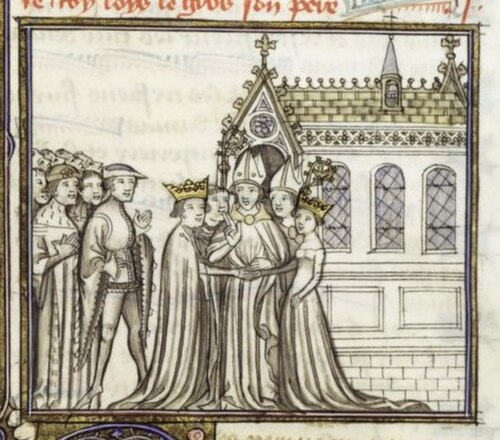 シャンティイ図書館
 -
 フランス年代記

ルーブル美術館
結婚
エレノアがフランス王妃だった時代については、ほとんど何もわかっていない。[11] 1137年7月25日、エレノアとルイはボルドーのサン=タンドレ大聖堂でボルドー大司教の手で結婚した。結婚式の直後、二人はアキテーヌ公爵と公爵夫人として即位した。[63]エレノアの長男がフランス王とアキテーヌ公爵の両方になるまで、公国はフランスから独立したままであることが合意された。したがって、彼女の領地は次の世代までフランスと合併しないことになった。[62]結婚祝いとして、彼女はルイに水晶の花瓶を贈った。[i] [68]
ボルドーから夫妻はポワティエへ向かい、8月1日に到着、1週間の祝賀の後、8月8日にポワトゥー伯爵と伯爵夫人に叙せられた。[68]ルイのポワトゥー伯爵、アキテーヌ公、ガスコーニュ公としての在任期間はわずか数日であった。パリへ向かう途中、使者が到着し、ルイ6世が8月1日に死去したため、夫妻はフランス国王と王妃となったと知らせた。[69]ルイは1131年にカペー家の様式で既に戴冠しており[62]、1137年のクリスマスの日に、エレノアはブールジュでフランス王妃に戴冠した。[70]
エレノアは、シュジェール修道院長やルイ14世の母アデライード・ド・モーリエンヌなど、宮廷の一部の人々に不評だった。アデライードはその後まもなく宮廷を去り、再婚した。廷臣の中には、プロヴァンス出身でロベール2世の3番目の妻でルイ7世とエレノアの先祖でもあるコンスタンス・ド・アルルの思い出を否定的に語る者もいた。コンスタンス王妃は服装や言葉遣いが無分別であるという評判だった。[j] [71]エレノアの振る舞いは、教会の長老たち、特にベルナール・ド・クレルヴォー[72]やシュジェールから、無作法だと 繰り返し批判された。パリの質素なシテ宮殿はエレノアのために改修され[73] [74]、パリではペトロニラとして知られるようになった妹のエリスが彼女と合流した。[55]
トゥールーズへの領有権 1141
トゥールーズ伯爵には複雑な継承の歴史があった。エレノアは祖母のトゥールーズ伯爵夫人フィリッパを通じてトゥールーズ伯爵家の子孫であった。フィリッパはトゥールーズ公ギヨーム4世の一人娘であったが、1093年に彼が死去した後、爵位の権利を主張したのは彼の兄弟でフィリッパの叔父であるレーモン4世(在位 1094年 - 1105年)であった。その後フィリッパは夫であるアキテーヌ公ギヨーム9世を説得してその権利を行使させたが、この争いは30年近く続き、最終的に1123年にレーモン4世の息子アルフォンソ・ジョルダン(在位 1112年 - 1148年)が領有権を握った。[75]この間、トゥールーズの支配権はギヨーム9世とその兄弟の子孫の間で絶えず交代していた。[76]フィリッパの領有権はアレオノールの父に引き継がれ、その後アレオノール自身に引き継がれた。ルイ7世はトゥールーズに進軍して彼女の領有権を主張しようとし、1141年6月21日に城壁に到達した。彼はトゥールーズを包囲したが、征服することはできず、アルフォンソ伯の忠誠を受け入れて撤退した。[55]この挫折にもかかわらず、アレオノールは1159年と生涯を通じてさらなる遠征を行い、領有権を主張し続けた。[77]
教会との対立
ルイはすぐに教会と教皇インノケンティウス2世(1130-1143)と対立するようになった。1140年、ルイはポワティエ司教選挙に介入した。新しい司教グリモアルドが彼の同意なしに選出され、叙階されたことを知ったためである。これは、ルイの父がボルドーの教会管区にその権利を与え、ルイ自身もこれを承認していたにもかかわらずであった。ルイはその後、グリモアルドの市内への入城を禁止しようとし、教皇とクレルヴォーのベルナルドゥスを紛争に巻き込んだ。教皇は王の勅令を却下する命令を出したが、グリモアルドは死去し、紛争は終結した。教会当局は、エレノアの父と祖父が教会の問題に介入しようとして失敗したことを知っていた。しかし、ポワティエ事件の直後、ルイは権威を行使しようと他の試みを行った。[55]
最も重大な出来事は、 1141年にブールジュ大司教が空席になったときだった。ルイは、首相のカデュルクを候補者として推薦したが、唯一の適任者である修道士ピエール・ド・ラ・シャトルを拒否した。シャトルは、ブールジュの聖職者によってすぐに選出され、ローマで教皇によって聖別された。ルイは、新しい大司教が戻ってくると、ブールジュの門を閉ざした。教皇は、ウィリアム10世がポワトゥーからインノケンティウスの支持者を追放し、自分に忠実な司祭に置き換えようとした同様の試みを思い出し、この件でアリエノールを責めたかもしれないが、[78]ルイは「愚かな学生」に過ぎず、そのような問題に干渉しないように教えるべきだと述べた。激怒したルイは、自分が生きている限りピエールがブールジュに入ることは決してないと聖遺物に誓った。すると王室と領土に禁令が課され、ピエールはシャンパーニュ伯テオバルド2世に匿われたが、これは国王をさらに怒らせることになった。[ 79 ] [55] [80]
ルイはテオバルド2世との対立が深まっており[80]、ブールジュ事件とテオバルドの家族の危機がこれを頂点に導いた。1125年にテオバルドの妹アレオノールはヴェルマンドワ伯でフランス総督のラウル1世と結婚したが、ラウル伯は王妃の妹ペトロニラと情事を重ねていた。ラウルはやがて妻を捨て、近親婚を理由に婚姻の無効を求め[k]、ルイはこれに同意し、結婚が無効であることに同意する司教3人を見つけ、1142年にペトロニラとラウルの結婚式を執り行った。[83]妹を保護していたテオバルドとクレルヴォーのベルナルドゥスは教皇に抗議し、教皇は会議を招集して、エレノア伯爵夫人との婚姻無効とペトロニラとの結婚を無効にし、司教1人を破門、他の2人を停職とした。さらに、ラウルは妻のもとに戻るよう命じられた。彼が拒否したため、彼とペトロニラは破門され、彼らの土地は差し押さえられた。[83] [55]
エレノアがこれらの事件で果たした役割は、何世紀にもわたって彼女と結び付けられることになる黒い伝説の初登場につながった。女性は、女王でさえも、そのような問題に関心を持つことは期待されておらず、そのため彼女はより暗い力の象徴かもしれないと考えられていた。噂は彼女をメリュジーヌのような神話上の人物と結び付け始めた。[84]彼女がアンジュー伯ジョフロワ・プランタジネットと不倫関係にあると示唆され、事態はより淫らな方向に進んだ。[85]
ルイは教皇特使の決定を拒否し、シャンパーニュ侵攻を命じた。この戦争は2年間(1142年から1144年)続き、国王軍によるシャンパーニュ占領で終わった。1年間、国王軍はシャンパーニュ地方を荒廃させたが、テオバルドが引き下がろうとする気配がなかったため、ルイは1143年にヴィトリーの町の包囲を中心とする攻撃を自ら指揮した。1000人以上の人々が大聖堂に避難したが、大聖堂は火災に見舞われ、中にいた全員が生きたまま焼死した。この大虐殺に恐怖したルイはパリに戻り、テオバルドとの和平を求めた。その見返りとして、教皇の支持を得て、ルイはラウルにペトロニラを放棄するよう要求し、ラウルとペトロニラに対する禁令は正式に解除され、ルイは撤退を命じた。ラウルが国王の要求を拒否すると、国王軍は再びシャンパーニュに侵攻した。[86] [55]
世論は戦争に反対に傾きつつあり、特にベルナール・ド・クレルヴォーは極めて批判的であったが、シュジェールは問題の解決を勧めた。1143年9月にインノケンティウス2世が死去し、セレスティーヌ2世(1143年 - 1144年)が後を継ぎ、ベルナールの提案により和解の申し出で再び禁令を解除し、ルイは交渉に前向きになった。ルイとアリエノールの結婚に関して初めて血縁関係の問題が持ち上がったのもこの頃であった。というのも、ルイはラウルとアリエノール・ド・シャンパーニュの結婚を含め、血縁関係を理由に他の多くの結婚に反対していたからである。その結果、1143年から1144年の冬に多くの交渉が行われた。[87] [55]最終的に、シュジェールは1144年4月22日の祝祭日にサン=ドニに新しく建てた修道院の教会で会合を主催し、ベルナールはエレノアに、妹のために彼女が努力しても無駄だと説得して平和が回復したが、二人は別れることを拒否し続け、1148年にラウルの最初の結婚が再び無効とされ、2度目の結婚が承認されるまで破門されたままだった。また、サン=ドニ協定には、ルイがブールジュ大司教への反対を撤回することも含まれていた。エレノアとベルナールの間の話し合いには、1138年の彼女の明らかな不妊症(彼女は一度流産していた)についても言及され、[88] [89]譲歩の見返りとして子供を授かるかもしれないという示唆もあった。[l] 1145年4月、エレノアは娘マリーを出産した。[55] 1144年6月11日日曜日、国王と王妃はサン=ドニの奉納式に出席し、その際にルイ14世はエレノアの水晶の花瓶を寄贈した。[91]
第2回十字軍(1145年~1149年)
十字架を背負う(1145–1147)

ルイはヴィトリーの虐殺に執着し続け、聖地への巡礼を考えていたが、出来事がこの願望を上回った。第1回十字軍(1096年 - 1099年)は、トルコから聖地を奪取し、この地域を統治するために4つの(主にフランク人の)十字軍国家の体制を確立することに成功していた。これはアウトルメールと呼ばれていた。 [m]しかし、1144年12月24日、ゼンギとサラセン人のトルコ人がフランク人の国家の一つの首都エデッサを占領し、隣接するアンティオキア、トリポリ、エルサレムの国々が脆弱になったことで、この体制は脅かされた。[92]これらのうち、アンティオキアは最も脆弱であり、アンティオキア公がエレノアの叔父であるポワティエのレーモンであったため、特に懸念されていた。1145年の秋、ルイはアウトルメールから使者を受け入れており、教皇エウゲニウス3世(1145年 - 1153年)にも嘆願書が送られた。 12月1日、教皇はルイ14世とフランスのすべての忠実なキリスト教徒に、残りの国々を救うために十字軍を組織するよう求める勅書を出した。その見返りとして、彼らは罪の赦しを受けるとされた。勅書が届いたとき、ルイ14世とアリエノールはブールジュにおり、ルイ14世はクリスマスの日に熱意を持って、十字軍を率いると答えた。フランス貴族の熱意が足りないことに気づいたルイ14世は、3月31日にヴェズレーで十字軍を支持するメッセージを届けるためにクレルヴォーのベルナールを雇い入れ、1146年のイースターまで行動を延期した。 [93] [94] [95]
エレノア女王もまた、ベルナールの説教中に正式に十字架を背負ったが、それは娘を置き去りにすることを意味した。エレノアは、この作戦のためにアキテーヌの貴族の女性を何人か募集し、また、300人ほどの女性もボランティアとして参加した。[96]女性が十字軍に参加することは珍しいことではなかった。ルイの観点からは、彼女を含めることには利点があった。不在の君主の摂政として、彼女はルイが行政官に選んだシュジェールに問題を引き起こす可能性があり、彼はアキテーヌの貴族の支援を必要としていた。さらに、十字軍は表面上は彼女の叔父を助けるためのものだった。[97]女性の存在は、特に聖職者の間で批判されなかったわけではないが、ウィリアム・オブ・ニューバーグの記述が実際の十字軍よりかなり後に書かれたことを考えると、これは後知恵の影響を受けたのかもしれない。[94] [98]
1147年2月、エタンプで十字軍の計画プロセスが開始され、そこでドイツのコンラート3世が彼らの冒険に加わることがわかり、隣接地域を通る安全な通行の要請が送られた。最終的な計画はその年のイースターの4月20日にサン=ドニで行われ、教皇ウジェーヌが出席した。ルイは王国の行政をウジェーヌに委任し、ウジェーヌはシュジェールを摂政に任命し、ラルフ・ド・ヴェルマンドワを共同摂政とした。[94]エレノアが十字架に架けられたことは、彼女を非難する者たちが彼女と女官たちがアマゾンの戦士として十字軍に出発したという伝説を作り上げるための次の機会となった。[98]
エフェソスへの道(1147)
6月11日、約2万5千人から5万人の十字軍と巡礼者がサン=ドニに集まり、まずメスへ、次にヴォルムスでライン川を渡り、レーゲンスブルクとドナウ川へと進軍を開始した。そこで彼らは、ビザンチン皇帝マヌエル・コムネノス(在位 1143年 - 1180年)の使節団と会見し、[99]川を辿ってクロスターノイブルクとハンガリーを経由し、 8月中旬までにベオグラードと東ローマ帝国に到着し、その後ドナウ川を渡ってアドリアノープル、そして5日後の1147年10月4日に最終的にコンスタンティノープルに到着した。 [94] [100]
コンスタンティノープルでは、フランス十字軍は立ち止まって海路からやって来た部隊の到着を待たざるを得なかった。彼らはそこで皇帝の歓待を受け、ルイ1世とエレノアは市壁のすぐ外にあるフィロパティオン宮殿に滞在した。一方、ドイツ十字軍は先に進んでボスポラス海峡を渡って小アジアに入っていた。[101]フランス軍は全軍を集結させると、10月15日にアジアに渡り、南下して最初の停泊地であるニカイアに向かった。エーゲ海沿岸を南下し続けると、彼らは内陸に直接進軍していたドイツ軍がドリュラエウムの戦いでトルコ軍に大敗し、皇帝が負傷したことを知った。フランス軍はドイツ軍の残党とともに、ペルガモスとスミルナを経由してより安全な海岸沿いのルートで南下し、 12月20日にエフェソスに到着した。エフェソスで野営した後、コンラッドとほとんどのドイツ人は彼らを離れ、海路でコンスタンティノープルに戻った。[94] [102]
エフェソスからエルサレムへ(1148–1149)

1148年1月、ルイは内陸のフリギアのラオディキアへ向かうことを決意した。南岸のアンタルヤ、つまりアンティオキアに早く到着するためである。彼らは1月6日にラオディキアに到着し、その後山を越えるルートをたどった。カドモス山を越えた日、ルイは非武装の巡礼者と荷物を積んだ列の最後尾を担当し、一方先鋒はアキテーヌ人ジョフロワ・ド・ランコンの指揮下にあり、次の峠の前に台地に陣取るよう指示された。彼らは道中最も高い山の一つであるカドモスの頂上に到達したが、ランコンはルイの叔父でサヴォワ伯・モーリエンヌ伯アマデウス3世と共謀し、[n]次の谷まで峠を進み続けることを選択した。そこがより良い野営地であると判断したからである。[94] [103] [104]
したがって、隊列の主力が到着し、前衛と後衛の両方から離れて峠に近づくと、待ち伏せしていたトルコ軍の攻撃を受けた。その後のカドモス山の戦いで、トルコ軍はフランス軍に大きな損害を与えたが、ルイ14世自身はかろうじて逃れた。オド・ド・ドゥイユは、ルイ14世が「神が彼の安全のために用意してくれた木の根を利用して、機敏かつ勇敢に岩をよじ登った」と述べている。[105] [94]他の人たちはそれほど幸運ではなかった。「夜が明ける以外、天からの助けはなかった。」[106] [107] [104]
1170年から1184年の間に執筆した年代記作者ウィリアム・オブ・ティルスは、おそらく事件からかなり時間が経っているため歴史的に正確とは言えないが、この惨事の原因は、運ばれていた荷物の量(その多くはエレノアと侍女たちのものだったとされる)と非戦闘員の存在にあるとしている。[94]
ルイは、軍隊の規律や士気を維持する能力も、情報に基づいた論理的な戦術的決定を下す能力も持たない、弱く無能な軍指導者だった。[104] [108]この惨事の責任は公式には、戦闘継続を決定したジョフロワ・ド・ランソンに押し付けられ、彼を絞首刑にすべきだとの提案もあったが、国王はこれを無視した。ジョフロワはエレノアの家臣であったため、計画変更、ひいては虐殺の最終的な責任は彼女にあると多くの人が信じた。この責任疑惑は、キリスト教世界での彼女の人気に何の役にも立たなかった。また、彼女は、荷物列車の大きさや、彼女の率いるアキテーヌ軍が前線で行進していたため戦闘に参加していなかったという事実についても非難された。最終的に、生存者は1月20日にアンタルヤに到着した。[94] [104] [109]


アンタルヤでは、十字軍は利用可能な船の数が限られており、船の費用も彼らが支払える金額よりも高額であることが判明した。その結果、王族の一行は比較的少数の従者とともに港から出航し、予定より大幅に遅れて3月19日にアンティオキアに到着した。残りの者は大変な苦労と多くの損失を伴い、旅を完遂しようとしたが、完走できたのはそのうちの約半分だけだった。[110] [94]
十字軍は当初歓迎されていたが、彼らとレイモンドの間で緊張が高まった。レイモンドの計画はアレッポを攻撃してエデッサの支配権を取り戻し、それによっていくらかの安全を得ることだったが、ルイは教皇の当初の布告がエデッサの奪還であったにもかかわらず、エルサレムへ進軍する決意を固めていた。[o]ルイはシリア北部で戦うことに熱心ではなく、彼の軍隊はひどく消耗していた。さらに、彼にはエルサレムへの巡礼の旅という個人的な計画があった。[94] [110]
エレノアの叔父に対する忠誠心がルイとエレノアの間に対立を生んだ。[53]結局、フランス軍は当初の10分の1の兵力しか残っておらず、エレノアの抗議とレーモンドと一緒にいようとする試みにもかかわらず、3月28日に突然アンティオキアを撤退した。これらの対立により、再び血縁関係の問題が浮上した。[111] [94] [112]ソールズベリーのジョンによると、これを促したのはエレノアだった。[113]十字軍は5月にエルサレムに到着し、ヤッフォ門から入り、メリザンド女王とボードゥアン3世に迎えられた。その後、戦略計画を議論するため、6月24日にアッコで会議が開かれた。これは、7月24日の悲惨なダマスカス包囲戦につながった。十字軍はわずか4日後に撤退を余儀なくされ、十字軍は事実上終結し、生存者の多くは帰還の計画を立て始めたが、ルイ14世はシュジェールの懇願にもかかわらず、1149年の復活祭を聖地で祝うことを誓った。[114] [94]
アンティオキア滞在と統治者間の対立、そしてその結果生じた王夫妻の不和により、ソールズベリーのジョンやティルスのウィリアムなどの年代記作者は、エレノアとレイモンドの不倫と近親相姦をほのめかし、それが彼女の伝説の永続的な一部となり、いくつかのバージョンではサラセン人の指導者と不倫関係にあったとも描かれている。同時代の記録によると、彼女の政治問題への関心が彼女の性格の最大の汚点と考えられていた。[115] [94] [116]
フランスへの帰還(1149)
イースターを祝った後、ルイとエレノアは4月3日に別々の船でアクレからイタリアに向けて出航したが、5月にペロポネソス半島沖の敵海軍と、エレノアの船を南のバルバリ海岸まで流した嵐の両方によって遅れ、しばらくの間彼らの行方はわからなかった。ルイは7月29日にカラブリアに到着し、最終的にエレノアがシチリア島のパレルモに到着し、そこでルッジェーロ2世の宮殿で代理人に保護されていることを発見した。エレノアとルイが再会するまでにはしばらく時間がかかった。[p] [114] [94]
ポテンツァにあるルジャール王の宮廷で、エレノアは叔父レイモンドが6月29日にイナブの戦いでヌールッディーン(ヌールッディーン)のイスラム教徒の軍に斬首されたことを知った。その後ヌールッディンはアンティオキアにあるレイモンドの領土のほとんどを制圧し、十字軍の目的をさらに遅らせた。ルイとエレノアはフランスに直接戻る代わりに、ローマと教皇に向かって北に向かい、エレノアが病気になった後、10月4日にモンテ・カッシーノ修道院に立ち寄った。教皇エウゲニウスは彼らをローマ南部のトゥスクルムにある宮殿に滞在するよう招き、彼らは10月9日に到着した。エウゲニウスはシュジェールから、夫婦の結婚生活に問題があり、もはや性関係を持っていないことを知らされていた。近親婚、したがって婚姻無効の可能性が再び提起されたが、エウゲニウスはこれを否定し、教会法上結婚は合法であると宣言し、和解を促した。エレノアの2番目の子供はこの時に妊娠した可能性が高い。[117] [118]トゥスクルムから、夫婦はイタリアを北上し、ローマを訪れ、次にアルプスを越えてフランスに至り、2年半の不在の後、1149年11月11日頃にようやくパリに到着した。[119] [94]
婚姻無効(1152)
1150年の夏、エレノアは2人目の娘アリックス(アデリシア)を出産した。[94]カペー家の男子後継者がいないことは前例のないことだった。[120]この時エレノアは26歳で、結婚して13年が経っていた。後継者を確保するための男子が生まれる可能性は低いと思われていただけでなく、後継者がいないことは前兆とみなされていた。シュジェールはルイとエレノアの結婚の政治的利点を強く主張していた。1151年1月13日に彼が亡くなると、ベルナール・ド・クレルヴォーが結婚の近親婚を批判したため、状況は一変した。[121]多くの貴族や廷臣も国王に結婚を解消するよう勧めた。[122]その年の後半、アンジュー伯アンリが新しいノルマンディー公としてルイ王に敬意を表すためパリの宮廷に現れた。ギラルドゥス・カンブレンシス(ジェラルド・オブ・ウェールズ)、ウィリアム・オブ・ニューバーグ、ウォルター・マップなどの年代記作者は後に、ヘンリーと11歳年上のエレノアの間に何かが起こり、それがルイとの結婚の解消につながったと示唆した。[123] [77]
この時までに、彼女の評判はひどく傷つき、宮廷におけるエレノアの影響力は衰えつつあった。[124]いかなるそのような解消も、アキテーヌ公とカペー公の領地と管轄権を分離するという複雑な政治的再編を必要とするため、1151年秋に夫妻は公国を視察し、駐屯軍などフランス人の存在の多くをエレノアの民に置き換えた。[125] 1152年3月11日、オルレアン近郊のロワール川沿いにあるボージャンシーの王城で、サンス大司教でフランス大主教のユーグ・ド・トゥーシー[q]が、この問題を検討する会議を主宰した。ルイ14世とエレノアの両名が出席したほか、ランス、ボルドー[r]、ルーアンの大司教、その他多くの司教や貴族が出席した。ランスの大司教サムソンがエレノアの代理を務めたが、エレノアはこの行動に異議を唱えなかった。[127] [77]
3月21日、4人の大司教は教皇エウゲニウスの承認を得て、4親等以内の血縁関係を理由に婚姻無効を認可した。エレノアはルイの3番目の従妹で、フランス王ロベール2世とその妻アルルのコンスタンスと共通の祖先を持っていた。[s]しかし、彼らの2人の娘は嫡出と宣言された。後に婚姻無効となった結婚で生まれた子供は「私生児」とされる危険はなかった。なぜなら、「当事者が障害を知らずに誠実に結婚した場合、法学者は結婚で生まれた子供は嫡出であり、結婚自体は無効と宣言された日まで有効であるとみなした」からである。[128]慣習と法律の両方で定められていたように、娘たちの親権はルイ王に与えられた。[t]ルイはサムソン大司教に、エレノアの土地は彼女に返還されると保証した。[129] [77]
エレノアは婚姻無効の理由を「ルイ卿との血縁関係のため」と述べたが、この出来事は彼女の行動に関する憶測を煽り、広まる伝説に拍車をかけてしまった。取り乱した捨てられた妻の話も同様に証拠がない。[130] [127]
イングランド女王(1154–1189)
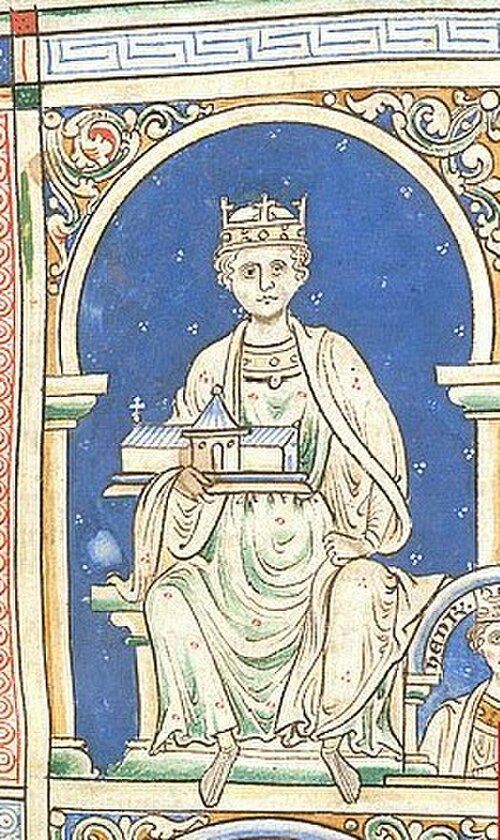

結婚、戦争、家族(1152–1154)
再び財産を持つ独身女性となったエレノアは、誘拐の危険にさらされ、領地を得るために結婚を強いられた。この強奪と略奪は、相続人に対する一般的な慣習であり、彼女自身の家族の間でも行われていた。[131]ボージャンシーから、彼女は南のポワティエにある宮廷へと向かった。[u]その途中、彼女は誘拐されそうになったが、辛うじて逃れた。最初は、3月21日の夜、彼女がブロワにある彼の領地を通過していたときに、ブロワとシャルトルの伯爵テオバルド5世によって誘拐されたが、彼女はロワール川を下ってトゥールまで船で逃げた。その後、ジョフロワ・ド・アンジューはトゥーレーヌとポワトゥーの境界にあるポール・ド・ピルで彼女を待ち伏せしたが、トゥールで陰謀を警告された彼女は進路を変え、通常のクルーズ川の渡河を避け、ヴィエンヌ川との合流点まで下流に進み、[132]主要道路を避け、船で無事ポワティエに到着した。[133] [77] [134]
イースター直前のポワティエに到着するとすぐに、エレノアはアンジュー公ジョフロワの兄であるノルマンディー公アンリに特使を送り、すぐに結婚してほしいと頼んだ。[135]多くの著者は、これは彼が以前フランス宮廷を訪れた際に交わした取り決めを履行するものだと結論付けている。アキテーヌの領土の安全を確保する一方で、アンリを選んだことは政治的にも理にかなっていた。アンジューはアキテーヌの北の国境に位置していたため、アキテーヌを保護し、共同管轄を拡大できたからである。その後、彼女はアキテーヌに関するルイの法令と勅許状をすべて取り消し、自分のものに取り替えた。[134]このメッセージは4月6日にリジューのアンリに届いた。ヘンリーは5月中旬にポワティエに到着し、婚姻無効から8週間後の1152年5月18日(聖霊降臨祭の日曜日)、エレノアはずっと年下のヘンリーとポワティエ大聖堂で静かな私的な儀式で結婚し、それによって彼女のアキテーヌの領地はルイからヘンリーに譲渡された。[136] [77] [137] [138]この儀式は「彼らの身分にふさわしい華やかさや儀式がない」と評された。[v] [140] [141]彼らは、ヘンリーとアンジュー家の勢力拡大を懸念していたルイがそれを阻止することを恐れて、取り決めを秘密にしていた。[w] [138] [77]
エレノアはルイよりもさらにヘンリーと近い血縁関係にあった。彼らは共通の祖先であるアンジューのエルメンガルド(ブルゴーニュ公ロベール1世とガティネ伯ジョフロワの妻)を通じて三親等まで従兄弟であり、フランス王ロベール2世の子孫でもあった。[x] [82]彼女がヘンリーと再婚したことで、彼女のスキャンダラスな行動の伝説は新たな章を迎え、彼女は以前にヘンリーと不倫関係にあったことが示唆された。[y] [77]
ルイは、エレノアが宿敵と結婚したことを知り、ヘンリーもイングランド王位継承権を持っていることを知って激怒し、すぐに戦争の準備を始めた。[144]また、エレノアとの結婚で得たアキテーヌ公爵の称号を放棄することも拒否した。アキテーヌ公爵の称号はヘンリーの権利で、エレノアが男児を産めば、娘たちは相続権を失うことになるからである。その後のノルマンディー侵攻は、50年以上続くアンジュー家とカペー家の争いの始まりとなった。[77]
今やアキテーヌとノルマンディーの公爵夫人となったエレノアは、宮廷と世襲領内で独立した権力を行使し、アキテーヌ公爵夫人とポワトゥー伯爵夫人の勅許状に新たな印章を押印しただけでなく、ノルマン公爵夫人とアンジュー伯爵夫人の称号も付け加えた。[145] 1ヶ月以内にヘンリーはイングランド王位継承権を追求する意図で出発したが[z]、今度はルイのノルマンディー侵攻に対処しなければならなくなり、ヘンリーは6週間以内にこれを容易に撃退し[146]、休戦協定に調印したため、その年の秋までにアキテーヌに戻ることができた。ヘンリーとエレノアは結婚を記念して、ポワティエ大聖堂にステンドグラスを設置した。そこには寄進者としてひざまずく二人の姿が描かれている。[147] 1152年後半までに、夫妻はノルマンディーのルーアンに移り、1153年1月にヘンリーはついにスティーブン王の王位請求に異議を唱えるためにイングランドに向けて出航した。彼は1154年3月まで帰国せず、妊娠中のアリエノールを母親である皇后マティルダと末弟のウィリアムに残した。[146] 1153年8月17日、ヘンリーとアリエノールの最初の子供であるウィリアムが、おそらくアンジェで生まれた。[77] [148]
イングランドでは、ヘンリーがスティーブンとついに休戦し、 1153年11月のウィンチェスター条約でヘンリーがスティーブンの相続人および後継者になることが合意され、これはクリスマスにウェストミンスターで批准されました。[148]ヘンリーがフランスの領地に戻ると、エレノアは再び妊娠しました。一方、ルイ7世は再婚し、ヘンリーと和解し、アキテーヌ公の称号を放棄しました。[149]
女王と摂政(1154–1173)
イングランドの初期(1154-1158)
1154年10月25日、スティーブン王が死去。ヘンリーは直ちにイングランドに召還されたが、彼とエレノアがバルフルールから海峡を渡り、 8日にサウサンプトン近郊に上陸したのは12月7日になってからだった。彼らはまずウィンチェスターに行き、摂政を務めていたカンタベリー大司教セオボルドに挨拶した。王室一行はウィンチェスターからロンドンに移動し、バーモンジーの王宮に宿泊した。[150] [151] 1154年12月19日、セオボルド大司教はウェストミンスター寺院で、エレノアの傍らでヘンリーをヘンリー2世として戴冠した。[152] [153] [151]エレノアが実際に戴冠されたのか、あるいは聖油を塗られたのかは不明である。なぜなら彼女はすでに1137年にフランス女王に戴冠していたからである。[154] [151]これが15世紀末までイングランドを統治するプランタジネット家の始まりであった。 [155]
イングランド女王として、エレノアはヘンリー2世から惜しみない援助を受け、複数の持参金や定期的な金銭分配を受け、王国で最も裕福な人物の一人となり、「大富豪の貴婦人」という称号を得た。[156] [157]ヘンリー2世の治世中のエレノアについては、年代記作者が国王と一緒だった時期以外はほとんど触れておらず、伝記はこれらの旅程や、手紙、[158] 令状、勅許状などの現存する公式文書に基づいて構築されている。[159] [160] [151]彼女は公式文書にラテン語でAlienor Dei Gracia Regine Anglorum、直訳する と「神の恩寵によるイングランド女王エレノア」と署名した。これは珍しいことではなかった。女性の活動は報告するほど重要ではないと考えられていたため、単にラテン語で「帝国の王権の参加者」とだけ呼ばれていた。[161]さらに、女王の独立性と権威は、彼女が女王に就任する前から徐々に侵食されていた。しかし、彼女はイースターやクリスマスの宮廷などの儀式的な行事には国王とともに参加したが、[162]英語を学んだことはなかった。[151]
ヘンリー8世の領土はスコットランド国境からピレネー山脈まで広がっており、彼はイングランドとフランスの両方で頻繁に旅行しており、前任者の誰よりもイングランドを留守にすることが多かった。彼が宮廷を留守にしていたほとんどの期間、エレノアは摂政、あるいは司法長官と共同摂政を務めた。[ 156 ]時にはヘンリー8世に同行することもあったが、自らの領土を自ら、あるいは子供たちと広範囲に旅行することもあった。[163] [151]彼女が影響力のある芸術のパトロンであったという主張は大いに誇張されているように思われるが、多くの作家がさまざまな理由、主に自身の進歩のために彼女に作品を捧げている。これにはロバート・ウェイスの『ブリュット物語』( 1155年頃)やウィリアム・オブ・ブロワが含まれ、マリー・ド・フランスや『テーベのロマンス』 [164]の著者などの他の作家も彼女に触発されたと考えられている。マリー・ド・フランスなどの一部の作家は彼女をアサーリアン伝説と関連付けているようですが、より推測的なエレノア伝説では彼女をグィネヴィアという人物と関連付けています。[165] [166] [143]
1155年2月28日、国王の留守中にエレノアは二人の第二子ヘンリーを出産した。 [167] [151] 1156年1月10日、ヘンリー王は数ある長期の留守のうちのひとつのためにイングランドを離れ、エレノアは再び妊娠した。[168] [151]この留守中の1156年春、ウィリアム王子が亡くなり、レディング修道院で曽祖父ヘンリー1世の隣に埋葬された。[169] [151]その年の6月、二人の第三子マティルダが生まれ、エレノアと子供たちは7月にヘンリーのもとへ向かうためフランスへ渡り、1157年2月に帰国した。ヘンリーは4月にイングランドで彼女と合流し、9月8日にボーモント宮殿で第四子リチャードが生まれた。[170] [151] 1156年以降、エレノアの公国における自治権は大幅に縮小され、アキテーヌ人からほとんど尊敬されていなかったヘンリーの行為を確認するとき以外は彼女の名前は消えていった。[151]
トゥールーズの戦い (1159)
一方、ルイ7世は1154年に再婚し、1157年までに3人目の娘マルグリットをもうけた。ルイが男子の後継者を産めそうにないことに気づいたヘンリー2世は、息子のヘンリーをマルグリットと結婚させて最終的にフランス王位を獲得する計画を立て、1158年に計画を開始し、8月にフランスへ渡ってルイと条件を交渉し、幼いマルグリットを結婚できる年齢になるまで引き取った。ヘンリーは4年以上も留守にしていた。[171] [151]ヘンリーが留守にしている間、エレノアは1158年9月23日に4人目の息子ジョフロワを出産し、 [172]その後すぐにフランスでヘンリーと合流した。 1159年、ヘンリーはエレノアを伴い、祖母を通じてトゥールーズに対する彼女の権利を主張しようとしたが、失敗に終わり、トゥールーズ伯レーモン5世は彼の家臣であり、今や親戚でもあったため、ルイ7世と再び疎遠になった。[aa]ヘンリーはトゥールーズを征服するために同盟を組んでいたが、ルイはレーモンの援助に回った。ヘンリーの同盟者の中には、アラゴン王子でバルセロナ伯のレーモン=ベレンジャー4世がいた。彼は息子のリチャードをレーモン=ベレンジャーの娘と婚約させることで、象徴的に2つの王朝を結びつけた。[ab] [174]しかし、9月までにヘンリーは一時的な休戦を余儀なくされたが、これはイングランドとフランスの間の40年間の戦争の始まりであった。エレノアは12月29日にイングランドに航海し、ヘンリーの遠征のための資金を調達し、フランスでそれを護衛してからイングランドに戻った。[175] [151]
イングランドにおける後年(1159年 - 1168年)
1160年9月になってようやくヘンリーはアリエノールと子供たちをフランスに呼び戻した。[176] [151]ルイ7世の2番目の妻はその年に亡くなり、2人の娘しか残らず男児を残さなかったため、彼はすぐに3度目の結婚を手配した。そのためヘンリー2世は、2人が一人っ子であったにもかかわらず、アンリ王子とマルグリットの結婚をすぐに手配することに決めた。そのために彼は教会から特別な許可を得て、ルイに内緒で11月2日に結婚式が行われた。[ac] [177]アリエノールはフランスに残り、1161年9月にノルマンディーのドンフロンで2人目の娘アリエノールを出産した。 [151]ジェフロワ(1158年)の誕生からアリエノール(1161年)の誕生までの年数は、アリエノール王妃の他の妊娠と比較して、もう1人の子どもがいるのではないかという憶測を呼んでいる。ジョン・スピードは著書『英国史』 (1611年)の中で、エレノアにはフィリップという息子がいたと述べている。この息子は1158年から1162年の間に生まれ、若くして亡くなった。彼の資料はもう存在せず、この誕生について言及しているのは彼だけである。[178]ヘンリーとエレノアは長い不在の後、1163年1月25日にようやくイングランドに帰国した。 [179]これにより、彼女のイングランドにおける摂政としての職務も終了した。[180] [151]
1165年2月、ヘンリーはヨーロッパ大陸に戻り、娘のマティルダとエレノアの結婚を取り仕切り、皇帝フリードリヒ1世との同盟を固めた。エレノアは5月1日にアンジューとメーヌの摂政としてヘンリーに合流した。 [181]もう一人の娘、ジャンヌが10月にアンジェで生まれたのもこの地であったが、ヘンリーはその場にいなかった。ジャンヌが到着してからわずか2週間後にイングランドに帰国していたからである。この間、国王夫妻はほとんど会うことはなく、1166年3月にジャンヌが反乱の可能性に対処するためにヘンリーに助けを求めるまでヘンリーは彼女に会わなかった。ブルターニュ貴族との対立は、ジョフロワ王子とブルターニュ公コナン4世の娘コンスタンスの婚約によって解決された。[182] [151]
こうした長期にわたる別居により、ヘンリーの不貞に関する憶測や噂が広まり、ヘンリーとエレノアの間に亀裂が生じた。こうした噂の中で最も悪名高かったのは、1165年ごろに始まったロザムンド・クリフォードとの不倫疑惑である。1166年後半にはヘンリーの不倫が知られるようになり、[183] 1174年には認められた。ヘンリーは妻に決して忠実ではなく、浮気者という評判だった。結婚生活を通じて、他にも私生児をもうけた。エレノアはこうした不倫に対して相反する態度をとったようだ。たとえば、ジェフリー・オブ・ヨーク[ad] はヘンリーの私生児であったが、ヘンリーに自分の子として認められ、ウェストミンスターで女王の保護下で育てられた。[ae] [185] [184]
ジョアンナの誕生後、エレノアはアンジェに留まった。ヘンリーはその年のクリスマスに彼女と会わず、1166年3月にフランスに渡り、そこでさらに4年間滞在した。クリスマスに別居したことは前例のないことで不和の噂も広まったが、ヘンリーはその年のイースターまでに彼女と会い、最後の子供であるジョンを妊娠した。イースター後、エレノアはイングランドに戻り、1166年のクリスマスは再び別々に過ごした。ジョンはクリスマスイブに生まれた。42歳になったエレノアは、1167年のクリスマスをアンジェで一緒に過ごすまで、フランスでヘンリーと会わなかった。この年、彼女は9月に当時11歳だったマティルダを大陸に連れて行き、1168年2月1日に行われたザクセン公ヘンリー獅子公との結婚の準備をした。 [186] [151]
ヘンリー2世の治世は、1163年に始まったトーマス・ベケットとの激しい確執によって汚された。ベケットは当初ヘンリー2世の親友であり顧問で、その後は法務官、最終的にはカンタベリー大主教となった。この件でエレノアがどのような役割を果たしたかについては憶測が飛び交っているが、証拠はほとんどない。1164年からフランスに亡命していた間、ベケットは彼女に助けを求めたが、うまくいかなかった。しかし、わずかな証拠から、彼女が和解を促したことがわかる。[187] [151]
1167年12月、アリエノールはイングランドで動産を集め、数隻の船でアルジャンタンに運んだ。アルジャンタンの宮廷ではクリスマスが祝われ、その後すぐに彼女は故郷の都市ポワティエに向けて出発した。ヘンリーとその軍隊は彼女と同行し、ルイへの忠誠を変えると脅していた反乱を起こしたリュジニャン家の城を攻撃した。その後ヘンリーはアキテーヌ地方の軍事指揮官であるソールズベリー伯パトリックを彼女の保護監督官として残し、自分の用事を済ませた。パトリックがリュジニャン家との小競り合いで殺されると、捕らえられた甥の若きウィリアム・マーシャルの身代金を求めたアリエノールに領地の支配権が残された。彼女は1173年までそこに留まり、これによりヘンリーは家臣が絶えず反乱を起こしていた領土の一角を支配しやすくなる。[188] [151] 1168年までにエレノアは44歳で、将来の王となる3人を含む8人の子供を産んでおり、出産年齢は終了していた。[189]
この時までに、ルイ7世は3番目の妻との間にようやく息子を授かっていた。 1165年にフィリップ・オーギュスト(別名ディウドネ、神の賜物)が誕生したことで、アンリ2世が王朝同盟を通じてアンジュー帝国にフランス王位を加えようとする試みは終結した。[190]
ポワチエ時代(1168年 - 1173年)

その後の5年間のエレノアとヘンリーの別居は、主に政治的な都合によるものなのか、夫婦間の亀裂が深まってきたことの表れなのか、あるいはその両方なのか、多くの憶測を呼んだ。確かにエレノアは、男系の後継者と娘を同盟国のための商品として提供するという女王としての義務を果たしていたが[151]、もう子供をもうけるには年を取りすぎていた。また、彼女は、よく言われるほど落ち着きのないアキテーヌの秩序回復に成功し、アンジュー家の女王としての義務を果たし続け、フランスのさまざまな領土で摂政を務めた。リチャード・オブ・ディヴィゼスは、別居を始めたのはエレノアであり、ヘンリーはそれに反対しなかったと示唆した。[191] [192]
この時期のアリエノールの所在についてはあまり知られていないが、[193] 1168年のクリスマスは別々に過ごし、ヘンリーはアルジャンタンで、アリエノールはポワティエで過ごした。1169年1月6日、ヘンリーと2人の長男はメーヌのモンミライユでルイ7世と会見した。その結果締結されたモンミライユ条約は、ヘンリーの家族全員に長期的な影響を及ぼすことになった。条約で、ヘンリーは領地を息子たちに分割し、リチャード王子をルイの娘アリスと婚約させた。[af] [194] [195]家臣たちの秩序を保ち、フランス王との関係を維持することに加えて、ヘンリーは国内の同盟関係の構築にも忙しかった。ジェフリーはブルターニュのコンスタンスと婚約し[194]、ジョアンナをシチリア王ウィリアム2世[196]と、ジョンをサヴォイア伯アンベール3世の長女アリシアと結婚させる交渉が始まった。[197] [195]平和的な継承をさらに確実にするため、彼は後継者であるヘンリー王子を戴冠させるというカペー家の伝統を継承しようとした。教会の反対にもかかわらず、これは1170年6月14日に行われ、それ以来彼は若ヘンリー王と呼ばれるようになった。[198] この時期にヘンリーは連絡を取り合っていたようだが、1170年にバイユー近郊のビュル・ル・ロワで行われたクリスマス[ah] [202]や1172年にシノンで行われたクリスマスなど、いくつかの大きな祝祭を除いて、実際に会っていたかどうかは明らかではない。[ 203 ]夫婦の間に不和の噂があったが、エレノアは公国を統治する上でますます自主性を発揮し始めた。例えば、彼女は正式な敬称から「王の」という部分を省き、「忠実な信奉者へ」とだけ述べた。[192]
この時期、ヘンリー2世と彼の幼い息子たちとの関係はますます不和になっていった。モンミライユのアンジュー帝国の一部を割り当てられた彼らは、取り決めどおり父の死を待つよりも、権力を掌握することに熱心だった。ルイ7世はこれを知っていて、若き王が義理の息子となった今、この分裂を利用する機会を見出していた。1172年11月、ルイは娘のマルグリット王妃と17歳のヘンリー王をパリに招待し、そこで前者の野心を奨励した。[204] [195]
宮廷恋愛、吟遊詩人、黄金神話
文化に及ぼした彼女の影響のうち、1168年から1173年までのポワティエ滞在期間が最も重要だと言われているが、実際にはその期間についてはほとんど知られていない。[205]ヘンリー2世は、エレノアをそこへ護衛した後、自分の用事で忙しくしていた。[206]長い間、この時期を扱った作家たちは、彼女の宮廷は騎士道とトルバドゥール文化の中心地であったと述べていた。これはさらに伝統へと発展し、彼女はルイ7世との娘マリー・ド・シャンパーニュとともに、宮廷恋愛が栄えた「愛の宮廷」として知られる宮廷を統括した。トルバドゥールは彼女の宮廷に通い、彼女を称賛したが、愛の宮廷は後の文学上の発明である。これは、アンドレアス・カペラヌス(アンドレアス・ザ・チャプレン)による12世紀後半の『宮廷恋愛の技法』または『愛と愛の救済論』として知られる論文から生まれた。 [207] [208]カペラヌスは伝統的にトロワのマリー・ド・シャンパーニュの牧師として描写されており、[ai]この作品はエレノアがポワティエに宮廷を構えていた時代よりずっと後に発表され、大部分が風刺的である。[209] [210] [192]
『論理哲学論考』には、エレノアはマリー、エルメンガルド、ナルボンヌ子爵夫人、フランドルのイザベル、その他の女性たちとともに、恋人たちの口論に耳を傾け、恋愛行為をめぐる法廷の質問の陪審員を務めたと記されている。彼は約21の事例を記録しており、その中で最も有名なのは、結婚生活に真の愛は存在するのかという問題が女性たちに出されたことである。カペラヌスによれば、女性たちはそれはあり得ないと判断したという。[192]カペラヌスの主張を裏付ける証拠はなく、マリーは母親を一度も訪ねておらず、カペラヌスが執筆した法廷はヘンリー2世とエレノアに敵対的だった。[211] [212] [213]それにもかかわらず、ポリー・ショイヤー・ブルックスの伝記など、多くの一般的な記述は、少なくともある種の「社交ゲーム」として、この説を信憑性あるものとみなし続けている。[214]
エレノアが「宮廷恋愛」を発明したという主張を裏付ける証拠はない。この表現は19世紀後半になって初めて登場した。[192]クルトワジー(amour courtois、fin'amor )の概念は、宮廷と関連し、エレノアのポワチエ時代以前に広まり始めたトルバドゥールによって称賛された、恋愛に関する一連の態度であった。彼女の父方の祖父、ウィリアム9世(1071-1126)は、それよりずっと以前から、愛と騎士道の物語の人気の高まりを称賛したトルバドゥールであると考えられていた。[215]言えることは、このfin'amorは12世紀初頭に南部で初めて登場し、人気を博して北部に広がり、他のオックの宮廷と同様に、エレノアの宮廷にもベルナール・ド・ヴァンタドルンやアルノー・ギリェム・ド・マルサンなどのトルバドゥールがいたということである。残りは単なる推測である。[192]愛の宮廷の伝説は、エレノアの生涯の「黄金神話」と呼ばれるものの重要な要素を形成している。[216] [217]
反乱と投獄(1173年~1189年)
反乱と逮捕(1173年~1174年)
1173年2月21日から28日まで、アンリ2世とアリエノールは、ジョン王子とアリス・ド・モーリエンヌの婚約式のため、モンフェランにいた。 [aj]この式典は、権限委譲をめぐる2人のアンリのあからさまな対立によって台無しになった。モンフェッラートから王室随行員はリモージュへ移動したが、そこで事態は悪化した。[195]アンリ2世と息子は3月に一緒に北のシノンへ向かい、5日に到着した。朝、アンリ2世は息子が監禁から逃れたことを知り、パリとルイ7世のもとへ向かった。ルイ7世は、アンリ2世に、息子を新国王として支持すると伝えた。これが1173年から1174年の反乱の始まりであった。[218] [195]
後の年代記作者は、多くの罪をアリエノールに帰し、証拠がないにもかかわらず、彼女の評判を高め、動機について多くの憶測を呼んだが、彼らは注意深く「そう言われていた」と記述に付け加えた。他の証拠は、若き王の義父であるルイ7世に関係している。[195]パリから、ウィリアム・オブ・ニューバーグは、「フランス王の助言により、あらゆる方面から父に対する悪事を企てていた若きヘンリーは、2人の幼い弟、リチャードとジェフリーが母親と暮らしていたアキテーヌに密かに赴き、母親の黙認のもと、2人を唆して自分に加わらせたと言われている」と述べている。[219] [220]ロジャー・オブ・ホーヴデンは、やや異なる記述をしており、アリエノールが弟たちと兄を「父である王に対抗するために」フランスに送ったと述べている。[221]若きヘンリーとその兄弟たちは春にパリに戻り、エレノアは家臣たちに息子たちを支援するよう奨励した。[222] [195]
その後、4月にアリエノールも息子たちと合流するためにパリへ旅立った。しかし、シャルトルへの道で捕らえられ、ルーアンのヘンリー2世のもとへ連れて行かれた。[ak]国王は逮捕を公に発表せず、彼女を監禁したため、翌年まで王妃の行方はわからなかった。[al]一方、ルイはパリで宮廷を開き、フランス貴族たちは若き国王に忠誠を誓った。[223]ヘンリー2世の息子のうち、7歳のジョンだけが父のもとに残った。5月に敵対行為が始まり、若きヘンリーの軍とルイ7世の軍がノルマンディーに侵攻したが、1173年はどちらの側も勝利を収めることができなかった。[224]短い冬の休戦の後、ヘンリー2世は1174年5月にポワティエに入り、娘のジョアンナと他の貴族の女性たちをノルマンディーの要塞へ連れ帰った。[225] 1174年7月7日か8日、ヘンリー2世はイングランド侵攻の差し迫りに直面し、船に乗ってエレノア、ジョン、ジョアンナ、その他の女性たちとともにバルフルールからサウサンプトンへ航海し、そこでエレノアは未知の監禁場所へ連れて行かれた。[am] [226] [195]
投獄(1173–1189)
ヘンリー2世は最終的に勝利し、 1174年9月30日のモンルイ条約で息子たちにいくらかの譲歩をしたが、 [227]エレノアはヘンリーの残りの人生を通じてイングランドの様々な場所で様々な形で監禁された。パイプロールにはルドガーズホール城、バッキンガムシャー、バークシャーとノッティンガムシャーの様々な家について言及されているが、それについてはほとんど情報がない。 [an] [229] [230]ジェラルド・オブ・ウェールズは、ヘンリーは1175年に血縁関係を理由に結婚の無効化を検討し、この件についてさらに話し合うために教皇特使の訪問を要請し、11月1日にウィンチェスターでピエルローネ枢機卿と会ってこの考えを思いとどまらせたと述べている。1176年初頭、ヘンリーは再度試み、エレノアを説得してフォントヴローで修道女になった。彼女はその後ルーアン大司教に介入を要請したが、大司教は彼女の拒否を支持し、ヘンリー8世は再び教皇の承認を求めようとしたが[231] [193]、拒否された[232] 。
一方、ヘンリーは子供たちを利用して同盟を結び続けた。1176年の夏、エレノアは当時11歳だったジョアンナとともにウィンチェスターにいた。シチリア王ウィリアム2世との結婚の計画がまとまるとすぐに、彼女は8月27日にそこに送られ、結婚式は1177年2月13日に行われた。[193] 1176年9月28日、ジョンは従妹で3歳だったグロスターのイザベラ(別名ハウィス)と婚約した。[233] 1177年9月、エレノア王女はカスティーリャに向けて出発し、ブルゴスでアルフォンソ8世と結婚した。[232]一方、ジェフリーは1181年7月にブルターニュのコンスタンスと結婚した。 [234]
エレノアは監禁されていたが、厳密に言えば囚人ではなく、収入を奪われていたものの「自宅軟禁」のような状態だった。この時期の後半、1177年以降、特に1184年以降はより大きな自由を享受し、さらに2人の息子(ヘンリーとジェフリー)と娘マティルダの死を目撃したが、この時期についての情報はほとんど残っていない。[193]
投獄中、エレノアは息子たちとますます距離を置くようになった。ヘンリー2世は、息子たちと連絡を取り、彼に対して陰謀を企てる可能性を許容できなかったからである。[235] [193]これは、常に彼女のお気に入りであったアキテーヌの相続人リチャードとの関係において特にそうであった。[210]投獄中、彼女は息子たちにあまり会う機会がなかったが、1176年のイースターなどの特別な機会には釈放された。[193]
ロザムンド・クリフォードは1176年か1177年にオックスフォードシャーのゴッドストウで亡くなった。ヘンリーは彼女を偲んで修道院に墓を建て、贈り物をした。彼女の死は、エレノアの関与に関する神話[ao]を後世に残すことになり、数世紀を経てより精巧になり、長い間既成事実として受け入れられ、事実上当時の証拠がないにもかかわらず、彼女の黒い伝説をさらに作り上げた。[53] [236] [193]
ジェラルド・オブ・ウェールズ、ラルフ・ナイジェル、ロジャー・オブ・ホーヴデン、ラナルフ・ヒグデンを含む一部の年代記作者は、ヘンリーが16歳のアリス・オブ・フランスと情事を始めたと述べているが、アリスは息子リチャードの婚約者であり、この知らせを聞いて驚いたルイ7世の娘でもあったため、事態は複雑化した。その間に、リチャードが抵抗するようになったためヘンリーは結婚を延期し、アリスはヘンリーに数人の子供を産んだ。[237] [193]
エレノアが幽閉されていた数年間は、息子たちと反乱を起こした家臣たち、特にアキテーヌ家との間で、また息子たちと父との間で、ほぼ絶え間ない争いが続いた。1180年9月18日、病弱だったルイ7世が亡くなり、息子のフィリップ2世が王位を継承したことで、状況はさらに複雑になった。若き王位継承者ヘンリーの義理の兄弟であったフィリップは、ヘンリーとその息子たちのフランスの領土を取り戻し、機能不全に陥った一族の争いを利用することに、父以上に固く決心していた。[193] [238]
こうした遠征の最中、1183年6月11日、エリナーの息子ヘンリーが28歳でケルシーのマルテルで赤痢で亡くなった。彼の死に際の願いには、母親が解放され、妻マルグリットが養われるよう嘆願することが含まれていた。 [239]ヘンリー2世は、ウェルズの副王トーマス・アグネル(トーマス・オブ・アーリー)[ap]をサラムのエリナーのもとに派遣し、 息子の死を知らせた。彼は後に、エリナーが夢で予感したと語ったことを述べている。何年も後の1193年、エリナーは教皇ケレスティヌス3世に、若き王の思い出にどれほど苦しめられたかを語った。ヘンリーが王位継承者だったことで、家族の力関係が変わり、リチャードが新しい王位継承者となった。[241] [193]
若き王の死とマルグリットの領土の保護を望んだ結果、ヘンリー2世はマルグリットの異母兄弟であるフィリップ2世と対立することになった。[242]フィリップはノルマンディーとイングランドのいくつかの財産はマルグリットの所有であると主張したが、ヘンリーはそれらはかつてエレノアの所有であり、息子の死後彼女に返還されると主張した。[241]そのため、エレノアが紛争地域に現れることは政治的に都合がよく、ヘンリーは1183年の晩夏に彼女をノルマンディーに呼び寄せた。これが彼女に対する制限の緩和の始まりとなった。ロジャー・オブ・ホーヴェンデンは、王が彼女に「解放され、彼女の持参金について進歩を遂げよ」と命じたと述べている。[243]彼女の収入も増加した。ジョフロワ・デュ・ブリュイユは、彼女がノルマンディーに約6か月滞在したと述べている。[244] [193]
若きヘンリーの死により、モンミライユ条約とリチャードとアリスの婚約という論争の的となった問題の再交渉が必要となり、 1183年12月6日にノルマンディーのジゾールでイングランド王とフランス王が再度会談することとなり、ヘンリーは以前に与えていた土地の譲歩の多くを取り消した。[245]エレノアは1184年初めにイングランドに戻り、[246]娘のマティルダと義理の息子のヘンリー(当時は亡命中)はウィンチェスター、続いてバーカムステッドで彼女と一緒に暮らすことができた。ウィンチェスターでマティルダは5人目の子供ウィリアムを出産した。[247] 11月30日、ウェストミンスターでエレノアとヘンリーは争う息子たちとの和平と遺産相続の解決を図る別の試みを主宰したが失敗に終わり、家族はウィンザーでクリスマスを過ごした。[248] 1185年初頭、彼らはノルマンディーへ旅し、5月にさらなる家族会議が開催された。彼女はほぼ1年間ノルマンディーに滞在し、国王夫妻は1186年4月27日にイングランドのバルフルールからサウサンプトンに戻り、ウィンチェスターで一緒に夏を過ごしたが、それ以降1189年までの彼女の所在についてはほとんど情報がない。しかし、アキテーヌの問題でさえ、彼女の行動の自由がほとんどなかったことは明らかで、彼女の行動は「イングランド王ヘンリーと息子のリチャード、ジェフリー、ジョンの同意と意志によるもの」であると述べている[249]。 1186年8月18日または19日にパリでジェフリーが亡くなり、リチャードとジョンだけが相続人になったことで家族の状況はさらに変わったが、相続をめぐる彼らと父親との争いは続き、リチャードはトゥールーズをアキテーヌの領土に加えようとさらに試み、ヘンリーとフィリップは再び直接対立することになり、27年間の断続的な戦争につながった。この時、リチャードとフィリップは病弱なヘンリーに対抗するために力を合わせ、ヘンリーにフランスの領土の多くを手放すよう強制した。[250]ジョンが父に対するこの同盟に加わった後、ヘンリーの健康はさらに悪化し、1189年7月6日にシノンで56歳で亡くなった。[251]この頃、エレノアもマティルダの死の知らせを受け取った。[252] [193]
ここ数年、エレノアは夫と頻繁に旅行し、王国の政治に携わることもあったが、依然として後見人がいたため、完全に自由になることはなかった。ヘンリーの死により、波乱に満ちた結婚生活と、エレノアの長い獄中生活は終わった。[253] [12]
未亡人と王妃(1189–1204)
リチャード1世(1189–1199)
刑務所からの解放と摂政(1189)
1189年7月6日にヘンリー2世が死去すると、リチャード1世が完全な後継者となった。国王としての彼の最初の行動の1つは、ウィリアム・マーシャルをイングランドに派遣し、65歳のエレノアを牢獄から解放するよう命じることだった。到着すると、彼は彼女の管理人がすでに彼女を解放していたことを知り、彼女はフランスにいたリチャード[aq]から授けられた摂政の権力を継承した。 [193]エレノアはその後ウェストミンスターに馬で向かい、新国王に代わって貴族や高位聖職者から忠誠の誓いを受けた。彼女はリチャードの名においてイングランドを統治し、今や「神の恩寵により、イングランド女王エレノア」と署名し、ヘンリー2世の多くの行為を覆した。[256] [255]
第3回十字軍とイタリアへの旅(1189年 - 1191年)
1189年8月13日、リチャードはバルフルールからポーツマスへ出航し、熱烈な歓迎を受けた後、そこからウィンチェスターへ向かい、エレノアと面会した。[257]この時点では、エレノアの生き残った2人の息子は未婚であり、継承について疑問が生じていた。しかし、8月29日、ジョン王子は父の遺志を継ぎ、1176年に婚約していた従妹のイザベラと結婚した。[258] 9月3日、リチャードはウェストミンスター寺院で戴冠式を行い、エレノアとジョンが出席した。[259]戴冠式の後、リチャードは長い間計画していた第3回十字軍への参加に没頭し、11月に巡礼で王国を初めて離れた際には、エレノアを摂政に任命した。リチャードは帰国後、12月12日の十字軍遠征への長期出国前に、より正式な手配を行い、司法官ヒュー・ド・ピュイゼをウィリアム・ド・ロンシャンと共に最高司法官に任命した。[as] [254]この間、アリエノールはイングランドで正式な役職に就いていなかったが、彼らは彼女の権威に従った。[260] 1190年2月2日、アリエノールはノルマンディーのビュール城でリチャードと合流し、リチャードはそこで準備を続け、ジョンも出席してノナンクールで家族会議が開かれ、国王不在時のイングランド統治の手配が完了した。[261] [254] [255]
一方、ジョンは結婚していたものの、継承問題はまだ残っていた。特に、リチャードの婚約者で父と関係があったアリスの問題、そしてフィリップ王の異母妹でもあったアリスの問題が残っていた。1190年の春、ナバラ王サンチョ6世の娘ベレンガリアをめぐってナバラ のヒメネス家との交渉が始まったが、そのような同盟にはリチャードの婚約破棄にフィリップの承認が必要だった。そのような同盟はガスコーニュ情勢を安定させる目的に役立つだろう。[262]しかし、リチャードとフィリップは最終的に1190年7月4日に十字軍遠征に出発した。[263]リチャードが出発すると、エレノアはジョン王子をイングランドに送り、自身はナバラへ旅立ち、パンプローナで25歳のベレンガリアと彼女の父に会った。そこから彼女はベレンガリアをシチリア島まで護衛し、リチャードはメッシーナに到着した。[264]メッシーナでリチャードは、1189年11月から未亡人となっている妹のジョアナが捕虜になっていることを知った。また、彼はアリスの件でフィリップとも対立しており、[265]その結果、エレノアの船はメッシーナへの上陸を拒否され、ブリンディジへ向かわざるを得なかった。1191年3月までにリチャードはジョアナの釈放を確保し、レッジョでエレノアとベレンガリアに合流し、そこでベレンガリアはジョアナの保護下に入った。その後リチャードは、婚約破棄の理由としてアリスとヘンリー2世の関係をフィリップに突きつけ、フィリップはエレノアがメッシーナに到着する前に聖地へ速やかに出発した。[266] [255]
エレノアがシチリア島に到着した頃には、イングランドでロンシャンとジョン王子の間で悪政と対立が起こっているという噂が広まっていた。ルーアン大司教のウォルター・ド・クタンスがイングランドの王権を再建するために任命され、彼とエレノアはわずか4日後に帰路につき、1191年4月2日にサレルノに向けて出発した。そこから彼らはローマに旅し、14日に到着して新教皇ケレスティヌス3世と面会し、教皇特使も務めるウィリアム・ド・ロンシャンよりもウォルター・ド・クタンスを任命する承認を得た。[267] [255]
1191年4月10日、リチャードとベレンガリアはジョアンナとともにシチリア島を出発し、女性たちは別の船でウトルメールに向かったが、嵐のためにキプロス島に渡った。そこでリチャードとベレンガリアは5月12日にリマソルで結婚し、ベレンガリアは戴冠した。[268]その後、6月5日に聖地に向けて出航し、 8日にリチャードが占領したアッコに到着した。フィリップ王は7月2日に十字軍を放棄してフランスに戻ったが、その間にリチャードはオーストリア公レオポルドと対立しており、これが後に彼にとって深刻な結果をもたらすことになる。[269] [255]
ノルマンディーと権力闘争(1191-1192)
1191年6月24日にルーアンに到着したエレノアは、イングランドでの情勢をよりうまく指揮できるようになったが[270]、1191年から1192年の冬はフランスで過ごした。[255]エレノアの新しい役割は、彼女が蓄積してきた批判を和らげ、リチャード・オブ・ディヴィゼスは彼女を「比類のない」と評し、彼女は公式文書で「 teste me ipsa (私自身の証人として)」というフレーズを使い始めた。[255]イングランドでは、クタンスが秩序を回復しようとした一方で、ロンシャンは最終的に退位し、ジョン王子が権力を強化し始め、自分が推定相続人であると主張した。クタンスは摂政評議会の長に任命され、ロンシャンはフランスに逃亡し、エレノアを自分の大義に引き入れようとしたが失敗した。[272] [255] 1191年後半にフィリップ王が聖地から帰還すると、彼女の立場はさらに複雑になった。フィリップ王はリチャードの評判を落とそうとしただけでなく、まだエレノアが保護していたアリスの返還を要求した。1192年初頭、フィリップは領地とアリスを提供してジョン王子を自分の大義に引き入れた。これによりエレノアは2月11日にイングランドに戻り、ジョンのノルマンディー侵攻を阻止した。[273]しかし、彼女はその年の大半を教会間の紛争への対応とロンシャンとジョンの野望の抑制に費やした。[274] [255]
身代金の徴収とリチャード1世の復位(1192年 - 1194年)
聖地では、リチャードはエルサレムを占領する計画をほとんど進めず、1192年後半にはサラディンとの休戦協定を結ばざるを得なくなり、9月にジョアンナとベレンガリアをシチリア島に送り返し、自身も10月9日にアッコを出発した。その後、1193年1月まで彼の行方はわからなかったが、その年、リチャードはアッコ到着時に軽視していたレオポルド公爵に捕らえられたことをエレノアが知った。[275]リチャードはトリエステからハンガリーを経由して北上していたが、オーストリアに渡った際に見破られ、逮捕されてデュルンシュタイン城に連行された。レオポルドは皇帝ヘンリー6世に報告し、ヘンリー6世はフランス王フィリップに手紙を書き、フィリップはこの事態の展開を支持した。エレノアはフランスのクタンスのスパイを通じて何が起こったのかを知っただけだったが、すぐに政権を握り、一方、ジョン王子はフィリップの支援を受けて再び王位を主張するようになった。[276] [255]レオポルドは2月に捕虜を皇帝に引き渡し、トリフェルス城に移送された。一方、エレノアは教皇の介入を求めたが失敗した。[av] [280] [255]最終的に4月にジョン王子との休戦が成立したが、[281]一方で、エレノアは皇帝からリチャードの解放と引き換えに銀10万マルク[aw]と人質の提供を要求された。同時に、彼女はリチャードが捕らえられてから初めての手紙を受け取り、条件を受け入れるよう促し、リチャードの状態が大幅に改善され、ハーゲナウに移送されたことを知らせた。[ax] [284] [255]
エレノアと彼女の評議会は、すぐに身代金を集めて人質の手配に取り掛かり、現在ポワトゥーにいるベレグナリアは、主にリチャードの領土と臣下全員から課税することでこの仕事に貢献した。[285]最初の分割払いの10万マルクは10月に届けられ、残りは12月までに集められた。リチャードの釈放日を1194年1月17日にすることで合意したエレノアとクタンスは、1193年12月にドイツに向けて出発し、合意した日までにシュパイアーに到着した。そこで彼女は、フィリップ王とジョン王子がリチャードの拘留と引き換えに彼女を上回る金額を入札していたことを知った。さらなる交渉と、年間の貢物を含む申し出により、最終的にリチャードは2月4日に釈放された。[286] [255]彼らはすぐにケルン経由で帰路につき、最終的にアントワープに到着した。そこで彼らはフランス軍を避けるためにスヘルデ川でトレンチーマー号に乗り込み、3月12日にサンドイッチに上陸した。その後、リチャードとエレノアは1194年3月23日にロンドンに凱旋した。[287] [255]
フランスへの帰国と引退(1194年 - 1199年)
エレノアとリチャードのイングランド滞在は比較的短かった。リチャードはフランスの領土をフィリップから守る必要性を感じ、 1194年5月12日にポーツマスを出発したからである。バルフルールに到着したリチャードもエレノアもイングランドに戻ることはなかった。[288] [255]そこで二人はジョン王子と和解し、それはリチャードの治世の残りを通して続き、リチャードはフィリップから領土を守る自由を得た。一方、72歳になったエレノアはフォントヴローに隠居し、その後数年間の彼女に関する情報はほとんど残っていないが、彼女は残りの人生、この修道院を主な住居とした。[289] [255] 1196年10月、娘のジョアンナがトゥールーズのレーモン6世と結婚したことで、エレノアのトゥールーズに対する王朝の主張はついに終わり、その権利は娘に引き継がれた。[290]リチャードは1194年にノルマンディーに戻った後、フランス王とほぼ絶え間なく戦争状態にあり、ついに1199年4月6日に41歳でエレノアに付き添われて負傷により亡くなった。[291] [255]
当初、リチャードはイングランドに到着する前に、アレオノールに王権を委譲したが、これは繰り返されなかった。リチャードのその後の長期の不在の間、イングランドの王権は首席司法官によって代々代表された。司法官には、ウィリアム・ド・ロンシャン(1190年 - 1191年)、ユーグ・ド・ピュイゼ(1189年 - 1190年)、ウォルター・ド・クタンス(1191年 - 1193年)、ヒューバート・ウォルター(1193年 - 1198年)がいた。1191年にロンシャンが解任されると、クタンスの下で政府はより会議的な形態(マグナム・コンシリウムと国王共同体)に移行した。[254]
ジョン王(1199–1204)
リチャードとベレンガリアには子供がいなかったため、リチャードの死後、アリエノールが真っ先にしたことの一つは、ジョンに、アリエノールの孫であるブルターニュ公アーサー1世と一緒にいるブルターニュから逃げ、リチャードの所有物を確保するよう警告することだった。アーサーはアリエノールの4番目の息子ジェフリーとその妻コンスタンスの一人息子だった。アーサーはジョンの兄の息子としてリチャードの後継者とみなされており、他に男子の跡継ぎがいなかったため王位継承権を持っていた。リチャード自身もアーサーを検討していたものの、死ぬ前にジョンを後継者と宣言していた。[292] [293]フィリップ王はアンジュー家の継承戦争の可能性をいち早く利用し、12歳のアーサーを新王と宣言し、アーサーはフランスの所有物に関してフィリップに忠誠を誓った。するとブルターニュ軍はアンジェに進軍してこれを占領し、続いてアンジュー、メーヌ、トゥーレーヌがアーサーへの忠誠を宣言した。エレノアは直ちに行動してブルターニュ軍を撃退した。アーサーはフィリップとともにパリに撤退し、ジョンは1199年4月25日に正式にノルマンディー公に叙せられた。一方エレノアは領土を巡り、正当な後継者と宣言したジョンへの支持を訴えた。1199年5月25日、ジョンはイングランドに到着し、5月27日に国王に即位したが、6月20日までにノルマンディーに戻り休戦を結んだ。[294] [293]
同時に、アリエノールはフィリップとも和平を結び、家臣として忠誠を誓った。[ay] [295]彼女はジョンと協定を結び、正式に彼を後継者と宣言し、フランスの領土を譲り渡す一方で、生きている間は彼のドミナとしてそれらの権利を保持することにした。これは、彼女が死亡した場合にフィリップからそれらを守るのに役立った。[293] [295]ジョンとイザベラには子供がいなかったため、ジョンは後継者を確保するために後継者を必要とし、1199年に血縁関係を理由に結婚を無効にした。その年の9月、ジョアンナはフォントヴローで出産中に亡くなり、そこで埋葬され、アリエノールの生き残った子供はイングランドのジョンとカスティーリャのアリエノールの2人だけになった。[296] [293]休戦にもかかわらず、ジョン、アーサー、フィリップの間の争いは断続的に続いたが、1199年のクリスマス後のいつか、ル・マンでさらなる取り決めがなされた。他の条項の中でも、新しい休戦は、カスティーリャ王フィリップの相続人である12歳のルイとジョンの姪の一人との結婚、およびジョンからフィリップへの3万マルクの支払いを通じて王朝の同盟を強固なものにした。これは1200年5月のル・グーレ条約で公式化された。その後、ジョンは資金集めのためにイングランドに戻り、一方エレノアはふさわしい花嫁を選ぶためにカスティーリャへ向かった。[297] [293]その途中、彼女はポワティエのすぐ南で、家臣の一人であるユーグ9世・ド・リュジニャンに誘拐された。ユーグは、かつて彼の先祖の一人がヘンリー2世に売却したラ・マルケ伯領を譲るよう彼女に要求し、彼女は任務を完遂するためにそれに応じた。彼女は最終的に1200年1月末にカスティーリャに到着した。[298] [293]
カスティーリャのアリエノールには未婚の娘が二人おり、アリエノールはそのうちの16歳だった妹のブランシュを選んだ。彼女は結婚式を挙げることができない四旬節を避けるため3月下旬までそこに留まり、4月9日の復活祭にボルドーに到着した。 [299]ロワール川に旅して、彼女はブランシュをボルドー大司教に託し、大司教は彼女をジャン王に会わせ、その間アリエノールは再びフォントヴローに戻った。彼女は滞在中に、元々はメロヴィング朝様式であったが現在はアンジュー様式で再建中のポワティエの公爵邸の大規模な改築に取り掛かった。[az] [300] [293]
Blanche and Louis were married on 23 May 1200. She bore him 12 children, one of whom was the future Louis IX of France, ensuring that Eleanor's descendants would be future rulers of France.[301] John visited Eleanor at Fontevault in the early summer, hearing she was unwell. Amongst the advice she gave him was to secure the loyalty of her vassals, should she die, and in particular Hugh of Lusignan, to whom she had granted La Marche the previous year, making him the new count. John arrived at Lusignan Castle on 5 July, where he encountered the thirteen-year-old Isabelle of Angouleme and sought her hand in marriage from her parents, while breaking off negotiations with the Portuguese court. However, Isabelle was already betrothed to Hugh of Lusignan, whom he had dispatched to England. While there were potential political advantages to such an alliance, under the circumstances this was a mistake that would soon have serious consequences.[302][293]
The marriage between John and Isabelle took place in secret in Bordeaux on 24 August, and they then proceeded to England, where she was crowned queen at Westminster Abbey on 8 October 1200. King John ignored the Lusignans' protests over the betrayal, whereupon they rose in rebellion in early 1201. Eleanor, though in ill health, once more intervened to restore peace in February and March, summoning Arthur as an intermediary with King Philip. But John continued to seek vengeance on the Lusignans, and conflict simmered throughout 1201.[303][293]
On 28 April 1202, freed from some of his other commitments, Philip summoned John to his court, and upon his refusal declared him a traitor and in lieu of his lands. John's position became more perilous when Philip betrothed his daughter Marie to the fifteen-year-old Arthur in July, and declared him to be the rightful lord of the Angevin possessions. Under Philip's orders, Arthur proceeded to Poitou to seize his new inheritance.[304] This prompted Eleanor to set out for Poitiers from Fontevrault, but on the way found herself besieged by Arthur and Hugh in Mirebeau Castle, near the Angevin border and just north of Poitiers, urgently summoning John to aid her.[304] John received the news on 30 July and reached Mirebeau on 1 August where he found that the defences were already breached, but was able to lift the siege, release Eleanor and take both Arthur and the Lusignans into his custody. Arthur was last seen entering Falaise Castle in Normandy as a prisoner on 10 August. Eleanor had demanded a promise of clemency for Arthur, but little was heard of him for some time, despite an attempt to free him in the autumn of 1202. On her return to Fontevrault, Eleanor took the veil as a nun.[305][293]
By the end of 1202, rumours were circulating about Arthur's death,[306] but John had the youth brought before him in January 1203 at Falaise, asking him to switch his allegiance from Philip. Instead, Arthur demanded that John grant to him all his possessions, according to Philip's declaration. Arthur's threats were sufficient for some of the King's advisers to suggest he be eliminated, as a danger to the security of the realm. Rumours of his assassination persisted and subsequent events have been the matter of speculation, other than that he was transferred to Rouen on 8 March, and in April his gaoler announced he was relinquishing his role, which is the last record of his existence.[307] John was commonly blamed for his nephew's disappearance, and found himself increasingly isolated over the spring of 1203, providing an opportunity for Philip, who progressively annexed Normandy throughout the rest of the year, John leaving for England to muster support on 6 December.[308] The French and Breton conquest of Normandy continued in early 1204, with most of the significant strongholds captured by the end of March.[293] It is unclear if Eleanor was aware of the progressive destruction of the empire she and Henry II had ruled, and which she had fought to preserve for her sons. One source from Fontevrault suggests that she had become unaware of her surroundings during the last few months.[309]
Death and interment (1204)

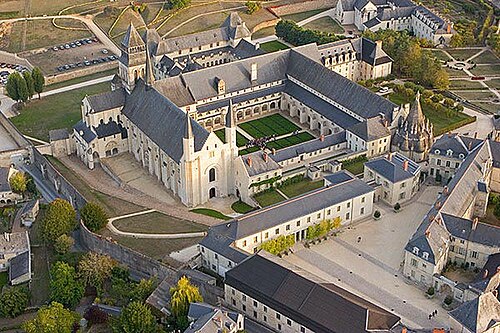
Eleanor of Aquitaine, at the age of eighty, died at Fontevraud[ba] on either 31 March or 1 April 1204[293][309] and was entombed in the crypt of the abbey between Richard I and Henry II. The tomb effigy is by a different hand and more advanced in the use of three dimensions than the earlier two.[310][293] Her daughter Joanna lay nearby.[311]
Eleanor's tomb lies under a painted stone gisant (effigy) of the Queen, wearing a crown and with an open book in her hands. The tomb is considered one of the finest of those few that survive from this period.[310] During the French Revolution, the abbey was sacked and the tombs vandalised, while the human remains were exhumed and scattered and have never been located, although most of the tombs were later restored and lie in the church.[310]
Appearance
Contemporary sources praise Eleanor's beauty. Even in an era when ladies of the nobility were excessively eulogised and praised, their praise of her was undoubtedly sincere, though probably based on hearsay,[312] while is some cases, the reference is only implied. The medieval German songs known as Carmina Burana praise "England's Queen", and a minnesinger refers to "The sweet young queen". Benoit de Sainte-Maure wrote of the "Queen of Beauty and largesse" in the Roman de Troie,[157] while Philippe de Thaun wrote "God save Lady Eleanor, Queen, who is the arbiter of honour, wit and beauty".[313] When she was young, she was described as perpulchra—more than beautiful.[314] When she was around 30, Bernard de Ventadour, a noted troubadour, called her "gracious, lovely, the embodiment of charm", extolling her "lovely eyes and noble countenance" and declaring that she was "one meet to crown the state of any king".[315][316] William of Newburgh emphasised the charms of her person, and even in her old age Richard of Devizes described her as beautiful, while Matthew Paris, writing in the 13th century, recalled her "admirable beauty", a common practice at the time, and "a woman of wonderful appearance, more beautiful than moral" and a "wonderful lady, most beautiful and astute".[317] Richard of Devizes was similarly exuberant, but not all were in agreement. William of Tyre dismissed her as "uxorem quae una erat de fatuis mulieribus".[bb] Another chronicler describes her as avenante, vaillante, courtoise.[bc][312]
Depictions of Eleanor of Aquitaine
In spite of all these words of praise, no one left a detailed description of Eleanor, for instance the colour of her hair and eyes are unknown. Such details were of little interest to contemporary chroniclers, portraiture was not a characteristic of the time with no attempt at realism, while descriptions were largely rhetorical.[325][326][327] Despite this, many biographers have attempted to describe her, and Elizabeth Chadwick dismisses all these as fantasy or based on misinformation.[bg][329][328] The effigy on her tomb (almost certainly not a true portrait) shows a tall and large-boned woman with brown skin.[312] Her seal of c. 1152 shows a woman with a slender figure, but these were impersonal images intended to convey authority.[310][330] Images of Eleanor are common throughout history but since there are none from her lifetime, these are purely speculative. Some romanesque carvings, such as those at the Cloisters in New York and Chartres[331] and Bordeaux cathedrals have been attributed to her but these cannot be substantiated,[319][317][326] while completely erroneous claims from medieval art have frequently been used to illustrate articles and books about her, such as a queen from the 14th century Codex Manesse.[bh][332][333] The stained glass window in Poitiers Cathedral with a donor portrait of Eleanor is not original but a nineteenth-century restoration by Adolphe Steinheil.[334] Two of the commonest claims have been the fresco in the chapel of at St. Radegonde at Chinon[324][333] and a donor portrait of a kneeling woman in a twelfth-century psalter, which has led to it becoming known as the Eleanor Psalter.[335]
Cultural depictions
Art
Eleanor of Aquitaine in art

.jpg/500px-Queen_Eleanor_(Frederick_Sandys,_1858).jpg)
![Fair Rosamund and Queen Eleanor Edward Burne-Jones, 1861 Yale Centre for British Art[337]](https://img-server.japedia.wiki/wikipedia/commons/thumb/d/d1/Edward_Burne-Jones_-_Fair_Rosamund_and_Queen_Eleanor_-_Google_Art_Project.jpg/500px-Edward_Burne-Jones_-_Fair_Rosamund_and_Queen_Eleanor_-_Google_Art_Project.jpg)
Many representations of Eleanor, or allusions to her, have appeared over the centuries, particularly the nineteenth-century revival of interest in their mediaeval past.[338] In France, the Salles des Croisades at Versailles, opened in 1843, showed two 1839 paintings including Eleanor - St Bernard preaching the second crusade in the presence of King Louis VII and Queen Eleanor of Aquitaine by Emile Signol, and King Louis VII takes the Oriflamme by Jean-Baptiste Mauzaisse. In both, Eleanor is depicted in prayer.[bi][340] In contrast, British paintings including Frederick Sandys's Queen Eleanor (1858)[336] and Burne-Jones's Fair Rosamund and Queen Eleanor (1861 and 1862), depict her as a melodramatic murderess, coincident with the popularity of the Fair Rosamond story, which in itself led to a series of art works. In the twentieth-century, similar works appeared by Herbert Sidney (Fair Rosamund 1905), Evelyn de Morgan (Queen Eleanor and Fair Rosamund 1905), John William Waterhouse (Fair Rosamund 1916) and Frank Cadogan Cowper (Fair Rosamund and Eleanor 1920).[bj][343]
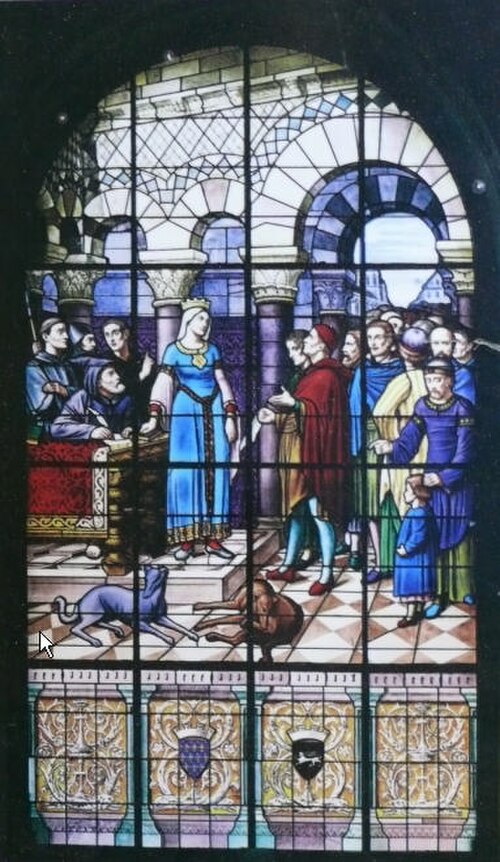
In nineteenth-century France, Eleanor appears more as an authority figure. In the Poitiers Hôtel de Ville, there is a stained glass window in the Salon d'honneur by Adlphe Steinheil (c. 1879), showing her issuing a charter to the city in 1199 (also a book cover). A similar image appears as a 1901 fresco by Charles Fouqueray in the Hôtel de Ville at Niort.[344][345] Book covers and illustrations have been another meedium by which interceptions of Eleanor have been shaped, specially in the nineteenth and twentieth centuries. Examples include the works of Elizabeth Strickland and Celestia Bloss (1812–1855).[bk][347]
Judy Chicago's installation The Dinner Party (1979) features a place setting for Eleanor.[348] She was also commemorated on a French €0.50 postage stamp in 2004, the 800th anniversary of her death.[349][350]
Fiction and poetry
There have been many fictionalised accounts of Eleanor over a long period of time. These include Jean Plaidy's 1987 autobiographical The Courts of Love (fifth in the 'Queens of England' series).[351] Norah Lofts also wrote a fictionalized biography of her in 1955, entitled in various editions Queen in Waiting or Eleanor the Queen, and including some romanticized episodes—starting off with the young Eleanor planning to elope with a young knight, who is killed out of hand by her guardian, in order to facilitate her marriage to the King's son.[352] Kristiana Gregory wrote a fictionalised diary, Eleanor: Crown Jewel of Aquitaine (The Royal Diaries series, 2002) .[353]
Eleanor also features in the works of many historical novelists. These include The Merry Adventures of Robin Hood (1883) by Howard Pyle as Queen Catherine[354] and F. Marion Crawford's novel of the second crusade Via Crucis (1899).[355][356] She is the subject of A Proud Taste for Scarlet and Miniver, a 1973 children's novel by E. L. Konigsburg.[357] and Margaret Ball's Duchess of Aquitaine: A novel of Eleanor (2006).[358]
In Sharon Kay Penman's Plantagenet novels, she figures prominently in When Christ and His Saints Slept (1995), Time and Chance (2002), and Devil's Brood (2008), and also appears in Lionheart (2011) and A King's Ransom (2014), both of which focus on the reign of her son, Richard I, as King of England. Eleanor also appears briefly in the first novel of Penman's Welsh trilogy, Here Be Dragons (1985). In Penman's historical Justin de Quincy mysteries, Eleanor, as Richard's regent, sends squire Justin de Quincy on various missions, often an investigation of a situation involving Prince John. The four published mysteries are the Queen's Man (1996), Cruel as the Grave (1998), Dragon's Lair (2003), and Prince of Darkness (2005).[359] Other novels include Elizabeth Chadwick's Eleanor trilogy The Summer Queen (2013), The Winter Crown (2014), and The Autumn Throne (2016).[360] Ariana Franklin features Eleanor in her Adelia Aguilar twelfth century mysteries. In 2008, in The Serpent's Tale (The Death Maze),[361] in 2010 in A Murderous Procession (The Assassin's Prayer)[362] and 2020 in Death and the Maiden.[363] She is also a character in Matrix by Lauren Groff (2021).[364]
Eleanor is also an allegorical figure in Ezra Pound's Cantos.[365]
Drama, film, radio and television

Elinor is a character in Shakespeare's The Life and Death of King John.[366] Una Venning played the role in the Sunday Night Theatre television version of this in (1952)[367] and Mary Morris in the BBC Shakespeare version (1984).[368]
Eleanor has featured in a number of screen versions of the Ivanhoe and Robin Hood stories. She has been played by Martita Hunt in The Story of Robin Hood and His Merrie Men (1952), Jill Esmond in The Adventures of Robin Hood (1955–1960), Phyllis Neilson-Terry in Ivanhoe (1958), Yvonne Mitchell in The Legend of Robin Hood (1975), Siân Phillips in Ivanhoe (1997), Tusse Silberg in The New Adventures of Robin Hood (1997), Lynda Bellingham in Robin Hood (2006) and most recently by Eileen Atkins in Robin Hood (2010).
Eleanor was played by Mary Clare in Becket (1923), and by Pamela Brown in the 1964 Becket. Henry II and Eleanor are the main characters in James Goldman's 1966 play The Lion in Winter[bl] and Katharine Hepburn played Eleanor in the 1968 film The Lion in Winter.[bm] Glenn Close and Patrick Stewart played Eleanor and Henry in the 2003 version.[372]
Eleanor was played by Prudence Hyman in Richard the Lionheart (1962), twice by Jane Lapotaire in The Devil's Crown (1978) and again in Mike Walker's BBC Radio 4 series Plantagenet (2010). In the 2014 film Richard the Lionheart: Rebellion, Eleanor is played by Debbie Rochon. In the BBC Radio 4 Eleanor Rising Rose Basista plays Eleanor and Joel MacCormack King Louis (2020–2022).[373] These and other dramatic accounts have helped to perpetuate the Golden Myth image of Eleanor.[374]
Music
Eleanor of Aquitaine is thought to be the chunegin von Engellant (Queen of England) mentioned in the 12th century poem "Were diu werlt alle min," in Carl Orff's Carmina Burana.[375][376] Queen Eleanor's Confession, a traditional 17th century Child Ballad, is a fictional account of Eleanor, Henry II and William Marshal.[377] Eleanor (as Eleonora di Guienna) and Rosamund Clifford, as well as Henry II and Rosamund's father, appear in Gaetano Donizetti's opera Rosmonda d'Inghilterra (libretto by Felice Romani) (1834). Flower and Hawk is a monodrama for soprano and orchestra, written by American composer Carlisle Floyd in 1972, in which Eleanor relives memories of her time as queen, and at the end hears the bells that toll for Henry's death, and in turn, her freedom.
Video games
In the 2019 video game expansion Civilization VI: Gathering Storm, Eleanor is a playable leader for the English and French civilizations.[378]
Genealogy
Sources:[184][379][380][7][65][381][382][383][384][81][385][386]
Ancestors
Consanguinity
Family relationships
Issue

Eleanor had ten children, and outlived eight of them.
Legacy

By the time of her death, Eleanor had outlived all of her children except for Queen Eleanor of Castile, who died in 1214 and King John of England, who died in 1216. Her descendants were rulers of England, France, Sicily, Castile, Jerusalem and the Holy Roman Empire. In England, her lineage would endure till 1485, with the death of Richard III.[389]
Eleanor's life has inspired a large canon of literature, reflected in popular culture. This has varied considerably from scholarly research to romantic fictionalised history, and everything in between. Nicholas Vincent writes that this includes "the very worst historical writing devoted to the European Middle Ages" and concludes that "the Eleanor of history has been overshadowed by an Eleanor of wishful-thinking and make-believe".[390] Legends about her started during her lifetime and rapidly grew, and much of it appears in the chronicles of the late twelfth century which constitute almost all that is known of her.[10] Most of these paint her in an unfavourable light, yet none are actually first hand accounts.[391] Many of the accounts of her life are composed "so distant in time and place" from the events as to have little credence,[392] and chroniclers were more concerned with their messages than an accurate setting out of facts.[393] These messages were often laden with ideology[394] that in Eleanor's case was largely negative.[395] The aspects of her life most valued by modern romanticisation were those her contemporary commentators found most unacceptable in her position. Most of these were clerics, like William of Tyre, John of Salisbury, Mathew Paris, Helinand de Froidment and Aubri des Trois Fontaines and based their assessments on "the common talk of the day".[396] In this way, gossip and rumour, often prefaced by ut dicibatur (as it was said)[84] became included in the records of the times and then into later histories and biographies.[397] Among modern biographies, one of the first by Amy Kelly (1950),[67] while relying on literary sources but not historical records[160] is "legend focussed" and highly romanticised in a way that cannot be substantiated.[398][399][400]
In the absence of much reliable information about Eleanor herself, biographers have largely focused on the people around her and the political and cultural events of her time. Her importance lies not so much on who she was, as what she was. In the words of one chronicler "wife of two kings, and mother of three", while her longevity allowed her to be an influence on many people who had shorter life spans.[312]
It was not uncommon in contemporary literature, for authors to dedicate their works to nobility, seeking favours, but this does not imply the latter were involved with or were responsible for the work being produced. But this has led to much speculation as to whether allusions to Eleanor appeared in such work. Thus, Philippe de Thaon presented a copy of his bestiary to Eleanor in 1154, including a dedication seeking her to use her influence on King Henry to advance his family interests.(Turner 2009) Layamon, in his translation of Wace's Brut, one of many retellings of the Arthurian legend, claimed it was dedicated to Eleanor.(Turner 2009)[401] Eleanor's daughter, Marie commissioned Chrétien de Troyes to produce a French version of the legend.[402]
See also
- House of Plantagenet
- Angevin Empire
- Capetians
- House of Capet
- Grandmother of Europe, sobriquet of Eleanor of Aquitaine and others
- List of longest-reigning monarchs
Notes
- ^ For Helienordis, see Ego Helienordis, Francorum regina, et Willelmi ducis Aquitanici filia - I Eleanor, Queen of the Franks, and daughter of William Duke of Aquitaine. Letter of 28 December 1140,[2] also Ego Helienordis, Dei gratia humilis Francorum regina (1151).[3] The spelling of Eleanor's name varies widely in the Latin chronicles, for instance Alienorde in the Chroniques de Touraine, but Alianor in Gervase of Canterbury
- ^ Two types of legend characterise her legacy,[23] usually referred to as the "Black Legend" (la légende noire)[24][25][26] and the "Golden Myth" (mythe doré). See, for example Jacques Le Goff "a été à la fois victime d’une legende noire et bénéficiaire d’un mythe doré " (has been both the victim of a black legend and the beneficiary of a golden myth)[27][28]
- ^ Few families kept records of their children's birth and the dating of a new year was also inconsistent[37]
- ^ The existence of an illegitimate half-brother named Joscelin has been discredited.[43] Another half-brother, William, has also been claimed without evidence.
- ^ Suger spells Eleanor's name Aanor, others Alienor, or occasionally Helnienordis
- ^ Biographers have argued that her father would have wanted her to have a good education, which might have included subjects such as arithmetic, astronomy, history and music as well as domestic skills, sports,[48] riding, hawking, and hunting[49]
- ^ Biographers have suggested that she would also have been taught to read and speak Latin, and to be acquainted with literature[34]
- ^ The authenticity of William X's alleged will, setting out these supposed conditions, is dubious at best.[55] Abbot Suger is the main source for these events
- ^ The rock crystal vase originally belonged to Eleanor's grandfather, William IX of Aquitaine. Louis donated Eleanor's vase to Suger, who in turn offered it to the Basilica of St Denis. Later it came into the possession the Louvre[64] museum in Paris.[65][66][67] This vase is the only object connected with Eleanor of Aquitaine that still survives.[68]
- ^ [Adelaide] perhaps [based] her preconceptions on another southerner, Constance of Provence ... tales of her allegedly immodest dress and language still continued to circulate among the sober Franks.[7]
- ^ The church forbid divorce, but grounds of consanguinity allowed a marriage to be annulled as if it had never happened. While consanguinity was common among the aristocracy, who had limited marital options, it was rarely proposed as an impediment to marriage. Instead, it provided a convenient route for them to escape unsatisfactory marriages[81][82]
- ^ Bernard said to Eleanor "My child, seek those things which make for peace. Cease to stir up the king against the Church, and urge upon him a better course of action. If you will promise to do this, I in return promise to entreat the merciful Lord to grant you offspring"[90]
- ^ Outremer: Literally "overseas"
- ^ Louis's mother, Adelaide, was the younger sister of Count Amadeus.
- ^ The crusade had been prompted by the siege and subsequent capture of the crusader state of Edessa in 1144 by the Turkish ruler Zengi
- ^ Both destinations were part of the Norman Kingdom of Sicily
- ^ The title of the Archbishop of Sens was Primate of the Gauls (primat des Gaules et de Germanie)
- ^ The Archbishop of Bordeaux (1135–1158) was Geoffrey III du Loroux who had been the celebrant at their marriage in 1137[126]
- ^ King Robert and Queen Constance were Eleanor and Louis's great-great-great-grandparents. There has been a great deal of confusion over their actual consanguinity and canonical law - see Bouchard 2003, d'Avray 2014 and Baldwin 1970, vol. 2 n. 182 pp. 225–226
- ^ The two children were rapidly affianced by their father and sent away.[77]
- ^ From Beaugency to Poitiers, a distance of 190 km
- ^ Translation is probably by Weir. Newburgh gives "pactum conjugale inierunt, minus quidem solemnitur ratione personarum"[139] ("united by the conjugal tie, which was solemnized not very splendidly, in proportion to their rank")
- ^ By custom, vassals were supposed to request permission to marry from their overlords
- ^ A marriage between Henry and Eleanor's daughter Marie had earlier been declared impossible due to their status as third cousins once removed.[142]
- ^ Innuendos about Eleanor's sexuality formed part of contemporary views on women, power and its sexualisation[143]
- ^ Henry's claim to the English throne was through his mother, Matilda, daughter and heir of Henry I. On the death of her father in 1135, Matilda's succession was challenged by her cousin Stephen of Blois, leading to a civil war that became known as the Anarchy (1135–1153).
- ^ Louis VII had arranged for his widowed sister, Constance to marry Raymond V in order to protect the county from any plans of Eleanor and Henry. While accounts vary, this took place in 1154 or 1156[151]
- ^ Richard's betrothal was broken off when it was no longer a political expedient[151][173]
- ^ Since Louis VII and Eleanor's marriage had been anulled for consanguinity, the marriage between their children was also problematic. Complicating this was the fact that Louis had once again married a relative, taking Adela of Champagne as his third wife in 1160.[151]
- ^ However, it is likely that Geoffrey was born before Henry and Eleanor were married. Some chroniclers confine accounts of his affairs to his youth and later years beyond Eleanor's child bearing
- ^ Eleanor was well aware of her husband's infidelities, and this was even an expectation of the spouses of aristocrats[184]
- ^ Prince Richard's prior betrothal to the house of Aragon had been previously dissolved[173]
- ^ Weir states they travelled together to Quercy in 1170, citing Robert de Torigny,[199] but this appears to be a misreading of the text, since Torigny only mentions their daughter Eleanor in that passage,[200] whereas everywhere else he is careful to document when she accompanied him, eg Rex Henricus ...cum regina Alienor[201]
- ^ This was the occasion when Henry allegedly uttered the words "Who will rid me of this turbulent priest?", resulting in the assassination of Becket on 29 December
- ^ Capellanus was almost certainly not at the court of Champagne but rather of Phillip II[192]
- ^ Alice died shortly thereafter
- ^ Other accounts place Eleanor's flight to Paris after war broke out and as Henry II's forces approached Poitou, at a later date, in November 1173. The major source for her flight is Gervase of Canterbury[195]
- ^ The most likely site of Eleanor's imprisonment is Chinon Castle[195]
- ^ Eleanor may have been initially confined at either Winchester Castle or Sarum Castle, Salisbury. Turner favours the Salisbury site[195]
- ^ About four miles from Shrewsbury, close by Haughmond Abbey is a site known as "Queen Eleanor's Bower", though there is no known connection with Eleanor of Aquitaine[228]
- ^ The alleged murder of Rosamund by Eleanor is depicted in the 1858 portrait of Eleanor by Frederick Sandys
- ^ Ms. S. Berry, senior archivist at the Somerset Archive and Record Service, identified this "archdeacon of Wells" as Thomas of Earley, noting his family ties to Henry II and the Earleys' philanthropies.[240]
- ^ Statuendi quae vellet in regno[254]
- ^ "By Grace of God" was a title first used by Henry II in 1172[255]
- ^ In regimine regni[254]
- ^ Regina Alienor, femina incomparibilis[271]
- ^ Aleonora, Angliae Regina, Papae opem miserabiliter implorat pro liberatione Regis Anglorum Richardi filii sui AD 1193 A.4. R.1. ff.[277]
- ^ Eleanor's three letters to the Pope[158] have been cited at length, including her description of being wasted away by grief (consumptis carnibus)[au][278][279]
- ^ The ransom was roughly equivalent to twice the annual revenue of the whole of England. Turner gives a higher figure of 150,000,[255] which was negotiated later in June[282]
- ^ There is no evidence to support the popular legend that Richard's location was "discovered" by a troubadour named Blondel[283]
- ^ It was a most unusual step at that time or a woman to pledge allegiance for her lands[293]
- ^ This included building the hall, that formed part of the Palais de Justice until 2019[293]
- ^ Some chroniclers suggest Eleanor died at Poitiers
- ^ A wife who was of the foolish women
- ^ Histoire de Guillaume le Maréchal[318]
- ^ Langon Chapel, Cloisters, Metropolitan Museum, wrongly attributed to Eleanor and Henry for a long time, but actually a common feature of romanesque architectural carving[319]
- ^ Couple to right, on left of right door on Royal Portal
- ^ The Codex Manesse queen has frequently and erroneously been attributed as Eleanor
- ^ For example, Marion Meade bases her description on a letter from Bernard of Clairvaux. Yet the actual letter refers only to queens in general "The ornaments of a queen" and makes no mention of Eleanor[328]
- ^ The Codex Manese image was used as the cover of some editions of Alison Weir's biography
- ^ A third painting from the Salles des Croisades, by Franz Winterhalter, entitled Eleanor de Guyenne prend la croix avex les dames de sa cour, from 1839 was subsequently removed and has been lost[339]
- ^ A possible exception to the Rosamund theme is Edmund Blair Leighton's painting The Accolade (1900) in which Eleanor is seen as an authority figure. However, there is doubt as to whether the queen actually is Eleanor.[341] Despite the lack of evidence, it appears as a book cover (Le Lit d'Alienor), as do many other dubious portraits[342]
- ^ Bloss' Heroines of the Crusades, a work of historical fiction (1853), features Eleanor as one of the heroines[346]
- ^ The play deals with the difficult relationship between the monarchs and the struggle of their three sons Richard, Geoffrey, and John for their father's favour and the succession.[369]
- ^ Hepburn won the third of her four Academy Awards for best actress in 1969 for The Lion in Winter.[370] She also won the BAFTA Award for Best Actress in a Leading Role and was nominated for the Golden Globe Award for Best Actress – Motion Picture Drama.[371] Peter O'Toole played Henry II in both this and Becket
- ^ Louis VII was descended from Robert II and Henry I via Philip I and Louis VI
Citations
Footnotes
- ^ Brown 2003, p. 17.
- ^ Chadwick 2021a.
- ^ Grasilier 1871, p. 36.
- ^ Middleton 2015, p. 274.
- ^ Meade 1991, p. 106.
- ^ Meade 1991, p. 122.
- ^ a b c Meade 1991.
- ^ Birch 2009, p. 331.
- ^ Brown 2003, pp. 4–5.
- ^ a b Duby 1997, p. 7.
- ^ a b Evans 2018, p. 105.
- ^ a b c d Turner 2009, Introduction.
- ^ Parsons & Wheeler 2003a.
- ^ Sullivan 2023, pp. 3–4.
- ^ Evans 2014, p. 48.
- ^ Canterbury 2012.
- ^ Canterbury 2012a.
- ^ Devizes 1838.
- ^ Newburgh 1988.
- ^ Weir 2012, pp. 347–353.
- ^ Evans 2014, pp. 19–44.
- ^ Evans 2014, p. 59.
- ^ Evans 2014, pp. 3, 16.
- ^ Aurell 2005.
- ^ Woodacre 2015.
- ^ Turner 2008.
- ^ a b Le Goff, Armengaud & Aurell 2004.
- ^ Evans 2014, pp. 166–168.
- ^ Evans 2014, pp. 62–64.
- ^ Evans 2014, p. 67.
- ^ Wheeler 2013.
- ^ Sullivan 2023.
- ^ Parsons & Wheeler 2003, p. xiii.
- ^ a b c d e f g h i j k Turner 2009, cap 1.
- ^ Vones-Liebenstein 2016, pp. 152–153.
- ^ a b Huneycutt 2003, p. 115.
- ^ a b c Turner 2009, p. 28.
- ^ Turner 2009, p. 27.
- ^ a b Brown 2003, p. 1.
- ^ a b c d Weir 2012, p. 13.
- ^ Owen 1996, p. 3.
- ^ a b Lewis 2021, cap 1.
- ^ Chadwick 2013.
- ^ du Breuil 1657, p. 304.
- ^ Meade 1991, p. 18.
- ^ Brown 2003, p. 5.
- ^ Laube 1984, p. 25.
- ^ Meade 1991, cap 1.
- ^ Horton & Simmons 2007.
- ^ Weir 2012, pp. 16–17.
- ^ Born 1986, cited in Weir 2012, p. 37.
- ^ Pernoud 1967, p. 15.
- ^ a b c Chambers 1941.
- ^ Herdam & Smallwood 2020.
- ^ a b c d e f g h i j k l m n o Turner 2009, cap 2.
- ^ Weir 2012, pp. 5, 19.
- ^ Dunn 2013.
- ^ a b Firnhaber-Baker 2024, p. 91.
- ^ a b c Weir 2012, p. 20.
- ^ Bradbury 2007, p. 131.
- ^ Swabey 2004, p. 108.
- ^ a b c Weir 2012, p. 22.
- ^ Weir 2012, p. 24.
- ^ Louvre 2023.
- ^ a b Weir 2012.
- ^ Swabey 2004, p. 105.
- ^ a b Kelly 1978.
- ^ a b c Weir 2012, p. 25.
- ^ Weir 2012, p. 26.
- ^ Weir 2012, p. 35.
- ^ Weir 2012, pp. 22–23.
- ^ Weir 2012, p. 33.
- ^ Swabey 2004, p. 33.
- ^ Weir 2012, pp. 27–35.
- ^ Turner 2009, pp. 17–18.
- ^ Graham-Leigh 2005, pp. 92–93.
- ^ a b c d e f g h i j k Turner 2009, cap 4.
- ^ Weir 2012, p. 38.
- ^ Weir 2012, pp. 38–39.
- ^ a b Evergates 2016, p. 110.
- ^ a b Bouchard 1981.
- ^ a b Bouchard 2003.
- ^ a b Weir 2012, p. 39.
- ^ a b Newman 2023.
- ^ Weir 2012, p. 52–53.
- ^ Weir 2012, pp. 39–41.
- ^ Weir 2012, pp. 41–42.
- ^ Weir 2012, p. 31.
- ^ Harris-Stoertz 2012.
- ^ Migne 1841–1865, cited in Weir 2012, p. 44.
- ^ Weir 2012, pp. 32–33.
- ^ Weir 2012, p. 45.
- ^ Weir 2012, pp. 47–48.
- ^ a b c d e f g h i j k l m n o p q Turner 2009, cap 3.
- ^ Owen 1996, p. 21.
- ^ Weir 2012, p. 49.
- ^ Owen 1996, pp. 21–22.
- ^ a b Weir 2012, pp. 49–51.
- ^ Weir 2012, pp. 55–56.
- ^ Weir 2012, pp. 56–57.
- ^ Weir 2012, pp. 57–59.
- ^ Weir 2012, p. 59–60.
- ^ Weir 2012, pp. 60–61.
- ^ a b c d Marvin 2019.
- ^ Berry 1948, pp. 118–119.
- ^ Meade 1991, p. 100.
- ^ Weir 2012, pp. 60–62.
- ^ Phillips 2003, p. 91.
- ^ Weir 2012, pp. 61–62.
- ^ a b Weir 2012, pp. 62–63.
- ^ Weir 2012, pp. 63–67.
- ^ Hodgson 2007, pp. 131–134.
- ^ Chibnall 1986, pp. 52–53.
- ^ a b Weir 2012, pp. 67–70.
- ^ Weir 2012, pp. 65–66.
- ^ Crawford 2012.
- ^ Chibnall 1986.
- ^ Weir 2012, pp. 71–72.
- ^ Weir 2012, p. 72.
- ^ Weir 2012, p. 73.
- ^ Weir 2012, p. 84.
- ^ Pacaut 1964, pp. 60–61.
- ^ Weir 2012, p. 85.
- ^ Facinger 2008.
- ^ Flori 2004, p. 80.
- ^ Torigny 1964, p. 164.
- ^ a b Weir 2012, p. 87.
- ^ Berman 2009, p. 228.
- ^ Weir 2012, pp. 87–88.
- ^ Bouchet 1557, pp. 79–80.
- ^ Sullivan 2023, p. 37.
- ^ Sullivan 2023, p. 38.
- ^ Salmon 2012, p. 135.
- ^ a b Weir 2012, p. 89.
- ^ Canterbury 2012, p. 149.
- ^ Meade 1991, p. 150.
- ^ Owen 1996, p. 32.
- ^ a b Weir 2012, p. 90.
- ^ Newburgh 1856, p. 85.
- ^ Newburgh 1988, Bk 1 cap 31:2.
- ^ Sullivan 2023, p. 36.
- ^ Weir 2012, p. 52.
- ^ a b Pappano 2003.
- ^ Weir 2012, pp. 95–96.
- ^ Weir 2012, p. 92.
- ^ a b Weir 2012, p. 97.
- ^ Weir 2012, pp. 94–95.
- ^ a b Weir 2012, p. 100.
- ^ Weir 2012, p. 101.
- ^ Weir 2012, pp. 101–103.
- ^ a b c d e f g h i j k l m n o p q r s t u v w x Turner 2009, cap 5.
- ^ Jones 2013, p. 45.
- ^ Parsons & Wheeler 2003.
- ^ Aurell 2007.
- ^ Weir 2012, p. 103.
- ^ a b Turner 2009, cap 6.
- ^ a b Sainte-More 1912.
- ^ a b Stapleton 2012.
- ^ Vincent 2006.
- ^ a b Richardson 1959.
- ^ Weir 2012, pp. 126–127.
- ^ Weir 2012, pp. 128–129.
- ^ Weir 2012, pp. 126–128.
- ^ Clogan 1990.
- ^ Weir 2012, pp. 130–132.
- ^ Broadhurst 1996.
- ^ Weir 2012, p. 144.
- ^ Weir 2012, p. 145.
- ^ Weir 2012, pp. 145–146.
- ^ Weir 2012, pp. 146–147.
- ^ Weir 2012, pp. 147–148.
- ^ Weir 2012, p. 149.
- ^ a b Gillingham 2002, p. 30.
- ^ Gillingham 2002, p. 29.
- ^ Weir 2012, pp. 150–151.
- ^ Weir 2012, p. 152.
- ^ Weir 2012, pp. 151–152.
- ^ Weir 2012, pp. 154–155.
- ^ Weir 2012, p. 157.
- ^ Weir 2012, p. 158.
- ^ Weir 2012, pp. 163–164.
- ^ Weir 2012, pp. 163–167.
- ^ Pernoud 1967, p. 135.
- ^ a b c Turner 2009.
- ^ Weir 2012, pp. 93–94.
- ^ Weir 2012, p. 167.
- ^ Weir 2012, pp. 159–162.
- ^ Weir 2012, pp. 169–172.
- ^ Weir 2012, pp. 93, 168.
- ^ Weir 2012, pp. 164–165.
- ^ Weir 2012, pp. 172–174.
- ^ a b c d e f g Turner 2009, cap 7.
- ^ a b c d e f g h i j k l m Turner 2009, cap 9.
- ^ a b Weir 2012, p. 177.
- ^ a b c d e f g h i j k Turner 2009, cap 8.
- ^ Weir 2012, p. 179.
- ^ Weir 2012, pp. 191, 194–195.
- ^ Weir 2012, pp. 179–181.
- ^ Weir 2012, p. 185.
- ^ Torigny 1964, pp. 267–268.
- ^ Torigny 1964, p. 206.
- ^ Weir 2012, p. 186.
- ^ Weir 2012, p. 196.
- ^ Weir 2012, p. 195.
- ^ Weir 2012, p. 194.
- ^ Weir 2012, p. 170.
- ^ Black 2015, p. 389.
- ^ Capellanus 1960.
- ^ Weir 2012, pp. 174–175.
- ^ a b Boyle 2006, p. 4, 18, 22.
- ^ Weir 2012, pp. 175–176.
- ^ Kelly 1937.
- ^ Swabey 2004, pp. 71–73.
- ^ Brooks 1983, p. 101ff.
- ^ Aurell 2007, pp. 14–15.
- ^ Evans 2014, p. 168.
- ^ Flori 2004, pp. 239–272.
- ^ Weir 2012, pp. 198–200.
- ^ Newburgh 1988, Book II cap. 27.
- ^ Weir 2012, p. 200.
- ^ Hoveden 1853, cited in Weir 2012, p. 200, note 12.
- ^ Weir 2012, p. 201.
- ^ Weir 2012, pp. 202–203.
- ^ Weir 2012, pp. 203–204.
- ^ Weir 2012, p. 206.
- ^ Weir 2012, pp. 206–207.
- ^ Weir 2012, pp. 209–210.
- ^ Historic England 2012.
- ^ Weir 2012, p. 211.
- ^ Turner 2009, caps 8, 9.
- ^ Weir 2012, pp. 215–216.
- ^ a b Weir 2012, p. 221.
- ^ Weir 2012, pp. 218, 220.
- ^ Weir 2012, p. 224.
- ^ du Breuil 1657, p. 443.
- ^ Weir 2012, pp. 165–166, 218–220.
- ^ Weir 2012, pp. 220–221.
- ^ Weir 2012, pp. 221–230.
- ^ Weir 2012, pp. 225–226.
- ^ Fripp 2006, ch. 33, and endnote 40..
- ^ a b Weir 2012, p. 229.
- ^ Weir 2012, pp. 229, 231.
- ^ Hoveden 1867, p. 1: 305.
- ^ Weir 2012, pp. 231–232.
- ^ Weir 2012, pp. 232–235.
- ^ Weir 2012, p. 235.
- ^ Weir 2012, p. 236.
- ^ Weir 2012, pp. 236–237.
- ^ Weir 2012, pp. 238–240.
- ^ Weir 2012, p. 241.
- ^ Weir 2012, pp. 245–246.
- ^ Weir 2012, p. 240.
- ^ Barreiros 2016.
- ^ a b c d e Wilkinson 1944.
- ^ a b c d e f g h i j k l m n o p q r s Turner 2009, cap 10.
- ^ Weir 2012, pp. 248–250.
- ^ Weir 2012, p. 250.
- ^ Weir 2012, p. 252.
- ^ Weir 2012, pp. 252–253.
- ^ Weir 2012, pp. 254–255.
- ^ Weir 2012, p. 256.
- ^ Weir 2012, pp. 257–258.
- ^ Weir 2012, pp. 258–259.
- ^ Weir 2012, pp. 260–261.
- ^ Weir 2012, pp. 261–262.
- ^ Weir 2012, pp. 263–265.
- ^ Weir 2012, pp. 265–266.
- ^ Weir 2012, pp. 266–267.
- ^ Weir 2012, pp. 267–268.
- ^ Weir 2012, p. 268.
- ^ Devizes 1838, p. 25.
- ^ Weir 2012, pp. 268–271.
- ^ Weir 2012, pp. 273–274.
- ^ Weir 2012, pp. 274–276.
- ^ Weir 2012, pp. 276–278.
- ^ Weir 2012, pp. 279–281.
- ^ Rymer 1707, pp. I. 23–25.
- ^ Weir 2012, pp. 283–287.
- ^ Aquitaine 1193.
- ^ Weir 2012, pp. 282–287.
- ^ Weir 2012, p. 289.
- ^ Weir 2012, p. 294.
- ^ Weir 2012, p. 281.
- ^ Weir 2012, pp. 291–292.
- ^ Weir 2012, pp. 292–294.
- ^ Weir 2012, pp. 295–296.
- ^ Weir 2012, pp. 297–299.
- ^ Weir 2012, p. 299.
- ^ Weir 2012, pp. 300–301.
- ^ Weir 2012, p. 305.
- ^ Weir 2012, pp. 310–311.
- ^ Weir 2012, p. 311.
- ^ a b c d e f g h i j k l m n o Turner 2009, cap 11.
- ^ Weir 2012, pp. 315–318.
- ^ a b Weir 2012, p. 320.
- ^ Weir 2012, pp. 321–322.
- ^ Weir 2012, pp. 322–323.
- ^ Weir 2012, pp. 323–324.
- ^ Hoveden 1853, cited in Weir 2012, p. 324, note 49.
- ^ Weir 2012, pp. 324–325.
- ^ Weir 2012, p. 326.
- ^ Weir 2012, pp. 326–327.
- ^ Weir 2012, pp. 328–331.
- ^ a b Weir 2012, pp. 332–333.
- ^ Weir 2012, pp. 333–335.
- ^ Weir 2012, p. 336.
- ^ Weir 2012, pp. 336–338.
- ^ Weir 2012, pp. 339–342.
- ^ a b Weir 2012, p. 342.
- ^ a b c d Weir 2012, p. 343.
- ^ Martindale 2004.
- ^ a b c d Dobson 1912.
- ^ Weir 2012, p. 125.
- ^ Weir 2012, pp. 17–18.
- ^ Weir 2012, p. 98.
- ^ Elvins 2006.
- ^ a b Boyd 2011, pp. 25–27.
- ^ Meyer 2023, (cited in Kelly 1978, p. 10), p. 28.
- ^ a b Metropolitan Museum 2024.
- ^ Cockerill 2019, pp. 339–340.
- ^ Weir 2021, pp. 26, 94, 95.
- ^ Kleinmann et al. 1999.
- ^ Weir 2012, pp. 305–308.
- ^ a b Cockerill 2019, pp. 308–309.
- ^ Weir 2012, pp. 95, 116.
- ^ a b Turner 2009, p. 10.
- ^ Evans 2014, p. 150.
- ^ a b Evans 2014, p. 149.
- ^ Chadwick 2013a.
- ^ Evans 2014, pp. 150–151.
- ^ Kelly 1978, p. xi.
- ^ Chadwick 2016.
- ^ a b Evans 2014, pp. 151–152.
- ^ Evans 2014, pp. 152–153.
- ^ Cockerill 2019, p. 340.
- ^ a b National Museum Cardiff 2023.
- ^ Yale 2024.
- ^ Evans 2014, pp. 155–157.
- ^ Evans 2014, p. 156.
- ^ Evans 2014, pp. 155–156.
- ^ Baker Street 2024.
- ^ Evans 2014, p. 158.
- ^ Evans 2014, pp. 157–158.
- ^ Niortais 2022.
- ^ Evans 2014, pp. 158–159.
- ^ Evans 2014, p. 159–160.
- ^ Evans 2014, p. 160.
- ^ Brooklyn Museum 2024.
- ^ French Philately 2004.
- ^ Evans 2014, pp. 149–164.
- ^ Plaidy 1987.
- ^ Lofts 2010.
- ^ Gregory 2002.
- ^ Pyle 2013.
- ^ Crawford 2010.
- ^ Siberry 2016.
- ^ Konigsburg 1973.
- ^ Ball 2006.
- ^ Penman 2011.
- ^ Chadwick 2021.
- ^ Penguin 2009.
- ^ Penrith 2022.
- ^ McDermott 2021.
- ^ Groff 2021.
- ^ Terrell 1993.
- ^ Shakespeare 2008.
- ^ Brooke 2014a.
- ^ Brooke 2014b.
- ^ Playbill 1966.
- ^ Oscars 1969.
- ^ IMDb 1969.
- ^ TV Guide 2024.
- ^ BBC 2024.
- ^ Tolhurst 2020.
- ^ Norman 1963.
- ^ Betts 2018.
- ^ Carney 1984.
- ^ Meier 2019.
- ^ Lewis 2021.
- ^ Boyd 2011.
- ^ Richardson 2011.
- ^ Dunbabin 2000.
- ^ Pernoud 1967.
- ^ Pernoud 1975.
- ^ Flori 2004.
- ^ Graham-Leigh 2005.
- ^ Jasperse 2020, pp. 50–52.
- ^ Brown 2003, pp. 20–27.
- ^ Weir 2012, pp. 344–345.
- ^ Vincent 2006, p. 17.
- ^ Duby 1997, p. 8.
- ^ Houts 2016, p. 20.
- ^ Hahn 2012, p. 7.
- ^ Spiegel 1993, p. 5.
- ^ McCracken 2003.
- ^ Fawtier 2021, p. 6.
- ^ Barber 2005.
- ^ Akeroyd 2017, p. 18.
- ^ Ramsey 2012, p. 48.
- ^ Parsons & Wheeler 2003a, p. xvi.
- ^ Pikkemaat 2011, pp. 194–195.
- ^ Pikkemaat 2011, pp. 304–306.
Bibliography
Books
- Aurell, Martin [in French] (2005). "Aux origines de la légende noire d'Aliénor d'Aquitaine". In Allirot, Anne-Hélène; Lecuppre, Gilles; et al. (eds.). Royautés imaginaires, XIIe–XVIe siècles: actes du colloque organisé par le Centre de recherche d'histoire sociale et culturelle (CHSCO) de l'Université de Paris X-Nanterre, 26 et 27 septembre 2003 (in French). Turnhout: Brepols. pp. 89–102. ISBN 978-2-503-51916-6.
- — (2007) [20003 Paris, Perrin]. The Plantagenet Empire, 1154–1224 [L’Empire des Plantagenêts (1154–1224)]. Translated by David Crouch. Taylor & Francis Group. ISBN 978-1-138-14994-6.(Excepts available here)
- d'Avray, D. L. (2014). "Eleanor of Aquitaineand Louis VII of france". Dissolving Royal Marriages: A Documentary History, 860–1600. Cambridge University Press. pp. 50–52. ISBN 978-1-107-06250-4.
- Messer, Danna (July 2015). "Dissolving Royal Marriages: A Documentary History, 860–1600". Reviews in History (Review). doi:10.14296/RiH/2014/1806. Retrieved 30 May 2024.
- Harvey, Katherine (20 May 2015). "d'Avray, Dissolving Royal Marriages: A Documentary History 800–1600 (Cambridge University Press, 2014)". Royal Studies Journal (Review). 2 (1): 30. doi:10.21039/rsj.v2i1.25. ISSN 2057-6730.
- Baldwin, John W. (1970). Masters, Princes, and Merchants: The Social Views of Peter the Chanter & His Circle. Princeton University Press.(Available here at Internet Archive)
- Barber, Richard (2005). "Eleanor of Aquitaine and the media". In Bull, Marcus Graham; Léglu, Catherine (eds.). The World of Eleanor of Aquitaine: Literature and Society in Southern France Between the Eleventh and Thirteenth Centuries. Woodbridge: Boydell Press. pp. 13–27. ISBN 978-1-84383-114-3.
- Berman, Harold J. (2009). Law and Revolution, the Formation of the Western Legal Tradition. Cambridge: Harvard University Press. ISBN 978-0-674-02085-6.
- Birch, Dinah, ed. (2009) [1932]. The Oxford Companion to English Literature (7th ed.). OUP Oxford. ISBN 978-0-19-280687-1.
- Black, Joseph; et al., eds. (2015) [2006]. "Love and marriage in medieval Britain: Andreas Capellanus, The Art of Courtly Love". The Medieval Period. The Broadview Anthology of British Literature. Vol. 1 (3rd ed.). Peterborough, Ontario: Broadview. pp. 389–391. ISBN 978-1-77048-554-9.
- Boase, Roger (1977). The Origin and Meaning of Courtly Love: A Critical Study of European Scholarship. Manchester University Press. ISBN 978-0-7190-0656-2.
- Boyle, David (2006). Blondel's Song: The capture, Imprisonment and Ransom of Richard the Lionheart. London: Penguin Books Limited. ISBN 978-0-14-190142-8.
- Bradbury, Jim (2007). The Capetians: Kings of France 987–1328. London: Hambledon Continuum. ISBN 978-0-8264-3514-9.
- Phillips, Jonathan (2003). "Odo of Deuil's De profectione Ludovici VII in Orientem as a source for the second crusade". In Bull, Marcus Graham; Housley, Norman (eds.). The Experience of Crusading. Vol. 1. Western Approaches. Cambridge University Press. pp. 80–95. ISBN 978-0-521-81168-2.
- Dunbabin, Jean (2000) [1985]. France in the Making 843–1180 (2nd ed.). Oxford: OUP. ISBN 978-0-19-158830-3.
- Dunn, Caroline (2013). Stolen Women in Medieval England: Rape, Abduction, and Adultery, 1100–1500. Cambridge University Press. ISBN 978-1-107-01700-9.
- Elvins, Mark Turnham (2006). Gospel Chivalry: Franciscan Romanticism. Leominster: Gracewing. ISBN 978-0-85244-664-5.
- Fawtier, Robert (2021) [1960 Macmillan]. The Capetian Kings of France: Monarchy & Nation, 987–1328 [Les Capétiens et la France 1941]. Translated by L Butler & R J Adam. London: Creative Media Partners, LLC. ISBN 978-1-01-516610-3.(Available here at Internet Archive)
- Firnhaber-Baker, Justine (2024). House of Lilies: The Dynasty That Made Medieval France. Basic Books. ISBN 978-1-5416-0477-3.
- Evergates, Theodore (2016) [1992]. "Louis VII and the Counts of Champagne". In Gervers, Michael (ed.). The Second Crusade and the Cistercians. New York: Springer. pp. 109–108. ISBN 978-1-137-06864-4.
- Facinger, Marion (2008) [1996]. "A study of medieval queenship: Capetian France 987–1237". In Dahood, Roger; Medine, Peter E. (eds.). Studies in Medieval and Renaissance History. Vol. 5. Los Angeles: AMS Press. pp. 1–48. ISBN 978-0-404-64555-7.
- Gillingham, John (2002) [1999]. Richard I. New Haven: Yale University Press. ISBN 978-0-300-09404-6.
- Graham-Leigh, Elaine (2005). The Southern French Nobility and the Albigensian Crusade. Woodbridge: Boydell Press. ISBN 978-1-84383-129-7.
- Herdam, Ayaal; Smallwood, David J (2020). "The Queen from the South: Eleanor of Aquitaine as a Political Strategist and Lawmaker". In Gilleir, Anke; Defurne, Aude (eds.). Strategic Imaginations: Women and the Gender of Sovereignty in European Culture. Leuven: Leuven University Press. pp. 159–180. ISBN 978-94-6270-247-9.(Available here at Project Muse)
- Hahn, Scott (2012). The Kingdom of God as Liturgical Empire: A Theological Commentary on 1-2 Chronicles. Grand Rapids: Baker Books. ISBN 978-0-8010-3947-8.
- Tolhurst, Fiona (2020). "Catty Queen Consort, Lioness in Winter and Loyal Quen Mother: Images of Eleanor of Aquitaine in film". In Harty, Kevin J. (ed.). Medieval Women on Film: Essays on Gender, Cinema and History. Jefferson, North Carolina: McFarland. pp. 163–181. ISBN 978-1-4766-3900-0.
- Hodgson, Natasha (2007). Women, Crusading and the Holy Land in Historical Narrative. Woodbridge: Boydell. ISBN 978-1-84383-332-1.
- Horton, Ros; Simmons, Sally (2007). Women Who Changed the World. Quercus. ISBN 978-1-84724-026-2.
- Houts, Elisabeth Van (2016) [1999 Macmillan]. Memory and Gender in Medieval Europe, 900–1200. Springer. ISBN 978-1-349-27515-1.
- Jasperse, Jitske (2020). Medieval Women, Material Culture, and Power: Matilda Plantagenet and Her Sisters. Arc Humanities Press. ISBN 978-1-64189-146-2.(Available here at Project Muse)
- Jones, Dan (2013). The Plantagenets: The Kings who made England. London: William Collins. ISBN 978-0-00-721394-8.(Searchable here at Internet Archive)
- Martindale, Jane (1997). Status, Authority and Regional Power: Aquitaine and France, 9th to 12th Centuries. Aldershot: Variorum. ISBN 978-0-86078-480-7.
- Middleton, John, ed. (2015) [2005]. World Monarchies and Dynasties. Oxford: Routledge. ISBN 978-1-317-45158-7.
- Pacaut, Marcel [in French] (1964). Louis VII et son royaume (in French). Paris: S.E.V.P.E.N.
- Pernoud, Régine (1975) [1972 Albin Michel]. Blanche of Castile [La Reine Blanche]. Translated by Henry Noel. New York: Coward, McCann & Geoghegan. ISBN 978-0-698-10595-9.(Available here at Internet Archive)
- Richardson, Douglas (2011). Plantagenet ancestry : a study in colonial and medieval families. Internet Archive. Douglas Richardson. ISBN 978-1-4499-6631-7.(Available here at Internet Archive)
- —; Everingham, Kimball G. (2013). Royal Ancestry: A Study in Colonial and Medieval Families. Douglas Richardson.
- Siberry, Elizabeth (2016). The New Crusaders: Images of the Crusades in the 19th and Early 20th Centuries. Abingdon: Routledge. ISBN 978-1-351-88519-5.
- Spiegel, Gabrielle M. (1993). Romancing the Past: The Rise of Vernacular Prose Historiography in Thirteenth-Century France. Berkeley: University of California Press. ISBN 978-0-520-91556-5.
- Terrell, Carroll F. (1993) [1980]. A Companion to The Cantos of Ezra Pound. Berkeley: University of California Press. ISBN 978-0-520-08287-8.(Available at ResearchGate or searchable at Internet Archive)
- Vincent, Nicholas (2006). "Patronage, Politics and Piety in the charters of Eleanor of Aquitaine". In Aurell, Martin; Tonnerre, Noël-Yves (eds.). Plantagenêts et Capétiens, confrontations et héritages (in French). Turnhout, Belgium: Brepols. pp. 17–60. ISBN 978-2-503-52290-6.
- Vones-Liebenstein, Ursula (2016). "From Aquitaine to Provence: The struggle for influence during the schism of 1130". In Doran, John; Smith, Damian J. (eds.). Pope Innocent II (1130–43): The World vs the City. Abingdon: Routledge. pp. 152–171. ISBN 978-1-317-07831-9.
Historical sources
- Berry, Virginia Gingerick, ed. (1948). Odo of Deuil: De Profectione Ludovici VII in Orientem. Columbia University Press.(see Odo of Deuil)
- Bouchet, Jean [in French] (1557). Les Annales d'Aquitaine. Faicts & gestes en sommaire des Roys de France, & d'Angleterre, & pais de Naples & de Milan: reueuës & corrigées par l'Autheur mesmes: iusques en l'an mil cinq cens cinquante & sept (in French). Poitiers: Enguilbert de Marnef.
- du Breuil, Geoffroy (1657). "Chronica Gaufredi coenobitae monasterii D. Martialis Lemovicensis, ac prioris Vosiensis coenobii". In Labbé, Philippe (ed.). Nova Bibliotheca manuscriptorum librorum (in Latin). Vol. II. Paris: Cramoisy. pp. 279–342.(Also known as Geoffroi de Vigeois)
- Born, Bertran de (1986). Paden, William D; Sankovitch, Tilde; Stäblein, Patricia H. (eds.). The Poems of the Troubadour Bertran de Born. Berkeley: University of California Press. ISBN 978-0-520-04297-1.
- Chibnall, Marjorie, ed. (1986). The Historia pontificalis of John of Salisbury. Oxford: Clarendon Press. ISBN 978-0-19-822275-0.
- Canterbury, Gervase of (2012) [1879]. Stubbs, William (ed.). The Historical Works of Gervase of Canterbury (in Latin). Vol. 1. Cambridge University Press. ISBN 978-1-108-05159-0.
- — (2012a) [1880]. The Historical Works of Gervase of Canterbury (in Latin). Vol. 2. Cambridge University Press. ISBN 978-1-108-05160-6.
- Capellanus, Andreas (1960). The Art of Courtly Love (in Latin). Translated by John Jay Parry. Columbia University Press. ISBN 978-0-231-07305-9.
- Devizes, Richard of (1838). Stevenson, Joseph (ed.). Chronicon Ricardi Divisiensis de rebus gestis Ricardi Primi, regis Angliae (in Latin). London: Sumptibus Societatis.(Also available here at Internet Archive)
- Grasilier, Th. Abbé, ed. (1871). Cartulaires inédits de la Saintonge (in Latin and French). Vol. 2. Niort: L. Clouzot.
- Higden, Ranulf (1876). Lumby, Joseph Rawson (ed.). Polychronicon Ranulphi Higden monachi Cestrensis (in Latin). London: Longman.(9 vol. set published by Cambridge University press 2012)
- Hoveden, Roger of (1853). The Annals of Roger de Hoveden: Comprising the History of England and of Other Countries of Europe from A.D. 732 to A.D. 1201. Translated by Henry T Riley. London: H.G. Bohn.
- — (1867). Stubbs, William (ed.). Gesta regis Henrici Secundi Benedicti abbatis: The chronicle of the reigns of Henry II. and Richard I.A.D. 1169–1192; known commonly under the name of Benedict of Peterborough. London: Longmans, Green, Reader, and Dyer.
- Meyer, Paul, ed. (2023) [1882 (1226)]. L'histoire de Guillaume le Maréchal: Comte de Striguil et de Pembroke, régent d'Angleterre (in French). BoD – Books on Demand. ISBN 978-3-385-01225-7.(See also Histoire de Guillaume le Maréchal)
- Migne, Jacques-Paul, ed. (1841–1865). Patrologia Latina, Cursus Completus, Series Latina (in Latin). Paris: Garnier.(see Patrologia Latina)
- Newburgh, William of (1988). Walsh, P J; Kennedy, M J (eds.). The history of English affairs [Historia rerum Anglicarum]. Oxford: Aris. ISBN 978-0-85668-305-3.(Available at Fordham University: Internet Medieval Sourcebook. For MS, see Corpus Christi MS 262, and online by Cambridge University Press, ed. R Howlett)
- Newburgh, William of (1856). Hamilton, Hans Claude (ed.). Historia rerum anglicarum (in Latin). London: Sumptibus Societatis.
- Salmon, Andre, ed. (2012) [1854]. Recueil de Chroniques de Touraine (in French and Latin). Tours: Hachette Livre. ISBN 978-2-01-276621-1.(Available here at Bibliotheque nationale de France)
- Labbé, Philippe, ed. (1657). Nova Bibliotheca manuscriptorum librorum (in Latin). Paris: Cramoisy.
- Rymer, Thomas, ed. (1707). FOEDERA, Conventiones, Literae, Et Cujuscunque Generis ACTA PUBLICA, INTER REGES ANGLIAE, Et Alios quosvis IMPERATORES, REGES, PONTIFICES, PRINCIPES, vel COMMUNITATES, AB Ineunte SAECULO DUODECIMO, viz. ab Anno 1101, ad nostra usque Tempora, Habita aut Tractata; Ex Autographis, infra Secretiores ARCHIVORUM REGIORUM Thesaurarias, per multa Saecula reconditis, fideliter Exscripta. In Lucem missa de Mandato REGINAE. Accurante Ejusdem Serenissimae REGINAE Historiographo (in Latin). London: Per A. & J. Churchill.(Also available here at Internet Archive)
- Sainte-More, Benoît de (1912) [1155–1160]. Le roman de Troie: Introduction (in French). Paris: Firmin-Didot et cie.
- Torigny, Robert de (1964) [1889]. Howlett, Richard (ed.). Chronicles of the reigns of Stephen, Henry II and Richard I: The chronicle of Robert of Torigni, abbot of the monastery of St. Michael-in-peril-of-the-sea (in Latin). Longman.(1889 edition)
Biography (chronological)
- Kelly, Amy (1978) [1950]. Eleanor of Aquitaine and the Four Kings. Cambridge: Harvard University Press. ISBN 978-0-674-24254-8.(Available here at Internet Archive)
- Walker, Curtis Howe (1950). Eleanor of Aquitaine. Richmond, Virginia: University of North Carolina Press. ISBN 978-0-8078-0587-9. (Available here at Internet Archive)
- Pernoud, Régine (1967) [1966 Albin Michel]. Eleanor of Aquitaine [Aliénor d'Aquitaine]. Translated by Peter Wiles. London: Collins. (Available here at Internet Archive)
- Kibler, William W., ed. (2014) [1976]. Eleanor of Aquitaine: Patron and Politician. Austin: University of Texas Press. ISBN 978-1-4773-0024-4.
- Meade, Marion (1991) [1977]. Eleanor of Aquitaine: A Biography. New York: Penguin. ISBN 978-0-8015-2231-4.
- Seward, Desmond (2014) [1978]. Eleanor of Aquitaine: The Mother Queen of the Middle Ages. New York: Pegasus Publications. ISBN 978-0-7153-7647-8.;
- Brooks, Polly Schoyer (1983). Queen Eleanor: Independent Spirit of the Medieval World. Boston: Houghton Mifflin. ISBN 978-0-397-31994-7.(For young readers)
- Laube, Daniela (1984). Zehn Kapitel zur Geschichte der Eleonore von Aquitanien (in German). Bern: Peter Lang. ISBN 978-3-261-03476-2.
- Owen, Douglas David Roy (1996) [1993]. Eleanor of Aquitaine: Queen and Legend. Oxford: Blackwell. ISBN 978-0-631-20101-4. (Searchable here at Internet Archive)
- Duby, George (1997) [1995 Gallimard]. "1. E1eanor". Women of the Twelfth Century, Volume 1: Eleanor of Aquitaine and Six Others [Dames du XIIe siècle (Tome 1) – Héloïse, Aliénor, Iseut et quelques autres]. Translated by Jean Birrell. University of Chicago Press. pp. 5–21. ISBN 978-0-226-16780-0. (1. Original French version)
- Weir, Alison (2012) [1999]. Eleanor of Aquitaine: A Life. New York: Random House Publishing Group. ISBN 978-0-307-83185-9. (Searchable here at Internet Archive. Also published under the title Eleanor of Aquitaine: By the wrath of God, Queen of England)
- Parsons, John C.; Wheeler, Bonnie, eds. (2003) [2002]. Eleanor of Aquitaine: Lord and Lady. New York: Palgrave Macmillan. ISBN 978-1-137-05262-9.(Available here at Internet Archive)
- Aurell, Martin [in French], ed. (2004). Aliénor d'Aquitaine. Revue 303; issue 81 (in French).
- Boyd, Douglas (2011) [2004 Sutton Publishing]. April Queen: Eleanor of Aquitaine. Stroud: The History Press. ISBN 978-0-7524-7304-8.(Available here at Internet Archive)
- Flori, Jean (2004). Aliénor d'Aquitaine: la reine insoumise [Eleanor of Aquitaine: Queen and rebel] (in French). Translated by O Classe. Paris: Payot. ISBN 978-2-228-89829-4. (Searchable in Spanish here or in English here on Google Books (Edinburgh University Press 2007)
- Evans, Michael (August 2009). "Jean Flori. Eleanor of Aquitaine: Queen and Rebel". Medieval Feminist Forum (Review). 45 (1): 179–181. doi:10.17077/1536-8742.1777. (Review of 2007 English translation)
- Swabey, Ffiona (2004). Eleanor of Aquitaine, Courtly Love, and the Troubadours. Greenwood Guides to historic events of the Medieval World. Westport, CT: Bloomsbury Publishing. ISBN 978-0-313-32523-6. (Searchable here at Internet Archive)
- Fripp, Robert (2006). Power of a Woman. Memoirs of a turbulent life: Eleanor of Aquitaine. Toronto, Ontario: Shillingstone Press. ISBN 978-0-9780621-6-3.
- Turner, Ralph V. (2009). Eleanor of Aquitaine: Queen of France, Queen of England. New Haven, CT: Yale University Press. ISBN 978-0-300-15989-9.
- Bisson, Thomas N. (January 2011). "Eleanor of Aquitaine: Queen of France, Queen of England". The Catholic Historical Review (Review). 97 (1): 124–125. ISSN 1534-0708.
- Diggelmann, Lindsay (2012). "Eleanor of Aquitaine, Queen of France, Queen of England". The English Historical Review (Review). 127 (525): 415–417. doi:10.1093/ehr/ces045. ISSN 0013-8266. JSTOR 41474008.
- Earenfight, Theresa (21 February 2011). "Turner, Eleanor of Aquitaine". The Medieval Review (Review). ISSN 1096-746X.
- Livingstone, Amy (2013). "Eleanor of Aquitaine: Queen of France, Queen of England". Medieval Prosopography (Review). 28: 182–185. ISSN 0198-9405. JSTOR 44946918.
- Wheeler, Bonnie (April 2013). "Ralph V turner: Eleanor of Aquitaine: Queen of France, Queen of England". Speculum (Review). 88 (2): 595–597. doi:10.1017/S0038713413001085. ISSN 0038-7134. JSTOR 23488919.
- Pikkemaat, Guus (2011). Eleonore van Aquitanië 1122–1204, een bijzondere vrouw in het zomertij der middeleeuwen (in Dutch). Aspekt. ISBN 978-90-5911-510-1.(see Pikkemaat. Review and author's foreword)
- Evans, Michael R. (2014). Inventing Eleanor: The Medieval and Post-Medieval Image of Eleanor of Aquitaine. London: Bloomsbury Publishing. ISBN 978-1-4411-4603-8.(Full text available here, on Ebin)
- Woodacre, Elena (June 2015). "Inventing Eleanor: the Medieval and Post-Medieval Image of Eleanor of Aquitaine". Reviews in History (Review). doi:10.14296/RiH/2014/1786. Retrieved 28 December 2023.
- Evans, Michael (2018). "The missing queen? Eleanor of Aquitaine in the early reign of Louis VII". In Bardot, Michael L; Marvin, Laurence W (eds.). Louis VII and His World. Later Medieval Europe. Vol. 18. Leiden: Brill. pp. 105–113. ISBN 978-90-04-36800-2. Excerpt
- Cockerill, Sara (2019). Eleanor of Aquitaine: Queen of France and England, Mother of Empires. Stroud, Gloucstershire: Amberley Publishing Limited. ISBN 978-1-4456-4618-3.
- Aurell, Martin (2020). Aliénor d'Aquitaine (in French). Humensis. ISBN 978-2-13-081809-0.
- Lewis, Matthew (2021). Henry II and Eleanor of Aquitaine: Founding an Empire. Stroud, Gloucstershire: Amberley Publishing Limited. ISBN 978-1-4456-7157-4.
- Weir, Alison (2021). "Eleanor of Aquitaine, Queen of Henry II". Queens of the Crusades: England's Medieval Queens. Vol. 2: 1154–1291. New York: Random House Publishing Group. pp. 1–134. ISBN 978-1-101-96670-9.
- Sullivan, Karen (2023). Eleanor of Aquitaine, as It Was Said: Truth and Tales about the Medieval Queen. University of Chicago Press. ISBN 978-0-226-82584-7.
- Newman, Barbara (2 November 2023). "She was of the devil's race". London Review of Books (Review). Vol. 45, no. 21. ISSN 0260-9592. Retrieved 12 January 2024.
- Fiction
- Ball, Margaret (2006). Duchess of Aquitaine: A Novel of Eleanor. New York: St. Martin's Press. ISBN 978-1-4299-0139-0.
- Crawford, F. Marion (2010) [1899]. Via Crucis: A Romance of the Second Crusade. Sacramento: Creative Media Partners, LLC. ISBN 978-1-341-26532-7.(Original edition available here on Google Books)
- Gregory, Kristiana (2002). Eleanor: Crown Jewel of Aquitaine. New York: Scholastic Inc. ISBN 978-0-439-16484-9.
- Groff, Lauren (2021). Matrix. New York: Penguin. ISBN 978-0-698-40513-4.
- Konigsburg, E. L. (1973). A Proud Taste for Scarlet and Miniver. New York: Simon and Schuster. ISBN 978-0-8124-3940-3.
- Lofts, Norah (2010) [1955]. Eleanor the Queen: A Novel of Eleanor of Aquitaine. New York: Simon & Schuster. ISBN 978-1-4391-5562-2.
- Plaidy, Jean (1987). The Courts of Love: The Story of Eleanor of Aquitaine. New York: Crown. ISBN 978-0-307-34707-7.
- Pyle, Howard (2013) [1883]. The Merry Adventures of Robin Hood of Great Renown, in Nottinghamshire. Read Books Ltd. ISBN 978-1-4474-9838-4.(Available here at Internet Archive)
- Shakespeare, William (2008) [1989]. Braunmuller, A. R. (ed.). The life and death of King John. Oxford World's Classic. New York, NY: Oxford University Press. ISBN 978-0-19-953714-3.
Chapters
- Bouchard, Constance Brittain (2003). Eleanor's divorce from Louis VII: The uses of consanguinity (Chapter). pp. 223–236., in Parsons & Wheeler (2003)
- Brown, Elizabeth A R (2003). Eleanor of Aquitaine reconsidered: The woman and her seasons (Chapter). pp. 1–54., in Parsons & Wheeler (2003)
- Huneycutt, Lois L (2003). Alianora Regina Anglorum: Eleanor of Aquitaine and her Anglo-Norman predecessors as queens of England (Chapter). pp. 115–132., in Parsons & Wheeler (2003)
- Le Goff, Jacques; Armengaud, Jean-Pierre; Aurell, Martin (2004). Entretien avec Jacques Le Goff (Chapter). pp. 20–25., in Aurell (2004)
- McCracken, Peggy (2003). Scandalising desire: Eleanor of Aquitaine and the chroniclers (Chapter). pp. 247–265., in Parsons & Wheeler (2003)
- Pappano, Margaret Aziza (2003). Marie de France, Aliénor d'Aquitaine, and the Alien Queen (Chapter). pp. 337–368., in Parsons & Wheeler (2003)
- Parsons, John; Wheeler, Bonnie (2003a). Prologue (Chapter). pp. xiii–xxix., in Parsons & Wheeler (2003)
Articles and theses
- Bouchard, Constance B. (1981). "Consanguinity and Noble Marriages in the Tenth and Eleventh Centuries". Speculum. 56 (2): 268–287. doi:10.2307/2846935. ISSN 0038-7134. JSTOR 2846935. PMID 11610836. S2CID 38717048.
- Broadhurst, Karen M. (January 1996). "Henry II of England and Eleanor of Aquitaine: Patrons of Literature in French?". Viator. 27: 53–84. doi:10.1484/J.VIATOR.2.301122. ISSN 0083-5897.
- Carney, Elizabeth (1984). "Fact and Fiction in 'Queen Eleanor's Confession'". Folklore. 95 (2): 167–170. doi:10.1080/0015587X.1984.9716310. ISSN 0015-587X. JSTOR 1260200.
- Chambers, Frank McMinn (1941). "Some Legends Concerning Eleanor of Aquitaine". Speculum: A Journal of Medieval Studies. 16 (4). University of Chicago Press: 459–468. doi:10.2307/2852844. JSTOR 2852844. S2CID 162522341.
- Clogan, Paul M. (1990). "New Directions in Twelfth-Century Courtly Narrative: Le Roman de Thèbes". Mediaevistik. 3: 55–70. ISSN 0934-7453. JSTOR 42583811.
- Crawford, Katherine (2012). "Revisiting Monarchy: Women and the Prospects for Power". Journal of Women's History. 24 (1): 160–171. doi:10.1353/jowh.2012.0006. S2CID 144074176.
- Dobson, Dina Portway (1912). "Eleanor of Aquitaine". History. 1 (4): 201–212. ISSN 0018-2648. JSTOR 44990112.
- Harris-Stoertz, Fiona (2012). "Pregnancy and Childbirth in Twelfth-and Thirteenth-Century French and English Law". Journal of the History of Sexuality. 21 (2): 263–281. doi:10.1353/sex.2012.0040. ISSN 1043-4070. JSTOR 41475080. PMID 22606750. S2CID 27146977.
- Kelly, Amy (January 1937). "Eleanor of Aquitaine and Her Courts of Love". Speculum: A Journal of Medieval Studies. 12 (1). University of Chicago Press: 3–19. doi:10.2307/2848658. JSTOR 2848658. S2CID 162194965.
- Kleinmann, Dorothée; Garcia, Michel; Cloulas, Ivan; Kenaan-Kedar, Nurith (1999). "Les peintures murales de Sainte-Radegonde de Chinon. À propos d'un article récent". Cahiers de Civilisation Médiévale. 42 (168): 397–399. doi:10.3406/ccmed.1999.2766.
- Marvin, Laurence W. (2019). "King Louis Vii of France Fails to Lead: Disaster on the Second Crusade". Medieval Warfare. 9 (2): 38–43. ISSN 2211-5129. JSTOR 48637203.
- Norman, F. (April 1963). "Eleanor of Poitou in the twelfth-century German lyric". German Life and Letters. 16 (3–4): 248–255. doi:10.1111/j.1468-0483.1963.tb00724.x. ISSN 0016-8777.
- Richardson, H. G. (1959). "The Letters and Charters of Eleanor of Aquitaine". The English Historical Review. 74 (291): 193–213. doi:10.1093/ehr/LXXIV.291.193. ISSN 0013-8266. JSTOR 558439.
- Rodríguez Viejo, Jesús (2016). "Royal manuscript patronage in late Ducal Normandy? A context for the female patron portrait of the Fécamp Psalter (c. 1180)" (PDF). Cerae: An Australasian Journal of Medieval and Early Modern Studies. 3: 1–35. ISSN 2204-146X.
- Stapleton, Rachel F. (November 2012). "Motherly Devotion and Fatherly Obligation: Eleanor of Aquitaine's Letters to Pope Celestine III". Medieval Feminist Forum. 48 (1): 97–121. doi:10.17077/1536-8742.1913. ISSN 1536-8742.
- Turner, Ralph V. (2013). "Eleanor of Aquitaine". Groniek (198): 23–33. ISSN 0169-2801.
- — (January 1988). "Eleanor of Aquitaine and her children: an inquiry into medieval family attachment". Journal of Medieval History. 14 (4): 321–335. doi:10.1016/0304-4181(88)90031-0. ISSN 0304-4181.
- — (January 2008). "Eleanor of Aquitaine, Twelfth-Century English Chroniclers and her 'Black Legend'". Nottingham Medieval Studies. 52: 17–42. doi:10.1484/J.NMS.3.427. ISSN 0078-2122. S2CID 162514613.
- Wilkinson, Bertie (1944). "The government of England during the absence of Richard I on the Third Crusade" (PDF). Bulletin of the John Rylands Library, Manchester. 28 (2): 485–509. doi:10.7227/BJRL.28.2.12.
- Theses
- Akeroyd, Marissa Naschae (December 2017). Eleanor of Aquitaine: By the Grace of God Queen of England (MA Thesis). Department of History, Southeastern Louisiana University, Hammond.
- Barreiros, Megane (2016). Eleanor of Aquitaine: A Queen and A Mother (PDF) (MA Thesis). Université Toulouse.
- Mason, Sherry Lynn (May 2019). Queen Eleanor of Aquitaine: Political Motherhood in the Middle Ages (MA Thesis). Department of History, Boise State University.
- Ramsey, Shawn D. (August 2012). Deliberative Rhetoric in the Twelfth Century: The Case for Eleanor of Aquitaine, Noblewomen, and the Ars Dictaminis (PhD Thesis). Bowling Green State University, Ohio.
- Quesenberry, Madison (May 2017). Humble Queen of England: An analysis of Eleanor of Aquitaine's role in the governance of the Angevin Empire (PDF) (MA Thesis). Appalachian State University.
Encyclopaedias
- Martindale, Jane (2004). "Eleanor [Eleanor of Aquitaine], suo jure duchess of Aquitaine". Oxford Dictionary of National Biography. Oxford University Press. doi:10.1093/ref:odnb/8618. ISBN 978-0-19-861412-8. (subscription or UK public library membership required)
- Davis, Henry William Carless (1911). . Encyclopædia Britannica. Vol. 18 (11th ed.). p. 168.
- Pernoud, Régine (17 November 2023). "Eleanor of Aquitaine: Queen consort of France and England". Encyclopædia Britannica. Retrieved 27 December 2023.
Websites
- All About History (13 July 2017). "Sex & The Citadel: Eleanor of Aquitaine and the Courtly Love Myth". All About History. Retrieved 20 December 2023.
- Aquitaine, Eleanor of (1193). "A letter from Eleanor of Aquitaine (1193)". Columbia University Center for Teaching and Learning. Epistolae: Medieval Women's Latin Letters. Retrieved 18 January 2024.
- Baker Street (2024). "The Accolade by Edmund Leighton". Baker Street Gallery. Retrieved 9 July 2024.
- BBC (2024). "Eleanor Rising". Radio 4. Retrieved 10 January 2024.
- BBC (2014). "Eleanor of Aquitaine". History: Historic figures. Retrieved 16 January 2024.
- Betts, Gavin (2018). "10: Were diu werlt alle min (Carmina Burana)". Teach Yourself Complete Latin: Level 4. Teach Yourself. Retrieved 14 January 2024.
- Brooke, Michael (2014a). "King John On Screen". BFI Screenonline Television. Retrieved 31 December 2023.
- Brooke, Michael (2014b). "Life and Death of King John". BFI Screenonline Television. Retrieved 31 December 2023.
- Brooklyn Museum (2024). "Place Settings". Center for Feminist Art. Retrieved 18 January 2024.
- Chadwick, Elizabeth (24 March 2013). "Eleanor of Aquitaine and the Brother Who Never Was". The History Girls. Retrieved 29 June 2024.
- — (5 June 2013a). "The Summer Queen: Behind the scenes 3. On Eleanor of Aquitaine's appearance". Living the History. Retrieved 3 July 2024.
- — (24 August 2016). "Eleanor of Aquitaine: Going the Distance". The History Girls. Retrieved 29 June 2024.
- — (2021). "Eleanor of Aquitaine Trilogy". Retrieved 5 January 2024.
- — (2021a). "Finding Petronella". Living the History. Retrieved 26 January 2024.
- French Philately (2004). "Eleanor of Aquitaine". Retrieved 16 January 2024.
- Grieve, Alistair (24 September 2015). "Eleanor of Aquitaine (wife of King Henry II): Family Tree". RoyaList: A Royal Genealogy Database. Archived from the original on 24 September 2015. Retrieved 18 January 2024.
- Historic England (2012). "Queen Eleanors Bower". Research records. Retrieved 22 May 2024.
- IMDb (1969), The Lion in Winter Awards, retrieved 31 December 2023
- McDermott, Kristen (February 2021). "Death and the Maiden (Mistress of the Art of Death)". Historical Novel Society 95 (Review). Retrieved 6 January 2024.
- Louvre (2023), Vase d'Aliénor, retrieved 18 January 2024
- Metropolitan Museum (2024). "Chapel from Notre-Dame-du-Bourg at Langon". Retrieved 6 January 2024.
- National Museum Cardiff (2023). "Queen Eleanor 1858". Art Collections Online. Retrieved 30 December 2023.
- Niortais (14 November 2022). "Restauration de l'oeuvre picturale Aliénor d'Aquitaine accordant les franchises communales aux habitants de Niort en 1203". Niortagglo (Agglomeration du Niortais). Retrieved 10 July 2024.
- NPG. "Eleanor of Aquitaine". Collections. Retrieved 18 January 2024.
- Oscars (1969). "The 41st Academy Awards". Academy of Motion Picture Arts and Sciences. Retrieved 31 December 2023.
- Penguin (3 February 2009). "The Serpent's Tale by Ariana Franklin ISBN 9780425225745". Penguin Random House. Retrieved 6 January 2024.
- Penman, Sharon Kay (2011). "The Eleanor of Aquitaine Tour 2011: In the footsteps of Eleanor of Aquitaine". Retrieved 2 January 2024.
- Penrith (2022). "The Assassin's Prayer; or, A murderous procession by Ariana Franklin". Penrith City Library. Retrieved 6 January 2024.
- Playbill (1966). "The Lion in Winter. Ambassador Theatre". Playbill. Retrieved 31 December 2023.
- Tarbin, Stephanie (1997). "Eleanor of Aquitaine: An Annotated Bibliography". ORB: Online reference book for medieval studies. Retrieved 4 February 2024.
- TV Guide (2024). "The Lion in Winter". Retrieved 10 January 2024.
- Yale (2024). "Fair Rosamund and Queen Eleanor". Collections. Retrieved 28 June 2024.
- Zarevich, Emily (13 December 2022). "Eleanor of Aquitaine's "Court of Love"". JSTOR Daily. Retrieved 30 December 2023.
- Meier, Sid (14 February 2019). Civilization VI: Gathering Storm – First Look: Eleanor of Aquitaine (Trailer). Firaxis Games. Retrieved 19 January 2019.
External links

Wikimedia Commons has media related to Eleanor of Aquitaine.