
Loading article…
共和党 | |
|---|---|
 | |
| 略語 | 共和党 |
| 議長 | マイケル・ワットリー |
| 統治機関 | 共和党全国委員会 |
| 共同議長 | ララ・トランプ |
| 下院議長 | マイク・ジョンソン |
| 上院少数党院内総務 | ミッチ・マコーネル |
| 下院多数党院内総務 | スティーブ・スカリス |
| 創設者 | アルヴァン・E・ボベイ[1] ヘンリー・J・レイモンド[2] |
| 設立 | 1854年3月20日、米国ウィスコンシン州リポン |
| 合併 | ホイッグ党[3] [4] [5] [6] 自由土地党[7] 反ネブラスカ運動[8] |
| 本部 | 310 First Street SE、 ワシントン DC、米国 |
| 学生棟 | 大学共和党員 高校共和党全国連盟 |
| ユースウィング | |
| 女性部門 | 全米共和党女性連盟 |
| 海外ウィング | 海外の共和党員 |
| イデオロギー |
|
| 政治的立場 | 中道右派[14]から右派[15] |
| 国際提携 |
|
| 党員集会 | 問題解決者会議 共和党統治グループ 共和党メインストリート会議 共和党研究委員 会 自由会議 |
| 色 | 赤 |
| 上院 | 49 / 100 |
| 衆議院 | 220 / 435 |
| 州知事 | 27 / 50 |
| 州上院 | 1,110 / 1,973 |
| 州下院 | 2,948 / 5,413 |
| 領土知事 | 0 / 5 |
| 地方上院 | 12 / 97 |
| 地方下院 | 9 / 91 |
| Webサイト | |
| 翻訳: | |
共和党は、 GOP(Grand Old Party )としても知られ、アメリカ合衆国の現代二 大政党の1つです。1850年代半ばに当時優勢だった民主党の主な政治的ライバルとして登場し、それ以来 、この2つの政党がアメリカの政治を支配してきました。
この党は1854年に、カンザス州とネブラスカ州の西部準州への動産奴隷制度の潜在的拡大を認めたカンザス・ネブラスカ法に反対する奴隷制度反対活動家によって設立された。 [19]この党は古典的自由主義と経済改革を支持したが、 [20]自由領土への奴隷制度の拡大には反対した。この党は当初南部ではごく限られた影響力しかなかったが、北部では成功した。1858年までに、この党は元ホイッグ党員と元自由土地党員のほとんどを動員し、ほぼすべての北部州で多数派を形成した。南部の白人は奴隷貿易の脅威に警戒するようになった。1860年に共和党初の大統領エイブラハム・リンカーンが選出されると、南部諸州はアメリカ合衆国から脱退した。
リンカーン大統領と共和党の議会の指導の下、共和党は南北戦争で南部連合を倒す戦いを主導し、連邦を維持し、奴隷制度を廃止した。その後、共和党は1930年代の大恐慌まで国内政治の大部分を支配したが、大恐慌で議会での多数派を失い、民主党のニューディール政策が人気を博した。ドワイト・D・アイゼンハワーの当選は民主党大統領間のまれな休みであり、彼は第二次世界大戦後の経済的繁栄の時代を主導した。彼の前副大統領リチャード・ニクソンは、彼が「沈黙の多数派」と称した勢力で1972年に49州で勝利した。 1980年のロナルド・レーガンの選挙は国内政治を再編し、自由市場経済の提唱者、社会保守主義者、冷戦外交政策のタカ派が共和党の旗の下に結集した。 [21] 2009年以降、党内での派閥争いが激化し、右翼ポピュリズムへと傾倒してきた。[a]
21世紀において、共和党は地方の有権者、福音派キリスト教徒、男性、高齢者、大学を卒業していない白人有権者から最も強い支持を得ている。[31]経済問題に関しては、党は創設以来企業寄りの姿勢を維持している。低税と規制緩和を支持する一方で、社会主義、労働組合、単一支払者医療には反対している。[32] [28]ポピュリスト派は関税を含む経済保護主義を支持している。[33] [34]社会問題に関しては、中絶の合法性を制限し、娯楽目的の薬物使用を思いとどまらせ、多くの場合禁止し、銃の所有を促進し銃規制を緩和し、トランスジェンダーの権利運動に反対することを主張している。外交政策では、党の体制側は新保守主義であるが、ポピュリスト派は孤立主義と場合によっては不介入主義を支持している。
歴史
19世紀

1854年、共和党は奴隷制度の拡大に反対する勢力、元ホイッグ党員、元自由土地党員らによってアメリカ北部で設立された。共和党はすぐに、支配的な民主党と一時的に人気を博したノウ・ナッシング党に対する主要な反対勢力となった。同党は、ミズーリ妥協を撤廃し、カンザス州とネブラスカ州を奴隷制度に開放し、将来的には奴隷州として加盟させるカンザス・ネブラスカ法に反対するところから生まれた。 [35] [36]彼らは奴隷制度の拡大を大悪として非難したが、南部諸州を含めて完全な廃止は求めなかった。奴隷制度の拡大に反対することが同党の最も重要な設立理念であったが、共和党はそれが取って代わったホイッグ党と同様に、経済的、社会的近代化も求めた。[37]
1854年3月20日、ウィスコンシン州リポンのリトルホワイトスクールハウスで行われた反ネブラスカ運動の最初の公開集会で、党名として「共和党」という名前が提案された。[38]この名前は、トーマス・ジェファーソンの民主共和党に敬意を表すために選ばれた部分もあった。[39]最初の公式党大会は、1854年7月6日にミシガン州ジャクソンで開催された。[40]
この党は1850年代半ばの大規模な政界再編から生まれ、メンバーの多くは急進主義を高く評価し、親資本主義の立場で団結した。[41]歴史家ウィリアム・ギナップは、1850年代の大規模な再編はホイッグ党の崩壊前に始まり、政治家ではなく地方レベルの有権者によって引き起こされたと主張している。中心となる勢力は民族文化的なもので、敬虔なプロテスタントと典礼カトリック、ルーテル派、聖公会との間で、カトリック、禁酒法、土着主義をめぐる緊張関係があった。ノウ・ナッシング党は社会勢力を体現していたが、その弱い指導部は組織を強固にすることができず、共和党によって解体された。土着主義は非常に強力であったため共和党はそれを避けることはできなかったが、それを最小限に抑え、奴隷制が認められている場所ではどこでも奴隷所有者が良質の農地を買い占めるという脅威に対して有権者の怒りを向けた。この再編は、ノウ・ナッシング党の盛衰、共和党の台頭、民主党の分裂に象徴されるように、有権者に政党の変更を強いるという点で強力であった。[42] [43]
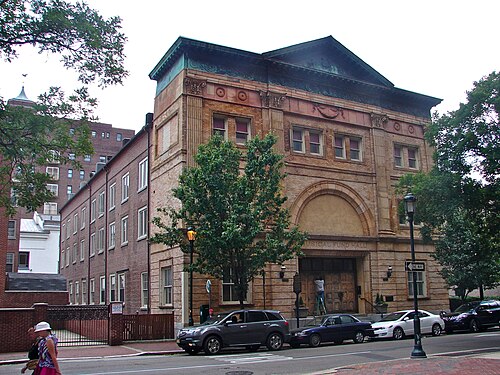
1856年にフィラデルフィアのミュージカルファンドホールで開催された共和党初の全国大会で、同党は自由領土への奴隷制の拡大に反対することを強調した全国綱領を採択した。[44]共和党候補のジョン・C・フレモントは同年の大統領選挙で民主党のジェームズ・ブキャナンに敗れたが、ブキャナンは北部14州のうち4州しか勝てず、故郷のペンシルベニア州でも僅差で勝利した。[45] [46]共和党は議会選挙と地方選挙でより良い結果を残したものの、ノウ・ナッシング派の候補者が相当数の議席を獲得し、厄介な三党体制が生まれた。大統領職を失い、米国議会で過半数に達しなかったにもかかわらず、共和党は共和党の下院議長を組織し、ナサニエル・P・バンクスが議長に就任した。歴史家ジェームズ・M・マクファーソンはバンクスの議長就任について「共和党の誕生を示す瞬間があるとすれば、それはこのときだった」と書いている。[47]

共和党は1860年の選挙を熱望していた。[48]元イリノイ州下院議員エイブラハム・リンカーンは党内での支持構築に数年を費やし、1856年にはフレモントのために熱心に選挙運動を行い、1858年には上院議員選挙に出馬して民主党のスティーブン・A・ダグラスに敗れたものの、リンカーン対ダグラスの討論会で全国的な注目を集めた。[46] [49] 1860年の共和党全国大会で、リンカーンはニューヨーク州上院議員ウィリアム・H・スワードの反対派の支持を固めた。スワードは熱心な奴隷制度廃止論者で、一部の共和党員はスワードがペンシルベニアやインディアナなどの重要な州にとっては過激すぎるのではないかと懸念していた。また、アイルランド移民に対するリンカーンの支援に反対する人々も支持を固めた。[48]リンカーンは3回目の投票で勝利し、最終的にダグラスとの再戦となった総選挙で大統領に選出された。リンカーンは南部のどの州でも投票用紙に載っていなかったし、たとえ民主党の票がダグラス、ジョン・C・ブレッキンリッジ、ジョン・ベルに分散していなかったとしても、一般投票では共和党が勝利していただろう。[48]この選挙結果がきっかけとなり、1861年から1865年まで続いた南北戦争が勃発した。[50]
1864年の大統領選挙では、リンカーンとテネシー州選出の民主党上院議員アンドリュー・ジョンソンを支持する戦争民主党と共和党が団結し、ジョンソンは国民連合党から大統領と副大統領に立候補した。[45]リンカーンは再選された。[51] 1865年6月までに、奴隷制度は旧南部連合諸州では廃止されたが、一部の国境諸州では合法のままであった。共和党の議会指導の下、犯罪に対する罰則を除き奴隷制度を禁止する合衆国憲法修正第13条は、1864年4月8日に上院、1865年1月31日に下院を通過し、 1865年12月6日に当時の36州のうち必要な27州で批准された。[52]
復興、金本位制、そして金ぴか時代

リンカーン大統領時代の急進派共和党員は、リンカーンが奴隷制度を根絶する取り組みにおいて穏健すぎると感じ、10パーセント計画に反対した。急進派共和党員は1864年にウェイド・デイビス法案を可決し、元南部連合国全員に鉄壁の誓いを強制することを目指した。リンカーンは、この法案が元南部連合国の平和的な再統合を危険にさらすと考え、拒否権を発動した。[53]
リンカーンの暗殺後、ジョンソンが大統領に就任したが、急進派共和党員から非難された。ジョンソンは1866年の選挙に先立つ全国ツアーで急進派共和党員を辛辣に批判した。[54]選挙後、反ジョンソン派共和党員は議会の両院で3分の2の多数派を獲得し、それが1868年のジョンソンの弾劾と職追放につながる一因となった。[54]その同じ年、元北軍将軍のユリシーズ・グラントが次期共和党大統領に選出された。
グラントは急進派共和党員であったため、党内に分裂が生じた。マサチューセッツ州選出の上院議員チャールズ・サムナーとイリノイ州選出の上院議員ライマン・トランブルは、グラントの再建主義政策のほとんどに反対した。[55]グラント政権の大規模な汚職を問題視する者もおり、台頭してきたスタールワート派はグラントとスポイルズシステムを擁護し、混血派は公務員制度の改革を主張した。[56]グラントに反対した共和党員は分派して自由共和党を結成し、1872年の大統領選挙でホレス・グリーリーを候補に指名した。民主党は党旗の下にグリーリーを共同候補に指名することで、共和党内のこの分裂を利用しようとした。グリーリーの立場は彼を指名した自由共和党と矛盾し、党の反対にもかかわらずグリーリーは高関税を支持した。 [57]グラントは簡単に再選された。[58] [59]
1876年の大統領選挙は、南部の3州が選挙日の終わりにまだ公式に勝者を宣言していないにもかかわらず、両党が勝利を主張し、論争の的となった。南部では黒人と白人の共和党員の投票を抑制するために投票抑圧が行われており、共和党が支配する選挙管理官は、不正、脅迫、暴力が州の選挙結果を汚したと宣言するのに十分な理由を得た。彼らは、共和党のラザフォード・B・ヘイズが勝者と宣言されるのに十分な数の民主党員の票を破棄した。[60]それでも、民主党は結果を受け入れることを拒否し、州の選挙人を誰に与えるかを決定するために、議会議員で構成される選挙管理委員会が設立された。委員会が党の方針に沿ってヘイズに有利な投票を行った後、民主党は、3月4日に大統領が就任しないように、選挙人投票の集計を無期限に延期すると脅した。これが1877年の妥協につながり、ヘイズが最終的に大統領になった。[61]

ヘイズは、その年の恐慌の余波で落ち込んだアメリカ経済の解決策として、1873年の貨幣法でグラントによって署名され法律化された金本位制にさらに力を入れた。彼はまた、グリーンバックが脅威であると信じていた。グリーンバックは南北戦争中に印刷され、正貨に裏付けられていないお金であり、硬貨の支持者であるヘイズはこれに反対した。ヘイズは国の金の備蓄を補充しようとし、1879年1月までに金がグリーンバックに交換される頻度が金に交換される頻度よりも高くなったため、これは成功した。[62] 1880年の大統領選挙を前に、共和党のジェームズ・G・ブレインが党の指名選挙に出馬し、ヘイズの金本位制推進と公務員制度改革の両方を支持した。ブレインと対立候補のジョン・シャーマンが共和党の指名を勝ち取れなかった後、彼らはそれぞれジェームズ・A・ガーフィールドを大統領に支持した。ガーフィールドはヘイズの金本位制支持の動きには賛成したが、彼の民政改革の取り組みには反対した。[63] [64]
ガーフィールドは1880年の大統領選挙で勝利したが、任期の初めに暗殺された。彼の死は1883年に可決されたペンドルトン公務員制度改革法への支持を生み出すのに役立ち、[65]この法案はガーフィールドの後を継いだ共和党の大統領チェスター・A・アーサーによって法律として署名された。
1884年、ブレインは再び大統領選挙に出馬した。共和党の指名候補にはなったが、総選挙で民主党のグロバー・クリーブランドに敗れた。クリーブランドはジェームズ・ブキャナン以来、初めて民主党員として大統領に選出された。マグワンプとして知られる共和党の反体制派は、ブレインの政治経歴を悩ませてきた汚職のため、彼から離反していた。[66] [67]クリーブランドは金本位制を堅持したが、[68]アメリカ帝国主義の芽生えをめぐって共和党と対立した。[69]

共和党のベンジャミン・ハリソンは1888年の選挙でクリーブランドを破った。ハリソンは大統領在任中に扶養家族および障害年金法に署名し、90日以上勤務し肉体労働ができない北軍の退役軍人全員に年金を支給することを定めた。[70] 1892年の大統領選挙でクリーブランドに敗れた後、ハリソンはクリーブランドの就任前にハワイ併合条約を可決しようとしたが失敗した。共和党員の大半は併合案を支持したが[71]、クリーブランドは反対した。[72]
1896年の大統領選挙では、共和党のウィリアム・マッキンリーの政策は金本位制と高関税を支持し、 1890年のマッキンリー関税の考案者でその名もマッキンリーだった。その年の全国大会以前にはこの問題で意見が分かれていたが、マッキンリーは選挙運動のメッセージでは自由銀よりも金本位制を強く支持することに決めたが、 1893年恐慌以来根強く残っていた金本位制への懐疑論を払拭するために複本位制を継続することを約束した。[73] [74]民主党のウィリアム・ジェニングス・ブライアンは自由銀運動の熱心な支持者であることが判明し、そのためブライアンはタマニー・ホール、ニューヨーク・ワールドなどの民主党機関や、民主党の上流階級と中流階級の大半の支持を失った。[75]マッキンリーはブライアンを破り[76] 、 1912年の大統領選挙まで大統領職を共和党に返した。[77]
20世紀前半
進歩派対保守派

1896年の再編により、共和党は大企業の政党としての地位を固め、一方でセオドア・ルーズベルト大統領はトラスト破壊を掲げて中小企業の支持を拡大した。彼は1908年の選挙で後継者のウィリアム・ハワード・タフトを自ら選んだが、党が真っ二つに分裂したため両者は敵対関係になった。タフトは1912年の指名選挙でルーズベルトを破ったため、ルーズベルトは党大会から飛び出し、新党を立ち上げた。ルーズベルトは新設の進歩党の公認で選挙戦を戦った。彼は社会改革を訴え、その多くは後に1930年代にニューディール民主党によって推進された。彼は敗北し、彼の支持者の大半が共和党に戻ったが、彼らは新しい保守的な経済思想に同意できないことに気づき、共和党のイデオロギーは右傾化した。[78]
共和党は1920年代に大統領職に復帰し、正常化、ビジネス重視の効率化、高関税を掲げて勝利した。[79]党の全国綱領では禁酒法への言及を避け、かわりに漠然とした法と秩序への取り組みを発表した。[80]ティーポット・ドーム事件はウォーレン・G・ハーディング政権下の党に打撃を与える恐れがあった。ハーディングは1923年に死去し、カルビン・クーリッジは1924年に分裂した野党を楽々と破った。[81]この10年間の企業優遇政策は、1929年のウォール街大暴落が世界恐慌の先駆けとなるまで、前例のない繁栄をもたらした。 [82]
ルーズベルトとニューディール時代
民主党のフランクリン・D・ルーズベルト大統領が結成したニューディール連合は、1950年代の共和党のドワイト・D・アイゼンハワー大統領の任期を除き、その後の30年間の大半にわたってアメリカ政治を支配した。ルーズベルトが1933年に大統領に就任した後、ニューディール法案は議会を通過し、経済は1933年初頭のどん底から急激に回復した。しかし、長期失業は1940年まで足かせとなった。1934年の選挙では、共和党の上院議員10人が敗北し、共和党は上院議員25人に対して民主党は71人となった。下院も同様に民主党が圧倒的多数を占めた。[83]
共和党は、主に中西部を基盤とする多数派の旧右派と、ニューディール政策の多くを支持する北東部を基盤とするリベラル派に分裂した。旧右派は第二次ニューディール政策を、階級闘争と社会主義を象徴するものとして激しく攻撃した。ルーズベルトは1936年に楽々と大統領に再選されたが、2期目に入ると経済が衰退し、ストライキが急増し、最高裁判所の権限を掌握して民主党から南部の保守派を排除することに失敗した。共和党は1938年の下院選挙で大復活を遂げ、右派ではオハイオ州のロバート・A・タフト、左派ではニューヨーク州のトーマス・E・デューイなど新たな新星が誕生した。 [84]南部の保守派は共和党の大半と合流して保守連合を形成し、1964年まで議会の国内問題を支配した。第二次世界大戦の頃までには両党は外交政策をめぐって分裂し、共和党では反戦の孤立主義者が優勢となり、民主党ではドイツの独裁者アドルフ・ヒトラーを阻止したい介入主義者が優勢となった。ルーズベルトは1940年に3期目、1944年に4期目を獲得した。保守派は戦争中にニューディール政策の大半を廃止したが、社会保障や企業を規制する機関を廃止しようとはしなかった。 [85]
歴史家ジョージ・H・ナッシュは次のように主張している。
「ルーズベルト革命」の一部とハリー・S・トルーマン大統領の外交政策の基本的な前提を受け入れた(または少なくとも黙認した)「穏健派」で国際主義的な、主に東側陣営の共和党員とは異なり、共和党右派は根っからの反革命派だった。反集産主義、反共産主義、反ニューディールで、限定的な政府、自由市場経済、議会(行政ではなく)の特権に熱心に取り組んでいた共和党保守派は、最初から常に二正面戦争を繰り広げる義務があった。外部からはリベラルな民主党員、内部からは「私も」共和党員と戦ったのである。[86]
1945年以降、共和党の国際主義派は、旧右派の孤立主義が続いたにもかかわらず、トルーマンの冷戦外交政策に協力し、マーシャル・プランに資金を提供し、NATOを支持した。 [87]
20世紀後半
ルーズベルト以後の時代
(2).jpg/500px-Dwight_D._Eisenhower,_official_photo_portrait,_May_29,_1959_(cropped)(2).jpg)
アイゼンハワーは1952年の共和党大統領候補指名選挙で保守派のリーダーであるロバート・A・タフト上院議員を破ったが、アイゼンハワー政権の国内政策は保守派が主導していた。有権者は共和党よりもアイゼンハワーを好んでおり、彼は党をより穏健な立場に転換させることができなかった。[88]
ゴールドウォーターからレーガンまで
歴史家たちは、1964年の大統領選挙とそれに伴う全国大会を重要な転換点として挙げている。この選挙では、アリゾナ州選出の上院議員バリー・ゴールドウォーター率いる保守派が、ニューヨーク州知事ネルソン・ロックフェラーと彼の名を冠した共和党ロックフェラー派と指名争いを繰り広げた。ゴールドウォーターが勝利しそうな中、リベラル派を動員するよう促されたロックフェラーは、「お前は今それを見ている。残っているのは俺だけだ」と言い返した。[89] [90]
1964年の公民権法と1965年の投票権法の成立に伴い、南部諸州では大統領選挙において共和党がより確実に優勢となり、一方北東部諸州では民主党がより確実に優勢となった。
ゴールドウォーターは選挙で圧倒的な敗北を喫したが、ロナルド・レーガンは選挙戦を通じてゴールドウォーターの有力な支持者として知られるようになり、有名な「選択の時」の演説をゴールドウォーターのために行った。レーガンは2年後にカリフォルニア州知事選に勝利した。
共和党は1969年から1977年まで第37代大統領リチャード・ニクソンの下でホワイトハウスを支配し、1974年にウォーターゲート事件によりニクソンが辞任すると、ジェラルド・フォードが第38代大統領となり、1977年までその職を務めた。ロナルド・レーガンはその後、1980年のアメリカ合衆国大統領選挙で現職の民主党大統領ジミー・カーターを破り、1981年1月20日に第40代大統領となった。[91]
レーガン時代
1981年から1989年まで続いたレーガン大統領の任期は、「レーガン革命」と呼ばれるものであった。[ 92 ]それは、それ以前の1970年代のスタグフレーションからの根本的な転換と見なされ、レーガンの経済政策は減税、政府の規制緩和の優先、抑止理論を利用してソ連を牽制するために国内の資金を軍事にシフトすることを意図していた。1987年6月に当時の西ベルリンを訪問した際、彼はベルリンの壁での演説でソ連の指導者ミハイル・ゴルバチョフに「この壁を壊せ! 」と要求した。この発言は後に1989年11月の壁崩壊に影響を与えたと見なされ、その後何年にもわたって遡及的に飛躍的な業績と見なされた。[93]ソ連は1991年に解体した。[94] [95] [96]レーガン大統領の任期後、共和党の大統領候補者は頻繁にレーガンの見解を共有していると主張し、自分自身と自分たちの政策を彼の遺産の継承者として描くことを目指した。[97]
レーガンの副大統領ジョージ・H・W・ブッシュは、 1988年の大統領選挙で圧勝した。しかし、彼の任期は共和党内の分裂が特徴的だった。ブッシュの経済自由化と諸外国との国際協力のビジョンは、 1990年代の民主党ビル・クリントン大統領時代に北米自由貿易協定(NAFTA)の交渉と調印、そして世界貿易機関の概念的始まりにつながった。[98] 独立政治家で実業家のロス・ペローはNAFTAを非難し、それがアメリカの雇用をメキシコにアウトソーシングすることにつながると予測したが、クリントンはブッシュの貿易政策に同意した。[99]
1992年、ブッシュは37%の得票率で再選を逃した。クリントンは43%の得票率で最多得票し、ペローは19%で3位となった。ペローの立候補がブッシュの再選を妨げたかどうかについては議論があるが、チャーリー・クックはペローのメッセージは共和党員と保守派の有権者に影響力があったと主張した。[100]ペローはその後改革党を結成し、将来の共和党大統領ドナルド・トランプもそのメンバーだった。[101]
ギングリッチ革命
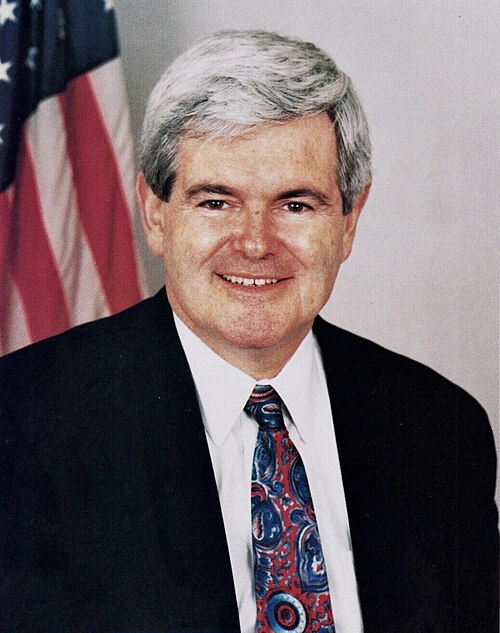
1994年の選挙では、 「アメリカとの契約」を掲げて選挙運動を行った下院少数党院内幹事ニュート・ギングリッチ率いる共和党が両院で多数派を獲得し、12の州知事職を獲得し、20の州議会で支配権を取り戻した。共和党は40年ぶりに下院の支配権を獲得し、南北戦争以降初めて南部で下院議席の過半数を獲得した。[102] [103]
しかし、ほとんどの有権者は契約について聞いたことがなく、共和党の勝利は伝統的な中間選挙での反現職投票と、共和党が南部で再建以来初めて多数派政党となり、多くの元南部民主党員を獲得したことによるものとされた。[104]ギングリッチは議長となり、共和党が多数派となってから最初の100日以内に、契約に盛り込まれた提案はすべて可決されたが、上院では可決されなかった国会議員の任期制限は例外であった。[105] [104]ギングリッチの1994年の成功の鍵の1つは選挙の全国的実施であり、[103]ギングリッチは1996年の下院選挙で全国的な人物となり、多くの民主党指導者がギングリッチは熱狂的な急進派であると宣言した。[106] [107]共和党は、ボブ・ドールが大統領選挙でクリントンに大敗したにもかかわらず、1928年以来初めて多数派を維持した。しかし、ギングリッチの全国的な知名度は共和党議会にとって不利となり、ギングリッチの比較的不人気にもかかわらず、共和党議会は有権者の過半数の支持を得ていた。[106]
ギングリッチと共和党が1997年の均衡予算法でクリントンと合意した後、共和党の下院多数派は1998年の選挙を前に新しい議題を話し合うのに苦労した。[108] 1998年にビル・クリントンの弾劾が進行中だったとき、ギングリッチはクリントンの不正行為を選挙に向けた党のメッセージにすることを決定し、それが多数派に加わると信じていた。この戦略は誤りであることが判明し、共和党は5議席を失ったが、それがメッセージの悪さによるものなのか、クリントンの人気による追随効果によるものなのかは議論されている。[109]ギングリッチはそのパフォーマンスにより党の権力から追放され、最終的には議会を完全に辞任することを決意した。その後しばらくの間、ルイジアナ州選出のボブ・リビングストン下院議員が後任になると思われた。しかし、リビングストンは、もし議長を務めた場合、共和党下院の立法議題が不利になるという不倫に関する有害な報告があったため、候補から退き、議会を辞任した。[110]イリノイ州代表のデニス・ハスタートがリビングストンに代わって議長に昇格し、2007年までその職を務めた。[111]
21世紀
ジョージ・W・ブッシュ
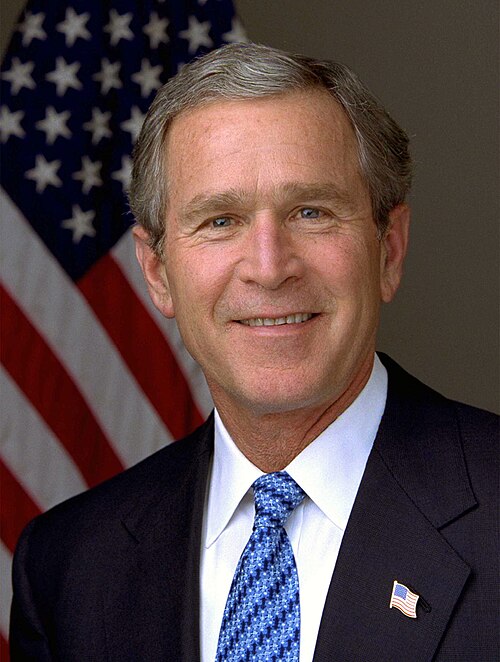
共和党のジョージ・W・ブッシュは2000年と2004年の大統領選挙で勝利した。[112]彼は2000年に「思いやりのある保守派」として選挙運動を行い、移民や少数派の有権者にもっとアピールしたいと考えていた。 [113]その目標は薬物リハビリテーションプログラムと囚人の社会復帰支援を優先することであり、これはクリントン大統領の1994年の犯罪法などのより厳しい犯罪対策を活用することを意図した動きだった。彼の大統領在任中、この政策は党員の間であまり支持されなかった。[114]
共和党は2000年代の大半、かなりまとまった結束を保っていた。なぜなら、強硬な経済的自由主義者と社会的保守主義者の両方が、肥大化した世俗的で自由主義的な政府の党とみなしていた民主党に反対していたからである。[115]この時期には、ブッシュ支持層の中核をなす「親政府保守派」が台頭した。共和党員のかなりのグループは、政府支出の増加と経済と人々の私生活の両方をカバーする規制の強化、および活動的で介入主義的な外交政策を主張していた。[116]ピュー研究所などの調査グループによると、社会保守派と自由市場支持者は、共和党の支持連合内の他の2つの主要グループであり、3つはほぼ同数であった。[117] [118]しかし、自由主義者と自由主義寄りの保守主義者は、共和党が重要な市民の自由を制限し、ブッシュ政権下で企業福祉と国家債務が大幅に増加したと見なしたことにますます不満を抱くようになった。[119]対照的に、社会保守派の中には、党が自分たちの道徳的価値観と相反する経済政策を支持していることに不満を表明した者もいた。[120]
2001年、共和党は上院の多数派を失い、上院の票数が半々になった。しかし、共和党は、ブッシュ政権の副大統領ディック・チェイニーの決選投票により、上院の支配権を維持した。2001年6月6日、バーモント州の共和党上院議員ジム・ジェフォーズが民主党に所属を変えたことで、民主党が上院の支配権を獲得した。共和党は、 9月11日の同時多発テロ後のブッシュの人気の急上昇に後押しされ、2002年の選挙で上院の多数派を奪還し、 2006年の選挙で民主党が両院の支配権を奪還するまで、下院と上院で共和党の多数派を維持した。これは主にイラク戦争への反対が高まったためである。[121] [122] [123]
2008年の大統領選挙では、アリゾナ州の共和党上院議員ジョン・マケインはイリノイ州の民主党上院議員バラク・オバマに敗れた。[124]
ティーパーティー運動
共和党は2010年の選挙で選挙での勝利を収めた。2010年の選挙は、財政保守派による反オバマ抗議運動であるティーパーティー運動の台頭と時を同じくした。[125] [126] [127] [128]この運動のメンバーは、減税と、政府支出の削減による国家債務と連邦予算赤字の削減を求めた。[130] [131]ティーパーティー運動は、リバタリアン、[133]右翼ポピュリスト、[134]および保守派の活動家が混在する大衆的な憲法運動とも呼ばれた。[135 ]
ティーパーティー運動の選挙での成功は、1月にマサチューセッツ州の上院特別選挙でスコット・ブラウンが予想外の勝利を収めたことから始まった。この議席は、何十年も民主党のテッド・ケネディが保持していた。[136] 11月には、共和党が下院の支配権を奪還し、上院での議席数を増やし、州知事の過半数を獲得した。[137]ティーパーティーは、共和党の体制派がティーパーティー風の共和党員に取って代わられたこともあり、共和党に強い影響を与え続けた。[129]
2012年にオバマが共和党のミット・ロムニーを破って大統領に再選されたとき、[138]共和党は下院で7議席を失ったが、依然としてその議席を維持した。[139]しかし、共和党は上院の支配権を獲得することができず、2議席の純減で少数派の地位を維持した。[140]敗北の余波で、一部の著名な共和党員は自党に反対を表明した。[141] [142] [143]共和党による2012年の選挙後の検証では、党は少数派や若い有権者の票を集めるために全国レベルでより多くのことを行う必要があると結論付けた。[144] 2013年3月、共和党全国委員会のラインス・プリーバス委員長は、2012年の党の選挙の失敗に関する報告書を発表し、共和党員に自らを改革し、移民改革を公式に支持するよう求めた。彼は、女性、少数民族、同性愛者への1000万ドルのマーケティングキャンペーン、より短く、より管理された予備選挙期間の設定、より良いデータ収集施設の創設など、219の改革を提案した。[145]
2014年の選挙後、共和党は9議席を獲得して上院を掌握した。[146]下院で247議席、上院で54議席を獲得した共和党は、最終的に1929年の第71回議会以来最大の多数派を獲得した。[147]
トランプ時代

2016年の大統領選挙では、共和党候補のドナルド・トランプが民主党候補のヒラリー・クリントンを破った。選挙前の世論調査ではクリントンがリードしていたため、結果は予想外だった。[148]トランプの勝利は、何十年も民主党の青い壁の一部であったミシガン州、ペンシルベニア州、ウィスコンシン州の3州での僅差の勝利によって推進された。 [149]これは、政治体制から無視され、軽視されていると感じていた労働者階級の白人有権者からの強い支持によるものだとされた。[150] [151]トランプは、共和党体制の正統性を捨て、より広範な国家主義的なメッセージを支持することで、彼らに人気を得た。[149]
2016年の選挙後、共和党は上院、下院、州知事で多数派を維持し、トランプ大統領の当選で新たに獲得した行政権を行使した。共和党は2017年に99州議会のうち69州を掌握し、史上最多の議席数となった。[152]また、同党は33州で州知事職も獲得し、[153] 1922年以来最多の議席数となった。[154]同党は25州で政府を完全に掌握した。[155] [156]同党がこれほど多くの州を完全に掌握したのは1952年以来のことであった。[157]対立する民主党が2017年に完全に掌握していた州はわずか5州であった。[158] 2018年の選挙では、共和党は下院での支配力を失ったが、上院での支配力を強化した。[159]
トランプ大統領は大統領在任中、ニール・ゴーサッチ、ブレット・カバノー、エイミー・コニー・バレットの3人の最高裁判事を任命した。これはリチャード・ニクソン以来、大統領による最高裁判事の1期あたりの最多任命数である。[160]トランプ大統領は合計260人の判事を任命し、退任時には国際貿易裁判所を除く連邦司法府のすべての部門で共和党任命の多数派を形成し、司法制度を右傾化させた。彼の大統領在任中のその他の注目すべき業績には、 2017年の減税・雇用法の可決、 1947年以来初の新しい独立した軍隊である米国宇宙軍の創設、イスラエルとさまざまなアラブ諸国間の一連の正常化協定であるアブラハム合意の仲介などがある。[161] [162] [163]トランプ大統領は2019年に権力乱用と議会妨害の罪で下院から弾劾された。2020年2月5日、上院は無罪を可決した。[164]
トランプ氏は2020年の大統領選挙で民主党のジョー・バイデン氏に敗れた。同氏は選挙結果を認めず、広範囲にわたる選挙不正を主張し、選挙結果を覆そうとした。2021年1月6日、トランプ氏が演説した集会の後、米国議会議事堂がトランプ氏の支持者らに襲撃された。襲撃後、下院は反乱扇動の罪でトランプ氏を2度目の弾劾調査にかけ、トランプ氏は2度弾劾された唯一の連邦公職者となった。[165] [166]トランプ氏は2021年1月20日に退任した。同氏の弾劾裁判はバイデン政権の初期まで続き、2021年2月13日に無罪となった。[167] 2020年の選挙以来、党内で選挙否定論がますます主流となり、 [168] 2022年の共和党候補者の大半が選挙否定論者となっている。[169]
2022年と2023年には、トランプ大統領が任命した最高裁判事が、銃の権利、中絶、積極的差別是正措置に関する画期的な判決を下す決定的な役割を果たした。[170] [171]共和党は2022年の選挙に自信を持って臨み、アナリストらは共和党支持の波を予想していたが、激戦州や激戦区の有権者が民主党に加わり、トランプ大統領が支持した候補者や2020年の選挙結果を否定した候補者を拒否したため、最終的には期待を下回る結果となった。[172] [173] [174]共和党は下院で僅差で過半数を獲得したが、[175]上院といくつかの州議会の過半数と知事職を失った。[176] [177] [178]この結果を受けて、多くの共和党員や保守派の思想的リーダーが、トランプ氏が引き続き党の代表および指導者であるべきかどうかを疑問視するようになった。[179] [180]それにもかかわらず、トランプ氏は2024年の大統領選挙で再び党の候補者指名を簡単に勝ち取った。[181]
現在の状況
2024年現在、共和党は米国下院で多数派を占めている。また、27の州知事、28の州議会、23の州政府の三権分立も保持している。現在の米国最高裁判所判事9人のうち6人は共和党の大統領によって任命された。共和党の最新の大統領候補はドナルド・トランプで、第45代アメリカ合衆国大統領を務め、2024年の大統領選挙でも同党の候補者となっている。[182]共和党の大統領は19人で、単一政党からの大統領としては最多である。
名前とシンボル
共和党の創立メンバーは、創立者トーマス・ジェファーソンが「共和党」と呼んだ民主共和党が推進した共和主義の価値観に敬意を表してその名前を選んだ。 [183] この名前のアイデアは、党の指導的広報担当者であるホレス・グリーリーの社説から生まれたもので、グリーリーは「奴隷制の宣伝者ではなく、自由の擁護者および普及者という真の使命に連邦を回復するために団結した人々をより適切に示すために、『共和党員』のような単純な名前」を求めた。[184]この名前は、1776年の共和主義の価値観である公民的美徳と貴族主義および腐敗への反対を反映している。[185]「共和党員」は世界中でさまざまな意味を持ち、共和党はもはや意味が必ずしも一致しないほど進化してきた。[186] [121]
「グランド オールド パーティー」という用語は共和党の伝統的な愛称であり、略称「GOP」はよく使われる呼称である。この用語は 1875 年の議会記録で、連邦の軍事防衛の成功に関わった党を「この勇敢な古い党」と呼んだときに始まった。翌年、シンシナティコマーシャルの記事でこの用語は「グランド オールド パーティー」に修正された。この略称が初めて使用されたのは 1884 年のことである。[187]
党の伝統的なマスコットは象である。1874年11月7日にハーパーズ・ウィークリー誌に掲載されたトーマス・ナストの政治漫画が、このシンボルの最初の重要な使用例であると考えられている。 [188]インディアナ州、ニューヨーク州、オハイオ州などの州では、共和党の代替シンボルとして、民主党の雄鶏や民主党の五芒星の代わりに白頭鷲が使われている。[189] [190]ケンタッキー州では、丸太小屋が共和党のシンボルである。[191]
伝統的に、この党には一貫した色のアイデンティティがなかった。[192] [193] [194] 2000年の大統領選挙後、赤色は共和党と結びつくようになった。選挙中および選挙後、主要放送ネットワークは選挙地図に同じ配色を使用した。共和党候補のジョージ・W・ブッシュが勝利した州は赤に、民主党候補のアル・ゴアが勝利した州は青に塗られた。選挙結果をめぐる数週間に及ぶ論争により、これらの色の連想はしっかりと根付き、その後も続いた。政党への色の割り当ては非公式かつ非公式であるが、メディアはこれらの色を使用してそれぞれの政党を表すようになった。政党とその候補者もまた赤色を受け入れるようになった。[195]
-
![1874年にトーマス・ナストが描いた漫画。共和党の象が初めて登場した。[196]](https://img-server.japedia.wiki/wikipedia/commons/thumb/2/27/NastRepublicanElephant.jpg/500px-NastRepublicanElephant.jpg) 1874年にトーマス・ナストが描いた漫画。共和党の象が初めて登場した作品である[196]
1874年にトーマス・ナストが描いた漫画。共和党の象が初めて登場した作品である[196] -
 赤、白、青の象
 -
 共和党の旗のロゴ、 2013年頃
 -
 共和党のバナーロゴ、 2017年頃
派閥
南北戦争と復興期

19世紀の共和党の分派には急進派共和党員が含まれていた。彼らは1854年の党創設から1877年の復興期の終わりまで党の主要な要因であった。彼らは奴隷制度に強く反対し、強硬な奴隷制度廃止論者であり、後に解放奴隷の男女平等を主張した。彼らは宗教的理想と福音派キリスト教に強く影響されており、その多くは奴隷制度を悪とし、南北戦争をそれに対する神の罰とみなすキリスト教改革者であった。 [197]急進派共和党員は奴隷制度廃止を主要な戦争目的として主張し、エイブラハム・リンカーンの穏健な復興計画には、南軍に対して甘すぎること、および南北戦争中または後に奴隷解放宣言と憲法修正第13条によって解放された元奴隷の救済が不十分であるとして反対した。戦争が終わり、リンカーンが暗殺された後、急進派は復興政策をめぐってアンドリュー・ジョンソンと衝突した。急進派は戦後、元奴隷の公民権を確立し、奴隷解放を完全に実施する取り組みを主導した。1866年に失敗した措置が反乱州での元奴隷に対する暴力に終わった後、急進派は法定保護のための憲法修正第14条を議会で可決させた。彼らは、南部アメリカで元南軍将校が政治権力を再び握ることに反対し、自由、平等、そして解放奴隷に投票権を与えた憲法修正第15条を強調した。彼らの多くは後に、マシン政治を支持するスターワートとなった。
穏健派共和党員は、エイブラハム・リンカーン大統領の戦争政策を忠実に支持することで知られ、急進派共和党員が主張するより好戦的な姿勢に反感を示した。歴史家エリック・フォナーによると、この派閥の議会指導者は、ジェームズ・G・ブレイン、ジョン・A・ビンガム、ウィリアム・P・フェッセンデン、ライマン・トランブル、ジョン・シャーマンであった。急進派とは対照的に、穏健派共和党員は、市民の平等と南北戦争を通じて見られた連邦政府の権限の拡大を受け入れながらも、黒人の参政権の問題にそれほど熱心ではなかった。彼らはまた、アンドリュー・ジョンソン大統領の寛大で融和的な復興政策にも懐疑的だった。穏健派共和党員の一部は、後者の派閥の腐敗の疑いに幻滅した元急進派共和党員で構成されていた。 1860年代に急進派共和党を率いたマサチューセッツ州上院議員チャールズ・サムナーは、後にグラント政権に関連する腐敗に反対したため、改革志向の穏健派に加わった。彼らは一般的に、経済的に流動性のある自由市場システムの下で米国南部を再建しようとする急進派共和党の取り組みに反対した。[198]
20世紀

20世紀の幕開けとともに、共和党は北東部で旧右派と穏健リベラル派に分裂し、やがてロックフェラー共和党として知られるようになった。ルーズベルトのニューディール政策に反対して保守連合が形成された。[84] 1950年代には伝統主義と社会保守主義、右派リバタリアニズムの融合主義が見られ、 [199]同時に第1新右派が台頭し、1964年にはよりポピュリスト的な第2新右派が続いた。[200] 1980年代の「レーガン革命」によるレーガン連合の台頭により、いわゆるレーガン時代が始まった。レーガンの台頭により共和党のリベラル穏健派が駆逐され、右翼ポピュリスト派が台頭するまでの30年間、レーガン流の保守主義が党の支配的なイデオロギー派閥として確立された。[9] [23]
21世紀
共和党は、 2000年の米国大統領選挙でジョージ・W・ブッシュが当選したことで21世紀を迎え、9月11日の攻撃に対するアメリカの初期の対応から対テロ戦争まで大きな影響力を持ったネオコンの頂点を迎えた。[201]バラク・オバマの当選により、2009年にティーパーティー運動が形成され、 2010年代から2020年代にかけて右翼ポピュリスト運動が世界的に台頭した。 [202]
右翼ポピュリズムは2010年代を通じて共和党内でますます支配的なイデオロギー派閥となり、2016年のドナルド・トランプ大統領当選につながった。 [150] 1970年代に始まり2000年代に加速したアメリカの右翼利益団体は、共和党体制の組織的弱体化につながる外部動員手段に多額の投資をした。保守系メディア、特にフォックス・ニュースの並外れた役割は、共和党支持層が伝統的な党エリートよりもフォックス・ニュースをフォローし、信頼することにつながった。組織能力の枯渇は、非常に弱い党体制と伝統的な権力者の意向に反して、共和党予備選でトランプが勝利したことに部分的につながった。[203] : 27–28 トランプ氏の当選は共和党内の分裂を悪化させ、[203] : 18 共和党は穏健派と保守派の中道連合から、リベラルな見解や党の方針からの逸脱に敵対する確固たる右派政党へと移行した。[204]
それ以来、党は激しい派閥争いに直面しており[205] [206] 、保守派の勢力も大幅に低下した。[22] [13] [207] [24] [30]トランプ氏の当選は、共和党と保守運動全体をトランプ派と反トランプ派に分裂させた。[208] [209]
これらの派閥は、特に米国下院で顕著である。 2009年以降、共和党の下院議長3人が解任されている。 [25]下院多数党院内総務のエリック・カンターは、 2014年の予備選挙で、移民改革を支持したとしてティーパーティー支持者のデイブ・ブラットに敗れた。[210] 2011年から2015年まで下院議長を務めたジョン・ベイナーは、2015年に退任動議に直面して辞任した。[211] [212] 2023年1月7日、15回の投票の後、ケビン・マッカーシーが議長に選出された。これは、 1923年以来初の複数投票による議長選挙であった。[213]その後、2023年10月3日、トランプ派の8人と下院民主党員208人の投票により、彼はその地位から解任された。 [214]
保守派

45%以上
40~44%
35~39%
30~34%
25~29%
24%以下
1980年のロナルド・レーガン大統領選挙により、レーガン流のアメリカ保守主義が共和党の支配的なイデオロギー派閥として確立され、2016年にドナルド・トランプが大統領に選出されるまで続いた。[9] [22] [13] [23] [24] [26] [27] [28] [29]伝統的な現代保守主義者は、自由市場経済政策への支持と社会保守主義および外交政策へのタカ派的アプローチを組み合わせている。[21]保守運動の他の部分は、財政保守主義者と財政タカ派で構成されている。 [ 216]保守主義者は一般的に、限定された政府、個人主義、伝統主義、共和主義、および州に対する連邦政府の権限の制限を支持する政策を支持する。[217]
外交政策において、ネオコンは介入主義的な外交政策と軍事費の増大を支持する共和党の小派閥である。彼らは2000年代初頭、9/11攻撃への初期対応から対テロ戦争までの計画において大きな影響力を持っていた。[201] 2016年のトランプ大統領の当選以来、ネオコンは衰退し、連邦共和党の公職者の間では非介入主義と孤立主義が高まっている。[32] [218] [219]
トランプ大統領の当選後の保守思想の長期的な変化は、伝統的な保守主義のイデオロギーと右翼ポピュリストのテーマの「新しい融合主義」と表現されている。[32]その結果、国家保守主義、[220] 保護主義、[221] 文化保守主義、より現実的な外交政策、新保守主義の否定、給付プログラムの縮小に向けた取り組みの減少、伝統的な抑制と均衡に対する軽蔑への支持が高まった。[32] [222]中絶と同性結婚の問題に関しては、党内に大きな分裂がある。[223] [224]
保守派の議員連盟には共和党研究委員会や自由議員連盟などがある。[225] [226]
キリスト教右派

1970年代にキリスト教右派が台頭して以来、共和党は福音派、モルモン教徒、[227]および伝統主義 カトリック教徒から多大な支持を集めてきたが、これはロー対ウェイド事件後の中絶反対によるところが大きい。[228]キリスト教右派は、社会的に保守的でキリスト教国家主義的な政策を強く支持していることが特徴である。[b]キリスト教保守派は、キリスト教の教えを利用して法律や公共政策に影響を与えようとしている。[241]他の共和党員と比較すると、党内の社会的に保守的なキリスト教右派は、 LGBTの権利やマリファナの合法化に反対し、中絶の合法性を大幅に制限することを支持する傾向がある。[242]
キリスト教右派は、アメリカ南部の大部分を占めるバイブル・ベルトで最も勢力が強い。[243] 2017年から2021年までドナルド・トランプ大統領の副大統領を務めたマイク・ペンスもキリスト教右派の一員だった。 [244] 2023年10月、キリスト教右派の一員であるルイジアナ州選出のマイク・ジョンソン議員が第56代アメリカ合衆国下院議長に選出された。[245] [246]
リバタリアン
共和党には、著名な右派リバタリアン派閥がある。[12] [223]党内のこの派閥は、米国中西部および西部で優勢である傾向がある。[223]右派リバタリアニズムは、1950年代および60年代に融合主義から生まれた。 [247]バリー・ゴールドウォーターは、1960年代の保守リバタリアン運動に大きな影響を与えた。[248]他の共和党員と比較して、彼らはマリファナの合法化、同性結婚などのLGBTの権利、銃の権利を支持し、大量監視に反対し、民事資産没収を取り巻く現行法の改革を支持する傾向がある。右派リバタリアンは、中絶の問題で大きく分裂している。[249]共和党内の著名なリバタリアン保守派には、ケンタッキー州選出の上院議員ランド・ポール、[250] [251]ケンタッキー州第4選挙区選出の下院議員トーマス・マッシー、[252]ユタ州選出の上院議員マイク・リー[253] [250]ワイオミング州選出の上院議員シンシア・ラミス[254]などがいます。
穏健派
共和党穏健派はイデオロギー的には中道派のグループで、主に米国北東部の出身で、[255]通常は激戦州または青い州に居住している。共和党穏健派の有権者は通常、高学歴で裕福、財政的には保守的、社会的には穏健派またはリベラルで、トランプを支持しないことが多い。[223] [255]時には他の共和党員と経済観(減税、規制緩和、福祉改革など)を共有することもあるが、共和党穏健派は、積極的差別是正措置を支持する者もいる点が異なり、[256] LGBTの権利と同性結婚、中絶の合法的アクセスや中絶への公的資金提供、銃規制法、環境規制の強化と気候変動対策、移民制限の緩和、不法移民の市民権取得への道などを支持する者もいる。[257] 21世紀には、元共和党穏健派の一部が民主党に鞍替えした。[258] [259] [260]
著名な穏健派共和党員には、アラスカ州のリサ・マーコウスキー上院議員、メイン州のスーザン・コリンズ上院議員、 [261] [262] [263] [264]ネバダ州知事のジョー・ロンバード、バーモント州知事のフィル・スコット、元マサチューセッツ州知事のチャーリー・ベイカー、元メリーランド州知事のラリー・ホーガンがいる。[265] [266] [267]
右翼ポピュリスト
.jpg/500px-J._D._Vance_(53808261332).jpg)
右翼ポピュリズムは共和党の支配的な政治派閥である。[c] MAGAまたは「アメリカ第一主義」運動と呼ばれることもある。 [276] [277]共和党のポピュリストは、右翼ポピュリズム、[150] [278] [279] 国家保守主義、[280] ネオナショナリズム、[281]トランプ主義など、幅広い右翼イデオロギーから構成されると説明されている。[269] [282] [283]彼らは極右のアメリカ政治版と言われている。[d] 2016年のトランプの選挙は、党を親トランプ派と反トランプ派に分裂させた。[ 208 ] [209]
共和党のポピュリスト運動と極右運動は、2010年代と2020年代の世界的なポピュリスト運動の増加と同時期に出現した。[202] 2010年以降、党内の定着と党派心の高まりが、極右とも言われるティーパーティー運動の台頭に支えられて進んだ。 [287]政治学者のマット・グロスマンとデイビッド・A・ホプキンスによると、共和党が大学を卒業していない白人有権者の間で支持を伸ばしたことが、右翼ポピュリズムの台頭に貢献したという。[31]歴史家ゲイリー・ガースルによると、トランプ主義は、自由貿易、移民、国際主義への反対など、新自由主義への反対で支持を得たという。[28] [288]
極右派は支出削減を支持する。[289] [290]国際関係では、ポピュリストは米国のイスラエルへの援助を支持するがウクライナへの援助は支持せず、[291] [292]ロシアとの関係改善を一般的に支持し、[293] [294] [295]孤立主義的な「アメリカ第一」外交政策アジェンダを支持する。 [296] [297] [298] [223]彼らは党内および民主党との妥協を一般的に拒否し、 [ 299] [300]穏健すぎるとみなした共和党の同僚公職者を排除することもいとわない。[301] [302]他の共和党員と比較すると、ポピュリスト派は合法的な移民、[303]自由貿易、[304] 新保守主義、[305]環境保護法に反対する可能性が高い。[306]
党の極右派には、自由議員連盟のメンバー[307] [308] [309]やマージョリー・テイラー・グリーン、マット・ゲーツらが含まれる。[310]ゲーツは、当時の下院議長 ケビン・マッカーシーに対する2023年の反乱を主導した。[311] [312]米国上院では、ジョシュ・ホーリーが党のポピュリスト派の著名人として評されている。[313]
マルケット大学の政治学准教授ジュリア・アザリは、トランプ支持者の共和党員全員がドナルド・トランプを公に支持しているわけではなく、共和党員の中にはトランプの政策を支持しながらもトランプ個人からは距離を置いている人もいると指摘した。[314]共和党内でトランプが引き続き優位に立っていることで、この戦略の成功は限られている。[315] [316] 2024年、トランプは共和党全国委員会の乗っ取りを主導し、ララ・トランプを新しい共同委員長に任命した。[317]
オレゴン大学の政治学教授ジョセフ・ロウンズは、現在の極右共和党員はトランプ氏を支持しているが、この派閥はトランプ氏以前にも台頭しており、トランプ氏登場後も存続する可能性が高いと主張した。[318]ジョンズ・ホプキンス大学の政治学准教授リリアナ・メイソンは、ドナルド・トランプ氏が、1960年代から南部の白人 保守派民主党員の間で民主党を離れ共和党に入党するという傾向を強めたと述べている。「トランプ氏は基本的に避雷針として働き、共和党を白人、キリスト教徒、田舎暮らしのアメリカ人の高い地位を守るための単一の組織として創設するプロセスを完結させた。こうした信念を抱いているのはアメリカ人の大多数ではなく、共和党全体でもなく、約半分だ。しかし、党自体は、この非寛容で非常に強力な親トランプ派閥によって支配されている。」[319]社会学者ジョー・フィーギンによれば、人種的過激主義共和党員による政治的二極化と保守系メディアからの注目の高まりにより、穏健派共和党員はほぼ絶滅し、過去数十年間に多くの政府レベルで立法が麻痺したという。[320]
政治的立場
経済政策
共和党は、自由市場と個人の業績が経済的繁栄の主要因であると信じている。 [321]所得税の引き下げは共和党の財政政策の中核をなすものである。[322]
税金
減税は1980年以来、共和党の経済政策の中核となっている。[323]国レベルでも州レベルでも、共和党は減税と規制緩和の政策を追求する傾向がある。[324]現代の共和党員は、税率が低いほど経済成長が促進されるというサプライサイド経済学の理論を主張している。 [325]多くの共和党員は、高所得者への高い税率に反対しており、雇用と富を生み出す人々を不当にターゲットにしていると考えている。彼らは、民間支出の方が政府支出よりも効率的だと考えている。共和党議員はまた、税の執行と徴税への資金提供を制限しようとしている。[326]
共和党議員の議会投票を測定した2021年の研究によると、現代の共和党の経済政策の立場は、企業の利益と富裕層の利益と一致する傾向がある。[327] [328] [329] [330] [331]
支出
共和党は民主党政権下では財政保守主義を支持することが多いが、政権を握っていた時期には連邦債務が増加した実績がある(ブッシュ減税、メディケア・パートD、2017年減税・雇用法の実施などがその例である)。[332] [333] [334]共和党政権は1960年代後半以降、政府支出を以前の水準に維持または増加させてきた。[335] [336]
権利
共和党は、個人が自分の状況に責任を持つべきだと信じている。また、政府が福祉プログラムを通じて貧困層を支援するよりも、民間部門が慈善事業を通じて貧困層を支援する方が効果的であり、社会扶助プログラムは政府への依存を引き起こすことが多いと信じている。 [337] 2022年11月現在、メディケイドを拡大していない11州はすべて共和党が州議会を掌握している。[338]
労働組合と最低賃金
共和党は一般的に労働組合に反対している。[339] [340]共和党は、企業が福利厚生や賃金を含む独自の雇用慣行を確立でき、労働価格は自由市場で決定されるべきだと考えている。 1920年代以来、共和党は一般的に労働組合組織と組合員から反対されてきた。 国家レベルでは、共和党は労働者に労働組合に参加しない権利を与える1947年のタフト・ハートリー法を支持した。 現代の州レベルの共和党員は一般的にさまざまな労働権法を支持している。[e] [出典が必要]
共和党員の大半は最低賃金の引き上げにも反対しており、最低賃金の引き上げは企業に人員削減や外注を強いる一方でコストを消費者に転嫁することで企業に損害を与えると考えている。[342]
貿易
.jpg/500px-Justin_Smith_Morrill_-_Brady-Handy_(1).jpg)
共和党は、その歴史を通じて国際貿易に関して多種多様な見解をとってきた。2024年に採択された共和党の公式綱領は、自由貿易に反対し、輸入品に対する関税の制定を支持する一方で、既存の自由貿易協定の維持も支持している。[344]共和党は創設当初、保護関税を支持し、エイブラハム・リンカーン大統領時代にはモリル関税が実施された。[345] [343] 1896年の大統領選挙では、共和党の大統領候補ウィリアム・マッキンリーが高関税を強く訴えて選挙運動を行った。マッキンリー関税は1890年の考案者であり、その名もマッキンリー関税である。[73]
20世紀初頭、共和党は関税をめぐって分裂し始め、 1910年のペイン・アルドリッチ関税法をめぐる大論争で党が分裂し、再編が起きた。[346]民主党のウッドロウ・ウィルソン大統領は1913年のアンダーウッド関税法で税率を引き下げ、1914年の第一次世界大戦の勃発により貿易の減少により貿易パターンが根本的に変わった。また、第16次修正条項により連邦所得税から新たに収入が生まれたことで、関税は経済的な影響と政治的レトリックの面で重要性を失っていた。[347]共和党は1921年に政権に復帰すると、再び保護関税を課した。彼らは1930年のスムート・ホーリー関税法で再び関税を引き上げ、米国の大恐慌に対処したが、恐慌は悪化するばかりで、民主党のフランクリン・D・ルーズベルトが1932年から1945年まで大統領を務めた。[348]
1934年の相互関税法は、米国における保護主義の時代からの明確な転換点となった。外国製品に対する米国の関税は、1934年の平均46%から、共和党の大統領ドワイト・D・アイゼンハワーの時代を含む1962年までに12%に低下した。[349]第二次世界大戦後、米国は1947年に設立された関税および貿易に関する一般協定(GATT)を推進し、関税やその他の制限を最小限に抑え、すべての資本主義国間の貿易を自由化しました。[350] [351]
レーガン政権とジョージ・H・W・ブッシュ政権の間、共和党は保護主義政策を放棄し[352]、割当制に反対し、世界貿易に対する経済障壁を最小限にするGATTと世界貿易機関の政策を支持した。カナダとの自由貿易は1987年のカナダ・米国自由貿易協定の結果として実現し、1994年にはレーガンの計画に基づいて米国企業の市場範囲をカナダとメキシコに拡大し、北米自由貿易協定(NAFTA)につながった。1993年、共和党の強い支持を得たビル・クリントン大統領は、労働組合の猛烈な反対を押し切ってNAFTAを議会で可決させた。[353] [354]
2016年の選挙は、ドナルド・トランプ大統領の就任以来、保護主義支持への回帰を示しました。[355] [356] 2017年には、自由貿易協定が米国にとって良いことに同意した共和党員はわずか36%で、民主党員は67%でした。自由貿易が回答者に特に役立ったかどうかを尋ねられたとき、民主党員の支持率は54%に低下しましたが、共和党員の支持率は34%で比較的変化がありませんでした。[357]トランプ大統領は大統領在任中、米国を環太平洋パートナーシップ協定から撤退させ、中国との貿易戦争を開始し、 NAFTAの後継としてUSMCAを交渉しました。[356] [358]
トランプ大統領はまた、世界貿易機関( WTO)の上級委員会への任命を阻止し、WTOルール違反者を執行・処罰することができないようにした。[359] [33]その後、貿易ルールの無視が増加し、より保護貿易的な措置につながった。[360]バイデン政権はトランプ大統領の新規任命凍結を維持している。[33]提案された2024年の共和党の綱領はさらに保護主義的なものとなり、ほとんどの輸入品に関税を課すことを求めている。[34]
環境政策
歴史的に、共和党の進歩的な指導者たちは環境保護を支持してきた。共和党のセオドア・ルーズベルト大統領は著名な自然保護論者であり、その政策は最終的に国立公園局の創設につながった。[363]共和党のリチャード・ニクソン大統領は環境保護論者ではなかったが、1970年に環境保護庁を設立する法律に署名し、包括的な環境プログラムを持っていた。[364]しかし、この立場は1980年代のロナルド・レーガン大統領の政権以降変化し、レーガン大統領は環境規制を経済の重荷と位置付けた。[365]それ以来、共和党員は環境規制に反対する立場をとることが増え、[366] [367] [368]多くの共和党員が気候変動に関する科学的コンセンサスを拒否している。[365] [369] [370] [371]
2006年、当時のカリフォルニア州知事 アーノルド・シュワルツェネッガーは共和党の正統派を破り、カリフォルニア州の炭素排出量に上限を課す法案に署名した。当時の大統領ジョージ・W・ブッシュは国家レベルでの上限の強制に反対した。汚染物質としての二酸化炭素を規制しないというブッシュの決定は、 12の州によって最高裁判所に異議を唱えられ、[372] 2007年にブッシュ政権に不利な判決が下された。 [373]ブッシュはまた、温室効果ガスの排出を制限し、それによって気候変動と闘うことを目指した京都議定書の批准に公然と反対した。[ 365] [374]彼の立場は気候科学者から激しく批判された。[375]
共和党は、炭素排出量を制限するキャップ・アンド・トレード政策を拒否している。[376] 2000年代には、ジョン・マケイン上院議員が炭素排出量を規制する法案(マケイン・リーバーマン気候管理法など)を提案したが、気候変動に対する彼の立場は党幹部の中では異例だった。[365]共和党候補者の中には、米国のエネルギー自立を達成するために代替燃料の開発を支持する者もいる。共和党員の中には、北極国立野生生物保護区などの保護地域での石油掘削の増加を支持する者もいるが、この立場は活動家から批判を集めている。[377]
バラク・オバマ政権下では、多くの共和党員が、石炭からの炭素排出に関する規制など、政権の新しい環境規制に反対した。特に、多くの共和党員がキーストーン・パイプラインの建設を支持した。この立場は企業には支持されたが、先住民族団体や環境活動家からは反対された。[378] [379] [380]
非営利のリベラル擁護団体であるアメリカ進歩センターによると、 2014年には共和党議員の55%以上が気候変動否定論者だった。 [381] [382] 2014年5月の ポリティファクトは、「地球温暖化は現実であり人為的であるという一般的な科学的結論を受け入れている共和党議員は比較的少ない」と報告した。同団体は、これを認めた議員は8人いると報告したが、もっと多い可能性があり、すべての議員がこの問題について立場を表明しているわけではないことも認めた。[383] [384]
ニューヨークタイムズによると、2008年から2017年にかけて、共和党は「人為的な気候変動とどう戦うかを議論するところから、それが存在しないと主張するところまで転じた」という。[385] 2015年1月、共和党主導の米国上院は98対1で「気候変動は現実であり、でっちあげではない」と認める決議を可決したが、「人間の活動が気候変動に大きく寄与している」とする修正案を支持したのは共和党上院議員5人だけだった。[386]
健康管理
同党は単一支払者医療制度に反対しており、[387] [388]これを社会主義医療と呼んでいる。また、医療費負担適正化法[389]やメディケイドの拡大にも反対している。[390]歴史的に、共和党と民主党の両党には医療における政府の役割について多様で重複した見解があったが、2008年から2009年以降、両党はこの問題に関して非常に二極化した。[391]
共和党と民主党の両党は、 1965年に超党派でメディケアとメディケイドを設立する取り組みを始める前に、連邦政府が資金を提供する高齢者向け医療保険を設立するためのさまざまな提案を行った。 [392] [393] [394 ] 2009年に共和党議員は医療費負担適正化法に賛成票を投じなかったが、法案が可決された後、同党は頻繁に廃止を試みた。[391] [395]州レベルでは、同党はメディケイドの拡大に反対する立場をとる傾向がある。[324] [394]
According to a 2023 YouGov poll, Republicans are slightly more likely to oppose intersex medical alterations than Democrats.[396][397]
Foreign policy
The Republican Party has a persistent history of skepticism and opposition to multilateralism in American foreign policy.[398] Neoconservatism, which supports unilateralism and emphasizes the use of force and hawkishness in American foreign policy, has had some influence in all Republican presidential administration since Ronald Reagan's presidency.[399] Some, including paleoconservatives,[400] call for non-interventionism and an isolationist "America First" foreign policy agenda.[32][218][219] This faction gained strength starting in 2016 with the rise of Donald Trump, demanding that the United States reset its previous interventionist foreign policy and encourage allies and partners to take greater responsibility for their own defense.[401]
Israel
During the 1940s, Republicans predominantly opposed the cause of an independent Jewish state due to the influence of conservatives of the Old Right.[402] In 1948, Democratic President Harry Truman became the first world leader to recognize an independent state of Israel.[403]
The rise of neoconservatism saw the Republican Party become predominantly pro-Israel by the 1990s and 2000s,[404] although notable anti-Israel sentiment persisted through paleoconservative figures such as Pat Buchanan.[405] As president, Donald Trump generally supported Israel during most of his term, but became increasingly critical of Israeli Prime Minister Benjamin Netanyahu towards the end of it.[406] After the 7 October 2023 Hamas terrorist attack on Israel, Trump blamed Netanyahu for having failed to prevent the attack.[407] Trump previously criticized the Israeli settlements in the West Bank and expressed doubt about whether Netanyahu truly desired peace with the Palestinians.[408] According to i24NEWS, the 2020s have seen declining support for Israel among nationalist Republicans, led by individuals such as Tucker Carlson.[409][402] Nevertheless, the 2024 Republican Party platform reaffirmed the party would "stand with Israel" and called for the deportation of "pro-Hamas radicals", while expressing a desire for peace in the Middle East.[410]
Taiwan
In the party's 2016 platform,[411] its stance on Taiwan is: "We oppose any unilateral steps by either side to alter the status quo in the Taiwan Straits on the principle that all issues regarding the island's future must be resolved peacefully, through dialogue, and be agreeable to the people of Taiwan." In addition, if "China were to violate those principles, the United States, in accord with the Taiwan Relations Act, will help Taiwan defend itself".
War on terror
Since the terrorist attacks on September 11, 2001, neoconservatives in the party have supported the War on Terror, including the War in Afghanistan and the Iraq War. The George W. Bush administration took the position that the Geneva Conventions do not apply to unlawful combatants, while other prominent Republicans, such as Ted Cruz, strongly oppose the use of enhanced interrogation techniques, which they view as torture.[412] In the 2020s, Trumpist Republicans such as Matt Gaetz supported reducing U.S. military presence abroad and ending intervention in countries such as Somalia.[413]
Europe, Russia and Ukraine
The 2016 Republican platform eliminated references to giving weapons to Ukraine in its fight with Russia and rebel forces; the removal of this language reportedly resulted from intervention from staffers to presumptive Republican presidential nominee Donald Trump.[414] However, the Trump administration approved a new sale of anti-tank weapons to Ukraine in 2017.[415] Republicans generally question European NATO members' insufficient investment in defense funding, and some are dissatisfied with U.S. aid to Ukraine.[416][417] Some Republican members of the U.S. Congress support foreign aid to Israel but not to Ukraine,[291][292] and are accused by U.S. media of being pro-Russian.[223][293][294][295][296][297][298]
Amid the Russian invasion of Ukraine, several prominent Republicans criticized some colleagues and conservative media outlets for echoing Russian propaganda. Liz Cheney, formerly the third-ranking House Republican, said "a Putin wing of the Republican Party" had emerged. Republican Senator Mitt Romney characterized pro-Putin sentiments expressed by some Republicans as "almost treasonous." Former vice president Mike Pence said, "There is no room in the Republican Party for apologists for Putin." House Foreign Affairs Committee chairman Michael McCaul asserted that Russian propaganda had "infected a good chunk of my party's base," attributing the cause to "nighttime entertainment shows" and "conspiracy-theory outlets that are just not accurate, and they actually model Russian propaganda." House Intelligence Committee chairman Mike Turner confirmed McCaul's assessment, asserting that some propaganda coming directly from Russia could be heard on the House floor. Republican senator Thom Tillis characterized the influential conservative commentator Tucker Carlson, who frequently expresses pro-Russia sentiments, as Russia's "useful idiot".[418][419][420][421]
In April 2024, a majority of Republican members of the U.S. House of Representatives voted against a military aid package to Ukraine.[422] Both Trump and Senator JD Vance, the 2024 Republican presidential nominee and vice presidential nominee respectively, have been vocal critics of military aid to Ukraine and advocates of a peace deal between Russia and Ukraine.[423][424][425][426] The 2024 Republican Party platform did not mention Russia or Ukraine, but stated the party's objectives to "prevent World War III" and "restore peace to Europe".[427]
Foreign relations and aid
In a 2014 poll, 59% of Republicans favored doing less abroad and focusing on the country's own problems instead.[428]
Republicans have frequently advocated for restricting foreign aid as a means of asserting the national security and immigration interests of the United States.[429][430][431]
A survey by the Chicago Council on Global Affairs shows that "Trump Republicans seem to prefer a US role that is more independent, less cooperative, and more inclined to use military force to deal with the threats they see as the most pressing".[432]
Social issues
The Republican Party is generally associated with social conservative policies, although it does have dissenting centrist and libertarian factions. The social conservatives support laws that uphold their traditional values, such as opposition to same-sex marriage, abortion, and marijuana.[433] The Republican Party's positions on social and cultural issues are in part a reflection of the influential role that the Christian right has had in the party since the 1970s.[434][435][436] Most conservative Republicans also oppose gun control, affirmative action, and illegal immigration.[433][437]
Abortion and embryonic stem cell research
The Republican position on abortion has changed significantly over time.[228][438] During the 1960s and early 1970s, opposition to abortion was concentrated among members of the political left and the Democratic Party; most liberal Catholics — which tended to vote for the Democratic Party — opposed expanding abortion access while most conservative evangelical Protestants supported it.[438]
During this period, Republicans generally favored legalized abortion more than Democrats,[439][440] although significant heterogeneity could be found within both parties.[441] Leading Republican political figures, including Richard Nixon, Gerald Ford, Ronald Reagan, and George H. W. Bush, took pro-choice positions until the early 1980s.[439] However, starting at this point, both George H.W. Bush and Ronald Reagan described themselves as pro-life during their presidencies.
In the 21st century, both George W. Bush[442] and Donald Trump described themselves as "pro-life" during their terms. However, Trump stated that he supported the legality and ethics of abortion before his candidacy in 2015.[443]
Summarizing the rapid shift in the Republican and Democratic positions on abortion, Sue Halpern writes:[228]
...in the late 1960s and early 1970s, many Republicans were behind efforts to liberalize and even decriminalize abortion; theirs was the party of reproductive choice, while Democrats, with their large Catholic constituency, were the opposition. Republican governor Ronald Reagan signed the California Therapeutic Abortion Act, one of the most liberal abortion laws in the country, in 1967, legalizing abortion for women whose mental or physical health would be impaired by pregnancy, or whose pregnancies were the result of rape or incest. The same year, the Republican strongholds of North Carolina and Colorado made it easier for women to obtain abortions. New York, under Governor Nelson Rockefeller, a Republican, eliminated all restrictions on women seeking to terminate pregnancies up to twenty-four weeks gestation.... Richard Nixon, Barry Goldwater, Gerald Ford, and George H.W. Bush were all pro-choice, and they were not party outliers. In 1972, a Gallup poll found that 68 percent of Republicans believed abortion to be a private matter between a woman and her doctor. The government, they said, should not be involved...
Since the 1980s, opposition to abortion has become strongest in the party among traditionalist Catholics and conservative Protestant evangelicals.[228][441][444] Initially, evangelicals were relatively indifferent to the cause of abortion and overwhelmingly viewed it as a concern that was sectarian and Catholic.[444] Historian Randall Balmer notes that Billy Graham's Christianity Today published in 1968 a statement by theologian Bruce Waltke that:[445] "God does not regard the fetus as a soul, no matter how far gestation has progressed. The Law plainly exacts: "If a man kills any human life he will be put to death" (Lev. 24:17). But according to Exodus 21:22-24, the destruction of the fetus is not a capital offense. ... Clearly, then, in contrast to the mother, the fetus is not reckoned as a soul." Typical of the time, Christianity Today "refused to characterize abortion as sinful" and cited "individual health, family welfare, and social responsibility" as "justifications for ending a pregnancy."[446] Similar beliefs were held among conservative figures in the Southern Baptist Convention, including W. A. Criswell, who is partially credited with starting the "conservative resurgence" within the organization, who stated: "I have always felt that it was only after a child was born and had a life separate from its mother that it became an individual person and it has always, therefore, seemed to me that what is best for the mother and for the future should be allowed." Balmer argues that evangelical American Christianity being inherently tied to opposition to abortion is a relatively new occurrence.[446][447] After the late 1970s, he writes, opinion against abortion among evangelicals rapidly shifted in favor of its prohibition.[444]
Today, opinion polls show that Republican voters are heavily divided on the legality of abortion,[224] although vast majority of the party's national and state candidates are anti-abortion and oppose elective abortion on religious or moral grounds. While many advocate exceptions in the case of incest, rape or the mother's life being at risk, in 2012 the party approved a platform advocating banning abortions without exception.[448] There were not highly polarized differences between the Democratic Party and the Republican Party prior to the Roe v. Wade 1973 Supreme Court ruling (which made prohibitions on abortion rights unconstitutional), but after the Supreme Court ruling, opposition to abortion became an increasingly key national platform for the Republican Party.[449][450][451] As a result, Evangelicals gravitated towards the Republican Party.[449][450] Most Republicans oppose government funding for abortion providers, notably Planned Parenthood.[452] This includes support for the Hyde Amendment.
Until its dissolution in 2018, Republican Majority for Choice, an abortion rights PAC, advocated for amending the GOP platform to include pro-abortion rights members.[453]
The Republican Party has pursued policies at the national and state-level to restrict embryonic stem cell research beyond the original lines because it involves the destruction of human embryos.[454][455]
After the overturning of Roe v. Wade in 2022, a majority of Republican-controlled states passed near-total bans on abortion, rendering it largely illegal throughout much of the United States.[456][457]
Affirmative action
Republicans generally oppose affirmative action, often describing it as a "quota system" and believing that it is not meritocratic and is counter-productive socially by only further promoting discrimination. According to a 2023 ABC poll, a majority of Americans (52%) and 75% of Republicans supported the Supreme Court's decision in Students for Fair Admissions v. Harvard prohibiting race as a factor in college admissions, compared to only 26% of Democrats.[458]
The 2012 Republican national platform stated, "We support efforts to help low-income individuals get a fair chance based on their potential and individual merit; but we reject preferences, quotas, and set-asides, as the best or sole methods through which fairness can be achieved, whether in government, education or corporate boardrooms…Merit, ability, aptitude, and results should be the factors that determine advancement in our society."[459][460][461][462]
Gun ownership

Republicans generally support gun ownership rights and oppose laws regulating guns. According to a 2023 Pew Research Center poll, 45% of Republicans and Republican-leaning independents personally own firearms, compared to 32% for the general public and 20% of Democrats and Democratic-leaning independents.[464]
The National Rifle Association of America, a special interest group in support of gun ownership, has consistently aligned itself with the Republican Party.[465] Following gun control measures under the Clinton administration, such as the Violent Crime Control and Law Enforcement Act of 1994, the Republicans allied with the NRA during the Republican Revolution in 1994.[466] Since then, the NRA has consistently backed Republican candidates and contributed financial support,[467] such as in the 2013 Colorado recall election which resulted in the ousting of two pro-gun control Democrats for two anti-gun control Republicans.[468]
In contrast, George H. W. Bush, formerly a lifelong NRA member, was highly critical of the organization following their response to the Oklahoma City bombing authored by CEO Wayne LaPierre, and publicly resigned in protest.[469]
Drug legalization
Republican elected officials have historically supported the War on Drugs. They generally oppose legalization or decriminalization of drugs such as marijuana.[470][471][472]
Opposition to the legalization of marijuana has softened significantly over time among Republican voters.[473][474] A 2021 Quinnipiac poll found that 62% of Republicans supported the legalization of recreational marijuana use and that net support for the position was +30 points.[470] Some Republican-controlled states have legalized medical and recreational marijuana in recent years.[475]
Immigration
The Republican Party has taken widely varying views on immigration throughout its history.[9] In the period between 1850 and 1870, the Republican Party was more opposed to immigration than the Democrats. The GOP's opposition was, in part, caused by its reliance on the support of anti-Catholic and anti-immigrant parties such as the Know-Nothings. In the decades following the Civil War, the Republican Party grew more supportive of immigration, as it represented manufacturers in the northeast (who wanted additional labor); during this period, the Democratic Party came to be seen as the party of labor (which wanted fewer laborers with which to compete). Starting in the 1970s, the parties switched places again, as the Democrats grew more supportive of immigration than Republicans.[476]
In 2006, the Republican-led Senate passed comprehensive immigration reform that would eventually have allowed millions of illegal immigrants to become citizens. Despite the support of Republican President George W. Bush, the House of Representatives (also led by Republicans) did not advance the bill.[477] After Republican Mitt Romney was defeated in the 2012 presidential election, particularly due to a lack of support among Latinos,[478][479] several Republicans advocated a friendlier approach to immigrants that would allow for more migrant workers and a path to citizenship for undocumented immigrants. The Border Security, Economic Opportunity, and Immigration Modernization Act of 2013 passed the Senate 68–32, but was not brought to a vote in the House and died in the 113th Congress.[480] In a 2013 poll, 60% of Republicans supported the pathway to citizenship concept.[481]
In 2016, Donald Trump proposed to build a wall along the southern border of the United States. Trump immigration policies during his administration included a travel ban from multiple Muslim-majority countries, a Remain in Mexico policy for asylum-seekers, a controversial family separation policy, and attempting to end DACA.[303][482] During the tenure of Democratic President Joe Biden, the Republican Party has continued to take a hardline stance against illegal immigration. The Party largely opposes immigration reform,[483] although there are widely differing views on immigration within the Party.[480] The Party's proposed 2024 platform was opposed to immigration, and called for the mass deportation of all illegal immigrants in the United States.[34]
LGBT issues
Similar to the Democratic Party, the Republican position on LGBT rights has changed significantly over time, with continuously increasing support among both parties on the issue.[484][485] The Log Cabin Republicans is a group within the Republican Party that represents LGBT conservatives and allies and advocates for LGBT rights.[486][487]
From the early-2000s to the mid-2010s, Republicans opposed same-sex marriage, while being divided on the issue of civil unions and domestic partnerships for same-sex couples.[488] During the 2004 election, George W. Bush campaigned prominently on a constitutional amendment to prohibit same-sex marriage; many believe it helped Bush win re-election.[489][490] In both 2004[491] and 2006,[492] President Bush, Senate Majority Leader Bill Frist, and House Majority Leader John Boehner promoted the Federal Marriage Amendment, a proposed constitutional amendment which would legally restrict the definition of marriage to heterosexual couples.[493][494][495] In both attempts, the amendment failed to secure enough votes to invoke cloture and thus ultimately was never passed. As more states legalized same-sex marriage in the 2010s, Republicans increasingly supported allowing each state to decide its own marriage policy.[496] As of 2014, most state GOP platforms expressed opposition to same-sex marriage.[497] The 2016 GOP Platform defined marriage as "natural marriage, the union of one man and one woman," and condemned the Supreme Court's ruling legalizing same-sex marriages.[498][499] The 2020 platform, which reused the 2016 platform, retained the statements against same-sex marriage.[500][501][502]
Following his election as president in 2016, Donald Trump stated that he had no objection to same-sex marriage or to the Supreme Court decision in Obergefell v. Hodges, but had previously promised to consider appointing a Supreme Court justice to roll back the constitutional right.[489][503] In office, Trump was the first sitting Republican president to recognize LGBT Pride Month.[504] Conversely, the Trump administration banned transgender individuals from service in the United States military and rolled back other protections for transgender people which had been enacted during the previous Democratic presidency.[505]
The Republican Party platform previously opposed the inclusion of gay people in the military and opposed adding sexual orientation to the list of protected classes since 1992.[506][507][508] The Republican Party opposed the inclusion of sexual preference in anti-discrimination statutes from 1992 to 2004.[509] The 2008 and 2012 Republican Party platform supported anti-discrimination statutes based on sex, race, age, religion, creed, disability, or national origin, but both platforms were silent on sexual orientation and gender identity.[510][511] The 2016 platform was opposed to sex discrimination statutes that included the phrase "sexual orientation".[512][513] The same 2016 platform rejected Obergefell v. Hodges, and was also used for the party's 2020 platform.[514] In the early 2020s, numerous Republican-led states proposed or passed laws limiting or banning transgender care for minors, public performances of drag shows, and teaching schoolchildren about LGBT topics.[515]
On November 6, 2021, RNC Chair Ronna McDaniel announced the creation of the "RNC Pride Coalition", in partnership with the Log Cabin Republicans, to promote outreach to LGBTQ voters.[516] However, after the announcement, McDaniel apologized for not having communicated the announcement in advance and emphasized that the new outreach program did not alter the 2016 GOP Platform.[517]
As of 2023, a majority of Republican voters support same-sex marriage.[484][518][519] According to FiveThirtyEight, as of 2022, Republican voters are consistently more open to same-sex marriage than their representatives.[520][521] The party platform approved at the 2024 Republican National Convention removed opposition to same-sex marriage, though it did oppose transgender rights and teaching about LGBT topics in schools.[34]
Voting rights
Virtually all restrictions on voting have in recent years been implemented by Republicans. Republicans, mainly at the state level, argue that the restrictions (such as the purging of voter rolls, limiting voting locations, and limiting early and mail-in voting) are vital to prevent voter fraud, saying that voter fraud is an underestimated issue in elections. Polling has found majority support for early voting, automatic voter registration and voter ID laws among the general population.[522][523][524]
In defending their restrictions to voting rights, Republicans have made false and exaggerated claims about the extent of voter fraud in the United States; all existing research indicates that it is extremely rare,[525][526][527][528] and civil and voting rights organizations often accuse Republicans of enacting restrictions to influence elections in the party's favor. Many laws or regulations restricting voting enacted by Republicans have been successfully challenged in court, with court rulings striking down such regulations and accusing Republicans of establishing them with partisan purpose.[527][528]
After the Supreme Court decision in Shelby County v. Holder rolled back aspects of the Voting Rights Act of 1965, Republicans introduced cuts to early voting, purges of voter rolls and imposition of strict voter ID laws.[529] The 2016 Republican platform advocated proof of citizenship as a prerequisite for registering to vote and photo ID as a prerequisite when voting.[530]
After Donald Trump and his Republican allies made false claims of fraud during the 2020 presidential election, Republicans launched a nationwide effort to impose tighter election laws at the state level.[531][532][533] Such bills are centered around limiting mail-in voting, strengthening voter ID laws, shortening early voting, eliminating automatic and same-day voter registration, curbing the use of ballot drop boxes, and allowing for increased purging of voter rolls.[534][535] Republicans in at least eight states have also introduced bills that would give lawmakers greater power over election administration, after they were unsuccessful in their attempts to overturn election results in swing states won by Biden.[536][537][538][539]
Supporters of the bills argue they would improve election security and reverse temporary changes enacted during the COVID-19 pandemic; they point to false claims of significant election fraud, as well as the substantial public distrust of the integrity of the 2020 election those claims have fostered,[f] as justification.[542][543][544] Political analysts say that the efforts amount to voter suppression, are intended to advantage Republicans by reducing the number of people who vote, and would disproportionately affect minority voters.[545][546][547][548]
Composition
45% and above
40–44%
35–39%
30–34%
25–29%
24% and under

According to a 2015 Gallup poll, 25% of Americans identify as Republican and 16% identify as leaning Republican. In comparison, 30% identify as Democratic and 16% identify as leaning Democratic. The Democratic Party has typically held an overall edge in party identification since Gallup began polling on the issue in 1991.[549]
In 2016, The New York Times stated that the party was strongest in the South, most of the Midwestern and Mountain States, and Alaska.[550]
As of the 2020s, the party derives its strongest support from rural voters, evangelical Christians and Latter-day Saints, men, senior citizens, and white voters without college degrees.[551][552][553][554] The party has made significant gains among the white working class, Hispanics, and Orthodox Jews,[555][556] but has lost support among upper middle class and college-educated whites.[557][558]
Demographics
Gender
Since 1980, a "gender gap" has seen stronger support for the Republican Party among men than among women. Unmarried and divorced women were far more likely to vote for Democrat John Kerry than for Republican George W. Bush in the 2004 presidential election.[559] In 2006 House races, 43% of women voted Republican while 47% of men did so.[560] In the 2010 midterms, the "gender gap" was reduced, with women supporting Republican and Democratic candidates equally (49%–49%).[561][562] Exit polls from the 2012 elections revealed a continued weakness among unmarried women for the GOP, a large and growing portion of the electorate.[563] Although women supported Obama over Mitt Romney by a margin of 55–44% in 2012, Romney prevailed amongst married women, 53–46%.[564] Obama won unmarried women 67–31%.[565]
However, according to a December 2019 study, "White women are the only group of female voters who support Republican Party candidates for president. They have done so by a majority in all but 2 of the last 18 elections".[566][567]
Education

The Republican Party has steadily increased the percentage of votes it receives from white voters without college degrees since the 1970s, even as the educational attainment of the United States has steadily increased.[31][557] Since the 2010s, a similar trend in the opposite direction has been seen among white voters with college degrees, who have been increasingly voting for the Democratic Party.[568][569] White voters without college degrees tend to be more socially conservative and more likely to live in rural areas.[570] In the 2020 United States presidential election, Donald Trump won 67% of white voters without a college degree, compared to 48% of white voters with a college degree.[571][568][569]
In 2012, the Pew Research Center conducted a study of registered voters with a 35–28 Democrat-to-Republican gap. They found that self-described Democrats had an eight-point advantage over Republicans among college graduates and a fourteen-point advantage among all post-graduates polled. Republicans had an eleven-point advantage among White men with college degrees; Democrats had a ten-point advantage among women with degrees. Democrats accounted for 36% of all respondents with an education of high school or less; Republicans accounted for 28%. When isolating just White registered voters polled, Republicans had a six-point advantage overall and a nine-point advantage among those with a high school education or less.[572] Following the 2016 presidential election, exit polls indicated that "Donald Trump attracted a large share of the vote from Whites without a college degree, receiving 72 percent of the White non-college male vote and 62 percent of the White non-college female vote." Overall, 52% of voters with college degrees voted for Hillary Clinton in 2016, while 52% of voters without college degrees voted for Trump.[573]
Ethnicity
Republicans have been winning under 15% of the African American vote in national elections since 1980. The party abolished chattel slavery under Abraham Lincoln, defeated the Slave Power, and gave Black people the legal right to vote during Reconstruction in the late 1860s. Until the New Deal of the 1930s, Black people supported the Republican Party by large margins.[574] Black delegates were a sizable share of southern delegates to the national Republican convention from Reconstruction until the start of the 20th century when their share began to decline.[575] Black people shifted in large margins to the Democratic Party in the 1930s, when Black politicians such as Arthur Mitchell and William Dawson supported the New Deal because it would better serve the interest of Black Americans.[576] Black voters would become one of the core components of the New Deal coalition. In the South, after the Voting Rights Act to prohibit racial discrimination in elections was passed by a bipartisan coalition in 1965, Black people were able to vote again and ever since have formed a significant portion (20–50%) of the Democratic vote in that region.[577]
In the 2010 elections, two African American Republicans, Tim Scott and Allen West, were elected to the House of Representatives. As of January 2023, there are four African-American Republicans in the House of Representatives and one African American Republican in the United States Senate.[578] In recent decades, Republicans have been moderately successful in gaining support from Hispanic and Asian American voters. George W. Bush, who campaigned energetically for Hispanic votes, received 35% of their vote in 2000 and 44% in 2004.[579][580][581] The party's strong anti-communist stance has made it popular among some minority groups from current and former Communist states, in particular Cuban Americans, Korean Americans, Chinese Americans and Vietnamese Americans. The 2007 election of Bobby Jindal as Governor of Louisiana was hailed as pathbreaking.[582] Jindal became the first elected minority governor in Louisiana and the first state governor of Indian descent.[583]
Republicans have gained support among racial and ethnic minorities, particularly among those who are working class, Hispanic or Latino, or Asian American since the 2010s.[584][585][586][587][588][589] According to John Avlon, in 2013, the Republican party was more ethnically diverse at the statewide elected official level than the Democratic Party was; GOP statewide elected officials included Latino Nevada Governor Brian Sandoval and African-American U.S. senator Tim Scott of South Carolina.[590]
In the 2008 presidential election, Republican presidential candidate John McCain won 55% of White votes, 35% of Asian votes, 31% of Hispanic votes and 4% of African American votes.[591] In 2012, 88% of Romney voters were White while 56% of Obama voters were White.[592] In the 2022 U.S. House elections, Republicans won 58% of White voters, 40% of Asian voters, 39% of Hispanic voters, and 13% of African American voters.[593]
As of 2020, Republican candidates had lost the popular vote in seven out of the last eight presidential elections.[594] Since 1992, the only time they won the popular vote in a presidential election is the 2004 United States presidential election. Demographers have pointed to the steady decline of its core base of older, rural White voters (as a percentage of the eligible voters).[595][596][597][598] However, Donald Trump managed to increase non-White support to 26% of his total votes in the 2020 election — the highest percentage for a GOP presidential candidate since 1960.[599][600]
Religious communities
Religion has always played a major role for both parties, but in the course of a century, the parties' religious compositions have changed. Religion was a major dividing line between the parties before 1960, with Catholics, Jews, and southern Protestants heavily Democratic and northeastern Protestants heavily Republican. Most of the old differences faded away after the realignment of the 1970s and 1980s that undercut the New Deal coalition.[601] Voters who attended church weekly gave 61% of their votes to Bush in 2004; those who attended occasionally gave him only 47%; and those who never attended gave him 36%. Fifty-nine percent of Protestants voted for Bush, along with 52% of Catholics (even though John Kerry was Catholic). Since 1980, a large majority of evangelicals has voted Republican; 70–80% voted for Bush in 2000 and 2004 and 70% for Republican House candidates in 2006.
Members of the Church of Jesus Christ of Latter-day Saints, who reside predominantly in Utah and several neighboring states, voted 75% or more for George W. Bush in 2000.[602] Members of the Mormon faith had a mixed relationship with Donald Trump during his tenure, despite 67% of them voting for him in 2016 and 56% of them supporting his presidency in 2018, disapproving of his personal behavior such as that shown during the Access Hollywood controversy.[603] In the 2020 United States presidential election, Trump underperformed in heavily-Mormon Utah by a margin of more than 20% compared to Mitt Romney (who is Mormon) in 2012 and George W. Bush in 2004. Their opinion on Trump had not affected their party affiliation, however, as 76% of Mormons in 2018 expressed preference for generic Republican congressional candidates.[604]
Jews continue to vote 70–80% Democratic; however, a slim majority of Orthodox Jews voted for the Republican Party in 2016, following years of growing Orthodox Jewish support for the party due to its social conservatism and increasingly pro-Israel foreign policy stance.[605] Over 70% of Orthodox Jews identify as Republican or Republican leaning as of 2021.[606] An exit poll conducted by the Associated Press for 2020 found 35% of Muslims voted for Donald Trump.[607] The mainline traditional Protestants (Methodists, Lutherans, Presbyterians, Episcopalians and Disciples) have dropped to about 55% Republican (in contrast to 75% before 1968). Democrats have close links with the African American churches, especially the National Baptists, while their historic dominance among Catholic voters has eroded to 54–46 in the 2010 midterms.[608]
Although once strongly Democratic, American Catholic voters have been politically divided in the 21st century with 52% of Catholic voters voting for Trump in 2016 and 52% voting for Biden in 2020. While Catholic Republican leaders try to stay in line with the teachings of the Catholic Church on subjects such as abortion, contraception, euthanasia, and embryonic stem cell research, they tend to differ on the death penalty and same-sex marriage.[609] Pope Francis' 2015 encyclical Laudato si' sparked a discussion on the positions of Catholic Republicans in relation to the positions of the Church. The Pope's encyclical on behalf of the Catholic Church officially acknowledges a man-made climate change caused by burning fossil fuels.[610] The Pope says the warming of the planet is rooted in a throwaway culture and the developed world's indifference to the destruction of the planet in pursuit of short-term economic gains. According to The New York Times, Laudato si' put pressure on the Catholic candidates in the 2016 election: Jeb Bush, Bobby Jindal, Marco Rubio and Rick Santorum.[611]
With leading Democrats praising the encyclical, James Bretzke, a professor of moral theology at Boston College, has said that both sides were being disingenuous: "I think it shows that both the Republicans and the Democrats ... like to use religious authority and, in this case, the Pope to support positions they have arrived at independently ... There is a certain insincerity, hypocrisy I think, on both sides".[612] While a Pew Research poll indicates Catholics are more likely to believe the Earth is warming than non-Catholics, 51% of Catholic Republicans believe in global warming (less than the general population) and only 24% of Catholic Republicans believe global warming is caused by human activity.[613]
Members of the business community
The Republican Party has traditionally been a pro-business party. It garners major support from a wide variety of industries from the financial sector to small businesses. Republicans are 24 percent more likely to be business owners than Democrats.[614] Prominent business lobbying groups such as the U.S. Chamber of Commerce and National Association of Manufacturers have traditionally supported Republican candidates and economic policies.[615][616] Although both major parties support capitalism, the Republican Party is more likely to favor private property rights (including intellectual property rights) than the Democratic Party over competing interests such as protecting the environment or lowering medication costs.[617][618][619]
A survey cited by The Washington Post in 2012 found that 61 percent of small business owners planned to vote for Republican presidential candidate Mitt Romney in the 2012 presidential election. Small business became a major theme of the 2012 Republican National Convention.[620]
Republican presidents
As of 2021, there have been a total of 19 Republican presidents.
Recent electoral history
In congressional elections: 1950–present
In presidential elections: 1856–present
See also



Notes
- ^ Attributed to the following sources.[9][22][13][23][24][25][26][27][28][29][30]
- ^ Attributed to multiple references.[229][230][231][232][233][234][235][236][237][238][239][240]
- ^ Attributed to multiple sources.[9][22][13][23][24][26][269][270][271][272][273][274][275]
- ^ Attributed to the following sources.[284][285][286][272][273][274][275]
- ^ Right-to-work laws ban union security agreements, which require all workers in a unionized workplace to pay dues or a fair-share fee regardless of whether they are members of the union or not.[341]
- ^ According to an NPR/PBS NewsHour/Marist poll, while more than 60% of Americans believe the 2020 election was secure, a large majority of Republican voters say they do not trust the results of the 2020 election.[540] According to a poll by Quinnipiac, 77% of Republicans believe there was widespread voter fraud.[541]
- ^ a b c d Died in office.
- ^ Resigned from office.
- ^ Comparing seats held immediately preceding and following the general election.
- ^ Republican Vice President Dick Cheney provided a tie-breaking vote, initially giving Republicans a majority from Inauguration Day until Jim Jeffords left the Republican Party to caucus with the Democrats on June 6, 2001.
- ^ Democratic Vice President Kamala Harris provided a tie-breaking vote, giving Democrats a majority from Inauguration Day until the end of the 117th Congress.
- ^ Incumbent vice-president James S. Sherman was re-nominated as Taft's running-mate, but died six days prior to the election. Butler was chosen to receive the Republican vice-presidential votes after the election.
- ^ Although Hayes won a majority of votes in the Electoral College, Democrat Samuel J. Tilden won a majority of the popular vote.
- ^ Although Harrison won a majority of votes in the Electoral College, Democrat Grover Cleveland won a plurality of the popular vote.
- ^ Taft finished in third place in both the electoral and popular vote, behind Progressive Theodore Roosevelt.
- ^ Although Bush won a majority of votes in the Electoral College, Democrat Al Gore won a plurality of the popular vote.
- ^ Although Trump won a majority of votes in the Electoral College, Democrat Hillary Clinton won a plurality of the popular vote.
References
- ^ The Origin of the Republican Party by Prof. A. F. Gilman, Ripon College, WI, 1914.
- ^ Widmer, Ted (March 19, 2011). "A Very Mad-Man". Opinionator. The New York Times. Retrieved March 12, 2017.
- ^ "Political Parties | Northern Illinois University Digital Library". digital.lib.niu.edu. Retrieved May 27, 2024.
- ^ Howe, Daniel Walker (Winter 1995). "Why Abraham Lincoln Was a Whig". Journal of the Abraham Lincoln Association. 16 (1). hdl:2027/spo.2629860.0016.105. ISSN 1945-7987.
- ^ "Historical Context: The Breakdown of the Party System | Gilder Lehrman Institute of American History". www.gilderlehrman.org. Retrieved May 27, 2024.
- ^ "Major American Political Parties of the 19th Century". Norwich University Resource Library. Retrieved May 28, 2024.
- ^ McPherson, James (2003) [1988]. The Illustrated Battle Cry of Freedom: The Civil War Era. Oxford University Press. p. 129. ISBN 978-0-19-974390-2.
- ^ James M. McPherson, Ordeal by Fire: Volume I. The Coming of War, second edition (ISBN 0-07045837-5) p. 94.
- ^ a b c d e f Smith, Robert C. (2021). "Ronald Reagan, Donald Trump, and the Future of the Republican Party and Conservatism in America". American Political Thought. 10 (2): 283–289. doi:10.1086/713662. S2CID 233401184. Retrieved September 21, 2022.
- ^ Morgan, David (August 21, 2023). "Republican feud over 'root canal' spending cuts raises US government shutdown risk". Reuters. Retrieved May 13, 2024.
- ^
- Baker, Paula; Critchlow, Donald T., eds. (2020). "Chapter 15: Religion and American Politics". The Oxford Handbook of American Political History. New York, New York: Oxford University Press. pp. 278–294. ISBN 9780199341788.
- Lewis, Andrew R. (August 28, 2019). "The Inclusion-Moderation Thesis: The U.S. Republican Party and the Christian Right". Oxford Research Encyclopedia of Politics. Oxford University Press. doi:10.1093/acrefore/9780190228637.013.665. ISBN 978-0-19-022863-7.
Considering all the evidence, the most apt description is that conservative Christianity has transformed the Republican Party, and the Republican Party has transformed conservative Christianity ... With its inclusion in the Republican Party, the Christian right has moderated on some aspects ... At the same time, the Christian right has altered Republican politics.
- Perry, Samuel L. (2022). "American Religion in the Era of Increasing Polarization". Annual Review of Sociology. 48 (1). San Mateo, California: Annual Reviews: 87–107. doi:10.1146/annurev-soc-031021-114239. ISSN 0360-0572. p. 91:
Unaffiliated Americans were not abandoning orthodox beliefs, but rather, the increase in "no religion" was confined to political moderates and liberals who were likely reacting to the growing alignment of Christian identity with the religious Right and Republicans.
3 - Berlet, Chip; Hardisty, Berlet, eds. (2019). "Drifting Right and going wrong: An overview of the US political Right". Trumping Democracy: From Reagan to the Alt-right (1 ed.). London: Routledge. p. 91. doi:10.4324/9781315438412-9. ISBN 9781315438412.
Within the Republican Party, the Christian Right competes with more secular, upstart free market libertarianism and button-down business conservatism for dominance.
- Gannon, Thomas M. (July–September 1981). "The New Christian Right in America as a Social and Political Force". Archives de sciences sociales des religions. 26 (52–1). Paris: Éditions de l'EHESS: 69–83. doi:10.3406/assr.1981.2226. ISSN 0335-5985. JSTOR 30125411.
- Ben Barka, Mokhtar (December 2012). "The New Christian Right's relations with Israel and with the American Jews: the mid-1970s onward". E-Rea. 10 (1). Aix-en-Provence and Marseille: Centre pour l'Édition Électronique Ouverte on behalf of Aix-Marseille University. doi:10.4000/erea.2753. ISSN 1638-1718. S2CID 191364375.
- Palmer, Randall; Winner, Lauren F. (2005) [2002]. "Protestants and Homosexuality". Protestantism in America. Columbia Contemporary American Religion Series. New York: Columbia University Press. pp. 149–178. ISBN 9780231111317. LCCN 2002023859.
- "Content Pages of the Encyclopedia of Religion and Social Science". Archived from the original on March 3, 2016.
- Trollinger, William (October 8, 2019). "Fundamentalism turns 100, a landmark for the Christian Right". The Conversation. ISSN 2201-5639. Archived from the original on May 7, 2022. Retrieved July 3, 2022.
The emergent Christian Right attached itself to the Republican Party, which was more aligned with its members' central commitments than the Democrats ... By the time Falwell died, in 2007, the Christian Right had become the most important constituency in the Republican Party. It played a crucial role in electing Donald Trump in 2016.
- Thomson-DeVeaux, Amelia (October 27, 2022). "How Much Power Do Christians Really Have?". FiveThirtyEight. Archived from the original on April 10, 2024. Retrieved June 16, 2024.
In the 1980s and 1990s, as white Christian conservatives forged an alliance with the Republican Party, Christianity itself started to become a partisan symbol. Identifying as a Christian was no longer just about theology, community or family history — to many Americans, the label became uncomfortably tangled with the Christian Right's political agenda, which was itself becoming increasingly hard to separate from the GOP's political agenda.
- ^ a b Wilbur, Miller (2012). "Libertarianism". The Social History of Crime and Punishment in America. Vol. 3. Thousand Oaks, California: SAGE Publications. pp. 1006–1007. ISBN 978-1-4129-8876-6.
While right-libertarianism has been equated with libertarianism in general in the United States, left-libertarianism has become a more predominant aspect of politics in western European democracies over the past three decades. ... Since the 1950s, libertarianism in the United States has been associated almost exclusively with right-libertarianism ... As such, right-libertarianism in the United States remains a fruitful discourse with which to articulate conservative claims, even as it lacks political efficacy as a separate ideology. However, even without its own movement, libertarian sensibility informs numerous social movements in the United States, including the U.S. patriot movement, the gun-rights movement, and the incipient Tea Party movement.
- ^ a b c d e Arhin, Kofi; Stockemer, Daniel; Normandin, Marie-Soleil (May 29, 2023). "THE REPUBLICAN TRUMP VOTER: A Populist Radical Right Voter Like Any Other?". World Affairs. 186 (3). doi:10.1177/00438200231176818. ISSN 1940-1582.
In this article, we first illustrate that the Republican Party, or at least the dominant wing, which supports or tolerates Donald Trump and his Make America Great Again (MAGA) agenda have become a proto-typical populist radical right-wing party (PRRP).
- ^
Sources for center-right:
- Gidron, Norm; Zilbatt, Daniel (2019). "Center-Right Political Parties in Advanced Democracies" (PDF). Annual Review of Political Science. 22: 18–19, 27–28. doi:10.1146/annurev-polisci-090717-092750. ISSN 1094-2939. Retrieved June 17, 2024.
- Keckler, Charles; Rozell, Mark J. (April 3, 2015). "The Libertarian Right and the Religious Right". Perspectives on Political Science. 44 (2): 92–99. doi:10.1080/10457097.2015.1011476.
To better understand the structure of cooperation and competition between these groups, we construct an anatomy of the American center-right, which identifies them as incipient factions within the conservative movement and its political instrument, the Republican Party.
- Donovan, Todd (October 2, 2019). "Authoritarian attitudes and support for radical right populists". Journal of Elections, Public Opinion & Parties. 29 (4): 448–464. doi:10.1080/17457289.2019.1666270.
A strict two-party system, such as the United States, does not fit the tripolar logic. If authoritarian attitudes exist in an electorate that effectively has no potential for anything but a choice between one centre-left and one centre-right party, people with such attitudes may find a place in one of the two dominant parties.
- Carter, Neil; Keith, Daniel; Vasilopoulou, Sofia; Sindre, Gyda M. (March 8, 2023). The Routledge Handbook of Political Parties. p. 140. doi:10.4324/9780429263859. ISBN 978-0-429-26385-9.
A primary driver of comparisons between the USA and other Anglosphere centre-right parties appears to be cultural and language affinities.
- ^ Sources for right-wing:
- McKay, David (2020), Crewe, Ivor; Sanders, David (eds.), "Facilitating Donald Trump: Populism, the Republican Party and Media Manipulation", Authoritarian Populism and Liberal Democracy, Cham: Springer International Publishing, pp. 107–121, doi:10.1007/978-3-030-17997-7_7, ISBN 978-3-030-17997-7, retrieved June 13, 2024,
the Republicans changed from being a right of centre coalition of moderates and conservatives to an unambiguously right-wing party that was hostile not only to liberal views but also to any perspective that clashed with the core views of an ideologically cohesive conservative cadre of party faithfuls
- Greenberg, David (January 27, 2021). "An Intellectual History of Trumpism". POLITICO Magazine. Retrieved June 13, 2024.
The larger ideology that the president-elect represents is a post-Iraq War, post-crash, post-Barack Obama update of what used to be called paleoconservatism: On race and immigration, where the alt-right affinities are most pronounced, its populist ideas are carrying an already right-wing party even further right.
- Wineinger, Catherine; Nugent, Mary K. (January 2, 2020). "Framing Identity Politics: Right-Wing Women as Strategic Party Actors in the UK and US". Journal of Women, Politics & Policy. 41 (1): 5. doi:10.1080/1554477X.2020.1698214. ISSN 1554-477X.
- Jessoula, Matteo; Natili, Marcello; Pavolini, Emmanuele (August 8, 2022). "'Exclusionary welfarism': a new programmatic agenda for populist right-wing parties?". Contemporary Politics. 28 (4): 447–449. doi:10.1080/13569775.2021.2011644. ISSN 1356-9775.
- McKay, David (2020), Crewe, Ivor; Sanders, David (eds.), "Facilitating Donald Trump: Populism, the Republican Party and Media Manipulation", Authoritarian Populism and Liberal Democracy, Cham: Springer International Publishing, pp. 107–121, doi:10.1007/978-3-030-17997-7_7, ISBN 978-3-030-17997-7, retrieved June 13, 2024,
- ^ "Members". IDU. Archived from the original on July 16, 2015.
- ^ "Regional Unions". International Democracy Union. Archived from the original on June 17, 2010. Retrieved August 19, 2024.
- ^ "About - ECR Party". European Conservatives and Reformists Party. August 4, 2022. Retrieved August 19, 2024.
- ^ Brownstein, Ronald (November 22, 2017). "Where the Republican Party Began". The American Prospect. Archived from the original on December 29, 2021.
- ^ Fornieri, Joseph R.; Gabbard, Sara Vaughn (2008). Lincoln's America: 1809–1865. SIU Press. p. 19. ISBN 978-0809387137. Archived from the original on July 24, 2019. Retrieved February 4, 2018.
- ^ a b Devine, Donald (April 4, 2014). "Reagan's Philosophical Fusionism". The American Conservative. Archived from the original on April 4, 2023. Retrieved January 18, 2023.
- ^ a b c d Biebricher, Thomas (October 25, 2023). "The Crisis of American Conservatism in Historical–Comparative Perspective". Politische Vierteljahresschrift. 65 (2): 233–259. doi:10.1007/s11615-023-00501-2. ISSN 2075-4698.
- ^ a b c d Ward, Ian (August 26, 2022). "Trump Didn't Kill Reaganism. These Guys Did". Politico. Retrieved February 8, 2024.
- ^ a b c d Desiderio, Andrew; Sherman, Jake; Bresnahan, John (February 7, 2024). "The end of the Old GOP". Punchbowl News. Archived from the original on February 7, 2024. Retrieved February 8, 2024.
- ^ a b Kane, Paul (October 5, 2023). "McCarthy thought he could harness forces of disruption. Instead they devoured him". The Washington Post.
As far back as 2009, the future House speaker tried to channel the anti-politician, tea party wave building into a political force, but the movement crushed him.
- ^ a b c Kight, Stef W. (February 13, 2023). "GOP's old guard on verge of extinction as Trump allies circle Senate". Axios. Retrieved February 14, 2024.
- ^ a b Ball, Molly (July 19, 2024). "Trump Hasn't Changed, but the GOP Has". The Wall Street Journal.
- ^ a b c d Gerstle, Gary (2022). The Rise and Fall of the Neoliberal Order: America and the World in the Free Market Era. Oxford University Press. ISBN 978-0197519646.
The most sweeping account of how neoliberalism came to dominate American politics for nearly a half century before crashing against the forces of Trumpism on the right and a new progressivism on the left.
- ^ a b Dawsey, Josh; Arnsdorf, Isaac; Vozzella, Laura (July 19, 2024). "Trump's overhaul of GOP shows his sway but leaves some on sidelines". The Washington Post.
- ^ a b Nagourney, Adam (July 16, 2024). "Guess Who's Not Coming to Milwaukee? Bush, Quayle, Pence, Cheney or Romney". The New York Times.
- ^ a b c Grossmann, Matt; Hopkins, David A. "Polarized by Degrees: How the Diploma Divide and the Culture War Transformed American Politics". Cambridge University Press. Retrieved May 23, 2024.
Democrats have become the home of highly-educated citizens with progressive social views who prefer credentialed experts to make policy decisions, while Republicans have become the populist champions of white voters without college degrees who increasingly distrust teachers, scientists, journalists, universities, non-profit organizations, and even corporations.
- ^ a b c d e Ashbee, Edward; Waddan, Alex (December 13, 2023). "US Republicans and the New Fusionism". The Political Quarterly. 95: 148–156. doi:10.1111/1467-923X.13341. ISSN 1467-923X. S2CID 266282896.
- ^ a b c "How Trump Could Deal Another Blow to Already Hobbled WTO". Bloomberg News. September 4, 2023.
- ^ a b c d Haberman, Maggie; Goldmacher, Shane; Swan, Jonathan (July 8, 2024). "Trump Presses G.O.P. for New Platform That Softens Stance on Abortion". The New York Times.
The platform is even more nationalistic, more protectionist and less socially conservative than the 2016 Republican platform that was duplicated in the 2020 election.
- ^ "U.S. Senate: The Kansas-Nebraska Act". www.senate.gov. Archived from the original on March 29, 2019. Retrieved March 28, 2019.
- ^ "The Wealthy Activist Who Helped Turn "Bleeding Kansas" Free". Smithsonian. Archived from the original on March 27, 2019. Retrieved March 28, 2019.
- ^ George H. Mayer, The Republican Party, 1854-1964 (1965) pp. 23–30.
- ^ "The Origin of the Republican Party, A. F. Gilman, Ripon College, 1914". Content.wisconsinhistory.org. Archived from the original on March 22, 2012. Retrieved January 17, 2012.
- ^ "History of the GOP". GOP. Archived from the original on January 29, 2018. Retrieved May 9, 2017.
- ^ "Birth of Republicanism". The New York Times. 1879. Archived from the original on May 13, 2022. Retrieved April 25, 2021.
- ^ Sperber, Jonathan (2013). Karl Marx: A Nineteenth-Century Life. New York: Liveright Publishing Corporation. pp. 214, 258. ISBN 978-0-87140-467-1.
- ^ William Gienapp, The Origins of the Republican Party, 1852–1856 (Oxford UP, 1987)
- ^ William Gienapp, "Nativism and the Creation of a Republican Majority in the North before the Civil War." Journal of American History 72.3 (1985): 529–59 online Archived November 24, 2020, at the Wayback Machine
- ^ "Republican National Political Conventions 1856–2008 (Library of Congress)". www.loc.gov. Archived from the original on February 20, 2019. Retrieved March 12, 2019.
- ^ a b "First Republican national convention ends". History. February 9, 2010. Archived from the original on March 22, 2019. Retrieved March 22, 2019.
- ^ a b Cooper, William (October 4, 2016). "James Buchanan: Campaigns and Elections". Miller Center of Public Affairs. Archived from the original on May 21, 2021. Retrieved May 31, 2021.
- ^ McPherson 1988, p. 144.
- ^ a b c Burlingame, Michael (October 4, 2016). "Abraham Lincoln: Campaigns and Elections". Miller Center of Public Affairs. Archived from the original on April 2, 2017. Retrieved May 31, 2021.
- ^ Guelzo, Allen C. (2008). Lincoln and Douglas: The Debates that Defined America. New York: Simon and Schuster. p. 285. ISBN 978-0743273206.
- ^ Kim, Mallie Jane (December 2, 2010). "The Election That Led to the Civil War". U.S. News & World Report. Archived from the original on November 8, 2020. Retrieved May 31, 2021.
- ^ "Lincoln reelected". History. November 13, 2009. Archived from the original on March 22, 2019. Retrieved March 22, 2019.
- ^ Klein, Christopher (September 2018). "Congress Passes 13th Amendment, 150 Years Ago". History. Archived from the original on March 30, 2019. Retrieved March 12, 2019.
- ^ Harris, William C. (1997). With Charity for All: Lincoln and the Restoration of the Union. University Press of Kentucky. pp. 123–170.
- ^ a b Varon, Elizabeth R. (October 4, 2016). "Andrew Johnson: Campaigns and Elections". Miller Center of Public Affairs. Archived from the original on September 3, 2020. Retrieved May 31, 2021.
- ^ McPherson, James M. (October 1965). "Grant or Greeley? The Abolitionist Dilemma in the Election of 1872". The American Historical Review. 71 (1). Oxford University Press: 42–61. doi:10.2307/1863035. JSTOR 1863035. Archived from the original on January 29, 2021. Retrieved May 31, 2021.
- ^ Matthews, Dylan (July 20, 2016). "Donald Trump and Chris Christie are reportedly planning to purge the civil service". Vox. Archived from the original on March 22, 2019. Retrieved March 22, 2019.
- ^ Waugh, Joan (October 4, 2016). "Ulysses S. Grant: Campaigns and Elections". Miller Center of Public Affairs. Archived from the original on August 4, 2018. Retrieved May 31, 2021.
- ^ Frommer, Frederic (October 22, 2022). "Democrats didn't run a presidential candidate 150 years ago. It backfired". Washington Post.
- ^ "Ulysses S. Grant - Civil War, Facts & Quotes". HISTORY. March 30, 2020.
- ^ Blackford, Shelia (September 30, 2020). "Disputed Election of 1876". Miller Center of Public Affairs. Archived from the original on April 17, 2021. Retrieved May 31, 2021.
- ^ Johnston, Robert D. (October 4, 2016). "Rutherford B. Hayes: Campaigns and Elections". Miller Center of Public Affairs. Archived from the original on May 12, 2021. Retrieved May 31, 2021.
- ^ Johnston, Robert D. (October 4, 2016). "Rutherford B. Hayes: Domestic Affairs". Miller Center of Public Affairs. Archived from the original on May 10, 2021. Retrieved May 31, 2021.
- ^ Garfield, James A. (February 1876). "The Currency Conflict". The Atlantic. Archived from the original on November 17, 2020. Retrieved May 31, 2021.
- ^ Peskin, Allan (Spring 1980). "The Election of 1880". The Wilson Quarterly. 4 (2): 172–181. JSTOR 40255831.
- ^ Andrew Glass (January 16, 2018). "Pendleton Act inaugurates U.S. civil service system, Jan. 16, 1883". Politico. Archived from the original on November 23, 2020. Retrieved February 22, 2021.
- ^ Butler, Leslie (2009). Critical Americans: Victorian Intellectuals and Transatlantic Liberal Reform. University of North Carolina Press.
- ^ Blodgett, Geoffrey T. (1962). "The Mind of the Boston Mugwump". The Mississippi Valley Historical Review. 48 (4): 614–634. doi:10.2307/1893145. JSTOR 1893145. Archived from the original on November 8, 2020. Retrieved May 31, 2021.
- ^ Nevins, Allan (1933). Letters of Grover Cleveland, 1850–1908. p. 269.
- ^ Bailey, Thomas A. (1937). "Was the Presidential Election of 1900 a Mandate on Imperialism?". The Mississippi Valley Historical Review. 24 (1): 43–52. doi:10.2307/1891336. JSTOR 1891336.
- ^ Skocpol, Theda (1993). "America's First Social Security System: The Expansion of Benefits for Civil War Veterans". Political Science Quarterly. 108 (1): 85–116. doi:10.2307/2152487. JSTOR 2152487.
- ^ W. Baker Jr., George (August 1964). "Benjamin Harrison and Hawaiian Annexation: A Reinterpretation". Pacific Historical Review. 33 (3): 295–309. doi:10.2307/3636837. JSTOR 3636837. Archived from the original on August 20, 2020. Retrieved May 31, 2021.
- ^ Bacon, Harold (Summer 1957). "Anti-Imperialism and the Democrats". Science & Society. 21 (3): 222–239. JSTOR 40400511. Archived from the original on June 1, 2021. Retrieved May 31, 2021.
- ^ a b Phillips, Kevin (2003). William McKinley. New York: Times Books. p. 53. ISBN 978-0805069532.
- ^ Walter Dean Burnham, "Periodization schemes and 'party systems': the 'system of 1896' as a case in point." Social Science History 10.3 (1986): 263–314.
- ^ Williams, R. Hal (2010). Realigning America: McKinley, Bryan and the Remarkable Election of 1896. Lawrence: University Press of Kansas. pp. 56, 121. ISBN 978-0700617210.
- ^ "The Contentious 1896 Election That Started the Rural-Urban Voter Divide". HISTORY. August 5, 2020.
- ^ George H. Mayer, The Republican Party, 1854-1964 (1965) p. 256.
- ^ "The Ol' Switcheroo. Theodore Roosevelt, 1912". Time. April 29, 2009. Archived from the original on October 5, 2018. Retrieved February 3, 2018.
- ^ George H. Mayer, The Republican Party, 1854-1964 (1965) pp. 328-427, online
- ^ David E. Kyvig, Repealing National Prohibition (2000) pp. 63–65.
- ^ Garland S. Tucker, III, The high tide of American conservatism: Davis, Coolidge, and the 1924 election (2010) online
- ^ Robert K. Murray, The politics of normalcy: governmental theory and practice in the Harding-Coolidge era (1973) online
- ^ Lewis Gould, Grand Old Party: A History of the Republicans (2003) pp. 271–308.
- ^ a b "The Roots of Modern Conservatism | Michael Bowen". University of North Carolina Press. Archived from the original on May 22, 2017. Retrieved May 20, 2019.
- ^ Gould, pp. 271–308.
- ^ Quote on p. 261 Nash, George H.; Reinhard, David W. (1984). "The Republican Right from Taft to Reagan". Reviews in American History. 12 (2): 261–265. doi:10.2307/2702450. JSTOR 2702450. Nash references David W. Reinhard, The Republican Right since 1945, (University Press of Kentucky, 1983).
- ^ Rothbard, Murray (2007). The Betrayal of the American Right (PDF). Mises Institute. p. 85. Archived (PDF) from the original on February 22, 2021. Retrieved July 21, 2019.
- ^ Nicol C. Rae, The Decline and Fall of the Liberal Republicans: From 1952 to the Present (1989)
- ^ Perlstein, Rick (August 2008). "How the 1964 Republican Convention Sparked a Revolution From the Right". Smithsonian Magazine. Archived from the original on February 20, 2021. Retrieved February 15, 2021.
- ^ F. Will, George (November 21, 2014). "George F. Will: Recalling Rockefeller". The Washington Post. Archived from the original on October 27, 2020. Retrieved February 15, 2021.
- ^ Hayward, Steven F. (October 23, 2014). "Why Ronald Reagan's 'A Time for Choosing' endures after all this time". The Washington Post. Archived from the original on December 20, 2020. Retrieved February 15, 2021.
- ^ Troy, Gil (2009). The Reagan Revolution: A Very Short Introduction (1st ed.). Oxford University Press. ISBN 978-0195317107.
- ^ Fisher, Marc (June 2017). "'Tear down this wall': How Reagan's forgotten line became a defining moment". The Washington Post. Archived from the original on November 8, 2022. Retrieved November 7, 2022.
- ^ "Looking back at the breakup of the Soviet Union 30 years ago". www.wbur.org. December 24, 2021. Archived from the original on November 4, 2023. Retrieved November 4, 2023.
- ^ Foltynova, Kristyna (October 1, 2021). "The Undoing Of The U.S.S.R.: How It Happened". rferl.org. Archived from the original on April 13, 2022. Retrieved November 4, 2023.
- ^ "It's 30 years since the collapse of the Soviet Union". euronews. December 24, 2021. Archived from the original on January 9, 2022. Retrieved November 4, 2023.
- ^ American Culture Transformed: Dialing 9/11. Palgrave Macmillan. 2012. ISBN 978-1137033499. Archived from the original on April 6, 2015. Retrieved June 17, 2015.
- ^ Erickson, Amanda (December 2, 2018). "How George H.W. Bush pushed the United States to embrace free trade". The Washington Post. Archived from the original on May 16, 2021. Retrieved May 30, 2021.
- ^ "Opposed from the start, the rocky history of NAFTA". Reuters. August 16, 2017. Archived from the original on January 15, 2021. Retrieved May 30, 2021.
- ^ Collins, Eliza (July 10, 2019). "Did Perot Spoil 1992 Election for Bush? It's Complicated". The Wall Street Journal. Archived from the original on June 9, 2021. Retrieved May 30, 2021.
- ^ Helmore, Edward (February 5, 2017). "How Trump's political playbook evolved since he first ran for president in 2000". The Guardian. Archived from the original on February 16, 2021. Retrieved May 30, 2021.
- ^ Peter Applebome (November 11, 1994). "THE 1994 ELECTIONS: THE SOUTH; The Rising G.O.P. Tide Overwhelms the Democratic Levees in the South". The New York Times. Retrieved September 22, 2014.
- ^ a b Kennedy, Lesley (October 9, 2018). "The 1994 Midterms: When Newt Gingrich Helped Republicans Win Big". History. Archived from the original on April 28, 2021. Retrieved May 29, 2021.
- ^ a b Elving, Ron (September 23, 2010). "GOP's 'Pledge' Echoes 'Contract'; But Much Myth Surrounds '94 Plan". NPR. Archived from the original on June 1, 2021. Retrieved May 29, 2021.
- ^ Glass, Andrew (November 8, 2007). "Congress runs into 'Republican Revolution' Nov. 8, 1994". Politico. Archived from the original on March 9, 2021. Retrieved May 29, 2021.
- ^ a b Baer, Susan (November 7, 1996). "Revolutionary Gingrich suddenly is a centrist offering to help Clinton Election showed speaker to be 'slightly more popular than Unabomber'; ELECTION 1996". The Baltimore Sun. Archived from the original on June 1, 2021. Retrieved May 29, 2021.
- ^ Cogan, John F.; Brady, David (March 1, 1997). "The 1996 House Elections: Reaffirming the Conservative Trend". Hoover Institute. Archived from the original on October 19, 2020. Retrieved May 29, 2021.
- ^ Mitchell, Alison (November 7, 1998). "The Speaker Steps Down: The Career; the Fall of Gingrich, an Irony in an Odd Year". The New York Times. Archived from the original on December 19, 2020. Retrieved October 13, 2019.
- ^ Kilgore, Ed (June 6, 2019). "Did Impeachment Plans Damage Republicans in 1998?". New York. Archived from the original on March 16, 2021. Retrieved May 29, 2021.
- ^ Graham, David A.; Murphy, Cullen (December 2018). "The Clinton Impeachment, As Told By The People Who Lived It". The Atlantic. Archived from the original on April 29, 2021. Retrieved May 29, 2021.
- ^ Rothman, Lily (May 28, 2015). "How a Scandal Made Dennis Hastert the Speaker of the House". Time. Archived from the original on October 25, 2020. Retrieved May 29, 2021.
- ^ Judis, John (December 20, 2004). "Movement Interruptus". The American Prospect. Archived from the original on February 22, 2021. Retrieved December 8, 2019.
- ^ Vyse, Graham (March 30, 2018). "'Compassionate Conservatism' Won't Be Back Anytime Soon". New Republic. Archived from the original on January 16, 2021. Retrieved June 15, 2020.
- ^ Alberta, Tim (June 8, 2020). "Is This the Last Stand of the 'Law and Order' Republicans?". Politico. Archived from the original on February 12, 2021. Retrieved June 13, 2020.
- ^ Wooldridge, Adrian and John Micklethwait. The Right Nation (2004).
- ^ Wilentz, Sean (September 4, 2008). "How Bush Destroyed the Republican Party". Rolling Stone. Archived from the original on November 1, 2020. Retrieved February 15, 2021.
- ^ Kazin, Michael, ed. (2013). In Search of Progressive America. University of Pennsylvania Press. p. 97. ISBN 978-0812209099.
- ^ "Profiles of the Typology Groups". People-press.org. May 10, 2005. Archived from the original on January 11, 2017. Retrieved December 27, 2016.
- ^ "Righteous Anger: The Conservative Case Against George W. Bush". The American Conservative (Cato Institute Re-printing). December 11, 2003. Archived from the original on July 5, 2015. Retrieved May 2, 2015.
- ^ "How Huckabee Scares the GOP" Archived September 18, 2008, at the Wayback Machine. By E. J. Dionne. Real Clear Politics. Published December 21, 2007. Retrieved August 22, 2008.
- ^ a b "Republican Party | political party, United States [1854–present]". Encyclopædia Britannica. Archived from the original on May 5, 2017. Retrieved May 9, 2017.
- ^ Dick, Jason (January 19, 2016). "Today's Senate Roadblock Is Tomorrow's Safeguard". Roll Call. Archived from the original on December 10, 2020. Retrieved December 8, 2019.
- ^ Winston, David (January 4, 2019). "House Republicans came back from being written off before. They can again". Roll Call. Archived from the original on December 8, 2019. Retrieved December 8, 2019.
- ^ Niemietz, Brian (August 29, 2018). "Sarah Palin was not invited to John McCain's funeral". New York Daily News. Archived from the original on November 9, 2020. Retrieved December 8, 2019.
- ^ Kilgore, Ed (November 3, 2010). "How the Republicans Did It". The New Republic. Archived from the original on December 20, 2020. Retrieved October 13, 2019.
- ^ "US midterm election results herald new political era as Republicans take House". The Guardian. November 3, 2010. Archived from the original on December 14, 2010. Retrieved October 13, 2019.
- ^ Connolly, Katie (September 16, 2010). "What exactly is the Tea Party?". BBC News. Archived from the original on January 27, 2021. Retrieved October 13, 2019.
- ^ "Strong in 2010, Where is the Tea Party Now?". NPR.org. Archived from the original on August 6, 2020. Retrieved October 13, 2019.
- ^ a b Blum, Rachel M. (2020). How the Tea Party Captured the GOP: Insurgent Factions in American Politics. University of Chicago Press. ISBN 978-0226687520. Archived from the original on December 15, 2023. Retrieved May 21, 2021.
- ^ Gallup: Tea Party's top concerns are debt, size of government The Hill, July 5, 2010
- ^ Somashekhar, Sandhya (September 12, 2010). Tea Party DC March: "Tea party activists march on Capitol Hill" Archived December 14, 2022, at the Wayback Machine. The Washington Post. Retrieved November 5, 2011.
- ^ Somin, Ilya (May 26, 2011). "The Tea Party Movement and Popular Constitutionalism". Northwestern University Law Review Colloquy. Rochester, NY. SSRN 1853645.
- ^ Ekins, Emily (September 26, 2011). "Is Half the Tea Party Libertarian?". Reason. Archived from the original on May 11, 2012. Retrieved July 16, 2012.Kirby, David; Ekins, Emily McClintock (August 6, 2012). "Libertarian Roots of the Tea Party". Policy Analysis (705). Cato Institute. Archived from the original on December 4, 2018. Retrieved June 9, 2019.
- ^ Halloran, Liz (February 5, 2010). "What's Behind The New Populism?". NPR. Archived from the original on July 29, 2018. Retrieved June 9, 2019.Barstow, David (February 16, 2010). "Tea Party Lights Fuse for Rebellion on Right". The New York Times. Archived from the original on March 2, 2017. Retrieved June 9, 2019.Fineman, Howard (April 6, 2010). "Party Time". Newsweek. Archived from the original on July 13, 2011. Retrieved June 9, 2019.
- ^ Arrillaga, Pauline (April 14, 2014). "Tea Party 2012: A Look At The Conservative Movement's Last Three Years". HuffPost. Archived from the original on April 17, 2012. Retrieved June 9, 2019.Boorstein, Michelle (October 5, 2010). "Tea party, religious right often overlap, poll shows". The Washington Post. Archived from the original on April 7, 2019. Retrieved June 9, 2019.Wallsten, Peter; Yadron, Danny (September 29, 2010). "Tea-Party Movement Gathers Strength". The Wall Street Journal. Archived from the original on September 13, 2018. Retrieved June 9, 2019.
- ^ "Scott Brown: the tea party's first electoral victory". Christian Science Monitor. January 19, 2010. Archived from the original on February 14, 2021. Retrieved December 8, 2019.
- ^ "Will Redistricting Be a Bloodbath for Democrats?". ABC News. Archived from the original on April 12, 2012. Retrieved April 13, 2012.
- ^ "It's official: Obama, Biden win second term". Los Angeles Times. January 4, 2013. Archived from the original on January 3, 2021. Retrieved December 8, 2019.
- ^ "Under Obama, Democrats suffer largest loss in power since Eisenhower". Quorum. Archived from the original on May 26, 2020. Retrieved December 8, 2019.
- ^ "Democrats Retain Senate Control On Election Night". HuffPost. November 7, 2012. Archived from the original on January 8, 2017. Retrieved December 8, 2019.
- ^ "Olympia Snowe: Bob Dole is right about GOP" – Kevin Robillard Archived June 5, 2013, at the Wayback Machine. Politico.Com (May 29, 2013). Retrieved on August 17, 2013.
- ^ Powell: GOP has 'a dark vein of intolerance' Archived May 20, 2013, at the Wayback Machine. Politico.Com. Retrieved on August 17, 2013.
- ^ "Grand Old Party for a Brand New Generation" (PDF). June 10, 2013. Archived from the original (PDF) on June 10, 2013.
- ^ Franke-Ruta, Garance (March 18, 2013). "What You Need to Read in the RNC Election-Autopsy Report". The Atlantic. Archived from the original on July 7, 2019. Retrieved July 5, 2019.
- ^ Rachel Weiner, "Reince Priebus gives GOP prescription for future", The Washington Post March 18, 2013 Archived July 23, 2015, at the Wayback Machine
- ^ "Republicans keep edge in latest Senate midterm estimate". CBS News. Archived from the original on September 7, 2014. Retrieved September 7, 2014.
- ^ "It's all but official: This will be the most dominant Republican Congress since 1929". The Washington Post. Archived from the original on December 13, 2017. Retrieved December 6, 2017.
- ^ "12 days that stunned a nation: How Hillary Clinton lost". NBC News. August 23, 2017. Archived from the original on January 28, 2021. Retrieved December 8, 2019.
- ^ a b "How Trump won and proved everyone wrong with his populist message". NBC News Specials. December 14, 2016. Archived from the original on November 8, 2020. Retrieved December 8, 2019.
- ^ a b c Campani, Giovanna; Fabelo Concepción, Sunamis; Rodriguez Soler, Angel; Sánchez Savín, Claudia (December 2022). "The Rise of Donald Trump Right-Wing Populism in the United States: Middle American Radicalism and Anti-Immigration Discourse". Societies. 12 (6): 154. doi:10.3390/soc12060154. ISSN 2075-4698.
- ^ Cohn, Nate (November 9, 2016). "Why Trump Won: Working-Class Whites". The New York Times. Archived from the original on November 9, 2016. Retrieved February 15, 2021.
- ^ Bosman, Julie; Davey, Monica (November 11, 2016). "Republicans Expand Control in a Deeply Divided Nation". The New York Times. Archived from the original on November 19, 2016. Retrieved February 18, 2017.
- ^ "2017-2018 Governors' Races: Where Power Is Most and Least Likely to Flip". Governing. January 3, 2017.
- ^ "Republicans Governorships Rise to Highest Mark Since 1922". U.S. News & World Report. Archived from the original on September 15, 2017. Retrieved September 10, 2017.
- ^ Lieb, David A. (November 6, 2016). "Republican governorships rise to highest mark since 1922". U.S. News & World Report. Associated Press.
- ^ Phillips, Amber (November 12, 2016). "These 3 maps show just how dominant Republicans are in America after Tuesday". The Washington Post. Archived from the original on November 13, 2016. Retrieved November 14, 2016.
- ^ Lieb, David A. (December 29, 2016). "GOP-Controlled States Aim to Reshape Laws". Associated Press. Archived from the original on December 31, 2016. Retrieved December 30, 2016.
- ^ Greenblatt, Alan (November 9, 2016). "Republicans Add to Their Dominance of State Legislatures". Governing. Archived from the original on November 16, 2016. Retrieved November 17, 2016.
- ^ Graham, David A. (November 7, 2018). "The Democrats Are Back, and Ready to Take On Trump". The Atlantic. Archived from the original on December 9, 2019. Retrieved November 17, 2020.
- ^ Kumar, Anita (September 26, 2020). "Trump's legacy is now the Supreme Court". Politico. Archived from the original on February 16, 2021. Retrieved November 17, 2020.
- ^ "Trump signs tax cut bill, first big legislative win". NBC News. December 22, 2017. Archived from the original on February 8, 2021. Retrieved April 1, 2021.
- ^ Leonard, David (December 21, 2019). "Trump Officially Establishes US Space Force with 2020 Defense Bill Signing". Space.com. Archived from the original on June 3, 2023.
- ^ Forgey, Quint (September 15, 2020). "'The dawn of a new Middle East': Trump celebrates Abraham Accords with White House signing ceremony". Politico. Archived from the original on February 26, 2021. Retrieved April 1, 2021.
- ^ Wilkie, Christina; Breuninger, Kevin (February 5, 2020). "Trump acquitted of both charges in Senate impeachment trial". CNBC.
- ^ Chappell, Bill (January 13, 2021). "House Impeaches Trump A 2nd Time, Citing Insurrection At U.S. Capitol". NPR. Archived from the original on February 20, 2021. Retrieved February 14, 2021.
- ^ Fandos, Nicholas (January 13, 2021). "Trump Impeached for Inciting Insurrection". The New York Times. Archived from the original on December 28, 2021. Retrieved February 14, 2021.
- ^ Gregorian, Dareh (February 13, 2021). "Trump acquitted in impeachment trial; 7 GOP Senators vote with Democrats to convict". NBC News. Archived from the original on February 13, 2021. Retrieved February 14, 2021.
- ^ Riccardi, Nicholas; Mascaro, Lisa (May 21, 2024). "Election deniers moving closer to GOP mainstream, report shows, as Trump allies fill Congress". AP. Retrieved August 15, 2024.
- ^ Blanco, Adrián; Wolfe, Daniel; Gardner, Amy (November 7, 2022). "Tracking which 2020 election deniers are winning, losing in the midterms". Washington Post. Retrieved August 15, 2024.
- ^ "Supreme Court strikes down century-old New York law, dramatically expanding Second Amendment rights to carry guns outside the home". Business Insider. Archived from the original on June 26, 2022. Retrieved November 21, 2022.
- ^ "Supreme Court overturns Roe v. Wade, ending 50 years of federal abortion rights". CNBC. June 24, 2022. Archived from the original on June 24, 2022. Retrieved November 21, 2022.
- ^ "How Election Week 2022 Went Down". FiveThirtyEight. November 8, 2022. Archived from the original on November 16, 2022. Retrieved November 17, 2022.
- ^ Hounshell, Blake (November 9, 2022). "Five Takeaways From a Red Wave That Didn't Reach the Shore". The New York Times. ISSN 0362-4331. Archived from the original on November 18, 2022. Retrieved November 9, 2022.
- ^ Tumulty, Karen (November 9, 2022). "The expected red wave looks more like a puddle". The Washington Post. ISSN 0190-8286. Archived from the original on November 12, 2022. Retrieved November 10, 2022.
- ^ Cowan, Richard (November 17, 2022). "Republicans win U.S. House majority, setting stage for divided government". Reuters. Archived from the original on November 25, 2022. Retrieved November 17, 2022.
- ^ "State Partisan Composition", May 23, 2023, National Conference of State Legislatures, retrieved July 4, 2023. Archived July 4, 2023, at the Wayback Machine.
- ^ Cronin, Tom and Bob Loevy: "American federalism: States veer far left or far right", Archived July 4, 2023, at the Wayback Machine, July 1, 2023, updated July 2, 2023, Colorado Springs Gazette, retrieved July 4, 2023
- ^ "In the States, Democrats All but Ran the Table", Archived July 4, 2023, at the Wayback Machine November 11, 2022, The New York Times, retrieved July 4, 2023
- ^ Bender, Michael C.; Haberman, Maggie (November 10, 2022). "Trump Under Fire From Within G.O.P. After Midterms". The New York Times. ISSN 0362-4331. Archived from the original on November 22, 2022. Retrieved November 23, 2022.
- ^ Gomez, Henry (November 15, 2022). "Battleground Republicans unload on Trump ahead of expected 2024 announcement". NBC News. Archived from the original on November 23, 2022. Retrieved November 23, 2022.
- ^ Pfannenstiel, Brianne (July 15, 2024). ""Make America great again!": Iowa Republican chair gives fiery Trump nominating speech at RNC". The Des Moines Register. Retrieved July 18, 2024.
- ^ Press, Associated (March 12, 2024). "Trump clinches 2024 Republican nomination". PBS NewsHour. Retrieved June 11, 2024.
- ^ Rutland, RA (1996). The Republicans: From Lincoln to Bush. University of Missouri Press. p. 2. ISBN 0826210902.
- ^ "The Origins of the Republican Party". UShistory.org. July 4, 1995. Archived from the original on September 30, 2012. Retrieved October 25, 2012.
- ^ Gould, pp. 14–15
- ^ Joyner, James. "The Changing Definition of 'Conservative'". The Atlantic. Archived from the original on May 25, 2017. Retrieved May 9, 2017.
- ^ "Grand Old Party", Oxford English Dictionary.
- ^ "Cartoon of the Day". HarpWeek.com. Archived from the original on September 21, 2011. Retrieved December 27, 2016.
- ^ "Ballots of United States: Indiana". University of North Carolina. Archived from the original on May 25, 2017. Retrieved February 6, 2017.
- ^ Lopez, Tomas (October 23, 2014). "Poor Ballot Design Hurts New York's Minor Parties ... Again". Brennan Center for Justice. Archived from the original on February 7, 2017. Retrieved February 6, 2017.
- ^ "See Sample Ballots for Today's Primary Elections". West Kentucky Star. May 19, 2015. Archived from the original on February 7, 2017. Retrieved February 6, 2017.
- ^ Bump, Philip (November 8, 2016). "Red vs. Blue: A history of how we use political colors". The Washington Post. Archived from the original on November 7, 2017. Retrieved October 30, 2017.
- ^ Drum, Kevin (November 13, 2004). "Red State, Blue State". Washington Monthly. Archived from the original on November 7, 2017. Retrieved October 30, 2017.
- ^ Drum, Kevin (November 14, 2004). "Red States and Blue States ... Explained!". Washington Monthly. Archived from the original on November 7, 2017. Retrieved October 30, 2017.
- ^ Bump, Philip. "Red vs. Blue: A history of how we use political colors". The Washington Post. Archived from the original on February 22, 2021. Retrieved November 8, 2018.
- ^ "The Third-Term Panic". Cartoon of the Day. November 7, 2003. Archived from the original on September 21, 2011. Retrieved September 5, 2011.
- ^ Howard, Victor B. (2015). Religion and the Radical Republican Movement, 1860–1870. University Press of Kentucky. ISBN 978-0-8131-6144-0. Archived from the original on December 15, 2023. Retrieved March 24, 2023.
- ^ Foner, Eric (1988). Reconstruction: America's Unfinished Revolution, 1863–1877 (1st ed.). pp. 236–37.
- ^ Ashbee, Edward; Waddan, Alex (December 13, 2023). "US Republicans and the New Fusionism". The Political Quarterly. 95: 148–156. doi:10.1111/1467-923X.13341. ISSN 1467-923X. S2CID 266282896.
- ^ Gottfried, Paul; Fleming, Thomas (1988). The Conservative Movement. Boston: Twayne Publishers. pp. 77–95. ISBN 0805797238.
- ^ a b Rathburn, Brian C. (Summer 2008). "Does One Right Make a Realist? Conservatism, Neoconservatism, and Isolationism in the Foreign Policy Ideology of American Elites". Political Science Quarterly. 123 (2): 271–299. doi:10.1002/j.1538-165X.2008.tb00625.x. ISSN 1538-165X.
- ^ a b Isaac, Jeffrey (November 2017). "Making America Great Again?". Perspectives on Politics. 15 (3). Cambridge University Press: 625–631. doi:10.1017/S1537592717000871.
- ^ a b Gidron, Noam; Ziblatt, Daniel (2019). "Center-Right Political Parties in Advanced Democracies". Annual Review of Political Science. 12. Annual Reviews: 17–35. doi:10.1146/annurev-polisci-090717-092750. ISSN 1094-2939.
- ^ McKay, David (2020), Crewe, Ivor; Sanders, David (eds.), "Facilitating Donald Trump: Populism, the Republican Party and Media Manipulation", Authoritarian Populism and Liberal Democracy, Cham: Springer International Publishing, pp. 107–121, doi:10.1007/978-3-030-17997-7_7, ISBN 978-3-030-17997-7, retrieved June 13, 2024,
the Republicans changed from being a right of centre coalition of moderates and conservatives to an unambiguously right-wing party that was hostile not only to liberal views but also to any perspective that clashed with the core views of an ideologically cohesive conservative cadre of party faithfuls
- ^ Broadwater, Luke (October 23, 2023). "'5 Families' and Factions Within Factions: Why the House G.O.P. Can't Unite". The New York Times. ISSN 0362-4331. Archived from the original on October 27, 2023. Retrieved October 27, 2023.
- ^ "The 8 Types Of Democrats And Republicans In The House". FiveThirtyEight. May 4, 2024.
- ^ Aratani, Lauren (February 26, 2021). "Republicans unveil two minimum wage bills in response to Democrats' push". The Guardian. Archived from the original on August 14, 2021. Retrieved February 8, 2024.
In keeping with the party's deep division between its dominant Trumpist faction and its more traditionalist party elites, the twin responses seem aimed at appealing on one hand to its corporate-friendly allies and on the other hand to its populist rightwing base. Both have an anti-immigrant element.
- ^ a b Johnson, Lauren R.; McCray, Deon; Ragusa, Jordan M. (January 11, 2018). "#NeverTrump: Why Republican members of Congress refused to support their party's nominee in the 2016 presidential election". Research & Politics. 5 (1). doi:10.1177/2053168017749383.
- ^ a b Swartz, David L. (May 27, 2022). "Trump divide among American conservative professors". Theory & Society. 52 (5): 739–769. doi:10.1007/s11186-023-09517-4. ISSN 1573-7853. PMC 10224651. PMID 37362148.
- ^ Martin, Jonathan (June 10, 2014). "Eric Cantor Defeated by David Brat, Tea Party Challenger, in G.O.P. Primary Upset". The New York Times.
- ^ Lizza, Ryan (December 14, 2015). "A House Divided: How a radical group of Republicans pushed Congress to the right". The New Yorker. Retrieved January 8, 2016.
- ^ Steinhauer, Jennifer (September 25, 2015). "John Boehner Will Resign From Congress". The New York Times. Retrieved October 8, 2015.
- ^ "McCarthy elected House speaker in rowdy post-midnight vote". AP News. January 7, 2023. Retrieved April 22, 2024.
- ^ "Speaker McCarthy ousted in historic House vote, as scramble begins for a Republican leader". AP News. October 3, 2023. Retrieved April 22, 2024.
- ^ a b Jones, Jeffrey M. (February 22, 2019). "Conservatives Greatly Outnumber Liberals in 19 U.S. States". Gallup. Archived from the original on February 22, 2019. Retrieved December 27, 2021.
- ^ Coates, David (2012). The Oxford Companion to American Politics. Vol. 2. Oxford University Press. p. 393. ISBN 978-0-19-976431-0.
- ^ Adams, Ian (2001). Political Ideology Today (reprinted, revised ed.). Manchester: Manchester University Press. pp. 32–33. ISBN 978-0719060205. Archived from the original on January 20, 2023. Retrieved February 2, 2023.
Ideologically, all US parties are liberal and always have been. Essentially they espouse classical liberalism, that is a form of democratised Whig constitutionalism plus the free market. The point of difference comes with the influence of social liberalism" and the proper role of government... ...the American right has nothing to do with maintaining the traditional social order, as in Europe. What it believes in is... individualism... The American right has tended towards... classical liberalism...
- ^ a b Rucker, Philip; Costa, Robert (March 21, 2016). "Trump questions need for NATO, outlines noninterventionist foreign policy". The Washington Post.
- ^ a b Dodson, Kyle; Brooks, Clem (September 20, 2021). "All by Himself? Trump, Isolationism, and the American Electorate". The Sociological Quarterly. 63 (4): 780–803. doi:10.1080/00380253.2021.1966348. ISSN 0038-0253. S2CID 240577549.
- ^ "The growing peril of national conservatism". The Economist. February 15, 2024. Archived from the original on February 15, 2024. Retrieved February 15, 2024.
- ^ "The Republican Party no longer believes America is the essential nation". The Economist. October 26, 2023. Archived from the original on February 13, 2024. Retrieved February 14, 2024.
- ^ Mullins, Luke (May 8, 2024). "FreedomWorks Is Closing — And Blaming Trump". Politico Magazine. Retrieved May 8, 2024.
- ^ a b c d e f Cohn, Nate (August 17, 2023). "The 6 Kinds of Republican Voters". The New York Times. ISSN 0362-4331. Archived from the original on October 12, 2023. Retrieved October 9, 2023.
- ^ a b Doherty, Carroll (January 19, 2023). "How Republicans view their party and key issues facing the country as the 118th Congress begins". Pew Research Center. Archived from the original on January 21, 2023. Retrieved January 21, 2023.
There are fissures in the GOP coalition. The same typology study found fissures in the GOP coalition, including over economic fairness, tax policy, and in views of abortion and same-sex marriage.
- ^ "About". Republican Study Committee. December 19, 2013. Archived from the original on January 11, 2024. Retrieved February 14, 2024.
- ^ Desilver, Drew (January 23, 2023). "Freedom Caucus likely to play a bigger role in new GOP-led House. So who are they?". Pew Research Center. Archived from the original on January 8, 2024. Retrieved February 14, 2024.
- ^ "Five things you should know about Mormon politics". Religion News Service. April 27, 2015. Retrieved July 16, 2020.
- ^ a b c d Williams, Daniel K. (May 9, 2022). "This Really Is a Different Pro-Life Movement". The Atlantic. Archived from the original on May 10, 2022. Retrieved February 2, 2023.
This was not merely a geographic shift, trading one region for another, but a more fundamental transformation of the anti-abortion movement's political ideology. In 1973 many of the most vocal opponents of abortion were northern Democrats who believed in an expanded social-welfare state and who wanted to reduce abortion rates through prenatal insurance and federally funded day care. In 2022, most anti-abortion politicians are conservative Republicans who are skeptical of such measures. What happened was a seismic religious and political shift in opposition to abortion that has not occurred in any other Western country.
- ^ McDaniel, Eric L.; Nooruddin, Irfan; Shortle, Allyson (2022). The Everyday Crusade: Christian Nationalism in American Politics. Cambridge, United Kingdom: Cambridge University Press. doi:10.1017/9781009029445. ISBN 9781316516263.
White Christian Nationalists are today the base of the Republican Party and those who attacked the U.S. Capitol are drawn from their ranks.
- ^ "First of Its Kind Survey Maps Support for Christian Nationalism Across All 50 States". Public Religion Research Institute. February 7, 2024. Archived from the original on June 16, 2024. Retrieved June 15, 2024.
At the national level, Christian nationalism is strongly linked to Republican Party affiliation, white evangelical Protestant affiliation, and higher church attendance.
- ^ Whitehead, Andrew L.; Perry, Samuel L. (2020). Taking America Back for God: Christian Nationalism in the United States. New York, New York: Oxford University Press. ISBN 9780190057909.
- ^ "A Christian Nation? Understanding the Threat of Christian Nationalism to American Democracy and Culture". Public Religion Research Institute. February 8, 2023. Archived from the original on June 15, 2024. Retrieved June 16, 2024.
Partisanship is closely linked to Christian nationalist views. Most Republicans qualify as either Christian nationalism sympathizers (33%) or adherents (21%), while at least three-quarters of both independents (46% skeptics and 29% rejecters) and Democrats (36% skeptics and 47% rejecters) lean toward rejecting Christian nationalism. Republicans (21%) are about four times as likely as Democrats (5%) or independents (6%) to be adherents of Christian nationalism.
- ^ Baker, Joseph O.; Perry, Samuel L.; Whitehead, Andrew L. (August 6, 2020). "Crusading for Moral Authority: Christian Nationalism and Opposition to Science". Sociological Forum. 35 (3): 587–607. doi:10.1111/socf.12619. hdl:1805/26816.
Christian nationalism has become a powerful predictor of supporting conservative policies and political candidates. This is in large part due to the Republican Party platform becoming synonymous with "restoring" the sacred values, moral superiority, unity, pride, and prosperity of America's mythic past.
- ^ Whitehead, Andrew L.; Perry, Samuel L.; Baker, Joseph O. (January 25, 2018). "Make America Christian Again: Christian Nationalism and Voting for Donald Trump in the 2016 Presidential Election". Sociology of Religion. 79 (2): 147–171. doi:10.1093/socrel/srx070.
The current study establishes that, independent of these influences, voting for Trump was, at least for many Americans, a symbolic defense of the United States' perceived Christian heritage. Data from a national probability sample of Americans surveyed soon after the 2016 election shows that greater adherence to Christian nationalist ideology was a robust predictor of voting for Trump...
- ^ Lauter, David (February 17, 2024). "Will Republicans become a Christian nationalist party? Can they win if they do?". Los Angeles Times. Los Angeles, California. ISSN 0458-3035. Archived from the original on April 5, 2024. Retrieved June 16, 2024.
The strength of Christian nationalist sentiment can be clearly seen in a wide range of issues that Republican elected officials have stressed, including efforts to curtail the rights and visibility of transgender people, but also some less obvious topics, such as immigration.
- ^ Whitehead, Andrew L.; Perry, Samuel L. (February 17, 2024). "Is Christian nationalism growing or declining? Both". The Washington Post. ISSN 0190-8286. Archived from the original on June 16, 2024. Retrieved June 16, 2024.
According to political scientists Stella Rouse and Shibley Telhami, most Republicans support declaring the United States a Christian nation. And Christian nationalists are running for office at all levels of government, from local school boards to presumptive presidential candidates. Though the numbers of those who claim Christian nationalist beliefs may decline, Christian nationalism's influence in public life only continues to grow.
- ^ Perry, Samuel (August 5, 2022). "After Trump, Christian nationalist ideas are going mainstream – despite a history of violence". The Conversation. ISSN 2201-5639. Archived from the original on June 1, 2024. Retrieved June 16, 2024.
The presence of Christian nationalist ideas in recent political campaigns is concerning, given its ties to violence and white supremacy. Trump and his advisers helped to mainstream such rhetoric with events like his photo op with a Bible in Lafayette Square in Washington following the violent dispersal of protesters, and making a show of pastors laying hands on him. But that legacy continues beyond his administration.
- ^ Cummings, Mike (March 15, 2022). "Yale sociologist Phil Gorski on the threat of white Christian nationalism". Yale News. Archived from the original on June 12, 2024. Retrieved June 16, 2024.
White Christian nationalism is a dangerous threat because it's incredibly well-organized and powerful. There's absolutely nothing like it on the left.
- ^ Smith, Peter (February 17, 2024). "Many believe the founders wanted a Christian America. Some want the government to declare one now". The Associated Press. New York. Archived from the original on February 19, 2024. Retrieved February 22, 2024.
- ^ Rouse, Stella; Telhami, Shibley (September 21, 2022). "Most Republicans Support Declaring the United States a Christian Nation". Politico. Archived from the original on September 27, 2022. Retrieved February 22, 2024.
Christian nationalism, a belief that the United States was founded as a white, Christian nation and that there is no separation between church and state, is gaining steam on the right. Prominent Republican politicians have made the themes critical to their message to voters in the run up to the 2022 midterm elections.
- ^ Anderson, Margaret L.; Taylor, Howard Francis (2006). Sociology: Understanding a Diverse Society. Belmont, CA: Thomson Wadsworth. ISBN 978-0-534-61716-5.
- ^ Smith, Robert B. (2014). "Social Conservatism, Distractors, and Authoritarianism: Axiological versus instrumental rationality". In Dahms, Harry F. (ed.). Mediations of Social Life in the 21st Century. Emerald Group Publishing. p. 101. ISBN 9781784412227.
- ^ Brunn, Stanley D., Gerald R. Webster, and J. Clark Archer. "The Bible Belt in a changing south: Shrinking, relocating, and multiple buckles." Southeastern Geographer 51.4 (2011): 513–549. online
- ^ Mahler, Jonathan; Johnson, Dirk (July 20, 2016). "Mike Pence's Journey: Catholic Democrat to Evangelical Republican". The New York Times. ISSN 0362-4331. Retrieved March 22, 2017.
- ^ Karni, Annie; Graham, Ruth; Eder, Steve (October 28, 2023). "For Mike Johnson, Religion Is at the Forefront of Politics and Policy". The New York Times.
- ^ "Christian conservatives cheer one of their own as Mike Johnson assumes Congress' most powerful seat". AP News. October 27, 2023. Retrieved February 8, 2024.
- ^ Dionne Jr., E.J. (1991). Why Americans Hate Politics. New York: Simon & Schuster. p. 161.
- ^ Poole, Robert (August–September 1998), "In memoriam: Barry Goldwater", Reason (Obituary), archived from the original on June 28, 2009
- ^ Doris Gordon. "Abortion and Rights: Applying Libertarian Principles Correctly". Libertarians for Life. Archived from the original on May 26, 2016. Retrieved March 8, 2023. Also see: McElroy, Wendy (2002). Liberty for Women. Chicago: Ivan R. Dee. p. 156. ISBN 978-1566634359. OCLC 260069067.
Libertarians for Life declare that abortion is not a right but a 'wrong under justice.'
- ^ a b "Who are Mike Lee and Rand Paul, the senators slamming the White House's Iran briefing?". The Courier-Journal. Archived from the original on December 15, 2023. Retrieved May 26, 2023.
- ^ "Sen. Rand Paul talks CPAC straw poll victory, looks ahead to 2016". Hannity with Sean Hannity (Fox News Network). March 18, 2013. Archived from the original on April 1, 2013.
- ^ Miller, Joshua (December 22, 2012). "Scientist, Farmer Brings Tea Party Sensibility to House". Roll Call. Archived from the original on September 1, 2020. Retrieved September 1, 2020.
- ^ Glueck, Katie (July 31, 2013). "Paul, Cruz and Lee in rare form". Politico. Archived from the original on May 26, 2023. Retrieved May 26, 2023.
- ^ "Where the Republican Party stands after Trump, according to Wyoming's junior senator". Politico. April 26, 2021. Archived from the original on March 8, 2023. Retrieved March 8, 2023.
- ^ a b Kashinsky, Lisa (July 19, 2023). "Sununu's exit spells the end of a whole breed of Republican governor". POLITICO. Archived from the original on November 8, 2023. Retrieved November 8, 2023.
- ^ "Losing Its Preference: Affirmative Action Fades as Issue". The Washington Post. 1996. Archived from the original on February 23, 2017.
- ^ Silverleib, Alan (May 6, 2009). "Analysis: An autopsy of liberal Republicans". cnn.com. Retrieved October 14, 2018.
- ^ Tatum, Sophie (December 20, 2018). "3 Kansas legislators switch from Republican to Democrat". CNN. Retrieved January 8, 2021.
- ^ Weiner, Rachel. "Charlie Crist defends party switch". The Washington Post. Retrieved January 8, 2021.
- ^ Davis, Susan (August 23, 2019). "Meltdown On Main Street: Inside The Breakdown Of The GOP's Moderate Wing". NPR. Archived from the original on June 17, 2022. Retrieved June 17, 2022.
- ^ Plott, Elaina (October 6, 2018). "Two Moderate Senators, Two Very Different Paths". The Atlantic. Retrieved February 23, 2019.
- ^ Faludi, Susan (July 5, 2018). "Opinion - Senators Collins and Murkowski, It's Time to Leave the G.O.P." The New York Times. Retrieved February 23, 2019 – via NYTimes.com.
- ^ Petre, Linda (September 25, 2018). "Kavanaugh's fate rests with Sen. Collins". TheHill. Retrieved February 23, 2019.
- ^ Connolly, Griffin (October 9, 2018). "Sen. Lisa Murkowski Could Face Reprisal from Alaska GOP". rollcall.com. Archived from the original on October 11, 2018. Retrieved February 23, 2019.
- ^ Bacon, Perry (March 30, 2018). "How A Massachusetts Republican Became One Of America's Most Popular Politicians". fivethirtyeight.com. FiveThirtyEight. Archived from the original on May 7, 2019. Retrieved February 23, 2019.
- ^ "Gov. Larry Hogan positions himself as moderate on the national stage at second inauguration". WUSA. January 16, 2019. Archived from the original on February 21, 2019. Retrieved February 23, 2019.
- ^ Richards, Parker (November 3, 2018). "The Last Liberal Republicans Hang On". The Atlantic. Archived from the original on November 9, 2018. Retrieved February 23, 2019.
- ^ Orr, James (July 16, 2024). "JD Vance's nomination proves Trumpism is here to stay". The Daily Telegraph. ISSN 0307-1235. Archived from the original on July 18, 2024. Retrieved July 17, 2024.
- ^ a b Ball, Molly (January 23, 2024). "The GOP Wants Pure, Uncut Trumpism". The Wall Street Journal. Archived from the original on January 24, 2024. Retrieved February 22, 2024.
- ^ Aratani, Lauren (February 26, 2021). "Republicans unveil two minimum wage bills in response to Democrats' push". The Guardian. Archived from the original on August 14, 2021. Retrieved September 7, 2021.
In keeping with the party's deep division between its dominant Trumpist faction and its more traditionalist party elites, the twin responses seem aimed at appealing on one hand to its corporate-friendly allies and on the other hand to its populist rightwing base. Both have an anti-immigrant element.
- ^ Wren, Adam; Montellaro, Zach; Kashinsky, Lisa; Shepard, Steven; Allison, Natalie; Piper, Jessica (February 25, 2024). "Hidden in Trump's big South Carolina win: A not-so-small problem for him in November". Politico. Archived from the original on February 25, 2024. Retrieved February 25, 2024.
From top to bottom, the Republican Party is Trump's party. There are no reliable pockets of dissent.
- ^ a b Klein, Rick; Parks, MaryAlice (June 13, 2018). "Trumpism again dominates Republican Party". ABC News. Retrieved June 12, 2024.
- ^ a b "Trump remains dominant force in GOP following acquittal". AP News. February 14, 2021. Retrieved June 12, 2024.
- ^ a b Martin, Jonathan (March 1, 2021). "Trumpism Grips a Post-Policy G.O.P. as Traditional Conservatism Fades". The New York Times. Retrieved June 12, 2024.
- ^ a b The Christian Science Monitor (November 5, 2020). "Why Trumpism is here to stay". The Christian Science Monitor. Retrieved June 12, 2024.
- ^ "Panel Study of the MAGA Movement". University of Washington. January 6, 2021. Retrieved March 24, 2024.
- ^ Gabbatt, Adam; Smith, David (August 19, 2023). "'America First 2.0': Vivek Ramaswamy pitches to be Republicans' next Trump". the Guardian. Retrieved March 24, 2024.
- ^ Norris, Pippa (November 2020). "Measuring populism worldwide". Party Politics. 26 (6): 697–717. doi:10.1177/1354068820927686. ISSN 1354-0688. S2CID 216298689.
- ^ Cassidy, John (February 29, 2016). "Donald Trump is Transforming the G.O.P. Into a Populist, Nativist Party". The New Yorker. Archived from the original on March 4, 2016. Retrieved July 22, 2016.
- ^ ""National conservatives" are forging a global front against liberalism". The Economist. London. February 15, 2024. Archived from the original on February 20, 2024.
- ^ Zhou, Shaoqing (December 8, 2022). "The origins, characteristics and trends of neo-nationalism in the 21st century". International Journal of Anthropology and Ethnology. 6 (1): 18. doi:10.1186/s41257-022-00079-4. PMC 9735003. PMID 36532330.
On a practical level, the United Kingdom's withdrawal from the European Union and Trump's election as the United States president are regarded as typical events of neo-nationalism.
- ^ Katzenstein, Peter J. (March 20, 2019). "Trumpism is US". WZB | Berlin Social Science Center. Retrieved September 11, 2021.
- ^ DiSalvo, Daniel (Fall 2022). "Party Factions and American Politics". National Affairs. Archived from the original on March 23, 2023. Retrieved April 11, 2023.
- ^ Lowndes, Joseph (2019). "Populism and race in the United States from George Wallace to Donald Trump". In de la Torre, Carlos (ed.). Routledge Handbook of Global Populism. London & New York: Routledge. "Trumpism" section, pp. 197–200. ISBN 978-1315226446.
Trump unabashedly employed the language of white supremacy and misogyny, rage and even violence at Trump rallies was like nothing seen in decades.
- ^ Bennhold, Katrin (September 7, 2020). "Trump Emerges as Inspiration for Germany's Far Right". The New York Times. Archived from the original on November 20, 2020. Retrieved November 20, 2020.
- ^ Gardner, J.A.; Charles, G.U. (2023). Election Law in the American Political System. Aspen Casebook Series. Aspen Publishing. p. 31. ISBN 978-1-5438-2683-8. Retrieved December 31, 2023.
- ^ Blum, Rachel M.; Cowburn, Mike (2024). "How Local Factions Pressure Parties: Activist Groups and Primary Contests in the Tea Party Era". British Journal of Political Science. 54 (1). Cambridge University Press: 88–109. doi:10.1017/S0007123423000224. Retrieved December 31, 2023.
- ^ Michael McQuarrie (November 8, 2017). "The revolt of the Rust Belt: place and politics in the age of anger". The British Journal of Sociology. 68 (S1): S120–S152. doi:10.1111/1468-4446.12328. PMID 29114874. S2CID 26010609.
- ^ Chatelain, Ryan (March 10, 2023). "Freedom Caucus issues demands for raising debt limit". Spectrum News NY1. Retrieved December 31, 2023.
- ^ Feagin, Joe R. (April 25, 2023). White Minority Nation: Past, Present and Future. Taylor & Francis. ISBN 978-1-000-86223-2.
- ^ a b Falk, Thomas O (November 8, 2023). "Why are US Republicans pushing for aid to Israel but not Ukraine?". Al Jazeera. Retrieved December 31, 2023.
- ^ a b Riccardi, Nicholas (February 19, 2024). "Stalled US aid for Ukraine underscores GOP's shift away from confronting Russia". Associated Press. Retrieved February 28, 2024.
- ^ a b Lillis, Mike (February 28, 2024). "GOP strained by Trump-influenced shift from Reagan on Russia". The Hill. Retrieved February 28, 2024.
Experts say a variety of factors have led to the GOP's more lenient approach to Moscow, some of which preceded Trump's arrival on the political scene ... Trump's popularity has only encouraged other Republicans to adopt a soft-gloves approach to Russia.
- ^ a b Ball, Molly (February 23, 2024). "How Trump Turned Conservatives Against Helping Ukraine". The Wall Street Journal. Retrieved February 28, 2024.
- ^ a b Jonathan, Chait (February 23, 2024). "Russian Dolls Trump has finally remade Republicans into Putin's playthings". Intelligencer. Retrieved February 28, 2024.
But during his time in office and after, Trump managed to create, from the grassroots up, a Republican constituency for Russia-friendly policy ... Conservatives vying to be the Trumpiest of them all have realized that supporting Russia translates in the Republican mind as a proxy for supporting Trump. Hence the politicians most willing to defend his offenses against democratic norms — Marjorie Taylor Greene, Jim Jordan, Tommy Tuberville, Mike Lee, J. D. Vance — hold the most anti-Ukraine or pro-Russia views. Conversely, the least-Trumpy Republicans, such as Mitch McConnell and Mitt Romney, have the most hawkish views on Russia. The rapid growth of Trump's once-unique pro-Russia stance is a gravitational function of his personality cult.
- ^ a b Lange, Jason (January 17, 2024). "Trump's rise sparks isolationist worries abroad, but voters unfazed". Reuters. Retrieved January 17, 2024.
- ^ a b Swan, Jonathan; Savage, Charlie; Haberman, Maggie (December 9, 2023). "Fears of a NATO Withdrawal Rise as Trump Seeks a Return to Power". New York Times. Retrieved December 10, 2023.
- ^ a b Baker, Peter (February 11, 2024). "Favoring Foes Over Friends, Trump Threatens to Upend International Order". The New York Times. ISSN 1553-8095. Retrieved February 21, 2024.
- ^ Collinson, Stephen (October 4, 2023). "McCarthy became the latest victim of Trump's extreme GOP revolution". CNN. Retrieved December 31, 2023.
- ^ Rocha, Alander (September 7, 2023). "Mike Rogers says of 'far-right wing' of GOP: 'You can't get rid of them'". AL. Retrieved December 31, 2023.
- ^ Macpherson, James (July 24, 2021). "Far right tugs at North Dakota Republican Party". AP News. Retrieved December 31, 2023.
- ^ "Fringe activists threaten Georgia GOP's political future". The Times Herald. May 15, 2023. Retrieved December 31, 2023.
- ^ a b Baker, Paula; Critchlow, Donald T. (2020). The Oxford Handbook of American Political History. Oxford University Press. p. 387. ISBN 978-0190628697. Archived from the original on December 15, 2023. Retrieved April 23, 2021 – via Google Books.
Contemporary debate is fueled on one side by immigration restrictionists, led by President Donald Trump and other elected republicans, whose rhetorical and policy assaults on undocumented Latin American immigrants, Muslim refugees, and family-based immigration energized their conservative base.
- ^ Jones, Kent (2021). "Populism, Trade, and Trump's Path to Victory". Populism and Trade: The Challenge to the Global Trading System. Oxford University Press. ISBN 978-0190086350.
- ^ Smith, Jordan Michael; Logis, Rich; Logis, Rich; Shephard, Alex; Shephard, Alex; Kipnis, Laura; Kipnis, Laura; Haas, Lidija; Haas, Lidija (October 17, 2022). "The Neocons Are Losing. Why Aren't We Happy?". The New Republic. ISSN 0028-6583. Archived from the original on May 5, 2023. Retrieved May 5, 2023.
- ^ Arias-Maldonado, Manuel (January 2020). "Sustainability in the Anthropocene: Between Extinction and Populism". Sustainability. 12 (6): 2538. doi:10.3390/su12062538. ISSN 2071-1050.
- ^ "Far-right Republicans drafted a short-term funding bill with GOP centrists. It's now at risk of collapse". NBC4 Washington. September 19, 2023. Retrieved December 31, 2023.
- ^ Hulse, Carl (October 25, 2023). "In Mike Johnson, Far-Right Republicans Find a Speaker They Can Embrace". The New York Times. Retrieved December 31, 2023.
- ^ Mascaro, Lisa; Freking, Kevin; Amiri, Farnoush (October 13, 2023). "Republicans pick Jim Jordan as nominee for House speaker, putting job within the Trump ally's reach". AP News. Retrieved December 31, 2023.
- ^ "Matt Gaetz's Chaos Agenda". New Yorker. February 19, 2024.
Gaetz has also emerged as the embodiment of the populist wing of the G.O.P.
- ^ "Kevin McCarthy removed as US House speaker in unprecedented vote". Al Jazeera. October 3, 2023. Retrieved December 31, 2023.
- ^ Vargas, Ramon Antonio (October 9, 2023). "Matt Gaetz says ousting of Kevin McCarthy was worth risk of losing seat". The Guardian. Retrieved December 31, 2023.
- ^ Fandos, Nicholas (January 4, 2021). "With Objection to Biden's Win, Josh Hawley Puts His Party in a Bind". The New York Times. Retrieved January 25, 2021.
- ^ Azari, Julia (March 15, 2022). "How Republicans Are Thinking About Trumpism Without Trump". FiveThirtyEight. Retrieved September 4, 2024.
- ^ Shephard, Alex (August 1, 2023). "The End of "Trumpism Without Trump"". The New Republic. Retrieved September 4, 2024.
The former president's primary rivals thought that they could pass themselves off as a better version of the real thing. They thought wrong.
- ^ "Why JD Vance Is Unpopular and Project 2025 Has Gone Underground". The Nation. August 9, 2024. Retrieved September 4, 2024.
- ^ "RNC: Trump coup complete with loyalist as chair and daughter-in-law as co-chair". The Guardian. March 8, 2024.
- ^ Lowndes, Joseph (November 8, 2021). "Far-right extremism dominates the GOP. It didn't start — and won't end — with Trump". Washington Post. Retrieved December 31, 2023.
- ^ Homans, Charles (March 17, 2022). "Where Does American Democracy Go From Here?". The New York Times. Archived from the original on March 17, 2022. Retrieved November 5, 2022.
- ^ Feagin, Joe R. (April 25, 2023). White Minority Nation: Past, Present and Future. Taylor & Francis. ISBN 978-1-000-86223-2.
- ^ Mair, Patrick; Rusch, Thomas; Hornik, Kurt (November 27, 2014). "The grand old party – a party of values?". SpringerPlus. 3: 697. doi:10.1186/2193-1801-3-697. PMC 4256162. PMID 25512889.
- ^ "How Tax Cuts Became Central to the Republican Party". www.russellsage.org.
- ^ Fox, Justin (January 18, 2019). "Why Republicans Fell in Love With Tax Cuts". www.bloomberg.com.
- ^ a b Grumbach, Jacob M.; Hacker, Jacob S.; Pierson, Paul (2021), Hertel-Fernandez, Alexander; Hacker, Jacob S.; Thelen, Kathleen; Pierson, Paul (eds.), "The Political Economies of Red States", The American Political Economy: Politics, Markets, and Power, Cambridge University Press, pp. 209–244, ISBN 978-1316516362, archived from the original on November 23, 2021, retrieved November 10, 2021
- ^ "Diving into the rich pool". The Economist. September 24, 2011. Archived from the original on January 12, 2012. Retrieved January 13, 2012.
- ^ Paul Kiel, Jesse Eisinger (December 11, 2018). "How the IRS Was Gutted". ProPublica. Archived from the original on December 11, 2018. Retrieved December 11, 2018.
- ^ Grossmann, Matt; Mahmood, Zuhaib; Isaac, William (2021). "Political Parties, Interest Groups, and Unequal Class Influence in American Policy". The Journal of Politics. 83 (4): 1706–1720. doi:10.1086/711900. ISSN 0022-3816. S2CID 224851520. Archived from the original on October 29, 2021. Retrieved January 13, 2022.
- ^ Bartels, Larry M. (2016). Unequal Democracy: The Political Economy of the New Gilded Age (2nd ed.). Princeton University Press. ISBN 978-1400883363. Archived from the original on November 5, 2021. Retrieved January 13, 2022.
- ^ Rhodes, Jesse H.; Schaffner, Brian F. (2017). "Testing Models of Unequal Representation: Democratic Populists and Republican Oligarchs?". Quarterly Journal of Political Science. 12 (2): 185–204. doi:10.1561/100.00016077. Archived from the original on October 29, 2021. Retrieved January 13, 2022.
- ^ Lax, Jeffrey R.; Phillips, Justin H.; Zelizer, Adam (2019). "The Party or the Purse? Unequal Representation in the US Senate". American Political Science Review. 113 (4): 917–940. doi:10.1017/S0003055419000315. ISSN 0003-0554. S2CID 21669533. Archived from the original on October 29, 2021. Retrieved January 13, 2022.
- ^ Hacker, Jacob S.; Pierson, Paul (2020). Let them Eat Tweets: How the Right Rules in an Age of Extreme Inequality. Liveright Publishing. ISBN 978-1631496851.
- ^ Appelbaum, Binyamin (December 1, 2017). "Debt Concerns, Once a Core Republican Tenet, Take a Back Seat to Tax Cuts". The New York Times. ISSN 0362-4331. Archived from the original on December 2, 2017. Retrieved December 2, 2017.
- ^ "Why Republicans who once fought budget debt now embrace it". ABC News. Archived from the original on December 2, 2017. Retrieved December 2, 2017.
- ^ Johnson, Simon (April 5, 2012). "Is There a Fiscal Crisis in the United States?". Economix Blog. Archived from the original on June 21, 2018. Retrieved December 2, 2017.
- ^ Milkis, Sidney M.; King, Desmond; Jacobs, Nicholas F. (2019). "Building a Conservative State: Partisan Polarization and the Redeployment of Administrative Power". Perspectives on Politics. 17 (2): 453–469. doi:10.1017/S1537592718003511. ISSN 1537-5927.
- ^ "The Rise in Per Capita Federal Spending". Mercatus Center. November 12, 2014. Archived from the original on December 14, 2021. Retrieved August 30, 2020.
- ^ Konczal, Mike (March 24, 2014). "The Conservative Myth of a Social Safety Net Built on Charity". The Atlantic. Archived from the original on May 3, 2022. Retrieved December 30, 2021.
- ^ "Status of State Medicaid Expansion Decisions: Interactive Map". Kaiser Family Foundation. November 9, 2022. Archived from the original on June 24, 2022. Retrieved February 26, 2023. Scroll down for state by state info.
- ^ "What the GOP candidates have said about strikes and unions". The Independent. January 9, 2024.
- ^ Greenhouse, Steven (October 25, 2022). "Republicans want working-class voters — without actually supporting workers". The Guardian.
- ^ "Employer/Union Rights and Obligations". National Labor Relations Board. Archived from the original on July 11, 2017. Retrieved July 7, 2017.
- ^ Stolberg, Sheryl Gay; Smialek, Jeanna (July 18, 2019). "House Passes Bill to Raise Minimum Wage to $15, a Victory for Liberals". The New York Times. Archived from the original on July 18, 2019. Retrieved March 12, 2020.
- ^ a b Coy F. Cross II (2012). Justin Smith Morrill: Father of the Land-Grant Colleges. MSU Press. p. 45. ISBN 9780870139055.
- ^ Wiseman, Paul (May 21, 2024). "Trump or Biden? Either way, US seems poised to preserve heavy tariffs on imports". The Associated Press.
- ^ Republican Party National Platform, 1860 Archived August 13, 2023, at the Wayback Machine Reported from the Platform Committee by Judge Jessup of Pennsylvania and adopted unanimously by the Republican National Convention held at Chicago on May 17, 1860. Broadside printing by The Chicago Press & Tribune, May 1860
- ^ Stanley D. Solvick, "William Howard Taft and the Payne-Aldrich Tariff." Mississippi Valley Historical Review 50.3 (1963): 424–442 online Archived March 7, 2021, at the Wayback Machine
- ^ Broz, J.L. (1999). "Origins of the Federal Reserve System: International Incentives and the Domestic Free-rider Problem". International Organization. 5353 (1): 39–46. doi:10.1162/002081899550805. S2CID 155001158.
- ^ Anthony O’Brien, "Smoot-Hawley Tariff." EH. Net Encyclopedia (2001) online Archived August 16, 2023, at the Wayback Machine.
- ^ Bailey, Michael A.; Goldstein, Weingast (April 1997). "The Institutional Roots of American Trade Policy". World Politics. 49 (3): 309–38. doi:10.1353/wp.1997.0007. S2CID 154711958.
- ^ John H. Barton, Judith L. Goldstein, Timothy E. Josling, and Richard H. Steinberg, The Evolution of the Trade Regime: Politics, Law, and Economics of the GATT and the WTO (2008)
- ^ McClenahan, William (1991). "The Growth of Voluntary Export Restraints and American Foreign Economic Policy, 1956–1969". Business and Economic History. 20: 180–190. JSTOR 23702815.
- ^ Karagiannis, Nikolaos; Madjd-Sadjadi, Zagros; Sen, Swapan, eds. (2013). The US Economy and Neoliberalism: Alternative Strategies and Policies. Routledge. p. 58. ISBN 978-1138904910. Archived from the original on August 13, 2021. Retrieved August 14, 2023.
- ^ Warren, Kenneth F. (2008). Encyclopedia of U.S. Campaigns, Elections, and Electoral Behavior. Sage Publications. p. 358. ISBN 978-1412954891. Archived from the original on December 15, 2023. Retrieved August 14, 2023.
- ^ Chaison, Gary (2005). Unions in America. Sage. p. 151. ISBN 978-1452239477. Archived from the original on December 15, 2023. Retrieved August 14, 2023.
- ^ Swedberg, Richard (2018). "Folk economics and its role in Trump's presidential campaign: an exploratory study". Theory and Society. 47: 1–36. doi:10.1007/s11186-018-9308-8. S2CID 149378537.
- ^ a b Swanson, Ana (July 5, 2018). "Trump's Trade War With China Is Officially Underway". The New York Times. Retrieved May 26, 2019.
- ^ "Support for free trade agreements rebounds modestly, but wide partisan differences remain". Pew Research. April 25, 2017. Archived from the original on April 11, 2023. Retrieved August 14, 2023.
- ^ Canada, Global Affairs (April 21, 2022). "The Canada-United States-Mexico Agreement". GAC. Retrieved October 13, 2022.
- ^ Hopewell, Kristen (2024). "The (surprise) return of development policy space in the multilateral trading system: what the WTO Appellate Body blockage means for the developmental state". Review of International Political Economy. 31 (4): 1245–1270. doi:10.1080/09692290.2024.2303681. ISSN 0969-2290.
- ^ "At WTO, growing disregard for trade rules shows world is fragmenting". Reuters. 2023.
- ^ ● "54% of Americans view climate change as a major threat, but the partisan divide has grown". Pew Research Center. April 18, 2023. Archived from the original on April 22, 2023. ● Broader discussion by Tyson, Alec; Funk, Cary; Kennedy, Brian (April 18, 2023). "What the data says about Americans' views of climate change". Pew Research Center. Archived from the original on May 12, 2023.
- ^ a b Tyson, Alec; Funk, Cary; Kennedy, Brian (March 1, 2022). "Americans Largely Favor U.S. Taking Steps To Become Carbon Neutral by 2050 / Appendix (Detailed charts and tables)". Pew Research. Archived from the original on April 18, 2022.
- ^ Filler, Daniel. "Theodore Roosevelt: Conservation as the Guardian of Democracy". Archived from the original on August 2, 2003. Retrieved November 9, 2007.
- ^ Ewert, Sara Dant (July 3, 2003). "Environmental Politics in the Nixon Era". Journal of Policy History. 15 (3): 345–348. doi:10.1353/jph.2003.0019. ISSN 1528-4190. S2CID 153711962. Archived from the original on August 9, 2017. Retrieved June 3, 2017.
- ^ a b c d Dunlap, Riley E.; McCright, Araon M. (August 7, 2010). "A Widening Gap: Republican and Democratic Views on Climate Change". Environment: Science and Policy for Sustainable Development. 50 (5): 26–35. doi:10.3200/ENVT.50.5.26-35. S2CID 154964336.
- ^ Bergquist, Parrish; Warshaw, Christopher (2020). "Elections and parties in environmental politics". Handbook of U.S. Environmental Policy: 126–141. doi:10.4337/9781788972840.00017. ISBN 978-1788972840. S2CID 219077951. Archived from the original on November 7, 2021. Retrieved November 7, 2021.
- ^ Fredrickson, Leif; Sellers, Christopher; Dillon, Lindsey; Ohayon, Jennifer Liss; Shapiro, Nicholas; Sullivan, Marianne; Bocking, Stephen; Brown, Phil; de la Rosa, Vanessa; Harrison, Jill; Johns, Sara (April 1, 2018). "History of US Presidential Assaults on Modern Environmental Health Protection". American Journal of Public Health. 108 (S2): S95–S103. doi:10.2105/AJPH.2018.304396. ISSN 0090-0036. PMC 5922215. PMID 29698097.
- ^ Coley, Jonathan S.; Hess, David J. (2012). "Green energy laws and Republican legislators in the United States". Energy Policy. 48: 576–583. Bibcode:2012EnPol..48..576C. doi:10.1016/j.enpol.2012.05.062. ISSN 0301-4215. Archived from the original on June 18, 2019. Retrieved November 7, 2021.
- ^ Turner, James Morton; Isenberg, Andrew C. (2018). The Republican Reversal: Conservatives and the Environment from Nixon to Trump. Harvard University Press. ISBN 978-0674979970. Archived from the original on January 8, 2019.
- ^ Ringquist, Evan J.; Neshkova, Milena I.; Aamidor, Joseph (2013). "Campaign Promises, Democratic Governance, and Environmental Policy in the U.S. Congress". The Policy Studies Journal. 41 (2): 365–387. doi:10.1111/psj.12021.
- ^ Shipan, Charles R.; Lowry, William R. (June 2001). "Environmental Policy and Party Divergence in Congress". Political Research Quarterly. 54 (2): 245–263. doi:10.1177/106591290105400201. JSTOR 449156. S2CID 153575261.
- ^ "Schwarzenegger takes center stage on warming". NBC News. MSNBC News. September 27, 2006. Archived from the original on July 14, 2014. Retrieved July 3, 2014.
- ^ Text of Opinion
- ^ Bush, George W. (March 13, 2001). "Text of a Letter from the President". Archived from the original on July 22, 2009. Retrieved November 9, 2007.
- ^ Schrope, Mark (April 5, 2001). "Criticism mounts as Bush backs out of Kyoto accord". Nature. 410 (6829): 616. Bibcode:2001Natur.410..616S. doi:10.1038/35070738. PMID 11287908.
- ^ "Our GOP: The Party of Opportunity". Archived from the original on August 21, 2014. Retrieved December 11, 2014.
- ^ John Collins Rudolf (December 6, 2010). "On Our Radar: Republicans Urge Opening of Arctic Refuge to Drilling". The New York Times. Archived from the original on July 14, 2014. Retrieved December 11, 2014.
- ^ Davenport, Coral (November 10, 2014). "Republicans Vow to Fight E.P.A. and Approve Keystone Pipeline". The New York Times. Archived from the original on January 13, 2016. Retrieved January 25, 2016.
- ^ Levy, Gabrielle (February 24, 2015). "Obama Vetoes Keystone XL, Republicans Vow to Continue Fight". U.S. News & World Report. Archived from the original on February 1, 2016. Retrieved January 25, 2016.
- ^ "Keystone XL pipeline: Why is it so disputed?". BBC News. November 6, 2015. Archived from the original on February 9, 2016. Retrieved January 25, 2016.
- ^ Matthews, Chris (May 12, 2014). "Hardball With Chris Matthews for May 12, 2014". Hardball With Chris Matthews. MSNBC. NBC news.
According to a survey by the Center for American Progress' Action Fund, more than 55 percent of congressional Republicans are climate change deniers. And it gets worse from there. They found that 77 percent of Republicans on the House Science Committee say they don't believe it in either. And that number balloons to an astounding 90 percent for all the party's leadership in Congress.
- ^ "Earth Talk: Still in denial about climate change". The Charleston Gazette. Charleston, West Virginia. December 22, 2014. p. 10.
... a recent survey by the non-profit Center for American Progress found that some 58 percent of Republicans in the U.S. Congress still "refuse to accept climate change. Meanwhile, still others acknowledge the existence of global warming but cling to the scientifically debunked notion that the cause is natural forces, not greenhouse gas pollution by humans.
- ^ Kliegman, Julie (May 18, 2014). "Jerry Brown says 'virtually no Republican' in Washington accepts climate change science". Tampa Bay Times. PolitiFact. Archived from the original on August 13, 2017. Retrieved September 18, 2017.
- ^ McCarthy, Tom (November 17, 2014). "Meet the Republicans in Congress who don't believe climate change is real". The Guardian. Archived from the original on September 19, 2017. Retrieved September 18, 2017.
- ^ Davenport, Coral; Lipton, Eric (June 3, 2017). "How G.O.P. Leaders Came to View Climate Change as Fake Science". The New York Times. ISSN 0362-4331. Archived from the original on September 14, 2017. Retrieved September 22, 2017.
The Republican Party's fast journey from debating how to combat human-caused climate change to arguing that it does not exist is a story of big political money, Democratic hubris in the Obama years and a partisan chasm that grew over nine years like a crack in the Antarctic shelf, favoring extreme positions and uncompromising rhetoric over cooperation and conciliation.
- ^ Weaver, Dustin (January 21, 2015). "Senate votes that climate change is real". The Hill. Archived from the original on March 27, 2019. Retrieved March 26, 2019.
- ^ "Beyond Obamacare: Democrats have plans, GOP is out to destroy them". NBC News. September 11, 2018.
- ^ Klein, Ezra (June 30, 2012). "The Republican Turn Against Universal Health Insurance". Washington Post.
- ^ Oberlander, Jonathan (March 1, 2020). "The Ten Years' War: Politics, Partisanship, And The ACA". Health Affairs. 39 (3): 471–478. doi:10.1377/hlthaff.2019.01444. ISSN 0278-2715. PMID 32119603. S2CID 211834684.[permanent dead link]
- ^ Hertel-Fernandez, Alexander; Skocpol, Theda; Lynch, Daniel (April 2016). "Business Associations, Conservative Networks, and the Ongoing Republican War over Medicaid Expansion". Journal of Health Politics, Policy and Law. 41 (2): 239–286. doi:10.1215/03616878-3476141. ISSN 0361-6878. PMID 26732316. Archived from the original on June 2, 2018. Retrieved April 23, 2021.
- ^ a b Hacker, Jacob S. (2010). "The Road to Somewhere: Why Health Reform Happened: Or Why Political Scientists Who Write about Public Policy Shouldn't Assume They Know How to Shape It". Perspectives on Politics. 8 (3): 861–876. doi:10.1017/S1537592710002021. ISSN 1541-0986. S2CID 144440604. Archived from the original on February 25, 2021. Retrieved November 10, 2021.
- ^ Chapin, Christy Ford, ed. (2015), "The Politics of Medicare, 1957–1965", Ensuring America's Health: The Public Creation of the Corporate Health Care System, Cambridge University Press, pp. 194–232, doi:10.1017/CBO9781107045347.008, ISBN 978-1107044883, archived from the original on April 24, 2020, retrieved November 10, 2021
- ^ Jacobson, Louis; Kennedy, Patrick (April 15, 2011). "Peter DeFazio says "Medicare passed with virtually no Republican support"". Politifact. Archived from the original on April 19, 2022. Retrieved November 10, 2021.
- ^ a b Zeitz, Joshua (June 27, 2017). "How the GOP Turned Against Medicaid". Politico. Archived from the original on February 13, 2021. Retrieved November 10, 2021.
- ^ Cohn, Jonathan (2021). The Ten Year War: Obamacare and the Unfinished Crusade for Universal Coverage. St. Martin's Publishing Group. ISBN 978-1250270948.
- ^ Orth, Taylor (February 14, 2023). "Which childhood body modification procedures do Americans think are unacceptable?". YouGov. Archived from the original on March 6, 2023. Retrieved March 6, 2023.
- ^ "YouGov Survey: Childhood Medical Procedures" (PDF). Archived (PDF) from the original on April 21, 2023. Retrieved April 21, 2023.
- ^ Fordham, Benjamin O.; Flynn, Michael (2022). "Everything Old Is New Again: The Persistence of Republican Opposition to Multilateralism in American Foreign Policy". Studies in American Political Development. 37: 56–73. doi:10.1017/S0898588X22000165. ISSN 0898-588X. S2CID 252292479. Archived from the original on September 21, 2022. Retrieved September 15, 2022.
- ^ "neoconservatism". Oxford Reference. Archived from the original on September 22, 2022. Retrieved September 15, 2022.
- ^ Matthews, Dylan (May 6, 2016). "Paleoconservatism, the movement that explains Donald Trump, explained". Vox. Archived from the original on June 23, 2022.
- ^ "The Case for a Restrained Republican Foreign Policy". Foreign Affairs. March 22, 2023. Archived from the original on March 24, 2023. Retrieved March 25, 2023.
- ^ a b Cavari, Amnon; Freedman, Guy (2020). American Public Opinion Toward Israel: From Consensus to Divide. Taylor & Francis. p. 145.
- ^ Tenorio, Rich (November 3, 2020). "How a nascent Israel was a key issue in Truman's stunning 1948 election upset". Times of Israel. Archived from the original on November 18, 2023. Retrieved November 1, 2023.
- ^ Beauchamp, Zack (November 11, 2015). "How Republicans fell in love with Israel". Vox. Archived from the original on November 9, 2023. Retrieved November 9, 2023.
- ^ Ponnuru, Ramesh (May 15, 2018). "The GOP and the Israeli Exception". National Review. Archived from the original on November 9, 2023. Retrieved November 9, 2023.
- ^ Collinson, Stephen (October 13, 2023). "Trump's turn against Israel". CNN. Retrieved November 9, 2023.
- ^ David, Jackson (October 12, 2023). "Trump blames Netanyahu for Hamas attacks, calls Hezbollah leaders 'very smart'". USA TODAY.
- ^ Choi, Joseph (December 13, 2021). "Trump: Netanyahu 'never wanted peace' with Palestinians". The Hill. Archived from the original on November 9, 2023. Retrieved November 9, 2023.
- ^ Naftali, India (February 6, 2024). "Hey Israel, don't be so sure about your support among Republicans". I24news. Retrieved February 9, 2024.
- ^ "GOP platform pledges to stand with Israel, deport 'pro-Hamas radicals' from US". Times of Israel. July 9, 2024.
- ^ "Republican Platform 2016" (PDF). Archived (PDF) from the original on July 19, 2016. Retrieved July 20, 2016.
- ^ "Cruz: 'America Does Not Need Torture to Protect Ourselves'". December 3, 2015. Archived from the original on January 1, 2016. Retrieved December 27, 2015.
- ^ Nick, Turse (April 27, 2023). "REP. MATT GAETZ, PROGRESSIVES JOINTLY CALL FOR U.S. MILITARY TO LEAVE SOMALIA". The Intercept. Retrieved April 27, 2023.
- ^ Tracy Wilkinson (July 21, 2016). "In a shift, Republican platform doesn't call for arming Ukraine against Russia, spurring outrage". Los Angeles Times. Retrieved July 25, 2016.
- ^ "Trump admin approves new sale of anti-tank weapons to Ukraine". ABC News. Retrieved October 1, 2019.
The Trump administration first approved the sale of Javelins to Ukraine in December 2017 -- a step that former President Barack Obama never took and that Trump allies have pointed to as a sign of Trump's toughness on Russia.
- ^ Erik, Piccoli. "Republicans are no friends of Europe". ISPI. Retrieved January 31, 2024.
- ^ "Trump's threat to NATO allies draws little condemnation from GOP, reflecting his grip on the party". AP. February 12, 2024. Retrieved February 12, 2024.
- ^ Lotz, Avery (April 7, 2024). "House Intelligence Committee chair says Russian propaganda has spread through parts of GOP". CNN. Archived from the original on April 11, 2024.
- ^ Blake, Aaron (February 16, 2024). "Republicans begin to target Putin 'apologists' in their midst". The Washington Post.
- ^ Miranda, Shauneen (April 7, 2024). "Turner: Russian propaganda "being uttered on the House floor"". Axios.
- ^ Blake, Aaron (April 8, 2024). "Top GOPers' extraordinary comments on their party and Russian propaganda". The Washington Post.
- ^ "US House approves $61bn in military aid for Ukraine after months of stalling". The Guardian. April 20, 2024.
210 Democrats and 101 Republicans joined to support Ukraine, with 112 Republicans – a majority of the GOP members – voting against
- ^ Stanton, Andrew (July 15, 2024). "JD Vance eyes shift in Republican Party". Newsweek. Archived from the original on July 16, 2024. Retrieved July 16, 2024.
- ^ "Trump threatens to cut US aid to Ukraine quickly if reelected". Politico. June 16, 2024.
- ^ "Trump's choice of Vance 'terrible news' for Ukraine, Europe experts warn". The Guardian. July 17, 2024.
- ^ "Exclusive: Trump handed plan to halt US military aid to Kyiv unless it talks peace with Moscow". Reuters. June 25, 2024.
- ^ "Republican Party committee approves 2024 platform, makes no mention of Ukraine, Russia". Kyiv Independent. July 9, 2024.
- ^ See "July 3, 2014 – Iraq – Getting In Was Wrong; Getting Out Was Right, U.S. Voters Tell Quinnipiac University National Poll" Quinnipiac University Poll Archived April 2, 2016, at the Wayback Machine item #51
- ^ Wasson, Erik (July 18, 2013). "House GOP unveils spending bill with $5.8B cut to foreign aid". The Hill. Archived from the original on December 15, 2014. Retrieved December 11, 2014.
- ^ Rogers, David (February 1, 2011). "GOP seeks to slash foreign aid". Politico. Archived from the original on February 22, 2015. Retrieved December 11, 2014.
- ^ Trujillo, Mario (July 1, 2014). "Republicans propose halting foreign aid until border surge stops". The Hill. Archived from the original on December 15, 2014. Retrieved December 11, 2014.
- ^ Dina Smeltz and Craig Kafura (February 16, 2024). "Majority of Trump Republicans Prefer the United States Stay out of World Affairs". Chicago Council on Global Affairs. Retrieved February 16, 2024.
- ^ a b Zelizer, Julian E. (2004). The American Congress: The Building of Democracy. Houghton Mifflin Harcourt. pp. 704–705. ISBN 978-0547345505. Retrieved June 17, 2015.
- ^ Williams, Daniel K. (2012). God's Own Party: The Making of the Christian Right. Oxford University Press. ISBN 978-0199929061. Archived from the original on December 15, 2023. Retrieved November 13, 2021.
- ^ Schnabel, Landon Paul (2013). "When Fringe Goes Mainstream: A Sociohistorical Content Analysis of the Christian Coalition's Contract With The American Family and the Republican Party Platform". Politics, Religion & Ideology. 14 (1): 94–113. doi:10.1080/21567689.2012.752361. ISSN 2156-7689. S2CID 144532011. Archived from the original on November 13, 2021. Retrieved November 13, 2021.
- ^ R. Lewis, Andrew (2019). "The Inclusion-Moderation Thesis: The U.S. Republican Party and the Christian Right". Oxford Research Encyclopedia of Politics. doi:10.1093/acrefore/9780190228637.013.665. ISBN 978-0190228637. Archived from the original on April 18, 2021. Retrieved November 13, 2021.
- ^ Chapman, Roger (2010). Culture Wars: An Encyclopedia of Issues, Viewpoints, and Voices. M.E. Sharpe. p. passim. ISBN 978-0765622501. Archived from the original on April 7, 2015. Retrieved June 17, 2015.
- ^ a b Williams, Daniel K. (June 2015). "The Partisan Trajectory of the American Pro-Life Movement: How a Liberal Catholic Campaign Became a Conservative Evangelical Cause". Religions. 6 (2): 451–475. doi:10.3390/rel6020451. ISSN 2077-1444.
- ^ a b Halpern, Sue (November 8, 2018). "How Republicans Became Anti-Choice". The New York Review of Books. ISSN 0028-7504. Archived from the original on February 4, 2023. Retrieved February 4, 2023.
- ^ Williams, Daniel K. (2011). "The GOP's Abortion Strategy: Why Pro-Choice Republicans Became Pro-Life in the 1970s". Journal of Policy History. 23 (4): 513–539. doi:10.1017/S0898030611000285. ISSN 1528-4190. S2CID 154353515. Archived from the original on July 4, 2023. Retrieved July 4, 2023.
- ^ a b Taylor, Justin (May 9, 2018). "How the Christian Right Became Prolife on Abortion and Transformed the Culture Wars". The Gospel Coalition. Archived from the original on February 4, 2023. Retrieved February 4, 2023.
- ^ Bruni, Frank (January 23, 2000). "Bush Says He Supports the Party's Strong Anti-Abortion Stand". The New York Times. Archived from the original on February 4, 2023. Retrieved February 4, 2023.
- ^ Smith, David (May 5, 2022). "Trump the hero for anti-abortion movement after bending supreme court his way". The Guardian. ISSN 0261-3077. Archived from the original on February 4, 2023. Retrieved February 4, 2023.
- ^ a b c Abdelfatah, Rund (June 22, 2022). "Evangelicals didn't always play such a big role in the fight to limit abortion access". National Public Radio. Archived from the original on February 24, 2023. Retrieved February 24, 2023.
- ^ Waltke, Bruce K. (November 8, 1968). "The Old Testament and Birth Control". Christianity Today. Archived from the original on February 24, 2023. Retrieved February 24, 2023.
- ^ a b Balmer, Randall (May 10, 2022). "The Religious Right and the Abortion Myth". Politico. Archived from the original on February 24, 2023. Retrieved February 24, 2023.
- ^ Allen, Bob (November 6, 2012). "Evangelicals and abortion: chicken or egg?". Baptist News Global. Archived from the original on February 24, 2023. Retrieved February 24, 2023.
- ^ Fram, Alan; Elliot, Philip (August 29, 2012). "GOP OKs platform barring abortions, gay marriage". Finance.yahoo.com. Archived from the original on February 26, 2017. Retrieved December 27, 2016.
- ^ a b Layman, Geoffrey (2001). The Great Divide: Religious and Cultural Conflict in American Party Politics. Columbia University Press. pp. 115, 119–120. ISBN 978-0231120586. Archived from the original on June 25, 2015. Retrieved July 15, 2018.
- ^ a b "How race and religion have polarized American voters". The Washington Post. Archived from the original on July 16, 2018. Retrieved July 15, 2018.
- ^ Gould, Eric D.; Klor, Esteban F. (2019). "Party hacks and true believers: The effect of party affiliation on political preferences". Journal of Comparative Economics. 47 (3): 504–524. doi:10.1016/j.jce.2019.03.004. S2CID 241140587.
- ^ "Bobby Jindal on the Issues". Ontheissues.org. Archived from the original on June 13, 2012. Retrieved May 16, 2010.
- ^ Kilgore, Ed. "The Near-Extinction of Pro-Choice Republicans in Congress". New York Intelligencer. Archived from the original on September 20, 2018. Retrieved October 10, 2018.
- ^ Levine, A. D.; Lacy, T. A.; Hearn, J. C. (February 18, 2013). "The origins of human embryonic stem cell research policies in the US states". Science and Public Policy. 40 (4): 544–558. doi:10.1093/scipol/sct005. ISSN 0302-3427. Archived from the original on November 8, 2021. Retrieved November 7, 2021.
- ^ Blendon, Robert J.; Kim, Minah Kang; Benson, John M. (November 17, 2011). "The Public, Political Parties, and Stem-Cell Research". New England Journal of Medicine. 365 (20): 1853–1856. doi:10.1056/NEJMp1110340. ISSN 0028-4793. PMID 22087677. Archived from the original on November 8, 2021. Retrieved November 7, 2021.
- ^ Leonhardt, David (April 6, 2023). "The Power and Limits of Abortion Politics". The New York Times. ISSN 0362-4331. Archived from the original on April 6, 2023. Retrieved April 7, 2023.
After the Supreme Court overturned Roe last June and allowed states to ban abortion, more than a dozen quickly imposed tight restrictions. Today, abortion is largely illegal in most of red America, even though polls suggest many voters in these states support at least some access.
- ^ Siders, David (April 6, 2023). "No Wisconsin wake-up call: Republicans go full steam ahead on abortion restrictions". Politico. Archived from the original on April 6, 2023. Retrieved April 7, 2023.
- ^ "Most Americans approve of Supreme Court decision restricting use of race in college admissions". ABC News. Retrieved March 15, 2024.
- ^ See Republican 2012 Platform
- ^ "Bush criticizes university 'quota system'". CNN. January 15, 2003. Archived from the original on June 4, 2010. Retrieved May 22, 2010.
- ^ Eilperin, Juliet (May 12, 1998). "Watts Walks a Tightrope on Affirmative Action". The Washington Post. Archived from the original on May 24, 2010. Retrieved January 22, 2007.
- ^ Republican National Committee (July 30, 2015). "Republican Views On Affirmative Action". republicanviews.org. Archived from the original on April 19, 2022.
- ^ "Amid a Series of Mass Shootings in the U.S., Gun Policy Remains Deeply Divisive". PewResearch.org. April 20, 2021. Archived from the original on May 30, 2022.
- ^ "Key facts about Americans and guns". Pew Research Center. September 13, 2023. Retrieved May 27, 2024.
- ^ Nass, Daniel (September 9, 2020). "A Democrat with an 'A' Grade from the NRA? There's One Left". The Trace. Archived from the original on September 9, 2020. Retrieved September 11, 2023.
- ^ Siegel, Reva B. "Dead or Alive: Originalism as Popular Constitutionalism in Heller." The Second Amendment on Trial: Critical Essays on District of Columbia v. Heller, edited by Saul Cornell and Nathan Kozuskanich, University of Massachusetts Press, 2013, p. 104.
- ^ Astor, Maggie (September 22, 2022). "For First Time in at Least 25 Years, No Democrat Has Top Grade From N.R.A." The New York Times. Archived from the original on September 22, 2022. Retrieved September 11, 2023.
The Democratic break from the National Rifle Association is complete: For the first time in at least 25 years, not a single Democrat running for Congress anywhere in the country received an A in the group's candidate ratings, which were once a powerful influence in U.S. elections.
- ^ Siddiqui, Sabrina (September 10, 2013). "Colorado Recall Results: Democratic State Senators Defeated In Major Victory For NRA". HuffPost. Archived from the original on September 11, 2013.
- ^ "Letter of Resignation Sent By Bush to Rifle Association". The New York Times. May 11, 1995. Archived from the original on December 22, 2012.
- ^ a b Tesler, Michael (April 20, 2022). "Why Do GOP Lawmakers Still Oppose Legalizing Weed?". FiveThirtyEight. Archived from the original on August 24, 2022. Retrieved August 13, 2022.
- ^ "Republican Views on Drugs | Republican Views". www.republicanviews.org. Archived from the original on May 2, 2017. Retrieved May 1, 2017.
- ^ "House votes to decriminalize marijuana as GOP resists national shift". The Washington Post. 2020. Archived from the original on December 21, 2020. Retrieved December 18, 2020.
- ^ Kneeland, Timothy W. (2016). Today's Social Issues: Democrats and Republicans: Democrats and Republicans. ABC-CLIO. p. 206. ISBN 978-1610698368. Archived from the original on December 15, 2023. Retrieved December 16, 2020.
- ^ Newburn, Greg (July 18, 2014). "Top GOP Presidential Contenders Support Mandatory Minimum Reform". Families Against Mandatory Minimums. Archived from the original on November 29, 2014. Retrieved December 11, 2014.
- ^ "State Medical Cannabis Laws". National Conference of State Legislatures. June 22, 2023. Retrieved April 26, 2024.
- ^ Peters, Margaret (2017). Trading Barriers. Princeton University Press. pp. 154–155. ISBN 978-0691174471. Archived from the original on March 3, 2018.
- ^ Blanton, Dana (November 8, 2006). "National Exit Poll: Midterms Come Down to Iraq, Bush". Fox News. Archived from the original on March 6, 2007. Retrieved January 6, 2007.
- ^ Thrush, Glenn (March 12, 2012). "How Romney lost Latinos". Politico. Retrieved April 5, 2024.
- ^ Murray, NBC's Mark (December 4, 2012). "One month later, Republicans find plenty of blame for election loss". NBC News. Retrieved April 5, 2024.
- ^ a b "Immigration reform stalled decade after Gang of 8′s big push". AP News. April 3, 2023. Archived from the original on April 3, 2023. Retrieved April 3, 2023.
- ^ Frumin, Aliyah (November 25, 2013). "Obama: 'Long past time' for immigration reform". MSNBC. Archived from the original on January 21, 2014. Retrieved January 26, 2014.
- ^ Hajnal, Zoltan (January 4, 2021). "Immigration & the Origins of White Backlash". Daedalus. 150 (2): 23–39. doi:10.1162/daed_a_01844. ISSN 0011-5266.
- ^ Hackman, Michelle; Zitner, Aaron (February 2, 2024). "Why Both Parties Have Shifted Right on Immigration—and Still Can't Agree". The Wall Street Journal.
- ^ a b Lindberg, Tim (August 2, 2022). "Congress is considering making same-sex marriage federal law – a political scientist explains how this issue became less polarized over time". Kansas Reflector. Archived from the original on August 23, 2022. Retrieved August 14, 2022.
- ^ Igielnik, Ruth (November 16, 2022). "Backdrop for Vote on Same-Sex Marriage Rights: A Big Shift in Public Opinion". The New York Times. Archived from the original on November 16, 2022. Retrieved November 17, 2022.
- ^ Cullen, Margie (June 21, 2024). "Who are the Log Cabin Republicans? What LGBTQ+ group thinks of Trump". USA Today. Retrieved September 6, 2024.
- ^ Kane, Christopher (July 19, 2024). "Log Cabin Republicans president, Ric Grenell outline conservative LGBTQ positions". Washington Blade: LGBTQ News, Politics, LGBTQ Rights, Gay News. Retrieved September 6, 2024.
- ^ Li, Anne (March 9, 2016). "'Religious Liberty' Has Replaced 'Gay Marriage' In GOP Talking Points". FiveThirtyEight. Archived from the original on August 14, 2022. Retrieved August 13, 2022.
- ^ a b Lerer, Lisa; Russonello, Giovanni; Paz, Isabella Grullón (June 17, 2020). "On L.G.B.T.Q. Rights, a Gulf Between Trump and Many Republican Voters". The New York Times. ISSN 0362-4331. Archived from the original on June 17, 2020. Retrieved June 8, 2021.
- ^ Dao, James (November 4, 2004). "Same-Sex Marriage Issue Key to Some G.O.P. Races". The New York Times. ISSN 0362-4331. Archived from the original on August 12, 2019. Retrieved August 25, 2019.
- ^ "Bush calls for ban on same-sex marriages". CNN. February 25, 2004. Archived from the original on May 15, 2009. Retrieved February 3, 2016.
- ^ "Bush urges federal marriage amendment". NBC News. June 6, 2006. Archived from the original on April 8, 2016. Retrieved February 3, 2016.
- ^ Stout, David (February 24, 2004). "Bush Backs Ban in Constitution on Gay Marriage". The New York Times. ISSN 0362-4331. Archived from the original on December 17, 2018. Retrieved December 17, 2018.
- ^ Murray, Shailagh (June 8, 2006). "Gay Marriage Amendment Fails in Senate". The Washington Post and Times-Herald. ISSN 0190-8286. Archived from the original on March 8, 2019. Retrieved December 17, 2018.
- ^ "Constitutional Amendment on Marriage Fails". Fox News. March 25, 2015. Archived from the original on December 17, 2018. Retrieved December 17, 2018.
- ^ Jones, Robert P.; Cox, Daniel; Navarro-Rivera, Juhem (February 26, 2014). "A Shifting Landscape" (PDF). Public Religion Research Institute. Archived from the original (PDF) on April 17, 2016. Retrieved December 27, 2016.
- ^ Terkel, Amanda (May 5, 2014). "Anti-Gay Stance Still Enshrined In Majority Of State GOP Platforms". HuffPost. Archived from the original on August 24, 2019. Retrieved August 24, 2019.
- ^ Drabold, Will (July 18, 2016). "Read the Republican Platform on Same-Sex Marriage, Guns and Wall Street". Time. Archived from the original on August 4, 2019. Retrieved August 24, 2019.
- ^ "The 2016 Republican Party Platform". GOP. July 18, 2016. Archived from the original on February 11, 2021. Retrieved February 1, 2020.
- ^ Orr, Gabby (June 11, 2020). "Republicans across the spectrum slam RNC's decision to keep 2016 platform". Politico. Archived from the original on August 2, 2020. Retrieved June 12, 2020.
- ^ Kilgore, Ed (June 11, 2020). "Republicans Will Just Recycle Their 2016 Party Platform". New York Intelligencer. Archived from the original on July 30, 2020. Retrieved June 12, 2020.
- ^ Epstein, Reid J.; Karni, Annie (June 11, 2020). "G.O.P. Platform, Rolled Over From 2016, Condemns the 'Current President'". The New York Times. ISSN 0362-4331. Archived from the original on June 11, 2020. Retrieved June 12, 2020.
- ^ de Vogue, Ariane (November 14, 2016). "Trump: Same-sex marriage is 'settled,' but Roe v Wade can be changed". CNN. Archived from the original on May 11, 2019. Retrieved May 11, 2019.
- ^ "Trump recognizes LGBTQ pride month in tweets". NBC News. May 31, 2019. Archived from the original on August 3, 2019. Retrieved August 25, 2019.
- ^ Fadulu, Lola; Flanagan, Annie (December 6, 2019). "Trump's Rollback of Transgender Rights Extends Through Entire Government". The New York Times. Archived from the original on December 6, 2019. Retrieved June 9, 2020.
- ^ Schmalz, Jeffrey (August 20, 1992). "A Delicate Balance: The Gay Vote; Gay Rights and AIDS Emerging As Divisive Issues in Campaign". The New York Times. ISSN 0362-4331. Archived from the original on August 24, 2019. Retrieved August 24, 2019.
- ^ Fisher, Marc (August 28, 2012). "GOP platform through the years shows party's shift from moderate to conservative". The Washington Post. Archived from the original on August 24, 2019.
- ^ Mellnik, Ted; Alcantara, Chris; Uhrmacher, Kevin (July 15, 2016). "What Republicans and Democrats have disagreed on, from 1856 to today". The Washington Post. Archived from the original on November 14, 2017.
- ^ "Republican Party Platforms: Republican Party Platform of 1992". Presidency.ucsb.edu. August 17, 1992. Archived from the original on February 4, 2017. Retrieved December 27, 2016.
- ^ "Layout 1" (PDF). Gop.com. Archived (PDF) from the original on July 30, 2014. Retrieved December 27, 2016.
- ^ "Republican Party Platforms: 2008 Republican Party Platform". Presidency.ucsb.edu. Archived from the original on January 28, 2017. Retrieved December 27, 2016.
- ^ "Republican Party Platform". GOP. Archived from the original on November 23, 2019. Retrieved December 29, 2019.
- ^ "Republican Platform 2016" (PDF). GOP.com. 2016. Archived (PDF) from the original on May 3, 2017. Retrieved December 29, 2019.
- ^ Zezima, Katie; Weigel, David (July 13, 2016). "While Trump stays out of it, GOP platform tacks to the right on gay rights". Washington Post. Retrieved January 23, 2024.
- ^ Astor, Maggie (January 25, 2023). "G.O.P. State Lawmakers Push a Growing Wave of Anti-Transgender Bills". The New York Times. Archived from the original on June 15, 2023. Retrieved June 12, 2023.
- ^ Singman, Brooke (November 8, 2021). "RNC announces 'Pride Coalition,' partnership with Log Cabin Republicans ahead of midterms". Fox News. Archived from the original on November 15, 2021. Retrieved November 18, 2021.
- ^ "GOP Chairwoman Ronna McDaniel apologizes for poor communication regarding gay outreach". Metro Weekly. November 17, 2021. Archived from the original on November 18, 2021. Retrieved November 18, 2021.
- ^ Staff (September 28, 2022). "Majority of Americans Believe Abortion and Same-Sex Marriage Should be Guaranteed Rights | Grinnell College". Grinnell College. Archived from the original on March 5, 2023. Retrieved November 17, 2022.
Solid majorities across both parties agree that... marrying someone of the same sex...are rights that should be guaranteed to all citizens...
- ^ Cohn, Nate (August 10, 2023). "It's Not Reagan's Party Anymore". The New York Times. Archived from the original on December 2, 2023. Retrieved August 23, 2023.
It's not Mr. Reagan's party anymore. Today, a majority of Republicans oppose many of the positions that defined the party as recently as a decade ago, according to a New York Times/Siena College poll released last week. Only around one-third of Republican voters... [oppose]... same-sex marriage...
- ^ Potts, Monica (August 3, 2022). "What's Behind Senate Republicans' Hesitancy Toward Same-Sex Marriage?". FiveThirtyEight. Archived from the original on August 24, 2022. Retrieved August 24, 2022.
- ^ Camera, Lauren (July 28, 2022). "The GOP's Same-Sex Marriage Divide". U.S. News & World Report. Archived from the original on August 8, 2022. Retrieved August 24, 2022.
- ^ "Four in Five Americans Support Voter ID Laws, Early Voting". Gallup.com. August 22, 2016. Archived from the original on April 6, 2021. Retrieved April 7, 2021.
- ^ Rakich, Nathaniel (April 2, 2021). "Americans Oppose Many Voting Restrictions — But Not Voter ID Laws". FiveThirtyEight. Archived from the original on April 6, 2021. Retrieved April 7, 2021.
- ^ Vasilogambros, Matt (February 5, 2021). "Republicans Target Ballot Access After Record Turnout". Stateline. Pew Trusts. Archived from the original on April 25, 2021. Retrieved April 25, 2021.
- ^ Bump, Philip (October 13, 2014). "The disconnect between voter ID laws and voter fraud". The Fix. The Washington Post. Retrieved July 26, 2016.
- ^ Levitt, Justin (August 6, 2014). "A comprehensive investigation of voter impersonation finds 31 credible incidents out of one billion ballots cast". The Washington Post. Archived from the original on October 28, 2019.
- ^ a b Hakim, Danny; Wines, Michael (November 3, 2018). "'They Don't Really Want Us to Vote': How Republicans Made it Harder". The New York Times. Archived from the original on November 4, 2018. Retrieved November 4, 2018.
- ^ a b "The big conservative lie on 'voter fraud'". The Week. October 23, 2018. Archived from the original on December 28, 2018. Retrieved December 27, 2018.
- ^ Hakim, Danny; Wines, Michael (November 3, 2018). "'They Don't Really Want Us to Vote': How Republicans Made It Harder". The New York Times. ISSN 0362-4331. Archived from the original on November 4, 2018. Retrieved April 7, 2021.
- ^ Mali, Meghashyam (July 19, 2016). "GOP platform calls for tough voter ID laws". The Hill. Archived from the original on April 18, 2021. Retrieved April 7, 2021.
- ^ Wines, Michael (February 27, 2021). "In Statehouses, Stolen-Election Myth Fuels a G.O.P. Drive to Rewrite Rules". The New York Times. Archived from the original on December 28, 2021.
- ^ Mena, Kelly (February 2, 2021). "More than 100 bills that would restrict voting are moving through state legislatures". CNN. Archived from the original on February 3, 2021. Retrieved February 3, 2021.
- ^ Gardner, Amy (March 26, 2021). "After Trump tried to intervene in the 2020 vote, state Republicans are moving to take more control of elections". The Washington Post. Archived from the original on June 14, 2022. Retrieved April 7, 2021.
- ^ "State Voting Bills Tracker 2021". Brennan Center for Justice. February 24, 2021. Archived from the original on June 11, 2022.
- ^ Corisaniti, Nick; Epstein, Reid J. (March 23, 2021). "G.O.P. and Allies Draft 'Best Practices' for Restricting Voting". The New York Times. Archived from the original on June 11, 2022.
- ^ Corasaniti, Nick (March 24, 2021). "Republicans Aim to Seize More Power Over How Elections Are Run". The New York Times. Archived from the original on June 11, 2022.
- ^ Gardner, Amy (March 26, 2021). "After Trump tried to intervene in the 2020 vote, state Republicans are moving to take more control of elections". The Washington Post. Archived from the original on June 14, 2022.
- ^ Kalmbacher, Colin (May 26, 2021). "Arizona GOP Bill Would Allow GOP-Controlled State Legislature to Strip Key Election Powers from Democratic Secretary of State". Law & Crime. Archived from the original on May 31, 2021. Retrieved October 20, 2022.
- ^ Gardner, Amy (May 29, 2021). "Texas Republicans finalize bill that would enact stiff new voting restrictions and make it easier to overturn election results". The Washington Post. Archived from the original on July 14, 2021. Retrieved October 20, 2022.
- ^ Montanaro, Domenico (December 9, 2020). "Poll: Just A Quarter Of Republicans Accept Election Outcome". NPR. Archived from the original on June 11, 2022. Retrieved June 14, 2022.
- ^ "December 10, 2020 – 60% View Joe Biden's 2020 Presidential Victory As Legitimate, Quinnipiac University National Poll Finds; 77% Of Republicans Believe There Was Widespread Voter Fraud". Quinnipiac University. December 10, 2020. Archived from the original on March 21, 2021. Retrieved October 20, 2022.
- ^ Inskeep, Steve (February 28, 2021). "Why Republicans Are Moving To Fix Elections That Weren't Broken". NPR. Archived from the original on March 28, 2021. Retrieved October 20, 2022.
- ^ Steinhauser, Paul (February 17, 2021). "Republican Party launching new election integrity committee". Fox News. Archived from the original on March 15, 2021. Retrieved October 20, 2022.
- ^ Montellaro, Zach (January 24, 2021). "State Republicans push new voting restrictions after Trump's loss". Politico. Archived from the original on March 29, 2021. Retrieved October 20, 2022.
- ^ Glasberg, Davita; Armaline, William; Purkayastha, Bandana (January 1, 2022). "I Exist, Therefore I Should Vote: Political Human Rights, Voter Suppression and Undermining Democracy in the U.S." Societies Without Borders. 16 (1): 20–47. ISSN 1872-1915. Archived from the original on October 28, 2022. Retrieved October 28, 2022.
- ^ Hardy, Lydia (May 1, 2020). "Voter Suppression Post-Shelby: Impacts and Issues of Voter Purge and Voter ID Laws". Mercer Law Review. 71 (3). ISSN 0025-987X. Archived from the original on October 28, 2022. Retrieved October 28, 2022.
- ^ Brewster, Adam; Huey-Burns, Caitlin (February 25, 2021). "Proposals to restrict voting gain traction in Republican states". CBS News. Archived from the original on March 30, 2021. Retrieved October 20, 2022.
- ^ Skelley, Geoffrey (May 17, 2021). "How The Republican Push To Restrict Voting Could Affect Our Elections". FiveThirtyEight. Archived from the original on October 21, 2023. Retrieved November 28, 2022.
- ^ Gallup, Inc. (July 2, 2015). "Democrats Regain Edge in Party Affiliation". Gallup.com. Archived from the original on July 4, 2015. Retrieved July 3, 2015.
- ^ Drutman, Lee (September 22, 2016). "Opinion – The Divided States of America". The New York Times. Archived from the original on March 8, 2019. Retrieved March 7, 2019.
- ^ Ruffini, Patrick (November 4, 2023). "The Emerging Working-Class Republican Majority". POLITICO. Archived from the original on November 14, 2023. Retrieved November 15, 2023.
- ^ "Rural voters continue to evade Democrats". NBC News. November 5, 2023. Archived from the original on November 15, 2023. Retrieved November 15, 2023.
- ^ "National Results 2020 President exit polls". CNN. Archived from the original on May 31, 2022. Retrieved November 15, 2023.
- ^ "Voting patterns in the 2022 elections". Pew Research Center. July 12, 2023. Archived from the original on November 15, 2023. Retrieved November 15, 2023.
- ^ "The great realignment". Axios. July 14, 2022. Archived from the original on July 20, 2022. Retrieved August 2, 2022.
- ^ "The Democratic electorate's seismic shift". Axios. July 13, 2022. Archived from the original on July 20, 2022. Retrieved August 2, 2022.
- ^ a b Silver, Nate (November 22, 2016). "Education, Not Income, Predicted Who Would Vote For Trump". FiveThirtyEight.
- ^ Enten, Harry (November 29, 2016). "Even Among The Wealthy, Education Predicts Trump Support". FiveThirtyEight.
First, it's clear from the exit polls that for white voters, every bit of extra education meant less support for Trump. ... Second, education matters a lot even when separating out income levels. ... Third, Trump saw little difference in his support between income levels within each education group.
- ^ "Unmarried Women in the 2004 Presidential Election" Archived January 1, 2016, at the Wayback Machine (PDF). Report by Greenberg Quinlan Rosner Research, January 2005. p. 3: "The marriage gap is one of the most important cleavages in electoral politics. Unmarried women voted for Kerry by a 25-point margin (62 to 37 percent), while married women voted for President Bush by an 11-point margin (55 percent to 44 percent). Indeed, the 25-point margin Kerry posted among unmarried women represented one of the high water marks for the Senator among all demographic groups."
- ^ "Exit Polls". CNN. November 7, 2006. Archived from the original on June 29, 2007. Retrieved November 18, 2006.
- ^ "Exit Poll Analysis: Vote 2010 Elections Results". ABC News. November 2, 2010. Archived from the original on January 25, 2011. Retrieved January 30, 2011.
- ^ Weeks, Linton (November 3, 2010). "10 Takeaways From The 2010 Midterms". NPR. Archived from the original on February 3, 2011. Retrieved January 30, 2011.
- ^ "Republicans should worry that unmarried women shun them". The Economist. December 14, 2013. Archived from the original on January 15, 2018. Retrieved September 18, 2019.
- ^ McDonnell, Meg T. (December 3, 2012). "The Marriage Gap in the Women's Vote". Crisis Magazine. Archived from the original on October 31, 2014. Retrieved December 11, 2014.
- ^ Goldenberg, Suzanne (November 9, 2012). "Single women voted overwhelmingly in favour of Obama, researchers find". The Guardian. Archived from the original on December 31, 2014. Retrieved December 11, 2014.
- ^ Junn, Jane; Masuoka, Natalie (2020). "The Gender Gap Is a Race Gap: Women Voters in US Presidential Elections". Perspectives on Politics. 18 (4): 1135–1145. doi:10.1017/S1537592719003876. ISSN 1537-5927.
- ^ "White Female Voters Continue to Support the Republican Party". The Atlantic. November 14, 2016. Archived from the original on December 15, 2023. Retrieved January 30, 2021.
Hard-core partisans don't switch teams over the personal shortcomings of their champion.
- ^ a b Levitz, Eric (October 19, 2022). "How the Diploma Divide Is Remaking American Politics". New York Intelligencer. Archived from the original on October 20, 2022. Retrieved April 24, 2023.
- ^ a b Sosnik, Doug (April 17, 2023). "The 'Diploma Divide' Is the New Fault Line in American Politics". The New York Times. Archived from the original on April 24, 2023. Retrieved April 24, 2023.
- ^ Brownstein, Ronald. "Republicans and Democrats increasingly really do occupy different worlds". CNN. Archived from the original on October 24, 2018. Retrieved October 24, 2018.
- ^ "National Results 2020 President exit polls". CNN. Retrieved December 4, 2020.
- ^ "Detailed Party Identification Tables" (PDF). Pew Research Center for the People & the Press. Archived (PDF) from the original on October 30, 2012. Retrieved October 25, 2012.
- ^ Hendrickson, William A. Galston and Clara (November 18, 2016). "The educational rift in the 2016 election". Archived from the original on March 8, 2019. Retrieved March 7, 2019.
- ^ In the South, they were often not allowed to vote, but still received some Federal patronage appointments from the Republicans
- ^ Heersink, Boris; Jenkins, Jeffery A. (2020). "Whiteness and the Emergence of the Republican Party in the Early Twentieth-Century South". Studies in American Political Development. 34: 71–90. doi:10.1017/S0898588X19000208. ISSN 0898-588X. S2CID 213551748. Archived from the original on February 22, 2021. Retrieved January 11, 2020.
- ^ "Party Realignment – US House of Representatives: History, Art & Archives". history.house.gov. Archived from the original on December 21, 2020. Retrieved June 24, 2020.
- ^ Harvard Sitkoff, A New Deal for Blacks (1978).
- ^ L. A. Holmes (April 7, 2010). "Black Republicans Win First Congress Seats Since 2003". Fox News. Archived from the original on November 4, 2010. Retrieved January 30, 2011.
- ^ "CNN.com Election 2004". www.cnn.com. Archived from the original on January 4, 2023. Retrieved January 12, 2023.
- ^ Leal, David (2004). "The Latino Vote in the 2004 Election" (PDF). mattbarreto.com/. Archived (PDF) from the original on January 28, 2017. Retrieved January 12, 2023.
- ^ "Exit Polls". CNN. November 2, 2004. Archived from the original on April 21, 2006. Retrieved November 18, 2006.
- ^ "Americas Profile: Bobby Jindal". BBC News. February 25, 2009. Archived from the original on November 2, 2010. Retrieved May 16, 2010.
- ^ "Bobby Jindal may become first Indian-American to be US prez". Deccan Herald. October 23, 2009. Archived from the original on April 20, 2010. Retrieved May 16, 2010.
- ^ "Vietnamese Americans and Donald Trump – DW – 11/23/2020". dw.com. Archived from the original on January 14, 2023. Retrieved January 18, 2023.
- ^ Teixeira, Ruy (November 6, 2022). "Democrats' Long Goodbye to the Working Class". The Atlantic. Archived from the original on January 7, 2023. Retrieved November 8, 2022.
As we move into the endgame of the 2022 election, the Democrats face a familiar problem. America's historical party of the working class keeps losing working-class support. And not just among White voters. Not only has the emerging Democratic majority I once predicted failed to materialize, but many of the non-White voters who were supposed to deliver it are instead voting for Republicans... From 2012 to 2020, the Democrats not only saw their support among White working-class voters — those without college degrees — crater, they also saw their advantage among non-White working-class voters fall by 18 points. And between 2016 and 2020 alone, the Democratic advantage among Hispanic voters declined by 16 points, overwhelmingly driven by the defection of working-class voters. In contrast, Democrats' advantage among White college-educated voters improved by 16 points from 2012 to 2020, an edge that delivered Joe Biden the White House.
- ^ Cohn, Nate (July 13, 2022). "Poll Shows Tight Race for Control of Congress as Class Divide Widens". The New York Times. ISSN 0362-4331. Archived from the original on July 20, 2022. Retrieved August 27, 2022.
But the cofluence of economic problems and resurgent cultural issues has helped turn the emerging class divide in the Democratic coalition into a chasm, as Republicans appear to be making new inroads among non-White and working class voters... For the first time in a Times/Siena national survey, Democrats had a larger share of support among White college graduates than among non-White voters – a striking indication of the shifting balance of political energy...
- ^ Zitner, Aaron; Mena, Bryan (October 2, 2022). "Working-Class Latino Voters, Once Solidly Democratic, Are Shifting Toward Republicans". Wall Street Journal. Archived from the original on October 8, 2022. Retrieved October 3, 2022.
Latinos across America are splitting among economic lines, with a pronounced shift among working-class voters toward the Republican party.
- ^ Kraushaar, Josh (July 14, 2022). "The Great American Realignment". Axios. Archived from the original on July 20, 2022. Retrieved August 2, 2022.
Shifts in the demographics of the two parties' supporters — taking place before our eyes — are arguably the biggest political story of our time. Republicans are becoming more working class and a little more multiracial. Democrats are becoming more elite and a little more White...
- ^ Kraushaar, Josh (July 13, 2022). "The Democratic electorate's seismic shift". Axios. Archived from the original on July 20, 2022. Retrieved August 2, 2022.
Democrats are becoming the party of upscale voters concerned more about issues like gun control and abortion rights. Republicans are quietly building a multiracial coalition of working-class voters, with inflation as an accelerant... In the Times/Siena poll, Ds hold a 20-point advantage over Rs among White college-educated voters — but are statistically tied among Hispanics.
- ^ Avlon, John (January 18, 2013). "GOP's surprising edge on diversity". CNN. Archived from the original on January 31, 2013. Retrieved January 22, 2013.
- ^ "Dissecting the 2008 Electorate: Most Diverse in U.S. History" Archived June 18, 2012, at the Wayback Machine. Pew Research Center. April 30, 2009.
- ^ Tom Scocca, "Eighty-Eight Percent of Romney Voters Were White", Slate November 7, 2012 Archived July 6, 2015, at the Wayback Machine
- ^ "Exit polls for Midterm Election Results 2022". CNN. November 9, 2022. Archived from the original on November 16, 2022. Retrieved November 17, 2022.
- ^ "The Republican Party is (Probably) Not Doomed". September 10, 2019. Archived from the original on September 11, 2019. Retrieved September 14, 2019.
- ^ Bacon, Perry Jr. (April 20, 2018). "Republicans And Democrats Should Be Worried About 2020". FiveThirtyEight. Archived from the original on September 20, 2018. Retrieved September 20, 2018.
- ^ Nuccitelli, Dana (July 2, 2018). "Republicans try to save their deteriorating party with another push for a carbon tax". The Guardian. Archived from the original on September 20, 2018. Retrieved September 20, 2018.
- ^ al-Gharbi, Musa (February 28, 2017). "The Democratic Party is facing a demographic crisis". The Conversation. Archived from the original on March 30, 2019. Retrieved March 4, 2019.
- ^ Brownstein, Ronald (May 31, 2017). "Why Voter Demographics in U.S. Elections Matter Now More Than Ever". The Atlantic. Archived from the original on September 20, 2018. Retrieved September 20, 2018.
- ^ Hammer, Josh (November 5, 2020). "Despite 'racist' charges, Trump did better with minorities than any GOP candidate in 60 years". Archived from the original on February 13, 2021. Retrieved February 4, 2021.
- ^ "US election 2020: Why Trump gained support among minorities". BBC News. November 22, 2020. Archived from the original on February 1, 2021. Retrieved February 4, 2021.
- ^ To some extent the United States Supreme Court decision Roe v. Wade (1973) caused American Christians to blur their historical division along the line between Catholics and Protestants and instead to realign as conservatives or liberals, irrespective of the Reformation Era distinction.
- ^ Norquist, Grover (2008). Leave Us Alone: Getting the Government's Hands Off Our Money, Our Guns, Our Lives. HarperCollins. pp. 146–149. ISBN 978-0061133954. The Democratic Obama administration's support for requiring institutions related to the Catholic Church to cover birth control and abortion in employee health insurance has further moved traditionalist Catholics toward the Republicans.
- ^ Conroy, J. Oliver (February 15, 2018). "Mormons want to save the Republican party's soul. But is it too late?". The Guardian. Archived from the original on November 9, 2020. Retrieved May 7, 2020.
- ^ Fingerhut, Hannah; McCombs, Brady (November 29, 2018). "Most Mormons voted Republican in the midterms—but their Trump approval rating continues to decline, study finds". The Salt Lake Tribune. Archived from the original on January 11, 2021. Retrieved May 7, 2020.
- ^ "'I think it's Israel': How Orthodox Jews became Republicans". Jewish Telegraphic Agency. February 3, 2020. Archived from the original on January 15, 2021. Retrieved June 12, 2020.
- ^ Hanau, Shira (May 11, 2021). "New Pew study shows 75% of Orthodox Jews identify as Republicans, up from 57% in 2013". Jewish Telegraphic Agency. Archived from the original on November 8, 2022. Retrieved November 23, 2022.
- ^ NPR Staff (November 3, 2020). "Understanding The 2020 Electorate: AP VoteCast Survey". NPR. Archived from the original on February 19, 2021. Retrieved November 17, 2020.
- ^ "Religion in the 2010 Elections". Pew Research Center. November 3, 2010. Archived from the original on February 6, 2011. Retrieved January 30, 2011.
- ^ Lee (June 18, 2015). "Pope hands GOP climate change dilemma". CNN. Archived from the original on July 5, 2015. Retrieved July 3, 2015.
- ^ Thomas Reese, "A readers' guide to 'Laudato Si'" Archived June 30, 2015, at the Wayback Machine, National Catholic Register, June 26, 2015.
- ^ Davenport, Caral (June 16, 2015). "Pope's Views on Climate Change Add Pressure to Catholic Candidates". The New York Times. Archived from the original on May 19, 2017. Retrieved February 18, 2017.
- ^ Fraga, Brian (June 26, 2015). "Political Role Reversal: Democrats Praise Encyclical, While GOP Remains Cautious". Ncregister.com. Archived from the original on February 27, 2017. Retrieved December 27, 2016.
- ^ "Catholics Divided Over Global Warming". Pew Research. June 16, 2015. Archived from the original on July 8, 2015. Retrieved July 6, 2015.
- ^ "Study: Republicans are 24 percent more likely than Democrats to be business owners". The Washington Post. Retrieved October 12, 2018.
- ^ McKibben, Bill (March 22, 2011). "The Gang That Couldn't Lobby Straight". HuffPost. Archived from the original on February 26, 2023. Retrieved February 26, 2023.
- ^ "Chairman Brady Marks Six Months of Tax Reform Wins – Ways and Means". Archived from the original on December 22, 2018. Retrieved August 18, 2018.
- ^ "House Republicans urge opposition to vaccine patent waiver". The Hill. May 4, 2021. Archived from the original on May 12, 2021. Retrieved June 4, 2021.
- ^ "House Republicans vote to overturn Biden rule on water protections". NBC News. March 10, 2023. Archived from the original on March 10, 2023. Retrieved March 10, 2023.
- ^ "Republican Party Platform 2016" (PDF). Archived (PDF) from the original on February 5, 2022. Retrieved October 12, 2018.
- ^ Harrison, J. D. (August 30, 2012). "Small business a common theme at Republican Convention". The Washington Post. Archived from the original on March 28, 2013. Retrieved April 17, 2013.
Further reading
- The Almanac of American Politics 2022 (2022) details on members of Congress, and the governors: their records and election results; also state and district politics; revised every two years since 1975. details Archived January 7, 2022, at the Wayback Machine; see The Almanac of American Politics
- American National Biography (20 volumes, 1999) covers all politicians no longer alive; online at many academic libraries and at Wikipedia Library Archived October 30, 2020, at the Wayback Machine.
- Aberbach, Joel D., ed. and Peele, Gillian, ed. Crisis of Conservatism?: The Republican Party, the Conservative Movement, and American Politics after Bush (Oxford UP, 2011). 403pp
- Aistrup, Joseph A. The Southern Strategy Revisited: Republican Top-Down Advancement in the South (1996).
- Black, Earl and Merle Black. The Rise of Southern Republicans (2002).
- Bowen, Michael, The Roots of Modern Conservatism: Dewey, Taft, and the Battle for the Soul of the Republican Party. (U of North Carolina Press, 2011). xii, 254pp.
- Brennan, Mary C. Turning Right in the Sixties: The Conservative Capture of the GOP (1995).
- Conger, Kimberly H. The Christian Right in Republican State Politics (2010) 202 pages; focuses on Arizona, Indiana, and Missouri.
- Crane, Michael. The Political Junkie Handbook: The Definitive Reference Books on Politics (2004) covers all the major issues explaining the parties' positions.
- Critchlow, Donald T. The Conservative Ascendancy: How the Republican Right Rose to Power in Modern America (2nd ed. 2011).
- Ehrman, John, The Eighties: America in the Age of Reagan (2005).
- Fauntroy, Michael K. Republicans and the Black vote (2007).
- Fried, J (2008). Democrats and Republicans – Rhetoric and Reality. New York: Algora Publishing.
- Frank, Thomas. What's the Matter with Kansas? How Conservatives Won the Heart of America (2005).
- Frum, David. What's Right: The New Conservative Majority and the Remaking of America (1996).
- Gould, Lewis L. The Republicans : A History of the Grand Old Party (2nd ed, 2014); First edition 2003 was entitled: Grand Old Party: A History of the Republicans online 2nd edition' th standard scholarly history
- Hemmer, Nicole. Partisans: The Conservative Revolutionaries Who Remade American Politics in the 1990s (2022)
- Jensen, Richard (1983). Grass Roots Politics: Parties, Issues, and Voters, 1854–1983. Westport, CT: Greenwood Press. ISBN 083716382X. Archived from the original on May 19, 2020. Retrieved September 10, 2017.
- Judis, John B. and Ruy Teixeira. The Emerging Democratic Majority (2004), two Democrats project social trends.
- Kabaservice, Geoffrey. Rule and Ruin: The Downfall of Moderation and the Destruction of the Republican Party, From Eisenhower to the Tea Party (2012) scholarly history ISBN 978-0199768400.
- Kleppner, Paul, et al. The Evolution of American Electoral Systems (1983), applies party systems model.
- Kurian, George Thomas ed. The Encyclopedia of the Republican Party (4 vol., 2002).
- Lamis, Alexander P. ed. Southern Politics in the 1990s (1999).
- Levendusky, Matthew. The Partisan Sort: How Liberals Became Democrats and Conservatives Became Republicans (2009). Chicago Studies in American Politics.
- Mason, Robert. The Republican Party and American Politics from Hoover to Reagan (2011).
- Mason, Robert and Morgan, Iwan (eds.) Seeking a New Majority: The Republican Party and American Politics, 1960–1980. (2013) Nashville, TN. Vanderbilt University Press. 2013.
- Mayer, George H. The Republican Party, 1854–1966. 2d ed. (1967); a standard scholarly history; online
- McPherson, James M. (1988). Battle Cry of Freedom: The Civil War Era. Oxford; New York: Oxford University Press. ISBN 978-0195038637.
- Oakes, James. The Crooked Path to Abolition: Abraham Lincoln and the Antislavery Constitution (W.W. Norton, 2021).
- Oakes, James. Freedom National: The Destruction of Slavery in the United States, 1861–1865 (W. W. Norton, 2012)
- Perlstein, Rick. Before the Storm: Barry Goldwater and the Unmaking of the American Consensus (2002), broad account of 1964.
- Perlstein, Rick. Nixonland: The Rise of a President and the Fracturing of America (2009).
- Reinhard, David W. The Republican Right since 1945 (1983).
- Rutland, Robert Allen. The Republicans: From Lincoln to Bush (1996).
- Sabato, Larry J. Divided States of America: The Slash and Burn Politics of the 2004 Presidential Election (2005).
- Sabato, Larry J. and Bruce Larson. The Party's Just Begun: Shaping Political Parties for America's Future (2001), textbook.
- Schlesinger, Arthur Meier Jr. ed. History of American Presidential Elections, 1789–2000 (various multivolume editions, latest is 2001). Essays on the most important election are reprinted in Schlesinger, The Coming to Power: Critical presidential elections in American history (1972). online editions
- Shafer, Byron E. and Anthony J. Badger, eds. Contesting Democracy: Substance and Structure in American Political History, 1775–2000 (2001), essays by specialists on each time period:
- includes: "To One or Another of These Parties Every Man Belongs": 1820–1865 by Joel H. Silbey; "Change and Continuity in the Party Period: 1835–1885" by Michael F. Holt; "The Transformation of American Politics: 1865–1910" by Peter H. Argersinger; "Democracy, Republicanism, and Efficiency: 1885–1930" by Richard Jensen; "The Limits of Federal Power and Social Policy: 1910–1955" by Anthony J. Badger; "The Rise of Rights and Rights Consciousness: 1930–1980" by James T. Patterson; and "Economic Growth, Issue Evolution, and Divided Government: 1955–2000" by Byron E. Shafer.
- Shafer, Byron and Richard Johnston. The End of Southern Exceptionalism (2006), uses statistical election data and polls to argue GOP growth was primarily a response to economic change.
- Steely, Mel. The Gentleman from Georgia: The Biography of Newt Gingrich Mercer University Press, 2000. ISBN 0865546711.
- Sundquist, James L. Dynamics of the Party System: Alignment and Realignment of Political Parties in the United States (1983).
- Wooldridge, Adrian and John Micklethwait. The Right Nation: Conservative Power in America (2004).
External links
Republican Party at Wikipedia's sister projects
 Definitions from Wiktionary
 Media from Commons
 News from Wikinews
 Quotations from Wikiquote
 Texts from Wikisource
 Textbooks from Wikibooks
 Data from Wikidata
- Official website
- Republican Party at Curlie.
- Republican Party (United States) at the Encyclopædia Britannica