
Loading article…
哲学的懐疑主義(英国綴り:scepticism、ギリシャ語のσκέψις skepsis、「探究」に由来)は、知識の可能性を疑問視する哲学的見解の集合体である。[ 1 ] [ 2 ]これは、基本的な常識に属する非常にもっともらしい知識の主張さえも拒否するという点で、他の形態の懐疑主義と異なっている。哲学的懐疑論者は、知識の可能性を一切否定する者と、証拠の不十分さのために判断を保留することを主張する者の2つの一般的なカテゴリーに分類されることが多い。 [ 3 ]この区別は、古代ギリシャ哲学におけるアカデミア懐疑論者とピュロン派懐疑論者の違いをモデルにしている。ピュロン派懐疑主義は判断を保留する実践であり、この意味での懐疑主義は、実践者が内なる平和を達成するのに役立つ生き方として理解されている。哲学的懐疑主義には、あらゆる形態の知識を否定するものもあれば、道徳教義や外界に関する知識など、特定の分野に限定するものもある。一部の理論家は、哲学的懐疑主義の提唱者たちが知識は存在しないと主張しているように見えることから、それは自己矛盾した考え方であると批判する。その他の反論は、その非現実性や日常生活との乖離に焦点を当てている。
哲学的懐疑主義は、一般的に受け入れられている知識の主張に対する疑念の態度である。一般的に懐疑主義とは、あらゆる種類の知識の主張に対する疑問の態度である。この広い意味では、日常生活で非常に一般的である。多くの人々は、超心理学や占星術の提唱者の主張を疑うため、これらの分野に対しては普通の懐疑論者である。[ 4 ]しかし、同じ人々は、通常の学校の教科書にあるような他の知識の主張に対しては懐疑的ではない。哲学的懐疑主義は、基本的な常識に属し、非常に確実と思われる知識の主張さえも拒否するという点で、通常の懐疑主義と異なる。 [ 4 ]このため、哲学的懐疑主義は、時に徹底的な懐疑と呼ばれる。[ 5 ]場合によっては、「私は両手を持っている」とか「明日太陽が出る」ということさえ知らないと宣言することさえある。[ 6 ] [ 7 ]この点において、哲学的懐疑主義は、日常生活で一般の人々が一般的に採用する立場ではない。[ 8 ] [ 9 ]この知識の否定は、通常、疑わしい命題についての信念を保留すべきであるという要求と結びついています。これは、それを信じることも信じないこともせず、どちらか一方に身を委ねることなく、心を開いておくべきだという意味です。[ 10 ]哲学的懐疑主義は、ある信念についてどれほど確信を持っていても、それについて間違っている可能性があるという考えに基づいていることが多いです。[ 11 ] [ 7 ]この観察から、信念は知識には当たらないという主張がなされます。哲学的懐疑主義は、これがほとんど、あるいはすべての信念に当てはまる可能性があるという考察から生じます。[ 12 ]その広範な影響のため、知識理論のまさに基礎を問うものであるため、知識理論にとって中心的な関心事となっています。[ 10 ]
いくつかの定義によれば、哲学的懐疑主義は、一般的に受け入れられている知識のいくつかの形態を拒否するだけでなく、あらゆる形態の知識を拒否するものである。[ 4 ] [ 10 ] [ 13 ]この点において、私たちは場合によっては比較的確固たる信念を持つかもしれないが、これらの信念は決して知識にはならない。哲学的懐疑主義の弱い形態は、この拒否を外部世界や道徳教義などの特定の分野に限定する。場合によっては、知識そのものは拒否されないが、絶対的に確実であることは否定される。[ 9 ] [ 14 ]
強い意味での哲学的懐疑主義の擁護者はごく少数である。[ 4 ]この点において、それは理論を検証するための理論的ツールとしてより一般的に使用されている。[ 5 ] [ 4 ] [ 12 ] [ 15 ]この見方では、それは理論の弱点を探り出し、それを暴露するか、より良いバージョンに到達するために修正するために利用できる哲学的方法論である。 [ 5 ]しかし、一部の理論家は、哲学的懐疑主義は知識の確実性の可能性に疑問を投げかけるアプローチであるのに対し、方法論的懐疑主義はすべての知識の主張を精査し、真の主張と偽の主張を選別することを目的としている点で、哲学的懐疑主義と方法論的懐疑主義を区別している。同様に、科学的懐疑主義は哲学的懐疑主義とは異なり、経験的証拠のない主張の真偽を問う認識論的立場である。実際には、この用語は科学者間の日常的な議論や異議申し立てではなく、疑似科学と思われる主張や理論の検証を指すことが最も多い。 [ 16 ]
古代哲学では、懐疑主義は知識の存在に関する理論としてだけでなく、生き方としても捉えられていました。この考え方は、あらゆる問題について判断を保留することで内なる平和がもたらされ、それによって懐疑主義者の幸福に貢献するという考えに基づいています。[ 14 ] [ 17 ] [ 18 ]
懐疑主義は、その範囲によって分類することができる。局所的懐疑主義は、特定の知識領域(例えば、道徳的懐疑主義、外部世界に対する懐疑主義、他者の心に対する懐疑主義など)について懐疑的であることを指すのに対し、徹底的懐疑主義は、人は何も知ることができない、つまり、何かを知ることについても知ることができないと主張する。
懐疑主義は、その方法によっても分類できます。西洋哲学には、懐疑主義に対する基本的なアプローチが 2 つあります。[ 19 ]デカルト的懐疑主義は、懐疑主義者ではなかったものの、知識に対する合理主義的アプローチを確立するために『省察』の中で伝統的な懐疑論の議論を用いたルネ・デカルトにちなんでやや誤解を招く形で名付けられましたが、提案された知識の主張はどれも疑うことができることを示そうとします。アグリッパ的懐疑主義は、疑う可能性よりも正当化に焦点を当てています。この見解によれば、主張を正当化しようとする方法はどれも十分ではありません。他の主張に基づいて主張を正当化することはできますが、これは正当化の無限後退につながります。独断的な主張を使うこともできますが、これは正当化ではありません。循環論法を使うこともできますが、これは結論を正当化できません。
懐疑的シナリオとは、特定の主張または主張群に対する懐疑論を論じる際に用いられる仮説的な状況のことである。通常、このシナリオは、私たちの感覚を欺き、正当化されていると受け入れられている知識の正当性を損なう欺瞞的な力の存在を想定し、懐疑的シナリオが真実である可能性を排除できないという理由で、私たちの通常の知識に関する主張に疑問を投げかけるために提示される。懐疑的シナリオは、現代西洋哲学において大きな注目を集めている。
近代西洋哲学における最初の主要な懐疑論的シナリオは、ルネ・デカルトの『第一哲学に関する省察』に現れる。第一省察の終わりに、デカルトは次のように書いている。「私は 、極めて強力で狡猾な悪魔が、私を欺くために全力を尽くしたと仮定しよう。」
認識論的見解としての懐疑主義は、そもそも知識が可能なのかどうかを問い直す。これは、デカルト的懐疑主義を含む他の既知の懐疑主義とは異なり、個々の知識の種類ではなく、知識全般を対象としている。
懐疑論者は、何かを信じることは、それについての知識を主張する正当な理由にはならないと主張する。この点で、懐疑論者は基礎主義に反対する。基礎主義とは、他のものとの関連なしに、自己正当化される、あるいは正当化を超越する基本的な立場が存在すると主張するものである。(このような基礎主義の一例は、スピノザの『倫理学』に見出すことができる。)
懐疑論者は、他の論拠の中でも、ミュンヒハウゼンの三段論法と基準の問題を用いて、確実な信念は達成できないと主張する。この立場は「包括的懐疑主義」または「徹底的懐疑主義」として知られている。基礎主義者は、同じ三段論法を、基本的信念の妥当性を要求する根拠として用いてきた。認識論的ニヒリズムは、人間の知識の可能性を否定するが、必ずしも知識全般を否定するわけではない。
There are two different categories of epistemological skepticism, which can be referred to as mitigated and unmitigated skepticism. The two forms are contrasting but are still true forms of skepticism. Mitigated skepticism does not accept "strong" or "strict" knowledge claims but does, however, approve specific weaker ones. These weaker claims can be assigned the title of "virtual knowledge", but must be to justified belief. Some mitigated skeptics are also fallibilists, arguing that knowledge does not require certainty. Mitigated skeptics hold that knowledge does not require certainty and that many beliefs are, in practice, certain to the point that they can be safely acted upon in order to live significant and meaningful lives. Unmitigated skepticism rejects both claims of virtual knowledge and strong knowledge.[20] Characterizing knowledge as strong, weak, virtual or genuine can be determined differently depending on a person's viewpoint as well as their characterization of knowledge. Unmitigated skeptics believe that objective truths are unknowable and that man should live in an isolated environment in order to win mental peace. This is because everything, according to them, is changing and relative. The refusal to make judgments is of uttermost importance since there is no knowledge; only probable opinions.[20]
Philosophical skepticism has been criticized in various ways. Some criticisms see it as a self-refuting idea while others point out that it is implausible, psychologically impossible, or a pointless intellectual game. This position is based on the idea that philosophical skepticism not only rejects the existence of knowledge but seems to make knowledge claims itself at the same time.[9][21][22] For example, to claim that there is no knowledge seems to be itself a knowledge claim. This problem is particularly relevant for versions of philosophical skepticism that deny any form of knowledge. So the global skeptic denies that any claim is rationally justified but then goes on to provide arguments in an attempt to rationally justify their denial.[21] Some philosophical skeptics have responded to this objection by restricting the denial of knowledge to certain fields without denying the existence of knowledge in general. Another defense consists in understanding philosophical skepticism not as a theory but as a tool or a methodology. In this case, it may be used fruitfully to reject and improve philosophical systems despite its shortcomings as a theory.[9][15]
別の批判では、哲学的懐疑主義は日常生活からかけ離れているため、非常に直感に反すると指摘している。[ 8 ] [ 9 ]例えば、すべての信念を同時に保留することは、心理的に不可能ではないにしても、非常に非現実的であるように思われる。また、それが可能であったとしても、「完全な懐疑主義者は餓死するか、壁にぶつかるか、窓から飛び出すことになる」ため、賢明ではないだろう。[ 9 ]この批判は、哲学的懐疑主義を支持する議論がいくつかあることを認めることができる。しかし、それらはそのような過激な結論を支持するには到底十分ではないと主張されている。[ 8 ]常識的な哲学者は、通常の常識的な信念は懐疑論者の複雑な議論よりもはるかに信頼できると主張することで、この考え方に倣っている。[ 8 ] 例えば、ジョージ・エドワード・ムーアは、外部世界の存在に対する懐疑論を、その複雑な議論に取り組むのではなく、単純な観察、つまり自分には両手があるという事実を用いて反駁しようとした。ムーアにとって、この観察は、少なくとも2つの物理的対象が存在することを意味するため、外部世界懐疑論と相容れない信頼できる知識源である。[ 23 ] [ 8 ]
哲学的懐疑主義は、「無益な学術的演習」または「時間の無駄」とみなされるという、これと密接に関連する反論がある。[ 10 ]これは多くの場合、懐疑主義は当初は非現実的で日常生活からかけ離れているため、実際的な価値はほとんど、あるいは全くないという考えに基づいている。[ 9 ] [ 15 ]この点に関して、アルトゥール・ショーペンハウアーは、徹底的懐疑主義の立場を無視するのが最善の国境要塞に例えている。要塞は難攻不落だが、駐屯兵は要塞の外に出ることがないため、何の脅威にもならない。[ 24 ]哲学的懐疑主義の擁護の一つは、懐疑主義は懐疑的な哲学者だけでなく、哲学史全体に重要な影響を与えてきたという点である。これは、さまざまな哲学理論の認識論的基盤に対する絶え間ない挑戦であり続ける批判的な姿勢によるものである。懐疑論の問題を回避するために影響を受けた理論を修正しようとすると、他の哲学者たちから創造的な反応がしばしば引き起こされる。[ 9 ] [ 14 ]
According to Pierre Le Morvan, there are two very common negative responses to philosophical skepticism. The first understands it as a threat to all kinds of philosophical theories and strives to disprove it. According to the second, philosophical skepticism is a useless distraction and should better be avoided altogether. Le Morvan himself proposes a positive third alternative: to use it as a philosophical tool in a few selected cases to overcome prejudices and foster practical wisdom.[15]
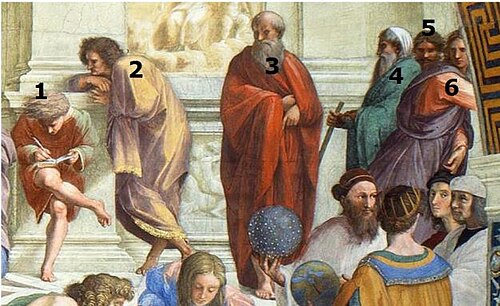

Ancient Greek skeptics were not "skeptics" in the contemporary sense of selective, localized doubt. Their concerns were epistemological, noting that truth claims could not be adequately supported, and psychotherapeutic, noting that beliefs caused mental perturbation.
The Western tradition of systematic skepticism goes back at least as far as Pyrrho of Elis (b. c.360 BCE) and arguably to Xenophanes (b. c.570 BCE). Parts of skepticism also appear among the "5th century sophists [who] develop forms of debate which are ancestors of skeptical argumentation. They take pride in arguing in a persuasive fashion for both sides of an issue."[25]
In Hellenistic philosophy, Pyrrhonism and Academic Skepticism were the two schools of skeptical philosophy. Subsequently, the words Academic and Pyrrhonist were often used to mean skeptic.
他のヘレニズム哲学と同様に、ピュロン主義の目標はエウダイモニアであり、ピュロン主義者はアタラクシア(心の平安)を達成することによってそれを追求し、それは明白でない事柄に関してエポケー(判断の保留)の状態を生み出すことによって誘発できることを発見した。エポケーは、ある教義を別の教義と対立させて信念を弱体化させ、信念が正当化できるかどうかを問うことによって生み出すことができた。この問いかけを支持するために、ピュロン主義者は、信念は正当化できないことを示す上記の懐疑論的議論(アエネシデモスの10の様式とアグリッパの5つの様式)[ 26 ]を展開した。[ 27 ]
ピュロンの弟子であるティモン・オブ・フリウスによるピュロンの生涯に関する記述によると、ピュロンは幸福で穏やかな心を持つための方法を説いた。
「物事そのものは等しく無関心で、不安定で、不確定であり、したがって私たちの感覚も意見も真偽を問うことはできない。このため、私たちはそれらを信頼してはならず、意見も偏見も揺るぎもなく、あらゆる物事について、それは存在しないか存在しないかのどちらかであり、存在すると同時に存在しないか、存在しないとも存在しないとも言えない、と言うべきである。[ 28 ]
ピュロン主義は、ピュロンの弟子ティモンの死後、運動として衰退した。[ 29 ]アカデミアは徐々に教条主義的になり[ 30 ]、紀元前1世紀にはアエネシデモスがアカデミアを「ストア派がストア派と戦っている」と非難し、アカデミアから離脱してピュロン主義を復活させた。[ 30 ] アエネシデモスの懐疑主義への最もよく知られた貢献は、現在失われている彼の著書『ピュロン論考』であり、これはフォティオス、セクストゥス・エンピリクス、そして程度は低いもののディオゲネス・ラエルティオスを通してのみ知られている。アエネシデモスと最も密接に関連する懐疑論的議論は、エポケーを 誘発するために考案された上記の10の様式である。[ 26 ]
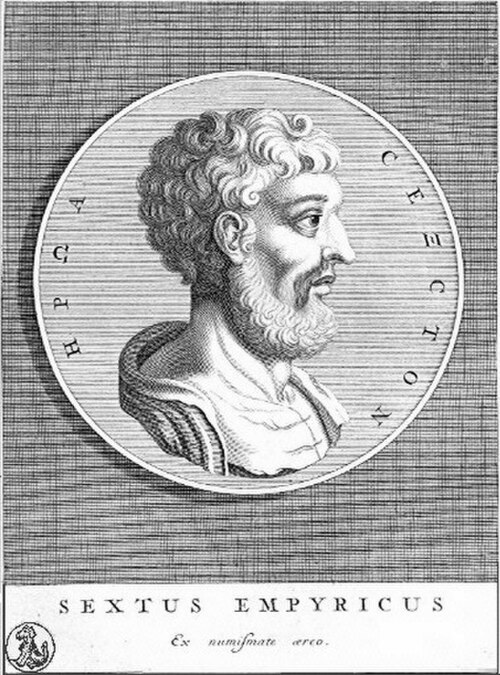
セクストゥス・エンピリクス(紀元200年頃)の著作は、古代ピュロン主義に関する現存する主要な記録である。セクストゥスの時代よりずっと前に、アカデミアは懐疑主義を放棄し、正式な組織としては消滅していた。 [ 30 ] [ 31 ] [ 32 ]セクストゥスは、ピュロン主義者の懐疑論をまとめ、さらに発展させた。そのほとんどはストア派に向けられたものであったが、アカデミアの懐疑論者を含むヘレニズム哲学のすべての学派に対する議論も含まれていた。
現存するヘレニズム懐疑論者の著作の中で最も体系的な著者であるセクストゥスは、少なくとも10の懐疑主義の様式があると指摘した。これらの様式は、主観的な知覚者、客観的な世界、知覚者と世界の関係に対する懐疑という3つのカテゴリーに分類できる。[ 33 ]彼の議論は以下の通りである。
主観的には、感覚と理性の能力は人によって異なる可能性がある。そして、知識はどちらか一方の産物であり、どちらも信頼できるものではないため、知識は危機に瀕しているように思われる。例えば、色覚異常の人は、他の人とは全く異なる世界の見方をしている。さらに、理性の力に基づいて優劣をつけることさえできない。つまり、理性的な動物を非理性的な動物よりも多くの知識を持っているとみなすことはできない。なぜなら、非理性的な動物も環境をうまくナビゲートすることができ、それは環境のいくつかの側面について「知る」能力があることを示唆しているからである。
第二に、個人の性格も観察対象に影響を与える可能性がある。なぜなら、(主張によれば)好みは感覚印象に基づいているため、好みの違いは、人々が対象物によって受ける影響の仕方の違いに起因すると考えられるからである。(Empiricus: 56)
第三に、個々の感覚の知覚は、他の感覚とは何ら共通点がないように見える。つまり、「赤」という色は、赤い物体に触れた時の感覚とはほとんど関係がない。これは、感覚同士が「食い違う」時に明らかになる。例えば、蜃気楼は特定の視覚的特徴を示すが、他の感覚には反応しない。この場合、他の感覚が視覚の印象を打ち消す。しかし、人は世界全体を理解するのに十分な感覚能力を欠いている可能性もある。もし五感のうちの一つでも持っていれば、現在の五感では伝えきれないようなことを知ることができるかもしれない。他の感覚に頼ることで感覚の信頼性が低いことが示され、したがって感覚は(自分が欠いているより完全な感覚に比べて)不完全である可能性があるとすれば、すべての感覚が信頼性に欠ける可能性があるという結論に至る。(エンピリコス:58)
第四に、人が何かを知覚する状況は、自然な状態か不自然な状態かのどちらかである。つまり、覚醒状態か睡眠状態かのどちらかである。しかし、不自然な状態にある人(例えば、すべてが精巧な夢である場合)にとって、世界の物事が実際に見えるとおりである可能性は十分にある。(エンピリコス:59)
客観的な「事実」と主観的な経験との関係に基づいて、疑念を抱く理由が生じることがある。物体の位置、距離、場所は、人がそれをどのように知覚するかに影響を与えるように思われる。例えば、柱廊は一方の端から見ると先細りに見えるかもしれないが、もう一方の端から見ると左右対称に見えるかもしれない。そして、これらの特徴は異なっている。これらは異なる特徴であるため、物体が両方の性質を同時に持っていると信じることは、矛盾する2つの性質を持っていると信じることと同じである。これは不合理であるため、矛盾する経験のために、物体がどのような性質を持っているかについての判断を保留しなければならない。(経験論:63)
また、人が知覚するものは、ある意味で経験によって汚染されているとも言える。例えば椅子という特定の知覚は、常に何らかの文脈(例えばテーブルの横、敷物の上など)の中で知覚される。そのため、人はしばしば、それと対をなす他の事物との文脈の中で生じる観念についてのみ語る。したがって、人は事物の真の性質を知ることはできず、文脈の中でそれがどのように現れるかしか知ることができない。(エンピリコス:64)
同様に、懐疑論者は、次のような主張をすることで、すべての物事は相対的であると主張するかもしれない。
最後に、個々の対象を理解する際の問題点を考察することで、人は自分が何かを知っているとは到底思えなくなる。物事は、個々に見た場合と、大量に集まった場合とでは全く異なって見えることがある。例えば、ヤギの角の削り屑は単独で見ると白いが、角全体は黒い。
古代ギリシアのピュロン主義者たちは、現実に関する主張は十分に正当化できないことを示すための論証体系を発展させた。これらの論証体系のうち、2つはよく知られている。最も古いものは、アエネシデモスの10の論証体系として知られているが、彼がこれらの論証体系を考案したのか、それとも以前のピュロン主義者の著作から体系化しただけなのかは不明である。これらの論証体系は、エポケー(判断の保留)の理由を表している。それらは以下のとおりである。
もう一つの例として、アグリッパの五つの比喩表現が挙げられる。
ヴィクトル・ブロシャールによれば、「この5つの比喩は、これまで提示された哲学的懐疑主義の最も過激かつ最も正確な定式化と見なすことができる。ある意味では、今日でもなお抗しがたい魅力を持っている。」[ 34 ]
ピュロンの思想はその後、プラトン学派に影響を与え、まずアルケシラオス(紀元前315年頃~241年)率いる中期アカデミアのアカデミア懐疑主義に、そしてカルネアデス(紀元前213年頃~129年)率いる新アカデミアに現れた。カルネアデスの弟子であったクリトマコスは、師の哲学を真理類似性に基づく知識の説明として解釈した。ローマの政治家であり哲学者でもあったキケロもまた、新アカデミアの懐疑主義の支持者であったが、当時すでに学派はより教条的な方向へと回帰し始めていた。

西暦386年、アウグスティヌスは『アカデミコス駁論』(Contra Academicos )を出版し、アカデミコス懐疑論者(紀元前266年~90年)の主張に対し、以下の根拠に基づいて反論した。
フランシスコ・サンチェスの『何も知られていない』 (1581年に『Quod nihil scitur 』として出版)は、ルネサンス懐疑主義の重要な文献の一つである。[ 38 ]
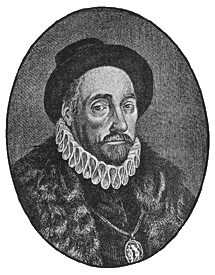
1500年代の懐疑主義復興運動で最も著名な人物であるミシェル・ド・モンテーニュは、著書『エセー』の中で、アカデミック懐疑主義とピュロン主義の研究について記している。
懐疑主義に関する彼の最も注目すべき著作は、主に1575年から1576年にかけて書かれたエッセイ「レーモン・セボンドの弁明」に見られる。この時、彼はセクストゥス・エンピリクスを読み、レーモン・セボンドの著作、特にキリスト教の自然存在の証明を翻訳しようとしていた。モンテーニュの翻訳に対する反応には、セボンドの証明に対する批判も含まれていた。モンテーニュは「弁明」の中で、懐疑主義的でピュロン主義に似たセボンドの論理の擁護を含め、それらの批判のいくつかに答えている。[ 39 ] [ 40 ]彼の反駁は次のとおりである。

マラン・メルセンヌは、作家、数学者、科学者、哲学者でした。彼は科学とキリスト教を擁護する著作を無神論者やピュロン主義者に対して書き、その後引退して科学と「新しい哲学」の発展を奨励しました。この「新しい哲学」には、ガッサンディ、デカルト、ガリレオ、ホッブズなどの哲学者が含まれます。懐疑主義に関連する彼の主要な著作は『科学の真理』であり、その中で彼は、物事の真の性質を知ることはできないかもしれないが、科学を通して感覚知覚のための特定の法則や規則を定式化することはできると主張しています。[ 3 ] [ 40 ] [ 41 ]
さらに彼は、私たちがすべてを疑わない理由として、以下の点を指摘している。
ピュロン主義者は、感覚は人を欺くので、知識は無限後退または循環論理に陥ると述べてこれらの点を反駁するかもしれない。メルセンヌは、一般的に合意された経験則は仮説として立てられ、時間の経過とともに検証されて、それらが引き続き有効であることを確認できるため、これはあり得ないと主張する。[ 42 ]
さらに、あらゆるものが疑われる可能性があるならば、その疑念もまた疑われる可能性があり、以下同様である。したがって、メルセンヌによれば、何かが真実でなければならない。最後に、メルセンヌは、繰り返し検証によって真実であることが証明され、実用的な価値を持つすべての数学的、物理的、その他の科学的知識について書いている。特筆すべきは、メルセンヌはホッブズの急進的なイデオロギーを受け入れた数少ない哲学者の一人であり、それを人間の新しい科学と見なしていたことである。[ 3 ]

パリに長期滞在していた間、トーマス・ホッブズは、懐疑主義と認識論の研究に重点を置くガッサンディやメルセンヌといった主要な懐疑論者のサークルに積極的に参加した。しかし、他の懐疑論者の仲間とは異なり、ホッブズは自身の著作で懐疑主義を主要な論点として扱うことはなかった。それにもかかわらず、モーセ五書のモーセによる執筆に疑問を呈し、宗教を政治的・心理的に説明したことから、同時代の人々からは宗教的懐疑論者というレッテルを貼られた。ホッブズ自身は他の宗教原理にまで踏み込んで異議を唱えることはなかったが、モーセによる執筆に対する彼の疑念は宗教的伝統に大きな打撃を与え、スピノザやイサク・ラ・ペイレールといった後の宗教的懐疑論者がユダヤ・キリスト教の宗教体系の根本的な信条のいくつかに疑問を呈する道を開いた。ホッブズの懐疑論と認識論に対する答えは、革新的な政治的なものでした。彼は、道徳的知識と宗教的知識は本質的に相対的なものであり、それらを支配する絶対的な真理の基準はないと信じていました。その結果、機能する政府と安定した社会を形成するために、宗教と倫理に関する特定の真理の基準が考案され確立されたのは政治的な理由によるものでした。[ 3 ] [ 43 ] [ 44 ] [ 45 ]
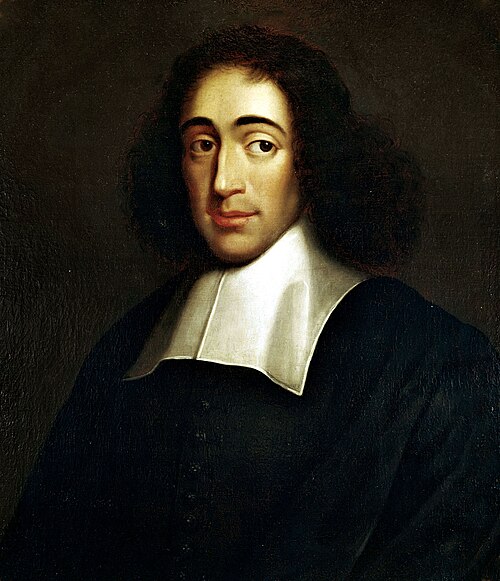
Baruch Spinoza was among the first European philosophers who were religious skeptics. He was quite familiar with the philosophy of Descartes and unprecedentedly extended the application of the Cartesian method to the religious context by analyzing religious texts with it. Spinoza sought to dispute the knowledge-claims of the Judeo-Christian-Islamic religious system by examining its two foundations: the Scripture and the Miracles. He claimed that all Cartesian knowledge, or the rational knowledge should be accessible to the entire population. Therefore, the Scriptures, aside from those by Jesus, should not be considered the secret knowledge attained from God but just the imagination of the prophets. The Scriptures, as a result of this claim, could not serve as a base for knowledge and were reduced to simple ancient historical texts. Moreover, Spinoza also rejected the possibility for the Miracles by simply asserting that people only considered them miraculous due to their lack of understanding of the nature. By rejecting the validity of the Scriptures and the Miracles, Spinoza demolished the foundation for religious knowledge-claim and established his understanding of the Cartesian knowledge as the sole authority of knowledge-claims. Despite being deeply skeptical of the religions, Spinoza was in fact exceedingly anti-skeptical towards reason and rationality. He steadfastly confirmed the legitimacy of reason by associating it with the acknowledgement of God, and thereby skepticism with the rational approach to knowledge was not due to problems with the rational knowledge but from the fundamental lack of understanding of God. Spinoza's religious skepticism and anti-skepticism with reason thus helped him transform epistemology by separating the theological knowledge-claims and the rational knowledge-claims.[3][46]

Pierre Bayle was a French philosopher in the late 17th century that was described by Richard Popkin to be a "supersceptic" who carried out the skeptic tradition to the extreme. Bayle was born in a Calvinist family in Carla-Bayle, and during the early stage of his life, he converted into Catholicism before returning to Calvinism. This conversion between religions caused him to leave France for the more religiously tolerant Holland where he stayed and worked for the rest of his life.[3]
Bayle believed that truth cannot be obtained through reason and that all human endeavor to acquire absolute knowledge would inevitably lead to failure. Bayle's main approach was highly skeptical and destructive: he sought to examine and analyze all existing theories in all fields of human knowledge in order to show the faults in their reasoning and thus the absurdity of the theories themselves. In his magnum opus, Dictionnaire Historique et Critique(Historical and Critical Dictionary), Bayle painstakingly identified the logical flaws in several works throughout the history in order to emphasize the absolute futility of rationality. Bayle's complete nullification of reason led him to conclude that faith is the final and only way to truth.[3][47][48]
Bayle's real intention behind his extremely destructive works remained controversial. Some described him to be a Fideist, while others speculated him to be a secret Atheist. However, no matter what his original intention was, Bayle did cast significant influence on the upcoming Age of Enlightenment with his destruction of some of the most essential theological ideas and his justification of religious tolerance Atheism in his works.[3][47][48]
David Hume was among the most influential proponents of philosophical skepticism during the Age of Enlightenment and one of the most notable voices of the Scottish Enlightenment and British Empiricism.[49][50] He especially espoused skepticism regarding inductive reasoning, and questioned what the foundation of morality was, creating the is–ought problem. His approach to skepticism is considered even more radical than that of Descartes.
ヒュームは、首尾一貫した観念は、印象(直接的な感覚知覚)の心的コピーか、複数の印象を革新的に組み合わせたコピーのいずれかでなければならないと主張した。宗教、迷信、形而上学といった特定の人間活動は、実際の感覚印象を前提としていないため、それらの知識の主張は論理的に正当化されない。さらにヒュームは、科学は観念の連想に基づく単なる心理現象であり、多くの場合、具体的には、それ自体が感覚印象に基づかない因果関係の仮定であるとさえ示している。したがって、科学的知識でさえ論理的に正当化されず、実際には客観的でも証明可能でもなく、むしろ、異なる出来事間の規則的な相関関係を私たちの心が知覚することに基づく、根拠の薄い単なる推測にすぎない。このようにヒュームは、確実な知識の可能性に関して極端な懐疑主義に陥る。最終的に彼は、せいぜい人間性の科学が「他の科学の唯一の確固たる基盤」であると述べている。[ 51 ]

イマヌエル・カント(1724–1804)は、デイヴィッド・ヒュームの因果関係の概念に対する懐疑的な扱いに対抗して、経験科学の根拠を提供しようと試みた。ヒューム(1711–1776)は、因果関係の概念については分析は不可能であると主張したが、これは主にジョン・ロック(1632–1704)によって概説された経験主義プログラムにも受け入れられるものである。[ 52 ] しかし、カントが経験科学における知識の根拠を与えようとした試みは、同時に他の知識、特にカントが「形而上学的知識」と呼んだ知識の可能性を断ち切った。したがって、カントにとって、経験科学は正当であったが、形而上学と哲学は概して不当であった。この正当なものと不当なものの区別に対する最も重要な例外は倫理であり、カントは倫理の原理は経験的知識に必要な原理に訴えることなく純粋理性によって知ることができると主張した。このように、形而上学や哲学全般(倫理学は例外)に関して、カントは懐疑論者であった。この懐疑主義、そしてG.E.シュルツェの明確な懐疑主義[ 53 ]は、ドイツ観念論哲学、特にヘーゲルによる懐疑主義に関する活発な議論を引き起こした[ 54 ]。 カントの考えは、現実世界(物自体、すなわちヌーメノン)は人間の理性ではアクセスできない(ただし、自然の経験的世界は人間の理解力で認識できる)ため、私たちは世界の究極的な現実について何も知ることができないというものであった。ヘーゲルはカントに反論し、カントが「理解力」の「有限」概念を用いると現実の認識が不可能になるという点では正しかったものの、私たちは「有限」概念のみを使用する必要はなく、自己意識から生じる「無限の概念」を用いて現実の認識を獲得できると主張した[ 55 ] 。
G.E.ムーアは、 1925年の論文「常識の擁護」の中で、懐疑論に対する有名な「ここに片手がある」論証を提示した。 [ 1 ]ムーアは、両手を上げながら次の論証を提示するだけで、外部世界が存在することを証明できると主張した。「ここに片手がある。ここにもう片方の手がある。したがって、少なくとも2つの対象が存在する。したがって、外部世界懐疑論は失敗する」。彼の論証は、常識を擁護し、懐疑論を反駁するために展開された。[ 1 ]ルートヴィヒ・ヴィトゲンシュタインは後に、著書『確実性について』(1969年に死後出版)の中で、ムーアの論証は知識に関するものではなく、日常言語の使い方に基づいていると主張した。[ 56 ]
現代哲学において、リチャード・ポプキンは懐疑主義の分野で特に影響力のある学者であった。彼の懐疑主義の歴史に関する記述は、1960年の出版後数十年にわたり、この分野の現代研究の標準として受け入れられた。[ 57 ]バリー・ストラウドも哲学的懐疑主義に関する著作を多数出版しており、中でも1984年のモノグラフ『哲学的懐疑主義の意義』が最も有名である。[ 58 ] 1990年代半ばから、ストラウドはリチャード・フマートンとともに、「メタ認識論的懐疑主義」と呼ばれる立場を支持する影響力のある反外在主義的議論を展開した。[ 59 ]懐疑主義に関する研究で知られる他の現代哲学者には、ジェームズ・プライヤー、キース・デローズ、ピーター・クラインなどがいる。[ 1 ]

アジュニャーナ(文字通り「無知」)は、古代インド哲学における懐疑主義の学派でした。これはシュラマナ運動であり、初期仏教とジャイナ教の主要なライバルでした。彼らは仏教とジャイナ教の文献に記録されています。彼らは、形而上学的な知識を得ることや哲学的な命題の真偽を確かめることは不可能であり、たとえ知識を得ることができたとしても、それは最終的な救済にとって無益で不利であると主張しました。
The historical Buddha asserted certain doctrines as true, such as the possibility of nirvana; however, he also upheld a form of skepticism with regards to certain questions which he left "un-expounded" (avyākata) and some he saw as "incomprehensible" (acinteyya). Because the Buddha saw these questions (which tend to be of metaphysical topics) as unhelpful on the path and merely leading to confusion and "a thicket of views", he promoted suspension of judgment towards them. This allowed him to carve out an epistemic middle way between what he saw as the extremes of claiming absolute objectivity (associated with the claims to omniscience of the Jain Mahavira) and extreme skepticism (associated with the Ajñana thinker Sanjaya Belatthiputta).[60]
Later Buddhist philosophy remained highly skeptical of Indian metaphysical arguments. The Buddhist philosopher Nagarjuna in particular has been seen as the founder of the Madhyamaka school, which has been in turn compared with Greek Skepticism. Nagarjuna's statement that he has "no thesis" (pratijña) has parallels in the statements of Sextus Empiricus of having "no position".[61] Nagarjuna famously opens his magnum opus, the Mulamadhyamakakarika, with the statement that the Buddha claimed that true happiness was found through dispelling 'vain thinking' (prapañca, also "conceptual proliferation").[62]
According to Richard P. Hayes, the Buddhist philosopher Dignaga is also a kind of skeptic, which is in line with most early Buddhist philosophy. Hayes writes:
...in both early Buddhism and in the Skeptics one can find the view put forward that man's pursuit of happiness, the highest good, is obstructed by his tenacity in holding ungrounded and unnecessary opinions about all manner of things. Much of Buddhist philosophy, I shall argue, can be seen as an attempt to break this habit of holding on to opinions.[63]
Scholars like Adrian Kuzminski have argued that Pyrrho of Elis (ca. 365–270) might have been influenced by Indian Buddhists during his journey with Alexander the Great.[64]
The Cārvāka (Sanskrit: चार्वाक) school of materialism, also known as Lokāyata, is a classically cited (but historically disputed) school of ancient Indian philosophy. While no texts or authoritative doctrine have survived, followers of this system are frequently mentioned in philosophical treatises of other schools, often as an initial counterpoint against which to assert their own arguments.
Cārvāka is classified as a "heterodox" (nāstika) system, characterized as a materialistic and atheistic school of thought. This school was also known for being strongly skeptical of the claims of Indian religions, such as reincarnation and karma.
While Jain philosophy claims that is it possible to achieve omniscience, absolute knowledge (Kevala Jnana), at the moment of enlightenment, their theory of anekāntavāda or 'many sided-ness', also known as the principle of relative pluralism, allows for a practical form of skeptical thought regarding philosophical and religious doctrines (for un-enlightened beings, not all-knowing arihants).
According to this theory, the truth or the reality is perceived differently from different points of view, and that no single point of view is the complete truth.[65][66] Jain doctrine states that, an object has infinite modes of existence and qualities and, as such, they cannot be completely perceived in all its aspects and manifestations, due to inherent limitations of the humans. Anekāntavāda is literally the doctrine of non-onesidedness or manifoldness; it is often translated as "non-absolutism". Syādvāda is the theory of conditioned predication which provides an expression to anekānta by recommending that epithet "Syād" be attached to every expression.[67] Syādvāda is not only an extension of Anekānta ontology, but a separate system of logic capable of standing on its own force. As reality is complex, no single proposition can express the nature of reality fully. Thus the term "syāt" should be prefixed before each proposition giving it a conditional point of view and thus removing any dogmatism in the statement.[66] For Jains, fully enlightened beings are able to see reality from all sides and thus have ultimate knowledge of all things. This idea of omniscience was criticized by Buddhists such as Dharmakirti.

荘周(荘子)は、諸子百家時代の古代中国の著名な道教哲学者であった。荘周は、荘子が彼に帰属させた代表作の中で、いくつかの逸話を通して懐疑的な思考を示した。
荘子のこれらの逸話を通して、荘周は言語と人間のコミュニケーションの限界と普遍的な真理の到達不可能性に対する自身の信念を示した。これは彼が懐疑主義者であることを示している。しかし彼は決して過激な懐疑主義者ではなく、道教の信念を実証する議論において懐疑的な方法を部分的に適用したに過ぎない。彼は道教の信念そのものを教条的に保持していた。[ 69 ]
王充は、 1世紀の中国における儒教懐疑派の指導者であった。彼は合理的な批判の方法を導入し、現象学(あらゆる自然現象を人間の倫理と結びつける当時の儒教の主要なイデオロギー)、国家主導の宗教、民衆の迷信など、当時の広く普及していた独断的な思考に適用した。彼の哲学は道教と儒教の思想を融合させたものであり、宇宙を説明するために自然現象に基づく仮説を立てるという世俗的で合理的な実践に基づいており、ルクレティウスのようなエピクロス派の哲学的思想に似た自然主義の一形態を体現していた。[ 70 ] [ 71 ]
The Incoherence of the Philosophers, written by the scholar Al-Ghazali (1058–1111), marks a major turn in Islamic epistemology. His encounter with skepticism led Ghazali to embrace a form of theological occasionalism, or the belief that all causal events and interactions are not the product of material conjunctions but rather the immediate and present will of God.
In the autobiography Ghazali wrote towards the end of his life, The Deliverance From Error (Al-munqidh min al-ḍalāl[72]), Ghazali recounts how, once a crisis of epistemological skepticism was resolved by "a light which God Most High cast into my breast...the key to most knowledge",[73] he studied and mastered the arguments of Kalam, Islamic philosophy, and Ismailism. Though appreciating what was valid in the first two of these, at least, he determined that all three approaches were inadequate and found ultimate value only in the mystical experience and spiritual insight he attained as a result of following Sufi practices. William James, in Varieties of Religious Experience, considered the autobiography an important document for "the purely literary student who would like to become acquainted with the inwardness of religions other than the Christian", comparing it to recorded personal religious confessions and autobiographical literature in the Christian tradition.[74]
Undecidability and the ten modes As part of his Pyrrhonian revival Aenesidemus assembled various kinds of skeptical arguments, or modes, designed to induce epoche.
Pyrrhonism, in whatever form it might have taken after Timon's death in 230 BCE, was utterly neglected until Aenesidemus brought it back to public attention
Aenesidemus criticized his fellow Academics for being dogmatic...Aenesidemus committed his scepticism to writing probably some time in the early-to-mid first century BCE...leading Aenesidemus to dismiss them as "Stoics fighting against Stoics."
Those who believe they have discovered it are the "dogmatists", specially so called – Aristotle, for example, and Epicurus and the Stoics and certain others; Cleitomachus and Carneades and other Academics treat it as inapprehensible:the skeptics keep on searching. Hence it seems reasonable to hold the main types of philosophy are three – the dogmatic, the Academic, and the skeptic.