
Loading article…
マンチェスター | |
|---|---|
| ニックネーム: | |
| モットー: | |
 マンチェスターはグレーター・マンチェスター内に表示されます | |
| 座標: 53°28′44″N 2°14′43″W / 53.4790°N 2.2452°W / 53.4790; -2.2452 | |
| 主権国家 | イギリス |
| 国 | イングランド |
| 地域 | 北西 |
| 儀式的な郡と都市の地域 | グレーター・マンチェスター |
| 設立 | 紀元1世紀 |
| 町憲章 | 1301 |
| 都市のステータス | 1853年3月29日 |
| 首都区 | 1974年4月1日 |
| 管理本部 | マンチェスター市庁舎 |
| 政府 [2] | |
| • タイプ | 首都 区 |
| • 体 | マンチェスター市議会 |
| • エグゼクティブ | リーダーと内閣 |
| • コントロール | 労働 |
| • リーダー | ベヴ・クレイグ(左) |
| • 市長 | ヤスミン・ダール |
| • 国会議員 | |
| エリア [3] | |
| • 合計 | 45平方マイル(116 km 2) |
| • ランク | 181番目 |
| 人口 (2022年)[4] | |
| • 合計 | 568,996 |
| • ランク | 6位 |
| • 密度 | 12,700/平方マイル(4,920/km 2) |
| 異名 | |
| 民族( 2021 ) [5] | |
| • 民族グループ | |
| 宗教(2021) [5] | |
| • 宗教 | |
| タイムゾーン | UTC+0 (グリニッジ標準時) |
| • 夏 ( DST ) | UTC+1 (イギリス標準時間) |
| 郵便番号エリア | |
| ダイヤルコード | 0161 |
| ISO 3166 コード | GBマン |
| GSSコード | E08000003 |
| Webサイト | イギリス |
.jpg/500px-Manchester_Cathedral_(4).jpg)

.jpg/500px-Bridgewater_Canal,_Castlefield_Basin_(geograph_6966336).jpg)


.jpg/500px-Exchange_Square_(geograph_5147517).jpg)
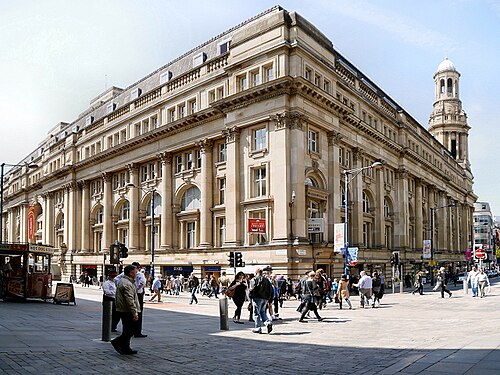


マンチェスター( / ˈ m æ n tʃ ɪ s t ər , - tʃ ɛ s -/ )[6][7]都市、大都市圏の自治区です。2022年の推定人口は568,996人でした。[4]グレーターマンチェスターの一部として、英国で3番目に人口の多い大都市圏に属しており、グレーターマンチェスターの人口は約292万人です。[8]南はチェシャー平原ペナイン山脈サルフォード市 と接していますトラフォード、ストックポート、テイムサイド、オールダム、ロッチデール、ベリー、サルフォードの各自治区と接しています。
マンチェスターの歴史は、紀元79年頃、メドロック川とアーウェル川の合流点近くの砂岩の断崖に築かれた、マムキウムまたはマンクニウムのローマ砦(カストラ)に関連する民間人の居住地から始まりました。中世を通じて、マンチェスターは荘園の町のままでしたが、19世紀に入る頃に「驚くべき速度で」拡大し始めました。マンチェスターの計画外の都市化は、産業革命中の繊維製造のブームによってもたらされ[9]、世界初の工業都市となりました。[10]歴史的にはランカシャーの一部であったが、マージー川以南のチェシャー州の一部は20世紀にマンチェスターに編入され、1931年にはウィゼンショーも編入された。マンチェスターは1853年に市の地位を獲得した。マンチェスター船舶運河は1894年に開通し、マンチェスター港が創設され、市と西36マイル(58 km)のアイリッシュ海が結ばれた。第二次世界大戦後、産業空洞化により市の運命は衰退し、1996年のIRAによる爆破事件をきっかけに大規模な投資と再開発が行われた。[11]大幅な再開発の後、マンチェスターは2002年のコモンウェルスゲームズの開催都市となった。
この都市は、建築、文化、音楽の輸出、メディアとのつながり、科学および工学の成果、社会的影響、スポーツクラブ、交通の接続で有名です。マンチェスター・リバプール・ロード駅は、現存する世界最古の都市間旅客鉄道駅です。[12]マンチェスター大学では、アーネスト・ラザフォードが1917年に初めて原子を分割し、フレデリック・C・ウィリアムズ、トム・キルバーン、ジェフ・トゥーティルが1948年に世界初のプログラム内蔵型コンピュータを開発し、アンドレ・ガイムとコンスタンチン・ノボセロフが2004年に初めてグラフェンを単離しました。
マンチェスターには、市内中心部からフォー・ヒートンズ、フェイルズワース、プレストウィッチ、ストレトフォード、セール、ドロイルズデン、オールド・トラッフォード、レディッシュなどの近隣自治体に広がる大規模な都市圏があります。市はサルフォードおよびその自治区とも隣接していますが、アーウェル川によって隔てられています。この市街地は、市とこれらの地域の周りを環状に走るマンチェスター外環状道路としても知られるM60によって分断されています。この道路は、北東でM62と西でM602に合流し、イースト・ランカシャー・ロードおよびA6にも合流しています。
地名学
マンチェスターという名前は、ラテン語の名前Mamuciumまたはその変形Mancunioに由来し、住民は現在でもマンチェスター人 ( / m æ n ˈ k juː n i ə n / ) と呼ばれています。これらの名前は、一般的に元のブリトン語の名前のラテン語化を表していると考えられています。この名前の一般的な語源は、ブリトン語の * mamm - (「乳房」、乳房のような丘に関連して) から来ているというものです。[13] [14]しかし、より最近の研究では、* mamma (「母」、地元の川の女神に関連して)から来ている可能性があることが示唆されています。両方の用法は島嶼ケルト語に保存されており、たとえばmam はアイルランド語で「乳房」 、ウェールズ語で「母」を意味します。[15]接尾辞-chesterは古英語のceaster (「ローマの要塞」、ラテン語のcastra (「砦、要塞化された町」)からの借用語) に由来しています。 [14] [13]
この都市は「北の首都」として広く知られている。[16] [17] [18] [19]
歴史
初期の歴史
ブリガンテス族は、現在イングランド北部として知られている地域の主要なケルト族で、現在マンチェスター大聖堂が建っている砂岩の露頭、アーウェル川の対岸に拠点を置いていた。[20]彼らの領土は、現在のサルフォードとストレトフォードの肥沃な低地にまで広がっていた。1世紀のローマによるブリテン島征服の後、アグリコラ将軍は79年にマムキウムと名付けた砦の建設を命じ、デヴァ・ヴィクトリクス(チェスター)とエボラカム(ヨーク)におけるローマの権益をブリガンテス族から守った。[20]この頃からマンチェスター中心部には定住者がいる。[21]キャッスルフィールドには、ローマ砦の最終版の基礎部分の安定した断片が見られる。ローマ人のマンチェスター居住はおそらく3世紀頃に終わった。 3世紀半ばまでに民間人の居住地は放棄されたようだが、砦は3世紀後半または4世紀初頭まで小規模な駐屯地を維持していた可能性がある。[22]ローマ軍の撤退とサクソン人の征服後、居住地の中心は1066年以降ノルマン人が到着する前のいつかにアーウェル川とアーク川の合流点に移った。 [23]その後の北部の略奪で広い地域の大部分が荒廃した。[24] [25]

1086年のドゥームズデイ・ブックには、マンチェスターはサルフォードの百人隊の中にあり、ロジャー・オブ・ポワトゥーという名のノルマン人が首席借地人として所有していたと記録されている。[26]その後、グレリー一族が領主となり、マンチェスター城の住人となったが、1215年にマナーハウスが建てられた。[27] 1421年までにトーマス・デ・ラ・ウォーレが教区のために現在のマンチェスター大聖堂となっている教会を創設・建設した。また、カレッジハウスの住宅地であるチェサム音楽学校とチェサム図書館も建設した。[23] [28] 1653年に開館し、現在も一般に公開されているこの図書館は、英国最古の無料公共参考図書館である。[29]
マンチェスターには1282年に市場があったと記されている。[30] 14世紀頃、マンチェスターにはフランドルの織工が流入し、それがこの地域の繊維産業の礎となったと言われることもある。[31]マンチェスターはウールとリネンの製造と貿易の重要な中心地となり、1540年頃までにはジョン・リーランドの言葉を借りれば「ランカシャーで最も美しく、最もよく建てられ、最も活気があり、最も人口の多い町」にまで拡大した。[23]リーランドのマンチェスターで現在も残っている重要な建物は大聖堂とチェサムの建物のみである。[24]
イングランド内戦の間、マンチェスターは議会の利益を強く支持した。長くは続かなかったが、クロムウェルはマンチェスターに独自の国会議員を選出する権利を与えた。チャールズ・ワースリーはわずか1年間市議を務めたが、後に少将統治下でランカシャー、チェシャー、スタッフォードシャーの少将に任命された。彼は熱心な清教徒で、酒場を閉鎖し、クリスマスの祝いを禁止した。1656年に亡くなった。[32]
綿花は1600年頃から大量に使われるようになり、最初はリネンや綿のフスチアンに使われたが、1750年頃までには純綿織物が生産されるようになり、綿花の重要性は羊毛を追い抜いた。[23]アーウェル川とマージー川は1736年までに航行可能となり、マンチェスターからマージー川の海港までの航路が開通した。ブリッジウォーター運河は英国初の完全人工水路で、1761年に開通し、ウォースリーの炭鉱からマンチェスター中心部まで石炭を運んだ。運河は1776年までにランコーンのマージー川まで延長された。競争と効率性の向上により、石炭のコストは半減し、綿花の輸送コストも半減した。[23] [28]マンチェスターは周辺の町で生産された繊維製品の主要市場となった。[23] 1729年に開設された商品取引所[ 24]と多数の大型倉庫が商業を助けた。 1780年、リチャード・アークライトはマンチェスター初の綿糸工場の建設を開始しました。[24] [28] 1800年代初頭、ジョン・ドルトンはマンチェスターで原子理論を提唱しました。
産業革命
マンチェスターは産業革命期の繊維製造の中心地の一つであった。綿糸紡績の大部分は南ランカシャーと北チェシャーの町で行われ、マンチェスターは一時期綿加工の最も生産性の高い中心地であった。[33]
マンチェスターは世界最大の綿製品市場として知られるようになり[23] [34] 、ビクトリア朝時代には「コットノポリス」や「倉庫都市」と呼ばれていました。[33]オーストラリア、ニュージーランド、南アフリカでは、「マンチェスター」という用語は今でもシーツ、枕カバー、タオルなどの家庭用リネン類を指して使用されています。[35]産業革命はマンチェスターに大きな変化をもたらし、マンチェスターの人口増加の鍵となりました。
マンチェスターは、産業革命 によってもたらされた無計画な都市化の過程の一環として、スコットランド、ウェールズ、アイルランド、およびイングランドの他の地域から人々が仕事を求めてこの都市に押し寄せたため、19世紀初頭から「驚くべき速度で」拡大し始めた。[36] [37] [38]マンチェスターは幅広い産業を発展させ、1835年までに「マンチェスターは間違いなく世界初かつ最大の工業都市となった」。[34]エンジニアリング会社は当初綿花取引用の機械を製造していたが、一般製造業へと多角化した。同様に、化学産業は漂白剤と染料の製造から始まったが、他の分野にも拡大した。商業は銀行や保険などの金融サービス産業によって支えられていた。
貿易と増加する人口への食糧供給には大規模な輸送・流通インフラが必要だった。運河システムが拡張され、マンチェスターは世界初の都市間旅客鉄道であるリバプール・マンチェスター鉄道の終点となった。様々な輸送形態間の競争によりコストが抑えられた。[23] 1878年、 GPO (ブリティッシュ・テレコムの前身)はマンチェスターの企業に最初の電話機を提供した。[39]
マンチェスター船舶運河は1888年から1894年にかけて建設され、一部区間はアーウェル川とマージー川を運河化し、潮汐の影響を受けるマージー川沿いのサルフォードからイーストハム閘門まで36マイル(58 km) [40]を走っています。これにより、外洋船がマンチェスター港に直接入港できるようになりました。運河の岸辺、自治区のすぐ外側には、世界初の工業団地であるトラフォードパークが作られました。[23]綿加工工場を含む大量の機械が世界中に輸出されました。
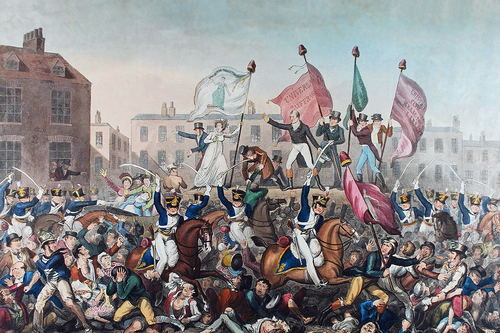
資本主義の中心地であるマンチェスターは、かつてはパンと労働を求める暴動の舞台であり、また都市の労働者階級と無名階級による政治的承認を求める声の舞台でもあった。そのような集会の一つは、 1819年8月16日のピータールーの虐殺で終わった。マンチェスター資本主義の経済学派はそこで発展し、マンチェスターは1838年以降、反穀物法同盟の中心地となった。 [41]
マンチェスターはマルクス主義と左翼政治の歴史において重要な位置を占めている。1844年にフリードリヒ・エンゲルスが著作『イギリス労働者階級の状態』を著した場所であり、エンゲルスは人生の大半をマンチェスターとその近郊で過ごした。 [42]またカール・マルクスがマンチェスターを訪れた際、2人はチェサム図書館で会った。マルクスが当時読んでいた経済学の本は図書館で見ることができる。またマルクスとエンゲルスが会った窓際の席も見ることができる。[29]第1回労働組合会議は1868年6月2日から6日までマンチェスター(デイビッド・ストリートの機械工協会)で開催された。マンチェスターは労働党と婦人参政権運動の重要な発祥地であった。[43]
当時、マンチェスターは、新しい産業プロセス、新しい考え方(自由貿易と自由放任主義を推進したマンチェスター学派)、社会における新しい階級やグループ、新しい宗教宗派、新しい労働組合など、何でも起こり得る場所のように思われた。マンチェスターは、英国とヨーロッパのあらゆる地域から知識人の多い訪問者を惹きつけた。この革新的感覚をとらえた格言が今日も残っている。「マンチェスターが今日行うことは、明日世界の他の国々が行うことだ」[44]。マンチェスターの黄金時代は、おそらく19世紀最後の四半世紀だった。多くの素晴らしい公共建築物(マンチェスター市庁舎を含む)はその時代に建てられた。この都市の国際的な雰囲気は、ハレ管弦楽団を含む活気ある文化に貢献した。1889年にイングランドで州議会が設立されると、この自治体はさらに大きな自治権を持つ州自治体となった。 [45]

産業革命は都市に富をもたらしたが、同時に大部分の住民に貧困と不潔さをもたらした。歴史家サイモン・シャマは「マンチェスターは、最良と最悪が恐ろしい極限まで押し進められた、世界で新しいタイプの都市であり、工業地帯の煙突が煙の柱を上げて出迎える」と記した。マンチェスターの危険地帯に連れて行かれたアメリカ人旅行者は、「惨めで、騙され、抑圧され、押しつぶされた人間性、横たわり、血を流す破片」を目にした。[46]
マンチェスター自体の綿糸工場の数は、1853年にピークの108軒に達した。 [33]その後、数は減少し始め、1850年代にはボルトン、 1860年代にはオールダムが、マンチェスターを綿糸紡績の最大の中心地の座から追い抜いた。 [33]しかし、この衰退期は、マンチェスターがこの地域の金融中心地として台頭した時期と一致していた。[33]マンチェスターは綿の加工を続け、1913年には世界の綿の65%がこの地域で加工された。[23]第一次世界大戦により輸出市場へのアクセスが途絶えた。世界の他の地域での綿花加工が増加し、その多くはマンチェスターで製造された機械によるものだった。マンチェスターは、大恐慌と、繊維製造を含む旧来の産業に取って代わり始めた根本的な構造変化に大きく苦しんだ。
ブリッツ
イギリスのほとんどの地域と同様、マンチェスター地域も第二次世界大戦中は大規模に動員された。例えば、ゴートンにあるベイヤー・ピーコック・アンド・カンパニーの機関車工場の鋳造と機械加工の技術は爆弾製造に転用され、チョールトン・オン・メドロックにあるダンロップのゴム工場は防空砲を製造した。また、市外のトラッフォード・パークでは、メトロポリタン・ヴィッカースの技術者がアブロ・マンチェスターとアブロ・ランカスターの爆撃機を製造し、フォードはそれらの爆撃機の動力源としてロールス・ロイス・マーリンのエンジンを製造した。マンチェスターはこのようにドイツ空軍の爆撃目標となり、1940年後半には非軍事目標への空襲が行われるようになった。最大の被害は1940年12月22、23日、24日の夜に起きたクリスマス・ブリッツで、推定474トン(467英トン)の高性能爆薬と37,000発以上の焼夷弾が投下された。165の倉庫、200の事業所、150の事務所を含む、歴史的な市街地の大部分が破壊された。376人が死亡し、30,000戸の家屋が被害を受けた。[47]マンチェスター大聖堂、王立取引所、フリートレード・ホールなどの建物が深刻な被害を受け、大聖堂の修復には20年を要した。[48]マンチェスター郡自治区内での敵の攻撃により、合計589人の民間人が死亡したと記録されている。[49]
第二次世界大戦後
綿花の加工と取引は平時も衰退し続け、取引所は1968年に閉鎖された。[23] 1963年までにマンチェスター港は英国で3番目に大きく、[50] 3,000人以上の労働者を雇用していたが、運河はますます大型化するコンテナ船を処理できなくなった。交通量は減少し、港は1982年に閉鎖された。[51]重工業は1960年代から不況に見舞われ、 1979年以降マーガレット・サッチャー政権が採用した経済政策によって大幅に縮小された。マンチェスターでは1961年から1983年の間に製造業で15万人の雇用が失われた。[23]

再開発は1980年代後半に始まり、メトロリンク、ブリッジウォーター・コンサートホール、マンチェスター・アリーナ、そして(サルフォードでは)港をサルフォード・キーズとして再ブランド化するなどの取り組みが行われた。オリンピック開催への2度の立候補は、この都市の国際的知名度を高めるプロセスの一部であった。[53]
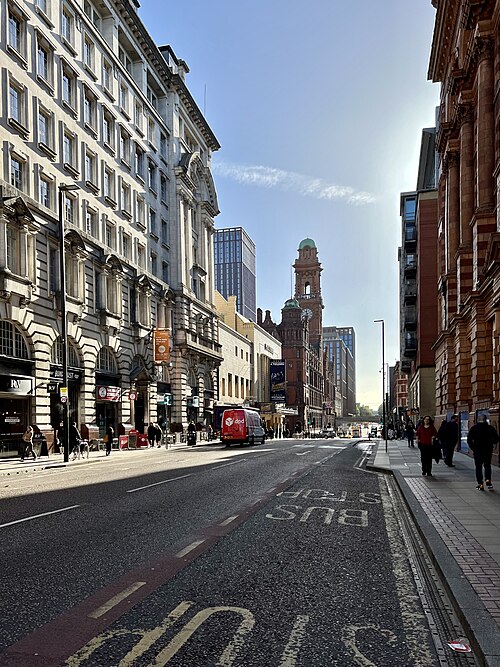
マンチェスターには、1867年のマンチェスター殉教者、1920年の放火、1939年の一連の爆発、1992年の2件の爆弾など、アイルランド共和主義者による攻撃の歴史がある。 1996年6月15日土曜日、暫定アイルランド共和軍(IRA)は、市内中心部のデパートの隣で大型爆弾を爆発させる1996年マンチェスター爆破事件を実行した。イギリス領土で爆発した爆弾としては最大規模で、200人以上が負傷し、近くの建物に大きな損害を与え、 1⁄2マイル(800メートル)離れた場所の窓ガラスを割った。直接的な被害額は当初5000万ポンドと見積もられたが、すぐに上方修正された。[54]最終的な保険金は4億ポンドを超え、被害を受けた多くの企業は営業停止から立ち直ることができなかった。[55]
2000年以降
1996年の爆破事件後の投資と第17回コモンウェルスゲームズの支援により、市の中心部は大規模な再開発が行われた。[53]プリントワークスやコーンエクスチェンジなどの新しく改装された複合施設は、人気のショッピング、飲食、娯楽エリアとなっている。マンチェスターアーンデールは英国最大の市中心部のショッピングセンターである。[56]
1960年代の大規模な市街地は取り壊され、再開発され、ガラスや鉄鋼を使用して近代化されました。古い工場はアパートに改造されました。ハルムは大規模な再開発が行われ、数百万ポンドのロフトハウスアパートが開発されています。47階建て、高さ554フィート(169メートル)のビーサムタワーは、2006年に完成した当時、ロンドン以外では英国で最も高い建物であり、ヨーロッパで最も高い住宅でした。2018年には、同じくマンチェスターにあるディーンズゲートスクエアプロジェクトの659フィート(201メートル)のサウスタワーに追い抜かれました。[57] 2007年1月、独立したカジノ諮問委員会はマンチェスターに英国唯一のスーパーカジノを建設するライセンスを与えましたが、[58]計画は2008年2月に放棄されました。[59]
2017年5月22日、イスラム過激派テロリストがマンチェスターアリーナで行われたアリアナ・グランデのコンサートで爆弾テロを起こし、犯人を含む23人が死亡、800人以上が負傷した。 [60]これは2005年7月7日のロンドン爆破事件以来、英国で最悪のテロ攻撃であり、初の自爆テロとなった。この事件は世界中で非難され、英国の脅威レベルは2007年以来初めて「重大」に引き上げられた。 [61]
バーミンガムは歴史的にイングランド、あるいは英国第二の都市と考えられてきたが、21世紀にはマンチェスターもこの非公式な称号を主張するようになった。[62] [63] [64]
政府

マンチェスター市はマンチェスター市議会によって統治されている。直接選出された市長を擁するグレーター・マンチェスター統合当局は、グレーター・マンチェスター全域の経済戦略や交通などの分野を担当している。マンチェスターは1995年の設立以来、イングランド中核都市グループのメンバーである。[65]
マンチェスターの町は1301年にトーマス・グレリーによって勅許状を与えられたが、1359年の裁判で自治区としての地位を失った。19世紀まで地方自治は主に荘園裁判所の管轄下にあったが、最後の荘園裁判所は1846年に解散した。[45]
マンチェスターの町は、非常に早い時期から、ランカシャーの歴史的または儀式的な郡境内にあった。[45]ペブスナーは「[隣接する]ストレトフォードとサルフォードがマンチェスターと行政上一体化していないことは、イングランドの最も奇妙な例外の一つである」と書いている。[31]ある男爵の筆致でマンチェスターとサルフォードが離婚したと言われているが、サルフォードがマンチェスターから分離したのではなく、サルフォードから分離されたのは、より卑しい領主の家系を持つマンチェスターであった。[66]この分離により、サルフォードは、古代のマンチェスター教区を含むサルフォードシャーの司法管轄区となった。マンチェスターは後に「マンチェスター」という名前を使用して独自の救貧法連合を形成した。 [45] 1792年、マンチェスターの社会改善のために、通常「警察委員」として知られる委員が設立された。マンチェスターは1838年に自治区の地位を取り戻し、ベズウィック、チーサムヒル、チョールトン・アポン・メドロック、ハルムの各町から構成されました。[45] 1846年までに、人口増加と産業化の進展により、自治区議会は「警察長官」の権限を引き継ぎました。1853年、マンチェスターは都市の地位を与えられました。[45]
1885年、ブラッドフォード、ハーパーヘイ、ラショルム、およびモスサイドとウィジントン郡区の一部がマンチェスター市の一部となった。1889年、この都市は多くのより大きなランカシャーの町と同様にカウンティバラとなり、したがってランカシャー州議会の統治下から外れた。[45] 1890年から1933年の間に、ランカシャー州議会によって管理されていたバーネージ、チョルトン・カム・ハーディ、ディズベリー、ファローフィールド、レベンシュルム、ロングサイト、ウィジントンなどの旧村落を含むさらに多くの地域が市に加えられた。 1931年、マージー川南部のチェシャーの 行政教区であるバグリー、ノーセンデン、ノーザン・エッチェルズが加わった。[45] 1974年、 1972年地方自治法により、マンチェスター市はグレーターマンチェスター都市圏の都市圏となった。[45]その年、マンチェスター空港がある村、リングウェイが市に加わった。
2014年11月、グレーター・マンチェスターに新たな直接選挙による市長が誕生すると発表された。市長は地域の医療、交通、住宅、警察に対する財政管理権を持つことになる。[67] アンディ・バーナムは2017年にグレーター・マンチェスターの初代市長に選出された。
地理
| マンチェスター | ||||||||||||||||||||||||||||||||||||||||||||||||||||||||||||
|---|---|---|---|---|---|---|---|---|---|---|---|---|---|---|---|---|---|---|---|---|---|---|---|---|---|---|---|---|---|---|---|---|---|---|---|---|---|---|---|---|---|---|---|---|---|---|---|---|---|---|---|---|---|---|---|---|---|---|---|---|
| 気候図(説明) | ||||||||||||||||||||||||||||||||||||||||||||||||||||||||||||
| ||||||||||||||||||||||||||||||||||||||||||||||||||||||||||||
| ||||||||||||||||||||||||||||||||||||||||||||||||||||||||||||
マンチェスターは、ロンドンの北西160マイル (260 km)の53°28′0″N 2°14′0″W / 53.46667°N 2.23333°W / 53.46667; -2.23333に位置し、北と東はイングランド北部を縦断する高地の連なりであるペナイン山脈、南はチェシャー平原に囲まれたボウル型の地域にあります。マンチェスターはリバプールの北東35.0マイル (56.3 km) 、シェフィールドの北西35.0マイル (56.3 km) に位置しており、両都市の中間地点にあたります。市の中心部はアーウェル川の東岸、メドロック川とアーク川の合流点近くにあり、比較的低地で、海抜35~42メートル(115~138フィート)である。[68]マージー川はマンチェスターの南部を流れている。市内中心部、特に南部の大部分は平坦で、市内の多くの高層ビルからはペナイン山脈の麓や荒野の広大な景色が見渡せる。ペナイン山脈は冬季には雪で覆われることが多い。マンチェスターの地理的特徴は、世界初の工業都市としての初期の発展に大きな影響を与えた。これらの特徴とは、その気候、リバプールの港に近いこと、川から水力が得られること、そして近くにある石炭埋蔵量である。[69]
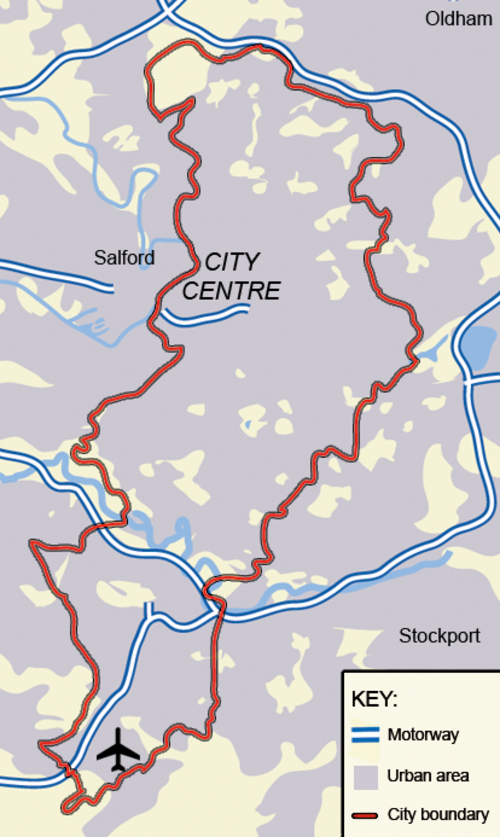
マンチェスターという名前は、公式にはグレーター マンチェスター内の大都市圏にのみ適用されていますが、他のより広い土地区分、特にグレーター マンチェスター郡と都市部の大半に適用されてきました。「マンチェスター シティ ゾーン」、「マンチェスター ポスト タウン」、および「マンチェスター渋滞税」はすべてこの例です。
国家統計局によると、マンチェスターはグレーター・マンチェスター都市圏(英国で2番目に大きい大都市圏)内で最も人口の多い集落である。高密度の都市部と郊外が混在している。市内最大のオープンスペースはヒートン・パークで、約260ヘクタール(642エーカー) [70]ある。マンチェスターは、南のチェシャー州境に沿った小さな区域を除いて、すべての方向にいくつかの大きな集落が隣接している。M60とM56の高速道路は、マンチェスター南部のそれぞれノーザンデンとウィゼンショーを通っている。重電線があらゆる方向から市内に入り、主な目的地はマンチェスター・ピカデリー駅である。
気候
マンチェスターは、イギリス諸島の多くの地域と同様に温帯 海洋性気候(ケッペンの気候区分:Cfb )に属し、英国の他の地域と比べて夏は暖かく、冬は寒い。夏の日中の気温は20℃を超え、特に7月と8月の晴れた日には25℃に達することもしばしばある。近年では、気温が30℃を超えることも時々ある。年間を通して降水量は多いが、概して少ない。マンチェスターの年間平均降水量は806.6ミリメートル(31.76インチ)[71]で、英国平均の1,125.0ミリメートル(44.29インチ)[72]と比較して低く、年間平均降雨日数も140.4日[71]で、英国平均の154. 4日[72]と比較して低い。マンチェスターは湿度が比較的高く、これが豊富な軟水と相まって、この地域の繊維産業の発展につながった要因の1つであった。[73]都市部の温暖化の影響で市内では降雪はめったにありませんが、北西部のウェスト・ペナイン・ムーアズ、北東部のサウス・ペナイン、東部のピーク・ディストリクトでは降雪量が多く、市内から出る道路が閉鎖されることがあります。[ 74 ]これには、オールダムとスタンデッジ経由のA62、[75]シェフィールド方面に向かうスネークパスのA57 、 [ 76 ]およびM62のペナイン区間が含まれます。[77]マンチェスターで記録された最低気温は、2010年1月7日の-17.6 °C (0.3 °F) でした。[78]
グリーンベルト
マンチェスターは、周囲の広い郡に広がるグリーンベルト地域の中心に位置しています。これにより、都市のスプロール現象が抑制され、大都市圏の町がさらに密集することが防止され、郊外のコミュニティのアイデンティティが保護され、近くの田園地帯が保全されます。これは、指定された地域内での不適切な開発を制限し、許可された建築物に厳しい条件を課すことによって達成されます。[87]
すでに高度に都市化しているため、市域全体の緑地内に保護された緑地帯が限られており、開発の機会は最小限です。[88]クレイトン・ヴェイル、ヒートン・パーク、チョールトン・ウォーター・パーク、チョールトン・イーズ&アイビー・グリーン自然保護区、マージー川周辺の氾濫原、マンチェスター空港周辺の南部地域などです。[89]緑地帯は1961年に初めて策定されました。[87]
人口統計
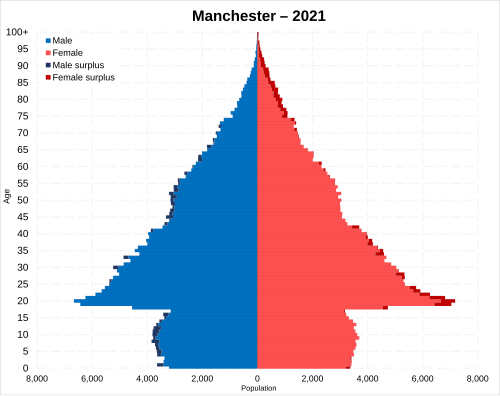

歴史的にマンチェスターの人口はヴィクトリア朝時代に急増し始め、1865年にはマンチェスターで354,930人、サルフォードで110,833人と推定され、[90] 1931年には766,311人でピークを迎えました。その後、スラム街の一掃や、第二次世界大戦後のマンチェスター市議会によるハッターズリーやラングレーなどの社会住宅 過剰団地の建設の増加により、人口は急速に減少し始めました。[91]
2012年中間推計のマンチェスターの人口は510,700人だった。これは2011年の推計から7,900人、1.6%の増加である。2001年以降、人口は87,900人、20.8%増加しており、2011年の国勢調査ではマンチェスターは3番目に人口増加率の高い地域となっている。[92]この都市はロンドン以外では最も人口増加率が高く、19%増加して50万人を超えた。[93]マンチェスターの人口は2021年までに532,200人に達すると予測されており、2011年から5.8%増加する。これは過去10年間よりも成長率が鈍化していることを意味する。[92]
2011年のグレーターマンチェスター市街地の人口は2,553,400人と推定されている。2012年には2,702,200人がグレーターマンチェスターに住んでいたと推定されている。2012年にはマンチェスターから30マイル(50km)以内に6,547,000人が住み、50マイル(80km)以内に11,694,000人が住んでいると推定されている。[92]
2011年7月初旬から2012年6月末(年半ばの推定日)までの間に、出生数は死亡数を4,800人上回った。移住(国内および国際)およびその他の変化により、2011年7月から2012年6月の間に3,100人の純増があった。マンチェスターはグレーター・マンチェスターやイングランドと比べて人口が若く、特に20~35歳の年齢層が多い。[92]
2011/2012年度、 マンチェスター・メトロポリタン大学、マンチェスター大学、王立ノーザン音楽大学には、学部生と大学院生合わせて76,095人の学生が在籍していました。
マンチェスターの全世帯のうち、0.23%が同性間のシビルパートナーシップ世帯であり、2011年のイングランド全国平均は0.16%であった。[94]
マンチェスター大都市圏は、ユーロスタットが地方自治体の区域に近似した機能的都市圏の尺度であり、2004年の人口は2,539,100人であった。[95]マンチェスター自体に加えて、LUZにはグレーターマンチェスター郡の残りの部分が含まれる。 [96]マンチェスターLUZは、ロンドンに次いで英国で2番目に大きい。
宗教
2021年の国勢調査による宗教的信仰[97]
キリスト教徒(36.2%)
無宗教(32.4%)
イスラム教徒(22.3%)
ヒンズー教徒(1.1%)
仏教徒(0.6%)
ユダヤ人(0.5%)
その他 (0.5%)
宗教未記載(5.9%)
2001年の国勢調査以来、マンチェスターのキリスト教徒の割合は62.4%から2011年には48.7%へと22%減少した。無宗教者の割合は16%から25.3%へと58.1%増加し、イスラム教徒の割合は9.1%から15.8%へと73.6%増加した。グレーター・マンチェスターのユダヤ人人口はロンドン以外では英国最大である。[98]
民族

民族構成の点では、マンチェスター市はグレーター・マンチェスターのどの地区よりも非白人の割合が高い。2011年の国勢調査の統計によると、人口の66.7%が白人(白人イギリス人59.3% 、白人アイルランド人2.4% 、ジプシーまたはアイルランド旅行者0.1% 、その他の白人4.9% - ヨーロッパ系とイギリス系の混血グループの規模は不明だが、グレーター・マンチェスターには少なくとも部分的にイタリア系の人だけで25,000人以上がおり、グレーター・マンチェスターの人口の5.5%を占めると報告されている[99])。混血は4.7%(白人と黒人カリブ人1.8%、白人と黒人アフリカ人0.9%、白人とアジア人1.0%、その他の混血1.0%)、アジア人は17.1%(インド人2.3% 、パキスタン人8.5%、バングラデシュ人1.3% 、中国人2.7%、その他のアジア人2.3%)、黒人は8.6%(アフリカ人5.1%、その他の黒人1.6% )、アラブ人は1.9%、その他の民族的背景を持つ人は1.2%であった。[100]
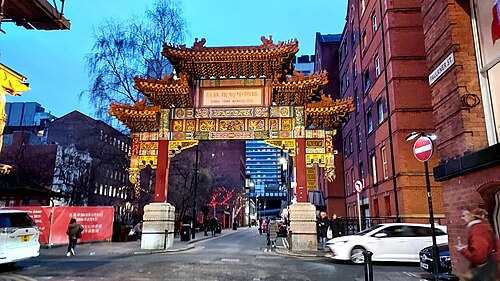
キッドは、モスサイド、ロングサイト、チーサムヒル、ラショルムを少数民族の人口の中心地としている。[23]マンチェスターのアイリッシュフェスティバルは、聖パトリックデーのパレードを含め、ヨーロッパ最大級のフェスティバルの一つである。[101]また、市内には中華料理店やスーパーマーケットが立ち並ぶ、よく知られたチャイナタウンもある。この地域には、地元の大学に通う多くの中国人留学生も集まっており、 [102]マンチェスターはヨーロッパで3番目に多い中国人人口を抱える都市となっている。[103] [104]
1971年から2021年までのマンチェスターの民族:
生徒の民族
経済

英国国家統計局はマンチェスター市単独の経済データを作成しているのではなく、グレーター・マンチェスター・サウスと呼ばれる地域にあるサルフォード、ストックポート、テイムサイド、トラフォードの4つの大都市自治区を含めており、 GVAは348億ポンドに上った。2002年から2012年にかけて経済は比較的力強く成長し、成長率は全国平均を2.3%上回った。[114]広義の大都市圏の経済は英国で3番目に大きい。グローバリゼーションと世界都市研究ネットワークによってベータ世界都市にランク付けされている。[115]
英国経済が2008年から2010年の不況から回復を続ける中、最近のデータによるとマンチェスターは好調な状況にある。2012年には、マンチェスターは中核都市の中で最も高い年間事業ストック成長率(5%)を示した。[116]マンチェスターは事業廃業数が比較的急激に増加し、中核都市の中で最も増加率が高いが、新規事業の堅調な成長によって相殺され、結果として純増は堅調となった。
マンチェスターの市政指導者はビジネス感覚に優れていることで知られている。[117]マンチェスターは国内で最も利用者数の多い4つの空港のうち2つを所有しており、その収益を地元のプロジェクトに充てている。[118]一方、KPMGの競争力のある代替案レポートによると、2012年のマンチェスターは世界の工業都市の中で9番目に税負担が低かった。[119 ] また、財政権限委譲は他のどのイギリスの都市よりも早くマンチェスターに導入されており、交通投資から得られる追加税の半分をマンチェスターが保持できる。[117]
KPMGの競合代替レポートでは、マンチェスターはヨーロッパで最も手頃な都市として取り上げられ、生活費指数が95未満のオランダの都市ロッテルダムとアムステルダムよりもわずかに上位にランクされていることも明らかになりました。[119]
マンチェスターは対照的な都市であり、国内で最も貧困な地区と最も裕福な地区が共存している。[120] [121] 2010年の複合的貧困指数によると、マンチェスターはイングランドで4番目に貧困な地方自治体である。[122] 2012年から2013年までの失業率は平均11.9%で、全国平均を上回ったが、国内の同等の大都市のいくつかよりも低かった。[123]一方、グレーターマンチェスターにはロンドン以外のどこよりも多くの億万長者が住んでおり、そのほとんどをマンチェスター市が占めている。[124] 2013年、英国の12大都市の格付けによると、マンチェスターは生活の質で英国第6位にランクされた。[125]
マンチェスターの女性は、男性との比較賃金において、国内の他地域よりも恵まれている。労働時間当たりの男女賃金格差は3.3%で、英国全体では11.1%である。[126]マンチェスターの労働年齢人口の37%が学位レベルの資格を有しているが、これは他の中核都市の平均33%とは対照的である。[126]ただし、マンチェスターの学校の成績は全国平均をわずかに下回っている。[127]
GVAグリムリーによると、マンチェスターはロンドン以外では英国最大のオフィス市場であり、四半期ごとのオフィス需要(2010年から2014年の平均)は約25万平方フィートで、リーズ、リバプール、ニューカッスルの四半期ごとのオフィス需要を合わせた額に相当し、最も近いライバルであるバーミンガムよりも9万平方フィート多い。[128]マンチェスターのオフィス市場が好調なのは、一部には「ノースショアリング」(オフショアリングの略)によるものとされている。これは、過熱した南部から、オフィススペースがより安価で労働力市場が飽和していない地域への移転または代替創出を伴う。[129]

ランドマーク

マンチェスターの建物は、ビクトリア朝様式から現代建築まで、さまざまな建築様式が見られます。赤レンガの広範な使用がこの都市の特徴であり、その建築の多くは綿花貿易の世界的中心地だった時代を思い起こさせます。[28]市の中心部のすぐ外側には、かつての綿花工場が多数あり、閉鎖されて以来ほとんど手つかずのまま残っているものもあれば、アパートやオフィススペースとして再開発されたものも多数あります。アルバート広場にあるマンチェスター市庁舎は、ゴシックリバイバル様式で建てられました。[130]
マンチェスターには1960年代から1970年代にかけて建てられた高層ビルも数多くある。最も高かったのはマンチェスター・ヴィクトリア駅近くのCISタワーで、2006年にビーサム・タワーが完成するまでは最も高かった。ビーサム・タワーは高層ビルの新たな急増を象徴する建物で、ヒルトンホテル、レストラン、マンションが入っている。現在最大の高層ビルは高さ201メートル(659フィート)のディーンゲート・スクエア・サウスタワーである。オックスフォード・ロード駅の向かいにあるグリーン・ビルディングは環境に優しい住宅プロジェクトで、最近完成したワン・エンジェル・スクエアは世界で最も持続可能な大規模ビルの1つである。[131]
市の北部にあるヒートン公園は、610エーカー(250ヘクタール)の公園面積を有するヨーロッパ最大の市営公園の一つです。 [132]市内には135の公園、庭園、広場があります。[133]
2 つの大きな広場には、マンチェスターの公共記念碑が数多く建っています。アルバート広場には、アルバート王子、ジェームズ・フレイザー司教、オリバー・ヘイウッド、ウィリアム・グラッドストン、ジョン・ブライトの記念碑があります。ピカデリー・ガーデンには、ビクトリア女王、ロバート・ピール、ジェームズ・ワット、ウェリントン公爵の記念碑があります。セント・ピーターズ広場の慰霊碑は、マンチェスターの戦没者を追悼する主要な記念碑です。エドウィン・ラッチェンスが設計したこの記念碑は、ロンドンのホワイトホールにあるオリジナルの記念碑を彷彿とさせます。サックヴィル公園のアラン・チューリング記念碑は、現代コンピューターの父としての彼の役割を記念しています。リンカーン広場(長年プラットフィールドに立っていた)にある、ジョージ・グレイ・バーナード作のエイブラハム・リンカーンの等身大の像は、オハイオ州シンシナティのチャールズ・フェルプス・タフト夫妻から市に寄贈されたもので、1861年から1865年の綿花飢饉と南北戦争でランカシャーが果たした役割を記念したものである。[134]マンチェスター空港の近くにはコンコルドが展示されている。
マンチェスターには、チョールトン・ウォーター・パーク、ブラックリー・フォレスト、クレイトン・ヴェール・アンド・チョールトン・イーズ、アイビー・グリーン、ボガート・ホール・クラフ、ハイフィールド・カントリー・パークの6つの指定された地域自然保護区があります。[135]
輸送
レール
マンチェスター・リバプール・ロード駅は、世界初の旅客・貨物専用鉄道駅であり[136] 、世界初の都市間旅客鉄道であるリバプール・アンド・マンチェスター鉄道のマンチェスター終着駅として機能していました。この駅は現在も残っており、建物は科学産業博物館の一部となっています。

市内の4つの主要路線のターミナルのうち2つは1960年代まで存続しませんでした。マンチェスター・セントラル駅とマンチェスター・エクスチェンジ駅はそれぞれ1969年に閉鎖されました。さらに、マンチェスター・メイフィールド駅は1960年に旅客サービスを停止しました。その建物とプラットフォームはピカデリー駅の隣にまだ残っていますが、2020年代に再開発される予定です。
現在、マンチェスターの鉄道網は充実しているが、現在は限界に達している。[138]マンチェスターは、ウェストコースト本線を含む郡全体に広がる鉄道網の中心地であり、2つの主要線駅、マンチェスター・ピカデリー駅とマンチェスター・ヴィクトリア駅がある。マンチェスター駅群(マンチェスター・ピカデリー、マンチェスター・ヴィクトリア、マンチェスター・オックスフォード・ロード、ディーンズゲートからなる)は、2017/2018年に4,490万人の乗客を記録し、英国で3番目に利用者数が多い。[137]バーミンガムとロンドンを結ぶ高速鉄道2号線も計画されており、これにはマンチェスターの地下に12km(7マイル)のトンネルを掘り、改良されたピカデリー駅に最終進入することが含まれていたが、[139]これは2023年10月にリシ・スナック首相によって中止された。 [140]
2010年代にノーザンハブの一部としてマンチェスターで最近行われた改善には、マンチェスターへのおよびマンチェスターを通過する多数の電化計画、ヴィクトリア駅の再開発、ヴィクトリアとピカデリーを直結するオーズオールコードの建設などがある。[141]ピカデリーの2つの新しい直通プラットフォームの工事とオックスフォードロードの大規模なアップグレードは、2019年の時点では開始されていませんでした。マンチェスター市内中心部、特にキャッスルフィールド回廊は、頻繁に遅延やキャンセルにつながる制約された鉄道容量に悩まされています。2018年のレポートによると、マンチェスターの3つの主要な駅はすべて、英国で定時性の最も悪い駅のトップ10に含まれており、オックスフォードロードは国内で最悪と見なされています。[142]
メトロリンク(路面電車/ライトレール)
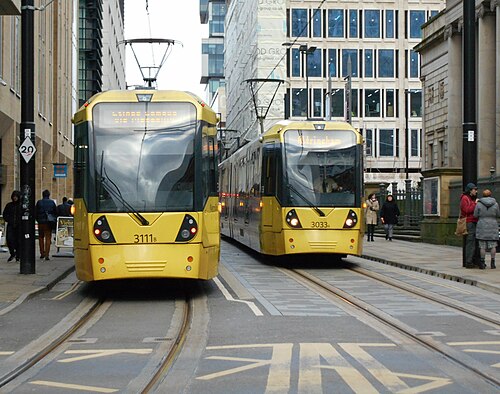
マンチェスターは、1992年にマンチェスターメトロリンクが開業し、英国で初めて近代的なライトレール路面電車システムを導入した都市となった。2016年から2017年にかけて、このシステムを利用した乗客数は3,780万人に達した。 [144]現在のシステムは、主にライトレール用に改造された旧通勤鉄道線を走行し、路面電車の路線で市内中心部を横断している。[145]ネットワークは8路線で構成され、99の停留所がある。[146]トラッフォードセンター行きの新路線は2020年に開業した。[147] [148]マンチェスター市内中心部には、12を超える重鉄道とライトレールをベースとしたパークアンドライド施設もある。[149]
バス

マンチェスターはロンドン以外では最も広範なバスネットワークを有しており、50社以上のバス会社が市内から放射状に広がるグレーターマンチェスター地域で運行している。2011年には、グレーターマンチェスターの公共交通機関の80%がバスで行われ、年間の乗客数は2億2千万人に達した。[150] 1986年の規制緩和後、バスシステムはGMバスに引き継がれ、民営化後にGMバスノースとGMバスサウスに分割された。その後、これらはファースト・グレーターマンチェスターとステージコーチ・マンチェスターに引き継がれた。ファースト・グレーターマンチェスターの事業の大部分は2019年にダイアモンド・ノース・ウエストとゴー・ノース・ウエストに売却された。 [151]ゴー・ノース・ウエストは3路線の無料 マンチェスター・メトロシャトルを運行しており、マンチェスターのビジネス地区で年間280万人の通勤者を運んでいる。[150] [152] [153]ステージコーチ・マンチェスターはステージコーチ・グループ最大の子会社であり、約690台のバスを運行している。[154]
空気

マンチェスター空港はマンチェスター、イングランド北部、北ウェールズにサービスを提供しています。この空港は英国で3番目に利用者が多く、ロンドン以外の空港で次に利用者が多い空港の年間利用者数の2倍以上です。 [155]サービスはヨーロッパ、北米、カリブ海、アフリカ、中東、アジアの多くの目的地をカバーしています(マンチェスターからの目的地は英国の他のどの空港よりも多くなっています)。[156] 2001年に2本目の滑走路がオープンし、ターミナルの改良が続いています。この空港は最高の評価である「カテゴリー10 」を取得しており、エアバスA380やボーイング747-8などの「コードF 」の航空機を扱うことができるエリート空港のグループを網羅しています。[157] 2010年9月から、この空港は世界でわずか17の空港の1つとなり、ヒースロー空港とガトウィック空港以外ではエアバスA380を運航する唯一の英国の空港になりました。[158]
マンチェスター市中心部から西に9.3km (6マイル)のところに、より小規模なシティ・エアポート・マンチェスターがある。マンチェスター初の市営空港であり、英国初の航空管制塔が設置された場所であり、英国航空省から認可を受けた初の市営飛行場でもある。[159]現在、シティ空港は民間チャーター便や一般航空に利用されている。また、飛行学校もあり[160]、グレーター・マンチェスター警察航空支援部隊と北西航空救急隊のヘリコプターがここに駐留している。
運河
マンチェスター船舶運河を含む広大な運河網は、産業革命以降、貨物輸送のために建設されました。運河は現在でも維持されていますが、主にレジャー用に再利用されています。[161] 2012年には、マンチェスター市内中心部とサルフォードキーズのメディアシティUKの間に水上タクシーサービスを導入する計画が承認されました。[162]このサービスは、インフラの貧弱さを理由に、2018年6月に運行を停止しました。[163]
サイクリング
マンチェスターでは交通手段としてもレジャーとしても自転車が人気があり、この都市はイギリスの自転車レースでも重要な役割を果たしている。[164] [165]
文化
音楽

マンチェスターの音楽シーンから登場したバンドには、ヴァン・ダー・グラーフ・ジェネレーター、オアシス、ザ・スミス、ジョイ・ディヴィジョンとその後継グループのニュー・オーダー、バズコックス、ザ・ストーン・ローゼズ、ザ・フォール、ザ・ドゥルッティ・コラム、10cc、ゴドリー・アンド・クリーム、ザ・ヴァーヴ、エルボー、ダヴズ、ザ・シャーラタンズ、Mピープル、ザ・1975、シンプリー・レッド、テイク・ザット、ダッチ・アンクルズ、エヴリシング・エヴリシング、ザ・コーティナーズ、ペール・ウェイヴス、ザ・アウトフィールドなどがある。マンチェスターは、ザ・スミスを先頭に、後にザ・ストーン・ローゼズ、ハッピー・マンデーズ、インスパイラル・カーペッツ、ジェイムスを含む1980年代のイギリスのインディーズ音楽の主な原動力として評価された。後のグループは、ファクトリー・レコードの創設者トニー・ウィルソンが開いたハシエンダ・ナイトクラブを中心にした「マッドチェスター」シーンとして知られるようになったものから生まれた。南イングランド出身だが、ケミカル・ブラザーズは後にマンチェスターで結成された。[166]元スミスのフロントマン、モリッシーは、歌詞にマンチェスターの場所や文化をよく取り上げており、後にソロ・アーティストとして国際的な成功を収めた。それ以前の1960年代の著名なマンチェスターのアーティストには、ホリーズ、ハーマンズ・ハーミッツ、モンキーズのデイビー・ジョーンズ(1960年代半ばにアルバムやアメリカのテレビ番組で有名になった)、そしてそれより前のビージーズがおり、彼らはチョールトンで育った。[167]マンチェスター出身の著名なラップ・アーティストには、バグジー・マローンやエイチがいる。
.jpg/500px-MEN_Arena,_Manchester_(7263927380).jpg)
主なポップミュージック会場はマンチェスターアリーナで、2007年に「インターナショナル・ベニュー・オブ・ザ・イヤー」に選ばれた。 [168] 21,000席以上を擁するこのアリーナは、ヨーロッパ最大のアリーナである。[168]コンサート観客数で見ると、世界で最も混雑する屋内アリーナであり、 2位と3位のニューヨークのマディソンスクエアガーデンとロンドンのO2アリーナを上回っている。 [169]その他の会場には、マンチェスターアポロ、アルバートホール、ビクトリアウェアハウス、マンチェスターアカデミーなどがある。より小規模な会場には、バンドオンザウォール、ナイトアンドデイカフェ、[170]ルビーラウンジ、[171]デフインスティテュートなどがある。[172]マンチェスターは、ロンドン以外では最も多くのインディーズやロックミュージックのイベントを開催している。[173]
マンチェスターには、ハレ管弦楽団とBBC フィルハーモニックという 2 つの交響楽団と、マンチェスター カメラータという室内管弦楽団がある。1950 年代、この都市は、ハリソンバートウィッスル、ピーター マクスウェル デイヴィス、デイヴィッド エリス、アレクサンダー ゴーアからなる、いわゆる「マンチェスター スクール」と呼ばれるクラシック音楽作曲家の本拠地であった。マンチェスターは、ロイヤル ノーザン音楽大学とチェサム音楽学校があり、音楽教育の中心地となっている。[174] RNCMの前身はノーザン音楽学校(1920年設立)と王立マンチェスター音楽大学(1893年設立)で、1973年に合併しました。RNCMの設立直後の初期の講師およびクラシック音楽のピアニスト/指揮者の1人は、ロシア生まれのアーサー・フリードハイム(1859-1932)であり、後にメリーランド州ボルチモアの有名なピーボディ音楽院の音楽図書館に彼の名前が付けられました。1996年に2,500席のブリッジウォーターホールがオープンするまで、クラシック音楽の主な会場はピーターストリートのフリートレードホールでした。[175]
イングランド北部の伝統であるブラスバンド音楽は、マンチェスターの音楽的遺産にとって重要である。 [176] CWSマンチェスターバンドやフェアリーバンドなど、英国を代表するバンドのいくつかはマンチェスターとその周辺地域出身であり、聖霊降臨祭の金曜日のブラスバンドコンテストは、毎年近隣のサドルワースとテイムサイドで開催されている。
舞台芸術
.jpg/500px-Opera_House_(Manchester).jpg)
マンチェスターには、演劇、オペラ、ダンスが盛んな街があり、大規模なツアー公演やウエストエンド公演が行われるマンチェスター・オペラハウス、パレス劇場、マンチェスターの旧綿花取引所にある英国 最大の円形劇場であるロイヤル・エクスチェンジ劇場など、数多くの大規模な公演会場があります。
より小規模な劇場としては、ハルムのコンタクトシアターやZ-アーツなどがある。オックスフォードロードのダンスハウスはダンス公演専用である。[177] 2014年には、特注の新しい芸術複合施設HOMEがオープンした。2つの劇場スペース、5つの映画館、美術展示スペースを備え、コーナーハウスとライブラリーシアターに代わる施設となった。[178]
2007年以来、マンチェスターでは2年に一度、オリジナル作品に重点を置いた国際芸術祭、マンチェスター国際フェスティバルが開催されており、ビョークなどのアーティストによる新作の主要な委託作品も含まれている。2023年には、ファクトリー・インターナショナルが運営するこのフェスティバルの会場は、メトロポリタン建築事務所のレム・コールハースが設計した数百万ポンドをかけて建設された専用会場、アヴィヴァ・スタジオに恒久的に設置されることになった。[179]
博物館とギャラリー
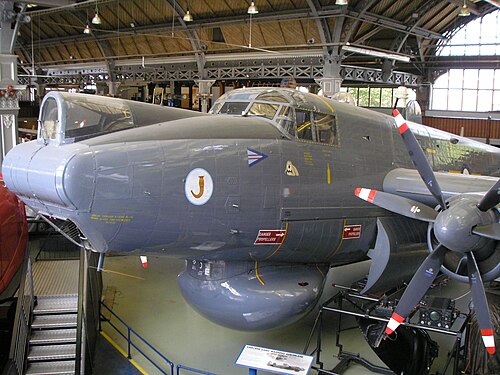
マンチェスターの博物館では、マンチェスターのローマ時代の歴史、豊かな産業遺産、産業革命、繊維産業、労働組合運動、女性参政権、サッカーにおけるマンチェスターの役割を紹介しています。キャッスルフィールドでは、ローマ時代の要塞マムキウムの再建された一部が一般公開されています。
.jpg/500px-National_Football_Museum,_Cathedral_Gardens_(geograph_6944591).jpg)
科学産業博物館は、旧リバプールロード鉄道駅舎にあり、蒸気機関車、産業機械、航空機、世界初のコンピュータプログラム(マンチェスターベイビーとして知られる)のレプリカなど、膨大なコレクションを所蔵している。 [180]交通博物館には歴史的なバスや路面電車のコレクションが展示されている。[181]隣接するトラッフォード自治区のトラッフォードパークには、帝国戦争博物館ノースがある。[182]マンチェスター博物館は1880年代に一般公開され、エジプト学と自然史のコレクションが有名である。[183] マンチェスターには、サルフォードのイズリントンミル、アービスの国立サッカー博物館、キャッスルフィールドギャラリー、プラットフィールドパークのマンチェスターコスチュームギャラリー、ピープルズ歴史博物館、マンチェスターユダヤ博物館など他の展示スペースや博物館がある。[184]

モスレー通りにある市営のマンチェスター美術館には、ヨーロッパ絵画の常設コレクションと、英国有数のラファエル前派絵画コレクションが収蔵されている。[185] [186]市の南部にあるウィットワース美術館は、現代美術、彫刻、織物を展示しており、2015年には美術館オブ・ザ・イヤーに選ばれた。[187]産業都市マンチェスターとサルフォードを描いた「マッチ棒」絵画で知られるストレトフォード生まれの画家L.S.ローリーの作品は、シティとウィットワース・マンチェスターのギャラリー、およびサルフォードキーズ(隣のサルフォード自治区)のローリー・アートセンターで見ることができ、ローリーの作品を大規模な常設展で展示している。[188]
文学

Manchester is a UNESCO City of Literature known for a "radical literary history".[189][190] Manchester in the 19th century featured in works highlighting the changes that industrialisation had brought. They include Elizabeth Gaskell's novel Mary Barton: A Tale of Manchester Life (1848),[191] and studies such as The Condition of the Working Class in England in 1844 by Friedrich Engels, while living and working here.[192] Manchester was the meeting place of Engels and Karl Marx. The two began writing The Communist Manifesto in Chetham's Library[193] – founded in 1653 and claiming to be the oldest public library in the English-speaking world. Elsewhere in the city, the John Rylands Library holds an extensive collection of early printing. The Rylands Library Papyrus P52, believed to be the earliest extant New Testament text, is on permanent display there.[194]

Wikisource has original text related to this article:
'Manchester' a poetical illustration by L. E. L.
Letitia Landon's poetical illustration Manchester to a vista over the city by G. Pickering in Fisher's Drawing Room Scrap Book, 1835, records the rapid growth of the city and its cultural importance.[195]
Charles Dickens is reputed to have set his novel Hard Times in the city, and though partly modelled on Preston, it shows the influence of his friend Mrs Gaskell.[196] Gaskell penned all her novels but Mary Barton at her home in 84 Plymouth Grove. Often her house played host to influential authors: Dickens, Charlotte Brontë, Harriet Beecher Stowe and Charles Eliot Norton, for example.[197] It is now open as a literary museum.
Charlotte Brontë began writing her novel Jane Eyre in 1846, while staying at lodgings in Hulme. She was accompanying her father Patrick, who was convalescing in the city after cataract surgery.[198] She probably envisioned Manchester Cathedral churchyard as the burial place for Jane's parents and the birthplace of Jane herself.[199] Also associated with the city is the Victorian poet and novelist Isabella Banks, famed for her 1876 novel The Manchester Man. Anglo-American author Frances Hodgson Burnett was born in the city's Cheetham Hill district in 1849, and wrote much of her classic children's novel The Secret Garden while visiting nearby Salford's Buile Hill Park.[200]
Anthony Burgess is among the 20th-century writers who made Manchester their home. He wrote here the dystopian satire A Clockwork Orange in 1962.[201] Dame Carol Ann Duffy, Poet Laureate from 2009 to 2019, moved to the city in 1996 and lives in West Didsbury.[202]
Nightlife
The night-time economy of Manchester has expanded significantly since about 1993, with investment from breweries in bars, public houses and clubs, along with active support from the local authorities.[203] The more than 500 licensed premises[204] in the city centre have a capacity to deal with more than 250,000 visitors,[205] with 110,000–130,000 people visiting on a typical weekend night,[204] making Manchester the most popular city for events at 79 per thousand people.[206] The night-time economy has a value of about £100 million,[207] and supports 12,000 jobs.[204]
The Madchester scene of the 1980s, from which groups including the Stone Roses, the Happy Mondays, Inspiral Carpets, 808 State, James and the Charlatans emerged, was based around clubs such as The Haçienda.[208] The period was the subject of the movie 24 Hour Party People. Many of the big clubs suffered problems with organised crime at that time; Haslam describes one where staff were so completely intimidated that free admission and drinks were demanded (and given) and drugs were openly dealt.[208] Following a series of drug-related violent incidents, The Haçienda closed in 1997.[203]

Gay village
Public houses in the Canal Street area have had an LGBTQ+ clientele since at least 1940,[203] and now form the centre of Manchester's LGBTQ+ community. Since the opening of new bars and clubs, the area attracts 20,000 visitors each weekend[203] and has hosted a popular festival, Manchester Pride, each August since 1995.[209]
Education
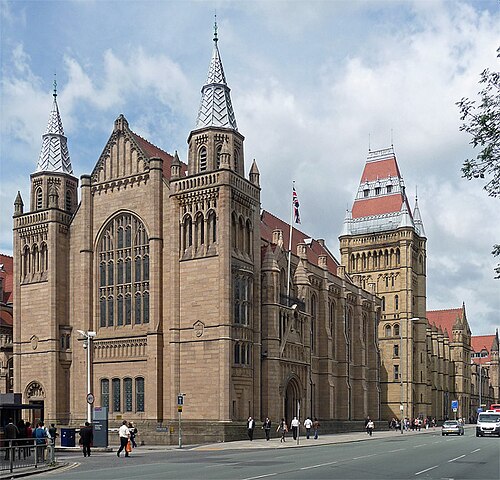
There are three universities in the City of Manchester. The University of Manchester, Manchester Metropolitan University and Royal Northern College of Music. The University of Manchester is the second largest full-time non-collegiate university in the United Kingdom,[210] created in 2004 by the merger of Victoria University of Manchester, founded in 1904, and UMIST, founded in 1956,[211] having developed from the Mechanics' Institute founded, as indicated in the university's logo, in 1824. The University of Manchester includes the Manchester Business School, which offered the first MBA course in the UK in 1965.[212]
Manchester Metropolitan University was formed as Manchester Polytechnic on the merger of three colleges in 1970. It gained university status in 1992, and in the same year absorbed Crewe and Alsager College of Higher Education in South Cheshire.[213] The Cheshire campus permanently closed in 2019.[214] The University of Law, the largest provider of vocation legal training in Europe, has a campus in the city.[215]
The three universities are grouped around Oxford Road on the southern side of the city centre, which forms Europe's largest urban higher-education precinct.[216] Together they have a combined population of over 80,000 students as of 2022.[210]
One of Manchester's notable secondary schools is Manchester Grammar School. Established in 1515,[217] as a free grammar school next to what is now the cathedral, it moved in 1931 to Old Hall Lane in Fallowfield, south Manchester, to accommodate the growing student body. In the post-war period, it was a direct grant grammar school (i.e. partially state funded), but it reverted to independent status in 1976 after abolition of the direct-grant system.[218] Its previous premises are now used by Chetham's School of Music. There are three schools nearby: William Hulme's Grammar School, Withington Girls' School and Manchester High School for Girls.
In 2019, the Manchester Local Education Authority was ranked second to last out of Greater Manchester's ten LEAs and 140th out of 151 in the country LEAs based on the percentage of pupils attaining grades 4 or above in English and mathematics GCSEs (General Certificate of Secondary Education) with 56.2 per cent compared with the national average of 64.9 per cent.[219] Of the 63 secondary schools in the LEA, four had 80 per cent or more pupils achieving Grade 4 or above in English and maths GCSEs: Manchester High School for Girls, The King David High School, Manchester Islamic High School for Girls, and Kassim Darwish Grammar School for Boys.[220]
Sport

Two Premier League football clubs bear the city's name – Manchester City and Manchester United.[221] Manchester City's home is the City of Manchester Stadium in east Manchester, built for the 2002 Commonwealth Games and then reconfigured as a football ground in 2003. Manchester United, despite originating in Manchester, have been based in the neighbouring borough of Trafford since 1910. Their stadium Old Trafford is adjacent to Lancashire County Cricket Club ground, also called Old Trafford. The cricket club has strong association with Manchester due to proximity to the city and Manchester historically being part of Lancashire.[222]
Sporting facilities built for the 2002 Commonwealth Games include the City of Manchester Stadium, National Squash Centre and Manchester Aquatics Centre.[223] Manchester has competed twice to host the Olympic Games, beaten by Atlanta for 1996 and Sydney for 2000. The National Cycling Centre includes a velodrome, BMX Arena and Mountainbike trials, and is the home of British Cycling, UCI ProTeam Team Sky and Sky Track Cycling. The Manchester Velodrome, built as a part of the bid for the 2000 games, has become a catalyst for British success in cycling.[203] The velodrome hosted the UCI Track Cycling World Championships for a record third time in 2008. The National Indoor BMX Arena (2,000 capacity) adjacent to the velodrome opened in 2011. The Manchester Arena hosted the FINA World Swimming Championships in 2008.[224] Manchester hosted the World Squash Championships in 2008,[225] the 2010 World Lacrosse Championship,[226] the 2013 Ashes series, 2013 Rugby League World Cup, 2015 Rugby World Cup and 2019 Cricket World Cup.
Media
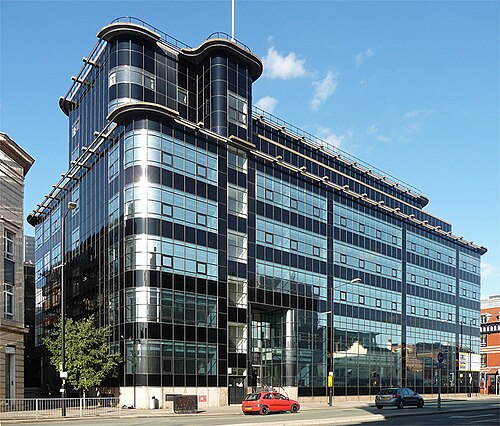
The Guardian newspaper was founded in the city in 1821 as The Manchester Guardian. Until 2008, its head office was still in the city, though many of its management functions were moved to London in 1964.[23][227] For many years most national newspapers had offices in Manchester: The Daily Telegraph, Daily Express, Daily Mail, Daily Mirror, The Sun. At its height, 1,500 journalists were employed, earning the city the nickname "second Fleet Street". In the 1980s the titles closed their northern offices and centred their operations in London.[228]
The main regional newspaper in the city is the Manchester Evening News, which was for over 80 years the sister publication of The Manchester Guardian.[227] The Manchester Evening News has the largest circulation of a UK regional evening newspaper and is distributed free of charge in the city centre on Thursdays and Fridays, but paid for in the suburbs. Despite its title, it is available all day.[229]
Several local weekly free papers are distributed by the MEN group. The Metro North West is available free at Metrolink stops, rail stations and other busy locations. [230]
An attempt to launch a Northern daily newspaper, the North West Times, employing journalists made redundant by other titles, closed in 1988.[231] Another attempt was made with the North West Enquirer, which hoped to provide a true "regional" newspaper for the North West, much in the same vein as the Yorkshire Post does for Yorkshire or The Northern Echo does for the North East; it folded in October 2006.[231]
Television

Manchester has been a centre of television broadcasting since the 1950s. A number of television studios have been in operation around the city, and have since relocated to MediaCityUK in neighbouring Salford.
The ITV franchise Granada Television has been based in Manchester since 1954. Now based at MediaCityUK, the company's former headquarters at Granada Studios on Quay Street with its distinctive illuminated sign were a prominent landmark on the Manchester skyline for several decades.[232][233][234] Granada produces Coronation Street,[235] local news and programmes for North West England. Although its influence has waned, Granada had been described as "the best commercial television company in the world".[236][237]
With the growth in regional television in the 1950s, Manchester became one of the BBC's three main centres in England.[233] In 1954, the BBC opened its first regional BBC Television studio outside London, Dickenson Road Studios, in a converted Methodist chapel in Rusholme. The first edition of Top of the Pops was broadcast here on New Year's Day 1964.[238][239] From 1975, BBC programmes including Mastermind,[240] and Real Story,[241] were made at New Broadcasting House on Oxford Road. The Cutting It series set in the city's Northern Quarter and The Street were set in Manchester[242] as was Life on Mars. Manchester was the regional base for BBC One North West Region programmes before it relocated to MediaCityUK in nearby Salford Quays.[243][244]
The Manchester television channel, Channel M, owned by the Guardian Media Group operated from 2000, but closed in 2012.[233][245] Manchester is also covered by two internet television channels: Quays News and Manchester.tv. The city had a new terrestrial channel from January 2014 when YourTV Manchester, which won the OFCOM licence bid in February 2013. It began its first broadcast, but in 2015, That's Manchester took over to air on 31 May and launched the freeview channel 8 service slot, before moving to channel 7 in April 2016.
Radio
The city has the highest number of local radio stations outside London, including BBC Radio Manchester, Hits Radio Manchester, Capital Manchester and Lancashire, Greatest Hits Radio Manchester & The North West, Heart North West, Smooth North West, Gold, Radio X, NMFM (North Manchester FM) and XS Manchester.[246] Student radio stations include Fuse FM at the University of Manchester and MMU Radio at the Manchester Metropolitan University.[247] A community radio network is coordinated by Radio Regen, with stations covering Ardwick, Longsight and Levenshulme (All FM 96.9) and Wythenshawe (Wythenshawe FM 97.2).[246] Defunct radio stations include Sunset 102, which became Kiss 102, then Galaxy Manchester, and KFM which became Signal Cheshire (later Imagine FM). These stations and pirate radio played a significant role in the city's house music culture, the Madchester scene.
Twin cities
Manchester has formal twinning arrangements (or "friendship agreements") with several places.[248][249] In addition, the British Council maintains a metropolitan centre in Manchester.[250]
- Amsterdam, Netherlands[251] (2007)
- Bilwi, Nicaragua[251]
- Chemnitz, Germany (1983)[252]
- Córdoba, Spain[251]
- Faisalabad, Pakistan (1997)[251]
- Los Angeles, United States (2009)
- Rehovot, Israel[251]
- Saint Petersburg, Russia[251] (1962)
- Wuhan, People's Republic of China (1986)[253]
- Osaka, Japan[251]
Manchester is home to the largest group of consuls in the UK outside London. The expansion of international trade links during the Industrial Revolution led to the introduction of the first consuls in the 1820s and since then over 800, from all parts of the world, have been based in Manchester. Manchester hosts consular services for most of the north of England.[254]
See also

.svg/500px-Europe_(orthographic_projection).svg.png)
- List of Freemen of the City of Manchester
- Manchester dialect
- Symbols of Manchester, including the city's worker bee motif
References
- ^ "The antelope, the lion and the bees". BBC. 11 February 2009. Retrieved 25 February 2024.
- ^ "Councillors and decision-making". Manchester City Council. Retrieved 9 January 2024.
- ^ "Mid-Year Population Estimates, UK, June 2022". Office for National Statistics. 26 March 2024. Retrieved 3 May 2024.
- ^ a b "Mid-Year Population Estimates, UK, June 2022". Office for National Statistics. 26 March 2024. Retrieved 3 May 2024.
- ^ a b UK Census (2021). "2021 Census Area Profile – Manchester Local Authority (E08000003)". Nomis. Office for National Statistics. Retrieved 9 January 2024.
- ^ Wells, John C. (2008), Longman Pronunciation Dictionary (3rd ed.), Longman, ISBN 9781405881180
- ^ Roach, Peter (2011), Cambridge English Pronouncing Dictionary (18th ed.), Cambridge: Cambridge University Press, ISBN 9780521152532
- ^ "Greater Manchester population by district 2022". Statista. Retrieved 5 June 2024.
- ^ Aspin, Chris (1981). The Cotton Industry. Shire Publications Ltd. p. 3. ISBN 0-85263-545-1.
- ^ Kidd, Alan (2006). Manchester: A History. Lancaster: Carnegie Publishing. ISBN 1-85936-128-5.
• Frangopulo, Nicholas (1977). Tradition in Action. The historical evolution of the Greater Manchester County. Wakefield: EP Publishing. ISBN 0-7158-1203-3.
• "Manchester – the first industrial city". sciencemuseum.org. Science Museum. Archived from the original on 9 March 2012. Retrieved 17 March 2012. - ^ Williams, Jennifer (15 June 2016). "Recap: The IRA bomb in Manchester... what happened on June 15, 1996". Manchester Evening News. Archived from the original on 17 August 2016.
- ^ "About us". Science and Industry Museum. 2023. Retrieved 10 September 2023.
- ^ a b The Cambridge Dictionary of English Place-Names Based on the Collections of the English Place-Name Society, ed. by Victor Watts (Cambridge: Cambridge University Press, 2004), under MANCHESTER.
- ^ a b Mills, A.D. (2003). A Dictionary of British Place-Names. Oxford: Oxford University Press. ISBN 0-19-852758-6. Archived from the original on 21 October 2013. Retrieved 7 November 2013.
- ^ Breeze, Andrew (2004). "Manchester's Ancient Name". The Antiquaries Journal. 84: 353–357. doi:10.1017/S0003581500045893. ISSN 0003-5815. S2CID 163005777.
- ^ "Invest North: Manchester is the capital of the North | TheBusinessDesk.com". 4 March 2022.
- ^ Jones, Dylan (9 March 2020). "48 hours in Manchester: Exploring the capital of the North".
- ^ Doyle, Sebastian (16 September 2019). "The City of Manchester - Capital of the North".
- ^ "Question Time Manchester: Defining the capital of the North". Place North West.
- ^ a b Cooper, Glynis (2005). Salford: An Illustrated History. The Breedon Books Publishing Company. p. 19. ISBN 1-85983-455-8.
- ^ Rogers, Nicholas (2003). Halloween: from Pagan Ritual to Party Night. Oxford University Press. p. 18. ISBN 0-19-516896-8. Archived from the original on 21 October 2013. Retrieved 7 November 2013.
- ^ Gregory, Richard, ed. (2007). Roman Manchester: The University of Manchester's Excavations within the Vicus 2001–5. Oxford: Oxbow Books. p. 190. ISBN 978-1-84217-271-1.
- ^ a b c d e f g h i j k l m n Kidd, Alan (2006). Manchester: A History. Lancaster: Carnegie Publishing. pp. 12, 15–24, 224. ISBN 1-85936-128-5.
- ^ a b c d Hylton, Stuart (2003). A History of Manchester. Phillimore & Co. pp. 1–10, 22, 25, 42, 63–67, 69. ISBN 1-86077-240-4.
- ^ Arrowsmith, Peter (1997). Stockport: a History. Stockport Metropolitan Borough Council. p. 30. ISBN 0-905164-99-7.
- ^ Powell-Smith, Anna. "Open Doomsday". Open Doomsday. Retrieved 23 January 2020.
- ^ "Manchester Castle". The Gatehouse – the comprehensive gazetteer of the medieval fortifications and castles of England and Wales. Retrieved 18 March 2008.
- ^ a b c d Hartwell, Clare (2001). Pevsner Architectural Guides: Manchester. London: Penguin Books. pp. 11–17, 155, 256, 267–268. ISBN 0-14-071131-7.
- ^ a b Nicholls, Robert (2004). Curiosities of Greater Manchester. Sutton Publishing. ISBN 0-7509-3661-4.
- ^ Letters, Samantha (2005). Gazetteer of Markets and Fairs in England and Wales to 1516. British History Online. p. 19. Archived from the original on 14 March 2012. Retrieved 5 May 2009.
- ^ a b Pevsner, Nikolaus (1969). Lancashire, The Industrial and Commercial South. London: Penguin Books. p. 265. ISBN 0-14-071036-1.
- ^ Durston, Christopher (2001). Cromwell's major generals: godly government during the English Revolution. Politics, culture, and society in early modern Britain. Manchester: Manchester University Press. ISBN 0-7190-6065-6. Retrieved 5 May 2009.
- ^ a b c d e McNeil, Robina; Michael Nevell (2000). A Guide to the Industrial Archaeology of Greater Manchester. Association for Industrial Archaeology. ISBN 0-9528930-3-7.
- ^ a b Hall, Peter (1998). "The first industrial city: Manchester 1760–1830". Cities in Civilisation. London: Weidenfeld & Nicolson. ISBN 0-297-84219-6.
- ^ "Manchester". Oxford English Dictionary. Oxford: Oxford University Press. March 2016. Archived from the original on 20 December 2016. Retrieved 17 December 2016.
- ^ "Timelines.tv Urban Slums". Timelines.tv. Archived from the original on 18 February 2012. Retrieved 2 February 2012.
- ^ Schofield, Jonathan. "Manchester: migrant city". BBC Manchester:New Kids From The Bloc. BBC. Archived from the original on 25 September 2015. Retrieved 6 April 2013.
- ^ Aspin, Chris (1981). The Cotton Industry. Aylesbury: Shire Publications. p. 3. ISBN 0-85263-545-1.
- ^ "Events in Telecommunications History". BT Archives. 1878. Archived from the original on 2 April 2015. Retrieved 13 March 2015.
- ^ "Manchester Ship Canal". Peel Ports. Archived from the original on 20 May 2019.
- ^ Spall, Richard Francis (1988). "Free Trade, Foreign Relations, and the Anti-Corn-Law League". The International History Review. 10 (3): 405–432. doi:10.1080/07075332.1988.9640484. ISSN 0707-5332. JSTOR 40105891.
- ^ "Marx-Engels Internet Archive – Biography of Engels". marxists.org. Marx/Engels Biography Archive. 1893. Archived from the original on 30 April 2009. Retrieved 5 May 2009.
- ^ Kidd, Alan (2006). "Chapter 9 England Arise! The Politics of Labour and Women's Suffrage". Manchester: A history. Lancaster: Carnegie Publishing. ISBN 1-85936-128-5.
- ^ Speake, Jennifer, ed. (2003). The Oxford Dictionary of Proverbs (4th ed.). Oxford University Press. ISBN 0-19-860524-2. Retrieved 6 July 2007.
What Manchester says today, the rest of England says tomorrow
•Osborne, George (7 March 2007). "Osborne: Our vision to make Manchester the creative capital of Europe". Conservative Party Website. Conservative Party. Archived from the original on 28 June 2009. Retrieved 4 May 2009.The saying goes that what Manchester does today the rest of the world does tomorrow.
•"Manchester Life". Manchester Metropolitan University. 2007. Archived from the original on 11 April 2008. Retrieved 5 May 2009.What Manchester does today, the world does tomorrow
- ^ a b c d e f g h i "Greater Manchester Gazetteer". Greater Manchester County Record Office. Places names – M to N. Archived from the original on 11 February 2011. Retrieved 9 July 2007.
- ^ Simon Schama (presenter) (4 June 2002). "Victoria and Her Sisters". A History of Britain. Episode 13. BBC One.
- ^ Hardy, Clive (2005). "The blitz". Manchester at War (2nd ed.). Altrincham: First Edition Limited. pp. 75–99. ISBN 1-84547-096-6.
- ^ "Timeline". Manchester Cathedral. Manchester Cathedral Online. 2008. Archived from the original on 16 April 2016. Retrieved 5 May 2009.
- ^ CWGC. "Civilian War Dead, Manchester County Borough". Commonwealth War Graves Commission. Retrieved 15 September 2023.
- ^ Parkinson-Bailey, John J (2000). Manchester: an Architectural History. Manchester: Manchester University Press. p. 127. ISBN 0-7190-5606-3.
• Pevsner, Nikolaus (1969). Lancashire, The Industrial and Commercial South. London: Penguin Books. p. 267. ISBN 0-14-071036-1. - ^ "Salford Quays milestones: the story of Salford Quays" (PDF). Salford City Council. 2005. Archived from the original (PDF) on 27 March 2009. Retrieved 5 May 2009.
- ^ Sengupata, Kim (28 March 1997). "£411m cost after Manchester bomb sets record". The Independent. London. Archived from the original on 22 May 2010. Retrieved 3 October 2009.
- ^ a b Hartwell, Clare (2001). Pevsner Architectural Guides: Manchester. London: Penguin Books. ISBN 0-14-071131-7.
Parkinson-Bailey, John J (2000). Manchester: an Architectural History. Manchester: Manchester University Press. ISBN 0-7190-5606-3.
Hartwell, Clare; Hyde, Matthew; Pevsner, Nikolaus (2004). Lancashire: Manchester and the South-East. New Haven & London: Yale University Press. ISBN 0-300-10583-5. Archived from the original on 21 January 2012. Retrieved 7 November 2013. - ^ Hylton, Stuart (2003). A History of Manchester. Chichester: Phillimore & Co. pp. 227–230. ISBN 1-86077-240-4.
- ^ "Panorama – The cost of terrorism". BBC. 15 May 2004. Archived from the original on 15 April 2010. Retrieved 5 May 2009.
- ^ "Manchester Arndale". Prudential plc. 2007. Archived from the original on 4 August 2013. Retrieved 9 October 2008.
- ^ "City building reaches full height". BBC. 26 April 2006. Archived from the original on 6 April 2008. Retrieved 9 October 2008.
- ^ "Greenwich loses Casino Bet". BBC. 15 February 2007. Archived from the original on 13 December 2007. Retrieved 9 October 2008.
- ^ Ottewell, David (26 February 2008). "Empty promises and spin". Manchester Evening News. M.E.N. media. Archived from the original on 30 January 2013. Retrieved 9 October 2008.
- ^ "Manchester Arena attack: Bomb 'injured more than 800'". BBC News. 16 May 2018. Archived from the original on 27 October 2018. Retrieved 25 December 2018.
- ^ "Manchester attack: Terror threat reduced from critical to severe". BBC News. Archived from the original on 27 May 2017. Retrieved 25 December 2018.
- ^ Groom, Brian (25 February 2013). "Splendidly pointless second city debate". Financial Times. Archived from the original on 10 December 2022. Retrieved 16 August 2022.
- ^ "Inside Out - North West: Friday February 9, 2007". BBC. Retrieved 16 August 2022.
- ^ Bontje, Marco; Musterd, Sako (2016). Inventive City-Regions: Path Dependence and Creative Knowledge Strategies. London: Routledge. p. 173. ISBN 9781317113171.
- ^ "About the Core Cities Group". English Core Cities Group. 2004. Archived from the original on 19 September 2007. Retrieved 9 July 2007.
- ^ Frangopulo, Nicholas (1977). Tradition in Action. The historical evolution of the Greater Manchester County. Wakefield: EP Publishing. ISBN 0-7158-1203-3.
- ^ Phillip Inman (16 May 2015). "Perils of the 'Northern Powerhouse': is devolution a mixed blessing". The Guardian. Archived from the original on 27 May 2015. Retrieved 17 May 2015.
- ^ Kidd, Alan (2006). Manchester: A History. Lancaster: Carnegie Publishing. p. 11. ISBN 1-85936-128-5.
- ^ "The Manchester Coalfields" (PDF). Museum of Science and Industry in Manchester. 2001. Archived from the original (PDF) on 27 March 2009. Retrieved 5 May 2009.
- ^ "Heaton Park". thecgf.com. Archived from the original on 31 August 2007. Retrieved 20 July 2009.
- ^ a b "Manchester Airport 1971–2000 weather averages". Met Office. 2001. Archived from the original on 29 September 2007. Retrieved 5 May 2009.
- ^ a b "UK 1971–2000 averages". Met Office. 2001. Archived from the original on 5 July 2009. Retrieved 5 May 2009.
- ^ Smith, Wilfred (1959). "II". An Economic Geography of Great Britain. Taylor and Francis. p. 470.
- ^ "Roads chaos as snow sweeps in Manchester". Manchester Evening News. 24 February 2005. Archived from the original on 2 November 2013. Retrieved 5 May 2009.
- ^ "Snow: West Yorkshire traffic and travel latest". Halifax Courier. Archived from the original on 10 November 2017. Retrieved 9 November 2017.
- ^ "Peak District sightseer's guide – Snake Pass". High Peak. 2002. Archived from the original on 12 January 2011. Retrieved 5 May 2009.
- ^ "Live: M62 motorway closed and 20 miles of queues as snow and high winds return to Greater Manchester". Manchester Evening News. 4 April 2012. Archived from the original on 10 November 2017. Retrieved 9 November 2017.
- ^ Evening News, Manchester (7 January 2010). "Minus 17.6C – Big freeze sets new record". manchestereveningnews.co.uk. Archived from the original on 12 October 2018. Retrieved 11 August 2018.
- ^ "Manchester 1981-2010 Averages". Met Office. Retrieved 30 January 2016.
- ^ "Manchester Ringway weather station 1961-1990" (FTP). NOAA. Retrieved 4 August 2023.
- ^ "Manchester ringway extreme values". KNMI. Retrieved 30 January 2016.
- ^ "Manchester ringway 1981-2010 mean extreme values". KNMI. Retrieved 2 January 2018.
- ^ "Average snowfall over the UK". Retrieved 3 June 2019.
- ^ "STATION MANCHESTER". Meteo climat. Retrieved 2 January 2021.
- ^ "Climate & Weather Averages in Manchester, England, United Kingdom". Time and Date. Retrieved 9 January 2022.
- ^ "Monthly weather forecast and Climate – Manchester, United Kingdom". Weather Atlas. Retrieved 9 January 2022.
- ^ a b "Local Development Framework Evidence Base Green Belt Review July 2010" (PDF). www.manchester.gov.uk. Archived (PDF) from the original on 21 February 2018. Retrieved 21 February 2018.
- ^ "Urban Density -v- Suburban Sprawl – The Leader's Blog". www.manchester.gov.uk. Archived from the original on 21 February 2018. Retrieved 21 February 2018.
- ^ "Manchester's Local Development Framework Core Strategy Development Plan Document Adopted 11th July 2012 Published by Manchester City Council" (PDF). www.manchester.gov.uk. Archived (PDF) from the original on 19 February 2018. Retrieved 21 February 2018.
- ^ "New Zealand Herald, 1866-10-04". paperspast.natlib.govt.nz. Archived from the original on 11 November 2018. Retrieved 11 November 2018.
- ^ Shapely, Peter (2002–2003). "The press and the system built developments of inner-city Manchester" (PDF). Manchester Region History Review. 16. Manchester: Manchester Centre for Regional History: 30–39. ISSN 0952-4320. Archived from the original (PDF) on 10 February 2012. Retrieved 22 November 2007.
- ^ a b c d "Public Intelligence Population Publications". Manchester City Council. 1 April 2005. Archived from the original on 15 August 2014. Retrieved 9 August 2014.
- ^ Townsend, Lucy; Westcott, Kathryn (17 July 2012). "Census 2011: Five lesser-spotted things in the data". BBC News. Archived from the original on 17 October 2014. Retrieved 9 August 2014.
- ^ "Manchester Neighbourhood Statistics – Same-Sex couples". Office for National Statistics. 2001. Archived from the original on 3 March 2014. Retrieved 26 February 2014.
- ^ "Urban Audit – City Profiles: Manchester". Urban Audit. Archived from the original on 12 January 2013. Retrieved 5 October 2008.
- ^ "Towards a Common Standard" (PDF). Greater London Authority. p. 29. Archived from the original (PDF) on 17 December 2008. Retrieved 5 October 2008.
- ^ "Religion - Office for National Statistics". www.ons.gov.uk. Retrieved 30 November 2022.
- ^ "Second largest". Something Jewish. Archived from the original on 30 August 2007. Retrieved 14 September 2007.
- ^ Green, David (29 November 2003). "Italians revolt over church closure". BBC News. Archived from the original on 4 December 2010. Retrieved 12 May 2010.
- ^ "2011 Census: Ethnic group, local authorities in England and Wales". ONS. Archived from the original on 16 January 2013. Retrieved 12 December 2012.
- ^ "The Manchester Irish Festival: the largest in the UK". Manchester Irish Festival Website. 2007. Archived from the original on 21 February 2016. Retrieved 28 June 2007.
- ^ "History of Manchester's Chinatown". BBC. 2004. Archived from the original on 1 April 2012. Retrieved 22 November 2007.
- ^ "Manchester Airport celebrates Diwali and Eid". MAG Airports Group. 2011. Archived from the original on 13 March 2012. Retrieved 7 September 2012.
- ^ "Airport City bosses in £650m China mission". Manchester Evening News. 2012. Archived from the original on 17 January 2014. Retrieved 7 September 2012.
- ^ Jones, P. N. (1978). "The Distribution and Diffusion of the Coloured Population in England and Wales, 1961-71". Transactions of the Institute of British Geographers. 3 (4): 515–532. Bibcode:1978TrIBG...3..515J. doi:10.2307/622127. ISSN 0020-2754. JSTOR 622127. PMID 12157820.
- ^ Equality, Commission for Racial (1985). "Ethnic minorities in Britain: statistical information on the pattern of settlement". Commission for Racial Equality: Table 2.2.
- ^ Data is taken from United Kingdom Casweb Data services of the United Kingdom 1991 Census on Ethnic Data for England, Scotland and Wales Archived 5 April 2022 at the Wayback Machine (Table 6)
- ^ "Office of National Statistics; 2001 Census Key Statistics". webarchive.nationalarchives.gov.uk. Retrieved 7 September 2021.
- ^ "2011 Census: Ethnic group, local authorities in England and Wales". ONS. Archived from the original on 16 January 2013. Retrieved 12 December 2012.
- ^ "Ethnic group - Office for National Statistics". www.ons.gov.uk. Retrieved 30 November 2022.
- ^ "School and pupil characteristics". webarchive.nationalarchives.gov.uk. Retrieved 8 November 2022.
- ^ "Schools, pupils and their characteristics, Academic Year 2021/22". explore-education-statistics.service.gov.uk. Retrieved 28 November 2022.
- ^ "Regional Gross Value Added (Income Approach) NUTS3 Tables". Office for National Statistics. 2013. Archived from the original on 19 December 2013. Retrieved 9 August 2014.
- ^ "The Leeds Economy" (PDF). Leeds City Council. 2004. Archived from the original (PDF) on 19 December 2013. Retrieved 9 August 2014.
- ^ "The World According to GaWC 2012". Globalization and World Cities Research Network. Archived from the original on 5 March 2016. Retrieved 25 March 2014.
- ^ "Release Edition Reference Tables: Business Demography, 2012". Office for National Statistics. 27 November 2013. Archived from the original on 12 October 2014. Retrieved 9 August 2014.
- ^ a b "Cities: The vacuum cleaners". The Economist. 9 November 2013. Archived from the original on 20 July 2014. Retrieved 9 August 2014.
- ^ "Manchester Airports Group dividend windfall for councils". BBC News. 31 July 2013. Archived from the original on 15 October 2014. Retrieved 9 August 2014.
- ^ a b Moonen, Tim; Clark, Greg (November 2013). "The Business of Cities 2013" (PDF). Jones Lang LaSalle IP. pp. 78–79. Archived (PDF) from the original on 1 February 2016. Retrieved 9 August 2014.
- ^ "South Manchester: Living in the area: Introducing South Manchester". Manchester City Council. Archived from the original on 15 July 2014. Retrieved 9 August 2014.
- ^ "Wealth hotspots 'outside London'". BBC News. 7 July 2004. Archived from the original on 15 January 2009. Retrieved 9 August 2014.
- ^ "The English Indices of Deprivation 2010: Local Authorities District Summaries File Notes". Department for Communities and Local Government. 2010. Archived from the original on 4 March 2016. Retrieved 9 August 2014.
- ^ "Labour Market Profile: Manchester". Office for National Statistics. 2010. Archived from the original on 17 July 2011. Retrieved 9 August 2014.
- ^ Robson, Steve (17 September 2012). "Boom city Manchester has more super-rich than anywhere outside London". Manchester Evening News. Archived from the original on 31 December 2013. Retrieved 9 August 2014.
- ^ Philipson, Alice (18 October 2013). "Bristol is 'best city to live in the UK'". The Telegraph. Archived from the original on 10 November 2016. Retrieved 9 August 2014.
- ^ a b "Labour Market Profile: Manchester". Office for National Statistics. 2013. Archived from the original on 11 October 2014. Retrieved 9 August 2014.
- ^ "Education and skills in your area: Manchester LA". Department for Education. 2012. Archived from the original on 22 December 2013. Retrieved 9 August 2014.
- ^ "The Big Nine – Regional Office Review – Q4 2014". GVA Grimley. 2015. Archived from the original on 27 February 2015. Retrieved 16 March 2015.
- ^ Oglesby, Chris (17 August 2012). "Prepare for regional renaissance as businesses favour 'northshoring'". propertyweek.com. Archived from the original on 6 October 2014. Retrieved 30 September 2014.
- ^ Robinson, John Martin (1986). The Architecture of Northern England. Macmillan. p. 153. ISBN 9780333373965.
- ^ "One Angel Square, Co-operative Group HQ". breeam.org. Archived from the original on 21 May 2013. Retrieved 14 March 2013.
- ^ "About Heaton Park". Manchester City Council. 2005. Archived from the original on 15 March 2008. Retrieved 23 November 2007.
- ^ "Manchester's parks and open spaces". Manchester City Council. 2005. Archived from the original on 12 October 2007. Retrieved 23 November 2007.
- ^ Cocks, Harry; Wyke, Terry (2004). Public Sculpture of Greater Manchester. Public Sculpture of Britain. Liverpool: Liverpool University Press. pp. 11–27, 88–92, 111–121, 123–5, 130–2. ISBN 0-85323-567-8.
- ^ "Local nature Reserves". Manchester City Council. Archived from the original on 9 July 2014. Retrieved 27 January 2011.
- ^ "A History of the World: Liverpool Road Station sundial". BBC. Archived from the original on 2 August 2014. Retrieved 9 August 2014.
- ^ a b "Estimates of station usage". Office of Rail Regulation. 22 April 2014. Archived from the original on 25 June 2017. Retrieved 9 August 2014.
- ^ "Extra track suggested to ease Manchester's rail bottlenecks". Financial Times. 17 February 2010. Archived from the original on 16 January 2014. Retrieved 13 March 2012.
- ^ "HS2 to enter Manchester via tunnel under city". BBC News. 28 January 2013. Archived from the original on 24 September 2015. Retrieved 9 August 2014.
- ^ "North West to benefit from £19.8 billion transport investment". GOV.UK. Retrieved 5 October 2023.
- ^ Topham, Gwyn (7 February 2014). "George Osborne launches £600m Northern Hub rail project". The Guardian. Archived from the original on 9 October 2014. Retrieved 9 August 2014.
- ^ "UK's railway stations with most train delays revealed". BBC News. 16 October 2018. Archived from the original on 17 May 2019. Retrieved 26 April 2019.
- ^ "New Metrolink line to Wythenshawe and Manchester Airport to open on November 3 – a year ahead of schedule". Manchester Evening News. 13 October 2014. Archived from the original on 18 October 2014. Retrieved 2 November 2014.
- ^ "Light Rail and Tram Statistics: England 2016/17" (PDF). Department for Transport. Archived (PDF) from the original on 9 July 2017. Retrieved 30 June 2017.
- ^ "Metrolink History" (PDF). Manchester Metrolink. 9 March 2004. Archived from the original (PDF) on 25 March 2009. Retrieved 21 March 2009.
- ^ Scheerhout, John (31 March 2014). "Passenger trams start running to and from Rochdale town centre for first time in 80 years". Manchester Evening News. Archived from the original on 7 April 2014. Retrieved 31 March 2014.
- ^ "Metrolink's Trafford Park £350m Tramline Approved" Archived 29 November 2018 at the Wayback Machine. BBC News. 13 October 2016.
- ^ "Enabling works begin on new Trafford Park Metrolink line". Archived from the original on 20 August 2017. Retrieved 20 August 2017.
- ^ "TFGM Park & Ride – Stations and Stops". Transport for Greater Manchester. 2007. Archived from the original on 22 October 2013. Retrieved 8 November 2013.
- ^ a b "2011/2012 Annual Report" (PDF). Transport for Greater Manchester. 2012. pp. 10, 16. Archived from the original (PDF) on 2 March 2014. Retrieved 9 August 2014.
- ^ "GMPTE Trends and Statistics 2001/2002" (PDF). Greater Manchester Passenger Transport Executive. 2002. pp. 28–9. Archived from the original (PDF) on 27 March 2009. Retrieved 19 September 2007.
- ^ Satchell, Clarissa (22 September 2005). "Free buses on another city route". Manchester Evening News. M.E.N. media. Archived from the original on 26 October 2013. Retrieved 18 September 2007.
- ^ "Free bus in Manchester". Archived from the original on 14 July 2019.
- ^ "Stagecoach welcomes government funding for Greater Manchester transport strategy". stagecoachplc.co.uk. 9 June 2008. Archived from the original on 20 October 2013. Retrieved 26 September 2010.
- ^ "CAA Airport Data 1990-2014". caa.co.uk. UK Civil Aviation Authority. Retrieved 13 March 2017.
- ^ Wilson, James (26 April 2007). "A busy hub of connectivity". Financial Times. The Financial Times Limited.
- ^ "Manchester Airport is Officially 'A380 Ready'". manchesterairport.co.uk. 18 August 2010. Archived from the original on 21 August 2010. Retrieved 1 September 2010.
- ^ "Giant Airbus A380 lands at Manchester Airport". BBC News. 1 September 2010. Archived from the original on 17 October 2014. Retrieved 9 August 2014.
- ^ "Airport History: City Airport and Heliport". City Airport Ltd. Archived from the original on 25 June 2014. Retrieved 9 August 2014.
- ^ "Where to start: City Airport and Heliport". City Airport Ltd. Archived from the original on 9 August 2014. Retrieved 9 August 2014.
- ^ "Manchester Ship Canal". Inland Waterways Association. Archived from the original on 2 April 2015. Retrieved 16 March 2015.
Pivaro, Nigel (20 October 2006). "Ship canal cruising is all the rage". Manchester Evening News. M.E.N. media. Archived from the original on 10 November 2013. Retrieved 19 September 2007. - ^ "Links". Manchester Water Taxis. Archived from the original on 22 April 2014. Retrieved 9 August 2014.
- ^ Heward, Emily (22 June 2018). "Manchester's Waxi water taxi service runs aground after two years – and the boats are being sold off too". Manchester Evening News. Archived from the original on 7 July 2019. Retrieved 7 July 2019.
- ^ Charlotte Cox (23 April 2014). "Census shows more people in Manchester are cycling to work". Manchester Evening News. Retrieved 16 February 2016.
- ^ Justin Connolly (26 September 2014). "Rapha Cycle Club opens in Manchester". Manchester Evening News. Retrieved 16 February 2016.
There's a rich cycling heritage here, and Manchester is the home of British cycling.
- ^ "The Chemical Brothers – Alumni". University of Manchester. 2005. Archived from the original on 8 January 2009. Retrieved 12 November 2007.
- ^ "Bee Gees go back to their roots". BBC News. 12 May 2004. Archived from the original on 14 June 2004. Retrieved 12 November 2007.
- ^ a b "Pollstar Concert Industry Awards Winners Archives". Pollstar Online. 2001. Archived from the original on 12 January 2013. Retrieved 24 June 2007.
Brown, Rachel (10 August 2007). "M.E.N Arena's world's top venue". Manchester Evening News. M.E.N. Media. Archived from the original on 26 October 2013. Retrieved 12 August 2007.The M.E.N. Arena is the top-selling venue in the world
- ^ "M.E.N Named Most Popular Entertainment Venue on Planet". Archived from the original on 6 December 2008. Retrieved 8 May 2008.
- ^ "Night & Day Café". nightnday.org. Archived from the original on 27 July 2011. Retrieved 15 July 2011.
- ^ "The Ruby Lounge: History". therubylounge.org. Archived from the original on 24 March 2012. Retrieved 15 July 2011.
- ^ "Trof presents the Deaf Institute: café, bar and music hall". thedeafinstitute.co.uk. Archived from the original on 16 July 2011. Retrieved 15 July 2011.
- ^ "Manchester: the UK's rock and indie music capital". tickx.co.uk. Archived from the original on 6 November 2018. Retrieved 6 November 2018.
- ^ Redhead, Brian (1993). Manchester: a Celebration. London: Andre Deutsch. pp. 60–61. ISBN 0-233-98816-5.
- ^ "Good Venue Guide; 28 – Bridgewater Hall, Manchester". Independent on Sunday. 12 April 1998.
- ^ "Procession – Jeremy Deller". Manchester International Festival. July 2009. Archived from the original on 29 November 2010. Retrieved 24 July 2009.
- ^ "The Dancehouse Theatre". thedancehouse.co.uk. Archived from the original on 17 February 2009. Retrieved 7 February 2009.
- ^ Linton, Deborah (24 November 2010). "New home for Cornerhouse and Library Theatre in £19m arts centre plan". Manchester Evening News. Archived from the original on 3 February 2016.
- ^ "About". Factory International. Retrieved 12 January 2024.
- ^ "Home". Science and Industry Museum.
- ^ "Vehicle Collection". Greater Manchester Museum of Transport. 2007. Archived from the original on 13 February 2010. Retrieved 24 July 2009.
- ^ Imperial War Museum (2013). "IWM North". iwm.org.uk. Archived from the original on 1 March 2013. Retrieved 9 March 2013.
- ^ "The History of The Manchester Museum". University of Manchester. Archived from the original on 27 June 2009. Retrieved 24 July 2009.
- ^ "Manchester Museums Guide". Virtual Manchester. 2009. Archived from the original on 30 May 2009. Retrieved 24 July 2009.
- ^ Moss, Richard (17 October 2003). "The Pre-Raphaelite Collections". 24-Hour Museum. Archived from the original on 9 September 2012. Retrieved 24 July 2009.
- ^ Morris, Edward (2001). Public art collections in north-west England. Liverpool University Press. p. 118. ISBN 0-85323-527-9.
- ^ "Collection". Whitworth Gallery. Archived from the original on 27 February 2009. Retrieved 24 July 2009.
- ^ "The Lowry Collection". The Lowry. 2009. Archived from the original on 30 March 2010. Retrieved 24 July 2009.
- ^ Royle, Nicholas (2 November 2017). "A new chapter begins: Manchester named Unesco City of Literature". The Guardian. Archived from the original on 12 November 2017. Retrieved 12 November 2017.
- ^ Atkinson, David (4 October 2014). "A literary tour of Manchester". The Guardian. Archived from the original on 1 October 2015. Retrieved 29 September 2015.
- ^ "Elizabeth Gaskell (1810–1865)". BBC. Archived from the original on 5 December 2007. Retrieved 2 November 2007.
- ^ Engels, Fredrick (1892). The Condition of the Working-Class in England in 1844. London: Swan Sonnenschein & Co. pp. 45, 48–53. Archived from the original on 12 October 2014. Retrieved 11 March 2015 – via Internet History Sourcebooks Project.
- ^ Hunt, Tristram (2 June 2009). The Frock Coated Communist: A Revolutionary Life. Allen Lane. p. 129. ISBN 978-0713998528.
- ^ Hodgson, John (30 November 2014). Riches of the Rylands: The Special Collections of the University of Manchester Library (1st ed.). Manchester: Manchester University Press. ISBN 978-0719096358.
- ^ Landon, Letitia Elizabeth (1834). "picture and poetical illustration". Fisher's Drawing Room Scrap Book, 1835. Fisher, Son & Co.
- ^ "Charles Dickens's Hard Times for These Times as an Industrial Novel". Archived from the original on 28 October 2014. Retrieved 20 October 2013.
- ^ Nurden, Robert (26 March 2006). "An ending Dickens would have liked". The Independent. London. Archived from the original on 14 May 2010. Retrieved 29 September 2015.
- ^ "Jane Eyre: a Mancunian?". BBC. 10 October 2006. Archived from the original on 25 September 2015. Retrieved 17 July 2018.
- ^ Alexander, Christine, and Sara L. Pearson. Celebrating Charlotte Brontë: Transforming Life into Literature in Jane Eyre. Brontë Society, 2016, p. 173.
- ^ Keeling, Neal (3 May 2014). "Derelict Buile Hill Mansion could be turned into Hilton hotel". Manchester Evening News. Archived from the original on 30 September 2015. Retrieved 29 September 2015.
- ^ See the essay "A Prophetic and Violent Masterpiece" by Theodore Dalrymple in "Not With a Bang but a Whimper" (2008) pp. 135–149.
- ^ Forbes, Peter (31 August 2002). "Winning lines". The Guardian. Archived from the original on 13 February 2013. Retrieved 29 September 2015.
- ^ a b c d e Parkinson-Bailey, John J (2000). Manchester: an Architectural History. Manchester: Manchester University Press. pp. 249–250, 284–286. ISBN 0-7190-5606-3.
- ^ a b c Hobbs, Dick; Winlow, Simon; Hadfield, Philip; Lister, Stuart (2005). "Violent Hypocrisy: Governance and the Night-time Economy". European Journal of Criminology. 2 (2): 161. doi:10.1177/1477370805050864. ISSN 1477-3708. S2CID 145151649.
- ^ Hobbs, Dick. "Seven Deadly Sins: A new look at society through an old lens" (PDF). Economic and Social Research Council. pp. 24–27. Archived from the original (PDF) on 8 June 2012. Retrieved 27 November 2011.
- ^ Chadha, Aayush. "UK Event Data – In Review". www.tickx.co.uk. Archived from the original on 1 December 2017. Retrieved 1 December 2017.
- ^ "Guide to Manchester". BBC Sport. 16 June 2002. Archived from the original on 5 December 2003. Retrieved 12 November 2007.
- ^ a b Haslam, Dave (2000). Manchester, England. New York: Fourth Estate. ISBN 1-84115-146-7.
- ^ "Europe's biggest gay festival to be held in UK". The Guardian. M.E.N media. 11 February 2003. Archived from the original on 26 August 2013. Retrieved 20 May 2007.
- ^ a b c "Where do HE students study? | HESA". www.hesa.ac.uk. Retrieved 12 May 2022.
- ^ "Manchester still top of the popularity league". University of Manchester. 18 January 2007. Archived from the original on 7 December 2008. Retrieved 6 October 2008.
- ^ Description of 'Manchester Business School, Manchester Business School Archive, 1965-2002. University of Manchester Library. GB 133 MBS' on the Archives Hub website, https://archiveshub.jisc.ac.uk/data/gb133-mbs, (date accessed :13/05/2022)
- ^ Fowler, Alan (1994). Many Arts, Many Skills: Origins of Manchester Metropolitan University. Manchester Metropolitan University. pp. 115–20, 226–8. ISBN 1-870355-05-9.
- ^ Ryan, Belinda (10 February 2017). "Crewe MMU campus will close in July 2019, university says". Crewe Chronicle. Retrieved 13 May 2022.
- ^ "The College of Law". International Bar Association. Archived from the original on 19 August 2013. Retrieved 20 January 2013.
- ^ Hartwell, Clare (2001). Pevsner Architectural Guides: Manchester. Penguin Books. p. 105. ISBN 0-14-071131-7.
- ^ Kidd, Alan (2006). Manchester: A History. Lancaster: Carnegie Publishing. p. 206. ISBN 1-85936-128-5.
Hylton, Stuart (2003). A History of Manchester. Phillimore & Co. p. 25. ISBN 1-86077-240-4. - ^ Bentley, James (1990). Dare to be wise: a history of the Manchester Grammar School. James & James. pp. 108, 114, 119–121. ISBN 0-907383-04-1.
- ^ "'KS4 local authority data' from 'Key stage 4 performance', Permanent data table". explore-education-statistics.service.gov.uk. Retrieved 12 May 2022.
- ^ "Compare School Performance Service". GOV.UK. 2019. Archived from the original on 13 May 2022. Retrieved 13 May 2022.
- ^ White, Duncan; Smith, Rory (14 May 2011). "Manchester is a City United in celebration as both clubs end the day with silverware". The Telegraph. Archived from the original on 12 August 2014. Retrieved 9 August 2014.
- ^ "Football fever". Visit Manchester web pages. Visit Manchester. Archived from the original on 27 October 2007. Retrieved 6 October 2008.
"Sporting heritage". Visit Manchester web pages. Visit Manchester. Archived from the original on 6 February 2010. Retrieved 6 October 2008. - ^ "Sporting Legacy". Commonwealth Games Legacy Manchester 2002. Commonwealth Games Legacy. 2003. Archived from the original on 11 November 2007. Retrieved 6 October 2008.
- ^ "9th Fina World Swimming Championships (25m)". Fina.org. 2008. Archived from the original on 4 September 2015. Retrieved 6 October 2008.
- ^ "Hi-Tec World Squash Championships – Manchester 2008". Hi-Tec World Squash Championships Manchester 2008. 2008. Archived from the original on 15 July 2008. Retrieved 5 May 2009.
- ^ "World Lacrosse Championships – Manchester 2010". World Lacrosse Championships 2010. 2010. Archived from the original on 11 February 2010. Retrieved 29 March 2010.
- ^ a b Guardian Staff (16 November 2017). "Key moments in The Guardian's history: a timeline". The Guardian. Retrieved 28 July 2020.
- ^ Waterhouse, Robert (2004). The Other Fleet Street. First Edition Limited. ISBN 1-84547-083-4.
- ^ Sweney, Mark (30 August 2007). "Paid-for sales of MEN slump". The Guardian. UK: Guardian News and Media Limited. Archived from the original on 10 November 2013. Retrieved 6 October 2008.
- ^ "M.E.N. Makes Changes To Metro Distribution". Merry Media News. 9 March 2007. Archived from the original on 22 October 2007. Retrieved 6 October 2008.
"manchester local press". ManchesterOnline. GMG Regional Digital. 2007. Archived from the original on 12 August 2011. Retrieved 6 November 2007. - ^ a b Herbert, Ian (30 January 2006). "New quality weekly for Manchester is a good idea on paper". The Independent. London: Independent News and Media Limited. Archived from the original on 22 December 2015. Retrieved 6 October 2008.
Waterhouse, Robert (20 September 2006). "The Enquirer suspends publication". The North West Enquirer. Archived from the original on 26 February 2007. Retrieved 6 October 2008. - ^ "£1bn vision for former ITV site revealed". Archived from the original on 1 February 2016.
- ^ a b c "The creative media industries and workforce in North West England" (PDF). skillset.org. 2008. Archived from the original (PDF) on 13 January 2011. Retrieved 6 October 2008.
- ^ "ITV removes famous Granada sign from Manchester studios". Manchester Evening News. 26 September 2010. Retrieved 28 July 2020.
- ^ Little, Daran (1995). The Coronation Street Story. London: Boxtree. p. 6. ISBN 1-85283-464-1.
Coronation Street is without doubt the most successful television programme in the world.... what is today the world's longest running drama serial.
- ^ "Obituary – David Plowright". The Independent. 29 August 2006. Archived from the original on 30 January 2012. Retrieved 4 February 2012.
As he himself liked to quote, not for nothing had Granada been dubbed the best commercial television company in the world
- ^ "Party People returns as presenter Rob McLoughlin celebrates thirtieth year at ITV". 25 January 2012. Archived from the original on 19 April 2012. Retrieved 4 February 2012.
The Financial Times was to claim that 'Granada was probably the best commercial TV company in the world' – with respect to Thames TV; LWT and our American cousins – they may have been right but when that quote was hauled over reception in Quay Street I found it both inspiring and daunting
- ^ "'Top of the Pops' shows". Observer Music Monthly. London: Guardian News and Media Limited. 16 July 2006. Archived from the original on 30 September 2013. Retrieved 6 October 2008.
- ^ Lee, CP (20 January 2012). "Mancunian Film Company History". It's a Hot 'Un. Archived from the original on 20 January 2012. Retrieved 25 July 2020.
- ^ "Championing sustainable TV production in the nations and regions" (Press release). BBC. 23 November 2005. Archived from the original on 24 December 2006. Retrieved 6 October 2008.
- ^ "BBC One's Real Story with Fiona Bruce series comes to end in 2007" (Press release). BBC. 15 November 2006. Archived from the original on 29 February 2012. Retrieved 6 October 2008.
- ^ Gans, Charles J. (19 November 2007). "International Emmys Awards to honor Al Gore". USA Today. Archived from the original on 18 October 2012. Retrieved 6 October 2008.
- ^ "Television & Radio Stations in Manchester". Manchester 2002 UK. 2002. Archived from the original on 22 September 2007. Retrieved 11 September 2007.
{{cite web}}: CS1 maint: unfit URL (link) - ^ "BBC R&D to relocate to Salford Quays". Digital TV Group. 1 June 2007. Archived from the original on 6 December 2008. Retrieved 6 October 2008.
"BBC move to Salford gets green light" (Press release). BBC. 31 May 2007. Archived from the original on 22 December 2008. Retrieved 6 October 2008. - ^ Plunkett, John (16 April 2012). "Manchester's Channel M closes after 12 years". The Guardian. Archived from the original on 28 September 2013. Retrieved 8 May 2012.
- ^ a b See Radio Archived 16 October 2013 at the Wayback Machine at the Ofcom web site and subpages, especially the directory of analogue radio stations Archived 21 July 2011 at the Wayback Machine, the map"Commercial Radio Styles" (PDF). Archived from the original (PDF) on 4 March 2009. Retrieved 14 December 2015. (PDF), and the map"Community Radio in the UK" (PDF). Archived from the original (PDF) on 14 April 2010. Retrieved 14 December 2015. (PDF). Retrieved on 6 November 2007.
- ^ "FUSE FM – Manchester Student Radio". fusefm.co.uk. Archived from the original on 19 September 2008. Retrieved 6 October 2008.
- ^ "International Civic Links". Manchester: Manchester City Council. Archived from the original on 21 February 2014. Retrieved 3 February 2014.
- ^ "Twinning link with LA". Manchester Evening News. Archived from the original on 31 July 2013. Retrieved 28 July 2009.
- ^ "British Council Annual Report 2013–14". British Council. 31 March 2014. Archived from the original on 2 April 2015. Retrieved 16 March 2015.
- ^ a b c d e f g Jayne, Mark; Hubbard, Philip; Bell, David (2013). "Twin Cities: Territorial and Relational Geographies of 'Worldly' Manchester" (PDF). Urban Studies. 50 (2): 239–254. Bibcode:2013UrbSt..50..239J. doi:10.1177/0042098012450480. ISSN 0042-0980. JSTOR 26144203. S2CID 146405719.
- ^ At the time of the agreement, it was in the German Democratic Republic and named Karl-Marx-Stadt.
- ^ "International civic links | International civic links | Manchester City Council". www.manchester.gov.uk. Archived from the original on 11 November 2022. Retrieved 10 March 2022.
- ^ Fox, David (2007). Manchester Consuls. Lancaster: Carnegie Publishing. pp. vii–ix. ISBN 978-1-85936-155-9.
"Manchester Consular Association". Archived from the original on 19 January 2019.
"List of Consulates, Consulate Generals and High Commissioners". MCA (subsidiary of Sheffield University). Archived from the original on 12 December 2013. Retrieved 5 January 2007.
Further reading
External links
Manchester at Wikipedia's sister projects
 Definitions from Wiktionary
 Media from Commons
 News from Wikinews
- Texts from Wikisource
 Travel information from Wikivoyage

- Official tourist board site