
Loading article…
グレーター・マンチェスター | |
|---|---|
 イングランドにおけるグレーター・マンチェスターの位置 | |
| 座標: 53°30′09″N 2°18′36″W / 53.5025°N 2.3100°W / 53.5025; -2.3100 | |
| 主権国家 | イギリス |
| 構成国 | イングランド |
| 地域 | イングランド北西部 |
| 設立 | 1974年4月1日 |
| 設立者 | 1972年地方自治法 |
| タイムゾーン | UTC+0 (グリニッジ標準時) |
| • 夏 ( DST ) | UTC+1 (イギリス標準時間) |
| 英国議会 | 国会議員27名 |
| 警察 | グレーター・マンチェスター警察 |
| 儀式郡 | |
| 総督 | ダイアン・ホーキンス[1] |
| ハイシェリフ | ロレイン・ワースリー・カーター[2] |
| エリア | 1,276 km 2 (493 平方マイル) |
| • ランク | 48位中39位 |
| 人口 (2022年)[3] | 2,911,744 |
| • ランク | 48 位中 3 位 |
| 密度 | 2,282/km 2 (5,910/平方マイル) |
| 民族 | 2021年国勢調査[4] |
| メトロポリタン郡 | |
| 政府 | グレーター・マンチェスター統合当局 |
| 市長 | アンディ・バーナム(左) |
| GSSコード |
|
| インド | TLD3 |
| Webサイト | 英国 |
| 地区 | |
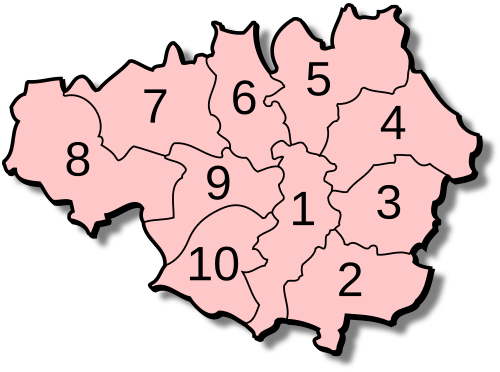
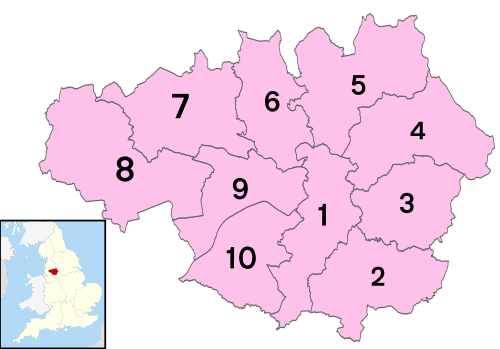 グレーター・マンチェスターの地区 大都市圏 | |
| 地区 | |

.jpg/500px-Peel_Monument_-_August_2022_(1).jpg)

グレーター・マンチェスターはイングランド北西部の儀礼的な州です。北はランカシャー、東はダービーシャーとウェスト・ヨークシャー、南はチェシャー、西はマージーサイドに接しています。最大の集落はマンチェスター市です。
州の面積は493平方マイル(1,277 km 2)[5]で、高度に都市化されており、人口は280万人です。州の居住地の大部分はグレーターマンチェスター市街地の一部であり、チェシャーとマージーサイドに広がり、英国で2番目に人口の多い都市部です。マンチェスター市が最大の居住地です。他の大きな居住地はアルトリンチャム、ボルトン、ロッチデール、セール、サルフォード、ストックポート、ウィガンです。グレーターマンチェスターには、マンチェスター、サルフォード、ボルトン、ベリー、オールダム、ロッチデール、ストックポート、テイムサイド、トラフォード、ウィガンの10の大都市圏があり、各自治体はグレーターマンチェスター統合当局を通じて連携しています。この郡は、1974年4月1日に、チェシャー州北東部、ランカシャー州南東部、およびヨークシャー州西ライディング地方の小さな一部から設立されました。
グレーター・マンチェスターの中心部と南西部は低地で、北西部のウェスト・ランカシャー海岸平野や南西部のチェシャー平野に似ている。北部と東部はペナイン山脈の一部で、北西部はウェスト・ペナイン・ムーアズ、北東部はサウス・ペナイン山脈、東部はピーク・ディストリクトとなっている。この州の川のほとんどはペナイン山脈に源を発し、マージー川とアーウェル川の支流となっている。アーウェル川もマージー川の支流である。この州はマンチェスター船舶運河によってマージー川河口とつながっており、グレーター・マンチェスター内の全長はマージー川とアーウェル川の 運河区間で構成されている。
現在のグレーター・マンチェスターは、産業革命まで大部分が田舎だったが、その後急速に工業化が進んだ。この地域の町や都市は、ランカシャー炭田の開発に支えられ、綿織物製造の中心地となった。この地域は工学と科学の中心地でもあり、初の都市間鉄道やアーネスト・ラザフォードの先駆的な原子核分裂研究などの成果につながった。20世紀半ばの産業空洞化以降、この州はサービス、メディア、デジタル産業の中心地として台頭し、ギターやダンスミュージック、サッカーチームで有名である。[6]
歴史
英国人
グレーター・マンチェスターは1974年まで創設されなかったが、その集落の歴史は数世紀に遡る。特にメラーでは鉄器時代の居住の証拠があり、[7]また、ウィガンの一部であったと考えられているチョヒオンというケルト系ブリトン人の集落も知られている。[8]ストレトフォードもケルト系ブリガンテス族が占領していたと考えられている土地の一部で、マージー川南側のコルノビイ族との境界に位置していた。[9]マンチェスターのキャッスルフィールド[10]とサドルワースのキャッスルショー・ローマ砦[11]にある1世紀の砦の遺跡はローマ占領の証拠である。
サルフォードシャー
.png/500px-Greater_Manchester_(ancient).png)
1086年のドゥームズデイ・ブックには、マージー川からリブル川までの地域がチェシャーとともに測量された地域として記録されており、その地域は部分的に測量されたと考えられている。[12]
ランカシャーの創設から18 世紀まで、現在の州とほぼ同じだがより小さな面積を持つ、この州の古代の区分はサルフォードシャーとして知られていました。この区分 (後に 100 のワペンタイクとなった) には、いくつかの教区、タウンシップ、および市場町がありました。数世紀後に州となったマージー川とテイム川の南側のその他の地域はチェシャーの管轄下にあり、一方サドルワース地域とモズリーの小さな一部は歴史的にヨークシャーの一部です。
マンチェスタートゥム

18世紀後半から19世紀初頭にかけて、産業革命により地元の家庭内システムが変革した。機械化によってこの地域の繊維産業の工業化が可能になり、綿産業の急速な成長と付随産業の拡大が引き起こされた。[13]この地域は国内の フランネルやフスチアン布の生産によりイングランドの毛織物貿易の中心地となり、地域間貿易のシステムが促進された。[14] [15] [16] 18世紀、ドイツの貿易業者がマンチェスターとその周辺の地域を指すためにマンチェスタートゥムという名前を作り出した。 [17]
労働者を収容し、商品を輸送し、世界市場向けに綿製品を工業規模で生産するために、テラスハウスの列、工場、道路などのインフラが建設されました。 [13] [16]マンチェスターとその周辺のタウンシップは、工業用繊維生産と加工のブームによってもたらされた無計画な都市化のプロセスの一環として、19世紀初頭に「驚くべき速度で」拡大し始めました。[18]この人口増加により、マンチェスターと周囲の工場街の弧の間に「活発な同心円状の成長」がもたらされ、住宅、工場、輸送インフラが着実に増加して形成されました。[19]ベリー、オールダム、ボルトンなどの場所は国内で中心的な経済的役割を果たし、19世紀末までには世界で最も重要で生産性の高い綿花生産の町のいくつかになりました。[20]しかし、マンチェスターは最も人口の多い集落であり、主要都市であり、世界最大の綿製品市場であり、[21] [22]この地域の中心地でもありました。[23] 1835年までに「マンチェスターは間違いなく世界初かつ最大の工業都市」となり、[22] 1848年までに都市のスプロール現象により、市は周囲の町や内陸部と融合し、1つの連続した大都市圏を形成しました。[19]この地域は、1883年のマンチェスター運河計画文書に「マンチェスター、サルフォード、および郊外のタウンシップ」として記録されています。[24]
この都市圏は「1890年から1915年にかけて商業的に最盛期を迎えたヴィクトリア朝の大都市」であった。[25] 1910年代には、この都市圏を単一の組織として管理するための地方自治体改革が提案された。[26]自治体の文脈での使用は、 1889年にロンドン州が創設されたとされたことに対する回答として提出された1914年の報告書に登場した。[26]この報告書は、「商業的に知られているマンチェスター」を認識するために州を設立すべきであると提案し、「マンチェスターから半径8マイルまたは9マイル以内のすべての自治体と小規模な当局を含む、サウスランカシャーの大部分とチェシャーの一部」を形成する地域に言及した。[26] [27]
都市計画家のサー・パトリック・ゲデスは、 1915年の著書『進化する都市』で、 「ランカシャーが認識している以上に、もうひとつのグレーター・ロンドンが成長しつつある」と書いている。[28] マンチェスター・イブニング・クロニクル紙は、 1935年4月に「グレーター・マンチェスター ― 納税者の救済」という見出しで、この地域の「地域統一」の問題を前面に押し出した。同紙は、「マンチェスターと周辺自治体全体の公共サービスのより大規模な統合の可能性を探ることを求める声が高まっている」と報じた。 [29]当時、この問題は、特にマンチェスターとサルフォードの地域の指導者によって頻繁に議論されていた。サルフォード市長は、このアイデアへの支持を誓い、「マンチェスター、サルフォード、およびグレーター・マンチェスターを構成する周辺地区の重要なサービスが統合される」日を楽しみにしていると述べた。[29]第二次世界大戦により提案は中断されたが、その後10年間で、この地域の地方自治体改革の提案のペースは速まった。[30] 1947年、ランカシャー州議会は、マンチェスターと周辺地域を含むランカシャー州の変化するニーズを満たすために、3つの「ライディング」システムを提案した。 [30]他の提案には、直接選挙で選ばれる地域機関であるマンチェスター州議会の設立が含まれていた。1951年、英国の国勢調査は、南東ランカシャーを均質な大都市圏として報告し始めた。[30]
セルネック
1958年地方自治法は、南東ランカシャー地域(その名前にもかかわらず、北東チェシャーの一部を含む)を特別検討地域に指定した。イングランド地方自治委員会は1965年12月に勧告案を提示し、マンチェスターを取り囲む大都市圏を基盤とした新しい郡を提案し、現代のグレーターマンチェスター自治区に相当する9つの最も目的のある自治区(ウィガンを除く)を設けた。この検討は、最終報告書が発表される前に廃止され、王立地方自治委員会が承認した。[31]
王立委員会の1969年の報告書、通称レッドクリフ=モード報告書は、当時の地方自治制度の多くを廃止することを提案した。委員会は、都市部と農村部を別々に管理する制度は時代遅れであるとし、都市部は農村住民に雇用とサービスを提供しており、開けた田園地帯は都市住民のレクリエーションに利用されていると指摘した。委員会は、通勤、サービスの提供、どの地方新聞が読まれているかなど、多くのレベルでの地域の相互依存性を考慮した上で、新しい行政都市圏を提案した。[32]この地域は、今日のグレーター・マンチェスターとほぼ同じ北の境界を持っていたが(ロッセンデールは含まれていた)、チェシャー(マクルズフィールド、ウォリントン、アルダリー・エッジ、ノースウィッチ、ミドルウィッチ、ウィルムスロー、リムを含む)、ダービーシャー(ニューミルズ、ホエリー・ブリッジ、グロソップ、チャペル・アン・ル・フリスの各町- 少数派の報告書ではバクストンを含めるよう提案されていた)よりはるかに広い領域をカバーしていた。[33]大都市圏は、ウィガン、ボルトン、ベリー/ロッチデール、ウォリントン、マンチェスター(サルフォードとオールド・トラッフォードを含む)、オールダム、アルトリンチャム、ストックポート、テイムサイドを基準として9つの大都市圏に分割されることになっていた。[33]報告書は「この大都市圏の便宜上の名称の選択さえ難しい」と指摘した。[34] 7年前、英国協会が「南東ランカシャー大都市圏」を定義するために作成した調査では、「グレーター・マンチェスターではない...その主な特徴の1つは、町の顕著な個性であり...すべての町は、地域的重要性を超えた産業および商業の歴史を持っている」と指摘しました。 [35]セルネック(またはSELNEC )という用語は、南東ランカシャーと北東チェシャーの略語としてすでに使用されていました。レッドクリフ・モードはこれを「利用できる最も便利な用語」として採用し、南東ランカシャー、北東および中央チェシャーに修正しました。[33]

1968年運輸法に続いて、1969年にSELNEC旅客運輸局(地域の公共交通機関を調整および運営する機関)が設立され、提案されたSelnecよりも狭い地域を管轄し、最終的なグレーターマンチェスターとも異なっていた。レッドクリフ・モード地域と比較すると、マクルズフィールド、ウォリントン、ナッツフォードは除外されていたが、ダービーシャーのグロソップとウェスト・ライディング・オブ・ヨークシャーのサドルワースは含まれていた。レッドクリフ・モード地域と最終的なグレーターマンチェスターの両方に含まれるウィガンは除外されていた(ただし、1958年法の見直し地域には含まれていなかった)。[36]
レッドクリフ=モードの勧告は、1970年2月に労働党支配の政府によって受け入れられた。[37]レッドクリフ=モード報告書は1970年の総選挙後に保守党政府によって拒否されたが、地方自治体改革への取り組みはあり、マンチェスター周辺の大都市圏を中心とした大都市圏の必要性は受け入れられた。新政府の当初の提案は、レッドクリフ=モード報告書のセルネックよりはるかに小規模で、ウィンズフォード、ノースウィッチ、ナッツフォード、マクルズフィールド、グロソップなどの地域は、競争力を維持するのに十分な収入を各州議会が確保できるように元の州に保持された(チェシャー州議会は廃止された)。[37]その他の後期の変更には、提案されたベリー/ロッチデール当局(レッドクリフ=モード報告書から保持)をベリー大都市圏とロッチデール大都市圏に分割することが含まれていた。ベリーとロッチデールは、当初は単一の地区(地元議員マイケル・フィドラーによって「ボッチデール」と名付けられた)を形成する予定であったが[38] [39]、別々の自治区に分割された。地区のバランスをとるために、ロッチデール自治区はオールダムからミドルトンを取得した。[40]法案が可決される間、ウィットワース、ウィルムズロー、ポイントンの町は、新しい郡への編入に反対し、成功した。[37]
1974–1997
.jpg/500px-Stockport_(GMPTE).jpg)
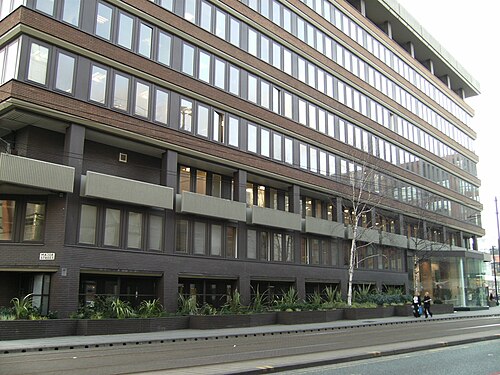

1974年にグレーター・マンチェスターに編入された地域は、以前はチェシャー、ランカシャー、ウェスト・ライディング・オブ・ヨークシャーの行政区と8つの独立した郡区の一部を形成していました。[42] 1970年代初頭までに、この境界線のシステムは「時代遅れ」であり、「自動車旅行の影響と地方自治体の責任の大幅な増加の両方に対応するにはまったく不十分」であると評されました。[45]
1972年地方自治法はイングランドの地方自治を改革し、1974年4月1日に施行された。この地域はグレーター・マンチェスターと名付けられ、大都市圏の郡に指定された。これは2層の郡と地区のシステムであった。[41]この法律は正式には であったが、[46]グレーター・マンチェスター・カウンティ・カウンシル(GMCC) は1973年の選挙以来運営されていた。[47]地方自治法が発効した日のタイムズ紙の主要記事は、「この新しい取り決めは、ある程度の愛着と忠誠心を呼び起こす馴染みのある地理と、現代の計画手法が効果的に機能する運営規模との調和を求める妥協案である」と指摘した。 [48]フランゴプロは、グレーター・マンチェスターの創設は「歴史と伝統を通じて、何世紀にもわたって町と村のコミュニティ間の絆を築いてきた地域の公式な統一であり、それぞれのコミュニティはこの地域の特徴を体現していた」と述べた。[49]グレーター・マンチェスターという名前は、公聴会の結果セルネックよりも好まれ、採用されたが、[50]反対派は「グレーター・マンチェスターは神話だ。忌まわしい。茶番だ」と主張した。[51]
1974年1月までに、グレーター・マンチェスターを代表する共同作業部会は、グレーター・マンチェスター州議会による実施に備えて、州構造計画を策定した。この計画では、将来の大都市圏の目標が示された。 [52]最優先事項は、産業空洞化によって打撃を受けた州の物理的環境と文化施設を改善することにより、住民の生活の質を向上させることであった。グレーター・マンチェスターの基本的なインフラの多くは、19世紀の成長期に作られたものであり、現代のライフスタイルには適していなかった。[53]その他の目標は、グレーター・マンチェスター中心部の人口減少傾向を逆転させること、地域のレジャー施設に関する評判の悪さを改善するために田舎の公園に投資すること、および州の交通インフラとパターンを改善することであった。[54]
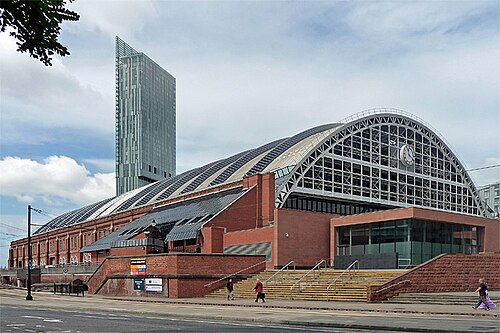
特にチェシャーからの政治的反対により、グレーター・マンチェスターは、王立委員会が有効な行政上の大都市圏として概説した90の旧地区のうち、都心部の62地区のみをカバーした。[55]この立場で、GMCCは「南に突然切り詰められた恣意的な大都市圏を計画している」ことに気づき、近隣の州議会といくつかの土地利用、交通、住宅プロジェクトについて交渉しなければならなかった。[55]しかし、GMCCによる「環境活動の主要プログラム」は、都心部のスラム街の社会的衰退を大まかに逆転させることに成功した。[55]レジャーとレクリエーションの成功には、マンチェスター市中心部の鉄道駅を改装して文化イベントに利用したグレーター・マンチェスター展示センター(G-Mexセンターとしてよく知られ、現在はマンチェスター・セントラルというブランド名になっている) [56]や、GMCCがその境界内に5つの新しいカントリーパークを創設したことなどがある。 [57]しかし、GMCCは郊外の代表者からマンチェスター中心主義的すぎると批判された。[58]
設立から10年後、労働党が支配する大都市圏のカウンシルとグレーター・ロンドン・カウンシル(GLC)は、過剰支出と高額な税金徴収をめぐって、マーガレット・サッチャー保守党政権といくつかの注目を集める衝突を起こした。この問題に関する政府の政策は1982年を通じて検討され、保守党は1983年総選挙のマニフェストに「大都市圏のカウンシルとGLCを廃止する約束」を掲げた。[59] [60]グレーター・マンチェスター・カウンシルは、1985年地方自治法に基づき、1986年3月31日に廃止された。大都市圏のカウンシルが労働党に支配されていたため、廃止は政党政治によるものだとの非難が巻き起こった。[59]全国地方自治職員協会の事務総長は、これを「完全に冷笑的な策略」と評した。[61] GMCCの機能のほとんどは、10のグレーターマンチェスター大都市圏地区議会に委譲されましたが、緊急サービスや公共交通機関などの機能は共同委員会に引き継がれ、引き続き郡全体で運営されました。[62]グレーターマンチェスター当局協会(AGMA)は、郡議会の郡全体のサービスの多くを継続するために設立されました。[63]大都市圏郡は、法律上、地理的な基準枠として存在し続けています。[64]たとえば、欧州連合内の統計目的のNUTS 2行政区分として。[65] 1974年以来副官地域であったが、グレーターマンチェスターは、 1997年7月1日に副官法により儀礼郡に含まれました。[66]
統合権限
1998年、グレーター・ロンドンの住民は住民投票で、市長と郡の選挙で選ばれた議会を持つ新しいグレーター・ロンドン庁の設立に賛成票を投じた。 [67]新地方政府ネットワークは、進行中の改革努力の一環として、グレーター・マンチェスターと他の大都市圏に基づく新しいマンチェスター市域の創設を提案し、一方、公共政策研究所の都市センターが発表した報告書は、マンチェスターとバーミンガムに基づく2つの行政都市域の創設を提案した。
マンチェスター市域は、当初、2004年の戦略文書「前進:ノーザンウェイ」で定義された8つの都市域の1つとして政府文書に登場した。[68] 2007年7月、財務省は地方経済開発および再生の見直しを発表し、政府は、交通、技能、計画、経済開発に関する権限を含む都市地域活動の法定枠組みを形成するために協力することを希望する都市域を許可すると述べた。[69]マンチェスター市域は、マンチェスター市とサルフォード市、ストックポート、テイムサイド、トラフォード、ボルトン、ベリー、オールダム、ロッチデール、ウィガンの大都市圏自治区、ハイピーク、ウォリントンの各自治区、および旧コングルトン、マクルズフィールド、ヴェイルロイヤルの自治区の15の地方自治体を包含していた。[70]
2008年1月、AGMAはグレーター・マンチェスターをカバーする正式な政府構造の創設を提案した。[71]この問題は、グレーター・マンチェスターで提案されている渋滞課金に関して2008年6月に再浮上した。リチャード・リース卿(マンチェスター市議会議長)は「[渋滞課金に関する住民投票を実施すべき]という結論に達した。なぜなら、グレーター・マンチェスターには、この決定を下す権限を持つ間接的または直接的に選出された機関がないからだ」と述べた。[72] 2008年7月14日、グレーター・マンチェスターの10の地方自治体は、戦略的かつ統合された郡をまたぐマルチエリア協定に合意した。これは、英国中央政府からのより大きな自治権と引き換えに、地区議会が「境界の人為的な制限に挑戦するために協力する」ことを目的とした自主的な取り組みである。[73] 2008年12月にグレーター・マンチェスター交通革新基金に関する国民投票が行われ、[74]投票者は平日のピーク時間帯のみに課される混雑料金と連動した公共交通機関の改善計画を「圧倒的多数で拒否」した。[75]
2007年から2008年の金融危機と闘う上での潜在的利点を強調したAGMAの入札を受けて、 2009年の英国予算で、グレーター・マンチェスターとリーズ市域に法定都市域パイロットの地位が与えられ、(希望すれば)構成地区議会が資源をプールし、グレーター・ロンドン庁に匹敵する権限を持つ法定統合当局になることができると発表された。[76]このパイロットの表明された目的は、統合当局による経済成長と持続可能な開発への貢献を評価することであった。[77] 2009年の地方民主主義、経済開発および建設法により、 10の議会の承認を待って、公共交通、スキル、住宅、再生、廃棄物管理、カーボンニュートラル、および計画許可に関する権限が委譲されたグレーター・マンチェスターの統合当局の設立が可能になった。[76] [78]このような戦略的な問題は、中央政府の意見を聞かずに、大都市自治区の議員から任命された10人のメンバー(各自治区を1人が代表し、各議会が1人の代理を指名する)による強化多数決投票システムを通じて決定される。グレーター・マンチェスターの10の地区議会は、2010年3月29日にグレーター・マンチェスター統合当局(GMCA)の設立を承認し、コミュニティーおよび地方自治省と運輸省に憲法の最終勧告を提出し、2日後にコミュニティー大臣のジョン・デナムが憲法を承認し、承認された憲法とともに法案草案に関する15週間の公聴会を開始した。[79]
GMCAに取って代わられたグレーター・マンチェスター当局協会の要請を受けて、[80] [81] [82]新しい当局は2011年4月1日に設立された。[83]同日、グレーター・マンチェスター交通委員会も、議会人口に応じて割り当てられた33人の議員(およそ住民75,000人につき1人の議員)から結成され、グレーター・マンチェスターの交通機関の運営と財政を精査し、これらの機関の決定と政策を承認し、統合当局の承認を得るための戦略的な政策提言やプロジェクトを策定した。[76] 2014年11月3日、ジョージ・オズボーン財務大臣は、GMCAの11人目のメンバーとして、2017年から「交通、住宅、計画、警察に関する権限」を持つ直接選挙で選出されたグレーター・マンチェスター市長が就任すると発表した。 [84]
地理

グレーター・マンチェスターは、面積493平方マイル(1,277 km 2)の内陸州である。 [5]ペナイン山脈は州の北と東にそびえ、北西にはウェスト・ペナイン・ムーアズ、北東にはサウス・ペナイン山脈、東にはピーク・ディストリクトがある。州の西にはいくつかの炭田(主に砂岩と頁岩)があり、南にはチェシャー平原が広がっている。 [13]マージー川、アーウェル川、テイム川がグレーター・マンチェスターを流れているが、いずれもペナイン山脈に源を発している。[13]ダグラス川、アーク川、ロック川など、他の川も主要河川の支流としてこの地域を横切っている。[13] ブラックチューヘッドは、ピークディストリクト国立公園の一部であるグレーターマンチェスターの最高地点で、サドルワース教区内の海抜1,778フィート(542メートル)の高さにあります。 [85] グレーターマンチェスターは、商業、金融、小売、行政の中心地、通勤郊外、住宅地を含む密集した都市開発と産業開発が特徴で、ライトレール、道路、高速道路、運河などの交通インフラが点在しています。[ 13]グレーターマンチェスターには、高密度の都市部、郊外、半田園地帯、田園地帯が混在していますが、土地利用は主に都市です。[86]グレーターマンチェスターの建築環境では、赤レンガと砂岩が建築材料として主に使用されていますが、都市と町の中心部には、現代的な材料で構成された構造物、高層タワー、19世紀、20世紀、21世紀のランドマーク的な建物があります。[13]

マンチェスター市中心部はグレーター・マンチェスターの商業と地理的中心地であり、[87] [88] [89]、隣接するサルフォードとトラフォードとともに、都市計画と公共交通の目的でグレーター・マンチェスターの「地域の中心地」と定義されています。[87] [89] [90] [91] [92]市中心部と隣接するサルフォードとトラフォードとの政治的、経済的結びつきは、イングランドの町や地区の中心地から大都市レベルの中心地への移行に伴って強化され、[93] [90]このエリアの高層のランドマークビルは、中心業務地区としての視覚的な方向指示点となっています。[13]しかし、グレーター・マンチェスターは10の大都市圏を持つ多中心州でもあり、[86]各大都市圏には主要な町の中心地(場合によっては複数)と多くの小さな集落があります。[86]主要都市はマンチェスター市中心部を取り囲んでおり、その間にはデントン、ミドルトン、フェイルズワースなどの郊外の町があり、これらは地域中心部と主要都市中心部の両方の郊外にあります。 [94]これらの要因が組み合わさって、グレーターマンチェスターはロンドンを除く英国で最も複雑な「多中心機能都市圏」となっています。[86] [58]
グレーター・マンチェスター市街地は、英国国家統計局の定義によると、グレーター・マンチェスターを中心とする大都市圏または連続した市街地である。2011年の推定人口は2,553,379人で、英国で2番目に人口の多い市街地となり、2011年の国勢調査時点での面積は630.3 km 2 (243.4 平方マイル)であった。 [95]欧州連合は、大都市圏を単一の均質な都市地域に指定している。[96]市街地には、田園地帯や小さな村落、およびウィガンやマープルなどの隣接していない都市部を除いた、グレーター・マンチェスターの大部分が含まれる。[95]グレーター・マンチェスターの境界線の外側には、チェシャー州のウィルムスローやアルダリー・エッジ、ダービーシャー州のグロソップやハドフィールド、ランカシャー州のウィットワースなど、リボン状の開発によって都市圏につながったいくつかの隣接する居住地域と外れ値が含まれます。[95]この都市圏は、イングランド北部に広がる人口940万人の大都市圏の一部を形成しています。[97] [98] [99]

気候
グレーター・マンチェスターは、イギリス諸島のほとんどの地域と同様に、比較的涼しい夏と穏やかな冬が特徴の温暖な海洋性気候です。この郡の平均年間降水量は806.6 mm (31.76 インチ) [100]で、イギリスの平均は1,125.0 mm (44.29 インチ) [101]です。また、平均降雨日数は140.4 mm (5.53 インチ) [100]で、イギリスの平均は154.4 mm (6.08 インチ) [101]です。平均気温はイギリスの平均をわずかに上回っています。[101]グレーター・マンチェスターは湿度が比較的高いため、郡内で行われる繊維製造工程が最適化され、破損のない状態になるのに役立っています。都市部の温暖化の影響で市街地では降雪はめったにありませんが、北西部のウェスト・ペナイン・ムーアズ、北東部のサウス・ペナイン、東部のピーク・ディストリクトでは降雪量が多く、郡外に続く道路は大雪のために閉鎖されることがあります。 [102]これには、スタンデッジ経由のA62道路、[103] M62のペナイン区間[ 104]およびシェフィールドに向かうA57、スネーク・パスが含まれます。[105]グレーター・マンチェスターの最南端では、ウッドフォードの英国気象局気象観測所が2010年1月8日に−17.6 °C (0.3 °F) の気温を記録しました。[106]
動植物

都市の無秩序な拡大という評判とは裏腹に、[115] [116]グレーター・マンチェスターには都市の流動を抑制する緑地帯があり、また「幅広く多様な」野生生物や自然の生息地がある。[115]たとえば、ボルトン、ベリー、ストックポートの森林に覆われた谷、ロッチデール、オールダム、スタリーブリッジの北と東の荒野、ウィガンとリーの間の葦原には、国家的に重要な動植物が生息している。[115]成熟した森林、低木地帯、草地、高原、苔地、農地、湖、湿地、川の谷、堤防、都市公園、郊外の庭園は、グレーター・マンチェスターに見られる生息地であり、生物多様性にさらに貢献している。[116]グレーター・マンチェスター生態学ユニットは、生物学的に重要な場所を分類している。[117]
グレーター・マンチェスターにある21の特別科学的関心地域(SSSI)と、グレーター・マンチェスターの共有地12.1平方マイル(31 km 2)[118]は、グレーター・マンチェスター地方記録センター、グレーター・マンチェスター生物多様性プロジェクト、マンチェスター・フィールド・クラブなど、野生生物の保護と地域の自然史の保存に取り組んでいる組織にとって特に興味深いものです。[119] [120] [121] SSSIの中には、チャット・モスの端にある古代の泥炭地のネットワークを形成するアストリー・モスとベッドフォード・モスがあり、[115]チャット・モスは10.6平方マイル(27 km 2)で、グレーター・マンチェスターで最大の主要農地エリアを構成し、郡内で最大の半自然林ブロックを含んでいます。[122]ペニントンフラッシュカントリーパークのようなウィガンフラッシュは石炭採掘の副産物で、地盤沈下によって生じた窪地に水が集まり、グレーターマンチェスターの重要な葦原資源を形成しています。[115] 1979年にオープンしたセールウォーターパークは、セールにある152エーカー(62ヘクタール)の田園地帯と公園で、マージー川沿いの52エーカー(21ヘクタール)の人工湖が含まれています。[123]
クローバー、スイバ、イラクサ、アザミは一般的で、グレーター・マンチェスターで自生している。[116] ヒース(Calluna vulgaris )は、ピーク・ディストリクト国立公園のサウス・ペナイン山脈とダーク・ピーク地域にあるサドルワース・ムーアなどの高地で優占している。[124]ロッチデール運河には、国内で絶滅が危惧されている水生植物、ミズオオバコ(Luronium natams )が浮かんでいる。 [115] 2002年、プラントライフ・インターナショナルは、郡の花キャンペーンを開始し、一般の人々に郡の野生の花の紋章を推薦し投票するよう求めた。高地の湿った窪地が原産の、ふわふわした白い花を咲かせるワタスゲ(Eriophorum angustifolium)が、グレーター・マンチェスターの郡花として発表された。[125] [126] [127]
スズメ、ムクドリ、クロウタドリは、グレーター・マンチェスターで最も生息数の多い鳥類である。カササギと野生化したハトは一般的で、州内のあらゆる生息地で繁殖する。[128]野生化したインコの群れは、南マンチェスターの多くの公園で見ることができる。 [129]バーチフィールズ公園、ウィットワース公園、プラットフィールズ公園など。[130] [131] [132]これらの鳥は英国に移されたことで、この国で「唯一の帰化インコであり、世界で最も北で繁殖するインコ」となった。[132]サウス・ペナイン山脈には、国際的に重要な数のムクドリ、ダイシャクシギ、マーリン、トビも生息している。[118]アレクサンドラ公園の湖には、小型のカメの一種であるミシシッピアカミミガメが多数生息していることが知られている。[133]
歴史的な郡境


グレーター マンチェスターは、チェシャー、ランカシャー、およびウェスト ライディング オブ ヨークシャーの一部から構成されています。チェシャーとランカシャーの歴史的な境界は、アーウェル川とマンチェスター運河の両方の地点から始まります。トラフォード、ストックポート、およびテイムサイドの一部を形成する郡の南部には、アルトリンチャム、セール、ストックポート、マープル、チードル ハルム、ハイド、スタリーブリッジ、およびウィゼンショー (1920 年代にマンチェスターの一部になった) があり、これらはすべて歴史的にチェシャーの一部です。テイムサイドのデントンとオーデンショーは、歴史的にランカシャーの一部でした。一方、アーウェル川の北からチョーリー、ダーウェン、セントヘレンズ、ロッセンデールまでの郡の大部分は、マンチェスター、サルフォード、エクルズ、ボルトン、ベリー、プレストウィッチ、スウィントン、ペンドルベリー、ウィガン、リー、ロッチデール、オールダム、アシュトン・アンダー・リーン、ストレトフォード、アームストン、オールド・トラッフォード、チャダートン、ミドルトン、ヘイウッド、ラドクリフ、ミルノウ、ホーウィッチ、ブラックロッド、ウェストホートン、リトルバラ、アサートン、アシュトン・イン・メイカーフィールド、ゴールボーンを含む、歴史的なランカシャー州の大部分を形成している。サドルワースとロッチデールの一部を含む郡の東部と北東部は、歴史的なウェスト・ライディング・オブ・ヨークシャー州の一部を形成している。[134] [135]
歴史ある郡への再加盟を求める声
グレーター・マンチェスターの成立以来、住民は遺産、文化、統治を通じて、大都市圏と歴史ある郡における自分たちのアイデンティティについて議論してきた。オールダム自治区のサドルワースの住民は、グレーター・マンチェスターおよびオールダム議会からの独立と、グレーター・マンチェスターとウェスト・ヨークシャー周辺のペナイン山脈をカバーする新しい当局の設立を求めており、サドルワース・ホワイト・ローズ協会は「歴史的なヨークシャーのウェスト・ライディング」と書かれた看板を立てた。[136] 2015年の請願では、ウィガンが歴史と立地を理由に、グレーター・マンチェスターからの独立を申請し、ランカシャーに再加入するよう求めた。[137]ホーウィッチ、アサートン、ブラックロッド、ウェストホートンがグレーター・マンチェスターの新しい地域を形成するか、ランカシャー内の別の地域になり、おそらくチョーリー自治区の管轄になるという提案があったが、これは追求されなかった。[138]
ガバナンス
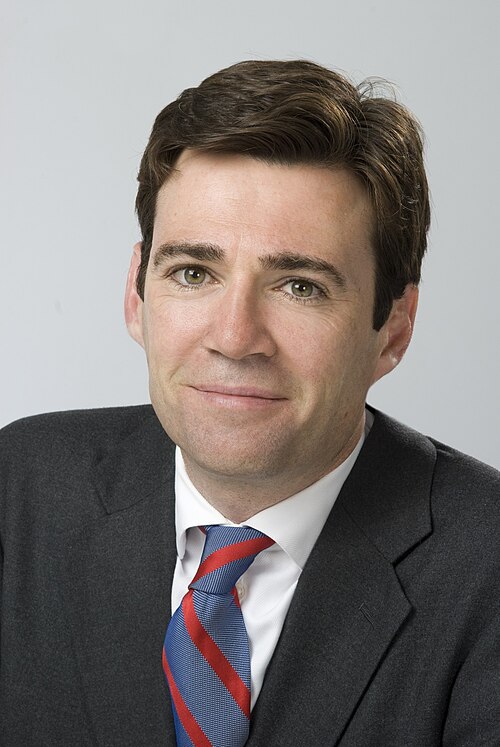
グレーター・マンチェスター統合当局(GMCA)は、グレーター・マンチェスターの地方自治の最上位の行政機関である。2011年4月1日、英国の地方自治体では唯一の試験的な統合当局として設立された。[139]設立当初は、間接的に選出された10名のメンバーで構成され、各メンバーはグレーター・マンチェスターを構成する10の都市自治区のいずれかから直接選出された議員であった。当局は、その権限のほとんどを2000年地方自治法および2009年地方民主主義、経済開発および建設法に由来しており、[139] 2011年にさまざまな単一目的の合同委員会および準政府機関に取って代わり、公共交通、技能、住宅、再生、廃棄物管理、カーボンニュートラル、および計画許可に関する権限を持つグレーター・マンチェスターの正式な行政機関となった。[139]グレーター・マンチェスター交通局などの機能的執行機関は、これらの分野でのサービスの提供に責任を負っている。[139] 2014年11月3日、グレーターマンチェスター統合当局への権限委譲協定が締結され、さらなる権限と責任が委譲され、グレーターマンチェスターの選出市長が設立された。[140] 2016年4月から、グレーターマンチェスターは、権限委譲協定により、イングランドで初めて「医療費の完全な管理権を獲得」した地域となった。権限委譲協定では、グレーターマンチェスターの新しい直接選出市長を含む地元のリーダーの管理下で、地域の医療および社会福祉制度を1つの予算の下に統合する。[141] 2017年5月4日、労働党の政治家アンディ・バーナムが初代市長に選出され、[ 142] GMCAの11人目のメンバーとして参加し、リーダーを務めた。[143]
GMCAの下には、グレーター・マンチェスターの10の地区(ボルトン、ベリー、マンチェスター市、オールダム、ロッチデール、サルフォード市、ストックポート、テイムサイド、トラフォード、ウィガン)の10の議会がある。これらの地区議会は公共サービスに対して最大の権限を持ち、地方税、教育の提供、公営住宅、図書館、医療などの事項を管理している。10の都市自治区のうち8つは、現在では最大の人口の中心地であり、歴史的、政治的にも重要な8つの旧カウンティ自治区にちなんで名付けられた。[144]一例として、ストックポート都市自治区は旧カウンティ自治区のストックポートの町を中心としているが、チードル、ガトリー、ブラムホールなどの他の小規模な集落も含まれている。[144] 2つの大都市自治区の名前には中立的な名前が与えられたが、それは、それらが創設された当時、行政の中心地として提案される町についての合意がなく、どちらにも郡自治区がなかったためである。これらの自治区は、それぞれアシュトン・アンダー・ラインとストレトフォードを中心とするテイムサイドとトラフォードであり、地理的および歴史的な起源を参照して命名されている。[144]グレーター・マンチェスターの地方自治体の最下層の正式な階層は教区議会であり、グレーター・マンチェスターのさまざまな行政教区を管轄し、維持、保守、および小額の助成金に関する限定的な権限を持っている。
1974年に州が創設されてから最初の12年間、グレーター・マンチェスターは2層制の地方自治制度を採用し、大都市の自治区議会はグレーター・マンチェスター州議会と権限を共有していた。[145]グレーター・マンチェスター州議会は、ピカデリー・ガーデンズ近くの現在のウェストミンスター・ハウスに拠点を置く戦略的機関であり、グレーター・マンチェスターの10の大都市自治区から選ばれた106人の議員で構成されていた。[146]これは、交通、戦略計画、緊急サービス、廃棄物処理などの地域サービスを運営する地域小組織であった。1986年、他の5つの大都市の州議会およびグレーター・ロンドン議会とともに、グレーター・マンチェスター州議会は廃止され、その権限のほとんどが自治区に委譲された。[145] 1986年から2011年の間、自治区は事実上単一の自治体であったが、グレーターマンチェスター自治体協会(AGMA)の下で自主的に協力することを選択した。この協会は、公共交通機関や共有労働市場など、グレーターマンチェスターの共通の関心事に関する問題に対して郡全体で協調的なアプローチを構築し、中央政府や欧州連合に意見を表明する役割を果たした。
.jpg/500px-Bus_stop_D_in_Denton_(geograph_3007109).jpg)
「成功したブランド」として使われているものの、[147]グレーター・マンチェスターの政治は「根強い地方主義とそれに関連する対立」によって特徴づけられており、歴史的に地域主義に抵抗してきた。[58]グレーター・マンチェスターの主要都市は「激しい独立」を維持しており、[23]つまり、グレーター・マンチェスターは広く自主的なベースで「自治体間の調整」を用いて管理されている。[58] 10の自治区議会のうち8つが(大部分) 1986年以来労働党によって管理されてきたことは、郡レベルで地区間の非公式な協力を維持するのに役立ってきた。[148]郡議会の廃止後、グレーター・マンチェスターの10の当局は、地方交通計画などの政策問題で自主的に協力し、グレーター・マンチェスター郡記録事務所に資金を提供し、[149]地方サービスは法定共同委員会によって管理された。現在、グレーター・マンチェスター統合当局の指揮下にあるこれらの共同委員会は、州全体の公共交通機関の計画と調整を担当するグレーター・マンチェスター交通局(TfGM)、共同消防救助当局によって管理されているグレーター・マンチェスター消防救助サービス、およびグレーター・マンチェスター廃棄物処理局です。これらの共同委員会は、10の自治区(ウィガン首都圏自治区を含まない廃棄物処理局を除く)のそれぞれから任命された評議員で構成されています。グレーター・マンチェスター警察は、以前は共同警察当局によって監督されていましたが、2012年からグレーター・マンチェスター警察犯罪委員会によって短期間監督されていました[150]が、2017年に新しい地域市長が設立されたときにその機能が吸収されました。10の自治区議会は、マンチェスター空港と他の3つの英国の空港を管理するマンチェスター空港グループの共同所有者です。 [151] [152]
グレーター・マンチェスターは儀礼的な州であり、君主の個人的代理人である州知事がいる。1972年の地方自治法では、新しいグレーター・マンチェスター大都市圏の管轄地域全体がランカスター公領に含まれることが規定 されており、公領は歴史的にチェシャー州とヨークシャー西ライディング州であった地域も含むようになった。2005年3月31日まで、グレーター・マンチェスターのロール管理官はランカスター公領大法官によって任命されていたが、現在はグレートブリテン大法官によって任命されている。[153]グレーター・マンチェスターの初代州知事はウィリアム・ダウンワード卿で、1974年から1988年までその地位にあった。[154]現在の州知事はウォーレン・ジェームズ・スミスである。[155]地理的な郡として、グレーターマンチェスターは政府(国家統計局を通じて)によって郡全体の統計の収集、一般登録簿や国勢調査資料の整理と照合に利用されています。[156]
イギリス議会における代表制に関して、グレーター・マンチェスターは27の選挙区に分かれている。グレーター・マンチェスターの大部分は労働党によって議会に代表されており、一般的に労働党の牙城とみなされている。[157] [158]
2024年イギリス総選挙のグレーター・マンチェスターで の結果は次のとおりです。
人口統計


グレーター・マンチェスターの人口は2,867,800人(2021年国勢調査)で、[161]グレーター・ロンドンとウェスト・ミッドランズに次いでイングランドで3番目に人口の多い州であり、同州としては過去最高の人口となっている。グレーター・マンチェスターの愛称は「グレーター・マンチェスター語」である。[162]マンチェスター特有のマンチェスター訛りと方言は、市内および隣接地域では一般的であるが、グレーター・マンチェスターの周辺や郊外に向かうにつれて「よりゆっくりとした、より深い訛り」に取って代わられる。[23]
グレーター・マンチェスターは多様な人々が住む多文化の集積地で、2001年には少数民族人口が総人口の8.5%を占めた。 [163] [164] 2008年には、66を超える国籍の難民が同郡にいた。[165] 2001年の英国国勢調査では、グレーター・マンチェスターの住民の74.2%がキリスト教徒、5.0%がイスラム教徒、0.9%がユダヤ教徒、0.7%がヒンズー教徒、0.2%が仏教徒、0.1%がシク教徒だった。11.4%は無宗教、0.2%は別の宗教、7.4%は宗教を明言しなかった。これは英国の他の地域と同様だが、イスラム教徒とユダヤ教徒の割合は全国平均のほぼ2倍である。[166]北マンチェスターには、アシュケナージ正教会の大規模なシナゴーグであるヒートン・パーク・ヘブライ会衆がある。[要出典]グレーター・マンチェスターは、ローマカトリック教会のサルフォード教区とシュルーズベリー教区、[167] [168] [検証失敗]およびリバプール大司教区の管轄下にある。[要出典]グレーター・マンチェスターの大部分は、英国国教会のマンチェスター教区の一部であるが、[169] [検証失敗]リバプール教区内のウィガンと、チェスター教区内のストックポート、テイムサイド、トラフォードの一部を除いて。[170] [検証失敗]

20世紀半ばのグレーター・マンチェスターの産業空洞化に続いて、特にマンチェスターとサルフォードで、この地域の経済と人口が大幅に減少した。[171] [172]ビクトリア朝時代に建てられた低品質でみすぼらしいテラスハウスの広大な地域は、修繕状態が悪く、現代のニーズに適していないことが判明し、多くの都心地区は慢性的な社会的貧困と高い失業率に悩まされた。[172] [173]サルフォードとマンチェスターの市議会によるスラム街の一掃と社会住宅過剰団地の建設の増加は、グレーター・マンチェスター中心部の人口減少につながった。[174] 1970年代、1980年代、1990年代には、グレーター・マンチェスターの人口は年間8,000人以上減少した。[172]この間マンチェスターの人口は約40%減少したが(1931年の766,311人から2006年の452,000人)、グレーターマンチェスター全体の人口はわずか8%減少しただけだった。[172]
グレーター・マンチェスターの住宅ストックは様々なタイプから成ります。マンチェスター市の中心部は高層マンションで知られ、[175]サルフォードにはヨーロッパで最も高く、最も人口密度の高い タワーブロックの住宅地がいくつかあります。 [176]サドルワースには農家や織工の小屋を改装した石造りの建物があります。 [23] [177]グレーター・マンチェスター全体でテラスハウスの列が一般的で、そのほとんどはビクトリア朝時代とエドワード朝時代に建てられました。 グレーター・マンチェスターでは北部と南部で住宅価格と労働市場が異なり、[178] [179]そのため、2000年代には住宅市場再生イニシアチブにより、マンチェスター、サルフォード、ロッチデール、オールダムが現代のニーズに適さないテラスハウスのある地域と特定されました。 [179]対照的に、ブラムホールからウッドフォードを経てアルトリンチャムに至る南部グレーター・マンチェスターの町や村は、裕福な通勤街の弧を構成しています。[23]特にアルトリンチャムは、近隣のボウドンやヘイルとともに、「森林の豊かさのエリアに設備の整った住宅が立ち並ぶ株式仲買人地帯」を形成している。[180]
教育
グレーター・マンチェスターには、マンチェスター・メトロポリタン大学、ボルトン大学、法科大学、マンチェスター大学、サルフォード大学、サッカービジネス大学キャンパスの6つの大学がある。王立ノーザン音楽大学を合わせた2007年の学生数は101,165人で、グレーター・ロンドン(360,890人)とウェスト・ミッドランズ(140,980人)に次いでイングランドで3番目に多い数であり、 [181]人口一人当たりではイングランドで13番目に多い。[182]学生の大半は、ヨーロッパ最大の都市高等教育地区であるマンチェスターのオックスフォード・ロードに集中している。[183]
2010年現在、グレーター・マンチェスターの継続教育は、地域の24の大学の協会からなる合弁会社であるグレーター・マンチェスター・カレッジ・グループによって調整されています。 [184]グレーター・マンチェスター内の初等教育と中等教育は、地方教育当局を形成し、学校を管理する構成自治区の責任です。この郡には、ボルトン・スクール、ベリー・グラマー・スクール、マンチェスター・グラマー・スクール、オールダム・ハルム・グラマー・スクール、セント・ビード・カレッジ、ストックポート・グラマー・スクール、チェサムズ音楽学校など、いくつかの私立学校があります。[185]
経済

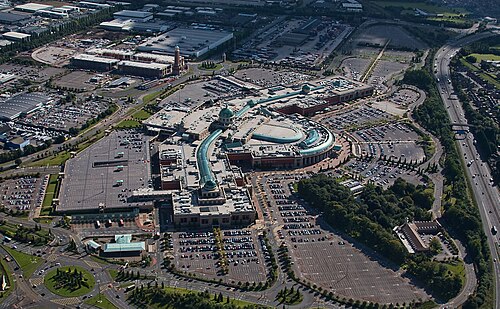
グレーター・マンチェスターの富の多くは産業革命の時代に生み出されたもので、特に繊維製造業が盛んだった。[187]世界初の綿糸工場はロイトンの町に建設され、[188] [189]この郡にはかつての工場街がいくつかある。産業考古学協会の出版物では、グレーター・マンチェスターを「イギリスの産業と都市の成長が典型的にみられる地域の1つであり、18世紀と19世紀に起きた驚異的な人口増加、専門産業都市の出現、交通革命、そして地方領主の弱体化というさまざまな要因が重なった結果生まれた」と表現している。[16]産業革命の時代から20世紀初頭にかけて、この郡の大部分は繊維製造の最前線にあった。 [187] グレーター・マンチェスター統合当局の議長であるリーのスミス男爵ピーター・スミスは、 「明らかに、グレーター・マンチェスター地域全体がかつては非常に活気のある[繊維]産業の中心地でした」と述べた。 [187]その代表は、州全体に見られるかつての繊維工場である。[16]グレーター・マンチェスターを構成する地域では、アメリカ南北戦争によって引き起こされたランカシャー綿花飢饉の間、部分的にはこれらの伝統的な部門が急速に衰退したが、主に20世紀に起こったイギリスの戦後経済不況と産業空洞化の一環として衰退した。[172] [190]
産業の再編がかなり進んだことで、この地域は産業空洞化と繊維の大量生産の衰退から立ち直ることができました。[191]歴史的に、サルフォード・キーズのドックは工業港でしたが、現在は(使われていなかった期間を経て)商業・住宅地区になっており、北帝国戦争博物館やローリー劇場・展示センターがあります。BBCは現在、サルフォード・キーズのメディアシティUKに新しい拠点を置いています。ここは、BBCノース・ウェスト、BBCスポーツ、ブルー・ピーター、そして2012年4月からはBBCブレックファストを含むいくつかのBBC部門の本拠地です。ロッチデールとマンチェスターは協同組合運動の歴史と関係があります。ロッチデール公平開拓者協会(初期の消費者協同組合)は1844年にロッチデールで設立され、[192]英国最大の相互事業であり北西イングランド最大の企業である協同組合グループは、マンチェスター中心部のワンエンジェルスクエアに本社を置いています。[194]このような経済の多様化にもかかわらず、2012年11月現在、政府はグレーターマンチェスターでの繊維生産を復活させ、ここを英国の繊維製造の全国的な拠点として復活させる計画を策定中です。[187]
今日、グレーター・マンチェスターはイングランド北西部の経済の中心地であり、ロンドンと南東イングランドを除けば英国最大の地域経済圏である。[195]グレーター・マンチェスターのGDPは827億ポンドを超え、ウェールズ、北アイルランド、北東イングランドを上回っている。[196]グレーター・マンチェスターの中心ビジネス地区である マンチェスター市中心部は、貿易と商業の主要な中心地であり、グレーター・マンチェスターに世界的なアイデンティティ、専門的な活動、雇用機会を提供している。同様に、市中心部の経済は、雇用プール、熟練した労働力、そして集団購買力としての人口を郡の他の地域に依存している。[197]今日のマンチェスターは、芸術、メディア、高等教育、商業の中心地である。2006年に公表された英国のビジネスリーダーの世論調査では、マンチェスターは英国でビジネスを構えるのに最適な場所とみなされていた。[198]イギリスで外国人観光客が最も多く訪れる都市としては3番目であり[199] 、現在ではイギリス第2の都市とみなされることも多い。[200]
2001年の英国国勢調査では、グレーター・マンチェスターには16歳から74歳までの住民が1,805,315人いた。これらの人々の経済活動は、フルタイム雇用が40.3%、パートタイム雇用が11.3%、自営業が6.7%、失業者3.5%、仕事のない学生5.1%、仕事のある学生2.6%、退職者が13.0%、家や家族の世話をしている人6.1%、恒久的な病気や障害を持つ人が7.8%、その他の理由で経済的に活動していない人が3.5%だった。これらの数字は全国的な傾向に沿っているが、自営業者の割合は全国平均の8.3%を下回っている。[201]郡内の失業率はまちまちで、最も低いのはストックポート首都区で2.0%、最も高いのはマンチェスターで7.9%である。[202] 2001年、グレーター・マンチェスターの就業人口1,093,385人のうち、就業産業は小売・卸売18.4%、製造16.7%、不動産・ビジネスサービス11.8%、医療・社会福祉11.6%、教育8.0%、運輸・通信7.3%、建設6.7%、行政・防衛4.9%、ホテル・レストラン4.7%、金融4.1%、電気・ガス・水道0.8%、農業0.5%、その他4.5%であった。これは全国平均1.5%の約3分の1に過ぎない農業雇用の割合を除けば、全国平均の数字とほぼ一致しているが、これはグレーター・マンチェスターの土地利用が圧倒的に都市化・密集しているためである。[191] [203]
輸送


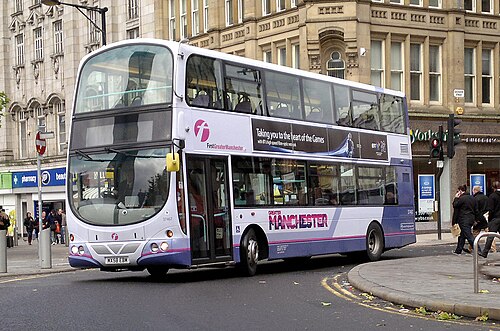
グレーター・マンチェスターの公共交通サービスは、グレーター・マンチェスター交通局(TfGM)によって調整されている。TfGMは、旅客輸送執行部とロンドン交通局の中間の権限を持つ公的機関であり、[204] 1968年運輸法に基づいて1969年にSELNEC PTEとして設立された。[205]当初のSELNEC旅客輸送執行部は、1974年4月1日にグレーター・マンチェスター州議会に引き継がれ、新しい州内の公共交通機関の調整を行う際に、グレーター・マンチェスター旅客輸送執行部(GMPTE)に改名された。 [205]議会は、公共交通機関(バスや鉄道サービスなど)と高速道路に関する戦略計画とすべての政策決定について全体的な責任を負っていた。GMPTEの目的は、州議会に代わって、グレーター・マンチェスターに完全に統合され効率的な旅客輸送システムの提供を確保することであった。[205] 1977年、GMPTEはロンドン交通局に次ぐ英国最大の公共交通機関として注目された。[205] GMPTEは2011年4月にグレーターマンチェスター統合当局の機能機関となり、中央政府から通常の旅客輸送執行機関の権限に加えて追加の権限を獲得したため、グレーターマンチェスター交通局に改名されました。[204]
Greater Manchester lies at the heart of the North West transport network. Much of the infrastructure converges at Manchester city centre with the Manchester Inner Ring Road, an amalgamation of several major roads, circulating the city centre. The county is the only place in the UK to have a fully orbital motorway,[206] the M60, which passes through all of the boroughs except Bolton and Wigan. Greater Manchester has a higher percentage of the motorway network than any other county in the country,[207] and according to the Guinness Book of World Records, it has the most traffic lanes side by side (17), spread across several parallel carriageways (M61 at Linnyshaw in Walkden, close to the M60 interchange).[208][209] Greater Manchester's 85 mi (137 km) of motorway network saw 5.8 billion vehicle kilometres in 2002 – about 6% of the UK's total, or 89,000 vehicles a day.[206] The A580 "East Lancs" road is a primary A road that connects Manchester and Salford with Liverpool. It was the UK's first purpose-built intercity highway and was officially opened by George V on 18 July 1934.[210] Throughout 2008, there were proposals for congestion charging in Greater Manchester.[211][212] Unlike the London scheme, two cordons would have been used, one covering the main urban core of the Greater Manchester Urban Area and another covering Manchester city centre.[213]
Metrolink is Greater Manchester's light rail system, which began operating in 1992. Principally used for suburban commuting, as of December 2020[update] the 57 mi (92 km) long network consists of eight lines which radiate from Manchester city centre and terminate at Altrincham, Ashton-under-Lyne, Bury, East Didsbury, Eccles, MediaCityUK, Manchester Airport, Rochdale and Trafford Centre.[214] The system is owned by TfGM and operated and maintained under contract by a Keolis / Amey consortium.[215][216] Greater Manchester has a heavy rail network of 142 route miles (229 km) with 98 stations, forming a central hub to the North West rail network.[217] Train services are provided by private operators and run on the national rail network which is owned and managed by Network Rail. There is an extensive bus network which radiates from Manchester city centre. The largest providers are Diamond Bus North West, First Greater Manchester, Go North West and Stagecoach Manchester. An extensive canal network also remains from the Industrial Revolution.
Manchester Airport, which is the third busiest in the United Kingdom, serves the county and wider region with flights to more worldwide destinations than any other airport in the UK.[218] Since 2024[update] it serves 199 routes, making the airport thirteenth globally for total destinations served.[219] The airport handled 28.07 million passengers in 2023.[220]
The three modes of public surface transport in the area are heavily used. 19.7 million rail journeys were made in the then GMPTE-supported area in the 2005/2006 financial year – an increase of 9.4% over 2004/2005; there were 19.9 million journeys on Metrolink; and the bus system carried 219.4 million passengers.[218][needs update]
The Bee Network is an integrated transport network for Greater Manchester, composed of bus, tram, cycling and walking routes. Transport for Greater Manchester (TfGM) is expected to have the complete network operational by 2024, with commuter rail services expected to be joining the network in 2030. Initially revealed in 2018, the project aims to create a London-style transport system, to encourage more people to take public transport instead of cars. The design of the network is inspired around the Greater Manchester symbol, the worker bee, with bus and tram liveries coloured yellow and black to represent this.
Greater Manchester is set to invest[when?] a further £40.7m in its walking, wheeling and cycling infrastructure as it progresses with its delivery of the largest active travel network in the country. Thirteen schemes have been allocated £23.7m in total, including a new active travel corridor along Chapel Street in Salford and a cycling and walking 'helix ramp' as part of Stockport Interchange.[221]
Sport


Manchester hosted the 2002 Commonwealth Games which was, at a cost of £200M for the sporting facilities and a further £470M for local infrastructure, by far the biggest and most expensive sporting event held in the UK at the time and the first to be an integral part of urban regeneration.[222] A mix of new and existing facilities were used. New amenities included the Manchester Aquatics Centre, Bolton Arena, the National Squash Centre, and the City of Manchester Stadium. The Manchester Velodrome was built as part of the Manchester bid for the 2000 Summer Olympics.[223] After the Commonwealth Games the City of Manchester Stadium was converted for football use, and the adjacent warm-up track upgraded to become the Manchester Regional Arena.[224] Other facilities continue to be used by elite athletes.[222] Cambridge Policy Consultants estimate 4,500 full-time jobs as a direct consequence, and Grattan points to other long-term benefits accruing from publicity and the improvement of the area's image.[222]
Association football is "woven into the cultural fabric of Greater Manchester", by way of its numerous football clubs – two of which play in the Premier League – which draw support, visitors and economic benefits to Greater Manchester valued at £330 million per year as of 2013.[225] The Manchester Football Association is the sport's governing body in Greater Manchester, and is committed to its promotion and development.[226] Manchester United F.C. are one of the world's best-known football teams,[227] and in 2008 and 2017 Forbes estimated that they were the world's richest club.[228][229] They have won the League Championship a record twenty times (most recently in 2012–2013), the FA Cup thirteen times, the Football League Cup six times and have been European Champions three times.[230] Their Old Trafford ground has hosted the FA Cup Final, England international matches and the 2003 UEFA Champions League Final between Juventus and A.C. Milan. Manchester City F.C. moved from Maine Road to the City of Manchester Stadium after the 2002 Commonwealth Games. They have won the league championship nine times (most recently in 2022–23), the FA Cup seven times, the Football League Cup eight times and have been European champions once.[231] Wigan Athletic F.C. are one of the county's younger sides and won their first major trophy in 2013, defeating Manchester City F.C. in the FA Cup final. As of season 2023–24, they play in League One, along with Bolton Wanderers F.C. In League Two are Salford City F.C. and Stockport County F.C., while Oldham Athletic A.F.C., Rochdale A.F.C. and Altrincham F.C. compete in the National League.
In rugby league, Wigan Warriors, Leigh Leopards, and Salford Red Devils compete in the Super League, the top-level professional rugby league football club competition in Europe. Wigan have won the Super League/Rugby Football League Championship twenty–one times, the Challenge Cup nineteen times, and the World Club Challenge three times.[232] Swinton Lions, and Oldham R.L.F.C. play in the second tier Championship, whilst Rochdale Hornets play in the third tier League 1 There is also a large network of junior/community rugby league clubs across the metropolitan area which act as feeder teams to the elite sides, the most notable being Manchester Rangers. In rugby union, Sale Sharks compete in the Guinness Premiership, and won the league in 2006.[233] Whitefield based Sedgley Park RUFC and Sale FC compete in National Division One, Manchester RUFC in National Division Two and Wigan side Orrell R.U.F.C. in National Division Three North.
Lancashire County Cricket Club began as Manchester Cricket Club and represents the (ancient) county of Lancashire. Lancashire contested the original 1890 County Championship. The team has won the County Championship nine times, most recently in 2011.[234] Their Old Trafford ground, near the football stadium of the same name, regularly hosts test matches. Possibly the most famous took place in 1956, when Jim Laker took a record nineteen wickets in the fourth test against Australia.[235] Cheshire County Cricket Club are a minor counties club who sometimes play in the south of the county.[236]
The National Speedway Stadium in Gorton is the home to top-flight speedway team the Belle Vue Aces,[237] and the Manchester Titans American football club.[238] Greater Manchester was previously home to the largest Greyhound racing track in the United Kingdom, the Belle Vue Stadium, which closed in 2020.[239] Professional ice hockey is held at the purpose-designed rink in Altrincham, the Altrincham Ice Dome, which host the Manchester Storm of the Elite Ice Hockey League and the Altrincham Aces of the National Ice Hockey League.[240]
Horse racing has taken place at several sites in the county. The two biggest courses were both known as Manchester Racecourse – though neither was within the boundaries of Manchester – and ran from the 17th century until 1963. Racing was at Kersal Moor until 1847 when the racecourse at Castle Irwell was opened. In 1867 racing was moved to New Barnes, Weaste, until the site was vacated (for a hefty price) in 1901 to allow an expansion to Manchester Docks. The land is now home to Dock 9 of the re-branded Salford Quays. Racing then moved back to Castle Irwell which later staged a Classic – the 1941 St. Leger – and was home to the Lancashire Oaks (nowadays run at Haydock Park) and the November Handicap, which was traditionally the last major race of the flat season. Through the late-1950s and early-1960s the track saw Scobie Breasley and Lester Piggott annually battle out the closing acts of the jockey's title until racing ceased on 7 November 1963.[241][242]
The Greater Manchester Athletics Association is the governing body of athletics in Greater Manchester, and organises events and competitions within Greater Manchester.[243] The Greater Manchester Marathon is a long-distance running event along a 26-mile and 385-yard course throughout the borough of Trafford.[244] Professional athletics takes place at the Regional Athletics Arena in Sportcity, which has hosted numerous national trials, Robin Park in Wigan, Longford Park in Stretford (home to Trafford Athletic Club), Woodbank Stadium in Stockport (home to Stockport Harriers) and the Cleavleys Track in Winton (home to Salford Harriers). The 12,000 seat Leigh Sports Village is a stadium and athletics venue home to the Leigh Harriers, Leigh Leopards Rugby League Club and the Manchester United W.F.C..[245]
The Greater Manchester Community Basketball Club is an association which represents Greater Manchester in basketball.[246] It supports a variety of teams, including Manchester Magic.[247] The Greater Manchester County Crown Green Bowling Association appoints Junior, Senior and Veteran teams to represent Greater Manchester in the sport of bowls.[248][249] Founded by Greater Manchester's ten district councils in 1996, GreaterSport is the County Sports Partnership for Greater Manchester which works closely with the sports and physical activity sectors and coordinates events such as the Greater Manchester Youth Games.[250] The Greater Manchester Sports Fund aims to ensure that people in Greater Manchester aged 12–21 competing in any kind of sport, irrespective of background, are able to obtain grants of up to £750 so that they can better fulfil their potential.[251]
Culture
Art, tourism, culture and sport provide 16% of employment in Greater Manchester, with the proportion highest in Manchester.[252] In 2014, Will Straw remarked that "Greater Manchester is a creative powerhouse", recognised for its cultural output in areas such as association football, media and digital content, and guitar and dance music.[6]
Cuisine
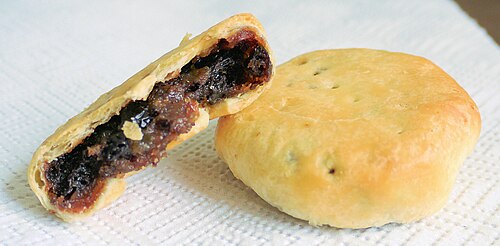
There are several delicacies native to Greater Manchester.[253] Savoury dishes include black pudding, a blood sausage typically associated with Bury and Bury Market; pasty barm, a combined pasty-barm cake created in Bolton; and rag pudding, a suet pastry pudding from Oldham filled with steak and onion and steamed in a cloth or wrapper to cook; the Manchester egg was introduced in 2010.[253] Sweet dishes include Eccles cake – native to Eccles – a small round flaky pastry cake filled with currants, sugar and spice; Manchester tart, a baked tart which consists of a shortcrust pastry shell spread with raspberry jam, covered with a custard filling and topped with flakes of coconut; and Uncle Joe's Mint Balls, traditional sweet mild mints manufactured in Wigan since their inception in 1898.[253] Vimto and Tizer are soft drinks invented in Manchester in 1908 and 1924 respectively.[253] Boddingtons is a bitter developed in Manchester and promoted as the "Cream of Manchester" in a popular 1990s advertising campaign credited with raising the city's profile.[254][255][256]
The Greater Manchester Campaign for Real Ale is a branch of the national Campaign for Real Ale, an advocacy group that supports, promotes and preserves the beer and drinks industry, and recognising outstanding venues with awards; The Nursery in Heaton Norris was its National Pub of the Year in 2001, and The Baum in Rochdale was its National Pub of the Year in 2012.[257][258][259] The Manchester Food and Drink Festival was launched in 1997 as an urban beverage and gastronomy fair, principally held in Manchester city centre with further events throughout Greater Manchester;[260] smaller separate local events include the Prestwich Food and Drink Festival, the annual World Pie Eating Championship in Wigan, and the annual Ramsbottom Chocolate Festival.[261][262] As of 2020 Manchester has 1 Michelin Star restaurant: Mana,[263] which is still retained presently.[264][265] The region also has three eateries in the Bib Gourmand category.[266]
Galleries, museums and exhibitions

The Greater Manchester Museums Group (GMMG) is a partnership of eight of the ten Museum Services in Greater Manchester.[267] Its exhibition centres include: Gallery Oldham, which has in the past featured work by Pablo Picasso;[268] Salford Museum and Art Gallery, a local museum with a recreated Victorian street;[269] and Bolton Museum, which houses material from private collectors, including geological specimens from the estate of Caroline Birley.[270] Separate from the GMMG is The Lowry at Salford Quays, which has a changing display of L. S. Lowry's work alongside travelling exhibitions. Manchester Art Gallery is a major provincial art gallery noted for its collection of Pre-Raphaelite art and housed in a Grade I listed building by Charles Barry.[271]
Greater Manchester's museums showcase the county's industrial and social heritage. The Hat Works in Stockport is the UK's only museum dedicated to the hatting industry; the museum moved in 2000 to a Grade II listed Victorian mill, previously a hat factory.[272] The Museum of Science and Industry in Manchester, amongst other displays, charts the rise of science and industry and especially the part Manchester played in its development; the Museums, Libraries and Archives Council described the displays as "pre-eminent collections of national and international importance".[273] Urbis began its life as a museum of the modern city, which attempted to explain the effects and experiences of life in the city. It was then transformed into an exhibition centre, which had its most successful year in 2006. Urbis entered its third phase since opening in 2012 as the National Football Museum.[274] Stockport Air Raid Shelters uses a mile of tunnels, built to accommodate 6,500 people, to illustrate life in the Second World War's air raid shelters.[275] The Imperial War Museum North in Trafford Park is one of the Imperial War Museum's five branches. Alongside exhibitions of war machinery are displays describing how people's lives are affected by war.[276] The Museum of Transport in Manchester, which opened in 1979, has one of the largest collections of vehicles in the country.[277] The People's History Museum is "the national centre for the collection, conservation, interpretation and study of material relating to the history of working people in Britain". The Pankhurst Museum is based in the early feminist Emmeline Pankhurst's former home and includes a parlour laid out in contemporary style.[278] Manchester United, Manchester City, and Lancashire CCC all have dedicated museums illustrating their histories. Wigan Pier, best known from George Orwell's book The Road to Wigan Pier,[279] was the name of a wharf on the Leeds and Liverpool Canal in Wigan. It will re-open as a visitor attraction in 2023, after years of closure.[280] The town is also home to the Museum of Wigan Life.[281]
Media, film and television
The Greater Manchester Film Festival was launched in 2012. It is an international film festival designed to capitalise on Greater Manchester's "huge strengths in film and television, along with its growing media presence".[282] MediaCityUK, a host venue of the Greater Manchester Film Festival,[283] is a 200-acre (81 ha) mixed-use property development site at Salford Quays; its principal tenants are mass media organisations such as ITV Granada and the BBC. One of Greater Manchester's most lucrative and acclaimed television exports is Coronation Street, which is a televised soap opera set in Weatherfield, a fictional borough of Greater Manchester,[284][285] inspired by life in Salford.[286] Created by Tony Warren, Coronation Street was first broadcast on 9 December 1960, making it the world's longest-running TV soap opera in production.[287] It has been filmed in Manchester at Granada Studios since its inception, but filming is now done at a new set at MediaCityUK.
A local television station for Greater Manchester, Channel M, was launched in February 2000, carrying a wide range of local programming, including news, sport and entertainment programming.[288] Following severe cutbacks to its local production amid heavy losses, the station ceased broadcasting in April 2012.[289][290] A smaller-scale local TV station, That's Manchester, began broadcasting in May 2015.[291]
The area has several radio stations including, BBC Radio Manchester, XS Manchester, Hits Radio Manchester, Capital Manchester, Greatest Hits Radio Manchester & The North West, Heart North West, and Smooth North West.[citation needed] There are also community-based radio stations such as Greatest Hits Radio Wigan & St Helens (covering Wigan), Greatest Hits Radio Bolton & Bury (serving Bolton and Bury), Tameside Radio (serving Tameside), Your FM (for Stockport), Rochdale Valley (for Rochdale),[292] Oldham Community Radio (for Oldham),[293] and Salford City Radio (serving Salford).
The Manchester Evening News is a regional daily newspaper covering Greater Manchester, published every day except Sunday.[294] It is owned by Reach plc and produced by MEN Media. It sells around 81,000 copies a day and gives away nearly 100,000, making it the market leader in Greater Manchester.[295] The paper was first published in 1868 by Mitchell Henry as part of his parliamentary election campaign for the Manchester constituency.[294] MEN Media "dominates Greater Manchester", reaching 7 out of 10 adults each week within the region through its portfolio of products which also includes the Oldham Advertiser, the Rochdale Observer, and the Salford Advertiser.[296]
Music, theatre and performing arts

Greater Manchester has the highest number of theatre seats per head of population outside London. Most, if not all, of the larger theatres are subsidised by local authorities or the North West Regional Arts Board.[298] The Royal Exchange Theatre formed in the 1970s out of a peripatetic group staging plays at venues such as at the University [of Manchester] Theatre and the Apollo Theatre. A season in a temporary stage in the former Royal Exchange, Manchester was followed by funding for a theatre in the round, which opened in 1976.[299] The Lowry – Greater Manchester's most visited tourist attraction[297] – houses two theatres, used by travelling groups in all the performing arts.[252][300] The Opera House is a 1,900-seat venue hosting travelling productions, often musicals just out of the West End.[301] Its sister venue, The Palace, hosts generally similar shows. The Oldham Playhouse, one of the older theatres in the region, helped launch the careers of Stan Laurel and Charlie Chaplin. Its productions are described by the 2007 CityLife guide as 'staunchly populist' – and popular.[301] There are many other venues scattered throughout the county, of all types and sizes.[301]
Greater Manchester has four professional orchestras, all based in Manchester. The Hallé is the UK's oldest symphony orchestra (and the fourth oldest in the world),[302] supports a choir and a youth orchestra, and releases its recordings on its own record label.[303] The Hallé is based at the Bridgewater Hall but often tours, typically giving 70 performances "at home" and 40 on tour.[303] The BBC Philharmonic, one of five BBC orchestras, is based in MediaCityUK in Salford.[304] It can trace its history back to the early days of radio broadcasting in 1926.[305] The Manchester Camerata and the Northern Chamber Orchestra are smaller, though still professional, organisations.[306] The main classical venue is the 2,341-seat Bridgewater Hall in Manchester, opened in 1996 at a cost of £42m.[307] Manchester is also a centre for musical education, via the Royal Northern College of Music and Chetham's School of Music.[308]
The Manchester Arena holds over 21,000 people,[a] and is the largest indoor arena in the United Kingdom.[310] It has been voted International Venue of the Year, and for several years was the most popular venue in the world.[311] The 23,500-seat Co-op Live arena is under construction in Greater Manchester, it will open in 2023.[312] Sports grounds in Greater Manchester, such as the City of Manchester Stadium, also host large live-music events.[313] A £200 million flexible, large-scale cultural, arts, and exhibition space named Factory International was opened in 2023 on the former site of Granada Studios in central Manchester.[314][315] It is named with reference to Factory Records, a Manchester-based independent record label, founded in 1978 by Tony Wilson and Alan Erasmus. Factory Records – which featured acts such as Joy Division, New Order, and the Happy Mondays – and The Haçienda, served as a catalyst in the late-1980s for a blending of alternative rock, psychedelic rock and electronic dance music known as Madchester. Greater Manchester continues to be associated with guitar and dance music.[6]
Places of interest


See also



- Outline of England
- Grade I listed buildings in Greater Manchester
- Grade II* listed buildings in Greater Manchester
- List of people from Greater Manchester
- List of public art in Greater Manchester
- Parliament of the United Kingdom relocation
- Healthcare in Greater Manchester
Notes
- ^ A three-year-long re-development of the arena started in 2022 to increase the capacity to 24,000 people[309]
References
- ^ "Appointment of Lord-Lieutenant of Greater Manchester: 28 March 2022". 10 Downing Street. 28 March 2022. Archived from the original on 13 September 2022. Retrieved 13 September 2022.
- ^ "New High Sheriff of Greater Manchester chosen by the Queen". Manchester Evening News. 22 March 2022. Archived from the original on 13 September 2022. Retrieved 13 September 2022.
- ^ "Mid-2022 population estimates by Lieutenancy areas (as at 1997) for England and Wales". Office for National Statistics. 24 June 2024. Retrieved 26 June 2024.
- ^ "Ethnic group". Office for National Statistics. 28 March 2023. Retrieved 23 October 2023.
- ^ a b "UK Standard Area Measurements (SAM)". Office for National Statistics. Archived from the original on 24 September 2015. Retrieved 28 September 2012.
- ^ a b c Straw, Will (5 March 2014). "Greater Manchester is a creative powerhouse". The Guardian. Archived from the original on 1 August 2014. Retrieved 16 December 2014.
- ^ Nevell & Redhead 2005, p. 20.
- ^ Adrian Morris. "Roman Wigan". Wigan Archaeological Society. Archived from the original on 18 February 2012. Retrieved 10 July 2008.
- ^ Bayliss 1996, p. 6.
- ^ Historic England. "Mamucium Roman fort (76731)". Research records (formerly PastScape). Retrieved 29 December 2007.
- ^ Historic England. "Castle Shaw (45891)". Research records (formerly PastScape). Retrieved 29 December 2007.
- ^ Hartwell, Hyde & Pevsner 2004, p. 18, quoting Redhead, Norman
- ^ a b c d e f g h "55: Manchester Conurbation". naturalengland.org.uk. 18 July 2013. Archived from the original on 21 October 2013. Retrieved 5 August 2013.
- ^ Frangopulo 1977, p. ix.
- ^ Frangopulo 1977, pp. 24–25.
- ^ a b c d McNeil & Nevell 2000, pp. 1–3.
- ^ Frangopulo 1977, p. 268.
- ^ Aspin 1981, p. 3.
- ^ a b Carter 1962, p. 49.
- ^ Cowhig 1976, pp. 7–9.
- ^ Kidd 2006, pp. 12, 15–24, 224.
- ^ a b Hall, Peter (1998). "The first industrial city: Manchester 1760–1830". Cities in Civilization. Weidenfeld & Nicolson. ISBN 0-297-84219-6.
- ^ a b c d e Schofield 2003, pp. 34–35.
- ^ Howe, Ed (26 May 2020). "What is Manchester, and how big is it?". urbinfomanc.com. Archived from the original on 1 July 2020. Retrieved 1 July 2020.
- ^ Roberts, Thomas & Williams 2014, p. 112.
- ^ a b c Frangopulo 1977, p. 226.
- ^ Swarbrick, J. (February 1914). Greater Manchester: The Future Municipal Government of Large Cities. Institution of Municipal and County Engineers. pp. 12–15.
- ^ Frangopulo 1977, p. 229.
- ^ a b Frangopulo 1977, p. 227.
- ^ a b c Frangopulo 1977, p. 228.
- ^ Frangopulo 1977, p. 231.
- ^ Frangopulo 1977, p. 234.
- ^ a b c Redcliffe-Maud 1969, pp. 219–235.
- ^ Frangopulo 1977, p. 233.
- ^ Frangopulo 1977, p. 264.
- ^ The SELNEC Preservation Society. "The Formation of the SELNEC PTE". selnec.org.uk. Archived from the original on 20 August 2008. Retrieved 6 July 2008.
- ^ a b c Redcliffe-Maud & Wood 1975, pp. 46–47, 56, 157.
- ^ Parliamentary Debates (Hansard). House of Commons. 6 July 1972. col. 763–834.
- ^ "Lancashire saved from 'Botchdale'". The Times. 7 July 1972. p. 8.
- ^ "Philosophy on councils has yet to emerge". The Times. 8 July 1972. p. 2.
- ^ a b HMSO. Local Government Act 1972. 1972 c. 70
- ^ a b "Greater Manchester Gazetteer". Greater Manchester County Record Office. Places names – G to H. Archived from the original on 18 July 2011. Retrieved 17 June 2008.
- ^ a b The part of Bucklow Rural District not transferred to Greater Manchester remained in Cheshire, as part of Macclesfield municipal borough.
- ^ The part of Wigan Rural District not transferred to Greater Manchester remained in Lancashire, as part of West Lancashire district.
- ^ Clark 1973, p. 1.
- ^ Office of the Deputy Prime Minister. "Local Government Finance Statistics England No.16". local.odpm.gov.uk. Archived from the original on 7 August 2011. Retrieved 2 March 2014.
- ^ "British Local Election Database, 1889–2003". Arts and Humanities data service. 28 June 2006. Retrieved 5 March 2008.
- ^ "All change in local affairs". The Times. 1 April 1974. p. 15.
- ^ Frangopulo 1977, p. xii.
- ^ Clark 1973, p. 101.
- ^ Bowden 2015, p. NP.
- ^ Frangopulo 1977, p. 246.
- ^ Bristow & Cross 1983, p. 30.
- ^ Frangopulo 1977, pp. 246, 255.
- ^ a b c Wannop 2002, pp. 144–145.
- ^ Parkinson-Bailey 2000, pp. 214–215.
- ^ Taylor, Evans & Fraser 1996, p. 76.
- ^ a b c d Clapson 2010, pp. 123–124.
- ^ a b Wilson & Game 2002, p. 61.
- ^ Walker, David (15 January 1983). "Tory plan to abolish GLC and metropolitan councils, but rates stay". The Times. p. 2.
•Haviland, Julian (5 May 1983). "Tories may abolish county councils if they win election". The Times. p. 1.
•Tendler, Stewart (16 June 1983). "Big cities defiant over police". The Times. p. 2. - ^ "Angry reaction to councils White Paper". The Times. 8 October 1983. p. 22.
- ^ Wilson & Game 2002, p. 62.
- ^ "About AGMA". Association of Greater Manchester Authorities. Archived from the original on 15 September 2008. Retrieved 5 March 2008.
- ^ Office for National Statistics (1999). Gazetteer of the old and new geographies of the United Kingdom (PDF). statistics.gov.uk. p. 48. ISBN 1-85774-298-2. Archived from the original (PDF) on 8 March 2008. Retrieved 2 March 2014.
"Beginners' Guide to UK Geography: Metropolitan Counties and Districts". Office for National Statistics. Archived from the original on 5 January 2016. Retrieved 8 August 2013.
"North West". The Electoral Commission. Archived from the original on 14 November 2008. Retrieved 2 March 2014. - ^ "Regional Portrait of Greater Manchester – 5.1 Spatial Structure" (PDF). Workpackage 6: e-Europe Regions Domain Reporting. BISER. September 2003. Archived from the original (PDF) on 18 October 2006. Retrieved 2 March 2014.
- ^ legislation.gov.uk. "Lieutenancies Act 1997", c.23. Archived 22 May 2010 at the Wayback Machine.
- ^ Wood, Edward (11 December 1998). Research Paper 98/115 –The Greater London Authority Bill: A Mayor and Assembly for London – Bill 7 of 1998–99 (PDF). House of Commons Library. Archived from the original (PDF) on 20 November 2006.
- ^ Moving Forward:The Northern Way Archived 2008-12-06 at the Wayback Machine
- ^ HM Treasury (17 July 2007). "Sub-national economic development and regeneration review". hm-treasury.gov.uk. Archived from the original on 15 December 2007. Retrieved 2 March 2014.
- ^ "A Framework for City Regions Working Paper" (PDF). Newcastle University UK. Office of the Deputy Prime Minister. Archived from the original (PDF) on 24 January 2016. Retrieved 16 April 2015.
- ^ Fairley, Peter (18 January 2008). "Comment – A faster track for the city-regions". publicfinance.co.uk. Archived from the original on 5 January 2009. Retrieved 29 September 2012.
- ^ Ottewell, David (25 June 2008). "Now YOU can vote on congestion charge". Manchester Evening News. pp. 1–2.
- ^ "More than the sum of their parts – partnerships seal deal to increase economic growth". communities.gov.uk. 14 July 2008. Archived from the original on 3 August 2008. Retrieved 16 July 2008.
- ^ "Date set for C-charge referendum". news.bbc.co.uk. 29 September 2008. Archived from the original on 1 March 2009. Retrieved 5 January 2010.
- ^ Sturcke, James (12 December 2008). "Manchester says no to congestion charging". The Guardian. Archived from the original on 5 September 2013. Retrieved 12 December 2008.
- ^ a b c "City Region Governance: A consultation on future arrangements in Greater Manchester" (PDF). Association of Greater Manchester Authorities. 2009. Archived from the original (PDF) on 25 July 2011. Retrieved 18 March 2010.
- ^ Association of Greater Manchester Authorities. "City Region". agma.gov.uk. Archived from the original on 14 March 2010. Retrieved 18 March 2010.
- ^ HM Treasury (16 December 2009). "Greater Manchester granted city region status". hm-treasury.gov.uk. Archived from the original on 21 December 2009. Retrieved 2 March 2014.
- ^ "John Denham – Greater Manchester to be country's first ever Combined Authority". communities.gov.uk. 31 March 2010. Archived from the original on 4 May 2010. Retrieved 18 October 2010.
- ^ "Plan to end rail and road misery". The Bolton News. 31 March 2010. Archived from the original on 14 July 2017. Retrieved 15 November 2021.
- ^ "Greater Manchester to become first 'city region'". Oldham Advertiser. 29 March 2010. Archived from the original on 5 September 2012. Retrieved 30 March 2010.
- ^ "Greater Manchester agrees to combined authority". Manchester City Council. 29 March 2010. Archived from the original on 3 April 2010. Retrieved 31 March 2010.
- ^ "Safeguard to prevent C-charge is welcomed". The Bolton News. 9 December 2010. Archived from the original on 14 June 2012. Retrieved 14 December 2010.
- ^ HM Treasury and The Rt Hon George Osborne MP (3 November 2014). "Manchester to get directly elected Mayor". gov.uk. Archived from the original on 3 November 2014. Retrieved 5 December 2014.
- ^ Dawson 1992, "Chapter 6: The County Tops".
- ^ a b c d Greater Manchester Passenger Transport Authority. "The Greater Manchester Area and its Regional Context". gmltp.co.uk. Archived from the original on 27 September 2007. Retrieved 2 March 2014.
- ^ a b Manchester City Council (11 July 2012). "Manchester's Local Development Framework: Core Strategy Development Plan Document". manchester.gov.uk. Archived from the original on 25 February 2022. Retrieved 16 June 2013.
Part of the City Centre is in Salford and both the Regional Centre and Inner Areas cover areas of Manchester, Salford and Trafford ... Manchester City Centre is defined as the area inside the Inner Relief Route and extends to the south to encompass the Oxford Road Corridor. The City Centre also extends to Chapel Street, within the administrative boundary of Salford City Council.
- ^ Ravetz 2000, p. 50.
- ^ a b Association of Greater Manchester Authorities (August 2009). "Prosperity for all: The Greater Manchester Strategy" (PDF). agma.gov.uk. Archived from the original (PDF) on 16 November 2012. Retrieved 22 June 2013.
- ^ a b "Greater Manchester councils plan "unique" town centre investment strategy". localgovernmentexecutive.co.uk. 19 March 2013. Archived from the original on 21 October 2013. Retrieved 22 June 2013.
- ^ Manchester City Council (1995), Manchester Unitary Development Plan, p. 105
- ^ TfGM; GMCA (2011). Greater Manchester's third Local Transport Plan 2011/12 – 2015/16 (PDF). Transport for Greater Manchester. Archived from the original (PDF) on 3 March 2016.
- ^ Kellie 2010, pp. 4–5, 243.
- ^ Freeman & Snodgrass 1959, p. 155.
- ^ a b c "2011 Census – Built-up areas". ONS. Archived from the original on 21 September 2013. Retrieved 1 July 2013.
- ^ "State of the English Cities: Volume 1". Office of the Deputy Prime Minister. 2006. Archived from the original on 20 April 2010. Retrieved 17 December 2006.
- ^ Pedrazzini, Luisa; Akiyama, Renata Satiko (2011). From Territorial Cohesion to the New Regionalized Europe. Maggioli Editore. ISBN 9788838760341. Archived from the original on 20 February 2023. Retrieved 5 October 2014.
- ^ ESPON Archived 24 September 2015 at the Wayback Machine
- ^ Groom, Brian (20 June 2014). "A great northern conurbation". Financial Times. Financial Times London UK. Archived from the original on 10 December 2022. Retrieved 19 March 2015.
- ^ a b "Manchester Airport 1971–2000 weather averages". Met Office. 2001. Archived from the original on 29 September 2007. Retrieved 15 July 2007.
- ^ a b c "UK 1971–2000 averages". Met Office. 2001. Archived from the original on 5 July 2009. Retrieved 15 July 2007.
- ^ Frame, Don (24 February 2005). "Roads chaos as snow sweeps in Manchester". Manchester Evening News. Archived from the original on 30 September 2007. Retrieved on 15 July 2007.
- ^ "Snow: West Yorkshire traffic and travel latest". Halifax Courier. 2 February 2009. Archived from the original on 10 November 2017. Retrieved 7 January 2017.
- ^ "Live: M62 motorway closed and 20 miles of queues as snow and high winds return to Greater Manchester". Manchester Evening News. 4 April 2012. Archived from the original on 10 November 2017. Retrieved 7 January 2018.
- ^ "Snake Pass". Peak District sightseer's guide. High Peak Interactive. 2002. Archived from the original on 12 January 2011. Retrieved 6 July 2007.
- ^ "Icy conditions hit the UK after days of heavy snow". BBC News. 7 January 2010. Archived from the original on 20 February 2023. Retrieved 7 January 2010.
- ^ "Manchester 1981-2010 Averages". Met Office. Retrieved 30 January 2016.
- ^ "Manchester Ringway weather station 1961-1990" (FTP). NOAA. Retrieved 4 August 2023.
- ^ "Manchester ringway extreme values". KNMI. Retrieved 30 January 2016.
- ^ "Manchester ringway 1981-2010 mean extreme values". KNMI. Retrieved 2 January 2018.
- ^ "Average snowfall over the UK". Retrieved 3 June 2019.
- ^ "STATION MANCHESTER". Meteo climat. Retrieved 2 January 2021.
- ^ "Climate & Weather Averages in Manchester, England, United Kingdom". Time and Date. Retrieved 9 January 2022.
- ^ "Monthly weather forecast and Climate – Manchester, United Kingdom". Weather Atlas. Retrieved 9 January 2022.
- ^ a b c d e f "Greater Manchester Biodiversity". gmbp.org.uk. Archived from the original on 18 May 2013. Retrieved 7 September 2012.
- ^ a b c Hardy 1998, p. 7.
- ^ Manchester City Council. "Sites of Biological Importance". wildaboutmanchester.info. Archived from the original on 27 June 2012. Retrieved 7 September 2012.
- ^ a b Defra (2002). Aitchison, J.W. (ed.). "The Commonlands of Greater Manchester: A Biological Survey" (PDF). defra.gov.uk. Archived from the original (PDF) on 31 October 2012. Retrieved 7 September 2012.
- ^ Greater Manchester Local Record Centre. "Welcome to Greater Manchester LRC". gmwildlife.org.uk. Archived from the original on 23 December 2012. Retrieved 7 September 2012.
- ^ Greater Manchester Biodiversity Project. "What is biodiversity?". gmbp.org.uk. Archived from the original on 27 June 2017. Retrieved 7 September 2012.
- ^ "Welcome to the Manchester Field Club". webspace.mypostoffice.co.uk. Archived from the original on 25 June 2013. Retrieved 7 September 2012.
- ^ Salford City Council (2007). "Chat Moss". salford.gov.uk. Archived from the original on 28 September 2008. Retrieved 13 November 2007.
•"Agricultural Land Classification" (PDF). Department for Environment, Food and Rural Affairs. July 2003. Archived from the original (PDF) on 25 February 2009. Retrieved 2 March 2014. - ^ "Appendix J River Mersey Case Study Report". The Countryside Agency. Archived from the original (DOC) on 27 September 2007. Retrieved 27 April 2007.
- ^ "South Pennine Moors". Defra. Archived from the original on 12 September 2012. Retrieved 21 July 2012.
- ^ Lashley, Brian (20 March 2003). "So what bloom best suits you?". Manchester Evening News. Archived from the original on 5 March 2016. Retrieved 7 September 2012.
- ^ Devon Wildlife Trust. "Species – Cottongrass, common". devonwildlifetrust.org. Archived from the original on 26 June 2015. Retrieved 7 September 2012.
- ^ Plantlife International. "North-west England". plantlife.org.uk. Archived from the original on 1 May 2013. Retrieved 7 September 2012.
- ^ Holland, Spence & Sutton 1984, pp. 28–29.
- ^ Davies, Ella; Hendry, Lisa (30 November 2021). "Wild parakeets in the UK: exotic delights or a potential problem?". nhm.ac.uk. Retrieved 1 August 2023.
- ^ Watson, Alex (14 April 2020). "The mysterious tale of the parrots of South Manchester". propermanchester.com. Retrieved 1 August 2023.
- ^ "Walk in the Park". The Whitworth. Retrieved 1 August 2023.
- ^ a b Cooper, Matthew (16 February 2019). "Why are there so many parakeets in south Manchester? These are the wild theories that might just be true". Manchester Evening News. Retrieved 1 August 2023.
- ^ Brown, Ben (2 March 2021). "Myths of Manchester: The Terrapins & Turtles of Alexandra Park". manchestersfinest.com. Retrieved 1 August 2023.
- ^ "Greater Manchester region, England, United Kingdom". Encyclopedia Britannica. Archived from the original on 2 July 2022. Retrieved 31 July 2022.
- ^ "The Beginning of the Confusion". www.forl.co.uk. Archived from the original on 15 August 2022. Retrieved 31 July 2022.
- ^ Shaw, Megan (6 December 2020). "The fight to keep these historic villages in Yorkshire nearing a sad end". YorkshireLive. Archived from the original on 12 August 2021. Retrieved 20 July 2021.
- ^ Mallinson, Matt (18 March 2015). "Wigan must DITCH 'false region' Manchester and rejoin Lancashire, urges petition". Mancunian Matters. Archived from the original on 20 July 2021. Retrieved 20 July 2021.
- ^ Tweed, Lyell (26 January 2021). "Vote on whether Horwich should leave Bolton Council". The Bolton News. Archived from the original on 20 July 2021. Retrieved 20 July 2021.
- ^ a b c d "Greater Manchester Combined Authority Final Scheme" (PDF). Association of Greater Manchester Authorities. March 2010. Archived from the original (PDF) on 16 December 2010. Retrieved 30 March 2010.
- ^ "Devolution to the Greater Manchester Combined Authority and transition to a directly elected mayor". gov.uk. 3 November 2014. Archived from the original on 4 November 2014. Retrieved 4 November 2014.
- ^ "Greater Manchester to control £6bn NHS budget". BBC News. 25 February 2015. Archived from the original on 25 February 2015. Retrieved 26 February 2015.
- ^ Williams, Jennifer (5 May 2017). "Andy Burnham elected as Greater Manchester's mayor". Manchester Evening News. Archived from the original on 12 March 2018. Retrieved 12 March 2018.
- ^ "What the Mayor does". greatermanchester-ca.gov.uk. 2018. Archived from the original on 6 April 2019. Retrieved 5 April 2019.
- ^ a b c Frangopulo 1977, p. 138.
- ^ a b Barlow, Max (May 1995). "Greater Manchester: conurbation complexity and local government structure". Political Geography. 14 (4): 379–400. doi:10.1016/0962-6298(95)95720-I.
- ^ Rochdale Metropolitan Borough Council, p. 65.
- ^ Walker, Jonathan (9 September 2008). "Goodbye West Midlands, hello Greater Birmingham". Birmingham Post. birminghampost.net. Archived from the original on 1 August 2012. Retrieved 24 September 2012.
- ^ Wannop 2002, p. 148.
- ^ "Greater Manchester Local Transport Plan". gmltp.co.uk. Archived from the original on 20 July 2011. Retrieved 12 December 2006.
- ^ "Introducing new police commissioner Tony Lloyd – the most powerful man in Greater Manchester?". Manchester Evening News. 16 November 2012. Archived from the original on 22 November 2012. Retrieved 15 November 2021.
- ^ "Manchester Airports Group dividend windfall for councils". BBC News. 21 July 2013. Archived from the original on 15 October 2014. Retrieved 8 August 2013.
- ^ Hebbert, Michael; Deas, Iain (January 2000). "Greater Manchester – 'up and going'?". Policy & Politics. 28 (1): 79–92. doi:10.1332/0305573002500848.
- ^ Chancellor of the Duchy of Lancaster. "Keeper of the Rolls". duchyoflancaster.co.uk. Archived from the original on 15 December 2010. Retrieved 2 March 2014.
- ^ The Lord-Lieutenants Order 1973 (1973/1754)
- ^ "No. 58395". The London Gazette. 18 July 2007. p. 10329.
- ^ "Greater Manchester Met. C". visionofbritain.org.uk. Archived from the original on 4 September 2007. Retrieved 6 April 2007.
- ^ "Lib Dems close in on Manchester". Manchester Evening News. 11 June 2004. Archived from the original on 20 February 2023. Retrieved 26 February 2006.
- ^ "Labour party returns to Manchester". timeout.com. 2006. Archived from the original on 13 January 2008. Retrieved 2 March 2014.
- ^ "Greater Manchester Met. C: Total Population". visionofbritain.org.uk. Archived from the original on 9 May 2015. Retrieved 24 September 2012.
- ^ "Mid-Year Population Estimates, UK, June 2022". Office for National Statistics. 26 March 2024. Retrieved 3 May 2024.
- ^ "Censu 2021: First results". Office of National Statistics (ONS). Archived from the original on 24 August 2022. Retrieved 28 June 2022.
- ^ Clark 1973, p. 93.
- ^ "Regional Portrait of Greater Manchester – 5.3 Population Structure/Migration (demography)" (PDF). BISER Europe Regions Domain Reporting. 2003. Archived from the original (PDF) on 8 July 2011. Retrieved 18 February 2008.
- ^ "Warren Smith welcomes you to the Greater Manchester Lieutenancy". manchesterlieutenancy.org. Archived from the original on 5 July 2008. Retrieved 8 July 2008.
- ^ "Exodus: The Facts". can.uk.com. 2003. Archived from the original on 4 February 2008. Retrieved 2 March 2014.
- ^ "Greater Manchester (health authority) religion". Statistics.gov.uk. Archived from the original on 11 January 2009. Retrieved 1 February 2008.
- ^ "Catholic Diocese of Shrewsbury". Dioceseofshrewsbury.org. Archived from the original on 17 April 2009. Retrieved 7 May 2007.
- ^ "Parishes of the Diocese". Salforddiocese.org.uk. Archived from the original on 2 May 2007. Retrieved 7 May 2007.
- ^ "The Church of England Diocese of Manchester". manchester.anglican.org. Archived from the original on 27 December 2007. Retrieved 17 January 2008.
- ^ "Welcome to the Diocese of Liverpool". liverpool.anglican.org. Archived from the original on 24 February 2008. Retrieved 1 February 2008.
- ^ "Market Renewal: Manchester Salford Pathfinder" (PDF). Audit Commission. 2003. Archived from the original (PDF) on 10 August 2008. Retrieved 2 March 2014.
- ^ a b c d e "Shrinking Cities: Manchester/Liverpool II" (PDF). shrinkingcities.com. March 2004. p. 36. Archived (PDF) from the original on 14 September 2012. Retrieved 4 March 2008.
- ^ Cooper 2005, p. 47.
- ^ Shapely, Peter (2002). "The press and the system built developments of inner-city Manchester" (PDF). Manchester Region History Review. 16. Manchester Centre for Regional History: 30–39. ISSN 0952-4320. Archived from the original (PDF) on 1 December 2007. Retrieved 2 March 2014.
- ^ Qureshi, Yakub (24 November 2004). "A cut above: high rise living is back". BBC. Archived from the original on 30 December 2004. Retrieved 25 February 2008.
- ^ Cunningham, John (28 February 2001). "Tower blocks to make a comeback". The Guardian. Archived from the original on 10 May 2014. Retrieved 26 February 2008.
- ^ Dyckhoff, Tom (9 December 2011). "Let's move to: Saddleworth, Greater Manchester". The Guardian. Archived from the original on 7 January 2016. Retrieved 30 September 2012.
- ^ Kirby, Dean (24 August 2013). "Street where houses cost just £15,000 – we reveal cheapest and dearest homes in Greater Manchester". Manchester Evening News. Archived from the original on 28 June 2017. Retrieved 24 August 2013.
- ^ a b Bontje, Musterd & Pelzer 2011, p. 159.
- ^ Frangopulo 1977, p. 224.
- ^ "Table 0a – All students by institution, mode of study, level of study, gender and domicile 2006/07". Students and Qualifiers Data Tables. Higher Education Statistics Agency. 2008. Archived from the original (XLS) on 9 July 2013. Retrieved 21 March 2008.
- ^ Tight, Malcolm (July 2007). "The (Re)Location of Higher Education in England (Revisited)". Higher Education Quarterly. 61 (3): 250–265. doi:10.1111/j.1468-2273.2007.00354.x.
- ^ Hartwell 2001, p. 105.
- ^ "Manchester College's 'strong management'". manchestermule.com. 27 May 2010. Archived from the original on 6 August 2013. Retrieved 29 June 2013.
- ^ "Independent schools in Greater Manchester". www.schoolsearch.co.uk. Archived from the original on 23 February 2023. Retrieved 23 February 2023.
- ^ Fenton, Trevor (25 April 2023). "Regional gross domestic product: city regions". Office for National Statistics. Retrieved 13 December 2023.
- ^ a b c d "Manchester to revive Britain's textile trade with reborn Cottonopolis". Manchester Evening News. 3 November 2012. Archived from the original on 7 November 2012. Retrieved 4 November 2012.
- ^ "Oldham's Economic Profile – Innovation and Technology". Oldham Council. Archived from the original on 13 January 2007. Retrieved 2 March 2014.
- ^ "NW Cotton Towns Learning Journey". Spinning the web. Manchester City Council. Archived from the original on 10 September 2007. Retrieved 27 October 2006.
- ^ "The rise of the 'greatest village in England'". Manchester Evening News. menmedia.co.uk. 3 November 2012. Archived from the original on 6 November 2012. Retrieved 3 November 2012.
- ^ a b "Regional Portrait of Greater Manchester – 6 Economic Factors" (PDF). BISER Europe Regions Domain Reporting. 2003. Archived from the original (PDF) on 18 October 2006. Retrieved 2 March 2014.
- ^ "Our History". co-operative.coop. Archived from the original on 8 November 2016. Retrieved 18 December 2014.
- ^ Roue, Lucy (27 November 2014). "200 staff to undergo consultation process at Co-operative's Manchester head office One Angel Square". manchestereveningnews.co.uk. Archived from the original on 19 February 2015. Retrieved 18 December 2014.
- ^ Begum, Shelina (14 November 2013). "Co-op's headquarters declared greenest building in the world". manchestereveningnews.co.uk. Archived from the original on 20 March 2015.
- ^ "Manchester city region – Economic Overview". investinmanchester.com. Archived from the original on 21 March 2008. Retrieved 2 March 2014.
- ^ "Gross Domestic Product of Greater Manchester". Statista. 2023.
- ^ "The Greater Manchester Strategy: Foreword". gmep.org.uk. 2004. Archived from the original on 22 April 2008. Retrieved 9 July 2008.
- ^ "Britain's Best Cities 2005–2006 Executive Summary" (PDF). OMIS Research. 2006. Archived from the original (PDF) on 17 May 2006. Retrieved 17 July 2008.
- ^ "International Visitors To Friendly Manchester Up 10%" (Press release). Marketing Manchester. 17 September 2007. Archived from the original on 27 October 2007. Retrieved 17 July 2008.
- ^ "Manchester 'England's second city'". BBC. 12 September 2002. Archived from the original on 1 December 2008. Retrieved 5 January 2010.
• Riley, Catherine (8 July 2005). "Can Birmingham halt its decline?". The Times. Archived from the original on 11 August 2011. Retrieved 31 March 2010.
• "Manchester 'close to second city'". BBC. 29 September 2005. Archived from the original on 23 November 2008. Retrieved 5 January 2010.
• "Manchester tops second city poll". BBC. 10 February 2007. Archived from the original on 14 September 2007. Retrieved 5 January 2010.
• "Birmingham loses out to Manchester in second city face off". BBC. 2007. Archived from the original on 8 July 2009. Retrieved 18 June 2007. - ^ "Greater Manchester (health authority) economic activity". statistics.gov.uk. Archived from the original on 11 January 2009. Retrieved 3 February 2008.
- ^ "Promoting a Dynamic Economy". Greater Manchester e-Government Partnership. Archived from the original on 12 January 2008. Retrieved 12 December 2007.
- ^ "Greater Manchester (health authority) industry of employment". statistics.gov.uk. Archived from the original on 11 January 2009. Retrieved 3 February 2008.
- ^ a b Kirby, Dean (1 April 2011). "All Change: Greater Manchester Passenger Transport Executive becomes Transport for Greater Manchester – With a New Logo of Course". Manchester Evening News. Archived from the original on 4 April 2011. Retrieved 15 November 2021.
- ^ a b c d Frangopulo 1977, p. 187.
- ^ a b Hyde, O'Rourke & Portland 2004, p. 141.
- ^ The Oldham College. "Local information: About Oldham". oldham.ac.uk. Archived from the original on 9 October 2006. Retrieved 6 March 2008.
The Metropolitan County of Greater Manchester has the most extensive motorway network in the United Kingdom
- ^ "The number's up for Britain's roads". The Daily Telegraph. October 2002. Archived from the original on 14 October 2007. Retrieved 2 March 2014.
The west side of Manchester is notoriously busy and holds the record for the widest section of motorway – an impressive 17 lanes where the M61 and M60 meet.
- ^ Matthews 1992, p. 121.
- ^ Lancashire County Council. "Early Highways Liverpool-East Lancashire Road A580". Historic Highways. lancashire.gov.uk. Archived from the original on 22 February 2008. Retrieved 19 January 2008.
- ^ Salter, Alan (5 May 2007). "C-charge details revealed". Manchester Evening News. Archived from the original on 8 July 2008. Retrieved 25 November 2007.
- ^ "Manchester makes move towards congestion charge". The Guardian. 27 July 2007. Archived from the original on 31 August 2013. Retrieved 31 March 2010.
- ^ "Traffic Congestion charging: FAQs". BBC Manchester. Archived from the original on 18 February 2007. Retrieved 26 November 2007.
- ^ Britton, Paul (13 October 2014). "New Metrolink line to Wythenshawe and Manchester Airport to open on November 3 – a year ahead of schedule". manchestereveningnew.co.uk. Archived from the original on 18 October 2014. Retrieved 18 December 2014.
- ^ Salford City Council (February 2012). "Salford Infrastructure Delivery Plan" (PDF). salford.gov.uk. Archived from the original (PDF) on 20 May 2013. Retrieved 22 January 2013.
- ^ "RATP buys Manchester Metrolink operator". Railway Gazette International. London. 2 August 2011. Archived from the original on 17 September 2011. Retrieved 7 March 2013.
- ^ Greater Manchester Passenger Transport Executive. "GMPTE – Trains". gmpte.com. Archived from the original on 15 December 2006. Retrieved 2 March 2014.
- ^ a b "State of the City Report 2006/2007" (PDF). manchester.gov.uk. September 2007. Archived from the original (PDF) on 4 January 2008. Retrieved 2 March 2014.
- ^ "Frankfurt with almost 300 destinations and Paris CDG with over 100 airlines lead global analysis of airport operations in S17". anna aero. 15 February 2017. Retrieved 12 March 2017.
- ^ "Aircraft and passenger traffic data for UK airports". UK Civil Aviation Authority. 2020. Retrieved 9 February 2020.
- ^ "Greater Manchester to invest a further £40.7m in walking, wheeling and cycling infrastructure".
- ^ a b c Gratton, Chris; Simon Shibli; Richard Coleman (2005). "Sport and Economic Regeneration in Cities". Urban Studies. 42 (5–6). Urban Studies Journal Limited: 985–999. Bibcode:2005UrbSt..42..985G. doi:10.1080/00420980500107045. S2CID 154814355.
- ^ Parkinson-Bailey 2000, pp. 249–250.
- ^ "City enjoys £600m windfall". BBC Online. 16 June 2006. Archived from the original on 4 April 2012. Retrieved 5 January 2010.
"Sporting Legacy". Commonwealth Games Legacy Manchester 2002. Commonwealth Games Legacy. 2003. Archived from the original on 28 August 2007. Retrieved 23 September 2007. - ^ Jupp, Adam (11 April 2013). "£300m: The staggering amount Manchester makes from football every year". Manchester Evening News. manchestereveningnews.co.uk. Archived from the original on 29 November 2014. Retrieved 16 April 2013.
- ^ "What we do". Manchester FA. Archived from the original on 25 October 2012. Retrieved 2 October 2012.
- ^ Salazar, Jo-Ryan. "The 100 Greatest Soccer Clubs in the World". Bleacher Report. Archived from the original on 14 October 2017. Retrieved 13 October 2017.
- ^ "Soccer Team Valuations No. 1 Manchester United". Forbes. 30 April 2008. Archived from the original on 3 May 2008. Retrieved 2 May 2008.
- ^ Ozanian, Mike. "The World's Most Valuable Soccer Teams 2017". Forbes. Archived from the original on 3 October 2017. Retrieved 13 October 2017.
- ^ "Glory, Glory, Man United". The website of dreams. Archived from the original on 9 May 2013. Retrieved 2 June 2008.
- ^ "Roll of honour". Manchester City FC. Archived from the original on 10 December 2007. Retrieved 2 March 2014.
- ^ "Honours". wiganwarriors.com. Wigan Warriors. 2008. Archived from the original on 12 April 2008. Retrieved 3 May 2008.
- ^ "BBC Rugby Union – English – Sale 45-20 Leicester". BBC. 27 May 2006. Archived from the original on 3 October 2018. Retrieved 5 January 2010.
- ^ "Champions at Last". LCCC.co.uk. Archived from the original on 4 November 2014. Retrieved 4 November 2014.
- ^ "Jim Laker". Cricinfo. Archived from the original on 7 May 2008. Retrieved 2 May 2008.
- ^ "Minor County Grounds". Minor Counties Cricket Association. Cricinfo. Archived from the original on 24 July 2008. Retrieved 2 May 2008.
- ^ "National Speedway Stadium". bellevue-speedway.com. Archived from the original on 12 October 2022. Retrieved 11 October 2022.
- ^ "Report on National Speedway Stadium" (PDF). Resources and Governance Scrutiny Committee. Manchester City Council. 19 July 2018. Archived (PDF) from the original on 12 October 2022. Retrieved 12 October 2022.
- ^ aul Britton (2 August 2020). "Belle Vue greyhound stadium to close permanently after being hard hit by coronavirus lockdown". Manchester Evening News. Archived from the original on 12 October 2022. Retrieved 12 October 2022.
- ^ "Manchester Storm reform and replace Hull in Elite League". BBC Sport. 24 June 2015. Archived from the original on 12 October 2022. Retrieved 12 October 2022.
- ^ Ramsden 1966.
- ^ Salford Metropolitan Borough Council. "Transcript of Kersal Dale Video". Salford.gov.uk. Archived from the original on 27 May 2008. Retrieved 5 March 2008.
•Farrer, William; Brownbill, John (2003–2006) [1911]. "Townships: Broughton". The Victoria history of the county of Lancaster – Lancashire. Vol. 4. University of London & History of Parliament Trust. pp. 217–222. Archived from the original on 25 May 2011. Retrieved 25 February 2008. - ^ "Greater Manchester Athletics Association". greatermanchesteraa.co.uk. Archived from the original on 1 July 2011. Retrieved 4 May 2011.
- ^ Greater Manchester Marathon Ltd (2012). "General Information". greatermanchestermarathon.com. Archived from the original on 8 February 2013. Retrieved 28 April 2012.
- ^ "About Us". Leigh Sports Village. Archived from the original on 12 October 2022. Retrieved 12 October 2022.
- ^ "Aims and Objectives". amaechibasketballcentre.com. Archived from the original on 1 June 2011. Retrieved 4 May 2011.
- ^ "Manchester's basketball club prove they are magic as teams qualify for cup final". manchester.gov.uk. 6 March 2006. Archived from the original on 30 September 2011. Retrieved 4 May 2011.
- ^ "Official Website of Greater Manchester County Crown Green Bowling Association". gmbowls.org.uk. 2 May 2011. Archived from the original on 28 May 2011. Retrieved 5 May 2011.
- ^ "County team dodge a bullet". Oldham Evening Chronicle. oldham-chronicle.co.uk. 3 May 2011. Archived from the original on 3 March 2016. Retrieved 4 May 2011.
- ^ GreaterSport. "About GreaterSport: Greater Manchester Sports Partnership". greatersport.co.uk. Archived from the original on 22 November 2012. Retrieved 2 October 2012.
- ^ "Greater Manchester Sports Fund". manchestercommunitycentral.org. Archived from the original on 19 January 2012. Retrieved 4 May 2011.
- ^ a b Robson, Brian (2004). "Culture and the City: A View from the 'Athens of the North'". Built Environment. 30 (3): 246–255. doi:10.2148/benv.30.3.246.54298.
- ^ a b c d Visit Manchester. "Greater Manchester local delicacies". visitmanchester.com. Archived from the original on 14 December 2013. Retrieved 27 September 2012.
- ^ Taylor, Paul (9 September 2004). "How city's pride fell to big business". Manchester Evening News. Archived from the original on 7 July 2012.
- ^ Hall, William (28 October 2004). "Manchester united in battle over Boddingtons". Financial Times. London. Archived from the original on 10 December 2022. Retrieved 22 October 2011.(subscription required)
- ^ Taylor, Paul R (13 July 2007). "Chimney survives rubble and strife". Manchester Evening News. Archived from the original on 10 March 2022. Retrieved 15 November 2021.
- ^ "Rochdale 'boozer' The Baum crowned Britain's best pub". BBC News. 13 February 2013. Archived from the original on 26 September 2015. Retrieved 20 December 2014.
- ^ Slater, Chris (12 September 2013). "Rochdale pub aims to be named Britain's best for second year running at CAMRA awards". manchestereveningnews.co.uk. Archived from the original on 20 December 2014. Retrieved 17 December 2014.
- ^ "Pub of the Year – Previous Winners". camra.org.uk. Archived from the original on 20 December 2014. Retrieved 20 December 2014.
- ^ "Manchester Food and Drink Festival". visitmanchester.com. September 2014. Archived from the original on 18 December 2014. Retrieved 17 December 2014.
- ^ "Controversy at World Pie Eating Competition". huffingtonpost.co.uk. 18 December 2014. Archived from the original on 20 December 2014. Retrieved 20 December 2014.
- ^ Bury Council. "Ramsbottom Annual Chocolate Festival". bury.gov.uk. Archived from the original on 20 December 2014. Retrieved 20 December 2014.
- ^ Rhind-Tutt, Louise (7 October 2019). "Manchester gets first Michelin star in over 40 years for Mana in Ancoats". I Love Manchester. Archived from the original on 22 August 2022. Retrieved 22 August 2022.
- ^ "mana – Manchester – a Michelin Guide Restaurant". Michelin Guide. Archived from the original on 2 September 2022. Retrieved 22 August 2022.
- ^ "Manchester's Mana Restaurant Has Retained It's Michelin Star For 2022". Secret Manchester. 16 February 2022. Archived from the original on 15 August 2022. Retrieved 22 August 2022.
- ^ "Greater Manchester restaurants fail to win a single Michelin star in 2012 guide". manchestereveningnews.co.uk. 6 October 2011. Archived from the original on 20 December 2014. Retrieved 17 December 2014.
- ^ "Greater Manchester Museums Group". gmmg.org.uk. Archived from the original on 13 April 2014. Retrieved 9 April 2014.
- ^ "Past Exhibits at Gallery Oldham". galleryoldham.org.uk. Archived from the original on 3 July 2008. Retrieved 9 January 2008.
- ^ "Lark Hill Place Shops". Salford City Council. Archived from the original on 4 August 2007. Retrieved 2 May 2008.
- ^ "Caroline Birley". Bolton Museum. 7 June 2007. Archived from the original on 8 February 2012. Retrieved 23 January 2012.
- ^ Historic England. "City Art Gallery (1282980)". National Heritage List for England. Retrieved 14 December 2007.
•"Manchester Art Gallery: About Us". manchestergalleries.org. Archived from the original on 12 January 2008. Retrieved 9 January 2008. - ^ "About Stockport Hat Works". hatworks.org.uk. Archived from the original on 21 September 2008. Retrieved 10 January 2008.
- ^ "Museum of Science & Industry". The National Virtual Museum. 24hourmuseum.org.uk. Archived from the original on 30 October 2020. Retrieved 10 January 2008.
- ^ "Urbis visitors increase by 550%". BBC Online. 12 April 2004. Archived from the original on 10 May 2004. Retrieved 5 January 2010.
•"Visitors flock to Urbis as revamp pays off". Manchester Evening News. 6 December 2006. Archived from the original on 20 February 2023. Retrieved 10 January 2008. - ^ "About Stockport air raid shelters". airraidshelters.org.uk. Archived from the original on 18 January 2008. Retrieved 10 January 2008.
- ^ "Imperial War Museum North". north.iwm.org.uk. Archived from the original on 1 March 2013. Retrieved 10 January 2008.
- ^ "Introduction to the Museum of Transport". gmts.co.uk. Archived from the original on 21 January 2008. Retrieved 10 January 2008.
- ^ "The Pankhurst Centre". The National Virtual Museum. 24 Hour Museum. Archived from the original on 29 June 2017. Retrieved 8 July 2008.
- ^ Vallely, Paul (30 April 2004). "On the road again". The Independent. Archived from the original on 11 May 2008. Retrieved 17 January 2008.
- ^ Charles Graham (16 June 2023). "Wigan Pier revamp set to take another year to complete". Wigan Today. Archived from the original on 3 October 2022. Retrieved 3 October 2022.
- ^ "Visiting the Museum of Wigan Life". Wigan Council. Archived from the original on 3 October 2022. Retrieved 3 October 2022.
- ^ Qureshi, Yakub (12 September 2012). "New movie-makers to star in Greater Manchester film festival". Manchester Evening News. Archived from the original on 16 November 2021. Retrieved 15 November 2021.
- ^ Greater Manchester Film Festival (2012). "About the Festival". gmff.co.uk. Archived from the original on 25 October 2012. Retrieved 27 September 2012.
- ^ Little 1995, p. 112.
- ^ Little 2000, p. 93.
- ^ "Far cry from rain-soaked rooftops of Weatherfield". TES Connect. Times Educational Supplement. 2 March 2001. Archived from the original on 22 July 2011. Retrieved 7 January 2011.
Salford's rows of terraced houses were the inspiration for the fictional Weatherfield in the soap Coronation Street
- ^ Hemley, Matthew (24 September 2010). "Coronation Street breaks two world records". The Stage. thestage.co.uk. Archived from the original on 3 September 2015. Retrieved 26 September 2010.
- ^ Dowling, Nicola (18 May 2004). "Channel M tunes into future". Manchester Evening News. Archived from the original on 12 November 2012. Retrieved 15 November 2021.
- ^ "Greater Manchester's Channel M cuts staff to four". BBC News. 17 March 2010. Archived from the original on 12 June 2022. Retrieved 20 January 2011.
- ^ Plunkett, John (16 April 2012). "Manchester's Channel M closes after 12 years". The Guardian. London: Guardian News and Media. Archived from the original on 28 September 2013. Retrieved 17 September 2019.
- ^ "Placeholder for Manchester local TV appears on Freeview". a516digital.com. Archived from the original on 20 February 2023. Retrieved 9 January 2016.
- ^ "Rochdale Valley". Retrieved 6 June 2024.
- ^ "Oldham Community Radio". Retrieved 6 June 2024.
- ^ a b "Manchester Evening News". themediabriefing.com. Archived from the original on 5 July 2011. Retrieved 2 March 2014.
- ^ "About". corporate.menmedia.co.uk. Archived from the original on 20 February 2023. Retrieved 27 September 2012.
- ^ "Projects". corporate.menmedia.co.uk. Archived from the original on 18 October 2012. Retrieved 27 September 2012.
- ^ a b Brooks-Pollock, Tom (30 November 2011). "Lowry gallery and theatre is most popular tourist attraction in Greater Manchester". Manchester Evening News. Archived from the original on 25 December 2011. Retrieved 15 November 2021.
- ^ Conway, Tony; Whitelock, Jeryl (2007). "Relationship marketing in the subsidised arts: the key to a strategic marketing focus". European Journal of Marketing. 41 (1/2): 199–222. doi:10.1108/03090560710718184. ISSN 0309-0566.
- ^ Murray 2007.
- ^ "About The Lowry". The Lowry. Archived from the original on 8 June 2008. Retrieved 2 May 2008.
- ^ a b c Schofield 2007.
- ^ Parkinson-Bailey 2000, p. 77.
- ^ a b "The Hallé – History". The Hallé Concerts Society. Archived from the original on 6 July 2010. Retrieved 2 March 2014.
- ^ "Philharmonic Orchestra About the Orchestraurl". BBC. Archived from the original on 12 October 2022. Retrieved 12 October 2022.
- ^ "BBC Orchestras". BBC (Press release). February 2006. Archived from the original on 21 March 2007. Retrieved 10 July 2008.
- ^ "Manchester Camerata". Manchester Camerata. Archived from the original on 20 May 2007. Retrieved 2 May 2008.
•"About the NCO". Northern Chamber Orchestra. Archived from the original on 28 February 2009. Retrieved 2 March 2014. - ^ "Bridgewater Hall facts and figures". bridgewater-hall.co.uk. Archived from the original on 7 October 2007. Retrieved 17 January 2008.
•"Good Venue Guide; 28 – Bridgewater Hall, Manchester". Independent on Sunday. 12 April 1998. - ^ Redhead 1993, pp. 60–61.
- ^ James Holt (27 April 2022). "Manchester's AO Arena to see huge £50m revamp this summer". Manchester Evening News. Archived from the original on 11 October 2022. Retrieved 12 October 2022.
- ^ "Largest indoor arenas in the United Kingdom in 2020, by capacity". statists. 2020. Archived from the original on 12 October 2022. Retrieved 12 October 2022.
- ^ "Pollstar Concert Industry Awards Winners Archives". Pollstar Online. 2001. Archived from the original on 12 January 2013. Retrieved 24 June 2007.
•Brown, Rachel. "M.E.N Arena's world's top venue". Manchester Evening News. M.E.N Media. Archived from the original on 27 September 2007. Retrieved 12 August 2007.The M.E.N. Arena is the top-selling venue in the world
•"Manchester Evening News arena". smg-europe.com. Archived from the original on 10 February 2009. Retrieved 2 March 2014. - ^ Chris Slater (28 June 2022). "'It'll be the greatest music arena ever built': Manchester's Co-op Live boss gives exciting update on £365m venue – and how Harry Styles and Bruce Springsteen helped". Manchester Evening News. Archived from the original on 11 October 2022. Retrieved 12 October 2022.
- ^ "Manchester City stadium history". MCFC.co.uk. Archived from the original on 10 December 2007. Retrieved 11 January 2008.
•"Arctic Monkeys confirm festival plans". NME. 26 January 2007. Retrieved 5 February 2007. - ^ "The Guardian view on Manchester's new cultural space: from one kind of factory to another". The Guardian. 5 December 2014. Archived from the original on 15 December 2014. Retrieved 17 December 2014.
- ^ "Factory International: Manchester arts venue goes £100m over budget". BBC News. 4 October 2022. Archived from the original on 12 October 2022. Retrieved 12 October 2022.
Bibliography
- Aspin, Chris (1981). The Cotton Industry. Shire Publications. ISBN 0-85263-545-1.
- Bayliss, Don (1996). Historical Atlas of Trafford. Don Bayliss. ISBN 0-9529300-0-5.
- Bontje, Marco; Musterd, Sako; Pelzer, Peter (2011). Inventive City-Regions. Ashgate. ISBN 978-1-4094-1772-9.
- Bowden, Andrew (2015). See You In Kirk Yetholm: Tales From The Pennine Way. Rambling Man.
- Bristow, M. Roger; Cross, Donald T. (1983). English Structure Planning: A Commentary on Procedure and Practice in the Seventies. Routledge. ISBN 0-85086-094-6.
- Carter, Charles Frederick (1962). Manchester and its Region. Manchester University Press. ISBN 978-0719000218.
- Clapson, Mark (2010). Ray Hutchison (ed.). Suburbanization in Global Society. Emerald Group. ISBN 978-0-85724-347-8.
- Clark, David M. (1973). Greater Manchester Votes: A Guide to the New Metropolitan Authorities. Redrose.
- Cooper, Glynis (2005). Salford: An Illustrated History. The Breedon Books Publishing Company. ISBN 1-85983-455-8.
- Cowhig, W. T. (1976). It Happened Round Greater Manchester; Textiles. Greater Manchester Council.
- Dawson, Alan (1992). Relative hills of Britain. Cicerone Press. ISBN 1-85284-068-4.
- Frangopulo, Nicholas Joseph (1977). Tradition in action: the historical evolution of the Greater Manchester County. EP Publishing. ISBN 0-7158-1203-3.
- Freeman, Thomas Walter; Snodgrass, Catherine P. (1959). The Conurbations of Great Britain. Manchester University Press. ISBN 978-0719000546.
- Hardy, Peter B. (1998). Butterflies of Greater Manchester. PGL Enterprises. ISBN 0-9532374-0-0.
- Hartwell, Clare (2001). Pevsner Architectural Guides: Manchester. Penguin Books. ISBN 0-14-071131-7.
- Hartwell, Clare; Hyde, Matthew; Pevsner, Nikolaus (2004). Lancashire : Manchester and the South-East. The buildings of England. Yale University Press. ISBN 0-300-10583-5.
- Holland, Philip; Spence, Ian; Sutton, Trevor (1984). Breeding Birds in Greater Manchester. Manchester Ornithological Society. ISBN 978-0-9509505-0-1.
- Hyde, M.; O'Rourke, A.; Portland, P. (2004). Around the M60: Manchester's Orbital Motorway. AMCD. ISBN 1-897762-30-5.
- Kellie, Euan (2010). Rebuilding Manchester. Derby: Derby Books. ISBN 978-1-85983-786-3.
- Kidd, Alan (2006). Manchester: A History. Carnegie Publishing. ISBN 1-85936-128-5.
- Little, Daran (1995). The Coronation Street Story. Boxtree. ISBN 978-1-85283-464-7.
- Little, Daran (2000). 40 Years of Coronation Street. Andre Deutsch. ISBN 978-0-233-99806-0.
- Matthews, Peter, ed. (1992). The Guinness Book of Records 1993. Guinness World Records Limited. ISBN 0-85112-978-1.
- McNeil, Robina; Nevell, Michael (2000). A Guide to the Industrial Archaeology of Greater Manchester. Association for Industrial Archaeology. ISBN 0-9528930-3-7.
- Murray, Braham (2007). The worst it can be is a disaster. Methuen Drama, A & C Black Publishers. ISBN 978-0-7136-8490-2.
- Nevell, Mike; Redhead, Norman, eds. (2005). Mellor: Living on the Edge. A Regional Study of an Iron Age and Romano-British Upland Settlement. University of Manchester Archaeological Unit, Greater Manchester Archaeological Unit, and the Mellor Archaeological Trust. ISBN 0-9527813-6-0.
- Parkinson-Bailey, John J (2000). Manchester: an Architectural History. Manchester University Press. ISBN 0-7190-5606-3.
- Ramsden, Caroline (1966). Farewell Manchester: history of Manchester Racecourse. J A Allen & Co.
- Ravetz, Joe (2000). City-Region 2020. Earthscan. ISBN 978-1-85383-606-0.
- Redcliffe-Maud, John; Wood, Bruce (1975). English local government reformed. OUP. ISBN 0-19-885091-3.
- Redcliffe-Maud, John (June 1969). Royal Commission on Local Government in England 1966–1969, Volume I: Report (Cmnd. 4040). HMSO.
- Redhead, Brian (1993). Manchester: a Celebration. Andre Deutsch Ltd. ISBN 0-233-98816-5.
- Roberts, Peter; Thomas, Kevin; Williams, Gwyndaf (2014). Metropolitan Planning in Britain: A Comparative Study. Routledge. ISBN 9781136035845.
- Rochdale Metropolitan Borough Council. Metropolitan Rochdale Official Guide. Ed. J. Burrow & Co. Ltd.
- Schofield, Jonathan (2003). City Life: Manchester the Complete Guide. City Life. ISBN 978-0-9544460-0-0.
- Schofield, Jonathan (2007). Manchester: the complete guide 2007. City Life.
- Taylor, Ian; Evans, Karen; Fraser, Penny (1996). A Tale of Two Cities: Global Change, Local Feeling, and Everyday Life in the North of England: a Study in Manchester and Sheffield. Routledge. ISBN 978-0-415-13828-4.
- Wannop, Urlan (2002). Regional Imperative: Regional Planning and Governance in Britain, Europe and the United States. Routledge. ISBN 978-0-11-702368-0.
- Wilson, David; Game, Chris (2002). Local Government in the United Kingdom (3rd ed.). Palgrave MacMillan. ISBN 978-0-333-94859-0.
External links

Wikimedia Commons has media related to Greater Manchester.

Wikivoyage has a travel guide for Greater Manchester.
- www.agma.gov.uk, the Association of Greater Manchester Authorities
- www.gmcro.co.uk, the Greater Manchester County Record Office, for historical records relating to Greater Manchester
- www.visitmanchester.com, the official tourism website for Greater Manchester
- Greater Manchester at Curlie