
Loading article…


後期更新世から完新世初期にかけて、世界の大型動物(一般的に体重が45kg (99ポンド)を超える動物種と定義される)の大部分が絶滅し[ 1 ]、その結果、地球全体で動物相の密度と多様性が崩壊した[ 2 ] 。後期更新世の絶滅は、大型動物への極端なサイズ偏重(小型動物はほとんど影響を受けなかった)、絶滅した大型動物種を置き換える生態的遷移が広範囲に欠如していること[ 3 ]、そしてその結果として、以前に確立されていた動物相の関係と生息地の体制転換によって、以前の絶滅と区別される。絶滅の時期と深刻さは地域によって異なり、一般的には人間、気候変動、またはその両方の組み合わせによって引き起こされたと考えられている。[ 3 ]大型動物の個体群に対する人間の影響は、狩猟(「過剰狩猟」) [ 4 ] [ 5 ]および環境の変化によって引き起こされたと考えられている。 [ 6 ]絶滅における人間要因と気候要因の相対的な重要性は、長年にわたる論争の対象となっているが、[ 3 ]一部の情報源によると、ほとんどの学者は絶滅における人間の寄与的役割を少なくとも支持している。[ 7 ]
オーストラリア・ニューギニア(サフル)では約5万年前から、アメリカ大陸では約1万3千年前に大規模な絶滅が起こり、これは現代人がこれらの地域へ移住した時期と一致している。[ 8 ]北ユーラシアでの絶滅は5万年前から1万年前までの数万年にわたって断続的に起こったが、[ 2 ]アメリカ大陸での絶滅はほぼ同時発生で、せいぜい3千年しか続かなかった。[ 4 ] [ 9 ]全体として、後期更新世には世界中の大型動物種の約 65% が絶滅し、[ 10 ]北アメリカでは 72%、南アメリカでは 83%、オーストラリアでは 88% に達し、[ 11 ]オーストラリアとアメリカ大陸では1,000 kg (2,200 lb)を超えるすべての哺乳類が絶滅し、 [ 1 ]世界全体では約 80% が絶滅しました。[ 7 ]アフリカ、南アジア、東南アジアでは、他の地域よりも絶滅の程度は穏やかでした。[ 11 ]
後期更新世から前期完新世にかけての大型動物の絶滅は、マダガスカルやニュージーランドなどで起こった、中期から後期完新世にかけての、広く人為的原因によるものとされている絶滅と合わせて、単一の絶滅事象の一部として捉えられることが多く、後期第四紀絶滅事象と呼ばれている。[ 7 ]

後期更新世には、体重が40キログラム(88ポンド)を超える多くの哺乳類が絶滅し、その中には1トンを超える哺乳類の約80%が含まれていました。大型動物の絶滅率は、アフリカから人類の移動距離が遠ければ遠いほど大きくなり、オーストラリア、北米、南米で最も高い絶滅率を示しました。[ 7 ]
絶滅の拡大は、現代人の移住パターンを反映している。アフリカから遠ければ遠いほど、人類がその地域に住み始めた時期が最近であればあるほど、その環境(大型動物を含む)が人類に慣れる時間が短くなる(そしてその逆もまた然り)。
この絶滅を説明する主な仮説は2つある。
現在入手可能なデータと先史時代の過剰狩猟仮説の間にはいくつかの矛盾があります。たとえば、オーストラリアの大型動物の絶滅時期については曖昧さがあります。[ 13 ]先史時代の過剰狩猟仮説を支持する証拠には、大陸の近縁種が姿を消した後も、一部の島々で大型動物が数千年にわたって存続したことが含まれます。たとえば、オオナマケモノは北米と南米のオオナマケモノが絶滅した後もアンティル諸島で長く生き残り、ケナガマンモスは大陸で絶滅してから6,000年後に人里離れたウランゲル島で絶滅し、ステラーカイギュウは北太平洋の大陸沿岸から姿を消した後も、孤立した無人島のコマンドル諸島沖で数千年にわたって存続しました。 [ 14 ]これらの島嶼種の後の絶滅は、これらの島々への人類の後の植民地化と相関しています。

しかし、種によって環境変化への反応が異なり、絶滅の多様性を単一の要因だけで説明できるものはないという議論もある。原因としては、気候変動、種間の競争、不安定な個体群動態、狩猟、そして人間による競争の相互作用が考えられる。[ 15 ]
人類の到来時期と気候変動のどちらが大型動物の絶滅の主な原因であったかという当初の議論は、古生物学的証拠と地質年代測定技術に基づいていた。最近では、生き残った大型動物の個体群の遺伝子解析によって新たな証拠が得られ、次のような結論に至っている。「気候が大型動物の個体数減少を予測できないこと、特に過去7万5000年間の減少は、この時期から人類の影響が大型動物の動態の主な要因となったことを示唆している。」[ 16 ]
アフリカは最も影響を受けなかった地域の1つでしたが、特に後期更新世から完新世への移行期には絶滅が発生しました。これらの絶滅は、草原生息地の変化による気候変動が主な原因であったと考えられます。[ 17 ]
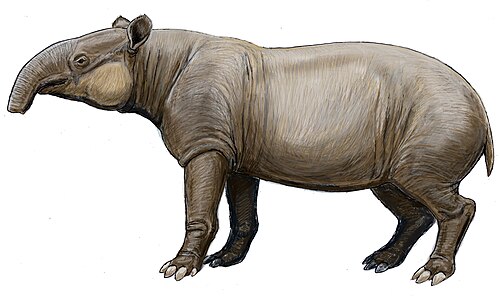
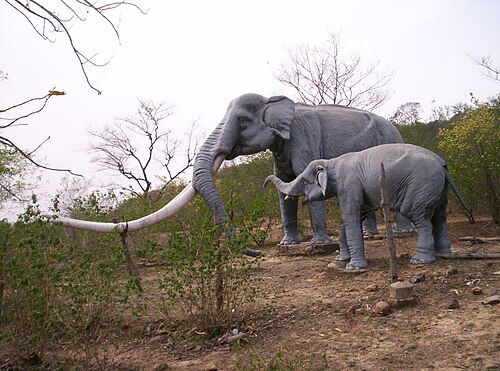


インド亜大陸における絶滅の時期は、信頼できる年代測定法がないため不明確である。[ 19 ]中国の遺跡でも同様の問題が報告されているが、その地域では大型動物の分類群が完新世まで生き残ったという証拠はない。[ 20 ]東南アジアと中国南部における絶滅は、開けた森林生息地から閉鎖的な森林生息地への環境変化の結果であると提唱されている。[ 21 ]


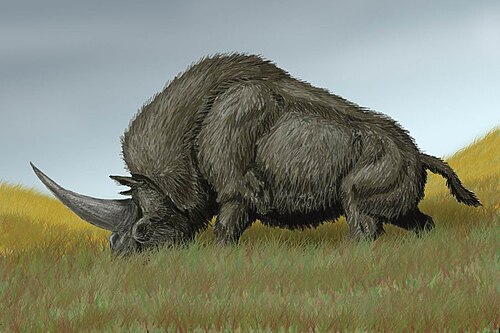


旧北区はヨーロッパ大陸全体に広がり、北アジア、コーカサス、中央アジアを経て中国北部、シベリア、ベーリンジアにまで及んでいます。絶滅はアフリカや南アジア、東南アジアよりも北ユーラシアでより深刻でした。これらの絶滅は数万年にわたって段階的に起こり、約5万年前から約1万年前まで続き、ストレート牙ゾウやナローノーズサイのような温帯適応種は、ケナガマンモスやケナガサイのような寒冷適応種よりも一般的に早く絶滅しました。気候変動は絶滅の主要因である可能性が高く、おそらく人間の狩猟と組み合わさったと考えられています。[ 2 ]
北アメリカにおける絶滅は、約 13,800 ~ 11,400 年前の後期更新世末期に集中しており、これはヤンガードリアス寒冷期の開始と狩猟採集民のクロービス文化の出現と一致している。北アメリカの絶滅における人間要因と気候要因の相対的な重要性は、大きな論争の対象となっている。絶滅した属は合計で約 35 属に及ぶ。[ 4 ]アラスカ・ユーコン地域以南の北アメリカの放射性炭素年代測定記録は、信頼できる年代学を構築するには「不十分」であるとされている。[ 45 ]

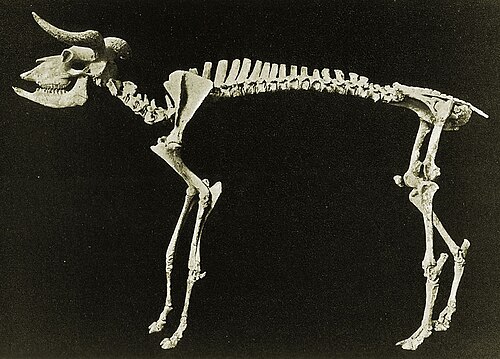







北米で絶滅した動物(草食動物 (H)または肉食動物(C)として表記)には以下が含まれる。
生き残った種は、ある意味では失われた種と同じくらい重要です。バイソン(H)、ハイイロオオカミ( C )、オオヤマネコ(C)、ハイイログマ(C)、アメリカクロクマ(C)、シカ(例:カリブー、ヘラジカ、ワピチ(エルク)、オドコイレウス属)(H)、プロングホーン(H)、シロクチペッカリー( H )、ジャコウウシ(H)、オオツノヒツジ(H)、マウンテンゴート(H )などです。生き残った種のリストには、第四紀の絶滅イベントで絶滅したが、中期完新世に南米の遺存個体群から少なくともその生息域の一部を再定着した種も含まれています。例えば、クーガー(C)、ジャガー(C)、オオアリクイ(C)、クビワペッカリー(H)、オセロット(C) 、ジャガーランディ(C)などです。プロングホーンとオオアリクイを除くすべての動物は、人間の捕食者と共に進化してきたアジアの祖先の子孫である。[ 71 ]プロングホーンは陸上哺乳類の中で2番目に速く(チーターに次ぐ)、それがハンターから逃れるのに役立った可能性がある。過剰狩猟の文脈で説明するのが難しいのはバイソンの生存である。これらの動物が北アメリカに初めて現れたのは24万年未満前であり、そのためかなりの期間、人間の捕食者から地理的に隔離されていたからである。[ 72 ] [ 73 ] [ 74 ]古代のバイソンが現在のバイソンに進化してきたため、[ 75 ] [ 76 ]更新世末期に大陸全体でバイソンが絶滅することはなかった(ただし、この属は多くの地域で地域的に絶滅した)。したがって、完新世および最近までバイソンが生き残っていることは、過剰狩猟のシナリオとは矛盾する。人類が初めて北アメリカ大陸に進出した更新世末期までに、これらの大型動物は20万年以上もの間、人間の集中的な狩猟から地理的に隔絶されていた。これほど長い地質学的時間スケールを考えると、バイソンはほぼ間違いなく、北アメリカ原産の大型哺乳類とほぼ同じくらい狩猟経験が乏しかったと考えられる。
北米における大量絶滅の波と関連付けられている文化は、クロービス文化(参照)に関連する古アメリカ文化であり、彼らは槍投げ器を使って大型動物を殺していたと考えられている。「先史時代の過剰狩猟仮説」に対する主な批判は、当時の人類の人口が少なすぎた、あるいは地理的に十分に広まらなかったため、そのような生態学的に大きな影響を与えることはできなかったという点である。しかし、この批判は、気候変動による絶滅の説明となるシナリオが自動的に優先されることを意味するものではなく、気候変動に関する議論の弱点が過剰狩猟を支持する根拠とみなされることもない。両方の要因が何らかの形で組み合わさった可能性はあり、気候変動によって既にストレスを受けている人口では、過剰狩猟によって大規模な絶滅がはるかに容易に起こるだろう。
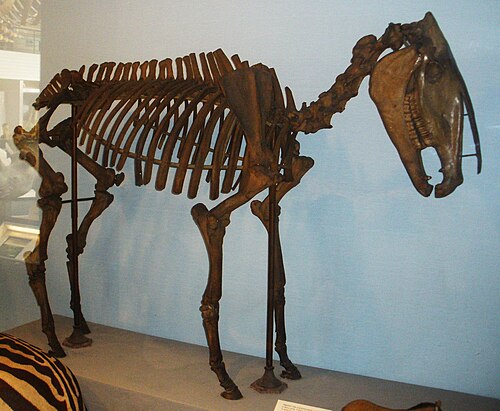


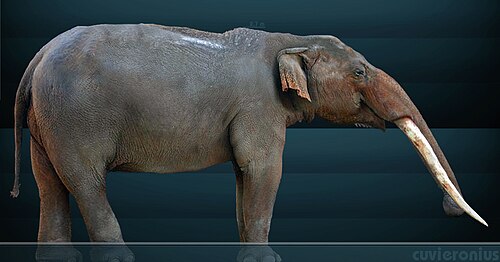
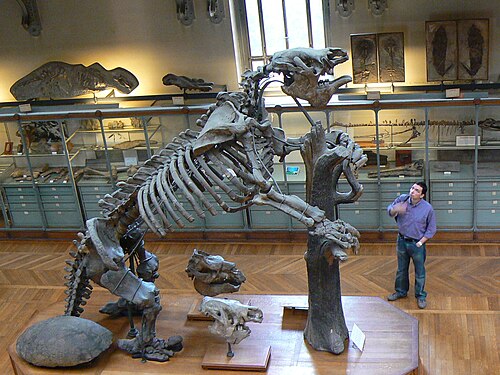
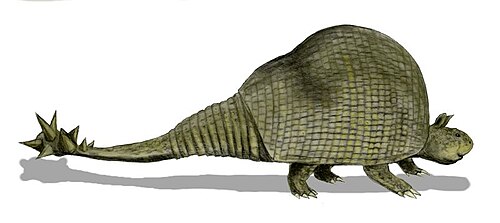


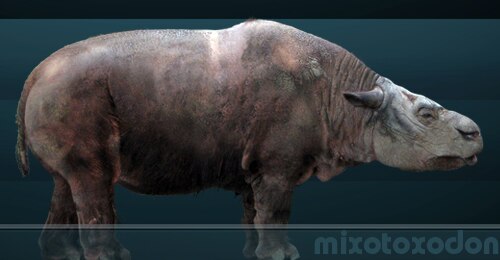
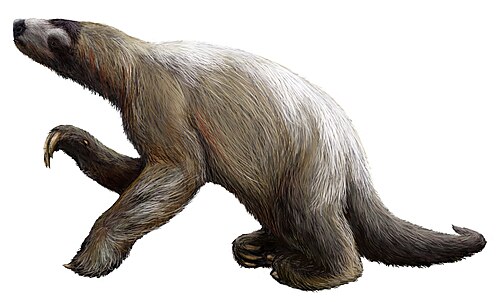
南アメリカ大陸は、大陸の中でも最悪の損失を被り、大型動物の約83%が絶滅した。[ 11 ]これらの絶滅は、約15,000年前に現代人が南アメリカ大陸に到達した後に起こった。さまざまな著者によって、絶滅の原因として人間と気候の両方の要因が挙げられている。[ 77 ]放射性炭素年代に基づいて、一部の大型動物が完新世初期まで生き残ったと歴史的に示唆されているが、これは汚染による年代測定の誤差の結果である可能性がある。[ 78 ]これらの絶滅は、南極寒期(北半球のヤンガードリアス期よりも早く、より深刻ではない寒冷期)の終わりと、南アメリカ大陸全体に広まったフィッシュテール型投射具の出現と一致している。魚尾型の投射具の先端は大型動物の狩猟に使われていたと考えられているが、絶滅した大型動物を人間が利用していたという直接的な証拠はまれである[ 77 ]。ただし、大型動物の利用は多くの遺跡で記録されている[ 78 ] [ 79 ] 。魚尾型の先端は大型動物の絶滅後急速に姿を消し、より小型の獲物を狩るのに適した他の様式に取って代わられた[ 77 ] 。一部の著者は「壊れたジグザグ」モデルを提唱しており、人間の狩猟と気候変動によって大型動物が好む開けた生息地が減少したことが、南米における大型動物の絶滅の相乗的要因であったとしている[ 80 ] 。
オーストラリアの大型動物の絶滅は、アメリカ大陸やユーラシア大陸のマンモスステップ動物の絶滅よりも早く起こったようで、絶滅のピークは約42,000年前と推定されている。[ 111 ] [ 112 ]「一般的な見解」では、オーストラリア本土とタスマニアでは、大型動物は40,000年前までに絶滅していたとされている。[ 113 ]オーストラリアの大型動物の絶滅に関する議論は、歴史的に、絶滅の原因が人間(ほとんどの情報源では、人間は少なくとも50,000年前にオーストラリアに到達し、その後42,000~41,000年前頃にタスマニアに広がったと推定されている[ 114 ])なのか、それとも気候変動により、人間が到着する前に多くの大型動物種がすでに絶滅していたのか、という点に集中している。[ 115 ]この議論の解決は、オーストラリアの大型動物の化石が希少で年代が不明確であるため妨げられてきた。2010年代後半以降の研究では、多くの大型動物種が一部の著者によって以前考えられていたよりも長く生存し、オーストラリアで人類と同時期に生息していたことが示唆されているが、一部の研究では依然として気候変動が絶滅の主な原因であったと主張している。[ 111 ]絶滅したオーストラリアの大型動物と人類との相互作用の証拠はほとんどなく、注目すべき例外として、ゲニオルニス(アヒルに近縁の巨大なドロモルニス科の鳥の一種)の卵殻の焼却がある。 [ 116 ]大型動物種はニューギニアではかなり後まで、最終氷期最盛期まで、[ 117 ]あるいは一部の分類群では完新世中期まで生存していた可能性がある。[ 113 ]


19世紀には、大型動物の絶滅は一部の科学者によってすでに独立した現象として認識されていました。[ 126 ] [ 127 ]
南米の変貌ぶりを目の当たりにすると、深い驚きを禁じ得ない。かつてはアフリカ南部のように巨大な動物が跋扈していたに違いないが、今ではバク、グアナコ、アルマジロ、カピバラしか見当たらない。かつての動物たちに比べれば、まるで小人同然だ。これらの動物が姿を消して以来、この地の自然環境に大きな変化があったとは考えにくい。では、一体何がこれほど多くの生き物を絶滅させてしまったのだろうか?
—チャールズ・ダーウィン、『ビーグル号航海記』(1834年)
したがって、私たちが今、地球の歴史において全く異例の時代にいることは明らかです。私たちは動物学的に貧弱な世界に生きており、巨大で獰猛で奇妙な動物たちが最近姿を消しました。そして、それらがいなくなった今、私たちにとって世界ははるかに良くなったことは間違いありません。しかし、これほど多くの大型哺乳類が、一箇所だけでなく地球の陸地の半分以上で突然絶滅したことは、実に驚くべき事実であり、十分に考察されてこなかった事実です。この大きな変化には何らかの物理的な原因があったに違いないと信じざるを得ません。そしてそれは、地球の表面の広範囲にほぼ同時に作用する可能性のある原因であり、少なくとも第三紀に関しては、異例の性質を持つ原因であったに違いありません。
—アルフレッド・ラッセル・ウォレス、『動物の地理的分布:現生動物と絶滅動物の関係性の研究による地球表面の過去の変化の解明』(1876年)
数十年後、ウォレスは1911年の著書『生命の世界』(彼の死の2年前に出版)で更新世の大型動物の絶滅の問題を再検討し、絶滅は少なくとも部分的には人間の行為と他の要因の組み合わせの結果であると結論付けた。[ 128 ]このテーマについての議論は20世紀中にさらに広がり、特に1960年代にポール・シュルツ・マーティンが「過剰狩猟仮説」を提唱したことで、さらに広まった。20世紀末までに、この問題に関して研究者の2つの「陣営」が現れ、一方は気候変動を支持し、もう一方は絶滅の主な原因として人間の狩猟を支持した。[ 127 ] 2025年のレビューでは、この問題に関する文献は依然として大きく分裂していることが判明したが、さまざまな仮説に対する支持は分野によって異なり、生態学者は他の分野よりも人間による原因をより強く支持していた。全体として、2020年から2024年に発表された文献では、気候変動のみを原因とする見解を支持する著者は、人間による原因のみ、または人間と気候の複合的な原因とする見解を支持する著者よりも少なかった。[ 129 ]

狩猟仮説は、人類が大型草食動物を絶滅に追いやった結果、それらの動物を捕食していた肉食動物や腐肉食動物も絶滅したと示唆している。[ 130 ] [ 131 ] [ 132 ]この仮説は、更新世の人類が大型動物の絶滅の原因であるとしている。電撃戦と呼ばれる変種では、この過程が比較的短期間で起こったとされている。これに対する直接的な証拠としては、人間の遺骨とともに発見された大型動物の化石、大型動物の骨に埋め込まれた矢や道具の切断痕、そしてそのような狩猟を描いたヨーロッパの洞窟壁画などが挙げられる。生物地理学的証拠も示唆的である。人類が進化してきた世界の地域は、オーストラリア、アメリカ大陸、マダガスカル、ニュージーランドなど、初期の人類がいなかった他の地域と比べて、更新世の大型動物の多様性(アジアやアフリカのゾウやサイなど)をより多く保持している。狩猟仮説の変形である過剰殺戮仮説は、1966年にアリゾナ大学砂漠研究所の地球科学名誉教授であるポール・S・マーティンによって提唱された。[ 133 ] [ 134 ]
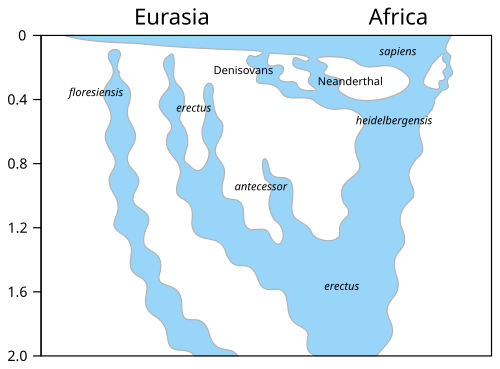
状況証拠として、ある地域における人類の出現と絶滅との時間的な密接な相関関係は、このシナリオに重みを与えている。[ 135 ] [ 10 ] [ 7 ] [ 16 ]放射性炭素年代測定は、この相関関係が因果関係を反映しているという妥当性を裏付けている。[ 136 ]大型動物の絶滅は、非常に長い期間と非常に変動の大きい気候状況に及んだ。オーストラリアにおける最初期の絶滅は、最終氷期最盛期や気温上昇よりもはるか前の約5万年前で完了した。ニュージーランドにおける最新の絶滅は、500年前より前に完了したのではなく、寒冷期に完了した。これらの極端な間の、大型動物の絶滅は、北アメリカ、南アメリカ、マダガスカルなどの場所で気候の共通性なく段階的に発生した。確認できる唯一の共通要因は、人類の到来である。[ 137 ] [ 138 ]この現象は地域内でも見られます。約 5 万年前のオーストラリアにおける哺乳類の絶滅の波は、既知の気候変動ではなく、人類の到来と一致しています。さらに、巨大カンガルーのプロテムノドンなどの大型哺乳類は、数千年後に人類が移住したタスマニアよりもオーストラリア本土で早く絶滅したようです。[ 139 ] [ 140 ] 2015 年に発表された研究では、さまざまな大陸や島への人類の到来と、各種が絶滅したことが知られている時間枠を相関させる数千のシナリオを実行することで、この仮説をさらに裏付けました。これは、過去 9 万年の気候復元と比較されました。研究者らは、人類の拡散と種の絶滅の相関関係を発見し、人類の影響が絶滅の主な原因であり、気候変動が絶滅の頻度を悪化させたことを示しました。しかし、この研究では、アジア大陸の化石記録において明らかに低い絶滅率が発見された。[ 141 ] [ 142 ]

2020年にScience Advancesに掲載された研究では、過去12万6000年間に急速に上昇した世界の哺乳類の絶滅率は、気候変動ではなく、人間の人口規模や特定の人間の活動が原因であることが分かりました。この期間の哺乳類の絶滅の約96%は、人間の影響によるものです。この研究の筆頭著者であるトビアス・アンダーマン氏によると、「これらの絶滅は、連続的かつ一定のペースで起こったわけではありません。むしろ、人類が初めて到達した時期に、さまざまな大陸で絶滅の爆発が観測されています。最近では、人間が引き起こした絶滅の規模が再び加速しており、今回は地球規模で発生しています。」[ 143 ] [ 144 ]関連して、更新世に現存する大型動物の個体数減少も、気候変動ではなく人間の拡大と相関していることが示されています。[ 16 ]
絶滅が大型動物に極端に偏っていることは、気候変動よりも人間の活動との関連性をさらに裏付けている。[ 145 ]第四紀を通じて哺乳類の平均サイズが減少したという証拠があり、[ 146 ]この現象は、人間による大型動物の不均衡な狩猟と関連している可能性が高い。[ 5 ]
人類の狩猟による絶滅は、マンモスの骨格に投擲武器の先端が埋め込まれている考古学的発見、現代の無防備な動物がハンターに容易に接近できるという観察[ 147 ] [ 148 ] [ 149 ] 、モシマンとマーティン[ 150 ]、ウィッティントンとダイク[ 151 ]、そして最近ではアルロイ[ 152 ]によるコンピューターモデルによって裏付けられている。

2024年にサイエンスアドバンシズ誌に掲載された論文では、12,800年前の18ヶ月の子供の頭蓋骨を分析し、母乳と固形食の両方に起因する化学的特徴を調べ、北米における過剰狩猟仮説をさらに裏付ける証拠が示された。炭素と窒素の特定の同位体は、マンモス属に見られるものと最もよく一致し、次にヘラジカやバイソンに見られるものと一致した。[ 153 ] [ 154 ]
狩猟仮説に関して、多くの異論が提起されている。その中でも特に注目すべきは、人間が大型動物を狩猟した証拠が乏しいことである。[ 155 ] [ 156 ] [ 157 ]例えばラクダやウマは化石史に非常に頻繁に報告されているにもかかわらず、北アメリカではマンモス、マストドン、ゴンフォテリウム、バイソン以外の大型動物が狩猟されていたという考古学的証拠はない。 [ 158 ]しかし、過剰狩猟の支持者は、これは北アメリカでの絶滅過程が速く、解体の痕跡のある動物が保存される可能性が低いためだと述べている。[ 159 ]北アメリカの分類群の大部分は化石記録が乏しすぎて、人間がそれらを狩猟した頻度を正確に評価することができない。[ 11 ]スロベルとグルントによる研究では、「人間と絶滅した動物が共存していた時代の考古学的遺跡はまれである。骨が保存されている遺跡はさらにまれであり、その中でも、人間が何らかの獲物を狩猟したという明確な証拠を示すものはごくわずかである」と結論付けている。[ 160 ]ユージン・S・ハンは、狩猟採集社会の出生率は一般的に低すぎること、狩猟隊が大型動物を仕留めるのに多大な労力を要すること、そして狩猟採集民が単に狩猟によってメガファウナを絶滅させたとしても、途方もない量の肉が無駄になったはずだと示唆している。[ 161 ]絶滅の原因として狩猟を支持する人々は、統計モデルによって、比較的低レベルの狩猟でも大型動物のライフサイクルが遅いため個体群に大きな影響を与える可能性があることが検証されていると主張し、[ 162 ]また、狩猟は生態系を不安定化させるトップダウン強制の栄養カスケード現象を引き起こす可能性があると主張している。[ 163 ]
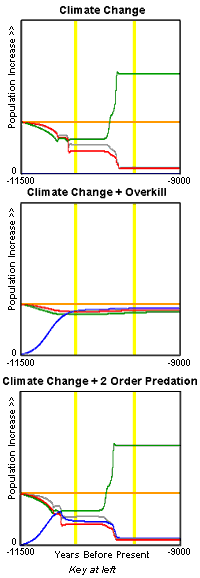
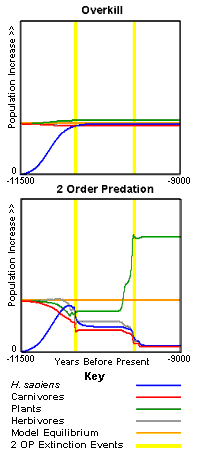
第二次捕食仮説とは、人類が新世界に到達した際、旧世界では成功していた捕食動物の駆除政策を継続したという説である。しかし、人類の効率性が向上し、草食動物と肉食動物の両方の動物相がより未熟であったため、人類は肉食動物を大量に駆除し、大陸の生態系バランスを崩し、人口過剰、環境疲弊、そして環境崩壊を引き起こしたという。この仮説は、動物、植物、そして人間の個体数の変化を説明するものである。
状況は以下のとおりです。
二次捕食仮説は、コンピュータモデルである更新世絶滅モデル(PEM)によって支持されています。このモデルは、捕食者の狩猟以外のすべての変数(草食動物の個体数、草食動物の加入率、人間一人当たりの食料必要量、草食動物の狩猟率など)に同じ仮定と値を使用しています。過剰捕食仮説(捕食者の狩猟=0)と二次捕食(捕食者の狩猟は実行ごとに0.01から0.05の間で変化)を比較しています。その結果、二次捕食は過剰捕食よりも絶滅とより整合的であることが分かりました[ 164 ] [ 165 ](結果グラフは左)。更新世絶滅モデルは、複数の仮説を検証する唯一のモデルであり、絶滅を引き起こすのに十分な気候変動を人為的に導入することで、組み合わせ仮説を具体的に検証する唯一のモデルです。過剰捕食と気候変動が組み合わさると、互いにバランスが取れます。気候変動は植物の数を減らし、過剰捕食は動物を減らすため、食べられる植物が少なくなります。二次捕食と気候変動が組み合わさると、気候変動の影響が悪化する。[ 166 ](結果グラフは右)。二次捕食仮説は、バイソンの個体数が大幅に増加したという上記の観察によってさらに裏付けられている。[ 167 ]

しかし、この仮説は、多種モデルが草食動物種間の間接的な競争によって大量絶滅を引き起こすという理由で批判されている。つまり、繁殖率の高い小型種が、繁殖率の低い大型種に対する捕食を補助しているというのである。[ 152 ]更新世絶滅モデルでは、すべての被食種が一括りにされている。また、捕食者による個体数制御は、現代の生態系の観察によって完全に裏付けられているわけではない。[ 168 ]さらに、この仮説は気候変動による植生の減少を想定しているが、氷河の後退によって北アメリカの居住可能面積は2倍になった。実際に起こった植生の変化は、小型脊椎動物の絶滅をほとんど引き起こさず、平均的に分布範囲は狭くなっている。批判者はこれを、この仮説に反する証拠として挙げている。
人間がこれまで人が住んでいなかった土地を植民地化した結果、人間による広範囲な火の使用により、新たな火災発生様式が導入された可能性がある。[ 8 ]人為的な火の使用がオーストラリア[ 6 ]と北アメリカ[ 169 ]の両方の地域環境に大きな影響を与えたという証拠がある。
オーストラリア南東部では、人類がオーストラリアに到達した時期に水が不足していたことから、貴重な水源をめぐる人類と大型動物との競争が、後者の絶滅の一因となった可能性がある。[ 170 ]

19世紀末から20世紀初頭にかけて、科学者たちが氷河期と間氷期が存在し、それらが特定の動物の繁栄や絶滅と何らかの形で関連していることに初めて気づいたとき、彼らは更新世の氷河期の終焉が絶滅の原因の一つであるのではないかと推測した。
氷河期の終焉に伴う最も明白な変化は気温の上昇である。15,000年前から10,000年前の間に、 地球の平均年間気温が6℃上昇した。これが絶滅の原因であると一般的に考えられていた。この仮説によれば、ウィスコンシン氷床を溶かすのに十分な気温上昇は、寒冷地に適応した哺乳類に十分な熱ストレスを与え、死に至らしめた可能性がある。氷河の寒さの中で体温を保つのに役立つ厚い毛皮は、余分な熱の放出を妨げ、哺乳類が熱疲労で死に至った可能性がある。表面積対体積比が低い大型哺乳類は、小型哺乳類よりも状況が悪かっただろう。過去56,000年を対象とした研究によると、最大16 ℃(29 °F)の気温変化を伴う急激な温暖化イベントが、大型動物の絶滅に重要な影響を与えた。古代のDNAと放射性炭素年代測定データは、局所的な遺伝子集団が同じ種内の他の集団、または同じ属内の他の集団に置き換えられたことを示している。集団の生存は避難場所の存在と長距離分散に依存していたが、これらは人間の狩猟によって阻害された可能性がある。[ 171 ]
他の科学者たちは、ますます極端な気候(夏は暑く冬は寒くなる)――「大陸性」と呼ばれるもの――や、降雨量の変化が絶滅の原因であると提唱している。植生は混交林と草原から草原と森林に分かれたことが示されている。 [ 172 ] [ 173 ] [ 174 ]これは利用可能な食料の種類に影響を与えた可能性がある。生育期間が短くなったことで、大型草食動物が絶滅し、他の多くの動物が矮小化した可能性がある。この場合、観察されているように、反芻動物は限られた量の高繊維の食物からより多くの栄養を抽出でき、草食動物に対する毒素に対処しやすいため、バイソンや他の大型反芻動物は馬、象、その他の単胃動物よりも生き残っただろう。 [ 175 ] [ 176 ] [ 177 ]つまり、一般的に、植生がより特殊化すると、食性の柔軟性が低い草食動物は、特定の地域内で生命を維持し繁殖するために必要な植生の組み合わせを見つけることが難しくなる可能性がある。大陸性気候の拡大は、降雨量の減少と予測の困難化をもたらし、エネルギーと栄養に必要な植物の入手可能性を制限した。[ 178 ] [ 179 ] [ 180 ]この降雨量の変化により、繁殖に適した時間が制限されたことが示唆されている。[ 181 ] [ 182 ]これは、交尾期間が長く柔軟性に欠ける大型動物に不均衡な影響を与える可能性があり、生育期の変化により十分な食料、水、またはシェルターが利用できない不利な季節に子を産む可能性がある。対照的に、小型哺乳類は、ライフサイクル、繁殖サイクル、妊娠期間が短いため、個体としても種としても気候の予測不可能性の増大に適応し、子孫の生存に有利な条件に合わせて繁殖努力を同期させることができたと考えられる。そうであれば、小型哺乳類は子孫の損失が少なく、状況が再び子孫の生存に有利になったときに繁殖努力を繰り返すことができたであろう。[ 183 ]25,000年前から10,000年前までのヨーロッパ、シベリア、アメリカ大陸の環境条件を調べた研究では、氷河の融解と最大降雨量につながる長期にわたる温暖化現象が、大型草食動物を支えていた牧草地が草食動物に抵抗力のある植物を支える広範囲の湿地に変化する直前に発生したことがわかった。この研究は、水分によって引き起こされた環境変化が大型動物の絶滅につながり、アフリカの赤道横断的な位置により砂漠と中央森林の間に牧草地が存在し続けたため、そこで絶滅した大型動物の種が少なかったと提唱している。[ 171 ]
東南アジアの証拠は、ヨーロッパ、オーストラリア、アメリカ大陸とは対照的に、気候変動と海面上昇がいくつかの草食動物種の絶滅の重要な要因であったことを示唆している。植生成長の変化と、初期の人類や哺乳類がこれまで孤立していた局所的な生態系へアクセスするための新たな経路は、特定の動物群にとって有害であった。[ 184 ]
ヨーロッパからの証拠の中には、気候変動が絶滅の原因であったことを示唆するものもある。個体の絶滅は環境変化の時期に起こる傾向があり、人間の移住とはあまり相関がなかったからである。[ 2 ]
オーストラリアでは、いくつかの研究が、大型動物の絶滅は大陸への人類の移住以前に始まっており、気候変動がその要因であると示唆している。[ 185 ]
ベーリンジアでは、特に激しい湿地化と、コルディレラ氷床がベーリンジアと北アメリカの残りの部分との間の回廊を再び開くほど十分に後退する前にユーラシアと北アメリカの間の陸地が水没したために、大型動物が絶滅した可能性がある。[ 186 ]ケナガマンモスは気候要因によりベーリンジアから絶滅したが、人間の活動もその減少に相乗的な役割を果たした。[ 187 ]北アメリカでは、放射性炭素年代測定イベントカウント(REC)モデリング研究により、北アメリカの大型動物の減少は人間の人口増加ではなく気候変動と相関していることが判明した。[ 188 ]
北米五大湖地域では、マストドンやマンモスの個体数減少は、人間の活動ではなく、ヤンガードリアス期の気候変動と相関関係にあることが分かっている。[ 189 ]
アルゼンチンのパンパでは、かつてははるかに広かったパンパ草原の広大な地域が洪水に見舞われたことが、大型動物群の絶滅の一因となった可能性がある。[ 9 ]
Critics object that since there were multiple glacial advances and withdrawals in the evolutionary history of many of the megafauna, it is rather implausible that only after the last glacial maximum would there be such extinctions. Proponents of climate change as the extinction event's cause like David J. Meltzer suggest that the last deglaciation may have been markedly different from previous ones.[190] Also, one study suggests that the Pleistocene megafaunal composition may have differed markedly from that of earlier interglacials, making the Pleistocene populations particularly vulnerable to changes in their environment.[191]
Studies propose that the annual mean temperature of the current interglacial that we have seen for the last 10,000 years is no higher than that of previous interglacials, yet most of the same large mammals survived similar temperature increases.[192][193][194] In addition, numerous species such as mammoths on Wrangel Island and St. Paul Island survived in human-free refugia despite changes in climate.[195] This would not be expected if climate change were responsible (unless their maritime climates offered some protection against climate change not afforded to coastal populations on the mainland). Under normal ecological assumptions island populations should be more vulnerable to extinction due to climate change because of small populations and an inability to migrate to more favorable climes.
Critics have also identified a number of problems with the continentality hypotheses. Megaherbivores have prospered at other times of continental climate. For example, megaherbivores thrived in Pleistocene Siberia, which had and has a more continental climate than Pleistocene or modern (post-Pleistocene, interglacial) North America.[196][197][198] The animals that became extinct actually should have prospered during the shift from mixed woodland-parkland to prairie, because their primary food source, grass, was increasing rather than decreasing.[199][198][200] Although the vegetation did become more spatially specialized, the amount of prairie and grass available increased, which would have been good for horses and for mammoths, and yet they became extinct. This criticism ignores the increased abundance and broad geographic extent of Pleistocene bison at the end of the Pleistocene, which would have increased competition for these resources in a manner not seen in any earlier interglacials.[191] Although horses became extinct in the New World, they were successfully reintroduced by the Spanish in the 16th century—into a modern post-Pleistocene, interglacial climate. Today there are feral horses still living in those same environments. They find a sufficient mix of food to avoid toxins, they extract enough nutrition from forage to reproduce effectively and the timing of their gestation is not an issue. This criticism ignores the fact that present-day horses are not competing for resources with ground sloths, mammoths, mastodons, camels, llamas, and bison. Similarly, mammoths survived the Pleistocene Holocene transition on isolated, uninhabited islands in the Mediterranean Sea until 4,000 to 7,000 years ago,[201] as well as on Wrangel Island in the Siberian Arctic.[202] Additionally, large mammals should have been able to migrate, permanently or seasonally, if they found the temperature too extreme, the breeding season too short, or the rainfall too sparse or unpredictable.[203] Seasons vary geographically. By migrating away from the equator, herbivores could have found areas with growing seasons more favorable for finding food and breeding successfully. Modern-day African elephants migrate during periods of drought to places where there is apt to be water.[204] Large animals also store more fat in their bodies than do medium-sized animals and this should have allowed them to compensate for extreme seasonal fluctuations in food availability.[205]
Some evidence weighs against climate change as a valid hypothesis as applied to Australia. It has been shown that the prevailing climate at the time of extinction (40,000–50,000 BP) was similar to that of today, and that the extinct animals were strongly adapted to an arid climate. The evidence indicates that all of the extinctions took place in the same short time period, which was the time when humans entered the landscape. The main mechanism for extinction was probably fire (started by humans) in a then much less fire-adapted landscape. Isotopic evidence shows sudden changes in the diet of surviving species, which could correspond to the stress they experienced before extinction.[206][207][208]
Some evidence obtained from analysis of the tusks of mastodons from the American Great Lakes region appears inconsistent with the climate change hypothesis. Over a span of several thousand years prior to their extinction in the area, the mastodons show a trend of declining age at maturation. This is the opposite of what one would expect if they were experiencing stresses from deteriorating environmental conditions, but is consistent with a reduction in intraspecific competition that would result from a population being reduced by human hunting.[209]
It may be observed that neither the overkill nor the climate change hypotheses can fully explain events: browsers, mixed feeders and non-ruminant grazer species suffered most, while relatively more ruminant grazers survived.[210] However, a broader variation of the overkill hypothesis may predict this, because changes in vegetation wrought by either Second Order Predation (see below)[166][211] or anthropogenic fire preferentially selects against browse species.
The hyperdisease hypothesis, as advanced by Ross D. E. MacPhee and Preston A. Marx, attributes the extinction of large mammals during the late Pleistocene to indirect effects of the newly arrived aboriginal humans.[212][213][214] In more recent times, disease has driven many vulnerable species to extinction; the introduction of avian malaria and avipoxvirus, for example, has greatly decreased the populations of the endemic birds of Hawaii, with some going extinct.[215] The hyperdisease hypothesis proposes that humans or animals traveling with them (e.g., chickens or domestic dogs) introduced one or more highly virulent diseases into vulnerable populations of native mammals, eventually causing extinctions. The extinction was biased toward larger-sized species because smaller species have greater resilience because of their life history traits (e.g., shorter gestation time, greater population sizes, etc.). Humans are thought to be the cause because other earlier immigrations of mammals into North America from Eurasia did not cause extinctions.[212] A similar suggestion is that pathogens were transmitted by the expanding humans via the domesticated dogs they brought with them.[216] A related theory proposes that a highly contagious prion disease similar to chronic wasting disease or scrapie that was capable of infecting a large number of species was the culprit. Animals weakened by this "superprion" would also have easily become reservoirs of viral and bacterial diseases as they succumbed to neurological degeneration from the prion, causing a cascade of different diseases to spread among various mammal species. This theory could potentially explain the prevalence of heterozygosity at codon 129 of the prion protein gene in humans, which has been speculated to be the result of natural selection against homozygous genotypes that were more susceptible to prion disease and thus potentially a tell-tale of a major prion pandemic that affected humans of or younger than reproductive age far in the past and disproportionately killed before they could reproduce those with homozygous genotypes at codon 129.[217]
If a disease was indeed responsible for the end-Pleistocene extinctions, then there are several criteria it must satisfy (see Table 7.3 in MacPhee & Marx 1997). First, the pathogen must have a stable carrier state in a reservoir species. That is, it must be able to sustain itself in the environment when there are no susceptible hosts available to infect. Second, the pathogen must have a high infection rate, such that it is able to infect virtually all individuals of all ages and sexes encountered. Third, it must be extremely lethal, with a mortality rate of c. 50–75%. Finally, it must have the ability to infect multiple host species without posing a serious threat to humans. Humans may be infected, but the disease must not be highly lethal or able to cause an epidemic.
As with other hypotheses, a number of counterarguments to the hyperdisease hypothesis have been put forth. Generally speaking, disease has to be very virulent to kill off all the individuals in a genus or species. Even such a virulent disease as West Nile fever is unlikely to have caused extinction.[218] The disease would need to be implausibly selective while being simultaneously implausibly broad. Such a disease needs to be capable of killing off wolves such as Canis dirus or goats such as Oreamnos harringtoni while leaving other very similar species (Canis lupus and Oreamnos americanus, respectively) unaffected. It would need to be capable of killing off flightless birds while leaving closely related flighted species unaffected. Yet while remaining sufficiently selective to afflict only individual species within genera it must be capable of fatally infecting across such clades as birds, marsupials, placentals, testudines, and crocodilians. No disease with such a broad scope of fatal infectivity is known, much less one that remains simultaneously incapable of infecting numerous closely related species within those disparate clades. On the other hand, this objection does not account for the possibility of a variety of different diseases being introduced around the same era. Numerous species including wolves, mammoths, camelids, and horses had emigrated continually between Asia and North America over the past 100,000 years. For the disease hypothesis to be applicable there it would require that the population remain immunologically naive despite this constant transmission of genetic and pathogenic material. The dog-specific hypothesis in particular cannot account for several major extinction events, notably the Americas (for reasons already covered) and Australia. Dogs did not arrive in Australia until approximately 35,000 years after the first humans arrived there, and approximately 30,000 years after the Australian megafaunal extinction was complete.
Around 41,500 years ago, the Earth's magnetic field weakened in an event known as the Laschamp event. This weakening may have caused increased flux of UV-B radiation and has been suggested by a few authors as a cause of megafaunal extinctions in the Late Quaternary.[219] The full effects of such events on the biosphere are poorly understood, however these explanations have been criticized as they do not account for the population bottlenecks seen in many megafaunal species and nor is there evidence for extreme radio-isotopic changes during the event. Considering these factors, causation is unlikely.[220][221]
The extinction of the megafauna has been argued by some authors to have caused disappearance of the mammoth steppe rather than the other way around. Alaska now has low nutrient soil unable to support bison, mammoths, and horses. R. Dale Guthrie has claimed this as a cause of the extinction of the megafauna there; however, he may be interpreting it backwards. The loss of large herbivores to break up the permafrost allows the cold soils that are unable to support large herbivores today. Today, in the arctic, where trucks have broken the permafrost, grasses and diverse flora and fauna can be supported.[222][223] In addition, Chapin (Chapin 1980) showed that simply adding fertilizer to the soil in Alaska could make grasses grow again like they did in the era of the mammoth steppe. Possibly, the extinction of the megafauna and the corresponding loss of dung is what led to low nutrient levels in modern-day soil and therefore is why the landscape can no longer support megafauna.

However, more recent authors have viewed it as more likely that the collapse of the mammoth steppe was driven by climatic warming, which in turn impacted the megafauna, rather than the other way around.[224] On the other hand, Pleistocene Park, a reintroduction project in Sakha Republic, Siberia aiming at recreating the mammoth steppe locally, has shown that current large herbivores such as horses, muskoxen and bison can influence vegetation and maintain productive grassland ecosystems at a local scale under the current climate.[225]
Megafauna play a significant role in the lateral transport of mineral nutrients in an ecosystem, tending to translocate them from areas of high to those of lower abundance. They do so by their movement between the time they consume the nutrient and the time they release it through elimination (or, to a much lesser extent, through decomposition after death).[226] In South America's Amazon Basin, it is estimated that such lateral diffusion was reduced over 98% following the megafaunal extinctions that occurred roughly 12,500 years ago.[227][228] Given that phosphorus availability is thought to limit productivity in much of the region, the decrease in its transport from the western part of the basin and from floodplains (both of which derive their supply from the uplift of the Andes) to other areas is thought to have significantly impacted the region's ecology, and the effects may not yet have reached their limits.[228] The extinction of the mammoths allowed grasslands they had maintained through grazing habits to become birch forests.[229] The new forest and the resulting forest fires may have induced climate change.[229] Such disappearances might be the result of the proliferation of modern humans.[230][231]
Large populations of megaherbivores have the potential to contribute greatly to the atmospheric concentration of methane, which is an important greenhouse gas. Modern ruminantherbivores produce methane as a byproduct of foregut fermentation in digestion, and release it through belching or flatulence. Today, around 20% of annual methane emissions come from livestock methane release. In the Mesozoic, it has been estimated that sauropods could have emitted 520 million tons of methane to the atmosphere annually,[232] contributing to the warmer climate of the time (up to 10 °C warmer than at present).[232][233] This large emission follows from the enormous estimated biomass of sauropods, and because methane production of individual herbivores is believed to be almost proportional to their mass.[232]
Recent studies have indicated that the extinction of megafaunal herbivores may have caused a reduction in atmospheric methane. One study examined the methane emissions from the bison that occupied the Great Plains of North America before contact with European settlers. The study estimated that the removal of the bison caused a decrease of as much as 2.2 million tons per year.[234] Another study examined the change in the methane concentration in the atmosphere at the end of the Pleistocene epoch after the extinction of megafauna in the Americas. After early humans migrated to the Americas about 13,000 BP, their hunting and other associated ecological impacts led to the extinction of many megafaunal species there. Calculations suggest that this extinction decreased methane production by about 9.6 million tons per year. This suggests that the absence of megafaunal methane emissions may have contributed to the abrupt climatic cooling at the onset of the Younger Dryas. The decrease in atmospheric methane that occurred at that time, as recorded in ice cores, was 2–4 times more rapid than any other decrease in the last half million years, suggesting that an unusual mechanism was at work.[235]
The extermination of megafauna left many niches vacant, which has been cited as an explanation for the vulnerability and fragility of many ecosystems to destruction in the later Holocene extinction. The comparative lack of megafauna in modern ecosystems has reduced high-order interactions among surviving species, reducing ecological complexity.[236] This depauperate, post-megafaunal ecological state has been associated with diminished ecological resilience to stressors.[237] Many extant species of plants have adaptations that were advantageous in the presence of megafauna but are now useless in their absence.[238] The demise of megafaunal ecosystem engineers in the Arctic that maintained open grassland environments has been highly detrimental to shorebirds of the genus Numenius.[239]
There is no general agreement on where the Quaternary extinction event ends, and the Holocene, or anthropogenic, extinction begins, or if they should be considered separate events at all.[240][241] Some authors have argued that the activities of earlier archaic humans have also resulted in extinctions, though the evidence for this is equivocal.[242]
This hypothesis is supported by rapid megafaunal extinction following recent human colonisation in Australia, New Zealand and Madagascar,[243] in a similar way that any large, adaptable predator moving into a new ecosystem would. In many cases, it is suggested even minimal hunting pressure was enough to wipe out large fauna, particularly on geographically isolated islands.[244][245] Only during the most recent parts of the extinction have plants also suffered large losses.[246]
The debate on the cause or causes of the late-Quaternary extinctions has been ongoing for over 200 years, but with greater rigor and focus from the 1960s onward (Martin, 1967; Koch and Barnosky, 2006). Though most current work accepts at least a contributory role for modern humans, the topic remains controversial.
{{cite book}}: ISBN / Date incompatibility (help) Text and images are available under a Creative Commons Attribution 4.0 International License.
{{cite web}}: CS1メンテナンス: アーカイブサービスは非推奨になりました (リンク)