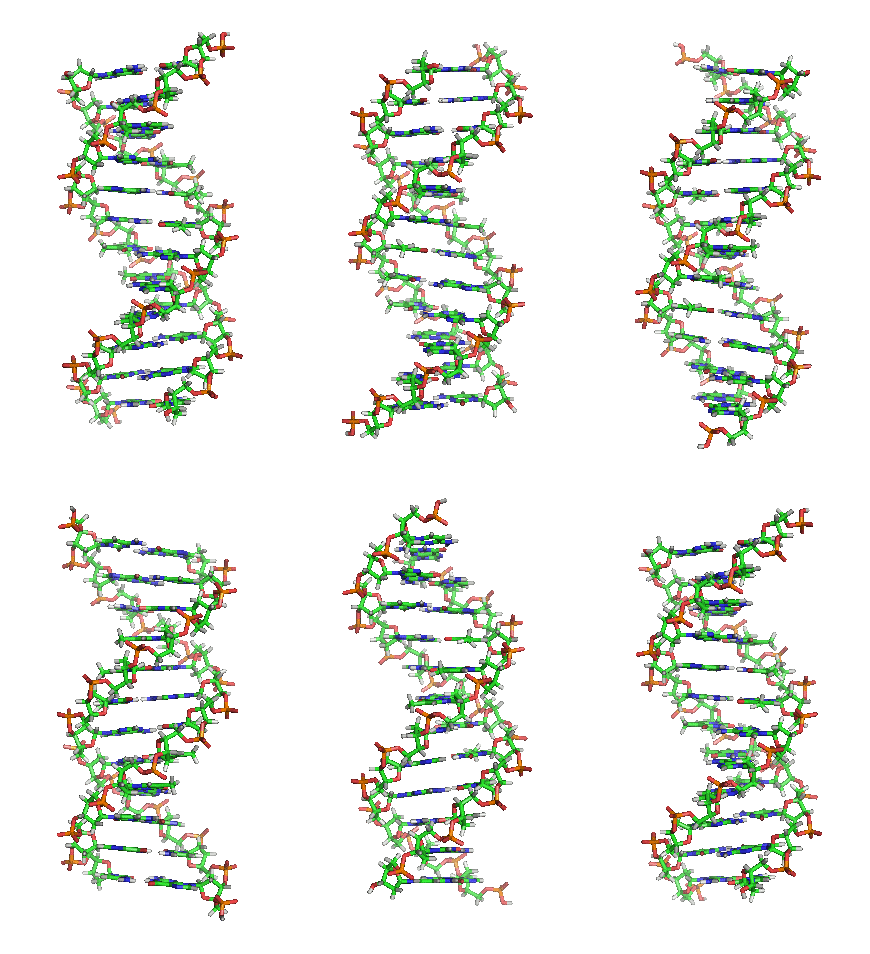
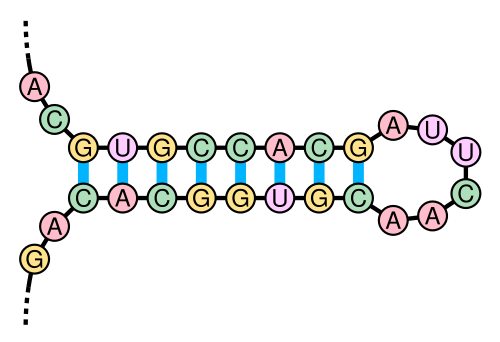
The transcription of a gene only as needed, as opposed to constitutive expression, in which a gene is transcribed continuously. A gene that is transcribed as needed is called a facultative gene.
Any of a subclass of lipid compounds consisting of a carboxylic acid bonded to an aliphatic chain of hydrocarbons, usually 4 to 28 carbon atoms in length, which may be either saturated (containing only single bonds between the carbon atoms) or unsaturated (containing one or more double bonds). In biological systems, fatty acid chains are commonly linked to other compounds via ester bonds, primarily in triglycerides, phospholipids, and derivatives of cholesterol, all of which serve a wide variety of important cellular functions including as structural components of membranes and as energy sources in metabolic pathways.
Any anaerobicmetabolic pathway in which organic molecules such as glucose or other carbohydrates are catabolized in the absence of oxygen in order to produce ATP; or, in the broadest sense, any catabolic process in which organic compounds serve as both electron donors and acceptors.[23] This definition distinguishes fermentation from aerobic respiration, where inorganic diatomic oxygen (O2) is the terminal electron acceptor, and from some types of anaerobic respiration. Fermentation encompasses hundreds of different redox pathways which start and end with a huge variety of reactants and end-products, often branching from various steps in glycolysis, with the most common fermentation products being lactate, acetate, ethanol, succinate, propionate, butyrate, carbon dioxide (CO2), and diatomic hydrogen (H2 ) 発酵は、外因的に供給される電子受容体が利用できない条件下、特に酸素が乏しい環境で、原核生物と真核生物の両方で起こります。発酵では、グルコース分子1個あたりわずか2~5 ATPしか生成されないため、グルコース分子1個あたり最大32 ATPを生成できる好気呼吸に比べて効率がはるかに劣ります。動物など、主に好気呼吸に依存する多細胞生物では、発酵はしばしば代替経路として利用されます。嫌気性解糖とは、解糖中間体を発酵経路に転用することを指します。
In a diploid organism, having just one allele at a given genetic locus (where there would ordinarily be two). Hemizygosity may be observed when only one copy of a chromosome is present in a normally diploid cell or organism, or when a segment of a chromosome containing one copy of an allele is deleted, or when a gene is located on a sex chromosome in the heterogametic sex (in which the sex chromosomes do not exist in matching pairs); for example, in human males with normal chromosomes, almost all X-linked genes are said to be hemizygous because there is only one X chromosome and few of the same genes exist on the Y chromosome.
The storage, transfer, and expression of molecular information in biological organisms,[15] as manifested by the passing on of phenotypic traits from parents to their offspring, either through sexual or asexual reproduction. Offspring cells or organisms are said to inherit the genetic information of their parents.
A compact, highly condensed form of chromatin characterized chiefly by the close spatial proximity of adjacent nucleosomes and the consequent inaccessibility of intervening DNA sequences to DNA-binding proteins, which contrasts with the more open and accessible form known as euchromatin. The transcription of genes located within heterochromatic regions of chromosomes is therefore relatively limited, and so the formation of heterochromatin at specific loci is an important means of regulating gene expression. Establishment of heterochromatin is associated with the modification of specific residues within specific histones, such as methylation of the ninth lysine residue of histone H3 (H3K9); the presence of these modifications at a specific locus signals the recruitment of other proteins which cause local DNA condensation. Many repetitive and structurally important regions of chromosomes are nearly always compacted in so-called constitutive heterochromatin, while the compaction of facultative heterochromatin is more temporary.
The expression of a foreign gene or any other foreign DNA sequence within a host organism which does not naturally contain the same gene. Insertion of foreign transgenes into heterologous hosts using recombinantvectors is a common biotechnology method for studying gene structure and function.
high-throughput
Describing a method or system capable of assaying very large numbers of samples or of processing very large quantities of data extremely rapidly, generally by utilizing automation and miniaturization to greatly increase speed and efficiency. For example, high-throughput sequencing refers to modern DNA sequencing technologies that can produce sequence reads for hundreds of millions of DNA fragments simultaneously, allowing scientists to sequence entire genomes quickly and inexpensively.[32]
The study or analysis of the microscopic anatomy of biological tissues or of cells within tissues, particularly by making use of specialized techniques to distinguish structures and functions based on visual morphology and differential staining. In practice the term is sometimes used more broadly to include cytology.
The complex of eight histone proteins around which double-stranded DNA wraps within a nucleosome. The canonical histone octamer consists of two each of histones H2A, H2B, H3, and H4, which pair with each other symmetrically to form a ball-shaped cluster around which DNA winds through interactions with the histones' surface domains, though variant histones may replace their analogues in certain contexts.
The post-translational modification of histone proteins by the chemical attachment of various molecules or functional groups to specific amino acid residues. Because histones form the core of nucleosomes, the modification of exposed parts of their polypeptide chains is used to regulate gene expression by marking them with molecular labels that signal the recruitment of other proteins to induce conformational changes that variously widen or condense the spacing of nucleosomes along strands of DNA, thereby changing the accessibility of nearby DNA sequences to transcriptional machinery. Histones are modified by many different labels, most commonly methylation, acetylation, ubiquitination, phosphorylation, and citrullination.
(of a linear chromosome or chromosome fragment) Having no single centromere but rather multiple kinetochore assembly sites dispersed along the entire length of the chromosome. During cell division, the chromatids of holocentric chromosomes move apart in parallel and do not form the classical V-shaped structures typical of monocentric chromosomes.
Any of a class of DNA sequences approximately 180 base pairs in length occurring near the 3'‐end of certain eukaryotic genes and encoding a 60-amino acid domain, known as a homeodomain, which is capable of binding to DNA or RNA via a characteristic helix-turn-helix motif. Homeobox-containing genes are translated into homeodomain-containing proteins, which commonly regulate transcription or translation by binding to other genes or messenger RNAs containing homeobox responsive elements. The products of many homeotic genes, exemplified by the Hox genes, are of critical importance in developmental pathways.[6]
homeobox responsive element (HRE)
Any DNA or RNA sequence that is specifically recognized and bound by the homeodomain of a homeodomain-containing protein.
A set of two matching chromosomes, one maternal and one paternal, which pair up with each other inside the nucleus during meiosis. They have the same genes at the same loci, but may have different alleles.
Any process by which genetic material is transferred between unicellular and/or multicellular organisms other than by vertical transmission from parent to offspring, e.g. bacterial conjugation.
Any constitutive gene that is transcribed at a relatively constant level across many or all known conditions and cell types. The products of housekeeping genes typically play critical roles in the maintenance of cellular integrity and basic metabolic function. It is generally assumed that their expression is unaffected by experimental or pathological conditions.
A subset of highly conservedhomeobox-containing genes whose protein products function as transcription factors essential for the proper organization of the body plan in developing animal embryos, ensuring that the correct structures are formed in the correct places. Hox genes are usually arranged on a chromosome in tandem arrays and are expressed sequentially during development, with the sequence of gene activation corresponding to their physical arrangement within the genome and/or the physical layout of the tissues in which they are expressed along the organism's anterior–posterior axis.[6]
A collaborative international scientific research project with the goal of sequencing all of the chromosomal DNA and identifying and mapping all of the genes within human cells, and ultimately of assembling a complete reference genome for the human species. The project was launched in 1990 by a consortium of federal agencies, universities, and research institutions and was declared complete in 2003. Because each individual human being has a unique genome, the finished reference genome is a mosaic of sequences obtained by sampling DNA from thousands of individuals across the world and does not represent any one individual.
The offspring that results from combining the qualities of two organisms of different genera, species, breeds, or varieties through sexual reproduction. Hybrids may occur naturally or artificially, as during selective breeding of domesticated animals and plants. Reproductive barriers typically prevent hybridization between distantly related organisms, or at least ensure that hybrid offspring are sterile, but fertile hybrids may result in speciation.
3.A step in some experimental assays in which a single-stranded DNA or RNA preparation is added to an array surface and anneals to a complementaryhybridization probe.
A single-strandedDNA or RNA fragment (or a nucleic acid analogue) which is artificially labelled with a radioactive or fluorescent compound or some other detectable marker and then allowed to hybridize with complementary DNA or RNA sequences in order to detect the presence of those complements in a heterogeneous sample or their specific in situlocalization; or an assay in which this procedure is performed. As with antibodies in immunostaining, nucleic acid probes bind with high specificity to their target sequences, permitting visualization of the targets, if present, against a non-specific background, whether in a membrane blot or microarray or even in vivo. A unique advantage of hybridization probes is that the stringency of the hybridization reaction is easily modifiable by changing the temperature and salt concentration, making it possible for the same probe to bind to sequences with differing degrees of complementarity. Hybridization probes are employed in Southern blotting and northern blotting and as part of many other laboratory methods. See also probe.
Soluble in or having an affinity for water or other polar compounds; describing a polar molecule, or a moiety or functional group within a molecule, which participates in intermolecular interactions such as hydrogen bonding with other polar molecules and therefore readily dissolves in polar solvents such as water or aqueous solutions.[8] Unlike hydrophobic compounds, hydrophilic compounds can form energetically favorable contacts with the aqueous phase of biological fluids and so can often be suspended directly in the cytosol or exposed to extracellular spaces.[4] Together, the contrasting properties of hydrophilicity and hydrophobicity play major roles in determining the structural conformations and functions of most biomolecules.
Having a low solubility in or affinity for water or other polar solvents; describing a non-polar molecule, or a moiety or functional group within a molecule, which cannot form energetically favorable interactions with polar compounds and which therefore tends to "avoid" or be repulsed by such compounds, instead clustering together with other hydrophobic molecules or arranging itself in a way that minimizes its exposure to its polar surroundings. This phenomenon is not so much due to the affinity of the hydrophobic molecules for each other as it is a consequence of the strong intermolecular forces that allow polar compounds such as water molecules to bond with each other; hydrophobic species are unable to form alternative bonds of equivalent strength with the polar compounds, hence they tend to be excluded from aqueous solutions by the tendency of the polar solvent to maximize interactions with itself. Hydrophobicity is a major determinant of countless chemical interactions in biological systems, including the spatial conformations assumed by macromolecules such as proteins and lipids, the binding of ligands and substrates to proteins, and the structure and properties of lipid membranes.[10][8] Contrast hydrophilic.
Describing a solution containing a high concentration of dissolved solutes relative to another solution, i.e. having positive osmotic pressure, such that solvent will tend to move by osmosis across a semipermeable membrane from the solution of lower solute concentration to the solution of higher concentration until both solutions have equal concentrations. In a cell where the intracellular cytosol is hypertonic relative to the surrounding extracellular fluid (which by definition is hypotonic relative to the cytosol), the solvent (water) will flow across the plasma membrane into the cytosol, filling the cell with extra water and diluting its contents until both sides of the membrane are isotonic. Cells placed in severely hypotonic environments may be at risk of bursting due to the sudden inflow.
A mutant allele that permits a subnormal expression of the gene's normal phenotype, e.g. by encoding an unstable enzyme which degrades too quickly to fully serve its function but which nevertheless is functional in some limited capacity, being generated in quantities sufficient for its reaction to proceed slowly or at low levels.[6]
Describing a solution containing a low concentration of dissolved solutes relative to another solution, i.e. having negative osmotic pressure, such that solvent will tend to move by osmosis across a semipermeable membrane from the solution of lower solute concentration to the solution of higher concentration until both solutions have equal concentrations. In a cell where the intracellular cytosol is hypotonic relative to the surrounding extracellular fluid (which by definition is hypertonic relative to the cytosol), the solvent (water) will flow across the plasma membrane out of the cytosol, causing the cell to lose water until both sides of the membrane are isotonic. Cells placed in severely hypertonic environments may be at risk of shriveling and desiccating due to the sudden outflow.
A naturally occurring, non-canonical purinenucleobase that is used in some RNA molecules and pairs with standard nucleobases in a phenomenon known as wobble base pairing. Its nucleoside form is known as inosine, which is the reason it is commonly abbreviated with the letter I in sequence reads.
A diagrammatic or schematic karyotype of the entire set of chromosomes within a cell or genome, in which annotated illustrations depict each chromosome in its most idealized form (e.g. with straight lines and obvious centromeres) so as to facilitate the easy identification of sequences, structural features, and physical distances, which may be less apparent in photomicrographs of the actual chromosomes.
The natural or artificial changing of a cell population with a normally finite lifespan into one with a hypothetically infinite lifespan, capable of dividing indefinitely without cellular senescence as long as essential nutrients are available and conditions are conducive for cell division. Cells that undergo such a change are said to be immortalized. Mutations that cause immortalization occur naturally in the neoplasms that cause cancer but can also be induced artificially, which makes it possible to culture certain cell lines in vitro for prolonged periods. Immortalized cell lines are thus broadly useful for experimental purposes and in many biotechnology applications. Immortalized eukaryotic cells are commonly obtained by isolating them from a naturally occurring neoplasm (as with the human HeLa cell line), or may be generated from normal cells by introducing viral genes (as with HEK 293 cells), by artificially overexpressing proteins required for immortality such as telomerase, or by fusing normal cells with cancer cells (as in the hybridoma technologies used in the commercial production of antibodies).[3] Though stem cells are also capable of continuous self-renewal and are thus technically 'immortal', their immortalization is not abnormal because they are an ordinary part of the development of multicellular organisms.
A family of laboratory techniques in which a particular antigen or antibody is conjugated to a fluorescent dye and then allowed to bind specifically to its complementary antibody or antigen, if any exists, in a culture vessel, tissue section or smear, hybridization probe, membrane blot, or any other context. The presence or absence of the complement and its specific location(s) can be visualized by illuminating the sample with ultraviolet light and observing the fluorescence from the conjugated fluorophore, often under a microscope.[3]
The use of an antibodyconjugated to a chromophore or fluorophore to bind a specific antigen within a target substance (e.g. a protein) and thereby make the substance visible amidst a background of non-specific substances, allowing for detection of the target in a biological sample. The term originally referred to antibody-based staining of tissue sections with strong dyes or colorants, known as immunohistochemistry, but in modern usage encompasses a much broader range of laboratory methods united by their use of antibodies to label specific biomolecules with visually conspicuous compounds.
(of a scientific experiment or research) Conducted, produced, or analyzed by means of computer modeling or simulation, as opposed to a real-world trial.
(of a scientific experiment or biological process) Occurring or made to occur in a natural, uncontrolled setting, or in the natural or original position or place, as opposed to in a foreign cell or tissue type or in an artificial environment.
A hybridization probe assay in which a labeled, single-stranded DNA or RNA molecule or nucleic acid analogue containing a sequence that is complementary to a particular DNA or RNA sequence is allowed to hybridize with its complement in situ, i.e. in its natural context, such as within cells or tissue sections (as opposed to within homogeneous samples extracted from cells or tissues, where cellular or histological structure has been lost in the process of obtaining the sample), in order to reveal the precise location of the complementary sequence within this context. The label may be a radioactive compound, fluorescent molecule, or hapten, permitting detection by a variety of visualization techniques. In situ hybridization is commonly used to identify the physical locations of specific DNA sequences such as genes and regulatory elements on chromosomes, which can provide insight into chromosomal structure and integrity; to determine the subcellular locations where various types of RNA accumulate and interact with other molecules; and to visualize the tissues and organs within an organism where specific genes are expressed at various developmental stages (by probing for the genes' RNA transcripts).
(of a scientific experiment or biological process) Occurring or made to occur in a laboratory vessel or other controlled artificial environment, e.g. in a test tube or a petri dish, as opposed to inside a living organism or in a natural setting.
(of a scientific experiment or biological process) Occurring or made to occur inside the cells or tissues of a living organism; or, in the broadest sense, in any natural, unmanipulated setting. Contrast ex vivo and in vitro.
1.(of a gene or sequence) Read or transcribed in the same reading frame as another gene or sequence; not requiring a shift in reading frame to be intelligible or to result in a functional peptide.
Any nucleotide sequence that is inserted naturally or artificially into another sequence. The term is used in particular to refer to the part of a transposable element that codes for those proteins directly involved in the transposition process, e.g. the transposase enzyme. The coding region in a transposable insertion sequence is usually flanked by short inverted repeats, and the structure of larger transposable elements may include a pair of flanking insertion sequences which are themselves inverted.
The alteration of a DNA sequence by the insertion of one or more nucleotides into the sequence, either naturally or artificially. Depending on the precise location of the insertion within the target sequence, insertions may partially or totally inactivate or even upregulate a gene product or biochemical pathway, or they may be neutral, leading to no substantive changes at all. Many genetic engineering techniques rely on the insertion of exogenous genetic material into host cells in order to study gene function and expression.[6]
Any of a class of integral membrane proteins which span the entirety of the cell membrane, extending from the interior or cytosolic side of the membrane to the exterior or extracellular side. Transmembrane proteins typically have hydrophilic domains exposed to each side as well as one or more hydrophobic domains crossing the nonpolar space inside the lipid bilayer, by which they are further classified as single-pass or multipass membrane proteins. As such many transmembrane proteins function as gated channels or transporters to permit or prohibit the movement of specific molecules or ions across the membrane, often undergoing conformational changes in the process, or as receptors in cell signaling pathways. Contrast integral monotopic protein.
A mobile genetic element consisting of a gene cassette containing the gene for a site-specific recombinase, integrase-specific recognition sites, and a promoter that governs the expression of one or more genes conferring adaptive traits on the host cell. Integrons usually exist in the form of circular episomal DNA fragments, through which they facilitate the rapid adaptation of bacteria by enabling horizontal gene transfer of antibiotic resistance genes between different bacterial species.[6]
The insertion, naturally or artificially, of chemical compounds between the planar bases of a DNA molecule, which generally disrupts the hydrogen bonding necessary for base pairing.
Two molecules of the chemotherapeutic drug doxorubicinintercalated between the bases of a DNA molecule
The abbreviated pause in activities related to cell division that occurs during meiosis in some species, between the first and second meiotic divisions (i.e. meiosis I and meiosis II). No DNA replication occurs during interkinesis, unlike during the normal interphase that precedes meiosis I and mitosis.[6]
A sequence present in some messenger RNAs that permits recognition by the ribosome and thus the initiation of translation even in the absence of a 5' cap, which in eukaryotes is otherwise required for assembly of the initiation complex. IRES elements are often located in the 5' untranslated region, but may also be found in other positions.
An international non-governmental organization devoted to promoting scientific research and education in the disciplines of biochemistry and molecular biology, primarily by standardizing biochemical nomenclature, developing and publishing laboratory methods, and awarding grants and fellowships to students and researchers.
A protein (or a region or domain within a protein) that lacks any distinct, fixed three-dimensional structure or organization under physiological conditions, instead changing continuously and randomly between multiple transient conformational states rather than folding into any one stable conformation, especially in the absence of specific macromolecular interaction partners. The majority of eukaryotic proteins contain domains with intrinsic structure alongside unstructured domains. Peptide sequences lacking intrinsic order are generally characterized by high proportions of charged and hydrophilic amino acids and low proportions of hydrophobic amino acids, making them inherently flexible, accessible, and modifiable, which allows the same peptide sequence to have distinct functions across a wide variety of biochemical circumstances. They are frequently enriched in binding motifs and are common targets of post-translational modifications, giving them important roles in cell signaling pathways and as hubs in protein complexes.[33]
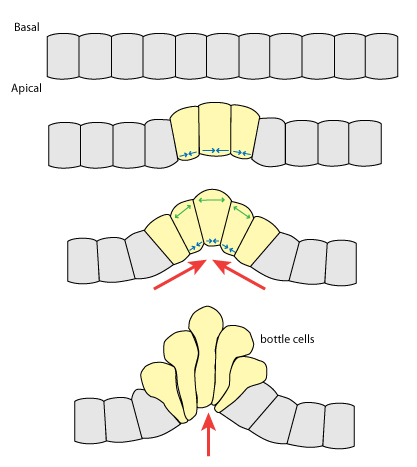
The infolding of a membrane toward the interior of a cell or organelle, or of a sheet of cells toward the interior of a developing embryo, tissue, or organ, forming a distinct membrane-lined pocket. In the case of individual cells, the invaginated pocket may proceed to separate from the source membrane entirely, creating a membrane-bound vesicle within the cell, as in endocytosis.[10]
A nucleotide sequence followed downstream on the same strand by its own reverse complement. The initial sequence and the reverse complement may be separated by any number of nucleotides, or may be immediately adjacent to each other; in the latter case, the composite sequence is also called a palindromic sequence. Inverted repeats are self-complementary by definition, a property which involves them in many biological functions and dysfunctions. Contrast direct repeat.
Any chemical compound or macromolecule that facilitates the movement of ions across biological membranes, or more specifically, any chemical species that reversibly binds electrically charged atoms or molecules. Many ionophores are lipid-soluble proteins that catalyze the transport of monovalent and divalent cations across the hydrophobic lipid bilayers surrounding cells and vesicles.[10]
A large region of genomic DNA with a relatively homogeneous composition of base pairs, distinguished from other regions by the proportion of pairs that are G-C or A-T. The genomes of most plants and vertebrates are composed of different classes of GC-rich and AT-rich isochores.[6]
A type of abnormalchromosome in which the arms of the chromosome are mirror images of each other. Isochromosome formation is equivalent to simultaneous duplication and deletion events such that two copies of either the long arm or the short arm comprise the resulting chromosome.
The pH at which a particular molecule, often a protein, carries no net electrical charge, i.e. at which it is electrically neutral in the statistical mean. The concentration of protons (H+) in the surrounding environment affects how readily molecules gain or lose protons and thus their electrical properties. When the environmental pH is greater than the molecule's pI, the molecule is negatively charged, and when the pH is less than the pI, it is positively charged. Isoelectric point is therefore important for determining the behavior of molecules exposed to electric fields, as in electrophoresis and ion chromatography. Proteins are least soluble at their isoelectric points because electrically neutral species do not repulse each other with electrostatic forces, such that they tend to aggregate and precipitate out of solution.[10]
Any of a class of enzymes which catalyze the conversion of a molecule from one isomer to another, such that the product of the reaction has the same molecular formula as the original substrate but differs in the connectivity or spatial arrangement of its atoms.
isomeric genes
Two or more genes that are equivalent and redundant in the sense that, despite coding for distinct gene products, they each result in the same phenotype when set within the same genetic background. If several isomeric genes are present in a single genotype they may be either cumulative or non-cumulative in their contributions to the phenotype.[15]
Describing a solution containing the same concentration of dissolved solutes as another solution, such that the two solutions have equal osmotic pressure. Isotonic solutions separated from each other by a semipermeable membrane (as with a cell, where the intracellular cytosol is separated from the extracellular fluid by the plasma membrane) have no concentration gradient and thus will not exchange solvent by osmosis. Contrast hypertonic and hypotonic.
Any DNA sequence that appears to have no known biological function, or which acts in a way that has no positive or a net negative effect on the fitness of the genome in which it is located. The term was once more broadly used to refer to all non-coding DNA, though much of this was later discovered to have a function; in modern usage it typically refers to broken or vestigial sequences and selfish genetic elements, including introns, pseudogenes, intergenic DNA, and fragments of transposons and retroviruses, which together constitute a large proportion of the genomes of most eukaryotes. Despite not contributing productively to the host organism, these sequences are able to persist indefinitely inside genomes because the disadvantages of continuing to copy them are too small to be acted upon by natural selection.
junk RNA
Any RNA-encoded sequence, especially a transcript, that appears to have no known biological function, or whose function has no positive or a net negative effect on the fitness of the genome from which it is transcribed. Despite remaining untranslated, many non-coding RNAs still serve important functions, whereas junk RNAs are truly useless: often they are the product of accidental transcription of a junk DNA sequence, or they may result from post-transcriptional processing of primary transcripts, as with spliced-outintrons. Junk RNA is usually quickly degraded by ribonucleases and other cytoplasmic enzymes.
A karyotype which depicts the entire set of chromosomes in a cell or organism by using photomicrographs of the actual chromosomes as they appear in vivo (usually during metaphase, in their most condensed forms), as opposed to the idealized illustrations of chromosomes used in idiograms. The photomicrographs are often still arranged in pairs and by size for easier identification of particular chromosomes, whereas in the actual nucleus there is seldom any apparent organization.
The fragmentation and degeneration of the nucleus of a dying cell, during which the nuclear envelope is destroyed and the contents of the nucleus, including chromatin, are dispersed throughout the cytoplasm and degraded by enzymes. Karyorrhexis is usually preceded by pyknosis and may occur as a result of apoptosis, cellular senescence, or necrosis.
The number and appearance of chromosomes within the nucleus of a eukaryotic cell, especially as depicted in an organized karyogram or idiogram (in pairs and arranged by size and by position of the centromere). The term is also used to refer to the complete set of chromosomes in a species or individual organism or to any test that detects this complement or measures the chromosome number.
Any of a class of enzymes which catalyze the transfer of phosphate groups from high-energy, phosphate-donating molecules such as ATP to one or more specific substrates, a process known as phosphorylation. The opposite process, known as dephosphorylation, is catalyzed by phosphatase enzymes.
A non-specific, non-directional movement or change in activity by a cell or a population of cells in response to a stimulus, such that the rate of the movement or activity is dependent on the intensity of the stimulus but not on the direction from which the stimulus occurs. Kinesis refers particularly to cellular locomotion without directional bias, in contrast to taxis and tropism.
In cytogenetics, an enlarged, heavily staining chromomere that can be used as a visual marker, allowing specific chromosomes to be easily identified in the nucleus.[6]
A genetic engineering method by which the normal rate of expression of one or more of an organism's genes is reduced or suppressed (though not necessarily completely turned off, as in knockout), either through direct modification of a DNA sequence or through treatment with a reagent such as a short DNA or RNA oligonucleotide with a sequence complementary to either an mRNA transcript or a gene.
A genetic engineering method in which one or more novel genes are inserted into an organism's genome, particularly when targeted to a specific locus, or in which one or more existing genes are replaced by or substituted with novel genes.[35] This is in contrast to a knockout, in which a gene is deleted or completely inactivated.
A genetic engineering method in which one or more specific genes are inactivated or entirely removed from an organism's genome, by any of a variety of mechanisms which disrupt their expression at some point in the pathway that produces their gene products, such that no functional gene products are produced. This allows researchers to study the function of a gene in vivo, by observing how the organism's phenotype changes when deprived of the gene's normal effects. A complete knockout permanently inactivates the gene; a conditional knockout allows the gene to be turned on or off at will, e.g. at specific times or in specific tissues, by linking the expression of the gene to some easily modifiable biochemical state or condition. In a heterozygous knockout, only one of a diploid organism's two alleles is knocked out; in a homozygous knockout, both copies are knocked out. Contrast knockin.
The chemical attachment of a highly selective substance, known as a label, tag, or probe, to a particular cell, protein, amino acid, or other molecule of interest, either naturally or artificially, in vivo or in vitro. Natural labelling is a primary mechanism by which biomolecules specifically identify and interact with other biomolecules; important examples include methylation, acetylation, phosphorylation, and glycosylation. Labelling is also a common laboratory technique, where the label is typically a reactive derivative of a naturally fluorescent compound (e.g. green fluorescent protein), dye, enzyme, antibody, radioactive molecule, or any other substance that makes its target distinguishable in some way. The labelled targets are thereby rendered distinct from their unlabelled surroundings, allowing them to be detected, identified, quantified, or isolated for further study.
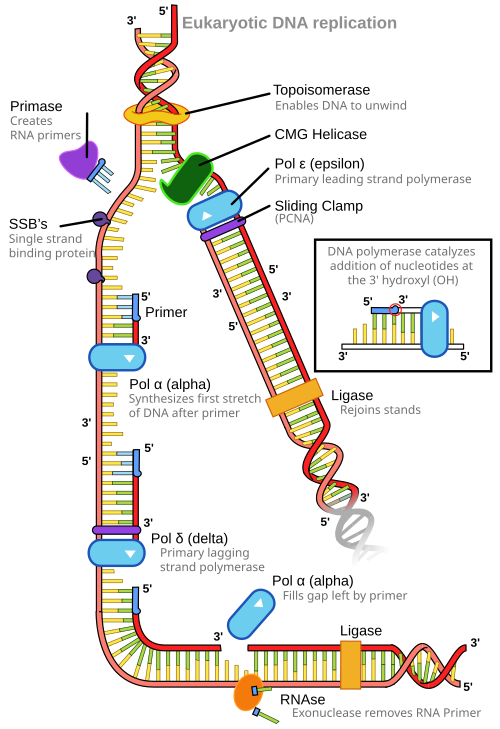
In DNA replication, the nascent strand for which DNA polymerase's direction of synthesis is away from the replication fork, which necessitates a complex and discontinuous process in contrast to the streamlined, continuous synthesis of the other nascent strand, known as the leading strand, which occurs simultaneously. Because DNA polymerase works only in the 5' to 3' direction, but the lagging strand's overall direction of chain elongation must ultimately be the opposite (i.e. 3' to 5', toward the replication fork), elongation must occur by an indirect mechanism in which a primase enzyme synthesizes short RNAprimers complementary to the template DNA, and DNA polymerase then extends the primed segments into short chains of nucleotides known as Okazaki fragments. The RNA primers are then removed and replaced with DNA, and the Okazaki fragments are joined by DNA ligase.
1.Any thin layer, membrane, or plate of tissue, occurring in a wide variety of structures of various scales and with various functions; e.g. a lamella made of a sheet of lipids forms a component of the extracellular matrix between the cells of some tissues.
2.The leading edge of a motile cell, of which the lamellipodia is the most forward portion.
A transcriptionally active, highly de-condensed morphology assumed by certain chromosomes during the diplotene stage of meioticprophase I in the progenitor cells of oocytes in female insects, amphibians, birds, and some other animals. Lampbrush chromosomes are conspicuous under the microscope because the post-synaptichomologs, still attached at chiasmata, are gigantically elongated into large loops of unpackaged euchromatin extending laterally from a series of chromomeres. Large numbers of messenger RNAs and non-coding RNAs are transcribed from the lateral loops, generating a rich pool of transcripts to be used in the immature oocyte and after fertilization, with functions in both oogenesis and embryogenesis. Because they allow individual transcription units to be directly visualized, lampbrush chromosomes are useful models for studying chromosome organization and genome structure and for constructing high-resolution chromosome maps.[37]
A lampbrush chromosome magnified 11,000 times with an electron microscope, showing the characteristic lateral loops containing transcriptionally active segments of DNA
In DNA replication, the nascent strand for which both the direction of synthesis by DNA polymerase and the direction of overall chain elongation are toward the replication fork; i.e. both occur in the 5' to 3' direction, resulting in a single, continuous elongation process with few or no interruptions. By contrast, the other nascent strand, known as the lagging strand, is assembled in a discontinuous process involving the ligation of short DNA fragments synthesized in the opposite direction, away from the replication fork.[6]
In meiosis, the first of five substages of prophase I, following interphase and preceding zygonema. During leptonema, the replicated chromosomes condense from diffuse chromatin into long, thin strands that are much more visible within the nucleus.
A common structural motif in DNA-bindingtranscription factors and some other types of proteins, approximately 35 amino acids in length, characterized chiefly by the recurrence of the amino acid leucine every seven residues. When modeled in an idealized alpha-helical conformation, the leucine residues are positioned in such a way that they can interdigitate with the same or similar motifs in an alpha helix belonging to another similar polypeptide, facilitating dimerization and the formation of a complex resembling a zipper.[4]
In biochemistry, any molecule that binds to or interacts with a specific site on a protein or other biomolecule, usually reversibly via intermolecular forces;[8] or any substance that forms a complex with a biomolecule as part of a biological process. The binding of specific ligands to DNA or proteins is important in many biochemical pathways; for example, protein–ligand binding may result in the protein undergoing a conformational change which alters its function or affinity for other molecules.
A class of enzymes which catalyze the synthesis of large molecules such as nucleic acids by forming one or more chemical bonds between them, typically C–C, C–O, C–S, or C–N bonds via condensation reactions. An example is DNA ligase, which catalyzes the formation of phosphodiester bonds between adjacent nucleotides on the same strand of a DNA molecule, a reaction known as ligation.
The tendency of DNA sequences which are physically near to each other on the same chromosome to be inherited together during meiosis. Because the physical distance between them is relatively small, the chance that any two nearby parts of a DNA sequence (often loci or genetic markers) will be separated on to different chromatids during chromosomal crossover is statistically very low; such loci are then said to be more linked than loci that are farther apart. Loci that exist on entirely different chromosomes are said to be perfectly unlinked. The standard unit for measuring genetic linkage is the centimorgan (cM).
1.A short, synthetic DNA duplex containing the recognition sequence for a particular restriction enzyme.[6] In molecular cloning, linkers are often deliberately included in recombinant molecules in order to make them easily modifiable by permitting cleavage and insertion of foreign sequences at precise locations. A segment of an engineered plasmid containing many such restriction sites is sometimes called a polylinker.
The number of times that the two strands of a circular double-helicalDNA molecule cross each other, equivalent to the twisting number (which measures the torsion of the double helix) plus the writhing number (which measures the degree of supercoiling). The linking number of a closed molecule cannot be changed without breaking and rejoining the strands. DNA molecules which are identical except for their linking numbers are known as topological isomers.[6]
Any of a heterogeneous class of organic compounds, including glycerides (fats), waxes, sterols, and some vitamins, united only by their amphipathic or hydrophobic nature and consequently their very low solubility in water.[4] Some lipids such as phospholipids tend to form lamellar structures or micelles in aqueous environments, where they serve as the primary constituents of biological membranes. Others such as fatty acids can be metabolized for energy, have important functions in energy storage, or serve as signaling molecules. Colloquially, the term "lipids" is sometimes used as a synonym for fats, though fats are more correctly considered a subclass of lipids.
A lamellar structure composed of numerous amphipathic lipid molecules packed together in two back-to-back sheets or layers, with their hydrophobicfatty acid "tails" directed inward and their hydrophilic "heads" exposed on the outer surface. This is the basic structural motif for all biological membranes, including the plasma membrane surrounding all cells as well as the membranes surrounding organelles and vesicles. Though bilayers are sometimes colloquially described as phospholipid bilayers, phospholipids are just one of several classes of membrane lipids which form bilayers; most membranes are actually a fluid, heterogeneous mixture of phospholipids, glycolipids, and cholesterols, interspersed and studded with various other molecules such as integral proteins.[4]
Any water-soluble protein to which one or more lipid molecules are attached by covalent bonding to amino acid residues. Many classes of lipids can be conjugated to proteins, including triacylglycerols, cholesterols, and phospholipids.[3] Compare proteolipid.
1.Any small, natural lipid globule, such as a micelle, occurring naturally in the cytoplasm;[3] they are commonly formed by budding off from larger membrane-bound vesicles.
2.A small, spherical, artificial vesicle having at least one continuous bilayer of lipid molecules enclosing some of the medium in which it is suspended.[38] Liposomes can be created in the laboratory by disrupting existing biological membranes and allowing complex lipids to form bilayer-bound vesicles in aqueous solution, usually with the aid of sonication. They are used experimentally as models of natural membranes and also therapeutically for the encapsulation and delivery of pharmaceutical compounds, enzymes, nutrients, nucleic acids, lipid-based nanoparticles (as in some vaccines), and many other agents between or inside of cells.[3]
In condensed chromosomes where the positioning of the centromere creates two segments or "arms" of unequal length, the longer of the two arms of a chromatid. Contrast short arm.
Any of a large family of non-LTRretrotransposons which together comprises one of the most widespread mobile genetic elements in eukaryotic genomes. Each LINE insertion is on average about 7,000 base pairs in length.
The disruption and decomposition of the plasma membrane surrounding a cell, or more generally of any membrane-bound organelle or vesicle, especially by osmotic, enzymatic, or other chemical or mechanical processes which compromise the membrane's integrity and thereby cause the unobstructed interchange of the contents of intracellular and extracellular spaces. Lysis generally implies the complete and irreversible loss of intracellular organization as a result of the release of the cell's internal components and the dilution of the cytosol, and therefore the death of the cell. Such a cell is said to be lysed, and a fluid containing the contents of lysed cells (usually including nucleic acids, proteins, and many other organic molecules) is called a lysate. Lysis may occur both naturally and artificially, and is a normal part of the cellular life cycle.
↑"Talking Glossary of Genomic and Genetic Terms". genome.gov. 8 October 2017. Retrieved 8 October 2017.
12345Klug, William S.; Cummings, Michael R. (1986). Concepts of Genetics (2nded.). Glenview, Ill.: Scott, Foresman and Company. ISBN0-673-18680-6.
1234567891011121314151617181920212223242526272829303132Cammack, Richard; Atwood, Teresa; Campbell, Peter; Parish, Howard; Smith, Anthony; Vella, Frank; Stirling, John, eds. (2008). Oxford Dictionary of Biochemistry and Molecular Biology (2nded.). Oxford: Oxford University Press. ISBN978-0-19-172764-1.
1234567891011121314151617181920212223Lackie, J. M. (2013). The Dictionary of Cell and Molecular Biology (5thed.). Amsterdam: Academic Press/Elsevier. ISBN978-0-12-384931-1.
12Ussery, David W. "DNA Structure: A-, B-, and Z-DNA Helix Families". Lyngby, Denmark: Danish Technical University.
↑"NCI Dictionary of Genetics Terms". National Cancer Institute. PDQ® Cancer Genetics Editorial Board.
12345678910111213141516171819Alberts, Bruce; Johnson, Alexander; Lewis, Julian; Raff, Martin; Roberts, Keith; Walter, Peter (2002). "Glossary". Molecular Biology of the Cell(Available from the National Center for Biotechnology Information) (4thed.). New York: Garland Science.
12Lewin, Benjamin (2003). Genes VIII. Upper Saddle River, NJ: Pearson Prentice Hall. ISBN0-13-143981-2.
↑López D, Vlamakis H, Kolter R (July 2010). "Biofilms". Cold Spring Harbor Perspectives in Biology. 2 (7) a000398. doi:10.1101/cshperspect.a000398. PMC2890205. PMID20519345.
↑Momeni B (June 2018). "Division of Labor: How Microbes Split Their Responsibility". Current Biology. 28 (12): R697–R699. Bibcode:2018CBio...28.R697M. doi:10.1016/j.cub.2018.05.024. PMID29920261. S2CID49315067.
↑"NCI Dictionary of Cancer Terms". www.cancer.gov. National Cancer Institute. 2 February 2011.
↑SwissBioPics. "Animal cell". www.swissbiopics.org. Swiss Institute of Bioinformatics (SIB).
123456789101112131415Rieger, Rigomar (1991). Glossary of Genetics: Classical and Molecular (5thed.). Berlin: Springer-Verlag. ISBN3-540-52054-6.
↑Maheshri N, O'Shea EK (2007). "Living with noisy genes: how cells function reliably with inherent variability in gene expression". Annu. Rev. Biophys. Biomol. Struct. 36: 413–434. doi:10.1146/annurev.biophys.36.040306.132705. PMID17477840.
↑Nishikawa, S. (2007). "Reprogramming by the numbers". Nature Biotechnology. 25 (8): 877–878. doi:10.1038/nbt0807-877. PMID17687365. S2CID39773318.
↑Connerly, P. L. (2010). "How Do Proteins Move Through the Golgi Apparatus?". Nature Education. 3 (9): 60.
↑Valet, Günter (2005). "Cytomics: An entry to biomedical cell systems biology". Cytometry Part A. 63A (2): 67–68. doi:10.1002/cyto.a.20110. ISSN1552-4922. PMID15657925.
↑Jiao, yan; Katherine Lawler (19 October 2011). "DART: Denoising Algorithm based on Relevance network Topology improves molecular pathway activity inference". BMC Bioinformatics. 12 403. doi:10.1186/1471-2105-12-403. PMC3228554. PMID22011170.
↑Priness, I.; Maimon, O.; Ben-Gal, I. (2007). "Evaluation of gene-expression clustering via mutual information distance measure". BMC Bioinformatics. 8 111. doi:10.1186/1471-2105-8-111. PMC1858704. PMID17397530.
↑Alberts B, Bray D, Hopin K, Johnson A, Lewis J, Raff M, Roberts K, Walter P (2004). "Tissues and Cancer". Essential cell biology. New York and London: Garland Science. ISBN978-0-8153-3481-1.
↑Hackmann, Timothy J.; Zhang, Bo (2023-09-29). "The phenotype and genotype of fermentative prokaryotes". Science Advances. 9 (39) eadg8687. Bibcode:2023SciA....9G8687H. doi:10.1126/sciadv.adg8687. ISSN2375-2548. PMC10530074. PMID37756392.
↑Singer, S. J.; Nicolson, Garth L. (18 February 1972). "The Fluid Mosaic Model of the Structure of Cell Membranes: Cell membranes are viewed as two-dimensional solutions of oriented globular proteins and lipids". Science. 175 (4023): 720–731. doi:10.1126/science.175.4023.720. PMID4333397.
↑"Functional Genomics Data Society – FGED Society".
↑Edgar, R; Domrachev, M; Lash, AE (1 January 2002). "Gene Expression Omnibus: NCBI gene expression and hybridization array data repository". Nucleic Acids Research. 30 (1): 207–10. doi:10.1093/nar/30.1.207. PMC99122. PMID11752295.
↑Barrett, T; Wilhite, SE; Ledoux, P; Evangelista, C; Kim, IF; Tomashevsky, M; Marshall, KA; Phillippy, KH; Sherman, PM; Holko, M; Yefanov, A; Lee, H; Zhang, N; Robertson, CL; Serova, N; Davis, S; Soboleva, A (January 2013). "NCBI GEO: archive for functional genomics data sets--update". Nucleic Acids Research. 41 (Database issue): D991-5. doi:10.1093/nar/gks1193. PMC3531084. PMID23193258.
↑Möckl, Leonhard (2020). "The Emerging Role of the Mammalian Glycocalyx in Functional Membrane Organization and Immune System Regulation". Frontiers in Cell and Developmental Biology. 8 253. doi:10.3389/fcell.2020.00253. ISSN2296-634X. PMC7174505. PMID32351961.
↑Reitsma, Sietze. "The endothelial glycocalyx: composition, functions, and visualization." European Journal of Physiology. 2007. Vol. 454. Num. 3. p. 345–359
↑Yakovchuk P, Protozanova E, Frank-Kamenetskii MD (2006). "Base-stacking and base-pairing contributions into thermal stability of the DNA double helix". Nucleic Acids Res. 34 (2): 564–74. doi:10.1093/nar/gkj454. PMC1360284. PMID16449200.
↑Svoboda, P., & Cara, A. (2006). Hairpin RNA: A secondary structure of primary importance. Cellular and Molecular Life Sciences, 63(7), 901-908.
↑Cabuzu, Daniela. "What does 'high-throughput' mean in sequencing?". Alithea Genomics.
↑Wright, P., Dyson, H. (2015). "Intrinsically disordered proteins in cellular signalling and regulation". Nat Rev Mol Cell Biol. 16 (1): 18–29. Bibcode:2015NRMCB..16...18W. doi:10.1038/nrm3920. PMC4405151. PMID25531225.{{cite journal}}: CS1 maint: multiple names: authors list (link)
↑ Bogolyubov DS (2018-01-01). Galluzzi L (編). "核球(核小体):卵母細胞核の特異な構造". International Review of Cell and Molecular Biology . 337. Academic Press: 1–48 . doi : 10.1016/bs.ircmb.2017.12.001 . ISBN978-0-12-815195-2PMID 29551157 .