
Loading article…
| 菌類 | |
|---|---|
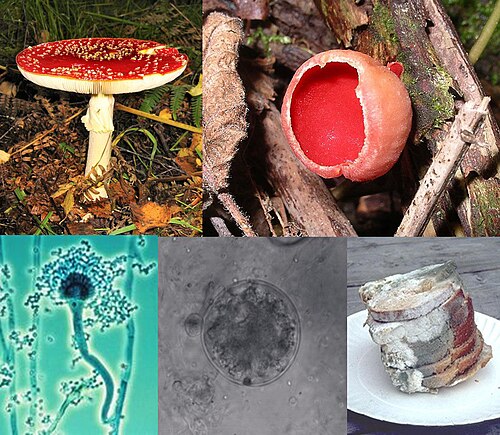
| |
| 左上から時計回りに: | |
科学的分類 
| |
| ドメイン: | 真核生物 |
| クレード: | オバゾア |
| (ランク外): | オピストコンタ |
| クレード: | ホロミコタ |
| 王国: | 菌類 R.T.ムーア(1980) [1] [2] |
| 亜界/門 | |
菌類(複数形:fungi [3]または funguses [4] )は、酵母やカビなどの微生物や、より馴染みのあるキノコを含む真核生物のグループのメンバーです。これらの生物は、動物界、植物界、原生生物界[5]または原生動物界とクロム類界のいずれかとともに、伝統的な真核生物界に分類されます。[6]
真菌を植物、細菌、および一部の原生生物とは異なる界に分類する特徴は、細胞壁に含まれるキチン質です。真菌は動物と同様に従属栄養生物であり、溶解した分子を吸収して栄養を得ます。通常は消化酵素を周囲に分泌します。真菌は光合成を行いません。胞子(少数は鞭毛を持つ)は例外で、胞子は空気や水中を移動しますが、それ以外は成長が移動手段です。真菌は生態系における主要な分解者です。これらの違いやその他の違いから、真菌は、共通の祖先を持つ(つまり単系統群を形成する)真菌門と呼ばれる関連生物の単一グループに分類されます。この解釈は分子系統学によっても強く支持されています。この真菌グループは、構造的に類似する粘菌類(粘菌)および卵菌類(水カビ)とは異なります。真菌の研究を専門とする生物学の分野は、菌類学(ギリシャ語のμύκης mykes、キノコに由来)として知られています。かつては、菌類学は植物学の一分野とみなされていましたが、現在では、真菌は遺伝的には植物よりも動物に近いことが分かっています。
菌類は世界中に豊富に生息していますが、その構造が小さく、土壌や死んだ物質の中で目立たない生活を送るため、目立ちません。菌類には、植物、動物、または他の菌類の共生生物や寄生虫が含まれます。菌類は、果実をつけた状態でキノコまたはカビとして目立つようになります。菌類は有機物の分解に不可欠な役割を果たし、環境における栄養素の循環と交換に基本的な役割を担っています。菌類は、キノコやトリュフの形で人間の食料の直接的な供給源として、またパンの膨張剤として、そしてワイン、ビール、醤油などさまざまな食品の発酵に長い間使用されてきました。1940年代以降、菌類は抗生物質の製造に使用されており、最近では、菌類が生産するさまざまな酵素が工業的に、また洗剤に使用されています。菌類は、雑草、植物病害、害虫を防除するための生物学的殺虫剤としても使用されています。多くの種は、アルカロイドやポリケチドなど、ヒトを含む動物に有毒なマイコトキシンと呼ばれる生物活性化合物を生成します。いくつかの種の果実構造には向精神性化合物が含まれており、娯楽目的または伝統的な精神的儀式で消費されます。菌類は、製造された材料や建物を分解し、ヒトや他の動物の重要な病原体になることがあります。真菌性疾患(例:イネいもち病)や食品の腐敗による作物の損失は、人間の食糧供給と地域経済に大きな影響を与える可能性があります。
菌類界には、単細胞の水生ツボカビから大型のキノコまで、多様な生態、生活環戦略、形態を持つ膨大な数の分類群が含まれます。しかし、菌類界の真の生物多様性についてはほとんどわかっていません。菌類界には220万~380万種がいると推定されています。[7]これらのうち、記載されているのは約148,000種に過ぎず、[8] 8,000種以上が植物に有害であることが知られており、少なくとも300種は人間に病原性があります。[9]カール・リンネ、クリスティアーン・ヘンドリック・ペルスーン、エリアス・マグヌス・フリースによる18世紀と19世紀の先駆的な分類学の研究以来、菌類は形態(胞子の色や顕微鏡的特徴などの特徴など)や生理機能に基づいて分類されてきました。分子遺伝学の進歩により、DNA分析を分類学に組み込む道が開かれ、形態やその他の特徴に基づく歴史的なグループ分けが疑問視されることもありました。21世紀の最初の10年間に発表された系統発生研究は、菌類界内の分類を再構築するのに役立ちました。菌類界は、1つの亜界、7つの門、 10の亜門に分かれています。
語源
英語の「fungus」という単語は、ホラティウスとプリニウスの著作に出てくるラテン語の「fungus(キノコ)」から 直接採用されたものです。[10] これはさらに、キノコやカビの巨視的構造と形態を指すギリシャ語の「sphongos (スポンジ)」(σφόγγος)に由来しています。[ 11 ]この語源は、ドイツ語の「Schwamm(スポンジ)」や「Schimmel(カビ)」など他の言語でも使用されています。 [12]
菌学という語は、ギリシャ語のミケス(μύκης「キノコ」)とロゴス(λόγος「談話」)に由来する。 [13]これは菌類の科学的研究を意味する。ラテン語の形容詞形「菌学」(mycologicæ )は、1796年にクリスティアーン・ヘンドリック・ペルスーンによるこの主題に関する本に早くも登場している。[14]この語は、1824年にロバート・ケイ・グレヴィルの本に早くも英語で登場している。[15] 1836年にイギリスの博物学者マイルズ・ジョセフ・バークレーが出版した『サー・ジェームズ・エドワード・スミスの英国植物誌第5巻』でも、菌類の研究として菌学に言及している。[11] [16]
特定の地域に存在するすべての菌類のグループは、菌類叢(複数名詞、単数形なし)として知られています。[17]この目的ではmycotaという用語はよく使用されますが、多くの著者はこれをFungiの同義語として使用しています。fungaという単語は、動物相と植物相に形態学的に類似した、より曖昧さの少ない用語として提案されています。[18]国際自然保護連合(IUCN)の種の保存委員会(SSC)は、2021年8月に、動物相と植物相という語句を動物相、植物相、菌類に置き換えるよう求めました。[19]
特徴
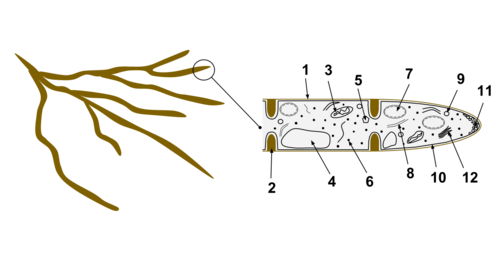
分子系統学的手法による系統発生解析が導入される前、分類学者は菌類を植物界の一員とみなしていた。その理由は、菌類と植物はどちらも主に動かず、一般的な形態や生育環境が似ているためである。菌類が植物であるという誤解は不正確ではあるが、歴史的な分類やいくつかの類似点のため、一般大衆の間では根強く残っている。[20] [21]植物と同様に、菌類は土壌で生育することが多く、キノコの場合は目立つ子実体を形成し、コケなどの植物に似ていることもある。菌類は現在、植物や動物とは異なる別の界であると考えられており、約10億年前(新原生代開始頃)に分岐したと思われる。 [22] [23]形態学的、生化学的、遺伝学的特徴の中には他の生物と共有されるものもあれば、菌類に特有のものもあり、他の界とは明確に区別される。
共通機能:
- 他の真核生物と同様、真菌細胞には膜で囲まれた 核と、イントロンと呼ばれる非コード領域とエクソンと呼ばれるコード領域を持つDNA を含む染色体が含まれています。真菌には、ミトコンドリア、ステロールを含む膜、80Sタイプのリボソームなどの膜結合細胞質小器官があります。 [24]真菌には、糖アルコール(例:マンニトール)、二糖類(例:トレハロース)、多糖類(例:動物にも見られるグリコーゲン[25] )など、特徴的な可溶性炭水化物と貯蔵化合物の範囲があります。
- 動物の場合:菌類は葉緑体を持たず、従属栄養生物であるため、エネルギー源として既成の有機化合物を必要とする。 [26]
- 植物の場合:菌類は細胞壁[27]と液胞[28]を持っています。菌類は有性生殖と無性生殖の両方で繁殖し、シダやコケなどの基底植物群と同様に胞子を作ります。コケや藻類と同様に、菌類は典型的には半数体の核を持っています。[29]
- ユーグレナ類と細菌の場合:高等菌類、ユーグレナ類、一部の細菌は、 α-アミノアジペート経路と呼ばれる特定の生合成段階でアミノ酸 L-リジンを生成します。[30] [31]
- ほとんどの菌類の細胞は、菌糸と呼ばれる管状の細長い糸状(糸状)構造として成長し、複数の核を含み、先端が成長して伸びる。各先端には、タンパク質、脂質、その他の有機分子からなる細胞構造である凝集小胞のセットがあり、スピッツェンケルパーと呼ばれる。[32]菌類と卵菌類はどちらも糸状の菌糸細胞として成長する。[33]対照的に、糸状緑藻などの似たような生物は、一連の細胞内で細胞分裂を繰り返すことで成長する。[25]菌糸を形成しない単細胞菌類(酵母)もあり、菌類の中には菌糸と酵母の両方の形態を持つものもある。[34]
- いくつかの植物や動物種と同様に、100種以上の真菌種が生物発光を示す。[35]
ユニークな機能:
- いくつかの種は単細胞酵母として成長し、出芽または分裂によって繁殖します。二形性菌類は環境条件に応じて酵母期と菌糸期を切り替えることができます。[34]
- 真菌の細胞壁はキチン-グルカン複合体でできている。グルカンは植物にも存在し、キチンは節足動物の外骨格にも存在するが[ 36 ] 、真菌は細胞壁にこれら2つの構造分子を組み合わせる唯一の生物である。植物や卵菌とは異なり、真菌の細胞壁にはセルロースが含まれない。[37] [38]

ほとんどの菌類は、多くの植物の道管や師管のような、水や栄養素を長距離輸送するための効率的なシステムを欠いている。この制限を克服するために、ナラタケなどの一部の菌類は、植物の根に似ており、同様の機能を果たす根茎形態を形成する。真核生物である菌類は、メバロン酸とピロリン酸を化学構成要素として使用するテルペンを生成するための生合成経路を有する。[40]植物や他のいくつかの生物は、葉緑体に追加のテルペン生合成経路を持っているが、これは菌類や動物にはない構造である。[41]菌類は、植物が作るものと構造が類似または同一の二次代謝産物をいくつか生成する。 [40]これらの化合物を作る植物と菌類の酵素の多くは、配列やその他の特性が互いに異なり、これは菌類と植物におけるこれらの酵素の別々の起源と収斂進化を示している。 [40] [42]
多様性
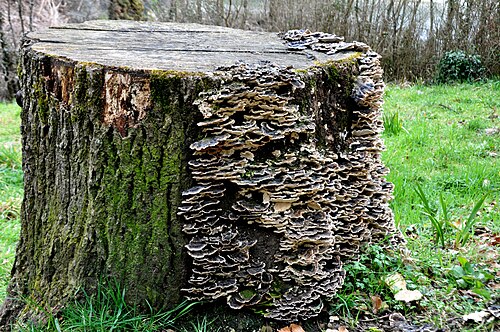
菌類は世界中に分布しており、砂漠や塩分濃度の高い地域[43]、電離放射線[44]などの極限環境、深海堆積物[45 ]など、幅広い生息地で生育します。宇宙旅行中に遭遇する強烈な紫外線や宇宙放射線にも耐えられる菌類もいます。 [46]大半は陸生環境で生育しますが、ツボカビのBatrachochytrium dendrobatidisやB. salamandrivoransなど、いくつかの種は部分的にまたは完全に水生生息地に生息します。これらの寄生虫は、両生類の個体数を世界中で減少させている原因となっています。これらの生物は、そのライフサイクルの一部を運動性の遊走子として過ごし、水中を移動して両生類の宿主に侵入することができます。[47]その他の水生菌類の例には、海洋の熱水地域に生息するものが含まれます。 [48]

2020年の時点で、分類学者によって[update]約148,000種の菌類が記載されていますが[8]、菌類界の世界的な生物多様性は完全には理解されていません。[50] 2017年の推定では、220万〜380万種が存在する可能性があることが示唆されています。[7]毎年発見される新しい菌類の種の数は、約10年前の年間1,000〜1,500種から、2016年に2,500種を超えてピークを迎え、約2,000種に増加しました。 2019年には、1,882種の新しい菌類が記載され、菌類の90%以上が未知のままであると推定されました。[8]翌年には、2,905の新種が記載され、新しい菌名の年間最高記録となりました。[51]菌類学では、種は歴史的にさまざまな方法と概念によって区別されてきました。菌類の分類では、胞子や子実体の大きさや形などの形態学的特徴に基づく分類が伝統的に主流となっている。 [52]種は、特定の生化学物質を代謝する能力や化学試験に対する反応など、生化学的および生理学的特徴によっても区別される。生物学的種の概念は、交尾能力に基づいて種を区別する。多様性の研究にDNA配列決定や系統解析などの分子ツールを適用することで、さまざまな分類群内の遺伝的多様性の推定解像度が大幅に向上し、堅牢性が増した。[53]
菌類学

菌類学は、真菌の遺伝的・生化学的特性、分類学、また、医薬品、食品、宗教目的で消費される向精神薬の原料としての人間への利用、さらに中毒や感染などの危険性など、真菌の体系的な研究を扱う生物学の一分野である。植物病理学の分野、つまり植物病の研究は、多くの植物病原体が真菌であるため、密接に関連している。[54]
人類による菌類の利用は先史時代にまで遡る。オーストリアアルプスで凍り付いた状態で発見された、5,300年前の新石器時代の人間のミイラ「アイスマン」は、2種の多孔菌類を体内に宿していた。多孔菌類は火口(Fomes fomentarius)や薬用(Piptoporus betulinus)として使われていた可能性がある。[55]古代人は、数千年にわたって、多くの場合は無意識のうちに、発酵パンや発酵ジュースを作る際に菌類を食料源として利用してきた。最古の文書記録の中には、病原菌が原因と思われる作物の破壊に言及しているものもある。[56]
歴史
菌類学は、17 世紀に顕微鏡が発明されてから体系的な科学となった。菌類の胞子は 1588 年にジャンバッティスタ・デッラ・ポルタによって初めて観察されたが、菌類学の発展における独創的な研究は、ピエール・アントニオ・ミケリの 1729 年の著書「Nova plantarum genera」の出版であると考えられている。[57]ミケリは胞子を観察しただけでなく、適切な条件下では、胞子が元の菌類と同じ種に成長するように誘導できることを示した。[58]カール・リンネが著書「Species plantarum (1753)」で導入した二名法の命名法を拡張して、オランダのクリスティアーン・ヘンドリック・ペルスーン(1761–1836) は、近代菌類学の創始者と見なされるほどの巧みさでキノコの最初の分類を確立した。その後、エリアス・マグヌス・フリース(1794–1878)は、胞子の色と顕微鏡的特徴を用いて菌類の分類をさらに詳しく行ったが、この方法は今日でも分類学者によって使用されている。17世紀から19世紀および20世紀初頭の菌類学へのその他の著名な貢献者としては、マイルズ・ジョセフ・バークレー、オーガスト・カール・ジョセフ・コルダ、アントン・ド・バリー、ルイ・ルネとシャルル・トゥラスネの兄弟、アーサー・HR・ブラー、カーティス・G・ロイド、ピアー・アンドレア・サッカルドなどが挙げられる。20世紀と21世紀には、生化学、遺伝学、分子生物学、バイオテクノロジー、DNA配列決定、系統解析の進歩により、菌類の関係や生物多様性に関する新たな知見が得られ、菌類分類における従来の形態に基づく分類に疑問が投げかけられた。[59]
形態学
微細構造

ほとんどの菌類は菌糸として成長します。菌糸は直径2~ 10μm、長さは最大数cmの円筒形の糸状の構造です。菌糸は先端(頂点)から成長します。新しい菌糸は通常、分岐と呼ばれるプロセスによって既存の菌糸に沿って新しい先端が出現することによって形成されますが、成長する菌糸の先端がフォーク状に分岐して、2つの平行に成長する菌糸が生じることもあります。[ 60 ]菌糸は接触して融合することもあり、このプロセスは菌糸融合(または吻合)と呼ばれます。これらの成長プロセスにより、菌糸が相互に連結したネットワークである菌糸体が発達します。 [34]菌糸は隔壁または多細胞性のいずれかです。隔壁菌糸は交差壁(細胞壁に対して直角に形成され菌糸の形状を決定する隔壁と呼ばれる内部細胞壁)で区切られた区画に分かれており、各区画には1つ以上の核が含まれます。多核細胞菌糸は区画化されていない。[61]隔壁は細胞質、細胞小器官、時には核が通過できる孔を有し、一例として担子菌門の菌類のドリポア隔壁が挙げられる。 [62]多核細胞菌糸は本質的に多核スーパーセルである。[63]
多くの種は、生きた宿主から栄養分を吸収するための特殊な菌糸構造を発達させています。その例としては、ほとんどの菌門の植物寄生種の吸器[64]や、宿主細胞に侵入して栄養分を消費するいくつかの菌根菌の樹枝状体などがあります。 [65]
菌類は後鞭毛類(進化的に関連する生物のグループで、単一の後鞭毛を特徴とする)であるが、ツボカビ門を除くすべての門は後鞭毛を失っている。[66]真核生物の中では、菌類は細胞壁を持ち、グルカン(β-1,3-グルカンなど)やその他の典型的な成分に加えて、生体高分子キチンも含んでいる点で珍しい。[38]
マクロ構造

真菌の菌糸は、例えば湿った壁や腐った食品などの様々な表面や基質上で肉眼で見えるようになり、一般的にカビと呼ばれています。実験室のペトリ皿の固形寒天培地上で増殖した菌糸は通常、コロニーと呼ばれます。これらのコロニーは、種またはグループの識別における診断的特徴として使用できる成長形状と色(胞子または色素による)を示すことがあります。 [67]個々の真菌コロニーの中には、900ヘクタール(3.5平方マイル)を超える面積に広がり、推定年齢が約9,000年であるArmillaria solidipesのクローンコロニーの場合のように、並外れた大きさと年齢に達するものもあります。[68]
子嚢菌類の有性生殖に重要な特殊な構造である子嚢は、肉眼で見えることが多いカップ状の子実体で、胞子細胞を含む組織層である子実層を保持しています。 [69]担子菌類(担子果類)や一部の子嚢菌類の子実体は、非常に大きく成長することがあり、その多くはキノコとしてよく知られています。
成長と生理
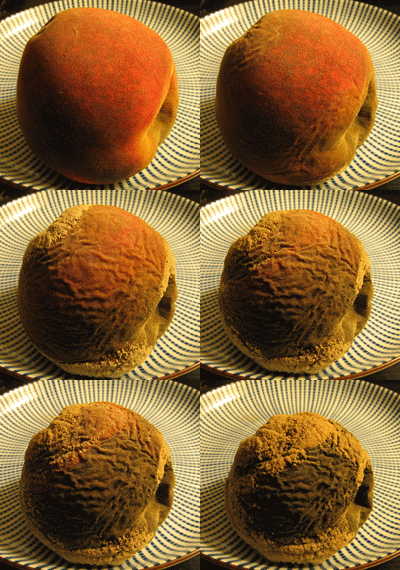
菌類は固体基質上または固体基質内で菌糸として、あるいは水生環境で単一細胞として成長することが、栄養素の効率的な抽出に適応している。なぜなら、これらの成長形態は表面積と体積の比率が高いからである。[70]菌糸は固体表面での成長と基質および組織への侵入に特に適応している。[71]菌糸は大きな浸透性の機械的力を及ぼすことができる。例えば、マグナポルテ・グリセアを含む多くの植物病原体は、植物組織を突き刺すように進化した付着器と呼ばれる構造を形成する。[72]付着器によって植物表皮に向けられる圧力は、8メガパスカル(1,200 psi)を超えることがある。[72]糸状菌のパエシロマイセス・リラシヌスは、同様の構造を使って線虫の卵に侵入する。[73]
付着器によって及ぼされる機械的圧力は、グリセロールなどの浸透圧調節物質を産生して細胞内の膨圧を高める生理学的プロセスから生成される。[74]このような適応は、多糖類、タンパク質、脂質などの大きな有機分子を栄養素として吸収される可能性のある小さな分子に分解するために環境中に分泌される加水分解酵素によって補完される。[ 75] [76] [77]糸状菌の大部分は、菌糸の先端(頂点)が伸長することによって極性様式(一方向に伸びる)で成長する。[78]菌類の成長の他の形態には、一部の内生菌の場合のような介在伸長(頂点より下の菌糸区画の縦方向の拡張)や、[79]キノコの柄やその他の大きな器官の発達中の体積増加による成長がある。[80]真菌は体細胞と生殖細胞からなる多細胞構造として成長し、動物と植物で独立して進化した特徴である[81]。これには、有性胞子の散布のための子実体(上記参照)や基質のコロニー形成と細胞間コミュニケーションのためのバイオフィルムの発達など、いくつかの機能がある。[82]
菌類は伝統的に従属栄養生物、つまり代謝のために他の生物によって固定された炭素のみに依存する生物であると考えられている。菌類は、硝酸塩、アンモニア、酢酸、エタノールなどの単純な化合物を含む多様な有機基質を成長に利用できるように、高度な代謝汎用性を進化させてきた。[83] [84]一部の種では、メラニン色素がガンマ線などの電離放射線からエネルギーを抽出する役割を果たしている可能性がある。この形態の「放射性栄養」成長は、数種でのみ説明されており、成長率への影響は小さく、基礎となる生物物理学的および生化学的プロセスはよくわかっていない。[44]このプロセスは可視光によるCO2固定と類似している可能性があるが、代わりに電離放射線をエネルギー源として使用する。[85]
再生

真菌の繁殖は複雑で、この多様な生物界におけるライフスタイルや遺伝子構成の違いを反映している。[86]真菌類の3分の1は、複数の繁殖方法を使用して繁殖すると推定されている。例えば、繁殖は種のライフサイクル内で、有性生殖(テレオモルフ)と無性生殖(アナモルフ)という2つのよく分化した段階で起こる可能性がある。[87]環境条件は、遺伝的に決定された発達段階を引き起こし、有性生殖または無性生殖のための特殊な構造の形成につながる。これらの構造は、胞子または胞子を含む繁殖体を効率的に散布することで繁殖を助ける。
無性生殖
無性生殖は栄養胞子(分生子)または菌糸の断片化によって起こる。菌糸の断片化は、菌糸が断片に分かれ、各成分が別々の菌糸に成長するときに起こる。菌糸の断片化と栄養胞子は、特定のニッチに適応したクローン集団を維持し、有性生殖よりも迅速な拡散を可能にする。[88]「不完全菌類」(完全段階または有性段階を欠く菌類)または不完全菌類は、観察可能な有性周期を欠くすべての種を含む。[89]不完全菌類(不完全菌類、分生子菌類、または有糸胞子菌類としても知られる)は、認められた分類学上の系統群ではなく、現在では単に既知の有性段階を欠く菌類を意味すると解釈されている。[90]
有性生殖
減数分裂を伴う有性生殖は、グロメロ菌門を除くすべての菌門で直接観察されている[91](遺伝子解析ではグロメロ菌門でも減数分裂があることが示唆されている)。有性生殖は、動物や植物の有性生殖とは多くの点で異なる。菌類のグループ間にも違いがあり、性構造や生殖戦略の形態的違いによって種を区別するために使用できる。[92] [93]菌類の分離株間の交配実験により、生物学的種の概念に基づいて種を識別できる場合がある。[93]主要な菌類のグループは、当初、性構造と胞子の形態に基づいて区別されていた。たとえば、胞子を含む構造である子嚢と担子器は、それぞれ子嚢菌類と担子菌類の識別に使用できる。菌類は2つの交配システムを採用している。ヘテロタリック種は反対の交配タイプの個体同士の交配のみを許可するが、ホモタリック種は他の個体または自分自身と交配し、有性生殖することができる。[94]
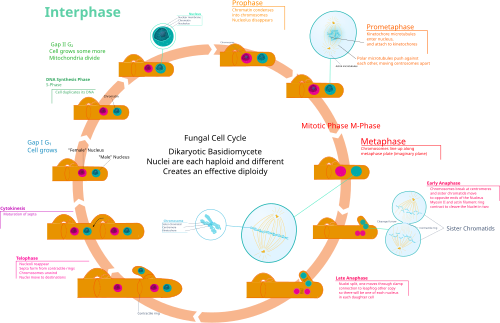
ほとんどの菌類は、そのライフサイクルにおいて、半数体と二倍体の両方の段階を経る。有性生殖する菌類では、適合する個体は菌糸を融合させて相互接続されたネットワークを形成することで結合する。このプロセス(吻合)は、有性サイクルの開始に必要である。多くの子嚢菌類と担子菌類は二核生物段階を経る。この段階では、2つの親から受け継いだ核は細胞融合後すぐには結合せず、菌糸細胞内で別々のままである(異核生物を参照)。[95]
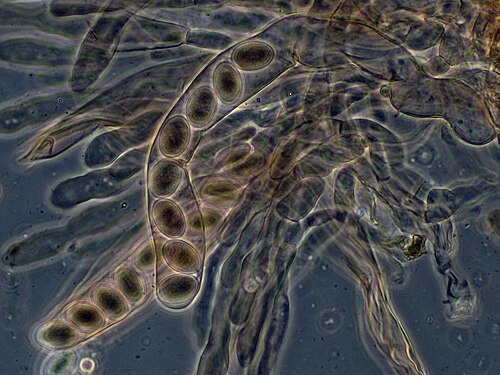
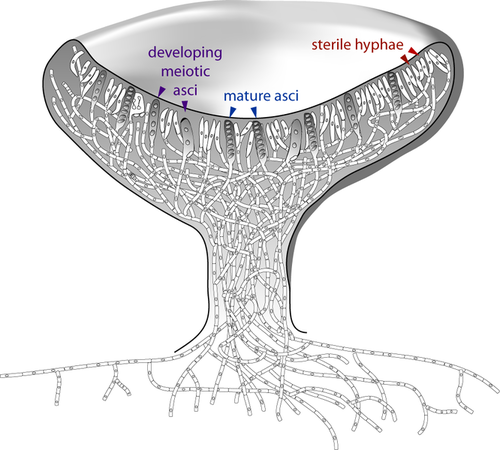
子嚢菌類では、子嚢層(胞子を持つ組織層)の二核菌糸が菌糸隔壁に特徴的なフック(クロジエ)を形成する。細胞分裂の際、フックの形成により、新たに分裂した核が頂端菌糸と基底菌糸に適切に分配される。その後、子嚢(複数形は子嚢)が形成され、核融合が起こる。子嚢は子嚢果、つまり子実体に埋め込まれる。子嚢内で核融合が起こると、すぐに減数分裂と子嚢胞子の生成が続く。散布後、子嚢胞子は発芽し、新しい半数体菌糸体を形成する。[96]
担子菌類の有性生殖は子嚢菌類の有性生殖に似ている。適合する半数体菌糸が融合して二核菌糸体を形成する。しかし、二核期は担子菌類の方が広範囲に及び、栄養増殖中の菌糸体にもしばしば存在する。クランプ接続と呼ばれる特殊な解剖学的構造が、各菌糸隔壁に形成される。子嚢菌類の構造的に類似したフックと同様に、担子菌類のクランプ接続は、細胞分裂中に核の制御された移動に必要であり、各菌糸区画に遺伝的に異なる2つの核を持つ二核期を維持する。[97]担子器と呼ばれる棍棒状の構造が核合体と減数分裂後に半数体担子胞子を生成する担子器果が形成される。[98]最も一般的に知られている担子菌類はキノコですが、他の形態をとることもあります(形態のセクションを参照)。
かつて接合菌類に分類されていた菌類では、2つの個体の半数体菌糸が融合して配偶子嚢を形成し、配偶子を産生する特殊な細胞構造となる。配偶子嚢は接合胞子に成長し、配偶子の結合によって厚い壁の胞子が形成される。接合胞子が発芽すると減数分裂を起こし、新たな半数体菌糸が生成され、無性胞子嚢胞子を形成することがある。これらの胞子嚢胞子により、菌類は急速に分散し、遺伝的に同一の新たな半数体菌糸に発芽することができる。[99]
胞子の拡散
研究対象となった菌類のほとんどの胞子は風によって運ばれる。[100] [101]このような菌類は、水分を吸収せず、例えば雨滴によって容易に飛散する乾燥した疎水性の胞子を生成することが多い。 [100] [102] [103]他の種では、無性胞子と有性胞子、または胞子嚢胞子は、生殖器官から強制的に排出されることで活発に分散されることが多い。この排出により、胞子は生殖器官から確実に排出され、空気中を長距離移動することができる。

特殊な機械的・生理学的メカニズム、および胞子表面構造(ハイドロフォビンなど)により、胞子は効率的に放出される。[104]例えば、一部の子嚢菌類の胞子を持つ細胞の構造は、細胞容積と体液バランスに影響を与える物質の蓄積により、胞子が空気中に爆発的に放出されるようになっている。[105]バリストスポアと呼ばれる単一胞子の強制放出では、小さな水滴(ブラー滴)が形成され、これが胞子と接触すると、初期加速度が10,000 gを超える発射体となる。[106]最終的な結果として、胞子は0.01~0.02 cm放出され、これは胞子が鰓または孔を通って下の空気中に落下するのに十分な距離である。 [107]他の菌類、例えばホソバカビは、外部からの機械的力など、別のメカニズムで胞子を放出する。ヒドノイド菌類(歯菌類)は、垂れ下がった歯のような、または棘のような突起に胞子を生成する。[108]鳥の巣菌類は、水滴の落下力を利用して、カップ状の子実体から胞子を放出する。[109]もう一つの戦略は、昆虫を誘引して胞子を散布させる鮮やかな色と腐った臭いを持つ菌類のグループであるスッポンカビに見られる。 [110]
ホモタリズム
ホモタリックな 有性生殖では、同じ個体に由来する2つの半数体核が融合して接合子を形成し、その後減数分裂を行うことができる。ホモタリックな菌類には、アスペルギルスのような無性生殖段階(アナモルフ)を持つ種が含まれ、多くの異なる属に存在する。[111]子嚢菌属コクリオボラスのいくつかの種、[112]子嚢菌ニューモシスティス・イロベチイ[113]。真核生物における最も初期の有性生殖様式は、おそらくホモタリズム、つまり自家受粉性の単性生殖であった。[114]
その他の性行為
減数分裂による通常の有性生殖の他に、ペニシリウム属やアスペルギルス属などの特定の菌類は、菌糸と真菌細胞の原形質受精との吻合によって開始される性交雑プロセスを介して遺伝物質を交換することがある。[ 115 ]性交雑の頻度と相対的重要性は不明であり、他の性交雑プロセスよりも低い可能性がある。性交雑は種内交雑に役割を果たすことが知られており[116]、真菌の進化における主要なイベントに関連付けられている種間の交雑に必要である可能性が高い。[117]
進化
植物や動物とは対照的に、菌類の初期の化石記録は乏しい。化石の中に菌類の種があまり含まれていない要因としては、柔らかく肉質で分解しやすい組織である菌類の子実体の性質や、ほとんどの菌類の構造の顕微鏡的寸法が容易に判別できないことが挙げられる。菌類の化石は他の微生物の化石と区別するのが難しく、現存する菌類に似ている場合に最も簡単に識別できる。[118]これらのサンプルは、多くの場合、完全に鉱化された植物または動物の宿主から採取され、通常、光学顕微鏡または透過型電子顕微鏡で検査できる薄切片標本を作成して研究される。[119]研究者は、周囲のマトリックスを酸で溶かし、次に光学顕微鏡または走査型電子顕微鏡を使用して表面の詳細を調べることで、圧縮化石を研究する。 [120]

菌類の典型的な特徴を持つ最古の化石は、約24億年前(Ma)の古原生代にまで遡ります。これらの多細胞の底生生物は、吻合が可能な糸状の構造を持っていました。[121]他の研究(2009年)では、近縁種の進化速度の比較に基づいて、菌類の出現は約7億6000万~10億6000万年前と推定されています。[122]分子組成から特定された最古の化石化した菌糸は、7億1500万年前から8億1000万年前のものです。[123]古生代(5億4200万~2億5100万年)の大部分の間、菌類は水生であり、鞭毛を持つ胞子を持つ点で現生のツボカビに似た生物で構成されていたようです。[124]水生生活から陸生生活への進化的適応には、寄生、腐生、菌根や地衣類化などの共生関係の発達など、栄養素を得るための生態学的戦略の多様化が必要でした。 [125]研究によると、子嚢菌類の祖先の生態学的状態は腐生であり、独立した地衣類化イベントが複数回発生したことが示唆されています。[126]
2019年5月、科学者らは、カナダ北極圏でOurasphaira giraldaeと名付けられた化石化した菌類を発見したと報告した。これは、陸上に植物が生息するよりはるか昔の10億年前に陸上で生育していた可能性がある。 [127] [128] [129]黄鉄鉱化した菌類のような微化石が、エディアカラ紀基底部のDoushantuo層(約6億3500万年前)に保存されており、中国南部で報告されている。[130]以前は、この菌類が陸上植物よりもはるか昔のカンブリア紀(5億4200万~4億8830万年前)に陸上に定着したと推定されていた。 [131]ウィスコンシン州のオルドビス紀(4億6000万年前)から発見された化石化した菌糸と胞子は、現代のGlomeralesに似ており、陸上植物が維管束を持たないコケ類のような植物のみで構成されていたと思われる時代に存在していた。[132]おそらく菌類か地衣類であったプロトタキシテスは、シルル紀後期からデボン紀前期の最も背の高い生物であったと思われる。菌類の化石は、デボン紀前期(4億1600万~3億5920万年前)まで一般的で議論の余地のないものではなく、ライニーチャートに主に接合菌類とツボカビ類として豊富に見られるようになった。[131] [133] [134]これとほぼ同じ時期、約4億年前に子嚢菌類と担子菌類が分岐し、[135]後期石炭紀(ペンシルバニア紀、3億1810万~2億9900万年前)までには現代の菌類のあらゆるクラスが存在していた。[136]
地衣類は初期の陸上生態系の構成要素を形成し、最古の陸上地衣類の化石の推定年代は4億1500 万年前である。 [137]この年代は、ライニーチャートで発見されたPaleopyrenomycites種である、知られている最古の胞子嚢化石の年代とほぼ一致する。[138]現代の担子菌類に似た顕微鏡的特徴を持つ最古の化石は、ペンシルベニア紀のシダ植物とともに鉱化されて発見されたPalaeoancistrusである。[139]化石記録の中で珍しいのは、Homobasidiomycetes(キノコを生成するAgaricomycetes種とほぼ同等の分類群)である。琥珀に保存された2つの標本は、 9000万年前の白亜紀後期に、最も古いキノコ形成菌類(絶滅した種であるアーケオマラスミウス・レゲッティ)が出現したことを示す証拠を提供している。[140] [141]
ペルム紀-三畳紀絶滅イベント(2億5140万年前)のしばらく後 、真菌のスパイク(当初は堆積物中の真菌胞子の異常な豊富さであると考えられていた)が形成され、この時期には真菌が優勢な生命体であったことを示唆し、この時期の利用可能な化石記録のほぼ100%を占めています。[142]しかし、藻類種によって形成された胞子に対する真菌胞子の相対的な割合を評価することは困難であり、[143]スパイクは世界中で出現したわけではなく、[144] [145]多くの場所ではペルム紀-三畳紀の境界にはありませんでした。[146]
6500万年前、白亜紀から古第三紀にかけて恐竜のほとんどが絶滅したとされる絶滅事件の直後、菌類の存在を示す証拠が劇的に増加した。どうやら、ほとんどの植物や動物の種の死が「巨大な堆肥の山」のような巨大な菌類の繁殖をもたらしたようだ。[147]
分類
植物学のカリキュラムや教科書によく取り上げられているが、菌類は植物よりも動物に近い関係にあり、動物とともに単系統群である後生動物に分類されている。[148]分子系統学を用いた解析は、菌類の単系統起源を支持している。[53] [149]菌類の分類学は、特にDNA比較に基づく研究により、絶えず変化している。これらの現在の系統解析は、実験的交配から得られた形態学的特徴や生物学的種の概念に基づく、より古く、時には識別力の低い方法に基づく分類をしばしば覆す。[ 150]
より高次の分類レベルでは、一般的に受け入れられている唯一のシステムは存在せず、種から上に至るすべてのレベルで頻繁に名前が変更されています。現在、研究者の間では、統一されたより一貫性のある命名法を確立し、その使用を奨励する取り組みが進められています。[53] [151]藻類、菌類及び植物の国際命名規約が比較的最近(2012年)変更されるまで、菌類の種も、そのライフサイクルと生殖様式(有性生殖か無性生殖か)に応じて複数の学名を持つことができました。[152] Index FungorumやMycoBankなどのWebサイトは、公式に認められた命名法のリポジトリであり、菌類の現在の種の名前(古い同義語への相互参照付き)を一覧表示しています。[153]
2007 年の菌類界の分類は、菌類分類学に携わる何十人もの菌学者やその他の科学者が関わった大規模な共同研究の成果です。[53]この分類では 7 つの門が認められ、そのうちの 2 つ、子嚢菌門と担子菌門は、最も種の豊富でよく知られているグループであるディカリア亜界を表す枝に含まれ、この グループには、すべてのキノコ、ほとんどの食品腐敗カビ、ほとんどの植物病原菌、およびビール酵母、ワイン酵母、パン酵母が含まれます。添付のクラドグラムは、主要な菌類分類群と、後生菌類および単生菌類の生物との関係を示しています。これは、Philippe Silar 著[154]「The Mycota: A Comprehensive Treatise on Fungi as Experimental Systems for Basic and Applied Research」[155]および Tedersoo ら著に基づいています。 2018年[156]枝の長さは進化の距離に比例しない。
Taxonomic groups
.png/500px-02_01_groups_of_Fungi_(M._Piepenbring).png)
The major phyla (sometimes called divisions) of fungi have been classified mainly on the basis of characteristics of their sexual reproductive structures. As of 2019[update], nine major lineages have been identified: Opisthosporidia, Chytridiomycota, Neocallimastigomycota, Blastocladiomycota, Zoopagomycotina, Mucoromycota, Glomeromycota, Ascomycota and Basidiomycota.[157]
Phylogenetic analysis has demonstrated that the Microsporidia, unicellular parasites of animals and protists, are fairly recent and highly derived endobiotic fungi (living within the tissue of another species).[124] Previously considered to be "primitive" protozoa, they are now thought to be either a basal branch of the Fungi, or a sister group–each other's closest evolutionary relative.[158]
The Chytridiomycota are commonly known as chytrids. These fungi are distributed worldwide. Chytrids and their close relatives Neocallimastigomycota and Blastocladiomycota (below) are the only fungi with active motility, producing zoospores that are capable of active movement through aqueous phases with a single flagellum, leading early taxonomists to classify them as protists. Molecular phylogenies, inferred from rRNA sequences in ribosomes, suggest that the Chytrids are a basal group divergent from the other fungal phyla, consisting of four major clades with suggestive evidence for paraphyly or possibly polyphyly.[159]
The Blastocladiomycota were previously considered a taxonomic clade within the Chytridiomycota. Molecular data and ultrastructural characteristics, however, place the Blastocladiomycota as a sister clade to the Zygomycota, Glomeromycota, and Dikarya (Ascomycota and Basidiomycota). The blastocladiomycetes are saprotrophs, feeding on decomposing organic matter, and they are parasites of all eukaryotic groups. Unlike their close relatives, the chytrids, most of which exhibit zygotic meiosis, the blastocladiomycetes undergo sporic meiosis.[124]
The Neocallimastigomycota were earlier placed in the phylum Chytridiomycota. Members of this small phylum are anaerobic organisms, living in the digestive system of larger herbivorous mammals and in other terrestrial and aquatic environments enriched in cellulose (e.g., domestic waste landfill sites).[160] They lack mitochondria but contain hydrogenosomes of mitochondrial origin. As in the related chrytrids, neocallimastigomycetes form zoospores that are posteriorly uniflagellate or polyflagellate.[53]

Members of the Glomeromycota form arbuscular mycorrhizae, a form of mutualist symbiosis wherein fungal hyphae invade plant root cells and both species benefit from the resulting increased supply of nutrients. All known Glomeromycota species reproduce asexually.[91] The symbiotic association between the Glomeromycota and plants is ancient, with evidence dating to 400 million years ago.[161] Formerly part of the Zygomycota (commonly known as 'sugar' and 'pin' molds), the Glomeromycota were elevated to phylum status in 2001 and now replace the older phylum Zygomycota.[162] Fungi that were placed in the Zygomycota are now being reassigned to the Glomeromycota, or the subphyla incertae sedis Mucoromycotina, Kickxellomycotina, the Zoopagomycotina and the Entomophthoromycotina.[53] Some well-known examples of fungi formerly in the Zygomycota include black bread mold (Rhizopus stolonifer), and Pilobolus species, capable of ejecting spores several meters through the air.[163] Medically relevant genera include Mucor, Rhizomucor, and Rhizopus.[164]
The Ascomycota, commonly known as sac fungi or ascomycetes, constitute the largest taxonomic group within the Eumycota.[52] These fungi form meiotic spores called ascospores, which are enclosed in a special sac-like structure called an ascus. This phylum includes morels, a few mushrooms and truffles, unicellular yeasts (e.g., of the genera Saccharomyces, Kluyveromyces, Pichia, and Candida), and many filamentous fungi living as saprotrophs, parasites, and mutualistic symbionts (e.g. lichens). Prominent and important genera of filamentous ascomycetes include Aspergillus, Penicillium, Fusarium, and Claviceps. Many ascomycete species have only been observed undergoing asexual reproduction (called anamorphic species), but analysis of molecular data has often been able to identify their closest teleomorphs in the Ascomycota.[165] Because the products of meiosis are retained within the sac-like ascus, ascomycetes have been used for elucidating principles of genetics and heredity (e.g., Neurospora crassa).[166]
Members of the Basidiomycota, commonly known as the club fungi or basidiomycetes, produce meiospores called basidiospores on club-like stalks called basidia. Most common mushrooms belong to this group, as well as rust and smut fungi, which are major pathogens of grains. Other important basidiomycetes include the maize pathogen Ustilago maydis,[167] human commensal species of the genus Malassezia,[168] and the opportunistic human pathogen, Cryptococcus neoformans.[169]
Fungus-like organisms
Because of similarities in morphology and lifestyle, the slime molds (mycetozoans, plasmodiophorids, acrasids, Fonticula and labyrinthulids, now in Amoebozoa, Rhizaria, Excavata, Cristidiscoidea and Stramenopiles, respectively), water molds (oomycetes) and hyphochytrids (both Stramenopiles) were formerly classified in the kingdom Fungi, in groups like Mastigomycotina, Gymnomycota and Phycomycetes. The slime molds were studied also as protozoans, leading to an ambiregnal, duplicated taxonomy.[170]
Unlike true fungi, the cell walls of oomycetes contain cellulose and lack chitin. Hyphochytrids have both chitin and cellulose. Slime molds lack a cell wall during the assimilative phase (except labyrinthulids, which have a wall of scales), and take in nutrients by ingestion (phagocytosis, except labyrinthulids) rather than absorption (osmotrophy, as fungi, labyrinthulids, oomycetes and hyphochytrids). Neither water molds nor slime molds are closely related to the true fungi, and, therefore, taxonomists no longer group them in the kingdom Fungi. Nonetheless, studies of the oomycetes and myxomycetes are still often included in mycology textbooks and primary research literature.[171]
The Eccrinales and Amoebidiales are opisthokont protists, previously thought to be zygomycete fungi. Other groups now in Opisthokonta (e.g., Corallochytrium, Ichthyosporea) were also at given time classified as fungi. The genus Blastocystis, now in Stramenopiles, was originally classified as a yeast. Ellobiopsis, now in Alveolata, was considered a chytrid. The bacteria were also included in fungi in some classifications, as the group Schizomycetes.
The Rozellida clade, including the "ex-chytrid" Rozella, is a genetically disparate group known mostly from environmental DNA sequences that is a sister group to fungi.[157] Members of the group that have been isolated lack the chitinous cell wall that is characteristic of fungi. Alternatively, Rozella can be classified as a basal fungal group.[149]
The nucleariids may be the next sister group to the eumycete clade, and as such could be included in an expanded fungal kingdom.[148] Many Actinomycetales (Actinomycetota), a group with many filamentous bacteria, were also long believed to be fungi.[172][173]
Ecology

Although often inconspicuous, fungi occur in every environment on Earth and play very important roles in most ecosystems. Along with bacteria, fungi are the major decomposers in most terrestrial (and some aquatic) ecosystems, and therefore play a critical role in biogeochemical cycles[174] and in many food webs. As decomposers, they play an essential role in nutrient cycling, especially as saprotrophs and symbionts, degrading organic matter to inorganic molecules, which can then re-enter anabolic metabolic pathways in plants or other organisms.[175][176]
Symbiosis
Many fungi have important symbiotic relationships with organisms from most if not all kingdoms.[177][178][179] These interactions can be mutualistic or antagonistic in nature, or in the case of commensal fungi are of no apparent benefit or detriment to the host.[180][181][182]
With plants
Mycorrhizal symbiosis between plants and fungi is one of the most well-known plant–fungus associations and is of significant importance for plant growth and persistence in many ecosystems; over 90% of all plant species engage in mycorrhizal relationships with fungi and are dependent upon this relationship for survival.[183]
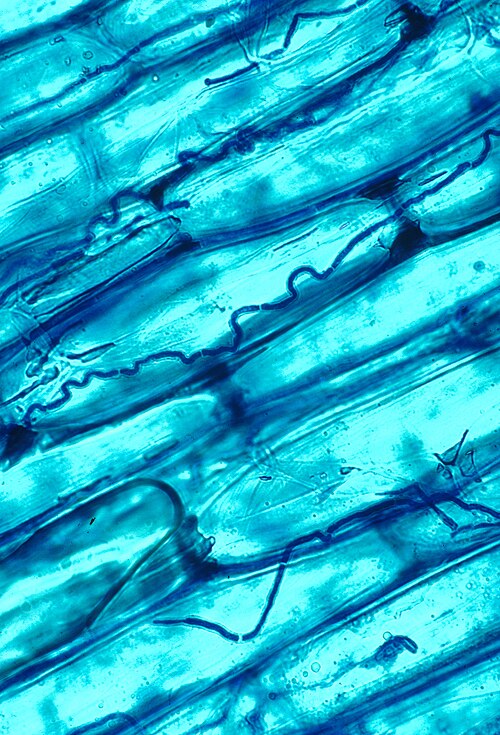
The mycorrhizal symbiosis is ancient, dating back to at least 400 million years.[161] It often increases the plant's uptake of inorganic compounds, such as nitrate and phosphate from soils having low concentrations of these key plant nutrients.[175][184] The fungal partners may also mediate plant-to-plant transfer of carbohydrates and other nutrients.[185] Such mycorrhizal communities are called "common mycorrhizal networks".[186][187] A special case of mycorrhiza is myco-heterotrophy, whereby the plant parasitizes the fungus, obtaining all of its nutrients from its fungal symbiont.[188] Some fungal species inhabit the tissues inside roots, stems, and leaves, in which case they are called endophytes.[189] Similar to mycorrhiza, endophytic colonization by fungi may benefit both symbionts; for example, endophytes of grasses impart to their host increased resistance to herbivores and other environmental stresses and receive food and shelter from the plant in return.[190]
With algae and cyanobacteria

Lichens are a symbiotic relationship between fungi and photosynthetic algae or cyanobacteria. The photosynthetic partner in the relationship is referred to in lichen terminology as a "photobiont". The fungal part of the relationship is composed mostly of various species of ascomycetes and a few basidiomycetes.[191] Lichens occur in every ecosystem on all continents, play a key role in soil formation and the initiation of biological succession,[192] and are prominent in some extreme environments, including polar, alpine, and semiarid desert regions.[193] They are able to grow on inhospitable surfaces, including bare soil, rocks, tree bark, wood, shells, barnacles and leaves.[194] As in mycorrhizas, the photobiont provides sugars and other carbohydrates via photosynthesis to the fungus, while the fungus provides minerals and water to the photobiont. The functions of both symbiotic organisms are so closely intertwined that they function almost as a single organism; in most cases the resulting organism differs greatly from the individual components.[195] Lichenization is a common mode of nutrition for fungi; around 27% of known fungi—more than 19,400 species—are lichenized.[196] Characteristics common to most lichens include obtaining organic carbon by photosynthesis, slow growth, small size, long life, long-lasting (seasonal) vegetative reproductive structures, mineral nutrition obtained largely from airborne sources, and greater tolerance of desiccation than most other photosynthetic organisms in the same habitat.[197]
With insects
Many insects also engage in mutualistic relationships with fungi. Several groups of ants cultivate fungi in the order Chaetothyriales for several purposes: as a food source, as a structural component of their nests, and as a part of an ant/plant symbiosis in the domatia (tiny chambers in plants that house arthropods).[198] Ambrosia beetles cultivate various species of fungi in the bark of trees that they infest.[199] Likewise, females of several wood wasp species (genus Sirex) inject their eggs together with spores of the wood-rotting fungus Amylostereum areolatum into the sapwood of pine trees; the growth of the fungus provides ideal nutritional conditions for the development of the wasp larvae.[200] At least one species of stingless bee has a relationship with a fungus in the genus Monascus, where the larvae consume and depend on fungus transferred from old to new nests.[201] Termites on the African savannah are also known to cultivate fungi,[177] and yeasts of the genera Candida and Lachancea inhabit the gut of a wide range of insects, including neuropterans, beetles, and cockroaches; it is not known whether these fungi benefit their hosts.[202] Fungi growing in dead wood are essential for xylophagous insects (e.g. woodboring beetles).[203][204][205] They deliver nutrients needed by xylophages to nutritionally scarce dead wood.[206][204][205] Thanks to this nutritional enrichment the larvae of the woodboring insect is able to grow and develop to adulthood.[203] The larvae of many families of fungicolous flies, particularly those within the superfamily Sciaroidea such as the Mycetophilidae and some Keroplatidae feed on fungal fruiting bodies and sterile mycorrhizae.[207]
As pathogens and parasites

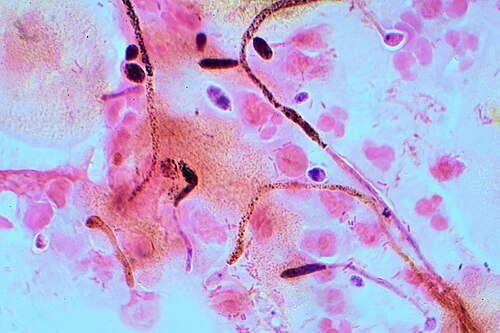
Many fungi are parasites on plants, animals (including humans), and other fungi. Serious pathogens of many cultivated plants causing extensive damage and losses to agriculture and forestry include the rice blast fungus Magnaporthe oryzae,[208] tree pathogens such as Ophiostoma ulmi and Ophiostoma novo-ulmi causing Dutch elm disease,[209] Cryphonectria parasitica responsible for chestnut blight,[210] and Phymatotrichopsis omnivora causing Texas Root Rot, and plant pathogens in the genera Fusarium, Ustilago, Alternaria, and Cochliobolus.[181] Some carnivorous fungi, like Paecilomyces lilacinus, are predators of nematodes, which they capture using an array of specialized structures such as constricting rings or adhesive nets.[211] Many fungi that are plant pathogens, such as Magnaporthe oryzae, can switch from being biotrophic (parasitic on living plants) to being necrotrophic (feeding on the dead tissues of plants they have killed).[212] This same principle is applied to fungi-feeding parasites, including Asterotremella albida, which feeds on the fruit bodies of other fungi both while they are living and after they are dead.[213]
Some fungi can cause serious diseases in humans, several of which may be fatal if untreated. These include aspergillosis, candidiasis, coccidioidomycosis, cryptococcosis, histoplasmosis, mycetomas, and paracoccidioidomycosis. Furthermore, a person with immunodeficiency is more susceptible to disease by genera such as Aspergillus, Candida, Cryptoccocus,[182][214][215] Histoplasma,[216] and Pneumocystis.[217] Other fungi can attack eyes, nails, hair, and especially skin, the so-called dermatophytic and keratinophilic fungi, and cause local infections such as ringworm and athlete's foot.[218] Fungal spores are also a cause of allergies, and fungi from different taxonomic groups can evoke allergic reactions.[219]
As targets of mycoparasites
Organisms that parasitize fungi are known as mycoparasitic organisms. About 300 species of fungi and fungus-like organisms, belonging to 13 classes and 113 genera, are used as biocontrol agents against plant fungal diseases.[220] Fungi can also act as mycoparasites or antagonists of other fungi, such as Hypomyces chrysospermus, which grows on bolete mushrooms. Fungi can also become the target of infection by mycoviruses.[221][222]
Communication
There appears to be electrical communication between fungi in word-like components according to spiking characteristics.[223]
Possible impact on climate
According to a study published in the academic journal Current Biology, fungi can soak from the atmosphere around 36% of global fossil fuel greenhouse gas emissions.[224][225]
Mycotoxins
![(6aR,9R)-N-((2R,5S,10aS,10bS)-5-benzyl-10b-hydroxy-2-methyl-3,6-dioxooctahydro-2H-oxazolo[3,2-a] pyrrolo[2,1-c]pyrazin-2-yl)-7-methyl-4,6,6a,7,8,9-hexahydroindolo[4,3-fg] quinoline-9-carboxamide](https://img-server.japedia.wiki/wikipedia/commons/thumb/9/94/Ergotamine3.png/500px-Ergotamine3.png)
Many fungi produce biologically active compounds, several of which are toxic to animals or plants and are therefore called mycotoxins. Of particular relevance to humans are mycotoxins produced by molds causing food spoilage, and poisonous mushrooms (see above). Particularly infamous are the lethal amatoxins in some Amanita mushrooms, and ergot alkaloids, which have a long history of causing serious epidemics of ergotism (St Anthony's Fire) in people consuming rye or related cereals contaminated with sclerotia of the ergot fungus, Claviceps purpurea.[226] Other notable mycotoxins include the aflatoxins, which are insidious liver toxins and highly carcinogenic metabolites produced by certain Aspergillus species often growing in or on grains and nuts consumed by humans, ochratoxins, patulin, and trichothecenes (e.g., T-2 mycotoxin) and fumonisins, which have significant impact on human food supplies or animal livestock.[227]
Mycotoxins are secondary metabolites (or natural products), and research has established the existence of biochemical pathways solely for the purpose of producing mycotoxins and other natural products in fungi.[40] Mycotoxins may provide fitness benefits in terms of physiological adaptation, competition with other microbes and fungi, and protection from consumption (fungivory).[228][229] Many fungal secondary metabolites (or derivatives) are used medically, as described under Human use below.
Pathogenic mechanisms
Ustilago maydis is a pathogenic plant fungus that causes smut disease in maize and teosinte. Plants have evolved efficient defense systems against pathogenic microbes such as U. maydis. A rapid defense reaction after pathogen attack is the oxidative burst where the plant produces reactive oxygen species at the site of the attempted invasion. U. maydis can respond to the oxidative burst with an oxidative stress response, regulated by the gene YAP1. The response protects U. maydis from the host defense, and is necessary for the pathogen's virulence.[230] Furthermore, U. maydis has a well-established recombinational DNA repair system which acts during mitosis and meiosis.[231] The system may assist the pathogen in surviving DNA damage arising from the host plant's oxidative defensive response to infection.[232]
Cryptococcus neoformans is an encapsulated yeast that can live in both plants and animals. C. neoformans usually infects the lungs, where it is phagocytosed by alveolar macrophages.[233] Some C. neoformans can survive inside macrophages, which appears to be the basis for latency, disseminated disease, and resistance to antifungal agents. One mechanism by which C. neoformans survives the hostile macrophage environment is by up-regulating the expression of genes involved in the oxidative stress response.[233] Another mechanism involves meiosis. The majority of C. neoformans are mating "type a". Filaments of mating "type a" ordinarily have haploid nuclei, but they can become diploid (perhaps by endoduplication or by stimulated nuclear fusion) to form blastospores. The diploid nuclei of blastospores can undergo meiosis, including recombination, to form haploid basidiospores that can be dispersed.[234] This process is referred to as monokaryotic fruiting. This process requires a gene called DMC1, which is a conserved homologue of genes recA in bacteria and RAD51 in eukaryotes, that mediates homologous chromosome pairing during meiosis and repair of DNA double-strand breaks. Thus, C. neoformans can undergo a meiosis, monokaryotic fruiting, that promotes recombinational repair in the oxidative, DNA damaging environment of the host macrophage, and the repair capability may contribute to its virulence.[232][234]
Human use

The human use of fungi for food preparation or preservation and other purposes is extensive and has a long history. Mushroom farming and mushroom gathering are large industries in many countries. The study of the historical uses and sociological impact of fungi is known as ethnomycology. Because of the capacity of this group to produce an enormous range of natural products with antimicrobial or other biological activities, many species have long been used or are being developed for industrial production of antibiotics, vitamins, and anti-cancer and cholesterol-lowering drugs. Methods have been developed for genetic engineering of fungi,[235] enabling metabolic engineering of fungal species. For example, genetic modification of yeast species[236]—which are easy to grow at fast rates in large fermentation vessels—has opened up ways of pharmaceutical production that are potentially more efficient than production by the original source organisms.[237] Fungi-based industries are sometimes considered to be a major part of a growing bioeconomy, with applications under research and development including use for textiles, meat substitution and general fungal biotechnology.[238][239][240][241][242]
Therapeutic uses
.png/500px-Penicillium_rubens_(type_specimen).png)
Modern chemotherapeutics
Many species produce metabolites that are major sources of pharmacologically active drugs.
Antibiotics
Particularly important are the antibiotics, including the penicillins, a structurally related group of β-lactam antibiotics that are synthesized from small peptides. Although naturally occurring penicillins such as penicillin G (produced by Penicillium chrysogenum) have a relatively narrow spectrum of biological activity, a wide range of other penicillins can be produced by chemical modification of the natural penicillins. Modern penicillins are semisynthetic compounds, obtained initially from fermentation cultures, but then structurally altered for specific desirable properties.[244] Other antibiotics produced by fungi include: ciclosporin, commonly used as an immunosuppressant during transplant surgery; and fusidic acid, used to help control infection from methicillin-resistant Staphylococcus aureus bacteria.[245] Widespread use of antibiotics for the treatment of bacterial diseases, such as tuberculosis, syphilis, leprosy, and others began in the early 20th century and continues to date. In nature, antibiotics of fungal or bacterial origin appear to play a dual role: at high concentrations they act as chemical defense against competition with other microorganisms in species-rich environments, such as the rhizosphere, and at low concentrations as quorum-sensing molecules for intra- or interspecies signaling.[246]
Other
Other drugs produced by fungi include griseofulvin isolated from Penicillium griseofulvum, used to treat fungal infections,[247] and statins (HMG-CoA reductase inhibitors), used to inhibit cholesterol synthesis. Examples of statins found in fungi include mevastatin from Penicillium citrinum and lovastatin from Aspergillus terreus and the oyster mushroom.[248] Psilocybin from fungi is investigated for therapeutic use and appears to cause global increases in brain network integration.[249] Fungi produce compounds that inhibit viruses[250][251] and cancer cells.[252] Specific metabolites, such as polysaccharide-K, ergotamine, and β-lactam antibiotics, are routinely used in clinical medicine. The shiitake mushroom is a source of lentinan, a clinical drug approved for use in cancer treatments in several countries, including Japan.[253][254] In Europe and Japan, polysaccharide-K (brand name Krestin), a chemical derived from Trametes versicolor, is an approved adjuvant for cancer therapy.[255]
Traditional medicine
The fungi Ganoderma lucidum (left) and Ophiocordyceps sinensis (right) are used in traditional medicine practices
Certain mushrooms are used as supposed therapeutics in folk medicine practices, such as traditional Chinese medicine. Mushrooms with a history of such use include Agaricus subrufescens,[252][256] Ganoderma lucidum,[257] and Ophiocordyceps sinensis.[258]
Cultured foods
Baker's yeast or Saccharomyces cerevisiae, a unicellular fungus, is used to make bread and other wheat-based products, such as pizza dough and dumplings.[259] Yeast species of the genus Saccharomyces are also used to produce alcoholic beverages through fermentation.[260] Shoyu koji mold (Aspergillus oryzae) is an essential ingredient in brewing Shoyu (soy sauce) and sake, and the preparation of miso,[261] while Rhizopus species are used for making tempeh.[262] Several of these fungi are domesticated species that were bred or selected according to their capacity to ferment food without producing harmful mycotoxins (see below), which are produced by very closely related Aspergilli.[263] Quorn, a meat substitute, is made from Fusarium venenatum.[264]
In food

Edible mushrooms include commercially raised and wild-harvested fungi. Agaricus bisporus, sold as button mushrooms when small or Portobello mushrooms when larger, is the most widely cultivated species in the West, used in salads, soups, and many other dishes. Many Asian fungi are commercially grown and have increased in popularity in the West. They are often available fresh in grocery stores and markets, including straw mushrooms (Volvariella volvacea), oyster mushrooms (Pleurotus ostreatus), shiitakes (Lentinula edodes), and enokitake (Flammulina spp.).[265]
Many other mushroom species are harvested from the wild for personal consumption or commercial sale. Milk mushrooms, morels, chanterelles, truffles, black trumpets, and porcini mushrooms (Boletus edulis) (also known as king boletes) demand a high price on the market. They are often used in gourmet dishes.[266]
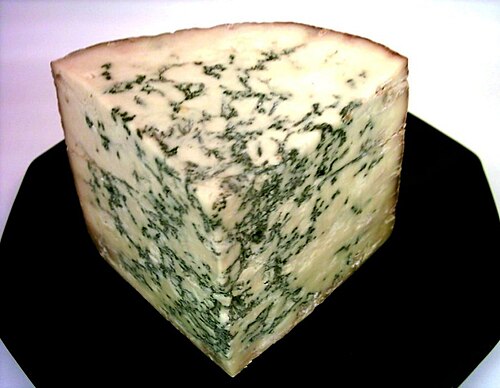
Certain types of cheeses require inoculation of milk curds with fungal species that impart a unique flavor and texture to the cheese. Examples include the blue color in cheeses such as Stilton or Roquefort, which are made by inoculation with Penicillium roqueforti.[267] Molds used in cheese production are non-toxic and are thus safe for human consumption; however, mycotoxins (e.g., aflatoxins, roquefortine C, patulin, or others) may accumulate because of growth of other fungi during cheese ripening or storage.[268]
Poisonous fungi

Many mushroom species are poisonous to humans and cause a range of reactions including slight digestive problems, allergic reactions, hallucinations, severe organ failure, and death. Genera with mushrooms containing deadly toxins include Conocybe, Galerina, Lepiota and the most infamous, Amanita.[269] The latter genus includes the destroying angel (A. virosa) and the death cap (A. phalloides), the most common cause of deadly mushroom poisoning.[270] The false morel (Gyromitra esculenta) is occasionally considered a delicacy when cooked, yet can be highly toxic when eaten raw.[271] Tricholoma equestre was considered edible until it was implicated in serious poisonings causing rhabdomyolysis.[272] Fly agaric mushrooms (Amanita muscaria) also cause occasional non-fatal poisonings, mostly as a result of ingestion for its hallucinogenic properties. Historically, fly agaric was used by different peoples in Europe and Asia and its present usage for religious or shamanic purposes is reported from some ethnic groups such as the Koryak people of northeastern Siberia.[273]
As it is difficult to accurately identify a safe mushroom without proper training and knowledge, it is often advised to assume that a wild mushroom is poisonous and not to consume it.[274][275]
Pest control

In agriculture, fungi may be useful if they actively compete for nutrients and space with pathogenic microorganisms such as bacteria or other fungi via the competitive exclusion principle,[276] or if they are parasites of these pathogens. For example, certain species eliminate or suppress the growth of harmful plant pathogens, such as insects, mites, weeds, nematodes, and other fungi that cause diseases of important crop plants.[277] This has generated strong interest in practical applications that use these fungi in the biological control of these agricultural pests. Entomopathogenic fungi can be used as biopesticides, as they actively kill insects.[278] Examples that have been used as biological insecticides are Beauveria bassiana, Metarhizium spp., Hirsutella spp., Paecilomyces (Isaria) spp., and Lecanicillium lecanii.[279][280] Endophytic fungi of grasses of the genus Epichloë, such as E. coenophiala, produce alkaloids that are toxic to a range of invertebrate and vertebrate herbivores. These alkaloids protect grass plants from herbivory, but several endophyte alkaloids can poison grazing animals, such as cattle and sheep.[281] Infecting cultivars of pasture or forage grasses with Epichloë endophytes is one approach being used in grass breeding programs; the fungal strains are selected for producing only alkaloids that increase resistance to herbivores such as insects, while being non-toxic to livestock.[282][283]
Bioremediation
Certain fungi, in particular white-rot fungi, can degrade insecticides, herbicides, pentachlorophenol, creosote, coal tars, and heavy fuels and turn them into carbon dioxide, water, and basic elements.[284] Fungi have been shown to biomineralize uranium oxides, suggesting they may have application in the bioremediation of radioactively polluted sites.[285][286][287]
Model organisms
Several pivotal discoveries in biology were made by researchers using fungi as model organisms, that is, fungi that grow and sexually reproduce rapidly in the laboratory. For example, the one gene-one enzyme hypothesis was formulated by scientists using the bread mold Neurospora crassa to test their biochemical theories.[288] Other important model fungi are Aspergillus nidulans and the yeasts Saccharomyces cerevisiae and Schizosaccharomyces pombe, each of which with a long history of use to investigate issues in eukaryotic cell biology and genetics, such as cell cycle regulation, chromatin structure, and gene regulation. Other fungal models have emerged that address specific biological questions relevant to medicine, plant pathology, and industrial uses; examples include Candida albicans, a dimorphic, opportunistic human pathogen,[289] Magnaporthe grisea, a plant pathogen,[290] and Pichia pastoris, a yeast widely used for eukaryotic protein production.[291]
Others
Fungi are used extensively to produce industrial chemicals like citric, gluconic, lactic, and malic acids,[292] and industrial enzymes, such as lipases used in biological detergents,[293] cellulases used in making cellulosic ethanol[294] and stonewashed jeans,[295] and amylases,[296] invertases, proteases and xylanases.[297]
See also

References
Citations
- ^ Moore RT (1980). "Taxonomic proposals for the classification of marine yeasts and other yeast-like fungi including the smuts". Botanica Marina. 23 (6): 361–373. doi:10.1515/bot-1980-230605.
- ^ "Record Details: Fungi R.T. Moore, Bot. Mar. 23(6): 371 (1980)". Index Fungorum. Retrieved 18 June 2024.
- ^ /ˈfʌndʒaɪ/ , /ˈfʌŋɡaɪ/ , /ˈfʌŋɡi/ or /ˈfʌndʒi/ . The first two pronunciations are favored more in the US and the others in the UK, however all pronunciations can be heard in any English-speaking country.
- ^ "Fungus". Oxford Dictionaries. Archived from the original on 28 July 2012. Retrieved 26 February 2011.
- ^ Whittaker R (January 1969). "New concepts of kingdoms or organisms. Evolutionary relations are better represented by new classifications than by the traditional two kingdoms". Science. 163 (3863): 150–60. Bibcode:1969Sci...163..150W. CiteSeerX 10.1.1.403.5430. doi:10.1126/science.163.3863.150. PMID 5762760.
- ^ Cavalier-Smith T (1998). "A revised six-kingdom system of life". Biological Reviews. 73 (3): 203–66. doi:10.1111/j.1469-185X.1998.tb00030.x. PMID 9809012. S2CID 6557779.
- ^ a b Hawksworth DL, Lücking R (July 2017). "Fungal Diversity Revisited: 2.2 to 3.8 Million Species". Microbiology Spectrum. 5 (4): 79–95. doi:10.1128/microbiolspec.FUNK-0052-2016. ISBN 978-1-55581-957-6. PMID 28752818.
- ^ a b c Cheek M, Nic Lughadha E, Kirk P, Lindon H, Carretero J, Looney B, et al. (2020). "New scientific discoveries: Plants and fungi". Plants, People, Planet. 2 (5): 371–388. doi:10.1002/ppp3.10148. hdl:1854/LU-8705210.
- ^ "Stop neglecting fungi". Nature Microbiology. 2 (8): 17120. 25 July 2017. doi:10.1038/nmicrobiol.2017.120. PMID 28741610.
- ^ Simpson DP (1979). Cassell's Latin Dictionary (5 ed.). London, UK: Cassell Ltd. p. 883. ISBN 978-0-304-52257-6.
- ^ a b Ainsworth 1976, p. 2.
- ^ Mitzka W, ed. (1960). Etymologisches Wörterbuch der deutschen Sprache [Etymological dictionary of the German language] (in German). Berlin: Walter de Gruyter.
- ^ Alexopoulos, Mims & Blackwell 1996, p. 1.
- ^ Persoon CH (1796). Observationes Mycologicae: Part 1 (in Latin). Leipzig, (Germany): Peter Philipp Wolf. Archived from the original on 19 December 2013. Retrieved 30 March 2019.
- ^ Greville RK (1824). Scottish Cryptogamie Flora: Or Coloured Figures and Descriptions of Cryptogamic Plants, Belonging Chiefly to the Order Fungi. Vol. 2. Edinburgh, Scotland: Maclachland and Stewart. p. 65. From p. 65: "This little plant will probably not prove rare in Great Britain, when mycology shall be more studied."
- ^ Smith JE (1836). Hooker WJ, Berkeley MJ (eds.). The English Flora of Sir James Edward Smith. Vol. 5, part II: "Class XXIV. Cryptogamia". London, England: Longman, Rees, Orme, Brown, Green & Longman. p. 7. From p. 7: "This has arisen, I conceive, partly from the practical difficulty of preserving specimens for the herbarium, partly from the absence of any general work, adapted to the immense advances which have of late years been made in the study of Mycology."
- ^ "LIAS Glossary". Archived from the original on 11 December 2013. Retrieved 14 August 2013.
- ^ Kuhar F, Furci G, Drechsler-Santos ER, Pfister DH (2018). "Delimitation of Funga as a valid term for the diversity of fungal communities: the Fauna, Flora & Funga proposal (FF&F)". IMA Fungus. 9 (2): A71–A74. doi:10.1007/BF03449441. hdl:11336/88035.
- ^ "IUCN SSC acceptance of Fauna Flora Funga" (PDF). Fungal Conservation Committee, IUCN SSC. 2021. Archived from the original (PDF) on 11 November 2021. Retrieved 11 November 2021.
The IUCN Species Survival Commission calls for the due recognition of fungi as major components of biodiversity in legislation and policy. It fully endorses the Fauna Flora Funga Initiative and asks that the phrases animals and plants and fauna and flora be replaced with animals, fungi, and plants and fauna, flora, and funga.
- ^ "Fifth-Grade Elementary School Students' Conceptions and Misconceptions about the Fungus Kingdom". Retrieved 5 October 2022.
- ^ "Common Student Ideas about Plants and Animals" (PDF). Retrieved 5 October 2022.
- ^ Bruns T (October 2006). "Evolutionary biology: a kingdom revised". Nature. 443 (7113): 758–61. Bibcode:2006Natur.443..758B. doi:10.1038/443758a. PMID 17051197. S2CID 648881.
- ^ Baldauf SL, Palmer JD (December 1993). "Animals and fungi are each other's closest relatives: congruent evidence from multiple proteins". Proceedings of the National Academy of Sciences of the United States of America. 90 (24): 11558–62. Bibcode:1993PNAS...9011558B. doi:10.1073/pnas.90.24.11558. PMC 48023. PMID 8265589.
- ^ Deacon 2005, p. 4.
- ^ a b Deacon 2005, pp. 128–129.
- ^ Alexopoulos, Mims & Blackwell 1996, pp. 28–33.
- ^ Alexopoulos, Mims & Blackwell 1996, pp. 31–32.
- ^ Shoji JY, Arioka M, Kitamoto K (2006). "Possible involvement of pleiomorphic vacuolar networks in nutrient recycling in filamentous fungi". Autophagy. 2 (3): 226–7. doi:10.4161/auto.2695. PMID 16874107.
- ^ Deacon 2005, p. 58.
- ^ Zabriskie TM, Jackson MD (February 2000). "Lysine biosynthesis and metabolism in fungi". Natural Product Reports. 17 (1): 85–97. doi:10.1039/a801345d. PMID 10714900.
- ^ Xu H, Andi B, Qian J, West AH, Cook PF (2006). "The alpha-aminoadipate pathway for lysine biosynthesis in fungi". Cell Biochemistry and Biophysics. 46 (1): 43–64. doi:10.1385/CBB:46:1:43. PMID 16943623. S2CID 22370361.
- ^ Alexopoulos, Mims & Blackwell 1996, pp. 27–28.
- ^ Alexopoulos, Mims & Blackwell 1996, p. 685.
- ^ a b c Alexopoulos, Mims & Blackwell 1996, p. 30.
- ^ Desjardin DE, Perry BA, Lodge DJ, Stevani CV, Nagasawa E (2010). "Luminescent Mycena: new and noteworthy species". Mycologia. 102 (2): 459–77. doi:10.3852/09-197. PMID 20361513. S2CID 25377671. Archived from the original on 11 November 2018. Retrieved 11 November 2018.
- ^ Alexopoulos, Mims & Blackwell 1996, pp. 32–33.
- ^ Alexopoulos, Mims & Blackwell 1996, p. 33.
- ^ a b Gow NA, Latge JP, Munro CA, Heitman J (2017). "The fungal cell wall: Structure, biosynthesis, and function". Microbiology Spectrum. 5 (3). doi:10.1128/microbiolspec.FUNK-0035-2016. hdl:2164/8941. PMID 28513415. S2CID 5026076.
- ^ Mihail JD, Bruhn JN (November 2005). "Foraging behaviour of Armillaria rhizomorph systems". Mycological Research. 109 (Pt 11): 1195–207. doi:10.1017/S0953756205003606. PMID 16279413.
- ^ a b c d Keller NP, Turner G, Bennett JW (December 2005). "Fungal secondary metabolism - from biochemistry to genomics". Nature Reviews. Microbiology. 3 (12): 937–47. doi:10.1038/nrmicro1286. PMID 16322742. S2CID 23537608.
- ^ Wu S, Schalk M, Clark A, Miles RB, Coates R, Chappell J (November 2006). "Redirection of cytosolic or plastidic isoprenoid precursors elevates terpene production in plants". Nature Biotechnology. 24 (11): 1441–7. doi:10.1038/nbt1251. PMID 17057703. S2CID 23358348.
- ^ Tudzynski B (March 2005). "Gibberellin biosynthesis in fungi: genes, enzymes, evolution, and impact on biotechnology". Applied Microbiology and Biotechnology. 66 (6): 597–611. doi:10.1007/s00253-004-1805-1. PMID 15578178. S2CID 11191347.
- ^ Vaupotic T, Veranic P, Jenoe P, Plemenitas A (June 2008). "Mitochondrial mediation of environmental osmolytes discrimination during osmoadaptation in the extremely halotolerant black yeast Hortaea werneckii". Fungal Genetics and Biology. 45 (6): 994–1007. doi:10.1016/j.fgb.2008.01.006. PMID 18343697.
- ^ a b Dadachova E, Bryan RA, Huang X, Moadel T, Schweitzer AD, Aisen P, et al. (2007). "Ionizing radiation changes the electronic properties of melanin and enhances the growth of melanized fungi". PLOS ONE. 2 (5): e457. Bibcode:2007PLoSO...2..457D. doi:10.1371/journal.pone.0000457. PMC 1866175. PMID 17520016.
- ^ Raghukumar C, Raghukumar S (1998). "Barotolerance of fungi isolated from deep-sea sediments of the Indian Ocean". Aquatic Microbial Ecology. 15 (2): 153–163. doi:10.3354/ame015153.
- ^ Sancho LG, de la Torre R, Horneck G, Ascaso C, de Los Rios A, Pintado A, et al. (June 2007). "Lichens survive in space: results from the 2005 LICHENS experiment". Astrobiology. 7 (3): 443–54. Bibcode:2007AsBio...7..443S. doi:10.1089/ast.2006.0046. PMID 17630840. S2CID 4121180.
- ^ Fisher MC, Garner TW (2020). "Chytrid fungi and global amphibian declines". Nature Reviews Microbiology. 18 (6): 332–343. doi:10.1038/s41579-020-0335-x. hdl:10044/1/78596. PMID 32099078. S2CID 211266075.
- ^ Vargas-Gastélum L, Riquelme M (2020). "The mycobiota of the deep sea: What omics can offer". Life. 10 (11): 292. Bibcode:2020Life...10..292V. doi:10.3390/life10110292. PMC 7699357. PMID 33228036.
- ^ "Fungi in Mulches and Composts". University of Massachusetts Amherst. 6 March 2015. Retrieved 15 December 2022.
- ^ Mueller GM, Schmit JP (2006). "Fungal biodiversity: what do we know? What can we predict?". Biodiversity and Conservation. 16 (1): 1–5. doi:10.1007/s10531-006-9117-7. S2CID 23827807.
- ^ Wang K, Cai L, Yao Y (2021). "Overview of nomenclature novelties of fungi in the world and China (2020)". Biodiversity Science. 29 (8): 1064–1072. doi:10.17520/biods.2021202. S2CID 240568551.
- ^ a b Kirk et al. 2008, p. 489.
- ^ a b c d e f Hibbett DS, Binder M, Bischoff JF, Blackwell M, Cannon PF, Eriksson OE, et al. (May 2007). "A higher-level phylogenetic classification of the Fungi" (PDF). Mycological Research. 111 (Pt 5): 509–47. CiteSeerX 10.1.1.626.9582. doi:10.1016/j.mycres.2007.03.004. PMID 17572334. S2CID 4686378. Archived from the original (PDF) on 26 March 2009. Retrieved 8 March 2007.
- ^ According to one 2001 estimate, some 10,000 fungal diseases are known. Struck C (2006). "Infection strategies of plant parasitic fungi". In Cooke BM, Jones DG, Kaye B (eds.). The Epidemiology of Plant Diseases. Berlin, Germany: Springer. p. 117. ISBN 978-1-4020-4580-6.
- ^ Peintner U, Pöder R, Pümpel T (1998). "The Iceman's fungi". Mycological Research. 102 (10): 1153–1162. doi:10.1017/S0953756298006546.
- ^ Ainsworth 1976, p. 1.
- ^ Alexopoulos, Mims & Blackwell 1996, pp. 1–2.
- ^ Ainsworth 1976, p. 18.
- ^ Hawksworth DL (September 2006). "Pandora's mycological box: molecular sequences vs. morphology in understanding fungal relationships and biodiversity". Revista Iberoamericana de Micología. 23 (3): 127–33. doi:10.1016/S1130-1406(06)70031-6. PMID 17196017.
- ^ Harris SD (2008). "Branching of fungal hyphae: regulation, mechanisms and comparison with other branching systems". Mycologia. 100 (6): 823–32. doi:10.3852/08-177. PMID 19202837. S2CID 2147525. Archived from the original on 12 April 2016. Retrieved 5 July 2011.
- ^ Deacon 2005, p. 51.
- ^ Deacon 2005, p. 57.
- ^ Chang S-T, Miles PG (2004). Mushrooms: Cultivation, Nutritional Value, Medicinal Effect and Environmental Impact. Boca Raton, Florida: CRC Press. ISBN 978-0-8493-1043-0.
- ^ Bozkurt TO, Kamoun S, Lennon-Duménil AM (2020). "The plant–pathogen haustorial interface at a glance". Journal of Cell Science. 133 (5). doi:10.1242/jcs.237958. PMC 7075074. PMID 32132107.
- ^ Parniske M (October 2008). "Arbuscular mycorrhiza: the mother of plant root endosymbioses". Nature Reviews. Microbiology. 6 (10): 763–75. doi:10.1038/nrmicro1987. PMID 18794914. S2CID 5432120.
- ^ Steenkamp ET, Wright J, Baldauf SL (January 2006). "The protistan origins of animals and fungi". Molecular Biology and Evolution. 23 (1): 93–106. doi:10.1093/molbev/msj011. PMID 16151185.
- ^ Hanson 2008, pp. 127–141.
- ^ Ferguson BA, Dreisbach TA, Parks CG, Filip GM, Schmitt CL (2003). "Coarse-scale population structure of pathogenic Armillaria species in a mixed-conifer forest in the Blue Mountains of northeast Oregon". Canadian Journal of Forest Research. 33 (4): 612–623. doi:10.1139/x03-065. Archived from the original on 3 July 2019. Retrieved 3 July 2019.
- ^ Alexopoulos, Mims & Blackwell 1996, pp. 204–205.
- ^ Moss ST (1986). The Biology of Marine Fungi. Cambridge, UK: Cambridge University Press. p. 76. ISBN 978-0-521-30899-1.
- ^ Peñalva MA, Arst HN (September 2002). "Regulation of gene expression by ambient pH in filamentous fungi and yeasts". Microbiology and Molecular Biology Reviews. 66 (3): 426–46, table of contents. doi:10.1128/MMBR.66.3.426-446.2002. PMC 120796. PMID 12208998.
- ^ a b Howard RJ, Ferrari MA, Roach DH, Money NP (December 1991). "Penetration of hard substrates by a fungus employing enormous turgor pressures". Proceedings of the National Academy of Sciences of the United States of America. 88 (24): 11281–4. Bibcode:1991PNAS...8811281H. doi:10.1073/pnas.88.24.11281. PMC 53118. PMID 1837147.
- ^ Money NP (1998). "Mechanics of invasive fungal growth and the significance of turgor in plant infection". Molecular Genetics of Host-Specific Toxins in Plant Disease: Proceedings of the 3rd Tottori International Symposium on Host-Specific Toxins, Daisen, Tottori, Japan, August 24–29, 1997. Netherlands: Kluwer Academic Publishers. pp. 261–271. ISBN 978-0-7923-4981-5.
- ^ Wang ZY, Jenkinson JM, Holcombe LJ, Soanes DM, Veneault-Fourrey C, Bhambra GK, et al. (April 2005). "The molecular biology of appressorium turgor generation by the rice blast fungus Magnaporthe grisea". Biochemical Society Transactions. 33 (Pt 2): 384–8. doi:10.1042/BST0330384. PMID 15787612. S2CID 7111935.
- ^ Pereira JL, Noronha EF, Miller RN, Franco OL (June 2007). "Novel insights in the use of hydrolytic enzymes secreted by fungi with biotechnological potential". Letters in Applied Microbiology. 44 (6): 573–81. doi:10.1111/j.1472-765X.2007.02151.x. PMID 17576216.
- ^ Schaller M, Borelli C, Korting HC, Hube B (November 2005). "Hydrolytic enzymes as virulence factors of Candida albicans". Mycoses. 48 (6): 365–77. doi:10.1111/j.1439-0507.2005.01165.x. PMID 16262871. S2CID 1356254.
- ^ Farrar JF (October 1985). "Carbohydrate metabolism in biotrophic plant pathogens". Microbiological Sciences. 2 (10): 314–7. PMID 3939987.
- ^ Fischer R, Zekert N, Takeshita N (May 2008). "Polarized growth in fungi--interplay between the cytoskeleton, positional markers and membrane domains". Molecular Microbiology. 68 (4): 813–26. doi:10.1111/j.1365-2958.2008.06193.x. PMID 18399939. S2CID 205365895.
- ^ Christensen MJ, Bennett RJ, Ansari HA, Koga H, Johnson RD, Bryan GT, et al. (February 2008). "Epichloë endophytes grow by intercalary hyphal extension in elongating grass leaves". Fungal Genetics and Biology. 45 (2): 84–93. doi:10.1016/j.fgb.2007.07.013. PMID 17919950.
- ^ Money NP (October 2002). "Mushroom stem cells". BioEssays. 24 (10): 949–52. doi:10.1002/bies.10160. PMID 12325127.
- ^ Willensdorfer M (February 2009). "On the evolution of differentiated multicellularity". Evolution; International Journal of Organic Evolution. 63 (2): 306–23. arXiv:0801.2610. doi:10.1111/j.1558-5646.2008.00541.x. PMID 19154376. S2CID 39155292.
- ^ Daniels KJ, Srikantha T, Lockhart SR, Pujol C, Soll DR (May 2006). "Opaque cells signal white cells to form biofilms in Candida albicans". The EMBO Journal. 25 (10): 2240–52. doi:10.1038/sj.emboj.7601099. PMC 1462973. PMID 16628217.
- ^ Tudzynski B (2014). "Nitrogen regulation of fungal secondary metabolism in fungi". Frontiers in Microbiology. 5: 656. doi:10.3389/fmicb.2014.00656. PMC 4246892. PMID 25506342.
- ^ Hynes MJ (1994). "Regulatory circuits of the amdS gene of Aspergillus nidulans". Antonie van Leeuwenhoek. 65 (3): 179–82. doi:10.1007/BF00871944. PMID 7847883. S2CID 45815733.
- ^ Dadachova E, Casadevall A (December 2008). "Ionizing radiation: how fungi cope, adapt, and exploit with the help of melanin". Current Opinion in Microbiology. 11 (6): 525–31. doi:10.1016/j.mib.2008.09.013. PMC 2677413. PMID 18848901.
- ^ Alexopoulos, Mims & Blackwell 1996, pp. 48–56.
- ^ Kirk et al. 2008, p. 633.
- ^ Heitman J (September 2006). "Sexual reproduction and the evolution of microbial pathogens". Current Biology. 16 (17): R711–25. Bibcode:2006CBio...16.R711H. doi:10.1016/j.cub.2006.07.064. PMID 16950098. S2CID 2898102.
- ^ Alcamo IE, Pommerville J (2004). Alcamo's Fundamentals of Microbiology. Boston, Massachusetts: Jones and Bartlett. p. 590. ISBN 978-0-7637-0067-6.
- ^ Ulloa, Miguel, Halin, Richard T. (2012). Illustrated Dictionary of Mycology (2nd ed.). St. Paul, Minnesota: The American Phytopathological Society. p. 156. ISBN 978-0-89054-400-6.
- ^ a b Redecker D, Raab P (2006). "Phylogeny of the glomeromycota (arbuscular mycorrhizal fungi): recent developments and new gene markers". Mycologia. 98 (6): 885–95. doi:10.3852/mycologia.98.6.885. PMID 17486965. Archived from the original on 23 September 2015. Retrieved 5 July 2011.
- ^ Guarro J, Stchigel AM (July 1999). "Developments in fungal taxonomy". Clinical Microbiology Reviews. 12 (3): 454–500. doi:10.1128/CMR.12.3.454. PMC 100249. PMID 10398676.
- ^ a b Taylor JW, Jacobson DJ, Kroken S, Kasuga T, Geiser DM, Hibbett DS, et al. (October 2000). "Phylogenetic species recognition and species concepts in fungi". Fungal Genetics and Biology. 31 (1): 21–32. doi:10.1006/fgbi.2000.1228. PMID 11118132. S2CID 2551424.
- ^ Metzenberg RL, Glass NL (February 1990). "Mating type and mating strategies in Neurospora". BioEssays. 12 (2): 53–9. doi:10.1002/bies.950120202. PMID 2140508. S2CID 10818930.
- ^ Jennings & Lysek 1996, pp. 107–114.
- ^ Deacon 2005, p. 31.
- ^ Alexopoulos, Mims & Blackwell 1996, pp. 492–493.
- ^ Jennings & Lysek 1996, p. 142.
- ^ Deacon 2005, pp. 21–24.
- ^ a b "Spore Dispersal in Fungi". botany.hawaii.edu. Archived from the original on 17 November 2011. Retrieved 28 December 2018.
- ^ "Dispersal". herbarium.usu.edu. Archived from the original on 28 December 2018. Retrieved 28 December 2018.
- ^ Hassett MO, Fischer MW, Money NP (28 October 2015). "Mushrooms as Rainmakers: How Spores Act as Nuclei for Raindrops". PLOS ONE. 10 (10): e0140407. Bibcode:2015PLoSO..1040407H. doi:10.1371/journal.pone.0140407. ISSN 1932-6203. PMC 4624964. PMID 26509436.
- ^ Kim S, Park H, Gruszewski HA, Schmale DG, Jung S (12 March 2019). "Vortex-induced dispersal of a plant pathogen by raindrop impact". Proceedings of the National Academy of Sciences. 116 (11): 4917–4922. Bibcode:2019PNAS..116.4917K. doi:10.1073/pnas.1820318116. ISSN 0027-8424. PMC 6421443. PMID 30804195.
- ^ Linder MB, Szilvay GR, Nakari-Setälä T, Penttilä ME (November 2005). "Hydrophobins: the protein-amphiphiles of filamentous fungi". FEMS Microbiology Reviews. 29 (5): 877–96. doi:10.1016/j.femsre.2005.01.004. PMID 16219510.
- ^ Trail F (November 2007). "Fungal cannons: explosive spore discharge in the Ascomycota". FEMS Microbiology Letters. 276 (1): 12–8. doi:10.1111/j.1574-6968.2007.00900.x. PMID 17784861.
- ^ Pringle A, Patek SN, Fischer M, Stolze J, Money NP (2005). "The captured launch of a ballistospore". Mycologia. 97 (4): 866–71. doi:10.3852/mycologia.97.4.866. PMID 16457355. Archived from the original on 12 April 2016. Retrieved 5 July 2011.
- ^ Kirk et al. 2008, p. 495.
- ^ "Stipitate hydnoid fungi, Hampshire Biodiversity Partnership" (PDF). Archived (PDF) from the original on 4 March 2016. Retrieved 13 November 2019.
- ^ Brodie HJ (1975). The Bird's Nest Fungi. Toronto, Ontario: University of Toronto Press. p. 80. ISBN 978-0-8020-5307-7.
- ^ Alexopoulos, Mims & Blackwell 1996, p. 545.
- ^ Dyer PS, O'Gorman CM (January 2012). "Sexual development and cryptic sexuality in fungi: insights from Aspergillus species". FEMS Microbiology Reviews. 36 (1): 165–192. doi:10.1111/j.1574-6976.2011.00308.x. PMID 22091779.
- ^ Yun SH, Berbee ML, Yoder OC, Turgeon BG (1999). "Evolution of the fungal self-fertile reproductive life style from self-sterile ancestors". Proceedings of the National Academy of Sciences of the United States of America. 96 (10): 5592–7. Bibcode:1999PNAS...96.5592Y. doi:10.1073/pnas.96.10.5592. PMC 21905. PMID 10318929.
- ^ Richard S, Almeida Jmgcf CO, Luraschi A, Nielsen O, Pagni M, Hauser PM (2018). "Functional and expression analyses of the Pneumocystis MAT genes suggest obligate sexuality through primary homothallism within host lungs". mBio. 9 (1). doi:10.1128/mBio.02201-17. PMC 5821091. PMID 29463658.
- ^ Heitman J (2015). "Evolution of sexual reproduction: A view from the fungal kingdom supports an evolutionary epoch with sex before sexes". Fungal Biology Reviews. 29 (3–4): 108–117. Bibcode:2015FunBR..29..108H. doi:10.1016/j.fbr.2015.08.002. PMC 4730888. PMID 26834823.
- ^ Jennings & Lysek 1996, pp. 114–115.
- ^ Furlaneto MC, Pizzirani-Kleiner AA (January 1992). "Intraspecific hybridisation of Trichoderma pseudokoningii by anastomosis and by protoplast fusion". FEMS Microbiology Letters. 69 (2): 191–5. doi:10.1111/j.1574-6968.1992.tb05150.x. PMID 1537549.
- ^ Schardl CL, Craven KD (November 2003). "Interspecific hybridization in plant-associated fungi and oomycetes: a review". Molecular Ecology. 12 (11): 2861–73. Bibcode:2003MolEc..12.2861S. doi:10.1046/j.1365-294X.2003.01965.x. PMID 14629368. S2CID 25879264.
- ^ Donoghue MJ, Cracraft J (2004). Assembling the Tree of Life. Oxford (Oxfordshire), UK: Oxford University Press. p. 187. ISBN 978-0-19-517234-8.
- ^ Taylor & Taylor 1993, p. 19.
- ^ Taylor & Taylor 1993, pp. 7–12.
- ^ Bengtson S, Rasmussen B, Ivarsson M, Muhling J, Broman C, Marone F, et al. (24 April 2017). "Fungus-like mycelial fossils in 2.4-billion-year-old vesicular basalt". Nature Ecology & Evolution. 1 (6): 0141. Bibcode:2017NatEE...1..141B. doi:10.1038/s41559-017-0141. hdl:20.500.11937/67718. PMID 28812648. S2CID 25586788. Archived from the original on 15 July 2019. Retrieved 15 July 2019.
- ^ Lücking R, Huhndorf S, Pfister DH, Plata ER, Lumbsch HT (2009). "Fungi evolved right on track". Mycologia. 101 (6): 810–22. doi:10.3852/09-016. PMID 19927746. S2CID 6689439.
- ^ First mushrooms appeared earlier than previously thought
- ^ a b c James TY, Kauff F, Schoch CL, Matheny PB, Hofstetter V, Cox CJ, et al. (October 2006). "Reconstructing the early evolution of Fungi using a six-gene phylogeny". Nature. 443 (7113): 818–22. Bibcode:2006Natur.443..818J. doi:10.1038/nature05110. PMID 17051209. S2CID 4302864.
- ^ Taylor & Taylor 1993, pp. 84–94 & 106–107.
- ^ Schoch CL, Sung GH, López-Giráldez F, Townsend JP, Miadlikowska J, Hofstetter V, et al. (April 2009). "The Ascomycota tree of life: a phylum-wide phylogeny clarifies the origin and evolution of fundamental reproductive and ecological traits". Systematic Biology. 58 (2): 224–39. doi:10.1093/sysbio/syp020. PMID 20525580.
- ^ Zimmer C (22 May 2019). "How Did Life Arrive on Land? A Billion-Year-Old Fungus May Hold Clues – A cache of microscopic fossils from the Arctic hints that fungi reached land long before plants". The New York Times. Archived from the original on 23 May 2019. Retrieved 23 May 2019.
- ^ Loron CC, François C, Rainbird RH, Turner EC, Borensztajn S, Javaux EJ (22 May 2019). "Early fungi from the Proterozoic era in Arctic Canada". Nature. 570 (7760). Springer Science and Business Media LLC: 232–235. Bibcode:2019Natur.570..232L. doi:10.1038/s41586-019-1217-0. ISSN 0028-0836. PMID 31118507. S2CID 162180486.
- ^ Timmer J (22 May 2019). "Billion-year-old fossils may be early fungus". Ars Technica. Archived from the original on 23 May 2019. Retrieved 23 May 2019.
- ^ Gan T, Luo T, Pang K, Zhou C, Zhou G, Wan B, et al. (28 January 2021). "Cryptic terrestrial fungus-like fossils of the early Ediacaran Period". Nature Communications. 12 (1): 641. Bibcode:2021NatCo..12..641G. doi:10.1038/s41467-021-20975-1. ISSN 2041-1723. PMC 7843733. PMID 33510166.
- ^ a b Brundrett MC (2002). "Coevolution of roots and mycorrhizas of land plants". New Phytologist. 154 (2): 275–304. doi:10.1046/j.1469-8137.2002.00397.x. PMID 33873429.
- ^ Redecker D, Kodner R, Graham LE (September 2000). "Glomalean fungi from the Ordovician". Science. 289 (5486): 1920–1. Bibcode:2000Sci...289.1920R. doi:10.1126/science.289.5486.1920. PMID 10988069. S2CID 43553633.
- ^ Taylor TN, Taylor EL (1996). "The distribution and interactions of some Paleozoic fungi". Review of Palaeobotany and Palynology. 95 (1–4): 83–94. doi:10.1016/S0034-6667(96)00029-2.
- ^ Dotzler N, Walker C, Krings M, Hass H, Kerp H, Taylor TN, et al. (2009). "Acaulosporoid glomeromycotan spores with a germination shield from the 400-million-year-old Rhynie chert" (PDF). Mycological Progress. 8 (1): 9–18. Bibcode:2009MycPr...8....9D. doi:10.1007/s11557-008-0573-1. hdl:1808/13680. S2CID 1746303.
- ^ Taylor JW, Berbee ML (2006). "Dating divergences in the Fungal Tree of Life: review and new analyses". Mycologia. 98 (6): 838–49. doi:10.3852/mycologia.98.6.838. PMID 17486961. Archived from the original on 12 April 2016. Retrieved 5 July 2011.
- ^ Blackwell M, Vilgalys R, James TY, Taylor JW (2009). "Fungi. Eumycota: mushrooms, sac fungi, yeast, molds, rusts, smuts, etc". Tree of Life Web Project. Archived from the original on 13 April 2009. Retrieved 25 April 2009.
- ^ Honegger R, Edwards D, Axe L (2013). "The earliest records of internally stratified cyanobacterial and algal lichens from the Lower Devonian of the Welsh Borderland". New Phytologist. 197 (1): 264–275. doi:10.1111/nph.12009. PMID 23110612.
- ^ Taylor TN, Hass H, Kerp H, Krings M, Hanlin RT (2005). "Perithecial ascomycetes from the 400 million year old Rhynie chert: an example of ancestral polymorphism". Mycologia. 97 (1): 269–85. doi:10.3852/mycologia.97.1.269. hdl:1808/16786. PMID 16389979. Archived from the original on 12 April 2016. Retrieved 5 July 2011.
- ^ Dennis RL (1970). "A Middle Pennsylvanian basidiomycete mycelium with clamp connections". Mycologia. 62 (3): 578–584. doi:10.2307/3757529. JSTOR 3757529. Archived from the original on 29 September 2018. Retrieved 5 July 2011.
- ^ Hibbett DS, Grimaldi D, Donoghue MJ (1995). "Cretaceous mushrooms in amber". Nature. 377 (6549): 487. Bibcode:1995Natur.377..487H. doi:10.1038/377487a0. S2CID 4346359.
- ^ Hibbett DS, Grimaldi D, Donoghue MJ (1997). "Fossil mushrooms from Miocene and Cretaceous ambers and the evolution of homobasidiomycetes". American Journal of Botany. 84 (7): 981–991. doi:10.2307/2446289. JSTOR 2446289. PMID 21708653. S2CID 22011469.
- ^ Eshet Y, Rampino MR, Visscher H (1995). "Fungal event and palynological record of ecological crisis and recovery across the Permian-Triassic boundary". Geology. 23 (1): 967–970. Bibcode:1995Geo....23..967E. doi:10.1130/0091-7613(1995)023<0967:FEAPRO>2.3.CO;2. S2CID 58937537.
- ^ Foster CB, Stephenson MH, Marshall C, Logan GA, Greenwood PF (2002). "A revision of Reduviasporonites Wilson 1962: description, illustration, comparison and biological affinities". Palynology. 26 (1): 35–58. Bibcode:2002Paly...26...35F. doi:10.2113/0260035.
- ^ López-Gómez J, Taylor EL (2005). "Permian-Triassic transition in Spain: a multidisciplinary approach". Palaeogeography, Palaeoclimatology, Palaeoecology. 229 (1–2): 1–2. doi:10.1016/j.palaeo.2005.06.028.
- ^ Looy CV, Twitchett RJ, Dilcher DL, Van Konijnenburg-Van Cittert JH, Visscher H (July 2001). "Life in the end-Permian dead zone". Proceedings of the National Academy of Sciences of the United States of America. 98 (14): 7879–83. Bibcode:2001PNAS...98.7879L. doi:10.1073/pnas.131218098. PMC 35436. PMID 11427710.
See image 2
- ^ Ward PD, Botha J, Buick R, De Kock MO, Erwin DH, Garrison GH, et al. (February 2005). "Abrupt and gradual extinction among Late Permian land vertebrates in the Karoo basin, South Africa". Science. 307 (5710): 709–14. Bibcode:2005Sci...307..709W. CiteSeerX 10.1.1.503.2065. doi:10.1126/science.1107068. PMID 15661973. S2CID 46198018.
- ^ Casadevall A, Heitman J (16 August 2012). "Fungi and the Rise of Mammals". PLOS Pathogens. 8 (8): e1002808. doi:10.1371/journal.ppat.1002808. PMC 3420938. PMID 22916007.
That ecological calamity was accompanied by massive deforestation, an event followed by a fungal bloom, as the earth became a massive compost.
- ^ a b Shalchian-Tabrizi K, Minge MA, Espelund M, Orr R, Ruden T, Jakobsen KS, et al. (2008). "Multigene phylogeny of choanozoa and the origin of animals". PLOS ONE. 3 (5): e2098. Bibcode:2008PLoSO...3.2098S. doi:10.1371/journal.pone.0002098. PMC 2346548. PMID 18461162.
- ^ a b Li Y, Steenwyk JL, Chang Y, Wang Y, James TY, Stajich JE, et al. (2021). "A genome-scale phylogeny of the kingdom Fungi". Current Biology. 31 (8): 1653–1665. Bibcode:2021CBio...31E1653L. doi:10.1016/j.cub.2021.01.074. PMC 8347878. PMID 33607033.
- ^ "Palaeos Fungi: Fungi". Archived from the original on 20 June 2012. for an introduction to fungal taxonomy, including controversies. archive
- ^ Celio GJ, Padamsee M, Dentinger BT, Bauer R, McLaughlin DJ (2006). "Assembling the Fungal Tree of Life: constructing the structural and biochemical database". Mycologia. 98 (6): 850–9. doi:10.3852/mycologia.98.6.850. PMID 17486962. S2CID 23123595.
- ^ Rossman AY (2014). "Lessons learned from moving to one scientific name for fungi". IMA Fungus. 5 (1): 81–89. doi:10.5598/imafungus.2014.05.01.10. PMC 4107901. PMID 25083410.
- ^ Redhead S, Norvell L (2013). "MycoBank, Index Fungorum, and Fungal Names recommended as official nomenclatural repositories for 2013". IMA Fungus. 3 (2): 44–45.
- ^ Silar P (2016). Protistes Eucaryotes: Origine, Evolution et Biologie des Microbes Eucaryotes. HAL. p. 462. ISBN 978-2-9555841-0-1. Archived from the original on 25 September 2017. Retrieved 7 April 2016.
- ^ Esser K (2014). McLaughlin DJ, Spatafora JW (eds.). Systematics and Evolution. Springer. p. 461. doi:10.1007/978-3-642-55318-9. ISBN 978-3-642-55317-2. S2CID 46141350.
- ^ Tedersoo L, Sanchez-Ramırez S, Koljalg U, Bahram M, Doring M, Schigel D, et al. (22 February 2018). "High-level classification of the Fungi and a tool for evolutionary ecological analyses". Fungal Diversity. 90 (1): 135–159. doi:10.1007/s13225-018-0401-0.
- ^ a b Naranjo-Ortiz MA, Gabaldón T (2019). "Fungal evolution: Diversity, taxonomy and phylogeny of the Fungi". Biological Reviews. 94 (6): 2101–2137. doi:10.1111/brv.12550. PMC 6899921. PMID 31659870.
- ^ Han B, Weiss LM, Heitman J, Stukenbrock EH (2017). "Microsporidia: Obligate intracellular pathogens within the fungal kingdom". Microbiology Spectrum. 5 (2). doi:10.1128/microbiolspec.FUNK-0018-2016. PMC 5613672. PMID 28944750.
- ^ James TY, Letcher PM, Longcore JE, Mozley-Standridge SE, Porter D, Powell MJ, et al. (2006). "A molecular phylogeny of the flagellated fungi (Chytridiomycota) and description of a new phylum (Blastocladiomycota)". Mycologia. 98 (6): 860–71. doi:10.3852/mycologia.98.6.860. PMID 17486963. Archived from the original on 23 September 2015. Retrieved 5 July 2011.
- ^ Lockhart RJ, Van Dyke MI, Beadle IR, Humphreys P, McCarthy AJ (August 2006). "Molecular biological detection of anaerobic gut fungi (Neocallimastigales) from landfill sites". Applied and Environmental Microbiology. 72 (8): 5659–61. Bibcode:2006ApEnM..72.5659L. doi:10.1128/AEM.01057-06. PMC 1538735. PMID 16885325.
- ^ a b Remy W, Taylor TN, Hass H, Kerp H (December 1994). "Four hundred-million-year-old vesicular arbuscular mycorrhizae". Proceedings of the National Academy of Sciences of the United States of America. 91 (25): 11841–3. Bibcode:1994PNAS...9111841R. doi:10.1073/pnas.91.25.11841. PMC 45331. PMID 11607500.
- ^ Schüssler A, Schwarzott D, Walker C (2001). "A new fungal phylum, the Glomeromycota: phylogeny and evolution". Mycological Research. 105 (12): 1413–1421. doi:10.1017/S0953756201005196. S2CID 82128210.
- ^ Alexopoulos, Mims & Blackwell 1996, p. 145.
- ^ Walther G, Wagner L, Kurzai O (2019). "Updates on the taxonomy of Mucorales with an emphasis on clinically important taxa". Journal of Fungi. 5 (4): 106. doi:10.3390/jof5040106. PMC 6958464. PMID 31739583.
- ^ For an example, see Samuels GJ (February 2006). "Trichoderma: systematics, the sexual state, and ecology". Phytopathology. 96 (2): 195–206. doi:10.1094/PHYTO-96-0195. PMID 18943925.
- ^ Aramayo R, Selker EU (2013). "Neurospora crassa, a model system for epigenetics research". Cold Spring Harbor Perspectives in Biology. 5 (10): a017921. doi:10.1101/cshperspect.a017921. PMC 3783048. PMID 24086046.
- ^ Olicón-Hernández DR, Araiza-Villanueva MG, Pardo JP, Aranda E, Guerra-Sánchez G (2019). "New insights of Ustilago maydis as yeast model for genetic and biotechnological research: A review". Current Microbiology. 76 (8): 917–926. doi:10.1007/s00284-019-01629-4. PMID 30689003. S2CID 59307118.
- ^ Rhimi W, Theelen B, Boekhout T, Otranto D, Cafarchia C (2020). "Malassezia spp. yeasts of emerging concern in fungemia". Frontiers in Cellular and Infection Microbiology. 10: 370. doi:10.3389/fcimb.2020.00370. PMC 7399178. PMID 32850475.
- ^ Perfect JR (June 2006). "Cryptococcus neoformans: the yeast that likes it hot". FEMS Yeast Research. 6 (4): 463–8. doi:10.1111/j.1567-1364.2006.00051.x. PMID 16696642.
- ^ Leontyev DV, Schnittler M (2017). "The Phylogeny of Myxomycetes". In Stephenson SL, Rojas C (eds.). Myxomycetes. Biology, Systematics, Biogeography, and Ecology. Academic Press. pp. 83–106. doi:10.1016/B978-0-12-805089-7.00003-2. ISBN 978-0-12-805089-7.
- ^ Blackwell M, Spatafora JW (2004). "Fungi and their allies". In Bills GF, Mueller GM, Foster MS (eds.). Biodiversity of Fungi: Inventory and Monitoring Methods. Amsterdam: Elsevier Academic Press. pp. 18–20. ISBN 978-0-12-509551-8.
- ^ Amoroso MJ, Benimeli CS, Cuozzo SA (2013). Actinobacteria : application in bioremediation and production of industrial enzymes. CRC Press, Taylor & Francis Group. p. 33. ISBN 9781466578739.
- ^ "An Introduction to Soil Biology". Humankind Oregon.
- ^ Gadd GM (January 2007). "Geomycology: biogeochemical transformations of rocks, minerals, metals and radionuclides by fungi, bioweathering and bioremediation". Mycological Research. 111 (Pt 1): 3–49. doi:10.1016/j.mycres.2006.12.001. PMID 17307120.
- ^ a b Lindahl BD, Ihrmark K, Boberg J, Trumbore SE, Högberg P, Stenlid J, et al. (2007). "Spatial separation of litter decomposition and mycorrhizal nitrogen uptake in a boreal forest". The New Phytologist. 173 (3): 611–20. doi:10.1111/j.1469-8137.2006.01936.x. hdl:11858/00-001M-0000-0027-D56D-D. PMID 17244056.
- ^ Barea JM, Pozo MJ, Azcón R, Azcón-Aguilar C (July 2005). "Microbial co-operation in the rhizosphere". Journal of Experimental Botany. 56 (417): 1761–78. doi:10.1093/jxb/eri197. PMID 15911555.
- ^ a b Aanen DK (June 2006). "As you reap, so shall you sow: coupling of harvesting and inoculating stabilizes the mutualism between termites and fungi". Biology Letters. 2 (2): 209–12. doi:10.1098/rsbl.2005.0424. PMC 1618886. PMID 17148364.
- ^ Nikoh N, Fukatsu T (April 2000). "Interkingdom host jumping underground: phylogenetic analysis of entomoparasitic fungi of the genus Cordyceps". Molecular Biology and Evolution. 17 (4): 629–38. doi:10.1093/oxfordjournals.molbev.a026341. PMID 10742053.
- ^ Perotto S, Bonfante P (December 1997). "Bacterial associations with mycorrhizal fungi: close and distant friends in the rhizosphere". Trends in Microbiology. 5 (12): 496–501. doi:10.1016/S0966-842X(97)01154-2. PMID 9447662.
- ^ Arnold AE, Mejía LC, Kyllo D, Rojas EI, Maynard Z, Robbins N, et al. (December 2003). "Fungal endophytes limit pathogen damage in a tropical tree". Proceedings of the National Academy of Sciences of the United States of America. 100 (26): 15649–54. Bibcode:2003PNAS..10015649A. doi:10.1073/pnas.2533483100. PMC 307622. PMID 14671327.
- ^ a b Paszkowski U (August 2006). "Mutualism and parasitism: the yin and yang of plant symbioses". Current Opinion in Plant Biology. 9 (4): 364–70. Bibcode:2006COPB....9..364P. doi:10.1016/j.pbi.2006.05.008. PMID 16713732.
- ^ a b Hube B (August 2004). "From commensal to pathogen: stage- and tissue-specific gene expression of Candida albicans". Current Opinion in Microbiology. 7 (4): 336–41. doi:10.1016/j.mib.2004.06.003. PMID 15288621.
- ^ Bonfante P (April 2003). "Plants, mycorrhizal fungi and endobacteria: a dialog among cells and genomes". The Biological Bulletin. 204 (2): 215–20. doi:10.2307/1543562. JSTOR 1543562. PMID 12700157. S2CID 12377410.
- ^ van der Heijden MG, Streitwolf-Engel R, Riedl R, Siegrist S, Neudecker A, Ineichen K, et al. (2006). "The mycorrhizal contribution to plant productivity, plant nutrition and soil structure in experimental grassland". The New Phytologist. 172 (4): 739–52. doi:10.1111/j.1469-8137.2006.01862.x. PMID 17096799. S2CID 17048094.
- ^ Heijden MG (15 April 2016). "Underground networking". Science. 352 (6283): 290–291. Bibcode:2016Sci...352..290H. doi:10.1126/science.aaf4694. hdl:1874/344517. ISSN 0036-8075. PMID 27081054. S2CID 133399719.
- ^ Selosse MA, Richard F, He X, Simard SW (November 2006). "Mycorrhizal networks: des liaisons dangereuses?". Trends in Ecology & Evolution. 21 (11): 621–8. Bibcode:2006TEcoE..21..621S. doi:10.1016/j.tree.2006.07.003. PMID 16843567.
- ^ Yong E (14 April 2016). "Trees Have Their Own Internet". The Atlantic. Archived from the original on 28 March 2019. Retrieved 9 March 2019.
- ^ Merckx V, Bidartondo MI, Hynson NA (December 2009). "Myco-heterotrophy: when fungi host plants". Annals of Botany. 104 (7): 1255–61. doi:10.1093/aob/mcp235. PMC 2778383. PMID 19767309.
- ^ Schulz B, Boyle C (June 2005). "The endophytic continuum". Mycological Research. 109 (Pt 6): 661–86. doi:10.1017/S095375620500273X. PMID 16080390. S2CID 23182632.
- ^ Clay K, Schardl C (October 2002). "Evolutionary origins and ecological consequences of endophyte symbiosis with grasses". The American Naturalist. 160 Suppl 4 (suppl. 4): S99–S127. doi:10.1086/342161. PMID 18707456. S2CID 23909652.
- ^ Brodo IM, Sharnoff SD (2001). Lichens of North America. New Haven, Connecticut: Yale University Press. ISBN 978-0-300-08249-4.
- ^ Raven PH, Evert RF, Eichhorn, SE (2005). "14—Fungi". Biology of Plants (7 ed.). W. H. Freeman. p. 290. ISBN 978-0-7167-1007-3.
- ^ Deacon 2005, p. 267.
- ^ Purvis W (2000). Lichens. Washington, D.C.: Smithsonian Institution Press in association with the Natural History Museum, London. pp. 49–75. ISBN 978-1-56098-879-3.
- ^ Kirk et al. 2008, p. 378.
- ^ Deacon 2005, pp. 267–276.
- ^ Chomicki G, Renner SS (2017). "The interactions of ants with their biotic environment". Proceedings of the Royal Society B: Biological Sciences. 284 (1850): 20170013. doi:10.1098/rspb.2017.0013. PMC 5360932. PMID 28298352.
- ^ Joseph R, Keyhani NO (2021). "Fungal mutualisms and pathosystems: life and death in the ambrosia beetle mycangia". Applied Microbiology and Biotechnology. 105 (9): 3393–3410. doi:10.1007/s00253-021-11268-0. PMID 33837831. S2CID 233200379.
- ^ Deacon 2005, p. 277.
- ^ "Entomologists: Brazilian Stingless Bee Must Cultivate Special Type of Fungus to Survive". Sci-News.com. 23 October 2015. Archived from the original on 25 October 2015. Retrieved 25 October 2015.
- ^ Nguyen NH, Suh SO, Blackwell M (2007). "Five novel Candida species in insect-associated yeast clades isolated from Neuroptera and other insects". Mycologia. 99 (6): 842–58. doi:10.3852/mycologia.99.6.842. PMID 18333508. Archived from the original on 7 May 2017. Retrieved 5 July 2011.
- ^ a b Filipiak M, Weiner J (March 2017). "Nutritional dynamics during the development of xylophagous beetles related to changes in the stoichiometry of 11 elements". Physiological Entomology. 42 (1): 73–84. doi:10.1111/phen.12168.
- ^ a b Ulyshen MD (2018). "Nutrient Dynamics in Decomposing Dead Wood in the Context of Wood Eater Requirements: The Ecological Stoichiometry of Saproxylophagous Insects". Saproxylic Insects. Zoological Monographs. Vol. 1. Springer, Cham. pp. 429–469. doi:10.1007/978-3-319-75937-1_13. ISBN 978-3-319-75937-1.
- ^ a b Ulyshen MD (2018). "Insect-Fungus Interactions in Dead Wood Systems". Saproxylic Insects. Zoological Monographs. Vol. 1. Springer, Cham. pp. 377–427. doi:10.1007/978-3-319-75937-1_12. ISBN 978-3-319-75936-4.
- ^ Filipiak M, Sobczyk Ł, Weiner J (2016). "Fungal transformation of tree stumps into a suitable resource for xylophagous beetles via changes in elemental ratios". Insects. 7 (2): 13. doi:10.3390/insects7020013. PMC 4931425.
- ^ Jakovlev J (2012). "Fungal hosts of mycetophilids (Diptera: Sciaroidea excluding Sciaridae): a review". Mycology. 3 (1): 11–23. doi:10.1080/21501203.2012.662533. S2CID 82107953.
- ^ Fernandez J, Orth K (2018). "Rise of a cereal killer: the biology of Magnaporthe oryzae biotrophic growth". Trends in Microbiology. 26 (7): 582–597. doi:10.1016/j.tim.2017.12.007. PMC 6003838. PMID 29395728.
- ^ Santini A, Battisti A (2019). "Complex insect–pathogen interactions in tree pandemics". Frontiers in Physiology. 10: 550. doi:10.3389/fphys.2019.00550. PMC 6517489. PMID 31133880.
- ^ Rigling D, Prospero S (2018). "Cryphonectria parasitica, the causal agent of chestnut blight: invasion history, population biology and disease control". Molecular Plant Pathology. 19 (1): 7–20. doi:10.1111/mpp.12542. PMC 6638123. PMID 28142223.
- ^ Yang Y, Yang E, An Z, Liu X (May 2007). "Evolution of nematode-trapping cells of predatory fungi of the Orbiliaceae based on evidence from rRNA-encoding DNA and multiprotein sequences". Proceedings of the National Academy of Sciences of the United States of America. 104 (20): 8379–84. Bibcode:2007PNAS..104.8379Y. doi:10.1073/pnas.0702770104. PMC 1895958. PMID 17494736.
- ^ Koeck M, Hardham A, Dodds, P.N. (2011). "The role of effectors of biotrophic and hemibiotrophic fungi in infection". Cellular Microbiology. 13 (12): 1849–1857. doi:10.1111/j.1462-5822.2011.01665.x. PMC 3218205. PMID 21848815.
- ^ "Asterotremella gen. nov. albida, an anamorphic tremelloid yeast isolated from the agarics Asterophora lycoperdoides and Asterophora parasitica". Retrieved 19 April 2019 – via ResearchGate.
- ^ Nielsen K, Heitman J (2007). "Sex and Virulence of Human Pathogenic Fungi". Fungal Genomics. Advances in Genetics. Vol. 57. Elsevier. pp. 143–73. doi:10.1016/S0065-2660(06)57004-X. ISBN 978-0-12-017657-1. PMID 17352904.
- ^ Brakhage AA (December 2005). "Systemic fungal infections caused by Aspergillus species: epidemiology, infection process and virulence determinants". Current Drug Targets. 6 (8): 875–86. doi:10.2174/138945005774912717. PMID 16375671.
- ^ Kauffman CA (January 2007). "Histoplasmosis: a clinical and laboratory update". Clinical Microbiology Reviews. 20 (1): 115–32. doi:10.1128/CMR.00027-06. PMC 1797635. PMID 17223625.
- ^ Cushion MT, Smulian AG, Slaven BE, Sesterhenn T, Arnold J, Staben C, et al. (2007). "Transcriptome of Pneumocystis carinii during fulminate infection: carbohydrate metabolism and the concept of a compatible parasite". PLOS ONE. 2 (5): e423. Bibcode:2007PLoSO...2..423C. doi:10.1371/journal.pone.0000423. PMC 1855432. PMID 17487271.
- ^ Cook GC, Zumla AI (2008). Manson's Tropical Diseases: Expert Consult. Edinburgh, Scotland: Saunders Ltd. p. 347. ISBN 978-1-4160-4470-3.
- ^ Simon-Nobbe B, Denk U, Pöll V, Rid R, Breitenbach M (2008). "The spectrum of fungal allergy". International Archives of Allergy and Immunology. 145 (1): 58–86. doi:10.1159/000107578. PMID 17709917.
- ^ Thambugala KM, Daranagama DA, Phillips AJ, Kannangara SD, Promputtha I (2020). "Fungi vs. fungi in biocontrol: An overview of fungal antagonists applied against fungal plant pathogens". Frontiers in Cellular and Infection Microbiology. 10: 604923. doi:10.3389/fcimb.2020.604923. PMC 7734056. PMID 33330142.
- ^ Pearson MN, Beever RE, Boine B, Arthur K (January 2009). "Mycoviruses of filamentous fungi and their relevance to plant pathology". Molecular Plant Pathology. 10 (1): 115–28. doi:10.1111/j.1364-3703.2008.00503.x. PMC 6640375. PMID 19161358.
- ^ Bozarth RF (October 1972). "Mycoviruses: a new dimension in microbiology". Environmental Health Perspectives. 2 (1): 23–39. doi:10.1289/ehp.720223. PMC 1474899. PMID 4628853.
- ^ Adamatzky A (2022). "Language of fungi derived from their electrical spiking activity". Royal Society Open Science. 9 (4): 211926. arXiv:2112.09907. Bibcode:2022RSOS....911926A. doi:10.1098/rsos.211926. PMC 8984380. PMID 35425630.
- ^ ELBEIN S (6 June 2023). "Fungi may offer 'jaw-dropping' solution to climate change". The Hill. Retrieved 6 June 2023.
- ^ "Fungi stores a third of carbon from fossil fuel emissions and could be essential to reaching net zero, new study reveals". EurekAlert. UNIVERSITY OF SHEFFIELD. Retrieved 6 June 2023.
- ^ Schardl CL, Panaccione DG, Tudzynski P (2006). "Chapter 2. Ergot Alkaloids – Biology and Molecular Biology". The Alkaloids: Chemistry and Biology (Volume 63). Vol. 63. Elsevier. pp. 45–86. doi:10.1016/S1099-4831(06)63002-2. ISBN 978-0-12-469563-4. PMID 17133714.
- ^ Janik E, Niemcewicz M, Ceremuga M, Stela M, Saluk-Bijak J, Siadkowski A, et al. (2020). "Molecular aspects of mycotoxins—a serious problem for human health". International Journal of Molecular Sciences. 21 (21): 8187. doi:10.3390/ijms21218187. PMC 7662353. PMID 33142955.
- ^ Demain AL, Fang A (2000). "The Natural Functions of Secondary Metabolites". History of Modern Biotechnology I. Advances in Biochemical Engineering/Biotechnology. Vol. 69. Berlin, Heidelberg: Springer. pp. 1–39. doi:10.1007/3-540-44964-7_1. ISBN 978-3-540-67793-2. PMID 11036689.
- ^ Rohlfs M, Albert M, Keller NP, Kempken F (October 2007). "Secondary chemicals protect mould from fungivory". Biology Letters. 3 (5): 523–5. doi:10.1098/rsbl.2007.0338. PMC 2391202. PMID 17686752.
- ^ Molina L, Kahmann R (July 2007). "An Ustilago maydis gene involved in H2O2 detoxification is required for virulence". The Plant Cell. 19 (7): 2293–309. doi:10.1105/tpc.107.052332. PMC 1955693. PMID 17616735.
- ^ Kojic M, Zhou Q, Lisby M, Holloman WK (January 2006). "Rec2 interplay with both Brh2 and Rad51 balances recombinational repair in Ustilago maydis". Molecular and Cellular Biology. 26 (2): 678–88. doi:10.1128/MCB.26.2.678-688.2006. PMC 1346908. PMID 16382157.
- ^ a b Michod RE, Bernstein H, Nedelcu AM (May 2008). "Adaptive value of sex in microbial pathogens" (PDF). Infection, Genetics and Evolution. 8 (3): 267–85. Bibcode:2008InfGE...8..267M. doi:10.1016/j.meegid.2008.01.002. PMID 18295550. Archived (PDF) from the original on 16 May 2017. Retrieved 22 July 2013.
- ^ a b Fan W, Kraus PR, Boily MJ, Heitman J (August 2005). "Cryptococcus neoformans gene expression during murine macrophage infection". Eukaryotic Cell. 4 (8): 1420–33. doi:10.1128/EC.4.8.1420-1433.2005. PMC 1214536. PMID 16087747.
- ^ a b Lin X, Hull CM, Heitman J (April 2005). "Sexual reproduction between partners of the same mating type in Cryptococcus neoformans". Nature. 434 (7036): 1017–21. Bibcode:2005Natur.434.1017L. doi:10.1038/nature03448. PMID 15846346. S2CID 52857557.
- ^ Fincham JR (March 1989). "Transformation in fungi". Microbiological Reviews. 53 (1): 148–70. doi:10.1128/MMBR.53.1.148-170.1989. PMC 372721. PMID 2651864.
- ^ Baghban R, Farajnia S, Rajabibazl M, Ghasemi Y, Mafi A, Hoseinpoor R, et al. (2019). "Yeast expression systems: Overview and recent advances". Molecular Biotechnology. 61 (5): 365–384. doi:10.1007/s12033-019-00164-8. PMID 30805909. S2CID 73501127.
- ^ Huang B, Guo J, Yi B, Yu X, Sun L, Chen W (July 2008). "Heterologous production of secondary metabolites as pharmaceuticals in Saccharomyces cerevisiae". Biotechnology Letters. 30 (7): 1121–37. doi:10.1007/s10529-008-9663-z. PMID 18512022. S2CID 2222358.
- ^ Meyer V, Basenko EY, Benz JP, Braus GH, Caddick MX, Csukai M, et al. (2 April 2020). "Growing a circular economy with fungal biotechnology: a white paper". Fungal Biology and Biotechnology. 7 (1): 5. doi:10.1186/s40694-020-00095-z. ISSN 2054-3085. PMC 7140391. PMID 32280481. S2CID 215411291.
- ^ Jones M, Gandia A, John S, Bismarck A (January 2021). "Leather-like material biofabrication using fungi". Nature Sustainability. 4 (1): 9–16. doi:10.1038/s41893-020-00606-1. ISSN 2398-9629. S2CID 221522085.
- ^ "Plant-based meat substitutes - products with future potential | Bioökonomie.de". biooekonomie.de. Retrieved 25 May 2022.
- ^ Berlin KC, biotechnology ic, Artists HC, Artists H (28 January 2022). "Mushroom meat substitutes: A brief patent overview". On Biology. Retrieved 25 May 2022.
- ^ Lange L (December 2014). "The importance of fungi and mycology for addressing major global challenges*". IMA Fungus. 5 (2): 463–471. doi:10.5598/imafungus.2014.05.02.10. ISSN 2210-6340. PMC 4329327. PMID 25734035.
- ^ Pathak A, Nowell RW, Wilson CG, Ryan MJ, Barraclough TG (September 2020). "Comparative genomics of Alexander Fleming's original Penicillium isolate (IMI 15378) reveals sequence divergence of penicillin synthesis genes". Scientific Reports. 10 (1): Article 15705. Bibcode:2020NatSR..1015705P. doi:10.1038/s41598-020-72584-5. PMC 7515868. PMID 32973216.
- ^ Brakhage AA, Spröte P, Al-Abdallah Q, Gehrke A, Plattner H, Tüncher A (2004). "Regulation of Penicillin Biosynthesis in Filamentous Fungi". Molecular Biotechnolgy of Fungal beta-Lactam Antibiotics and Related Peptide Synthetases. Advances in Biochemical Engineering/Biotechnology. Vol. 88. Berlin, Heidelberg: Springer. pp. 45–90. doi:10.1007/b99257. ISBN 978-3-540-22032-9. PMID 15719552.
- ^ Pan A, Lorenzotti S, Zoncada A (January 2008). "Registered and investigational drugs for the treatment of methicillin-resistant Staphylococcus aureus infection". Recent Patents on Anti-Infective Drug Discovery. 3 (1): 10–33. doi:10.2174/157489108783413173. PMID 18221183.
- ^ Fajardo A, Martínez JL (April 2008). "Antibiotics as signals that trigger specific bacterial responses". Current Opinion in Microbiology. 11 (2): 161–7. doi:10.1016/j.mib.2008.02.006. PMID 18373943.
- ^ Loo DS (2006). "Systemic antifungal agents: an update of established and new therapies". Advances in Dermatology. 22: 101–24. doi:10.1016/j.yadr.2006.07.001. PMID 17249298.
- ^ Manzoni M, Rollini M (April 2002). "Biosynthesis and biotechnological production of statins by filamentous fungi and application of these cholesterol-lowering drugs". Applied Microbiology and Biotechnology. 58 (5): 555–64. doi:10.1007/s00253-002-0932-9. PMID 11956737. S2CID 5761188.
- ^ Daws RE, Timmermann C, Giribaldi B, Sexton JD, Wall MB, Erritzoe D, et al. (April 2022). "Increased global integration in the brain after psilocybin therapy for depression". Nature Medicine. 28 (4): 844–851. doi:10.1038/s41591-022-01744-z. hdl:10044/1/95521. ISSN 1546-170X. PMID 35411074. S2CID 248099554.
- ^ el-Mekkawy S, Meselhy MR, Nakamura N, Tezuka Y, Hattori M, Kakiuchi N, et al. (November 1998). "Anti-HIV-1 and anti-HIV-1-protease substances from Ganoderma lucidum". Phytochemistry. 49 (6): 1651–7. Bibcode:1998PChem..49.1651E. doi:10.1016/S0031-9422(98)00254-4. PMID 9862140.
- ^ El Dine RS, El Halawany AM, Ma CM, Hattori M (June 2008). "Anti-HIV-1 protease activity of lanostane triterpenes from the Vietnamese mushroom Ganoderma colossum". Journal of Natural Products. 71 (6): 1022–6. doi:10.1021/np8001139. PMID 18547117.
- ^ a b Hetland G, Johnson E, Lyberg T, Bernardshaw S, Tryggestad AM, Grinde B (October 2008). "Effects of the medicinal mushroom Agaricus blazei Murill on immunity, infection and cancer". Scandinavian Journal of Immunology. 68 (4): 363–70. doi:10.1111/j.1365-3083.2008.02156.x. PMID 18782264. S2CID 3866471.
- ^ Sullivan R, Smith JE, Rowan NJ (2006). "Medicinal mushrooms and cancer therapy: translating a traditional practice into Western medicine". Perspectives in Biology and Medicine. 49 (2): 159–70. doi:10.1353/pbm.2006.0034. PMID 16702701. S2CID 29723996.
- ^ Halpern GM, Miller A (2002). Medicinal Mushrooms: Ancient Remedies for Modern Ailments. New York, New York: M. Evans and Co. p. 116. ISBN 978-0-87131-981-4.
- ^ Fritz H, Kennedy DA, Ishii M, Fergusson D, Fernandes R, Cooley K, et al. (2015). "Polysaccharide K and Coriolus versicolor extracts for lung cancer". Integrative Cancer Therapies. 14 (3): 201–211. doi:10.1177/1534735415572883. PMID 25784670.
- ^ Firenzuoli F, Gori L, Lombardo G (March 2008). "The Medicinal Mushroom Agaricus blazei Murrill: Review of Literature and Pharmaco-Toxicological Problems". Evidence-Based Complementary and Alternative Medicine. 5 (1): 3–15. doi:10.1093/ecam/nem007. PMC 2249742. PMID 18317543.
- ^ Lu J, He R, Sun P, Zhang F, Linhardt RJ, Zhang A (2020). "Molecular mechanisms of bioactive polysaccharides from Ganoderma lucidum (Lingzhi), a review". International Journal of Biological Macromolecules. 150: 765–774. doi:10.1016/j.ijbiomac.2020.02.035. PMID 32035956. S2CID 211071754.
- ^ Olatunji OJ, Tang J, Tola A, Auberon F, Oluwaniyi O, Ouyang Z (2018). "The genus Cordyceps: An extensive review of its traditional uses, phytochemistry and pharmacology". Fitoterapia. 129: 293–316. doi:10.1016/j.fitote.2018.05.010. PMID 29775778. S2CID 21741034.
- ^ Kulp K (2000). Handbook of Cereal Science and Technology. CRC Press. ISBN 978-0-8247-8294-8.
- ^ Piskur J, Rozpedowska E, Polakova S, Merico A, Compagno C (April 2006). "How did Saccharomyces evolve to become a good brewer?". Trends in Genetics. 22 (4): 183–6. doi:10.1016/j.tig.2006.02.002. PMID 16499989.
- ^ Abe K, Gomi K, Hasegawa F, Machida M (September 2006). "Impact of Aspergillus oryzae genomics on industrial production of metabolites". Mycopathologia. 162 (3): 143–53. doi:10.1007/s11046-006-0049-2. PMID 16944282. S2CID 36874528.
- ^ Hachmeister KA, Fung DY (1993). "Tempeh: a mold-modified indigenous fermented food made from soybeans and/or cereal grains". Critical Reviews in Microbiology. 19 (3): 137–88. doi:10.3109/10408419309113527. PMID 8267862.
- ^ Jørgensen TR (December 2007). "Identification and toxigenic potential of the industrially important fungi, Aspergillus oryzae and Aspergillus sojae". Journal of Food Protection. 70 (12): 2916–34. doi:10.4315/0362-028X-70.12.2916. PMID 18095455.
- ^ O'Donnell K, Cigelnik E, Casper HH (February 1998). "Molecular phylogenetic, morphological, and mycotoxin data support reidentification of the Quorn mycoprotein fungus as Fusarium venenatum". Fungal Genetics and Biology. 23 (1): 57–67. doi:10.1006/fgbi.1997.1018. PMID 9501477. S2CID 23049409.
- ^ Stamets P (2000). Growing Gourmet and Medicinal Mushrooms [Shokuyō oyobi yakuyō kinoko no saibai]. Berkeley, California: Ten Speed Press. pp. 233–248. ISBN 978-1-58008-175-7.
- ^ Hall 2003, pp. 13–26.
- ^ Kinsella JE, Hwang DH (November 1976). "Enzymes of Penicillium roqueforti involved in the biosynthesis of cheese flavor". Critical Reviews in Food Science and Nutrition. 8 (2): 191–228. doi:10.1080/10408397609527222. PMID 21770.
- ^ Erdogan A, Gurses M, Sert S (August 2003). "Isolation of moulds capable of producing mycotoxins from blue mouldy Tulum cheeses produced in Turkey". International Journal of Food Microbiology. 85 (1–2): 83–5. doi:10.1016/S0168-1605(02)00485-3. PMID 12810273.
- ^ Orr DB, Orr RT (1979). Mushrooms of Western North America. Berkeley, California: University of California Press. p. 17. ISBN 978-0-520-03656-7.
- ^ Vetter J (January 1998). "Toxins of Amanita phalloides". Toxicon. 36 (1): 13–24. Bibcode:1998Txcn...36...13V. doi:10.1016/S0041-0101(97)00074-3. PMID 9604278.
- ^ Leathem AM, Dorran TJ (March 2007). "Poisoning due to raw Gyromitra esculenta (false morels) west of the Rockies". Canadian Journal of Emergency Medicine. 9 (2): 127–30. doi:10.1017/s1481803500014937. PMID 17391587.
- ^ Karlson-Stiber C, Persson H (September 2003). "Cytotoxic fungi--an overview". Toxicon. 42 (4): 339–49. Bibcode:2003Txcn...42..339K. doi:10.1016/S0041-0101(03)00238-1. PMID 14505933.
- ^ Michelot D, Melendez-Howell LM (February 2003). "Amanita muscaria: chemistry, biology, toxicology, and ethnomycology". Mycological Research. 107 (Pt 2): 131–46. doi:10.1017/S0953756203007305. PMID 12747324. S2CID 41451034.
- ^ Hall 2003, p. 7.
- ^ Ammirati JF, McKenny M, Stuntz DE (1987). The New Savory Wild Mushroom. Seattle, Washington: University of Washington Press. pp. xii–xiii. ISBN 978-0-295-96480-5.
- ^ López-Gómez J, Molina-Meyer M (February 2006). "The competitive exclusion principle versus biodiversity through competitive segregation and further adaptation to spatial heterogeneities". Theoretical Population Biology. 69 (1): 94–109. Bibcode:2006TPBio..69...94L. doi:10.1016/j.tpb.2005.08.004. PMID 16223517.
- ^ Becker H (1998). "Setting the Stage To Screen Biocontrol Fungi". United States Department of Agriculture, Agricultural Research Service. Archived from the original on 16 January 2009. Retrieved 23 February 2009.
- ^ Chandler D (2017). "Basic and Applied Research on Entomopathogenic Fungi". In Lacey LA (ed.). Microbial Control of Insect and Mite Pests. Academic Press. pp. 69–89. doi:10.1016/B978-0-12-803527-6.00005-6. ISBN 978-0-12-803527-6.
- ^ Deshpande MV (1999). "Mycopesticide production by fermentation: potential and challenges". Critical Reviews in Microbiology. 25 (3): 229–43. doi:10.1080/10408419991299220. PMID 10524330.
- ^ Thomas MB, Read AF (May 2007). "Can fungal biopesticides control malaria?". Nature Reviews. Microbiology. 5 (5): 377–83. doi:10.1038/nrmicro1638. hdl:1842/2089. PMID 17426726. S2CID 14460348.
- ^ Guerre P (2015). "Ergot alkaloids produced by endophytic fungi of the genus Epichloë". Toxins. 7 (3): 773–790. doi:10.3390/toxins7030773. PMC 4379524. PMID 25756954.
- ^ Bouton JH, Latch GC, Hill NS, Hoveland CS, McCann MA, Watson RH, et al. (2002). "Reinfection of Tall Fescue Cultivars with Non-Ergot Alkaloid–Producing Endophytes". Agronomy Journal. 94 (3): 567–574. Bibcode:2002AgrJ...94..567B. doi:10.2134/agronj2002.5670. Archived from the original on 21 July 2018. Retrieved 21 May 2020.
- ^ Parish JA, McCann MA, Watson RH, Hoveland CS, Hawkins LL, Hill NS, et al. (May 2003). "Use of nonergot alkaloid-producing endophytes for alleviating tall fescue toxicosis in sheep". Journal of Animal Science. 81 (5): 1316–22. doi:10.2527/2003.8151316x. PMID 12772860.
- ^ Zhuo R, Fan F (2021). "A comprehensive insight into the application of white rot fungi and their lignocellulolytic enzymes in the removal of organic pollutants". Science of the Total Environment. 778: 146132. Bibcode:2021ScTEn.77846132Z. doi:10.1016/j.scitotenv.2021.146132. PMID 33714829. S2CID 232230208.
- ^ "Fungi to fight 'toxic war zones'". BBC News. 5 May 2008. Archived from the original on 15 September 2017. Retrieved 12 May 2008.
- ^ Fomina M, Charnock JM, Hillier S, Alvarez R, Gadd GM (July 2007). "Fungal transformations of uranium oxides". Environmental Microbiology. 9 (7): 1696–710. Bibcode:2007EnvMi...9.1696F. doi:10.1111/j.1462-2920.2007.01288.x. PMID 17564604.
- ^ Fomina M, Charnock JM, Hillier S, Alvarez R, Livens F, Gadd GM (May 2008). "Role of fungi in the biogeochemical fate of depleted uranium". Current Biology. 18 (9): R375–7. Bibcode:2008CBio...18.R375F. doi:10.1016/j.cub.2008.03.011. PMID 18460315. S2CID 52805144.
- ^ Beadle GW, Tatum EL (November 1941). "Genetic Control of Biochemical Reactions in Neurospora". Proceedings of the National Academy of Sciences of the United States of America. 27 (11): 499–506. Bibcode:1941PNAS...27..499B. doi:10.1073/pnas.27.11.499. PMC 1078370. PMID 16588492.
- ^ Datta A, Ganesan K, Natarajan K (1990). "Current Trends in Candida albicans Research". Advances in Microbial Physiology Volume 30. Vol. 30. Elsevier. pp. 53–88. doi:10.1016/S0065-2911(08)60110-1. ISBN 978-0-12-027730-8. PMID 2700541.
- ^ Dean RA, Talbot NJ, Ebbole DJ, Farman ML, Mitchell TK, Orbach MJ, et al. (April 2005). "The genome sequence of the rice blast fungus Magnaporthe grisea". Nature. 434 (7036): 980–6. Bibcode:2005Natur.434..980D. doi:10.1038/nature03449. PMID 15846337.
- ^ Karbalaei M, Rezaee SA, Farsiani H (2020). "Pichia pastoris: A highly successful expression system for optimal synthesis of heterologous proteins". Journal of Cellular Physiology. 235 (9): 5867–5881. doi:10.1002/jcp.29583. PMC 7228273. PMID 32057111.
- ^ Schlegel HG (1993). General Microbiology. Cambridge, UK: Cambridge University Press. p. 360. ISBN 978-0-521-43980-0.
- ^ Joseph B, Ramteke PW, Thomas G (2008). "Cold active microbial lipases: some hot issues and recent developments". Biotechnology Advances. 26 (5): 457–70. doi:10.1016/j.biotechadv.2008.05.003. PMID 18571355.
- ^ Kumar R, Singh S, Singh OV (May 2008). "Bioconversion of lignocellulosic biomass: biochemical and molecular perspectives". Journal of Industrial Microbiology & Biotechnology. 35 (5): 377–91. doi:10.1007/s10295-008-0327-8. PMID 18338189. S2CID 4830678.
- ^ "Trichoderma spp., including T. harzianum, T. viride, T. koningii, T. hamatum and other spp. Deuteromycetes, Moniliales (asexual classification system)". Biological Control: A Guide to Natural Enemies in North America. Archived from the original on 14 April 2011. Retrieved 10 July 2007.
- ^ Olempska-Beer ZS, Merker RI, Ditto MD, DiNovi MJ (July 2006). "Food-processing enzymes from recombinant microorganisms--a review". Regulatory Toxicology and Pharmacology. 45 (2): 144–158. doi:10.1016/j.yrtph.2006.05.001. PMID 16769167. Archived from the original on 3 July 2019. Retrieved 3 July 2019.
- ^ Polizeli ML, Rizzatti AC, Monti R, Terenzi HF, Jorge JA, Amorim DS (June 2005). "Xylanases from fungi: properties and industrial applications". Applied Microbiology and Biotechnology. 67 (5): 577–91. doi:10.1007/s00253-005-1904-7. PMID 15944805. S2CID 22956.
Cited literature
- Ainsworth GC (1976). Introduction to the History of Mycology. Cambridge, UK: Cambridge University Press. ISBN 978-0-521-11295-6.
- Alexopoulos CJ, Mims CW, Blackwell M (1996). Introductory Mycology. John Wiley & Sons. ISBN 978-0-471-52229-4.
- Deacon J (2005). Fungal Biology. Cambridge, Massachusetts: Blackwell Publishers. ISBN 978-1-4051-3066-0.
- Hall IR (2003). Edible and Poisonous Mushrooms of the World. Portland, Oregon: Timber Press. ISBN 978-0-88192-586-9.
- Hanson JR (2008). The Chemistry of Fungi. Royal Society of Chemistry. ISBN 978-0-85404-136-7.
- Jennings DH, Lysek G (1996). Fungal Biology: Understanding the Fungal Lifestyle. Guildford, UK: Bios Scientific Publishers Ltd. ISBN 978-1-85996-150-6.
- Kirk PM, Cannon PF, Minter DW, Stalpers JA (2008). Dictionary of the Fungi (10th ed.). Wallingford, UK: CAB International. ISBN 978-0-85199-826-8.
- Taylor EL, Taylor TN (1993). The Biology and Evolution of Fossil Plants. Englewood Cliffs, New Jersey: Prentice Hall. ISBN 978-0-13-651589-0.
Further reading
- Kolbert, Elizabeth, "Spored to Death" (review of Emily Monosson, Blight: Fungi and the Coming Pandemic, Norton, 253 pp.; and Alison Pouliot, Meetings with Remarkable Mushrooms: Forays with Fungi Across Hemispheres, University of Chicago Press, 278 pp.), The New York Review of Books, vol. LXX, no.14 (21 September 2023), pp. 41–42. "Fungi sicken us and fungi sustain us. In either case, we ignore them at our peril." (p. 42.)
External links
Fungus at Wikipedia's sister projects
 Definitions from Wiktionary
 Media from Commons
 Taxa from Wikispecies
- M. C. Cooke (1875), Fungi: Their Nature and Uses, (2009)
- ---- (1872), Rust, Smut, Mildew, & Mould: An Introduction to the Study of Microscopic Fungi, (2020)
- Tree of Life web project: Fungi Archived 25 January 2021 at the Wayback Machine
- Encyclopedia of Life: Fungus
- FUNGI in BoDD – Botanical Dermatology Database