
Loading article…
北アイルランド | |
|---|---|
| アンセム: さまざまな | |
 | |
| 状態 | 国 |
| 資本 そして最大の都市 | ベルファスト 54°35′47″N 5°55′48″W / 54.59639°N 5.93000°W / 54.59639; -5.93000 |
| 公用語 | |
| 地域言語と少数言語 | アルスター・スコッチ |
| 民族グループ (2021年)[3] | |
| 宗教 (2021年)[4] | |
| 政府 | 単一立憲君主制における共同分権立法府 |
• モナーク | シャルル3世 |
• 首相 | ミシェル・オニール |
• 副首相 | エマ・リトル・ペンゲリー |
| 英国議会 | |
| • 国務長官 | ヒラリー・ベン |
| • 下院 | 国会議員18名(全650名中) |
| 立法府 | 北アイルランド議会 |
| 権限委譲 | |
| 1921年5月3日 | |
• 1973年憲法 | 1973年7月18日 |
| 1974年7月17日 | |
| 1998年11月19日 | |
| エリア | |
• 合計[b] | 14,330 km 2 (5,530平方マイル) [5] |
• 土地[a] | 13,547 km 2 (5,231平方マイル) [6] |
| 人口 | |
• 2022年の推定 | 1,910,543 [6] |
• 2021年国勢調査 | 1,903,175 [7] |
• 密度 | 141/km 2 (365.2/平方マイル) [6] |
| グローバル付加価値税 | 2022年の推定 |
| • 合計 | 499億ポンド |
| • 一人当たり | 26,119ポンド[8] |
| GDP (名目) | 2022年の推定 |
• 合計 | 567億ポンド |
• 一人当たり | 29,674ポンド[9] |
| ジニ (2016年~2019年) |  27 [10] 27 [10]低い不平等 |
| HDI (2021) |  0.896 [11]非常に高い 0.896 [11]非常に高い |
| 通貨 | ポンド( GBP ; £ ) |
| タイムゾーン | UTC +0 (グリニッジ標準時) |
• 夏 ( DST ) | UTC +1 ( BST ) |
| 日付形式 | 年/月/日 (西暦) |
| ドライブを続ける | 左 |
| 呼び出しコード | +44 [年] |
| ISO 3166 コード | GB-NIR |
| |
北アイルランド(アイルランド語: Tuaisceart Éireann [ˈt̪ˠuəʃcəɾˠt̪ˠ ˈeːɾʲən̪ˠ] ;[13] アルスター・スコットランド語:ノーリン・エアラン)は、アイルランド島の北東部に英国の一部、国、州、地域など様々に表現される。[14][15][16][17][18]北アイルランドは、南と西でアイルランド共和国と国境。2021年の国勢調査、人口は1,903,175人で、[7]英国の人口アイルランド島の人口の27%を占める。1998年の北アイルランド法によって設立された北アイルランド議会は、さまざまな権限委譲された英国政府が留保している。北アイルランド政府は、ベルファスト合意の条件に基づき、いくつかの分野でアイルランド政府と協力している。[19]アイルランド共和国は、英国・アイルランド政府会議(BIIG)を通じて、権限委譲されていない政府問題に関する諮問機関としても機能している。[20]
北アイルランドは、1920年のアイルランド統治法によりアイルランドが分割され、北東部の6つの州に権限委譲された政府が設立された1921年に誕生した。 ユニオニストとウェストミンスターの支持者が意図したとおり、北アイルランドでは連合王国に留まることを望むユニオニストが多数派を占めた。 [21]彼らは一般的にイギリスからの入植者のプロテスタントの子孫であった。一方、南アイルランド(1922年にアイルランド自由国となった)の多数派と北アイルランドのかなりの少数派は、統一された独立したアイルランドを望むアイルランド民族主義者(一般的にカトリック教徒)であった。[22]今日、前者は一般的に自らをイギリス人と見なし、後者は一般的に自らをアイルランド人と見なしているが、北アイルランド人またはアルスター人としてのアイデンティティは、あらゆる背景を持つかなりの少数派によって主張されている。[23]
北アイルランドの建国には、分割を擁護する側と反対する側の両方から暴力が伴った。1920年から1922年の紛争の間、首都ベルファストでは、主にプロテスタントのユニオニストとカトリックのナショナリストの民間人の間で、大規模なコミュニティ間の暴力が発生した。 [24] 500人以上が殺害され[25]、1万人以上が難民となり、そのほとんどはカトリック教徒だった。[26]その後50年間、北アイルランドではユニオニスト党政権が絶え間なく続いた。[27]両コミュニティによる非公式な相互隔離があり[28]、ユニオニスト政府はアイルランドのナショナリストとカトリックの少数派に対する差別で非難された。[29] 1960年代後半、カトリック教徒とナショナリストに対する差別を終わらせるためのキャンペーンが、共和主義の戦線とみなしたロイヤリストによって反対された。[30]この騒乱が北アイルランド紛争の引き金となり、共和国軍とロイヤリストの準軍事組織と政府軍が30年にわたって争い、3,500人以上が死亡し、5万人が負傷した。[31] [32] 1998年の聖金曜日合意は、準軍事組織の軍縮と治安の正常化を含む和平プロセスにおける大きな一歩であったが、宗派主義と人種隔離は依然として大きな社会問題であり、散発的な暴力も続いている。[33]
北アイルランドの経済は、分離独立当時はアイルランドで最も工業化が進んでいたが、すぐに衰退し始め、紛争による政治的、社会的混乱が状況を悪化させた。[34]北アイルランドの経済は1990年代後半から大幅に成長している。北アイルランドの失業率は1986年に17.2%でピークに達したが、2010年代には10%未満にまで下がり、[35]英国の他の地域と同水準となった。[36]北アイルランド、アイルランドの他の地域、英国の他の地域の文化的つながりは複雑で、北アイルランドはアイルランドの文化と英国の文化の両方を共有している。多くのスポーツでは、島全体を統括する全アイルランド統括団体またはチームが存在するが、最も顕著な例外はサッカーである。北アイルランドはコモンウェルスゲームズに別々に出場し、北アイルランドの人々はオリンピックにイギリスまたはアイルランドのいずれかのために出場することができる。
歴史

現在の北アイルランドとなっている地域には、アイルランド語を話し、カトリック教徒が大多数を占める土着のゲール人が長らく住んでいた。 [37]この地域はいくつかのゲール語王国と領土から成り、アルスター地方の一部であった。1169年、アイルランドはイングランド王室指揮下の連合軍の侵略を受け、あっという間に島の大部分を制圧・占領し、外国による中央統治が800年続いた。アルスター以外のあらゆる地域では、抵抗の試みは速やかに鎮圧された。ゲール語の権威が散在する辺鄙な地域にのみ存続した国の他の地域とは異なり、アルスターの主要な王国はおおむね無傷のまま残り、同州におけるイングランドの権威はイギリスに最も近い東海岸の地域に限定された。その後数世紀にわたるアイルランド人の頑強な抵抗に直面してイングランドの権力は徐々に弱まり、最終的にはダブリン市とその郊外のみに縮小された。ヘンリー8世が16世紀にテューダー朝によるアイルランド再征服を開始したとき、アルスターはまたしても最も効果的に抵抗した。九年戦争(1594年 - 1603年)では、最も有力なアルスターの2人の領主、ヒュー・ロー・オドネルとティロン伯爵が率いるゲール人の族長たちの同盟が、アイルランドでイギリス政府と戦った。アルスターが中心となった同盟は、最初のアイルランド統一戦線を成した。それ以前の抵抗は常に地理的に限定されていた。スペインとの同盟を固め、早い段階で大きな勝利を収めることができたにもかかわらず、キンセールの包囲戦でイングランドが勝利した後、敗北は事実上避けられなかった。1607年、反乱の指導者たちはアルスターのゲール人貴族の多くとともにヨーロッパ本土に逃亡した。彼らの土地は国王によって没収され、イギリスからの英語を話すプロテスタント入植者によってアルスター植民地にされた。これにより、アルスターの多くの町が設立され、英国とのつながりを持つ永続的なアルスタープロテスタントコミュニティが生まれました。 1641年のアイルランド反乱はアルスターで始まりました。反乱軍は反カトリック差別の終結、アイルランドの自治の拡大、植民地の撤回を求めました。これはアイルランドのカトリック教徒と英国のプロテスタント入植者の間の民族紛争に発展し、より広範な三王国戦争(1639-53)の一部となり、イングランド議会の征服で終わりました。ウィリアム-ジャコバイト戦争(1688-91)でのさらなるプロテスタントの勝利により、英国国教会プロテスタントが強化されました。スコットランドのプロテスタントは、アイルランド王国の統治者であった。デリーの包囲戦(1689年)とボイン川の戦い(1690年)におけるウイリアム派の勝利は、今でも北アイルランドの一部のプロテスタントによって祝われている。[38] 1690年代のスコットランド飢饉の際には、さらに多くのスコットランド人プロテスタントがアルスターに移住した。
ウィリアマイト派の勝利の後、リムリック条約(1691年)に反して、アイルランドの英国国教会プロテスタント支配階級によって一連の刑罰法が可決された。その意図はカトリック教徒、そして程度は低いが長老派教徒に不利益をもたらすことだった。1717年から1775年の間に、約25万人のアルスター長老派教徒がイギリス領北アメリカ植民地に移住した。 [39]現在、米国には2,700万人以上のスコットランド系アイルランド系アメリカ人が暮らしていると推定されており、 [40]カナダには多くのスコットランド系アイルランド系カナダ人が住んでいる。制度的差別を背景に、18世紀にはアルスターで秘密裏に戦闘的な結社が形成され、宗派間の緊張を暴力的な攻撃で利用した。これは世紀末、特にプロテスタントのピープ・オ・デイ・ボーイズがカトリックのディフェンダーズと戦ったアーマー郡騒乱の際にエスカレートした。これがプロテスタントのオレンジ騎士団の設立につながった。1798年のアイルランド反乱は、アイルランド独立を求めてベルファスト長老派教会が設立したコミュニティ間のアイルランド共和主義グループであるユナイテッド・アイリッシュマンが主導した。これに続いて、グレートブリテン王国政府は、暴力的な宗派主義を鎮め、差別的な法律を撤廃し、フランス式の共和主義の拡大を防ぐために、2つの王国の合併を推進した。グレートブリテンおよびアイルランド連合王国は1801年に設立され、ロンドンから統治された。19世紀の間、カトリック解放として知られる法改革によりカトリック教徒に対する差別が撤廃され続け、進歩的なプログラムにより小作農が地主から土地を購入できるようになった。
ホームルール危機


19世紀後半までに、ウェストミンスターのアイルランド民族主義者議員の大規模で規律ある集団は、自由党を「アイルランド自治」、つまり英国内でのアイルランドの自治政府に傾倒させた。これは、アイルランド民族主義者とカトリック教徒が支配するアイルランドの分権政府を恐れた、ほとんどがプロテスタントであるアイルランド統一主義者の激しい反対を受けた。1886年のアイルランド統治法案と1893年のアイルランド統治法案は否決された。しかし、 1914年のアイルランド統治法が初めて導入された後、1912年に自治はほぼ確実となった。自由党政権は民族主義者の支持に依存しており、1911年の議会法により、貴族院は法案を無期限に阻止することができなかった。[41]
これに対して、保守党やユニオニスト党の指導者であるボナー・ローやダブリンを拠点とする弁護士エドワード・カーソンからアイルランドの過激な労働者階級のユニオニストまで、ユニオニストたちはアイルランド自治を阻止することを誓った。これが自治危機の引き金となった。1912年9月、50万人以上のユニオニストがアルスター盟約に署名し、いかなる手段を使っても自治に反対し、いかなるアイルランド政府にも反抗することを誓った。[42] 1914年、ユニオニストたちは自治に反対するために結成された準軍事組織アルスター義勇軍(UVF)に使用させるために、ドイツ帝国から何千丁ものライフルと弾薬を密輸した。アイルランドの民族主義者たちも準軍事組織アイルランド義勇軍を結成していた。同組織は自治の実施を確実にしようとし、アルスター義勇軍の数か月後に自らの武器をアイルランドに密輸した。 [43]アイルランドは内戦の瀬戸際にあったかに見えた。[44]
ユニオニストはアイルランド全体では少数派だったが、アルスター州、特にアントリム、ダウン、アーマー、ロンドンデリーの各州では多数派だった。[45]ユニオニストは、自治を阻止できないのであれば、アルスターの全部または一部を自治から除外すべきだと主張した。[46] 1914年5月、英国政府は「アルスター」を自治から除外できるようにする修正法案を提出した。その後、アルスターのどの程度の範囲をどのくらいの期間除外すべきかについて議論があった。アルスターのユニオニストの中には、州内の主にカトリック教徒の地域が「失われる」ことを容認する者もいた。[47]この危機は、1914年8月の第一次世界大戦の勃発とアイルランドの参戦によって中断された。英国政府は改正法案を放棄し、代わりに戦争中自治権を停止する新しい法案である1914年停止法案を急いで通過させたが、 [48]アルスターを除外するかどうかはまだ決まっていなかった。[49]
アイルランド分割
_map_-_winning_party_vote_share_by_constituency.svg/500px-1918_United_Kingdom_general_election_(Ireland)_map_-_winning_party_vote_share_by_constituency.svg.png)
戦争の終わり(その間に1916年のイースター蜂起が起こった)までに、アイルランド民族主義者のほとんどは自治よりも完全な独立を望んだ。1919年9月、イギリス首相デイヴィッド・ロイド・ジョージは委員会に新たな自治法案の立案を命じた。イングランドのユニオニスト政治家ウォルター・ロングが委員長を務めたこの委員会は「ロング委員会」と呼ばれた。委員会は、2つの分権政府(アルスターの9つの州に1つ、アイルランドの残りの地域に1つ)を設立し、「アイルランド統一の促進」のためのアイルランド評議会を設立することを決定した。 [50]アルスターのユニオニストのほとんどは、アルスター政府の領土を6つの州に縮小してプロテスタントのユニオニストが多数派を占めるようにし、それが政府の永続性を保証すると考えていた。アントリム、ダウン、アーマー、ロンドンデリー、ティロン、ファーマナの6つの州は、ユニオニストが支配できる最大の地域であったとユニオニストは考えた。[51]北アイルランドとなる地域にはファーマナ州とティロン州が含まれていたが、1918年のアイルランド総選挙ではこれらの州が民族主義者の多数派を占めていた。[52]
事態は政府を圧倒した。1918年のアイルランド総選挙では、独立派のシン・フェイン党が圧倒的多数のアイルランド議席を獲得した。シン・フェイン党の選出議員は英国議会をボイコットし、アイルランド全土をカバーする独立したアイルランド共和国を宣言する別のアイルランド議会( Dáil Éireann)を設立した。多くのアイルランド共和主義者は、アイルランドの宗派分裂は英国体制のせいだと非難し、英国統治が終わればアルスター統一主義は衰退すると信じていた。[53]英国当局は1919年9月にDáilを非合法化し、[54]アイルランド共和軍(IRA)が英国軍を攻撃し始め、ゲリラ紛争が勃発した。これはアイルランド独立戦争として知られるようになった。[55]
.jpg/500px-Ulster_Welcomes_Her_King_&_Queen_(10990906846).jpg)
一方、1920年にアイルランド統治法が英国議会を通過した。同法はアイルランドを2つの英国自治領に分割するもので、北東部の6つの州 (北アイルランド) はベルファストから統治され、残りの26の州 (南アイルランド) はダブリンから統治される。両州にはアイルランド総督がおり、総督は両政府とアイルランド評議会を任命する。英国政府はこれを全アイルランド議会に発展させるつもりだった。[56]同法は同年12月に国王裁可を受け、1920年アイルランド統治法となった。同法は1921年5月3日に施行され、[57] [58] アイルランドを分割して北アイルランドを創設した。1921年のアイルランド選挙は5月24日に行われ、北アイルランド議会ではユニオニストが大半の議席を獲得した。 6月7日に最初の会合が開かれ、アルスター統一党のリーダー、ジェームズ・クレイグが率いる最初の分権政府が結成された。アイルランド民族主義者のメンバーは出席を拒否した。ジョージ5世は6月22日に北部議会の開会式で演説した。[57]
1920年から1922年にかけて、北アイルランドとなった地域では、分割に伴って「新しい入植地を防衛または反対する」暴力が起こり、北東部ではIRAがイギリス軍を攻撃したが、アイルランドの他の地域ほど活発ではなかった。プロテスタントのロイヤリストはIRAの行動への報復としてカトリック教徒を攻撃した。1920年の夏、ベルファストとデリーで宗派間の暴力が勃発し、リスバーンとバンブリッジではカトリック教徒の財産が大量に焼き払われた。[59]紛争は2年間断続的に続き、主にベルファストで、暴動、銃撃戦、爆破を含むプロテスタントとカトリック教徒間の「野蛮で前例のない」コミュニティ暴力が見られた。住宅、企業、教会が攻撃され、人々は職場や混合地域から追い出された。[24] 500人以上が殺害され[25] 1万人以上が難民となり、そのほとんどはカトリック教徒であった。[60]英国軍が派遣され、通常の警察を支援するためにアルスター特別警察(USC)が結成された。 USCはほぼ完全にプロテスタントであった。 USCと通常の警察のメンバーはカトリックの民間人への報復攻撃に関与した。[61] 1921年7月11日に英国軍とIRAの間で停戦が成立し、アイルランドのほとんどの地域で戦闘が終結した。しかし、ベルファストでは宗派間の暴力が続き、1922年にIRAは新しいアイルランド国境に沿ってゲリラ攻撃を開始した。[62]
1921年12月6日、イギリス政府とアイルランド共和国の代表者の間で英愛条約が調印され、アイルランド自由国創設のプロセスが定められた。条約の条項によれば、北アイルランドは政府が国王に辞任を申し出ない限り自由国の一部となるが、実際には分割はそのまま残っていた。[63]

アイルランド自由国は1922年12月6日に誕生し、翌日、北アイルランド議会はジョージ5世に演説することで自由国から脱退する権利を行使することを決議した。[64]演説の内容は次の通りである。
慈悲深い君主陛下、我々陛下の最も忠実で忠誠心のある臣民、議会に集まった北アイルランドの上院議員と下院議員は、グレートブリテンとアイルランド間の条約の協定条項を批准するための議会法である1922年アイルランド自由国憲法の可決を知り、この謙虚な演説によって陛下に、アイルランド自由国の議会と政府の権力が北アイルランドに及ばないよう祈念します。[65]
その後まもなく、アイルランド自由国と北アイルランドの国境を決めるためにアイルランド国境委員会が設立された。アイルランド内戦の勃発により、委員会の作業は1925年まで延期された。自由国政府とアイルランド民族主義者は、多くの国境地域で民族主義者が多数派を占めていたため、自由国への大規模な領土譲渡を望んでいた。これでは残りの北アイルランドの領土が小さくなりすぎて存続できなくなると多くの人が考えた。[66]しかし、委員会の最終報告書は、双方向の小規模な領土譲渡のみを推奨した。自由国、北アイルランド、英国政府は報告書を抑制して現状維持に同意し、英国政府は自由国が英国の国家債務の一部を支払わなくてもよいことに同意した。[67]
1925–1965


北アイルランドの国境は「決定的なプロテスタント多数派」となるように引かれた。建国当時、北アイルランドの人口は3分の2がプロテスタント、3分の1がカトリックであった。[21]プロテスタントのほとんどは北アイルランドを英国の一部として維持しようとする統一主義者/ロイヤリストであり、カトリックのほとんどは独立した統一アイルランドを求めるアイルランド民族主義者/共和主義者であった。北アイルランドでは、教育、住宅、そして多くの場合雇用などにおいてプロテスタントとカトリックの間で相互に自主的な隔離が行われていた。[68]
最初の50年間、北アイルランドではアルスター統一党政権が次々と樹立された。[69]これらの政権のすべての首相とほぼすべての大臣はオレンジ騎士団のメンバーであり、この時期に選出された149人のアルスター統一党(UUP)国会議員のうち11人を除く全員がオレンジ騎士団のメンバーであった。[70]ほぼすべての裁判官と治安判事はプロテスタントであり、その多くはUUPと密接な関係があった。北アイルランドの新しい警察組織は、王立アイルランド警察(RIC)を引き継いだ王立アルスター警察(RUC)であった。これもほぼ完全にプロテスタントであり、運用上の独立性がなく、政府大臣の指示に従っていた。RUCと予備のアルスター特別警察(USC)は、過激な共和主義の脅威が認識されたため、軍事化された警察組織であった。1936年、英国の擁護団体である国民市民自由評議会は、 USCを「統一党の組織された軍隊にすぎない」と特徴づけた。[71]彼らは「令状なしの逮捕、裁判なしの拘留、無制限の捜索権、集会や出版の禁止を認める包括的な法律である特別権限法を自由に利用できた」。 [72]この1922年の法律は1933年に永久化され、1973年まで廃止されなかった。[73]
ナショナリスト党はUUP政府に反対する主要政党だった。しかし、選出された議員はしばしば北アイルランド議会を棄権することで抗議し、多くのナショナリストは議会選挙で投票しなかった。 [68]分割に反対する運動をした他の初期のナショナリストグループには、北部国民連盟(1928年結成)、北部統一評議会(1937年結成)、アイルランド反分割連盟(1945年結成)などがある。[74]
1922年の地方自治法(北アイルランド)は、市町村と農村の境界の変更を許可した。この法律は、デリー市、エニスキレン、オマー、アーマー、その他多くの町や農村地区といったナショナリストが多数派を占める都市で、地方選挙区の境界の不正な区割りにつながった。この行動により、ユニオニストが少数派である地域では地方議会に対するユニオニストの支配が確保された。[ 75] UUP政府と一部のUUPが支配する地方自治体は、カトリック教徒とアイルランド民族主義者の少数派に対して差別を行った。特に地方選挙区の不正な区割り、公営住宅の割り当て、公共部門の雇用、警察活動は「カトリック教徒に対する一貫した反駁の余地のない意図的な差別」を示している。[76]多くのカトリック教徒/ナショナリストは、不正な地方選挙区の区割りと比例代表制の廃止を政府主導の差別の証拠と見なした。 1969年までは、1人が選挙で複数回投票できるという、複数投票と呼ばれる制度があった。不動産や事業の所有者は、自分の不動産がある選挙区と住んでいる選挙区が異なる場合、両方で投票できた。この制度では、1人が複数回投票できることが多かった。 [77]数十年後、UUPの北アイルランド首相デイビッド・トリンブルは、UUP下の北アイルランドはカトリック教徒にとって「冷たい家」だったと語った。[78]

第二次世界大戦中、イギリス軍への入隊希望者は第一次世界大戦中に達した高い水準よりも著しく低かった。1940年6月、中立国アイルランドの連合国参加を促すため、ウィンストン・チャーチル英首相はエアモン・デ・ヴァレラ首相に対し、英国政府はアイルランド統一を奨励する意向を示したが、デ・ヴァレラ首相はチャーチル首相にはそれができないと考え、申し出を断った。[79]英国はダブリン政府に申し出たことを北アイルランド政府に知らせず、デ・ヴァレラ首相の申し出断りは1970年まで公表されなかった。ベルファストは英国の戦争活動における重要な工業都市であり、船舶、戦車、航空機、軍需品を生産していた。1930年代に非常に根強くあった失業はなくなり、労働力不足が生じたため、フリーステート州からの移住が促進された。市の防御は手薄で、対空砲はわずか24門しかなかった。内務大臣リチャード・ドーソン・ベイツは、ベルファストは十分遠く安全だと思い込んでいたため、準備が遅すぎた。市の消防隊は不十分で、北アイルランド政府は防空壕に資金を出すことに消極的だったため、1940年秋のロンドン大空襲後にようやく防空壕の建設を開始した。市内にはサーチライトがなく、敵の爆撃機を撃墜することは困難だった。1941年4月から5月にかけて、ドイツ空軍がロンドン以外では最も悲惨な一連の空襲を開始したベルファスト大空襲が始まった。市の北部と東部の労働者階級の地域は特に大きな被害を受け、1,000人以上が死亡し、数百人が重傷を負った。将来の攻撃を恐れて何万人もの人々が市から逃げ出した。最後の空襲では、ドイツ空軍の爆弾がドックとハーランド・アンド・ウルフ造船所に甚大な被害を与え、造船所は6か月間閉鎖された。市内の住宅の半分が破壊され、ベルファストのひどいスラム街の状況を浮き彫りにし、約2000万ポンドの損害が発生した。北アイルランド政府は準備不足を厳しく批判され、北アイルランドの首相JMアンドリュースは辞任した。1944年には大規模な軍需ストライキがあった。[80]
1949年のアイルランド法は、北アイルランド議会の同意なしにこの地域が英国の一部ではなくなることはないという初めての法的保証を与えた。
1956年から1962年にかけて、アイルランド共和軍(IRA)は北アイルランドの国境地帯で国境作戦と呼ばれる限定的なゲリラ作戦を展開した。この作戦は北アイルランドを不安定化させ、分割を終わらせることを目的としていたが、失敗した。[81]
1965年、北アイルランドの首相テレンス・オニールはショーン・レマス首相と会談した。これはアイルランド分割以来、両政府首脳の初めての会談であった。[82]
トラブル

1960年代後半に始まった北アイルランド紛争は、約30年にわたって激しい暴力行為が繰り返され、3,254人が死亡し[83] 、 5万人を超える死傷者が出た。[84] 1969年から2003年までに、北アイルランド紛争に関連して36,900件以上の銃撃事件と16,200件以上の爆破事件または爆破未遂事件が発生した。[32]この紛争は、少数派のアイルランド民族主義者と多数派の支配的なユニオニストとの間の緊張の高まりによって引き起こされた。アイルランド民族主義者は、北アイルランドが英国に留まることに反対している。[85] 1967年から1972年まで、米国の公民権運動をモデルにした北アイルランド公民権協会(NICRA)は、住宅、雇用、警察、選挙手続きにおける反カトリック差別に対する市民抵抗運動を主導した。地方自治体選挙の選挙権は納税者とその配偶者のみを対象としており、有権者の4分の1以上が選挙権を剥奪されていた。選挙権を剥奪された有権者の大半はプロテスタントであったが、カトリック教徒は貧困層であり、実家に同居している成人が多かったため、カトリック教徒が過剰に代表されていた。[86]
多くのユニオニストからアイルランド共和主義戦線とみなされたNICRAの運動と、それに対する暴力的な反応は、より暴力的な時代の前兆であることが判明した。[87] 1969年には早くも、北アイルランドにおける英国統治の終焉とアイルランド統一の樹立を目指した1969年から1997年までのIRA暫定派運動や、北アイルランドにおける英国的性格とユニオニスト支配の両方が浸食されていると認識されたことを受けて1966年に結成されたアルスター義勇軍など、準軍事組織の武装運動が始まった。国家治安部隊、すなわち英国陸軍と警察(王立アルスター警察)も暴力行為に関与した。英国政府の立場は、自国の軍隊は紛争には中立であり、北アイルランドの法と秩序、および北アイルランドの人々の民主的な自決権を維持しようと努めているというものである。共和党は、国家軍を紛争の戦闘員とみなし、その証拠として国家軍とロイヤリスト準軍事組織の共謀を指摘した。北アイルランド警察オンブズマンによる「バラスト」調査では、英国軍、特にRUCがロイヤリスト準軍事組織と共謀し、殺人に関与し、そのような申し立てが調査された際に司法の進行を妨害したことが確認されたが、[88]そのような共謀がどの程度行われたかについては依然として議論の余地がある。
治安情勢の悪化により、1972年に北アイルランドの自治政府は停止された。暴力と並行して、暴力を非難する者も含め北アイルランドの主要政党の間では、北アイルランドの将来の地位と北アイルランド内の政府形態をめぐって政治的行き詰まりが生じた。1973年、北アイルランドは英国に残留するか、統一アイルランドの一部となるかを決める国民投票を実施した。投票結果は、現状維持が圧倒的に支持(98.9%)された。有権者全体の約57.5%が支持票を投じたが、社会民主労働党(SDLP)が組織したボイコットにより、カトリック教徒の投票率はわずか1%だった。[89]
和平プロセス

紛争は、ベルファスト合意(通称「聖金曜日合意」)の署名国が合意したように、ほとんどの準軍事組織による停戦宣言と武器の完全な廃棄、警察の改革、および街頭やサウスアーマーやファーマナなどの敏感な国境地域からの軍隊の撤退を含む和平プロセスによって、不安な終結に至った。これは、北アイルランドの有権者の過半数が別の決定を下すまで北アイルランドは英国内に留まるという、アイルランド歴代政府によって完全には認められていなかった長年の英国の立場を繰り返し表明した。アイルランド憲法は1999年に改正され、「アイルランド国民」が島全体の主権を主張する条項(第2条)が削除された。[90]
以前の条項に代わる憲法に追加された新しい第 2 条と第 3 条は、北アイルランドの地位、および英国内の他の地域とアイルランド共和国との関係は、各管轄区域の有権者の過半数の同意によってのみ変更されることを暗黙的に認めています。 この側面は、1998 年に署名され、北アイルランドとアイルランド共和国の両方で同時に行われた国民投票によって批准されたベルファスト合意でも中心的な位置を占めていました。 同時に、英国政府は、展望の一部として、いわゆる「アイルランドの次元」、つまりアイルランド島全体の人々が、外部からの干渉なしに、相互の合意によって南北間の問題を解決する権利を持つという原則を初めて認めました。[91]後者の声明は、合意に対するナショナリストの支持を得るための鍵でした。 この合意により、ストームント エステートに所在する権限を分担する政府、北アイルランド議会が設立されました。この議会は、ユニオニストとナショナリストの両方の政党で構成されなければなりません。これらの機関は、2002年に北アイルランド警察(PSNI)が議会でシン・フェイン党の職員によるスパイ行為を告発した後(ストームントゲート事件)、英国政府によって停止された。その結果、シン・フェイン党員に対する告発は失敗に終わった。[92]
2005年7月28日、IRA暫定派は作戦終了を宣言し、それ以来、保有していたと思われる兵器のすべてを廃棄した。この最後の廃棄は、独立国際廃棄委員会(IICD)と2人の外部教会証人の監視下で行われた。しかし、多くのユニオニストは懐疑的だった。IICDは後に、主要なロイヤリスト準軍事組織であるアルスター防衛協会、UVF、レッドハンドコマンドが、元大司教ロビン・イームズと元高官の監視下で、保有していたと思われる兵器をすべて廃棄したことを確認した。 [93]
2003年の議会選挙で議会に選出された政治家は、 2006年北アイルランド法[94]に基づいて2006年5月15日に招集され、地方分権政府復活への準備段階として、北アイルランドの首相と副首相を選出し、行政機関のメンバーを(2006年11月25日までに)選出した。
2007年3月7日の選挙後、権限委譲された政府は2007年5月8日に復帰し、民主統一党(DUP)のイアン・ペイズリー党首とシン・フェイン党のマーティン・マクギネス副党首がそれぞれ首相と副首相に就任した。[95]英国政府はブレグジットに関する白書で、ベルファスト合意へのコミットメントを改めて表明した。北アイルランドの地位については、英国政府の「明確に表明された希望は、北アイルランドの現在の憲法上の立場、すなわち英国の一部でありながらアイルランドとの強いつながりを維持することである」と述べた。[96]
経営危機 2022~2024
2022年2月3日、ポール・ギヴァン首相が辞任し、ミシェル・オニール副首相も自動的に辞任し、北アイルランド行政機構は崩壊した。[97] 2024年1月30日、DUPのジェフリー・ドナルドソン党首は、英国下院で新法案が可決されることを条件に、DUPが行政政府を復活させると発表した。[98]
政治
背景

北アイルランドにおける主な政治的分裂は、北アイルランドが英国の一部として存続することを望むユニオニストと、北アイルランドが英国から独立しアイルランド共和国と統合されることを望むナショナリストとの間で生じている。この2つの対立する見解は、より深い文化的分裂と結びついている。ユニオニストは主にアルスターのプロテスタントで、主にスコットランド、イングランド、ユグノーの入植者とプロテスタント宗派に改宗したゲール人の子孫である。ナショナリストは圧倒的にカトリックで、入植以前の住民の子孫であるが、スコットランド高地の少数派とプロテスタントからの改宗者もいる。ストーモント政権(1921-1972)によるナショナリストに対する差別は、1960年代の公民権運動を引き起こした。[99]
一部のユニオニストは、差別は宗教的または政治的な偏見だけでなく、より複雑な社会経済的、社会政治的、地理的要因の結果でもあると主張するが、[100]差別の存在と、それに対する民族主義者の怒りの扱い方が、北アイルランド紛争の大きな要因であった。この政情不安は、1968年から1994年の間に最も激しい時期を迎えた。[101]

2007年には、人口の36%がユニオニスト、24%がナショナリスト、40%がどちらでもないと自認していた。[102] 2015年の世論調査によると、70%が北アイルランドの英国加盟国の維持(直接統治または権限委譲政府のいずれか)を長期的に希望し、14%が統一アイルランド加盟国を希望している。[103]この矛盾は、プロテスタントの間で英国の一部であり続けること(93%)が圧倒的に多いのに対し、カトリック教徒の間では憲法問題に対する選択肢として英国の一部であり続ける(47%)、統一アイルランド(32%)、北アイルランドが独立国家になる(4%)、「わからない」(16%)など、いくつかの選択肢に分散していることで説明できる。[104]
公式投票数は「国家問題」に関する見解、候補者の問題、地理、個人の忠誠心、過去の投票パターンを反映しており、北アイルランドの有権者の54%がユニオニスト政党に投票し、42%がナショナリスト政党に投票し、4%が「その他」に投票している。世論調査では一貫して、選挙結果が必ずしも北アイルランドの憲法上の地位に関する有権者の立場を示すものではないことが示されている。北アイルランドの人口の大部分は少なくとも名目上はキリスト教徒であり、そのほとんどはローマカトリックとプロテスタントの宗派である。多くの有権者(宗教的所属に関係なく)はユニオニストの保守的な政策に惹かれているが、他の有権者は伝統的に左派のシン・フェイン党と社会労働党、およびそれぞれの民主社会主義と社会民主主義の党綱領に惹かれている。[105]
プロテスタントの多くはイギリスとの強いつながりを感じており、北アイルランドがイギリスの一部であり続けることを望んでいる。しかし、多くのカトリック教徒は一般的にアイルランド統一を望んでいるか、憲法上の問題をどう解決するかについてあまり確信を持っていない。最新の北アイルランド国勢調査によると、北アイルランドではカトリック教徒がわずかに多数派を占めている。北アイルランド議会の構成は、住民内のさまざまな政党の訴えを反映している。 立法議会の議員90人のうち、37人が統一派、35人が国家派である(残りの18人は「その他」に分類される)。[106]
1998年の聖金曜日合意は、事実上の北アイルランド 憲法として機能している。 2015年以来、北アイルランドの地方自治体は、限定された責任を持つ11の議会に分割されている。[107]北アイルランドの首相と副首相は、北アイルランドの共同首脳である。[108] [109]
ガバナンス
.jpg/500px-Stormont_(49321598268).jpg)
1998年以来、北アイルランドは英国内で権限委譲された政府を有しており、北アイルランド議会とコミュニティ横断政府(北アイルランド政府)が議長を務めている。英国政府と英国議会は留保事項と例外事項に責任を負っている。留保事項は、将来議会が議会に委譲する可能性のある政策分野(民間航空、計量単位、人類遺伝学など)で構成される。例外事項(国際関係、課税、選挙など)は、権限委譲の対象とならない見込みである。その他のすべての政府事項については、行政機関が90人からなる議会とともに北アイルランドの立法および統治を行うことができる。北アイルランドにおける権限委譲は、北アイルランドとアイルランド共和国間の協力分野(農業、教育、保健など)を調整する南北閣僚理事会への北アイルランド政府のメンバーの参加に依存している。さらに、「アイルランド政府の北アイルランドに対する特別な関心を認識して」、アイルランド政府と英国政府は、英・アイルランド政府間会議を通じて、権限委譲されていない事項について緊密に協力している。
北アイルランド議会選挙は単記移譲式で行われ、18の選挙区からそれぞれ5人の立法議会議員が選出される。さらに、小選挙区制により、英国議会下院に18人の代表者(国会議員、MP)が選出される。しかし、選出された全員が議席に就くわけではない。現在7人のシン・フェイン党議員は、議員が議席に就く前に求められる国王に仕える宣誓を拒否している。さらに、英国議会の上院である貴族院には現在、約25人の北アイルランド出身の議員が任命されている。

北アイルランド庁は、留保事項に関して北アイルランドにおける英国政府を代表し、英国政府内で北アイルランドの利益を代表します。さらに、共和国政府は、北アイルランドに関する非委譲事項に関して「意見や提案を提出する」権利も有します。北アイルランド庁は、英国内閣の一員である北アイルランド担当大臣が率いています。
北アイルランドは、英国の他の2つの法域(イングランドおよびウェールズ、スコットランド)とは別の、独自の法域である。北アイルランドの法律は、 1921年のアイルランド分割以前に存在していたアイルランドの法律から発展した。北アイルランドはコモンローの法域であり、そのコモンローはイングランドおよびウェールズのものと似ている。しかし、北アイルランドとイングランドおよびウェールズの間には、法律と手続きの重要な違いがある。北アイルランドに影響を与える制定法の本体は、英国議会、北アイルランド議会、旧北アイルランド議会、アイルランド議会の法律、および1494年から1782年の間にポイニングス法に基づいてアイルランドに拡大されたイングランド議会とグレートブリテン議会の法律を含む、北アイルランドの歴史を反映している。
説明

北アイルランドを説明するのに一般的に受け入れられている用語はありません。公式には、報道機関や日常会話では、国、州、地域、その他の用語で説明されてきました。用語の選択は議論を呼ぶ可能性があり、政治的な好みを明らかにする可能性があります。[17]これは、北アイルランドに関する複数の著者によって問題として指摘されていますが、一般的に推奨される解決策はありません。[16] [17] [18]
ISO 3166-2:GBは北アイルランドを州と定義している。[15] 2007年の国連地名標準化会議への英国の提案では、英国は2つの国(イングランドとスコットランド)、1つの公国(ウェールズ)、1つの州(北アイルランド)で構成されていると定義されている。[110]しかし、この用語は物議を醸す可能性があり、特にナショナリストにとっては、州という称号は伝統的なアルスター州に留保されており、北アイルランドは9つの郡のうち6つを占めている。[111] [17] [112]一部の著者は、この用語の意味は曖昧であり、北アイルランドを英国の州であると同時に伝統的なアイルランド国でもあると述べている。[113]
英国国家統計局と英国首相府のウェブサイトでは、英国は4つの国から成り、そのうちの1つが北アイルランドであると説明している。[14] [114]一部の新聞スタイルガイドでは、北アイルランドをcountryと表記してもよいとしている。[111]しかし、この用語を拒否する著者もいる。[112] [16] [18] [113]
「地域」という言葉は、英国政府機関[115]や新聞でも使われてきた。 [111]一部の著者はこの言葉を選んだが、それは「不十分」であると指摘している。[17] [18]北アイルランドは、英国政府機関を含め、単に「英国の一部」と表現することもできる。[114]
別名
.jpg/500px-JAFFE_FOUNTAIN_OUTSIDE_VICTORIA_SQUARE_SHOPPING_CENTRE_-A_FAVOURITE_OF_MINE-_REF-104998_(17841282323).jpg)
北アイルランドの内外を問わず、多くの人々はそれぞれの視点に応じて北アイルランドを別の名前で呼んでいます。名前に関する意見の相違や、言葉の使用または不使用に政治的象徴性を読み取ろうとする意見は、一部の都市にも見られます。最も顕著な例は、北アイルランドで 2 番目に大きい都市を「デリー」と呼ぶべきか「ロンドンデリー」と呼ぶべきかという問題です。
北アイルランドにおける言語や名称の選択は、話し手の文化的、民族的、宗教的アイデンティティをしばしば明らかにする。どのグループにも属さず、どちらかの側に傾いている人は、そのグループの言語を使用する傾向がある。英国メディアのユニオニズム支持者(特にデイリー・テレグラフ紙とデイリー・エクスプレス紙)は、北アイルランドを「アルスター」と呼ぶことが多い。[116]アイルランド共和国の多くのメディアは、「北アイルランド」(または単に「北」)、[117] [118] [119] [120] [121]および「6つの郡」を使用している。[122] ニューヨーク・タイムズ紙も「北」を使用している。[123]
北アイルランドの政府機関や文化機関は、その名称に「アルスター」という言葉をよく使用します。たとえば、アルスター大学、アルスター博物館、アルスター管弦楽団、BBCラジオアルスターなどです。
1990年代以降、一部のニュース速報では論争の的となる用語を避け、正式名称である北アイルランドを使用することを選択しているが、「北部」という用語はアイルランド共和国の放送メディアでは依然として一般的に使用されている。[117] [118] [119]
ユニオニスト
- アルスターは、厳密に言えばアルスター州を指し、そのうち9つの歴史上の州のうち6つは北アイルランドにある。「アルスター」という用語は、北アイルランドの省略形としてユニオニストや英国の報道機関によって広く使用されており、アルスター民族主義者もこれを好んでいる。[d]過去には、北アイルランドの名前をアルスターに変更するよう求める声もあった。この提案は、1937年に北アイルランド政府によって正式に検討され、1949年には英国政府によって検討されたが、変更は行われなかった。[124]
- 州は、アイルランドの歴史的なアルスター地方を指すが、今日では北アイルランドの略称として使われることもある。BBCは、イギリス報道の編集指針で、「州」は北アイルランドの適切な同義語であるが、「アルスター」はそうではないと述べている。また、「イギリス人」や「アイルランド人」よりも「北アイルランドの人々」の方が好まれ、「本土」という用語はイギリスおよび北アイルランドに関する報道では避けるべきであると示唆している。[125]
ナショナリスト
- アイルランド北部- 1920 年に英国で制定されたアイルランド統治法で与えられた名称の使用を避けるために使用されました。
- 6つの州( na Sé Chontae ) – アイルランド共和国も同様に26の州として表現されます。[126]これらの用語を使用する人の中には、この地域の正式名称を使用することは、アイルランド統治法の正当性を認めることを意味すると主張する人もいます。
- 占領された6つの郡– 一部の共和主義者が使用。[127]ベルファスト協定に反対する共和主義者は同様にその正当性を認めていない共和国は、1922年に(自治領として)独立したアイルランド自由国を指して「自由国」と表現されている。 [128]
- イギリス占領下のアイルランド– 占領下の6つの郡と似た雰囲気で[129] 、この用語は共和主義のシン・フェイン党のようなより教条的な共和主義者によって使用されている。[130]彼らは今でも、第2回下院がアイルランドの最後の正当な政府であり、それ以降のすべての政府はアイルランドの国家自決権を外国が押し付けて侵害したものであると主張している。[131]
他の
- ノーン・アイアンまたは「ノーニロン」は、北アイルランドを指すために使用される非公式で愛情のこもった[132]地元の愛称で、「北アイルランド」という言葉を誇張したアルスター訛り(特にベルファスト周辺地域の訛り)で発音したことに由来しています。このフレーズは、地域の発音に基づいて、北アイルランドを指す軽い言い方とみなされています。これは、北アイルランド代表サッカーチームを指すことが多いです。[133]
地理と気候
アントリム高原を形成した火山活動は、アントリム北部の海岸にあるジャイアンツ・コーズウェイの幾何学的な柱も形成しました。また、アントリム北部には、キャリック・ア・リード吊り橋、マッセンデン寺院、アントリム渓谷があります。北アイルランドは、最終氷河期の大半とそれ以前の多くの時期に氷床に覆われており、その名残は、ファーマナ、アーマー、アントリム、特にダウンの各州に広がるドラムリンの覆いに見ることができます。
北アイルランドの地理の中心は、面積 151 平方マイル (391 km 2 ) のネイ湖で、アイルランド島とイギリス諸島の両方で最大の淡水湖です。2 つ目の広大な湖沼群は、ファーマナ州のローワー アーン湖とアッパーアーン湖を中心としています。北アイルランド最大の島は、アントリム海岸北部の沖合にあるラスリン島です。ストラングフォード湖は、面積 150 km 2 (58 平方マイル)のイギリス諸島最大の入り江です。
スペリン山脈(カレドニア山脈の延長)には広大な金鉱床のあるかなりの高地、花崗岩の モーン山脈、玄武岩の アントリム台地があり、南アーマーやファーマナとティロンの境界沿いには小規模な山脈があります。丘はどれも特に高くはなく、ドラマチックなモーン山脈のスリーブ・ドナードは標高850メートル(2,789フィート)で、北アイルランドの最高地点です。ベルファストで最も目立つ山はケーブヒルです。
バン川下流と上流、フォイル川、ブラックウォーター川は広大な肥沃な低地を形成し、ノースダウンとイーストダウンにも優れた耕作地があるが、丘陵地帯の多くは耕作限界地であり、主に畜産に適している。ラガン川の渓谷はベルファストが占めており、その都市圏には北アイルランドの人口の3分の1以上が住み、ラガン渓谷とベルファスト湾の両岸に沿って都市化と工業化が進んでいる。
気候

北アイルランドの大部分は温帯海洋性気候(ケッペンの気候区分ではCfb)で、東部よりも西部の方が雨が多いが、この地域では雲が多いのが一般的である。天候は年間を通じて予測不可能で、季節ははっきりしているものの、内陸ヨーロッパや北米東海岸に比べるとかなり緩やかである。ベルファストの日中の平均最高気温は、1月が6.5℃(43.7℉)、7月が17.5℃(63.5℉)である。記録された最高最高気温は、2021年7月にアーマー天文台の気象観測所で記録された31.4℃(88.5℉)である。 [ 134]記録された最低最低気温は、2010年12月23日にティロン州キャッスルダーグで記録された−18.7℃(−1.7℉)である。 [135]
動植物
中世の終わりまで、この土地は森林が密集していた。在来種には、オーク、トネリコ、ハシバミ、カバノキ、ハンノキ、ヤナギ、ポプラ、ニレ、ナナカマド、サンザシなどの落葉樹や、ヨーロッパアカマツ、イチイ、ヒイラギなどの常緑樹がある。[ 136 ]現在、北アイルランドの森林はわずか8 %で、そのほとんどは外来の針葉樹の植林地である。[137]
21世紀現在、北アイルランドはイギリスとアイルランドの中で最も森林が少ない地域であり、ヨーロッパで最も森林が少ない国の一つです。[138]
北アイルランドに固有の爬虫類は、広く分布し、特に荒野、湿原、砂丘に生息する胎生トカゲ、またはトカゲだけです。カエルは非常に広範囲に分布する種です。いくつかの湖は国際的に重要な鳥類の生息地であり、ネイ湖とベグ湖には、カモ、ガチョウ、白鳥、カモメなど、約20種の冬季水鳥が最大8万羽生息しています。カワウソは北アイルランドで4番目に大きい陸生哺乳類です。河川系で見つけることができますが、めったに見られず、人間との接触を避けます。[139]アイルランド北東部では356種の海藻が記録されており、77種は希少種と考えられています。[140]
人口統計
郡

北アイルランドは、アントリム州、アーマー州、ダウン州、ファーマナ州、ロンドンデリー州、[e]、ティロン州の6つの歴史的な州で構成されています。
これらの郡はもはや地方自治の目的には使われておらず、代わりに北アイルランドには地理的範囲が異なる11の地区がある。これらは2015年に設立され、以前存在していた26の地区に取って代わった。[141]
郡は地方自治の目的ではもはや使われていないが、場所を説明する一般的な手段であり続けている。郡はアイルランドのパスポートを申請する際に正式に使用され、申請には出生地の郡を記載する必要がある。その郡の名前はパスポートの情報ページにアイルランド語と英語の両方で記載されるが、これは英国のパスポートでは出生地の町や都市が記載されているのとは対照的である。ゲーリック・アスレチック・アソシエーションは今でも郡を主な組織手段として使用しており、各GAA郡の代表チームを擁している。主に郡に基づいた車の登録番号の元のシステムも引き続き使用されている。2000年に、電話番号体系が8桁の体系に再編され、最初の桁は(ベルファストを除いて)おおよそ郡を反映した。
郡境は、北アイルランド測量局の地図やフィリップス・ストリート・アトラスなどに今でも掲載されている。公式に使用されなくなったため、ベルファストやリスバーンなど、ダウン郡とアントリム郡に分割されている町や都市(ただし、両都市の大部分はアントリムにある)など、郡境付近にある町や都市では混乱が生じることが多い。
2018年3月、サンデータイムズはイギリスで最も住みやすい場所のリストを発表しました。北アイルランドでは、ベルファスト近郊のバリーハッカモア(北アイルランド全体で最も住みやすい場所)、ホーリーウッド、ダウン州、ニューカッスル、ポートラッシュ、アントリム州、ストラングフォード、ダウン州が含まれていました。[142]
都市と主要都市
人口
.png/500px-Northern_Ireland_%E2%80%93_religion_or_religion_brought_up_in_(Christianity;_2011).png)
北アイルランドの人口は1978年以来毎年増加している。2021年の国勢調査時点での人口は190万人で、過去10年間で5%増加した。[145] 2011年の人口は180万人で、過去10年間で7.5%増加した。[146]現在の人口は英国の人口(6,700万人)の2.8%、アイルランド島の人口(703万人)の27%を占めている。人口密度は135人/km2である。
2021年の国勢調査によると、北アイルランドの人口はほぼ全員が白人(96.6%)である。[147] 2021年には、人口の86.5%が北アイルランドで生まれ、4.8%がイギリスで生まれ、2.1%がアイルランド共和国で生まれ、6.5%が他の地域で生まれた(その半数以上が他のヨーロッパの国で生まれた)。[148] 2021年、最大の非白人民族グループは、黒人(0.6%)、インド人(0.5%)、中国人(0.5%)であった。[147] 2011年には、人口の88.8%が北アイルランドで生まれ、4.5%がイギリスで生まれ、2.9%がアイルランド共和国で生まれた。4.3%が他の地域で生まれた。これは2001年の3倍である。[149]
2021年の国勢調査によると、1,165,168人(61.2%)の住民が都市部に居住し、738,007人(38.8%)が非都市部に居住していた。[150]
アイデンティティと市民権
北アイルランドの国勢調査では、回答者は複数の国民的アイデンティティを選択することができる。2021年:[154]
- 42.8%が単独で、または他の国籍とともに英国人であると認識している。
- 33.3%がアイルランド人であると単独で、または他の国籍と合わせて認識している。
- 31.5%が北アイルランド人であると単独で、または他の国籍とともに認識している。
最近の国勢調査で示された主な国民的アイデンティティは次のとおりです。
2021年の国勢調査時点では、国民的アイデンティティに関しては、伝統的な6つの郡のうち4つにアイルランド系が多数派を占め、2つにイギリス系が多数派を占めていた。[156] [157] [158] [159]
宗教
2021年の国勢調査では、人口の42.3%がローマカトリック教徒、37.3%がプロテスタント/その他のキリスト教、1.3%がその他の宗教を信仰していると回答し、17.4%は無宗教か無宗教であると回答した。[160]プロテスタント/その他のキリスト教の最大の宗派は、長老派教会(16.6%)、アイルランド国教会(11.5%)、メソジスト教会(2.3%)であった。[160] 2011年の国勢調査では、人口の41.5%がプロテスタント/その他のキリスト教、41%がローマカトリック教徒、0.8%がその他の宗教を信仰していると回答し、17%は無宗教か無宗教であると回答した。[161]背景(宗教または育った宗教)の点では、2021年の国勢調査では、人口の45.7%がカトリックの背景を持ち、43.5%がプロテスタントの背景を持ち、1.5%が他の宗教の背景を持ち、5.6%が無宗教の背景を持っています。[160]北アイルランドの創設以来、カトリックの背景を持つ人がプロテスタントの背景を持つ人を上回ったのはこれが初めてでした。[162] 2011年の国勢調査では、48%がプロテスタントの背景を持ち、45%がカトリックの背景を持ち、0.9%が他の宗教の背景を持ち、5.6%が無宗教の背景を持っています。[161]
最近の国勢調査では、回答者は宗教的アイデンティティや宗教的生い立ちを次のように答えている。[163] [155] [160]
2021年の国勢調査によると、宗教的背景に関しては、伝統的な6つの郡のうち4つはカトリックが多数派、1つはプロテスタントが多数派、1つはプロテスタントが多数派であった。[164]
1971年から2006年の間に行われたいくつかの研究と調査によると、一般的に北アイルランドのプロテスタントのほとんどは自分たちを主にイギリス人とみなしているのに対し、カトリック教徒のほとんどは自分たちを主にアイルランド人とみなしている。[165] [166] [167] [168] [169] [170] [171] [172]しかし、住民の多くが自分たちを第一または第二のアイデンティティとして「アルスター人」または「北アイルランド人」とみなしていることを考えると、これは北アイルランド内の複雑なアイデンティティを説明するものではない。
2008年の調査では、プロテスタントの57%が自らをイギリス人とし、32%が北アイルランド人、6%がアルスター人、4%がアイルランド人と回答した。1998年の同様の調査と比較すると、プロテスタントでイギリス人とアルスター人の割合が減少し、北アイルランド人の割合が増加していることがわかる。2008年の調査では、カトリック教徒の61%が自らをアイルランド人とし、25%が北アイルランド人、8%がイギリス人、1%がアルスター人であると回答した。これらの数字は1998年の結果とほとんど変わっていない。[173] [174]
北アイルランドで生まれた人は、いくつかの例外を除き、英国法により英国国民とみなされます。また、同様の例外を除き、アイルランド国民となる権利も有します。この権利は、1998 年に英国政府とアイルランド政府の間で結ばれた聖金曜日合意で再確認され、次のように規定されています。
...北アイルランドのすべての人々の生得権であり、彼らが望むようにアイルランド人、イギリス人、またはその両方であると認識し、受け入れられることであり、したがって[両政府は]イギリスとアイルランドの両方の市民権を保持する権利が両政府によって認められており、北アイルランドの地位の将来のいかなる変更によっても影響を受けないことを確認します。

この協定の結果、アイルランド共和国憲法が改正された。現在の文言では、北アイルランドで生まれた人々は、島の他の地域の人々と同様にアイルランド国民となる権利があると規定されている。[175]
しかし、どちらの政府も北アイルランド生まれの人全員に市民権を与えているわけではない。両政府は北アイルランド生まれの人、特に片親が英国またはアイルランド市民でない人の一部を除外している。アイルランドの制限は、 2004年のアイルランド憲法第27次改正により発効した。英国国籍法では、北アイルランド生まれの人のほとんどは、本人の希望に関わらず英国国民である。英国市民権を放棄するには、現在372ポンドの手数料を支払う必要がある。[176]
最近の国勢調査では、住民は以下のパスポートを所持していると答えている。[155] [177]
言語
アイルランド語は、2022年12月6日にアイルランド語法(2022年北アイルランドのアイデンティティと言語法)が制定された時点で、北アイルランドの公用語となった。アイルランド語法は、法廷でアイルランド語を使用することを禁止した1737年の法律を正式に廃止した。[1]英語は事実上の公用語である。 [要出典]また、北アイルランドの人口の95.4%が英語を第一言語として話している。[178]

聖金曜日合意に基づき、アイルランド語とアルスター・スコットランド語(スコットランド語のアルスター方言で、ウラン語とも呼ばれる)は「北アイルランドの文化的豊かさの一部」として認められている。[179] 2022年のアイルランド語法では、アイルランド語とアルスター・スコットランド語の両方の委員も法制化された。[1]
この協定に基づき、これらを推進するための全島的な2つの機関が設立された。アイルランド語を推進するForas na Gaeilgeと、アルスター・スコットランド語の方言と文化を推進するUlster Scots Agencyである。これらは、南北閣僚理事会に報告する南北言語機関の傘下で別々に運営されている。
英国政府は2001年に欧州地域言語・少数言語憲章を批准した。アイルランド語(北アイルランド)は憲章第3部に指定され、教育、法令の翻訳、公的機関との交流、地名の使用、メディアへのアクセス、文化活動の支援などに関する一連の具体的な約束が盛り込まれた。アルスター・スコットランド語は憲章第2部でより低いレベルの承認が与えられた。[180]
英語
2021年の国勢調査によると、世帯の94.74%で、16歳以上のすべての人が英語を主要言語として話していました。[181]北アイルランドで話されている英語の方言は、スコットランド低地語の影響を示しています。[182]プロテスタントとカトリックの間では発音に微妙な違いがあると考えられており、例えば、文字hの名前は、プロテスタントはイギリス英語のように「aitch」と発音する傾向がありますが、カトリックはアイルランド英語のように「haitch」と発音する傾向があります。[183] しかし、地理は宗教的背景よりも方言のより重要な決定要因です。
アイルランド語

アイルランド語(アイルランド語:an Ghaeilge)またはゲール語は、北アイルランドで2番目に多く話されている言語であり、アイルランドの母国語です。[184] 17世紀のアルスター植民地以前は、現在の北アイルランド全域で主に話されており、北アイルランドの地名のほとんどはゲール語の名前の英語化版です。今日、この言語はアイルランドのナショナリズム(したがってカトリック)と関連付けられることがよくあります。しかし、19世紀には、この言語は共通の遺産と見なされ、アルスターのプロテスタントがゲール語の復興で主導的な役割を果たしました。[185]
2021年の国勢調査では、北アイルランドの人口の12.4%(2011年は10.7%)が「アイルランド語の知識がある」と主張し、3.9%(2011年は3.7%)が「アイルランド語を話し、読み、書き、理解できる」と報告した。[146] [178] 1999年の別の調査では、回答者の1%が自宅ではアイルランド語を主な言語として話していると答えた。[186]
北アイルランドで話されている方言であるアルスター・アイルランド語には、東アルスター・アイルランド語とドニゴール・アイルランド語(または西アルスター・アイルランド語)の2つの主な種類があり、[187]はスコットランド・ゲール語(17世紀にアイルランド・ゲール語から別の言語に発展した)に最も近いものである。いくつかの単語やフレーズはスコットランド・ゲール語と共有されており、東アルスターの方言(ラスリン島とアントリム渓谷の方言)は、スコットランドでアイルランドに最も近い地域のアーガイルの方言と非常に類似していた。アーマーとダウンの方言もギャロウェーの方言と非常に類似していた。
The use of the Irish language in Northern Ireland today is politically sensitive. The erection by some district councils of bilingual street names in both English and Irish,[188] invariably in predominantly nationalist districts, is resisted by unionists who claim that it creates a "chill factor" and thus harms community relationships. Efforts by members of the Northern Ireland Assembly to legislate for some official uses of the language have failed to achieve the required cross-community support. In May 2022, the UK Government proposed a bill in the House of Lords to make Irish an official language (and support Ulster Scots) in Northern Ireland and to create an Irish Language Commissioner.[189][190] The bill has since been passed, and received royal assent in December 2022.[191] There has recently been an increase in interest in the language among unionists in East Belfast.[192]
Ulster Scots

Ulster Scots comprises varieties of the Scots language spoken in Northern Ireland. For a native English speaker, "[Ulster Scots] is comparatively accessible, and even at its most intense can be understood fairly easily with the help of a glossary."[193]
Along with the Irish language, the Good Friday Agreement recognised the dialect as part of Northern Ireland's unique culture and the St Andrews Agreement recognised the need to "enhance and develop the Ulster Scots language, heritage and culture".[194]
At the time of the 2021 census, approximately 1.1% (compared to 0.9% in 2011) of the population claimed to be able to speak, read, write and understand Ulster-Scots, while 10.4% (compared to 8.1% in 2011) professed to have "some ability".[146][178][186]
Sign languages
The most common sign language in Northern Ireland is Northern Ireland Sign Language (NISL). However, because in the past Catholic families tended to send their deaf children to schools in Dublin[citation needed] where Irish Sign Language (ISL) is commonly used, ISL is still common among many older deaf people from Catholic families.
Irish Sign Language (ISL) has some influence from the French family of sign language, which includes American Sign Language (ASL). NISL takes a large component from the British family of sign language (which also includes Auslan) with many borrowings from ASL. It is described as being related to Irish Sign Language at the syntactic level while much of the lexicon is based on British Sign Language (BSL).[195]
As of March 2004[update] the UK Government recognises only British Sign Language and Irish Sign Language as the official sign languages used in Northern Ireland.[196][197]
Education

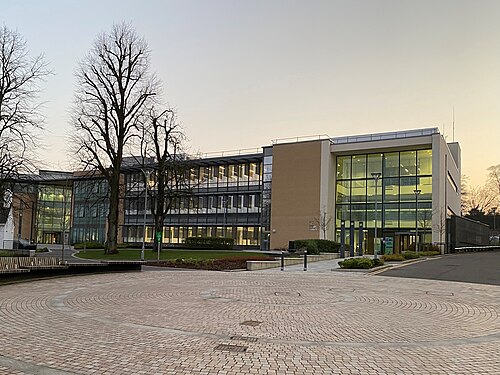
Unlike most areas of the United Kingdom, in the last year of primary school, many children sit entrance examinations for grammar schools. Integrated schools, which attempt to ensure a balance in enrolment between pupils of Protestant, Roman Catholic, and other faiths (or none), are becoming increasingly popular, although Northern Ireland still has a primarily de facto religiously segregated education system. In the primary school sector, 40 schools (8.9% of the total number) are integrated schools and 32 (7.2% of the total number) are Gaelscoileanna (Irish language-medium schools).
As with the island of Ireland as a whole, Northern Ireland has one of the youngest populations in Europe and, among the four UK nations, it has the highest proportion of children aged under 16 years (21% in mid-2019).[198]
In the most recent full academic year (2021–2022), the region's school education system comprised 1,124 schools (of all types) and around 346,000 pupils, including:
- 796 primary schools with 172,000 pupils;
- 192 post-primary schools with 152,000 pupils;
- 126 non-grammar post-primary schools with 86,000 pupils;
- 66 grammar schools with 65,000 pupils;
- 94 nursery schools with 5,800 pupils;
- 39 special schools with 6,600 pupils (specifically for children with special educational needs); and
- 14 independent schools with 700 children.[199]
Enrolments in further and higher education were as follows (in 2019–2020) before disruption to enrolments and classes caused by the COVID-19 pandemic:
- six regional further education colleges with 132,000 students;
- two universities – Queen's University Belfast and Ulster University – with 53,000 students;
- two teacher training colleges – Stranmillis University College and St Mary's University College, Belfast – with 2,200 students;
- the College of Agriculture, Food and Rural Enterprise with 1,700 students on three campuses; and
- the Open University with 4,200 students.[200][201][202]
Statistics on education in Northern Ireland are published by the Department of Education and the Department for the Economy.
The main universities in Northern Ireland are Queen's University Belfast and Ulster University, and the distance learning Open University which has a regional office in Belfast.
Health care
Since 1948 Northern Ireland has a health care system similar to England, Scotland and Wales, though it provides not only health care, but also social care. Health care performance has been decreasing since the mid-2010s and reached crisis levels since 2022.[203]
Economy


Northern Ireland traditionally had an industrial economy, most notably featuring shipbuilding, rope manufacture, and textiles. In 2019, 53% of GVA was generated by services, 22% by the public sector, 15% by production, 8% by construction and 2% by agriculture.[204]
Belfast is the United Kingdom's second largest tech hub outside of London with more than 25% of their jobs being technology related. Many established multinational tech companies such as Fujitsu, SAP, IBM and Microsoft have a presence here. It is regarded an appealing place to live for tech professionals and has a low cost of living compared to other cities.[205][206]
In 2019 Northern Ireland welcomed 5.3m visitors, who spent over £1billion. A total of 167 cruise ships docked at Northern Ireland ports in 2019.[207] Tourism in recent years has been a major growth area with key attractions including the Giants Causeway and the many castles in the region with the historic towns and cities of Belfast, Derry, Armagh and Enniskillen being popular with tourists. Entertainment venues include the SSE Arena, Waterfront Hall, the Grand Opera House and Custom House Square. Tourists use various means of transport around Northern Ireland such as vehicle hire, guided tours, taxi tours, electric bikes, electric cars and public transport.[208]
Belfast currently has an 81-acre shipyard which was purposely developed to be able to take some of the world's largest vessels. It has the largest dry dock for ships in Europe measuring 556m x 93m and has 106m high cranes, it is ideally situated between the Atlantic Ocean and the North Sea.[209] The shipyard can build ships and complete maintenance contracts such as the contracts awarded by P&O and Cunard cruise ships in 2022.[210]
Northern Ireland feeds around 10 million people when their population is only 1.8 million.[211] The predominant activity on Northern Ireland farms in 2022 was cattle and sheep. 79 per cent of farms in Northern Ireland have some cattle, 38 per cent have some sheep. Over three-quarters of farms in Northern Ireland are very small, in 2022 there were 26,089 farms in Northern Ireland with approximately one million hectares of land farmed.[212]
Northern Ireland is in a unique position where it can sell goods to the rest of the United Kingdom and the European Union tariff-free, free from customs declarations, rules of origin certificates and non-tariff barriers on the sale of goods to both regions.[213][214]
Below is a comparison of the goods being sold and purchased between Northern Ireland and the United Kingdom, compared with the goods being exported and imported between Northern Ireland and the Republic of Ireland:
Infrastructure and transportation


Northern Ireland has underdeveloped transport infrastructure, with most infrastructure concentrated around Greater Belfast, Greater Derry, and Craigavon. Northern Ireland is served by three airports—Belfast International near Antrim, George Best Belfast City integrated into the railway network at Sydenham in East Belfast, and City of Derry in County Londonderry. There are upgrade plans to transform the railway network in Northern Ireland including new lines from Derry to Portadown and Belfast to Newry, though it will take the best part of 25 years to deliver.[216] There are major seaports at Larne and Belfast which carry passengers and freight between Great Britain and Northern Ireland.
Passenger railways are operated by NI Railways. With Iarnród Éireann (Irish Rail), NI Railways co-operates in providing the joint Enterprise service between Dublin Connolly and Belfast Grand Central. The whole of Ireland has a mainline railway network with a gauge of 5 ft 3 in (1,600 mm), which is unique in Europe and has resulted in distinct rolling stock designs. The only preserved line of this gauge on the island is the Downpatrick and County Down Railway, which operates heritage steam and diesel locomotives. Main railway lines linking to and from Belfast Grand Central Station and Lanyon Place railway station are:
- The Derry Line and the Portrush Branch.
- The Larne Line
- The Bangor Line
- The Newry/Portadown Line
The Derry line is the busiest single-track railway line in the United Kingdom, carrying 3 million passengers per annum, the Derry-Londonderry Line has also been described by Michael Palin as "one of the most beautiful rail journeys in the world".[217]
Main motorways are:
- M1 connecting Belfast to the south and west, ending in Dungannon
- M2 connecting Belfast to the north. An unconnected section of the M2 also by-passes Ballymena
Additional short motorway spurs include:
- M12 connecting the M1 to Portadown
- M22 connecting the M2 to near Randalstown
- M3 connecting the M1 (via the A12) and M2 in Belfast with the A2 dual carriageway to Bangor
- M5 connecting Belfast to Newtownabbey
The cross-border road connecting the ports of Larne in Northern Ireland and Rosslare Harbour in the Republic of Ireland is being upgraded as part of an EU-funded scheme. European route E01 runs from Larne through the island of Ireland, Spain, and Portugal to Seville.
Culture
Northern Ireland shares both the culture of Ulster and the culture of the United Kingdom.
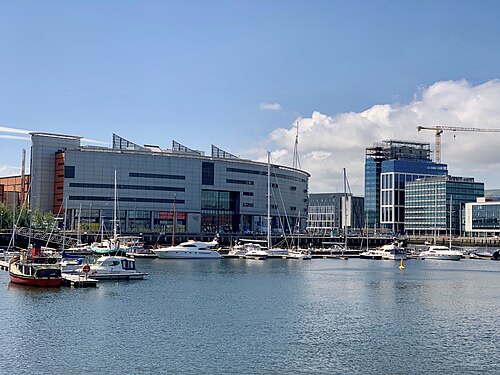
Northern Ireland has witnessed rising numbers of tourists. Attractions include concert venues, cultural festivals, musical and artistic traditions, countryside and geographical sites of interest, public houses, welcoming hospitality, and sports (especially golf and fishing).[218] Since 1987 public houses have been allowed to open on Sundays, despite some opposition.
Parades are a prominent feature of Northern Ireland society,[219] more so than in the rest of Ireland or the United Kingdom. Most are held by Protestant fraternities such as the Orange Order, and Ulster loyalist marching bands. Each summer, during the "marching season", these groups have hundreds of parades, deck streets with British flags, bunting and specially-made arches, and light large towering bonfires in the "Eleventh Night" celebrations.[220] The biggest parades are held on 12 July (The Twelfth). There is often tension when these activities take place near Catholic neighbourhoods, which sometimes leads to violence.[221]
The Ulster Cycle is a large body of prose and verse centring on the traditional heroes of the Ulaid in what is now eastern Ulster. This is one of the four major cycles of Irish mythology. The cycle centres on the reign of Conchobar mac Nessa, who is said to have been the king of Ulster around the 1st century. He ruled from Emain Macha (now Navan Fort near Armagh), and had a fierce rivalry with queen Medb and king Ailill of Connacht and their ally, Fergus mac Róich, former king of Ulster. The foremost hero of the cycle is Conchobar's nephew Cúchulainn, who features in the epic prose/poem An Táin Bó Cúailnge (The Cattle Raid of Cooley, a casus belli between Ulster and Connaught).
Symbols
.svg/500px-Flag_of_Northern_Ireland_(1924%E2%80%931953).svg.png)
Northern Ireland comprises a patchwork of communities whose national loyalties are represented in some areas by flags flown from flagpoles or lamp posts. The Union Jack and the former Northern Ireland flag are flown in many loyalist areas, and the Tricolour, adopted by republicans as the flag of Ireland in 1916,[223] is flown in some republican areas. Even kerbstones in some areas are painted red-white-blue or green-white-orange, depending on whether local people express unionist/loyalist or nationalist/republican sympathies.[224]
The official flag is that of the state having sovereignty over the territory, i.e. the Union Flag.[225] The former Northern Ireland flag, also known as the "Ulster Banner" or "Red Hand Flag", is a banner derived from the coat of arms of the Government of Northern Ireland until 1972. Since 1972, it has had no official status. The Union Flag and the Ulster Banner are used exclusively by unionists. The UK flags policy states that in Northern Ireland, "The Ulster flag and the Cross of St Patrick have no official status and, under the Flags Regulations, are not permitted to be flown from Government Buildings."[226][227]
The Irish Rugby Football Union and the Church of Ireland have used the Saint Patrick's Saltire or "Cross of St Patrick". This red saltire on a white field was used to represent Ireland in the flag of the United Kingdom. It is still used by some British Army regiments. Foreign flags are also found, such as the Palestinian flags in some nationalist areas and Israeli flags in some unionist areas.[228]
The United Kingdom national anthem of "God Save the King" is often played at state events in Northern Ireland. At the Commonwealth Games and some other sporting events, the Northern Ireland team uses the Ulster Banner as its flag—notwithstanding its lack of official status—and the Londonderry Air (usually set to lyrics as Danny Boy), which also has no official status, as its national anthem.[229][230] The Northern Ireland national football team also uses the Ulster Banner as its flag but uses "God Save The King" as its anthem.[231] Major Gaelic Athletic Association matches are opened by the national anthem of the Republic of Ireland, "Amhrán na bhFiann (The Soldier's Song)", which is also used by most other all-Ireland sporting organisations.[232] Since 1995, the Ireland rugby union team has used a specially commissioned song, "Ireland's Call" as the team's anthem. The Irish national anthem is also played at Dublin home matches, being the anthem of the host country.[233]
Northern Irish murals have become well-known features of Northern Ireland, depicting past and present events and documenting peace and cultural diversity. Almost 2,000 murals have been documented in Northern Ireland since the 1970s.
Media and communications

The BBC has a division called BBC Northern Ireland with headquarters in Belfast and operates BBC One Northern Ireland and BBC Two Northern Ireland. As well as broadcasting standard UK-wide programmes, BBC NI produces local content, including a news break-out called BBC Newsline. The ITV franchise in Northern Ireland is UTV. The state-owned Channel 4 and the privately owned Channel 5 also broadcast in Northern Ireland. Access is also available to satellite and cable services.[234] All Northern Ireland viewers must obtain a UK TV licence to watch live television transmissions or use BBC iPlayer.
RTÉ, the national broadcaster of the Republic of Ireland, is available over the air to most parts of Northern Ireland via reception overspill of the Republic's Saorview service,[235] or via satellite and cable. Since the digital TV switchover, RTÉ One, RTÉ2 and the Irish-language channel TG4, are now available over the air on the UK's Freeview system from transmitters within Northern Ireland.[236] Although they are transmitted in standard definition, a Freeview HD box or television is required for reception.
As well as the standard UK-wide radio stations from the BBC, Northern Ireland is home to many local radio stations, such as Cool FM, Q Radio, Downtown Radio and U105. The BBC has two regional radio stations which broadcast in Northern Ireland, BBC Radio Ulster and BBC Radio Foyle.
Besides the UK and Irish national newspapers, there are three main regional newspapers published in Northern Ireland. These are the Belfast Telegraph, The Irish News and The News Letter.[237] According to the Audit Bureau of Circulations (UK) the average daily circulation for these three titles in 2018 was:
Northern Ireland uses the same telecommunications and postal services as the rest of the United Kingdom at standard domestic rates and there are no mobile roaming charges between Great Britain and Northern Ireland.[240][241] People in Northern Ireland who live close to the border with the Republic of Ireland may inadvertently switch over to the Irish mobile networks, causing international roaming fees to be applied.[242] Calls from landlines in Northern Ireland to numbers in the Republic of Ireland are charged at the same rate as those to numbers in Great Britain, while landline numbers in Northern Ireland can similarly be called from the Republic of Ireland at domestic rates, using the 048 prefix.[243]
Sports

.jpg/500px-Rory_McIlroy_watches_drive_flight_(crowd,_landscape_orientation).jpg)
Many sports are organised on an all-Ireland basis, with a single governing body or team for the whole island.[244] The most notable exception is association football (soccer), which has a separate governing body, league and national team for Northern Ireland.[244][245]
The Irish Football Association (IFA) serves as the organising body for men's domestic and national association football in Northern Ireland, it is a member of the International Football Association Board which sets the rules for association football.[246] The NIWFA are responsible for women's domestic and national association football in Northern Ireland.
The NIFL Premiership is a professional men's football league which operates at the highest division of the Northern Ireland Football League, the current format has been organised with 12 clubs. The winners will enter the first qualifying round of the Champions League, if they do not progress they will enter the Europa League or Europa Conference League depending on performance. The two runners-up progress to the Europa Conference League with play-offs for another Europa Conference League position.[247] The NLFL Women's Premiership is a professional women's football league which operates at the highest division in Northern Ireland with 10 clubs. The winner qualifies for a spot in the UEFA Women's Champions League. The men's Northern Ireland national football team qualified for the 1958 FIFA World Cup, 1982 FIFA World Cup and 1986 FIFA World Cup, making it to the quarter-finals in 1958 and 1982 and made it the first knockout round in the European Championships in 2016.
The IRFU is the governing body for the sport of Rugby Union on the island of Ireland (Northern Ireland and the Republic of Ireland).[248] Rugby in Northern Ireland is run within the historic province of Ulster which includes Northern Ireland plus 3 counties from the Republic of Ireland - Donegal, Cavan and Monaghan.
The Ireland national rugby league team has participated in the Emerging Nations Tournament (1995), the Super League World Nines (1996), the World Cup (2000, 2008, 2013, 2017, 2021), European Nations Cup (since 2003) and Victory Cup (2004). The Ireland A rugby league team competes annually in the Amateur Four Nations competition (since 2002) and the St Patrick's Day Challenge (since 1995).
The Ireland cricket team represents both Northern Ireland and the Republic of Ireland. It is a full member of the International Cricket Council, having been granted Test status and full membership by the ICC in June 2017. The side competes in Test cricket, the highest level of competitive cricket in the international arena, and is one of the 12 full-member countries of the ICC. Ireland men's side has played in the Cricket World Cup and T20 World Cup and has won the ICC Intercontinental Cup four times. The women's side has played in the Women's World Cup. One of the men's side's regular international venues is Stormont in Belfast.
The governing body for golf on the island of Ireland is Golf Ireland, it is the successor to the Golfing Union of Ireland, governing body for men's and boy's amateur golf, and the oldest golfing union in the world, which was founded in Belfast in 1891, and the Irish Ladies Golf Union. Northern Ireland's golf courses include the Royal Belfast Golf Club (the earliest, formed in 1881), Royal Portrush Golf Club, which is the only course outside Great Britain to have hosted The Open Championship, and Royal County Down Golf Club (Golf Digest magazine's top-rated course outside the United States).[249][250] Northern Ireland had three major champions in the space of just 14 months from the U.S. Open in 2010 to The Open Championship in 2011. Notable golfers include Fred Daly (winner of The Open in 1947), Ryder Cup players Ronan Rafferty and David Feherty, leading European Tour professionals David Jones, Michael Hoey (a five-time winner on the tour) and Gareth Maybin, as well as three recent major winners Graeme McDowell (winner of the U.S. Open in 2010, the first European to do so since 1970), Rory McIlroy (winner of four majors) and Darren Clarke (winner of The Open in 2011).[251][252] Northern Ireland has also contributed several players to the Great Britain and Ireland Walker Cup team, including Alan Dunbar and Paul Cutler who played on the victorious 2011 team in Scotland. Dunbar also won The Amateur Championship in 2012, at Royal Troon.
See also


Notes
- ^ ONS Standard Area Measurement, area to Mean Sea Level (MSL) Belfast excluding inland water
- ^ ONS Standard Area Measurement, area to Mean Sea Level (MSL) Belfast
- ^ +44 is always followed by 28 when calling landlines. The code is 028 within the UK and 048 from the Republic of Ireland where it is treated as a domestic call.
- ^ Examples of usage of this term include Radio Ulster, Ulster Orchestra and RUC; political parties such as the Ulster Unionist Party'; paramilitary organisations including the Ulster Defence Association and Ulster Volunteer Force; and political campaigns such as "Ulster Says No" and "Save Ulster from Sodomy".
- ^ Many Nationalists use the name County Derry.
- ^ a b c d Part of Belfast metropolitan area
References
- ^ a b c Ainsworth, Paul (6 December 2022). "'Historic milestone' passed as Irish language legislation becomes law". The Irish News. Archived from the original on 12 December 2022. Retrieved 7 December 2022.
- ^ "Identity and Language (Northern Ireland) Act 2022 publications – Parliamentary Bills – UK Parliament". Archived from the original on 29 May 2022. Retrieved 28 May 2022.
- ^ "MS-B01 Ethnic group". Northern Ireland Statistics and Research Agency. 30 November 2023. Retrieved 28 May 2024.
- ^ "MS-B21 Religion - full detail". Northern Ireland Statistics and Research Agency. 31 May 2023. Retrieved 28 May 2024.
- ^ "Standard Area Measurements for Administrative Areas (December 2023) in the UK". Open Geography Portal. Office for National Statistics. 31 May 2024. Retrieved 7 June 2024.
- ^ a b c "Mid-Year Population Estimates, UK, June 2022". Office for National Statistics. 26 March 2024. Retrieved 3 May 2024.
- ^ a b "2021 Census". Northern Ireland Statistics and Research Agency. Retrieved 6 January 2024.
- ^ "Regional gross value added (balanced) per head and income components". Office for National Statistics. 24 April 2024. Retrieved 15 May 2024.
- ^ "Regional gross domestic product: all ITL regions". Office for National Statistics. 24 April 2024. Retrieved 15 May 2024.
- ^ "Gini coefficient by UK nation". Scottish Government. February 2020. Retrieved 3 September 2023.
- ^ "Subnational HDI". Global Data Lab. Archived from the original on 15 August 2023. Retrieved 15 August 2023.
- ^ "The Flags Regulations (Northern Ireland) 2000". Government of the United Kingdom. 8 November 2000. Archived from the original on 2 September 2013. Retrieved 26 October 2019.
- ^ Tuaisceart Éireann. Archived 15 August 2021 at the Wayback Machine. DFA.ie. Retrieved 27 March 2016.
- ^ a b "A Beginners Guide to UK Geography (2023)". Open Geography Portal. Office for National Statistics. 24 August 2023. Retrieved 9 December 2023.
- ^ a b "Standard: ISO 3166 — Codes for the representation of names of countries and their subdivisions". ISO. Retrieved 16 January 2024.
- ^ a b c Dunn, S.; H. Dawson (2000), An Alphabetical Listing of Word, Name and Place in Northern Ireland and the Living Language of Conflict, Lewiston, New York: Edwin Mellen Press,
One specific problem – in both general and particular senses – is to know what to call Northern Ireland itself: in the general sense, it is not a country, or a province, or a state – although some refer to it contemptuously as a statelet: the least controversial word appears to be jurisdiction, but this might change.
- ^ a b c d e Whyte, J.; G. FitzGerald (1991), Interpreting Northern Ireland, Oxford: Oxford University Press,
One problem must be adverted to in writing about Northern Ireland. This is the question of what name to give to the various geographical entities. These names can be controversial, with the choice often revealing one's political preferences. ... some refer to Northern Ireland as a 'province'. That usage can arouse irritation particularly among nationalists, who claim the title 'province' should be properly reserved to the four historic provinces of Ireland-Ulster, Leinster, Munster, and Connacht. If I want to a label to apply to Northern Ireland I shall call it a 'region'. Unionists should find that title as acceptable as 'province': Northern Ireland appears as a region in the regional statistics of the United Kingdom published by the British government.
- ^ a b c d Murphy, D. (1979), A Place Apart, London: Penguin Books,
Next – what noun is appropriate to Northern Ireland? 'Province' won't do since one-third of the province is on the wrong side of the border. 'State' implies more self-determination than Northern Ireland has ever had and 'country' or 'nation' are blatantly absurd. 'Colony' has overtones that would be resented by both communities and 'statelet' sounds too patronizing, though outsiders might consider it more precise than anything else; so one is left with the unsatisfactory word 'region'.
- ^ Government of the United Kingdom of Great Britain and Northern Ireland; Government of Ireland (1998), Northern Ireland Peace Agreement (The Good Friday Agreement), archived from the original on 21 February 2013, retrieved 3 June 2013
- ^ Forde, Eoin (2020). "Constitutional Models of a United Ireland". Academia: 16–17. Archived from the original on 4 April 2023. Retrieved 27 January 2023.
- ^ a b David McKittrick & David McVea. Making Sense of the Troubles. New Amsterdam Books, 2002. p.5
- ^ Richard Jenkin, 1997, Rethinking ethnicity: arguments and explorations, SAGE Publications: London: "In Northern Ireland the objectives of contemporary nationalists are the reunification of Ireland and the removal of British government."; Peter Dorey, 1995, British politics since 1945, Blackwell Publishers: Oxford: "Just as some Nationalists have been prepared to use violence in order to secure Irish reunification, so some Unionists have been prepared to use violence in order to oppose it."; "Strategy Framework Document: Reunification through Planned Integration: Sinn Féin's All Ireland Agenda". Archived from the original on 16 July 2006. Sinn Féin. Retrieved 2 August 2008.; "Policy Summaries: Constitutional Issues". Social Democratic and Labour Party. Archived from the original on 18 June 2009. Retrieved 2 August 2008.
- ^ "Which of these best describes the way you think of yourself?". Northern Ireland Life and Times Survey. 2014. Archived from the original on 24 February 2021. Retrieved 24 March 2016.
- ^ a b c Lynch (2019), pp. 11, 100–101.
- ^ a b Lynch (2019), p. 99.
- ^ Lynch (2019), pp. 171–176.
- ^ David McKittrick & David McVea. Making Sense of the Troubles. New Amsterdam Books, 2002. p.6
- ^ McKittrick & McVea, p.18
- ^ Gallagher, Tom. Contemporary Irish Studies. Manchester University Press, 1983. pp.29–32
- ^ Maney, Gregory. "The Paradox of Reform: The Civil Rights Movement in Northern Ireland", in Nonviolent Conflict and Civil Resistance. Emerald Group Publishing, 2012. p.15
- ^ "CAIN: Sutton Index of Deaths". cain.ulster.ac.uk. Archived from the original on 18 November 2018. Retrieved 25 January 2021.
- ^ a b "CAIN: Northern Ireland Society – Security and Defence". cain.ulster.ac.uk. Archived from the original on 26 February 2019. Retrieved 25 January 2021.
- ^ "The troubles were over, but the killing continued. Some of the heirs to Ireland's violent traditions refused to give up their inheritance." Jack Holland: Hope against History: The Course of Conflict in Northern Ireland. Henry Holt & Company, 1999, p. 221; ISBN 0-8050-6087-1
- ^ McCourt, Malachy (2004). History of Ireland. New York: MJF Books, Fine Communications. p. 324. ISBN 978-1-60671-037-1.
- ^ Department of Enterprise, Trade, and Investment: Full Economic Overview, 15 October 2014 Archived 7 November 2014 at the Wayback Machine
- ^ Larry Elliott (17 September 2014). "UK unemployment rate falls to lowest level since 2008 financial crisis". The Guardian. Archived from the original on 15 August 2021. Retrieved 12 December 2016.
- ^ Stanbridge, Karen (2003). Toleration and State Institutions: British Policy Toward Catholics in Eighteenth-century Ireland and Quebec. Lexington Books. p. 43.; Ruane, Joseph (1996). The Dynamics of Conflict in Northern Ireland: Power, Conflict and Emancipation. Cambridge University Press. p. 51.
- ^ "Bank holidays". Archived from the original on 22 November 2010.; "Lundy's Day: Thousands attend 'peaceful' Londonderry parade". BBC News. December 2012. Archived from the original on 23 September 2018. Retrieved 21 June 2018.
- ^ Thernstrom, Stephan (1980). Harvard encyclopedia of American ethnic groups. Harvard University Press. p. 896. ISBN 978-0-674-37512-3. Archived from the original on 13 April 2021. Retrieved 29 October 2011.
- ^ "Born Fighting: How the Scots-Irish Shaped America". Powells.com. 12 August 2009. Archived from the original on 16 January 2010. Retrieved 30 April 2010.
- ^ James F. Lydon, The Making of Ireland: From Ancient Times to the Present Archived 8 May 2021 at the Wayback Machine, Routledge, 1998, p. 326
- ^ Stewart, A.T.Q., The Ulster Crisis, Resistance to Home Rule, 1912–14, pp. 58–68, Faber and Faber (1967) ISBN 0-571-08066-9
- ^ Annie Ryan, Witnesses: Inside the Easter Rising, Liberties Press, 2005, p. 12
- ^ Collins, M. E., Sovereignty and partition, 1912–1949, pp. 32–33, Edco Publishing (2004) ISBN 1-84536-040-0
- ^ Gwynn, Stephen (2009) [1923]. "The birth of the Irish Free State". The History of Ireland. Macmillan. ISBN 978-1-113-15514-6. Archived from the original on 13 April 2021. Retrieved 19 October 2020.
- ^ O'Day, Alan. Irish Home Rule, 1867–1921. Manchester University Press, 1998. p. 252
- ^ Jackson, Alvin. Home Rule: An Irish History, 1800–2000. pp. 137–138
- ^ Hennessey, Thomas: Dividing Ireland, World War I and Partition, The passing of the Home Rule Bill p. 76, Routledge Press (1998) ISBN 0-415-17420-1
- ^ Jackson, Alvin: p. 164
- ^ Jackson, pp. 227–229
- ^ Morland, Paul. Demographic Engineering: Population Strategies in Ethnic Conflict. Routledge, 2016. pp.96–98
- ^ The Irish Election of 1918 (Report). Northern Ireland Elections. Archived from the original on 17 August 2018. Retrieved 31 August 2022.
- ^ Lynch (2019), pp. 51–52.
- ^ Mitchell, Arthur. Revolutionary Government in Ireland. Gill & MacMillan, 1995. p. 245
- ^ Coleman, Marie (2013). The Irish Revolution, 1916–1923. Routledge. p. 67. ISBN 978-1317801474.; Gibney, John (editor). The Irish War of Independence and Civil War. Pen and Sword History, 2020. pp.xii–xiii
- ^ Pilkington, Colin (2002). Devolution in Britain Today. Manchester University Press. p. 75. ISBN 978-0-7190-6076-2.
- ^ a b O'Day, Alan. Irish Home Rule, 1867–1921. Manchester University Press, 1998. p. 299
- ^ Jackson, Alvin. Home Rule – An Irish History. Oxford University Press, 2004, pp. 368–370
- ^ Lynch (2019), pp. 90–92.
- ^ Lynch (2019), pp. 71–76.
- ^ Farrell, Michael. Arming the Protestants: The Formation of the Ulster Special Constabulary and the Royal Ulster Constabulary. Pluto Press, 1983. p.166
- ^ Lawlor, Pearse. The Outrages: The IRA and the Ulster Special Constabulary in the Border Campaign. Mercier Press, 2011. pp.265–266
- ^ Martin, Ged (1999). "The Origins of Partition". In Anderson, Malcolm; Bort, Eberhard (eds.). The Irish Border: History, Politics, Culture. Liverpool University Press. p. 68. ISBN 978-0853239512. Archived from the original on 29 January 2017. Retrieved 19 October 2015.
- ^ Gibbons, Ivan (2015). The British Labour Party and the Establishment of the Irish Free State, 1918–1924. Palgrave Macmillan. p. 107. ISBN 978-1137444080. Archived from the original on 29 January 2017. Retrieved 19 October 2015.
- ^ "The Stormont Papers – View Volumes". Archived from the original on 15 April 2016. Retrieved 28 January 2008.; "Anglo-Irish Treaty, sections 11, 12". Nationalarchives.ie. 6 December 1921. Archived from the original on 8 November 2017. Retrieved 7 August 2013.
- ^ Knirck, Jason. Imagining Ireland's Independence: The Debates Over the Anglo-Irish Treaty of 1921. Rowman & Littlefield, 2006. p.104
- ^ Lee, Joseph. Ireland, 1912–1985: Politics and Society. Cambridge University Press, 1989. p.145
- ^ a b McKittrick & McVea, pp.17–19
- ^ McKittrick & McVea, p.6
- ^ McKittrick & McVea, p.14
- ^ Boyd, Andrew (1984), Northern Ireland: Who is to Blame?, The Mercier Press Limited, Dublin, p. 57, ISBN 0853427089
- ^ McKittrick & McVea, p. 11
- ^ McGuffin, John (1973), Internment!, Anvil Books Ltd, Tralee, Ireland, p. 23.
- ^ Peter Barberis, John McHugh, Mike Tyldesley (editors). Encyclopedia of British and Irish Political Organizations. A&C Black, 2000. pp.236–237
- ^ Boyd, Andrew (1969), Holy War in Belfast, Anvil Books Ltd, Tralee, pg 176.
- ^ Whyte, John. "How much discrimination was there under the unionist regime, 1921–68?", in Contemporary Irish Studies. Edited by Tom Gallagher and James O'Connell. Manchester University Press, 1983. pp.29–32
- ^ "Electoral Law Act (Northern Ireland) 1968". www.legislation.gov.uk. Archived from the original on 6 August 2023. Retrieved 24 July 2023.
- ^ David, Trimble. "Nobel Lecture". The Nobel Prize. Archived from the original on 15 August 2021. Retrieved 8 August 2020.
- ^ "Anglo-Irish Relations, 1939–41: A Study in Multilateral Diplomacy and Military Restraint" in Twentieth Century British History (Oxford Journals, 2005), ISSN 1477-4674
- ^ Boyd Black, "A Triumph of Voluntarism? Industrial Relations and Strikes in Northern Ireland in World War Two," Labour History Review (2005) 70#1 pp 5–25
- ^ English, Richard. Armed Struggle: The History of the IRA. Pan Macmillan, 2008. pp.72–74
- ^ "Lemass-O'Neill talks focused on `purely practical matters'" Archived 25 September 2021 at the Wayback Machine. The Irish Times, 2 January 1998.
- ^ Malcolm Sutton's book, "Bear in Mind These Dead: An Index of Deaths from the Conflict in Ireland 1969–1993.
- ^ "BBC – History – The Troubles – Violence". BBC. Archived from the original on 5 June 2013. Retrieved 24 December 2019.
- ^ "The Cameron Report – Disturbances in Northern Ireland (1969)". cain.ulst.ac.uk. Archived from the original on 1 June 2018. Retrieved 29 October 2011.
- ^ History of sectarianism in NI Archived 1 February 2014 at the Wayback Machine, gale.cengage.com; accessed 27 May 2015.
- ^ Richard English, "The Interplay of Non-violent and Violent Action in Northern Ireland, 1967–72", in Adam Roberts and Timothy Garton Ash (eds.), Civil Resistance and Power Politics: The Experience of Non-violent Action from Gandhi to the Present, Oxford University Press, 2009; ISBN 978-0-19-955201-6, pp. 75–90. [1] Archived 20 March 2017 at the Wayback Machine
- ^ The Ballast report Archived 25 June 2008 at the Wayback Machine: "...the Police Ombudsman has concluded that this was collusion by certain police officers with identified UVF informants."
- ^ "1973: Northern Ireland votes for union". BBC News. 9 March 1973. Archived from the original on 27 December 2017. Retrieved 20 May 2010.
- ^ "BBC News | NORTHERN IRELAND | Republic drops claim to NI". BBC News. Archived from the original on 6 April 2003. Retrieved 23 July 2018.
- ^ Parliamentary debate Archived 10 October 2010 at the Wayback Machine: "The British government agree that it is for the people of the island of Ireland alone, by agreement between the two parts respectively, to exercise their right of self-determination on the basis of consent, freely and concurrently given, North and South, to bring about a united Ireland, if that is their wish."
- ^ "Securocrat sabotage exposed | An Phoblacht". www.anphoblacht.com. Archived from the original on 30 January 2021. Retrieved 25 January 2021.; McKay, Susan (2009). Bear in Mind These Dead. Faber & Faber. ISBN 978-0571252183. Archived from the original on 13 April 2021. Retrieved 19 October 2020.
- ^ "UDA confirm guns decommissioned" Archived 12 September 2017 at the Wayback Machine BBC news; retrieved 29 January 2014
- ^ "Northern Ireland Act 2006 (c. 17)". Opsi.gov.uk. Archived from the original on 8 December 2009. Retrieved 16 June 2010.
- ^ (BBC)
- ^ HM Government The United Kingdom's exit from and new partnership with the European Union; Cm 9417, February 2017
- ^ "DUP's Paul Givan resigns as Northern Ireland first minister, as Taoiseach brands it 'very damaging move'". Independent.ie. 3 February 2022. Retrieved 30 January 2024.
- ^ "DUP executive endorses deal to restore devolution at Stormont". BBC News. 30 January 2024. Retrieved 30 January 2024.
- ^ "Professor John H. Whyte paper on discrimination in Northern Ireland". Cain.ulst.ac.uk. Archived from the original on 14 May 2011. Retrieved 16 June 2010.
- ^ "CAIN website key issues discrimination summary". Cain.ulst.ac.uk. 5 October 1968. Archived from the original on 29 July 2010. Retrieved 16 June 2010.
- ^ Lord Scarman, "Violence and Civil Disturbances in Northern Ireland in 1969: Report of Tribunal of Inquiry" Belfast: HMSO, Cmd 566 (known as the Scarman Report).
- ^ "Ark survey, 2007. Answer to the question "Generally speaking, do you think of yourself as a unionist, a nationalist or neither?"". Ark.ac.uk. 17 May 2007. Archived from the original on 10 June 2011. Retrieved 16 June 2010.
- ^ Answers to the question "Do you think the long-term policy for Northern Ireland should be for it (one of the following) Archived 3 July 2016 at the Wayback Machine"
- ^ NILT survey, 2015 Archived 3 July 2016 at the Wayback Machine. Answers to the question "Do you think the long-term policy for Northern Ireland should be for it to [one of the following"], ark.ac.uk; accessed 27 May 2015.
- ^ "NI Life and Times Survey – 2009: NIRELND2". Ark.ac.uk. 2009. Archived from the original on 10 October 2017. Retrieved 13 July 2010.
- ^ "NI election results 2022: The assembly poll in maps and charts". BBC News. 8 May 2022. Archived from the original on 8 May 2022. Retrieved 9 May 2022.
- ^ Devenport, Mark (18 November 2005). "NI local government set for shake-up". BBC News. Retrieved 15 November 2008.
- ^ "Stormont: Why were NI leaders given unequal job titles?". BBC News. 15 May 2022. Archived from the original on 2 February 2024. Retrieved 2 February 2024.
- ^ "Northern Ireland Executive: Ministerial Code". 28 September 2015. Archived from the original on 2 February 2024. Retrieved 2 February 2024.
- ^ United Kingdom (2007), "Report of the United Kingdom of Great Britain and Northern Ireland" (PDF), Report by Governments on the Situation in their Countries on the Progress Made in the Standardization of Geographical Names Since the Eight Conferences, New York: United Nations, archived from the original (PDF) on 27 March 2009, retrieved 29 October 2011
- ^ a b c "The Guardian and Observer style guide". The Guardian. 17 March 2021. Retrieved 15 April 2024.
Northern Ireland: Can be referred to as a country or region, but avoid referring to it as a province or as Ulster.
- ^ a b Global Encyclopedia of Political Geography, 2009
- ^ a b Cochrane, F. (2001), Unionist Politics and the Politics of Unionism Since the Anglo-Irish Agreement, Cork: Cork University Press
- ^ a b "countries within a country". The official site of the Prime Minister's Office. 2003. Archived from the original on 9 September 2008.
- ^ David Varney December (2007), Review of Tax Policy in Northern Ireland, London: Her Majesty's Stationery Office
- ^ Peterkin, Tom (31 January 2006). "Example of Daily Telegraph use of "Ulster" in text of an article, having used "Northern Ireland" in the opening paragraph". The Daily Telegraph. UK. Archived from the original on 1 May 2011. Retrieved 16 June 2010.
- ^ a b "Abortion in the North of Ireland: Grainne Teggart campaigns manager for Amnesty International NI joins Sean to discuss the problems around abortion in the North of Ireland". Newstalk. 3 June 2020. Archived from the original on 28 August 2020. Retrieved 3 June 2020.
- ^ a b "Calls for more supports in North's schools after Covid cases". Highland Radio. 10 September 2020. Archived from the original on 13 September 2020. Retrieved 10 September 2020.
- ^ a b Monaghan, John (14 July 2018). "RTÉ head of sport says broadcaster does not stop people in the north watching gaelic games". The Irish News. Archived from the original on 13 September 2020. Retrieved 14 July 2018.
RTÉ is a '32-county broadcaster' and 'do not stop people in the north watching gaelic games', its new head of sport has said... Last weekend RTÉ said it dealt with 'dozens' of complaints from frustrated GAA fans across the north who were left unable to watch a live broadcast of the All-Ireland qualifier between Armagh and Roscommon.
- ^ "'Abortion drone' delivers pills to the North from Ireland". Irish Examiner. 21 June 2016. Archived from the original on 13 September 2020. Retrieved 21 June 2016.
- ^ Ryan, Philip (21 June 2016). "Varadkar considers travel ban but won't stop North/South travel". Irish Independent. Archived from the original on 17 March 2020. Retrieved 21 June 2016.
- ^ Doyle, Stephen (25 May 2021). "GAA confirm 500 allowed into Allianz League matches in six counties". Today FM. Archived from the original on 4 June 2021. Retrieved 4 June 2021.
- ^ Testa, Andrew; Specia, Megan (15 October 2018). "Example of New York Times use of "the North" in text of an article (fifth paragraph), having used "Northern Ireland" earlier". The New York Times. Archived from the original on 15 October 2018. Retrieved 15 October 2018.
- ^ Parliamentary Reports of the Parliament of Northern Ireland, Volume 20 (1937) and The Times, 6 January 1949; C.M. 1(49) – UK Cabinet meeting held on 12 January 1949. C.M. 1(49). – See also Alternative names for Northern Ireland
- ^ "Editorial Policy, Guidance Note". BBC. n.d. Archived from the original on 3 March 2012. Retrieved 20 April 2012. "The term "province" is often used synonymously with Northern Ireland and it is normally appropriate to make secondary references to "the province"."
- ^ "Sinn Féin usage of "Six Counties"". Sinn Féin. 14 August 1969. Archived from the original on 14 June 2010. Retrieved 16 June 2010.
- ^ Brendan O'Brien (1999). The Long War: The IRA and Sinn Féin. Syracuse University Press. p. 167. ISBN 978-0-815-60597-3. Archived from the original on 6 August 2020. Retrieved 22 August 2017.
- ^ "FAQs – The Irish Freedom Committee™". Irish Freedom Committee. 6 May 2007. Archived from the original on 22 December 2005. Retrieved 16 June 2010.
- ^ Andrew Sanders (2011). Inside the IRA: Dissident Republicans and the War for Legitimacy. Edinburgh University Press. p. 114. ISBN 978-0-748-68812-8. Archived from the original on 6 August 2020. Retrieved 22 August 2017.
- ^ Robert William White (2006). Ruairí Ó Brádaigh: The Life and Politics of an Irish Revolutionary. Edinburgh University Press. p. 163. ISBN 978-0-253-34708-4. Archived from the original on 6 August 2020. Retrieved 22 August 2017.
- ^ John Horgan (2011). Terrorism Studies: A Reader. Routledge. p. 174. ISBN 978-0-415-45504-6. Archived from the original on 6 August 2020. Retrieved 22 August 2017.
- ^ How much do you know about 'Norn Iron'? Archived 1 November 2015 at the Wayback Machine, British Embassy Ashgabat
- ^ Taylor, Daniel; Murray, Ewan; Hytner, David; Burnton, Simon; Glendenning, Barry (9 September 2013). "World Cup qualifiers: 10 talking points from the weekend's action". The Guardian. UK. Archived from the original on 10 September 2013. Retrieved 9 September 2013.
- ^ "NI temperature record broken for third time in a week". BBC News. British Broadcasting Corporation. 22 July 2021. Archived from the original on 22 July 2021. Retrieved 22 July 2021.
- ^ "MetO2010-12: December 2010". Met Office. January 2011. Archived from the original on 5 April 2011.
- ^ Native Species Archived 9 April 2022 at the Wayback Machine. Tree Council of Ireland.
- ^ "Woodland Area, Planting and Publicly Funded Restocking – 2018 Edition" Archived 30 January 2019 at the Wayback Machine. Forestry Commission.
- ^ Welcome to the Woodland Trust in Northern Ireland Archived 30 January 2019 at the Wayback Machine. Woodland Trust, December 2017.; "Trust's fears for Northern Ireland tree cover" Archived 1 February 2019 at the Wayback Machine. BBC News, 2 August 2011.
- ^ "Common Lizard (Zootoca vivipara)". Department of Agriculture, Environment and Rural Affairs. 21 August 2015. Archived from the original on 23 July 2023. Retrieved 23 July 2023.
- ^ Morton, O. 1994. Marine Algae of Northern Ireland. Ulster Museum. ISBN 0-900761-28-8
- ^ "New 'super councils' begin work in Northern Ireland". The Irish Times. 1 April 2015. Archived from the original on 26 June 2015. Retrieved 27 May 2015.
- ^ Price, Ryan. "Five places in Northern Ireland included in Best Places to Live in Britain list – The Irish Post". Archived from the original on 13 April 2021. Retrieved 5 August 2018.
- ^ "Settlement 2015". NISRA. Archived from the original on 20 August 2023. Retrieved 17 August 2023.
- ^ "Statistical Classification and Delineation of Settlements" (PDF). Northern Ireland Statistics and Research Agency. February 2005. Archived from the original (PDF) on 1 April 2014.
- ^ "Main statistics for Northern Ireland" (PDF). NISRA. Archived (PDF) from the original on 22 September 2022. Retrieved 22 September 2022.
- ^ a b c "Census Key Stats bulletin" (PDF). NISRA. 2012. Archived (PDF) from the original on 3 February 2017. Retrieved 11 December 2012.
- ^ a b "Main statistics for Northern Ireland" (PDF). NISRA. Archived (PDF) from the original on 22 September 2022. Retrieved 22 September 2022.
- ^ "Main statistics for Northern Ireland" (PDF). NISRA. Archived (PDF) from the original on 22 September 2022. Retrieved 22 September 2022.
- ^ "NI migrant population triples in decade, says study" Archived 20 October 2018 at the Wayback Machine. BBC News. 26 June 2014.
- ^ "Urban Status". NISRA. Retrieved 29 July 2024.
- ^ "National Identity (British)". NISRA. Archived from the original on 20 August 2023. Retrieved 18 August 2023.
- ^ "National Identity (Irish)". NISRA. Archived from the original on 20 August 2023. Retrieved 18 August 2023.
- ^ "National Identity (Northern Irish)". NISRA. Archived from the original on 20 August 2023. Retrieved 18 August 2023.
- ^ a b "Main statistics for Northern Ireland – Statistical bulletin – National identity" (PDF). Archived (PDF) from the original on 16 March 2023. Retrieved 22 September 2022.
- ^ a b c "Northern Ireland Census 2011 Key Statistics Summary Report" (PDF). NISRA. Archived (PDF) from the original on 22 September 2022. Retrieved 22 September 2022.
- ^ "National identity (person based) - basic detail (classification 1)". NISRA. Archived from the original on 18 August 2023. Retrieved 18 August 2023.
- ^ "National Identity (Irish)". NISRA. Archived from the original on 18 August 2023. Retrieved 18 August 2023.
- ^ "National Identity (British)". NISRA. Archived from the original on 18 August 2023. Retrieved 18 August 2023.
- ^ "National Identity (Northern Irish)". NISRA. Archived from the original on 18 August 2023. Retrieved 18 August 2023.
- ^ a b c d e "Main statistics for Northern Ireland Statistical bulletin – Religion" (PDF). NISRA. Archived (PDF) from the original on 26 March 2023. Retrieved 22 September 2022.
- ^ a b Census 2011
- ^ "Census 2021: More from Catholic background in NI than Protestant". BBC News. 22 September 2022. Archived from the original on 22 September 2022. Retrieved 22 September 2022.
- ^ "Key Statistics Table" (PDF). NISRA. Archived (PDF) from the original on 22 September 2022. Retrieved 22 September 2022.
- ^ "Religion or religion brought up in". NISRA. Archived from the original on 20 August 2023. Retrieved 17 August 2023.
- ^ Breen, R., Devine, P. and Dowds, L. (editors), 1996: ISBN 0-86281-593-2. Chapter 2 'Who Wants a United Ireland? Constitutional Preferences among Catholics and Protestants' by Richard Breen (1996), in, Social Attitudes in Northern Ireland: The Fifth Report Archived 26 December 2018 at the Wayback Machine Retrieved 24 August 2006; Summary: In 1989—1994, 79% Protestants replied "British" or "Ulster", 60% of Catholics replied "Irish."
- ^ Northern Ireland Life and Times Survey, 1999; Module:Community Relations, Variable:NINATID Archived 10 May 2011 at the Wayback Machine Summary:72% of Protestants replied "British". 68% of Catholics replied "Irish".
- ^ Northern Ireland Life and Times Survey. Module:Community Relations. Variable:BRITISH. Archived 10 June 2011 at the Wayback Machine Summary: 78% of Protestants replied "Strongly British."
- ^ Northern Ireland Life and Times Survey, 1999; Module:Community Relations, Variable:IRISH Archived 10 June 2011 at the Wayback Machine Summary: 77% of Catholics replied "Strongly Irish."
- ^ Institute of Governance, 2006 "National identities in the UK: do they matter?" Briefing No. 16, January 2006; Retrieved from "IoG_Briefing" (PDF). Archived from the original (PDF) on 22 August 2006. (211 KB) on 24 August 2006. Extract: "Three-quarters of Northern Ireland's Protestants regard themselves as British, but only 12 percent of Northern Ireland's Catholics do so. Conversely, a majority of Catholics (65%) regard themselves as Irish, whilst very few Protestants (5%) do likewise. Very few Catholics (1%) compared to Protestants (19%) claim an Ulster identity but a Northern Irish identity is shared in broadly equal measure across religious traditions."Details from attitude surveys are in Demographics and politics of Northern Ireland.
- ^ "L219252024 – Public Attitudes to Devolution and National Identity in Northern Ireland". University of York Research Project 2002–2003. Archived from the original on 27 September 2007.
- ^ Northern Ireland: Constitutional Proposals and the Problem of Identity, by J. R. Archer The Review of Politics, 1978
- ^ Joseph Ruane and Jennifer Todd. "Chapter 7 > A changed Irish nationalism? The significance of the Belfast Agreement of 1998" (PDF). Archived from the original (PDF) on 10 May 2007.
- ^ "Northern Ireland Life and Times Survey, 2008; Module:Community Relations, Variable:IRISH". Ark.ac.uk. 17 May 2007. Archived from the original on 10 June 2011. Retrieved 16 June 2010.
- ^ "Northern Ireland Life and Times Survey, 1998; Module:Community Relations, Variable:IRISH". Ark.ac.uk. 9 May 2003. Archived from the original on 10 June 2011. Retrieved 16 June 2010.
- ^ "Department of the Taoiseach". Taoiseach.gov.ie. Archived from the original on 1 July 2010. Retrieved 16 June 2010.
- ^ "Home Office Immigration & Nationality Charges 2018" (PDF). Home Office. 6 April 2018. Archived (PDF) from the original on 30 May 2018. Retrieved 12 September 2018.
- ^ "Main statistics for Northern Ireland Statistical bulletin – Passports held" (PDF). NISRA. Archived (PDF) from the original on 22 September 2022. Retrieved 22 September 2022.
- ^ a b c "Main statistics for Northern Ireland Statistical bulletin – Language" (PDF). NISRA. Archived (PDF) from the original on 22 September 2022. Retrieved 22 September 2022.
- ^ "The Agreement" (PDF). Archived from the original (PDF) on 3 October 2011. (204 KB)
- ^ "Council of Europe Charter monitoring report, 2010" (PDF). Archived (PDF) from the original on 10 October 2017. Retrieved 7 August 2013.
- ^ "Census 2021 Main statistics for Northern Ireland Phase 2 December 2022" (PDF). NISRA. Archived (PDF) from the original on 2 January 2023. Retrieved 5 January 2023.
- ^ Markku Filppula (2005). Dialects across borders. John Benjamins Publishing Co, Amsterdam. p. 90. ISBN 978-9027247872. Archived from the original on 13 April 2021. Retrieved 2 January 2011.
- ^ Donnan, Hastings; Wilson, Thomas M. (2020). The Anthropology of Ireland. Routledge. ISBN 978-1-000-18999-5. Archived from the original on 4 April 2023. Retrieved 29 November 2022.
- ^ Ryan, James G. (1997). Irish Records: Sources for Family and Local History. Flyleaf Press. p. 40. ISBN 978-0-916489-76-2.
- ^ "Presbyterians and the Irish Language Roger Blaney (Ulster Historical Foundation/The Ultach Trust, £6.50) ISBN 0-901905-75-5". History Ireland. 28 January 2013. Archived from the original on 12 June 2020. Retrieved 12 June 2020.
- ^ a b Northern Ireland LIFE & TIMES Survey: What is the main language spoken in your own home? Archived 10 June 2011 at the Wayback Machine
- ^ "Frequently-Asked Questions about the Irish Language". Ultach. Archived from the original on 16 April 2009. Retrieved 7 February 2012.
- ^ The Local Government (Miscellaneous Provisions) (Northern Ireland) Order 1995 (No. 759 (N.I. 5))[2] Archived 9 April 2020 at the Wayback Machine
- ^ "UK to make Irish an official language in Northern Ireland". POLITICO. 25 May 2022. Archived from the original on 27 May 2022. Retrieved 28 May 2022.
- ^ [3]Archived 29 May 2022 at the Wayback Machine Identity and Language (Northern Ireland) Bill [HL]. Government Bill, House of Lords Session 2022–23, UK Parliament (parliament.uk). Retrieved 28 May 2022.
- ^ Ainsworth, Paul (6 December 2022). "'Historic milestone' passed as Irish language legislation becomes law". The Irish News. Archived from the original on 12 December 2022. Retrieved 3 August 2023.
- ^ Keenan, Dan (9 January 2014). "Loyalists line up to learn cúpla focail at language classes in heart of east Belfast". Irish Times. Archived from the original on 2 February 2017. Retrieved 27 January 2016.
- ^ Aodan Mac Poilin, 1999, "Language, Identity and Politics in Northern Ireland" Archived 21 August 2020 at the Wayback Machine in Ulster Folk Life Vol. 45, 1999
- ^ "St Andrews Agreement" (PDF). Archived from the original (PDF) on 4 November 2006. (131 KB)
- ^ Janzen, Terry (2005). Topics in Signed Language Interpreting: Theory And Practice. Amsterdam: John Benjamins Publishing Company. pp. 256 & 265. ISBN 978-90-272-1669-4. OCLC 60742155. Archived from the original on 13 April 2021. Retrieved 22 June 2008.
- ^ "Sign Language". Department of Culture, Arts and Leisure. Archived from the original on 9 January 2011. Retrieved 22 June 2008.
- ^ "Paul Murphy announces recognition for sign language". Northern Ireland Office. 30 March 2004. Archived from the original on 20 May 2011. Retrieved 22 June 2008.
I am pleased to announce formal recognition for both British and Irish Sign Languages in Northern Ireland.
- ^ "Population estimates for the UK, England and Wales, Scotland and Northern Ireland: mid-2019". ons.gov.uk. Office for National Statistics. Retrieved 3 April 2022.
- ^ "Annual enrolments at schools and in funded pre-school education in Northern Ireland 2021–22" (PDF). education-ni.gov.uk. Department of Education. Retrieved 3 April 2022.
- ^ "Further Education Sector Activity in Northern Ireland: 2016/17 to 2020/21" (PDF). economy-ni.gov.uk. Department for the Economy. Retrieved 3 April 2022.
- ^ "Enrolments at UK Higher Education Institutions: Northern Ireland Analysis 2019/20" (PDF). economy-ni.gov.uk. Department for the Economy. Retrieved 3 April 2022.
- ^ "Why CAFRE?". CAFRE. Retrieved 3 April 2022.
- ^ Baraniuk, Chris (31 January 2024). "Northern Ireland's doctors are relieved as Stormont is set to return—but will funds go far enough?". BMJ. 384: q270. doi:10.1136/bmj.q270. ISSN 1756-1833. PMID 38296346. Retrieved 11 February 2024.
- ^ "Economic Activity in Northern Ireland Q1 2021" (PDF). Archived from the original (PDF) on 9 August 2023. Retrieved 9 August 2023.
- ^ "A guide to the Belfast tech hub". 27 October 2022. Archived from the original on 18 December 2022. Retrieved 13 August 2023.
- ^ "More than 100 investors confirmed for summit in Northern Ireland". Archived from the original on 13 August 2023. Retrieved 13 August 2023.
- ^ "Tourism Performance Statistics". Archived from the original on 7 August 2023. Retrieved 7 August 2023.
- ^ "Getting around Northern Ireland". 25 June 2020. Archived from the original on 7 August 2023. Retrieved 7 August 2023.
- ^ "Harland & Wolff Facilities". Archived from the original on 4 August 2023. Retrieved 4 August 2023.
- ^ "Harland and Wolff secures contract to carry out work on cruise liners Queen Victoria and Aurora". Belfasttelegraph.co.uk. 12 April 2022. Archived from the original on 4 August 2023. Retrieved 4 August 2023.
- ^ "Minister Poots serves up 100 years of food history". 15 October 2021. Archived from the original on 3 August 2023. Retrieved 3 August 2023.
- ^ "Agricultural Census in Northern Ireland 2022" (PDF). Archived from the original (PDF) on 3 August 2023. Retrieved 3 August 2023.
- ^ "Northern Ireland: Market Access to Great Britain and the European Union". 15 February 2021. Archived from the original on 10 August 2023. Retrieved 10 August 2023.
- ^ "Northern Ireland puts itself on the global map". 16 September 2023. Archived from the original on 17 September 2023.
- ^ a b "Overview of Northern Ireland Trade" (PDF). Archived from the original (PDF) on 25 July 2023. Retrieved 25 July 2023.
- ^ "All-Island Rail Review: Londonderry to Portadown line recommended". BBC News. 25 July 2023. Archived from the original on 26 July 2023. Retrieved 26 July 2023.
- ^ "Michael Palin's favourite railway line - between Coleraine and Derry in Northern Ireland". Belfasttelegraph.co.uk. 18 November 2016. Archived from the original on 26 July 2023. Retrieved 26 July 2023.
- ^ "Things to Do in Northern Ireland". Archived from the original on 26 July 2023. Retrieved 26 July 2023.
- ^ Parades and Marches – A Summary of the Issue Archived 24 August 2015 at the Wayback Machine. Conflict Archive on the Internet (CAIN).
- ^ Bryan, Dominic. Orange Parades: The Politics of Ritual, Tradition and Control. Pluto Press, 2000. p. 130
- ^ "NI talks issues explained: flags, parades, the past and welfare reform" Archived 20 April 2021 at the Wayback Machine. BBC News, 12 December 2014.
- ^ Northern Ireland Assembly Information Office. "Northern Ireland Assembly logo". Niassembly.gov.uk. Archived from the original on 13 October 2010. Retrieved 13 November 2010.
- ^ Alan O'Day, ed. (1987). Reactions To Irish Nationalism, 1865–1914. London: Hambledon Press.
With the Rising of 1916 a break took place in national symbolism which was most visibly manifested in the national flag and the anthem which the young Irish nation accepted. The demise of the Parliamentary Party stands in direct parallel to the just as rapidly diminishing power of its symbols. The green flag and 'God save Ireland' began to be discredited as symbols of constitutional nationalism and, instead, the symbols of revolutionary nationalism gained popularity as the majority of the Irish people identified themselves with the political aims of the Easter revolutionaries. The use of symbols made apparent that the occurrences of 1916 initiated a new epoch in Irish history much in the same as the Union of 1801 and the Famine of 1845–8 did. Both the national flag and the national anthem of present-day Ireland drive origins directly from the Rising. At first, it still appeared as if the revolutionaries would take over the old symbols because on the roof of their headquarters, the Dublin General Post Office, a green flag with the harp was hoisted next to the republican tricolour although with the inscription 'Irish Republic'. Even 'Got save Ireland' was sung by the revolutionaries during Easter week. But after the failure of the Rising and the subsequent executions of the leading revolutionaries the tricolour and 'The Soldier's Song' became more and more popular as symbols of the rebellion.
- ^ Vandals curbed by plastic edging Archived 28 August 2017 at the Wayback Machine BBC News, 25 November 2008.
- ^ "Statutory Rule 2000 No. 347". Opsi.gov.uk. Archived from the original on 9 December 2009. Retrieved 7 August 2013.
- ^ The Union Flag and Flags of the United Kingdom House of Commons Library, 3 June 2008.
- ^ Northern Irish flags from the World Flag Database Archived 13 September 2017 at the Wayback Machine.
- ^ Dowd, Vincent (17 June 2010). "Israel and the Palestinians: The Irish connection". BBC News. Archived from the original on 3 September 2014. Retrieved 25 July 2014.
- ^ Sport, Nationalism and Globalization: European and North American Perspectives by Alan Bairner (ISBN 978-0791449127), p. 38
- ^ Sport, Sectarianism and Society in a Divided Ireland by John Sugden and Alan Bairner (ISBN 978-0718500184), p. 60
- ^ "FIFA.com: Northern Ireland, Latest News". Archived from the original on 10 December 2005.
- ^ John Sugden & Scott Harvie (1995). "Sport and Community Relations in Northern Ireland 3.2 Flags and Anthems". Archived from the original on 2 May 2014. Retrieved 26 May 2008.
- ^ Peter Berlin (29 December 2004). "Long Unsung Teams Live up to Anthems: Rugby Union". International Herald Tribune. Archived from the original on 4 November 2012. Retrieved 26 May 2008.
the band played Nkosi Sikelel' iAfrika and Die Stem for the Springboks and "Soldier's Song", the national anthem that is otherwise known as Amhran na bhFiann, and "Ireland's Call", the team's official rugby anthem.
- ^ "Freeview on Divis TV transmitter | ukfree.tv – independent free digital TV advice". ukfree.tv. Archived from the original on 14 September 2014. Retrieved 23 August 2011.
- ^ "Over forty years of Irish TV History". Irish TV. Archived from the original on 27 September 2011. Retrieved 23 August 2011.
- ^ "RTÉ and TG4 on Freeview HD in Northern Ireland". Advanced Television. 21 December 2010. Archived from the original on 27 September 2011. Retrieved 23 August 2011.
- ^ "Northern Ireland Newspapers". World-newspapers.com. Archived from the original on 20 May 2018. Retrieved 23 August 2011.
- ^ "abc Northern Ireland". Archived from the original on 25 October 2018. Retrieved 25 October 2018.
- ^ "abc Northern Ireland". Archived from the original on 25 October 2018. Retrieved 30 March 2018.
- ^ "Royal Mail Customer Service – Offering help and advice". .royalmail.com. Archived from the original on 2 May 2014. Retrieved 23 August 2011.
- ^ "BT in Northern Ireland | At home". Btnorthernireland.com. Archived from the original on 1 August 2015. Retrieved 23 August 2011.
- ^ Southgate Amateur Radio Club. "Comreg and Ofcom publish first report on cross-border telecoms issues". Southgatearc.org. Archived from the original on 15 September 2012. Retrieved 23 August 2011.
- ^ "Calling Northern Ireland – Use the 048 code to call fixed-line numbers". Commission for Communications Regulation. 1 March 2007. Archived from the original on 8 November 2015. Retrieved 18 October 2015.
- ^ a b How do other sports in the island cope with the situation? Archived 10 June 2015 at the Wayback Machine The Herald, 3 April 2008
- ^ "Sporting Activities and Governing Bodies Recognised by the Sports Councils" (PDF). Archived from the original (PDF) on 22 July 2023. Retrieved 22 July 2023.
- ^ "The International Football Association Board". Archived from the original on 8 September 2023.
- ^ "What does new UEFA competition mean for the Irish League?". Belfasttelegraph.co.uk. June 2021. Archived from the original on 8 September 2023.
- ^ "IRFU - About". Archived from the original on 15 August 2023. Retrieved 15 August 2023.
- ^ Redmond, John (1997). The Book of Irish Golf. Pelican Publishing Company. p. 10.
- ^ "The Best of the Rest: A World of Great Golf". Golf Digest. 2009. p. 2. Archived from the original on 4 June 2011. Retrieved 21 June 2010.
- ^ Gagne, Matt (20 June 2010). "Northern Ireland's Graeme McDowell wins U.S. Open at Pebble Beach, ends European losing streak". Daily News. New York. Archived from the original on 24 August 2010. Retrieved 29 June 2010.
- ^ Lawrence Donegan at Congressional (20 June 2011). "US Open 2011: Remarkable Rory McIlroy wins by eight shots | Sport". The Guardian. UK. Archived from the original on 28 May 2013. Retrieved 23 August 2011.
Sources
- Lynch, Robert (2019). The Partition of Ireland: 1918–1925. Cambridge University Press. ISBN 978-1107007734.
Further reading
- Jonathan Bardon, A History of Ulster (Blackstaff Press, Belfast, 1992), ISBN 0-85640-476-4
- Brian E. Barton, The Government of Northern Ireland, 1920–1923 (Athol Books, 1980)
- Paul Bew, Peter Gibbon and Henry Patterson The State in Northern Ireland, 1921–72: Political Forces and Social Classes, Manchester (Manchester University Press, 1979)
- Tony Geraghty (2000). The Irish War. Johns Hopkins University Press. ISBN 978-0-8018-7117-7.
- Robert Kee, The Green Flag: A History of Irish Nationalism (Penguin, 1972–2000), ISBN 0-14-029165-2
- Osborne Morton, Marine Algae of Northern Ireland (Ulster Museum, Belfast, 1994), ISBN 0-900761-28-8
- Henry Patterson, Ireland Since 1939: The Persistence of Conflict (Penguin, 2006), ISBN 978-1-84488-104-8
- P. Hackney (ed.) Stewart's and Corry's Flora of the North-east of Ireland 3rd edn. (Institute of Irish Studies, Queen's University of Belfast, 1992), ISBN 0-85389-446-9(HB)
External links
Northern Ireland at Wikipedia's sister projects
 Definitions from Wiktionary
 Media from Commons
 News from Wikinews
 Quotations from Wikiquote
 Texts from Wikisource
 Textbooks from Wikibooks
 Resources from Wikiversity
 Travel information from Wikivoyage
- Northern Ireland Executive (Northern Ireland devolved government)
- Discover Northern Ireland (Northern Ireland Tourist Board)
 Geographic data related to Northern Ireland at OpenStreetMap
54°37′N 6°37′W / 54.61°N 6.62°W / 54.61; -6.62