
Loading article…


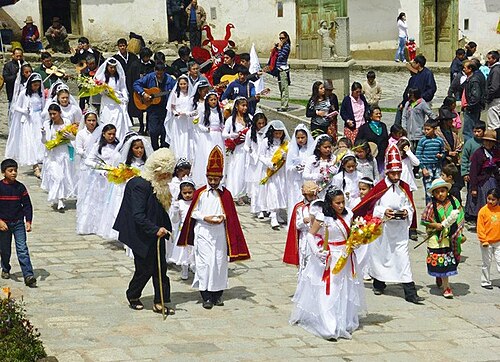



世界各地におけるクリスマスの祝い方は、国や宗教によって異なります。クリスマス当日、そして場合によってはその前日と翌日も、世界中の多くの国や文化で祝われています。キリスト教が少数派の地域(主にアフリカやアジア)でも同様です。キリスト教圏以外の地域の中には、かつての植民地支配時代に祝祭が導入されたところもあります(例:香港)。また、キリスト教少数派や外国文化の影響で、クリスマスを祝うようになった地域もあります。
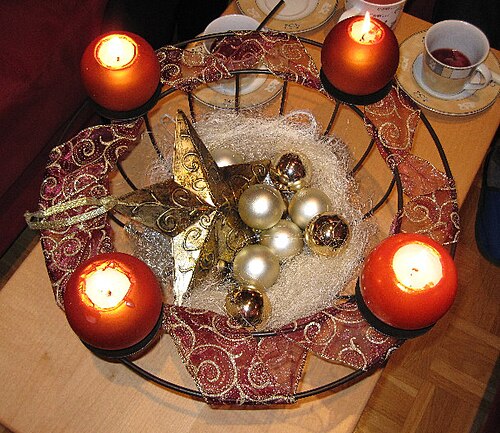
多くの国におけるクリスマスの伝統には、クリスマスツリーの設置と飾り付け、アドベントリース、クリスマスストッキング、キャンディケーンの吊り下げ、クッキーとミルクの用意、イエス・キリストの誕生を描いた降誕場面の作成、そして贈り物の贈呈などが含まれます。[ 1 ]クリスマスキャロルを歌ったり、幼子イエス、聖ニコラウス、サンタクロース、ファーザークリスマス、クリストキント、グランドファーザーフロストなどの人物についての物語を語ったりすることもあります。クリスマスカードの送受信、断食の遵守、クリスマスイブの真夜中のミサや晩課などの特別な宗教的儀式、ユールログの燃焼、プレゼントの贈与と受け取りも一般的な習慣です。クリスマスはイースターと並んでキリスト教暦で最も重要な時期の一つであり、待降節、無原罪の御宿りの祝日、聖ニコラウスの日、聖ステファノの日、新年、公現祭など、この時期の他の祝日と密接に関連していることが多い。[ 2 ]

多くの国ではクリスマスを公式の祝日として認めているが、象徴的には認めているものの、公式の法的祝日とはしていない国もある。クリスマスが正式な祝日ではない国には、アフガニスタン、アルジェリア、アゼルバイジャン、バーレーン、ブータン、カンボジア、中国(香港とマカオを除く)、コモロ、イラン、イスラエル、日本、クウェート、ラオス、リビア、モルディブ、モーリタニア、モンゴル、モロッコ、北朝鮮、オマーン、カタール、サハラウィ共和国、サウジアラビア、ソマリア、台湾、タジキスタン、タイ、チュニジア、トルコ、トルクメニスタン、アラブ首長国連邦、ウズベキスタン、ベトナム、イエメンなどがある。クリスマスが祝日ではないものの、キリスト教徒の数が少ないにもかかわらず人気のある日本のように、贈り物、飾り付け、クリスマスツリーなど、クリスマスの世俗的な側面を多く取り入れている国もある。
Christmas celebrations around the world can vary markedly in form, reflecting differing cultural and national traditions. Among countries with a strong Christian tradition, a variety of Christmas celebrations have developed, incorporating regional and local cultures.
Christmas is celebrated by Coptic Christians in Egypt. It is largely celebrated on 7 January, which is a public holiday in Egypt.[3]
Christmas Day, known as Ledet in Eritrea and Gena in Ethiopia, is celebrated on 7 January (29 Tahsas of the Ethiopian calendar). Many Christians in Eritrea and Ethiopia observe a 40-day fast before the holiday, culminating in dawn church services on Christmas morning. The day features vibrant musical celebrations with priests in ceremonial robes performing rituals, including dancing and drumming. A traditional hockey-like game called gena is played in the afternoon, with the community leader awarding a prize to the winner. Most Ethiopians wear a traditional shamma, a thin, white cotton wrap with brightly colored stripes at the ends. The celebration is followed by the three-day festival of Timkat, starting on 19 January, which commemorates the baptism of Jesus Christ.[4][5]
Christmas Day is a public holiday in Nigeria. Urban Nigerians visit their ancestral villages to be with family and to bless the less fortunate. Nigerians visit markets to buy and transport live chickens, goats, and cows for the Christmas meals.[6]
On Christmas Eve, traditional meals vary regionally. Nigerians tend to prepare various meats in large quantities.[6] In the south, a dish called jollof rice is served with stews of various meats, along with boiled beans and fried plantains; in the north, rice and stew, as well as tuwon shinkafa, a rice pudding served with various meat stews, are preferred. In the north, several local desserts are also made.[6] An alternative in both regions is a pepper soup with fish, goat, or beef, often served with fufu (pounded yams). Alcoholic drinks such as traditional palm wine or various local and imported beers and wines are consumed; children and women may be served soft drinks instead.[6]
Gift giving in Nigeria often involves money and the flow of gifts from the more fortunate to the less fortunate.[7] Nigerians assist relatives, often financially, during Christmastide.[7] Cash and elaborately wrapped gifts may be given out at parties; sometimes cash is scattered in the air to be grabbed by others or stuck onto the sweaty foreheads of those dancing.[7]
Christmas is a popular holiday in the Muslim-majority country of Senegal.[8][9]
Christmas in South Africa is a public holiday celebrated on 25 December.[10] Many European traditions are maintained, despite the distance from Europe.[11]
Christmas trees are set up in homes, and children are given presents in their stockings.[12] The Christmas meal can include mince pies, turkey, gammon, beef tongue, turducken, corned beef, green salad, roast beef, or a barbecue outdoors. The meal is finished with Christmas pudding, ice cream, or trifle. Christmas crackers are used to make noise.[12]
In Ghana, Christmas, known locally as Bronya,[13] is celebrated on 25 December, with both 25 and 26 December recognized as public holidays.[14]
The Communist Regime led by Fidel Castro abolished the paid Christmas holiday in 1969, citing the need for workers to continue the sugar harvest. In 1998, the regime declared 25 December a day of rest, as requested by Pope John Paul II as a condition for his visit to the country.[15]
On Christmas in Guatemala, people dress up in an ornamental hat, called a puritina, and dance in a line. As with much of the country's culture, the celebration includes Spanish and Mayan elements.[16]

クリスマスは、カナダで全国的に祝われる 5 つの法定祝日の 1 つであり、ボクシング デーは連邦祝日であり、一部の州でも祝われます。クリスマス イブはどの管轄区域でも法定祝日ではありませんが、多くの企業や政府機関は、12 月 24 日に早めに閉店するか、終日閉店することを個別に選択しています。[ 17 ]英語が主要言語であるカナダの州では、クリスマスの伝統は、英国の影響が残っているものと、他のヨーロッパ諸国からの移民によってもたらされた新しい伝統がいくつかあるものの、米国とほぼ同じです。ミンスパイ、プラム プディング、クリスマス ケーキは、ロースト ターキー、スタッフィング、ジャガイモ、冬野菜の伝統的な食事の後に、クリスマス ディナー デザートとして伝統的に提供されます。クリスマス テーブル クラッカーは珍しくなく、ニューファンドランド、プリンス エドワード アイランド、ノバスコシアの一部地域では、クリスマスの伝統にママーが含まれます。[ 18 ] [ 19 ]
クリスマスの北米の影響は、クリスマスイブにサンタクロースがプレゼントを入れてくれる靴下を吊るす習慣に顕著に表れています。カナダの子供たちは、サンタクロースの家はカナダの北極にあると信じており[ 20 ]、カナダ郵便を通じて毎年何千通もの手紙をサンタクロースに送り、郵便番号H0H 0H0を使用しています[ 21 ]。
カナダは冬は寒くて暗い国なので、11月と12月には公共の場所や商業ビル、住宅にイルミネーションがよく飾られます。多くの地域では、トロントのキャバルケード・オブ・ライツ・フェスティバル[ 22 ]、モントリオールのクリスマス花火大会、バンクーバーのスタンレーパークのブライトナイツ[ 23 ]など、イルミネーションイベントを含む祝祭が行われます。カナダ全土のクリスマス・ライツ(後にカナダ全土のウィンター・ライツに改名)という全国的なプログラムでは、首都オタワと13の州都および準州都がライトアップされます[ 24 ] 。
ケベック州のクリスマスの伝統には、レヴェイヨン、ペール ノエル(「父なるクリスマス」)、ブッシュ ド ノエル(ユール ログ) などが含まれます。[ 25 ]

Since the 1990s, Mexican society has embraced a new concept linking several celebrations around the Christmas season into what is known as the Guadalupe-Reyes Marathon. At midnight on Christmas, after Midnight Mass, many families place the figure of baby Jesus in their nacimientos (Nativity scenes) at home, as a symbolic representation of Christmas as a whole. In the central and southern parts of Mexico, children receive gifts on Christmas Eve. On 6 January, they celebrate the Feast of the Epiphany, when, according to tradition, the Three Wise Men brought gifts to Bethlehem for Jesus Christ. Santa Claus (or Santa Clos, as he is known in Mexico[26]) is the one who brings the children their gifts. Still, traditionally on that night, the Three Wise Men will fill the children's shoes with candies, oranges, tangerines, nuts, and sugar cane, and sometimes money or gold, symbolizing the very gifts they gave to the Baby Jesus in Bethlehem during his infancy and a reflection of his future destiny as savior of the world. Big parties and events mark 6 January.


Christmas is a widely celebrated festive holiday in the United States,[27] and Christmas Day is officially recognized as a federal holiday by the U.S. government. In select years, Christmas Eve is declared by the president via executive order to be a federal holiday as well, the latest such directive having been for 24 December 2024; additionally, any occurrence of Friday 24 December is a federal holiday, under the policy that when the usual date for a federal holiday falls on a weekend-day, the legal holiday is observed on the nearest weekday.[28] 26 December, popularly referred to as Boxing Day or Saint Stephen's Day elsewhere in the Western world, is only known widely as the "Day after Christmas" in the U.S.,[29] and is observed in some states under that name, but is not a federal holiday.
The interiors and exteriors of houses are decorated during the weeks leading up to Christmas Eve. Christmas tree farms in the United States and Canada provide families with trees for their homes, many opting for artificial ones, but some for real ones. The Christmas tree usually stands centrally in the home, decorated with ornaments, tinsel, and lights, with an angel or a star symbolizing the Star of Bethlehem at the top.[27]

The family will exchange presents wrapped and placed near the tree, including gifts for pets.[30]
The traditional Christmas dinner usually features either roasted turkey with stuffing (sometimes called dressing), ham, or roast beef. Potatoes, squash, roasted vegetables, and cranberry sauce are served along with tonics and sherries. A variety of sweet pastries and eggnog sprinkled with cinnamon and nutmeg are served in the United States. Certain dishes, such as casseroles and desserts, are often prepared with a family recipe. Sometimes, families also partake in a religious tradition, such as consuming a Christmas wafer in Christian families of European ancestry. Fruits, nuts, cheeses, and chocolates are enjoyed as snacks.[31][32][33]
Local radio stations may temporarily switch format to play Christmas music exclusively, some going to an all-Christmas format as early as mid-October.[34] As of 2008, the NBA now schedules five games on Christmas, usually including classic rivalry games as well as a rematch of the previous season's NBA Finals.[35]

多くのブラジル人はクリスマスツリーで家を飾ります。決まったルールはなく、両親が子供たちへのサプライズとして自分で飾り付けたり、一緒に飾ったりします。クリスマスツリーに加えて、多くの家庭ではメインの装飾としてプレセピオ(キリスト降誕の場面)を設置します。キリスト降誕の場面はブラジルで非常に人気があり、教会や町中の人気スポットなど、至る所で見ることができます。他の多くの国と同様に、ブラジルのクリスマスディナーは通常、クリスマスイブの夜遅く、午後10時か11時頃に提供されます。食事には、ファロファの詰め物、フルーツの盛り合わせ、タラのフライ、ローストターキー、そしてラバナダと呼ばれるデザートが含まれることがよくあります。食事と一緒に、ブラジル人は通常、シャンパン、ワイン、フルーツパンチを飲みます。通常、食事の後、多くのブラジル人は真夜中のミサに参加したり、家族や友人と一緒にローマ教皇の「ローマでの真夜中のミサ」のテレビ中継を見たりします。[ 36 ] [ 37 ]

12月16日から24日にかけては、勝者への賞品と敗者への罰を決める「小指の約束」を交わした後、アギナルドス[ 38 ]と呼ばれるゲームが行われます。ゲームには、Hablar y no contestar(話すが答えない)、Dé pero no reciben(与えるが受け取らない)、Pajita en boca(口に藁をくわえる)、Tres pies(3フィート)、Beso robado(盗まれたキス)、Si y al no(はいかいいえ)などがあります。教会では、ノベナの9日間、夜明けと毎晩ミサが行われ、クリスマスイブの真夜中にMisa de Gallo(雄鶏のミサ)で最高潮を迎えます。

12月25日のクリスマスはウルグアイの祝日であり、公的機関では公式にDía de la Familia(スペイン語で「家族の日」)と指定されています。この用語は20世紀初頭の政教分離後に採用されました。 [ 39 ]日常生活では、この日はNavidad(スペイン語で「クリスマス」)として広く知られています。[ 40 ]クリスマスとホリデーシーズンは、12月8日の無原罪懐胎の祝日に始まります。この日には伝統的にクリスマスツリーが飾られ、家、店、公共の通りに祝祭の装飾が施されます。[ 41 ]多くの家庭ではベレンやペセブレ(キリスト降誕の場面)も組み立てます。[ 42 ]多くの都市では、おもちゃ、衣類、装飾品、食べ物を提供するクリスマスマーケットが設けられます。[ 43 ]
伝統的なクリスマスの飾り付けに加えて、ウルグアイのキリスト教徒の間では、降誕の場面を描いた「イエスと過ごすクリスマス」というフレーズが書かれたバルコニーの横断幕を飾るのが一般的である。[ 44 ]これらの横断幕は、非常に世俗的な国であるウルグアイで「クリスマスの真の意味についての意識を高める」ためのウルグアイのカトリック教会のキャンペーンの一環として2016年に導入された。 [ 45 ]フランシスコ教皇はこの取り組みを歓迎し、バチカン市国で横断幕と一緒に写真に写った。[ 46 ]

The celebrations begin at nightfall on Christmas Eve (24 December), with family gatherings where people traditionally eat asado, picada, vitél toné, and desserts such as turrón and panetone, which entered Uruguayan culture through European immigration.[47] At the stroke of midnight, people take to the streets to enjoy fireworks and set off firecrackers, while Papá Noel (Santa Claus) leaves, beside the Christmas tree, the gifts that children requested in letters they had deposited throughout the month in shopping centres and other places where he appears.[48] Gift exchanges among family and friends are also customary.[49]
Because Uruguay lies in the Southern Hemisphere, Christmas is celebrated during the summer. As a result, open-air music festivals are held from midday on 24 December and continue into the early hours of the 25th, particularly in coastal cities such as Montevideo and Punta del Este, which attract large numbers of tourists from neighbouring countries.[50] On Christmas Day, the population has the day off to spend with family and friends, and public transport, shopping malls and offices remain closed.[51]

The Christmas season starts as early as 1 October,[52] and ends in mid-January. Christmas decorations and songs become more prominent as Christmas nears.
Christmas is not an official holiday in Uzbekistan. Out of a population of 35 million, approximately 2.2 percent is Russian Orthodox.[53] Since the fall of the Soviet Union, this number has continued to decline as ethnic Russians and other Orthodox Christians emigrate to Russia and other countries. The Christians of Uzbekistan celebrate Christmas on 25 December in the Julian calendar used by the church, which falls on 7 January in the common Gregorian calendar
As in the rest of the Soviet Union, Christmas was largely erased from the calendar under the Soviets' anti-religious policies for much of the 20th century, but many traditions survived, transplanted to New Year's.[54]
Christmas symbols and decorations similar to those found in Europe or the US can be seen on the streets of larger cities, but for a majority of the population Christmas is simply a part of New Year celebrations.[55] Many people, including Muslims, decorate a Christmas tree, even though they do not celebrate Christmas and call the tree New Year's tree (Uzbek: Yangi yil archasi).[56]

In the mainland, the small percentage of Chinese citizens who consider themselves Christians unofficially, and usually privately, observe Christmas.[57] Many other individuals celebrate Christmas-like festivities even though they do not consider themselves Christians. Many customs, including sending cards, exchanging gifts, and hanging stockings, are very similar to Western celebrations.[57] Commercial Christmas decorations, signs, and other symbolic items have become increasingly prevalent during December in large urban centers of mainland China, reflecting a cultural interest in this Western phenomenon, and, sometimes, retail marketing campaigns as well.[58]

Christmas trees can be seen everywhere, and a giant 15-meter-high Christmas tree is erected in the Statue Square, Central.[59] Many citizens start related activities in early December, such as attending Christmas parties, having Christmas dinners and exchanging Christmas gifts. Protestant and Catholic religious leaders in Hong Kong publish Christmas announcements on Christmas Eve. Although 24 December, the day before Christmas, is not a holiday, some businesses let employees and bosses off work early, and the stock market only opens in the morning on that day.[60] Christmas Eve at night is the climax of the festive atmosphere. Tsim Sha Tsui, Causeway Bay, and Lan Kwai Fong in Central are crowded with people enjoying Christmas lights and carnivals. Churches and chapels hold Midnight Mass that evening, and some Protestants and Catholics attend religious gatherings. Most shops, restaurants, and entertainment venues are still open during Christmas. At the same time, public transportation, such as the MTR and buses, is available overnight on Christmas Eve.[61] All primary and secondary schools, kindergartens and tertiary institutions in Hong Kong will have Christmas holidays. Most primary and secondary schools usually hold the Christmas Party on 20 or 21 December. Then the Christmas holidays continue until New Year's Day, so Christmas and Lunar New Year are the longest consecutive holiday period of the year, except for summer vacation. Student organizations at colleges and universities will also hold Christmas parties starting in mid-December. Students at colleges and universities usually do not need to attend classes from Christmas Day to New Year's Day. Hong Kong citizens use the Christmas holidays to meet friends and family for gatherings, shopping, and pastimes. At the same time, young people like to spend the holidays as a couple or to find partners during the holidays, such as on Valentine's Day. In addition, people in Hong Kong generally believe that Christmas gifts should not be opened until Boxing Day, on 26 December.[62] Some children write to Santa Claus; the letters are sent to the "Undeliverable mail" department of the Post Office, and the staff of the department responds as Santa Claus to each letter.[63]

商業的な後押しもあり、クリスマスは国民の祝日ではないものの、世俗的なクリスマスの祝祭は日本で人気があります。贈り物の交換が行われることもあります。[ 64 ]クリスマス当日にはクリスマスパーティーが開かれ、クリームで覆われイチゴで飾られた白いスポンジケーキである日本のクリスマスケーキがよく食べられ、輸入または地元で作られたシュトーレンが広く販売されています。クリスマスイルミネーションが街を飾り、クリスマスツリーが居住エリアやショッピングモールを彩ります。[ 64 ]クリスマスイブはカップルが一緒に時間を過ごし、贈り物を交換する祝日となっています。 [ 64 ] 1970年代の成功した広告キャンペーンにより、クリスマスの時期にKFCで食事をすることが国民的な習慣となりました。KFCのチキンミールはシーズン中に非常に人気があり、店舗では数ヶ月前から予約を受け付けています。[ 65 ]

日本におけるキリスト教は、クリスマスとともに明治時代に再興した。アメリカの影響を受け、クリスマスパーティーが開かれ、プレゼントが交換された。この習慣は徐々に広まったが、新年のお祝いと近いことから、注目度は低かった。日露戦争後の1900年代には、非キリスト教徒の間でも人気の祝祭となった。[ 66 ]

台湾では人口の約5%しかキリスト教徒ではないため、クリスマスは通常、宗教的な行事として祝われません。[ 67 ] 2001年以前は、12月25日は憲法記念日であり、 1947年に中華民国憲法が署名された日であったため、国民の祝日でした。 [ 68 ]近年、台湾ではクリスマスの世俗的な祝祭が人気を集めています。クリスマスパーティーが開かれ、贈り物が交換されることもあります。現在では、12月になると主要都市やショッピングモールがクリスマスのイルミネーションやツリーで飾られ、この祭りを祝います。[ 69 ]台湾で最も人気のあるクリスマスイベントの1つは、新北市政府が主催する新北市のクリスマスランドで、大規模なクリスマスの祝祭活動やアートインスタレーションで構成されています。家族向けガーデンパーティー、クリスマスパレード、カーニバル、クリスマスイブコンサートなどの一連の活動がよく開催され、プログラムは毎年少しずつ異なります。[ 70 ]

クリスマスはインドの祝日であるが[ 71 ]、インドにおけるキリスト教徒は人口のわずか2.3%に過ぎず少数派である[ 72 ] 。インド人の大多数はヒンドゥー教徒であるにもかかわらず、何百万人ものインド人がクリスマスを世俗的な祝日として祝っている[ 73 ] 。
キリスト教徒、特にカトリック教徒は真夜中のミサに出席します。[ 74 ]インドの多くのキリスト教徒の家では、クリスマスの飾り付けやクリスマスツリーを飾り、家の外に明るく光る星(ベツレヘムの星を象徴)[ 75 ]を吊るします。近所の人にお菓子やケーキを配ります。キリスト教宣教師が運営する多くの学校や、他の宗教団体(ヒンドゥー教、イスラム教など)が運営する一部の学校では、子供たちがクリスマス行事に積極的に参加します。多くの公立学校にもクリスマスのお祝いの伝統があります。インドでは他の宗教でもクリスマスが祝われることが増えています。[ 76 ]北インドと北西インドではクリスマスはバダ・ディン(「大きな日」)として知られており、人々はこの日に木を植えます。[ 77 ] [ 78 ] [ 79 ]

パキスタンでは、キリスト教はヒンドゥー教徒に次いで2番目に大きな宗教的少数派コミュニティを形成しています。2008年のキリスト教徒の総数は約280万人で、人口の1.6%に相当します。そのうち約半数がローマ・カトリック教徒、半数がプロテスタントです。キリスト教徒はクリスマスに家々を訪ねてキャロルを歌い、そのお返しに家族は聖歌隊に何かを提供します。[ 80 ]こうしたキャロルで集められたお金は通常、慈善活動に使われたり、教会に寄付されたりします。家々は地元のクリスマスの手工芸品で飾られ、ベツレヘムの星を象徴する人工の星が屋根に吊るされます。パキスタンではクリスマスシーズンに、アラハバード・フルーツケーキなどの特別な食べ物が食べられます。クリスマスのお祝いは、国内の都市部の中産階級の間でも人気があり、ホテル、カフェ、レストラン、テーマパークでは祝祭イベントや特別な行事が開催されます。[ 80 ]
2015年12月22日現在、ブルネイではクリスマスは完全に禁止されているが[ 81 ]、外国人居住者や地元のキリスト教徒コミュニティは依然として個人的に祝っている。

Christmas in Indonesia (locally known as Natal, from the Portuguese word for 'Christmas'), is one of many public holidays in Indonesia, which approximately 16.5 million Protestants and 6.9 million Roman Catholics[82] celebrate with various traditions throughout the country. In provinces with a majority or significant Christian population (Protestant and Catholic) such as North Sumatra, Jakarta, West Kalimantan, Central Kalimantan, North Kalimantan, North Sulawesi, West Sulawesi, Central Sulawesi, East Nusa Tenggara, Maluku, the whole Papua Island, and cities like Surabaya, Tangerang, Batam, Bandung, Rantepao, etc., the Christmas season is filled with ceremonies, festivals, and local foods.[83] In big cities, many shopping centres, offices, some roads, and other commercial places feature decorations such as plastic Christmas trees and Sinterklas (derived from the Dutch word Sinterklaas) and his reindeer. Most local television channels broadcast Christmas musical concerts as well as annual national Christmas celebrations, such as government-hosted concerts and Christmas shows. As in other countries, on Christmas Eve people go to church for misa and attend the next morning again. Exchanging gifts is a usual tradition for Christians in Indonesia. In addition to traditional foods, Christmas Day generally features cookies, like nastar (pineapple tart), kastengel (from Dutch kasteengel), or putri salju.[84]

Although Christmas is a public holiday in Malaysia, much of the public celebration is commercial in nature and has no overt religious overtones. Occasionally, Christian activist groups buy newspaper advertisements on Christmas, but this is allowed only in English newspapers, and permission is not granted every year. The advertisements themselves are usually indirect statements. There has been controversy over whether or not the federal government has exerted pressure on Malaysian Christians not to use Christian religious symbols and hymns that specifically mention Jesus Christ.[85]
In East Malaysia, which covers northern Borneo, Christmas is a huge celebration due to the large number of indigenous people who practice Christianity.[86]
Celebrations in Christian majority districts in the states of Sabah and Sarawak can last until after New Year's Day, with families and political leaders hosting Open Houses, namely parties which are open to anyone.[87]
Drinking alcohol is widespread during this period, and a call by a Muslim political party to ban alcohol was met with widespread outrage.[88]
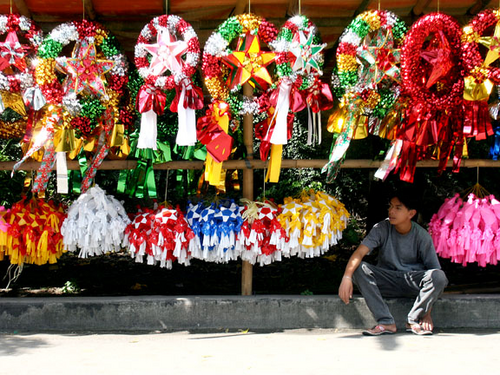

Christmas in the Philippines—[89]one of two predominantly Catholic countries in Asia alongside East Timor—is one of the biggest and most widely celebrated holidays on the calendar. The country has earned the distinction of celebrating the world's longest Christmas season, with carols heard as early as 1 September when the traditional "Ber Months" kick off.
Similar to many East Asian countries, secular Christmas displays are common in both business establishments and public spaces. These include lights, Christmas trees, depictions of Santa Claus (despite the tropical climate), and festive greetings in various Philippine and foreign languages. Occasionally, these decorations remain in place even into the summer. A prominent example is the parol, a star-shaped lantern representing the "Star of Bethlehem" that led the Three Kings to the newborn Baby Jesus.[90]
霊的な季節は、 12月16日から始まる9日間の夜明けの ミサによって正式に幕を開けます。伝統的なスペイン語ではミサス・デ・アギナルド(「贈り物のミサ」)またはミサ・デ・ガージョ(「雄鶏のミサ」)として知られていますが、タガログ語ではシンバン・ガビとしてより一般的に知られており、全国のカトリック教会や礼拝堂で行われます。この季節の重要性から、既存の法定祝日であるリサールの日(12月30日)と大晦日(12月31日)に近いいくつかの日付が非労働日と宣言されることがよくあります。これには通常、クリスマスイブ(12月24日)、ニニョス・イノセンテス(12月28日)、公現祭が含まれます。[ 90 ]


祝祭シーズンは、公現祭(Fiesta de Epifanía )としても知られる三賢者の祝日(スペイン語でTres Reyes 、タガログ語でTatlong Hari )で正式に最高潮を迎えます。伝統的には1月6日に祝われていましたが、現在は新年後の最初の日曜日に祝われています。子供たちの中には、三賢者がキャンディーやお金の贈り物を中に置いてくれると信じて、靴を窓の外に置いておく子もいます。しかし、祝祭はしばしばさらに続きます。2011年以来、カトリック教会は、主の洗礼の祭日(Solemnidad de Bautismo del Señor)を記念して、祝祭シーズンを1月の第2日曜日、あるいは公現祭の後の月曜日に終了することを義務付けています。これらの祝祭の締めくくりは、 1月9日にマニラとカガヤン・デ・オロで行われる黒いナザレ人の祝祭であるが、一部の地域では、月の第3日曜日と第4日曜日にサント・ニーニョを称える祝祭が行われるため、祝祭ムードは1月の最後の数週間まで続く。[ 90 ]

Christmas is not a national holiday, but is becoming increasingly popular in Vietnam due to increasing exposure to Western culture and its non-religious glamour and commercial appeal.[92] Vietnamese may be more accepting of corporate influence because for many, Christmas was never based on personal values to begin with.[92] It is not a time to have dinner at home with family and show thanks for one another. Instead, it is a time to go out on the town, shop, and take pictures with friends in front of colorful displays, especially on 24 December.[92]
Many Vietnamese Catholic churches put up a nativity scene;[93][94][95] in contrast to Western nativity scenes, the scene is set in a cave instead of a stable.[93] Catholic homes and businesses are also decorated with these nativity caves.[93]
Christmas is reported to be banned in Vietnam's Central Highlands,[96] and in some cases observers have reported harassment by authorities including accusations of "attempting to overthrow" the regime.[97]
Armenians usually celebrate Christmas on 6 January. The reason for this unusual date dates back to ancient history. "In the fourth century Roman Catholic Church, officials established the date of Christmas as December 25th."[36] Before that time, Armenians celebrated Christmas (surb tsnunt, Սուրբ Ծնունդ, meaning 'Holy Birth') on 6 January[98] as a public holiday in Armenia. It also coincides with the Epiphany. The Armenians denied the new Roman mandate regarding Christmas and continued to celebrate both the Nativity and Jesus' baptism on 6 January. When the Gregorian calendar was implemented in 1582, the Armenians rejected the reformed calendar and continued to follow the Julian Calendar. Today, only the Armenian Patriarchate of Jerusalem still uses the Julian Calendar. Since the Julian calendar is thirteen days behind the Gregorian calendar, when the Armenians of Jerusalem celebrate Christmas on 6 January according to the Julian calendar, the Gregorian calendar counts the day as 19 January.[36]
Traditionally, Armenians fast during the week leading up to Christmas, avoiding all meat, eggs, and dairy products.[36] Devout Armenians may even refrain from eating for the three days leading up to Christmas Eve to receive the Eucharist on a "pure" stomach. Christmas Eve is particularly rich in traditions. Families gather for the Christmas Eve dinner (khetum, Խթում), which generally consists of rice, fish, nevik (նուիկ, a vegetable dish of green chard and chick peas), and yogurt/wheat soup (tanabur, թանապուր). Dessert includes dried fruits and nuts, including rojik, which consists of whole shelled walnuts threaded on a string and encased in grape jelly, bastukh (a paper-like confection of grape jelly, corn-starch, and flour), etc. This lighter menu is designed to ease the stomach off the week-long fast and prepare it for the rather more substantial Christmas Day dinner. Children take presents of fruits, nuts, and other candies to older relatives.[99] "On the eve of the Feast of the Nativity and Theophany of The Lord Jesus Christ, the Jrakalouyts Divine Liturgy (the lighting of the lamps service) is celebrated in honor of the manifestation of Jesus as the Son of God (theophany)".[100]

アッシリア人は、イラン北西部、イラク北部、シリア北東部、トルコ南東部の先住民族で、アッシリア東方教会、古代東方教会、シリア正教会、カルデア・カトリック教会に属し、今日では12月25日にクリスマスを祝います。アッシリア人はクリスマスを口語的に「エダ・ゾラ」と呼び、「小さな休日」という意味です。正式には「エダ・ディヤルデ」と呼ばれ、「誕生日の休日」という意味です。伝統的に、アッシリア人は12月1日からクリスマス当日まで断食(サウマ)をします。例えばイラクでは、クリスマスイブにアッシリア人の家族が家の外に集まり、子供が降誕物語を朗読する間、ろうそくに火を灯します。その後、イバラの茂みで作った焚き火の上で皆で賛美歌を歌います。言い伝えによると、イバラが灰になるまで燃え尽きれば、家族に幸運が訪れるそうです。火が灰になった後、家族は灰の上を3回飛び越えて願い事をします。[ 101 ]翌日のクリスマスには、「教会の庭で別の焚き火が燃えている中、司教たちは幼子イエスの像を担いで礼拝を執り行います。イエスは触れることで一人を祝福します。その人は次の人に触れ、触れる行為が全員に渡り平和の触れを感じさせます。」[ 102 ]多くのアッシリア人は、クリスマス前の真夜中の徹夜祈祷であるシャハルタに参加します。クリスマスの日、シャハルタ(朝のミサ)の後、ラザ・ドモウラダ・ドマラン(raza d'mowlada d'maran)に家族が集まり、パチャ/リーシュ・アクレ(「頭から尻尾まで」という意味)のような伝統的なアッシリア料理を食べて断食を終えます。パチャ/リーシュ・アクレは、羊または牛の腸、舌、胃、脚、スパイスで作った煮込みスープです。ハリッサは、挽いた小麦と鶏肉で作った粥です(どちらの料理も通常は一晩かけて作られます)。これらの2つの料理は、クリスマスとイースターの年2回しか作られません。メインコースの後に食べる伝統的なデザートには、ナツメヤシとナッツを詰めたクッキーのキレチェや、詰め物をしたペイストリーのカデなどがあります。祝宴が終わると、アッシリア人は家族や友人の家を訪ねてクリスマスの挨拶を交換し、「イードホン・ブリーハ」(「祝宴が祝福されますように」という意味)と言います。 [ 103 ]
レバノンではクリスマスは公式の祝日です。レバノン人は12月25日にクリスマスを祝いますが、アルメニア系レバノン人キリスト教徒は1月6日(これもレバノンの公式の祝日)にクリスマスを祝います。レバノンの家族は集まって、イエス・キリストの誕生を祝ってクリスマスイブの宴のために羊を屠殺します。その夜、一家の主はキリストの前の罪を表す石炭の塊を回します。[ 104 ]石炭の塊が回された後、火がつけられます。[ 105 ]夕食後、レバノンのキリスト教徒は真夜中のミサに出席します。サンタクロースはフランス語でパパ・ノエルとして知られています。贈り物は教会に届けられるか、パパ・ノエルが家に直接現れます。[ 106 ]

ヨルダンのキリスト教徒は12月25日にクリスマスを祝い、この日は国民の祝日となっている。[ 107 ]ヨルダンのイスラム教徒の大多数もクリスマスを祝日として祝い、この時期にはヨルダンの商店や通りは色鮮やかに飾られる。[ 108 ]
イラクではキリスト教徒がクリスマスを祝っており、2018年には初めて公式の祝日として宣言された。近年では、世俗的な祝日としてクリスマスを祝うイスラム教徒も増えている。[ 109 ]
この祝日の祝祭の中心地は、エルサレムからわずか数キロ離れたパレスチナ自治区ヨルダン川西岸地区のベツレヘムで、そこには降誕教会がある。ベツレヘムでは、この祝日は3回祝われる。
クリスマスはサウジアラビアの公式な祝日ではありません。2010年代初頭頃まで、クリスマスはサウジアラビアでは禁止されていました。イスラム当局は当時も今もクリスマスをハラム(禁忌)とみなしているからです。一部の屋内市場やショッピングモールではクリスマスの飾り付けが見られます。[ 113 ]
シリアのキリスト教徒のほとんどは12月25日にクリスマスを祝いますが、アルメニア人は一般的に1月6日に、その他の正教会のキリスト教徒の一部は1月7日に祝います。クリスマスは1963年からシリアの祝日となっています。2024年には、シリアの新政府が12月26日をクリスマスの祝日と宣言しました。[ 114 ]

中央ヨーロッパの多くの地域では、聖ニコラウス(ハンガリー語:Mikulás、チェコ語:Mikuláš、ポーランド語:Mikołaj、スロバキア語:Mikuláš、スロベニア語:Miklavž、ウクライナ語:Миколай)、またはサンタクロースはクリスマスには来ません。彼はそれより早く、 12月6日の聖ニコラウスの日の夜明けに家族を訪れます。良い子にしていた子供たちには、前日の夜に窓辺に飾っておいた磨かれた靴の中にプレゼントやキャンディーの袋を入れてくれます。彼は屋根の上にそりを停めたり煙突に登ったりはせず、訪問の際にはたいてい、クランプス(オーストリア、スロベニア、クロアチアではクランプス、チェコとスロバキアでは単にチェルト、つまり「悪魔」と呼ばれ、名前はない)という悪魔のような姿をした召使いが同行し、いわゆる行儀の悪い子供に金色の白樺を与える。子供は皆、行儀に関係なく、靴の中に贈り物と金色の白樺(ハンガリー語:virgács)の両方を受け取る。[ 115 ]
ドイツ語圏の一部のコミュニティ、特にドイツ西部および南部、スイス、オーストリア、南チロル、リヒテンシュタインのカトリック地域、そして中央ヨーロッパの他のカトリック地域では、クリストキント(文字通り「キリストの子」)が12月24日の夕方(「聖なる夕べ」またはハイリガー・アーベント)にプレゼントを届ける。[ 116 ]: 68-79

In Austria, Christmas trees play a very important part in Christmas celebrations. Every town sets up its own huge tree on the main square, all decorated with electric candles, ornaments, and various decorations resembling candies or other sweets, and frequently, there will be an extra one, adorned with breadcrumbs, for the birds. In families, the tree is decorated with gold and silver ornaments or stars made out of straw, sweets, and candy wrapped in tinfoil, gilded nuts, etc.[117]
The feast of St Nicholas marks the beginning of Christmas in Austria. On Christmas Eve (24 December), the tree is lit for the first time and the whole family gathers to sing Christmas carols like "Stille Nacht, heilige Nacht" ("Silent Night").[118]

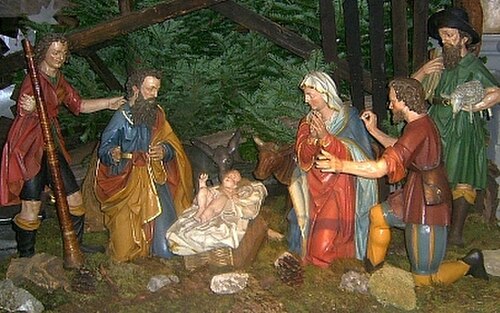

The Sorbs, a minority in Saxony and parts of Brandenburg who speak a language similar to Polish, have specific traditions. In Jänschwalde, the Bescherkind or Janšojski bog ('gift child'), a girl dressed in local costume and veil, visits the neighbors and goes around with two companions on the Wednesday before Christmas. As with Saint Nicholas, smaller presents like sweets are given, and blessings are offered, but she remains silent.[119]

Currently, the actual Christmas gift-giving (German: Bescherung) usually takes place on Christmas Eve. This tradition was introduced by ReformerMartin Luther, who believed that one should emphasize Christ's birth rather than a saint's day, and do away with the notion that gifts must be earned through good behavior. The gifts should be seen as a symbol of God's grace in Christ.[120]
The culinary feast either takes place at supper on Christmas Eve or on the first day of Christmas. Traditions vary from region to region; carp is eaten in many parts of the country.[121]

In Catholic Slovakia, the tradition of Jasličkári involves young men dressed as shepherds or angels visiting their neighbors and presenting recitations and songs about the birth of Jesus.[122]
クリスマス当日の贈り物の贈り主は幼子イエスですが、聖ニコラウスの日の前夜には、ハンガリーの子供たちは伝統的にミクラーシュがやって来てお菓子を詰めてくれるのを待って、窓辺にブーツを置いています。[ 123 ]

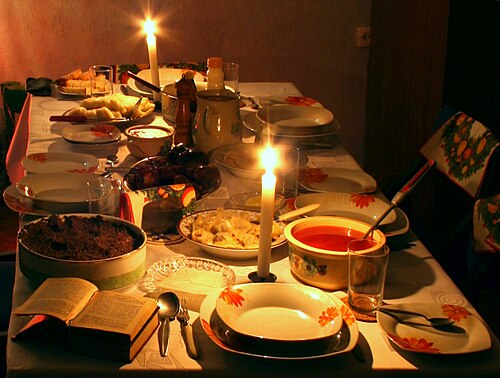

カトリック教徒が多いポーランドでは、クリスマスイブは断食の日から始まり、夜はごちそうを囲んで過ごします。伝統的なクリスマスの食事はヴィギリア(「徹夜の祈り」)と呼ばれ、家族と一緒にヴィギリアの夕食に招待されることは大変名誉なこととされています。 [ 124 ]クリスマスイブの夜には、ベツレヘムの星 を記念して、空に最初の星が現れるのを待ちます。この星は「小さな星」またはグヴィアズドカ(聖ニコラウスの女性版)という愛称で呼ばれています。その夜、子供たちは「星が来た!」と最初に叫ぶことを願いながら、不安そうに空を見上げます。最初の星が現れたと宣言されると、家族は食卓につきます。[ 125 ]
ポーランドの伝統的なヴィギリアの夕食には、鯉のフライとバルシュチ(ビーツのスープ)にウシュカ(「小さな耳」という意味で、肉なしラビオリとしても知られる)が添えられます。最も一般的な料理は、魚のスープ、ポテトサラダ、ピエロギ、カシャを詰めたゴウォンプキ、ニシンの酢漬け、フルーツコンポートです。[ 126 ]
クリスマスイブは、地元の教会で行われる真夜中のミサであるパステルカで終わります。この伝統は、ベツレヘムに到着した三賢者が、生まれたばかりのメシアに敬意を表し、証しをしたことを記念するものです。クリスマスの夜の典礼の習慣は、5世紀後半以降にキリスト教の教会に導入されました。ポーランドでは、この習慣はキリスト教の到来とともに伝わりました。[ 125 ]翌日(12月25日)は、早朝のミサから始まり、日中のミサへと続きます。聖書によれば、クリスマスの日のミサは入れ替わることができ、個々の信徒は宗教儀式を選択する際に、より柔軟に対応できます。[ 127 ]

Romanian food served during the holidays is a hearty, multi-course meal, most of which consists of pork (muscle, fat, and organs). This is mainly a symbolic gesture for St. Ignatius of Antioch.[128]
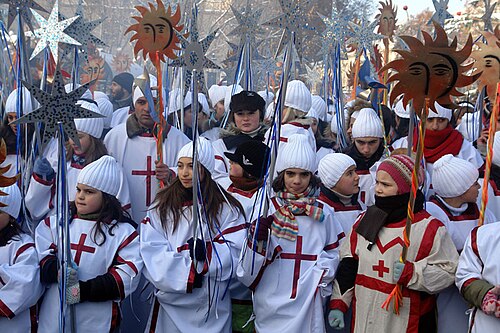


Sviata Vecheria or 'Holy Supper' is the central tradition of the Christmas Eve celebrations in Ukrainian homes and takes place in most parts of the country, from many years on 6 January and from 2022 onwards on 24 December. In Western Ukraine, especially in Carpathian Ruthenia, due to historical multi-culturism, until 2023 Christmas can be observed twice—on 25 December and 7 January, often irrespective of whether the family belongs to Ukrainian Greek Catholic Church, the Roman Catholic Church, one of the Ukrainian Orthodox Churches, or one of the Protestant denominations. The Western Ukrainian tradition of two Christmas celebrations, since 2017, is also celebrated nationwide, but the traditions in the western regions, given the Russian invasion of Ukraine, were standardized in 2022 for celebrations within the whole of the nation; with the date finally unified in 2023, the Western Ukrainian form has become the official standard.[129][130]
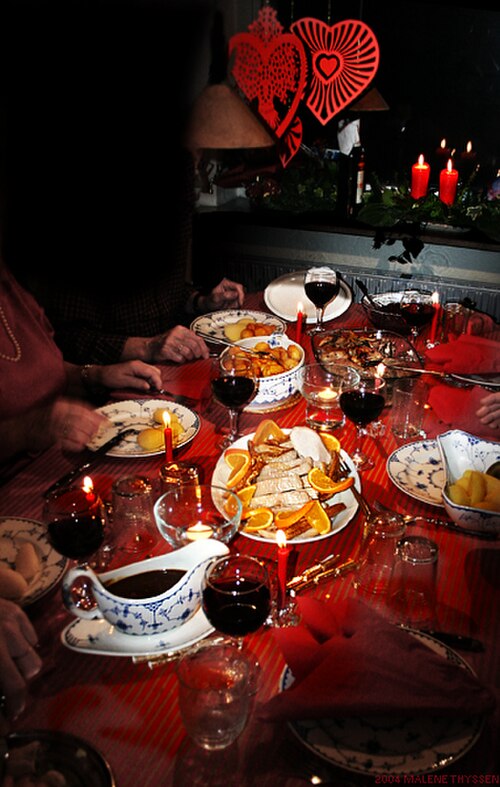
Danes celebrate on 24 December, which is referred to as juleaften (literally 'Yule evening').[131]
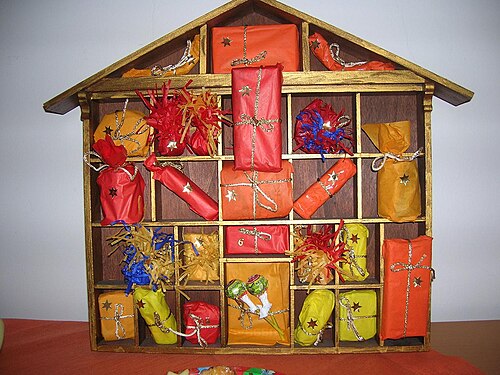
Another recent Danish tradition is the concept of television julekalendere, special Christmas-themed, advent calendar-type television programs with a daily episode shown on each of the first 24 days of December, culminating on juleaften. Several television stations produce their own programs, most of which are targeted at child viewers. Some television advent calendars become extremely popular and are reprised in subsequent years.[132]


クリスマスは家族や家庭を中心とした入念に準備された祝祭ですが、宗教的な側面もあります。クリスマスシーズンは12月、あるいは11月下旬から始まり、店はクリスマスプレゼントの広告を出し始めます。クリスマスが近づくにつれてクリスマスの飾りや歌が目立つようになり、子供たちはアドベントカレンダーでクリスマスまでの日数を数えます。学校やその他の場所では、クリスマスイブの前日(aatonaatto、12月23日)が休日となります。それでも、遅くともクリスマスイブ(jouluaatto、12月24日)には店は早めに閉まり、12月26日まで休業となります。クリスマスの主な祝祭は12月24日のクリスマスイブに行われ、クリスマス当日(joulupäivä)と翌日(Tapaninpäivä、「聖ステファノの日」)はフィンランドの強制的な祝日です。[ 133 ]学校は新年まで休みが続きます。

フィンランド人はクリスマス前に家をきれいに掃除し、祝祭シーズンのための特別なごちそうを用意します。穀物、ナッツ、種子の束を棒に結び付け、鳥が餌を食べられるように庭に置きます。トウヒの木はクリスマスイブかその数日前に切り倒されるか市場で購入され、家に運ばれて飾り付けられます。クリスマスツリーにはろうそくが灯され、伝統的には星やオーナメントなどのクリスマスオーナメントに加えて、リンゴやその他の果物、キャンディー、紙の旗、綿、モールで飾られます。実際のろうそくはもはや使われず、白熱灯やLEDランプに置き換えられています。ベツレヘムの星を象徴する星がツリーの頂上に置かれます。クリスマスの祝祭が始まる直前に、人々は通常クリスマスにサウナに入ります。この伝統は非常に古く、普段は夕方にサウナに行くのに対し、クリスマスイブには日没前にサウナに入ります。この伝統は、死者の霊が戻ってきて通常のサウナの時間帯にサウナを利用するという20世紀以前の信仰に基づいている。[ 133 ]
アイスランドのクリスマスまたはユール(アイスランド語でJól ) [ 134 ]の祝祭は、12月24日(待降節)に始まるクリスマス本番の4週間前の日曜日から始まり、13日後の1月6日に終わります。
12月24日の13日前になると、子供たちは靴を窓辺に置いて、ユールラッズが靴の中に小さなプレゼントを入れてくれる。[ 134 ] 24日から13日後には、アイスランド人はユールラッズやエルフ、トロールなどの他の神秘的な生き物に別れを告げる。国中で焚き火が焚かれ、エルフ、ユールラッズ、アイスランド人が一緒に踊って、次のクリスマスまでお別れを告げる。[ 134 ]


ノルウェーでは、北ヨーロッパのほとんどの国と同様に、12月24日がクリスマスの祝祭日です。ただし、法律上は午後4時まで通常の勤務日であるため、 ほとんどの店は早めに閉店します。教会の鐘は午後5時から6時の間に鳴り響き、クリスマスの祝日を告げます。一部の家庭では、古い家伝の聖書からルカによる福音書2章のクリスマスの物語が朗読されます。クリスマスのメインの食事は夕方に提供されます。一般的なメイン料理には、豚のスペアリブ、ピンネキョット(白樺の木の格子で蒸した子羊のスペアリブ)などがあります。多くの人は、ルーテフィスクや新鮮なタラのポシェも食べます。お粥も人気ですが(クリスマスのメインディナーではなく、早めの昼食として提供されることが多い)、お粥の中にアーモンドが隠されていることが多く、それを見つけた人はお菓子や小さな贈り物をもらえます。ノルウェーの一部の地域では、ニッセンを喜ばせるために、お粥を屋外(納屋、物置、あるいは森の中など)に置くのが一般的です。両親が異なる伝統の中で育った多くの家庭では、皆を喜ばせるために2種類のメイン料理が提供されます。子供がいる場合(そして昨年良い子にしていた場合)、ユールニッセン(サンタクロース)が訪れ、プレゼントはクリスマスツリーの下に保管されます。[ 135 ]
多くのノルウェー人、特に家族にとって、テレビはクリスマスイブの早朝の重要な一部です。多くのノルウェー人は、チェコ・ドイツ合作の童話『シンデレラの三つの願い』(ノルウェー語タイトル:Tre nøtter til Askepott)やディズニーのクリスマス・パレード『私たちみんなからあなたたちみんなへ』を観ます。[ 136 ]
12月25日は非常に静かでリラックスした日と考えられています。教会の礼拝には多くの人が集まります。朝食前の早朝礼拝という古い伝統は、ほとんどの地域で午前遅くの礼拝に取って代わられました。その後、多くの家族が集まって盛大な祝宴を催します。[ 135 ]
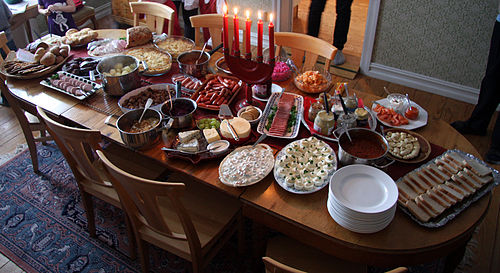


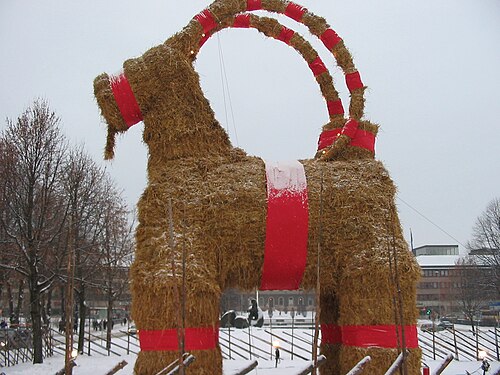
キリスト教以前の祝祭であるユール、またはヨールは、スカンジナビアと北ヨーロッパで最も重要な祝祭でした。[ 137 ]聖ルチアの日(地元ではルチアダゲンとして知られています)は、クリスマスそのものの前に行われる最初の主要なクリスマスのお祝いです。長女は早起きして、白いローブ、赤い帯、そして9本のろうそくが刺さったコバノキの小枝で覆われたワイヤーの冠というルチアの衣装を身に着け、「サンタ・ルチア」を歌いながら家族を起こし、コーヒーとサフランパン(聖ルチアパン)を出し、こうしてクリスマスの季節を告げます。[ 138 ]
クリスマスは食べ物で祝う行事です。[ 139 ] テレビも大きな役割を果たしており、多くの家族はディズニーのクリスマス特別番組『Kalle Anka och hans vänner önskar God Jul』[ 140 ] ( From All of Us to All of You ) や[ 141 ]カール・ベルティル・ヨンソンのジュラフトン(短編アニメーション)、またはスヴェンソン・スヴェンソンのエピソード「God Jul!」 (「メリークリスマス」)の再放送を視聴している。テレビチャンネルSVT1。[ 142 ]
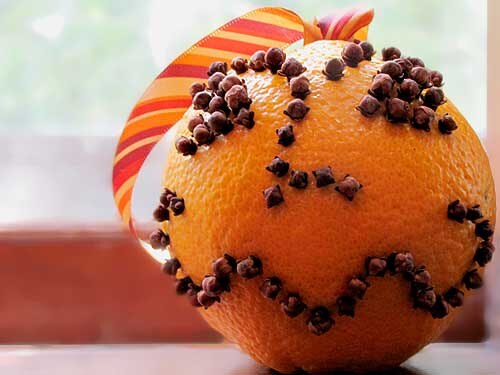
スウェーデンでは今でも、プレゼントの包装紙に中身を明かさずにヒントを与えるための詩を添えるという伝統を守っている人が多い。[ 143 ]
12月24日以降、クリスマスのお祝いはほぼ終わりを迎えます。12月25日の早朝の教会礼拝であるユーロッタンに参加する人もいます。この礼拝は歴史的にクリスマスの主要な礼拝でしたが、今日では真夜中のミサがますます人気を集めています。クリスマスイブの午後にクリスマス祈祷と呼ばれるより簡素な礼拝に参加する人もいますが、スウェーデンは非常に世俗的な国であるため、クリスマス期間中に教会に行かないスウェーデン人も多くいます。それでも、ほとんどの家庭ではユールクルッバ(「クリスマスの飾り」)を設置します。1月13日(地元ではクヌートダーゲンまたはチュゴンダーグ・クヌート「20日目のクリスマス」として知られています)、 クリスマスから20日後にクリスマスのお祝いは終わりを迎え、すべてのクリスマスの飾りが撤去されます。[ 137 ]

In Bosnia and Herzegovina, Croatia, and Slovenia, Christmas (Croatian: Božić, Slovene: Božič) is celebrated mainly as a religious holiday. The festivities begin on Saint Nicholas's Day on 6 December (in Slovenia) or on Saint Lucy's Day on 13 December (in Croatia), depending on the region. Saint Lucy or Saint Nicholas brings children presents, and Saint Nicholas is said to be accompanied by Krampus, who steals away the presents of bad children. This "anti-Santa" is said to have one cloven hoof, a handful of heavy chains, and a sack on his back to collect naughty children.[144]
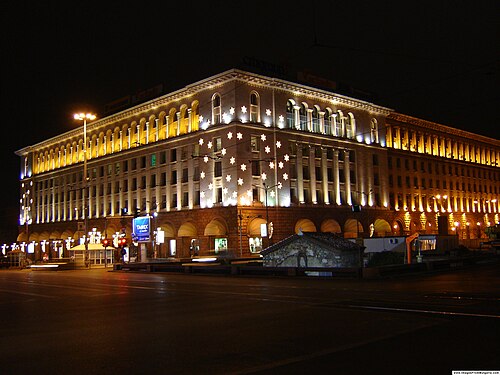
In Bulgaria, Christmas (Bulgarian: Коледа, Koleda or more formally Рождество Христово, Rozhdestvo Hristovo, 'Nativity of Jesus') is celebrated on 25 December. It is preceded by Christmas Eve (Бъдни вечер, Badni vecher). Traditionally, Christmas Eve would be the climax of the Nativity Fast, and thus only an odd number of Lenten dishes are presented on that evening.[145] The table is usually not cleared after the dinner and until the next morning, to leave some food for the holy spirits – a custom which probably comes from pagan pre-Christian times. On that day, a Bulgarian budnik is set alight. On Christmas, meat dishes are already allowed and are typically served.[146]
Among the Bulgarian Christmas traditions is koleduvane, which involves boy carolers (коледари, koledari) visiting the neighboring houses starting at midnight on Christmas Eve, wishing health, wealth, and happiness. Another custom is the baking of a traditional round loaf (пита, pita). The pita is broken into pieces by the head of the family: a piece is given to each family member, a piece is kept as a valuable possession, and a piece is set aside for God. A coin is hidden inside the pita, and whoever gets the coin will have luck, health, and prosperity in the coming year.[147]

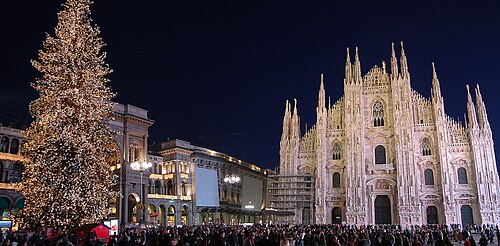


イタリアのクリスマス(イタリア語: Natale、発音は[ naˈtaːle ])は、伝統的にクリスマスツリーを飾る日である無原罪懐胎の祝日である12月8日に始まり、翌年の公現祭(イタリア語: Epifania)である1月6日に終わります。[ 149 ]イタリア語のNataleは、文字通り「誕生」を意味するラテン語のnatalisに由来し、[ 150 ]イタリア語の挨拶はbuon Natale(メリークリスマス)とfelice Natale(ハッピークリスマス)です。[ 151 ]
無原罪の御宿りの祝日(イタリア語: Festa dell'Immacolata Concezione)は12月8日で、イタリアの国民の祝日です。クリスマスツリーだけでなく、プレセペ(キリスト降誕の場面)[ 152 ]などのクリスマスの飾り付けも、通常はこの日に行われます。この祝日の現代的な解釈の中には、魂の浄化を象徴するためにハゲワシを吊るすものもあります。
聖ルチアの日(イタリア語: Giorno di Santa Lucia )は、シチリア島とイタリア北部でカトリックの祝日として祝われ、1年で最も日が短いとされる12月13日に祝われます。 [ 153 ]
イタリアではクリスマスは他の西ヨーロッパ諸国と同様に祝われ、この祝日のキリスト教的な意味とカトリック教会による祝祭が強く強調され、アッシジの聖フランチェスコによって始められたプレセピを飾るという伝統が今も広く行われていることで、その意味合いがさらに強められています。クリスマスイブの真夜中のミサに出席したり、その日に肉を断つという古い習慣を実践したりすることはごく一般的です。
ナポリや南イタリアで人気のクリスマス料理は、雌ウナギまたはカピトーネ(雌ウナギ)です。北イタリアの伝統的なクリスマス料理はカポン(去勢鶏)です。アバッキオは中央イタリアでより一般的です。[ 155 ]クリスマスのディナーは伝統的に、アニョリーニ、カッペレッティ、パヴェーゼ・アニョロッティ、カポン、ラム肉、ウナギ、パネトーネ、パンドーロ、トローネ、パンフォルテ、ストゥルッフォリ、ムスタッチョーリ、ビスチョーラ、カヴァルッチ、ヴェネツィアーナ、ピッツェッレ、ツェルテンなど、地域料理に応じて様々な典型的なイタリアのクリスマス料理で構成されます。 [ 156 ]
モリーゼ州アニョーネでは、12月8日とクリスマスイブに、たいまつ行列が「兄弟愛の焚火」へと続く、ンドッチャータと呼ばれる古代のクリスマス祭りが祝われます。 [ 157 ]シチリア島東部の多くの町の広場では、クリスマスイブに、幼子イエスを温めるために、大きな焚火「ウ・ズック」が灯されます。[ 158 ]
贈り物の交換に関する伝統は地域によって異なり、クリスマスイブまたはクリスマス当日に行われる場合があります。子供へのプレゼントは、サンタクロース(バッボ・ナターレと呼ばれる)または、古い伝統によれば幼子イエス自身によってクリスマスツリーの下に置かれます。[ 159 ]一部の地域では、子供たちはより早く(聖ルチアの日)またはより遅く(公現祭)プレゼントを受け取ります。
1991年、いわゆるグッビオのクリスマスツリー(山の斜面に沿って設置された木の形をした構造物)は、高さ650メートルで700個以上のライトで装飾され、世界で最も高いクリスマスツリーとしてギネス世界記録に登録されました。[ 148 ]
イタリアでは、聖ステファノの日は1947年に祝日となり、それまでは通常の平日でした。カトリック教会も、ドイツや他のドイツ語圏の国々のように義務付けてはいませんが、宗教的な祝日として祝っています。聖人の名声にもかかわらずカトリック教会が義務付けていないイタリアでの祝日の理由は、クリスマス休暇を延長し、2日連続の祝日を作るという意図にあります。これは、宗教的ではない祝日であるイースターマンデーの場合にも起こりますが、イースターを延長するだけです。[ 160 ] 1947年以前は、この2日間は平日で、銀行やオフィスは開いていました。
1月6日(公現祭、イタリア語ではEpifania)には、通常、飾り付けが取り外されます。地域によっては、クリスマス期間の終わりとともに、古い年の死と新しい年の始まりを象徴するために、女性の人形が薪の山( falòと呼ばれる)で燃やされます。 [ 161 ] 現在ではアメリカ式のサンタクロースもクリスマスに贈り物をしますが、イタリアでは伝統的な贈り物の贈り主の習慣がしっかりと守られています。6日の前夜には、善良な公現祭の魔女であるベファーナがほうきに乗って夜空を飛び、良い子には贈り物やお菓子を、悪い子には炭や灰の袋を届けると考えられています。[ 162 ]他の地域では、三賢者が贈り物、特に金を象徴するオレンジや、良い子へのキスを象徴するチョコレートを届けます。ミラノをはじめとするいくつかの自治体では、東方の三博士の行列( Corteo dei Re Magi )の習慣が、賢者たちを歓迎するパレードや菓子の配布など、盛大に祝われます。[ 163 ]トレヴィーゾなどの他の地域では、焚き火でこの日を祝い、その火花が新年の未来を予言すると言われています。[ 161 ]


セルビアとモンテネグロでは、クリスマス(セルビア語: Божић 、ローマ字表記: Božić、発音は[ boʒitɕ ]、より正式にはРождество Христово、Rozhdestvo Hristovo、「キリスト降誕」)はクリスマス当日から始まる 3 日間連続で祝われます。セルビア正教会は伝統的なユリウス暦を使用しており、それによるとクリスマス当日(12 月 25 日)は 1 月 7 日になります。この日はクリスマスの 1 日と呼ばれ、それに続く 2 日はクリスマスの 2 日目と 3 日目と呼ばれます。このお祭りの時期には、他の人に「キリストがお生まれになりました」(セルビア語: Христос се роди 、ローマ字: Hristos se robi )と挨拶し、それに対して「本当にキリストが生まれました」(セルビア語: Ваистину се роди 、ローマ字: Vaistinu se robi )と答える必要があります。セルビア語のクリスマスの名前であるボジッチは、「若い、小さな神」を意味します。
この祝日は、セルビア人が祝う他のどの祝日よりも、多様な民俗習慣や儀式が見られる点で際立っています。これらの習慣は地域によって異なり、現代の生活様式に合わせて現代風にアレンジされたものもあります。それらを完全に実践するのに理想的な環境は、伝統的な多世代同居の田舎の家庭です。
クリスマスイブの朝、一家の主が若くてまっすぐな樫の木を選び、伐採します。そこから丸太が切り出され、バドニャクと呼ばれます。夕方になると、バドニャクは、垂直の囲いのない暖炉(オグニシュテ)で燃える家庭の火に儀式的にくべられます。バドニャクを燃やす際には、来る年が幸福、愛、幸運、富、そして食料に恵まれるよう神に祈りを捧げます。今日ではほとんどの家にバドニャクを燃やすためのオグニシュテがないため、象徴的に数本の葉のついた樫の小枝で代用されます。都市住民の便宜を図るため、市場で購入したり、教会で受け取ったりすることができます。
この日の夕食は、断食の規則に従って準備されるものの、祝祭的で、量も多く、料理も多様です。若者のグループが村や近所の家々を訪ね歩き、互いに祝福し合い、歌を歌い、パフォーマンスを披露します。これは次の 3 日間続きます。セルビア人はまた、藁の束を家の中に持ち込み、床に敷き詰め、その上にクルミを置きます。夕食のテーブルをセットする前に、薄く藁を敷き詰め、白い布で覆います。一家の主は十字を切り、ろうそくに火を灯し、家全体に香を焚きます。家族はテーブルに着席しますが、食事を始める前に全員が立ち上がり、男性または少年が祈りを捧げるか、一緒に降誕のトロパリオンを歌います。 [ 164 ]夕食後、若者は友人を訪ね、そのうちの 1 人の家に集まることがあります。クリスマスの歌やその他の歌が歌われ、年配の大人が昔の話を語ります。
クリスマス当日、夜明けに教会の鐘と銃声で祝祭が告げられます。その日、家族が最初に受ける訪問は非常に重要視されます。人々はそれが来年の家族の繁栄と幸福をもたらすと信じており、この訪問はしばしば事前に手配されます。クリスマスディナーは、家族が一年で最も盛大に食べる食事です。この日のために特別な祝祭用のパンが焼かれます。メインディッシュは豚肉の丸焼きで、焚き火のそばで木の串に刺して回転させながら焼かれます。贈り物は必ずしも伝統の一部ではありませんが、サンタクロースに似たボジッチ・バタ(ファーザー・クリスマス)と呼ばれる人物が贈り物を配ることもあります。サンタクロースは伝統的に新年の祝祭と結びついているためです。贈り物は祝祭と関連しており、伝統的にはその直前の3つの連続した日曜日に行われます。この3日間は、それぞれ子供、母親、父親が贈り物を渡す役割を担います。
1990年代初頭以来、セルビア正教会は地域社会と協力してクリスマスイブに祝祭を催してきました。これらの祝祭は通常、準備、儀式、祝宴の3つの部分に分けられます。準備では、バドニャク(クリスマスツリー)として使う木を切り倒し、教会の墓地に運び、集まった信徒のために飲み物や食べ物を用意します。儀式には、晩課、教会の墓地に焚かれた火にバドニャクをくべること、バドニャクを祝福または聖別すること、歌や朗読を含む適切なプログラムが含まれます。一部の教区では、バドニャクを燃やす火を教会の墓地ではなく、町や村の別の適切な場所に焚きます。祝宴は、火を囲んで交流することです。それぞれの祝祭には、地域社会の伝統やその他の地域的要因を反映した独自の特徴があります。
セルビア、モンテネグロ、北マケドニアでは、クリスマスは1月7日に祝われます。これは、これらの国の正教会がユリウス暦に基づいてクリスマスを記念しているためです。ユリウス暦は現在、改訂ユリウス暦(一部の東方正教会で使用されているもう一つの暦で、2100年まではグレゴリオ暦と同等)より13 日遅れています。

クリスマスはスペインで公式に認められた祝日です。スペインのほとんどの地域では、クリスマス期間(Navidad)は12月24日のクリスマスイブ(Nochebuena、つまり「おやすみなさい」)から1月6日の公現祭まで続きます。多くの家庭やほとんどの教会では、キリスト降誕の場面、クリスマスツリー、またはその両方が飾られます。ベレンまたはペセブレ(キリスト降誕の場面)は長い伝統があり、多くの家庭、学校、商店で見られますが、クリスマスツリーは伝統的なものではありませんが、非常に人気があります。カタルーニャでは、26日にサン・エステベ(聖ステファノ)が家族で集まって祝われます。
スペインのほとんどの地域(カタルーニャ地方など一部の地域を除く)では、クリスマスイブ(ノチェブエナ)に大家族で盛大な夕食会が開かれ、夜遅くまで続くことがあります。この特別な夜には、スペイン各地の食卓に様々な典型的な料理が並び、地域ごとに独自の特産料理があります。特に、エビやサーモンなどの魚介料理で食事を始め、続いて温かい自家製スープを飲むのが一般的です。メインディッシュは、ローストラムや、タラや貝類などの魚介料理であることが多いです。デザートには、蜂蜜、卵、アーモンドで作られたトゥロンをはじめとする様々な珍味が並びます。特別な料理やデザートには、貝類や魚、マジパン、トリュフ入りの七面鳥、ポルボロン(アーモンド、小麦粉、砂糖で作られたショートブレッド)などがあります。
真夜中に伝統的なミサ・デル・ガージョ(鳥のミサ)は今でも行われているものの、昔ながらの習慣に従って参加するスペイン人はほとんどいない。
スペインのほとんどの地域では、つい最近までクリスマスは子供へのプレゼントとは結びついていませんでした。代わりに、三賢者が1月5日の夜にプレゼントを届けていましたが、それは今でも変わりません。現在では、子供たちはクリスマス当日やクリスマスイブにパパ・ノエル(「ファーザー・ノエル」)からプレゼントをもらうことがよくあります。パパ・ノエルは、アメリカのメディアで描かれているサンタクロースとは異なる、伝統的なサンタクロースです。しかし、地域によっては、バスク地方のオレンツェロのように、より伝統的なキャラクターも存在します。
12月31日の夜(ノチェビエハ)には、盛大な家族の宴会が開かれます。 1月1日の午前0時には、スペインでは「 12粒のブドウ」(las doce uvas de la suerte )を食べるという有名な伝統があります。若者たちは通常、バーやパブで行われる大規模な宴会「コティジョン」に出かけ、翌朝まで飲んだり踊ったりします。翌朝の朝食には、チョコレートを添えたチュロスを食べるのが一般的です。
1月5日の夕方、スペインの主要都市では、三賢者を迎える大規模なパレードまたは騎馬行列(カバルガタ・デ・レジェス)が行われます。パレードはしばしばテレビで放映されます。子供たちは、三賢者がプレゼントを届けてくれることを期待して、1月5日の夜にバルコニーや窓に靴を置きます。[ 165 ]
トルコでは、クリスマスは主に東方正教会の少数派キリスト教徒によって祝われ、多数派のイスラム教徒によって祝われることはない。トルコはクリスマスと直接的な関係はないが、4世紀のアナトリア(当時はビザンツ帝国の一部)の司教であり、サンタクロースの民話のインスピレーションとなった聖ニコラウスの故郷である。[ 166 ]

フランスのクリスマス(フランスの暦ではノエル)[ 167 ]は主に宗教的な方法で祝われますが、クリスマスの飾り付けやキャロルなど、世俗的な方法で祝うこともあります。
フランスやその他のフランス語圏(カナダの項も参照)では、クリスマスイブにレヴェイヨンと呼ばれる長い家族の夕食会が開かれます。[ 168 ]この夕食会の名前は、参加するには真夜中過ぎまで起きていなければならないことから、 réveil (「目覚める」という意味)という言葉に基づいています。
ベルギーでは、君主が大晦日に国民に向けてテレビ演説を行い、その中でその年の国内外の出来事に触れ、通常は希望のメッセージで締めくくります。[ 169 ]

ミンスパイは伝統的に祝祭シーズンに販売され、クリスマスに人気の食べ物です。[ 170 ]イギリスの多くの家庭では、子供や大人がアドベントカレンダーを家に飾るのが一般的で、カレンダーの扉の後ろにはチョコレートやクリスマスのシーンが入っていることがあります。[ 171 ]
クリスマスイブには、プレゼントは靴下に入れて届けられるとされている。[ 172 ]
王室は、ハノーバー朝が導入したドイツの伝統に従い、クリスマスイブにプレゼントを開けます。ヴィクトリア女王は幼い頃、1832年のクリスマスイブの日記にそのことを記しています。13歳の王女は喜び、「夕食後 …私たちはダイニングルーム近くの応接室に行きました …そこには2つの大きな丸テーブルがあり、その上にライトと砂糖細工の飾りがついた2本の木が置かれていました。プレゼントはすべて木の周りに置かれていました…」と書いています。[ 173 ] 1843年にロンドンで最初の商業用クリスマスカードが作られて以来、クリスマスまでの数週間にカードが送られ、その多くには英語のクリスマスの挨拶である「メリークリスマス」が書かれています。[ 174 ]
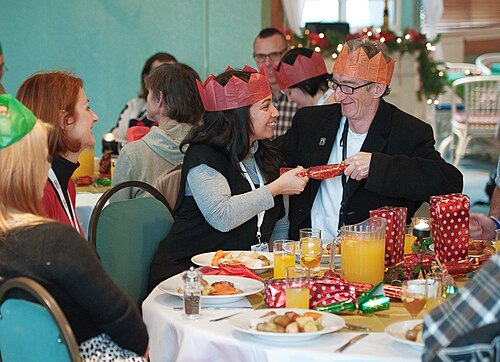
英国の祝日であるクリスマス当日には、ほぼ全国民が休みを取り、家族や友人と過ごし、伝統的なクリスマスディナーを囲みます。伝統的なクリスマスディナーは、クランベリー、芽キャベツ、パースニップ、ヨークシャープディング、ローストポテトを添えた七面鳥料理で、サンデーローストによく似ており、その後クリスマスプディングが続きます。[ 175 ] [ 176 ]食事中には、おもちゃ、ジョーク、紙の帽子が入ったクリスマスクラッカーが引かれます。 [ 177 ]近年ではクリスマス当日の教会礼拝への出席は人気がなくなり、 現在では英国国教会のクリスマス礼拝に出席する人は300万人未満となっています。[ 178 ]
テレビは広く視聴されている。[ 179 ]君主はクリスマス当日にラジオとテレビで放送される短い番組の形で王室メッセージを発表する。メッセージは通常、その年の出来事、王室の状況、団結などのテーマについて言及している。このメッセージは平均700 万人の視聴者を集め、クリスマス当日の最も視聴される番組の1つとなることが多い。[ 180 ] [ 181 ] [ 182 ] JM ゴルビーとAW パーデューは、君主のスピーチは「クリスマスの時期の国家の団結を象徴するものとなった」と書いている。[ 183 ]

プレミアリーグなどのトップレベルのサッカー大会では、伝統的にボクシングデーに試合が行われてきた。[ 184 ]
クリスマス当日は公共交通機関や重要な交通サービスが休止されます。[ 185 ]クリスマスの休止は早くから始まり、主要都市からの最終列車は12月24日の19:00という早い時間から運行されます。バス、夜行バス、地下鉄も21:00頃から運行休止となります。[ 186 ]個々の交通会社は10月頃からアナウンスを始め、[ 187 ]ある鉄道運行会社はボクシングデーに列車を運行しないことを選択するかもしれませんが、別の会社は土曜日の運行を限定的に行い、主要駅を完全に閉鎖するかもしれません。[ 188 ] [ 189 ]
イングランドでは、幽霊話、地元の伝説、その他奇妙で風変わりで幻想的な「冬の物語」(『クリスマス・キャロル』の著者チャールズ・ディケンズがそう呼んだ)を語ることは何世紀にもわたる伝統であり、ウィリアム・シェイクスピアが『冬物語』(1623年)で貢献したが、シェイクスピアの時代以前からよく知られていた。(対照的に、アイルランド、スコットランド、米国では、ハロウィンが幽霊話を語る時期として好まれている。)[ 190 ] [ 191 ]コリン・フレミングは、パリ・レビューでこの伝統の他の貢献者について詳しく述べている。[ 192 ]
ウェールズには、クリスマスの前の週にカネオン・プリゲインを歌う伝統があります。 [ 193 ]また、ノソン・ギフラース(トフィー・イブニング)の伝統は、かつては主に北ウェールズで行われていました。これは、人々が集まってゲームをしたり、物語を語ったり、順番に菓子板を引っ張って紐状にしてトフィーを作ったりするものです。[ 194 ]

Christmas in Scotland was traditionally observed very quietly, because the Church of Scotland never placed much emphasis on the Christmas festival. In Catholic areas, people would attend midnight or early-morning mass before going to work.[195] This tradition derives from the Church of Scotland's origins including St Columba's monastic tradition, under which every day is God's day and there is none more special than another; thus Good Friday is not an official public holiday in Scotland.[196][197] Christmas Day was commonly a normal working day in Scotland until the 1960s, and even into the 1970s in some areas.[198] The New Year's Eve festivity, Hogmanay, was by far the largest celebration in Scotland. The gift-giving, public holidays, and feasting associated with mid-winter were traditionally held between 11 December and 6 January. Since the 1980s, the fading of the Church's influence and the growing influence of the rest of the UK and beyond have meant that Christmas and its related festivities have surpassed Hogmanay and New Year's Day. The capital city of Edinburgh now has a traditional German Christmas market from late November until Christmas Eve.[199]Bannock cakes made of oatmeal are traditionally eaten at Christmas.[195]


In 2006, the total amount spent in Ireland to celebrate Christmas was €16 billion,[200] which averages at approximately €4,000 for every single person in the country.

It is traditional to decorate graves at Christmas with a wreath made of holly and ivy. Even in the most secular homes in Ireland, the traditional crib takes center stage alongside the Christmas tree as part of the family's decorations. Some people light candles to symbolize hospitality to Mary and Joseph. Therefore, it is common to see a white candle or candle set placed in several windows around people's homes. The candle was a way of saying there was room for Jesus's parents in these homes even if there was none in Bethlehem.[201]
Christmas traditions in the Netherlands[202] are almost the same as those in Dutch-speaking parts of Belgium (Flanders). The Netherlands recognizes two days of Christmas as public holidays, calling 25 December eerste kerstdag ('first Christmas day') and 26 December tweede kerstdag ('second Christmas day').


There have been depictions of Christmas traditions tailored to Australian iconography, such as Santa partaking in activities such as surfing (in 2015, a world record was set on Bondi Beach for the world's largest surf lesson, featuring 320 participants in Santa suits), parodies of traditional carols, and original songs such as Rolf Harris's Six White Boomers (which depicts Santa Claus as using a ute pulled by kangaroos instead of reindeer and a sleigh).[205][206][207]

A notable Christmas event in Australia is Carols by Candlelight—an annual concert and charity appeal benefiting the charity Vision Australia.[208][209]
Due to Christmas taking place in summer, Australia has celebrations in July, known as Christmas in July.[210] However, it is not as celebrated as the traditional Christmas. It can be seen being referenced in advertising.[211]
Christmas Day and Boxing Day are both statutory holidays in New Zealand. While Boxing Day is a standard statutory holiday, Christmas Day is one of the three-and-a-half days of the year when all but the most essential businesses and services must close. Many of New Zealand's Christmas traditions are similar to those of Australia in that they are a mix of United Kingdom and North American traditions conducted in summer. New Zealand celebrates Christmas with very little traditional Northern Hemisphere winter imagery. The pohutukawa (Metrosideros excelsa), which produces large crimson flowers in December, is an often used symbol for Christmas in New Zealand, and subsequently the pohutukawa has become known as the New Zealand Christmas tree.[212]
{{cite web}}: CS1 maint: deprecated archival service (link)At 3 o'clock in the afternoon, you can't to do anything else, because Sweden is closed
{{cite web}}: CS1 maint: deprecated archival service (link) Media related to Christmas traditions at Wikimedia Commons