
Loading article…


軍事組織において、部隊の集結地点として、また指揮官の位置を示すために、軍旗、軍旗、または軍旗を携行する慣習は、約5000年前の古代エジプトに起源を持つと考えられている。ローマ帝国の軍隊も、SPQRと記された軍旗であるヴェクシラを使用していた。中世盛期には、ヨーロッパの軍隊でこの慣習が正式に確立され、軍旗には指揮官の紋章が刻まれるようになった。


軍旗はもともと戦闘において実用的な用途を持っていた。軍隊が訓練を受け、決まった陣形を採用するようになると、各連隊が陣形を維持できるかどうかは、連隊の成功、ひいては軍全体の成功にとって極めて重要になった。戦場の混乱の中では、大量の塵や煙のため、兵士は自分の連隊がどこにいるのかを把握する必要があったのだ。
連隊旗は通常、式典において国家元首から連隊に授与される。そのため、連隊の栄誉と伝統を象徴するものとして、敬意をもって扱われた。連隊旗には、過去の功績を表す戦いの名前やその他のシンボルが刻まれている場合がある(戦功章を参照)。
連隊は、軍旗を守るために、経験豊富な兵士や精鋭兵士で構成される「旗手隊」を設ける傾向があった。そのため、敵の軍旗を奪取することは、偉大な武功とみなされた。
軍旗や連隊旗は決してむやみに破壊されることはない。古くなって使用できなくなった場合は交換され、博物館や宗教施設、その他所属連隊にとって重要な場所に保管される。しかし、現代のほとんどの軍隊では、敵に奪われる危険がある場合は、連隊旗を意図的に破壊するよう常設命令が出されている。
近代兵器の出現とそれに伴う戦術の変化により、軍旗はもはや戦場に持ち込まれることはなくなったが、公式行事においては引き続き使用されている。
カンボジアでは、カンボジア王国軍(RCAF)やその他の制服を着用する機関の軍旗の色は、イギリス、アメリカ、フランスの慣例に倣っている。
2022年までは、カンボジア国旗の大型版で、下部の青い帯に白い部隊名が記されたものが、RCAF部隊の国王旗として使用され、その後、パレードや式典用の国旗として再指定されました。2023年には、中国由来でありながらカンボジア領土の古き王国時代を彷彿とさせる新しいデザインが登場しました。これは、中央に部隊または編成の記章、下部にクメール語 で部隊名が記された統一デザインですが、各軍種によって色が異なります。

中華人民共和国の人民解放軍は、同国の全軍を統括する組織であり、すべての連隊および大規模部隊の儀礼旗として用いられる単一の旗によって象徴されています。この旗は国旗を基にしていますが、4つの小さな金色の星の代わりに、人民解放軍が創設された1927年8月1日を表す「8」と「1」の漢字が描かれています。行進時には、旗の縁は金色に縁取られ、赤と金のポールに掲げられます。
中国人民解放軍の各部隊は、陸軍旗を基にした独自の旗を持っています(人民解放軍の旗)。
これらもまた、陸軍旗と同じ金色の縁飾りを付けた場合を除き、公の場で掲揚されることはない。
PLAの軍旗を基にした個々の部隊旗は、2018年から(しかも試験的にのみ)導入され、ロシア軍との合同軍事演習「ボストーク2018」に参加した北部戦区軍の部隊の移動部隊は、旗竿に最も近い白い縁に部隊名が記された赤い旗を掲げた。試験的な戦闘旗は、PLA陸軍が試験期間に採用する数年前に、人民武装警察に支給されていた。2019年10月1日に行われた中華人民共和国建国70周年を記念する民軍パレードでは、移動式儀仗隊が、PLAの各部隊および機関に授与される駐屯旗を長年ぶりに初披露した。駐屯旗は赤地に中国語で部隊名または機関名が白または金色の文字で記されている(ただし白い縁はない)。一部の旗には、該当する部隊または機関に授与された戦功章または勲章が追加で記されている。

中華民国(台湾)の陸軍も、赤地に青空の旗の中央に白太陽が描かれた旗を1つ使用しています。旗竿は赤で、先端には銀色の槍の穂先が飾られ、そのすぐ下に赤い房飾りが付いています。各部隊は、陸軍旗のバリエーションを独自の識別色として使用しています。これは、旗竿の横に白い帯があり、そこに部隊名が黒字で書かれ、金色の縁取りが付いています(1961年以降、中華民国軍の全部隊で使用されていますが、1947年以降は連隊レベル以上の陸軍部隊のみに限定されていました)。陸軍儀仗隊の旗は金色で、中央に部隊の紋章が描かれています。
中華民国海軍の旗の色は、1980年代までは赤色で、中央の濃紺のカントンに海軍の紋章が描かれていた。現在、儀仗隊の旗は濃紺と海軍の紋章のみを使用しており、これは今日、他の中華民国海軍部隊で使用されている色と同じである。
中華民国海兵隊の部隊旗は、1960年以来、アメリカ海兵隊のものとほぼ同じだが、1980年代以降は、旗竿側の白い帯に部隊名が記載されている(他の軍隊と同様で、以前はアメリカ海兵隊と同様の巻物に記載されていた)。
中華民国空軍が使用する色は、中央に空軍の紋章が入ったスカイブルーです(以前は赤地にスカイブルーのカントンに国章が描かれていましたが、この古いデザインは現在では儀仗隊のみが使用しています)。
中華民国憲兵隊の部隊は、以前は青色を使用していたが、現在は茶色と中華民国憲兵隊の紋章を使用している。
国防部傘下の部隊は、中央に国防部の沿岸紋章を配したオレンジ色を旗色とする。駐屯部隊の旗色は青色で、国民党の紋章、麦の穂のリース、そして黄色、赤、青の3つの円がそれぞれ組み合わさったデザインとなっている。予備役部隊は赤色の旗色を用い、台湾予備役は緑色の旗色を用いる。
中華民国空軍士官学校が中華民国空軍の色を使用しているため、以下の軍事アカデミーのみが独自の色を掲げています。
中華民国空軍が関与するすべてのイベントにおいて、中華民国の国旗が国旗の色として使用される。
インドネシアでは、インドネシア国軍、インドネシア国家警察、その他の制服を着た機関の旗はパンジパンジと呼ばれています。パンジパンジは「パタカ」と呼ばれる旗手によって運ばれ、護衛されます。パタカはインドネシア語でPasukan Tanda Kehormatanの略です。[ 1 ]

卒業式や修了式などのパレードにおいて、入隊宣誓や任官宣誓が行われる際には、インドネシアの国旗が国旗の色として使用される。
パレードでよく見られるのは、インドネシア国軍(TNI)、インドネシア国家警察、および地方警察部隊(パンジパンジケサトゥアン/ランバンランバンケサトゥアンとして知られる)の軍旗です。TNI内には、3つの軍種すべてに軍旗が存在します。パンジパンジとは、インドネシア語で軍旗/軍旗を意味します。
非軍事:
トゥングルとパタカは、国軍、国家警察、地方警察において、指揮官レベルまたは専門職レベル以下の部隊を識別するために使用される用語です。前者は大隊/中隊レベルの部隊および軍管区司令部またはそれに相当する組織に、後者は旅団/連隊、師団/地域司令部、専門職司令部および作戦司令部に使用されます。両部隊は共通のデザインを採用しており、表面には部隊の紋章が、裏面には所属部隊のエンブレムが描かれています。すべての部隊旗は金色の縁取りが施され、国章をモチーフにしたガルーダの飾りが付いています。

朝鮮人民軍は、朝鮮民主主義人民共和国の全軍を統括する組織である。1993年まで、朝鮮人民軍は単一の旗で表され、それはすべての連隊、教育機関、およびより大きな部隊の儀式用旗として機能していた。その旗は国旗を基にしているが、星の代わりに国章が描かれており[ 2 ]、パレードでは旗の周囲に金色の縁飾りが付けられていた。 1961年までのハングルの金文字は「祖国と人民の独立のために」(조국의 독립과 인민을 위하여)または「祖国の自由と独立のために」( 조국의 자유와 독립 을 )であった。 위하여、衛兵部隊のみ)、その後「祖国の統一と独立、そして人民の自由と幸福のために」( 조국 의 통일、독립과 인민의 자유와 행복을 위하여)に置き換えられました。
1993年、朝鮮戦争終結40周年と北朝鮮建国45周年を記念して、従来の色は、30年以上にわたり主要な祝祭パレードで見られたデザインに変更された。すべての色は、金色の朝鮮労働党(WPK)の紋章が裏面に描かれており、労働者農民紅衛兵を除いて、金色のハングル文字で「朝鮮労働党革命武装勢力、朝鮮人民軍[部隊名]/第425部隊(式典用)」(조선로동당의 영명적무장력인 조선인민군 제425 군부대)と記されている。425という数字は、人民抗日ゲリラ軍が1932年に創設された日付(4月25日)を記念したもので、その系譜は現在の部隊にも受け継がれている。ただし、表面と同じ色で、金色の数字で4.25のマークも示されている。衛兵部隊も4.25マークの下にバッジを付けていた。2023年、朝鮮労働党中央軍事委員会の会議で、1992~93年のテンプレートを基にした新しい修正デザインが朝鮮人民軍に導入され、新しいモットーは「祖国の限りない繁栄と人民の安全のために!」(조국의 무궁한 번영과 인민의 안녕을 위하여)または「朝鮮革命の心臓部である我が党中央委員会のために!」となった。 ( 조선혁명의 심장인 우리 당중앙위원회를 위하여、honour guards only)、そして4.25のマークはついに削除され、代わりに軍種または部隊の創設日が記されるようになった。警備隊は創設日の下に公式のエンブレムを保持した。これらの色の裏面は、WPK本部のシルエットと中央にWPKのエンブレムが描かれた赤い盾からなるグラフィックパターンと、「親愛なる金正恩同志が率いる党中央委員会を命をかけて守ろう!」という追加のモットーで更新された。 ( 경애하는 김정은동지를 수반으로 하는 당중앙위원회를 목숨으로 사수하자! ) が一番上です。[ 3 ]これらの色は、首都平壌での公開パレードや最高警備隊の儀仗兵による国賓訪問の際に披露される際には金色のフリンジが施されているが、最高警備隊は地上軍から人員が集められる他の部隊とは異なり、軍種間合同編成である。 1948年から1961年のデザインカラーは、2013年の朝鮮戦争終結60周年記念式典以降、1940年代から1950年代初頭の歴史的な制服を着用する警備部隊と朝鮮人民軍大隊によってのみ使用されてきました。1948年のカラーは、部隊のカラーが警備部隊であることを示すために裏面に金色の警備バッジの輪郭があり、現在のものの代わりに1948年の紋章とモットーのみを使用しています。

韓国軍の部隊色や兵科色の伝統は、主に西洋の慣習に由来しており、韓国の国旗は国旗色として扱われている。
現在、韓国空軍の各軍種には、金色の縁取りが施された軍種連隊旗があり、西洋の伝統を取り入れた儀仗隊によって掲げられている。各軍種連隊旗は以下の通りである。
主要な祝祭日のパレードでは、国旗儀仗隊の一部として、さらに2つの国旗がパレードされる。
部隊および特殊部隊の色は、西洋のモデルと西洋のモデルの影響を受けたモデルを組み合わせたもので、1990年代以降は共通のデザインを採用しており、エンブレムの下にハングルで部隊名が記載されている(海軍では、米国の慣例に従い、部隊名/司令部名は下の白い巻物に記載されている)。
さらに、韓国陸軍第3歩兵師団傘下の伝統警備隊は、帝政時代にスムンジャン(宮廷警備隊)とその伝統軍楽隊であるデチウィタが使用していたものと類似したレプリカの軍旗を携行している。これらの軍旗は、国賓の韓国訪問時や主要な祝祭日にのみ掲揚される。
ラオスでは、軍隊やその他の制服着用機関の旗は、北朝鮮や以前のフランスの慣例に倣っている。基本的にはラオス国旗の大型版で、上下の赤い帯の中に部隊名が白で記されている。
フィリピン軍の軍旗は、国旗、組織旗、部隊戦闘旗の3種類です。国旗はフィリピン軍の国旗ですが、アメリカの国旗とは異なり、旗に模様はありません。組織旗はフィリピン軍の4つの主要軍司令部の旗で、部隊戦闘旗は兵科や部隊ごとに異なります。アメリカと同様に、中隊や部隊用の第2級軍旗もありますが、これらはアメリカの軍旗ではなく、スペインの軍旗や旗を基にしており、フィリピンの軍事組織の長い歴史を反映しています。そのため、フィリピン陸軍士官学校、フィリピン陸軍の護衛警備大隊、およびフィリピン陸軍傘下の他のいくつかの部隊を除いて、これらの軍旗は燕尾形ではありません。
組織カラーの配色は以下のとおりです。

タイ王国軍の各部隊には、「 Thong Chai Chalermphol」(タイ語:ธงชัยเฉลิมพล)または勝利旗と呼ばれる旗が授与されます。これらの旗は、タイ国王によって各部隊に直接授与されます。旗のデザインは、タイ王国陸軍、タイ王国海軍、タイ王国空軍、国王親衛隊の4種類に分かれています。海軍の旗には縁飾りがなく、その他の旗には金色の縁飾りが付いています。すべての旗には、旗竿側の右上隅に国王の紋章が描かれています。
披露に先立ち、色旗はバンコクのエメラルド仏寺院で仏教僧侶やその他の高位の要人が参列する宗教儀式で祝福される。僧侶たちの読経が響く中、国王は銀の槌を使って各色の杖に真鍮の釘を自ら打ち込む。各色には約32~35本の釘があり、布が木の杖に取り付けられている。同じ儀式の中で、国王は自身の髪の毛を一本取り、丸い銀のねじで閉じられた杖の先端の仕切りの中に隠す。また、国王は各色に儀式用の仏像を取り付け、聖水で各色を祝福する。この儀式は仏教とバラモン教の伝統に深く根ざしており、国王が王国の最高位のクシャトリヤ(กษัตริย์)または戦士の支配者としての役割を象徴し、確固たるものにする。また、タイ国軍長官および長官(จอมทัพไทย: チョムタップ・タイ)としての憲法上の役割も強調している。
これらの旗はタイの国旗に似ているため、英連邦の国旗と同様に扱われますが、タイ王室(特に国王と王妃)が出席するすべての軍事行事において、これらの旗が敬礼を行う際には、サンスーン・プラ・バラミ(国歌)の演奏に合わせて地面に降ろされるのではなく、地面の上に掲げられたままになります。


ベトナムの国旗は、ベトナム人民軍のほぼすべての軍事部隊で国旗として使用されています。 「Quyết thắng」(文字通り「勝利を決意した」 )というモットーが記されたこの旗は、パレードや儀式の際に、モットーのカントン部分に金色の縁取りや装飾品、メダルなどを付けることができます。儀式の際には、金色の星の下に軍事部隊や構成要素の正式名称や名称を記すこともできます。一般的に、ベトナムでは、異なる軍種や部隊ごとに異なる色や旗の型を使用していません。海軍、国境警備隊、民兵などの海上部隊は、標準の「Quyết thắng」の緋色の他に独自の色の旗やジャックを持っていますが、これらは主に政府の権威や任務中であることを示すためのものであり、パレードや儀式で使用するものではありません。


一方、ベトナム人民公安局も非常に似た慣習に従っているが、モットーは「祖国の安全を守る」(Bảo vệ an ninh Tổ quốc)と異なっている。
虫食いだらけの棒に、虫食いだらけのぼろ布。 人の魂を揺さぶるようなものには見えない。しかし 、その棒が杖であり、ぼろ布が旗だった頃 、虫食いだらけのぼろ布の下で行われた行いは、人々の心を揺さぶるものではない。
連隊旗が残っていて、それを掲げる者が一人でもいる限り、連隊は決して滅びることはない。その一人を中心に再び部隊を編成し、連隊は古き良き伝統と、先人たちを勇敢な兵士へと育て上げた雰囲気を背負いながら、未来の栄光への道を歩み続けるだろう。つまり、連隊旗は連隊の魂そのものではないにしても、連隊の具体的な象徴であり、君主の身分よりも神聖なものなのだ。
歩兵連隊の旗と騎兵連隊の軍旗は、各連隊に固有の大きな旗のセットであり、一般兵士でもすぐに識別できるものである。


これら3か国の海軍と空軍も、それぞれの軍旗を基にした同様の色を採用している。カナダ国防省が定めた規則では、第一旗、または上級旗は部隊の王室への忠誠を象徴するものとされており、国王旗の所持許可は君主またはその代理君主によってのみ与えられ、旗も君主または代理君主によってのみ授与される。カナダの国旗を基にしたデザインは、18世紀半ばに歩兵連隊で確立された慣習を反映しており、当時君主旗は国旗を基にしており、カナダに駐屯していたイギリス軍やフランス軍の部隊でも同様の慣習があった。[ 5 ]
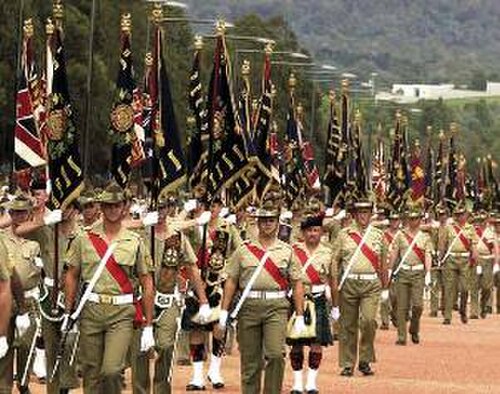


かつてイギリスの植民地であり、後に自治領となったという英連邦の歴史的背景から、インド軍はイギリス軍で使用されているものと同等の軍旗の色を使用している。


大統領軍旗を掲げるのは海軍と空軍のみであり、それはそれぞれの海軍旗と空軍旗に金色の縁取りを施し、一部変更を加えたものである。

大統領旗(陸軍騎兵部隊および空軍飛行部隊用の旗と連隊旗、兵科および軽歩兵用の旗)は、インド軍最高司令官であるインド大統領によって、軍の功績ある部隊に授与されるもので、イギリスの連隊旗に相当する。陸軍では、これらの旗には連隊/大隊の記章と、部隊が獲得した戦功章が記される。
かつては、大統領の護衛隊だけが、英国の慣例に倣い、大統領旗と連隊旗からなる完全な旗列を保有していた。
マレーシアでも、国王旗と連隊旗の形式は同じです。マレーシア軍の国王旗と連隊旗は、マレーシア国王が軍最高司令官としての責務において、また他の8つの州の君主によって授与される旗です。これらの旗は、王室部隊として認められた部隊、大規模部隊の旗(国王旗)、そして新たに連隊旗を授与される部隊(部隊連隊旗)に授与されます。
国王旗は黄色で、中央に稲に囲まれた国章が描かれている。そのため、マレーシアはブルネイと並んで、国旗を最上位旗として使用していない2つの英連邦加盟国の1つである(国旗は全軍の最上位旗である)。両サイドには部隊の戦功が記されている。カントンには、軍のいずれかの軍種(陸軍、海軍、空軍)の軍章が見える。ただし、連隊旗は軍種または兵科(後者は陸軍で使用される)と部隊によって異なる。どちらの旗にも金色の縁取りがある。これらの旗は正式なパレードでのみ使用される。
独立記念日パレードおよび9月21日の軍隊記念日には、パレードに参加する軍は正装を着用しないため、正装を着用する第1大隊ロイヤル・マレー連隊のみが国王旗および連隊旗を携えて参加する。その他の軍については、以下の順序でパレードに参加する。
さらに、 1910年代には、ジョホール王立軍は国内唯一の州防衛軍として、独自の連隊旗を持つ特権を与えられた。
ビクトリア・インスティテューションは、第二次世界大戦における功績により、唯一の私立教育機関として勲章を授与された。
シンガポール軍の軍旗は現在、軍種旗と部隊連隊旗に分かれています。1997年までは、軍種連隊旗と部隊旗もありました。軍種旗はシンガポール国旗に似ていますが、軍種ごとに異なり、白地に軍種の紋章が描かれています。しかし、連隊旗は異なり、部隊または軍種ごとに異なります(空軍と海軍の旗はそれぞれの軍種旗を示し、憲兵隊のようなシンガポール軍全体の一部の司令部を除きます)。共通のデザインは、連隊旗の中央に連隊または司令部の紋章があり、これは所属する部隊の制服の襟章または軍種の色です。どちらも金色の縁取りがあり、重要な機会にのみ掲揚されます。以前の部隊旗は、国旗の白地に部隊の紋章またはバッジが描かれていました。

スリランカが1972年に共和国を宣言した際、国王旗(当初はユニオンジャック、その後は現在の国旗)を所持していた部隊は、それらを廃止した。これらは、1972年に初めて授与された新しい大統領旗に置き換えられた。これまでに授与された旗は以下のとおりである。
連隊旗はイギリスの様式に倣っており、2つの軽歩兵連隊(スリランカ・シンハ連隊とスリランカ・ライフル連隊)は連隊旗を一切携行しない。イギリス王立砲兵隊とは異なり、スリランカ砲兵隊は大統領旗と連隊旗を携行しており、スリランカ工兵隊も同様である。
イギリス空軍と同様に単色デザインを採用している空軍とは異なり、海軍は陸軍と同様に部隊色や指揮系統の色分けを行っている。
海軍および空軍部隊の大統領旗は、それぞれの部隊旗に金色の縁取りを施したデザインである。陸軍の大統領旗は、金色の縁取りを施した国旗で、左側の青緑色とオレンジ色の縞模様の間に国章が描かれている。


イギリス陸軍および他の英連邦諸国の陸軍の歩兵連隊では、各大隊が2つの旗を携行し、これらをまとめてスタンドと呼びます。これらは通常、縦36インチ、横45インチ(91cm×114cm)の大きな旗で、長さ8フィート7インチ+1/2インチ(2.629m)の半槍に取り付けられます。国王または女王の旗(共和国の場合は州旗または大統領旗)は通常、その国の国旗のバリエーションで、金色の布で縁取られ、中央に連隊の記章が配置されます。連隊旗は単色の旗で、通常は連隊の制服の襟/ラペルと袖口の色で、こちらも縁取りが施され、中央に記章が配置されます。 「王立」連隊(つまり、連隊名に「Royal」という語が含まれているか、王族が後援している連隊)のほとんどは、ロイヤルブルーの連隊旗色を持ち、その背景にはユニオンフラッグのカントン(旗竿側の左上隅)が描かれている。アイルランドの連隊、現在のロイヤル・アイリッシュ連隊は、濃い緑色の連隊旗色を持つ。
5つの近衛歩兵連隊の軍旗は、正規歩兵連隊の軍旗のパターンを反転させたもので、各第1大隊の国王旗は深紅に連隊章、王冠、栄誉が描かれ、連隊旗はユニオン・フラッグの変形版に戦功章が刺繍されている。これらの連隊から追加される大隊(現在、6つの連隊のうち4つの連隊から編成された5つの増員中隊が保持している)の国王旗には、上隅にユニオン・フラッグのカントンが描かれている。

伝統的に、ライフル連隊は連隊旗を携行しません。これは、彼らが散兵や狙撃兵として使われていた時代の編成に由来します。個々の部隊は他の部隊と区別するために旗やペナントを掲げることがありましたが、連隊全体としては連隊旗を揃える必要はありませんでした。現在、イギリス陸軍の2つのライフル連隊、ザ・ライフルズとロイヤル・グルカ・ライフルズは、ドラムに戦功章を掲げています。ロイヤル・グリーン・ジャケット連隊は、帽章にも戦功章を刻んでいました。この伝統はザ・ライフルズによって受け継がれており、彼らは連隊の戦功章が刻まれたロイヤル・グリーン・ジャケット連隊のマルタ十字章をベルトバッジとして着用しています。グルカ連隊は連隊旗の代わりに、 1863年に授与された女王の警棒を携行しています。
スリランカのシンハ連隊は、 2017年に警棒を授与された、近代的な非英国系連隊としては初めての部隊となった。2019年には、同様の警棒であるラナ・パラシュワがスリランカ陸軍特殊部隊連隊に授与された。これは、英連邦の特殊部隊に授与された初の警棒である。かつては、マレーシア陸軍ロイヤル・レンジャー連隊が1966年に連隊警棒を授与されていた。
インドでは、ロシアの慣習に倣い、また古くからのインドの伝統に沿って、インド大統領によってすべてのライフル歩兵連隊と偵察歩兵連隊に、警棒の代わりに軍旗が授与される。
イギリス陸軍の騎兵部隊では、国王騎兵旗と連隊旗(重騎兵用)、国王騎兵連隊旗と連隊連隊旗(軽騎兵用)が、歩兵連隊の軍旗に相当する。国王旗は深紅色で、王室の紋章とモノグラム、連隊の栄誉が描かれている。一方、連隊(中隊/連合)旗は部隊ごとに背景色が変更可能で(時には緋色)、王冠の下に連合バッジ、バッジの両側に王室のモノグラム、その下に部隊の栄誉が描かれている。軽騎兵連隊旗は燕尾型で、連隊の紋章と栄誉が描かれている。しかし、1950年代以前は、軽騎兵連隊の連隊栄誉と記章は、鼓笛隊のティンパニ(後に下馬隊のスネアドラム、バスドラム、テナードラム)に付けられていた。竜騎兵連隊の場合は、国王騎兵旗と連隊旗があるため、順序が異なっている。
近衛騎兵隊には、以下の独自のカラーがあります。
軍旗には戦功章が織り込まれており、国王旗には第一次世界大戦と第二次世界大戦の戦功章が、連隊旗にはその他の戦役の戦功章が記されている。連隊旗には、前身の紋章や独自の戦功章など、その他の特徴も記されていることがある。重要な例としては、1801年のエジプト戦役に参加した連隊が掲げたスフィンクスの紋章が挙げられる。近衛歩兵連隊は、両方の軍旗に全ての戦闘の戦功章を記している。連隊が複数の大隊で構成されている場合は、どの大隊に所属しているかを示す識別マークが軍旗に記されている。
様々な場面で、色に様々な装飾を加えることができます。
イギリスでは、第41コマンドー、ロイヤル・マリーンズ、そしてグロスターシャー連隊第1大隊もPUCを授与され、連隊旗のストリーマーを掲揚することが許可された。
連隊にとって重要なものであるため、新しい軍旗が授与される前に、それらは聖別される。

英国空軍の国旗はスカイブルーのシルク製で、サイズは約36インチ×36インチ(91cm × 91cm )です。以下の国旗が授与されています。
英国空軍の国王旗は、英国空軍旗(RAF Ensign)の寸法を変更したバリエーションである。RAFのラウンデルは旗の下部フライ側に移動し、中央には再び王室のモノグラムと王冠が配置される。その他の旗では、中央に部隊章が、第1四分の一に王室のモノグラムと王冠が配置される。
イギリス空軍の飛行隊旗は、連隊旗に相当するものです。空軍ブルーの旗に金色の縁取りが施され、飛行隊の記章と栄誉が記されています。
イギリス空軍のカラーはすべて、スカイブルーの縁取りで囲まれています。
チェルシー王立病院は、 2002年にエリザベス2世女王から君主のメイスを贈呈されるまで、その歴史を通じて独自の旗印やその他の特徴的な紋章を持っていませんでした。現在、このメイスは王立病院のすべての式典で、入院患者の一団によってパレードされています。
英国海兵隊には、単一の国王旗があり、中央に錨と君主のモノグラムが織り込まれたユニオン・フラッグです。上部には、唯一の戦功章であるジブラルタルがセント・エドワード王冠の上に描かれた巻物があります。下部には、月桂冠(ベル・アイルの戦いを表す)に囲まれた地球儀(英国海兵隊が獲得した多くの戦功章を表す)があり、その下には海兵隊のモットーが書かれた巻物があります。4つのコマンド部隊(海兵隊の大部分を構成する大隊規模の部隊)それぞれに国王旗があり、違いは紐と房飾りの色だけです。各コマンド部隊には独自の連隊旗もあります。連隊旗は濃紺の旗(海兵隊は「王立連隊」に分類されるため)で、槍の先端に小さなユニオン・フラッグが描かれています。この連隊旗は、国王旗と同様の中央装飾が施されているが、ジョージ4世のモノグラムが国王のモノグラムに置き換えられ、部隊番号はその下に配置されている点が異なる。王室のモノグラムは他の四隅に配置されている。連隊旗には、金色と以下の色を組み合わせた色付きの紐と房飾りも付いている。
旧第41コマンドー部隊は朝鮮戦争での功績により殊勲部隊章を授与され、連隊旗にその功績章を付けることが許可されました。[ 10 ]
英国海軍における国王陛下の艦船の色は以下の通りです。
さらに、英国海軍の各主要部隊には、それぞれ独自の国王旗があり、これはホワイト・エンサインの変形版で、歩兵連隊の旗の寸法に合わせて寸法が変更されています。中央にはガーター勲章の中に現国王の紋章が描かれ、その上に王冠が載せられています。
陸軍の連隊旗とは異なり、英国海軍の国王旗は戦功章がなく、すべて同一である。以下の部隊が英国海軍の国王旗を保有している。
英国海軍補助艦隊( RFA )は、民間組織としては異例の国王旗も保有している。これはRFAのブルー・エンサインの変形版で、寸法が英国海軍の国王旗に合わせて変更されている。中央には同じ王室の紋章が描かれている。
歩兵部隊は、国旗を基にした黒、黄、赤の三色旗を縦に配した正方形の旗(ドラポー/ヴァンデル)を携行する。旗の幅は15mmで、金色の縁取りが15mm四方を囲んでいる。部隊が表彰された戦功名は、表面にはフランス語で、裏面にはオランダ語で、金糸で直線状に刺繍されている。
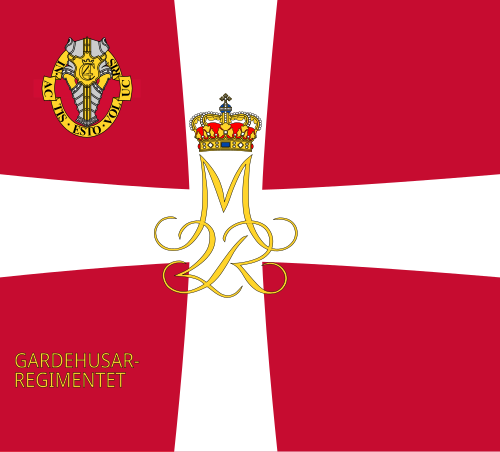
デンマーク海軍、陸軍、空軍の部隊は部隊旗(デンマーク語:regimentsfane)を掲げ、近衛騎兵連隊は大隊旗(bataljonsfane)を掲げる。大隊旗は105×140cmで 、かつての騎兵部隊はそれよりやや小さい旗を掲げる。[ 11 ]この旗はダンネブロ旗の変形であり、マントヴァ十字と呼ばれる曲線状の白いダンネブロ十字が旗竿の端から旗竿の幅の約半分の位置にある。十字の中央には金色の王室モノグラムが刺繍され、旗竿上部には金色の部隊章が、旗竿下部には金色の部隊番号、名称、またはその両方が刺繍されている。一部の連隊は旗竿上部に追加のマークがある。例えば、ユスケ竜騎兵連隊は旗竿上部にヘンリック王子のモノグラムがある。旗の先端は装飾的な金色の透かし彫りの槍先で、中央に王室モノグラムがある。槍の穂先の下には、1本または複数本の戦役旗(fanebånd)を取り付けることができる。旗は2つの房飾りが付いた金色の紐で装飾され、細い金色の紐で縁取られている。旗を槍に固定するスリーブは装飾釘で留められており、最初の3本の釘はそれぞれ君主、祖国、そして連邦を表している。
フィンランド国防軍の部隊は、旅団または旅団相当の部隊 ( joukko-osasto )であれば単一の旗を持つ。大隊またはそれに相当する部隊 ( joukkoyksikkö ) は旗を持つことができる。大隊旗は、かつては独立していたが現在は旅団の一部となっている大隊または連隊に属する場合、「伝統的」と呼ばれる。パレードで使用される場合、すべての旅団旗と大隊旗は常にサーベルを持った2人の武装将校によって儀式的に守られ、旗手は通常下士官である。中隊およびそれに相当する部隊はペナントまたは旗を持つことができるが、これらは部隊の隊列内で運ばれ、旗手は与えられない。[ 12 ] [ 13 ] : 30-35徴兵された兵士を訓練するか、職業軍人のための軍事教育機関であることによって軍事訓練を行う部隊のみが独自の旗を持つ権利を有する。国防司令部傘下の様々なレベルの本部、軍楽隊、軍事機関は独自の色を持たず、必要に応じて通常の色の代わりにフィンランドの燕尾旗を国旗の色として使用する。

フィンランド陸軍、海軍、空軍には、軍種固有の旗はありません。国家パレードでは、常に旅団レベルの部隊が独自の旗を掲げて代表します。しかし、第27猟兵大隊の歴史的な旗である猟兵旗( jääkärilippu )は、毎年6月4日と12月6日の国防軍の国家パレードで、国旗のすぐ後ろに掲げられます。この位置は、猟兵運動とその隊員(若い軍人の訓練者および指導者となり、その多くが第二次世界大戦で師団長や軍団長になった)が、文化、教義、指導力などあらゆるレベルでフィンランド国防軍に与えた深い影響を認めるものです。[ 13 ]: 30-35 [ 14 ]
軍隊の宣誓は常に旅団レベルの部隊の旗の前で行われる。[ 15 ]
フィンランドの軍旗章学は、スカンジナビア、ドイツ、ロシアの伝統が混ざり合ったものです。1918年から1919年に発行された最初の部隊旗は、主に17世紀のスウェーデン連隊旗をモデルにしており、つまり、部隊旗の国家様式は試みられませんでした。17世紀のスウェーデンの旗には、さまざまな地方や部隊の紋章が特徴で、それが主要なテーマとして採用されました。さらに、一部の部隊には、ロシアやドイツの伝統を彷彿とさせる旗が発行されました。[ 16 ]第二次世界大戦後、歩兵だけでなく砲兵、戦闘支援、空軍、海軍の部隊にも、西側諸国やソ連の影響を受けて旗が発行されるようになり、新しい旗には、軍種の伝統的な色や共通のデザイン要素が採用されました。たとえば、ほとんどの工兵部隊の黒旗などです。[ 13 ] : 32 1世紀にわたる組織変更と相まって、これは、下のギャラリーに示されているように、色彩と象徴性の非常に豊かな多様性をもたらします。
部隊旗には、部隊レベルの勲章、すなわち自由十字勲章4級またはそのリボンのみを付けることができる。 [ 17 ]勲章を付けている学校以外の部隊はすべてフィンランド内戦の功績に対して勲章を付けているが、多くの軍事学校や士官学校は、士官候補生や卒業生の第二次世界大戦の集団的功績に対して授与された勲章を付けている。[ 18 ] [ 19 ] [ 20 ] [ 17 ]
杖の先端は、フィンランドのライオンがあしらわれた様式化された透かし彫りの槍先である。ただし、部隊が自由十字章を授与されている場合は、それが先端として用いられる。しかし、ポリ旅団は、旗に関する規定が制定される前の1918年4月に既に旗を授与されていたため、旗の先端には装飾のない槍先を使用している。[ 16 ] [ 13 ]: 33
独自の旗色を与えられていないフィンランド国防軍の部隊や機関は、フィンランドの無装飾の燕尾旗を国旗色として使用している。フィンランドの慣習では、フィンランドの旗にはフリンジは付いていない。しかし、竜騎兵、猟兵、通信、砲兵部隊の部隊旗にはフリンジが付いている。[ 21 ] [ 13 ]


1188年1月、イングランド王ヘンリー2世とフランス王フィリップ2世の会談で、両者が十字軍に参加すること、そしてヘンリー2世は白十字、フィリップ2世は赤十字を使用することが合意された。[ 26 ]後にこの使用法は逆転し、イングランドは白地に赤十字、フランスは赤地に白十字を使用するようになった。
連隊旗の使用がヨーロッパで広まるにつれ、フランスの連隊旗のデザインの基本として左右対称の白い十字を用いる習慣が生まれ、18世紀までにはほぼすべての連隊が白い十字を持つようになった。連隊はカントンの色によって区別された。
フランス革命と新しい三色旗の登場後、1794年に十字は姿を消し、三色旗のさまざまな配置が使われるようになった。ナポレオンはまず1804年に赤と青の白地にシャップ・ショースを配した旗に標準化し、1812年には現在のフランス国旗に統一した。ナポレオン軍の旗竿の頂上には、古代ローマのアクィラを模した帝国鷲が置かれ、実際には旗そのものよりも連隊にとって重要なシンボルとなった。


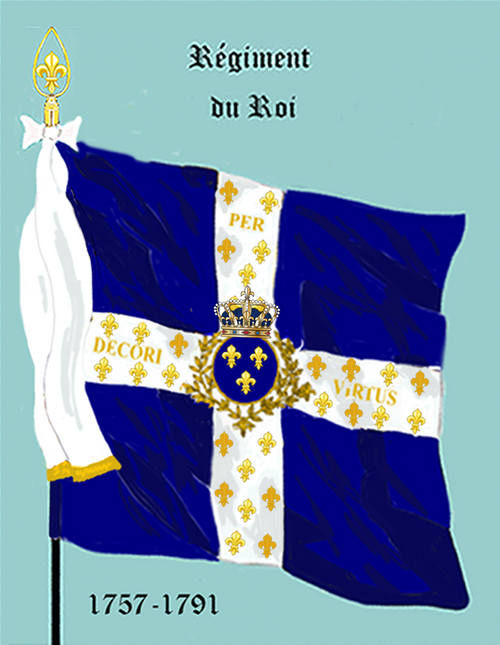


現代のフランス軍は、公式には王立陸軍および海軍の後継組織とはみなされていないが、個々の部隊の多くは第一共和政の成立以前にまで遡る歴史を持っている。そのため、フランス革命以前に王立陸軍および海軍が戦い勝利した戦い(パテー、フォントノワ、チェサピーク、ポルト・プラヤなど)は、連隊旗に戦功として記されることはない。しかしながら、現代のフランス陸軍が今なお輝かしい戦いとみなす古き時代の戦いの名称は、艦船や装甲車両に冠され、記念日として記憶されている。
例えば、ルイ11世の治世中の1479年に創設された第1歩兵連隊は、 15世紀以来数々の戦いを繰り広げてきたが、その戦功が記録されているのは1792年以降のことである。
以下の公式文書は、陸軍(armée de Terre)の軍旗に関するものです 。
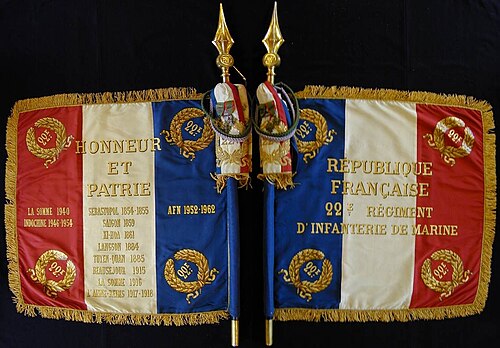
連隊旗は 90cm×90cm の三色シルク製正方形旗で、軍旗はそれより小さく64cm ×64cm で、金色の縁取りが施されています。どちらも 長さ2.11m、 直径32mmの棒(軍旗用の棒は若干短い)に取り付けられ、先端には 38cmの槍状の飾りが付いており、片面にはフランス共和国の頭文字「RF」、もう片面には部隊名または部隊番号が記されています。
槍から垂れ下がるネクタイは、 長さ90cm、 幅24cmの2本の三色シルクリボンでできており、8cm の金色のフリンジの端には部隊番号またはモノグラムが金で刺繍され、樫と月桂樹のリースで囲まれています。部隊に授与されたフランスの勲章や四角い飾り[注1 ]はネクタイにピンで留めるか結び付け、外国の勲章や飾りは赤いベルベットのクッションに載せて持ちます。
色に関するすべての文字は金糸で刺繍されており、色の四隅にはアンティークのオークと月桂樹のリースで囲まれたユニット番号(またはモノグラム)が記されている。
色の表側:
色の反転:
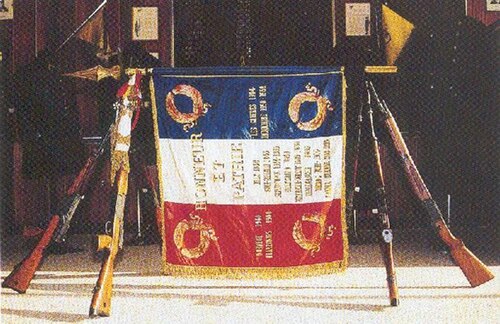
伝統的に、陸軍のすべてのライフル大隊(歩兵猟兵大隊とアルペン猟兵大隊)は、共通の軍旗を掲げている。各大隊はペナント(旗)を所有しており、ライフル連隊旗(猟兵旗)は毎年、異なるライフル大隊が持ち回りで保持する。そのため、金色の縁取りのあるこの軍旗には、すべてのライフル歩兵大隊が獲得した戦功がすべて記されている。


空軍(armée de l'Air )部隊の旗の色は、1933年に独立した軍事部門として分離した陸軍の旗の色とほぼ同じである。一般的に、飛行隊(航空団)、地上戦闘航空団、空軍基地および宇宙基地、訓練センター、空軍訓練大学よりも小規模な空軍部隊には旗は授与されない。
国家憲兵隊(Gendarmerie nationale )の各部隊は、陸軍の部隊と非常によく似た旗を持っています。各地域(旧軍団)、訓練センター、大学、共和国親衛隊連隊にはそれぞれ旗または軍旗があり、全部で56の旗と2つの軍旗があります。県憲兵隊部隊と憲兵隊訓練センターの旗の裏面には、陸軍部隊と同じモットー(Honneur et Patrie)が記されていますが、機動憲兵隊の旗には独自のモットー「Valeur et Discipline (勇気と規律)」が記されています。ほとんどの下位部隊または小規模部隊は、幅50cm、高さ40cmのペナントを使用しています。
国家憲兵隊には、総局の武装警備の下、独自の公式旗があり、そこには5つの戦功章が記されている。

フランス海軍(Marine nationale )の艦船が着用する旗は、国旗とジャックから構成される。
現在、国旗やFNFLジャック以外の旗を持つ海軍部隊はわずか8つしかない[ 29 ]。1985年12月5日の勧告808 EMM/CABによれば、旗を授与できる海軍部隊は、連隊と同等の人員を持ち、戦闘や陸上での任務に特化している部隊(またはそのような部隊から伝統を受け継いだ軍団)、および海軍の訓練センターや大学でなければならない。旗は陸軍部隊の旗とよく似ているが、違いは、海軍砲兵隊(頭文字CM)と艦隊工兵士官学校(頭文字EAMF)を除いて、部隊名の代わりに錨を囲む隅の月桂冠である。
本日現在、これらのユニットは以下のとおりです(括弧内は現在色分けされている箇所です)。
かつてフランス帝国の一部であった独立国の軍隊の多くは、軍事兵器の組織、陸海軍の階級構造、制服の様式に関して、フランス軍と非常に類似した、あるいは同一の慣習や伝統を共有している。実際、脱植民地化が平和的な政治交渉によって行われた国々(主にフランス領西アフリカとフランス領赤道アフリカ)では、フランス植民地時代の部隊が、新たな国軍の基盤を形成するために育成された旧植民地に直接引き継がれることもあった。この遺産には、色彩作法(色彩を尊重し、手入れし、行進する方法)だけでなく、新しい国旗のデザインに合わせたデザインも含まれていた。
それとは対照的に、ベトナムやアルジェリアのように、血みどろの解放戦争の末に独立を果たした国々では、冷戦という状況下で、フランスの軍事文化は強く拒絶され、共産主義のソ連式または中国式の軍事文化(軍旗、階級、制服、行進のペースなど)に取って代わられることが多かった。
フランスは、イギリスと並ぶ世界の大国の一つとして、征服によって影響力を行使しただけでなく、軍事力の威信によっても影響力を行使した。19世紀のヨーロッパにおける植民地拡大の最盛期には、フランス陸軍とイギリス海軍はそれぞれ、陸上と海上において史上最強の軍隊と見なされていた。そのため、多くの軍隊が両国の軍事文化や海軍文化を模倣するようになった。世界のほとんどの海軍がイギリス海軍の制服(士官はダブルブレストの紺色のジャケットとピークキャップ、下士官兵はブルージーンズの襟など)を採用したため、1860年代から1870年代にかけて、多くの陸軍がフランス風の制服を採用し(南北戦争時の北軍と南軍、太平洋戦争時のチリ陸軍、ロシア帝国陸軍など)、時にはフランスの部隊(例えばズアーブ連隊)を輸入することさえあった。 1870年から1871年にかけての普仏戦争でフランスが予想外の敗北を喫し、軍服に対するフランスの影響力は一時的に薄れた。その後、多くの軍隊がプロイセン式の軍服を採用するようになった(この傾向の好例として、チリ兵はケピ帽をピッケルハウベン帽に替えた)。
連隊旗に関して言えば、フランスの影響は主に、フランスと強い文化的、経済的、政治的なつながりを持つ小規模なヨーロッパ諸国の軍隊に見られ、特にベルギーやルーマニアのように、国旗自体がフランスの国旗を模範としている国々に顕著に見られた。

ドイツ連邦軍の各部隊は単一の軍旗のみを使用する。部隊旗は国旗の正方形版で、中央に連邦紋章(国章)が配置されている。旗は黒、赤、金のレース模様の縁取りで囲まれ、三辺は金色のフリンジで縁取られている。先端部は金メッキのブロンズ製透かし彫りの槍先で、黒と銀の鉄十字が囲まれている。先端部の下には、上部に部隊章、端に金色の刺繍で部隊名が記されたストリーマーが取り付けられている。これらのストリーマーは、陸軍(Heer)部隊は赤、海軍(Marine)部隊は青、空軍(Luftwaffe)部隊は白である。ストリーマーの長さは旗の旗竿と同じである。[ 30 ]
この伝統は東ドイツの国家人民軍でも守られており、部隊の色は国旗を反映したものだった。
第二次世界大戦まで、ドイツ軍部隊は所属部隊に関わらずプロイセン式の軍旗の色を維持していたが、武装親衛隊は国旗の色に従っていた。

伝統的に、陸軍歩兵連隊と戦車/騎兵連隊は、単一の色/旗または軍旗(ギリシャ語: Πολεμική Σημαία)を持っています。これは青地に白い十字があり、中央に聖ゲオルギオスと竜が描かれています。 [ 31 ]この旗には個々の連隊を識別する特徴はありませんが、戦功が旗に追加されることもあります。連隊の識別は旗竿に記されています。このパターンは1830年代から使用されており、君主制と共和制の期間で変更はありません。ギリシャ陸軍士官学校にも軍旗が授与されており、士官候補生は1941年のクレタ島の戦いに参加しました。同様の旗は空軍にも存在し、大天使ミカエルが描かれています。最近では、陸軍下士官学校と警察学校にも軍旗が割り当てられました。
陸軍、警察、空軍とは異なり、ギリシャ海軍は海軍旗と国旗の両方に、後にギリシャの近代的な公式国旗となった旗を使用している。ギリシャ沿岸警備隊とギリシャ消防局は、海軍の旗のデザインを使用している。
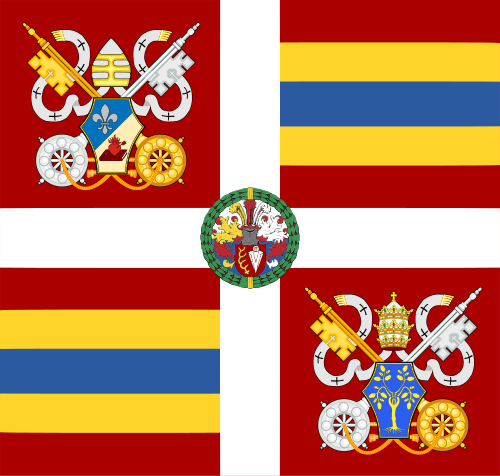
バチカン市国の軍隊であるスイス衛兵隊の公式カラーは、4つの区画から構成されています。第1区画には現教皇の紋章が、第4区画にはユリウス2世の紋章が描かれています。第2区画と第3区画には、部隊の制服の色である赤、黄、青の横縞が入っています。金色の縁取りはありません。
旗には、司令官の紋章が月桂冠の中に描かれ、背景色は司令官の所属するカントン(州都)の色である。旗のデザインは、新しい教皇の選出と新しい司令官の任命に伴い変更される。

ハンガリー国防軍の120cm ×140cmの部隊旗は、1991年3月15日以来、ハンガリー国防軍全部隊の現行規定色です。旗は白いサテン繊維でできています。紋章の高さは57cm、幅は58cmです。紋章は金と銀の刺繍が施された絹製です。旗の縁は、長い方の辺に11cm×11cm、長い方の辺に9cm×9cm、長い方の辺に10cmの赤と緑の炎で囲まれ、15cm伸びています。炎の始まりと終わりは両側とも赤色で、炎の舌は旗の四隅にある緑色の円で区切られています。旗竿には、竿に合わない3つの自由端に5mmの国旗色の絹のリボンがあり、2つの自由端には10cm×10cmの国旗色の絹のリブがあります。旗竿の白い部分は、旗竿に一度ねじり、等間隔の真鍮釘3本(25-25-25 mm)で固定されています。旗竿は長さ21センチメートルの様式化された葉の形をしたサンドブラスト仕上げの真鍮製で、両面にバロック様式のブロンズ製のハンガリーの国章が付いており、盾ホルダーはありません。棒は長さ238センチメートルの円筒形で、緋色の漆塗りで、下部3分の1で折り畳み可能です。旗竿の分離線には真鍮のリングがあり、下端には真鍮のキャップが付いています。[ 32 ]

騎兵以外の陸軍部隊の軍旗(バンディエラ・ディ・ゲッラ)は、 99cm×99cmの正方形の絹製の国旗三色旗である。これは、緑色のベルベットで覆われ、螺旋状に並べられた装飾的な真鍮の釘で飾られた、長さ2.2mの木製の槍に取り付けられる。槍の先端には、高さ35cmの装飾的な金メッキの真鍮製の槍先があり、そこには五芒星とRI(イタリア共和国の略)のモノグラムが彫り込まれている。この槍先は、部隊名と設立年月日が刻まれた金メッキの真鍮製の球体の上に取り付けられている。槍には長さ67cmの銀の紐が2本付いており、それぞれに長さ10cmの銀の房飾りが付いています。また、8cm×66cmの青い絹のネクタイには両端に8cmの銀の房飾りが付いており、部隊の勲章がそこにピンで留められています。勲章のリボンは重なり合って、勲章がネクタイから垂れ下がるようになっています。イタリア陸軍の騎兵部隊は、バンディエラ・ディ・ゲッラと同じデザインのステンダルド(旗)を携行しますが、その大きさは60cm×60cmです。

リトアニア軍の軍旗は、ロシアとイギリスの慣習、そしてアメリカの伝統を融合させたものとなっている。国旗は「国旗」として指定されているが、儀仗兵が式典で掲揚するにとどまる。陸軍の部隊旗は、金または赤と緑の二色で縁取りが施された、帝政ロシアの様式を踏襲しており、中央にはヴィティス(表)と部隊章(裏)が描かれている。海軍は、イギリスの慣例に従い、金色の縁取りを施した海軍旗の儀礼用を軍旗として使用している。

オランダ軍では、軍旗の色(騎兵連隊、野戦砲兵連隊、騎馬砲兵連隊の場合は軍旗の色)はオレンジ色である(ただし、士官候補生隊の色は赤色)。いずれも金色の縁取りが施されている。
表面には、連隊に(元の)色を与えた君主の王室のモノグラムと、その下に部隊名(連隊または軍団が設立された年を含む)が金で記され、四辺には月桂樹の枝が描かれている。戦功章は表面の角、場合によっては王室のモノグラムの左右にも追加される。追加の戦功章が授与された場合は、新しい色を授与されるまで槍に取り付けられたリボンに記される。戦功章は場所(例:ワーテルローまたはロッテルダム)、地域(西ジャワまたはアフガニスタン)(海域を含む、例:ジャワ海)、または軍事作戦(Tiendaagse VeldtochtまたはVeldtocht van 1815 )を指す。オランダ海兵隊の色旗を除き、戦闘の年が必ず追加される。
裏面には、マントのないオランダ王国の紋章が描かれている。盾は青色で、小さな縦長の長方形が散りばめられている。メインの紋章は、王冠をかぶった立ち上がったライオンで、上の前足に剣、下の前足に7本の矢の束を持っている。ライオンと長方形は金色で、剣の刃は銀色である。盾の両側には、見る人の方を向いている金色の立ち上がったライオンが支えている。盾の上には金色の王冠があり、その下には、金色の王室のモットー「Je maintiendrai」(フランス語で「私は維持する」)が書かれた青い巻物がある。盾とライオンは、オレンジと青のリボンで結ばれた緑のヤシの葉と樫の葉のリースで囲まれ、四辺には波打つ金色の月桂樹のリースが巻かれている。
ウィリアム軍事勲章やその他の勲章は、授与された際に槍に取り付けられます。槍の先端には、台座の上に剣と7本の矢の束を持ったライオンが飾られています。伝統的に、旗は87cm ×87cm (槍の 長さは2.50m)です。近衛連隊は同じ旗を携行しますが、細部が若干異なります。王立陸軍士官学校と王立陸軍学校の旗にも同じことが言えます。旗は 50cm×50cm で、槍の 長さは2mです。[ 33 ]
ヴァン・ヘウツ連隊だけが完全な英国式の旗竿を持っており、朝鮮戦争で連隊が使用した国旗の変形版が連隊旗として使用され、オレンジ色は国王旗(または女王旗)として使用されている。
ノルウェー歩兵部隊は軍旗を掲げており、1つ目は(国王旗)国旗、2つ目は(連隊旗)各部隊固有のものである。

ポーランド軍の標準的な軍服の色は、金色の縁取りのある赤と白で、そのデザインはポーランド第二共和国時代に遡り、以前の色を基に標準化されたものです。裏面には軍のモットーである「神、名誉、祖国」(ポーランド語:Bóg, Honor, Ojczyzna )が記され、表面の中央には金色の月桂冠に囲まれたポーランド軍の鷲(軍種によって異なる)が描かれています。表面には部隊名も刻まれています。鷲はどの色でも先端の装飾としても用いられています。

ポルトガル軍の各司令部、部隊、部隊、施設にはそれぞれ国旗の色があり、これはポルトガル国旗のパレード用バージョンとみなされている。国家共和国警備隊、公安警察、一部の消防署にも国旗の色がある。
歩兵部隊が携行する旗(ポルトガル語:bandeiras、文字通り「旗」)と騎兵部隊が携行する軍旗( estandartes )という伝統的な区別は、1960年代に廃止され、すべてが「国家軍旗」( estandartes nacionais)として統一的に再分類された。同時に、別の種類の軍旗、すなわち紋章軍旗が導入され、それぞれが対応する部隊の紋章的シンボルを反映している。
軍旗の公式モデルは1911年に制定され、 旗竿側が120cm 、旗尾側が130cmで、縦に緑と赤に分割され、中央に国章が配置され、白い巻物で結ばれた2本の金色のオリーブの枝が周囲を囲み、「 Esta é a Ditosa Pátria Minha Amada(これが我が愛する至福の祖国)」というモットーが記されていると規定されている。この公式モデルが存在するにもかかわらず、軍の各部門は長年にわたり、さまざまなデザインと寸法の異なる軍旗を採用してきた。
2020年3月、全軍種で統一された国旗が採用されました。これは1911年の公式モデルを基にしていますが、 旗竿側と旗尾側ともに120cmです。部隊名、紋章、戦功章は、旗の先端の基部に取り付けられたグラバットに刺繍され、グラバットの色は軍種によって異なります。海軍部隊は、国旗の布地のカントンに伝統的なキリスト十字勲章を刺繍することが許可されました。軍の各司令部、部隊、部隊、施設は、10年以内に古い国旗を新しいモデルに交換する必要があります。
国民共和国警備隊と公安警察の国旗は1911年のモデルを踏襲しており、部隊名を白い巻物の中に記し、それを旗の地色に挿入するという伝統的な慣習を今もなお維持している。
ルーマニア参謀本部によれば、「軍旗(drapel de luptă)は、軍事的名誉、勇敢さ、そして栄光の象徴である。それは、ルーマニア国民の国家の自由のための過去の闘争と統一の伝統を想起させ、すべての兵士に祖国に忠誠を尽くし、ルーマニアの統一、主権、独立を何としても守るという神聖な義務を思い出させる」。
軍旗は、国防大臣、内務大臣、またはルーマニア情報局長官の助言に基づき、大統領令によって軍部隊に授与されます。国防省によると、この軍旗の完全な説明は以下のとおりです。

ルーマニアの軍旗は二重絹織物で、寸法は100 × 66cm (2:3の比率)です。キャンバスはルーマニア国旗の色で、表裏は同じです。29 × 21.5cm の国章は、黄色の帯の中央、基線から18cm上に配置されています。キャンバスの端から5cmの四隅には、金糸で武器の紋章を囲むように樫の葉のリースが縫い付けられています。
旗竿に取り付けられていない旗の3辺には、金色の糸で作られたフリンジ( 長さ5~7cm)が飾られており、旗の先端の四隅には同じ素材の房飾り(長さ10~ 12cm)が垂れ下がっている。旗は長さ70cmの 酸化防止加工された金属棒で旗竿に取り付けられている。
茶色の木材でできたこの柱は、 高さ240cm、 直径3.5cmです。基部には 長さ4cmの真鍮製の円筒があり、底部は閉じられています。この柱は、下部が金メッキされた真鍮製のリングと、上部が 金メッキされた同じ材質の高さ6cmの円筒形の保護管によって柱に取り付けられています。リング( 高さ3.2cm)には部隊名が刻まれています。柱の先端には、長さ6cmの真鍮製の別の円筒が取り付けられています。その上に、高さ15cm、幅11.5cmの金メッキされた銅板製の 鷲(ローマの鷲に似ている)が配置されています。右を向いている鷲の翼は下向きで、爪にはユピテルの雷が握られています。鷲は、同じ金属でできた直方体の台座(10 × 3.5 × 2cm )の上に置かれており、台座の下部には高さ3.4cmの装飾が施されています。支柱は真鍮製の円筒にねじ込まれており、前面には「名誉と祖国」というモットーが刻まれている。裏面には各部隊の名前が刻印されている。
Other features of the military colours are a tie for attaching decorations, six sashes for the armed escort of the colour guard and the colour ensign and a protective cover of impermeable fabric.
The military colours of navy vessels are identical to their ensign. The ensign is in turn identical to the national flag, being made of ordinary canvas in various dimensions, according to the ship's rank, size and place of hoisting. They are flown in their vessels in accordance with relevant regulations.
Until Peter the Great assumed the office and throne of Tsar in 1685, various flag designs were used by land and naval units of Imperial Russia.
In the 18th century the Imperial Russian Army started to have colours of its own. Starting from the 1730s, Cross style flags in the colours of the various military units appeared in various units: large flags for the infantry and the other arms and small flags for the cavalry and horse artillery. These flags mirrored the Commonwealth military colours of today, with one colour set as the state colour and the rest as the regimental and battalion or squadron colours. Year 1797 regulations introduced new designs for the infantry—for regular units, the state colour being white with the state emblem and the company, battalion and/or regimental colours using the assigned colours of their units, for the Imperial Guard a different emblem was used, and the design was identical. New colours were issued in 1800, but only Guards units used them.
Regulations set in 1813 unified infantry unit colours into one. Guards units used the orange and black of the Order of Saint George with the facing colours and unit emblem at the centre.
All these years, the cavalry colours were different.
Naval flags, until 1861–62 (with a brief break in the late 1790s) whilst using the St. Andrew's cross in blue on white, mirrored the British Royal Navy.

From 1942 onwards, each regiment in the armed forces of the Soviet Union (especially the Army and Air Force) had its own colour, which was produced to a standard design:
The colour was gold fringed.
The former designs had a red star on the reverse with the name of the Central Executive Committee and later, the Supreme Soviet of the USSR surrounding it, and the obverse had the unit inscription below the coat of arms of the Soviet Union, which had the Soviet Union state motto ("Workers of the world, unite!") and the red star with the hammer and sickle inside (both were on the flag of the Soviet Union) above it (the latter was near the hoist). Naval flags until 1935 sported different designs. (Distinguished units would be given a second colour, the Revolutionary Red Banner of Honour, by the all-Union CEC (before 1924 by the All-Russian Central Executive Committee).)
The Soviet Navy colours had the 1935 official design with them (it was later revised in 1950), with additions for units honoured with the Order of the Red Banner, but in 1964 the Supreme Commander's and Defence Minister's own naval colour and the colours of the Navy Commander-in-Chief (formerly the Minister for the Navy) and Chief of Naval Operations were issued with different designs used, with the addition of the Armed Forces General Staff's own naval colour. The first colour was red with the USSR state arms, the next two had the arms with blue stripes indicating office rank, and the final two were adaptations of the naval ensign (with a different ensign with the rank) plus the stripes. The 1935 design (that of a white field with a blue lower stripe and the red star plus the hammer and sickle above the blue stripe) replaced a much earlier, post-revolutionary naval colours design adopted in 1925. In 1944 a different flag was issued to the Navy for its land based units – the same design used by the Army with a different obverse having the unit name below the naval ensign.
Early flags even had the RKKA and RKKF insignia (the Army General Staff, represented by crossed blue rifles and later became the General Staff's naval colour until 1964, the Naval General Staff and the Army Naval Operations Staff, later the flag of the People's Comissariat for the Navy on its 1938 creation and was issued with two new colours for the Navy Commissar and Deputy Commissar) beside the hammer and sickle, even the flags of the People's Commissar for National Defence and that of the Navy General Staff and the various flags of naval officers which had the ensign on a canton surrounded by a red field, derived from the Navy Commissar's. The cruiser Aurora since 1968 has had a different version of the ensign, flanked by the Order of the Red Banner and of the Order of the October Revolution on the top sides of the star, as the Aurora was the only naval recipient of the latter order in 1967 while in 1918, the Order of the Red Banner was conferred to the ship.
The colours of those regiments that were classed as "Guards" was slightly different as per 1942 regulations. These had the portrait of Lenin, the Za nashu motto and the abbreviation "USSR" (СССР, SSSR) on the obverse and the small star with hammer and sickle in its centre, unit's name and a motto on the reverse of the colour. The mottoes were different for every regiment (for example, those regiments made Guards in the Great Patriotic War bore the motto "Death to the German invaders", Смерть Немецким захватчикам, Smyert' Nyemyetskim zahvatchikam). In some Guards Armies and Corps, different designs on the obverse and reverse were used. Even the Lenin portrait was different in these colours. All of them were gold fringed.
The Navy's Guards units still had the 1935 design, with the addition of the Guards ribbon below, except for units which were honoured with the Order of the Red Banner and became Guard units later. The difference is in the red five-pointed star, in which Red Banner Guard unit flags had applied the Guards ribbon below aside from the Order of the Red Banner on the star for units that had the order bestowed on their colours earlier. Units which used the 1944 regimental colour design but adapted for the navy's guards units[34] included air and marine units which still had the obverse of Army and Air Force guards units standards.
Since the birth of the Armed Forces of the Russian Federation in the aftermath of the dissolution of the Soviet Union, the old Soviet unit colours were retained. Starting in 1998, the traditional Imperial Russian Armed Forces flag designs were reinstated; however, the new designs began to appear in the early years of the 21st century in the Army and Air Force. But the Russian Navy's old naval colour (St. Andrew's cross in blue on a white field) began to be used again in 1992. It has several variations, and the old jack colour of the Soviet Navy (pre-1935) soon became its jack colour, with the red star with the hammer and sickle removed. The unit colours (especially those of the Navy honour guards) have the same design with the unit insignia at the centre of it while Guards units and bemerited and decorated units apply a different version of the colour.
The new Army and Air Force unit colours are square shaped, have a St. Andrew's cross in the colours of the Ribbon of Saint George, and with the unit insignia in the middle of the obverse and the national arms at the reverse, with the service branch emblem on the corners. These colours are the basis for similar ones used today in the various Russian uniformed services.


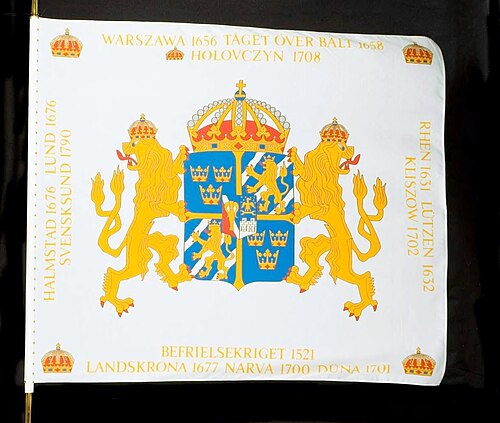
The design of the colours of the Swedish Armed Forces of today dates back to several separate regulations from early 19th century up to the first united regulations of the three fighting services in 1972. The majority of the army colours are dated back to the summarized regulations of 1950. The colours of the Swedish Amphibious Corps (former Swedish Coastal Artillery) were decided in model 1944. The colours of the Swedish Air Force were modelled in 1938. Most older colours are embroidered by hand while younger ones can be both machine and handmade.[35] When a military unit, as regards traditions, is amalgamated with another, both colours will be carried together. In principle this will go on as long as both colours are usable. When one of the two (or more) no longer can be repaired, the unit will be granted a new colour. This new colour will reflect the traditions of both units without altering the prescribed model.[35]
Exceptions from this rule are:[35]
A colour is normally granted to the following by the King, by the Prime Minister or the Commander of the Armed Forces:[35]
The Flag of Turkey is used by the Turkish Armed Forces as a National Colour, and thus has distinguishing features:

It is presented and uncased with a ceremony and moves under the command of the Colour Guard. This unit consists of 4 personnel: the ensign holding the flag, two armed colour guards and the Colour Officer. There are selection criteria for the colour guard. The ensign, flag guard and colour officer must be distinguished among their peers with their education and discipline. The colour officer must be ranking as a subaltern officer.
The General Directorate of Security of the Ministry of the Interior has two Colours, only in the offices of the General Director of Security and the Superintendent of the Police Academy. It has defined the colours as the symbols of honor of the Police in its own regulations. These have a white tassel, cords and fringe unlike the colours used in the Turkish Armed Forces.
All colours salute only the President and foreign Heads of State. As long as the colour is uncased and visible especially in military events, it is saluted by everyone standing and with a frontal salute.
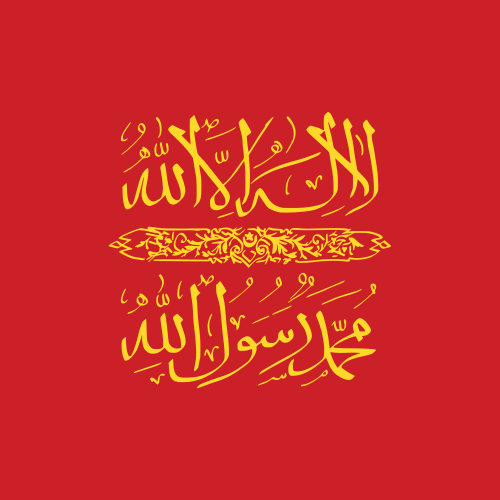
The Ottoman army often used verses from the Quran and Shahada (There is no god but God alone, and Muhammad is his messenger) on their colours, which were usually in scarlet. This tradition continued during the First World War. When Ottoman Turkey joined the war on the side of the Central Powers in 1914, it declared a jihad against the Entente States. The modern Ottoman Turkish army used the Ottoman state coat of arms on one side of their standard regimental flags/standards and the Shahada on the other side in gold lettering. Gold fringe was introduced as well to match those of other national armies. After the empire was abolished in 1922, this practice continued for a while in modern Turkey with the national republican arms replacing the Ottoman.[36]


At the turn of the 13th and 14th centuries, quadrangular flags with wedge panels on the free end appeared. The most used colors were red, followed by white, blue, and occasionally yellow. The most widely used flag images were crosses, holy and princely symbols and ancestral tridents-bidents. The flag of the Galicia-Volynia principality was blue with a golden lion.
In 1410, Ruthenian troops took part in the Battle of Grunwald on the side of the Kingdom of Poland and the Grand Duchy of Lithuania against their old ally from the time of the Principality of Galicia-Volhynia, the Teutonic Order. The Polish chronicler Jan Dlugosz left a description of the banners of the troops from the ruthenian lands who appeared to fight the crusaders.
The Zaporozhian Army received their first flags from foreign monarchs from the 16th century: during the Moldavian campaigns of the Austro-Turkish war and the campaign of the Holy League.[37]

In 1646, for the campaign against the Turks, Wladyslav IV Vasa provided a flag: ironically, it was under this banner that the Cossacks won their first resounding victories over the Polish army during the Khmelnytskyj uprising — at Yellow Waters, Korsun, and Pyliavtsi.
According to the system, there were regimental, sotnia and kish banners. Among the flags of the day, rectangular and trapezoidal panels prevailed. The insignia of numerous units had a triangular shape of various shades of red. Instead of a single state flag, the highest heraldic symbol of the Hetmanate was the image of the Archangel Michael on a red background. Most of the flags that have survived to our time contain an equilateral Cossack cross and eight-pointed stars, sometimes combined with images of the crescent moon, a symbol of the Christian-Muslim civilizational confrontation, the latter, from 1572 (in honor of Lepanto), had a pan-European distribution as a symbol of victory in the confrontation with the Islamic threat.[38] From the 18th century, primarily in the Poltava (1717) and Lubny (1758) regiments, two-color flags of yellow and blue became widespread.
In general, until the second half of the 18th century. there are relatively fragmentary data available, more detailed information from the time of the unification of flags during the time of Kyril Razumovsky: on March 8/18, 1755, he issued a form for the manufacture of flags according to a single model according to the project of Colonel Ivan Kulyabka of Lubny — one side was to contain the Coat of Arms of the Nation, and the other symbol of a military unit. Despite this, the colors and sizes of the flags were arbitrary. Similar standards existed until 1768 - the reign of Peter Rumyantsev, who began to introduce imperial symbols in the Cossack army.

The unification of the banners of the Hetmanate did not in any way affect the ensign of the Zaporozhian Army, the general banner — the Great Banner — still contained Archangel Michael on a red background, the flags of the kurin and palanquins were mostly crimson in color. The banner of sea campaigns with the image of St. Nicholas was white, besides it, after the Oleshkivsk sich period, there was also a titular red banner of imperial origin. Among the kurin banners, the red ones with the image of St. George.
The first Cossack colonizers of the Sloboda region formed the Slobid regiments, the banner of which also featured Christian and religious themes. In total, there were 36 flags in the five regiments, together with the sotnias. The reverse side of the sotnia flags contained the name of the regiment and the sotnia. In contrast to the banners of the rest of the Ukrainian Cossacks, the Slobid banners contained the image of the Mother of God, the patroness of the Cossacks, as the main motif. With the reorganization into regular hussars, the previous symbols of the units were abolished.
In 1792, the Zaporozhians were moved to the Kuban, where the Tmutarakan Principality was located, forming the Black Sea Cossack Army.


Following the collapse of the Russian Empire, the Tsentralna Rada came to power in Ukraine in spring of 1917, it was forced to promptly put together an army to defend the new republic against their enemies. Nearly all units of the newly created army were detached from the Imperial Russian Army. After the first all-Ukrainian military congress that took place on May 18–21, 1917 in Kyiv, the Ukrainian General Military Committee was created. The committee was placed in charge for creation and restructuring of the army.
The next congress, defying a ban placed by the Russian Provisional Government, took place on June 18–23, 1917 in Kyiv. The main requests of the congress were proclamation of the Ukrainian Democratic Republic, full Ukrainization of army and navy, and an immediate peace treaty.
On January 27, 1918, the Ukrainian Central Rada approved the project of the Ukrainian naval ensign, developed by the Ukrainian Maritime Council (it consisted of two stripes: blue at the top, yellow at the bottom; on the top - the golden sign of Prince Volodymyr - the Trident with a cross at the top), modeled after the British White Ensign.

In 1919, blue-yellow unit colours based on the national flag were adopted for units of both the regular Army of the Ukrainian People's Republic and the Ukrainian Galician Army.

With restored independence the Armed Forces of Ukraine adopted a maroon design for its colours, which were gold fringed and contained the official heraldic arms of the armed forces.
Maroon and gold are the colours used in the current military colours used in the Armed Forces of Ukraine, with origins in the Imperial Russian Army's Cossacks and Ukrainian units. In the obverse the Coat of arms of Ukraine, surrounded by a gold wreath, is at the centre of an Orthodox Cross – both symbols form the emblem of the Armed Forces – with a St. Andrew's Cross under it with the same emblem in the sides, with the Armed Forces Motto (For Ukraine, for her Freedom) surrounding the emblem and crosses. The unit's name is in the reverse. The colour is gold fringed and is mounted on a pole with a trident finial modeled on the national arms. The same design is used in the National Guard of Ukraine but in blue and with the 2015 grenade badge. Active duty NG units sport dark blue colours with the Orthodox Cross, grenade and the coat of arms at the corners.
Only the 93rd Mechanized Brigade (Ground Forces), the Ukrainian Air Assault Forces and the Ukrainian Marine Corps have been granted additional colours so far in addition to the official maroon unit colours.
The State Border Guard Service of Ukraine shares a similar colour design to the Armed Forces but with the green colour added to distinguish its units.
The first Yugoslav military colours came about when the Kingdom of Yugoslavia was established in 1918. These were the square versions of the Flag of the Kingdom of Yugoslavia with the state coat of arms and the motto of the Yugoslav Royal Army. The unit names were attached to a ribbon at the pole. The colours were inspired by the military colours of Serbia and of the Croat, Slovene and Bosnian military units of resistance against Austria-Hungary during the First World War.
With the birth of the communist Partisans in 1941 in time for the Second World War, their flags showed the same Pan-Slavic colours on them (arranged according to nationality) but this time a red star was added in the middle. The naval units had a different ensign used and these flags became the basis for the military colours of Democratic Federal Yugoslavia at the time of its 1943 proclamation.
By the time, these flags had the unit name on the pole pennants and were gold fringed. The Partisan General Staff had their own version of it.
Post-war colours (from 1947, when the nation became a Federal People's Republic) used various flag design with the Yugoslav People's Army motto in Serbo-Croatian (For the freedom and independence of the socialist fatherland) both in Cyrillic and Latin and differed per unit or service arm of the YPA, but was longer and were gold fringed. Just as before, the unit name stayed on the attached ribbon. Both the Flag of Yugoslavia and the flag of the League of Communists of Yugoslavia were used as National Colours in parades. Unique colours were issued to the Navy, to YPA reserve units and the Territorial Defence Forces of the republics.
Today all the nations of the former Yugoslavia have separate colour traditions per armed forces, but keep their unique appearance.
The Serbian Armed Forces colour design is very much unique, while gold fringe can be seen in these colours. At the obverse is the national flag design, a tricolour with the national coat of arms in the center of the colour, while the emblem and facing colour of the unit represented (combat formation or support unit) is in the reverse.
Since independence, Croatia adopted a more Western style of colours for its armed forces with the Flag of Croatia as the National Colour. All are not gold fringed and their longer length suggests American and British influence in the design and traditions.
Cuba's military colours under the Cuban Revolutionary Armed Forces tend to follow a mix of the Soviet and US practice, as the Cuban flag is treated as a National Colour.
El Salvador's military colours under the Salvadoran Armed Forces heavily follow US models, as the Salvadoran flag, with gold fringe, is treated as a National Colour- but its design is based on the American Civil War example and Argentine and Mexican precedence: the name of the unit is on the bottom blue stripe of the colour in gold lettering.
Honduran military colours under the Honduran Armed Forces heavily follow US models, as the Honduran flag is treated as a National Colour.
The Mexican Armed Forces use the Flag of Mexico as the National Colour, with the unit inscription below the Coat of arms of Mexico and the official name of the country (Estados Unidos Mexicanos, "United Mexican States") above it. It is the standard design for infantry units and other general services. The same design is used as the National Standard of all Mexican Army cavalry and artillery units as well as artillery units of the Mexican Naval Infantry (under the Navy). Colours and standards are both gold fringed, and the lettering is also in gold.
As a uniformed federal force, the National Guard's units are entitled to a National Colour or Standard.
Mexican Navy units and the Heroic Military Academy are the only ones entitled to regimental colours. Navy schools carry a white gold fringed colour with the heraldic emblem of the school.
Nicaragua's military colours under the Nicaraguan Armed Forces are heavily following US practice, as the Nicaraguan flag is treated as a National Colour. The unit colours are in red, with a gold outline of Nicaragua with the service, unit or branch insignia in the centre.
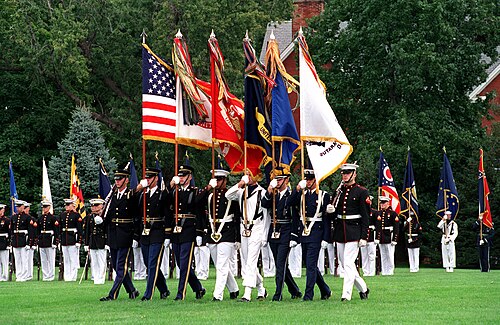
In the United States military, each branch has its own flag, an organizational colour, sometimes also called a ceremonial flag. Each of these is 4 ft 4 in (132 cm) × 5 ft 6 in (168 cm), some using 2+1⁄2 in (6.4 cm) gold fringe during specific instances. The ceremonial flag is paraded with a National Color of equal dimensions in a colour guard, with gold fringe as necessary. The National Color is never dipped in salute, but remains vertical at all times, while the organizational colours and any guidons are dipped as necessary. When the National Color is not cased, all persons salute the Colors. The finial is a nickel or chrome-plated spearhead, though the Navy uses different finials on occasion.

Each service attaches campaign/battle streamers, sometimes known as battle honours, for actions in which the service as a whole has taken part. These can either be war service streamers, which are in the colours of the appropriate campaign medal and have the name of the campaign embroidered; or unit citation streamers, which have the name of the action embroidered and signify that the unit's performance in a specific action has been worthy of special mention. Units are also permitted to wear streamers of overseas awards they may have been presented with. These streamers are in the colours of the appropriate medal ribbon.[40] The streamers are 3 ft (91 cm) × 2+3⁄4 in (7.0 cm). The Army, for instance, currently has 178 service streamers,[41] embroidering the name of each battle on each, as does the Air Force. The Marine Corps and Navy instead embroider award devices onto streamers to consolidate them, having 62 and 34, respectively.


U.S. Air Force (USAF) groups and above have the same National Color as the Army; the Organizational Color is ultramarine blue, with the group's coat of arms beneath the USAF crest, which is an eagle on a cloud background. The fringe is in gold. Wing and force colours have their heraldic emblem used instead of the eagle.
This is the same design for Air Force commands and educational institutions but with the eagle replaced by the emblem of the formation.

In the Army, most regiments, battalions of regiments, and separate battalions also have a stand of colours. The first is the National Color, which is a 36 in × 48 in (91 cm × 122 cm) version of the national flag trimmed with a 2+1⁄2 in-wide (6.4 cm) gold fringe, and is the equivalent of the King's Colour in the British Army. The second is the Organizational Color, which is the equivalent of the regimental colour; this is the same dimensions as the National Color, but is of a single colour representing the branch of the service that the unit is from; each branch also has its own fringe colour, which the Organizational Color is trimmed with. In the centre of the colour, for regiments is the eagle from the Great Seal of the United States, but with the regimental coat of arms in the shield. The eagle has in its beak a scroll bearing the regimental motto, with the crest of the regiment's coat of arms above it and the regiment's name below. Attached to the Organizational Color are the campaign and unit citation streamers awarded to the individual unit – these are equivalent to the battle honours embroidered directly onto the colours of British and Commonwealth units. The Organizational Color was carried in lieu of a National Color until shortly before the American Civil War, when the Stars and Stripes became the National Color.[42] Civil War era units sometimes carried alternative Organizational Colors based on their home state flags or of other designs.
Brigade, division and corps colours, also gold fringed, are in the facing colour of the service branch, for brigades the colour is of a bicolour design. These colours have the command heraldic arms at the centre.


In the Marine Corps, each battalion-sized unit or larger maintains a set of colours.[43][44] The organizational colour is identical to the Marine Corps battle colour, except that the scroll has the unit's name instead of "United States Marine Corps". It also bears the streamers authorized to the unit, or scarlet and gold tassels if none are authorized.
Fringe is never used on the national colors when carried by Marine Corps unit.[45] Instead, a red, white, and blue tassel can be used to decorate.
Prior to Executive Order 10812 of 24 April 1959, the United States Navy used the U.S. Naval Infantry Battalion Flag as its unofficial colours.[46] While the Navy uses a number of maritime flags, such as the Ensign and Jack of the United States, the Flag of the United States Navy is normally seen only at ceremonies and parades. The display of streamers and fringe is consistent with that of the Marine Corps.
When Naval Construction Battalions (Seabees) were first formed in 1942 the Naval Infantry Battalion Flag was mandated by Naval Regulation as the colours of the Naval Construction Force.[46] Each battalion-sized unit or larger maintains a set of colours. The organizational colours of each unit is identical, excepting that each will have the unit's name and number in white on the flag.[46] The display of streamers authorized to the unit is consistent with that of the Marine Corps.
Organizational colours of the US Navy's other shore establishment commands and units and all command formations are in navy blue with the arms of the unit or command, with appropriate displayed streamers attached if authorized.
Each unit of the Argentine Armed Forces, the Argentine National Gendarmerie, the Argentine Federal Police and the Argentine Naval Prefecture bears the national colours on flags, called the National War Flags, which are the national flag with the unit's name embroidered on it in gold lettering. The colours are carried by the unit's most junior officer, escorted by two armed NCOs, except in academies and schools, where it is carried by the top-ranked student of the senior course, and escorted by his or her second- and third-ranked classmates. If a decoration has been awarded to the unit, it is attached to the national colours' cravat. The national colours are never dipped in salute, except to salute another national colours which pass by or are being the subject of a special honour. Besides the national colours, each unit has its unique regimental colours, normally in the arm or service's colour background, with the unit's coat of arms on it. However, not all units have such a common background. For example, the Regiment of Patricians has the Cross of Burgundy as its official regimental colours because of its lineage dating back from 1806. Units which were made part of the Army of the Andes during Argentina's independence war also carry the Flag of the Army of the Andes as a 3rd Colour.
Units of the Brazilian Armed Forces carry a stand of two Colours, differing per service.
The standard of the Brazilian Army measures 80 × 120 cm, white with the Army coat of arms in the centre, trimmed with gold fringe. The name of the service is inscribed in gold letters on a green scroll beneath the shield. Above the shield is a knight's helmet with red and sky blue mantling. The staff is topped by a nickel-plated lance-head finial, 32 cm high. Below the lance-head, there is a cravat (laço militar) divided lengthwise, sky blue and red, with a gold fringe at the end, tied in a bow and fastened with a cockade of blue with the Southern Cross in white stars, red, and blue. Ten red streamers with campaign honours inscribed in sky blue letters are also attached below the lance-head. The staff is 212 cm long, not including the lance-head, and 3.5 cm in diameter. It is covered in sky blue velvet with a red spiral strip. The colour belt is 10 cm in width, covered with sky blue velvet with red velvet stripes. The Brazilian Navy's flag uses dark blue colours; the Brazilian Air Force flag uses ultramarine blue.
Brazilian military units also carry the national flag as a National Colour. This is in the dimensions 90 × 128 cm. It is mounted on the same size staff and with the same finial as the Army standard, but the cravat is divided lengthwise yellow and green, with a gold fringe at the end, tied in a bow and fastened with a cockade of blue with the Cruzeiro do Sul in white stars, yellow, and green. The staff is covered in green velvet with a yellow spiral strip. The colour belt is 10 cm in width, covered with green velvet with yellow velvet stripes of width and number varying with the rank of the organization's commander.
Unit colours differ per service branch and speciality.
Units of the Chilean Army carry one main colour, known as the estandarte de combate (combat standard). This is the same as the national flag, but with an embroidered star and with the unit designation, honorific title, founding date and place, and, depending on the unit, other historic information and honours embroidered diagonally across the fly in gold. The flag is also trimmed with gold fringe. It is mounted on a staff with a gilt condor finial; below the finial is a cravat in the national colours with decorations attached. In addition to the military colour, particularly distinguished units, and long serving units may carry a second Colour known as a bandera coronela (colonel's colour). This is a red field with a large white five-pointed star. In the angles of the star are the names and dates of battle honours surrounded by laurel wreaths, all in gold, while in an arc above the star is the designation of the unit, also in gold. The flag is also surrounded by gold fringe. Since 2017, the 16th Infantry Regiment Talca became the first to sport a blue coloured bandera coronela in honour of its origins as a city guard battalion formed during the War of the Pacific.
The Chilean Air Force, the Chilean Navy, the Carabineros de Chile and the Chilean Gendarmerie all use the estandarte de combate as their main colour, and do not use the bandera coronela at all. The design is the same as in the Army's.
The main state colours of the Military Forces of Colombia and the National Police of Colombia is the Flag of Colombia with the Coat of arms of Colombia in the centre inside a circle with a red border, used by all the services. These flags also carry medals and decorations attached to the flag. The MFC and the NPC also uses unit battle colours (brigade-level, regiment-level and battalion-level), that differ accordingly per service. All of them are gold fringed. Uniquely for Colombia, the battle colour tradition is mainly US-influenced. In addition, the service colour is used as a secondary color, also gold fringed, to denote service affiliation.
The Navy, given the British influence, uses the national flag as a State Colour for ships and commands, and few naval units have a full strand of colours.
Aside from the three state colours (the Flag of Uruguay, the Artigas flag and the Flag of the Treinta y Tres), the Uruguayan military also has regimental colours that differ per service and unit. The national colours have armed colour guards while the regimental colour has none at all. All are gold fringed.
In the National Bolivarian Armed Forces of Venezuela, aside from the Flag of Venezuela as the National Colour, there are also Organizational Colours for each of the 6 service branches and the Ministerial Colour of the Ministry of Defence and Unit Colours, which differ per service branch and arm. Every military unit from the Ministry of defence down to all individual units have a stand of colours like in the United Kingdom, but differ from the battalion to the service and the national level. The national flag, until the 1940s, served also as the unit state colour in the same manner as the National Colour of the United States Army and the State/Sovereign's Colour in the Commonwealth of Nations, and was based on the national flag but with the unit inscription replacing the stars in the centre in white lettering. The Venezuelan National Militia is the only service branch that uses a battle colour, similar to the flag of the Cuban July 26 Movement: the colour is red and black with the service name on it in white, and a separate colour is used for the service headquarters at the Montana Barracks in Caracas. Starting from July 2013 onward it was granted permission to use a 4th colour for its battalions: red with the eyes of the late President Hugo Chávez and the inscription Chavez Vive (Chavez Lives On) below, topped with a scarlet star.
Since 2014 the National Armed Forces uses two additional colours (the National Militia its 5th and 6th): that of the Supreme Commander's Colour, which is red bearing the portrait of the late President Chávez surrounded by a wreath and the Armed Forces Motto (Independence and Socialist Fatherland, we will live on and triumph!) below and the inscription Supreme Commander of the Bolivarian Revolution (Comandante Supremo de la Revolución Bolivariana) and the eight golden stars from the National Flag above it, plus the Memorial Colour of the Liberator and Father of the Nation (introduced in the summer of 2016), which is of the same colour facing but with the wreath containing the portrait of Simon Bolivar, the eight gold stars and his title above and the words Freedom, Sovereignty, Independence (Libertad, Soberania e Independencia) below the title, all in gold.
The colours used on the Unit Colours are as follows:
The standard is the colours-equivalent for the heavy cavalry (e.g., horse guards and dragoon guards). At 27 by 30 in (69 by 76 cm), on an 8 ft 6 in-long (259 cm) pole, it is much smaller than infantry colours, so that it can be carried by a soldier on horseback. The guidon is the equivalent for the light cavalry (e.g., dragoons, light dragoons, hussars and lancers). It is swallow-tailed, 27 by 41 in (69 by 104 cm), with an 8 ft 6 in-long pole.
The word guidon is a corruption of the French guyde homme – 'the guide man'.[note 3] Originally each troop had its own, but this was quickly reduced to a single, regimental one. With the increased dispersion of troops required in the light cavalry role, their operational function had ceased by the 1830s and they were discontinued. The regiment's kettledrums, with the battle honours woven onto the drum banners (with the exception of 3rd The King's Own Hussars and its successors, where they are uncovered, with the battle honours engraved onto the kettledrums themselves) became the focal point of the regiment's loyalty. In 1952 King George VI reintroduced the guidons of the light cavalry for ceremonial purposes.
Both the standard and the guidon are usually of crimson trimmed in gold fringe and with the regiment's insignia in the centre. The regiment's battle honours are emblazoned on both the obverse and reverse, up to a maximum of 22 on each side.

Cavalry (armour) units carry a standard (Danish: estandart), of similar design to the infantry colour, but smaller and square, with the cross centred on the field. The royal cypher is in the upper hoist and the initials of the regiment in the lower hoist. The Guard Hussar Regiment's standard is unique, as it has two monograms – with King Frederick VI's monogram in top right corner.[47]
In the French Army, mounted units carry étendards (standards). Mounted units include armoured corps and cavalry, artillery, transportation, army aviation, and supplies. The étendard is a 64 × 64 cm square flag similar to the drapeaux carried by the units of foot, with the same design: the regimental name at the obverse and the battle honours at the reserve.
In the Italian Army, cavalry units carry a stendardo (standard) of the same pattern as the bandiera di guerra, but which measures 60 cm × 60 cm.
The two hussar regiments of the Royal Netherlands Army carry a standaard (standard), of similar design to the infantry colour, but smaller (50 cm × 50 cm).

Until the 1960s, the Portuguese Military followed the traditions of its foot units having colours (Portuguese: bandeiras, literally "flags"), while mounted units had standards (estandartes), the latter being smaller versions of the colours. Standards were also carried by naval and aviation units. In the 1960s, the traditional separation between colours and standards was abolished, with all being reclassified as "national standards" (estandartes nacionais). At the same time, a new type of standard, the heraldic standard, was introduced. Presently, the military units, commands, forces and establishments have both a national standard and an heraldic standard. While the design of the national standards reflects the National Flag, the designs of the heraldic standards reflect the individual heraldic symbology of each of the units.
In the Portuguese military parlance, a guidon (guião) is a small square flag of a battalion sized unit. Guidons of a very simple design were introduced in the 19th century, as the tactical field signs of the foot units that didn't carry colours, namely the second battalions of the infantry regiments and the independent caçadores (light infantry) battalions. In the early 20th century, the tactical role of the guidons was discontinued. The guidons assumed then a ceremonial role, coming to have a more elaborate design which incorporated the symbology of their respective units. Guidelines for the design of guidons accordingly with heraldic rules were introduced in the 1950s, these becoming mandatory and standardized in the 1960s. The present guidon design - similar in all branches of the Military - consists in the quadrature of the coat of arms of the corresponding unit or of its parent unit, framed by a bordure. The colours of the bordure can be used to identify a sub-unit inside its parent unit.
Besides heraldic standards and guidons, the Portuguese military units also use heraldic pennants (flâmulas). These are small swallow-tailed or triangular flags used to identify company sized units.
Some of the Portuguese uniformed security forces and civil emergency organizations also make use of heraldic standards, guidons and pennants, usually modelled after the military ones.
In the United States armed forces, guidons are much more prevalent, with units below battalion size being authorized to use them. In the US Army, these are swallow tailed flags that are 20 in × 27 in, and are in the colour of the branch of the service the unit is from, with the branch's insignia the most prominent device. Also on the guidon is included the unit's identifying letter, and the number(s) of its parent unit. War service and campaign streamers are not attached to these guidons, but unit citation streamers can be.
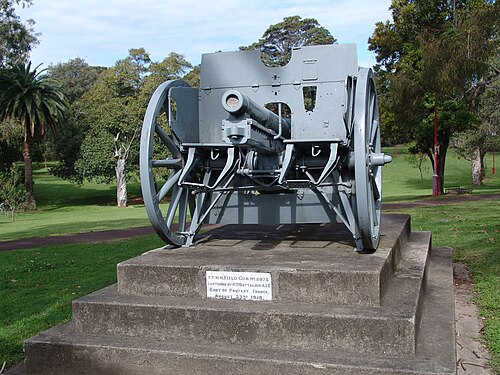
In regiments of the (British) Royal Artillery, and artillery regiments of other Commonwealth countries, the guns are afforded the status of colours.[48] This is due to the difficulty of artillery regiments being able to carry flags onto the battlefield, and the fact that the guns themselves were the rallying points for the soldiers manning them. As a consequence, whenever artillery regiments parade, the etiquette that would normally be applied to the colours is applied to the guns. During the Battle of Balaclava gunners abandoned their guns, in effect abandoning their colours, causing disgrace.
Because the guns have the status of colours, gunners of commonwealth countries will attempt to prevent their guns falling intact into enemy hands both for practical reasons (so that the guns can not be turned and used against their own side) and for the honour of the regiment.[49] For example, the last action of gunners of the Royal Artillery during the fall of Singapore was to destroy their guns.[50][51]
The Honourable Artillery Company, the oldest regiment in the British Army, and not part of the Royal Artillery, is the only artillery regiment to have both colours and guns, which are treated with equal respect.
In Singapore, however, since its independence the Singapore Army's artillery arm (the Singapore Artillery) uses colours instead of guns; this is also the case for the Malaysian Army, Pakistan Army, Royal Cambodian Army and the Royal Thai Army, whose artillery units use colours and not guns on parade. This has been the same case for the Indian Regiment of Artillery, which presents colours in dismounted parades, and the Sri Lanka Artillery, which has a strand of colours similar to the HAC.
In some countries, the following etiquette is followed:
The British Royal Navy and other navies of the Commonwealth of Nations call the flag-raising ceremony that happens every morning when a ship is in harbour colours. In British home waters, colours is conducted at 0800 (eight bells in the morning watch) from 15 February to 31 October inclusive, and at 0900 (two bells in the forenoon watch) during the winter.
When sunset is at or before 2100, flags are lowered at sunset at the ceremony of sunset. When sunset is after 2100, the evening flag lowering ceremony is called evening colours and carried out at 2100.
The United States Navy performs the same ceremonies, called "Morning Colors" and "Evening Colors", at 0800 and sunset each day. When "Colors" is played aboard Navy and Marine Corps bases, those outdoors must stop to render proper courtesies by saluting if in uniform or, if out of uniform, by standing at attention, until "Carry On" is sounded. Marines and sailors driving on base during this time are expected to stop their vehicles and stand at attention until the ceremony is over.
Many traditional yacht clubs worldwide also conduct morning and evening colour ceremonies. At 0800 each morning and at sunset during the club's active sailing season the ceremony is performed by the launchmen or harbourmaster.
Capturing an enemy's flag was formerly a major goal in war, and it is still practised today, and so capturing the enemy flag also appears in several games:
The other side of the standard is also embroidered in gold and shows two texts from the Koran written in arabic script. They translate as 'There is no god but God' and 'Mohammed, the Messenger of God'. The standard would originally have been attached to a pole surmounted by a nickel plated crescent moon and brass star. Two gold bullion and crimson silk cords and tassels would also have been attached to the pole. The side of the standard bearing the sultan's toghra has been damaged by over-exposure to light.
{{cite web}}: CS1 maint: multiple names: authors list (link) Media related to Military flags at Wikimedia Commons

