
Loading article…

_12.jpg/500px-Volokolamsk_(Moscow_Oblast)_12.jpg)
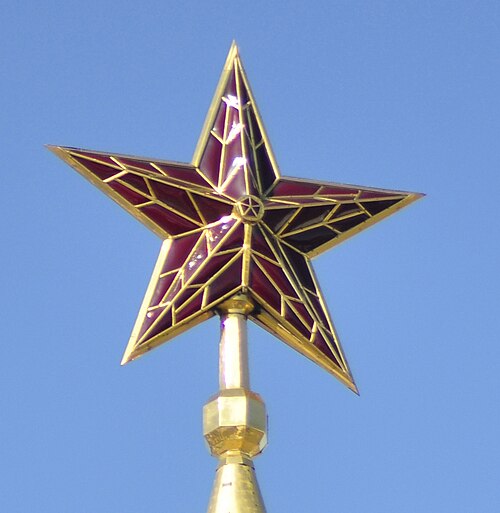
赤い星は、五芒星で、歴史的には共産主義の思想と関連付けられてきたシンボルであり、特に鎌と槌との組み合わせでよく使われてきましたが、21世紀では純粋に社会主義のシンボルとしても使われています。旗、国章、記念碑、装飾品、ロゴなどで広く使用されています。
ある解釈では、5 つの点は労働者の手の 5 本の指と、人口が居住する 5 つの大陸(アメリカ大陸を1 つとして数える) を表していると考えられています。あまり知られていない説では、共産主義の象徴では、星の 5 つの点は、ロシアを共産主義に導く5 つの社会グループ、つまり若者、軍隊、工業労働者、農業労働者または農民、知識人を表すことを意図していたとされています。ソビエトの紋章学では、赤い星は赤軍と兵役を象徴し、鎌と槌は平和的な労働を象徴していました。[出典が必要]
旧ワルシャワ条約機構加盟国の中には、全体主義的イデオロギーを象徴するとして、これを禁止する法律を制定した国もある。 [1]赤い星は、共産主義以外の文脈でも、この運動が起こる前の19世紀から国や州のシンボルとして使われてきた。例えば、ニュージーランドや米国カリフォルニア州の旗に使われている。赤い星は、石油大手テキサコやビール多国籍企業ハイネケンなど、民間機関や企業のロゴとしても使われている。
歴史

共産主義大衆運動のシンボルとしての星の起源は、ボルシェビキ革命とロシア内戦の時代に遡るが、正確な最初の使用時期は不明である。赤軍のシンボルとしての赤い星は、赤軍組織のための軍事大学によって提案され、赤い星の紋章の考案者は、ペトログラード軍管区のボルシェビキ司令官、コンスタンチン・エレメエフであった。[2]一方、シンボルの起源に関する一説では、第一次世界大戦末期のモスクワ軍駐屯地にそのルーツをさかのぼる。当時、多くの兵士がオーストリアとドイツの前線から逃げており、市内に到着すると地元のモスクワ駐屯地に加わった。モスクワ軍を撤退する前線部隊の流入と区別するため、将校はモスクワ駐屯兵に帽子に着用させるブリキの星を配った。これらの軍隊が赤軍とボルシェビキに加わったとき、彼らはブリキの星を社会主義の色である赤く塗り、これがオリジナルの赤い星を生み出した。[3]
赤い星は、1908年にボルシェビキの革命家アレクサンドル・ボグダーノフが火星の技術的に進歩した共産主義文明を描いた小説『赤い星』を出版した際に、すでに共産主義メディアで使用されていました。[4]
赤い星の起源に関するもう一つの説は、レオン・トロツキーとニコライ・クリレンコの出会いに関係している。エスペランティストのクリレンコは緑の星の襟章をつけていた。トロツキーがその意味を尋ねたところ、星の各腕は伝統的な5大陸の1つを表しているという説明を受けた。それを聞いたトロツキーは、赤軍の兵士も同様の赤い星をつけるべきだと指示した。[5]
この星の正確な起源は不明であるが、 1918年にはすでに赤軍の制服や紋章に組み込まれていた。[6]

ソビエト連邦が建国される直前の1916年3月中旬、アメリカ陸軍通信部隊の航空部門は、メキシコの革命家パンチョ・ビリャを逮捕するためのパンチョ・ビリャ遠征の際、通信部隊第1航空中隊の航空機に赤い星[7]をアメリカの航空機の国旗として使用した。
ソ連とその構成共和国での使用
このシンボルはソビエト連邦の最も顕著なものの一つとなり、ほぼすべての公的建物、賞、記章を飾った。鎌と槌が星の内側または下に表示されることもあった。1930年にソビエト連邦は赤星勲章を創設し、赤軍とソビエト海軍の兵士に「戦時と平時の両方でソビエト連邦の防衛のために並外れた貢献をした」としてこの勲章を授与した。ソビエトとロシア連邦の軍事新聞は「赤い星」(ロシア語:クラースナヤ・ズヴェズダ)という名前を掲げている。 [8]
-
 赤軍の帽章(1918-1922)
 -
 ブデンノフカ帽に赤い星を描いた赤騎兵隊のポスター(1920 年)
 -
-
 ソビエト勝利勲章、ソ連(1945年)
 -
 アダモビッチ作のプレート、ロシアSFSR(1921年)
 -
 ソビエト空軍のラウンデル

.svg/500px-Roundel_of_the_Soviet_Union_(1945%E2%80%931991).svg.png)
休日の装飾として
1930年代、ソ連の出版物は、ヨルカ(ロシア語:Ёлка )として知られる新年の木を飾る習慣を奨励した。これらの木は赤い星で飾られることが多く、この習慣は1991年のソ連崩壊以来ロシアで続いている。 [9]
ソビエト連邦共和国の紋章のギャラリー
-

-

-

-

-

-

-

-

-

-

-

-

-

-

-

-

-
 ザコーカサス社会主義連邦ソビエト共和国の紋章(1923-1936)
 -
 カレロ・フィンランド・ソビエト社会主義共和国(1941-1956)の国章
 -
 ラトビア社会主義ソビエト共和国の国章(1919年~1920年)
.svg/500px-Coat_of_arms_of_the_Soviet_Union_(1956%E2%80%931991).svg.png)
.svg/500px-Emblem_of_the_Byelorussian_Soviet_Socialist_Republic_(1981%E2%80%931991).svg.png)
.svg/500px-Emblem_of_the_Moldavian_SSR_(1981-1990).svg.png)
.svg/500px-Emblem_of_the_Transcaucasian_SFSR_(1930-1936).svg.png)
.svg/500px-Emblem_of_the_Latvian_SSR_(1918-1920).svg.png)
ソビエト国旗のギャラリー
-

-

-

-

-

-

-

-

-

-

-

-

-

-

-

-

-
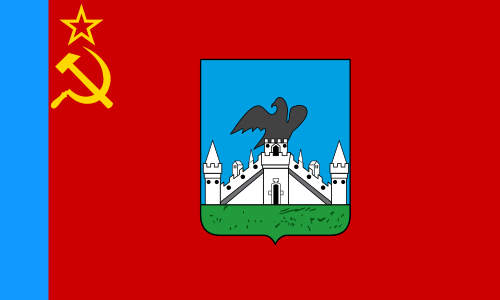 オリョールの旗
 -
 カレロ・フィンランド・ソビエト社会主義共和国の旗(1940年~1956年)
 -
 ザコーカサス社会主義連邦ソビエト共和国の旗(1922年 - 1936年)
.svg/500px-Flag_of_the_Armenian_Soviet_Socialist_Republic_(1952%E2%80%931990).svg.png)
.svg/500px-Flag_of_the_Azerbaijan_Soviet_Socialist_Republic_(1952%E2%80%931991).svg.png)
.svg/500px-Flag_of_the_Byelorussian_Soviet_Socialist_Republic_(1951%E2%80%931991).svg.png)
.svg/500px-Flag_of_the_Estonian_Soviet_Socialist_Republic_(1953%E2%80%931990).svg.png)
.svg/500px-Flag_of_the_Georgian_Soviet_Socialist_Republic_(1951%E2%80%931990).svg.png)
;_Flag_of_Kazakhstan_(1991%E2%80%931992).svg/500px-Flag_of_the_Kazakh_Soviet_Socialist_Republic_(1953%E2%80%931991);_Flag_of_Kazakhstan_(1991%E2%80%931992).svg.png)
;_Flag_of_Kyrgyzstan_(1991%E2%80%931992).svg/500px-Flag_of_the_Kirghiz_Soviet_Socialist_Republic_(1952%E2%80%931991);_Flag_of_Kyrgyzstan_(1991%E2%80%931992).svg.png)
.svg/500px-Flag_of_the_Latvian_Soviet_Socialist_Republic_(1953%E2%80%931990).svg.png)
.svg/500px-Flag_of_the_Lithuanian_Soviet_Socialist_Republic_(1953%E2%80%931988).svg.png)
.svg/500px-Flag_of_the_Moldavian_Soviet_Socialist_Republic_(1952%E2%80%931990).svg.png)
.svg/500px-Flag_of_the_Russian_Soviet_Federative_Socialist_Republic_(1954%E2%80%931991).svg.png)
;_Flag_of_Tajikistan_(1991%E2%80%931992).svg/500px-Flag_of_the_Tajik_Soviet_Socialist_Republic_(1953%E2%80%931991);_Flag_of_Tajikistan_(1991%E2%80%931992).svg.png)
;_Flag_of_Turkmenistan_(1991%E2%80%931992).svg/500px-Flag_of_the_Turkmen_Soviet_Socialist_Republic_(1973%E2%80%931991);_Flag_of_Turkmenistan_(1991%E2%80%931992).svg.png)
.svg/500px-Flag_of_the_Ukrainian_Soviet_Socialist_Republic_(1949%E2%80%931991).svg.png)
.svg/500px-Flag_of_the_Uzbek_Soviet_Socialist_Republic_(1952%E2%80%931991).svg.png)
.svg/500px-Flag_of_the_Karelo-Finnish_Soviet_Socialist_Republic_(1953%E2%80%931956).svg.png)
他の社会主義国での使用
ソビエト連邦の国章として採用されて以来、赤い星は世界中で共産主義の象徴となった。
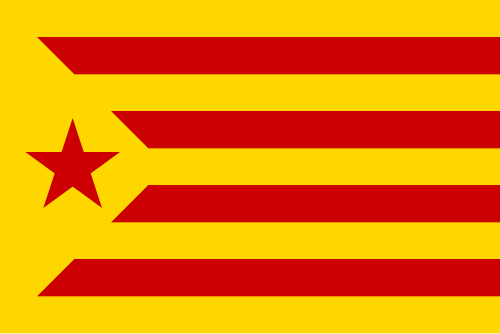
その後、いくつかの共産主義国家が赤い星のシンボルを採用し、それぞれの国旗や紋章によく使われた。例えば、ユーゴスラビア社会主義連邦共和国の国旗などである。分離主義運動や社会主義運動も、カタルーニャ諸国のエステラーダ旗のように、赤い星を採用することがあった。
東側諸国
赤い星は東側諸国の社会主義国家の旗や紋章の共通要素となり、事実上すべての国の紋章に登場し、ブルガリア、ハンガリー、ルーマニア、アルバニアの国旗にも見られる。1991年から1995年にかけて、ベラルーシはソビエト様式の紋章を廃止し、パホニアをあしらった紋章を採用した。ソビエト時代の紋章は1995年に再採用され、[10] 2012年と2020年に若干の修正を加えて現在も使用され続けている。
-
 ブルガリア人民共和国の国旗(1971年~1990年)
 -
 ルーマニア社会主義共和国の国旗(1965年~1989年)
 -
 アルバニア人民社会主義共和国の国旗(1946年~1992年)
 -
 ハンガリー人民共和国の国旗(1949年~1956年)
 -
 ルーマニア社会主義共和国の国章
 -
 ブルガリア人民共和国の国章(1971年~1990年)
 -
 ハンガリー人民共和国の国章(1957年~1990年)
 -

-
 チェコスロバキア社会主義共和国の国章(1961年~1989年)
 -
 ベラルーシの国章(1995年~2012年)
 -
 ベラルーシの国章(2012年~2020年)
 -
 ベラルーシの国章(2020年以降)
.svg/500px-Flag_of_Bulgaria_(1971%E2%80%931990).svg.png)
.svg/500px-Flag_of_Romania_(1965%E2%80%931989).svg.png)
.svg/500px-Flag_of_Albania_(1946%E2%80%931992).svg.png)
.svg/500px-Flag_of_Hungary_(1949-1956;_1-2_aspect_ratio).svg.png)
.svg/500px-Coat_of_arms_of_Romania_(1965%E2%80%931989).svg.png)
.svg/500px-Coat_of_arms_of_Bulgaria_(1971%E2%80%931990).svg.png)
.svg/500px-Coat_of_arms_of_Hungary_(1957-1990).svg.png)

.svg/500px-Coat_of_arms_of_Czechoslovakia_(1961-1989).svg.png)
.svg/500px-Coat_of_arms_of_Belarus_(1995-2021).svg.png)
.svg/500px-Coat_of_arms_of_Belarus_(2020%E2%80%93present).svg.png)
ユーゴスラビア
旧ユーゴスラビアでは、赤い星は共産主義のシンボルとしてだけでなく、ファシズムやユーゴスラビアのナチス占領に対する抵抗、およびそれに伴う民族政策への反対のより一般的なシンボルとしても機能していました。第二次世界大戦中、ティトーのパルチザンは識別シンボルとして赤い星を身に着けていました。
-

-

-
 スロベニア社会主義共和国の国旗
 -
 クロアチア社会主義共和国の国旗
 -

-
 マケドニア社会主義共和国の国旗
.svg/500px-Flag_of_Yugoslavia_(1946-1992).svg.png)
,_Flag_of_Serbia_(1947%E2%80%931992).svg/500px-Flag_of_Montenegro_(1946%E2%80%931993),_Flag_of_Serbia_(1947%E2%80%931992).svg.png)
.svg/500px-Flag_of_Slovenia_(1945%E2%80%931991).svg.png)
.svg/500px-Flag_of_Bosnia_and_Herzegovina_(1946%E2%80%931992).svg.png)
.svg/500px-Flag_of_the_Socialist_Republic_of_Macedonia_(1963%E2%80%931991).svg.png)
.svg/500px-Emblem_of_Yugoslavia_(1963%E2%80%931992).svg.png)
.svg/500px-Coat_of_arms_of_Serbia_(1947%E2%80%932004).svg.png)


.svg/500px-Coat_of_arms_of_Macedonia_(1946%E2%80%932009).svg.png)
.svg/500px-Coat_of_arms_of_Montenegro_(1945%E2%80%931993).svg.png)
アジア
共産主義運動がアジア全土に広がると、一部の団体は赤い星を使用し、他の団体は同じ象徴性を持つ黄色い星(多くの場合、赤地に)を使用するようになりました。 1920年から1922年にかけての極東共和国は軍服に黄色い星を使用し、中華人民共和国の国旗には赤地に5つの黄色い星が描かれています。ベトナムの国旗にも赤地に黄色い星が描かれています。赤い星にちなんで名付けられた中国の社村の例として、中国湖北省回龍郷の紅星村[11]や新疆ウイグル自治区のキジルト(文化大革命中は紅星社と名付けられた)などがあります。[12]
-
 北朝鮮の国章(1948年~1993年)
 -
 ラオスの国章(1975年~1992年)
 -
 モンゴル人民共和国の国章(1960年~1992年)
 -
 南イエメンの国章(1970年~1990年)
 -

-

-

-
 モンゴル人民共和国の国旗
 -
 南イエメンの国旗(1967年~1990年)
 -
 アフガニスタン民主共和国の国旗(1980年~1987年)
 -

.svg/500px-Emblem_of_North_Korea_(1948%E2%80%931993).svg.png)
.svg/500px-Emblem_of_Laos_(1975-1991).svg.png)
.svg/500px-State_emblem_of_the_People's_republic_of_Mongolia_(1960%E2%80%931992).svg.png)
.svg/500px-Coat_of_arms_of_South_Yemen_(1970-1990).svg.png)

.svg/500px-Flag_of_the_Mongolian_People's_Republic_(1945%E2%80%931992).svg.png)
.svg/500px-Flag_of_Afghanistan_(1980%E2%80%931987).svg.png)
アフリカ
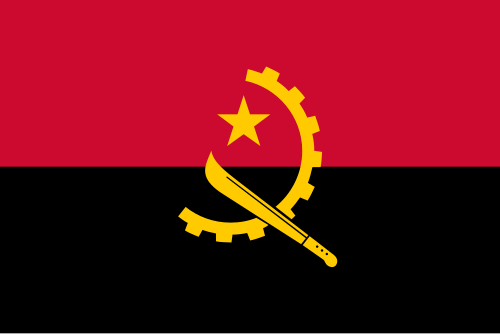
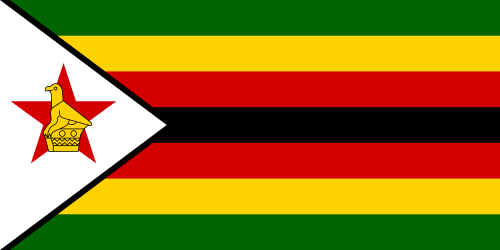
アフリカの社会主義国も、赤や金の星を紋章に取り入れました。この習慣は、反植民地主義の 民族解放闘争の後に形成された国々でも採用され、マルクス主義組織が関与することが多かったです。
-
 モザンビークの国章
 -

-

-
 ベナン人民共和国の国章
 -
-
 エチオピアの国旗(1987–1991)
 -

-
-
 ベナンの国旗(1975–1990)
 -
 コンゴ人民共和国の国旗(1969年~1992年)
 -
 マダガスカル共和国大統領旗
 -
 マダガスカル民主共和国の国章
.svg/500px-Flag_of_Mozambique_(1983).svg.png)
.svg/500px-Emblem_of_Benin_(1975%E2%80%931990).svg.png)
.svg/500px-Flag_of_Ethiopia_(1987%E2%80%931991).svg.png)
.svg/500px-Flag_of_Benin_(1975%E2%80%931990).svg.png)

.svg/500px-Presidential_Standard_of_Madagascar_(1976-1993).svg.png)
州軍部隊
2010年3月までに、ロシア政府はソ連の赤い星(ただし、ロシア国旗の3色(白、青、赤)を反映した青い輪郭)を軍の記章として再採用した。[要出典]ロシア空軍は、2013年にロシアがソ連時代の赤い星を復活させるまで、この星を円形の旗として使用していた。[13]
2014 年現在、ベラルーシ軍は旧ソ連の[update]赤い星を依然として使用しています。カザフスタン共和国軍の紋章には、ソ連の赤い星の修正版が含まれています。
-

-
 1925 年から 1942 年まで使用された、モンゴル革命青年同盟の初期の太極図と赤い星の紋章。
 -
 モンゴル革命青年同盟の紋章。
 -
ソ連空軍(1943年~1991年)、ロシア空軍(1992年~2010年)、ベラルーシ空軍のラウンデル
-
 ロシア空軍のラウンデル
 -

-
 カザフスタン共和国軍の紋章
 -
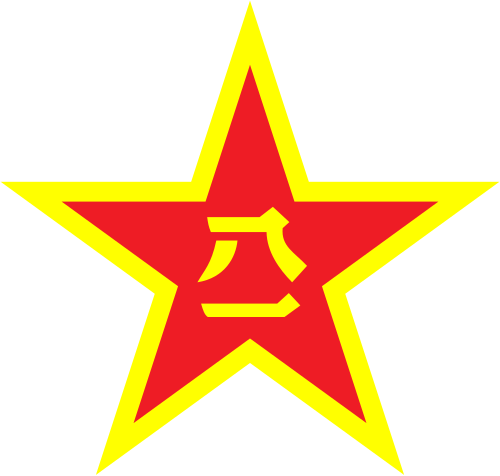 Emblem of the Chinese People's Liberation Army
 -
 People's Republic of Yemen Air Force roundel (1967–1980)
 -
 People's Republic of Yemen Air Force roundel (1980–1990)
.svg/500px-Badge_of_the_Mongolian_Revolutionary_Youth_League_(1921-1924).svg.png)
.svg/500px-Badge_of_the_Mongolian_Revolutionary_Youth_League_(1925-1942).svg.png)
.svg/500px-Roundel_of_South_Yemen_(1969%E2%80%931980).svg.png)
.svg/500px-Roundel_of_South_Yemen_(1980%E2%80%931990).svg.png)
By states with limited recognition
Transnistria and the Luhansk People's Republic are proto-states located in Eastern Europe. Due to their historical association with the Soviet Union, they have adopted socialist imagery – including the red star – into their flags and heraldry.
-

-
 Coat of Arms of the Luhansk People's Republic
.svg/500px-Flag_of_Transnistria_(state).svg.png)

By sports teams
Several sporting clubs from countries ruled by communist parties used the red star as a symbol and named themselves after it, such as the Serbian club Red Star Belgrade (Serbian: Црвена звезда / Crvena zvezda), the East German Roter Stern Leipzig, the Angolan Estrela Vermelha do Huambo, the Estrela Vermelha from Beira, Mozambique or the Czechoslovak Rudá Hvězda Brno. Some sports teams from non-communist countries used it, such as French Red Star from Paris, Swiss club FC Red Star Zürich, English Seaham Red Star F.C., and even an American women's soccer club (Chicago Red Stars—though in that case the star is based on the flag of Chicago and not on the communist logo). The American soccer clubs Sacramento Republic FC and D.C. United also use red stars in their logos, referencing the flags of California and the District of Columbia respectively. The German rowing club Pirnaer Ruderverein 1872 began (and continues) to use red star since the 19th century.


Use by socialist groups
Armed revolutionary organizations
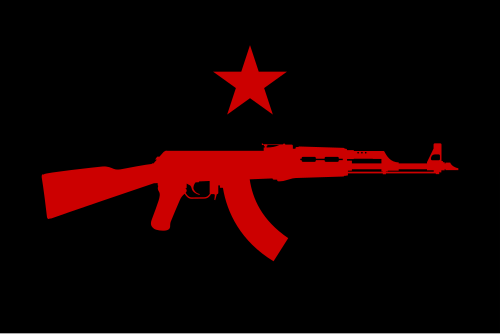
In 1970, the Red Army Faction, a West German militant group, used a red star paired with a Heckler & Koch MP5 in their highly recognizable insignia.
In 1994, the red star was included in the flag of the armed revolutionary Zapatista Army of National Liberation (EZLN) in Chiapas, Mexico.
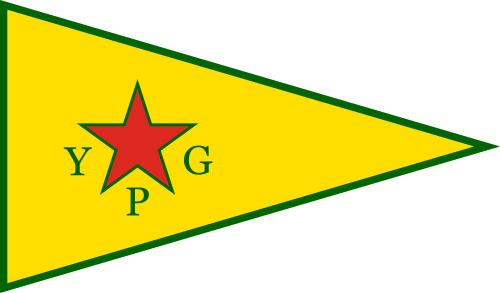
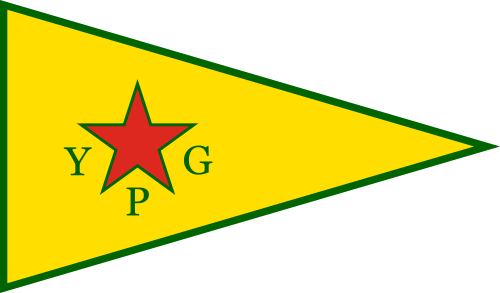
A number of communist parties in Turkey utilize the red star. Likewise, a number of Kurdish revolutionary organizations connected to the Kurdistan Communities Union utilize the red star in their iconography. Those include the flags of the Kurdistan Workers' Party and the battle flag pennants of the People's Defence Forces and Free Women's Units in Turkish Kurdistan, the People's Protection Units and Women's Protection Units in Syrian Kurdistan, and the Eastern Kurdistan Units and Women's Defense Forces in Iranian Kurdistan.
The Iranian Islamist-Socialist militant opposition group the Mojahedin-e-Khalq uses the red star with the rifle, sickle and the map of Iran in the background.
-

-

-

-
 United Freedom Forces (BÖG)
 -

-
-

-
 Kurdistan Workers' Party (PKK)
 -
 People's Defence Forces (HPG)
 -
 Free Women's Units (YJA-STAR)
 -
 Civil Protection Units (YPS)
 -
-
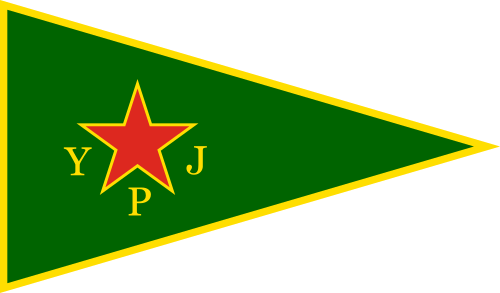 Women's Protection Units (YPJ)
 -
 Eastern Kurdistan Units (HRK)
 -

-

-

-
 Flag of the Communist (Maoist) Party of Afghanistan

_logo.svg/500px-Birle%C5%9Fik_%C3%96zg%C3%BCrl%C3%BCk_G%C3%BC%C3%A7leri_(United_Freedom_Forces)_logo.svg.png)



_Party_of_Afghanistan.svg/500px-Flag_of_the_Communist_(Maoist)_Party_of_Afghanistan.svg.png)
Political parties and movements
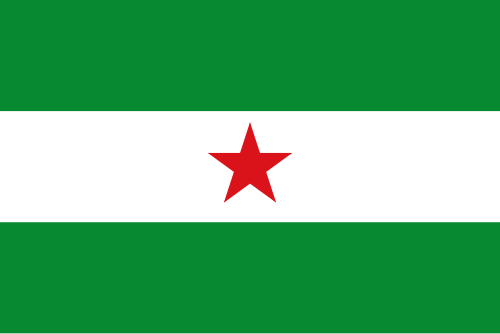
The Brazilian leftist Worker's Party uses a red star as its symbol with the party acronym (Portuguese: Partido dos Trabalhadores – PT) inside. Hugo Chávez and his supporters in Venezuela have used the red star in numerous symbols and logos, and have included it in the logo of the United Socialist Party of Venezuela (PSUV). It was also used throughout 2007 as a symbol of the "5 Engines of the Bolivarian Socialist Revolution". It is also used by the militant South African shack-dweller's movement Abahlali baseMjondolo. Like in Latin America and Africa, several European socialist parties continue to use a star as a part of their logos. The red star is also featured prominently in the independence flags of various separatist movements in Spain.
-
 Symbol of Workers' Party (Brazil)
 -
 Symbol of the United Socialist Party of Venezuela
 -
 Symbol of the Democratic Youth Federation of India
 -
 Symbol of the French Communist Party
 -
 Symbol of the Communist Party of Spain
 -
 Symbol of the Portuguese Communist Party
 -
 Symbol of the Dutch Socialist Party
 -
 Symbol of the Workers' Party of Belgium
 -
 Symbol of the Slovenian party The Left
 -
 Symbol of the Italian party Power to the People
 -
 Symbol of the Norwegian Red Party
 -
 Symbol of the Ecuadorian party Popular Unity
 -
 Symbol of the Party of Socialists of the Republic of Moldova
 -
 Symbol of the Abahlali baseMjondolo
 -
 Flag of the Andalusian Nation party
 -

-

-
 Catalan pro-independence flag Estelada Vermella
 -
 flag of the Yemeni Socialist Party
 -
 Yemeni Socialist Party, pre 1990
_logo_2021.svg/500px-PT_(Brazil)_logo_2021.svg.png)
.svg/500px-Logo_%E2%80%93_Parti_communiste_fran%C3%A7ais_(2018).svg.png)
_Logo.svg/500px-Socialistische_Partij_(nl_2006)_Logo.svg.png)
.svg/500px-Logo_of_The_Left_(Slovenia).svg.png)
.svg/500px-Potere_al_Popolo!_-_Logo_(Italy,_2017).svg.png)
.svg/500px-R%C3%B8dt_logo_(bokm%C3%A5l).svg.png)
.svg/500px-Flag_of_Castile_(with_star).svg.png)
.svg/500px-Emblem_of_the_Yemeni_Socialist_Party_(1978%E2%80%901990).svg.png)
Uses without socialist symbolism
Some red stars adopted in emblems and flags have a significance that does not originally relate to socialism. Among these, the most well-known include the current state flag of California (echoing the Californian red star flag of 1836) and the flag of New Zealand (designed in 1869, officially adopted in 1902). The flag of the District of Columbia (designed in 1921, adopted in 1938) recalls George Washington's coat of arms. DC Comics' Wonder Woman also wears a 5 point red star headband with gold or yellow background.
Crescent moon and star
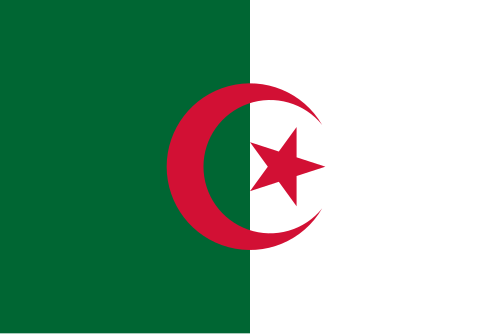
The crescent moon and star was a symbol used by the Ottoman Empire. Various states with Ottoman history have thus adopted this symbol into their present-day flags.



Assorted Flags and Coats of Arms
-

-

-
 Flag of Syria (opposition group during the civil war). Was the independence flag first used in 1932.
 -

-
 California Lone Star Flag – 1836.
 -
 Flag of Washington, D.C.
 -
 Flag of Acre State, Brazil.
 -
 Flag of Nagasaki city.
 -
 Flag of Birmingham, Alabama.
 -
 Arms of Għargħur, Malta.
 -
 Moríñigo coat of arms.
 -
 Valais coat of arms
 -
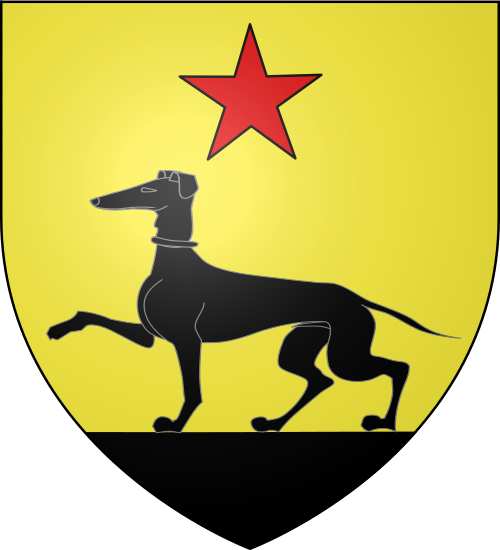 Crain, Yonne coat of arms.
 -
 Chauriat coat of arms.
.svg/500px-Californian_Lone_Star_Flag_(1836).svg.png)


.svg/500px-Blason_ville_fr_Chauriat_(Puy-de-D%C3%B4me).svg.png)
Symbol of animal relief
The red star was adopted as the symbol of the International Red Star Alliance, a Geneva international treaty signed in 1914 with the purpose of bringing about international cooperation on behalf of sick and wounded war animals, while securing the neutral status of the personnel engaged in such work. Besides the International Alliance, national Red Star societies were also established. Regarding animal relief, the International Red Star Alliance had an analogous role of that of the International Red Cross and Red Crescent Movement. To identify their neutral status, white brassards with red stars were worn by military veterinary personnel in World War I in a similar way medical personal worn brassards with red crosses.[14]
Following the War, the American Red Star turned to focus on domestic issues, including care for animals during disasters. The organization waxed and waned over the decades, and as of 2016[update] exists as the American Humane Association's Red Star Animal Emergency Services.[15][verification needed]
Red stars in labels and logos
-
 Label of a Heineken bottle
 -
 Logo of AKO, product of the Soviet Union
 -
 Logo of Macy's department stores
 -
 Texaco logo, circa 1913
 -
 Caltex logo, circa 1936
 -

-
 House flag of the Kermit Line (1835–1867)
 -
 House flag used by Columbia Transportation Division of the Oglebay Norton Corporation, used, among others, on board the SS Edmund Fitzgerald.

.svg/500px-Red_Star_Line_(1818%E2%80%931835).svg.png)
The red star was used by the Texaco oil company in various forms from 1909 to 1981.[16] Its overseas division Caltex also used the red star until 1996. Red Star Yeast was produced for a century in Milwaukee, Baltimore, and Oakland before its subsumption as a brand by Lesaffre.
A brand of Erguotou, a type of Baijiu, was named "Hongxing" (Chinese: 红星; lit. 'Red Star') in 1949 to celebrate the founding of the People's Republic of China.[17]
North Korea's Red Star operating system takes its name from the communist red star.
Red stars were included in the symbolism of many shipowners, such as Puget Sound Navigation Co. (1898-1927), Bombay Steam Navigation Co (since the 19th century), London & Overseas Freighters (1948-1997) and Columbia Transportation Division of the Oglebay Norton Corporation. The two companies were independently named Red Star Line in the 19th century.
Legal status
The red star and the hammer and sickle are regarded as occupation symbols as well as symbols of totalitarianism and state terror by several countries that were formerly either members of or occupied by the Soviet Union. Accordingly, Latvia,[18] Lithuania,[19] Hungary[20] and Ukraine[21][22][23] have banned the symbol among others deemed to be symbols of totalitarian political ideologies and the Soviet Union or its republics. In Poland, the Parliament passed in 2009 a ban that referred generally to "fascist, communist or other totalitarian symbols", while not specifying any of them.[24] Following a constitutional complaint, it has been abolished by the Constitutional Tribunal as contrary to articles in the Constitution of Poland guaranteeing the freedom of speech. A similar law was considered in Estonia, but eventually failed in a parliamentary committee due to its conflict with freedoms guaranteed by the constitution of Estonia.
The European Court of Human Rights has ruled, in a similar manner, against the laws that ban political symbols, which were deemed to be in clear opposition with basic human rights, such as freedom of speech,[25][26] confirmed again in 2011 in case Fratanolo v. Hungary.[27] The decision has been compared[28] to the legislation concerning the symbols of Nazism, which continue to be banned in several European Union member states, including Germany and France.
There have been calls for an EU-wide ban on both Soviet and Nazi symbols, notably by politicians from Lithuania, Estonia, the Czech Republic, Hungary and Slovakia. The European Commissioner for Justice, Franco Frattini, felt it "might not be appropriate" to include communist symbols in the context of discussions on xenophobia and anti-Semitism.[29]
In 2003, Hungarian politician Attila Vajnai was arrested, handcuffed and fined for wearing a red star on his lapel during a demonstration. He appealed his sentence to the European Court of Human Rights, which decided that the ban was a violation of the freedom of expression, calling the Hungarian ban "indiscriminate" and "too broad".[30]
In Slovenia, the red star was historically associated with the resistance movement that fought against fascist occupation in World War II, but was also later a state symbol of Yugoslavia during the dictatorship of Josip Broz Tito. On 21 March 2011, Slovenia issued a two-euro commemorative coin to mark the 100th anniversary of the birth of Franc Rozman, a partisan commander, featuring a large star that represented a red star. This led to criticism from the Slovenian democratic parties without a communist history.
Non five-pointed red stars
Emblems and flags where the red stars displayed are not five-pointed are much rarer. These include the following:
-
 Three-pointed red star in the flag of the International Brigades.
 -
 Four-pointed red star in the flag of Aruba.
 -
 Six-pointed red stars outlined in green in the flag of Burundi.
 -
 Six-pointed red stars in the flag of Chicago.
 -
 Eight-pointed red star in the Naval Ensign of Singapore.
 -
 Emblem of Magen David Adom, the Israeli national aid society.

See also


- Five-pointed star
- Red flag (⚑)
- Hammer and sickle (☭)
- Communist symbolism
- Star and crescent
- Star of Bethlehem
- Hollywood Walk of Fame
- Red Star Belgrade
- FC Red Star Saint-Ouen
- FK Velež Mostar
- Flags of the Ottoman Empire
- Waasland-Beveren
- Pancho Villa Expedition, when American military aircraft used a red star insignia (1916–17)
- Lone Star Flag
References
- ^ Poroshenko signed the laws about decomunization. Ukrayinska Pravda. 15 May 2015
Poroshenko signs laws on denouncing Communist, Nazi regimes, Interfax-Ukraine. 15 May 2015 - ^ Okhlebkin, V.V (2006). Dictionary of international symbols and emblems. ZAO Tsentrpoligraf.
- ^ Khvostov, Mikhail (1996), The Russian Civil War (1) The Red Army. Published by Men-At-Arms. ISBN 1-85532-608-6.
- ^ Możejko, Edward (December 1985). "Reviewed Work: Red Star: The First Bolshevik Utopia by Alexander Bogdanov". Canadian Slavonic Papers. 27 (4): 461–462. JSTOR 40868523.
- ^ Pri La Stelo: Militista simbolo
- ^ The Russian Civil War (1): The Red Army By Mikhail Khvostov, Andrei Karachtchouk, page 37 (there are several mentions of the use of the red star from 1918)
- ^ "Historic Wings - Flight Stories - Chasing Pancho Villa". fly.historicwings.com. HW. 15 March 2013. Retrieved 21 February 2016.
Just one day after arriving, on 16 March 1916, the first reconnaissance flight was flown by Capt. Dodd with Capt. Foulois (as an observer) on the Curtiss JN-3 S.C. No. 43. As with all of the Army's aircraft in that era, the plane carried simple markings – a red star on the tail and the large number 43 painted on the sides of the fuselage.
- ^ ""Красная Звезда" - cамая полная, достоверная и оперативная военная газета. Russian military newspaper". Archived from the original on 20 September 2006. Retrieved 16 October 2016.
- ^ Weber, Hannah (25 December 2017). "Yolka: the story of Russia's 'New Year tree', from pagan origins to Soviet celebrations". The Calvert Journal. Retrieved 15 April 2018.
- ^ "Belarus News and Analysis | A Partisan Reality Show". www.data.minsk.by. Retrieved 30 August 2022.
- ^ 2019年统计用区划代码和城乡划分代码:回龙乡 [2019 Statistical Area Numbers and Rural-Urban Area Numbers: Huilong Township] (in Simplified Chinese). National Bureau of Statistics of the People's Republic of China. 2019. Retrieved 20 September 2020.
统计用区划代码 城乡分类代码 名称
...
420325211201 220 红星村委会 - ^ 1997年阿克陶县行政区划 [1997 Akto County Administrative Divisions] (in Simplified Chinese). XZQH.org. 31 December 2010. Archived from the original on 19 August 2019. Retrieved 20 September 2020.
克孜勒陶乡 1966年成立克孜勒陶公社,1967年更名红星公社,1984年改设克孜勒陶乡。位于县城以南,距县城121千米。面积3882平方千米,人口0.8万,其中柯尔克孜族占99.16%,辖乌尔都隆窝孜、喀尔乌勒、塔尔开其克、托云都克、 塔木、喀普喀、其木干、阿尔帕勒克8个行政村。
- ^ Военно-воздушные силы отказались от трехцветных звезд Армия, Известия (in Russian)
- ^ Celebrating 125 years, American Humane Association
- ^ "When Disaster Strikes — Look to Red Star Animal Emergency Services" (PDF). americanhumane.org. Archived from the original (PDF) on 4 March 2016. Retrieved 6 June 2022.
- ^ "History of Texaco". Texaco.com. Archived from the original on 8 July 2013. Retrieved 25 May 2016.
- ^ "RED STAR WINE 1949". REDSTARWINE. 28 April 2018. Retrieved 10 November 2020.
- ^ "BC, Riga, 16.05.2013". The Baltic course. Retrieved 3 August 2014.
- ^ "Lithuanian ban on Soviet symbols". BBC News. 17 June 2008. Retrieved 22 May 2010.
- ^ "Act C of 2012 on the Criminal Code, Section 335: Use of Symbols of Totalitarianism" (PDF). Ministry of Interior of Hungary. p. 97. Retrieved 21 February 2017.
Any person who: a) distributes, b) uses before the public at large, or c) publicly exhibits, the swastika, the insignia of the SS, the arrow cross, the sickle and hammer, the five-pointed red star or any symbol depicting the above so as to breach public peace – specifically in a way to offend the dignity of victims of totalitarian regimes and their right to sanctity – is guilty of a misdemeanor punishable by custodial arrest, insofar as they did not result in a more serious criminal offense.
- ^ "Ukraine Bans Soviet-Era Symbols", The Wall Street Journal, 9 April 2015
- ^ LAW OF UKRAINE. On the condemnation of the communist and national socialist (Nazi) regimes, and prohibition of propaganda of their symbols, archived from the original on 9 August 2015, retrieved 9 August 2015
- ^ "Про засудження комуністичного та націонал-соціалістичного (нацистського) тоталітарних режимів в Україні та заборону пропаганди їхньої символіки". Офіційний Вебпортал Парламенту України.
- ^ "Poland Imposes Strict Ban on Communist Symbols". Fox News. 27 November 2009. Archived from the original on 2 December 2009. Retrieved 17 February 2010.
- ^ ECHR judgment in case Vajnai v. Hungary
- ^ "Wearing a red star in Hungary 'is a basic human right' : Europe World". Archived from the original on 6 August 2020. Retrieved 8 July 2008.
- ^ Press release 222(2011). Registrar of ECtHR 3 November 2011.
- ^ European Court considers Labour Party's red star – in Hungarian
- ^ "EU ban urged on communist symbols". BBC News. 3 February 2005. Retrieved 22 May 2010.
- ^ Curry, Andrew (24 November 2009). "Vestiges of 'Genocidal System': Poland to Ban Communist Symbols". Der Spiegel. Retrieved 14 September 2013.
External links

Wikimedia Commons has media related to Red stars.
ウィキメディア・コモンズには、星付き旗のギャラリー#赤い五芒星に関連するメディアがあります。
無料辞書『ウィクショナリー』で「Red Star」を調べてください。
- ブログ: 心のない世界の心 - 赤い星の起源について