
Loading article…
| |
|---|---|

| |
| 日付 | 1962年10月11日– 1965年12月8日 |
| 承認者 | カトリック教会 |
前回の評議会 | 第一バチカン公会議(1869-1870) |
| 招集者 | ヨハネ23世 |
| 社長 |
|
| 出席 | 最大2,625 [1] |
| トピック | 現代世界のニーズに応えるために、第1回バチカン公会議の未完の課題とエキュメニカルな活動を完了する |
文書と声明 | 4つの憲法:
9つの法令:
3つの宣言:
|
| エキュメニカル評議会の年代順リスト | |
第二バチカン公会議は、一般に第二バチカン公会議または第二バチカン公会議として知られ、カトリック教会の21番目で最新の公会議です。公会議は、1962年から1965年の4年間の秋に、バチカン市国のサン・ピエトロ大聖堂で4期(または会期)にわたって開催され、各会期は8週間から12週間続きました。
ヨハネ23世は、教会が「アップデート」(イタリア語で「アジョルナメント」)する必要があると感じたため、公会議を招集しました。ますます世俗化する世界で人々とよりよくつながるためには、教会の慣行のいくつかを改善し、より理解しやすく適切な方法で提示する必要がありました。アジョルナメントへの支持が変化への抵抗に勝ち、その結果、公会議で作成された16の教義文書は、特に次の点を含む教義と慣行の重要な発展を提案しました。
- 教会憲章「ルメン・ゲンティウム」における「聖性への普遍的呼びかけ」
- 信徒の使徒職に関する教令、アポストリカム・アクトゥオシタテム
- Orientalium Ecclesiarum 、東方カトリック教会に関する法令
- 神の啓示に関する教義憲章「デイ・ヴェルブム」は、聖書の研究を「神学の魂」として強調した。
- 典礼憲章「全人民の完全かつ積極的な参加」を回復するための典礼憲章。
- 現代世界における教会憲章「喜びと希望」は、平和の促進、自己の捧げ物、そして非カトリック教徒への教会の宣教について規定している。
- 人間の尊厳、信教の自由に関する宣言
- Unitatis redintegratio、キリスト教のエキュメニズムに関する法令
- ノストラ・アエテート、非キリスト教の宗教に関する宣言
公会議は、その範囲と取り組んだ問題の多様性により、教会に大きな影響を与えました。[2]最も注目すべき変化のいくつかは、ラテン語だけでなく母国語も公認されるようになったことなど、ミサの遂行方法における変化でした。
背景
聖書運動
1943年に教皇ピウス12世が出した回勅「神の霊への感謝」 [3]は、カトリックの聖書研究に新たな刺激を与え、原語からの新しい聖書翻訳の出版を奨励した。これは、一般のカトリック信者に聖書を再発見させ、読んでもらい、それを精神生活の源にしてもらうという司牧的試みにつながった。これはごく限られた範囲で反応があった。1960年までに、この運動はまだ初期段階にあった。[4] [5]
リソースそして新神学
1930年代までに、新スコラ哲学と教皇の回勅に基づく主流の神学は、無味乾燥で刺激に欠けるとして一部の神学者に拒絶された。こうして、神学を聖書と教父に直接基づかせる、資源回帰と呼ばれる運動が生まれた。一部の神学者は、神学の歴史的側面、労働の神学、エキュメニズム、信徒の神学、「地上の現実」の神学など、新しいテーマについても議論し始めた。[6]
これらの著作は、その新しいスタイルが「新神学」と呼ばれるようになり、ローマの注目を集め、1950年にピウス12世は「カトリックの教義の基盤を揺るがす恐れのあるいくつかの誤った意見について」という回勅「ヒューマニ・ジェネリス」を出版した。ピウス12世は、特定の個人に言及することなく、新神学派を主張する人々を批判した。この回勅は、新神学、エキュメニズム、聖書研究の発展に直接反対するものであると一般に理解されていた。これらの作品の一部は禁書目録に掲載され、著者の一部は教育や出版を禁じられた。最も苦しんだのは、アンリ・ド・リュバック 神父とイヴ・コンガー 神父で、彼らは1958年にピウス12世が死去するまで、教えることも出版することもできなかった。1960年代初頭までには、カール・ラーナー 神父や若きハンス・キュングなど他の神学者も疑惑の的となった。[要出典]
さらに、第1バチカン公会議(1869-70年)の未完の課題もあった。イタリア統一の終わりにイタリア軍がローマに侵入したため、公会議は中断されたが、完了した唯一のテーマは教皇の神学と信仰と理性の関係であり、司教の神学と信徒の神学は未解決のままであった。[7] [8]第1バチカン公会議の作業を継続し完了させる上での第2バチカン公会議の役割は、教皇パウロ6世の回勅「エクレシアム・スアム」(1964年)で言及されている。[9]
同時に、世界の司教たちは、政治的、社会的、経済的、そして技術的な変化によって引き起こされた課題に直面していました。これらの司教たちの中には、[誰? ]それらの課題に対処するための新しい方法を模索している者もいました。
始まり

発表と期待
ヨハネ23世は、1958年10月の選出から3ヶ月も経たない1959年1月25日に、公会議を招集する意向を表明した。 [10]ローマのサン・パオロ・フオーリ・レ・ムーラ大聖堂付属ベネディクト会修道院の集会所で行われた彼の発表は、出席していた枢機卿たちを驚かせた。[11] [12]
教皇は、その10日前に枢機卿の一人である国務長官 ドメニコ・タルディーニにこのアイデアを試してもらい、タルディーニはこのアイデアを熱烈に支持した。[13]教皇は後に、このアイデアはタルディーニとの会話の中でひらめいたと述べているが、2人の枢機卿がそれ以前にこのアイデアに興味を抱かせようとしていた。その2人は最も保守的なエルネスト・ルッフィーニとアルフレド・オッタヴィアーニ枢機卿で、1948年にすでにこのアイデアをピウス12世に提案し、1958年10月27日にヨハネ23世に提示していた。[14]
その後3年間にわたって、教皇は公会議に期待する成果について多くの声明を発表した。それらは3つの同心円のようなものを形成した。[15]
- カトリック教会については、彼は「新しいペンテコステ」、「新しい春」、「新しい開花」、「教会であるキリストの体のより強い活力による若返り」などと表現した刷新を期待していました。[16]これは、教会の慣行を新しい状況に「更新」(アジョルナメント)または「適応」することで達成され、 [17]現代人とつながるような方法で教会の信念を再表明することで達成されます。[18]
- 彼は、より広いキリスト教家族の中で、すべてのキリスト教徒の再統合に向けた進歩を求めた。[19]
- 人類全体にとって、評議会は戦争、飢餓、未開発などの主要な社会的、経済的問題の解決に貢献するだろうと彼は期待した。[20]
ヨハネ23世は、公会議の目的について、あまり厳粛ではない発言を2つ残している。1つは、教会の窓を開けて新鮮な空気を取り入れることについてであり、[21]もう1つは、聖ペテロの玉座に積もった皇帝の埃を払い落とすことについてである。2番目の発言の出典は、コンガーの報告によると、モントリオールのレジェール枢機卿である。 [22]最初の発言は何度も繰り返されているため、検証が非常に困難である。[要出典]
教皇が公会議を開いたという衝撃から立ち直った教皇庁の役人たちは、公会議がプロテスタント、啓蒙主義、そして現代世界のあらゆる誤りに対する教会の抵抗の頂点となるかもしれないと悟った。また、教皇がアッジョルナメントを忘れるよう説得できれば、公会議は最近の教皇の教えと教皇庁の現代世界における教会の役割のビジョンに絶対的な正しさを与える機会とも考えられた。[説明が必要] [23]
他方には、新しいやり方を模索してきた神学者や司教たちがいた。彼らの中には、1940年代から1950年代にかけて教皇庁によって沈黙させられ、屈辱を与えられた者もいた。彼らにとって、公会議は「神の驚き」であり、[24]世界の司教たちに、現代世界に対する要塞のような防御姿勢を捨て、教会と信徒の神学の刷新、エキュメニズム、典礼改革へと向かう新しい方向へ向かうよう説得する機会であった。 [25]
公会議は1961年12月25日に使徒憲章『フマネ ・サルティス』によって正式に召集された。[26] [27]
準備

評議会の準備には、1959 年の夏から 1962 年の秋まで 3 年以上かかりました。
最初の 1 年間は、公式には「準備期間」と呼ばれていました。1959 年 5 月 17 日、ヨハネ教皇は、公会議で検討されるトピックに関してカトリック世界から広範な協議を行う準備委員会を任命しました。協議の対象となったのは、世界の司教、カトリックの大学と神学部、教皇庁の各部門の 3 つのグループでした。翌年の夏までに、2,049 人の個人と団体が 9,438 の個別のvota (「希望」) で回答しました。その中には、従来のやり方を典型的に反映したもので、新しい教義の定義や誤りの非難を求めるものもありました。その他は、改革と新しいやり方を求める aggiornamentoの精神にのっとったものでした。
次の2年間(公式には「準備期間」と呼ばれる)は、司教会議での議論のために司教に提出される草案(スキーマ)の準備に費やされた。1960年6月5日、10の準備委員会が設立され、合計871人の司教と専門家が任命された。[28]各準備委員会は、教皇庁の主要部門の1つと同じ責任分野を持ち、その部門を率いる枢機卿が委員長を務めた。9,438件の提案からトピックのリストが作成され、これらのトピックは各委員会の権限分野に応じて分割された。
委員会によっては、扱うよう依頼されたトピックごとに個別のスキーマを準備したものもあれば、渡されたすべてのトピックを網羅する単一のスキーマを準備したものもありました。準備委員会と準備されたスキーマの数は次のとおりです。
2つの事務局(1つは既存のバチカン事務所から派生したもの、もう1つは新しい組織)もスキームの起草に関与した。
スキーマの総数は 70 でした。これらの準備機関のほとんどは主に保守的であったため、作成されたスキーマには更新の兆候がわずかに見られました。聖務省 (神学正統派の教皇庁部門) の職員が主導する神学準備委員会によって起草されたスキーマには、アジョルナメントの兆候はまったく見られませんでした。2 つの注目すべき例外は、典礼準備委員会とキリスト教統一事務局で、そのスキーマは刷新の精神に非常に基づいていました。
これらの専門委員会と事務局に加えて、すべての案を最終承認のために提出しなければならない中央準備委員会があった。この委員会は57か国から108名のメンバーからなる大規模な組織で、 [28]枢機卿の3分の2が含まれていた。委員会の作業の結果、22の案が公会議の議題から削除された。これは主に、公会議後に予定されていた1917年教会法典の改訂の際に対処できるという理由による。また、いくつかの案が統合され、合併された結果、案の総数は70から22に削減された。
組織
このセクションの段落番号は、1962年8月6日のモト・プロピオ Appropinquante concilioで公布された理事会規則を参照しています。 [29]
公会議の父(§1)。世界中の司教と主要な宗教団体の長は、公会議の父、つまり発言権と投票権を持つ完全な参加者になる資格があった。その数は約 2,900 人であったが、そのうち約 500 人は健康や老齢、あるいは自国の共産党当局が渡航を許可しなかったために出席できなかった。出席した公会議の父は 79 か国から来ており、38% がヨーロッパ、31% がアメリカ、20% がアジアとオセアニア、10% がアフリカからであった (1 世紀前の第 1 バチカン公会議では 737 人の公会議の父がいたが、そのほとんどはヨーロッパからであった[30] )。第 2 バチカン公会議では約 250 人の司教が生まれつきのアジア人とアフリカ人であったが、第 1 バチカン公会議ではそのような人は一人もいなかった。
総会(§3、20、33、38~39、52~63)。公会議の教父たちは、総会と呼ばれる毎日の会合で、計画について議論し、投票した。この会合は、サン・ピエトロ大聖堂で、月曜日から土曜日(木曜日を除く)の毎朝12時30分まで行われた。1日の平均出席者数は約2,200人だった。公会議の教父全員のための座席が、サン・ピエトロ大聖堂の中央身廊の両側に段々に並べられたスタンドが設けられた。第1回会合では、10人の枢機卿からなる議長会議[31]が総会の議長を務め、そのメンバーが交代で毎日の会合の議長を務めた(§4)。その後の会合では、この任務は4人の議長会議に委ねられた。[29]
すべての投票には 3 分の 2 の多数決が必要でした。各スキームについて、予備的な議論の後、原則として受け入れられるかどうか、または拒否されるかどうかの投票が行われました。受け入れられる場合は、個々の章と段落の投票で議論が続けられました。司教は修正案を提出することができ、多くの司教から要求された場合は、それがスキームに書き込まれました。投票はこのようにして幅広い合意に達するまで続けられ、その後、文書の最終投票が行われました。数日後に公開セッションが行われ、教皇は公会議の教父による別の儀式的な投票に続いて、その文書を公会議の公式の教えとして公布しました。公式の教会の教えと見なされるためには、文書が圧倒的多数の投票、つまり 90% 前後の票を獲得しなければならないという暗黙のルールがありました。これにより、多くの妥協が生まれ、問題のどちらの側の人々にも受け入れられるほど幅広い定式化も行われました。[29]
全ての総会は非公開であった。公会議の父たちは、毎日の会議で何が起こったかを一切明かさない義務を負っていた(§26)。[29]秘密はすぐに破られ、毎日の総会に関する多くの情報が報道機関に漏れた。
教皇は総会には出席しなかったが、有線テレビで審議の様子を見守った。
公開セッション(§2、44-51)。これは一般会議に似ていますが、報道機関やテレビに公開され、教皇が出席する点が異なります。公会議の期間中、10回の公開セッションがありました。公会議の4つの期間のそれぞれの初日、教皇が公会議文書を公布した5日間、そして公会議の最終日です。[29]
委員会(§5–6, 64–70)。公会議の詳細な作業の多くはこれらの委員会で行われました。[32] [33] [34] [35] [36]準備期間中の準備委員会と同様に、これらの委員会は10あり、それぞれが特定の教皇庁部門として教会生活の同じ領域をカバーし、その部門を率いる枢機卿が議長を務めました。[29]
- 信仰と道徳の教義に関する委員会:委員長:アルフレド・オッタヴィアーニ枢機卿;
- 司教および教区統治委員会:委員長 パオロ・マレラ枢機卿;
- 東方教会委員会: 会長アムレート・ジョヴァンニ・チコニャーニ枢機卿。
- 秘跡規律委員会:委員長ベネデット・アロイジ・マゼッラ枢機卿;
- 聖職者とキリスト教徒の規律委員会:委員長 ピエトロ・チリアチ枢機卿;
- 宗教委員会:委員長イルデブランド・アントニウッティ枢機卿;
- 聖なる典礼委員会:委員長 アルカディオ・ララオナ枢機卿;
- 宣教委員会:委員長グレゴリオ・ピエトロ15世アガジアニアン枢機卿;
- 神学校、研究、カトリック教育委員会:委員長 ジュゼッペ・ピザルド枢機卿;
- 信徒使徒職およびメディア委員会:委員長フェルナンド・チェント枢機卿。
各委員会には、25人の公会議長(公会議で選出された16人と教皇が任命した9人)と顧問(教皇が任命した公式のペリティ)が含まれていた。さらに、準備期間中に任命されたキリスト教一致促進事務局は、委員会と同じ権限を持ち、公会議の4年間を通じて議長のオーガスティン・ベア枢機卿の下で存続した。委員会は、公会議長が修正案を提出するにつれて、計画を改訂する任務を負っていた。委員会は午後か夕方に会合した。手続きは総会よりも非公式で、時には白熱した自発的な議論があり、ラテン語だけが使用されたわけではなかった。総会と同様に、委員会は非公開であり、同じ秘密規則に従っていた。
公認ペリティ(§9-10)。神学、教会法、その他の分野の専門家であるこれらの人々は、教皇によって公会議の教父に助言するために任命され、委員会の顧問として任命され、公会議の文書を書き直す際に重要な役割を果たした。公会議の初めには224人の公認ペリティがいたが、最終的には480人にまで増えた。彼らは総会での議論に出席することはできたが、発言することはできなかった。1940年代から1950年代にかけて沈黙させられていたイヴ・コンガーやアンリ・ド・リュバックなどの神学者や、1960年代初頭にローマ界で疑惑の目を向けられていたカール・ラーナーやハンス・キュングなどの神学者は、その専門知識ゆえにペリティに任命された。彼らの任命は彼らの考えを正当化するのに役立ち、彼らが自分たちの見解を推し進めるための基盤を与えた。[29]
個人的ペリティ(§11)。各司教は、自ら選んだ個人的な神学顧問を連れて行くことが許された。彼らは「個人的ペリティ」と呼ばれ、公会議の公式参加者ではなく、総会や委員会の会合には出席できなかった。しかし、公式ペリティと同様に、彼らは司教のグループに非公式の講演を行い、彼らの専門分野の最新情報を提供した。カール・ラーナー、ヨーゼフ・ラッツィンガー、ハンス・キュングは、最初は司教の個人的神学者として公会議に出席し、後に公式ペリティに任命された。エドワード・シレベックスなどの著名な神学者の中には、公会議の全期間を通じて 個人的ペリティを務めた者もいた。
オブザーバー(§18)。重要な革新は、ヨハネ教皇が正教会とプロテスタント教会に公会議にオブザーバーを派遣するよう要請したことでした。最終的に、世界教会協議会などの21の宗派や団体が代表者を送りました。[37] [30] [38] [a]オブザーバーはすべての総会(委員会を除く)に出席する権利があり、休憩中に公会議の教父たちと交流し、演説や計画に対する反応を伝えました。彼らの存在は、何世紀にもわたる不信を打破するのに役立ちました。
一般の監査人。公式規則には規定されていないが、第 2 セッションから少数の一般の人々が「監査人」として出席するよう招待された。討論に参加することは許可されなかったが、彼らのうち数人は一般の人々の懸念について評議会で発言するよう求められた。最初の監査人は全員男性であったが、第 3 セッションから女性も数名任命された。

主な出演者
公会議の議事の最初の数週間で、公会議の教父たちの間には、アジョルナメントと刷新を支持する者とそうでない者の二つの「傾向」があることが参加者に明らかになった。[40] [41]この二つの傾向は、公会議の開会前の中央準備委員会の審議ですでに現れていた。[42]
ヨハネ23世とパウロ6世の教皇に加えて、この公会議の主な登場人物は次の通りです。
公会議における著名な保守派司教たち[43]
- アルフレド・オッタヴィアーニ枢機卿:聖務省秘書
- マイケル・ブラウン枢機卿 OP :アンジェリクム教授、聖省顧問。
- ジュゼッペ・シーリ枢機卿:ジェノヴァ大司教、イタリア司教協議会議長。
- エルネスト・ルフィニ枢機卿:パレルモ大司教。
- マルセル・ルフェーブル 大司教(CSSp ):聖霊修道会総長。公会議では、保守的な公会議の教父のグループである国際教父グループ(Coetus Internationalis Patrum )の議長を務めた。
公会議における著名な改革派司教たち[44]
- オーガスティン・ベア 枢機卿:キリスト教一致促進事務局長
- マクシモス4世サイエグ総主教:メルキト派ギリシャカトリック教会の総主教
- アシル・リエナール枢機卿:リール(フランス)の司教、フランスの最高司教
- ヨーゼフ・フリングス枢機卿:ケルン(ドイツ)大司教、ドイツの最高司教
- ベルナルドゥス・アルフリンク枢機卿:ユトレヒト(オランダ)大司教、オランダの最高司教
- レオ・ヨゼフ・スエネンス枢機卿:メヘレン・ブリュッセル(ベルギー)大司教、ベルギーの最高司教
- フランツ・ケーニヒ枢機卿、ウィーン(オーストリア)大司教、オーストリア最高司教
- ジャコモ・レルカロ枢機卿:ボローニャ大司教(イタリア)
- ポール=エミール・レジェ枢機卿:モントリオール大司教(カナダ)
- ユリウス・デプフナー枢機卿:ミュンヘンおよびフライジング大司教(ドイツ)
公会議における著名な改革志向の神学者[45]
- マリー=ドミニク・シェヌ OP : private peritus
- アンリ・ド・リュバック SJ : 公式ペリトゥス
- Yves Congar OP : 公式ペリトゥス
- カール・ラーナー SJ : 公式ペリタス
- ジョン・コートニー・マレー SJ : 公式ペリタス
- Bernhard Häring CSsR : 公式ペリトゥス
- エドワード・シルベックス OP : プライベートペリタス
- ジョセフ・ラッツィンガー(後の教皇ベネディクト十六世): 公式ペリトゥス
- ハンス・キュング:公式ペリタス
評議会の年表
第1期: 1962年10月11日~12月8日
初日
ヨハネ23世は1962年10月11日、サン・ピエトロ大聖堂での公開セッションで公会議を開き、 公会議の教父たちと86の政府や国際団体の代表者の前で「母なる教会は喜ぶ」という開会演説を行った。[46]彼は教会や世界に「常に災難を予言する破滅の預言者」を批判した。[47]彼は政教分離の利点について語ったが、信仰と公共生活を統合することの難しさについても語った。
現時点で必要なのは、トレント公会議や第一バチカン公会議の議事の特徴であった、キリスト教信仰の正確さと精密さを失うことなく、キリスト教信仰全体を全面的に受け入れるという新たな熱意、新たな喜び、心の平静です。必要なこと、そして真のキリスト教、カトリック、使徒的精神に染まったすべての人が今日切望していることは、この教義がより広く知られ、より深く理解され、人々の道徳生活にさらに深く影響を及ぼすことです。必要なのは、信者が従うべきこの確実で不変の教義を新たに研究し、現代の言葉で再定式化することです。なぜなら、この信仰の遺産、つまり私たちの昔からの教えに含まれる真理は一つのことであり、これらの真理が(意味をそのまま保ったまま)提示される方法は別のことだからです。
教会は、牧師の有効性のために古代の教義を再構築することにより、「非難するのではなく、教義の正当性をより完全に説明することによって、今日のニーズに応えます」。また、教会は「離ればなれになった子供たちに対する慈悲と善意に動かされます」。
手数料
公会議の最初の作業セッションは1962年10月13日であった。その日の議題には、10の公会議委員会の委員の選出が含まれていた。各委員会は、公会議の父たちによって選出される16名と、教皇によって任命される8名(後に9名)の委員で構成されることになっていた。ほとんどの司教たちは、自国の司教以外にはほとんど知り合いがいなかったので、誰に投票してよいか分からなかった。司教たちには、準備委員会で務めた司教たちのリストが提供されていたが、それはあたかも彼らが公会議委員会に同じ人々を選出することを示唆しているかのようであり、その結果、教皇庁の勢力が準備委員会を支配したのと同様に、公会議委員会も支配することになった。[48] [49]投票が始まろうとしたとき、フランスの高位司教リエナール枢機卿が立ち上がり、各国の司教グループが会合し、適任者と思われる自国の委員のリストを作成できるように、選挙を数日延期することを提案した。ドイツの高位司教であるフリングス枢機卿が動議に賛成した。大きな拍手が起こり、動議は可決されたと宣言された。[49]その日の会議はわずか15分で閉会された。[50]

その後数日間、公会議の司教たちは国別に集まり、候補者のリストを作成した。刷新運動の先頭に立ったヨーロッパ5カ国(フランス、ベルギー、オランダ、ドイツ、オーストリア)の司教たちは、単一のリストを作成し、これに他の国の刷新志向の司教数名を加えて、合計109名の名前を挙げることにした。[51]選挙は10月16日に行われた。この選挙で新たな血が流れ、109名のうち79名が委員に選出され、非常に重要な教義委員会の委員の50%がこの79名の中に含まれていた。[51]さらに、新たに選出された委員の43%は、いかなる準備委員会にも所属していなかった。[52]これは刷新の最初の成功であった。[53]
典礼の図
10月22日に議論された最初の計画は、非常に改革志向の典礼準備委員会によるものでした。それは8つの章から構成されていました。[54]
- 1. 一般原則
- 2. 聖体の秘跡(ミサ)
- 3. 聖礼典と聖具
- 4. 聖務日課(すなわち時課の典礼)
- 5. 典礼年
- 6. 礼拝用家具
- 7. 宗教音楽
- 8. 神聖な芸術
この案は、会衆の積極的な参加、共同聖歌、ラテン語の一部の現地語への置き換え、両形態での聖体拝領、共同司式、典礼の地域文化への適応、各国の司教会議への典礼権限の適度な分散化など、多くの改革を提案した。[55]保守派は、これらの提案すべて、特にラテン語の格下げに反対した。議論は15日間も続き、最終的にこの案が原則として受け入れられるかどうかの投票が行われた。誰もが驚いたことに、反対票を投じたのはわずか46票(2,215票中)だった。[56] [57]改定案の2度目の勝利。この案は、多くの修正案に対処するため、典礼委員会に差し戻された。
啓示の図式
準備神学委員会によるこの構想は、当時神学者らが議論していたすべての問題に関して保守的な立場をとった。改革派は特に、聖書には含まれていない啓示された真理が伝統にあるという主張と、聖書の主張にはすべて誤りがないという主張に反対した。[58]議論は6日間続いた。原則として受け入れるかどうかの劇的な投票は11月20日に行われた。質問は拒否の形で出された。構想を拒否すべきか?賛成:1,360票。反対:822票。[59]これは公会議の規則で必要な3分の2の多数に102票足りなかったため、公会議は参加者の62%が拒否した構想について議論を続けなければならなかった。行き詰まりの解決は翌日(11月21日)に訪れた。ヨハネ教皇は、構想は教義委員会(保守派を代表)とキリスト教統一事務局(刷新派を代表)のメンバーで構成される特別合同委員会によって改訂されると発表した。[60] [61] 3度目の更新の勝利[62]であり、評議会にとって重要な転換点となった。[63]
現代のコミュニケーション手段に関する図式
この無害な図式は、これまで何度も言われてきた2つの命題に要約できる。教会はメディアを利用してその使命を推進しなければならない、そして人々はメディアがもたらす不道徳やその他の危険から守られなければならない。議論を続けることに関心がほとんどなかった。11月27日、公会議は図式には基本的な原則のみを含め、詳細な実務上の問題は公会議後に扱うことに決定した。図式は原則的に承認され、委員会に返送されて要約された。[64]
東方正教会との統一に関する図式
東方教会の準備委員会によって起草されたこの計画は、エキュメニズムについて準備されていた3つの文書のうちの1つでした。保守派は、この計画がカトリックと正教会の違いを軽視していると考え、改革派は、統一を正教会のカトリック教会への回帰と捉えていると不満を述べました。[65]公会議の教父たちは、この時点で計画に対する投票を避け、単にこの計画をキリスト教の統一に関する他の2つの文書と統合するよう命じました。[66]
教会の図式
12月1日、誰もが待ち望んでいた教会に関する計画についての議論が始まった。第1会期の予定終了まで残り1週間となった。計画は、現在の神学の教科書に見られる教会の律法主義的見解を具体化した。重要な主張としては、キリスト教会はローマカトリック教会と同一である、司教は教皇の普遍的権威に参加すること以外、普遍的教会に対する権限を持たない、信徒の司祭職の話は比喩的であり、聖職者だけが「正しくそう呼ばれる」司祭である、などがある。[67]改革者に対する批判は容赦がなかった。カール・ラーナーとエドワード・シルベックスは詳細な批判を書き、公会議の教父たちの間で回覧された。[68]以前の計画に対する投票で明らかになった刷新傾向を考えると、教会に関する計画はおそらく敗北に向かっていた。原則的な承認に関する投票が予定されていた前日、ヨハネ教皇は介入し、これまでのスキーマには2つの問題があると述べた。それは、資料が多すぎることと、アジョルナメントが足りないことである。そこで教皇は、資料の量を減らし、開会の辞で概説したビジョンをよりよく反映させるために、すべてのスキーマの書き直しを監督する特別委員会を任命した。[69]
第1期終了
こうして第 1 会期は 12 月 8 日に終了したが、計画の進捗はほとんどなかった。22 のうち 5 つしか検討されておらず、最終承認を受けたものは 1 つもなかった。しかし、重要なことが起こった。公会議参加者の大多数が、ほとんどの人が驚いたことに、ある程度の刷新に賛成していることが明らかになったのだ。司教たちがすべての計画をすぐに承認し、公会議は数週間で終わるだろうという教皇庁議員の予測は、まったくの間違いだった。[70]その結果、教皇が期待していた刷新の精神をよりよく反映するために、準備委員会の作業はやり直さなければならなかった。[69]
第1期間と第2期間の間の間隔
調整委員会とスキーマの改訂
第一会期の終わりに、ヨハネ教皇は、公会議の委員会を監督して、すべてのスキーマを改訂し、アジョルナメントにもっと開かれたものにし、資料の量を減らすという任務を遂行する調整委員会を設置した。委員会の7人の委員には、教皇庁の枢機卿2人(国務長官のチコニャーニと枢機卿会議のコンファロニエリ)と教区司教5人(メヘレン・ブリュッセルのスエネンス枢機卿、ミュンヘンのデップナー枢機卿、リールのリエナール枢機卿、ニューヨークのスペルマン枢機卿、ヴェネツィアのウルバーニ枢機卿)が含まれていた。 [71]その後数か月の間に、すべてのスキーマは調整委員会の監督の下で書き直されることとなった。その結果、スキーマの数は22から15に削減され、スキーマは更新しやすくなり、そのいくつかは非常に更新しやすくなりました。「9月29日に公会議が再開したとき、調整委員会は驚くべきことを成し遂げました。スキーマの数を管理可能なサイズにまで減らしました。ほぼすべての委員会から改訂されたテキストを抽出しました。[...] 8か月余りで、調整委員会は第2バチカン公会議を実行可能な会議にし、私たちが知っている基本的な形を与えました。」[72]
ヨハネ23世の死とパウロ6世の選出
1963年6月3日、ヨハネ23世教皇が胃癌で死去し、[73]教会法に基づき、次期教皇が継続するかどうかを決定するまで公会議は停止された。[74] 2週間後、82人の枢機卿がローマでコンクラーベに出席し、6月21日、穏健な改革派であるミラノのジョヴァンニ・バッティスタ・モンティーニ枢機卿が教皇に選出され、パウロ6世の名を継いだ。[75]選出の翌日、パウロ6世は公会議を継続し、それが自身の「主な仕事」となると発表した。[76]
再編
夏の終わりまでに、パウロ6世は公会議の組織の一部を再編することを決定した。当初は臨時の予定だった調整委員会は拡大され、公会議の委員会を監督する恒久的な組織となった。委員会のメンバーのうち、改革志向のスエネンス、デップナー、レルカロ(ボローニャ出身)枢機卿と穏健な教皇庁主義者のアガジアニアン枢機卿の4人は 、「モデレーター」の称号で、(10人からなる大統領評議会の代わりに)毎日の総会の議長を務めるという追加の任務を与えられた。彼らは他の委員会を監督する調整委員会のメンバーであり、毎日の総会の議長も務めていたため、熱心な改革者3人を含むこの4人の枢機卿は公会議の組織的要となった。[77]
公会議の第二期が始まる前に、教皇パウロ6世は公会議参加者の新しいカテゴリーを創設した。それは一般会議に出席する平信徒聴講者であったが、発言権や投票権はなかった。[78]また教皇は、毎日の一般会議に関するより多くの情報を報道機関に提供することを許可した。[76]
第2期: 1963年9月29日~12月4日
オープニング
1時間にわたる開会の辞で、パウロ教皇は公会議の重要性、ヨハネ教皇のビジョン、アジョルナメントの重要性を繰り返し述べ、公会議の4つの任務について概説した。[79] [80]
- 教会は世界に対して自らの自己理解を表明しなければなりません。
- アジョルナメントは、伝統を破ることによってではなく、欠陥のあるものを取り除くことによって継続されなければなりません。
- 教会はすべてのキリスト教徒の団結に向けて努力しなければならない。そう言って、彼は非カトリック教徒の観察者たちに向き直り、カトリック教会が他のキリスト教徒に与えたかもしれないあらゆる損害について謝罪した。
- 教会は世界と対話しなければなりません。「征服するのではなく奉仕し、軽蔑するのではなく評価し、非難するのではなく慰め、救うために」。
第 2 期の議題には、第 1 期に原則として承認された 2 つの計画 (典礼と社会的コミュニケーションの手段) に加えて、5 つの計画が含まれていました。
教会の図式
これは、第一期に議論されたものと比較すると、実質的に新しい枠組みでした。法的な言葉よりも聖書的な表現が多く含まれていました(信者は「教会の臣民」ではなく「神の民」と呼ばれていました)[81] 。また、11章ではなく4章でした。
- 1. 教会の神秘
- 2. 教会の階層構造
- 3. 神の民
- 4. 聖性への普遍的な呼びかけ(以前の「完全の状態」の拡張)
2日間の議論の後、2,231対43の投票で原則的に承認されました。
第1章教会の神秘
この章で最も重要な問題は、キリストの神秘体とカトリック教会および他のキリスト教宗派との関係に関するものでした。この図式では、教会の会員であることではなく、教会と「交わり」があることについて述べられていました。これにより、非カトリック教徒のキリスト教徒はキリスト教会と「不完全な交わり」にあると言えるようになりました。聖化の多くの要素は教会の外でも利用可能であり、聖霊は洗礼を受けたすべての人々の聖化のために働きます。[82]
第2章教会の階層構造
司教と教皇の関係の問題は、第二会期の大きな争点となった。伝統的な見解では、司教は教皇から統治の権限を授かり、その権限は公会議のときを除いて、その教区に限定されていた。この構想では、司教の権限は叙任から授けられ、すべての司教が「教団」を形成し、教皇とともに、常に、特に総会のときには、教会全体に対する権限を持つと提案された。[83]
保守派は、これは教皇の権威を弱めるものであり、教皇の首位権に関する第1バチカン公会議の定義に反すると主張した。この図式では教会はペトロと使徒たちによって設立されたとされているが、保守派は教会はペトロのみによって設立されたものであり、したがって教会の権威の共同体的性質である共同体は聖書に根拠がないと反論した。[84]
この章で議論されたもう一つのテーマは、執事職を恒久的な聖職として復活させるという提案であり、[82]特に既婚男性にも聖職が与えられるかもしれないという提案であった。既婚の聖職者が聖職に就くという見通しは、一部の保守派に衝撃を与えた。[85]
第 2 章に関する議論は 10 月 4 日から 15 日まで続き、同じ議論が何度も繰り返されました。議論が行き詰まっているのを見て、司会者は今後の進め方について話し合うために教皇と会いました。一連の提案を本文から抽出し、公会議の教父に投票させて「公会議の考え」を確かめることが提案されました。教皇は最初これを受け入れましたが、保守派の働きかけで後退し、その後再び同意しました。5 つの提案の投票は 10 月 30 日に行われました。[86]
- 1. 司教の奉献は聖職の秘跡の最高位です。はい: 2,123。いいえ: 34
- 2. 合法的に叙階された司教は、互いに、また教皇とも交わりを持ち、司教団を構成します。はい: 2,154。いいえ: 104。
- 3. この司教団は使徒団の後継であり、教皇との交わりの中で、普遍教会に対する完全かつ最高の権力を享受しています。賛成: 2,148。反対: 336。
- 4. 司教団(教皇と一体)の権威は神から来たものであり(教皇からの委任によるものではない)。賛成:2,138。反対:408。
- 5. 助祭職を永続的な聖職位として復活させることを検討するのは適切である。賛成: 2,120。反対: 525。
ここでも、更新に賛成する多数派が圧倒的多数を占めたが、公会議の教父の約20%が提案4に反対し、約25%が提案5に反対した。司教団制はほとんどの司教にとってそれまで聞いたことのない概念であったが、彼らは公会議自体で司教団制を経験しており、この経験によってその概念の妥当性を確信していた。[87]
第3章:神の民
この章で展開されたアイデアのいくつかは以下の通りである: [88]
- 洗礼は、キリスト教徒が祭司、預言者、王としてのキリストの使命に参加するための基礎となる。
- sensus fidelium(「信者の感覚」)
- キリスト教徒の聖化は世俗的な追求を通しても起こり得る。
- 不可謬性を司教や教皇だけのカリスマではなく、神の民全体のカリスマとして信じること。
保守派は、この章は信徒と聖職者の違いを軽視し、洗礼を受けた者全員が聖職者になるというプロテスタントの考えを受け入れているが、実際にはそれは単なる比喩に過ぎないと主張した。[89]
第4章:聖性への普遍的な呼びかけ
修道会の会員の聖性への呼びかけに焦点を当てた以前のバージョンとは異なり、この新しいバージョンはすべてのキリスト教徒が聖性に呼びかけられているという考えから始まり、その後で初めて宗教生活が聖性を達成するための一つの方法として説明されました。[81]
聖母マリアの図
準備神学委員会が作成したこの図式は、伝統的なカトリックの教義に沿ったものであった。マリアへの信仰心の重要性(マリアへの信仰心が行き過ぎだと考える人々に対して)、マリアの永遠の処女性(これに疑問を抱く人々に対して)、マリアの普遍的な仲介、救済における中心的役割(マリアが共同救済者であるという主張ではない)を再確認した。改革派は、マリアに関する図式は教会に関する図式の一章であるべきだと考えた。保守派はマリアの重要性を強調するため、それを別のままにしておくことを望んだ。10月29日の投票は驚くほど僅差で、マリアに関する図式を教会に関する図式に移す案がわずか40票差で勝利した。[90]
司教と教区統治に関する図式
これは比較的短い文書で、教区司教と教皇庁、司祭、修道会との関係、補佐司教の役割、教区の分割または合併、全国司教会議といった実際的な事柄を扱っていた。この枠組みの根底にある神学は伝統的なもので、教皇の首位権を強調し、教皇の譲歩として司教の権威を認め、もちろん合議制については何も触れなかった。これが、この枠組みの書き換えを支持する改革者の主な主張となった。改革者の中には、ローマで常に会議を開き、教皇の教会統治を補佐する、交代制の司教会議の創設を主張する者もいた。[91]
議論のほとんどは、司教と教会の中央政府との関係についてでした。この議論の中で、ケルンのフリンクス枢機卿は教皇庁に対する痛烈な批判を行い、教会の中央行政、特に聖務省を徹底的に改革する必要があると主張しました。オッタヴィアーニ枢機卿は怒って反論し、教皇庁と彼が率いる部門を擁護しました。この熱のこもったやり取りは、第二会期で最も劇的な瞬間でした。[92]フリンクス枢機卿の演説は、彼の個人的な神学者であるヨゼフ・ラッツィンガーによって部分的に書かれていました。ラッツィンガーは、1967年に信仰教理省と改名された同じ聖務省の長になります。[93]
議論の中で触れられた他の話題としては、各国の司教会議の地位や、司教が一定の年齢で引退する必要性などがあった。司教がどのように任命されるかという疑問を提起した者はいなかった。[94]
典礼と現代のコミュニケーション手段に関する図式
その後、公会議は第一期に原則的に承認された二つの計画についての議論を終了した。[95]典礼に関する計画については、事態は急速に進み、11月22日、教会史上最も重要な典礼改革のきっかけとなる文書が、2,159対19の投票で最終承認された。
多くの神父は、現代のコミュニケーション手段に関するこの計画が魅力に欠け、無害だと感じました。その理由で反対票を投じることにした人もいましたが、他の多くの人は、より重要な問題に集中するために、この計画を終わらせたいと考えていました。そこで、11 月 25 日に 1,598 対 503 の投票で最終承認されました。神父の 4 分の 1 は、不満を示すために反対票を投じました。
エキュメニズムの枠組み
キリスト教統一事務局によるエキュメニズムに関する改訂版の枠組みが11月18日に評議会に提出された。それは5つの章からなるハイブリッド文書で、そのうち3つはエキュメニズム、1つは非キリスト教宗教(「特にユダヤ人」)、そして1つは宗教の自由に関するものであった。 [95] 3つのトピックはすべて議論を呼んだ。
エキュメニズムに関する 3 つの章 (以前の 3 つの文書を統合したもの) では、エキュメニズムについて非常に肯定的な見解が示され、一部の司教がこれまで聞いたことのないようなことが述べられています。
- カトリック教徒はエキュメニカルな活動に参加しなければならない(公会議前の参加禁止の撤回)
- カトリック教徒は、過去のカトリック教徒の過ちがしばしば分離の原因となったことを認めるべきである。
- この文書には、非カトリック教徒がカトリック教会に「戻る」よう求める内容は含まれていなかった。
- 第 3 章では、非カトリック教徒のキリスト教徒の多くの称賛すべき特徴が列挙されています。
保守派の中には、非カトリック教徒は誤りであり、真の教会に戻るべきだという教会の伝統的な立場を繰り返し、この文書に反対する者もいた。しかし、エキュメニズムに関する章は驚くほど好評で、反対意見はわずか86票で、原則として大差で承認された。エキュメニズムに関する3章の議論は、第2会期終了までの残り時間をすべて占め、非キリスト教宗教や宗教の自由について議論する時間は残されていなかった。[96]
第2期の終わり
12月4日の公開セッションで、パウロ教皇は公会議の最初の2つの文書、聖なる典礼憲章(Sacrosanctum Concilium)と社会的コミュニケーションの近代的手段に関する教令(Inter mirifica)を厳粛に公布した。[97]閉会の演説の最後に、教皇は聖地への巡礼を行うことを発表し、公会議の教父たちを驚かせた。これは5世紀ぶりの教皇のイタリア離れであった(ナポレオンが教皇を捕虜としてフランスに連れ去った時を除く)。[98]

第2期と第3期の間の間隔
聖地への巡礼
1月初旬(1964年1月4日~6日)、パウロ教皇は聖地への3日間の巡礼に赴き、そこでコンスタンティノープル総主教であり東方正教会の精神的指導者であるアテナゴラスと会見した。これは教皇とコンスタンティノープル総主教の600年ぶりの会見であった。この会見は数世紀にわたる疑念と疎遠を打ち破り、エキュメニカル運動に大きな希望を与えた。[99]
スキーマの改訂
綱領の改訂は続いた。夏の半ばまでに、次の会期が最後となることを見越して、残りの綱領はすべて公会議の教父たちに送られた。[100]教会綱領の改訂は特に困難だった。夏の半ばに、教皇パウロは教義委員会に綱領の一部変更を希望すると伝え、皆を驚かせた。委員会は教皇が希望する変更の一部は受け入れたが、他の変更は受け入れず、教皇は満足したようだった。[101]第三会期が始まる前日、教皇は枢機卿25人と男子修道会の総長13人から秘密の覚書を受け取り、教皇が介入して公会議で教団主義の教義が受け入れられないようにするよう要請された。[102]
教会に関する回勅
第三会期が始まる5週間前、パウロ教皇は教会に関する最初の回勅『教会はこうである』を出版した。教皇が公会議で議論されていたまさにその主題について回勅を発布したことに憤慨する者もいた。[103]
女性の一般監査人
第二会期の終わりにスエネンス枢機卿が公会議に女性が欠席していると述べた後、パウロ教皇は第三会期中に15人の女性を一般の聴講者に任命した。最終的に10人の修道者を含む23人の女性が公式聴講者として討論に参加することになった。男性聴講者のうち3人は一般人としての懸念について公会議の教父たちに話すよう求められたが、女性には誰も発言を求められなかった。[104] [105] [106]
第三期: 1964年9月14日~11月21日
オープニング
第三会期は、ラテン教会のほとんどの人々がそれまで経験したことのない儀式、共同ミサで幕を開けた。教皇は19か国を代表する24人の司教とともにミサを執り行った。[107]ミサの後には教皇による長い演説があり、その中で教皇と司教職の関係が特に強調された。教皇は司教職の強化の重要性を認めながらも、教皇の権威と特権を擁護した。[108]
公会議のほとんどの教父は、これが公会議の最後の会議になることを望んでいた。6 つの計画が公会議のプロセスを経て完了しておらず、他の 8 つはまだ検討もされていないため、この期待は楽観的だった。これらのうち 7 つは「実践的」計画であり、その目的は教会の生活と実践のさまざまな側面を更新することだった。8 番目は現代世界における教会に関する重要な計画だった。最終的に、第 4 会議が必要であることが明らかになった。[109]
教会の図式
期間中に改訂された結果、スキーマの章数は 4 章から 8 章に増えました。
- 1. 教会の神秘
- 2. 神の民
- 3. 階層構造、特に司教制
- 4. 信徒
- 5. 聖性への普遍的な呼びかけ
- 6. 宗教生活
- 7. 巡礼教会と天の教会との結合
- 8. 聖母マリア
神の民に関する章は、聖職者(第3章)と信徒(第4章)の区別よりも、神の民であるという統一要素が優先されるように、第3章から第2章に移動されました。聖性への普遍的な呼びかけに関する前の章から、2つの新しい章が抽出されました。1つは信徒自身の神学(第4章)に関する章、もう1つは聖性への呼びかけに応える1つの方法としての修道生活に関する章(第6章)です。天の教会に関する章が追加され、聖母マリアに関する以前の図式は第8章に改められました。[110]
第3章が教父たちの希望をできるだけ反映したものとなるよう、章のさまざまな部分とその条項のさまざまな表現について39回の投票が行われた。投票は9月21日から30日までの8回の会議で行われた。[111] 1つを除いてすべての表現が大多数の賛成を得て承認されたが、その中には共同体制、助祭職の復活、既婚男性の助祭職への参入許可などが含まれていた。唯一否決されたのは、独身の常任助祭が叙階後に結婚できるようにするというものだった。
司教の図
司教に関する改訂された枠組みは、前回の会議で議論された保守的な文書とは非常に異なっていました。それは、司教団制の肯定から始まり、司教団制は教皇と定期的に会合する司教団を創設することによって実行されるという非常に一般的な言葉で提案されました。また、同様に一般的な言葉で教皇庁の改革も提案されました。[112]
宗教の自由と非キリスト教宗教に関する図式
9月23日、公会議の教父たちは、もともとエキュメニズムの枠組みに添付されていたが、現在は別々の枠組みとなっている2つの文書について議論する機会をようやく得ました。
宗教の自由
宗教の自由に関する条文は、すべての人に宗教の自由の権利があると宣言した。つまり、宗教的信仰と実践に関して国家による強制からの自由である。この宣言に対して強い反対があったことはよく知られていた。おそらく、その反対は教団主義に対する反対よりも強かっただろう。[113]簡単に言えば、それはカトリック教会が何世紀にもわたって擁護してきた立場に反するものだった。
教会の伝統的な立場は、カトリック教徒はどこでも自由を享受できるが、カトリック教徒が多数派を占める国では非カトリック教徒は自由を享受できないというものだった。20世紀半ば、スペインや一部のラテンアメリカ諸国ではプロテスタントに対する差別的な法律がまだ存在していた。プロテスタントは、カトリック教会が宗教の自由に対するそのような制限を支持する限り、エキュメニズムに対するカトリック教会の立場は真剣に受け止められないと主張した。[114]
第2バチカン公会議以前の教会の基本的な前提は、カトリックが唯一の真の宗教であり、「誤りは権利を持たない」ため、他のいかなる宗教も宗教の自由を享受する資格がないというものでした。すべての宗教が平等に扱われると、すべての宗教が同等の価値を持つことになり、「無関心主義」と呼ばれる立場になります。公会議が宗教の自由を擁護するのであれば、すべての宗教が同等の価値を持つことを暗示しない方法で擁護する必要がありました。公会議に提出された文書は、宗教の自由を良心に従う義務に基づいて規定することでこれを実現しました。このことから、法律は良心に反する行為を人に強制してはならないという結論が導き出されました。[115]
宗教の自由の宣言に対する保守派からの批判は容赦なかった。「これは教会のこれまでの教えを覆すものであり、無関心を助長し、近代主義であり、カトリック教会の破滅を招くだろう」とルフェーブル大司教は述べた。[116]
宗教の自由に対する支持は、英語圏や西ヨーロッパ諸国の大半など、宗教の自由が当たり前の国の司教たちの間で最も強かった。この時点まで公会議で特に重要な役割を担っていなかったアメリカの司教たちは、宗教の自由を「自分たちの」大義とした。[117]共産主義体制下で教会が迫害されていた司教たちも、宗教の自由を擁護した。支持者たちの心の中では、教会の二重基準は単純に受け入れがたいものだった。カトリック教徒はもはや、自分たちの自由を要求しながら、他人の自由を否定することはできないのだ。[118]
反対派の激しさを考えると、支部が必要な3分の2の多数を獲得できるかどうか疑問視する人も多かった。
「ユダヤ人と非キリスト教徒について」
ヨハネ教皇は、教会があらゆる形態の反ユダヤ主義に反対する立場を取ることを望んでいた。[119]最初の声明「ユダヤ人について」は最初の会期のために準備されていたが、政治的な理由で取り下げられた。アラブ系キリスト教徒は、自国の政府がこの声明をアラブ系キリスト教徒と非キリスト教徒の中東紛争でイスラエル寄りと解釈し、キリスト教徒が苦しむことになると主張した。[120]ユダヤ人に関する声明は、より広範な枠組み「ユダヤ人と非キリスト教徒について」の一部として復活した。[121]
その目的は、反ユダヤ主義のあらゆる神学的根拠、特にユダヤ人が福音を拒否しキリストを殺したために神に呪われたという何世紀にもわたる主張を否定することであった。[121]多くの司教が宣言を支持した。宗教の自由と同様に、アメリカ人は強く賛成した。しかし、一部の保守派は伝統的な考え方から逸脱することを望まなかった。[122]議論は2日間続き、9月30日にこの章はさらなる改訂のためにキリスト教統一事務局に返送された。
教皇の介入
通常の出来事は、1週間半後(10月19日)、突然中断された。明らかに保守派からの圧力を受けたパウロ教皇は、宗教の自由と非キリスト教宗教に関する文書を教義委員会の保守派メンバーを含む合同委員会によって書き直すことを望んでいると明らかにした。抗議は相当なものとなり、最終的に教皇は撤回した。[123]
黙示録の図式
第一会期で却下された後、黙示録の図式は、ほぼ 2 年前のあの注目すべき日以来、再び姿を現すことはありませんでした。1963 年に第二版が作成されましたが、あまりに当たり障りがないとみなされ、第三版は第二会期中に導入されるのに間に合いませんでした。そして、9 月 30 日に、この第三版が公会議の教父たちに提示されました。
原典版では、啓示には聖書と伝統という 2 つの別々の源泉があり、啓示された真理の一部は伝統のみに含まれていると述べていたが、現在の版ではより微妙な立場をとっている。啓示には 2 つの別々の「源泉」があるという考えや、啓示は神から伝えられた命題から成り、一部は聖書にあり、その他は伝統にあるという考えを否定している。源泉は 1 つしかなく、それは神が自らを啓示したものである。[124]聖書と伝統の「分離」を主張する代わりに、聖書と伝統の密接なつながりを主張しているが、そのつながり方については具体的には示していない。しかし最も重要なのは、聖書にはない啓示された真理が伝統に含まれているかどうかについては何も述べていないことである。保守派はそのような主張を強く主張した。一方、改革派は、この問題はまだ決着がつかないと考え、神学者によるさらなる議論に委ねたいと考えていた。[125]
新しいテキストでは、伝統は教会の教えだけでなく、典礼や人々の霊的経験の中にも見出されると述べられている。保守派は、これは主観的すぎると考えた。この図式では、伝統は「進歩する」と述べられている。保守派はこれをまったく受け入れなかった。この図式では、聖書に誤りがまったくないかどうかは明確に述べられていない。保守派は、テキストには誤りがないと明確に述べられるべきだと主張した。[126]
これらの反対意見にもかかわらず、この計画がかなりの支持を得ていることは明らかでした。[126]議論は10月6日に終了し、テキストはさらなる改訂のために教義委員会に送られました。
7つの新しいスキーマ
すでに公会議のプロセスを経ている計画を 3 週間にわたって扱った後、公会議の教父たちは、まだ見たことのない計画の検討に移りました。計画は、週に 1 つほどの割合で次々と導入されました。
信徒の使徒職に関する図式
信徒の神学は、教会に関する文書の第 4 章で説明されていました。この 5 章から成る信徒使徒職の枠組みは、この神学の実践的な適用を意図したものです。10 月 6 日に導入されたこの文書では、信徒には福音に従って世界を変えるという独自の使命があり、この使命は洗礼とキリストの王的祭司職への参加に基づいていると述べられています。信徒は、個人的に (個人的な生活の中で福音を証言することによって)、または教会の組織や運動に参加することによって、この使命を果たします。[127]
これらすべては比較的議論の余地がなかった。ただ、意見が分かれる問題が 1 つあった。伝統的な見解は、世俗において使命を果たすにあたって、信徒は常に聖職者の指導の下にいなければならないというものだった。「現代的」な見解は、これは必ずしもそうであるべきではないというものだ。講演者の中には、この図式は聖職者に対する信徒の従属的役割を十分に強調していないと考える者もいれば、従属的役割を強調しすぎて「聖職者的すぎる」と主張する者もいた。[127]
議論は10月13日に終了した。司教たちのコメントに従って計画が改訂される前に、ある信徒が司教たちに計画について語った。その信徒とは、世界キリスト教労働者連盟の会長パトリック・キーガンであった。公会議の教父たちが議論している計画について信徒が意見を述べるよう求められたのはこれが初めてであった。[127]
司祭の奉仕と生活に関する図式
10月13日に導入されたこの計画は、司祭の任務に対する新たなビジョンを提示しようとした。例えば、司祭は信徒に対して「牧師や教師としてだけでなく、兄弟同士の兄弟として」行動すべきだと主張した。[128]また、この計画は聖職者の独身制の重要性も強調した。公会議の講演者の大半はこの問題を慎重に避けたが、公会議場の外では聖職者の独身制の将来について多くの議論があった。講演者の中には、ラテンアメリカにおける司祭の不足やイタリアとフランスですでに起きている召命の減少について言及し、この傾向を逆転させるためにどのような対策を講じることができるか疑問に思う者もいた。[129]
東方教会の図式
東方カトリック教会は、東ヨーロッパと中東のカトリックの分派であり、マロン派、メルキト派、コプト派、ウクライナ派の神学、教会法、典礼の伝統は古代ギリシャのキリスト教に根ざしています。彼らはカトリック教会の全人口のごく一部を占め、過去にはラテン語の伝統を押し付けられることが多かったです。これらの教会では、意思決定は通常合議制で行われ、最も重要な教会は総主教によって率いられていました。
10月15日に公会議に提出された計画は、彼らの特定の伝統を「ラテン化」する避けられない傾向から守ろうとするものでした。計画はまだ「西洋的すぎる」と考える人もいましたが、全体としては公会議の教父たちに好評で、数週間後に最終承認を受けるまでにいくつかの修正が必要だっただけでした。[128]
教会の宣教活動に関する図式
11月6日に提出されたこの計画は、ローマによる統制を減らし、地元の文化にもっと適応することを主張することで、教会の宣教活動の新たなビジョンを提示しようとした。この計画は表面的すぎると判断され、委員会に差し戻されて拡大された。[128]
宗教生活の刷新に関する図式
この計画は、宗教団体が本来の目的と精神を守りつつ、現代の状況に適応することを求めていた。2日間の議論(11月10日~12日)の後、この計画も短すぎると判断され、拡張するために差し戻された。[130]
司祭養成に関する図式
11月12日に導入されたこの計画は、司祭養成の新たなビジョンを提示した。この計画は、いくつかの革新的な提案を提示した。司祭養成のプログラムはローマではなく各国の司教によって決定されるべきであり(ただしローマの承認は必要)、神学校での学習は聖書の研究が基礎となるべきである。一部の保守派は、この計画がカリキュラムにおけるトマス・アクィナスの神学の中心性を強調していないと不満を述べた。しかし、司教たちはこの文書を圧倒的に好意的に受け止めた。[131]
キリスト教教育の枠組み
11 月 17 日、会期終了の 4 日前に導入されたこの計画は、主にカトリック教育について教会が主張してきたことを繰り返すものでした。この計画は第 3 会期の最後の週に導入されたため、その週の騒乱に巻き込まれました (下記参照)。そのため、司教たちは、この計画を早急に承認し、その場を立ち去らせました。
現代世界における教会の図式
On October 20, the last of the great doctrinal schemas was presented to the Council Fathers. It had had a lengthy genesis and had not been ready before this late date. The idea for a "social" schema, one that discussed the problems of the modern world and the Church's willingness to take part in solving them, was born during the interval between the First and Second Periods, and the project had gone through many drafts before it was ready for the Council Fathers. No previous Council had ever attempted such a project: instead of being concerned with internal Church matters, the schema addressed contemporary social problems, such as economic and social justice, and problems of war and peace.[132]
The schema included 4 short chapters of a more theoretical nature giving the theological basis for the Church's – and the individual Christian's – involvement in social matters, and 5 appendices addressing practical issues:[132]
- Introduction
- Chapter 1: On the human vocation
- Chapter 2: On the Church in service to God and mankind
- Chapter 3: On how Christians should conduct themselves in the world in which they lived
- Chapter 4: On some special responsibilities of Christians in today's world
- Conclusion
- Appendix 1: On the human person in society
- Appendix 2: On marriage and the family
- Appendix 3: On the promotion of culture
- Appendix 4: On economic and social issues
- Appendix 5: On human solidarity and peace
Certain themes could be found throughout the document, such as the dignity of the human person, the need for solidarity among people of all racial, ethnic, religious or socioeconomic groups and the obligation of all people to work for a world of greater justice. The schema presented the Church as a beacon of hope in a troubled world and a helpmate for all persons of good will. While the Church had a specific message to present to the world – that of the Gospel – she wanted to play a "servant" role, and was ready to "dialogue" with the modern world in a search for solutions. And she even acknowledged that the world could help the Church be true to herself.[133]
Most speakers welcomed the schema.[133] Few thought it was a bad idea in principle, but there were many suggestions to improve it. From the conservatives: the Church should be talking more about its supernatural mission than about human endeavours, and the schema should contain a condemnation of Marxism. From the reformers: the schema should promote the position of women in society; there should be a strong condemnation of racism; the schema should condemn nuclear war.[134]
The most interesting result of the discussion was the division it created among the reform-minded bishops and theologians. The French loved the document, which reflected typical concerns of recent French theology, while the Germans thought it was too optimistic and discounted the sinfulness of the world. Congar and Daniélou represented the first view, Rahner and Ratzinger the second.[135]
The appendix on marriage and the family caused fireworks. The conservatives were indignant that:
- – the text treated the two traditional ends of marriage (procreation of children and mutual love of the spouses) as if they were of equal importance, while the long-standing position had been that procreation was the "primary" end;
- – the text said the spouses were entitled to decide the number of children they would have;
- – the text did not explicitly reaffirm the recent popes' condemnation of birth control.[136]
Birth control was the burning issue of the day. In 1963 Pope John had set up a papal commission to study the issue. There was a general understanding that the council should avoid discussing the issue and wait until the papal commission had reported. But that was easier said than done. Various Council Fathers began suggesting that perhaps the time had come to revisit the Church's ban on contraception.[137]
After 21⁄2 weeks of debate, the schema was returned for revision by the joint Commission that had produced it.
"Black Week"
At the beginning of the last week of the Third Session (Monday, 16 November), the schemas on the Church and on Ecumenism were ready for final approval that week, and that on Religious Freedom was almost there. But the Council Fathers were about to experience the most dramatic and disturbing week of the whole Council. The reformers nicknamed it "Black Week".[131]
These three schemas were still being opposed by a dogged group of conservatives. Because they did not have the votes to prevent final approval, their only recourse was to lobby Pope Paul to prevent their adoption in their present form. The pressure on the Pope was unrelenting, and eventually he gave in.[138]
Religious Freedom
The schema on Religious Freedom that the bishops were to vote on had been considerably amended since the earlier debate at the beginning of the current session. The opponents now raised a procedural point: the text was substantially different from the one discussed earlier, and Council Regulations required that there be a new debate on this amended text rather than simply proceed to a vote. The Pope was lobbied by both groups, the reformers insisting the vote should go ahead, the conservatives that it should not. He finally sided with the conservatives, and the Council Fathers were told the schema on Religious Freedom would be postponed until the Fourth Session. While many Council Fathers were furious at the time, in retrospect his decision now seems reasonable.[139]
Ecumenism
As the earlier votes on each of its chapters had shown, the schema on Ecumenism had overwhelming support. But some conservatives had convinced the Pope that some of the wording was dangerous. On November 19, two days before the end of the session, Pope Paul sent the Council Fathers 19 changes he insisted be made to the schema before he would agree to promulgate it. The changes had little effect on the substance of the schema, but seemed to many people to be petty. Some of them offended the Protestant observers: for instance, in the section listing the positive features of Protestantism, the passage that said Protestants "found" Christ in the Scriptures had to be changed to say they "sought" Christ in the Scriptures. Faced with this ultimatum, the Council Fathers agreed to the changes and the final vote on the schema was again a landslide: 2,054 to 64.[140]
The Church
The most important intervention by Pope Paul concerned chapter 3 of the schema on the Church, the chapter dealing with collegiality. Opponents of the schema argued that it diminished the Pope's powers, and Pope Paul came to be convinced of this. So he insisted that a Nota explicativa praevia ("Preliminary Explanatory Note") be added to the schema, saying collegiality did not diminish the Church's traditional teaching about the primacy of the Pope. The conservatives were satisfied this note robbed collegiality of all its force, while reformers thought it would have no effect on the way collegiality would be understood after the council.[141] But the note did have two immediate consequences: this last-minute unilateral intervention created great resentment among the reformers and damaged relations between them and the Pope, but it also convinced most of the holdouts to accept the schema. The final vote on the schema on November 19 was almost unanimous: 2,134 to 10.[142]
On the Vatican website,[143] the explanatory note can be found between the main text and the endnotes.
The End of the Third Session
Saturday, November 21 was the closing day of the Third Session. Three schemas now became official Council documents when they were promulgated by the Pope: the very important Constitution on the Church, the Decree on Ecumenism and the Decree on the Eastern Churches.[142]
During the closing ceremony, Pope Paul delivered a long address in which he expressed satisfaction with the work of the Third Session. Halfway through the address, he began speaking of the Virgin Mary, and then spent the last half of the address on this subject. He announced he was conferring on Mary a new title, that of "Mother of the Church".[144] This displeased many people: the title was not traditional, it was an obstacle to ecumenism, and it placed Mary above the Church rather than within it. This move capped a week of initiatives by the Pope that frayed relations between him and the Council Fathers. After a very stressful week, everyone was happy to go home.[145]
Interval between third and fourth periods

Trip to India
In early December 1964, Pope Paul travelled to India to take part in the International Eucharistic Congress held in Bombay (now Mumbai). By visiting a non-Christian third-world country, he wanted to show the Church's openness to non-Christian religions and to the problems of the modern world, two topics being discussed at the council.[146]
First liturgical changes
The previous September, the Consilium for the Implementation of the Constitution on the Liturgy had published the first changes to the celebration of mass, changes to come into effect on 7 March 1965. On that day, Catholics around the world experienced for the first time mass celebrated partly in their own language and "facing the people". To show his support for these changes, Pope Paul began celebrating mass according to the new rules each Sunday in a different Rome parish.[147][148]
Ongoing revision of the schemas
At the end of the third session, 11 schemas remained unfinished[149] and during the interval between the sessions the commissions worked to give them their final form. The schemas that were having the bumpiest ride were those on Revelation, Religious freedom, Non-Christian Religions, and The Church in the Modern World.[150] Cardinal Ritter observed that, "We were stalled by the delaying tactics of a very small minority" in the Curia who were more industrious in communicating with the pope than was the more progressive majority.[151]
Fourth period: 14 September – 8 December 1965
The last period of the council opened on September 14, 1965. There were still 11 schemas making their way through the conciliar process. Given the number of schemas, the session was planned to be 12 weeks long, 2 weeks longer than the others.
Opening
Pope Paul gave a long opening address, extolling the council as a great event in the life of the Church and expressing great support for the Church's concern for the fate of the world (echoes of the schema on the Church in the Modern World).[152]
He then made 2 surprising announcements. He planned on creating a body of bishops that would meet occasionally with him in an exercise of collegial responsibility for the whole Church, which was met with great applause. Secondly, he would go to New York to speak at the United Nations about the Church's interest in fostering "concord, justice, fraternal love, and peace among all human beings". More applause. The two announcements buoyed the spirits of the Council Fathers at the beginning of what promised to be a long and possibly difficult Fourth Session.[152]
The very next day, the Pope issued Apostolica sollicitudo, the motu proprio creating the Synod of Bishops.[153] Enthusiasm waned when it became clear that the Synod would be a purely advisory body completely under the authority of the Pope. Those who thought the Synod of Bishops might one day exercise power over the Curia were disappointed. Some believed the sudden announcement was a preemptive move to forestall any vote by the council in favour of a more powerful episcopal body.[154]
Schemas: Religious Freedom, Revelation
Religious Freedom
Though a procedural maneuver at the end of the last session had succeeded in prolonging debate on the schema, nothing new was being said. The same arguments were being advanced for and against by the same people as before.[155] After three days of repetitive debate, the vote on whether the schema was acceptable in principle took place September 21: 1,997 in favour, 224 opposed. Some 10% of the Council Fathers were opposed, but this was far less than was feared.[156][157]
Revelation
The schema on Revelation returned to the council hall, changed slightly from the previous Session, when it had been approved in principle. It still did not say what the conservatives wanted: a clear statement that Tradition contained revealed truths not found in Scripture. Instead, the schema had adopted a compromise position: "The whole of Catholic doctrine cannot be proved from Scripture alone." That was not enough for the conservatives. But the time for debating was over: the schema had returned to the council hall only to be voted on. There were multiple votes, ending on September 22. The schema passed easily, but 1,498 amendments were proposed. And so the schema was returned to the Doctrinal Commission.[158]
As the conservatives realized they could not win in the council hall, they went to the Pope. Two days later, Cardinal Ottaviani, head of the Doctrinal Commission, received a letter from Pope Paul indicating that he wanted the schema to be more specific about Tradition as a "source of revelation". This created division within the commission, as many were dead set against this, while others did not want to antagonize the Pope. After days of debate, the commission finally settled on the following: "The Church does not draw her certainty for all revealed truths from Scripture alone." This seemed to satisfy the Pope.[159] After the Commission dealt with all the amendments submitted by the Council Fathers, the schema would return for a final vote later in the session.
Schema on the Church in the Modern World
On September 21, the Council Fathers began discussing the schema on the Church in the Modern World. Many changes had been made to the text first seen during the previous session, but they were mainly matters of detail. The 5 appendices of the previous version had been converted to chapters, so it was now a schema of two parts, a more theoretical one of 4 chapters about the vocation of man and the Church's role of service for the well-being of mankind, and a more practical one of 5 chapters discussing topics such as marriage, culture, social justice, and war and peace.[160]
The schema was a remarkable document, unique in the history of councils. The Church, it said, sees itself as a partner in cooperation and dialogue with the whole of humanity. All members of the human family must work together for a more humane world. For Christians, "nothing that is genuinely human fails to find an echo in their hearts." The text went so far as to say that the Church could learn from the secular world. It was a far cry from the condemnations of the errors of the world that were so typical of Church pronouncements. [161]
Among the problems facing the schema was the fact that the Germans thought it was too optimistic. The French and German bishops met to try to come to an understanding. Eventually, many German bishops would accept the schema grudgingly as better than nothing.[160]
The conservatives attacked the schema: the supernatural mission of the Church was being forgotten. Some Fathers wondered if it deserved to be a Constitution, or whether it shouldn't be a letter or message to the world. But, after 3 days of discussion the Fathers voted to accept it in principle, and then moved on to study each of its chapters.[162]
The theoretical part of the schema was generally well received. Some bishops wanted an explicit condemnation of communism; as a compromise, the schema referred to previous papal condemnations but did not issue a condemnation of its own.[162]
The chapter about marriage and the family still did not say that procreation was the primary end of marriage. Many bishops were shocked when a Melkite archbishop said the Church should find a way to allow an abandoned spouse to remarry.[163]
Most bishops said nice things about the chapter on culture. A notable speech was given by archbishop Pellegrino of Turin: he called for greater freedom of research in the Church and a less punitive attitude by Church authorities – he was thinking here especially of the Holy Office, headed by Cardinal Ottaviani – towards thinkers who choose to pursue new issues in theology.[164]
The next chapter, on social and economic matters, discussed issues that had been treated by the papal encyclicals that formed what is known as the Social Doctrine of the Church. Some Council Fathers questioned the need for such a chapter, since the papal encyclicals already said everything that needed to be said. But the chapter was well received by most Fathers.[165]
The last chapter was about war and peace. The main issue was whether the availability of nuclear weapons made obsolete the traditional distinction between just and unjust wars. Many speakers thought so: no war that made use of nuclear weapons could be a just war. A related issue was whether it was legitimate to even have nuclear weapons. Many thought it was legitimate to have them (as a deterrent) but not to make use of them.[166] A few American bishops, wanting to defend their country's possession of nuclear weapons, organized a campaign urging Council Fathers to vote against the schema's position on nuclear arms, but it fizzled out.[167]
The debate on the schema ended on October 8 after 13 days of discussion. The schema now returned to its originating Committee for revision. There were 400 pages of proposed amendments to deal with, and the question was whether the commission could sift through them and return the schema to the full assembly in time for the schema to be accepted before the end of the session.[168]
Pope Paul at the United Nations
Part way through the debate on the Church in the Modern World, the Council Fathers' attention turned towards North America, for on October 4, Pope Paul travelled to New York City to deliver an address to the United Nations. It was the first time a Pope visited the Western Hemisphere. The trip attracted world attention.
His address to the UN – in French – made three points.
- He wanted to express the Catholic Church's support for the UN on its 20th anniversary and for its role as an instrument of peaceful cooperation among nations;
- He proclaimed the importance of human rights and the dignity of all persons, and specifically mentioned religious freedom (a message to those back in Rome who were obstructing the schema on religious freedom)
- He spoke of the necessity of world peace and of the horrors of war. The most striking statement in the address was "No more war! War never again!"[169]
Schemas: Missions, Education, Non-Christian religions, Priests
The missionary activity of the Church
On October 8, the Council Fathers began discussing the schema on the missions, completely rewritten since the last session. It stressed the importance, in a post-colonial age, of accommodation to local cultures. The basic question was: How to be Catholic without being Western? Some African bishops wanted more autonomy from Roman supervision. The schema was very well received and the discussion lasted only 31⁄2 days.[170]
Christian education
For two days (October 13–14), the Council Fathers discussed the schema on Christian Education. It said little that was new. Like many other documents issued by Church authorities, it insisted on the importance of Catholic schools. The situation of Catholic schools varied from country to country – some were state-supported, others were not – and so it was difficult to say anything that applied to all of them. Many bishops wanted the schema rewritten, but they were told there was no time for a new text. So after two days of discussion, the schema was accepted without much enthusiasm.[171] Close to 10% of the Council Fathers voted against it, to show their displeasure with its lack of aggiornamento. It is one of the two Vatican II documents considered something of a failure (along with the decree on the Modern Means of Communication). "Even at the last minute, dissatisfaction with the text was widespread and wide-ranging".[172]
Non-Christian religions
The opposition to this schema that was originally about "the Jews" came from theological conservatives as well as the Arab bishops who feared repercussions from their governments. The Secretariat for Christian Unity decided to win over the Arab bishops, and succeeded in doing so by agreeing to a few textual changes during the interval between the 3rd and 4th sessions. There was also a diplomatic offensive to convince the predominantly Muslim governments in the Middle East that the schema was not just about "the Jews" since there was also a section that had positive things to say about Islam.[173]
The various votes on the revised schema took place on October 14 and 15. The final vote was 1,763 in favour, 250 opposed, a much better result than could have been imagined a year earlier.[174]
The ministry and life of priests
The last of the schemas, it came before the Council Fathers on October 14.
Two concepts of the role of priests could be discerned in the debate.[175] The more traditional one was about the priest as sacramental minister with special powers, especially those of consecrating the bread and wine at mass and absolving penitents of their sins. This conception also stressed authority: the priest exercised authority over laypeople, just as the bishop exercised a similar authority over priests. The newer conception, the one advocated in the schema, saw the priest as someone who serves the Church and society through his leadership; in this view, the relation between priests and those they served is closer to one of friendship ("the good shepherd") and the same is true of the relationship of bishop and priest.
In the first conception, the word "priest" expresses the cultic function performed by the ordained minister. In the second conception, the preferred term is "presbyter", the term used in the early Church, because it implies more than the sacramental role suggested by "priest". The presbyter shares in the threefold ministry of Christ: he is prophet (preacher of the Word of God), priest (minister of the sacraments) and king (leader of the community). Instead of the traditional conception that his main function was celebrating mass and hearing confession, the schema stated that his primary duty was proclaiming the Gospel to all.
The one important issue the schema did not address was that of compulsory celibacy for priests of the Latin Church. On October 11, two days before the schema was to be discussed, Pope Paul preempted the debate by announcing he was withdrawing the issue of celibacy from the conciliar agenda. Bishops who wished to address the issue could send their comments in writing to him. It was expected the Pope would hand the issue to a special committee. But no committee was ever set up, and in 1967 Pope Paul issued Sacerdotalis caelibatus, the encyclical maintaining clerical celibacy for Latin priests.[176]
The schema was approved in principle on October 16, and after further voting on amendments, it received final approval on November 12.[177]
A change of pace
By Saturday October 16, the end of the session's fifth week, 5 schemas had received final approval, and the remaining ones had all been accepted in principle. Things were moving along faster than expected. And the Fathers were suffering from Council fatigue. So the sixth week of the session (17–24 October) was declared a holiday from conciliar work, and everyone was able to relax. When the Fathers returned on October 25, debates were over: since all remaining schemas had been accepted in principle, the only work left for the General Congregations was to vote on the amendments as the schemas were returned by the respective Commissions.
There was a Public Session on October 28, when the 5 schemas approved so far became documents of Vatican II: the decrees on the renewal of religious life Perfectae caritatis, on Christian Education Gravissimum educationis, on the pastoral office of bishops Christus Dominus, on Priestly Training Optatam totius, and the declaration on Non-Christian Religions Nostra aetate.[178]
There were no General Congregations during the following week (31 Oct – 7 Nov), because the Commissions were falling behind in their work of sifting through all the proposed amendments and revising the schemas before sending them back to the Council Fathers. So the eighth week of the Fourth Session was devoted exclusively to Commission work, as their members worked feverishly to clear the backlog of amendments.[179]
Voting on the last schemas
After the Council Fathers' second one-week break, there were 31⁄2 weeks of practically non-stop voting on the 6 remaining schemas: for each one, there were multiple votes on amendments, then on chapters and finally on the whole schema. In the course of those weeks, the six remaining schemas received their final approval.
Last-minute moves were sometimes successful in winning over opponents, sometimes not. On religious freedom, the Pope urged the Secretariat for Christian unity to take into account the wishes of the schema's opponents in the hope the final vote might be almost unanimous. The Secretariat made some changes, but the opponents were not swayed and 11% of the Fathers voted against the schema.[160] On the matter of Tradition in the schema on Revelation, the conservatives realized they could do no better than the compromise formula "The Church does not draw her certainty for all revealed truths from Scripture alone": as a result, many of them chose to accept the schema and there were only 27 negative votes on the day of final approval.[180] For the schema on the Lay Apostolate, the Pope sent 12 amendments to the Commission responsible for the schema. They were basically matters of wording: the Commission accepted some, and dropped others, and the schema was adopted with only 2 negative votes.[179]
As for the schema on the Church in the Modern World, it still avoided saying anything about contraception (because a papal commission was studying the matter). Some conservatives began lobbying the Pope to step in. On November 24, Cardinal Ottaviani received a letter from Paul VI insisting that the schema had to condemn the use of contraception; leaving the matter open as the schema did would suggest the Church was ready to change its position. The Doctrinal Commission decided to include in the schema references to previous papal rejections of contraception, but not to issue any condemnation of its own. The Pope was satisfied with this solution.[181] Nevertheless, when time came for final approval, the opposition stayed firm: 11% of the Council Fathers still rejected the schema.
In the midst of all this voting, there was another public session on November 18, and two of the remaining schemas became the Dogmatic Constitution on Divine Revelation Dei verbum[182] and the decree on the Apostolate of the Laity Apostolicam actuositatem.[183]
Indulgences
One of the issues some bishops wanted discussed at the council was that of indulgences, but the topic never made it onto the conciliar agenda. A month after his being elected pope in the summer of 1963, Paul VI set up a commission to study the issue. The commission produced a report suggesting a mild modernization of the practice of indulgences, but no important changes.[179]
Once it became clear that the workload of the fourth period would be less than originally expected, the Pope decided to use some of the available time to ask the national groups of bishops for their reaction to the report. November 10 and succeeding days were set aside for responses. Eleven national groups delivered oral responses in the council hall, and 12 others written responses. The Italian and Spanish bishops were favourable to the report, while most others were highly critical: they cast doubt on the theological foundation of indulgences, and suggested a complete reform of the system, some even urging outright abolition. Patriarch Maximos IV insisted there was no evidence of indulgences during the first millennium. The presentations were cut short after 2 days. Two years later, Pope Paul would decree a modest reform of the system of indulgences, while insisting on their importance.[184]
The Council's Final Days
On December 4, Pope Paul took part in an ecumenical prayer service with the hundred or so non-Catholic observers present at the council in the Basilica of Saint Paul outside the Walls. It was the first time a Pope had prayed publicly with non-Catholic Christians, something unthinkable just a few years earlier.[185]
On December 6, there were speeches at St. Peter's thanking everyone who had taken part in the council. Each Council Father received a gold ring to commemorate the historic event. The Pope declared a jubilee from 8 December to Pentecost 1966 (later extended to 8 December 1966) to urge all Catholics to study and accept the decisions of the council and apply them in spiritual renewal.[185] He also issued a motu proprio reforming the Holy Office. The reform was fairly minor: the office's name was changed to Congregation for the Doctrine of the Faith, and procedures were set in place ensuring that theologians accused of deviating from Church teachings would have a hearing before any action was taken against them (a procedural safeguard that did not exist up to that point).[186]
December 7 was the day for the promulgation of the 4 remaining schemas: they became the Constitution on the Church in the Modern World Gaudium et spes, the decree on the Ministry and Life of Priests Presbyterorum ordinis, the decree on the Missionary Activity of the Church Ad gentes, and the declaration on religious freedom Dignitatis humanae.[187]
Before the promulgation, the Council Fathers witnessed a moving moment in the history of Christianity. A Joint Declaration by Pope Paul and Patriarch Athenagoras of Constantinople was read out, deploring the mutual excommunications of 1054 which resulted in the Great Schism between the Catholic and Eastern Orthodox Churches, recognizing the responsibility of both parties for the separation and promising to work for complete communion between the two Churches.[188] This was followed by the reading of the Pope's Apostolic Letter lifting the Catholic Church's excommunication of the Orthodox in 1054. At the same time, in the Patriarchal cathedral in Istanbul, the Joint Declaration was read out in Greek and the Orthodox excommunication of the Catholics was lifted.[187]
December 8: the final day of the council had arrived. A huge crowd, estimated at 300,000 people, gathered in St. Peter's Square for an outdoor mass closing the council. The mass was broadcast worldwide by radio and television. The Pope's homily was addressed to all humanity because for the Church "no one is a stranger, no one is excluded, no one is distant".[189]
Mass was followed by a series of messages (in French) addressed to various categories of people, including heads of government, women, workers, young people, and the poor and sick. The Secretary General of the council then read the Apostolic Letter declaring the council concluded, and instructing that "everything the Council decreed be religiously and devoutly observed by all the faithful". The Pope gave his blessing to all present and dismissed them: "In the name of our Lord Jesus Christ, go in peace". To which all responded with enthusiasm (and probably relief): "Thanks be to God!"[190]
Documents of the council
Vatican II's teaching is contained in sixteen documents: 4 constitutions, 9 decrees and 3 declarations. While the constitutions are clearly the documents of highest importance, "the distinction between decrees and declarations, no matter what it originally meant, has become meaningless".[191]
For each document, approval of the final text was followed a few days later by the pope's promulgation of the document as the Church's official teaching. On the day of promulgation, there was a second vote of approval by the Council Fathers: it was "basically ceremonial"[112] since the document's final text had already been approved a few days earlier. It is this earlier vote that best indicates the degree of support for, or opposition to, the document. Most documents were approved by overwhelming margins. In only 6 cases were the negative votes in the triple digits. In 3 of these cases (Church and Modern World, Non-Christian Religions and Religious Freedom), 10% to 12% of the Fathers rejected the document on theological grounds. In 2 other cases (Media and Christian Education), the negative votes mostly expressed disappointment in a bland text, rather than opposition.
Constitution on the Sacred Liturgy

Sacrosanctum Concilium, the Constitution on the Sacred Liturgy, was the blueprint for an extensive reform of the Western liturgy.
Chapter 1 of the Constitution set out principles to guide this reform:[216]
- The Paschal mystery of Christ's death and resurrection is made present to us through the liturgy, which is a communal celebration and not just the action of the priest (SC 7). Each person present participates in it according to his/her role (SC 28, 29).
- Christ is present to us not only under the appearance of bread and wine, but also in the Word of God, in the person of the priest and in the gathered assembly (SC 7).
- "The liturgy is the summit toward which the activity of the Church is directed; at the same time it is the font from which all her power flows" (SC 10).
- "In the restoration and promotion of the sacred liturgy, [...] full and active participation by all the people is the aim to be considered before all else" (SC 14).
- In order to be better understood, the rites should be simplified and a limited use of the vernacular is permitted, but the use of Latin is to be preserved (SC 36).
- There needs to be more reading from holy scripture, and it is to be more varied and suitable (SC 35).
- A certain degree of local adaptation is permissible (SC 37-40).
Chapter 2: Mass.[217] The Eucharist is both the sacrifice of Christ's body and blood and a paschal banquet (SC 47). In addition to repeating the need for active participation (SC 47), simplification of the rites (SC 50) and a greater variety of Scripture readings (SC 51), the chapter decrees that certain practices that had disappeared, such as the prayer of the faithful (SC 53), concelebration (SC 57), and communion under both kinds for the laity (SC 55), are to be restored under certain conditions, and that the homily should be a commentary on the Scripture readings (SC 52).
Chapter 3: Sacraments.[218] The rite of each sacrament is to be simplified in order to make its meaning clear (SC 62); the catechumenate is to be restored for adult baptism (SC 64); the link between confirmation and baptism is to be made clear (SC 71); the sacrament then called extreme unction is to become a sacrament for those who are seriously ill (anointing of the sick) and not just of those who are on the point of death (SC 73-5); funerals are to focus on the hope of the resurrection and not on mourning (SC 81), and local cultural practices may be included in the celebration of some sacraments such as weddings (SC 63).
Chapters 4 to 7[219] provide that the divine office (now called Liturgy of the Hours) is to be adapted to modern conditions by reducing its length for those in active ministry (SC 97), that the calendar is to be revised to give Sunday and the mysteries of Christ priority over saints' days (SC 108), and that, while traditional music forms such as Gregorian chant (SC 116) and organ music (SC 120) are to be preserved, congregational singing is to be encouraged (SC 114) and the use of other instruments is permissible (SC 120).
The Constitution on the Sacred Liturgy launched the most extensive revision of the liturgy in the history of the Church.[38]
The invitation for more active, conscious participation of the laity through Mass in the vernacular did not stop with the constitution on the liturgy. It was taken up by the later documents of the council that called for a more active participation of the laity in the life of the Church.[220] Pope Francis referred to a turn away from clericalism toward a new age of the laity.[221]
Dogmatic Constitution on the Church
The Dogmatic Constitution on the Church Lumen gentium ('Light of the Nations') gave direction to several of the documents that followed it, including those on Ecumenism, on Non-Christian Religions, on Religious Freedom, and on The Church in the Modern World (see below). According to Paul VI, "the most characteristic and ultimate purpose of the teachings of the Council" is the universal call to holiness. John Paul II calls this "an intrinsic and essential aspect of [the council Fathers'] teaching on the Church",[222] where "all the faithful of Christ of whatever rank or status, are called to the fullness of the Christian life and to the perfection of charity" (Lumen gentium, 40). Francis, in his apostolic letter Evangelii Gaudium (17) which laid out the programmatic for his pontificate, said that "on the basis of the teaching of the Dogmatic Constitution Lumen Gentium" he would discuss the entire People of God which evangelizes, missionary outreach, the inclusion of the poor in society, and peace and dialogue within society. Francis has also followed the call of the council for a more collegial style of leadership, through synods of bishops and through his personal use of a worldwide advisory council of eight cardinals.[223][224]
A most contentious conclusion that seems to follow from the Bishops' teaching in the decree is that while "in some sense other Christian communities are institutionally defective," these communities can "in some cases be more effective as vehicles of grace."[225] Belgian Bishop Emil de Smedt, commenting on institutional defects that had crept into the Catholic church, "contrasted the hierarchical model of the church that embodied the triad of 'clericalism, legalism, and triumphalism' with one that emphasized the 'people of God', filled with the gifts of the Holy Spirit and radically equal in grace," that was extolled in Lumen Gentium.[226]
Dogmatic Constitution on Divine Revelation
The council's document Dei Verbum ("The Word of God") states the principle active in the other council documents that "The study of the sacred page is, as it were, the soul of sacred theology".[227] It is said of Dei Verbum that "arguably it is the most seminal of all the conciliar documents," with the fruits of a return to the Bible as the foundation of Christian life and teaching, evident in the other council documents.[228] Joseph Ratzinger, who would become Benedict XVI, said of the emphasis on the Bible in the council that prior to Vatican II the theology manuals continued to confuse "propositions about revelation with the content of revelation. It represented not abiding truths of faith, but rather the peculiar characteristics of post-Reformation polemic."[229] In spite of the guarded approval of biblical scholarship under Pius XII, scholars suspected of Modernism were silenced right up to Vatican II.[230] The council brought a definitive end to the Counter-Reformation and, in a spirit of aggiornamento, reached back "behind St. Thomas himself and the Fathers, to the biblical theology which governs the first two chapters of the Constitution on the Church."[231] "The documents of the Second Vatican Council are shot through with the language of the Bible. ...The church's historical journey away from its earlier focus upon these sources was reversed at Vatican II." For instance, the council's document on the liturgy called for a broader use of liturgical texts, which would now be in the vernacular, along with more enlightened preaching on the Bible explaining "the love affair between God and humankind".[232] The translation of liturgical texts into vernacular languages, the allowance of communion under both kinds for the laity, and the expansion of Scripture readings during the Mass was resonant with the sensibilities of other Christian denominations, thus making the Second Vatican Council "a milestone for Catholic, Protestants, [and] the Orthodox".[38]
Pastoral Constitution on the Church in the Modern World
This document, named for its first words Gaudium et Spes ("Joy and Hope"), built on Lumen Gentium's understanding of the Church as the "pilgrim people of God" and as "communion", aware of the long history of the Church's teaching and in touch with what it calls the "signs of the times". It reflects the understanding that Baptism confers on all the task that Jesus entrusted to the Church, to be on mission to the world in ways that the present age can understand, in cooperation with the ongoing work of the Spirit.
Decrees and declarations on the Church as People of God
These seven documents apply the teaching contained in the Constitution on the Church Lumen gentium to the various categories of people in the Church – bishops, priests, religious, laity, Eastern Catholics – and to Christian education.
The Pastoral Office of Bishops – The decree Christus Dominus ("Christ the Lord", 1965) deals with practical matters concerning bishops and dioceses, on the basis of the theology of the episcopate found in chapter 3 of Lumen gentium, including collegiality. It deals with the 3 levels where a bishop exercises his ministry: the universal Church, his own diocese and the national or regional level.[233]
The universal Church (CD 4-10). Since the doctrine of collegiality holds that bishops share with the pope the governance of the universal Church, the decree proposes that there be a council of bishops from around the world to assist the pope in this governance. (It would later be called the Synod of bishops.) And since the true purpose of the Roman Curia is to serve the bishops, it needs to be reorganized and become more international.[233]
The diocese (CD 11-35). The decree gives a job description of the bishop in his ministry as teacher, sanctifier and shepherd. It discusses his relationship to the main office-holders in the diocese, and deals with such practical matters as the need to redraw diocesan boundaries as a result of shifts in population.[234]
The national or regional level (CD 36-44). The decree stresses the need for an intermediate level between the universal Church and the individual diocese: this is the national (or regional) episcopal conference, an institution that did not exist in all countries at the time.[235]
The Ministry and Life of Priests – The decree Presbyterorum ordinis ("The order of priests", 1965) describes priests as "father and teacher" but also "brothers among brothers with all those who have been reborn at the baptismal font." Priests must "promote the dignity" of the laity, "willingly listen" to them, acknowledge and diligently foster "exalted charisms of the laity", and "entrust to the laity duties in the service of the Church, allowing them freedom and room for action." Also, the human and spiritual needs of priests are discussed in detail.
Priestly Training – The decree Optatam totius ("Desired [renewal] of the whole [Church]", 1965) seeks to adapt the training of priests to modern conditions. While some of the points made in the decree are quite traditional, such as the insistence that seminaries remain the main place for priestly training, there are interesting proposals for adaptation to new conditions. The first is that instead of having the program of formation set for the whole Catholic world by the Congregation for Seminaries and Universities in Rome, the bishops of each country may devise a program that is adapted to the needs of their particular country (though it still needs Rome's approval). Another is that training for the priesthood has to integrate 3 dimensions: spiritual, intellectual and pastoral.[236]
Spiritual formation aims to produce a mature minister, and to this end may call on the resources of psychology. There are many proposals for improving intellectual formation: the use of modern teaching methods; a better integration of philosophy and theology; the centrality of Scripture in theological studies; knowledge of other religions. Pastoral formation should be present throughout the course of studies and should include practical experience of ministry. Finally, there should be ongoing formation after ordination.[237]

The Adaptation and Renewal of Religious Life – The decree Perfectae Caritatis ("Of perfect charity", 1965) deals with the adaptation of religious life to modern conditions. The decree presupposes the theology of the religious life found in chapter 6 of the Constitution on the Church (Lumen Gentium), to which it adds guidelines for renewal. The two basic principles that should guide this renewal are: "the constant return [...] to the original spirit of the institutes and their adaptation to the changed conditions of our time" (PC 2).[238] The decree deals mainly with religious orders, also known as religious institutes (whose members take vows and live a communal life), but touches also societies of common life (whose members take no vows but live a communal life) and secular institutes (whose members take vows but do not share a communal life).[239]
The decree restates well-known views on the religious life, such as the consecrated life as a life of following Christ, the importance of the three vows of poverty, chastity and obedience, and the importance of charity in the life of an order.[240] To these it adds a call for every order, whether contemplative or active, to renew itself, as well as specific proposals for adaptation to new conditions, such as the simplification of the religious habit, the importance of education for members of all religious orders (and not just priests), and the need for poverty not just for individual members but for each order as a whole.[241]
The Apostolate of the Laity – The decree Apostolicam actuositatem ("Apostolic Activity", 1965) declares that the apostolate of the laity is "not only to bring the message and grace of Christ to men but also to penetrate and perfect the temporal order with the spirit of the Gospel", in every field of life, together or through various groups, with respectful cooperation with the Church's hierarchy.
The Eastern Catholic Churches – The decree Orientalium Ecclesiarum ("Of the Eastern Churches", 1964) deals with the Eastern Catholic Churches, those communities that are in full union with Rome, but have their own distinctive liturgy, customs (such as married priests) and forms of organization (patriarchs and synods).[242] The decree states that they are not simply different rites (as they were commonly called previously) but are sui iuris particular Churches along with the much larger Latin Church, and with the same rights as the Latin Church, including the right to govern themselves according to their traditional organizational practices.[243] The decree affirms certain practices typical of the Eastern Churches, such as the administration of confirmation by priests, as well as the possibility of satisfying Sunday obligation by taking part in the Canonical Hours. It also provides guidelines concerning common worship and shared communion between Eastern Catholics and members of the Eastern Orthodox Church.[244]
Christian Education – The declaration Gravissimum educationis ("Extreme [importance] of education", 1965)[245] discusses the importance of education (GE 1), of Christian education (GE 2-7), of Catholic schools (GE 8-9) and of Catholic colleges and universities (GE 10-12). Most everything in the declaration had been said many times before: the Church has the right to establish Catholic schools; parents have the right to choose the education they want for their children, governments have a duty to fund Catholic schools; and Catholics have a duty to support Catholic schools.[246]
Many observers found the declaration disappointing: "Even at the last minute, dissatisfaction with the text was widespread and wide-ranging".[247] It was called "probably the most inferior document produced by the Council".[248] But as it was late in the 4th session when everyone was under pressure to bring the council's business to a close, most bishops chose to vote for the text, though close to 9% rejected it.
Decrees and declarations on the Church in the world
These 5 documents deal with the Church in its relationship with the surrounding world: other religious groups – non-Catholic Christians, non-Christians – missionary outreach, religious freedom, and the media. Three of them – on ecumenism, non-Christian religions and religious freedom – were important advances in the Church's teaching.
Mission Activity – The decree Ad gentes ("To the Nations", 1965) treats evangelization as the fundamental mission of the Catholic Church, "to bring good news to the poor." It includes sections on training missionaries and on forming communities.
Ecumenism – The decree Unitatis redintegratio ("Restoration of Unity", 1964) opens with the statement: "The restoration of unity among all Christians is one of the principal concerns of the Second Vatican Council." This was a reversal of the Church's previous position, one of hostility or, at best, indifference to the ecumenical movement, because the Church claimed the only way unity would come about was if the non-Catholics returned to the true Church.[249] The text produced by the Secretariat for Christian Unity said many things Catholics had not heard before:
Instead of showing hostility or indifference to the ecumenical movement, a movement which originated among Protestant and Orthodox Christians,[250][251] the decree states it was fostered by the Holy Spirit. Instead of repeating the previous prohibition on Catholics taking part in ecumenical activities, the decree states that a concern for unity is an obligation for all Catholics.[252]
Instead of claiming that disunity is the fault of non-Catholic Christians, the decree states that the Catholic Church must accept its share of the blame and ask for forgiveness.[253] Instead of claiming that the Catholic Church is in no need of reform, the decree states that all Christians, including Catholics, must examine their own faithfulness to Christ's will, and undertake whatever internal reforms are called for. Ecumenism requires a new attitude, a "change of heart" (UR 7), an interior conversion, on the part of Catholics.[254]
Instead of claiming that only the Catholic Church has the means of salvation, the decree states that non-Catholic Christians have many of the elements of the true Church and, thanks to these, they can achieve salvation. All baptized are members of Christ's body. Catholics must get rid of false images of non-Catholics and come to appreciate the riches of their traditions.[253]
Theological experts from both sides should enter into dialogue, in which each side sets out clearly its understanding of the Gospel. It should be remembered there is a hierarchy of truths, that not all teachings are equally central to the faith.[255] Christians of various traditions should pray together, though intercommunion is still not possible,[254] and undertake actions for the common good of humanity.[255]
The last chapter addresses the situation of the Eastern Orthodox and of Protestants. The Orthodox are very close to the Catholic Church: they have valid sacraments and a valid priesthood, and though their customs and liturgical practices are different, this is not an obstacle to unity. Protestants comprise many denominations and their closeness to the Catholic Church varies according to the denomination; however all of them share with Catholics the belief in Jesus as saviour, the Bible, baptism, worship and the effort to lead a moral life.[256]
This new way of considering the issue of Church unity met with great approval at the council and was adopted with very few dissenting voices.[257]
Relation of the Church to Non-Christian Religions – The declaration Nostra aetate ("In our time", 1965), the shortest of Vatican II's documents, is a brief commentary on non-Christian religions, with a special section on the Jews. Pope John wanted the council to condemn antisemitism, including any Catholic teaching that might encourage antisemitism. It was felt the way to avoid stirring up trouble in the Middle East was to include the passage on the Jews within a broader document about non-Christian religions.[258]
Avoiding argument or criticism, the declaration points out some positive features of Hinduism, Buddhism and Islam. "The Catholic Church rejects nothing of what is holy and true in these religions"; they often "reflect a ray of that truth which enlightens all men and women" (NA 2).[259]
As for the Jews, the declaration says they are very dear to God: "God does not take back the gifts he bestowed or the choice he made" (NA 4). Jews are not rejected or cursed by God because of the death of Jesus: neither all Jews then, nor any Jew today, can be blamed for the death of Jesus. The Church deplores all hatred and antisemitism. And the declaration ends with a condemnation of all forms of discrimination based on religion or ethnicity.[260]
In [the Declaration], a Council for the first time in history acknowledges the search for the absolute by other men and by whole races and peoples, and honours the truth and holiness in other religions as the work of the one living God. [...] Furthermore, in it the Church gives glory to God for his enduring faithfulness towards his chosen people, the Jews.[261]
Better Jewish-Catholic relations have been emphasized since the council.[262][263]
Religious Freedom – The declaration Dignitatis humanae ("Of the Dignity of the Human Person", 1965), "on the right of the person and of communities to social and civil freedom in matters religious", is the most striking instance of the council's staking out a new position.
Traditional Catholic teaching rejected freedom of religion as a basic human right.[264] The argument: only Catholics have the truth and so they alone are entitled to freedom of belief and of practice. All other religions are in error and, since "error has no rights", other religions have no right to freedom of belief and practice, and Catholic states have the right to suppress them. While it may be prudent to tolerate the existence of other religions in order to avoid civil unrest, this is merely a favour extended to them, not a matter of right. This double standard became increasingly intolerable to many Catholics. Furthermore, Protestants would not believe in the sincerity of Catholics' involvement in ecumenism, if they continued to support this double standard.[265] Pope John's last encyclical, Pacem in terris (April 1963), listed freedom of religion among the basic human rights – the first papal document to support freedom of religion – and he wanted Vatican II to address the issue.
Dignitatis humanae broke with the traditional position and asserted that every human being was entitled to religious freedom. The argument: belief cannot be coerced. Since the Church wants people's religious belief to be genuine, people must be left free to see the truth of what is preached. The declaration also appealed to revelation: Jesus did not coerce people to accept his teaching, but invited them to believe, and so did his immediate followers.[266]
Most Council Fathers supported this position, but 11% of them rejected it on the day of the final vote. If this position was true, they said, then the Church's previous teaching was wrong, and this was a conclusion they could not accept. The council's position on religious freedom raised in an acute way the issue of the development of doctrine: how can later teachings develop out of earlier ones? And how to tell whether a new position is a legitimate development of previous teaching or is heresy?[267]
The Means of Social Communication – The decree Inter mirifica ("Among the wonderful [discoveries]", 1963) addresses issues concerning the press, cinema, television, and other media of communication. Chapter 1 is concerned with the dangers presented by the media, and insists that media producers should ensure that the media offer moral content, that media consumers should avoid media whose content is not moral, and that parents should supervise their children's media consumption. Chapter 2 discusses the usefulness of the media for the Church's mission: Catholic press and cinema should be promoted, and suitable persons within the Church should be trained in the use of the media.[268]
"The text [is] generally considered to be one of the weakest of the Council."[269] Rather than improve it, most Council Fathers preferred approving it as is and moving on to more important matters. Some 25% of the Council Fathers voted against it to express their disappointment.
Impact of Vatican II
Vatican II was a record-breaking event
Vatican II's features "are so extraordinary [...] that they set the council apart from its predecessors almost as a different kind of entity":[270]
- Its proportions were massive. “It was not the biggest gathering in the sense of number of people assembled at a given moment. But it was the biggest meeting, that is, a gathering with an agenda on which the sustained participation of all parties was required and which resulted in actual decisions. It was a gathering the likes of which had never been seen before”.[271]
- Its breadth was international. It was the first ecumenical council to be truly “ecumenical” (“world-wide”) since it was the first to be attended by bishops originating from all parts of the world, including some 250 native Asian and African bishops. (At Vatican I a century earlier, Asia and Africa were represented by European missionaries.)
- The scope and variety of issues it addressed was unprecedented: The topics discussed ranged from the most fundamental theological issues (such as the nature of the Church or the nature of Revelation) to eminently practical ones (such as nuns' habits and music in the liturgy), including topics no general Council had addressed before, such as collaboration of the Catholic Church with the concerns of the secular world and the Church's relation to non-Christian religions.[272]
- Its style was novel. It inaugurated a new style of conciliar teaching, a style that was called “pastoral” as it avoided anathemas and condemnations.
- Information could be transmitted almost immediately. It was the first general council in the era of mass-circulation newspapers, radio and television. As a result, information (and reactions) could be reported immediately, something beyond the realm of possibility at other ecumenical councils.
Importance of Vatican II
Its impact on the Church was huge:
- "It was the most important religious event of the twentieth century".[273]
- “The Second Vatican Council was the most significant event in the history of Catholicism since the Protestant Reformation”.[274]
- “Vatican II was the single most important event for Catholicism in four centuries, since the Council of Trent”.[275]
- "The sixteen documents of the Second Vatican Council are the most important texts produced by the Catholic Church in the past four hundred years".[276]
In declaring the period from October 2012 to the end of November 2013 to be a "Year of Faith" to mark the fiftieth anniversary of the beginning of Vatican II, pope Benedict XVI wanted it to be
a good opportunity to help people understand that the texts bequeathed by the Council Fathers, in the words of John Paul II, "have lost nothing of their value or brilliance". They need to be read correctly, to be widely known and taken to heart as important and normative texts of the Magisterium, within the Church's Tradition. ...I feel more than ever in duty bound to point to the Council as the great grace bestowed on the Church in the twentieth century: there we find a sure compass by which to take our bearings in the century now beginning.[277]
Key Developments due to Vatican II
According to theologian Adrian Hastings, the key theological and practical developments due to Vatican II are of 3 kinds:[278]
1. New general orientations and basic themes found throughout the documents:
- The Church defined as People of God
- The Eucharist as centre of the Church and its unity
- The primacy of Scripture in theory and in practice
- The beneficial nature of diversity: ecclesial (the Church as a communion of “churches”), liturgical, and theological (diversity “even in the theological elaborations of revealed truth”)
- Other Christians understood as being in [imperfect] communion with the Church
- The concern for secular human values, with justice and peace.
2. Specific texts that contain a recognizable shift from pre-conciliar teaching:
- The text on the collegiality of bishops (Lumen Gentium 22)
- The statement that the unique Church of Christ “subsists” in the Catholic Church (Lumen Gentium 8)
- The statement that “the Churches of the East, as much as those of the West, fully enjoy the right to rule themselves” (Orientalium Ecclesiarum 5 and Unitatis Redintegratio 16)
- The recognition and commendation of the ministry of married priests in the Eastern Churches (Presbyterorum Ordinis 16)
- The recognition that every person has the right to religious freedom (Dignitatis humanae 2)
- The condemnation of anti-Semitism (Nostra aetate 4)
- The condemnation of mass destruction in war (Gaudium et spes 80)
- The statement that “parents themselves should ultimately make the judgment” as to the size of their family (Gaudium et Spes 50).
3. Practical decisions requiring new institutions or new behaviour:
- The use of the vernacular in the liturgy
- The restoration of communion under both kinds for the laity
- The restoration of concelebration
- The restoration of the diaconate as a permanent order open to married men
- The [limited] possibility of sharing in the worship (including communion) of a Church other than one’s own
- The instruction to establish national or regional Episcopal Conferences with authority and responsibilities
- The recommendation to establish an agency of the universal Church to “foster progress in needy regions and social justice on the international scene”.
Some changes resulting from Vatican II
The council addressed relations between the Catholic Church and the modern world.[279] Several changes resulting from the council include the renewal of consecrated life with a revised charism, ecumenical efforts with other Christian denominations, interfaith dialogue with other religions, and the universal call to holiness, which according to Paul VI was "the most characteristic and ultimate purpose of the teachings of the Council".[280]
According to Pope Benedict XVI, the most important and essential message of the council was "the Paschal Mystery as the center of what it is to be Christian and therefore of the Christian life, the Christian year, the Christian seasons".[281] Other changes that followed the council included the widespread use of vernacular languages in the Mass instead of Latin, the allowance of communion under both kinds for the laity, the subtle disuse of ornate clerical regalia, the revision of Eucharistic (liturgical) prayers, the abbreviation of the liturgical calendar, the ability to celebrate the Mass versus populum (with the officiant facing the congregation), as well as ad orientem (facing the "East" and the Crucifix), and modern aesthetic changes encompassing contemporary Catholic liturgical music and artwork.[38] With many of these changes resonating with the perspectives of other Christian denominations who sent observers to the Second Vatican Council, it was an ecumenical "milestone for Catholics, Protestants, [and] the Orthodox".[38] These changes, while praised by many faithful Catholics,[282] remain divisive among those identifying as traditionalist Catholics.[283][b]
Dignitatis humanae, authored largely by United States theologian John Courtney Murray, challenged the council fathers to find "reasons for religious freedom" in which they believed,[284]: 8 and drew from scripture scholar John L. McKenzie the comment: "The Church can survive the disorder of development better than she can stand the living death of organized immobility."[284]: 106
As a result of the reforms of Vatican II, on 15 August 1972 Paul issued the motu proprio Ministeria Quaedam which in effect suppressed the minor orders and replaced them with two instituted ministries, those of lector and acolyte. A major difference was: "Ministries may be assigned to lay Christians; hence they are no longer to be considered as reserved to candidates for the sacrament of orders."[285]
Vatican II and the pontificate of Pope Francis
It has been suggested that the pontificate of Francis will be looked upon as the "decisive moment in the history of the church in which the full force of the Second Vatican Council's reformist vision was finally realized."[286]: 178
Controversies
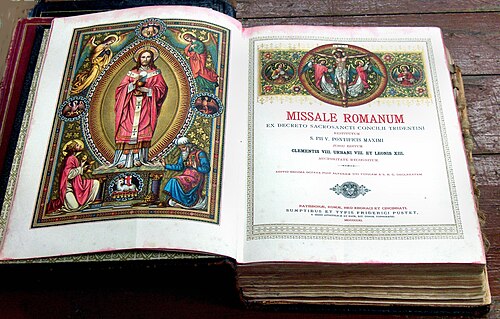
Validity of the Council
Some Traditionalist Catholics claim that several council statements conflict with established teaching regarding faith, morals and doctrine, and are therefore in error.[287] As a result, they say, Vatican II is invalid.
The largest of the traditionalist groups rejecting the validity of Vatican II is the Society of Saint Pius X (SSPX), which recognizes the authority of the Pope but rejects the validity of the Second Vatican Council. In 1988, the SSPX faced a conflict with Pope John Paul II over the consecration of bishops (Écône consecrations), which led to disputed canonical sanctions. This event has been a subject of ongoing debate within the Catholic community regarding the validity of any purported excommunications .[288][289][290]
Other groups have gone further than the SSPX and have declared that the Holy See has been vacant since the death of Pope Pius XII (sedevacantism) or that all the Pontiffs since Pope John XXIII are popes materially but not formally (sedeprivationism). The most notable of these groups are the Congregation of Mary Immaculate Queen and the Institute Mater Boni Consilii.[291][292]
Authority of the council's teaching
Since Vatican II issued no dogmatic definitions or anathemas, in accordance with the wishes of Pope John XXIII expressed particularly in his opening address to the Council,[46] it would be easy to conclude that, apart from where it repeats teaching that was already infallible before the Council, the Council's teaching is not binding, and that a Catholic is free to accept it or reject it.
This issue was addressed by Pope Paul VI five weeks after the end of the council in the talk he gave at his general audience of 12 January 1966:[293]
There are those who ask what is the authority, the theological qualification, that the Council wished to attribute to its teachings, knowing that it avoided giving solemn dogmatic definitions engaging the infallibility of the ecclesiastical magisterium. And the answer is known to those who recall the conciliar declaration of March 6, 1964, repeated on November 16, 1964: given the pastoral character of the Council, it avoided proclaiming in an extraordinary way dogmas endowed with the note of infallibility; but it nevertheless endowed its teachings with the authority of the supreme ordinary magisterium, and this ordinary – and obviously authentic – magisterium must be accepted docilely and sincerely by all the faithful, according to the mind of the Council regarding the nature and purposes of the individual documents.
The issue is also addressed by the Code of Canon Law. While the 1917 Code of Canon Law, in force in the Latin Church at the time of the council, simply stated "An Ecumenical Council enjoys supreme power over the universal Church,"[294] the 1983 Code of Canon Law states that Catholics may not disregard the teaching of an ecumenical council even if it does not propose its teaching as definitive:[295]
Although not an assent of faith, a religious submission of the intellect and will must be given to a Doctrine which the Supreme Pontiff or the College of Bishops declares concerning faith or morals when they exercise the authentic Magisterium, even if they do not intend to proclaim it by definitive act; therefore, the Christian faithful are to take care to avoid those things which do not agree with it.
"The Spirit of Vatican II"
By "the spirit of Vatican II" is often meant promoting teachings and intentions attributed to the Second Vatican Council in ways not limited to literal readings of its documents, spoken of as the "letter" of the council[296][297] (cf. Saint Paul's phrase, "the letter kills, but the Spirit gives life"[298]). However, Cardinal Joseph Zen has pushed back, that "it is nonsense to talk about the spirit of the Council, if you ignore the Documents of the Council."[299]
Bishop John Tong Hon of Hong Kong used this expression with regard merely to an openness to dialogue with others, saying: "We are guided by the spirit of Vatican II: only dialogue and negotiation can solve conflicts."[300]
In contrast, academic Michael Novak who had covered Vatican II as a journalist[301] described it as a spirit that
sometimes soared far beyond the actual, hard-won documents and decisions of Vatican II. ...It was as though the world (or at least the history of the Church) were now to be divided into only two periods, pre-Vatican II and post-Vatican II. Everything "pre" was then pretty much dismissed, so far as its authority mattered. For the most extreme, to be a Catholic now meant to believe more or less anything one wished to believe, or at least in the sense in which one personally interpreted it. One could be a Catholic "in spirit". One could take Catholic to mean the 'culture' in which one was born, rather than to mean a creed making objective and rigorous demands. One could imagine Rome as a distant and irrelevant anachronism, embarrassment, even adversary. Rome as "them".
From another perspective, Church historian John W. O'Malley writes:[2]
For the new churches it recommended adaptation to local cultures, including philosophical and theological adaptation. It also recommended that Catholic missionaries seek ways of cooperating with missionaries of other faiths and of fostering harmonious relations with them. It asserted that art from every race and country be given scope in the liturgy of the church. More generally, it made clear that the church was sympathetic to the way of life of different peoples and races and was ready to appropriate aspects of different cultural traditions. Though obvious-sounding, these provisions were portentous. Where would they lead?
Legacy
Vatican II participants who later became pope
Of those who took part in the council's opening session, four later became pope:[302][303]
- Cardinal Giovanni Battista Montini, who on succeeding John XXIII took the name Paul VI
- Bishop Albino Luciani, the future John Paul I
- Bishop Karol Wojtyła, who became John Paul II
- Father Joseph Ratzinger, present as a theological consultant, who became Benedict XVI.[304]
Saints of Vatican II
A number of those involved in Vatican II as pope, council father, peritus or official observer, have been canonized or beatified, or are in the process of canonization.
Canonized saints:
- John XXIII, pope who called for the council and presided over it first (thus his feast day is the same date as the opening date of Vatican II)
- Paul VI, second pope of the council
- John Paul II, council father as Bishop Karol Józef Wojtyła
Beatified:
- John Paul I, council father as Albino Luciani
- Álvaro del Portillo, council father
- Enrique Angelelli, council father
Process ongoing:
- Fulton J. Sheen, council father
- Terence Cooke, council father
- Frank Duff, observer
Notes
- ^ There has been speculation that the Vatican somehow assured the Russian Orthodox Church that communism and the Soviet State were topics that would not be raised at the council. However, J. O. Berlioz states that the real issue was the desire of the Russian Orthodox to be invited directly, instead of through the Ecumenical Patriarch.[39]
- ^ Various feasts and devotional celebrations related to popular piety were revised or abbreviated as a result of the council. Examples of this are the revision of the novena to Our Mother of Perpetual Help and the celebration of Friday of Sorrows in Lent.
References
Citations
- ^ Cheney, David M. "Second Vatican Council". Catholic Hierarchy. Retrieved 18 May 2011.
- ^ a b O'Malley 2008.
- ^ "DIVINO AFFLANTE SPIRITU ENCYCLICAL OF POPE PIUS XII". www.vatican.va. Retrieved 2023-02-27.
- ^ "Biblical Scholarship 50 years After Divino Afflante Spiritu: From September 18, 1993". americamagazine.org. 18 September 1993. Retrieved 2023-02-27.
- ^ "Light in our darkness – celebrating Divino Afflante Spiritu". europe-southwest.c-b-f.org. 11 October 2018. Retrieved 2023-02-27.
- ^ "The Second Vatican Council, by BC Butler". vatican2voice.org. Retrieved 2020-05-22.
- ^ Bokenkotter, Thomas (2005). A Concise History of the Catholic Church. New York: Image. p. 337. ISBN 0-385-51613-4.
- ^ Hahnenberg 2007, p. 44.
- ^ Pope Paul VI, Ecclesiam Suam, paragraph 30, published on 6 August 1964, accessed on 14 August 2024
- ^ Alberigo 2006, p. 1
- ^ Allocuzione del Santo Padre Giovanni XXIII con la Quale Annuncia il Concilio Ecumenico e L'Aggiornamento del Codice di Diritto Canonico (Speech) (in Italian). 25 January 1959.
- ^ "Surprise announcement of an elderly pope continues to reverberate today". international.la-croix.com. 25 January 2019. Archived from the original on 2020-05-30. Retrieved 2020-05-22.
- ^ O'Malley 2008, p. 15.
- ^ Walsh, Michael (2006), "The Religious Ferment of the Sixties", in McLeod, Hugh (ed.), History of Christianity, vol. 9, World Christianities c. 1914 – c. 2000, Cambridge University Press, pp. 307–308, ISBN 978-0-521-81500-0.
- ^ Wenger 1963, p. 284.
- ^ Laurentin 1962, p. 195.
- ^ "appropriate adaptation of Church discipline to the needs and conditions of our times", Ad Petri cathedram (1959) 61
- ^ to present the Church's teaching "in an integral vision that better corresponds to the soul of the modern era", Homily for Pentecost 1962
- ^ "We must act to overcome outdated conceptions, prejudices and discourteous expressions so as to create a climate favourable to return." "Focus on what unites rather than what separates." Quoted by Laurentin 1962, p. 170
- ^ "to contribute more effectively to the solution of the problems of the modern age", Humanae salutis 6
- ^ Sullivan 2002, p. 17
- ^ "[Cardinal Léger] also told us that he had yesterday met the new French ambassador to [Italy], who had just been received by the Pope. [...] John XXIII said to the ambassador: 'I want to shake off the imperial dust that has accumulated on the throne of St. Peter since the time of Constantine'." Congar 2012, p. 282, entry for 13 March 1963.
- ^ Fouilloux 1995, p. 111).
- ^ Fouilloux 1995, p. 121).
- ^ Alberigo 1995, pp. 23–25.
- ^ "Vatican II: 40 years later". National Catholic Register.[dead link]
- ^ "l The Bull "Humanae Salutis" by John XXIII to Summon the Second Vatican Council". Archived from the original on February 8, 2006.
- ^ a b Wiltgen 2014, p. 17.
- ^ a b c d e f g "Appropinquante concilio, Litterae Apostolicae Motu Proprio Datae normae statuuntur Concilii Oecumenici Vaticani Secundi celebrandi, d. 6 m. Augusti a. 1962, Ioannes PP. XXIII | Ioannes XXIII". www.vatican.va. Retrieved 2023-02-20.
- ^ a b Sullivan 2002, p. 21.
- ^ Eugène Tisserant (Roman Curia), Ignatius Gabriel I Tappouni (Syriac patriarch of Antioch) and 8 diocesan bishops: Achille Liénart of Lille (France), Josef Frings of Cologne (Germany), Bernardus Johannes Alfrink of Utrecht (Netherlands), Ernesto Ruffini of Palermo (Italy), Enrique Pla y Deniel of Toledo (Spain), Antonio Caggiano of Buenos Aires (Argentina), Francis Spellman of New York (US) and Norman Gilroy of Sydney (Australia)
- ^ Stransky, T. The Vatican Council 1962. Wiseman Review, vol. CCXXXVI, n. 493, pp. 203–216, 1962. link.
- ^ Kloppenburg, Boaventura. As Comissões Conciliares. In: Concílio Vaticano II: Primeira Sessão (Set.-Dez, 1962). Vol. 2, pp. 51–60. Petrópolis, Brazil: Vozes, 1963. link.
- ^ L'attività della Santa Sede nel 1962. Città del Vaticano, 1963, p. 109. link.
- ^ Herranz-Casado, Julián. En las afueras de Jericó: recuerdos de los años con san Josemaría y Juan Pablo II. Madrid, Rialp, 2007, pp. 48–49. link[permanent dead link].
- ^ Doria, Piero. L'Archivio del Concilio Vaticano II: Storia e Sviluppo. Anuario de Historia de la Iglesia, vol. 21, pp. 135–155, 2012. link.
- ^ Heraty 1967, p. 563, Vatican Council II.
- ^ a b c d e Kennedy, Philip (2011). Christianity: An Introduction. I.B. Tauris. pp. 247–. ISBN 978-1-84885-383-6.
Four hundred years after the Reformation, Vatican II reversed all this and decreed that the assembled people of God celebrate the liturgy; that the texts of worship may be translated into vernacular languages; that the assembled people could drink from the communion cup; that the reading of scripture was to be an essential element of all worship; and that the Eucharist was to be regarded as the source and summit of the Church's life: Ubi Eucharistia, ibi Ecclesia – wherever the Eucharist is, there too is the Church. Such a view was entirely alien to pre-conciliar Roman theology which was more comfortable with the idea: 'Wherever the Pope is, there too is the Church.' Much of this was entirely consonant with Protestant sensibilities and explains why Vatican II was a milestone for Catholic, Protestants, the Orthodox, and all religions.
- ^ Alberigo, "IV, The External Climate", The History of Vatican II, vol. 1, p. 404
- ^ Ricciardi 1997, p. 65.
- ^ Raguer 1997, p. 168, note 4.
- ^ "The deliberations in the C[entral] P[reparatory] C[ommission] [...] saw the emergence of the individuals and the groups that would appear in clearly drawn formation during the Council. Among those most critical of the prepared texts were Alfrink, Döpfner, Frings, Hurley, König, Léger, Liénart, Maximos IV, Montini and Suenens. Among the defenders of the texts Browne, Lefebvre, Ottaviani, Ruffini and Siri were the most vocal." (Komonchak 1995, 304).
- ^ O'Malley 2008, pp. 108–114.
- ^ O'Malley 2008, pp. 114–118, 121.
- ^ O'Malley 2008, pp. 119–120.
- ^ a b "Pope John's Opening Speech at Vatican II". vatican2voice.org. Retrieved 2020-01-25.
- ^ "1962 The Second Vatican Council". Christian History | Learn the History of Christianity & the Church. October 1990. Retrieved 2020-05-22.
- ^ Alberigo 2006, p. 24
- ^ a b Sullivan 2002, p. 27.
- ^ Hahnenberg 2007, p. 4.
- ^ a b Wiltgen 2014, p. 12.
- ^ Ricciardi 1997, p. 42.
- ^ Ratzinger 2009, p. 23: "The Council had taken a giant step beyond being a mere sounding board for propaganda. It had decisively assumed the function assigned it by canon law – the exercise of supreme power over the entire Church. [...] [I]n this independent body of bishops, the curia found a force to reckon with and a real partner in discussion.".
- ^ O'Malley 2008, p. 131.
- ^ O'Malley 2008, pp. 132–133.
- ^ O'Malley 2008, p. 138.
- ^ Hahnenberg 2007, p. 16.
- ^ O'Malley 2008, p. 143.
- ^ O'Malley 2008, pp. 149–150.
- ^ O'Malley 2008, pp. 150–152.
- ^ Hahnenberg 2007, pp. 27–29.
- ^ Wiltgen 2014, p. 64: "The liberals had won the election encounter; they had won the debate on liturgy; and now they had won the debate on revelation. They became increasingly conscious of the strength of their numbers. And the conservatives became gradually less sure of their position.".
- ^ Ratzinger 2009, p. 48: "This decision was obviously of great fundamental importance. The Council had resolutely set itself against perpetuating a one-sided anti-Modernism and so had chosen a new and positive approach. In this sense, we may consider November 20 or November 21, 1962, as a real turning point.".
- ^ O'Malley 2008, p. 152.
- ^ O'Malley 2008, p. 153.
- ^ Hahnenberg 2007, p. 112.
- ^ O'Malley 2008, p. 156.
- ^ O'Malley 2008, p. 154.
- ^ a b O'Malley 2008, p. 159.
- ^ Wittstadt 1995, p. 415: "[Sebastian Tromp, secretary of the preparatory theological commission and later of the conciliar doctrinal commission] remarked with great confidence that the theological drafts were so painstakingly prepared that the Council would adopt them in a couple of weeks.".
- ^ O'Malley 2008, pp. 161–165.
- ^ O'Malley 2008, pp. 164–165.
- ^ O'Malley 2008, p. 165.
- ^ "CIC can. 340". Code of Canon Law. Rome, IT: Vatican. Retrieved 1 July 2012.
- ^ O'Malley 2008, pp. 166–167.
- ^ a b Heraty 1967, pp. 565–566.
- ^ O'Malley 2008, pp. 167–170.
- ^ O'Malley 2008, p. 173.
- ^ O'Malley 2008, p. 122.
- ^ "All'inizio della Seconda Sessione del Concilio Ecumenico Vaticano II (29 settembre 1963) | Paolo VI". www.vatican.va. Retrieved 2022-08-10.
- ^ a b O'Malley 2008, p. 174.
- ^ a b O'Malley 2008, p. 175.
- ^ O'Malley 2008, p. 176.
- ^ O'Malley 2008, p. 178.
- ^ O'Malley 2008, pp. 179–180.
- ^ O'Malley 2008, pp. 180–185.
- ^ O'Malley 2008, p. 184.
- ^ O'Malley 2008, p. 186.
- ^ O'Malley 2008, p. 187.
- ^ O'Malley 2008, p. 189.
- ^ O'Malley 2008, pp. 190–191.
- ^ Rynne 1999, pp. 221–223.
- ^ O'Malley 2008, pp. 192–193.
- ^ O'Malley 2008, p. 193.
- ^ a b O'Malley 2008, p. 194.
- ^ O'Malley 2008, pp. 196–197.
- ^ O'Malley 2008, p. 197.
- ^ O'Malley 2008, p. 198.
- ^ O'Malley 2008, pp. 199–200.
- ^ O'Malley 2008, pp. 200–201.
- ^ O'Malley 2008, pp. 201–202.
- ^ O'Malley 2008, pp. 202–203.
- ^ O'Malley 2008, pp. 203–204.
- ^ "Women in the Church since Vatican II". 1 November 1986.
- ^ "Remembering the women of Vatican II". 12 October 2012.
- ^ "Home". 7 June 2016. Archived from the original on 26 July 2014. Retrieved 7 August 2014.
- ^ O'Malley 2008, p. 206.
- ^ O'Malley 2008, pp. 206–207.
- ^ O'Malley 2008, p. 226.
- ^ O'Malley 2008, pp. 207–208.
- ^ O'Malley 2008, pp. 208–209.
- ^ a b O'Malley 2008, p. 210.
- ^ O'Malley 2008, p. 211.
- ^ O'Malley 2008, p. 212.
- ^ O'Malley 2008, pp. 214–215.
- ^ O'Malley 2008, p. 216.
- ^ O'Malley 2008, p. 213.
- ^ O'Malley 2008, pp. 217–218.
- ^ O'Malley 2008, p. 219.
- ^ O'Malley 2008, p. 220.
- ^ a b O'Malley 2008, p. 221.
- ^ O'Malley 2008, p. 223.
- ^ O'Malley 2008, pp. 224–226.
- ^ O'Malley 2008, p. 227.
- ^ O'Malley 2008, pp. 227–228.
- ^ a b O'Malley 2008, p. 228.
- ^ a b c O'Malley 2008, p. 230.
- ^ a b c O'Malley 2008, p. 232.
- ^ O'Malley 2008, p. 231.
- ^ O'Malley 2008, pp. 238–239.
- ^ a b O'Malley 2008, p. 240.
- ^ a b O'Malley 2008, p. 233.
- ^ a b O'Malley 2008, p. 234.
- ^ O'Malley 2008, pp. 235–236.
- ^ O'Malley 2008, pp. 234–235.
- ^ O'Malley 2008, pp. 236–237.
- ^ O'Malley 2008, p. 237.
- ^ O'Malley 2008, p. 241.
- ^ O'Malley 2008, pp. 241–242.
- ^ O'Malley 2008, p. 243.
- ^ O'Malley 2008, p. 244.
- ^ a b O'Malley 2008, p. 245.
- ^ "Lumen gentium".
- ^ Heraty 1967, pp. XIV:566–567
- ^ O'Malley 2008, p. 246.
- ^ O'Malley 2008, pp. 247–248.
- ^ O'Malley 2008, p. 248.
- ^ Rynne 1991, pp. 443–444.
- ^ Rynne 1999, pp. 448–449.
- ^ O'Malley 2008, pp. 249–251.
- ^ Rynne 1999, p. 438.
- ^ a b O'Malley 2008, p. 253.
- ^ Paul VI (September 15, 1965). "Apostolica sollicitudo".
- ^ O'Malley 2008, p. 252.
- ^ O'Malley 2008, p. 254.
- ^ O'Malley 2008, p. 257.
- ^ Rynne 1999, p. 465.
- ^ O'Malley 2008, p. 277.
- ^ O'Malley 2008, pp. 278–279.
- ^ a b c O'Malley 2008, p. 258.
- ^ O'Malley 2008, pp. 267–268.
- ^ a b O'Malley 2008, p. 260.
- ^ O'Malley 2008, pp. 260–261.
- ^ O'Malley 2008, p. 261.
- ^ O'Malley 2008, pp. 261–262.
- ^ O'Malley 2008, p. 264.
- ^ O'Malley 2008, p. 266.
- ^ O'Malley 2008, p. 265.
- ^ O'Malley 2008, pp. 262–263.
- ^ O'Malley 2008, p. 268.
- ^ O'Malley 2008, pp. 269–270.
- ^ O'Malley 2008, p. 270.
- ^ O'Malley 2008, pp. 275–276.
- ^ O'Malley 2008, p. 276.
- ^ O'Malley 2008, pp. 272–273.
- ^ O'Malley 2008, pp. 271–272.
- ^ O'Malley 2008, p. 273.
- ^ Rynne 1999, pp. 532–535.
- ^ a b c O'Malley 2008, p. 280.
- ^ O'Malley 2008, pp. 279–280.
- ^ O'Malley 2008, pp. 284–285.
- ^ Rynne 1999, pp. 536–544.
- ^ O'Malley 2008, p. 282.
- ^ O'Malley 2008, pp. 281–282.
- ^ a b O'Malley 2008, p. 286.
- ^ O'Malley 2008, pp. 286–287.
- ^ a b O'Malley 2008, p. 287.
- ^ Rynne 1999, pp. 571–572.
- ^ O'Malley 2008, p. 288.
- ^ O'Malley 2008, pp. 288–289.
- ^ O'Malley 2008, p. 3.
- ^ a b Acta synodalia. Vol. III/8. p. 407.
- ^ a b c d e f Acta synodalia. Vol. III/8. p. 782.
- ^ a b Acta synodalia. Vol. IV/5. p. 753.
- ^ a b c d Acta synodalia. Vol. IV/6. p. 687.
- ^ a b Acta synodalia. Vol. II/5. p. 767.
- ^ a b Acta synodalia. Vol. II/6. p. 407.
- ^ a b Acta synodalia. Vol. IV/7. p. 641.
- ^ a b c d e f Acta synodalia. Vol. IV/7. p. 860.
- ^ a b Acta synodalia. Vol. IV/3. p. 634.
- ^ a b Acta synodalia. Vol. IV/5. p. 673.
- ^ a b Acta synodalia. Vol. IV/7. p. 615.
- ^ a b Acta synodalia. Vol. IV/4. p. 392.
- ^ a b c d e f g h Acta synodalia. Vol. IV/5. p. 674.
- ^ a b Acta synodalia. Vol. IV/4. p. 171.
- ^ a b Acta synodalia. Vol. IV/6. p. 298.
- ^ a b Acta synodalia. Vol. III/8. p. 653.
- ^ a b Acta synodalia. Vol. III/8. pp. 636–7.
- ^ a b Acta synodalia. Vol. IV/7. p. 105.
- ^ a b Acta synodalia. Vol. II/6. p. 49.
- ^ a b Acta synodalia. Vol. II/6. pp. 408–9.
- ^ a b Acta synodalia. Vol. IV/4. p. 824.
- ^ a b Acta synodalia. Vol. IV/6. p. 780.
- ^ a b Acta synodalia. Vol. IV/7. pp. 859–60.
- ^ a b Acta synodalia. Vol. IV/4. p. 758.
- ^ Hahnenberg 2007, pp. 17–19.
- ^ Hahnenberg 2007, pp. 19–20.
- ^ Hahnenberg 2007, pp. 20.
- ^ Hahnenberg 2007, pp. 20–21.
- ^ "Implementation of the Second Vatican Council" (PDF). Archived from the original (PDF) on 2021-01-21. Retrieved 2019-09-25.
- ^ "Pope blasts clericalism, says clock has stopped on 'hour of laity'". Crux. 2016-04-27. Archived from the original on 2019-09-25. Retrieved 2019-09-25.
- ^ Novo Millenio Ineunte (30)
- ^ "Pope Francis sets up a group of eight cardinals to advise him – La Stampa". lastampa.it (in Italian). 2013-04-15. Retrieved 2019-09-25.
- ^ "Cardinal Wuerl: Pope Francis has reconnected the church with Vatican II". America Magazine. 2017-03-06. Retrieved 2019-09-25.
- ^ "The Church of Christ and the Churches: Is the Vatican retreating from ecumenism?". America Magazine. 2007-08-27. Retrieved 2019-09-25.
- ^ "Anniversary Thoughts". America Magazine. 2002-10-07. Archived from the original on 2017-04-19. Retrieved 2017-04-18.
- ^ [Dei verbum, 24]
- ^ "The Gift Of the Word: The achievements and challenges of Vatican II on Scripture". America Magazine. 2013-10-31. Retrieved 2019-09-25.
- ^ "The Sacramentality of Scripture: "Dei Verbum" and the Biblical insights of Joseph Ratzinger". America Magazine. 2014-09-09. Retrieved 2019-09-25.
- ^ "Biblical Scholarship 50 years After Divino Afflante Spiritu: From September 18, 1993". America Magazine. 1993-09-18. Retrieved 2019-09-25.
- ^ "Aggiornamento of Vatican II". vatican2voice.org. Retrieved 2019-09-25.
- ^ Francis J. Moloney, sdb (2016-11-23). "Sacred Scripture at Vatican ii". Toronto Journal of Theology. 32 (2): 183–200. doi:10.3138/tjt.4202a. S2CID 171337874.
- ^ a b Hahnenberg 2007, p. 79.
- ^ Hahnenberg 2007, pp. 80–1.
- ^ Hahnenberg 2007, p. 81.
- ^ Hahnenberg 2007, pp. 91–92.
- ^ Hahnenberg 2007, pp. 92–93.
- ^ Hahnenberg 2007, p. 96.
- ^ Hahnenberg 2007, p. 97.
- ^ Hahnenberg 2007, pp. 97–98.
- ^ Hahnenberg 2007, p. 98.
- ^ Hahnenberg 2007, p. 122.
- ^ Hahnenberg 2007, p. 124.
- ^ Hahnenberg 2007, p. 125.
- ^ "Documents of the Second Vatican Council". www.vatican.va.
- ^ Hahnenberg 2007, pp. 142–143.
- ^ O'Malley 2008, p. 279.
- ^ Rynne 1991, pp. 534–535.
- ^ Hahnenberg 2007, pp. 110–111.
- ^ Ware, Kallistos (1993). The Orthodox Church. Penguin Adult. p. 322. ISBN 978-0-14-014656-1.
- ^ Colberg, Kristin M.; Krieg, Robert A. (2014). The Theology of Cardinal Walter Kasper: Speaking Truth in Love. Liturgical Press. p. 140. ISBN 978-0-8146-8340-8.
- ^ Hahnenberg 2007, pp. 113–114.
- ^ a b Hahnenberg 2007, p. 115.
- ^ a b Hahnenberg 2007, p. 116.
- ^ a b Hahnenberg 2007, p. 117.
- ^ Hahnenberg 2007, pp. 117–118.
- ^ Hahnenberg 2007, p. 113.
- ^ Hahnenberg 2007, pp. 156–158.
- ^ Hahnenberg 2007, pp. 159–160.
- ^ Hahnenberg 2007, pp. 160–161.
- ^ Oeterreicher, John M. "Declaration on the Relationship of the Church to Non-Christian Religions". In Vorgrimler, Herbert (ed.). Commentary on the Documents of Vatican II, vol. III. pp. 1–136, at p. 1.
- ^ David Rosen. ""Nostra aetate", Forty Years After Vatican II. Present & Future Perspectives". Retrieved April 28, 2014.
- ^ "Dabru Emet – A Jewish Statement on Christians and Christianity". www.jcrelations.net. Retrieved 2020-05-24.
- ^ Pope Gregory XVI called freedom of conscience "absurd and erroneous" (Encyclical Mirari vos, 1832) and pope Pius IX included freedom of religion among the errors of the modern era (Syllabus of Errors, 1864).
- ^ Hahnenberg 2007, p. 148.
- ^ Hahnenberg 2007, pp. 151–153.
- ^ Hahnenberg 2007, p. 149.
- ^ Hahnenberg 2007, p. 130.
- ^ Hahnenberg 2007, p. 129.
- ^ O'Malley 2008, p. 33.
- ^ O'Malley 2008, p. 25.
- ^ See O'Malley 2008, p. 5
- ^ O'Malley 2008, p. 1.
- ^ Richard R. Gaillardetz, “Preface”, in Gaillardetz 2020, p. xv
- ^ Massimo Faggioli, “Bishop Robert Barron's 'beige' version of Vatican II”, National Catholic Reporter, 14 May 2021
- ^ Hahnenberg 2007, p. 1.
- ^ Ratzinger, Joseph (2011-10-11), Porta fidei (motu proprio), Rome, IT: Vatican.
- ^ Hastings 1991.
- ^ Gaudium et spes [Pastoral Constitution on the Church in the Modern World], II Vatican council, Rome, Italy: Vatican
- ^ "Sanctitas clarior – Lettera Apostolica in forma di Motu Proprio con la quale sono riordinati i processi per le cause di beatificazione e canonizzazione (19 marzo 1969) | Paolo VI". www.vatican.va. Retrieved 2020-05-22.
- ^ "Meeting with the Parish Priests and the Clergy of the Rome Diocese (14 February 2013) – Benedict XVI".
- ^ O'Malley, John W. (11 October 2012). "Opening the Church to the World". The New York Times. Retrieved 28 April 2021.
- ^ Brewer, John D.; Higgins, Gareth I.; Teeney, Francis (2011). Religion, Civil Society, and Peace in Northern Ireland. Oxford University Press. ISBN 978-0-19-969402-0.
Vatican II, by eliminating Latin prayers, offended traditional Catholics, and in Judaism the status of kashrut is divisive.
- ^ a b Murray, John Courtney, ed. (1966). Religious Liberty: An End and a Beginning. New York: Macmillan.
- ^ "Pope Paul VI – Ministeria Quaedam".
- ^ Rausch, Thomas P.; Gaillardetz, Richard R., eds. (2016). Go into the Streets! The Welcoming Church of Pope Francis. Paulist Press. ISBN 978-0-8091-4951-3.
- ^ "Twenty-five explicit errors of Vatican Council II".
- ^ "Marcel Lefebvre". Encyclopædia Britannica. 25 November 2023.
- ^ Esteves, Junno Arocho (4 April 2017). "Pope approves provisions to recognize marriages of SSPX faithful". National Catholic Register.
- ^ Casey, Paul M.D (28 April 2023). "SSPX Masses and Fulfilling the Sunday Obligation". Catholic Family News.
- ^ Chryssides, George D. (2011). Historical Dictionary of New Religious Movements. Scarecrow Press. p. 310. ISBN 978-0-8108-7967-6.
- ^ Pasulka, Diana Walsh (2015). Heaven Can Wait: Purgatory in Catholic Devotional and Popular Culture. Oxford University Press. p. 180. ISBN 978-0-19-538202-0.
- ^ Translation of the Italian text at https://www.vatican.va/content/paul-vi/it/audiences/1966/documents/hf_p-vi_aud_19660112.html.
- ^ Canon 228 § 1
- ^ Canon 752: https://www.vatican.va/archive/cod-iuris-canonici/eng/documents/cic_lib3-cann747-755_en.html#BOOK_III.
- ^ "James Hitchcock, The History of Vatican II, Lecture 6: The Effects of Council Part II". Home.comcast.net. Archived from the original on 19 July 2012. Retrieved 1 July 2012.
- ^ Avery Dulles, Vatican II: The Myth and the Reality
- ^ 2 Corinthians 3:6
- ^ Zen, Joseph (28 May 2024). "Comments on Dr. Taylor Marshall's: "Viganò vs. Barron on Vatican II and Benedict XVI"". 平安抵岸全靠祂 (in Chinese (Taiwan)). Retrieved 31 May 2024.
- ^ Gheddo, Piero. "Gianni Criveller, Bishop John Tong of Hong Kong, "man of dialogue," but with "non-negotiable principles"". Asianews.it. Retrieved 1 July 2012.
- ^ "Introduction to The Open Church" (Millennium ed.). 24 November 2003. Archived from the original on 10 June 2011. Retrieved 1 July 2012.
- ^ Heraty 1967, p. 563, Vatican Council II.
- ^ Alberigo 2006, p. 69.
- ^ Keck, Doug (ed.), Father Georg Ratzinger: Pope Benedict XVI: A Profile (documentary), EWTN.
Sources
- Acta synodalia sacrosancti concilii oecumenici Vaticani II. Typis polyglottis Vaticani. 1970–91. 31 folios. (Official record of daily proceedings during Vatican II, in Latin) Available online at https://archive.org/details/second-vatican-council
- Alberigo, Giuseppe (1995). "The Announcement of the Council: From the Security of the Fortress to the Lure of the Quest". In Alberigo, Giuseppe; Komonchak, Joseph A. (eds.). History of Vatican II. Vol. I. Peeters and Orbis. pp. 1–54.
- Alberigo, Giuseppe (2006), A Brief History of Vatican II, translated by Sherry, Matthew, Maryknoll: Orbis Books, ISBN 1-57075-638-4
- Fouilloux, Étienne (1995). "The Antepreparatory Phase: the Slow Emergence from Inertia (January 1959–October 1962)". In Alberigo, Giuseppe; Komonchak, Joseph (eds.). History of Vatican II. Vol. I. Peeters & Orbis. pp. 55–166.
- Hahnenberg, Edward (2007), A Concise Guide to the Documents of Vatican II, City: Saint Anthony Messenger Press, ISBN 978-0-86716-552-4
- Hastings, Adrian (1991). "The Key Texts". In Hastings, Adrian (ed.). Modern Catholicism: Vatican II and After. SPCK. pp. 56–67.
- Heraty, J, ed. (1967), "Vatican Council II", New Catholic Encyclopedia, vol. XIV, Faculty of Catholic University of America (1 ed.), New York: McGraw-Hill, ISBN 978-0-07-010235-4, OCLC 34184550
- Laurentin, René (1962). L'enjeu du concile. Paris: Centurion.
- O'Malley, John W. (2008). What Happened at Vatican II. Cambridge, Massachusetts: Belknap Press of Harvard University Press. ISBN 978-0-674-04749-5.
- Raguer, Hilari (1997). "Profile of the Assembly". In Alberigo; Komonchak, Joseph A. (eds.). History of Vatican II. Vol. II. Peeters & Orbis. pp. 169–232.
- Ratzinger, Joseph (2009). Theological Highlights of Vatican II. New York: Paulist Press.
- Ricciardi, Andrea (1997). "The Tumultuous Opening Days of the Council". In Alberigo, Giuseppe; Komonchak, Joseph A. (eds.). History of Vatican II. Vol. II. Peeters & Orbis. pp. 1–68.
- Rynne, Xavier (1999). Vatican Council II. Orbis Books. ISBN 1-57075-293-1.
- Sullivan, Maureen (2002), 101 Questions and Answers on Vatican II, New York: Paulist Press, ISBN 0-8091-4133-7
- Vorgrimler, Herbert (1989), Commentaries on the Documents of the Council, Crossroad Publishing Company, ISBN 978-0-8245-0979-8
- Wenger, Antoine (1963). Vatican II. Première session. Paris: Centurion.
- Wiltgen, Ralph M. (2014). The Inside Story of Vatican II. TAN books. ISBN 978-0-89555-186-3. Formerly titled The Rhine Flows into the Tiber: a History of Vatican II (1967)
- Wittstadt, Klaus (1995). "On the Eve of the Second Vatican Council (July 1–October 10, 1962)". In Alberigo, Giuseppe; Komonchak, Joseph A. (eds.). History of Vatican II. Vol. I. Peeters & Orbis. pp. 405–500.
External links

Wikimedia Commons has media related to Second Vatican Council.
- Documents of the Second Vatican Council at Vatican.va