
Loading article…
 | |
| 前任者 | 国家人権局 |
|---|---|
| 形成 | 1920年1月19日[1] |
| 創設者 | |
| タイプ | 501(c)(4)非営利団体 |
| 13-3871360 | |
| 目的 | 公民権擁護活動 |
| 本部 | 125 Broad Street、ニューヨーク市、米国 |
サービス提供地域 | アメリカ合衆国 |
メンバーシップ | 170 万人(2024年)[2] |
| デボラ・アーチャー | |
常務取締役 | アンソニー・ロメロ |
予算 | 3億900万ドル (2019年、関連会社を除く)[3] |
スタッフ | 500名のスタッフ弁護士[4] |
ボランティア | 数千人の弁護士[5] |
| Webサイト | 詳しくはこちら |
アメリカ自由人権協会( ACLU ) は、1920 年に設立されたアメリカの非営利公民権団体です。ACLUの加盟団体は全 50 州、ワシントン DC、プエルトリコで活動しています。ACLU は、公民の自由が危険にさらされていると判断した場合、法的支援を提供します。ACLUからの法的支援は、直接の法的代理、または別の法律事務所がすでに代理を行っている場合は、法的主張を述べた法廷助言 者報告書の作成という形を取ることができます。
ACLUは訴訟で個人や団体を代理するだけでなく、理事会が定めた政策立場を支持するロビー活動も行っている。ACLUの現在の立場には、死刑反対、同性婚やLGBTの人々の養子縁組の権利の支持、避妊や中絶の権利などの生殖に関する権利の支持、女性、マイノリティ、LGBTの人々に対する差別の撤廃、米国における刑務所の解放、退役軍人の住宅および雇用の権利の保護、[6]性犯罪者登録の改革[7]と有罪判決を受けた初犯者の住宅および雇用の権利の保護、囚人の権利の支持と拷問への反対、政府が非宗教よりも宗教を優先したり特定の信仰を他の信仰よりも優先することに反対して政教分離の維持、トランスジェンダーの若者に対する政府資金による治療を含む性別適合治療の合法性の支持などがある。[8] [9]
法的には、ACLUは2つの別個だが密接に関連した非営利団体、すなわち501(c)(4)社会福祉団体であるアメリカ自由人権協会と、501(c)(3) 公益慈善団体であるACLU財団から構成されている。両団体とも公民権訴訟、擁護、教育に取り組んでいるが、501(c)(3)財団への寄付のみが税控除の対象となり、501(c)(4)団体のみが無制限に政治ロビー活動に従事できる。[10] [11]
組織
リーダーシップ
ACLUは、2024年3月現在、デボラ・アーチャー会長とアンソニー・D・ロメロ事務局長によって率いられています。 [12] [13] [14]会長はACLUの理事会の議長を務め、資金調達を主導し、政策立案を促進します。事務局長は組織の日常業務を管理します。[15]理事会は、各州の加盟団体の代表者と全州代表を含む80人で構成されています。組織の本部は、ニューヨーク市マンハッタンのローワーマンハッタンにある40階建ての高層ビル、ブロードストリート125番地にあります。 [16]
ACLUの指導部は政策決定で常に意見が一致するとは限らず、指導部内の意見の相違が大きな論争に発展することもある。1937年、ヘンリー・フォードの反組合文書配布の権利を擁護するかどうかをめぐって内部論争が勃発した。[17] 1939年には、共産主義者がACLUの指導的役割を果たすことを禁じるかどうかをめぐって白熱した議論が起きた。 [18] 1950年代初頭と冷戦の マッカーシズムの間、理事会は共産主義者を擁護するかどうかで分裂した。[19] 1968年には、ベンジャミン・スポックの反戦活動を代表するかどうかをめぐって分裂が生じた。 [20] 1973年、ウォーターゲート事件が続く中、指導部は当初、ニクソン大統領の弾劾と罷免を求めるかどうかをめぐって分裂した。[21] 2005年には、内部紛争の公表を防ぐためにACLU職員に口止め規則を課すべきかどうかについて内部対立があった。 [22]
資金調達

2014年3月31日までの1年間で、ACLUとACLU財団の支援と収益の合計は1億40万ドルで、その内訳は助成金(50.0%)、会員からの寄付(25.4%)、法律サービス提供(7.6%)、遺贈(16.2%)、収益(0.9%)でした。[25]会費は寄付金として扱われ、会員は年間の支払額を選択し、平均すると1人当たり約50ドルです。[26] 2014年3月31日までの1年間で、ACLUとACLU財団の費用の合計は1億3,340万ドルで、プログラム(86.2%)、管理(7.4%)、資金調達(8.2%)に費やされました。[25](投資収益などの純資産のその他の変動+3090万ドルを考慮すると、組織全体の純資産は210万ドル減少した。)[27] [28] 2011年から2014年にかけて、ACLU財団は平均して総予算の約70%を占め、ACLUは約30%を占めた。[29]
ACLU は慈善団体への寄付を募っている。地方支部は独自の資金を募っているが、一部は ACLU 全国支部からも資金を受け取っており、その配分と額は州によって異なる。全国支部は、自立するのに十分な資金がない小規模支部に裁量で補助金を支給する。例えば、ワイオミング ACLU 支部は、2015 年 4 月まで補助金を受け取っていたが、全国 ACLU の一連の人員削減の一環としてワイオミング支部は閉鎖された。[30] [31]
2004年10月、ACLUはフォード財団とロックフェラー財団の両財団から150万ドルの寄付を拒否した。これは、両財団が寄付契約書に米国愛国者法の文言を採用し、その文言には「テロリズムやその他の容認できない活動への資金援助」に資金が使われないことを規定する条項が含まれていたためである。ACLUは、連邦法と寄付者契約の両方でこの条項が市民の自由に対する脅威であるとみなし、その条項は範囲が広すぎて曖昧であると述べた。[32] [33]
ACLU は、その法的活動の性質上、政府機関に対する訴訟にしばしば関与している。政府機関は、一般的に不利な金銭的判決から保護されている。町、州、または連邦機関は、法律の変更や行動の変更を要求される可能性があるが、明示的な法定免除がない限り、金銭的損害賠償を支払う必要はない。場合によっては、法律は、政府機関を訴えて勝訴した原告に、金銭的損害賠償またはその他の金銭的救済を請求することを許可している。特に、1976 年の公民権弁護士報酬法は、一部の公民権訴訟で政府に責任を負わせている。この公民権法に基づく報酬は、損害賠償ではなく「衡平法上の救済」と見なされ、政府機関は衡平法上の救済から免除されない。[34]このような法律の下で、ACLU とその州支部は、政府機関に対する金銭的判決に関与することがある。2006 年、宗教の公的表現保護法は、政教分離の違反という特定のケースで金銭的判決を阻止しようとした。[35]
ACLUは、反対派から裁判所から報酬を受け取っている。例えば、ジョージア州の支部は、郡の裁判所から十戒の展示を撤去するよう要求した訴訟で、15万ドルの報酬を受け取った。 [36]同州で別の郡で起きた2件目の十戒訴訟では、74,462ドルの判決が下された。[37]同様の十戒訴訟で、テネシー州は5万ドル、アラバマ州は175,000ドル、ケンタッキー州は121,500ドルの支払いを要求された。[38] [39]
州政府関連機関
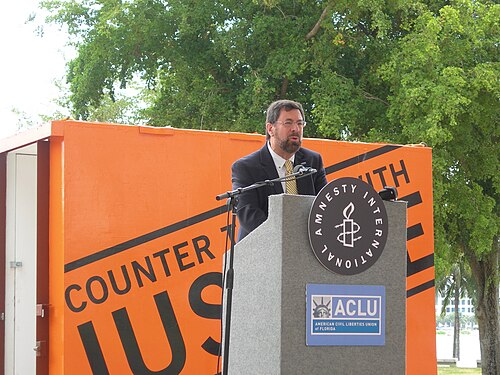
組織の業務のほとんどは、地方支部によって行われている。各州に少なくとも1つの支部組織があり、ワシントンDCとプエルトリコにも1つずつある。カリフォルニア州には3つの支部がある。[40]支部は全国組織から独立して運営されており、各支部には独自のスタッフ、事務局長、取締役会、予算がある。各支部は2つの非営利法人で構成されており、1つはロビー活動を行わない501(c)(3)法人(ACLU財団)で、もう1つはロビー活動を行う権利を持つ501(c)(4)法人(ACLU)である。両組織はスタッフとオフィスを共有している。[41] [42] [43]
ACLUの加盟団体はACLUの組織の基本単位で、訴訟、ロビー活動、公衆教育に携わっています。例えば、2020年にACLUのニュージャージー支部はニュージャージー州最高裁判所で26件の訴訟を担当しましたが、これは同裁判所で審理された訴訟全体の約3分の1に相当します。彼らは5万通以上のメールを役人や機関に送信し、28人の常勤スタッフを抱えていました。[44]
ポジション
2018年6月に漏洩したACLUのメモには、「深刻な危害を与える」および「平等への進歩を妨げる」可能性のある発言は、同組織にとって優先順位が低い可能性があると書かれていた。[47] [48]
ACLUは銃所有者の全国登録制度を創設するいかなる取り組みにも反対しており、全米ライフル協会と協力して登録制度の創設を阻止し、憲法修正第4条に基づいて銃を携帯する権利を保護することを支持している。[49] [50]
ACLUは南軍旗に対する国家による検閲に反対している。[51]
支持と反対
ACLU はさまざまな個人や組織から支援を受けています。ACLU は毎年、何百もの慈善団体から何千もの助成金を受け取っています。[要出典]法的措置における ACLU の同盟者には、全米黒人地位向上協会、アメリカユダヤ人会議、ピープル・フォー・ザ・アメリカン・ウェイ、全米ライフル協会、電子フロンティア財団、政教分離を求めるアメリカ人連合、全米女性機構などがあります。[要出典]
ACLUは、共産主義者を指導層から排除したとき、ネオナチを擁護したとき、ポール・ロブソンを擁護することを拒否したとき、全国労働関係法の可決に反対したときなど、リベラル派から批判されてきた。[52] [53] 2014年には、ACLUの関連団体が反イスラムの抗議者を支援し、[54] 2018年にはACLUがNRAを支援したために批判された。[55] [56]
逆に、公立学校での公式祈祷に反対したときや愛国者法に反対したときなど、保守派から批判されてきた。[57] [58]
ACLUは、ラッシュ・リンボー、ジョージ・ウォレス、ヘンリー・フォード、オリバー・ノースなどの保守派の人物だけでなく、ディック・グレゴリー、ロックウェル・ケント、ベンジャミン・スポックなどのリベラル派の人物も支持してきた。[20] [59] [60] [61] [62] [63] [64] [65]
批判の主な源は、ACLU が、クー・クラックス・クラン、ネオナチ、ネーション・オブ・イスラム、北米男性/少年愛協会、ウェストボロ・バプテスト教会、ユナイト・ザ・ライト集会など、不快または不人気な見解を推進する個人または組織を代理する訴訟である。[66] [67] [68] ACLU の公式方針は、「… [私たちは] 真に不快な発言をしている個人を代理または弁護してきました。共産主義者、ナチ、クー・クラックス・クランのメンバー、テロリスト容疑者、ポルノ製作者、反 LGBT 活動家、国旗を燃やす人々の言論の自由を弁護してきました。それは、ほとんどの人が不快に感じるメッセージの場合、言論の自由の弁護が最も必要だからです。憲法上の権利は、すべての人のために保持されるのであれば、最も不人気なグループにも適用されなければなりません。」である。[69] [70]
歴史
幼少期
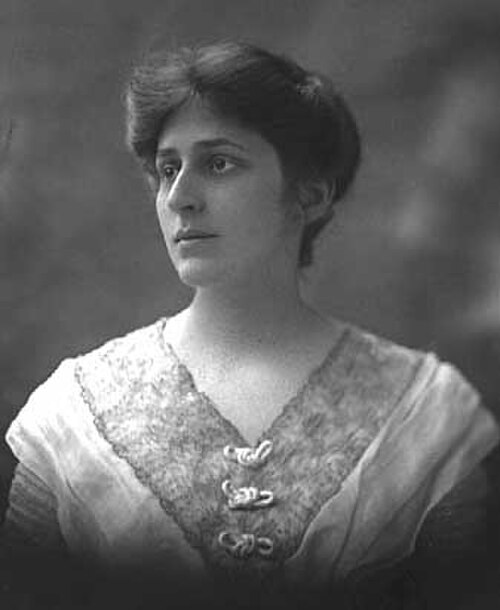
ACLUは、第一次世界大戦中の1917年に弁護士活動家のクリスタル・イーストマンとロジャー・ナッシュ・ボールドウィンによって共同設立された全米自由人権協会(CLB)から発展した。[71] CLBの焦点は言論の自由、主に反戦言論と第一次世界大戦への従軍を望まなかった良心的兵役拒否者の支援にあった。 [72] 1918年、クリスタル・イーストマンは健康上の問題で組織を辞任した。[73] CLBの単独指導者となった後、ボールドウィンは組織の再編を主張した。彼は組織の焦点を訴訟から直接行動と公教育に変更したかった。[1]
CLBの理事たちはこれに同意し、1920年1月19日にアメリカ自由人権協会という新しい名前で組織を結成した。[1]当時、全米黒人地位向上協会(NAACP)や名誉毀損防止同盟(ADL)など、公民権に焦点を当てた組織は米国にいくつかあったが、ACLUは特定の人々や単一のテーマを代表しない最初の組織だった。[1] CLBと同様に、NAACPは訴訟を通じて公民権問題に取り組んでおり、世紀の変わり目以降に南部で行われていたアフリカ系アメリカ人の参政権剥奪を覆す取り組みもそのひとつだった。
ACLUの最初の数十年間、ボールドウィンはACLUのリーダーであり続けた。彼のカリスマ性とエネルギーは、ACLUの理事会と指導部に多くの支持者を引き付けた。[74] ACLUは執行委員会によって運営されており、特に民主的でも平等主義的でもなかった。ACLUの本部はニューヨークの住民が占めていた。[75] ACLUの資金のほとんどは、ガーランド基金などの慈善団体から提供されていた。[76]
ルシール・バーンハイマー・ミルナーはアメリカ自由人権協会の共同創設者であり、事務局長も務めたことがある。[77]
言論の自由の時代

1920年代、ACLUの主な焦点は、言論の自由全般、特に労働運動における言論の自由に置かれていた。[78] ACLUの活動の大半は労働運動に関連していたため、ACLU自体も米国在郷軍人会、全米市民連盟、産業防衛協会および同盟愛国協会などの保守派グループから激しい攻撃を受けた。 [79] ACLUの指導部は、公民権侵害にどう対抗するかで意見が分かれていた。ボールドウィン、アーサー・ガーフィールド・ヘイズ、ノーマン・トーマスらの一派は、直接的で戦闘的な行動が最善の道であると信じていた。[80]ウォルター・ネレスやウォルター・ポラックらの別のグループは、最高裁判所に訴訟を起こすことが変化を達成する最善の方法であると考えていた。[81] ACLUは労働に加えて、公立学校での言論の自由の促進など、労働以外の分野でも活動を主導した。[82] ACLUは1921年にニューヨークの公立学校での演説を禁止された。[83] ACLUはNAACPと協力して人種差別訴訟も支援した。[84] ACLUは表明した意見に関わらず言論の自由を擁護した。例えば、反動的な反カトリック、反黒人のクー・クラックス・クラン(KKK)はACLUの活動の頻繁な標的だったが、ACLUは1923年にKKKの集会開催の権利を擁護した。[85] ACLUが1920年代に擁護しようとしなかった公民権の中には、芸術の検閲、政府による捜索と押収の問題、プライバシーの権利、盗聴などがあった。[86]
政府当局はアメリカ共産党を日常的に追い詰め、アメリカ共産党をACLUの主な顧客とした。[87]同時に、共産党は非常に攻撃的な戦術をとり、宣誓の下で党員であることを否定するなどの違法行為にしばしば従事した。このため共産党とACLUの間では頻繁に衝突が起きた。[87]共産党指導者はACLUを攻撃することがあり、特にACLUが保守派の言論の自由を擁護したのに対し、共産党はソ連批判者の演説を妨害しようとした。[87]この2つのグループの不安定な関係は数十年にわたって続いた。[87]
公立学校
ACLUが設立されてから5年経っても、同組織は努力の甲斐なくほとんど成果をあげることができなかった。[88] 1925年、ACLUがジョン・T・スコープスを説得してテネシー州の反進化論法に逆らわせた時、状況は一変した。ACLU全国委員会のクラレンス・ダロウがスコープスの弁護団を率いた。ウィリアム・ジェニングス・ブライアン率いる検察側は、学校で創造論を教える際には聖書を文字通りに解釈すべきだと主張した。ACLUは敗訴し、スコープスは100ドルの罰金を科せられた。テネシー州最高裁判所は後にこの法律を支持したが、技術的な理由で有罪判決を覆した。[89] [90]
スコープス裁判は、ACLUにとって驚異的な広報上の成功だった。[91] ACLUはアメリカ全土でよく知られるようになり、この裁判はACLUが初めて米国の大手新聞社から支持されるきっかけとなった。[92] ACLUは、1982年のマクリーン対アーカンソー州裁判や2005年のキッツミラー対ドーバー地区学区裁判など、何十年にもわたり、学校での政教分離を求めて戦い続けた。[93]
ボールドウィンは、ニュージャージー州でストライキ中の工場労働者の集会で演説しようとして逮捕された後、1920年代の重要な言論の自由の勝利に関わった。判決はニュージャージー州に限定されていたが、1928年の控訴裁判所の判決は、憲法で保障されている言論の自由は「寛大かつ包括的に解釈」されなければならないと宣言し、公民権運動の大きな転換点となり、司法の見解が公民権に有利に転じたことを示唆した。[94]
1920年代のACLUの最も重要な訴訟は、ギトロー対ニューヨークで、ベンジャミン・ギトローが共産主義を推進する文書を配布した際に無政府状態と暴力を煽動することを禁じる州法に違反したとして逮捕された。[95]最高裁はギトローの有罪判決を覆さなかったものの、憲法修正第1条の言論の自由は連邦法だけでなく州法にも適用されるというACLUの立場(後に「組み込み原則」と呼ばれる)を採用した。[96]
オレゴン義務教育法は、 1926年までにオレゴン州の8歳から16歳までのほぼすべての子供に公立学校に通うことを義務付けた。 [97]当時の最高法務官で後にコロンブス騎士団の最高騎士となるルーク・E・ハートの友人で、副所長のロジャー・ナッシュ・ボールドウィンは、この法律に異議を唱えるため騎士団に加わることを申し出た。コロンブス騎士団は、この法律と戦うために直ちに1万ドルを寄付し、さらにこの法律を打破するために必要な追加資金も寄付することを約束した。[98]この事件はピアス対シスターズ協会として知られるようになり、アメリカ合衆国最高裁判所の判決で、憲法修正第14条の適正手続条項の適用範囲を大幅に拡大した。裁判所は全員一致で、この法律は違憲であり、子供を最善と考える方法で教育する権限は州ではなく親にあるとの判決を下した。 [99]
言論の自由の拡大
ACLUの指導者たちは、市民の自由を促進するために使用する最善の戦術について意見が分かれていた。フェリックス・フランクファーターは、最高裁が権利章典の自由主義的解釈を義務付けることはできないため、立法が最善の長期的解決策であると感じていた。しかし、ウォルター・ポラック、モリス・アーンスト、その他の指導者たちは、最高裁の判決が市民の自由を保証する最善の道であると感じていた。[100] 1920年代の一連の最高裁の判決は、国家の雰囲気の変化を予見していた。反急進的な感情は減少し、裁判所の判決を通じて言論と集会の自由を保護する意欲が高まっていた。[101]
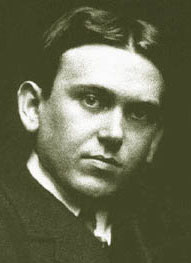
1926年以降、ACLUは言論の自由に関する活動を芸術や文学の検閲にまで拡大した。[64]その年、HL・メンケンは発禁になっていた自身の雑誌「アメリカン・マーキュリー」のコピーを配布することでボストンの法律を故意に破ったが、ACLUは彼を弁護し無罪を勝ち取った。[64] ACLUはその後も勝利を収め、その中には1933年の画期的な訴訟である「アメリカ合衆国対ユリシーズ」が含まれる。この訴訟では、ジェイムズ・ジョイスの『ユリシーズ』に対する関税局の発禁処分が覆された。[102] ACLUは初期の頃は成果がまちまちで、1966年に最高裁がロス対アメリカ合衆国および回想録対マサチューセッツ州の訴訟でようやくわいせつ法を明確にした。
コムストック法は、性教育に関する情報の配布を、わいせつで乱交行為につながるという前提で禁止した。[103] メアリー・ウェア・デネットは、性教育に関する資料を含んだパンフレットを配布したとして、1928年に300ドルの罰金を科された。モリス・アーンスト率いるアメリカ自由人権協会は、彼女の有罪判決を控訴し、覆し、判事のラーンド・ハンドは、パンフレットの主な目的は「理解を促進すること」であると裁定した。[103]この成功により、アメリカ自由人権協会は、労働や政治的発言を超えて、映画、報道、ラジオ、文学にまで言論の自由の取り組みを広げた。 [103]アメリカ自由人権協会は、この取り組みを調整するために、1931年に全国検閲からの自由委員会を設立した。[103] 1930年代初頭までに、米国における検閲は減少していた。[102]
1930年代の2つの大きな勝利は、ACLUの言論の自由を促進するキャンペーンを確固たるものにした。 1931年に判決が下されたストロンバーグ対カリフォルニア州の訴訟で、最高裁はACLUの側に立ち、共産党員が共産党の旗に敬礼する権利を認めた。その結果、最高裁は初めて、修正第14条の適正手続き条項を用いて、州に修正第1条の要件を課した。[104]同じく1931年に判決が下されたニア対ミネソタ州の訴訟で、最高裁は、新聞がスキャンダラスであるという評判があるという理由だけで、州が事前抑制を行使して新聞の発行を阻止することはできないと判決した。[105]
1930年代
1930年代後半、米国では寛容の新時代が到来した。[106]国家指導者たちは、特に少数派を保護する権利章典を民主主義の真髄として歓迎した。[106] 1939年のヘイグ対産業組織委員会の最高裁判所の判決は、共産主義者が自らの主張を推進する権利を認めた。[106]アメリカ法曹協会などの保守派でさえ、長い間左派組織の領域と考えられていた公民権運動を始めた。1940年までに、ACLUは1920年代に設定した目標の多くを達成し、その政策の多くは国の法律となった。[106]
1929年、スコープスとデネットの勝利の後、ボールドウィンは米国には市民の自由に対する大きな未開拓の支援があることを認識した。[102]ボールドウィンは、警察の暴力、ネイティブアメリカンの権利、アフリカ系アメリカ人の権利、芸術の検閲、国際的な市民の自由に重点を置いたACLUの拡大プログラムを提案した。[102]理事会は国際的な取り組みを除いてボールドウィンの拡大計画を承認した。[107]
ACLUは、1932年のノリス・ラガーディア法の成立に重要な役割を果たした。同法は、雇用主が従業員の労働組合加入を阻止することを禁止し、ストライキ、結婚、労働組合活動を禁止命令で禁止する慣行を阻止する連邦法である。 [107] ACLUはまた、ハーバート・フーバーのウィッカーシャム委員会の後援の下、1931年に報告書「法執行における無法」を出版し、警察署内の不正行為(虚偽の自白の強要など)を減らす全国的な取り組みを開始する上で重要な役割を果たした。[107] 1934年、ACLUはインディアン再編成法の成立に向けてロビー活動を行い、ネイティブアメリカンの部族に一定の自治権を回復し、ネイティブアメリカンの子供を誘拐した場合の罰則を確立した。[107]
ACLUはアフリカ系アメリカ人の公民権を促進する訴訟についてはNAACPに委ねていたが、教育活動にも取り組み、1931年に「Black Justice」を出版した。これは南部全域における制度的人種差別、投票権の欠如、人種隔離、司法制度における差別を記録した報告書である。[108]ガーランド基金の資金援助を受けて、ACLUは黒人の公民権を求める戦略を概説した影響力のあるマーゴールド報告書の作成にも参加した。 [109] [110] ACLUは、南部の差別を統制する「分離しても平等」政策は違法であり、黒人は実際には決して平等に扱われていなかったことを実証することを計画していた。[109]
ACLU が設立されてから 12 年後の 1932 年、ACLU は大きな成功を収めていた。最高裁判所は ACLU が支持する言論の自由の原則を受け入れ、一般大衆は公民権全般に対する支持を強めつつあった。[111]しかし、大恐慌により公民の自由に対する新たな攻撃が起こった。1930 年には言論の自由に対する訴追件数が大幅に増加し、リンチの件数が倍増し、フィラデルフィアでは失業者による集会がすべて禁止された。[112]フランクリン・D・ルーズベルト政権は、恐慌と戦うためにニューディール政策を提案した。ACLU の指導者たちは、ニューディール政策について複雑な意見を持っていた。それは、多くの人がニューディール政策が個人の事柄に対する政府の介入の増加を意味すると感じていたことと、国家復興局が反トラスト法の施行を停止していたことによる。[113] ニューディール政策の指導者たちの経済政策は ACLU の目標と一致することが多かったが、社会目標はそうではなかった。[114]特に、映画は不道徳またはわいせつとみなされる上映を禁止する地方条例の集中砲火にさらされた。[115]妊娠や出産を描いた公衆衛生映画でさえ禁止され、出産過程の写真を含む 1938 年 4 月 11 日号のライフ誌も禁止された。ACLU はこれらの禁止令に抵抗したが、勝利することはなかった。 [116]カトリック教会は 1930 年代に政治的影響力を増大させ、映画の検閲を促進し、避妊情報の出版を阻止するためにその影響力を利用した。ACLU とカトリック教会のこの対立により、1934 年に ACLU の指導者だった最後のカトリック司祭が辞任した。カトリック司祭が再び代表されるようになったのは 1970 年代になってからである。[117] 最高裁の政策の大転換を示す最初の判決は、政府のプログラムに厳格な憲法上の制限を適用せず、市民の自由を保護するためにより積極的な役割を果たすという、共産主義の労働組合活動家が組合結成を議論する集会を招集したために逮捕されたデ・ヨンゲ対オレゴン州事件であった。 [118] ACLUの弁護士オスモンド・フランケルは、国際労働防衛と協力して1937年にデ・ヨンゲの弁護を行い、最高裁が「合法的な議論のための平和的な集会は犯罪にできない」と判決を下した際に大きな勝利を収めた。[119]デ・ヨンゲ事件は、12年間続く時代の始まりを示し、その間、ルーズベルト大統領の任命した人々(ヒューゴ・ブラック、ウィリアム・O・ダグラス、フランク・マーフィーが率いる)は、議会の議員を解任し、議会の議員を解任した。)は公民権法の体系を確立した。[118] 1938年、ハーラン・F・ストーン判事は米国対キャロライン・プロダクツ社事件で有名な「脚注4」を書き、公民権を阻害する州法は今後、説得力のある正当化を必要とするだろうと示唆した。[120]
ロバート・F・ワグナー上院議員は1935年に全国労働関係法を提案し、労働者に労働組合結成の権限を与えた。皮肉なことに、労働者の権利のために15年間闘った後、ACLUは当初この法律に反対した(後にこの法律に対して立場を表明しなかった)。これはACLUの指導者の一部が、この法案が政府の権限を拡大することを懸念したためである。[121]新たに結成された全国労働関係委員会(NLRB)は、ACLUにとってジレンマをもたらした。1937年、NLRBはヘンリー・フォードに対し、反労働組合文書の配布を禁じる命令を出したからである。 [17] ACLU指導部の一部は習慣的に労働者の側に立っており、その派閥はNLRBの行動を支持した。[17]しかし、ACLUの一部はフォードの言論の自由の権利を支持した。[17] ACLUのリーダーであるアーサー・ガーフィールド・ヘイズは妥協案(自動車労働組合を支持しながらもフォードの個人的意見を表明する権利を支持する)を提案したが、この分裂は今後数年間でより顕著になるより深い分裂を浮き彫りにした。[17]
ACLUによるNLRBへの支持は、ACLUにとって重要な進展であった。なぜなら、政府機関が公民権の維持に責任を負うことを認めた初めての事例であったからである。[122] 1937年まで、ACLUは市民と民間団体が公民権を最もよく維持できると考えていた。[122]
ACLU の一部の派閥は、組織の新しい方向性を提案した。1930 年代後半、一部の地方支部は、市民の自由に関する控訴訴訟に重点を置くのではなく、低所得者層の居住地区の店舗を拠点とする法律扶助協会に転換することを提案した。ACLU の理事はこの提案を拒否した。[123] ACLU の他のメンバーは、ACLU が政治の分野に焦点を移し、政治家と取引するために理念を妥協する姿勢を強めることを望んだ。ACLU の指導部もこの提案を拒否した。[123]
ACLU が不人気で、時には極端な見解を持つ被告を支援したことで、多くの画期的な裁判が生まれ、新たな市民の自由が確立された。[120]そのような被告の 1 つがエホバの証人で、多数の最高裁判所の裁判に関与した。[120] [124]最も重要な裁判は、国旗敬礼を義務付ける法律に関するものだった。[125]エホバの証人は、国旗敬礼は宗教的信念に反すると感じていた。1938 年には 2 人の子供が国旗敬礼をしなかったとして有罪判決を受けた。[125] ACLU は最高裁判所への彼らの上訴を支持したが、最高裁判所は 1940 年に有罪判決を支持した。 [126]しかし 3 年後、ウェストバージニア州教育委員会対バーネットの裁判で、最高裁判所は判決を覆した。[126] [127]
共産主義と全体主義

ドイツ、ロシア、その他の国々で言論や結社の自由を否定する全体主義政権が台頭したことは、米国の公民権運動に大きな影響を与え、反共産主義感情が高まり、公民の自由が制限された。[128]
ACLU の指導部は、米国におけるナチス支持の言論を擁護するかどうかで分裂していた。ACLU 内の労働者支持派はナチズムとファシズムに敵対しており、ACLU がナチスを擁護すると反対した。 [129] ACLU は数多くのナチス支持団体を擁護し、彼らの言論の自由と結社の自由の権利を擁護した。[130] 1930 年代後半、ACLU は、米国共産党が調整するリベラル組織の連合体である人民戦線と同盟を結んだ。[131] ACLU は、人民戦線の加盟組織がニューヨークを拠点とする ACLU よりも地域の公民権闘争をはるかに効果的に戦うことができたため、利益を得た。[131]共産党との提携は、ACLU が「共産主義戦線」であるという非難につながった。特に、ハリー・F・ワードがACLU の議長であると同時に共産主義組織であるアメリカ反戦・ファシズム連盟の議長でもあったためである。[132]
下院非米活動委員会(HUAC) は、米国内の反逆と反逆行為を暴くために 1938 年に設立されました。[133]証人が公聴会で証言した際、ACLU が何度も言及されたため、HUAC は 1939 年の報告書で ACLU を重点的に言及しました。[134]このことは、ACLU が共産主義組織であるかどうか「明確に述べることはできない」と報告書で述べられていたにもかかわらず、ACLU の評判を著しく損ないました。[134] ACLU は、共産主義のフロント組織であるという疑惑に対してイメージを守ろうと急いでいましたが、HUAC から嫌がらせを受けた証人も保護しました。[135] ACLU は、後に共産主義を支持する多くの人々を投獄するために使用された 1940 年のスミス法の可決に抗議した (失敗に終わった)数少ない組織の 1 つでした。[136] [137] ACLUは、労働組合指導者ハリー・ブリッジスを含む、スミス法に基づいて起訴された多くの人々を弁護した。[138]
ACLU指導部は、指導部から共産主義者を排除するかどうかで意見が分かれた。ノーマン・トーマス、ジョン・ヘインズ・ホームズ、モリス・アーンストは反共産主義者で、ACLUを共産主義から遠ざけたいと考えていた。彼らに対抗したのは、 ACLU指導部へのいかなる政治的審査も拒否するハリー・F・ワード、コーリス・ラモント、エリザベス・ガーリー・フリンだった。 [139] 1939年を通して激しい争いが続き、1940年2月に反共産主義者が勝利し、理事会は全体主義を支持する者はACLU指導部から排除することを決議した。ワードは直ちに辞任し、6時間に及ぶ激しい議論の末、フリンはACLU理事会から追放された。[18] 1940年の決議は、多くの人からその基本原則への裏切りとみなされた。この決議は1968年に撤回され、フリン氏は1970年に死後ACLUに復帰した。[138]
第二次世界大戦
ACLU は第二次世界大戦中、明らかに市民の自由に関する記録がまちまちだった。第一次世界大戦に比べると反逆罪の訴追ははるかに少なかったが、これはルーズベルト大統領がウィルソン大統領よりも反対意見に寛容だったことを意味するものではない。主な説明は、真珠湾攻撃後、ほぼ全員が戦争努力に結集したため、同様の法律の下で活動する検察官にとって、もっともらしい標的が少なかったということである。[140]
ルーズベルトはフランシス・ビドル司法長官に、戦前の著名な批判者に対して法的措置を取るよう絶えず圧力をかけた。[141]ビドルは大統領をなだめるため、ついに30人の無名個人をスミス法違反で起訴した。被告の多くは互いに面識がなく、ほとんどが米国内のさまざまな場所に住んでいたが、1944年の扇動裁判でワシントンDCで一斉に裁判にかけられた。ロジャー・N・ボールドウィン、ノーマン・トーマス、サーグッド・マーシャル、その他の指導者らがACLUに裁判を非難する声明を出させようとしたが(ボールドウィンは裁判を「ひどい」と呼んだ)、理事会はそれを却下した。[142]
ACLU はまた、戦時中の報道規制との戦いでも、さまざまな実績を残してきた。米国郵政公社がチャールズ・E・コフリン神父の雑誌『ソーシャル・ジャスティス』の二等郵便の特権を剥奪したときも、ACLU は沈黙していた。一方で、社会主義労働者党の戦闘員とボイシ・バレー・ヘラルドの発行者が郵便権を剥奪されたときには、ACLU は法的援助を行った。ACLU は、FBI やその他の機関による黒人報道機関への広範囲にわたる超法規的嫌がらせを阻止できなかった。ACLU が市民の自由を守ることに失敗したことは、現代の格言「第一次世界大戦で生まれ、第二次世界大戦で死んだ」のきっかけとなった。[143]

日本軍が真珠湾を攻撃してから2か月後、ルーズベルト大統領は大統領令9066号で軍の「立入禁止区域」の設置を承認し、西海岸に住む日系アメリカ人全員を内陸の収容所に収容する道を開いた。非市民である一世(「同化できない」人種として帰化を禁じられていた)に加え、連行された人々の3分の2以上はアメリカ生まれの市民だった。 [144]陸軍が西海岸の「撤退」を開始すると、組織内の意見はますます分かれていった。理事会は日系アメリカ人の立ち退きに異議を唱えないことを決定し、6月22日には、政府には憲法上そうする権利がないと主張する訴訟を支持しないよう西海岸支部に指示が出された。[145]西海岸のACLU事務所は、地理的に問題に近く、この時点ですでに立入禁止に異議を唱える訴訟に取り組んでいたため、当初から反日偏見の波への取り組みにより直接的に関わっていた。シアトル支部はゴードン・ヒラバヤシの訴訟を支援し、ACLUが開始した活動を継続するために非所属の委員会を設置した。一方、ロサンゼルスでは弁護士AL・ウィリンがアーネスト・キンゾウ・ワカヤマの弁護を継続したが、この訴訟の憲法上の疑問には触れなかった。[145]ウィリンはワカヤマや他の日系アメリカ人の弁護のために個人顧客を失うことになった。[146]しかし、アーネスト・ベシグ率いるサンフランシスコ支部は、6月22日の指令以前に訴訟を引き受けていたフレッド・コレマツへの支援を中止することを拒否し、弁護士ウェイン・コリンズはベシグの全面的な支援を得て、コレマツの排除の違法性を中心に弁護した。[145]
西海岸の事務所は、法廷に持ち込むためのテストケースを望んでいた。しかし、強制収容命令に違反する意志があり、ACLUが求める同情的でアメリカナイズされた原告という基準を満たす日系アメリカ人を見つけるのは困難だった。命令の影響を受けた12万人の日系アメリカ人のうち、従わなかったのはわずか12人で、最終的に最高裁まで持ち込まれた抵抗者はコレマツ、ヒラバヤシ、その他2人だけだった。[147] ヒラバヤシ対アメリカ合衆国の訴訟は1943年5月に最高裁に持ち込まれ、判事たちは西海岸から日系アメリカ人を排除する政府の権利を支持した。[148]政府は以前、ロサンゼルスの現地事務所にヒラバヤシへの援助をやめるよう強制していたが、ACLUは訴訟に1,000ドル(弁護団の総予算の3分の1以上)を寄付し、アミカス・ブリーフを提出した。ベシグは、オスモンド・フランケルの控えめな弁護に不満を持ち、平林の憲法上の権利に直接言及した追加のアミカス・ブリーフを提出した。その間、AL・ウィリンはヤスイ対米国(平林事件と同日に判決が下され、同じ結果となった)の弁護士の一人を務めた。それでも、彼は自分の主張を国内事務所の基準内にとどめた。唯一有利な判決を受けた事件である一方的エンド事件は、ACLUからの2つのアミカス・ブリーフ、1つはより保守的なフランケル、もう1つはより有力なウェイン・コリンズのアミカス・ブリーフによっても支援された。 [145]
コレマツ対アメリカ合衆国訴訟は、これらの訴訟の中で最も物議を醸した訴訟となった。というのも、ベシグとコリンズは、市民を自宅から追放する政府の権利に異議を唱えることなく訴訟を続行するよう求めるアメリカ自由人権協会の全国事務所の圧力に屈することを拒否したからである。アメリカ自由人権協会の理事会は、サンフランシスコ支部の全国的な加盟資格を剥奪すると脅した。同時に、ボールドウィンは、コリンズに辞任して、この訴訟の主任弁護士に就任するよう説得しようとしたが、失敗した。最終的に、コリンズはチャールズ・ホルスキーと共に訴訟を担当することに同意した。しかし、最高裁での彼らの主張は、コレマツが従わなかった排除命令の違憲性に基づいていた。 [145]この訴訟は1944年12月に判決が下され、最高裁は再び日系アメリカ人を移住させる政府の権利を支持したが、 [149]コレマツ、ヒラバヤシ、ヤスイの有罪判決は、 1980年代のコラム・ノビス訴訟で覆された。 [150]法学者ピーター・アイアンズは後に、ACLUの本部が大統領令9066号の合憲性に直接異議を唱えないという決定が「最高裁判所へのこれらの控訴の効果的な提出を妨げた」と主張した。 [145]
ACLU の本部は、反戦デモ参加者の擁護にさらに消極的だった。1942 年に、ACLU は米国の戦争努力を妨害する者を擁護するつもりはないと宣言する決議を理事会の過半数が可決した。[151]このグループには、戦争中に米国市民権を放棄したものの、後にその決定を後悔し、「本国送還」の申請を取り消そうとした数千人の二世が含まれていた。(日本に「帰国」する予定だった人々のかなりの数は、実際には日本に行ったことがなく、本国送還ではなく国外追放された。) アーネスト・ベシグは、1944 年にこれらの「放棄者」の大半が収容されていたトゥーリー・レイク隔離センターを訪れ、その後、ウェイン・コリンズの協力を得て、彼らの代理で訴訟を起こし、放棄は強制されたものであると主張した。全国組織は地方支部が信仰放棄者を代表することを禁じたため、コリンズは独自に訴訟を起こさざるを得なかったが、ベシグと北カリフォルニア事務所はいくらかの支援を提供した。[152]
冷戦時代
1946年に始まった冷戦の間、反共産主義感情が米国を覆い尽くした。連邦政府の捜査により、共産主義者や左翼に所属する多くの人々が職を失い、ブロックリストに載せられ、あるいは投獄された。[153] ACLUは1940年に共産主義者を指導部から追放した際に内部分裂を起こし、1940年代後半に共産主義者とされる人々を弁護するかどうかを決める際にもその曖昧な感情は続いた。ACLUの指導者の中には反共産主義者がおり、ACLUはいかなる被害者も弁護すべきではないと感じていた者もいた。ACLUの指導者の中には、共産主義者は言論の自由の保護を受ける権利があり、ACLUは彼らを弁護すべきだと感じていた者もいた。他のACLUの指導者は共産主義者の脅威に確信が持てず、両極端の間の妥協点を見つけようとした。[154]この曖昧な状況は1954年まで続き、公民権派が優勢となり、反共産主義指導者のほとんどが辞任した。[19] 1947年、トルーマン大統領は大統領令9835号を発令し、連邦忠誠プログラムを設立した。このプログラムは司法長官に破壊的とみなされる組織のリストを作成する権限を与えた。[155]リストに載った組織には、リストに載っていることは通知されず、反論する機会も与えられなかった。また、政府はリストに載った事実上の根拠を一切明かさなかった。 [156] ACLUの指導部は連邦忠誠プログラムに異議を唱えるかどうかで意見が分かれたが、いくつかの異議申し立ては成功した。 [ 156 ]
同じく1947年、下院非米活動委員会(HUAC)はハリウッドの10人の監督と脚本家(ハリウッド・テン)に召喚状を送り、共産主義者を特定するよう求めたが、証人は証言を拒否した。全員が議会侮辱罪で投獄された。ACLUは数人のアーティストの上訴を支持したが、上訴では敗訴した。[157]ハリウッドの体制側はHUACの公聴会の後パニックに陥り、左翼団体に所属する者の活動を禁じるブラックリストを作成した。ACLUはブラックリストに対する法的異議申し立てを支持したが、その異議申し立ては失敗した。 [157] ACLUは教育活動でより成功を収めた。女優ジーン・ミュアのブラックリスト入りを受けてACLUの指示で作成された1952年の報告書「裁判官と裁かれる人々」は、ブラックリスト入りプロセスの背後にある不公平で非倫理的な行為を記述し、徐々に世論をマッカーシズムに反対させるのに役立った。[158]

連邦政府は1948年にフォーリースクエア裁判で共産党のトップ12人を起訴し、共産党に直接狙いを定めた。[159]この裁判は、全体主義政党に所属しているというだけで、メンバーが米国政府の転覆を主張していると結論付けるのに十分であるかどうかにかかっていた。[159] ACLUは被告の誰の弁護も行わず、被告全員が有罪となった。[159] ACLUは考えを変え、上訴手続きの間、党指導者たちを支援した。最高裁判所は、デニス対米国の判決で、言論の自由の要件を「明白かつ現在の危険」テストから「重大かつ可能性が高い」テストに緩和することで、有罪判決を支持した。[160] ACLUはデニス判決を公に非難し、これと戦うことを決意した。[160]最高裁が冷戦時代の立法を支持した理由の一つは、1949年に最高裁判事のフランク・マーフィーとワイリー・ラトレッジが死去し、最高裁に残った公民権運動家はヒューゴ・ブラックとウィリアム・O・ダグラスの2人だけになったことだった。 [161]
デニス判決は、他の何百人もの共産党員の訴追への道を開いた。[162] ACLUは多くの共産党員の上訴を支援したが(ほとんどの取り組みはACLUの全国本部ではなく、地元のACLU加盟団体から始まった)、ほとんどの有罪判決は維持された。[162]特にカリフォルニアの2つの加盟団体は、ACLUの全国本部が市民の自由を十分に支持していないと感じ、全国本部よりも多くの冷戦訴訟を起こした。[161]
ACLUは全国で多くの忠誠宣誓の要件に異議を唱えたが、裁判所はほとんどの忠誠宣誓法を支持した。[163]最高裁判所は1957年まで、共産主義者の自由を制限するほぼすべての法律を支持した。[164] ACLUは、冷戦中に共産主義者の弁護を縮小したにもかかわらず、共産主義の「隠れみの」として依然として厳しい批判にさらされた。批判者には、米国在郷軍人会、ジョセフ・マッカーシー上院議員、HUAC、FBIなどが含まれていた。[165] ACLUの指導者の何人かはFBIに同情的であり、その結果、ACLUは冷戦中のFBIによる権力の乱用を訴える多くの苦情をほとんど調査しなかった。[166]
1950年、ACLUの理事会は事務局長ボールドウィンに辞任を求めた。9,000人(そして増え続けている)の会員を抱える組織を率いる組織力に欠けていると感じたためである。ボールドウィンは反対したが、理事会の過半数が彼を解任し、パトリック・マーフィー・マリンが後任となった。[167]マリンの指導の下、会員数は1955年までに3万人に3倍に増え、その後24年間にわたって成長を続け、1974年には会員数が27万5,000人に達した。 [168]マリンはACLUの地方支部の拡大も主導した。[168]
ACLUは数十人のニューヨークのエリート層によって統制されていたが、1950年代にはより民主的になった。1951年、ACLUは規約を改正し、ACLUの政策決定に関する投票に地方支部が直接参加できるようにした。[169]同年、全会員が参加できる2年ごとの会議が設立された。その後数十年にわたり、この会議は活動家会員の説教壇となり、ACLUに中絶権、死刑、貧困者の権利など新しい方向性を提案した。[169]
マッカーシー時代
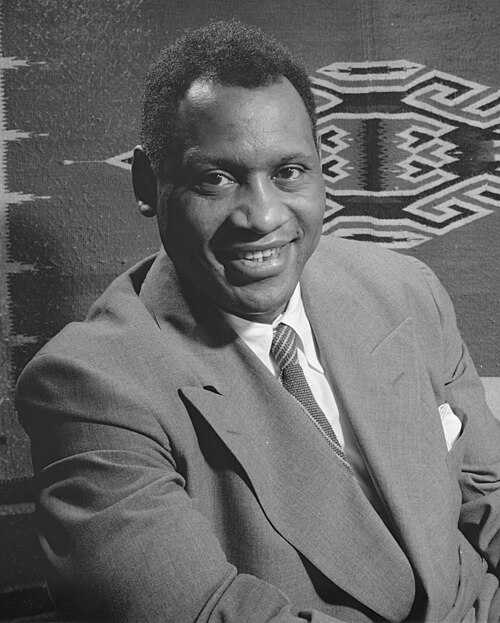
1950年代初頭、ACLUは冷戦を通じて穏健な方針を貫き続けた。1950年に歌手のポール・ロブソンがパスポートの発給を拒否されたとき、彼は違法行為で告発されていなかったにもかかわらず、ACLUは彼を弁護しないことを選択した。[170] ACLUは後に立場を転換し、パスポート没収訴訟でウィリアム・ワージーとロックウェル・ケントを支持し、1950年代後半に法的勝利を収めた。[171]
共産主義者の魔女狩りに対抗して、多くの証人と従業員は、政治的信念に関する情報の漏洩を避けるため、自己負罪拒否の保護を第五修正条項で行使することを選んだ。 [172]政府機関と民間組織は、これに対抗して、第五修正条項を主張する者は共産党員であると推定する方針を制定した。[173]全国ACLUは、単に第五修正条項を主張したために解雇された従業員を弁護するかどうかで意見が分かれたが、ニューヨーク支部は、最高裁判所で教師のハリー・スロコワーの訴訟を支援し、解雇を取り消すことに成功した。 [174]
1954年、修正第5条の問題が転機となる出来事のきっかけとなり、最終的にACLUの指導部から反共産主義者を排除することでACLUの曖昧な態度が解消された。[175] 1953年、ノーマン・トーマスとジェームズ・フライが率いる反共産主義者は、修正第5条を援用した人物を有罪とする一連の決議案を提案した。[169]これらの決議は、ACLUの新しい組織規則に該当する最初の決議であり、地方支部が投票に参加することを認めた。支部は全国本部を上回り、反共産主義の決議を否決した。[176]反共産主義の指導者たちは投票結果を受け入れることを拒否し、1954年の2年毎の大会でこの問題を再び議論に持ち込んだ。[177] ACLUのメンバーでノースカロライナ大学学長のフランク・グラハムは、ACLUは「連座制、告発による判決、個人の意見や信念のプライバシーの侵害、不忠と反対の混同に反対する」と述べる対案で反共産主義者を攻撃した。[177] [178]反共産主義者はグラハムの提案と戦い続けたが、加盟団体の数に圧倒された。反共産主義者は最終的に諦めて1954年後半から1955年にかけて理事会を去り、ACLU指導部内の8年間の曖昧な関係に終止符を打った。[179]その後、ACLUは冷戦期の反共産主義立法に反対する決意を固めて前進した。[180] 1940年の決議(およびエリザベス・フリンの粛清)から1954年の反共産主義指導者の辞任までの期間は、ACLUがその中核原則を放棄した時代であると多くの人に考えられています。[180] [181]
1954年後半、テレビジャーナリストのエドワード・R・マローらがマッカーシズムを公然と非難した後、マッカーシズムは衰退した。[182]冷戦が引き起こした権利章典をめぐる論争は、アメリカの公民権の新しい時代の到来を告げた。1954年、ブラウン対教育委員会裁判で、最高裁判所は州認可の学校人種隔離政策を全員一致で覆し、その後、法曹界では公民権勝利が相次いだ。[183]
1957年、最高裁判所はワトキンス対アメリカ合衆国とイェーツ対アメリカ合衆国の2件の訴訟でACLUに重要な勝利をもたらし、両訴訟はスミス法を覆し、共産党員資格調査の終焉の始まりとなった。[184] 1965年、最高裁判所はラモント対郵政長官(原告は元ACLU理事のコーリス・ラモント)を含むいくつかの判決を下し、第5修正条項の保護を支持し、政治活動の制限に終止符を打った。[185]
1960年代
1954年から1964年までの10年間は、ACLUの歴史の中で最も成功した時期でした。[186]会員数は3万人から8万人に増加し、1965年までに17州に支部がありました。[186] [187] 1964年にコロラド州で開催されたACLUの2年ごとの会議で、最高裁判所はACLUが関与する8件の訴訟で判決を下し、そのうち7件でACLUが勝訴しました。[188] ACLUは、文学や芸術の検閲を減らし、結社の自由を保護し、人種差別を禁止し、公立学校から宗教を排除し、犯罪容疑者に適正手続きによる保護を提供するという最高裁判所の判決で役割を果たしました。[186] ACLUの成功は、国民の態度の変化から生まれました。アメリカの国民はより教育を受け、寛容になり、非正統的な行動を受け入れるようになりました。[186]

政教分離をめぐる法廷闘争は、学校での宗教教育を義務付けたり、宗教学校に州の資金援助を行ったりした1938年の法律に端を発している。[189]カトリック教会はそのような法律の主導的な支持者であり、主な反対者(「分離主義者」)は、ACLU、政教分離を求めるアメリカ人連合、アメリカユダヤ人会議であった。[189] ACLUは、1947年のエバーソン対教育委員会事件でこの訴訟を主導し、この事件でヒューゴ・ブラック判事は「憲法修正第1条は政教分離の壁を築いた……その壁は高く、難攻不落に保たれなければならない」と記した。[189] [190] [191]権利章典が州政府による宗教教育の支援を禁じているかどうかは明らかではなく、宗教支持者らは、最高裁判所は「全国教育委員会」として行動すべきではない、憲法は社会問題を規制していないなどと強く主張した。[192]しかし、ACLUと他の政教分離の支持者たちは、最高裁にそのような行為は違憲であると宣言するよう説得した。[192]歴史家のサミュエル・ウォーカーは、ACLUの「アメリカの生活に最も大きな影響を与えた」のは、最高裁に非常に多くの公的な論争を「合憲」するよう説得した役割だったと書いている。[192]
1948年、ACLUは、私費で賄われている聖職者による公立学校の宗教授業に異議を唱えたマカラム対教育委員会訴訟で勝訴した。[ 192 ] ACLUはまた、聖職者によって教えられ、教室に十字架が掛けられているニューメキシコ州の学校に異議を唱えた訴訟でも勝訴した。 [193] 1960年代、ACLUはメンバーの強い要望に応えて、授業中の宗教推進に目を向けた。[194] 1960年には、アメリカの学校の42パーセントで聖書朗読が授業に含まれていた。[194] 1962年、ACLUは学校での祈り、宗教的祝日の遵守、聖書朗読を非難する方針声明を発表した。[194]最高裁判所は、1962年のエンゲル対ヴィターレ判決でニューヨーク州の学校での祈りを禁止した際、ACLUの立場に同意した。 [195]全国の宗教派閥は反祈祷の決定に反発し、学校での祈祷を合法とする学校祈祷憲法修正案を提案した。 [196] ACLUは修正案に反対するロビー活動に参加したが、1966年の議会投票では必要な3分の2の多数を得られなかった。[196]
しかし、すべての訴訟が勝訴したわけではない。ACLUは1949年と1961年に、キリスト教の安息日である日曜日に商業施設の休業を義務付ける州法に異議を唱えた訴訟で敗訴した。[193]最高裁判所はそのような法律を覆したことはないが、その後、商業上の圧力を受けて多くの州が法律を撤回した。[193]
アメリカ全土の都市では、映画が「有害」、「不快」、「不道徳」とみなされて日常的に上映を禁止していた。この検閲は、1915年のオハイオ州最高裁判所のMutual v.の判決によって正当化され、映画は単なる商業であり、憲法修正第1条の保護に値しないという判断が下された。[197]映画『奇跡』は、カトリック教会の命令により1951年にニューヨークで上映禁止となったが、ACLUはこの映画の配給会社の上訴を支持し、1952年のJoseph Burstyn, Inc. v. Wilsonの判決で大きな勝利を収めた。[197] ACLUによるさらなる法的措置は、『 M』や『la Ronde』などの映画を首尾よく擁護し、最終的に映画検閲の撤廃につながった。[197] [198]ハリウッドは独自の製作規定で自己検閲を継続したが、1956年にACLUはハリウッドに規定の廃止を求めた。[199] ACLUは、1957年に最高裁判所が成人向け雑誌を配布したとして出版者のサミュエル・ロスのわいせつ罪の有罪判決を支持した際に、重要な報道検閲訴訟で敗訴した。 [200] 1953年になっても、『北回帰線』や『地上より永遠に』などの本は禁止されていた。[201]しかし、1960年代を通じて公衆基準は急速にリベラルになり、わいせつを定義することは非常に困難であったため、1971年までにわいせつ罪での起訴は停止された。[188] [201]
人種差別
公民権運動の進展のために、全米黒人地位向上協会(NAACP)、ACLU、アメリカユダヤ人会議など、いくつかの公民権団体が協力した。[202] NAACPは最高裁判所の訴訟(多くの場合、NAACPの主任弁護士サーグッド・マーシャルが主導)で主な責任を負い、ACLUは警察の不正行為に焦点を当て、アミカス・ブリーフでNAACPを支援した。[202] 1954年、ACLUはブラウン対教育委員会訴訟でアミカス・ブリーフを提出し、米国の公立学校での人種差別の禁止につながった。[203]南部の州はNAACPに対してマッカーシズム風の魔女狩りを開始し、会員リストの開示を強制しようとした。ACLUの人種差別に対する戦いは人種隔離に限定されなかった。 1964年、ACLUはレイノルズ対シムズ訴訟において、主に低所得の都市住民を原告とする重要な支援を提供し、各州に対し「一人一票」の原則に従って投票区を設定するよう要求した。[204]
警察の不正行為
ACLUは、1932年のパウエル対アラバマ州(弁護士の権利)訴訟に始まり、1942年のベッツ対ブレイディ(弁護士の権利)、1951年のロチン対カリフォルニア州(強制的な胃洗浄)訴訟など、警察の不正行為の問題に定期的に取り組んできた。[185] 1940年代後半には、ACLUのいくつかの地方支部が警察の問題に対処するための常設委員会を設立した。 [205] 1950年代から1960年代にかけて、ACLUは警察の不正行為に対する法的保護を大幅に前進させる責任を負った。[206] 1958年、フィラデルフィア支部はフィラデルフィア市に国内初の民間警察審査委員会を創設させる責任を負った。[207] 1959年、イリノイ支部は、警察による不法拘留を記録した国内初の報告書「シカゴ警察による秘密拘留」を出版した。[208]
ACLUの最も注目すべき成功のいくつかは、1960年代に警察の証拠収集権限を制限する一連の訴訟でACLUが勝訴したときでした。1961年のMapp v. Ohioでは、最高裁判所は州に対して、個人の家を捜索する前に令状を取得することを義務付けました。[209] 1963年のGideon v. Wainwright判決は、貧困者に法的代理人を提供しました。[210] 1964年、ACLUはEscobedo v. Illinoisで最高裁判所を説得し、尋問中に容疑者が弁護士を同席させることを認めました。[211]そして1966年のMiranda v. Arizona連邦判決は、警察が容疑者に憲法上の権利を通知することを義務付け、これは翌年のin re Gault (1967)連邦判決で未成年者にも適用されました。[212]多くの法執行官はACLUが容疑者の権利を拡大したことを批判したが、警察官もACLUのサービスを利用した。例えば、ACLUは職場のロッカーの捜索に反対したニューヨーク市警察官の訴訟で彼らを代理した。[213] 1960年代後半、ニューヨーク市とフィラデルフィアの民間審査委員会はACLUの反対により廃止された。[214]
公民権革命
1960年代は米国にとって激動の時代であり、公民の自由に対する国民の関心が爆発的に高まった。[215] 1960年代の公民の自由を求める活動は若者が主導することが多く、座り込みやデモ行進などの戦術が用いられることが多かった。抗議活動は平和的なものが多かったが、時には戦闘的な戦術が用いられることもあった。[216] ACLUは、同性愛者の権利、囚人の権利、中絶、貧困者の権利、死刑などの新しい分野を含む、1960年代のすべての主要な公民の自由に関する議論で中心的な役割を果たした。 [215] ACLUの会員数は、10年初頭の52,000人から1970年には104,000人に増加した。[217] 1960年には7州に支部があり、1974年までに46州に支部があった。[217] [218] 1960年代、ACLUは戦術の大きな転換を遂げた。法的な控訴(通常は最高裁に提出されるアミカス・ブリーフを含む)から、被告が最初に逮捕されたときに直接弁護することに重点を移した。 [217]同時に、ACLUは「無関心でエリート主義的」から「感情的に関与する」スタイルへとスタイルを変えた。[219] ACLUは1963年に「アメリカ人の抗議行動」と題する画期的な文書を発表した。これは人種差別との戦いの遅い進歩に対する不満から生まれたもので、攻撃的で戦闘的な抗議手法さえも支持していた。[220]
4人のアフリカ系アメリカ人大学生が人種隔離政策が敷かれたノースカロライナ州のデパートで座り込みを行った後、座り込み運動はアメリカ全土で勢いを増した。[221] 1960年から61年にかけて、ACLUはノースカロライナ州、フロリダ州、ルイジアナ州でデモを行ったとして逮捕された黒人学生を弁護した。[222] ACLUはまた、1961年のフリーダム・ライド、ミシシッピ大学の統合、 1963年のバーミンガム運動、1964年のフリーダム・サマーにも法的支援を提供した。[222] NAACPは、最高裁まで持ち込まれた座り込み関連の訴訟のほとんどを担当し、ほぼすべての判決で勝訴した。[223]しかし、南部で抗議活動中に逮捕された何百人もの抗議者(白人、黒人)に法的代理人をつけるのは、ACLUと他の法律ボランティアの活動だった。[223] ACLUは他の公民権団体と協力して弁護士憲法擁護委員会(LCDC)を結成し、多くの抗議者に法的代理人を提供した。[224] ACLUはLCDCに資金の大部分を提供した。[225]
1964年、ACLUはジョージア州アトランタに南部の問題に取り組む主要事務所を開設した。[226] ACLUの南部での進歩の多くは、アトランタ事務所のカリスマ的リーダーであるチャールズ・モーガン・ジュニアによるものであった。モーガンは陪審の人種差別撤廃(ホイットス対ジョージア州)、刑務所の人種差別撤廃(リー対ワシントン)、および選挙法の改革を担った。[227] 1966年、南部事務所は、アフリカ系アメリカ人下院議員ジュリアン・ボンドの代理として、ボンド対フロイド事件で成功裏に弁護した。これは、ジョージア州下院が、ボンドが平和主義者であり進行中のベトナム戦争に反対しているという理由で、ボンドの議会入りを拒否した後のことである。[228]モーガンが弁護したもう一つの広く報道された事件は、グリーンベレーの訓練を拒否したとして有罪判決を受けた陸軍医師ハワード・レヴィの事件である。グリーンベレーがベトナムで戦争犯罪を犯していたという弁護を展開したにもかかわらず、レヴィはパーカー対レヴィ事件、417 US 733 (1974)の控訴で敗訴した。[229]
1969年、アメリカ自由人権協会は、シカゴ市長に対する平和的な抗議活動で逮捕されたディック・グレゴリーを擁護し、言論の自由の重要な勝利を収めた。グレゴリー対シカゴの裁判で裁判所は、聴衆の誰かが敵意を表明した場合、平和を乱したとして講演者を逮捕することはできないと判決を下した。それは「妨害者の拒否権」に相当するからである。[230]
ベトナム戦争
ACLU は、徴兵拒否者の擁護、戦争の合憲性への異議申し立て、リチャード・ニクソン大統領の弾劾の可能性、国家安全保障上の懸念を利用した新聞の先制検閲など、ベトナム戦争のいくつかの法的側面において中心的な存在であった。
デビッド・J・ミラーは徴兵カードを焼却した罪で起訴された最初の人物である。ACLUのニューヨーク支部は1965年の有罪判決(367 F.2d 72: United States of America v. David J. Miller、1966年)に対して控訴したが、最高裁は控訴を却下した。2年後、マサチューセッツ支部はデビッド・オブライエンの徴兵カードを焼却した事件を最高裁に持ち込み、焼却行為は象徴的発言の一種であると主張したが、最高裁はUnited States v. O'Brien、391 US 367 (1968)で有罪判決を支持した。[231] 1965年、13歳の中学生メアリー・ティンカーは戦争に反対するため黒い腕章をつけて学校に通い、停学処分を受けた。ACLUは彼女の事件を最高裁に控訴し、ティンカー対デモイン独立コミュニティ学区で勝訴した。この重要な事件は、政府がすべての権利が剥奪される学校や刑務所などの「飛び地」を設立することはできないことを確立した。[231]
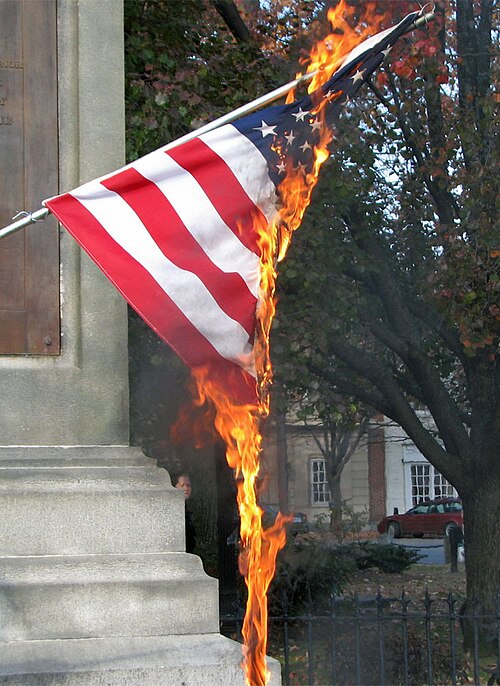
ACLUは、公民権運動指導者ジェームズ・メレディスの暗殺報道に抗議してアメリカ国旗を燃やしたとして逮捕されたシドニー・ストリートを弁護した。ストリート対ニューヨークの判決で、裁判所は、国家のシンボルの1つを放棄するよう国に促すことは憲法で保護された表現形式であるというACLUの見解に同意した。[232] ACLUは、背中に「徴兵なんてクソくらえ」と書かれたジャケットを着てロサンゼルスの裁判所を歩いていたとして逮捕されたポール・コーエンを弁護することに成功した。最高裁判所は、コーエン対カリフォルニアの判決で、言葉の下品さはメッセージの強さを伝えるために不可欠であると判断した。[233]
戦争に関係のない言論の自由もベトナム戦争時代には推進された。1969年、ACLUは政府に対する長期にわたる暴力を主張するクー・クラックス・クランのメンバーを弁護し、最高裁判所は画期的な判決であるブランデンバーグ対オハイオ州でACLUの主張に同意し、差し迫った暴力を主張する言論のみが違法とされた。[233]
1968年、ベンジャミン・スポックとボストン・ファイブが徴兵忌避を奨励したという連邦政府の告発に対して彼らを弁護すべきかどうかで論争が勃発し、ACLUは大きな危機に見舞われた。ACLUの理事会は、活動家を弁護すべきかどうかで大きく分裂した。理事会の半分は反戦感情を抱いており、ACLUはボストン・ファイブの活動に資源を供与すべきだと感じていた。理事会のもう半分は、市民の自由は問題ではなく、ACLUは政治的立場を取るだろうと考えていた。この論争の背景には、ACLUは政治的に公平であり、被告の政治的見解に関係なく法的助言を提供するという長年のACLUの伝統があった。理事会は最終的に、ACLUが活動家の政治的見解を支持することなく反戦活動家を弁護することを認める妥協案に同意した。ACLUの批評家の中には、スポック事件以降ACLUは党派的な政治組織になったと主張する者もいる。[20] 1970年のケント州立大学銃乱射事件の後、ACLUの指導者たちはベトナム戦争を非難する決議を可決し、政治に向けて新たな一歩を踏み出した。この決議は、市民の自由の侵害や戦争が違法であったという主張など、さまざまな法的議論に基づいていた。[234]
また、1968年にACLUは内部シンポジウムを開催し、その二重の役割について議論した。その役割とは、「直接的な」法的支援(被告人の初審での弁護、被告人個人のみに利益をもたらす)と控訴支援(控訴手続き中にアミカス・ブリーフを提供し、広範な法的判例を確立すること)である。[235]歴史的に、ACLUは最高裁判所の画期的な判決につながった控訴活動で知られていたが、1968年までにACLUの法的活動の90%は直接的な代理に関係していた。シンポジウムは、ACLUの両方の役割が有効であると結論付けた。[235]
ウォーターゲート時代

ACLUは、1971年に政府を相手取ってペンタゴン・ペーパーズの公開許可を求めたニューヨーク・タイムズの訴訟を支持した。裁判所はニューヨーク・タイムズ社対アメリカ合衆国の判決でタイムズとACLUを支持し、政府は機密情報の公開を事前に禁止することはできず、公開されるまで行動を待たなければならないとした。[236]
1973年9月30日、ACLUはリチャード・ニクソン大統領の弾劾と罷免を公に求めた最初の全国組織となった。[237]理由として、6つの市民の自由の侵害が挙げられた。「政治的反対意見の権利の具体的な侵害、議会の戦争遂行権限の奪取、犯罪を犯した私設秘密警察の設立、ダニエル・エルズバーグの裁判への介入の試み、司法制度の歪曲と他の連邦機関の悪用」。[238] 1か月後、下院がニクソン大統領の弾劾調査を開始した後、同組織は「ニクソン大統領の弾劾を実現するために国民が実行できる17のこと」を詳述した56ページのハンドブックを発表した。[239]この決議は、ベトナム戦争に反対する以前の決議と並べて提示され、多くのACLU批判者、特に保守派に、同組織がリベラルな政治組織に変貌したことを確信させた。[240]
飛び地と新たな市民の自由
1965年から1975年までの10年間は、市民の自由が拡大した時期であった。ACLUは、行政面で、 1970年にペンバートンの後任としてアリエ・ネイアーを事務局長に任命することで対応した。ネイアーはACLUを拡大するための野心的なプログラムに着手し、資金集めのためにACLU財団を設立し、ACLUの法的活動に焦点を絞るためのいくつかの新しいプログラムを立ち上げた。1974年までに、ACLUの会員数は27万5000人に達した。[241]
During those years, the ACLU worked to expand legal rights in three directions: new rights for persons within government-run "enclaves", new rights for members of what it called "victim groups", and privacy rights for citizens in general.[242] At the same time, the organization grew substantially. The ACLU helped develop the field of constitutional law that governs "enclaves", which are groups of persons that live in conditions under government control. Enclaves include mental hospital patients, military members, prisoners, and students (while at school). The term enclave originated with Supreme Court justice Abe Fortas's use of the phrase "schools may not be enclaves of totalitarianism" in the Tinker v. Des Moines decision.[243]
The ACLU initiated the legal field of student's rights with the Tinker v. Des Moines case and expanded it with cases such as Goss v. Lopez, which required schools to provide students an opportunity to appeal suspensions.[244]
As early as 1945, the ACLU had taken a stand to protect the rights of the mentally ill when it drafted a model statute governing mental commitments.[245] In the 1960s, the ACLU opposed involuntary commitments unless it could be demonstrated that the person was a danger to himself or the community.[245] In the landmark 1975 O'Connor v. Donaldson decision, the ACLU represented a non-violent mental health patient who had been confined against his will for 15 years and persuaded the Supreme Court to rule such involuntary confinements illegal.[245] The ACLU has also defended the rights of mentally ill individuals who are not dangerous but create disturbances. The New York chapter of the ACLU defended Billie Boggs, a woman with mental illness who exposed herself and defecated and urinated in public.[246]
Before 1960, prisoners had virtually no recourse to the court system because courts considered prisoners to have no civil rights.[247] That changed in the late 1950s, when the ACLU began representing prisoners subject to police brutality or deprived of religious reading material.[248] In 1968, the ACLU successfully sued to desegregate the Alabama prison system; in 1969, the New York affiliate adopted a project to represent prisoners in New York prisons. Private attorney Phil Hirschkop discovered degrading conditions in Virginia prisons following the Virginia State Penitentiary strike and won an important victory in 1971's Landman v. Royster which prohibited Virginia from treating prisoners in inhumane ways.[249] In 1972, the ACLU consolidated several prison rights efforts across the nation and created the National Prison Project. The ACLU's efforts led to landmark cases such as Ruiz v. Estelle (requiring reform of the Texas prison system), and in 1996 US Congress enacted the Prison Litigation Reform Act (PLRA) which codified prisoners' rights.
Victim groups

During the 1960s and 1970s, the ACLU expanded its scope to include what it referred to as "victim groups", namely women, the poor, and homosexuals.[251] Heeding the call of female members, the ACLU endorsed the Equal Rights Amendment in 1970[252] and created the Women's Rights Project in 1971. The Women's Rights Project dominated the legal field, handling more than twice as many cases as the National Organization for Women, including breakthrough cases such as Reed v. Reed, Frontiero v. Richardson, and Taylor v. Louisiana.[253]
ACLU leader Harriet Pilpel raised the issue of the rights of homosexuals in 1964, and two years later, the ACLU formally endorsed gay rights. In 1972, ACLU cooperating attorneys in Oregon filed the first federal civil rights case involving a claim of unconstitutional discrimination against a gay or lesbian public school teacher. The US District Court held that a state statute that authorized school districts to fire teachers for "immorality" was unconstitutionally vague, and awarded monetary damages to the teacher. The court refused to reinstate the teacher, and the Ninth Circuit Court of Appeals affirmed that refusal by a 2-to-1 vote. In 1973, the ACLU created the Sexual Privacy Project (later the Gay and Lesbian Rights Project), which combated discrimination against homosexuals.[254] This support continued into the 2000s. For example, after then-Senator Larry Craig was arrested for soliciting sex in a public restroom in 2007, the ACLU wrote an amicus brief for Craig, saying that sex between consenting adults in public places was protected under privacy rights.[255]
The rights of the poor were another area that the ACLU expanded. In 1966 and again in 1968, activists within the ACLU encouraged the organization to adopt a policy overhauling the welfare system and guaranteeing low-income families a baseline income; but the ACLU board did not approve the proposals.[256] However, the ACLU played a key role in the 1968 King v. Smith decision, where the Supreme Court ruled that welfare benefits for children could not be denied by a state simply because the mother cohabited with a boyfriend.[256]
Reproductive Freedom Project
The ACLU founded the Reproductive Freedom Project in 1974 to defend individuals the government obstructs in cases involving access to abortions, birth control, or sexual education. According to its mission statement, the project works to provide access to reproductive health care for individuals.[257] The project also opposes abstinence-only sex education, arguing that it promotes an unwillingness to use contraceptives.[258][259][260]
In 1980, the Project filed Poe v. Lynchburg Training School & Hospital which attempted to overturn Buck v. Bell, the 1927 US Supreme Court decision which had allowed the Commonwealth of Virginia to legally sterilize persons it deemed to be mentally defective without their permission. Though the Court did not overturn Buck v.Bell, in 1985, the state agreed to provide counseling and medical treatment to the survivors among the 7,200 to 8,300 people sterilized between 1927 and 1979.[261] In 1977, the ACLU took part in and litigated Walker v. Pierce, the federal circuit court case that led to federal regulations to prevent Medicaid patients from being sterilized without their knowledge or consent.[262] In 1981–1990, the Project litigated Hodgson v. Minnesota, which resulted in the Supreme Court overturning a state law requiring both parents to be notified before a minor could legally have an abortion.[263] In the 1990s, the Project provided legal assistance and resource kits to those who were being challenged for educating about sexuality and AIDS. In 1995, the Project filed an amicus brief in Curtis v. School Committee of Falmouth, which allowed for the distribution of condoms in a public school.[264]
The Reproductive Freedom Project focuses on three ideas: (1) to "reverse the shortage of trained abortion providers throughout the country" (2) to "block state and federal welfare "reform" proposals that cut off benefits for children who are born to women already receiving welfare, unmarried women, or teenagers"[265] and (3) to "stop the elimination of vital reproductive health services as a result of hospital mergers and health care networks".[266] The Project proposes to achieve these goals through legal action and litigation.
Privacy
The right to privacy is not explicitly identified in the US Constitution, but the ACLU led the charge to establish such rights in the indecisive Poe v. Ullman (1961) case, which addressed a state statute outlawing contraception. The issue arose again in Griswold v. Connecticut (1965), and this time the Supreme Court adopted the ACLU's position and formally declared a right to privacy.[267] The New York affiliate of the ACLU pushed to eliminate anti-abortion laws starting in 1964, a year before Griswold was decided; in 1967 the ACLU itself formally adopted the right to abortion as a policy.[268] The ACLU led the defense in United States v. Vuitch (1971), which expanded the right of physicians to determine when abortions were necessary.[269] These efforts culminated in one of the most controversial Supreme Court decisions, Roe v. Wade (1973), which legalized abortion throughout the United States.[270] The ACLU successfully argued against state bans on interracial marriage, in the case of Loving v. Virginia (1967).
Related to privacy, the ACLU engaged in several battles to ensure that government records about individuals were kept private and to give individuals the right to review their records. The ACLU supported several measures, including the 1970 Fair Credit Reporting Act, which required credit agencies to divulge credit information to individuals; the 1973 Family Educational Rights and Privacy Act, which provided students the right to access their records; and the 1974 Privacy Act, which prevented the federal government from disclosing personal information without good cause.[271]
Allegations of bias
In the early 1970s, conservatives and libertarians began to criticize the ACLU for being too political and too liberal.[272] Legal scholar Joseph W. Bishop wrote that the ACLU's trend to partisanship started with its defense of Spock's anti-war protests.[273] Critics also blamed the ACLU for encouraging the Supreme Court to embrace judicial activism.[274] Critics claimed that the ACLU's support of controversial decisions like Roe v. Wade and Griswold v. Connecticut violated the intention of the authors of the Bill of Rights.[274] The ACLU became an issue in the 1988 presidential campaign, when Republican candidate George H. W. Bush accused Democratic candidate Michael Dukakis (a member of the ACLU) of being a "card carrying member of the ACLU".[275]
Skokie case
In 1977, the National Socialist Party of America, led by Frank Collin, applied to the town of Skokie, Illinois, for a permit to hold a demonstration in the town park. Skokie at the time had a majority population of Jews, totaling 40,000 of 70,000 citizens, some of whom were survivors of Nazi concentration camps. Skokie refused to grant the NSPA a permit and passed ordinances against hate speech and military wear, in addition to requiring an insurance bond. Skokie's Village Council ordered village attorney, Harvey Schwartz, to seek an injunction to stop the demonstration. The ACLU assisted Collin and appealed to federal court, eventually prevailing in NSPA v. Village of Skokie[276]
The Skokie case was heavily publicized across America, partially because Jewish groups such as the Jewish Defense League and Anti Defamation League strenuously objected to the demonstration, leading many members of the ACLU to cancel their memberships.[53] The Illinois affiliate of the ACLU lost about 25% of its membership and nearly one-third of its budget.[277][278][279][280] The financial strain from the controversy led to layoffs at local chapters.[281] After the membership crisis died down, the ACLU sent out a fund-raising appeal which explained their rationale for the Skokie case and raised over $500,000 ($2,514,003 in 2023 dollars).[282][283]
Reagan era

The inauguration of Ronald Reagan as president in 1981 ushered in an eight-year period of conservative leadership in the US government. Under Reagan's leadership, the government pushed a conservative social agenda.
The Arkansas 1981 creationism statute, which required schools to teach the biblical account of creation as a scientific alternative to evolution. The ACLU won the case in the McLean v. Arkansas decision.[284]
In 1982, the ACLU became involved in a case involving the distribution of child pornography (New York v. Ferber). In an amicus brief, the ACLU argued that child pornography that violates the three prong obscenity test should be outlawed. However, the law was overly restrictive because it banned artistic displays and non-obscene material. The court did not adopt the ACLU's position.[285]
During the 1988 presidential election, Vice President George H. W. Bush noted that his opponent Massachusetts Governor Michael Dukakis had described himself as a "card-carrying member of the ACLU" and used that as evidence that Dukakis was "a strong, passionate liberal" and "out of the mainstream".[286] The phrase subsequently was used by the organization in an advertising campaign.[287]
Free speech
In 1997, ruling unanimously in the case of Reno v. American Civil Liberties Union, the Supreme Court voided the anti-indecency provisions of the Communications Decency Act (the CDA), finding they violated the freedom of speech provisions of the First Amendment. In their decision, the Supreme Court held that the CDA's "use of the undefined terms 'indecent' and 'patently offensive' will provoke uncertainty among speakers about how the two standards relate to each other and just what they mean."[288] In 2000, Marvin Johnson, a legislative counsel for the ACLU, stated that proposed anti-spam legislation infringed on free speech by denying anonymity and by forcing spam to be labeled as such, "Standardized labeling is compelled speech." He also stated, "It's relatively simple to click and delete."[289] The debate found the ACLU joining with the Direct Marketing Association and the Center for Democracy and Technology in 2000 in criticizing a bipartisan bill in the House of Representatives. As early as 1997, the ACLU had taken a strong position that nearly all spam legislation was improper, although it has supported "opt-out" requirements in some cases. The ACLU opposed the 2003 CAN-SPAM act[290] suggesting that it could have a chilling effect on speech in cyberspace. It has been criticized for this position.
In 2006, the ACLU of Washington State joined with a pro-gun rights organization, the Second Amendment Foundation, and prevailed in a lawsuit against the North Central Regional Library District (NCRL) in Washington for its policy of refusing to disable restrictions upon an adult patron's request. Library patrons attempting to access pro-gun web sites were blocked, and the library refused to remove the blocks.[291] In 2012, the ACLU sued the same library system for refusing to disable temporarily, at the request of an adult patron, Internet filters which blocked access to Google Images.[292] In 2006, the ACLU challenged a Missouri law prohibiting picketing outside veterans' funerals. The ACLU filed the suit in support of the Westboro Baptist Church and Shirley Phelps-Roper, who were threatened with arrest.[293][294] The Westboro Baptist Church is well known for its picket signs that contain messages such as "God Hates Fags", "Thank God for Dead Soldiers", and "Thank God for 9/11". The ACLU issued a statement calling the legislation a "law that infringes on Shirley Phelps-Roper's rights to religious liberty and free speech."[295] The ACLU prevailed in the lawsuit.[296]
The ACLU argued in an amicus brief to the Supreme Court that a decision on the constitutionality of a Massachusetts law required the consideration of additional evidence because lower courts have undervalued the right to engage in sidewalk counseling.[297] The law prohibited sidewalk counselors from approaching women outside abortion facilities and offering them alternatives to abortion but allowed escorts to speak with them and accompany them into the building.[298] In overturning the law in McCullen v. Coakley, the Supreme Court unanimously ruled that it violated the counselors' freedom of speech and constituted viewpoint discrimination.
In 2009, the ACLU filed an amicus brief in Citizens United v. FEC, arguing that the Bipartisan Campaign Reform Act of 2002 violated the First Amendment right to free speech by curtailing political speech.[299] This stance on the landmark Citizens United case caused considerable disagreement within the organization, resulting in a discussion about its future stance during a quarterly board meeting in 2010.[300] On March 27, 2012, the ACLU reaffirmed its stance in support of the Supreme Court's Citizens United ruling, at the same time voicing support for expanded public financing of election campaigns and stating the organization would firmly oppose any future constitutional amendment limiting free speech.[301]
In 2012, the ACLU filed suit on behalf of the Ku Klux Klan of Georgia, claiming that the KKK was unfairly rejected from the state's "Adopt-a-Highway" program. The ACLU prevailed in the lawsuit.[302]
Move towards identity politics
Some have claimed the ACLU is reducing its support of unpopular free speech (specifically by declining to defend speech made by conservatives) in favor of identity politics, political correctness, and progressivism.[303] Instead, critics contend that the organization has instead become a progressive advocacy organization intensely focused on identity politics.[304]
One basis of these allegations was a 2017 statement the ACLU president made to a reporter after the death of a counter-protester during the 2017 Unite the Right rally in Virginia, where Romero told a reporter that the ACLU would no longer support legal cases of activists that wish to carry guns at their protests.[305] Another basis for these claims was an internal ACLU memo dated June 2018, discussing factors to evaluate when deciding whether to take a case. The memo listed several factors to consider, including "the extent to which the speech may assist in advancing the goals of white supremacists or others whose views are contrary to our values."
Some analysts viewed this as a retreat from the ACLU's historically strong support of First Amendment rights, regardless of whether minorities were negatively impacted by the speech, citing the ACLU's past support for certain KKK and Nazi legal cases.[306][307][308][309][48] The memo's authors stated that the memo did not define a change in official ACLU policy, but was intended as a guideline to assist ACLU affiliates in deciding which cases to take.[310]
In 2021, the ACLU responded to the criticisms by denying that they are reducing their support for unpopular First Amendment causes and listing 27 cases from 2017 to 2021 where the ACLU supported a party holding an unpopular or repugnant viewpoint. The cases included one which challenged college restrictions on hate speech; a case defending a Catholic school's right to discriminate in hiring; and a case that defended antisemitic protesters who marched outside a synagogue.[311]
In 2024, the National Labor Relations Board sued the ACLU in an unfair labor practice case after the ACLU fired an Asian attorney for criticizing her Black bosses. The ACLU contended that the employee's use of phrases like "the beatings will continue until morale improves" was racially coded and that it "caused serious harm to Black members of the ACLU community." According to Jeremy W. Peters of The New York Times, critics of the ACLU saw the firing as "a sign of how far the group has strayed from its core mission — defending free speech — and has instead aligned itself with a progressive politics that is intensely focused on identity."[304]
LGBTQ issues
In 2000, the ACLU lost the Boy Scouts of America v. Dale case, which had asked the Supreme Court to require the Boy Scouts of America to drop their policy of prohibiting homosexuals from becoming Boy Scout leaders.[312]
In March 2004, the ACLU, along with Lambda Legal and the National Center for Lesbian Rights, sued the state of California on behalf of six same-sex couples who were denied marriage licenses. That case, Woo v. Lockyer, was eventually consolidated into In re Marriage Cases, the California Supreme Court case which led to same-sex marriage being available in that state from June 16, 2008, until Proposition 8 was passed on November 4, 2008.[313] The ACLU, Lambda Legal and the National Center for Lesbian Rights then challenged Proposition 8[314] and won.[315] In 2011, the ACLU started its Don't Filter Me project, countering LGBT-related Internet censorship in public schools in the United States.[316]
On January 7, 2013, the ACLU settled with the federal government in Collins v. United States that provided for the payment of full separation pay to servicemembers discharged under "don't ask, don't tell" since November 10, 2004, who had previously been granted only half that.[317]
In 2021, the ACLU filed a brief siding with a school district that had a policy of using preferred pronouns for transgender students. Some analysts felt this was a retreat from the ACLU's historical defense of the First Amendment because the ACLU was opposing the teachers who were disciplined for refusing to use the preferred pronouns.[318][319]
Anti-terrorism issues

After the September 11 attacks, the federal government instituted a broad range of new measures to combat terrorism, including the passage of the Patriot Act. The ACLU challenged many of the measures, claiming that they violated rights regarding due process, privacy, illegal searches, and cruel and unusual punishment. An ACLU policy statement states:
Our way forward lies in decisively turning our backs on the policies and practices that violate our greatest strength: our Constitution and the commitment it embodies to the rule of law. Liberty and security do not compete in a zero-sum game; our freedoms are the very foundation of our strength and security. The ACLU's National Security Project advocates for national security policies that are consistent with the Constitution, the rule of law, and fundamental human rights. The Project litigates cases relating to detention, torture, discrimination, surveillance, censorship, and secrecy.[320]
During the ensuing debate regarding the proper balance of civil liberties and security, the membership of the ACLU increased by 20%, bringing the group's total enrollment to 330,000.[321] The growth continued, and by August 2008 ACLU membership was greater than 500,000. It remained at that level through 2011.[322]
The ACLU has been a vocal opponent of the Patriot Act of 2001, the PATRIOT 2 Act of 2003, and associated legislation made in response to the threat of domestic terrorism. In response to a requirement of the USA PATRIOT Act, the ACLU withdrew from the Combined Federal Campaign charity drive.[323] The campaign required ACLU employees to be checked against a federal anti-terrorism watch list. The ACLU has stated that it would "reject $500,000 in contributions from private individuals rather than submit to a government 'blacklist' policy".[323]
In 2004, the ACLU sued the federal government in American Civil Liberties Union v. Ashcroft on behalf of Nicholas Merrill, owner of an Internet service provider. Under the provisions of the Patriot Act, the government had issued national security letters to Merrill to compel him to provide private Internet access information from some of his customers. In addition, the government placed a gag order on Merrill, forbidding him from discussing the matter with anyone.[324][325][326]
In January 2006, the ACLU filed a lawsuit, ACLU v. NSA, in a federal district court in Michigan, challenging government spying in the NSA warrantless surveillance (2001–2007) controversy.[327] On August 17, 2006, that court ruled that the warrantless wiretapping program was unconstitutional and ordered it ended immediately.[328] However, the order was stayed pending an appeal. The Bush administration did suspend the program while the appeal was being heard.[329] In February 2008, the US Supreme Court turned down an appeal from the ACLU to let it pursue a lawsuit against the program that began shortly after the September 11 terror attacks.[330]
The ACLU and other organizations also filed separate lawsuits against telecommunications companies. The ACLU filed a lawsuit in Illinois (Terkel v. AT&T), which was dismissed because of the state secrets privilege[331] and two others in California requesting injunctions against AT&T and Verizon.[332] On August 10, 2006, the lawsuits against the telecommunications companies were transferred to a federal judge in San Francisco.[333]
The ACLU represents a Muslim-American who was detained but never accused of a crime in Ashcroft v. al-Kidd, a civil suit against former Attorney General John Ashcroft.[334] In January 2010, the American military released the names of 645 detainees held at the Bagram Theater Internment Facility in Afghanistan, modifying its long-held position against publicizing such information. This list was prompted by a Freedom of Information Act lawsuit filed in September 2009 by the ACLU, whose lawyers had also requested detailed information about conditions, rules, and regulations.[335][336]
On August 10, 2020, in an opinion article for USA Today by Anthony D. Romero, the ACLU called for the dismantling of the United States Department of Homeland Security over the deployment of federal forces in July 2020 during the George Floyd protests.[337] On August 26, 2020, the ACLU filed a lawsuit on behalf of seven protesters and three veterans following the protests in Portland, Oregon, which accused the Trump Administration of using excessive force and unlawful arrests with federal officers.[338]
Trump administration
.jpg/500px-NoBanNoWall_SF_20170204-1945_(cropped).jpg)
Following Donald Trump's election as president on November 8, 2016, the ACLU responded on Twitter by saying: "Should President-elect Donald Trump attempt to implement his unconstitutional campaign promises, we'll see him in court."[339] On January 27, 2017, President Trump signed an executive order indefinitely barring "Syrian refugees from entering the United States, suspended all refugee admissions for 120 days and blocked citizens of seven Muslim-majority countries, refugees or otherwise, from entering the United States for 90 days: Iran, Iraq, Libya, Somalia, Sudan, Syria and Yemen".[340] The ACLU responded by filing a lawsuit against the ban on behalf of Hameed Khalid Darweesh and Haider Sameer Abdulkhaleq Alshawi, who had been detained at JFK International Airport. On January 28, 2017, District Court Judge Ann Donnelly granted a temporary injunction against the immigration order,[341] saying it was difficult to see any harm from allowing the newly arrived immigrants to remain in the country.[342] In response to Trump's order, the ACLU raised more than $24 million from more than 350,000 individual online donations in two days. This amounted to six times what the ACLU normally receives in online donations in a year. Celebrities donating included Chris Sacca (who offered to match other people's donations and ultimately gave $150,000), Rosie O'Donnell, Judd Apatow, Sia, John Legend, and Adele.[343][344] The number of members of the ACLU doubled in the time from the election to end of January to 1 million.[344]
Grants and contributions increased from US$106 million reported by the 2016 year-end income statement to $274 million by the 2017 year-end statement. The segment's primary revenue source came from individual contributions in response to the Trump presidency's infringements on civil liberties.[345][non-primary source needed] Besides filing more lawsuits than during previous presidential administrations, the ACLU has spent more money on advertisements and messaging as well, weighing in on elections and pressing political concerns. This increased public profile has drawn some accusations that the organization has become more politically partisan than in previous decades.[346][better source needed]
See also
- American Civil Rights Union
- British Columbia Civil Liberties Association
- Canadian Civil Liberties Association
- Common Cause
- Foundation for Individual Rights and Expression (FIRE)
- Institute for Justice
- Liberty, a British equivalent[347]
- List of court cases involving the American Civil Liberties Union
- National Emergency Civil Liberties Committee
- Political freedom
- Southern Poverty Law Center
Citations
- ^ a b c d Walker, p. 47.
- ^ David Weigel (July 5, 2018). "The ACLU's Membership Has Surged and It's Putting Its New Resources to Use". Fortune.
- ^ "ACLU Annual Report 2019 p. 18".
- ^ "ACLU History," first section, paragraph 3. American Civil Liberties Union. Retrieved March 3, 2017.
- ^ "ACLU History," section: "And how we do it," paragraph 3. American Civil Liberties Union. Retrieved March 3, 2017.
- ^ "Homeless veterans: whose responsibility? | ACLU of Southern California". www.aclusocal.org. October 8, 2012. Retrieved September 28, 2023.
- ^ "Why We Must Rethink the Way We Treat People Convicted of Sex Offenses | New York Civil Liberties Union | ACLU of New York". www.nyclu.org. April 27, 2022. Retrieved September 25, 2023.
- ^ Levin, Sam (August 29, 2024). "Trans adults stripped of healthcare access sue South Carolina over GOP bill: 'I'm desperate'". The Guardian. Retrieved September 4, 2024.
- ^ Clifford, Ted (August 30, 2024). "Lawsuit filed by ACLU aims to block law limiting transgender care in South Carolina". Retrieved September 4, 2024.
- ^ "ACLU and ACLU Foundation: What Is the Difference?". American Civil Liberties Union web site. ACLU. Archived from the original on September 6, 2007. Retrieved September 5, 2007.
- ^ Krehely, Jeff (2005). "Maximizing Nonprofit Voices and Mobilizing the Public" (PDF). Responsive Philanthropy: 9–10, 15. Archived from the original (PDF) on March 4, 2016. Retrieved March 10, 2015.
- ^ "ACLU, for first time, elects Black person as its president", Associated Press, February 1, 2021, Retrieved February 2, 2021.
- ^ "Anthony D. Romero". American Civil Liberties Union. Retrieved March 23, 2024.
- ^ "Officers & Board of Directors". American Civil Liberties Union. Retrieved March 23, 2024.
- ^ Bylaws of ACLU, Inc., Organizational Policy No. 501 (undated). Article V. Officers, Section 5 (President) and Section 15 (Executive Director). American Civil Liberties Union website (www.aclu.org/financials, "Related Information"). Retrieved May 9, 2015.
- ^ Croghan, Lore (February 28, 2005). "ACLU is high on Lower Manhattan". New York Daily News. Retrieved March 10, 2015.
- ^ a b c d e Walker, pp. 102–03.
- ^ a b Walker, pp. 132–33.
- ^ a b Walker, pp. 176, 210.
- ^ a b c Walker, pp. 284–85.
- ^ Walker, pp. 292–94
- ^ Sherman, Scott, "ACLU v. ACLU" Archived December 4, 2018, at the Wayback Machine, The Nation, January 18, 2007.
- ^ IRS Forms 990, part VIII, Line 1 – "Contributions, Gifts, Grants and Other Similar Amounts"
— for ACLU for periods ending March 31 of 2012, 2013, 2014, 2015, 2016 2017, 2018, 2019, 2020, 2021, 2022, 2023
— for ACLU Foundation for periods ending March 31 of 2012, 2013, 2014, 2015, 2016, 2017, 2018, 2019, 2020, 2021, 2022, 2023
—(text labels in graph rounded to nearest million). - ^ Stack, Liam (January 30, 2017). "Donations to A.C.L.U. and Other Organizations Surge After Trump's Order". The New York Times. Archived from the original on January 31, 2017. Retrieved September 18, 2018.
- ^ a b American Civil Liberties Union ... Consolidated Financial Report, March 31, 2014. American Civil Liberties Union website, "Financials Archived September 10, 2016, at the Wayback Machine" section, under: "Audited Financial Statements." See also pie chart on ACLU "Finances" page. Retrieved May 9, 2015.
- ^ Membership income for the year ending March 31, 2014, was 5.5 million (25.4% of the total ,0.4 million). On its website, under "History," and on 990 Forms, 2010–2013 Archived September 10, 2016, at the Wayback Machine (part III, 4b, on p. 2; retrieved May 10, 2015) the ACLU states only a rough membership figure of 500,000. Using this rounded figure, the average donation per member for 2014 comes to ,1. Membership fee is not fixed – members donate an amount of their choosing.
- ^ American Civil Liberties Union ... Consolidated Financial Report, March 31, 2014, p. 4.
- ^ American Civil Liberties Union Annual Report 2014, p. 30. Retrieved May 10, 2015.
- ^ Based on total expenses reported on the 990 forms of the Foundation and the Union, respectively; see 990 Forms, 2010–2013 Archived September 10, 2016, at the Wayback Machine, American Civil Liberties Union website, "Financials" section.
- ^ Nickerson, Gregory (April 1, 2015). National office closes Wyoming ACLU chapter. Wyofile: People, Places & Policy [Wyoming news service]. See paragraph 5. Nickerson mentions the Puerto Rico office, and a single office for North and South Dakota, as other examples of smaller offices receiving subsidies. Retrieved May 10, 2015.
- ^ American Civil Liberties Union ... Consolidated Financial Report, March 31, 2014, p. 10, Note 1. Organization: "Although the ACLU plays no direct role in the governance of ... the affiliates, the organizations jointly fund-raise and work together on certain programs and the ACLU, through either the Union or Foundation, as appropriate, at its sole discretion provides targeted financial and other support to the affiliates."
- ^ Stephanie Strom (October 19, 2004). "A.C.L.U. Rejects Foundation Grants Over Terror Language". The New York Times.
- ^ See Kaminer, pp. 68–70, for a discussion of an internal scandal in which Romero was accused of attempting to accept the funds without disclosing the terms to the ACLU board.
- ^ "Title 42, Chapter 21, Subchapter I, § 1988. Proceedings in vindication of civil rights".
- ^ Report No. 109-657, H.R. 2679, available at GPO.
- ^ ACLU Georgia Press Release, "Barrow County to Remove 10 Commandments Display" Archived December 22, 2005, at the Wayback Machine, July 19, 2007 (last visited January 6, 2008).
- ^ ACLU Georgia, "2007 Litigation & Advocacy Docket" Archived December 26, 2005, at the Wayback Machine (last visited January 6, 2008).
- ^ "State pays ACLU $121,500 in Ten Commandments fight".
- ^ Ontario Consultants on Religious Tolerance, The Ten Commandments: Developments: Year 2002 Archived January 2, 2006, at the Wayback Machine, ReligiousTolerance.org
- ^ "State Affiliates". ACLU. Retrieved August 17, 2024.
{{cite news}}: CS1 maint: url-status (link) - ^ "Giving to the American Civil Liberties Union and the American Civil Liberties Union Foundation: What Is the Difference? | American Civil Liberties Union". action.aclu.org. Retrieved March 22, 2021.
- ^ "ACLU vs. ACLU Foundation". ACLU Pennsylvania. February 28, 2019. Retrieved March 22, 2021.
- ^ "History". ACLU of Georgia. February 9, 2016. Archived from the original on March 14, 2021. Retrieved March 22, 2021.
- ^ "2020 Annual Report". ACLU-NJ. March 1, 2021. p. 12. Retrieved August 28, 2022.
- ^ "ACLU of Texas". www.aclutx.org. Retrieved August 19, 2024.
- ^ "ACLU of Virginia". www.acluva.org. Retrieved August 19, 2024.
- ^ Kaminer, Wendy (June 20, 2018). "The ACLU Retreats From Free Expression". The Wall Street Journal. ISSN 0099-9660. Archived from the original on June 21, 2018. Retrieved June 21, 2018.
- ^ a b Sykes, Michael (June 21, 2018). "Leaked memo reveals ACLU debate on defense of free speech". Axios. Archived from the original on June 22, 2018. Retrieved June 22, 2018.
- ^ Blumenthal, Ralph (April 5, 2007). "Unusual Allies in a Legal Battle Over Texas Drivers' Gun Rights". The New York Times. Archived from the original on April 8, 2007.
- ^ "The Plum Line". The Washington Post. Archived from the original on April 21, 2013.
- ^ A Test of Free Speech and Bias, Served on a Plate From Texas, New York Times, March 22, 2015
- ^ Finan, Christopher M. (2007), From the Palmer Raids to the Patriot Act: a history of the fight for free speech in America, Beacon Press, pp. 158–59. (Robeson)
- ^ a b Walker, pp. 323–31.
- ^ "The Heckler's Veto". December 26, 2014.
- ^ Mark Joseph Stern (August 27, 2018). "Who Does the ACLU Fight For?". Slate. The Slate Group. Archived from the original on August 28, 2018. Retrieved May 23, 2023.
- ^ David Cole (August 24, 2018). "New York State Can't Be Allowed to Stifle the NRA's Political Speech". ACLU. American Civil Liberties Union. Archived from the original on September 4, 2022. Retrieved May 23, 2023.
- ^ Walker, pp. 219–20 (prayer in school).
- ^ Kittle, M.D. "Survey highlights 'nonpartisan' ACLU's liberal biases". Watchdog.org. Retrieved February 10, 2018.[dead link]
- ^ Donaldson-Evans, Catherine (January 12, 2004), "ACLU Comes to Rush Limbaugh's Defense" Archived January 15, 2013, at the Wayback Machine, Fox News
- ^ Walker, p. 242 (Wallace).
- ^ Walker, p. 103 (Ford).
- ^ Walker, p. 375 (North).
- ^ ACLU list of successes (Gregory).
- ^ a b c Walker, p. 82.
- ^ Walker, p. 200 (Kent).
- ^ "ACLU Statement on Charlottesville Violence and Demonstrations". American Civil Liberties Union. Retrieved February 25, 2018.
- ^ Biskupic, Joan. "ACLU takes heat for its free-speech defense". CNN. Retrieved February 25, 2018.
- ^ Goldstein, Joseph (August 17, 2017). "After Backing Alt-Right in Charlottesville, A.C.L.U. Wrestles With Its Role". The New York Times. ISSN 0362-4331. Archived from the original on January 1, 2022. Retrieved February 25, 2018.
- ^ "Free Speech". Archived from the original on August 3, 2022.
- ^ In 2000, the ACLU responded to such criticism by stating "[i]t is easy to defend freedom of speech when the message is something many people find at least reasonable. But the defense of freedom of speech is most critical when the message is one most people find repulsive." from ACLU Statement on Defending Free Speech of Unpopular Organizations, August 31, 2000. Retrieved January 19, 2012.
- ^ Walker, pp. 17, 20.
- ^ Walker, pp. 23–24, 30.
- ^ Walker, p. 30.
- ^ Walker, p. 66.
- ^ Walker, p. 67.
- ^ Walker, p. 70.
- ^ "Lucille Milner, 87, A Founder of A.C.L.U". The New York Times. August 18, 1975. Retrieved August 6, 2024.
- ^ Walker, p. 55
- ^ Walker, p. 57.
- ^ Walker, p. 52.
- ^ Walker, p. 53.
- ^ Walker, p, 58.
- ^ Walker, p. 59.
- ^ Walker, p. 60.
- ^ Walker, p. 61.
- ^ Walker, p. 68.
- ^ a b c d Walker, p. 63.
- ^ Walker, p. 71.
- ^ University of Missouri-Kansas City School of Law, "Tennessee v. John Scopes: The 'Monkey Trial' (1925)" Archived February 9, 2015, at the Wayback Machine, Famous Trials in American History, last updated April 25, 2005 (last visited January 7, 2008).
- ^ "The Evolution-Creationism Controversy: A Chronology". Archived from the original on April 9, 2004.
- ^ Walker, p. 73.
- ^ Walker, p. 75. The newspaper was the St. Louis Post Dispatch.
- ^ Berkman, Michael (2010), Evolution, Creationism, and the Battle to Control America's Classrooms, Cambridge University Press, pp. 100–01.
- ^ Walker, pp. 78–79. The case was in New Jersey, State v. Butterworth. Decision quoted by Walker.
- ^ Walker, p. 79.
- ^ Walker, p. 80.
- ^ Kauffman 1982, p. 282.
- ^ Kauffman 1982, p. 283.
- ^ Alley 1999, pp. 41–44.
- ^ Walker, p. 81
- ^ Walker, p. 82. The cases included Gitlow (1925), Whitney (1927), Powell (1932), and Patterson (1935).
- ^ a b c d Walker, p. 86.
- ^ a b c d Walker, p. 85.
- ^ Walker, p. 90
- ^ Walker, p. 91.
- ^ a b c d Walker, p. 112
- ^ a b c d Walker, p. 87.
- ^ Walker, p. 88.
- ^ a b Walker, p. 89.
- ^ The Margold Report was named after its principal author, Nathan Ross Margold, a white attorney.
- ^ Walker, p. 92.
- ^ Walker, p. 95.
- ^ Walker, p. 96.
- ^ Walker, p. 97
- ^ Walker, p. 100.
- ^ Walker, pp. 99–100.
- ^ Walker, p. 98.
- ^ a b Walker, p. 106.
- ^ Court decision quoted by Walker, p. 106.
- ^ a b c Walker, p. 107.
- ^ Wagner, p. 101.
- ^ a b Walker, p. 103.
- ^ a b Walker, p. 104.
- ^ The ACLU was not the primary legal representative; the Witnesses had their own legal team, led by Hayden C. Covington during this era.
- ^ a b Walker, p. 108.
- ^ a b Walker, p. 109.
- ^ Justice Robert Jackson quoted by Walker, p. 109.
- ^ Walker, p. 115.
- ^ Walker, pp. 116–17.
- ^ Walker, pp. 117–18.
- ^ a b Walker, p. 118.
- ^ Walker, p. 119.
- ^ Walker, p. 120.
- ^ a b Walker, p. 121.
- ^ Walker, p. 122.
- ^ Walker, p. 123.
- ^ The Smith Act was ruled unconstitutional in 1957.
- ^ a b Walker, p. 133.
- ^ Walker, p. 128.
- ^ Beito, David T. (2023). The New Deal's War on the Bill of Rights: The Untold Story of FDR's Concentration Camps, Censorship, and Mass Surveillance (First ed.). Oakland: Independent Institute. pp. 201–212. ISBN 978-1598133561.
- ^ Beito, p. 211-213.
- ^ Beito, p. 244-250.
- ^ Beito, p. 215-234.
- ^ Walker, p. 137.
- ^ a b c d e f Niiya, Brian. "American Civil Liberties Union". Densho Encyclopedia. Retrieved September 24, 2014.
- ^ Walker, p. 142.
- ^ Walker, p. 138.
- ^ Walker, p. 145.
- ^ Walker, pp. 146–47
- ^ Chin, Steven A. When Justice Failed: The Fred Korematsu Story, Raintree, 1992, p. 95.
- ^ Walker, p. 157.
- ^ Niiya, Brian. "Ernest Besig". Densho Encyclopedia. Retrieved September 26, 2014.
- ^ Walker, pp. 173–75.
- ^ Walker, pp. 175–76.
- ^ walker, p. 176.
- ^ a b Walker, p. 179
- ^ a b Walker, p. 181.
- ^ Walker, p. 183.
- ^ a b c Walker, p. 185.
- ^ a b Walker, p 187.
- ^ a b Walker, p. 195.
- ^ a b Walker, p. 188.
- ^ Walter, pp. 188–89.
- ^ Walker, photo caption of Flynn, page following 214.
- ^ Walker, pp. 193, 195–96.
- ^ Walker, pp. 191–93.
- ^ Walker, pp. 205–06.
- ^ a b Walker, p. 207.
- ^ a b c Walker, p. 208.
- ^ Walker, p. 199.
- ^ Walker, p. 200.
- ^ Walker, p. 201.
- ^ Walker, pp. 201–02.
- ^ Walker, p. 202. The case was Slochower v. Board of Higher Education of New York City, 350 US 551 (1956).
- ^ Walker, pp. 208–11.
- ^ Walker, p. 209.
- ^ a b Walker, p. 210.
- ^ Graham's proposal quoted in Walker
- ^ Walker, pp. 210–11.
- ^ a b Walker, p. 211.
- ^ Corliss Lamont, in particular, portrayed that era as a major lapse of principle.
- ^ Walker, p. 212.
- ^ Walker, pp. 213–14, 217–18.
- ^ Walker, pp. 240–42.
- ^ a b Walker, p. 246.
- ^ a b c d Walker, p. 217
- ^ Membership numbers are from 1955 and 1965.
- ^ a b Walker, p. 236.
- ^ a b c Walker, p. 219
- ^ Black quoted by Walker.
- ^ Black was paraphrasing Thomas Jefferson, who first employed the metaphor of a wall. Urofsky, Melvin, "Church and State", in Bodenhamer, p. 67.
- ^ a b c d Walker, p. 221.
- ^ a b c Walker, p. 222.
- ^ a b c Walker, p. 223
- ^ Walker, p. 224
- ^ a b Walker, p. 225.
- ^ a b c Walker, p. 231.
- ^ Walker, p. 235.
- ^ Walker, p. 233.
- ^ Walker, p. 234.
- ^ a b Walker, p. 227.
- ^ a b Walker, p. 238.
- ^ ACLU, ACLU Amicus Brief in Brown v. Board of Education, October 11, 1952 (PDF brief).
- ^ Walker, pp. 255–57.
- ^ Walker, p. 247.
- ^ Walker, pp. 246–50.
- ^ Walker, pp. 246–48.
- ^ Walker, pp. 248–49.
- ^ Walker, pp. 249–51.
- ^ Walker, pp. 252–53.
- ^ Walker, p. 250.
- ^ Walker, pp. 250–51.
- ^ Walker, p. 252.
- ^ Walker, p. 274.
- ^ a b Walker, pp. 257, 261–62.
- ^ Walker, pp. 262–64.
- ^ a b c Walker, p. 262
- ^ The count of affiliates is of affiliates with permanent staff.
- ^ Walker, p. 263. Characterizations by Samuel Walker.
- ^ Walker, pp. 263–64.
- ^ Walker, p. 261.
- ^ a b Walker, p. 263.
- ^ a b Walker, p. 264.
- ^ Walker, pp. 264–65.
- ^ Walker, p. 266.
- ^ Walker, p. 267.
- ^ Walker, pp. 268–69.
- ^ Walker, pp. 270–71.
- ^ Walker, p. 271.
- ^ ACLU list of successes; the case was Gregory v. Chicago, 394 US 111.
- ^ a b Walker, p. 280.
- ^ Walker, p. 280. Meredith, in fact, was not assassinated.
- ^ a b Walker, p. 281.
- ^ Walker, p. 286.
- ^ a b Walker, p. 285.
- ^ Walker, pp. 289–90.
- ^ Jones, Glyn (November 10, 1973). "ACLU Would Impeach Nixon". Greenfield Recorder. Deerfield, Massachusetts: Pocumtuck Valley Memorial Association. #L06.052. Archived from the original on December 1, 2019. Retrieved October 16, 2019 – via Online Collection – Memorial Hall Museum.
- ^ Clack, Alfred E. (October 5, 1973). "A.C.L.U. Asks Impeachment of Nixon". The New York Times. Retrieved October 15, 2019 – via Times's print archive.
- ^ "Impeachment Book Offered By A.C.L.U." The New York Times. November 25, 1973. Retrieved October 15, 2019 – via Times's print archive.
- ^ Walker, p. 294
- ^ Walker, pp. 314–16.
- ^ Walker, p. 299. Key ACLU leaders in this effort were Ira Glasser and Aryeh Neier.
- ^ Raskin, James B. (2009), "No Enclaves of Totalitarianism", American University Law Review, Vol. 58:1193.
- ^ Walker, p. 307.
- ^ a b c Walker, p. 309.
- ^ Siegel, F. (2013). The Future Once Happened Here: New York, D.C., L.A., and the Fate of America's Big Cities. Encounter Books. p. 205. ISBN 978-1594035555. Retrieved October 3, 2014.
- ^ Note, "Beyond the Ken of Courts", Yale Law Journal 72 (1963):506. Cited by Walker, p. 310.
- ^ Walker, p. 310.
- ^ Walker, pp. 310–11. The ACLU was not involved in the Landman case.
- ^ Pullman, Sandra (March 7, 2006). "Tribute: The Legacy of Ruth Bader Ginsburg and WRP Staff". ACLU.org. Accessed November 18, 2010.
- ^ Walker, p. 299.
- ^ The ERA was passed by congress in 1972 but failed to be ratified by the states.
- ^ Walker, pp. 304–05.
- ^ Walker, p. 312.
- ^ State Of Minnesota. (PDF). Retrieved on May 24, 2014.
- ^ a b Walker, p. 313.
- ^ Hartmann, Susan M. (January 1, 1998). "Litigating Feminist Principles". In Hartmann, Susan M. (ed.). The Other Feminists. Activists in the Liberal Establishment. Yale University Press. pp. 53–91. ISBN 978-0300074642. JSTOR j.ctt32bqj0.7.
- ^ "Center for Reproductive Rights, Planned Parenthood, ACLU File Challenges to Abortion Restrictions in Three States". Center for Reproductive Rights. September 27, 2013. Archived from the original on July 9, 2017. Retrieved May 1, 2017.
- ^ "For Women's Reproductive Freedom, a Chill Wind Blows". The American Prospect. Archived from the original on May 2, 2017. Retrieved May 1, 2017.
- ^ "Abstinence-Only Education in the Courts". Retrieved May 2, 2017 – via ProQuest.
- ^ Wong, Elizabeth (January 11, 2013). "A Shameful History: Eugenics in Virginia". ACLUVA. Retrieved August 16, 2021.
- ^ "About the ACLU reproductive freedom project". Retrieved August 23, 2021.
- ^ "Hodgson v. Minnesota, 497 U.S. 417 (1990)". Justia Law. Retrieved August 23, 2021.
- ^ Biskupic, Joan (January 9, 1996). "Court Spurns Challenge to Condom Policy". washingtonpost.com. Retrieved August 21, 2021.
- ^ Dejanikus, Tacie (January 1, 1982). "spousal notification upheld in florida suit". Off Our Backs. 12 (2): 9. JSTOR 25774248.
- ^ "ACLU of PA: Clara Bell Duvall Reproductive Freedom Project – Philadelphia". Philadelphia.pa. Archived from the original on February 28, 2018. Retrieved May 1, 2017.
- ^ Walker, pp. 300–01
- ^ Walker, p. 302.
- ^ Walker, p. 303.
- ^ Walker, p. 303. The ACLU did not participate directly in Roe v. Wade, but did lead the effort in the companion case Doe v. Bolton.
- ^ Walker, p. 308.
- ^ Walker, p. 317.
- ^ Bishop, Joseph W., "Politics and the ACLU", Commentary 52 (December 1971): 50–58. Bishop cited by Walker. Bishop was a professor of law at Yale.
- ^ a b Walker, p. 318.
- ^ Walker, pp. 319, 363. Bush quoted by Walker.
- ^ Ed McManus, "Nazi March: What's It All About?", Illinois Issues, v.13, Nov. 1978 (available at Illinois Periodicals Online Archived September 8, 2006, at the Wayback Machine).
The federal appeal case was Smith v. Collin 447 F. Supp. 676. See also Supreme Court: Smith v. Collin, 439 US 916 (1978), and National Socialist Party v. Skokie, 432 US 43 (1977). - ^ 30,000 ACLU members resigned in protest.
- ^ Philippa Strum, When the Nazis Came to Skokie: Freedom for Speech We Hate (University Press of Kansas) (University of Kansas Press publisher's catalog description Archived August 27, 2007, at the Wayback Machine).
- ^ "Membership woes hurt ACLU while others gain". Archived from the original on September 27, 2007. Retrieved October 7, 2006.
- ^ "2d suit to block Nazis from Skokie march fails". Archived from the original on September 27, 2007. Retrieved October 7, 2006.
- ^ "The High Cost of Free Speech: A.C.L.U. dilemma: defending "hateful and heinous" ideas". Time. June 28, 1978. Archived from the original on June 24, 2009. Retrieved May 18, 2009.
- ^ 1634–1699: McCusker, J. J. (1997). How Much Is That in Real Money? A Historical Price Index for Use as a Deflator of Money Values in the Economy of the United States: Addenda et Corrigenda (PDF). American Antiquarian Society. 1700–1799: McCusker, J. J. (1992). How Much Is That in Real Money? A Historical Price Index for Use as a Deflator of Money Values in the Economy of the United States (PDF). American Antiquarian Society. 1800–present: Federal Reserve Bank of Minneapolis. "Consumer Price Index (estimate) 1800–". Retrieved February 29, 2024.
- ^ Walker, p. 239.
- ^ Walker, pp. 342–43.
McLean v. Arkansas Board of Education, 529 F. Supp. 1255 (E.D. Ark. 1982) ("transcription" by Clark Dorman, January 30, 1996, at TalkOrigins). - ^ "Letter to Reps. Smith and Scott on H.R. 4623, the "Child Obscenity and Pornography Prevention Act of 2002"". ACLU.org. May 8, 2002. Archived from the original on December 14, 2007. Retrieved November 20, 2007.
- ^ "Debating Our Destiny: The 1988 Debates". PBS. Archived from the original on December 31, 2013. Retrieved August 24, 2017.
- ^ Randall Rothenburg (September 28, 1988). "A.C.L.U. Goes Hollywood in Countering Bush's Campaign of Derision". The New York Times. Retrieved September 28, 2008.
- ^ "521 U. S. 844 (1997)" (PDF). Archived from the original (PDF) on November 14, 2017. Retrieved June 27, 2017.
- ^ Adam S. Marlin, "First Amendment is obstacle to spam legislation" Archived August 26, 2013, at the Wayback Machine, CNN, June 9, 2000.
- ^ ACLU, "Letter to the Senate Urging Opposition to S.877, the "Controlling the Assault of Non-Solicited Pornography and Marketing Act of 2003"", July 30, 2003 (last visited January 7, 2008).
- ^ Bradburn et al. v. North Central Regional Library District Archived October 25, 2013, at the Wayback Machine (US District Court, Eastern District of Washington), "ACLU Lawsuit Seeks Access to Lawful Information on Internet for Library Patrons in Eastern Washington". November 16, 2006. Archived from the original on January 7, 2011. Retrieved January 7, 2011.
- ^ "Internet Porn is Subject of ACLU lawsuit", International Business Times, February 3, 2012.
- ^ Garance Burke, "ACLU Sues for Anti-Gay Group That Pickets at Troops' Burials", The Washington Post, July 23, 2006.
- ^ The ACLU challenged the Missouri law, which was similar to the federal Respect for America's Fallen Heroes Act.
- ^ "ACLU of Eastern Missouri Challenges Law Banning Pickets and Protests One Hour Before or After a Funeral", ACLU, July 21, 2006.
- ^ "ACLU of Eastern Missouri Applauds Decision in Free Speech Case".
- ^ "McCullen v. Coakley". American Civil Liberties Union. September 18, 2013. Retrieved January 21, 2019.
- ^ "McCullen v. Coakley".
- ^ "Amicus Curiae Brief of the American Civil Liberties Union in Support of Appellant on Supplemental Question" (PDF). Citizens United V. Federal Election Commission: 24. July 29, 2009. Archived (PDF) from the original on October 9, 2022. Retrieved April 1, 2012.
- ^ Goldstein, Joseph (January 24, 2010). "ACLU May Reverse Course on Campaign Finance Limits After Supreme Court Ruling". New York Sun. Retrieved March 1, 2019.
- ^ "The ACLU and Citizens United". ACLU. March 27, 2012. Retrieved April 1, 2012.
- ^ "Georgia: In Suing State, A.C.L.U. Defends Klan - The New York Times". The New York Times. September 15, 2012. Retrieved February 17, 2022.
- ^
- Soave, Robby (June 21, 2018). "Leaked Internal Memo reveals ACLU is wavering on free speech". Reason. Retrieved December 28, 2021.
- "Civil Rights v civil liberties at the aclu". The Economist. Retrieved December 28, 2021.
- Kirchick, James (May 24, 2016). "The Disintegration of the ACLU". Tablet. Retrieved December 28, 2021.
- Gillespie, Nick; Taylor, Regan (June 23, 2022). "As the ACLU Recedes From Its Core Mission, FIRE Expands To Fill the Void". Reason.com. Retrieved June 25, 2022.
- Bazelon, Lara. "The ACLU Has Lost Its Way". The Atlantic.
- ^ a b Peters, Jeremy W. (March 22, 2024). "The A.C.L.U. Said a Worker Used Racist Tropes and Fired Her. But Did She?". The New York Times. Archived from the original on March 22, 2024. Retrieved March 22, 2024.
- ^ "Why the ACLU is adjusting its approach to "free speech" after Charlottesville". Vox. August 21, 2017. Retrieved February 17, 2022.
- ^ Kaminer, Wendy (June 20, 2018). "The ACLU Retreats From Free Expression". The Wall Street Journal. ISSN 0099-9660. Retrieved June 22, 2018.
- ^ "Freedom of Expression – ACLU Position Paper". American Civil Liberties Union. Retrieved June 22, 2018.
- ^ "Brandenburg v. Ohio 395 U.S. 444 (1969) | ACLU of Ohio". www.acluohio.org. Archived from the original on June 22, 2018. Retrieved June 22, 2018.
- ^ Powell, Michael (June 6, 2021). "Once a Bastion of Free Speech, the A.C.L.U. Faces an Identity Crisis". The New York Times. ISSN 0362-4331. Archived from the original on December 28, 2021. Retrieved October 29, 2021.
- ^ Robby Soave (June 21, 2018). "Leaked Internal Memo Reveals the ACLU Is Wavering on Free Speech". Reason.com. Retrieved February 17, 2022.
- ^ Cole, David (June 6, 2021). "Defending Speech We Hate". ACLU. Retrieved December 28, 2021.
- ^ ACLU, "U.S. Supreme Court Ruling that Boy Scouts Can Discriminate Is 'Damaging but Limited,' ACLU Says", June 28, 2000 (last visited October 26, 2009).
- ^ "California Marriage Case", ACLU, retrieved June 28, 2009
- ^ "California's Prop 8 Update", ACLU, November 6, 2008.
- ^ "Federal Appeals Court Says California Marriage Ban Is Unconstitutional" Archived April 18, 2012, at the Wayback Machine, ACLU, February 7, 2012.
- ^ Lasar, Matthew (March 29, 2011). ""Don't filter me": ACLU fights schools that block LGBT websites". Ars Technica. Archived from the original on December 15, 2014. Retrieved December 14, 2014.
- ^ Geidner, Chris (January 7, 2013). "Servicemembers Kicked Out Under Military's Gay Ban Since '04 To Receive Full Separation Pay". Buzz Feed. Archived from the original on January 9, 2013. Retrieved January 7, 2013.
- ^ Kaminer, Wendy (October 25, 2021). "The ACLU is now siding with the censors". Spiked Online. Retrieved December 28, 2021.
- ^ "BYRON TANNER CROSS, ET AL. V. LOUDOUN COUNTY SCHOOL BOARD, ET AL. (AMICUS)". ACLU of Virginia. October 13, 2021. Retrieved May 2, 2022.
- ^ "National Security – Recent Court Cases, Issues and Articles". American Civil Liberties Union. September 11, 2001. Retrieved August 15, 2012.
- ^ Ron Kampeas (December 2, 2002). "ACLU has new constituency after 9/11". Associated Press via Pittsburgh Post-Gazette. Archived from the original on December 8, 2007. Retrieved November 20, 2007.
- ^ ACLU, "About Us" Archived October 31, 2009, at the Wayback Machine
- ^ a b ACLU, "Citing Government "Blacklist"; Policy, ACLU Rejects $500,000 from Funding Program ", July 31, 2004 (last visited January 7, 2008).
- ^ Hamblett, Mark (December 16, 2008). "2nd Circuit Requires Judicial Review Before Security Letter Gag Order". New York Law Journal. Retrieved November 8, 2010.
- ^ Zetter, Kim (August 10, 2010). "'John Doe' Who Fought FBI Spying Freed From Gag Order After 6 Years". Wired.com. Archived from the original on October 18, 2010. Retrieved November 8, 2010.
- ^ Doe, John (March 23, 2007). "My National Security Letter Gag Order". Washington Post. Retrieved November 15, 2010.
- ^ Complaint for Declaratory and Injunctive Relief ("NSA Spying Complaint"), ACLU v. NSA (E.D. Mich. January 17, 2006) (PDF of complaint available at ACLU website, "Safe and Free: NSA Spying" section of website).
- ^ Ryan Singel, "Judge Halts NSA Snooping", Wired, August 17, 2006.
- ^ Marks, Alexandra (April 3, 2007). "Privacy Advocates Fight for Ground Lost After 9/11". The Christian Science Monitor. p. USA2.
- ^ "Supreme Court Dismisses ACLU's Challenge to NSA Warrantless Wiretapping Law". American Civil Liberties Union. Retrieved April 27, 2018.
- ^ "ACLU of Illinois Responds to Ruling in Terkel v. AT&T, ACLU, July 25, 2006, retrieved January 7, 2008
- ^ "ACLU Files Lawsuit in California Court Demanding End to Privacy Violations by AT&T and Verizon", ACLU, May 26, 2006, retrieved January 7, 2008
- ^ Egelko, Bob (August 11, 2006). "Surveillance lawsuits transferred to judge skeptical of Bush plan". San Francisco Chronicle.
- ^ Barnes, Robert (October 19, 2010). "Supreme Court to consider Ashcroft bid for immunity". The Washington Post. p. A2.
- ^ Rubin, Alissa J.; Rahimi, Sangar (January 17, 2010). "Bagram Detainees Named by U.S." New York Times. Archived from the original on January 1, 2022.
- ^ "US releases names of prisoners at Bagram, Afghanistan". BBC News.
- ^ Romero, Anthony D. (August 10, 2020). "Dismantle the Department of Homeland Security. Its tactics are fearsome: ACLU director". USA Today. Retrieved August 10, 2020.
- ^ Phillips, Kristine (August 26, 2020). "ACLU files lawsuit for Portland protesters, military veterans against Trump administration". USA Today. Retrieved August 28, 2020.
- ^ ACLU [@ACLU] (November 9, 2016). "Should President-elect Donald Trump attempt to implement his unconstitutional campaign promises, we'll see him in court" (Tweet). Archived from the original on August 12, 2022. Retrieved December 13, 2022 – via Twitter.
- ^ Stack, Liam (January 29, 2017). "Trump's Executive Order on Immigration: What We Know and What We Don't". The New York Times. ISSN 0362-4331. Archived from the original on January 1, 2022. Retrieved January 30, 2017.
- ^ "ACLU and Other Groups Challenge Trump Immigration Ban After Refugees Detained at Airports Following Executive Order". Speak Freely (blog). American Civil Liberties Union. Retrieved January 30, 2017.
- ^ "Judge blocks deportations as Trump order sparks global outrage". Politico. Retrieved February 5, 2017.
- ^ Stelter, Brian (January 30, 2017). "ACLU racks up $24.1 million in donations over weekend". CNNMoney. Retrieved January 30, 2017.
- ^ a b Dastagir, Alia E. (January 29, 2017). "Outrage over Trump's immigrant ban helps ACLU raise more money online in one weekend than in all of 2016". USA Today. Retrieved February 18, 2017.
- ^ "ACLU Annual Report 2017".
- ^ Stahl, Lesley (March 10, 2019). "The ACLU's surprising new political strategy, modeled in part after the NRA - 60 Minutes - CBS News". www.cbsnews.com. Retrieved August 19, 2024.
- ^ "Victims suffer double indignity". Wilmington Morning Star. Vol. 109, no. 47. Wilmington, N.C. December 15, 1975. p. 3. Retrieved January 24, 2016.
General and cited references
- Alley, Robert S. (1999). The Constitution & Religion: Leading Supreme Court Cases on Church and State. Amherst, New York: Prometheus Books. ISBN 978-1-57392-703-1.
- Beito, David T. (2023). The New Deal's War on the Bill of Rights: The Untold Story of FDR's Concentration Camps, Censorship, and Mass Surveillance (First ed.). Oakland: Independent Institute. pp. 4–7. ISBN 978-1598133561.
- Bodenhamer, David, and Ely, James, Editors (2008). The Bill of Rights in Modern America, second edition. Indiana University Press. ISBN 978-0-253-21991-6.
- Donohue, William (1985). The Politics of the American Civil Liberties Union. Transaction Books. ISBN 0-88738-021-2.
- Kaminer, Wendy (2009). Worst Instincts: Cowardice, Conformity, and the ACLU. Beacon Press. ISBN 978-0-8070-4430-8. A dissident member of the ACLU criticizes its post-9/11 actions as betraying the core principles of its founders.
- Kauffman, Christopher J. (1982). Faith and Fraternalism: The History of the Knights of Columbus, 1882–1982. Harper and Row. ISBN 978-0-06-014940-6.
- Lamson, Peggy (1976). Roger Baldwin: Founder of the American Civil Liberties Union. Houghton Mifflin Company. ISBN 0-395-24761-6.
- Walker, Samuel (1990). In Defense of American Liberties: A History of the ACLU. Oxford University Press. ISBN 0-19-504539-4.
Further reading
- Klein Woody, and Baldwin, Roger Nash (2006). Liberties lost: the endangered legacy of the ACLU. Greenwood Publishing Group, 2006. A collection of essays by Baldwin, each accompanied by commentary from a modern analyst.
- Krannawitter, Thomas L. and Palm, Daniel C. (2005). A Nation Under God?: The ACLU and religion in American politics. Rowman & Littlefield.
- Sears, Alan, and Osten, Craig (2005). The ACLU vs America: Exposing the Agenda to Redefine Moral Values. B&H Publishing Group.
- Smith, Frank LaGard (1996). ACLU: The Devil's Advocate: The Seduction of Civil Liberties in America. Marcon Publishers.
Archives
- American Civil Liberties Union of Southern California records. 754 boxes. UCLA Library Special Collections.
- American Civil Liberties Union of Washington. 1917–2019. 188.31 cubic feet (including 13 microfilm reels and 1 videocassette) plus 62 cartons and 2 rolled posters. Labor Archives of Washington. University of Washington Special Collections.
- American Civil Liberties Union of Michigan: Detroit Branch Records 1952–1966. This collection documents the early years of the Detroit ACLU branch. The collection contains documents related to academic freedom; censorship; church and state; civil liberties; police brutality; HUAC; and legal assistance to prisoners. Walter P. Reuther Library, Detroit, Michigan.
- American Civil Liberties Union of Oakland County, Michigan 1970–1984. This collection illustrates that the branch was formed to address Oakland County jail conditions, lie detector use, senior housing rights, and attempts to reinstate the death penalty. Walter P. Reuther Library, Detroit, Michigan.
- American Civil Liberties Union Records, Princeton University. Document archive 1917–1950, including the history of the ACLU.
- Debs Pamphlet Collection Archived August 12, 2020, at the Wayback Machine, Indiana State University Library. An array of annual ACLU reports in PDF.
- List of 100 most important ACLU victories (through 2002) by New Hampshire Civil Liberties Union
- De-classified records on the ACLU, FBI
Selected works sponsored or published by the ACLU
- Annual Report – American Civil Liberties Union, American Civil Liberties Union, 1921.
- Black Justice, ACLU, 1931.
- How Americans Protest, American Civil Liberties Union, 1963.
- Secret detention by the Chicago police: a report, American Civil Liberties Union, 1959.
- Report on lawlessness in law enforcement, Wickersham Commission, Patterson Smith, 1931. This report was written by the ACLU but published under the auspices of the Wickersham Commission.
- Miller, Merle, (1952), The Judges and the Judged, Doubleday.
- ACLU organization records, 1947–1995. Princeton University Library, Mudd Manuscript Library.
- The Dangers of Domestic Spying by Federal Law Enforcement, American Civil Liberties Union, 2002.
- Engines of Liberty: The Power of Citizen Activists to Make Constitutional Law, David D. Cole, 2016
External links
American Civil Liberties Union at Wikipedia's sister projects
 Definitions from Wiktionary
 Media from Commons
 News from Wikinews
 Quotations from Wikiquote
 Texts from Wikisource
 Data from Wikidata
- Official website