
Loading article…
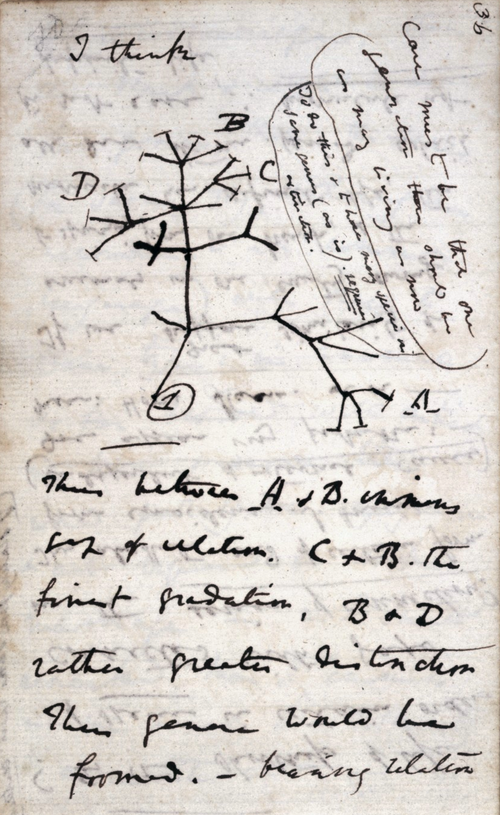
理論とは一般的に、何らかの事柄に関する命題や考えの集合であり、様々な推論を通して多様な方法で展開される。これには、人がなぜそのような行動をとるのかを説明する非公式な民間心理学理論、何らかの現象を説明しようとする科学理論、哲学理論(例えば政治や現実の本質に関する理論)、その他様々な用途が含まれる。すべての理論が同等であるわけではなく、例えば、現象をどれだけうまく説明できるか、また、理論を支持する証拠と反証する証拠の強さといった観点から比較することができる。
知的または学術的な状況に適用される場合、理論とは、ある現象に関する体系的かつ合理的な抽象的思考、あるいはそのような思考から導き出される結論とみなされます。それは、観察、実験、研究といったプロセスによって支えられることが多い、熟考的かつ論理的な推論を伴います。理論は、経験的で検証可能な知識の領域に属する科学的なものもあれば、芸術や哲学といった非科学的な分野に属するものもあります。場合によっては、理論はいかなる正式な学問分野からも独立して存在することもあります。
現代科学において、「理論」という用語は、科学的方法に合致し、現代科学が要求する基準を満たす、自然の説明として十分に検証された科学理論を指します。このような理論は、科学的検証によって経験的に裏付けられるか、あるいは経験的に反証(「反証」)されるような形で記述されます。科学理論は、科学的知識の中で最も信頼性が高く、厳密で、包括的な形態です[ 1 ]。これに対し、「理論」という言葉は、証明されていない、あるいは推測的な事柄を意味するより一般的な用法(正式には「仮説」という言葉でより適切に表現される)とは対照的です[ 2 ]。科学理論は、経験的に検証可能な個々の推測である仮説や、特定の条件下での自然の振る舞いを記述した科学法則とは区別されます。
Theories guide the enterprise of finding facts rather than of reaching goals, and are neutral concerning alternatives among values.[3]:131 A theory can be a body of knowledge, which may or may not be associated with particular explanatory models. To theorize is to develop this body of knowledge.[4]:46
The word theory or "in theory" is sometimes used outside of science to refer to something which the speaker did not experience or test before.[5] In science, this same concept is referred to as a hypothesis, and the word "hypothetically" is used both inside and outside of science. In its usage outside of science, the word "theory" is very often contrasted to "practice" (from Greek praxis, πρᾶξις) a Greek term for doing, which is opposed to theory.[6] A "classical example" of the distinction between "theoretical" and "practical" uses the discipline of medicine: medical theory involves trying to understand the causes and nature of health and sickness, while the practical side of medicine is trying to make people healthy. These two things are related but can be independent, because it is possible to research health and sickness without curing specific patients, and it is possible to cure a patient without knowing how the cure worked.[a]
The English word theory derives from a technical term in philosophy in Ancient Greek. As an everyday word, theoria, θεωρία, meant "looking at, viewing, beholding", but in more technical contexts it came to refer to contemplative or speculative understandings of natural things, such as those of natural philosophers, as opposed to more practical ways of knowing things, like that of skilled orators or artisans.[b] English-speakers have used the word theory since at least the late 16th century.[7] Modern uses of the word theory derive from the original definition, but have taken on new shades of meaning, still based on the idea of a theory as a thoughtful and rational explanation of the general nature of things.
Although it has more mundane meanings in Greek, the word θεωρία apparently developed special uses early in the recorded history of the Greek language. In the book From Religion to Philosophy, Francis Cornford suggests that the Orphics used the word theoria to mean "passionate sympathetic contemplation".[8]Pythagoras changed the word to mean "the passionless contemplation of rational, unchanging truth" of mathematical knowledge, because he considered this intellectual pursuit the way to reach the highest plane of existence.[9] Pythagoras emphasized subduing emotions and bodily desires to help the intellect function at the higher plane of theory. Thus, it was Pythagoras who gave the word theory the specific meaning that led to the classical and modern concept of a distinction between theory (as uninvolved, neutral thinking) and practice.[10]
Aristotle's terminology, as already mentioned, contrasts theory with praxis or practice, and this contrast exists till today. For Aristotle, both practice and theory involve thinking, but the aims are different. Theoretical contemplation considers things humans do not move or change, such as nature, so it has no human aim apart from itself and the knowledge it helps create. On the other hand, praxis involves thinking, but always with an aim to desired actions, whereby humans cause change or movement themselves for their own ends. Any human movement that involves no conscious choice and thinking could not be an example of praxis or doing.[c]
Theories are analytical tools for understanding, explaining, and making predictions about a given subject matter. There are theories in many and varied fields of study, including the arts and sciences. A formal theory is syntactic in nature and is only meaningful when given a semantic component by applying it to some content (e.g., facts and relationships of the actual historical world as it is unfolding). Theories in various fields of study are often expressed in natural language, but can be constructed in such a way that their general form is identical to a theory as it is expressed in the formal language of mathematical logic. Theories may be expressed mathematically, symbolically, or in common language, but are generally expected to follow principles of rational thought or logic. In the social sciences, a new theory must explain the core relationships among units or process steps, exploring a current gap or unresolved debate in a field, extending its explanations into testable hypotheses and practical implications to benefit society.[11][12]
Theory is constructed of a set of sentences that are thought to be true statements about the subject under consideration. However, the truth of any one of these statements is always relative to the whole theory. Therefore, the same statement may be true with respect to one theory, and not true with respect to another. This is, in ordinary language, where statements such as "He is a terrible person" cannot be judged as true or false without reference to some interpretation of who "He" is and for that matter what a "terrible person" is under the theory.[13]
Sometimes two theories have exactly the same explanatory power because they make the same predictions. A pair of such theories is called indistinguishable or observationally equivalent, and the choice between them reduces to convenience or philosophical preference.
The form of theories is studied formally in mathematical logic, especially in model theory. When theories are studied in mathematics, they are usually expressed in some formal language and their statements are closed under application of certain procedures called rules of inference. A special case of this, an axiomatic theory, consists of axioms (or axiom schemata) and rules of inference. A theorem is a statement that can be derived from those axioms by application of these rules of inference. Theories used in applications are abstractions of observed phenomena and the resulting theorems provide solutions to real-world problems. Obvious examples include arithmetic (abstracting concepts of number), geometry (concepts of space), and probability (concepts of randomness and likelihood).
Gödel's incompleteness theorem shows that no consistent, recursively enumerable theory (that is, one whose theorems form a recursively enumerable set) in which the concept of natural numbers can be expressed, can include all true statements about them. As a result, some domains of knowledge cannot be formalized, accurately and completely, as mathematical theories. (Here, formalizing accurately and completely means that all true propositions—and only true propositions—are derivable within the mathematical system.) This limitation, however, in no way precludes the construction of mathematical theories that formalize large bodies of scientific knowledge.
A theory is underdetermined (also called indeterminacy of data to theory) if a rival, inconsistent theory is at least as consistent with the evidence. Underdetermination is an epistemological issue about the relation of evidence to conclusions.
A theory that lacks supporting evidence is generally, more properly, referred to as a hypothesis.[14]
If a new theory better explains and predicts a phenomenon than an old theory (i.e., it has more explanatory power), we are justified in believing that the newer theory describes reality more correctly. This is called an intertheoretic reduction because the terms of the old theory can be reduced to the terms of the new one. For instance, our historical understanding about sound, light and heat have been reduced to wave compressions and rarefactions, electromagnetic waves, and molecular kinetic energy, respectively. These terms, which are identified with each other, are called intertheoretic identities. When an old and new theory are parallel in this way, we can conclude that the new one describes the same reality, only more completely.
When a new theory uses new terms that do not reduce to terms of an older theory, but rather replace them because they misrepresent reality, it is called an intertheoretic elimination. For instance, the obsolete scientific theory that put forward an understanding of heat transfer in terms of the movement of caloric fluid was eliminated when a theory of heat as energy replaced it. Also, the theory that phlogiston is a substance released from burning and rusting material was eliminated with the new understanding of the reactivity of oxygen.
Theories are distinct from theorems. A theorem is derived deductively from axioms (basic assumptions) according to a formal system of rules, sometimes as an end in itself and sometimes as a first step toward being tested or applied in a concrete situation; theorems are said to be true in the sense that the conclusions of a theorem are logical consequences of the axioms. Theories are abstract and conceptual, and are supported or challenged by observations in the world. They are 'rigorously tentative', meaning that they are proposed as true and expected to satisfy careful examination to account for the possibility of faulty inference or incorrect observation. Sometimes theories are incorrect, meaning that an explicit set of observations contradicts some fundamental objection or application of the theory, but more often theories are corrected to conform to new observations, by restricting the class of phenomena the theory applies to or changing the assertions made. An example of the former is the restriction of classical mechanics to phenomena involving macroscopic length scales and particle speeds much lower than the speed of light.
理論はしばしば実践や実務とは区別される。仕事の理論的モデルが仕事そのものに関連性があるかどうかという問題は、医学、工学、法律、経営などの専門職の研究者にとって関心事である。[ 15 ]: 802
理論と実践の間のギャップは、研究知識を実践への応用へと翻訳し、実践者がそれを認識できるようにするという課題を伴う知識移転として捉えられてきた。研究者は、自らが生み出した知識を実践者に移転しようとしていないとして批判されてきた。 [ 15 ]: 804 [ 16 ]別の枠組みでは、理論と知識は異なる問題を理解し、異なる言葉(異なる存在論と認識論)で世界をモデル化しようとすると想定されている。また別の枠組みでは、研究は実践に関連する理論を生み出さないと述べている。[ 15 ]: 803
経営学の文脈において、ヴァン・デ・ヴァンとジョンソンは、実践で発生する問題を学際的な方法で研究者が調査し、新たな実践的成果と新たな理論モデルの両方を生み出す結果を出す一方で、学術的な方法で共有される理論的成果を目指す、実践的な学術研究の一形態を提案している。[ 15 ]: 815彼らは、分野間のアイデアの「裁定取引」というメタファーを用いて、それをコラボレーションと区別している。[ 15 ]: 803
科学において、「理論」という用語は、「観察と実験によって繰り返し確認された一連の事実に基づいて、自然界のある側面について十分に裏付けられた説明」を指します。 [ 17 ] [ 18 ]理論は、科学的探究の幅広い領域にわたって一貫した精度で反証可能な予測を行う能力や、複数の独立した情報源から理論を支持する強力な証拠(コンシリエンス)を生み出す能力など、さらなる要件も満たす必要があります。
科学理論の強さは、それが説明できる現象の多様性と関連しており、それは、それらの現象に関して反証可能な予測を行う能力によって測られます。理論は、より多くの証拠が集まるにつれて改良され(あるいはより優れた理論に置き換えられ)、予測の精度は時間とともに向上します。この精度の向上は、科学的知識の増加に対応します。科学者は、理論を基礎として、さらなる科学的知識を獲得するとともに、技術の発明や病気の治療といった目標を達成します。
米国科学アカデミーは、科学理論を次のように定義している。
「理論」の正式な科学的定義は、日常的な意味とはかなり異なります。それは、膨大な証拠によって裏付けられた、自然のある側面に関する包括的な説明を指します。多くの科学理論は非常に確立されているため、新たな証拠によって大きく変更される可能性は低いでしょう。例えば、地球が太陽の周りを公転していないこと(地動説)、生物が細胞でできていないこと(細胞説)、物質が原子でできていないこと、地球の表面が地質学的時間スケールで移動してきた固いプレートに分かれていないこと(プレートテクトニクス理論)などを証明する新たな証拠は存在しません。科学理論の最も有用な特性の1つは、まだ観察されていない自然現象や出来事について予測するために使用できることです。[ 19 ]
アメリカ科学振興協会より:
科学理論とは、観察や実験によって繰り返し確認された事実に基づいて、自然界のある側面を立証した説明である。このような事実に裏付けられた理論は「推測」ではなく、現実世界の信頼できる説明である。生物進化論は「単なる理論」以上のものだ。それは、物質の原子論や病原菌説と同様に、宇宙の事実に基づいた説明である。重力についての私たちの理解はまだ発展途上にある。しかし、重力という現象は、進化と同様に、受け入れられている事実である。[ 18 ]
「理論」という用語は、科学的モデルや、検証されていないものの複雑な仮説を説明するのに適切ではない。
The logical positivists thought of scientific theories as deductive theories—that a theory's content is based on some formal system of logic and on basic axioms. In a deductive theory, any sentence which is a logical consequence of one or more of the axioms is also a sentence of that theory.[13] This is called the received view of theories.
In the semantic view of theories, which has largely replaced the received view,[20][21] theories are viewed as scientific models. A model is an abstract and informative representation of reality (a "model of reality"), similar to the way that a map is a graphical model that represents the territory of a city or country. In this approach, theories are a specific category of models that fulfill the necessary criteria. (See Theories as models for further discussion.)
In physics the term theory is generally used for a mathematical framework—derived from a small set of basic postulates (usually symmetries, like equality of locations in space or in time, or identity of electrons, etc.)—which is capable of producing experimental predictions for a given category of physical systems. One good example is classical electromagnetism, which encompasses results derived from gauge symmetry (sometimes called gauge invariance) in a form of a few equations called Maxwell's equations. The specific mathematical aspects of classical electromagnetic theory are termed "laws of electromagnetism", reflecting the level of consistent and reproducible evidence that supports them. Within electromagnetic theory generally, there are numerous hypotheses about how electromagnetism applies to specific situations. Many of these hypotheses are already considered adequately tested, with new ones always in the making and perhaps untested.
Certain tests may be infeasible or technically difficult. As a result, theories may make predictions that have not been confirmed or proven incorrect. These predictions may be described informally as "theoretical". They can be tested later, and if they are incorrect, this may lead to revision, invalidation, or rejection of the theory. [22]
In mathematics, the term theory is used differently than its use in science – necessarily so, since mathematics contains no explanations of natural phenomena per se, even though it may help provide insight into natural systems or be inspired by them. In the general sense, a mathematical theory is a branch of mathematics devoted to some specific topics or methods, such as set theory, number theory, group theory, probability theory, game theory, control theory, perturbation theory, etc., such as might be appropriate for a single textbook.
In mathematical logic, a theory has a related but different sense: it is the collection of the theorems that can be deduced from a given set of axioms and a given set of inference rules.
A theory can be either descriptive as in science, or prescriptive (normative) as in philosophy.[23] The latter are those whose subject matter consists not of empirical data, but rather of ideas. At least some of the elementary theorems of a philosophical theory are statements whose truth cannot necessarily be scientifically tested through empirical observation.
A field of study is sometimes named a "theory" because its basis is some initial set of assumptions describing the field's approach to the subject. These assumptions are the elementary theorems of the particular theory, and can be thought of as the axioms of that field. Some commonly known examples include set theory and number theory; however literary theory, critical theory, and music theory are also of the same form.
One form of philosophical theory is a metatheory or meta-theory. A metatheory is a theory whose subject matter is some other theory or set of theories. In other words, it is a theory about theories. Statements made in the metatheory about the theory are called metatheorems.
A political theory is an ethical theory about the law and government. Often the term "political theory" refers to a general view, or specific ethic, political belief or attitude, thought about politics.
In social science, jurisprudence is the philosophical theory of law. Contemporary philosophy of law addresses problems internal to law and legal systems, and problems of law as a particular social institution.
Most of the following are scientific theories. Some are not, but rather encompass a body of knowledge or art, such as Music theory and Visual Arts Theories.