
Loading article…


新幹線(日本語:新幹線, [ɕiŋkaꜜɰ̃seɴ] ) 新幹線(しんせん)、 日本にある高速鉄道のひとつで、英語では弾丸列車東京とに建設された。長距離移動以外にも、大都市圏通勤鉄道網として利用されている。[1][2]独立行政法人鉄道建設・運輸施設整備支援機構が所有し日本鉄道グループ5社が運営している。
1964年に東海道新幹線(515.4km)が開通して以来、 [3]新幹線ネットワークは拡大を続け、現在では最高速度260~320km/h(160~200mph)の路線が2,951.3km(1,833.9マイル)、最高速度130km/h(80mph)のミニ新幹線が283.5km(176.2マイル) 、新幹線サービスが提供される支線が10.3km(6.4マイル)となっている。[4]この鉄道網は現在、本州と九州のほとんどの主要都市と北海道の函館を結んでおり、札幌までの延伸工事が2031年3月に開始される予定である。[5]最高運転速度は320km/h(200mph)である(東北新幹線の387.5km(241マイル)区間)。 [ 6]試験走行では、1996年に在来線で時速443km(275mph)に達し、2015年4月には超電導リニアモーターカーで世界記録の時速603km(375mph)に達した。[7]
東海道新幹線は、日本の三大都市である東京、名古屋、大阪を結ぶ、世界でも有数の混雑する高速鉄道路線です。2017年3月までの1年間で1億5,900万人の乗客を運び、 [8] 50年以上前に開業して以来、累計64億人以上の乗客を輸送してきました。[3]ピーク時には、片道1時間あたり最大16本の列車が各方向に運行され、各列車には16両編成(座席定員1,323名、時折立ち席乗客も)が運行され、列車間隔は最低3分です。[9]
日本の新幹線網は、2011年まで年間乗客数(2007年には最大3億5,300万人)がどの高速鉄道網よりも多かったが、中国の高速鉄道網が年間3億7,000万人の乗客数でこれを上回り、2019年には年間乗客数が23億人を超えた。[10]
語源
日本語で新幹線は「新しい幹線」や「新しい主要線」を意味しますが、この言葉は列車が走る鉄道路線と列車自体の両方を指すために使用されます。[ 11]英語では、列車はbullet trainとしても知られています。bullet train (弾丸列車)という用語は1939年に始まり、新幹線プロジェクトの初期計画段階で付けられた最初の名前でした。[12]さらに、1972年まで東海道新幹線のひかり列車にのみ使用されていた超特急( cho -tokkyū )という名前は、今日でも英語のアナウンスや標識で使用されています。
歴史
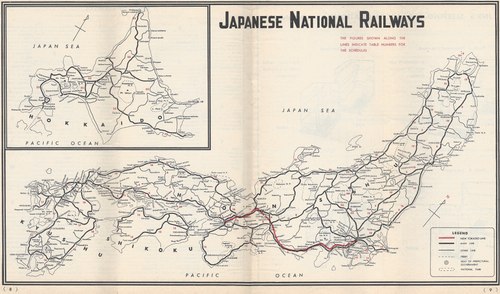
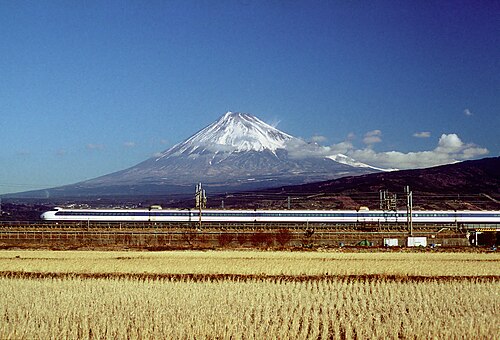
日本は高速旅行専用の鉄道路線を建設した最初の国である。山岳地帯のため、既存の鉄道網は1,067 mm ( 3 フィート 6 インチ)の狭軌線で構成されていたが、これらの路線は一般的に遠回りのルートをたどり、狭軌鉄道の技術的な制限により高速化には対応できなかった。たとえば、標準軌の鉄道のカーブの最高速度が 145 km/h ( 90 mph ) の場合、狭軌の鉄道では同じカーブの最高速度は 130 km/h ( 81 mph ) となる。[13]その結果、日本では、既存の標準軌や広軌の鉄道システムのアップグレードの可能性が高い国よりも、新しい高速線の必要性が高かった。
最初の新幹線建設の功績が認められている人物には、主任技師の島秀夫と、計画を支持するよう政治家を説得した日本国有鉄道(JNR)初代総裁の十河信二がいる。技術開発を担当した他の重要人物には、国鉄の一部門である鉄道総合技術研究所(RTRI)に所属していた三木忠直、松平正、河鍋肇がいた。彼らは最初の路線である東海道新幹線の技術開発の多くを担当した。3人とも第二次世界大戦中に航空機の設計に携わっていた。[14]
初期の提案
一般的な英語名の「bullet train」は、日本語の「弾丸列車」の直訳であり、このプロジェクトが1930年代に最初に議論されたときに付けられた愛称です。この名前が定着したのは、元の0系新幹線が弾丸に似ていることと、その高速性 のためでした。
新幹線という名称が初めて正式に使用されたのは1940年、東京と下関を結ぶ標準軌の旅客・貨物線計画で、最高時速200km (120mph)の蒸気機関車と電気機関車を使用する予定だった。その後3年間で鉄道省は、路線を北京(朝鮮へのトンネル経由)やシンガポールまで延長し、シベリア鉄道やアジアの他の幹線との接続を構築するという野心的な計画を作成した。これらの計画は、第二次世界大戦における日本の立場が悪化したため、1943年に放棄された。しかし、路線の建設は一部開始され、現在の新幹線にあるいくつかのトンネルは、戦時中のプロジェクトに遡る。[15]
工事
第二次世界大戦の終戦後、日本の産業と経済の復興に伴い、従来の東海道本線の旅客と貨物の輸送量が着実に増加する中、高速鉄道は数年間忘れ去られていました。1950年代半ばまでに東海道本線はフル稼働となり、鉄道省は新幹線プロジェクトを再検討することを決定しました。1957年、小田急電鉄は3000系SE ロマンスカーを導入し、狭軌列車で時速145km(90mph)の世界最高速度記録を樹立しました。[16]この列車により、設計者はさらに高速な標準軌列車を安全に製造できるという自信を得ました。こうして、最初の新幹線である0系はロマンスカーの成功に基づいて構築されました。[要出典]
1950年代、日本ではアメリカと同様に鉄道はすぐに時代遅れとなり、航空や高速道路に取って代わられるだろうという国民的な考え方があった。[17]しかし、国鉄総裁の十河信二氏は高速鉄道の可能性を強く主張し、新幹線計画が実施された。[18]
1958年12月に政府の認可が下り、1959年4月に東海道新幹線の東京・大阪間の第1区間の建設が開始された。新幹線の建設費は当初2000億円近くと見積もられており[a] 、これは政府融資、鉄道債、世界銀行からの8000万ドルの低利融資の形で調達された。しかし、当初の見積りは過小評価されており、実際の費用は約3800億円であった[19] 。1963年に予算不足が明らかになると、十河は責任を取って辞任した[20]。
1962年に小田原市に鴨宮模型課と呼ばれる鉄道車両試験施設が開設された。[21]
最初の成功

東海道新幹線は、第1回東京オリンピックの開催に合わせて、1964年10月1日に運行を開始しました。[22]従来の特急サービスでは、東京から大阪まで6時間40分かかっていましたが、新幹線ではわずか4時間で移動できるようになり、1965年には3時間10分に短縮されました。これにより、日本の2大都市である東京と大阪の間の日帰り旅行が可能になり、日本人のビジネスや生活のスタイルが大きく変わり、新しい交通需要が増加しました。このサービスはすぐに成功し、1967年7月13日に3年足らずで乗客数が1億人に達し、1976年には10億人の乗客に達しました。 1970年の大阪万博では16両編成の列車が導入されました。1992年には片道平均で23,000人の乗客が利用し、東海道新幹線は世界で最も混雑する高速鉄道となりました。[23] 2014年、列車の開業50周年の時点で、1日の乗客数は391,000人に増加し、18時間の運行スケジュールでは、1時間あたり平均22,000人弱の乗客数となった。[24]
最初の新幹線である0系は最高時速210km(130mph)で走行し、後に220km/h(137mph)まで速度が上げられた。クラシックな弾丸型の外観を持つこれらの列車の最後のものは、2008年11月30日に引退した。0系列車の1台の動車は、2001年にJR西日本からイギリスのヨークにある国立鉄道博物館に寄贈された。[25]
ネットワークの拡張
東海道新幹線の急速な成功を受けて、西へ岡山、広島、福岡(山陽新幹線)への延伸が進められ、1975年に完成した。[26]田中角栄首相は新幹線の熱烈な支持者であり、政権は既存の幹線のほとんどと並行する広範なネットワークを提案した。この計画に従って、東北新幹線と上越新幹線という2つの新線が建設された。他の多くの計画されていた路線は、主に新幹線網の建設コストの高さが原因で、1970年代後半を通して国鉄が負債を抱えたため、延期または完全に中止された。1980年代初頭までに同社は事実上支払い不能となり、1987年に民営化された。
民営化されたJR各社による新幹線の開発は継続しており、新しい車両モデルが開発され、それぞれが一般的に独自の特徴的な外観をしています(JR西日本が導入した500系など)。2014年以降、東北新幹線では新幹線が時速320km(200マイル)の速度で定期的に運行されています。これより速い速度で運行している商業サービスは、上海のリニアモーターカー、中国鉄道の高速鉄道網、インドネシアのジャカルタ・バンドン高速鉄道のみです。 [27] [28] [更新が必要]
1970年以来、東京から大阪を結ぶ計画中のリニア中央新幹線の開発も進められてきた。2015年4月21日、7両編成のL0系リニアモーターカーが時速603km(時速375マイル)の世界速度記録を樹立した。 [7]
テクノロジー
新幹線は、従来の鉄道に比べて高速運転を可能にするためにさまざまな先進技術を採用しており、高速性だけでなく、安全性や快適性も高い水準で実現しています。その成功は世界の他の鉄道にも影響を与え、高速鉄道の重要性と利点を実証しました。
ルーティング
新幹線の路線は、低速で狭軌の在来線と交差することはない(これらの旧路線に沿って走るミニ新幹線を除く)。そのため、新幹線は低速のローカル線や貨物列車の影響を受けず(青函トンネルを通過する北海道新幹線を除く)、多くの高速列車を定刻通りに運行する能力がある。さらに、新幹線の路線(ミニ新幹線を除く)は道路や高速道路から完全に立体交差しており、鉄道の踏切がほとんどない。線路は厳しく立ち入り禁止であり、不法侵入に対する罰則は法律で厳しく規制されている。路線は障害物を迂回するのではなく通過するためにトンネルや高架橋を使用しており、最小曲線半径は4,000メートル(13,123フィート)(最古の東海道新幹線では2,500メートル(8,202フィート))である。[13]
追跡

新幹線は1,435mm(4フィート 8インチ)の+日本のほとんどの路線の1,067 mm (3 フィート 6 インチとは対照的に、この路線は1 ⁄ 2 インチ)標準軌連続溶接レールとスイングノーズ交差ポイントが採用されており、分岐器と交差部の隙間がなくなりました。長いレールが使用され、伸縮ジョイントで接合されているため、熱による伸びと収縮による軌間の変動が最小限に抑えられます。
軌道はバラスト軌道とスラブ軌道を組み合わせて使用されており、スラブ軌道は高架橋やトンネルなどのコンクリート路盤区間でのみ使用されています。スラブ軌道はトンネル区間では大幅に費用対効果が高く、軌道高が低いためトンネルの断面積が小さくなり、建設コストを最大30%削減できます。[29] しかし、新幹線のトンネルは他の高速路線に比べて直径が小さいため、トンネル入口付近の住民にとって トンネルブームの問題が懸念されています。
スラブ軌道は、レール、留め具、セメントアスファルトモルタルを塗布した軌道スラブから構成される。路盤およびトンネル内には、直径400~520 mm (16~20インチ)、高さ200 mm (7.9インチ)の円形の支柱が5メートル間隔で設置されている。プレハブ支柱は鉄筋コンクリートまたはプレストレスト鉄筋コンクリートで作られており、軌道スラブが縦横に動くのを防ぐ。軌道スラブ1枚の重量は約5トン、幅2,220~2,340 mm (87~92インチ)、長さ4,900~4,950 mm (193~195インチ)、厚さ160~200 mm (6.3~7.9インチ)である。[30]
信号システム
.jpg/500px-%E6%96%B0%E5%B9%B9%E7%B7%9A%E7%B7%8F%E5%90%88%E6%8C%87%E4%BB%A4%E6%89%80(%E4%BA%AC%E9%83%BD%E9%89%84%E9%81%93%E5%8D%9A%E7%89%A9%E9%A4%A8).jpg)
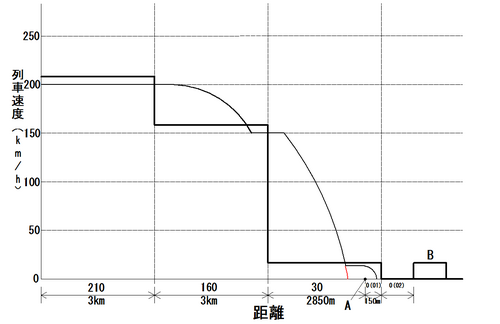
新幹線では、線路脇の信号機を不要とするATC (自動列車制御装置)システムを採用しています。総合的な自動列車保安システムを採用しています。[20] 集中制御によりすべての列車運行を管理し、列車の移動、線路、駅、スケジュールに関するすべてのタスクがネットワーク化され、コンピュータ化されています。
電気システム
新幹線では、既存の電化狭軌システムで使用されている1,500V直流の制限を克服するために、 25kV交流架空電源(ミニ新幹線では20kV交流)を使用しています。単電源車の重い車軸荷重を軽減するために、電力は列車の車軸に沿って分配されます。 [20]東海道新幹線の電源の交流周波数は60Hzです。
列車

灰色: 従来型積載限界、
青: 地方積載限界
。括弧内の数字は以前の制限値です。
新幹線は電車であり、機関車や動力車に比べて軽量な車両を使用しているため、加速、減速が速く、線路へのダメージも少ないという特徴があります。車両は気密構造になっており、高速でトンネルに入るときに安定した空気圧を確保します。
新幹線(ミニ新幹線を除く)は、在来線の車両に比べて大きな限界で製造されている。 [31]この大きな限界により、より幅の広い客車が許容され、通常他の場所で見られるより一般的な4列(2+2)の座席と比較して、スタンダードクラスの客車で5列(2+3)の座席が可能になっている。場合によっては、この広い限界は、E1シリーズやE4シリーズセットなどの特定の列車で6列(3+3)の座席を可能にするためにも使用されました。これは、動力車がないことも相まって、より短い列車長でより多くの乗客定員を可能にしています。しかし、ミニ新幹線は事実上、在来線の線路限界を変更したものであるため、1,067mmの従来の路線の限界がミニ新幹線にも適用されます。

牽引力
新幹線は当初から EMU を使用しており、0 系新幹線では全車軸が動力車でした。他の鉄道メーカーは伝統的に分散牽引構成を使用することに消極的であったか、使用することができませんでした ( Talgo、ドイツのICE 2、フランス (続いて韓国) のTGV (およびKTX-IとKTX-Sancheon ) はRenfe Class 102で機関車(パワーカーとも呼ばれる) 構成を使用し、 Talgo AVRILでもそれを継続していますが、これは Talgo の台車設計の一部として動力付き台車を使用することができないためです。Talgo の台車設計では、2 つの車軸ではなく 1 つの車軸を使用し、車輪が互いに独立して回転できるように改良されたJacobs 台車が使用されていますが、ICE 2、TGV、KTX では、動力付き台車を使用すると、高い乗り心地と少ない電気機器を容易に実現できるためです。[32] ) 日本では、電気式多重ユニット構成に対する大きな技術的要望があります。モーター付きの車軸の割合が高ければ高いほど加速力が高まるため、新幹線は頻繁に停車してもそれほど時間のロスがありません。新幹線の路線は、世界の他の高速路線に比べて、路線の長さに比例して停車駅が多くなっています。
ライン

主な新幹線路線は以下のとおりです。
実際には、東海道線、山陽線、九州線は、異なる会社によって運営されているにもかかわらず、東海道線と山陽線の間、および山陽線と九州線の間で列車サービスが運行されているため、東京から西/南に向かう連続した線路を形成しています。
東海道新幹線の線路は、電化基準、信号システム、地震緩和装置が異なるため、東京駅で東北新幹線の線路と物理的に接続されていません。また、東京駅の東海道線の半分に追加された2つのプラットフォームの使用をめぐって、JR東日本とJR東海の間で紛争が起こっています。国鉄の民営化前は、それらは東北本線と共有されると考えられており、その建設には東北本の東京への延伸に割り当てられた資金が使用されていました。しかし、延伸は民営化後に完了し、その時点でプラットフォームはJR東海が所有していました。そのため、これらの線路の間には直通サービスはありません。東京から北行きのすべてのサービスは、少なくとも大宮までは東北新幹線に沿って走り、その後仙台または高崎方面に分岐します。
ミニ新幹線と呼ばれるさらに 2 つの路線も、既存の線路区間の寸法を変更し、改良することで建設されました。
厳密には新幹線路線として分類されないが、新幹線の保管/保守ヤードにつながる線路を使用しているため新幹線が運行されている標準軌の路線が 2 つあります。
建設中の路線
以下の路線は建設中です。中央新幹線を除くこれらの路線は新幹線または計画新幹線と呼ばれ、政府が決定した 鉄道基本計画に指定された新幹線プロジェクトです。
- 新函館北斗から札幌までの北海道新幹線は現在建設中で、2031年3月に開業する予定である。[5]
- 中央新幹線(東京・名古屋・大阪)は、2014年から建設が進められている初のリニア新幹線である。JR東海は、静岡県との紛争により、東京から名古屋までの路線の2027年という目標日を断念し、2023年時点で公式の目標日は決まっていない。[34]
計画路線
- 北陸新幹線を大阪まで延伸する案が提案されており、政府は2016年12月20日に小浜・京都経由のルートを選定した。[35]建設は2030年に開始され、15年かかる予定である。
- 西九州新幹線は武雄温泉から長崎までが新幹線規格で建設されており、新鳥栖から武雄温泉までの既存の狭軌線は狭軌のまま残されるが、新鳥栖から武雄温泉間を新幹線規格で建設する提案がある。2018年に国土交通省は、この区間について、新幹線、ミニ新幹線、軌間変更列車を比較対照した費用便益分析結果を発表した。[36]
キャンセルされた路線
1970年代に着手され、地権者の反対を受けて1983年に中止された東京と成田国際空港を結ぶ成田新幹線プロジェクトは、正式に中止され、新幹線建設の基本計画から削除された。計画されていた敷地の一部は、2010年に開業した成田スカイアクセス線に使用され、京葉線はもともと東京駅の成田新幹線ターミナルのために確保されていたスペースを再利用した。スカイアクセス線は標準軌の線路を使用しているが、新幹線仕様で建設されたわけではなく、完全な新幹線路線に改造する計画はない。
提案された路線

1970年代初頭の好景気の時期には多くの新幹線路線が提案されたが、未だ建設されておらず、その後無期限に棚上げされている。
- 北海道新幹線北延伸:札幌~旭川
- 北海道南回り新幹線(北海道南回り新幹線、北海道南回り新幹線):長万部~室蘭~札幌
- 羽越新幹線:富山–新潟– 青森
- 富山・上越妙高間は北陸新幹線の一部として存在し、長岡・新潟間は上越新幹線の一部として存在し、長岡には羽越新幹線の規定がある。
- 奥羽新幹線:福島–山形 – 秋田
- 北陸・中京新幹線:名古屋 – 敦賀
- 山陰新幹線:大阪 – 鳥取–松江 –下関
- 中国横断新幹線(中国横断新幹線、中国横断新幹線) : 岡山 – 松江
- 四国新幹線:大阪 – 徳島 – 高松 – 松山–大分
- 四国横断新幹線(四国横断新幹線、四国横断新幹線) : 岡山 – 高知 – 松山
- 近年、四国新幹線および四国横断新幹線に関する動きがいくつかあった。2016年には、四国地域の長期計画の見直しと路線計画に割り当てられた資金の中で、四国新幹線および四国横断新幹線が将来の潜在的なプロジェクトとして特定された。[38]また、2018年には大分市から収益性調査が委託され、この路線は潜在的に収益性があることが判明した[39]。
- 東九州新幹線(東九州新幹線、東九州新幹線) : 福岡 – 大分 – 宮崎 – 鹿児島
- 九州横断新幹線(九州横断新幹線、九州横断新幹線) : 大分 – 熊本
さらに、基本計画では上越新幹線は東京駅ではなく新宿から始まると定められており、そうすると新宿と大宮の間に30km (19マイル)の線路を新たに建設する必要があった。建設工事は開始されなかったが、新宿駅につながる地下区間を含む計画線路沿いの土地は留保されたままである。現在の東京-大宮間の容量が不十分であることが判明した場合、ある時点で新宿-大宮間の建設が再検討される可能性がある。
2009年12月、当時の前原誠司国交大臣は、東海道新幹線と車両基地を結ぶ既存の支線を利用して羽田空港への新幹線接続を提案した。JR東海は、既存線の列車ダイヤが厳しいためこの計画は「非現実的」であると述べたが、報道によると、前原氏はこのアイデアについて議論を続けたいと考えているとのことであった。[40]現国交大臣は、この提案が引き続き支持されるかどうかは明らかにしていない。中央新幹線(東海道新幹線のバイパスと呼ばれることもある)の開通により容量に余裕ができればこの計画は実現可能になるかもしれないが、 2020年の東京オリンピック開幕前には完了する予定の羽田と東京駅間の他の鉄道改良工事がすでに進行中であるため、潜在的な新幹線サービスはそれ以上のメリットしか提供しない可能性が高い。これらの計画は最終的には実現しなかったものの(新型コロナウイルス感染症の影響もあって)、羽田空港アクセス線や東京臨海地下鉄線など、羽田空港周辺のさまざまな鉄道プロジェクトの計画が継続されている。[41]
サービス


新幹線はもともと昼間に旅客列車、夜間に貨物列車を運ぶことを目的としていたが、開業後55年間は旅客のみを運んでいた。2019年からは一部の旅客サービスで軽貨物が運ばれており、将来的には貨物専用列車に拡大する計画がある。[42] [43]
毎日深夜から午前 6 時まではメンテナンスのため運行が停止します。日本で現在も運行されている数少ない夜行列車は、新幹線と並行する旧式の狭軌鉄道網を走っています。
新幹線には主に3つのサービスタイプがあります。
- 急行サービス- 最も大きな駅にのみ停車するため、平均速度で測定すると最も速い新幹線サービスとなります。
- 準急サービス- 最大の駅すべてに停車するほか、特定の小さな停車駅にも停車します。これにより、ローカル サービスの場合よりも小さな停車駅から大きな駅への接続が速くなります。
- ローカルサービス- 新幹線沿線の各駅に停車します。したがって、ローカルサービスは平均速度で測定すると最も遅い新幹線サービスです。これらのサービスは路線全体をカバーするのではなく、一部のみを運行することがよくあります。
東海道・山陽・九州新幹線
- のぞみ(特急・東海道・山陽)
- ひかり(準急・東海道・山陽)
- ひかりレールスター(準急、山陽)
- こだま(地元・東海道・山陽)
- さくら(準急・山陽・九州)
- みずほ(急行、山陽・九州)
- つばめ(地元、九州)
東北・北海道・山形・秋田新幹線
- はやぶさ(特急、東北・北海道、 E5系・H5系電車使用)
- はやて(普通列車、東北・北海道。急行列車は2019年に廃止)
- やまびこ(準急・東北)
- 那須野(地元・東北)
- 青葉(廃盤)
- こまち(秋田)
- つばさ(山形)
上越新幹線
- トキ・Maxとき(準急・上越)
- タニガワ / マックスタニガワ(地元・上越)
- アサヒ / マックスアサヒ(廃盤)
北陸新幹線
西九州新幹線
- かもめ[44]
列車の種類
列車は最大16両編成である。各車両の長さは25メートル(82フィート)で、最長の列車は端から端まで400メートル(1 ⁄ 4 マイル)である。駅も同様に長く、これらの列車を収容できる。日本の高速リニアモーターカーの一部は新幹線と見なされているが、[45]他の低速リニアモーターカー(愛知県名古屋市近郊の地域にサービスを提供するリニモリニアモーターカーラインなど)は、従来の都市高速輸送システムの代替として意図されている。
旅客列車
東海道・山陽新幹線
- 0系:1964年に運行を開始した最初の新幹線車両。最高運転速度は220km/h(135mph)。3,200両以上が製造された。2008年12月に廃止。
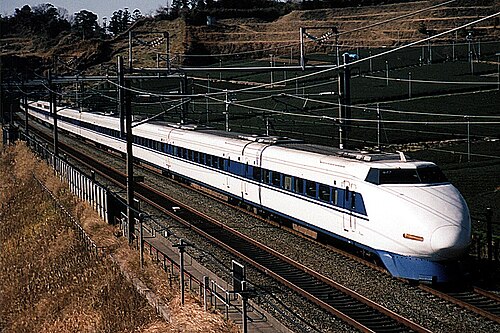
- 100系:1985年に運行を開始し、レストランカーとコンパートメントを備えた2階建て車両を特徴としていました。最高運転速度は230 km/h(145 mph)でした。後に山陽新幹線こだまサービスでのみ使用されました。2012年3月に廃止されました。
- 300系:1992年に就航し、当初は最高運転速度270 km/h(170 mph)で「のぞみ」サービスに投入されました。2012年3月に廃止されました。
- 500系: 1997年にのぞみ系に導入され、最高速度は300km/h(185mph)。2008年からは山陽新幹線こだま系に使用するため、編成が16両から8両に短縮された。
- 700系:1999年に導入され、最高運転速度は285km/h(175mph)。JR東海所有の車両は2020年3月に廃止されましたが、JR西日本所有の車両は新大阪・博多間の山陽新幹線で引き続き運行されています。
- N700シリーズ:2007年から運行されており、最高運転速度は300km/h(185mph)です。
- N700Aシリーズ:加速・減速性能の向上と主電動機の静粛化を図ったN700シリーズの改良型。現在、N700シリーズ全編成がN700Aに転換されている。
- N700Sシリーズ:N700シリーズの進化形。最初の列車セットは2019年に導入され、2020年7月1日に旅客サービスが開始されました。
-
 0シリーズ
0シリーズ -
 100シリーズ
 -
 300シリーズ
 -
 500シリーズ
 -
 700シリーズ
 -
 700系(ひかりレールスター)
 -
 N700系
N700系 -
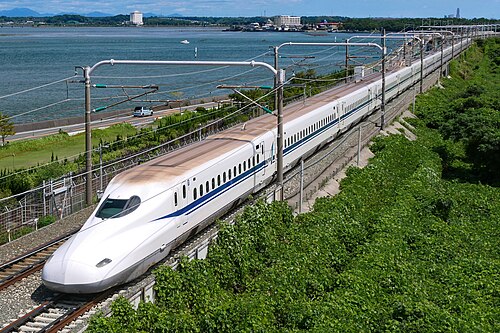 N700Aシリーズ
 -
 N700Sシリーズ
.jpg/500px-Shinkansen_700_Rail_Star_(8086223807).jpg)
九州・西九州新幹線
- 800系:2004年からつばめ線で運行されており、最高速度は260km/h(160mph)です。
- N700-7000/8000系2011年3月からみずほ・さくら線で運行されており、最高速度は300km/h(185mph)です。
- N700S-8000系:2022年にかもめ線に導入された6両編成の電車[46]で、最高速度は260km/h。
-
 800シリーズ
 -
 N700系(九州)
 -
 N700S-8000系(西九州)
.jpg/500px-Shinkansen_N700-7000_S1_(49766090102).jpg)
東北・北海道・上越・北陸新幹線
- 200系:1982年に東北・上越新幹線に導入され、2013年4月に廃止された最初のタイプ。最高速度は240 km/h(150 mph)でした。最終的な構成は10両編成でした。以前は12両編成や16両編成も運行されていました。
- E1 シリーズ: 1994 年に導入され、2012 年 9 月に廃止された 2 階建て 12両編成の列車。最高速度は 240 km/h (150 mph) でした。
- E2系:1997年から運行されている8/10両編成で、最高速度は275km/h(170mph)。
- E4シリーズ: 1997年に導入され、2021年10月に廃止された2階建て8両編成の列車。最高速度は240 km/h(150 mph)でした。
- E5系:2011年3月から運行されている10両編成で、最高速度は320km/h(200mph)。
- H5系:E5系の寒冷地仕様。10両編成が2016年3月から北海道新幹線で運行を開始し、最高速度は320km/h(200mph)となっている。[47] [48]
- E7系:2014年3月から北陸新幹線で運行されている12両編成の電車で、最高速度は260km/h(160mph)です。[49] 2019年にE7系は上越新幹線で運行を開始しました。
- W7系:2015年3月から北陸新幹線で運行されている12両編成の電車で、最高速度は260km/h(160mph)です。[49]
-
 200シリーズ
 -
 E1シリーズ
 -
 E2シリーズ
 -
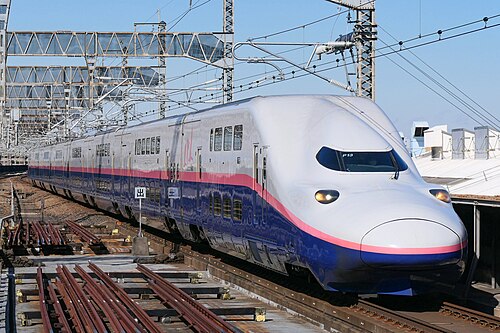 E4シリーズ
 -
 E5系
E5系 -
 H5シリーズ
 -
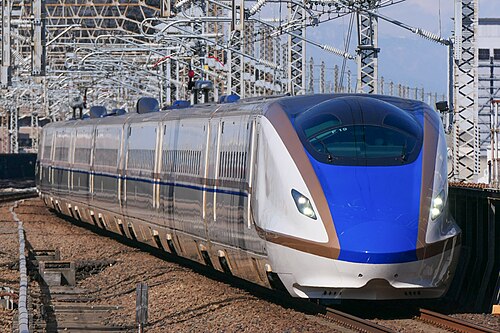 E7シリーズ
 -
 W7シリーズ
.jpg/500px-JR_East_Shinkansen_200(renewal).jpg)
山形・秋田新幹線
- 400系: 1992年に山形新幹線つばさ線で導入された、最高速度240km/hのミニ新幹線初の車両。2010年4月に廃止。
- E3系:1997年に秋田新幹線 こまち・山形新幹線 つばさに導入され、最高速度は275km/h。現在は山形新幹線のみで運行されている。
- E6系:2013年3月に秋田新幹線こまちに導入され、最高速度は300km/h(185mph)で、2014年3月に320km/h(200mph)に引き上げられました。
- E8系:2024年より導入される「つばさ」向けE3系の置き換え用。
-
 400シリーズ
 -
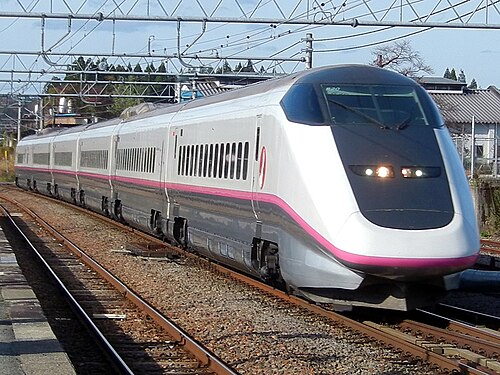 E3系(こまち)
 -
 E3系(つばさ)
 -
 E6シリーズ
 -
 E8シリーズ
実験列車
- クラス 1000 – 1961
- クラス 951 – 1969
- クラス 961 – 1973
- クラス 962 – 1979
- 500-900シリーズ「WIN350」 – 1992
- クラス 952/953「STAR21」 – 1992
- クラス 955「300X」 – 1994
- 軌間変更列車– 1998年から現在
- クラス E954「Fastech 360S」 – 2004
- クラス E955「Fastech 360Z」 – 2005
- E956クラス「ALFA-X」 – 2019
-
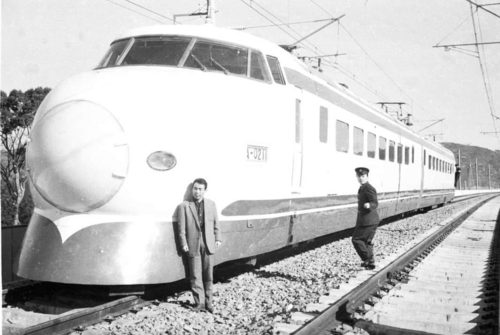 クラス1000
 -
 クラス951
 -
 クラス961
 -
 クラス962
 -
 ウィン350
 -
 スター21
スター21 -
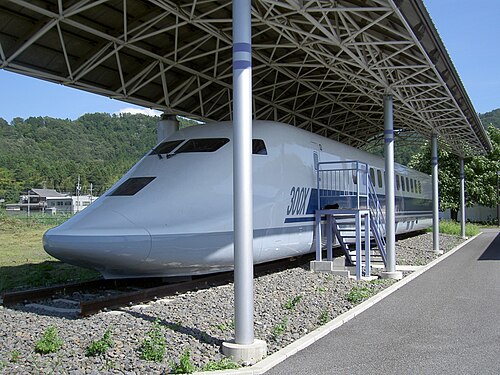 300X
300X -
 軌間変更列車(第2世代)
 -
 ファステック360S
 -
 ファステック360Z
 -
 アルファ-X
磁気浮上式鉄道
これらの列車は、L0 シリーズは旅客列車としても使用できますが、現在も実験走行にのみ使用されていることに注意してください。
- LSM200 – 1972
- ML100 – 1972
- ML100A – 1975
- ML-500 – 1977
- ML-500R – 1979
- MLU001 – 1981
- MLU002 – 1987
- MLU002N – 1993
- MLX01 – 1996
- L0シリーズ– 2012
-
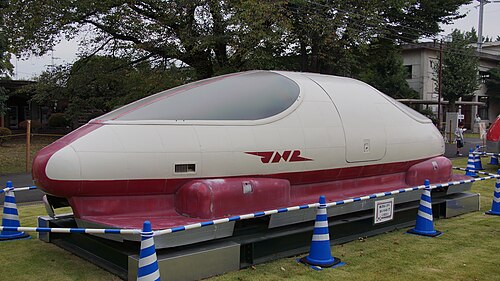 ML100
ML100 -
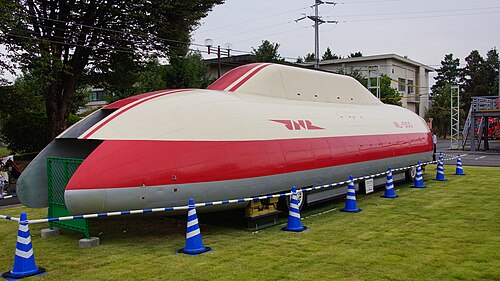 ML500
ML500 -
 MLX01
MLX01 -
 L0シリーズ
メンテナンス車両
- 911型ディーゼル機関車
- 912型ディーゼル機関車
- DD18形ディーゼル機関車
- DD19形ディーゼル機関車
- 941形(救助列車)
- 921形(軌道検測車)
- 922型(ドクターイエローセットT1、T2、T3)
- 923型(ドクターイエローセットT4、T5)
- 925型(ドクターイエローセットS1、S2)
- E926型(イーストi)
-
 ドクターイエロー タイプ922
 -
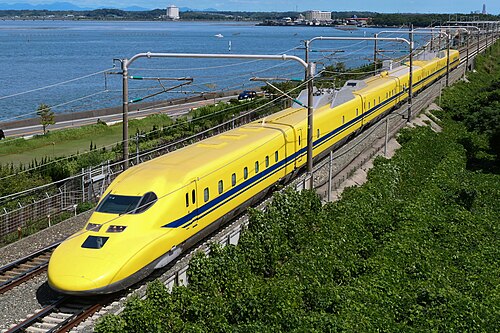 ドクターイエロー タイプ923
 -
ドクターイエロー タイプ925
-
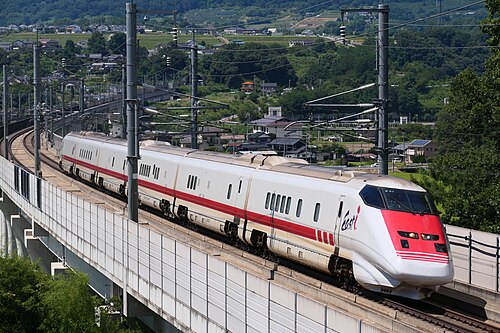 E926型 イーストアイ
 -
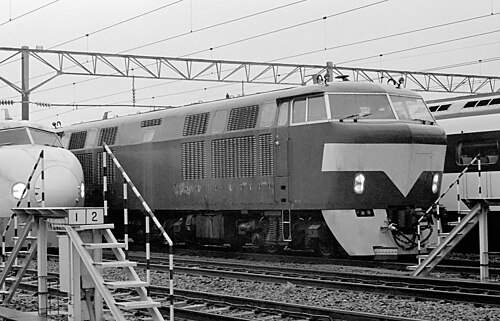 911型機関車
 -
 京都駅の外の側線に停車している保線車両
 -
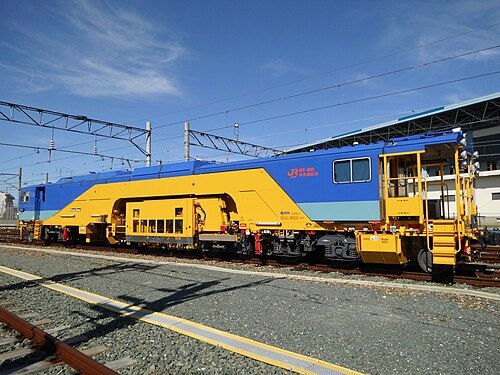
-

-
 架空線交換車
 -
 積載車両
積載車両
スピード記録
伝統的な鉄道

Maglev

Reliability
Punctuality
The Shinkansen is very reliable thanks to several factors, including its near-total separation from slower traffic. In 2016, JR Central reported that the Shinkansen's average delay from schedule per train was 24 seconds. This includes delays due to uncontrollable causes, such as natural disasters.[52] In April 2024, a train arriving to Nagoya was delayed by 17 minutes due to a report of small snakes slithering through a passenger carriage.[53]
Safety record
Over the Shinkansen's 50-plus year history, carrying over 10 billion passengers, there have been no passenger fatalities due to train accidents such as derailments or collisions,[3] despite frequent earthquakes and typhoons. Injuries and a single fatality have been caused by doors closing on passengers or their belongings; attendants are employed at platforms to prevent such accidents.[54] There have, however, been suicides by passengers jumping both from and in front of moving trains.[55] On 30 June 2015, a passenger committed suicide on board a Shinkansen train by setting himself on fire, killing another passenger and seriously injuring seven other people.[56]
There have been two derailments of Shinkansen trains in passenger service. The first one occurred during the Chūetsu earthquake on 23 October 2004. Eight of ten cars of the Toki No. 325 train on the Jōetsu Shinkansen derailed near Nagaoka Station in Nagaoka, Niigata. There were no casualties among the 154 passengers.[57]
Another derailment happened on 2 March 2013 on the Akita Shinkansen when the Komachi No. 25 train derailed in blizzard conditions in Daisen, Akita. No passengers were injured.[58]
In the event of an earthquake, an earthquake detection system can bring the train to a stop very quickly; newer trainsets are lighter and have stronger braking systems, allowing for quicker stopping. New anti-derailment devices were installed on tracks after analysis of the Jōetsu derailment.[59][60]
Several months after the exposure of the Kobe Steel falsification scandal, which is among the suppliers of high-strength steel for Shinkansen trainsets, cracks were found upon inspection of a single bogie, and removed from service on 11 December 2017.[61]
On 23 January 2024, a massive power outage struck the Tohoku, Hokuriku and Joetsu Shinkansen lines, resulting in the cancellation of 283 trains and affecting about 120,000 passengers. JR East said that the outage was caused by a Kagayaki service train touching an overhead power cable which was left dangling after the metal rod supporting it fractured between Omiya Station in Saitama and Ueno Station in Tokyo. The incident damaged the train's pantographs and a window,[62] while two railway employees were hospitalized following an explosion that occurred at the site during repairs.[63] Most Shinkansen services were restored the following morning.[64]
On 16 April 2024, Shinkansen services between Tokyo and Osaka were delayed by 17 minutes after a snake was found inside a train compartment.[65]
Effects
Economics
The Shinkansen has had a significant beneficial effect on Japan's business, economy, society, environment and culture beyond mere construction and operational contributions.[66] The results in time savings alone from switching from a conventional to a high-speed network have been estimated at 400 million hours, and the system has an economic contribution of ¥500 billion per year.[66] That does not include the savings from reduced reliance on imported fuel, which also has national security benefits. Shinkansen lines, particularly in the very crowded coastal Taiheiyō Belt megalopolis, met two primary goals:
- Shinkansen trains reduced the congestion burden on regional transportation by increasing throughput on a minimal land footprint, therefore being economically preferable compared to modes (such as airports or highways) common in less densely populated regions of the world.
- As rail was already the primary urban mode of passenger travel, from that perspective it was akin to a sunk cost; there was not a significant number of motorists to convince to switch modes. The initial megalopolitan Shinkansen lines were profitable and paid for themselves. Connectivity rejuvenated rural towns such as Kakegawa that would otherwise be too distant from major cities.[66]
However, upon the introduction of the 1973 Basic Plan the initial prudence in developing Shinkansen lines gave way to political considerations to extend the mode to far less populated regions of the country, partly to spread these benefits beyond the key centres of Kanto and Kinki. Although in some cases regional extension was frustrated by protracted land acquisition issues (sometimes influenced by the cancellation of the Narita Shinkansen following fierce protests by locals), over time Shinkansen lines were built to relatively sparsely populated areas with the intent the network would disperse the population away from the capital.
Such expansion had a significant cost. JNR, the national railway company, was already burdened with subsidizing unprofitable rural and regional railways. Additionally it assumed Shinkansen construction debt to the point the government corporation eventually owed some ¥28 trillion, contributing to it being regionalised and privatized in 1987.[67] The privatized JRs eventually paid a total of ¥9.2 trillion to acquire JNR's Shinkansen network.[66]
Following privatization, the JR group of companies have continued Shinkansen network expansion to less populated areas, but with far more flexibility to spin-off unprofitable railways or cut costs than in JNR days. Currently, an important factor is the post bubble zero interest-rate policy that allows JR to borrow huge sums of capital without significant concern regarding repayment timing.
A UCLA study found that the presence of a Shinkansen line had helped with housing affordability by making it more realistic for lower-income city workers to live in exurban areas much further away from the city, which tends to have cheaper housing options. That in turn helps the city to "decentralise" and thus reduce the city property prices from what they could have otherwise been.[68]
Environment
Traveling by the Tokaido Shinkansen from Tokyo to Osaka produces only around 16% of the carbon dioxide of the equivalent journey by car, a saving of 15,000 tons of CO2 per year.[66]
Challenges
Noise pollution
Noise pollution concerns have made increasing speed more difficult. In Japan, population density is high and there have been severe protests against the Shinkansen's noise pollution. Its noise is now limited to less than 70 dB in residential areas.[69] Improvement and reduction of the pantograph, weight saving of cars, and construction of noise barriers and other measures have been implemented. Current research is primarily aimed at reducing operational noise, particularly the tunnel boom phenomenon caused when trains transit tunnels at high speed.
Earthquake
Because of the risk of earthquakes in Japan, the Urgent Earthquake Detection and Alarm System (UrEDAS) (an earthquake warning system) was introduced in 1992. It enables automatic braking of Shinkansen trains in the event of large earthquakes.
Heavy snow
The Tōkaidō Shinkansen often experiences heavy snow in the area around Maibara Station between December and February, requiring trains to reduce speed thus disrupting the timetable. Snow-dispersing sprinkler systems have been installed, but delays of 10–20 minutes still occur during snowy weather. Snow-related treefalls have also caused service interruptions. Along the Jōetsu Shinkansen route, snow can be very heavy, with depths of two to three metres; the line is equipped with stronger sprinklers and slab track to mitigate the snow's effects. Despite having multiple days with delays longer than 30 minutes, the Tōhoku Shinkansen still presents a slight advantage in reliability compared to air travel on days with significant snowfall.[70]
Ridership
Annual
* The sum of the ridership of individual lines does not equal the ridership of the system because a single rider may be counted multiple times when using multiple lines, to get proper ridership figures for a system, in the above case, is only counted once.
** Only refers to 6 days of operation: 26 March 2016 (opening date) to 31 March 2016 (end of FY2015).
Until 2011, Japan's high-speed rail system had the highest annual patronage of any system worldwide, China's HSR network's patronage reached 1.7 billion and is now the world's highest.[72][unreliable source?][73]
Cumulative comparison
Notes:
- Data in italics includes extrapolated estimations where data is missing. Turkey and Russia data here is included in "Europe" column, rather than split between Asia and Europe. Only systems with 200 km/h or higher regular service speed are considered.
- "Shinkansen share(%)" refers to percent of Shinkansen ridership (including fully assembled exported trainsets) as a percent of "World" total. Currently this only pertains to Taiwan, but may change if Japan exports Shinkansen to other nations.
- "Shinkansen" column does not include Shinkansen knock down kits made in Japan exported to China for assembly, or any derivative system thereof in China)
- "Asia (other)" column refers to sum of riderships of all HSR systems geographically in Asia that do not use Shinkansen. (this data excludes Russia and Turkey, which geographically have parts in Asia but for sake of convenience included in Europe column)
- For 2013, Japan's Ministry of Transport has not updated data, nor is summed European data available (even 2012 data is very rough), however Taiwan ridership is 47.49 million[76] and Korea with 54.5 million[77] and China with 672 million in 2013.[78]
Cumulative ridership since October 1964 is over 5 billion passengers for the Tokaido Shinkansen Line alone and 10 billion passengers for Japan's entire shinkansen network.[72][unreliable source?] Nevertheless, China's share is increasing fast, as close to 9.5 billion passengers in that nation have been served by the end of 2018 and is projected to pass Japan's cumulative numbers by as early as 2020.[79]
Future
Speed increases
Tōhoku Shinkansen
E5 series trains, capable of up to 320 km/h (200 mph), initially limited to 300 km/h (186 mph), were introduced on the Tōhoku Shinkansen in March 2011. Operation at the maximum speed of 320 km/h (200 mph) between Utsunomiya and Morioka on this route commenced on 16 March 2013. It reduced the journey time to around 3 hours for trains from Tokyo to Shin-Aomori, a distance of 674 km (419 mi).
Extensive trials using the Fastech 360 test trains have shown that operation at 360 km/h (224 mph) is not currently feasible because of problems of noise pollution (particularly tunnel boom), overhead wire wear, and braking distances. On 30 October 2012, JR East announced that it was pursuing research and development to increase speeds to 360 km/h (224 mph) on the Tohoku Shinkansen by 2020.[80] The ALFA-X is currently undergoing testing.
Hokkaido Shinkansen
Upon commencement of services in 2016, the maximum speed on the approximately 82 km (51 mi) dual gauge section of the Hokkaido Shinkansen (including through the Seikan Tunnel) was 140 km/h (85 mph), which was increased to 160 km/h (100 mph) by March 2019.[81] There are approximately 50 freight trains using the dual gauge section each day, so limiting the travel of such trains to times outside of Shinkansen services is not an option. Because of this and other weather-related factors cited by JR East and JR Hokkaido, the fastest journey time between Tokyo and Shin-Hakodate-Hokuto is currently 3 hours, 57 minutes.
During the 2020-21 New Year Holiday period, certain Shinkansen services were operated at 210 km/h (130 mph) on the dual gauge section and was proposed again for the Golden Week Holiday period from 3–6 May 2021, due to fewer freight trains operating.[81]
To achieve the full benefit of Shinkansen trains travelling on the dual gauge section at 260 km/h (160 mph) (the maximum speed proposed through the tunnel), alternatives are being considered, such as a system to automatically slow Shinkansen trains to 200 km/h (125 mph) when passing narrow-gauge trains, and/or loading freight trains onto special "Train on Train" standard-gauge trains (akin to a covered piggyback flatcar train) built to withstand the shock wave of oncoming Shinkansen trains traveling at full speed. This would enable a travel time from Tokyo to Shin-Hakodate-Hokuto of 3 hours and 45 minutes, a saving of 12 minutes on the current timetable.
Hokuriku extension

The Hokuriku Shinkansen was extended from Kanazawa to Tsuruga on 16 March 2024.[82]
There are further plans to extend the line from Tsuruga to Osaka, with the Obama-Kyoto route chosen by the government on 20 December 2016,[35] after a government committee investigated the five nominated routes.[83]
Construction of the extension beyond Tsuruga is not expected to commence before 2030, with a projected 15-year construction period. On 6 March 2017 the government committee announced the chosen route from Kyoto to Shin-Osaka is to be via Kyotanabe, with a station at Matsuiyamate on the Katamachi Line.[84][85]
Abandoned interim Gauge Change plans
To extend the benefits of the Hokuriku Shinkansen to stations west of Tsuruga before the line to Osaka is completed, JR West was working in partnership with Talgo on the development of a Gauge Change Train (CGT) capable of operating under both the 25 kV AC electrification used on the Shinkansen and the 1.5 kV DC system employed on conventional lines. A trial of the proposed bogie was undertaken on a purpose-built 180 m (590 ft) gauge-changer at Tsuruga, but it was unsuccessful and the plans were abandoned.[86]
Tohoku extension/Hokkaido Shinkansen
The Hokkaido Shinkansen forms an extension of the Tohoku Shinkansen north of Shin-Aomori to Shin-Hakodate-Hokuto Station (north of the Hokkaido city of Hakodate) through the Seikan Tunnel, which was converted to dual gauge as part of the project, opening in March 2016.
JR Hokkaido is extending the Hokkaido Shinkansen from Shin-Hakodate-Hokuto to Sapporo to open by March 2031,[5] with tunnelling work on the 5.27 km (3.27 mi) Murayama tunnel, situated about 1 km (0.62 mi) north of Shin-Hakodate-Hokuto Station, commencing in March 2015, and due to be completed by March 2021. The 211.3 km (131.3 mi) extension will be approximately 76% in tunnels, including major tunnels such as Oshima (~26.5 km (16.5 mi)), Teine (~26.5 km (16.5 mi)) and Shiribeshi (~18 km (11 mi)).[87]
Although an extension from Sapporo to Asahikawa was included in the 1973 list of planned lines, at this time it is unknown whether the Hokkaido Shinkansen will be extended beyond Sapporo.
Nishi Kyushu Shinkansen
JR Kyushu opened the Nishi Kyushu Shinkansen from Takeo-Onsen to Nagasaki (built to full Shinkansen standard) on 23 September 2022, with the existing narrow gauge section between Shin-Tosu and Takeo Onsen proposed to be upgraded as part of this project.
This proposal initially involved introducing Gauge Change Trains (GCT) travelling from Hakata to Shin-Tosu (26.3 km (16.3 mi)) on the existing Kyushu Shinkansen line, then passing through a specific gauge changing (standard to narrow) section of track linking to the existing Nagasaki Main Line, along which it would travel to Hizen Yamaguchi (37.6 km (23.4 mi)), then onto the Sasebo Line to Takeo-Onsen (13.7 km (8.5 mi)), where another gauge changing section (narrow to standard) would lead onto the final Shinkansen line to Nagasaki (66 km (41 mi)). However, significant technical issues with the axles of the GCT resulted in its cancellation.
On 28 October 2020, JR Kyushu announced it would utilize a 6-car version of the N700S for the isolated Shinkansen section from Nagasaki, with 'cross platform' change to a relay service at Takeo Onsen station to connect to Hakata.[46] JR Kyushu also announced the service would continue to use the name 'Kamome' for the Hakata-Nagasaki service, which has been in use since 1961.[44]
The Shinkansen line shortens the distance between Hakata and Nagasaki by 6.2% (9.6 km (6.0 mi)), and while only 64% of the route is built to full Shinkansen standards, it eliminated the slowest sections of the previous narrow gauge route.
As part of the GCT proposal, the current 12.8 km (8.0 mi) section of single track between Hizen Yamaguchi and Takeo Onsen was proposed to be duplicated. However, due to the issues with the development of the GCT, the proposal has not advanced.
The initial section between Nagasaki and Takeo Onsen opened on 23 September 2022.[88]
Maglev (Chūō Shinkansen)
Maglev trains have been undertaking test runs on the Yamanashi test track since 1997, running at speeds of over 500 km/h (310 mph). As a result of this extensive testing, maglev technology is almost ready for public usage.[89] An extension of this test track from 18.4 to 42.8 km (11.4 to 26.6 mi) was completed in June 2013, enabling extended high-speed running trials to commence in August 2013. This section will be incorporated into the Chūō Shinkansen which will eventually link Tokyo to Osaka. Construction of the Shinagawa to Nagoya section began in 2014, with 86% of the 286 km (178 mi) route to be in tunnels. Plans were approved in 2017 for the Chūō Shinkansen to begin at Tokyo Station, rather than Shinagawa Station as initially planned due to difficulties in securing land.[90]
The CEO of JR Central originally announced plans to have the maglev Chūō Shinkansen operating from Tokyo to Nagoya by 2027,[89] with a subsequent extension to Osaka by 2037. However, as of 2022, continuing controversy over routing across the Ōi River has prevented the start of construction in Shizuoka, and there is currently no target date for opening.[91]
Following the shortest route (through the Japanese Alps), JR Central estimates that it will take 40 minutes to run from Shinagawa to Nagoya. The planned travel time from Shinagawa to Shin-Osaka is 1 hour 7 minutes. Currently the Tokaido Shinkansen has a minimum connection time of 2 hours 19 minutes.[92]
While the government has granted approval[93] for the shortest route between Tokyo and Nagoya, some prefectural governments, particularly Nagano, lobbied to have the line routed farther north to serve the city of Chino and either Ina or Kiso-Fukushima. However, that would increase both the travel time (from Tokyo to Nagoya) and the cost of construction.[94] JR Central has confirmed it will construct the line through Kanagawa Prefecture, and terminate at Tokyo Station.
The route for the Nagoya to Osaka section is also contested. It is planned to go via Nara, about 40 km (25 mi) south of Kyoto. Kyoto is lobbying to have the route moved north and be largely aligned with the existing Tokaido Shinkansen, which services Kyoto and not Nara.[95]
Mini-Shinkansen
Mini-shinkansen (ミニ新幹線) is the name given to the routes where former narrow gauge lines have been converted to standard gauge to allow Shinkansen trains to travel to cities without the expense of constructing full Shinkansen standard lines.
Two mini-shinkansen routes have been constructed: the Yamagata Shinkansen and Akita Shinkansen. Shinkansen services to these lines traverse the Tohoku Shinkansen line from Tokyo before branching off to traditional main lines. On both the Yamagata/Shinjo and Akita lines, the narrow gauge lines were regauged, resulting in the local services being operated by standard gauge versions of 1,067 mm (3 ft 6 in) suburban/interurban rolling stock. On the Akita line between Omagari and Akita, one of the two narrow gauge lines was regauged, and a section of the remaining narrow gauge line is dual gauge, providing the opportunity for Shinkansen services to pass each other without stopping.
The maximum speed on these lines is 130 km/h (81 mph), however the overall travel time to/from Tokyo is improved due to the elimination of the need for passengers to change trains at Fukushima and Morioka respectively.
As the Loading gauge (size of the train that can travel on a line) was not altered when the rail gauge was widened, only Shinkansen trains specially built for these routes can travel on the lines. At present they are the E3 and E6 series trains.
As some of the E3 series on the Yamagata Shinkansen will be retiring soon, they will be replaced by the new E8 Series Shinkansen trains from Spring 2024 with an increased speed of 300 km/h (186 mph), up from the current 275 km/h (171 mph) on the E3 Series trains.[citation needed]
Whilst no further Mini-shinkansen routes have been proposed to date, it remains an option for providing Shinkansen services to cities on the narrow gauge network.
Proposed Ou Base Tunnel
Construction of a Base tunnel on the Yamagata Shinkansen is proposed, with JR East having undertaken a survey of a planned route from Niwasaka to Sekine, just south of Yonezawa station.[96] 23.1 km (14.4 mi) of the proposed 24.9 km (15.5 mi) line would be in tunnel, mostly to the north of the existing 88 km (55 mi) Fukushima – Yamagata section. To be built on an improved alignment, the tunnel would lower journey times between Fukushima and Yamagata by ~10 min due to a proposed line speed of up to 200 km/h.
The tunnel would avoid the Itaya Toge pass through the Ou mountains west of Fukushima. Gradients range from 3.0% to 3.8% and the line reaches an altitude of 548 m (1,798 ft). The curvature and steep grades limit train speeds to 55 km/h (34 mph) or less, and the line is vulnerable to heavy rain and snowfall as well as high winds. Between 2011 and 2017 a total of 410 Yamagata mini-Shinkansen services were either suspended or delayed, and 40% of these incidents occurred on the line over the Itaya Toge pass.
If the ¥150 billion base tunnel is authorised, detailed design would take five years and construction another 15 years. The cost could increase by ¥12 billion if the tunnel were to be built with a cross-section large enough to permit the line to be upgraded to the full Shinkansen loading gauge.
Gauge Change Train
This is the name for the concept of using a single train that is specially designed to travel on both 1,067 mm (3 ft 6 in) narrow gauge railway lines and the 1,435 mm (4 ft 8+1⁄2 in) standard gauge used by Shinkansen train services in Japan. The trucks/bogies of the Gauge Change Train (GCT) allow the wheels to be unlocked from the axles, narrowed or widened as necessary, and then relocked. This allows a GCT to traverse both standard gauge and narrow gauge tracks without the expense of regauging lines.
Three test trains have been constructed, with the second set having completed reliability trials on the Yosan Line east of Matsuyama (in Shikoku) in September 2013. The third set was undertaking gauge changing trials at Shin-Yatsushiro Station (on Kyushu), commencing in 2014 for a proposed three-year period, however testing was suspended in December 2014 after accumulating approximating 33,000 km (21,000 mi), following the discovery of defective thrust bearing oil seals on the bogies.[97] The train was being trialled between Kumamoto, travelling on the narrow gauge line to Shin-Yatsushiro, where a gauge changer has been installed, so the GCT could then be trialled on the Shinkansen line to Kagoshima. It was anticipated the train would travel approximately 600,000 km (370,000 mi) over the three-year trial.
A new "full standard" Shinkansen line is under construction from Takeo Onsen to Nagasaki, with the Shin-Tosu – Takeo Onsen section of the Nishi Kyushu Shinkansen to remain narrow gauge. GCTs were proposed to provide the Shinkansen service from the line's scheduled opening in fiscal 2022, however with the GCT now being cancelled, JR Kyushu has announced it will provide an interim 'relay' service.[46]
Competition with air
Compared with air transport, the Shinkansen has several advantages, including scheduling frequency and flexibility, punctual operation, comfortable seats, lower carbon emissions, and convenient city-centre terminals.
Shinkansen fares are generally competitive with domestic air fares. From a speed and convenience perspective, the Shinkansen's market share has surpassed that of air travel for journeys of less than 750 km (470 mi), while air and rail remain highly competitive with each other in the 800–900 km (500–560 mi) range and air has a higher market share for journeys of more than 1,000 km (620 mi).[98]
During snowy weather, the Shinkansen is known to face fewer delays compared to air travel due to snow. One study done in 2016 concluded that the Tohoku Shinkansen between Tokyo and Aomori had substantially fewer days with delays longer than 30 minutes compared to air travel.[70]
- Tokyo – Nagoya (342 km; 213 mi), Tokyo – Sendai (325 km; 202 mi), Tokyo – Hanamaki (Morioka) (496 km; 308 mi), Tokyo – Niigata (300 km; 190 mi): There were air services between these cities, but they were withdrawn after Shinkansen services started. Shinkansen runs between these cities in about two hours or less.
- Tokyo – Osaka (515 km; 320 mi): Shinkansen is dominant because of fast (2 hours 22 minutes) and frequent service (up to every 10 minutes by Nozomi); however, air travel has a certain share (~20–30%).
- Tokyo – Okayama (676 km; 420 mi), Tokyo – Hiroshima (821 km; 510 mi): Shinkansen is reported to have increased its market share from ~40% to ~60% over the last decade.[99] The Shinkansen takes about three to four hours and there are Nozomi trains every 30 minutes, but airlines may provide cheaper fares, attracting price-conscious passengers.
- Tokyo – Fukuoka (1,069 km; 664 mi): The Shinkansen takes about five hours on the fastest Nozomi, and discount carriers have made air travel far cheaper, so most people choose air. Additionally, unlike many cities, there is very little convenience advantage for the location of the Shinkansen stations of the two cities as Fukuoka Airport is located near the central Tenjin district, and Fukuoka City Subway Line 1 connects the Airport and Tenjin via Hakata Station and Haneda Airport is similarly conveniently located.
- Osaka – Fukuoka (554 km; 344 mi): One of the most competitive sections. The Shinkansen takes about two and a half hours by Nozomi or Mizuho, and the JR West Hikari Rail Star or JR West/JR Kyushu Sakura trains operate twice an hour, taking about 2 hours and 40 minutes between the two cities. Again the location of the airports involved helps with the popularity of air travel.
- Tokyo – Aomori (675 km; 419 mi): The fastest Shinkansen service between these cities is 3 hours. JAL is reported to have reduced the size of planes servicing this route since the Shinkansen extension opened in 2010.[99]
- Tokyo – Hokuriku (345 km; 214 mi): The fastest Shinkansen service between these areas is 21⁄2 hours. ANA is reported to have reduced the number of services from Tokyo to Kanazawa and Toyama from 6 to 4 per day since the Shinkansen extension opened in 2015. The share of passengers travelling this route by air is reported to have dropped from 40% to 10% in the same period.[83]
Outside Japan

.jpg/500px-CRH2A-4028_at_Pearl_River_West_Bridge_(20180924125904).jpg)

Railways using Shinkansen technology are not limited to those in Japan.
Existing
Taiwan
The first Shinkansen type exported outside Japan. Taiwan High Speed Rail operates 700T Series sets built by Kawasaki Heavy Industries. 12-car trains based on 700 series entered service in 2007, with a maximum speed of 300 km/h (190 mph).
China
The China Railway CRH2, built by CSR Sifang Loco & Rolling stocks corporation, with the license purchased from a consortium formed of Kawasaki Heavy Industries, Mitsubishi Electric Corporation, and Hitachi, is based on the E2-1000 series design.
United Kingdom
Class 395 EMUs were built by Hitachi based on Shinkansen technology for use on high-speed commuter services in Britain on the High Speed 1 line.
Class 800 bi-mode trains were built by Hitachi for Great Western Railway and London North Eastern Railway.[100]
Class 801 EMUs were built by Hitachi for London North Eastern Railway.[100]
Under contract
India
In December 2015, India and Japan signed an agreement for the construction of India's first high speed rail link connecting Mumbai to Ahmedabad involving E5 Series Shinkansen set, which will be the rolling stock of Mumbai–Ahmedabad high-speed rail corridor. Funded primarily through Japanese soft loans, the link is expected to cost up to US$18.6 billion and should be operational in about 6 years.[101][102]
This followed India and Japan conducting feasibility studies on high-speed rail and Dedicated freight corridors in India.
The Indian Ministry of Railways' white-paper Vision 2020[103] submitted to Indian Parliament by Railway Minister Piyush Goyal on 18 December 2009[104] envisages the implementation of regional high-speed rail projects to provide services at 250–350 km/h (160–220 mph).
During Indian Prime Minister Manmohan Singh's visit to Tokyo in December 2006, Japan assured cooperation with India in creating a high-speed link between New Delhi and Mumbai.[105] In January 2009, the then Railway Minister Lalu Prasad rode a bullet train travelling from Tokyo to Kyoto.[106]
In December 2013 a Japanese consortium was appointed to undertake a feasibility study of a ~500 km (310 mi) high-speed line between Mumbai and Ahmedabad by July 2015.[107] A total of 7 high-speed lines are in planning stages in India, and Japanese firms have now succeeded in winning contracts to prepare feasibility studies for three of the lines.
The National High Speed Rail Corporation Limited (NHSRCL) was incorporated in 2017 to manage all HSR related activities in India. Under its management, a High Speed Rail Training Institute is being developed with Japanese assistance in Vadodara, Gujarat. After the laying of the foundation stone for the Mumbai and Ahmedabad by the Prime Ministers of India and Japan in September 2017, work began on preparatory surveys along the 508 km (316 mi) route. The route consists of approximately 477 km (296 mi) elevated viaduct through 11 districts of Gujarat and four districts of Maharashtra, a 21 km (13 mi) deep-sea tunnel starting from BKC in Mumbai, and approximately 10 km (6.2 mi) of at-grade alignment near the other terminus at Sabarmati, near Ahmedabad. Most of the civil works for the elevated viaduct shall be handled by Indian companies, while the deep-sea tunnel at Mumbai will be handled by a Japanese consortium (along with other technical aspects, such as safety, electricals, communication systems, signaling, and rolling stock). Bharat Heavy Electricals Limited of India and Kawasaki Heavy Industries of Japan have entered into a technology collaboration agreement to build and assemble the rolling stock (of E5 series) in India. Other potential joint ventures are being explored under the patronage of NHSRC. The line is expected to be operational by 2026.[108]
In March 2024, reports emerged that the first commercial operation run is scheduled in June-July 2026. A total of 24 trains are planned to be purchased while the deal for first six shall be signed by the end of the month.[109][110] Hitachi and Kawasaki Heavy Industries started talks with Indian Railways on design changes such as the modification of air conditioning system in order for it to operate efficiently at temperatures up to 50 degrees Celsius. One of the goal of Indian Railways is to replace the high-end technical offerings on Japan's train sets with indigenous bio-toilets. Similarly, the primary languages for documentation of facility usage instructions must be Hindi and English.[111][112]
United States
In 2014, it was announced that Texas Central Railway would build a ~300 mi (480 km) long line using the N700 series rolling stock.[113] The trains are proposed to operate at over 320 km/h (200 mph).[114]
Proposed subject to funding
Thailand
Japan will provide Shinkansen technology for a high-speed rail link between Bangkok and Chiang Mai under an agreement reached with Thailand on 27 May 2015. Total project costs are estimated in excess of 1 trillion yen ($8.1 billion). Several hurdles remain, however, including securing the funding. If the project is realized, it would mark the fifth time Shinkansen technology has been exported.[115]
Potential opportunities
Australia
A private organization dedicated to aiding the Australian Government in delivering high speed rail, Consolidated Land and Rail Australia, has considered purchasing Shinkansen technology or SC Maglev rolling stock for a potential Melbourne-Canberra-Sydney-Brisbane line.[116]
In 2023, the High Speed Rail Authority was established by the Government. The Government committed AU$500 million to progress planning for a future high speed rail network - of this, AU$78.8 million was allocated to deliver the business case for the Sydney to Newcastle section, which is expected to be provided to the Government by the end of 2024.[117][118] Japan Railways Group and Hitachi attended an industry briefing on 27 August 2024.[119]
Ireland
As part of the Ireland 2040 infrastructural upgrade scheme, a high-speed rail network using Shinkansen technology is being investigated along the Cork-Dublin-Belfast axis, spanning the island of Ireland from north to south.[citation needed]
United States and Canada
The U.S. Federal Railroad Administration was in talks with a number of countries concerning high-speed rail, notably Japan, France and Spain. On 16 May 2009, FRA Deputy Chief Karen Rae expressed hope that Japan would offer its technical expertise to Canada and the United States. Transportation Secretary Ray LaHood indicated interest in test riding the Japanese Shinkansen in 2009.[120][121]
On 1 June 2009, JR Central Chairman, Yoshiyuki Kasai, announced plans to export both the N700 Series Shinkansen high-speed train system and the SCMaglev to international export markets, including the United States and Canada.[122]
Brazil
Japan had promoted its Shinkansen technology to the Government of Brazil for use on the once planned high-speed rail set to link Rio de Janeiro, São Paulo and Campinas.[123] On 14 November 2008, Japanese Deputy Prime Minister Tarō Asō and Brazilian President Luiz Inácio Lula da Silva talked about this rail project. President Lula asked a consortium of Japanese companies to participate in the bidding process. Prime Minister Aso concurred on the bilateral cooperation to improve rail infrastructure in Brazil, including the Rio–São Paulo–Campinas high-speed rail line.[124] The Japanese consortium included the Ministry of Land, Infrastructure, Transport and Tourism, Mitsui & Co., Mitsubishi Heavy Industries, Kawasaki Heavy Industries and Toshiba.[125][126] Nothing was implemented.
Vietnam
Vietnam Railways was considering the use of Shinkansen technology for high-speed rail between the capital Hanoi and the southern commercial hub of Ho Chi Minh City, according to the Nihon Keizai Shimbun, citing an interview with Chief Executive Officer Nguyen Huu Bang. The Vietnamese government had already given basic approval for the Shinkansen system, although it still requires financing and formal consent from the prime minister. Vietnam rejected a funding proposal in 2010, so funding for the $56 billion project is uncertain. Hanoi was exploring additional Japanese funding Official Development Assistance as well as funds from the World Bank and Asian Development Bank. The 1,560-kilometre (970 mi) line would replace the current colonial-era rail line. Vietnam hoped to launch high-speed trains by 2020 and planned to start by building three sections, including a 90 km (56 mi) stretch between the central coastal cities of Da Nang and Huế, seen as potentially most profitable. Vietnam Railways had sent engineers to Central Japan Railway Company for technical training.[127][128]
See also


- Transport in Japan
- Rail transport in Japan
- Shanghai Maglev Train
- High speed rail in China
- High speed rail in Europe
- High speed rail in India
- High speed rail in the United States
- Shinkansen too hard ice cream
Notes
- ^ 194,800 million yen
References
- ^ Joe Pinker (6 October 2014). "What 50 Years of Bullet Trains Have Done for Japan". The Atlantic. The Atlantic Monthly Group. Archived from the original on 27 May 2022. Retrieved 1 May 2018.
- ^ Philip Brasor and Masako Tsubuku (30 September 2014). "How the Shinkansen bullet train made Tokyo into the monster it is today". The Guardian. Guardian News and Media Limited. Archived from the original on 16 May 2022. Retrieved 1 May 2018.
- ^ a b c "About the Shinkansen". global.jr-central.co.jp. Central Japan Railway Company. Archived from the original on 5 July 2022. Retrieved 20 June 2021.
- ^ "JR-East: Fact Sheet Service Areas and Business Contents" (PDF). East Japan Railway Company. Archived from the original (PDF) on 15 February 2022. Retrieved 30 April 2011.[failed verification]
- ^ a b c Sato, Yoshihiko (16 February 2016). "Hokkaido Shinkansen prepares for launch". International Railway Journal. Simmons-Boardman Publishing Inc. Retrieved 6 April 2016.
- ^ "Tohoku Shinkansen Speed Increase: Phased speed increase after the extension to Shin-Aomori Station". jreast.co.jp. East Japan Railway Company. 6 November 2007. Archived from the original on 2 November 2021. Retrieved 2 May 2011.
- ^ a b c "Japan's maglev train breaks world speed record with 600 km/h test run". The Guardian. United Kingdom: Guardian News and Media Limited. 21 April 2015. Archived from the original on 18 June 2022. Retrieved 21 April 2015.
- ^ Central Japan Railway Company Annual Report 2017 (PDF) (Report). Central Japan Railway Company. 2017. p. 23. Archived (PDF) from the original on 29 January 2018. Retrieved 26 April 2018.
- ^ "JR Central Annual Report 2019" (PDF). 16 November 2020. Archived (PDF) from the original on 16 November 2020. Retrieved 18 April 2021.
- ^ 陈子琰 (1 March 2021). "China's railways report 3.57b passenger trips in 2019". global.chinadaily.com.cn. Archived from the original on 31 May 2022. Retrieved 3 March 2021.
- ^ "Shinkansen". Lexico UK English Dictionary. Oxford University Press. Archived from the original on 22 March 2020.
- ^ Shinsaku Matsuyama (2015). 鉄道の「鉄」学: 車両と軌道を支える金属材料のお話 [Iron for Iron Horses: The Story of the Metals Used in Rolling Stock and Railway Tracks] (in Japanese). Tokyo: Ohmsha Ltd. ISBN 9784274217630.
- ^ a b "Railway Modernization and Shinkansen". Japan Railway & Transport Review. 30 April 2011. Archived from the original on 13 June 2011. Retrieved 30 April 2011.
- ^ Hood, Christopher P. (2007). Shinkansen – From Bullet Train to Symbol of Modern Japan. Routledge Contemporary Japan Series. London: Routledge. pp. 18–43. ISBN 978-0-415-32052-8.
- ^ Hood, Christopher P. (2006). Shinkansen: From Bullet Train to Symbol of Modern Japan. Routledge. pp. 21–23. ISBN 9780415320528.
- ^ Nishiyama, Takashi (15 April 2014). Engineering War and Peace in Modern Japan, 1868–1964. JHU Press. p. 124. ISBN 978-1-4214-1266-5. Retrieved 24 May 2024.
- ^ "The Shinkansen Turns 50: The History and Future of Japan's High-Speed Train". nippon.com. 1 October 2014. Retrieved 24 May 2024.
- ^ Wakuda, Yasuo. "Japanese Railway History 10- Railway Modernization and Shinkansen". Japan Railway & Transport Review. 11. Japan Railways (JR): 60–63. Archived from the original on 13 June 2011. Retrieved 21 September 2010.
- ^ Straszak, A.; Tuch, R., eds. (1977). The Shinkansen High-Speed Rail Network of Japan (PDF). Proceedings of an IIASA Conference, June 27-30, 1977. pp. 15, 18–19.
- ^ a b c Smith, Roderick A. (2003). "The Japanese Shinkansen". The Journal of Transport History. 24/2 (2). Imperial College, London: 222–236. doi:10.7227/TJTH.24.2.6. S2CID 109409322.
- ^ "Shinkansen". Encyclopedia of Japan. Retrieved 24 May 2024.
- ^ Fukada, Takahiro, "Shinkansen about more than speed", The Japan Times, 9 December 2008, p. 3.
- ^ Okada, Hiroshi (October 1994). "Features and Economic and Social Effects of The Shinkansen" (PDF). Japan Transport and Railway Review. 3: 9–16. Archived from the original (PDF) on 20 April 2022.
- ^ "Half century on the shinkansen". The Japan Times. 20 September 2014.
- ^ "Shinkansen comes to York". Railway Gazette. 1 August 2001. Archived from the original on 14 May 2021. Retrieved 14 September 2014.
- ^ Taniguchi, Mamoru (1993). "The Japanese Shinkansen". Built environment. 19 (3/4): 216. JSTOR 23288577 – via JSTOR.
- ^ "The 10 fastest trains in the world". cntraveler.com. 18 May 2016. Archived from the original on 23 June 2022. Retrieved 8 December 2019.
- ^ "雅万高铁助力印尼民众加速奔向美好生活" [Jakarta-Bandung high-speed railway helps Indonesian people accelerate towards a better life]. gov.cn (in Chinese). 11 October 2023. Retrieved 27 January 2024.
- ^ Miura, S., Takai, H., Uchida, M., and Fukada, Y. The Mechanism of Railway Tracks. Japan Railway & Transport Review, 15, 38–45, 1998
- ^ Ando, Katsutoshi; et al. (2001). "Development of Slab Tracks for Hokuriku Shinkansen Line". Quarterly Report of RTRI. 42 (1): 35–41. doi:10.2219/rtriqr.42.35.
- ^ 鉄道に関する技術上の基準を定める省令等の解釈基準 (PDF) (in Japanese). Ministry of Land, Infrastructure, Transport and Tourism.
- ^ Hiroshi Hata. "What Drives Electrical Multiple Units?" (PDF). Ejrcf.or.jp. Archived (PDF) from the original on 10 October 2022. Retrieved 5 March 2022.
- ^ "鉄道輸送統計調査(平成30年度、国土交通省) Rail Transport Statistics (2018, Ministry of Land, Infrastructure and Transport) (Japanese)". Mlit.go.jp. Retrieved 11 August 2022.
- ^ "JR Central changes opening date of maglev shinkansen line". The Japan Times. 15 December 2023. Retrieved 20 March 2024.
- ^ a b UK, DVV Media. "Hokuriku extension route agreed". Archived from the original on 16 May 2021. Retrieved 10 July 2022.
- ^ "九州新幹線(西九州ルート)の整備のあり方に係る調査について" [About the investigation about the maintenance of the Kyushu Shinkansen (West Kyushu route)]. mlit.co.jp (in Japanese). 30 March 2018. Archived from the original on 5 July 2022. Retrieved 29 August 2021.
- ^ a b "JR Central gives up on opening new maglev train service in 2027". Kyodo. 3 July 2020. Retrieved 8 July 2020.
- ^ "新幹線誘致、オ– ル四国で 4県や四経連で新組織結成". 日本経済新聞. Retrieved 21 February 2019.
- ^ "豊予海峡ル –ト・新幹線案 1日6800人利用で黒字 大分市試算 [大分県]" [Toyoyo Strait Route / Shinkansen Proposal Profitable for 6800 people a day Oita City Estimate [Oita Prefecture]] (in Japanese). 西日本新聞. Archived from the original on 12 May 2021. Retrieved 21 February 2019.
- ^ "Maehara sounds out JR Tokai over shinkansen link for Haneda airport". Japan Today. 28 December 2009. Retrieved 28 December 2009.[permanent dead link]
- ^ "JR East's Haneda Airport Access Line to Open in FY 2029". 21 January 2021.
- ^ "Japanese high speed rail freight services expand". Railway Gazette International. DVV Media International. 5 June 2024. Retrieved 5 June 2024.
- ^ "荷物専用の臨時列車、上越新幹線を走る JR東が初めて実験:朝日新聞デジタル". 朝日新聞デジタル (in Japanese). 31 August 2023. Retrieved 5 June 2024.
- ^ a b "2022年度秋頃に西九州新幹線が開業します!列車名「かもめ」" [The West Kyushu Shinkansen will open in the fall of 2022! Train name "Kamome"]. jrkyushu.co.jp (in Japanese). Archived from the original on 10 June 2022. Retrieved 4 August 2021.
- ^ "FY2009 Key Measures and Capital Investment - Central Japan Railway Company". Central Japan Railway Company. 27 March 2009. Retrieved 21 June 2009.
- ^ a b c "Shorter N700S to serve Nagasaki". Railway Gazette International. Archived from the original on 28 June 2021. Retrieved 5 March 2022.
- ^ 北海道新幹線用車両について [Hokkaido Shinkansen Train Details] (PDF). News release (in Japanese). Japan: Hokkaido Railway Company. 16 April 2014. Archived from the original (PDF) on 16 April 2014. Retrieved 16 April 2014.
- ^ 北海道新幹線「H5系」、内装には雪の結晶も [Hokkaido Shinkansen "H5 series" - Interiors to feature snowflake design]. Yomiuri Online (in Japanese). Japan: The Yomiuri Shimbun. 16 April 2014. Archived from the original on 15 April 2014. Retrieved 16 April 2014.
- ^ a b 北陸新幹線用の新型車両について [New trains for Hokuriku Shinkansen] (PDF). Press release (in Japanese). Japan: JR East & JR West. 4 September 2012. Archived (PDF) from the original on 10 October 2022. Retrieved 4 September 2012.
- ^ Semmens, Peter (1997). High Speed in Japan: Shinkansen – The World's Busiest High-speed Railway. Sheffield, UK: Platform 5 Publishing. ISBN 1-872524-88-5.
- ^ リニア「L0系」、世界最高の590キロ記録 [L0 series maglev sets world speed record of 590 km/h]. Yomiuri Online (in Japanese). Japan: The Yomiuri Shimbunl. 16 April 2015. Archived from the original on 16 April 2015. Retrieved 17 April 2015.
- ^ "Central Japan Railway Company Annual Report 2016" (PDF). p. 18. Archived (PDF) from the original on 5 July 2017. Retrieved 24 July 2016.
- ^ Karasawa, Moeri (17 April 2024). "Snake on a bullet train causes rare railway delay in Japan". CNN. Retrieved 18 April 2024.
- ^ "Railway to pay for 1995 fatality; Shinkansen victim's parents win 49 million yen in damages", The Japan Times, 8 March 2001, archived from the original on 13 June 2022
- ^ "Shinkansen (Japanese Bullet Trains) and Maglev Magnetic Trains". Archived from the original on 22 January 2013.
- ^ "Japan bullet train passenger starts fire injuring eight". BBC News Online. Archived from the original on 16 March 2022. Retrieved 30 June 2015.
- ^ "Report on Niigata Chuetsu Earthquake" (PDF). jreast.co.jp. Archived (PDF) from the original on 19 May 2021. Retrieved 10 July 2022. (43.8 KB)
- ^ "High-speed bullet train derails in Japan: Media". The Sunday Times. Singapore: Singapore Press Holdings Ltd. Co. 2 March 2013. Archived from the original on 16 May 2021. Retrieved 30 December 2013.
- ^ https://www.jsme.or.jp/jsme/uploads/2016/11/awardn11-3.pdf [bare URL PDF]
- ^ https://www.ejrcf.or.jp/jrtr/jrtr60/pdf/34-41_web.pdf [bare URL PDF]
- ^ "Crack found in Shinkansen trainset bogie". Railway Gazette. 13 December 2017. Archived from the original on 13 December 2017. Retrieved 15 December 2017.
- ^ "JR East: Damage to overhead power cable part led to Shinkansen disruption". NHK. 24 January 2024. Retrieved 24 January 2024.
- ^ "Disruption of Japan's Shinkansen service sends passengers scrambling". NHK. 24 January 2024. Retrieved 24 January 2024.
- ^ "Bullet trains restart in east Japan 20 hours after power outage". Kyodo News. 24 January 2024. Retrieved 24 January 2024.
- ^ "Snake On A Train Delays Japanese Bullet Service". Barron's. 17 April 2024. Retrieved 17 April 2024.
- ^ a b c d e "Features and Economic and Social Effects of The Shinkansen". Jrtr.net. Archived from the original on 10 January 2011. Retrieved 30 November 2009.
- ^ "Sensible Politics and Transport Theories?". Jrtr.net. Archived from the original on 6 June 2009. Retrieved 30 November 2009.
- ^ Eaton, Joe (28 January 2019). "High-Speed Rail Helped Keep Housing Affordable in Japan. Could It Do the Same for California?". Pacific Standard. Archived from the original on 15 October 2021. Retrieved 10 July 2022.
- ^ "新幹線鉄道騒音に係る環境基準について" [About environmental standards related to Shinkansen railway noise]. env.go.jp (in Japanese). Archived from the original on 10 May 2022. Retrieved 10 July 2022.
- ^ a b Kojima, Yasuhiro (2017). "The impact of new Shinkansen lines (Tohoku Shinkansen (Hachinohe – Shin-Aomori) and Kyusyu Shinkansen (Hakata – Shin-Yatsushiro))". Transportation Research Procedia. 25: 344–357. doi:10.1016/j.trpro.2017.05.412.
- ^ "国土交通省鉄道輸送統計年報(平成19年度)" [Ministry of Land, Infrastructure, Transport and Tourism Railway Transportation Statistics Annual Report (2007)] (in Japanese). Archived from the original on 14 May 2011. Retrieved 19 December 2010.
- ^ a b "KTX vs 新幹線 徹底比較". Whhh.fc2web.com. Retrieved 10 August 2013.
- ^ chinanews. "2017年中国铁路投资8010亿元 投产新线3038公里-中新网" [In 2017, China Railway invested 801 billion yuan to put into operation 3,038 kilometers of new lines]. Chinanews.com (in Chinese). Retrieved 12 January 2018.
- ^ "KTX vs 新幹線 徹底比較". Whhh.fc2web.com. Retrieved 12 October 2015.
- ^ "新幹線旅客輸送量の推移" [Changes in Shinkansen passenger transportation volume] (PDF). Mlit.go.jp (in Japanese). Archived from the original (PDF) on 17 April 2022. Retrieved 5 March 2022.
- ^ "Taiwan HSR operator pitches restructuring idea to shareholders|WCT". Wantchinatimes.com. 28 June 2014. Archived from the original on 8 February 2015. Retrieved 12 October 2015.
- ^ "월별 일반철도 역간 이용인원" [Number of people using between stations of the general railroad per month] (in Korean). Ktdb.go.kr. Archived from the original on 4 January 2016. Retrieved 12 October 2015.
- ^ 铁路2014年投资8088亿元 超额完成全年计划-财经-人民网 [en: The railway invested 808.8 billion yuan in 2014, exceeding the annual plan - Xinhua English.news.cn]. People.cn (in Chinese). 30 January 2015. Archived from the original on 18 May 2022. Retrieved 11 July 2022.
- ^ "中国高铁动车组发送旅客90亿人次:2018年占比超60%" [China's high-speed rail trains send 9 billion passengers: more than 60% in 2018]. tech.ifeng.com (in Chinese). Archived from the original on 10 July 2019. Retrieved 10 July 2019.
- ^ グループ経営構想V [Group Business Vision V] (PDF) (in Japanese). Japan: East Japan Railway Company. 30 October 2012. p. 5. Archived from the original (PDF) on 2 December 2012. Retrieved 17 November 2012.
- ^ a b "Seikan tunnel Shinkansen speed-up saves 3 min". Railway Gazette International. 31 March 2021. Archived from the original on 19 September 2021. Retrieved 5 March 2022.
- ^ "Tsuruga joined to Shinkansen network".
- ^ a b "Japan's newest bullet train line has busy first year". Asia.nikkei.com. 15 March 2016. Archived from the original on 5 March 2022. Retrieved 5 March 2022.
- ^ 京都新聞. "北陸新幹線新駅「松井山手」検討 京都-新大阪南回り案" [Hokuriku Shinkansen new station "Matsui Yamate" study Kyoto-Shin-Osaka southbound plan]. Kyoto-np.co.jp (in Japanese). Archived from the original on 7 March 2017. Retrieved 11 March 2017.
- ^ 日本テレビ. "北陸新幹線"京田辺市ルート"最終調整へ" [To the final adjustment of the Hokuriku Shinkansen "Kyotanabe City Route"]. news24.jp (in Japanese). Archived from the original on 12 May 2021. Retrieved 11 July 2022.
- ^ Barrow, Keith (7 August 2015). "Talks begin on Hokuriku Shinkansen extension". railjournal.com. Archived from the original on 16 September 2017. Retrieved 11 July 2022.
- ^ "今回の認可対象区間 概要図" [Outline map of the section subject to this approval] (PDF). mlit.go.jp (in Japanese). Archived from the original (PDF) on 9 July 2022. Retrieved 4 March 2022.
- ^ "九州新幹線の開業日について" [Opening date of the Nishi Kyusyu Shinkansen] (PDF) (Press release) (in Japanese). 九州旅客鉄道. 22 February 2022. Archived from the original (PDF) on 22 February 2022. Retrieved 22 February 2022.
- ^ a b "Promoting the Tokaido Shinkansen Bypass by the Superconducting Maglev system" (PDF). english.jr-central.co.jp. Archived from the original (PDF) on 15 July 2011. Retrieved 30 April 2011.
- ^ JRailPass (15 November 2019). "Chūō Shinkansen: Tokyo to Osaka by Maglev | JRailPass". Japan Rail Pass Travel Blog | JRailPass. Retrieved 6 July 2023.
- ^ "JR Central gives up on opening new maglev train service in 2027".
- ^ "Maglev car design unveiled". The Japan Times. 28 October 2010. Archived from the original on 8 January 2019. Retrieved 11 July 2022.
- ^ "Most direct line for maglev gets panel OK". The Japan Times. 16 December 2010. Archived from the original on 8 January 2019. Retrieved 16 December 2010.
- ^ "LDP OKs maglev line selections". The Japan Times. 21 October 2008. Archived from the original on 7 January 2018. Retrieved 11 July 2022.
- ^ "Economy, prestige at stake in Kyoto-Nara maglev battle". The Japan Times. 3 May 2012. Archived from the original on 8 January 2019. Retrieved 3 May 2012.
- ^ "Yamagata mini-Shinkansen base tunnel proposal makes progress". Railway Gazette International. 7 November 2022. Retrieved 12 November 2022.
- ^ Shiomi, Eiji. "Do Faster Trains Challenge Air Carriers?". Japan Railway & Transport Review. Archived from the original on 30 September 2015. Retrieved 7 August 2015.
- ^ a b "Japanese airlines facing threat from below- Nikkei Asian Review". Asia.nikkei.com. 25 November 2013. Archived from the original on 1 March 2014. Retrieved 7 February 2014.
- ^ a b "Our new Azuma trains". www.lner.co.uk. Retrieved 1 March 2023.
- ^ "India bites the $18.6 billion high speed bullet". 13 December 2015. Archived from the original on 9 July 2022. Retrieved 11 July 2022.
- ^ UK, DVV Media. "India and Japan sign high speed rail memorandum". Railway Gazette International. Archived from the original on 15 May 2021. Retrieved 11 July 2022.
- ^ "Indian Railways 2020 Vision" (PDF). indianrailways.gov.in. Government of India Ministry of Railways (Railway Board). December 2009. Archived (PDF) from the original on 11 January 2022. Retrieved 11 July 2022.
- ^ "India getting ready for bullet trains - Central Chronicle". Archived from the original on 17 July 2011. Retrieved 5 March 2022.
- ^ "India seeks nuclear help in Japan". BBC News. 14 December 2006. Archived from the original on 25 May 2022. Retrieved 11 July 2022.
- ^ "Bullet trains to run in India : Lalu". oneindia.com. 20 January 2009. Archived from the original on 22 June 2021. Retrieved 11 July 2022.
- ^ "インド高速鉄道の事業化調査、日本勢が落札" [Indian high-speed rail commercialization survey, Japanese bidder] (in Japanese). Nikkei.com. 13 December 2013. Archived from the original on 12 May 2021. Retrieved 7 February 2014.
- ^ "Mumbai-Ahmedabad Bullet Train: Here's when you can board India's first high-speed rail". financialexpress.com. Financial Express. 6 December 2021. Archived from the original on 6 December 2021. Retrieved 11 July 2022.
- ^ "India's first bullet train run likely in June-July 2026: Report". Hindustan Times. 7 March 2024. Retrieved 8 March 2024.
- ^ "Deal to procure 24 bullet trains from Japan to be concluded by month-end". The Times of India. 7 March 2024. ISSN 0971-8257. Retrieved 8 March 2024.
- ^ Law, Abhishek (20 May 2024). "Japanese companies Hitachi, Kawasaki vying for India's bullet train sets". BusinessLine. Retrieved 21 May 2024.
- ^ "IR-DRDO Bio-Toilet System in Indian Railways" (PDF). Indian Railways. Ministry of Railways. Retrieved 21 May 2024.
- ^ Dixon, Scott (2 August 2014). "Texas to get shinkansen system". Japan Times Online. Archived from the original on 27 January 2022. Retrieved 16 September 2017.
- ^ "Learn the Facts – Texas Central". texascentral.com. 28 October 2015. Archived from the original on 19 May 2022. Retrieved 11 July 2022.
- ^ Yo Noguchi (28 May 2015). "Japan to provide Shinkansen technology to Thailand". The Asahi Shimbun. Archived from the original on 30 September 2015. Retrieved 12 October 2015.
- ^ "Consolidated Land and Rail Australia Pty Ltd". Clara.com.au. Archived from the original on 28 August 2018. Retrieved 6 April 2018.
- ^ "High Speed Rail Authority Project". High Speed Rail Authority. Retrieved 11 August 2024.
- ^ "All aboard High Speed Rail Authority". Ministers for Infrastructure, Transport, Regional Development, Communications and the Arts. 5 June 2023. Retrieved 11 August 2024.
- ^ Parris, Michael (27 August 2024). "Newcastle-Sydney high-speed rail possible by 2037 as tunnel plan emerges". Newcastle Herald. Retrieved 13 September 2024.
The briefing attracted a host [sic] major international rail, infrastructure and design contractors, including Japan Railways, Siemens, Alstom, Hitachi, CPB and John Holland.
- ^ "U.S. wants to study shinkansen technology". Kyodo News. 16 May 2009. Archived from the original on 18 July 2012. Retrieved 2 June 2009.
- ^ "U.S. railroad official seeks Japan's help". upi.com. United Press International. 16 May 2009. Archived from the original on 24 November 2020. Retrieved 11 July 2022.
- ^ "JR Tokai chief urges U.S. and Canada together to introduce Japan's N700 bullet rail system". JapanToday. 1 July 2009. Retrieved 14 August 2009.[permanent dead link]
- ^ ブラジルに新幹線導入を=日本政府・民間の動き活発化=大統領来日時に働きかけへ=新時代の友好協力の柱に [Introducing the Shinkansen to Brazil = Activating the movement of the Japanese government and the private sector = Working on the president's arrival in Japan = Pillar of friendship and cooperation in the new era]. Nikkei Shimbun (in Japanese). 31 January 2008. Archived from the original on 2 October 2009. Retrieved 2 June 2009.
- ^ 日ブラジル首脳会談(概要) [Japan-Brazil Summit Meeting (Summary)] (in Japanese). The Ministry of Foreign Affairs of Japan. 14 November 2008. Archived from the original on 12 May 2021. Retrieved 11 July 2022.
- ^ ブラジルに新幹線進出狙う 三井物産、建設に応札へ [Mitsui aims to advance the Shinkansen to Brazil, to bid for construction] (in Japanese). Kyodo News. 12 August 2008. Archived from the original on 3 October 2009. Retrieved 2 June 2009.
- ^ ブラジルに新幹線売り込み】日本勢、高速鉄道建設で各国と競合 [[Selling Shinkansen to Brazil] Japanese compete with other countries for high-speed rail construction] (in Japanese). The Nikkei Net. 17 June 2009. Archived from the original on 20 June 2009. Retrieved 12 July 2009.
- ^ ベトナム縦断で新幹線 国営鉄道会長、2020年部分開業目指す [Shinkansen national railway chairman crosses Vietnam, aiming for partial opening in 2020] (in Japanese). The Nikkei Net. 13 August 2009. Archived from the original on 4 September 2009. Retrieved 13 August 2009.
- ^ "Vietnam plans Japanese bullet train link". AFP. 13 August 2009. Archived from the original on 23 August 2009. Retrieved 13 August 2009.
Further reading
- Katsuji Iwasa; Masanobu Ishido; Tatsuhiko Suga; Robert Hancock (2015). Shinkansen: the half century. Tokyo: Kotsu Shimbunsha. ISBN 9784330596150.
- Shimomae, Tetsuo (2022). Birth of the Shinkansen. The Origin Story of the World-First Bullet Train. Springer. doi:10.1007/978-981-16-6538-7. ISBN 978-981-16-6537-0.
- Abel, Jessamyn (11 January 2022). Dream Super-Express: A Cultural History of the World's First Bullet Train. Stanford University Press. ISBN 978-1-5036-2995-0.
External links
Wikimedia Commons has media related to Shinkansen.

Wikivoyage has a travel guide for Rail travel in Japan.
- Shinkansen Data Archived 30 November 2020 at the Wayback Machine, explanation by International High-speed Rail Association (IHRA)
- Biting the Bullet: What we can learn from the Shinkansen, discussion paper by Christopher Hood in the electronic journal of contemporary Japanese studies, 23 May 2001
- East meets West, a story of how the Shinkansen brought Tokyo and Osaka closer together.
- Bullet on wheels, a travel report by Vinod Jacob 19 August 2005
- Shinkansen Wheelchair Accessibility, review for riders with disabilities.