Loading article…
 .svg/500px-Facebook_logo_(2023).svg.png) 2023年9月から使用されるロゴ | |
スクリーンショット 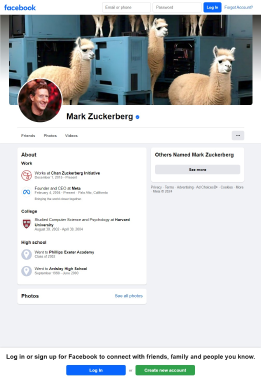 マーク・ザッカーバーグのプロフィール(ログアウト時に表示) | |
サイトの種類 | ソーシャルネットワーキングサービス |
|---|---|
| 利用可能 | 112言語[1] |
言語リスト 多言語 アフリカーンス語、アルバニア語、アムハラ語、アラビア語、アルメニア語、アッサム語、アゼルバイジャン語、バスク語、ベラルーシ語、ベンガル語、ボスニア語、ブルターニュ語、ブルガリア語、ビルマ語、カタロニア語、セブアノ語、コルシカ語、クロアチア語、チェコ語、デンマーク語、オランダ語、オランダ語(ベルギー)、英語(英国)、英語(米国)、英語(逆さま)、エスペラント語、エストニア語、フェロー語、フィリピン語、フィンランド語、フランス語(カナダ)、フランス語(フランス)、フリジア語、フーラ語、ガリシア語、グルジア語、ドイツ語、ギリシャ語、グアラニー語、グジャラート語、ハイチクレオール語、ハウサ語、ヘブライ語、ヒンディー語、ハンガリー語、アイスランド語、インドネシア語、アイルランド語、イタリア語、日本語、日本語(関西)、ジャワ語、カンナダ語、カザフ語、クメール語、キニャルワンダ語、韓国語、クルド語(クルマンジー)、キルギス語、ラオス語、ラトビア語、リトアニア語、マケドニア語、マダガスカル語、マレー語、マラヤーラム語、マルタ語、マラーティー語、モンゴル語、ネパール語、ノルウェー語(ブークモール)、ノルウェー語(ニーノシュク)、オディア語、パシュトー語、ペルシャ語、ポーランド語、ポルトガル語(ブラジル)、ポルトガル語(ポルトガル)、パンジャブ語、ルーマニア語、ロシア語、サルデーニャ語、セルビア語、ショナ語、シレジア語、中国語(中国簡体字)、シンハラ語、スロバキア語、スロベニア語、ソマリ語、ソラニ語(クルド語)、スペイン語、スペイン語(スペイン)、スワヒリ語、スウェーデン語、シリア語、タジク語、タマジグト語、タミル語、タタール語、テルグ語、テトゥン語、タイ語、中国語(香港繁体字)、中国語(台湾繁体字)、トルコ語、ウクライナ語、ウルドゥー語、ウズベク語、ベトナム語、ウェールズ語、ザザ語 | |
| 設立 | 2004年2月4日、、米国マサチューセッツ州ケンブリッジ |
| サービスエリア | ブロックしている国を除く全世界 |
| 所有者 | メタプラットフォーム |
| 創設者 | |
| 最高経営責任者(CEO) | マーク・ザッカーバーグ |
| メールアドレス | フェイスブック |
| 登録 | 必須(あらゆる活動を行うために) |
| ユーザー |  月間アクティブユーザー数29.4億人(2022年3月31日現在[update])[2] 月間アクティブユーザー数29.4億人(2022年3月31日現在[update])[2] |
| 発売 | 2004年2月4日 |
| 現在の状況 | アクティブ |
| 書かれた | C++、Hack ( HHVMとして)、PHP |
| [3] [4] [5] | |
Facebookは、アメリカのテクノロジー複合企業Metaが所有するソーシャルメディアおよびソーシャルネットワーキングサービスです。2004年にマーク・ザッカーバーグが、ハーバード大学の学生でルームメイトのエドゥアルド・サベリン、アンドリュー・マッカラム、ダスティン・モスコビッツ、クリス・ヒューズの5人とともに創設しました。Facebookの名前は、アメリカの大学生によく与えられるFacebookディレクトリに由来しています。当初、メンバーシップはハーバード大学の学生に限定されていましたが、徐々に他の北米の大学にも拡大しました。2006年以降、Facebookでは、年齢制限が14歳の少数の国を除き、13歳以上であれば誰でも登録できます。[6] 2022年12月現在、Facebookは月間アクティブユーザー数が約30億人であると主張しています。[7] 2023年10月現在、Facebookは世界で3番目に訪問数の多いウェブサイトにランクされており、トラフィックの22.56%が米国からのものです。[8] [9] 2010年代に最もダウンロードされたモバイルアプリでした。 [10][update]
Facebook には、パソコン、タブレット、スマートフォンなど、インターネットに接続できるデバイスからアクセスできます。登録後、ユーザーはプロフィールを作成し、自分に関する情報を公開できます。テキスト、写真、マルチメディアを投稿して、友達になることに同意した他のユーザーと共有したり、プライバシー設定を変えて公開したりできます。ユーザーはまた、 Messengerを使って直接コミュニケーションしたり、共通の関心を持つグループに参加したり、Facebook の友達のアクティビティやフォローしているページに関する通知を受け取ったりする こともできます。
数々の論争の的となっているFacebookは、ユーザーのプライバシー(ケンブリッジ・アナリティカのデータスキャンダルなど)、政治操作( 2016年の米国選挙など)、大規模監視などの問題で頻繁に批判されてきた。 [11] Facebookはまた、依存症や自尊心の低下などの心理的影響や、フェイクニュース、陰謀論、著作権侵害、ヘイトスピーチなどのコンテンツに関するさまざまな論争についても批判の対象となっている。[12]コメンテーターは、Facebookがそのようなコンテンツの拡散を意図的に促進し、広告主にアピールするためにユーザー数を誇張していると非難している。[13]
歴史
2003–2006: フェイスブック、ティールの投資、社名変更

ザッカーバーグはハーバード大学在学中の2003年に「Facemash」というウェブサイトを開設した。同サイトはHot or Notに匹敵し、「9つの寮のオンラインフェイスブックから集めた写真を使い、一度に2枚ずつ並べて、ユーザーに『よりホットな』人を選ぶよう求める」ものだった。[15] Facemashは最初の4時間で450人の訪問者と2万2000枚の写真閲覧を集めた。[16]同サイトはいくつかのキャンパスグループリストサーバーに送られたが、数日後にハーバード大学当局によって閉鎖された。ザッカーバーグは退学処分に直面し、セキュリティ違反、著作権侵害、個人のプライバシー侵害で告訴された。最終的に告訴は取り下げられた。[15]ザッカーバーグはその学期にこのプロジェクトを拡大し、社会科学習ツールを作成した。彼はコメント欄を添えたアート画像をアップロードし、クラスメートと共有した。[17]
「フェイスブック」とは、写真や個人情報を掲載した学生名簿である。[16] 2003年、ハーバード大学には紙版[18]と個人のオンライン名簿しかなかった。[15] [19]ザッカーバーグはハーバード・クリムゾン紙に「ハーバード大学内のユニバーサルフェイスブックについてみんなが話していた。…大学がそれに取り掛かるのに数年かかるというのはちょっとばかげていると思う。私の方が彼らよりうまくできるし、1週間でできる」と語った。[19] 2004年1月、ザッカーバーグはクリムゾン紙のFacemashに関する論説に触発され、「TheFacebook」として知られる新しいウェブサイトをコーディングした。「集中型ウェブサイトを作成するために必要な技術がすぐに利用できることは明らかだ…その利点はたくさんある」ザッカーバーグはハーバード大学の学生エドゥアルド・サベリンと会い、それぞれ1,000ドル(2023年の価値で1,613ドル[20])をサイトに投資することに合意した。[21] 2004年2月4日、ザッカーバーグは当初thefacebook.comに所在していた「TheFacebook」を立ち上げた。[22]

サイトが開設されてから6日後、ハーバード大学の4年生であるキャメロン・ウィンクルボス、タイラー・ウィンクルボス、ディビア・ナレンドラは、ザッカーバーグがHarvardConnection.comというソーシャルネットワークの構築を手伝ってくれると故意に誤解させたと非難した。彼らは、ザッカーバーグが自分たちのアイデアを使って競合製品を作っていると主張した。[23] 3人はクリムゾンに苦情を申し立て、同紙は調査を開始した。彼らは後にザッカーバーグを訴え、2008年に[24] 120万株(フェイスブックのIPO時の価値3億ドル、2023年のドル換算で3億9800万ドル[20])で和解した。[25]
当初、会員資格はハーバード大学の学生に限定されていた。1ヶ月以内に、学部生の半数以上が登録した。[26] ダスティン・モスコビッツ、アンドリュー・マッカラム、クリス・ヒューズがザッカーバーグに加わり、ウェブサイトの成長管理を手伝った。[27] 2004年3月、Facebookはコロンビア大学、スタンフォード大学、イェール大学に拡大した。[28]その後、すべてのアイビーリーグの大学、ボストン大学、ニューヨーク大学、マサチューセッツ工科大学、そして米国とカナダのほとんどの大学で利用可能になった。[29] [30]
2004年半ば、ナップスターの共同設立者で起業家のショーン・パーカー(ザッカーバーグの非公式アドバイザー)が社長に就任した。[31] 2004年6月、同社はカリフォルニア州パロアルトに移転した。[32]ショーン・パーカーはFacebookへの出資をリード・ホフマンに依頼した。しかし、リード・ホフマンはLinkedInの立ち上げで忙しすぎたため、同月後半にFacebookに最初の投資を行ったPayPalの共同設立者ピーター・ティールとFacebookを設立した。 [33] [34] 2005年、同社はFacebook.comのドメイン名を20万ドル(2023年のドル換算で31万2012ドル[20] )で購入し、社名から「the」を削除した。[35]このドメインはAboutFace Corporationが所有していた。
2005年5月、アクセル・パートナーズはフェイスブックに1270万ドル(2023年の価値で1980万ドル[ 20])を投資し、ジム・ブレイヤー[36]は私財100万ドル(2023年の価値で156万ドル[20])を追加しました。2005年9月には、同サイトの高校生版が公開されました。 [37]資格は拡大され、アップル社やマイクロソフト社を含む複数の企業の従業員も含まれるようになりました。[38]
2006~2012年: パブリックアクセス、マイクロソフトとの提携、急速な成長
2006年5月、Facebookは最初のインターンであるジュリー・ジュオを雇った。[39] 1ヵ月後、ジュオはフルタイムのエンジニアとして雇われた。[39] 2006年9月26日、Facebookは有効なメールアドレスを持つ13歳以上のすべての人に開放された。[40] [41] [42] 2007年後半までに、Facebookには企業が自社を宣伝するページが10万あった。[43]組織ページは2009年5月に展開を開始した。 [44] 2007年10月24日、マイクロソフトはFacebookの株式1.6%を2億4000万ドル(2023年のドル換算で3億5300万ドル[20])で購入したと発表し、Facebookの推定総額は約150億ドル(2023年のドル換算で220億ドル[20])となった。マイクロソフトの購入には国際的な広告掲載権も含まれていた。[45] [46]
2007年5月、第1回f8開発者会議で、FacebookはFacebook開発者プラットフォームの立ち上げを発表しました。これは、ソフトウェア開発者がFacebookのコア機能とやり取りするアプリケーションを作成するためのフレームワークを提供します。 2008年7月23日の第2回f8開発者会議までに、プラットフォーム上のアプリケーションの数は33,000に増加し、登録開発者の数は400,000を超えました。[47]
このウェブサイトは、2007年にPCマガジンの「トップ100クラシックウェブサイト」にランクインするなど賞を獲得し、 [48] 2008年にはウェビー賞の「ピープルズボイス賞」を受賞しました。 [49] 2008年初頭、FacebookはEBITDA黒字化を達成しましたが、キャッシュフローはまだ黒字ではありませんでした。[50]
2008年7月20日、Facebookは「Facebookベータ版」を導入した。これは、一部のネットワークでユーザーインターフェースを大幅に再設計したものだった。ミニフィードとウォールが統合され、プロフィールはタブ付きのセクションに分けられ、よりすっきりとした外観にするための努力がなされた。[51] Facebookは2008年9月にユーザーを新バージョンに移行し始めた。[52] 2008年7月、FacebookはドイツのソーシャルネットワークであるStudiVZを、Facebookと見た目も機能も似ていると訴えた 。[53] [54]
2008年10月、Facebookは国際本部をアイルランドのダブリンに置くと発表した。 [55] 2009年1月のCompete.comの調査では、Facebookは世界中の月間アクティブユーザー数で最も利用されているソーシャルネットワーキングサービスにランクされました。[56] [より良い情報源が必要] 中国は2009年にウルムチ暴動を受けてFacebookをブロックしました。[57]
2009年、ユーリ・ミルナーのDST (後にDSTグローバルとMail.ruグループに分割)は、ウズベキスタン系ロシア人金属王アリシェル・ウスマノフとともに、フェイスブックが100億ドルと評価されたときに2億ドルを投資した。[58] [59] [60]また、別の機会にウスマノフのUSMホールディングスも別の株式を取得した。[61] [58] 2013年のニューヨークタイムズによると、「ウスマノフ氏と他のロシア人投資家は、一時期フェイスブックのほぼ10%を所有していたが、彼らの所有権の正確な詳細は評価が難しい」とのこと。[61]その後、2017年にパラダイス文書によって、ロシア国営のVTB銀行とガスプロムの投資会社による融資が2009年のこれらの投資の一部に充てられたことが明らかになったが、ミルナーは当時そのことを知らなかったと伝えられている。[62] [63]
2009年5月、ザッカーバーグはロシアへの2億ドルの投資について「この投資は純粋に我々のバッファーだ。キャッシュフローを黒字にするために必要なものではない」と述べた。[64] 2009年9月、フェイスブックは営業利益の約2億ドルのギャップを埋め、予定より早くキャッシュフローを黒字にした[65] [66]。[66]
2010年、FacebookはCrunchieの「最優秀スタートアップまたは製品賞」[67]を3年連続で受賞した。[68]
同社は2010年7月にユーザー数が5億人に達したと発表した。[69]サイトの会員の半数がFacebookを毎日平均34分利用し、1億5000万人のユーザーがモバイルデバイスからサイトにアクセスした。同社の代表者はこの節目を「静かな革命」と呼んだ。[70] 2010年10月にはグループが導入された。[71] 2010年11月、SecondMarket Inc.(非公開企業の株式取引所)に基づくと、Facebookの価値は410億ドル(2023年のドル換算で573億ドル[20])だった。同社はeBayをわずかに上回り、 GoogleとAmazon.comに次ぐアメリカで3番目に大きなウェブ企業となった。[72] [73]
2010年11月15日、Facebookはアメリカ農業協会からドメイン名fb.comを非公開の金額で買収したと発表した。2011年1月11日、農業協会は「ドメイン販売収入」として850万ドル(2023年のドル換算で1150万ドル[20])を公表し、FB.comの買収は史上最も高額なドメイン販売の10位にランクインした。[74]
2011年2月、Facebookは本社をカリフォルニア州メンロパークの旧サン・マイクロシステムズキャンパスに移転する計画を発表した。 [75] [76] 2011年3月、Facebookはサイバーセキュリティ強化の一環として、スパム、グラフィックコンテンツ、未成年者の使用などの違反を理由に毎日約2万のプロフィールを削除していると報じられた。[77]統計によると、Facebookは2011年6月に1兆ページビューに達し、 DoubleClickが追跡する最も訪問されたウェブサイトとなった。[78] [79]ニールセンの調査によると、Facebookは2011年にGoogleに次いで米国で2番目にアクセスの多いウェブサイトとなった。[80] [81]
2012~2013年: IPO、訴訟、アクティブユーザー10億人
2012年3月、Facebookはウェブサイト経由で動作するアプリケーションを販売するストアであるApp Centerを発表しました。このストアはiPhone、Androidデバイス、モバイルウェブユーザー向けに提供される予定でした。 [82]
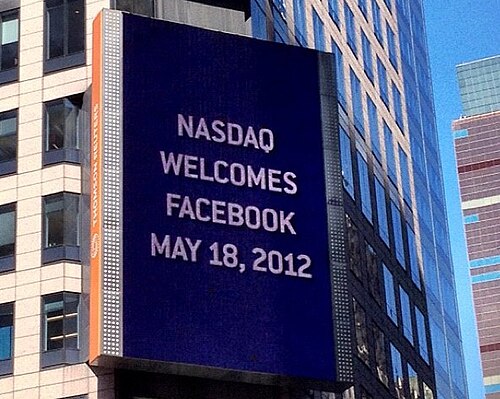
フェイスブックは2012年5月17日に株式を38ドル(2023年の価値で50ドル[20] )で新規株式公開した。同社の評価額は1040億ドル(2023年の価値で1380億ドル[20])となり、当時としては最大の評価額となった。[83] [84] [85] IPOで調達された資金は160億ドル(2023年のドル換算で212億ドル[20])で、 2008年のVisa Inc.、2000年のAT&T Wirelessに次いで米国史上3番目に大きい。 [86] [87] 2012年の収益50億ドル(2023年のドル換算で66億4000万ドル[20])に基づき、Facebookは2013年5月に初めてフォーチュン500社リストに加わり、462位となった。 [88]株式はIPO初日の取引量記録を樹立した(4億6000万株)。[89] IPOはその後の即時株価下落で物議を醸し、[90] [91] [92] [93]訴訟の対象となり、[94] SECとFINRAの両社が調査を開始した。[95]
ザッカーバーグは2012年10月初旬に、Facebookの月間アクティブユーザー数は10億人に達し、そのうちモバイルユーザーは6億人、写真のアップロード数は2190億、友達とのつながりは1400億人であると発表した。 [ 96 ]
2012年10月1日、ザッカーバーグはロシアのソーシャルメディアの革新を刺激し、ロシア市場におけるFacebookの地位を強化するために、モスクワでロシアのドミトリー・メドベージェフ首相を訪問した。 [98] [99]
2013~2014年: サイト開発、A4AI、10周年
2013年1月15日、FacebookはFacebook Graph Searchを発表した。これは、サイト上のデータを活用して、回答へのリンクではなく「正確な回答」をユーザーに提供するものである。[100] Facebookは、この機能が「プライバシーに配慮した」ものであり、ユーザーとすでに共有されているコンテンツからのみ結果を返すことを強調した。[101] 2013年4月3日、Facebookは、サイトとのより高度な統合を提供するAndroidデバイス用のユーザーインターフェイスレイヤーであるFacebook Homeを発表した。HTCは、Homeがプリロードされた携帯電話であるHTC Firstを発表した。 [102]
2013年4月15日、Facebookは19州で全米司法長官協会と提携し、10代の若者とその親にソーシャルネットワーキングプロフィールを管理するツールに関する情報を提供すると発表した。[103] 4月19日、Facebookはロゴを変更し、「F」アイコンの下部にあるかすかな青い線を削除した。文字「F」はボックスの端に近づいた。[104]
100の擁護団体によるキャンペーンを受けて、Facebookはヘイトスピーチに関するポリシーを更新することに同意した。このキャンペーンは、家庭内暴力や女性に対する性的暴力を助長するコンテンツを強調し、日産UK、ハウス・オブ・バーレスク、ネイションワイドUKを含む15の広告主が撤退する結果となった。同社は当初、「下品で不快な内容ではあるが、不快な内容自体は当社のポリシーに違反するものではない」と述べていた。[105]同社は5月29日に措置を講じた。[106]
6月12日、Facebookは、ユーザーがトレンドの議論をフォローしたり、トピックについて他の人が何について話しているかを検索したりできるように、クリック可能なハッシュタグを導入すると発表した。 [107]カリフォルニア州 サンマテオ郡は、Facebookのおかげで、2012年第4四半期以降、国内で最も賃金の高い郡になった。労働統計局は、平均給与が前年比107%増の年間168,000ドル(2023年のドル換算で222,961ドル[20])で、次に高いニューヨーク郡(マンハッタンとしてよく知られている)の年間約110,000ドル(2023年のドル換算で145,986ドル[20])を50%以上上回ったと報告した。[108]
Facebookは10月にA4AI(Alliance for Affordable Internet )の設立に加わった。A4AIはGoogle、Intel、Microsoftを含む公的機関と民間組織の連合体である。ティム・バーナーズ=リー卿が率いるA4AIは、発展途上国でのインターネットアクセスを容易にするために、インターネットアクセスをより手頃な価格にすることを目指している。[109]
同社は2014年2月3日の週に創立10周年を祝った。[110] 2014年1月には10億人を超えるユーザーがモバイルデバイス経由で接続した。[111] 6月時点で、モバイルは広告収入の62%を占め、前年比21%増加した。[112] 9月までにFacebookの時価総額は2000億ドル(2023年のドル換算で2570億ドル[20])を超えた。[113] [114] [115]
ザッカーバーグは10月23日、中国北京の清華大学での質疑応答セッションに参加し、中国語で会話を試みた。ザッカーバーグは12月8日、中国のオンライン政策への影響力から「インターネット皇帝」として知られる訪問中の中国政治家呂偉をもてなした。 [ 116 ] [ 117 ] [ 118 ]
2015~2020年: アルゴリズムの改訂、フェイクニュース
2015年、Facebookのアルゴリズムは、フェイクニュースやデマ[update]などの虚偽または誤解を招くコンテンツをフィルタリングするために改訂されました。これは、ユーザーが適切に記事にフラグを立てることに依存していました。Facebookは、風刺的なコンテンツは傍受されるべきではないと主張しました。 [119]このアルゴリズムは、「フィルターバブル」を維持していると非難され、ユーザーが同意しないコンテンツ[120]や「いいね!」の少ない投稿の優先順位が下げられました。[121] 11月、Facebookは父親の育児休暇を4週間から4か月に延長しました。[122]
2016年4月12日、ザッカーバーグは10年ビジョンの概要を発表した。そのビジョンは、人工知能、グローバルな接続性の向上、仮想現実と拡張現実の3つの主要な柱に基づいている。[123] 7月、同社がハマスによる襲撃を許可し、4人の命を奪ったとして、10億ドルの訴訟が同社に対して提起された。 [124] Facebookは、オープンソースライセンスの下で、Surround 360カメラの設計図をGitHubで公開した。[125] 9月、同社は短編アニメ「ヘンリー」でエミー賞を受賞した。 [126] 10月、Facebookは、職場で「全員をつなげる」ことを目的とした、有料のコミュニケーションツールWorkplaceを発表した。ユーザーはプロフィールを作成し、ニュースフィードで同僚の最新情報を確認したり、ライブビデオをストリーミングしたり、安全なグループチャットに参加したりできる。[127]
2016年の米国大統領選挙後、FacebookはFactCheck.orgやAP通信などのサイトのファクトチェッカーを活用し、クラウドソーシングを通じてデマの報告を容易にし、悪用者への金銭的インセンティブを阻止することで、フェイクニュースと戦うと発表した。[128]

2017年1月17日、フェイスブックの最高執行責任者シェリル・サンドバーグは、フランスのパリにスタートアップインキュベーターキャンパス「ステーションF」を開設する計画を立てた。[130]フェイスブックは6ヶ月周期で、データ駆動型スタートアップ10~15社と連携することを約束した。[131] 4月18日、フェイスブックは、Facebookは、毎年恒例のF8開発者会議で、 Facebook Spacesを発表しました。 [132] Facebook Spacesは、Oculus VRゴーグル用のFacebookの仮想現実バージョンです。仮想の共有スペースで、ユーザーはコントローラーのサポートを受けて、アバターを使用して厳選された360度の写真と動画にアクセスできます。ユーザーは自分の写真や動画、ニュースフィードで共有されたメディアにアクセスできます。 [133] 9月、FacebookはFacebook Watchプラットフォームのオリジナル番組に最大10億ドルを費やすことを発表した。 [134] 10月16日、匿名の賛辞アプリtbhを買収し、アプリを独立させる意向を発表しました。 [135] [136] [137] [138]
2017年10月、フェイスブックはDefiners Public Affairsとの協力を拡大した。Definers Public Affairsはもともと、ロシアの干渉、ケンブリッジ・アナリティカによるユーザーデータの不適切な取り扱い、フェイスブック上でのヘイトスピーチ、規制を求める声などに関する懸念に対処するため、フェイスブックに関する報道を監視するために雇われたPR会社だった。 [139]同社の広報担当者ティム・ミラーは、テクノロジー企業の目標は「自社に関する肯定的なコンテンツを公開し、競合他社に関する否定的なコンテンツを公開すること」であるべきだと述べた。Definersは、ジョージ・ソロスが広範な反フェイスブック運動の背後にいる勢力であり、America Risingとともに、ブライトバート・ニュースなどの大手メディアに取り上げられた他の否定的なメディアを作り出したと主張した。[139] [140]フェイスブックは、両者の関係に対する世間の抗議を受けて、2018年後半に同社との関係を断った。[141]ケンブリッジ・アナリティカと提携していたメディア組織であるブライトバート・ニュースのフェイスブックページから発信された投稿は、[142]フェイスブック上で最も広く共有された政治コンテンツの一つであった。[143] [144] [145] [146] [過剰な引用]
2018年5月のF8で、同社は独自のデートサービスを提供すると発表した。競合のマッチグループの株価は22%下落した。[147] Facebook Datingにはプライバシー機能が含まれており、友人は友人のデートプロフィールを閲覧できない。[148] 7月、Facebookはデータ消去要求に応じなかったとして英国の監視機関から50万ポンドの罰金を科された。[149] 7月18日、Facebookは中国杭州市に3000万ドル(2023年のドル換算で3640万ドル[20])の資本金でLianshu Science&Technologyという子会社を設立した。その株式はすべてFacebook Hongが保有している。[150]浙江省の当局者と中国サイバースペース管理局の意見の不一致により、子会社の登録承認はその後取り消された。[151] 7月26日、フェイスブックは、売上報告が期待外れだったことを受けて、時価総額が約6,300億ドルから5,100億ドルに下落し、1日で1,000億ドル(2023年のドル換算で1,210億ドル[20] )以上を失った最初の企業となった。 [152] [153] 7月31日、フェイスブックは、 2018年の米国中間選挙に関連する17のアカウントを削除したと発表した。9月19日、フェイスブックは、米国外でのニュース配信について、共和党と民主党に緩く関連している、米国が出資している民主主義推進団体、国際共和党研究所と全米民主党研究所と協力すると発表した。[154]フェイスブックは、デジタルフォレンジック研究所を通じて、NATO傘下のシンクタンクである大西洋評議会と提携している。[154] 11月、フェイスブックは、 PortalおよびPortal Plus(Portal+)というブランドのスマートディスプレイを発売した。これらは、 AmazonのAlexa (インテリジェントパーソナルアシスタントサービス)をサポートしている。このデバイスにはFacebook Messengerによるビデオチャット機能が搭載されている。[155] [156]
2018年8月、カリフォルニア州オークランドで、Facebookがユーザーデータを膨らませて広告主にアピールするために偽のアカウントを作成したと主張する訴訟が提起された。[13]

2019年1月には10年チャレンジが開始され[157]、ユーザーに10年前(2009年)の自分の写真と最近の写真を投稿するよう求めた。 [158]
ワクチン接種への躊躇を助長していると批判されたフェイスブックは、2019年3月に、ワクチンに関する「信頼できる情報」をユーザーに提供すると発表した。[159]その前の3か月間に掲載された広告に関する調査がワクチン 誌に掲載され、フェイスブック上の反ワクチン広告の54%が、著名な反ワクチン活動家が資金提供しているわずか2つの団体によって掲載されていたことが判明した。 [160] [161]ロバート・F・ケネディ・ジュニアが議長を務めるChildren's Health Defense / World Mercury Projectと、活動家ラリー・クックが運営するStop Mandatory Vaccinationが、広告の54%を掲載した。広告は、自然療法や書籍などの商用製品にリンクされることが多かった。
3月14日、ハフィントンポストは、フェイスブックの広報代理店が、フェイスブックの最高執行責任者シェリル・サンドバーグのウィキペディアページを修正し、グローバル広報責任者キャリン・マルーニーのページを追加するよう誰かに金を支払ったと報じた。[162]
2019年3月、ニュージーランドのクライストチャーチのモスク銃乱射事件の犯人は、Facebookを使って事件の模様をライブ配信した。Facebookがライブ配信された動画を検出するのに29分かかったが、これは警察が犯人を逮捕するのに要した時間より8分長い。動画の約130万部がFacebookからブロックされたが、30万部が公開され共有された。Facebookはプラットフォームの変更を約束しており、広報担当のサイモン・ディルナーはラジオ・ニュージーランドに対し、もっとうまくできたはずだと語った。ANZ銀行やASB銀行を含む数社は、同社が世間から広く非難された後、Facebookでの広告を停止した。[163]事件後、Facebookは白人至上主義、白人分離主義のコンテンツを意味のある形で分離することはできないとしてブロックし始めた。これまでFacebookは、あからさまに白人至上主義的なコンテンツのみをブロックしていた。以前の方針は、これらの運動は機能的に不明瞭であるとして公民権団体から非難されていた。[164] [165] 2019年4月中旬にはさらなる禁止措置が取られ、いくつかのイギリス極右団体と関連個人がFacebookから締め出され、またそれらを称賛したり支援したりすることも禁止された。[166] [167]
NTJのメンバーで、2019年のスリランカイースター爆破事件の首謀者とされるイスラム過激派 イマームであるムラヴィ・ザフラーン・ハシムは、「アル・グラバ」メディアとして知られるISIL支持のフェイスブックアカウントで説教を行った。[168] [169]
.jpg/500px-President_Trump_Meets_with_Mark_Zuckerberg_(48765678712).jpg)
2019年5月2日、F8で同社は「未来はプライベート」というキャッチフレーズを掲げた新たなビジョンを発表した。[170]ウェブサイトとモバイルアプリの再設計が発表され、「FB5」と呼ばれた。[171]このイベントでは、グループの改善、[172]デートプラットフォーム、[173]プラットフォーム上のエンドツーエンドの暗号化、[174] MessengerユーザーがWhatsAppやInstagramのユーザーと直接通信できるようにする計画も紹介された。[175] [176]
2019年7月31日、Facebookはカリフォルニア大学サンフランシスコ校と提携し、自分が話しているところを想像するだけで入力できる非侵襲性のウェアラブルデバイスを開発すると発表しました。[177]
2019年8月13日、Facebookがユーザーの音声メッセージの書き起こしを作成・入手するために数百人の請負業者を雇っていたことが明らかになった。[178] [179] [180]これは特にFacebook Messengerでよく見られ、請負業者は頻繁にユーザーの音声メッセージを聞き、書き起こしていた。[180]このことがブルームバーグニュースで最初に報じられた後、Facebookは声明を発表し、報道が真実であることを確認したが、[179]監視プログラムは現在停止されているとも述べた。[179]
2019年9月5日、Facebookは米国でFacebook Datingを開始しました。この新しいアプリケーションにより、ユーザーはInstagramの投稿をデートプロフィールに統合することができます。[181]
報道機関から厳選されたニュースを特集するFacebook Newsは、10月25日に開始されました。 [182] Facebookが極右ウェブサイトBreitbart Newsを「信頼できる情報源」として含めるという決定は、否定的に受け止められました。[183] [184]
2019年11月17日、Facebookの従業員29,000人の銀行データが給与計算担当者の車から盗まれた。データは暗号化されていないハードドライブに保存されており、銀行口座番号、従業員名、社会保障番号の下4桁、給与、ボーナス、株式の詳細が含まれていた。同社は11月20日までハードドライブが紛失していることに気づかなかった。Facebookは11月29日にドライブに従業員情報が含まれていたことを確認した。従業員は2019年12月13日まで侵入について知らされていなかった。[185]
2020年3月10日、Facebookはトレーシー・トラヴィスとナンシー・キルファーの2人を新しい取締役に任命した。[186]
2020年6月、アディダス、アビバ、コカコーラ、フォード、HP、インターコンチネンタルホテルグループ、マース、スターバックス、ターゲット、ユニリーバを含むいくつかの大手企業が、同社が憎悪的なコンテンツの削除に十分な対策を講じていないと主張する「Stop Hate For Profit」キャンペーンに賛同し、7月中Facebookでの広告を一時停止すると発表した。[187] BBCは、Facebookの広告収入の大半は中小企業から得られているため、これが同社に影響を与える可能性は低いと指摘した。[188]
2020年8月14日、Facebookは、 iOSとAndroidの両方のデバイスでInstagramのダイレクトメッセージングサービスを自社のMessengerに統合し始めた。アップデート後、Instagramのモバイルアプリにアップデート画面がポップアップ表示され、「Instagramでメッセージを送信する新しい方法があります」というメッセージと追加機能のリストが表示されると言われている。アップデートの一環として、Instagramの右上隅にある通常のDMアイコンがFacebook Messengerのロゴに置き換えられる。[189]
2020年9月15日、フェイスブックは気候変動に関する権威ある意見を促進し、気候科学に関する「事実に基づいた最新の」情報へのアクセスを提供するために、気候科学情報センターを開設した。このセンターでは、気候変動に関する政府間パネル(IPCC)、英国気象庁、国連環境計画(UNEP)、米国海洋大気庁(NOAA)、世界気象機関(WMO)などの組織からの事実、数字、データが、関連するニュース投稿とともに紹介された。[190]
2020年の米国大統領選挙後、Facebookはニュースフィードアルゴリズムにおけるエコシステム品質の重みを一時的に高めた。[191]
2020年現在: FTC訴訟、企業ブランド変更、顔認識技術の停止、政策の緩和
Facebookは、連邦取引委員会といくつかの州の連合から、違法な独占と反トラスト法違反で訴えられた。FTCと州は、Facebookに子会社のWhatsAppとInstagramを売却するよう裁判所に強制するよう求めた。[192] [193] 2021年6月28日、連邦判事は訴訟を却下した。判事は、この時点でFacebookが独占企業であると判断するには訴訟で提出された証拠が不十分であると述べたが、FTCが追加の証拠を含めるように訴訟を修正することを認めた。[194] 2021年8月の修正提出書類で、FTCは、Facebookが2011年以来、個人のソーシャルネットワークの分野で独占企業であったと主張し、必ずしもメッセージを意図した受信者に限定することなくコンテンツを放送するTikTokなどのソーシャルメディアサービスとFacebookの活動を区別した。 [195]
フェイスブックは、オーストラリア議会で提案されたニュースメディア交渉規約法案に対応して、2021年2月17日にオーストラリアのユーザーに対し、同社のプラットフォーム上でのニュースコンテンツの共有や閲覧、および一部の政府、コミュニティ、組合、慈善団体、政治、緊急サービスのページをブロックした。[196]オーストラリア政府はこの動きを強く批判し、「これらのデジタルソーシャルの巨人の巨大な市場力」を示していると述べた。[197]
2月22日、フェイスブックはオーストラリア政府と合意に達し、今後数日中にオーストラリアのユーザーにニュースが戻ってくると発表した。この合意の一環として、フェイスブックとグーグルは「規範の範囲外でニュース企業と商業的取引を行えば」、2月25日に採択されたニュースメディア交渉規範を回避することができる。[198] [199] [200]
フェイスブックは、抗議するインドの農民を支持するか、ナレンドラ・モディ政権に反対するコンテンツを削除し、シャドーバンしたとして非難されている。 [201] [202] [203]インドに拠点を置くフェイスブックの従業員は逮捕の危険にさらされている。[204]
2021年2月27日、Facebookはラッパー向けのFacebook BARSアプリを発表した。[205]
2021年6月29日、Facebookは独立した作家のためのプラットフォームであるBulletinを発表した。[206] [207] Substackなどの競合他社とは異なり、Facebookは、マルコム・グラッドウェルやミッチ・アルボムなど、プラットフォームの立ち上げ時にそのプラットフォームを使用する作家の購読料から一部を徴収しませんでした。ワシントンポストのテクノロジーライターであるウィル・オレムによると、この動きは、Facebookが競合他社を廃業に追い込むことを意図した戦術であると見る人々から批判されました。[208]
2021年10月、所有者であるFacebook社は、メタバースの構築に重点を移すため、社名をMeta Platforms社、または単に「Meta」に変更しました。この変更はFacebookソーシャルネットワーキングサービス自体の名前には影響せず、 2015年にGoogleの親会社としてAlphabetが設立されたことに似ています。[209]
2021年11月、Facebookは健康、人種、民族、政治信条、宗教、性的指向に関するデータに基づく広告のターゲティングを停止すると発表した。この変更は1月に実施され、Meta Platformsが所有するすべてのアプリに影響を与える。[210]
2022年2月、フェイスブックの1日あたりのアクティブユーザー数が18年の歴史で初めて減少した。フェイスブックの親会社Metaによると、12月までの3か月間のDAUは19億2900万人に減少し、前四半期の19億3000万人から減少した。さらに同社は、TikTokやYouTubeとの競争や広告主の支出削減により、収益の伸びが鈍化すると警告した。[211]
2022年3月10日、Facebookは「ロシアの侵略者」に対する暴力的な発言を許可する規則を一時的に緩和すると発表した。[212]その後、ロシアはInstagramを含むすべてのMetaサービスを禁止した。[213]
2022年9月、CNBCのテクノロジー記者ジョナサン・ヴァニアンは、フェイスブックが最近経験している苦境についてCNBC.comに記事を書き、「ユーザーは離脱し、広告主は支出を減らしており、メタは四半期収益の2回連続の減少を報告する準備ができている」と書いた。彼はまた、メタバースにリソースを投入するというリーダーシップの悪い決定にも言及し、「CEOのマーク・ザッカーバーグは、メタバースの布教に多くの時間を費やしているが、メタバースは同社の将来かもしれないが、短期的な収益のほとんどを占めておらず、構築には年間数十億ドルの費用がかかっている」と書いた。彼はまた、ユーザーが離れ、広告インプレッションが増加し、会社が収益を追い求めるにつれて、フェイスブックの株価が「デススパイラル」になると予測するアナリストの報告を詳しく述べた。[214]
2021年10月4日、世界的なサービス停止
.png/500px-Facebook-outage-traffic-dropoff_(cropped).png)
2021年10月4日、Facebookは2008年以来最悪の障害に見舞われた。障害は世界規模で発生し、InstagramやWhatsAppを含むすべてのFacebookプロパティがUTCの15:39頃から22:05頃までダウンし、約30億人のユーザーに影響を与えた。[215] [216] [217]セキュリティ専門家は、当時すべて自社ホストされていたドメイン名(DNS)サーバーへのすべてのIPルートのBGP撤回が問題であると特定した。 [218] [219]障害はFacebook従業員が使用するすべての社内通信システムにも影響を及ぼし、復旧作業を妨害した。[219]
この障害によりFacebookの社内通信が遮断され、従業員は外部メールの送受信、企業ディレクトリへのアクセス、一部のGoogle DocsやZoomサービスへの認証ができなくなった。[220] [221]この障害はFacebookの「Free Basics 」プログラムに依存している発展途上国の人々に大きな影響を与え、コミュニケーション、ビジネス、人道的活動に影響を及ぼした。[222] [223] [224]
フェイスブックの最高技術責任者マイク・シュローファーは、ダウンタイムが数時間に及んだ後に謝罪文を書き、[225] [226]「チームは可能な限り迅速にデバッグと復旧に取り組んでいる」と述べた。[227]
顔認識の停止
2021年11月2日、Facebookは顔認識技術を停止し、10億人を超えるユーザーのデータを削除すると発表した。[228] Metaはその後、この技術と他の生体認証システムをメタバースなどの将来の製品に実装する計画を発表した。[229]
この技術の停止により、視覚障害のあるユーザーのためにプラットフォーム上のメディアを書き起こすために使用されているFacebookの自動代替テキストシステムも停止すると報じられている。[229]
2023年2月、MetaのCEOマーク・ザッカーバーグは、MetaがInstagramとFacebookで青い「認証済み」バッジの販売を開始すると発表した。[230]
特徴
Facebook の投稿には文字数制限がありません。画像や動画も投稿できます。
ユーザーは他のユーザーを「友達」にすることができますが、友達になるには双方が同意する必要があります。投稿は、全員 (パブリック)、友達、特定のグループのメンバー (グループ)、または選択した友達 (プライベート) に公開するように変更できます。
ユーザーはグループに参加することもできます。グループは共通の興味を持つ人々で構成されます。たとえば、同じスポーツ クラブに通っていたり、同じ郊外に住んでいたり、同じ種類のペットを飼っていたり、趣味を共有していたりするかもしれません。グループに投稿された投稿は、公開に設定されていない限り、グループのメンバーだけが閲覧できます。
ユーザーは、Facebook マーケットプレイスまたは購入、交換、販売グループで物品を購入、販売、交換することもできます。
Facebook ユーザーは、Facebook でイベントを宣伝することもできます。宣伝できるイベントは、オフライン、Facebook 以外の Web サイト、または Facebook 上です。
Webサイト

技術的側面
サイトのメインカラーは青である。これはザッカーバーグが赤緑色覚異常であるためであるが、これは2007年頃に受けた検査の後に判明した。 [231] [232] Facebookは当初、ウェブ開発用に設計された人気のスクリプト言語であるPHPを使用して構築された。 [233] PHPはFacebookアプリケーションのサーバー側で動的なコンテンツを作成し、データを管理するために使用された。ザッカーバーグと共同創設者たちは、シンプルで使いやすいPHPを選択し、そのおかげでFacebookの初期バージョンを迅速に開発し、展開することができた。Facebookのユーザーベースと機能が拡大するにつれ、同社はPHPのスケーラビリティとパフォーマンスの課題に直面した。これに対応して、FacebookのエンジニアはPHPのパフォーマンスを最適化するツールと技術を開発した。最も重要なものの1つは、HipHop仮想マシン(HHVM)の作成であった。これにより、Facebookのサーバー上でのPHPコード実行のパフォーマンスと効率が大幅に向上した。
このサイトは2011年1月にHTTPからHTTPSへの切り替えを開始しました。 [234]
2012年の建築
Facebook は 1 つのモノリシック アプリケーションとして開発されています。Facebook のビルド エンジニアである Chuck Rossi 氏への 2012 年のインタビューによると、Facebook は 1.5 GB のバイナリ ブロブにコンパイルされ、その後、カスタムBitTorrentベースのリリース システムを使用してサーバーに配布されます。Rossi 氏は、ビルドに約 15 分、サーバーにリリースするのに約 15 分かかると述べています。ビルドとリリースのプロセスにはダウンタイムはありません。Facebook への変更は毎日ロールアウトされます。[235]
Facebook は、分散マシン間でデータを保存するためにHBaseに基づく複合プラットフォームを使用しました。テーリング アーキテクチャを使用して、イベントはログ ファイルに保存され、ログはテーリングされます。システムはこれらのイベントをロールアップしてストレージに書き込みます。次に、ユーザー インターフェイスがデータを取り出してユーザーに表示します。Facebook はリクエストをAJAX動作として処理します。これらのリクエストは、 Scribe (Facebook が開発) を使用してログ ファイルに書き込まれます。[236]
これらのログ ファイルからデータは Ptail を使用して読み取られます。Ptail は、複数の Scribe ストアからデータを集約するために内部的に構築されたツールです。ログ ファイルを末尾まで追跡し、データを抽出します。Ptail データは 3 つのストリームに分割され、異なるデータ センターのクラスターに送信されます(プラグイン インプレッション、ニュース フィード インプレッション、アクション (プラグイン + ニュース フィード))。Puma は、データ フロー (入出力または IO) が高い期間を管理するために使用されます。データはバッチ処理され、需要が高い期間に読み取りと書き込みに必要な回数を減らします (人気の記事は多くのインプレッションとニュース フィード インプレッションを生成し、大きなデータ スキューを引き起こします)。バッチは 1.5 秒ごとに実行され、ハッシュ テーブルの作成時に使用されるメモリによって制限されます。[236]
データはPHP形式で出力されます。バックエンドはJavaで書かれています。PHPプログラムがJavaサービスにクエリーを実行できるように、メッセージング形式としてThriftが使用されています。キャッシュソリューションはページをより速く表示します。その後、データはMapReduceサーバーに送信され、Hive経由でクエリーされます。これは、Hiveからデータを回復できるため、バックアップとして機能します。[236]
コンテンツ配信ネットワーク (CDN)
Facebookは静的データの提供に、ドメインfbcdn.netの独自のコンテンツ配信ネットワーク、または「エッジネットワーク」を使用しています。 [237] [238] 2010年代半ばまで、FacebookはCDNサービスにAkamaiも利用していました。[239] [240] [241]
プログラミング言語をハックする
2014年3月20日、FacebookはHackと呼ばれる新しいオープンソースプログラミング言語を発表しました。一般公開前に、Facebookの大部分はすでに新しい言語を使用して実行され、「実戦テスト」されていました。[242]
ユーザープロフィール/個人タイムライン
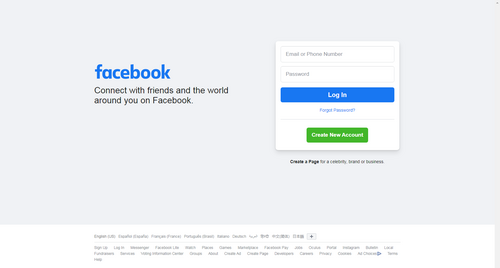
Facebookに登録した各ユーザーには、投稿やコンテンツを表示する個人プロフィールがあります。[243]個々のユーザーページの形式は2011年9月に刷新され、「タイムライン」と呼ばれるようになりました。これは、ステータスの更新、写真、アプリやイベントとのやり取りなど、ユーザーのストーリーを時系列で表示するフィードです。 [244 ] [ 245 ] [246]このレイアウトでは、ユーザーが「カバー写真」を追加できます。[246]ユーザーにはさらにプライバシー設定が与えられました。[246] 2007年、Facebookはブランドや有名人がファンと交流するためのFacebookページを開始しました。[247] [248] 11月に10万ページ[詳細な説明が必要]が開始されました。[249] 2009年6月、Facebookは「ユーザー名」機能を導入し、ユーザーが個人プロフィールのURLで使用する一意のニックネームを選択して共有しやすくしました。[250] [251]
2014年2月、Facebookは性別設定を拡張し、ユーザーが幅広い性自認から選択できるカスタム入力フィールドを追加しました。ユーザーは、サイト全体で自分を指すためにどの性別固有の代名詞を使用するかを設定することもできます。[252] [253] [254] 2014年5月、Facebookは、他のユーザーがプロフィールで公開していない情報をユーザーが尋ねることができる機能を導入しました。ユーザーが場所、出身地、関係の状態などの重要な情報を提供していない場合、他のユーザーは新しい「質問」ボタンを使用して、ワンクリックでその項目についてユーザーに尋ねるメッセージを送信できます。[255] [256]
ニュースフィード
ニュースフィードはすべてのユーザーのホームページに表示され、プロフィールの変更、今後のイベント、友人の誕生日などの情報を強調表示します。[257]これにより、スパマーや他のユーザーは、不正なイベントを作成したり、偽の誕生日を投稿したりして、自分のプロフィールや活動に注目を集めることで、これらの機能を操作できました。[258]当初、ニュースフィードはFacebookユーザーの間で不満を引き起こしました。雑然としていて不要な情報でいっぱいであると不満を言う人もいれば、個人のアクティビティ(関係ステータスの変更、イベント、他のユーザーとの会話など)を他の人が簡単に追跡できるのではないかと懸念する人もいました。 [259]ザッカーバーグは、サイトに適切なプライバシー機能が含まれていなかったことを謝罪しました。その後、ユーザーは、友人と自動的に共有される情報の種類を制御できるようになりました。ユーザーは、ユーザーが設定したカテゴリの友人が、プロフィールの変更、ウォールの投稿、新しく追加された友人など、特定の種類のアクティビティに関する更新を表示しないようにできるようになりました。[260]
2010年2月23日、Facebookはニュースフィードの特定の側面に関する特許[261]を取得しました。この特許は、あるユーザーが他のユーザーの活動に参加できるようにリンクが提供されるニュースフィードを対象としています。 [262]ユーザーのニュースフィード内の記事の並べ替えと表示は、 EdgeRankアルゴリズムによって制御されます。[263]
写真アプリケーションでは、ユーザーはアルバムや写真をアップロードできます。[264]各アルバムには200枚の写真を含めることができます。[265]プライバシー設定は個々のアルバムに適用されます。ユーザーは写真に写っている友達に「タグ」、つまりラベルを付けることができます。友達は写真へのリンクを含むタグに関する通知を受け取ります。 [266]この写真タグ付け機能は、現在Facebookのデザイン戦略リーダーであるアーロン・シッティグと元Facebookエンジニアのスコット・マーレットによって2006年に開発され、 2011年に特許を取得しました。[267] [268]
2012年6月7日、Facebookはユーザーがゲームやその他のアプリケーションを見つけられるようにApp Centerを立ち上げました。[269]
2015年5月13日、Facebookは主要ニュースポータルと提携し、サイトを離れることなくFacebookのニュースフィードでニュースを提供する「インスタント記事」を立ち上げた。[270] [271]
2017年1月、FacebookはアイルランドでiOSとAndroid向けのFacebook Storiesを開始しました。SnapchatやInstagramのストーリーの形式に倣ったこの機能では、ユーザーは写真や動画をアップロードでき、それらは友人やフォロワーのニュースフィードの上に表示され、24時間後に消えます。[272]
2017年10月11日、Facebookはインタラクティブな3Dアセットをアップロードできる3D投稿機能を導入した。 [273] 2018年1月11日、Facebookはニュースフィードを変更し、友人や家族のコンテンツを優先し、メディア企業のコンテンツを軽視すると発表しました。[274]
2020年2月、フェイスブックは、今後3年間で10億ドル(2023年のドル換算で11億8000万ドル[20])を費やして出版社からニュース素材のライセンスを取得すると発表した。これは、同社がプラットフォームに表示されるニュースコンテンツにお金を払っていないとして世界各国の政府から監視を受けている中での公約である。この公約は、ガーディアン紙やファイナンシャル・タイムズ紙などのニュース企業との契約を通じて2018年以来支払われている6億ドル(2023年のドル換算で7億600万ドル[20])に加えて支払われることになる。[275] [276] [277]
2021年3月と4月、AppleがiOSデバイスの広告主向け識別子ポリシーの変更を発表し、アプリ開発者にオプトインベースでユーザーに直接追跡機能をリクエストすることを義務付けたことを受けて、Facebookは、ターゲット広告が中小企業に与える影響を強調し、ユーザーに追跡を許可するよう説得しようとする全面新聞広告を購入した。[278] Facebookの努力は最終的に失敗に終わり、Appleは2021年4月下旬にiOS 14.5をリリースし、ユーザー向けの「アプリ追跡透明性」とみなされる機能を搭載した。さらに、Verizon Communicationsの子会社であるFlurry Analyticsの統計によると、米国のiOSユーザーの96%が追跡をまったく許可しておらず、世界中のiOSユーザーのわずか12%が追跡を許可しており、一部の報道機関はこれを「Facebookの悪夢」などと呼んでいる。[279] [280] [281] [282]このニュースにもかかわらず、Facebookは新しいポリシーとソフトウェアアップデートは「管理可能」であると述べた。[283]
いいねボタン

「いいね」ボタンは「親指を立てた」アイコンとして様式化され、2009年2月9日に初めて有効化され、[284]ユーザーはステータス更新、コメント、写真や動画、友人が共有したリンク、広告に簡単に反応できる。ユーザーがクリックすると、指定されたコンテンツが友人のニュースフィードに表示される可能性が高くなります。[285] [286]ボタンには、そのコンテンツを「いいね」した他のユーザーの数が表示されます。[287]いいねボタンは2010年6月にコメントにも拡張されました。 [288] 2016年2月、Facebookは「いいね」を「反応」に拡張し、「愛」、「笑」、「ワオ」、「悲しい」、「怒り」を含む5つの定義済み感情から選択できるようになりました。[289] [290] [291] [292] 2020年4月下旬、 COVID-19パンデミック中に、新しい「ケア」反応が追加されました。[293]
インスタントメッセージ
Facebook Messengerはインスタントメッセージングサービスおよびソフトウェアアプリケーションです。2008年にFacebook Chatとして始まり、[294] 2010年に改良され、 [295] 2011年8月にブラウザのユーザーページの一部として残りながら、最終的にスタンドアロンのモバイルアプリになりました。[296]
通常の会話を補完するものとして、メッセンジャーでは1対1 [297]およびグループ[298]の 音声[299]通話とビデオ通話を行うことができる。[300] AndroidアプリにはSMS [301]と「チャットヘッド」のサポートが統合されている。チャットヘッドは開いているアプリに関係なく画面に表示される丸いプロフィール写真アイコンである。[302]両方のアプリとも複数アカウント[303] 、オプションのエンドツーエンド暗号化による会話[304]、および「インスタントゲーム」[305 ] をサポートしている。送金[306]や交通手段のリクエスト[307]など一部の機能は米国に限定されている。[306] 2017年、Facebookは「メッセンジャーデー」を追加した。これはユーザーが写真や動画をストーリー形式で友達全員と共有できる機能で、24時間後にコンテンツが消える。[308]リアクションでは、ユーザーはメッセージをタップして長押しすることで絵文字でリアクションを追加できる。[309]メンション機能では、グループ会話中のユーザーが@と入力して特定のユーザーに通知を送ることができます。[309]
2020年4月、Facebookは、ユーザーが一度に最大50人までチャットできるビデオチャット機能であるMessenger Roomsという新機能の展開を開始しました。 [310] 2020年7月、Facebookは、iOSユーザーがFace IDまたはTouch IDを使用してチャットをロックできる新機能をMessengerに追加しました。この機能はApp Lockと呼ばれ、プライバシーとセキュリティに関するMessengerのいくつかの変更の一部です。[311] [312] 2020年10月13日、Messengerアプリケーションは、2021年9月に開始されたInstagramとのアプリ間メッセージングを導入しました。[313]統合メッセージングに加えて、アプリケーションは、MessengerとInstagramのロゴを融合した新しいロゴの導入を発表しました。[314]
企業とユーザーは、購入の追跡や通知の受信、カスタマー サービス担当者とのやり取りなどの機能を使用して、Messenger を通じてやり取りできます。サードパーティの開発者は、Messenger にアプリを統合して、ユーザーが Messenger 内でアプリを入力し、オプションでアプリの詳細をチャットで共有できるようにすることができます。[ 315 ]開発者は、ニュース パブリッシャーがニュースを配信するためのボットを構築するなどの用途のために、Messenger にチャットボットを組み込むことができます。 [316] M仮想アシスタント(米国) は、チャットをキーワードでスキャンし、ユーザーがお金について言及した場合の支払いシステムなど、関連するアクションを提案します。[317] [318]グループ チャットボットは、Messenger で「チャット拡張機能」として表示されます。[検出] タブでは、ボットを検索したり、スキャンすると特定のボットにユーザーを誘導する特別なブランドQR コードを有効にしたりできます。 [319]
プライバシーポリシー
Facebookのデータポリシーには、ユーザーのデータの収集、保存、共有に関するポリシーが概説されています。[320] Facebookでは、プライバシー設定を通じて、ユーザーが個々の投稿やプロフィールへのアクセスを制御できます。 [ 321 ]ユーザーの名前とプロフィール写真(該当する場合)は公開されます。 [322]
Facebookの収益はターゲット広告に依存しており、ユーザーデータを分析して各ユーザーに表示する広告を決定する。Facebookは、オンラインとオフラインの両方のソースから収集したデータを第三者から購入し、ユーザーに関する自社のデータを補完している。Facebookは、ターゲット広告に使用されるデータを広告主自身と共有していないと主張している。[323]同社は次のように述べている。
「当社は広告主に、広告を見た人のタイプや広告のパフォーマンスに関するレポートを提供していますが、許可がない限り、個人を特定する情報(名前やメールアドレスなど、それだけで連絡に使用したり、個人を特定したりできる情報)を共有することはありません。たとえば、広告主には一般的な人口統計情報や興味関心情報(たとえば、広告を見たのは、マドリッド在住でソフトウェアエンジニアリングが好きな25歳から34歳の女性だったなど)を提供し、オーディエンスをより深く理解できるようにしています。また、どのFacebook広告があなたの購入や広告主とのアクションにつながったかを確認しています。」[320]
2021年10月現在[update]、Facebookはユーザーデータを第三者と共有する際に以下のポリシーを採用していると主張している。
当社製品上の、または当社製品を使用するアプリ、ウェブサイト、サードパーティの統合。
当社の製品を使用する、または当社製品と統合されているサードパーティのアプリ、ウェブサイト、またはその他のサービスを使用することを選択した場合、これらのサービスは、お客様が投稿または共有した内容に関する情報を受け取ることができます。たとえば、お客様が Facebook の友達とゲームをプレイしたり、ウェブサイトで Facebook のコメントまたは共有ボタンを使用したりすると、ゲーム開発者またはウェブサイトは、ゲーム内でのお客様のアクティビティに関する情報を受け取ったり、お客様が Facebook のウェブサイトから共有したコメントやリンクを受け取ったりすることができます。また、お客様がそのようなサードパーティのサービスをダウンロードまたは使用すると、これらのサービスは Facebook 上のお客様の公開プロフィールや、お客様が共有した情報にアクセスすることができます。お客様が使用するアプリやウェブサイトは、お客様が共有することを選択した場合、Facebook の友達リストを受け取ることがあります。ただし、お客様が使用するアプリやウェブサイトは、お客様から Facebook の友達に関するその他の情報や、お客様の Instagram フォロワーに関する情報を受け取ることはできません (ただし、お客様の友達やフォロワーが自分でこの情報を共有することを選択することは可能です)。これらのサードパーティのサービスによって収集される情報は、本規約ではなく、各サービス独自の規約とポリシーの対象となります。
Facebook と Instagram のネイティブ バージョンを提供するデバイスとオペレーティング システム (つまり、当社が独自のファースト パーティ アプリを開発していないもの) は、友人がお客様と共有する情報を含め、お客様がそれらと共有することを選択したすべての情報にアクセスできるため、お客様に当社のコア機能を提供できます。
注: 不正使用を防ぐために、開発者のデータアクセスをさらに制限するプロセスを進めています。たとえば、3か月間アプリを使用していない場合は、開発者によるFacebookとInstagramのデータへのアクセスを削除します。また、ログインを変更して、次のバージョンでは、アプリがアプリレビューなしで要求できるデータを、名前、Instagramのユーザー名と経歴、プロフィール写真、メールアドレスのみに減らします。その他のデータを要求するには、当社の承認が必要です。[320]
Facebookは必要に応じて法執行機関とデータを共有することもある。 [320]
Facebookのポリシーは、サービス開始以来、ユーザーデータのセキュリティの確保、ユーザーによるアクセス制御の程度、企業、政治キャンペーン、政府などの第三者に与えられるアクセスの種類など、さまざまな論争が続く中、何度も変更されてきた。これらの機能は国によって異なり、一部の国では同社にデータの公開(およびサービスへのアクセス制限)を義務付けている一方、欧州連合のGDPR規制では追加のプライバシー保護を義務付けている。[324]
バグバウンティプログラム

2011年7月29日、Facebookはセキュリティホールを報告したセキュリティ研究者に最低500ドル(2023年の価値で677ドル[20])を支払うバグバウンティプログラムを発表した。同社は、そのような問題を特定した「ホワイトハット」ハッカーを追及しないと約束した。[325] [326]これにより、インドとロシアを中心に多くの国の研究者が参加した。[327]
受付
ユーザーベース
Facebook の急速な成長はサービス開始直後から始まり、2018 年まで続いた後、衰退し始めました。
Facebookの登録ユーザー数は2008年に1億人を突破し、[328] 2010年7月には5億人を突破した。[69] 2010年7月の発表時の同社のデータによると、サイト会員の半数がFacebookを毎日平均34分間使用しており、1億5000万人のユーザーがモバイル経由でサイトにアクセスしていた。[70]
2012年10月、Facebookの月間アクティブユーザー数は10億人を突破し、[96] [329]、モバイルユーザーは6億人、写真のアップロード数は2190億、友達とのつながりは1400億に達した。[97] 2017年6月には20億人のユーザー数を突破した。[330] [331]
2015年11月、Facebookは「月間アクティブユーザー」の測定精度に疑問が持たれた後、測定前の30日間にウェブブラウザまたはモバイルアプリを通じてFacebookサイトを訪問した、またはFacebookメッセンジャーアプリを使用したログイン済みメンバーと定義を変更した。これにより、以前はカウントされていたFacebook統合型サードパーティサービスの使用は除外された。[332]
2017年から2019年にかけて、Facebookを使用する12歳以上の米国人口の割合は、67%から61%(約1500万人の米国ユーザーの減少)に減少しており、若い世代のアメリカ人の間での減少率が高くなっています(米国の12歳から34歳のユーザーの割合は、2015年の58%から2019年の29%に減少しています)。[333] [334]この減少は、同じくMetaが所有するInstagramの人気の高まりと一致しています。[333] [334]
2021年第4四半期には、1日あたりのアクティブユーザー数が初めて四半期ベースで減少し、19億3,000万人から19億2,900万人に減少したが[335]、ロシアで禁止されているにもかかわらず、次の四半期には再び増加した。[336]
歴史的に、評論家たちは、ユーザーベースの減少、[337]、クローズドプラットフォームであることによる法的困難、収益を生み出すことができないこと、ユーザーのプライバシーを提供できないこと、モバイルプラットフォームに適応できないこと、Facebookが次世代の代替品を提示するために自らを終わらせること、[338] 、または2016年の米国選挙におけるロシアの干渉におけるFacebookの役割など、さまざまな原因に基づいて、Facebookの衰退または終焉を予測してきました。[339]
Facebookの人気。Facebookのアクティブユーザー数(百万人単位)は、
2004年のわずか100万人から2020年には28億人に増加しました。 [324]
2004年のわずか100万人から2020年には28億人に増加しました。 [324]
-
![2010年時点のFacebookユーザーの年齢別人口ピラミッド[更新][340]](https://img-server.japedia.wiki/wikipedia/commons/thumb/5/5d/Population_pyramid_of_Facebook_users_by_age.png/500px-Population_pyramid_of_Facebook_users_by_age.png) 年齢別Facebookユーザーの人口ピラミッド2010年現在[340][update]
年齢別Facebookユーザーの人口ピラミッド2010年現在[340][update]
人口統計
2023年4月時点でFacebookのユーザー数が最も多いのはインドと米国で、次いでインドネシア、ブラジル、メキシコ、フィリピンとなっている。[341]地域別に見ると、2018年のユーザー数が最も多かったのはアジア太平洋地域(9億4,700万人)で、次いでヨーロッパ(3億8,100万人)、米国カナダ(2億4,200万人)となっている。その他の地域のユーザー数は7億5,000万人である。[342]
2008年から2018年にかけて、34歳未満の利用者の割合は全体の半分以下に減少しました。[324]
検閲

現在ブロックされています
以前はブロックされていました
多くの国で、ソーシャルネットワーキングサイトやモバイルアプリは一時的、断続的、または恒久的にブロックされており、ブラジル、[343]、 中国、[344]、 イラン、[345]、 ベトナム、[346]、 パキスタン、[347]、 シリア、[348]、北朝鮮が含まれます。2018年5月、パプアニューギニア政府は、ウェブサイトが国に与える影響を検討するため、1か月間Facebookを禁止すると発表したが、それ以降禁止は実行されていません。[349] 2019年、Facebookは、インフルエンサーを含むユーザーに対して、プラットフォーム上で電子タバコ、タバコ製品、武器を宣伝することを禁止し始めると発表しました。[350]
批判と論争
「私が今日ここにいるのは、フェイスブックの製品が子供たちに危害を加え、分断を煽り、我々の民主主義を弱めると信じているからだ。同社の経営陣はフェイスブックとインスタグラムをより安全にする方法を知っているが、人々よりも天文学的な利益を優先しているため、必要な変更を行おうとしない。」
—フランシス・ホーゲン、米国議会公聴会でフェイスブックの透明性の欠如を非難(2021年)。[351]
「民間企業がすべての決定を独力で下すべきではないと私は考えています。だからこそ私たちは、ここ数年間、インターネット規制の見直しを訴えてきました。私は何度も議会で証言し、規制の見直しを求めてきました。選挙、有害コンテンツ、プライバシー、競争など、私たちが最も重要だと考える規制分野について論説記事を執筆してきました。」
—マーク・ザッカーバーグ、フランシス・ホーゲンの暴露に応答(2021年)。[352]
Facebookの重要性と規模は、多くの分野で批判を招いています。問題には、インターネットのプライバシー、ユーザー情報の過度な保持、[353]顔認識ソフトウェアDeepFace [354] [355]中毒性[356]および雇用主による従業員アカウントへのアクセスを含む職場での役割などがあります。[357]
Facebookは、電力使用、 [358]、脱税、[359]、実名ユーザー要件ポリシー、[360]、検閲[361] [362]、および米国のPRISM監視プログラムへの関与について批判されている。[363]エクスプレストリビューンによると、Facebookは「オフショア会社を利用して数十億ドルの税金を回避した」。[364]
Facebookは、嫉妬[365] [366]やストレス[367] [368]、注意力の欠如[369]、ソーシャルメディア依存症[370]など、ユーザーに有害な心理的影響を与えていると主張されている。[371] Kaufmannらによると、母親がソーシャルメディアを使用する動機は、多くの場合、社会的および精神的健康と関連している。[372]欧州の独占禁止法規制当局であるMargrethe Vestagerは、 Facebookの個人データに関する利用規約は「不均衡」であると述べた。[373]
Facebookは、ユーザーが違法または不快なコンテンツを公開することを許可していると批判されている。具体的には、著作権および知的財産権の侵害、 [374] ヘイトスピーチ、[375] [376]強姦[377]およびテロの扇動、[378] [379] フェイクニュース、[380] [381] [382]犯罪、殺人、暴力事件のライブストリーミングなどがある。[383] [384] [385]評論家は、Facebookがそのようなコンテンツの拡散を意図的に促進していると非難している。[386] [387] [388] スリランカは、同年のイースターの日曜日の爆弾テロ以来最悪の反イスラム教徒暴動の後、2019年5月にFacebookとWhatsAppの両方をブロックし、スリランカの平和を維持するための一時的な措置とした。[389] [390] Facebookは2018年第4四半期と2019年第1四半期だけで30億の偽アカウントを削除しました。 [391]比較すると、このソーシャルネットワークは月間アクティブユーザー数が23億9000万人であると報告しています。[391]
2019年7月下旬、同社は連邦取引委員会による独占禁止法違反の調査を受けていると発表した。[392]
消費者擁護団体「Which?」は、個人が依然としてFacebookを利用してさまざまな商品に偽の5つ星評価を付けていると主張している。同団体は、レビューと引き換えに金銭や腕時計、イヤホン、スプリンクラーなどの景品を贈っているコミュニティを14件特定している。[393]
プライバシー
Facebookはユーザーのプライバシーの取り扱いをめぐって常に論争が起こっており、プライバシー設定やポリシーを繰り返し調整してきた。[394]
2009年以来、FacebookはPRISM秘密プログラムに参加しており、ユーザープロフィールの音声、動画、写真、電子メール、文書、接続ログなどを米国国家安全保障局と共有している。 [395] [396]
2011年11月29日、Facebookはプライバシーの約束を守らず消費者を欺いたとして連邦取引委員会から訴えられたが和解した。 [397] 2013年8月、ハイテクブリッジはFacebookのメッセージサービスメッセージに含まれるリンクがFacebookによってアクセスされていることを示す調査を発表した。[398] 2014年1月、2人のユーザーがこの慣行によってプライバシーが侵害されたとしてFacebookを相手取って訴訟を起こした。[399]
2018年6月7日、Facebookはバグにより、約1400万人のFacebookユーザーのすべての新規投稿の共有設定がデフォルトで「公開」に設定されていたと発表した。[400] Huaweiなどの中国企業とのデータ共有契約は米国議会の調査対象となったが、アクセスされた情報はHuaweiのサーバーに保存されておらず、ユーザーの携帯電話に残っていた。[401]
2019年4月4日、Facebookユーザーの5億件の記録がアマゾンのクラウドサーバー上で公開されているのが発見され、ユーザーの友達、いいね、グループ、チェックイン場所、名前、パスワード、メールアドレスなどの情報が含まれていた。[402]
2019年9月、少なくとも2億人のFacebookユーザーの電話番号がオープンなオンラインデータベースに流出していることが判明した。その中には、米国のユーザー1億3300万人、英国のユーザー1800万人、ベトナムのユーザー5000万人が含まれていた。重複を削除した結果、4億1900万件の記録は2億1900万件にまで削減された。TechCrunchがウェブホストに連絡した後、データベースはオフラインになった。記録は、ケンブリッジ・アナリティカの論争後、Facebookが2018年4月に無効にしたツールを使用して収集されたと考えられている。Facebookの広報担当者は声明で、「データセットは古く、昨年変更を加える前に取得された情報であると思われます...Facebookアカウントが侵害されたという証拠はありません。」と述べた。[403]
Facebookのプライバシー問題により、Viber MediaやMozillaなどの企業はFacebookのプラットフォーム上での広告を中止した。[404] [405]
消費者レポートによる2024年1月の調査では、自主的に選ばれたボランティア参加者のグループでは、各ユーザーが平均2000社以上の企業によって監視または追跡されていることが判明しました。サンフランシスコを拠点とするデータブローカーであるLiveRampが、データの96%を管理しています。ホームデポ、メイシーズ、ウォルマートなどの他の企業も関与しています。[406]
2024年3月、カリフォルニア州の裁判所は、Facebookの2016年の「ゴーストバスターズ計画」の詳細を記した文書を公開した。この計画は、FacebookがSnapchatと競争できるようにすることを目的としており、Facebookは、ユーザーがSnapchat、そして最終的にはYouTubeやAmazonを訪問する際に発生するトラフィックを収集、復号化、分析するための復号化ツールの開発を試みていた。同社は最終的に、自社のツールOnavoを使用して中間者攻撃を開始し、暗号化される前にユーザーのトラフィックを読んだ。[407]
人種的偏見
フェイスブックは、採用されなかった3人の候補者と現従業員1人の苦情に基づき、EEOCから「組織的な」人種差別を犯したと非難された。2021年3月時点でフェイスブックのオペレーションマネージャーだった3人の採用されなかった従業員は、同社が黒人に対して差別をしていると非難した。EEOCはこの事件の調査を開始した。[408]
シャドウプロファイル
「シャドー プロファイル」とは、Facebook が個人の明示的な許可なく収集するデータを指します。たとえば、サードパーティの Web サイトに表示される「いいね」ボタンにより、Facebook は個人が Facebook ユーザーでなくても、個人のインターネット閲覧習慣に関する情報を収集できます。 [409] [410]データは他のユーザーによって収集されることもあります。たとえば、Facebook ユーザーは自分の電子メール アカウントを Facebook にリンクしてサイト上の友達を見つけることができるため、Facebook はユーザーと非ユーザーの電子メール アドレスを同様に収集できます。[411]時間の経過とともに、個人に関する無数のデータ ポイントが収集されます。単一のデータ ポイントでは個人を特定できないかもしれませんが、それらをまとめて、会社は独自の「プロファイル」を形成できます。
この慣行は、人々が強制的なデータ収集を拒否できるべきだと考える人々から批判されている。さらに、Facebook ユーザーはサイトに提供したデータをダウンロードして検査できるが、ユーザーの「シャドウ プロフィール」のデータは含まれず、Facebook の非ユーザーはこのツールにアクセスできない。同社はまた、ユーザーが Facebook による「シャドウ プロフィール」へのアクセスを取り消すことができるかどうかも明らかにしていない。[409]
ケンブリッジ・アナリティカ
Facebookの顧客であるGlobal Science Researchは、8,700万人以上のFacebookユーザーの情報を、アレクサンダー・ニックス率いる政治データ分析会社ケンブリッジ・アナリティカに販売した。[412]約27万人がアプリを使用していたが、FacebookのAPIは、彼らの知らないうちに友人からデータを収集することを許可していた。[413]当初、Facebookは侵害の重要性を軽視し、ケンブリッジ・アナリティカはもはやアクセスできないと示唆した。その後、Facebookは声明を発表し、ケンブリッジ・アナリティカを停止した。文書の調査と元Facebook従業員へのインタビューから、ケンブリッジ・アナリティカが依然としてデータを保有していることが示唆された。[414]これは、Facebookと連邦取引委員会との同意判決に違反した。この違反には、1件あたり4万ドル(2023年のドル換算で4万8,534ドル[20] )の罰金が科される可能性があり、総額は数兆ドルに上った。[415]
ガーディアン紙によると、フェイスブックとケンブリッジ・アナリティカは、ガーディアン紙が記事を掲載すれば訴訟を起こすと脅した。記事掲載後、フェイスブックは「嘘をつかれた」と主張した。2018年3月23日、英国高等裁判所は、ケンブリッジ・アナリティカのロンドン事務所を捜索するための令状を求める情報コミッショナー事務局の申請を認め、フェイスブックと情報コミッショナーの責任をめぐる対立に終止符を打った。[416]
3月25日、フェイスブックは英国と米国の主要新聞にザッカーバーグの「信頼の侵害」について謝罪する声明を掲載した。[417]
2014 年に大学の研究者が作成したクイズ アプリが、何百万人もの Facebook データを漏洩させたという話を聞いたことがあるかもしれません。これは信頼を裏切る行為であり、当時私たちがもっと適切な対応をしなかったことをお詫びします。現在、私たちはこのようなことが二度と起こらないように対策を講じています。
私たちはすでに、このようなアプリが大量の情報を取得することを阻止しています。今度は、Facebook を使用してサインインしたときにアプリが取得するデータを制限します。
また、この問題を修正する前に大量のデータにアクセスしていたすべてのアプリについても調査中です。他にも存在すると予想しています。見つかった場合は、禁止し、影響を受けるすべての人に通知します。
最後に、情報へのアクセスを許可したアプリをお知らせします。不要なアプリをオフにすることができます。
このコミュニティを信じてくださりありがとうございます。これからもより良いサービスを提供していくことをお約束します。
3月26日、連邦取引委員会はこの件について調査を開始した。[418]この論争により、Facebookは広告主のユーザーターゲティングを支援するデータブローカーとの提携を終了した。[394]
2019年4月24日、Facebookは連邦取引委員会の調査の結果、 30億ドル(2023年のドル換算で35億8000万ドル[20])から50億ドル(2023年のドル換算で59億6000万ドル[20] )の罰金を科される可能性があると発表した。 [419] 2019年7月24日、FTCはFacebookに50億ドルの罰金を科した。これは消費者のプライバシーを侵害した企業に科された罰金としては過去最高額である。さらにFacebookは新たなプライバシー構造を導入し、20年間の和解命令に従い、FTCによるFacebookの監視を許可しなければならなかった。[420] Cambridge AnalyticaのCEOと開発者は将来の商取引に制限を受け、収集した個人情報を破棄するよう命じられた。Cambridge Analyticaは破産を申請した。[421]
Facebook社はまた、5月に発効した欧州連合の一般データ保護規則(GDPR)に準拠するため、追加のプライバシー管理と設定も実装しました[422] 。 [423] Facebook社はまた、カリフォルニア州消費者プライバシー法に対する積極的な反対を終了しました。[424]
メーガン・マケイン氏など、一部の人々は、ケンブリッジ・アナリティカによるデータの使用とバラク・オバマ氏の2012年の選挙運動とを同等視している。インベスターズ・ビジネス・デイリー紙によると、オバマ氏の選挙運動は「支持者にオバマ2012のフェイスブック・アプリをダウンロードするよう促し、アプリを起動すると、選挙運動がユーザーとその友人の両方に関するフェイスブックのデータを収集できるようにした」という。 [425] [426] [427]オバマ・フォー・アメリカ(OFA)の元統合・メディア分析ディレクター、キャロル・デイビッドセン氏は、「フェイスブックは私たちがソーシャルグラフ全体を吸い上げることができたことに驚いたが、私たちがそうしていると気づいてからは止めなかった」と書いている。[426] [427] ポリティファクトはマケイン氏の発言を「半分真実」と評価した。その理由は「オバマ氏の場合、直接のユーザーは自分のデータを政治キャンペーンに引き渡していることを知っていた」のに対し、ケンブリッジ・アナリティカの場合、ユーザーは学術的な目的で性格診断を受けているだけだと思っていたこと、オバマ陣営は「支持者に最も説得力のある友人に連絡してもらうため」にのみデータを使用したのに対し、ケンブリッジ・アナリティカは「ユーザー、友人、類似人物を直接デジタル広告でターゲットにした」ことなどである。[428]
データスピ
2019年7月、サイバーセキュリティ研究者のサム・ジャダリ氏は、データプロバイダーのDDMRとマーケティング情報会社ナチョ・アナリティクス(NA)が関与する、DataSpiiとして知られる壊滅的なデータ漏洩を暴露した。 [429] [430] NAは「インターネットの神モード」を自称し、DDMRを通じて会員にFacebookのプライベート写真やFacebookメッセンジャーの添付ファイル(納税申告書を含む)へのアクセスを提供した。[431] DataSpiiは、侵害されたブラウザ拡張機能を通じて、数百万のChromeおよびFirefoxユーザーからデータを収集した。[432] NAのウェブサイトでは、数百万のオプトインユーザーからデータを収集したと述べている。ジャダリ氏は、Ars Technicaおよびワシントンポストのジャーナリストとともに、ワシントンポストのスタッフを含む影響を受けたユーザーにインタビューした。
DataSpiiは、侵入されたユーザーが、Facebookユーザーの友人ネットワークに属するプライベートな写真やMessengerの添付ファイルなど、他のユーザーのデータを公開する方法を実証しました。[431]
DataSpiiは、Facebookがプライベートな写真やMessengerの添付ファイルを固有のURL経由で公開する慣行を悪用した。この点でセキュリティを強化するために、FacebookはURLにクエリ文字列を追加して、アクセス可能な期間を制限している。[431]それにもかかわらず、NAは安全を意図したこれらの固有のURLへのリアルタイムアクセスを提供した。これにより、NAメンバーはFacebookが指定した制限時間内にプライベートコンテンツにアクセスできた。
ワシントンポストのジェフリー・ファウラーはジャダリと協力し、ブラウザ拡張機能を侵害したブラウザでファウラーのプライベートFacebook写真を開いた。[429]数分以内に、彼らは匿名で「プライベート」写真を取得しました。この概念実証を検証するために、彼らはNAを使用してファウラーの名前を検索し、検索結果として彼の写真を取得しました。さらに、ジャダリは、ファウラーのワシントンポストの同僚であるニック・ムルトゥパラスがDataSpiiの影響を直接受けたことを発見しました。
ジャダリの調査により、データスパイがデータを取得してから数分以内に、外国の団体を含む第三者に個人データを配布する方法が明らかになった。その過程で、ジャダリは、データスパイから提供された写真に写っている個人の顔認識を可能にし、収集、保管していた第三者を特定した。[433]
違反
2018年9月28日、Facebookは重大なセキュリティ侵害に見舞われ、5000万人のユーザーのデータが流出した。データ侵害は2017年7月に始まり、9月16日に発覚した。[434] Facebookは、この脆弱性の悪用による影響を受けたユーザーに通知し、アカウントからログアウトさせた。[435] [436]
2019年3月、Facebookは、数百万のFacebook Liteアプリユーザーのパスワードが侵害され、数百万のInstagramユーザーにも影響があったことを確認した。その理由として挙げられたのは、パスワードが暗号化ではなくプレーンテキストで保存されていたため、従業員が読み取ることができたことだ。[437]
2019年12月19日、セキュリティ研究者のボブ・ディアチェンコは、2億6,700万件以上のFacebookユーザーID、電話番号、名前を含むデータベースが、パスワードやその他の認証なしで誰でもアクセスできる状態でウェブ上に公開されていることを発見しました。[438]
2020年2月、Facebookは大規模なセキュリティ侵害に遭遇し、公式Twitterアカウントがサウジアラビアを拠点とする「OurMine」と呼ばれるグループにハッキングされた。このグループは、著名なソーシャルメディアプロフィールの脆弱性を積極的に暴露してきた経歴がある。[439]
2021年4月、ガーディアン紙は生年月日や電話番号を含む約5億人のユーザーデータが盗まれたと報じた。Facebookは、データが1年半後の2021年にようやく公開されたにもかかわらず、2019年8月に修正された問題による「古いデータ」であると主張した。同社はジャーナリストとの会話を拒否し、規制当局に通知していなかったようで、問題は「修正不可能」であり、ユーザーにアドバイスするつもりはないと述べた。[440]
2024年9月、MetaはFacebookとInstagramのユーザーのパスワードを最大6億件平文で保存していたとして1億100万ドルの罰金を支払った。この行為は2019年に最初に発覚したが、報告によるとパスワードは2012年から平文で保存されていたという。[441]
電話データとアクティビティ

Facebookは2013年にOnavoを買収した後、同社の仮想プライベートネットワーク(VPN)アプリ「Onavo Protect」を使用して、ユーザーのウェブトラフィックとアプリの使用状況に関する情報を収集した。これによりFacebookは競合他社のパフォーマンスを監視できるようになり、2014年にWhatsAppを買収する動機となった。 [442] [443] [444]メディアはOnavo Protectをスパイウェアに分類した。[445] [446] [447] 2018年8月、FacebookはAppleからの圧力に応じてアプリを削除した。Appleは、このアプリがガイドラインに違反していると主張した。[448] [449]オーストラリア競争消費者委員会は、 Onavoのプライバシー重視のマーケティングとは対照的に、FacebookがOnavoから取得した個人データをビジネス目的で使用したとして、2020年12月16日にFacebookを「虚偽、誤解を招く、または欺瞞的な行為」で訴えた。[450] [451]
2016年、Facebook ResearchはProject Atlasを立ち上げ、13歳から35歳までの一部ユーザーに、アプリの使用状況、ウェブ閲覧履歴、ウェブ検索履歴、位置情報履歴、個人メッセージ、写真、動画、メール、Amazonの注文履歴などの個人データと引き換えに、月額最大20ドル(2023年の価値で25ドル[20 ])を提供した。[452] [453] 2019年1月、TechCrunchがこのプロジェクトについて報じた。これにより、AppleはFacebookのエンタープライズ開発者プログラムの証明書を1日間一時的に取り消し、Facebook ResearchがiOSデバイス上で動作することを阻止し、Facebookの社内iOSアプリを無効にした。[453] [454] [455]
Ars Technicaは2018年4月、FacebookのAndroidアプリが2015年から通話やテキストメッセージなどのユーザーデータを収集していたと報じた。 [456] [457] [458] 2018年5月、複数のAndroidユーザーがFacebookに対してプライバシー侵害を理由に集団訴訟を起こした。 [459] [460]
2020年1月、FacebookはFacebook外のアクティビティページを立ち上げ、ユーザーはFacebookが収集したFacebook外のアクティビティに関する情報を見ることができるようになった。[461] ワシントンポストのコラムニスト、ジェフリー・A・ファウラーは、これにはFacebookアプリが閉じている間にユーザーが携帯電話で使用した他のアプリ、携帯電話で訪問した他のウェブサイト、携帯電話の電源が完全にオフになっている間にユーザーが関連企業から行った店内購入などが含まれていることを発見した。[462]
2021年11月、フェアプレイ、グローバル・アクション・プラン、リセット・オーストラリアは、フェイスブックがティーンのユーザーから収集したデータを使って広告ターゲティングシステムを管理し続けているという告発を詳述した報告書を発表した。[463]この告発は、フェイスブックが2021年7月に子供を対象とした広告をやめると発表したことを受けてのものである。[464] [465]
公の謝罪
同社は2009年に初めてプライバシー侵害について謝罪した。[466]
フェイスブックの謝罪は新聞、テレビ、ブログ投稿、フェイスブックに掲載されている。[467] 2018年3月25日、米国と英国の主要新聞はザッカーバーグからの個人的な謝罪を全面広告で掲載した。ザッカーバーグはCNNで口頭で謝罪した。[468] 2010年5月、彼はプライバシー設定の不一致について謝罪した。[467]
フェイスブックは以前、プライバシー設定を20ページに渡って分散させていたが、現在はすべてのプライバシー設定を1ページにまとめており、サードパーティのアプリがユーザーの個人情報にアクセスすることがより困難になっている。[394]フェイスブックは公式に謝罪するだけでなく、このようなプライバシー侵害が二度と起こらないようにするために、「疑わしい活動」を示す何千ものアプリを見直し、監査すると述べた。[469] 2010年のプライバシーに関する報告書では、研究プロジェクトは、人々がオンラインで公開する内容の影響に関する情報があまりないため、入手できるのは大衆メディアを通じて提供されるレポートだけであることが多いと述べている。[470] 2017年、フェイスブックの元幹部が公式にソーシャルメディアプラットフォームが「社会の構造」の崩壊にどのように貢献してきたかについて語った。[471]
コンテンツの紛争とモデレーション
Facebookは、ユーザーをサービスに結びつけるコンテンツの作成をユーザーに依存しています。同社は、陰謀論や極端な言説を含む不快なコンテンツを容認していること[472]と、不適切とみなされるその他のコンテンツを禁止していることの両方で批判を受けています。
誤報とフェイクニュース
フェイスブックはフェイクニュースの媒介物として批判されており、アメリカがISISを作ったという陰謀論[473]、ミャンマー軍がロヒンギャに対する虚偽の投稿を利用して大量虐殺や民族浄化を煽っていること[474]、[475]、気候変動否定論[ 476] [477] [478]、サンディフック小学校銃乱射事件陰謀論者を助長していること[479] 、ドイツでの難民攻撃[480] [481] [482]などの責任を負っていると非難されている。フィリピン政府もフェイスブックを批判者への攻撃の道具として利用している。[483]
2017年、フェイスブックはポインター研究所の国際ファクトチェックネットワークのファクトチェッカーと提携し、虚偽のコンテンツを特定してマークしたが、ほとんどの政治候補者の広告はこのプログラムの対象外となっている。 [484] [485] 2018年現在、フェイスブックにはウィークリースタンダードを含む世界中に40以上のファクトチェックパートナーがいる。[486]このプログラムの批評家は、フェイスブックがウェブサイトから虚偽の情報を削除するために十分な努力をしていないと非難している。[486] [487]
Facebookはコンテンツポリシーを繰り返し修正している。2018年7月、同社はファクトチェッカーが虚偽と判断した記事を「格下げ」し、暴力を煽る誤情報を削除すると発表した。[488] Facebookは、ファクトチェッカーから「虚偽」の評価を受けたコンテンツは収益化が停止され、配信が大幅に減少する可能性があると述べた。コミュニティの基準に違反する特定の投稿や動画はFacebookから削除される可能性がある。[489]
2019年5月、フェイスブックは、アレックス・ジョーンズ、ルイス・ファラカーン、ミロ・ヤノプルス、ポール・ジョセフ・ワトソン、ポール・ネーレン、デビッド・デューク、ローラ・ルーマーを含む、多くの「危険な」コメンテーターを「暴力と憎悪」に関与したとしてプラットフォームから禁止した。[490] [491]
2020年5月、フェイスブックは、米国に拠点を置くフェイスブックのコンテンツモデレーターが職務中に受けた精神的トラウマに対する補償として、 5,200万ドル(2023年の価値で6,120万ドル[20] )の暫定和解に合意した。 [492] [493]アイルランドを含む世界中で他の訴訟が解決を待っている。[494]
2020年9月、タイ政府は初めてコンピュータ犯罪法を利用し、コンテンツの削除要請を無視し、裁判所命令に従わなかったとしてFacebookとTwitterに対して措置を講じた。 [495]
ロイターの報道によると、2020年初頭、米軍はシノバックの中国製COVID-19ワクチンに関する偽情報を広めるプロパガンダキャンペーンを展開し、偽のソーシャルメディアアカウントを使用して、シノバックワクチンには豚肉由来の成分が含まれており、イスラム法ではハラムであるという偽情報を広めるなどした。[496]このキャンペーンは、中国が米国に向けて流したCOVID-19の偽情報に対する「報復」と表現された。 [497] 2020年夏、Facebookは軍にアカウントの削除を要請し、偽アカウントとCOVID-19情報に関するFacebookのポリシーに違反していると述べた。[496]このキャンペーンは2021年半ばまで続いた。[496]
脅迫と煽動
イリヤ・ソミン教授は、2018年4月にセザール・サヨックからフェイスブック上で殺害予告を受けていたと報告した。サヨックはソミン教授とその家族を殺害し、「死体をフロリダのワニに食べさせる」と脅迫していた。ソミン教授のフェイスブックの友人らはフェイスブックにこのコメントを報告したが、フェイスブックは自動メッセージを送信しただけで何もしなかった。[498]サヨックは後に、 2018年10月に民主党政治家を狙った米国の郵便爆弾テロ未遂事件で逮捕された。
テロ
Force v. Facebook, Inc. , 934 F.3d 53 (2nd Cir. 2019) は、Facebook がハマスへの推薦で利益を得ていたとされる事件である。2019 年、米国第 2 巡回控訴裁判所は、第 230 条によりソーシャル メディア企業およびインターネット サービス プロバイダーに対する民間テロの訴訟が禁止されるとの判決を下したが、これは連邦控訴裁判所としては初めての判決である。
ヘイトスピーチ
2020年10月、パキスタンのイムラン・カーン首相は、政府のツイッターアカウントに投稿された書簡を通じて、マーク・ザッカーバーグに対し、フェイスブック上でイスラム嫌悪的なコンテンツを禁止するよう求め、過激主義と暴力を助長すると警告した。[499]
2020年10月、同社はホロコースト否定を禁止すると発表した。[500]
2022年10月、Media Matters for Americaは、 FacebookとInstagramが依然としてLGBTの人々に対する中傷的な言葉「グルーマー」を使った広告で利益を上げているという報告書を発表した。 [501]記事によると、Metaは以前、LGBTコミュニティに対してこの言葉を使用することはヘイトスピーチポリシーに違反していることを確認していたという。[501]その後、この話はNew York Daily News、PinkNews、LGBTQ Nationなどの他のニュースメディアでも取り上げられた。[502] [503] [504]
暴力的なエロティカ
FacebookやInstagramには、性的に露骨な内容、暴力描写、自傷行為を助長する内容を含む広告が掲載されている。広告の多くは、テクノロジー大手のバイトダンスやテンセントが支援するウェブ小説アプリのものだ。[505]
インフォウォーズ
Facebookは、 InfoWarsが虚偽や陰謀論を掲載することを許可したとして批判された。[489] [506] [507] [508] [509] FacebookはInfoWarsに関する自社の行動を擁護し、「陰謀論や偽ニュースを共有したとしてページを禁止することは正しい方法だとは思わない」と述べた。[507] Facebookは、 2017年9月から2018年7月の間にInfoWarsページのコンテンツをファクトチェックしたケースを6件のみ提供した。[489] 2018年、InfoWarsはパークランド銃乱射事件の生存者は「俳優」であると虚偽の主張をした。Facebookは、その主張をしているInfoWarsのコンテンツを削除すると約束したが、虚偽の主張を推し進めるInfoWarsの動画は、Facebookにその動画について連絡があったにもかかわらず、そのまま残された。[489] Facebookは、動画で彼らが俳優であると明示的に呼ばれたことは一度もないと述べた。[489]フェイスブックは、ピザゲートのコンテンツを削除すると明言していたにもかかわらず、ピザゲート陰謀論を広めたインフォウォーズの動画の存続を許した。 [489] 2018年7月下旬、フェイスブックはインフォウォーズの責任者アレックス・ジョーンズの個人プロフィールを30日間停止した。[510] 2018年8月上旬、フェイスブックはヘイトスピーチを理由に、最も活発なインフォウォーズ関連の4つのページを禁止した。[511]
政治操作
.jpg/500px-Berlin_(9163009052).jpg)
大規模なアウトリーチを持つ主要なソーシャルウェブサービスとして、Facebookは身元が判明している、または身元が判明していない政治工作員によって世論に影響を与えるために利用されてきた。これらの活動の一部はプラットフォームのポリシーに違反して行われ、「組織的な不正行為」、支援、または攻撃を生み出している。これらの活動はスクリプト化されている場合もあれば、有料である場合もある。近年、さまざまなそのような不正キャンペーンが明らかにされており、最もよく知られているのは2016年の米国選挙へのロシアの干渉である。2021年、スパムおよび偽のエンゲージメントチームの元Facebookアナリストであるソフィー・チャンは、25件を超える政治転覆作戦を報告し、Facebookの全体的な対応の遅さ、監視のなさ、自由放任主義の姿勢を批判した。[512] [513] [514]
影響力操作と協調的な不正行為
2018年、フェイスブックは、2018年中に「米国、中東、ロシア、英国を含む多くの国で、政治的議論を煽るために作成された多くのページ、グループ、アカウント」で「組織的な不正行為」を確認したと発表した。[515]
イギリスの情報機関の統合脅威調査情報グループが展開する作戦は、サイバー攻撃とプロパガンダ活動の2つのカテゴリーに大別される。プロパガンダ活動では、フェイスブックなどのソーシャルメディアサイトを介した「大量メッセージング」と「ストーリーのプッシュ」が利用されている。[516] [517]イスラエルのユダヤ人インターネット防衛軍、中国共産党の50セント党、トルコのAKトロールズもフェイスブックなどのソーシャルメディアプラットフォームに注目している。[518] [519] [520] [521]
2018年7月、オックスフォード大学オックスフォードインターネット研究所(OII)の報告書の共著者であるサマンサ・ブラッドショーは、「ソーシャルメディアで公式に組織的な操作が行われる国の数は、世界で28か国から48か国に大幅に増加した。増加の大部分は、選挙期間中に偽情報やジャンクニュースを広める政党によるものだ」と述べた。[522]
2018年10月、デイリー・テレグラフ紙は、フェイスブックが「ロシアと関係があるのではなく、米国から来たものであったにもかかわらず、党派的な政治コンテンツを不正にサイトに氾濫させていたとして、数百のページとアカウントを禁止した」と報じた。[523]
2018年12月、ワシントンポスト紙は「フェイスブックは、2017年のアラバマ州での米国上院特別選挙中に、フェイスブックとツイッター上で、トップソーシャルメディア調査会社「ニューナレッジ」の最高経営責任者、ジョナサン・モーガン氏らが偽情報を拡散する活動に関与していたとの報道を受けて、モーガン氏のアカウントを停止した」と報じた。[524] [525]
2019年1月、フェイスブックは、いわゆる「組織的な不正行為」に関与したとして、イラン関連のアカウント、ページ、グループ783件を削除したと発表した。[526] 2019年3月、フェイスブックは、中国国営メディアの宣伝のために「偽のアカウント、いいね、フォロワー」を販売したとして、中国企業4社を訴えた。[527]
2019年5月、テルアビブに拠点を置く民間諜報機関アルキメデス・グループは、 Facebookがサハラ以南のアフリカ、ラテンアメリカ、東南アジアの国々で偽のユーザーを発見した後、「組織的な不正行為」を理由にFacebookから追放された。[528] Facebookの調査により、アルキメデスは偽の広告に約110万ドル(2023年のドル換算で131万ドル[20])を費やし、ブラジルレアル、イスラエルシェケル、米ドルで支払っていたことが明らかになった。[529] Facebookは、ナイジェリア、セネガル、トーゴ、アンゴラ、ニジェール、チュニジアでのアルキメデス・グループの政治介入の例を挙げた。[530]アトランティック・カウンシルのデジタルフォレンジック研究所は報告書で、「民間企業であるアルキメデス・グループが採用した戦術は、政府、特にクレムリンが頻繁に使用する情報戦戦術に非常に似ている」と述べた。[531] [532]
2019年5月23日、Facebookはコミュニティ基準施行レポートを発表し、人工知能と人間による監視を通じて複数の偽アカウントを特定したことを強調した。2018年10月から2019年3月までの6か月間に、このソーシャルメディアウェブサイトは合計33億9000万の偽アカウントを削除した。偽アカウントの数は、プラットフォーム上の実際の人々24億人以上に上ると報告されている。[533]
2019年7月、フェイスブックは、欺瞞的な政治宣伝やサービスのその他の悪用に対抗するための対策を進めた。同社は、ロシア、タイ、ウクライナ、ホンジュラスから運営されていた1,800以上のアカウントとページを削除した。[534] 2022年2月のロシアによるウクライナ侵攻後、インターネット規制委員会がフェイスブックへのアクセスをブロックすると発表された。[535]
2019年10月30日、FacebookはイスラエルのNSOグループで働く従業員のアカウントをいくつか削除し、「当社の規約に従わなかったため削除した」と述べた。削除は、スパイウェアで1,400台のデバイスを狙ったとしてWhatsAppがイスラエルの監視会社を訴えた後に行われた。[536]
2020年、フェイスブックは反トラスト法の調査に対抗するための反規制ロビー活動会社アメリカン・エッジの設立を支援した。 [537]この団体は「どのような法律が懸念されているのか、その懸念をどう解決できるのか、あるいは彼らが警告している恐ろしいことが実際にどのように起こり得るのかを言及していない」広告を掲載しており、フェイスブックから資金提供を受けていることを明確に開示していない。[538]
2020年、タイ政府はFacebookに対し、違法と思われる投稿を共有した100万人のメンバーを抱えるRoyalist MarketplaceというFacebookグループを削除するよう強制した。当局はまた、法的措置を取るとFacebookを脅迫した。これに対し、Facebookは表現の自由の抑圧と人権侵害を理由にタイ政府に対して法的措置を取る予定である。[539]
2020年、 COVID-19パンデミックの最中、Facebookは北マケドニアとフィリピンのトロールファームがコロナウイルスの偽情報を流していたことを発見した。これらのファームのコンテンツを使用していた出版社は禁止された。[540]
2020年の米国大統領選挙を控え、東欧のトロールファームは、アメリカのキリスト教徒や黒人に関するコンテンツを掲載した人気のFacebookページを運営していた。それらのページは合わせて1万5000ページ以上あり、1カ月あたり1億4000万人の米国ユーザーが閲覧していた。これは、Facebookのアルゴリズムとポリシーにより、独創性のないバイラルコンテンツがコピーされ、ユーザーのエンゲージメントを高める形で拡散されることが許されていたことが一因だ。2021年9月現在、同社がそのようなコンテンツを削除しようと努力しているにもかかわらず、最も人気のあるページのいくつかはFacebook上でまだアクティブだった。[541]
2021年2月、フェイスブックは、クーデター反対デモ中に2人のデモ参加者が射殺された後、ミャンマー軍のメインページを削除した。フェイスブックは、そのページが暴力の扇動を禁じるガイドラインに違反していると述べた。[542] 2月25日、フェイスブックは、ミャンマー軍と「タマドゥ関連の商業団体」のすべてのアカウントを禁止すると発表した。このテクノロジー大手は、「例外的に深刻な人権侵害と、ミャンマーにおける将来的な軍による暴力の明らかなリスク」を理由に、子会社のインスタグラムでもこの措置を実施した。[543]
2021年3月、ウォール・ストリート・ジャーナルの編集委員会は、外科医のマーティ・マカリーが書いた「4月までに集団免疫が獲得される」と題する論説記事をファクトチェックするというフェイスブックの決定を批判し、「ファクトチェックを装った反対意見」と呼んだ。[544]
フェイスブックのガイドラインでは、ユーザーが著名人の死を要求することが認められているが、状況によっては大量殺人犯や「非国家暴力行為者」を称賛することも認められている。[545] [546]
2021年、元Facebookのスパムおよび偽エンゲージメントチームのアナリストであるソフィー・チャンは、Facebook在籍中に発見した25件以上の政治転覆活動と、民間企業による一般的な自由放任主義について報告した。[512] [513] [514]
2021年には、Facebookが2021年の米国議会議事堂襲撃の扇動に役割を果たしたと指摘された。[547] [548]
ロシアの干渉
2018年、ロバート・モラー特別検察官は「2016年の大統領選挙を含む米国の政治・選挙プロセスに干渉する活動に関与した」として、13人のロシア国民と3つのロシア組織を起訴した。[549] [550] [551]
ミューラー特別検察官は、2016年の米国大統領選挙前に、ロシアの諜報機関とつながりのある企業(ロシアの億万長者で実業家のエフゲニー・プリゴジン氏が所有するインターネット・リサーチ・エージェンシー)に10万ドル(2023年の価値で12万6955ドル[20])以上の広告を販売していたことをフェイスブックが明らかにした後、同社に連絡を取った。[552] [553] 2017年9月、フェイスブックの最高セキュリティ責任者アレックス・スタモス氏は、「2015年6月から2017年5月の間に、約10万ドルの広告費が、約3000の広告に関連していることが分かりました。これは、当社のポリシーに違反する約470の不正なアカウントとページに関連していました。当社の分析によると、これらのアカウントとページは互いに関連があり、おそらくロシアから運営されていたようです」と書いている。[554]クリントン陣営とトランプ陣営はフェイスブック広告に8100万ドル(2023年の価値で1億300万ドル[20] )を費やした。 [555]
同社はミュラー特別検察官の捜査に全面的に協力することを約束し、ロシアの広告に関するすべての情報を提供した。[556]下院および上院の情報委員会のメンバーは、フェイスブックがロシアのプロパガンダ活動を明らかにする可能性のある情報を隠していたと主張している。[557]ロシアの工作員はフェイスブックを利用してアメリカの公共の言説を二極化し、アメリカ国内でブラック・ライブズ・マター集会[558] [559]と反移民集会[560]だけでなく、反クリントン集会[561]とドナルド・トランプに賛成する集会と反対する集会も組織した。[562] [563]フェイスブックの広告はまた、黒人の政治活動とイスラム教徒をめぐる分裂を利用するために使用され、政治的および人口統計学的特性に基づいて異なるユーザーに同時に相反するメッセージを送り、不和を煽っている。[564] [565] [566]ザッカーバーグは、2016年のアメリカ大統領選挙へのロシアの介入に関する懸念を退けたことを後悔していると述べた。[567]
2009年から2011年にかけてザッカーバーグ氏[568]と親交のあったロシア系アメリカ人の億万長者ユーリ・ミルナー氏は、フェイスブックとツイッターへの投資をクレムリンの支援を受けていた[63] 。
2019年1月、フェイスブックは、ロシア国営通信社スプートニクに関連する289のページと75の協調アカウントを削除した。これらのページは、独立系ニュースまたは一般向けページであると偽っていた。[569] [570]フェイスブックはその後、ロシアに関連する1,907のアカウントを特定し、それらが「協調的な不正行為」を行っていることが判明したため削除した。[571] 2018年、英国デジタル・文化・メディア・スポーツ省(DCMS)の特別委員会の報告書は、フェイスブックがロシア政府によるプラットフォームの悪用を調査するのを躊躇し、問題の程度を軽視して同社を「デジタルギャング」と呼んだことを批判した。[572] [573] [574]
「民主主義は、私たちが毎日使っている主要なソーシャルメディアプラットフォームを通じて、身元不明の情報源から送られてくる偽情報や個人向けの『ダーク広告』による悪意のある執拗な市民への攻撃によって危険にさらされている」とDCMS委員長ダミアン・コリンズ氏は述べた[574]。
2019年2月、グレン・グリーンウォルドは、ロシアのソーシャルメディアによる選挙介入に関する上院報告書の1つに関与しているサイバーセキュリティ会社ニューナレッジが、 「クレムリンがアラバマ州で民主党上院候補のダグ・ジョーンズを破るために動いていると主張するために、FacebookとTwitterに架空のロシアのトロールアカウントを作成するという大規模な詐欺行為に関与していたことがわずか6週間前に発覚した」と書いている。ニューヨークタイムズは、この詐欺行為を暴露する際に、その捏造を自慢するニューナレッジの報告書を引用した...」[575] [576]
反ロヒンギャのプロパガンダ
2018年、Facebookはミャンマー軍に関連する536のページ、17のFacebookグループ、175のFacebookアカウント、16のInstagramアカウントを削除した。これらを合計すると1000万人以上がフォローしていた。[577] ニューヨークタイムズは次のように報じている。[578]
フェイスブック上での反ロヒンギャのプロパガンダに関する報道が数カ月続いた後、同社はミャンマーでの対応が遅すぎたことを認めた。その時点で、1年間で70万人以上のロヒンギャが国外に逃亡しており、国連当局はこれを「民族浄化の教科書的な例」と呼んでいた。
インドにおける反イスラム教プロパガンダとヒンドゥー教ナショナリズム
ジャーナリストのパランジョイ・グハ・タクルタとシリル・サムが共著した2019年の著書『インドにおけるフェイスブックの真実』は、フェイスブックがインドにおけるナレンドラ・モディのヒンドゥー教民族主義政党インド人民党(BJP)の台頭を可能にし、その恩恵を受けたと主張している。[579]
フェイスブックのインド、南アジア、中央アジア担当政策ディレクターのアンキ・ダス氏は、インドのイスラム教徒を「堕落したコミュニティ」と呼ぶフェイスブックの投稿をシェアしたことを2020年8月に公式に謝罪した。同氏は「フェミニズムと市民参加を称賛するという私の深い信念を反映するため」にこの投稿をシェアしたと述べた。[580]同氏はフェイスブックによる反イスラムコンテンツへの対応を阻止し[581] [582]、フェイスブックの社内メッセージでBJPを支持したと報じられている。 [583] [584]
2020年、フェイスブックの幹部は、暴力につながる恐れのあるヘイトスピーチやレトリックを理由に、BJPの政治家T・ラジャ・シンをサイトから追放すべきだという従業員の勧告を無視した。シンはフェイスブックで、ロヒンギャのイスラム教徒移民は射殺されるべきだと発言し、モスクを破壊すると脅していた。フェイスブックの現従業員と元従業員はウォール・ストリート・ジャーナル紙に対し、この決定はインドでのビジネス拡大を目指すフェイスブックによるBJPへの優遇措置の一環であると語った。[582]フェイスブックは、BJPの政治家がイスラム教徒が意図的にCOVID-19を拡散させていると非難する投稿をした後も、何の措置も講じなかったと従業員は語った。[585]
2020年8月31日、デリー議会は、2020年にデリーで発生した宗教暴動についてフェイスブックが責任を負っているかどうかの調査を開始し、フェイスブックが「一見したところ、暴力行為に関与した」と認定したと主張した。 [586] [587] 2020年9月12日、デリー議会委員会は声明の中で、フェイスブック・インド代表のアジット・モハン氏に9月15日に委員会に出頭するよう求めたが、フェイスブックはこれに反対し、決定に対してインド最高裁判所に申し立てを行ったと述べた。 [588] [589] 9月15日、フェイスブックはデリー議会の委員会の審理を欠席した。[590] 9月20日、デリー議会委員会はフェイスブックに対し、9月23日に委員会に出頭するよう求める新たな通知を発行した。 [591] 9月22日、フェイスブック・インド副社長兼マネージング・ディレクターのアジット・モハン氏は、デリー議会委員会の召喚状に対して最高裁判所に申し立てを行った。[592] 9月23日、最高裁は彼に救済を与え、召喚状の執行停止を命じ、中央政府も後にこの決定を支持した。[593] [594] [595]元フェイスブック従業員は11月13日、デリー議会の委員会に対し、ソーシャルメディアの巨人が「積極的かつ迅速に」行動していれば、暴力は「簡単に回避できた」はずだと語った。[596] 12月3日、デリー議会は最高裁にこの事件への介入を申し立てた。[597] 2021年2月4日、デリー議会の委員会はフェイスブック・インド社に対し、暴動について証言するよう新たな通知を出したが、モハン氏への具体的な通知は避け、同社の上級責任者に委員会に出頭するよう求めた。[598]連邦政府は最高裁に、フェイスブックをいかなる州議会でも説明責任を負わせることはできないし、設置された委員会は違憲であると主張した。[599] [600] 2月24日、モハン氏は、2020年の暴動に関連して証人としてデリー議会に出廷しなかったとしてデリー議会が出した召喚状に異議を唱え、現在の「騒々しい時代」では「沈黙する権利」は美徳であり、議会には法と秩序の事件で彼を尋問する権限はないと主張した。最高裁はこの事件の判決を保留した。[601] 7月8日、最高裁は召喚状の取り消しを拒否し、フェイスブックにデリー議会の審理委員会に出廷するよう求めた。[602]
2023年9月23日、フェイスブックは2021年にインドのチャイナ軍団が運営するアカウントネットワークを削除したが、カシミールのジャーナリストを危険にさらす偽情報を拡散していたため、削除を約1年遅らせていたと報じられた。この遅れとこれまで公表されていなかった削除措置は、現地の従業員が当局の標的となり、インド国内での事業の見通しに悪影響を与えるのではないかという懸念によるものだった。[603]
企業統治
フェイスブックの初期投資家であり、かつてザッカーバーグのメンターだったロジャー・マクナミーは、フェイスブックは「私が今まで出会った大企業の中で最も中央集権的な意思決定構造」を持っていると述べた。[604]コロラド大学ボルダー校のメディア研究教授 ネイサン・シュナイダーは、フェイスブックをユーザーが所有し、管理するプラットフォーム協同組合に変えるべきだと主張した。 [605]
フェイスブックの共同創設者クリス・ヒューズは、CEOのマーク・ザッカーバーグの権力が強すぎて同社は現在独占状態にあり、結果として複数の小規模企業に分割されるべきだと述べている。ヒューズはニューヨーク・タイムズ紙の論説でフェイスブックの分割を求めた。ヒューズはザッカーバーグが自分に挑戦しないチームを周囲に集めていることを懸念しており、その結果、彼に責任を負わせて彼の「抑制されない権力」を抑制するのは米国政府の仕事だと述べた。[606]ヒューズはまた、「マークの権力は前例がなく非米国的だ」と述べた。[607]米国の政治家数名もヒューズに賛同している。[608]欧州委員会の競争担当委員マルグレーテ・ベステアーは、フェイスブックの分割は「最後の手段」としてのみ行われるべきであり、フェイスブックの分割ではフェイスブックの根本的な問題は解決されないと述べた。[609]
カスタマーサポート
Facebookは人間による顧客サポートが不足していると批判されている。[610]ユーザーの個人アカウントやビジネスアカウントが侵害されると、多くはアクセスと賠償を取り戻すために少額訴訟裁判所を利用することを余儀なくされる。[611]
訴訟
同社は繰り返し訴訟の対象となっている。[612] [613] [614] [615]最も有名な訴訟は、ザッカーバーグが2004年に当時「ハーバードコネクション」と呼ばれていたソーシャルネットワークを構築するためにキャメロン・ウィンクルボス、タイラー・ウィンクルボス、ディビア・ナレンドラと交わした口頭契約に違反したという疑惑を扱ったものだった。[616] [617] [618]
On March 6, 2018, BlackBerry sued Facebook and its Instagram and WhatsApp subdivision for ripping off key features of its messaging app.[619]
In October 2018, a Texan woman sued Facebook, claiming she had been recruited into the sex trade at the age of 15 by a man who "friended" her on the social media network. Facebook responded that it works both internally and externally to ban sex traffickers.[620][621]
In 2019, British solicitors representing a bullied Syrian schoolboy, sued Facebook over false claims. They claimed that Facebook protected prominent figures from scrutiny instead of removing content that violates its rules and that the special treatment was financially driven.[622][623]
The Federal Trade Commission and a coalition of New York state and 47 other state and regional governments filed separate suits against Facebook on December 9, 2020, seeking antitrust action based on its acquisitions of Instagram and WhatsUp among other companies, calling these practices as anticompetitive. The suits also assert that in acquiring these products, they weakened their privacy measures for their users. The suits, besides other fines, seek to unwind the acquisitions from Facebook.[624][625]
On January 6, 2022, France's data privacy regulatory body CNIL fined Facebook a 60 million euros for not allowing its internet users an easy refusal of cookies along with Google.[626]
On December 22, 2022, the Quebec Court of Appeal approved a class-action lawsuit on behalf of Facebook users who claim they were discriminated against because the platform allows advertisers to target both job and housing advertisements based on various factors, including age, gender, and even race.[627] The lawsuit centres on the platform's practice of "micro targeting ads", claiming ads are ensured to appear only in the feeds of people who belong to certain targeted groups. Women, for example, would not see ads targeting men, while older generation men would not see an ad aimed at people between 18 and 45.[627]
The class action could include thousands of Quebec residents who have been using the platform as early as April 2016, who were seeking jobs or housing during that period.[627] Facebook has 60 days after the court's December 22 ruling to decide to appeal the case to the Supreme Court of Canada. If it does not appeal, the case returns to the Quebec Superior Court.[627]
On September 21, 2023, the California Courts of Appeal ruled that Facebook could be sued for discriminatory advertising under the Unruh Civil Rights Act.[628]
Impact
Scope
A commentator in The Washington Post noted that Facebook constitutes a "massive depository of information that documents both our reactions to events and our evolving customs with a scope and immediacy of which earlier historians could only dream".[629] Especially for anthropologists, social researchers, and social historians—and subject to proper preservation and curation—the website "will preserve images of our lives that are vastly crisper and more nuanced than any ancestry record in existence".[629]
Economy
Economists have noted that Facebook offers many non-rivalrous services that benefit as many users as are interested without forcing users to compete with each other. By contrast, most goods are available to a limited number of users. E.g., if one user buys a phone, no other user can buy that phone. Three areas add the most economic impact: platform competition, the market place and user behavior data.[630]
Facebook began to reduce its carbon impact after Greenpeace attacked it for its long-term reliance on coal and resulting carbon footprint.[631] In 2021 Facebook announced that their global operations are supported by 100 percent renewable energy and they have reached net zero emissions, a goal set in 2018.[632][633]
Facebook provides a development platform for many social gaming, communication, feedback, review, and other applications related to online activities. This platform spawned many businesses and added thousands of jobs to the global economy. Zynga Inc., a leader in social gaming, is an example of such a business. An econometric analysis found that Facebook's app development platform added more than 182,000 jobs in the U.S. economy in 2011. The total economic value of the added employment was about $12 billion ($16.3 billion in 2023 dollars[20]).[634]
Society
Facebook was one of the first large-scale social networks. In The Facebook Effect, David Kirkpatrick stated that Facebook's structure makes it difficult to replace, because of its "network effects".[neutrality is disputed] As of 2016, it is estimated that 44 percent of the US population gets news through Facebook.[635] A study published at Frontiers Media in 2023 found that there was more polarization of the user-base on Facebook than even far-right social networks like Gab.[636]
Mental and emotional health
Studies have associated social networks with positive[637] and negative impacts[638][639][640][641][642] on emotional health.
Studies have associated Facebook with feelings of envy, often triggered by vacation and holiday photos. Other triggers include posts by friends about family happiness and images of physical beauty—such feelings leave people dissatisfied with their own lives. A joint study by two German universities discovered that one out of three people were more dissatisfied with their lives after visiting Facebook,[643][644] and another study by Utah Valley University found that college students felt worse about themselves following an increase in time on Facebook.[644][645][646] Professor Larry D. Rosen stated that teenagers on Facebook exhibit more narcissistic tendencies, while young adults show signs of antisocial behavior, mania and aggressiveness.
Positive effects include signs of "virtual empathy" with online friends and helping introverted persons learn social skills.[647] A 2020 experimental study in the American Economic Review found that deactivating Facebook led to increased subjective well-being.[648] In a blog post in December 2017, the company highlighted research that has shown "passively consuming" the News Feed, as in reading but not interacting, left users with negative feelings, whereas interacting with messages pointed to improvements in well-being.[649]
Politics
In February 2008, a Facebook group called "One Million Voices Against FARC" organized an event in which hundreds of thousands of Colombians marched in protest against the Revolutionary Armed Forces of Colombia (FARC).[650] In August 2010, one of North Korea's official government websites and the country's official news agency, Uriminzokkiri, joined Facebook.[651]

During the Arab Spring many journalists claimed that Facebook played a major role in the 2011 Egyptian revolution.[652][653] On January 14, the Facebook page of "We are all Khaled Said" was started by Wael Ghoniem to invite the Egyptian people to "peaceful demonstrations" on January 25. According to Mashable,[unreliable source?] in Tunisia and Egypt, Facebook became the primary tool for connecting protesters and led the Egyptian government to ban Facebook, Twitter and other websites on January 26[654] then ban all mobile and Internet connections for all of Egypt on January 28. After 18 days, the uprising forced President Hosni Mubarak to resign.
In a Bahraini uprising that started on February 14, 2011, Facebook was utilized by the Bahraini regime and regime loyalists to identify, capture and prosecute citizens involved in the protests. A 20-year-old woman named Ayat Al Qurmezi was identified as a protester using Facebook and imprisoned.[655]
In 2011, Facebook filed paperwork with the Federal Election Commission to form a political action committee under the name FB PAC.[656] In an email to The Hill, a spokesman for Facebook said "Facebook Political Action Committee will give our employees a way to make their voice heard in the political process by supporting candidates who share our goals of promoting the value of innovation to our economy while giving people the power to share and make the world more open and connected."[657]
During the Syrian civil war, the YPG, a libertarian army for Rojava recruited westerners through Facebook in its fight against ISIL.[658] Dozens joined its ranks. The Facebook page's name "The Lions of Rojava" comes from a Kurdish saying which translates as "A lion is a lion, whether it's a female or a male", reflecting the organization's feminist ideology.[659]
In recent years, Facebook's News Feed algorithms have been identified as a cause of political polarization, for which it has been criticized.[660][661] It has likewise been accused of amplifying the reach of 'fake news' and extreme viewpoints, as when it may have enabled conditions which led to the 2015 Rohingya refugee crisis.[662][663]
Facebook first played a role in the American political process in January 2008, shortly before the New Hampshire primary. Facebook teamed up with ABC and Saint Anselm College to allow users to give live feedback about the "back to back" January 5 Republican and Democratic debates.[664][665][666] Facebook users took part in debate groups on specific topics, voter registration and message questions.[667]
Over a million people installed the Facebook application "US Politics on Facebook" in order to take part which measured responses to specific comments made by the debating candidates.[668] A poll by CBS News, UWIRE and The Chronicle of Higher Education claimed to illustrate how the "Facebook effect" had affected youthful voters, increasing voting rates, support of political candidates, and general involvement.[669]
The new social media, such as Facebook and Twitter, connected hundreds of millions of people. By 2008, politicians and interest groups were experimenting with systematic use of social media to spread their message.[670][671] By the 2016 election, political advertising to specific groups had become normalized. Facebook offered the most sophisticated targeting and analytics platform.[672] ProPublica noted that their system enabled advertisers to direct their pitches to almost 2,300 people who expressed interest in the topics of "Jew hater", "How to burn Jews", or, "History of 'why Jews ruin the world".[673]
Facebook has used several initiatives to encourage its users to register to vote and vote. An experiment in 2012 involved showing Facebook users pictures of their friends who reported that they had voted; users who were shown the pictures were about 2% more likely to report that they had also voted compared to the control group, which was not encouraged to vote.[674] In 2020, Facebook announced the goal of helping four million voters register in the US, saying that it had registered 2.5 million by September.[675]
The Cambridge Analytica data scandal offered another example of the perceived attempt to influence elections.[676][677] The Guardian claimed that Facebook knew about the security breach for two years, but did nothing to stop it until it became public.[678]
Facebook banned political ads to prevent the manipulation of voters in the US's November's election. Industry experts suggested[clarification needed] that there are several other ways for misinformation to reach voters on social media platforms and blocking political ads will not serve as a proven solution to the problem.[679]
In March 2024, former US President Donald Trump said that getting rid of TikTok would allow Facebook, which he called the "enemy of the people", to double its business. He spoke after President Biden said he was ready to sign legislation that would require TikTok owner ByteDance to sell the video platform or face a ban in the US.[680]
India
Ahead of the 2019 general elections in India, Facebook has removed 103 pages, groups and accounts on Facebook and Instagram platforms originating from Pakistan. Facebook said its investigation found a Pakistani military link, along with a mix of real accounts of ISPR employees, and a network of fake accounts created by them that have been operating military fan pages, general interest pages but were posting content about Indian politics while trying to conceal their identity.[681] Owing to the same reasons, Facebook also removed 687 pages and accounts of Congress because of coordinated inauthentic behavior on the platform.[682]
Culture

Facebook and Zuckerberg have been the subject of music, books, film and television. The 2010 film The Social Network, directed by David Fincher and written by Aaron Sorkin, stars Jesse Eisenberg as Zuckerberg and went on to win three Academy Awards and four Golden Globes.
In 2008, Collins English Dictionary declared "Facebook" as its new Word of the Year.[683] In December 2009, the New Oxford American Dictionary declared its word of the year to be the verb "unfriend", defined as "To remove someone as a 'friend' on a social networking site such as Facebook".[684]
Internet.org
In August 2013, Facebook founded Internet.org in collaboration with six other technology companies to plan and help build affordable Internet access for underdeveloped and developing countries.[685] The service, called Free Basics, includes various low-bandwidth applications such as AccuWeather, BabyCenter, BBC News, ESPN, and Bing.[686][687] There was severe opposition to Internet.org in India, where the service started in partnership with Reliance Communications in 2015 was banned a year later by the Telecom Regulatory Authority of India (TRAI). In 2018, Zuckerberg claimed that "Internet.org efforts have helped almost 100 million people get access to the internet who may not have had it otherwise."[686]
Environment
Facebook announced in 2021 that it will make an effort to stop disinformation about climate change. The company will use George Mason University, Yale Program on Climate Change Communication and the University of Cambridge as sources of information. The company will expand its information hub on climate to 16 countries. Users in other countries will be directed to the site of the United Nations Environment Programme for information.[688]
See also
References
- ^ "Facebook Interface Languages". Facebook (Select your language). Archived from the original on January 26, 2021. Retrieved July 19, 2020.
- ^ "Facebook Reports First Quarter 2022 Results". Facebook Investor Relations. March 31, 2022. Archived from the original on June 5, 2023. Retrieved April 27, 2022.
- ^ "Our History". Facebook. Archived from the original on November 15, 2015. Retrieved November 7, 2018.
- ^ Clarke, Gavin (February 2, 2010). "Facebook re-write takes PHP to an enterprise past". The Register. Situation Publishing. Archived from the original on May 28, 2020. Retrieved March 23, 2017.
- ^ Levin, Sam (July 3, 2018). "Is Facebook a publisher? In public it says no, but in court it says yes". The Guardian. Archived from the original on February 21, 2021. Retrieved June 23, 2019.
- ^ "How do I report a child under the age of 14 on Facebook in South Korea, Spain or Quebec, Canada?". Facebook. Archived from the original on October 13, 2023. Retrieved October 9, 2023.
- ^ "Meta Reports Fourth Quarter and Full Year 2022 Results". Meta Investor Relations – Facebook. February 1, 2023. Archived from the original on October 31, 2023. Retrieved March 26, 2023.
- ^ "Top Websites Ranking – Most Visited Websites in January 2023". similarweb. Archived from the original on February 10, 2022. Retrieved August 8, 2022.
- ^ "facebook.com". similarweb.com. Archived from the original on November 12, 2023. Retrieved November 15, 2023.
- ^ Miller, Chance (December 17, 2019). "These were the most-downloaded apps and games of the decade". 9to5Mac. Archived from the original on December 17, 2019. Retrieved December 17, 2019.
- ^ Cadwalladr, Carole; Graham-Harrison, v (May 24, 2018). "Facebook accused of conducting mass surveillance through its apps". The Guardian. Archived from the original on January 14, 2021. Retrieved October 9, 2020.
- ^ Mahdawi, Arwa (December 21, 2018). "Is 2019 the year you should finally quit Facebook?". The Guardian. Archived from the original on May 28, 2023. Retrieved January 24, 2019.
- ^ a b Claburn, Thomas (August 17, 2018). "Facebook flat-out 'lies' about how many people can see its ads – lawsuit". The Register. Archived from the original on September 7, 2023. Retrieved November 18, 2020.
- ^ Shontell, Alyson (May 16, 2011). "This Person Was The First Face of Facebook". Business Insider. Archived from the original on July 24, 2020. Retrieved September 10, 2019.
- ^ a b c Kaplan, Katharine A. (November 19, 2003). "Facemash Creator Survives Ad Board". The Harvard Crimson. Archived from the original on May 4, 2019. Retrieved June 24, 2017.
- ^ a b McGirt, Ellen (May 1, 2007). "Facebook's Mark Zuckerberg: Hacker. Dropout. CEO". Fast Company. Mansueto Ventures. Archived from the original on December 26, 2018. Retrieved July 4, 2017.
- ^ Kincaid, Jason (October 24, 2009). "Startup School: An Interview With Mark Zuckerberg". TechCrunch. AOL. Archived from the original on December 26, 2018. Retrieved June 24, 2017.
- ^ Phillips, Sarah (July 25, 2007). "A brief history of Facebook". The Guardian. Archived from the original on December 26, 2018. Retrieved July 4, 2017.
- ^ a b Tabak, Alan T. (February 9, 2004). "Hundreds Register for New Facebook Website". The Harvard Crimson. Archived from the original on May 18, 2019. Retrieved July 4, 2017.
- ^ a b c d e f g h i j k l m n o p q r s t u v w x y z aa ab ac ad 1634–1699: McCusker, J. J. (1997). How Much Is That in Real Money? A Historical Price Index for Use as a Deflator of Money Values in the Economy of the United States: Addenda et Corrigenda (PDF). American Antiquarian Society. 1700–1799: McCusker, J. J. (1992). How Much Is That in Real Money? A Historical Price Index for Use as a Deflator of Money Values in the Economy of the United States (PDF). American Antiquarian Society. 1800–present: Federal Reserve Bank of Minneapolis. "Consumer Price Index (estimate) 1800–". Retrieved February 29, 2024.
- ^ Hoffman, Claire (September 15, 2010). "The Battle For Facebook". Rolling Stone. Wenner Media. Archived from the original on December 26, 2018. Retrieved July 4, 2017.
- ^ Rothman, Lily (February 4, 2015). "Happy Birthday, Facebook". Time. Archived from the original on December 26, 2018. Retrieved July 4, 2017.
- ^ Carlson, Nicholas (March 5, 2010). "In 2004, Mark Zuckerberg Broke into A Facebook User's Private Email Account". Business Insider. Axel Springer SE. Archived from the original on December 26, 2018. Retrieved March 23, 2017.
- ^ Stone, Brad (June 28, 2008). "Judge Ends Facebook's Feud With ConnectU". The New York Times blog. Archived from the original on December 26, 2018. Retrieved July 23, 2008.
- ^ Rushe, Dominic (February 2, 2012). "Facebook IPO sees Winklevoss twins heading for $300m fortune". The Guardian. Archived from the original on December 26, 2018. Retrieved March 23, 2017.
- ^ Phillips, Sarah (July 25, 2007). "A brief history of Facebook". The Guardian. Archived from the original on December 26, 2018. Retrieved March 23, 2017.
- ^ Weinberger, Matt (September 7, 2017). "33 photos of Facebook's rise from a Harvard dorm room to world domination". Business Insider. Axel Springer SE. Archived from the original on December 26, 2018. Retrieved December 13, 2017.
- ^ "Facebook: a timeline of the social network". The Daily Telegraph. February 1, 2012. Archived from the original on January 10, 2022. Retrieved December 13, 2017.
- ^ Rosmarin, Rachel (September 11, 2006). "Open Facebook". Forbes. New York. Archived from the original on March 23, 2019. Retrieved June 13, 2008.
- ^ Nguyen, Lananh (April 12, 2004). "Online network created by Harvard students flourishes". The Tufts Daily. Medford, MA. Archived from the original on February 14, 2021. Retrieved November 30, 2018.
- ^ Rosen, Ellen (May 26, 2005). "Student's Start-Up Draws Attention and $13 Million". The New York Times. Archived from the original on May 29, 2005. Retrieved May 18, 2009.
- ^ "Company Timeline" (Press release). Facebook. January 1, 2007. Archived from the original on January 6, 2019. Retrieved March 5, 2008.
- ^ "Why you should beware of Facebook". The Age. Melbourne. January 20, 2008. Archived from the original on December 26, 2018. Retrieved April 30, 2008.
- ^ Parker, Sean (April 16, 2015). "Reid Hoffman: The World's 100 Most Influential People". TIME.com. Archived from the original on October 30, 2023. Retrieved June 20, 2023.
- ^ Williams, Christopher (October 1, 2007). "Facebook wins Manx battle for face-book.com". The Register. Situation Publishing. Archived from the original on December 26, 2018. Retrieved March 23, 2017.
- ^ "Jim Breyer (via Accel Partners)". CNBC. May 22, 2012. Archived from the original on December 29, 2014.
- ^ Dempsey, Laura (August 3, 2006). "Facebook is the go-to Web site for students looking to hook up". Dayton Daily News. Ohio.
- ^ Lacy, Sarah (September 12, 2006). "Facebook: Opening the Doors Wider". BusinessWeek. New York. Archived from the original on July 18, 2012. Retrieved March 9, 2008.
- ^ a b "Facebook's Julie Zhuo: She's not just pushing pixels". Fortune. Archived from the original on January 29, 2021. Retrieved October 15, 2019.
- ^ Abram, Carolyn (September 26, 2006). "Welcome to Facebook, everyone". The Facebook Blog. Archived from the original on January 11, 2019. Retrieved March 8, 2008.
- ^ "Terms of Use". Facebook. November 15, 2007. Archived from the original on March 5, 2008. Retrieved March 5, 2008.
- ^ "Facebook Expansion Enables More People to Connect with Friends in a Trusted Environment". Facebook Newsroom. September 26, 2006. Archived from the original on December 26, 2018. Retrieved February 4, 2016.
- ^ Richmond, Riva (November 27, 2007). "Enterprise: Facebook, a Marketer's Friend; Site Offers Platform To Tout Products, Interact With Users". The Wall Street Journal. New York. p. B4.
- ^ Greenstein, Howard (May 27, 2009). "Facebook Pages vs Facebook Groups: What's the Difference?". Mashable.com. Archived from the original on December 26, 2018. Retrieved August 4, 2014.
- ^ "Microsoft gets a piece of Facebook". CNNMoney. CNN. October 24, 2007. Archived from the original on January 19, 2021. Retrieved May 31, 2017.
- ^ Sherrets, Doug (October 24, 2007). "Microsoft invests $240M in Facebook, as Facebook develops ad product". VentureBeat. Archived from the original on December 26, 2018. Retrieved May 31, 2017.
- ^ "Facebook Expands Power of Platform Across the Web and Around the World". About Facebook. July 24, 2008. Archived from the original on December 2, 2020. Retrieved May 26, 2020.
- ^ "Social Networking". PC Magazine. August 13, 2007. Archived from the original on December 11, 2018. Retrieved May 9, 2008.
- ^ "12th Annual Webby Awards Nominees". International Academy of Digital Arts and Sciences. Archived from the original on September 26, 2010. Retrieved May 6, 2008.
- ^ Arrington, Michael (April 6, 2009). "Facebook Completes Rollout Of Haystack To Stem Losses From Massive Photo Uploads". TechCrunch. Archived from the original on October 30, 2023. Retrieved April 4, 2023.
- ^ Havenstein, Heather (July 21, 2008). "Facebook Facelift Targets Aging Users and New Competitors". The New York Times. Archived from the original on August 7, 2008. Retrieved February 19, 2017.
- ^ Slee, Mark (September 10, 2008). "Moving to the new Facebook". The Facebook Blog. Archived from the original on October 28, 2008. Retrieved September 12, 2008.
- ^ Buley, Taylor. "Facebook's Russian Frenemy With Benefits". Forbes. Archived from the original on October 30, 2023. Retrieved April 4, 2023.
- ^ "Why Facebook Suddenly Likes Russia". Yahoo! News. October 2012. Archived from the original on April 4, 2023. Retrieved April 4, 2023.
- ^ "Facebook to Establish International Headquarters in Dublin, Ireland" (Press release). Facebook. October 2, 2008. Archived from the original on January 9, 2019. Retrieved November 30, 2008.
- ^ Kazeniac, Andy (February 9, 2009). "Social Networks: Facebook Takes Over Top Spot, Twitter Climbs". Compete Pulse blog. Archived from the original on July 21, 2011. Retrieved February 17, 2009.
- ^ Wauters, Robin (July 7, 2009). "China Blocks Access To Twitter, Facebook After Riots". TechCrunch. AOL. Archived from the original on February 11, 2021. Retrieved June 15, 2017.
- ^ a b Garside, Juliette (September 5, 2013). "Russia's richest man cashes in on Facebook share recovery". The Guardian. ISSN 0261-3077. Archived from the original on April 3, 2023. Retrieved April 3, 2023.
- ^ "Facebook bet pays off for Russia's Usmanov". Reuters. May 17, 2012. Archived from the original on November 27, 2021. Retrieved April 3, 2023.
- ^ Kincaid, Jason (May 24, 2010). "DST's Yuri Milner: Facebook Is Going To Be The Social Graph That Unifies All Civilization". TechCrunch. Archived from the original on April 3, 2023. Retrieved April 3, 2023.
- ^ a b Kramer, Mark Scott and Andrew E. (September 5, 2013). "Russian Tech Giant Cashes In on Facebook's Recovery". DealBook. Archived from the original on March 7, 2022. Retrieved April 3, 2023.
- ^ Swaine, Jon; Harding, Luke (November 5, 2017). "Russia funded Facebook and Twitter investments through Kushner investor". The Guardian. ISSN 0261-3077. Archived from the original on November 10, 2017. Retrieved April 3, 2023.
- ^ a b Drucker, Jesse (November 5, 2017). "Kremlin Cash Behind Billionaire's Twitter and Facebook Investments". The New York Times. ISSN 0362-4331. Archived from the original on November 5, 2017. Retrieved November 6, 2017.
- ^ Schonfeld, Erick (May 26, 2009). "Facebook Takes That $200 Million Investment From The Russians At A $10 Billion Valuation". TechCrunch. Archived from the original on April 4, 2023. Retrieved April 4, 2023.
- ^ "Facebook 'cash flow positive,' signs 300M users". CBC News. Toronto. September 16, 2009. Archived from the original on December 26, 2018. Retrieved March 23, 2010.
- ^ a b Siegler, M. G. (September 15, 2009). "Facebook Crosses 300 Million Users. Oh Yeah, And They Just Went Cash Flow Positive". TechCrunch. Archived from the original on July 4, 2017. Retrieved June 4, 2017.
- ^ Ha, Anthony (January 11, 2010). "Congratulations to Facebook, Bing, and the other Crunchies winners". VentureBeat. Archived from the original on July 1, 2018. Retrieved July 13, 2017.
- ^ Kincaid, Jason (January 8, 2010). "Congratulations Crunchies Winners! Facebook Takes Best Overall for the Hat Trick". TechCrunch. AOL. Archived from the original on March 23, 2019. Retrieved March 23, 2017.
- ^ a b Wauters, Robin (July 21, 2010). "Zuckerberg Makes It Official: Facebook Hits 500 Million Members". TechCrunch. AOL. Retrieved June 4, 2017.
- ^ a b Arthur, Charles; Kiss, Jemima (July 21, 2010). "Facebook reaches 500 million users". The Guardian. Retrieved March 23, 2017.
- ^ A Brief History of Facebook, Its Major Milestones Archived June 22, 2021, at the Wayback Machine by Christopher McFadden, Interesting Engineering, July 7, 2020
- ^ Curtis, Sophie (February 3, 2014). "Facebook at 10: Zuckerberg hails 'incredible journey'". The Telegraph. Archived from the original on January 10, 2022. Retrieved May 31, 2017.
- ^ Womack, Brian (November 15, 2010). "Facebook Becomes Third Biggest US Web Company". Jakarta Globe. BeritaSatu Media Holdings. Archived from the original on December 3, 2010. Retrieved May 31, 2017.
- ^ "FB.com acquired by Facebook". NameMon News. January 11, 2011. Archived from the original on February 4, 2011.
- ^ Parr, Ben (February 8, 2011). "These Are Facebook's New Offices [PHOTOS]". Mashable. Archived from the original on January 24, 2021. Retrieved February 6, 2019.
- ^ Brundage, Sandy (February 8, 2011). "Facebook packs up for Menlo Park". www.almanacnews.com. Archived from the original on January 24, 2021. Retrieved February 6, 2019.
- ^ "Facebook deletes 20,000 underage profiles daily". IBN Live. Noida, Uttar Pradesh. Press Trust of India. March 24, 2011. Archived from the original on March 26, 2011. Retrieved March 24, 2011.
- ^ Protalinski, Emil (August 24, 2011). "Facebook is first with 1 trillion page views, according to Google". ZDNet. CBS Interactive. Archived from the original on September 23, 2020. Retrieved July 13, 2017.
- ^ Solomon, Kate (August 25, 2011). "Facebook hit 1 trillion page views in June". TechRadar. Future plc. Archived from the original on December 26, 2018. Retrieved July 13, 2017.
- ^ "Google and Facebook top 2011's most visited sites in US". BBC News. March 8, 2012. Archived from the original on December 26, 2018. Retrieved July 13, 2017.
- ^ Fleming, Ryan (December 29, 2011). "Google and Facebook top the most visited websites of 2011". Digital Trends. Archived from the original on December 26, 2018. Retrieved July 13, 2017.
- ^ "Facebook app store launches amid mobile revenue worries". BBC News. May 10, 2012. Archived from the original on November 25, 2018. Retrieved July 21, 2018.
- ^ Milian, Mark; Chan, Marcus (May 18, 2012). "Facebook's Valuation: What $104 Billion Is Worth". Bloomberg Technology. Retrieved January 11, 2014.
- ^ Kerr, Dara. "Facebook stock hits a record high, since IPO". C|Net News. C|Net. Archived from the original on December 26, 2018. Retrieved August 27, 2013.
- ^ Tangel, Andrew; Hamilton, Walter (May 17, 2012). "Stakes are high on Facebook's first day of trading". Los Angeles Times. Archived from the original on May 18, 2012. Retrieved May 17, 2012.
- ^ Rusli, Evelyn M.; Eavis, Peter (May 17, 2012). "Facebook Raises $16 Billion in I.P.O." The New York Times. Archived from the original on December 26, 2018. Retrieved May 17, 2012.
- ^ Condon, Bernard (May 17, 2012). "Questions and answers on blockbuster Facebook IPO". U.S. News & World Report. Associated Press. Archived from the original on October 18, 2020. Retrieved May 17, 2012.
- ^ Krantz, Matt (May 6, 2013). "Facebook squeaks onto the Fortune 500". USA Today. Archived from the original on December 26, 2018. Retrieved May 19, 2013.
- ^ "Facebook Sets Record For IPO Trading Volume". The Wall Street Journal. May 18, 2012. Archived from the original on May 24, 2012. Retrieved May 18, 2012.
- ^ Facebook shares fall valuation doubts. Yahoo! Finance
- ^ Tepid honeymoon of Facebook and NASDAQ does not deliver the big bang Archived November 21, 2020, at the Wayback Machine. forbes.com
- ^ Blodget, Henry (May 22, 2012). "Facebook Bankers Secretly Cut Facebook's Revenue Estimates in Middle Of IPO Roadshow". Yahoo! Finance. Archived from the original on December 26, 2018. Retrieved December 14, 2014.
- ^ Facebook IPO underscores shutting out the masses Archived June 4, 2012, at the Wayback Machine. sfgate.com
- ^ "Listing of Recent Securities Lawsuits Filed Against Facebook". Archived from the original on October 19, 2013. Retrieved July 19, 2013.
- ^ Nesto, Matt (May 23, 2012). "Fury Over Facebook IPO Grows, Lawsuits Mount". Yahoo! Finance. Archived from the original on December 26, 2018. Retrieved December 14, 2014.
- ^ a b Smith, Aaron; Segal, Laurie; Cowley, Stacy (October 4, 2012). "Facebook reaches one billion users". CNN. Retrieved June 4, 2017.
- ^ a b Ionescu, Daniel (October 4, 2012). "Facebook rules the social networking world with 1 billion users". PC World. International Data Group. Retrieved June 4, 2017.
- ^ Kramer, Andrew E. (October 1, 2012). "Zuckerberg Meets With Medvedev in a Crucial Market". The New York Times. ISSN 0362-4331. Archived from the original on April 4, 2023. Retrieved April 4, 2023.
- ^ Elder, Miriam (October 1, 2012). "Facebook's Mark Zuckerberg meets excited Russian prime minister". The Guardian. ISSN 0261-3077. Archived from the original on April 3, 2023. Retrieved April 4, 2023.
- ^ Tsukayama, Hayley (January 15, 2013). "Facebook introduces social search feature". The Washington Post. Archived from the original on September 18, 2018. Retrieved August 27, 2017.
- ^ Claburn, Thomas (January 16, 2013). "Meet Facebook's Graph Search Tool" Archived January 18, 2013, at the Wayback Machine. Information Week.
- ^ Seifert, Dan (April 4, 2013). "HTC and Facebook announce the First smartphone with AT&T, arriving April 12th for $99.99". The Verge. Vox Media. Archived from the original on November 12, 2020. Retrieved March 23, 2017.
- ^ Lunden, Ingrid (April 15, 2013). "Facebook Links Up With Attorneys General in 19 U.S. States For Teen Social Networking Safety Program". TechCrunch. AOL. Archived from the original on January 24, 2021. Retrieved March 23, 2017.
- ^ Murphy, Samantha (November 18, 2011). "New Facebook Logo Made Official". Mashable. Archived from the original on April 20, 2013. Retrieved April 20, 2013.
- ^ Nelson, Sara C. (May 28, 2013). "#FBrape: Will Facebook Heed Open Letter Protesting 'Endorsement Of Rape & Domestic Violence'?". HuffPost UK. Archived from the original on July 1, 2018. Retrieved May 29, 2013.
- ^ Carroll, Rory (May 29, 2013). "Facebook gives way to campaign against hate speech on its pages". The Guardian. Archived from the original on January 24, 2021. Retrieved March 23, 2017.
- ^ Dey, Aditya (June 13, 2013). "Facebook Introduces Hashtags to its Users". TechStake-Technology News Blog. Archived from the original on June 14, 2013. Retrieved June 13, 2013.
- ^ Thurm, Scott (July 2, 2013). "How Facebook's IPO Created the Best-Paid County in America". Corporate Intelligence blog. The Wall Street Journal. Archived from the original on July 4, 2013. Retrieved July 4, 2013.
- ^ Gibbs, Samuel (October 7, 2013). "Sir Tim Berners-Lee and Google lead coalition for cheaper internet". The Guardian. Archived from the original on January 31, 2017. Retrieved March 23, 2017.
- ^ Rushe, Dominic (January 29, 2014). "Facebook posts record quarterly results and reports $1.5bn profit for 2013". The Guardian. Archived from the original on December 12, 2020. Retrieved March 23, 2017.
- ^ McDuling, John (April 23, 2014). "Facebook's mobile user base has crossed the 1 billion threshold – Quartz". Qz.com. Archived from the original on August 19, 2020. Retrieved April 24, 2014.
- ^ DVorkin, Lewis (July 29, 2014). "Inside Forbes: Mobile Part II, Or 4 More Charts That Offer a Peek Into the Future of Journalism". Forbes. Archived from the original on July 24, 2020. Retrieved August 13, 2014.
- ^ Luckerson, Victor (September 8, 2014). "Facebook Is Now Worth $200 Billion". Time. Archived from the original on August 11, 2020. Retrieved May 31, 2017.
- ^ La Monica, Paul R. (September 9, 2014). "A lot to 'like': Facebook now worth $200 billion". CNNMoney. CNN. Archived from the original on March 1, 2020. Retrieved May 31, 2017.
- ^ "Facebook Valuation Tops $200 Billion". Bloomberg L.P. September 8, 2014. Archived from the original on August 7, 2020. Retrieved May 31, 2017.
- ^ James Griffiths and Steven Jiang (March 26, 2019). "Former Chinese internet czar Lu Wei sentenced to 14 years in prison for bribery". CNN. Archived from the original on April 18, 2021. Retrieved April 18, 2021.
- ^ Macauley, Nikhil Sonnad, Richard (October 26, 2015). "Mark Zuckerberg's 20-minute speech in clumsy Mandarin is his latest attempt to woo China". Quartz. Archived from the original on April 18, 2021. Retrieved April 18, 2021.
{{cite web}}: CS1 maint: multiple names: authors list (link) - ^ Beijing, Agence France Presse in (October 23, 2014). "Mark Zuckerberg speaks Mandarin during Q&A session in China". The Guardian. Archived from the original on April 20, 2021. Retrieved April 18, 2021.
- ^ Oreskovic, Alexei (January 20, 2015). "Facebook clamps down on fake news stories". Reuters. Archived from the original on November 14, 2015. Retrieved February 4, 2015.
- ^ Bakshy, Eytan; Messing, Solomon; Adamic, Lada A. (June 5, 2015). "Exposure to ideologically diverse news and opinion on Facebook". Science. 348 (6239): 1130–1132. Bibcode:2015Sci...348.1130B. doi:10.1126/science.aaa1160. ISSN 0036-8075. PMID 25953820. S2CID 206632821.
- ^ "Facebook Is Hiding Your Friends' Updates From You | Unicorn Booty". Unicorn Booty. May 28, 2015. Archived from the original on December 8, 2015. Retrieved November 8, 2015.
- ^ gong (November 28, 2015). "페이스북, 전세계 '아빠 출산휴가' 4주→4개월로 확대". Archived from the original on March 20, 2017. Retrieved November 30, 2015.
- ^ "Zuckerberg unveils 10-year plan to expand Facebook empire, with political tones". USA Today. Archived from the original on February 14, 2021. Retrieved April 12, 2016.
- ^ Ackerman, Gwen (July 11, 2016). "Facebook Sued for $1B for Alleged Use of Medium for Terror". Bloomberg L.P. Archived from the original on August 19, 2016. Retrieved September 23, 2016.
- ^ Constine, Josh (July 26, 2016). "Facebook open sources Surround 360 camera with Ikea-style instructions". TechCrunch. AOL. Archived from the original on January 25, 2021. Retrieved March 23, 2017.
- ^ "Facebook wins first Emmy for Visual animated short "Henry"". September 20, 2016. Archived from the original on May 6, 2017. Retrieved September 21, 2016.
- ^ Hu, Howard (October 11, 2016). "Facebook's Workplace Could Replace All Emails Within Your Company". Forbes. Archived from the original on July 24, 2020. Retrieved October 11, 2016.
- ^ Alba, Davey. "Facebook's Cracking Down on Fake News Starting Today". WIRED. Archived from the original on December 4, 2020. Retrieved December 15, 2016.
- ^ Plunkett, Luke (March 25, 2014). "Facebook Buys Oculus Rift For $2 Billion". Kotaku.com. Archived from the original on March 25, 2014. Retrieved March 25, 2014.
- ^ Shead, Sam (January 17, 2017). "Facebook is planning to open a startup incubator in Paris". Business Insider. Axel Springer SE. Archived from the original on July 24, 2020. Retrieved March 23, 2017.
- ^ Burgess, Matt (February 1, 2017). "More than 100 entrepreneurs sign up to help Facebook and Station F find the best startups". WIRED. Archived from the original on January 30, 2021. Retrieved February 8, 2017.
- ^ Statt, Nick (April 18, 2017). "Facebook's bold and bizarre VR hangout app is now available for the Oculus Rift". The Verge. Archived from the original on February 4, 2021. Retrieved April 19, 2017.
- ^ Roettgers, Janko (April 18, 2017). "A Closer Look at Facebook Spaces, the Company's First Social VR App". Variety. Archived from the original on August 18, 2020. Retrieved April 19, 2017.
- ^ Etherington, Darrell. "Facebook plans to spend up to $1B on original shows in 2018". TechCrunch. Archived from the original on January 24, 2021. Retrieved January 29, 2018.
- ^ Constine, Josh. "Facebook acquires anonymous teen compliment app tbh, will let it run". TechCrunch. Archived from the original on January 25, 2021. Retrieved October 17, 2017.
- ^ "Facebook has bought tbh, the anonymous app loved by teens". Business Insider. Archived from the original on July 22, 2018. Retrieved October 17, 2017.
- ^ "Facebook Buys TBH App Popular With Teens for Anonymous Messaging". Bloomberg. October 16, 2017. Archived from the original on August 7, 2020. Retrieved October 17, 2017.
- ^ "tbh has a new home!". tbh. Archived from the original on October 17, 2017. Retrieved October 17, 2017.
- ^ a b Frenkel, Sheera; Confessore, Nicholas; Kang, Cecilia; Rosenberg, Matthew; Nicas, Jack (November 14, 2018). "Delay, Deny and Deflect: How Facebook's Leaders Fought Through Crisis". The New York Times. Archived from the original on November 14, 2018. Retrieved November 15, 2018.
- ^ Wong, Julia Carrie (November 15, 2018). "Facebook reportedly discredited critics by linking them to George Soros". The Guardian. Archived from the original on January 27, 2021. Retrieved November 15, 2018.
- ^ Isaac, Mike; Nicas, Jack (November 15, 2018). "Facebook Cuts Ties With Definers Public Affairs Following Outcry". The New York Times. Archived from the original on November 15, 2018. Retrieved November 15, 2018.
- ^ Johnson, Eliana; Vogel, Kenneth P.; Dawsey, Josh (April 5, 2017). "Mega-donor urged Bannon not to resign". Politico. Archived from the original on April 6, 2017. Retrieved November 11, 2022.
- ^ "Facebook offers a distorted view of American news". The Economist. September 10, 2020. ISSN 0013-0613. Archived from the original on March 24, 2022. Retrieved May 5, 2022.
According to CrowdTangle, a Facebook-owned tool that tracks how web content is shared on social media, the two most popular American media outlets on the site last month (..) were Fox News and Breitbart, two right-wing news sites.
- ^ Ellison, Sarah; Izadi, Elahe (October 26, 2021). "'Definitely not the results we want': Facebook staff lamented 'perverse incentives' for media". The Washington Post. Archived from the original on October 30, 2021. Retrieved May 5, 2022.
An August article from Breitbart, an early and loyal media ally of former president Donald Trump, touted three months of CrowdTangle data to boast that it was 'demolishing its establishment foes on Facebook.'
- ^ Alba, Davey (September 29, 2020). "The Facebook Pages With the Largest Share of Debate Conversation". The New York Times. ISSN 0362-4331. Archived from the original on March 15, 2022. Retrieved May 5, 2022.
At the top was Fox News (with a 25 percent share of the conversation), followed by Breitbart (15 percent of the conversation) and then the conservative commentator Ben Shapiro (12 percent share).
- ^ Darcy, Oliver (May 28, 2020). "Trump says right-wing voices are being censored. The data says something else". CNN. Archived from the original on February 21, 2022. Retrieved May 5, 2022.
The second top US political media page belonged to Breitbart, with 23% of total interactions.
- ^ "Facebook F8: Zuckerberg's dating service takes on Tinder". BBC News. May 2, 2018. Archived from the original on February 9, 2021. Retrieved May 2, 2018.
- ^ "Facebook unveils plans for new dating service". CBC News. May 1, 2018. Archived from the original on September 25, 2020. Retrieved August 5, 2021.
- ^ "Facebook faces maximum fine for data misuse". BBC News. July 11, 2018. Archived from the original on January 14, 2021. Retrieved July 11, 2018.
- ^ "Facebook sets up China subsidiary". Channel News Asia. July 24, 2018. Archived from the original on July 25, 2018. Retrieved July 24, 2018.
- ^ Mozur, Paul (July 25, 2018). "China Said to Quickly Withdraw Approval for New Facebook Venture". The New York Times. Archived from the original on July 25, 2018.
- ^ Imbert, Fred; Francolla, Gina (July 26, 2018). "Facebook's $100 billion-plus rout is the biggest loss in stock market history". CNBC. Archived from the original on December 13, 2020. Retrieved July 26, 2018.
- ^ Newton, Casey (July 26, 2018). "Facebook's stock market decline is the largest one-day drop in US history". The Verge. Archived from the original on November 9, 2020. Retrieved July 26, 2018.
- ^ a b Menn, Joseph (September 19, 2018). "Facebook expands fake election news fight, but falsehoods still rampant". Reuters. Reuters. Archived from the original on February 14, 2021. Retrieved September 28, 2018.
- ^ "Facebook Portal brings Alexa and Messenger video chats to one device". CNET. October 8, 2018. Archived from the original on January 28, 2021. Retrieved November 10, 2018.
- ^ "You can buy Facebook's Portal smart displays starting today". CNET. November 7, 2018. Archived from the original on January 29, 2021. Retrieved November 10, 2018.
- ^ "Why everybody's doing the 10-year challenge (with the best so far)". January 15, 2019. Archived from the original on October 29, 2020. Retrieved January 17, 2019.
- ^ "Facebook '10-year challenge' could be used for good and evil thanks to AI". Daily Mirror. January 16, 2019. Archived from the original on July 24, 2020. Retrieved January 17, 2019.
- ^ Graham, Jefferson (March 7, 2019). "Facebook announces anti-vaxx crackdown, will block ads with vaccine misinformation". USA Today. Archived from the original on December 12, 2020. Retrieved March 8, 2019.
- ^ Jamison, Amelia M.; Broniatowski, David A.; Dredze, Mark; Wood-Doughty, Zach; Khan, Dureaden; Quinn, Sandra Crouse (2020). "Vaccine-related advertising in the Facebook Ad Archive". Vaccine. 38 (3): 512–520. doi:10.1016/j.vaccine.2019.10.066. PMC 6954281. PMID 31732327.
- ^ "Majority of anti-vaxx ads on Facebook are funded by just two organizations". The Guardian. November 14, 2019. Archived from the original on February 21, 2021. Retrieved November 14, 2019.
- ^ Feinberg, Askley (March 14, 2019). "Facebook, Axios And NBC Paid This Guy To Whitewash Wikipedia Pages". HuffPost. Archived from the original on April 8, 2019. Retrieved March 15, 2019.
- ^ Anderson, Charles (March 24, 2019). "Censor bans 'manifesto' of Christchurch mosque shooter". The Guardian. Archived from the original on November 8, 2020. Retrieved March 25, 2019 – via www.theguardian.com.
- ^ Romm, Tony; Dwoskin, Elizabeth (March 27, 2019). "Facebook says it will now block white-nationalist, white-separatist posts". The Washington Post. Archived from the original on July 25, 2020. Retrieved March 28, 2019.
- ^ O'Sullivan, Donie (March 27, 2019). "Facebook bans white nationalism two weeks after New Zealand attack". CNN. Archived from the original on September 30, 2020. Retrieved March 28, 2019.
- ^ "Facebook bans far right groups and leaders". BBC News. April 18, 2019. Archived from the original on January 29, 2021. Retrieved April 18, 2019.
- ^ Vincent, James (April 18, 2019). "Facebook bans UK's biggest far-right organizations, including EDL, BNP, and Britain First". The Verge. Archived from the original on February 9, 2021. Retrieved April 18, 2019.
- ^ "Sri Lanka bombings 'retaliation' for Christchurch mosque attacks, minister says". NZ Herald. April 23, 2019. Archived from the original on April 24, 2019. Retrieved April 23, 2019.
- ^ "Sri Lanka 'bombing mastermind' named as Moulvi Zahran Hashim". The Telegraph. April 23, 2019. Archived from the original on January 10, 2022.
- ^ Statt, Nick (April 30, 2019). "Facebook CEO Mark Zuckerberg says the "future is private"". The Verge. Archived from the original on February 21, 2021. Retrieved May 4, 2019.
- ^ "Facebook pivots to what it wishes it was". TechCrunch. May 2019. Archived from the original on February 21, 2021. Retrieved May 4, 2019.
- ^ "Analysis | The Technology 202: Facebook's new emphasis on groups could leave it more vulnerable to disinformation". The Washington Post. Archived from the original on May 3, 2019. Retrieved May 4, 2019.
- ^ Hunt, Elle (May 1, 2019). "Will Facebook's Secret Crush end the unbearable pain of unrequited love?". The Guardian. ISSN 0261-3077. Archived from the original on November 25, 2020. Retrieved May 4, 2019.
- ^ Isaac, Mike (April 30, 2019). "Facebook Unveils Redesign as It Tries to Move Past Privacy Scandals". The New York Times. ISSN 0362-4331. Archived from the original on April 30, 2019. Retrieved May 4, 2019.
- ^ "All the important stuff from Facebook's F8 keynote". Engadget. April 30, 2019. Archived from the original on March 1, 2020. Retrieved May 4, 2019.
- ^ "Takeaways from F8 and Facebook's next phase". TechCrunch. May 2, 2019. Archived from the original on February 21, 2021. Retrieved May 4, 2019.
- ^ "Facebook Reality Labs- UCSF working on tech that reads your mind". Preview Tech. August 17, 2019. Archived from the original on August 18, 2019. Retrieved August 18, 2019.
- ^ "Facebook paid hundreds of contractors to transcribe users' audio". Los Angeles Times. August 13, 2019. Archived from the original on July 24, 2020. Retrieved August 13, 2019.
- ^ a b c "Facebook Paid Contractors to Transcribe Users' Audio Chats". Bloomberg.com. August 13, 2019. Archived from the original on February 14, 2021. Retrieved July 10, 2020.
- ^ a b Haselton, Todd (August 13, 2019). "Facebook hired people to transcribe voice calls made on Messenger". CNBC. Archived from the original on November 27, 2020. Retrieved August 13, 2019.
- ^ "Facebook Dating launches in the US, adds Instagram integration". TechCrunch. September 5, 2019. Archived from the original on February 21, 2021. Retrieved September 5, 2019.
- ^ Dwyer, Colin; Chappell, Bill (October 25, 2019). "Facebook News: App Will Offer Hand-Picked Stories From NPR, Other Outlets". NPR. Archived from the original on July 24, 2020. Retrieved October 29, 2019.
- ^ Robertson, Adi (October 25, 2019). "Mark Zuckerberg is struggling to explain why Breitbart belongs on Facebook News". The Verge. Archived from the original on October 26, 2019. Retrieved October 29, 2019.
- ^ Ellefson, Lindsey; Burch, Sean (October 25, 2019). "Facebook News Criticized for Including Breitbart as 'Trusted' Source". TheWrap. Archived from the original on November 25, 2020. Retrieved October 29, 2019.
- ^ Lee, Dami (December 13, 2019). "A thief stole unencrypted hard drives filled with 29,000 Facebook employees' information". The Verge. Archived from the original on November 11, 2020. Retrieved December 14, 2019.
- ^ "Facebook Names Two New Directors, Making Board 40% Women". BloombergQuint. March 9, 2020. Archived from the original on September 24, 2020. Retrieved March 10, 2020.
- ^ Wakefield, Jane (June 30, 2020). "UK hotel and insurance giants pause Facebook ads". BBC News. Archived from the original on July 23, 2020. Retrieved July 1, 2020.
- ^ Clayton, James (June 29, 2020). "Could a boycott kill Facebook?". BBC News. Archived from the original on November 18, 2020. Retrieved July 1, 2020.
- ^ "Facebook begins merging Instagram and Messenger chats in new update". The Verge. August 14, 2020. Archived from the original on January 17, 2021. Retrieved August 14, 2020.
- ^ "Facebook launches climate information centre following California wildfires and misinformation criticisms". Sky News. Archived from the original on December 3, 2020. Retrieved September 15, 2020.
- ^ Roose, Kevin (December 16, 2020). "Facebook reverses postelection algorithm changes that boosted news from authoritative sources". The New York Times. Retrieved December 5, 2021.
- ^ "FTC Sues Facebook for Illegal Monopolization". Federal Trade Commission. December 9, 2020. Archived from the original on February 20, 2021. Retrieved January 11, 2021.
- ^ Canon, Gabrielle (December 9, 2020). "Facebook's 'monopoly' must be split up, US and states say in major lawsuits". The Guardian. ISSN 0261-3077. Archived from the original on February 14, 2021. Retrieved January 11, 2021.
- ^ Kelly, Makena; Brandom, Russell (June 28, 2021). "Federal court dismisses FTC's bid to unwind Instagram from Facebook". The Verge. Archived from the original on June 28, 2021. Retrieved June 28, 2021.
- ^ Brandom, Russell; Kelly, Makena (August 19, 2021). "FTC says Facebook has been a monopoly 'since at least 2011' in amended antitrust complaint". The Verge. Archived from the original on August 19, 2021. Retrieved August 19, 2021.
- ^ "Facebook restores health, emergency pages". 7NEWS.com.au. February 17, 2021. Archived from the original on February 18, 2021. Retrieved February 20, 2021.
- ^ "Facebook blocks Australian users from viewing or sharing news". BBC News. February 18, 2021. Archived from the original on March 23, 2021. Retrieved February 21, 2021.
- ^ Treasury Laws Amendment (News Media and Digital Platforms Mandatory Bargaining Code) (PDF). The Parliament of the Commonwealth of Australia. February 25, 2021. "Archived copy" (PDF). Archived from the original on January 27, 2021. Retrieved February 25, 2021.
{{cite web}}: CS1 maint: archived copy as title (link) CS1 maint: bot: original URL status unknown (link) - ^ Choudhury, Saheli Roy (February 22, 2021). "Facebook to restore news pages for Australian users in coming days". CNBC. Archived from the original on March 21, 2021. Retrieved February 22, 2021.
- ^ Van Boom, Daniel (February 22, 2021). "Facebook will reverse news block in Australia". CNET. Archived from the original on February 23, 2021. Retrieved February 24, 2021.
- ^ "Protests About Indian Farming Reforms Have Reached Facebook's Headquarters". BuzzFeed News. December 17, 2020. Archived from the original on May 6, 2023.
- ^ "Online censorship claims shadow Indian farmer solidarity protests". Global News. December 19, 2020. Archived from the original on April 16, 2021. Retrieved April 5, 2021.
- ^ "Farmers' protest page was flagged as spam, clarifies Facebook a day after blocking account". Scroll.in. December 21, 2020. Archived from the original on December 21, 2020.
- ^ "India has reportedly threatened to jail Twitter, Facebook, and WhatsApp employees if the firms don't give up data regarding the farmers protests". Business Insider. March 5, 2021. Archived from the original on April 14, 2021. Retrieved April 5, 2021.
- ^ "Facebook Brings Another TikTok-Like App Specifically for Creating Raps". NDTV Gadgets 360. February 27, 2021. Archived from the original on July 26, 2021. Retrieved July 6, 2021.
- ^ Brown, Campbell (June 29, 2021). "Introducing Bulletin, A Platform for Independent Writers". Facebook. Archived from the original on June 30, 2021. Retrieved July 6, 2021.
- ^ "Facebook Bulletin". Bulletin. Archived from the original on June 29, 2021.
- ^ Oremus, Will (July 6, 2021). "A classic Silicon Valley tactic – losing money to crush rivals – comes in for scrutiny". The Washington Post. Archived from the original on July 6, 2021. Retrieved July 6, 2021.
- ^ Dwoskin, Elizabeth (October 28, 2021). "Facebook is changing its name to Meta as it focuses on the virtual world". The Washington Post. Archived from the original on October 28, 2021. Retrieved October 28, 2021.
- ^ Brodkin, Jon (November 10, 2021). "Facebook to stop targeting ads based on race, sexual orientation, and politics". ArsTechnica. Archived from the original on April 28, 2022. Retrieved November 14, 2021.
- ^ "Facebook: Daily active users fall for first time in 18-year history". BBC News. February 3, 2022. p. 1. Archived from the original on February 3, 2022. Retrieved February 3, 2022.
- ^ "Facebook eases rules to allow violent speech against 'Russian invaders'". France 24. March 11, 2022. Archived from the original on March 11, 2022. Retrieved March 11, 2022.
- ^ "How War in Ukraine Roiled Facebook and Instagram". The New York Times. March 30, 2022. Archived from the original on April 25, 2022. Retrieved May 5, 2022.
- ^ Vanian, Jonathan (September 30, 2022). "Facebook scrambles to escape stock's death spiral as users flee, sales drop". CNBC. Archived from the original on September 30, 2022. Retrieved September 30, 2022.
- ^ Subin, Samantha (October 4, 2021). "Facebook is suffering its worst outage since 2008". CNBC. Archived from the original on October 4, 2021. Retrieved October 4, 2021.
- ^ "Facebook, WhatsApp, Instagram suffer worldwide outage". AP News. October 4, 2021. Archived from the original on October 8, 2021. Retrieved October 4, 2021.
- ^ Patnaik, Subrat; Mathews, Eva (October 4, 2021). "Facebook, Instagram, WhatsApp hit by global outage". Reuters. Archived from the original on October 4, 2021. Retrieved October 4, 2021.
- ^ Duffy, Clare; Lyngaas, Sean (October 4, 2021). "Facebook, Instagram, WhatsApp go down". CNN Business. Archived from the original on October 4, 2021. Retrieved October 4, 2021.
- ^ a b Lawler, Richard (October 4, 2021). "Facebook is down, along with Instagram, WhatsApp, Messenger, and Oculus VR". The Verge. Archived from the original on October 4, 2021. Retrieved October 4, 2021.
- ^ "Locked out and totally down: Facebook is scrambling to fix massive outage". The Verge. October 4, 2021. Archived from the original on October 4, 2021. Retrieved October 4, 2021.
- ^ Lawler, Richard (October 4, 2021). "Facebook is down, along with Instagram, WhatsApp, Messenger, and Oculus VR". The Verge. Archived from the original on October 4, 2021. Retrieved October 4, 2021.
- ^ Schapiro, Avi Asher; Teixeira, Fabio (October 5, 2021). "Small businesses to aid: How Facebook outage upended lives". Thomson Reuters. Archived from the original on October 6, 2021. Retrieved October 6, 2021.
- ^ Carpenter, Scott (October 4, 2021). "Zuckerberg Loses $6 Billion in Hours as Facebook Plunges". Bloomberg. Archived from the original on October 5, 2021. Retrieved October 5, 2021.
- ^ "Facebook Outage Causes Share Drop, Zuckerberg Loses US$5.9B Net Worth – October 5, 2021". Daily News Brief. October 5, 2021. Archived from the original on October 5, 2021. Retrieved October 5, 2021.
- ^ "UPDATE: Facebook, Instagram, WhatsApp Back Online After Hours-Long Global Outage – CBS San Francisco". www.cbsnews.com. October 4, 2021. Archived from the original on December 5, 2023. Retrieved December 5, 2023.
- ^ "Facebook, Instagram, WhatsApp Back Online". Voice of America. October 4, 2021. Archived from the original on December 5, 2023. Retrieved December 5, 2023.
- ^ "Facebook begins recovery after major outage took apps offline". The Japan Times. October 5, 2021. Archived from the original on December 5, 2023. Retrieved December 5, 2023.
- ^ Metz, Rachel. "Facebook is shutting down its facial recognition software". CNN. Archived from the original on November 3, 2021. Retrieved November 3, 2021.
- ^ a b Hamilton, Isobel Asher (November 4, 2021). "Meta says it's getting rid of facial recognition on Facebook — but that won't apply to the metaverse". Business Insider. Archived from the original on November 10, 2021. Retrieved November 10, 2021.
- ^ Dellatto, Marisa. "Meta Launching $12-Per-Month Verification Service—Following Twitter's Lead". Forbes. Archived from the original on March 30, 2023. Retrieved March 24, 2023.
- ^ Smith, Zadie (November 25, 2010). "Generation Why?". The New York Review of Books. 57 (18). Archived from the original on October 23, 2015. Retrieved February 15, 2014.
- ^ Jose Antonio Vargas (September 20, 2010). "LETTER FROM PALO ALTO: THE FACE OF FACEBOOK". The New Yorker. Condé Nast. Archived from the original on June 26, 2014. Retrieved February 15, 2014.
- ^ Atkins, Ashley; Hagigi, Royi (May 8, 2020). "Rebuilding our tech stack for the new Facebook.com". Archived from the original on March 21, 2024. Retrieved March 21, 2024.
- ^ Constine, Josh (November 18, 2012). "Facebook Could Slow Down A Tiny Bit As It Starts Switching All Users To Secure HTTPS Connections". TechCrunch. Archived from the original on June 24, 2024. Retrieved June 16, 2024.
- ^ Paul, Ryan (April 5, 2012). "Exclusive: a behind-the-scenes look at Facebook release engineering". Ars Technica. Condé Nast. Archived from the original on July 4, 2017. Retrieved June 14, 2017.
- ^ a b c "Facebook's New Real-time Analytics System: HBase To Process 20 Billion Events Per Day". Highscalability.com. March 22, 2011. Archived from the original on January 26, 2021. Retrieved December 26, 2012.
- ^ "The Evolution of Advanced Caching in the Facebook CDN". April 7, 2016. Archived from the original on January 15, 2021. Retrieved May 20, 2020.
- ^ Dwarakanath, Navya (August 12, 2019), What I Learned About How Facebook Infrastructure Serves Our Photos
- ^ "An Analysis of Facebook Photo Caching – Meta Research". Meta Research. Archived from the original on December 18, 2021. Retrieved December 18, 2021.
- ^ "Does Facebook use any other CDN apart from Akamai? Encountered fbcdn.net subdomain that does not belong to Akamai". Web Applications Stack Exchange. Archived from the original on August 11, 2020. Retrieved May 20, 2020.
- ^ Farahbakhsh, Reza; Cuevas, Angel; Ortiz, Antonio M.; Han, Xiao; Crespi, Noel (2015). "How far is Facebook from me? Facebook network infrastructure analysis". IEEE Communications Magazine. 53 (9). Institute of Electrical and Electronics Engineers (IEEE): 134–142. arXiv:1705.00717. doi:10.1109/mcom.2015.7263357. ISSN 0163-6804. S2CID 7987529.
- ^ Metz, Cade (March 20, 2014). "Facebook Introduces 'Hack', the Programming Language of the Future". Wired. Archived from the original on March 28, 2014. Retrieved March 7, 2017.
- ^ Knibbs, Kate (December 11, 2015). "How Facebook's design has changed over the last 10 years". The Daily Dot. Archived from the original on November 13, 2020. Retrieved June 14, 2017.
- ^ Schulman, Jacob (September 22, 2011). "Facebook introduces Timeline: 'a new way to express who you are'". The Verge. Vox Media. Archived from the original on June 13, 2018. Retrieved June 14, 2017.
- ^ Gayomali, Chris (September 22, 2011). "Facebook Introduces 'Timeline': The 'Story' of Your Life". Time. Archived from the original on August 17, 2020. Retrieved June 14, 2017.
- ^ a b c Panzarino, Matthew (September 22, 2011). "Facebook introduces radical new profile design called Timeline: The story of your life [Video]". The Next Web. Archived from the original on November 27, 2020. Retrieved June 14, 2017.
- ^ Weaver, Jason (March 30, 2012). "The Evolution of Facebook for Brands". Mashable. Archived from the original on October 25, 2020. Retrieved June 14, 2017.
- ^ "Before Graph Search: Facebook's Biggest Changes". PC Magazine. Ziff Davis. January 15, 2013. Archived from the original on July 1, 2018. Retrieved June 14, 2017.
- ^ Hof, Rob (November 6, 2007). "Facebook Declares New Era for Advertising". Bloomberg. Archived from the original on August 7, 2020. Retrieved June 14, 2017.
- ^ Parr, Ben (June 9, 2009). "Facebook to Launch Vanity URLs for All". Mashable. Archived from the original on January 15, 2021. Retrieved June 14, 2017.
- ^ O'Neill, Nick (June 9, 2009). "Facebook Begins Rolling Out Free Profile Usernames For Vanity URLs". Adweek. Beringer Capital. Archived from the original on November 9, 2020. Retrieved June 14, 2017.
- ^ Crook, Jordan; Constine, Josh (February 13, 2014). "Facebook Opens Up LGBTQ-Friendly Gender Identity And Pronoun Options". TechCrunch. AOL. Archived from the original on November 29, 2020. Retrieved March 23, 2017.
- ^ "Facebook expands gender options: transgender activists hail 'big advance'". The Guardian. February 14, 2014. Archived from the original on February 13, 2021. Retrieved June 14, 2017.
- ^ Oreskovic, Alexei (February 13, 2014). "In new profile feature, Facebook offers choices for gender identity". Reuters. Thomson Reuters. Archived from the original on November 24, 2020. Retrieved June 14, 2017.
- ^ Machkovech, Sam (May 16, 2014). "Facebook adds naggy "ask" button to profile pages". Ars Technica. Condé Nast. Archived from the original on February 24, 2017. Retrieved June 14, 2017.
- ^ Stampler, Laura (May 19, 2014). "Facebook's New 'Ask' Button Gives You a Whole New Way to Badger Friends About Their Relationship Status". Time. Archived from the original on January 26, 2021. Retrieved June 14, 2017.
- ^ Sanghvi, Ruchi (September 6, 2006). "Facebook Gets a Facelift". The Facebook Blog. Archived from the original on June 10, 2011. Retrieved February 11, 2008.
- ^ "Facebook: Celebrate Your Birthday Every Day". Colnect blog. Archived from the original on July 7, 2012. Retrieved March 9, 2010.
- ^ Lacy, Sarah (September 8, 2006). "Facebook Learns from Its Fumble". BusinessWeek. New York. Archived from the original on November 6, 2006. Retrieved June 28, 2008.
- ^ Gonsalves, Antone (September 8, 2006). "Facebook Founder Apologizes in Privacy Flap; Users Given More Control". InformationWeek. New York. Archived from the original on March 2, 2010. Retrieved June 28, 2008.
- ^ US patent 7669123
- ^ "US Patent No. 7669123". Social Media. March 1, 2010. Archived from the original on May 15, 2011. Retrieved March 9, 2010.
- ^ "EdgeRank". EdgeRank. October 29, 2007. Archived from the original on January 26, 2021. Retrieved February 16, 2013.
- ^ Arrington, Michael (May 24, 2007). "Facebook Launches Facebook Platform; They are the Anti-MySpace". TechCrunch. AOL. Archived from the original on May 30, 2019. Retrieved March 23, 2017.
- ^ "Share More Memories with Larger Photo Albums". Archived from the original on May 10, 2011. Retrieved January 4, 2010.
- ^ "Photos". Facebook. Archived from the original on July 31, 2008. Retrieved March 15, 2008.
- ^ Shontell, Alyson (May 13, 2011). "The First 20 Facebook Employees: Where Are They Now?". Business Insider. Archived from the original on July 24, 2020. Retrieved September 10, 2019.
- ^ Cutler, Kim-Mai (May 17, 2011). "Facebook Wins Patents For Tagging in Photos, Other Digital Media". Adweek. Archived from the original on October 22, 2020. Retrieved September 10, 2019.
- ^ "Facebook to launch App Center". The Times Of India. June 8, 2012. Archived from the original on June 8, 2012.
- ^ "Introducing Instant Articles – Facebook Media". fb.com. Archived from the original on May 14, 2015. Retrieved May 15, 2015.
- ^ "Facebook launches "Instant Articles"". Preview Tech. May 14, 2015. Archived from the original on December 4, 2020. Retrieved May 15, 2015.
- ^ Constine, Josh (January 25, 2017). "Facebook Stories puts a Snapchat clone above the News Feed". TechCrunch. AOL. Archived from the original on February 21, 2021. Retrieved March 23, 2017.
- ^ Franklin, Rachel (October 11, 2017). "Building Connections Through Creativity and Opening VR to Everyone". Oculus. Archived from the original on October 24, 2020. Retrieved February 28, 2018.
- ^ Isaac, Mike (2018). "Facebook Overhauls News Feed to Focus on What Friends and Family Share". The New York Times. ISSN 0362-4331. Archived from the original on January 12, 2018. Retrieved January 17, 2018.
- ^ Ziobro, Paul (February 24, 2021). "Facebook to Spend $1 Billion on News Content Over Three Years". The Wall Street Journal. ISSN 0099-9660. Archived from the original on February 25, 2021. Retrieved February 24, 2021.
- ^ "UPDATE 1-Facebook says it inadvertently blocked content during Australia news ban". finance.yahoo.com. February 24, 2021. Archived from the original on February 24, 2021. Retrieved February 24, 2021.
- ^ Barker, Alex. "Facebook pledges to pay $1bn for news". The Irish Times. Archived from the original on February 24, 2021. Retrieved February 24, 2021.
- ^ "Facebook Takes Out Full-Page Newspaper Ads to Attack Apple's iOS Privacy Changes". MacRumors. December 16, 2020. Archived from the original on May 12, 2021. Retrieved May 12, 2021.
- ^ Datti, Sharmishte (May 12, 2021). "Apple's App Tracking Transparency Becomes Facebook's Nightmare: Only 4% Allow Tracking". gizbot.com. Archived from the original on June 4, 2021. Retrieved May 12, 2021.
- ^ "Apple Might Have Just Put and End to Facebook". www.msn.com. Archived from the original on May 12, 2021. Retrieved May 12, 2021.
- ^ "Apple vs Facebook: 96 Percent Users Disabling App Tracking So Far, Claims Report". www.news18.com. May 9, 2021. Archived from the original on May 12, 2021. Retrieved May 12, 2021.
- ^ Heisler, Yoni (May 11, 2021). "New data shows how devastating Apple's new anti-tracking feature is for Facebook". BGR. Archived from the original on May 11, 2021. Retrieved May 12, 2021.
- ^ "Facebook Says Impact of iOS 14.5's App Tracking Transparency Will Be 'Manageable'". MacRumors. April 28, 2021. Archived from the original on May 12, 2021. Retrieved May 12, 2021.
- ^ Kincaid, Jason (February 9, 2009). "Facebook Activates "Like" Button; FriendFeed Tires Of Sincere Flattery". TechCrunch. AOL. Archived from the original on July 1, 2018. Retrieved May 31, 2017.
- ^ Mangalindan, JP (April 21, 2015). "Facebook Likes don't go as far as they used to in News Feed update". Mashable. Archived from the original on October 19, 2020. Retrieved May 31, 2017.
- ^ Constine, Josh (September 6, 2016). "How Facebook News Feed Works". TechCrunch. AOL. Archived from the original on January 29, 2021. Retrieved May 31, 2017.
- ^ "Like and React to Posts". Facebook Help Center. Facebook. Archived from the original on January 6, 2021. Retrieved May 31, 2017.
- ^ Albanesius, Chloe (June 17, 2010). "Facebook Adds Ability to 'Like' Comments". PC Magazine. Ziff Davis. Archived from the original on January 26, 2019. Retrieved May 31, 2017.
- ^ Newton, Casey (February 24, 2016). "Facebook rolls out expanded Like button reactions around the world". The Verge. Vox Media. Archived from the original on February 14, 2021. Retrieved May 31, 2017.
- ^ Stinson, Liz (February 24, 2016). "Facebook Reactions, the Totally Redesigned Like Button, Is Here". Wired. Archived from the original on December 3, 2020. Retrieved May 31, 2017.
- ^ Garun, Natt (May 3, 2017). "Facebook reactions have now infiltrated comments". The Verge. Vox Media. Archived from the original on June 20, 2018. Retrieved May 31, 2017.
- ^ Cohen, David (May 3, 2017). "Facebook Just Extended Reactions to Comments". Adweek. Beringer Capital. Archived from the original on February 21, 2021. Retrieved May 31, 2017.
- ^ Hendrickson, Mark (April 6, 2008). "Facebook Chat Launches, For Some". TechCrunch. AOL. Archived from the original on October 17, 2020. Retrieved June 2, 2017.
- ^ Siegler, MG (November 15, 2010). "Facebook's Modern Messaging System: Seamless, History, And A Social Inbox". TechCrunch. AOL. Archived from the original on October 19, 2020. Retrieved June 2, 2017.
- ^ Kincaid, Jason (August 9, 2011). "Facebook Launches Standalone iPhone/Android Messenger App (And It's Beluga)". TechCrunch. AOL. Archived from the original on October 5, 2020. Retrieved June 2, 2017.
- ^ King, Hope (April 27, 2015). "Facebook Messenger now lets you make video calls". CNN. Archived from the original on June 11, 2020. Retrieved June 2, 2017.
- ^ Statt, Nick (December 19, 2016). "Facebook Messenger now lets you video chat with up to 50 people". The Verge. Vox Media. Archived from the original on November 8, 2020. Retrieved June 2, 2017.
- ^ Hamburger, Ellis (January 16, 2013). "Facebook launches free calling for all iPhone users in the US". The Verge. Vox Media. Archived from the original on November 12, 2020. Retrieved June 2, 2017.
- ^ Constine, Josh (April 27, 2015). "Facebook Messenger Launches Free VOIP Video Calls Over Cellular And Wi-Fi". TechCrunch. AOL. Archived from the original on September 19, 2020. Retrieved June 2, 2017.
- ^ Arthur, Charles (December 4, 2012). "Facebook turns Messenger into a text message killer". The Guardian. Archived from the original on September 19, 2020. Retrieved June 2, 2017.
- ^ "Chat Heads come to Facebook Messenger for Android". The Verge. Vox Media. April 12, 2013. Archived from the original on September 20, 2020. Retrieved June 2, 2017.
- ^ Perez, Sarah (February 11, 2016). "Facebook Tests SMS Integration in Messenger, Launches Support For Multiple Accounts". TechCrunch. AOL. Archived from the original on December 2, 2020. Retrieved June 2, 2017.
- ^ Greenberg, Andy (October 4, 2016). "You Can All Finally Encrypt Facebook Messenger, So Do It". Wired. Archived from the original on November 22, 2020. Retrieved June 2, 2017.
- ^ Constine, Josh (November 29, 2016). "Facebook Messenger launches Instant Games". TechCrunch. AOL. Archived from the original on November 8, 2020. Retrieved June 2, 2017.
- ^ a b Constine, Josh (March 17, 2015). "Facebook Introduces Free Friend-To-Friend Payments Through Messages". TechCrunch. AOL. Archived from the original on August 15, 2020. Retrieved June 2, 2017.
- ^ Hawkins, Andrew J. (December 16, 2015). "Facebook Messenger now lets you hail an Uber car". The Verge. Vox Media. Archived from the original on November 8, 2020. Retrieved June 2, 2017.
- ^ Vincent, James (March 9, 2017). "Facebook's Snapchat stories clone, Messenger Day, is now rolling out globally". The Verge. Vox Media. Archived from the original on November 12, 2020. Retrieved June 2, 2017.
- ^ a b Vincent, James (March 23, 2017). "Facebook Messenger gets reactions for individual messages and @ notifications". The Verge. Vox Media. Archived from the original on November 12, 2020. Retrieved June 2, 2017.
- ^ O'Flaherty, Kate. "Facebook Users Beware: Here's Why Messenger Rooms Is Not Actually That Private". Forbes. Retrieved May 14, 2020.
- ^ Kastrenakes, Jacob (July 22, 2020). "Facebook Messenger can now lock your chats behind Face ID". The Verge. Retrieved July 23, 2020.
- ^ Mendiratta, Hemant (August 7, 2020). "How To View Only Unread Messages On Facebook Messenger". TechUntold. Retrieved September 14, 2021.
- ^ "Facebook Messenger releases cross-app group chats, further integrating with Instagram". TechCrunch. September 30, 2021. Retrieved April 8, 2022.
- ^ "The Future of Messaging is Now". Messenger News. October 13, 2020. Retrieved October 13, 2020.
- ^ King, Hope (March 25, 2015). "7 big changes coming to Facebook". CNN. Archived from the original on March 1, 2020. Retrieved June 2, 2017.
- ^ Newton, Casey (April 12, 2016). "Facebook launches a bot platform for Messenger". The Verge. Vox Media. Archived from the original on November 8, 2020. Retrieved June 2, 2017.
- ^ Statt, Nick (April 6, 2017). "Facebook's AI assistant will now offer suggestions inside Messenger". The Verge. Vox Media. Archived from the original on November 11, 2020. Retrieved June 2, 2017.
- ^ Constine, Josh (April 6, 2017). "Facebook Messenger's AI 'M' suggests features to use based on your convos". TechCrunch. AOL. Archived from the original on October 26, 2020. Retrieved June 2, 2017.
- ^ Constine, Josh (April 18, 2017). "Facebook Messenger launches group bots and bot discovery tab". TechCrunch. AOL. Archived from the original on October 22, 2020. Retrieved June 2, 2017.
- ^ a b c d ""Data Policy"". Facebook.com. Archived from the original on October 21, 2021. Retrieved October 20, 2021.
- ^ "Search Privacy". Facebook. Archived from the original on November 9, 2020. Retrieved June 13, 2009.
- ^ "Choose Your Privacy Settings". Facebook. Retrieved September 10, 2009.
- ^ Ortutay, Barbare (March 25, 2018). ""What Facebook's privacy policy allows may surprise you"".
- ^ a b c Wilberding, Kurt; Wells, Georgia (February 4, 2019). "Facebook's Timeline: 15 Years In". The Wall Street Journal. ISSN 0099-9660. Retrieved February 6, 2019.
- ^ "Facebook". Facebook. Retrieved August 4, 2014.
- ^ "Facebook Offers $500 Bounty for Reporting Bugs: Why So Cheap". PC Magazine. Retrieved January 18, 2015.
- ^ Bug Bounty, Facebook. "Facebook Bug Bounty". Facebook Security. Retrieved April 3, 2014.
- ^ Schroeder, Stan (August 26, 2008). "Facebook's 100 Million Users: How Much are They Worth?". Mashable. Retrieved June 4, 2017.
- ^ Kiss, Jemima (October 4, 2012). "Facebook hits 1 billion users a month". The Guardian. Retrieved June 4, 2017.
- ^ Welch, Chris (June 27, 2017). "Facebook crosses 2 billion monthly users". The Verge. Vox Media. Retrieved June 27, 2017.
- ^ Constine, Josh (June 27, 2017). "Facebook now has 2 billion monthly users ... and responsibility". TechCrunch. AOL. Retrieved July 1, 2017.
- ^ Cohen, David (November 6, 2015). "Facebook Changes Definition of Monthly Active Users". Adweek. Beringer Capital. Retrieved June 4, 2017.
- ^ a b Abrar Al-Heeti, Facebook lost 15 million US users in the past two years, report says, CNET (March 6, 2019).
- ^ a b Nick Statt, Facebook's US user base declined by 15 million since 2017, according to survey, The Verge (March 6, 2019).
- ^ "Facebook: Daily active users fall for first time in 18-year history". BBC News. February 3, 2022.
- ^ "Daily Facebook users up again after first-ever decline". BBC News. April 27, 2022.
- ^ Heaven, Will (June 14, 2011). "Is this the beginning of the end for Facebook?". The Telegraph. Archived from the original on March 14, 2012.
- ^ Silverman, Matt (June 13, 2012). "The End of Facebook: What Will It Take to Kill the King of Social?". Mashable.
- ^ Bilton, Nick (October 27, 2017). "This Could Be the End of Facebook". Vanity Fair.
- ^ "December Data on Facebook's US Growth by Age and Gender: Beyond 100 Million – Inside Facebook". Inside Facebook. January 4, 2010. Archived from the original on November 3, 2014. Retrieved October 7, 2014.
- ^ "Facebook Users, Stats, Data, Trends, and More". DataReportal – Global Digital Insights. Retrieved June 14, 2024.
- ^ Khan, Aarzu (August 19, 2018). "Number of Facebook Monthly Active Users Worldwide, By Region – DGraph". Dazeinfo. Retrieved February 4, 2019.
- ^ Wirter, Staff (August 5, 2024). "Brazil court bans global access to social media accounts". Deutsche Welle. Retrieved August 5, 2024.
- ^ Wauters, Robin (July 7, 2009). "China Blocks Access To Twitter, Facebook After Riots". TechCrunch. AOL. Retrieved June 3, 2017.
- ^ "Iranian government blocks Facebook access". The Guardian. May 24, 2009. Retrieved June 3, 2017.
- ^ "MAP: Here Are the Countries That Block Facebook, Twitter, and YouTube". Mother Jones. March 28, 2014.
- ^ "Pakistan lifts Facebook ban but 'blasphemous' pages stay hidden". The Guardian. May 31, 2010.
- ^ "Syria Restores Access to Facebook and YouTube". The New York Times. February 9, 2011. Archived from the original on February 10, 2011.
- ^ "Facebook to be banned in Papua New Guinea for a month". BBC News. May 29, 2018. Retrieved May 30, 2018.
- ^ Kaya Yurieff (December 18, 2019). "Instagram influencers can no longer promote vaping and guns". CNN. Retrieved December 19, 2019.
- ^ "Facebook whistleblower hearing: Frances Haugen calls for more regulation of tech giant – live updates". The Guardian. October 5, 2021. Archived from the original on October 5, 2021. Retrieved October 5, 2021.
- ^ Hamilton, Isobel Asher (October 6, 2021). "Mark Zuckerberg says whistleblower's claims that Facebook places profit over people 'don't make any sense.' Read his full response to the whistleblower's testimony" – via businessinsider.com.
- ^ Aspen, Maria (February 11, 2008). "How Sticky Is Membership on Facebook? Just Try Breaking Free". The New York Times. Archived from the original on February 12, 2008. Retrieved June 3, 2017.
- ^ Anthony, Sebastian (March 19, 2014). "Facebook's facial recognition software is now as accurate as the human brain, but what now?". ExtremeTech. Ziff Davis. Retrieved June 3, 2017.
- ^ Gannes, Liz (June 8, 2011). "Facebook facial recognition prompts EU privacy probe". CNET. CBS Interactive. Retrieved June 3, 2017.
- ^ Robinson, Bill (February 10, 2014). "Facebook: The World's Biggest Waste of Time?". HuffPost. Retrieved March 3, 2018.
- ^ Friedman, Matt (March 21, 2013). "Bill to ban companies from asking about job candidates' Facebook accounts is headed to governor". NJ.com. Advance Digital. Retrieved June 3, 2017.
- ^ Wauters, Robin (September 16, 2010). "Greenpeace Slams Zuckerberg For Making Facebook A "So Coal Network" (Video)". TechCrunch. AOL. Retrieved June 3, 2017.
- ^ Neate, Rupert (December 23, 2012). "Facebook paid £2.9m tax on £840m profits made outside US, figures show". The Guardian. Retrieved June 3, 2017.
- ^ Grinberg, Emanuella (September 18, 2014). "Facebook 'real name' policy stirs questions around identity". CNN. Retrieved June 3, 2017.
- ^ Doshi, Vidhi (July 19, 2016). "Facebook under fire for 'censoring' Kashmir-related posts and accounts". The Guardian. Retrieved June 3, 2017.
- ^ Arrington, Michael (November 22, 2007). "Is Facebook Really Censoring Search When It Suits Them?". TechCrunch. AOL. Retrieved June 3, 2017.
- ^ Greenwald, Glenn; MacAskill, Ewen (June 7, 2013). "NSA Prism program taps in to user data of Apple, Google and others". The Guardian. Retrieved June 3, 2017.
- ^ "Paradise Papers reveal hidden wealth of global elite". The Express Tribune. November 6, 2017.
- ^ "How Facebook Breeds Jealousy". Seeker. Group Nine Media. February 10, 2010. Retrieved June 3, 2017.
- ^ Matyszczyk, Chris (August 11, 2009). "Study: Facebook makes lovers jealous". CNET. CBS Interactive. Retrieved June 3, 2017.
- ^ Ngak, Chenda (November 27, 2012). "Facebook may cause stress, study says". CBS News. CBS. Retrieved June 3, 2017.
- ^ Smith, Dave (November 13, 2015). "Quitting Facebook will make you happier and less stressed, study says". Business Insider. Axel Springer SE. Retrieved June 3, 2017.
- ^ Bugeja, Michael J. (January 23, 2006). "Facing the Facebook". The Chronicle of Higher Education. Archived from the original on February 20, 2008. Retrieved June 3, 2017.
- ^ Hough, Andrew (April 8, 2011). "Student 'addiction' to technology 'similar to drug cravings', study finds". The Telegraph. Archived from the original on January 10, 2022. Retrieved June 3, 2017.
- ^ "Facebook and Twitter 'more addictive than tobacco and alcohol'". The Telegraph. February 1, 2012. Archived from the original on February 16, 2015. Retrieved June 3, 2017.
- ^ Kaufmann, Renee; Buckner, Marjorie M.; Ledbetter, Andrew M. (August 3, 2017). "Having Fun on Facebook?: Mothers' Enjoyment as a Moderator of Mental Health and Facebook Use". Health Communication. 32 (8): 1014–1023. doi:10.1080/10410236.2016.1196513. ISSN 1041-0236. PMID 27463860. S2CID 25726659.
- ^ Osnos, Evan (September 17, 2018). "Can Mark Zuckerberg Fix Facebook Before It Breaks Democracy?". The New Yorker. Retrieved September 15, 2018.
- ^ Setalvad, Ariha (August 7, 2015). "Why Facebook's video theft problem can't last". The Verge. Vox Media. Retrieved June 3, 2017.
- ^ "Facebook, Twitter and Google grilled by MPs over hate speech". BBC News. March 14, 2017. Retrieved June 3, 2017.
- ^ Toor, Amar (September 15, 2015). "Facebook will work with Germany to combat anti-refugee hate speech". The Verge. Vox Media. Retrieved June 3, 2017.
- ^ Sherwell, Philip (October 16, 2011). "Cyber anarchists blamed for unleashing a series of Facebook 'rape pages'". The Telegraph. Archived from the original on January 10, 2022. Retrieved June 3, 2017.
- ^ "20,000 Israelis sue Facebook for ignoring Palestinian incitement". The Times of Israel. October 27, 2015. Retrieved June 3, 2017.
- ^ "Israel: Facebook's Zuckerberg has blood of slain Israeli teen on his hands". The Times of Israel. July 2, 2016. Retrieved June 3, 2017.
- ^ Burke, Samuel (November 19, 2016). "Zuckerberg: Facebook will develop tools to fight fake news". CNN. Retrieved June 3, 2017.
- ^ Staff, Our Foreign (June 1, 2017). "Hillary Clinton says Facebook 'must prevent fake news from creating a new reality'". The Telegraph. Archived from the original on January 10, 2022. Retrieved June 3, 2017.
- ^ Fiegerman, Seth (May 9, 2017). "Facebook's global fight against fake news". CNN. Retrieved June 3, 2017.
- ^ Grinberg, Emanuella; Said, Samira (March 22, 2017). "Police: At least 40 people watched teen's sexual assault on Facebook Live". CNN. Retrieved June 3, 2017.
- ^ Grinberg, Emanuella (January 5, 2017). "Chicago torture: Facebook Live video leads to 4 arrests". CNN. Retrieved June 3, 2017.
- ^ Sulleyman, Aatif (April 27, 2017). "Facebook Live killings: Why the criticism has been harsh". The Independent. Retrieved June 3, 2017.
- ^ Medrano, Kastalia (January 25, 2018). "Facebook Spreads Viral Fake News Story About Vaccines". Newsweek.
- ^ "Facebook will not remove fake news – but will 'demote' it". BBC News. July 13, 2018.
- ^ Funke, Daniel (March 6, 2019). "Forget fake news stories. False text posts are getting massive engagement on Facebook". Ponyter.
- ^ "Sri Lanka Riots: Sri Lanka imposes nationwide curfew after anti-Muslim riots". Times of India. Reuters. May 13, 2019. Retrieved May 14, 2019.
- ^ "Sri Lanka blocks social media after worst anti-Muslim violence since Easter Sunday attacks". The National. May 13, 2019. Retrieved May 14, 2019.
- ^ a b Sullivan, Mark (May 23, 2019). "Facebook catches 3 billion fake accounts, but the ones it misses are the real problem". Fast Company.
- ^ Cox, Kate (July 25, 2019). "The FTC is investigating Facebook. Again". ars Technica. Retrieved August 11, 2019.
- ^ "Facebook still being used to arrange fake reviews – Which?". BBC News.
- ^ a b c Ingram, David; Fioretti, Julia (March 29, 2018). "Facebook cuts ties to data brokers in blow to targeted ads". Reuters. Retrieved February 5, 2019.
- ^ Simpson, David; Brown, Pamela (September 30, 2013). "NSA mines Facebook, including Americans' profiles". CNN. Retrieved September 30, 2013.
- ^ Johnson, Kevin; Martin, Scott; O'Donnell, Jayne; Winter, Michael (June 15, 2013). "Reports: NSA Siphons Data from 9 Major Net Firms". USA Today. Archived from the original on June 7, 2013. Retrieved June 6, 2013.
- ^ "Facebook Settles FTC Charges That It Deceived Consumers By Failing To Keep Privacy Promises". FTC. November 29, 2011. Retrieved November 29, 2011.
- ^ "Social networks: can robots violate user privacy?". August 27, 2013. Archived from the original on September 3, 2013. Retrieved January 5, 2014.
- ^ Van Grove, Jennifer (January 2, 2014). "Facebook sued for allegedly intercepting private messages". CNet. CBS Interactive. Retrieved March 16, 2015.
- ^ "Facebook bug set 14 million users' sharing settings to public". June 7, 2018. Retrieved June 7, 2018.
- ^ "Facebook confirms data-sharing agreements with Chinese firms". June 6, 2018.
- ^ "Millions of Facebook Records Found On Amazon Servers". Hack Hex. April 4, 2019. Archived from the original on June 4, 2019. Retrieved June 4, 2019.
- ^ "Facebook confirms 419 m phone numbers exposed in latest privacy lapse". The Guardian. September 5, 2019. Retrieved September 7, 2019.
- ^ Reaz, Shaer (August 28, 2020). "Cutting ties with a giant: Viber CEO on Facebook relations and #StopHateForProfit". The Daily Star. Retrieved September 27, 2020.
- ^ "We're proud to join #StopHateForProfit". Mozilla Corporation. Mozilla Foundation. June 24, 2020. Retrieved September 27, 2020.
- ^ Keegan, Jon (January 17, 2024). "Each Facebook User Is Monitored by Thousands of Companies". Consumer Reports.
- ^ Franceschi-Bicchierai, Lorenzo (March 26, 2024). "Facebook snooped on users' Snapchat traffic in secret project, documents reveal". TechCrunch. Retrieved March 26, 2024.
- ^ "Facebook faces US investigation for 'systemic' racial bias in hiring". The Guardian. March 6, 2021. Retrieved March 6, 2021.
- ^ a b Brandom, Russell (April 11, 2018). "Shadow profiles are the biggest flaw in Facebook's privacy defense". The Verge. Retrieved June 28, 2019.
- ^ "How Facebook can have your data even if you're not on Facebook". USA Today. Retrieved April 13, 2018.
- ^ Hill, Kashmir (November 7, 2017). "How Facebook Figures Out Everyone You've Ever Met". Gizmodo. Retrieved June 28, 2019.
- ^ Lewis, Paul; Wong, Julia Carrie (March 18, 2018). "Facebook employs psychologist whose firm sold data to Cambridge Analytica". The Guardian. Retrieved March 20, 2018.
- ^ Franceschi-Bicchierai, Lorenzo (March 19, 2018). "Why We're Not Calling the Cambridge Analytica Story a 'Data Breach'". Motherboard. Retrieved March 20, 2018.
- ^ Rosenberg, Matthew; Confessore, Nicholas; Cadwalladr, Carole (March 17, 2018). "How Trump Consultants Exploited the Facebook Data of Millions". The New York Times.
- ^ Timberg, Craig; Romm, Tony (March 18, 2018). "Facebook may have violated FTC privacy deal, say former federal officials, triggering risk of massive fines". The Washington Post. ISSN 0190-8286. Retrieved March 25, 2018.
- ^ "UK High Court grants Cambridge Analytica search warrant to ICO". CNBC. March 23, 2018. Archived from the original on March 23, 2018. Retrieved March 23, 2018.
- ^ "Facebook boss apologises in newspaper ads". BBC News. March 25, 2018. Retrieved March 25, 2018.
- ^ Ivanova, Irina (March 26, 2018). "Facebook stock rebounds after FTC investigation news". CBS News. Retrieved March 26, 2018.
- ^ Feiner, Lauren (April 24, 2019). "Facebook estimates up to $5 billion loss in FTC privacy inquiry". www.cnbc.com. Retrieved April 25, 2019.
- ^ "FTC Imposes $5 Billion Penalty and Sweeping New Privacy Restrictions on Facebook". Federal Trade Commission. July 24, 2019. Archived from the original on July 21, 2023. Retrieved August 12, 2023.
- ^ "FTC Sues Cambridge Analytica, Settles with Former CEO and App Developer". Federal Trade Commission. July 23, 2019. Archived from the original on June 13, 2022. Retrieved August 12, 2023.
- ^ Solon, Olivia (April 12, 2018). "Fact-checking Mark Zuckerberg's testimony about Facebook privacy". The Guardian. Retrieved June 29, 2018.
- ^ "Zuckerberg says Facebook will offer GDPR privacy controls everywhere". TechCrunch. Retrieved April 4, 2018.
- ^ Brodkin, Jon (April 12, 2018). "Facebook exits anti-privacy alliance it formed with Comcast and Google". Ars Technica. Retrieved April 13, 2018.
- ^ "Funny, When Obama Harvested Facebook Data On Millions Of Users To Win In 2012, Everyone Cheered". Investor's Business Daily. March 19, 2018.
- ^ a b "Why Are We Only Now Talking About Facebook And Elections?". Forbes. March 19, 2018.
- ^ a b "Former Facebook staffer, Obama campaign boss reveal concerns about Facebook data". News.com.au. March 21, 2018.
- ^ "Comparing Facebook data use by Obama, Cambridge Analytica". PolitiFact. Retrieved May 24, 2019.
- ^ a b Fowler, Geoffrey A. (July 19, 2019). "Perspective | I found your data. It's for sale". Washington Post. ISSN 0190-8286. Retrieved April 3, 2024.
- ^ Goodin, Dan (July 18, 2019). "My browser, the spy: How extensions slurped up browsing histories from 4M users". Ars Technica. Retrieved April 3, 2024.
- ^ a b c Jadali, Sam (July 18, 2019). "DataSpii – A global catastrophic data leak via browser extensions". Security with Sam. Retrieved April 3, 2024.
- ^ "Google, Firefox Browser Extensions Expose Data of 4 Million People". Consumer Reports. July 19, 2019. Retrieved April 3, 2024.
- ^ Goodin, Dan (July 18, 2019). "More on DataSpii: How extensions hide their data grabs—and how they're discovered". Ars Technica. Retrieved April 3, 2024.
- ^ "Everything you need to know about Facebook's data breach affecting 50M users". TechCrunch. Retrieved October 2, 2018.
- ^ Isaac, Mike; Frenkel, Sheera (September 28, 2018). "Facebook Security Breach Exposes Accounts of 50 Million Users". The New York Times. Archived from the original on September 28, 2018. Retrieved September 29, 2018.
- ^ Wong, Julia Carrie (September 28, 2018). "Facebook says nearly 50 m users compromised in huge security breach". The Guardian. Retrieved September 29, 2018.
- ^ "Not Tens of Thousands, But Millions of Instagram Passwords Exposed, Admits Facebook". News18. April 19, 2019. Retrieved April 19, 2019.
- ^ Ghoshal, Abhimanyu (December 20, 2019). "267 million Facebook users' data has reportedly been leaked". The Next Web. Retrieved December 21, 2019.
- ^ "Facebook's Twitter account hacked". NBC News. Retrieved February 7, 2020.
- ^ "Another huge data breach, another stony silence from Facebook". The Guardian. April 11, 2021. Retrieved April 21, 2021.
- ^ Lovejoy, Ben (September 27, 2024). "Up to 600 million Facebook and Instagram passwords stored in plain text". 9to5Mac. Retrieved September 29, 2024.
- ^ Morris, Betsy; Seetharaman, Deepa (August 9, 2017). "The New Copycats: How Facebook Squashes Competition From Startups". The Wall Street Journal. ISSN 0099-9660. Retrieved August 15, 2017.
- ^ "The New Copycats: How Facebook Squashes -2-". Fox Business. August 9, 2017. Retrieved August 15, 2017.
- ^ "Facebook knew about Snap's struggles months before the public". Engadget. August 13, 2017. Retrieved August 15, 2017.
- ^ "Apple makes Facebook pull its spyware(ish) VPN from the App Store". Fast Company. August 23, 2018. Retrieved September 3, 2018.
- ^ McKay, Tom (August 22, 2018). "Facebook Pulls Its Data-Harvesting Onavo VPN From App Store After Apple Says It Violates Rules". Gizmodo. Retrieved September 3, 2018.
- ^ Morse, Jack (August 22, 2018). "Facebook to pull its creepy VPN Onavo from App Store after Apple pushback". Mashable. Retrieved September 3, 2018.
- ^ "Apple removed Facebook's Onavo from the App Store for gathering app data". TechCrunch. Retrieved August 23, 2018.
- ^ "Facebook will pull its data-collecting VPN app from the App Store over privacy concerns". The Verge. Retrieved August 23, 2018.
- ^ Spadafora, Anthony (December 16, 2020). "Facebook sued for using VPN to spy on users". TechRadar. Retrieved January 7, 2021.
- ^ Duckett, Chris (December 16, 2020). "Facebook dragged to court by ACCC over deceptive VPN conduct allegations". ZDNet. Retrieved January 7, 2021.
- ^ Laura, Bremner (January 29, 2019). "Facebook pays teens to install VPN that spies on them". PcSite. Retrieved January 30, 2019.
- ^ a b Wagner, Kurt (January 30, 2019). "Apple says it's banning Facebook's research app that collects users' personal information". Recode. Retrieved January 30, 2019.
- ^ Warren, Tom (January 30, 2019). "Apple blocks Facebook from running its internal iOS apps". The Verge. Retrieved January 30, 2019.
- ^ Isaac, Mike (January 31, 2019). "Apple Shows Facebook Who Has the Power in an App Dispute". The New York Times. ISSN 0362-4331. Archived from the original on February 1, 2019. Retrieved February 2, 2019 – via NYTimes.com.
- ^ Gallagher, Sean (March 24, 2018). "Facebook scraped call, text message data for years from Android phones [Updated]". Ars Technica. Retrieved January 31, 2019.
- ^ Rosenberg, Adam (March 25, 2018). "Facebook's app has been collecting Android phone data for years on some devices". Mashable. Retrieved February 6, 2019.
- ^ Facebook has been collecting call history and SMS data from Android devices The Verge
- ^ "Android users file lawsuit against Facebook for invasion of privacy". jurist.org. May 11, 2018.
- ^ Buckner, Gabriella (May 14, 2018). "Facebook faces class action lawsuit for Android call and message data scraping". itpro.co.uk. Retrieved February 7, 2019.
- ^ "Off-Facebook Activity". Facebook for Business.
- ^ Fowler, Geoffrey A. "Facebook will now show you exactly how it stalks you – even when you're not using Facebook". The Washington Post.
- ^ "Facebook continuing to surveil teens for ads, says report". TechCrunch. November 16, 2021. Retrieved November 16, 2021.
- ^ Naomi Nix (July 27, 2021). "Facebook Reduces Advertising Targeting for Teenagers". Bloomberg. Retrieved November 16, 2021.
- ^ Klar, Rebecca (July 27, 2021). "Facebook, Instagram to limit targeted ads for teen users". The Hill. Retrieved November 16, 2021.
- ^ Bowie, Norman E.; Schnieder, Meg (February 9, 2011). Business Ethics For Dummies. John Wiley & Sons. ISBN 978-1-118-02062-3.
- ^ a b Hempel, Jessi (March 30, 2018). "A Short History of Facebook's Privacy Gaffes". Wired. ISSN 1059-1028. Retrieved February 6, 2019.
- ^ Statt, Nick (March 25, 2018). "Mark Zuckerberg apologizes for Facebook's data privacy scandal in full-page newspaper ads". The Verge. Archived from the original on December 24, 2020. Retrieved February 6, 2019.
- ^ "Social Media/polls Show Low Trust in Facebook". www.digitaltrends.com. March 26, 2018. Retrieved February 6, 2019.
- ^ Christofides, E.; Muise, A.; Desmarais, S. (March 31, 2010). "Privacy and Disclosure on Facebook: Youth & Adults' Information Disclosure and Perceptions of Privacy Risks – Contributions Program 2009–2010". www.priv.gc.ca. Office of the Privacy Commissioner of. Retrieved February 6, 2019.
- ^ Wong, Julia Carrie (December 12, 2017). "Former Facebook executive: social media is ripping society apart". The Guardian. ISSN 0261-3077. Retrieved February 6, 2019.
- ^ Roose, Kevin (July 27, 2018). "Facebook and YouTube Give Alex Jones a Wrist Slap". The New York Times. Archived from the original on July 27, 2018. Retrieved August 4, 2018.
- ^ Mackey, Robert (August 26, 2014). "Borne by Facebook, Conspiracy Theory That U.S. Created ISIS Spreads Across Middle East". The New York Times. ISSN 0362-4331. Retrieved April 15, 2022.
- ^ Gowen, Annie; Bearak, Max. "Fake news on Facebook fans the flames of hate against the Rohingya in Burma". The Washington Post. Retrieved August 4, 2018.
- ^ Mozur, Paul (October 15, 2018). "A Genocide Incited on Facebook, With Posts From Myanmar's Military". The New York Times. ISSN 0362-4331. Retrieved April 15, 2022.
- ^ Waldman, Scott. "Climate Denial Spreads on Facebook as Scientists Face Restrictions". Scientific American. E&E News. Retrieved August 6, 2020.
- ^ Guynn, Jessica. "Climate change denial on Facebook, YouTube, Twitter and TikTok is 'as bad as ever'". USA Today. Retrieved April 15, 2022.
- ^ Waldman, Scott (February 23, 2022). "Climate denial still flourishes on Facebook — report". E&E News. Retrieved April 15, 2022.
- ^ Pozner, Leonard; Rosa, Veronique De La; Pozner, parents of Noah (July 25, 2018). "An open letter to Mark Zuckerberg from the parents of a Sandy Hook victim". The Guardian. Retrieved August 4, 2018.
- ^ Taub, Amanda; Fisher, Max (August 21, 2018). "Facebook Fueled Anti-Refugee Attacks in Germany, New Research Suggests". The New York Times. Archived from the original on August 21, 2018. Retrieved August 21, 2018.
- ^ MMller, Karsten; Schwarz, Carlo (2017). "Fanning the Flames of Hate: Social Media and Hate Crime". SSRN Working Paper Series. doi:10.2139/ssrn.3082972. ISSN 1556-5068. S2CID 19194580. SSRN 3082972.
- ^ Beauchamp, Zack (January 22, 2019). "Social media is rotting democracy from within". Vox Media. Archived from the original on January 25, 2019.
- ^ Etter, Lauren (December 7, 2017). "What Happens When the Government Uses Facebook as a Weapon?". Bloomberg. Archived from the original on January 24, 2019.
- ^ Hunt, Elle (March 22, 2017). "'Disputed by multiple fact-checkers': Facebook rolls out new alert to combat fake news". The Guardian. Retrieved November 4, 2019.
- ^ Sherman, Amy. "In phony Facebook ad, Warren said most TV networks will refuse ads with a 'lie' but that's wrong". PolitiFact. Retrieved November 4, 2019.
- ^ a b Levin, Sam (December 13, 2018). "'They don't care': Facebook factchecking in disarray as journalists push to cut ties". The Guardian. San Francisco. Retrieved April 15, 2022.
- ^ Scola, Nancy (May 24, 2019). "Facebook on fake Pelosi video: Being 'false' isn't enough for removal". Politico.
- ^ Frenkel, Sheera (July 18, 2018). "Facebook to Remove Misinformation That Leads to Violence". The New York Times. Archived from the original on July 18, 2018. Retrieved August 9, 2018.
- ^ a b c d e f Darcy, Oliver (July 20, 2018). "Facebook's rhetoric on misinformation doesn't match its actions". CNN Business. Retrieved August 4, 2018.
- ^ Darcy, Oliver (May 2, 2019). "Facebook bans Louis Farrakhan, Milo Yiannopoulos, InfoWars and others from its platforms as 'dangerous'". CNN.
- ^ Michael Cappetta and Ben Collins (May 2, 2019). "Alex Jones, Louis Farrakhan, others banned from Facebook and Instagram". NBC News.
- ^ Newton, Casey (May 12, 2020). "Facebook will pay $52 million in settlement with moderators who developed PTSD on the job". The Verge. Retrieved May 13, 2020.
- ^ Newton, Casey (February 25, 2019). "The secret lives of Facebook moderators in America". The Verge. Retrieved May 16, 2020.
- ^ "Facebook Content Moderators Win $52m Compensation Settlement". ModeratorRights.com. May 13, 2020. Retrieved May 13, 2020.
- ^ "Thailand takes first legal action against Facebook, Twitter over content". Reuters. September 24, 2020. Retrieved September 24, 2020.
- ^ a b c Bing, Chris; Schechtman, Joel (June 14, 2024). "Pentagon Ran Secret Anti-Vax Campaign to Undermine China during Pandemic". Reuters.
- ^ Toropin, Konstantin (June 14, 2024). "Pentagon Stands by Secret Anti-Vaccination Disinformation Campaign in Philippines After Reuters Report". Military.com. Archived from the original on June 14, 2024. Retrieved June 19, 2024.
- ^ "Mail Bomber Cesar Sayoc Threatened Me on Facebook – Volokh Conspiracy". October 27, 2018.
- ^ "Pakistani PM asks Facebook CEO to ban Islamophobic content". Reuters. October 25, 2020. Retrieved October 25, 2020.
- ^ Grenoble, Ryan (October 12, 2020). "Facebook Decides Holocaust Denial Content Is Bad, Actually". HuffPost. Retrieved October 12, 2020.
- ^ a b Carter, Camden (October 13, 2022). "Meta is still profiting off ads that use the anti-LGBTQ 'groomer' slur, despite the platform's ban". Media Matters. Retrieved October 22, 2022.
- ^ Assunção, Muri (October 14, 2022). "Facebook parent company Meta still cashing in on ads using anti-LGBTQ slur 'groomers' despite platform's ban: report". New York Daily News. Retrieved October 22, 2022.
- ^ Wakefield, Lily (October 14, 2022). "Facebook has made thousands from hateful 'groomer' adverts in 2022". PinkNews. Retrieved October 22, 2022.
- ^ Villarreal, Daniel (October 14, 2022). "Facebook & Instagram are making money off ads calling LGBTQ people 'groomers' despite policy". LGBTQ Nation. Retrieved October 22, 2022.
- ^ Baker-White, Emily. "Facebook And Instagram Are Full Of Violent Erotica Ads From ByteDance- And Tencent-Backed Apps". Forbes. Retrieved September 30, 2022.
- ^ Kelly, Heather (July 18, 2018). "Mark Zuckerberg clarifies his Holocaust comments". CNNMoney. Retrieved August 4, 2018.
- ^ a b "Media – both on the left and right – are pressing Facebook to define what journalism is". Recode. Retrieved August 4, 2018.
- ^ Kosoff, Maya. "Why Facebook Won't Actually Ban Fake News". The Hive. Retrieved August 4, 2018.
- ^ "Facebook Said Alex Jones' Threatening Rant Against Robert Mueller Doesn't Violate Its Rules". BuzzFeed News. Archived from the original on April 30, 2023. Retrieved August 4, 2018.
- ^ Darcy, Oliver. "Facebook suspends personal profile of InfoWars founder Alex Jones". CNN Business. Retrieved August 4, 2018.
- ^ Ross, Jamie (August 6, 2018). "Facebook and Apple iTunes Ban Alex Jones as Internet Giants Silence Infowars". The Daily Beast. Retrieved August 6, 2018.
- ^ a b Ex-Facebook employee on the company's dangerous loophole: 'Autocrats don't bother to hide', April 11, 2021, archived from the original on December 19, 2021, retrieved April 15, 2021
- ^ a b Wong, Julia Carrie (April 12, 2021). "How Facebook let fake engagement distort global politics: a whistleblower's account". The Guardian. ISSN 0261-3077. Retrieved April 15, 2021.
- ^ a b "Revealed: the Facebook loophole that lets world leaders deceive and harass their citizens". the Guardian. April 12, 2021.
- ^ Gleicher, Nathaniel; Rodriguez, Oscar (October 11, 2018). "Removing Additional Inauthentic Activity from Facebook". Facebook Newsroom. Retrieved May 27, 2019.
- ^ "Snowden Docs: British Spies Used Sex and 'Dirty Tricks'". NBC News. February 7, 2014.
- ^ "Snowden leaks: GCHQ 'attacked Anonymous' hackers". BBC News. February 5, 2014.
- ^ "China's 'troll factory' targeting Taiwan with disinformation prior to election". Taiwan News. May 11, 2018.
- ^ "Trolls, bots and shutdowns: This is how Turkey manipulates public opinion". Ahval. November 17, 2017. Archived from the original on November 11, 2020. Retrieved May 27, 2019.
- ^ "Jewish Internet Defense Force 'seizes control' of anti-Israel Facebook group". The Jerusalem Post. July 29, 2008.
- ^ Morrison, Sarah (March 4, 2008). "Jewish Activist Battles For Israel on Facebook". Israel National News.[better source needed]
- ^ "Social media manipulation rising globally, new report warns". University of Oxford. July 20, 2018.
- ^ "Facebook: Most political trolls are American, not Russian". The Telegraph. October 12, 2018. Archived from the original on January 10, 2022.
- ^ "Facebook suspends five accounts, including that of a social media researcher, for misleading tactics in Alabama election". The Washington Post. December 22, 2018.
- ^ "Democratic operatives created fake Russian bots designed to link Kremlin to Roy Moore in Alabama race". Fox News. December 20, 2018.
- ^ "Facebook Says It Removed 783 Accounts Tied to an Iranian Manipulation Campaign". Fortune. January 31, 2019.
- ^ "China is using Facebook to build a huge audience around the world". The Economist. April 20, 2019. ISSN 0013-0613. Retrieved August 19, 2023.
Facebook pages usually gain followers when people share posts with their friends. Chinese outlets receive far fewer shares than Western ones do, which implies that they use some other tactic to amass fans. Facebook has already accused Chinese actors of skullduggery. In March it sued four Chinese firms, which it said had sold "fake accounts, likes and followers".
- ^ Madowo, Larry (May 24, 2019). "Is Facebook undermining democracy in Africa?". Retrieved June 8, 2019.
- ^ Debre, Isabel; Satter, Raphael (May 16, 2019). "'Change reality': Facebook busts Israel-based campaign to disrupt elections". The Sydney Morning Herald. Retrieved June 8, 2019.
- ^ "Removing Coordinated Inauthentic Behavior From Israel | Facebook Newsroom". May 16, 2019. Retrieved June 8, 2019.
- ^ O'Sullivan, Donie; Gold, Hadas (May 16, 2019). "Facebook says Israeli company used fake accounts to target African elections". CNN Business. CNN. Retrieved June 8, 2019.
- ^ Needleman, Sarah E. (May 16, 2019). "Facebook Bans Israeli Firm Over Fake Political Activity". The Wall Street Journal. ISSN 0099-9660. Retrieved June 8, 2019.
- ^ Romo, Vanessa; Held, Amy (May 23, 2019). "Facebook Removed Nearly 3.4 Billion Fake Accounts in 6 Months". NPR. NPR. Retrieved May 23, 2019.
- ^ "Facebook removes fake accounts from Thailand, Russia, Ukraine, Honduras". Reuters. Retrieved July 25, 2019.
- ^ "Russia blocks access to Facebook". TechCrunch. March 4, 2022. Retrieved March 4, 2022.
- ^ "Facebook deletes accounts of workers at NSO Israeli firm". Quds News Network. November 2019. Archived from the original on August 17, 2020. Retrieved November 1, 2019.
- ^ Romm, Tony (May 12, 2020). "Facebook Helps Launch American Edge, a Dark-Money Advocacy Group for Big Tech". The Washington Post. Retrieved May 12, 2020.
- ^ Wheeler, Tom (June 15, 2022). "History repeats itself with Big Tech's misleading advertising". Brookings Institution. Retrieved August 26, 2023.
- ^ "Facebook prepares legal action against Thai government's order to block group". CNN International. August 24, 2020. Retrieved August 25, 2020.
- ^ Collins, Ben; Zadrozny, Brandy (May 20, 2020). "Troll farms from North Macedonia and the Philippines pushed coronavirus disinformation on Facebook". NBC News.
- ^ "Troll farms reached 140 million Americans a month on Facebook before 2020 election, internal report shows". MIT Technology Review.
- ^ "Facebook removes main page of Myanmar military for 'incitement of violence'". ABC News. February 21, 2021. Retrieved February 21, 2021.
- ^ "Facebook bans Myanmar military accounts from its platforms, citing coup". France 24. February 25, 2021. Retrieved February 25, 2021.
- ^ "Opinion: Fact-Checking Facebook's Fact Checkers". The Wall Street Journal. March 5, 2021. ISSN 0099-9660. Retrieved March 7, 2021.
- ^ "Facebook guidelines allow for users to call for death of public figures". the Guardian. March 23, 2021. Retrieved March 23, 2021.
- ^ "Facebook leak underscores strategy to operate in repressive regimes". the Guardian. March 23, 2021. Retrieved March 25, 2021.
- ^ Brewster, Thomas (February 7, 2021). "Sheryl Sandberg Downplayed Facebook's Role In The Capitol Hill Siege—Justice Department Files Tell A Very Different Story". Forbes. Retrieved March 9, 2022.
- ^ Timberg, Craig; Dwoskin, Elizabeth; Albergotti, Reed (October 22, 2021). "Inside Facebook, Jan. 6 violence fueled anger, regret over missed warning signs". The Washington Post. Retrieved March 9, 2022.
- ^ "Internet Research Agency indicted: Who is the Russian company behind the fake Facebook ads?". Fox News. February 16, 2018.
- ^ "13 Russians Indicted as Mueller Reveals Effort to Aid Trump Campaign". The New York Times. February 16, 2018. Archived from the original on February 16, 2018.
- ^ "Exposing Russia's Effort to Sow Discord Online: The Internet Research Agency and Advertisements". intelligence.house.gov. Permanent Select Committee on Intelligence. Archived from the original on January 28, 2021. Retrieved May 27, 2019.
- ^ Seetharaman, Deepa; Tau, Byron; Harris, Shane (September 15, 2017). "Facebook Gave Special Counsel Robert Mueller More Details on Russian Ad Buys Than Congress". The Wall Street Journal. ISSN 0099-9660. Retrieved September 15, 2017.
- ^ "Facebook sold $100,000 of political ads to fake Russian accounts during 2016 US election". The Independent. September 6, 2017. Retrieved May 24, 2019.
- ^ "Facebook Says Russian Accounts Bought $100,000 in Ads During the 2016 Election". Time. September 6, 2017.
- ^ "New Studies Show Pundits Are Wrong About Russian Social-Media Involvement in US Politics". The Nation. December 28, 2018. Archived from the original on June 3, 2019. Retrieved June 2, 2019.
- ^ Castillo, Michelle (September 6, 2017). "Facebook gave special counsel Robert Mueller data on Russian ads, report says". CNBC. Retrieved September 7, 2017.
- ^ Leonnig, Carol D.; Dwoskin, Elizabeth; Timberg, Craig (September 18, 2017). "Facebook's openness on Russia questioned by congressional investigators". The Washington Post. ISSN 0190-8286. Retrieved September 19, 2017.
- ^ "Russians trolls organized a protest in the US". CNN. June 25, 2018.
- ^ "Did Russian hackers organize Philando Castile protest? Activists say no". Star Tribune. November 1, 2017.
- ^ Collins, Ben; Poulsen, Kevin; Ackerman, Spencer (September 12, 2017). "Exclusive: Russia Used Facebook Events to Organize Anti-Immigrant Rallies on U.S. Soil". The Daily Beast. Retrieved September 12, 2017.
- ^ "Shuttered Facebook group that organized anti-Clinton, anti-immigrant rallies across Texas was linked to Russia". Business Insider. Archived from the original on September 13, 2017. Retrieved September 14, 2017.
- ^ "Russians Staged Rallies For and Against Trump to Promote Discord, Indictment Says". Fortune. February 17, 2018.
- ^ Collins, Ben; Resnick, Gideon; Poulsen, Kevin; Ackerman, Spencer (September 20, 2017). "Exclusive: Russians Appear to Use Facebook to Push Trump Rallies in 17 U.S. Cities". The Daily Beast. Retrieved September 20, 2017.
- ^ Entous, Adam; Timberg, Craig; Dwoskin, Elizabeth (September 25, 2017). "Russian operatives used Facebook ads to exploit divisions over black political activism and Muslims". The Washington Post. ISSN 0190-8286. Retrieved September 25, 2017.
- ^ "Exclusive: Russian-bought Black Lives Matter ad on Facebook targeted Baltimore and Ferguson". CNN. September 28, 2017.
- ^ Collins, Ben; Poulsen, Kevin; Ackerman, Spencer (September 27, 2017). "Exclusive: Russians Impersonated Real American Muslims to Stir Chaos on Facebook and Instagram". The Daily Beast. Retrieved September 28, 2017.
- ^ Shinal, John (September 27, 2017). "Mark Zuckerberg responds to Trump, regrets he dismissed election concerns". CNBC. Retrieved September 27, 2017.
- ^ "Kremlin-owned Firms Linked to Major Investments in Twitter and Facebook". International Consortium of Investigative Journalists – ICIJ. November 5, 2017.
- ^ "Disinformation and 'fake news': Final Report". publications.parliament.uk. Digital, Culture, Media and Sport Committee – House of Commons. Retrieved May 24, 2019.
- ^ Gleicher, Nathaniel (January 17, 2019). "Removing Coordinated Inauthentic Behavior from Russia". Facebook Newsroom. Retrieved May 24, 2019.
- ^ Cuthbertson, Antony (March 26, 2019). "Facebook removes thousands more Russian accounts". The Independent. Retrieved May 24, 2019.
- ^ "Disinformation and 'fake news': Interim Report". publications.parliament.uk. Digital, Culture, Media and Sport Committee – House of Commons.
- ^ Cadwalladr, Carole (July 28, 2018). "A withering verdict: MPs report on Zuckerberg, Russia and Cambridge Analytica". The Observer. Retrieved May 24, 2019.
- ^ a b "Facebook labelled 'digital gangsters' by report on fake news". the Guardian. February 18, 2019. Retrieved September 24, 2020.
- ^ "NBC News, to Claim Russia Supports Tulsi Gabbard, Relies on Firm Just Caught Fabricating Russia Data for the Democratic Party". The Intercept. February 3, 2019.
- ^ "Secret Experiment in Alabama Senate Race Imitated Russian Tactics". The New York Times. December 19, 2018. Archived from the original on December 20, 2018.
- ^ "Removing Myanmar Military Officials From Facebook". Facebook Newsroom. August 28, 2018. Retrieved May 27, 2019.
- ^ Mozur, Paul (October 15, 2018). "A Genocide Incited on Facebook, With Posts From Myanmar's Military". The New York Times. Retrieved May 27, 2019.
- ^ "The Past and Future of Facebook and BJP's Mutually Beneficial Relationship". The Wire.
- ^ "A Facebook Executive Who Shared An Anti-Muslim Post Has Apologized To Employees". BuzzFeed News. August 24, 2020. Archived from the original on April 26, 2023. Retrieved September 2, 2020.
- ^ Ellis-Petersen, Hannah; Rahman, Shaikh Azizur (September 1, 2020). "Facebook faces grilling by MPs in India over anti-Muslim hate speech". The Guardian. ISSN 0261-3077. Retrieved September 2, 2020.
- ^ a b "Watch | Why Did Facebook Not Remove BJP-Linked Anti-Muslim Hate Posts?". The Wire. Retrieved September 1, 2020.
- ^ Horwitz, Jeff; Purnell, Newley (August 30, 2020). "Facebook Executive Supported India's Modi, Disparaged Opposition in Internal Messages". The Wall Street Journal. ISSN 0099-9660. Retrieved September 1, 2020.
- ^ "New Report Says Facebook's Ankhi Das Supported Modi, Hoped for BJP's Victory". The Wire. Retrieved September 1, 2020.
- ^ Purnell, Newley; Horwitz, Jeff (August 14, 2020). "Facebook's Hate-Speech Rules Collide With Indian Politics". The Wall Street Journal. ISSN 0099-9660. Retrieved August 16, 2020.
- ^ Staff Reporter (August 31, 2020). "Assembly panel alleges role of Facebook in Delhi riots". The Hindu. ISSN 0971-751X. Retrieved September 2, 2020.
- ^ Deol, Taran (August 31, 2020). "Delhi assembly panel wants Facebook named co-accused in communal riots, hints at 'conspiracy'". ThePrint. Retrieved September 2, 2020.
- ^ "Delhi city lawmakers summon Facebook India chief over February riots". Reuters. September 12, 2020. Retrieved July 5, 2021.
- ^ "Facebook India moves supreme court against Delhi assembly panel summons". Hindustan Times. September 23, 2020. Retrieved July 5, 2021.
- ^ "Facebook Skips Delhi Assembly Panel Hearing, "Insulting," Fume Members". NDTV.com. Retrieved July 5, 2021.
- ^ "Delhi Assembly panel issues fresh notice of appearance to Facebook India VP". The Indian Express. September 20, 2020. Retrieved July 5, 2021.
- ^ "Facebook India VP moves Supreme Court against Delhi Assembly panel summoning him". mint. September 22, 2020. Retrieved July 5, 2021.
- ^ "Delhi riots | Supreme Court grants relief to Facebook official". The Hindu. September 23, 2020. ISSN 0971-751X. Retrieved July 5, 2021.
- ^ "SC orders stay on summons to Facebook India V–P by Delhi Assembly panel on riots". ThePrint. September 23, 2020.
- ^ "Centre backs Facebook in SC row with Delhi Assembly over summons". The Economic Times. Retrieved July 5, 2021.
- ^ "Delhi riots could have been averted if firm had acted: Ex-Facebook employee". Business Standard. November 13, 2020. Retrieved July 5, 2021.
- ^ "Delhi Assembly peace panel moves SC for intervention in Facebook VP Ajit Mohan's case". The Economic Times. Retrieved July 9, 2021.
- ^ "Facebook gets new notice to appear before Delhi Assembly committee probing riots". Hindustan Times. February 5, 2021. Retrieved July 9, 2021.
- ^ "'Facebook, Twitter can't be accountable to state assemblies': Centre to SC". Hindustan Times. February 18, 2021. Retrieved July 9, 2021.
- ^ "[Delhi Riots] Committee formed by Delhi Assembly to probe social media giants' omissions unconstitutional: Centre, Facebook tell Supreme Court". Bar and Bench – Indian Legal news. February 2, 2021. Retrieved July 9, 2021.
- ^ ""Expansion Of Power Through Backdoor": Facebook Boss On Delhi Summons". NDTV.com. Retrieved July 9, 2021.
- ^ "Facebook asked to appear before Delhi assembly panel, Supreme Court refuses to quash summons". The Indian Express. July 8, 2021. Retrieved July 9, 2021.
- ^ Menn, Joseph; Shih, Gerry (September 26, 2023). "Under India's pressure, Facebook let propaganda and hate speech thrive". The Washington Post.
- ^ Bissell, Tom (January 29, 2019). "An Anti-Facebook Manifesto, by an Early Facebook Investor". The New York Times. Archived from the original on January 29, 2019.
- ^ Schneider, Nathan; Cheadle, Harry (March 27, 2018). "It's Time for Mark Zuckerberg to Give Up Control of Facebook". Vice. Archived from the original on November 3, 2023.
- ^ Brown, Shelby (May 9, 2019). "Facebook co-founder Chris Hughes calls for company's breakup". CNET. Archived from the original on April 28, 2023.
- ^ Hughes, Chris (May 9, 2019). "It's Time to Break Up Facebook". The New York Times. Archived from the original on May 9, 2019.
- ^ Brown, Shelby. "More politicians side with Facebook co-founder on breaking up company". CNET.
- ^ Collins, Katie. "EU competition commissioner: Facebook breakup would be 'last resort'". CNET.
- ^ Stewart, Emily (January 26, 2023). "The death of the customer service hotline". Vox. Retrieved June 23, 2024.
- ^ "How small claims court became Meta's customer service hotline". Engadget. June 20, 2024. Retrieved June 23, 2024.
- ^ Farivar, Cyrus (January 7, 2016). "Appeals court upholds deal allowing kids' images in Facebook ads". Ars Technica. Condé Nast. Retrieved June 3, 2017.
- ^ Levine, Dan; Oreskovic, Alexei (March 12, 2012). "Yahoo sues Facebook for infringing 10 patents". Reuters. Thomson Reuters. Retrieved June 3, 2017.
- ^ Wagner, Kurt (February 1, 2017). "Facebook lost its Oculus lawsuit and has to pay $500 million". Recode. Vox Media. Retrieved June 3, 2017.
- ^ Brandom, Rusell (May 19, 2016). "Lawsuit claims Facebook illegally scanned private messages". The Verge. Vox Media. Retrieved June 3, 2017.
- ^ Tryhorn, Chris (July 25, 2007). "Facebook in court over ownership". The Guardian. Retrieved June 3, 2017.
- ^ Michels, Scott (July 20, 2007). "Facebook Founder Accused of Stealing Idea for Site". ABC News. ABC. Retrieved June 3, 2017.
- ^ Carlson, Nicholas (March 5, 2010). "How Mark Zuckerberg Hacked into Rival ConnectU In 2004". Business Insider. Axel Springer SE. Retrieved June 3, 2017.
- ^ "BlackBerry to Facebook: You stole our messaging technology". Fox News. March 7, 2018. Retrieved March 8, 2018.
- ^ Whitcomb, Dan. "Woman sues Facebook, claims site enabled sex trafficking". Reuters. Retrieved October 4, 2018.
- ^ Whitcomb, Dan. "Facebook, responding to lawsuit, says sex trafficking banned on site". Reuters. Retrieved October 4, 2018.
- ^ Jolly, Bradley (January 21, 2019). "Refugee 'waterboarded' by bullies to sue Facebook over Tommy Robinson claims". Mirror.
- ^ Halliday, Josh (January 21, 2019). "Bullied Syrian schoolboy to sue Facebook over Tommy Robinson claims". The Guardian.
- ^ Statt, Nick; Brandom, Russell (December 9, 2020). "The FTC is suing Facebook to unwind its acquisitions of Instagram and WhatsApp". The Verge. Retrieved December 9, 2020.
- ^ Swartz, Jon (December 9, 2020). "Facebook hit with antitrust suits from FTC, 48 AGs to 'unwind' Instagram, WhatsApp transactions". Marketwatch. Retrieved December 9, 2020.
- ^ Rosemain, Mathieu (January 6, 2022). "Google hit with 150 mln euro French fine for cookie breaches". Reuters. Retrieved January 6, 2022.
- ^ a b c d Thompson, Elizabeth (January 4, 2023). "Class-action lawsuit against Facebook claiming discrimination gets the green light". Canadian Broadcasting Corporation. Quebec: CBC. Retrieved January 10, 2023.
- ^ Roth, Emma (September 25, 2023). "Facebook can be sued over biased ad algorithm, says court". The Verge. Retrieved June 23, 2024.
- ^ a b Gebelhoff, Robert (May 8, 2019). "Facebook is becoming a vast digital graveyard – and a gift to the future". The Washington Post. Archived from the original on May 8, 2019. Retrieved July 16, 2019.
- ^ Levin, Jonathan (2013). "The Economics of Internet Markets". In Acemoglu, Daron; Arellano, Manuel; Dekel, Eddie (eds.). Advances in Economics and Econometrics (PDF). pp. 48–75. doi:10.1017/CBO9781139060011.003. ISBN 978-1-139-06001-1. S2CID 37187854. Archived from the original (PDF) on August 8, 2017. Retrieved September 2, 2020.
- ^ "Greenpeace Declares Victory Over Facebook Data Centers". Wired. December 15, 2011. Retrieved August 14, 2018.
- ^ "Achieving our goal: 100% renewable energy for our global operations". Tech at Meta. April 15, 2021.
- ^ "Facebook reaches its target of using 100 percent renewable energy". Engadget. April 15, 2021.
- ^ "The Facebook App Economy" (PDF). University of Maryland. September 19, 2011. Archived from the original (PDF) on March 1, 2020. Retrieved June 25, 2017.
- ^ "Facebook extends lead as news gateway: Study – The Economic Times". The Economic Times. May 26, 2016. Retrieved May 27, 2016.
- ^ Acampa, S.; Crescentini, N.; Padricelli, G. M. (2023). "Between alternative and traditional social platforms: The case of gab in exploring the narratives on the pandemic and vaccines". Frontiers in Sociology. 8. doi:10.3389/fsoc.2023.1143263. PMC 10390321. PMID 37534329.
- ^ Ellison, Nicole B.; Steinfield, Charles; Lampe, Cliff (2007). "The Benefits of Facebook "Friends:" Social Capital and College Students' Use of Online Social Network Sites". Journal of Computer-Mediated Communication. 12 (4): 1143–1168. doi:10.1111/j.1083-6101.2007.00367.x.
- ^ Marche, Stephen (May 2012). "Is Facebook Making Us Lonely?". The Atlantic. Archived from the original on May 31, 2012. Retrieved December 3, 2022.
- ^ Konnikova, Maria (September 10, 2013). "How Facebook Makes Us Unhappy". The New Yorker. Condé Nast. Retrieved December 15, 2017.
- ^ Dent, Grace (March 6, 2017). "Social media is full of sad, lonely people pretending they're OK and perfectly fine attention-seekers pretending to be sad". The Independent. Retrieved December 15, 2017.
- ^ Sifferlin, Alexandra (January 24, 2013). "Why Facebook Makes You Feel Bad About Yourself". Time. Retrieved December 15, 2017.
- ^ Hobson, Katherine (March 6, 2017). "Feeling Lonely? Too Much Time On Social Media May Be Why". NPR. Retrieved December 15, 2017.
- ^ Goldsmith, Belinda (January 22, 2013). "RPT-Is Facebook envy making you miserable?". Reuters. Thomson Reuters. Retrieved July 13, 2017.
- ^ a b Kelly, Heather (August 15, 2013). "Study: Using Facebook can make you sad". CNN. Retrieved July 13, 2017.
- ^ Flacy, Mike (January 22, 2012). "Study: Why Facebook is making people sad". Digital Trends. Retrieved July 13, 2017.
- ^ Sachs, Wendy (February 8, 2012). "Facebook Envy: How Cruising Can Kill Self Esteem". HuffPost. AOL. Retrieved July 13, 2017.
- ^ Usigan, Ysolt (August 29, 2011). "Facebook makes teens narcissistic, anxious and depressed – but also nice, social and engaged". CBS News. CBS. Retrieved December 15, 2017.
- ^ Allcott, Hunt; Braghieri, Luca; Eichmeyer, Sarah; Gentzkow, Matthew (2020). "The Welfare Effects of Social Media" (PDF). American Economic Review. 110 (3): 629–676. doi:10.1257/aer.20190658. ISSN 0002-8282.
- ^ Newton, Casey (December 15, 2017). "Facebook says 'passively consuming' the News Feed will make you feel worse about yourself". The Verge. Vox Media. Retrieved December 15, 2017.
- ^ Brodzinsky, Sibylla (February 4, 2008). "Facebook used to target Colombia's FARC with global rally". The Christian Science Monitor. Boston. Retrieved August 1, 2010.
- ^ Roberts, Laura (August 21, 2010). "North Korea joins Facebook". The Telegraph. London. Archived from the original on January 10, 2022. Retrieved August 22, 2010.
- ^ Sutter, John D. (February 21, 2011). "The faces of Egypt's 'Revolution 2.0'". CNN. Retrieved June 7, 2013.
- ^ Hauslohner, Abigail (January 24, 2011). "Is Egypt About to Have a Facebook Revolution?". Time. New York. Archived from the original on January 25, 2011. Retrieved June 7, 2013.
- ^ Kessler, Sarah (January 26, 2011). "Facebook & Twitter Both Blocked in Egypt". Mashable. Retrieved June 7, 2013.
- ^ Agencies, Suzi Dixon and (August 4, 2011). "Facebook 'used to hunt down Bahrain dissidents'". Archived from the original on January 10, 2022. Retrieved September 24, 2015.
- ^ Johnson, Luke (September 26, 2011). "Facebook forms its own Political Action Committee". HuffPost. Retrieved September 27, 2011.
- ^ Nagesh, Gautham (September 26, 2011). "Facebook to form its own PAC to back political candidates". The Hill. Washington DC. Retrieved September 27, 2011.
- ^ "Kobani Kurds Use Facebook To Recruit Foreign Fighters in Struggle Against IS". Radio Free Europe/Radio Liberty. November 13, 2014.
- ^ "Frontline Isis: The Real Story of Narin Afrini and the Kurdish Female 'Lions' Terrorising Islamic State". International Business Times UK. October 15, 2014.
- ^ Quattrociocchi, Walter; Uzzi, Brian; Caldarelli, Guido; Scala, Antonio; Puliga, Michelangelo; Vicario, Michela Del; Zollo, Fabiana; Bessi, Alessandro (August 23, 2016). "Users Polarization on Facebook and Youtube". PLOS ONE. 11 (8): e0159641. arXiv:1604.02705. Bibcode:2016PLoSO..1159641B. doi:10.1371/journal.pone.0159641. ISSN 1932-6203. PMC 4994967. PMID 27551783.
- ^ Solon, Olivia (November 10, 2016). "Facebook's failure: did fake news and polarized politics get Trump elected?". The Guardian. Retrieved May 24, 2019.
- ^ "The country where Facebook posts whipped up hate". BBC News. September 12, 2018. Retrieved May 24, 2019.
- ^ Mozur, Paul (October 15, 2018). "A Genocide Incited on Facebook, With Posts From Myanmar's Military". The New York Times. Retrieved May 24, 2019.
- ^ "ABC News Joins Forces With Facebook". ABC News. December 18, 2007. Retrieved March 23, 2010.
- ^ Minor, Doug (November 29, 2007). "Saint Anselm to Host ABC Debates Jan. 5". Saint Anselm College blog. Archived from the original on October 9, 2017. Retrieved July 18, 2010.
- ^ Bradley, Tahman (December 12, 2007). "Republicans Lead off ABC News, WMUR-TV and Facebook Back-To-Back Debates in New Hampshire". Political Radar blog. ABC News. Archived from the original on May 11, 2011. Retrieved March 23, 2010.
- ^ Callahan, Ezra (January 5, 2008). "Tune in to the ABC News/Facebook Debates, Tonight 7 pm/6c on ABC". Facebook Blog. Retrieved March 23, 2010.
- ^ Goldman, Russell (January 5, 2007). "Facebook Gives Snapshot of Voter Sentiment". ABC News. Retrieved March 23, 2010.
- ^ Sullivan, Michelle (November 3, 2008). "Facebook Effect Mobilizes Youth Vote". CBS News. Retrieved March 23, 2010.
- ^ Carlisle, Juliet E.; Patton, Robert C. (January 1, 2013). "Is Social Media Changing How We Understand Political Engagement? An Analysis of Facebook and the 2008 Presidential Election". Political Research Quarterly. 66 (4): 883–895. doi:10.1177/1065912913482758. JSTOR 23612065. S2CID 154739808.
- ^ Skogerbø, Eli; Krumsvik, Arne H. (May 4, 2015). "Newspapers, Facebook and Twitter" (PDF). Journalism Practice. 9 (3): 350–366. doi:10.1080/17512786.2014.950471. hdl:10852/41249. S2CID 145344499.
- ^ Bossetta, Michael (March 2018). "The Digital Architectures of Social Media: Comparing Political Campaigning on Facebook, Twitter, Instagram, and Snapchat in the 2016 U.S. Election". Journalism & Mass Communication Quarterly. 95 (2): 471–496. arXiv:1904.07333. doi:10.1177/1077699018763307.
- ^ Angwin, Julia; Varner, Madeleine; Tobin, Ariana (September 14, 2017). "Facebook Enabled Advertisers to Reach 'Jew Haters' – ProPublica". ProPublica. Retrieved September 14, 2017.
- ^ Brady, Henry E. (May 11, 2019). "The Challenge of Big Data and Data Science". Annual Review of Political Science. 22 (1): 297–323. doi:10.1146/annurev-polisci-090216-023229. ISSN 1094-2939.
- ^ Gleit, Naomi (September 21, 2020). "Celebrating National Voter Registration Day With a Week of Action". Facebook. Retrieved September 24, 2020.
- ^ Rosenberg, Matthew; Confessore, Nicholas; Cadwalladr, Carole (March 17, 2018). "How Trump Consultants Exploited the Facebook Data of Millions". The New York Times. ISSN 0362-4331. Retrieved March 17, 2018.
- ^ "Facebook bans Trump-affiliated data firm Cambridge Analytica". newsobserver. Archived from the original on March 17, 2018. Retrieved March 17, 2018.
- ^ Cadwalladr, Carole (March 18, 2018). "'I made Steve Bannon's psychological warfare tool': meet the data war whistleblower". The Guardian. ISSN 0261-3077. Retrieved March 18, 2018.
- ^ "Why Facebook's political-ad ban is taking on the wrong problem". Technology Review. Retrieved September 6, 2020.
- ^ Swint, Brian (March 11, 2024). "Trump Complicates the Story on TikTok. Meta Platforms Stock Is Falling". Barron's. Retrieved March 12, 2024.
- ^ Ananth, Venkat (April 1, 2019). "Facebook takes down Pakistan military backed pages targeting India ahead of LS polls". The Economic Times. Retrieved April 1, 2019.
- ^ "Facebook Removes Nearly 700 Pages Linked to Congress Ahead of Polls". News18. April 2019. Retrieved April 1, 2019.
- ^ Nicole, Kristen (December 21, 2007). "I Can So "Facebook" You Now (and be gramatically [sic] correct)". Mashable. Retrieved March 23, 2010.
- ^ "Unfriend is New Oxford dictionary's Word of the Year". USA Today. Washington DC. November 17, 2009. Retrieved July 12, 2010.
- ^ "Internet.org". English. August 25, 2015. Retrieved February 14, 2019.
- ^ a b "Facebook's Internet.org has connected almost 100M to the 'internet'". TechCrunch. Retrieved May 13, 2019.
- ^ Solon, Olivia (July 27, 2017). "'It's digital colonialism': how Facebook's free internet service has failed its users". The Guardian. ISSN 0261-3077. Retrieved May 13, 2019.
- ^ Rodriguez, Salvador (February 18, 2021). "Facebook will debunk myths about climate change, stepping further into 'arbiter of truth' role". CNBC. Retrieved February 19, 2021.
Further reading
- Arrington, Michael (April 25, 2010). "The Age of Facebook". TechCrunch. Retrieved March 23, 2017.
- Kirkpatrick, David (October 6, 2006). "Why Facebook matters: It's not just for arranging dates. And it's not just another social network. Facebook offers sophisticated tools for maintaining social relationships". Fortune. Retrieved April 9, 2017.
- Lee, Newton (September 15, 2012). Facebook Nation: Total Information Awareness. Springer Science & Business Media. ISBN 978-1-4614-5308-6.
- McNamee, Roger (2019). Zucked: Waking Up to the Facebook Catastrophe. HarperCollins. ISBN 978-0-00-831899-4.
- Miller, Daniel (2011). Tales from Facebook. Polity. ISBN 978-0-7456-5209-2.
- Muffett, Alec (October 31, 2014). "Making Connections to Facebook More Secure". Facebook. Retrieved December 13, 2016.
- Schroeder, Stan (February 7, 2011). "Facebook Privacy: 10 Settings Every User Needs to Know". Mashable. Retrieved February 1, 2015.
External links
Facebook at Wikipedia's sister projects
 Definitions from Wiktionary
 Media from Commons
 News from Wikinews
 Quotations from Wikiquote

Scholia has a topic profile for Facebook.
- Official website
- Facebook at Curlie