
Loading article…
 1958年から続くスズキのロゴ | |
 | |
ネイティブ名 | スズキ株式会社 |
|---|---|
ローマ字名 | 鈴木株式会社 |
| 会社種別 | パブリック(KK) |
| 電話番号: 7269 | |
| インド | JP3397210000 |
| 業界 | 自動車 |
| 設立 | 1909年10月(鈴木織機製作所として) |
| 創設者 | 鈴木道雄 |
| 本部 | 浜松市中央区高塚、 日本 |
サービスエリア | 全世界 |
主要人物 | 鈴木 修 (名誉会長) 鈴木 俊宏 (代表取締役社長兼会長) |
| 製品 | 自動車、エンジン、オートバイ、ATV、船外機 |
生産量 |  3,900,000(2021年)[1] 3,900,000(2021年)[1] |
| 収益 | 5.37兆円( 489.7億ドル)(2024年) |
| 4,655.6億円(42.4億ドル)(2024年) | |
| 2,677.2億円(24.4億ドル)(2024年) | |
| 総資産 | 5.39兆円( 490.7億ドル)(2024年) |
| 総資本 | 3.14兆円( 286億ドル)(2024年) |
| オーナー |
|
従業員数 | 69,193(2021)[3] |
| 子会社 |
|
| Webサイト | グローバルスズキ |
スズキ株式会社(スズキ株式会社、英訳:Suzuki Kabushiki gaisha)は、静岡県浜松市に本社を置く日本の多国籍モビリティメーカーです。自動車、オートバイ、四輪駆動車(ATV)、船外機、車椅子、その他さまざまな小型内燃機関を製造しています。2016年、スズキは生産高で世界第11位の自動車メーカーでした。 [4] スズキは45,000人以上の従業員を擁し、23か国に35の生産施設、192か国に133の販売代理店を擁しています。自動車の世界販売台数は世界で10位、[5]国内販売台数は国内で3位です。[6]
スズキの国内二輪車販売台数は日本第3位である。[7]
歴史
1909年、鈴木道雄(1887-1982)は浜松の小さな海辺の村に鈴木織機製作所を設立しました。鈴木が日本の巨大な絹産業のために織機を製造したことで、ビジネスは急成長しました。 [8] 1929年、鈴木道雄は新しいタイプの織機を発明し、海外に輸出されました。同社の最初の30年間は、これらの機械の開発と製造に重点が置かれました。[9]
織機の成功にもかかわらず、鈴木は多角化によって会社が利益を得ると信じ、他の製品に目を向け始めた。消費者の需要に基づいて、彼は小型車の製造が最も実用的な新しい事業であると判断した。プロジェクトは1937年に始まり、2年以内に鈴木はいくつかの小型試作車を完成させた。これらの最初のスズキ自動車は、当時革新的な水冷式4ストローク4気筒エンジンを搭載していた。鋳造アルミニウムのクランクケースとギアボックスを備え、800cc未満の排気量から13馬力(9.7kW)を生成した。[10]
第二次世界大戦の勃発とともに、政府が民間乗用車を「非必須品」と宣言したため、スズキの新車の生産計画は中止された。戦争が終わると、スズキは織機の生産に戻った。米国政府が日本への綿花の輸出を承認したことで、織機の生産は活発化した。国内の繊維メーカーからの注文が増え始めると、スズキの運命は明るくなった。しかし、1951年に綿花市場が崩壊したため、喜びは長くは続かなかった。[11]
この巨大な課題に直面して、スズキは自動車の生産に戻った。戦後、日本人は手ごろな価格で信頼できる個人用交通手段を大いに必要としていた。多くの企業が、一般的な自転車に取り付けられる「クリップオン」ガソリンエンジンの提供を開始した。スズキの最初の二輪車は、「パワーフリー」と呼ばれるモーターを取り付けた自転車だった。安価で製造とメンテナンスが簡単になるように設計された1952年のパワーフリーは、36cc、1馬力、2ストロークエンジンを搭載していた。[12]新しいダブルスプロケットギアシステムにより、ライダーはエンジンのアシストを受けてペダルをこぐことも、エンジンのアシストなしでペダルをこぐことも、ペダルを外してエンジンの力だけで走ることもできた。[13]新民主政府の特許庁は、スズキにオートバイ工学の研究を継続するための財政的補助金を与えた。

1954年までに、鈴木は月に6,000台のオートバイを生産し、彼の会社は正式にスズキ自動車株式会社に社名を変更しました。最初のオートバイの成功に続いて、鈴木はさらに成功した自動車、1955年スズキスズライトを開発しました。スズライトは前輪駆動、四輪独立サスペンション、ラックアンドピニオンステアリングを備えて販売されましたが、これらは30年後まで自動車では一般的ではありませんでした。[引用が必要]
フォルクスワーゲンは2009年から2015年までスズキの非支配株19.9%を保有していた。しかし、スズキはフォルクスワーゲンが約束した技術を共有していないと非難し、フォルクスワーゲンはスズキがフィアットからディーゼルエンジンを購入する取引に反対したため、この状況は長くは続かなかった。 [14]国際仲裁裁判所はフォルクスワーゲンに株式をスズキに売却するよう命じた。[14]スズキは2015年9月に自社株買いを完了するために38億ドルを支払った。[15]
リーダーシップ
同社は鈴木道夫氏によって設立され、現在の会長は鈴木修氏である[16]。同社を経営する4代目養子である[17]。スズキ株式会社の会長である91歳の鈴木修氏は、2021年6月に退任し、息子の俊宏氏に事業を継承する予定である[18] 。
タイムライン
鈴木織機会社は1909年に絹や綿を織る織機の製造会社として設立されました。鈴木道雄はより優れた、より使いやすい織機を作ることに熱心で、30年間これらの機械の開発に注力しました。自動車製品への多角化という道雄の願望は第二次世界大戦によって中断されました。[19] 4ストロークエンジンの製造を開始する前、スズキ株式会社は2ストロークエンジン(オートバイと自動車用)で知られていました。[20]戦後、スズキは2ストロークのモーター付き自転車を製造しましたが、最終的にはハヤブサとGSX-Rのオートバイ、クアッドランナー、そして世界中のレーストラックでの優位性で知られるようになりました。 1955年に最初の自動車を生産した後も、同社は1961年まで自動車部門を持っていませんでした。 [21]今日、スズキは世界最大の自動車メーカーの一つであり、日本やインドを含む重要な市場では主要なブランド名ですが、北米ではもはや自動車を販売していません。[22]
1909–1960
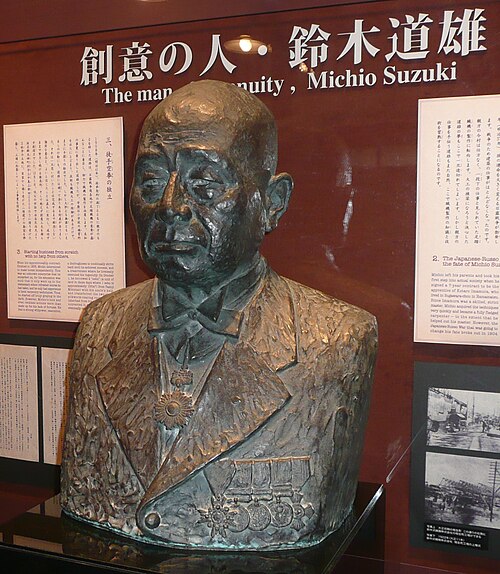
- 1909年:鈴木道雄が静岡県浜松市に鈴木織機製作所を設立。[23]
- 1920年:会社が改組され、鈴木織機製造株式会社として資本金50万円となり、鈴木道雄が社長に就任。[23]
- 1937年: スズキは小型車の製造に多角化するプロジェクトを開始。2年以内にいくつかの革新的な試作品が完成しましたが、第二次世界大戦の勃発に伴い政府は民間乗用車を「非必須商品」と宣言し、生産計画を阻止しました。[19]
- 1940年:静岡県浜名郡加美村に高塚工場が建設される。 [24] [23]
- 1945年:戦争による甚大な被害のため工場を閉鎖。事務所を高塚工場に移転。[23]
- 1947年:本社を現在の住所に移転。[24] [23]
- 1949年:東京、大阪、名古屋の証券取引所に上場。[23]
- 1950年:労働問題により会社が財政危機に陥る。[23]
- 1952年: 「パワーフリー」電動自転車が発売されました。[12] [21]
- 1953年:ダイヤモンドフリー60cc、2サイクルバイクの発売。その後排気量は70ccに増加。[25]
- 1954年:社名をスズキ自動車株式会社に変更[23]
- 1955年: Colleda COX 125cc 4ストローク単気筒[25]とColleda ST 125cc 2ストローク単気筒バイクの発売。
- 日本の軽自動車時代の幕開けとともに登場したスズライト(360cc、2ストローク)前輪駆動車。[26]
- 1957年:鈴木道雄が顧問に就任し、息子の鈴木俊三が社長に就任。[23] [27]
- 1958年:Sマークが社章として採用される。[23]
- 1959年:電動スターター付き、Colleda Sel Twin(2気筒)125cc 2ストロークバイクの発売。
- 新型スズライトTL360cc軽商用2ストローク軽自動車の発売。[23]
- 9月26日、台風ベラ(伊勢湾)がスズキの組立工場を破壊した。[28]
- 1960年3月、スズキの新しい近代的な組立ライン工場が完成。[28]
- スズキは、コレダという製造名で、松本俊夫、市野道夫、レイ・フェイの3名をライダーとして擁するオートバイレースチームをマン島TTレースに参戦させ、マン島TTレースで15位、16位、18位を獲得した。[29]
1961–1969
- 1961年:織機部門をモーター会社から分離し、鈴木織機製造株式会社として設立[23]
- スズキはRT61 125ccとRV61 250ccのレース用バイクをスズキの名前でグランプリに出場させ[30] 、伊藤光夫、市野道夫、増田貞雄、松本俊夫、パディ・ドライバー、ヒュー・アンダーソン、アラステア・キングのチームから2人のライダーがマン島TTレースの250ccで10位と12位を獲得した。[31] [32]
- 愛知県豊川市の新工場で、360ccの2ストローク軽量トラック「スズライトキャリイ」の生産が開始された。[23] [33]
- 1962年: 50ccグランプリバイクレースの初シーズンで、マン島TTレースでスズキ、ホンダ、クライドラーの三つ巴の戦いの末に初勝利を収めた。優勝したRM62マシンは、前年に東ドイツのMZチームからスズキに移籍したエルンスト・デグナーが乗っていた。 [34] [35]
- 1963年:伊藤三雄が50ccレースの最終ラップでスズキのチームメイトであるデグナーが故障した後トップに立ち、マン島TTレースで優勝した初の日本人ライダーとして歴史に名を残した。スズキは、このシーズンのワールドグランプリバイクレースで、50ccクラスと125ccクラスのライダーとメーカーの両タイトルを獲得した。[34] [36]
- アメリカのオートバイ市場に参入するため、米国スズキモーターコーポレーションとしてロサンゼルスに子会社を設立[37]
- 1965年:D55 5.5馬力2ストロークエンジンを発売し、船外機市場に参入。 [23]

- 1967年:タイに日本国外初のオートバイ組立工場が設立され、タイ・スズキ・モーター株式会社が設立される[23]
- 静岡県磐田市に自動車工場が建設された。[23] [40]
- 2ストローク軽自動車「フロンテ360cc」デビュー。 [23]
- 1968年: 1967年の優勝シーズンの後、スズキのオートバイレースチームはFIMの規則変更により世界グランプリから撤退した。ハンス・ゲオルク・アンシャイトは1968年にスズキGP選手権の7年目のシーズンにプライベーターとして1967年型のマシンに乗る。[34]
- 1969年:富山県小矢部市にオートバイ工場を建設。[23]
1970–1980

- 1970年:静岡県小笠市に鋳造工場を建設。静岡県湖西市に自動車工場を建設。[41] [42]
- フランク・ホワイトウェイは、エディ・クルックスが準備した量産型T500バイクに乗って、マン島TTレースの500ccクラスで楽々と優勝した。[43]
- 360ccの2気筒空冷2ストロークエンジンを搭載した国産初の量産4輪駆動軽自動車LJ10が日本で発売された。 [44] [45]
- 1971年:愛知県豊川市に中型・大型バイクの生産工場を建設。[33] [42]
- GT750バイクが水冷2ストローク直列3気筒エンジンを搭載してデビュー。[46]
- スズキの市販モトクロッサーTM400が、モトクロス世界選手権500ccクラスに参戦するために到着。[47]
- スズキのライダー、ロジャー・デ・コスターは396ccのRN71ファクトリーマシンで500ccクラスの世界モトクロスチャンピオンとなり、チームメイト(同じベルギー人)のジョエル・ロバートは250ccクラスのチャンピオンとなった。[48]
- 1972年:秋田県にスズキ部品製造株式会社を設立。[42]
- ハスラー400(TS400)はTM400のストリートバージョンとして発売されたバイクです。[47]
- 1973年 鈴木実治郎が社長に就任、鈴木俊三が会長に就任。
- カナダのオートバイ販売店に機械や部品を供給するために、ノースヨークにスズキカナダ株式会社としてカナダの子会社を設立した。 [27]
- 1974年:ジャカルタにPTスズキインドネシアマニュファクチャリングとしてインドネシア子会社を設立。[42]
- 同社はスズキモーターチェアZ600電動車いすの発売により医療機器分野に参入した。[42]
- 住宅分野への進出は、スズキホームがプレハブ「ミニハウス」2モデルと物置3タイプを販売したことから始まった。[42]
- RE5は、世界初の日本製ロータリーエンジン搭載バイクとして発売された。[49]
- 1975年:自動車排出ガス規制への対応の遅れにより、会社に深刻な問題が発生。[42]
- フィリピンの販売代理店ルフィーノ・D・アントニオ・アンド・アソシエイツは、フィリピンでのオートバイ販売を拡大するために、アントニオスズキコーポレーションという名前でスズキ(日本)との合弁会社を設立した。[50]
- LJ50(ジムニー) 4x4は、より強力な輸出専用の550cc液冷2ストローク直列3気筒エンジンを搭載してオーストラリアで発売されました。[45] [51]
- RM125は、ガストン・ライエが125cc世界モトクロスGP選手権で優勝したワークスマシンRA75の生産バージョンとして導入されました。1975年から1984年まで、スズキはガストン・ライエ、渡辺明、ハリー・エバーツ、エリック・ゲボアズ、ミケーレ・リナルディのチームで10年連続でこのクラスを制覇しました。[ 47]
- パキスタンで初めて海外での組立を開始。[52] 800ccエンジンを搭載したST90キャリイとLJ80(ジムニー)の組立キットが出荷された。 [53]生産と販売はPACO(パキスタン自動車公社)の支援の下、2つの現地企業(シンドエンジニアリングとナヤダウアーモーター)によって行われた。[52] [53]
- 1976年:GSシリーズのオートバイが発売され、GS750とGS400はスズキの20年ぶりの4ストロークマシンとなった。[47]
- ポップス・ヨシムラがGS750でAMAスーパーバイクシリーズに初参戦し、ラグナ・セカ・レースウェイで優勝。[54]バリー・シーンがスズキで500cc世界選手権で優勝
- 1977年:国内市場向けにセルボ2ストローク軽自動車がデビュー。翌年4ストロークエンジンを搭載した輸出バージョンが導入されました。[42]
- LJユーティリティ4x4シリーズの最後となるLJ80は、新型4気筒水冷800cc4ストロークエンジンを搭載し、翌年オーストラリアとヨーロッパに輸出された。[45] [55]バリー・シーンがスズキで2度目の500cc世界選手権で優勝
- 1978年:鈴木修が社長に就任、鈴木実次郎が会長に就任。[42]
- GSシリーズのフラッグシップモデルであるGS1000Eがスズキ初の1リッターマシンとして発売される。[47]
- カリフォルニア出身のマイク・ボールドウィンとウェス・クーリーが乗るヨシムラGS1000が第1回鈴鹿8時間耐久ロードレースで優勝した。[54]
- 1979年:2ストローク軽自動車「アルト」発売。 [42]この車は大成功を収め、スズキは日本の自動車・トラックメーカーの中で7位に躍り出ました。また、後にいすゞやゼネラルモーターズと提携した際の交渉力にも貢献しました。[56]
- 1980年:オーストラリアのシドニーにスズキオーストラリア社を設立。[57]
- スズキは3つの発電機モデルを発売し、汎用エンジン分野に参入した。[58]
- 4ストロークDOHC4バルブエンジンを搭載したGSXシリーズのオートバイを発売。[59]
1981–1989
- 1981年:連結売上高(子会社を含む)が5,000億円に達する。[58]
- ゼネラルモーターズといすゞ自動車は、新型「軽自動車」の生産と販売でスズキ自動車と協力することを発表。GMはスズキの株式5.3%を取得。[60] [61]
- RGガンマ(RG Γ)がグランプリバイクレースに初登場。スズキは6年連続でメーカータイトルを獲得し、スズキライダーのマルコ・ルッキネッリが500ccクラスのチャンピオンになった。[62]
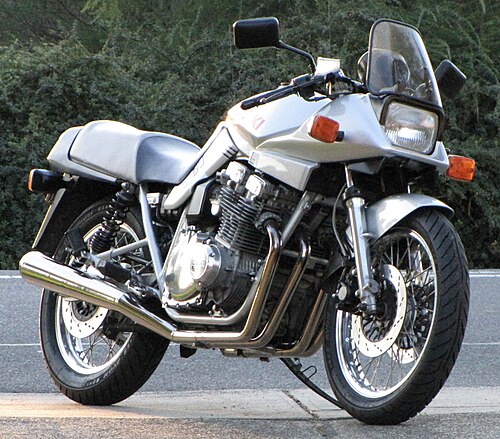
- ドイツ人デザイナーのハンス・A・ムートは、日本刀をモチーフに「スズキを代表する」バイクであるオリジナルのGSX1100Sカタナを制作した。 [59]
- 1リッターエンジンを搭載した第2世代の4x4ユーティリティービークルの生産が開始されました。SJ410は輸出用に設計され、カナダではスズキサムライとして、一部の市場ではジムニー1000として販売されました。[45] [63] [64]
- 1982年:富山工場の二輪車累計生産台数が500万台に達する。[58]
- イタリアのフランコ・ウンチーニがロベルト・ガリーナ・レーシングチームのRG Γバイクに乗って500ccクラスでグランプリチャンピオンを獲得。スズキは7年連続でメーカータイトルを獲得した。[62]
- 水谷勝選手(日本人)がRGΓで7大会連続優勝を果たし、全日本ロードレース選手権500ccクラスで優勝。[65]
- 同社とインド政府は自動車生産・販売の合弁会社としてMaruti Udyog Ltd.を設立した。 [66]
- 同社はスペインのランドローバー・サンタナSAと技術提携契約を締結した。[58]
- パキスタンのカラチにあるパック・スズキ・モーター社で自動車生産が始まる。[67]パキスタン自動車公社(PACO)との合弁会社であるパック・スズキは、1982年9月にアワミ・オート・リミテッドとして設立された。[68] [69]
- 新型軽自動車「アルト」がデビュー。[58]
- 最初の量産型四輪全地形対応車が発売されました。QuadRunner 125は四輪車の時代を開き、ATV業界に変革をもたらしました。[59] [70]
- 1983年: 鈴木実次郎が会長を退任。[58]
- 静岡県湖西市に小型車用の第二自動車工場を建設。 [41] [58]
- RG250Γバイクは、レーストラック用に開発された技術を搭載した、史上初の本格的なレーサーレプリカとして発売されました。 [71]
- 550cc4サイクル小型商用車「マイティボーイ」発売。 [58]
- 1リッター乗用車「カルタス(スイフト/フォルサ/SA310)」がデビュー。 [72]
- インドのニューデリーにあるマルチ・ウドヨグ社でスズキ車の生産が始まる。[58]

- 1984年:ニュージーランドのワンガヌイにスズキニュージーランド株式会社を設立。フランスのトラップにスズキフランス株式会社を設立。ドイツのヘッペンハイムにスズキモーター株式会社を設立。[58]
- スズキは米国の自動車メーカー、ゼネラルモーターズ社に1リッターカルタスの輸出を開始した。[73]
- 1.3リッター4気筒エンジンと5速ギアボックスを搭載したアップグレードされたSJ 4x4が発売されました。SJ413は翌年米国市場で(サムライとして)販売され、最終的には100か国以上で販売されました。[74] [75] [76]
- スズキは中国航空技術輸出入総公司と自動車生産技術援助契約を締結した。[58]
- 油冷4気筒DOHCエンジンを搭載したGSX-R750バイクの発売。 [77]
- 1985年:アルトの日本国内累計販売台数が100万台に達する。[78]
- カリフォルニア州ブレアにスズキ・オブ・アメリカ・オートモーティブ社を設立。サムライが米国で発売された。[79] [80]
- 中国の済南清奇オートバイ有限公司とオートバイ生産技術提携契約を締結。 [81]
- スズキ車の生産がスペインのサンタナSAで始まる。[58]工場はアンダルシア州リナレスにある。
- スペインのAvello SAでスクーターの生産が開始された。[82]
- 1986年:米国での事業統合のため、カリフォルニア州ブレアにアメリカン・スズキ・モーター・コーポレーションが設立される。[58]
- スズキはカナダのゼネラルモーターズ社と合弁会社設立に関する協力に合意した。[83]

- 1987年:日本からの自動車輸出台数が200万台に達する。自動車の年間世界販売台数が100万台に達する。[58]
- 1988年:エスクード(ビターラ/サイドキック)1.6リッター4サイクルコンパクト4x4車がデビュー。[85]
- 消費者連合が発行する雑誌は、サムライ4x4は横転しやすいと主張している。米国道路交通安全局はサムライのリコール要求を拒否した。[75] [76] [86]
- スイフトの販売が米国で開始される。[86]
- 1989年: 自動車総生産台数が1,000万台に到達。[58]
- カナダのオンタリオ州にあるCAMIオートモーティブ社でスズキ車の生産が始まる。[87]
- サイドキックの販売が米国で開始される。[85]
1990–2000

- 1990年:社名をスズキ株式会社に変更。[89]
- 軽自動車の規格が引き上げられ、最新仕様の新型軽自動車が発売された。エンジン排気量は660ccに引き上げられ、全長は10.8フィート(3.3メートル)に延長された。[90]
- 1991年:連結売上高1兆円達成。[89]
- 1992年:パキスタンのカラチにあるパック・スズキ・モーターズの新工場でスズキ車の生産が始まる。 [89]
- ハンガリー製のスズキ車の生産・販売開始。[88]
- スズキはマルチ・ウドヨグの50%のパートナーとなる。[94]
- 1993年:タイ・スズキ・モーター社のオートバイ総生産台数が200万台に達する。[89]
- スズキエジプトSAEで乗用車の生産・販売を開始[89]
- スズキは中国で乗用車と二輪車の生産に関する合弁契約を締結した。[95] [96]
- 軽自動車ワゴンRがデビューし、1993年のRJCカー・オブ・ザ・イヤーを受賞。[97] [98]
- 1994年:スズキ自動車の日本国内総販売台数が1,000万台に達する。[89]
- インドのマルチ・ウドヨグの自動車総生産台数が100万台に到達。[99]
- スズキといすゞ自動車は業務提携を解消することに合意した。[89]
- 1995年:スズキの軽自動車の日本国内総販売台数が1,000万台に達し、日本からの二輪車の輸出台数は2,000万台に達した。[89]
- スズキはスペインのサンタナSAとの資本提携から撤退したが、自動車関連の技術協力は継続した。[89] [100]
- 1996年:キャリーの日本国内累計販売台数が300万台に達する。[89]
- ベトナムのスズキ株式会社がビエンホア工業団地でオートバイと自動車の生産を開始。 [101] [102] [103]
- 中国の済南清奇鈴木オートバイ有限公司でスズキバイクの生産開始。 [81]
- 1997年:海外市場向け累計自動車販売台数1,000万台を達成。[89]
- 4ストローク 船外機がシカゴの国際海洋貿易展示会・会議(IMTEC)でイノベーション賞を受賞した。[104] [105]
- アメリカン・スズキ・モーター社は、スズキ対消費者連合訴訟の証拠開示手続きを通じて入手したビデオテープを使用して、消費者連合が1988年のサムライ4x4のテスト結果を不正に操作したと公に非難した。[106] [107]
- スズキはインド政府によるマルティ・ウドヨグ社の上級役員の任命をめぐり国際仲裁裁判所に提訴した。[94] [108]

- 1998年:スズキとゼネラルモーターズが小型車の共同開発で合意、両社は業務提携を強化し、戦略的提携を結ぶことに合意。GMはスズキの株式保有比率を3.3%から10%に変更。[109]
- 1999年:二輪車総生産台数が4,000万台に達し、ワゴンRの日本国内総販売台数が100万台に達する。[89]
- 江西 昌河スズキ自動車有限公司は中国政府から商用車生産の正式認可を受けた。[89]
- ゼネラルモーターズ・アルゼンチン社とスズキ株式会社は産業・商業提携を結び、アルゼンチンのゼネラルモーターズがスズキの自動車製品のすべてを販売するようになった。[120]
- 2000年:創立80周年を迎える。[121]
- 湖西工場の自動車生産累計1,000万台を達成。[121]
- ゼネラルモーターズ・アルゼンチンでスズキ車の生産が開始。[121]
- GMはスズキ自動車の株式を20%に引き上げた。[122]
2001–2009
- 2001年:ジムニー/SJの世界累計販売台数が200万台に達し、アルトの生産台数が400万台に達する。[123]
- スズキは埋立廃棄物の「ゼロレベル」目標を達成した。[123]
- ジュネーブモーターショーで発表されたアエリオコンパクトカー(別名リアナ、新時代の生活を意味する)[124] [125]
- スズキ株式会社(日本)とアメリカン・スズキ・モーター社は、米国とカナダでの販売と輸出用の全地形対応車を製造するために、スズキ・マニュファクチャリング・オブ・アメリカ・コーポレーション(SMAC)を共同で設立した。 [126]
- 2002年:世界市場で累計3,000万台の自動車販売を達成。[127]
- 低価格スクーター「チョイノリ」の発売。 [128]
- SMACはジョージア州ローマにスズキ唯一の米国製造工場を開設し、アイガーシリーズのATVの生産を開始した。[129] [130] [131]
- 2003年:スズキは日本で30年連続で軽自動車販売台数第1位を獲得した。 [132]
- 日本初のハイブリッド 軽自動車「ツイン」が発売された。 [132] [133]
- スズキ株式会社とフィアット・オート・SpAは、ハンガリー・スズキで小型スポーツ・ユーティリティ・ビークルを共同開発・生産すると発表した。[133]
- 2004年:国内自動車総販売台数が1,500万台に達する。[134]
- サムライ4x4が簡単に転倒するとした雑誌のレビューをめぐるスズキ対消費者連合の訴訟は、8年後に法廷外で和解した。[135] [136]
- 2代目スイフトコンパクトカーがパリモーターショーでデビュー。[137]
- 2005年:マルチ・ウドヨグ社の自動車総生産台数が500万台に達し、インドネシアのオートバイ総生産台数も500万台に達する。[138]
- 同社は第75回ジュネーブ国際モーターショーで、最近開発したブランド哲学を「Way of Life!」というスローガンで紹介した。[137] [139]この英語のフレーズは、2つの注目すべき例外を除いて世界中で使用されている。
- フランス語圏のカナダ(フランスではない)では、 「 Un Mode de vie!」というスローガンは英語の逐語訳だが、不定冠詞が前に付けられている。[140]
- Entre e divirta-se.というスローガンは、ブラジルのポルトガル語(ポルトガル語ではない)では「来て楽しんでください」と翻訳され、句点で終わります。[141]
- 新型スイフトは2005- 2006年日本カー・オブ・ザ・イヤー「Most Fun」賞を受賞し、2006年RJCカー・オブ・ザ・イヤーを受賞した。[138] [142]
- 同社は第75回ジュネーブ国際モーターショーで、最近開発したブランド哲学を「Way of Life!」というスローガンで紹介した。[137] [139]この英語のフレーズは、2つの注目すべき例外を除いて世界中で使用されている。
- 2006年: SX4ミニクロスオーバーがジュネーブモーターショーで発表され、XL7クロスオーバーがニューヨーク国際オートショーで発表された。[143] [144] [145]
- GMはスズキ株式会社の株式9236万株を売却し、保有株を3%に減らした。[146] [147]
- 2007年:国内自動車総販売台数が1,500万台に達する。[148]
- 同社は、A-Starコンパクトハッチバックをインドで生産し、世界中に輸出する予定であると述べている。 [149] [150]
- 北米日産とスズキは、スズキが北米で販売する中型ピックアップトラック(日産のフロンティアベース)を、日産のテネシー州スマーナ工場で生産すると発表した。[150]
- 2008年:GMはスズキの残りの3%の株式を売却。[151] [152]
- 2009年:スズキブランド誕生100周年。[27]
- スズキは最初の量産ピックアップトラック「エクエーター」を販売した。[154] [157]
- フォルクスワーゲンとスズキは世界的な戦略的提携の締結を発表。フォルクスワーゲングループはスズキの株式20%を取得する。[158] [159]
- 11月:スズキはタイのラヨーン県イースタンシーボード工業団地に65万平方メートルの新工場を建設し、200億円を投じてエコカー生産を2012年3月に開始する。[160]
2010–2015
- 2010年:スズキの日本国内における販売台数が2,000万台に達する。[ 161]
- 1月:フォルクスワーゲングループがスズキの発行済み株式の19.9%の買収を完了。[162]
- ミャンマーのヤンゴンにある同社の工場は、1998年から2010年にかけて政府との合弁事業が終了した後、閉鎖された。[112]
- 2011年:スズキはインドネシアを今後数年間で最大8億ドルの投資による地域生産拠点にすることを発表した。[163]
- 2月:スズキ・マニュファクチャリング・オブ・アメリカ社(SMAC)は、ジョージア州ローマ工場の10周年と過去10年間の売上高14億ドルを祝う。[164]
- 11月:スズキは契約条件に従ってVWとの提携を解消し、フォルクスワーゲングループが保有するスズキ株式の返還を求める仲裁手続きを開始した。[165] [166] [167]
- 2012年:マルチ・スズキのインド国内総販売台数が1,000万台に達する。日本国内の軽自動車総販売台数が2,000万台に達する。[168]
- 1月:スズキは、急成長する東南アジア市場向けにインドネシアで3番目の工場となる新エンジン工場を建設する計画を発表。スズキはジャカルタ郊外の工業団地の130万平方メートルの敷地に100億円(1億3000万ドル)を投じ、工場建設には300億円かかる可能性がある。[169]
- 2月:スズキ株式会社と英国ラフバラーの水素燃料電池メーカーであるインテリジェント・エナジー社が、ゼロエミッション車の商業化を加速するための合弁会社を設立することを発表。[170] [171]
- 3月:スズキ・モーター・タイランドが新型コンパクトカー「スイフト」の生産・販売を開始。[172]
- 11月:アメリカン・スズキ・モーター・コーポレーションが連邦破産法11条の適用を申請。小型車への注力、円高、厳しい米国安全規制が成長を妨げたため、スズキ・モーターズは米国市場向けの自動車製造を中止し、代わりにオートバイ、ATV、船舶機器に注力すると発表。[173] [174]米国での売上は2007年にピークを迎えたが、2011年にはその4分の1に落ち込んだ。[116] [175] [176]
- スズキはヤンゴンに新工場を建設し、工場を復活させる承認を得た。これにより、2012年に閉鎖されていたミャンマーでの車両およびスペアパーツの生産が再開されることになる。[112]
- GSX-R1000 100万台記念モデルは、1985年以来スズキGSX-Rシリーズで生産された100万台のオートバイを記念したものです。[177]

- 2013年:
- 50周年記念特別版GSX-R1000モデルは、スズキが1963年に米国のオートバイ市場に参入したことを記念したものです。[178]
- 3月:2012年の声明にもかかわらず、[179]スズキカナダ社は、米国での破産手続きの一環として、カナダでの自動車製造事業を中止すると発表した。オートバイ、ATV、船舶機器の販売は、米国だけでなくカナダでも継続される予定だった[180]
- 第83回ジュネーブ国際モーターショーで第2世代SX4クロスオーバー車がデビュー。[181]
- アメリカン・スズキ・モーター・コーポレーションは3月31日付けですべての事業を終了し、その資産をスズキ株式会社の完全子会社であるスズキ・モーター・オブ・アメリカ社に売却した。[182] [183]
- 7月:かつてのフォルクスワーゲンとスズキの提携をめぐる不和が、両社による新たな協議の結果として解決されるかもしれないとの報道があった。[184]これらの報道はすぐに鈴木俊宏副社長によって否定され、「さまざまな報道がなされているが、そのような事実は全くなく、この件について私がお話しできることはない」と述べられた。[185]
- 10月:スズキは、フロントブレーキが正常に作動しない可能性があるため、米国で210,228台のオートバイをリコールした。[186] [187]
- 2015年:
2016年~現在
- スズキは、車両内のNOx排出量を偽造したとしてEPAから2,054,924ドルの罰金を科せられた。 [188]
- スズキは2018年9月に中国から撤退した。
- スズキはインドネシアで新型2019年型小型CV「キャリー」を発売した。[189]
- 2019年8月、トヨタはスズキの株式4.9%を取得し、スズキはトヨタの株式0.2%を取得すると発表した。[190]
子会社
マルチ・スズキ・インディア・リミテッド(旧マルティ・ウドヨグ・リミテッド)
.jpg/500px-2014_Suzuki_Alto_SZ_1.0_Front_(1).jpg)
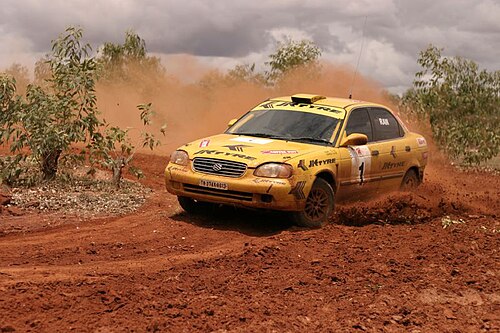
ハリヤナ州グルガーオンに本拠を置くマルチ・スズキ・インディア・リミテッドは、日本の自動車メーカー、スズキ株式会社の子会社であるインドの自動車メーカーである。 [192 ]マルチ・スズキは、2011年4月1日から2012年3月30日までの間に1,133,695台を生産した。[193]スズキ株式会社はマルチ・スズキの54.2%を所有し、残りはインドの様々な公的機関や金融機関が所有している。同社は1981年に設立され、ボンベイ証券取引所とインド国立証券取引所に上場されている。[194]
マルチ・スズキは、インド政府が主導するマルチ・ウドヨグ・リミテッドという会社として誕生し、スズキをマイナーパートナーとして、中流階級のインド人向けに低価格の自動車を製造しています。長年にわたり、製品ラインナップは拡大し、顧客の進化に合わせて所有権も変更されました。
マルチ・スズキは、マルチ800から高級セダンの マルチ・スズキ・キザシ、高級SUVのマルチ・スズキ・グランド・ビターラまで、幅広いモデルを提供しています。マルチ800は、1983年に同社が発売した最初のモデルで、 1984年にはミニバンのマルチ・オムニが続きました。1985年に発売されたマルチ・ジプシーは、インド軍とインド警察が主な顧客となり、広く普及しました。短命だったマルチ1000は、1994年に マルチ・エスティームに置き換えられました。
1993年に発売されたマルチ・ゼンは、同社の2番目のコンパクトカーモデルでした。同社はさらに別のコンパクトカー、マルチ・ワゴンRを発売し、続いて1999年にマルチ・バレーノを発売しました。これは後にスズキSX4に置き換えられました。SX4はさらにシアズに置き換えられました。
2000年に、マルチ・アルトが発売されました。マルチのモデルには、2003年に発売されたマルチ・スズキ・グランド・ビターラ、 2004年に発売されたマルチ・ヴァーサ、2005年に発売されたマルチ・スズキ・スイフト、2007年に発売されたマルチ・ゼン・エスティロとマルチ・スズキSX4があります。
2011年2月14日、マルチはアルトの累計生産台数が100万台に達したと発表した。アルトは2000年9月の発売以来、わずか7年5か月で100万台を達成した。残りの50万台は25か月で達成された。アルトは、マルチ800とオムニに続き、マルチ・スズキ系列で100万台を突破した3台目の車となった。
2012年1月、ニューデリーオートエキスポで、マルチはマルチ・スズキXAアルファと呼ばれる新しい車を発表し、[195] [196] 2013年半ばから後半に生産を開始する予定でした。マルチ・スズキは、インドオートエキスポ2016で、サブコンパクトSUVセグメントの候補として ビターラ・ブレッツァを発表しました。
Maruti Exports Limited は Maruti の輸出子会社であり、Maruti Suzukiおよび海外のSuzuki Motor Corporationならびにその他の関連会社の輸出業者としての立場を除き、インド国内市場では事業を行っていません。最初の商用貨物として 480 台の自動車がハンガリーに送られました。同国に 571 台の自動車を送ったことで、Maruti は 300 万台の自動車という基準を超えました。設立以来、輸出は政府が積極的に奨励してきた分野の一つでした。
アメリカン・スズキ・モーター・コーポレーション
アメリカン・スズキの本社はカリフォルニア州ブレアにある。同社は2012年11月に米国での自動車販売を中止すると発表した。[197] [198]
スズキはゼネラルモーターズとの契約により、1985年に米国でスズキ カルタスのバージョンをシボレースプリントとして販売し始めました。このモデルは当初3ドアハッチバックとして販売され、シボレーの最小モデルとなりました。

サムライは1985年に1986年モデルとして発表され、新設されたアメリカン・スズキ社が米国に導入した最初の車でした。スズキほど米国で最初の年に多くの車を販売した日本企業は他にありません。サムライはコンバーチブルとハードトップの2種類があり、会社のスローガンは「退屈な瞬間を一切持たない」でした。サムライは、1988年のテストでサムライが横転しやすいと消費者レポートが主張するまでは人気がありました。これは1996年に大々的に報道された訴訟につながり、2004年まで和解しませんでした。
1989年、アメリカン・スズキは2代目スズキ・カルタスにあたるスイフトを発表しました。スイフトはGTiとGLXハッチバックとして販売され、1990年には4ドアセダンが続きました。サイドキックと呼ばれる新しい小型SUVも1989年に発表されました。1991年には、北米初の4ドアミニSUVである4ドアのスズキ・サイドキックが導入されました。スイフトとサイドキックはGMのジオ・メトロとジオ・トラッカーのいとこであり、主にカナダのオンタリオ州インガソルでスズキとGMの合弁会社CAMIによって生産されました。スイフトGT/GTiと4ドアモデルは日本から輸入されました。スズキ・サムライに対するコンシューマー・レポートの否定的な評価により、アメリカン・スズキは一時的に後退し、翌年の年間販売台数は2万台を下回りました。
1995 年、アメリカのスズキはエスティームを発表し、スイフトのデザインを変更しました。スイフト GT は廃止され、このバージョンのスイフトは北米専用となり、CAMI で製造されました。これらのモデルは、デュアル フロントエアバッグを備え、北米で販売された最初のスズキ車でした。エスティームのステーション ワゴンバージョンは 1996 年に発表されました。この[何年]のスズキの世界生産台数は 975,000 台を超えました。
また、1996年に、アメリカン・スズキは2ドアSUV X-90と、デュアルエアバッグ、95馬力(71kW)1.6リッターエンジン、15インチホイールを備えた改良型サイドキックスポーツモデルをリリースしました。サイドキックは、1999年にビターラとグランドビターラに置き換えられました。グランドビターラは、スズキ初のV6気筒エンジンと4輪ABSブレーキを備えたモデルです。
XL -7 は、グランド ビターラの延長バージョンとして 1998 年に発売されました。XL-7 は、より大きな 2.7 リッター V6 気筒エンジンと 3 列シートを備えていました。これは、スズキのこれまでの最大の車両です。
2001年にスイフトはモデルラインナップから外され、 2002年にエスティームは新型アエリオに置き換えられました。アエリオは4ドアセダンと5ドアクロスオーバーとして提供され、オプションで 4輪駆動が選択できました。
2004年、ゼネラルモーターズとスズキは破産した大宇自動車を共同で買収し、合弁会社をGMDATに改名した。アメリカのスズキは、小型車の大宇ヌビラ/大宇ラセッティをフォレンツァに、中型車の大宇マグナスをヴェローナに改名した。 2005年、フォレンツァはステーションワゴンとハッチバックのボディスタイルを追加し、ハッチバックはリノという名前で販売された。
2006 年は、アメリカン スズキが米国で初めて 10 万台以上の車両を販売した年でした。スズキは 2006 年にグランド ビターラをリニューアルし、2007 年にはまったく新しいSX4とXL7 を発表しました。スズキ SX4 はフィアットとの合弁事業として生産され、XL7 (グランド ビターラ XL-7 の短縮名に注目) はインガソルの CAMI オートモーティブ社で GM との合弁事業として生産されました。スズキは需要の低迷により 2009 年半ばに XL7 の生産を無期限に停止し、その後その年の後半に CAMI の株式を GM に売却しました。
米国国内の自動車市場が厳しい状況にあったにもかかわらず、スズキは2008年も2007年と同等の販売台数を維持した。しかし、 2009年のスズキの販売台数は2008年の17%減に続き48.5%減少した。 [199]スズキは2010年モデルのストリートバイクを米国に輸入せず、ディーラーは2009年モデルの売れ残り在庫に頼っていた。[201] [202]米国へのストリートバイクの新モデルの輸入は2011年モデルから再開された。[203]
2012年11月、スズキは米国部門が破産を申請し、米国での自動車販売を停止すると発表した。米国では、オートバイ、ATV、マリン製品の販売を継続する予定である。[197] 2012年の10か月間で、スズキは米国で21,188台の自動車を販売したに過ぎなかった。円高とスズキ自身のモデルの限定的な提供が不振の原因であるとされている。[198]
パキスタン・スズキ・モーター・カンパニー・リミテッド

日本のスズキ株式会社(SMC)とパキスタン自動車公社(PACO)との合弁契約に基づき、 1983年8月にパキスタン・スズキ・モーター・カンパニー・リミテッド(PSMCL)が株式会社として設立された。[204]
新会社は、Awami Autos Limited の生産施設を含む資産を引き継ぎました。PSMCL は、乗用車、ピックアップ、バン、4x4 車を主な対象として、1984 年 1 月に商業運転を開始しました。
1989年初頭、ビン・カシムにおける同社の新設自動車工場の起工式が当時のパキスタン首相によって執り行われた。
1990 年初頭にこの工場の第一段階が完了すると、スズキ製エンジンの社内組み立てが開始されました。新工場は 1992 年に完成し、スズキの生産は新工場に移管され、3 ボックス1,300 cc のマルガラ車も生産範囲に追加されました。
1992年9月に同社は民営化され、日本企業の直接経営下に入りました。民営化の時点でSMCの株式保有率は25%から40%に増加し、その後、2001年12月31日までに徐々に株式保有率を73.09%に増加しました。
ビン・カシム工場は1994年7月に生産能力を年間5万台に拡大し、2003年12月までにこの工場で30万台の車両が生産されました。
スズキカナダ株式会社
- 1973年6月1日、スズキカナダ株式会社がオンタリオ州ノースヨークに事務所を構えて設立されました。製品ラインには、カナダ全土のスズキディーラー向けのオートバイ、部品、アクセサリーが含まれていました。
- 1974年 –カナダ西部のディーラーにサービスを提供するためにバンクーバー支店と倉庫が開設されました。
- 1980 年秋 – スズキ カナダは、カナダ東部で四輪駆動車 LJ80のマーケティングと販売を開始し、自動車販売を開始しました。11 月 1 日、社名がスズキ カナダ Ltd. からスズキ カナダ Inc. に変更されました。
- 1982年 – カナダでスズキの全地形対応車 (ATV) のラインを導入。
- 1983年 - カナダ西部でスズキ船外機のラインを導入。1983年2月1日 - 西部支社がブリティッシュコロンビア州リッチモンドの拡張施設に移転。
- 1984年 - 自動車「スズキフォルサ」(スズキカルタス)の販売を開始。
- 1986年 - スズキとGMの合弁会社CAMI Automotive Inc.が6億豪ドルで自動車製造を開始したことを発表。生産は1989年にオンタリオ州インガソルで開始される予定。
- 1987年1月25日 - スズキカナダ社はオンタリオ州リッチモンドヒルにある新しい110,000平方フィート(10,000 m 2)の本社および倉庫施設に移転しました。
- 1988年秋、スズキはCAMI製の2ドアスズキサイドキックの販売を開始しました。
- 2009年秋 - スズキはCAMIへの参加権をGMに売却した。[205]
2013年、スズキカナダは米国部門に倣い、2014年モデル以降カナダでの自動車販売を停止すると発表した。スズキカナダはディーラーネットワークを通じて自動車の部品やサービスの提供を継続するほか、オートバイ、ATV、船外機の販売も続ける。[206]
スズキGB PLC
Suzuki GB PLC は、英国ミルトン・キーンズに本社を置く自動車、オートバイ、ATV、船舶用エンジンの製造代理店および販売業者です。スズキ株式会社の完全所有子会社が、アイルランドでSuzuki Cars (Ireland) Limitedとして事業を展開しています。
- 1963年、スズキはスズキ(グレートブリテン)リミテッドと呼ばれる独立販売代理店を通じてオートバイの正規輸入を開始しました。
- 1968年、スズキ(グレートブリテン)リミテッドは破産し、ハンブロス銀行は同社をトロイアン(自動車)のピーター・アッグに売却した。アッグはスズキGBリミテッドという新しい会社を設立し、スズキの英国における独立販売を引き継いだ。
- 1975年頃、Heron Corporation plc がSuzuki GB Limitedを買収し、その後同社はHeron Suzuki GB Limitedとして知られるようになりました。
- 1975年から1980年代にかけて、ヘロン・インターナショナルは、バリー・シーン、ランディ・マモラ、グレアム・クロスビー、ミック・グラント、ロブ・マッケルニーアなどのライダーを擁するグランプリ・オートバイ・レースのスズキ・ファクトリー・レーシング・チームのスポンサーを務めました。
- 1989年、Heron Suzuki GB LimitedはHeron Suzuki Plcになりました。
- 1994 年、Suzuki GB PLC が英国におけるすべてのスズキ製品の直接販売を引き継ぎました。
スズキインドモービルモーター
.jpg/500px-2018_Suzuki_Carry_Futura_Flat_Deck_1.5_SL415_(20190826).jpg)
.jpg/500px-2014_Suzuki_APV_Arena_SGX_1.5_DN42V_(20190623).jpg)

PTスズキ・インドモービル・モーター(2008年12月まではPTインドモービル・スズキ・インターナショナル)は、スズキ株式会社とインドモービル・グループの合弁会社である。同社はインドネシアのジャカルタに拠点を置き、国内外の市場向けにスズキ車の製造を専門としている。別会社のPTスズキ・インドモービル・セールス(SIS)(旧称PTインドモービル・ニアガ・インターナショナル)[207]がスズキの自動車とオートバイの販売とマーケティングを担当していた。
スズキは1970年に輸入会社PT.インドヘロ・スチール&エンジニアリング社を通じてインドネシア市場で最初の活動を開始しました。6年後、インドモービル・グループで最も古い部門であるジャカルタに製造工場が建設されました。
彼らの最初の製品はST20キャリー(1978年に発売)で、アンコットとして広く使用されました。[208]「Trungtung」というニックネームで呼ばれ、少なくとも1983年まで製造されていました。[209]これは、キャリーの2ストロークエンジンが発する音を表す 擬音語です。
2011年、同社はインドネシアで低コストグリーンカー(LCGC)を生産するために8億ドルを投資した。2013年、スズキはチカランに総額10億ドルを投資して別の工場を開設した。[210]この工場では、国内および輸出市場向けのエルティガMPVとカリムンワゴンR用のK10Bエンジンを製造した。[211]
スズキモーターサイクルインディア株式会社
スズキモーターサイクルインディアプライベートリミテッド(SMIL)は、日本のスズキの完全子会社である。同社はハリヤナ州グルガオンに年間54万台の生産能力を持つ製造工場を持っている。[212]
生産設備
自動車
量産車
コンセプトカー


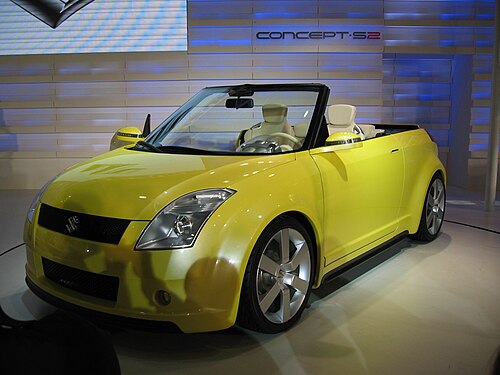
- GSX-R/4コンセプトカーは2001年に発表された。GSX1300Rハヤブサの1,300 cm 3 (79 cu in)エンジンを搭載し、自動車の姿勢とスポーツバイクの気質を融合させようとした(スズキは米国で特にバイクの販売に成功していた)。高回転の直列4気筒エンジンは、車重1,500ポンド未満の必要最低限の2人乗りロードスターに約175馬力を供給した。[213]
- Pixy + SSCコンセプトは2007年の東京モーターショーで発表された。Pixyはトヨタi-unitやi-REALに似た密閉型三輪シングルシートの個人輸送ポッドだが、2台のPixyがSSC(別名スズキシェアリングコーチ)内にドッキングして高速道路を走行できる点が異なる。電力は水素燃料電池とソーラーパネルによって生成され、SSCキャリアバンを駆動すると同時にPixyを充電する。[214] [215]
- ハヤブサ スポーツは、 2002 年の東京オートサロンで発表されたスポーツカーです。エンジンは、GSXR/4 や、名前の由来となったスポーツバイク GSXR-1300R ハヤブサに搭載されているものと同じ 1.3l I4 で、9800rpm で 175hp を発生し、6 速シーケンシャル ギアボックスと組み合わされています。フロントミッドシップ エンジンの配置や小型のカーボンファイバー製ボディなどの特徴により、スズキは 50:50 の最適な前後重量配分と 550kg という非常に軽い質量を実現しました。プロトタイプが 1 台作成されましたが、公道走行可能な車として構想されたものの、実際に公道で使用されることはありませんでした。
- X-HEADは2007年の東京オートショーでデビューしたコンセプトカーです。ダンプトラックに似た、やや変わったデザインです。タイヤにはXの模様がありますが、名前のXは多目的性に由来しています。[216]
- スズキコンセプトXは、北米市場の若い購入者を対象としたスズキの中型スポーツユーティリティビークルのスタイリングの大きな転換として、2005年の北米国際オートショーでデビューしました。 [217]このコンセプトカーは、2006年後半に発表された第2世代のXL7に進化しました。 [218]
- G70は2011年の東京モーターショーでレジーナとして登場したが、2012年の国際自動車ショー[219]と北京モーターショー[220]の前に、二酸化炭素(CO2 )排出量を70g/km以下にするという目標を達成したことを示すために改名された(そしておそらくモデル名としてレジーナはマーケティング上の大失敗となるであろう)。G70は次世代グローバルコンパクトカーのコンセプトカーで、おそらくアルトの後継車であり、全長3,550ミリメートル(140インチ)、全幅1,630ミリメートル(64インチ)、重量730キログラム(1,610ポンド)のG70はアルトよりも小型で軽量である。非常に経済的な800立方センチメートル(49立方インチ)の直噴ターボガソリンエンジンと無段変速機を搭載し、100キロメートルあたり3.1リットル(91 mpg ‑imp、76 mpg ‑US )の燃費が謳われています。[221] [222] [223]
- 2011年の東京モーターショーで初めて公開されたQコンセプトは、 MIT CityCar、日産ピヴォ、トヨタPMのようなバブルカーです。全長わずか2,500ミリメートル(98インチ)のQコンセプトは、ドライバーと1人の乗客がタンデムに乗りますが、密閉されており、サドルの代わりに座席があるため、オートバイよりも快適です。主に短距離旅行(10キロメートル(6.2マイル)以内)を目的としており、利用可能なスペースのほとんどに駐車できるはずです。[222] [223]
- スズキは2015年のジュネーブモーターショーでiK-2コンセプトを発表した。
- スズキは2015年のジュネーブモーターショーで4x4ミニSUVコンセプト「iM-4コンセプト」を披露した。
オートバイ
スズキは1952年にオートバイの製造を開始し、最初のモデルは原動機付き自転車でした。[25] 1955年から1976年まで[47]、同社は2ストロークエンジンのみを搭載したオートバイを製造し、最大の2ストロークモデルは水冷式3気筒のG2F5でした。
スズキが2ストローク競技で成功した大きな要因は、1961年に西側に亡命した東ドイツの グランプリレーサー、エルンスト・デグナーでした。 [224]彼は東ドイツのメーカーMZから2ストロークエンジンの専門知識を持ち込みました。デグナーが持ち込んだ秘密は、ブーストポート、[225] [226]膨張室、ロータリーバルブの3つの重要な技術でした。[227] MZの ウォルター・カーデンは、これら3つの重要な技術を組み合わせた最初のエンジニアでした。
スズキはデグナーを雇い、彼は1962年シーズンに50ccクラスの FIM ロードレース 世界選手権で優勝しました。ジョエル・ロバートが1970年の250ccタイトルを獲得したとき、スズキはモトクロス世界選手権で優勝した最初の日本のメーカーになりました。1970年代、スズキはバリー・シーン、マルコ・ルッキネッリ(1981年) 、フランコ・ウンチーニ(1982年)が最高峰の500ccクラスで世界選手権を獲得し、オートバイレースの世界で地位を確立しました。
1976年、スズキは1950年代のコレダ・コックス[25]以来初めてとなる4ストロークエンジンを搭載したオートバイ、GS400とGS750を発売した。
1994年、スズキは南京金城機械と提携し、中国のオートバイ製造・輸出業者である金城スズキを設立しました。
スズキはMotoGPに参戦し続け、 2000年シーズンに最後にタイトルを獲得した。2006年から2011年まで、チームはリズラのスポンサーを受け、リズラ・スズキMotoGPチームとして知られていた。2011年11月18日、スズキは自然災害と不況もあって、2014年までGPレースを中断すると発表した。[228]スズキは2015年にMotoGPに復帰した。[229]
スズキにとってMotoGPでのその後の数年間は実験的なものであり、成功にはばらつきがあった。しかし、2020年、スズキ創立100周年に、スペイン人ライダーのジョアン・ミルが2020年MotoGP世界選手権で優勝し、世界を驚かせた。これは、2000年のケニー・ロバーツ・ジュニアの世界選手権優勝以来、スズキにとって初のGP制覇となった。
さらに、スズキはマン島TTレースで合計94回の優勝を記録しています。 [ 230]また、スズキはさまざまなレースカテゴリーで100回準優勝し、合計92回3位を獲得しています。[230]
モデル
注目すべきスズキのオートバイには以下のものがあります。


- X6ハスラーツイン(別名T20スーパーシックス)は、1966年から1968年まで「世界最速の250ccバイク」として販売されました。スズキの新しいポジフォース自動オイル噴射システム(後にスズキCCIと呼ばれる)を搭載していました。[19] [20] [231]生産台数は月間5000台以上でピークを迎えました。[232] 2013年、スズキはヨーロッパでハスラーバイクの商標を更新し、レトロスタイルの250ツインの噂が広まりました。[233] [234] 1967年のT20スーパーシックスが、ラスベガスで開催されたアートオブザモーターサイクル展に展示されました。[235]
- T500タイタン(別名T500コブラ、GT500)は、耐久性、過熱、振動の問題を克服した500ccの空冷並列2気筒エンジンを搭載していた。6,500rpmで47馬力(35kW)の出力と時速180キロメートル(110mph)の最高速度で、1968年にスズキの主力マシンとなり、コレクターやカフェレーサーの間で人気を博している。[236] [237] [238] [239]
- 直列3気筒エンジンを搭載したGT750ル・マンは、水冷エンジンを搭載した日本初のオートバイであり、「ウォーターバッファロー」という愛称で呼ばれた。[19] [236]社団法人自動車技術会は、1971年のスズキGT750を「日本の自動車技術のランドマーク240」の一つに挙げている。[46]
- TM400サイクロン生産型モトクロッサーは、500ccクラスのモトクロス世界選手権レースに参加するために設計された。1971年に導入されたが、熟練したライダーでさえ制御するのが難しいことで有名だった。1975年に再設計された。[240] [241] [242]
- RM125量産型モトクロッサーは、TM125の後継として1975年にデビューしました。これは、50ccから500ccまでの将来のRMシリーズラインナップの先駆けとなりました。 [243]
- RM250は1982年に完全に再設計され、水冷単気筒エンジンは当時のどの250ccモトクロッサーよりも高い出力を発揮した。1年前に導入されたスズキ独自のフルフローター、リンク式リアサスペンションを搭載していた。[244]
- 1983年のRG250ガンマは、1980年代の新世代レースレプリカスポーツバイクの1つでした。アルミフレーム、フルフェアリング、高出力直列2気筒エンジンを搭載していました。[245] [246] 1983年のRG250Γは、JSAE 240の日本の自動車技術のランドマークの1つです。[71]
- 1985年のRG500ガンマはRG250に似ていたが、スクエア4エンジンを搭載していた。[247]
- RGV250ガンマは、ケビン・シュワンツのRGV500 GPレースバイクのロードレースレプリカで、 1988年にVツインエンジンでRG250に取って代わりました。[248]

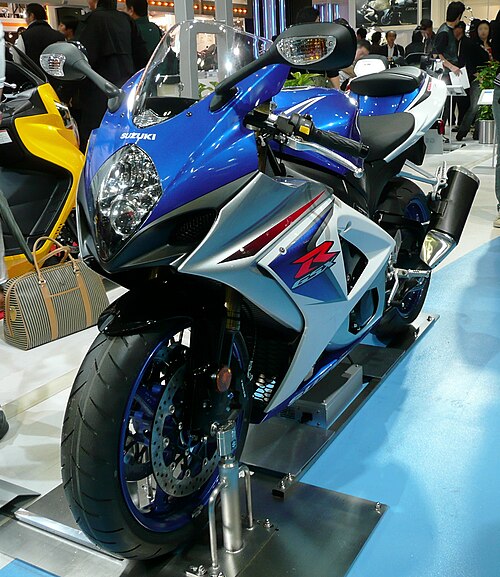
- GSシリーズ- 1976年のGS750は、スズキが20年ぶりに発売した4ストロークマシンでした。翌年にはスズキ初の1リッターマシンであるGS1000Eが発売され、1979年にはヨシムラGS1000スーパーバイクのコピーであるGS1000Sが発売されました。[19] [20]
- カタナ- GSX1100Sは1980年にヨーロッパで発売され、GSX1000Sは同年後半に1981年モデルとして米国とカナダに導入され、スポーツバイクのスタイリングに革命をもたらしました。[249] 1982年型カタナGS1000SVは、AMA モーターサイクル殿堂の「クラシックバイク」リストに掲載されており、博物館で展示されており、[250]モーターサイクルの芸術展にも展示されていました。[235]
- GSX-R750は、現代のレースレプリカ時代の幕開けとなった1980年代の日本製スポーツバイクの一つです。[251]空冷/油冷、軽量、パワフルなエンジンを搭載していました。[252] [253]自動車技術会は、 1984年のスズキGSX-R750を「日本の自動車技術の名品240選」の一つに挙げており、[77] 『モーターサイクルの芸術』にも掲載されています。[235]
- OHC 4バルブ45° Vツインエンジンを搭載したイントルーダー750は、1985年に登場した日本製初のクルーザーバイク(米国のライダー向けに設計された)でした。1997年までに、クルーザースタイルのバイクは米国のストリートバイク市場の約60%を占めるようになりました。[59] [254]
- GSX-R750に関連するGSX -R1100は1986年に登場しました。 [59] [255]同じ基本エンジンが1995年にバンディット1200に搭載されて再登場し、2006年まで生産されました。[256] [257]
- スズキ GSF1200 バンディット - フルフェアリングの RF900 の後継として 1996 年に発売された、GSXR 搭載の大型バンディットは、現実世界の人間工学と機能を備えた驚異的なパフォーマンスを提供し、一種の「カルト」モデルとなっています。これらのユニットは、ロードレースからオープンロードツーリングまで幅広く使用されており、その汎用性、堅牢性、および強力なトルク出力で有名です。多くは現在も稼働しています。キャブレター付きの空冷 (およびオイル) 設計は 1996 年から 2002 年まで使用され、その後スズキは後続モデルで燃料噴射と液冷に移行しました。シリーズの最後は GSX1250Fa でした。技術的には「バンディット」とは呼ばれていませんが、長く人気のあったラインの最後であることは明らかです。フルフェアリング付きの黒の GSX/Fa は、2010 年から 2011 年のわずか 2 年間しか販売されませんでした。批評家は、以前の GSF と同様に、このモデルの人間工学と実用的な「何でもできる」機能を高く評価しましたが、最終モデルの重量が重く、出力が比較的低かったため、市場の需要は低下しました。
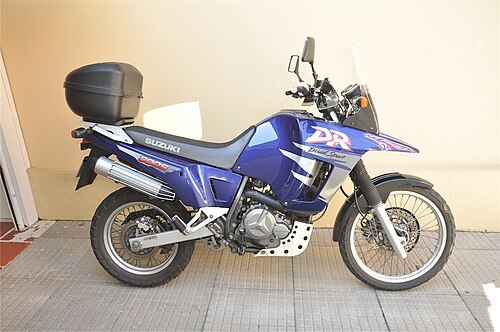
- DR -BIG、別名デザートエクスプレスDR800S (ドイツ語)オフローダーは、1990年に排気量が779ccに増加するまでDR750S (ドイツ語)として2年間存在し、それでも量産バイクで世界最大の単気筒エンジンでした。 [258]ヨーロッパでは1999年まで販売されていましたが、米国市場には輸出されませんでした。[259] V-Stromツインによって置き換えられたDR-BIGは、2014年にオーバーホールされたV-Strom 1000 ABSのデザインインスピレーションとして一周しました。[260] 2020年の時点で、DR-BIGは改良されたスズキV-Strom 1050のインスピレーションとなっています。
- スズキ RF シリーズスズキ RF シリーズはスポーツツーリングバイクです。エンジンは 400、600、900 cc の 3 種類があり、1994 年から 1998 年まで生産されていました。
- TL1000Sは、1996年の国際オートバイ・スクーターショーで、 Vツインエンジンを搭載した最初のスズキスポーツバイクとしてデビューしました。[261]これは、気筒あたり4バルブの水冷式、90°Vツイン、DOHCエンジンで、2012年まで生産されていました。[260] TL1000Sバイクの生産は2001年に終了しましたが、エンジンはTL1000R 、 SV1000 、 SV1000S、[262]およびV-Strom 1000とSuzuki V-Strom 1050に引き継がれました。[263]
- GSX-R600 – GSX-R750の小型版。以前にも偽物が存在したが[264] 、本物は1997年に登場し、その後頻繁にアップデートされている。[265] [266] [267]
- ハヤブサ(GSX-1300R)は1998年に発売され、現在もスズキの主力スポーツバイクとなっている。[268] [269] 1998年型スズキハヤブサは、JSAE 240 Landmarks of Japanese Automotive Technologyに選定されている。[117] 2008年モデル向けの第2世代ハヤブサの開発により、 2007年には高度に様式化されたネイキッドモデルであるGSX-1300BK B-King [270]が発売された。[271] [272]
- SV650は1999年にネイキッドバイク市場への低価格エントリーとして導入され、[273] [274] 2001年以降はネイキッドとフルフェアリングの両方が提供されました。[275] 2009年にネイキッドバイクバージョンは再設計され、スズキがカタナで確立した刀のモチーフに合わせてグラディウスと改名されました。[276]グラディウスバイクは、日本デザイン振興会からグッドデザイン賞(別名Gマーク)を受賞しました。[277]
- GSX-R1000 – この最高級スーパーバイクは2000年にデビューし、[278] GSX-Rシリーズの中で最大のモデルとなっています。[177] [178]
- バーグマン650 (AN650)は、日本(国内ではスカイウェーブとして販売)およびイタリアとスペインで生産された、排気量125cc以上の都市型スクーターシリーズの中で最大のモデルであった。2002年に登場した650は、世界最大の排気量を誇るスクーターであり、電動制御の無段変速機を搭載した初の二輪車であった。[279] [280]日本デザイン振興会は、2003年にスカイウェーブ650に、2006年にスカイウェーブシリーズ全体に、2013年に改良されたスカイウェーブ650LXにGマークグッドデザイン賞を授与した。[281] [282] [283]
- チョイノリは軽量で安価な50ccスクーターで、スカイウェイブ650の対極に位置するモデルであったが、縮小する二輪車輸出に対応して国内販売を伸ばすため、同時に導入された。[284] [285] 2002年のチョイノリは、JSAEの日本の自動車技術240選に選ばれている。[128]チョイノリは2003年にGマークグッドデザイン賞を受賞した。 [286]
- ヨーロッパではイントルーダーM1800Rと呼ばれていたブールバードM109R (VZR1800)Vツインエンジンは、2006年に登場し、112mm(4.4インチ)のボアと90.5mm(3.56インチ)のストロークを誇り、量産バイク(または乗用車)で使用されたガソリンエンジンピストンとしては最大級のものでした。 [287] [288] [289]
- GSX-650F – 2008年に導入されたこの新しいスポーツツーリングモデルは、販売が終了したKatanaの穴を埋めるものです。2009年モデルにはABS が標準装備されています。
- スズキ DR125 - 124cc 4ストロークバイク
- DL-650 V-Strom –デュアルスポーツバイク
- GSX-250F アクロス– 1990 年から 1998 年まで製造された、250 cc エンジンの小型スポーツツーリング バイクです。後部のガソリン タンクと、ガソリン タンクが通常ある場所に完全に囲まれたヘルメット収納スペースがあるため、実用的なスポーツ/ツーリング バイクとしてよく知られています。
- スズキ GSX-R250 – 1987年から1994年まで製造されていたオートバイ。GSX-R750の発表から数年後、250 ccのGSX-R250が発売されました。大型バイクと同様に、GSX-R250にはボックスフレーム(アルミニウムではなくスチール)、フルフェアリング、フルフローターリアスイング、4気筒4ストロークエンジンが搭載されていました。ただし、GSX-R750のエンジンが空冷および油冷であるのに対し、弟分は液冷エンジンでした。日本国外では多くの例が見られません。17インチの鋳造ホイールとフロントに300 mmのツインディスクブレーキ。GSX-R250は印象的なパワーを持ち、主に時速200 km(124 mph)を超える速度に達する公道走行可能な250 ccレーシングバイクとして作られました。輸入された標本はオーストラリアとニュージーランドでよく見られます。また、1989年から1992年頃にはデンマークにも約350台が輸出されました。2017年からはスズキV-Strom250にこのエンジンが継続搭載されています。
その他の電源

- RE5は、ヴァンケルロータリーエンジンを搭載した日本製のバイクとしては初めて(そして唯一)のモデルである。その点とジウジアーロのスタイリングにより、1970年代の最も奇妙で収集価値の高いバイクの一つとなっている。[290] [291] 1974年型RE5は、JSAEの日本自動車技術の240のランドマークの一つであり、[49] 1976年型はAMA モーターサイクル殿堂入りしている。[292]
- バーグマン燃料電池スクーターは、空冷式水素燃料電池で駆動する電動モーターで駆動し、排出物は水のみ。2009年の東京モーターショーでコンセプトモデルを発表した後、2011年にバーグマン燃料電池スクーターは、欧州連合で世界初の燃料電池車として全車両型式承認(WVTA)を取得し、すべての加盟国で販売できるようになりました。[171] [289]スズキはこのスクーターの市販化に取り組んでいます。[170] [293]
コンセプトバイク


.jpg/500px-Tokyo_Motor_Show_2007_-_DSC_7255_-_Flickr_-_Nguyen_Vu_Hung_(vuhung).jpg)
- 1985年の東京モーターショーで発表されたファルコルスティコのコンセプトモデルは、4サイクルスクエア4気筒500ccエンジン、フレームレスボディ、前後スイングアームサスペンション、センターハブ油圧パワーステアリング、チェーンレス油圧ドライブ、ポップアップスクリーンカウリングなど、1995年までに実用化される可能性のあるオートバイ技術を想定していた。 [294] [295] [296]
- ヌーダは、1986年の東京モーターショーで発表された、パワーステアリングとスイングシートを組み込んだ、カーボンファイバーハニカムモノコックボディのフルタイム2輪駆動プロトタイプでした。ヌーダのコンセプトは、スズキハヤブサのデザインに影響を与えました。[294] [296] [297] [298]
- B-キング- 2001年の東京モーターショーで展示されたコンセプトモデルは、大衆に好評を博した。GSX1300Rエンジンにターボチャージャーを追加することで強力な出力を証明し、携帯電話やGPSなどの電子機器は超近代的な角張った車体に収納された。生産モデルは6年後に登場したが、自然吸気エンジンを除いてほとんど変更されていない。[270] [299] [300] B-キングのスタイリングは、 GSR600 [301]とGSR750、イナズマGW250とGW250Sの受賞歴のあるデザインに反映されている。[302] [303]
- 2003年の東京モーターショーで公開された916ccエンジンを搭載したG-Striderコンセプトモデルは、バーグマン650に似た、プッシュボタンマニュアルモードを組み込んだ電動無段変速機を搭載した、スクーターとクルーザー(オートバイ)の半分をマッシュアップしたモデルでした。高級感を強調したG-Striderのハンドルバー、フットレスト、シートバックレスト、パッセンジャーバックレスト、ウインドスクリーンはすべて走行中に電動で調整可能で、可能な限り最も快適なライディングポジションを確保しました。[296] [304] [305]
- ストラトスフィアのプロトタイプは2005年の東京モーターショーで公開され、1100ccエンジンを省スペース設計の限界まで押し上げ、従来の直列4気筒エンジンと同じ幅の直列6気筒エンジンを実現しました。ハンマー加工されたアルミニウムとダマスカス鋼は、素材の特性をスタイリングデザインに取り入れています。スズキの以前の重要なコンセプトバイクであるB-Kingが生産されたことを考えると、量産モデルの見通しは良好に思えましたが、ストラトスフィアが承認される前に市場が変化しました。[296] [305] [306] [307]
- バイプレーンは2007年の東京モーターショーで発表された青空のコンセプトカーで、飛行機を操縦する感覚からインスピレーションを得て、二輪モビリティの楽しさを伝えるためにデザインされた。その形状は、V型4気筒エンジンを搭載した現代的なマシンに開放感を生み出している。[308] [309] [310]
- クロスケージコンセプトモデルは2007年の東京モーターショーで展示されました。高性能な二次電池と、英国の専門会社インテリジェントエナジーの小型軽量空冷燃料電池システムを組み合わせることで、低燃費で素早い起動が可能になりました。リチウムイオン電池は予備電力を確保し、環境への影響を最小限に抑えました。軽量であることは、このバイクを環境に優しいだけでなく、スポーティなものにしました。[308] [310]
- ジェンマのプロトタイプモデルは2007年の東京モーターショーで発表されました。特徴的な「フルフラット2人乗り」、250ccの4ストローク単気筒スクーターは低くて滑らかで、ライダーとパッセンジャーに親密感を与えます。ライダーの前の荷物室にはヘルメットが収納されています。ジェンマは翌年、国内市場向けに日本で生産されました。[311] [312] [313]
- 2013年の東京モーターショーで展示されたリカージョンターボパラレルツインミドルウェイト。
全地形対応車(ATV)

- トレイルバディ50(ALT50)
- クアッドランナー 50 (LT50)
- クアッドスポーツ50(LT-A50)
- クアッドスポーツ50(LT-Z50)
- クアッドスポーツ80(LT80)
- クアッドスポーツ90(LT-Z90)
- アルト125 3x6
- LT125D 4x6
- クアッドランナー 160 (LT-F160)
- ALT185 3x6
- LT185
- LT230
- LT230G
- LT230S
- クアッドランナー 250 (LT250E)
- クアッドレーサー 250 ( LT250R )
- クアッドスポーツ250(LT250S)
- クアッドスポーツ250(LT-Z250)
- オザーク 250
- キングクアッド300
- LT300E
- アイガー400
- キングクアッド400
- LT-Z400
- LT-R450
- クアッドレーサー500(LT500R)
- キングクアッド500
- クアッドマスター 500
- キングクアッド450
- キングクアッド700
- キングクアッド750
イベントスポンサーシップ
スズキはリュージュ、バイアスロン、クロスカントリースキーのスポーツイベントの主要スポンサーである。[314] [315]同社は2008年から2020年までのASEANサッカー選手権(AFFスズキカップ)のタイトルスポンサーであり[316] [317] 、イングランドリーグ2のクラブミルトン・キーンズ・ドンズ、イタリアセリエAのクラブトリノ、ポーランドエクストラクラサのクラブコロナ・キェルツェのスポンサーを務めている。[318]
参照

- スズキ自動車採用
参考文献
- ^ 「スズキ 2019年12月度及び2019年暦年 四輪車生産・国内販売・輸出実績(速報)」(PDF)スズキ株式会社 2020年1月30日。 2020年2月2日閲覧。
- ^ abcdefghij 「スズキ年次報告書」(PDF)。
- ^ 「スズキ株式会社 決算短信」スズキ株式会社2021年5月6日閲覧。
- ^ 「世界の自動車生産 OICA特派員調査 二重カウントなし メーカー世界ランキング 2011年」(PDF) 。 2020年5月17日閲覧。
- ^ “【世界・車メーカー】販売台数ランキング!※2014年1月~12月の販売台数【車査定ならナビクル】”. www.navikuru.jp。 2024 年 1 月 12 日。
- ^ “自動車メーカー販売台数ランキング【世界シェア2017-18年最新】”. MOBY(モビー)車は面白い!を届ける自動車情報メディア。 2018年3月27日。
- ^ 船外機、販売台数「ホンダ、苦戦続く船外機で巻き返し狙う」”. Response.jp.
- ^ 「スズキにとって乗用車は副業、スポーツ用小型車が主力」。オートモーティブ・ニュース第5656号。1996年4月29日。pp. S72(2)。
- ^ 「スズキモーター」. companieshistory.com 2013年8月8日. 2022年4月16日閲覧。
- ^ “1909 - Suzuki”. The S Thing . 2022年12月22日. 2024年7月26日閲覧。
- ^ 「衰退する綿花」リバプール国立博物館。 2024年7月26日閲覧。
- ^ ab 「Twist the Throttle: Suzuki」。ディスカバリーチャンネル。Discovery Communications, LLC。 2013年1月2日時点のオリジナル(ビデオ)からアーカイブ。2013年8月23日閲覧。
- ^ 「スズキ・モーターバイク by ELARIA SAMAAN」. prezi.com/ . 2022年4月16日閲覧。
- ^ ab 「VWとスズキ、4年間の紛争を解決」BBC、2015年8月30日。
- ^ 「スズキ、フォルクスワーゲンの株式を38億ドルで買い戻す」BBC、2015年9月17日。
- ^ 「スズキ株式会社」Google Finance。
- ^ Seth, Radhika (2012年9月19日). 「成人の養子縁組はビジネス上、完璧な意味を持つ」。ジャパン・デイリー・プレス。2012年10月17日時点のオリジナルよりアーカイブ。 2013年4月17日閲覧。
トヨタやスズキ、カメラメーカーのキヤノン、醤油メーカーのキッコーマンなど、最も著名な企業でさえ、家業を継ぐために息子を養子として迎える伝統がある。スズキの現会長兼CEOである鈴木修氏は、同社を経営する4代目養子である。
- ^ 「スズキの社長、50年近く勤めた後引退へ | Team-BHP」Team-BHP.com 2021年3月1日閲覧。
- ^ abcde 「100 Years of Suzuki Excellence」。The Auto Channel。2009年3月12日。 2013年10月5日閲覧。
- ^ abc 「スズキモーターサイクル - GSペーパー - GSからGSX-Rまで」。モーターサイクリストマガジン。2007年4月1日。 2013年10月5日閲覧。
- ^ ab Atiyeh, Clifford (2012 年 7 月 12 日). 「スズキは米国自動車市場から撤退するのか?」 MSN Autos. Microsoft. 2013 年 10 月 7 日時点のオリジナルよりアーカイブ。2013年8 月 21 日閲覧。
オートバイと ATV で有名なスズキの米国部門は、自動車の販売で苦戦を強いられている。
- ^ McClearn, Matthew (2013年4月19日). 「The Ode: North American Suzuki cars (1980–2013)」. Canadian Business . 2021年1月16日時点のオリジナルよりアーカイブ。 2013年8月21日閲覧。
アメリカン・スズキは2012年11月5日に破産を申請した。スズキ・カナダはディーラー、従業員、顧客に対し、残骸を安全に通過することを保証しようと躍起になった。それは希望的観測だった。
- ^ abcdefghijklmnopqrs 「History 1909–」。グローバルスズキ。スズキ株式会社。 2013年8月18日閲覧。
- ^ ab 「本社・高塚工場」。グローバルスズキ。スズキ株式会社。2013年10月24日時点のオリジナルよりアーカイブ。2013年9月5日閲覧。〒432-8611
浜松市中央区高塚町300
- ^ abcd 「1950年代の製品の歴史」。オートバイ - グローバルスズキ。スズキ株式会社。2013年10月6日時点のオリジナルよりアーカイブ。2013年8月18日閲覧。
- ^ 「スズライトSS」。日本の自動車技術の名所240選。公益社団法人自動車技術会。2013年10月2日時点のオリジナルよりアーカイブ。 2013年9月12日閲覧。
これは日本初の本格的な4輪軽自動車である。1955年10月に2ストローク360ccエンジンを搭載して発売された。車名の「スズ」は製造元であるスズキの略称であり、「ライト」は軽快な操作性と照明のイメージを想起させるものであった。スズライトは4輪車に2ストロークエンジンを搭載した初の国産車であり、フロントエンジン・フロントドライブ方式を採用した初の純国産車でもある。
- ^ abc English、ボブ(2009年8月13日)。「スズキが100周年を祝う」。MSNカナダ。 2013年8月25日閲覧。
現在の世界的な経済不況を考えると、販売目標の達成は難しいと言わざるを得ないが、それでもスズキのカナダ事業は現在、全力で操業している。
[永久リンク切れ] - ^ ab 水川由紀 (2012). 二輪自動車産業における寡占体制形成専修大学経済紀要(日本語)。47 (1)。東京都: 75. 2020年8月7日時点のオリジナルよりアーカイブ。2013 年9 月 27 日に取得。
- ^ 1960 TT 125 cc 結果 2014年3月29日閲覧
- ^ Motorcycle Mechanics、1961年8月、p.71 スズキ自動車株式会社の全面工場広告、スズキ250TB。スズキ自動車会社は、マン島、アッセン、スパ、ベルファスト、モンツァ、クリスチャンスパットの6つのグランプリレースに、スズキメーカーのレーサーRT-61 125cc 6台とレーサーRV-61 250cc 6台を送ります。2014年3月29日にアクセス
- ^ 1961 TT 250 cc 結果 2014年3月29日閲覧
- ^ スズキレーシングモデル 1960–1967 [永久リンク切れ] 2014年3月29日閲覧
- ^ ab 「豊川工場」。グローバルスズキ。スズキ株式会社。2013年10月24日時点のオリジナルよりアーカイブ。 2013年9月5日閲覧。
愛知県豊川市白鳥町宇多利1-2。
- ^ abc 「1960年代のレースの歴史」。オートバイ - グローバルスズキ。スズキ株式会社。2014年3月8日時点のオリジナルよりアーカイブ。 2013年8月19日閲覧。
- ^ 「TT 1962」。マン島TTの公式ウェブサイト。マン島経済開発局。2013年8月24日閲覧。2
周の50ccレースは、一部の皮肉屋からはちょっとした笑い話とみなされていたが、スズキ、ホンダ、クライドラーのグランプリバトルがマウンテンコースにまで広がったことで、彼らの考えは完全に間違っていたことが証明された。
- ^ 「TT 1963」。マン島TTの公式ウェブサイト。マン島経済開発局。 2013年8月24日閲覧。
前年の成功を受けて3周に増加された50ccレースで歴史が作られた。
- ^ Wilson, Byron (2013年8月20日). 「スズキがインディでアメリカ進出50周年を祝う」. Motorcycle USA . 2020年8月7日時点のオリジナルよりアーカイブ。 2013年8月23日閲覧。
スズキはユニークな立場にありました。2013年に50周年を祝ったことに加え、3月に破産申請が承認されたことを受けて、米国での自動車生産の終了も経験しました。
- ^ “スズキ フロンテ800”.日本の自動車技術の名所240選. 自動車技術会. 2013年10月2日時点のオリジナルよりアーカイブ。 2013年9月12日閲覧。
フロンテは1962年から1964年にかけて東京モーターショーに出展され、研究開発車として展示された800ccクラスの小型乗用車は、最終的に1965年にフロンテ800として発売されました。水冷2ストローク785ccエンジンとフロントエンジン・前輪駆動に4速トランスミッションを搭載し、最高速度115km/hを実現しました。そのスタイリングは時代を先取りしており、好評を博しました。
- ^ ab 「1960年代の製品の歴史」。オートバイ - グローバルスズキ。スズキ株式会社。2013年10月4日時点のオリジナルよりアーカイブ。2013年8月18日閲覧。
- ^ "Iwata Plant". Global Suzuki. Suzuki Motor Corporation. Archived from the original on 24 October 2013. Retrieved 5 September 2013.
2500, Iwai, Iwata-shi, Shizuoka.
- ^ a b "Kosai Plant". Global Suzuki. Suzuki Motor Corporation. Archived from the original on 16 January 2021. Retrieved 5 September 2013.
4520, Shirasuka, Kosai-shi, Shizuoka.
- ^ a b c d e f g h i j "History 1970–". Global Suzuki. Suzuki Motor Corporation. Retrieved 18 August 2013.
- ^ "Meetings – The official Isle of Man TT website". TT 1970. Isle of Man Department of Economic Development. Retrieved 24 August 2013.
- ^ "History of Suzuki 4x4: 1970". Global Suzuki. Suzuki Motor Corporation. Archived from the original on 28 March 2019. Retrieved 26 August 2013.
- ^ a b c d Parry, John (4 June 2010). "Jimny the giant killer turns 40". The Weekly Times. Archived from the original on 16 January 2021. Retrieved 4 September 2013.
The original Jimny, the LJ10, was unveiled in Japan in 1970 – although it first appeared in Australia in 1974 as the LJ20, powered by a 360cc water-cooled two-stroke engine.
- ^ a b "Suzuki GT750". 240 Landmarks of Japanese Automotive Technology. Society of Automotive Engineers of Japan, Inc. Archived from the original on 6 February 2012. Retrieved 12 September 2013.
This motorcycle had a water-cooled, 2-stroke, 3-cylinder engine that provided good acceleration over a wide speed range from low to high. Technologies developed for Grand Prix racing were incorporated into the body structure and brakes. Easily visible meters and other features were also provided.
- ^ a b c d e f "Products History 1970s". Motorcycle – Global Suzuki. Suzuki Motor Corporation. Archived from the original on 6 October 2013. Retrieved 18 August 2013.
- ^ "Racing History 1970s MX". Motorcycles – Global Suzuki. Suzuki Motor Corporation. Archived from the original on 11 November 2007. Retrieved 19 August 2013.
- ^ a b "Suzuki RE-5". 240 Landmarks of Japanese Automotive Technology. Society of Automotive Engineers of Japan, Inc. Archived from the original on 2 October 2013. Retrieved 12 September 2013.
This masterpiece of ambition was equipped with a water-cooled, single-rotor Wankel rotary engine. The RE-5 gained popularity all over the world for its completely unique design by Giorgetto Giugiaro, as well as its peripheral port system and twin mufflers.
- ^ "Suzuki Philippines Incorporated". Company. Suzuki Philippines Inc. Retrieved 25 August 2013.
Since 1959, Suzuki came into the Philippine motoring scene through the able management of Rufino D. Antonio and Associates Inc wherein they handled nationwide distribution of Suzuki motorcycles.
- ^ "History of Suzuki 4x4: 1975". Global Suzuki. Suzuki Motor Corporation. Archived from the original on 28 March 2019. Retrieved 26 August 2013.
- ^ a b c "Company Milestones". Pak Suzuki Motor Co. Ltd. Archived from the original on 24 September 2011. Retrieved 14 September 2013.
- ^ a b "Suzuki considers turning out vehicles in Pakistan". Nihon Keizai Shimbun. Tokyo: 7. 7 October 1980.
- ^ a b "Endurance and Superbike Racing History". Global Suzuki. Suzuki Motor Corporation. Archived from the original on 9 March 2014. Retrieved 26 August 2013.
- ^ "History of Suzuki 4x4: 1977". Global Suzuki. Suzuki Motor Corporation. Archived from the original on 16 January 2021. Retrieved 26 August 2013.
- ^ "GM ties with two Japanese car makers". Nihon Keizai Shimbun. Tokyo: 1. 18 August 1981.
- ^ "Suzuki's New Australian Home". AutoWeb News. 1 March 1998. Archived from the original on 22 March 2012. Retrieved 2 September 2013.
Marking a new beginning for the giant Japanese car, motorcycle and marine manufacturer in Australia, the new purpose-built complex will be in Melbourne rather than Sydney, the company's home for 18 years.
- ^ a b c d e f g h i j k l m n o "History 1980–". Global Suzuki. Suzuki Motor Corporation. Retrieved 18 August 2013.
- ^ a b c d e "Products History 1980s". Global Suzuki. Suzuki Motor Corporation. Archived from the original on 2 January 2015. Retrieved 2 September 2013.
- ^ "G.M., SUZUKI AND ISUZU AGREE TO 'MINI-CAR' DEAL". The New York Times. 13 August 1981. Retrieved 2 September 2013.
The companies hope to gain an edge in the increasingly competive [sic] market for small, fuel-efficient cars with an engine displacement of 1,000 cubic centimeters and under. The agreement provides for each of the three companies to acquire shares in the other companies and to offer mutual technological and marketing assistance.
- ^ Neff, John (17 November 2008). "GM selling remaining Suzuki stake for $230M". Autoblog. AOL Inc. Retrieved 2 September 2013.
GM has held an equity stake in Suzuki since 1981, when it purchased approximately 5.3 percent of the Suzuki shares outstanding. GM's stake was diluted to 3.5 percent in subsequent years, but in 1998 GM increased its holding in Suzuki to 10 percent, and to slightly over 20 percent in 2001. In 2006, GM sold a 17.4 percent stake in Suzuki.
- ^ a b "Racing History 1980s". Motorcycles – Global Suzuki. Suzuki Motor Corporation. Archived from the original on 7 February 2012. Retrieved 19 August 2013.
- ^ "1981 – 1995 Suzuki Samurai". MSN Autos Canada. Microsoft. Archived from the original on 27 December 2009. Retrieved 3 September 2013.
Though the Samurai wasn't the first Suzuki off-roader to be sold in Canada, it was more popular. Arriving in 1981, the rugged and affordable ute quickly became popularity. Unfortunately its high centre of gravity and quick steering made it prone to rollovers. Sales ended in Canada in 1989, but continued in the U.S. until 1995.
- ^ "History of Suzuki 4x4: 1981". Global Suzuki. Suzuki Motor Corporation. Archived from the original on 28 January 2021. Retrieved 3 September 2013.
In 1981 Suzuki continued to enjoy a developing level of success in the domestic market, but it was with the export of the SJ410 that the company really broke into new markets.
- ^ "World Championship Motocross Racing/All Japan Road Race & Motocross History 1980s". Motorcycles – Global Suzuki. Suzuki Motor Corporation. Archived from the original on 26 September 2009. Retrieved 19 August 2013.
- ^ Jacob, Jijo (9 January 2008). "CHRONOLOGY-Maruti Suzuki to launch world models from India". Reuters. Retrieved 11 September 2013.
Suzuki Motor Corp owns 54.2 percent in Maruti Suzuki India Ltd, India's leading car maker.
- ^ "Pak Suzuki Motor Company". Business Recorder. 29 August 2013. Archived from the original on 23 September 2015. Retrieved 7 September 2013.
Pak Suzuki Motor Company Limited (PSMCL) is a public limited company that was formed in 1983 as a joint venture between Pakistan Automobile Corporation Limited and Suzuki Motor Corporation Japan. A year later, the Company started its operations, which were initially limited to the assembly and marketing of Suzuki FX.
- ^ "Suzuki to double auto production in Pakistan". Nihon Keizai Shimbun. Tokyo: 10. 20 November 1984.
- ^ Khan, Baber (19 September 2010). "The legacy of Suzuki Mehran". The Express Tribune. Retrieved 7 September 2013.
Years ago some clean shaved kind hearted Japanese men come down to Karachi – better known as the 'city of no-lights' located in the 'country of no-lights' with the same aim as Tata. In 1982 Awami Auto Limited began the production of the Suzuki SS80 or Suzuki FX as we call it and the very next year Awami Autos Ltd was renamed Pak Suzuki Motor Company Ltd which in 1988 ceased the production of FX and brought in the second generation Suzuki Alto which in Pakistan is called Mehran.
- ^ Elmer, Matthew. "1982 Suzuki LT125". MSN Autos Canada. Microsoft. Archived from the original on 1 September 2014. Retrieved 4 September 2013.
While the public was still enamoured with the three-wheel layout, Suzuki figured a fourth wheel couldn't hurt. While three-wheelers are nimble and agile, their triangular arrangement made them prone to rollover accidents. The fourth wheel dramatically reduced the risk of toppling over, creating what we recognize today as an ATV.
- ^ a b "Suzuki RG250 Gamma". 240 Landmarks of Japanese Automotive Technology. Society of Automotive Engineers of Japan, Inc. Archived from the original on 6 February 2012. Retrieved 12 September 2013.
The Suzuki RG250G was the dream machine of road bikes, developed using technologies that Suzuki had accumulated on the Grand Prix racing circuit. Every imaginable technology was packed into the machine, including the first aluminum square-pipe frame in the world to be used on a mass-market motorcycle.
- ^ McGrew, Jonathan (25 January 2010). "Suzuki To Make Swift Return In 2011". Green Car Reports. Retrieved 7 September 2013.
The last time the American market saw a Suzuki Swift was in 2001. Some of you might not remember the Swift, but you might recall its very close cousin the Geo Metro. The Suzuki Swift was originally named the Suzuki Cultus and first introduced to the Japanese market in 1983. From 1983 on, the Cultus was marketed in seven countries under several different nameplates, the best-known of which were Suzuki Swift and Geo Metro. Since 2001 we have been without the Swift nameplate, but recent news has pointed to the return of the Suzuki Swift for 2011.
- ^ "Suzuki Ships Cars to G.M." The New York Times. 3 April 1984. Retrieved 9 September 2013.
The first shipload of 900 fuel-efficient, 60-horsepower cars, called the Cultus, left for the United States from central Japan on Sunday, he said. G.M., which owns 5 percent of Suzuki and helped develop the car, wanted to import up to 100,000 of the cars a year. But because the cars are Japanese-made, they fell under that country's United States import quotas and the government allowed G.M. only 17,000.
- ^ "History of Suzuki 4x4: 1984". Global Suzuki. Suzuki Motor Corporation. Archived from the original on 28 March 2019. Retrieved 9 September 2013.
- ^ a b Brown, Warren (26 May 1988). "Suzuki Samurai". Orlando Sentinel. Retrieved 9 September 2013.
When the Suzuki Samurai entered the United States in late 1985... its ride was brutal. Its handling at highway speeds was frightening. And it was noisy... Today the Samurai is selling at the impressive rate of 8,000 vehicles per month, largely to younger buyers, 25 and under. It is also appearing before a growing number of juries in court cases stemming from roll-over accidents... Suzuki says its first-generation Samurai vehicles are safe. The plaintiffs disagree. Presumably, the courts will decide who's right. What's certain is that the 1988 1/2 Samurai is superior to those earlier models that have brought Suzuki so much fortune, fame and trouble.
- ^ a b Holusha, John (3 September 1988). "Suzuki Samurai Vehicles Set Record Sales in August". The New York Times. Retrieved 9 September 2013.
Samurai sales, which had been running at 5,000 to 6,000 a month for the first five months of the year, dipped to 2,199 in June after the Consumers Union report. American Suzuki, which is owned by the Suzuki Motor Company of Japan, heatedly denied the accusation and offered a $2,000 cash incentive to its dealers – a very substantial amount on a vehicle with a base price of $8,495. That allowed dealers to cut prices aggressively, and at the same time Suzuki increased its advertising.
- ^ a b "Suzuki GSX・R750". 240 Landmarks of Japanese Automotive Technology. Society of Automotive Engineers of Japan, Inc. Archived from the original on 6 February 2012. Retrieved 12 September 2013.
The Suzuki GSX-R750 came onto the market equipped with the styling and mechanisms of endurance-racing motorcycles. Suzuki incorporated into this mass-market vehicle technologies that it had developed through its racing experience, and it became a best-seller in the 750 cc class.
- ^ "JAPAN: Suzuki's Alto minicar hits 4 million mark". just-auto.com. 8 August 2001. Archived from the original on 3 July 2019. Retrieved 12 September 2013.
Sales reached one million in 1985 and the three million mark was passed in 1993. However, expansion of Suzuki's subcompact lineup and the increasing popularity of RV-style subcompacts like Suzuki's own Type R slowed production of the Alto.
- ^ Horovitz, Bruce (20 August 1985). "Introducing Low-Price 'Samurai' in November : Suzuki to Market Jeep Competitor". Los Angeles Times. Retrieved 15 September 2013.
Analysts said Suzuki will be the pioneer in the 'mini-sport utility' market, a segment in which the domestic companies have announced no plans to compete. The Big Three U.S. auto makers all sell full-size off-road vehicles, and American Motors has long been a major competitor with its Jeep line.
- ^ Sloane, Leonard (21 September 1987). "Advertising; New Spots For Suzuki: 'Never Dull'". The New York Times. Retrieved 12 September 2013.
'This car is available in 103 countries throughout the world, this being the 103d, not the first,' said N. Douglas Mazza, vice president and general manager of the Suzuki of America Automotive Corporation in Brea, Calif. 'In the 102 other countries, they see it as a sports-utility car. But in our campaign, you won't see any reference to what kind of car it is. Let the buyer define it.'
- ^ a b "Jinan Qingqi Motorcycle Co., Ltd". About Us. qingqi.com.cn. Retrieved 12 September 2013.
JINAN QINGQI MOTORCYCLE CO., LTD.(JNQQ) was established in 1956, the headquarters is in Jinan City, Shandong Province, where the first civil motorcycle of China was made. Since 1985, Jinan QINGQI started to work with SUZUKI (JAPAN) technically, and manufactured the first scooter in mainland of China. Established the Joint Venture with SUZUKI in 1996, with PEUGEOT in 2006, and became the only company who has 2 different technical systems from both Europe and Japan.
- ^ "Kurumsal". motosiklet.suzuki.com.tr (in Turkish). Archived from the original on 14 August 2019. Retrieved 14 August 2019.
- ^ "G.M., SUZUKI IN CANADA TIE". The New York Times. 28 August 1986. Retrieved 12 September 2013.
Unlike three other Asian auto plants being built in Canada, the companies said they have agreed to abide by a treaty between the United States and Canada requiring greater Canadian content in cars produced here.
- ^ "MAZDA:1980–1989". History. Mazda Motor Corporation. Retrieved 12 September 2013.
- ^ a b Krebs, Michelle. "Suzuki's Grand Vitara, a Granddaddy of SUVs, Shifts Gears". AutoObserver. Edmunds Inc. Retrieved 12 September 2013.
But before the Toyota and Honda SUVs were even a gleam in product planners' eyes, Suzuki had virtually invented the compact soft-roader market with the 1988 debut of the Escudo in Japan and launched a year later in the U.S. as the Sidekick.
- ^ a b O'Dell, John (26 September 1989). "Samurai Sales Plunge Sparks Shuffle at American Suzuki". Los Angeles Times. Retrieved 12 September 2013.
Also Monday, American Suzuki announced its 1990 automobile lineup. The Samurai is being de-emphasized, with fewer models and options being offered. Meanwhile, the Sidekick—a squat version of the Samurai with a lower center of gravity, is being offered in several new configurations. As last year, there will be three models of the Swift.
- ^ Lienert, Paul (12 March 1989). "Japan Has 50% Of U.s. Car Market Within Reach". Chicago Tribune. Retrieved 12 September 2013.
- General Motors Corp. is importing nearly 150,000 units a year from Japanese affiliates Isuzu Motors Ltd. and Suzuki Motor Co. Ltd. and buys another 100,000 to 150,000 units a year from New United Motor Manufacturing Inc., its joint venture in Fremont, California, with Toyota Motor Corp. (GM's joint venture in Canada with Suzuki, called Cami Automotive, is expected to provide another 120,000 utility vehicles a year to the U.S. automaker. The plant is scheduled to open in April.)
- ^ a b c "Suzuki in Hungary". Magyar Suzuki Zrt. Retrieved 13 September 2013.
- ^ a b c d e f g h i j k l m "History 1990–". Global Suzuki. Suzuki Motor Corporation. Retrieved 18 August 2013.
- ^ "P.M. BRIEFING : Japanese Upgrade Mini-Vehicles". Los Angeles Times. 5 March 1990. Retrieved 13 September 2013.
Japanese auto makers have started marketing mini-vehicles with upgraded standards, bolstering prospects for recovery of the mini-car market, industry sources said today.
- ^ Bohlen, Celestine (25 April 1991). "Suzuki Starts Joint Venture in Hungary". The New York Times. Retrieved 13 September 2013.
The Suzuki Motor Corporation began the first major Japanese investment in Eastern Europe today, signing a joint venture project that will start producing hatchback passenger cars at a former Soviet military base in northern Hungary next year. The $235 million Magyar Suzuki plant, near the Danube River in the city of Esztergom, represents the largest single foreign investment in Hungary.
- ^ Treece, James B. (22 September 1991). "Why Gm And Daewoo Wound Up on the Road To Nowhere". Bloomberg Businessweek. Archived from the original on 13 January 2013. Retrieved 13 September 2013.
Like its local rivals, Daewoo was looking more to the protected—and lucrative—domestic market, which bought 60% of all Korean-built cars in 1989, up from only 33% in 1987. But its rivals were introducing cars with newer technology. When GM balked at Daewoo's request for newer models to keep up, the Korean company inked a technology-sharing deal with Japan's Suzuki Motor Co.
- ^ "The Good Oil: A big deal in a small package". New Zealand Herald. 31 August 2013. Retrieved 13 September 2013.
Looking like the runt of the litter from an unholy union between a Mazda MX-5 and a Dodge Viper, the Cappuccino was a rear-wheel drive convertible that featured a removable roof and roll bar and was powered by a mighty 657cc three-cylinder engine. It was produced from 1991 until 1997 and a few are still visible on local roads, but now it seems there is a rumour doing the rounds that Suzuki is considering reviving its little RWD hero for a launch in 2016!
- ^ a b "India's car market: Local hero". The Economist. 14 August 1997. Retrieved 14 September 2013.
Under the terms of the joint venture, Suzuki and the government take turns in nominating MUL's managing director, for five years at a time. The present boss, Ravindra Bhargava, was Suzuki's choice. His term runs out this month, and the government and Suzuki cannot agree on his successor. The head of the Japanese firm, Osamu Suzuki, has been invited to India to help make the final decision. Even if a compromise is reached, this may be just a preliminary skirmish in a battle for control.
- ^ "Two-wheel Drive From Japan". Chicago Tribune. 11 July 1993. Retrieved 18 September 2013.
Suzuki formed Wangjian Suzuki Motorcycle Co., owned 50 percent by Wangjiang Machine Building Plant, 35 percent by Suzuki and 15 percent by Nissho Iwai Corp., in last month to produce 7,500 250-cubic centimeter Suzuki motorcycles in the first year and 50,000 in the third year.
- ^ de Feijter, Tycho (1 July 2013). "Suzuki Alto 20th Anniversary Edition hits the China car market". China Auto News. CarNewsChina.com. Retrieved 18 September 2013.
The Suzuki Alto 20th Anniversary Edition has been launched on the China car market, price starts at 52.400 yuan and ends at 61.400 yuan. Best thing: it comes only in Pink! The pinky special edition celebrates the 20th birthday of the Chang'an-Suzuki joint venture that started making the second generation Suzuki Alto in June 1993.
- ^ "Suzuki Wagon R". 240 Landmarks of Japanese Automotive Technology. Society of Automotive Engineers of Japan, Inc. Archived from the original on 18 September 2011. Retrieved 12 September 2013.
The Wagon R has a short bonnet and a tall body style. Featuring upright seats for ease of ingress and egress, its spacious passenger compartment accommodates 4 adults. It has a fully flat luggage compartment with a generous amount of space. The Wagon R has a highly rigid body and a wide field of vision and demonstrates its environmental consciousness by adopting the new R134a refrigerant. Named the 1993 RJC Car of the Year.
- ^ Takayama, Hideko; Wehrfritz, George (17 January 1999). "Japan's Mini Invasion". Newsweek. Archived from the original on 6 May 2012. Retrieved 18 September 2013.
Suzuki called it the Wagon R. Launched in late 1993, Aoshima's creation became Japan's car of the decade. It accommodates four adults and luggage, and has seats that recline, fold flat into a bed or tuck away to maximize storage space. 'It's like a 4.5-tatami room,' marvels one Tokyo-based analyst, referring to the multifunctional spaces in small Japanese homes. Every Japanese minicar maker borrowed the Wagon R concept, and it appeared later in the two Mercedes designs, the A-class and the Smart.
- ^ "Maruti rolls out five millionth car". The Hindu. 28 April 2005. Archived from the original on 1 May 2005. Retrieved 19 September 2013.
The first Maruti vehicle, a Maruti 800, was rolled out on 14 December 1983. The first million was reached in March 1994 while the second million was completed in October 1997. The three millionth vehicle was rolled out in June 2000 while the four millionth vehicle was manufactured in April 2003, the last million being the fastest, coming in just two years.
- ^ Davison, Phil (11 March 1994). "Spanish town 'at war' with Suzuki_ Phil Davison writes from Linares on an upsurge of bitter anti-Japanese feeling". The Independent. Archived from the original on 25 May 2022. Retrieved 19 September 2013.
Last month, Suzuki, owners of 84 per cent of Andalusia's only car plant, Santana Motor, announced a 'suspension of payments' – its liquidity could not cover its short-term debts. It said it would not invest another peseta, that a new investor would have to come up with 38 billion pesetas (around pounds 190m) and that 60 per cent of Santana's 2,400 workers would have to go.
- ^ Dever, Paul (6 December 1996). "Suzuki Motorcycle and Truck Joint Venture Begins Operation". The Auto Channel. Retrieved 19 September 2013.
The Associated Press reported that Suzuki Motor Corp.'s joint venture with Vietnam has started operating an assembly plant to make light trucks and motorcycles. The financial newspaper Investment said the factory, located in the Bien Hoa industrial zone north of Ho Chi Minh City, had set a production goal of 10,000 trucks and 30,000 motorcycles per year. The venture's product will be sold locally in Viet Nam and exported.
- ^ "Suzuki turns first sod on factory project". Viet Nam News. 26 April 2012. Archived from the original on 29 January 2021. Retrieved 19 September 2013.
Viet Nam Suzuki Corp began to manufacture motorbikes at Binh Da factory in Dong Nai in 1996.
- ^ "Authorities suspicious of Suzuki tax scandal". VietNamNet Bridge. Retrieved 19 September 2013.
Suzuki has been operating in Vietnam since 1996 with the construction of a motorcycle and automobile plant in Long Binh Techno Park in Dong Nai Province. In 2006, it built a new motorcycle plant to meet demands from the expanding market in Vietnam with an annual output of 80,000 units, also in Long Binh Techno Park.
- ^ "Suzuki Wins Product Innovation Award at IMTEC 97". Recreational Boating Building Industry. Polson Enterprises. 25 September 1997. Retrieved 20 September 2013.
- ^ Clarke, Dean Travis (16 July 1998). "What's New in Boat Engines". Orlando Sentinel. Retrieved 20 September 2013.
Suzuki also qualifies as a four-stroke innovator, having won the American marine industry's top prize last year for its 65- and 75-horsepower models. Tests show that Suzuki has better acceleration than its competitors. In fact, Suzuki's engines have proved to be so good that the company now makes all the four-strokes for Outboard Marine Corp.'s Evinrude and Johnson lines.
- ^ Collings, Anthony (22 April 1997). "Suzuki accuses Consumer Reports publisher of rigging tests". CNN. Retrieved 9 September 2013.
The auto manufacturer released what it said was evidence that CU, which publishes Consumer Reports magazine, rigged results in 1988 to make the vehicle look bad and boost magazine sales.
- ^ Peterson, Iver (23 April 1997). "Suzuki Says Testers Sought To Prove A Car Unsafe". The New York Times. Retrieved 9 September 2013.
In its comment on roll-over standards, presented to the National Highway Traffic Safety Administration yesterday, the car maker included an affidavit from a former Consumers Union test mechanic that after the car failed to tip after several runs, a senior Consumers Reports editor in effect instructed the testers to find someone who could make the car go up on two wheels. Suzuki said a videotape of the test, obtained from Consumers Union under a court procedure, also reveals a car tester yelling, 'All right, Ricky baby!' when a Samurai driven by Richard Small tipped up in a test.
- ^ Mitra, Sumit (10 November 1997). "On a crash course". India Today. Retrieved 14 September 2013.
In the ongoing wrestling bout between the Industry Ministry and Suzuki Motor Company (SMC) of Japan for the control of Maruti Udyog Limited (MUL), the Indian side has put its opponent on a half nelson.
- ^ "COMPANY NEWS; AUTO MAKER TO TRIPLE ITS STAKE IN SUZUKI MOTOR". The New York Times. 17 September 1998. Retrieved 11 September 2013.
G.M. is strong in North America, Latin America and Europe, but it does not have a big presence in Asia. It hopes to use Suzuki as a springboard to increase its presence there.
- ^ "Government, Suzuki resolve Maruti row". Rediff on the Net. 8 June 1998. Retrieved 14 September 2013.
The government has signed a memorandum of understanding and settlement with the Suzuki Motor Corporation under which appointments of chairmen and managing directors of their joint venture, Maruti Udyog Limited, will be made only after mutual consultation.
- ^ "Changan Automobile Company Limited". Changan Suzuki Automobile Co., Ltd. Chongqing Changan Automobile Company Limited. Archived from the original on 21 September 2013. Retrieved 20 September 2013.
Changan Suzuki Automobile Co., Ltd now has 4176 staffs, of which there're about 880 management and technology personnel. Changan Suzuki is mainly engaged in four products series: LingYang (came to market in June 1998); Swift (came to market in April 2005); TianYu SX4 (sedan) (came to market by the end of 2006) and SX4 (hatchback) (came to market in March 2007); new Alto (came to market in September 2009).
- ^ a b c "Suzuki drives back into Myanmar". Investvine.com. 8 February 2013. Archived from the original on 7 August 2020. Retrieved 16 February 2013.
- ^ Miyazaki, Ken (9 March 2012). "Suzuki looks to restart business in Myanmar". Asahi Shimbun. Archived from the original on 21 September 2013. Retrieved 20 September 2013.
The maker had produced motorcycles and small commercial vehicles in Myanmar under a joint company with a state-backed enterprise since 1998, when the country was ruled by a military government.
- ^ "Myanmar Suzuki Motor Co., Ltd". Businessweek.com. Bloomberg. Archived from the original on 21 September 2013. Retrieved 20 September 2013.
Myanmar Suzuki Motor Co., Ltd. manufactures motorcycles, small passenger cars, and commercial vehicles. The company was founded in 1998 and is based in Yangon, Myanmar. Myanmar Suzuki Motor Co., Ltd. operates as a subsidiary of Suzuki Motor Corp.
- ^ Brown, Roland (2006), The Ultimate History of Fast Motorcycles, Bath, UK: Parragon, pp. 214–215, ISBN 1-4054-7303-7
- ^ a b Hyde, Justin (5 November 2012). "Suzuki leaves U.S. car business to focus on small vehicles elsewhere". Motoramic. Yahoo! Inc. Retrieved 9 September 2013.
And after nearly 30 years on these shores, the company had failed to craft much of an identity among American consumers. In China, Malaysia and elsewhere, Suzukis are seen as cheap yet stylish transportation, an image that it could never build here. Suzuki's models were never top of their class in any particular measure; the 16-year battle with Consumer Reports over its pillory of the 1988 Suzuki Samurai didn't help. Among motorcycle enthusiasts, the Suzuki Hayabusa remains legend as the world's fastest production bike, but Suzuki never found a way to translate the enthusiasm for its two-wheeled products to those with four.
- ^ a b "Suzuki Hayabusa". 240 Landmarks of Japanese Automotive Technology. Society of Automotive Engineers of Japan. Archived from the original on 16 October 2013. Retrieved 16 October 2013.
The Suzuki Hayabusa had a 1299 cc 4-cylinder DOHC engine, which employed the latest electronic fuel injection system. High-speed plated cylinders were used for the engine, and excellent piston cooling efficiency was achieved through the use of a compact and lightweight cylinder block and crankshaft. The multi-reflector low beam and projector high beam were characteristically laid out one above the other. Large air intakes to introduce boost pressure were laid out on both sides of the lights in locations that maximize running wind pressure. This contributed to greatly increased horsepower and torque. A large capacity clutch helped to realize fine gear engagement and light clutch feeling. The aerodynamic performance was optimized by an elaborate design around the cowling featuring a one-piece front fender, air intakes, and the like, as well as by optimal layout of the radiator and oil cooler.
- ^ O'Dell, John (12 December 1998). "American Suzuki Names New President". Los Angeles Times. Retrieved 2 October 2013.
American Suzuki Motor Corp. has appointed longtime company executive Rick Suzuki as its new president. He had been president of CAMI Automotive Inc., an auto manufacturing joint venture of Suzuki Motor Corp. and General Motors of Canada. Suzuki will be responsible for directing all of Brea-based American Suzuki's operations, including its automotive, motorcycle and marine divisions. Suzuki began his career with Suzuki Motor Corp. in Japan in 1974. He joined Suzuki Canada Inc. in 1987 and was responsible for overseeing operations for all three divisions of the Canadian subsidiary. He launched Suzuki Motor's automotive division operations in Canada.
- ^ a b Krebs, Michelle (30 April 2008). "Rick Suzuki: Fall on Sword Justified?". AutoObserver. Edmunds.com. Retrieved 2 October 2013.
In a March letter to employees, the 60-year-old Rick Suzuki wrote that he would step down 'to bear responsibility' for the automaker's poor sales and earnings. No timeframe was given for his departure. Chairman of American Suzuki since 1998, he is the grandson of Suzuki Motor Corp. founder Michio Suzuki.
- ^ Bowman, Bill. "GM Argentina". Generations of GM History. GM Heritage Center. Archived from the original on 4 April 2012. Retrieved 30 September 2013.
- ^ a b c "History 2000". Global Suzuki. Suzuki Motor Corporation. Retrieved 18 August 2013.
- ^ "TIMELINE: Key dates in General Motors' history". Reuters. 29 May 2009. Retrieved 30 September 2013.
- ^ a b "History 2001". Global Suzuki. Suzuki Motor Corporation. Archived from the original on 19 December 2018. Retrieved 18 August 2013.
- ^ Jones, Terril Yue (7 March 2001). "Jaguar Takes the Wraps Off the X-Type, Its $30,000 Make-or-Break Machine". Los Angeles Times. Retrieved 30 September 2013.
Also unveiled in Switzerland for the Geneva show and likely to come to America: the Suzuki Liana, a five-door compact minivan-like vehicle known in Japan as the Aerio. The Liana, based on the Suzuki Esteem, will come in front-wheel-drive and all-wheel-drive configurations.
- ^ "Suzuki Liana". Fleet News. Bauer Automotive. 7 March 2001. Retrieved 30 September 2013.
SUZUKI is claiming its new hatchback will bring unbeatable value to the compact business car sector when it is launched this month. Priced from £9,995 on-the-road, the Liana – short for Life in a New Age – is a five-door, five-seat model that has the potential to drive Suzuki into the heartland of the C segment by offering significantly higher perceived value than European market pacesetters like the Volkswagen Golf and Ford Focus.
- ^ Waters, Pattie (1 October 2002). "SMAC is Born – Suzuki Opens North American ATV Manufacturing Facility". Off-Road.com. VerticalScope. Retrieved 2 October 2013.
Suzuki Manufacturing of America Corporation (SMAC) was created in 2001 to establish Suzuki's first US manufacturing facility. SMAC will initially be building ATV's in it's [sic] 100,000 square foot manufacturing facility located on Technology Parkway in Rome, Georgia.
- ^ "History 2002". Global Suzuki. Suzuki Motor Corporation. Archived from the original on 19 December 2018. Retrieved 18 August 2013.
- ^ a b "Suzuki Choinori". 240 Landmarks of Japanese Automotive Technology. Society of Automotive Engineers of Japan. Archived from the original on 13 October 2013. Retrieved 12 September 2013.
The Suzuki Choinori was developed to be mainly used for short journeys for commuting and shopping. The appropriate engine output, body structure, and required functions were reviewed from the basic design phase in pursuit of mass reduction, rationalization of parts, and high quality. It achieved mass reduction of about 40% compared with a conventional scooter by reducing the size of parts, the application of a new engine, a newly designed frame, and by careful reduction of the number of plastic parts. Such rationalization, including a reduction in the number of parts tightened by nuts and bolts, enabled the Choinori to be sold at the low price of 59,800 yen. Colored resin was used for plastic parts to provide 6 body colors without the need for painting. A new high-speed cylinder plating technology was introduced for the newly developed 4-stroke engine to enable high-speed processing at low cost. This reduced the weight of the engine by about 40% compared with a conventional 50 cc engine.
- ^ "Suzuki Becomes a Made-in-America Manufacturer with Opening of Georgia ATV Plant". The Auto Channel. 31 May 2002. Retrieved 2 October 2013.
- ^ Swibel, Matthew (6 April 2007). "Hail, Rome!". Forbes. Retrieved 2 October 2013.
Suzuki hired its first 60 production workers (24 of them with the Coosa Valley certification) in 2002 and another 100 last year. Production is running at 300 all-terrain vehicles a day, with a 0.2% manufacturing-defect rate and, so far, no injuries.
- ^ Kodack, Anthony (7 April 2008). "Suzuki Manufacturing of America Celebrates 250,000 ATV Units". TopSpeed. Retrieved 2 October 2013.
In May 2002, Suzuki Manufacturing of America Corp. (SMAC) opened in Rome, Ga., as Suzuki's only U.S.-based manufacturing facility and began producing the Eiger series of ATVs. Today, 300 SMAC employees are building ATV frames, molding plastic and assembling KingQuad 400s, 450s and 750s at a rate of more than 200 units in an eight-hour shift. Last year almost 60,000 quads came off the line.
- ^ a b "History 2003". Global Suzuki. Suzuki Motor Corporation. Archived from the original on 28 March 2019. Retrieved 18 August 2013.
- ^ a b Nakamura, Akemi (18 April 2002). "Suzuki prepares a 'mini' blitz". The Japan Times. Retrieved 30 September 2013.
In fact, the joint project between Suzuki and Fiat is one of the fruits of its relations with GM, which owns 20 percent stakes in both the Japanese and the Italian carmakers.
- ^ "History 2004". Global Suzuki. Suzuki Motor Corporation. Archived from the original on 19 December 2018. Retrieved 18 August 2013.
- ^ Hyde, Justin (8 July 2013). "July 8: Consumer Reports settles the Suzuki Samurai case on this date in 2004". Motoramic. Yahoo! Canada. Retrieved 9 September 2013.
Introduced to the United States in 1985, the Suzuki Samurai made an instant name for itself with a combination of bargain-basement pricing and real off-road ability, even if it only had 62 hp under the square hood. The good times ended a few years later when Consumer Reports ran the photo above, warning the Samurai 'easily' rolls over in sharp turns. That story sent Samurai sales plunging, and Suzuki filed a libel suit against the magazine in 1996, a year after halting Samurai sales in the face of tougher safety standards.
- ^ Peltz, James F. (9 July 2004). "Suzuki, Consumer Reports Settle Case". Los Angeles Times. Retrieved 9 September 2013.
The joint statement said Consumer Reports' use of the adverb 'easily' in describing the Samurai's tendency to roll over might 'have been misconstrued and misunderstood.' The magazine was referring to the results of 'severe turns' in certain tests and 'never intended to state or imply that the Samurai easily rolls over in routine driving conditions,' the statement said.
- ^ a b "75th Geneva International Motor Show". Global Suzuki News. Suzuki Motor Company. 1 March 2005. Retrieved 10 September 2013.
This year's show sees the European launch of the New SWIFT, which was previously premiered at the Paris Motor Show in 2004... We also introduce our recently established brand philosophy 'Way of Life!' which is to put further emphasis on our customers and their individual ways of life with our products. It is also to show, with this phrase, our devotion to creating cars that will bring true customer satisfaction.
- ^ a b "History 2005". Global Suzuki. Suzuki Motor Corporation. Archived from the original on 19 December 2018. Retrieved 18 August 2013.
- ^ "Press Release". Global Suzuki. Suzuki Motor Company. 1 March 2005. Retrieved 10 September 2013.
The 2005 Geneva Motor Show presents the ideal opportunity to introduce both our new Swift compact, as well as our fresh new brand philosophy, which we've chosen to call 'Way of Life!' Like all our products, the Swift has been designed to deliver a driving experience with genuine worldwide appeal.
- ^ "Suzuki Cycles". Suzuki Canada. Archived from the original on 1 September 2013. Retrieved 11 September 2013.
- ^ "Suzuki Veículos do Brasil – Entre e divirta-se". Svb Automotores do Brasil. Retrieved 11 September 2013.
- ^ "第26回 日本カー・オブ・ザ・イヤー 2005–2006". COTY記録. CAR OF THE YEAR JAPAN. Archived from the original on 17 October 2013. Retrieved 10 September 2013.
- ^ "Suzuki Expands Product Line With New Introductions At 2006 New York International Auto Show". TopSpeed. 29 March 2006. Archived from the original on 2 June 2023. Retrieved 30 September 2013.
Globally introduced at the Geneva Motor Show in March 2006, the Suzuki SX4 compact sport X-over with AWD will make its North American debut at the NYIAS. The all-new SX4 features a versatile, rigid five-door design, a standard all-wheel-drive system and for the U.S. market, a sophisticated fuel-sipping 2.0-liter DOHC engine.
- ^ "Suzuki XL7 CUV to Bow in N.Y." WardsAuto. Penton. 29 March 2006. Archived from the original on 2 October 2013. Retrieved 30 September 2013.
The XL7 is based on General Motors Corp.'s Theta platform (Chevrolet Equinox, Saturn Vue, Pontiac Torrent). The XL7 will be built at Suzuki's CAMI Automotive Inc. joint venture with GM in Ingersoll, Ont., Canada, which last built a Suzuki vehicle in January 2004. CAMI also produces the Equinox and Torrent.
- ^ Amadon, Ron (14 October 2006). "2007 Suzuki XL7 Limited". MarketWatch. Archived from the original on 17 October 2013. Retrieved 30 September 2013.
Suzuki still has a long way to go to become a household word as far as four-wheel vehicles go, but they're now better prepared to take on the big dogs with vehicles like the XL7. The trick is to get customers into their showrooms (and, as a corollary, for potential customers to find those dealers).
- ^ "History 2006". Global Suzuki. Suzuki Motor Corporation. Archived from the original on 28 March 2019. Retrieved 18 August 2013.
- ^ "GM Sells 7.9% Stake in Isuzu". Los Angeles Times. 12 April 2006. Retrieved 30 September 2013.
This month, GM sold 17% of Suzuki Motor Corp. for about $2 billion, leaving it with a 3% stake. That came after last year's sale of GM's 20% stake in Fuji Heavy Industries Ltd., the maker of Subaru cars.
- ^ "History 2007". Global Suzuki. Suzuki Motor Corporation. Archived from the original on 16 January 2021. Retrieved 18 August 2013.
- ^ Ramesh, Randeep (11 December 2007). "Suzuki to make cars in India for export to Europe from next year". The Guardian. Retrieved 1 October 2013.
For the first time, Suzuki sold more cars in India than in Japan during the first half of the fiscal year and by March 2009 will be making nearly 1 million cars a year in the country.
- ^ a b "Nissan to build Suzuki truck at Tennessee plant". NBCNews.com. Associated Press. 11 December 2007. Retrieved 1 October 2013.
The announcement of the timetable for production of the Suzuki truck at Nissan's plant in Tennessee coincided Tuesday with Suzuki officials saying the company would build a new compact hatchback in India that will be sold worldwide.
- ^ "History 2008". Global Suzuki. Suzuki Motor Corporation. Archived from the original on 28 March 2019. Retrieved 18 August 2013.
- ^ "GM will sell stake in Suzuki to raise capital". Los Angeles Times. Associated Press. 18 November 2008. Retrieved 1 October 2013.
The Asian automaker will repurchase the shares for $230 million.
- ^ "Suzuki exhibits Equator midsize pickup truck at Chicago Auto Show". Suzuki Global News. Suzuki Motor Corporation. 14 February 2008. Retrieved 2 October 2013.
- ^ a b Mateja, Jim (25 January 2009). "Test Drive: 2009 Suzuki Equator, Grand Vitara". Chicago Tribune. Retrieved 2 October 2013.
In the U.S., Suzuki is best known for motorcycles and all-terrain vehicles, with sales of more than 1 million units here the last five years, or about 10 times more than the cars it sells in the U.S. annually.
- ^ Ramsey, Mike; Komatsu, Tetsuya (31 March 2008). "Suzuki U.S. Chief Will Quit After Missing Sales Goal". Bloomberg. Retrieved 2 October 2013.
Suzuki's U.S. auto sales rose less than 1 percent last year to 102,000, following three years of gains of at least 11 percent. In 2003, Rick Suzuki, the grandson of the company founder, predicted U.S. sales would reach 200,000 by the end of 2007.
- ^ "Suzuki USA CEO, Rick Suzuki Quits Over Poor Sales". Carscoops. 31 March 2008. Retrieved 2 October 2013.
Unfortunately for ASMC employees, Rick Suzuki also wrote in the letter that due to the fact the company reported operating losses in 2007, it will reduce its U.S. work force of 674 by 55 employees through a voluntary retirement plan and that ASMC 'is in no position to provide any bonus, let alone pay raise this year'.
- ^ Gunn, Malcolm (17 October 2008). "2009 Suzuki Equator". The Commercial Appeal. Retrieved 2 October 2013.
The Nissan Frontier is ideally suited as the basis for the Equator, which is scheduled to arrive later this year. Its compact dimensions (slightly larger than a Ford Ranger and just a touch smaller than the mid-size Toyota Tacoma) neatly fits Suzuki's small-car-focused lineup, yet its solid body-on-frame construction and impressive power from an available V6 give it tremendous versatility.
- ^ "Volkswagen and Suzuki agreed to establish a comprehensive partnership". Volkswagenag.com. 9 December 2009. Archived from the original on 5 June 2010. Retrieved 5 October 2010.
- ^ Tabuchi, Hiroko; Wassener, Bettina; Nicholson, Chris V. (9 December 2009). "Volkswagen to Buy 20 Percent Stake in Suzuki". The New York Times. Retrieved 2 October 2013.
In the deal, which is subject to regulatory approval and is expected to close in January, Volkswagen will purchase 19.9 percent of Suzuki's issued shares for ¥222.5 billion, or $2.5 billion. Suzuki will invest up to half of that amount received from Volkswagen into shares of Volkswagen.
- ^ "History 2009". Global Suzuki. Suzuki Motor Corporation. Archived from the original on 28 January 2021. Retrieved 18 August 2013.
- ^ "History 2010". Global Suzuki. Suzuki Motor Corporation. Retrieved 18 August 2013.
- ^ "Volkswagen completes Suzuki tieup". Japan Times. 15 January 2010. Retrieved 16 January 2010.
- ^ "Suzuki eyes RI as production hub with $800 million project". Kontan.co.id. 22 June 2011. Archived from the original on 29 June 2011. Retrieved 19 August 2011.
- ^ "Suzuki s Rome plant celebrates 10th anniversary". Rome News-Tribune. 26 February 2011. Archived from the original on 4 October 2013. Retrieved 2 October 2013.
Rod Lopusnak, U.S. sales manager, told the plant workers that of the 311,537 four-wheelers manufactured at the Rome plant, more than 260,000 have been sold in the U.S. 'The last two years have been very difficult on Suzuki and the whole U.S. economy, but the power sports business in general has been challenged like never before,' Lopusnak said.
- ^ "History 2011". Global Suzuki. Suzuki Motor Corporation. Archived from the original on 28 March 2019. Retrieved 18 August 2013.
- ^ Harner, Stephen (15 November 2011). "The VW-Suzuki Split and Japanese Corporate Globalization". Forbes. Retrieved 2 October 2013.
VW appears to have had a hidden agenda, which was to bring Suzuki into its group as an affiliate. Such an intention was revealed in VW's annual report published in March that listed Suzuki as a consolidated entity within the group. This 'Freudian slip' caused shockwaves in Hamamatsu and was the last straw for Chairman Suzuki.
- ^ Hodo, Chikafumi; Hetzner, Christiaan; Klamann, Edmund (24 November 2011). "Suzuki files for arbitration in VW dispute". Reuters. Archived from the original on 22 December 2015. Retrieved 2 October 2013.
Suzuki, a specialist in building small cars profitably for emerging markets, said on Thursday it initiated arbitration procedures with the International Chamber of Commerce International Court of Arbitration in London. A spokesman for Volkswagen reiterated that the company believed there was 'no legal basis whatsoever obliging us to surrender our shares.'
- ^ "History 2012". Global Suzuki. Suzuki Motor Corporation. Archived from the original on 1 December 2018. Retrieved 18 August 2013.
- ^ "Suzuki To Increase Presence in Indonesia". The Wall Street Journal. 4 January 2012. Retrieved 3 October 2013.
For Suzuki, the new Indonesia plant is part of a campaign to expand rapidly in Asian markets outside Japan, and to solidify its lead in India. While the company remains committed to its home market, sluggish demand and intense competition there have led it—and most other Japanese auto makers—to seek growth abroad. The yen's rise to record highs against the dollar has made exports from Japan less competitive, so the makers are ramping up production elsewhere.
- ^ a b "Eco energy firm in Suzuki deal". Leicester Mercury. 6 February 2012. Archived from the original on 29 October 2013. Retrieved 26 October 2013.
The deal sees the creation of a separate company called SMILE FC System Corporation, which both businesses have a 50 per cent stake in. Phil Caldwell, Intelligent Energy's business development director and a SMILE FC board member, said: 'This joint venture is the latest exciting development in the successful relationship between Intelligent Energy and Suzuki, which has previously resulted in the Crosscage motorcycle and the Suzuki Burgman Fuel Cell Scooter. It is a big step towards the mass production of automotive fuel cell systems.'
- ^ a b "Suzuki and IE to commercialize FC cars and bikes". Gizmag. 8 February 2012. Retrieved 26 October 2013.
Given the rash of publicity that has been mounting around the already-certified, ready-to-go (Suzuki was granted Whole Vehicle Type Approval in March 2011 for the Burgman) Burgman FC scooter, it will almost certainly be the new company's first commercial product.
- ^ "Suzuki launches Thailand-made eco car". The Nation. nationmultimedia.com Thailand. 21 March 2012. Archived from the original on 7 August 2020. Retrieved 3 October 2013.
The launch of the model, designed to run more than 20 kilometres per litre of fuel, followed a similar launch by Mitsubishi Motors Thailand of its new Mirage model on Tuesday. Five Japanese automobile manufacturers won tax privileges to design and produce compact, fuel-efficient passenger cars for the domestic and export market.
- ^ "Suzuki Motors to end U.S. car sales amid growing struggle". BBC. 6 November 2012. Retrieved 17 April 2013.
- ^ ハーシュ、ジェリー (2012 年 11 月 5 日)。「アメリカン・スズキが破産申請、米国での自動車販売終了へ」ロサンゼルス・タイムズ。2013年10 月 2 日閲覧。
スズキは、同社の「自動車部門は、販売台数の低迷、車種不足、米ドルと日本円の為替レートの不利、ディーラーネットワークの維持コスト、米国における自動車産業の規制環境など、多くの深刻な課題に直面している」と述べた。
- ^ Berkowitz, Justin (2012年11月8日). 「スズキが米国での自動車販売を終了:なぜそうしなければならなかったのか(そして消滅する可能性のある他のブランドも)」Car and Driver。2017年10月11日時点のオリジナルよりアーカイブ。2012年11月12日閲覧。
- ^ Hennigan, WJ (2012年11月7日). 「スズキ、米国自動車市場から撤退」ロサンゼルス・タイムズ. 2013年10月2日閲覧。
大手自動車メーカーとは異なり、日本の自動車メーカーは不況から立ち直ることができず、北米での自動車販売台数は2008年度のピーク時の10万7000台から3月30日終了の会計年度には72%減の3万台に落ち込んだ。
- ^ ab Swarts, David (2012年11月12日). 「スズキ、100万台記念版GSX-R1000を2013年にアメリカで発売することを発表」。Roadracing World 。 2013年8月23日閲覧。
- ^ ab Wilson, Andrea (2013年8月17日). 「2014 Suzuki GSX-R 1000 SE First Look」. Cycle News . 2013年8月22日時点のオリジナルよりアーカイブ。2013年8月23日閲覧
。50周年記念のSuzuki GSX-R1000が、本日インディアナポリス・モーター・スピードウェイのスズキ・ホスピタリティでメディアとスズキのオーナーの前で発表された。
- ^ ケンジー、ジム (2012 年 11 月 9 日)、「スズキ カナダは継続」、Wheels.ca ウェブサイト、Torstar 、 2012 年11 月 10 日閲覧、
彼は組織内の全員に、スズキ カナダでは通常通りの業務が行われることを再確認する必要があった。つまり、月曜深夜の電話や会議が頻繁に行われ、その旨をメディア リリースで発表することになる。
- ^ キーナン、グレッグ (2013 年 3 月 26 日)。「スズキ、カナダでの 30 年にわたる取り組みを中止」。グローブ アンド メール。
スズキが昨年カナダで行ったように、約 5,500 台の車両を販売して得た収益は、この規模の市場向けに車両を設計および開発するコストをカバーし、日本やインドなどの同社の他の大規模市場とは異なる規制要件を満たすにはほど遠い。
- ^ トニー・スワン(2013年3月6日)「2014年スズキSX4:スズキは依然として自動車を生産しているが、米国向けではない[2013年ジュネーブオートショー]」。Car and Driver。2017年5月9日時点のオリジナルよりアーカイブ。2013年9月10日閲覧。
米国市場から撤退したスズキだが、世界の他の地域では引き続き存在感を示しており、その事実はジュネーブで新型SX4クロスオーバーが発表されたことでも強調されている。SX4はスズキの最も人気のある車種の一つであり、最新モデルは引き続き前輪駆動のユニボディプラットフォームをベースにした5人乗りの車両だが、現行モデルよりも大幅に大型化され、外観ははるかに現代的になり、内装も高級なものとなっている。
- ^ Beene, Ryan (2013 年 3 月 2 日)。「アメリカン・スズキの破産計画が米国裁判所に承認」。自動車ニュース。Crain Communications, Inc. 2013 年10 月 17 日閲覧。30
年の歴史を経て米国自動車市場から撤退する企業
- ^ 「American Suzuki Motor Corporation (ASMC) が Chapter 11 計画を完了し、Suzuki Motor of America, Inc. に資産を売却」。Business Wire。2013年 4 月 1 日。2013年10 月 17 日閲覧。ASMC
の Chapter 11 計画は、2013 年 2 月 28 日にサンタアナの米国カリフォルニア州中央地区破産裁判所のスコット C. クラークソン破産裁判官によって承認されました。Chapter 11 計画は、ASMC が資産売却を完了し、合意に基づいて和解したすべての自動車ディーラーおよび取引債権者への請求を、計画によって設立された PE 債権者信託を通じて全額支払いを開始した 2013 年 3 月 31 日に発効しました。
- ^ Schwartz, Jan (2013年7月29日). 「フォルクスワーゲン、スズキが提携協議を再開:情報筋」ロイター. 2013年11月3日閲覧。
「取締役会レベルで協議が行われた」と事情に詳しい関係者の1人がロイター通信に語った。これは、両自動車メーカー間の冷え切った関係が改善しつつある兆候かもしれない。
- ^ 久保田洋子 (2013年8月1日). 「スズキ、フォルクスワーゲンとの協議再開の報道を否定」ロイター. 2013年11月3日閲覧。
スズキ株式会社 (7269.T) の鈴木俊宏副社長は、同社とフォルクスワーゲン (VOWG_p.DE) が提携契約をめぐる紛争の解決方法について協議を再開したとの最近のメディア報道を否定した。
- ^ Dyste, Leslie (2013年10月23日). 「日産、スズキが数千台の車両をリコール」KSTP TV。2019年3月28日時点のオリジナルよりアーカイブ。 2013年10月24日閲覧。
リコール対象は、2004年から2013年モデルのGSX-R600とGSX-R750、および2005年から2013年モデルのGSX-R1000。
- ^ ジェンセン、クリストファー (2013 年 10 月 23 日)。「日産とスズキ、ブレーキの問題でリコールを発表」。ニューヨーク タイムズ。2013年10 月 24 日閲覧。
バイク製造業者は、フロント ブレーキ ピストンの腐食によりブレーキ システム内にガスが発生し、制動力が低下する可能性があると述べている。この問題に関連する事故については何も言及されていない。
- ^ 「民事執行事件報告書 | ECHO | US EPA」。
- ^ 「スズキ、新型2019年型キャリィ小型商用車を発売」。Autocar Professional。autocarpro.in。2019年4月25日。 2019年4月25日閲覧。
スズキ株式会社のインドネシア子会社、PTスズキ・インドモービル・モーターは、2019年型新型スズキ・キャリィを正式に発売した。最新のスズキ・キャリィ小型商用車のハイライトは、積載量の増加、快適性の向上、性能の向上である。
- ^ McLain, Sean (2019年8月28日). 「トヨタ、スズキの株式4.9%を取得へ」ウォール・ストリート・ジャーナル。 2019年8月28日閲覧。
- ^ 「スズキのA-Starコンセプトがデリーオートショーで世界初公開:Cars General」 Earthtimes.org 2008年1月9日。 2009年5月20日閲覧。
- ^ 「Maruti Suzukiを知る」 Marutisuzuki.com . 2012年12月29日閲覧。
- ^ 「Maruti Suzuki Monthly Sales」. Marutisuzuki.com. 2013年1月26日時点のオリジナルよりアーカイブ。 2012年12月29日閲覧。
- ^ 「マイルストーン」。2007年12月15日時点のオリジナルよりアーカイブ。
- ^ 「Maruti Suzuki XA Alpha origins – Overdrive」。Overdrive.in。2011年3月15日。2013年2月25日時点のオリジナルよりアーカイブ。 2013年4月17日閲覧。
- ^ 「Concept XA Alpha unveiled」. Marutisuzuki.com. 2012年1月5日. 2013年5月24日時点のオリジナルよりアーカイブ。 2013年4月17日閲覧。
- ^ ab Thomas, David (2012年11月5日). 「スズキが破産し、米国での自動車販売を停止」Cars.com。2012年11月9日時点のオリジナルよりアーカイブ。2012年11月5日閲覧。
- ^ ab 「UPDATE 2-スズキ、米国での自動車販売を終了、バイクに注力」ロイター2012年11月5日。
- ^ 「米国2009年12月自動車販売台数」TheAutoChannel.com 。 2011年4月19日閲覧。
- ^ 「Suzuki December 2008 Sales」。Media.suzuki.com。2011年7月16日時点のオリジナルよりアーカイブ。 2011年4月19日閲覧。
- ^ Siler, Wes (2009年11月19日). 「No 2010 Suzukisplanned」. Hell for Leather . 2010年11月24日時点のオリジナルよりアーカイブ。 2011年1月21日閲覧。
- ^ アトラス、スティーブ。「2010年スズキスポーツバイクは出ないのか?」。MotorcycleUSA 。 2011年1月21日閲覧。
- ^ Harley, Bryan (2010年7月19日). “Suzuki Intros First Wave of 2011 Motorcycles”. Motorcycle USA . 2021年1月16日時点のオリジナルよりアーカイブ。 2011年1月21日閲覧。
- ^ “Pak Suzuki Motor Company Limited”. Paksuzuki.com.pk. 2009年4月14日時点のオリジナルよりアーカイブ。 2009年5月20日閲覧。
- ^ 「スズキとゼネラルモーターズ、カナダでの提携を終了」。ザ・ヒンドゥー紙。2009年12月4日。
スズキは金曜日、CAMIオートモーティブ社の株式50%をGMに売却すると発表した。売却価格は非公開。この取引により、両社間の約30年にわたる関係は終わり、GMが工場の完全な管理権を得ることになる。
- ^ Deveau, Scott (2013年3月26日). 「スズキ、カナダでの自動車販売を中止」.ファイナンシャル・ポスト.
- ^ メディア、Kompas Cyber (2009 年 2 月 15 日)。 「スズキ ガンティ ナマ ペルーサハーン ダン ピンピナン ディ インドネシア」。KOMPAS.com (インドネシア語) 。2019 年8 月 18 日に取得。
- ^ トリスロ、バンバン;サムドラ、M;フィルマンシャー、アリフ (2003)。Arsip モービル キタ: Tamasya sejarah seabad perjalanan Mob di インドネシア[私たちの車のアーカイブ: インドネシアの車の 1 世紀を観光する] (インドネシア語)。ジャカルタ: PT テンプリント。 p. 109.ISBN 9789799768506。
- ^ フダヤ、ディディ (2010 年 11 月 19 日)。 「Klasik、"Fancy"、dan Cantik」[クラシック、"ファンシー"、そして美しい]。ピキラン・ラクヤット:オトキル・プラス(インドネシア語)。バンドン、インドネシア: 29 歳。2013 年9 月 26 日に取得。
- ^ Hafiz, Muhammad Perkasa Al (1 June 2015). "Ingin Rajai Pasar ASEAN, Suzuki Bangun Pabrik Ke-4 di Indonesia". Marketeers - Majalah Bisnis & Marketing Online - Marketeers.com. Retrieved 18 August 2019.
- ^ "Suzuki Indonesia resmikan pabrik baru di GIIC, Cikarang". merdeka.com. June 2015. Retrieved 18 August 2019.
- ^ "Suzuki India". Archived from the original on 12 July 2016. Retrieved 13 July 2016.
- ^ McCausland, Evan (6 November 2012). "Six Suzukis That Should Have Been Sold Stateside". MotorTrend Magazine. Source Interlink Media. Retrieved 30 October 2013.
Although Suzuki's American lineup offered little to quicken our collective pulse, the company did show a few occasional flashes of genius abroad, showing there were still a few enthusiasts trapped within the corporate walls.
- ^ Dowling, Joshua (27 October 2007). "The weird on wheels". Sydney Morning Herald. Retrieved 31 October 2013.
Of all the Japanese brands, Suzuki is probably best placed to produce 'personal mobility devices'. After all, it is famous for making motorcycles as well as clever small cars. The PIXY is Suzuki's answer to Toyota's i-Real. The difference is that Suzuki has built a small van-like 'car' (called the SSC, for Suzuki Sharing Coach) that the PIXY docks into. So, you can drive on main roads in your SSC and then scoot along the footpath in your PIXY. It's a dream for now, but Suzuki already produces a small motorised buggy for the elderly, so maybe this isn't so far away after all.
- ^ Simister, John (30 October 2007). "Tokyo Motor Show: I have seen the future – and it's fun". The Independent. Archived from the original on 25 May 2022. Retrieved 31 October 2013.
Take those wheeled pods. For the third Tokyo show in succession, the latest variation on the theme was revealed: the i-Real. This is a motorised chair that leans back as it speeds up, and leans into corners. Its name suggests that Toyota is serious about this device. Do you think it could work? No, nor do I. Suzuki does, though, and takes the notion a stage further with its Pixy + SSC. The Pixy part is, again, a three-wheeled, single-seater pod, this time weatherproof with a windscreen and roof, two of which can dock inside the Suzuki Sharing Coach (SSC) for higher speeds and longer drives. Electricity comes from a hydrogen fuel cell and solar energy, and the SSC recharges the Pixies as it drives along.
- ^ "Tokyo 2007 Preview: Suzuki X-HEAD". Autoblog.
- ^ Peters, Jeremy W. (11 January 2005). "That's a Suzuki?". The New York Times. Retrieved 30 October 2013.
Suzuki says a derivative of the Concept-X will be built sometime in 2006. By then, the steering wheel, which resembles one you would see on a jet, will most likely be cut from the plan.
- ^ Voss, Arv (14 June 2008). "2008 Suzuki XL7". San Francisco Chronicle. Retrieved 30 October 2013.
The XL7 evolved from the Suzuki Concept-X, which debuted at the 2005 North American International Auto Show in Detroit. The midsize crossover SUV is stylish, roomy and versatile, lending itself ideally to its intended purpose.
- ^ "The 82nd Geneva International Motor Show". Global News. Suzuki Motor Corp. 6 March 2012. Retrieved 30 October 2013.
- ^ "2012 Beijing International Automotive Exhibition". Global News. Suzuki Motor Corp. 23 April 2012. Retrieved 30 October 2013.
- ^ Stevens, Mike (9 November 2011). "Suzuki Regina Concept Previews New City Car, Tokyo Debut Planned". The Motor Report. Retrieved 30 October 2013.
Whether the Regina will replace the Alto is unclear, but Suzuki has at least confirmed that the new concept offers a preview of its next-generation city-car plans. The current Alto is less than three years old, so a replacement is likely sometime away.
- ^ a b Siler, Steve (9 November 2011). "Suzuki Totes Swift Sport and Three Concepts to Tokyo (Guess Which One We Want)". Car and Driver Blog. Hearst Communications Inc. Archived from the original on 7 August 2020. Retrieved 30 October 2013.
Suzuki may be struggling to maintain much of a presence in the U.S., but the brand remains a successful purveyor of small vehicles elsewhere in the world. Indeed, we could see the cars it's showing at the 2011 Tokyo auto show being received well in global markets—and there's one in particular that we wouldn't mind seeing here. A rundown of the quartet follows.
- ^ a b Woosey, Jason (9 November 2011). "Suzuki delivers quirky Regina concept". Independent Online. Retrieved 30 October 2013.
The Regina concept will be unveiled at the Tokyo Motor Show in Japan early next month, alongside an even stranger little creature called the Q-concept.
- ^ "TEAM SUZUKI by Ray Battersby (2008) Parker House Publishing ISBN 0-9796891-5-5 / 0-9796891-5-5". Teamsuzuki.co.uk. Retrieved 5 October 2010.
- ^ Kinnersly, R (23 November 2011). "Boost Ports". Model Engine News. Retrieved 10 October 2013.
It has been used with outstanding success by the M.Z. designer, Walter Kaaden, who obtained a 20 per cent. power increase by combining this port with the standard Schnürle system.
- ^ "karimun wagon r". Karimun Wagon R. Archived from the original on 9 December 2014. Retrieved 11 July 2009.
- ^ Oxley, Matt (27 December 2012). "50 years ago: The Ernst Degner story". Motor Cycle News. Bauer Media. Retrieved 10 October 2013.
Most remarkable of all, Suzuki and the other Japanese factories only built winning two-strokes after Suzuki paid star MZ rider Degner a king's ransom to defect from East to West and sell Kaaden's hard-earned secrets.
- ^ "motogp.com · Suzuki Motor Corporation suspends GP racing". Archived from the original on 9 January 2021. Retrieved 28 November 2011.
- ^ "Suzuki return to MotoGP with Aleix Espargaro and Maverick Viñales in 2015". MotoGP.com. Dorna Sports. 30 September 2014. Archived from the original on 1 October 2014. Retrieved 12 July 2018.
- ^ a b "Machines - iomtt.com: The World's #1 TT Website". www.iomtt.com.
- ^ Thompson, Steven L. (8 November 2010). "L+S=MF (Cont'd)". Cycle World (Blog). Bonnier Corp. Retrieved 5 October 2013.
In the September, 1966, issue of CW, Suzuki ran an ad for the X6 Hustler 250, a ferociously quick 250cc piston-port Twin with six speeds and "Posi-Force" oil injection. What made the ad stick in my mind all these years was the copywriter's line at the top: "We've invented a very fast way to lose 70 lbs." The point being, as the body copy of the ad made clear, that the Suzuki was as quick and fast as most 500s but it weighed much less.
- ^ "1966 Suzuki X6 Hustler". Jay Leno's Garage. NBC Studio, Inc. 10 April 2008. Retrieved 5 October 2013.
When Suzuki introduced the X6 in the fall of 1965, it caused an immediate sensation. Developed with the goal of captivating the U.S. market, the Hustler was designed to be the fastest 250 cc motorcycle in the world. The bike featured Suzuki's first ever tubular steel double-cradle frame, and its air-cooled two-stroke sleeved aluminum cylinder engine was capable of just about 100 mph. Surprisingly sophisticated, this little engine achieved 100 hp per one liter cylinder volume, which meant it could outrun most of the bigger, faster bikes on the road. It featured automatic oil injection, but more importantly, it was the first six speed motorcycle ever to go into full production.
- ^ "Suzuki to revive Hustler name". Visordown. Immediate Media Company. 25 January 2013. Retrieved 7 October 2013.
We can be pretty certain that whatever the new machine turns out to be, it won't follow the mechanical pattern of the original Hustlers, which were 250cc two-stroke parallel twins. Suzuki's new 250cc four-stroke twin, as used in the naked Inazuma, might be a good choice.
- ^ Beresford, Jack (29 January 2013). "Suzuki plotting return of the Hustler motorbike?". MotorbikeTimes.com. Archived from the original on 16 January 2021. Retrieved 7 October 2013.
Whatever the case, reports indicate that the update could be heavily influenced by the classic T20 and T250 Hustlers which became such an iconic part of the brand itself.
- ^ a b c "Catalog Index". The Art of the Motorcycle. Guggenheim Museum. 2001. ISBN 0-8109-6912-2.
- ^ a b Melling, Frank (11 December 2004). "Kick start a blast from the past". Telegraph. Archived from the original on 11 January 2022. Retrieved 5 October 2013.
The powerplant of the Seeley Suzuki was closely derived from Suzuki's T500 Cobra road engine.
- ^ Melling, Frank (1 June 2005). "Memorable Motorcycles Suzuki T500". Motorcycle USA. Archived from the original on 10 June 2015. Retrieved 5 October 2013.
The T500 metamorphosed into the GT500 which had better brakes, suspension, electronic ignition – and less performance. Even so, the GT500 and T500 are very much siblings. Together the two models had a production life of over 9 years and this means that there are still many thousands of T500s in use.
- ^ Melling, Frank (6 March 2012). "Racing Daytona on a Cafe Racer". Motorcycle USA. Archived from the original on 10 June 2015. Retrieved 5 October 2013.
The motor, tuned for torque, was a dream. Pulling stupendously high gearing, the T500 was cruising round the banking at over 130mph – with speed still in reserve. Now, touring round at the back of the field was forgotten. Those AHRMA trophies looked good!
- ^ Han, Choong En; Goon, Jeannette (8 September 2013). "The workhorse nobody remembers". The Star Online. Star Publications (M) Bhd. Archived from the original on 12 October 2013. Retrieved 5 October 2013.
Efforts are being made to tell the story of two Suzuki T500 motorcycles which were once the workhorse of our traffic police.
- ^ "SUZUKI TM400 CYCLONE – The most dangerous bike ever built?". Off-Road.com. VerticalScope Inc. 1 November 2005. Archived from the original on 27 February 2017. Retrieved 7 October 2013.
Somewhere around 4000 rpm, the electronic ignition would go from a mild retard mode, to FULL ADVANCE, with no graduation at all. Bang! The proverbial light switch. What made this problem even more pronounced, was that the 'jump' never happened at the same rpm twice in a row. When it was cold, it might hit earlier. As the engine warmed up, it might jump 200 or 300 rpm later. But you could never predict exactly when.
- ^ Weeston, J. (11 February 2013). "Top Ten Worst Motorcycles of All Time". Xmotorcycle. Helmet Venture Inc. Archived from the original on 14 February 2013. Retrieved 7 October 2013.
Imagine having an amazing amount of horsepower you could turn on instantly like a light switch. Now, imagine never quite knowing when that light switch is going to suddenly flick on and accelerate you forward to the point of making the Kessle Run in less than 12 parsecs. Also, you're off-road and it's 1971.
- ^ Weisel, Jody. "The Worst Bikes I Ever Rode". Motocross Action Magazine. Hi-Torque Publications, Inc. Archived from the original on 8 October 2013. Retrieved 7 October 2013.
It would scare you. I loved the Suzuki TM125 Challenger and felt that the TM250 Champion was a decent bike, but the TM400 Cyclone was totally unpredictable. I take that back. If you expected bad things to happen, it never disappointed you. Once, at a night race on a '74 model, I thought someone was trying to pass me on my left side; it turns out that the back of my TM400 was swapping so bad that I could see it in my peripheral vision. Down a rough straight, the TM400 resembled a fish flopping on a beach.
- ^ "1975 Suzuki RM 125". Pelican Guano Motorsports. Archived from the original on 17 October 2013. Retrieved 11 October 2013.
The '75 was the first year for the RM series. It actually was only made for 6 months as the TM was in production at the beginning of the year and at the year end Suzuki introduced the new RM series.
- ^ "The Life And Times of the Suzuki RM250". Dirt Bike Magazine. Hi-Torque Publications, Inc. 12 December 2011. Archived from the original on 12 October 2013. Retrieved 11 October 2013.
The liquid-cooled RM250 of 1982 reigns supreme as the best 250 of the year. It's faster, lighter and has better suspension than anything in the class.
- ^ Chaterji, Pablo (18 February 2005). "Suzuki RG 250 Gamma – Gamma Ray". Business Standard Motoring. Retrieved 5 September 2013.
Cue 1983, when Suzuki presented the RG250 Gamma and turned the class on its head. Although many motorcycles had been called road-legal racers before the Gamma, the RG was perhaps the first mass-produced motorcycle with a lightweight aluminum frame and a racing-type aerodynamic fairing, and it started a new trend in the process. Suzuki used all their two-stroke knowledge and racetrack experience when building the Gamma and it showed – it was light, fast, handled superbly and was an instant box-office hit in the racing circuits.
- ^ Kodack, Anthony (17 October 2007). "Suzuki GSX-R750 Model Timeline". TopSpeed. Retrieved 8 October 2013.
With the 1983 RG250 Gamma, Suzuki was the first factory to deliver a true racer replica using race-bred technology to the public. The next step was to build a 4-stroke 400cc machine for the Japanese home market and a year later a 750cc machine, culmination to the Suzuki's racing experiences in the World Endurance, AMA Superbike and Championship. The GSX-R750 was first presented at the 1984 IFMA Cologne Show in West Germany. Although it was fully street legal, it was clear that it was built even to compete in the various Worldwide Championships.
- ^ "Classic Test: Suzuki RG500 v Yamaha RD500LC". Visordown. Immediate Media Company. 21 December 2011. Retrieved 10 October 2013.
The RG makes a claimed 95bhp, which translates to a genuine 78bhp at the wheel, all packed in a svelte 156 kilos with a genuine top speed of 144mph. But that's not all, it comes with an incredibly trick alloy frame, lifted straight off the race bike. Suzuki's glory days in Grand Prix may be going through a lean time, but the RG still bristles with purpose and lessons learned off the track.
- ^ Pole, Warren (16 September 2010). "Bike Icon: Suzuki RGV250". Visordown. Immediate Media Company. Retrieved 10 October 2013.
Simply put, the RGV was nothing short of a revelation and a quantum leap forwards in performance and production bike technology.
- ^ Boehm, Mitch (1 December 2012). "Thirty Years of the (Original) Suzuki Katana". Motorcyclist Magazine. Source Interlink Media. Retrieved 12 October 2013.
The press's reaction to the Katana was a mixed bag. Several books had the Big Kat on their December 1981 covers, including Motorcyclist and Cycle Guide, with futuristic layouts that stressed the starship, flashbike and quantum-leap aspects of the bike's aesthetics. But styling was clearly a love-hate issue. 'If visual impact is the Katana's primary reason for being,' wrote Cycle Guide, 'then it is a rousing, unqualified success. Because no matter where this motorcycle goes, it turns heads and draws stares like a flasher at a church social. But while there's no doubt Muth's creation is the most spellbinding motorcycle to come along in quite some time, there is some question as to why: Do people gawk at it because it is pleasing to the eye, or is it simply too bizarre for anyone to not look at it?'
- ^ "1982 Suzuki GS1000SV Katana". Classic Bikes from the AMA Motorcycle Hall of Fame Museum. American Motorcyclist Association. Archived from the original on 17 October 2013. Retrieved 16 October 2013.
- ^ Walker, Mick (2001), Performance Motorcycles, Amber Books, Ltd. and Chartwell Books (Book Sales, Inc.), pp. 26, 58, 76, 102, ISBN 0-7858-1380-2
- ^ Mackenzie, Niall (8 October 2010). "Niall's Spin: 1985–1986 Suzuki GSX-R750". Visordown. Immediate Media Company. Retrieved 12 October 2013.
The first GSX-R750 (it was sold as a 400 in 1984 in Japan) was incredibly light at 176 kg with sophisticated suspension and race-ready brakes. Oh yes, and it came with drop-dead gorgeous racer styling, to all intents looking like a factory endurance racer, and finished in factory colours to boot. In 1985 there was nothing sexier.
- ^ Milner, Doug (24 August 2012). "1985 24-Hour Motorcycle World Speed Record". Cycle World. Retrieved 12 October 2013.
That wonderful lunacy took place in September of 1985 (for the December, '85, issue) when Cycle World set a 24-hour world speed record of 128.303 mph on a Suzuki GSX-R750. And not by a slim margin: We went 10 percent faster than the previous record, 117.149 mph, set in 1977 by Kawasaki with a modified KZ650.
- ^ McCraw, Jim (20 July 1997). "Motorcycle Wars: Japan's Latest Shots at Fortress Harley". The New York Times. Retrieved 13 October 2013.
When Japanese clones began to arrive in the United States in the late 1980s – Suzuki's Intruder was the first – Harley was incensed that Honda had managed to duplicate its engines' distinctive sound, a result of Harley's simple crankshaft layout. Harley has applied for a trademark on the sound, a potato-potato-potato rhythm at idle and a staccato beat at cruising speeds.
- ^ Barker, Stuart (8 October 2010). "Bike Icon: Suzuki GSX-R1100". Visordown. Immediate Media Company. Retrieved 14 October 2013.
For their cash, GSX-R1100 buyers got an oil/air-cooled 1052cc dohc, four-cylinder, in-line motor housed in a lightweight double cradle frame made from aerospace quality aluminium and, since their front wheels would be spending so much time in the sky, that was a necessary luxury. Like the 750, the GSX-R1100 featured SACS (Suzuki Advanced Cooling System) as well as the new TSCC (Twin Swirl Combustion Chamber) and a host of acronyms which helped give mucho grunt from 5000 revs.
- ^ Ash, Kevin (4 July 2000). "An even better Bandit". Telegraph. Archived from the original on 11 January 2022. Retrieved 14 October 2013.
So it will sell well, and our first ride suggests it deserves to. It's thanks to the engine that Suzuki has been able to keep the cost around the £6,000 mark, as the four-cylinder, air and oil-cooled transverse four debuted back in 1986, when it powered the fearsome GSX-R1100.
- ^ Urry, Jon (13 April 2013). "Road Test: Suzuki Bandit 1200 VS 1250". Visordown. Immediate Media Company Ltd. Retrieved 14 October 2013.
Like a sleeper secret agent the Bandit has been doing its part to corrupt a generation of bikers into its wicked ways since it was launched in 1996. This big-bore monster was the first proper streetbike, boasting an air/oil-cooled 1,157cc motor that was very closely related to the legendary GSX-R1100's lump while its styling was simple, naked and designed to show off this heart of metal. It wheelied like a banshee and went round corners, too. A perfect example of the philosophy keep it simple.
- ^ "Products History 1990s". Global Suzuki. Suzuki Motor Corporation. Archived from the original on 6 October 2013. Retrieved 2 September 2013.
- ^ Siler, Wes (15 November 2010). "Retro: Suzuki DR Big". RideApart. RideApart Inc. Retrieved 15 October 2013.
We first learned of Doctor Big, or 'Desert Express' as he's known by people with more mature senses of humor, in something of an aside in Kevin Ash's Tiger 800 review about Triumph being peeved that people (read: us) think the Triumph is unmistakably an effort to copy the [BMW R80]GS's design. It is, but Triumph argues that the BMW itself is simply a copy, of this Suzuki. And thus Doctor Big's place in history is assured.
- ^ a b "History". All New V-Strom 1000 ABS. Suzuki Motor Corporation. Archived from the original on 16 October 2013. Retrieved 15 October 2013.
- ^ Brown, Roland (9 November 1996). "Motoring: Bike to the future". The Independent. Archived from the original on 25 May 2022. Retrieved 16 October 2013.
Japan's brightest show stars come from Suzuki, whose TL1000S sportster combines a 123bhp V-twin engine with a racy chassis based on a lightweight aluminium frame. The TL features fuel-injection and an innovative rear damping system.
- ^ Melling, Frank (28 March 2013). "Memorable Motorcycle: Suzuki SV1000". Motorcycle USA. Archived from the original on 6 May 2015. Retrieved 16 October 2013.
So when the SV was launched the warning lights were well and truly lit on Suzuki's instrument panel. Gone was the frenetic rush of the eight-valve, dual overhead cam V-Twin which powered the TL. Instead, Sensible San in Hamamatsu re-cammed and re-mapped the same motor, so that it allegedly produced 120 hp – but felt about 20 hp less. The capacity remained at 996cc and the six-speed gearbox was retained from the TL but now the powerplant was a sportbike engine which the Health and Safety lobby would have us all ride.
- ^ Bennett, Jon (13 January 2009). "Suzuki DL1000 GT". Bristol Post. Archived from the original on 23 September 2015. Retrieved 16 October 2013.
A couple of days later, however, I was in for a surprise. Having made a conscious decision to go out thrill-seeking, rather than just using the DL to commute, the smooth 1,000cc V-twin began to show its heritage. Based heavily on the tried and tested motor which once powered the frankly lunatic TL1000S and TL1000R sportsbikes of the 90s, the V-Strom showed remarkable venom once the revs really began to climb. The 90-degree V-twin which had previously been so gentlemanly had transformed into a fire-breathing monster. From 5,000rpm up to the redline, in gear after gear, the V-Strom has plenty of shove for the most brisk of overtaking manouevres.
- ^ Barker, Stuart. "600 Evolution 1985 – 2003". Visordown. Immediate Media Company. Retrieved 17 October 2013.
Of the major Japanese players, this leaves only Suzuki to offer up a contender and the latest is obviously the famed GSX-R600, first launched in 1996. But there were two earlier offerings. Back in 1992 in the 'States you could get a GSX-R600, although it was only a sleeved-down 750 engine in a 750 chassis. For the UK in 1993 came the RF600R – a powerful enough (100bhp) machine but one which had to pull too much weight. The beast tipped the scales at 195 kilos and was never going to be a genuine supersports contender, more a comfy, relaxed all-rounder for dad to enjoy.
- ^ "GSX-R History". Global Suzuki. Suzuki Motor Corp. p. 3. Archived from the original on 24 October 2013. Retrieved 17 October 2013.
For riders who want the GSX-R experience in a middleweight machine, Suzuki introduced the GSX-R600 in 1997. Kunio Arase, project leader for this new member of the GSX-R family, says he started development with a mission: 'The mission shared by every engineer for succeeding models of the legendary GSX-R line has been to surpass the performance of any existing model in its class. We determined to achieve the fastest top speed and starting acceleration, yet the production model had to be transformable to a winning circuit racer with minimal modification. Indeed, the first GSX-R600 realized a top speed faster than that of the GSX-R750 two years earlier, taking the World Supersport Championship for two consecutive years.'
- ^ Ash, Kevin (25 February 2006). "The joy of 600". The Telegraph. Archived from the original on 11 January 2022. Retrieved 17 October 2013.
Which means the GSX-R600 K6 (as the 2006 model is designated) is millimetre-perfect in going precisely where you want it to, steering with no tendency to run wide, drop in or do its own thing in any way. It's astonishingly stable, so much so that this is the defining characteristic of the handling, despite an improvement in agility and the GSX-R's history of flightiness.
- ^ Ash, Kevin (18 March 2011). "Suzuki GSX-R600 review". The Telegraph.
Suzuki's 600cc engine has had a more substantial makeover than the 750s, with new pistons and combustion chamber shapes as well as the usual ECU and engine fuelling and ignition map upgrades, and the difference between old and new is marked. It's not so much about the top-end power, which doesn't feel significantly different, but the mid-range thrust is a lot better (far more helpful in terms of performance and usability).
- ^ Marmar, Shubhabrata (17 April 2008). "Suzuki GSX-R1300 Hayabusa -PERE-GRIN FALCON". Business Standard Motoring. Retrieved 16 October 2013.
The Hayabusa was first shown to the world in 1998. Love blossomed from the press kit stage itself, and while a few detractors dug in their heels and obstinately referred to the thing variously as an ugly pig and a gigantic, shapeless buffalo, the rest of the world was not tuned in to that frequency. With magazines awash with top speed runs, the 314–321 km/h records were peppered by considerable astonishment. The speed was possible despite – and not at the expense of – the Hayabusa's market-defined role – that of a comfortable sport tourer.
- ^ Ash, Kevin (10 December 2009). "Suzuki Hayabusa: the world's fastest production motorcycle". Telegraph. Archived from the original on 11 January 2022. Retrieved 16 October 2013.
We're saving the best number until last: how about zero to 180mph in 18 seconds? Glorious, and all this on a bike that will just as happily trickle all day around the supermarket car park. Last summer, that is why Pirelli chose the Hayabusa to launch its new Angel ST sport-touring tyre with a speed-record attempt – the bike duly averaged 143mph for 24 hours over 3,209 miles, including all fuel stops and rider changes, setting the world record for standard production bikes.
- ^ a b Ash, Kevin (4 August 2007). "Suzuki B-King is King of the road". The Telegraph. Archived from the original on 11 January 2022. Retrieved 25 October 2013.
Instead, six years on, the spirit of that show bike has been retained. The details are beautifully executed with exceptionally high-quality fit and finish, and the motor is based on the Hayabusa's imminent 2008 1,340cc unit rather than its slightly smaller and much older engine, which means a staggering 181bhp, making the B-King by far the most powerful naked street bike available.
- ^ Carpenter, Susan (12 December 2007). "Suzuki B-King is for Lord Vader. His chariot awaits". Los Angeles Times. Retrieved 25 October 2013.
From the front end, the headlight looks like the face of a Hasbro robot. The turn signals blink from the outer edges of the tank. Travel down the bike's body to its curved radiator and finned oil cooler, and you're looking at what appears to be the Dark Knight's voice box.
- ^ Welsh, Jonathan (24 September 2008). "Suzuki's B-King Muscle Bike Is for Motorcycle Riders Who Want to be Noticed". The Wall Street Journal. Retrieved 25 October 2013.
Viewed up close it looks, well, scary. If the B-King appeared in a feature film, the villain would ride it. Had 'Star Wars' been a biker movie, Darth Vader would have been in his element astride this Suzuki. The bike is menacing in black and has a mask-like shield around its headlight. Its pointy stinger tail and overall angular styling would go well with a cape.
- ^ "1999 Suzuki SV650". Motorcycle Online. VerticalScope Inc. 19 March 1999. Retrieved 23 October 2013.
Although it's not incorrect to describe the SV650 as a naked, downscale TL1000S, it's not entirely accurate either. True, the 645cc liquid-cooled, 90° V-twin engine borrows more than a few bits and pieces from Suzuki's high-performance TL bikes such as lower exhaust cams and triangularly arranged crank and transmission shafts to reduce engine height and length, a rear cylinder head pipe that routes through the swingarm, an internal water pump, and all-electric instrument gauges. But the SV650 also receives a few new tweaks of its own, such as an oil guide that sprays oil directly on the gear faces. The SV650 also receives two 39mm Mikuni downdraft carburetors instead of fuel-injection, but considering the glitches we've experienced in the past with Suzuki's EFI, carburetion isn't that bad of an idea.
- ^ May, Keith (16 July 2008). "Frugal Fuelers: Suzuki SV650 – First Look". Cycle World. Retrieved 23 October 2013.
This then-new standard from Suzuki had apparently charmed the riding pants off everyone at the office. 'So easy to flick back and forth that turning around and re-running ess-turns isn't just an option, it's a necessity,' Cycle World's May, 1999, issue declared. And shockingly, 'Better performance numbers than Ducati's Monster 900.' Other turn-ons included the short wheelbase, low center of gravity, relaxed riding position, competent suspension, decent brakes, smooth gearbox, narrow waist, wide handlebars and cozy passenger perch. The perfect companion for novice and hooligans alike. And stunning good looks to boot.
- ^ Cathcart, Alan (1 December 2000). "Suzuki SV650S And Kawasaki ZX-6R – Tweaks 2001!". Motorcyclist Magazine. Source Interlink Media. Retrieved 23 October 2013.
Good news, bad news from Suzuki. As you'll see elsewhere in this issue, we are indeed getting the light, hot GSX-R600 and 1000 (that would be the really good news) but, contrary to some rumors, we are not going to see a TL1000-engined naked model for 2001. (Oh, and we wanted it so badly.) Still, there's plenty of good reason for V-twin fans to cheer, as the SV650S, a half-faired iteration of our favorite middleweight boomer, will finally come Stateside. Sporting a racier riding stance thanks to clip-ons replacing the naked SV's tubular affair, taller gearing and slightly revised steering geometry, the SV-S we get will be identical to the bike Europeans and Canadians have enjoyed for two years. Cool, eh? The naked SV650 returns unchanged, as do the Bandit 600, Katanas 600 and 750 and TL1000s S and R.
- ^ Stermer, Bill (June 2009). "2009 Suzuki Gladius Road Test". Rider Magazine. Archived from the original on 24 December 2015. Retrieved 23 October 2013.
In researching the market, Suzuki determined that with the influx of young people the average age of motorcycle buyers was no longer increasing. They further determined that the younger buyers entering the market desired practical and economical transportation, and thus the Gladius was born. The intent was for it to be more versatile than the Katanas by making it a naked bike with an upright seating position. It was originally targeted for the European market so they wanted something that was hip, urban and modern. Suzuki even sent Japanese designers to Europe for several months to study its fashion, architecture and motorcycle culture. The result is the flowing shapes and forward thrust, what Suzuki calls 'style meets technology.'
- ^ "MOTORCYCLE [GLADIUS]". Good Design Award. Japan Institute of Design Promotion. 2009. Retrieved 23 October 2013.
- ^ Ash, Kevin (19 December 2000). "Open the throttle for a big thrill". The Telegraph. Archived from the original on 11 January 2022. Retrieved 24 October 2013.
BUY a Suzuki GSX-R1000 today! Right now! It doesn't matter if you're normally into tourers, trail bikes or whatever. If there is any soul in you, any quest whatsoever to experience truly mind-expanding excitement, then at some point in your life you really must own – or at the very least ride – this latest flagship supersports machine from the 500cc grand prix world championship-winning manufacturer. This bike not only offers more than any road-going sports bike before it in terms of power, handling and braking, it also plugs the rider into its dynamics with such clarity and obedient responsiveness that it feels as if your very nerve endings have been spliced into the wiring loom.
- ^ "Suzuki Electrically-controlled Continuously Variable Transmission (SECVT)". Global Communications Magazine. 1. Suzuki Motor Corp. 2002. Archived from the original on 24 October 2013. Retrieved 18 October 2013.
'Unlike the conventional centrifugal CVT using a rubber belt, the SECVT adjusts the CVT ratio by varying the drive-pulley diameter with an electric actuator motor,' relates Kazutoshi Ohashi who led development of the SECVT control systems in Group I, Miyakoda R&D Centre. 'The SECVT controller calculates the target engine revolution based on the vehicle speed and throttle position, and automatically adjusts the CVT ratio. Unlike conventional systems that adjust the CVT ratio only to the engine revolution, the SECVT's calculation is made with the throttle position – the rider's acceleration choice – also taken into consideration. That optimizes the CVT ratio for actual riding conditions.'
- ^ Ash, Kevin (29 June 2002). "Press here for 'power' mode". The Telegraph. Archived from the original on 11 January 2022. Retrieved 18 October 2013.
Suzuki's entry into the new superscooter class might be something of a latecomer, but, if anything, it's been even more eagerly awaited than the first machine on this improbable scene, Yamaha's 500cc Tmax. This has nothing to do with the fact the Burgman has an even bigger engine – its 54bhp, 638cc twin includes such high-performance features as double overhead cams, fuel injection and liquid cooling – but its transmission breaks new ground even in this innovative category.
- ^ "scooter [Skywave650]". Good Design Award. Japan Institute of Design Promotion. 2003. Retrieved 4 November 2013.
- ^ "scooter [skywave series]". Good Design Award. Japan Institute of Design Promotion. 2006. Retrieved 4 November 2013.
- ^ "SCOOTER [SKYWAVE650LX]". Good Design Award. Japan Institute of Design Promotion. 2013. Retrieved 4 November 2013.
Suzuki's flagship scooter, the Skywave 650, has been updated with its styling, functionality, and fuel economy.
- ^ "Suzuki set to increase output". BBC News. 22 January 2003. Retrieved 23 October 2013.
Motorcycle production is set to be boosted by strong demand from China, and the release of a new 50cc scooter called 'Choinori'.
- ^ "Annual Report" (PDF). Suzuki Motor Corporation. 2003. p. 1. Archived from the original (PDF) on 6 November 2013. Retrieved 23 October 2013.
In the overseas markets, motorcycle exports to North America and other markets increased, but exports to Central and South America, Europe and other markets dropped. As a result, motorcycle exports as a whole saw a decrease from the previous year. On the other hand, due to increases in North America, Europe and other markets, automobile exports surpassed last year's level. Under such circumstances, Suzuki made efforts to increase sales in the domestic motorcycle market by enhancing our product lineup through the introduction of models such as the Choinori and the SKYWAVE 650. Literally meaning 'short time riding', the Choinori is a functional domestically produced 50cc scooter available at a highly competitive price of 59,800 yen while the SKYWAVE 650 is a large-size scooter featuring the world's first electronically controlled CVT system.
- ^ "scooter [choinori]". Good Design Award. Japan Institute of Design Promotion. 2003. Retrieved 4 November 2013.
- ^ Winfield, Barry (13 March 2006). "Suzuki Boulevard M109R". Businessweek.com. Bloomberg L.P. Archived from the original on 25 October 2013. Retrieved 25 October 2013.
Nor does the new engine seem to notice the load it is being asked to carry. It's a 54-degree V-twin with dual overhead cams turned by a novel two-stage chain drive system that teams with a semi-dry-sump lubrication technique and plated aluminum cylinder bores to keep the engine relatively light and compact. Compact, that is, for a 1783cc twin with pistons that are 4.4-inches across. Fortunately for all of us, the engine uses a balancer shaft to keep the big twin's shaking forces from buzzing our brains out.
- ^ Luckhurst, Tim (8 August 2006). "Suzuki Intruder M1800R". The Independent. Archived from the original on 25 May 2022. Retrieved 25 October 2013.
As soon as I saw the Suzuki Intruder a sound entered my head and refused to leave. It was not the sumptuous aural thrill provided by the largest pair of reciprocating pistons ever installed in an internal combustion engine. That came later. First I imagined the American musician Lyle Lovett singing, 'No, you're not from Texas, but Texas loves you anyway.'
- ^ a b "Products History 2000s". Global Suzuki. Suzuki Motor Corporation. Archived from the original on 24 October 2013. Retrieved 25 October 2013.
- ^ Duchene, Paul (31 October 2004). "Rotary bikes are real spin cycles". Chicago Tribune. Retrieved 8 October 2013.
Suzuki's RE5 arrived at the 1974 Tokyo Motor Show to huge fanfare. The hefty, 507-pound watercooled roadster used a 497-cc twin-rotor engine and sold for about $2,700. Suzuki rushed the RE5 into production, but a 31⁄2-month delay in delivery of the first bikes cooled demand. Then carburetor problems surfaced. Sales limped along until 1977, with only one production run of fewer than 5,000 bikes. The RE5 owners' registry lists 1,782 survivors worldwide.
- ^ "Happy Birthday, Felix: The Eleven Coolest Wankel-Powered Vehicles Built". Automobile Magazine. Source Interlink Media. 13 August 2012. Archived from the original on 8 November 2012. Retrieved 8 October 2013.
Despite licensing the engine from NSU, Suzuki poured much of its own research and development money into the RE5′s rotary mill. The company actually holds some 20 patents for different parts of the engine, including on the engine's subsystems. The Wankel was less than ideal for a motorcycle, however, as it had high fuel consumption and generated a lot of heat, necessitating the use of various systems for cooling.
- ^ "1976 Suzuki RE5 Rotary". Classic Bikes from the AMA Motorcycle Hall of Fame Museum. American Motorcyclist Association. Archived from the original on 11 January 2011. Retrieved 8 October 2013.
To Suzuki's credit, the high-tech RE5 worked fairly well. But all that complexity resulted in a hefty curb weight of 573 pounds. That bulk, coupled with the rotary's large appetite for fuel, resulted in gas mileage in the 30 to 35-mile-per-gallon range at a time when Americans were facing gas crises. And the bike's limited cruising range didn't endear it to the touring market it was designed for.
- ^ Ash, Kevin (15 February 2010). "Hydrogen fuel-cell Suzuki tested". The Telegraph. Archived from the original on 11 January 2022. Retrieved 26 October 2013.
Suzuki plans to have a viable production fuel-cell two-wheeler on sale by 2015. It will cost more than a conventional, petrol-engined Burgman 125, which costs just over £3,000, but service costs will be minimal because the cell requires little maintenance and is intended to last the life of the vehicle. Compared with exorbitantly costly all-battery two-wheelers, there's no question hydrogen fuel cells present a more realistic alternative to petrol engines.
- ^ a b Burns, John (11 May 2012). "Days of Future Past". Cycle World. Bonnier Corp. p. 1. Retrieved 27 October 2013.
The first memorable concept bike of the modern era may have been the Suzuki Falcorustyco (gyrfalcon in Latin – pictured above), which appeared at the 1985 Tokyo Motor Show. [...] Possibly still happily bemused at the reception the Falcorustyco had received, Suzuki was back at the 1986 Tokyoshow with the Nuda. This one, they said, is functional—not that anybody actually got to see it function.
- ^ "The 2WD Freak Show... – Suzuki Falcorustyco concept". Visordown. Immediate Media Company. 19 October 2010. p. 4. Retrieved 27 October 2013.
In 1985 Suzuki produced this concept, the Falcorustyco. Really? It had a 500 cc square four water-cooled engine with 16 valves and 3 camshafts, no gearbox and relied on hydraulic pumps to provide final drive to both wheels. Front and rear swinging arms provided hub-centered steering and the bike had electromagnet brakes.
- ^ a b c d West, Phil (8 June 2010). "MCN's Top 10 concept bikes that were never made". Motorcycle News. Bauer Media. Retrieved 27 October 2013.
We've all drooled over Honda's CB1100R concept bike, willing Honda to bring it to the UK. On the other hand there was Suzuki's B-King and Yamaha's MT-01 that did hit the showroom floors. But what about the others? Over the last 25 years there have been dozens of show specials or concept bikes that the leading manufacturers have teased us with, never to go into production.
- ^ Diaz, Jesus (16 June 2010). "They Actually Had Real Tron Bikes in The '80s". Gizmodo Australia. Allure Media. Archived from the original on 28 March 2019. Retrieved 27 October 2013.
Sometimes you look back in time and you see industrial designs that seem to be timeless. Like the Suzuki Nuda. It could come from 2045 or 1986, the year when it was actually introduced as a fully functional 174mph prototype.
- ^ "'The future' 25 years on". Visordown. Immediate Media Company. 22 March 2012. Retrieved 27 October 2013.
The wonder of the internet means documents that once could only have been found by rooting through reams of hidden paperwork or scrolling endless microfilm rolls are available to anyone who cares to look. But as far as we know no publication has ever revealed these images showing the secrets of the most advanced motorcycle of the 1980s.
- ^ Conner, Blake (7 March 2007). "2008 Suzuki B-King – First Look". Cycle World. Bonnier Corp. Retrieved 28 October 2013.
Details on this much-hyped motorcycle were still suppressed by our Suzuki hosts, but the bike does closely resemble the showbike that raised our temperatures in the first place, even if, as previously announced, the concept B-bike's turbocharger didn't make the translation.
- ^ Burns, John (11 May 2012). "Days of Future Past". Cycle World. Bonnier Corp. p. 2. Archived from the original on 5 November 2013. Retrieved 27 October 2013.
Suzuki sold a few, mostly to owners who must've parked the things under a cover once the honeymoon was over and reality set in. You really don't see many B-Kings running around, do you? It's destined to be a serious Craigslist bargain in another few years when owners throw in the towel after admitting that fashion is never going to catch up to this motorcycle.
- ^ "Road sports bike [GSR series]". Good Design Award. Japan Institute of Design Promotion. 2006. Retrieved 4 November 2013.
- ^ "Lost in translation". Visordown. Immediate Media Company. 22 April 2013. Retrieved 28 October 2013.
Nobody would call the B-King beautiful when it was shown as a concept bike, but onlookers clamoured for the machine to be put into production nonetheless. It was just so brutal.
- ^ Burns, John (11 May 2012). "Days of Future Past". Cycle World. Bonnier Corp. p. 2. Archived from the original on 5 November 2013. Retrieved 28 October 2013.
Suzuki sold a few, mostly to owners who must've parked the things under a cover once the honeymoon was over and reality set in. You really don't see many B-Kings running around, do you? It's destined to be a serious Craigslist bargain in another few years when owners throw in the towel after admitting that fashion is never going to catch up to this motorcycle.
- ^ Hanlon, Mike (31 October 2003). "Suzuki's radical G-Strider concept". Gizmag. Retrieved 28 October 2013.
The G-Strider is as interesting and radical as it looks, and in many ways it builds on the direction taken by the Burgman 650 cc scooter tested in Gizmo last year and simply bristles with new ideas and functionality.
- ^ a b Burns, John (11 May 2012). "Days of Future Past". Cycle World. Bonnier Corp. p. 3. Archived from the original on 5 November 2013. Retrieved 28 October 2013.
What the G-Strider did get right was its 'nextgeneration telematics system, with interactive communications over a bidirectional wireless infrastructure...all controlled via glove-friendly trackball.' Which is actually similar to the thumbdrive controller that sorts through all the electronics on BMW's new K1600s. This wouldn't be the first time BMW took some good cues from the generally proletarian Suzuki. [...] In 2007, Suzuki went so far as to announce that the Strat would be entering production at an unspecified future time. Shortly thereafter, as you may have noticed, the free-market system imploded, and our Suzuki contacts claim to have no knowledge of what became of the bike.
- ^ Hanlon, Mike (31 October 2005). "Suzuki's Stratosphere unveiled: 180bhp, 1100cc six-cylinder machine". Gizmag. Retrieved 28 October 2013.
The raw figures are 1100cc, 24 valves, 180 horses and a motor reportedly turbine-like smooth. The motor is an engineering masterpiece akin to the miniaturized sophistication of a Swiss watch and the aluminium fairing, electrically-adjustable windscreen, LED headlights, adjustable handlebars, built-in GPS navigation just add to the high-tech cred. We're not so sure about the orange seat, but love the Katanesque profile.
- ^ Barker, Stuart (5 August 2012). "The Joy of Six... (cylinders) – Suzuki Stratosphere". Visordown. Immediate Media Company. Retrieved 28 October 2013.
Probably the single most interesting concept bike shown in the last decade, Suzuki's Stratosphere briefly looked like it might reach production. Those hopes have now receded, with sales for expensive naked bikes dropping away sharply worldwide.
- ^ a b "Suzuki at the 2007 Tokyo Motor Show". Global News. Suzuki Motor Corp. 1 October 2007. Retrieved 28 October 2013.
- ^ "Suzuki Biplane Concept – First Look". Cycle World. Bonnier Corp. Archived from the original on 9 November 2013. Retrieved 28 October 2013.
This is the Suzuki Biplane, penned at Suzuki's recently re-opened U.S. design center. Suzuki's goal was to give the rider the sensation of flying in a vintage biplane with no canopy, a distilled, in-the-wind riding experience. It (conceptually) uses a V-Four motor, with cylinder heads and exhaust headers visible on the sides, just like the fabric-skinned twin-wingers of the last century. The front end gets a girder fork (kinda like the Confederate Wraith) and rim-mounted brake discs (a la Buell XB). The exhaust is tucked in underneath the cowling, and the link-type rear suspension can be seen under the tractor-style seat.
- ^ a b Garrett, Jerry (29 October 2007). "Tokyo Motor Show: Two-Wheel Thunderdome". The New York Times. Retrieved 28 October 2013.
The Suzukis are wild. Silent runner: the Crosscage is a fuel cell bike that really works; no gas engine at all. The powerplant is made by Intelligent Energy of the U.K., the same group that made the ENV fuel cell bike I tested – and thought was viable even if it sounded like a U.F.O., not a bike. The Biplane supposedly has a V-4, but the show bike is most likely a make-believe mockup. Looks to be straight out of a video game. When will either Suzuki be produced? Right after the 12th of Never.
- ^ Newbigging, Chris (24 October 2007). "Tokyo Show: Suzuki unveil gemma concept scooter". Motorcycle News. Bauer Media. Retrieved 28 October 2013.
The 250cc four-stroke scooter has a long, low riding position designed specifically to transport two adults around a city in comfort, according to Suzuki. The large dual seat is almost completely flat to keep rider and passenger weight low, and a large lockable cubby hole in front of the rider is big enough to take a helmet. The gemma is currently just a concept, but the concept appears well developed enough to reach production if the Japanese public like the idea.
- ^ "First Look: Suzuki Gemma 250". Visordown. Immediate Media Company. 3 July 2008. Retrieved 28 October 2013.
The scooter looks set for the Japanese market only for the time being, but given the recent fuel price hikes there are strong rumours of it finding its way over here. Using the motor from the four-stroke 250cc Burgman, but with a new management system, the bike will be a full seven kilos lighter than the Burgman, 10 cm longer with a longer wheelbase for stability.
- ^ "Gemma". Domestic Site. Suzuki Motor Corp. Archived from the original on 8 November 2019. Retrieved 28 October 2013.(in Japanese)
- ^ "Suzuki sponsors FIS Nordic World Ski Championships Sapporo 2007". Global News. Suzuki Motor Corp. 29 January 2007. Retrieved 29 October 2013.
Suzuki Motor Corporation will sponsor FIS Nordic World Ski Championships that will be held in Sapporo, Japan from February 2007.
- ^ Michael, Long (20 July 2010). "Suzuki sponsors Australia's National Snowsport Championships". SportsPro Media. Henley Media Group. Retrieved 29 October 2013.
The national and internationally recognised authority governing competitive snow sports in Australia, Ski & Snowboard Australia, has signed the Australian branch of the Japanese automobile manufacturer Suzuki as the official sponsor of the upcoming National Snowsport Championships.
- ^ "Suzuki becomes title sponsor of ASEAN Football Federation Cup". Global News. Suzuki Motor Corp. 7 August 2008. Retrieved 29 October 2013.
The AFF Suzuki Cup 2008 is the biggest football tournament in the ASEAN region since 1996. Aimed at raising the standard of ASEAN football to a world-class level and at making football more popular in the region, it will decide the top footballing nation among the AFF's 11 members: Brunei, Cambodia, Indonesia, Laos, Malaysia, Myanmar, the Philippines, Singapore, Thailand, Vietnam, and Timor-Leste.
- ^ "Suzuki is again title sponsor of ASEAN Football Federation Cup". Global News. Suzuki Motor Corp. 4 August 2010. Retrieved 29 October 2013.
Suzuki Motor Corporation is pleased to announce its renewed support for the ASEAN Football Federation (AFF) Cup as the tournament's title sponsor. Suzuki was title sponsor for the first time in 2008.
- ^ "Suzuki Motor Poland głównym sponsorem Korony Kielce". Global News. Suzuki Motor Corp. 4 July 2018. Retrieved 4 July 2018.
Suzuki Motor Poland rozszerza współpracę z kieleckim klubem. Od sezonu 2018/2019 będzie sponsorem głównym Korony Kielce. Logotyp Suzuki będzie zajmował centralne miejsce na koszulkach meczowych.
External links

Wikimedia Commons has media related to Suzuki.