
Loading article…

タブレットコンピュータ(一般にタブレットと略される)は、通常、モバイルオペレーティングシステム、タッチスクリーンディスプレイ処理回路、充電式バッテリーを単一の薄く平らなパッケージに収めたモバイルデバイスである。タブレットもコンピュータと同様に同様の機能を備えているが、他のコンピュータが備えている入出力(I/O)機能が一部欠けている。現代のタブレットは現代のスマートフォンとほぼ同様であるが、唯一の違いは、タブレットはスマートフォンよりも比較的大きく、対角線の長さが7インチ(18cm)以上であることと、[1] [2 ] [3] [4]セルラーネットワークへのアクセスをサポートしていない可能性があることである。従来、デスクトップ用に設計されたオペレーティングシステムで動作していたラップトップとは異なり、タブレットでは通常、スマートフォンと並行してモバイルオペレーティングシステムが動作する。
タッチスクリーン ディスプレイは、大型コンピュータのマウス、タッチパッド、キーボードの代わりに、指またはデジタル ペン(スタイラス) によるジェスチャで操作します。ポータブル コンピュータは、物理キーボードの有無と外観によって分類できます。タブレットの 2 種類、スレートとブックレットには物理キーボードがなく、通常はタッチスクリーン ディスプレイに表示される仮想キーボードを使用してテキストやその他の入力を受け入れます。物理キーボードがないことを補うために、ほとんどのタブレットはBluetoothまたはUSBで独立した物理キーボードに接続できます。2 in 1 PC にはタブレットとは異なるキーボードがあります。
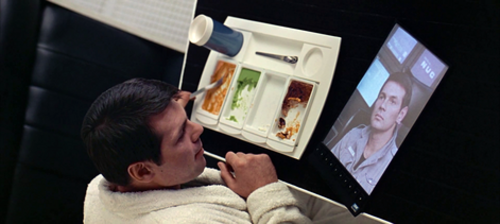
タブレットの形状は20世紀半ばに概念化され(スタンリー・キューブリックは1968年のSF映画「2001年宇宙の旅」で架空のタブレットを描いた)、その世紀の最後の20年間に試作され開発された。2010年、AppleはiPadをリリースし、幅広い人気を博した最初の量販タブレットとなった。[5]その後、タブレットは急速に普及し、すぐに個人、教育、職場のアプリケーションで使用される大きな製品カテゴリーになった。[6]タブレットPCの一般的な用途には、プレゼンテーションの閲覧、ビデオ会議、電子書籍の閲覧、映画の鑑賞、写真の共有などがある。[7] Statistaが提供するデータによると、2021年現在、世界中に12億8000万人のタブレットユーザーがいる[8] 。一方、Appleは最大のメーカー市場シェアを保持しており、SamsungとLenovoがそれに続いている。[9]
歴史
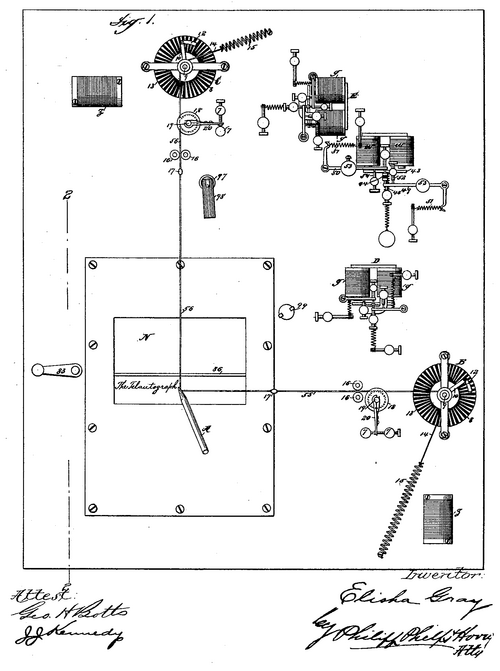
タブレットコンピュータとそれに関連するオペレーティングシステムは、ペンコンピューティングの開発から始まりました。[10]平らな情報ディスプレイでデータの入出力を行う電気機器は、1888年にはすでにテレオートグラフ[11]として存在していました。テレオートグラフは、紙をディスプレイとして使用し、ペンを電気機械アクチュエータに接続していました。20世紀を通じて、これらの特性を持つデバイスが設計図、プロトタイプ、または市販製品として想像され、作成されてきました。多くの学術・研究システムに加えて、1980年代にはいくつかの企業がさまざまな入出力タイプを試した市販製品をリリースしました。
架空のタブレットとプロトタイプのタブレット
タブレットコンピュータは20世紀後半の多くのSF作品に登場し、そのコンセプトをより広い層に広めるのに役立ちました。[12]例としては以下のようなものがあります。
- アイザック・アシモフは小説『ファウンデーション』(1951年)の中で電卓パッドについて描写している。
- スタニスワフ・レムは小説『星からの帰還』(1961年)の中でオプトンについて記述している。
- ジーン・ロッデンベリーの『スタートレック:オリジナルシリーズ』(1966年)にも同様の装置が数多く登場した。
- ドクター・フー:ドミネーター教育者のバランはタブレットを持ち、スワイプジェスチャーでデータを入力します。(1967) [13]
- アーサー・C・クラークの新聞紙[14]は、スタンリー・キューブリックの映画『2001年宇宙の旅』(1968年)に登場した。
- ダグラス・アダムスは『銀河ヒッチハイク・ガイド』と同名のコメディ映画(1978年)でタブレットコンピュータについて描写した。
- SFテレビシリーズ『スタートレック:新世代』では、 PADDと呼ばれるタブレットコンピュータが登場し、(番組内のほとんどのコンピュータと同様に)タッチスクリーンインターフェイスを採用していることで有名であり、スタイラスの有無にかかわらず使用可能であった(1987年)[15]
- 今日のタブレットよりも強力な装置は、1974年の『神の目の中の塵』 [16]に簡単に登場した。
- スターウォーズシリーズにはデータパッドが登場し、1991年の小説『帝国の後継者』で初めて印刷物として登場し、1999年の長編映画『スターウォーズ エピソード1/ファントムメナス』でスクリーンに登場した。
さらに、実際のプロジェクトでは、次のようなタブレット コンピューターが提案または作成されました。
- 1968年、コンピュータ科学者のアラン・ケイはキディコンプを構想し、[17] [18]彼はそのコンセプトをダイナブックとして開発し、彼の提案「あらゆる年齢の子供のためのパーソナルコンピュータ(1972年) 」の中で説明しました。 [19]この提案では、ほぼ永久的なバッテリー寿命を除けば、ラップトップコンピュータ、または(他のいくつかの形態では)タブレットやスレートコンピュータを介して提供される機能と同様の機能を概説しています。対象者は子供たちでした。
- 1979年、画面上の一点に加えられた外力を検出できるタッチスクリーンタブレットのアイデアが、日立製作所の堀田昌夫、宮本喜一、横澤憲雄、大島善光らのチームによって日本で特許取得され、後に米国でも特許を取得した。[20]
- 1992年、アタリは開発者にスタイラス(後にST-Padと改名)を披露した。ST-PadはTOS/GEM Atari STプラットフォームをベースとし、初期の手書き認識のプロトタイプだった。同時期にシラーズ・シブジの会社モメンタスは、独自のグラフィカルユーザーインターフェイス(GUI)を備えたx86 MS-DOSベースの失敗したペンコンピュータを披露した。[21]
- 1994年、欧州連合はクラークとキューブリックのフィクション作品に触発されてNewsPadプロジェクトを開始しました。 [22] Acorn Computersは、このプログラム用にARMベースのタッチスクリーンタブレットコンピュータを開発し、「NewsPad」というブランド名で提供しました。プロジェクトは1997年に終了しました。[23]
- 2000年11月のCOMDEXで、マイクロソフトはデモ中のハンドヘルドデバイスのプロトタイプを説明するために「タブレットPC」という用語を使用しました。 [24] [25] [26]
- 2001年、エリクソン・モバイル・コミュニケーションズは、シンガポールの無線通信センターと共同で開発された、タッチスクリーン、ウェブブラウザとしてNetscape Navigator、オペレーティングシステムとしてLinuxを搭載したDelphiPadという実験的な製品を発表しました。[27] [28]
初期の石板

1989年9月、 Pencept PenPad [29] [30]やCIC Handwriter [31]などの初期のタブレットコンピュータ製品に続き、 GRiD Systemsは最初の商業的に成功したタブレットコンピュータであるGRiDPadをリリースしました。[32] [33]これら3つの製品はすべて、MS-DOSオペレーティングシステムの拡張バージョンをベースとしていました。 1992年、IBMはGO CorporationのPenPoint OSを搭載したThinkPad 700T (2521)を発表(4月)、開発者に出荷(10月)しました。 また、 AT&Tの1993年のEO Personal CommunicatorもPenPointをベースにしており、AT&T独自のハードウェア(独自のAT&T Hobbit CPUを含む)で動作していました。アップルコンピュータは1993年にApple Newtonパーソナルデジタルアシスタントを発売した。このOSはアップル独自の新しいNewton OSを採用しており、当初はモトローラ製のハードウェア上で動作し、アップルがAcorn Computersと共同開発したARM CPUを組み込んでいた。このオペレーティングシステムとプラットフォーム設計は後にシャープとデジタルオーシャンにライセンス供与され、各社が独自の派生製品を製造することになった。
ペンコンピューティングは、1990年代初頭にメディアで大いに宣伝されました。PCソフトウェアベンダーとして最大手のMicrosoftは、1992年にPenPoint OSに対抗するWindows for Pen Computingをリリースしました。同社は、CompaqなどのOEMと協力して、 Windowsのようなオペレーティングシステムと手書き認識機能を備えた小型デバイスを作成するWinPadプロジェクトを開始しました。しかし、このプロジェクトは2年後に中止され、代わりに1996年に「ハンドヘルドPC」の形でWindows CEがリリースされました。 [34]その年、Palm, Inc.は、 Palm OSベースの最初のPalmPilotタッチおよびスタイラスベースのPDAをリリースしました。このタッチベースのデバイスには、当初Motorola Dragonball (68000) CPUが組み込まれていました。同じく1996年に富士通は、Microsoft Windows 95を実行し、100 MHz AMD486 DX4 CPUと8 MBのRAMを搭載し、スタイラス入力が可能で、従来のキーボードとマウスを接続するオプションを備えたタブレット形式のPC Stylistic 1000をリリースしました。 Intelは1999年にStrongARM [35]プロセッサベースのタッチスクリーンタブレットコンピュータをWebPADという名前で発表しました。これは後に「Intel Web Tablet」にブランド変更されました。[36] 2000年に、ノルウェーのScreen Media ASとドイツのDosch & Amand Gmbhが「FreePad」をリリースしました。[37]これはLinuxをベースにしており、Operaブラウザを使用していました。インターネットアクセスはDECT DMAPによって提供され、ヨーロッパでのみ利用可能で、最大10 Mbit/sを提供しました。デバイスには16 MBのストレージ、32 MBのRAM、およびNational Semiconductor製のx86互換の166 MHz「Geode」マイクロコントローラが搭載されていました。[38]画面は10.4インチまたは12.1インチで、タッチセンサー式でした。テレビのセットアップボックスをサポートできるようにSIMカード用のスロットがありました。FreePadはノルウェーと中東で販売されていましたが、同社は2003年に解散しました。ソニーは2000年後半に日本で完全なワイヤレスインターネット機能を備えたAirboardタブレットを発売しました。[39] [40]

1990年代後半、マイクロソフトはWindows CEオペレーティングシステムを使用したハンドヘルドPCプラットフォームを立ち上げました。ほとんどのデバイスはタブレットではありませんでしたが、富士通のPenCentra 130やシーメンスのSIMpadなど、タッチ対応のタブレットがいくつかこのプラットフォームでリリースされました。[41] [42]マイクロソフトは2002年にタブレットに対してより重要なアプローチを取り、Microsoft Tablet PC [43]をビジネスの現場作業用のモバイルコンピューターとして定義しようとしましたが、[44]主に価格設定と使いやすさの決定により、元の目的に限定されてしまいました。たとえば、既存のデバイスは片手で長時間持つには重すぎたり、レガシーアプリケーションがデスクトップインターフェイス用に作成されていてスレート形式にうまく適合していなかったりしました。[45]
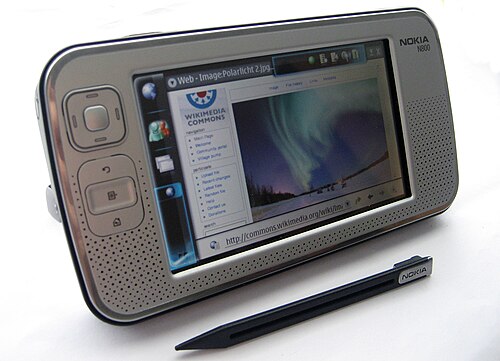
ノキアは2000年より前からインターネットタブレットの計画を持っていた。2001年に初期モデルのテスト製造が行われたNokia M510はEPOC上で動作し、Operaブラウザ、スピーカー、10インチ800×600画面を備えていたが、市場の準備ができていないという懸念から発売されなかった。[46]ノキアは2005年5月にNokia 770でMaemo(同社のインターネットタブレットライン用にカスタムメイドされたDebianベースのLinuxディストリビューション)を実行することでタブレット分野に参入した。Hildonと名付けられたユーザーインターフェイスとアプリケーションフレームワーク層は、インターネット利用を目的としたタブレットデバイスにおける汎用コンピューティング用ソフトウェアプラットフォームの初期の例であった。[47]しかしノキアはこれを将来のモバイルデバイスの唯一のプラットフォームとすることを約束せず、プロジェクトは他の社内プラットフォームと競合し、後にSeries 60に置き換えられた。[48]ノキアは、インターネットタブレットという用語を、インターネットの使用とメディアの消費に重点を置いた携帯情報機器、つまりパーソナルデジタルアシスタント(PDA)とウルトラモバイルPC (UMPC)の中間に位置するものを指すために使用しました。同社は、Maemoを搭載したN900とMeegoを搭載したN9という2つの携帯電話を製造しました。[49]
iPadの発売前に、AxiotronはApple MacBookを大幅に改造したアフターマーケット用のModbookというMac OS Xベースのタブレットコンピュータを発表しました[50] 。Modbookは手書きとジェスチャーの認識にAppleのInkwellを使用し、デジタル化ハードウェアはWacomを使用しています。Mac OS Xが統合タブレットのデジタイザと通信できるように、Modbookにはサードパーティのドライバが付属していました[51] 。
ウルトラモバイル PCの発売に続いて、インテルは、同じハードウェアを採用し、タブレット化された Linux 構成と組み合わせたモバイル インターネット デバイスイニシアチブを開始しました。インテルは、ネットブックでの Atom CPU シリーズの発売が成功した後、軽量のMoblin (モバイル Linux) オペレーティング システムを共同開発しました。2010 年に、ノキアとインテルはMaemo と Moblin プロジェクトを統合し、ネットブックとタブレットをサポートする Linux ベースのオペレーティング システムである MeeGo を作成しました。MeeGo を使用した最初のタブレットは、 2010 年 9 月にドイツで発売されたNeofonie WeTabでした。WeTab は、WeTab OS と呼ばれる MeeGo オペレーティング システムの拡張バージョンを使用していました。WeTab OS は、Android とAdobe AIRのランタイムを追加し、WeTab デバイスに最適化された独自のユーザー インターフェイスを提供します。2011 年 9 月 27 日、Linux Foundation は、2012 年に MeeGo をTizenに置き換えることを発表しました。[52]
現代のタブレット

Android は、2000 年代にタブレット コンピューターの主流となったプラットフォームとして最初に市場に登場した。2008 年には、Android ベースのタブレットの最初の計画が登場した。最初の製品は 2009 年にリリースされた。その中には、5 インチのタッチスクリーンを備えたポケットサイズのモデルの Archos 5 があり、最初は独自のオペレーティング システムでリリースされ、後に (2009 年に) Android 1.4 でリリースされた。Camangi WebStation は 2009 年第 2 四半期にリリースされた。最初のLTE Androidタブレットは 2009 年後半に登場し、 Verizon向けに ICD によって製造された。このユニットは Ultra と呼ばれていたが、Vega と呼ばれるバージョンも同時期にリリースされた。Ultra のディスプレイは 7 インチで、Vega は 15 インチだった。2010 年にはさらに多くの製品が続いた。いくつかのメーカーは、タブレットでの使用に特化して適合されたAndroid Honeycombを待ち望んでいたが、これは 2011 年 2 月にデビューした。
AppleはiPadで消費者向けデバイスの新しいクラスを定義したとよく言われます。[53] iPadはその後数年間タブレットの商用市場を形成し、[54]発売当時最も成功したタブレットでした。iPadと競合デバイスは2011年に米軍によってテストされ、 [55] 2013年に安全な使用が承認されました。 [56] 2010年の登場により、タブレットは主流になりました。[57] [58] SamsungのGalaxy Tabなどがそれに続き、上記の機能へのトレンドが継続しました。 2012年3月、PC Magazineは米国のインターネットユーザーの31%がタブレットを所有しており、主にビデオやニュースなどの公開コンテンツの閲覧に使用されていると報告しました。[59]最も売れたデバイスはAppleのiPadで、2010年4月の発売から2012年10月中旬までに1億台が売れた。[60]しかし、iPadの市場シェア(台数)は2013年に36%に低下し、Androidタブレットが62%に上昇した。Androidタブレットの販売台数は、2012年から2013年にかけてそれぞれ1億2100万台と5200万台増加した。[61] Androidオペレーティングシステムデバイスまたは互換機の個々のブランドでは、iPadに続いてAmazonのKindle Fireが700万台、Barnes & NobleのNookが500万台となっている。[62] [63] [64]
BlackBerry PlayBookは、 BlackBerry Tablet OSを搭載したモデルが2010年9月に発表された。[65] BlackBerry PlayBookは、2011年4月19日に米国とカナダの消費者向けに正式に発売された。ヒューレット・パッカードは、 1.2GHzのQualcomm Snapdragon CPUでWebOS 3.0を搭載したTouchPadを2011年6月に発売すると発表した。2011年8月18日、HPは売上不振のためTouchPadの製造中止を発表した。[66] 2013年、Mozilla FoundationはFoxconnと共同でFirefox OSを搭載したタブレットのプロトタイプモデルを発表した。[67] Firefox OSは2016年に廃止されました。[68] Canonicalは、2014年までにUbuntuがタブレットで利用可能になると示唆しました。 [69] 2016年2月には、 Ubuntu Touchオペレーティングシステムを使用したBQ Aquaris Ubuntuタブレットの商用リリースがありました。 [70] Canonicalは、市場の関心の欠如により2017年4月5日にプロジェクトのサポートを終了しました[71] [72]。その後、UBportsによってコミュニティプロジェクトとして採用されました。[73]
2014年2月の時点で、モバイルアプリ開発者の83%がタブレットをターゲットにしていたが、[74]開発者の93%はスマートフォンをターゲットにしていた。Corporate Visionsの調査レポートによると、2014年までにB2B企業の約23%が営業関連の活動にタブレットを導入したと言われている。[75] iPadは、北米、西ヨーロッパ、日本、オーストラリア、および南北アメリカ大陸のほとんどで大多数の使用者を抱えていた。Androidタブレットは、アジアのほとんど(中国とロシアは例外)、アフリカ、東ヨーロッパでより人気があった。 2015年のタブレットの売上は伸びなかった。Appleは依然として最大の販売元であったが、その市場シェアは25%を下回った。[76] サムスンの副社長ゲイリー・ライディングは、2016年の初めに、タブレットは仕事で使用している人々の間でのみ好調であると述べた。[77] 2016年初頭の時点で、Androidは65%で市場を支配していました。Appleは26%で第2位、Windowsは残りの9%で3位に大きく引き離されました。[78] 2018年には、44億台のコンピューティングデバイスのうち、Androidが20億台、iOSが10億台を占め、残りはさまざまなオペレーティングシステム(Windows、macOS、ChromeOS、Linuxなど)を搭載したさまざまな形式(デスクトップ、ノートブック、タブレット)のPCでした。[79]
2020年代初頭から、サムスンなどのさまざまな企業がタブレットに折りたたみ技術を導入し始めています。 [80]
種類

タブレットは、物理的なサイズ、インストールされているオペレーティングシステムの種類、入出力技術、用途によって、いくつかのカテゴリに大まかに分類できます。[81]
スレート
スレートの大きさは様々だが、スレートは6インチ(約15cm)から始まる。[82] 10インチ(25cm)より大きいカテゴリのモデルには、12.2インチ(31cm)のSamsung Galaxy Tab Pro 12.2、13.3インチ(33cm)のToshiba Excite [83]、18.4インチ(47cm)のDell XPS 18などがある。[84] 2013年3月時点で、市場で最も薄いタブレットは、厚さわずか0.27インチ(6.9mm)のSony Xperia Tablet Zだった。 [85] 2015年9月9日、Appleは、通常のiPadよりも大きい12.9インチ(33cm)の画面サイズのiPad Proをリリースした。[86]
ミニタブレット

ミニタブレットはスレートよりも小型で軽量で、一般的な画面サイズは 7~8 インチ (18~20 cm) です。最初に商業的に成功したミニタブレットは、 2011 年にAmazon.com ( Kindle Fire )、Barnes & Noble ( Nook Tablet )、Samsung ( Galaxy Tab ) によって導入され、2012 年には Google ( Nexus 7 ) によって導入されました。ミニタブレットは通常のタブレットと同じように動作しますが、仕様は通常のタブレットよりも低くなっています。
2012年9月14日、Amazon, Inc. はKindle Fireのアップグレード版であるKindle Fire HDをリリースした。これは前モデルよりも画面解像度が高く、機能も豊富だが、画面サイズは7インチのままである。[87] 2012年10月、Appleは7.9インチの画面サイズのiPad Miniをリリースした。これは通常のiPadより約2インチ小さいが、当時のiPad 3よりは性能が劣る。[88] 2013年7月24日、GoogleはNexus 7のアップグレード版をリリースした。これはFHDディスプレイ、デュアルカメラ、ステレオスピーカー、より正確な色、パフォーマンスの向上、ワイヤレス充電の内蔵、AT&T、T-Mobile、Verizon向けの4G LTEサポート付きモデルである。2013年9月、AmazonはFireタブレットをさらにアップデートし、Kindle Fire HDXをリリースした。 2013年11月、AppleはiPad Mini 2をリリースしました。これは7.9インチのままで、 iPad Airのハードウェアとほぼ同等でした。
ファブレット
スマートフォンとタブレットは似たようなデバイスですが、前者は通常画面が小さく、タブレットのほとんどが携帯電話ネットワーク機能を備えていないという点で異なります。2010年以降、5インチ以上の画面を備えたクロスオーバータッチスクリーンスマートフォンが発売されています。このサイズは一般に従来のスマートフォンよりも大きいと考えられており、フォーブス[89]やその他の出版物ではファブレットというハイブリッドカテゴリが作成されています。「ファブレット」は「電話」と「タブレット」を 組み合わせた造語です。
最初のファブレットが登場した当時は、5.3~5.5インチの画面でしたが、2017年現在では5.5インチまでの画面サイズが標準的だと考えられています。2017年以降のファブレットの例としては、Samsung Galaxy Noteシリーズ(5.7インチの新型モデル)、LG V10 / V20(5.7インチ)、Sony Xperia XA Ultra(6インチ)、Huawei Mate 9(5.9インチ)、Huawei Honor(MediaPad)X2(7インチ)などがあります。
2-in-1

2-in-1 PC は、タブレットとラップトップ コンピューターのハイブリッドまたは組み合わせであり、両方の機能を備えています。タブレットとは異なり、2-in-1 PC にはすべて物理キーボードがありますが、キーボードを折り返してタッチスクリーンの下に隠すことができる (「2-in-1 コンバーチブル」) か、取り外し可能な (「2-in-1 デタッチャブル」) かのいずれかです。2-in-1 では通常、物理キーボードが隠されているか取り外されているときに、タッチスクリーンに仮想キーボードを表示することもできます。一部の 2-in-1 は、Windows 10など、ラップトップと同様のプロセッサとオペレーティング システムを備えながら、タブレットとして操作できる柔軟性を備えています。さらに、2-in-1 には、 USB 3やDisplayPortなどの一般的なラップトップI/Oポートがあり、従来のPC周辺機器や外部ディスプレイに接続できます。シンプルなタブレットは主にメディア消費デバイスとして使用されますが、2-in-1はメディア消費とコンテンツ作成の両方の機能を備えているため、ラップトップまたはデスクトップ代替コンピュータと呼ばれることがよくあります。[90]
2-in-1 には 2 つの種類があります。

- コンバーチブルは、キーボードをシャーシの後ろに折り曲げることで物理キーボードを隠すことができるシャーシ設計になっています。例としては、 Lenovo Yogaシリーズの 2 in 1 PC が挙げられます。
- 取り外し可能型またはハイブリッド型には、2-in-1 が動作中でもシャーシから取り外せる物理キーボードがあります。例としては、 Asus Transformer Pad および Book シリーズの 2-in-1 PC、iPad Pro、Microsoft Surface BookおよびSurface Proなどがあります。
ゲーム用タブレット
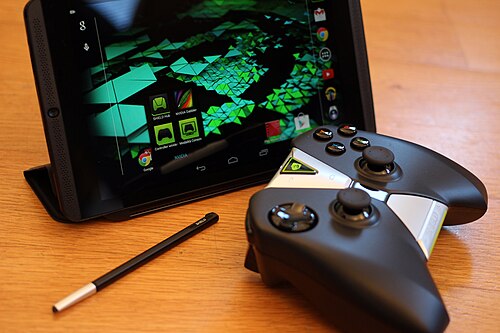
一部のタブレットは、 Dパッドやサムスティックなどの物理的なゲームパッドボタンを追加することで改造されており、タッチスクリーンや一般的なタブレットコンピューターのその他の機能と組み合わせることで、より良いゲーム体験を実現しています。これらのタブレットのほとんどは、ネイティブOSゲームとエミュレーターゲームの実行を対象としています。8インチ(200 mm)ディスプレイを備え、Androidを実行しているNvidiaのShield Tabletがその一例です。Google Playストアから購入したAndroidゲームを実行します。一部のハイエンドモデルのNvidia搭載ビデオカードを搭載したコンピューターから、 PCゲームをタブレットにストリーミングすることもできます。Nintendo Switchハイブリッドコンソールも、独自のシステムソフトウェアで動作するゲーミングタブレットであり、モーションコントロール付きの取り外し可能なJoy-Conコントローラーと、キックスタンドを使用したテーブルトップモード、従来のドッキング/TVモード、ハンドヘルドモードの3つのゲームモードを備えています。サイズ的に完全にタブレットのフォームファクターとは言えないものの、Nintendo Switchの小型版、Nintendo Switch Lite、PlayStation Vitaなどの他の携帯型ゲーム機は、インターネット閲覧機能やマルチメディア機能を備えているため、コミュニティやレビューア/パブリッシャーからはゲーム用タブレットまたはタブレットの代替品として扱われています。[91]
冊子
ブックレットは、ノートパソコンのように折りたためるクラムシェルデザインのデュアルタッチスクリーンタブレットコンピュータです。例としては、2010年に製造中止になったMicrosoft Courier、[92] [93]、 Sony Tablet P(失敗作とみなされた)、[94]、Toshiba Libretto W100などがあります。
カスタマイズされたビジネスタブレット
カスタマイズされたビジネス タブレットは、ハードウェアとソフトウェアの観点からビジネス顧客の特定のニーズに合わせて特別に構築され、企業間取引で提供されます。たとえば、ハードウェアでは、運送会社が市販のタブレットのコンシューマー グレードのGPSモジュールでは精度が不十分であることに気付いた場合、タブレットをカスタマイズしてプロ仕様のアンテナを組み込み、より優れた GPS 信号を提供できます。このようなタブレットは、現場での使用のために耐久性を高めることもできます。ソフトウェアの例では、同じ運送会社が、従業員の不要な携帯電話ネットワーク データ消費によるコストを削減するために、インターネット ブラウザーなどの Android システムの特定のソフトウェア機能を削除し、カスタム パッケージ管理ソフトウェアを追加する場合があります。他のアプリケーションでは、抵抗型タッチスクリーンやその他の特殊なハードウェアとソフトウェアが必要になる場合があります。
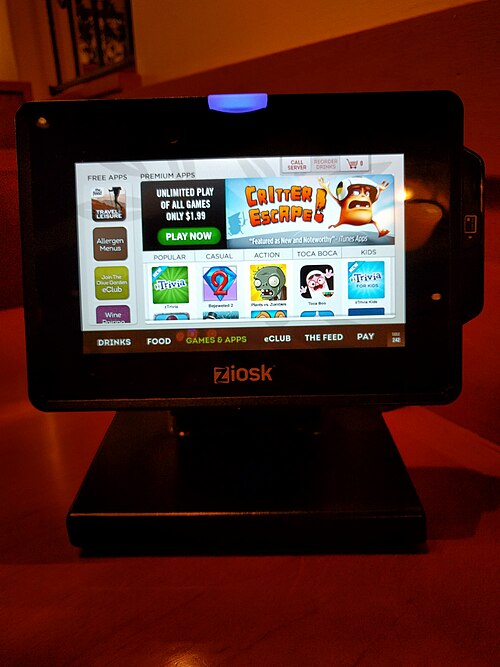
テーブルオーダータブレットは、カジュアルレストランで使用するために設計されたタッチスクリーンタブレットコンピュータです。[95]このようなデバイスを使用すると、ユーザーは食べ物や飲み物を注文したり、ゲームをしたり、請求書を支払ったりすることができます。2013年以降、Chili's [96]、Olive Garden [97]、Red Robin [98]などのレストランチェーンが採用しています。2014年の時点で、最も人気のある2つのブランドはZioskとPrestoでした。[99]これらのデバイスは、一部のレストランがサービスとは関係のない分野での顧客のフィードバックに基づいて営業時間を決定すると主張するサーバーから批判されています。[100]
電子書籍リーダー
画面にテキストを表示できるデバイスであれば、 E リーダーとして使用できます。従来の E リーダーは主にデジタル電子書籍や定期刊行物を読む目的で設計されていましたが、Android などのモバイル オペレーティング システムを使用する最新の E リーダーには、インターネット閲覧やマルチメディア機能などの最新機能が組み込まれています。たとえば、Huawei MatePad Paper は、一般的な LCD または LED パネルの代わりに e-ink を使用するタブレットであるため、インターネットとマルチメディア機能を維持しながらデジタル コンテンツの閲覧に重点を置いています。PocketBook InkPad Color や ONYX BOOX NOVA 3 Color などの一部の E リーダーには、より高度なマルチメディア消費とビデオ再生を可能にするカラー e-ink パネルとスピーカーが搭載されています。
Amazon のKindleシリーズは、もともと電子書籍の閲覧機能に限定されていましたが、Kindle ファームウェアのアップデートにより、インターネットの閲覧やオーディオの再生機能が追加され、Kindle は従来のタブレットの代替品となり、場合によっては、より読みやすい e-ink パネルやより長いバッテリー寿命を備え、旧モデルに比べてより幅広いマルチメディア機能にユーザーがアクセスできるようになりました。
ハードウェア
システムアーキテクチャ
タブレット市場を支配しているのは、ARM社のARMアーキテクチャとIntelおよびAMDのx86という2 つの主要なアーキテクチャである。x86-64を含むIntelのx86は、1981年以来「IBM互換」PCに、2006年以来AppleのMacintoshコンピュータに採用されている。CPUは長年にわたってタブレットPCに組み込まれており、一般的にMicrosoft Windowsのフルバージョン、Windowsデスクトップおよびエンタープライズアプリケーションを実行する機能とともに、より高いパフォーマンスを提供している。Windowsベースではないx86タブレットには、JooJooがある。Intelは2010年にAtomでタブレット市場に参入する計画を発表した。[102] [103] 2013年10月、Intelのファウンドリ事業は、ARMおよびx86プロセッサ用のFPGAベースのクアッドコアを構築する計画を発表した。[104]
ARMは、スマートフォン(95% ARM)、PDA、デジタルカメラ(80% ARM)、セットトップボックス、DSLルーター、スマートテレビ(70% ARM)、ストレージデバイス、タブレットコンピュータ(95% ARM)のメーカーが選ぶCPUアーキテクチャです。[105] [サードパーティソースが必要]この優位性は、もともと1993年にApple Newton用に、1992年にARM3を使用するAcorn A4ラップトップ用に設計された、モバイルに重点を置いた比較的電力効率の高い32ビットARM610プロセッサのリリースから始まりました。このチップは、Psion、Palm、NokiaによってPDAに採用され、後にスマートフォン、カメラ付き携帯電話、カメラなどに採用されました。 ARMのライセンスモデルは、デバイスメーカーが自社製品に合わせてカスタマイズされたカスタムSoC派生物の使用許諾、変更、製造できるようにすることで、この成功を支えました。
複数のライセンシーによって、複数の製造業者がほぼ同一の製品を供給できるようになり、価格競争も促進されました。これにより、単価は x86 の同等品の数分の 1 にまで下がりました。このアーキテクチャはこれまで Microsoft からのサポートが限定されており、Windows CEのみが利用可能でしたが、2012 年の Windows 8 のリリースで、Microsoft はアーキテクチャのサポートを追加することを発表し、 Microsoft Surfaceというブランドの独自の ARM ベースのタブレット コンピューターと、Microsoft Surface Pro というブランドの x86-64 Intel Core i5 バリアントを出荷しました。[106] [107] [108] [109]インテルのタブレットチップの販売台数は2012年に100万台、2013年には1,200万台だった。[110]インテルの会長アンディ・ブライアントは、2014年の目標として、同年末までにタブレットチップの販売台数を4倍の4,000万台に増やすことを掲げており、[111]これは2015年に向けた投資である。 [112] [113] [114] [115]
画面

タブレットコンピュータの重要な要素は、タッチスクリーンディスプレイ上のタッチ入力です。これにより、ユーザーは画面上の仮想キーボードで簡単にナビゲートして入力したり、画面上の他のアイコンを押してアプリやファイルを開いたりできます。これを実現した最初のタブレットは、GRiD Systems CorporationのGRiDPadでした。このタブレットには、タッチスクリーンデバイスでの精度を高めるためのペンのようなツールであるスタイラスと、画面上のキーボードの両方が搭載されていました。 [116]システムは、キーボードやマウスのクリックではなく、画面上のタッチに応答する必要があります。この操作では、目と手の協調性が正確に使用されます。[117] [118] [119]
タッチスクリーンは通常、次の 2 つの形式のいずれかになります。
- 抵抗膜方式のタッチスクリーンは受動的で、画面上の圧力に反応します。高精度を実現し、ポインターをエミュレートするのに便利です(タブレット コンピューターでは一般的) が、調整が必要になる場合があります。解像度が高いため、スタイラスまたは指の爪がよく使用されます。スタイラス指向のシステムは、マルチタッチにはあまり適していません。
- 静電容量式タッチスクリーンは、抵抗型デバイスよりも精度は劣るが、応答性は高い傾向がある。入力には指先などの導電性材料が必要となるため、スタイラス指向のデバイスでは一般的ではないが、消費者向けデバイスでは目立つ存在となっている。ほとんどの指駆動型静電容量式スクリーンは現在、圧力入力をサポートしていない(iPhone 6S以降のモデルを除く)が、一部のタブレットでは圧力感知スタイラスまたはアクティブペンを使用している。[120]
- 一部のタブレットは個々の手のひらを認識できますが、プロ仕様のタブレットの中にはグラフィックタブレットのような感圧フィルムを使用しているものもあります。静電容量式タッチスクリーンの中には、タッチした領域の大きさや圧力を検出できるものもあります。[121]
2010 年代半ば以降、ほとんどのタブレットは、入力にスタイラスが必要だった以前の抵抗型タッチスクリーンデバイス とは異なり、マルチタッチ対応の静電容量式 タッチスクリーンを使用しています。
ディスプレイ技術に E インクを採用したSony Digital Paper DPTS1やreMarkableなどの電子ペーパータブレットもあります。
手書き認識

 、北京語:rén、韓国語:in、日本語:jin、nin ; hito、広東語:jan4)。この文字には2つの画があり、最初の画はここでは茶色で示され、2番目は赤で示されています。黒い領域は筆記具の開始位置を表します。
多くのタブレットはスタイラスペンをサポートし、手書き認識もサポートしています。ワコムとN-trigのデジタルペンは、手書き用に約2500 DPIの解像度を提供し、静電容量式タッチスクリーンの解像度を10倍以上上回っています。これらのペンは圧力感度もサポートしており、「圧力感知」機能が組み込まれているため、中国語/日本語/韓国語の書き込みなど、「可変幅のストロークをベースにした」文字が可能です。圧力は、Autodesk Sketchbookなどのデジタルアートアプリケーションでも使用されています。[122] [123] iOSとAndroidの両方のプラットフォームに手書き認識用のアプリがあり、2015年にGoogleは82の言語をサポートする独自の手書き入力を導入しました。[124]
その他の機能
2007 年以降、静電容量式スクリーンの利用と iPhone の成功により、マルチタッチ機能 (ユーザーがスクリーンの複数の場所をタッチしてアクションやその他の自然なユーザー インターフェイス機能をトリガーできる)、フラッシュ メモリ ソリッド ステート ストレージ、および「インスタント オン」ウォームブートなどの他の機能が一般的になり、外付けUSBおよびBluetooth キーボードがタブレットを定義しました。
2010年半ば以降に発売されたタブレットのほとんどは、バッテリー寿命を延ばすためにARMプロセッサのバージョンを使用しています。ARM Cortexファミリーは、インターネットの閲覧、軽いクリエイティブ作業や制作作業、モバイルゲームなどのタスクに十分なパワーを持っています。[125]
その他の特徴としては、高解像度のアンチグレアディスプレイ、タッチスクリーン、同サイズのノートパソコンよりも軽量で長いバッテリー寿命、ワイヤレスローカルエリアおよびインターネット接続(通常はWi-Fi標準、オプションでモバイルブロードバンド)、周辺機器を接続してローカルデバイスと通信するためのBluetooth 、有線接続および充電用のポート(USBポートなど) 、初期のデバイスはIRサポートを備えており、テレビのリモコン、ドッキングステーション、キーボード、追加の接続として機能することができました、オンボードフラッシュメモリ、リムーバブルストレージ用のポート、デバイス間でデータをバックアップおよび同期するためのさまざまなクラウドストレージサービス、ローカルエリアネットワーク(LAN)上のローカルストレージなどがあります。
- 音声認識Googleは2009年にAndroid 2.1で音声入力を導入し、2010年には2.2で音声アクションを導入し、最大5つの言語(現在は約40)に対応しました。[126] Siriは2011年にiPhone 4Sでシステム全体のパーソナルアシスタントとして導入され、現在は約20の言語をサポートしています。どちらの場合も、音声入力は一般的な音声認識を実行するために中央サーバーに送信されるため、単純なコマンド以上の操作にはネットワーク接続が必要です。
- ISO/IEC 14443 RFID タグを含む他の互換性のあるデバイスとの近距離無線通信。
ソフトウェア
現在のタブレットOS
タブレットは、従来の PC と同様に、複数の異なるオペレーティング システムを使用しますが、デュアル ブートはまれです。タブレットのオペレーティング システムには、次の 2 つのクラスがあります。
- デスクトップ コンピュータのオペレーティング システム
- モバイルオペレーティングシステム
デスクトップOSベースのタブレットは現在、より厚く、より重い。より多くのストレージと冷却を必要とし、バッテリー寿命は短くなる。モバイルアプリに加えてプロセッサを集中的に使用するグラフィカルアプリケーションを実行でき、より多くのポートを備えている。[127]
モバイルベースのタブレットは逆で、モバイルアプリのみを実行します。プロセッサが大幅に小さいため、バッテリー寿命を節約できます。これにより、一般的なラップトップよりもバッテリーが長持ちします。[128]
In Q1 2018, Android tablets had 62% of the market, Apple's iOS had 23.4% of the market and Windows 10 had 14.6% of the market.[129] In late 2021, iOS has 55% use worldwide (varies by continent, e.g. below 50% in South America and Africa) and Android 45% use. Still, Android tablets have more use than iOS in virtually all countries, except for e.g. the US and China.[130][131][132]
Android
Android is a Linux-based operating system that Google offers as open source under the Apache license. It is designed primarily for mobile devices such as smartphones and tablet computers. Android supports low-cost ARM systems and others. The first tablets running Android were released in 2009.[133] Vendors such as Motorola[134] and Lenovo[135] delayed deployment of their tablets until after 2011, when Android was reworked to include more tablet features.[136][137][138] Android 3.0 (Honeycomb), released in 2011 and later versions support larger screen sizes, mainly tablets, and have access to the Google Play service. Android includes operating system, middleware and key applications. Other vendors sell customized Android tablets, such as Kindle Fire and Nook, which are used to consume mobile content and provide their own app store, rather than using the larger Google Play system, thereby fragmenting the Android market.[139] In 2022 Google began to re-emphasize in-house Android tablet development — at this point, a multi-year commitment.[140]
Android Go
A few tablet computers are shipped with Android Go.
Fire OS
As mentioned above, Amazon Fire OS is an Android-based mobile operating system produced by Amazon for its Fire range of tablets. It is forked from Android. Fire OS primarily centers on content consumption, with a customized user interface and heavy ties to content available from Amazon's own storefronts and services.
ChromeOS
Several devices that run ChromeOS came on the market in 2017–2019, as tablets, or as 2-in-1s with touchscreen and 360-degree hinge.[141]
HarmonyOS
HarmonyOS (HMOS) (Chinese: 鸿蒙; pinyin: Hóngméng) is a distributed operating system developed by Huawei to collaborate and interconnect with multiple smart devices on the Internet of Things (IoT) ecosystem.[142][143] In its current multi-kernel design, the operating system selects suitable kernels from the abstraction layer for devices with diverse resources.[143][144][145] For IoT devices, the system is known to be based on LiteOS kernel; while for smartphones and tablets, it is based on a Linux kernel layer with AOSP libraries to support Android application package (APK) apps using Android Runtime (ART) through the Ark Compiler, in addition to native HarmonyOS apps built via integrated development environment (IDE) known as DevEco Studio.[146][147]
iPadOS
The iPad runs on iPadOS. Prior to the introduction of iPadOS in 2019, the iPad ran iOS, which was created for the iPhone and iPod Touch. The first iPad was released in 2010.[148] Although built on the same underlying Unix implementation as macOS, its user interface is radically different. iPadOS is designed for touch input from the user's fingers and has none of the features that required a stylus on earlier tablets. Apple introduced multi-touch gestures, such as moving two fingers apart or together to zoom in or out, also termed pinch to zoom.[149] iPadOS and iOS are built for the ARM architecture.[150]
Kindle firmware
Kindle firmware is a mobile operating system specifically designed for Amazon Kindle e-readers. It is based on a custom Linux kernel; however, it is entirely closed-source and proprietary, and only runs on Amazon Kindle line up manufactured under the Amazon brand.
Nintendo Switch system software
The Nintendo Switch system software (also known by its codename Horizon) is an updatable firmware and operating system used by the Nintendo Switch hybrid video game console/tablet and Nintendo Switch Lite handheld game console. It is based on a proprietary microkernel. The UI includes a HOME screen, consisting of the top bar, the screenshot viewer ("Album"), and shortcuts to the Nintendo eShop, News, and Settings.
PlayStation Vita system software
The PlayStation Vita system software is the official firmware and operating system for the PlayStation Vita and PlayStation TV video game consoles. It uses the LiveArea as its graphical shell. The PlayStation Vita system software has one optional add-on component, the PlayStation Mobile Runtime Package. The system is built on a Unix-base which is derived from FreeBSD and NetBSD. Due to it capabilities on browsing the internet and multimedia capabilities, it is treat as an gaming tablet or tablet replacement by community and reviewer/publisher.
Ubuntu Touch
Ubuntu Touch is an open-source (GPL) mobile version of the Ubuntu operating system[143] originally developed in 2013 by Canonical Ltd. and continued by the non-profit UBports Foundation in 2017.[151][152] Ubuntu Touch can run on a pure GNU/Linux base on phones with the required drivers, such as the Librem 5[153] and the PinePhone.[154] To enable hardware that was originally shipped with Android, Ubuntu Touch makes use of the Android Linux kernel, using Android drivers and services via an LXC container, but does not use any of the Java-like code of Android.[155][156] As of February 2022, Ubuntu Touch is available on 78 phones and tablets.[143][157] The UBports Installer serves as an easy-to-use tool to allow inexperienced users to install the operating system on third-party devices without damaging their hardware.[143][158]
Windows
Following Windows for Pen Computing for Windows 3.1 in 1991, Microsoft supported tablets running Windows XP under the Microsoft Tablet PC name.[159] Microsoft Tablet PCs were pen-based, fully functional x86 PCs with handwriting and voice recognition functionality.[160] Windows XP Tablet PC Edition provided pen support. Tablet support was added to both Home and Business versions of Windows Vista and Windows 7. Tablets running Windows could use the touchscreen for mouse input, hand writing recognition and gesture support. Following Tablet PC, Microsoft announced the Ultra-mobile PC initiative in 2006 which brought Windows tablets to a smaller, touch-centric form factor.[161][162] In 2008, Microsoft showed a prototype of a two-screen tablet called Microsoft Courier, but cancelled the project.
In 2012, Microsoft released Windows 8, which features significant changes to various aspects of the operating system's user interface and platform which are designed for touch-based devices such as tablets. The operating system also introduced an application store and a new style of application optimized primarily for use on tablets.[163][164] Microsoft also introduced Windows RT, an edition of Windows 8 for use on ARM-based devices.[165] The launch of Windows 8 and RT was accompanied by the release of devices with the two operating systems by various manufacturers (including Microsoft themselves, with the release of Surface), such as slate tablets, hybrids, and convertibles.[166]
Released in July 2015, Windows 10 introduces what Microsoft described as "universal apps"; expanding on Metro-style apps, these apps can be designed to run across multiple Microsoft product families with nearly identical code – including PCs, tablets, smartphones, embedded systems, Xbox One, Surface Hub and Windows Holographic. The Windows user interface was revised to handle transitions between a mouse-oriented interface and a touchscreen-optimized interface based on available input devices – particularly on 2-in-1 PCs; both interfaces include an updated Start menu. Windows 10 replaced all earlier editions of Windows.[167][168]
Hybrid OS operation
Several hardware companies have built hybrid devices with the possibility to work with both Android and Windows Phone operating systems (or in rare cases Windows 8.1, as with the, by now cancelled, Asus Transformer Book Duet), while Ars Technica stated: "dual-OS devices are always terrible products. Windows and Android almost never cross-communicate, so any dual-OS device means dealing with separate apps, data, and storage pools and completely different UI paradigms. So from a consumer perspective, Microsoft and Google are really just saving OEMs from producing tons of clunky devices that no one will want."[169]
Discontinued tablet operating systems
BlackBerry 10
BlackBerry 10 (based on the QNX OS) is from BlackBerry. As a smartphone OS, it is closed-source and proprietary, and only runs on phones and tablets manufactured by BlackBerry.
One of the dominant platforms in the world in the late 2000s, its global market share was reduced significantly by the mid-2010s. In late 2016, BlackBerry announced that it will continue to support the OS, with a promise to release 10.3.3.[170][171] Therefore, BlackBerry 10 would not receive any major updates as BlackBerry and its partners would focus more on their Android base development.[172]
BlackBerry Tablet OS
BlackBerry Tablet OS is an operating system from BlackBerry Ltd based on the QNX Neutrino real-time operating system designed to run Adobe AIR and BlackBerry WebWorks applications, currently available for the BlackBerry PlayBook tablet computer. The BlackBerry Tablet OS is the first tablet running an operating system from QNX (now a subsidiary of RIM[173]).
BlackBerry Tablet OS supports standard BlackBerry Java applications. Support for Android apps has also been announced, through sandbox "app players" which can be ported by developers or installed through sideloading by users.[174][175] A BlackBerry Tablet OS Native Development Kit, to develop native applications with the GNU toolchain is currently in closed beta testing. The first device to run BlackBerry Tablet OS was the BlackBerry PlayBook tablet computer.[176]
Application store
Apps that do not come pre-installed with the system are supplied through online distribution. These sources, termed app stores, provide centralized catalogs of software and allow "one click" on-device software purchasing, installation and updates.[177][178]
Mobile device suppliers may adopt a "walled garden" approach, wherein the supplier controls what software applications ("apps") are available. Software development kits are restricted to approved software developers. This can be used to reduce the impact of malware, provide software with an approved content rating, control application quality and exclude competing vendors.[179] Apple, Google, Amazon, Microsoft and Barnes & Noble all adopted the strategy. B&N originally allowed arbitrary apps to be installed,[180][181][182] but, in December 2011, excluded third parties.[183][184][185][186] Apple and IBM have agreed to cooperate in cross-selling IBM-developed applications for iPads and iPhones in enterprise-level accounts.[187] Proponents of open source software say that the iPad (or such "walled garden" app store approach) violates the spirit of personal control that traditional personal computers have always provided.[188][189][190]
Sales
Around 2010, tablet use by businesses jumped, as business began to use them for conferences, events, and trade shows. In 2012, Intel reported that their tablet program improved productivity for about 19,000 of their employees by an average of 57 minutes a day.[191] In October 2012, display screen shipments for tablets began surpassing shipments for laptop display screens.[192] Tablets became increasingly used in the construction industry to look at blueprints, field documentation and other relevant information on the device instead of carrying around large amounts of paper.[193] Time described the product's popularity as a "global tablet craze" in a November 2012 article.[194]
As of the start of 2014, 44% of US online consumers owned tablets,[195] a significant jump from 5% in 2011.[196] Tablet use also became increasingly common among children. A 2014 survey found that mobiles were the most frequently used object for play among American children under the age of 12. Mobiles were used more often in play than video game consoles, board games, puzzles, play vehicles, blocks and dolls/action figures. Despite this, the majority of parents said that a mobile was "never" or only "sometimes" a toy.[197] As of 2014, nearly two-thirds of American 2- to 10-year-olds have access to a tablet or e-reader.[198] The large use of tablets by adults is as a personal internet-connected TV.[199] A 2015 study found that a third of children under five have their own tablet device.[200]
After a fast rise in sales during the early 2010s, the tablet market had plateaued in 2015[201] and by Q3 2018[202][203] sales had declined by 35% from its Q3 2014 peak.[204] In spite of this, tablet sales worldwide had surpassed sales of desktop computers in 2017,[205] and worldwide PC sales were flat for the first quarter of 2018.[206] In 2020 the tablet market saw a large surge in sales with 164 million tablet units being shipped worldwide due to a large demand for work from home and online learning.[207]
2010 to 2014 figures are estimated by Gartner. 2014 to 2021 figures are estimated by IDC.
By manufacturer
By operating system
According to a survey conducted by the Online Publishers Association (OPA) now called Digital Content Next (DCN) in March 2012, it found that 72% of tablet owners had an iPad, while 32% had an Android tablet. By 2012, Android tablet adoption had increased. 52% of tablet owners owned an iPad, while 51% owned an Android-powered tablet (percentages do not add up to 100% because some tablet owners own more than one type).[230] By end of 2013, Android's market share rose to 61.9%, followed by iOS at 36%.[231] By late 2014, Android's market share rose to 72%, followed by iOS at 22.3% and Windows at 5.7%.[232] As of early 2016, Android has 65% marketshare, Apple has 26% and Windows has 9% marketshare.[78] In Q1 2018, Android tablets had 62% of the market, Apple's iOS had 23.4% of the market and Windows 10 had 14.6% of the market.[129]
Source: Strategy Analytics[233]
Use
Sleep
The blue wavelength of light from back-lit tablets may impact one's ability to fall asleep when reading at night, through the suppression of melatonin.[234] Experts at Harvard Medical School suggest limiting tablets for reading use in the evening. Those who have a delayed body clock, such as teenagers, which makes them prone to stay up late in the evening and sleep later in the morning, may be at particular risk for increases in sleep deficiencies.[235] A PC app such as F.lux and Android apps such as CF.lumen[236] and Twilight[237] attempt to decrease the impact on sleep by filtering blue wavelengths from the display. iOS 9.3 includes Night Shift that shifts the colors of the device's display to be warmer during the later hours.[238]
By plane
Because of, among other things, electromagnetic waves emitted by this type of device, the use of any type of electronic device during the take-off and landing phases was totally prohibited on board commercial flights. On November 13, 2013, the European Aviation Safety Agency (EASA) announced that the use of mobile terminals could be authorized on the flights of European airlines during these phases from 2014 onwards, on the condition that the cellular functions are deactivated ("airplane" mode activated).[239] In September 2014, EASA issued guidance that allows EU airlines to permit use of tablets, e-readers, smartphones, and other portable electronic devices to stay on without the need to be in airplane mode during all parts of EU flights; however, each airline has to decide to allow this behavior.[240] In the US, the Federal Aviation Administration allowed use of portable electronic devices during all parts of flights while in airplane mode in late 2013.[241]
Tourism
Some French historical monuments are equipped with digital tactile tablets called "HistoPad".[242] It is an application integrated with an iPad Mini offering an interaction in augmented and virtual reality with several pieces of the visit, the visitor being able to take control of their visit in an interactive and personalized way.
Professional use for specific sectors
Some professionals – for example, in the construction industry, insurance experts, lifeguards or surveyors – use so-called rugged shelf models in the field that can withstand extreme hot or cold shocks or climatic environments. Some units are hardened against drops and screen breakage. Satellite-connectivity-equipped tablets such as the Thorium X,[243] for example, can be used in areas where there is no other connectivity. This is a valuable feature in the aeronautical and military realms. For example, United States Army helicopter pilots are moving to tablets as electronic flight bags, which confer the advantages of rapid, convenient synchronization of large groups of users, and the seamless updating of information.[244] US Army chaplains who are deployed in the field with the troops cite the accessibility of Army regulations, field manuals, and other critical information to help with their services; however, power generation, speakers, and a tablet rucksack are also necessary for the chaplains.[245]
See also
- Comparison of tablet computers
- History of tablet computers
- Lists of mobile computers
- Mobile device
- Laptop–tablet convergence
References
- ^ "Definition of: tablet computer". PC Magazine Encyclopedia. Retrieved January 12, 2023.
- ^ "tablet computer". Dictionary.com. Archived from the original on November 8, 2011. Retrieved April 17, 2010.
- ^ Erica Ogg (May 28, 2010). "What makes a tablet a tablet? (FAQ)". CNET.
- ^ "Ulefone U7 7" LTPS MTK6592 Octa-Core review". IReviewChinaPhone.com. June 28, 2014. Archived from the original on October 9, 2014.
Every device with diagonal equal 7" or longer is practically tablet PC
- ^ "iPad Available in US on April 3" (Press release). Apple. March 5, 2010. Archived from the original on July 10, 2011. Retrieved March 5, 2010.
- ^ Chester, Brandon (March 12, 2015). "The Dell Venue 8 7000 Series Review". Anandtech. Archived from the original on March 24, 2015. Retrieved March 23, 2015.
- ^ "What is a Tablet PC?". Lenovo.
- ^ "Number of tablet users worldwide from 2013 to 2021 (in billions)*". Statista. February 14, 2022.
- ^ a b "Tablet sales start to slump despite strong growth in 2021". IT PRO. February 2, 2022. Retrieved January 6, 2023.
- ^ Notes on the History of Pen-based Computing on YouTube
- ^ Gray, Elisha (July 31, 1888), Telautograph (PDF), United States Patent 386,815 (full image)
- ^ NewsPad depiction – 2001 A Space Odyssey on YouTube
- ^ "BBC Dominators".
- ^ "Did Arthur C Clarke invent the iPad?". Margaret Puls. February 12, 2012. Archived from the original on August 7, 2012.
- ^ "Star Trek PADD". Archived from the original on October 9, 2014. Retrieved June 21, 2014.
- ^ Pournelle, Jerry (July 8, 2011). "Jerry Pournelle Is Back in the House". InformationWeek. Retrieved January 12, 2023.
I keep wishing for a real tablet—one that would function as the pocket computer we described in The Mote in God's Eye.
- ^ Richards, Mike (January 23, 2008). "Why the iPhone makes 2008 seem like 1968 all over again". Open University. Retrieved January 12, 2023.
- ^ Steinberg, Daniel H. (April 3, 2003). "Daddy, Are We There Yet? A Discussion with Alan Kay". O'Reilly Media. Archived from the original on March 9, 2013.
- ^ Kay, Alan (1972). "A Personal Computer for Children of All Ages". Archived from the original on March 15, 2013.
- ^ US4389711A, Hotta, Masao; Miyamoto, Yoshikazu & Yokozawa, Norio et al., "Touch sensitive tablet using force detection", issued 1983-06-21
- ^ McCracken, Harry (January 27, 2010). "The Long Fail: A Brief History of Unsuccessful Tablet Computers". Archived from the original on August 19, 2014. Retrieved August 18, 2014.
- ^ Molina, Alfonso H. (1998). "Visions and Realities in the NewsPad Constituency". In Roger, James-Yves; Stanford-Smith, Brian; Kidd, Paul T. (eds.). Technologies for the Information Society. IOS Press. ISBN 9789051994506.
- ^ "The Story of NewsPAD". Risc User. Archived from the original on July 14, 2014. Retrieved February 20, 2013.
- ^ "Bill Gates introduces Tablet PC". COMDEX. November 2000. Archived from the original on December 6, 2000.
- ^ Page, M. (December 21, 2000). "Microsoft Tablet PC Overview". TransmetaZone. Archived from the original on October 16, 2014.
- ^ Kuhn, Bradley M. (2010). "Free software and cellphones". Free Software Foundation. Archived from the original on September 16, 2010.
- ^ "Ericsson, CWC develop Linux handheld PC". January 12, 2001. Archived from the original on March 4, 2016. Retrieved August 14, 2013.
- ^ "Ericsson Forum – Infos and support". March 21, 2012. Archived from the original on March 5, 2016. Retrieved August 14, 2013.
- ^ Users Manual for Penpad 320, Pencept, Inc., June 15, 1984, archived from the original on December 15, 2013
- ^ Software Control at the Stroke of a Pen, Pencept, Inc., 1985, archived from the original on June 7, 2007, retrieved May 21, 2009
- ^ Handwriter (R) GrafText (TM) System Model GT-5000, Communication Intelligence Corporation, January 15, 1985, archived from the original on December 15, 2013
- ^ The BYTE Awards: GRiD System's GRiDPad, BYTE Magazine, Vol 15. No 1, January 12, 1990, p. 285, archived from the original on December 15, 2013
- ^ "Tablet history dates back two decades before iPad". www.newsday.com. November 4, 2013. Archived from the original on March 6, 2016. Retrieved March 2, 2016.
- ^ "Next version of Windows CE slips to H1 2007". June 22, 2006.
- ^ "Intel to use StrongARM in Web Tablet". Cnet. Retrieved May 29, 2013.
- ^ Intel Web Tablet on YouTube
- ^ Lehrbaum, Rick (August 29, 2000). "FreePad: Norway's alternative to Sweden's Screen Phone". ZDNet. Retrieved November 18, 2019.
- ^ "Freepad Information". Archived from the original on February 8, 2002. Retrieved March 28, 2017.
- ^ Williams, Martyn (October 3, 2001). "Sony previews new Airboard tablet PC". CNN.
- ^ "Failure to launch: Why Sony never got AirBoard off the ground". EE Times. May 24, 2012. Archived from the original on October 26, 2020.
- ^ "Companies try to revive WinCE". ZDNet.
- ^ "Fujitsu Introduces One of the First Pen Tablets with Windows CE H/PC 2000 -based PenCentra 200 - Fujitsu Hong Kong".
- ^ Markoff, John (August 30, 1999). "Microsoft brings in top talent to pursue old goal: the tablet". The New York Times. Archived from the original on October 11, 2016.
- ^ "Tablet PC: Coming to an Office Near You?". datamation.com. November 6, 2002. Archived from the original on July 22, 2012. Retrieved September 8, 2013.
- ^ Bright, Peter (July 31, 2010). "Ballmer (and Microsoft) still doesn't get the iPad". Ars Technica. Archived from the original on May 8, 2012.
- ^ "Nokialla oli valmis tabletti 13 vuotta sitten tältä se näytti". digitoday.fi. April 15, 2014. Archived from the original on April 16, 2014.
- ^ Orlowski, Andrew. "Nokia's Great Lost Platform". The Register. Archived from the original on August 10, 2017.
- ^ "Nokia's Great Lost Platform – Page 4". The Register. Archived from the original on October 28, 2012.
- ^ "maemo.org – maemo.org: Home of the Maemo community". maemo.org. Archived from the original on May 17, 2014.
- ^ Tiffany Boggs. "Axiotron and OWC Unveil the ModBook". TabletPCReview.com. Archived from the original on January 4, 2012.
- ^ "TableMagic". February 3, 2013. Archived from the original on November 29, 2014.
- ^ Sousou, Imad. "What's Next for MeeGo". meego.com. Archived from the original on October 6, 2011. Retrieved September 28, 2011.
- ^ "The iPad's victory in defining the tablet: What it means". InfoWorld. July 5, 2011. Archived from the original on January 18, 2012.
- ^ Gilbert, Jason (August 19, 2011). "HP TouchPad Bites The Dust: Can Any Tablet Dethrone The IPad?". Huffington Post. Archived from the original on December 6, 2011.
- ^ "Taking iPads into battle". Los Angeles Times. Retrieved June 27, 2021.
- ^ Whittaker, Zack (May 17, 2013). "iPhones, iPads cleared for U.S. military use; DOD fortifies cloud". ZDNet. Archived from the original on December 8, 2015. Retrieved December 30, 2015.
- ^ Roger Kay on Intel and Microsoft: "Clearly, each one is looking at a post-PC world..." Pimentel, Benjamin (April 29, 2011). "Microsoft offers more muted view of PCs". MarketWatch. Archived from the original on May 2, 2011. Retrieved January 12, 2023.
- ^ Parrish, Kevin (October 28, 2010). "Microsoft's Ray Ozzie sees Post-PC world". Tom's Hardware US.
It's important that all of us ... form a realistic picture of what a post-PC world would actually look like ... Those who can envision a plausible future that's brighter than today will earn the opportunity to lead [in the market].
- ^ Moscaritolo, Angela (June 18, 2012). "Survey: 31 Percent of U.S. Internet Users Own Tablets". PC Magazine. Archived from the original on October 14, 2012. Retrieved October 20, 2012.
- ^ Chen, Brian X. (October 23, 2012). "Apple, Facing Competition, Introduces a Smaller iPad of no significant change". The New York Times. Archived from the original on February 16, 2013. Retrieved October 24, 2012.
- ^ "Android races past iOS to tablet number one, but there's no budging Apple from the top slot". Archived from the original on November 6, 2014. Retrieved November 21, 2014.
Android is dominating tablet sales but Apple is still the biggest brand
- ^ Chen, Brian X. (October 19, 2012). "How Are 7-Inch Tablets Doing?". The New York Times. Archived from the original on October 22, 2012. Retrieved October 20, 2012.
- ^ Poeter, Damon (December 27, 2012). "Non-Apple Tablets Making Small Gains on iPad | News & Opinion". PCMag.com. Archived from the original on June 5, 2013. Retrieved July 8, 2013.
- ^ Hartley, Matt (December 24, 2011). "Massacre of the tablets | FP Tech Desk | Financial Post". Financial Post. Business.financialpost.com. Archived from the original on June 19, 2013. Retrieved June 14, 2013.
- ^ BlackBerry PlayBook preview on YouTube BlackBerry PlayBook announcement September 27, 2010 on YouTube
- ^ "HP Webcast announcing the end of Touchpad, webOS devices" (Press release). Retrieved August 18, 2011.
- ^ Palladino, Valentina (January 17, 2014). "Mozilla is testing the first Firefox OS tablet prototype". The Verge. Archived from the original on February 1, 2014.
- ^ Hoffman, Chris (September 28, 2016). "Mozilla is stopping all commercial development on Firefox OS". PC World. Archived from the original on January 16, 2017.
- ^ "Ubuntu coming to tablets, phones and smart TVs by 2014". October 31, 2011. Archived from the original on December 7, 2011.
- ^ "The first Ubuntu tablet is here: meet the Aquaris M10". Stuff. February 5, 2016.
- ^ Sneddon, Joey (April 5, 2017). "Ubuntu 18.04 To Ship with GNOME Desktop, Not Unity". OMG Ubuntu. Retrieved April 5, 2017.
- ^ Shuttleworth, Mark (April 5, 2017). "Growing Ubuntu for Cloud and IoT, rather than Phone and convergence". Canonical. Retrieved January 12, 2023.
- ^ Tiwari, Aditya (April 6, 2017). "Unity 8 And Ubuntu Touch Aren't Going Away Completely, UBports Team Will Keep Them Alive". Retrieved April 7, 2017.
- ^ "W3C Interview: Vision Mobile on the App Developer Economy with Matos Kapetanakis and Dimitris Michalakos | W3C Blog". February 18, 2014. Archived from the original on June 29, 2016. Retrieved January 12, 2023.
- ^ "1 in 4 B2B Companies Report Use of Tablets to Aid Sales-Related Activities". MarketingCharts. February 19, 2014. Archived from the original on August 16, 2014. Retrieved August 20, 2014.
- ^ "iPad loses marketshare as tablet market shrinks". Network World. July 30, 2015. Archived from the original on April 26, 2024. Retrieved January 3, 2016.
- ^ "The consumer tablet is dying; long live the business tablet". CTV News. April 19, 2017. Archived from the original on April 20, 2017. Retrieved April 19, 2017.
- ^ a b Jordan, Greg (August 2, 2016). "IDC releases Q2 tablet PC marketshare, Windows still trails iOS and Android". MSPoweruser. Archived from the original on January 9, 2017.
- ^ Harris, Robin (November 28, 2018). "The most popular PC is in your pocket". ZDNet.
- ^ "Samsung could launch a foldable Android tablet along with the Galaxy Tab S9". Android Central. August 9, 2022.
- ^ "Various Types of Tablets". Pinig. Archived from the original on October 3, 2016. Retrieved September 11, 2016.
- ^ Franklin, Eric (October 30, 2012). "Tablets buying guide | Tablets – CNET Reviews". Reviews.cnet.com. Archived from the original on September 23, 2011. Retrieved June 14, 2013.
- ^ Franklin, Eric (April 10, 2012). "The Toshiba Excite 13 sports the largest tablet screen yet | Android Atlas – CNET Reviews". Reviews.cnet.com. Archived from the original on July 11, 2013. Retrieved June 14, 2013.
- ^ King, Charles. "Dell's XPS 18 is the latest 'big tablet' innovation". TabTimes. Archived from the original on March 17, 2013. Retrieved June 30, 2013.
- ^ "Xperia™ Tablet Z | Waterproof and dustproof tablet". Sony. March 26, 2013. Retrieved December 15, 2014.
- ^ "iPad Pro". Apple. Archived from the original on September 11, 2015. Retrieved September 9, 2015.
- ^ Kelly, Heather; Gross, Doug (September 6, 2012). "Amazon announces new wave of Kindles". CNN Tech. Archived from the original on December 1, 2012. Retrieved December 2, 2012.
- ^ "Events". Apple. Archived from the original on June 14, 2013. Retrieved June 14, 2013.
- ^ Kay, Roger. "5" Is the market ready for a 'phablet'?". Forbes. Archived from the original on July 29, 2017.
- ^ Chang, Alexandra (October 17, 2012). "Here Come the Hybrid 'Laplets.' Should You Care?". Wired. Archived from the original on August 13, 2014. Retrieved August 13, 2014.
- ^ Barr, Benjamin (February 7, 2022). "The 10 Best Gaming Tablets". High Ground Gaming.
- ^ Dubie, Denise (April 29, 2010). "Microsoft kills courier tablet project: Apple's iPad influence likely crushes Microsoft tablet". NetworkWorld. Archived from the original on October 9, 2014.
- ^ Keller, Mike (April 29, 2010). "Microsoft Courier Tablet Canceled!: Gizmodo reports today that Microsoft's much-hyped Courier tablet has been canceled". PC World. Archived from the original on October 6, 2014.
- ^ "The 8 biggest product flops of 2012 (#4)". Marketwatch. Archived from the original on July 30, 2013. Retrieved June 30, 2013.
- ^ "Tabletop tablets speed up restaurant service". CBS News. September 22, 2014. Archived from the original on May 10, 2016. Retrieved December 16, 2016.
- ^ Konrad, Alex (September 17, 2013). "Chili's To Install Tablets At Every Table: More Tips But A Cloudier Future For Servers". Forbes. Archived from the original on July 6, 2017.
- ^ Lien, Tracey (April 14, 2015). "Olive Garden rolls out tabletop tablets for ordering and payment". Los Angeles Times. Archived from the original on August 17, 2016.
- ^ Jennings, Lisa (February 13, 2015). "Red Robin to roll out tabletop tablets systemwide". Nation's Restaurant News. Archived from the original on July 16, 2016.
- ^ Huet, Ellen (April 14, 2014). "Ordering a meal and more on tabletop tablets". SFGate. Archived from the original on June 14, 2014. Retrieved April 30, 2017.
- ^ O'Donovan, Caroline (June 21, 2018). "Here's How That Tablet On The Table At Your Favorite Restaurant Is Hurting Your Waiter". BuzzFeed News. Retrieved June 23, 2018.
- ^ "Intel has ARM in its crosshairs". CNET. CBS Interactive.
- ^ "Intel shows pricing pressures for Atom due to competition from ARM". Archived from the original on October 19, 2010. Retrieved October 17, 2010.
- ^ Gareth Halfacree (November 22, 2010). "Intel launches FPGA-equipped Atom". Archived from the original on November 27, 2010. Retrieved November 23, 2010.
- ^ Brooke Crothers (November 3, 2013). "Intel on track to build two chips with ARM inside".
- ^ Jeff Chu (December 18, 2012). "Where's ARM at CES?". Archived from the original on March 7, 2013.
- ^ Dannen, Chris (January 27, 2010). "Apple iPad Price, Features Say "ARM" All Over". CBS News.
- ^ Tim Barjarin (July 16, 2012). "ARM vs. Intel: How the Processor Wars Will Benefit Consumers". Archived from the original on September 12, 2012.
- ^ "The Economist – Space invaders, America's Intel and Britain's ARM have long dominated different bits of the global chip market. Now each is attacking the other's stronghold". January 7, 2012. Archived from the original on September 12, 2012.
- ^ "Processors". arm.com. Archived from the original on August 24, 2012.
- ^ John Morris (November 22, 2014). "What we learned about Intel this week". ZDNet. Archived from the original on November 24, 2014. Retrieved November 22, 2014.
- ^ "Intel Chairman: "We Seemed to Have Lost Our Way"". November 21, 2013. Archived from the original on November 21, 2013. Retrieved November 21, 2013.
- ^ Eassa, Ashraf (December 21, 2013). "Intel's 40 Million Tablet Campaign Seems Negative for ARM". Archived from the original on December 22, 2013. Retrieved December 23, 2013.
- ^ Crothers, Brooke (January 18, 2014). "Behind in tablets, Intel pays firms to use its chips: Why is Intel confident that 40 million tablets will ship in 2014 with its Bay Trail processors? Here's one good reason". Archived from the original on April 19, 2014. Retrieved April 17, 2014.
Intel is sacrificing 1.5% in fiscal year 2014 profit to increase its market share in tablet computers
- ^ Randewich, Noel (September 9, 2014). "Intel's CEO says its costly tablet chip strategy has paid off". Archived from the original on September 9, 2014. Retrieved September 9, 2014.
In the second quarter, Intel's mobile and communications unit revenue fell to 51 million dollars, and lost 1.12 billion dollars in the quarter
- ^ Fried, Ina (November 20, 2014). "Intel Probably Won't Reach 70 Million Tablet Chips Next Year, CEO Says". Vox. Retrieved January 12, 2023.: Mobile operating losses will be approximately $4 billion, and $3.2 billion in 2014, and 2015, respectively.
- ^ Jeff Hawkins: Barnett, Shawn. "Jeff Hawkins". Pen Computing Magazine. Archived from the original on November 5, 2013.
- ^ Whitney, Lance (September 17, 2010). "Best Buy: iPad cutting into laptop sales". CNET. CBS Interactive.
- ^ Elmer-DeWitt, Philip (September 17, 2010). "Notebook sales growth goes negative. Can we blame the iPad yet?". Fortune.
- ^ Benjamin Pimentel. "Apple's Mac sales not slowed by iPad". MarketWatch. Archived from the original on October 15, 2010.
- ^ "Pro Pen for Surface Pro and Surface Pro 2 | Handwriting on Surface Pro and Surface Pro 2". www.microsoft.com. Archived from the original on December 28, 2015. Retrieved December 31, 2015.
- ^ Buxton, Bill. "Multi-Touch Systems that I Have Known and Loved". www.billbuxton.com. Retrieved January 12, 2023.
- ^ "China using keyboards versus tablet input". Business Insider. Retrieved September 13, 2018.
- ^ "Annotated Bibliography in On-line Character Recognition, Pen Computing, Gesture User Interfaces and Tablet and Touch Computers". ruetersward.com. Archived from the original on December 15, 2013.
- ^ Thorp-Lancaster, Dan (April 15, 2015). "Google releases new Handwriting Input keyboard with support for 82 languages". Android Central. Archived from the original on December 18, 2015. Retrieved December 30, 2015.
- ^ "Mirror: The Coming War: ARM versus x86 – Van's Hardware Journal". vanshardware.com. August 21, 2010. Archived from the original on October 18, 2010. Retrieved January 12, 2023.
- ^ Raphael, JR (August 12, 2010). "First look: Google's new Voice Actions for Android". Computerworld. Archived from the original on April 21, 2016. Retrieved December 30, 2015.
- ^ "Microsoft Surface Pro review". engadget. February 6, 2013. Archived from the original on June 10, 2013. Retrieved June 16, 2013.
- ^ Westover, Brian (October 26, 2014). "Laptops vs. Tablets: The Ultimate Showdown". PCmag.com.
- ^ a b "Strategy Analytics: Tablet Market Falls 7 Percent in Q1 2018 while Top Vendors Play to Strengths". Strategy-Analytics. Retrieved October 7, 2018.
- ^ "Tablet Operating System Market Share Worldwide". StatCounter Global Stats. Retrieved September 3, 2021.
- ^ "Tablet Operating System Market Share Russian Federation". StatCounter Global Stats. Retrieved December 16, 2020.
- ^ "Tablet Browser Market Share Russian Federation". StatCounter Global Stats. Retrieved December 16, 2020.
- ^ "9 Upcoming Tablet Alternatives to the Apple iPad". Mashable. January 27, 2010. Archived from the original on August 5, 2010. Retrieved August 7, 2010.
- ^ "digits: Motorola Plans Tablet Device". marketwatch.com. September 16, 2010. Archived from the original on September 28, 2010.
- ^ "Lenovo is waiting for Honeycomb". October 24, 2010. Archived from the original on October 26, 2010. Retrieved October 24, 2010.
- ^ Lyons, Daniel (October 11, 2010). "The successor to Gingerbread, Android project Honeycomb is targeted for tablet computers". Newsweek. p. 49.
- ^ "Google demonstrated Android Honeycomb Tablet". December 7, 2010. Archived from the original on December 10, 2010.
- ^ "Andy Rubin's demo of Motorola Honeycomb tablet".
- ^ Wilcox, Joe (April 28, 2012). "Google has lost control of Android". Beta News. Archived from the original on September 13, 2012.
- ^ Amadeo, Ron (January 28, 2022). "Google says Android tablets are the future, starts staffing up new division". Ars Technica. Retrieved January 12, 2023.
- ^ Gordon Gottsegen (January 4, 2018). "Asus debuts new Chrome OS tablet, Chromebooks geared toward the classroom".
- ^ Porter, Jon (August 9, 2019). "Huawei's new operating system is called HarmonyOS". The Verge. Retrieved June 16, 2021.
- ^ a b c d e "Document – About HarmonyOS". HarmonyOS.com. Retrieved June 17, 2021.
- ^ Porter, Jon (June 2, 2021). "Huawei's Watch 3 is its first HarmonyOS smartwatch". The Verge. Retrieved June 16, 2021.
- ^ Porter, Jon (June 2, 2021). "Huawei's HarmonyOS arrives on tablets with the new MatePad Pro". The Verge. Retrieved June 16, 2021.
- ^ "阿里云资深专家崮德:谈谈我对华为HarmonyOS 2.0的看法". SegmentFault.com (in Chinese (China)). Retrieved June 23, 2021.
- ^ Sarkar, Amy (April 28, 2019). "ARK Compiler: Huawei's self-developed Android application compiler – explained". Huawei Central. Retrieved May 22, 2022.
- ^ "iPad Available in US on April 3" (Press release). Apple. March 5, 2010. Retrieved March 5, 2010.
- ^ "Six Years Ago, Apple Made a Crowd Gasp With Pinch to Zoom and Swiping". March 29, 2013. Archived from the original on July 4, 2013. Retrieved June 12, 2013.
- ^ "Apple tablet rumors redux: 10.7-inch display, iPhone OS underneath". Engadget. September 29, 2009. Archived from the original on February 14, 2010. Retrieved August 6, 2010.
- ^ Gripsgård, Marius; Sprinz, Johannah (2017). "Ubuntu Touch is alive! Meet the UBports Community". Ubucon Europe 2017. doi:10.13140/RG.2.2.31377.92004.
- ^ Sprinz, Johannah (2018). "One year after the world ended - Ubuntu Touch today". Ubucon Europe 2018. doi:10.13140/RG.2.2.25859.78886.
- ^ Verma, Ardash (April 25, 2018). "Open Source Smartphone Librem 5 Will Officially Support Ubuntu Touch". Fossbytes. Archived from the original on June 12, 2018. Retrieved August 29, 2018.
- ^ Sprinz, Johannah (2019). "Exciting developments around Linux on Phones: Ubuntu Touch, Plasma Mobile, Halium, PinePhone, and VollaPhone". 36th Chaos Communication Congress. doi:10.13140/RG.2.2.19633.86884.
- ^ Sprinz, Johannah (2019). "State of the Touch: Ubuntu on phones and tablets". Ubucon Europe 2019. doi:10.13140/RG.2.2.19148.90248.
- ^ "ContainerArchitecture". Archived from the original on October 31, 2016. Retrieved October 30, 2016.
- ^ "Ubuntu Touch • Linux Phone". devices.ubuntu-touch.io. Retrieved February 3, 2022.
- ^ UBports Installer, UBports, February 2, 2022, retrieved February 3, 2022
- ^ "Microsoft Tablet PC". Microsoft. October 16, 2006. Archived from the original on December 6, 2011.
- ^ "Tablet PC Brings the Simplicity of Pen and Paper to Computing". November 13, 2000. Archived from the original on May 14, 2016.
- ^ "Live from Steve Ballmer's CES 2010 keynote". Engadget. January 7, 2010. Archived from the original on July 12, 2010. Retrieved August 4, 2010.
- ^ Fried, Ina (October 12, 2010). "Ballmer on tablets, PCs and more (Q&A)". Retrieved January 25, 2023.
- ^ Einstein, Dave (October 11, 2012). "Microsoft Betting BIG on Cloud with Windows 8 and Tablets". Forbes. Archived from the original on October 13, 2012. Retrieved October 27, 2012.
- ^ Miller, Michael. "Build: More Details On Building Windows 8 Metro Apps". PC Magazine. Archived from the original on February 17, 2012. Retrieved February 10, 2012.
- ^ Gara, Tom (October 27, 2012). "What Does the 'RT' In Windows RT Stand For?". The Wall Street Journal. Archived from the original on July 26, 2013. Retrieved July 10, 2013.
- ^ "Best Windows 8 tablets: all the Windows 8 tablets we've reviewed". Tech Radar. Archived from the original on June 6, 2013. Retrieved June 12, 2013.
- ^ Gralla, Preston (November 25, 2013). "Microsoft confirms Windows RT will die". Computerworld.
- ^ Foley, Mary Jo (November 25, 2013). "Microsoft aims to whittle Windows variants on mobile". Archived from the original on November 28, 2013. Retrieved November 18, 2019.
- ^ Amadeo, Ron (March 14, 2014). "Google and Microsoft are out to stop dual-boot Windows/Android devices". Ars Technica. Archived from the original on June 4, 2014.
- ^ O'RourkeJan, Patrick (January 4, 2017). "BlackBerry has no plans to release new BB10 devices [Update]". Archived from the original on January 5, 2017.
- ^ "Android and iOS Squeeze the Competition, Swelling to 96.3% of the Smartphone Operating System Market for Both 4Q14 and CY14, According to IDC". IDC.com. February 24, 2015. Archived from the original on February 25, 2015.
- ^ "BlackBerry 10 and BlackBerry OS Services FAQ - End of Life". Retrieved September 19, 2020.
- ^ "Research In Motion to Acquire QNX Software Systems from Harman International". www.qnx.com (Press release). Retrieved January 12, 2023.
- ^ "RIM to add Android app compatibility to QNX PlayBook tablet?". Archived from the original on August 15, 2011.
- ^ "RIM Said to Plan PlayBook Software to Run Google Apps". Bloomberg.com. February 10, 2011. Retrieved January 12, 2023.
- ^ "RIM Unveils The BlackBerry PlayBook" (Press release). Research In Motion. September 27, 2010. Archived from the original on October 21, 2010.
- ^ Poeter, Damon (December 27, 2012). "Non-Apple Tablets Making Small Gains on iPad". PC Magazine.
- ^ Hartley, Matt (December 24, 2011). "Massacre of the tablets". Financial Post. Archived from the original on June 19, 2013.
- ^ This "vicious cycle" (slow hardware development masking slow hardware, causing slow response, causing slow software development, causing sluggish performance at an unrealistic price, causing sluggish sales) serves only to impede further software investment. "HP reboots to confront Tablet Effect" Barron's, August 20, 2011
- ^ Carr, Austin (December 17, 2011). "Kindle Fire Vs. Nook Tablet: "Choice" And Trash Talk". Fast Company. Retrieved March 28, 2012.
- ^ Mack, Eric (December 22, 2011). "How to root the Nook Tablet". Gizmag.com. Archived from the original on May 24, 2012. Retrieved March 28, 2012.
- ^ Nita, Sorin (November 17, 2011). "Nook Tablet Can Sideload Android Apps without Needing Root". news.softpedia.com. Archived from the original on January 1, 2012. Retrieved March 28, 2012.
- ^ Smith, Peter (December 21, 2011). "Kindle Fire and Nook Tablet both get 'upgraded' with reduced functionality". IT World. Archived from the original on January 8, 2012. Retrieved January 10, 2012.
- ^ Verry, Tim (December 21, 2011). "Kindle Fire and Nook Tablet Receive Root Access Killing Software Updates". PCPerspective.com. Archived from the original on August 15, 2012. Retrieved January 10, 2012.
- ^ Parishon, Joseph (December 20, 2011). "Nook Tablet firmware update 1.4.1 disables sideloading apps". The Verge. Archived from the original on April 10, 2012. Retrieved March 28, 2012.
- ^ Wolverton, San Jose Mercury News, Troy (November 25, 2011). "Barnes & Noble's new Nook Tablet doesn't measure up to Kindle Fire: Barnes & Noble's latest digital tablet may be an upgrade to the Nook Color, but is not as strong as Amazon.com's Kindle Fire". Seattle Times. Archived from the original on March 16, 2012. Retrieved March 28, 2012.
- ^ Hesseldahl, Arik (July 15, 2014). "Apple and IBM Team Up to Push iOS in the Enterprise". Vox. Retrieved January 12, 2023.
- ^ Brown, Peter (January 27, 2010). "iPad is iBad for freedom". Free Software Foundation. Archived from the original on December 10, 2011.
- ^ Cherry, Steven (March 30, 2010). "The iPad Is Not a Computer". IEEE Spectrum. Archived from the original on September 30, 2012.
- ^ Conlon, Tom (January 29, 2010). "The iPad's Closed System: Sometimes I Hate Being Right". Popular Science. Archived from the original on April 20, 2010.
- ^ Stevenson, Kim. "Intel IT Performance Report" (PDF). Intel. Archived (PDF) from the original on June 11, 2014.
- ^ "Tablet display shipments jump, top laptops in October". CNET. CBS Interactive. Archived from the original on November 25, 2012.
- ^ "How Tablet Computers Changed the Construction Industry". Fortune. Archived from the original on January 11, 2017. Retrieved January 10, 2017.
- ^ Bajarin, Ben (November 26, 2012). "A Touch-Literate World: The Global Tablet Craze". Time. ISSN 0040-781X. Retrieved January 6, 2023.
- ^ "US Tablet Ownership Update, January 2014". marketingcharts.com. January 31, 2014. Archived from the original on July 31, 2014.
- ^ Fingas, Jon (February 11, 2014). "Two-thirds of Americans now have smartphones". Archived from the original on February 21, 2014.
- ^ The Michael Cohen Group (February 17, 2014). "Touch Screens" (PDF).
- ^ "Are Touchscreens Melting Your Kid's Brain? – WIRED". WIRED. April 15, 2014. Archived from the original on April 17, 2017.
- ^ "More People Now Watch TV And Movies On Tablets In Bedrooms Than On TVs!". Business Insider. March 21, 2013. Archived from the original on July 9, 2014.
- ^ Coughlan, Sean (October 6, 2015). "Tablet computers 'widely used by under-fives'". BBC News. Archived from the original on October 7, 2015.
- ^ Buhr, Sarah (July 13, 2015). "Forrester: Tablet Sales Have Plateaued But There's A Future In Business". TechCrunch. Retrieved January 6, 2023.
- ^ "Tablet Market Sees Modest Decline of 8.6% as Slate and Detachable Categories Continue to Struggle, According to IDC" (Press release). IDC. November 2, 2018.
- ^ "Worldwide Tablet Shipments Continue to Decline in Q4 2019, According to IDC". IDC. January 30, 2020. Archived from the original on March 7, 2020.
- ^ "Infographic: The Tablet Boom Is Long Over". Statista Infographics. November 13, 2018. Retrieved January 6, 2023.
- ^ "Despite Steady Commercial Uptake, Personal Computing Device Market Expected to Decline at a −1.8% CAGR through 2022, According to IDC" (Press release). IDC. February 28, 2018. Archived from the original on March 7, 2018.
- ^ Condon, Stephanie (April 11, 2018). "Worldwide PC shipments effectively flat in Q1 2018". ZDNet.
- ^ "Pandemic Reignites Tablet Market Growth". Statista. April 14, 2021.
- ^ "Gartner Says Apple Will Have a Free Run in Tablet Market Holiday Season as Competitors Continue to Lag". Gartner. September 22, 2011. Archived from the original on May 24, 2014. Retrieved May 23, 2014.
- ^ "Gartner Says Worldwide Media Tablets Sales to Reach 119 Million Units in 2012". Gartner. April 10, 2012. Archived from the original on May 24, 2014. Retrieved May 23, 2014.
- ^ a b "Gartner Says Worldwide Tablet Sales Grew 68 Percent in 2013, With Android Capturing 62 Percent of the Market". Gartner. March 3, 2014. Archived from the original on April 17, 2014. Retrieved April 17, 2014.
- ^ "Gartner Says Tablet Sales Continue to Be Slow in 2015". Gartner. January 5, 2015. Archived from the original on February 8, 2015. Retrieved February 8, 2015.
- ^ "IDC: Tablet shipments decline 10.1% in 2015, leaders Apple and Samsung both lose market share". February 1, 2016.
- ^ "Tablet Market Woes Continue as Growth in Detachable Tablets Takes Its First Vacation During the Holiday Season, According to IDC" (Press release). IDC. February 2, 2017. Archived from the original on February 3, 2017.
- ^ Jon Russell (February 6, 2018). "Apple continues to dominate the tablet market as sales decline once again". TechCrunch.
- ^ a b "IDC: Tablet sales dropped by 0.6% in Q4 2019, Apple still leads". GSMArena.com. Retrieved January 6, 2023.
- ^ "Tablet shipments grew in 2020, Apple still dominant". GSMArena.com. Retrieved January 6, 2023.
- ^ "Worldwide Shipments of Tablets and Chromebooks Declined Sharply in 2022, According to IDC Tracker". IDC: The premier global market intelligence company. Retrieved September 26, 2023.
- ^ "Apple tablet market share reduced to 61.5% in Q3 2011 from 63.3% in Q2". TelecomLead. December 18, 2011. Retrieved January 9, 2023.
- ^ "BUSINESS: Apple's tablet share falls infographic". Graphic News. Retrieved January 9, 2023.
- ^ "ASUS and Samsung gain wide swaths of tablet market share in Q3". October 30, 2013. Archived from the original on November 2, 2013.
- ^ "IDC: Tablet shipments grew 11.5% in Q3 2014, but leaders Apple, Samsung, and Asus all lost market share". VentureBeat. October 30, 2014. Retrieved January 9, 2023.
- ^ "How tablet market performed in Q3". TelecomLead. October 30, 2015. Retrieved January 9, 2023.
- ^ "IDC: Apple Continues to Dominate the Tablet Market Worldwide in Q3 2016". Patently Apple. Retrieved January 9, 2023.
- ^ Icogo, Peter Jan "PJ" R. "IDC: Tablet Market continues to decline, Apple is still on top (Q3 2017)". GIZGUIDE | Your Gadget Coach. Retrieved January 9, 2023.
- ^ "iPad Remained World's Most Popular Tablet Last Quarter While Huawei Topped Apple in Smartphones Again". MacRumors. November 2, 2018. Retrieved January 9, 2023.
- ^ "Worldwide tablet shipments grow by 1.9% in Q3 2019, Apple leads with 31.4% share: IDC". www.fonearena.com. Retrieved January 9, 2023.
- ^ Diaconescu, Adrian (November 2, 2020). "Samsung is starting to look like a real threat for Apple in the thriving tablet market". Phone Arena. Retrieved January 9, 2023.
- ^ "For Q3-21, Apple Remained the Worlds Top Tablet Maker by doubling Samsung's Second Place Volume". Patently Apple. Retrieved January 9, 2023.
- ^ "Worldwide Tablet shipments fall 8.8% YoY in Q3 2022: IDC". www.fonearena.com. Retrieved January 9, 2023.
- ^ "Survey: 31 Percent of U.S. Internet Users Own Tablets". PCMAG. Archived from the original on October 14, 2012.
- ^ "Android races past iOS to tablet number one, but there's no budging Apple from the top slot". ZDNet. Archived from the original on November 6, 2014.
- ^ "Apple rules global tablet market with 22.3% share: Strategy Analytics". The Economic Times. November 14, 2014. Archived from the original on October 11, 2016. Retrieved November 18, 2019.
- ^ "Strategy Analytics: Android Tablet Market Share Falls Below 50% for First Time in 10 Years". www.businesswire.com. July 29, 2022. Retrieved January 9, 2023.
- ^ Johnson, Russ (December 24, 2013). "Blue Light Blues? Three Apps to Fix Screen Tint – And Jet Lag". A New Doman. Archived from the original on December 29, 2013.
- ^ "E-readers 'damage sleep and health,' doctors warn". BBC News. December 23, 2014. Retrieved January 12, 2023.
- ^ "CF.Lumen". Alternative to. Retrieved January 12, 2023.
- ^ Rehman, Abdur (2013). "Keep you healthy sleep using Android Devices – Twilight Health App Review". Androidegis. Archived from the original on March 4, 2016.
{{cite web}}: CS1 maint: unfit URL (link) - ^ "A better experience every day. And night". Apple. Archived from the original on April 17, 2016. Retrieved April 17, 2016.
- ^ "EASA allows use of Electronic Devices on board" (Press release). European Aviation Safety Agency. November 13, 2013.
- ^ "EASA: Phones and Tablets Can Now Stay Connected Throughout Flight". September 29, 2014.
- ^ Lazo, Luz; Berman, Mark (October 31, 2013). "FAA to relax rules on personal electronic devices while in flight". The Washington Post.
- ^ "La réalité augmentée de l'Histopad révolutionne la Conciergerie – Les Echos". www.lesechos.fr (in French). December 17, 2016. Retrieved September 24, 2018.
- ^ "Thorium X – Rugged Iridium tablet". www.thoriumxtablet.com. Retrieved September 24, 2018.
- ^ Sgt. Ashton Hofmeister (February 6, 2019). "Combat aviation brigade transitions to electronic flight bags".
- ^ Ms. Jane Benson (CCDC SC) (December 19, 2019). "Information papers offer practical guidance on providing all-important religious support to Soldiers". U.S. Army.
External links
 Media related to Tablet computers at Wikimedia Commons