Hafiz Saeed, chief of Jama'at-ud-Da'wah (JuD), has questioned Pakistan's decision to adopt Urdu as its national language in a country where majority of people speak Punjabi language, citing his interpretation of Islamic doctrine as encouraging education in the mother-tongue.[202] Some of the organisations and activists that demand the promotion of the Punjabi language include:
Cultural and research institutes: Punjabi Adabi Board, the Khoj Garh Research Centre, Punjabi Prachar, Institute for Peace and Secular Studies, Adbi Sangat, Khaaksaar Tehreek, Saanjh, Maan Boli Research Centre, Punjabi Sangat Pakistan, Punjabi Markaz, Sver International.
Trade unions and youth groups: Punjabi Writers Forum, National Students Federation, Punjabi Union-Pakistan, Punjabi National Conference, National Youth Forum, Punjabi Writers Forum, National Students Federation, Punjabi Union, Pakistan, and the Punjabi National Conference.
Notable activists include Tariq Jatala, Farhad Iqbal, Diep Saeeda, Khalil Ojla, Afzal Sahir, Jamil Ahmad Paul, Mazhar Tirmazi, Mushtaq Sufi, Biya Je, Tohid Ahmad Chattha and Bilal Shaker Kahaloon, Nazeer Kahut.[203][204][205]
List of Punjabi people, also includes people of Punjabi ethnicity from India and elsewhere
Notes
12Punjab's contribution to national economy was 60.58%, or $925 billion (PPP) and $225 billion (nominal) in 2022.[2][3]
↑No official status; just recognition as the province's language, managed under the statutory body Punjab Institute of Language, Art & Culture (PILAC).
↑ Khalid, Kanwal (2015). "Lahore of Pre Historic Era" (PDF) . Journal of the Research Society of Pakistan . 52 (2): 73. Archived (PDF) from the original on 11 August 2022 . Retrieved 20 January 2019 .集合的な意味での 5 つの川に関する最も古い言及はヤジュルヴェーダに見られ、5 つの川が合流する土地を表すサンスクリット語である Panchananda という言葉が使われています。 [...] 後期には、ギリシャ人はこの土地を特定するために「Pentapotamia」という用語を使用しました。( Penta は5 を意味し、potamia は水を意味し、5 つの川の土地を意味します) イスラムの歴史家はこの地域を「Punjab」という言葉で表現しました。これも新しい言葉ではなく、ペルシア語圏では、5 つの川や湖が合流する特定の場所にこの名前が付けられているという記述があります。
ペルシア語の原文については、Sh 教授を参照してください。アブドゥル・ラシッド編(1965年)。Insha-yi Mahru、musshi'at-i "Ayn al-Din "Ayn al-Mulk" Abd Allah bin Mahru (ペルシャ語)。ラホール: パキスタン研究協会、パンジャブ大学。p. 101。OCLC 844529945 – via Rekhta。با هجوم مغل در ولایت وسیعۀ پنجاب در آمده بود
↑ Ahir, DC (1971). Buddhism in the Punjab, Haryana, and Himachal Pradesh . Maha Bodhi Society of India. p. 31. OCLC 1288206.デメトリオスは紀元前166年に亡くなり、王の近親者であったアポロドトスは紀元前161年に亡くなった。彼の死後、メナンドロスはパンジャブに王国を築いた。こうして紀元前161年からメナンドロスは紀元前145年または紀元前130年に亡くなるまでパンジャブの支配者であった。
↑ Rahman, Abdul (2002). "New Light on the Khingal, Turk and the Hindu Sahis" (PDF) . Ancient Pakistan . XV : 37– 42.したがって、ヒンドゥー シャーヒー族はバッティ族でもジャンジュア族でもバラモンでもなかった。彼らは単にウディ族/オディ族であった。ヒンドゥー シャーヒーという用語は誤称であり、単に宗教的差別に基づいているため、捨てて忘れるべきであることが今やわかる。正しい名称はウディまたはオディ シャーヒー王朝である。
↑マイスター、マイケル W. (2005)。「カフィルコット北におけるプラットフォーム拡張の問題」(PDF)。古代パキスタン。XVI : 41–48。レーマン (2002: 41) は、ヒンドゥー教のシャーヒ族をより正確な名前「ウディ・シャーヒ族」と呼ぶことを主張している。
↑ Jackson, Peter (1990). "Jalāl al-Dīn, the Mongols, and the Khwarazmian Conquest of the Panjāb and Sind" . Iran . 28 : 45– 54. doi : 10.2307/4299834 . ISSN 0578-6967 .
↑ Ahmed, Iftikhar (1984). "パンジャブにおけるジャット・カーストの地域分布 c. 1595 – c. 1881". Proceedings of the Indian History Congress . 45 . Indian History Congress: 429, 432. ISSN 2249-1937 . JSTOR 44140224 .
↑ Mubārak, AF; Blochmann, H. (1891). The Ain I Akbari . Bibliotheca Indica. Vol. 2. Asiatic Society of Bengal. p. 321 . 2022年7月28日取得.
↑ Lambrick, HT (1975). Sind : a general introduction . Hyderabad: Sindhi Adabi Board. p. 212. ISBN0-19-577220-2. OCLC 2404471 .
↑Wheeler, Mortimer (1955). "Chapter II: The Archaeology Of Pakistan". In Ikram, Sheikh Muhamad; Spear, Thomas George Percival (eds.). The Cultural Heritage of Pakistan. Oxford University Press. p.28. OCLC574940275. Chief amongst them is perhaps the mosque of Wazir Khan, built in A.D. 1634 by one of Shah Jahan's Punjabi ministers.
↑www.DiscoverSikhism.com. The Encyclopedia of Sikhism. Vol.I: A–D.
12Grewal, J. S. (1998). "Chapter 6: The Sikh empire (1799–1849)". The Sikhs of the Punjab. The New Cambridge History of India (reviseded.). Cambridge: Cambridge University Press. pp.126–128. ISBN0-521-63764-3.
↑Snehi, Yogesh (24 April 2019). Spatializing Popular Sufi Shrines in Punjab: Dreams, Memories, Territoriality. Taylor & Francis. p.190. ISBN978-0-429-51563-7.
↑Gupta, Hari Ram. History of the Sikhs. Vol.IV: The Sikh Commonwealth or Rise and Fall of Sikh Misls. Munshiram Manoharlal.
↑Gilmartin, David (14 April 2020). Blood and Water: The Indus River Basin in Modern History. University of California Press. ISBN978-0-520-35553-8.
↑Metcalf, Barbara Daly (1 January 1984). Moral Conduct and Authority: The Place of Adab in South Asian Islam. University of California Press. ISBN978-0-520-04660-3.
↑Yasmin, Robina (2022). Muslims Under Sikh Rule in the Nineteenth Century: Maharaja Ranjit Singh and Religious Tolerance. I.B. Tauris. ISBN978-0-7556-4035-5.
↑Minahan, James (2012). Ethnic Groups of South Asia and the Pacific: An Encyclopedia. ABC-CLIO. pp.257–259. ISBN978-1-59884-659-1. Archived from the original on 18 November 2022. Retrieved 21 August 2022.
↑Hibbert, Christopher (1980). The great mutiny: India 1857. Harmondsworth: Penguin. p.163. ISBN978-0-14-004752-3.
↑"Partition Of Punjab in 1947". Pakistan Geotagging. 3 October 2014. Archived from the original on 8 February 2016. Retrieved 27 June 2026.
↑Talbot, Ian (2009). "Partition of India: The Human Dimension". Cultural and Social History. 6 (4): 403–410. doi:10.2752/147800409X466254. S2CID147110854. The number of casualties remains a matter of dispute, with figures being claimed that range from 200,000 to 2 million victims.
↑D'Costa, Bina (2011). Nationbuilding, Gender and War Crimes in South Asia. Routledge. p.53. ISBN978-0415565660.
↑Butalia, Urvashi (2000). The Other Side of Silence: Voices From the Partition of India. Duke University Press – via The New York Times.
↑Sikand, Yoginder (2004). Muslims in India Since 1947: Islamic Perspectives on Inter-Faith Relations. Routledge. p.5. ISBN978-1134378258.
12"Punjab". Small and Medium Enterprises Development Authority. Archived from the original on 25 June 2016. Retrieved 14 July 2016.
↑Ali, Choudhary Rahmat (28 January 1933). "Now or Never. Are we to live or perish forever?". Archived from the original on 30 June 2008. Retrieved 6 October 2014.
↑S. M. Ikram (1 January 1995). Indian Muslims and partition of India. Atlantic Publishers & Dist. pp.177–. ISBN978-81-7156-374-6. Archived from the original on 21 May 2013. Retrieved 23 December 2011.
↑"Suroh map - Pakistan". peakery. Retrieved 27 April 2026.
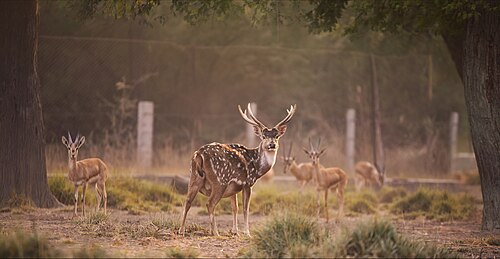
↑"Our Wildlife - Punjab Wildlife and Parks Department". 20 October 2020. Retrieved 12 May 2026.
↑Saeed, K.; Brohi, M. A. (2018). "Baseline data of vertebrate fauna of Lal Sohanra National Park, Punjab, Pakistan". Zoological Survey of Pakistan. 24: 11–26.
↑"Mercury drops to freezing point – Dawn Pakistan". 6 January 2007.
↑"Welcome to Official Web site of Punjab, India". Archived from the original on 23 November 2005. Retrieved 23 November 2005.
↑The figures for 1998 are from pop by province – statpak.gov.pk. The estimates for 2012 are from Population shoots up by 47 percent since 1998Archived 1 July 2012 at the Wayback Machine. Thenews.com.pk. Retrieved on 12 July 2013.
12"Census of India 1931. Vol. 17, Punjab. Pt. 2, Tables". 1931. p.277. JSTORsaoa.crl.25793242. Retrieved 4 February 2024.
12"Census of India 1921. Vol. 15, Punjab and Delhi. Pt. 2, Tables". 1921. p.29. JSTORsaoa.crl.25430165. Retrieved 17 February 2024.
12"Census of India 1911. Vol. 14, Punjab. Pt. 2, Tables". 1911. p.27. JSTORsaoa.crl.25393788. Retrieved 3 March 2024.
12Kaul, Harikishan (1911). "Census Of India 1911 Punjab Vol XIV Part II". p.27. Retrieved 3 March 2024.
12"Census of India 1901. [Vol. 17A]. Imperial tables, I-VIII, X-XV, XVII and XVIII for the Punjab, with the native states under the political control of the Punjab Government, and for the North-west Frontier Province". 1901. p.34. JSTORsaoa.crl.25363739. Retrieved 10 March 2024.
12"Census of India, 1891 The Punjab and its feudatories, part I—The report on the census". 1891. JSTORsaoa.crl.25318668. Retrieved 30 November 2024.
12"Census of India, 1891 The Punjab and its feudatories, part II—Imperial Tables and Supplementary Returns for the British Territory". 1891. p.14. JSTORsaoa.crl.25318669. Retrieved 30 November 2024.
12"Census of India, 1891 The Punjab and its feudatories, part III—Imperial Tables and Supplementary Returns for the Native States, Together with a Caste Index". 1891. p.8. JSTORsaoa.crl.25318670. Retrieved 30 November 2024.
12"Census of India, 1881 Report on the Census of the Panjáb Taken on the 17th of February 1881, vol. I." 1881. JSTORsaoa.crl.25057656. Retrieved 7 April 2024.
12"Census of India, 1881 Report on the Census of the Panjáb Taken on the 17th of February 1881, vol. II". 1881. p.14. JSTORsaoa.crl.25057657. Retrieved 7 April 2024.
12"Census of India, 1881 Report on the Census of the Panjáb Taken on the 17th of February 1881, vol. III". 1881. p.14. JSTORsaoa.crl.25057658. Retrieved 7 April 2024.
↑"Pakistan's population crisis: Nation expanding faster than survival capacity". Dawn. DAWN News Desk. 24 November 2025. Retrieved 13 December 2025.
↑"TABLE 11: POPULATION BY MOTHER TONGUE, SEX AND RURAL/URBAN, CENSUS-2023"(PDF). Retrieved 2 April 2020.
12"TABLE 9 – POPULATION BY SEX, RELIGION AND RURAL/URBAN"(PDF). Retrieved 23 January 2023.
123456"7th Population and Housing Census – Detailed Results Table-9 Population by sex, religion and rural/urban". Pakistan Bureau of Statistics. Retrieved 6 August 2024.
↑"CM Punjab inaugurates distribution of honorarium cards for Aima-e-Masajid in Lahore". Radio Pakistan. 8 January 2026. Retrieved 30 January 2026.
↑"Gazetteers Of Gurdaspur District, 1883–84". 1884. Retrieved 7 April 2024.
↑"Gazetteer of the Gurdaspur district, 1891–92". 1892. Retrieved 30 November 2024.
↑"Punjab District Gazetteers Gurdaspur District Vol.21 Statistical Tables". 1913. p.62. Retrieved 10 March 2024.
↑"TABLE 1: AREA, POPULATION BY SEX, SEX RATIO, POPULATION DENSITY, URBAN POPULATION, HOUSEHOLD SIZE AND ANNUAL GROWTH RATE, CENSUS-2023, PUNJAB"(PDF).
123"Area, population by sex, sex ratio, population density, urban population, household size and annual growth rate, census-2023, Punjab"(PDF). Archived from the original(PDF) on 24 July 2024.
↑"LITERACY RATE, ENROLMENT AND OUT OF SCHOOL POPULATION BY SEX AND RURAL/URBAN, CENSUS-2023"(PDF).
↑"TABLE - 3 AREA, POPULATION BY SEX, SEX RATIO, POPULATION DENSITY, URBAN PROPORTION, HOUSEHOLD SIZE AND ANNUAL GROWTH RATE OF PUNJAB"(PDF). punjab_tehsil.pdf. Pakistan Bureau of Statistics. 19 May 2021. Archived(PDF) from the original on 20 May 2021. Retrieved 21 May 2021.
↑"Nankana becomes district". Dawn. Pakistan. 10 May 2005. Retrieved 16 February 2014.
↑"DISTRICT WISE CENSUS RESULTS CENSUS 2017"(PDF). www.pbscensus.gov.pk. Archived from the original(PDF) on 29 August 2017.
↑"World Bank Document"(PDF). Archived from the original(PDF) on 1 May 2011. Retrieved 19 December 2019.
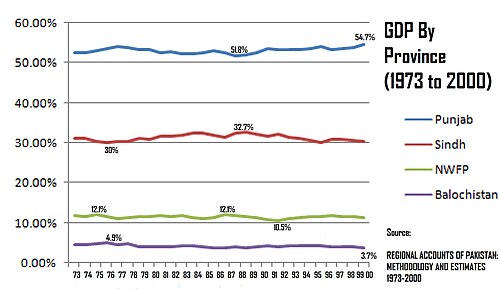
↑"Provincial Accounts of Pakistan: Methodology and Estimates 1973–2000"(PDF). Archived from the original(PDF) on 13 June 2025. Retrieved 19 December 2019.
↑"The News International: Latest, Breaking, Pakistan, Sports and Video News". Archived from the original on 28 July 2020. Retrieved 22 April 2015.
↑A PricewaterhouseCoopers study released in 2009, surveying the 2008 GDP of the top cities in the world, calculated Faisalabad's GDP (PPP) at $35billion. The city was third in Pakistan behind Karachi ($78billion) and Lahore ($40billion). Faisalabad's GDP is projected to rise to $37billion in 2025 at a growth rate of 5.7%, higher than the growth rates of 5.5% and 5.6% predicted for Karachi and Lahore.[2][ "PricewaterhouseCoopers Media Centre". Ukmediacentre.pwc.com. 1 June 2005.]– Last Paragraph
123Farooqui, Tashkeel (20 June 2016). "Northern Punjab, urban Sindh people more prosperous than rest of country: report". The Express Tribune. Archived from the original on 24 July 2016. Retrieved 14 July 2016.
↑Arif, G. M. "Poverty Profile of Pakistan"(PDF). Benazir Income Support Programme. Government of Pakistan. Archived from the original(PDF) on 13 December 2016. Retrieved 14 July 2016. Among the four provinces, the highest incidence of poverty is found in Sindh (45%), followed by Balochistan (44%), Khyber Pakhtukhaw (KP) (37%) and Punjab (21%)
↑Arif, G. M. "Poverty Profile of Pakistan"(PDF). Benazir Income Support Programme. Government of Pakistan. Archived from the original(PDF) on 13 December 2016. Retrieved 14 July 2016. See Table 5, Page 12 "Sialkot District"
12Arif, G. M. "Poverty Profile of Pakistan"(PDF). Benazir Income Support Programme. Government of Pakistan. Archived from the original(PDF) on 13 December 2016. Retrieved 14 July 2016. See Table 5, Page 12 "Rajanpur District"
↑"Punjab Gateway"(PDF). Archived from the original(PDF) on 5 July 2007.
↑IKRAM, ZAHID. "Industrial Zone Punjab, Pakistan". findpk.com. Archived from the original on 11 July 2011.
↑"PIEDMC – Punjab Industrial Estate Development and Management Company". Archived from the original on 10 June 2020. Retrieved 1 June 2020.
↑Arif, G. M. "Poverty Profile of Pakistan"(PDF). Benazir Income Support Programme. Government of Pakistan. Archived from the original(PDF) on 13 December 2016. Retrieved 14 July 2016. See Table 5, Page 12
↑"Sub-national HDI – Subnational HDI – Table – Global Data Lab". Retrieved 8 August 2021.
↑"Pakistan: where and who are the world's illiterates?; Background paper for the Education for all global monitoring report 2006: literacy for life; 2005"(PDF). Archived(PDF) from the original on 23 December 2009.
↑"Rural women uphold Pakistan's literacy rate". The Express Tribune. 15 February 2011. Archived from the original on 15 October 2014. Retrieved 22 April 2015.
↑"KP Achieves Highest Literacy Rate Growth Among All Provinces". Propakistani. 9 June 2022.
↑"MUL an International University - about - Minhaj University Lahore". Minhaj University Lahore.
123Nayar, Kamala Elizabeth (2012). The Punjabis in British Columbia: Location, Labour, First Nations, and Multiculturalism. McGill-Queen's Press – MQUP. ISBN978-0-7735-4070-5.
↑Official Holidays 2016Archived 17 May 2017 at the Wayback Machine, Government of Punjab – Pakistan (2016)
↑Official Holidays 2016Archived 1 September 2018 at the Wayback Machine, Karachi Metropolitan, Sindh, Pakistan
↑Census of India, 1961: Punjab. Manage of Publications
↑Jacqueline Suthren Hirst; John Zavos (2013). Religious Traditions in Modern South Asia. Routledge. p.274. ISBN978-1-136-62668-5.; Eid ul-Fitar, Ramzan Id/Eid-ul-Fitar in India, Festival Dates
↑The ban on fun, IRFAN HUSAIN, Dawn, 18 February 2017
↑The barricaded Muslim mindArchived 4 April 2023 at the Wayback Machine, Saba Naqvi (28 August 2016), Quote: "Earlier, Muslim villagers would participate in Hindu festivals; now they think that would be haraam, so stay away. Visiting dargahs is also haraam"
↑"Tourism Development Corporation of Punjab Official Website". Tdcp.gop.pk. 9 April 2010. Retrieved 27 September 2010.
↑"Ministry of Tourism: Punjab Attractions". Tourism.gov.pk. Archived from the original on 12 June 2010. Retrieved 27 September 2010.
↑khalid. "Tourism in Punjab, Pakistan". Vista-tourism.com. Archived from the original on 15 August 2010. Retrieved 27 September 2010.
↑"Lal Suhanra Park Bahawalpur". bahawalpur.org. 18 July 2022.
↑Sarah Veach, Katy Williamson, Punjabi Culture and Language ManualArchived 4 March 2016 at the Wayback Machine (archived), Texas State University, p.6, retrieved 14 May 2016.
↑"Punjabis Without Punjabi". apnaorg.com. Archived from the original on 25 May 2017. Retrieved 13 January 2017.
↑"Inferiority complex declining Punjabi language: Punjab University Vice-Chancellor". ppinewsagency.com. Pakistan Press International. Archived from the original on 27 November 2016. Retrieved 13 January 2017.
↑"Urdu-isation of Punjab – The Express Tribune". The Express Tribune. 4 May 2015. Archived from the original on 27 November 2016. Retrieved 30 December 2016.
↑"Rally for ending 150-year-old 'ban on education in Punjabi". The Nation. 21 February 2011. Archived from the original on 7 March 2016. Retrieved 15 September 2015.
↑"Sufi poets can guarantee unity". The Nation. 26 August 2015. Archived from the original on 30 October 2015.
↑"Supreme Court's Urdu verdict: No language can be imposed from above". The Nation. 15 September 2015. Archived from the original on 16 September 2015. Retrieved 15 September 2015.
↑"Two-member SC bench refers Punjabi language case to CJP". Business Recorder. 14 September 2015. Archived from the original on 21 October 2015. Retrieved 15 September 2015.
↑"Pakistan should have adopted Punjabi as national language: Hafiz Saeed" Zee News. 6 March 2016
"Pakistan should have adopted Punjabi as national language: Hafiz Saeed | Zee News". Zee News. 6 March 2016. Archived from the original on 25 May 2017. Retrieved 13 January 2017.
↑"Mind your language—The movement for the preservation of Punjabi". The Herald. 2 September 2106.
"Mind your language—The movement for the preservation of Punjabi – People & Society – Herald". herald.dawn.com. 4 August 2016. Archived from the original on 23 December 2016. Retrieved 13 January 2017.
↑"Punjabi in schools: Pro-Punjabi outfits in Pakistan threaten hunger strike". The Times of India. 4 October 2015.
"Punjabi in schools: Pro-Punjabi outfits in Pakistan threaten hunger strike – Times of India". The Times of India. timesofindia.indiatimes.com. 4 October 2015. Archived from the original on 27 September 2016. Retrieved 13 January 2017.
↑"Rally for Ending the 150-year-old Ban on Education in Punjabi" The Nation. 21 February 2011.
"Rally for ending 150-year-old 'ban on education in Punjabi". nation.com.pk. 21 February 2011. Archived from the original on 7 March 2016. Retrieved 13 January 2017.
Bibliography
Amjad, Yahya (1989). Tarikh-i Pakistan: qadim daur—zamanah-yi ma qabl az tarikh: Pakistan ki sarzamin par aj se paune do karor sal pahle (in Urdu).
Dyson, Tim (2018), A Population History of India: From the First Modern People to the Present Day, Oxford University Press, ISBN978-0-19-882905-8
India. Census Commissioner (1941). Punjab (Report). Census of India, 1941. Vol.VI. Delhi. JSTORsaoa.crl.28215541.