
Loading article…


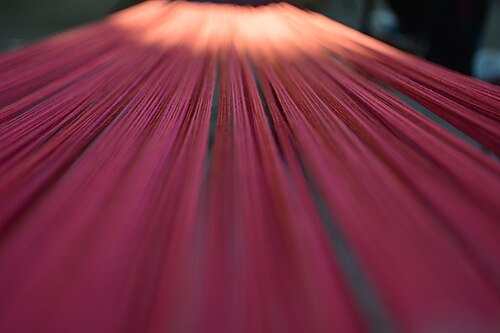

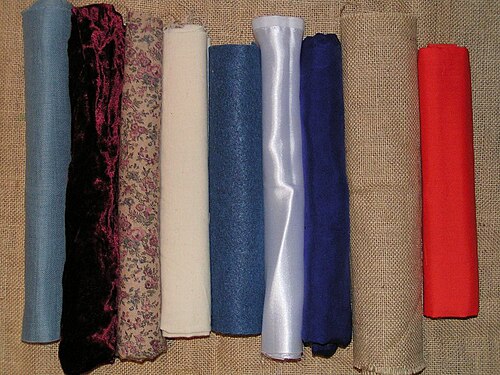
テキスタイルは、繊維、糸、フィラメント、糸、さまざまな種類の生地など、さまざまな繊維ベースの材料を含む包括的な用語です。当初、「テキスタイル」という言葉は織物のみを指していました。[1] : 3 [2] : 5 [3]ただし、織りだけが製造方法ではなく、後に用途に応じてテキスタイル構造を形成する他の多くの方法が開発されました。編み物や不織布も、一般的な生地製造方法です。[4]現代の世界では、テキスタイルは、シンプルな日常着から防弾ジャケット、宇宙服、医師のガウンまで、多目的な用途の材料ニーズを満たしています。[3] [5] [4]
繊維製品は、家庭用の消費者向け繊維製品と技術用繊維製品の2つのグループに分けられます。消費者向け繊維製品では、美しさと快適性が最も重要な要素であるのに対し、技術用繊維製品では、機能特性が優先されます。[4] [6]
ジオテキスタイル、産業用テキスタイル、医療用テキスタイル、その他多くの分野はテクニカルテキスタイルの例であり、衣類や家具はコンシューマーテキスタイルの例です。繊維、糸、生地、加工、仕上げなど、テキスタイル製品の各構成要素は最終製品に影響を与えます。構成要素は目的への適合性に基づいて選択されるため、さまざまなテキスタイル製品間で異なる場合があります。[4] [7] [6]
繊維は布地の最小の構成要素です。繊維は通常、糸に紡がれ、糸は布地の製造に使用されます。[8] [7]繊維は髪の毛のような外観をしており、長さと幅の比率が高いです。繊維の供給源は、天然、合成、またはその両方です。フェルト化と接着の技術は、繊維を直接布地に変換します。他の場合には、糸はさまざまな布地製造システムで操作され、さまざまな布地構造を生み出します。繊維を撚ったり並べたりして、長く連続した糸を作ります。[2]次に、糸を使用して、織る、編む、かぎ針編みする、結ぶ、タティングする、または編むことによって、さまざまな種類の布地を作ります。[9] [10] [5]製造後、繊維材料は加工され、仕上げられて、美観、物理的特性、有用性の向上などの価値が付加されます。[11]繊維の製造は最も古い工業技術です。[12] 染色、プリント、刺繍はすべて繊維素材に施されるさまざまな装飾芸術です。[13]
語源
繊維
「テキスタイル」という言葉はラテン語の形容詞textilis(織った)に由来し、これは「織る」を意味する動詞texere(織る)の過去分詞textusに由来する。 [14]もともと織物に適用されていた「テキスタイル」という用語は、現在では繊維、糸、生地、その他の関連アイテムなど、さまざまな素材を包括する用語として使用されている。[ 2] [1] [3]
ファブリック
「布地」とは、糸、繊維、高分子フィルム、フォーム、またはこれらの技術の組み合わせから作られた薄くて柔軟な素材と定義されます。布地は布よりも幅広い用途があります。[15] : 207 [16]布地は、布、材料、商品、または反物と同義です。[4] [5]「布地」という単語もラテン語に由来し、その語源はインド・ヨーロッパ祖語です。最近では中世フランス語の fabrique(建物)から、さらに以前はラテン語のfabrica(工房、芸術、貿易、巧みな生産、構造、布地)から派生した名詞fabricaは、ラテン語のfaber (硬い素材を扱う職人)から派生しており、それ自体は「合わせる」を意味するインド・ヨーロッパ祖語のdhabh-から派生しています。 [17]
布


布は、通常、天然または合成材料を使用して、織り、フェルト化、または編み物のプロセスを通じて作成される柔軟な物質です。[18]「布」という単語は、古英語の claðに由来し、「身体に巻き付ける布、織物、またはフェルト化された素材」を意味します。これは、ゲルマン祖語の klaithazに由来し、古フリジア語の klath、中期オランダ語の cleet、中高ドイツ語の kleit、ドイツ語の kleidに似ており、すべて「衣服」を意味します。[19]
布は織物の一種ですが、製造工程、物理的特性、用途の違いにより、すべての織物が布として分類できるわけではありません。糸を織ったり、編んだり、房状にしたり、結び付けたりした素材は布と呼ばれ、壁紙、プラスチック製の室内装飾品、カーペット、不織布などは織物の例です。[15] : 207
歴史
織物自体は非常に脆弱で、数千年もの間残っていません。紡ぎや織りに使われた道具が、先史時代の織物作業の証拠のほとんどを占めています。最も古い紡ぎ道具は紡錘で、やがてこれに糸巻きが加えられました。糸巻きの重さによって、紡がれた糸の太さと撚りが改善されました。後に糸車が発明されました。歴史家たちはどこで発明されたのか確信が持てず、中国と言う人もいれば、インドと言う人もいます。[20]
今日の織物の原型には、葉、樹皮、毛皮、フェルト布などがある。[21]
バントンの埋葬布は東南アジアで現存する最古の経糸 イカットの例で、フィリピン国立博物館に展示されている。この布は、ロンブロン北西部の原住民アジア人によって作られた可能性が高い。少なくとも7万年前、おそらくはもっと前から着用されていた最初の衣服は、おそらく動物の皮で作られ、初期の人類を風雨から守るのに役立った。ある時点で、人々は植物繊維を織物に織り込むことを学んだ。ジョージア共和国の紀元前34,000年の洞窟で染色された亜麻繊維が発見されたことは、織物のような素材が旧石器時代にはすでに作られていたことを示唆している。[22] [23]
繊維生産の速度と規模は、工業化と近代的な製造技術の導入によって、ほとんど認識できないほど変化しました。[24]
繊維産業
繊維産業は芸術と工芸から生まれ、ギルドによって維持されてきた。18世紀と19世紀の産業革命の間に、繊維産業はますます機械化されていった。1765年、イギリスで羊毛や綿を紡ぐ紡績機「ジェニー紡績機」が発明されると、繊維生産は工業化された最初の経済活動となった。20世紀には、科学技術が原動力となった。[25] [26] 繊維産業は、その分野における数多くの変革と革新の影響を受け、固有のダイナミズムを示している。繊維事業は、国際貿易政策の変化、ファッショントレンドの変化、顧客の嗜好の変化、生産コストと方法論の変化、安全および環境規制の遵守、研究開発の進歩から生じる波及効果を経験する可能性がある。[2] : 4
繊維・衣料産業は、繊維生産に従事する多くの国の経済システムに大きな影響を与えています。[27]
ネーミング

ほとんどの繊維は、そのベースとなる繊維の総称や原産地で呼ばれたり、製造技術、特性、デザインに基づいて大まかにグループ分けされたりしていました。[28] [29] [30] [31] ナイロン、オレフィン、アクリルは、より一般的に使用されている合成繊維の総称です。[4] : 219
関連用語
関連語の「ファブリック」[10]や「布地」[18]、「素材」は、繊維加工業(仕立てや洋裁など)でテキスタイルの同義語としてよく使われます。しかし、専門的な用法ではこれらの用語に微妙な違いがあります。素材は基本的に物質から成るという意味で非常に広い意味を持つ用語であり、文脈が理解できないと役に立ちません。テキスタイルとは、カーペットやジオテキスタイルなど、繊維が絡み合ってできた素材のことで、衣類や室内装飾品などのさらなる製品の製造に必ずしも使用されるわけではありません。ファブリックとは、織る、編む、広げる、フェルトにする、縫う、かぎ針編みする、または接着するなどして作られた素材で、衣類や室内装飾品などのさらなる製品の製造に使用される可能性があり、そのため製造のさらなるステップが必要になります。布はファブリックと同義語として使われることもありますが、多くの場合、加工または裁断された布地を指します。[要出典]
- 生機:生機とは、未加工の繊維製品を指します。製造後、材料は加工され、仕上げられます。[40] [11]
- 反物:反物は、買い手が指定した長さにカットされた状態で販売される繊維素材です。反物は、生地のロールからカットされるか、特定の長さに作られ、ヤードグッズとも呼ばれます。[41] [42]
種類

繊維は、繊維と糸から作られたさまざまな材料です。「繊維」という用語は、もともと織物のみを指すために使用されていましたが、今日では幅広い主題をカバーしています。[1]繊維は、繊維の起源(天然または合成)、構造(織物、編み物、不織布)、仕上げなど、さまざまなレベルで分類されています。[28] [29] [30] [31]ただし、繊維には主に2つの種類があります。
消費財繊維
繊維製品にはさまざまな用途がありますが、最も一般的な用途は衣類やバッグ、バスケットなどの容器です。家庭では、カーペット、布張りの家具、窓のブラインド、タオル、テーブルやベッドなどの平らな表面のカバー、芸術作品などに使用されています。繊維製品は、裁縫、キルティング、刺繍などの多くの伝統的な手工芸品に使用されています。[4]
テクニカルテキスタイル


工業目的で生産され、見た目以上の技術的特性を考慮して設計および選択された繊維は、一般にテクニカル テキスタイルと呼ばれます。テクニカル テキスタイルには、自動車用途の繊維構造、医療用テキスタイル (インプラントなど)、ジオテキスタイル(盛土の補強)、アグロテキスタイル (作物保護用の繊維)、防護服 (消防士の服の耐熱性および耐放射線性、溶接工の溶融金属に対する服、刺し傷防止、防弾チョッキなど) が含まれます。
職場では、繊維はフィルタリングなどの産業および科学プロセスで使用できます。その他の用途には、旗、バックパック、テント、ネット、掃除用雑巾、気球、凧、帆、パラシュートなどの輸送装置が含まれます。繊維は、グラスファイバーや工業用ジオテキスタイルなどの複合材料の強化にも使用されます。[4] [6]
これらの製品には高度な技術と法的要件が求められることが多いため、通常、これらの繊維は厳しい性能要件を満たしていることを確認するためにテストされます。その他の形態のテクニカル繊維は、その科学的品質を実験し、将来的に得られる可能性のある利点を調査するために生産されることがあります。酸化亜鉛 ナノワイヤでコーティングされた糸を布地に織り込むと、「自己発電ナノシステム」が可能になり、風や体の動きなどの日常的な動作によって生じる振動を利用してエネルギーを生成することが示されています。[43] [44]
意義
繊維は私たちの周りにあります。繊維は、食料や住居などの基本的なニーズの構成要素です。バスタオルから宇宙服まで、繊維は私たちの生活のいたるところにあります。繊維は、人間を慰め、保護し、寿命を延ばすことで人間を助けます。繊維は私たちの衣服のニーズを満たし、冬は暖かく、夏は涼しく保ちます。繊維には、医療用繊維、インテリジェント繊維、自動車用繊維など、さまざまな用途があります。それらはすべて、人間の幸福に貢献しています。[2]
繊維における保守性
「サービス性」という用語は、繊維製品が消費者のニーズを満たす能力を指します。ターゲット市場を把握し、ターゲット市場のニーズと製品のサービス性を一致させることに重点が置かれています。繊維におけるサービス性または性能とは、繊維材料がさまざまな条件、環境、危険に耐える能力です。美観、耐久性、快適性、安全性、外観の保持、手入れ、環境への影響、コストは、材料を構成する際に採用されるサービス性の概念です。[説明が必要] [2] : 1 ~ 12
コンポーネント
繊維、糸、織物構造、仕上げ、デザインは繊維製品の構成要素です。特定の構成要素の選択は用途によって異なるため、繊維、糸、織物製造システムは必要な性能を考慮して選択されます。[2] : 1~12
使用と応用
その他の用途
繊維、繊維生産、衣服は先史時代の生活必需品であり、社会、経済、宗教システムと絡み合っていました。衣服以外にも、繊維工芸は実用的、象徴的、豪華な品々を生み出しました。中央ヨーロッパの石器時代と鉄器時代の考古学的遺物は、先史時代の衣服とそれが個人や集団のアイデンティティを形成する上で果たした役割を調査するために使用されています。[49]
知識の源
さまざまな考古学的発掘調査で発見された遺物は、過去の人類の生活とその活動の痕跡を私たちに教えてくれます。[50]ジョージア共和国で発見された染色された亜麻繊維は、旧石器時代に織物のような素材が開発されたことを示しています。放射性炭素年代測定によると、この微細繊維は現代人がアフリカから移住した36,000年前のものとされています。[23]
インカ帝国の織物芸術の遺物など、インカ人の美学と社会的理想を体現したいくつかの織物遺物は、数多くの文明、習慣、文化に関する情報を広める手段として機能しています。[51] [52]
繊維のさまざまな側面に関する歴史を展示する繊維博物館があります。繊維博物館は、地域、国内、国際規模で世界の繊維の芸術的価値と文化的重要性に対する一般の認識と理解を高めます。ワシントンDCのジョージワシントン大学博物館と繊維博物館は1925年に設立されました。[53]
物語芸術
バイユーのタペストリーは世俗的なロマネスク美術の稀有な例である。この芸術作品は1066年のノルマン人によるイングランド征服を描いている。 [54] [55]
装飾芸術
織物は装飾芸術にも使われる。インド東部の州オリッサ州の装飾芸術であるピピリのアップリケは傘、壁掛け、ランプシェード、バッグなどに使われる。さまざまな装飾品を作るために、動物、鳥、花などの形の色とりどりの布をベース布に縫い付ける。[56]
アーキテキスタイル
アーキテキスタイルは、建築とテキスタイルを組み合わせた言葉で、テキスタイルをベースにした集合体です。日よけは建築用テキスタイルの基本的なタイプです。[57]移動可能な宮殿であった ムガル帝国のシャーヒ・ラール・デラ・テントは、ムガル帝国時代のアーキテキスタイルの一例です。[58]
通貨
織物も通貨として使われていた。アフリカでは、衣服、帽子、産着、テント、帆、バッグ、袋、カーペット、敷物、カーテンなどに使われるほか、通貨としても使われていた。[59]サハラ以南のアフリカの東西軸に沿って、サバンナで生産される布の帯が通貨として使われていた。[60]
奉納物
古代ギリシャでは、宗教的な目的で神々に捧げられた品物の中に織物が含まれていました。[61]
ファイバ
布地の最小の構成要素は繊維です。繊維は通常、糸に紡がれ、糸は布地の製造に使用されます。繊維は非常に細く、髪の毛のような構造です。繊維の原料は天然、合成、またはその両方です。[2] [15] : 64, 69
世界の消費
世界の一人当たり繊維生産量は、1975年の8.4キログラムから2021年には14.3キログラムに増加しました。[要説明] 2020年にCOVID-19パンデミックにより小幅な減少があった後、世界の繊維生産量は2021年に1億1,300万トンに回復しました。世界の繊維生産量は、2000年の5,800万トンから2021年には1億1,300万トンにほぼ倍増し、2030年には1億4,900万トンに達すると予想されています。[62]
合成繊維の需要は急速に増加しています。これには多くの原因があります。その理由には、価格の安さ、綿の需要と供給の不均衡、そして[合成繊維の]デザインと用途の多様性が含まれます。合成繊維は、主にポリエステルで、世界の繊維使用量の70%を占めています。[63] 2030年までに、合成繊維市場は982.1億米ドルに達するでしょう。2022年から2030年まで、市場は年間5.1%増加すると予想されています。[64]
繊維源
- 天然繊維は植物、動物、鉱物から得られます。[2] : 18 先史時代から、織物は天然繊維から作られてきました。天然繊維はさらにセルロース、タンパク質、鉱物に分類されます。[15] : 70
- 合成繊維または人造繊維は化学合成によって製造される。[2] : 18
- 半合成繊維: 合成繊維または人造繊維のサブセットは半合成繊維です。レーヨンは、天然ポリマーで作られた半合成繊維に分類されます。
モノマーはポリマーの構成要素です。繊維中のポリマーには、添加型と縮合型の2種類があります。綿や羊毛などの天然繊維は縮合型ポリマーですが、合成繊維は添加型または縮合型ポリマーのいずれかになります。例えば、アクリル繊維やオレフィン繊維は添加型ポリマーであり、ナイロンやポリエステルは縮合型ポリマーです。[15]
種類
繊維特性
繊維の特性は、美観、耐久性、快適性、コストなどの織物の特性に影響を与えます。[15] : 69 繊度は繊維の重要な特性の 1 つです。繊維は長さと幅の比率が大きく [直径の 100 倍] なっています。繊維は強く、凝集性があり、柔軟である必要があります。繊維の有用性は、強度、柔軟性、長さと直径の比率、紡糸性などの特定のパラメータに基づいて特徴付けられます。天然繊維は長さが比較的短い [ステープル] です。合成繊維はフィラメントと呼ばれるより長い長さで生産されます。シルクはフィラメントである唯一の天然繊維です。繊維の分類は、その起源、派生、および一般的なタイプに基づいています。[2] [15] : 64, 69
合成繊維の直径、断面積、色などの特定の特性は、製造中に変更される可能性があります。[15] : 66
綿: 綿は、その優れた特性から、衣類に長年使用されてきました。この繊維は柔らかく、吸湿性、通気性に優れ、耐久性に優れていることで知られています。
混紡(混紡繊維)
2種類以上の異なる繊維、または糸を組み合わせて製造され、望ましい特性を得る布地または糸。混紡は繊維製造のさまざまな段階で可能です。最終的な組成が、結果として得られる製品の特性に左右されます。天然繊維と合成繊維を混紡することで、単一繊維の特性の欠点を克服し、より優れた性能特性と、デボレ、杢効果、クロス染色、ストライプパターンなどの美的効果を実現します。綿とポリエステルの混紡で織られた衣類は、綿だけで織られた素材よりも耐久性があり、手入れが簡単です。機能特性を共有する以外に、混紡により製品はより経済的になります。[65] [66]
ユニオンまたはユニオンファブリックは、19世紀の混紡生地を指す用語です。現在は使用されていません。[67] ミクスチャーまたはミックスクロスは、経糸と緯糸に異なる種類の糸が使用されている混紡生地を指す別の用語です。[68] [69]
混紡織物は新しいものではありません。
構成
繊維組成[72]繊維の混合物の繊維混合組成[73]は、商品の挙動、機能面などの特性、および商業的分類を分析するための重要な基準です。[74] [75] [76]
最も一般的な混紡は綿とポリエステルです。通常の混紡生地はポリエステル 65%、綿 35% です。綿の割合が優勢な場合はリバース混紡と呼ばれ、繊維の割合は価格と必要な特性に応じて変わります。
混紡は繊維製品に付加価値を与え、コスト削減(人工繊維は天然繊維よりも安価)と最終製品の特性上の利点の付加に役立ちます。[77] [78]例えば、少量のスパンデックスは生地に伸縮性を加えます。[79]ウールは暖かさを加えます。[80]
さまざまな繊維の用途
天然繊維
植物

- 草、イグサ、麻、サイザル麻はすべてロープを作るのに使われます。[81]最初の2つでは植物全体がこの目的に使われますが、最後の2つでは植物の繊維だけが使われます。コイア(ココナッツ繊維)はより糸を作るのに使われ、またフロアマット、玄関マット、ブラシ、マットレス、床タイル、袋にも使われます。
- 帽子を作るのに、わらと竹の両方が使われます。わらは乾燥した草で、カポックと同様に詰め物にも使われます。
- 紙の製造には、パルプ材の木、綿、米、麻、イラクサからの繊維が使用されます。
- 綿、亜麻、黄麻、麻、モダール、バナナ、竹、蓮、ユーカリ、桑、サトウキビはすべて衣料品に使用されています。[82] [83] [84] パイナップル繊維とラミーも衣料品に使用される繊維であり、通常は綿などの他の繊維と混合されます。イラクサも麻や亜麻に非常によく似た繊維や生地を作るために使用されています。ミルクウィードの茎繊維の使用も報告されていますが、麻や亜麻などの他の繊維よりもやや弱い傾向があります。
- レースバークの木の樹皮の内側は細かい網状になっており、衣類やアクセサリーのほか、ロープなどの実用品を作るのに使われてきました。
- アセテートは、シルク、ベルベット、タフタなどの特定の生地の光沢を高めるために使用されます。
- 海藻は繊維の生産に使われます。アルギン酸塩と呼ばれる水溶性繊維が生産され、保持繊維として使用されます。布が完成すると、アルギン酸塩は溶解され、開いた領域が残ります。
- レーヨンは植物パルプから作られる合成繊維です。[85]レーヨンには様々な種類があり、シルク、綿、ウール、リネンの感触や質感を模倣することができます。
麻、亜麻、イラクサなどの植物の茎から採れる繊維は、「靭皮」繊維とも呼ばれます。麻繊維は麻植物から採れる黄褐色の繊維です。繊維の特性は粗く、硬く、[説明が必要]強く、軽量です。麻繊維は主に、より糸、ロープ、紐を作るのに使われます。[86]
動物
動物の繊維は、一般的に髪の毛、毛皮、皮、または絹(カイコの場合)から作られています。 [説明が必要]
- ウールは家畜の羊や山羊の毛を指し、個々の毛束が鱗で覆われてしっかりと縮れており、ウール全体がラノリン(ウールグリースと呼ばれることもある)と呼ばれるワックス混合物で覆われている点で他の種類の動物の毛と区別され、防水性と防汚性があります。 [87]ラノリンと他の汚染物質は、加工する前に原毛から除去されます。[88]ウーレンはカードで梳いた非平行繊維から作られた糸を指し、ウーステッドは平行になるようにコーマされた長い繊維から紡がれたより細い糸を指します。
- シルクは、中国のカイコの繭の繊維から作られる動物繊維で、その柔らかさが高く評価されている滑らかな生地に紡がれます。シルクには、カイコが作る「桑絹」と、柞蚕(野生絹)などの「野生絹」の2つの主な種類があります。カイコの幼虫は、食用として新鮮な桑の葉のある生息地で飼育された場合、前者のタイプを生産しますが、柞蚕は、純粋にオークの葉を餌とするカイコによって生産されます。世界のシルク生産量の約5分の4は、養殖シルクです。[89]シルク製品には、枕カバー、ドレス、トップス、スカート、ベッドシーツ、カーテンなどがあります。
微生物
バクテリアセルロースは産業有機廃棄物や農業廃棄物から作られ、繊維や衣料品の材料として使用することができます。[90]
ミネラル
- アスベストと玄武岩繊維は、ビニールタイル、シート、接着剤、「トランジット」パネル、サイディング、吸音天井、舞台カーテン、防火用ブランケットなどに使用されます。
- ガラス繊維は、アイロン台やマットレスのカバー、ロープやケーブル、複合材料の強化繊維、防虫網、難燃性保護布、防音、耐火、絶縁繊維の製造に使用されています。ガラス繊維を織ってテフロンでコーティングすると、実質的に耐火性のあるベータクロスが作られ、 1968年以来、米国の宇宙服の外層でナイロンに取って代わりました。 [91]
- 金属繊維、金属箔、金属線は、金の布や宝飾品の製造など、さまざまな用途に使用されています。金網(米国用語のみ)は、建設に使用される、鋼線の粗い織り目です。標準的な窓の網戸によく似ていますが、より重く、織り目がより粗くなっています。
鉱物と天然および合成繊維を組み合わせることもできます。たとえば、布の裏地に研磨剤を接着したエメリークロスがあります。また、「サンドクロス」は、研磨剤を接着した細い金網を指す米国用語で、エメリークロスや粗いサンドペーパーのように使用されます。
合成
20 世紀には、石油から作られた人工繊維がそれを補うようになりました。織物は、1デニールよりも細い糸で作られた最高級のマイクロファイバーから、最も丈夫なキャンバスまで、さまざまな強度と耐久性で作られています。
合成繊維は、主に衣料品の生産やジオテキスタイルの製造に使用されます。合成繊維は、化学合成によって人間が作り出す繊維です。
- ポリエステル繊維は、単独で、または綿などの繊維と混紡されて、あらゆる種類の衣類に使用されます。
- アラミド繊維(例:トワロン)は、難燃性の衣類、耐切創性、防具などに使用されます。
- アクリルはカシミアを含むウールを模倣するために使用される繊維であり、[92]それらの代替としてよく使用されます。
- ナイロンはシルクを模倣するために使用される繊維で、パンストの製造に使用されます。太いナイロン繊維はロープやアウトドアウェアに使用されます。
- スパンデックス(商品名ライクラ)は、動きを妨げずにぴったりフィットさせることができるポリウレタン製品です。スポーツウェア、ブラジャー、水着などに使用されています。
- オレフィン繊維は、スポーツウェア、裏地、防寒着などに使用される繊維です。オレフィンは疎水性で、速乾性があります。オレフィン繊維の焼結フェルトは、タイベックという商標名で販売されています。
- インジオは、綿などの他の繊維と混合され、衣類に使用されるポリ乳酸繊維です。他のほとんどの合成繊維よりも親水性が高く、汗を吸い取ります。
- ルレックスは衣服の装飾に使用される金属繊維です。
- ミルクタンパク質は合成繊維の製造にも使われてきました。ミルクまたはカゼイン繊維の布は第一次世界大戦中にドイツで開発され、1930年代にはイタリアとアメリカでさらに開発されました。[93]ミルク繊維の布は耐久性があまりなく、しわになりやすいですが、人間の皮膚とpHが似ており、抗菌性があります。生分解性で再生可能な合成繊維として販売されています。[94]
- 炭素繊維は、炭素繊維強化プラスチックなどの樹脂と組み合わせた複合材料によく使用されます。この繊維は、ポリマー繊維を炭化して作られます。
生産方法
繊維製造は先史時代の工芸品から完全に自動化された産業へと進歩しました。[15]長年にわたり、織物の構造とデザインは継続的に改良されてきました。[95]
生地選択における重要なパラメータ:
生地の選択において最も重要なのは、最終用途です。生地のニーズは用途によって大きく異なります。同様の種類の生地がすべての用途に適しているとは限りません。[15] : 18
生地の重さは、さまざまな生地を生産する際に重要な基準です。カーペットには1300 GSMの生地が必要ですが、ローブは160 GSMで作ることができます。確かに、衣服とカーペットの生地には異なる重さがあります。[15] : 18
伸縮性のある生地は動きやすさに優れ、伸縮性のない生地や伸縮性の低い生地よりも快適です。[15] : 23
繊維輸出
国連商品貿易統計データベースによると、世界の繊維・アパレル輸出市場は2013年に7,720億ドルに達した。[109]
市場のダイナミクスの変化
中国は繊維製品の最大の輸出国である。中国の輸出品の大半は、衣料品、衣料品アクセサリー、繊維糸、繊維製品である。中国の競争上の優位性は、低価格と豊富な労働力、商業上の障害の低減、原材料の容易な供給である。中国は、米国やインドとともに、綿花の主要生産国である。[110] [111]
近年、中国のアパレル市場シェアは、さまざまな理由と高級で洗練された製品への移行により低下している。さらに、中国の投資家はミャンマー、ベトナム、カンボジアに投資している。昨年の市場シェアは36.7%、1610億ドルで、前年比8%減少した。言い換えれば、中国は1年間で140億ドルの衣料品の受注を他国に奪われたことになる。2016年、バングラデシュのアパレル市場シェアは280億ドルと評価され、前年比7.69%増加した。
2016年のアパレルの主要輸出国は、中国(1,610億ドル)、バングラデシュ(280億ドル)、ベトナム(250億ドル)、インド(180億ドル)、香港(160億ドル)、トルコ(150億ドル)、インドネシア(70億ドル)でした。[112]
バングラデシュの衣料品輸出は2021-2022年度に過去最高を記録した。中国(2203億200万ドル)、バングラデシュ(387億ドル)、インド(81億2700万ドル)、パキスタン(193億3000万ドル)。[113]
仕上げ

織機や編み機から出たばかりの布地は、そのままではすぐには使用できない。布地はざらざらしていたり、不均一だったり、斜めになっているなどの欠陥があるかもしれない。そのため、布地を仕上げる必要がある。仕上げ技術は、処理された布地の価値を高める。[15] : 6 製造後、織物は漂白、染色、印刷、機械的および化学的仕上げなど、さまざまな仕上げ工程を経る。[11]
着色
織物は染色されることが多く、ほぼあらゆる色の生地が入手可能です。染色工程では、衣類1ポンドあたり数十ガロンの水が必要になることがよくあります。[114]織物の色の模様は、異なる色の繊維を織り合わせる(タータンまたはウズベキスタンのイカット)、完成した生地に色のステッチを追加する(刺繍)、防染法で模様を作る、布の一部を縛って残りの部分を染める(絞り染め)、布に蝋で模様を描いてその間を染める(バティック)、完成した生地にさまざまな印刷工程を使用するなどの方法で作成できます。インドやその他の地域で現在も使用されている木版印刷は、これらのうち最も古いもので、少なくとも西暦220年の中国にまで遡ります。織物は漂白されて、淡い色や白色になること もあります。
カラーマッチング
繊維製品では、色合わせは適切な染料や顔料を選択し、それらを正確な割合で組み合わせて、希望する最終製品の色を実現するだけではありません。[ 115]堅牢性、コスト、品質の基準を満たすことも不可欠です。このプロセスは、デザイナーのコンセプトを実際の製品に具体化する上で重要な役割を果たします。[115]
仕上げ
繊維仕上げとは、織機の状態または原材料を有用な製品に変換するプロセスであり、機械的または化学的に行うことができます。仕上げとは、繊維生産の1つの段階を終えると同時に次の段階の準備も行う、さまざまな物理的および化学的技術と処理を指す広い用語です。繊維仕上げには、表面の感触の改善、美的向上、高度な化学仕上げの追加などの側面が含まれます。[11]仕上げとは、未完成の製品を完成品に変えるプロセスです。 [116]これには、処理された繊維(繊維、糸、または生地)の組成を変更する機械的仕上げと化学的適用が含まれます。
1990年代以降、パーマネントプレス加工などの技術の進歩により、生地を強化し、しわをなくすために仕上げ剤が使用されるようになりました。 [117]最近では、ナノマテリアルの研究がさらなる進歩をもたらし、ナノテックスやナノホライズンズなどの企業が、繊維を水、汚れ、しわ、細菌や真菌などの病原体などに対してより耐性を持たせるための金属ナノ粒子に基づく永久処理を開発しています。[118]
繊維製品は、最終消費者の手に渡る前に、さまざまな処理を受ける。ホルムアルデヒド仕上げ(しわになりにくいようにする)から殺生物性仕上げ、難燃剤から多くの種類の布地の染色まで、その可能性はほぼ無限である。しかし、これらの仕上げの多くは、最終消費者に有害な影響を与える可能性もある。例えば、分散染料、酸性染料、反応性染料の多くは、敏感な人にアレルギーを引き起こすことがわかっている。[119]さらに、このグループ内の特定の染料は、紫斑性接触皮膚炎を引き起こすこともわかっている。[120]
アイゼンガルンは英語で「鉄の糸」を意味し、ドイツ反射する丈夫な素材です。綿糸をデンプンとパラフィンワックスの溶液に浸して作られます。その後、糸は鋼のローラーとブラシで伸ばされ、磨かれます。この工程の結果、光沢のある、引き裂きに強い、非常に耐久性のある糸が生まれます。[121][122]
環境と健康への影響
石油産業に次いで、ファッション産業は農地を汚染する第2位の産業であり、環境にさまざまな悪影響を及ぼしています。産業が成長するにつれて、環境への影響は悪化しています。[125]繊維製造は、最も古く、技術的に最も複雑な産業の1つです。この産業の基本的な強みは、ジュート、シルク、ウール、綿などの天然繊維から、ポリエステル、ビスコース、ナイロン、アクリルなどの合成繊維や工業繊維まで、多様な繊維/糸の強固な製造基盤にあります。
繊維工場とその廃水は繊維製品の需要増加に比例して増加しており、世界中で深刻な汚染懸念を引き起こしている。繊維産業の化学物質の多くは環境と健康にリスクをもたらす。繊維廃水に含まれる化合物のうち、染料は重大な汚染物質と考えられている。未処理の廃水の排出と、特に加工中の有毒化学物質の使用によって発生する水質汚染は、繊維産業に関連する世界的な環境懸念の大部分を占めている。[126]
環境への影響
衣服は人間の基本的なニーズを満たすために必要である。人口と生活水準の増加により衣服の必要性が高まり、繊維製造の需要が高まった。湿式加工にはより多くの水消費が必要である。[127]従来の機械と処理手順では、特に天然繊維の場合、1kgの材料あたり最大150kgの水を必要とするなど、膨大な量の水が使用される。[128] 繊維部門は、相当数の環境への影響の原因となっている。しかし、繊維部門が引き起こす環境被害の大部分は、未処理の排水を水域に排出することによるものである。[129]
繊維産業は年間79兆リットルの水を使用し、全産業排水の約20%を環境に排出していると考えられています。[130]報告によると、色表示基と極性基を持つ芳香族化合物と複素環式化合物が、繊維の着色プロセスで使用される染料のほとんどを構成しています。構造がより複雑で安定しているため、印刷および染色廃水の分解がより困難になっています。[131]
さらに、繊維は埋め立て廃棄物のかなりの割合を占めています。2023年、ノースカロライナ州立大学の研究者は、繊維廃棄物の削減に向けた初期段階として、酵素を使用して綿とポリエステルを分離し、それぞれの材料をリサイクルできるようにしました。[132]
健康への影響
水中に排出された染料や顔料によって、さまざまな呼吸器疾患、皮膚疾患、アレルギーが引き起こされる可能性があります。
衣類中のホルムアルデヒド濃度がアレルギー反応を引き起こすほど高いレベルにある可能性は低いが[133] 、そのような化学物質が存在するため、品質管理とテストが最も重要である。難燃剤(主に臭素化された形態)も、環境とその潜在的な毒性が懸念される。[134]
化学物質の使用、利点、健康への影響
特定の化学仕上げ剤には、健康や環境に潜在的に有害であるものがあります。米国環境保護庁は、ペルフルオロ酸を人体に対して有害であると考えています。[135]
テスト
これらの添加物の検査は、多くの民間研究所で行うことができます。また、繊維製品における特定の化学物質の使用制限レベルを定めた エコテックス認証規格に従って繊維を検査することも可能です。
法律と規制
国によって消費者の利益を保護するための法律や規制は異なる。米国では、繊維製品識別法が消費者を保護する法律である。この法律は、繊維製品にラベル表示(内容表示義務)と広告義務を課すことで、生産者と消費者の利益を保護する。繊維製品識別法は、ウール以外のすべての繊維製品に適用され、ウールはウール製品ラベル番号で管理されている。この法律は、繊維内容に関する誤報、不当表示、不当な広告行為を禁止し、企業に特定の方法で運営することを義務付けている。[142] [4]
繊維製品の試験
試験は、原材料から完成品まで、繊維製造工程のさまざまな段階で行われます。試験の目的は、規制の遵守、製品の品質と性能を評価および分析し、その仕様を測定することです。繊維試験には、幅広い方法論、手順、機器、高度な研究室が含まれます。地方自治体や、ASTMインターナショナル、国際標準化機構、米国繊維化学者および染色者協会などの認可された組織が、繊維の試験の基準を制定しています。[143] [144]
さまざまな段階でのテストの例:
For fiber: Fiber identification is a necessary test for determining fiber content and classifying products. The labelling of items with their fiber content percentage is a regulatory requirement. Using microscopy, solubility, and burn tests, fibers are distinguished from one another.[145] More fiber relating tests include fiber length, diameter, Micronaire.[146]
For yarn: Yarn count, Denier, Strength, evenness.
For fabric: Dimensional stability, color fastness, thread count, G.S.M, pilling, flammability.[143][144][147]
Picture gallery
-
 Textile market on the sidewalks of Karachi, Pakistan
 -
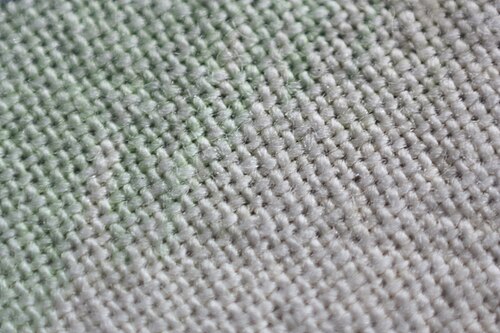 Magnified view of a plain or tabby weave textile
 -
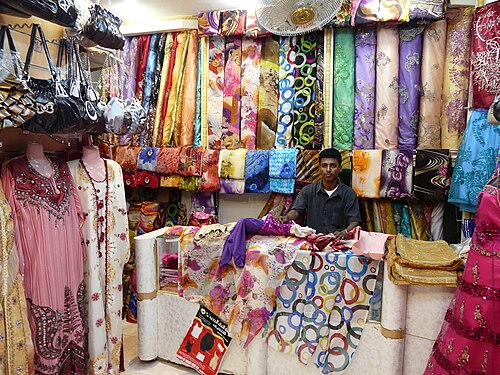 Fabric shop in canal town Mukalla, Yemen
 -
 Late antique textile, Egyptian, now in the Dumbarton Oaks collection
 -

-
-

-
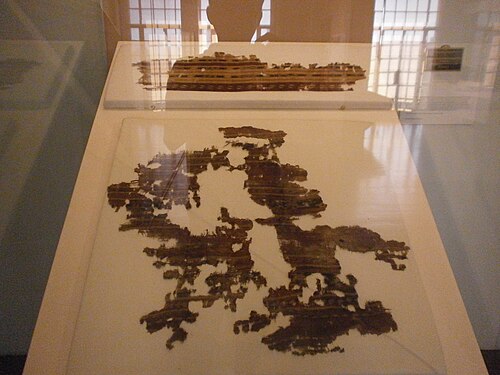 The Banton Burial Cloth, the oldest existing example of warp ikat in Southeast Asia, displayed at the National Museum of the Philippines. The cloth was most likely made by the native Asia people of northwest Romblon.
 -

-
 Advertisement for Zepel, the trade name used to market Teflon as a fabric treatment
 -
![A weaving shed of the Finlayson & Co factory in Tampere, Finland, in 1932[148]](https://img-server.japedia.wiki/wikipedia/commons/thumb/0/06/Plevna-sali_1932.jpg/500px-Plevna-sali_1932.jpg)
-
 Textile machinery at the Cambrian Factory, Llanwrtyd, Wales, in the 1940s
 -
 Cotton fiber
 -
 Nylon
Nylon -
-

-
 Woven tartan of Clan Campbell, Scotland
 -
![Embroidered skirts by the Alfaro-Nùñez family of Cochas, Peru, using traditional Peruvian embroidery methods[149]](https://img-server.japedia.wiki/wikipedia/commons/thumb/3/33/Embroidery-flowers-Alfaro-Nunez.jpg/500px-Embroidery-flowers-Alfaro-Nunez.jpg) Embroidered skirts by the Alfaro-Nùñez family of Cochas, Peru, using traditional Peruvian embroidery methods[149]
Embroidered skirts by the Alfaro-Nùñez family of Cochas, Peru, using traditional Peruvian embroidery methods[149] -
 A modern umbrella fabric has specific requirements for colour fastness to light, water and wet rubbing, and permeability.
 -
 Appliqué cross. The edges are covered and stitches are hidden. It is overlaid with decorative gold thread.
 -
 Clothing made of textiles, Thailand
 -

-
 A fabric tunnel in Moulvibazar District, Bangladesh
 -
 A modern Manila hemp made on industrial weaving machines
 -
![Textile doll (11th century), Chancay culture, found near Lima, Walters Art Museum. Of their small size, dolls are frequently found in ancient Peruvian tombs.[150]](https://img-server.japedia.wiki/wikipedia/commons/thumb/5/50/Chancay_-_Textile_Doll_-_Walters_83768.jpg/500px-Chancay_-_Textile_Doll_-_Walters_83768.jpg) Textile doll (11th century), Chancay culture, found near Lima, Walters Art Museum. Of their small size, dolls are frequently found in ancient Peruvian tombs.[150]
Textile doll (11th century), Chancay culture, found near Lima, Walters Art Museum. Of their small size, dolls are frequently found in ancient Peruvian tombs.[150]
.jpg/500px-Textile_machinery_at_Cambrian_Factory,_Llanwrtyd_(1293828).jpg)
_READY_FOR_HARVEST.jpg/500px-BALLS_OF_COTTON_(ANDHRA_-SOUTH_INDIA)_READY_FOR_HARVEST.jpg)
.jpg/500px-Dan_Hadani_collection_(990044401360205171).jpg)

.jpg/500px-Scene_with_Fabric_Tunnel_-_Srimangal_-_Sylhet_Division_-_Bangladesh_(12904860703).jpg)
See also
- Bamboo textile – Textile made from various parts of the bamboo plant
- Clothing in the ancient world – What people wore in antiquity as inferred from archaeological and historical evidence
- Green textile – textiles or fibers produced sustainably
- International Down and Feather Testing Laboratory
- List of textile fibres
- Sustainable fashion – Reduction of environmental impacts of the fashion industry
- Technical textile – Textile product valued for its functional characteristics
- Textile arts – Form of arts and crafts using fibers
- Textile manufacturing – The industry which produces textiles
- Glossary of textile manufacturing – Alphabetical list of terms relating to the manufacture of textiles
- Textile printing – Method for applying patterns to cloth using printing techniques
- Textile recycling – Method of reusing or reprocessing used clothing, fibrous material and rags
- Timeline of clothing and textiles technology
References
- ^ a b c Joseph, Marjory L. (1977). Introductory textile science. New York : Holt: Rinehart and Winston. pp. 3, 4, 439. ISBN 978-0-03-089970-6.
- ^ a b c d e f g h i j k l m n o p Kadolph, Sara J. (1998). Textiles. Upper Saddle River, N.J.: Merrill. pp. 4, 5. ISBN 978-0-13-494592-7.
- ^ a b c "textile | Description & Facts". Encyclopedia Britannica. Archived from the original on 2015-06-11. Retrieved 2021-08-19.
- ^ a b c d e f g h i j k l m n o p Elsasser, Virginia Hencken (2005). Textiles : concepts and principles. New York, NY: Fairchild Publications. pp. 8, 9, 10. ISBN 978-1-56367-300-9.
- ^ a b c Fairchild's dictionary of textiles. New York: Fairchild Publications. 1959. pp. 552, 553, 211, 131.
- ^ a b c d Horrocks, A. R.; Anand, Subhash C. (2000-10-31). Handbook of Technical Textiles. Elsevier. pp. 1 to 20. ISBN 978-1-85573-896-6.
- ^ a b "Household Textile - an overview | ScienceDirect Topics". www.sciencedirect.com. Archived from the original on 2022-05-19. Retrieved 2022-05-19.
- ^ Division, United States Department of Labor Wage and Hour (1941). Some Basic Information on the Textile Industry. U.S. Department of Labor, Wage and Hour Division. pp. 3–6.
- ^ "An Introduction to Textile Terms" (PDF). Archived from the original (PDF) on July 23, 2006. Retrieved August 6, 2006.
- ^ a b "Definition of FABRIC". Archived from the original on 2017-10-19. Retrieved 2017-10-18.
- ^ a b c d Choudhury, Asim Kumar Roy (2017-04-29). Principles of Textile Finishing. Woodhead Publishing. pp. 1–10. ISBN 978-0-08-100661-0.
- ^ Atlanta Economic Review 1971-11: Vol 21 Iss 11. College of Business Administration. Georgia State University. 1971. p. 6.
- ^ Elsasser, Virginia Hencken (2005). Textiles : concepts and principles. New York, NY: Fairchild Publications. p. 9. ISBN 978-1-56367-300-9.
- ^ "Textile". The Free Dictionary By Farlex. Archived from the original on 2020-05-27. Retrieved 2012-05-25.
- ^ a b c d e f g h i j k l m n o p q r s t Smith, Betty F. (1982). Textiles in perspective. Englewood Cliffs, N.J.: Prentice-Hall. pp. 3, 10, 17, 49. ISBN 978-0-13-912808-0.
- ^ Kadolph, Sara J. (2007). Textiles. Upper Saddle River, N.J.: Pearson Prentice Hall. p. 469. ISBN 978-0-13-118769-6.
- ^ Harper, Douglas. "fabric". Online Etymology Dictionary. Retrieved 2012-12-11.
- ^ a b "Cloth". Merriam-Webster. Archived from the original on 2012-06-06. Retrieved 2012-05-25.
- ^ Harper, Douglas. "cloth". Online Etymology Dictionary. Retrieved 2012-12-11.
- ^ Beaudry, Mary C. (2006). Findings: The Material Culture of Needlework and Sewing. Yale University Press. p. 137.
- ^ Weibel, Adèle Coulin (1952). Two thousand years of textiles; the figured textiles of Europe and the Near East. New York: Pantheon Books. p. 27.
- ^ Balter, M. (2009). "Clothes Make the (Hu) Man". Science. 325 (5946): 1329. doi:10.1126/science.325_1329a. PMID 19745126.
- ^ a b Kvavadze, E.; Bar-Yosef, O.; Belfer-Cohen, A.; Boaretto, E.; Jakeli, N.; Matskevich, Z.; Meshveliani, T. (2009). "30,000-Year-Old Wild Flax Fibers". Science. 325 (5946): 1359. Bibcode:2009Sci...325.1359K. doi:10.1126/science.1175404. PMID 19745144. S2CID 206520793. Archived from the original on 2020-03-04. Retrieved 2018-11-30. Supporting Online Material Archived 2009-11-27 at the Wayback Machine
- ^ Ul-Islam, Shahid; Butola, B. S., eds. (2018). Advanced Textile Engineering Materials. Wiley. ISBN 978-1-119-48785-2. Archived from the original on 2020-11-09. Retrieved 2020-09-04.
- ^ Hollen, Norma R.; Hollen, Norma R. Textiles (1988). Textiles. New York: Macmillan. pp. 1, 2, 3. ISBN 978-0-02-367530-0.
- ^ Herbst, Jeffrey (2017-10-19). "Introduction". States and Power in Africa: Comparative Lessons in Authority and Control. Vol. 1 (2nd ed.). Princeton University Press. doi:10.23943/princeton/9780691164137.003.0010.
- ^ Nayak, R.; Padhye, R. (2015-01-01), Nayak, Rajkishore; Padhye, Rajiv (eds.), "1 - Introduction: The apparel industry", Garment Manufacturing Technology, Woodhead Publishing Series in Textiles, Woodhead Publishing, pp. 1–17, ISBN 978-1-78242-232-7, archived from the original on 2022-06-16, retrieved 2023-05-26
- ^ a b Malekandathil, Pius (2016-09-13). The Indian Ocean in the Making of Early Modern India. Routledge. p. 359. ISBN 978-1-351-99745-4. Archived from the original on 2022-06-02. Retrieved 2022-05-25.
- ^ a b Peck, Amelia (2013). Interwoven Globe: The Worldwide Textile Trade, 1500-1800. Metropolitan Museum of Art. p. 60. ISBN 978-1-58839-496-5. Archived from the original on 2022-06-02. Retrieved 2022-05-25.
- ^ a b Corbman, Bernard P. (1983). Textiles : fiber to fabric. New York: Gregg Division, McGraw-Hill. pp. 2 to 8. ISBN 978-0-07-013137-8.
- ^ a b Cerchia, Rossella Esther; Pozzo, Barbara (2021-01-13). The New Frontiers of Fashion Law. MDPI. pp. 2, 3. ISBN 978-3-03943-707-8. Archived from the original on 2023-04-05. Retrieved 2022-05-25.
- ^ a b c d Boulanger, Jean-Claude (1990). Actes du XVIe Congrès international des sciences onomastiques: Québec, Université Laval, 16-22 août 1987 : le nom propre au carrefour des études humaines et des sciences sociales. Presses Université Laval. p. 143. ISBN 978-2-7637-7213-4. Archived from the original on 2023-04-05. Retrieved 2022-06-07.
- ^ a b Humphries, Mary (1996). Fabric reference. Upper Saddle River, N.J.: Prentice Hall. p. 15. ISBN 978-0-13-349671-0.
- ^ Baden-Powell, Baden Henry (1872). Hand-book of the Manufactures & Arts of the Punjab: With a Combined Glossary & Index of Vernacular Trades & Technical Terms ... Forming Vol. Ii to the "Hand-book of the Economic Products of the Punjab" Prepared Under the Orders of Government. Punjab printing Company. p. 7.
- ^ Supplies and Disposals Year Book. 1964. pp. 74, 335, 351. Archived from the original on 2022-06-07. Retrieved 2022-06-07.
- ^ a b Weibel, Adèle Coulin (1952). Two thousand years of textiles; the figured textiles of Europe and the Near East. New York: Pantheon Books. p. 54.
- ^ King, Brenda M. (2005-09-03). Silk and Empire. Manchester University Press. pp. 61, xvi. ISBN 978-0-7190-6700-6.
- ^ Harmuth, Louis (1915). Dictionary of textiles. University of California Libraries. New York, Fairchild publishing company. p. 149.
- ^ Sangar, S. P. (1965). "FEMALE COSTUMES IN THE SIXTEENTH AND SEVENTEENTH CENTURIES (as reflected in the contemporary Hindi literature)". Proceedings of the Indian History Congress. 27: 243–247. ISSN 2249-1937. JSTOR 44140630. Archived from the original on 2023-02-03. Retrieved 2022-06-06.
- ^ MATHEWS, KOLANJIKOMBIL (2017). Encyclopaedic Dictionary of Textile Terms: Four Volume Set. Woodhead Publishing India PVT. Limited. p. 690. ISBN 978-93-85059-66-7.
- ^ Wingate, Isabel Barnum (1979). Fairchild's dictionary of textiles. New York: Fairchild Publications. p. 455. ISBN 978-0-87005-198-2.
- ^ Blanco, A. E. (2021-05-19). Piece Goods Manual: Fabrics described; textile, knit goods, weaving terms, etc., explained; with notes on the classification of samples. Good Press. Archived from the original on 2023-04-05. Retrieved 2022-05-27.
- ^ Keim, Brandon (February 13, 2008). "Piezoelectric Nanowires Turn Fabric Into Power Source". Wired News. CondéNet. Archived from the original on February 15, 2008. Retrieved 2008-02-13.
- ^ Yong Qin, Xudong Wang & Zhong Lin Wang (October 10, 2007). "Letter/abstract: Microfibre–nanowire hybrid structure for energy scavenging". Nature. 451 (7180): 809–813. Bibcode:2008Natur.451..809Q. doi:10.1038/nature06601. PMID 18273015. S2CID 4411796. cited in "Editor's summary: Nanomaterial: power dresser". Nature. Nature Publishing Group. February 14, 2008. Archived from the original on February 15, 2008. Retrieved 2008-02-13.
- ^ a b c Abisch, Roz; Kaplan, Boche (1975). Textiles. New York: Watts. pp. 1, 2. ISBN 978-0-531-00824-9.
- ^ Annapoorani, Grace S. (2018). Agro Textiles and Its Applications. Woodhead Publishing. ISBN 978-93-85059-89-6. Archived from the original on 2022-05-31. Retrieved 2022-05-22.
- ^ "Italian glaciers tell the tale of climate change; lost 1/3rd of its volume - World News". www.wionews.com. Archived from the original on 2022-05-31. Retrieved 2022-05-22.
- ^ Shishoo, Roshan (2008-10-20). Textile Advances in the Automotive Industry. Elsevier. ISBN 978-1-84569-504-0. Archived from the original on 2022-06-02. Retrieved 2022-05-24.
- ^ Grömer, Karina (2016). The Art of Prehistoric Textile Making. : The development of craft traditions and clothing in Central Europe. Naturhistorisches Museum Wien. doi:10.26530/oapen_604250. ISBN 978-3-902421-94-4.
- ^ "archaeology | Definition, History, Types, & Facts | Britannica". www.britannica.com. Archived from the original on 2021-07-04. Retrieved 2022-05-27.
- ^ Phipps, Elena; Hecht, Johanna; Martín, Cristina Esteras; Martin, Cristina Esteras; N.Y.), Metropolitan Museum of Art (New York (2004). The Colonial Andes: Tapestries and Silverwork, 1530-1830. Metropolitan Museum of Art. p. 17. ISBN 978-1-58839-131-5. Archived from the original on 2022-05-31. Retrieved 2022-05-22.
- ^ D.C.), Textile Museum (Washington (2003). Textile Museum Journal. Textile Museum. p. 123. Archived from the original on 2022-05-31. Retrieved 2022-05-22.
- ^ "The Textile Museum | Mission & History". 2012-04-28. Archived from the original on 2012-04-28. Retrieved 2022-05-27.
- ^ Bernstein, David J. (1986). The mystery of the Bayeux tapestry. London: Weidenfeld and Nicolson. pp. 1–10. ISBN 978-0-297-78928-4.
- ^ King Harold II and the Bayeux Tapestry. Woodbridge, Suffolk ; Rochester, NY: Boydell Press. 2005. ISBN 978-1-84383-124-2.
- ^ "Facilitation of IPR Protection through Geographical Indications | Services | Textiles Committee (Ministry of Textiles, Government of India)". 2015-04-27. Archived from the original on 2015-04-27. Retrieved 2022-05-24.
- ^ Garcia, Mark (2006). Architextiles. Wiley. p. 5. ISBN 978-0-470-02634-2. Archived from the original on 2022-06-02. Retrieved 2022-05-24.
- ^ Willem. "Mughal Shahi Lal Dera Tent". trc-leiden.nl. Archived from the original on 2022-08-11. Retrieved 2022-05-24.
- ^ Johnson, Marion (1980-10-01). "Cloth as Money: the Cloth Strip Currencies of Africa". Textile History. 11 (1): 193–202. doi:10.1179/004049680793691185. ISSN 0040-4969.
- ^ Kobayashi, Kazuo (2019), Kobayashi, Kazuo (ed.), "Guinées in the Lower Senegal River: A Consumer-Led Trade in the Early Nineteenth Century", Indian Cotton Textiles in West Africa: African Agency, Consumer Demand and the Making of the Global Economy, 1750–1850, Cham: Springer International Publishing, pp. 81–125, doi:10.1007/978-3-030-18675-3_3, ISBN 978-3-030-18675-3, S2CID 197981954, retrieved 2022-12-03
- ^ Br¿ns, Cecilie (2016-11-30). Gods and Garments: Textiles in Greek Sanctuaries in the 7th to the 1st Centuries BC. Oxbow Books. p. 51. ISBN 978-1-78570-358-4. Archived from the original on 2023-04-09. Retrieved 2022-12-03.
- ^ "Preferred Fiber and Materials". Textile Exchange. Archived from the original on 2022-11-19. Retrieved 2022-11-19.
- ^ EXECUTIVE, DIGITAL MEDIA (2022-09-26). "MANMADE FIBRE INDUSTRY OUTLOOK 2022". Textile Magazine, Textile News, Apparel News, Fashion News. Archived from the original on 2022-11-19. Retrieved 2022-11-19.
- ^ Markets, Research and (2022-09-21). "Global Synthetic Fiber Market Report 2022: Shifting Fashion Trends Coupled With the Rising Urban Population Creates Opportunities". GlobeNewswire News Room (Press release). Archived from the original on 2022-11-19. Retrieved 2022-11-19.
- ^ Barnett, Anne (1997). Examining Textiles Technology. Heinemann Educational. p. 51. ISBN 978-0-435-42104-5.
- ^ Gulrajani, M. L. (1981). Blended Textiles : Papers of the 38th All India Textile Conference, an International Conference, November 18-20th ... Bombay. Textile Association. Archived from the original on 2022-01-27. Retrieved 2020-11-22.
- ^ Montgomery, Florence M. (1984). Textiles in America 1650-1870 : a dictionary based on original documents, prints and paintings, commercial records, American merchants' papers, shopkeepers' advertisements, and pattern books with original swatches of cloth. New York ; London: Norton. p. 369. ISBN 978-0-393-01703-8.
- ^ Kadolph, Sara J. (1998). Textiles. Upper Saddle River, N.J.: Merrill. p. 402. ISBN 978-0-13-494592-7.
- ^ Fairchild's dictionary of textiles. New York: Fairchild Publications. 1959. p. 355.
- ^ Indian Journal of History of Science. National Institute of Sciences of India. 1982. p. 120.
- ^ Montgomery, Florence M. (1984). Textiles in America 1650-1870 : a dictionary based on original documents, prints and paintings, commercial records, American merchants' papers, shopkeepers' advertisements, and pattern books with original swatches of cloth. New York ; London: Norton. p. 347. ISBN 978-0-393-01703-8.
- ^ Kumar, Raj; Srivastava, H.C. (1980-06-01). "Analysis of Fiber Blends. Part II. Determination of Blend Composition by Moisture Regain". Textile Research Journal. 50 (6): 359–362. doi:10.1177/004051758005000607. ISSN 0040-5175. S2CID 136831481.
- ^ "ASTM D629 - 15 Standard Test Methods for Quantitative Analysis of Textiles". www.astm.org. Archived from the original on 2021-05-18. Retrieved 2021-05-24.
- ^ Rowell, R.M. (2014), "The use of biomass to produce bio-based composites and building materials", Advances in Biorefineries, Elsevier, pp. 803–818, doi:10.1533/9780857097385.2.803, ISBN 9780857095213, retrieved 2023-09-12
- ^ Mechanical Engineering. American Society of Mechanical Engineers. 1956.
- ^ Franck, R. R. (2001-10-29). Silk, Mohair, Cashmere and Other Luxury Fibres. Elsevier. p. 230. ISBN 978-1-85573-759-4. Archived from the original on 2022-01-27. Retrieved 2021-05-23.
- ^ Joseph, Marjory L. (1992). Joseph's introductory textile science. Fort Worth: Harcourt Brace Jovanovich College Publishers. p. 58. ISBN 978-0-03-050723-6.
- ^ Langan, John; Anton, Harley F.; Bader, Carol H. (1992). Improving Reading Comprehension Skills. Townsend Press. ISBN 978-0-944210-54-3.
- ^ Stauffer, Jeanne (2004). Sewing Smart with Fabric. DRG Wholesale. p. 139. ISBN 978-1-59217-018-0. Archived from the original on 2022-01-27. Retrieved 2021-05-23.
- ^ Mendelson, Cheryl (2005-05-17). Home Comforts: The Art and Science of Keeping House. Simon and Schuster. p. 264. ISBN 978-0-7432-7286-5. Archived from the original on 2022-01-27. Retrieved 2021-05-23.
- ^ The Atlas of the World Commerce Maps, Text and Diagrams. Newnes. 1907. pp. xli. Archived from the original on 2023-05-28. Retrieved 2023-05-28.
- ^ Thalmann, B. (30 August 2022). "Tiare Hawai'i Is Making Ultra-Cute Dresses from Pineapple, Banana and Eucalyptus". Honolulu Magazine. Retrieved 1 February 2024.
- ^ Hendrickx, Katrien (2007). The Origins of Banana-fibre Cloth in the Ryukyus, Japan. Leuven University Press. p. 188. ISBN 978-90-5867-614-6. Archived from the original on March 27, 2018.
- ^ Kadapa-Bose, S. (15 September 2021). "Banana Saris, Lotus Shawls, Bamboo Jeans: How Desi Fashion Is Going Green!". the better india. Retrieved 1 February 2024.
- ^ Anstey, H. (Helen) (1997). The Anstey Weston guide to textile terms. Great Britain: Weston. ISBN 978-0-9530130-0-5.
- ^ Cohen, Allen (11 November 2011). J.J. Pizzuto's Fabric Science (tenth ed.). Fairchild Books. p. 41. ISBN 978-1-60901-380-6.
- ^ Vatin Nikolai Ivanovich, Alexandr A. Berlin, Roman Joswik (2015). Engineering Textiles. Apple Academic Press. p. 142. ISBN 978-1-4987-0603-2. Archived from the original on 2023-04-05. Retrieved 2023-03-19.
{{cite book}}: CS1 maint: multiple names: authors list (link) - ^ Arno Cahn, Edward C. Leonard, Edward George Perkins (1999). Proceedings of the World Conference on Palm and Coconut Oils for the 21st Century. AOCS Press. p. 115. ISBN 978-0-935315-99-8.
{{cite book}}: CS1 maint: multiple names: authors list (link) - ^ Trevisan, Adrian. "Cocoon Silk: A Natural Silk Architecture". Sense of Nature. Archived from the original on 2012-05-07.
- ^ "Why Nanollose is on the verge of a major market opportunity with its fibre conversion technology, as global fashion brands come knocking". 14 February 2022. Archived from the original on 2022-12-15. Retrieved 2022-09-26.
- ^ Apollo Accident, Hearing ... 1968. pp. 469, 557. Archived from the original on 2023-05-28. Retrieved 2023-05-28.
- ^ Hammerskog, Paula; Wincent, Eva (2009). Swedish Knits: Classic and Modern Designs in the Scandinavian Tradition. Skyhorse Publishing Inc. p. 32. ISBN 978-1-60239-724-8.
acrylic fiber used to imitate wools.
- ^ Euroflax Industries Ltd. "Euroflaxx Industries (Import of Textiles)" Archived 2010-01-13 at the Wayback Machine
- ^ Fonte, Diwata (August 23, 2005). "Milk-fabric clothing raises a few eyebrows". The Orange County Register. Archived from the original on May 1, 2015. Retrieved 2009-10-21.
- ^ a b c Birrell, Verla Leone (1973). The textile arts : a handbook of weaving, braiding, printing, and other textile techniques. New York: Schocken Books. p. 1. ISBN 978-0-8052-0390-5.
- ^ Veys, Fanny Wonu (2017-01-26). Unwrapping Tongan Barkcloth: Encounters, Creativity and Female Agency. Bloomsbury Publishing. ISBN 978-1-4742-8331-1.
- ^ Warming, Wanda (1981). The world of Indonesian textiles. Tokyo ; New York: Kodansha International. p. 56. ISBN 978-0-87011-432-8.
- ^ Chapman, R. (2010-06-15). Applications of Nonwovens in Technical Textiles. Elsevier. ISBN 978-1-84569-974-1. Archived from the original on 2023-04-05. Retrieved 2022-05-27.
- ^ "loom | weaving | Britannica". www.britannica.com. Archived from the original on 2022-07-13. Retrieved 2022-06-01.
- ^ "John Kay | British engineer and inventor | Britannica". www.britannica.com. Archived from the original on 2022-03-18. Retrieved 2022-06-01.
- ^ Hammond, J. L. (John Lawrence); Hammond, Barbara Bradby (1919). The skilled labourer, 1760-1832. University of California Libraries. London, New York [etc.] : Longmans, Green and co. p. 51.
- ^ a b Rowe, Ann Pollard (1997). Looping and Knitting. Washington, D.C.: The Textile Museum. p. 2.
- ^ Frances Lambert (1844). My crochet sampler. Oxford University. p. 12.
- ^ Collier, Billie J. (2009). Understanding textiles. Upper Saddle River, N.J.: Pearson Prentice Hall. p. 543. ISBN 978-0-13-118770-2.
- ^ Lyle, Dorothy Siegert (1982). Modern textiles. New York: Wiley. p. 474. ISBN 978-0-471-07805-0.
- ^ Hu, Hong; Zhang, Minglonghai; Liu, Yanping (2019-07-11). Auxetic Textiles. Woodhead Publishing. ISBN 978-0-08-102212-2. Archived from the original on 2023-04-05. Retrieved 2022-05-27.
- ^ Humphries, Mary (1996). Fabric reference. Upper Saddle River, N.J.: Prentice Hall. p. 4. ISBN 978-0-13-349671-0.
- ^ "India overtakes Germany and Italy, is new world No. 2 in textile exports". The Times of India. June 3, 2014. Archived from the original on 2015-02-15. Retrieved 2015-02-03.
- ^ "India world's second largest textiles exporter: UN Comtrade". The Economic Times. Archived from the original on 2022-05-31. Retrieved 2022-05-31.
- ^ "Largest textile exporting countries in 2019". Statista. Archived from the original on 2022-05-31. Retrieved 2022-05-31.
- ^ "World cotton production by country 2019". Statista. Archived from the original on 2020-04-17. Retrieved 2022-05-31.
- ^ Mirdha, Refayet Ullah (2017-08-11). "Exporters hardly grab orders diverted from China". The Daily Star. Archived from the original on 2022-05-23. Retrieved 2022-05-31.
- ^ Yusuf, Anik (2023-03-12). "Garment Exports in Bangladesh Reached Record High in 2021-2022 Fiscal Year". TextileTuts. Archived from the original on 2023-03-15. Retrieved 2023-03-15.
- ^ Green Inc. Blog "Cutting Water Use in the Textile Industry." Archived 2009-07-24 at the Wayback Machine The New York Times. July 21, 2009. July 28, 2009.
- ^ a b "Color Matching - an overview | ScienceDirect Topics". www.sciencedirect.com. Retrieved 2023-07-22.
- ^ Hollen, Norma R.; Hollen, Norma R. Textiles (1988). Textiles. New York: Macmillan. p. 2. ISBN 978-0-02-367530-0.
- ^ "What makes fabric "wrinkle-free"? Is it the weave or a special type of fiber?". Ask.yahoo.com. 2001-03-15. Archived from the original on 2012-01-17. Retrieved 2011-12-04.
- ^ "The Materials Science and Engineering of Clothing". Tms.org. Archived from the original on 2012-01-21. Retrieved 2011-12-04.
- ^ Lazarov, A (2004). "Textile dermatitis in patients with contact sensitization in Israel: A 4-year prospective study". Journal of the European Academy of Dermatology and Venereology. 18 (5): 531–7b. doi:10.1111/j.1468-3083.2004.00967.x. PMID 15324387. S2CID 8532195.
- ^ Lazarov, A; Cordoba, M; Plosk, N; Abraham, D (2003). "Atypical and unusual clinical manifestations of contact dermatitis to clothing (textile contact dermatitis): Case presentation and review of the literature". Dermatology Online Journal. 9 (3): 1. doi:10.5070/D30KD1D259. PMID 12952748.
- ^ Industriegeschichte aus dem Bergischen land Archived 2017-08-14 at the Wayback Machine (in German). (Accessed: 27 November 2016)
- ^ WDR digit project. Eisengarnfabrikation in Barmen. Archived 2016-11-28 at the Wayback Machine (Video (16 min) in German). (Accessed: 27 November 2016).
- ^ Choudhury, A. K. Roy (2006-01-09). Textile Preparation and Dyeing. Science Publishers. p. 138. ISBN 978-1-57808-404-3. Archived from the original on 2023-04-05. Retrieved 2022-06-01.
- ^ Denny, Grace G. (Grace Goldena) (1923). Fabrics and how to know them;definitions of fabrics, practical textile tests, classification of fabrics. The Library of Congress. Philadelphia, London, J.B. Lippincott Company. p. 103.
- ^ Gupta, Richa; Kushwaha, Anamika; Dave, Dushyant; Mahanta, Niva Rana (2022-01-01), Hussain, Chaudhery Mustansar; Singh, Sunpreet; Goswami, Lalit (eds.), "Chapter 10 - Waste management in fashion and textile industry: Recent advances and trends, life-cycle assessment, and circular economy", Emerging Trends to Approaching Zero Waste, Elsevier, pp. 215–242, ISBN 978-0-323-85403-0, archived from the original on 2023-01-07, retrieved 2023-01-07
- ^ Khan, Sana; Malik, Abdul (2014), Malik, Abdul; Grohmann, Elisabeth; Akhtar, Rais (eds.), "Environmental and Health Effects of Textile Industry Wastewater", Environmental Deterioration and Human Health: Natural and anthropogenic determinants, Dordrecht: Springer Netherlands, pp. 55–71, doi:10.1007/978-94-007-7890-0_4, ISBN 978-94-007-7890-0, retrieved 2023-01-07
- ^ Muthu, Subramanian Senthilkannan (2018-11-26). Water in Textiles and Fashion: Consumption, Footprint, and Life Cycle Assessment. Woodhead Publishing. ISBN 978-0-08-102654-0. Archived from the original on 2023-04-05. Retrieved 2023-01-07.
- ^ van der Walt, G. H. J.; van Rensburg, N. J. J. (1986-03-01). "Low-Liquor Dyeing and Finishing". Textile Progress. 14 (2): 1–50. doi:10.1080/00405168608688900. ISSN 0040-5167.
- ^ Bhatia, S. C.; Devraj, Sarvesh (2017). Devraj, Sarvesh (ed.). Pollution Control in Textile Industry. doi:10.1201/9781315148588. ISBN 9781351373067. Archived from the original on 2022-10-20. Retrieved 2022-10-20.
- ^ Zhu, Lisha; Chen, Bilin; Liu, Junran; Chen, Shuang; Zhang, Ying; Wang, Xiaopeng; Wang, Laili (2022-10-19). "Assessing baseline water footprints of natural fiber textile products in China". Journal of Cleaner Production. 379: 134747. Bibcode:2022JCPro.37934747Z. doi:10.1016/j.jclepro.2022.134747. ISSN 0959-6526. S2CID 253036251.
- ^ Körlü, Ayşegül (2019-04-17). Textile Industry and Environment. BoD – Books on Demand. ISBN 978-1-83880-027-7. Archived from the original on 2023-04-05. Retrieved 2022-10-30.
- ^ Oleniacz, Laura (20 March 2023). "Researchers Separate Cotton From Polyester in Blended Fabric". North Carolina State University. Archived from the original on 12 April 2023. Retrieved 12 April 2023.
- ^ Scheman, AJ; Carroll, PA; Brown, KH; Osburn, AH (1998). "Formaldehyde-related textile allergy: An update". Contact Dermatitis. 38 (6): 332–6. doi:10.1111/j.1600-0536.1998.tb05769.x. PMID 9687033. S2CID 32650590.
- ^ Alaee, M; Arias, P; Sjödin, A; Bergman, A (2003). "An overview of commercially used brominated flame retardants, their applications, their use patterns in different countries/regions and possible modes of release" (PDF). Environment International. 29 (6): 683–9. Bibcode:2003EnInt..29..683A. doi:10.1016/S0160-4120(03)00121-1. PMID 12850087. Archived from the original (PDF) on 2012-10-28.
- ^ US EPA, OCSPP (2015-04-29). "Chemicals under the Toxic Substances Control Act (TSCA)". www.epa.gov. Archived from the original on 2010-01-18. Retrieved 2021-07-24.
- ^ Betts, Kellyn S. (2007). "PERFLUOROALKYL ACIDS: What Is the Evidence Telling Us?". Environmental Health Perspectives. 115 (5): A250–A256. doi:10.1289/ehp.115-a250. ISSN 0091-6765. PMC 1867999. PMID 17520044.
- ^ "Perfluorooctanoic acid (PFOA): 1. What is PFOA and what is it used for?". www.greenfacts.org. Archived from the original on 2021-07-09. Retrieved 2021-07-01.
- ^ Hays, Hannah L.; Mathew, Dana; Chapman, Jennifer (2021), "Fluorides and Fluorocarbons Toxicity", StatPearls, Treasure Island (FL): StatPearls Publishing, PMID 28613550, archived from the original on 2021-08-11, retrieved 2021-07-01
- ^ "Brominated Flame retardants in the Environment" (PDF). Archived (PDF) from the original on 2021-07-09. Retrieved 2021-07-01.
- ^ Ermini, Maria Laura; Voliani, Valerio (2021-04-27). "Antimicrobial Nano-Agents: The Copper Age". ACS Nano. 15 (4): 6008–6029. doi:10.1021/acsnano.0c10756. ISSN 1936-0851. PMC 8155324. PMID 33792292.
- ^ AshaRani, P. V.; Low Kah Mun, Grace; Hande, Manoor Prakash; Valiyaveettil, Suresh (2009-02-24). "Cytotoxicity and Genotoxicity of Silver Nanoparticles in Human Cells". ACS Nano. 3 (2): 279–290. doi:10.1021/nn800596w. ISSN 1936-0851. PMID 19236062.
- ^ Kadolph (2009). Textiles. Pearson Education. p. 433. ISBN 978-81-317-2570-2. Archived from the original on 2022-05-22. Retrieved 2022-05-22.
- ^ a b Saville, B. P. (1999-01-08). Physical Testing of Textiles. Elsevier. pp. 1 to 24. ISBN 978-1-84569-015-1. Archived from the original on 2023-04-09. Retrieved 2022-05-27.
- ^ a b Hu, J. (2008-09-09). Fabric Testing. Elsevier. pp. 1 to 15. ISBN 978-1-84569-506-4. Archived from the original on 2023-04-05. Retrieved 2022-05-27.
- ^ Kadolph, Sara J. (2007). Textiles. Upper Saddle River, N.J.: Pearson Prentice Hall. pp. 33, 34. ISBN 978-0-13-118769-6.
- ^ "Micronaire - an overview | ScienceDirect Topics". www.sciencedirect.com. Archived from the original on 2022-05-28. Retrieved 2022-05-28.
- ^ Houck, M. M. (2009-01-30). Identification of Textile Fibers. Elsevier. ISBN 978-1-84569-565-1. Archived from the original on 2023-03-05. Retrieved 2022-05-27.
- ^ Doria-archive of the Finnish National Library[full citation needed]
- ^ Art-Gourds.com Archived 2008-10-13 at the Wayback Machine Traditional Peruvian embroidery production methods
- ^ "Textile Doll". Walters Art Museum site.
Further reading
- Boucher, François. 20,000 Years of Fashion: The history of costume and personal adornment. New York: Harry N. Abrams, 1987 ISBN 0-8109-1693-2.
- Conrad, James L. "'Drive That Branch': Samuel Slater, the Power Loom, and the Writing of America's Textile History". Technology and culture 36.1 (1995): 1–28. online.
- Jenkins, David, ed.: The Cambridge History of Western Textiles, Cambridge, UK: Cambridge University Press, 2003, ISBN 0-521-34107-8.
- Payne, Blanche; Winakor, Geitel; Farrell-Beck Jane (1992) The History of Costume, from the Ancient Mesopotamia to the Twentieth Century, 2nd Edn, HarperCollins ISBN 0-06-047141-7.
- Piponnier, Françoise, and Perrine Mane; Dress in the Middle Ages; Yale UP; 1997; ISBN 0-300-06906-5.
- Postrel, Virginia (10 Nov 2020). The Fabric of Civilization: How Textiles Made the World (Hardcover ed.). New York, NY: Basic Books. ISBN 978-1-5416-1760-5.
- Fisher, Nora (1994). Rio Grande Textiles (Paperbound ed.). Museum of New Mexico Press. ISBN 0-89013-266-6. Introduction by Teresa Archuleta-Sagel. 196 pages with 125 black and white as well as colour plates. Fisher is Curator Emirta, Textiles & Costumes of the Museum of International Folk Art.
- Good, Irene (2006). "Textiles as a Medium of Exchange in Third Millennium B.C.E. Western Asia". In Mair, Victor H. (ed.). Contact and Exchange in the Ancient World. Honolulu: University of Hawai'i Press. pp. 191–214. ISBN 978-0-8248-2884-4.
- Arai, Masanao (Textile Industry Research Institute of Gunma). "From Kitsch to Art Moderne: Popular Textiles for Women in the First Half of Twentieth-Century Japan" (Archive). Textile Society of America Symposium Proceedings. Textile Society of America, January 1, 1998.
External links

Wikiquote has quotations related to Textile.
Look up cloth in Wiktionary, the free dictionary.

Wikimedia Commons has media related to Textiles.