Find spots of epigraphic inscriptions (red dots) indicating local control by the Alchon Huns in India between 500-530 CE,[2] with neighbouring polities,[3] and territorial extent of the Alchon Huns (brown).[4]
Indian urban culture was left in decline. Major traditional cities, such as Kausambi and probably Ujjain were in ruins, Vidisha and Mathura fell into decline.[134]Buddhism, gravely weakened by the destruction of monasteries and the killing of monks, started to collapse.[99] Great centers of learning were destroyed, such as the city of Taxila, bringing cultural regression.[99] The art of Mathura suffered greatly from the destructions brought by the Hunas, as did the art of Gandhara in the northwest, and both schools of art were nearly wiped out under the rule of the HunaMihirakula.[135] New cities arose from these destructions, such as Dashapura, Kanyakubja, Sthaneshvara, Valabhi and Shripura.[1]
Political fragmentation
Soon after the invasions, the Gupta Empire, already weakened by these invasions and the rise of local rulers, ended as well.[114]:221 Following the invasions, northern India was left in disarray, with numerous smaller Indian powers emerging after the crumbling of the Guptas.[136] Many autonomous regional states rose to prominence following the dislocation of Gupta power: the Aulikaras, the Maukharis, the Maitrakas, the Kalacuris or the Vardhanas, all in a constant flux of rivalry.[134] With the end of Hunnic power, some India polities, such as the Maukhari dynasty were able to establish direct contacts with Central Asia and the Sasanian Empire: the Maukhari King Śarvavarman of Kannauj is said to have introduced the game of chess to the Sasanian court of Khosrow I, between the beginning of Śarvavarman's reign in 560/565 and the end of Khosrow's reign in 579.[137][138]
Rise of Saivism
Vaisnavism, which had been strongly supported by the Gupta Empire, was discredited by the decline and the ultimate failure of the Empire.[1] All the newly arising regional powers preferred adopting Saivism instead, as did the Alchon Huns under Mihirakula, giving a strong impetus to the development of the worship of Shiva, and its ideology of power.[1] Vaisnavism only remained strong in the territories which had not been affected by these events: South India and Kashmir.[1]
Artistic syncretism: "A Nomadic Interlude in Indian Art"
Fragment of a lid with a hunting scene, Gandhara, 5-6th century CE.[139]
The advances of the Alchon Huns in India seems to have fostered a type of syncretic art in Gandhara during the 5th-6th century, mixing Gupta art with Sasanian and Hunish inspiration and themes.[140] Particularly significant are a type of decorated lids from Gandhara which display courtly or hunting scenes, mixing them with Gupta decorative designs.[140]
Lid with Combat between a Man and a Lion. Cleveland Museum of Art.[141]
Box Lid with a Winged Lion, Gandhara, 5th century CE
Box Lid with a Lion Attacking an Elephant, Gandhara, 5th century CE.[142]
Box Lid with a Phoenix, Gandhara, 5th century CE.[143]
The Chilek silver bowl
The Chilek bowl, with an Alchon Hun ruler in the central medallion, surrounded by naked Indian-style dancers.
Several silver bowls related to the Alchons have been found in the area of Samarkand, including the "Chilek bowl" ("Čilek bowl"), which is considered as the "best known specimen of Hephthalite art", and is similar in composition with the Hephthalite silver bowl, but represents "six dancers in Indian costume with Iranian ribbons and Hephthalite-short heads". Each of the dancers is positioned under a pointed arch in Indian style, and seems to be derived from contemporary Gupta art.[144] This bowl, too, is considered as an Alchon object, but was possibly manufactured in India at the request of the Alchons. It is now in the Samarkand Museum.[145][146][144]
The man in the medallion at the bottom of the Chilek bowl has a clearly elongated skull, characteristic of the Alchons Huns at that time and place.[147]
Coinage legacy (6th-12th century CE)
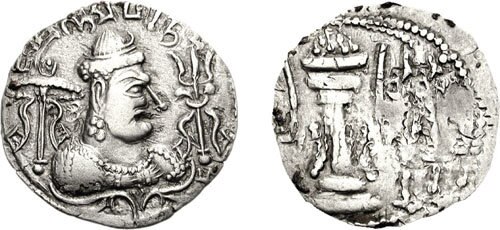
As they invaded northern and central India circa 500 CE, the Alchon Huns issued several types of coinage on the model of the Sasanian Empire, with ruler in profile on the obverse and sacred fire with attendants on the reverse.[148] It is thought that in the process of minting coins in occupied lands, they transmitted Sasanian coin designs to northern and western India.[148] This created a major type of Indian coinage called "Indo-Sasanian coinage", which lasted in degraded form until the 12th century CE as far as the Gangetic region.[148]
The Gurjaras and Gurjara-Pratiharas suddenly emerged as a political power in north India around sixth century CE, shortly after the Hunas invasion of that region.[149] The Gujara-Pratihara were "likely" formed from a fusion of the Alchon Huns ("White Huns") and native Indian element, and can probably be considered as a Hunnic state, although its precise origins remain unclear.[150] In Bana's Harshacharita (7th century CE), the Gurjaras are associated with the Hunas.[151] Some of the Hunas may also have contributed to the formation of the warlike Rajputs.[150]
Ancient sources refer to the Alchons and associated groups ambiguously with various names, such as Huna in Indian texts, and Xionites in Greek texts. Xuanzang chronicled some of the later history of the Alchons.[98]
The references in Sanskrit sources to the dynasty of Mihirakula are of great importance as they throw light on the character of the rulers. The largest number of references is found in Kalhana's Rajatarangini.[152]
Modern archaeology has provided valuable insights into the history of the Alchons. The most significant cataloguing of the Alchon dynasty came in 1967 with Robert Göbl's analysis of the coinage of the "Iranian Huns".[153] This work documented the names of a partial chronology of Alchon kings, beginning with Khingila. In 2012, the Kunsthistorisches Museum completed a reanalysisArchived 17 February 2021 at the Wayback Machine of previous finds together with a large number of new coins that appeared on the antiquities market during the Second Afghan Civil War, redefining the timeline and narrative of the Alchons and related peoples.[115]
Talagan copper scroll
A significant contribution to our understanding of Alchon history came in 2006 when Gudrun Melzer and Lore Sander published their finding of the "Talagan copper scroll", also known as the "Schøyen Copper Scroll", dated to 492 or 493, that mentions the four Alchon kings Khingila, Toramana, Javukha, and Mehama (who was reigning at the time) as donors to a Buddhist reliquary stupa.[154][Note 4][Note 5]
Rulers
The rulers of the Alchons practised skull deformation, as evidenced from their coins, a practice shared with the Huns that migrated into Europe. The names of the first Alchon rulers do not survive. Starting from 430 CE, names of Alchon kings survive on coins[153] and religious inscriptions:[154]
An early Alchon Huns coin based on a Sasanian design, with bust imitating Sasanian king Shapur III. Only the legend "Alchono" appears on the obverse in the Greco-Bactrian script.[37][50][155]
Early Bactrian coinage based on Sasanian designs
The earliest Alchon Hun coins were based on Sasanian designs, often with the simple addition of the Alchon tamgha and a mention of "Alchon" or "Alkhan".[38] Various coins minted in Bactria and based on Sasanian designs are known, often with busts imitating Sasanian kings Shapur II (r.309 to 379 CE) and Shapur III (r.383 to 388 CE), with attendants to a fire altar on the reverse.[50][51] It is thought that the Sasanids lost control of Bactria to the Kidarites during the reign of Shapur II circa 370 CE, followed by the Hephthalites, and subsequently by the Alchon.[40]
Later original coinage
Later Alchon coinage became original and differed from predecessors in that it was devoid of Iranian (Sasanian) symbolism.[48] The rulers are depicted with elongated skulls, apparently a result of artificial cranial deformation.[48]
After their invasion of India the coins of the Alchon were numerous and varied, as they issued copper, silver and gold coins, sometimes roughly following the Gupta pattern. The Alchon empire in India must have been quite significant and rich, with the ability to issue a significant volume of gold coins.[156]
Coinage
Silver coin of Toramana in Western Gupta style, with the Gupta peacock and Brahmi legend on the reverse. Similar to the silver coin type of Skandagupta. On the obverse the date "52" is also inscribed.[157] A modern Image:.
↑"Here, for the first time, the names of Hepthalite (Alchon) kings are given, some of them otherwise known only from coins. Another important fact is that it dates all these kings in the same time." from Aydogdy Kurbanov (2010). The hephthalites: archaeological and historical analysis. Berlin: Free University of Berlin. p.120. OCLC863884689. Retrieved 17 June 2018.
↑"After the successful conclusion of the Eran episode, the conquering Hunas ultimately burst out of Eastern Malwa and swooped down upon the very heart of the Gupta empire. The eastern countries were overrun and the city of the Gaudas was occupied. The Manjusrimulakalpa gives a scintillating account of this phase of Toramana's conquest. It says that after Bhanugupta's defeat and discomfiture, Toramana led the Hunas against Magadha and obliged Baladitya (Narasimha-gupta Baladitya, the reigning Gupta monarch) to retire to Bengal. This great monarch (Toramana), Sudra by caste and possessed of great prowess and armies took hold of that position (bank of the Ganges) and commanded the country round about. That powerful king then invested the town called Tirtha in the Gauda country." in Upendra Thakur (1967). The Hūṇas in India. Vol.58. Varanasi: Chowkhamba Sanskrit Series Office. p.122. OCLC551489665.
↑"The earth betook itself (for succour), when it was afflicted by kings of the present age, who manifested pride; who were cruel through want of proper training; who, from delusion, transgressed the path of good conduct; (and) who were destitute of virtuous delights " from "Sondhni pillars: where Punjabis met with their Waterloo 1500 years ago". Punjab Monitor. Amritsar: Bhai Nand Lal Foundation. 27 April 2013. Retrieved 8 July 2018.
1 2 3 Tandon, Pankaj (2013). "アルチョン貨幣の進化に関する覚書" (PDF) . Journal of the Oriental Numismatic Society (216): 24– 34 . 2018年7月8日取得.
↑"CNG: Feature Auction CNG 69. [Medieval] HUNNIC TRIBES, Alchon Huns. Anonymous. Circa 400-440 AD. AR Drachm (3.43 gm, 3h). Imitating Sasanian king Shahpur II. Kabul or Gandhara mint". www.cngcoins.com. Retrieved 2 April 2023.
12Neelis, Jason (2010). Early Buddhist Transmission and Trade Networks: Mobility and Exchange Within and Beyond the Northwestern Borderlands of South Asia. BRILL. p.159. ISBN978-9004181595.
↑Scheers, Simone; Quaegebeur, Jan (1982). Studia Paulo Naster Oblata: Orientalia antiqua (in French). Peeters Publishers. p.55. ISBN9789070192105.
↑Ammianus Marcellinus, Roman History. London: Bohn (1862) XVI-IX
↑Ammianus Marcellinus, Roman History. London: Bohn (1862) XVII-V
↑Cosmo, Nicola Di; Maas, Michael (2018). Empires and Exchanges in Eurasian Late Antiquity: Rome, China, Iran, and the Steppe, ca. 250–750. Cambridge University Press. p.698. ISBN9781108547000.
↑History of Civilizations of Central Asia, Ahmad Hasan Dani, B. A. Litvinsky, Unescop.38 sq
12345Michael Maas (29 September 2014). The Cambridge Companion to the Age of Attila. New York: Cambridge University Press. p.286. ISBN978-1-316-06085-8.
↑Alram, Michael (1 February 2021). "The numismatic legacy of the Sasanians in the East" in Sasanian Iran in the Context of Late Antiquity: The Bahari Lecture Series at the University of Oxford. BRILL. p.7. ISBN978-90-04-46066-9.
123"CNG: eAuction 136. HUNNIC TRIBES. Kidarites. Uncertain King. 5th century AD. AR Drachm (30mm, 4.00 g)". www.cngcoins.com. Retrieved 2 April 2023.
12Rienjang, Wannaporn; Stewart, Peter (2018). Problems of Chronology in Gandhāran Art: Proceedings of the First International Workshop of the Gandhāra Connections Project, University of Oxford, 23rd-24th March, 2017. Archaeopress. p.23. ISBN9781784918552.
1 2 Senior, RC (1991). "The Coinage of Sind from 250 AD up to the Arab Conquest" (PDF) . Oriental Numismatic Society . 129 (June–July 1991): 3– 4. 2019年9月26日にオリジナル(PDF)からアーカイブ済み。 2019年9月29日取得。
↑オークトレス・ヴァリ (2016)。アジャンタ ディピンタ – ペイントされたアジャンタ Vol. 1 e 2: Studio sulla tecnica e sulla conservazione del sito rupestre indiano – インドのロックアート遺跡の技術と保存に関する研究。ガンミエディター。58 ~ 59ページ。ISBN9788849274905。
↑ALRAM, MICHAEL (2003). "Three Hunnic Bullae from Northwest India"(PDF). Bulletin of the Asia Institute. 17: 180, Figure 11. ISSN0890-4464. JSTOR24049314.
↑Upendra Thakur (1967). The Hūṇas in India. Vol.58. Varanasi: Chowkhamba Sanskrit Series Office. p.122. OCLC551489665.
1234"Coin Cabinet of the Kunsthistorisches Museum Vienna". Archived from the original on 1 November 2019. Retrieved 23 July 2017.
↑Fleet, John Faithfull (1960). Inscriptions Of The Early Gupta Kings And Their Successors. pp.158–161.
12"CNG: Feature Auction Triton XIX. HUNNIC TRIBES, Alchon Huns. Toramana. Circa 490-515. AV Dinar (18mm, 9.53 g, 12h)". www.cngcoins.com. Retrieved 2 April 2023.
12"The Identity of Prakasaditya by Pankaj Tandon, Boston University"(PDF). Retrieved 2 April 2023.
↑"This makes it quite clear that the Alchon Huns in India must have had a substantial and rich empire, with the capacity to issue a relatively large volume of gold coins." in TANDON, PANKAJ (7 July 2015). "The Identity of Prakāśāditya". Journal of the Royal Asiatic Society. 25 (4): 668. doi:10.1017/S1356186315000346. hdl:2144/37851. S2CID43869990.Full article
↑Om Prakash Misra (2003). Archaeological Excavations in Central India: Madhya Pradesh and Chhattisgarh. New Delhi: Mittal Publications. p.7. ISBN978-81-7099-874-7.
↑S. B. Bhattacherje (1 May 2009). Encyclopaedia of Indian Events & Dates. Vol.A15. New Delhi: Sterling Publishers Pvt. Ltd. ISBN978-81-207-4074-7.
↑R.K. Pruthi (2004). The Classical Age. New Delhi: Discovery Publishing House. p.262. ISBN978-81-7141-876-3.
↑N. K. Ojha (2001). The Aulikaras of Central India: history and inscriptions. Chandigarh: Arun Pub. House. pp.48–50. ISBN978-81-85212-78-4.
↑Tej Ram Sharma (1978). Personal and Geographical Names in the Gupta Inscriptions. Delhi: Concept Publishing Company. p.232. OCLC923058151. GGKEY:RYD56P78DL9.
↑Hsüan-tsang, ca 596-664; Beal, Samuel (1884). Si-yu-ki, Buddhist records of the Western world;. London: Trübner. p.167.{{cite book}}: CS1 maint: numeric names: authors list (link) CS1 maint: publisher location (link)
12"Sondhni pillars: where Punjabis met with their Waterloo 1500 years ago". Punjab Monitor. Amritsar: Bhai Nand Lal Foundation. 27 April 2013. Retrieved 8 July 2018.
↑The "h" () is an early variant of the Gupta script.
↑The "h" () is an early variant of the Gupta script. Rev: Dotted border around Fire altar flanked by attendants, a design adopted from Sasanian coinage.
↑Verma, Thakur Prasad (2018). The Imperial Maukharis: History of Imperial Maukharis of Kanauj and Harshavardhana (in Hindi). Notion Press. p.264. ISBN9781643248813.
↑Sircar, D. C. (2008). Studies in Indian Coins. Motilal Banarsidass. p.376. ISBN9788120829732.
↑Tandon, Pankaj (2013). Notes on the Evolution of Alchon Coins Journal of the Oriental Numismatic Society, No. 216, Summer. Oriental Numismatic Society. pp.24–34. also Coinindia Alchon Coins (for an exact description of this coin type)
↑John Faithfull Fleet (1888). John Faithfull Fleet (ed.). Corpus Inscriptionum Indicarum: Inscriptions of the early Gupta kings and their successors. Vol.3. Calcutta: Office of the Superintendent of Government Print. pp.147–148. OCLC69001098. Archived from the original on 1 July 2015.
12Kailash Chand Jain (31 December 1972). Malwa Through The Ages. Dewlhi: Motilal Banarsidass. p.249. ISBN978-81-208-0824-9.
1234567Abraham Eraly (2011). The First Spring: The Golden Age of India. New Delhi: Penguin Books India. p.48. ISBN978-0-670-08478-4.
↑Ashvini Agrawal (1989). Rise and Fall of the Imperial Guptas. Delhi: Motilal Banarsidass. p.245. ISBN978-81-208-0592-7.
12GHOSE, MADHUVANTI (2003). "The Impact of the Hun Invasions: A Nomadic Interlude in Indian Art". Bulletin of the Asia Institute. 17: 145–146. ISSN0890-4464. JSTOR24049312.
↑Madan, A. P. (1990). The History of the Rāṣṭrakūṭas. Harman Publishing House. p.208. ISBN978-81-85151-38-0.
↑Willis, Michael (2005). "Later Gupta History: Inscriptions, Coins and Historical Ideology". Journal of the Royal Asiatic Society. 15 (2): 140 and 149. ISSN1356-1863. JSTOR25188529.
123456Dani, Ahmad Hasan; Litvinsky, B. A. (1996). History of Civilizations of Central Asia: The crossroads of civilizations, A.D. 250 to 750. UNESCO. p.169. ISBN9789231032110.
↑M. A. Stein (1989). Kalhana's Rajatarangini: a chronicle of the kings of Kasmir. Motilal Banarsidass. pp.439–441. ISBN978-81-208-0370-1.
↑Dani, Ahmad Hasan; Litvinsky, B. A. (1996). History of Civilizations of Central Asia: The crossroads of civilizations, A.D. 250 to 750. UNESCO. p.170. ISBN9789231032110.
↑PAL, PRATAPADITYA (1973). "Bronzes of Kashmir: Their Sources and Influences". Journal of the Royal Society of Arts. 121 (5207): 727. ISSN0035-9114. JSTOR41371150. Before the Karkotas came to the throne, Kashmir may have been occupied by a long succession of foreign rulers or tribes. Certainly both the Kushänas and the Huns were present in the area for centuries. Indeed, the history of Kashmir begins to take shape only with the foundation of the Karkota dynasty around AD 625. The immediate predecessors of the Karkotas appear to have been Huns...
↑Kim, Hyun Jin (19 November 2015). "THE HUNS OF CENTRAL ASIA AND SOUTH ASIA: THE KIDARITE AND HEPHTHALITE WHITE HUNS". The Huns. Routledge. p.58. doi:10.4324/9781315661704. ISBN978-1-317-34090-42021年11月25日にオリジナルからアーカイブされました。 2021年3月31日に取得。
↑クマール、ラージ (2008).チャマール王朝の歴史:(西暦6世紀から12世紀まで) . ギャン出版. pp. 318–319 . ISBN978-81-7835-635-8しかし、トーラマナという名前は、今日まで驚くほど大量に保存されているカシミールの銅貨の一種に見られる。この貨幣とカルハナの記録との関連性は疑う余地がない。
12de la Vaissiere, Etienne (2007). "A Note on the Schøyen Copper Scroll: Bactrian or Indian?"(PDF). Bulletin of the Asia Institute. 21: 127. JSTORi24047314. Retrieved 8 July 2018.
↑Errington, Elizabeth (2017). Charles Masson and the Buddhist Sites of Afghanistan: Explorations, Excavations, Collections 1832–1835. British Museum. p.34. doi:10.5281/zenodo.3355036.
↑Alram, Michael; Filigenzi, Anna; Kinberger, Michaela; Nell, Daniel; Pfisterer, Matthias; Vondrovec, Klaus. "The Countenance of the other (The Coins of the Huns and Western Turks in Central Asia and India) 2012–2013 exhibit: 7. ALKHAN: KING KHINGILA AND THE CONSOLIDATION OF HUNNIC POWER IN NORTHWEST INDIA". Pro.geo.univie.ac.at. Kunsthistorisches Museum Vienna. Archived from the original on 16 July 2017. Retrieved 16 July 2017.
↑René Grousset (1970). The Empire of the Steppes: A History of Central Asia. New Brunswick: Rutgers University Press. p.71. ISBN978-0-8135-1304-1.
↑Behrendt, Kurt A. (2004). Handbuch der Orientalistik. Leiden: BRILL. ISBN9789004135956.
↑Ann Heirman; Stephan Peter Bumbacher (11 May 2007). The Spread of Buddhism. Leiden: BRILL. p.60. ISBN978-90-474-2006-4.
123Upinder Singh (2008). A History of Ancient and Early Medieval India: From the Stone Age to the 12th Century. Delhi: Pearson Education India. p.521. ISBN978-81-317-1120-0.
↑Sukumar Dutt (1988) [First published in 1962]. Buddhist Monks And Monasteries of India: Their History And Contribution To Indian Culture. London: George Allen and Unwin Ltd. ISBN81-208-0498-8.
↑J. Gordon Melton (15 January 2014). Faiths Across Time: 5,000 Years of Religious History: 5,000 Years of Religious History. Vol.1. Santa Barbara: ABC-CLIO. p.455. ISBN978-1-61069-026-3.
↑Göbl, Robert (1967). Dokumente zur Geschichte der iranischen Hunnen in Baktrien und Indien (in German). Otto Harrassowitz Verlag. p.90, Em. 91.
↑ Alram Alchon und Nēzak: Zur Geschichte der iranischen Hunnen in Mittelasien
↑ Eder, Manfred AJ (2010). South Asian Archaeology 2007 Proceedings of the 19th Meeting of the European Association of South Asian Archaeology in Ravenna, Italy, July 2007, Volume II (PDF) . Archaeopress Archaeology. p. 69. ISBN978-1-4073-0674-2。
↑ Bakker, Hans T. (2017).中央アジアと南アジアのフン族。階段から来た遊牧民の侵略者との2世紀にわたる戦争は、インドとイランの王によるチェスのゲームによってどのように終結したか。
↑ GHOSE, MADHUVANTI (2003). "The Impact of the Hun Invasions: A Nomadic Interlude in Indian Art" . Bulletin of the Asia Institute . 17 : 153, Fig.13. ISSN 0890-4464 . JSTOR 24049312 .
1 2 GHOSE, MADHUVANTI (2003). 「フン族の侵略の影響:インド美術における遊牧民の幕間」 . Bulletin of the Asia Institute . 17 : 145– 158. ISSN 0890-4464 . JSTOR 24049312 .
↑ GHOSE, MADHUVANTI (2003). "The Impact of the Hun Invasions: A Nomadic Interlude in Indian Art" . Bulletin of the Asia Institute . 17 : 151, Fig.10. ISSN 0890-4464 . JSTOR 24049312 .
↑ GHOSE, MADHUVANTI (2003). "The Impact of the Hun Invasions: A Nomadic Interlude in Indian Art" . Bulletin of the Asia Institute . 17 : 150, Fig.9. ISSN 0890-4464 . JSTOR 24049312 .
↑ GHOSE, MADHUVANTI (2003). "The Impact of the Hun Invasions: A Nomadic Interlude in Indian Art" . Bulletin of the Asia Institute . 17 : 150, Fig.6. ISSN 0890-4464 . JSTOR 24049312 .
1 2 GRAY, BASIL (1991). "ササン朝以降の金属工芸" . Bulletin of the Asia Institute . 5 : 61. ISSN 0890-4464 . JSTOR 24048285 .
↑ Brentjes, B. (1971). 「サマルカンド近郊で発見されたエフタル銀器の宝庫」 . East and West . 21 (1/2): 77– 78. ISSN 0012-8376 . JSTOR 29755649 .
1 2 3 Ray, Himanshu Prabha (2019). Negotiating Cultural Identity: Landscapes in Early Medieval South Asian History . Taylor & Francis. pp. 161–165 . ISBN9781000227932。
↑ Tandon, Pankaj (2015). "The Identity of Prakasaditya" (PDF) . Journal of the Royal Asiatic Society . 25 (4): 647– 668. doi : 10.1017/S1356186315000346 . hdl : 2144/37851 . S2CID 43869990 . 2018年7月8日取得.




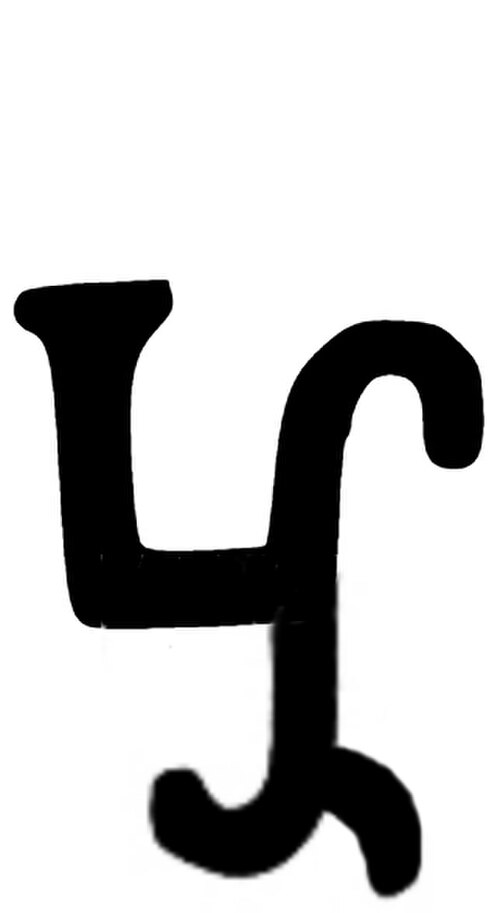

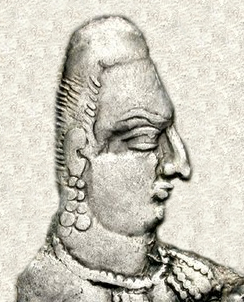

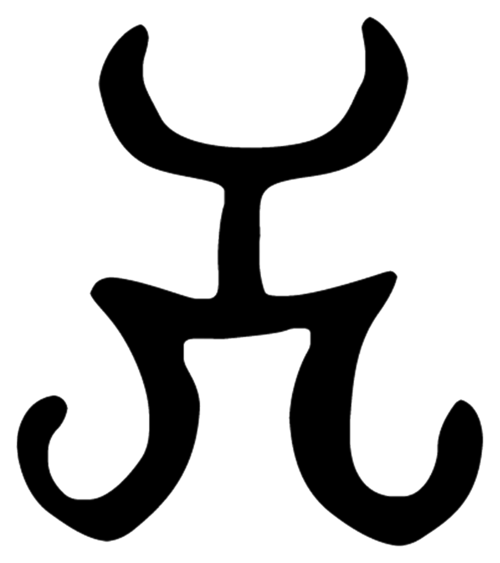 とバクトリア文字(紀元前3世紀にグレコ・バクトリア人によってこの地域に導入されたギリシャ文字をわずかに改変したもの)で「アルチョノ」(αλχοννο)という名前が加えられ、裏面にはササン朝の標準的なデザインである火の祭壇の従者が描かれている。 [ 50 ] [ 51 ]アルチョン家は西暦385年以降、カブールスタンのササン朝の造幣所を乗っ取り、シャープール2世とシャープール3世の金型を再利用し、そこに「アルチョノ」という名前を加えたと考えられている。[ 52 ]


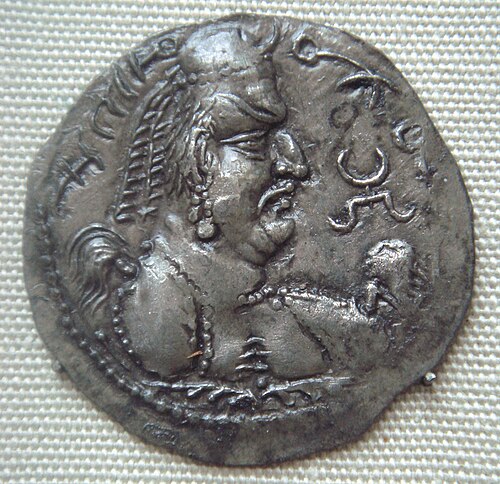
 )、[ 92 ] (Ja)yatu Mihirakula(「ミヒラクラに勝利あれ」)。[ 93 ] [ 94 ] [ 95 ] [ 96 ]








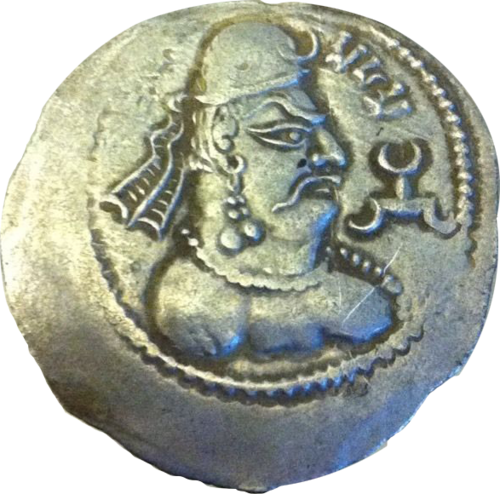




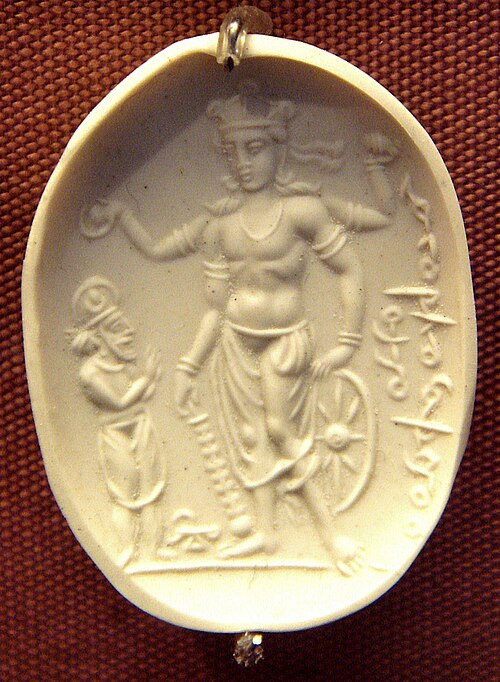
 ) is an early variant of the Gupta script.
 ウィキメディア・コモンズにあるアルコン・フン族関連のメディア