
Loading article…
チューリッヒ | |
|---|---|
 フラグ  紋章 | |
チューリッヒの位置 | |
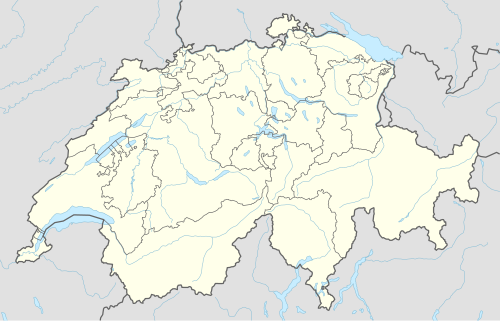  チューリッヒ  チューリッヒ | |
| 座標: 47°22′28″N 08°32′28″E / 47.37444°N 8.54111°E / 47.37444; 8.54111 | |
| 国 | スイス |
| カントン | チューリッヒ |
| 地区 | チューリッヒ |
| 政府 | |
| • エグゼクティブ | 9人の会員がいるシュタットトラート |
| • 市長 | Stadtpräsidentin (リスト) Corine Mauch SPS/PSS (2014 年 2 月現在) |
| • 議会 | 125人の会員を擁するゲマインデラート |
| エリア [1] [2] | |
| • 合計 | 87.88 km 2 (33.93 平方マイル) |
| 標高 (チューリッヒ中央駅) | 408メートル(1,339フィート) |
| 最高標高 (ユトリベルク) | 871メートル(2,858フィート) |
| 最低標高 (リマト) | 392メートル(1,286フィート) |
| 人口 (2018年12月31日)[3] [4] | |
| • 合計 | 415,367 |
| • 密度 | 4,700/km 2 (12,000/平方マイル) |
| 異名 | «Tfdを参照»ドイツ語: Zürcher(in) |
| タイムゾーン | UTC+01:00 (中央ヨーロッパ時間) |
| • 夏 ( DST ) | UTC+02:00 (中央ヨーロッパ夏時間) |
| 郵便番号 | 8000~8099 |
| SFOS番号 | 0261 |
| ISO 3166 コード | CH-ZH |
| 囲まれて | アドリスヴィル、デューベンドルフ、フェランデン、キルヒベルク、マウル、オーバーレングストリンゲン、オプフィコン、レーゲンスドルフ、リュムランク、シュリーレン、スタリコン、ウイティコン、ウルドルフ、ヴァリゼレン、ツォリコン |
| 双子都市 | 昆明、サンフランシスコ |
| Webサイト | stadt-zuerich.ch SFSO 統計 |


チューリッヒ(ドイツ語: Zürich、アレマン語: Züri)は、スイス最大の都市であり、チューリッヒ州の州都である。スイスの北中部に位置し、[5]チューリッヒ湖の北西端にある。2023年1月現在、自治体には443,037人の住民がおり、[6]都市圏には131万5000人(2009年)、[7]チューリッヒ都市圏には183万人(2011年)が住んでいる。[8]チューリッヒは鉄道、道路、航空交通の中心地である。チューリッヒ空港とチューリッヒ中央駅はどちらも国内最大かつ最も混雑している。 [update]
チューリッヒは2000年以上にわたり定住地となってきた都市で、ローマ人によって建設され、トゥリクムと呼ばれていました。しかし、初期の集落は6400年以上前に遡ることが発見されています(ただし、これはその地域に人間が存在したことを示しているだけで、それほど古い時代に町が存在していたことを示すものではありません)。 [9]中世の間、チューリッヒは帝国直轄地として独立した特権的な地位を獲得し、1519年にはフルドリヒ・ツヴィングリの指導の下、ヨーロッパにおけるプロテスタント改革の中心地となりました。[10]
チューリッヒの公用語はドイツ語[ a]ですが、主に話されている言語はアレマン語系スイスドイツ語方言の地方変種であるチューリッヒドイツ語です。
スイスの主要金融センターの一つであるチューリッヒには、多くの金融機関や銀行が集まっています。[11]市内には、スイス国立博物館やクンストハウスなど、多くの博物館や美術館があります。チューリッヒ劇場は、ドイツ語圏で最も重要な劇場の一つと一般的に考えられています。[12]
名前
この名前は伝統的に英語ではウムラウトなしでZurichと表記されます。発音は/ ˈzjʊərɪk /です。 ズーレ-ik.[13][14][15]
ドイツ語では、この都市名はチューリッヒと書かれ、[ˈtsyːrɪç]と発音されます。 。地元の方言、この名前は最後の子音なしで2つの短母音で発音され、Züri [ˈtsyri]ますが、形容詞はZürcher(in)の。この都市はフランス語ではZurich [zyʁik]、Zurigo[dzuˈriːɡo]、イタリア語ではTuritg[tuˈritɕ] ロマンシュ語では。
都市名の最も古い形はトゥリクムであり、2世紀後半の墓石にSTA(tio) TURICEN(sis)(「トゥリクム税関」)の形で記されている。この名前は、おそらくガリア人の 個人名 Tūrosから派生したものと解釈されている。地名* Turīconは、「Tūrosに属する」、「Tūrosの場所」を意味する。[16]ガリア人の名の長母音のラテン語の強勢[tʊˈriːkõː]は、ドイツ語[ˈtsyːrɪç]では失われたが、イタリア語[dzuˈriːɡo]とロマンシュ語[tuˈritɕ]では残っている。
後のゲルマン語形への最初の発展は、 680年から700年頃にZiurichiという形で確認されています。[17] 9世紀以降、この名前は古高ドイツ語の形であるZuri(c)h(857 in villa Zurih、924 in Zurich curtem、1416 Zürich Stadt )で確立されました。[18]
1500年から1800年頃の新ラテン語のテキストでは、チューリッヒはしばしばTigurumと呼ばれています。Tiguriniを参照してください。
-
 P(rae)P(ositus) STA(tionis) TVRICEN(sis): 「チューリッヒ税関の長」(185~200年頃のローマの墓石の詳細、 1747年に発見)
 -
 MON(eta) NOV(a) THVRICENSIS CIVIT(atis) IMPERIALIS: 「帝国都市チューリッヒの新しいコイン」、1512 年 (チューリッヒの守護聖人フェリックス、レグラ、エクスペランティウスが描かれている)
 -
 チューリッヒのラテン語名は、 16世紀初頭の学者によって考案された。ティグリニ(1721年からの1/2ターラー)を参照。
.jpg/500px-Grabstein_Lindenhof_Landesmuseum_(Ausschnitt).jpg)
_rv.jpg/500px-Z%C3%BCrich,_Guldiner_1512_(CH-2088-6-ID3697)_rv.jpg)
_rv.jpg/500px-Z%C3%BCrich,_%C2%BD_Taler_1721_(CH-2088-6-ID734)_rv.jpg)
歴史
初期の歴史

チューリッヒ湖周辺では新石器時代と青銅器時代の集落が発見されている。ローマ以前のケルト人ラ・テーヌ集落の痕跡は、チューリッヒ湖とリマト川によって構成される南東から北西に流れる水路を見下ろすモレーン丘陵、リンデンホフの近くで発見されている。[19]ローマ時代、紀元前15年のアルプス地方の征服中に、ローマ人はリンデンホフにカステルムを建設した。[ 19 ]後に、ここにトゥリクム(明らかにケルト語に由来する地名)が建設された。これはリマト川で取引される商品の税徴収地点であり、ガリア・ベルギー(西暦90年以降、ゲルマニア・スペリオル)とラエティアの境界の一部をなしていた。この税関地点は後にヴィクスに発展した。[19] 318年のコンスタンティヌス帝の改革後、ガリアとイタリア(ローマ帝国の4つの近衛県のうちの2つ)の境界はトゥリクムの東、ヴァレン湖とチューリッヒ湖の間のリンス川を越えたところに位置し、そこにはトゥリクムの安全を見守る城と駐屯地があった。この町に関する最も古い文書による記録は2世紀のもので、リンデンホフで発見された墓石には、この町を「チューリッヒのガリア人の2.5%の付加価値税を徴収する駐屯地」と記している。[19]
5世紀には、ゲルマン系アレマン族がスイス高原に定住した。ローマ時代の城は7世紀まで残っていた。カール大帝の孫ルートヴィヒ1世がローマ時代の城の跡地に建てたカロリング朝の城は、835年に言及されている(『カストロ・トゥリチーノの流浪の旅』)。ルートヴィヒは853年に娘ヒルデガルトのためにフラウミュンスター修道院も創設した。彼はベネディクト会修道院にチューリッヒ、ウーリ、アルビスの森の土地を与え、修道院に特権を与えて自身の直接統治下に置いた。1045年、ハインリヒ3世は修道院に市場の開催、通行料の徴収、貨幣の鋳造の権利を与え、実質的に修道院長を都市の支配者にした。[20]
チューリッヒは1218年にツェーリンガー家の嫡流が断絶したことにより帝国直轄地(帝国自由都市となる)を獲得し、国家に匹敵する地位を獲得した。1230年代には38ヘクタールを囲む市壁が建設され、レンヴェークに最古の石造りの家々も建てられた。カロリング朝の城は廃墟になり始めていたため、採石場として使われた。[21]
1234年、皇帝フリードリヒ2世はフラウミュンスター修道院の女子修道院長を公爵夫人に昇格させた。女子修道院長は市長を指名し、貨幣の鋳造を市民に頻繁に委託した。修道院の政治的権力は、1336年にルドルフ・ブルンがギルド法(組合法)を制定したことを皮切りに、14世紀に徐々に衰退した。ブルンは女子修道院長に指名されない初の独立した市長でもあった。
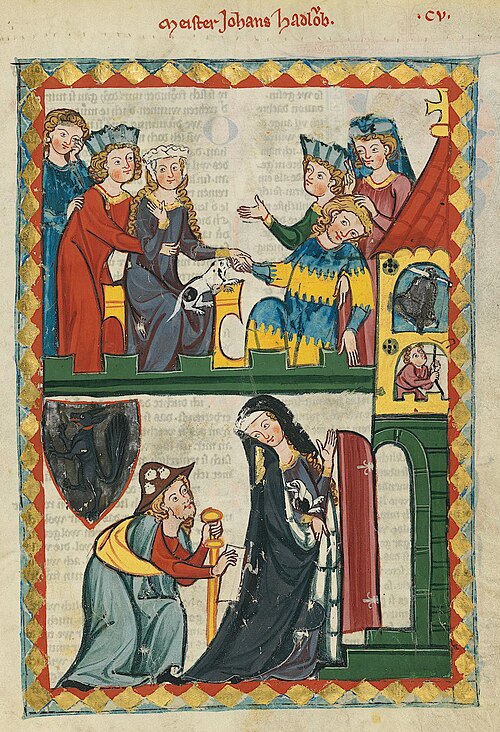
14世紀初頭の重要な出来事は、中世ドイツ詩の重要な資料であるマネス写本が完成したことである。 「数世紀で最も美しく彩飾されたドイツ写本」と評される有名な彩飾写本[22]は、チューリッヒのマネス家によって発注され、1304年から1340年の間に市内で写本と挿絵が描かれた。このような作品の制作は、非常に費用のかかる名声の高いプロジェクトであり、高度な技術を持つ写字生[23]と細密画家による数年にわたる作業が必要であり、この時期のチューリッヒ市民の富と誇りが高まっていたことを証明している。この作品には、ジュスキント・フォン・トリムベルクによる6つの歌が収録されているが、作品自体に中世ユダヤ人の生活についての考察が含まれていることから、ジュスキント・フォン・トリムベルクはユダヤ人であった可能性があるが、彼についてはほとんど知られていない。[24]
チューリッヒでユダヤ人が初めて言及されたのは1273年である。文献によると、13世紀にはチューリッヒにシナゴーグがあったことが示されており、ユダヤ人コミュニティが存在していたことを示唆している。[25] 1349年に黒死病が流行すると、チューリッヒは他のほとんどのスイスの都市と同様に、地元のユダヤ人を迫害し、焼き殺すという対応を取り、そこでの最初のユダヤ人コミュニティは終焉を迎えた。チューリッヒの2番目のユダヤ人コミュニティは14世紀末に形成されたが、長続きせず、ユダヤ人は1423年から19世紀まで街から追放され、禁止された。[26]
考古学的発見
紀元前200年頃に亡くなった女性が、2017年3月にアウッサーシルのケルン学校複合施設の建設工事中に、彫刻が施された木の幹に埋葬されているのが発見された。考古学者らは、彼女が亡くなったとき、彼女はおよそ40歳で、生前はほとんど肉体労働をしていなかった可能性が高いことを明らかにした。女性と一緒に、羊皮のコート、ベルトチェーン、豪華なウールのドレス、スカーフ、ガラスと琥珀のビーズで作られたペンダントも発見された。[27] [28] [29] [30]
旧スイス連邦

1351年5月1日、チューリッヒ市民は、スイス同盟の他の加盟国であるルツェルン、シュヴィーツ、ウーリ、ウンターヴァルデンの各州の代表者の前で忠誠を誓わなければならなかった。こうして、チューリッヒは、当時は事実上の独立国家の緩やかな同盟であった同盟の5番目の加盟国となった。チューリッヒは、1468年から1519年まで議会の議長州であった。この機関は、中世から1848年にスイス連邦が設立されるまで、同盟の執行評議会および立法機関であった。チューリッヒは、トッゲンブルクの領土をめぐる他の加盟国との戦争(古チューリッヒ戦争)により、1440年に同盟から一時的に追放された。 1446年に和平が合意された時点ではどちらの側も大きな勝利を収めておらず、チューリッヒは1450年に同盟に再加入した。[31]

ツヴィングリは、1519年にグロスミュンスター大聖堂の主任説教者であったときに、スイスの宗教改革を始めました。チューリッヒ聖書は、1531年にクリストフ・フロシャウアーによって印刷されました。宗教改革は、チューリッヒの国家問題と市民生活に大きな変化をもたらし、他のいくつかの州にも広がりました。いくつかの州はカトリックのままであり、深刻な紛争の基盤となり、最終的にカッペル戦争の勃発につながりました。
16 世紀から 17 世紀にかけて、チューリッヒ評議会は孤立主義の姿勢を採り、その結果、1624 年に 2 度目の堂々とした要塞が建設されました。ヨーロッパ全土で激化した三十年戦争が、この都市がこれらの壁を建設する動機となりました。要塞の建設には多くの資源が必要でしたが、合意に達することなく、属国から資源が奪われました。その後の反乱は残酷に鎮圧されました。1648 年、チューリッヒは共和国を宣言し、帝国自由都市という以前の地位を捨てました。[31]この時代、チューリヒの政治制度は寡頭制(パトリツィアット)であった。市の有力な一族は次の一族であった:ボンシュテッテン、ブルン、ビュルクリ、エッシャー・フォン・グラス、エッシャー・フォン・ルクス、ヒルツェル、ヨーリ(またはフォン・ヨーリ)、キルヒスペルガー、ランデンベルク、マネッセ、マイス、マイヤー・フォン・ノナウ、ミュルナー、フォン・オレリ。

1798年のヘルヴェティア革命により、アンシャン・レジームは崩壊した。チューリッヒは土地と経済的特権の支配権を失い、1803年から1805年にかけて市と州は領有権を分離した。1839年、 9月6日のチューリッヒ大虐殺の後、市は都市住民の要求に屈しなければならなかった。17世紀に建設された城壁のほとんどは、包囲されることもなく、市の覇権に対する地方の懸念を和らげるために取り壊された。1859年、オーストリア、フランス、サルデーニャの間でチューリッヒ条約が締結された。 [32] [ページが必要]
近代史

チューリッヒは 1839 年から 1840 年まで連邦の首都であり、その結果、1839 年の保守党の勝利はスイス全土に大きな波紋を引き起こしました。しかし、1845 年に急進派がチューリッヒで権力を回復すると、チューリッヒは 1845 年から 1846 年まで再び連邦の首都となり、分離同盟州に反対する先頭に立ったのです。分離同盟戦争とスイス連邦の成立後、チューリッヒは 1848 年と 1874 年の連邦憲法に賛成票を投じました。1830 年代以降、地方から町への膨大な移民によって産業階級が生まれましたが、彼らは町に「定住」していたものの、市民権を持たず、結果として市政に参加できませんでした。まず 1860 年に、それまでは高額の授業料を支払った「入植者」のみが通うことができた町の学校がすべての人に開放され、次に 1875 年に 10 年間の居住により市民権が付与され、1893 年には 11 の郊外地区が町内に編入されました。
1862年にユダヤ人が平等になった後、チューリッヒに定住し始めると、チューリッヒ・イスラエル文化協会が設立されました。[33]

19 世紀には大規模な開発が行われました。1847 年には、スイス領土初の鉄道であるSpanisch-Brötli-Bahnがチューリッヒとバーデンを結び、チューリッヒ中央駅がスイス鉄道網の起点となりました。現在の中央駅舎は 1871 年に建てられました。チューリッヒのバーンホフ通り(駅通り) は 1867 年に整備され、チューリッヒ証券取引所は 1877 年に設立されました。工業化により都市への移住が進み、特にチューリッヒ郊外で人口が急増しました。
クウェーアンラーゲンは、チューリッヒの近代都市の発展において重要なマイルストーンです。新しい湖岸の建設により、チューリッヒは、都市技術者のアーノルド・ビュルクリの指導の下、リマト川とジル川沿いの小さな中世の町からチューリッヒ湖畔の近代都市へと変貌しました。[34]
1893年、ジル川左岸の労働者街であるアウサージルを含む12の郊外地区がチューリッヒに編入され、チューリッヒ湖からさらに土地が埋め立てられた。[35]
1934 年に、チューリッヒの北と西の 8 つの地区がさらに編入されました。
チューリッヒは第二次世界大戦中に誤って爆撃されました。迫害されたユダヤ人がスイスに避難したため、SIG (スイス・イスラエル人コミュニティ) が資金を調達しました。1933 年に設立された難民救済中央委員会はチューリッヒに拠点を置いていました。
チューリッヒ州は2005年までユダヤ教の宗教共同体を法人として(したがって国教会と同等として)認めていなかった。[33]
紋章上の功績

の現代版
チューリッヒの紋章は、市と州の両方で使用されており、白(銀色)と青(青緑)の2色に分かれたフィールドで構成されています。その起源は14世紀に遡り、最も古い文書は1384年の帝国裁判所の印章に見られます。この盾は1437年に旗に色付きで登場し、1417/18年頃には硬貨にも登場しました。[36]
1803年にチューリッヒ州が設立された際、数世紀にわたってチューリッヒ市が持っていた紋章を採用し、壁画の王冠を紋章として加えた新しいバージョンのチューリッヒ市紋章が作られた。市と州の紋章にも若干の違いがある。どちらも2頭のライオンに支えられた紋章を持っているが、州のライオンは剣とヤシの葉を持っている(これは州ができる前から市が持っていたものだ。下の写真を参照)。[37]

_av.jpg/500px-Z%C3%BCrich,_Taler_1723_(CH-2088-6-ID619)_av.jpg)


政治
市区町村

チューリッヒ市の以前の境界 (1893 年以前) は、旧市街の位置とほぼ同義でした。1893 年と 1934 年に、チューリッヒ市が 19 世紀以来ますます成長を続けてきた多くの周辺自治体と合併したときに、市域の 2 回の大規模な拡張が行われました。現在、市は 12 の地区 (ドイツ語ではKreisと呼ばれます) に分かれており、1 から 12 までの番号が付けられています。各地区には 1 から 4 つの地区があります。
- アルトシュタットとして知られるクライス 1には、リマト川の始まりの東と西の両方に旧市街があります。地区 1 には、高等学校、市庁舎、リンデンホーフ、シティの各地区が含まれます。
- クライス 2 はチューリッヒ湖の西側に位置しエンゲ、ヴォリスホーフェン、ライムバッハの各地区が含まれます。
- ワイディコンとして知られるクライス 3は、ジルとユートリベルクの間にあり、アルト ワイディコン、ジルフェルト、フリーゼンベルクの各地区が含まれます。
- アウサージルとして知られるクライス 4 は、ジル川とチューリッヒ中央駅を出る線路の間に位置し、ヴェルト、ラングシュトラーセ、ハルトの各地区が含まれます。
- インダストリークワティエとして知られるクライス 5 は、リマト川とチューリッヒ中央駅を出る線路の間にあり、大規模な再区画化を経て高級モダン住宅、小売店、商業用不動産、いくつかの大きな職業学校が建設されたチューリッヒの旧工業地帯を含んでいます。ゲヴェルベシューレとエッシャー ヴィス地区もここに含まれています。
- クライス 6 は、チューリッヒベルクの端に位置し、市の東部を見下ろす丘です。6 区には、オーバーシュトラス地区とウンターシュトラス地区が含まれます。
- クライス 7 は、アドリスベルクの丘とチューリッヒベルクの端、市の東側にあります。第 7 地区には、フルンテルン、ホッティンゲン、ヒルスランデンの各地区が含まれます。これらの地区には、チューリッヒで最も裕福で著名な住民が住んでいます。ヴィティコン地区も第 7 地区に属しています。
- 正式にはリースバッハと呼ばれ、口語ではゼーフェルトとして知られる第 8地区は、チューリッヒ湖の東側にあります。第 8 地区は、ゼーフェルト、ミューレバッハ、ヴァイネックの各地区で構成されています。
- クライス 9 は、北はリマト川、南はユートリベルク川の間に位置し、アルトシュテッテン地区とアルビスリーデン地区を含みます。
- クライス 10はリマト川の東、ヘンガーベルク丘陵とケーファーベルク丘陵の南に。第 10 地区には、ヘング地区とヴィプキンゲン地区が含まれます。
- クライス 11 は、ヘンガーベルクとケーファーベルクの北、グラット渓谷とカッツェン湖(キャッツ湖)の間にある地域にあります。この地域には、アフォルテルン、エルリコン、ゼーバッハの各地区が含まれます。
- シュヴァーメンディンゲンとして知られる第 12 地区は、チューリッヒベルクの北側にあるグラット渓谷に位置しています。第 12 地区には、ザートレン、シュヴァーメンディンゲン ミッテ、ヒルツェンバッハの各地区が含まれます。
地区の境界のほとんどは、チューリッヒ市に編入される前に存在していた自治体の元の境界とほぼ同じです。
政府
市議会 ( Stadtrat ) はチューリッヒ市の行政機関であり、合議制の機関として機能しています。市議会は 9 人の議員で構成され、各議員が各部署を統括します。部署の任務、調整措置、市議会で制定された法律の施行は市議会によって行われます。投票権を持つ住民による市議会の定期選挙は 4 年ごとに行われます。市長 ( ‹Tfd›ドイツ語: Stadtpräsident(in)を参照) はマジョルツ方式の公選によって市長に選出され、その他の部署の長は合議制によって任命されます。投票権を持つチューリッヒの住民であれば誰でも市議会議員に選出されます。任期 2022~2026 年 ( Legislatur ) では、市議会はコリネ マウフ市長が議長を務めます。執行機関の会議は、リマト川左岸にある 市庁舎 (ドイツ語: Stadthaus 、‹Tfd› を参照) で行われます。この建物は 1883 年にルネッサンス様式で建てられました。
2023年5月現在[update]、チューリッヒ市議会はSP(社会民主党、うち1人が市長)の議員4名、緑の党とFDP(自由民主党)から各2名、GLP(緑の自由党)から1名で構成されており、左派政党は合わせて9議席中6議席を占めている。[38]直近の定期選挙は2022年2月13日に行われた。[39]
- ^ 市長 ( Stadtpräsidentin )
Claudia Cuche-Curti は 2012 年から市の年代記官 ( Stadtschreiberin ) を務め、2020 年から Andrea Töndury は市議会の 法律顧問 ( Rechtskonsulent ) を務めています。
議会
2022年の選挙における有権者の割合の分布。[40]
AL(6.7%)
(29.17%)
GPS(14.62%)
GLP(13.23%)
ミッテ(元副大統領)(4.41%)
副社長(2.72%)
FDP(17.83%)
上級副社長(11.33%)
市議会(ゲマインデラート)が立法権を持つ。市議会は125人の議員(ゲマインドラート/ゲマインデラート)で構成され、4年ごとに選挙が行われる。市議会は市議会と行政が執行する規則や条例を制定する。市議会の会議は公開で行われる。市議会議員と異なり、市議会議員は職業政治家ではないが、出席に基づいて報酬が支払われる。立法機関は市庁舎(ラートハウス)で会議を開く。[41]
国際関係
姉妹都市
チューリッヒは昆明とサンフランシスコの2つの姉妹都市と提携している。[42]
地理
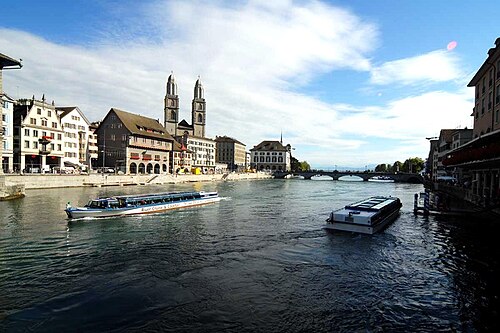
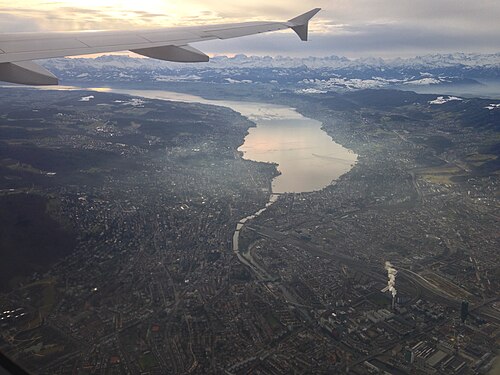
チューリッヒは、チューリッヒ湖( Zürichsee )の低地 (北端) の海抜408 メートル (1,339 フィート) に位置し、アルプス山脈の北約 30 キロメートル (19 マイル)にあり、西側と東側の樹木が生い茂った丘陵の間に位置しています。旧市街は、湖から流れ出るリマト川の両側に広がっています。リマト川は最初は北向きに流れ、その後徐々に西に曲がっていきます。市の地理的 (および歴史的) 中心は、リマト川の西岸にある小さな自然の丘、リンデンホフで、チューリッヒ湖から川が流れ出る地点から北に約 700 メートル (2,300 フィート) の場所にあります。今日、市制を施行したこの都市は、丘陵の自然境界をいくらか超えて広がっており、北東のグラット渓谷( Glattal ) と北のリマト渓谷( Limmattal ) のいくつかの地区を含んでいます。旧市街の境界は、シャンツェングラーベン運河で簡単に確認できます。この人工の水路は、17 世紀と 18 世紀に 3 番目の要塞を建設するために使用されました。
地形
チューリッヒ市の面積は 91.88 km 2 (35.48 平方マイル) で、そのうち 4.1 km 2 (1.6 平方マイル) はチューリッヒ湖で占められています。この地域にはスイス北部高原の一部が含まれています。リマト川の岸辺は市内で最も人口密度が高い部分です。川は南東から北西の方向に流れ、平坦な谷底の幅は 2 ~ 3 km (1.2 ~ 1.9 マイル) です。部分的に水路が作られ直線化されたリマト川は谷の中央部ではなく、常に右 (北東) 側に沿って流れています。ジル川はスイス国立博物館に隣接するプラッツシュピッツの端でリマト川と合流します。リマト川はオーバーエングストリンゲンの市最低地点に達し、海抜392 m (1,286 フィート) です。[出典が必要]


リマト渓谷の西側は、西の国境に沿って走るアルビス山脈の森林に覆われた高原に囲まれています。ユートリベルクは海抜 869 メートル (2,851 フィート) で、周辺地域で最も高い標高です。ユートリベルクの頂上にはユートリベルク鉄道で簡単に行くことができます。頂上の展望台のプラットフォームからは、街、湖、アルプスの素晴らしいパノラマが一望できます。[引用が必要]
リマト渓谷の北東側には丘陵地帯があり、リマト川とグラット川の分水嶺となっている。北西から南東にかけて、主に樹木に覆われた丘陵地帯の高さは、一般的にグブリスト(615 m)、ヘンガーベルク(541 m)、ケーファーベルク(571 m)、チューリッヒベルク(676 m)、アドリスベルク(701 m)、エッシュブリク(696 m)と高くなる。ケーファーベルクとチューリッヒベルクの間には、ミルヒバック(約470 m)の鞍部があり、リマト渓谷からグラット渓谷への重要な通路となっている。[要出典]
自治体の最北端はグラット渓谷の平野と、グラット川とフルッタ川を結ぶ鞍部まで広がっている。また、カッツェンバッハ川によってグラット川に流れ込むカッツェン湖(自然保護区)とビュジ湖の一部も市に属している。[要出典]
気候
チューリッヒは海洋性気候(ケッペンの気候区分:Cfb)で、夏は温暖で四季がはっきりしている。[43]チューリッヒの気候を決定づけているのは、降雨をもたらすことが多い西風と、高気圧を伴うが平均気温より低い涼しい天候となるビーゼ(東風または北東風)である。北部アルプスの谷で重要な役割を果たすフェーン現象もチューリッヒにいくらか影響を与えている。[44]
チューリッヒ=フルンテルン(チューリッヒベルクの斜面、海抜556 メートル、市街地より 150 メートル)にある連邦気象気候局の測定ステーションの年間平均気温は9.3 °C(48.7 °F)です。最低気温の月間平均最低は 1 月の -2.0 °C(28.4 °F)で、最高気温の月間平均最高は 7 月の 24.0 °C(75.2 °F)です。平均して、最低気温が 0 °C(32 °F)を下回る日(いわゆる霜の日)は 74.9 日、最高気温が 0 °C(32 °F)を下回る日(いわゆる氷の日)は 23.7 日です。年間を通して、いわゆる夏日(最高気温が25℃[77℉]以上)は平均30日あるのに対し、いわゆる猛暑日(最高気温が30℃[86℉]以上)は5.8日です。[45]
7月の平均最高気温は24.0℃(75.2℉)、平均最低気温は14℃(57.2℉)である。チューリッヒの最高気温は1947年7月に記録された37.7℃(100℉)で、最も暖かい日の平均気温は32.2℃(90.0℉)に達することが多い。[46] [47]
春と秋は一般的に涼しいから穏やかですが、同じ年であっても暖かい日と寒い日の差が大きいことがあります。2014年3月の最高気温は20日、晴れた日の午後に20.6℃(69.1℉)で、最低気温は25日の夜間/早朝に−0.4℃(31.3℉)でした。[48] 1864年以来の3月の平均日気温の最低記録は−12℃(10℉)、最高記録は16℃(61℉)です。10月の平均日気温の最低記録は−16℃(3℉)、最高記録は20℃(68℉)です。[49]
チューリッヒの年間平均日照時間は 1,544 時間で、年間を通じてその潜在時間の 38% が日照しています。4 月から 9 月までの月間は、月当たりの日照時間は 150 時間から 215 時間です。年間降水量は 1,134 mm (44.6 インチ) で、降水日は 133.9 日あります。およそ 3 日に 1 回は少なくとも何らかの降水があり、これはスイスの平均とほぼ同じです。1 年の暖かい半分、特に夏の 3 か月間は、降水量は冬よりも多くなりますが、降水日は年間を通じてほぼ同じです (月平均 9.9 ~ 12.7 日)。10 月は、何らかの降水がある日数が最も少なく (9.9) なります。年間を通して、晴天日(日照時間が80%を超える日数)は平均59.5日で、7月と8月が最も多く(7.4日、7.7日)、1月と12月が最も少ない(2.7日、1.8日)。日照時間が20%未満の日、いわゆる曇り日の平均は158.4日で、最も曇り日が多いのは11月(17.8日)、12月(21.7日)、1月の19日である。[45]
気候変動
チューリッヒの気候は温暖化しているだけでなく、湿度も高くなっており、日照時間も減少している。1940~1950年と2013~2024年を比較すると、大きな変化が見られる。例えば、7月の気温は1.77℃上昇し、12月は3.41℃上昇している。10月の降水量は1.45mm増加している。対照的に、2月の降雪量は0.16mm減少し、3月は日照時間が0.56時間減少している。[55]
気候保護
2008年11月[56]、チューリッヒ市民は国民投票で、2050年までに1人当たり年間1トンのCO2排出という定量的かつ固定された期限を法律に盛り込むことを可決した。これにより、あらゆる面でコストが高くなっても、行政の決定はこの目標を支持することを余儀なくされる。その例としては、トリエムリ市立病院の新しい消毒部門(ミネルギーP品質のパッシブハウス)、[要説明]公共交通機関の継続的な最適化と創出、自転車専用ネットワークの拡大、再生可能エネルギーの研究とプロジェクト、高速道路の囲い込みなどがある。[要説明]
都市部
リマト川周辺の地域は、住宅地、工業地帯、商業地帯としてほぼ完全に開発されています。チューリッヒ、ヴァイトベルク、チューリッヒベルクを見下ろす丘陵地帯の日当たりの良い魅力的な住宅地、およびユトリベルクの谷の西側斜面の下部にも、建物が密集しています。
街の「緑の肺」には、アドリスベルク、チューリッヒベルク、ケーファーベルク、ヘンガーベルク、ユートリベルクの広大な森林地帯が含まれます。大きな公園も湖岸沿いにあり (チューリッヒホルンとエンゲ)、小さな公園は街中に点在しています。より広い連続した農地は、アフォルテルンとゼーバッハの近くにあります。チューリッヒ市の総面積 (1996 年、湖を除く) のうち、45.4% が住宅、工業、商業、15.5% が交通インフラ、26.5% が森林、11% が農業、1.2% が水域です。

輸送
公共交通機関


チューリッヒでは公共交通機関が非常に人気があり、住民の多くが公共交通機関を利用しています。市を訪れる人の約70%は路面電車またはバスを利用し、市内の移動の約半分は公共交通機関で行われています。[57] ZVVの公共交通機関ネットワークには、ネットワークの境界内に停車するすべての列車、特にSバーン(ローカル線)、チューリッヒの路面電車、バス(ディーゼルと電気の両方、トロリーバスとも呼ばれる)、湖と川の船の少なくとも4つの大量輸送手段が含まれています。さらに、公共交通機関ネットワークにはケーブルカーや、アドリスヴィルとフェルゼネッグを結ぶケーブルカー、アドリスヴィル・フェルゼネッグケーブルカー(LAF)も含まれます。旅行用に購入したチケットは、すべての公共交通機関(列車、路面電車、バス、船)で有効です。チューリッヒ湖船協会(一般にZSGと略される)は、リマト川とチューリッヒ湖で旅客船を運航し、チューリッヒとラッパースヴィル間の周辺の町を結んでいます。

チューリッヒは鉄道、道路、航空交通の複合拠点です。チューリッヒ中央駅(Zürich HB)はスイスで最大かつ最も混雑する駅であり、ヨーロッパの重要な鉄道拠点です。2020年初頭の時点で、チューリッヒHBは毎日約47万人の乗客と約3,000本の列車にサービスを提供しています。[58]チューリッヒの市境内にある16の鉄道駅(および10の追加列車停車駅)の中には、他に5つの主要な旅客鉄道駅があります。そのうち3つは、スイスで最も利用者の多い10の鉄道駅に属しています:シュターデルホーフェン、エルリコン、アルトシュテッテン、ハルトブリュッケ、エンゲ。鉄道網は主にスイス連邦鉄道(SBB CFF FFS)によって運営されていますが、チューリッヒには近隣諸国からの主要ユーロシティ列車も乗り入れており、フランス/スイス( TGVリリア)とドイツ(ICE)の高速列車、およびオーストリアのレールジェットも到着します。

チューリッヒ空港
チューリッヒ空港は、クローテンの街から北東に 10 km (6.2 マイル) 足らずの場所にあります。チューリッヒ空港には、地下に専用の鉄道駅があります。チューリッヒやスイスの主要都市のほとんどと直結しています。チューリッヒ空港には、世界中の 60 社以上の旅客航空会社が乗り入れています。また、貨物航空会社 1 社も乗り入れており、スイス インターナショナル エアラインズの拠点となっています。デューベンドルフにも飛行場があります。
道路交通
A1 、A3、A4高速道路はチューリッヒの近くを通っています。A1は西にベルンとジュネーブへ、東にザンクトガレンへ向かいます。A4は北にシャフハウゼンへ、南にアルトドルフへ向かい、キアッソ方面のA2に接続します。A3は北西にバーゼルへ、南東にチューリッヒ湖とヴァレン湖に沿ってザルガンスへ向かいます。
自転車輸送
2012年、市議会は自転車交通にとっての魅力を高めるプログラムを立ち上げた。いわゆる「マスタープラン・ヴェロ」[59]は、さまざまな交通手段の将来を形作る上位枠組み「都市交通2025」の一部である。研究により、インフラと社会環境が自転車交通にとっての魅力を高める上で不可欠な要素であることが明らかになった。 [60] 3つの主な目標が定められている。第一に、 2015年までに自転車交通の分担率を2011年の2倍に高めること。第二に、全体的な事故リスクを下げるために自転車利用者の安全性を向上させること。第三に、子供や若者に特に焦点を当て、自転車を日常的な交通手段として確立すること。
インフラの面では、市はこれらの目標を達成するために、特徴的な自転車ルートのネットワークを構築することを目指しています。最終段階では、ネットワークは日常使用のための主要ルート ( Hauptrouten ) と快適ルート ( Komfortrouten ) で構成され、後者はレジャーサイクリングに重点を置きます。自転車関連サービスを提供する特別なVelostationenなどの追加対策により、品質がさらに向上すると期待されています。このシステムの重要なプロジェクトの一つは、主要鉄道駅の線路の下にトンネルを掘ることです。これは、主要な接続と、通勤者が一日中自転車を置いておくことができるスタッフ付きの可能性を組み合わせることが計画されています。[61]インフラ対策とは別に、コミュニケーション、教育、行政の分野でさらなるアプローチが計画されています。
しかし、これらの取り組みは、主に延期が原因で批判を招いている。中央駅の自転車トンネルの設置は、当初2016年に予定されていたが、少なくとも2019年に延期された。[62]全国的な利益団体であるプロベロは、マスタープランがすでに失敗しているのではないかと公に疑問を呈している。[63]批判は、建設現場の交通管理が不十分であること、市内に自転車を駐輪する機会がないこと、そして野心が控えめであることに向けられている。これに対して、担当の市当局は、毎年行われている大規模な投資を指摘し、最終的にはさらに良い結果につながる継続的な議論に言及している。[64]
人口統計
人口

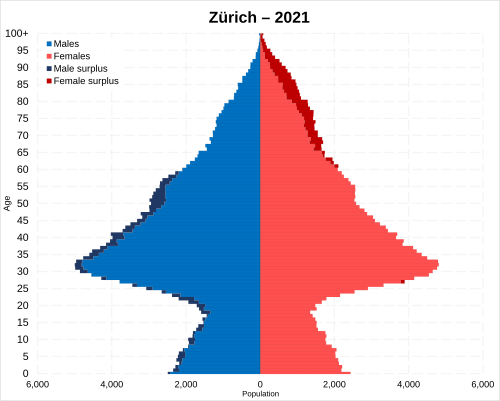
チューリッヒには421,878人が住んでおり(2020年12月31日現在)、[65]スイス最大の都市となっている。登録住民(2016年)のうち、32%(133,473人)はスイス国籍を持っていない。[66]これらのうち、ドイツ人が8%(33,548人)で最大グループを占め、イタリア人が3.5%(14,543人)と続く。[66] 2011年時点で、郊外を含む市の人口は合計117万人であった。[8]大都市圏全体(ヴィンタートゥール、バーデン、ブルッグ、シャフハウゼン、フラウエンフェルト、ウスター/ヴェッツィコン、ラッパースヴィル=ヨーナ、ツークの各都市を含む)の人口は約182万人であった。[8]
言語
政府機関、印刷物、ニュース、学校、大学、裁判所、劇場、およびあらゆる種類の書き言葉で使用される公式言語は標準ドイツ語のスイス方言であり、話し言葉はチューリッヒドイツ語( Züritüütsch ) です。これは、中世アレマン語方言グループにルーツを持つ、スイスのいくつかの多かれ少なかれ区別はできるものの相互に理解可能なスイスドイツ語方言の 1 つです。ただし、チューリッヒは国家的に重要な都市であり、そのため言語の変動が大きいため、[説明が必要]住民と通勤者はあらゆる種類のスイスドイツ語の方言を話します。2010 年 12 月の国勢調査によると、人口の 69.3% が家庭で二言語併用のスイスドイツ語/標準ドイツ語を母国語として話しています。約 22.7% の住民が家庭環境 (「自宅」) で標準ドイツ語を話しています。2000 年の前回の国勢調査によると、劇的に増加しており、現在 8.8% が英語を話します。イタリア語が人口の7.1%でそれに続き、フランス語が4.5%である。ここで話されている他の言語は、ボスニア語(4.1%)、スペイン語(3.9%)、ポルトガル語(3.1%)、アルバニア語(2.3%)である。(複数選択可能)したがって、人口の20%が自宅で2つ以上の言語を話している。[67]
宗教
プロテスタントの宗教改革がチューリッヒに到達する前は、チューリッヒは法律上も事実上も ローマカトリック教会でした。
フルドリッヒ・ツヴィングリが率いた宗教改革により、チューリッヒはスイスにおけるプロテスタントの神学の中心地であると同時に拠点となった。これに匹敵する地位にあったスイスの都市としては、いわゆる「プロテスタントのローマ」と呼ばれたジュネーブやバーゼルがあり、ジャン・カルヴァンと彼の改革派が活動していた。チューリッヒはハインリッヒ・ブリンガーのような影響力のあるプロテスタント改革者も惹きつけた。ツヴィングリは聖書(チューリッヒ聖書)を地元のドイツ語に翻訳し、行政官や王女修道院長カタリーナ・フォン・ツィンメルン、チューリッヒ州の大部分が農民である住民の支持を得て宗教改革を導入した。州はツヴィングリに代表される改革派の伝統を満場一致で採用した。カトリックとプロテスタントの間の宗教戦争はスイス連邦を苦しめた。ツヴィングリは、カッペルの戦いでチューリッヒ州を防衛する際に政治的および宗教的な理由で亡くなりました。ブリンガーは、市の精神的指導者として彼の役割を引き継ぎました。
1970年には、人口の約53%がスイス改革派で、ほぼ40%がローマカトリックであった。それ以来、スイスの2つの大教会であるローマカトリック教会とスイス改革派教会は、常に信者を失っているが、カトリック教会の場合、減少は20年後の1990年頃から始まっている。しかし、過去20年間で、両方の宗派は10%減少し、現在の数字(2010年の国勢調査)は、ローマカトリックが30%、スイス改革派(チューリッヒ州福音改革派教会に所属)が26%となっている。1970年には、チューリッヒの住民のうち、いかなる宗教宗派にも属していないと主張する人はわずか2%であった。スイスの大教会の信者減少に伴い、無所属を宣言する人の数は2000年には17%に増加した。過去10年間で、この数字は25%以上に上昇した。 24歳から44歳のグループでは、これは3人に1人という高い割合です。[69]
チューリッヒの住民の5%はイスラム教徒であり、2000年と比較すると1%のわずかな減少です。フォルヒ通りにあるチューリッヒのマフムードモスクは、スイスで最初に建てられたモスクです。[69] [70]
ユダヤ民族とユダヤ教徒の人口は1970年以降ほぼ一定で、約1%である。チューリッヒ・レーヴェン通りシナゴーグはチューリッヒ最古かつ最大のシナゴーグである。[69] [71]
社交
チューリッヒの失業率は2012年7月時点で3.2% [72]でした。2008年の平均月収は社会保険料や税金を差し引く前で約7000スイスフランでした。[73] 2010年には、国からの直接または間接的な福祉給付が12,994件(月平均)ありました。 [74]
生活の質
チューリッヒは国際ランキングで常に高い評価を得ており、その一部を以下に示します。
- モノクル誌の2012年の「生活の質調査」では、チューリッヒは「拠点を置くのに最も適した世界のトップ25都市」のリストで第1位にランクされました。 [75] 2019年、チューリッヒはジュネーブやバーゼルとともに、マーサーによって世界で最も住みやすい都市トップ10にランクされました。 [76]
- fDi Magazineの「未来の世界都市2021/22」レポートでは、チューリッヒは総合ランキング(全カテゴリー)で16位にランクされました。 [77] [78]「中規模および小規模都市」のカテゴリーでは、チューリッヒはヴロツワフに次いで総合2位となり、「人的資本とライフスタイル」のサブカテゴリーでも2位、「ビジネスフレンドリー」では3位にランクされました。「FDI戦略、全体」(外国直接投資に関連)のカテゴリーでは、チューリッヒはニューヨーク、モントリオール(1位と2位)、ドバイ(8位)などの都市に次いで9位にランクされました。[78]
主なサイト

チューリッヒの名所のほとんどは、リマト川の両側、中央駅とチューリッヒ湖の間のエリアにあります。旧市街の教会や家屋はここに集中しており、有名なバーンホフ通り沿いには最も高級な店が並んでいます。旧市街のリンデンホフは、ローマ時代の城と、その後のカロリング朝の皇居の歴史的な場所です。
教会
- グロスミュンスター(大大聖堂)伝説によると、カール大帝は街の殉教者フェリックスとレグラの墓を発見し、修道院として最初の教会を建てた。現在の建物は1100年頃に建てられ始めた。16世紀前半、大大聖堂はフルドリッヒ・ツヴィングリとハインリヒ・ブリンガーが率いたスイス・ドイツ宗教改革の出発点となった。カール大帝によって帝国教会として宣言された。ロマネスク様式の地下室、教会と回廊のロマネスク様式の柱頭、アウグスト・ジャコメッティ(1932年)とジグマール・ポルケ(2009年)による聖歌隊席の窓、オットー・ミュンヒ(1935年と1950年)による青銅の扉。 [79]
- フラウミュンスター(女性の大聖堂)教会。南ドイツの貴族の女性のための元修道院だった建物で、853年にルートヴィヒ2世が娘ヒルデガルトのために設立しました。874年以前に建てられた最初の教会です。ロマネスク様式の内陣は1250年から1270年にかけて建てられました。教会は国王の保護を受け、13世紀までチューリッヒの貨幣発行権を持っていました。宗教改革後、教会と修道院は市の所有となりました。最も重要な装飾品は、5,793本のパイプと92のストップを備えた州最大のオルガンに加えて、色彩豊かな窓です。北翼廊の窓はアウグスト・ジャコメッティ(1945年)、内陣の5部構成のサイクル(1970年)、南翼廊のロゼット(1978年)は、マルク・シャガールの作品です。また、この教会はチューリッヒ最大の聖歌隊を擁し、100人以上の歌手を擁している。[80]
- 聖ペテロ教会は、9世紀以前の教会の跡地に建てられたロマネスク・ゴシック・バロック様式の教会です。1538年に建てられたヨーロッパ最大の教会時計の文字盤があります。洗礼盤は1598年製で、バロック様式のスタッコです。15世紀に廃止された市内の修道院から持ってきた個々の座席には、豪華な彫刻と肘掛けが付いています。カンツェレットナー(身廊と聖歌隊の間にある増築された壁で、内蔵の説教壇があります)は1705年製、説教壇の響き板は1790年頃です。説教壇の上には聖書の詩句が刻まれた豪華なアカンサスの装飾があります。1971年に新しいクリスタルのシャンデリアが設置され、1710年のデザインをモデルにしています。オルガンは1974年製で、53個のストップが付いています。鐘は1880年に5つ設置され、最も大きいものはクラッパーなしでイ短調で、重さは約6,000 kg(13,228 ポンド)です。塔の火守は中世から1911年まで続いた。[81]
- プレディガー教会は旧市街の 4 つの主要な教会の 1 つで、1231 年にノイマルクト近くのドミニコ会プレディガー教会のロマネスク様式の教会として最初に建てられました。14 世紀前半に改築され、1308 年から 1350 年の間に聖歌隊席が再建されました。その構造と当時としては異例の高さの鐘楼により、チューリッヒで最も高いゴシック建築物とみなされていました。[引用が必要]
博物館
- チューリッヒ美術館–チューリッヒ美術館としても知られるこの美術館は、ヨーロッパの重要な美術館の一つです。世界最大級の古典近代美術コレクション(ムンク、ピカソ、ブラック、ジャコメッティなど)を所蔵しています。また、写真の大規模な図書館コレクションも備えています。[82]
- スイス国立博物館– 国立博物館(ドイツ語:Landesmuseum)には、スイスの文化的、歴史的背景を示す多くの品々が展示されています。また、ステンドグラス、衣装、塗装された家具、武器など、多くの古代の遺物が収蔵されています。[83]博物館は中央駅の向かいにあるプラッツシュピッツ公園にあります。 [84]
- ル・コルビュジエ・センター– チューリッヒホルン近くのチューリッヒ湖畔に位置するル・コルビュジエ・センター(別名:ハイジ・ウェーバー美術館)は、スイスの建築家ル・コルビュジエの作品を展示する美術館で、彼が設計した最後の住宅の中にあります。
- リートベルク美術館– ガブラー通りにあるリートベルク美術館は、チューリッヒの芸術と文化の素晴らしい宝庫の 1 つです。この美術館には、チベットの青銅工芸品、陶磁器や翡翠、インドの彫刻、中国の墓の装飾、アフリカの部族の仮面など、世界各地から集められた展示品も展示されています。
- デザイン博物館– デザイン博物館は、工業デザイン、ビジュアルコミュニケーション、建築、工芸品の博物館です。チューリッヒ芸術大学の文化分析学部の一部です。[85]
- ハウス・コンストルクティヴ– ハウス・コンストルクティヴは、スイス国内および国際的に認知されている博物館です。この博物館は、建設的、具体的、概念的な芸術とデザインに関するものです。中央駅のすぐ近くにあるこの博物館は、チューリッヒの産業建築の証人です。[86]
- ベイヤー時計博物館– 時計博物館は市の中心部にあります。時計と時計職人の歴史を記録したこの博物館には、機械式時計の膨大なコレクションのほか、水時計、日時計、砂時計などの原始的な時計のコレクションも収蔵されています。
- ノー ショー ミュージアム– ノー ショー ミュージアムは、芸術の歴史を通じて、何もないこととそのさまざまな表現に特化した最初の美術館です。
- ギルドハウス– ギルドハウス (ドイツ語: Zunfthaus ) はリマト川 (グロスミュンスターの下流) 沿いにあります。マイセン(磁器とファイアンスの博物館でもあります)、リューデン、ハウエ、サフラン、シュナイデルン、シュミーデン、ツィマーロイテンなどです。
- 路面電車博物館– 路面電車博物館はチューリッヒ東部郊外のブルクヴィースに位置し、1897 年から現在までのさまざまな展示物を通じてチューリッヒの象徴的な路面電車システムの歴史を記録しています。
- 北米先住民博物館– 北米先住民博物館は、ネイティブアメリカン、先住民族、イヌイットの文化に関する民族学的な物品や芸術の保存、記録、展示を専門としています。
- FIFAミュージアム – 国際サッカー連盟 ( Fédération Internationale de Football Association ) によって設立されたこの博物館では、サッカー界の記念品が展示されています。
公園と自然
- 動物園– 動物園には約260種の動物が飼育されており、約2200頭の動物が飼育されています。動物園では、ユキヒョウ、インドライオン、ウンピョウ、アムールヒョウ、カワウソ、パンダなどがそれぞれ別の囲いの中で飼育されています。[87]
- 植物園– 植物園には約 15,000 種の植物や樹木が植えられており、300 万種もの植物が植えられています。この植物園では、アフリカ南西部やニューカレドニアの珍しい植物種を多数見ることができます。植物園はチューリッヒ大学が所有しています。
- 中国庭園– 中国庭園は、チューリッヒの中国のパートナー都市である昆明市から、昆明市の飲料水供給と排水の開発に対するチューリッヒの技術的および科学的支援への記念として寄贈されたものです。この庭園は、中国文化の主要テーマの 1 つである「冬の三友」、つまり寒い季節を共に耐える 3 つの植物、松、竹、梅を表現しています。
- ユトリベルク– 市の西側、海抜813メートル(2,667フィート)に位置するユトリベルクは最も高い丘で、市街地を一望できる。頂上へはチューリッヒ中央駅から電車で簡単にアクセスできる。[88]
芸術と建築(建設許可事務所)
1922年、アウグスト・ジャコメッティはアムツハウス1の玄関ホールの絵画コンペで優勝した。市は、かつて地下室として使われていたこの陰気な部屋を明るくし、同時に地元の芸術家の不安定な経済状況を軽減することを約束した。ジャコメッティは、天井と壁を覆うこのフレスコ画の制作に、画家のヤコブ・ギュブラー、ジュゼッペ・スカルテッツィーニ、フランツ・リクリンを起用した。このフレスコ画は、その明るさでほとんど神聖に見える独特の色彩空間を生み出した。[89]
-
 アムツハウス1内のフレスコ画
 -
 アムツハウス1への入り口
 -
 これらのフレスコ画が作られた理由についての情報を提供するパンフレット

建築

Compared to other cities, there are few tall buildings in Zurich. The municipal building regulations (Article 9)[91] limit the construction of high-rise buildings to areas in the west and north of the city. In the industrial district, Altstetten and Oerlikon, buildings up to 80 m (260 ft) in height are allowed (high-rise area I). In the adjacent high-rise areas II and III the height is limited to 40 m (130 ft). Around the year 2000, regulations became more flexible and high-rise buildings were again planned and built. The people's initiative "40 m (130 ft) is enough," which would have reduced both the maximum height and the high-rise buildings area, was clearly rejected on 29 November 2009.[92] At this time in Zurich about a dozen high-rise buildings were under construction or in planning, including the Prime Tower as the tallest skyscraper in Switzerland at the time of its construction. There are numerous examples of brutalist buildings throughout the city, including the Swissmill Tower which, at 118m, is the world's tallest grain silo.

World heritage sites
The prehistoric settlements at Enge Alpenquai and Grosser Hafner and Kleiner Hafner are part of the Prehistoric Pile dwellings around the Alps a UNESCO World Heritage Site.[93]
Economy

Zurich contributes approximately 10% to Switzerland's GDP.[94] Approximately 90% of workers are employed in the tertiary sector.[95]
In a 2009 survey by CityMayors.com, Zurich was ranked 9th among the "World's 10 Most Powerful Cities".[96] In the 2017 Global Financial Centres Index, Zurich was ranked as having the 11th most competitive financial centre in the world, and second most competitive in Europe after London.[97] The Greater Zurich Area is Switzerland's economic centre and home to many international companies.
Some of Switzerland's largest financial institutions have their headquarters in Zürich, most notably: UBS, Credit Suisse, Zurich Cantonal Bank, Migros Bank, Julius Baer, Zurich Insurance Group, Swiss Re and Swiss Life.
For a list of the largest companies in Zürich, see: List of Swiss companies by revenue.
Contributory factors to economic strength
The high quality of life has been cited as a reason for economic growth in Zurich. The consulting firm Mercer has[when?] for many years ranked Zurich as a city with the highest quality of life in the world.[98][99] In particular, Zurich received high scores for work, housing, leisure, education and safety. Local planning authorities ensure clear separation between urban and recreational areas and there are many protected nature reserves.[100] Zurich is also ranked[when?] the third most expensive city in the world, behind Hong Kong and Tokyo and ahead of Singapore.[101]
Zurich benefits from the high level of investment in education which is typical of Switzerland in general and provides skilled labour at all levels. The city is home to two major universities, thus enabling access to graduates and high technology research. Professional training incorporates a mix of practical work experience and academic study while, in general, emphasis is placed on obtaining a good level of general education and language ability. As a result, the city is home to many multilingual people and employees generally demonstrate a high degree of motivation and a low level of absenteeism. In addition, employment laws are less restrictive than in nearby Germany or France.[100]
Google Zurich is a main hub for its operations in Europe with about 5000 employees. In March 2023, workers at the centre staged a solidarity movement in coordination with the IT workers' union Syndicom to reduce lay-offs and to oppose salary cuts. According to a spokesperson for the company, Google Zurich would remain a major employer despite the measures.[102]
The Swiss stock exchange
The Swiss stock exchange is called SIX Swiss Exchange, formerly known as SWX. The SIX Swiss Exchange is the head group of several different worldwide operative financial systems: Eurex, Eurex US, EXFEED, STOXX, and virt-x. The exchange turnover generated at the SWX was in 2007 of 1,780,499.5 million CHF; the number of transactions arrived in the same period at 35,339,296 and the Swiss Performance Index (SPI) arrived at a total market capitalization of 1,359,976.2 million CHF.[103][104]
Education and research
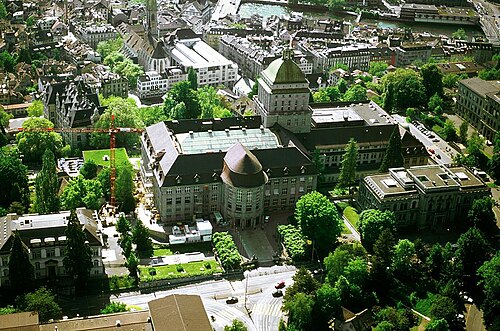
About 70,000 people study at the 20 universities, colleges and institutions of higher education in Zurich in 2019.[105] Two of Switzerland's most distinguished universities are located in the city: the Swiss Federal Institute of Technology (ETH Zurich), which is controlled by the federal government, and the University of Zurich, under direction of the canton of Zurich. Both universities were listed in the top 50 world universities rated in 2007, while the ETH has consistently remained in the top 10 universities worldwide since 2016.[106][107]

ETH was founded in 1854 by the Swiss Confederation and opened its doors in 1855 as a polytechnic institute. ETH achieved its reputation particularly in the fields of chemistry, mathematics and physics and there are 21 Nobel Laureates who are associated with the institution. ETH is usually ranked the top university in continental Europe.[108] The institution consists of two campuses, the main building in the heart of the city and the new campus on the outskirts of the city.
The University of Zurich was founded in 1833, although its beginnings date back to 1525 when the Swiss reformer Ulrich Zwingli founded a college of theology. Nowadays with its 24,000 students and 1,900 graduations each year, the University of Zurich is the largest in Switzerland and offers the widest range of subjects and courses at any Swiss higher education institution.
The Pedagogical College, the Zurich University of Applied Sciences (ZHAW) and the Zurich University of the Arts (ZHdK) are another three top-class technical colleges which contribute to Zurich's reputation as a knowledge and research pole by providing applied research and development. Zurich is also one of the co-location centres of the Knowledge and Innovation Community (Climate Change Mitigation and Adaptation) of the European Institute of Innovation and Technology.[109]
In addition to the university libraries, the city is also served by the Zentralbibliothek Zürich, a research and public library, and the Pestalozzi-Bibliothek Zürich, a public library with 14 locations.
State universities by size in canton of Zurich
Media
Many large Swiss media conglomerates are headquartered in Zurich, such as tamedia, Ringier and the NZZ-Verlag.
Television and radio

The headquarters of Switzerland's national licence fee-funded German language television network ("SF") are located in the Leutschenbach neighborhood, to the north of the Oerlikon railway station. Regional commercial television station "TeleZüri" (Zurich Television) has its headquarters near Escher-Wyss Platz. The production facilities for other commercial stations "Star TV", "u1" TV and "3+" are located in Schlieren.
One section of the Swiss German language licence fee-funded public radio station "Schweizer Radio DRS" is located in Zurich. There are commercial local radio stations broadcasting from Zurich, such as "Radio 24" on the Limmatstrasse, "Energy Zurich" in Seefeld on the Kreuzstrasse, Radio "LoRa" and "Radio 1". There are other radio stations that operate only during certain parts of the year, such as "CSD Radio" (May/June), "Radio Streetparade" (July/August) and "rundfunk.fm" (August/September).
Print media
There are three large daily newspapers published in Zurich that are known across Switzerland. The Neue Zürcher Zeitung (NZZ), the Tages-Anzeiger and Blick, the largest Swiss tabloid. All three of those newspapers publish Sunday editions. These are the NZZ am Sonntag, SonntagsZeitung and SonntagsBlick. Besides the three main daily newspapers, there is a free daily commuter newspaper which is widely distributed: 20 Minuten (20 minutes), published weekdays in the mornings.
A number of magazines from major publishers are based in Zurich. Some examples are Bilanz, Die Weltwoche, Annabelle, Schweizer Familie and Schweizer Illustrierte.
Culture

In addition to high-quality museums and galleries, Zurich has high-calibre chamber and symphony orchestras and several important theatres.[111]
The Zurich Film Festival is an international film festival, lasting 11 days and featuring popular international productions.[112]

One of the largest and most popular annual events in Zurich is the Street Parade, which is also one of the largest techno and dance music festivals in the world. Proceeding along the side of Lake Zurich, it is normally held on the second Saturday in August. The first edition was held in 1992 with about 1,000 participants. By 2001 the event attracted one million participants.[113][114] The Zürifäscht, on the other hand, is a triennial public festival. It features music, fireworks set to music,[114] and other attractions throughout the old town. It is the largest public festival in Switzerland and attracts up to 2 million visitors.[115]
The Kunst Zürich is an international contemporary art fair with an annual guest city; it combines most recent arts with the works of well-established artists.[116] Another annual public art exhibit is the city campaign, sponsored by the City Vereinigung (the local equivalent of a chamber of commerce) with the cooperation of the city government. It consists of decorated sculptures distributed over the city centre, in public places. Past themes have included lions (1986), cows (1998), benches (2003), teddy bears (2005), and huge flower pots (2009). From this originated the concept of the CowParade that has been featured in other major world cities.
Zurich has been the home to several art movements. The Dada movement was founded in 1916 at the Cabaret Voltaire. Artists like Max Bill, Marcel Breuer, Camille Graeser or Richard Paul Lohse had their ateliers in Zurich, which became even more important after the takeover of power by the Nazi regime in Germany and World War II.
The best known traditional holiday in the city is the Sechseläuten (Sächsilüüte), including a parade of the guilds and the burning of "winter" in effigy at the Sechseläutenplatz. During this festival the popular march known as the Sechseläutenmarsch is played. It has no known composer but likely originated in Russia.[117] Another is the Knabenschiessen target shooting competition for teenagers (originally boys, open to female participants since 1991).
Opera, ballet, and theaters

The Zurich Opera House (German: Zürcher Opernhaus), built in 1834, was the first permanent theatre in the heart of Zurich and was at the time, the main seat of Richard Wagner's activities. Later in 1890, the theatre was re-built as an ornate building with a neo-classical architecture. The portico is made of white and grey stone ornamented with the busts of Wagner, Weber and Mozart. Later, busts of Schiller, Shakespeare and Goethe were also added. The auditorium is designed in the rococo style. Once a year, it hosts the Zürcher Opernball with the President of the Swiss Confederation and the economic and cultural elite of Switzerland.[118] The Ballett Zürich performs at the opera house. The Zurich Opera Ball, a major social event, is held annually at the Opera House as a fundraiser for the opera and ballet companies.
The Schauspielhaus Zürich is the main theatre complex of the city. It has two dépendances: Pfauen in the Central City District and Schiffbauhalle, an old industrial hall, in Zurich West. The Schauspielhaus was home to emigrants such as Bertolt Brecht or Thomas Mann, and saw premieres of works of Max Frisch, Friedrich Dürrenmatt, Botho Strauss or Elfriede Jelinek. The Schauspielhaus is one of the most prominent and important theatres in Switzerland.[119]
The Theater am Neumarkt is one of the oldest theatres of the city. Established by the old guilds in the Old City District, it is located in a baroque palace near Niederdorf Street. It has two stages staging mostly avantgarde works by European directors.
The Zürcher Theater Spektakel is an international theatre festival, featuring contemporary performing arts.[120]
Food
The traditional cuisine of Zurich reflects the centuries of rule by patrician burghers as well as the lasting imprint of Huldrych Zwingli's puritanism. Traditional dishes include Zürcher Geschnetzeltes and Tirggel. Sternen Grill is a popular restaurant that is known for its St. Galler Bratwurst.
Nightlife and clubbing

Zurich is host city of the Street Parade, which takes place in August every year (see above).
The most famous districts for Nightlife are the Niederdorf in the old town with bars, restaurants, lounges, hotels, clubs, etc. and a lot of fashion shops for a young and stylish public and the Langstrasse in the districts 4 and 5 of the city. There are authentic amusements: bars, punk clubs, hip hop stages, Caribbean restaurants, arthouse cinemas, Turkish kebabs and Italian espresso-bars, but also sex shops or the famous red-light district of Zurich.
In the past ten years[when?] new parts of the city have risen into the spotlight. Notably, the area known as Zurich West in district 5, near the Escher-Wyss square and the S-Bahn Station of Zürich Hardbrücke.[citation needed]
Sports

Zurich is home to several international sport federations. The Fédération Internationale de Football Association (FIFA) is headquartered in the city. In 2007 were inaugurated the new FIFA headquarters building, designed by architect Tilla Theus.
Association football is an essential aspect of sports in Zurich. The city is home to two major rivaling Swiss football teams; Grasshopper Club Zurich founded in 1886 and FC Zurich founded in 1896, both competing in Switzerland's highest league.
Among the most popular sports in Switzerland is ice hockey. In Zurich it is represented by the ZSC Lions. The International Ice Hockey Federation (IIHF) officiating as head organisation for ice hockey leagues worldwide is based in Zurich as well.
Cycling is a popular sport as well as a means of transport in Zurich. Cycling routes are generally marked with red and white signs and the yellow lanes are exclusively meant for cyclists. Also hiking trails are well marked with yellow signs, most of which give the hiker the probable time it will take them to reach their destination. There are specific maps available for hiking and walking trails throughout Switzerland. Some of the most accessible walks in the Zurich area are the Uetliberg and the Zürichberg. The Offene Rennbahn otherwise known as the Oerlikon Velodrome deserves a special visit on any Tuesday evening in the summer, for cyclists there are chances to see time trial champions or local Swiss national cyclists challenging other amateurs in a variety of races including Madison or Keirin events.
As many as 30 clubs and seven indoor curling facilities can be found in the Greater Zurich Area. The curling season starts in early September and continues until the end of April.[121]
Zurich is Switzerland's hub for lacrosse. The Zurich Lions Lacrosse Academics, who play their home games at the Hochschulsportanlage Fluntern,[citation needed] have been the country's dominant team and a major competitor at international events.[122]
Events

Weltklasse Zürich, sometimes referred to as the one-day Olympics,[123] is a one-day athletics meet held annually at the Letzigrund Stadium. Since it started on 12 August 1928, the sporting event has witnessed new world records and national records. To date as many as 24 world records were set in Weltklasse.[124][125][126]
Zurich Marathon is a popular sport event held in the city. The course starts in Zurich and passes through Bahnhofstrasse, Bellevueplatz, Mythenquai, Quaibrücke, Talstrasse and Utoquai, and along Lake Zurich. New Year's Eve run is another notable running event held on 1 January and starts at midnight.
Zurich was one of six venues of the 1954 FIFA World Cup and one of eight venues of the UEFA Euro 2008. The Euro 2008 games were held in the Letzigrund Stadium. Work on the new Letzigrund was completed in exceptionally quick time and the stadium opened in August 2007 just one year after the demolition of the old arena.[127]
Zurich has hosted the UCI Track Cycling World Championships six times at the Oerlikon Velodrome. The first event was in 1929 and most recently in 1983.
Since 2013, the international Openair Literatur Festival Zürich takes place annually in Zurich, presented by Literaturhaus Zurich and Kaufleuten.
Zurich hosted the 1998 World Ice Hockey Championships. The city previously co-hosted the 1953 and 1939 championships.
Zurich was also host to the 2012 Men's World Floorball Championships. This was the first time the event had been held in the city.
Notable people
Other points of interest
- The Schwamendingen X: level crossing of tram tracks, necessary because the tunnel uses island platforms for boarding (between trams, whose doors are on the right) while normally (outside the tunnel), passengers board to the outside (opposite the boarding area of oncoming trams). Trams normally travel on the right track, but in the tunnel they travel on the left.[128][better source needed]
- The Sihlfeld cemetery has a vending machine for funeral cards and other mourning supplies.[129][better source needed]
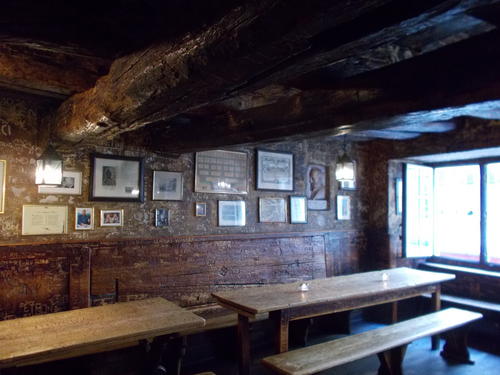
- The "Oepfelchammer" tavern in Zurich's Old Town offers an unusual athletic drinking game called Balkenprobe: the drinker has to pull themselves up on a ceiling beam, cross over to the next beam, then drink a glass of wine with their head hanging down.[130][better source needed]
See also

Notes and references
Notes
- ^ The official language in all municipalities in German-speaking Switzerland is German, where 'German' is used as an umbrella term for all varieties of German. By law, one may communicate with the authorities using any variant of German, in written or oral form. However, the authorities will always use Swiss Standard German (the Swiss variety of Standard German) in documents and writing. Orally, they would use either Hochdeutsch (i.e., Swiss Standard German or what the particular speaker considers High German), or a dialectal variant depending on the speaker's origin.
References
- ^ a b
Error: Unable to display the reference from Wikidata properly. Technical details:
- Reason for the failure of {{Cite web}}: The output template call would miss the mandatory parameter
url. - Reason for the failure of {{Cite Q}}: The output template call would miss the mandatory parameter
1.
- Reason for the failure of {{Cite web}}: The output template call would miss the mandatory parameter
- ^ a b "Arealstatistik Standard - Gemeinden nach 4 Hauptbereichen". Federal Statistical Office. Retrieved 13 January 2019.
- ^ https://www.pxweb.bfs.admin.ch/pxweb/fr/px-x-0102020000_201/-/px-x-0102020000_201.px/table/tableViewLayout2/?rxid=c5985c8d-66cd-446c-9a07-d8cc07276160. Retrieved 22 June 2023.
{{cite web}}: Missing or empty|title=(help) - ^
Error: Unable to display the reference from Wikidata properly. Technical details:
- Reason for the failure of {{Cite web}}: The Wikidata reference contains the property file format (P2701), which is not assigned to any parameter of this template.
- Reason for the failure of {{Cite Q}}: The Wikidata reference contains the property file format (P2701), which is not assigned to any parameter of this template.
- ^ "Zurich entry at the Swiss Tourist Board". Myswitzerland.com. Archived from the original on 12 May 2010. Retrieved 3 July 2010.
- ^ "Bevölkerungsbestand und – entwicklung – Stadt Zürichbestand". stadt-zuerich.ch (in German). Stadt Zürich Präsidialdepartment. Archived from the original on 20 March 2023. Retrieved 20 March 2023.
- ^ "Population size and population composition – Data, indicators – Agglomerations: Permanent resident population in urban and rural areas". bfs.admin.ch (Statistics). Federal Statistical Office, Neuchâtel, Swiss Federal Administration. 2015. Archived from the original on 4 May 2009. Retrieved 1 September 2015.
- ^ a b c "Zürich in Zahlen 2011 Taschenstatistik (German)". Präsidialdepartement der Stadt Zürich (Department of the Mayor). 8 September 2012. Archived from the original (Press release) on 7 March 2013. Retrieved 25 September 2012.
- ^ Primas, Margarita (December 1981). "Urgeschichte des Zürichseegebietes im Überblick: Von der Steinzeit bis zur Früheisenzeit". Helvetia Archaeologica 45/48: 5–18, 5f.
- ^ "Huldrych-Zwingli". Zuerich.com. Archived from the original on 27 September 2013. Retrieved 22 September 2013.
- ^ "Swiss financial centre". www.eda.admin.ch. Retrieved 22 October 2023.
- ^ Zürich Culture Archived 7 August 2010 at the Wayback Machine worldtravelguide.net. Retrieved 10 March 2010
- ^ Jones, Daniel (2011). Roach, Peter; Setter, Jane; Esling, John (eds.). Cambridge English Pronouncing Dictionary (18th ed.). Cambridge University Press. ISBN 978-0-521-15255-6.
- ^ Wells, John C. (2008). Longman Pronunciation Dictionary (3rd ed.). Longman. ISBN 978-1-4058-8118-0.
- ^ "Definition of Zurich". www.merriam-webster.com.
- ^ Andres Kristol, Zürich ZH (Zürich) in: Dictionnaire toponymique des communes suisses – Lexikon der schweizerischen Gemeindenamen – Dizionario toponomastico dei comuni svizzeri (DTS|LSG), Centre de dialectologie, University of Neuchâtel, Verlag Huber, Frauenfeld/Stuttgart/Wien 2005, ISBN 3-7193-1308-5 und Éditions Payot, Lausanne 2005, ISBN 2-601-03336-3, p. 992f.
- ^ Zurich in German, French and Italian in the online Historical Dictionary of Switzerland.
- ^ Zürcher Ortsnamen – Entstehung und Bedeutung, H. Kläuli, V. Schobinger, Zürcher Kantonalbank (1989), p. 109.
- ^ a b c d Drack, Walter; Fellmann, Rudolf (1988). Die Römer in der Schweiz (in German). Stuttgart: Konrad Theiss. p. 571. ISBN 978-3806204209.
- ^ "Early History of Zurich". Archived from the original on 3 April 2015.
- ^ "Zürich as the part of the German Empire". Archived from the original on 4 March 2012.
- ^ Ingeborg Glier, reviewing Koschorreck and Werner 1981 in Speculum 59.1 (January 1984), p 169.
- ^ Koschorreck and Werner 1981 discern no fewer than eleven scribes, some working simultaneously, in the production.
- ^ Röthe, Gustav (1894). Süsskind von Trimberg. In: Allgemeine Deutsche Biographie (ADB). Band 37. Leipzig. pp. 334–336.
{{cite book}}: CS1 maint: location missing publisher (link) - ^ Wild, Dölf; Matt, Christoph Philipp. Zeugnisse jüdischen Lebens aus den mittelalterlichen Städten Zürich und Basel, in Kunst und Architektur in der Schweiz. Synagogen. pp. 14–20.
- ^ "Antisemitismus". hls-dhs-dss.ch. Archived from the original on 13 May 2022. Retrieved 13 May 2022.
- ^ Geggel, Laura (30 July 2019). "Iron Age Celtic Woman Wearing Fancy Clothes Buried in This 'Tree Coffin' in Switzerland". Live Science. Archived from the original on 19 April 2020. Retrieved 30 March 2020.
- ^ Solly, Meilan. "This Iron Age Celtic Woman Was Buried in a Hollowed-Out Tree Trunk". Smithsonian. Archived from the original on 9 August 2020. Retrieved 30 March 2020.
- ^ "Kelte trifft Keltin: Ergebnisse zu einem aussergewöhnlichen Grabfund – Stadt Zürich". www.stadt-zuerich.ch (in German). Archived from the original on 14 May 2020. Retrieved 30 March 2020.
- ^ Margaritoff, Marco (6 August 2019). "Iron Age Celtic Woman Found Buried In A Hollowed-Out Tree Trunk In Zurich". All That's Interesting. Archived from the original on 14 January 2020. Retrieved 30 March 2020.
- ^ a b "History of Zurich". europe-cities.com. Archived from the original on 3 April 2015. Retrieved 27 April 2015.
- ^ New International Encyclopedia.
- ^ a b "Judentum". hls-dhs-dss.ch. Archived from the original on 13 May 2022. Retrieved 13 May 2022.
- ^ Stahn, Dina (2011). Zürich [mit Special-Guide Flussbäder]. Eva Missler (1. Aufl ed.). Ostfildern. ISBN 978-3-8297-1278-1. OCLC 700063081.
{{cite book}}: CS1 maint: location missing publisher (link) - ^ Coolidge, William Augustus Brevoort (1911). . In Chisholm, Hugh (ed.). Encyclopædia Britannica. Vol. 28 (11th ed.). Cambridge University Press. pp. 1057–1060, see page 1057.
- ^ Ziegler, Peter (1977). Die Gemeindewappen des Kantons Zürich. Antiquarische Gesellschaft in Zürich.
- ^ "Die Löwen im Wappen Zürichs ("Zürileuen") – Stadt Zürich". www.stadt-zuerich.ch (in German). Retrieved 30 March 2024.
- ^ a b "Der Stadtrat von Zürich" (official site) (in German). City of Zurich. 13 February 2022. Archived from the original on 18 April 2023. Retrieved 20 May 2023.
- ^ "Erneuerungswahlen Amtsdauer 2022–2026" (official site) (in German). City of Zurich. 13 February 2022. Archived from the original on 20 May 2023. Retrieved 20 May 2023.
- ^ a b "Gesamtstädtischer Wähleranteil der Parteien". www.stadt-zuerich.ch. Retrieved 31 March 2024.
- ^ "Über den Gemeinderat" (official site) (in German). Zurich: Gemeinderat der Stadt Zürich. Archived from the original on 31 October 2015. Retrieved 27 October 2015.
- ^ "Twin Cities". City of Zurich. Archived from the original on 29 November 2014. Retrieved 14 November 2014.
- ^ "Zürich, Switzerland Köppen Climate Classification (Weatherbase)". Weatherbase. Archived from the original on 1 February 2021. Retrieved 19 February 2019.
- ^ "Föhn" (in German). Zurich-Airport, Switzerland: Swiss Federal Office of Metreology and Climatology, MeteoSwiss. 1 December 2014. Archived from the original on 7 April 2015. Retrieved 3 April 2015.
- ^ a b "Climate normals Zurich / Fluntern (Reference period 1981–2010)" (PDF). Zurich-Airport, Switzerland: Swiss Federal Office of Metreology and Climatology, MeteoSwiss. 2 July 2014. Archived (PDF) from the original on 6 April 2015. Retrieved 3 April 2015.
- ^ "Average Annual Maximum". Royal Netherlands Meteorological Institute. Archived from the original on 31 August 2017. Retrieved 30 August 2017.
- ^ "July 1947". Royal Netherlands Meteorological Institute. Archived from the original on 31 August 2017. Retrieved 30 August 2017.
- ^ "Klimabulletin März 2014" (PDF) (in German). Zurich-Airport, Switzerland: Swiss Federal Office of Metreology and Climatology, MeteoSwiss. 9 April 2014. p. 5. Archived (PDF) from the original on 6 April 2015. Retrieved 3 April 2015.
- ^ "Zürich/Fluntern (556m) 2015" (PDF). Zurich-Airport, Switzerland: Swiss Federal Office of Metreology and Climatology, MeteoSwiss. Archived (PDF) from the original on 6 April 2015. Retrieved 3 April 2015.
- ^ "Climate normals Zurich / Fluntern (Reference period 1991–2020)" (PDF). Zurich-Airport, Switzerland: Swiss Federal Office of Metreology and Climatology, MeteoSwiss. 13 January 2022. Archived from the original (PDF) on 14 January 2022. Retrieved 13 January 2022.
- ^ "Zurich extreme values". KNMI. Retrieved 30 August 2017. [permanent dead link]
- ^ "Climate Normals Zurich / Kloten (Reference period 1991–2020)" (PDF). Swiss Federal Office of Meteorology and Climatology, MeteoSwiss. 13 January 2022. Archived from the original (PDF) on 14 January 2022. Retrieved 13 January 2022.
- ^ "Normales et records 1991–2020 à Zürich/Kloten" (in French). Infoclimat. Retrieved 28 October 2023.
- ^ "Zürich (06660) – WMO Weather Station". NOAA. Archived from the original on 22 September 2023. Retrieved 19 February 2019. Archived 19 February 2019, at the Wayback Machine
- ^ "Climate Change of Zurich, Switzerland". Retrieved 11 August 2024.
- ^ "Results of the vote of 30. November 2008" (in German). Archived from the original on 9 March 2012. Retrieved 26 March 2011.
- ^ Public transportation Archived 22 September 2023 at the Wayback Machine zurich-relocation.com. Retrieved 26 June 2010
- ^ "Why Zurich Hauptbahnhof is the 'best' train station in mainland Europe". The Local. 18 February 2020. Archived from the original on 16 January 2021. Retrieved 17 June 2020.
- ^ Masterplan Velo Archived 30 June 2017 at the Wayback Machine Stadt Zürich. Retrieved 29 November 2016
- ^ Handy, Susan; Van Wee, Bert; Kroesen, Maarten (2014). "Promoting Cycling for Transport: Research Needs and Challenges". Transport Reviews. 34: 4–24. doi:10.1080/01441647.2013.860204. S2CID 109056290.
- ^ Mit dem Velo in den Autobahntunnel [permanent dead link] Neue Zürcher Zeitung. Retrieved 29 November 2016.
- ^ Fassbind, Tina (29 March 2016). "Die Stadt bremst Velofahrer am HB aus". Tages-Anzeiger (in German). Archived from the original on 21 August 2016. Retrieved 23 February 2023.
- ^ "Ist der Masterplan Velo bereits gescheitert?". Pro Velo Kanton Zürich (in German). 10 March 2016. Archived from the original on 20 December 2016. Retrieved 23 February 2023.
- ^ Lieber Dave Durner [permanent dead link] Stadt Zürich. Retrieved 29 November 2016.
- ^ "Ständige und nichtständige Wohnbevölkerung nach institutionellen Gliederungen, Geburtsort und Staatsangehörigkeit". bfs.admin.ch (in German). Swiss Federal Statistical Office - STAT-TAB. 31 December 2020. Retrieved 21 September 2021.
- ^ a b c "Bevölkerung nach Nationalität, Stadtkreis und Stadtquartier, 2016". City of Zurich Statistics. 10 February 2017. Archived from the original on 13 June 2017. Retrieved 14 June 2017.
- ^ "Wie spricht Zürich?" (Publication). Statistikdepartment der Stadt Zürich (Department of statistics). 6 September 2012. Archived from the original on 23 June 2015. Retrieved 25 September 2012.
- ^ "STATISTISCHES JAHRBUCH DER STADT ZÜRICH 2014" (PDF) (Year Book) (in German). Zurich, Switzerland: Stadt Zürich, Präsidialdepartement, Statistik Stadt Zürich. 2014. p. 37. Archived from the original (PDF) on 27 February 2015. Retrieved 9 March 2015.
- ^ a b c Simon Villiger (18 September 2012). "Etablierte Kirchen in Bedrängnis" (in German). Zurich, Switzerland: Präsidialdepartement der Stadt Zürich (Department of the Mayor). Archived from the original on 23 September 2016. Retrieved 22 September 2016.
- ^ Marius Egger (4 May 2007). "Minarett? "Kein Problem!"". 20 Minuten (in German). Zurich, Switzerland. Archived from the original on 25 October 2020. Retrieved 22 September 2016.
- ^ "Synagoge" (in German). Zurich, Switzerland: Die Israelitische Cultusgemeinde Zürich (ICZ). Archived from the original on 22 September 2023. Retrieved 25 January 2015.
- ^ "Arbeitslose". Präsidialdepartement der Stadt Zürich (Department of the Mayor). July 2012. Archived from the original (Web publication) on 15 March 2013. Retrieved 26 September 2012.
- ^ "Löhne". Präsidialdepartement der Stadt Zürich (Department of the Mayor). 2008. Archived from the original on 15 March 2013. Retrieved 26 September 2012.
- ^ "Statistisches Jahrbuch der Stadt Zürich 2012 Kapitel 14: Soziale Sicherheit und Gesundheit". Präsidialdepartement der Stadt Zürich (Department of the Mayor). 16 February 2012. Archived from the original on 20 May 2013. Retrieved 26 September 2012.
- ^ "Quality of Life Survey 2012". Monocle. Archived from the original on 4 August 2012. Retrieved 1 August 2012.
- ^ mobilityexchange.mercer.com/Insights/quality-of-living-rankings
- ^ Duffy, Aideen (11 February 2021). "fDi's Global Cities of the Future 2021/22 — overall winners". fDi Intelligence. Archived from the original on 24 April 2021. Retrieved 7 May 2021.
- ^ a b Duffy, Aideen. "Global Cities of the Future 2021/22". FDi Intelligence (February/March 2021): 26, 32, 36. Archived from the original on 25 February 2021. Retrieved 7 May 2021.
- ^ "Zur Geschichte des Grossmünsters" (official website) (in German). Evangelisch-reformierte Landeskirche des Kantons Zürich. Archived from the original on 20 December 2014. Retrieved 29 December 2014.
- ^ "Geschichte" (official website) (in German). Evangelisch reformierte Kirchgemeinde Fraumünster. Archived from the original on 29 December 2014. Retrieved 29 December 2014.
- ^ "Aus der Geschichte der Kirche St. Peter Zürich" (official website) (in German). Evangelisch-reformierte Kirchgemeinde St. Peter. Archived from the original on 29 October 2014. Retrieved 29 December 2014.
- ^ "Kunsthaus Zürich – das Kunstmuseum in Zürich". Kunsthaus.ch. 30 June 2008. Archived from the original on 22 February 2011. Retrieved 22 September 2013.
- ^ "Collection". Swiss National Museum. Archived from the original on 11 April 2023. Retrieved 11 April 2023.
- ^ "Visitor information for the National Museum Zurich". Swiss National Museum. Archived from the original on 11 April 2023. Retrieved 11 April 2023.
- ^ "Home Museum Gestaltung". Museum-gestaltung.ch. Archived from the original on 25 September 2013. Retrieved 22 September 2013.
- ^ "Haus Konstruktiv". Hauskonstruktiv.ch. Archived from the original on 25 September 2013. Retrieved 22 September 2013.
- ^ "Home". Zoo Zürich. Archived from the original on 28 September 2007.
- ^ "Uetliberg – Zurich – Your city – Official Website of Zurich Tourism". Zuerich.com. Archived from the original on 22 September 2023. Retrieved 22 September 2013.
- ^ "Kunst und Bau Amtshaus I". Stadt Zürich Hochbaudepartement (in German). Archived from the original on 11 December 2021. Retrieved 11 December 2021.
- ^ "BASE jumping :: BASEJumping.tv @ BLiNC Magazine". Blincmagazine.com. Archived from the original on 19 March 2012. Retrieved 13 May 2012.
- ^ Stadtverwaltung Zuerich. "Bauordnung der Stadt Zürich". Stadt-zuerich.ch. Archived from the original on 9 March 2012. Retrieved 13 May 2012.
- ^ 40 Meter sind den Zürchern nicht genug. Archived 8 December 2009 at the Wayback Machine Tages Anzeiger. Retrieved 5 December 2009
- ^ "UNESCO World Heritage Site – Prehistoric Pile dwellings around the Alps". UNESCO. 27 June 2011. Archived from the original on 26 May 2024. Retrieved 13 May 2012.
- ^ "Wertschöpfung – Stadt Zürich". www.stadt-zuerich.ch (in German). 30 June 2011. Retrieved 31 March 2024.
- ^ "Wirtschaft – Stadt Zürich". www.stadt-zuerich.ch (in German). 22 March 2024. Retrieved 31 March 2024.
- ^ "World's 10 Most Powerful Cities". PRLog. Archived from the original on 27 January 2012. Retrieved 23 February 2023.
- ^ "The Global Financial Centres Index 21" (PDF). Long Finance. March 2017. Archived from the original (PDF) on 11 June 2017.
- ^ "2007 World-wide quality of living survey". Mercer. 2 April 2007. Archived from the original on 12 August 2011. Retrieved 8 August 2008.
- ^ "Mercer's 2008 Quality of Living survey highlights". Mercer. 10 June 2008. Archived from the original on 7 August 2008. Retrieved 8 August 2008.
- ^ a b "Zurich – Overview". USA Today. Archived from the original on 12 July 2012. Retrieved 26 June 2010.
- ^ "Mercer Cost of Living Survey 2018". Mercer. Archived from the original on 13 April 2019. Retrieved 26 May 2019.
- ^ Coulter, Martin (15 March 2023). "Swiss Google workers stage walkout as job cuts hit Europe". Reuters. Archived from the original on 24 May 2023. Retrieved 12 July 2023.
- ^ SWX.com [permanent dead link] Market capitalization of listed securities, 2000–2007
- ^ SWX.com [permanent dead link] Key figures: annual turnover and trades, 1998–2007
- ^ "Hochschulen – Stadt Zürich". www.stadt-zuerich.ch (in German). 28 July 2016. Archived from the original on 28 January 2021. Retrieved 20 January 2021.
- ^ "Newsweek Ranking" (PDF). Archived from the original (PDF) on 26 March 2009. Retrieved 3 July 2010.
- ^ "ETH Zurich – Swiss Federal Institute of Technology". Top Universities. 7 December 2012. Archived from the original on 25 January 2021. Retrieved 20 January 2021.
- ^ ETH Zurich (Swiss Federal Institute of Technology) topuniversities.com. Retrieved 30 April 2010
- ^ "Climate Change Mitigation and Adaptation" (PDF). Knowledge and Innovation Community. Archived from the original (PDF) on 10 April 2014. Retrieved 9 February 2010.
- ^ "ETH Zurich Annual Report 2017" (PDF). Archived (PDF) from the original on 30 July 2018. Retrieved 30 July 2018.
- ^ "Zürich". Worldtravelguide.net. Archived from the original on 7 August 2010. Retrieved 22 September 2013.
- ^ info@blue-compass.com. "Zurich Film Festival". Festivalfocus.org. Archived from the original on 28 September 2013. Retrieved 22 September 2013.
- ^ "Street Parade". Travelguide.all-about-switzerland.info. Archived from the original on 26 November 2013. Retrieved 22 September 2013.
- ^ a b "Zurich festivals". Markstravelnotes.com. 20 January 2008. Archived from the original on 22 November 2010. Retrieved 3 July 2010.
- ^ "Zürifäscht 2010". Zuerifaescht.ch. Archived from the original on 22 July 2010. Retrieved 15 June 2010.
- ^ "Kunst Zürich 2007 | Kunstmesse Zürich". Kunstzuerich.ch. Archived from the original on 28 April 2009. Retrieved 6 May 2009.
- ^ "Sechseläuten-Marsch: Sein Weg in die Schweiz – Radio". Play SRF (in German). Archived from the original on 5 October 2019. Retrieved 18 July 2019.
- ^ "Zurich: Swiss urbanism at its best". Archived from the original on 30 November 2010.
- ^ "Zürich Culture". Worldtravelguide.net. Archived from the original on 7 August 2010. Retrieved 22 September 2013.
- ^ "Theaterspektakel". Theaterspektakel.ch. Archived from the original on 18 March 2009. Retrieved 6 May 2009.
- ^ Sport Archived 8 July 2010 at the Wayback Machine zurich-relocation.ch. Retrieved 14 July 2010
- ^ "Lacrosse Sport Überblick – Lacrosse Verein St. Gallen" (in German). Archived from the original on 13 February 2023. Retrieved 23 February 2023.
- ^ Roberts, Barry (19 August 2010). "Oliver prepared for the 'one-day Olympics'". The Independent. Archived from the original on 27 June 2018. Retrieved 26 June 2018.
- ^ "weltklassezuerich.ch. Retrieved 14 July 2010" (PDF). Archived from the original (PDF) on 9 March 2012. Retrieved 13 May 2012.
- ^ Zürich is number one with 16 Berlin Champions competing Archived 7 July 2011 at the Wayback Machine weltklassezuerich.ch. Retrieved 14 July 2010
- ^ "IAAF considers expanded Golden League". supersport.com. 6 January 2009. Archived from the original on 21 July 2011. Retrieved 1 March 2023.
- ^ Matthew, Allen (31 August 2007). "Letzigrund opening". Swissinfo. Archived from the original on 13 February 2015. Retrieved 13 February 2015.
- ^ "The Schwamendingen X – Zurich, Switzerland". Atlas Obscura. Archived from the original on 13 January 2021. Retrieved 11 January 2021.
- ^ "Der Trauerautomat – Zurich, Switzerland". Atlas Obscura. Archived from the original on 12 January 2021. Retrieved 11 January 2021.
- ^ "Oepfelchammer – Zurich, Switzerland". Atlas Obscura. Archived from the original on 13 January 2021. Retrieved 11 January 2021.
Further reading
Architecture
- Hönig, Roderick: Zürich wird gebaut. Architekturführer Zürich 1990–2010. Hochparterre, Zurich 2010, ISBN 978-3-85881-127-1.
- Oechslin, Werner: Hochschulstadt Zürich. Bauten der ETH 1855–2005. GTA, Zurich 2005, ISBN 3-85676-154-3.
- Bonte, Alexander, Bürkle, J. Christoph: Max Dudler Die neue Dichte – Der neue Stadtteil Europaallee und die Pädagogische Hochschule Zürich, Jovis, Berlin 2012, ISBN 978-3-86859-198-9
Culture
- Kröger, Ute: Zürich, du mein blaues Wunder. Literarische Streifzüge durch eine europäische Kulturstadt. Limmat, Zurich 2004, ISBN 3-85791-447-5.
- Staub, Ueli: Jazzstadt Zürich. Von Louis Armstrong bis Zürich Jazz Orchestra. Neue Zürcher Zeitung, Zurich 2003, ISBN 3-03823-012-X.
Others
- Foppa, Daniel: Berühmte und vergessene Tote auf Zürichs Friedhöfen. Limmat, Zurich 2003, ISBN 3-85791-446-7.
- Hegi, Christof u. a.: Zürich. Mairs, Ostfildern 2006, ISBN 3-8297-0315-5 (= Marco Polo Reiseführer).
- Heimgartner, Susanna: Zürich komplett. Regenbogen, Zurich 2005, ISBN 3-85862-458-6 (= Regenbogen Reiseführer).
- Smith, Duncan J. D.: Nur in Zürich – Ein Reiseführer zu einzigartigen Orten, geheimen Plätzen und ungewöhnlichen Sehenswürdigkeiten (übersetzt von Walter Goidinger), Brandstätter, Wien 2012, ISBN 978-3-85033-546-1.
External links

Wikimedia Commons has media related to Zürich.

Wikivoyage has a travel guide for Zurich.

Wikisource has original text related to this article:
Zurich
- Stadt Zürich – official website (in German)
- City of Zurich – official website (in English)
- Zurich Tourism – official website
- Zurich Chamber of Commerce – official website
- Event & Pleasure Calendar by Tages-Anzeiger (newspaper) (in German)
- NYT Travel Guide by The New York Times