
Loading article…
 米国初版 | |
| 著者 | ジェフリー・ユージェニデス |
|---|---|
| 言語 | 英語 |
| ジャンル | 家族の物語 |
| 出版社 | ファラー・ストラウス・アンド・ジルー |
発行日 | 2002年9月4日 |
| 出版地 | アメリカ合衆国 |
| メディアタイプ | 印刷物(ペーパーバックとハードカバー)とオーディオCD |
| ページ | 544 |
| 番号 | 0-374-19969-8 |
| OCLC | 48951262 |
| 813/.54 21 | |
| LCクラス | PS3555.U4 M53 2002 |
『ミドルセックス』は、ジェフリー・ユージェニデスが2002年に出版したピューリッツァー賞受賞小説である。この本はベストセラーで、出版以来400万部以上を売り上げている。登場人物や出来事は、ユージェニデスの人生やギリシャの伝統に対する観察に大まかに基づいている。これは自伝ではなく、主人公とは異なり、ユージェニデスはインターセックスではない。著者は、 1980年の回想録エルキュリーヌ・バルバンを読んで、インターセックスの解剖学や感情についての議論に満足できなかったため、 『ミドルセックス』を書くことを決意した。
21世紀のジェンダー小説であるこの小説は、主に成長物語(ビルドゥングスロマン)と家族の物語であり、突然変異した遺伝子がギリシャ人の家族の3世代に及ぼした影響によって主人公の人生に重大な変化が引き起こされる様子を描いている。学者によると、この小説の主なテーマは、生まれか育ちか、再生、そして男性と女性のように社会が正反対として構築する異なる経験である。アメリカンドリームの追求について論じ、ジェンダーアイデンティティを探究している。この小説には、半人半牛のミノタウロスや、さまざまな動物の部位で構成された怪物キメラなどの生き物を含め、ギリシャ神話への言及が数多く含まれている。
ナレーターで主人公のカル・ステファニデス(当初は「カリー」と呼ばれていた)は、 5α還元酵素欠損症のため特定の女性的な特徴を持つギリシャ系のインターセックスの男性である。小説の前半はカルの家族についてで、1922年にトルコの都市ブルサから米国に移住した祖父母を描いている。当時工業都市として急成長していたミシガン州デトロイトで、祖父母が米国社会に同化していく様子が描かれている。20世紀後半を舞台とする小説の後半は、カルの故郷デトロイトでの経験とサンフランシスコへの逃避に焦点を当てており、そこで彼は変化した性自認と折り合いをつけることになる。
エンターテインメント・ウィークリー、ロサンゼルス・タイムズ、ニューヨーク・タイムズ・ブック・レビューは『ミドルセックス』を2002年のベストブックの一つとみなし、一部の学者はこの小説が「偉大なアメリカ小説」の称号にふさわしいと考える。一般的に評論家たちは、この小説がギリシャ移民のドラマを描くことに成功していると感じており、またユージニデスの故郷デトロイトの描写にも感銘を受け、彼の社会評論を称賛した。医療関係者、ゲイ、インターセックスのコミュニティの評論家はおおむね『ミドルセックス』を称賛したが[注 1]、インターセックスの評論家の中にはより批判的な者もいた。 [3] [4] 2007年、この本はオプラのブッククラブで取り上げられた。
構想、研究、出版
1993年に最初の小説『ヴァージン・スーサイズ』を出版した後、ジェフリー・ユージェニデスは次のプロジェクト『ミドルセックス』に取り掛かった。[5]彼は、19世紀フランスの修道院に通うインターセックスの女学生の日記『エルキュリーヌ・バルバン』を読んでインスピレーションを得た。 [6] [7]ユージェニデスは1984年に初めてこの回想録を読み、インターセックスの人々の解剖学や感情についての議論を避けていると思った。彼は『ミドルセックス』を「回想録から得られなかった物語」にするつもりだった。[6] [8] [9]

ユージニデスはミドルセックスの執筆に9年間を費やした。彼は米国ニューハンプシャー州マクドウェル・コロニーでの短期滞在中に執筆を開始し[注 2] 、ドイツのベルリンでこの小説を完成させた。彼は1999年にドイツ学術交流会から助成金を受けていた。[11]ユージニデスは最初の数年間、この小説の語り口を確立しようと努めた。彼は「壮大な出来事は三人称で、心理性的出来事は一人称で語りたい」と考えていた。ユージニデスによれば、語り口は「10代の少女と成人男性、または成人男性と自認する両性具有者の経験を表現しなければならない」という。[12]
ユージニデスはインターセックス、性科学、性自認の形成について専門家の助言を求めたが、インターセックスの人々と会うことは控えた。「私は、そのような報道モードで仕事をしないことに決めた。別の人物を作ろうとするのではなく、私はこの[身体的特徴]を持っていて、できる限りこれを経験してきたふりをしようとした」と述べている。[6]ユージニデスは本を読み、何枚ものマイクロフィルムをふるいにかけ、この主題を扱ったビデオテープやニュースレターをくまなく調べた。彼はニューヨーク公共図書館のションバーグ黒人文化研究センターを訪れ、「とらえどころのない歴史上の人物」に関する本の唯一のコピーを探した。 [13] 彼はコロンビア大学の医学図書館を閲覧中に、鮮明なインターセックスの状態だと思ったものの詳細を発見した。 [ 14 ]
図書館で調べた結果、5α-還元酵素欠損症(主に近親交配した孤立した集団に現れる常染色体劣性疾患)を発見した後、彼の小説に対する認識は大きく変わった。インターセックスの個人の「簡素な架空の自伝」ではなく、この小説は壮大なスケールで、3世代にわたるギリシャ系アメリカ人の人生をたどることになる。小説の最初の草稿を書き始めたとき、ユージニデスはブルックリンに住んでいた。彼は長いブレインストーミングの過程を経た。50ページをある口調で書き、75ページで別の口調で再開し、その後、別の物語の角度を追求した。彼はこの小説を主人公カルの変化の「親密な」描写にしたかったので、カルの声で一人称の物語の草稿を書いた。しかし、カルの祖父母を親密に描写することはできなかったため、前年の草稿を完全に放棄し、三人称で本を書くことにした。彼は、カルとカルの祖父母の心境を描写するために、三人称の語り口の中に一人称の語り口を復活させ、徐々に語り口の慣例を破っていった。執筆中、ユージニデスはブルックリンからマンハッタンに移り、後にブルックリンに戻った。語り口が無理やりに聞こえることを心配した彼は、カルの声に「自己反省」の例を加えた。語り口との格闘に数年を費やした後、ユージニデスはついに机に座り、ミドルセックスの最初のページ、「本全体のタンパク質合成のDNAを含む500語」を書いた。[15]
『ミドルセックス』は、2002年9月に北米市場向けに米国ではファラー・ストラウス・アンド・ジルー社から、カナダではヴィンテージ・カナダ社から出版された。[16] [17] [18] 1ヵ月後、英国ではブルームズベリー出版から発売された。[19]この小説は34の言語に翻訳されている。[20]スペイン語版はベニート・ゴメス・イバニェスによって翻訳され、出版社のホルヘ・ヘラルデが「厳しいオークション」で権利を獲得した後、2003年に発売された。[21] [22]
プロット
カル・ステファニデス(男性としてのアイデンティティ)はカリオペ(女性としてのアイデンティティ)としても知られ、劣性疾患である5α-還元酵素欠損症のせいで女性の特徴を持って生まれた経緯を語る。本書は、彼の家族の歴史、カルの妊娠、女の子として育てられた幼少期と十代、そしてインターセックスの症状の発覚についての説明で続く。カルは、父親の葬儀後の人生から振り返って、これらの出来事に対する意見を織り交ぜている。ミドルセックスは20世紀を舞台としており、バルカン戦争、ネーション・オブ・イスラム、1967年のデトロイト暴動、ウォーターゲート事件などの歴史的要素を物語に盛り込んでいる。

1922年、カルの父方の祖父、エレウテリオス「レフティ」ステファニデスは、小アジアのビテュニオスという村に住んでいた。ブルサの街を見下ろすオリンポス山の斜面の高いところにある小さな村では、いとこ同士の近親相姦結婚がひっそりと受け入れられていた。レフティは、妹のデズデモーナが収穫した蚕の繭を売って生計を立てていた。姉弟は孤児で、両親は進行中のギリシャ・トルコ戦争の犠牲者だった。戦争が進むにつれ、レフティとデズデモーナは恋愛関係に発展する。彼らは戦争による混乱から逃れ、スミルナの大火の中、船で米国に向かった。他の乗客には彼らの過去を知らされず、彼らは船上で結婚した。
ニューヨークに到着後、彼らはデトロイト、ミシガン州で従妹の サワーメリナ「リナ」ジズモを探し、一緒に暮らす。彼女はレズビアンであることを隠しており、兄弟の近親相姦関係を知る唯一の人物である。レフティはフォード・モーター・カンパニーに就職するが、後に解雇される。彼は知らないうちにリナの夫ジミーの酒類密造に加わる。デズデモーナは息子ミルトンと娘ゾーイを出産する。リナは娘セオドラまたは「テッシー」を出産する。レフティとデズデモーナの関係は、近親相姦で生まれた子供は遺伝病になる可能性が高くなることを知った後、悪化する。1924年、ミルトンの誕生後、レフティはゼブラ・ルームというバーと賭博場をオープンする。
ミルトンとテシーは1946年に結婚する。二人にはチャプター・イレブン[注3]とカリオペ(「カリー」)の2人の子供がいる。カリーが生まれる前に、デズデモーナは子供が男の子であると予言したが、両親は女の子を期待していた。チャプター・イレブンは生物学的に「普通の」男の子だったが、カリーはインターセックスだった。彼女の家族はそれを知らず、カリーを女の子として育てる。産業都市デトロイトの盛衰を背景に、家族生活の要素が描かれる。ジョンソン大統領が連邦軍の使用を認可した後、人種間の緊張から生じた1967年のデトロイト暴動に家族は巻き込まれ、この時期に家族のレストランが襲撃される。学校の統合から逃れるため、家族はグロス・ポイントのミドルセックス・ブールバードにある家に引っ越す。
14歳のとき、カリーは親友の女性に恋をする。カリーは彼女のことを「あいまいな物体」と呼ぶ。[注 4]カリーは別々の出会いで、あいまいな物体の女性と、あいまいな物体の兄弟である男性と、初めての性体験をする。カリーがトラクターにひかれて怪我をした後、医師は彼女がインターセックスであることを知る。彼女はニューヨークのクリニックで検査と診察を受け、彼女の体は自然に男性的な特徴を発達させると診断される。この症候群について知り、自分の体型を「普通に」女性に見せるための性別適合手術の可能性に直面した後、カリーは家出をして男性のアイデンティティを装い、カルとして国中をヒッチハイクしてサンフランシスコにたどり着き、そこでヘルマフロディトゥスとしてバーレスクショーに参加する。
カルは職場への警察の強制捜査中に逮捕される。彼はチャプターイレブンの保護下で解放され、父親が最近亡くなったことを知る。兄弟はミドルセックスの実家に戻る。デズデモーナはカルに夫が自分の兄弟でもあることを密かに告白し、カルの症状を認識し、それを彼女の古い村の近親相姦で生まれた子供たちの話と関連付ける。ミルトンの葬儀が教会で行われると、カルは実家の玄関に立って、父親の霊が家に再び入らないようにギリシャの伝統で男性だけが担う役割を引き受ける。[25]
数年後、カルはベルリンに駐在する外交官となる。彼は日系アメリカ人女性のジュリー・キクチと出会い、自分の過去を話した後、彼女と慎重に交際を始める。[25]
自伝的要素
.jpg/500px-Nick_Cave_and_Jeffrey_Eugenides_(cropped).jpg)
記者や批評家は、ミドルセックスの登場人物や出来事の多くがユージェニデスの人生と似ていると指摘した。著者は、この小説を自伝として書いたことを否定した。[26] 2002年のナショナル・パブリック・ラジオのインタビューで、著者は類似点について次のようにコメントした。
この物語は私自身の経験からかけ離れているため、現実に即して、私自身、そしてできれば読者にとっても信じられるものにするために、私自身の人生から得た多くの詳細を使わなければなりませんでした。そのため、私は自分の外見を使いました。祖父母の生活、彼らが住んでいた通り、彼らが住んでいた場所の詳細も使いました。そして、これらすべてが私にとって現実味を帯びました。なぜなら、このような物語を書くのは大変なことだったからです。[27]
ユージニデスは、彼の本の中で事実とフィクションを混ぜ合わせた。[28]キャルと同じく、著者は1960年生まれであるが、彼の創作とは異なり、インターセックスでもトランスジェンダーでもない。[29]彼の家族は、1967年のデトロイト暴動の後、グロースポイントのミドルセックスロードにある家に引っ越した。 [12] [26] [30]ユージニデスは、キャリーのベイカーアンドイングリス女子校のモデルとなった私立学校、ユニバーシティリゲットスクールで学んだ。 [31]彼は、多くの裸体の中で裸でいた思春期の経験である自身の「ロッカールームトラウマ」を利用し、それを使って、思春期のキャリーの自分の体に対する自己発見を展開した。[28]彼は、ブラウン大学のクラスメートに魅力を感じ、そのあだ名を付けたため、このキャラクターの名前「Obscure Object」をつけた。 [12] [注5]ユージニデスは日系アメリカ人アーティストのカレン・ヤマウチと結婚し[注6]、ベルリンに移住した。[11] [26] [29]
ユージェニデスは父方を通じてではあるがギリシャ系である。父方の祖父母はステファニデスのように兄弟ではなかったが、架空の人物たちと同様に絹織物農家であった。[28]また、カルと同様に、ユージェニデスは祖父母をよりよく理解するためにギリシャの習慣をいくつか学んだ。[6]ゼブラ ルームとバーテンダーという職業も祖父母に共通するものである。[33]ユージェニデスは、バーを登場させたのは意図的な「祖父母と両親に敬意を表する秘密のコード」だったと述べた。[6]第 11 章のいくつかの側面は、ユージェニデスの兄に基づいており、兄は人生の「ヒッピー時代」に社会から引きこもっていた。[29]本の改訂と編集中に、著者は親族に不快感を与える可能性のある情報を削除した。そのような資料がすべて削除されたわけではなく、ユージェニデスは「まだ刺さるものが残っているかもしれない」と述べた。[34]
スタイル
執筆自体も、さまざまなものを混ぜ合わせ、描写的な空想の飛躍を会話の断片に接ぎ木し、通り過ぎる登場人物をスケッチしたり、過ぎ去った世界について少し説明したりするために少し立ち止まるというものです。
何人かの評論家はミドルセックスが冗長すぎると考えた。エコノミスト誌は小説を「重苦しい」と評し、メインストーリー(カルの物語)は「本の半分まで立ち上がらない」と述べた。[36] タイム誌のリチャード・ラカヨも同意した。彼はカルの祖父母といくつかの歴史的出来事に関する数百ページは陳腐で、ミドルセックスの焦点がいくつかの部分で「自由奔放」になっていると考えた。[37]小説のいくつかの箇所は、ユージニデスの「冗長な官能性」への執着を示している。シーア・ヒルマンが評論で指摘した例としては、カルが「私は官能的な興奮、興奮した官能性の状態のまま、止まるまで席に座っていた。そしてよろめきながら席を立った」という出来事がある。[38] [39]ダニエル・ソアはロンドン・レビュー・オブ・ブックスの記事で反対の意見を述べている。ソアによれば、ユージェニデスは「背景と前景の両方を必要な詳細すべてにおいて」描き、過去から現在へとシームレスに移行した。小説の出来事の不自然な調子にもかかわらず、著者はそれらを「入念に正当化し、動機づける」ことに成功している。[40]ミドルセックスの文章の質は、ヒルマンともう一人の評論家セバスチャン・スミーの意見では不均一であった。[38] [41]後者は、ユージェニデスが時折、心からの(「初めてお互いの前で服を脱いだときのことを覚えている。包帯をほどくような感じだった」)[42]から「くだらないジャーナリズム」(「インスタレーション・アーティストって聞いたことある?そうだ、オブジェクト(ヘビースモーカー)は呼気アーティストだった」)[43]へと移行すると指摘した。[41]
ユーモアと皮肉が本書で頻繁に使われている。ガーディアン紙のマーク・ローソンは語り手の口調を「皮肉っぽく共感的」と評し、他の批評家は小説の冒頭を滑稽だと評した。[44] [45]カルが幼児の時にギリシャ正教の聖職者であるマイク神父から洗礼を受けたとき、神父は驚きの出来事に遭遇する。「私の天使のような脚の間から、結晶質の液体が空中に噴き出しました... 膀胱がいっぱいになった液体は洗礼盤の縁を通り抜け... [そして] マイク神父の顔の真ん中に当たりました。」[46] [47]トロント・スター紙のデレク・ワイラーは、ユージニデスがドイツ語の複合語と「公衆トイレの恐ろしい性質」について機知に富んだ解説をしていると指摘した。[48]作者は、デズデモーナの身体的容姿を描写する際に、彼女の近親相姦行為を軽く受け止めるべきであることを示唆するために、突然の不一致という別の書き方を採用した。彼女の髪について、彼は「三つ編みは少女のように繊細ではなく、ビーバーのしっぽのように自然な力強さを持っていて、重厚で女性的だった」と書いている。[49] Book Magazineのペネロペ・ミュージックによると、最後の2語の調子が文章の残りの部分と比べて不一致だったため、読書体験が「ありふれた魔法のリアリズムから真の破壊的喜劇」に変わったという。[49]皮肉な例として、カルの祖父母と両親が挙げられる。祖父母は、古い習慣を維持しながら、懸命に働き、苦労してアメリカ文化に同化した。一方、両親はより快適な生活を求めてルーツを捨てた。[50]別の事件では、ステファニデス家が経営するダイナーが1967年のデトロイト暴動で炎に包まれた。カルは「言うのも恥ずかしいが、暴動は私たちにとってこれまでで最高の出来事だった」と述べている。[51] [52]ダイナーには保険がかけられており、ステファニデス夫妻は思いがけない保険金を得た。[52]
物語モード
ミドルセックスは回想録の形で書かれており、[53] [54]複数の箇所で一人称と三人称が切り替わっている。 [7]喜劇の道具として使われている三人称の物語は、キャルとカリオペの疎遠さを描いている。キャルが三人称で彼女のことを言うとき、彼は彼女を自分以外の誰かとして特定している。[55] [56]英文学者のパトリシア・チューは、このスタイルの有効性を、思春期のキャリーが両性具有に関する情報を探す章で指摘している。ティーンエイジャーがウェブスター辞典を読み、自分の状態に関連する定義をたどっていくと、両性具有の項目にたどり着く。語りは個人的なものから外部的なものに切り替わり、彼女が「怪物」という言葉に直面する最後の発見に感動を与えている。[57] [58]
主人公は本の中で性別が変わるが、カルの話し方や考え方はキャリーとまったく同じである。男性と女性の文体には本質的な違いはないと信じていたユージニデスは、語り口の点ではカルとキャリーを同一人物として扱った。また、カルが一度に物語全体を語るように設定することで、年齢の点でも語り口を固定した。ユージニデスは主人公に主に男性の見方を与え、外見、性的欲求、脳の点でカルまたはキャリーは男性であるという理由でその扱いを正当化した。[34]彼は妻や他の女性に、カルの女性的な見方に対するアプローチを見直すよう頼んだ。「感情的な部分」は正確だったが、ユージニデスは足の爪のマニキュアに関する部分など、特定の詳細を洗練する必要があった。[34]
本の冒頭で、カルが自分の家族の歴史や自分が生まれる前の行動について語るとき、彼は両性具有の声で、限られた全知で話している。[59] [60]彼は詳細の一部を捏造していることを認めている。[59] ユニバーシティ・カレッジ・ロンドンの英語教授でガーディアン紙の寄稿者でもあるジョン・ミュランは、カルが仲間の登場人物の考えを非現実的に認識できるようにすることで、ユージニデスは物語フィクションの基本的な基準を意図的に破っていると書いている。小説の最後のページで、カルは、現場から数千マイル離れた場所にいて、兄から悲劇について聞いただけであるにもかかわらず、ナンセンスな自動車事故で父親が死ぬ瞬間と思考について細部まで語っている。カルは、女性から男性になったため、自分のアイデンティティが自分の身体に制限されないため、他人の心に住む能力を持っている。ミュランによれば、この「同一視の流動性が物語の原理となり」、ミドルセックスではそれが徹底的に利用されている。この小説は、人間は誕生前の出来事によって形成されるという原理に従っており、ユージニデスは登場人物の胎児期の生活を遺伝子の観点から探究している。しかし、語り手は、知らないことはすべて想像に過ぎないという原理に従わなければならない。[61]このように、矛盾した発言はカルの語りの信頼性のなさを浮き彫りにしている。[62]カルは、自分の誕生前の話を語りながら、「もちろん、私のような立場の語り手(当時胎児だった)が、このことについて完全に確信を持つことはできない」と述べている。[62] [63]しかし、後に「私だけが、原始の卵子という私だけの箱から、何が起こっているのかを見ていた」と述べている。[62] [64]カルの全知の疑わしい能力、疑わしい語り口、そしてパロディが組み合わさって、彼の信頼性のなさは悪意によるものであることを示している。[62]
ミュランは、ユージニデスの語り手は将来起こる出来事を明かす傾向があると述べている。カルは、自分の運命がどのように形成されたかに夢中になっている語り手である。カルは、登場人物の無知を共有する時系列的な物語の語りを避け、代わりに、自分の未来の知識から物語を語ることを選んだ。カルの遺伝子は、未来への期待、つまり実際の性別の開示を反映している。カルは、読者に未来が起こる前にそれを知るように促すことで、この「遺伝的必然性」を模倣している。ミュランは、この物語のスタイルの結果、「読者にとって、不安が驚きよりも優勢になる」と述べた。[65]
ジャンル

カーカス・レビュー誌は『ミドルセックス』を「哀歌、社会史研究、ピカレスク冒険小説の見事な組み合わせ」と評し[66]、ニューヨーク・オブザーバー紙のアダム・ベグリーは「歴史、ロマンス、喜劇、悲劇が交錯した、叙事詩的なハイブリッド形式」と呼んだ[67]。他のレビューも、この本をさまざまなジャンルに分類した。ステファニデス家の3世代にわたる生活を扱った『ミドルセックス』は、小説家ジェラルディン・ベデルによって家族の物語とみなされている[12]。サミュエル・コーエンが20世紀文学誌に書いた論文によると、この本は単なる家族の物語以上のものであり、歴史的出来事を通してステファニデス家の試練と苦難を描いている。コーエンは、『ミドルセックス』は歴史小説として構想されたのではないというユージニデスの主張には納得せず、この小説はジャンルの基準の多くを満たしていると述べた。 2002年に物語を語ったカルは、1920年代初頭から1970年代半ばまでの出来事を描写している。コーエンによれば、少なくとも25年の時間差があるということは、「この小説が確実に過去に設定されていることを示している」という。[68]
アトランティック誌のスチュワート・オナンによると、カルの語り口はピカレスク小説のスタイルを彷彿とさせ、すでに起こった出来事を語り直し、「不吉な一瞥」を通して未来を予兆しているという。[69]アメリカ文学教授のフランシスコ・コラード・ロドリゲスは、『ミドルセックス』の冒頭を、ギリシア・トルコ戦争やスミルナの大火などの出来事を論じた歴史学とメタフィクションの年代記に分類した。彼はまた、小説の最初の部分をステファニデス家のギリシャからの移住とアメリカへの同化に関する悲喜劇とみなした。 [62]ソアは、デズデモーナとレフティの旅をロマンティックコメディーとして想定した。恋人である兄妹は、初めて会う他人のふりをして、「自分たちを知らないこと、自分たちが生きられる、馴染みのない、それゆえ許容できる過去を展開することで、自分たちを再神話化すること」を試みる。[40]物語が進むにつれて、ミドルセックスはデトロイトについての社会小説となり、1970年代の郊外に住むことの孤立について論じる。[59]小説の終わりには、物語は探偵小説のジャンルのトーンを採用する。[62]
この小説は「ドラマチックな」[70] な ビルドゥングスロマンとして特徴づけられており、「大きなどんでん返し」がある。なぜなら、成長物語が間違っていることが明らかになるからだ。女性として育てられた後、カルは男性になることを学ばなければならない。この本は「2つのはっきりとした、そして時折対立する部分」で構成されている。[44]最初の部分は両性具有者についてであるのに対し、2番目の部分はギリシャ人についてである。「近親相姦、暴力、そして恐ろしい家族の秘密に満ちた」後半部分は、作家で批評家のダニエル・メンデルソンによって、より効果的であるとみなされた。なぜなら、ミドルセックスは主に、カリーが「彼女の定義できない人生を定義してしまう」重大な遺伝子を受け継いだ経緯について書かれているからである。[44]
ニュー・リパブリック誌に寄稿したジェームズ・ウッドは、『ミドルセックス』をヒステリック・リアリズムの流れで書かれた物語だと分類した。ウッドは、この小説は「魔法リアリズムのソフトな側面にある興奮、パターン、不合理さ」を語ることによって影響を受けていると述べた。この本のそのような場面には、2人のいとこが「同じ夜、同じ瞬間に」妊娠し、数年後にその子供たちが結婚する場面などがある。ウッズは、場所に関する偶然の一致も指摘した。スミルナは彼女が新しい生活を始めるために逃げた燃える街であり、ニュー・スミルナ・ビーチは彼女が引退後を過ごす場所である。[71]本のタイトルは、事実上ダブル・ミーニングとして機能し、[72]カルが滞在する通りの名前を指し、彼の状況、つまり女の子として育てられたが男の子になることを決意した両性具有者を描写している。カルの状態は、小説を語る舞台の選択にも反映されている。ベルリンはかつて「二つの半分、あるいは二つの性別」(東と西)があった都市である。 [71]
テーマ
再生
スミルナの大火の後、レフティとデズデモーナは新たな人生を歩み始めなければならない。14歳のとき、キャリーは2度目の誕生を経験し、カルとなる。男性になるために、キャリーはアメリカ中を放浪し、女性として学んだことを忘れるように自分自身に教えることで、新しい人生の助産師となる。 [73]同様に、カルの祖父母も変化を遂げ、兄弟姉妹ではなく夫婦になる。[74] ミドルセックスは、アイデンティティの概念、それがどのように形成され、どのように管理されるかを詳しく調べている。[50]移民の苦境は、カリオペの両性具有の状態の隠喩であり提喩である。キャリーの父方の祖父母は、遺伝、文化的変容、および確率の要素の融合を通じてアメリカ化される。 [53]カリーの母方の祖父、ジミー・ジズモは、酒類密造者からイスラム教の牧師であるファード・ムハンマドに生まれ変わる。 [46]
アメリカンドリーム
ミドルセックスは、アメリカンドリームを追い求めるステファニデス一家が直面する試練と逆境を描いている。[75]カルの祖父母であるレフティとデズデモーナが故郷からエリス島と米国に逃げるところから始まり、後にこの小説はミシガン州グロースポイントの郊外の眺めの良い場所で暮らす家族を描いている。[76]米国に移住した後、レフティとデズデモーナは経済崩壊の瀬戸際にある至福のアメリカにいることに気づく。彼らは努力と道徳が幸運につながる完璧なアメリカを夢見ている。しかし、禁酒法と外国人排斥の反移民法が特徴的な時代に、この完璧さを達成しようと努めなければならない。[75] ミドルセックスは、特にアメリカンドリームがすでに消え去った幻想であるという啓示に対処しながら、アイデンティティを獲得することの苦難を描いている。[77]
人種関係
ミドルセックスは、異なる文化を持つ人々の間の人種関係を描いている。メンデルソンはこのテーマの扱いを「説教じみていて神経質」とみなした。[44] 1920年代のアメリカは、強い民族主義の国であり、ギリシャ移民は偏見を持つ白人の手によって数々の屈辱を味わわなければならなかった。カルの祖父レフティはギリシャから最近移住してきたが、ヘンリー・フォードの自動車工場で働いているとき、フォードの調査員は彼をアメリカ化しようとした。[54]彼らは彼が典型的なアメリカ人として暮らしていることを確認するために彼の家を訪問した。例えば、レフティは最初の英語の授業で「従業員は家庭で石鹸と水をたっぷり使うべきだ」と教えられた。[78] [79]偏狭な民族主義者は、南ヨーロッパと東ヨーロッパからの移民は石鹸と水の価値を知らないと信じている。 [78]
学者ロバート・ゼッカーによると、この小説はアフリカ系アメリカ人の貧困を描いているが、その原因は描かれていない。登場人物の誰も、50万人のアフリカ系アメリカ人がわずか25ブロックの狭い居住区に押し込められたことや、そのような状況から生じる苦悩や怒りについて考えていない。アフリカ系アメリカ人は、自分たちが耐えてきた長年の抑圧を忘れていない。しかし、ギリシャ系アメリカ人は、他の白人と同様に、アフリカ系アメリカ人が1943年に白人に襲われ、その後20年以上抑圧されたことを忘れている。その代わりに、ゼッカーは、この小説の登場人物は、1967年のデトロイト暴動を「どこからともなく現れた不可解な大災害」だと信じていると指摘した。[54]
この小説は、第二次世界大戦中にデトロイトで黒人が一週間にわたって受けた残忍な攻撃について触れていない。数年後の1967年、レフティは、その年のデトロイト暴動は黒人男性が白人女性を強姦したことがきっかけであると誤って伝えられる。この虚偽は訂正されない。しかし、この誤報にもかかわらず、レフティは暴動に参加した白人客数名にサービスを拒否する。[54]追い出された客の一人は、レフティに「自分の国に帰ったらどうだ?」と怒鳴りつけ、人種差別のスポットライトを再び彼に当てる。[78] [80]
ギリシャ系アメリカ人とアフリカ系アメリカ人の関係は偏見に満ちている。例えば、大恐慌の時代、デズデモーナは黒人が大多数を占めるブラックボトム地区で働かなければならないことにショックを受け、屈辱を感じる。アフリカ系アメリカ人が白人に殴られたり、利用されたりしたとき、ミドルセックスの登場人物は「突然、人種的偏見に近視眼的になる」。ゼッカーによると、彼女は米国に住んでまだ10年しか経っておらず、人種差別を経験したにもかかわらず、「黒人は怠け者、汚い、性的に乱交的、自助努力ができないという軽蔑を心の中で暗唱できる」という。[54]彼女と移民の白人を含む他の白人は、「1967年以降、何らかの理由でデトロイトから追い出されたと確信している」ため、怒りを感じている。[81]近所を歩いていると、理髪店の前でぶらぶらしていたアフリカ系アメリカ人の男性のグループがデズデモーナに口笛を吹き、わいせつな発言をし、人種的ステレオタイプを裏付けました。 [78]
ゼッカーは、皮肉なことに、暴動の直後、デズデモーナの家族は裕福な郊外のグロス・ポイントに住むのに「適性(白人であること)を疑う」白人不動産業者に辱められたと述べた。1970年代、アフリカ系アメリカ人は地中海系ではなく、レッドラインによって差別された。ゼッカーは、アフリカ系アメリカ人を「永遠の破壊者」、白人民族を「またしても抑圧された無実の人々」と描くことで、ユージニデスは「21世紀初頭のアメリカの時代精神における都市衰退の支配的な物語を完璧に捉えている」と意見した。[82]暴動で生じた損害に対する保険金の支払いにより、ステファニデス一家はアフリカ系アメリカ人から離れた場所に家を購入することができた。一家は公立学校での人種差別撤廃を避けるために都市から逃亡する白人に加わり、カルを私立学校に通わせた。[83]
民族的アイデンティティ
レフティとデズデモーナがアメリカに移住を強いられたとき、二人の考え方は異なっていた。レフティは新しい国の習慣を受け入れたが、デズデモーナは古い国のやり方に従うと固く決心した。例えば、彼女は「移民の髪」が「アメリカ人のように見えたくない」という理由で切り落とされたことに腹を立て、すぐに髪を生やそうと決心した。レフティは熱心に英語を学んでアメリカ文化に同化しようとした。レフティとデズデモーナの従妹であるリナは移民統合の模範である。カルは「トルコを離れてから5年の間に、サウルメリナは自分についてギリシャ人だとわかるほとんどすべてのものを消し去ることができた」と記した。[84]
カルの父ミルトンとその友人や家族は、日曜日の集まりを大切にしている。彼らは互いに議論したり、物語を語ったりして、自分たちの民族的ルーツを取り戻そうとしている。「反対者」のミルトンは、リチャード・ニクソンやヘンリー・キッシンジャーと議論したり、教会のろうそくの値段の高さを嘆いたりするのが好きだ。ユージニデスは、カルが生まれる前から何度も集まりに出席し、「自分の物語の原動力となる心理を作り上げている」。移民たちが自分たちのアイデンティティを維持しようとするなか、カルが生まれる前から執筆の舞台は整っていた。[40]
ミドルセックスは、男性と女性、ギリシャ系アメリカ人と白人アングロサクソン系プロテスタント、ギリシャ人とトルコ人、アフリカ系アメリカ人と白人アメリカ人の経験と意見を対比させることで、2つの対立する者の分裂と和解を掘り下げている。[25] [67] [85]批評家のラウル・エシェルマンは、これらの対立にもかかわらず、語り手はベルリンに移り、20世紀初頭に彼の先祖を殺害し、間接的に彼の祖父母の近親相姦関係の完成を可能にしたトルコ人と一緒に暮らすことで「民族和解」を達成できると指摘した。 [86]アルカリム・ジヴァニは、BBCテレビの時事番組ニュースナイトで、「ディアスポラの子供だけがそれをできる。なぜなら、私たちは2つの部屋の境界に立っているからだ」と意見を述べた。[87]この小説はまた、愛と家族が性別が明確な人々だけでなく両性具有の人々にとっても重要であることを示しています。[88]
社会学者ジョージ・A・クルヴェタリスの研究に関する学者マートン・リーの研究によると、ギリシャ移民の家族は移民家族に起こる3段階の文化変容を経験する。各世代は異なる国籍と文化を同一視する。第一世代では、家族のメンバーはギリシャ国籍を持つと分類する。第二世代では、子供たちはアメリカ国籍とギリシャ正教の宗教を持つと分類する。第三世代では、最も文化変容したグループを構成する孫たちは、自分たちを「階級としてのギリシャ移民の地位」と特徴づける。[89]
ステファニデス家は、小アジアのビテュニオス村出身で、この村ではギリシャ人の仲買人少数派がトルコ人の多数派と不安定な関係になりがちである。仲買人少数派の人々は、小規模な商業事業と、受け入れ国が敵対的であることから、同化しない。ギリシャ移民第一世代のデズデモーナは、同化しないことに固執している。彼女は夫のレフティに「アメリカニダ」になりたくないと言い、従妹のリナの夫ジミー・ジズモがポンティアンのギリシャ人であることに怯えている。[90] [91]デズデモーナは、ポンティアンはトルコに住み、一部の人がイスラム教徒になり、ギリシャ正教に従わなかったため、ポンティアンは混血のギリシャ人であると考えている。[92]
ダニエル・ソアーは、ビテュニオスと類似するオリンポスは、物語のきっかけとなる大失敗(最終的にインターセックスの人が誕生する)の出発点として役立ったと述べている。ユスティニアヌス帝の時代のオリンポス山では、蚕の卵は宣教師によって中国からビザンチン帝国に密輸されていた。 [注 7]絹の繭を育てるデスデモーナがそれをデトロイトに持ち込もうとしたときにも類似点が見られる。蚕の卵は移民当局によって寄生虫とみなされるため、デスデモーナはそれを処分しなければならない。ソアーは、「ミドルセックスに住むギリシャ系アメリカ人の 3 世代にとって、オリンポス山の桑の木はまさに古代の始まりである。すべてが始まった卵なのだ」と指摘している。[40]
ギリシャ神話の暗示
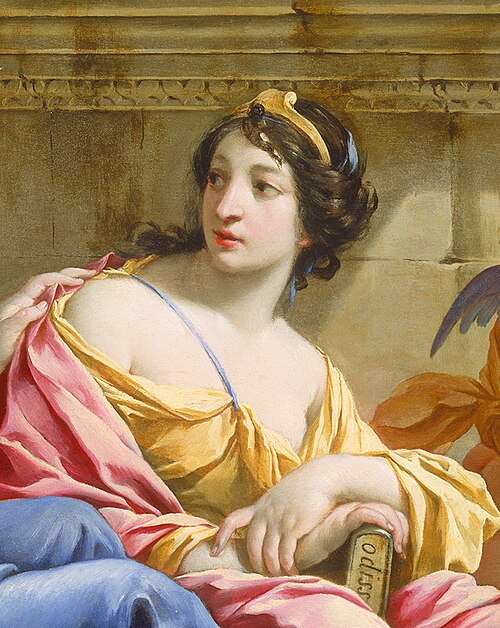
『ミドルセックス』にはギリシャの古典神話への言及がいくつかある。 [49]たとえば、主人公は英雄詩の女神カリオペーにちなんで名付けられている。[53]エウゲニデスはギリシャ神話の両性具有の探求に部分的に触発されて、インターセックスの男性についての小説を書いた。[ 93] 『ミドルセックス』で、カルはサンフランシスコで生計を立てながら、両性具有と女々しさのギリシャの神であるヘルマフロディトスの物語を演じている。 [94]語りながら、カルは先祖の考えに入り込み、彼らに共感する。これはヘルマフロディトスが持つ能力である。[95]主人公は自分を別の神話上の人物、テーベの盲目の預言者テイレシアスになぞらえた。この全知の予言者は呪いのために7年間女性として生きた。[59] [62]
ユージニデスと数人の批評家は、カルの状態を古代ギリシャ人が描写した神話上の生き物になぞらえた。作者は主人公の性質と血統を、半人半牛の生き物であるミノタウロスにたとえた。 [59]カルの父親は、祖父母が『ミノタウロス』という題名の演劇を観劇した後に妊娠した。[96]カルの遺伝的アイデンティティの謎は生き物の迷路に似ており、迷路から抜け出すための糸は、元養蚕農家だった父方の祖母がここで握っている。[97]英語学者フランシス・バートコウスキーは、思春期のキャリーをキメラと名付けた。この神話上の怪物は複雑な性格の喩えであり、それぞれが人間の側面や特徴を表す様々な動物の体の部分が混ざり合っている。同様に、思春期のカリーは遺伝子の融合体であり、男性でも女性でもなく、大人でも子供でもなく、同時にそれらすべてである。[98]
デトロイト・フリー・プレス紙のコラムで、マルタ・サリジは、キャリーのアイデンティティの危機はオデュッセウスの運命に似ていると述べた。神話の英雄がポセイドンに悩まされアテナに助けられるのに対し、インターセックスの主人公は染色体によって同じように影響を受ける。[99]英語と宗教教育の教授であるジョン・サイクスは、ギリシャの英雄に関する別の言及を指摘した。オイディプスがピュティアの予言を成就して父を殺し母と結婚するのと同じように、キャリーは男性のアイデンティティを採用することで、生まれる前に祖母がした予言を正当化する。 [100]エウゲニデスはまた、ギリシャ神話と現代のポップミュージックへの言及を利用して、家族の特徴や特異性が世代から世代へと受け継がれることを示していた。[76]
生まれつきか育ちか
この小説は、生まれか育ちかの論争を詳細に検証している。小説の冒頭で、カルは「さあ、ミューズよ、私の第5染色体の劣性突然変異を歌ってください」と書いている。[25] [101]そして、「時々ホメロス風になってしまったらごめんなさい。これも遺伝です」と謝罪している。[25] [101]これは、生まれか育ちかの論争に魅了された詩人ホメロスへの言及である。 [25]実際、カル自身も「生まれか育ちかの相対的な影響を測定する実験を考案するなら、私の人生より優れたものは思いつかないだろう」と告白している。[25] [102]
カリーは、テストステロンからジヒドロテストステロンへの変換を妨げる5αリダクターゼ欠損症を引き起こす遺伝子の変異を受け継いでいる。前者のホルモンは脳を男性化するが、男性器を形成するのは後者である。[103]カリーが思春期に達すると、テストステロンレベルが大幅に増加し、喉仏が大きく、筋肉が広がり、声が低くなり、陰核がペニスに似た大きさになる。[104]医師はカリーの性器を検査した後、カリーが男性のXY染色体を持っていると判断した。 [105]カリーの両親は、カリーをニューヨーク市に連れて行き、両性具有の第一人者であるピーター・ルース博士に会わせた。ルース博士は、カリーが女性のアイデンティティを保持すべきだと考えている。ルースは、カリーを女性にする性別適合手術を計画している。しかし、キャリーは自分が女性に性的に惹かれていることに気づき、男性としてのアイデンティティを追求するために逃げ出すことを決意する。[104]本の最後でキャリーが日系アメリカ人の写真家ジュリーと性的関係を持つとき、彼は「欲望の対象に侵入する必要なく」愛することができる。[86]
ガーディアン紙のマーク・ローソンは、カルの両性具有の原因は遺伝性の劣性遺伝子であると指摘した。[45]カリフォルニア大学リバーサイド校の心理学教授ソニア・リュボミルスキーによると、この小説は、個人の特性が単に生まれつきのものでも、単に育ちによるものでもないことを検証している。同様に、カルの性別は男性か女性かだけに限定されるものではなく、男性でもあり女性でもある。[106]遺伝的決定論が運命に関する大洪水以前の信念を復活させた可能性があることを論じながら、ユージニデスは、人の特性は主に育ちによるというポスト・フロイト派の信念を否定している。このように、この小説は進化生物学と自由意志を対立させている。[12]ユージニデスは、この2つの見解の妥協点を見つけようとした。性別は「非常にアメリカ的な概念」であると説明し、「人間は私たちが認識しているよりも自由である。遺伝的に束縛されているわけではない」と彼は信じている。[34]
性自認とインターセックスの状態
Raised as a girl, Cal views himself as a girl who likes other girls.[107] His ability to have a "feminine gender schema" despite his having male genes, substantiates the constructionist position that gender identity is fully dependent on outer influences. However, when Callie discovers that he could have been raised as a boy, he renounces his female gender, recognizing his chosen gender identity as a male. Disowning the female gender before he learned about masculine traits bolsters the argument for the "essentialist ideology of identity".[108] Cal's embrace of his inherent male identity and renunciation of his childhood female gender identity is articulated when he reflects, "I never felt out of place being a girl, I still don't feel entirely at home among men."[108][109]
Cal exhibits many masculine characteristics when he is a child.[110] He writes, "I began to exude some kind of masculinity, in the way I tossed up and caught my eraser, for instance."[111] In another incident, Cal discusses how his penchants were masculine. While his female classmates are turned off by the blood in the Iliad, Cal is "thrilled to [read about] the stabbings and beheadings, the gouging out of eyes, the juicy eviscerations."[110][112] Cal ponders his gender identity and how males and females associate with each other, reflecting, "Did I see through the male tricks because I was destined to scheme that way myself? Or do girls see through the tricks, too, and just pretend not to notice?"[110][113]
Cal also exhibits feminine characteristics, which allows Dr. Luce to classify her as possessing a female gender identity. In a home video taken when Cal was a child, his mother gives him a doll and he nurses it with a milk bottle. Luce carefully observes Callie's actions and diagnoses them as feminine, which causes him to determine that Callie has a feminine gender identity. Luce then concludes that gender identity is nurtured and etched into children at their young ages.[110]
Determining sex is paradoxical because the characters believe that the outward view of genitalia identifies one's sex; Cal's transformation into a male shatters this belief and the methodology behind determining gender. Eugenides addresses how difficult it was for humans to devise a "universal classification for sex".[108] Through Cal, scholar Angela Pattatucci Aragon stated, Eugenides opines that the 1876 system devised by Edwin Klebs that used gonad tissue to determine sex provides the most accurate answer.[108]
According to intersex activist and academic Morgan Holmes, Eugenides posits that a person's sexual attraction determines his or her gender.[114] Cal's wish to become male because he desires females demonstrates a link between gender identity and sexuality.[115] While Callie is not permitted to love the Obscure Object openly, Cal can freely love Julie.[116] Holmes believed that the depiction of Callie "denies the legitimate place of lesbian desire and rewrites it as male heterosexuality."[4] Book reviewer Georgia Warnke has a similar view. She wrote that by making these choices in the novel, Eugenides agrees with the belief that being attracted to females is "masculine" and thus it is "more natural" for a male to be attracted to a female than a female be attracted to a female.[115] Daniel Mendelsohn of The New York Review of Books argued that Callie does not have to be a male in order to be drawn towards females; she could be gay. As an adult, Cal brags, "Breasts have the same effect on me as on anyone with my testosterone level."[44][117] Mendelsohn noted that this assertion will astonish "Eugenides's (presumably testosterone-rich) gay male readership".[44] Scholar Rachel Carroll agreed, writing that teenage Callie's erotic interest in girls is "retroactively explained and legitimized, by the discovery of his 'true biological nature'." Cal's gender identity postdates rather than predates his sexual interests.[118] Carroll posited that Cal's inability to form heterosexual relationships as an adult is founded not upon his being intersex, but on his rejection of the sexual ambiguities that form his sexual interests as a youth.[119]
When Callie is in New York, she goes to the New York Public Library and searches for the meaning of the word "hermaphrodite"; she is shocked when the dictionary entry concludes with "See synonyms at MONSTER".[120][121] Callie is not a Frankenstein; she is more like Bigfoot or the Loch Ness Monster. Bartkowski stated that Eugenides' message is "we must let our monsters out—they demand and deserve recognition—they are us: our same, self, others."[122] Morgan Holmes, formerly of ISNA, describes how the book constructs an intersex character whose life reproduces "social fascination with the monstrous and the deviant."[123]
Seven Graham wrote in Ariel, a journal published by the University of Calgary, that Eugenides' "persisen[t]" use of the word "hermaphrodite", instead of "intersex", alludes to Hermaphroditus. Hermaphroditus, a young man, is chased by the nymph Salmacis. She begs the Gods to bind her and Hermaphroditus together, and the Gods literally fulfill her wish. Hermaphroditus' name is a compound of his parents' names—Hermes and Aphrodite. He instantaneously turns into someone of both sexes. Devastated because he is no longer fully male, he "curses" the location where he first met Salmacis.[124] Graham stated that the use of "hermaphrodite" carries negative connotations:
Based on this origin story, the hermaphrodite's lot is miserable, associated with disempowerment, the theft of identity and an unhappy dual existence. In addition, the term "hermaphrodite" may be deemed problematic because it alludes to an impossible state of being: no-one can be equally male and female and the preferred term "intersex" indicates a blended rather than divided state. While the modern term might indicate the possibility of redefining sexual ambivalence, Cal is associated in the novel with the mythic term and all it connotes. His connection to this tragic figure is confirmed by his performance as "Hermaphroditus" in a sex show at the age of fourteen, just as he is beginning his female to male transition.[124]
Writing that he belongs to the Intersex Society of America, Cal notes that he has not participated in any of the group's rallies because he is not a "political person".[89] While discussing political activism, Cal uses the word "intersex", though in other parts of the novel, he uses the word "hermaphrodite". In the 1920s, Bernice L. Hausman described "intersexuality" as a "continuum of physiological and anatomical sex differences", contesting the notion of a "true sex" concealed in the tissues of the body. Though "hermaphrodite" is burdened by the implications of the anomaly, "intersexuality" is a neologism that tries to "naturalize various sexes, which themselves are naturally occurring."[89] Because Cal uses "hermaphrodite", he indicates that the sole normal genders are the classifications of male and female.[89] Eugenides was asked by an Oprah's Book Club member why he used the term "hermaphrodite" despite its usage being "either terribly ignorant or unforgivably callous". Eugenides replied that he reserved "hermaphrodite" for a literary character: Hermaphroditus. He further stated: "When speaking about real people, I should—and I do my best to—use the term 'intersex'." Noting that one of the initial sources he consulted was the journal Hermaphrodites with Attitude published by the Intersex Society of North America, he said that those writers have "co-opted" the term "hermaphrodite". Their action is reminiscent, Eugenides wrote, of how some members of the gay community have "reclaimed" the term "queer". Eugenides stated that it is no surprise that Cal uses "hermaphrodite" and further elaborated: "It's paradoxical: Cal can say 'hermaphodite' but I can't. Or shouldn't."[125]
Incest and intersex
Incest and intersex is another theme in Middlesex. Eugenides examines the passionate feelings that siblings living in seclusion experience for each other.[44] Milton and Tessie, second cousins, are conceived during the same night, hinting to the incest of Desdemona and Lefty.[73] Desdemona and Lefty's incestuous relationship is a transgression of a powerful taboo, indicating that someone will suffer for their wrongs; in a way, Cal's intersex condition symbolizes this Greek hubris.[73] In another incestuous relationship, Milton makes love to Tessie using a clarinet which he lovingly rubs against her; their incestuous relationship enables them to contribute mutated genes to their child Cal.[126] Cal's mother interferes with fate by attempting to make her second child a daughter. Cal believes this interference was a factor in his being intersex.[76] Conversely, Cal's relationship with his brother, Chapter Eleven, is indicative of the possible dissimilarities that are products of the biosocial.[98]
Thea Hillman, an intersex activist and board member for the (now defunct) Intersex Society of North America (ISNA), wrote in the Lambda Book Report, 2002, that the combination of incest and intersex is "inaccurate and misleading". Noting that incest is a loathed social taboo that has "shameful, pathological and criminal repercussions", she criticized Eugenides for underscoring that Cal's intersex condition is due to incest. Hillman stated that this adds to the fallacious belief that intersex people are "shameful and sick" and a danger to society's wellbeing.[127]
Seven Graham agrees with Hillman and Holmes, writing that Cal is paralleled with the tragic Greek mythological characters Hermaphroditus, Tiresias, and the Minotaur.[128] They opined that other "deviant" characters in the novel such as Lefty and Desdemona are spared the "tragic or monstrous" allusions even though there are numerous examples of incest in Greek mythology. They listed the marriage of Oedipus and his mother Jocasta, as well as the son Adonis produced by the incest between Theias and his daughter Smyrna as examples.[129] Therefore, Graham stated that comparing Cal, an intersex person, to people who were "mythological monsters" is "complicit with [the] exploitation" of intersex people.[3]
Reception
Honors and adaptation

In 2003, Middlesex was awarded the Pulitzer Prize for Fiction.[60] The Pulitzer Board[note 8] wrote in their report that Middlesex is a "vastly realized, multi-generational novel as highspirited as it is intelligent . . . Like the masks of Greek drama, Middlesex is equal parts comedy and tragedy, but its real triumph is its emotional abundance, delivered with consummate authority and grace."[131] Eugenides was attending the Prague Writers' Festival when Middlesex won the Pulitzer Prize.[132] When a young Associated Press photographer notified him about winning the award, Eugenides was dubious, noting that "[i]t seemed very unlikely that he would be the messenger of such news."[133] At the time, Eugenides was with the Canadian author Yann Martel who confirmed the photographer's words after checking on the hotel's computer. A waiter brought champagne to Eugenides, and Greek women started kissing him.[133] When journalists called Eugenides, he declined to take their calls, saying in an interview later that he wanted to "celebrate the moment instead of leaping immediately into the media maelstrom."[132]

The novel received the Ambassador Book Award, Spain's Santiago de Compostela Literary Prize, and the Great Lakes Book Award.[134] In 2003, it was a finalist in the fictional category of the National Book Critics Circle Award.[135][136] Middlesex was also a finalist for the Lambda Literary Award, which is given to LGBT literature.[2] In 2003, the novel was shortlisted for but did not win the International Dublin Literary Award.[137] Entertainment Weekly, the Los Angeles Times, and The New York Times Book Review considered Middlesex to be one of the best books in 2002.[6] In 2007, Oprah Winfrey chose Middlesex to be discussed in her book club.[5] Eugenides was a guest on Oprah's show with several intersex individuals who told stories about their lives.[11] In 2011, Eugenides was interviewed by University College London English professor John Mullan in The Guardian Book Club.[138] In 2024, the New York Times ranked it as #59 of the best 100 books of the 21st century.[139]
The audiobook version of Middlesex was released by Macmillan Audio in September 2002. Read by Kristoffer Tabori, the audiobook has 28 sides, each side having a unique style of introductory music that complements the atmosphere and plot of the saga.[140] In 2003, the audiobook received an Audie Award in the "unabridged fiction" category.[141]
Critical reception
Some critics were dissatisfied with the scope of the novel.[44][142] According to Book Marks, based on American publications, the book received "mixed" reviews based on thirteen critic reviews, with four being "rave" and three being "positive" and two being "mixed" and four being "pan".[143] The Daily Telegraph reported on reviews from several publications with a rating scale for the novel out of "Love It", "Pretty Good", "Ok", and "Rubbish": Daily Telegraph, Guardian, and TLS reviews under "Love It" and Times, Sunday Telegraph, Sunday Times, Independent On Sunday, and Literary Review reviews under "Pretty Good" and Spectator review under "Ok".[144] On the January–February 2003 issue of Bookmarks, the book received a rating of four out of five based on aggregated critic reviews with a critical summary saying, "It's Cal's narration that unites the critics: smart, insightful, wry, and very human".[145] Globally, Complete Review on the review consensus "No consensus, though most quite enthusiastic".[146]
Daniel Mendelsohn of The New York Times Book Review wrote that thematically, there was no reason that a Greek should be an intersex or vice versa and that Eugenides had two disconnected stories to tell.[44] Clay Risen of Flak Magazine believed that the immigrant experience was the "heart of the novel", lamenting that it minimized the story of Callie/Cal who is such a "fascinating character that the reader feels short-changed by his failure to take her/him further."[53] Risen wished to read more about the events between Cal's adolescence and adulthood, such as Cal's experience in college as an intersex person as well as the relationships he had.[53] The Washington Post's Lisa Zeidner opined that Eugenides purposefully devised this asymmetry.[147] Stewart O'Nan of The Atlantic also felt that the brief description of Callie's childhood was lacking; the book "gloss[es] over" how her mother did not recognize that Callie had male genitalia when she was washing or clothing Callie.[69] Further, O'Nan characterized Cal's relationship with the Japanese-American photographer Julie as "underdeveloped", causing the reader not to experience its entirety.[69] Michelle Vellucci of People had the same view about the novel's end, writing that the conclusion felt "rushed".[148]
Lisa Schwarzbaum of Entertainment Weekly called the novel a "big-hearted, restless story" and rated it an A minus.[35] In Literary Review, Sam Leith called it "a marvellous, quirky and moving entertainment".[149] Lisa Zeidner of The Washington Post opined that Middlesex "provides not only incest à la Ada and a Lolita-style road trip, but enough dense detail to keep fans of close reading manically busy."[147] Tami Hoag of People concurred, writing that "this feast of a novel is thrilling in the scope of its imagination and surprising in its tenderness".[150] Andrew O'Hehir of Salon agreed, praising Middlesex as an "epic and wondrous" novel filled with numerous characters and historical occurrences.[59] Mendelsohn praised Middlesex for its "dense narrative, interwoven with sardonic, fashionably postmodern commentary."[44] However, he criticized the novel as a disjointed hybrid. He wrote Eugenides was successful with the story of the Greek immigrants, which he described as "authenti[c]", but mishandled the hermaphrodite material, which Mendelsohn characterized as "unpersuasiv[e]".[44] The Economist review stated that a more concise, concentrated depiction of hermaphroditism would have made the book more "fun to read".[36] Jeff Zaleski of Publishers Weekly praised Eugenides' portrayal of the girl, Callie, and the man Cal. Zaleski wrote that "[i]t's difficult to imagine any serious male writer of earlier eras so effortlessly transcending the stereotypes of gender."[151] Paul Quinn of Contemporary Literary Criticism commended the novel, writing: "That Eugenides manages to move us without sinking into sentiment shows how successfully he has avoided the tentacles of irony which grip so many writers of his generation."[152] Christina McCarroll of The Christian Science Monitor wrote that "Eugenides wrangles with a destiny that mutates and recombines like restless chromosomes, in a novel of extraordinary flexibility, scope, and emotional depth."[135]
Marta Salij of the Detroit Free Press was impressed with the book's depiction of Detroit, writing "[a]t last Detroit has its novel. What Dublin got from James Joyce—a sprawling, ambitious, loving, exasperated and playful chronicle of all its good and bad parts—Detroit has from native son Eugenides in these 500 pages."[99] David Kipen of the San Francisco Chronicle agreed, opining "[a]mong so many other things, this praiseworthy, prize-worthy yarn succeeds as a heartbroken mash note to the Detroit of Eugenides' birth, a city whose neighborhoods he sometimes appears to love—as he loves his characters—less for their virtues than for their defects. Any book that can make a reader actively want to visit Detroit must have one honey of a tiger in its tank."[153]
Several critics have nominated the book for the title of "Great American Novel".[53][154][155] Tim Morris, a professor at the University of Texas at Arlington, wrote that the novel was "the latest in a long line of contenders for the status of Great American Novel",[155] and compared Cal to Huckleberry Finn, the narrator of Invisible Man, and J. Sutter in John Henry Days.[155] Alexander Linklater of the Evening Standard commented that American publishers chose Middlesex as the next Great American Novel to generate progress for American fiction and that Eugenides is considered the "next stepping stone along from Jonathan Franzen".[97] Dan Cryer of Newsday wrote that with the publication of Middlesex, "[f]inally, Detroit has its very own great American novel".[156]
David Gates of Newsweek contrasted Eugenides' debut novel The Virgin Suicides with Middlesex, writing that the first novel was "ingenious", "entertaining", and "oddly moving", but that Middlesex is "ingenious", "entertaining", and "ultimately not-so-moving".[157] Despite this criticism, Gates considered Middlesex to be the novel where Eugenides "finally plays his metafictional ace".[157] Commenting that Middlesex is "more discursive and funnier" than The Virgin Suicides, Laura Miller of Salon wrote that the two novels deal with disunity.[25] Max Watman of The New Criterion concurred, noting that Middlesex is "funny, big, embracing, and wonderful", unlike Eugenides' first novel.[158] Mark Lawson of The Guardian praised Middlesex for having the same unique qualities as The Virgin Suicides, commenting that Middlesex had "an ability to describe the horrible in a comic voice, an unusual form of narration and an eye for bizarre detail."[45] Lawson noted that whereas Middlesex deals with the "links" among gender, life, and genes, The Virgin Suicides deals with the "connections" between gender and death.[45]
According to Olivia Banner of Signs, medical journals generally had positive reviews of the novel for its depiction of the inner lives of intersex people.[1] Writing in Archives of Disease in Childhood, Simon Fountain-Polley praised the novel, writing: "All clinicians, and families who have faced gender crises or difficult life-changing decision[s] on identity should read this book; delve into an emotional trip of discovery—where the slightest direction change could lead to myriad different lives."[159][160] Abraham Bergman wrote in the Archives of Pediatrics & Adolescent Medicine: "Yes, it is fiction, but I cannot imagine a more authentic and sensitive voice. Because our interactions usually take place in limited and structured setting such as offices and hospitals, pediatricians have scant opportunity to learn how our young patients think. One way to sharpen our awareness is to listen to children's voices as they are expressed in books. In Middlesex, the voice is loud and clear."[161][162] Banner noted that most of the reviews in intersex and queer publications praised Middlesex. She posited that the problematic issues of a "heteromasculine-identified narrator" and the "fact that it was authored by a heterosexual man" may have been outweighed by the necessity for an appropriate reading that "destigmatizes ambiguous sex".[2]
Eugenides' third novel, The Marriage Plot, was published in 2011. Reviewer William Deresiewicz contrasted The Marriage Plot and Middlesex, writing that the former was "far more intimate in tone and scale". The Marriage Plot follows two years in the lives of three characters, fourth-year Brown University students in 1982, whereas Middlesex follows the lives of three generations of characters. Deresiewicz preferred the 2011 novel, writing that "[t]he books are far apart in quality". He criticized Middlesex for its "[c]lanking prose, clunky exposition, transparent devices, telegraphed moves", "a hash of narrative contrivances with very little on its mind." On a more positive note, Deresiewicz lauded Eugenides' colorful depiction of "young love" across his three novels. In The Virgin Suicides, Eugenides resplendently portrayed the intense fear during virginal sex, as well as Gabriel García Márquez, the 1982 Nobel Prize in Literature laureate; in Middlesex, the single event in which the novel "comes to life" is Eugenides' depiction of Callie's liaison with her adolescent lover; and in The Marriage Plot, the novel was exceptional in its "sweet banter of courtship" and the "doormat nice-boy role" the character Mitchell assumes in his interplay with his darling, Madeleine.[163]
Sales
From the book's publication until the early months of 2003, its sales were unsatisfactory, according to Bill Goldstein of The New York Times.[note 9][6] In the week following April 7, 2003, the day Middlesex won the Pulitzer Prize, the book sold 2,700 copies. The book later made the best-selling fiction list and kept its position for five weeks.[165] In June 2007, the novel ranked seventh on USA Today's Best-Selling Books list.[166] In the same month, after Eugenides appeared on The Oprah Winfrey Show to discuss the novel, Middlesex placed second on The New York Times best-selling paperback fiction list.[167] The Pulitzer award nearly propelled Middlesex to The New York Times Best Seller list, which in 2003 published only the top 15 bestsellers; in the week after Middlesex was announced the winner of the Pulitzer Prize, the novel placed 17th on the "expanded list".[168] In 2007, 1.3 million copies of the book had been sold.[133] The same year, the book placed ninth on the Library Journal bestsellers list, which ranks "the books most borrowed in U.S. libraries".[169] Over three million copies of Middlesex had been sold by May 2011[170] and over four million by 2013.[171]
See also
References
- Notes
- ^ Olivia Banner wrote in the peer-reviewed academic journal Signs that "reviews of the novel in medical journals judge it favorably for what it reveals about the interior lives of the intersexed"[1] and "the majority of reviews written in the intersex and queer press applauded the novel".[2] She also noted that the novel was a finalist for the Lambda Literary Award, which is given to works that celebrate or explore LGBT themes.[2]
- ^ At MacDowell Colony, Eugenides' studio was a "master bedroom of a large white wooden farmhouse". His room was ornamented with a large fireplace and a Persian rug. Eugenides enjoyed the place, writing, "It was like having a country house suddenly, like going from being a starving artist to a landowner."[10]
- ^ Because his brother drives the family business into bankruptcy, Cal refers to him by a specific portion of the US bankruptcy law.[23]
- ^ A reference to the 1977 film That Obscure Object of Desire directed by Luis Buñuel[24]
- ^ When discussing the girl whom both Eugenides and his classmate Rick Moody liked, they would refer to her as the "Obscure Object". While hosting a talk about his third novel The Marriage Plot at the Toronto Reference Library on October 24, 2011, he met her for the first time since the 1980s. She is now an art historian and lives in Toronto, Ontario, Canada.[32]
- ^ The couple met at MacDowell Colony during Eugenides' stay there and married in 1995.[10]
- ^ Legend denoted that after a cocoon dropped into her teacup, Princess Si Ling-chi, who was resting under a mulberry tree, conceived silk. The princess ordered her maid to walk after grabbing hold of the thread's loose end. The thread disentangles, relinking the reader to Mount Olympus.[40]
- ^ The 2003 Pulitzer Board was composed of three jurors. Gail Caldwell, a past Pulitzer Prize winner and the chief book critic of The Boston Globe, chaired the panel. The other two jurors were Joel Conarroe, the president of PEN American Center, and David Gates, a senior editor at Newsweek.[130]
- ^ That the book was initially financially unsuccessful was disputed by Jana Funke in the 2009 Encyclopedia of Contemporary Writers and Their Work. She wrote that Middlesex was "both a literary and a commercial success upon initial publication".[164]
- Footnotes
- ^ a b Banner 2010, p. 860.
- ^ a b c d Banner 2010, p. 862.
- ^ a b Graham 2009, p. 3.
- ^ a b Holmes 2008, pp. 93–94.
- ^ a b Schwyzer, Elizabeth (January 8, 2010). "Jeffrey Eugenides's Middlesex". Santa Barbara Independent. Archived from the original on July 6, 2008. Retrieved February 18, 2010.
- ^ a b c d e f g Goldstein, Bill (January 1, 2003). "A Novelist Goes Far Afield but Winds Up Back Home Again". The New York Times. New York. Archived from the original on December 22, 2015. Retrieved February 1, 2010.
- ^ a b Eugenides, Jeffrey (2003). "3am Interview An Interview with Jeffrey Eugenides, Author of the Middlesex and The Virgin Suicides". 3:AM Magazine (Interview). Interviewed by Moorhem, Bram van. Archived from the original on December 3, 2010. Retrieved February 6, 2010.
- ^ Wilson 1996, p. 52.
- ^ Mirzoeff 1999, p. 168.
- ^ a b Brady, Lois Smith (December 17, 1995). "Vows: Karen Yamauchi, Jeffrey Eugenides". The New York Times. New York. Archived from the original on December 22, 2015. Retrieved October 2, 2011.
- ^ a b c Brown, Mick (January 5, 2008). "Jeffrey Eugenides: Enduring love". The Daily Telegraph. London. Archived from the original on December 1, 2010. Retrieved April 2, 2010.
- ^ a b c d e Bedell, Geraldine (October 6, 2002). "He's not like other girls". The Guardian. London. Archived from the original on November 25, 2009. Retrieved February 1, 2010.
- ^ Collins, Rachel (July 15, 2002). "Through gendered eyes: Jeffrey Eugenides's Middlesex". Library Journal. 121 (1). New York: Media Source. Archived from the original on July 16, 2012. Retrieved October 22, 2010.
- ^ Cowan, Caitlin (November 3, 2006). "Omens and prose: Prolific author speaks to packed crowd at Rackham". The Michigan Daily. Ann Arbor: University of Michigan. Archived from the original on November 9, 2016. Retrieved September 30, 2011.
- ^ Eugenides, Jeffrey (November 25, 2011). "Middlesex by Jeffrey Eugenides—Week three: writing Middlesex". The Guardian. London. Archived from the original on January 1, 2012. Retrieved December 16, 2011.
- ^ Eugenides 2002, p. iv.
- ^ "Middlesex". Farrar, Straus and Giroux (Macmillan Publishers). Archived from the original on November 13, 2012.
- ^ Gray, Kim (August 13, 2008). "Reading what your book says about you". Nanaimo Daily News. Nanaimo. Archived from the original on March 24, 2016. Retrieved October 6, 2011.
- ^ "Jeffrey Eugenides". London: Bloomsbury Publishing. Archived from the original on June 22, 2011. Retrieved April 6, 2010.
- ^ d'Aprile-Smith, Marguerite (September 18, 2007). "Pulitzer Prize-Winning Writer Jeffrey Eugenides Joins Princeton Faculty". Princeton: Lewis Center for the Arts (Princeton University). Archived from the original on July 31, 2010. Retrieved October 8, 2011.
- ^ Lothman, Herbert R. (December 9, 2002). "Barcelona: The Translation Market in Spain's Trade Capital". Publishers Weekly. Vol. 249, no. 9. New York. Archived from the original on October 6, 2011. Retrieved October 6, 2011.
- ^ "Middlesex". Barcelona: Anagrama. Archived from the original on September 30, 2011. Retrieved October 5, 2011.
- ^ "Q&A with Jeffrey Eugenides: What does Chapter Eleven mean?". Oprah's Book Club. January 1, 2006. Archived from the original on August 2, 2010. Retrieved February 1, 2010.
- ^ Eugenides 2002, p. 331.
- ^ a b c d e f g h Miller, Laura (September 15, 2002). "'Middlesex': My Big Fat Greek Gender Identity Crisis". The New York Times. Archived from the original on March 5, 2016. Retrieved March 2, 2010.
- ^ a b c Keenan, Catherine (October 18, 2002). "The Herculine effort that grew". The Sydney Morning Herald. Sydney. Archived from the original on June 5, 2011. Retrieved April 6, 2010.
- ^ Lyden, Jacki; Neary, Lynn (October 17, 2002). "Profile: Jeffrey Eugenides' novel 'Middlesex,' and how it deals with the subject of the narrator's hermaphroditism". All Things Considered. National Public Radio. Archived from the original on July 8, 2019. Retrieved August 26, 2011.
- ^ a b c Miller, Laura (October 8, 2002). "Sex, fate, and Zeus and Hera's kinkiest argument". Salon. San Francisco. Archived from the original on September 29, 2010. Retrieved April 5, 2010.
- ^ a b c Houpt, Simon (August 11, 2007). "Middlesex came to him in a dream". The Globe and Mail. Toronto. Archived from the original on December 23, 2009. Retrieved April 6, 2010.
- ^ Bonanos 2005, p. 65.
- ^ Cryer, Dan (October 22, 2002). "Breaking Through the Second-Novel Curse". Newsday. Melville, New York. Archived from the original on April 19, 2013. Retrieved March 22, 2010.
- ^ "What you missed at last night's Jeffrey Eugenides reading". The A.V. Club. October 25, 2011. Archived from the original on June 3, 2012. Retrieved October 25, 2011.
- ^ Walker, Susan (November 16, 2002). "Jeffrey Eugenides mixes history, science and sex in a novel way". Toronto Star. Toronto. Archived from the original on May 25, 2024. Retrieved April 5, 2010.
- ^ a b c d Eugenides, Jeffrey (2002). "Jeffrey Eugenides". BOMB (Interview). Interviewed by Foer, Jonathan Safran. pp. 74–80. JSTOR 40426739. Archived from the original on March 8, 2010. Retrieved February 23, 2010.
- ^ a b Schwarzbaum, Lisa (September 13, 2002). "Review: Middlesex". Entertainment Weekly. New York. Archived from the original on April 25, 2009. Retrieved February 26, 2010.
- ^ a b "Bits and pieces; New American fiction". The Economist. London. October 5, 2002. Retrieved September 2, 2011.
- ^ Lacayo, Richard (September 23, 2002). "Middlesex". Time. New York. Archived from the original on November 6, 2012. Retrieved August 26, 2010.
- ^ a b Hillman 2002, p. 38.
- ^ Eugenides 2002, p. 41.
- ^ a b c d e Soar, Daniel (October 3, 2002). "Small Crocus, Big Kick". London Review of Books. 24 (19). London: 19–20. Archived from the original on November 2, 2011. (subscription required)
- ^ a b Smee, Sebastian (October 5, 2002). "Putting it all in". The Spectator. London: Press Holdings: 43. Retrieved August 27, 2010.
- ^ Eugenides 2002, p. 319.
- ^ Eugenides 2002, p. 346.
- ^ a b c d e f g h i j k Mendelsohn, Daniel (November 7, 2002). "Mighty Hermaphrodite". The New York Times Book Review. New York. Archived from the original on June 12, 2009. Retrieved February 10, 2010.
- ^ a b c d Lawson, Mark (October 5, 2002). "Gender blender". The Guardian. London. Archived from the original on December 4, 2009. Retrieved February 12, 2010.
- ^ a b Hanna, Julia (October 10, 2002). "Gender studies: Jeffrey Eugenides's middle sex". The Phoenix. Phoenix. Archived from the original on August 3, 2010. Retrieved May 20, 2010.
- ^ Eugenides 2002, pp. 221–222.
- ^ Weiler, Derek (September 22, 2002). "Guilt and other stuff; Jeffrey Eugenides' second novel is a big, fat family epic – a flawed but entertaining departure from his taut debut". Toronto Star. Toronto. Archived from the original on May 25, 2024. Retrieved May 21, 2010.
- ^ a b c Mesic, Penelope (September 2002). "Identity crisis". Book. London: Barnes & Noble: 70.
- ^ a b Turrentine, Jeff (September 1, 2002). "She's come undone". Orlando Sentinel. Orlando. Archived from the original on June 4, 2011. Retrieved February 28, 2010.
- ^ Eugenides 2002, p. 252.
- ^ a b Gessen, Keith (October 14, 2002). "Sense and Sexibility". The Nation. New York. Archived from the original on February 3, 2013. Retrieved April 28, 2010.
- ^ a b c d e f Risen, Clay (October 21, 2002). "Review of Middlesex". Flak Magazine. Archived from the original on November 25, 2009. Retrieved February 18, 2010.
- ^ a b c d e Zecker 2008, p. 177.
- ^ Shostak 2008, p. 408.
- ^ Taberner 2007, p. 173.
- ^ Chu 2009, p. 280.
- ^ Eugenides 2002, pp. 402–404.
- ^ a b c d e f O'Hehir, Andrew (September 5, 2002). "'Middlesex' by Jeffrey Eugenides". Salon. San Francisco. Archived from the original on November 20, 2010. Retrieved February 4, 2010.
- ^ a b Gilpin, Sam (September 28, 2003). "Paperback pick of the week: Middlesex by Jeffrey Eugenides". The Times. London. Archived from the original on June 15, 2011. Retrieved February 15, 2010.
- ^ Mullan, John (November 11, 2011). "Middlesex by Jeffrey Eugenides—Week one: omniscience". The Guardian. Archived from the original on June 3, 2013. Retrieved November 13, 2011.
- ^ a b c d e f g Collado-Rodriguez, Francisco (January 1, 2006). "Of self and country: U.S. politics, cultural hybridity, and ambivalent identity in Jeffrey Eugenides's Middlesex". International Fiction Review. New Brunswick: University of New Brunswick. Archived from the original on April 25, 2012. Retrieved April 23, 2010.
- ^ Eugenides 2002, p. 9.
- ^ Eugenides 2002, p. 206.
- ^ Mullan, John (November 18, 2011). "Middlesex by Jeffrey Eugenides—Week two: foreknowledge". The Guardian. Archived from the original on May 7, 2013. Retrieved December 16, 2011.
- ^ "Middlesex (book)". Kirkus Reviews. 70 (40). New York: 977. July 15, 2002. Archived from the original on March 31, 2012.
- ^ a b Begley, Adam (September 8, 2002). "Hermaphrodite's History Is a Storyteller's Bonanza". The New York Observer. New York. Archived from the original on August 9, 2011. Retrieved February 26, 2010.
- ^ Cohen 2007, p. 378.
- ^ a b c O'Nan, Stewart (September 2002). "Middlesex". The Atlantic. Archived from the original on June 7, 2011. Retrieved March 21, 2010.
- ^ Wilkinson, Joanne (June 1, 2002). "Eugenides, Jeffrey. Middlesex". Booklist. Vol. 98. Chicago: American Library Association. p. 1644. Archived from the original on March 23, 2012. Retrieved September 2, 2011.
- ^ a b Wood, James (October 7, 2002). Hunter, Jeffrey W (ed.). "Unions". The New Republic. Vol. 227, no. 15. Washington, D.C. pp. 31–34. Archived from the original on September 11, 2011. Retrieved September 2, 2011.
- ^ Freeman, John (September 29, 2002). "'Middlesex' plumbs depth of displacement". Pittsburgh Post-Gazette. Pittsburgh. Archived from the original on November 25, 2009. Retrieved February 15, 2010.
- ^ a b c Wheelwright, Julie (October 19, 2002). "Middlesex, by Jeffrey Eugenides". The Independent. London. Archived from the original on May 13, 2010. Retrieved February 15, 2010.
- ^ Sobczak, A. J. (March 2003). "Middlesex". Magill's Literary Annual. Pasadena: Salem Press. pp. 1–3. ISBN 1-58765-129-7.
- ^ a b Womack, Kenneth; Mallory-Kani, Amy (September 1, 2007). "'Why don't you just leave it up to nature?': an adaptationist reading of the novels of Jeffrey Eugenides". Mosaic. Winnipeg, Manitoba: University of Manitoba. Retrieved April 26, 2010. (subscription required)
- ^ a b c Kakutani, Michiko (September 3, 2002). "The American Dream Seen in a Child's Nightmare". The New York Times. Archived from the original on March 5, 2016. Retrieved February 26, 2010.
- ^ Casino, Katrina (April 21, 2010). "'Middlesex' observes family unit through intersex lens". The Eagle. Washington, D.C.: American University. Archived from the original on July 16, 2011. Retrieved April 26, 2010.
- ^ a b c d Zecker 2008, p. 178.
- ^ Eugenides 2002, p. 97.
- ^ Eugenides 2002, p. 169.
- ^ Zecker 2008, p. 9.
- ^ Zecker 2008, p. 190.
- ^ Carroll 2009, pp. 189–190.
- ^ Perkins, Wendy (2007). Milne, Ira Mark (ed.). Critical Essay on 'Middlesex'. Vol. 24. Detroit: Gale.
{{cite book}}: Unknown parameter|book=ignored (help) - ^ Callas, Antonia (May 27, 2006). "Threads of Greek American Life" (PDF). The National Herald. New York. pp. 6–7. Archived from the original (PDF) on July 17, 2011. Retrieved February 28, 2010.
- ^ a b Eshelman 2008, p. 27.
- ^ Jivani, Alkarim (October 9, 2002). "Middlesex by Jeffrey Eugenides". Newsnight. BBC. Archived from the original on December 31, 2013. Retrieved April 5, 2010.
- ^ Plunket, Robert (October 15, 2002). "Myth understood". The Advocate. No. 874. Los Angeles. p. 67. ISSN 0001-8996. Retrieved March 28, 2010.
- ^ a b c d Lee 2009, p. 33.
- ^ Lee 2009, p. 34.
- ^ Eugenides 2002, p. 82.
- ^ Lee 2009, p. 35.
- ^ Kusner, Daniel A. (March 2, 2006). "Intersex guardian". Dallas Voice. Dallas. Archived from the original on April 3, 2010. Retrieved April 2, 2010.
- ^ Carroll 2009, p. 189.
- ^ Griffith, Michael (2003). "'Siblings of the Genus Erroneous': New Fiction in Review". The Southern Review. Vol. 39, no. 1. Baton Rouge: Louisiana State University. p. 10. ISSN 0038-4534.
- ^ Graham 2009, p. 7.
- ^ a b Linklater, Alexander (September 23, 2002). "Life as a girl when you're a boy". Evening Standard. London. Archived from the original on June 5, 2011. Retrieved April 15, 2010.
- ^ a b Bartkowski 2008, p. 40.
- ^ a b Salij, Marta (September 25, 2002). "Neither here nor there: 'Middlesex' is about a girl who becomes a boy and the division between Detroit and Grosse Pointe". Detroit Free Press. Detroit. Retrieved March 21, 2010. (subscription required)
- ^ Sykes 2007, p. 92.
- ^ a b Eugenides 2002, p. 4.
- ^ Eugenides 2002, p. 19.
- ^ Lippa 2005, p. 119.
- ^ a b Lippa 2005, p. 120.
- ^ Engel & McCann 2009, p. 141.
- ^ Lyubomirsky, Sonja (January 9, 2010). "Where Does Happiness (and Everything Else) Come From? Lessons from Literature". Psychology Today. New York. Archived from the original on April 19, 2013. Retrieved February 11, 2010.
- ^ Aragon 2006, p. 197.
- ^ a b c d Aragon 2006, p. 194.
- ^ Eugenides 2002, p. 479.
- ^ a b c d Aragon 2006, p. 195.
- ^ Eugenides 2002, p. 304.
- ^ Eugenides 2002, p. 322.
- ^ Eugenides 2002, p. 371.
- ^ Holmes 2008, p. 91.
- ^ a b Warnke 2007, p. 27.
- ^ Holmes 2008, p. 93.
- ^ Eugenides 2002, p. 166.
- ^ Carroll 2009, p. 195.
- ^ Carroll 2009, p. 200.
- ^ Bartkowski 2008, p. 41.
- ^ Eugenides 2002, p. 430.
- ^ Bartkowski 2008, pp. 41–42.
- ^ Book review: Intersex by Morgan Holmes, Robert Teixeira in Daily Xtra, October 25, 2009.
- ^ a b Graham 2009, p. 6.
- ^ Eugenides, Jeffrey (June 5, 2007). "Q&A With Jeffery Eugenides". Oprah's Book Club. Archived from the original on September 29, 2012. Retrieved September 2, 2011.
- ^ Salinsky, Heath & Salinsky 2009, p. 25.
- ^ Hillman 2002, p. 39.
- ^ Graham 2009, p. 5.
- ^ Graham 2009, pp. 5–6.
- ^ "The Pulitzer Prizes: Jurors". Pulitzer Prize. 2003. Archived from the original on October 4, 2011. Retrieved October 8, 2011.
- ^ Fischer & Fischer 2007, p. 39.
- ^ a b D'Agostino, Kristin (April 17, 2003). "Jeffrey Eugenides came to Prague an author and left a Pulitzer Prize winner". The Prague Post. Prague. Archived from the original on August 5, 2010. Retrieved May 24, 2010.
- ^ a b c Andriani, Lynn (July 30, 2007). "Jeffrey Eugenides". Publishers Weekly. Vol. 254, no. 30. New York. pp. 28–29.
- ^ "About Jeffery Eugenides". Oprah's Book Club. January 1, 2006. Archived from the original on June 17, 2011. Retrieved February 1, 2010.
- ^ a b McCarroll, Christina (April 10, 2003). "A look at the Pulitzer winners: Middlesex". The Christian Science Monitor. Boston. Archived from the original on February 18, 2009. Retrieved March 22, 2010.
- ^ "Book Critics' Group Names Finalists for Its Awards". The New York Times. New York. January 14, 2003. Archived from the original on March 4, 2016. Retrieved March 22, 2010.
- ^ "Novelist wins $120,000 literary prize". Houston Chronicle. Houston. Associated Press. June 21, 2004. Archived from the original on December 20, 2016. Retrieved October 8, 2011.
- ^ Mullan, John (December 2, 2011). "Middlesex by Jeffrey Eugenides—Week four: readers' responses". The Guardian. Archived from the original on December 6, 2011. Retrieved December 16, 2011.
- ^ "The 100 Best Books of the 21st Century". The New York Times. July 8, 2024. Retrieved July 10, 2024.
- ^ "Reviews: Middlesex: A Novel. Jeffrey Eugenides, read by Kristoffer Tabori. Audio Renaissance, unabridged, 14 cassettes, 23 hrs". Publishers Weekly. Vol. 249, no. 48. New York. December 2, 2002. p. 21. Archived from the original on May 1, 2016. Retrieved May 1, 2016.
- ^ "Audie Awards Given at APA Conference". Library Journal. New York: Media Source. June 9, 2003. Archived from the original on September 16, 2012. Retrieved September 17, 2011.
- ^ Stephenson, Anne (September 9, 2002). "Greek tragedy with comic touch". USA Today. Tysons Corner, Virginia. Archived from the original on July 16, 2004. Retrieved March 22, 2010.
- ^ "Middlesex". Book Marks. Retrieved 16 January 2024.
- ^ "Books of the moment: What the papers say". The Daily Telegraph. 19 Oct 2002. p. 62. Retrieved 19 July 2024.
- ^ "Middlesex" (PDF). Bookmarks. p. 35. Archived from the original (PDF) on 5 Jul 2004. Retrieved 14 January 2023.
- ^ "Middlesex". Complete Review. 2023-10-04. Retrieved 2023-10-04.
- ^ a b Zeidner, Lisa (September 15, 2002). "She Said, He Said". The Washington Post. Washington, D.C. Archived from the original on June 4, 2011. Retrieved March 5, 2010.
- ^ Vellucci, Michelle (2002). "Picks and Pans: Pages". People. Los Angeles. Archived from the original on June 4, 2009. Retrieved September 18, 2011.
- ^ Leith, Sam (2023-10-04). "Sam Leith - Another Shandy?". Literary Review. Archived from the original on 2023-10-07. Retrieved 2023-10-04.
- ^ Hoag, Tami (September 23, 2002). "Picks and Pans: Pages". People. Los Angeles. Archived from the original on June 4, 2009. Retrieved March 22, 2010.
- ^ Zaleski, Jeff (July 1, 2002). "Middlesex". Publishers Weekly. Vol. 249, no. 26. New York. p. 46.
- ^ Quinn, Paul (November 4, 2002). Hunter, Jeffrey W (ed.). "In the Centre of the Labyrinth". Contemporary Literary Criticism. Vol. 212. Detroit: Gale. p. 24.
- ^ Kipen, David (September 22, 2002). "My big fat Greek hermaphrodite novel". San Francisco Chronicle. San Francisco. Archived from the original on March 22, 2010. Retrieved March 22, 2010.
- ^ Gell, Aaron (2002). "Critical Eye: Eugenides' powerful gender bender". W. New York. p. 280.
- ^ a b c Morris, Tim (March 19, 2009). "Lection: Middlesex". University of Texas at Arlington. Archived from the original on June 4, 2011. Retrieved February 17, 2010.
- ^ Cryer, Dan (December 29, 2002). "A Literary Celebration: Our Favorite Books of 2002". Newsday. Melville, New York. Archived from the original on January 31, 2013. Retrieved April 15, 2010.(subscription required)
- ^ a b Gates, David (September 23, 2002). "The Gender Blender: 'Virgin' Author Jeffrey Eugenides's Unisexy Saga". Newsweek. Melville, New York. Archived from the original on October 7, 2012. Retrieved February 22, 2010.
- ^ Watman, Max (2002). "Suffer the Children". The New Criterion. Vol. 21, no. 3. Melville, New York: Foundation for Cultural Reviews. p. 65. ISSN 0734-0222. Archived from the original on June 13, 2011. Retrieved July 20, 2010.
- ^ Fountain-Polley, Simon (2006). "Book Review: Middlesex" (PDF). Archives of Disease in Childhood. 91 (11). Boston: BMJ Group: 952. doi:10.1136/adc.2006.104414 (inactive 2024-08-29). PMC 2082936. Archived from the original (PDF) on March 7, 2021. Retrieved September 10, 2011.
{{cite journal}}: CS1 maint: DOI inactive as of August 2024 (link) - ^ Banner 2010, pp. 860–861.
- ^ Bergman, Abraham (2004). "Review of Middlesex, by Jeffrey Eugenides". Archives of Pediatrics & Adolescent Medicine. 158 (5). Chicago: American Medical Association: 500. doi:10.1001/archpedi.158.5.500. (subscription required)
- ^ Banner 2010, p. 861.
- ^ Deresiewicz, William (October 16, 2011). "The Marriage Plot: Jeffrey Eugenides on Liberal Arts Graduates in Love". The New York Times. New York. Archived from the original on June 22, 2022. Retrieved December 9, 2011.
- ^ Funke 2009, p. 126.
- ^ Garner, Dwight (May 7, 2006). "Inside the List". The New York Times. New York. Archived from the original on May 24, 2024. Retrieved April 6, 2010.
- ^ Donahue, Deirde; Memmott, Carol; Minzesheimer, Bob (April 2, 2010). "Book buzz: Score another one for Oprah". USA Today. Tysons Corner, Virginia. Archived from the original on October 26, 2012. Retrieved April 2, 2010.
- ^ Garner, Dwight (June 24, 2007). "Inside the List". The New York Times. New York. Archived from the original on May 24, 2024. Retrieved April 6, 2010.
- ^ Colford, Paul D. (April 21, 2003). "Pulitzers Give Authors Big Push for Increased Sales". Daily News. New York. Archived from the original on April 3, 2010. Retrieved April 2, 2010.
- ^ "LJ Bestsellers: The books most borrowed in U.S. libraries". Library Journal. New York: Media Source. December 15, 2007. Archived from the original on September 16, 2012. Retrieved September 17, 2011.
- ^ Hoffert, Barbara (May 15, 2011). "Prepub Alert: Fiction". Library Journal. New York: Media Source. Archived from the original on December 5, 2011. Retrieved May 15, 2011.
- ^ Freeman 2013, p. 333.
- Bibliography
- Aragon, Angela Pattatucci (2006). Challenging Lesbian Norms: Intersex, Transgender, Intersectional, and Queer Perspectives. Binghamton, New York: Haworth Press. ISBN 1-56023-645-0.
- Banner, Olivia (2010). "'Sing now, O Muse, of the recessive mutation': Interrogating the Genetic Discourse of Sex Variation with Jeffrey Eugenides' Middlesex". Signs. 35 (4). Chicago: University of Chicago Press: 843–867. doi:10.1086/651038. JSTOR 10.1086/651038. S2CID 146204255.
- Bartkowski, Frances (2008). Kissing Cousins: A New Kinship Bestiary. New York: Columbia University Press. ISBN 978-0-231-14452-0.
- Bonanos, Christopher (2005). Gods, Heroes, and Philosophers: A Celebration of All Things Greek. New York: Citadel Press. ISBN 0-8065-2674-2.
- Carroll, Rachel (December 24, 2009). "Retrospective Sex: Rewriting Intersexuality in Jeffrey Eugenides's Middlesex". Journal of American Studies. 44 (1). Cambridge: Cambridge University Press: 187–201. doi:10.1017/S0021875809990831. S2CID 85458054.
- Chu, Patricia E. (2009). "D(NA) Coding the Ethnic: Jeffrey Eugenides's Middlesex". Novel: A Forum on Fiction. 42 (2). Durham, North Carolina: Duke University Press: 278–283. doi:10.1215/00295132-2009-015.
- Cohen, Samuel (2007). "The Novel in a Time of Terror: Middlesex, History, and Contemporary American Fiction". Twentieth Century Literature. 53 (3). Hempstead, New York: Hofstra University: 371–393. doi:10.1215/0041462X-2007-4010. JSTOR 20479818.
- Engel, David; McCann, Michael (2009). Fault Lines: Tort Law as Cultural Practice. Stanford: Stanford University Press. ISBN 978-0-8047-5614-3.
- Eshelman, Raoul (2008). Performatism, or the End of Postmodernism. Aurora, Colorado: Davies Group. ISBN 978-1-888570-41-0.
- Eugenides, Jeffrey (2002). Middlesex. New York: Farrar, Straus and Giroux. ISBN 0-374-19969-8.
- Freeman, John (2013). How to Read a Novelist. New York: Farrar, Straus and Giroux. p. 333. ISBN 978-0374710576.
- Funke, Jana (2009). "Eugenides, Jeffrey". In Hamilton, Geoff; Jones, Brian (eds.). Encyclopedia of Contemporary Writers and Their Work. New York: Infobase Publishing. pp. 125–126. ISBN 978-0-8160-7578-2.
- Fischer, Heinz Dietrich; Fischer, Erika J. (2007). Chronicle of the Pulitzer Prizes for Fiction: Discussions, Decisions, and Documents. Munich: K. G. Saur. ISBN 978-3-598-30191-9.
- Graham, Sarah (October 2009). "'See Synonyms at Monster': En-freaking Transgender in Jeffrey Eugenides's Middlesex". Ariel. 40 (4). Calgary, Alberta: University of Calgary: 1–18. Archived from the original on March 31, 2012. Retrieved September 2, 2011.
- Hillman, Thea (2002). "Made-for-TV Movie Version: Middlesex". Lambda Book Report. 11 (3). Los Angeles: Lambda Literary Foundation: 38–39. ISSN 1048-9487.
- Holmes, Morgan (2008). Intersex: A Perilous Difference. Cranbury, New Jersey: Associated University Presses. ISBN 978-1-57591-117-5.
- Lee, Merton (2009). "Why Jeffrey Eugenides' Middlesex is so Inoffensive". Critique. 51 (1). London: Taylor & Francis: 31–46. doi:10.1080/00111610903249856. S2CID 162364729.
- Lippa, Richard A. (2005). Gender, Nature, and Nurture (2nd ed.). Mahwah, New Jersey: Lawrence Erlbaum Associates. ISBN 0-8058-5344-8.
- Mirzoeff, Nicholas (1999). An Introduction to Visual Culture. London: Routledge. ISBN 0-415-15876-1.
- Salinsky, John; Heath, Iona; Salinsky, Mary (2009). The Green Bookshop: Recommended Reading for Doctors and Others from the Medical Journal Education for Primary Care. Abingdon: Radcliffe Publishing. ISBN 978-1-84619-330-9.
- Shostak, Debra (2008). "'Theory Uncompromised by Practicality': Hybridity in Jeffrey Eugenides' Middlesex". Contemporary Literature. 49 (3). University of Wisconsin Press: 383–412. doi:10.1353/cli.0.0034. ISSN 0010-7484. JSTOR 27563803. S2CID 145112943.
- Sykes, John D. (2007). "Two Natures: Chalcedon and Coming-of-Age in O'Connor's 'A Temple of the Holy Ghost'". Flannery O'Connor Review. 5. Milledgeville, Georgia: Georgia College & State University: 89–98.
- Taberner, Stuart (2007). Contemporary German Fiction: Writing in the Berlin Republic. Cambridge: Cambridge University Press. ISBN 978-0-521-86078-9.
- Warnke, Georgia (2007). After Identity: Rethinking Race, Sex, and Gender. Cambridge: Cambridge University Press. ISBN 978-0-521-70929-3.
- Wilson, Emma (1996). Sexuality and the Reading Encounter: Identity and Desire in Proust, Duras, Tournier, and Cixous. Oxford: Oxford University Press. ISBN 0-19-815885-8.
- Zecker, Robert (2008). Metropolis: The American City in Popular Culture. Westport, Connecticut: Greenwood Publishing Group. ISBN 978-0-275-99712-0.
External links
- Middlesex at Oprah's Book Club
- Middlesex at The Pulitzer Prizes
- Middlesex in libraries (WorldCat catalog)