Loading article…
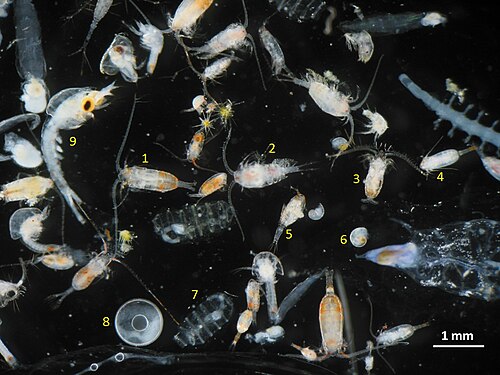
動物プランクトンは、プランクトン群集の従属栄養生物であり、生存するためには他の生物を摂取する必要があります。その名前は、古代ギリシャ語のζῷον ( zōîon )(「動物」を意味する)とπλαγκτός ( planktós )(「漂流者、放浪者、徘徊者」を意味する)に由来し、「動物の漂流者」という意味になります。プランクトンは、流れに逆らって効果的に泳ぐことができない水生生物です。そのため、海洋では流れに流されたり、海、湖、川などの流れに運ばれたりします。
動物プランクトンは、植物プランクトン(シアノバクテリアと微細藻類)と対比されます。植物プランクトンは、プランクトン群集の植物のような構成要素です(接頭辞「phyto-」は古代ギリシャ語のφῠτόν (phutón、ローマ字 表記では「植物」)に由来しますが、分類学的には植物ではありません)。動物プランクトンは従属栄養生物(他者から栄養を摂取する)であるのに対し、植物プランクトンは独立栄養生物(自ら栄養を摂取する)であり、太陽光を利用した葉緑素による炭素固定によって生物エネルギーや高分子を生成することがよくあります。つまり、動物プランクトンは自ら栄養を作り出すことができませんが、植物プランクトンはそれが可能です。そのため、動物プランクトンは、一般的に動物プランクトンよりも小さい植物プランクトンなどの他の生物を捕食することによって栄養分を獲得しなければなりません。ほとんどの動物プランクトンは顕微鏡でしか見えないが、クラゲなどの一部の動物プランクトンは肉眼で見えるほど大きい。[ 1 ]
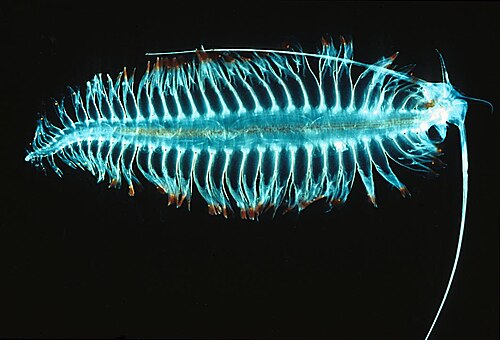
多くの原生動物(他の微小生物を捕食する単細胞原生生物)は動物プランクトンであり、鞭毛虫類、有孔虫類、放散虫類、一部の渦鞭毛虫類、海洋微小動物などが含まれる。大型の動物プランクトンには、浮遊性刺胞動物、有櫛動物、軟体動物、節足動物、被嚢動物のほか、プランクトン性のヤムシ類やゴカイ類などが含まれる。
非常に小さな生物では、独立栄養と従属栄養の区別が曖昧になることが多い。近年の海洋微小プランクトンの研究では、微小プランクトンの半数以上が混合栄養生物であり、体内の色素体と外部の供給源の両方からエネルギーと炭素を得ることができることが示されている。多くの海洋微小動物プランクトンは混合栄養生物であり、そのため植物プランクトンに分類される可能性もある。
動物プランクトン( / ˈ z oʊ . ə p l æ ŋ k t ən / ; [ 2 ] / ˌ z oʊ . ə ˈ p l æ ŋ k t ən / ) [ 3 ]は、従属栄養性(時には栄養食性)プランクトンです。動物プランクトンという言葉は、古代ギリシャ語: οῷον 、ローマ字表記: zôion、litに由来します。 '動物' ;そしてπλᾰγκτός、planktós、「放浪者」。ドリフター』。[ 4 ]
動物プランクトンは、小型の原生動物から大型の多細胞動物まで、幅広いサイズの生物を包含する分類です。これには、生活環全体がプランクトン内で完結する全プランクトン生物と、プランクトンとして生活の一部を過ごした後に遊泳生物または固着性の底生生物へと移行する部分プランクトン生物が含まれます。動物プランクトンは主に周囲の海流によって運ばれますが、多くは移動能力を持ち、捕食者を避けるため(日周垂直移動など)や、獲物との遭遇率を高めるために利用されます。
あらゆる生物種が地理的な地域内で制限されるのと同様に、動物プランクトンも制限されます。ただし、動物プランクトンの種は、海洋の領域内で均一またはランダムに分散しているわけではありません。植物プランクトンと同様に、動物プランクトンの種の「パッチ」が海洋全体に存在します。中深層より上には物理的な障壁はほとんど存在しませんが、特定の動物プランクトン種は塩分と温度の勾配によって厳密に制限される一方、他の種は広い温度と塩分の勾配に耐えることができます。[ 5 ]動物プランクトンのパッチ状分布は、生物学的要因だけでなく、他の物理的要因によっても影響を受ける可能性があります。生物学的要因には、繁殖、捕食、植物プランクトンの集中、垂直移動が含まれます。[ 5 ]動物プランクトンの分布に最も影響を与える物理的要因は、栄養塩の利用可能性、ひいては植物プランクトンの生産に影響を与える水柱の混合(沿岸および外洋での湧昇と沈降)です。 [ 5 ]
動物プランクトンは、植物プランクトンやその他の食物源を摂取・処理することで、水生食物網において、より高次の栄養段階の消費者(魚類を含む)の資源として、また生物ポンプで有機物をパッケージ化する経路として役割を果たしています。動物プランクトンは通常小さいため、例えば春のブルームの時期など、植物プランクトンの増加に迅速に対応できます。動物プランクトンは、水銀などの汚染物質の生物濃縮における重要なリンクでもあります。[ 6 ]
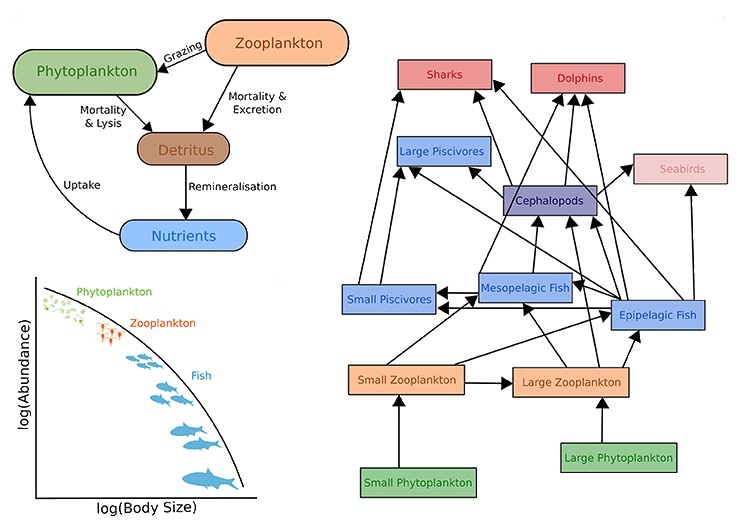
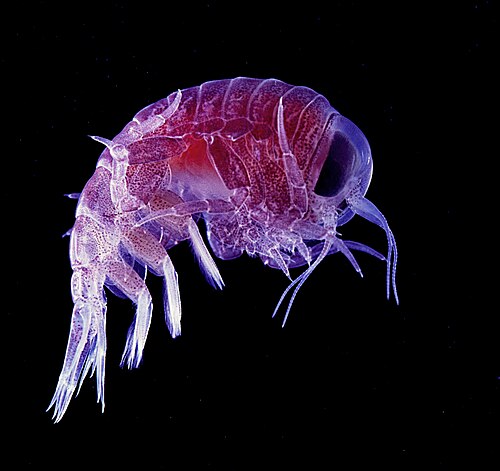
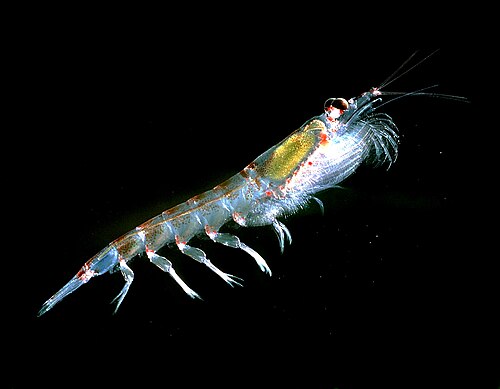
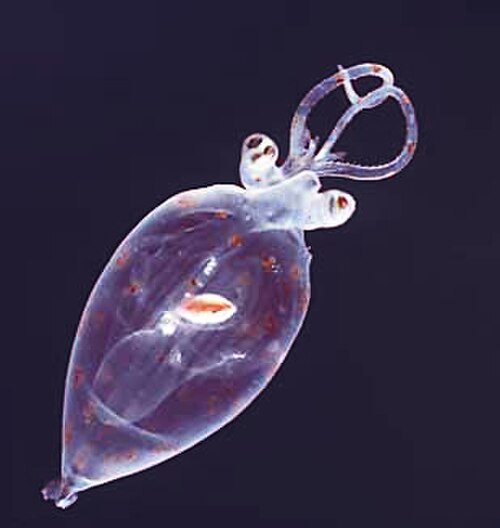
生態学的に重要な原生動物プランクトン群には、有孔虫、放散虫、渦鞭毛藻類(後者はしばしば混合栄養性)が含まれる。重要な後生動物プランクトンには、クラゲやカツオノエボシなどの刺胞動物、枝角類、カイアシ類、介形虫類、等脚類、端脚類、アミ類、オキアミなどの甲殻類、ヤムシ類、翼足類などの軟体動物、サルパや稚魚などの脊索動物が含まれる。この広範な系統的範囲には、濾過摂食、捕食、サンゴに見られるような独立栄養植物プランクトンとの共生など、同様に広範な摂食行動が含まれる。動物プランクトンは、細菌プランクトン、植物プランクトン、他の動物プランクトン(時には共食い)、デトリタス(またはマリンスノー)、さらには遊泳生物などを餌としています。そのため、動物プランクトンは主に、餌となる植物プランクトンや他の動物プランクトンが豊富な表層水域に生息しています。
動物プランクトンは病原体の貯蔵庫としても機能する。甲殻類の動物プランクトンは、コレラ菌であるビブリオ・コレラ菌を宿主とすることが分かっている。コレラ菌は、甲殻類のキチン質の外骨格に付着することで、この菌を宿主としている。この共生関係は、外骨格が細菌に炭素と窒素を供給するため、水生環境での細菌の生存能力を高める。[ 8 ]
体サイズは、生物が分類学を超えて共有する形態的特徴であり、生態系における生物の機能を特徴づけるため、プランクトンの「主要な形質」と定義されています。[ 9 ] [ 10 ]体サイズは、成長、繁殖、摂食戦略、死亡率に極めて大きな影響を与えます。[ 11 ]形質の生物地理学の最も古い表現の1つは、170年以上前にベルクマンの法則として提唱されました。この法則では、野外観察により、大型種はより高緯度で寒冷な地域に多く見られる傾向があることが示されました。[ 12 ] [ 13 ]
海洋では、プランクトン生態系における栄養連鎖を決定する上でサイズが重要であり、したがって生物学的炭素ポンプの効率を調節する上で重要な要素である。[ 14 ]生理学的プロセスの熱依存性により、体サイズは温度変化に敏感である。[ 15 ]プランクトンは主に外温動物で構成されており、外温動物は体温を上昇させるのに十分な代謝熱を生成しないため、代謝プロセスは外部温度に依存する。[ 16 ]その結果、外温動物は低温環境では成長が遅くなり、より大きな体サイズで成熟するが、これは、成長を遅らせる環境では成体のサイズが小さくなると生命史進化の古典的な理論が予測しているため、生物学者を長年悩ませてきた。[ 17 ]この体サイズの変化パターンは温度サイズ規則(TSR)として知られており、[ 18 ]単細胞生物や多細胞生物、無脊椎動物や脊椎動物を含む幅広い外温動物で観察されている。[ 17 ] [ 19 ] [ 13 ]
体サイズと温度の逆相関関係の根底にあるプロセスはまだ特定されていない。[ 17 ]温度は生物のサイズの緯度による変化を形成する上で重要な役割を果たしているが、これらのパターンは物理的、化学的、生物学的要因間の複雑な相互作用にも依存している可能性がある。たとえば、酸素供給は外温性の温度-サイズ応答の大きさを決定する上で中心的な役割を果たすが、酸素と温度の相対的な影響をフィールドデータから分離することは困難である。なぜなら、これら2つの変数は表層海洋ではしばしば強く相互に関連しているからである。[ 20 ] [ 21 ] [ 13 ]
動物プランクトンはサイズクラスに分類することができ[ 22 ]、クラス内およびクラス間で形態、食性、摂食戦略などが多様である。
微小動物プランクトンは従属栄養性および混合栄養性のプランクトンと定義されます。これらは主に繊毛虫、渦鞭毛藻、中型動物プランクトンの幼生などの食作用性原生生物で構成されています。[ 23 ]微小動物プランクトンはプランクトン群集の主要な捕食者です。海洋植物プランクトンの主要な消費者として、微小動物プランクトンは海洋一次生産の約59~75%を毎日消費しており、中型動物プランクトンよりもはるかに大きいです。とはいえ、富栄養生態系では大型植物プランクトンが優占することがあるため、マクロ動物プランクトンの消費率が高くなる場合もあります。[ 24 ] [ 25 ]微小動物プランクトンは、一次生産の燃料となる栄養素の重要な再生者であり、多細胞動物の食料源でもあります。[ 25 ] [ 26 ]
微小動物プランクトンは生態学的に重要であるにもかかわらず、研究が十分に進んでいない。通常の海洋観測では微小動物プランクトンのバイオマスや草食率をモニタリングすることはほとんどないが、微小動物プランクトンの草食率を測定する洗練された方法である希釈法は40年以上にわたって開発されてきた(Landry and Hassett 1982)。微小動物プランクトンの草食率の観測数は世界中で約1600件であり[ 27 ] [ 28 ] 、一次生産性(50,000件以上) [ 29 ]よりもはるかに少ない。このため、海洋生態系モデルで微小動物プランクトンの摂食機能を検証および最適化することは困難である[ 26 ] 。
中型動物プランクトンは、動物プランクトンの中でも比較的大きなサイズ群です。ほとんどの地域では、中型動物プランクトンはカラヌス・フィンマルキクスやカラヌス・ヘルゴランディクスなどのカイアシ類が優占しています。中型動物プランクトンは魚類にとって重要な餌となります。
プランクトンはめったに漁獲されないため、中型プランクトンの個体数と種構成は、海洋生態系の気候変動への応答を研究するために使用できると主張されている。これは、中型プランクトンの生活環が一般的に1年未満であるため、年をまたぐ気候変動に反応するからである。まばらな月ごとのサンプリングでも変動は示されるだろう。[ 30 ]

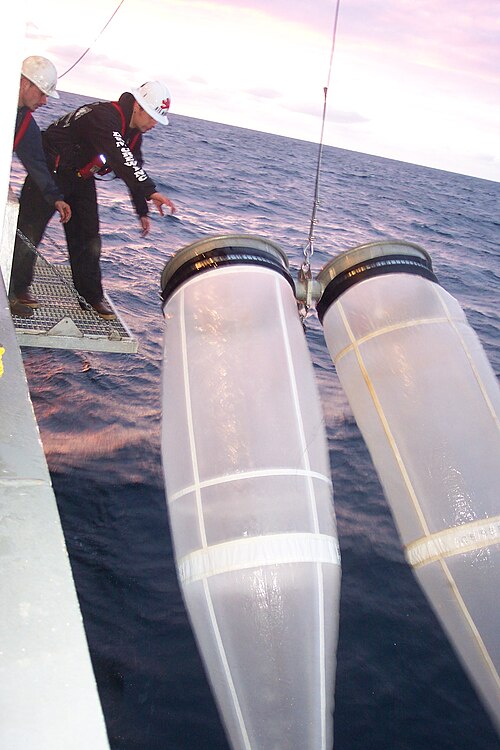


調査船は細かい網目のネットを使って海洋から動物プランクトンを採取する。船はネットを海中曳航するか、海水を船内に汲み上げてネットに通す。[ 31 ]

プランクトン採集には多くの種類があります: [ 31 ]
曳航後、プランクトンはホースでネットのコッドエンド(底部)に洗い流され、回収される。その後、サンプルは保存液に入れられ、実験室で選別および識別される。[ 31 ]
プランクトンポンプ:魚卵を採取するもう1つの方法は、連続航行式魚卵採集器を使用することです(図を参照)。水深約3メートルの海水をポンプで船内に汲み上げ、網で濾過します。この方法は、船が航行中でも使用できます。[ 31 ]
原生動物プランクトンとは、原生生物の動物プランクトン(プランクトン性原生動物)を指します。 [ 32 ]すべての原生動物プランクトンは原生動物ですが、すべての原生動物が原生動物プランクトンというわけではありません。土壌などの環境に生息するものや寄生するものもいるからです。海洋プランクトン性原生動物には、鞭毛虫類、有孔虫類、放散虫類、および一部の渦鞭毛虫類が含まれます。
原生動物は、他の微生物や有機組織、残骸などの有機物を餌とする原生生物です。 [ 33 ] [ 34 ]歴史的に、原生動物は、運動性や捕食などの動物のような行動をしばしば持ち、植物や多くの藻類に見られるような細胞壁を持たないため、「単細胞動物」とみなされていました。[ 35 ] [ 36 ]原生動物を動物とグループ化する従来の慣習はもはや有効とは考えられていませんが、この用語は、独立して移動し、従属栄養によって摂食できる単細胞生物を識別するために、緩やかな方法で使用され続けています。
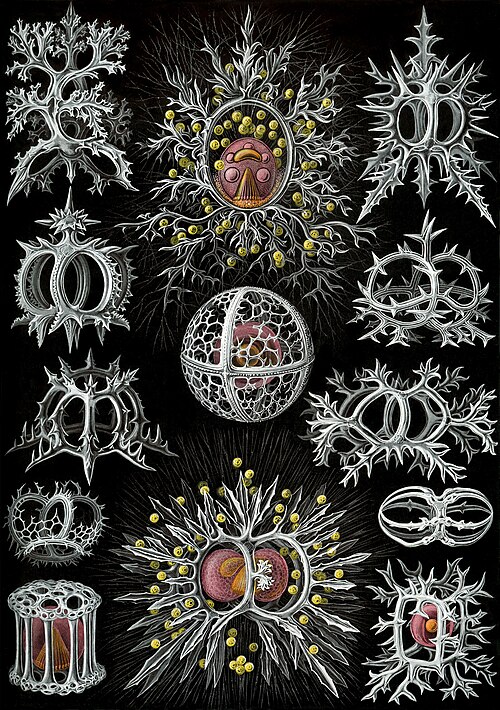
放散虫は、通常シリカでできており、穴が開いた複雑な球状の殻に包まれた単細胞の捕食性原生生物です。その名前はラテン語で「半径」を意味します。放散虫は、体の部分を穴に通して獲物を捕らえます。珪藻のシリカ殻と同様に、放散虫の殻は放散虫が死ぬと海底に沈み、海洋堆積物の一部として保存されます。これらの遺骸は微化石として、過去の海洋環境に関する貴重な情報を提供します。[ 37 ]


放散虫と同様に、有孔虫(略して有孔虫)は単細胞の捕食性原生生物で、穴の開いた殻で保護されています。その名前はラテン語で「穴を持つもの」を意味します。殻はしばしば「テスト」と呼ばれ、複数の部屋に分かれています(有孔虫は成長するにつれて部屋を増やします)。殻は通常方解石でできていますが、凝集した堆積物粒子やヒザラガイ、まれにシリカでできている場合もあります。ほとんどの有孔虫は底生ですが、約40種は浮遊性です。[ 38 ]有孔虫は広く研究されており、確立された化石記録によって科学者は過去の環境や気候について多くのことを推測することができます。[ 37 ]



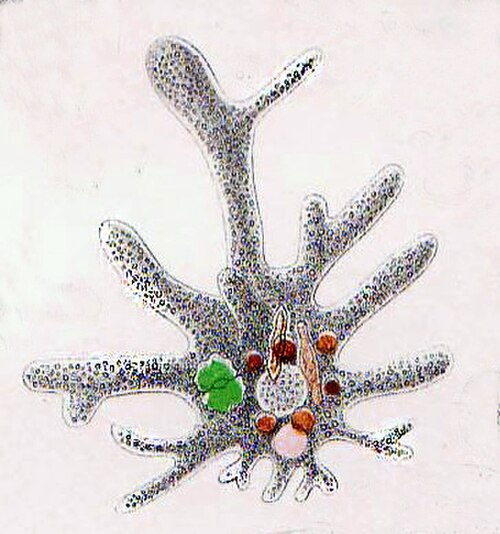
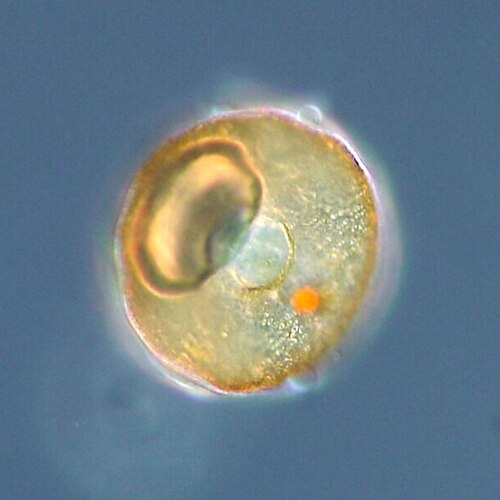


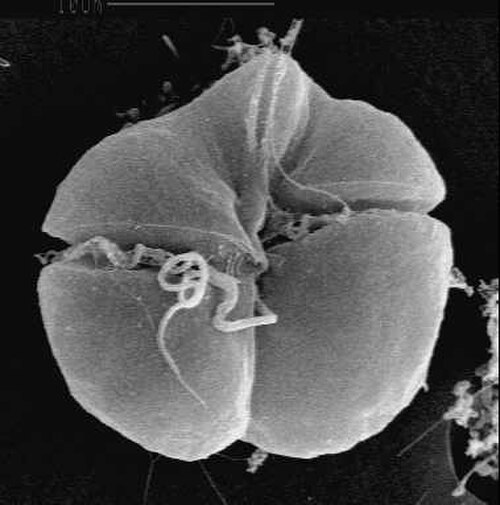
渦鞭毛藻類は、約2,000種の海洋生物を含む単細胞鞭毛虫の門です。[ 40 ]渦鞭毛藻類の中には捕食性のものもあり、動物プランクトン群集に属します。その名前は、ギリシャ語で「回転する」を意味する「dinos」と、ラテン語で「鞭」または「鞭打ち」を意味する「flagellum」に由来します。これは、前進運動に使用される2つの鞭状の付属器官(鞭毛)を指しています。ほとんどの渦鞭毛藻類は、赤褐色のセルロース製の装甲で保護されています。エクスカベータ類は、鞭毛虫類の最も基底的な系統である可能性があります。[ 41 ]
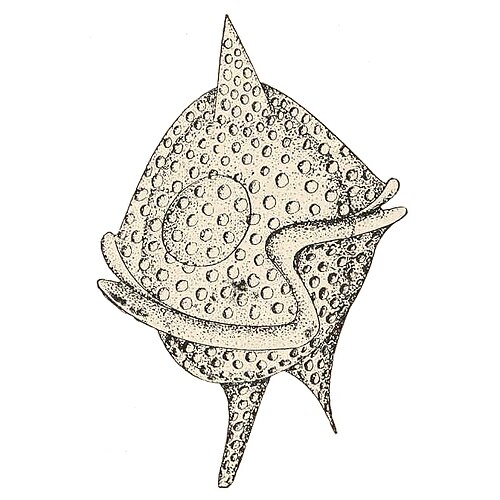


渦鞭毛藻はしばしば他の生物と共生関係にある。多くのナッセラリア放散虫は殻の中に渦鞭毛藻の共生体を宿している。 [ 42 ]ナッセラリアは渦鞭毛藻にアンモニウムと二酸化炭素を提供し、渦鞭毛藻はナッセラリアに狩りや有害な侵入者からの保護に役立つ粘膜を提供する。[ 43 ] DNA分析から、放散虫との渦鞭毛藻の共生は、有孔虫との共生など他の渦鞭毛藻の共生とは独立して進化してきたという証拠がある。[ 44 ]



混合プランクトンは混合栄養性プランクトンであり、光合成と捕食の両方が可能である。混合栄養生物とは、一方の端にある完全な独立栄養からもう一方の端にある従属栄養までの連続体において、単一の栄養様式を持つのではなく、さまざまなエネルギー源と炭素源を混合して利用できる生物である。混合栄養生物は、すべての微細プランクトンの半分以上を占めると推定されている。[ 47 ]真核生物の混合栄養生物には、葉緑体を持つものと、内部共生体を持つものの2種類があり、また、盗葉緑体化や光合成細胞全体を奴隷化することによってそれらを獲得するものもある。[ 48 ]
植物と動物の区別は、非常に小さな生物ではしばしば曖昧になる。考えられる組み合わせとしては、光合成と化学合成、無機栄養と有機栄養、独立栄養と従属栄養、またはこれらの他の組み合わせなどがある。混合栄養生物は真核生物または原核生物のいずれかである。[ 49 ]それらはさまざまな環境条件を利用できる。[ 50 ]
多くの海洋微小動物プランクトンは混合栄養性であり、植物プランクトンに分類されることもある。最近の海洋微小動物プランクトンの研究では、繊毛虫の個体数の30~45%が混合栄養性であり、アメーバ類、有孔虫類、放散虫類のバイオマスの最大65%が混合栄養性であることがわかった。[ 51 ]
ファエオキスティス属は、アカントアリア放散虫の内部共生体です。[ 54 ] [ 55 ]ファエオキスティスは、世界中の海洋植物プランクトンの一部として見られる重要な藻類属です。自由生活細胞から大きな群体まで、多形的な生活環を持っています。 [ 56 ]数百個の細胞がゲル状のマトリックスに埋め込まれた浮遊群体を形成する能力があり、ブルーム時には大幅に大きくなることがあります。[ 57 ]その結果、ファエオキスティスは海洋の炭素[ 58 ]および硫黄循環に重要な役割を果たしています。[ 59 ]


有孔虫の多くは混合栄養性である。これらは、緑藻類、紅藻類、黄金藻類、珪藻類、渦鞭毛藻類など、多様な系統の単細胞藻類を内部共生体として持つ。[ 38 ]混合栄養性有孔虫は、栄養分の乏しい海洋水域で特に一般的である。[ 60 ]一部の有孔虫は盗葉緑体であり、摂取した藻類から葉緑体を保持して光合成を行う。[ 61 ]
渦鞭毛藻は栄養指向性によって非常に多様である。渦鞭毛藻の中には光合成を行うものもいるが、その大部分は実際には混合栄養性であり、光合成と餌の摂取(食作用)を組み合わせている。[ 62 ]一部の種は海洋動物や他の原生生物の内部共生体であり、サンゴ礁の生物学において重要な役割を果たしている。他の種は他の原生動物を捕食し、いくつかの形態は寄生性である。多くの渦鞭毛藻は混合栄養性であり、植物プランクトンに分類することもできる。有毒な渦鞭毛藻であるDinophysis acuta は、繊毛虫の餌からクリプト藻の葉緑体を獲得する[ 52 ] 。繊毛虫は、摂取したクリプト藻から葉緑体を回収する。[ 63 ] Stoecker ら(2017)は「D. acuta」はクリプト藻類を単独で捕獲することはできず、代わりに繊毛虫(赤いMyrionecta属)を摂取することに依存しており、繊毛虫は特定のクリプト藻類系統群(Geminigera / Plagioselmis / Teleaulax)から葉緑体を隔離している、と述べている。[ 52 ]: 317

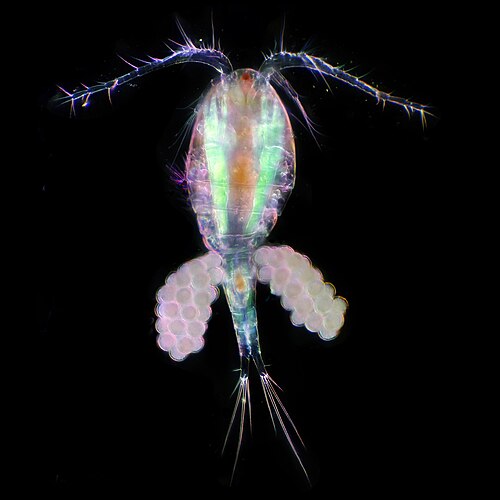
カイアシ類の自由生活種は、通常 体長1~2mmで、涙滴型の体をしています。すべての甲殻類と同様に、体は頭部、胸部、腹部の3つの部分に分かれており、2対の触角があります。最初の1対は長く目立つことが多いです。炭酸カルシウムでできた丈夫な外骨格を持ち、透明な頭部の中央に赤い目が1つあるのが一般的です。 [ 64 ]約13,000種のカイアシ類が知られており、そのうち約10,200種が海洋性です。[ 65 ] [ 66 ]カイアシ類は通常、動物プランクトンの中でも優占種の一つです。[ 67 ]
カイアシ類に加えて、甲殻類のカイアシ類、鰓脚類、軟甲類にもプランクトン性の種が存在する。フジツボは幼生期のみプランクトン性である。[ 68 ]
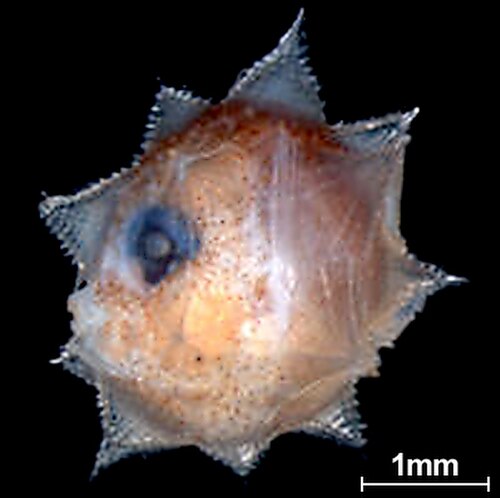
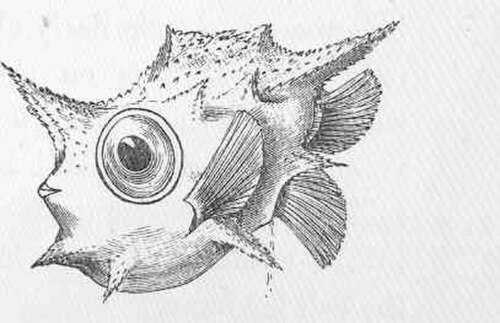
魚卵と幼生は魚類の卵と幼生です(「ichthyo」はギリシャ語で魚を意味する言葉に由来します)。魚類は自力で効果的に泳ぐことができないため、海流に乗って漂流する必要があり、プランクトン性です。魚卵は全く泳ぐことができず、紛れもなくプランクトン性です。幼生の初期段階は泳ぎが下手ですが、成長して稚魚になると泳ぎが上手になり、プランクトン性ではなくなります。魚の幼生は、より小さなプランクトンを食べる動物プランクトンの一部ですが、魚卵は独自の栄養源を持っています。卵と幼生はどちらも、より大きな動物に食べられます。[ 69 ] [ 70 ]
ゼラチン質の動物プランクトンには、沿岸水域に生息する有櫛動物、クラゲ、サルパ、毛顎動物などが含まれます。クラゲは泳ぎが遅く、ほとんどの種はプランクトンの一部を形成します。従来、クラゲは栄養の行き止まり、海洋食物網のマイナーなプレーヤー、体構造の大部分が水に基づいているゼラチン質の生物であり、マンボウやオサガメなどの少数の特殊な捕食者を除いて、他の生物にとって栄養価や興味をほとんど提供しないと考えられてきました。[ 71 ] [ 72 ]
その見解は最近になって異議を唱えられている。クラゲ、そしてサルパやクシクラゲを含むゼラチン質の動物プランクトン全般は、非常に多様で、硬い部分がなく壊れやすく、観察や監視が難しく、個体数が急激に変動し、海岸から遠く離れた場所や深海に生息することが多い。捕食者の消化管内でクラゲを検出して分析することは、食べられるとドロドロになり、すぐに消化されるため、科学者にとって困難である。[ 71 ]しかし、クラゲは大量発生し、マグロ、カジキ、メカジキのほか、さまざまな鳥類やタコ、ナマコ、カニ、ヨコエビなどの無脊椎動物の食餌の主要な構成要素となっていることが示されている。[ 73 ] [ 72 ]「エネルギー密度は低いものの、クラゲは消化が速く、捕獲コストが低く、入手しやすく、エネルギーが豊富な成分を選択的に摂食するため、捕食者のエネルギー収支への貢献は想定よりもはるかに大きい可能性がある。クラゲを摂食することで、海洋捕食者はプラスチックの摂取に対して脆弱になる可能性がある。」[ 72 ] 2017年の研究によると、中深層性獲物の多様性はナルコメドゥサ類が最も高く、次いでクダクラゲ類、有櫛動物、頭足類が続く。[ 74 ]


いわゆる「ゼリーウェブ」の重要性は理解され始めたばかりだが、クラゲ、クシクラゲ、管クラゲは深海外洋食物網における主要な捕食者であり、捕食魚やイカと同様の生態学的影響を及ぼしているようだ。従来、ゼラチン質の捕食者は海洋栄養経路の非効率的な供給者と考えられていたが、深海外洋食物網において実質的かつ不可欠な役割を果たしているようだ。[ 74 ]
Grazing by single-celled zooplankton accounts for the majority of organic carbon loss from marine primary production.[75] However, zooplankton grazing remains one of the key unknowns in global predictive models of carbon flux, the marine food web structure and ecosystem characteristics, because empirical grazing measurements are sparse, resulting in poor parameterisation of grazing functions.[76][77] To overcome this critical knowledge gap, it has been suggested that a focused effort be placed on the development of instrumentation that can link changes in phytoplankton biomass or optical properties with grazing.[75]
Grazing is a central, rate-setting process in ocean ecosystems and a driver of marine biogeochemical cycling.[78] In all ocean ecosystems, grazing by heterotrophic protists constitutes the single largest loss factor of marine primary production and alters particle size distributions.[79] Grazing affects all pathways of export production, rendering grazing important both for surface and deep carbon processes.[80] Predicting central paradigms of ocean ecosystem function, including responses to environmental change requires accurate representation of grazing in global biogeochemical, ecosystem and cross-biome-comparison models.[76] Several large-scale analyses have concluded that phytoplankton losses, which are dominated by grazing are the putative explanation for annual cycles in phytoplankton biomass, accumulation rates and export production.[81][82][77][75]
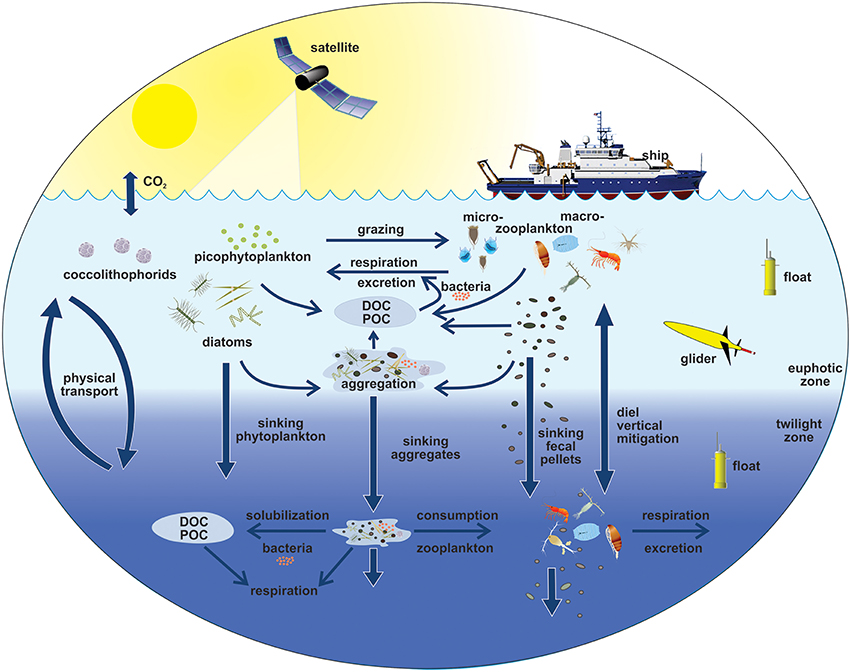

海洋食物網において一次生産者を高次の栄養段階に結びつけるだけでなく、動物プランクトンは炭素やその他の栄養素の「リサイクル」としても重要な役割を果たしており、生物ポンプを含む海洋生物地球化学サイクルに大きな影響を与えている。これは特に外洋の貧栄養水域で重要である。動物プランクトンは、不注意な摂食、排泄、排泄物、糞粒の浸出を通じて溶存有機物(DOM)を放出し、DOMの循環を制御し、微生物ループを支えている。吸収効率、呼吸、餌のサイズはすべて、動物プランクトンが炭素を変換して深海に運ぶ方法をさらに複雑にしている。[ 79 ]

排泄と粗雑な摂食(食物源の物理的な分解)は、甲殻類動物プランクトンを介したDOM放出のそれぞれ80%と20%を占める。[ 86 ]同じ研究では、糞粒の浸出は重要でない寄与であることがわかった。原生動物の草食動物の場合、DOMは主に排泄と排出によって放出され、ゼラチン質の動物プランクトンは粘液の生成によってDOMを放出することもできる。糞粒の浸出は最初の排出後数時間から数日に及ぶことがあり、その影響は食物の濃度と質によって異なる可能性がある。[ 87 ] [ 88 ]さまざまな要因が、動物プランクトンの個体または集団から放出されるDOMの量に影響を与える可能性がある。吸収効率(AE)は、プランクトンによって吸収される食物の割合であり、消費された有機物が、必要な生理的要求を満たすためにどれだけ利用可能かを決定する。[ 79 ]摂食速度と餌の組成に応じて、AE の変動は糞粒の生成量の変動につながり、海洋環境にリサイクルされる有機物の量を調節します。摂食速度が低いと、通常、AE が高く、小さくて密度の高いペレットになりますが、摂食速度が高いと、通常、AE が低く、有機物含有量の多い大きなペレットになります。DOM 放出に寄与するもう 1 つの要因は呼吸速度です。酸素の利用可能性、pH、光条件などの物理的要因は、全体的な酸素消費量と、呼吸による CO 2の形で動物プランクトンから失われる炭素の量に影響を与える可能性があります。動物プランクトンと餌の相対的なサイズも、ずさんな摂食によって放出される炭素の量を左右します。小さな餌は丸ごと摂取されますが、大きな餌はより「ずさんに」食べられる可能性があり、つまり、非効率的な消費によってより多くのバイオマターが放出されます。[ 89 ] [ 90 ]また、食事の構成が栄養素の放出に影響を与えるという証拠もあり、肉食性の食事は雑食性の食事よりも溶存有機炭素(DOC)とアンモニウムを多く放出する。[ 87 ]


動物プランクトンは、糞粒、粘液摂食網、脱皮、死骸の生成など、さまざまな形態の炭素輸出を通じて、海洋の生物ポンプを支える上で重要な役割を果たしています。糞粒はこの輸出に大きく寄与していると推定されており、実際に海底に到達する炭素の量は、個体数ではなくカイアシ類のサイズによって決まると予想されています。糞粒の重要性は、時間と場所によって変化する可能性があります。たとえば、動物プランクトンのブルームイベントでは、より多くの糞粒が生成され、炭素輸出量が増加します。さらに、糞粒が沈降すると、水柱内の微生物によって再加工され、糞粒の炭素組成が変化する可能性があります。これは、有光層でリサイクルされる炭素の量と、深層に到達する炭素の量に影響します。炭素輸出に対する糞粒の寄与は過小評価されている可能性があります。しかし、この生産量を定量化する新たな進歩が現在開発されており、動物プランクトンの糞粒生産によってどれだけの炭素が輸出されているかを特徴付けるためにアミノ酸の同位体シグネチャーを使用する方法などがある。[ 92 ]死骸も炭素輸出の重要な貢献者として認識されつつある。ゼラチン質の動物プランクトンの死骸が大量に沈むゼリーフォールは、大規模なブルームの結果として世界中で発生する。これらのゼラチン質の動物プランクトンはサイズが大きいため、より多くの炭素を含んでいると予想され、沈む死骸は底生生物にとって潜在的に重要な食料源となる。[ 79 ]
 この資料は、クリエイティブ・コモンズ表示4.0国際ライセンスの下で利用可能なこの情報源からコピーされました。この資料は、クリエイティブ・コモンズ表示4.0国際ライセンスの下で利用可能なこの情報源からコピーされました。この資料は、クリエイティブ・コモンズ表示4.0国際ライセンスの下で利用可能なこの情報源からコピーされました。この資料は、クリエイティブ・コモンズ表示4.0国際ライセンスの下で利用可能なこの情報源からコピーされました。この資料は、クリエイティブ・コモンズ表示4.0国際ライセンスの下で利用可能なこの情報源からコピーされました。