
Loading article…
(2).jpg/500px-Agroforesterie_(ma%C3%AFs_et_ch%C3%A2taigner)(2).jpg)
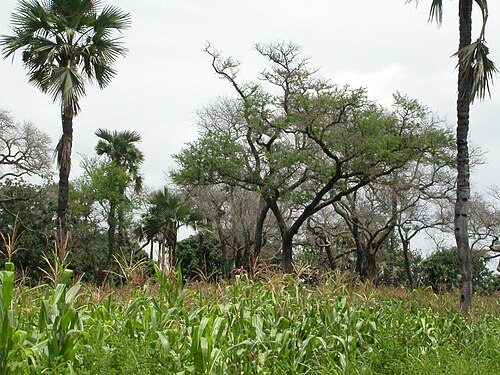
アグロフォレストリー(アグロスィルビカルチャーまたは森林農業とも呼ばれる)は、樹木と作物または牧草地を統合する土地利用管理システムです。農業と林業の技術を組み合わせたものです。ポリカルチャーシステムであるアグロフォレストリーシステムは、木材や木材製品、果物、ナッツ、その他の食用植物製品、食用キノコ、薬用植物、観賞用植物、動物および動物製品、および家畜種と野生種の両方からのその他の製品を生産することができます。[1]
アグロフォレストリーは、経済的、環境的、社会的利益のために実践することができ、持続可能な農業の一部となり得る。[2]生産以外にも、アグロフォレストリーの利点には、農場の生産性の向上、[3]より健康的な環境、農家のリスクの軽減、[4]美しさと審美性、農場の利益の増加、土壌浸食の減少、野生生物の生息地の創出、汚染の減少、動物の排泄物の管理、生物多様性の増加、土壌構造の改善、炭素隔離などがある。
アグロフォレストリーの実践は、熱帯地方、特に自給自足の小規模農家の地域で広く行われており、特にサハラ以南のアフリカでは重要です。栄養循環の利点や干ばつの緩和の可能性など、さまざまな利点があるため、米国やヨーロッパで採用されています。

意味
最も基本的な意味では、アグロフォレストリーとは、同じ土地で意図的に樹木と作物や牧草地を統合するさまざまな複合栽培システムです。 [5] [2]アグロフォレストリーシステムは、含まれる植物と動物の間の有益な相互作用を最適化するために集中的に管理されており、「森林を設計のモデルとして使用します。」[6]
アグロフォレストリーは、間作などの多農法と原理を共有していますが、何百もの種を含むはるかに複雑な多層アグロフォレストリーも含む場合があります。アグロフォレストリーでは、マメ科植物などの窒素固定植物を利用して、土壌の窒素肥沃度を回復することもできます。窒素固定植物は、順番にまたは同時に植えることができます。[引用が必要]
歴史と科学的研究
「アグロフォレストリー」という用語は、1973年にカナダの森林官ジョン・ベネによって造られたが、その概念には数千年にわたって存在してきた農業慣行が含まれている。[7] 科学的なアグロフォレストリーは、20世紀に人類学者による民族植物学的研究から始まった。しかし、森林生態系と密接な関係を築いてきた先住民コミュニティは、何世紀にもわたって非公式にアグロフォレストリーを実践してきた。[8]たとえば、カリフォルニアの先住民は、オークやその他の生息地を定期的に焼き払い、「火力多様性収集モデル」を維持し、樹木の健康と生息地の状態を改善した。 [9] 同様に、米国東部のネイティブアメリカンは環境を大幅に変え、土地を森林地帯、果樹園、森林庭園の「モザイク」として管理した。 [10]
熱帯地方のアグロフォレストリーは古くからあり、世界のさまざまな熱帯地域に広く普及しており、特に「熱帯家庭菜園」の形で広く行われています。「熱帯家庭菜園」の区画の中には、何世紀にもわたって継続的に耕作されているものもあります。中央アメリカの「家庭菜園」では、わずか 1/10 エーカーの土地に 25 種類の樹木や食用作物を栽培することができます。[11]「熱帯家庭菜園」は、正式な研究や組織的支援なしに栽培者が時間をかけて開発した伝統的なシステムであり、有用植物の複雑さと多様性に富んでいるのが特徴です。樹冠には、食料、燃料、日陰を作る樹木やヤシの種が植えられ、中間層には果物やスパイスの原料となる低木が植えられ、下層には根菜、薬草、豆、観賞用植物、その他の非木本作物が植えられています。[12] これらのシステムは、熱帯地方の多くの人々の生活に欠かせないものであるにもかかわらず、正式な研究はほとんど行われていません。
1929年、J・ラッセル・スミスは『樹木作物:永続的な農業』を出版し、アメリカの農業は2つの方法で変えるべきだと主張した。耕作不可能な土地を樹木農業に利用することと、樹木で生産される作物を家畜の飼料の穀物投入の代わりとして利用することである。スミスは、栄養価の高い家畜の飼料として使用できるさやをつけるマメ科植物であるサイカチノキは、作物として大きな可能性を秘めていると書いた。この本の副題は、後にパーマカルチャーという造語を生み出すことになった。[13]
最も研究されているアグロフォレストリーの実践は、単一の作物と統合された生垣や樹木の単純な構成など、2つの要素間の単純な相互作用を伴う。[14]アグロフォレストリーのシステムとその利点には大きなばらつきがある。[15]現代科学によって理解されているアグロフォレストリーは、何世代にもわたって生態系と密接に関係しながら生活することで発達した、伝統的な先住民族や地域の慣習に由来している。[8]
利点
メリットとしては、農場の生産性と収益性の向上、土壌浸食の減少、野生生物の生息地の創出、動物の排泄物の管理、[16]生物多様性の増加、土壌構造の改善、炭素隔離などが挙げられます。[17]
アグロフォレストリーシステムは、従来の農業や森林生産方法よりも優れた利点があります。生産性の向上、社会的、経済的、環境的利益、提供される生態学的商品やサービスの多様性の向上などをもたらすことができます。[18]これらの利点は、適切な農場管理が条件であることに注意することが重要です。これには、適切な木の選択、定期的な剪定などが含まれます。[19]
生物多様性
森林農法のシステムにおける生物多様性は、通常、従来の農業システムよりも高いです。特定の地域に 2 つ以上の植物種が相互に作用することで、より複雑な生息地が形成され、より多様な動物を支えることができます。
アグロフォレストリーは、さまざまな理由から生物多様性にとって重要です。従来の農業システムでは、樹木が地上と地下の両方でさまざまな生物の生態学的地位を作り出しますが、アグロフォレストリーはそれよりも多様な生息地を提供します。この多様化に関連するライフサイクルと食物連鎖は、持続可能性をもたらす機能的な農業生態系を作り出す農業生態学的遷移を引き起こします。たとえば、熱帯のコウモリと鳥の多様性は、自然林の多様性に匹敵します。[20]アグロフォレストリーシステムは、森林ほど多くの植物種を提供しず、同じ樹冠の高さを示しませんが、食物と巣作りの可能性を提供します。生物多様性へのさらなる貢献は、敏感な種の遺伝資源を保存できることです。[21]アグロフォレストには自然の空き地がないため、生息地はより均一です。さらに、アグロフォレストは生息地間の回廊として機能することができます。アグロフォレストリーは、他の生態系サービスにプラスの影響を与えながら、生物多様性の保全に役立ちます。[21]
土壌と植物の成長
枯渇した土壌は、アグロフォレストリーシステムで自然に生育する草などの地被植物によって土壌浸食から保護することができます。これらは、短期サイクルの耕作システムと比較して被覆率を高めるため、土壌を安定させるのに役立ちます。 [22] [23]土壌被覆は浸食を防ぐ上で重要な要素です。[24] [25]栄養素と土壌表面の流出が減少することで水がきれいになることは、アグロフォレストリーのさらなる利点です。木は水の流れと蒸発を減らし、土壌浸透を増加させることで水の流出を減らすのに役立ちます。[26]列作の畑と比較して、栄養素の吸収が高くなり、小川への栄養素の損失を減らすことができます。[27] [28]
植物の成長に関するさらなる利点:
- バイオレメディエーション
- 干ばつ耐性
- 作物の安定性の向上
持続可能性
アグロフォレストリーシステムは、次のような方法で持続可能な農業に貢献できる生態系サービスを提供することができます。
- 薪、薬用植物、多作物などの農産物の多様化は所得の安定性を高める[29]
- 土壌の肥沃度、作物の多様性、食用作物の気象ショックに対する耐性の回復による食糧安全保障と栄養の向上[29]
- 土壌侵食の削減と水の利用可能性の調整による土地の回復[26]
- 多機能的な土地利用、例:作物生産や家畜の放牧
- 農場で栽培された薪を提供することで森林破壊と森林への圧力を軽減
- 肥料の使用改善、害虫に対する耐性の向上、地表被覆率の増加による雑草の減少などにより、化学物質の投入量を削減できる可能性[ 19] [30]
- 薬用植物の栽培スペース(例えば、主流の医薬品へのアクセスが限られている状況)
国連食糧農業機関(FAO)の「世界の森林の現状2020」によると、アグロフォレストリーと持続可能な生産慣行の導入、劣化した農地の生産性の回復、より健康的な食生活の受け入れ、食品ロスと廃棄の削減はすべて、緊急に拡大する必要がある行動です。農業関連企業は森林破壊のない商品チェーンへのコミットメントを果たす必要があり、森林破壊ゼロのコミットメントを行っていない企業はそうすべきです。[31]
その他の環境目標
炭素隔離は重要な生態系サービスである。[32] [21] [33]アグロフォレストリーの実践は、土壌と木質バイオマスの炭素貯蔵量を増加させることができる。[34]アグロフォレストリーシステムの木は、新しい森林と同様に、既存の森林を伐採することによって失われた炭素の一部を取り戻すことができる。また、追加の食料と製品を提供する。回転年齢と結果として生じる製品の使用は、隔離される炭素の量を制御する重要な要因である。アグロフォレストは、森林製品を提供することで原生林への圧力を軽減することができる。[35]
気候変動への適応
アグロフォレストリーは、適応のメリットとともに、気候変動の緩和に大きく貢献することができます。 [36]ケニアの事例研究では、アグロフォレストリーの導入により、小規模農家の炭素貯蔵と生計の向上が同時に促進されたことがわかりました。この場合、樹種の多様性の維持、特に土地利用と農場の規模が重要な要素です。[37]
貧しい小規模農家は気候変動に適応する手段としてアグロフォレストリーに目を向けている。気候変動、農業、食糧安全保障に関するCGIAR研究プログラムの研究では、東アフリカの700世帯以上を対象にした調査から、少なくとも50%の世帯が以前の慣行を変えて木を植え始めたことがわかった。木には通常の収穫物に加えて、果物、茶、コーヒー、油、飼料、医薬品が植えられていた。アグロフォレストリーは、改良された作物品種の使用や混作とともに、最も広く普及した適応戦略の1つであった。[38]
トロピカル
アグロフォレストリーシステムの樹木は、木材、果物、木の実、その他の有用な製品を生産することができます。アグロフォレストリーの実践は熱帯地方で最も普及しており、[39] [40]特にサハラ以南のアフリカなどの自給自足の小規模農家の地域[41]で普及しています。 [19]
ザンビアのマメ科樹木ファイドヘルビア・アルビダの研究では、肥料を使用し、1ヘクタールあたり25〜100本の密度で木と混植した場合、トウモロコシの最大収穫量は1ヘクタールあたり4.0トンであることが示されました[42] 。一方、ジンバブエの平均トウモロコシ収穫量は1ヘクタールあたり1.1トンでした[43]。
丘陵地システム
よく研究されている丘陵林業システムの例としては、ホンジュラスのレンピラ県にあるケスングアル焼畑・マルチ農林業システムがある。この地域は歴史的に焼畑自給農業に利用されてきた。季節的な大洪水により、露出した土壌は流され、乾季には不毛の不毛の土壌がさらされることになった。[44]丘陵林業の耕作地は数年後には放棄され、新たな森林は焼かれた。国連のFAOは、地元の知識を取り入れた以下の手順からなるシステムの導入を支援した。[45] [46]
- 丘陵の二次林の間伐や剪定を行い、窒素固定樹木などの有益な樹木を個別に残します。これらの樹木は、土壌浸食を軽減し、土壌水分を維持し、日陰を作り、落葉の形で窒素を豊富に含む有機物を供給します。
- トウモロコシを列に並べて植えます。これは地元の伝統的な作物です。
- 乾燥した植物を収穫し、豆を植えます。トウモロコシの茎は、つる性豆の植物にとって理想的な構造を提供します。豆は窒素固定植物であるため、より多くの窒素を導入するのに役立ちます。
- この時期にカボチャを植えることができます。カボチャの大きな葉と水平に伸びる成長により、日陰と水分保持力が増します。茎の上で垂直に伸びる豆と日光を奪い合うこともありません。
- 数シーズンごとに、牛を放牧して草を育て、土壌に有機物と栄養素(肥料)を加えることで、作物をローテーションします。牛は木の周りを放牧することで、森林が完全に再植林されるのを防ぎます。
- 繰り返す。
クオジタキロヤン
メキシコのクオジタキロヤンは、ジャングルを舞台にした複合農業で、アボカド、サツマイモ、シナモン、ブラックチェリー、クアヒニキル、柑橘類ひょうたん、マカダミアナッツ、マンゴー、バナナ、サポテなどを栽培している。[47]


クオジタキロヤンはマセワル語で「有用な森林」または「生産する森林」を意味し、メキシコのプエブラ州シエラノルテの先住民によって開発され維持されているアグロフォレストリーシステムです。これは地元住民にとって重要な資源(食料、薬草、燃料、花卉栽培など)の源泉となっていますが、生物多様性と自然保護を伴う環境への敬意ある変革でもあります。クオジタキロヤンは、ナワ族とトトナク族の先祖代々の自然環境に関する知識から直接生まれました。[48]メキシコの主流派の間では知られていないにもかかわらず、世界中の多くの農業専門家は、これを共同で実践されている持続可能なアグロフォレストリーの成功例として指摘しています。[要出典]
クオジタキロヤンはジャングルを舞台にした複合栽培で、アボカド、サツマイモ、シナモン、ブラックチェリー、チャラフイット、柑橘類、ひょうたん、マカダミアナッツ、マンゴー、バナナ、サポテが栽培されている。[48] [49]さらに、多種多様な野生の食用キノコやハーブ(ケリテス)が収穫されている。ジョノテは、その繊維がかご細工に便利であるため植えられており、また、成長が早い竹は小屋やその他の構造物を建てるためにも使われる。クオジタキロヤンと並行して、シェードコーヒー(スペイン語でカフェ・バホ・ソンブラ、マセワル語でカフェンタジ)が栽培されている。高品質のコーヒーを得るには日陰が不可欠である。[50]地元住民は、ハリナシバチ( pisilnekemej )が受粉する植物を植えることで、ハリナシバチの繁殖を促進してきました。ハチからは蜂蜜、花粉、ワックス、プロポリスが得られます。[48]
日陰作物
シェードアプリケーションでは、作物は意図的に日陰の環境内の樹冠の下で栽培されます。下層の作物は日陰に耐性があり、上層の樹冠はかなり開いています。顕著な例はシェード栽培コーヒーです。この方法は除草コストを削減し、コーヒーの品質と味を向上させます。[51] [52]
作物を木の上に植えるシステム
樹木上作物栽培システムでは、被覆作物として多年生木本植物を使用します。このため、地面近くまで剪定された小さな低木や樹木が利用されます。その目的は、土壌中の栄養素を増やし、土壌浸食を減らすことです。[要出典]
混作と路地耕作
アレイクロッピングでは、作物の帯と、密集した樹木や生垣の列が交互に植えられます。通常、樹木は作物を植える前に剪定されます。切り取られた葉っぱ(例えば、アルコルネア・コルディフォリアやアシオア・バルテリ)は、栄養分を与えるために作物エリアに撒かれます。栄養分に加えて、生垣は防風林として機能し、浸食を軽減します。[53]
南北アメリカの熱帯地域では、I. edulisやI. oerstedianaなどの様々な種のインガが路地裏の耕作に利用されてきた。[54]
アフリカでは、特にサハラ以南の地域でトウモロコシの収穫量を向上させることに関連して、混作が有利である。混作には窒素固定樹種であるセスバニア・セスバン、テフロシア・ヴォーゲリ、グリリシディア・セピウム、ファイドヘルビア・アルビダが利用されている。一例では、マラウイでの10年間の実験で、肥料樹の グリリシディア(G. sepium)を無機肥料を施用していない土地で使用した場合、トウモロコシの収穫量は平均して1ヘクタールあたり3.3トン(1.5ショートトン/エーカー)であったのに対し、肥料樹や無機肥料を施用していない区画では1ヘクタールあたり1トン(0.45ショートトン/エーカー)であった。[55]
雑草の抑制は、マルチと日陰を提供することによって路地耕作に固有のものです。[53]
共熱帯システム

共生農法、共生農業、共生林業は、ブラジルのエルンスト・ゲッチュが開発した有機パーマカルチャー林業システムです。 [56] [57]このシステムは、遷移林業システムまたはSAFSと呼ばれることもあり、ラテンアメリカ発祥のより広い概念を指すこともあります。[58]このシステムは、生態系における栄養素の蓄積の自然システムを複製し、二次遷移を複製することに重点を置いており、食料、生態系サービス、その他の林産物を生産する生産的な森林生態系を作り出すことを目的としています。[59]
システムはいくつかのプロセスに大きく依存しています。
- 多年生作物と一年生作物を混植した密植
- 成長の早い先駆種を急速に刈り取り、堆肥化して栄養素とバイオマスを蓄積する[60]
- 土壌への水の浸透と植物の水循環を改善することで、土地の保水力を高めます。
このシステムは最初に熱帯ブラジルで開発されましたが、土壌と生態系の修復戦術として温帯環境でも同様のシステムがテストされてきました。[61]
共熱帯林業の枠組みは、このシステムを推進するために設立された組織であるアジェンダ・ゴッチュによって提唱されている。 [62]
共生システムには、土壌水の浸透の増加[63] 、その後の限界地での生産性の向上[64]、土壌温度の緩和[65]など、多くの利点があることが文書化されています。
ビルマでは
タウンヤはビルマ発祥のシステムである。果樹園や植林の初期段階では、木は小さく、間隔が広い。新しく植えられた木々の間の空きスペースには季節ごとの作物を植える。[66]費用のかかる除草の代わりに、活用されていないエリアは追加の生産量と収入をもたらす。より複雑なタウンヤでは、木々の間のスペースを複数の作物に利用する。樹冠が成長し、地面に届く日光の量が減少するにつれて、作物は日陰に耐えられるようになる。間伐により日光レベルを維持することができる。
インドでは
イッテリ農林業システムは太古の昔からタミル・ナードゥ州で使われてきました。このシステムでは、草本植物と密接な関係にある多目的樹木や低木を意図的に管理します。このシステムは村や農場の道路、小さな峡谷、畑の境界線沿いによく見られます。[67]
竹をベースとした森林農法(デンドロカラムス・ストリクトゥス+ゴマ・ヒヨコマメ)は、インド中部の半乾燥熱帯地域の生産性を高めるために研究されてきた。[68]
アフリカでは
農業で気候変動を緩和するプロジェクトは、「グローバル・エバーグリーニング・アライアンス」によって2019年に開始されました。目標は大気から炭素を隔離することです。2050年までに、復元された土地は年間200億トンの炭素を隔離するはずです[69]
シャンバ(スワヒリ語で「プランテーション」)は、東アフリカ、特にケニアで実践されている森林農法である 。このシステムでは、バナナ、豆、ヤムイモ、トウモロコシなどのさまざまな作物が組み合わされ、これに木材資源、養蜂、薬草、キノコ、森の果物、家畜の飼料などが加えられる。 [70]
ハワイでは
ハワイ先住民はかつて、島の熱帯の景観に適応したアグロフォレストリーを実践していた。彼らのこの能力は、地域の収容力、社会的対立、協力、政治的複雑さに影響を与えた。[71]最近では、lo'Iシステムの科学的研究の後、ハワイ島とマウイ島で乾燥地アグロフォレストリーを再導入する試みがなされ、政治指導者、土地所有者、科学者の間の学際的な協力を促進している。[72]
温帯

もともと熱帯農学の概念であったが、[17]森林農法は栄養循環や干ばつの緩和の可能性など、その多様な利点から米国やヨーロッパでも採用されている。[73] [74] [75]
米国農務省は、温帯気候におけるアグロフォレストリーの用途を、路地耕作、森林農業、河畔林緩衝地帯、森林放牧地、防風林の5つに分類しています。[17]
路地のクロッピング
アレイクロッピングは、温帯気候でも使用できます。ストリップクロッピングは、木と作物を交互に植えるという点でアレイクロッピングに似ています。違いは、アレイクロッピングでは木が 1 列に植えられることです。ストリップクロッピングでは、木または低木が幅の広い帯状に植えられます。アレイクロッピングと同様に、目的は、葉の形で作物に栄養を与えることです。ストリップクロッピングでは、木は純粋に生産的な役割を果たし、果物、木の実などを提供しながら、同時に近くの作物を土壌浸食や有害な風から保護します。
インガの路地裏クロッピング
インガアレイクロッピングは、インガの木の列の間に農作物を植える方法です。マイク・ハンズによって推進されています。[76]
インガの木を路地耕作に使うことは、はるかに環境破壊的な焼畑耕作の代替案として提案されている。[77]この技術は収穫量を増やすことがわかっている。同じ土地を何度も耕作できるため、肥沃な土地を得るために熱帯雨林を焼く必要がなくなり、持続可能な農業である。[要出典]
インガの木

インガの木は中南米の多くの地域に自生しています。インガは熱帯雨林やかつての熱帯雨林の酸性土壌でよく育ちます。マメ科で、窒素を植物が利用できる形で固定します。[78]根の中に生育する菌根(アーバスキュラー菌根)は余分なリンを吸収し、土壌に再利用できることがわかっています。[79]
インガのその他の利点としては、成長が早く厚い葉があり、剪定後に地面に残しておくと厚い覆いとなり、土壌と根を太陽と大雨から守ってくれるという点が挙げられます。枝分かれして厚い樹冠を形成するので、下の雑草からの光を遮断し、毎年の慎重な剪定にも耐えます。[78]
歴史
この技術は、1980年代後半から90年代初めにかけて、コスタリカの熱帯生態学者マイク・ハンズによって初めて開発され、試験された。EECの研究資金により、彼はインガの種を使った実験を行うことができた。路地耕作は広く研究されていたが、インガの堅い羽状の葉はすぐには分解しないと考えられていた。 [77]
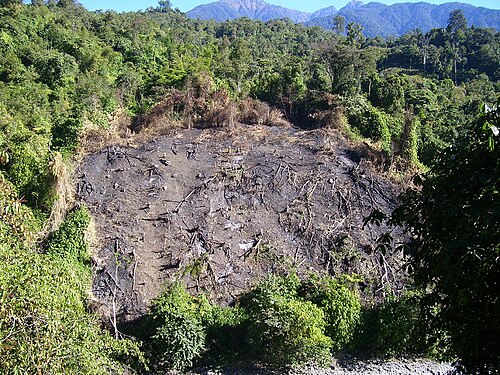
インガは生垣として使われ、豆やトウモロコシの種を植えるマルチとして十分な大きさになったら剪定されます。これにより、作物の収穫量が向上し、耕作地の土壌の肥沃度が維持されます。ハンズはホンジュラスで働いていたときに、焼畑農業が引き起こす壊滅的な結果を目にしてきました。この新しい技術は、多くの焼畑農家が直面している環境問題と経済問題の解決策となるように思われました。[引用が必要]
この技術は熱帯雨林を救い、多くの人々を貧困から救う可能性を秘めているが、インガ・アレー・クロッピングはまだその潜在能力を完全には発揮していない。マイク・ハンズ率いる慈善団体インガ財団は、ハイチ(ほぼ完全に森林伐採されている)とコンゴでの潜在的なプロジェクトについて相談を受けている。ペルーとマダガスカルでのプロジェクトについても議論されている。インガ・アレー・クロッピングを促進するために設立された別の慈善団体、レインフォレスト・セーバーは、2016年にエクアドルのアマゾンのインガ・エデュリスの原産地でプロジェクトを開始し、2018年末までにその地域の60以上の農場にインガの区画が設けられた。レインフォレスト・セーバーは2009年にカメルーンでもプロジェクトを開始し、2018年末には主にカメルーン西部で約100の農場にインガの区画が設けられた。[要出典]
方法
インガの路地耕作では、木々は列(生垣)に密集して植えられ、列と列の間には約 4 メートルの隙間(路地)が設けられます。最初にリン酸岩を散布して以来、このシステムは長年にわたって維持されてきました。
通常約 2 年で木が成長すると、樹冠が路地を覆い、光を遮って雑草を窒息させます。
その後、木は慎重に剪定されます。大きな枝は薪として使われます。小さな枝と葉は路地の地面に残されます。これらは腐って良質のマルチ(堆肥)になります。光不足で枯れていない雑草があれば、マルチがそれらを窒息させます。
農家はマルチに穴を開け、その穴に作物を植えます。
作物はマルチの栄養で育ちます。作物は下層を栄養源とし、最新の剪定枝は土壌と根の上に保護層を形成し、暑い太陽と大雨からそれらを守ります。これにより、作物と樹木の根は、土壌とマルチの最上層にかなりの範囲で留まることができ、マルチの栄養の恩恵を受け、下層の土壌害虫や有毒なミネラルから逃れることができます。インガを剪定すると、その根も枯れるため、作物との競合が減ります。
森林農業
森林農業では、適切に管理された樹冠の下で高価値作物が栽培されます。これは多層耕作と呼ばれることもあり、熱帯の村では家庭菜園と呼ばれます。森林農業はさまざまなレベルの強度で実施できますが、常にある程度の管理が伴います。この点が、森林からの野生植物の単純な収穫とは異なります。[17]
河岸林緩衝帯

河岸緩衝帯とは、活発な水路沿いやその近く、または水が集中する溝沿いに植えられた永久植生帯のことである。その目的は、栄養素や土壌による水の汚染を防ぐことである。[17]
森林牧草地

樹木は、牛、ヤギ、羊が樹木の下に生えた草を食べる森林牧草地システムの動物に利益をもたらすことができます。 [17] [80]
暑い気候では、涼しく日陰のある環境で草を食むと、動物のストレスが減り、体重が早く増えます。木や低木の葉も飼料として役立ちます。同様のシステムが他の動物を支えています。シカやブタは森林生態系で生活し、餌を食べることで、特に木の餌が栄養になる場合は、体重が増えます。水林業では、木が魚のいる池に日陰を作ります。多くの場合、魚は木の葉や果実を食べます。
デエサやモンタードといった森林管理システムは、スペインやポルトガルで広く行われている豚や雄牛の飼育の一例である。[81]
防風林
防風林は作物の上や周囲の風速を低下させます。これにより、作物の乾燥が軽減され、強風による作物の倒れを防ぐことができるため、収穫量が増加します。[17]
スイスでは
1950年代以降、スイスのホッホシュタムブストガルテン(背の高い木々のある伝統的な果樹園)の5分の4が消滅した。ここでは、ホッホシュタムの木と一年生作物を組み合わせたアグロフォレストリー計画がテストされた。テストされた木はクルミ(Juglans regia)とサクラ(Prunus avium)だった。1ヘクタールあたり40〜70本の木が推奨され、木の高さと葉が増えるにつれて収穫量はいくらか減少した。[82]しかし、面積あたりの総収穫量は単一栽培システムよりも最大30%高いことがわかっている。[83]
もう一つの試験では、バイオ燃料用に1ヘクタールあたり52本のポプラを栽培し、2~3年ごとにトウモロコシやモロコシ、小麦、イチゴを交互に植えた放牧地を設け、短く剪定して接ぎ木した現代のリンゴ栽培品種(「ボスクープ」と「スパルタン」)の列の間に休耕地を設け、現代のサワーチェリー栽培品種(「モリーナ」、「コラリン」、「アハト」)とリンゴを栽培し、列の間には低木を植えて、木(ドッグローズ、コルヌス・マス、ヒッポファエ・ラムノイデス)と様々な野菜を混植した。[84]
森林園芸

森林園芸は、森林生態系に基づいた、手入れが簡単で持続可能な[85]植物ベースの食料生産とアグロフォレストリーシステムであり、果樹、ナッツ類、低木、ハーブ、ブドウ、多年生野菜など、人間に直接役立つ収穫物がある植物を組み込んでいます。コンパニオンプランツを利用すると、これらを混ぜて層状に成長させ、森林の生息地を構築できます。森林園芸は、熱帯地域で食料を確保するための先史時代の方法です。1980年代に、ロバートハートは、その原理を適応させて温帯気候に適用した後、「森林園芸」という用語を作り出しました。[86]
歴史
先史時代から、狩猟採集民は森林に影響を与えてきた可能性がある。例えば、ヨーロッパでは中石器時代の人々がハシバミなどの好まれた植物を持ち込んだ。 [87]森林庭園はおそらく世界最古の土地利用形態であり、最も回復力のある農業生態系である。[88] : 124 [89] 1930年代にスミソニアン博物館の考古学者が、木の実、核果、ベリー類、ハーブで満たされた森林庭園のあるアラスカの先住民族の村に注目した。 [90]
森林庭園は熱帯地方では今でも一般的で、スリランカではカンディアン森林庭園、[91] 、 メキシコでは家族果樹園(huertos familiares)、[92]、アグロフォレスト、または低木庭園として知られています。森林庭園は、地元住民にとって重要な収入源であり、食糧安全保障であることが示されています。[93]
ロバート・ハートは1980年代にイギリスの温暖な気候に合わせて森林園芸を改良した。 [86]
温帯気候では
.jpg/500px-Robert_Hart_(horticulturist).jpg)
ハートは、自分と弟のラコンに健康的で癒しの環境を提供するために、シュロップシャーのウェンロックエッジで農業を始めた。比較的従来型の小規模農家としてスタートしたハートは、すぐに、一年生野菜畑の維持、家畜の飼育、果樹園の世話が自分たちの力を超えていることに気づいた。しかし、彼が植えた多年生野菜とハーブの小さな畑は、ほとんど手を加えなくても、自然に成長していった。[94]
ハートは健康と個人的な理由からローヴィーガン食を採用した後、家畜を植物に置き換えた。森林庭園の3つの主な産物は、果物、ナッツ、緑の葉野菜である。[95]彼は農場の0.12エーカー(500平方メートル)の果樹園でモデルの森林庭園を作り、自分の園芸手法を生態園芸またはエコ栽培と名付けるつもりだった。[88] : 45 ハートは後に、アグロフォレストリーと森林庭園がすでに世界の他の地域で同様のシステムを説明するために使用されていることに気づき、これらの用語を使わなくなった。 [88] : 28, 43 彼は賀川豊彦とジェームズ・ショルト・ダグラスの森林農法と、ケララの家庭菜園の生産性に触発された。ハートは次のように説明している。「アグロフォレストリーの観点から見れば、おそらく世界で最も進んだ国はインドのケララ州で、350万以上の森林庭園を誇っています。一部の森林庭園の耕作の並外れた集中度の例として、わずか0.12ヘクタール(0.30エーカー)の区画に、23本の若いココナツヤシ、12本のクローブ、56本のバナナ、49個のパイナップルがあり、30本のコショウのつるが木に絡みついていることが研究グループによって発見されました。さらに、小規模農家は飼い牛の飼料を栽培していました。」[88] :4–5
7層システム

さらなる発展
マーティン・クロフォードが運営するアグロフォレストリー研究トラストは、イギリスのデボン州にあるいくつかの区画で実験的な森林園芸プロジェクトを運営しています。[ 96 ]クロフォードは、森林庭園を、食料やその他の家庭用品を持続的に生産するためのメンテナンスの少ない方法であると説明しています。[97]
ケン・ファーンは、温帯林庭園を成功させるには、より幅広い食用耐陰性植物を使用する必要があると考えました。この目的のために、ファーンはそのようなシステムに適した植物データベースをまとめた組織「Plants for a Future」を設立しました。ファーンは著書「Plants for a Future 」で、森林園芸ではなく森林園芸という用語を使用しました。[98] [99]
キャスリーン・ジャナウェイは夫のジャックとともに慈悲深い生活運動(MCL)の共同創設者であり[100] 、1991年に持続可能なビーガンの未来を概説した『来るべき樹木の時代に豊かな暮らしを』という本を執筆した。MCLは森林園芸やその他のタイプのビーガン有機園芸を推進している。2009年にはウェールズ北西部グウィネズのバンガー森林庭園プロジェクトに1,000ポンドの助成金を提供した。 [101]
パーマカルチャー
パーマカルチャーという言葉を作ったビル・モリソンは、1990年10月にハートの森の庭園を訪れた。[88] : 149 ハートの7層システムはそれ以来、一般的なパーマカルチャーの設計要素として採用されている。[要出典]
グラハム・ベル、パトリック・ホワイトフィールド、デイブ・ジャック、エリック・トーンスマイヤー、ジェフ・ロートンなど、多くのパーマカルチャー主義者が森林庭園、または食糧の森の提唱者です。 [102]ベルは1991年に森林庭園の建設を開始し、 1995年に「パーマカルチャーガーデン」という本を執筆しました。ホワイトフィールドは2002年に「森林庭園の作り方」という本を執筆しました。ジャックとトーンスマイヤーは2005年に2巻セットの「Edible Forest Gardens」を共著し、ロートンは2008年に映画「Establishing a Food Forest」を発表しました。 [103] [104] [105]
地理的分布
森林庭園、または家庭菜園は熱帯地方で一般的で、同じ土地で木、作物、家畜を栽培するために混作が用いられています。南インドのケララ州と北東インドでは、家庭菜園は最も一般的な土地利用形態であり、インドネシアでも見られます。1つの例では、ココナッツ、黒コショウ、カカオ、パイナップルを組み合わせています。これらの庭園は多種栽培の好例であり、単一栽培では見られない多くの作物の遺伝的多様性と家宝植物を保護しています。森林庭園は、宗教的な概念であるエデンの園に大まかに例えられています。[106]
アメリカ大陸
アマゾンの熱帯雨林は、手つかずの自然ではなく、少なくとも11,000年かけて森林園芸やテラ・プレタなどの慣行を通じて人間によって形作られてきました。[107] 1970年代以降、アマゾンの熱帯雨林の森林伐採地で多数の地上絵が発見され、コロンブス以前の文明の証拠がさらに増えています。[108] [109]
ユカタン半島では、マヤの食糧供給の多くは「果樹園」、通称ペット・コットで栽培されていた。[110]このシステムの名前は、庭園を囲む特徴的な低い石の壁(ペットは「円形」、コットは「緩い石の壁」を意味する)に由来している。[111]
環境史家ウィリアム・クロノンは、1983年の著書『土地の変化』で、北米先住民は野生の動物にとって理想的な生息地を形成するために、制御された焼却を利用していたと主張した。ニューイングランドの自然環境は、生息地のモザイクに形作られた。先住民が狩猟をしていたとき、彼らは「自分たちが意識的に作り出した食料を収穫していた」。[112]しかし、ほとんどのイギリス人入植者は、森林が提供する食料の豊かさは自然の力の結果であり、先住民は「植えられていない自然の恵み」で暮らしていたと想定していた。[113]動物の個体数は入植後に減少し、初期の入植者が見つけたイチゴやラズベリーの畑は、手入れが行き届かずに雑草が生い茂り、姿を消した。[114]
植物
ワイルドヤムなどの一部の植物は、根植物としても蔓植物としても機能します。グランドカバーは、雑草を抑制し、使用されていない領域を活用する方法を提供する、低成長の食用森林庭園植物です。[115]
- カルダモン
- ジンジャー
- チャービル
- ベルガモット
- スイートウッドラフ
- スイートシセリー
プロジェクト
ベリーズとグアテマラの国境にあるエル・ピラールには、伝統的なマヤの農業慣行を示す森林庭園があります。[116] [117]さらに、ナショナルジオグラフィック協会の資金援助を受けて、カヨのサンタ・ファミリア小学校に、Känan K'aax(マヤ語で「手入れの行き届いた庭園」を意味する)と呼ばれる1エーカーのモデル森林庭園が開発されました。[118]
アメリカ合衆国では、公有地にある最大の食糧林として知られているのは、ワシントン州シアトルにある7エーカーのビーコン食糧林だと考えられている。[119]その他の森林庭園プロジェクトには、コロラド州バサルトのロッキーマウンテン・パーマカルチャー研究所やマサチューセッツ州ノーザンプトンのモントビュー・ネイバーフッド農場のプロジェクトがある。[120] [121]ボストン食糧林連合は、地元の森林庭園を推進している。[122] [123] [124] [125]
カナダでは、リチャード・ウォーカーがブリティッシュコロンビア州で30年以上にわたり食糧林の開発と維持に取り組んでいます。彼は3エーカーの食糧林を開発し、成熟すると植物苗床やハーブ事業の原材料と家族の食料を提供しました。[126]リビングセンターはオンタリオ州でさまざまな森林庭園プロジェクトを展開しています。[127]
英国では、アグロフォレストリー研究信託(ART)が運営するプロジェクトのほかに、ウェールズ北西部のグウィネズにあるバンガー森林庭園プロジェクトがある。 [128] ARTのマーティン・クロフォードは、森林庭園を育成する人々と組織の非公式ネットワークである森林庭園ネットワークを管理している。[129] [130]
2014年以来、ジセラ・ミールとマーク・ビフェンは、実験と実証のためにスペインのバルセロナ近郊のカルデデウに小規模な食用森林庭園を開発してきました。 [131]
森林農業
森林農業とは、成長に有利で生産量を増やすために意図的に改変または維持された森林の樹冠の下で、価値の高い特産作物を栽培することです。森林農業には、木材林の下層に植物を導入することから、既存の植物の市場性と持続可能な生産を高めるために林分を改変することまで、さまざまな栽培システムが含まれます。[132]
森林農業は、意図的、統合的、集約的、相互作用的という「4つのI」を特徴とするアグロフォレストリー実践の一種です。[133]アグロフォレストリーは、同じ土地で木と作物や家畜、またはその両方を組み合わせる土地管理システムです。土地所有者の利益を増やすことと、森林の完全性と環境の健全性を維持することに重点を置いています。この実践には、非木材林産物やニッチ作物の栽培が含まれ、その中には高麗人参や椎茸など、高い市場価値を持つものもあります。
非木材林産物(NTFP)とは、自然林、人工林、または撹乱林の内部および周縁部から採取された植物、植物の一部、菌類、その他の生物材料である。[134]作物の例としては、高麗人参、椎茸、装飾用シダ、松葉などがある。[135]製品は通常、食用、医薬品、栄養補助食品、花卉または装飾用、または特殊な木材ベースの製品 に分類される。
歴史
森林農業は、必ずしもその名前で呼ばれているわけではないが、世界中で実践されている。何世紀にもわたり、人類は森林の樹木や低木から得られる果物、木の実、種子、葉の一部、鞘を、自分たちや家畜の食料として頼ってきた。[136]時が経つにつれ、食料や薬を提供するために、家や家畜の近くで栽培される特定の種が選ばれてきた。例えば、米国南部では、桑の木は豚の飼料として使用され、豚舎の近くで栽培されることが多い。
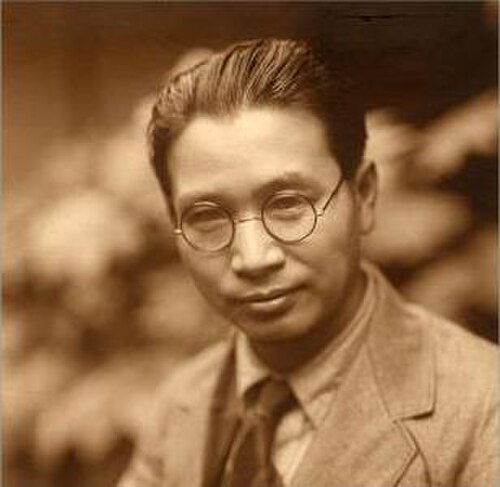
1929年、コロンビア大学経済地理学名誉教授のJ・ラッセル・スミスは「樹木作物 - 永続的な農業」を出版し、作物を生産する樹木は、動物の飼料プログラムにおいて穀物の有用な代替品となり、環境の健全性も維持できると述べた。[137] 賀川豊彦はスミスの出版物を読んで大きな影響を受け、1930年代に日本で樹木の下での実験栽培を開始した。森林農業、つまり三次元林業を通じて、賀川は土壌浸食の問題に取り組み、日本の多くの高地農家に、土壌を保全し、食料を供給し、動物に餌を与えるために飼料用の木を植えるよう説得した。彼はクルミの木を広範囲に植え、その実を収穫して豚に与え、収入源として豚を販売した。クルミの木が成長すると、木材として売られ、さらに木が植えられた。こうして、小規模地主に短期的、長期的な収入をもたらす経済的な収穫のサイクルが続いた。[138] これらの実験の成功は、他の国々でも同様の研究を促した。第二次世界大戦で通信が途絶え、森林農業の進歩は鈍化した。[139] 1950年代半ばには、南アフリカなどの場所で研究が再開された。香川はまた、1960年代にイギリスのシュロップシャーで温帯気候の森林園芸の先駆者となったロバート・ハート にもインスピレーションを与えた。[140]
以前は、家畜は森林農業システムの一部であると考えられていました。現在では、家畜は一般的に除外されており、樹木、飼料、家畜を統合したアグロフォレストリーシステムはシルボパスチャーと呼ばれています。[141] 森林農業は、自然林の生態学的安定性と生産的な農業システムを組み合わせるため、土壌の再生、地下水供給の回復、洪水や干ばつの制御、限界地の耕作に大きな可能性を秘めていると考えられています。[142]
原則
森林農業の原則は、森林管理に対する生態学的アプローチを構成します。森林資源は、生物多様性と野生生物の生息地を保護しながら、賢明に使用されます。森林農場は、意図的な操作を通じて、望ましい森林生態系を創造することにより、断片化された二次林の生態学的バランスを回復する可能性があります。
場合によっては、既存の森林を利用して、植物、医薬品、食品、装飾品の生産のために意図的に種を導入します。樹木被覆、土壌の種類、給水、土地の形状、その他の場所の特性によって、どの種が繁栄するかが決まります。種と場所の関係を理解し、場所の制限を理解することは、生産ニーズに合わせてこれらのリソースを活用し、森林の長期的な健全性のために十分なリソースを保護するために必要です。
環境面でのメリット以外にも、森林農業は森林資産の経済的価値を高め、土地所有者に短期的および長期的なメリットをもたらします。森林農業は、手つかずの森林生態系から経済的利益をもたらしますが、木材の販売は長期的な管理戦略の一部として残すことができます。
方法
森林農業の方法には、過剰に生育し抑制された樹木群を集中的かつ慎重に間伐すること、体系的なショックを最小限に抑えるために間伐を行うための複数の統合された入口、あらゆる年齢と種の健康な樹木と低木の横断面を維持するための対話型管理などが含まれます。周辺地域への物理的な撹乱は最小限に抑える必要があります。以下は、ミズーリ大学のアグロフォレストリーセンターが作成したトレーニングマニュアルに記載されている森林農業技術です。[143]
必要な管理レベル
(最も激しいものから最も弱いものまで)
1.森林園芸は、森林農法の中で最も集約的な方法です。この方法では、上層林を間伐するだけでなく、下層林の不要な植生を除去し、農学に密接に関連するその他の作業 (耕作、施肥、除草、病虫害の防除、野生動物管理) も行います。投入量が少ないため、この方法では他の方法に比べて生産物の価値が低くなることがよくあります。森林園芸では、垂直方向の光の利用度と森林の樹冠下の空間を利用して、必要に応じて一度に複数の作物を栽培できます。
2. 野生を模倣した栽培は、自然な生育環境を維持しながら、地元の NTFP 個体群を豊かにして、豊富な再生可能な生産物供給を創出することを目指しています。撹乱を最小限に抑え、自然な生育条件により、野生から収穫されたものと見た目も品質も似た生産物になります。耕すのではなく、実践者は葉を掻き集めて土を露出させ、地面に直接種をまき、再び葉で覆うことがよくあります。この方法では野生植物によく似た NTFP が生産されるため、森林園芸法で生産された NTFP よりも高い価格が付くことがよくあります。
3. 森林管理には、望ましい NTFP の自然な繁殖に有利な光のレベルを操作するために樹冠密度を調整することが含まれます。この低強度の管理アプローチでは、望ましい NTFP の個体数を増やすために補助的な植林は行われません。
4.ワイルドクラフティングとは、自然に生育する非木材林産物の採取である。植物の定着と維持に人間が関与しないため、森林農業の実践とは見なされない。しかし、ワイルドクラフティングを行う人は、将来の収穫を念頭に置いて非木材林産物を保護する措置を講じることが多い。[144]森林の遷移の変化によって失われる可能性のある植物群を維持または維持するために森林の間伐やその他の投入が行われると、アグロフォレストリーになる。森林農業とワイルドクラフティングの最も重要な違いは、森林農業が意図的に非木材林産物を生産するのに対し、ワイルドクラフティングは自然に生育する非木材林産物を探して収集することです。
生産上の考慮事項
森林農業は、土地所有者にとって小規模なビジネスチャンスとなる可能性があり、ビジネスおよびマーケティング計画を含む慎重な計画が必要です。インターネットで NTFP を販売する方法を学ぶことも選択肢の 1 つですが、配送コストが高くなる可能性があります。土地所有者は、地元産の食材に重点を置くファーマーズマーケットやレストランなど、製品を販売するためのすべてのオプションを検討する必要があります。開発フェーズには、土地所有者の目的と資源目録を記載した森林管理計画を含める必要があります。製品の収穫または加工には特定の機器が必要な場合がありますが、他の作物は初期投資が最小限で済むため、開始コストを分析する必要があります。持続可能な森林管理に対する地域のインセンティブ、規制、およびポリシーを検討する必要があります。絶滅のおそれのある野生動植物の種の国際取引に関する条約 ( CITES ) は、特定の植物 (アメリカニンジンおよびゴールデンシール) および動物種の国際取引を規制しています。規制対象の植物を合法的に輸出するには、CITES の規則と制限に従って収穫し、記録を保持する必要があります。多くの州では、特定の在来植物の収穫規制もあり、オンラインで検索できます。もう一つの情報源としては、米国の生物多様性センターが発行した「2008年版 薬用植物の危機」レポートがある[145]。
作物の例
(国立森林農園センターより)[要出典]
薬草:
- 高麗人参(オタネニンジン)
- ブラックコホシュ ( Actaea racemosa )
- ゴールデンシール ( Hydrastis canadensis )
- アカネ科 ( Sanguinaria canadensis )
- パシフィックイチイ ( Taxus brevifolia )
- メイアップル ( Podophyllum peltatum )
- ノコギリヤシ ( Serenoa repens )
- アメリカヨウシュヤマゴボウ ( Phytolacca americana )
ナッツ:
- 黒クルミ(Juglans nigra)
- ヘーゼルナッツ ( Corylus avellana )
- シャグバーク ヒッコリー ( Carya ovata )
- ブナの木 ( Fagus sylvatica )
フルーツ:
- パパイヤ ( Asimina triloba )
- カラント(Ribes spp)
- エルダーベリー(Sambucus spp)
- サービスベリー ( Amelanchier spp )
- ブラックベリー(Rubus spp)
- ハックルベリー ( Gaylussacia brachycera )
その他の食用作物:
- ランプス(野生ネギ)(Allium tricoccum)
- シロップ(メープル)
- ハニー
- キノコ
- その他の食用根
その他の製品: (マルチ、装飾品、工芸品、染料)
- 松葉
- 柳の小枝
- ブドウの木
- ベアグラス ( Xerophyllum tenax )
- シダ
- 松ぼっくり
- 苔
在来観賞植物:
- シャクナゲ(Rhododendron catawbiense)
- ハイブッシュクランベリー ( Viburnum trilobum )
- ハナミズキ ( Cornus florida )
農家が管理する自然再生
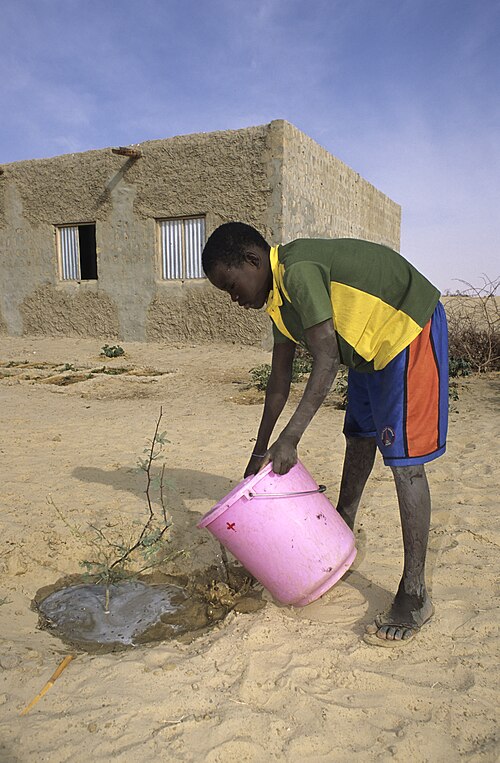
農家管理による自然再生(FMNR)は、食料や木材の生産を増やし、気候の極端さへの耐性を高めることで、発展途上国の貧しい自給農家の貧困と飢餓と闘うために使われる、低コストで持続可能な土地再生技術です。[146]木の切り株、根、種子から樹木や低木を体系的に再生・管理します。 [147] [148] FMNRは、1980年代にオーストラリアの農業経済学者トニー・リナウドによって西アフリカで開発されました。その背景と開発については、リナウドの著書「The Forest Underground」で説明されています。[149]
FMNR は特に乾燥熱帯地域に適用できますが、これに限定されるわけではありません。劣化した耕作地や放牧地を再び生産力のある状態に戻すだけでなく、劣化した森林を復元して生物多様性の損失を逆転させ、気候変動に対する脆弱性を軽減するためにも使用できます。FMNR は、特に耕作地での保全農業や放牧地での総合的管理など、他の持続可能な土地管理慣行と組み合わせると、まだ劣化していない景観を生産的な状態に維持する上で重要な役割を果たすことができます。[引用が必要]
FMNRは、頻繁で費用のかかる植え替えを必要とせずに、燃料、建築材料、食料、飼料用の継続的な木の成長を生み出すために、萌芽伐採と枝刈りと呼ばれる何世紀にもわたる森林管理手法を採用しています。農地では、一年生作物にとって最適な生育条件(水や日光へのアクセスなど)を促進しながら、成長を最大限にするために、選択された木が刈り込まれ、刈り込まれます。 [150] FMNRの木が作物や放牧地に統合されると、作物の収穫量、土壌の肥沃度と有機物、土壌水分、葉の飼料が増加します。また、風や熱による被害、土壌浸食も減少します。
FMNRは常緑農業、[151]保全農業、アグロフォレストリー運動を補完するものである。これは、資源に乏しくリスクを嫌う農家が低コストで低リスクの技術を採用するための良い入り口であると考えられている。これは、農家が新しいアイデアをより受け入れやすくなるにつれて、農業のさらなる集約化への足がかりとして機能してきた。
背景
発展途上国全体で、広大な農地、放牧地、森林が劣化し、もはや生産力を持たない状態となっている。森林破壊は急速に進んでいる。アフリカの乾燥地域では、放牧地の 74 パーセントと天水耕作地の 61 パーセントが中程度から非常に深刻な砂漠化によって被害を受けている。アフリカのいくつかの国では、森林破壊率が植林率を 300 倍上回っている。[152] : 3、141、142、215、298
荒廃した土地は、食料や生計をその土地に頼っている自給自足農家の生活に極めて有害な影響を及ぼします。自給自足農家はこれらの地域の人口の70~80%を占めることが多く、その結果、彼らは飢餓、栄養失調、さらには飢饉に悩まされています。[153] [154] [155]
アフリカのサヘル地域は、サハラ砂漠のすぐ南の大陸を横切るサバンナ地帯で、かつては肥沃な農地であった広大な土地が砂漠化している。 [156]肥沃な土壌と十分な降雨量により、通常は豊作と肥沃な家畜が保証される世界中の熱帯地域では、一部の環境があまりにも劣化し、もはや生産的でない。
1970年代から80年代にかけてアフリカのサヘル地域で発生した深刻な飢餓は世界的な対応につながり、砂漠化を食い止めることが最優先事項となった。外来種や在来種の樹木を苗床で育てる従来の方法が用いられた。数百万ドルの投資と数千時間の労働にもかかわらず、全体的な効果はほとんどなかった。[152] : 301 このような厳しい環境での森林再生に対する従来のアプローチは、克服できない問題に直面し、費用がかかり、労働集約的であった。いったん植林されると、干ばつ、砂嵐、害虫、雑草との競争、人や動物による破壊により努力が無駄になった。コミュニティの所有権の低さも別の阻害要因であった。[155]
既存の在来植物は一般に「役に立たない低木」として無視され、外来種のために伐採されることが多かった。外来種は、在来植物の生きた、または発芽中の切り株がある畑に植えられたが、その存在はほとんど認識されておらず、ましてや重要視されることはなかった。[要出典]
これは大きな見落としでした。実際、これらの生きた木の切り株は非常に多く、手入れをすれば成長し、ほとんどまたはまったくコストをかけずに複数の利益をもたらす広大な「地下の森」を形成しています。各切り株は10〜30本の茎を生やすことができます。伝統的な土地整備の過程で、農民は茎を雑草と見なし、食用作物を植える前に刈り取って燃やしました。その結果、1年の大部分は不毛の地となり、成熟した木はほとんど残っていませんでした。一般の観察者にとっては、土地は砂漠に変わりつつあるように見えました。ほとんどの人は、木がまったくなく、問題を逆転させる唯一の方法は植樹であると結論付けました。[155]
一方、定着した在来樹木は驚くべき速度で消滅し続けた。ニジェールでは、1930年代から1993年まで、森林法により樹木の所有権と管理の責任が人々の手から奪われた。当時、従来の植林による森林再生が砂漠化に対処する唯一の方法と思われた。[150] [155] [157]
歴史
1980年代初頭、ニジェール共和国のマラディ地域では、宣教団体であるサービング・イン・ミッション(SIM)が、従来の方法で周辺地域の森林再生を試みたが、失敗していた。1983年、SIMは10人ほどの農民にFMNRの実験と推進を開始した。1984年の飢饉の間、労働と引き換えに食糧を提供するプログラムが導入され、約7万人が約12,500ヘクタールの農地でFMNRとその実践に触れた。1985年から1999年にかけて、FMNRは地域および全国で推進され続け、さまざまなNGO、政府の森林官、平和部隊のボランティア、農民および市民社会グループのために交換訪問や研修日が組織された。さらに、SIMプロジェクトスタッフと農民はニジェール全土の多くの場所を訪問し、研修を提供した。[155]
2004年までに、FMNRは500万ヘクタール以上、つまりニジェールの農地の50%以上で実施されていることが確認されました。これは、20年間で年間平均25万ヘクタールの森林再生率です。この変化は、世界資源研究所の上級研究員であるクリス・レイジが「これはおそらくサヘル、そしておそらくアフリカ全体で最大の環境改善の変化である」とコメントするきっかけとなりました。[150] [158]
2004年、ワールド・ビジョン・オーストラリアとワールド・ビジョン・エチオピアは、環境修復に取り組みながらコミュニティ開発を刺激する可能性のある手段として、森林ベースの炭素隔離プロジェクトを開始しました。世界銀行とのパートナーシップであるフンボコミュニティベースの自然再生プロジェクトでは、2,728ヘクタールの劣化した天然林の再生が行われました。これは、参加コミュニティに社会的、経済的、生態学的利益をもたらしました。2年以内に、コミュニティは野生の果物、薪、飼料を収集し、野生生物が戻り始め、浸食と洪水が軽減されたと報告しました。さらに、コミュニティは現在、京都議定書のクリーン開発メカニズム(CDM)を通じて炭素クレジットの販売に対する支払いを受けています。[159] [153]
フンボプロジェクトの成功に続いて、FMNRはエチオピア北部のティグライ地域に広がり、2万ヘクタールが再生のために確保され、34の小地区それぞれに研究と実証のための10ヘクタールのFMNRモデルサイトが設けられた。エチオピア政府は、2025年までにカーボンニュートラルになるための気候変動と再生可能エネルギー計画の一環として、FMNRを使用して1500万ヘクタールの荒廃した土地を再植林することを約束している。[160]
ガーナ北部のタレンシでは、2,000~3,000ヘクタールの土地で森林伐採が実施されており、新しいプロジェクトでは3つの新しい地区に森林伐採が導入されている。セネガルのカフリンおよびディウルベル地域では、4年間で5万ヘクタールに森林伐採が広がった。ワールド・ビジョンはインドネシア、ミャンマー、東ティモールでも森林伐採を推進している。また、自主的に推進された森林伐採運動や自発的な森林伐採運動の両方が起きている例もある。例えばブルキナファソでは、国土のますます多くの部分が森林農園に転換されている。またマリでは、約600万ヘクタールの老朽化した森林農園が再生の兆しを見せている。[161] [162]
基本原則
FMNR は、農地、放牧地、森林、または林地における生きた木の切り株または根の存在に依存します。毎シーズン、切り株/根から茂った成長が芽生え、しばしば小さな低木のように見えます。家畜による継続的な放牧、定期的な焼却、および/または燃料用の木材の定期的な伐採により、これらの「低木」は決して樹木にはなりません。農地では、農家が作物を植える準備としてこの再成長を切り倒すのが標準的な方法ですが、少し注意を払うだけで、この成長は作物の収穫量を危険にさらすことなく貴重な資源に変えることができます。[163] [154]
それぞれの切り株について、何本の幹を成長させるかが決定されます。最も高くてまっすぐな幹が選ばれ、残りの幹は間引かれます。農家が定期的に戻って、不要な新しい幹や側枝が現れたら剪定すると、最良の結果が得られます。その後、農家は木の間や周囲で他の作物を育てることができます。農家が木材を必要とするときは、必要な幹を切り、残りは成長させておくことができます。残った幹は毎年サイズと価値が増し、環境を保護し続けます。幹が収穫されるたびに、若い幹が選ばれ、それを置き換えます。[引用が必要]
ベリー、果物、ナッツ類が採れたり、薬効がある可能性のある、さまざまな自然発生樹種を使用することができます。ニジェールでよく使用される樹種には、Strychnos spinosa、Balanites aegyptiaca、Boscia senegalensis、Ziziphus spp.、Annona senegalensis、Poupartia birrea、Faidherbia albidaなどがあります。ただし、最も重要な決定要因は、地元で入手可能な樹種、伐採後の再成長能力、および地元の人々がそれらの樹種にかける価値です。[引用が必要]
ファイドヘルビア・アルビダは「肥料の木」としても知られ、土壌に窒素を固定し、家畜の飼料を提供し、作物と家畜に日陰を作るため、サヘル全域で混作に人気がある。雨季に葉を落とすことで、ファイドヘルビアは、高温で作物が傷んだり成長が遅れたりする場合に、作物に有益な軽い日陰を提供する。落葉は土壌に有用な栄養素と有機物をもたらす。[154]
FMNR の実践は農地に限定されません。放牧地や荒廃した共有林でも実践されています。生きた切り株がない場合、自然に生息する種の種子が使用されます。実際には、FMNR の実践方法は決まっておらず、農家はどの種を残すか、好みの木の密度、剪定の時期と方法を自由に選択できます。[引用が必要]
実際には
-
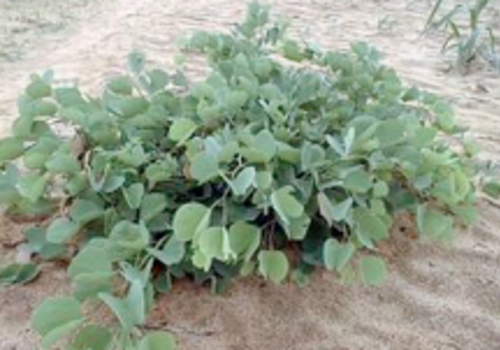 FMNR は、植生を回復させる生きている木の切り株、木の根、種子の存在に依存します。これらは、農地、放牧地、または荒廃した森林にあります。これらの切り株や木の根から発芽する新しい幹は、成長を促進するために選択して剪定することができます。発芽した木の切り株や根は低木のように見えるため、農家や森林管理者によって無視されたり、切り倒されたりすることがよくあります。しかし、余分な幹を間引き、最良の幹を選択して剪定することで、再成長は急速に木に成長する大きな可能性を秘めています。
 -
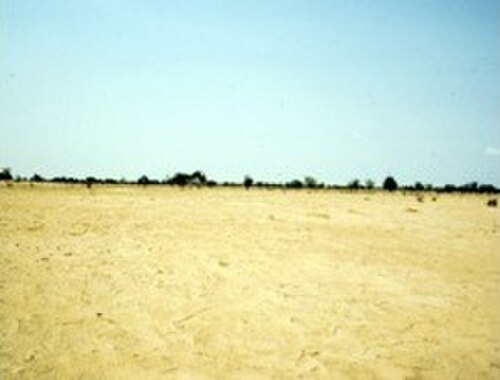 Seemingly treeless fields may contain seeds and living tree stumps and roots which have the ability to sprout new stems and regenerate trees. Even this 'bare' millet field in West Africa contains hundreds of living stumps per hectare which are buried beneath the surface like an underground forest.
 -
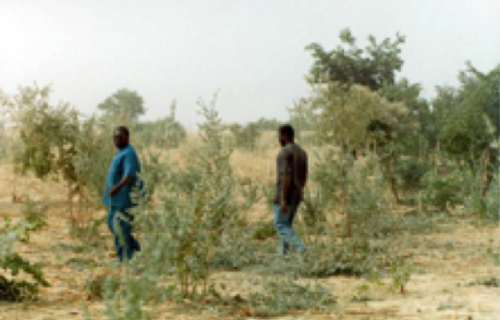 Step 1. Do not automatically slash all tree growth, but survey your farm noting how many and what species of trees are present.
 -
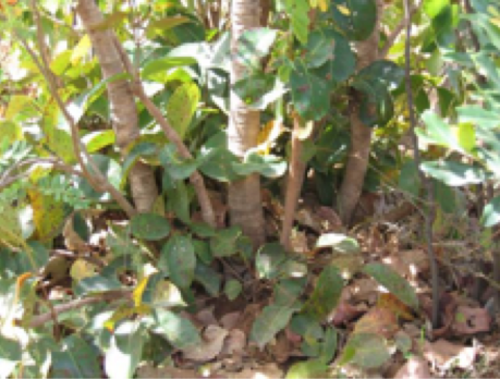 Step 2. Select the stumps which will be used for regeneration.
 -
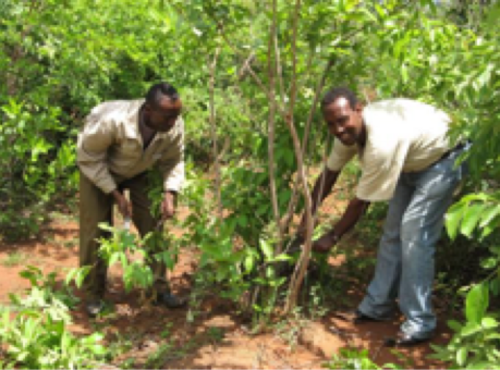 Step 3. Select the best five or so stems and cull unwanted ones. This way, when you want wood you can cut the stem(s) that are needed and leave the rest to continue growing. These remaining stems will increase in size and value each year, and will continue to protect the environment and provide other useful materials and services such as fodder, humus, habitat for useful pest predators and protection from the wind and sun. Each time one stem is harvested, a younger stem is selected to replace it.
 -
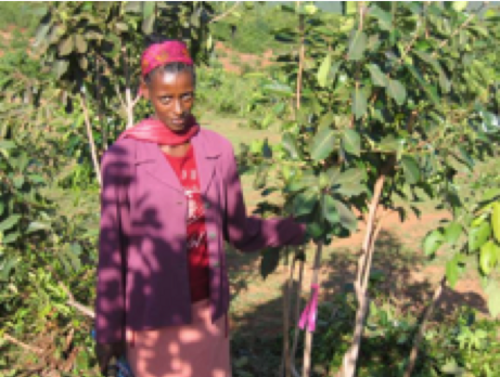 Tag selected stems with a coloured rag or paint. Work with the whole community to draw up and agree on laws which will protect the trees being pruned and respect each person's rights. Where possible, include government forestry staff and local authorities in planning and decision making.
Benefits
FMNR can restore degraded farmlands, pastures and forests by increasing the quantity and value of woody vegetation, by increasing biodiversity and by improving soil structure and fertility through leaf litter and nutrient cycling. The reforestation also retards wind and water erosion; it creates windbreaks which decrease soil moisture evaporation, and protects crops and livestock against searing winds and temperatures. Often, dried up springs reappear and the water table rises towards historic levels; insect eating predators including insects, spiders and birds return, helping to keep crop pests in check; the trees can be a source of edible berries and nuts; and over time the biodiversity of plant and animal life is increased.[155] FMNR can be used to combat deforestation and desertification and can also be an important tool in maintaining the integrity and productivity of land that is not yet degraded.
Trials, long-running programs and anecdotal data indicate that FMNR can at least double crop yields on low fertility soils.[163] In the Sahel, high numbers of livestock and an eight month dry season can mean that pastures are completely depleted before the rains commence. However, with the presence of trees, grazing animals can make it through the dry season by feeding on tree leaves and seed pods of some species, at a time when no other fodder is available.[164] In northeast Ghana, more grass became available with the introduction of FMNR because communities worked together to prevent bush fires from destroying their trees.
Well designed and executed FMNR projects can act as catalysts to empower communities as they negotiate land ownership or user rights for the trees in their care. This assists with self-organisation, and with the development of new agriculture-based micro-enterprises (e.g., selling firewood, timber and handcrafts made from timber or woven grasses).[citation needed]
Conventional approaches to reversing desertification, such as funding tree planting, rarely spread beyond the project boundary once external funding is withdrawn. By comparison, FMNR is cheap, rapid, locally led and implemented. It uses local skills and resources – the poorest farmers can learn by observation and teach their neighbours. Given an enabling environment, or at least the absence of a 'disabling' environment, FMNR can be done at scale and spread well beyond the original target area without ongoing government or NGO intervention.[citation needed]
World Vision evaluations of FMNR conducted in Senegal and Ghana in 2011 and 2012 found that households practising FMNR were less vulnerable to extreme weather shocks such as drought and damaging rain and wind storms.[165][166]
The following table summarises FMNR's benefits which fit the sustainable development model of economic, social and environmental benefits:[citation needed]
Sources:[164][150]
Key success factors and constraints
While there are numerous accounts of the uptake and spread of FMNR independent of aid and development agencies, the following factors have been found to be beneficial for its introduction and spread:[citation needed]
- Awareness creation of FMNR's potential.
- Capacity building through workshops and exchange visits.
- Awareness of the devastating effects of deforestation. The adoption of FMNR is more likely when communities acknowledge their situation and the need to take action. This perception of need can be supported by education.
- An FMNR champion/facilitator from within the community who encourages, challenges and trains peers. This is critical during the first three to five years, and continues to be important for up to 10 years. Regular site visits also ensure early detection and remedial action on resistance and threats to FMNR through deliberate damage to trees and theft.
- The buy-in of all stakeholders including their agreement on any by-laws created for FMNR and the consequences for infringements. Stakeholders include FMNR practitioners, local, regional and national government departments of agriculture and forestry, men, women, youth, marginalised groups (including nomadic herders), cultivators and commercial interests.
- Stakeholder buy-in is also important to create a critical mass of FMNR adopters in order to change social attitudes from a position of apathy or active participation in deforestation to one of proactive sustainable tree management through FMNR.
- Government support through the creation of favourable policies, positive reinforcement of actions facilitating the spread of FMNR, and disincentives for actions working against the spread of FMNR. FMNR practitioners need to be confident that they will benefit from their labours (either private or community ownership of trees, or legally binding user rights).
- Reinforcement of existing organisational structures (farmers clubs, development groups, traditional leadership structures) or establishment of new structures which will provide a framework for communities to practise FMNR on a local, district or region-wide basis.
- A communications strategy which includes education in schools, radio programs and engagement with religious and traditional leaders to become advocates.
- Establishment of a legal, transparent and accessible market for FMNR wood and non-timber forest products, enabling practitioners to benefit financially from their activities.
Brown et al. suggest that the two main reasons why FMNR has spread so widely in Niger are attitudinal change by the community of what constitutes good land management practices, and farmers' ownership of trees.[153] Farmers need the assurance that they will benefit from their labour. Giving farmers either outright ownership of the trees they protect, or tree-user rights, has made it possible for large-scale farmer-led reforestation to take place.
Current and future directions
Over nearly 30 years, FMNR has changed the farming landscape in some of the poorest countries in the world, including parts of Niger, Burkina Faso, Mali, and Senegal, providing subsistence farmers with the methods necessary to become more food secure and resilient against severe weather events.[164][167]
The 2011–2012 food crisis in East Africa gave a stark reminder of the importance of addressing root causes of hunger. In the 2011 State of the World Report, Bunch concludes that four major factors – lack of sustainable fertile land, loss of traditional fallowing, cost of fertiliser and climate change – are coming together all at once in a sort of "perfect storm" that will almost surely result in an African famine of unprecedented proportions, probably within the next four to five years. It will most heavily affect the lowland, semi-arid to sub-humid areas of Africa (including the Sahel, parts of eastern Africa, plus a band from Malawi across to Angola and Namibia); and unless the world does something dramatic, 10 to 30 million people could die from famine between 2015 and 2020.[168] Restoration of degraded land through FMNR is one way of addressing these major contributors to hunger.
In recent years FMNR has come to the attention of global development agencies and grassroots movements alike. The World Bank, World Resources Institute, World Agroforestry Center, USAID and the Permaculture movement are amongst those either actively promoting or advocating for the uptake of FMNR and FMNR has received recognition from a number of quarters including:
- In 2010, FMNR won the Interaction 4 Best Practice and Innovation Initiative award in recognition of high technical standards and effectiveness in addressing the food security and livelihood needs of small producers in the areas of natural resource management and agro forestry.
- In 2011, FMNR won the World Vision International Global Resilience Award for the most innovative initiative in the area of resilient development practice and natural environment and climate issues.
- In 2012 WVA was awarded the Arbor Day Award for Education Innovation.[169]
In April 2012, World Vision Australia – in partnership with the World Agroforestry Center and World Vision East Africa – held an international conference in Nairobi called "Beating Famine" to analyse and plan how to improve food security for the world's poor through the use of FMNR and Evergreen Agriculture. The conference was attended by more than 200 participants, including world leaders in sustainable agriculture, five East African ministers of agriculture and the environment, ambassadors, and other government representatives from Africa, Europe, and Australia, and leaders from non-government and international organisations.
Two major outcomes of the conference were:
- The establishment of a global FMNR network of key stakeholders to promote, encourage and initiate the scale-up of FMNR globally.
- Country, regional and global level plans as a basis for inter-organisation collaboration for FMNR scale-up.
The conference acted as a catalyst for media coverage of FMNR in some of the world's leading outlets and a noticeable increase in momentum for an FMNR global movement. This heightened awareness of FMNR has created an opportunity for it to spread exponentially worldwide.[170][171]
Further reading
- Heath, Nicola (24 July 2022). "He was called 'the crazy white farmer', but this Australian transformed an African landscape". ABC News (Australia). Retrieved 24 July 2022.
See also
- Afforestation
- Carbon farming
- Farmer-managed natural regeneration
- Fertilizer tree
- Forest gardening
- Land use, land-use change, and forestry
- Mycoforestry
- Permaculture
- Sustainable forest management
- Silvopasture
- Agri-environmental measures
- Agroecology
- Climate-friendly gardening
- Forest islands
- Mycoforestry
- Natural farming
- Orchard
- Pekarangan
- Polyculture
- Agroecological restoration
- Agroecology
- Forest gardening
- Landscape of agriculture
- Regenerative agriculture
- Sustainable forest management
- Zaï
- Christmas tree cultivation
- Farm Forestry Toolbox
- Plantation forestry
- Silvopasture
- Shifting cultivation
References
- ^ Mudge, Ken; Gabriel, Steve (2014). Farming the Woods: an integrated permaculture approach to growing food and medicinals in temperate forests. White River Junction, VT: Chelsea Green Publishing. p. 9. ISBN 978-1-60358-507-1.
- ^ a b "What is agroforestry?". www.aftaweb.org. Retrieved 29 April 2018.
- ^ Bizzo, Eduardo; Michener, Gregory (17 March 2024). "Fostering sustainable production via the Amazon Fund collaborative platform". Sustainable Development. doi:10.1002/sd.2956 – via CrossRef.
- ^ MacDicken, Kenneth G.; Vergara, Napoleon T. (1990). Agroforestry: classification and management. John Wiley & Sons, Inc. p. 2. ISBN 0-471-83781-4.
- ^ "Agroforestry". www.fao.org. Archived from the original on 4 November 2022. Retrieved 26 February 2022.
- ^ Mudge, Ken; Gabriel, Steve (2014). Farming the Woods: an integrated permaculture approach to growing food and medicinals in temperate forests. White River Junction, VT: Chelsea Green Publishing. p. 9. ISBN 978-1-60358-507-1.
- ^ Mudge, Ken; Gabriel, Steve (2014). Farming the Woods: an integrated permaculture approach to growing food and medicinals in temperate forests. White River Junction, VT: Chelsea Green Publishing. p. 2. ISBN 978-1-60358-507-1.
- ^ a b Vira, Bhasakar; Wildburger, Christoph; Mansourian, Stephanie (2015). Forests and Food: Addressing Hunger and Nutrition Across Sustainable Landscapes. Open Book Publishers. pp. 73–136.
- ^ Lightfoot, Kent (2009). California Indians and Their Environment: An Introduction. Berkeley: University of California Press.
- ^ Mudge, Ken; Gabriel, Steve (2014). Farming the Woods: an integrated permaculture approach to growing food and medicinals in temperate forests. White River Junction, VT: Chelsea Green Publishing. p. 23. ISBN 978-1-60358-507-1.
- ^ Mudge, Ken; Gabriel, Steve (2014). Farming the Woods: an integrated permaculture approach to growing food and medicinals in temperate forests. White River Junction, VT: Chelsea Green Publishing. p. 38-39. ISBN 978-1-60358-507-1.
- ^ MacDicken, Kenneth G.; Vergara, Napoleon T. (1990). Agroforestry: classification and management. John Wiley & Sons, Inc. p. 103. ISBN 0-471-83781-4.
- ^ Mudge, Ken; Gabriel, Steve (2014). Farming the Woods: an integrated permaculture approach to growing food and medicinals in temperate forests. White River Junction, VT: Chelsea Green Publishing. pp. 29–31. ISBN 978-1-60358-507-1.
- ^ Castle, Sarah E.; Miller, Daniel C; Merten, Nikolas; Ordonez, Pablo J.; Baylis, Kathy (2022). "Evidence for the impacts of agroforestry on ecosystem services and human well-being in high-income countries: a systematic map". Environmental Evidence. 11 (1): 10. Bibcode:2022EnvEv..11...10C. doi:10.1186/s13750-022-00260-4. PMC 11378871. PMID 39294716. S2CID 247501751.
- ^ Wilson, Sarah Jane; Schelhas, John; Grau, Ricardo; Nanni, A Sofia; Sloan, Sean (2017). "Forest ecosystem-service transitions: the ecological dimensions of the forest transition". Ecology and Society. 22 (4). doi:10.5751/ES-09615-220438. hdl:11336/67453.
- ^ "Agroforestry- A Sustainable Solution to Address Climate Change Challenges". ResearchGate. Retrieved 23 July 2021.
- ^ a b c d e f g "National Agroforestry Center". USDA National Agroforestry Center.
- ^ "Benefits of agroforestry". Agroforestry Research Trust [in England]. Archived from the original on 20 April 2015.
- ^ a b c Kuyah, Shem; Öborn, Ingrid; Jonsson, Mattias; Dahlin, A Sigrun; Barrios, Edmundo; Muthuri, Catherine; Malmer, Anders; Nyaga, John; Magaju, Christine; Namirembe, Sara; Nyberg, Ylva; Sinclair, Fergus L (31 July 2016). "Trees in agricultural landscapes enhance provision of ecosystem services in Sub-Saharan Africa". International Journal of Biodiversity Science, Ecosystem Services & Management: 1–19. doi:10.1080/21513732.2016.1214178. ISSN 2151-3732.
- ^ Harvey, Celia A.; Villalobos, Jorge A. González (1 July 2007). "Agroforestry systems conserve species-rich but modified assemblages of tropical birds and bats". Biodiversity and Conservation. 16 (8): 2257–2292. Bibcode:2007BiCon..16.2257H. doi:10.1007/s10531-007-9194-2. hdl:11056/22760. ISSN 0960-3115. S2CID 8412676.
- ^ a b c Jose, S. (2009). Agroforestry for ecosystem services and environmental benefits: an overview. Agroforestry Systems, 76(1), 1–10. doi:10.1007/s10457-009-9229-7
- ^ Nair, P. K. Ramachandran; Kumar, B. Mohan; Nair, Vimala D. (2021), "Soils and Agroforestry: General Principles", An Introduction to Agroforestry, Cham: Springer International Publishing, pp. 367–382, doi:10.1007/978-3-030-75358-0_15, ISBN 978-3-030-75357-3, S2CID 245924011, retrieved 13 May 2023
- ^ Béliveau, Annie; Lucotte, Marc; Davidson, Robert; Paquet, Serge; Mertens, Frédéric; Passos, Carlos J.; Romana, Christine A. (December 2017). "Reduction of soil erosion and mercury losses in agroforestry systems compared to forests and cultivated fields in the Brazilian Amazon". Journal of Environmental Management. 203 (Pt 1): 522–532. Bibcode:2017JEnvM.203..522B. doi:10.1016/j.jenvman.2017.07.037. ISSN 0301-4797. PMID 28841519.
- ^ Brandolini, Filippo; Compostella, Chiara; Pelfini, Manuela; Turner, Sam (May 2023). "The Evolution of Historic Agroforestry Landscape in the Northern Apennines (Italy) and Its Consequences for Slope Geomorphic Processes". Land. 12 (5): 1054. doi:10.3390/land12051054. ISSN 2073-445X.
- ^ Young, Anthony (1994). Agroforestry for Soil Conservation. CAB International.
- ^ a b Agroforestry for landscape restoration. 2017. doi:10.4060/i7374e. ISBN 978-92-5-132949-8.
- ^ Udawatta, Ranjith P.; Krstansky, J. John; Henderson, Gray S.; Garrett, Harold E. (July 2002). "Agroforestry practices, runoff, and nutrient loss: a paired watershed comparison". Journal of Environmental Quality. 31 (4): 1214–1225. doi:10.2134/jeq2002.1214. ISSN 0047-2425. PMID 12175039.
- ^ Jose, Shibu (1 May 2009). "Agroforestry for ecosystem services and environmental benefits: an overview". Agroforestry Systems. 76 (1): 1–10. Bibcode:2009AgrSy..76....1J. doi:10.1007/s10457-009-9229-7. ISSN 0167-4366. S2CID 8420597.
- ^ a b Reij, C. and R. Winterbottom (2015). Scaling up Regreening: Six Steps to Success. World Resources Institute, World Resources Institute: 1-72.
- ^ Nchanji, Yvonne K.; Nkongho, Raymond N.; Mala, William A.; Levang, Patrice (2016). "Efficacy of oil palm intercropping by smallholders. Case study in South-West Cameroon". Agroforestry Systems. 90 (3): 509–519. Bibcode:2016AgrSy..90..509N. doi:10.1007/s10457-015-9873-z. ISSN 0167-4366.
- ^ The State of the World's Forests 2020. Forests, biodiversity and people – In brief. Rome: FAO & UNEP. 2020. doi:10.4060/ca8985en. ISBN 978-92-5-132707-4. S2CID 241416114.
- ^ Kay, Sonja; Rega, Carlo; Moreno, Gerardo; den Herder, Michael; Palma, João H.N.; Borek, Robert; et al. (April 2019). "Agroforestry creates carbon sinks whilst enhancing the environment in agricultural landscapes in Europe". Land Use Policy. 83: 581–593. Bibcode:2019LUPol..83..581K. doi:10.1016/j.landusepol.2019.02.025. hdl:10347/22156. ISSN 0264-8377. S2CID 159179077.
- ^ "Multistrata Agroforestry". Project Drawdown. 7 February 2020. Retrieved 4 December 2020.
- ^ Read "Negative Emissions Technologies and Reliable Sequestration: A Research Agenda" at NAP.edu. 2019. doi:10.17226/25259. ISBN 978-0-309-48452-7. PMID 31120708. S2CID 134196575.
- ^ Montagnini, F.; Nair, P. K. R. (1 July 2004). "Carbon sequestration: An underexploited environmental benefit of agroforestry systems". Agroforestry Systems. 61–62 (1–3): 281. Bibcode:2004AgrSy..61..281M. doi:10.1023/B:AGFO.0000029005.92691.79. ISSN 0167-4366. S2CID 33847583.
- ^ Zomer, Robert J.; Neufeldt, Henry; Xu, Jianchu; Ahrends, Antje; Bossio, Deborah; Trabucco, Antonio; van Noordwijk, Meine; Wang, Mingcheng (20 July 2016). "Global Tree Cover and Biomass Carbon on Agricultural Land: The contribution of agroforestry to global and national carbon budgets". Scientific Reports. 6 (1): 29987. Bibcode:2016NatSR...629987Z. doi:10.1038/srep29987. ISSN 2045-2322. PMC 4951720. PMID 27435095.
- ^ Reppin, Saskia; Kuyah, Shem; de Neergaard, Andreas; Oelofse, Myles; Rosenstock, Todd S. (16 March 2019). "Contribution of agroforestry to climate change mitigation and livelihoods in Western Kenya". Agroforestry Systems. 94: 203–220. doi:10.1007/s10457-019-00383-7. ISSN 1572-9680.
- ^ Kristjanson, Patti; Neufeldt, Henry; Gassner, Anja; Mango, Joash; Kyazze, Florence B.; Desta, Solomon; Sayula, George; Thiede, Brian; Förch, Wiebke; Thornton, Philip K.; Coe, Richard (2012). "Are food insecure smallholder households making changes in their farming practices? Evidence from East Africa". Food Security. 4 (3): 381–397. doi:10.1007/s12571-012-0194-z. ISSN 1876-4517.
- ^ Beets, Willem C. (6 March 2019). Multiple Cropping and Tropical Farming Systems. doi:10.1201/9780429036491. ISBN 9780429036491. S2CID 179131607.
- ^ Francis, Charles A. (1 January 1989), Brady, N. C. (ed.), "Biological Efficiencies in Multiple-Cropping Systems11This article is a contribution from the Department of Agronomy at the University of Nebraska, Lincoln, Nebraska 68583.", Advances in Agronomy, vol. 42, Academic Press, pp. 1–42, doi:10.1016/s0065-2113(08)60522-2, retrieved 23 February 2023
- ^ Ghosh-Jerath, Suparna; Kapoor, Ridhima; Ghosh, Upasona; Singh, Archna; Downs, Shauna; Fanzo, Jessica (2021). "Pathways of Climate Change Impact on Agroforestry, Food Consumption Pattern, and Dietary Diversity Among Indigenous Subsistence Farmers of Sauria Paharia Tribal Community of India: A Mixed Methods Study". Frontiers in Sustainable Food Systems. 5: 667297. doi:10.3389/fsufs.2021.667297. ISSN 2571-581X. PMC 7613000. PMID 35811836.
- ^ Langford, Kate (8 July 2009). "Turning the tide on farm productivity in Africa: an agroforestry solution". World Agroforestry Centre. Archived from the original on 20 June 2010. Retrieved 2 April 2014.
- ^ Bayala, Jules; Larwanou, Mahamane; Kalinganire, Antoine; Mowo, Jeremias G.; Weldesemayat, Sileshi G.; Ajayi, Oluyede C.; Akinnifesi, Festus K.; Garrity, Dennis Philip (1 September 2010). "Evergreen Agriculture: a robust approach to sustainable food security in Africa" (PDF). Food Security. 2 (3): 197–214. doi:10.1007/s12571-010-0070-7. ISSN 1876-4525. S2CID 12815631.
- ^ Ayarza, M. A.; Welchez, L. A. (2004). "Drivers effecting the development and sustainability of the Quesungual Slash and Mulch Agroforestry System (QSMAS) on hillsides of Honduras" (PDF). In Noble, A. (ed.). fComprehensive Assessment Bright Spots Project Final Report. Retrieved 14 January 2018.
- ^ Conservation Agriculture: Case Studies in Latin America and Africa. FAO. 2001.
- ^ Pauli, N.; Barrios, E.; Conacher, A. J.; Oberthür, T. (2011). "Soil macrofauna in agricultural landscapes dominated by the Quesungual Slash-and-Mulch Agroforestry System, western Honduras" (PDF). Applied Soil Ecology. 47 (2): 119–132. Bibcode:2011AppSE..47..119P. doi:10.1016/j.apsoil.2010.11.005. S2CID 18732880. Archived from the original (PDF) on 24 March 2016. Retrieved 6 December 2017 – via Elsevier.
- ^ Moreno-Calles, A. I.; Toledo, V. M.; Casas, A. (2013). "Los sistemas agroforestales tradicionales de México: Una aproximación biocultural". Botanical Sciences. 91 (4): 383. ISSN 2007-4476.
- ^ a b c Toledo, V. M. (2 August 2016). "La madre de todas las batallas". La Jornada: Opinión (in Spanish). Retrieved 9 July 2021.
- ^ Moreno-Calles, A. I.; Toledo, V. M.; Casas, A. (2013). "Los sistemas agroforestales tradicionales de México: Una aproximación biocultural". Botanical Sciences. 91 (4): 383. ISSN 2007-4476.
- ^ Toledo, V. M.; Moguel, P. (2012). "Coffee and sustainability: The mul- tiple values of traditional shaded coffee". Journal of Sustainable Agriculture. 36 (3): 353–377. Bibcode:2012JSusA..36..353T. doi:10.1080/10440046.2011.583719.
- ^ Arboles en cafetales. CATIE, Turrialba (Costa Rica). Proyecto Agroforestal CATIE/GTZ. 11 February 1999. ISBN 978-9977-57-331-1. Retrieved 11 February 2024.
{{cite book}}:|website=ignored (help) - ^ Muschler, R. G. (1 August 2001). "Shade improves coffee quality in a sub-optimal coffee-zone of Costa Rica". Agroforestry Systems. 52 (3): 253. Bibcode:2001AgrSy..52..253M. doi:10.1023/A:1011863426305. ISSN 0167-4366.
- ^ a b Tripathi, Bansh R.; Psychas, Paul J. (1992). The AFNETA Alley Farming Training Manual. Vol. 1 - Core course in alley farming. Ibadan: Alley Farming Network for Tropical Africa (AFNETA). pp. xi+180. hdl:10568/49807. ISBN 978-131-074-X. OCLC 29771935. S2CID 130266228. AGRIS id XF2016015795. hdl:20.500.12478/5101.
- ^ Elkan, Daniel (20 February 2005). "The Rainforest Saver". The Ecologist.
- ^ Akinnifesi, F. K.; Makumba, W.; Kwesiga, F. R. (2006). "Sustainable Maize Production Using Gliricidia/Maize Intercropping in Southern Malawi" (PDF). Experimental Agriculture. 42 (4): 10 (1–17). doi:10.1017/S0014479706003814. S2CID 29015406.
- ^ Andrade, Dayana; Pasini, Felipe; Scarano, Fabio Rubio (August 2020). "Syntropy and innovation in agriculture". Current Opinion in Environmental Sustainability. 45: 20–24. Bibcode:2020COES...45...20A. doi:10.1016/j.cosust.2020.08.003. ISSN 1877-3435.
- ^ "In syntropic agriculture, farmers stop fighting nature and learn to embrace it". Mongabay Environmental News. 30 July 2020. Retrieved 13 April 2024.
- ^ Steinfeld, Jonas P.; J.J.A. Bianchi, Felix; Luiz Locatelli, Jorge; Rizzo, Rodnei; Eduarda Bispo de Resende, Maria; Ramos Ballester, Maria V.; Cerri, Carlos E.P.; Bernardi, Alberto C.C.; Creamer, Rachel E. (December 2023). "Increasing complexity of agroforestry systems benefits nutrient cycling and mineral-associated organic carbon storage, in south-eastern Brazil". Geoderma. 440: 116726. Bibcode:2023Geode.440k6726S. doi:10.1016/j.geoderma.2023.116726. ISSN 0016-7061.
- ^ "Are syntropic agroforestry systems microclimatically similar to tropical forests?". www.researchsquare.com. 1 April 2024. Retrieved 13 April 2024.
- ^ Murta, Johnny Rodrigues de Melo; Brito, Gleicon Queiroz de; Mendonça Filho, Sérgio Fernandes; Hoffmann, Maurício Rigon; Salemi, Luiz Felippe (October 2021). "Understanding the effect of an agroforestry system with high litter input on topsoil permeability". Soil Use and Management. 37 (4): 802–809. Bibcode:2021SUMan..37..802M. doi:10.1111/sum.12647. ISSN 0266-0032.
- ^ Cossel, Moritz von; Ludwig, Heike; Cichocki, Jedrzej; Fesani, Sofia; Guenther, Ronja; Thormaehlen, Magnus; Angenendt, Jule; Braunstein, Isabell; Buck, Marie-Luise; Kunle, Maria; Bihlmeier, Magnus; Cutura, David; Bernhard, AnnSophie; Ow-Wachendorf, Felicitas; Erpenbach, Federico (December 2020). "Adapting Syntropic Permaculture for Renaturation of a Former Quarry Area in the Temperate Zone". Agriculture. 10 (12): 603. doi:10.3390/agriculture10120603. ISSN 2077-0472.
- ^ "Agenda Götsch's Articles – Agenda Gotsch". agendagotsch.com. Retrieved 13 April 2024.
- ^ Pereira, Sabrina Mendes, Maurício Rigon Hoffman, and Luiz Felippe Salemi. "Soil physical properties in an oxisol under a syntropic agroforestry system: row versus inter-row." Revista Brasileira de Geografia Física 17.2 (2024): 838-844.
- ^ Thampy, Sarin; Valogianni, Konstantina (1 January 2023). "The Impact of Innovation on Sustainability in Agriculture: A Literature Review and Opportunities for Future Research". MCIS 2023 Proceedings.
- ^ Damant, G. "Can agroforestry improve soil water and temperature dynamics in agriculture? A case study with syntropic farming in Bahia, Brazil." European Agroforestry Conference-Agroforestry as Sustainable Land Use, 4th. EURAF, 2018.
- ^ Abugre, S.; Asare, A.I.; Anaba, J.A. (2010). "Gender equity under the Modified Taungya System (MTS). A case of the Bechem Forest District of Ghana" (PDF). International Journal of Social Forestry. 3 (2): 134–150 (137). Archived from the original (PDF) on 19 August 2015.
- ^ Van, Sangyan (February 2019). "Itteri Biofence - Solution for Peafowl nuisance" (PDF). Vansangyan. 6: 33–34.
- ^ "Could bamboo-based agroforestry systems be the latest kind of climate-smart agriculture?". World Agroforestry. 18 May 2020. Archived from the original on 11 June 2020. Retrieved 25 November 2021.
- ^ Hoffner, Erik (25 October 2019). "Grand African Savannah Green Up: Major $85 Million Project Announced to Scale up Agroforestry in Africa". Ecowatch. Retrieved 27 October 2019.
- ^ "The shamba system: an indigenous woman fights for the rights of her community". United Nations Environment Programme. 4 November 2019. Retrieved 12 July 2021.
- ^ Lincoln, Noa Kekuewa; Lee, Tiffany M.; Quintus, Seth; Haensel, Thomas P. E.; Chen, Qi (December 2023). "Agroforestry Distribution and Contributions in Ancient Hawaiian Agriculture". Human Ecology. 51 (6): 1113–1215. doi:10.1007/s10745-023-00471-4.
- ^ Lincoln, Noa Kekuewa; Rossen, Jack M.; Vitousek, Peter; et al. (2018). "Restoration of 'Āina Malo'o on Hawai'i Island: Expanding Biocultural Relationships". Sustainability. 10 (1): 3985. doi:10.3390/su10113985.
- ^ Iqbal, Nausheen. "A Food Forest Grows in Atlanta". USDA.gov blog. Retrieved 17 June 2018.
- ^ Coble, Adam P.; Contosta, Alexandra R.; Smith, Richard G.; Siegert, Nathan W.; Vadeboncoeur, Matthew; Jennings, Katie A.; Stewart, Anthony J.; Asbjornsen, Heidi (15 June 2020). "Influence of forest-to-silvopasture conversion and drought on components of evapotranspiration". Agriculture, Ecosystems & Environment. 295: 106916. Bibcode:2020AgEE..29506916C. doi:10.1016/j.agee.2020.106916. ISSN 0167-8809. S2CID 216426779.
- ^ Schoeneberger, Michele M. (2017). Patel-Weynand, Toral; Bentrup, Gary; Schoeneberger, Michele M. (eds.). Agroforestry: Enhancing resiliency in U.S. agricultural landscapes under changing conditions. United States Department of Agriculture Forest Service. doi:10.2737/WO-GTR-96. Gen. Tech. Report WO-96. Retrieved 17 June 2018.
- ^ David Adam, Earthshakers: the top 100 green campaigners of all time The Guardian, 28 November 2006
- ^ a b Elkan, Daniel. Slash-and-burn farming has become a major threat to the world's rainforest The Guardian 21 April 2004
- ^ a b rainforestsaver.org: What is Inga alley cropping? Archived 4 March 2016 at the Wayback Machine
- ^ Guinness, Bunny. A "miracle cure" The Sunday Telegraph 5 December 2004
- ^ "Silvopasture". Agroforestry Research Trust [in England]. Archived from the original on 20 April 2015. Retrieved 19 August 2015.
- ^ Fra. Paleo, Urbano. (2010). "The dehesa/montado landscape". pp. 149–151 in Sustainable Use of Biological Diversity in Socio-ecological Production Landscapes, eds. Bélair, C., Ichikawa, K., Wong, B.Y.L. and Mulongoy, K.J. Montreal: Secretariat of the Convention on Biological Diversity. Technical Series no. 52.
- ^ "Agroforst > Publikationen > Publikationen und Dokumente Schweiz" (PDF). agroforst.ch (in German). Archived from the original (PDF) on 25 September 2019. Retrieved 23 April 2018.
- ^ "Agroforstwirtschaft in der Schweiz" (PDF). agrarforschungschweiz.ch (in German). Retrieved 22 August 2020.
- ^ "Agroforst > Publikationen > Publikationen und Dokumente Schweiz" (PDF). agroforst.ch (in German). Archived from the original (PDF) on 25 September 2019. Retrieved 23 April 2018.
- ^ Klaus von Gadow; Juan Gabriel Álvarez González; Chunyu Zhang; Timo Pukkala; Xiuhai Zhao (2021). Sustaining Forest Ecosystems. Springer Nature. p. 13. ISBN 978-3-030-58714-7.
- ^ a b Crawford, Martin (2010). Creating a Forest Garden: Working with Nature to Grow Edible Crops. Green Books. p. 18. ISBN 978-1900322621. OL 24327991M.
- ^ Paschall, Max (22 July 2020). "The Lost Forest Gardens of Europe". Shelterwood Forest Farm. Retrieved 5 January 2021.
- ^ a b c d e Hart, Robert (1996). Forest Gardening: Cultivating an Edible Landscape (2nd ed.). White River Junction, VT: Chelsea Green. ISBN 9781603580502.
- ^ McConnell, Douglas John (2 March 2017). The forest farms of Kandy : and other gardens of complete design. Routledge. ISBN 978-1-351-88963-6. OCLC 976441721.
Forest gardens are probably the world's oldest form of land use and most resilient agroecosystem. They originated in prehistoric times along jungle-clad river banks and in the wet foothills of monsoon regions. ... Robert Hart adapted forest gardening for the United Kingdom's temperate climate during the 1980s.
- ^ Coan, K.E.D. (18 May 2021). "Indigenous forest gardens remain productive and diverse for over a century". Ars Technica. Retrieved 19 May 2021.
- ^ Jacob, V. J.; Alles, W. S. (1987). "Kandyan gardens of Sri Lanka". Agroforestry Systems. 5 (2): 123. Bibcode:1987AgrSy...5..123J. doi:10.1007/BF00047517. S2CID 40793796.
- ^ Boyle, Richard (2 January 2004). "Inspector Gadget's green fingers and politics". Times Higher Education. Archived from the original on 19 January 2012.
- ^ McConnell, Douglas John (1973). The economic structure of Kandyan forest-garden farms.
- ^ Burnett, Graham. "Seven Storeys of Abundance; A visit to Robert Hart's Forest Garden". Archived from the original on 17 November 2011.
- ^ Whitefield, Patrick (2002). How to Make a Forest Garden. Permanent Publications. p. 5. ISBN 9781856230087.
- ^ "Agroforestry Research Trust". Archived from the original on 8 November 2011.
- ^ "Forest gardening". Agroforestry Research Trust. Archived from the original on 11 February 2013. Retrieved 13 February 2013.
- ^ "Woodland Gardening". Archived from the original on 28 November 2011.
- ^ "Plants for a Future - The book". Archived from the original on 28 November 2011.
- ^ "Vegan Views 96 - Kathleen Jannaway 1915-2003: A Life Well Lived". www.veganviews.org.uk. Retrieved 28 October 2021.
- ^ "Bangor Forest Garden" (PDF). The Movement for Compassionate Living - New Leaves (issue no.93). 2009. pp. 6–8. Archived from the original (PDF) on 18 July 2011.
- ^ "About". Paradise Lot. 28 January 2013. Archived from the original on 19 March 2023. Retrieved 4 November 2021.
- ^ "Graham Bell's Forest Garden". Archived from the original on 8 March 2012.
- ^ "Edible Forest Gardening". Archived from the original on 1 November 2011. Retrieved 13 November 2011.
- ^ "Establishing a Food Forest review". Archived from the original on 22 May 2016.
- ^ Bell, Graham (2004). The permaculture garden. Sarah Bunker. East Meon, Hampshire, U.K.: Permanent Publications. ISBN 1-85623-027-9. OCLC 60454349.
- ^ "Unnatural Histories - Amazon". BBC Four. Archived from the original on 29 December 2015.
- ^ Romero, Simon (14 January 2012). "Once Hidden by Forest, Carvings in Land Attest to Amazon's Lost World". The New York Times. Archived from the original on 20 December 2016.
- ^ Pärssinen, Martti; Schaan, Denise; Ranzi, Alceu (2009). "Pre-Columbian geometric earthworks in the upper Purús: a complex society in western Amazonia". Antiquity. 83 (322): 1084–1095. doi:10.1017/S0003598X00099373. S2CID 55741813.
- ^ Smith, Michael Ernest; Masson, Marilyn A. (2000). The Ancient Civilizations of Mesoamerica. Wiley. p. 127. ISBN 9780631211167.
- ^ Lentz, David L., ed. (2000). Imperfect Balance: Landscape Transformations in the Precolumbian Americas. Columbia University Press. p. 212. ISBN 9780231111577.
- ^ Cronon, William (1983). Changes in the Land. New York: Hill and Wang. p. 51. ISBN 0-8090-0158-6.
- ^ Cronon, William (1983). Changes in the Land. New York: Hill and Wang. p. 37. ISBN 0-8090-0158-6.
- ^ Cronon, William (1983). Changes in the Land. New York: Hill and Wang. p. 91. ISBN 0-8090-0158-6.
- ^ "How to Grow Plants from Seeds Step by Step - Webgardener - Gardening and Landscaping Made Simple". 2 August 2021.
- ^ Ford, Anabel (2 May 2009). "El Pilar Archaeological Reserve for Maya Flora and Fauna". The Guatemala Times. Archived from the original on 5 May 2009. Retrieved 26 July 2009.
- ^ Ford, Anabel (15 December 2010). "Legacy of the Ancient Maya: The Maya Forest Garden". Popular Archaeology. Archived from the original on 15 January 2012.
- ^ "National Geographic Society Funds Mayan Garden". Archived from the original on 23 December 2011.
- ^ Mellinger, Robert (16 February 2012). "Nation's Largest Food Forest takes root on Beacon Hill". Crosscut. Archived from the original on 30 March 2012. Retrieved 14 March 2012.
- ^ "The Central Rocky Mountain Permaculture Institute". Archived from the original on 24 May 2013.
- ^ "Montview Neighborhood farm". Archived from the original on 24 October 2008.
- ^ Bukowski, Catherine; Munsell, John (2018). The Community Food Forest Handbook: How to Plan, Organize, & Nurture Edible Gathering Places. Chelsea Green. pp. 83–86. ISBN 9781603586443. Archived from the original on 24 October 2008.
- ^ Brostrom, Cara. "An Urban Food Forest: The Gift of Harvest". tell New England.
- ^ "He's on a mission to turn Boston into a collection of food forests". Dorchester Reporter.
- ^ "Community engagement sprouts fresh ideas and nonprofit leadership". GMA Foundations. 10 May 2018.
- ^ "Richard Walker". Archived from the original on 10 September 2011.
- ^ "Forest Gardening". Archived from the original on 26 May 2013.
- ^ "Bangor Forest Garden". Archived from the original on 1 August 2013.
- ^ "The Agroforestry and Forest Garden Network". Archived from the original on 18 August 2012.
- ^ Crawford, Martin (2014). "List of visitable forest garden and agroforestry projects in the UK, Europe and North America". Agroforestry Research Trust.
- ^ "El verger de Phoenicurus, un bosc comestible mediterrani". phoenicurus (in Catalan). 22 January 2016. Retrieved 22 April 2021.
- ^ Chamberlain, J.L.; D. Mitchell; T. Brigham; T. Hobby (2009). "Forest Farming Practices". North American Agroforestry: an integrated science and practice (2nd ed.). Madison, Wisconsin: American Society of Agronomy. pp. 219–254.
- ^ "Forest Farming". Forest Farming. Retrieved 20 January 2016.
- ^ Chamberlain 2009
- ^ Vaughan, R. C.; J. F. Munsell; J. L. Chamberlain (2013). "Opportunities for Enhancing Nontimber Forest Products Management in the United States". Journal of Forestry. 111 (1): 26–33. doi:10.5849/jof.10-106.
- ^ Douglas, J.S.; R. A. de J. Hart (1984). Forest farming: towards a solution to problems of world hunger and conservation. London: Intermediate Technology Publications.
- ^ Douglas 1984
- ^ Douglas 1984
- ^ Douglas 1984
- ^ Hart, Robert A. de J. (1996). Forest gardening: cultivating an edible landscape. White River Junction, VT: Chelsea Green Pub. Co.
- ^ Garrett, H.E. (2009). North American agroforestry: an integrated science and practice (2nd ed.). Madison, WI: American Society of Agronomy.
- ^ Garrett 2009
- ^ University of Missouri Center for Agroforestry (2006). Training manual for applied agroforestry practices. Columbia, Mo.: University of Missouri Center for Agroforestry.
- ^ Vaughn et al. 2013
- ^ "Medicinal Plants at Risk" (PDF). Biologicaldiversity.org. Retrieved 20 January 2016.
- ^ Holland, Mina; et al. (26 August 2012). "Africa innovations: 15 ideas helping to transform a continent". The Guardian. Retrieved 16 December 2018.
- ^ Doherty, Ben (13 December 2018). "Reforesting the world: the Australian farmer with 240m trees to his name". The Guardian. Retrieved 15 December 2018.
- ^ "The Aussie who helped transform African desert into 200 million trees". World Vision Australia. Retrieved 15 December 2018.
- ^ Rinaudo, Tony (30 April 2022). The Forest Underground. ISCAST (the Institute for the Study of Christianity in an Age of Science and Technology). ISBN 978-0645067118. Retrieved 18 May 2022.
- ^ a b c d "Chapter 3: Roots to Resilience: Case Studies". World Resources 2008 Roots of Resilience; Growing the Wealth of the Poor. Washington: World Resources Institute (WRI). July 2008. pp. 142–157. ISBN 978-1-56973-600-5. Retrieved 15 December 2018.
- ^ Evergreen Agriculture – the incorporation of trees into crop land and pastures. The three types of evergreen agriculture are: Farmer Managed Natural Regeneration, the planting of trees in conventional crop fields, and conservation agriculture with trees. Evergreen agriculture is one of several types of agroforestry.
- ^ a b Grainger, Alan (1990). The Threatening Desert: Controlling Desertification. Nairobi: Earthscan in association with United Nations Environment Programme, Nairobi, 1990. ISBN 9781853830419. Retrieved 15 December 2018.
- ^ a b c d Brown, Douglas R.; et al. (4 December 2010). "Poverty alleviation and environmental restoration using the clean development mechanism: A case study from Humbo, Ethiopia". Environmental Management. 48 (2): 322–333. doi:10.1007/s00267-010-9590-3. PMID 21132292. S2CID 829337.
- ^ a b c d Garrity, Dennis P.; et al. (28 August 2010). "Evergreen Agriculture: a robust approach to sustainable food security in Africa" (PDF). Food Security. 2 (3): 197–214. doi:10.1007/s12571-010-0070-7. S2CID 12815631.
- ^ a b c d e f Rinaudo, Tony (2 June 2007). "The Development of Farmer Managed Natural Regeneration" (PDF). LEISA Magazine. Retrieved 16 December 2018.
- ^ Tougiani, A, Guero, C and Rinaudo, T 2008, Community mobilisation for improved livelihoods through tree crop management in Niger, GeoJournal (2009) 74:377–389.
- ^ Brough, W; Kimenyi, M (June 2004). "Desertification of the Sahel: Exploring the role of property rights". Property and Environment Research Center. 2 (2). Archived from the original on 17 August 2013. Retrieved 27 February 2013.
- ^ Hertsgaard, M (7 December 2009). "Regreening Africa". The Nation. Retrieved 15 December 2018.
- ^ "Ethiopia: Humbo Assisted Natural Regeneration". Carbon Finance Unit. The World Bank. Retrieved 16 December 2018.[permanent dead link]
- ^ "Ethiopia Country Programme Document 2012–2015" (PDF). UNICEF. 15 September 2011. Retrieved 16 December 2018.
- ^ World Agroforestry Center (2012). "Improving Sustainable Productivity in Farming Systems and Enhanced Livelihoods through Adoption of Evergreen Agriculture in Eastern Africa". Research Proposal to the Australian Centre for International Agricultural Research, World Agroforestry Center, Nairobi.
- ^ Reij, Chris. "African Re-greening Initiatives" (Blog). Africa Regreening. Retrieved 16 December 2018.
- ^ a b Ndour, B.; Sarr, A.; et Mbaye, A., 2010, "Projects Baysatol/SFLEI – Rapport d'Activities". Institut Sénégalais de Recherches Agricoles (ISRA), Centre National de Recherches Agronomiques, Replublique du Senegal Ministere de l'Agriculture / World Vision Senegal.
- ^ a b c Reij, Chris; Tappan, Gray; Smale, Melinda (2009). "Chapter 7, Regreening the Sahel" (PDF). In Spielman, David; Pandya-Lorch, Rajul (eds.). Millions Fed – Proven Successes in Agricultural Development. Washington: International Food Policy Research Institute (IFPRI). pp. 53–58. Retrieved 16 December 2018.
- ^ Diagne, M., 2012, "Evaluation Finale du Projet Beysatol", World Vision Senegal.
- ^ Weston, P. and Hong, R., 2012, "End-of-Phase Evaluation Report: Talensi FMNR Project", World Vision Australia / World Vision Ghana.
- ^ Hertsgaard, Mark (28 January 2011). "The Great Green Wall: African Farmers Beat Back Drought and Climate Change with Trees". Scientific American. Retrieved 16 December 2018.
- ^ Bunch, Roland (2011). "Chapter 6: Africa's Soil Fertility Crisis and the Coming Famine". State of the World 2011: Innovations that Nourish the Planet. The Worldwatch Institute. Archived from the original on 18 April 2011. Retrieved 16 December 2018.
- ^ "2012 National Arbor Day Awards Award for Education Innovation". Arbor Day Foundation. Retrieved 16 December 2018.
- ^ Knaup, Horand (18 June 2012). "Mister Rinaudo will die Wüste". Spiegel Online. Retrieved 16 December 2018.
- ^ Alberici, Emma (9 July 2012). "Reforestation project adds hope to food crisis" (Transcript). Lateline. ABC. Retrieved 16 December 2018.
Sources
- d'Arms, Deborha 2011. Jardin d'Or (Garden of Gold): A Treatise on Forest Gardening, Recreating Sustainable Gardens of Eden. Los Gatos, CA: Robertson Publishing. ISBN 978-1611700299.
- Douglas, J. Sholto and Hart, Robert A. de J. 1985. Forest Farming. Intermediate Technology. ISBN 0-946688-30-3.
- Fern, Ken 1997. Plants for a Future: Edible and Useful Plants for a Healthier World. Hampshire: Permanent Publications. ISBN 1-85623-011-2.
- Hart, Robert A. de J. (1996). Beyond the Forest Garden. Gaia Books. ISBN 185675037X.
- Jacke, Dave, and Toensmeier, Eric 2005. Edible Forest Gardens. Two volume set. Volume One: Ecological Vision and Theory for Temperate Climate Permaculture, ISBN 1-931498-79-2. Volume Two: Ecological Design and Practice for Temperate Climate Permaculture, ISBN 1-931498-80-6. White River Junction, VT: Chelsea Green.
- Jannaway, Kathleen 1991. Abundant Living in the Coming Age of the Tree. Movement for Compassionate Living. ISBN 0-9517328-0-3.
- Smith, Joseph Russell 1988 (first published in 1929). Tree Crops: A Permanent Agriculture. Island Press. ISBN 0-933280-44-0
- Mir, Gisela Biffen, Mark 2021. Bosques y jardines de alimentos. La Fertilidad de la Tierra Ediciones. (in Spanish) ISBN 978-84-121830-1-6
- T.D.Pennignton and E.C.M. Fernandes (editors) "The Genus Inga, Utilization" Inga species and alley-cropping by Mike Hands, Kew Publications.
External links

Wikimedia Commons has media related to Agroforestry.
- Why Food Forests?, Permaculture Research Institute
- Plant an Edible Forest Garden, Mother Earth News
- The garden of the future?, The Guardian
- Forest gardens, Permaculture Association
- El Pilar Forest Garden Network, information on traditional Maya forest gardening
- National Agroforestry Center (USDA)
- Agroforestry Practices Archived 2013-03-09 at the Wayback Machine by The Center for Agroforestry, University of Missouri.
- Hwwff.cce.cornell.edu
- Ces.ncsu.edu
- Trees with Edible Leaves The Perennial Agriculture Institute.
- Ntfpinfo.us
- Dcnr.state.pa.us
- Inga Foundation
- Rainforest Saver Foundation (Inga alley cropping projects in Honduras and Cameroon)
- Inga alley cropping as an agrometeorogical service to slash and burn cultivation Archived 26 May 2012 at the Wayback Machine
- What is inga alley cropping?
- Farmer Managed Natural Regeneration Website
- Re-Greening the Sahel at IFPRI
- The Development of Farmer Managed Natural Regeneration
- Farmer Managed Natural Regeneration – Video
- National Agroforesty Center (USDA)
- World Agroforestry Centre
- The CGIAR Research Program on Forests, Trees and Agroforestry (FTA)
- Australian agroforestry
- Green Belt Movement
- Plants For A Future
- Agroforestry in France and Europe
Media
- The short film Agroforestry Practices – Alley Cropping (2004) is available for free viewing and download at the Internet Archive..
- The short film Agroforestry Practices – Forest Farming (2004) is available for free viewing and download at the Internet Archive..
- The short film Agroforestry Practices – Riparian Forest Buffers (2004) is available for free viewing and download at the Internet Archive..
- The short film Agroforestry Practices – Silvopasture (2004) is available for free viewing and download at the Internet Archive..
- The short film Agroforestry Practices – Windbreaks (2004) is available for free viewing and download at the Internet Archive..
- Agroforestry, stakes and perspectives. Agroof Production, Liagre F. and Girardin N.
