Loading article…
環境正義またはエコ正義は、貧困層や社会的に疎外されたコミュニティが、有害廃棄物、資源の採取、その他の利益を得られない土地利用によって被害を受ける環境不正義に取り組む社会運動です。 [1] [2]この運動により、環境被害への曝露が不公平に分配されていることを示す何百もの研究が生み出されました。[3]
この運動は1980年代に米国で始まった。アメリカの公民権運動に大きく影響を受け、富裕国における環境人種差別に焦点を当てていた。運動は後にジェンダー、国際的な環境不正義、疎外されたグループ内の不平等を考慮するように拡大した。運動が富裕国で一定の成功を収めるにつれ、環境負荷はグローバルサウスに移った(例えば、抽出主義や世界的な廃棄物取引を通じて)。環境正義のための運動はこのようにしてよりグローバルになり、その目的のいくつかは現在国連によって明確にされている。この運動は先住民の土地の権利や健全な環境に対する人権のための運動と重なり合っている。[4]

環境正義運動の目標は、疎外されたコミュニティが自分たちの生活に影響を与える環境決定を行うための主体性を獲得することです。グローバルな環境正義運動は、環境保護活動家が資源採掘やその他の産業で多国籍企業と頻繁に対立する地域的な環境紛争から生まれました。これらの紛争の地域的な結果は、国境を越えた環境正義ネットワークによってますます影響を受けています。[5] [6]
環境正義の研究者は、政治生態学、環境法、正義と持続可能性に関する理論などへの貢献を含む、社会科学の文献の大規模な学際的な集積を生み出してきました。[2] [7] [8]
定義
米国環境保護庁は環境正義を次のように定義しています。[9]
環境法、規制、政策の策定、実施、執行に関して、人種、肌の色、国籍、収入に関係なく、すべての人々が公平に扱われ、有意義に関与すること。公平な扱いとは、人種、民族、社会経済的グループを含むいかなる集団も、産業、自治体、商業活動、または連邦、州、地方、部族のプログラムや政策の実施から生じる環境への悪影響を不当に負担すべきではないことを意味します。
環境正義は環境人種差別や環境不平等としても議論される。[10]
環境正義は一般的に、環境リスクと利益の公平な分配である分配的正義と定義される。[11]いくつかの定義は、意思決定への公正で有意義な参加である手続き的正義を扱っている。他の学者は、環境正義コミュニティにおける抑圧と違いを認識する認識の正義を強調している。社会財を繁栄するコミュニティに変換する人々の能力は、公正な社会のさらなる基準である。[2] [11] [12]しかし、環境正義の概念を分配、参加、認識の3つの柱を超えて、自治権、関係オントロジー、認識的正義の側面も含めるように拡張する取り組みがなされてきた。[13]
ロバート・D・ブラードは、環境正義は社会運動やイデオロギー的管理としてではなく、公平性の対話として捉えられるかもしれないと書いている。ブラードは、公平性は手続き的、地理的、社会的の3つのカテゴリーに分けられると書いている。[1]ブラードは著書『21世紀における環境人種差別への対峙』の中で、環境不正義の文脈における3つのカテゴリーの違いを次のように説明している。
手続き上の公平性は、「公平性」の問題、つまり、規則、規制、評価基準、施行が、全面的に均一かつ差別なく適用される程度を指します。非科学的で非民主的な決定、排他的な慣行、遠隔地や都合の悪い時間に開催される公聴会、英語を母国語としない公衆とのコミュニケーションや公聴会の実施言語として英語のみの資料を使用することなどにより、不平等な保護が生じる可能性があります。
地理的公平性とは、コミュニティの位置と空間構成、および環境ハザード、有害施設、および埋立地、焼却炉、下水処理場、鉛製錬所、精製所、その他の有害施設などの地元で望ましくない土地利用(Lulus)への近さを指します。たとえば、不平等な保護は、居住アメニティと不便さの場所を決定する土地利用決定から生じる可能性があります。貧困層と有色人種のコミュニティは、有害施設の設置に関して「三重の」脆弱性に悩まされることが多く、非法人化コミュニティ(法的に都市または自治体として認可されていない人口の少ないコミュニティであり、そのため通常は地元で選出された役人ではなく、遠く離れた郡政府によって統治されています)も同様です。
社会的公平性は、環境に関する意思決定における社会学的要因(人種、民族、階級、文化、生活様式、政治力など)の役割を評価します。貧困層や有色人種は、最も危険な仕事に就き、最も汚染された地域に居住することが多く、彼らの子供は遊び場や自宅であらゆる種類の環境毒素にさらされています。
先住民族の環境正義
有毒産業やその他の差別的慣行が不釣り合いに多く見られる非先住民コミュニティでは、住民はEPAが概説する法律や法定枠組みに頼っている。彼らは私有財産の性質を中心とした分配的正義に頼っている。ネイティブアメリカンは先住民族国家の市民であり、少数民族ではないため、同じ法定枠組みには該当しない。個人としては、彼らはアメリカの法律に服する。国家としては、条約と米国憲法で認められた既存の主権に基づいて構築された別の法体制に服する。先住民に対する環境正義は、法人ではなく、彼らの独特の文化的および宗教的教義によって理解されている。[14]
先住民族の環境正義は、問題を彼らの植民地時代の状況という観点から捉え、脱植民地化を環境正義の潜在的な枠組みとして肯定できるモデルに従っている。[15]先住民族の生活経験は場所によって異なるが、デイビッド・ペローは「植民地化の経験において彼ら全員が共有する共通の現実があり、それが先住民族の方法論を一般化することを可能にしつつ、特定の地域的な状況を認識することを可能にする」と書いている。[15]国連によれば人権である清潔な環境への権利のような抽象的な考えでさえ、[16]財産価値の観点から見ると土地の商品化を反映しているため、先住民族の環境正義の理解と矛盾している。[14]
貧困層の環境保護主義
ジョアン・マルティネス・アリエールの影響力のある概念である貧困層の環境保護主義は、疎外されたコミュニティ、特に南半球のコミュニティが環境悪化の影響を不均衡に受けていること、そして環境に関する意思決定に彼らの視点とニーズを含めることの重要性を強調している。マルティネス・アリエールの著作では、「生態学的分配紛争」という概念も紹介されている。これは、天然資源へのアクセスと管理、およびその使用から生じる環境への影響をめぐる紛争であり、社会的および経済的不平等に根ざしていることが多い。[4]
ゆっくりとした暴力
気候変動、有毒物質の漂流、森林破壊、石油流出、戦争の環境的余波によって引き起こされる暴力は、ゆっくりとした暴力として特徴づけられる。「ゆっくりとした暴力」という用語は、作家のロブ・ニクソンが2011年に出版した著書『ゆっくりとした暴力と貧困者の環境保護主義』で造られた。[17]ゆっくりとした暴力は、「徐々に、目に見えないところで起こる暴力、時間と空間を越えて分散される遅延破壊の暴力、通常は暴力としてまったく見なされない消耗的な暴力」と定義される。[17]社会運動としての環境正義は、ゆっくりとした暴力として定義される可能性があり、そうでなければ立法機関によって対処されない可能性のある環境問題に取り組んでいる。ゆっくりとした暴力は、生態系の脆弱性と、貧しく、無力で、しばしば不本意に避難を余儀なくされた人々の脆弱性を悪化させ、絶望から生じる社会的対立を煽る。[17]
批判的な環境正義
作家のデイヴィッド・ナギーブ・ペローは、アナキズム、ポストヒューマニズム、批判理論[ 18]、インターセクショナル・フェミニズムの概念を参考にして、著書「批判的環境正義とは何か」の中で批判的環境正義(CEJ)の概念を生み出した。[19]批判的環境正義は、環境正義研究における多くの限界と緊張に対処することを目的とした視点である。批判的環境正義は、環境正義研究の研究を基に、この分野における以前の研究の前提とギャップに疑問を投げかけ、より学際的な研究を取り入れ、社会科学を含む、あるいは社会科学を超えた方法論と認識論に向かって進む学問を求めている。[20]批判的環境正義の研究者は、環境不正義の経験はさまざまな形の不平等によって促進され特徴づけられるため、環境正義分野はその方向に拡大することで恩恵を受けると考えている。[21]
従来の環境研究と批判的環境問題研究の区別は、4 つの明確な「柱」によって行われます。デイビッド・ペローの著作には、(1) 学者が 1 つ以上の社会的差異カテゴリ (人種、階級、性別、セクシュアリティ、種など) にどの程度重点を置くべきか、または複数の形態の不平等にどの程度焦点を当てるべきかに関する質問、(2) 環境問題を研究する学者が環境問題闘争の原因、結果、および可能な解決策の単一スケール分析とマルチスケール分析のどちらに重点を置くべきか、(3) さまざまな形態の社会的不平等と権力 (国家権力を含む) が社会に定着し、埋め込まれていると見なされる程度、(4) 国家、産業、およびその他の政治経済勢力からの社会生態学的脅威に直面している人間と非人間の集団の消耗性に関する、ほとんど検討されていない質問が含まれています。[21]
デイビッド・ペローは2017年に出版した著書『批判的環境正義とは何か』の中で、連携して機能する4つの柱の例として次のように書いている。[20]
水力発電所のために川がダムで堰き止められている場所では、先住民や漁民、その他の労働者もその結果として生活や健康が損なわれている傾向があります。海洋生物が水銀などの毒素にさらされると、人間もそれらの動物を食べることで水銀の影響を受けます。そして、核放射線や気候変動があらゆる社会階級、人種/民族、性別、能力、年齢を問わずすべての種と人間に影響を及ぼすと、複数の形態の不平等が交差する性質が明らかになります。
デイヴィッド・ペローは、著書『批判的環境正義研究に向けて』の中で、批判的環境正義の概念を現代の運動に当てはめ、前述の柱をブラック・ライブズ・マター運動と国家による暴力の問題に当てはめている。[21]ペローは、従来の研究では、「ブラック・ライブズ・マター運動と環境人種差別との闘いは、警察の暴力と環境政治はわずかに関連しているように見えるため、多くの学者が一見すると結びつかないつながりである」と主張している。 [21]批判的環境正義の4つの柱に従って、彼はこの概念をブラック・ライブズ・マター運動と関連運動に結び付け、次のことを実証している。[21]
(1) 差異と不平等の複数のカテゴリー(人間以外の種や構築された環境を含む)に注目すること、(2) 人種差別の暴力と抵抗運動の可能性を理解する方法としての規模の役割を強調すること、(3) 社会的不平等の根深い性質を変革的、反権威主義的、アナキスト的な視点と結び付けることに重点を置くこと、(4) 人種的および社会生態学的不可欠性の概念を適用することで、その運動の核心的な関心、限界、可能性についての充実した説明を生み出すことができること。
第一の柱: インターセクショナリティ
批判的EJ研究の第一の柱は、あらゆる形態の社会的不平等と抑圧が交差しており、人間以外の世界の行為者は抑圧の対象であり、しばしば社会変革の主体であるという認識を伴う。[20] 1989年にキンバリー・クレンショーによって開発された交差性理論は、個人はあらゆるアイデンティティの交差点に存在し、特権と周縁化は階級、人種、性別、セクシュアリティ、クィアネス、シスジェンダーまたはトランスジェンダー、民族性、能力、およびその他のアイデンティティの事実の交差点にあると述べている。[22] [23]デビッド・ニバートとマイケル・フォックスが不正義の文脈で述べたように、「人間社会における価値の低い様々な集団の抑圧は、独立して無関係なものではなく、むしろ、様々な形態の抑圧につながる取り決めが統合されており、ある集団の搾取が他の集団の虐待を頻繁に増大させ、悪化させている」。したがって、批判的EJは、人種差別、異性愛家父長制、階級差別、土着主義、障害者差別、年齢差別、種差別(ある種が他の種より優れているという信念)、およびその他の不平等の形態を、支配と制御の交差する軸として見ています。[20]
2020年にリア・トーマスによって設立された組織「インターセクショナル環境主義」は、この理論に基づいて、インターセクショナル環境主義とは「社会正義と環境正義は絡み合っており、このつながりを無視した環境保護活動は有害で不完全である」ことを意味すると主張しています。[23]
第二の柱: 規模
批判的環境正義の 2 番目の柱は、環境不正義の発生と解決における規模の役割に焦点を当てることです。[20]批判的環境正義は、環境正義闘争の複雑な空間的および時間的原因、結果、および可能な解決をよりよく理解するために、マルチスケールの方法論的および理論的アプローチを採用しています。[21] ジュリー・スゼーは、「グローバルに考え、ローカルに行動するには、人々がローカルとグローバルの関係をより完全に理解すること、つまり、規模を考慮することも必要です」と書いています。[20]規模は、人種、性別、階級によって大きく左右されます。気候科学者の結論は、人為的な気候変動が劇的なペースで、強度を増して起こっていることを驚くほど明確にしています。デビッド・ペローは、2016 年の出版物「批判的環境正義研究に向けて」で、「これは不均等に起こっており、有色人種、貧困層、先住民、南半球の人々、女性が最も苦しんでいる」と書いています。[21]
ペローはさらに、時間的次元を通して規模を文脈化しています。たとえば、石炭火力発電所や石油ベースの経済の出現と使用は、歴史的期間にわたってどのように発展し変化し、ひいては私たちの生態学的危機の社会的原因を明らかにしています。[20]ペローは、2017年の出版物「重要な環境正義とは何か」で、「二酸化炭素や亜酸化窒素の分子は一瞬で発生する可能性がありますが、…大気中に1世紀以上も残るため、ある時点で私たちが下した決定が、将来の世代に劇的な影響を及ぼす可能性があります」と述べています。[20]汚染は発生した場所に留まることはないため、問題の影響だけでなく、問題の規模についても考慮する必要があります。
第三の柱: 社会的不平等
Critical EJ の 3 番目の柱は、人種差別から種差別に至るまでの社会的不平等が社会に深く根付いており、国家権力によって強化されているため、現在の社会秩序が社会正義と環境正義に対する根本的な障害となっているという見解です。[20]ペローは、2017 年の著書What is Critical Environmental Justiceで、社会変革運動は、改革の対象および/または信頼できるパートナーとしての国家や資本を超えて考え、行動する方がよいと主張しています。[21]さらに、学者や活動家は、国家を超えて存在する環境的に回復力のあるコミュニティをどのように構築するかを尋ねているのではなく、国家介入の異なるモデルでどのようにそれを実現するかを尋ねています。出典ペローは、強く民主的な慣行、関係、および制度を構築およびサポートすることで、社会変革運動が国家に依存することが少なくなり、運動が取り組む国家の要素はより強力に民主的になる可能性があると考えています。[20]
彼はこの柱を、アナキストに触発された活動家コモン・グラウンド・コレクティブと関連づけている。コモン・グラウンド・コレクティブは、 2005年にメキシコ湾岸でハリケーン・カトリーナの被災者にサービスを提供するためにスコット・クロウが共同で創設した団体である。[20]クロウは国家権力の外にある変化がどのようなものかについて洞察を与え、ペローに次のように語っている。[20]
私たちは奉仕活動をしましたが、それは革命的な分析と実践でした。私たちは国家に反抗し、国家にもかかわらず私たちの仕事をする水平的な組織を作りました…人々に食事を与え、援助キットや衛生キットなどを提供しただけでなく、住宅がブルドーザーで破壊されるのを止め、学校を開けられないと言われたときには学校の鍵を切り、生徒と教師がそうすることを望んでいたので学校を掃除しました。そして、私たちは赤十字のように万能のことはしませんでした。私たちはコミュニティに尋ねました。私たちが訪れたすべてのコミュニティ、複数の人々に尋ねました。ストリートセックスワーカー、ギャング、教会の指導者、すべての人に、私たちは彼らと話をしました。あなたの近所、あなたのコミュニティ、あなたを助けるために何ができるでしょうか?そしてそれが私たちを他と違うものにしました。なぜなら、私にとってそれはアナキズムのオーバーレイだからです。1つのフランチャイズのようなものを持つ代わりに、コンセプトがあり、そこにいる人々のニーズに合ったコンポーネントを選択するだけです。
第四の柱: 不可欠性
Critical EJ の 4 番目の柱は、デイヴィッド・ペローが「不可欠性」と呼ぶ概念を中心に据えています。ホエン・マルケスは、著書『Black and Brown Solidarity 』で「人種的消耗性」という概念を紹介しています。その中でマルケスは、「黒人や褐色人種の身体は、国家とその構成する法制度の目から見ると、一般的に犯罪者、欠陥者、脅威であり、暴力的な懲罰や抹殺に値すると見なされている」と主張しています。[20] Critical EJ は、この研究を基に、白人至上主義や人間支配主義のイデオロギーに対抗し、排除され、周縁化された人々、その他の集団、存在、物 (人間と非人間の両方) は、消耗品としてではなく、私たちの集団の未来に不可欠なものとして見なされるべきであるという視点を明確にしています。[21]ペローは、有色人種について言及する際には人種的不可欠性を使用し、人間と非人間の境界内および境界を越えたより広範なコミュニティとそれらの相互関係について言及する際には社会生態学的不可欠性を使用しています。[21]ペローは『批判的環境正義研究に向けて』の中で、「人種的不可欠性は、人種的消耗性の論理に異議を唱えることを意図しており、反黒人人種差別を支持し、実行している制度、政策、慣行は、アフリカ系アメリカ人の将来は白人コミュニティの将来と何らかの形で切り離されているという誤った仮定に苦しんでいるという考えである」と述べている。[21]
歴史

環境不正の痕跡は、記録されていない数千年の歴史にまで及びます。連邦政府に認められる以前、先住民は大量虐殺のような環境破壊を経験しました。環境正義運動の起源は、先住民族が数百年にわたって主権と土地の権利を求めて追放と同化に反対して戦ってきた先住民族環境運動に遡ります。
「環境正義」や「環境人種差別」という言葉が一般に使われるようになったのは、1982 年の PCB 抗議運動で、ノースカロライナ州ウォーレン郡の住民がポリ塩化ビフェニルを受け入れる目的で設計された埋立地に抗議したときでした。
ノースカロライナ州の14郡の270マイルの道路に3万ガロンのPCB液が撒き散らされ、州は永久的な無害化処理よりも埋め立て地を建設すると発表した。[24]州内で最も貧しい郡で1980年の一人当たり所得が約5,000ドルだったウォーレン郡が選ばれ[1]、埋め立て地は主に黒人が住むアフトンの地域に設定された。住民は6週間抗議活動を行い、500人以上が逮捕された。[25] [26]
ウォーレン郡での抗議行動が民間人によって主導されたことは、環境正義のために闘う未来の、そして現代の環境保護、草の根団体の基盤となった。抗議行動の寄稿者のデボラ・フェルッチオは、ウォーレン・レコード紙のインタビューで、そこにいたのは普通の人々だったと説明した。 [27]彼女の夫ケン・フェルッチオは、庭のマルチ用の新聞を読んでPCBの投棄を知り、[27]数日後、彼とレオン・ホワイト牧師は、トラックが埋立地に到着するのを阻止するために「人道的封鎖」を主導した。 [ 28]デモで逮捕された後、フェルッチオは保釈金の支払いを拒否し、19日間のハンガーストライキを行うことで、郡に対する反抗を続けた。[28]
ベンジャミン・チャヴィス牧師は、抗議活動のためにウォーレン郡に派遣されたとき、米国キリスト教会連合(UCC)の人種正義委員会に所属していた。チャヴィスは非暴力抗議活動に参加したために逮捕された500人のうちの1人で、ウォーレン郡刑務所にいる間に「環境人種差別」という言葉を作り出したとされている。[29]チャヴィス牧師は、同じくUCCに所属していたレオン・ホワイト牧師とともに、さらなる活動と意識向上の基盤を築いた。[30]チャヴィス牧師は後にニューヨーカー誌の「ノースカロライナ州における環境人種差別との闘い」と題する記事の中で、「ウォーレン郡は注目を集めたが…80年代には差別があったと口で言うだけではだめだった。それを証明しなければならなかった」と回想している。[31]認識ではなく変化のために闘うことは、社会運動としての環境正義のもう一つの要素である。
ウォーレン郡の抗議活動に応えて、管理されていない有毒廃棄物処理場と商業用有害廃棄物処理施設にさらされている人々の人口統計を調べるために、2つの横断的研究が実施されました。米国キリスト教会の人種正義委員会は、米国における有害廃棄物処理施設の配置を調査し、人種がこれらの施設の配置を予測する最も重要な要因であることを発見しました。[32]これらの研究に続いて、貧困層、主に黒人のコミュニティでの有害廃棄物処理に対する広範な反対と訴訟が起こりました。[33] [34]主流の環境保護運動は、主に白人の裕福な指導者、保護の強調、社会的平等の問題への取り組みの失敗について批判され始めました。[35] [36]
EPAは、社会科学者による「人種的マイノリティと低所得層は一般人口よりも高い環境リスク負担を負っている」ことと、EPAの検査が低所得の有色人種コミュニティを適切に保護できなかったという追加の調査結果を受けて、1990年に環境平等作業グループ(EEWG)を設立しました。[15] 1992年にEPAは「環境平等:すべてのコミュニティのリスク削減」を出版しました。これは、EPAが有色人種コミュニティへの環境リスクの体系的な調査に着手した初めてのケースでした。これは、環境正義に取り組むためのEPAの方向性として機能しました。[15]
1993年、EPAは国家環境正義諮問委員会(NEJAC)を設立した。1994年、公平と正義の違いに対する国民の批判を受けて、同局は環境正義局に名称を変更した。出典:同年、ビル・クリントン大統領は大統領令12898号を発令し、環境正義に関する省庁間作業部会を設置した。[15]この作業部会は、少数民族と低所得層の環境正義に取り組もうとした。[15]デビッド・ペローは、この大統領令は「EPAをその下級仲裁者とする米国における環境正義規制の礎であり続けている」と書いている。[15]
世界的な運動の出現
1970 年代から 1980 年代にかけて、草の根運動や環境保護団体は、米国やその他の先進国における有害廃棄物処理のコストを増大させる規制を主張しました。しかし、これは 1980 年代から 1990 年代にかけて、南半球への有害廃棄物の輸出の急増につながりました。有毒廃棄物の処分、土地の収用、資源の採取など、この地球規模の環境不公正が、地球規模の環境正義運動の形成のきっかけとなりました。
環境正義が国際的な問題として始まったのは、1991年にワシントンDCで開催された第1回全国有色人種環境リーダーシップサミットで、このサミットは、米国キリスト教会人種正義委員会が主催した。約1,100人が出席し、全50州のほか、プエルトリコ、ブラジル、チリ、メキシコ、ガーナ、リベリア、ナイジェリア、マーシャル諸島の代表が参加した。[37] [38]このサミットでは、環境正義運動が、反毒素に焦点を当てるだけでなく、公衆衛生、労働者の安全、土地利用、交通、住宅、資源配分、コミュニティのエンパワーメントなどの問題にも拡大された。[38]このサミットでは、環境正義の17原則が採択され、後にブラジルのリオで開催された1992年地球サミットで発表された。この17原則は、リオの環境と開発に関する宣言と似ている。[39]
2002年の夏、非政府組織の連合がバリ島で会合を開き、2002年地球サミットに向けた最終交渉を準備した。参加した組織には、コープウォッチ、世界熱帯雨林運動、地球の友インターナショナル、第三世界ネットワーク、先住民環境ネットワークなどがあった。[40]彼らは気候正義の概念を明確にしようとした。[41]一緒に活動していた間、これらの組織は気候正義運動を特定し組織化する27項目のプログラムであるバリ気候正義原則を成文化した。第三世界ネットワークのプログラム責任者であるミーナ・ラマンは、彼らの文書について「米国の運動からの多大な貢献を受けて環境正義の概念に大きく依拠し、経済格差、民族性、地理が環境汚染の矢面に立つ人を決定する上で役割を果たしていることを認識した」と説明した。2007年にバリ島で開催された国連気候変動枠組条約第13回締約国会議(COP13)では、南半球の代表者と北半球の低所得者コミュニティが「気候正義を今!」と題する連合を結成した。CJN!はバリ原則を反映した一連の「真の解決策」を発表した。[40]
当初、環境正義運動は、裕福な国で疎外された人種グループが直面する有毒な危険や不正義に対処することに重点を置いていました。しかし、1991 年のリーダーシップ サミットで、その範囲は公衆衛生、労働者の安全、土地利用、交通、その他の問題にまで広がりました。時が経つにつれ、運動はさらに拡大し、ジェンダー、国際的な不正義、恵まれない人々の間でのグループ内格差などへの配慮も含まれるようになりました。
範囲
環境正義は、包括的な世界的運動へと発展し、生態学的負債、環境人種差別、気候正義、食糧主権、企業責任、エコサイド、犠牲地帯、貧困者の環境保護など、政治生態学に数多くの概念をもたらしました。環境正義は、環境と人権の関係を従来無視してきた人権法を強化することを目的としています。環境保護を人権法に統合する試みにもかかわらず、特に気候正義に関する課題は依然として残っています。
カイル・ポーイス・ホワイトやディナ・ギリオ・ウィテカーなどの学者は、先住民と入植植民地主義に関する環境正義についての議論を広げてきました。ギリオ・ウィテカーは、先住民の世界観とは相容れない、土地の資本主義的商品化を前提とする分配的正義を批判しています。ホワイトは、先住民の伝統的な生活とアイデンティティに対する植民地主義の壊滅的な環境影響という文脈の中で、環境正義を探求しています。
環境差別と紛争
環境正義運動は、有害廃棄物処理、資源採取、土地収用、その他の活動に関連する環境差別や環境人種差別に対処しようとしている。 [42]この環境差別は、土地に基づく伝統や経済の喪失、[43]武装暴力(特に女性や先住民に対する)[44] 環境悪化、環境紛争につながる。[45]地球規模の環境正義運動は、こうした地域に根ざした紛争から生まれたものであり、そこでは地域の環境擁護者が多国籍企業と頻繁に対立している。これらの紛争の地域的な結果は、国境を越えた環境正義ネットワークによってますます影響を受けるようになっている。[5] [6]
環境負荷の不公平な分配は、多くの区分に分かれて生じ得る。米国では、人種が環境不公平の最も重要な決定要因である。[46] [47]他の国では、貧困やカースト(インド)が重要な指標である。[48]部族の所属も、一部の国では重要である。[48]環境正義学者のローラ・プリドとデビッド・ペローは、環境人種差別を人種資本主義の根深い遺産から生じる要素として認識することが、運動にとって極めて重要であり、白人至上主義が人間と自然や労働との関係を形作り続けていると主張している。[49] [50] [51]
環境人種差別
環境人種差別は、世界中のコミュニティに影響を与える、広範かつ複雑な問題です。これは、人種、階級、環境要因の交差点に根ざした体系的な差別の一形態です。[34] 本質的に、環境人種差別とは、主に疎外された特定のコミュニティが、汚染、有毒廃棄物、その他の環境リスクなどの環境ハザードに不均衡にさらされていることを指します。これらのコミュニティは、工業地帯、廃棄物処理施設、その他の深刻な健康被害をもたらす可能性のある汚染源の近くに位置していることがよくあります。環境人種差別には長く厄介な歴史があり、多くの例は20世紀初頭にまでさかのぼります。たとえば、米国では、有色人種のコミュニティへの融資や保険の拒否を伴う「レッドライニング」の慣行により、これらのコミュニティが汚染レベルや環境ハザードの高い地域に位置することが多かったです。[52] 今日、環境人種差別は依然として重要な環境正義の問題であり、多くの低所得コミュニティや有色人種のコミュニティが汚染やその他の環境リスクに不均衡にさらされています。これはこれらのコミュニティの健康と幸福に深刻な影響を及ぼし、喘息、癌、その他の病気の発生率の上昇につながる可能性があります。[34] 環境人種差別に対処するには、その根底にある社会的、経済的、政治的要因に取り組む多面的なアプローチが必要です。より具体的には、ラテンアメリカやその他の地域の環境正義の学者は、この問題を脱植民地化のレンズを通して理解することを主張しています。[53] [54]後者は、環境人種差別が西洋の植民地プロジェクトと、現在の植民地力学の再生産から生じているという事実の根底にあります。
有害廃棄物
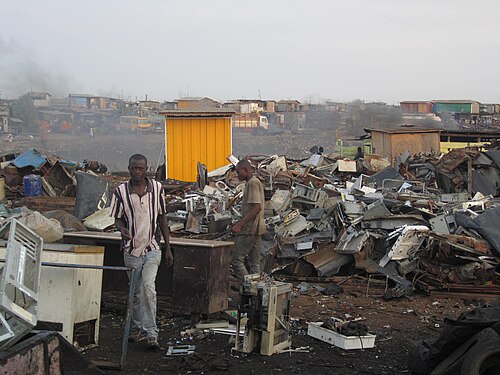
環境正義団体が米国などの先進国で成功するにつれ、世界の生産の負担は規制が緩いため廃棄物処理が安価な南半球諸国に移った。米国からの有毒廃棄物の輸出は1980年代から1990年代にかけて急増した。[55] [42]影響を受ける多くの国では、この廃棄物を適切に処理するシステムが整備されておらず、影響を受ける地域社会は自分たちがさらされている危険について知らされていない。[56] [57]
キアン海廃棄物処理事件は、有毒廃棄物の国際移動から生じる環境正義の問題の顕著な例である。ペンシルベニア州フィラデルフィアの廃棄物焼却炉から出る灰を処分していた業者は、他の数カ国が受け入れを拒否したため、ハイチの海岸に廃棄物を不法投棄した。10年以上の議論の末、最終的に廃棄物はペンシルベニア州に返還された。[56]この事件は、有毒廃棄物の国際移動を規制するバーゼル条約の制定に貢献した。[58]
土地収用
南半球の国々は、世界的な生産による環境負荷と、西洋社会における過剰消費のコストを不釣り合いに負担している。この負担は、広大な土地が家族経営や自給自足の農業から、土地投機、農業、鉱業、自然保護への多国籍投資へと移行する土地利用の変化によって悪化している。[43]南半球での土地の強奪は、新自由主義のイデオロギーと、南半球の国々を外国投資にとって魅力的にする法的枠組み、土地価格、規制慣行の違いによって引き起こされている。[43]これらの土地の強奪は、先住民の生活と社会的、文化的、精神的慣習の継続性を危険にさらしている。変革的な社会活動による土地収用への抵抗も、既存の社会的不平等と貧困によって困難になっている。影響を受けるコミュニティは、すでに基本的なニーズを満たすだけでも苦労している場合が多い。
水
きれいな水へのアクセスは人間の生活に欠かせない要素であるが、依然として非常に不平等であり、世界中で疎外されたコミュニティに不釣り合いな影響を与えている。水不足の負担は、不十分なインフラ、限られた財源、環境の悪化が重なり、困難な課題を生み出している貧困な都市部や遠隔地の農村部で特に顕著である。社会構造上の不平等にすでに苦しんでいることが多い疎外された人々は、安全で信頼できる水源を確保するとなると、さらに大きな脆弱性に直面する。差別的な慣行は、これらの課題をさらに悪化させる可能性がある。[59]水へのアクセスが限られていることの影響は深刻で、健康、教育、全体的な幸福など、日常生活のさまざまな側面に浸透している。これらの格差を認識して対処することは、正義の問題であるだけでなく、持続可能な開発にとっても極めて重要である。したがって、疎外されたコミュニティの特定のニーズを優先し、この基本的な資源への公平なアクセスを確保し、世界的な水問題に直面した際の回復力を育む包括的な水管理戦略の実施に向けた取り組みが必要である。提案されている方法の一つは、コミュニティベースの参加型開発です。カナダのシックス・ネーションズ先住民族がマクマスター大学の研究者と協力したケースのように、これを適用した場合、コミュニティ主導の科学と地元の知識の共有と統合が、水質問題への対応にどのように連携できるかが示されました。[60]
資源抽出
資源の採取は、環境差別を生み出す植民地主義の力学に基づく手段の代表的な例である。[61]何百もの研究が、疎外されたコミュニティ、多くの場合先住民コミュニティが、資源採取による環境への悪影響を不釣り合いに受けていることを示している。[3]貴重な天然資源の近くのコミュニティは、採取の環境コストと、経済不安と最終的には貧困につながる一時的な経済成長を負担するという、資源の呪いにしばしば悩まされている。 [3]貴重な天然資源の近くに住む先住民コミュニティは、ほとんどの場合単に故郷から追い出されているため、さらに多くの差別に直面している。[61]採取産業と影響を受けたコミュニティ間の力の格差は、地元のコミュニティが自分たちの生活を形作る決定に意味のある形で参加できないという深刻な手続き上の不公正につながる。
.jpg/500px-Day_of_Awareness_for_Missing_and_Murdered_Native_American_Women_and_Girls_2_(40933956505).jpg)
研究では、重要な鉱物、木材、石油の採掘が、採掘活動を行っているコミュニティにおける武装暴力と関連している可能性があることも示されています。[44]カナダ政府は、鉱山やパイプラインなどのインフラプロジェクトの影響を受けるコミュニティで、資源の採掘が先住民女性の行方不明や殺害につながっていることを発見しました。 [62]環境正義の紛争を記録した環境正義アトラスは、資源の採掘をめぐる先住民に対する暴力が激しい紛争が複数あることを示しています。[63]
不平等な交換
不平等交換とは、グローバル北半球とグローバル南半球の国々の間の不平等な経済・貿易関係を表す用語である。これらの国々の間の商品やサービスの交換は平等ではなく、グローバル北半球の国々が他の国々よりも多くの利益を得ているという考え方である。[64]これは、人件費、技術、資源へのアクセスの違いなど、さまざまな理由で起こる。不平等交換は、この貿易の枠組みを脱植民地化というレンズを通して捉えている。植民地の力関係により、北半球の国々は知識や技術を非常に高い価格で、南半球の国々は天然資源、材料、労働力を非常に安い価格で取引できる貿易システムが生まれた。[65] これは、執行可能な特許、貿易規制、世界銀行や国際通貨基金などの機関による価格設定などのメカニズムによって維持されており、北半球の国々がほとんどの議決権を握っている。[66]したがって、不平等交換は植民地関係に基づき、それを永続させる現象であり、搾取につながり、グローバル北半球とグローバル南半球の国々の間に存在する不平等を強化する。この相互依存性は、北半球と南半球の国々の二酸化炭素排出量の違いも説明しています。明らかに、北半球の国々は南半球の資源や材料を多く使用しているため、より多くの二酸化炭素を排出し、より多くの汚染を引き起こしています。[67] [64]
EJコミュニティにおける異なる曝露による健康への影響
環境正義コミュニティは、化学物質による汚染、大気汚染、汚染された水源に不釣り合いにさらされており、全体的な健康状態が低下する可能性があります。[68]これらのコミュニティの貧困は、農業や産業で使用される化学物質などの職業上の危険にさらされる要因になる可能性があります。[69]労働者が職場を離れるときに、衣服、靴、皮膚、髪に化学物質を持ち帰り、子供を含む家族にさらなる影響を与える可能性があります。 [ 69] EJコミュニティの子供たちは、大人とは異なる方法で汚染物質を代謝および吸収するため、独特の曝露を受けています。[69]これらの子供たちは、子宮内(胎盤経由)から始まり、生涯を通じてより高いレベルの汚染物質にさらされており、呼吸器疾患、胃腸疾患、精神疾患などの健康への悪影響のリスクが高くなります。[69]
ファストファッションは、環境正義コミュニティを、合成粒子や綿埃の吸入による呼吸器疾患につながる換気不良などの職業上の危険にさらします。[70]繊維染色はまた、未処理の廃水が住民や家畜が使用する水システムに流れ込むと、環境正義コミュニティを毒素や重金属にさらす可能性があります。 [ 70]衣料品生産の95%は、労働者が十分な資源を持たない低所得国または中所得国で行われています。[70]
女性の抹殺
環境正義運動は差別の解消を目指しているが、運動が擁護から制度改革へと発展するにつれ、女性は歴史的に差別されてきた。草の根運動活動は女性が主導することが多いが、ジェンダーの不平等は給与所得者が主導する組織の制度化された活動においてより蔓延している。[71]女性たちは、女性の地球と気候行動ネットワーク(WECAN)や女性の地球同盟(WEA)など、独自の国内外の非政府組織を設立することで、この傾向に反撃してきた。
米国環境保護庁の環境不正義の定義には性別は含まれておらず、代わりに人種、肌の色、国籍、収入に関する環境不正義について言及している。統治機関における男女不平等は意思決定の性質に影響を与えることが指摘されており、そのため環境正義をめぐる連邦法や議論には性別の要素が含まれないことが多い。著者のデイビッド・ペローとロバート・ブリュレは「環境正義:人間の健康と環境不平等」の中で、環境不正義は「人種、性別、階級、国家の線に沿って人間に不平等に影響を与えるため、これらのいずれかに重点を置くと、分析アプローチの説明力が薄れる」と書いている。[71] [72]
こうした不平等を背景に、国連、IUCN(国際自然保護連合)、WEDO(女性・環境・開発機構)が共同で設立した「世界ジェンダー・気候同盟」が設立された。これらはすべて、気候変動政策立案におけるジェンダー問題の認知度を高めるために設立された。[71]
環境法では
コスト障壁
環境正義へのマイノリティの参加を阻む大きな障壁の 1 つは、システムを変更し、企業がマイノリティの人口が多い地域に有毒廃棄物やその他の汚染物質を投棄するのを阻止しようとする初期費用です。環境正義のために闘い、環境人種差別をなくそうとするには、莫大な訴訟費用がかかります。[73]たとえば、英国では、原告が相手方の費用を負担しなければならないという規則があり、特に低所得のマイノリティ グループの場合、費用の問題がさらに悪化します。また、環境正義グループが企業に汚染の責任を負わせ、廃棄物処理に関するライセンス違反を起こさせる唯一の方法は、規則を施行していないとして政府を訴えることです。これは、ほとんどの人が支払えないほどの法廷費用につながります。[74]これは、2005 年から 2009 年までの 210 件の司法審査事件のうち、56% が費用のために進行しなかったという事実からもわかります。[75]
他の運動や哲学との関係
気候正義
_emissions_per_person_versus_GDP_per_person_-_scatter_plot.svg/500px-2021_Carbon_dioxide_(CO2)_emissions_per_person_versus_GDP_per_person_-_scatter_plot.svg.png)
気候変動と気候正義は、環境正義とそれが環境正義コミュニティに与える大きな影響について議論する際の要素でもある。[79]大気汚染と水質汚染は、極端な気温上昇、降水量の増加、海面上昇などの有害な影響を及ぼす可能性がある気候変動の2つの要因である。[79] [80]このため、コミュニティは洪水や干ばつなどの事象に対してより脆弱になり、食糧不足や感染症、食糧関連、水関連の病気への曝露の増加につながる可能性がある。[79] [80] [81]現在、十分な処理が行われていないため、世界で発生する廃水の80%以上が環境に放出されている。国連水資源局によると、高所得国は平均して、排出する廃水の70%を処理している。[82] [83] [84]
気候変動は脆弱な人々に最も大きな影響を及ぼすと予測されている。[81]
気候正義は環境正義、特に草の根の気候正義の影響を受けています。[85]
海の正義
「オーシャン・コレクティブ」と「アーバン・オーシャン・ラボ」の代表で海洋生物学者のアヤナ・エリザベス・ジョンソンは、海洋正義について次のように述べている。「海洋保全と社会的平等の問題が交わるところ。洪水や汚染で最も被害を受けるのは誰か、保全対策の恩恵を受けるのは誰か?海面が上昇し、嵐が激化するにつれ、こうした問題はますます緊急性を増すばかりであり、社会がそれらの問題にどう答えるかを考える際には、公平性が中心的な考慮事項となるはずだ」[86]
2023年12月、バイデン政権は海洋正義を改善するための総合戦略を発表した。この戦略の主な目標は以下のとおり。
- 海に依存し、環境破壊にほとんど貢献していない人々が、海洋破壊の影響で苦しんだ過去の不公平を是正します。その中には、先住民、アフリカ系アメリカ人、ヒスパニック系アメリカ人、ラテン系アメリカ人が含まれます。
環境保護団体もこの決定を支持した。オセアナ(非営利団体)副会長ベス・ローウェル氏によると、「沖合掘削、漁業管理、プラスチック汚染の削減は、こうした声が必要な分野のほんの一部に過ぎない」という。[87]
新しい戦略をまとめた公式文書の中で、政権はこれらの原則の過去の実施例をいくつか挙げている。その一つは、ハワイ諸島付近のパパハナウモクアケア海洋国定公園の管理戦略「マイ・カ・ポ・マイ」で、先住民コミュニティとの協議を経て考案されたものである。[88]
環境保護主義
一般的な環境保護主義と比較して、環境正義は日常生活に重点を置き、より草の根的なものだと考えられています。[89]環境正義の支持者は、主流の環境保護運動は人種差別的かつエリート主義的であることがあると主張しています。[89] [90]
生殖の正義
生殖正義運動の参加者の多くは、自分たちの闘いが環境正義運動と関連していると考えており、その逆もまた同様である。ロレッタ・ロスは生殖正義の枠組みを「女性が自らの生殖の運命を決定する能力」を扱うものと説明し、これは「地域社会の状況に直接関連しており、これらの状況は個人の選択とアクセスの問題だけではない」と主張している。[91]このような状況には、有毒廃棄物の設置や食品、空気、水路の汚染など、環境正義の中心となるものが含まれる。
モホーク族の助産師カツィ・クックは、ゼネラル・モーターズの スーパーファンドの敷地で汚染された魚や水にさらされることによる母体の有毒汚染に対処するため、1980年代にマザーズ・ミルク・プロジェクトを設立した。このプロジェクトは、妊娠と授乳を通じてアクウェサスネの女性とその子供たちに汚染が不均衡に影響を与えたことを強調し、生殖と環境正義の交差点を示している。[92]クックは、「女性の胸には、その世代と社会、そして自然界との関係が流れている」と説明している。[93]
エコフェミニズム
エコフェミニストは、環境保護主義とフェミニスト哲学の交差点を見出しています。エコフェミニズムは、環境における女性の健康への影響に関する運動や研究と混同されるべきではありません。研究者で作家のサラ・バッキンガムは、エコフェミニズムの基盤は「女性の平等は環境を悪化させることで達成されるべきではなく、環境改善は女性を犠牲にして達成されるべきでもない」という主張に根ざしていると説明しています。 [94]その起源は、フェミニスト理論、フェミニスト精神性、動物の権利、社会生態学、反核、反軍国主義の組織にあります。[95]エコフェミニズムは、そのさまざまな交差点のため、一貫性がなく、気候危機への取り組みの可能性がないと批判されてきました。[96]
エコフェミニストの懸念は、環境団体に参加したり、国内外の議論に貢献したりするフェミニスト研究者によって取り上げられている。その例としては、全米女性健康ネットワークによる産業保健と環境保健に関する研究、生殖・遺伝子工学に抵抗するフェミニストネットワーク(FINRRAGE)による生殖技術と遺伝子工学の批判、女性・人口・環境委員会による人口抑制への環境アプローチの批判などがある。[95]
環境正義を加速するためのステップ
- 環境法の世界的な加速:政府は、持続可能な開発の鍵となる清潔で健康的な環境に対する権利を尊重し、保護し、実現する必要があります。
- 強力な国家法的枠組み:天然資源の公平かつ持続可能な管理を促進する。これらの法的枠組みには、弱い立場にある人々、疎外された人々、疎外された人々が司法や情報にアクセスし、意思決定に参加できるようにする必要がある。
- 考え方の変革:将来の世代の権利と健全な環境に対する権利について。環境政策と決定の設計には、社会の幅広い層を組み込む必要があります。[97]
世界中
環境正義運動は、世界中の地域紛争から生まれています。環境正義アトラスは、2020年4月時点で世界中の3,100の環境紛争を記録しており、さらに多くの紛争が記録されていないことを強調しています。[5]
アフリカ
コンゴ民主共和国
コンゴ民主共和国(DRC)における コバルトと銅の採掘は、環境的不公正と数多くの環境紛争を引き起こしている。
コンゴ民主共和国で採掘される紛争鉱物は武力紛争を永続させます。
エチオピア
金やその他の鉱物の採掘は、エチオピアにおける環境不公正や環境紛争を引き起こしている。
ケニア
ケニアは1963年の独立以来、環境保護主義に力を入れてきた。ワンガリ・マータイなどの環境活動家は自然資源や環境資源を擁護し、ダニエル・アラップ・モイとその政府としばしば対立してきた。ケニアは急速な都市化から生じる環境問題に悩まされており、特にナイロビでは、標準軌鉄道やナイロビ高速道路などのインフラ開発のために、公共スペースであるウフル公園やナイロビ国立公園などの動物保護区が侵害されている。環境弁護士の一人であるカリウキ・ムイグアは、環境正義と情報へのアクセスおよび法的保護を擁護し、ケニアのマイルストーンに関する環境正義論文を執筆している。[98]
ナイジェリア
1956年から2006年まで、ニジェールデルタでは最大150万トンの石油が流出した(エクソンバルディーズ号の原油流出量の50倍)。[99] [100]この地域の先住民は、これらの環境問題の結果、生計手段を失い、自分たちの土地から抽出された莫大な石油収入の見返りに何の利益も受け取っていない。環境紛争は、ニジェールデルタで進行中の紛争を悪化させている。[101] [102] [103]
ナイジェリアの石油資源が豊富なデルタ地帯の先住民族であるオゴニ族は、シェル石油の掘削による環境および経済への壊滅的な影響に抗議し、ナイジェリア政府とシェルによる人権侵害を非難してきた。1995年に非暴力のオゴニ族生存運動(MOSOP)の創設者であるケン・サロ・ウィワを含む9人のオゴニ族活動家が処刑されて以来、彼らの国際的な訴えは劇的に強まった。[104] [101] [102] [103]
南アフリカ
南アフリカの植民地政府とアパルトヘイト政府の下では、何千人もの黒人南アフリカ人が先祖伝来の土地から追い出され、野生動物公園の建設が進められた。アースライフ・アフリカは1988年に結成され、アフリカ初の環境正義団体となった。1992年には、環境活動家や社会正義と環境正義に関心を持つ団体の活動を調整する全国的な統括団体である環境正義ネットワークフォーラム(EJNF)が設立された。1995年までにネットワークは150の加盟団体に拡大し、2000年までに600を超える加盟団体が加わった。[105]
1994年のアフリカ民族会議(ANC)の選挙で、環境正義運動は政府内に同盟者を得た。ANCは、南アフリカでは「貧困と環境悪化は密接に関連している」と指摘した。[出典が必要] ANCは、環境の不平等と不正義は党のポストアパルトヘイト復興開発任務の一環として対処されることを明確にした。1996年に最終決定された南アフリカの新憲法には、南アフリカ人に「健康や幸福に害を及ぼさない環境」と「現在および将来の世代の利益のために、合理的な立法およびその他の措置を通じて環境を保護する」権利を認める権利章典が含まれている。
- 汚染と生態系の劣化を防ぐ;
- 保全を促進する。そして
- 正当な経済的・社会的発展を促進しながら、生態学的に持続可能な開発と天然資源の利用を確保する」[105]
南アフリカの鉱業は、固形廃棄物の最大の発生源であり、廃棄物全体の約3分の2を占めている。[曖昧]過去1世紀にわたる事故の結果、鉱山労働者の間で何万人もの死者が出ている。[106]石綿肺などの仕事関連の病気による死亡や衰弱性疾患も数件発生している。[要出典]鉱山の近くに住む人々にとって、空気と水の質は悪い。騒音、ほこり、危険な機器や車両も、鉱山の近くに住む人々の安全を脅かす可能性がある。[要出典]これらのコミュニティは貧しく黒人であることが多く、自宅の近くに鉱山を設置することに関して選択の余地がほとんどない。国民党は、労働者の健康と安全に関する懸念と、採掘作業中および採掘作業後の土地の再生の必要性を認識することにより、環境への配慮に対処し始めた新しい鉱物法を導入した。 1993年にこの法律は改正され、新しい鉱山は着工前に環境管理計画報告書(EMPR)を作成することが義務付けられました。これらのEMPRは、鉱山会社に特定の採掘活動による環境への影響をすべて概説し、環境管理のための準備を義務付けることを意図していました。[105]
1998年10月、鉱物エネルギー省は「南アフリカの鉱物と鉱業政策」と題する白書を発表したが、そこには環境管理に関するセクションが含まれていた。白書には「政府は、国の天然資源の管理者としての国家の責任を認識し、国の鉱物資源の重要な開発が持続可能な開発の枠組みの中で、国の環境政策、規範、基準に従って行われるようにする」と記されている。また、いかなる環境政策も「費用対効果が高く競争力のある鉱業産業を確保しなければならない」と付け加えている。[105]
アジア
ノア・ディフェンバウとマーシャル・バークは、アジアにおける不平等の研究で、経済格差と地球温暖化の相互作用を実証した。例えば、グローバリゼーションと工業化は地球温暖化の可能性を高めた。しかし、工業化は富の不平等を永続させることにもなった。例えば、ニューデリーはインド大陸における産業革命の震源地であるが、富の格差は大きい。さらに、地球温暖化により、スウェーデンやノルウェーなどの国は気温上昇を利用できるが、世界の最貧国のほとんどは、地球温暖化が起こらなかった場合よりも大幅に貧しくなった。[107] [108]
中国

中国では、工場が窒素酸化物や二酸化硫黄などの有害廃棄物を排出し、健康被害を引き起こしている。ジャーナリストで科学ライターのフレッド・ピアースは、中国では「都市の大気のモニタリングは、粒子状物質であったり、窒素酸化物や二酸化硫黄、オゾンなど、1つまたは多くても2つの汚染物質に集中している。同様に、これらの毒素の影響に関するほとんどの医学的研究は、単一の汚染物質と呼吸器疾患や心血管疾患などの疑わしい健康影響との関連を探している」と指摘している。[109]中国は、世界の人為的な二酸化硫黄(SO 2)、窒素酸化物(NO x )、粒子状物質による汚染の約3分の1を排出している。 [109]国際協力による世界疾病負担研究では、毎年110万人の中国人が大気汚染の影響で亡くなっており、これは世界の死亡者数の約3分の1に相当します。[109]大気汚染による死亡の経済的損失は、年間2,670億元(380億米ドル)と推定されています。[110]
インドネシア
インドネシアにおける 環境紛争には以下のものがあります。
- アルンガス田では、エクソンモービルの天然ガス輸出産業の発展が、アチェの反乱を助長した。自由アチェ運動に率いられた分離主義戦闘員は、アチェ州にほとんど利益をもたらさずにこの地域から数十億ドルのガス収入を奪った中央政府からの独立を試みていた。ガス産業に向けられた暴力により、エクソンはアルンガス田の保護のためにインドネシア軍と契約を結び、その後アチェで人権侵害が起こった。[111]
マレーシア
マレーシアの環境正義運動は、次のような紛争から生まれました。
- ライナス先端材料工場:2012年から2023年にかけて100万トンを超える放射性廃棄物を生産する希土類処理工場。
韓国
韓国における環境正義運動は、次のような紛争から生まれました。
オーストラリア
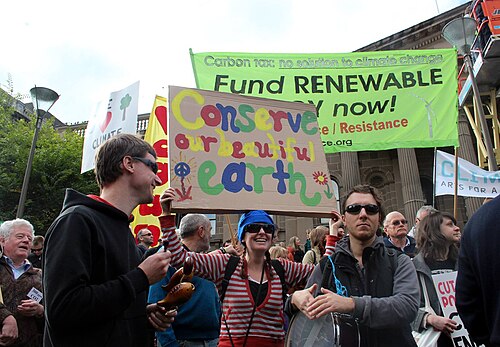
オーストラリアは多くの環境的不公正に悩まされてきたが、その多くは天然資源の採取を目的とした企業の汚染プロジェクトによって引き起こされてきた。例えば、核施設や有害廃棄物処理施設の差別的な立地などである。 [112] [113]これらのプロジェクトは、地元の気候、生物多様性、経済的に貧しい地域の地元住民の健康に悪影響を及ぼしてきた。また、これらのプロジェクトは、その「経済的」利益を主張する傾向にある地方政府や中央政府からの抵抗もほとんど受けていない。しかし、これらのプロジェクトは、環境正義団体、地域社会、先住民グループからの強い抵抗に直面してきた。[114]オーストラリアには先住民人口が多く、彼らはしばしばこれらのプロジェクトによる最悪の影響に不釣り合いに直面する。
- ウェストコネックス高速道路プロジェクト、シドニーおよびニューサウスウェールズ州(NSW)
ウェストコネックス高速道路プロジェクトは、急成長する都市としてシドニーが抱えるインフラ不足への解決策として浮上した。この高速道路プロジェクトは現在建設中で、全長33kmの新設および改良高速道路をカバーし、市内のM4およびM5高速道路と接続される。最新のウェストコネックス有料道路は2019年に開通した。ニューサウスウェールズ州政府は、この高速道路がシドニーの交通渋滞問題に対する「ミッシングリンク」であると考えており、このプロジェクトは雇用創出などのさらなる経済的利益をもたらすと主張している。
ウエストコネックス・アクション・グループ(WAG)は、高速道路近くの住民は、交通量の増加とトンネル内の換気されていない煙突によって引き起こされる高レベルの大気汚染の悪影響を受けていると述べた。抗議者らはまた、高速道路が近いことで特に子供たちが危険にさらされると主張している。
この高速道路は、シドニー公園での長期にわたる占拠キャンプや、逮捕に至った警察や建設作業員との衝突など、さまざまな形で抵抗に直面してきた。WAGは、高速道路によって財産が損害を受けた人々のために、損害記録簿を設置し、損害の範囲を記録し、被害を受けた人々を支援する。WAGは、損害賠償基金の設立、独立した損害評価、潜在的な集団訴訟を求める運動を通じてこれを行った。[115]
- イェリーリーウラン鉱山、西オーストラリア州
イェリリーウラン鉱山はカナダの企業カメコが運営している。この鉱山は全長9キロメートルの露天掘り鉱山を建設し、チワル族にとって大切なセブンシスターズ・ドリーミング・ソングラインを含む2,400ヘクタールの伝統的な土地を破壊することを目的としていた。この鉱山は10年以上にわたりチワル族、特に女性たちからの強い抵抗に直面してきた。
この鉱山は国内最大のウラン鉱床で、900万リットルの水を使用し、数百万トンの放射性廃棄物を生み出している。鉱山が操業している間、つまり2043年まで、この廃棄物は約3,600万トン発生することになる。
チウラルの女性グループがカメコを訴え、最初は勝訴した。環境保護庁(EPA)は、希少なスティゴファウナや希少なソルトブッシュの西部全個体群を含むいくつかの種を絶滅させ、マリーファウル、プリンセスインコ、グレータービルビーなどの他の野生生物に害を及ぼす可能性が非常に高いとして、鉱山を中止した。しかし、州および連邦当局はEPAに反対し、2019年に鉱山を承認した。[116]
- ノーザンテリトリー(NT)のティモール海にあるサントス・バロッサ沖合ガス
2021年3月、南オーストラリア州ノーザンテリトリー石油探査(SANTOS)は、ノーザンテリトリーのティモール海のバロッサガス田に投資し、地元に雇用をもたらすとしてノーザンテリトリー政府から大歓迎を受けた。しかし、環境正義団体は、気候と生物多様性に重大な影響を及ぼすとして、この動きを非難した。特に重要なのは、地元の島々の所有者であるティウィ族が十分な協議を受けておらず、流出があれば地元のヒラメガメやオリーブヒメウミガメの個体群に被害が出ることを懸念していると、環境正義団体が強調したことだ。
ティウィ族に対するこの無視は、ダーウィンのサントス本社前でバロッサガスプロジェクトの中止を要求する抗議活動を含む、多くの団体からの抗議を引き起こした。2021年9月、オーストラリア、韓国、日本の環境正義団体の連合が、Stop Barossa Gasという名前で団結し、プロジェクトに反対した。[117] 2022年3月、ティウィ族は、KEXIMと韓国貿易投資公社(韓国の開発金融機関)がプロジェクトに約10億ドルの資金を提供するのを阻止するために、裁判所に仮差し止め命令を申し立てた。ティウィ族は、サントスとの協議の欠如と、プロジェクトがもたらす有害な環境影響に基づいてこれを行った。2022年6月、ティウィ族は同じ理由で別の訴訟を起こしたが、今度はサントスに対して直接訴訟を起こした。[118]
ヨーロッパ
欧州環境機関(EEA)は、汚染などの環境被害への曝露は貧困と相関関係にあると報告しており[119]、貧しい国々は環境被害に苦しむ一方で、高所得国は汚染の大部分を生み出している。西ヨーロッパでは環境不平等の証拠がより広範囲に及んでいる。[119]
ロマ人は環境差別を受けている少数民族です。差別的な法律により、多くの国でロマ人は水道や下水道へのアクセスが悪く、有害廃棄物にさらされるスラム街やゲットーでの生活を強いられています。[120]
欧州連合は、すべての人々が健全な環境に対する権利を有すると宣言することで、環境正義の実現を目指している。ストックホルム宣言、1987年のブルントラント委員会の報告書「我々の共通の未来」、リオ宣言、欧州連合基本権憲章第37条など、これらはすべて、欧州人が環境正義に向けて行動するために制定した法律である。[120]
スウェーデン
スウェーデンは1969年にDDTを禁止した最初の国となった。[121] 1980年代には、女性活動家が組織化して農薬に汚染されたベリーからジャムを作り、国会議員に提供した。[122] [123]国会議員はこれを拒否し、これはエコフェミニズムにおける直接行動の例としてしばしば引用されている。
イギリス
米国の環境正義運動の主な課題は、人種、不平等、環境の問題に取り組んできたが、世界中の環境正義キャンペーンは発展し、焦点が移り変わってきた。例えば、英国のEJ運動は全く異なっている。貧困と環境の問題に焦点を当てているが、健康の不平等や社会的排除の問題にも取り組んでいる。[124]英国を拠点とするNGOである環境正義財団は、環境安全保障の必要性と基本的人権の擁護を直接結び付けようと努めてきた。[125]彼らは、環境問題と社会的不正義を結び付ける注目を集めるキャンペーンをいくつか立ち上げた。違法・無報告・無規制(IUU)漁業に反対するキャンペーンは、「海賊」漁師が地元の職人漁業コミュニティから食料を盗んでいることを強調した。[126] [127]彼らはまた、ウズベキスタンの綿花生産に関わる環境および人権侵害を暴露するキャンペーンを立ち上げた。ウズベキスタンで生産される綿花は、多くの場合、子供たちによって低賃金または無給で収穫されています。さらに、作物の灌漑用水資源の不適切な管理により、アラル海はほぼ消滅しました。[128]環境正義財団は、ウォルマートやテスコなどの大手小売業者にウズベキスタン綿花の販売を停止するよう請願し、成功しました。[129]
気候変動に対する代替策の構築
フランスでは、数多くの「オルタナティバ」イベント(代替案の村)が、気候変動や環境正義の欠如に対する何百もの代替案を提示し、人々の意識を高め、行動の変化を促しています。これらのイベントは、ビルバオ、ブリュッセル、ジュネーブ、リヨン、パリなど、フランスとヨーロッパの60以上の都市で開催済みまたは開催予定です。
北米および中米
ベリーズ
ベリーズの地域紛争から生まれた環境正義運動には以下のものがあります。
- ベリーズ政府は2010年以降、地元コミュニティと協議することなく石油採掘権を付与し始め、沖合での石油掘削は、この地域の主な経済活動である地元の漁師や観光業と協議することなく許可され、マヤ族やガリフナ族のコミュニティに影響を与えている。環境保護団体のオセアナは、 2011年に沖合での石油掘削に関する国民投票を発動するために2万人以上の署名を集めたが、ベリーズ政府は8千人以上の署名を無効にし、正式な国民投票の可能性を阻止した。これに対して、オセアナとパートナー組織は非公式の「国民投票」を組織し、その結果、ベリーズ人の90%が沖合での探査と掘削に反対票を投じた。ベリーズの最高裁判所は2013年に、ベリーズ政府が2004年と2007年に発行した沖合掘削契約を無効と宣言したが、政府は2015年に沖合掘削の開始を再検討し、ベリーズの領海の99%で石油とガスの探査を許可する新しい規制の可能性を検討した。2022年、オセアナは別のモラトリアム国民投票のための署名を集め始めた。[130]
- チャリロダム
カナダ
カナダの地域紛争から生まれた環境正義運動には以下のものがあります。
ドミニカ共和国
ドミニカ共和国の地域紛争から生まれた環境正義運動:
グアテマラ
グアテマラの地域紛争から生まれた環境正義運動には、
エルサルバドル
エルサルバドルの地域紛争から生まれた環境正義運動には以下のものがあります。
- パシフィック・リム・マイニング・コーポレーション所有のエルドラド鉱山
カナダの企業パシフィック・リム・マイニング・コーポレーションは、カバーニャス県サン・イシドロのエル・ドラド地区で金鉱山を運営している。この鉱山は、採掘プロセスに大量の水が使用されるため真水へのアクセスが制限されるなど、地元の環境に多大な悪影響を及ぼしている。また、地元の水源が汚染され、地元住民や家畜の健康に悪影響が及んでいる。さらに、エルサルバドルの調査員は、鉱山に近い 2 つの川で危険なレベルのヒ素を発見した。
鉱山の操業は紛争を引き起こし、地域社会の分裂を増大させ、鉱山反対派に対する脅迫や暴力を誘発した。2008年に地元グループの抵抗によりプロジェクトが中止された後、この暴力は激化した。今日までに、鉱山反対派の地元グループで少なくとも6人がパシフィック・リムの存在に関連して死亡した。鉱山反対の強さは、プロジェクトに反対する全国的な運動に貢献した。2008年と2009年、現職大統領と選出大統領の両方が、パシフィック・リムの操業を暗示するライセンスの延長を拒否することに公に同意。最近では、新大統領サンチェス・セレンが「エルサルバドルでは採掘は実行可能ではない」と述べた。[131]
ホンジュラス
ホンジュラスは、鉱業、水力発電、伐採産業に関連した環境正義をめぐる闘争を数多く経験してきた。最も注目を集めた事件の一つは、グアルカルケ川のアグア・サルカ・ダム建設に反対したホンジュラスの先住民族・環境権活動家ベルタ・カセレスの暗殺である。2016年のカセレスの殺害は広範囲にわたる怒りを巻き起こし、ホンジュラスの環境活動家や先住民族活動家が直面しているリスクに国際的な注目を集めた。[132]
メキシコ
メキシコの地域紛争から生まれた環境正義運動には、
ニカラグア
ニカラグアの地域紛争から生まれた環境正義運動には以下のものがあります。
2012年、ニカラグア政府は全長286キロの大運河建設を承認した。新運河の大部分は、同国にとって重要な淡水源であるニカラグア湖を通る。運河の幅は83メートル、深さは27.5メートルで、長距離船舶の通行に適している。関連インフラには、2つの港、空港、石油パイプラインなどがある。
ブルーフィールズ黒人クレオール先住民共同体コーディネーター(CCNCB)などの運河建設反対派は、運河が生物多様性やボサワスやブルーフィールズ湿地などの保護地域に与える影響を懸念している。また、運河建設によって追い出されるミスキート族、ウルワ族、クレオール族などの先住民や部族への影響も懸念している。現在まで、ニカラグア政府はさまざまな実現可能性調査の結果を公表していない。
運河建設の承認以来、環境正義団体と先住民団体は、国内裁判所に審査を求める請願書を提出し、国際人権委員会にも1件提出した。2017年、これらの団体は、国内裁判所が「大運河法」を拒否する請願書を却下したことにより、挫折を味わった。[133]
アメリカ合衆国
Definitions of environmental inequality typically emphasize either 'disparate exposure' (unequal exposure to environmental harm) or 'discriminatory intent' (often based on race). Disparate exposure has health and social impacts.[134] Poverty and race are associated with environmental injustice. Poor people account for more than 20% of the human health impacts from industrial toxic air releases, compared to 12.9% of the population nationwide.[135] Some studies that test statistically for effects of race and ethnicity, while controlling for income and other factors, suggest racial gaps in exposure that persist across all bands of income.[136]
States may also see placing toxic facilities near poor neighborhoods as preferential from a Cost Benefit Analysis (CBA) perspective. A CBA may favor placing a toxic facility near a city of 20,000 poor people than near a city of 5,000 wealthy people.[137] Terry Bossert of Range Resources reportedly has said that it deliberately locates its operations in poor neighborhoods instead of wealthy areas where residents have more money to challenge its practices.[138] Northern California's East Bay Refinery Corridor is an example of the disparities associated with race and income and proximity to toxic facilities.[139]
In Seattle, Washington, the Duwamish River Community Coalition (DRCC) was formed in 2001 in response to the designation of the Duwamish River as a Superfund site.[140] DRCC works with local communities and both private and public organizations to address the disparate exposure to air and water pollution families of the Duwamish Valley face. Residents of the Duwamish Valley are a population made of primarily South and Central American immigrants of low income, indigenous peoples, and refugees.[141]
African-Americans
African-Americans are affected by a variety of Environmental Justice issues. One notorious example is the "Cancer Alley" region of Louisiana.[142] This 85-mile stretch of the Mississippi River between Baton Rouge and New Orleans is home to 125 companies that produce one quarter of the petrochemical products manufactured in the United States. The nickname was given due to the high rates of residents diagnosed with cancer compared to the United States average.[143] The United States Commission on Civil Rights has concluded that the African-American community has been disproportionately affected by Cancer Alley as a result of Louisiana's current state and local permit system for hazardous facilities, as well as their low socio-economic status and limited political influence.[144] Another incidence of long-term environmental injustice occurred in the "West Grove" community of Miami, Florida. From 1925 to 1970, the predominately poor, African American residents of the "West Grove" endured the negative effects of exposure to carcinogenic emissions and toxic waste discharge from a large trash incinerator called Old Smokey.[145] Despite official acknowledgement as a public nuisance, the incinerator project was expanded in 1961. It was not until the surrounding, predominantly white neighborhoods began to experience the negative impacts from Old Smokey that the legal battle began to close the incinerator.
More so, many African-American residents have experienced missed or overlooked health issues that were cause by the environmental disparity of their communities. Unfortunately, many of these complications were overlooked by the healthcare industry and comprised the health of those struggling with respiratory and heart problems. The American Heart Association has compiled data analysis that shows the relationship between air pollution exposure and cardiovascular illness and death.[146]
Indigenous Groups
Indigenous groups are often the victims of environmental injustices. Native Americans have suffered abuses related to uranium mining in the American West. Churchrock, New Mexico, in Navajo territory was home to the longest continuous uranium mining in any Navajo land. From 1954 until 1968, the tribe leased land to mining companies who did not obtain consent from Navajo families or report any consequences of their activities. Not only did the miners significantly deplete the limited water supply, but they also contaminated what was left of the Navajo water supply with uranium. Kerr-McGee and United Nuclear Corporation, the two largest mining companies, argued that the Federal Water Pollution Control Act did not apply to them, and maintained that Native American land is not subject to environmental protections. The courts did not force them to comply with US clean water regulations until 1980.[144]
The Inuit community in northern Quebec have faced disproportionate exposure to persistent organic pollutants (POPs) including dioxins and polychlorinated biphenyls (PCBs). Some of these pollutants may include pesticides used decades before in the United States.[147] PCBs bioaccumulate and biomagnify within the fatty tissues of organisms, so the traditional high-fat sea animal diet of the Inuit has posed significant health impacts to both adults and unborn infants.[147] Although the production of PCBs was banned internationally in 2001 by the Stockholm Convention on Persistent Organic Pollutants, they can exist in the environment and biosphere for decades or longer. They pose a significant risk to newborns due to intrauterine exposure and concentration within breast milk.[148]
Latinos
The most common example of environmental injustice among Latinos is the exposure to pesticides faced by farmworkers. After DDT and other chlorinated hydrocarbon pesticides were banned in the United States in 1972, farmers began using more acutely toxic organophosphate pesticides such as parathion. A large portion of farmworkers in the US are working as undocumented immigrants, and as a result of their political disadvantage, are not able to protest against regular exposure to pesticides or benefit from the protections of Federal laws.[144] Exposure to chemical pesticides in the cotton industry also affects farmers in India and Uzbekistan. Banned throughout much of the rest of the world because of the potential threat to human health and the natural environment, Endosulfan is a highly toxic chemical, the safe use of which cannot be guaranteed in the many developing countries it is used in. Endosulfan, like DDT, is an organochlorine and persists in the environment long after it has killed the target pests, leaving a deadly legacy for people and wildlife.[149]
Residents of cities along the US-Mexico border are also affected. Maquiladoras are assembly plants operated by American, Japanese, and other foreign countries, located along the US-Mexico border. The maquiladoras use cheap Mexican labor to assemble imported components and raw material, and then transport finished products back to the United States. Much of the waste ends up being illegally dumped in sewers, ditches, or in the desert. Along the Lower Rio Grande Valley, maquiladoras dump their toxic wastes into the river from which 95 percent of residents obtain their drinking water. In the border cities of Brownsville, Texas, and Matamoros, Mexico, the rate of anencephaly (babies born without brains) is four times the national average.[150]
Youth
Held v. Montana was the first state constitutional law climate lawsuit to go to trial in the United States, on June 12, 2023.[151] The case was filed in March 2020 by sixteen youth residents of Montana, then aged 2 through 18,[152] who argued that the state's support of the fossil fuel industry had worsened the effects of climate change on their lives, thus denying their right to a "clean and healthful environment in Montana for present and future generations"[153]:Art. IX, § 1 as required by the Constitution of Montana.[154] On August 14, 2023, the trial court judge ruled in the youth plaintiffs' favor, though the state indicated it would appeal the decision.[155] Montana's Supreme Court heard oral arguments on July 10, 2024, its seven justices taking the case under advisement.[156]
South America
Environmental justice struggles have been a significant feature of social and political movements in South America, where communities have faced the impacts of environmental degradation and resource extraction for decades. In particular, mining in South America has led to conflicts between mining companies, governments, and local communities over issues such as land rights, water use, and pollution. Indigenous peoples in particular have been disproportionately affected by mining, with many communities experiencing displacement, loss of traditional livelihoods, and negative health impacts from exposure to toxic chemicals and pollution. A report by Global Witness identifies South America as the most dangerous region in the world for environmental activists, with at least 98 people killed in 2019.[157]
Argentina
Environmental justice movements arising from local conflicts in Argentina include
- Bajo de la Alumbrera mine, Catamarca, Argentina: The Bajo de la Alumbrera mine is an open-pit copper and gold mine located in the northwestern province of Catamarca, Argentina. The mining project began in the late 1990s and has since been the center of a significant environmental justice conflict. The mine is operated by Glencore, which owns 50% of the stocks, while Canadian companies Goldcorp and Yamana Gold hold 37.5% and 12.5% respectively. People have raised concerns over the mine's potential environmental impacts, including water pollution, deforestation, and the displacement of indigenous communities. The mine's operators have also faced accusations of human rights violations, including the use of excessive force against protesters and the violation of workers' rights. Despite these concerns, the mine continues to operate, and its expansion plans have been met with significant resistance from local communities and environmental groups. After La Alumbrera started operations, other mining projects were rejected in Catamarca.[158]
Brazil
Environmental justice movements arising from local conflicts in Brazil include
- Belo Monte Hydroelectric Dam, Para, Brasil: Belo Monte is a hydroelectric project on the Xingú River in Brazil that began construction in 2011 and was completed in 2019. It is currently the fifth-largest hydroelectric dam in the world, by installed capacity. It is owned by a consortium called Norte Energia, mostly owned by the government and funded primarily by BNDES, with mining giant Vale owning around 5% of it. The project is the largest infrastructure complex of the Brazilian government's plan to build over 60 large dams in the Amazon Basin over the next 20 years, which has received numerous criticisms and open resistance from organizations, public opinion, and inhabitants of the region. Its construction has been highly conflictive, having been opposed by indigenous peoples, who were not consulted before the authorization of construction. The project has been criticized for lacking environmental impact assessments prior to the start of the works. The Belo Monte Dam has diverted the flow of the Xingu, devastating an extensive area of the rainforest, affecting over 50,000 people and displacing over 20,000. The dam threatens the survival of indigenous tribes that depend on the river.[159]
Ecuador
Notable environmental justice movements in Ecuador have arisen from several local conflicts:
- Chevron Texaco's oil operations in the Lago Agro oil field resulted in spillage of seventeen million gallons of crude oil into local water supplies between 1967 and 1989. They also dumped over 19 billion gallons of toxic wastewater into unlined open pits and regional rivers.[160] Represented by US lawyer Steven Donziger, Indigenous people fought Chevron in US and Ecuadorian courts for decades in attempts to recover damages.[160]
- The Yasuni-ITT Initiative attempted to prevent oil extraction from Yasuni National Park in 2007, but failed and drilling began in 2016.
Peru
Notable environmental justice conflicts in Peru include
- Las Bambas copper mine
- Yanacocha gold mine
- Green space disparities in Lima which has led to higher environmental risks in coastal desert communities compared to wealthier ones[161]
In late March, 2024, the Inter-American Court of Human Rights, based in Costa Rica, ruled that the government of Peru is liable for physical and mental harm to people caused by a metallurgical facility’s pollution, and ordered the government to provide free medical care and monetary compensation to victims.[162]
Transnational Movement Networks
Many of the Environmental Justice Networks that began in the United States expanded their horizons to include many other countries and became Transnational Networks for Environmental Justice. These networks work to bring Environmental Justice to all parts of the world and protect all citizens of the world to reduce the environmental injustice happening all over the world. Listed below are some of the major Transnational Social Movement Organizations.[56]
- Amazon Watch - organization that campaigns for the protection of the rainforest, and the rights of Indigenous peoples in the Amazon Basin in Ecuador, Peru, Colombia, and Brazil.
- Basel Action Network – works to end toxic waste dumping in poor undeveloped countries from the rich developed countries.[163]
- [1]—a network of activist-researchers that document environmental justice issues around the world.
- Environmental Justice Organisations, Liabilities and Trade (EJOLT) is a multinational project supported by the European Commission. Civil society organizations and universities from 20 countries in Europe, Africa, Latin-America, and Asia are building up case studies, linking organizations worldwide, and making an interactive global map of Environmental Justice.[164]
- GAIA (Global Anti-Incinerator Alliance) – works to find different ways to dispose of waste other than incineration. This company has people working in over 77 countries throughout the world.
- GR (Global Response) – works to educate activists and the upper working class how to protect human rights and the ecosystem.
- Global Witness - an international NGO that investigates and exposes environmental and human rights abuses, corruption, and conflict associated with the exploitation of natural resources.
- Greenpeace International – which was the first organization to become the global name of Environmental Justice. Greenpeace works to raise the global consciousness of transnational trade of toxic waste.
- Health Care without Harm – works to improve public health by reducing the environmental impacts of the health care industry.[165]
- Indigenous Environmental Network - a North American network of indigenous peoples' organizations that work to protect the environment and promote sustainable development.
- International Campaign for Responsible Technology – works to promote corporate and government accountability with electronics and how the disposal of technology affect the environment.
- International POPs Elimination Network – works to reduce and eventually end the use of persistent organic pollutants (POPs) which are harmful to the environment.
- NDN Collective - is an Indigenous-led organization dedicated to building Indigenous, supporting campaigns like ‘Land Back’, which aims to return Indigenous lands back to Indigenous people.
- PAN (Pesticide Action Network) – works to replace the use of hazardous pesticides with alternatives that are safe for the environment.[166]
- Red Latinoamericana de Mujeres Defensoras de Derechos Ambientales - a regional network that works to promote the rights of women environmental defenders and protect the environment in Latin America.
Global Environmental Activism and Policy
Global environmental inequality is evidence that vulnerable populations are disproportionately victimized by environmental degradation as a result of global capitalism and land exploitation.[167] Yet, studies prove these groups have pioneered the need for intersection between human and environmental rights in activism and policy because of their close proximity to environmental issues.[168][167] It is important for environmental regulation to acknowledge the value of this global grassroots movement, led by indigenous women and women of the global south, in determining how institutions such as the United Nations can best deliver environmental justice.[169][170][171] In recent years, the United Nations' approach to issues concerning environmental health has begun to acknowledge the native practices of indigenous women and advocacy of women in vulnerable positions.[167][168][172] Further research by the science community and analysis of environmental issues through a gendered lens are essential next steps for the UN and other governing bodies to curate policy that meets the needs of the women activists leading the environmental justice movement.[173][174][169]
Outer space
Over recent years social scientists have begun to view outer space in an environmental conceptual framework.[175] Klinger, an environmental geographer, analyses the environmental features of outer space from the perspective of several schools of geopolitical.[176] From a classical geopolitical approach, for instance, people's exploration of the outer space domain is, in fact, a manifestation of competing and conflicting interests between states, i.e., outer space is an asset used to strengthen and consolidate geopolitical power and has strategic value.[177] From the perspective of environmental geopolitics, the issue of sustainable development has become a consensus politics.[178] Countries thus cede power to international agreements and supranational organizations to manage global environmental issues.[179] Such co-produced practices are followed in the human use of outer space, which means that only powerful nations are capable of reacting to protect the interests of underprivileged countries, so far from there being perfect environmental justice in environmental geopolitics.[180]
Human interaction with outer space is environmentally based since a measurable environmental footprint will be left when modifying the Earth's environment (e.g., local environmental changes from launch sites) to access outer space, developing space-based technologies to study the Earth's environment, exploring space with spacecraft in orbit or by landing on the Moon, etc.[176] Different stakeholders have competing territorial agendas for this vast space; thus, the ownership of these footprints is governed by geopolitical power and relations, which means that human involvement with outer space falls into the field of environmental justice.[176]
Activities on Earth
On Earth, the environmental geopolitics of outer space is directly linked to issues of environmental justice - the launch of spacecraft and the impact of their launch processes on the surrounding environment, and the impact of space-based related technologies and facilities on the development process of human society.[176] As both processes require the support of industry, infrastructure, and networks of information and take place in specific locations, this leads to continuous interaction with local territorial governance.[181]
Launches and infrastructures
Rockets are generally launched in areas where conventional and potentially catastrophic blast damage can be controlled, generally in an open and unoccupied territory.[182] Despite the absence of human life and habitation, other forms of life exist in these open territories, maintaining the local ecological balance and material cycles.[182] Toxic particulate matter from rocket launches can cause localized acid rain, plant and animal mortality, reduced food production, and other hazards.[183]
Moreover, space activities result in environmental injustice on a global scale. Spacecraft are the only contributors to direct human-derived pollution in the stratosphere, which comes mostly from the launch activities of rich economies in the northern hemisphere, while the global north bears more of the environmental consequences.[184][185]
Environmental injustice is further evidenced by the limited research into the effects on downstream human and non-human communities and the inadequate tracking of pollutants in ecological chains and environments.[186]
Space-based technologies
While space-based technologies have been applied to tracking natural disasters and the spread of pollutants,[187] access to these technologies and the monitoring of data is deeply uneven within and between countries, exacerbating environmental injustice. Further, the use of technology by powerful countries can even lead to the creation of policies and institutions in less privileged nations, changing land-use regimes to favor or disadvantage the survival of certain human groups. For example, in the decades following the publication of the first report on the use of satellite imagery to measure rainforest deforestation in the 1980s, several environmental groups rose to prominence and also influenced changes in domestic policy in Brazil.[188]
See also
- Alton, Rhode Island – a town struggling with a large, polluting dye company
- Carbon fee and dividend
- Climate resilience
- Degrowth
- Ecocide
- Ecological civilization
- Environmental anthropology
- Environmental archaeology
- Environmental contract
- Environmental crime
- Environmental dumping
- Environmental history
- Environmental Justice Foundation
- Environmental justice and coal mining in Appalachia
- Environmental racism in the United States
- Environmental sociology
- Equality impact assessment
- Extinction debt
- Fenceline community
- Global waste trade
- Green New Deal
- Greening
- Health equity
- Human impact on the environment
- Hunters Point, San Francisco, California – a neighborhood next to a Superfund site
- List of environmental lawsuits
- Pollution is Colonialism
- Nativism
- Netherlands fallacy
- Resource justice
- Rights of nature
- Rural Action – an organization promoting social and environmental justice in Appalachian Ohio
- Sustainable development
- Toxic 100
- Toxic colonialism
- Solarpunk
- Urban forest inequity
References
- ^ a b Size, Julie; London, Jonathan K. (July 2008). "Environmental Justice at the Crossroads". Sociology Compass. 2 (4): 1331–1354. doi:10.1111/j.1751-9020.2008.00131.x.
- ^ a b c Schlosberg 2007, p. [page needed].
- ^ a b c Malin, Stephanie (June 25, 2019). "Environmental justice and natural resource extraction: intersections of power, equity and access". Environmental Sociology. 5 (2): 109–116. Bibcode:2019EnvSo...5..109M. doi:10.1080/23251042.2019.1608420. S2CID 198588483.
- ^ a b Martinez-Alier 2002, p. [page needed].
- ^ a b c Scheidel, Arnim (July 2020). "Environmental conflicts and defenders: A global overview". Global Environmental Change. 63: 102104. doi:10.1016/j.gloenvcha.2020.102104. PMC 7418451. PMID 32801483.
- ^ a b Martinez-Alier, Joan; Temper, Leah; Del Bene, Daniela; Scheidel, Arnim (May 3, 2016). "Is there a global environmental justice movement?". The Journal of Peasant Studies. 43 (3): 731–755. doi:10.1080/03066150.2016.1141198. S2CID 156535916.
- ^ Miller, G. Tyler Jr. (2003). Environmental Science: Working With the Earth (9th ed.). Pacific Grove, California: Brooks/Cole. p. G5. ISBN 0-534-42039-7.
- ^ Sze, Julie (2018). Sustainability: Approaches to Environmental Justice and Social Power. NYU Press. ISBN 978-1-4798-9456-7.[page needed]
- ^ "Environmental Justice-Related Terms As Defined Across the PSC Agencies" (PDF). U.S. EPA. May 13, 2013.
- ^ Environmental Inequality by Julie Gobert https://www.encyclopedie-environnement.org/en/society/environmental-inequalities/
- ^ a b Schlosberg, David (2002). Light, Andrew; De-Shalit, Avner (eds.). Moral and Political Reasoning in Environmental Practice. Cambridge, Massachusetts: The MIT Press. p. 79. ISBN 978-0-262-62164-9.
- ^ Zwarteveen, Margreet Z.; Boelens, Rutgerd (February 23, 2014). "Defining, researching and struggling for water justice: some conceptual building blocks for research and action". Water International. 39 (2): 143–158. Bibcode:2014WatIn..39..143Z. doi:10.1080/02508060.2014.891168. S2CID 154913910.
- ^ Temper, Leah (February 2019). "Blocking pipelines, unsettling environmental justice: from rights of nature to responsibility to territory". Local Environment. 24 (2): 94–112. Bibcode:2019LoEnv..24...94T. doi:10.1080/13549839.2018.1536698.
- ^ a b "What Environmental Justice Means in Indian Country". PBS SoCal. March 6, 2017. Retrieved May 2, 2024.
- ^ a b c d e f g As Long As Grass Grows The Indigenous Fight For Environmental Justice, From Colonization To Standing Rock By Dina Gilio Whitaker.
- ^ "In historic move, UN declares healthy environment a human right". UNEP. July 28, 2022. Retrieved May 2, 2024.
- ^ a b c Nixon 2011, p. [page needed].
- ^ Vermeylen, Saskia (2019). "Special issue: environmental justice and epistemic violence". Local Environment. 24 (2): 89–93. doi:10.1080/13549839.2018.1561658. ISSN 1354-9839.
- ^ Holifield, Ryan (December 2018). "David Naguib Pellow, What is Critical Environmental Justice?: Cambridge UK and Medford MA, Polity Press, 2018, 206 pp" (PDF). Review of Agricultural, Food and Environmental Studies. 99 (3–4): 303–306. doi:10.1007/s41130-018-0078-5.
- ^ a b c d e f g h i j k l m Pellow, David N. (2018). What is critical environmental justice?. Cambridge, UK ; Medford, MA, USA: Polity Press. ISBN 978-0-7456-7937-2.
- ^ a b c d e f g h i j k Pellow, David N. (2016). "TOWARD A CRITICAL ENVIRONMENTAL JUSTICE STUDIES: Black Lives Matter as an Environmental Justice Challenge". Du Bois Review: Social Science Research on Race. 13 (2): 221–236. doi:10.1017/s1742058x1600014x.
- ^ Oglesby, Cameron (February 10, 2021). "The generational rift over 'intersectional environmentalism'". Grist. Retrieved May 9, 2024.
- ^ a b "Policy Drivers for Environmental Justice: What Businesses Need to Know". Blog - Business & Environment - Harvard Business School. Retrieved May 9, 2024.
- ^ Geiser, Ken; Waneck, Gerry (July–August 1983). "PCBs and WARREN COUNTY". Science for the People. 15 (4): 13–17.
- ^ Atwater, Will (October 20, 2023). "From outliers to luminaries: Warren County's PCB protests get mainstream attention as more communities grapple with environmental justice issues made worse by climate change". North Carolina Health News. Retrieved May 2, 2024.
- ^ "From the Archives: Dumping on Warren County | Facing South". www.facingsouth.org. Retrieved May 2, 2024.
- ^ a b Weldon, Luci (October 19, 2022). "Podcast provides a closer look at environmental activism in Warren County". The Warren Record. Retrieved May 2, 2024.
- ^ a b "The Fight for Survival and the Power of Faith · We Birthed the Movement: The Warren County PCB Landfill Protests, 1978-1982 · UNC Libraries". exhibits.lib.unc.edu. Retrieved May 2, 2024.
- ^ "VOICES: Ben Chavis on the environmental justice movement's past and future | Facing South". www.facingsouth.org. Retrieved May 2, 2024.
- ^ "A Movement Is Born: Environmental Justice and the UCC". United Church of Christ. Retrieved May 2, 2024.
- ^ II, Vann R. Newkirk (January 16, 2016). "Fighting Environmental Racism in North Carolina". The New Yorker. Retrieved May 2, 2024.
- ^ Toxic Wastes and Race in the United States: A National Report on the Racial and Socio-economic Characteristics of Communities with Hazardous Waste Sites (PDF) (Report). Commission for Racial Justice, United Church of Christ. 1987.
- ^ Perez, Alejandro Colsa (2015). "Evolution of the environmental justice movement: activism, formalization and differentiation". Environmental Research Letters. 10 (10): 105002. Bibcode:2015ERL....10j5002C. doi:10.1088/1748-9326/10/10/105002. S2CID 154368751.
- ^ a b c Cole & Foster 2001, p. [page needed].
- ^ Britton-Purdy, Jedediah (December 7, 2016). "Environmentalism Was Once a Social-Justice Movement". The Atlantic.
- ^ Morrison, Denton (September 1986). "Environmentalism and elitism: a conceptual and empirical analysis". Environmental Management. 10 (5). New York: 581–589. Bibcode:1986EnMan..10..581M. doi:10.1007/BF01866762. S2CID 153561660.
- ^ Welch, Kaniqua (November 17, 2021). "30th anniversary of 1st National People of Color Environmental Leadership Summit – looking back, looking forward". Kresge Foundation. Retrieved May 2, 2024.
- ^ a b Bullard, Robert D (Winter 2002). "Confronting Environmental Racism in the Twenty-First Century". Global Dialogue. 4 (1): 34–48. ProQuest 211519773.
- ^ Bullard, Robert (2019). "Addressing Environmental Racism". Journal of International Affairs. 73 (1): 237–242. JSTOR 26872794.
- ^ a b "Climate finance justice: International perspectives on climate policy, social justice, and capital". Climatic Change. 161 (2): 243–249. July 2020. Bibcode:2020ClCh..161..243.. doi:10.1007/s10584-020-02790-7.
- ^ "Looking Back on Bali - Rosa-Luxemburg-Stiftung". www.rosalux.de. August 26, 2022. Retrieved May 2, 2024.
- ^ a b Adeola, Francis (2001). "Environmental Injustice and Human Rights Abuse: The States, MNCs, and Repression of Minority Groups in the World System". Human Ecology Review. 8 (1): 39–59. JSTOR 24707236.
- ^ a b c Busscher, Nienke; Parra, Constanza; Vanclay, Frank (2020). "Environmental justice implications of land grabbing for industrial agriculture and forestry in Argentina". Journal of Environmental Planning and Management. 63 (3): 500–522. Bibcode:2020JEPM...63..500B. doi:10.1080/09640568.2019.1595546. S2CID 159153413.
- ^ a b Downey, Liam (November 20, 2010). "Natural Resource Extraction, Armed Violence, and Environmental Degradation". Organization and Environment. 23 (4): 417–445. doi:10.1177/1086026610385903. PMC 3169238. PMID 21909231.
- ^ Lerner, Steve (2006). Diamond: A Struggle for Environmental Justice in Louisiana's Chemical Corridor. MIT Press. ISBN 978-0-262-25018-4.[page needed]
- ^ Colquette, Kelly Michelle; Robertson, Elizabeth A Henry (1991). "Environmental Racism: The Causes, Consequences, and Commendations". Tulane Environmental Law Journal. 5 (1): 153–207. JSTOR 43291103.
- ^ Skelton, Renee; Miller, Vernice (March 17, 2016). "The Environmental Justice Movement". National Resource Defense Council. Retrieved April 23, 2011.
- ^ a b Martinez-Alier, Joan; Shmelev, Stanislav (December 2014). "Between activism and science: grassroots concepts for sustainability coined by Environmental Justice Organizations". Journal of Political Ecology. 21 (1). doi:10.2458/v21i1.21124. hdl:1765/95590.
- ^ Pulido, Laura; De Lara, Juan (March 2018). "Reimagining 'justice' in environmental justice: Radical ecologies, decolonial thought, and the Black Radical Tradition". Environment and Planning E: Nature and Space. 1 (1–2): 76–98. Bibcode:2018EnPlE...1...76P. doi:10.1177/2514848618770363. S2CID 149765978.
- ^ Pellow, David; Vazin, Jasmine (July 19, 2019). "The Intersection of Race, Immigration Status, and Environmental Justice". Sustainability. 11 (14): 3942. doi:10.3390/su11143942.
- ^ Pulido, Laura (August 2017). "Geographies of race and ethnicity II: Environmental racism, racial capitalism and state-sanctioned violence". Progress in Human Geography. 41 (4): 524–533. doi:10.1177/0309132516646495. S2CID 147792869.
- ^ Madrigano, Jaime; Calvo Hernandez, Carlos; Stephenson, Scott; Chari, Ramya; Gahlon, Grace; Huttinger, Alexandra; Siddiqi, Sameer M.; Preston, Benjamin L. (August 23, 2021). "Environmental Racism: The Relationship Between Historical Residential Redlining and Current Environmental Hazards". ISEE Conference Abstracts. 2021 (1). doi:10.1289/isee.2021.O-LT-061.
- ^ Álvarez, L.; Coolsaet, B (2020). "Decolonizing environmental justice studies: a Latin American perspective". Capitalism Nature Socialism. 31 (2): 50–69. doi:10.1080/10455752.2018.1558272. S2CID 150320682.
- ^ Rodríguez, I.; Inturias, M. L (2018). "Conflict transformation in indigenous peoples' territories: doing environmental justice with a 'decolonial turn'". Development Studies Research. 5 (1): 90–105. doi:10.1080/21665095.2018.1486220. S2CID 67823020.
- ^ Clapp, Jennifer (2002). "The Distancing of Waste: Overconsumption in a Global Economy". Confronting Consumption. pp. 155–176. doi:10.7551/mitpress/2097.003.0010. ISBN 978-0-262-28192-8.
- ^ a b c Pellow 2007, p. [page needed].
- ^ Park, Rozelia (April 1998). "An Examination of International Environmental Racism Through the Lens of Transboundary Movement of Hazardous Wastes". Indiana Journal of Global Legal Studies. 5 (2).
- ^ Cunningham, William P & Mary A (2004). Principles of Environmental Science. McGrw-Hill Further Education. p. Chapter 13, Further Case Studies. ISBN 0072919833.
- ^ Glade, Sara; Ray, Isha (April 2022). "Safe drinking water for small low-income communities: the long road from violation to remediation". Environmental Research Letters. 17 (4): 044008. Bibcode:2022ERL....17d4008G. doi:10.1088/1748-9326/ac58aa.
- ^ Duignan, Sarah; Moffat, Tina; Martin-Hill, Dawn (October 27, 2020). "Using Boundary Objects to Co-Create Community Health and Water Knowledge with Community-Based Medical Anthropology and Indigenous Knowledge". Engaged Scholar Journal: Community-Engaged Research, Teaching, and Learning. 6 (1): 49–76. doi:10.15402/esj.v6i1.68178.
- ^ a b Eichhorn, S. J. (2022). "Resource extraction as a tool of racism in West Papua". The International Journal of Human Rights. 27 (6): 994–1016. doi:10.1080/13642987.2022.2036722. hdl:1983/1ee30efe-5b84-4078-947a-07fb063ce883. S2CID 247094198.
- ^ Reclaiming Power and Place: The Final Report of the National Inquiry into Missing and Murdered Indigenous Women and Girls (PDF) (Report). Vol. 1a. p. 728. ISBN 978-0-660-29274-8. CP32-163/2-1-2019E-PDF
- ^ "Mapping Environmental Justice". EJAtlas.
- ^ a b Dorninger, Christian; Hornborg, Alf; Abson, David J.; von Wehrden, Henrik; Schaffartzik, Anke; Giljum, Stefan; Engler, John-Oliver; Feller, Robert L.; Hubacek, Klaus; Wieland, Hanspeter (January 2021). "Global patterns of ecologically unequal exchange: Implications for sustainability in the 21st century" (PDF). Ecological Economics. 179: 106824. Bibcode:2021EcoEc.17906824D. doi:10.1016/j.ecolecon.2020.106824. S2CID 224844527.
- ^ Hickel, Jason; Dorninger, Christian; Wieland, Hanspeter; Suwandi, Intan (March 2022). "Imperialist appropriation in the world economy: Drain from the global South through unequal exchange, 1990–2015". Global Environmental Change. 73: 102467. doi:10.1016/j.gloenvcha.2022.102467. S2CID 246855421.
- ^ Hickel, Jason; Sullivan, Dylan; Zoomkawala, Huzaifa (November 2, 2021). "Plunder in the Post-Colonial Era: Quantifying Drain from the Global South Through Unequal Exchange, 1960–2018". New Political Economy. 26 (6): 1030–1047. doi:10.1080/13563467.2021.1899153. S2CID 233600773.
- ^ Hickel, J. (2020). "Quantifying national responsibility for climate breakdown: an equality-based attribution approach for carbon dioxide emissions in excess of the planetary boundary". The Lancet Planetary Health. 4 (9): e399–e404. doi:10.1016/S2542-5196(20)30196-0. PMID 32918885. S2CID 221643616.
- ^ Collins, Mary B; Munoz, Ian; JaJa, Joseph (January 1, 2016). "Linking 'toxic outliers' to environmental justice communities". Environmental Research Letters. 11 (1): 015004. Bibcode:2016ERL....11a5004C. doi:10.1088/1748-9326/11/1/015004. S2CID 11839990.
- ^ a b c d Gochfeld, Michael; Burger, Joanna (December 2011). "Disproportionate Exposures in Environmental Justice and Other Populations: The Importance of Outliers". American Journal of Public Health. 101 (S1): S53–S63. doi:10.2105/ajph.2011.300121. PMC 3222496. PMID 21551384.
- ^ a b c Bick, Rachel; Halsey, Erika; Ekenga, Christine C. (December 2018). "The global environmental injustice of fast fashion". Environmental Health. 17 (1): 92. Bibcode:2018EnvHe..17...92B. doi:10.1186/s12940-018-0433-7. PMC 6307129. PMID 30591057.
- ^ a b c Buckingham, Susan; Kulcur, Rakibe (September 2009). "Gendered Geographies of Environmental Injustice". Antipode. 41 (4): 659–683. Bibcode:2009Antip..41..659B. doi:10.1111/j.1467-8330.2009.00693.x.
- ^ Brulle, Robert J.; Pellow, David N. (April 2006). "ENVIRONMENTAL JUSTICE: Human Health and Environmental Inequalities". Annual Review of Public Health. 27 (1): 103–124. doi:10.1146/annurev.publhealth.27.021405.102124. PMID 16533111.
- ^ Kennedy, Amanda; Schafft, Kai A.; Howard, Tanya M. (August 3, 2017). "Taking away David's sling: environmental justice and land-use conflict in extractive resource development". Local Environment. 22 (8): 952–968. Bibcode:2017LoEnv..22..952K. doi:10.1080/13549839.2017.1309369. S2CID 157888833.
- ^ Jeffries, Elisabeth. "What price environmental justice?". Archived from the original on August 7, 2011. Retrieved April 24, 2011.
- ^ "Cost Barriers to Environmental Justice". Retrieved April 24, 2011.
- ^ a b United Nations Environment Programme (2020). Emissions Gap Report 2020 - Executive Summary (Report). p. XV Fig. ES.8.
- ^ a b Cozzi, Laura; Chen, Olivia; Kim, Hyeji (February 22, 2023). "The world's top 1% of emitters produce over 1000 times more CO2 than the bottom 1%". iea.org. International Energy Agency (IEA). Archived from the original on March 3, 2023. "Methodological note: ... The analysis accounts for energy-related CO2, and not other greenhouse gases, nor those related to land use and agriculture."
- ^ Stevens, Harry (March 1, 2023). "The United States has caused the most global warming. When will China pass it?". The Washington Post. Archived from the original on March 1, 2023.
- ^ a b c Reckien, Diana; Lwasa, Shuaib; Satterthwaite, David; McEvoy, Darryn; Creutzig, Felix; Montgomery, Mark; Schensul, Daniel; Balk, Deborah; Khan, Iqbal Alam; Fernandez, Blanca; Brown, Donald; Osorio, Juan Camilo; Tovar-Restrepo, Marcela; De Sherbinin, Alex; Feringa, Wim; Sverdlik, Alice; Porio, Emma; Nair, Abhishek; McCormick, Sabrina; Bautista, Eddie (2018). "Equity, Environmental Justice, and Urban Climate Change". Climate Change and Cities. pp. 173–224. doi:10.1017/9781316563878.013. ISBN 978-1-316-56387-8.
- ^ a b Haines, Andy (January 7, 2004). "Health Effects of Climate Change" (PDF). JAMA. 291 (1): 99–103. doi:10.1001/jama.291.1.99. PMID 14709582.
- ^ a b Moellendorf, Darrel (March 2015). "Climate Change Justice". Philosophy Compass. 10 (3): 173–186. doi:10.1111/phc3.12201.
- ^ UN-Water. "Quality and Wastewater". UN-Water. Retrieved August 29, 2022.
- ^ "Wastewater resource recovery can fix water insecurity and cut carbon emissions". European Investment Bank. Retrieved August 29, 2022.
- ^ "Water and Sanitation - United Nations Sustainable Development". www.un.org. Retrieved August 29, 2022.
- ^ Schlosberg, David; Collins, Lisette B. (May 2014). "From environmental to climate justice: climate change and the discourse of environmental justice". WIREs Climate Change. 5 (3): 359–374. Bibcode:2014WIRCC...5..359S. doi:10.1002/wcc.275. S2CID 145546565.
- ^ BETH, GARDINER. "Ocean Justice: Where Social Equity and the Climate Fight Intersect". Yale Environment 360. Retrieved December 18, 2023.
- ^ Rice, Doyle; Voyles Pulver, Dinah (December 7, 2023). "Biden Administration announces first-ever Ocean Justice Strategy. What's that?". USA today. Retrieved December 18, 2023.
- ^ OCEAN JUSTICE STRATEGY (PDF). OCEAN POLICY COMMITTEE. December 2023. p. 23. Retrieved December 18, 2023.
- ^ a b Pezzullo, Phaedra C.; Sandler, Ronald (2007). "Introduction: Revisiting the Environmental Justice Challenge to Environmentalism". Environmental Justice and Environmentalism. pp. 1–24. doi:10.7551/mitpress/2781.003.0003. ISBN 978-0-262-28291-8.
- ^ "Environmentalism vs. Environmental Justice | Sustainability | UMN Duluth". sustainability.d.umn.edu. Retrieved June 25, 2022.
- ^ Ross, Loretta (2007). Reproductive Justice Briefing Book; A Primer on Reproductive Justice and Social Change. Berkeley, California: Berkeley Law. pp. 4–5.
- ^ Hoover, Elizabeth (2017). The River is In Us: Fighting Toxics in a Mohawk Community. Minneapolis, Minnesota: University of Minnesota Press. ISBN 9781517903039.
- ^ Sillman, Jael (2016). Undivided Rights, Women of Color Organize for Reproductive Justice. Chicago, Illinois: Haymarket Books. p. 126. ISBN 9781608466177.
- ^ Buckingham, Susan (2015). "Ecofeminism". International Encyclopedia of the Social & Behavioral Sciences. pp. 845–850. doi:10.1016/B978-0-08-097086-8.91020-1. ISBN 978-0-08-097087-5.
- ^ a b Kirk, Gwyn (1997). "Ecofeminism and Environmental Justice: Bridges across Gender, Race, and Class". Frontiers: A Journal of Women Studies. 18 (2): 2–20. doi:10.2307/3346962. JSTOR 3346962.
- ^ Sturgeon, Noël (July 1999). "Ecofeminist appropriations and transnational environmentalisms". Identities. 6 (2–3): 255–279. doi:10.1080/1070289X.1999.9962645.
- ^ "Five steps to environmental justice | United Nations Development Programme". UNDP. Retrieved June 29, 2023.
- ^ Muigua, K., & Kariuki, F. (2015). Towards Environmental Justice in Kenya. http://kmco.co.ke/wp-content/uploads/2018/08/Towards-Environmental-Justice-in-Kenya-1st-September-2017.pdf
- ^ "UNPO: Ogoni: Niger Delta Bears Brunt after Fifty Years of Oil Spills". unpo.org. Retrieved November 13, 2022.
- ^ Vidal, John (May 29, 2010). "Nigeria's agony dwarfs the Gulf oil spill. The US and Europe ignore it". The Observer.
- ^ a b "Nigeria, The Ogoni Crisis, Vol. 7, No. 5". Human Rights Watch. July 1995. Retrieved December 15, 2014.
- ^ a b Osaghae, Eghosa E. (1995). "The Ogoni Uprising: Oil Politics, Minority Agitation and the Future of the Nigerian State". African Affairs. 94 (376): 325–344. doi:10.1093/oxfordjournals.afraf.a098833. JSTOR 723402.
- ^ a b Agbonifo, John (2009). "Oil, Insecurity, and Subversive Patriots in the Niger Delta: The Ogoni as Agent of Revolutionary Change". Journal of Third World Studies. 26 (2): 71–106. JSTOR 45194563.
- ^ Spitulnik, Debra (2011). "Small Media Against Big Oil (Nigeria)". In Downing, John D. H. (ed.). Encyclopedia of Social Movement Media. SAGE. p. 459. ISBN 978-0-7619-2688-7.
- ^ a b c d McDonald 2002, p. [page needed].
- ^ Simons, H. J. (July 1961). "Death in South African mines". Africa South. 5 (4): 41–55. Retrieved January 22, 2020.
- ^ Garthwaite (April 22, 2019). "Climate change has worsened global economic inequality". Earth.Stanford.edu. Retrieved April 22, 2019.
- ^ Diffenbaugh, N.; Burke, M. (2019). "Global warming has increased global economic inequality". PNAS. 116 (20): 9808–9813. Bibcode:2019PNAS..116.9808D. doi:10.1073/pnas.1816020116. PMC 6525504. PMID 31010922.
- ^ a b c Pearce, Fred (April 17, 2018). "How a 'Toxic Cocktail' Is Posing a Troubling Health Risk in China's Cities". Yale E360.
- ^ Kao, Ernest (October 2, 2018). "1 million dead and US$38 billion lost: the price of China's air pollution". South China Morning Post.
- ^ Aspinall, Edward (2007). "The Construction of Grievance: Natural Resources and Identity in a Separatist Conflict". The Journal of Conflict Resolution. 51 (6): 950–972. doi:10.1177/0022002707307120. hdl:1885/29992. JSTOR 27638587. S2CID 145677680.
- ^ Arcioni, Elisa; Mitchell, Glenn (June 2005). "Environmental Justice in Australia: When the RATS Became IRATE". Environmental Politics. 14 (3): 363–379. Bibcode:2005EnvPo..14..363A. doi:10.1080/09644010500087590.
- ^ "Radioactive waste and the nuclear war on Australia's Aboriginal people". theecologist.org. July 2016. Retrieved February 6, 2023.
- ^ Vachette, Astrid; Gulliver, Robyn; Boddington, Sarah (September 19, 2023). "Climate Justice: What does it mean?". The Commons Social Change Library. Retrieved July 8, 2024.
- ^ EJAtlas; ICTA-UAB; Mathies, Louisa (March 18, 2020). "WestConnex Highway Project, Sydney and NSW, Australia | EJAtlas". Environmental Justice Atlas. Retrieved May 18, 2023.
- ^ Hanaček, Ksenija; ICTA-UAB (December 8, 2019). "A decade longe battle against Yeelirrie uranium mine led by Tjiwarl women, Australia | EJAtlas". Environmental Justice Atlas. Retrieved May 18, 2023.
- ^ Commons Librarian (December 22, 2023). "Campaigns that Changed the Northern Territory". The Commons Social Change Library. Retrieved July 8, 2024.
- ^ EJAtlas Team (M.L) (July 13, 2022). "Santos' Barossa offshore gas "scraping the bottom of the barrel" in Timor Sea, NT, Australia | EJAtlas". Environmental Justice Atlas. Retrieved May 18, 2023.
- ^ a b Ganzleben, Catherine; Kazmierczak, Aleksandra (December 2020). "Leaving no one behind – understanding environmental inequality in Europe". Environmental Health. 19 (1): 57. Bibcode:2020EnvHe..19...57G. doi:10.1186/s12940-020-00600-2. PMC 7251658. PMID 32460849.
- ^ a b Steger, Tamara; Filcak, Richard (March 2008). "Articulating the Basis for Promoting Environmental Justice in Central and Eastern Europe". Environmental Justice. 1 (1): 49–53. doi:10.1089/env.2008.0501.
- ^ Hayes, Wayland J. (June 1969). "Sweden Bans DDT". Archives of Environmental Health. 18 (6): 872. doi:10.1080/00039896.1969.10665507.
- ^ Breton, Mary Joy (February 1, 2016). Women Pioneers For The Environment. Northeastern University Press. ISBN 9781555538552.
- ^ Merchant, Carolyn (2012). "Ecofeminism". Radical Ecology. pp. 193–222. doi:10.4324/9780203084212. ISBN 978-1-136-19015-5. p. 193:
In Sweden, feminists prepare jam from berries sprayed with herbicides and offer a taste to members of parliament: they refuse.
- ^ Environmental justice: Rights and means to a healthy environment for all (PDF), ESRC Global Environmental Change Programme
- ^ "About Us". Environmental Justice Foundation. Archived from the original on September 7, 2012. Retrieved November 6, 2012.
- ^ "Pirate fishing causing eco disaster and killing communities, says report" The Guardian, June 8, 2009, retrieved 8 October 2009
- ^ EJF. 2005. Pirates and Profiteers: How Pirate Fishing Fleets are Robbing People and Oceans. Environmental Justice Foundation, London, UK
- ^ "Cotton in Uzbekistan". Environmental Justice Foundation. Archived from the original on April 10, 2010. Retrieved October 8, 2009.
- ^ Mathiason, Nick (May 24, 2009). "Uzbekistan forced to stop child labor". The Observer. Retrieved May 14, 2016.
- ^ EJOLT. "Offshore Oil drilling, Belize | EJAtlas". Environmental Justice Atlas. Retrieved May 6, 2023.
- ^ Chavez, Patricio; Global Campaign to Dismantle Corporate Power; Martinez-Alier, Joan; Transnational Institute - TNI (February 14, 2022). "Pacific Rim at El Dorado mine, El Salvador | EJAtlas". Environmental Justice Atlas. Retrieved May 18, 2023.
- ^ "https://". Global Witness. Retrieved May 6, 2023.
- ^ Neotrópica, Fundación (August 18, 2019). "Interoceanic Grand Canal project, Nicaragua | EJAtlas". Environmental Justice Atlas. Retrieved May 18, 2023.
- ^ Downey, Liam (May 2005). "Assessing Environmental Inequality: How the Conclusions We Draw Vary According to the Definitions We Employ". Sociological Spectrum. 25 (3): 349–369. doi:10.1080/027321790518870. PMC 3162366. PMID 21874079.
- ^ Pastor, Manuel (2001). Racial/ethnic Inequality in Environmental-hazard Exposure in Metropolitan Los Angeles. Policy Research Program, California Policy Research Center. OCLC 47019125.[page needed]
- ^ Michael Ash. "Justice in the Air: Tracking Toxic Pollution from America's Industries and Companies to Our States, Cities, and Neighborhoods". Archived from the original on July 25, 2011. Retrieved May 12, 2011.
- ^ Sandler, Ronald D.; Pezzullo, Phaedra C. (2007). Environmental Justice and Environmentalism: The Social Justice Challenge to the Environmental Movement. MIT Press. pp. 57–83. ISBN 978-0-262-19552-2.
- ^ Range Resources exec's well-site remarks drawing sharp criticism: Does Range avoid rich neighborhoods?—Pittsburgh Post-Gazette (April 18, 2016)
- ^ "Petrochemical Industry in East Bay North Coast Refinery Corridor". FracTracker Alliance. March 30, 2016. Retrieved March 18, 2017.
- ^ "What is the Superfund?". Duwamish River Community Coalition. Retrieved November 27, 2023.
- ^ "River For All". Duwamish River Community Coalition. Retrieved November 27, 2023.
- ^ "Environmental racism in Louisiana's 'Cancer Alley', must end, say UN human rights experts". UN News. March 2, 2021. Retrieved June 30, 2022.
- ^ James, Wesley (2012). "Uneven magnitude of disparities in cancer risks from air toxins". International Journal of Environmental Research and Public Health. 9 (12): 4365–4385. doi:10.3390/ijerph9124365. PMC 3546767. PMID 23208297.
- ^ a b c Shrader-Frechette, Kristin (2002). Environmental Justice. doi:10.1093/0195152034.001.0001. ISBN 978-0-19-515203-6.[page needed]
- ^ Alfieri, Anthony V. (2014). "Paternalistic Interventions in Civil Rights and Poverty Law: A Case Study of Environmental Justice". Michigan Law Review. 112 (6): 1157–1177. JSTOR 23813069. SSRN 2354382. ProQuest 1522269740.
- ^ Salas, Renee N. (September 9, 2021). "Environmental Racism and Climate Change — Missed Diagnoses". New England Journal of Medicine. 385 (11): 967–969. doi:10.1056/NEJMp2109160. PMID 34407333.
- ^ a b Johansen, Bruce E. (Bruce Elliott) (2002). "The Inuit's Struggle with Dioxins and Other Organic Pollutants". The American Indian Quarterly. 26 (3): 479–490. doi:10.1353/aiq.2003.0041.
- ^ Montano, Luigi; Pironti, Concetta; Pinto, Gabriella; Ricciardi, Maria; Buono, Amalia; Brogna, Carlo; Venier, Marta; Piscopo, Marina; Amoresano, Angela; Motta, Oriana (July 2022). "Polychlorinated Biphenyls (PCBs) in the Environment: Occupational and Exposure Events, Effects on Human Health and Fertility". Toxics. 10 (7): 365. doi:10.3390/toxics10070365. PMC 9323099. PMID 35878270.
- ^ Endosulfan - a Deadly Chemical Archived February 19, 2009, at the Wayback Machine
- ^ Bullard, Robert D.; Johnson, Glenn S. (January 2000). "Environmentalism and Public Policy: Environmental Justice: Grassroots Activism and Its Impact on Public Policy Decision Making". Journal of Social Issues. 56 (3): 555–578. doi:10.1111/0022-4537.00184.
- ^ Noor, Dharna (June 12, 2023). "Young Montana residents bring climate change case to court for first time ever". The Guardian. Archived from the original on June 12, 2023.
- ^ Uyeda, Ray Levy (April 13, 2022). "Fossil fuels v our future: young Montanans wage historic climate fight". The Guardian. Archived from the original on March 10, 2023.
- ^ "The Constitution of the State of Montana" (PDF). courts.mt.gov. Montana Judicial Branch. March 22, 1972. Archived (PDF) from the original on May 28, 2023.
- ^ Gelles, David (March 24, 2023). "In Montana, It's Youth vs. the State in a Landmark Climate Case". The New York Times. Archived from the original on June 14, 2023.
- ^ Hanson, Amy Beth; Brown, Matthew (August 14, 2023). "Young environmental activists prevail in first-of-its-kind climate change trial in Montana". AP News. Archived from the original on August 17, 2023.
- ^ Brown, Matthew; Hanson, Amy Beth (July 10, 2024). "Republicans urge reversal of landmark ruling in Montana climate change lawsuit by young plaintiffs". AP News. Archived from the original on July 11, 2024.
- ^ "Defending Tomorrow". Global Witness. Retrieved May 6, 2023.
- ^ EJOLT. "Bajo la Alumbrera mine, Catamarca, Argentina | EJAtlas". Environmental Justice Atlas. Retrieved May 6, 2023.
- ^ EJOLT. "Belo Monte hydroelectric dam, Para, Brasil | EJAtlas". Environmental Justice Atlas. Retrieved May 6, 2023.
- ^ a b Davidov, V (2010). "Aguinda v. Texaco Inc.: Expanding Indigenous "Expertise" Beyond Ecoprimitivism". Journal of Legal Anthropology. 1 (2): 147–164. doi:10.3167/jla.2010.010201. S2CID 158703832.
- ^ García, R., J. Miyashiro, C. Orejón and F. Pizarro (2014) Crecimiento urbano, cambio climático y ecosistemas frágiles: el caso de las lomas de Villa María del Triunfo en Lima Sur. Lima. Available online at: http://urbano.org.pe/descargas/investigaciones/PERU-HOY/PH-2014.pdf
- ^ Surma, Katie (March 29, 2024). "International Court Issues First-Ever Decision Enforcing the Right to a Healthy Environment". Inside Climate News. Archived from the original on April 6, 2024.
- ^ "Basel Action Network". BAN. Retrieved November 6, 2012.
- ^ "Environmental Justice Organisations, Liabilities and Trade". EJOLT. Retrieved November 6, 2012.
- ^ "Health Care Without Harm". noharm.org.
- ^ "Pesticide Action Network - Reclaiming the future of food and farming". www.panna.org.
- ^ a b c Environment, U. N. (May 19, 2018). "Global Gender and Environment Outlook (GGEO)". UNEP - UN Environment Programme. Retrieved May 11, 2022.
- ^ a b "Women at the frontline of climate change: gender risks and hopes". UNW WRD Knowledge Hub. Retrieved May 11, 2022.
- ^ a b Zein-Elabdin, Eiman (December 1996). "Development, Gender, and the Environment: Theoretical or Contextual Link? Toward an Institutional Analysis of Gender". Journal of Economic Issues. 30 (4): 929–947. doi:10.1080/00213624.1996.11505859.
- ^ Hoover, Elizabeth (2017). The River Is in Us: Fighting Toxics in a Mohawk Community. University of Minnesota Press. doi:10.5749/j.ctt1pwt6mk. ISBN 978-1-5179-0303-9. JSTOR 10.5749/j.ctt1pwt6mk.[page needed]
- ^ Whyte, Kyle Powys (2014). "Indigenous Women, Climate Change Impacts, and Collective Action". Hypatia. 29 (3): 599–616. doi:10.1111/hypa.12089.
- ^ "Report of the International Indigenous Women's Environmental and Reproductive Health Symposium" (PDF). 2012.
- ^ Rim, Kyung-Taek (June 2017). "Reproductive Toxic Chemicals at Work and Efforts to Protect Workers' Health: A Literature Review". Safety and Health at Work. 8 (2): 143–150. doi:10.1016/j.shaw.2017.04.003. PMC 5447413. PMID 28593069.
- ^ Baden, Sally; Goetz, Anne Marie (July 1997). "Who Needs [Sex] When you can have [Gender]?: Conflicting Discourses on Gender at Beijing". Feminist Review. 56 (1): 3–25. doi:10.1057/fr.1997.13.
- ^ Gorman, A. (2005). "The cultural landscape of interplanetary space". Journal of Social Archaeology. 5 (1): 85–107. doi:10.1177/1469605305050148. S2CID 144152006.
- ^ a b c d Klinger, J.M. (2021). "Environmental Geopolitics and Outer Space". Geopolitics. 26 (3): 666–703. doi:10.1080/14650045.2019.1590340. S2CID 150443847.
- ^ Olson, V.A. (2012). "Political ecology in the extreme: Asteroid activism and the making of an environmental solar system". Anthropological Quarterly. 85 (4): 1027–44. doi:10.1353/anq.2012.0070. S2CID 143560250.
- ^ Swyngedouw, E. (2011). "Interrogating post-democratization: Reclaiming egalitarian political spaces". Political Geography. 30 (7): 370–380. doi:10.1016/j.polgeo.2011.08.001.
- ^ Castree, Noel (2003). "The Geopolitics of Nature". A Companion to Political Geography. pp. 421–439. doi:10.1002/9780470998946.ch27. ISBN 978-0-631-22031-2.
- ^ Dunnett, O.; Maclaren, A.; Klinger, J.; Lane, K.; Sage, D. (2019). "Geographies of outer space: Progress and new opportunities". Progress in Human Geography. 43 (2): 314–336. doi:10.1177/0309132517747727. hdl:2164/11959. S2CID 149382358.
- ^ Redfield, P. (2001). Space in the tropics: From convicts to rockets in French Guiana. Berkeley: University of California Press. ISBN 978-0-520-92342-3.[page needed]
- ^ a b Klinger 2017, p. [page needed].
- ^ Marion, G.M.; Black, C.H.; Zedler, P.H. (1989). "The effect of extreme HCL deposition on soil acid neutralization following simulated shuttle rocket launches". Water, Air, and Soil Pollution. 43 (3–4): 345–363. Bibcode:1989WASP...43..345M. doi:10.1007/BF00279201. S2CID 92352489.
- ^ Carslaw, K.; Wirth, M.; Tsias, A.; Luo, B.; Dornbrack, A.; Leutbecher, M.; Volkert, H.; Renger, W.; Bacmeister, J.; Peter, T. (1998). "Particle microphysics and chemistry in remotely observed mountain polar stratospheric clouds" (PDF). Journal of Geophysical Research: Atmospheres. 103 (D5): 5785–5796. Bibcode:1998JGR...103.5785C. doi:10.1029/97JD03626.
- ^ Perlwitz, J.; Pawson, S.; Fogt, R.; Nielsen, J.; Neff, W. (2008). "Impact of stratospheric ozone hole recovery on Antarctic climate". Geophysical Research Letters. 35 (8): L08714-n/a. Bibcode:2008GeoRL..35.8714P. doi:10.1029/2008GL033317. S2CID 129582603.
- ^ Kolumbayeva, S.; Begimbetova, D.; Shalakhmetova, T.; Saliev, T.; Lovinskaya, A.; Zhunusbekova, B. (2014). "Chromosomal instability in rodents caused by pollution from Baikonur cosmodrome". Ecotoxicology. 23 (7): 1283–1291. Bibcode:2014Ecotx..23.1283K. doi:10.1007/s10646-014-1271-1. PMID 24990120. S2CID 23785137.
- ^ Gabrys, J. (2016). Program earth: The making of a computational planet. Minneapolis: University of Minnesota Press. ISBN 9780816693146.
- ^ Rothe, D.; Shim, D. (2018). "Sensing the ground: On the global politics of satellite-based activism". Review of International Studies. 44 (3): 414–437. doi:10.1017/S0260210517000602. S2CID 148578610.
Sources cited
- Cole, Luke W.; Foster, Sheila R. (2001). From the Ground Up: Environmental Racism and the Rise of the Environmental Justice Movement. NYU Press. ISBN 978-0-8147-1537-6.
- Klinger, Julie Michelle (2017). Rare Earth Frontiers: From Terrestrial Subsoils to Lunar Landscapes. Cornell University Press. ISBN 978-1-5017-1458-0.
- Martinez-Alier, Joan (2002). The Environmentalism of the Poor. doi:10.4337/9781843765486. ISBN 978-1-84376-548-6.
- McDonald, David A. (2002). Environmental Justice in South Africa. Juta and Company Ltd. ISBN 978-1-919713-66-3.
- Nixon, Rob (2011). Slow Violence and the Environmentalism of the Poor. Harvard University Press. doi:10.4159/harvard.9780674061194. ISBN 978-0-674-06119-4. JSTOR j.ctt2jbsgw. OCLC 754842110.
- Pellow, David Naguib (2007). Resisting Global Toxics: Transnational Movements for Environmental Justice. MIT Press. ISBN 978-0-262-26423-5.
- Pellow, David Naguib (2017). What is Critical Environmental Justice?. John Wiley & Sons. ISBN 978-1-5095-2532-4.
- Schlosberg, David (2007). Defining Environmental Justice. doi:10.1093/acprof:oso/9780199286294.001.0001. ISBN 978-0-19-928629-4.
Further reading
- Bell, Karen (2015). "Can the capitalist economic system deliver environmental justice?". Environmental Research Letters. 10 (12): 125017. Bibcode:2015ERL....10l5017B. doi:10.1088/1748-9326/10/12/125017. hdl:1983/5c7c9d17-dec3-4182-9d35-5efd75830ac8.
- Foster, John Bellamy; Clark, Brett; York, Richard (2010). The Ecological Rift: Capitalisms War on the Earth. NYU Press. ISBN 978-1-58367-219-8. JSTOR j.ctt9qg075.
- Mohai, Paul; Pellow, David; Roberts, J. Timmons (November 2009). "Environmental Justice". Annual Review of Environment and Resources. 34 (1): 405–430. doi:10.1146/annurev-environ-082508-094348.
- Rosier, Paul C. Environmental Justice in North America (Routledge, 2024) online book review
- Sandler, Ronald D.; Pezzullo, Phaedra C. (2007). Environmental Justice and Environmentalism: The Social Justice Challenge to the Environmental Movement. MIT Press. ISBN 978-0-262-19552-2.
- Shiva, Vandana (2008). Soil Not Oil: Environmental Justice in a Time of Climate Crisis. South End Press. ISBN 978-0-89608-782-8.
- Taylor, Dorceta E. (2016). The Rise of the American Conservation Movement: Power, Privilege, and Environmental Protection. Duke University Press. ISBN 978-0-8223-7397-1.
- White, Robert (2004). Controversies in Environmental Sociology. Cambridge University Press. ISBN 978-1-139-45123-9.
- Zehner, Ozzie (2012). Green Illusions: The Dirty Secrets of Clean Energy and the Future of Environmentalism. U of Nebraska Press. ISBN 978-0-8032-4336-1.
Primary sources
- Wells, Christopher W. (2018). Environmental Justice in Postwar America: A Documentary Reader. University of Washington Press. ISBN 978-0-295-74369-1.
Interviews
- Interview with Dr. Heather Eaton on the issue of Christianity and Ecological Literacy, Green Majority radio program, 13 July 2007.
- Interview with Dr. Christopher Lind on the issue of "Ecojustice" and Biblical Hermeneutics, Green Majority radio program, 21 December 2007.
- Ralston, Shane (2009). "Dewey and Leopold on the Limits of Environmental Justice". Philosophical Frontiers. 4 (1): 85.
- Parsons, Meg; Fisher, Karen; Crease, Roa Petra (2021). "Environmental Justice and Indigenous Environmental Justice". Decolonising Blue Spaces in the Anthropocene. pp. 39–73. doi:10.1007/978-3-030-61071-5_2. ISBN 978-3-030-61070-8.
- Democracy’s Crisis: On the Political Contradictions of Financialized Capitalism
External links
- Climate justice needs an intersectional approach : toolkit, Commons Social Change Library, 2023.
- Climate justice and feminism resource collection, Commons Social Change Library, 2020.
- "The American Environmental Justice Movement". Internet Encyclopedia of Philosophy.[2] Archived February 26, 2018, at the Wayback Machine
- Environmental Justice & Environmental Racism
- EJOLT is a mixed civil society and research long-term project linking environmental justice organizations from 20 countries
- Alternatives for Community and Environment- is an Environmental Justice group based in Roxbury, Massachusetts
- http://www.cbecal.org - Communities for a Better Environment
- Greenaction
- Weekly Environmental Justice Reports from Inner City Press
- International Conference on Environmental Justice and Enforcement.
- Sustainable South Bronx- is an internationally recognized leader on poverty alleviation, public health concerns and climate crisis solutions
- Environmental Justice at Curlie
- Environmental Justice articles from New Internationalist magazine
- Federal Pollution Control Laws: How Are They Enforced? Congressional Research Service
- Environmental Justice, Environmental Protection Agency
- The Intergovernmental Panel on Climate Change