
Loading article…
これは、メキシコで記録された 在来の野生哺乳類種のリストです。2014年9月現在、536種の哺乳類または亜種がリストされています。IUCNのデータに基づくと、メキシコは米国とカナダを合わせたよりも23%多くの非鯨類哺乳類種を、わずか10%の面積で保有しており、種の密度は北の隣国よりも12倍以上高くなっています。[ n 1 ]メキシコの哺乳類の生物多様性の高さは、低地の熱帯雨林から温帯砂漠、山地林、高山ツンドラまで、緯度、気候、標高の範囲にわたって存在する多様な生物群系を反映している部分もあります。赤道に向かうにつれて陸上生物多様性が一般的に増加していること[ 1 ]も、比較におけるもう1つの重要な要素です。メキシコには、メソアメリカとマドレアンの松・樫林の生物多様性のホットスポットの大部分が含まれています。生物地理学的観点から見ると、メキシコの大部分は新北区の一部として北アメリカの他の地域とつながっています。しかし、メキシコ南部の低地は新熱帯区の一部として中央アメリカと南アメリカとつながっています。新北区と新熱帯区の哺乳類の種の大規模な混合は、パナマ地峡の形成によって南アメリカの長い孤立期間が終わり、大アメリカ大陸間交流が始まったわずか300万年前に始まりました。メキシコに現存する飛べない種(オポッサム、アルマジロ、アリクイ、サル、テンジクネズミ類)のうち20種は南アメリカ起源です。かつてこの地域に生息していた大型動物のほとんどは、最初の人類が到着した直後の約1万年前の更新世末期に絶滅しました。過去数世紀にわたる人口増加に伴う自然生息地の改変と破壊の増加は、この地域の生物多様性のさらなる減少を引き起こしており、その一例として「ホットスポット」指定が挙げられる(定義上、そのような地域は主要な植生の70%以上を失っている)。
以下のタグは、国際自然保護連合(IUCN)が評価した各種の保全状況を示すために使用されています。左側のタグは本記事で使用されており、2列目のタグは他の記事で使用されている場合があります。
リストされている分類群のうち、7種は絶滅、1種(IUCNでは認識されていない)は絶滅の可能性があり、30種は絶滅寸前、46種は絶滅危惧、26種は危急、23種は準絶滅危惧である。[ n 2 ]これらのステータスタグは、2011年4月に最後に更新された。絶滅または絶滅の可能性がある分類群のうち6種と絶滅寸前の分類群のうち11種は島嶼に生息している(これらのうち2種を除くすべてが齧歯類)。絶滅寸前の種のうちさらに13種(すべて齧歯類またはトガリネズミ類)は山地に生息している。齧歯類でもトガリネズミ類でもない絶滅寸前の種は、コスメル島のアライグマとコガシラネズミイルカのみである。コガシラネズミイルカの個体数は2014年時点で100頭を下回っており、絶滅の危機に瀕していると考えられている。[ 2 ] [ 3 ]

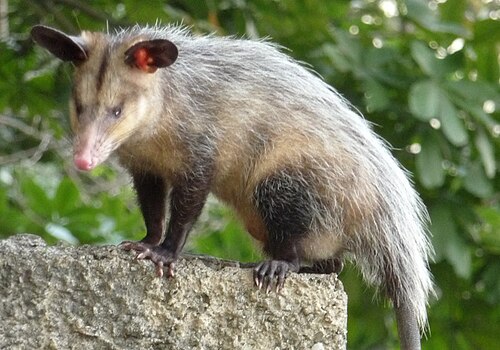


フクロネズミ目(Didelphimorphia)は、西半球に生息する一般的なフクロネズミの目である。フクロネズミは、おそらく白亜紀後期または暁新世初期に南米の基本的な有袋類から分岐したと考えられている。フクロネズミは小型から中型の有袋類で、大きさは大型のイエネコほど。長い鼻と物を掴むことができる尾を持つ。
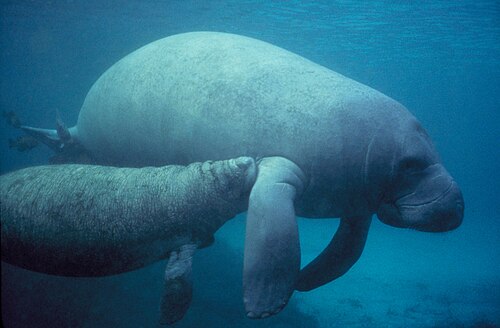
Sirenia is an order of fully aquatic, herbivorous mammals that inhabit rivers, estuaries, coastal marine waters, swamps, and marine wetlands. All four species are endangered. They evolved about 50 million years ago, and their closest living relatives are elephants. Manatees are the only extant afrotherians in the Americas. However, a number proboscid species, some of which survived until the arrival of Paleo-Indians, once inhabited the region. Mammoths, mastodons and gomphotheres all formerly lived in Mexico.[4][5]

Armadillos are small mammals with a bony armored shell. Two of twenty-one extant species are present in Mexico; the remainder are only found in South America, where they originated. Their much larger relatives, the pampatheres and glyptodonts, once lived in North and South America but went extinct following the appearance of humans.


有毛目はアメリカ大陸にのみ生息し、アリクイ、ナマケモノ、タマンデュアなどが含まれる。彼らの祖先は南アメリカ大陸に生息していた。かつては、ゾウほどの大きさにまで成長した地上性ナマケモノが、北アメリカ大陸、南アメリカ大陸、そしてアンティル諸島に数多く生息していたが、人類の到来とともにすべて絶滅した。


霊長目は、キツネザル、サル、類人猿を含み、後者のカテゴリーにはヒトが含まれます。霊長目は、曲鼻猿類、メガネザル類、新世界ザル(広鼻猿類小目)、旧世界ザルおよび類人猿の4 つの主要なグループに分けられます。メキシコの非ヒト霊長類の属は 2 つで、中央アメリカの 6 属、南アメリカの 20 属、マダガスカルの 15 属、アフリカの 23 属、アジアの 19 属と比較されます。メキシコと中央アメリカのサルは、南アメリカからの最近の移民であり、その祖先は約 2500 万年前にアフリカからいかだで渡って南アメリカにたどり着きました。 [ 6 ]メキシコ南東部は、熱帯雨林の生息地に限定されている新世界ザルの分布の最北端です。


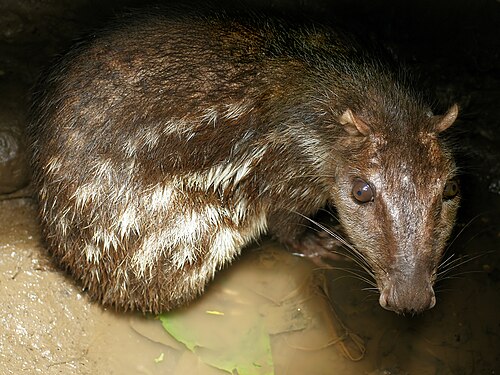


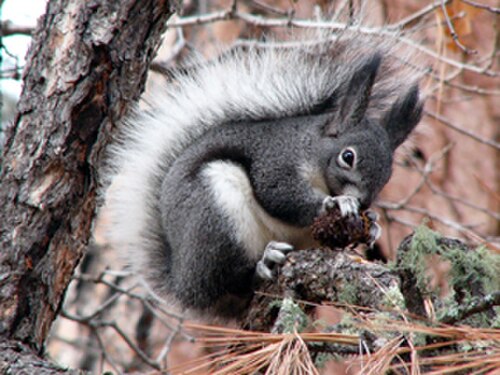
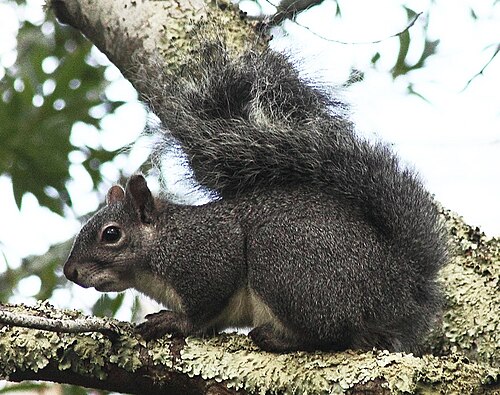


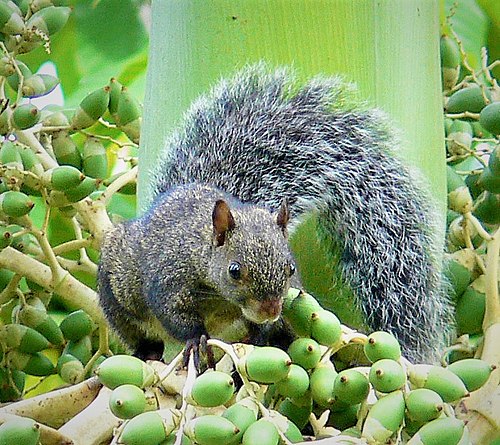


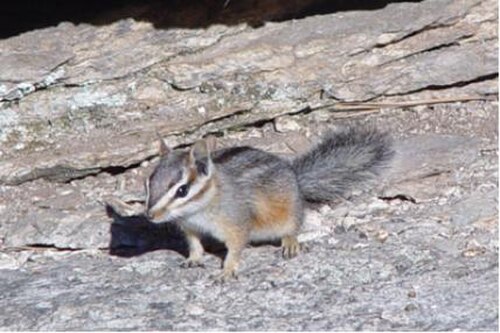
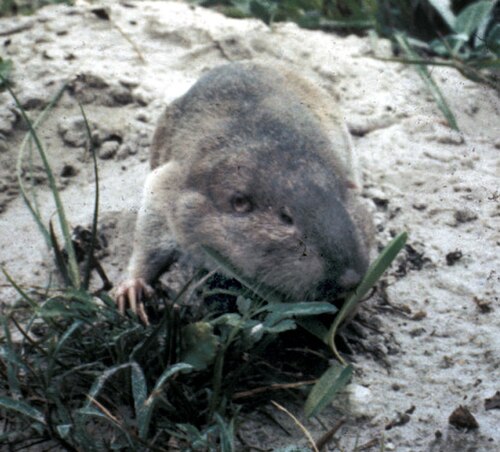


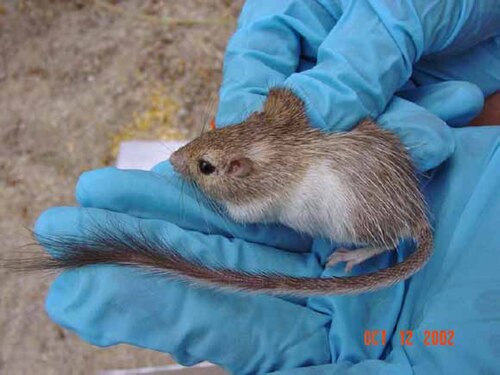
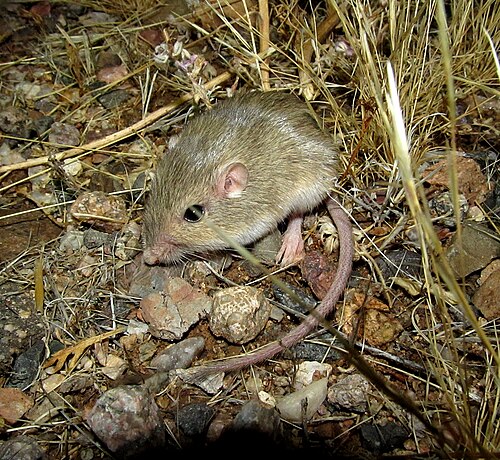


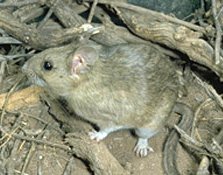
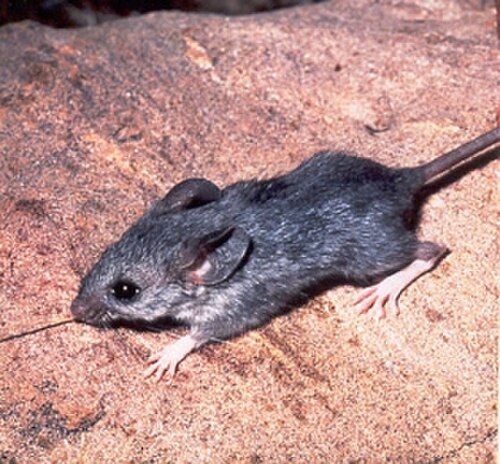


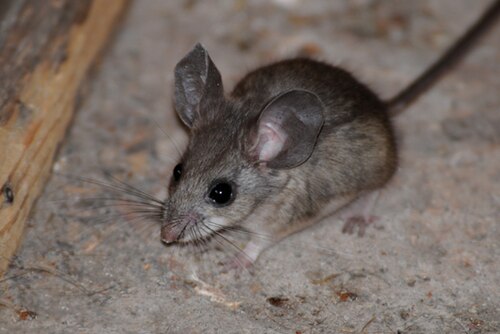


Rodents make up the largest order of mammals, with over 40% of mammalian species. They have two incisors in the upper and lower jaw which grow continually and must be kept short by gnawing. Most rodents are small, although the capybara can weigh up to 45 kg (99 lb). According to the IUCN listing, Mexico has more rodent species (236 as of April 2011) than any other country in the world (Brazil is second with 222). Of Mexico's rodents, 2% are caviomorphs, 14.5% are sciurids, 25.5% are castorimorphs and 58% are cricetids. This distribution is fairly similar to that of the remainder of North America (although sciurids are relatively twice as abundant to the north, at the expense of cricetids), but is very different from that of South America, where the corresponding figures are 36%, 3%, 1% and 60%. Of Mexico's cricetids, 17% are sigmodontine, while the figure for South America is 99.5%.[n 3] Mexico's caviomorphs are recent immigrants from South America, where their ancestors washed ashore after rafting across the Atlantic from Africa about 40–45 million years ago.[6][7] Conversely, South America's sciurids, castorimorphs and cricetids are recent immigrants from Central America (with sigmodontines getting a head start on the others).


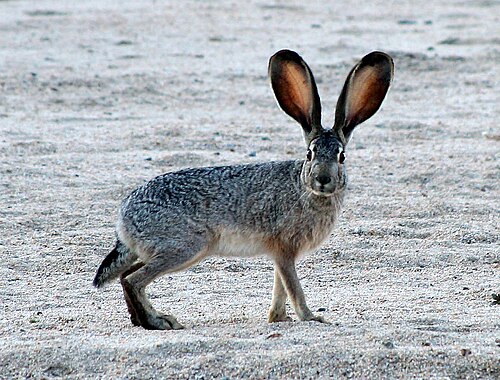
The lagomorphs comprise two families, Leporidae (hares and rabbits), and Ochotonidae (pikas). Though they can resemble rodents, and were classified as a superfamily in that order until the early 20th century, they have since been considered a separate order. They differ from rodents in a number of physical characteristics, such as having four incisors in the upper jaw rather than two. The endangered volcano rabbit of the Trans-Mexican Volcanic Belt is the world's second smallest rabbit. In North America, pikas are not found south of southern California and northern New Mexico.

Eulipotyphlans are insectivorous mammals. Shrews and solenodons closely resemble mice, hedgehogs carry spines, while moles are stout-bodied burrowers. In the Americas, moles are not present south of the northernmost tier of Mexican states, where they are rare.
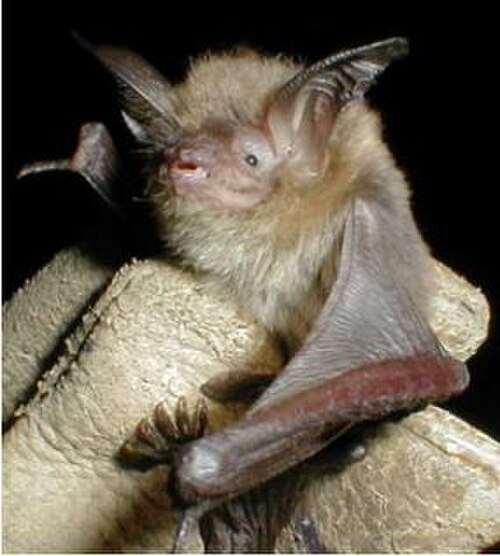
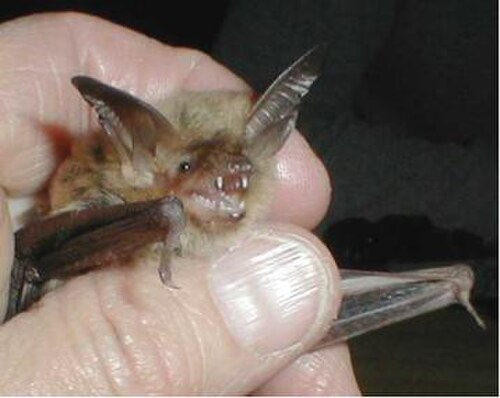


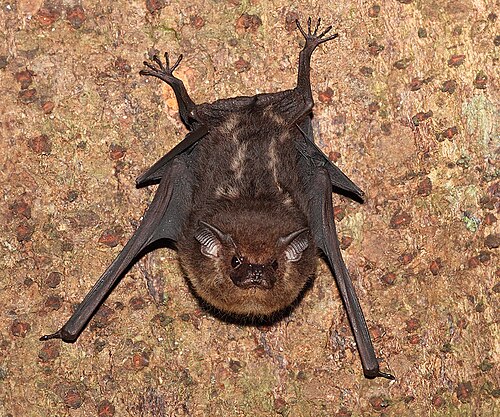
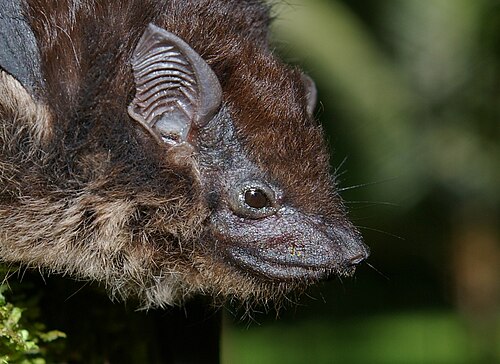
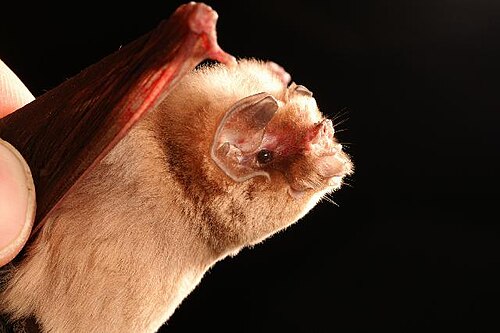

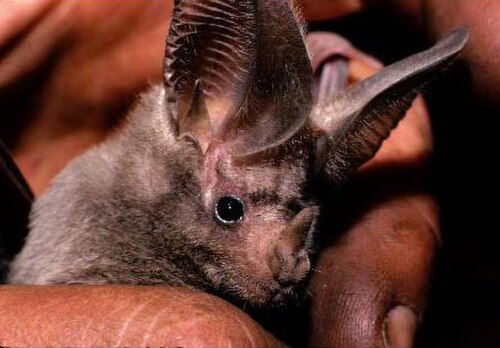


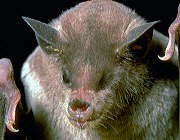


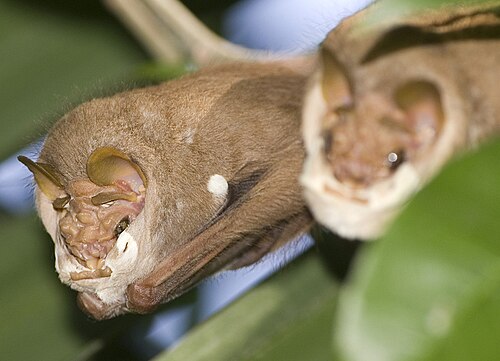


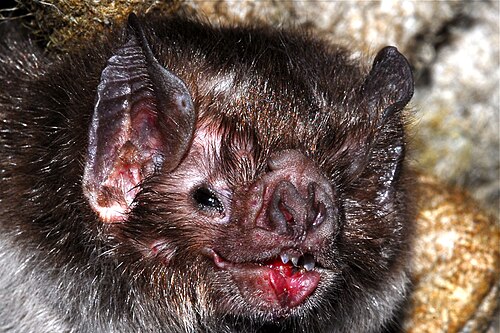
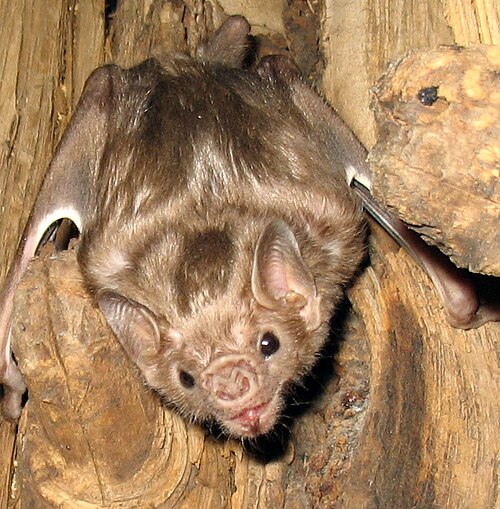

The bats' most distinguishing feature is that their forelimbs are developed as wings, making them the only mammals capable of flight. Bat species account for about 20% of all mammals.


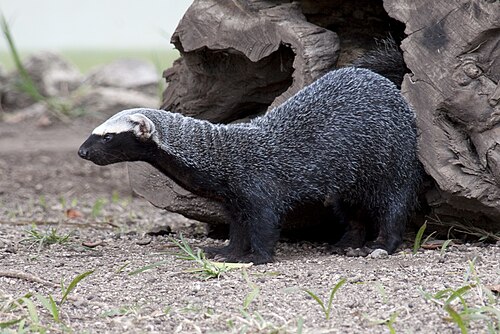




肉食動物は 260 種以上あり、その大部分は主に肉を食べます。特徴的な頭蓋骨の形状と歯列を持っています。メキシコには他のどの国よりも多くの在来のメフィティス科の動物が生息しており、現存種の 3 分の 2 が生息しています。コスタリカとパナマだけがメキシコよりも多くのアライグマ科の動物を生息しています (メキシコはコロンビアと同数です)。人類が到来する以前にこの地域に生息していた大型の絶滅した肉食動物には、サーベルタイガーのスミロドン・ファタリス、シミターキャットのホモテリウム・セラム、アメリカライオン、アメリカチーター、ダイアウルフ、ショートフェイスベアなどが含まれます。

The odd-toed ungulates are browsing and grazing mammals. They are usually large to very large, and have relatively simple stomachs and a large middle toe. Tapirids were more widespread before humans appeared, formerly being present in temperate North America as well as the tropical regions they are found in today. Native equids once lived in the region, having evolved in North America over a period of 50 million years, but died out around the time of the first arrival of humans, along with at least one ungulate of South American origin, the notoungulateMixotoxodon. Sequencing of collagen from a fossil of one recently extinct notoungulate has indicated that this order was closer to the perissodactyls than any extant mammal order.[10]


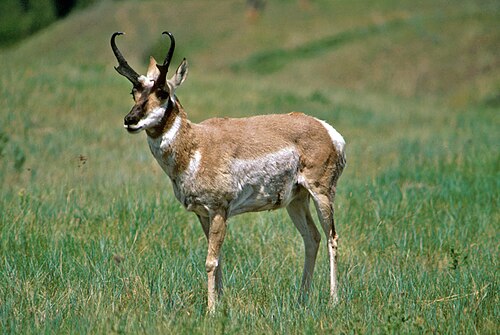


The even-toed ungulates are ungulates whose weight is borne about equally by the third and fourth toes, rather than mostly or entirely by the third as in perissodactyls. There are about 220 noncetacean artiodactyl species, including many that are of great economic importance to humans. All of Mexico's extant ungulates are of Nearctic origin. Prior to the arrival of humans, camelids, which evolved in North America, also lived in the region, as did additional antilocaprids (e.g., Capromeryx minor).
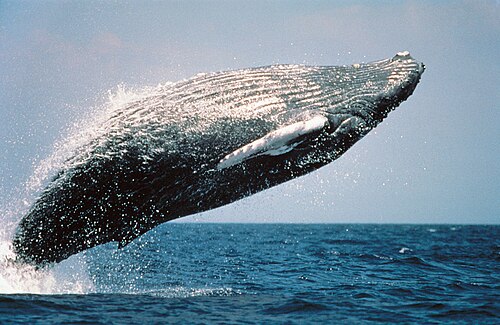


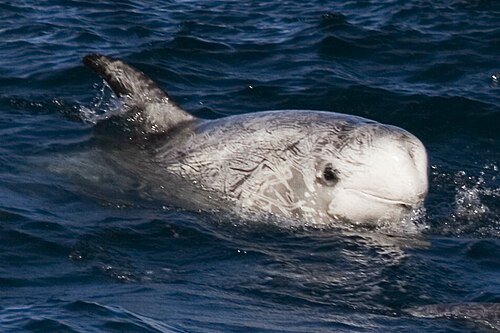


The order Cetacea includes whales, dolphins and porpoises. They are the mammals most fully adapted to aquatic life with a spindle-shaped nearly hairless body, protected by a thick layer of blubber, and forelimbs and tail modified to provide propulsion underwater. Their closest extant relatives are the hippos, which are artiodactyls, from which cetaceans descended; cetaceans are thus also artiodactyls. Lagoons on the coast of Baja California Sur provide calving grounds for the eastern Pacific population of gray whales. The vaquita of the northern Gulf of California is the world's smallest and most endangered cetacean.