
Loading article…

ノックダウンキット(ノックダウンキット、ノックダウンキット、または単にノックダウン、KDとも呼ばれる)とは、製品を組み立てるために必要な部品の集合体です。これらの部品は通常、ある国または地域で製造され、最終組み立てのために別の国または地域に輸出されます。一方、CBUは「Completely Built Up(完全組み立て済み)」の略で、完成品の輸入を意味します。
ノックダウンの一般的な形態は、完全ノックダウン( CKD ) であり、これは製品の完全に未組立の部品のキットです。これはまた、特に外国への出荷において、市場に部品を供給する方法であり、カウントや価格設定の方法としても機能します。[ 1 ] CKD は、自動車、バス、大型トラック、鉄道車両産業、電子機器、家具、その他の製品で一般的な慣行です。企業は、輸入税の回避、現地での製造雇用の提供による税制優遇措置の取得、あるいは入札者として考慮されるため (たとえば、 「国産品購入」規則のある公共交通プロジェクト) など、さまざまな理由で、ノックダウン キットを海外の関連会社やライセンシーに販売します。
セミノックダウンキット(SKD)または不完全分解キット(組み立てられたことはないが)とは、製品の部分的に組み立てられた部品のキットのことです。自動車業界では、完全なKDと不完全なKDの両方をまとめてノックダウン輸出(KDX)と呼び、原産国で組み立てられ、完成品として仕向国市場に輸出される自動車は、組み立て済み輸出(BUX)と呼ばれます。
Technically, the terms "knock-down", "incompletely disassembled kit", and "kits of parts" are all misnomers because the knock-downs were never built up in the first place. The parts shipments are often not in the form of kits,[1] but rather bulk-packed by type of part into shipping containers. The degree of "knock-down" depends on the desires and technical abilities of the receiving organization or government import regulations.[1] Developing nations may pursue trade and economic policies that call for import substitution or local content regulations. Companies with CKD operations help the country substitute the finished products it imports with locally assembled substitutes.
Assembly plants that build products from knock-down kits are less expensive to establish and maintain than plants that also manufacture their own parts; they do not need modern robotic equipment, and the workforce may be less costly than in the kits' country of origin. Such plants may also be cost-effective for low-volume production. The CKD concept allows firms in developing markets to gain expertise in a particular industry. At the same time, the CKD kit exporting company gains new markets that would otherwise be closed.[2]
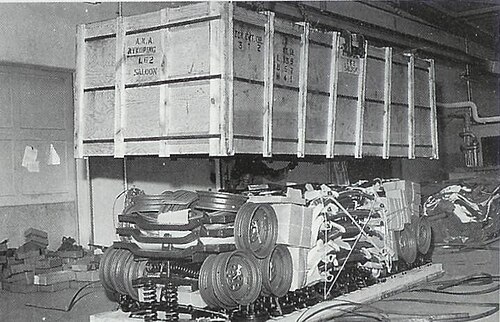
In the automotive industry, the most basic form of a vehicle in the KD kit lacks the wheels, internal combustion engine, transmission, and battery. They are either supplied as parts for assembly (a "complete" kit) or obtained from third parties (an "incomplete" kit); all of the interiors are already installed at the originating factory. The term SKD for semi-knocked-down refers to a kit with a complete, welded car body, usually coated or already painted. To gain extra tax preferences, the manufacturer needs to "localize" the car further, i.e., increase the share of parts produced by local manufacturers, such as tires, wheels, seats, headlights, windscreens and glass, batteries, interior plastics, etc., even down to the engine and transmission. At some point, the steel body could be pressed, welded, and painted locally, effectively making KD assembly only a few steps away from full-scale production.
By the time Henry Ford co-wrote his 1922 memoir, My Life and Work, the Ford Motor Company was already shipping car parts from its Michigan plants for final assembly in the regions of the United States or foreign countries where the cars would be sold.[3]
第二次世界大戦中、ウィリスMB /フォードGPW /GPA、GMC-353/ CCKWなどの軽トラックや大型トラック、 CMPファミリーの車両など、米国およびカナダ製の車両が多数、様々な完成度でKD(ノックダウン)方式で梱包され、連合国に輸送され、戦争遂行を支えた。組み立てラインは、適切な工具や設備が容易に入手できる地元の自動車工場に設置されることが望ましかったが、必要に応じて、特に戦場では他の種類の建物も使用され、時には軍人が管理する野外の再建キャンプが設置されることもあった。男性の動員のため、女性の労働力が雇用されることもあった。CKD軍用車両は、1台ずつ木箱に梱包された形式(またはSUP、シングルユニットパック)で輸送用に保管されることもあれば、複数の車両(通常は2~3台)を2つ以上の木箱に分けて保管されることもあった。特定の国に輸送される車両には、現地で製造・提供されるキャブ、ベッド、タイヤなどの部品が不足している可能性がある。[ 4 ] [ 5 ]
インドのマヒンドラ&マヒンドラ社は、 1947年にCKD(完全ノックダウン)方式のジープの組み立てから事業を開始しました。マヒンドラは事業を拡大し、カイザー・ジープ社、そして後にアメリカン・モーターズ社(AMC)からのライセンスの下、高い現地調達率でジープ車の国内生産を行うようになりました。
1950年代から1960年代にかけて、ロータス・カーズは、完成車の販売に適用される英国の購入税を回避するため、ロータス・セブンをCKD(ノックダウン)方式で販売した。
1959年、ミニの登場により、ブリティッシュ・モーター・コーポレーション(BMC)の製品は、依然としていくつかの国際市場で輸入されるか、CKDキットから組み立てられていた。
1961年、ルノーはAMCとの最初の提携契約の交渉を開始し、ヨーロッパでランブラー自動車を組み立てることになった。[ 6 ] 1962年から1967年まで、AMCは乗用車のCKDキットもルノーに販売した。それらはベルギーのハーレンにあるルノーの工場で組み立てられ、アルジェリア、オーストリア、ベルギー、フランス、オランダ、ルクセンブルクのディーラーを通じて販売された。この契約により、AMCは多額の海外直接投資(FDI)なしに新しい市場で自動車を販売することができた。この取り決めは、製品ラインナップに大型車が不足しており、ヨーロッパ市場向けに「エグゼクティブ」モデルを提供する必要があったフランスの自動車メーカーにとって有益だった。[ 7 ] 1977年までに状況は変わった。この頃には、AMCはサブコンパクト市場セグメントの新車のために外部の支援を求めており、これがルノーとの多くの契約の最初のものにつながった。
1963年に開設されたボルボのハリファックス組立工場は、スウェーデンから送られてきたCKD(完全ノックダウン)方式の車両を北米の消費者向けに完成させていた。ハリファックス組立工場は1998年12月に閉鎖された。
1967年、ルーツ・グループUKはCKDヒルマン・ハンターをイランに輸出し始め、イランではペイカン(ペルシャ語で「矢」を意味する)として販売された。1967年にクライスラーに買収され、その後1978年後半にクライスラー社が欧州事業をPSAグループに売却した際にその一部となったイランにおけるルーツの事業基盤は、イランにおける非常に重要なPSAプジョー・シトロエン事業の出発点となり、特に1990年に導入され1999年にパルスとしてフェイスリフトされた405と2001年に導入された206からのエンジンとCKDの納入が行われた。[ 8 ] 2004年、プジョーのパートナーであるイラン・ホドロは28万1000台のプジョー車を生産し、36%の市場シェアを獲得した。
1967年にもプジョーは、プジョー403をベースにした小型ピックアップトラックをプジョー4TBという名称でプジョー・ベラサテギ工場(ブエノスアイレス)でCKD方式で生産し始めた。 [ 9 ] 1973年にはこのモデルは404ピックアップに置き換えられ、その後(1990年)504ピックアップに置き換えられた。404と504は、現地のCKD組立工場を通じて世界中で大量に販売された。404は、フランスとアルゼンチンの他に、オーストラリア、ベルギー、カナダ(ルノーと共同で運営するSOMA工場)、チリ、アイルランド、ケニア、マダガスカル、マレーシア、ニュージーランド、ナイジェリア、ポルトガル、ペルー、ローデシア、南アフリカ、ウルグアイで組み立てられた。[ 10 ] 504は、主にアルゼンチン、エジプト、ナイジェリア、ケニア、南アフリカ、オーストラリア、中国で広州プジョー自動車会社によって開発され、クルーキャブバージョンが製造されました。
1968 年、ドイツの独立系自動車会社カルマンは、ヨーロッパでの販売用にAMC の新製品ジャベリンの CKD キットの組み立てを開始しました。アメリカン モーターズは、オーストラリア、ニュージーランド、南アフリカなどの市場向けに右ハンドル仕様の自動車も提供しました。部品は、ウィスコンシン州ケノーシャまたはオンタリオ州ブランプトンのAMC 工場からコンテナでオーストラリアに輸送されました。オーストラリアでのランブラーと AMC 車両の組み立ては、ビクトリア州ポート メルボルンのオーストラリアン モーター インダストリーズ(AMI)によって行われました。内装 (シート、カーペットなど) やライト、ヒーター、その他の部品にオーストラリアのサプライヤーを使用することで、現地調達要件を満たしました。さまざまなランブラー モデルは、1960 年代初頭から 1971 年まで、テムズのキャンベル モーターズ(後のトヨタ ニュージーランド) によってニュージーランドで組み立てられました。同社は、トヨタ、ダットサン (後の日産) 、日野、ルノー、プジョーの車も製造していました。
New Zealand had developed a car assembly industry [11] as a means of import substitution and providing local employment, despite the small size of the local market. Following economic reforms in the 1980s, including the lowering of import tariffs, and the ability to import Australian-built vehicles duty-free under the CER agreement, many car companies ended assembly in New Zealand. They switched to importing completely built-up vehicles from Japan, Australia, or Europe. More significantly, the easing of import restrictions led to many used imports, because they were less expensive than locally assembled used cars, and outsold the 'NZ New' vehicles. The last companies to construct CKD kits in New Zealand were Toyota, Nissan, Mitsubishi, and Honda, which closed their plants in 1998 when the government announced plans to abolish import tariffs on cars.
Similarly, in Australia, KD cars were part-manufactured and/or assembled for certain models of the brands Citroën, Renault, Peugeot, Volkswagen, Mercedes-Benzes, Studebaker, Rambler, Singer, Triumph, Datsun, Hillman, Gogombobile, Mini Cooper and Volvo.[12]
Other examples include Ukraine, which has almost prohibitive import taxes on finished cars. AutoZAZ assembles CKD kits of some Lada, Opel, Mercedes-Benz, and Daewoo cars.[13] It went as far as adopting a version of Daewoo Lanos for full-scale production and equipping it with a domestic engine. The German automotive giant Volkswagen Group also produces SKDs in Ukraine at its Solomonovo plant, producing cars under its Škoda and Volkswagen Passenger Carsmarques.
In Russia, KD assembling facilities are owned by Avtotor, which produced Hummer H2, BMW 3 Series, and BMW 5 Series in Kaliningrad, and Renault Logan in Moscow using facilities that once belonged to AZLK. In Kaluga, Volkswagen Group had a plant that was expected to have an annual output of 150,000 units.[14]
ダイムラーAGはサウスカロライナ州にCKD組立工場を持ち、メルセデス・ベンツ・スプリンターバンを組み立てて、米国とカナダのメルセデス・ベンツおよびフレイトライナーのディーラー、そしてフィアットグループによるクライスラーグループLLCの買収以前のダッジのディーラーで販売していた。これは基本的に「チキン税」として知られる輸入小型トラックに対する25%の関税を回避するためだった。スプリンターは最終的にダッジ/ラムのラインナップで、同様のラム・プロマスター(バッジを変えたフィアット・デュカト)に置き換えられた。CKDダッジ・スプリンターとは異なり、プロマスターは北米自由貿易協定(NAFTA)に基づき、メキシコのクライスラー工場から米国に完全に輸入されている。
2009年、マヒンドラ&マヒンドラ社は、インドから米国へディーゼルエンジン搭載のピックアップトラックをノックダウンキット(CKD)の形で輸出すると発表した。これもまた、チキン税を回避するためだった。[ 15 ]マヒンドラは、木箱で出荷された部品キットから米国で組み立てられる完成車としてCKDを米国へ輸出する計画だった。[ 15 ]しかし、マヒンドラの米国向けCKDおよび輸出計画は実現せず、いくつかの訴訟の対象となった。
2013年、テスラはオランダのティルブルフに組立工場を開設しました。 [ 16 ]この工場は、欧州連合向けのモデルSセダンとモデルX SUVの組立に使用されていますが、EUに輸入される車のみが10%の輸入関税を回避できるため、ヨーロッパ全域向けではありません[ 17 ](例えば、ノルウェー向けの車は米国から直接出荷されます)。車の大部分は、カリフォルニア州フリーモントのテスラ工場で製造されています。オランダでの最終組立では、さまざまな部品が車に追加されますが、最も注目すべきは、駆動系とバッテリーパックを備えたリアサブフレームです。[ 18 ]
Motor Coach Industries opened its Pembina, North Dakota, assembly plant in 1963, as part of an expansion into the US market. Unfinished KD (knocked down) coach bodies are shipped from Winnipeg, Manitoba, by flatbed trailer and completed, outfitted, and delivered at Pembina. This practice simplifies US Customs and meets the "Buy America Act" provisions (49 USC 5323(j) and 49 CFR Part 661) for public agencies purchasing new equipment with federal funds.[19]
North American Bus Industries opened operations in Anniston, Alabama, in 1993, with incomplete buses shipped from Budapest, Hungary, to Anniston for final assembly. NABI expanded production operations in Anniston to allow full production with its first fully domestically produced bus unit in 2008.
The practice of selling "knocked down" railcars, called by that name, pre-dates the 20th century, as evidenced by an advertisement by JG Brill Company in the Street Railway Journal from 1898.[20]
Many rail equipment builders have used kits or incomplete vehicles, often to meet local assembly and production requirements or quotas, or to satisfy tariffs. Some examples include:
Unserviceable military aircraft are also sold as "knock-downs" after they have ended their service life, packaging them with serviceable aircraft. This allows them to be used for cannibalization of spare parts.
The European aircraft manufacturer Airbus uses knock-down kits to assemble A320 family aircraft outside Europe. The Airbus A320 final assembly line in Tianjin, China, assembles fuselage, wing, and tail sections made in Europe with avionics and engines made in the EU or the United States and locally sourced components for interiors. Airbus opened a similar A320 final assembly line in the United States in September 2015, located in Mobile, Alabama; again using European-made fuselages, wings, and tail sections. However, the Mobile final assembly line will use more locally sourced components than the Tianjin line; engines, interior components, and avionics will be sourced mainly from American suppliers. Both the Airbus Tianjin and Mobile plants receive their fuselages, wings, and tail sections from Europe via ocean freight using specially designed ships, as the plants are located in port cities.

From 1908 to 1940, the Sears, Roebuck & Co. mail-order catalog offered over 400 styles of homes.[23] Buyers were provided with all of the materials and the instructions needed to build a house. Everything that arrived by train or in the mail was designed to fit together, therefore buyers could build the houses themselves or hire contractors.[24] Sears sourced building materials at a high volume, thus keeping prices low and competitive with the local builders.[23]
Knock-down furniture dates back to at least the mid-19th century, with the 1859 Thonet No. 14 chair bentwood chair being easily disassembled for transportation.[25] In the late 1940s, Australian designer Frederick Charles Ward founded a mail-order business for knock-down furniture in response to a lack of affordable furniture.[26]
Swedish furniture company IKEA began selling flat-pack furniture in 1956.[27]